I didn’t read this on the 7th of March when Gary Lineker posted it. I was following him on Twitter, but I finally left this ‘forum’ after Donald Trump was reinstated on it last year, even while his role (and his tweeting) was still being investigated for incitement to insurrection on 6th January 2021. I’d been on Twitter for nearly fifteen years but only used it to draw attention to more extensive posts, either by myself or others. I rarely made statements, and when I did (ironically in support of the England football team ‘taking the knee’), I was met with a barrage of abuse from Hungarian ‘tweeters’.
I live in Hungary and the England team was playing here at that time. Twitter is a lazy tool for historians, at least because it breaks the basic rules for historical discourse, which requires us to explain our statements and back them up with evidence. I know we are not so restricted in the number of characters we can use, but many still tweet assertions, often extreme in their use of language, whether from the Right or the Left.
Gary Lineker began his football career at Leicester City in 1978 and finished as the (then) First Division’s joint top goalscorer in 1984–85. He then moved to league champions Everton where he won both the PFA Players’ Player of the Year and FWA Footballer of the Year awards in his debut season, before moving to Spanish giants Barcelona. With Barcelona, he won the 1987–88 Copa del Rey and the 1989 European Cup Winners’ Cup. His six goals in the 1986 FIFA World Cup made him the tournament’s top scorer, receiving the Golden Boot. His Golden Boot-winning performance at the finals generated much anticipation of success at Camp Nou, and he did not disappoint, scoring twenty-one goals in 41 games during his first season, including a hat-trick in a 3–2 win over archrivals Real Madrid. Lineker was again integral to England’s progress to the semi-finals of the 1990 World Cup, scoring another four goals. He still holds England’s record for goals in the FIFA World Cup.
In 1999, Lineker became the BBC’s anchorman for football coverage, including its flagship football television programme Match of the Day, becoming BBC Sport’s highest-paid presenter. The BBC’s Director General, Tim Davie, stated that Lineker’s pay was justified “because of the value of analysis to the viewing audience”. Lineker has been noted for his political views which he shares on Twitter. In December 2016, he was described by Angus Harrison of Vice News as “the British Left’s Loudest Voice” for being “both staunchly liberal and resolutely unafraid of making his views known”. Using a football analogy, Lineker defined his ideological position as “I make more runs to the left than the right, but never felt comfortable on the wing”. After the 2017 United Kingdom general election, Lineker wrote:
“Anyone else feels politically homeless? Everything seems far right or way left. Something sensibly centrist might appeal?”
Lineker endorsed a Remain vote in the 2016 United Kingdom European Union membership referendum. In July 2018, he announced his support for People’s Vote, a campaign group calling for a public vote on the final Brexit deal between the UK and the European Union. On 18 October 2016, Lineker tweeted a rebuttal to a statement made by David Davis MP in which Davis suggested refugees entering the UK should undergo dental checks to verify their age:
“The treatment by some towards these young refugees is hideously racist and utterly heartless. What’s happening to our country?”
This led The Sun to call for Lineker’s sacking from Match of the Day(MOTD), accusing him of breaching BBC impartiality guidelines. In December 2018, Lineker was criticised by the BBC’s cricket correspondent Jonathan Agnew for expressing his political views on Twitter. Agnew wrote:
“You are the face of BBC Sport. Please observe BBC editorial guidelines and keep your political views, whatever they are and whatever the subject, to yourself. I’d be sacked if I followed your example.”
In response, a BBC spokesperson said:
“Gary is not involved in any news or political output for the BBC and as such, any expression of his personal political views does not affect the BBC’s impartiality.”
Nevertheless, on the 10th of March 2023, Lineker was required by the Director General to step back from presenting on the BBC for three days due to the controversy over his pronouncement on the British government’s asylum policy on Twitter. Lineker is not involved in any news or political comment on the BBC, whereas Agnew has interviewed former UK Prime Ministers and other politicians interested in cricket, and other cricket presenters like Ian Botham and Geoffrey Boycott have used their ‘profiles’ to make right-wing comments on social media. Neither is he a full-time employee of the BBC but is contracted as a self-employed consultant for MOTD and other sports programmes. We do not know the terms of his contract, but the BBC’s answer to Agnew seems to recognise his right to express his views on social, historical and political matters. The only remaining issue for me is whether, as Keir Starmer, the Labour Party leader remarked, comparisons with 1930s Germany are “the best way” to make an argument. Given Lineker’s previous statement on the ‘treatment’ of refugees, I wanted to investigate the connection he made between the language used by government ministers and that used in the 1930s.
Historical Instincts & Precedents:
My ‘historical’ instinct kicked into action when I first heard the furore about Gary Lineker’s tweet and then read his tweet via a friend on Facebook. The only potential error or mistake I could see in his ‘tweet’ was that his claim about ‘Germany in the thirties’ needed explaining and expanding in terms of more substantial evidence about the alleged historical antecedents and the appropriacy of their application to current events. I’m not sure whether one of Lineker’s four ‘O’ Levels was in history, but, for me, it does not go beyond assertion and would not lead to an award of a top grade at GCSE today. One of Gary’s teachers wrote on his report card that he “concentrates too much on football”, himself adding a prospective assertion that he would “never make a living at that”. Had he gone on to do an ‘A’ Level in History, however, he might have understood the necessity of providing an argument supported by explanation and examples.
So, having read, written and taught extensively on “the thirties” in Britain, Europe and the United States, I decided to conduct my own research using primary and secondary sources to hand and online. Also, as a teacher of both language and history for over forty years, my role has not been to remove bias but to make sure my students are aware of their own biases and prejudices. We all have questions about the past which determine the answers we encounter and the interpretations we make. History is not a ‘pure’ science; it is concerned with the whole of human life in all its quirks and imperfections. Therefore, the answers we find, though definitive, are never final but always provisional. The question we all share, however, is what can we learn from the past? Even professional historians have issues with roots in the present; they rarely approach the traces of past people and events simply by asking what happened, how and why? The answers to those questions are nearly always complex and relate to our current consciousness of key issues. We find ourselves applying the prefixes How far..? or To what extent..? to our interrogations and investigations to allow for that complexity to be expressed in terms of a continuum. So the question with which I approach Lineker’s statement is:
To what extent can the language in current debates about ‘asylum’ and ‘migration’ be compared with that used by Germany in the 1930s?
Later than They Thought:
As a source to answer this, I turned first to René Cutforth’s (1976) book, Later than We Thought: A Portrait of the Thirties, a favourite of mine among the books dealing with the period. Cutforth was ‘born and bred’ in a coal mining town in industrial Derbyshire, and had seen service in the Army in Ethiopia, Eritrea and the Western Desert, becoming a prisoner of war in Italy and Germany. He became well-known after the war as a distinguished broadcaster and writer, travelling the world as a BBC correspondent and making many documentaries, some of which I vaguely remember watching in the seventies. He made some of these for ITV. His account of the Thirties is highly personal, concerned with the impact of the decade as he felt it as a young man (he was twenty-one in 1930), with intellectual attitudes and social changes rather than with a formal historical narrative; he is interested in the motivations of Mosley and his Fascists, the new poets of revolution and the tired old politicians staggering from one crisis to the next, all against the backdrop of great events including, for our purpose, the Spanish Civil War and the rise of Hitler.
By taking a step back, however, we become aware that, among all the decades of the twentieth century, there is a popular mythology attached to the 1930s as The Devil’s Decade. W. H. Auden, the leader of a group of young poets who were held to have been the new voice of the period, called it ‘… a mean and sordid decade.’ The Thirties were also ‘troped’, by the 1970s, as the Wasted Years and the ‘lowdishonest decade’ and ‘the long weekend’. Even for those, like myself and Gary Lineker, who did not live through them but grew up in the seventies, the 1930s are haunted by the spectres of mass unemployment, hunger marches, appeasement, and the rise (and post-war endurance) of fascism at home and abroad. In a sense, the Second World War served to perpetuate the more depressing image of the thirties, partly at least because the politics of the immediate post-war era were fought on the record of the pre-war years. Churchill himself fought and lost the 1945 election by comparing his opponents to the ‘Gestapo’, and as late as 1951 the Labour Party campaigned with the slogan, ‘Ask your Dad!’, an illustration of how the ‘hungry thirties’ had become part of the repertoire of political cliché.
The popular view of the 1930s as a period of unrelieved failure was undoubtedly hardened and reinforced in the years after the war, a view that was sharpened against the backdrop of full employment and affluence in the 1950s and ’60s. In the 1970s and 1980s, with the return of mass unemployment and the spectre of far-right, anti-immigrant extremism, the ghost of the thirties stalked the political platforms and demonstrations under the slogan ‘no return to the thirties’. By then, the decade had become a metaphor for economic disaster, social deprivation and political discontent. As Stevenson and Cook wrote in 1977:
A concentration upon unemployment and social distress does not represent an accurate portrayal of the decade. … It would, of course, be fatuous to suggest that the 1930s were not for many thousands of people a time of great hardship and personal suffering. But beside the picture of the unemployed must be put the other side of the case. … Alongside the picture of dole queues and hunger marches must also be placed those of another Britain, of new industries, prosperous suburbs and a rising standard of living. … This was the paradox which lay at the heart of Britain in the thirties. …
John Stevenson & Chris Cook (1977), The Slump – society and politics during the Depression. London: Cape, pp. 1-4.
Germany Between the Wars:
It was also a paradox which lay at the heart of much of Europe, especially in Germany. German insolvency in the Twenties and the depression which now set in in the Thirties had brought the country to the verge of revolution. In Britain at the time, nobody would have been surprised if Germany had gone communist in a sudden coup, and the German middle classes had long trembled on the brink of disaster. It took them some time to realise that the name of Hitler’s party, the National Socialist Party, was extremely misleading and that what he stood for was paranoid nationalism, racialism and militarism, with the Jews as internal, ‘eternal’ scapegoats; but when they did they began to see him as the saviour who would discipline the working class, rid the businessmen of their smarter competitors, the Jews, and make the name of Germany feared once more in the world. The aristocratic land-owning class saw him as a useful weapon against Communism: the unemployed were in the mood for a saviour of some sort, and democracy was a very new and, in some ways, foreign concept. The German working classes were used to dictatorial masters; now they were all going to be masters – the Master Race, which they had always believed in their hearts that they were. According to Cutforth, The Weimar Republic which Hitler took over in 1933 was viewed as…
… the pet of the intelligentsia, the first tolerant and permissive society in Europe, teeming with liberal good intention, particularly kind to sexual deviants who flocked there from all over the place. But the lost war rankled in the hearts of many old soldiers still in their thirties, who had fallen for the lie that the German Army was never defeated and that panic among the civilians had dictated the surrender. They could be made to see the Weimar Republic as something soft, decadent and shameful, particularly if they were unemployed.
Cutforth (1976), pp. 64-65.
President Hindenburg’s idea was to let Hitler loose on the Communists and then for the traditional conservatives and mainstream nationalists like him to stamp on Hitler. That strategy did not work, however. Hindenburg died and with him the old Germany for which he stood. Hitler gained absolute power in 1933. How then, did it come about that the Germans, with their most liberal republic, if a brittle one, became saddled with him as their new dictator? Another contemporary commentator wrote his answer in his book:
For a time the Extreme Left and the Extreme Right seemed to be running neck and neck. But Communism had a fatal handicap: its revolution had already taken place, and the German people had been able to observe it at fairly close range. The German people were sick of the class struggle, sick of capitalism, and above all, sick of Berlin, that modern Gomorrah and source of all their ills. There is no great mystery about Hitler’s coming to power. The simplest explanation is the best: the German people chose him.
John Manders (1959), Berlin-The Eagle and the Bear: Barry & Rockliff.
Fascists, Appeasers and Pacifists in Thirties Britain:
Of course, Hitler’s Germany was not the only example of Fascist rule in Europe in the 1930s. Mussolini in Italy, also with the early support of socialists, had established the original ‘model’ in the mid-twenties, and Franco came to power in Spain in 1939 as a result of three years of bloody civil war. Any footballer, like Gary Lineker, who spent time in Spain in the 1980s would be only too aware of the long-term role of fascism in football there. In Britain, Mosley’s Fascists took full advantage of the general restlessness and stepped up their uniformed parades until the East End of London was invaded almost every night. They had no doctrines except jingoism, wrapping themselves in the Union flag and openly displaying their hatred of Jews and Communists. The East End, with its large Jewish population, was the chief battleground of opposing factions. On May Day in 1938, the traditional May Day Festival in Bermondsey was subjected to a counter-demonstration by the British Union of Fascists (BUF), pictured below. At Mosley’s rallies, the formula was usually the same. When the halls had filled, the doors were locked and the speeches began. A spotlight was trained on the audience from the platform and if any heckler was identified by it, he would be quickly surrounded by ‘biff boys’ who would beat him up in view of the audience before dragging him outside to beat him even more brutally. Cutforth commented on these rallies and marches:
It was an age addicted to psychological explanations, but I never heard the nature of Mosley’s audiences satisfactorily explained. Who were these people who submitted themselves night after night to this exhibition of terrorism and tyranny? They looked middle-aged on the whole, and seemed to be enveloped in… political apathy, yet they kept on coming. Mosley was never short of an audience.
Cutforth, pp. 69-72.
The 1938 Bermondsey Fascist Counter-rally. The Fascist salute, taken very seriously by the BUF leadership, was regarded as comic by most of the public. (Radio Times Hulton Picture Library)
The Communists and the Fascists met and fought from time to time, but this never became a public menace as it did in Berlin in the early Thirties. That same year, the England Football team visited Berlin and was told by its own government and FA that its players would be required to make the Nazi salute. When one of its key players, Wolverhampton Wanderers’ Stan Cullis, refused to do this, he was dropped.
Stan Cullis joined Wolves as a player in February 1934 and for the next thirty years, he was Wolverhampton Wanderers. A born leader, he captained Wolves before his nineteenth birthday, and England a few years later. The outbreak of war limited him to twelve full England caps, plus twenty war-time appearances. He was a member of the Wolves FA Cup Final team in 1939. He finished playing in 1947 after making 171 appearances for the Wolves, he became assistant manager to Ted Vizard and in 1948 he took over as manager to begin an era of an unprecedented. As the architect of the Wolves’ triumphs, his record as manager was three League Championships in 1953/54, 57/58 and 58/59, and two FA Cups, in 1949 and 1960. In addition, he managed Wolves to European ‘floodlit friendly’ victories over Spartak Moscow (4-0), Honved Budapest (3-2), Moscow Dynamo (2-1), and Real Madrid (3-2) between 1954-57. On 11 December 1956, the Wolves drew 1-1 with another Budapest team, ‘Red Banner’ (MTK), in a ‘Benefit’ match for the Hungarian Refugee Relief Fund, set up after the Soviet occupation of Hungary in November. MTK’s team was packed with Hungarian internationals, three of whom had played in the humiliating 6-3 and 7-1 defeats of England in 1953-54.
Source: John Shipley (2003), Wolves Against The World. Stroud: Tempus Publishing Ltd.
The infection of Fascist mass-conditioning did cross the Channel, but it generally bred much milder mutations in the British atmosphere, including, however, the policies of ‘non-intervention’ and ‘appeasement’.However, as Keith Robbins has written, it would be a mistake to suppose that the roots of ‘appeasement’ are to be found in a pervasive, but ill-defined ‘pacifism’. Appeasement as a policy did not rest upon any theoretical or theological underpinnings frequently used to support pacifism. When compared with the pamphlets, articles and books of this period in which the word ‘pacifism’ occurs, there is very little material which seeks to expound and defend appeasement. Pacifists were committed to an ideology, whereas appeasers were only advocating a specific a particular policy or approach in particular circumstances. Pacifists, at least by the late 1930s, did not like the notion that they were de facto appeasers, taking the view that their opposition to war stemmed from high-minded principles. Pacifists faced the prospect of possible subjection if their country did not fight with equanimity and courage.
Pacifists tended to believe that appeasers, on the contrary, were either craven or covert sympathisers of Fascism. Appeasers, in turn, rejected the idea that they were either pacifists or crypto-fascists. At this particular juncture, they might have shared the belief that it was in Britain’s best interests to go to great lengths, possibly even humiliating lengths, to avoid participating in another major European war. In other circumstances, however, many of those who advocated appeasement in the 1930s advocated that war could still be justified. They believed that ‘pure pacifism’ was apolitical and had no relevance to the ambivalent choices that politicians were always compelled to make. It is therefore not too difficult, in retrospect, to distinguish between pacifism and appeasement. For contemporaries, however, who could not share our certainty that there would, indeed, be a Second World War, the division was by no means clear-cut.
After, and even before Hitler came to power in Germany in 1933, there were prominent pacifists who refused to accept that their stance was irrelevant as policy and that a second war was an inevitability. George Lansbury, a Labour veteran, and Christian pacifist was amongst their number. But the Labour Party as a whole did not accept his absolutist convictions. On the other hand, there were appeasers who did not seek to buttress appeasement by doctrine, but who, nevertheless, loathed the prospect of war. In practice, therefore, there could be an emotional overlap, even if there was not an intellectual one, between these streams of opinion. The relationship between a ‘pacifist mood’ in public opinion and the making of the policy of appeasement is difficult to discern.
Far more effective, politically, was Victor Gollancz’s Left Book Club whose sixty thousand readers each received a book a month, chosen by Gollancz and two Marxist intellectuals. It was not necessary to be a Communist or even a ‘Socialist’ to be ‘on the Left’ in the Thirties. There was a large, vague area of opinion which called itself, simply ‘anti-fascist’, a title which included almost everybody who was at all excited by new ideas in Britain, of whom there were not many at the time, and it was to these ‘anti-fascists’ that the Left Book Club addressed itself. They also held meetings at the Royal Albert Hall to support the Spanish Republicans, and to urge a popular front against Fascism. It was an effective propaganda machine of which the Communists were eager beneficiaries, but it brought together speakers from across a broad section of the political spectrum.
In the thirties, especially between 1933 and 1937, ‘public opinion’, in the absence of objective evidence, was whatever leading politicians wanted it to be. Even in this limited period, external developments in Ethiopia, the Rhineland and Spain caused individuals to change their minds. But governments have a duty to ‘educate’ their electorates about the reality of events as they perceive them and even resort to ‘propaganda’ to achieve that object if need be. Appeasement did not arrive on the scene as a fully formed policy at a specific point on ‘the road to war’: policy was routinely hammered out and adjusted in the normal interplay of Whitehall and Westminster. It is perhaps more useful, therefore, to talk of the appeasers, as Robbins did in his (1988) book and A. L. Rowse did in 1961, referring back to the ‘All Souls’ think tank of those years:
Chamberlain knew no history … and had no conception of the elementary necessity of keeping the balance of power on our side; no conception of the Grand Alliance, or of its being the only way to contain Hitler and keep Europe safe. …
The total upshot of the appeasers’ effortswas to aid Nazi Germany to achieve a position of brutal ascendancy, a threat to everybody else’s security or even existence, which only a war could end. This had the very result of letting the Russians into the centre of Europe which the appeasers wished to prevent. Of course their responsibility was a secondary one. The primary responsibility was all along that of the Germans: the people in the strongest strategic position in Europe, the keystone of the whole European system, but who never knew how to behave, whether up or down, in the ascendant arrogant and brutal, in the defiant base and grovelling. …
These men had no real conception of Germany’s character or malign record in modern history. Quite simply, we owe thewreck of Europe’s position in the world to Germany’s total inability to play her proper role in it.
A. L. Rowse (1961), All Souls and Appeasement. Macmillan, pp. 57-59, 63, 117.
The New Germany, 1933-39:
A fanfare of the Hitler Youth at the Party Rally at Nuremberg in 1935. The rallies were the centrepiece of the Party calendar, at which the leadership was expected to indicate future policy and ideological development. The 1935 rally saw the introduction of the so-called Nuremberg Laws which instigated racial inequality.
There had been ‘Youth’ movements in Germany in the nineteenth century and the best known of them, the Wandervogel, were very much in vogue in the Twenties. They were groups of young men and women who walked long distances in the open air and sang romantic lieder around campfires at night to the accompaniment of mandolins. René Cutforth described how he went for a wander with the Wandervogal in the late Twenties. It was a mixed group and his ‘companion’ was a soundlessly silly girl called Eva with flaxen hair wound around her head in plaits.
Her brother, Ernst, was a pacifist and anarchist, a Wordsworthian young man. There was plenty of silly talk about the Aryans, but it was romantic, not aggressive. The main topic of conversation was how to escape the control of the frightful old men who had made the last war and detested freedom everywhere.
By the early Thirties the Nazi Youth Leader, Baldur von Schirach, had ushered all these young people into the Hitler Jugend. Cutforth met Ernst and some of his companions in 1936 and recognised a sea change in these romantic, rather humourless, but likeable youths:
They had become arrogant in a petulant way: every sentence began with ‘Of course’, followed by some bloody-minded paradox:
“Of course, we must separate ourselves from the Jews; it is the way to true community”; “Of course, we want peace, and we shall give it to you whether you want it or not.”
Their great word was ‘decadent’; anything which showed the least sign of liberalism, tolerance or even civilisation was ‘dekadent’.
Cutforth, pp 72-73.
These attitudes helped the Nazis come to power and to instigate their systematic destruction of the human rights of dissidents and minorities within the new Nazi ‘order’. The Nazi régime placed great emphasis on education and popular culture as a means of developing racial awareness. In both schools and universities, there was a large proportion of Party members among the teaching staff. At school, lessons on race and German history reflected the ideological imperatives of the régime. At the highest level, the number of students at universities and technical colleges declined, partly as a result of pressure to exclude women from higher education. Most young German men on finishing school were enrolled in the compulsory Labour Service or for military training. At the secondary level, ‘Adolf Hitler Schools’ were established in 1936 to train the Party’s future élite. Great emphasis was placed on physical education since healthy, active bodies were regarded as necessary for the biological welfare of the race and sporting achievement was heralded as a racial duty. Thousands of young Germans took the Reich sports tests to qualify for the Reich Sports Badge.
Programmes of gymnastics and callisthenics were introduced into schools, offices and factories. The Strength through Joy organisations of the Labour Front employed a thousand full-time sports instructors. But anti-Semitism was introduced in sport as early as April 1933 when Jews were banned from Germany’s thirteen thousand gymnastic clubs. When Germany bid successfully to host the Olympic Games in Berlin in 1936, the régime was determined to use the occasion to promote the event as a triumph for the Nazi’s régime. As part of the preparation for the games, Goebbels’ Propaganda Ministry, established in 1933, undertook to establish a worldwide broadcasting network to relay the Games as they happened. Control of broadcasting was a significant feature of the propaganda effort of the régime.
In 1933 alone, fifty of Hitler’s speeches were relayed over the radio, and in May of that year, work began on developing the mass-produced ‘People’s Radio’ (Volksempfänger) of which there were 3.5 million sets by 1939. By then, seventy per cent of German households possessed a radio, while the Goebbels ministry planned to set up six thousand loudspeaker towers in city streets to bring propaganda directly to the people. Radio was also used as…
In these ways, Goebbels succeeded in putting propaganda at the centre of German speakers’ political and cultural life.
The Nazi régime had begun to construct a system of repression and political surveillance within weeks of taking power in 1933, and by 1936 the network of police and SS terror covered the whole Reich. The Nazi régime imposed two forms of repression on its political opponents and other dissidents. The first was developed through state channels; the second came from the activities of Party institutions, primarily Himmler’s Schulzstaffeln (SS), but also the Party Security organisation, the Sicherheitsdienst (SD). The framework for repression was supplied by the Emergency Decree that followed the Reichstag Fire in February 1933.
A state of emergency remained permanently in force. It allowed the police to take political suspects into ‘protective custody’. On 17 June 1936, Himmler was appointed Chief of the German Police, with extraordinary powers over the whole population. The repression of political enemies of the new régime produced a large prison population which was housed in a number of concentration camps set up from 1933 on. Between 1933 and 1939 approximately 225,000 Germans were imprisoned for ‘political crimes,’ as defined by the régime.
Hitler’s own SS guard, parading on 9 November 1935, the twelfth anniversary of the failed Munich Putsch.
The Nazi régime also pursued a programme of ‘biological politics’ to create a ‘healthy’ German race and to stamp out ‘alien elements’ in the population. It viewed the ‘new Germany’ primarily in racial terms, with the Germanic people destined to become one of Nature’s highest species. To create this it was considered essential for the régime to root out those genetically undesirable elements within the German race in order to prevent biological degeneration. Their concept of racial ‘purity’ had its theory in the eugenic theories popular with sections of the scientific establishment in Europe, Britain and the USA. These suggested that human populations, like those in the animal kingdom, were subject to Darwin’s laws of natural selection. A healthy race, therefore, required the elimination of those who had physical or mental defects, or who introduced alien blood into the traditional racial stock. This pseudo-scientific view of racial policy was expressed by Hitler in his Mein Kampf. Once in power, he established an apparatus of laws and structures whose task was to cleanse the race.
On 26 July 1933, a Law for the Prevention of Hereditarily Diseased Progeny was announced, which allowed the state to compulsorily sterilise anyone deemed to be a threat to the biological health of the population. In 1936, a Reich Committee for Hereditary Health Questions was established to oversee the eugenic programme, and in the summer of 1939 Hitler formally approved the ‘euthanasia’ programme, to kill the physically and mentally handicapped. The state also proceeded against prostitutes, abortionists and homosexuals for ‘crimes against the race’. Altogether, about fifty thousand homosexuals were punished and five thousand were sent to concentration camps.
Persecution & Emigration of Jews, 1933-39:
Anti-Semitism also intensified. Many Jews were hounded from office or imprisoned in the first wave of lawless anti-Semitism in 1933. In September, at the Nuremberg Party Congress, the anti-Jewish Laws were pronounced. The subsequent Reich Citizenship Law of 14 November 1935 defined who was and was not a Jew. The Law for the Protection of German Blood and Honour published the same day forbade intermarriage and sexual relations between Jews and Germans but also covered relations with blacks, Sinti and Roma. These laws linked the eugenic programme with anti-Semitism. Over the next four years, the Jewish community was gradually excluded from business and the professions, through a programme known as Aryanization, lost citizen status and entitlement to a number of welfare provisions.
The aim of the régime, at this point, was to encourage Jewish emigration About half of Germany’s Jews did emigrate between 1933 and 1939, forty-one thousand of them to Palestine under the terms of the Ha’avarah Agreement made with Zionist organisations in Palestine on the transfer of emigrants and their property from Germany. In an unlikely ‘collaboration’ with the SS, training camps were set up in Germany for emigrants to acquire the skills needed in their new life in Palestine. This process slowed down by the late 1930s as the receiver states limited further Jewish immigration. Following the London Conference (1939) on Palestine, the British Government published a White Paper which proposed a limit to Jewish immigration from Europe, restrictions on Jewish land purchases, and a program for creating an independent state to replace the Mandate within ten years.
This was seen by the Zionists as a betrayal of the mandatory terms, especially in light of the increasing persecution of Jews in Europe. In response, Zionists organised Aliyah Bet, a program of illegal immigration into Palestine. At the same time, anti-semitic activity in Germany intensified. On 9 November 1938, at the instigation of leading racists in the Nazi movement, a nationwide pogrom destroyed thousands of synagogues, prayer houses and Jewish businesses. In all, 177 synagogues were destroyed and 7,500 shops. Kristallnacht, the ‘Night of Broken Glass’, signalled the start of a more violent phase in Nazi racial policy.
The Bishop of Durham, Hensley Henson, was a reactionary on most matters. In this, he shared many views with his friend and neighbour in Auckland, the Marquess of Londonderry. He disliked Labour politicians, detested the unions and loathed Communism. But on the moral question of Fascism, he was a progressive and entirely opposed to the views of his neighbour, who believed he could influence British Foreign Policy in the direction of appeasing Hitler. Henson was one of the few establishment figures who, alongside Winston Churchill, took a stand against the Nazis in 1936. On 29 January, the same day that Charley and Edie Londonderry were beginning a tour of Germany, the Bishop began a series of outspoken attacks on Nazism and anti-Semitism which drew him to national attention. He wrote in his diary:
‘My speech on the persecution of the Jews has made me so prominent that I am afraid the Jews will be disappointed when they realise how little weight the Bishop of Durham carries in any quarter.’
Quoted by Denis Blakeway (2010), The Last Dance (see ‘Sources’ below), p. 77.
Also in his diary, he dismissed Londonderry’s visit to Germany as ‘utterly wrong-headed’. Hitler relied on his ambassador-at-large, Joachim von Ribbentrop, for advice on how to approach the British and bring about his longed-for Anglo-German alliance. It was Ribbentrop who arranged for the Londonderrys’ visit. Hitler and his diplomatic ‘expert’ were both convinced that Edward VIII and his friendly aristocrats such as the Marquess had great influence in government affairs, and could be used to shift British foreign policy towards a lasting settlement with Germany. They simply failed to comprehend the way that prominent figures in public life in Britain behaved. Ribbentrop even went so far as to suggest offering a substantial bribe to Churchill as a means of curbing his hostility to Germany. Ribbentrop and Londonderry were both snobs and shared an archaic belief in the power of the aristocracy to change the destiny of nations. During the visit, the Marchioness struck up a flirtatious relationship with Göring which she kept up by correspondence on returning to Britain. She sent him silver-framed portraits of herself and her daughter Mairi painted by the fashionable Hungarian society portraitist, Philip de Lászlo. The couple were treated to an excerpt from Wagner’s Ring and a propaganda film showing Germany’s armed forces, followed by a speech by Hitler which Londonderry described as ‘stirring’.
Hitler and Londonderry engaged in a two-hour conversation, during which the latter pointed out that in Britain there was rather less fear of Bolshevism than in Germany. Ribbentrop then insinuated himself into the conversation, referring to a report that ‘international Jews were making common cause with the Bolshevists’. Hitler, probably aware of how badly this subject would go down in Britain, did not respond to the prompt, and Londonderry was spared a tirade about ‘the conspiracy of international Jewry.’ Ribbentrop and Londonderry had talked a great deal during the visit, and the question of the Nazi attitude to the Jews was raised several times. Charley returned to the subject in his letter of thanks, writing of his concern that the British did not like persecution and warning ‘with the greatest diffidence’ that the Nazis were taking on a ‘tremendous’ force which would stand in the way of what they wanted to achieve. But he went on to excuse his impertinence by showing that, despite his warning, he did share Ribbentrop’s outlook:
‘I have no great affection for the Jews. It is possible to trace their participation in most of of the international disturbances which have created so much havoc in different countries.’
Quoted in Blakeway, p. 86.
Edie had shared similar sentiments in her correspondence with Goering, telling him that the British press was hostile to Nazism because it was ‘controlled to a large extent by Jews’. ‘Casual’ anti-Semitism of this kind was not restricted to members of the British aristocracy in the 1930s, neither was it to be found only among Conservatives. It was commonplace across most sections of society and pre-dated the rise of Fascism across the continent. Many people made casual remarks that today would be deemed quite unacceptable. Respected authors, even radicals such as George Orwell, and highly cultured liberal economists such as John Maynard Keynes and Sidney Webb littered their writings with disparaging remarks about the Jews, as did politicians across the spectrum, and some senior churchmen. But this was very different from the thought-through, committed and codified anti-Semitism of the Nazis, which Londonderry politely and hesitantly warned Ribbentrop did not go down well in Britain. Unattractive though his words to Ribbentrop were, at least he gave a warning about spreading these ideas and prejudices. Most of the stream of distinguished visitors to Germany that year never raised the subject of anti-Semitism, preferring to keep quiet and enjoy the hospitality.
One man who was not keeping quiet was the Bishop of Durham, Hensley Henson, who kept up his very public campaign on the subject. On 4 February, he sent a ‘rocket’ to The Times about the celebrations of the University of Heidelburg’s 550th anniversary, urging a boycott. The ancient university had driven out its Jewish professors, and Jewish students were also denied admission. He fulminated:
‘It cannot be right that the universities of Great Britain, which we treasure as the very citadels of sound learning, because they are vigilant guardians of intellectual freedom, should openly fraternise with with the avowed enemies of both.’
Quoted in Blakeway, op.cit., p.86.
Henson’s attacks on Nazi anti-Semitism usually brought a torrent of abusive letters from British anti-Semites and Fascists, and this time was no exception. As well as a private post bag, there were letters from Tory ‘grandees’ to The Times as well as angry letters in the German press attacking his stance. But to the Jews, he was a hero and he received letters from German Jews begging for help in getting their children out of Germany. Jews in America prayed for him, and in Britain, he became the unofficial champion of the Jewish cause. The day after the letter had appeared in The Times, Henson went to address the congregation of the West London Synagogue. The hall was packed with prominent British Jews, and the Bishop spoke strongly and movingly against the Nazi oppression for forty minutes. A few days later, he received a letter from Victor Gollancz, the left-wing publisher, enclosing a proof copy of The Yellow Spot, a book written for his influential Left Book Club about Nazi atrocities, asking him to write a preface for it. Henson was horrified by what he read, deeming it the most complete documentary record so far issued of the persecution of the Jews in Germany. The Bishop, however, was privately warned to steer clear of the project: the publisher was widely regarded as a Communist, a tool of the Bolsheviks. But Henson insisted on going ahead, saying that he could not go back on his word so he wrote the preface and sent it to Gollancz. He reflected in his diary…
‘… I seem to be driven into championing these persecuted Jews by the logic of events… who would not applaud that German who, in the interests of elementary models, killed Hitler? I should give them a Christian burial without hesitation.’
Ibid., p. 87.
In February 1936 Henson was most likely to have been the only bishop in Britain, and indeed the whole world, urging tyrannicide and denying the injunction of the sixth commandment. Eight years later, however, Dietrich Bonhoeffer, the Lutheran pastor, was among those taking part in the failed attempt to kill Hitler at his headquarters in East Prussia. He paid for this with his life, along with his co-conspirators.
The German Bid for Cultural Hegemony, 1936-39:
On 16 August, the XIth Olympiad came to an end in Berlin with the closing ceremonies. Although more muted than the opening, the closing was nonetheless spectacular. The flag-carrying athletes marched the length of the arena, filled to capacity, before coming to a halt beneath the Olympic flame, which flickered brightly in the darkness in its steel brazier. After the President of the International Olympic Committee had spoken, the Olympic flag was slowly lowered from its high mast, distant cannons boomed a farewell salute and the Olympic flame was extinguished. Then, Hitler rose from his seat as the crowds stood, all saluting him, and sang Deutschland, Deutschland űber Alles. As the awe-struck British government observer, Sir Henry ‘Chips’ Channon wrote that ‘the Olympic Games, the great German display of power, and bid for recognition were over.’ But what had been a triumph for Germany was viewed with disquiet in London. Those, such as Chips Channon or Lord Rennell, who both returned singing the praises of Nazi Germany, failed to persuade their colleagues and peers.
Other distinguished guests followed them to Germany to attend the Nuremberg party rally and to pay homage to Hitler, ‘the greatest German of the age’ as David Lloyd George ‘dubbed’ him after his visit. However, such views did not reflect those of the majority in Whitehall or Westminster. While many, if not most, appeared to have sympathised with Germany’s claims about its harsh treatment after the First World War and had condoned Hitler’s move into the Rhineland in the spring of 1936, very few admired Fascism at home or abroad. The diarist and MP Harold Nicolson stayed with Channon a month after the Games, and found, to his disgust, that he and his wife had fallen under the ‘champagne-like’ influence of Ribbentrop. He heard the arguing ‘that we should let gallant little Germany glut her fill of the reds in the East and keep decadent France quiet while she does so.’ Nicolson told him flatly ‘that this may be expedient but… it is wrong.’ He then gave the American-born Channon a short but stirring homily on British values and German faults:
‘We represent a certain type of civilised mind, and… we are sinning against the light if we betray that type. We stand for tolerance, truth, liberty and good humour. They stand for violence, oppression, untruthfulness and bitterness.’
Harold Nicholson, Letters and Diaries, 20 September 1936, p.273.
The Symbolism & Propaganda of the Spanish Civil War:
‘Lives there a man with soul so dead,
He was not, in the Thirties, Red?’
Meanwhile, the Spanish Civil War broke out in July 1936. It was at once acknowledged as the showdown between the Left and Right in Europe, and acclaimed by both sides as the ‘great Crusade’ of their time. It was really a war about the fate of Spain, fought out by Spaniards to the bitter end. Major Franco raised the standard of rebellion against the legally-elected government of the leftist Popular Front, for the Catholic Church against ‘Godless Communism’. The British government once more fell into the pious position of ‘non-intervention’ and persuaded twenty-seven other governments to back this position officially, although many of them actually did intervene. In Britain, broad public opinion was at first bemused by the conflict, as news of atrocities on both sides was reported in the press. Most of the British popular press was on the side of the Republicans, but for the Conservative organs, they were always ‘the Reds’ or ‘the Communists’, though, in fact, they ranged through the whole spectrum, from anarchists to social democrats. The anarchist poet, Herbert Read, in his introduction to the Surrealist exhibition in London in 1936, described the uncertainty of the age in the following language:
In a few days the face of the world may change. Bugles blow, klaxons screech, an immense machine begins to move and we find ourselves separated, segregated, regimented, drafted into armies and navies and workshops. Bull-necked demagogues inject a poisonous propaganda into our minds and then the storm of steel breaks above us; our bodies become so much manure for an acid soil; and our ideas, our aspirations, the whole structure of our civlisation, becomes a history which the future may not even record.
Herbert Read (1936), Introduction to Surrealism. London: Faber & Faber.
The ‘storm of steel’ seemed to be breaking even as the Surrealist exhibition was coming to a close. In Spain, the Fascists bombed civilians, including refugees, and killed hostages; the ‘loyalists’ burned down churches and shot priests. From a distance, it was seen as a war of Communism against Fascism, so most British people didn’t know which side to support. The more politically committed were divided, polarised at first between the right, who tended to support the ‘nationalist’ rebel forces led by the self-promoted General Francisco Franco, and a broad spectrum of liberal and left-wing opinion, who backed the loyalist Republican forces. It was much more than a simple division between Left and Right, however. For many, especially young idealists, artists and writers, and members of the Communist Party of Great Britain (CPGB), the Spanish Civil War came to be seen as a titanic struggle, which the sculptor and volunteer Jason Gurney called, …
… a movement comparable with the the great Christian crusades of medieval times.
Jason Gurney (1974), Crusade in Spain. London: Readers’ Union, p. 17.
The young painter, Julian Trevelyan spoke for his generation when he wrote:
Until the Spanish Civil War started in 1936, there was an air of gentle frivolity about our life in London … for the next three years our thoughts and consciences were turned to Spain.
Quoted in Tom Buchanan (2007), The Impact of the Spanish Civil War on Britain. Brighton: Sussex Academic Press (‘Sussex Studies in Spanish History’).
It may have been in reality a battle between Spaniards, the complex origins of which went deep into the Spanish past, but for those young radicals watching from Britain, it was the first act of a drama that unless the Fascists were stopped, could lead to to the cataclysm of a pan-European war, that all dreaded. James Albrighton, a Communist medical student, came to the view that …
… unless we took action by not allowing the Fascists, and Nazis, to take control of Spain, then it would only be a matter of time … before they would unleash the same action in Europe.
James Albrighton, Diary (Marx Memorial Library)
James Albrighton left to fight in Spain that autumn. With the capital threatened, the Republican government called for help from abroad. Spurred on by their own government’s strict ‘neutrality’ and longing to have a crack at Fascism, British men and women on the left rallied to the cause. In England at least, they tended to be young intellectuals, often with an artistic or poetic bent. Idealism, combined with a desire for adventure, took them to Spain. They all wanted to fight Fascism, but their motivations were various: some saw the conflict in terms of democracy versus totalitarianism, others as a chance to stop the advance of Hitler and Mussolini and to prevent the development of a ‘world war in embryo’. Jason Gurney wrote:
‘… the war became a microcosm of all the ideological divisions of the time – freedom and repression, constitutional and arbitrary authority, nationalism and internationalism, the people and the aristocracy. Catholicism and Marxism … everybody saw Spain as the epitome of the particular conflict with which they were concerned.’
Jason Gurney, loc. cit., p.18.
In Britain, communication across the class gap in the Thirties was almost impossible. In Spain, in this respect, everything was suddenly simple. Most of the men who fought had brought themselves to see the war as a straight confrontation between good and evil. The British volunteers who arrived at the frontier left their socially self-conscious personalities behind and stepped across into Spain as men and brothers. It was like an absolution if the workers with whom they fought were Spanish because the tangle of conscience-stricken class feelings the British middle-class volunteers carried around with them was incomprehensible to such workers. Many of the volunteers were themselves workers, especially the hundreds of unemployed miners from South Wales, whose convictions had been built over generations of deprivation and struggle. Franco had had a promise of support from Mussolini before the war began and ideological allies had supplied him with arms since the beginning, in spite of the elaborate precautions of League’s Non-Intervention Committee. But when Italian troops moved in on Franco’s side, the Left redoubled its efforts to rally support for the Republicans. Writers and painters from all over Europe set to work as propagandists.
The first volunteers to go to Spain were no doubt motivated by their politics but also moved by a spirit of romantic adventure. In the early days of the conflict, those who wanted to fight had to make their own arrangements. For this reason, the pioneers were often from middle-class backgrounds; young men and women who could pay for their own passage and travel independently. The CPGB became more actively involved in recruitment when, later in the autumn, the International Brigades were formed. The first amateur ‘International Brigade’ arrived quite early in the conflict: among these volunteers, there were many others from different backgrounds and walks of life. They were joined by thousands of volunteers from over fifty other countries around the world.
Enormous numbers died on both sides of the conflict, many by execution. ‘Court martials’ were convened on the spot and men were shot in ‘batches’ within minutes. This even applied to men on the same side, and the term ‘Trotskyite traitor’ was a common verdict. It was the sight and sound of these fratricidal executions that revolted the ‘civilised’ western participants. They saw no real connection between this vindictive bloody mess and the social justice to which they were committed. What all of them found when they arrived on the battlefield was too often a sordid reality of disunity, inefficiency and poor equipment. The first ecstatic sense of catharsis did not long survive in most intellectual volunteers. The fact is that Spain turned out to be all too foreign for them: the feelings which drove Spaniards to massacre one another in droves turned out to have little or no relation to those which had inspired the idealism of the British Left, most of which was derived from their Protestant consciences. The British Labour movement has always owed more to Methodism than to Marxism. This Dissenting idealism was utterly alien to the Spanish fighting their private war.
Most of those departing in the late summer and early autumn of 1936 were already Communists. Among them were many young Marxists who often came from solidly middle-class backgrounds, converts to a rigid ideology that seemed to offer certainty in a world of encircling doubt and darkness. They were intellectuals, artists and writers. The poet John Cornford was the most celebrated of the early martyrs for the cause. After winning a scholarship to Trinity College, Cambridge, he spent a year at the London School of Economics, where he came under the influence of Harold Laski, the prominent Marxist intellectual. By the time Civil War had come to Spain, though still only twenty, he had been a Communist for more than five years. He had been particularly moved by the plight of the unemployed in the distressed areas and the sight of the hunger marchers as they made their way to London. Cornford was completely taken up with the orthodoxy of Communism. Loyalty to the doctrines of Stalinist Russia meant, in 1936, buying into the show trials, terror and mass murder. He did so with equanimity.
There was little fighting in Spain at the end of August and the beginning of September. John Cornford’s principal duty was therefore to take charge of the guarding of defectors who came over from the Fascist lines. This gave him time for writing poetry, and his personal journey from misery and loneliness to the exhilaration of commitment and combat was distilled into three poems written in September 1936. He must have written them in his mind, perhaps while on sentry duty, and then pencilled them into his notebook. He made few alterations in the way that other war poets did. The first, copied into his notebook on 2 September, is called Full Moon at Tierz: Before the Storming of Huesca. The poem’s penultimate verse encapsulates why so many British radicals saw Spain as the first battle in a looming revolutionary fight against not only Fascism but also the capitalist forces that had brought the lasting poverty and unemployment of the Depression years:
England is silent under the same moon,
From Clydeside to the gutted pits of Wales,
The innocent mask conceals the that soon,
Here, too, our freedom’s swaying in the scales.
O understand before too late,
Freedom was never held without a fight.
John Cornford, Understand the Weapon: Manchester: Carcanet New Press, p. 38.
The Storming of Huesca never took place. Instead, five days later John Cornford was taken sick with severe stomach cramps. He also had a high fever and bad diarrhoea, so his commander decided he should go to the hospital. He was carried on a truck to a nearby militia first aid post and from there to a hospital in Lerida. On 12 September, his thirty-seventh day in Spain, he was back in Barcelona, ill and exhausted. It was decided that he should return to Britain, recruit a band of volunteers and then return to Spain in three weeks’ time. Shortly before he departed for England, he wrote a final poem, ‘A Letter from Aragon’, which carried a message from a Spanish ‘comrade-in-arms’:
Tell the workers of England
This was not a war of our own making,
We did not seek it.
But if ever the Fascists again rule in Barcelona
It will be as a heap of ruins with us workers beneath it.
John Cornford, loc. cit., p. 41
Oswald Mosley’s Blackshirts & The Battle of Cable Street:
After the Olympics were over, the Mitford sisters, Diana and Unity, stayed in Germany in order to attend the Parteitag at Nuremberg, as Hitler’s honoured guests. During her stay, Diana reported to her lover, Sir Oswald Mosley, that Hitler had rejected her request for more secret funds for his British Union of Fascists (BUF). His movement had failed to prosper in the years since he founded it in 1932. It had not won a single parliamentary seat and, after the violence of the rally at Olympia in June 1934, membership had declined to a paltry five thousand. By the autumn of 1936, however, thanks to a national campaign and changed tactics, the number was on the increase once more and had climbed back to ten thousand. Mosley shamelessly copied Mussolini and Hitler, adopting their uniforms, policies and style of speech-making. To some extent, this plagiarism worked: thousands came to see him and see the spectacle of the rallies. He claimed that Fascism was ‘the only alternative to destructive Communism’ and adopted a mesmerising stare, which his son called his ‘lighthouse trick’. It gave him an air of fanaticism that some found funny but which many others found frightening, vain and repellent.
Mosley turned increasingly to the anti-Semitism of Hitler to energise the movement and gain the working-class support he needed. He encouraged the Fascist movement’s newspapers, Blackshirt and Action to publish crude anti-Jewish propaganda, mimicking the obscenities of Julius Streicher’s Der Stürmer. In his speeches, he blamed Jewish City financiers for Britain’s economic problems, a sinister strategy which seemed to work. The East End of London was a particular target for Mosley and his thugs. He was stirring up racial hatred in this area by blaming the Jews for the high rates of unemployment, rent increases and poor wages. In 1936 there were about a third of a million Jewish people living in Britain, less than one per cent of the total population. About half of them lived in the East End, most of them centred on a densely populated area centred on Brick Lane. During the Depression years, the area had suffered badly; it was a pocket of poverty every bit as anything in the ‘depressed areas’ of south Wales and the north, with ‘the eternal slums, the litter, the filth, the futility of it all’ (Yesterday’s Witness: The Battle of Cable Street).
Most of the older generation spoke only Yiddish and lived in an enclosed community of crowded tenements, synagogues, baths and Kosher butchers. They tended to work in the clothing and furniture trades. They were an obvious target for the Jew-baiters of the BUF, who regularly smashed shop windows, and shouted racist insults during street meetings and marches through Jewish quarters: The Yids, the Yids, We’ve got to get rid of the Yids! Young Jews did not take these attacks with the forbearance of their parents and the official Jewish organisations that represented them. Even though they were British-born and British-educated, young Jews felt alienated and stigmatised by the anti-Semitism that flourished in British society. They saw Germany, bolstered by the success of the Olympic Games, and the Civil War in Spain, and feared that the Fascist contagion would soon spread to Britain. Many became Communists, seeing the Party as the most vehement opponent of Fascism. Others formed street gangs in self-defence. When, in the summer of 1936, the BUF announced a mass march through east London on Sunday 4 October, a coalition formed to confront Mosley’s blackshirts.
The older generation of Jews was dead-set against the organisation of counter-demonstrations. The Jewish Board of Deputies urged people to stay away and the Jewish Chronicle told readers in the East End to remain indoors and pull down the shutters. But their advice was ignored. The leaders of the Jewish community had lost control of their people. Labour too urged its people to keep off the streets; the party newspaper, the Daily Herald, argued that the best way to defeat Fascism was to ignore it. Even the Communist Party kept quiet at first since no official organisation wanted to be seen to be encouraging action that might well lead to law-breaking and violence. For most, however, taking to the streets to stop Mosley’s march was a spontaneous expression of hatred of Fascism. Spain was the constant refrain. For Charlie Goodman, an East End Jew who was not a Communist, it was the motivating factor:
“… it was not a question of a punch-up between the Jews and the fascists … in my case it meant a continuation of the struggle in Spain.”
Quoted inPeter Catterall (ed.), The Battle of Cable Street, Contemporary Record, vol. 8, no. 1, (summer 1994), p. 120.
Those planning to take part in the counter-demonstration were by no means all Jews or Communists. The bleak turn of events abroad was a mobilising force for thousands with a liberal view of the world, whatever their race or party affiliation, and halting Mosley in the East End had a wider significance, as Harold Smith, an eighteen-year-old office worker and activist, remembered: ‘we were young, enthusiastic, Spain was on, Hitler was on the march. It was a British contribution to stop Fascism.’ (Catterall, loc. cit., p. 125).
Back in the UK, at the beginning of October, Mosley’s Fascists stood in rank near the Tower of London, awaiting their leader, dressed in the black uniforms of the BUF. At first, the demonstration was peaceful enough. There was a diversion from a roof-top when a man holding a red flag gave a clinched fist salute. A few people shouted ‘Go to Germany!’ and ‘Down with Fascism!’ The were greeted with the usual chanting of ‘We must get rid of the Yids!’ Many of the anti-Fascists were shouting, ‘They shall not pass’, the war-cry of the Spanish Republicans defending Madrid. The story of the Battle of Cable street has been well told, and the legendary defenders of Whitechapel did not allow the BUF to pass that day. ‘Kettled’ by the police in Royal Mint Street, until the disturbances were over, the Fascists the had their demonstration ‘cancelled’ by the Police Commissioner, after consulting the Home Secretary. Mosley’s men marched ‘in orderly fashion’ to their headquarters in Westminster. For the Left, the Battle of Cable Street was a tremendous victory. For a brief moment, it brought together a fractured movement, divided on most of the major issues of the time. For many men, such as Frank Lesser, it provided the inspiration and motivation for them to go and fight Franco:
“It seemed to me that the fight against Fascism had to be fought in England, it had to be fought, and I went to fight it a year later in Spain too.”
Quoted by Catterall (ed.), loc.cit., p.131.
Paths to European War, 1937-39:
Those, like Frank Lesser, who followed John Cornford to Spain to fight there suffered an apalling casualty rate. Altogether 2,762 British volunteers fought in Spain, some 1,700 were wounded and 543 died there, nearly all within the first year of the war. There was no break for those battling Fascism in Spain as 1937 dawned. Cornford himself, now a battle-worn warrior, had returned to Spain in October and received a head wound in the defence of Madrid. On 28 December, with his white bandage making him an easy target, Cornford was seen climbing up the brow of a hill to reconnoitre. He was shot in the head again, this time fatally. It was just one day after his twenty-first birthday. His body was never recovered. The death of the young poet reminded many of the loss of the previous generation’s brightest and best and presaged more to come. As one undergraduate at Oxford later recalled, they knew then that another world war was almost inevitable.
By the spring of 1937, there were thirty thousand Germans and eighty thousand Italians in Spain. The Germans, like the Italians, marched, but they also flew planes. The Republicans had no planes and depended on freelance pilots supplied by the Spanish government, to whom huge sums of money were paid. The deliberate bombing of civilians, many of them refugees in the Pyrenees, was regarded at first as an act of unimaginable barbarity, though it soon became a regular occurrence. When the Germans bombed the Basque town of Guernica for Franco and practically wiped it out, the whole world was outraged and Picasso’s picture went on tour all over Europe, including Britain.
The civil war was to continue until 1939, but most of the surviving British volunteers went home in 1937, having had a rough war: twenty-five per cent of them had been killed and more than seventy-five per cent of the survivors were wounded. Even as they disembarked from the ferry giving their clench-fisted salutes, it was clear that the result of the Great Confrontation between Good and Evil was a victory for Evil, and it was beginning to look like the rehearsal for something much worse. The Fascists had been greatly encouraged by their Spanish adventure. Hitler and Mussolini, now in the ‘Rome-Berlin Axis’, began a gigantic build-up of their armed forces. Hitler rightly interpreted the farce which Non-Intervention had turned out to be as a green light for his planned conquest of the continent, and after the bombing of Guernica, Goebbels’ propaganda machine went into a fury of action to try to persuade everybody that the Basques had blown up their own city in order to discredit Franco.
A 1939 poster charting the growth of Grossendeutschland (Greater Germany). Hitler, an Austrian, created a large Gemany in 1939, but it only lasted for six years.
In 1938-39, the areas absorbed into the Greater German Reich lost their distinct identity entirely. For Austria the loss of sovereignty brought some advantages in rising employment and production, but its status as the Ostmark in a large Germany diminished the influence and and prestige of its élite. Opponents of the Nazis before the Anschluss were sent to the concentration camp set up in 1939 at Mauthausen. Anti-Semitic legislation was applied at once, and thousands of Viennese Jews were dispossessed within months of the German takeover. The onset of Nazi repression and racism made a mockery of the plebiscite organised in Austria and Germany on 10 April 1938, when 99.07% of voters apparently endorsed the union of the two states.
The extensive Germanisation of the Austrian armed forces and public affairs created resentment among population, the majority of which had longed to be part of Greater Germany before 1938. The whole structure of the Sudetenland become part of the Nazi ‘Gau’ system and with the conquest of Poland in 1939, the Wartheland became another Party region in which a ruthless programme of Germanisation was imposed.
All over Europe, these German victories brought other Fascist movements into positions of power, keen to imitate the German example. Vidkun Quisling, pictured on the election poster below, had founded the Norwegian Nasjonal Samling in 1933, though it was not until 1942 that he was appointed Prime Minister. He said then:
“The new Norway must build on Germanic principles, on a Norwegian and a Nordic foundation.”
The Nazi Movement in the 1930s was part of a broader European political shift to the extreme right, so that during the war Germany was able to exploit this development by supporting puppet Fascist governments in occupied states, such as Norway, or winning the active collaboration of quasi-fascist régimes, often fuelled by the powerful wave of anti-Communist movements across the Continent which was also to produce thousands of volunteers from other European states to fight against ‘the Soviet enemy’.
Nazi Germany’s chief ally, from the ‘Pact of Steel’ of May 1939, was Mussolini’s Italy. The Italian dictator extricated himself from the Pact in 1939 but then joined the war on Germany’s side, and in the Balkans and North Africa he got German military co-operation. More than two hundred thousand volunteers joined the élite Waffen SS divisions at the beginning of the war, from all over Europe. These were formed late in 1939 and even included a small British Frei Korps.
General Franco, victorious in 1939.
General Franco won the Spanish Civil War earlier in 1939, having received aid from both Germany and Italy during that war, but he remained neutral in the 1939-45 war, though sympathetic to his fellow fascist dictators.
Hitler’s plan for the Nazification of the whole European continent were racial, political and economic. German planners saw Europe in terms of a strict hierarchy of races. A more privileged position place was to be accorded to the ‘Nordic’ peoples of Scandinavia and the Low Countries. The Slavic peoples of the east, however, were to be treated as inferior beings, fit only to labour for the new master race (Herrenvolk). The Latinate and Balkan peoples of southern Europe had an ambiguous place in Nazi long-term plans, as allies but not equals of the Nordic races. Under German pressure, much of Europe had fascist or pro-fascist régimes. For example, in Slovakia the clerical-fascist Slovak People’s Republic under Josef Tiso was installed in power in 1939, and was entirely subordinate to Berlin. The process of centralising continental finance and trade on Berlin began in 1940.
The giant ReichswerkeHermann Göring, a state-owned holding company, took over most of the captured heavy industry and its directors planned a massive programme of industrial development stretching from Germany to the Donetz Basin in Ukraine in order to shift the main weight of European industry to the Eurasian heartland ruled by Germany. Of course, all this was dependent on the successful invasion of the Soviet Union following Operation Barbarossa from June 1941.
The primary, racial element of the Nazification of Europe only became possible once the conquests had made it possible to export the biological politics of the Reich to the rest of Europe. This included the kidnapping of children deemed to have the necessary ‘aryan’ features to be brought up in the Reich, and the liquidation, through murder or neglect, of psychiatric patients and the mentally or physically disabled. But at its core was the opportunity to do something about the so-called ‘Jewish question’. The régime’s Jewish policy went through a number of stages after the outbreak of war.
At first, Hitler hoped for some kind of compulsory emigration, or ‘expatriation’, perhaps to the French island of Madagascar, which he saw as a potential tropical ghetto where Jews would die of disease and malnutrition.
While this option was not entirely closed in 1940 and 1941, the Nazi authorities began a programme of ghetto-building in Europe itself, with hundreds of thousands of Jews being transported across Europe to ghettoes in the east, where Jewish Councils administered them in uneasy collaboration with the German commands. Before the invasion of Russia itself, Hitler ordered harsh measures against ‘Jewish-Bolsheviks’ and thousands of Jews were were openly murdered and thrown into mass graves throughout eastern Poland, the Baltic states, Belarus and Ukraine. In January 1940, Hitler had promised:
“The Jews shall be annihilated in our land”.
He wasn’t simply referring to the ‘Reich’, but to all the occupied territories. For the racist radicals in the Nazi movement, their whole conception of the war was one of racial struggle in which the Jewish people above all were the enemies of German imperialism. When Germany found itself ruling very large Jewish populations after its conquests in the east, the régime began to explore more extreme solutions to the ‘Jewish question’.
Although the precise dates at which the key decisions were taken have yet to be fully established, it was in July 1941 that that Göring ordered Heydrich to work out a ‘Financial Solution’, and Adolf Eichmann, who was in charge of the rail transports of Jews in Europe, later recalled that Himmler told him at that thime that Hitler wanted “physical extermination”. The systematic murder of Jews began late in 1941, and was extended to the Sinti and Roma in 1942.
Decade’s End – Liberal Democracies & Totalitarian States:
By the end of 1937, there had been a large influx of refugees into Britain from continental Europe, mostly Jewish, but also many Basques, especially children evacuated through Bilbao to the south coast ports of England. The Jewish refugees were so large, and concentrated in London, that they were noticeable on the streets of the capital. The continental cut of their clothes made them conspicuous among its crowds. Despite the mythology which has developed around the legendary Kindertransport in recent years, in 1937 the ordinary refugees were unpopular with most Britons. The well-heeled London attitude seemed to be much the same as that of Duff Cooper, who once announced, ‘AlthoughI loathe anti-Semitism, I do dislike Jews.’
At the other end of the social ladder, a well-known bus conductor on the Swiss Cottage run expressed his feelings by providing a ‘free translation’ and always announced the next stop bilingually: ‘Swiss Cottage – Kleine Schweizer-Haus’. In the 1970s, it was said of the Nazis that they were always most at war with the human mind, and the number of intellectuals among the refugees was disproportionately large; Britain’s universities gained, particularly in the sciences, though the newcomers had very little to do with the most shattering discoveries of the century: the atom had already been split at Cambridge and it was known to a handful of our best physicists that it might be possible to make an atom bomb.
The WLHB was led by Prunella Stack, under whose guidance groups of women in every town and village distorted themselves in orgies of physical training, rolling around in gymnasia and village halls, clad in shorts and satin blouses. The body, which had meant sex in the 1920s now meant health and hygiene. Sunbathing and nudism were also pursuits which, for some reason, had to be done in groups. These activities were derived from nature therapies devised by the Germans. But, on the whole, the effects of mass conditioning were very slight on Britain. In spite of Mosley’s Blackshirts and continuing Communist activity in the late Thirties, true mass thinking on the continental model never truly arrived, and except for football matches and community singing, the British remained, for the most part, a nation of eccentric individuals. This cultural difference with the mass movements taking place on the continent reflected itself in the use of language, as Cutforth himself concluded, writing from the perspective of the mid-seventies:
Mass-man had not arrived in the Thirties, and the life-style of the foetus, protected in the womb of the state from any outside shock, kept at an even temperature and supplied with adequate nourishment, which nowseems pretty generally accepted as the high ideal towards which civilisationmust make its way, would have seemed unbearable then. How man behaved in masses was only of interest to politicians and advertisers, but each man’s particularity – what made him different – was the cultural staple. …
Words celebrate differences: differences present choices. The chief concern, certainly of education and probably of life itself, was the making of choices between concepts … incorporated in the civilised tradition. The process was still going on and was the raison d’etre of the human race … Even Auden, who willed ‘the death of the old gang’, wrote that Time …
‘… worships language and forgives
Everyone by whom it lives.’
Conclusion: The ‘D’ Words:
Therefore, in seeking to draw our attention to the ‘language’ of recent statements in the House of Commons and their historical parallels in 1930s Germany, Gary Lineker was reminding us of the lessons from history we should have learnt (in school) about the ways in which the Nazis were able to come to power in Germany and to build a system of mass indoctrination and persecution of ethnic minorities. It didn’t begin with mass shootings and gas chambers, though detention camps were an early feature. It began with words, labels like ‘liberal’, ‘decadent’ and ‘conspiracy’, words which are very much still with us today, often applied casually to groups in society by powerful politicians who know no history, or who have conveniently forgotten what they were taught. Lineker was not likening their recent utterances to the acts of genocide of the 1940s, but warning us that stereotyping and stigmatising refugees as ‘invaders’ is not part of the discourse of a ‘civilised tradition’. In doing so, he is a footballer in the tradition of George Curtis who when asked to make the Nazi salute in 1938, simply said ‘Count Me Out’. That’s called ‘Dissent’ and it rests within a long and honourable tradition in Britain. The other ‘D’ words, ‘Discrimination’, ‘Demonisation’, ‘Detention’ and ‘Deportation’, definitely belong to the decades of the 1930s and ’40s, not to the 2020s.
Sources:
René Cutforth (1976), Later than We Thought: A Portrait. Newton Abbot: David & Charles.
Richard Brown & Christopher Daniels (1982), Documents & Debates: Twentieth-Century Britain. Basingstoke: Macmillan.
Denys Blakeway (2011), The Last Dance: 1936 – The Year Our Lives Changed. London: John Murray (Publishers).
Extract from a Speech by Prime Minister Viktor Orbán at the 31st Bálványos Summer Free University and Student Camp, 23 July 2022, Tusnádfürdő [Băile Tuşnad]:
We have managed to separate our big debate on the whole gender issue from the debate on EU money, and the two are now moving forward on separate tracks. Here too, our position is simple. We are asking for another offer of tolerance: we do not want to tell them how they should live; we are just asking them to accept that in our country a father is a man and a mother is a woman, and that they leave our children alone.
And we ask them to see to it that George Soros’s army also accepts this. It is important for people in the West to understand that in Hungary and in this part of the world this is not an ideological question…
In 1964, the well-known Guardian correspondent, Geoffrey Moorhouse (pictured above), ‘ventured’ out of his metropolitan England, caught up in the cobweb of roads and rails around London, into the interior of England to see how the other three-quarters live. The Penguin Special he produced was the first of its kind since J.B. Priestley published his English Journey thirty years beforehand. Looking behind the Cotswold stone and the dereliction of the Black Country … the vaunted development schemes of Birmingham, he attempted to uncover England as it was in the 1960s – beauty, traffic, tradition, negroes, noise, and all.
One side of the debate about the migration debate, was the problem of the continued drift of the population to the industrial Midlands and South-east of England, foreseen in the Barlow Report of 1937. But there had never been such a fixation with the…
This year, 2023, marks the seventy-fifth anniversary of the arrival of the Empire Windrush at Tilbury docks in Essex on 22 June 1948. The ship brought around 500 people from Jamaica and Trinidad to the UK. Many of the new arrivals were employed in state services such as the NHS and public transport filling post-war employment gaps. The Windrush has come to represent the beginning of greater numbers of people from the Caribbean moving and settling in the UK. From 1948 to 1962, there was a virtual open door for immigrants coming into Britain from the remaining colonies and the Commonwealth. The British debate over immigration up to about 1957, the year I was added to the natural increase statistics of Nottinghamshire, had been characterised by contradiction and paradox. On the one hand, overt ‘racialism’ had been discredited by the Nazi persecutions, and Britain’s identity was tied up in its identity as the vanquishing angel of a political culture founded on racial theories and practices.
This meant that the few remaining unapologetic racialists, the anti-Semitic fringe and the pro-apartheid colonialists were considered outcasts from civilised discourse. Official documents from the period describe the handful of MPs who were outspokenly racialist as ‘nutters’. Oswald Mosley, who would have been a likely puppet prime minister had Hitler’s plans for invading Britain succeeded, was let out of prison after the war and allowed to yell at his small band of unrepentant fascist supporters, such was the lack of threat he posed to the King’s peace. The public propaganda of the Empire and Commonwealth instead made much of the concept of a family of races cooperating together under the Union flag.
When Mosley announced his attention to march with members of his new Union Movement from Ridley Road to Tottenham, thousands of ex-servicemen, Jews and Gentiles, gathered in Kingsland High Road to prevent the march. On 22 March 1949, the Home Secretary banned it.
In Whitehall, the Colonial Office strongly supported the right of black Caribbean people to migrate to the Mother Country, fending off the worries of the Ministry of Labour about the effects of unemployment during economic downturns. When the five hundred immigrants had arrived from the West Indies on the converted German troopship, SS Windrush, in 1948, the Home Secretary had declared that:
… ‘though some people feel it would be a bad thing to give the coloured races of the Empire the idea that… they are the equals of the people of this country… we recognise the right of the colonial peoples to be treated as men and brothers of the people of this country.’
Successive governments, Labour and Tory, saw Britain as the polar opposite of Nazi Germany, a benign and unprejudiced island which was connected to the modern world. The Jewish migration of the late thirties and forties had brought one of the greatest top-ups of skill and energy that any modern European state had ever seen. In addition, the country already had a population of about seventy-five thousand black and Asian people at the end of the war, and Labour shortages suggested that it needed many more. The segregation of the American Deep South and the development of apartheid policies in South Africa were regarded with high-minded contempt. However, while pre-war British society had never been as brutal about race as France or Spain, never mind Germany, it was still riddled with racialism from top to bottom of the perennial pyramid of class and race.
Within Britain itself, Coventry – despite its reputation as a welcoming city for migrants – was not immune from the sort of racial prejudice and intolerance which was beginning to disfigure Britain nationally, especially the barbs directed at the Caribbean communities. Estate agents in Coventry began to operate a colour bar in October 1954, following the following editorial in the Coventry Standard, the weekly local newspaper:
The presence of so many coloured people in Coventry is becoming a menace. Hundreds of black people are pouring into the larger cities of Britain including Coventry and are lowering the standard of life. They live on public assistance and occupy common lodging houses to the detriment of suburban areas… They frequently are the worse for liquor – many of them addicted to methylated spirits – and live in overcrowded conditions sometimes six to a room.
These were not the outpourings of a bigoted correspondent, but the major editorial, the like of which had appeared in local ‘conservative’ newspapers before the War, questioning the arrival in the city of the sweepings of the nation, in reference to the destitute Welsh miners who arrived in Coventry in the thirties looking for work. But these new stereotypes, though just as inaccurate, were far more virulent, and could not be so easily counteracted and contradicted by people who appeared so different from, and therefore to, the native Coventrians. The reality, of course, was at variance from this obvious conflation of the Caribbean and Asian minorities. The West Indian community was an even smaller minority in Coventry than the South Asian community in 1961, amounting to only twelve hundred.
Although the Standard‘s editor may have been conscious of the housing pressures in neighbouring Birmingham, the vision of black people pouring into cities throughout Britain was, again, a clear exaggeration, especially for the early fifties. This can only be explained by the observation that ‘racialism’ seems to have infected a wide spectrum of Coventry society at this time, including the engineering trade unions. The Census of 1961 below showed that immigration from the new Commonwealth over the previous ten years had been a trickle rather than a stream, accounting for only 1.5 per cent of the population. The local population was increasing by approximately four thousand per year between 1951 and 1966, but the proportion of this attributable to general migration declined dramatically over these fifteen years. Between 1951 and 1961 a Department of the Environment survey estimated that migration accounted for 44.5 per cent of population growth in what it referred to as the Coventry belt (presumably, this included the nearby urbanised towns and villages of north and east Warwickshire).
In many areas of the country in the early fifties, white working-class people hardly ever came across anyone of another colour after the black GIs returned home at the end of the war. Neither were Irish, Polish and Eastern European migrants free from discrimination, although their white skins were more welcome. Marika Sherwood emigrated from Hungary first to Australia as a ten-year-old in 1948 with her parents and grandparents. She quickly learnt English and easily assimilated into school life. She was briefly married to an Australian, but her amorphous yearning for Europe led to her re-migration to London, where she formed a circle of native British friends since she knew almost no Hungarians. Sherwood wrote a chapter on The Hungarian Speech Community in Britain for Edwards’ and Alladina’s 1991 book on Multilingualism in the British Isles. Her concluding remarks are perhaps the most significant in her account, in that they draw attention, not so much to discrimination faced by immigrants among their hosts, but to the lack of attention paid by ‘the British’ to questions of migration, assimilation and integration:
‘The British myopia regarding immigration has prevented researchers recognising that some more general questions regarding the absorption and assimilation of immigrants have to be answered before we can begin to understand reactions to Black immigrants or the responses of Black peoples to such host reactions. ‘We need to know the ramifications of meaning behind the lack of hyphenated Britons. We need to know if there are pressures to lose one’s ‘foreignness’ and how these pressures operate. We need to know what the indicators are of this ‘foreignness’ and how these pressures operate… and which indicators the natives find least tolerable – and why.’‘When we know more we might be able to deal more successfully with some aspects of the racism which greeted and continues to greet Black immigrants.’ Safder Alladina & Viv Edwards (1991), Multilingualism in British Isles. Harlow: Longman, pp. 134-35.
Looking for lodgings on Gillett Road, west Birmingham, 1955.
The fact remains that almost as soon as the first ‘Windrush’ migrants had arrived from Jamaica and the other West Indian islands, popular papers were reporting worries about their cleanliness, sexual habits and criminality: ‘No dogs, No blacks, No Irish’ was not a myth, but a perfectly common sign on boarding houses. The hostility and coldness of native British, particularly in the English towns and cities, were quickly reported back by the early migrants. Even Hugh Dalton, a member of the Labour cabinet in 1945-51, talked of the polluting poverty-stricken, diseased nigger communities of the African colonies. Even then, in the mid-fifties, questions of race were obscure and academic for most people, as the country as a whole remained predominantly white. Until at least a decade later, there were only small pockets of ‘coloured’ people in the poorer inner-city areas.
There were debates in the Tory cabinets of Churchill, Eden and Macmillan, but most of them never got anywhere near changing immigration policy. Any legislation to limit migration within the Commonwealth would have also applied to the white people of the old dominions too, or it would have been clearly and unacceptably based on racial discrimination. In the fifties, conservatives and socialists alike regarded themselves as civilized and liberal on race, but still showed a tendency to pick and choose from different parts of the Empire and Commonwealth. For instance, the Colonial Office specifically championed…
… ‘the skilled character and proven industry of the West Indians over theunskilled and largely lazy Indians.’
Thus, if there were clear rules about how to migrate quietly to Britain in the fifties, they would have stated first, ‘be white’, and second, ‘if you can’t be white, be small in number’, and third, ‘if all else fails, feed the brutes’. The West Indian migration, at least until the mid-eighties, failed each rule. It was mainly male, young and coming not to open restaurants but to work for wages which could, in part, be sent back home. Some official organisations, including the National Health Service and London Transport, went on specific recruiting drives for drivers, conductors, nurses and cleaners, with advertisements in Jamaica. Most of the population shift, however, was driven by the migrants themselves, desperate for a better life, particularly once the popular alternative migration to the USA was closed down in 1952.
The Caribbean islands, shown above with the dates they became part of the British Empire, were dependent on sugar or tobacco for most employment and were going through hard times. As the word was passed back about job opportunities, albeit in difficult surroundings, immigration to Britain grew fast to about 36,000 people a year by the late fifties. The scale of the change was equivalent to the total non-white population of 1951 arriving in Britain every two years. The black and Asian population rose to 117,000 by 1961. Although these were still comparatively small numbers, from the first they were concentrated in particular localities, rather than being dispersed. Different West Indian island groups clustered in different parts of London and the English provincial cities – Jamaicans in the south London areas of Brixton and Clapham, Trinidadians in west London’s Notting Hill, islanders from Nevis in Leicester, people from St Vincent in High Wycombe, and so on.
The means and manners by which these people migrated to Britain had a huge impact on the later condition of post-war society and deserve special, detailed analysis. The fact that so many of the first migrants were young men who found themselves living without wives, mothers and children inevitably created a wilder atmosphere than they were accustomed to in their island homes. They were short of entertainment as well as short of the social control of ordinary family living. The chain of generational influence was broken at the same time as the male strut was liberated. Drinking dens and gambling, the use of marijuana, ska and blues clubs were the inevitable results.
West Indians in West London in 1956. 405,000 people from the Caribbean migrated to Britain between 1948 and 1958, mostly single men.
Early black communities in Britain tended to cluster where the first arrivals had settled, which meant in the blighted inner cities. There, street prostitution was more open and rampant in the fifties than it was later so it is hardly surprising that young men away from home for the first time often formed relationships with prostitutes, and that some became pimps themselves. This was what fed the popular press’s hunger for stories to confirm their prejudices about black men stealing ‘our women’. The upbeat, unfamiliar music, illegal drinking and drugs and the sexual appetites of the young immigrants all combined to paint a lurid picture of a new underclass.
Henry Gunter & the colour bar; Charles Parker & The Colony:
The archive collections at the Library of Birmingham hold material which sheds light on the experiences of those newly arrived in the UK between the 1940s and 1970s.
One Of Henry Gunter’s publications on racial inequality, A Man’s A Man, 1954. (ref MS 2165/1/3)
Henry Gunter was born in Jamaica but moved to the UK in 1950 which was only two years after the Empire Windrush arrived. Gunter, as a campaigner against racism and injustice, was at the forefront of issues black people making a new life in Birmingham were facing. He wrote about the colour bar in housing whereby local people refused to give housing to black people. His campaigning activities involved writing articles to educate as he believed that the problems with local people were mostly due to fear. Gunter became President of a group called the Afro-Caribbean Organisation. He aimed to win influence with the Labour movement and other bodies with the aim of breaking down the colour bar. Although hospitals in Birmingham had welcomed workers from Commonwealth countries, The City Transport department refused to employ black workers. Gunter organised a march through Birmingham City Centre with banners including ‘No Colour Bar to housing and jobs.’ His campaigning eventually led to black people being employed as conductors and eventually to full integration into the transport system.
The Charles Parker Archive is another collection where the experiences of Commonwealth citizens living in Birmingham are documented. The archive holds material relating to Philip Donnellan’s documentary film The Colony. First broadcast in June 1964, the film consists of interviews with working-class black people living in Birmingham. It is notable that there is no commentary or narration. This allowed the interviewees’ experiences (in their own words) to be the focus of the programme. Charles Parker was responsible for the voice montages.
Schedules and scripts for The Colony
It was the first British television programme to give a voice to the new working-class Caribbean settlers. The themes covered included how the reality of England compared with their expectations of it before they arrived. They also talked about their encounters with English people when looking for accommodation and other services. One of the interviewees, Clarence Brandford described England as,
“… a land which we felt in coming, we were proud to come and we felt that coming here we would be at home.”
He also spoke about his contrasting experiences in dealing with English people in daily interactions and when trying to procure services:
“I must say, the people in the street that you meet, the bus conductors and the working men that you meet in the street are quite friendly, they would do anything for you. The snag is when it comes to the people around where you live.”
He then went on to explain a specific encounter when he was trying to find accommodation:
“There was one house in City Road that advertised accommodation for three or four working men. So I rung them up, and at the end of the line was a woman’s voice. She said “Yes, we have beds for three or four working men”, so to make sure I told her I was a West Indian, she said “Just a minute” and she came back to the ‘phone and she said “Sorry we are filled up”, and it went on like that, went on like that all the while.”
These documentary collections show that alongside the challenge of leaving their countries, making a long journey and building a new life in Birmingham, Caribbean migrants had far greater challenges to face when they arrived. Many of them persevered and some, like Henry Gunter, campaigned to improve conditions. They all contributed to enriching the communities in which they came to live.
Pity the Poor Immigrant:
In learning to come to terms with this prejudice, or fighting back against it, seeds of resentment and rebelliousness were sown in black families which would be partly tamed only when children and spouses began to arrive in large numbers in the sixties. Then, the Pentecostal churches reclaimed at least some of their own, sending out their gospel groups to entertain as well as evangelise among the previously lily-white nonconformist chapels in the early seventies. Housing was another crucial part of the story. For the immigrants of the fifties, accommodation was necessarily privately rented, since access to council homes was based on a long list of existing residents. So the early black immigrants, like the earlier immigrant groups before them, were cooped up in crowded, often condemned Victorian terrace properties in west London, Handsworth in west Birmingham, or the grimy back-streets of Liverpool and Leeds.
Landlords and landladies were often reluctant to rent to blacks. Once a few houses had immigrants in them, a domino effect would clear streets as white residents sold up and shipped out. In addition, the 1957 Rent Act, initiated by Enoch Powell, in his free-market crusade, perversely made the situation worse by allowing rents to rise sharply, but only when tenants of unfurnished rooms were removed to allow for furnished lettings. Powell had intended to instigate a period during which rent rises could be cushioned, but its unintended consequence was that unscrupulous landlords such as the notorious Peter Rachman, himself an immigrant, bought up low-value properties for letting, ejecting the existing tenants and replacing them with new tenants, packed in at far higher rents.
A map from a contemporary atlas.
Thuggery and threats generally got rid of the old, often elderly, white tenants, to be replaced by the new black tenants who were desperate for somewhere to live and therefore prepared to pay the higher rents they were charged. The result was the creation of instant ghettos in which three generations of black British would soon be crowded together. It was the effects of Powell’s housing policies of the fifties which led directly to the Brixton, Tottenham, Toxteth and Handsworth riots of the eighties. Yet these were not, of course, the only direct causes of the racial tensions and explosions which were to follow. The others lay in the reactions of the white British. One Caribbean writer claimed, with not a touch of irony, that he had never met a single English person with colour prejudice. Once he had walked the entire length of a street, …
“… and everyone told me that he or she ‘ad no prejudice against coloured people. It was the neighbour who was stupid. If only we could find the “neighbour” we could solve the whole problem. But to find ‘im is the trouble. Neighbours are the worst people to live beside in this country.”
Numerous testimonies by immigrants and surveys of the time show how hostile people were to the idea of having black or Asian neighbours. The trades unions bristled against blacks coming in to take jobs, possibly at lower rates of pay, just as they had complained about Irish or Welsh migrants a generation earlier. Union leaders regarded as impeccably left-wing lobbied governments to keep out black workers. For a while, it seemed that they would be successful enough by creating employment ghettos as well as housing ones until black workers gained a toe-hold in the car-making and other manufacturing industries where the previous generations of immigrants had already fought battles for acceptance against the old craft unionists and won.
The overseas immigrants had been coming into Birmingham, Coventry and the Black Country in a steady trickle since the end of the war for the same reason that the region had been attracting migrants from all over the British Isles since the mid-thirties: comparatively high wages and full, stable, employment. The trickle became a torrent in the months before the Commonwealth Immigrants’ Bill was enacted in 1962, restricting the influx for the first time. By 1964, the region had one of the biggest concentrations of immigrants in the country. Their integration into the communities of Birmingham and the Black Country had proceeded without the violent reaction which led to the race riots in Nottingham and Notting Hill in 1958. But tensions had been building up in the region as they had in every mixed community in Britain. One of the first open antagonisms took place in Birmingham in 1954 over the employment of coloured migrants as drivers and conductors on the local buses. After that, little was heard of racial pressures until the end of 1963, when events in Smethwick began to make national headlines. The situation there became typical in its effects on traditional allegiances, and in its ripeness for exploitation, of that in every town in England with a mixed community.
The Singing Stewarts:
The first black Gospel group to make an impact in Britain were ‘The Singing Stewarts’. They were originally from Trinidad and Aruba, where the five brothers and three sisters of the Stewart family were born. They migrated to Handsworth in Birmingham in 1961, part of the second major wave of Windrush migrants who came to Britain just before the Commonwealth Immigration Act of 1962 ended the ‘open door’ policy for British overseas nationals. This was the period when many families were settling in Britain, many rejoining ‘menfolk’ who had come on their own some years earlier (see picture below).
In the 1960s, women and children joined their men: 328,000 more West Indians settled in Britain.
Many people moved to Britain before the Act was passed because they thought it would be difficult to get in afterwards. Immigration doubled from fifty-eight thousand in 1960 to over 115,000 in 1961, and to nearly 120,000 in 1962. The Stewarts were all members of the Seventh-day Adventist Church and under the training of their strict and devoted mother began to sing acapella-style spirituals that they mixed with traditional Southern gospel songs written by composers like Vep Ellis and Albert Brumley. To this material, they added a distinctly Trinidadian calypso flavour and by the mid-sixties were performing all around the Midlands. In later years they were joined by a double bass affectionately referred to as ‘Betty’. From childhood growing up in the church, they would refuse all offers to sing ‘secular’ music.
Settling in Handsworth, they quickly made a name for themselves in West Birmingham and what is known today as Sandwell (then as Smethwick and Warley), especially among the nonconformist and Pentecostal churches where most of the Caribbean immigrant families were to be found. They also appeared at a variety of cross-cultural events and at institutions such as hospitals, schools and prisons. They performed on local radio and TV which brought them to the attention of a local radio producer and folk-music enthusiast Charles Parker, who heard in the group’s unlikely musical fusion of jubilee harmonies, Southern gospel songs and a Trinidadian flavour something unique. In 1964 they were the subject of a TV documentary produced by him which brought them to national attention. Parker helped them to cultivate their talent and to become more ‘professional’, opening them up to wider audiences. They took his advice and guidance on board and reaped dividends on the back of their TV appearances and national and European tours that increased their exposure and widened their fan base.
For a while, in the early sixties, they were the only black Gospel group in the UK media spotlight. It was difficult to place them in a single category at the time, as they sang both ‘negro spirituals’ and traditional Gospel songs, which made them a novelty to British and European audiences. The Singing Stewarts were able to undertake a European tour where they played to crowds of white non-churchgoers. Thousands warmed to them, captivated by their natural and effortless harmonies. They demonstrated a remarkable ability, unprecedented and unique at that time, to permeate cultural barriers.
This acted as an antidote to the racial tensions which existed in West Birmingham, Warley and Smethwick in the late sixties and seventies, stirred up by the Wolverhampton MP and Government Minister, Enoch Powell, who made his infamous ‘Rivers of Blood’ speech in Birmingham in 1968, and in local election campaigns in Smethwick run by the National Front. Meanwhile, in the US in 1967, at the height of the Civil Rights movement, a Berkeley-based ensemble called the Northern California State Youth Choir found that a track on their independent album – a soulful arrangement of a Victorian hymn penned by Philip Doddridge – started getting plays on a San Francisco pop station. The choirwas renamed the Edwin Hawkins Singers and was quickly signed to Buddah Records and “Oh Happy Day” went on to become a huge international pop hit. In Britain, the British record companies alerted to the commercial potential of US gospel music, looked around for a British-based version of that music and in 1968 The Singing Stewarts were signed to PYE Records. The following year, they were the first British gospel group to be recorded by a major record company when PYE Records released their album Oh Happy Day.
In 1969, they appeared at the Edinburgh Festival, where they were exposed to a wider and more musically diverse public. Their folksy Trinidadian flavour delighted the arts festival-goers. The family went on to make more albums which sold better, but they never wavered from their original Christian message and mission. They continued to sing at a variety of venues, including many churches, performing well into retirement age. Neither did they compromise their style of music, helping to raise awareness of spirituals and gospel songs. They were pioneers of the British Black Gospel Scene and toured all over the world helping to put UK-based black gospel music on the map.
The new Baptist Church building opened in the late summer of 1965.
My own experience of ‘The Singing Stewarts’ came as a fourteen-year-old at the Baptist Church in Bearwood, Warley, where my father, Rev. Arthur J. Chandler, was the first minister of the newly-built church. We had moved to Birmingham in 1965, and by that time West Birmingham and Sandwell were becoming multi-cultural areas with large numbers of Irish, Welsh, Polish, Indian, Pakistani and Caribbean communities. My grammar school on City Road in Edgbaston was like a microcosm of the United Nations. In the early seventies, it appointed the first black head boy in Birmingham, and was also a community of many faiths, including Anglicans, Nonconformists, Catholics, Greek Orthodox, Pentecostals, Sikhs, Muslims, Jews, Hindus as well as the many followers of ‘Mammon’! Our neighbourhood, which ran along the city boundary between Birmingham and the Black Country in Edgbaston (the ‘border’ was literally at the end of the Manse garden), was similarly mixed, though still mostly white. Birmingham possessed a relatively wealthy working class, due to the car industry, so the distinctions between the working class and middle-class members of our church were already blurred.
There were no more than a handful of ‘West Indian’ members and families in the congregation at that time, from the mid-sixties to mid-seventies, though after my father retired in 1979, it shared its premises with one of the new ‘black-led’ congregations. During the sixties and seventies, there were also more black children in the Sunday School, Boys’ and Girls’ Brigades and Youth Club, who attended these local facilities independently of their parents. These children and youths were especially popular when we played sports against other Baptist congregations in the West Birmingham area! The Stewart Family came to our church, at my father’s invitation, in 1970. Previously, my experience of Gospel music had been limited to singing a small number of well-known spirituals, calypso and gospel songs in the school choir, or accompanying my sister on the guitar in performances of ‘This Little Light of Mine’, ‘Born in Bethlehem’ and other songs which had not yet made it into an updated ‘Baptist Hymn Book’. Then there were the Christmas songs like ‘The Calypso Carol’ and ‘Mary’s Boy Child’. In the school choir at Christmas, we sang ‘Mary Had a Baby’ and ‘The Virgin Baby Had a Baby Child’.
But the advent of the Singing Stewarts to our church was unlike any other experience in my Christian upbringing to that date. At the end of the ‘service’, a ‘call’ to commitment was made and I responded. The following Whitsun, in 1971, I was baptised and received into church membership. In 1974, a group of us from Bearwood and south Birmingham, who had formed our own Christian folk-rock group, attended the first Greenbelt Christian Music Festival, where Andrae Crouch and the Disciples were among the ‘headline acts’. Thus began a love affair with Gospel music of various forms which has endured ever since. We were inspired by this event to write and perform our own musical based on the Book of James, which we toured around the Baptist churches in the west and south of Birmingham. The service led by the Stewart Singers in Bearwood also began, more importantly, my own ministry of reconciliation.
I heard at that time, and have since read many stories about the coldness displayed by many ‘white Anglo-Saxon’ churches towards the Windrush migrants, and the failure of all churches to challenge prejudiced behaviour among their fellow Christians. However, I also feel that it is all too easy for current generations to judge the previous ones. It was not that many Christians were prejudiced against people of colour, though some were, or that they were ‘forgetful to entertain strangers’. Many sincerely, though wrongly thought (as we now know from Science) that God had created separate races to live separately from each other. In its extreme forms, this led to the policies of ‘separate development’ of the South African state, underpinned by the heretical theology of the Dutch Reformed Church, and the belief in, and practice of, ‘segregation’, supported by some white Southern evangelicals in the United States.
I remember discussing these issues with my father, who was by no means a white supremacist, but who had fears about the ability of Birmingham and the Black Country, the area he had grown up in, to integrate so many newcomers, even though they were fellow Christians. However, he had also been a jazz-band leader and pianist in the 1930s, before becoming a minister, and was familiar with both Southern Baptist and Caribbean spirituals. So, rather than closing down discussion on the issue, as so many did in the churches at that time, mainly to avoid embarrassment, he sought to open it up among the generations in the congregation, asking me to do a ‘Q&A’ session in a Sunday evening service in 1975, aged eighteen.
There were some very direct questions and comments, but we found common ground in believing that whether or not God had originally intended the ‘races’ to develop separately, first slavery and then famine and poverty, resulting from human sinfulness, had caused migration, and it was wrong to blame the migrants themselves for the process they had undergone. Moreover, in the case of the Windrush migrants, they had been invited to come and take jobs that were vital to the welfare and prosperity of our shared community. But as the National Front took to the streets, it soon became obvious that, sadly, these new forms of racism could no longer be defeated with discussion. I soon became involved in the Anti-Nazi League in Birmingham.
In 1977, the group were signed to the Christian label Word Records, then in the process of dropping their Sacred Records name. The Singing Stewarts’ Word album ‘Here Is A Song’ was produced by Alan Nin and was another mix of old spirituals (“Every time I Feel The Spirit”), country gospel favourites (Albert Brumley’s “I’ll Fly Away”) and hymns (“Amazing Grace”). With accompaniment consisting of little more than a double bass and an acoustic guitar, it was, in truth, a long, long way from the ‘funkier’ gospel sounds that acts like Andrae Crouch were beginning to pioneer. The Singing Stewarts soldiered on for a few more years but clearly their popularity, even with the ‘middle-of-the-road’ white audience, gradually receded. In his book British Black Gospel, author Steve Alexander Smith paid tribute to them as one of the first black gospel groups to make an impact in Britain and the first gospel group to be recorded by a major record company. They clearly played their part in the UK’s gospel music’s continuing development.
In addition, Frank Stewart (one of the brothers, pictured right) became one of the first black DJ’s to play gospel music on a BBC radio station. His death in Birmingham on 2nd April 2012 was the closing chapter in a key part of the development of British gospel music over half a century. Although in later years he was best known for his radio work in which for more than a decade he presented The Frank Stewart Gospel Hour on BBC Radio WM, it was the many years he spent running The Singing Stewarts which was arguably his most significant contribution to UK Christian music history and black music history.
Immigration: The Case of Smethwick in 1964.
In 1964, the well-known Guardian correspondent, Geoffrey Moorhouse (pictured above), ‘ventured’ out of his metropolitan England, caught up in the cobweb of roads and rails around London, into the interior of England to see how the other three-quarters live. The Penguin Special he produced was the first of its kind since J.B. Priestley published his English Journey thirty years beforehand. Looking behind the Cotswold stone and the dereliction of the Black Country … the vaunted development schemes of Birmingham, he attempted to uncover England as it was in the 1960s – beauty, traffic, tradition, negroes, noise, and all.
The Black Country outside Birmingham may have appeared to have been standing still for a century or more, but by looking at its population it was possible to see that an enormous change had come over it in the late fifties and early sixties. The pallid, indigenous people had been joined by more colourful folk from the West Indies, India and Pakistan. The public transport system across Coventry, Birmingham and the Black Country would certainly have ground to a halt had it not been for its immigrant labour supply. On buses, the unions operated a colour bar more or less openly until 1960 when Morris Minta, a Jamaican, became the first coloured busman in Coventry.
The newcomers made an immediate impact on sporting life in Birmingham. Several years before the national press discovered the West Indian cricket supporters at Lord’s in 1963, they were already plainly visible and vocal at Edgbaston Cricket Ground. The cover of ‘Punch’ from May 1957, mirrors the stereotypical image described by Sir Neville Cardus.
In the late seventies and eighties, batsman Viv Richards and fast bowler Andy Roberts were icons of West Indian Cricket both in Britain and Antigua.
With a population of seventy thousand, Smethwick contained an immigrant community variously estimated at between five and seven thousand. It was claimed that this was proportionately greater than in any other county borough in England. The settlement of these people in Smethwick had not been the slow process over a long period that Liverpool, Cardiff and other seaports had experienced and which had allowed time for adjustments to be made gradually. It had happened in a rush, mainly at the end of the fifties and the beginning of the sixties. In such circumstances, the host communities learnt to behave better, but it was always likely that a deeply rooted white population would regard with suspicion the arrival of an itinerant coloured people on its home ground, and that friction would result. In Smethwick, the friction followed a familiar pattern. Most pubs in the town barred coloured people from their lounge bars. Some barbers refused to cut their hair. When a Pakistani family were allocated a new council flat after slum clearance in 1961, sixty-four of their white neighbours staged a rent strike and eventually succeeded in driving them out of the ironically named ‘Christ Street’.
Most of the usual white prejudices were keenly displayed in Smethwick, the reasons offered for hostility to the migrants being that they made too much noise, that they did not tend to their gardens with the customary English care, that they left their children unattended too long, and that their children were delaying the progress of white pupils in the schools. The correspondence columns of the local weekly newspaper, the Smethwick Telephone, provided a platform for the airing of these prejudices, as a letter quoted by a correspondent of The Times on 9 March 1964 shows:
‘With the advent of the pseudo-socialists’ ‘coloured friends’, the incidence of T.B. in the area has risen to become one of the highest in the country. Can it be denied that the foul practice of spitting in public is a contributory factor? Why waste the ratepayers’ money printing notices in five different languages? People who behave worse than animals will not in the least be deterred by them.’
At the time, no one seems to know who originated the slogan: If you want a Nigger for a neighbour, vote Labour, which was circulating in Smethwick before the 1963 municipal elections. The Conservatives were widely reported as using the slogan but Colin Jordan, leader of the neo-Nazi British Movement, claimed that his members had produced the initial slogan as well as spread the poster and sticker campaign; Jordan’s group in the past had also campaigned on other slogans, such as: Don’t vote – a vote for Tory, Labour or Liberal is a vote for more Blacks! Griffiths denied that this slogan was racist, saying:
‘I should think that is a manifestation of the popular feeling. I would not condemn anyone who said that. I would say that is how people see the situation in Smethwick. I fully understand the feelings of the people who say it. I would say it is exasperation, not fascism.’
Quoted in The Times, 9 March 1964.
Smethwick Town Council
The specific issue that Labour and Conservatives debated across the Smethwick council chamber was how best to integrate immigrant children into the borough’s schools. The Tories wanted to segregate them, but Labour took the view that they should be taught in separate groups for English only and that the level of integration otherwise should be left to the discretion of the individual schools. But the party division soon got far deeper as the housing shortage in Smethwick, as great as anywhere in the Black Country, exacerbated race relations. The Conservatives said that if they controlled the council they would not necessarily re-house a householder on taking over his property for slum clearance unless he had lived in the town for ten years or more. While the local Labour Party deprecated attempts to make immigration a political issue, the Conservatives actively encouraged them. Councillor Peter Griffiths, the local Tory leader had actively supported the Christ Street rent strike.
At the municipal elections in 1963, the Conservatives fared disastrously over the country in general, gaining no more than five seats. Three of these were in Smethwick. In the elections for aldermen of 1964, the Conservatives gained control of the council, their ‘prize’ for having been consistently critical of the immigrant community in the area. The Smethwick constituency had been held by Labour since 1945, for most of that time by Patrick Gordon-Walker, Labour’s Shadow Foreign Secretary. But his majorities at successive general elections had dwindled from 9,727 in 1951 to 6,495 in 1955 to 3,544 in 1959. This declining majority could not, obviously, be solely attributed to Labour’s policy on immigration, either nationally or locally. It reflected a national trend since 1951, a preference for Tory economic management. But the drop in 1959 seemed to be in part, at least, a reaction to local issues. Moorhouse, writing in mid-1964, just before the general election, found few people who would bet on Gordon-Walker being returned to Westminster, however successful Labour might be in the country as a whole. His opponent in the election was Councillor Griffiths, who was so convinced of the outcome by the end of 1963 that he had already fixed himself up with a flat in London. Moorhouse wrote:
If he does become Smethwick’s next MP it will not simply be because he has attracted the floating voter to his cause. It will also be because many people who have regarded themselves as socialist through thick and thin have decided that when socialism demands the application of its principles for the benefit of a coloured migrant population as well as for themselves it is high time to look for another political creed which is personally more convenient.
Above: The local government structure within North Worcestershire and South Staffordshire – Prior to the West Midlands Order 1965 reorganisation.
There had been resignations from the party, and a former Labour councillor was already running a club which catered only for ‘Europeans’. The Labour Club itself (not directly connected to the constituency party) had not, by the end of 1963, admitted a single coloured member. Smethwick in 1964 was not, he commented, a place of which many of its inhabitants could be proud, regardless of how they voted. That could be extended to any of us, he wrote:
‘We who live in areas where coloured people have not yet settled dare not say that what is happening in Smethwick today could not happen in our slice of England, too. For the issue is not a simple and straightforward one. There must be many men of tender social conscience who complain bitterly about the noise being imposed on them by road and air traffic while sweeping aside as intolerant the claims others about the noise imposed on them by West Indian neighbours, without ever seeing that there is an inconsistency in their attitude. It is not much different from the inconsistency of the English parent who demands the segregation of coloured pupils whose incapacities may indeed be retarding his child’s school progress but who fails to acknowledge the fact that in the same class there are probably a number of white children having a similar effect. ‘One issue put up by Smethwick (and the other places where social problems have already arisen) does, however, seem to be clear. The fact is that these people are here and, to put it at the lowest level of self-interest, we have got to live amicably with them if we do not want a repetition of Notting Hill and Nottingham, if we do not want a coloured ghetto steadily growing in both size and resentment. …‘Smethwick is our window on the world from which we can look out and see the street sleepers of Calcutta, the shanty towns of Trinidad, the empty bellies of Bombay. And what do we make of it? Somebody at once comes up and sticks a notice in it. ‘If you want a Nigger neighbour, vote Labour.’ ‘
The 1964 general election involved a nationwide swing from the Conservatives to the Labour Party; which resulted in the party gaining a narrow five-seat majority. However, in Smethwick, the Conservative candidate, Griffiths gained the seat and unseated the sitting Labour MP, Patrick Gordon-Walker. Griffiths, however, polled 436 votes less in 1964 than when he stood unsuccessfully for the Smethwick constituency in 1959. He was declared “a parliamentary leper” by Harold Wilson, the newly-elected Labour Prime Minister (below).
Griffiths, in his maiden speech to the Commons, pointed out what he believed were the real problems his constituency faced, including factory closures and over 4,000 families awaiting council accommodation. The election result led to a visit by Malcolm X to Smethwick to show solidarity with the black and Asian communities. Malcolm’s visit to Smethwick was “no accident”; the Conservative-run council attempted to put in place an official policy of racial segregation in Smethwick’s housing allocation, with houses on Marshall Street in Smethwick being let only to white British residents. Malcolm X claimed that Black minorities were being treated like the Jews under Hitler. Later in 1964, a delegation of white residents successfully petitioned the Conservative council to compulsorily purchase vacant houses in order to prevent non-whites from buying the houses. This, however, was prevented by Labour housing minister Richard Crossman, who refused to allow the council to borrow the money in order to enact their policy. Nine days after he visited Marshall Street, Malcolm X was shot dead in New York.
In 1965, Wilson’s new Home Secretary, Frank Soskice, tightened the quota system, cutting down on the number of dependents allowed in, and giving the Government the power to deport illegal immigrants. At the same time, it offered the first Race Relations Act as a ‘sweetener’. This outlawed the use of the ‘colour bar’ in public places and by potential landlords, and discrimination in public services, also banning incitement to racial hatred like that seen in the Smethwick campaign. At the time, it was largely seen as toothless, yet the combination of restrictions on immigration and the measures to better integrate the migrants already in Britain did form the basis for all subsequent policies. The Labour Party regained the Smethwick seat at the 1966 general election when Andrew Faulds became the new Member of Parliament.
Smethwick Baptist Church
The actions taken in Smethwick in 1964 have been described as ugly Tory racism which killed rational debate about immigration. However, colour bars were then common, preventing non-whites from using facilities. As already noted, The Labour Club in Smethwick effectively operated one, as, more overtly, did the local Sandwell Youth Club, which was run by one of the town’s Labour councillors. Moorhouse pointed out that had the community has been on the economic rocks, it might have been possible to make out a case for controls on immigration. Had there been a high rate of unemployment, where the standard of living was already impoverished, there might have been a case for keeping migrants ‘at bay’ so as to prevent competition for insufficient jobs from becoming greater and the general sense of depression from deepening. But that was not the case in West Birmingham and the Black Country in 1964, or for at least another decade.
For many of the southern English, It may have been as ugly as sin to look at, at least in parts, but outside the Golden Circle around London, there was no wealthier area in England and no place more economically stable. When the Birmingham busmen had objected to coloured colleagues a decade earlier, it was not because these would be taking jobs which might otherwise have gone to ‘Brummies’ but because it was feared they might have an effect on wages which a shortage of labour had maintained at an artificial level. These were real fears that had led to prejudice against previous immigrants to the region. At root, this was not a problem about colour per se, though there were cultural tropes and stereotypes at play. It was essentially about wages. This is how Anthony Richmond summarised it in his book, The Colour Problem:
The main objections to the employment of coloured colonials appeared to come from the trade unions, but less on the grounds of colour than because, if the number of drivers and conductors was brought up to full establishment by employing colonials, their opportunities for earning considerable sums as overtime would be reduced.
A fearful social sickness?
Smethwick’s problems in 1964 sprang from the same root, if not over wages, then over rents, with tenants fearing that competition for housing would drive these upwards, and quickly. According to Moorhouse, this was part of a fearful social sickness affecting the Midlands as a whole which seemed to be compounded by a desire to make money fast while the going was good, a willingness to go to any lengths to achieve this. For the first time in the industrial history of the West Midlands, it was possible for the working classes to reach their target of acquiring a surplus through full employment. This left no space or energy for any other considerations. It was an attitude of mind which had been copied from those higher up the social scale in industry and was most in evidence in the car factories. Their workers were earning over twenty pounds and sometimes thirty pounds a week on the production lines, putting them up among the highest-paid manual labourers in Britain.
But Moorhouse presents no evidence to suggest that immigrant workers either hindered – or threatened to hinder – this ‘chase’ for ever- greater affluence among the indigenous population. We do know that in Coventry, the Caribbean and Asian immigrants were excluded from high-paying engineering jobs. The only inroads they made into engineering were in the lowest-paid and dirtiest end of the trade, particularly the foundries, of which there were many in Smethwick and the Black Country. Even there they were confined to the lowliest jobs by a tacit consensus of management and workers. As early as 1951, the management of Sterling Metals in Coventry, under union pressure, stated at the Works Conference that it was their main desire to recruit white labour and agreed to keep black and white ‘gangs’ segregated on the shop floor.
Therefore, the case of Smethwick in 1964 cannot easily be explained by reference to economic factors, though we know that the social and cultural factors surrounding the issues of housing and education did play significant roles. The main factor underpinning the 1964 Election result in Smethwick would appear to be political, in that it was still acceptable, at that time and among local politicians of both main parties, together with public and trade union officials, for racial discrimination and segregation to be seen as instruments of public policy in response to mass immigration. In this, Smethwick was not that different from other towns and cities throughout the West Midlands, if not from those elsewhere in England. And it would take a long time for such social and industrial hierarchies to be worn down through local and national government intervention which went ahead of, and sometimes cut across the ‘privileged’ grain of indigenous populations. Smethwick represented a turning point in this process; four years later Wolverhampton and Birmingham would become the fulcrum in the fight back against violent, organised racism.
Gang Violence, Organised Racism & Riots:
White gangs of ‘Teddy boys’, like the one depicted above in London, went ‘nigger-hunting’ or ‘black-burying’, chalking Keep Britain White on walls. However, their main motivation stemmed, not from any ideological influence, but from a sense of young male competition and territory marking. They were often the poor white children of the remaining poor white tenants in the same areas being ‘taken over’ by the migrants. As the black British sociologist, Stuart Hall has written, in the ‘society of affluence’, which threw up paradoxical signals, it was easy to project the problems which life presented into simple and stereotyped remedies, as was demonstrated by the following response to a BBC radio enquiry of the late fifties:
“It is getting too bad now. They’re too many in the country and they’re over-running it. If they come into this country, they should be made to live to the same standards as we live, and not too many in their house as they always have done, unless someone puts their foot down. They bring in diseases and all sorts of things that spread to different people, and your children have to grow up with them and it’s not right.”
‘They’ were, of course, West Indian or Asian sub-continental immigrants. A motorcycle lad said of his parents, they just stay awake until I get in at night, and once I’m in they’re happy,… but every time I go out I know they’re on edge. He talked casually about going down to Notting Hill Gate… to punch a few niggers up. All this came to a head at Notting Hill the next year, 1958, with the now infamous riots which took place there, though the anti-immigrant violence actually started in St Ann’s, a poor district of distant Nottingham, and spread to the capital the following day. The scene soon shifted onto a bigger backcloth, and not just from Notting Hill to Nottingham, but the story was the same and one which was to become more and more familiar over the coming decades – one of growing intolerance, if not cultural bigotry, in British society.
Hostility to Commonwealth immigrants was pronounced in some sections of the local white population. One manifestation of this was the establishment of the Birmingham Immigration Control Association, founded in the early 1960s by a group of Tory MPs. At first, however, only a handful of MPs campaigned openly against immigration. Even Enoch Powell, in the mid-sixties, would only raise the issue in private meetings, though he had been keen enough, as health minister, to make use of migrant labour. The anti-immigrant feeling was regarded as not respectable, not something that a decent politician was prepared to talk about. The Westminster élite talked in well-meaning generalities of the immigrants as being fellow subjects of the Crown. Most of the hostility was at the level of the street and popular culture, usually in the form of the disguised discrimination of shunning, through to the humiliation of door-slamming and on to more overtly violent street attacks. In August 1958, as violence against coloured immigrants became a serious problem, The Times reported on the demands for immigration controls being made by Conservative MPs:
‘Seeing the Nottingham fight between coloured and white people on Saturday night a red light warning of further troubles to come, some Conservative M.P.s intend to renew their demand for control to be placed on immigration from the Commonwealth and the colonies when Parliament reassembles in October… ‘A resolution is on the agenda for the Conservative Party Conference. It has been tabled by Mr Norman Pannell, Conservative M.P. for the Kirkdale division of Liverpool, who obtained the signatures of about thirty Conservative M.P.s for a motion (never debated) during the last session of Parliament. This expressed the growing disquiet over ’the continuing influx of indigent immigrants from the Commonwealth and colonies, thousands of whom have immediately sought National Assistance’. Mr Pannell said yesterday, … “The Nottingham fighting is a manifestation of the evil results of the present policy and I feel that unless some restriction is imposed we shall create the colour-bar we all wish to avoid… “The object of my representation is to get some control, not to bar all colonial and Commonwealth immigration, but to see that the immigrants shall not be a charge on public funds, and that they are deported when they are guilty of serious crimes.” ‘
These ‘concerns’ were not new of course, even in the late fifties, and nor were the active forms of prejudice and discrimination which had accompanied them since the middle of the decade in the general population. In addition to dilapidated housing and racial discrimination in employment, and sometimes at the hands of the police, there was the added hazard of racial bigotry in older urban areas. What was new was the way in which this was articulated and amplified from the early sixties onwards by Conservative MPs and parliamentary candidates, leading to the emergence of the National Front as a political force in the early seventies.
A Multicultural Society?
By the end of the 1950s, although the populations of the nations and regions of the British Isles had become more permanently mixed than ever before, and added to by those refugees from central and eastern Europe who had now been exiled by the triumph of Soviet Communism in the establishment of the Warsaw Pact, as yet there had been very little New Commonwealth immigration to Britain. It was only in the sixties and seventies that the country began to be transformed into what came to be known, by the 1980s, as a multicultural society.
Paradoxically, then, just as Britain was retreating from its formal imperial commitments, Commonwealth immigration into Britain, principally from the West Indies and South Asia, was becoming an increasingly important issue in domestic politics. During the 1950s, the number of West Indians entering Britain reached annual rates of thirty thousand. The importance attached to the Commonwealth in the 1950s prevented the imposition of immigration controls. However, by the 1960s, Britain’s retreat from the Commonwealth in favour of Europe and events such as the Notting Hill and Nottingham race riots in 1958 heralded a policy of restriction, which gradually whittled away at the right of British overseas citizens to automatic British naturalisation. Although the 1962 Immigration Act was intended to reduce the inflow of blacks and Asians into Britain, it had the opposite effect: fearful of losing the right of free entry, as many immigrants came to Britain in the eighteen months before restrictions were introduced as had arrived over the previous five years. But in the second half of the 1960s, the rate of immigration into the English West Midlands was reported, in local official statistics, to be slowing down. Community relations were also calming down, as the immigrants of the previous decades integrated and raised families.
The Strange Case of Enoch Powell & The Immigration Acts:
Enoch Powell, the influential opponent of immigration.
The 1968 Immigration Act was specifically targeted at restricting Kenyan Asians with British passports. The same year, Conservative MP for Wolverhampton and government minister, Enoch Powell made a speech in Birmingham, that contained a classical illusion that most people took to be a prophecy of violent racial war if black immigration continued:
As I look ahead, I am filled with foreboding. Like the Roman, I seem to see ’the river Tiber foaming with much blood’.
But rather than simply opposing the immigration of Kenyan Asians, Powell also echoed various accusations against the established ‘black’ population, reportedly made by his constituents, that they had been persecuted by ‘Negroes’, having excrement posted through their letterboxes and being followed to the shops by children, charming wide-grinning pickaninnies chanting “Racialist.” If Britain did not begin a policy of voluntary repatriation, he stated, it would soon face the kind of race riots that were disfiguring America. Powell claimed that he was merely restating Tory policy, but the inflammatory language used and his own careful preparation of the speech suggests it was both a ‘call to arms’ by a politician who believed he was fighting for white English nationhood and a deliberate provocation aimed at Powell’s enemy, Heath. When a journalist asked whether he considered himself a ‘racialist’, Powell responded:
“We are all racialists. Do I object to one coloured person in this country? No. To a hundred? No. To a million? (A query). To five million? Definitely.“
Did most people in 1968 agree with him, as Andrew Marr has suggested? It’s important to point out that, until he made this speech, Powell had been a Tory ‘insider’, though also seen as a maverick and a trusted member of Edward Heath’s shadow cabinet. He also drew sustenance from his constituents, who seemed to be excluded from mainstream politics. He argued that they had had immigration imposed on them without being asked and against their will. He was expelled from the shadow cabinet for his anti-immigration speech, not so much for its racialist content, which was mainly given in ‘reported speech’, but for suggesting that the race relations legislation being introduced was merely throwing a match on gunpowder. Those who knew Powell best claimed that he was not a racialist. The local newspaper editor, Clem Jones, thought that Enoch’s anti-immigration stance was not ideologically motivated, but had ‘simply’ been influenced by the anger of white Wolverhampton people who felt they were being crowded out; even in Powell’s own street, Jones said…
“… of good, solid, Victorian houses, next door went sort of coloured and then another and then another house, and he saw the value of his own house go down.”
Jones also added that Powell always worked hard as an MP for all his constituents, representing them regardless of colour. His speech became known, infamously, as The Rivers of Blood Speech and formed the backdrop of the legislation. The Immigration Bill had been rushed through in the spring of 1968 and has been described as among the most divisive and controversial decisions ever taken by any British government. Some MPs viewed it as the most shameful piece of legislation ever enacted by Parliament, the ultimate appeasement of racist hysteria. The government responded with a tougher anti-discrimination bill in the same year. For many others, however, the passing of the act was the moment when the political élite, in the shape of Jim Callaghan, Home Secretary, finally woke up and listened to their working-class workers. Polls of the public showed that 72% supported the act. Never again would the idea of free access to Britain be seriously entertained by mainstream politicians.
Edward Heath, leader of the Conservatives from 1965 & Prime Minister, 1970-74.
Although Powell was sacked from the Shadow Cabinet by the Tory leader, Edward Heath, more legislative action followed under the Tories themselves with the 1971 Immigration Act. This effectively restricted citizenship on racial grounds by enacting the Grandfather Clause, by which a Commonwealth citizen who could prove that one of his or her grandparents was born in the UK was entitled to immediate entry clearance. This operated to the disadvantage of Black and Asian applicants, while favouring citizens of the old Commonwealth, descendants of white settlers from Australia, New Zealand, Canada and South Africa. Thus immigration control had moved away from primary immigration to restricting the entry of dependents, or secondary immigration, based largely on ethnic origin. Enoch Powell himself, from the back-benches, likened the distinction between ‘new’ and ‘old’ Commonwealth immigrants to a Nazi race purity law; he wanted a new definition of British citizenship instead. The grandparent rule was defeated by the right and left combining for opposite reasons but was restored two years later. In the meantime, the Kenyan crisis was replayed in another former East African colony, Uganda.
Powell may have helped British society by speaking out on an issue that, until then, had remained taboo. However, the language of his discourse still seems quite inflammatory and provocative fifty years later, so much so that even historians hesitate to quote them. His words also helped to make the extreme-right Nazis of the National Front more acceptable. Furthermore, his core prediction of major civil unrest was not fulfilled, despite riots and street crime linked to disaffected youths from Caribbean immigrant communities in the 1980s.
A plantation on the island of Barbados.
To overcome increasing prejudice and outright racism, immigrants to Birmingham tended to congregate in poorer inner city areas or in the western suburbs along the boundary with Smethwick, Warley, West Bromwich (now Sandwell), and Dudley. Birmingham’s booming postwar economy attracted West Indian settlers from Jamaica, Barbados and St Kitts in the 1950s, followed by larger numbers of South Asians from Gujarat and Punjab in India, and Bangladesh from the 1960s onwards.
The islands with the end dates of their status as colonies.
By 1971, the South Asian and West Indian populations were equal in size and concentrated in the inner city wards and in north-west Birmingham, especially in Handsworth, Sandwell and Sparkbrook. Labour shortages had developed in Birmingham as a result of an overall movement towards more skilled and white-collar employment among the native population, which created vacancies in the poorly paid, less attractive, unskilled and semi-skilled jobs in manufacturing, particularly in metal foundries and factories, and in the transport and health care sectors of the public services. In the 1970s, poor pay and working conditions forced some of these workers to resort to strike action.
But hostility to Caribbean immigrants remained pronounced in some sections of the local white population as it became more prosperous by the mid-1980s, and what became known as ‘white flight’ took place, migration from the inner city areas to the expanding suburbs to the southwest and east of the city. However, it is still unclear to what extent this migration was really due to concerns about immigrants. The majority of British people did not want the arrival of large numbers of Irish, West Indians and South Asians, but neither did they want an end to capital punishment or membership in a federal European Union, or many other things that their political élite decided upon. In the 1980s, the fears and prejudices seemed to be realised in a series of riots by disaffected black youths in London, Liverpool and Birmingham. There were riots in Handsworth in 1981 and again in 1985.
However, Enoch was not right about the growth of the immigrant population by the end of the century, which had been the main point of his 1968 speech. Just before the speech, Powell had suggested that by the end of the century, the number of black and Asian immigrants and their descendants would number between five and seven million, about a tenth of the population. According to the 2001 census, 4.7 million people identified as black or Asian, equivalent to 7.9 per cent of the total population. Immigrants were, of course, far more strongly represented in percentage terms in the English cities, but by the late 1980s, the overall numbers of West Indians were already in decline, and the proportion of the total British population made up of ethnic minorities was less than five per cent, as shown in the table below. Over the last decade of the twentieth century, it remained at that level.
The Final Passage & Back Again:
A new level of linguistic and cultural diversity was introduced by Caribbean and new Commonwealth immigration. This manifested itself not just in the various ‘new’ languages that entered Britain, but also in the variety of new dialects of English originating in different parts of the old Empire, especially in the West Indies. Within the British West Indian community, Jamaican English, or the patois – as it is known – has had a special place as a token of identity. While there were complicated social pressures that frowned on Jamaican English in Jamaica, with parents complaining when their children talk local too much, in England it became almost obligatory to do so in London. One Jamaican schoolgirl who made the final passage to the Empire’s capital city with her parents in the seventies put it like this:
It’s rather weird ’cos when I was in Jamaica I wasn’t really allowed to speak it (Jamaican creole) in front of my parents. I found it difficult in Britain at first. When I went to school I wanted to be like the others in order not to stand out. So I tried speaking the patois as well… You get sort of a mixed reception. Some people say, ’You sound really nice, quite different.’ Other people say, ’You’re a foreigner, speak English. Don’t try to be like us, ’cos you’re not like us.’
Despite the mixed reception from her British West Indian friends, she persevered with the patois, and, as she put it “after a year I lost my British accent, and was accepted.” However, for many Caribbean visitors to Britain, the patois of Brixton and Notting Hill was a stylised form that was not, as they saw it, truly Jamaican, not least because British West Indians came from all parts of the Caribbean. Another West Indian schoolgirl, born in London and visiting Jamaica for the first time, was teased for her patois. She was told that she didn’t “sound right and that.” The experience convinced her that…
“…in London the Jamaicans have developed their own language in patois, sort of. ’Cos they make up their own words in London, in, like, Brixton. And then it just develops into patois as well.”
Researchers found that there were already white children in predominantly black schools who had begun using the British West Indian patois in order to be accepted by the majority of their friends, who were black:
“I was born in Brixton and I’ve been living here for seventeen years, and so I just picked it up from hanging around with my friends who are mainly Black people. And so I can relate to them by using it, because otherwise I’d feel an outcast… But when I’m with someone else who I don’t know I try to speak as fluent English as possible. It’s like I feel embarrassed about it (the patois), I feel like I’m degrading myself by using it.”
The ‘unconscious racism’ of such comments pointed to the predicament of the Black Britons. Not fully accepted, for all their rhetoric, by the established native population, they felt neither fully Caribbean nor fully British. This was the poignant outcome of what the British Black writer Caryl Phillips called The Final Passage. Phillips, who came to Britain as a baby in the late 1950s, was one of the first of his generation to grapple with the problem of finding a means of literary self-expression that was true to his experience:
“The paradox of my situation is that where most immigrants have to learn a new language, Caribbean immigrants have to learn a new form of the same language. It induces linguistic schizophrenia – you have an identity crisis that mirrors the larger cultural confusion.”
In his novel, The Final Passage, the narrative is in Standard English. But the speech of the characters is a rendering of ‘nation language’:
‘I don’t care what anyone tell you, going to England be good for it going to raise your mind. For a West Indian boy you just being there is an education, for you going see what England do for sheself… It’s a college for the West Indian.’
The lesson of this college is, as Phillips puts it, that symptomatic of the colonial situation, the language has been divided as well. In the British Black community, and in the English-speaking islands of the Caribbean, English – creole or standard – was the only available language.
The poets Mutabaruka and Linton Kwesi Johnson, are part of a new generation who use Jamaican English in a written form far removed from Standard English.
By the end of the seventies, Caribbean and Rastafarian Reggae music, together with ‘dub poetry’ was beginning to have a broad impact on British pop culture. In Birmingham, a group of out-of-work young white men formed the band UB40, named after their benefit claim forms. The multicultural band Steel Pulse also became popular. On the other side of rock ‘politics’, there was an eruption of racist, skinhead rock, and a ‘casual’ but influential interest in the far right from among more established artists. At a concert I attended at the Birmingham Odeon in 1976, Eric Clapton, arriving on stage an hour late either drunk or stoned (or both), enquired as to whether there were any immigrants in the audience. He then said, to the shock and disgust of almost everyone there, Powell is the only bloke whose telling the truth, for the good of the country. Ska and Soul music also had a real influence in turning street culture decisively against racism. Coventry’s Ska revival band, The Specials captured and expressed this new mood. The seventies produced, in the middle of visions of social breakdown, a musical revival which reflected the reality of a lost generation, whilst in turn reviving their sense of enjoyment of life. As one contemporary cultural critic put it:
A lifestyle – urban, mixed, music-loving, modern and creative – had survived, despite being under threat from the NF.’
The first black Gospel group to make an impact in Britain were ‘The Singing Stewarts’. They were originally from Trinidad and Aruba, where the five brothers and three sisters of the Stewart family were born. They migrated to Handsworth in Birmingham in 1961, part of the second major wave of Windrush migrants who came to Britain just before the Commonwealth Immigration Act of 1962 ended the ‘open door’ policy for British overseas nationals. This was the period when many families were settling in Britain, many rejoining ‘menfolk’ who had come on their own some years earlier (see picture below). Many people moved to Britain before the Act was passed because they thought it would be difficult to get in afterwards. Immigration doubled from fifty-eight thousand in 1960 to over 115,000 in 1961, and to nearly 120,000 in 1962. The Stewarts were all members of the Seventh-day Adventist Church and under the training of their strict…
St. David’s Day (Dydd Gwyl Dewi) is the first of the four national days or patron saints’ days in the British calendar. Saint David (Dewi Sant in Welsh) is the only of them to actually hail from the country for which he was canonised. Yet we know very little of a factual nature about his life. Apparently, according to the canonical records, David and his followers lived quietly in Wales, didn’t eat meat and drank only water. He became a famous teacher and an important monk in The Celtic Church. He died in 589, probably on 1st March when, according to legend, a host of angels bore his spirit to heaven with great singing to his glory and honour.
Saint David’s Cathedral (Photo credit: Wikipedia)
Thoughts of Wales from Abroad:
Wales celebrates its national saint’s day in 2023 in a mood of national self-confidence, despite its recent losses on the Rugby fields of the six nations. Hyfrydol! ‘Wonderful!’ as they say in Wales. The fact that, a decade ago, a third of the rugby team was born in England, with its captain hailing from King’s Lynn in Norfolk, and that my team Wolverhampton Wanderers FC used to have more Welsh international players in their first team than Cardiff or Swansea, hardly seems to matter. Neither should it, though it might have mattered in the past. There’s a renewed confidence about Wales which doesn’t simply come from returning exiles, sporting or otherwise. The Welsh Rugby team used to do better when the coal industry was booming, but by the mid-1980s, there was hardly any industry left to boom in the south Wales valleys, and, whenever the British economy caught a cold, Wales got influenza. When England got influenza, Wales got pneumonia, and the continuing general economic malaise also followed this pattern.
On 1st March 1979, a Referendum on the setting up of a Welsh Assembly saw the proposal defeated by a margin of four to one across Wales as a whole. As a student leader in Wales, then based in its capital, I was on the national steering committee of the ‘Yes’ campaign and, like my fellow Welsh students, was greatly disappointed by the result. It was not until nearly twenty years later (fifteen after I had left the country) and a decade after gaining my PhD from Cardiff University, that in 1998, a second Referendum led to a narrow ‘Yes’ vote. Since the elections that followed, there has been a Welsh Assembly meeting in Cardiff, with the Welsh Government having responsibility over ‘devolved matters’, including education and health care. In recent years, Wales has developed a strong government of its own, able to follow its own policies, for better or for worse, in sickness and in health, in response to the needs of its people, independently from the Westminster Parliament.
The South Pembrokeshire Coast.
All this seemed light years away when I left Wales four decades ago, having studied for two degrees, one in the North and one in the South. While studying for the second of these, I took a sabbatical year to represent its students as the full-time Cadeirydd (Chair) of UCMC (the National Union of Students, Wales). I also trained as a teacher in West Wales. During my eight years as a student there, I learnt Welsh, climbed all its mountains over three thousand feet and a few more, walked its coastal footpaths, lived in three of its fine cities and one of its oldest market towns, and visited many of its valleys. In addition, I watched its sporting successes, supped and sang in many of its pubs and worshipped in some of its chapels! Oh, and I managed to do a fair bit of discussing, debating, researching and writing along the way. In fact, I’m still writing about the country and its people today, albeit from a safe distance!
Yma o hyd! – Still here! Landscape, Peaks & People:
Wales is on the western side of the island of Great Britain, sharing a land border with England to its East and a sea border with Ireland to the West. The largest part of it is located along two great peninsulas, one in the south and the other in the north, with a long bay stretching between them. To the south is the Severn Estuary, now crossed by two road bridges, forming giant gateways into the country, at the end of which you used to have to pay a toll. Wales has so much natural beauty that some people call it ‘God’s own country’! It also has a unique and very beautiful language of its own, Cymraeg or Welsh, which some people call ‘the language of heaven!’ However, many other people would agree with the anglo-Welsh poet, Dannie Abse:
Pen-y-fan in the Brecon Beacons
Much of the country is covered by huge mountains, like those in Eryri (Snowdonia) in the north, which rise to over three thousand feet from the coast. You can see these best from the large island of Anglesey, off the north Wales coast. In other areas, there are more gentle hills and valleys, sometimes with thick forests and woods. There are a large number of rivers, including the River Severn, which begins in mid-Wales as a trickle of water and then flows into England. These fast-flowing streams from the hills and mountains were what powered the early development of industry in Wales, though it was the vast mineral wealth discovered beneath them over the centuries, especially coal which led to the country’s development into the powerhouse of the industrial revolution. These attracted millions of workers to the mining and iron-producing areas of south Wales, not just from rural Wales, but also from the neighbouring counties of England.
Present into Past:
The Welsh people have a strong sense of their own identity as the first British people, going back to Roman times. They are proud of their past, which is the subject of many songs and poems and is very evident in their unique traditions and customs, different from many of those found in England. The National Anthem, Hen Wlad fyng nghadau (Land of My Fathers) is full of phrases remembering the heroic figures who fought to maintain these independent traditions and customs, as well as their distinctive language, still spoken by more than one in five of the population of just under three million. The majority of the population lives in the industrial south of the country, especially along the coastal plain with its major cities. There are also major centres of population in the north, especially in the north-east, which also became a centre of heavy industry in the last two centuries. The people living in mid and northwest Wales still work in forestry and agriculture, as well as in many small industries and businesses which depend on tourism, since Wales remains one of the most popular destinations for holiday-makers from the English cities, as well as from countries further away.
Who were the Welsh? – ‘Celts’ into ‘Cymry’:
One of the earliest westward migrations in Europe, between about four thousand and two thousand BC, was made by peoples from Celtic tribes, speaking similar languages, whose descendants now live in Cornwall and Devon (‘Dumnonia’ – south-west England), the Scottish highlands, Ireland, the Isle of Mann, Brittany (in modern-day France, hence the name Grande Bretagne), Galicia (north-western Spain) and Wales. These tribes, speaking something close to Scots and Irish Gaelic, became natives of the British Isles long before the English. The people of Wales call themselves Cymry in Welsh (Cymraeg),meaning ‘fellow-countrymen’, the name of their country being Cymru.
When the Romans successfully invaded what they called Britannia in 43 AD, adding it to their Empire, they quickly conquered most of the lowland areas of what we know today as England. However, they found it more difficult to take control of the ‘Celtic kingdoms’ in the north and west of the island. Caractacus, Caradoc in Welsh, the king of the Catavellauni, put up fierce resistance in battle until he was forced to flee further north, where he was arrested and handed over to Emperor Claudius in 51 AD. He was so impressed by Caractacus’ courage in defeat that he allowed him to live out the rest of his days as a free man in Rome. In 60 AD, the Roman Governer of Britain, Gaius Suetonius Paulinus attacked the Druids of Anglesey, the religious leaders of the Celtic tribes, and defeated the Rebellion led by Buddica (Boadicea). However, it wasn’t until 78 AD that the Roman conquest of Anglesey, and therefore their control of the western tribes, was completed by General Agricola.
However, large parts of mainland Britain were never fully conquered, including what we know today as Scotland, and the Romans never tried to invade Ireland. That’s why, to this day, the Scots and Irish Gaelic languages contain very few words used by the Romans, in their Latin language. The forts built by the occupying army, including Caerleon and Caerdydd (Cardiff), were small pockets of Roman culture in uncertain or hostile territory. The native population continued to live much as it had always done. Some Britons traded with the forts and even settled there, but most ignored the Romans, whose main interest was extracting mineral wealth from the hills. They did little to establish towns, which slowly grew around their forts, and most of the native population stayed on their farms. When the Romans began to withdraw from Britain in AD 410, four centuries of trade and settlement had left its mark on the remaining tribes, including their languages, which became Romano-British, but within a generation, they separated into competing tribal kingdoms once more.
Cymraeg is all that remains of a written language, Brythonic, which was spoken and written by the Romano-British who lived in several kingdoms from Cornwall to Cambria (Wales), to Cumbria (northern England) and on to Strathclyde (Scotland). It is from the last of these territories that the earliest known writings were made, dating from the sixth century. Welsh is very different from Scots and Irish Gaelic, but is similar to Breton, so much so that the traditional Breton onion sellers who used to bicycle through the Welsh valleys in the summer were able to communicate with their Welsh-speaking customers.
A Breton onion-seller in South Wales in the 1970s.
Britons, Saxons and Vikings:
It was the invading Saxons of the sixth century who used their word wealas to describe the people whom they made ‘foreigners’ in their own land, though the idea that there was a mass migration into the west is a myth. The chieftains and warriors may have retreated to their forts in the hills and mountains, but recent genetic tests have shown that most of the farmers remained on their land and mixed with the newcomers, gradually adapting to Saxon manners, customs and languages, and adopting some of them. The process was two-way. Many British place names continued to be used in the Saxon-settled territories, including Afon or Avon, for ‘river’ and cwm or combe, for ‘valley’. The placenames along the current border are a peculiar mix of Latin, Romano-British, Old Welsh, West Mercian (Old English), Norman French, Middle English and ‘early modern’ Welsh. However, in what became the Mercian territories and then the ‘marches’, ‘Anglo-Saxon’ languages eventually overwhelmed the native British tongues as ‘lingua franca’ (the language of trade).
The gentler slopes of the Cambrian mountains along the Anglo-Welsh border.
The Cambrian mountains did give the retreating ruling families and their scribes a means to protect their language and culture from Anglo-Saxon influence for centuries. Despite the construction of a dike, or ditch, by the Mercian King Offa, mainly to discourage sheep-rustling, he was more interested in securing his dominant position over the other Saxon kingdoms, and the Welsh were more at risk from attacks from the sea, by Irish and Scandinavian raiders. But British monks recorded stories about the heroic battles fought by chieftains against the pagan Saxons. One of these British heroes, Artorius, or Arthur, became the basis for the legends of King Arthur and the Knights of the Round Table and the legends of his magician Merlin (Myrddin). These monks also wrote down the stories and legends connected with the British saints, including David and Patrick.
There was no common form of ‘Aenglisc’ at this time, but rather three different Saxon languages or dialects, Northumbrian (the root of ‘Scots’ English), Mercian (which eventually became the dominant form), and West Saxon. It wasn’t until around AD 1,000 that the word Englaland began to be used, though the Anglii (Angles) themselves were a minority group among the settlers, as were the Jutes who settled in Kent. The Welsh word for the English people is Saeson or Saxon, and the English language is Saesneg. A fragment of an early Welsh folk song tells of a young man going “with a leaden heart” to live in “the land of the Saxons.” However, the Anglo-Saxon languages were far from evolving into a standardised, written language, even in the time of Cnut, the Danish King of England, and Edward the Confessor. Latin, together with Christianity, had been brought into the Saxon kingdoms through Aidan’s mission to Northumbria by multilingual British monks like Cuthbert, Cedd and Ceadda (Chad) by the mid-seventh century, and later by Paulinus through Kent in the seventh century. It remained the standard written language throughout the British Isles.
Who Was Dewi Sant?
A stained glass depiction in Saint David’s Cathedral (Photo credit: Wikipedia).
David was born around the year 500, probably the illegitimate son of Sandde, a famous prince, and Non, who was also a Cymric saint. He grew up in the Christian faith and became an important churchman, taking part in great conferences and assemblies. He became the Primate, or Archbishop, of Wales. When he was thirty he founded a monastery at Glyn Rhosyn which was recognised as the centre of the Church in Wales. This became St David’s (Ty Dewi – ‘David’s House’) where the small cathedral city now stands, the smallest city in the UK. He founded many churches throughout Wales, fifty-three of which bear his name. By the time of the Norman Conquest of England, St David’s had become an important centre of pilgrimage. Little else is known of David himself, except that he became Primate or Archbishop of the western British Church, then independent from Rome, decades before the Augustinian mission to the English finally succeeded in gaining footholds in Kent, Sussex and Wessex.
David was the only one of the four patron saints of the four countries of the British Isles to be born in the country he represents, although it was then part of a much larger post-Roman British territory, stretching from Cornwall to Strathclyde. The rugged and picturesque Pembrokeshire Coast hosts many small chapels, like St Govan’s (above), dedicated to the Celtic saints whose Christianity predated, by centuries, the arrival of the Papal envoy in Canterbury to convert the pagan Saxons. On a two-stage personal pilgrimage around the coasts of Pembrokeshire in the late seventies, I camped by the chapel dedicated to Non, David’s mother, looking out to Ireland and the Atlantic. David was born near here in the time of the legendary Arthur, the early sixth century, a time when the Welsh still controlled much of the west and north of Britain, including modern-day Scotland, the north, midlands and south-western counties of England and, of course, Wales itself.
More than a century before David, his predecessor Patrick, was also a Welsh monk who introduced Christianity to Ireland. He was, in fact, an escaped British slave who was born in late Roman times, in about AD 389, the son of a small landowner at Banwen in Morgannwg (modern-day Glamorgan), who brought him up as a Christian. When he was sixteen a band of Irish raiders captured him and took him back to Ireland where he was made to look after the sheep of an Irish chieftain in Antrim. It was during these six years of captivity that he decided to become a monk, escaping by ship to the coast of Brittany. There he trained in a monastery, returning to his home in Britain, before beginning his mission to Ireland. Returning to Auxerre, he was ordained there, before sailing back to Ireland to commence his legendary mission.
The surviving stories about David, many of them in the Welsh tradition, are, as they say, the stuff of legend. Wells and mountains were said to spring up at his feet and he miraculously cured the blind, the lame and the sick. According to one of these legends, St David’s spirit was taken up to heaven by a host of angels amid great singing to his glory and honour, on 1st March 589. According to the history of the next fifteen hundred years, his people have never stopped singing since, nor could anyone stop them, not even Edward Plantagenet.
As with Patrick, many legends have grown up around the name of the Welsh patron saint. One of them tells how when David and his monks first arrived in the Glyn Rhosyn area, it was terrorised by a bandit named Boca. He was overcome by David’s personality and became converted to Christianity, although it took David longer to convert his wife! Another story tells of how when David prayed for fresh water a well sprang up at his feet. This useful miracle was repeated at several other sites, including Ffynnon Feddyg. A further tale describes a hill rising up under the saint so that all could see and hear him preach. The name of the village where this happened, Llanddewibrefi, also bears his name: The Church of St David.
Map B illustrates the ‘progress’ made in the settlement of eastern Britain by the Angles, Jutes and Saxons between the fifth and seventh centuries. Map C shows how two key battles, at Deorham and Chester, cut off and isolated Britons into the territories of Cornwall, (North) Wales, Cumbria and Strathclyde.
By the mid-eighth century, the three ‘British’ heartlands of the ‘Cymry‘ or ‘Compatriots’ had become separated by the Anglo-Saxon settlers, to whom they had become known as the ‘Waleas’, the ‘foreigners’ in their own land. Despite later Norman incursions following the Conquest of England, St David’s was still no more than a village in population, and is still the smallest city in Britain, due to the Cathedral which stands there today, dedicated to the patron saint. It then became a popular place of pilgrimage from the late eleventh century, before the Edwardian Conquest of Wales at the end of the thirteenth century.
When was Wales? Norman Lords, Princes and People:
Following their Conquest of England from 1066-80, The Norman kings placed the security of the Welsh border in the hands of ‘marcher’ barons who were allowed to conquer new lands in Wales. They built castles and monasteries in south Wales, giving ‘manors’ for rent to both Anglo-Norman and Welsh tenants. They encouraged Anglo-Norman settlement of the countryside and created new, fortified towns such as Swansea. English place names were used for new settlements, such as Fernhill and Oxwich, which grew next to Welsh villages. Meanwhile, Roger de Montgomery, Earl of Shrewsbury, expanded his territory into Powys. However, the Norman kings left the native rulers of north and south Wales in place, provided they paid him homage. However, when Rhys ap Tewdwr was killed by the Normans in 1093, they established lordships over Gower, Kidwelly and Pembroke.
Llywelyn the Great, or Fawr (1172-1240) was a Prince of Gwynedd in north Wales and eventually ruled over most of north and mid-Wales. Through a combination of war and diplomacy, he dominated Wales for forty years. He was the sole ruler of Gwynedd by 1200 and made a treaty with King John of England that year. Llywelyn’s relations with John remained good for the next ten years. He married John’s natural daughter Joan in 1205, and when John arrested the Prince of Powys in 1208, Llywelyn took the opportunity to annex southern Powys. In 1210, Anglo-Welsh relations deteriorated, and John invaded Gwynedd in 1211. Llywelyn was forced to seek terms and to give up all lands east of the River Conwy in the north but was able to recover them the following year in alliance with the other Welsh princes. He allied himself with the barons who forced John to sign the Magna Carta in 1215. By 1216, he was the dominant power in Wales, holding a council at Aberdyfi that year to apportion lands to the other princes.
A view of Conwy Castle on the cover of my Professor, Gwyn A. Williams’ popular book.
Following King John’s death, Llywelyn concluded the Treaty of Worcester with his successor, Henry III, in 1218. During the next fifteen years, Llywelyn was frequently involved in fights with Marcher lords and sometimes with the king, but also made alliances with several major powers in the Marches. The Peace of the Middle (March) in 1234 marked the end of Llywelyn’s military career, and the agreed truce of two years was extended year by year for the remainder of his reign. He maintained his position in Wales until his death in 1240 and was succeeded by his son Dafydd ap Llewelyn.
If Wales can be described as a nation in any sense in the late thirteenth century, it was certainly a divided one, divided into four parts; the marcher lordships established by the Anglo-Normans, mainly along the border and in the southern coastal plain, and the native princedoms of Gwynedd in the north, Deheubarth in the west, and Powys in the middle of the country. There was no overall kingdom, and the rivalry between the three princedoms was a cause of increasing concern to the English crown. So, in 1267, Henry III recognised Llewelyn ap Gruffudd of Gwynedd as ‘prince of Wales’, the overall ruler of the three native princedoms. However, Llewelyn did not want to accept the overall right of the Norman ‘Plantagenet’ kings to control Wales. He took advantage of their problems with the barons to expand his territories at the expense of both the marcher lords and the rival Welsh princes.
So in 1277 Edward Plantagenet began a campaign to bring Llewelyn under control. Marching his army into north Wales, he quickly seized Flint, Rhuddlan and Deganwy, forcing Llewelyn into a negotiated peace. He was forced to surrender these lands between Chester and the River Conwy, which Edward then used to create a new series of powerful marcher lordships. Edward also imposed a crippling fine on Llewelyn, which he had no chance of ever raising. Edward then waived this fine, demonstrating the control that he now had over the prince of Wales. However, in 1282, his brother Dafydd began a revolt against the Plantagenets, annoyed by his lack of reward for supporting the English crown. Edward then launched a full-scale war of conquest from the lands he now controlled in the north. He took control of the whole coast, including Anglesey, pushing Llewelyn into Snowdonia. Attempting to break out to the south, he was ambushed and killed at a bridge near Builth Wells. Edward’s troops then pushed into Gwynedd, capturing and brutally executing Prince Dafydd in June 1283.
Castles – Places to Show off, or Symbols of Oppression?
From the beginning of the twelfth century, the Norman lords had begun to build permanent stone castles. Kidwelly Castle (below), like Llansteffan in modern-day Carmarthenshire, began as a walled enclosure, to which round towers and an outer wall were added in the thirteenth century and a large gatehouse was added after 1300.
King Edward saw castles in the eastern Mediterranean during his crusade (1270-2) and introduced the ‘concentric’ design into Britain in the 1280s. It relied on a ring of walls and towers around an open bailey, or courtyard, with a strengthened gatehouse. His Welsh castles at Conwy, Caernarfon and Harlech are classic examples of this design. As well as encircling Wales with these castles, some, like Conwy, provided a good way of setting up new towns under his control, within the outer walls. The Conquest was then completed by the remarkable string of castles which also included Flint, Rhuddlan, Beaumaris on Anglesey, Criccieth, Aberystwyth and Builth. They stood both as bastions of military might and symbols of Plantagenet rule. However, the cost of his nine castles in Wales almost bankrupted him.
Caernarfon Castle.
Harlech Castle
The military occupation of Gwynedd was followed up by a constitutional settlement in 1284 imposing the Statute of Wales, which placed the former principality was placed under the direct jurisdiction of English law. Further revolts were ruthlessly put down by 1295. The King then went on a great circular march through Wales to reinforce his authority and then made his eldest son Prince of Wales in Caernarfon Castle in 1301. This was a reminder that the rule of the native princes was over, and the only important Welsh family to keep their lands were the former rulers of Powys. Other Welsh lands were ‘parcelled up’ and granted to English lords. Wales has remained a ‘Principality’ within an English kingdom ever since, though gradually including all the lands west of the border with England until the inclusion of Monmouthshire (Gwent) as late as 1973. The former Prince of Wales, now King Charles III, was invested with the title in Caernarfon Castle in 1969, despite attempts by extreme nationalists to disrupt the ceremony.
A poem in Hungarian, written by János Arany shortly after the Austrian Empire’s suppression of the Hungarian Revolution of 1848, Walesi Bárdok (‘The Bards of Wales’) drew its inspiration from this determination of the Welsh to maintain independence from the invading Normans, whose King Edward built a ring of the castles to control the country. The poem tells of the refusal of the bards to sing Edward’s praises at Montgomery Castle after his invasion of the country and the slaying of Llewelyn, the last Welsh-born prince of Gwynedd and Powys, and of how Edward, according to legend, had every last one of them put to death as a punishment.
Symbols of Wales – The Red Dragon, Leeks & Daffodils:
The dragon is a popular mythical beast in the folklore of the British Isles as a whole. In fact, the first dragon standard to be flown in battle, according to dark-age records, was the white dragon of the first Saxons to land on the eastern coasts of Britain around AD 450. The Red Dragon (Y Ddraig Goch) of Wales comes from the Mabinogion, the cultural epic of Wales, which tells the story of the battle between the white dragon and the red dragon for control of Britain. According to the tale, the pained shrieks of the fighting dragons caused women to miscarry and crops to fail. The British king Lludd consulted his wise brother Llefelys, who told him to dig a pit and fill it with mead (a strong liquor made with honey). When the dragons drank the mead and fell asleep, Lludd imprisoned them both in the pit.
The story is continued by the ninth-century monk, Nennius, in his Historia Britonum. He tells of how, centuries later, King Vortigern tried to build a castle at Dinas Emrys in Snowdonia, but each night the walls collapsed. A boy who grew up to be the wizard Merlin told the king about the two Dragons, who had continued their battle underground. The dragons were released and continued their fight until the Red Dragon triumphed. Later, in his History of the Kings of Britain, Geoffrey of Monmouth (1100-1155) wrote that this victory was a sign of the coming of King Arthur, also known as Arthur Pendragon. In Welsh, Pen Draig means ‘Chief Dragon’. Nennius also wrote about the legendary Artorius and his battles against the Saxons, in which he halted the Saxon advance at the Battle of Badon Hill in about AD 515.
Over the next thousand years following the Arthurian ‘period’, many British kings used the dragon standard. The legendary seventh-century king Cadwaladr ap Cadwallon of Gwynedd used the Red Dragon as his standard. Alfred The Great flew the White Dragon when his army defeated the Danes at the Battle of Edington in 878. Both Aethelstan and Harold II also flew it, and in 1191 Richard the Lionheart, who popularised the ‘long cross’ of St George, is also said to have carried a dragon standard on the Third Crusade. Henry V flew the Dragon standard at the Battle of Agincourt in 1415, in which large numbers of Welsh archers fought. Henry VII, who claimed Cadwaladr as his ancestor, raised the Red Dragon on the background of Tudor white and green colours, giving rise to the Welsh flag still flown today.
Apart from the mythical dragon, Wales has two national emblems – the leek and the daffodil. The leek is a herb of the onion family, and it was worn as a battle emblem by the Britons against the Saxons, and again by Welsh soldiers at Poitiers in the Hundred Years’ War. In legend, the leek was said to have the property of carrying its wearer, uninjured, through battle. It became the official emblem of the Welsh Guards Regiment, worn on St David’s Day. Over recent decades the leek has given way to the daffodil, seen as David’s flower, appropriately blooming around 1st March. St David’s Cross, yellow on a black background (see below), is paraded through Welsh cities and towns on St David’s Day. The name ‘daffodil’ is a corruption of Asphodel, which grew on the banks of the Acheron in ancient Rome, delighting the spirits of the dead. It also grew, according to legend, on the Elysian fields, which may explain why they are placed on graves. In Wales, if you are the first to find a daffodil in bloom in your village on St David’s Day, they say that you will have more gold than silver for a year.
St. David’s Day is not a holiday, but there are parades, special concerts and competitions, called eisteddfodau, all over the country on this day, especially in schools, when children still dress in national costume (largely an invention of two centuries ago, as shown in the postcard picture below from about the same time).
Past into Present – The Dragon’s Two Tongues:
Even at the beginning of the industrial revolution, the vast majority of the people still spoke Welsh. Despite the anglicising effect of intermarriage, education and industrialisation, the persistence of the Welsh language and culture is a remarkable story. At the beginning of the twentieth century, two-thirds of the population was bilingual, and at its end, one-fifth claimed to be Welsh speakers. This has declined slightly, according to the recently-published 2021 Census, possibly due to the death of the last monolingual speakers. At the beginning of this century, Welsh is used in education, with every child learning it to sixteen, and it has equal status with English in law and administration.
Road signs throughout the country are bilingual and the Welsh television channel is popular and successful. In the 1980s the Conservative Government, so often hated by nationalists, made it its policy to support and subsidise the Welsh language. By contrast, English writing in Wales did not receive the same level of subsidy through the Welsh Arts Council. The strength of the Welsh language culture has also influenced the development of the Anglo-Welsh language and culture. Actors such as Richard Burton, Anthony Hopkins, Ioan Gruffudd and Michael Sheen have a rich, spoken English which combines the perfect accuracy of standard, or received pronunciation, with the fluency of melody, lilt and resonance supplied by Welsh-language intonation, with rounded vowels where most ‘Anglo-Saxon’ actors would flatten them.
Welsh also has a different word order, with the noun coming before the main verb, or the adjective coming after the noun. For example, a woman from the valleys, talking about a young man who had died, said “Pity it was that he died so early”. This was a direct translation of the Welsh structure into English. The (ungrammatical) use of the question tag ‘isn’t it?’ or the phrase ‘look you’ are further examples of direct translation in colloquial Welsh speech. Some Welsh words are used directly in English, like ‘cariad’ for ‘darling’ or ‘love’ and ‘cwtch’ for ‘hug’ (although the ‘ch’ phoneme in Welsh is a ‘guttural’ sound, as in German). You can also tell an Anglo-Welsh writing style by their use of hyperbole (exaggeration). This stems from the tradition of Welsh bards (poets) who recited to the warriors to work up their ‘hwyl’, or ecstasy, before going into battle.
A Nation Once Again? – The Tudor Revolution in Governance:
A century after the Plantagenet Conquest of Wales was complete, a Welsh nobleman named Owain Glyndwr lost a legal dispute with an English marcher lord. He turned to violence and his immediate supporters declared him to be Prince of Wales since he was descended from the princes of Powys. In June 1401 he defeated an English Army in an open battle and by 1404 had succeeded in driving the English lords out of Wales. He then set up an independent Welsh Parliament in Machynlleth in mid-Wales. In 1407, Prince Henry, later to become Henry V, began the re-conquest of Wales. Using the English Navy to stop French ships from bringing guns to the rebels, he took the towns and castles back one at a time, clearing the surrounding lands of Glyndwr’s supporters before moving on to the next town. But in 1412 Glyndwr led a successful ambush of the English Army at Brecon. However, he then vanished into the hills, never to be seen again. For these brief years under his rule, Wales became a truly independent country for the first and only time in its history. Still, the legends surrounding him inspired many subsequent ‘followers’ to campaign for a distinct political identity.
A direct descendant of Glyndwr, Henry Tudor, finally defeated the Plantagenets at the Battle of Bosworth in 1485, and again at Stoke in 1487, ending the Wars of the Roses. Henry VII was Welsh-speaking, as were his two sons, Arthur and Henry. With his accession to the English throne, and with his son Arthur as Prince of Wales, it looked like the Welsh were on top again. One observer wrote that they…
“… may now be said to have recovered their former independence, for the wisest and fortunate Henry VII is a Welshman”.
However, Wales had been ruled for centuries by the Kings of England with no clear legal basis. It wasn’t until the Tudors that the relationship was codified. Between 1535 and 1542, Henry VIII passed a series of laws that established a formal system of government over Wales. The local lords put in place under the Plantagenets were stripped of their powers, which were passed to the government. The marcher lordships were abolished, but Shrewsbury remained, in all but name, the administrative capital of the whole ‘region’ of the united realm of the former principalities and marcher lordships. The Council of the Marches, meeting there, was responsible for maintaining law and order both in Wales and the English border shires until it was abolished in the 1640s. Then, for the first time, Welsh MPs were able to sit in the Westminster Parliament, and the border was legally established and defined. Laws that discriminated against the Welsh were repealed and the counties of Wales were put on an equal basis as those of England. However, under the Act of Union of 1536, English became the official language to be used in all legal and government documents, though the majority of the people remained monolingual Welsh speakers.
However, one of the results of these changes was that the language of the ruling classes became English, but they at least ensured that justices of the peace and the men running the shires were Welsh, so that Wales was not simply seen as an extension of England. Even Monmouthshire, which was fully incorporated into England by the Act of Union, was eventually returned to Wales in 1972. Previous to the Act of Union, there were frequent border disputes like the one that led to the Glyndwr Rebellion. The Welsh were often falsely accused of stealing cattle or sheep, as in the English nursery rhyme, Taffy was a Welshman, Taffy was a thief, Taffy came to my house and stole a leg of beef. No doubt as many Welsh sheep got transferred across the indistinct border after a night raid in the opposite direction across Offa’s dike.
Like her father, Elizabeth Tudor was also brought up speaking Welsh, and, as Elizabeth I, was the last monarch to have learnt the language. She also had several important Welsh scientists, like Dr John Dee, scholars and explorers at her court. Her family’s ancient Celtic Christian roots had become even more important after the Reformation. The Pope had excommunicated her, and she was constantly threatened by plots, rebellions and invasions. She claimed her right to be Supreme Governor of the Church through reference to the saints and chieftains of the ancient Britons, chronicled by Geoffrey of Monmouth and others before him, and the coronation oath still contains this reference. The Welsh adopted Jesus College, Oxford, founded in 1571, and the Inns of Court in London as the ways to complete their education.
Members of the Welsh elite were enthusiastic Renaissance people, building houses and art collections comparable with collections anywhere else in Europe. They were also keen supporters of the Reformation. Oliver Cromwell was so named because his ancestors had changed their name from Williams during the Reformation. Richard Williams was the grandson of a Welshman who had followed Henry Tudor’s red dragon standard to the Battle of Bosworth and then settled at Putney, where he married his son Morgan to the niece of Thomas Cromwell, Henry VIII’s minister. Richard helped his uncle-in-law to suppress the monasteries and was rewarded with former church lands in Huntingdonshire. He took his uncle’s name, and three generations later, in 1599, Oliver Cromwell, God’s Englishman, was born in a townhouse in Huntingdon. He might perhaps have been more accurately known as God’s Welshman.
The Cromwells were certainly strong admirers of Good Queen Bess, especially when the Scottish Stuart kings became unpopular, though they continued to be guided by the Welsh Cecil dynasty. Robert Cecil uncovered (perhaps initiated and manipulated) the Gunpowder Plot of 1605, then allowed King James to take the credit, increasing his ‘poll ratings’. It is easy to forget that Scotland was widely seen as a hostile, foreign country when Oliver Cromwell was growing up and for the rest of the century. It only became united with England, Wales and Ireland in 1707 and even after the death of Anne, many Scots remained loyal to the Stuart ‘pretenders’, becoming ‘Jacobites’. Oliver’s favourite daughter was named Elizabeth, no doubt after her mother, but also after ‘Queen Elizabeth, of famous memory’.
Bishop Morgan’s translation of the Bible into Welsh secured the future of the language.
The Protestant Reformation took root in Wales, with Welsh translations of the creed, the Ten Commandments and the Lord’s Prayer coming out as early as 1547. These were soon followed by translations of the Prayer Book and the Scriptures. The first Bible in Welsh was published in 1588 and contributed greatly to the survival of the Welsh language. Catholicism survived, with St Winifred’s Well at Holywell in north Wales remaining an important shrine and centre of pilgrimage to today. Although most of the Welsh people enthusiastically embraced Protestantism, it was Nonconformity and Methodism which by the eighteenth century became more popular than Anglicanism. There was a close relationship between literacy and Methodism in the latter part of the century. In Caernarfonshire, those areas with the highest attendance at Gruffydd Jones’ circulating schools between 1741 and 1777 were also those with the most Methodist chapels by 1800.
Though it was excluded from administration, the position Welsh gained as the language of religion helped to ensure its survival. Grammar School education was in English, but basic literacy in Welsh became widespread in the eighteenth century, due largely to the efforts of the Society for the Propagation of Christian Knowledge, Gruffydd Jones and others, who sought to ensure that the people could read the Bible for themselves. A growing market for Welsh language books led to the establishment of the first Welsh printing presses in the early eighteenth century. Welsh medieval texts were collected and preserved. This enabled a Europe-wide rediscovery of the Celtic past and identification with its Celtic past helped the Welsh to assert their different identity from the English.
Interest in the bardic traditions was reawakened in the late eighteenth century and, under the direction of Iolo Morganwg, eisteddfodau re-emerged as vehicles for regional and national cultural activities. Druidism, long extinct, was revived through colourful if invented, ceremonies. Celtomania went some way to convincing the English that the Welsh had something to offer the partnership. Until the mid-nineteenth century Wales remained an agrarian country, specialising in cattle-rearing, dairy products and cloth manufacture. The countryside was gradually enclosed and deforested, but settlements remained small and scattered, with farmers maintaining upland summer houses and lowland winter homes. Market and textile-manufacturing towns in South and mid-Wales became increasingly important in the eighteenth century.
People of the ‘Abyss’ – The Proud Valleys:
The history of Wales from the mid-nineteenth to the late twentieth century was dominated by the growth and decline of the iron, steel and coal industries, and their social and economic consequences. Due to the demand for Welsh steam coal to power the industrial revolution and Britain’s expanding Empire, new and vibrant communities, with a unique lifestyle and culture, grew up in previously unpopulated areas of the two coalfields in the north and south of Wales. At its high point in 1913, the coal industry employed a quarter of a million men and women.
The valleys of south Wales span out across the hinterland from the coastal ports and cities of Newport, Cardiff and Swansea like the fingers of two linked, outstretched hands, from Monmouthshire to Carmarthenshire. The best-known valleys are those of the Rhondda Fach and Fawr (‘little’ and ‘great’) in central Glamorgan. By 1906, people were moving into these valleys at a rate second in the world only to those arriving in the northern United States. They mainly came from rural Wales so that Wales as a whole retained its Welsh population at a time when other parts of Britain and Ireland were experiencing mass emigration. As this supply of cheap labour began to dry up, many workers moved in from the English side of the River Severn and its estuary, especially from Somerset and Gloucestershire, both miners and farm-workers. Long terraces of houses were built in rows along the steep hillsides overlooking the pits and colliery winding towers.
A model Welsh miner by John Upton of Gowerton, c. 1980.
These were societies dominated by one industry, Coal, though there were also iron and steel foundries at both the ‘heads’ and ‘feet’ of the valleys. From the age of eleven or twelve, then fourteen, most boys started work with their fathers underground, working eleven-hour shifts. They were called ‘trappers’, because they would take care of the doors on the tramways, opening and closing them for the horse-pulled trams full of coal, while their fathers would cut the coal at the coal ‘face’ using picks, loading the trams using shovels. They were called colliers. My maternal grandfather was one, working in the smaller Warwickshire coalfield, where the coalface was more accessible, and conditions were generally better.
Sometimes the boys would push or pull the trucks themselves, so they were called ‘hauliers’. Their wages were often decided by how much coal they and their fathers could get to the surface by the end of each shift.
Map showing the extent and topography of the South Wales coalfield.
Often the seams of coal were very thin and could only be worked by the colliers lying on their sides, and conditions were hot, ‘sticky’ (humid) and wet, with water running through the rock. At the same time, there was a lot of dust, from both the coal and the rock, so miners developed, and died early, from the effects of lung diseases like pneumoconiosis and silicosis. The amount of dust in the atmosphere would sometimes result in serious, spontaneous fires. Gases were released from the rock and, since explosives had to be used to blast open new faces, there were frequent disasters in which hundreds and thousands of miners were killed. The worst disaster happened at the Senghenydd Colliery in 1913, when 430 colliers were killed. Even a spark from the tools used was enough to cause a major explosion, and roof falls were also common, resulting in miners being buried alive or suffocating. The miners ate and went to the toilet underground in the same places underground.
Coming home was difficult because the moleskin trousers would be stiff with the mixture of sweat, dust and mud as they dried in the summer or froze in winter. The boys were so exhausted that they fell asleep over dinner, and then they would have to wait their turn to wash in front of a zinc bath in front of the fire. The women would be continually boiling water since there could be as many as eight or nine men and boys working in the colliery. While the men were at work, the women would be continually fighting a losing battle to get the dust and dirt out of the house, as well as out of the clothes.
The eldest daughter would stay at home to help her mother, while the others would find work as maids, in shops, or sewing. Social life revolved around the pubs, the miners’ clubs, or ‘institutes’ which included libraries and theatre halls, and the nonconformist chapels, where there were social and cultural events every night of the week, as well as services on Sundays. The children would also attend Sunday schools, which organised picnics and ‘outings’ in the summer. Many men belonged to Male Voice Choirs, which regularly competed against each other, and there were also Community Singing events, Gymanfa Ganu, in which whole chapels and colliery villages would take part.
Tonypandy miners striking during the Cambrian Combine dispute of 1910-11.
In 1910-11 there were a series of strikes in the Cambrian Combine, in which many Rhondda miners worked. The company refused to increase wages, although they were making huge profits at that time. There was little strike pay at that time, and poor relief was restricted to those who lived in a rented property or were homeless. The miners organised soup kitchens, and communal lunches, and raised money for them by singing in the wealthier towns in south Wales. There were some riots and violent incidents at Tonypandy in 1910 when policemen from England were brought in to keep the miners ‘in line’. Churchill, then Home Secretary, sent soldiers to south Wales, though they weren’t used. In 1926 the mine owners tried to cut the miners’ wages and locked them out of the collieries when their Trade Union refused to accept this. Other Trade Unions decided to call a General Strike throughout Britain in support, but this only lasted eight days. However, the miners stayed out for six months before they were starved back to work. Others left the valleys for good to find work in London, Birmingham, Coventry and Oxford (Cowley), where car manufacture and electrical engineering were expanding, mainly concentrated in the Midlands. To begin with, there was a trickle of single, independent men, but this was soon followed by whole families.
Wage cuts, lay-offs and the forceful use of police during the 1910s and 1920s led to the development of strong traditions of trade unionism and socialist politics throughout the south Wales Coalfield, especially in the Rhondda. However, just as Wales had benefited from the ‘boom’ time in the coal industry before the First World War, it suffered more than any other region from the slump in world markets for coal, iron and steel. Average unemployment reached 31% by the end of the thirties. In the valleys, however, this figure often reached more than two-thirds of the working population in particular towns and villages and by the 1930s only Durham had more people on poor relief. Even those in work in 1931 were on wages which were far worse than they had been five years earlier. At first, the National Government tried to persuade people to leave the valleys for work in England, believing that anything they did to make life better for the poor and unemployed would only hurt migration.
A contemporary map from the 1930s report above.
However, by 1934, when Britain as a whole was recovering from the Depression, the government decided to try to tackle the widespread unemployment and poverty in south Wales by providing incentives to industries to move into the area. Most of Glamorgan and Monmouthshire became part of the ‘Special Area’. However, the effects of these measures were slow to develop and inadequate in scale. At the same time, the effects of the high levels of poverty had become devastating, especially the accompanying levels of disease and malnutrition, as well as infant and maternal deaths. The incidence of tuberculosis was 130% above the natural average. Added to this, the results of outward migration meant that the number of Welsh speakers, which had increased and then remained stable over the previous decades, now went into decline. Local shops and services were no longer viable, and shopkeepers committed suicide rather than collect the money they were owed by customers who had no money to pay for essential food and clothing for their families. Others sold up and left for England to join the younger miners in their families. They were often deacons and elders in chapels, which were therefore now losing the leaders of their already dwindling congregations.
Between 1920 and 1940 Wales lost about 450,000 people, permanently, due to migration, 90% of whom were from the three counties of Glamorgan, Monmouthshire and Breconshire. Since about 10% of migrants failed to settle in the ‘new industry’ towns and cities of the Midlands and South East of England, the number of those experiencing ‘the exodus’ may have been well over half a million, a figure equivalent to one in five of the people of Wales in 1921. Very few of these went with the bribes offered by the Ministry of Labour, or under their control. Most of those who found their way to Cowley, Coventry and Birmingham did so with the help and organisation of their own families, or the friends they knew through Rugby, Boxing, Gymnastics and other sporting clubs, chapels, brass bands, choirs, and a whole ‘heavenly host’ of other cultural institutions.
It wasn’t just the individuals and families who migrated, therefore, but many of the organisations which they had set up in the valleys, and now transferred to the new places to which they moved. Membership in these traditional Welsh cultural institutions helped the migrants to settle and integrate. Fifty years later, the Welsh immigrants to Oxford, Birmingham and Coventry still retained the accents of the particular valleys in which they grew up and began work and their active membership of the remaining clubs and societies with Welsh origins and associations in these cities. Many had served in prominent positions in voluntary organisations and civic life, even becoming Lord Mayors. Among their children, there were a significant array of local sporting and musical ‘celebrities’.
Sport – Fields of Dreams:
Rugby may have been invented by an English public schoolboy, but it was the Welsh who turned into an art and a craft, not to mention a mass spectator sport, in the last quarter of the nineteenth century. Gareth Edwards was the greatest Rugby player in the world during his career, which spanned fifteen seasons. Still a student when he gained his first cap for Wales against France, this was the start of a run of fifty-three consecutive international appearances.
He captained his country thirteen times from his position behind the scrum (scrum-half). During his career, he helped Wales to win seven Championships, five ‘Triple Crowns’ (victories over the other British countries) and three ‘Grand-Slams’ (victories in all four, now five matches). He also scored what most experts still agree was the finest ‘try’ (touch-down) of all time when appearing for the invitation Barbarian team in 1973. He also toured Australia and New Zealand with the British Lions three times, also playing against the visiting ‘All-Black’ team in 1971, the Lions’ first-ever series win against New Zealand. A more recent Lions team, with a core of Welsh players including George North and Leigh Halfpenny (pictured below), emulated the earlier successes in their tour ‘down under’ in 2013.
Although Rugby is still the most popular team sport, Wales has two Premier League teams, Cardiff City (‘the bluebirds’) and Swansea City (‘the Swans’). In 2012, the Cardiff team was promoted to the Premiership after a gap of fifty years outside the top division. Swansea had a great team in the 1980s and won promotion again in 2010. They finished high enough in the 2011-12 season to win a place in European competition. Since then, the twin ‘cities’ have struggled to retain that form and positions but last year, the national team took part in the 2022 World Cup in Qatar, their first time in the finals since 1958. Unlike John Charles’s side, however, who lost to the eventual winning Brazilian team (and Pelé), Gareth Bale’s team failed to progress beyond the group stage.
Land of their Fathers – Eisteddfodau & Other Annual Events:
Welsh people are proud of their country for a variety of reasons. Many regret the loss of independence and imposed rule, as many of them see it, from a foreign country, though they now have their own government in Cardiff. For the large minority who speak Welsh, a majority in many of the western and northern towns and villages, the Royal National Eisteddfod is perhaps their most important national institution. It is a major annual occasion when musicians, poets, artists and craftsmen gather during the first week in August on a site announced a year and a day before. ‘Eisteddfod’ literally means ‘being seated’ or, more formally, ‘Chairing’, referring to the ceremony in which the poet of the year is ‘invested’ or ‘installed’. The Archdruid of the ‘Order’ or Gorsedd of Bards presides over the chairing and crowning of the bard, which can only take place if the assembly answers his question A oes heddwch? ‘Is it Peace?’ in the affirmative by repeating the word ‘Heddwch’. But although the Eisteddfod is a purely Welsh invention, it is not as old as it seems, with its processions of white-robed druids. It dates from the Romantic Revival of the late eighteenth century.
Although this is perhaps the greatest ‘Cymric’ institution, smaller competitions, or festivals, are held throughout the year in towns, schools, colleges, churches and chapels the length and breadth of the country, especially on or around St David’s Day. The National Eisteddfod or Eisteddfod Cenedlaethol is held annually in a different place each year, announced a year and a day before. The Archdruid of the ‘Order’ or Gorsedd of the Bards presides over it and the mythology of the druidic ancestry symbolises that Wales is always ‘The Land of my Fathers’ (Hen Wlad fyng nghadau) and always, as the National Hymn goes on, a land of bards, singers and soldiers who spilt their blood for freedom. The language of the National Eisteddfod is Welsh, and besides the main competitions, there are many ‘side-shows’ from folk concerts to political gatherings. In fact, many visitors to the National Eisteddfod never go into the Pavillion, being able to view the competitions on the big screen (as pictured below). I attended the event in Caernarfon in 1979 as a student leader, and spoke, in my faltering Welsh, to a ‘fringe’ meeting of Welsh-speaking students.
Many visitors to the National Eisteddfod never go into the Pavillion (background), being able to view the competitions on the big screen (foreground). (Photo credit: Wikipedia)
When I arrived in Wales as an undergraduate student in 1975, an ‘eisteddfod’ was not a new concept to me. In fact, I had already taken part in one in Birmingham, winning singing, recitation and drama competitions. It was also known as a ‘Festival of Arts’ and the competitions were in English, but the nature of the event was based on earlier events held by Welsh exiles in the city for more than a hundred years, mostly connected with the Welsh chapels. In the 1960s the ranks of these exiles had been swelled by Welsh teachers who formed at least half of those who taught me, whether at school or Sunday school. They twice helped my father, a Baptist pastor in the city from 1965 to 1979, to put on a very broad festival of competitions between the Baptist chapels in the west of the city. So, when I was asked to compete as a Welsh learner in the Inter-College Eisteddfod, involving students from all the universities and colleges in Wales, I was happy to do so. I learnt ‘Cofio’ (‘Remembering’) by Waldo Williams (see below), and remember it to this day, though I still don’t know the exact meaning of all the words. Unfortunately, I got flu just before the event was to be staged that year, 1976, in Aberystwyth, and was unable to compete since I had lost my voice. However, I did take part in local ‘Noson Lawen’, ‘Happy Nights’, and ‘Gymanfa Ganu’, Community Singing.
The River Dee near Llangollen
The International Eisteddfod is held in Llangollen, a picturesque north Wales town on the River Dee, in July each year, an event that draws participants and competitors from all over the world. Its folk-dance competitions are particularly colourful, and singers can use any language, making it open to all. The Royal Welsh Show is held annually in Builth Wells and attracts participants from all over the British Isles. The whole of rural life is there, from combine harvesters to prize bulls and sheep-shearing.
Writers of Wales & the World:
Dylan Thomas has often been described as one of the greatest writers in the English language, certainly of the first half of the twentieth century in which he lived. This is not just because of his poetry, written between 1934 and 1952, but also due to his short stories and plays. He was also a radio broadcaster, so we have many of his own recordings of his work. His work appeals to readers of all ages, including children, for whom the autobiographical stories of his own childhood are particularly interesting.
His origins are firmly rooted in southwest Wales. He wrote that his mother “came from the agricultural depths of Carmarthen” and his father was the son of a railway worker, “Thomas the Guard” in Johnstown, a small Carmarthenshire village, described in his short story, A Visit to Grandpa’s. Both parents were Welsh speakers, but Dylan grew up with only a few words and phrases in the language, although his name is taken from The Mabinogion, the great collection of medieval Welsh tales. He was born in Swansea in 1914 and lived in Cwmdonkin Drive, in a modest, semi-detached house on a steep hill with panoramic views across the town and the bay. His father was an English master at Swansea Grammar School and Dylan was encouraged to use his library. Besides poetry books, young Dylan’s other passion was the theatre and he was a good actor at school. In 1932 he acted in Noel Coward’s Hay Fever at the Little Theatre in Swansea
A drawing by Robin Jacques for the short story, A Visit to Grandpa’s.
After leaving school, he worked briefly as a junior reporter for the South Wales Evening Post. His first poem to be published in a national magazine was No man Believes (1933), but more significant was the publication of his poem Light in The Listener (1934), which was praised by T S Eliot and Stephen Spender, two leading London poets of the day. His first book, 18 Poems was published just before Christmas in the same year. This led him to London and the publication of his second book by J M Dent in 1936. It was there that he met Caitlin Macnamara, a stunningly attractive Irish dancer. She was modelling for the Welsh painter Augustus John, who later painted Dylan’s two most famous portraits. Augustus introduced Caitlin to Dylan and within a year they got married in Penzance, Cornwall. Dylan had his work published in the US in 1939, and also began supplementing his modest income from writing by joining Wynford Vaughan Thomas at the BBC. He eventually made over eighty scripted broadcasts, some of which have become classics of the genre. The renowned Welsh actor Richard Burton was full of praise for Dylan’s broadcasting abilities.
Dylan & Caitlin at the Boathouse.
Dylan, Caitlin and their young daughter Aeronwy moved to ‘The Boathouse’ in Laugharne from the Cardigan Bay town of Aberaeron in 1949. He had first visited what he called “the strangest town in Wales” in 1934 and had briefly lived there in 1938. Like many other writers and artists, including Edward Thomas, Augustus John and Richard Hughes, Dylan loved the town and felt secure there. His friend and fellow-writer, Vernon Watkins, described it as being Dylan’s “last refuge and sanity in a nightmare world.” Settled there, with some degree of permanence, Dylan had a new burst of creativity, producing some of his finest poems. In 1950 he published what became his most famous story, A Child’s Christmas in Wales, an amalgam of two other stories, in an American magazine. Working high above the estuary in the primitive wooden structure which was his ‘workshed’, he also wrote one of his best-loved poems, Do not go gentle there, and worked on his radio play Under Milk Wood there, in between trips to the US.
A page from A Child’s Christmas illustrated by Edward Ardizzone.
These American trips were exhausting, but necessary, given his financial situation. Dylan prepared carefully for his readings, copying out each poem he intended to read into his best ‘copperplate’ handwriting. He travelled huge distances from city to city and from campus to campus. Not only was he expected to perform onstage, but also at the faculty parties which followed. Among those he met were Arthur Miller and Charlie Chaplin, whose films Dylan loved, identifying strongly with the character of the vulnerable little tramp. While in New York he fell into the Bohemian atmosphere of Greenwich Village with the same enthusiasm he had greeted Fitzrovia in London in the thirties. John Malcolm Brinnin chronicled these last years in his book Dylan Thomas in America, which came to be hated by Caitlin and Dylan’s friends in Britain because it described Dylan’s drunken behaviour. On his fourth and final, fatal trip to America, Dylan collapsed on the streets and died in New York’s St. Vincent’s Hospital on 9 November 1953, in circumstances which remain disputed.
The town centre in Laugharne, with Dylan’s favourite watering hole on the left.
Although Dylan Thomas’ reputation was quickly established as a poet in the 1930s, he is now better known for his brilliant radio play, Under Milk Wood, and for his wonderfully humorous stories based on his childhood and adolescent experiences in Wales. He was fascinated by the small-town characters which surrounded him, especially in Laugharne, which he renamed Llareggub (spell it backwards in English!) Their conversations are gently mimicked, while the sounds, sights and smells of those seaside towns he describes so wittily are as fresh and amusing today as they were more than half a century ago.
R S Thomas was born in March 1913. His reputation as a poet has been international for more than a generation, but his heart and soul belong to the Llyn Peninsula in north Wales, where he was both poet and priest. There he was inspired by the rugged and challenging landscape as well as by the people he met and ministered to. He had been a priest in successive parishes in Wales before he reached the last parish before Ireland, Aberdaron. As you travel down the peninsula, the land becomes starker and starker, narrowing to the headlands at the tip where the sea takes over. Thomas’ poems and the views connect with each other, encouraging us to explore the questions which arise from both the poetry and the landscape. Few poets ask as many questions as R S Thomas. They invite us to explore and to take to mind and heart questions that have no easy answers, or that are unanswerable.
Waldo Williams (1904-1972) was a native of Pembrokeshire and, in between writing, a junior school teacher. His poems, written in Welsh, are very mystical and intense, always relating to his Christian vision of the oneness of all mankind. His mastery of the language in a great variety of verse forms, often original and individual, and his use of imagery, give an unusual force and freshness to his expression of ancient themes. A strong pacifist, he was once imprisoned for his refusal to contribute taxes for military purposes. He was a very reserved Welshman, greatly loved by many. Late in life, he received a long-deserved Arts Council prize. His one volume of verse, Dail Pren, won him an enduring place in Welsh literature. Here is one of his best-loved poems, first in its beautiful, original Welsh, and then (the first four verses) in translation:
Remembering
“One short minute before the sun goes from the sky,
One gentle minute before the night starts on its journey,
To remember the forgotten things
Lost now in the dust of times gone by.
“Like the foam of a wave that breaks on a lonely shore,
Like the wind’s song where there is no ear to hear,
I know they call in vain upon us –
The old forgotten things of human kind.
“The achievement and art of early generations,
Small dwellings and great halls,
The fine-wrought legends scattered centuries ago,
The gods that no one knows about by now.
“And the little words of transient languages,
They were gay on the lips of men,
And pleasant to the ear in the chatter of little children,
But no tongue calls upon them any longer.”
‘Cofio/Remembering’ by Waldo Williams
The upright bluestone on Rhos Fach near Mynachlogddu was erected in memory of the great Welsh Nationalist, poet, pacifist and Quaker, who lived and taught in the area. Pentre Ifan (below) was once a burial chamber, standing nearby and overlooking the north Pembrokeshire coast, one of the ancient sites which inspired the poetry of Waldo Williams.
Dai Smith is a historian and writer who was born in Tonypandy in the Rhondda in 1945. He supervised my PhD research and doctoral thesis from 1978 to 1988. As the son of a Yorkshireman and a Welsh-speaking woman, he grew up speaking English. “You did unless you were the son of the manse,” he told one reporter. Sons of the manse were bogey figures in the new Wales which began to emerge in the late seventies and early eighties when he began writing on Wales.
A street in Pontypridd, looking up to the Rhondda Valleys in the eighties.
I was a Welsh-speaking Englishman and a son of the manse, so although I may not have been a ‘bogey man’, we had quite a ‘catalytic’ relationship. He remembered the sense of community that was left over from the Depression:
“You couldn’t survive as a family in the Depression. You were self-sufficient (only) as a street.”
Dai Smith (1984), Wales! Wales?
He also remembered the street parties and the local jazz concerts. But even then, in the ‘fag-end’ of the tradition he describes in his books, it was not a ‘parochial’ society. It looked outwards. Dai had returned to Wales in the mid-seventies from a sojourn studying in New York, to find that although there was an enormous upsurge in the writing of Welsh history, industrial Wales had, so far, been largely ignored. The Valleys were in decline, with the mines closing down one after another and with them the miners’ libraries. Nobody seemed interested, because the influential people of Wales were what he described as ‘born-again Welshmen’, English speakers who had learnt Welsh, often pretentiously changing their names in the process. The Wales he knew was urban and English-speaking because, throughout the twentieth century, fewer than half of the Welsh had been able to speak Welsh. He believed that one of the greatest myths ever propagated was that the Welsh language was ‘murdered’ or ‘kicked in the teeth’ by the English state.
At the centre of this myth was the ‘Welsh Not’, the wooden placard hung about the necks of pupils heard speaking Welsh at school. In the myth, this is the size of a breadboard. In one of his TV programmes Dai Smith handles one of the few surviving ‘Welsh Nots’: it is the size of a matchbox. Nor is there any evidence of a directive handed down by an English bureaucracy to schools. The ‘Welsh Not’ was in fact a much earlier phenomenon than the advent of universal elementary education, introduced only in voluntary schools. Also in fact, it was the product of the ambitions of Welsh parents who asked for it to be used to encourage their children to use English as a medium of instruction in science and mathematics, alongside Welsh, in those local areas where little English was spoken outside school. In his book and companion TV series, Wales? Wales! (1984), Dai explored, provocatively, what it really meant to be Welsh. He argued that the myths around Welsh identity had been used and added to by a ‘Cymricising’ leisure industry as much as by nationalists. Wales was busy reinventing its past to serve the needs of the present.
Dai also wrote about the English-language literature of Wales, discussing poets like R. S. Thomas and Idris Davies as well as novelists like Lewis Jones and Raymond Williams. He ruthlessly dissected Richard Llewellyn’s hugely popular book, How Green Was My Valley, which became an Oscar-winning Holywood film in 1940, and a more authentic television series in the 1970s. As an English-Speaking Welshman, Dai Smith has often felt that the Welsh language has been put on a life support machine by the British Government. More recently, of course, it has been supported directly from Cardiff, by the Welsh Assembly. The heavy subsidy for writing in Welsh, he argues, ignores how life in Wales has been lived for more than a century by the majority of its population. Saxons called its people ‘wealas’, strangers. Ironically, Dai Smith claimed, this is what the Anglo-Welsh majority in Wales has been increasingly made to feel like in their own country, this time by their own countrymen, the Cymry Cymraeg.
Offa’s Dyke in North Wales (foreground) with Chirk Castle in the distance. Photo by Kevin Bleasdale, Landscape Photographer of the Year.He wrote:
“I was walking the line of Offa’s Dyke in North Wales when the slanting late afternoon winter light raked across the landscape, illuminating the folds in the gently rolling hillside.” (www.ukgreetings.co.uk)
Photograph of Valle Crucis Abbey, Denbighshire, Wales – detail of tracery (Photo credit: Wikipedia)
By the time I left Wales in 1983, I was so in love with Welsh landscapes and cultural events that, at the first opportunity, I took a group of Lancashire kids from the school where I held my first teaching post, to the Llangollen International Eisteddfod, where we sang I like to go a-wandering in Valle Crucis Abbey and watched Hungarian folk-dancing by the picturesque River Dee. We also visited Welsh and Norman castles on either side of Offa’s Dyke, acting out sheep raids in both directions! I have yet to find a daffodil blooming here in Hungary on 1st March 2023 but am sure that there are already magnificent displays of them below the castle walls around Wales. I’m also sure they are blooming beneath the walls of Canterbury, the town founded by the Cantii and refounded by Romans, Britons, Jutes and Saxons and where I sojourned last in Britain.
Blwyddin Dydd Gwl Dewi! A Joyous St David’s Day, wherever and however you celebrate it!
‘Farewell, comrades!’ A poster from the first Hungarian free elections in 1990.
When I returned to Hungary in 2011 to live after a gap of fifteen years in the UK (including a year in the South of France), it was as a husband to a Hungarian citizen with family responsibilities back home in Hungary. So I took early retirement from teaching in the UK, something I had saved for even when working in Hungary in 1992-96, running a teachers’ exchange programme for Devon County Council and Baranya County Assembly, based in Pécs. At that time, I worked with politicians and officials of all political persuasions from both counties to bring about the transition to democracy that was then well underway in Hungary under a succession of liberalising governments, local and national, drawing their support from across the political spectrum. These were composed of broad coalitions of parties, and for four years we were careful, especially as ‘outsiders’ to work with all of them, without fear or favour. Moreover, the Councillors from Devon who regularly visited us were drawn from the Conservative, Liberal Democratic and Labour parties, yet demonstrated how local politics in Britain worked at its best. Added to this, we were keen to open up English Language learning to a wide diversity of students and pupils in the state education system, alongside the teaching of other ‘foreign’ languages.
Courting the Western Powers, 1998-2002:
As a ‘Christian socialist’ in British terms, and therefore, in European terms, a centrist Social Democrat, I had never had any difficulty in discussing questions of religious faith and politics in Hungary, even in my earliest ‘sojourns’ in Hungary in 1988-91 during my time working for nonconformist colleges and organisations in the English Midlands. So when I encountered misunderstandings and misinterpretations of these firmly-held beliefs in 2011-14, I was surprised by the growing sectarianism and intolerance that seemed prevalent in Hungarian public life at that time, contrasting sharply with the ‘liberal democratic’ atmosphere of the country in the 1990s, which had led to its accession to the EU and NATO by the early years of this century. My regular family visits to Hungary and my contacts among the growing Hungarian expatriate community in Britain did not suggest that anything fundamental had changed, even during the early Orbán government. But when it lost power in 2002, something did change within Fidesz, though it seemed that those now in power would be able to pick up the torch and run with it.
However, it was clear by 2010 that I was mistaken in this, and that western liberal democratic views were, already, no longer welcome. In particular, the ruling Fidesz Party was no longer the upholder of these views, despite President Bush’s speech in Budapest four years earlier. As a Christian, I supported the social conservatism of the Orbán government but saw no contradiction between ‘secular toleration’ and ‘sacred traditionalism’ in this respect.
‘Fitting in’ with Fidesz:
I had always rejected bigotry and ‘exceptionalism’ of any kind in Britain, but this was what I was now encountering for the first time in Hungary. Even in the churches and church schools, I came up against ‘exclusivist’ mantras and was made to feel that, despite (or perhaps because of) all my experience in bilingual, international and intercultural education, I “simply didn’t fit in”. I have since “shaken the dust from my feet” of those ‘church’ institutions I first served, and have kept my views to myself, except when my homeland has come under unprovoked attack for its multi-cultural and anti-racist values, which have proved to be in conflict with the increasingly monocultural direction of Hungarian society since 2015. Returning to my Anglican roots, however, I continue to be a ‘tolerated’ foreigner in the lower echelons of church-controlled (and therefore Fidesz-controlled) higher education. Here I am now permitted to express, in moderation, my ‘eccentric’ liberal educational views. Others, with similar views and values, have sadly not survived in these institutions.
The Hungarian Basic Law, the new constitution, was brought in by the second Orbán government in 2011.
However, as a British citizen and elector, I believe I have the right to comment on the UK’s relations with other NATO members and on its international relations, including the EU, even though it is no longer a member state of the latter organisation, as Hungary still is, at least for the time being. Since Ukraine is an ally of NATO in its resistance to Russia’s illegal invasions and occupations of its sovereign territory, I feel at liberty to explain and critique Hungary’s recent pro-Russian and therefore anti-NATO stance, especially on the first anniversary of the full-scale war begun on the orders of Vladimir Putin on 24th February 2022. In doing so, I will summarise and quote from Zsuzsanna Szelényi’s recently published (2022) book, Tainted Democracy: Viktor Orbán and the Subversion of Hungary, in which she gives a fuller critique of Hungary’s foreign and domestic policies under Fidesz rule.
Hungary – a Tainted Democracy?:
Cover image from Szelényi’s book: Silhouettes of demonstrators as they form a human chain around the Hungarian Parliament to protest against PM Viktor Orbán’s latest anti-LGBT law in Budapest on 14 June 2021. REUTERS/Marton Monus TPX IMAGES OF THE DAY.
Szelényi, like many former leading figures of Fidesz, was once, in the 1990s, a parliamentary ally of Viktor Orbán who has now become an outspoken political opponent. The book shows, in her terms, how Hungary, once the poster child of liberal democracy, is fast becoming an autocracy under Orbán’s fourth premiership in succession. After winning an absolute majority in 2010, Orbán launched a series of ‘reforms’, abandoning the country’s twenty-year-old, post-Cold War liberal consensus and 1989 Constitution of the second post-World War II Republic (see the picture & caption below).
For domestic supporters and foes alike, the rise of Hungary’s current prime minister is a vivid example of how democracy can be subverted from within. For foreign observers, it is puzzling, given Hungary’s history since 1945, but it seems to mirror the growth of Vladimir Putin’s tsarist autocracy in Russia. Except that Russia never, even briefly, became a true democracy at the end of the Cold War, but remained an autocratic, oligarchic, imperial power. Szelényi was a leading member of Orbán’s Fidesz in its early years after the first free elections took place in 1990. She witnessed first-hand the party’s shift from liberalism to populist nationalism. She explains how the party rose to leadership of the country under Órban to make sweeping legal, political and economic changes to solidify its grip on power – from the tightening of control over the public media to slashing the number of parliamentary seats. She also asks key questions as to why Orbán has been so successful in winning support in Hungary and wielding considerable influence in European politics.
Zsuzsanna Szelényi
After working at the Council of Europe for fifteen years, Zsuzsanna Szelényi returned to politics in 2012, representing the liberal opposition in Parliament from 2014. In the election campaign of that year, She writes:
‘We were filled with excitement as we left behind the city of Kecskemét after a busy day in early March 2014. A large crowd had gathered in the dance hall of ‘Hotel Aranyhomok’ for Együtt’s campaign rally. The town of Kecskemét was a Fidesz stronghold, so even we were surprised at how many people wanted to hear us a few weeks before the 2014 parliamentary elections – at how many people wanted political change.’
Szelényi (2022), p 127.
Together with her fellow party colleagues, she had already attended three hustings a day, and their progress around the country was going full steam ahead. They travelled home feeling positive, dissecting the afternoon’s events and surveying the latest opinion polls. The figures varied, but the trend was encouraging; Fidesz was leading with 30%, but the partial opposition alliance they had created in January of that year stood at 23%. Nevertheless, all the signs pointed to a Fidesz victory. It fought a hostile campaign, portraying the opposition leaders as communists. Gordon Bajnai, the Együtt leader faced a systematic smear campaign, with Fidesz’s paid campaigners marching in front of the Aranyhomok hotel in Kecskemét to slander him. The electoral system formed in 1989 had made it easy for Fidesz to win an absolute majority in parliament, a unique case in Europe. This also made it possible for them to win more than two-thirds of the seats with only 52% of the popular vote despite representing only one-third of the total electorate.
Trianon Tropes – Forming an Elective Dictatorship, 2014-2018:
But in the run-up to the 2014 election, the Fidesz government assisted its own party’s chances by changing the election rules. They justified changing the law by claiming it would be more democratic, making the results more proportionate to the votes cast, but the reverse happened. By abolishing the second round of voting for single-member constituencies, they prevented the smaller parties from collaborating against Fidesz, thus ensuring that they would always secure the ‘central force’. Secondly, the Electoral Act reduced the number of electoral districts from 176 to 106 and redrew all the constituency boundaries. This was a typical form of gerrymandering, the political manipulation of electoral boundaries with the intent of increasing undue advantage for Fidesz. A third change was that whereas previously a form of compensation had existed to boost the parties of individual candidates who were at a disadvantage because of the ‘winner-takes-all’ principle, now even greater rewards were given to the winning party. Moreover, the Constitutional Court, which by 2011 had a majority of Fidesz appointees, found no objection to these changes.
Present-day ‘revisionist’ symbols
What also affected the outcome of the elections was that the Fidesz government amended the Citizenship Act, making it possible for ethnic Hungarians living beyond its borders could obtain Hungarian citizenship even without ever having been domiciled in Hungary. What’s often referred to as the ‘Treason of the Trianon Treaty’ of 1920 has continued to sour relations between Hungary and its Slavic neighbours for more than a century, especially those to the East on the edges of the Carpathians. It was therefore no coincidence that Viktor Orbán chose to make his key speech announcing his policy of illiberal democracy in Transylvania. The government in Budapest actively supported Hungarian language organisations in Romania, Serbia and Ukraine that advocated the simplified naturalisation procedure. This meant that hundreds of thousands of ethnic Hungarians living in neighbouring countries were entitled to take part in Hungary’s parliamentary elections in 2014, 96% of them voting for Fidesz.
While these ‘newly minted’ citizens were eligible to cast postal votes, expatriate Hungarians studying or working abroad could only cast their votes abroad in person at Hungarian embassies and consulates. Exchange students living temporarily across the EU, including in the UK, had to travel for hours to their nearest consulate, whereas, in the Romanian region of Szekerland, Hungarians in small villages voted en masse by mail. They also had a vote in Romanian elections, of course, and did not pay taxes in Hungary. It was therefore no surprise when the turnout was far lower among ex-pats than among ethnic Hungarians from neighbouring countries. This discriminatory aspect of the new law was unsuccessfully challenged in the Constitutional Court.
Ethnic Hungarians campaigning for an autonomous homeland in Szekerland, Romania.
With campaigning rules tipped so heavily in favour of Fidesz, it was difficult to predict the extent to which this would distort the result. With less than 45% of the votes, Fidesz once more gained power. In 2010 they had won a two-thirds majority with 52% of the votes; now, in 2014, it gained the same result with less than half the votes, due to the changes in electoral law. Despite having lost a fifth of its supporters over the four years, it still retained its supermajority, if only by one seat. When Zsuzanna Szelényi was sworn into parliament in June 2014, she found herself surrounded by Fidesz politicians, and she felt isolated. Twenty-four years previously, when she had first taken her parliamentary seat bursting with pride, her experience had been completely different:
‘Back then, as members of Fidesz’s small team, we saw ourselves as the anointed representatives of democracy. In the 1990’s, the rule of law was one of Fidesz’s guiding principles, and not once did we critique a law without making reference to democratic norms:
“We responsibly declare that all of Fidesz’s policies in all circumstances are guided by its belief in pluralism, which includes a changing {government}”, we said in 1990 when debating the governmental programme.
Viktor Orbán criticised the government, saying:
“Stable legal principles worked out over millennia cannot be made subservient to short-term political aims”.
It was unacceptable, in our view, for the government to reject the opposition’s criticisms:
“… such scenes bode ill for the future of democracy”.
‘…In 2014, twenty-four years after first being sworn in, I had to ask myself another question: what point was there in working as an opposition member of Parliament? … The leaders of state institutions were chosen by a single person. Though it was difficult to imagine, Fidesz could do whatever it wanted.’
Szelényi, pp. 134-136.
Viktor Orbán in the first ‘liberal’ Fidesz government of 1998-2002.
However, Fidesz lost its supermajority in a by-election the following year and was therefore no longer able to alter the system ahead of the next contest in 2018. At the same time, the governing parties gained considerable influence in the market for billboards and other media. Government propaganda, disguised as public information advertising, flooded both state and commercial broadcasting stations. This further distorted the 2018 parliamentary contest. The Election Observation Mission of the Organisation for Security and Co-operation in Europe (OSCE) found that the elections were…
‘… characterised by a pervasive overlap between state and ruling party resource, undermining contestants’ ability to compete on an equal basis’.
The report concluded that the media were highly biased towards the ruling party and that any intimidating rhetoric and opaque campaign financing had severely restricted the arena for genuine political debate and limited voters’ ability to make a fully informed decision. For the third of the voters who did not have access to the internet, it was as though the opposition was non-existent. When Fidesz regained its supermajority, it once again altered the Electoral Act. This further restricted the opposition’s room for manoeuvre.
Populism & ‘The Hungarian Fairy Tale’ – The EU’s funding of Fidesz:
Only Fidesz! Orbán the populist in April 2018.
“‘The Hungarian fairy tale’, or the Hungarian example, will be a successful one in a year” asserted György Matolcsy to Richard Quest, a CNN Business presenter, when asked about the quirks of Hungary’s unorthodox economic policy. International markets did not appreciate the Orbán government’s initial steps, and the political battles fought in support of this policy, and for a while, they turned their backs on it. But in 2016 international credit rating authorities raised Hungary’s rating to investment grade and by 2019, the national debt had fallen to 66% of GDP. Economic growth started slowly post-2012, but after 2014 it reached 4%-5% per annum, which was good even by global standards. In 2010, the GDP per capita in Hungary was 65% of the EU average, but by 2019 this had risen 73%. People’s income had risen significantly in ten years and unemployment had fallen to a very low level. Between 2010 and 2017 export revenues poured in from trade with the West. The decade saw a boom in public investments and several thousand kilometres of roads and railways were modernised, hundreds of public buildings, schools and kindergartens were built, and churches were renovated, as were castles and town squares, mostly with funds from the EU. And football stadia, in line with Orbán’s personal interests and priorities, were built in numbers hitherto unseen.
At first glance, the economic achievements of the Orbán government’s economic policies seem striking. Fidesz claimed that a country on the brink of state bankruptcy was saved because of its commitment to national sovereignty and unorthodox policies, breaking with the global liberal order. In reality, one of the fundamental sources for creating macroeconomic stability was the enormous sums flowing in from the EU. In the seven years following 2013, the EU funds arriving in the country were equivalent annually to 4%-6% of Hungary’s GDP. Never before had Hungary had access to such large funds that were not loans. In terms of their scale, these funds can be compared only with the Marshall Plan disbursed to the war-torn countries of Western Europe after the Second World War. Of course, countries in the ‘Soviet sphere of influence’, including Hungary, were prevented from accessing this aid. In exchange for the opening up of EU development funds to the ‘accession states’ of 2004, the Central European states opened up their internal markets, from which Western European companies profited greatly. However, few ‘public servants’ in Hungary benefited from the EU funds, certainly not health workers and teachers.
Many public sector workers benefited from working in other EU countries, including the UK. But, far from losing out from this mass temporary migration, the Hungarian economy benefited from the transfers made by these migrant workers. The sheer scale of this financial resource promoted economic growth and exercised a positive effect on the balance of payments. Paradoxically, the expatriates, many of them escapees from living under the Orbán régime, contributed to its continuity by sending money back home. Salaries and wages in Western countries were worth three times as much in central Europe, and though accommodation costs were concomitantly expensive, there was still a considerable surplus which could be redirected home.
One government-commissioned study showed that without the EU funds, the Hungarian economy would have flatlined and not grown at all. In addition, the second Orbán government came to power after the international financial crisis of 2008-2010, when productivity in EU countries was rising by 8% after the worldwide slump; in Germany, this figure was 14%. Since the Hungarian economy was already heavily dependent on German manufacturing, primarily through automotive, machine and electronics manufacturing, growth in Germany had a knock-on effect on Hungary. Finally, in 2014 oil prices on the world market fell, which also had a favourable impact on economic growth, with much of the country’s energy supplies coming cheaply from Russia. These fortunate circumstances naturally not only benefited Hungary but the whole of Central Europe. In fact, after 2008, Hungary’s achievements lagged behind those of its neighbours by 1% to 1.5%.
The unique ‘unorthodox economic policy’ called ‘the Hungarian Way’ by the Orbán government brought no special success to Hungary at all. The Hungarian National Bank kept interest rates even lower than other European banks so that the government’s so-called unorthodox actually merged into liberal European trends they liked to attack. It kept the budget deficit below 3% and reduced government debt until 2020. Its main trading partners continued to be in the EU, so a radically different economic policy would have been inconceivable. But government propaganda glossed over the reality that the good results were not only due to the performance of the Hungarian economy but to favourable external conditions and EU subsidies.
The funds that were disbursed did something to raise living standards and soften indignation at the enormous wealth amassed by political leaders. Szelényi maintains that the long-term interests of the country would have been better served if the government had reduced the deficit more significantly, improved the competitiveness of small and medium enterprises (SMEs), invested in developing a knowledge-based economy and the diversification of Hungary’s energy sources. Economists warned in vain that the Hungarian economy, beset by structural problems, was in no position to ride out an unexpected crisis. In the event, it faced two in quick succession, created by the Covid pandemic and then by Russia’s war in Ukraine.
Blood or Oil? – The 2022 Hungarian Election, Propaganda & Putin’s War:
When the Russian all-out invasion of Ukraine occurred in February 2022, Hungary was at the height of its General Election campaign, with Fidesz and Orbán looking for a fourth successive term in office. The war revealed Orbán to be on the side of the aggressor, Vladimir Putin, but Fidesz’s by now well-developed communications apparatus was able to construct a narrative and reach every household within days. Government propaganda spun the opposition’s message to stand by Ukraine and with the rest of the West, claiming that they were dangerous warmongers whereas Orbán was a man of peace and stability. Billions of forints were spent on a billboard and social media campaign, and the news outlets, controlled by Fidesz, diluted the natural desire of Hungarians to help their stricken neighbour. Orbán’s message as his country’s leader was simple: Do you want blood or oil?
Millions were persuaded that they did not want the former, associated with the opposition and that neither did they want an oil embargo which would shut off their direct, cheap supplies from Russia by pipeline, ironically through Ukraine. People voted for the ruling party en masse, turning what had seemed like a highly unfavourable political position into another triumph for the Orbán propaganda machine. In his victory speech, Orbán went on to include President Zelensky as among his ‘opponents’, implying that Putin was his ally. When the Ukrainian leader expressed his objection to this and disappointment with Hungary for its refusal to back its NATO allies, Foreign Secretary Szíjjártó called in the Ukrainian Ambassador in Budapest for a severe reprimand.
Of course, every country has its communication institutions serving the aims of its government, exploiting these resources to gain an upper hand, and Ukraine’s, exemplified by its President’s speeches, has been an outstanding success over the past year, but in Orbán’s Hungary, the communications apparatus of government and Fidesz were, and are, one and the same. This has become most apparent in the use of ‘government’ questionnaires to bypass parliamentary debate and decision-making and to ignore EU solidarity. One recent such official ‘poll’ was widely advertised as showing that 97% of Hungarians were opposed to ‘Brussels’ sanctions on Russia. It was reminiscent of the Nazi plebiscite of 1938 in Austria (below), conducted with German tanks in occupation, except the tanks are now Russian, camped on Ukrainian territory.
The penultimate page of ‘These Tremendous Years, 1918-38’, a journalistic album. Below, are an article and the cartoon from The Moscow Times from 2014 showing the similarities between Hitler’s occupation of Austria and Putin’s initial invasion of Crimea and eastern Ukraine.
Only a tiny minority of Hungarians return these questionnaires, whose usefulness seems mainly to be in expanding the Fidesz Party database. Tax databases were also used to send a letter from the government telling taxpayers that they would receive tax rebates, but only the return of the current government would guarantee these. Even expatriate taxpayers living and working in Hungary received these, even though most don’t have a vote. Besides these, there were a host of conspiracy theories spread through these Fidesz-controlled outlets. In any country with a free, diverse and balanced media, the government would have countered these. But in Hungary, they were allowed to spread, as in the case of a picture circulated on the internet of a bundle of mailed-in ballot papers in Transylvania, Romania, which had apparently been tampered with and destroyed (purportedly by ‘opponents’ of Fidesz).
Secrets in the Kremlin.
‘All that Gaz!’ Economic Imperialism & Weaponising Energy Supplies:
Orbán’s secret agreements with Putin on the construction of two new nuclear reactors in 2014 and on gas prices drew attention to his complete change of attitude to Russia. In 2008, when Putin stormed into Georgia, Orbán had said:
‘Nothing like this has happened since the end of the Cold War. The enforcement of brute imperial power politics that Russia has now undertaken has been unknown in the last twenty years.’
‘Russian military action reminds Orbán of 1956’ (Hungarian), Index, 14 August 2008 (index. hu).
One year later, in 2009, Orbán met Putin and a new chapter in their relationship began, in contrast to the cool reserve that had previously marked their interaction. Like most Central European states, including Germany, Hungary gets most of its energy sources from Russia, and so at this meeting, they talked about the oil and gas supplies. Later, it transpired that even then there was also talk about plans to expand the nuclear power station in Paks, Tolna County, an idea Orbán himself had previously condemned. One of the PM’s old acquaintances explained this ‘change of heart’ towards Russia to a journalist by saying that Viktor realised that this had the potential to give him leverage over the EU. However, it was not easy for the Orbán government to achieve this ‘volte fáce’ because of Fidesz’s traditional anti-Russian sentiment dating back to Orbán’s own famous speech in May 1989 at the re-internment of the Prime Minister in 1956, Imre Nagy (see the pictures below) executed by the Kádár régime in 1958, at which he called for the swift withdrawal of the Soviet troops that had been occupying Hungary since 1956. In 1990, the cries of Fidesz supporters at the elections were Ruszkik háza! (‘Russians go home!’)
To build a new, pragmatic relationship with Russia it was necessary for Orbán to commit to the construction of a new nuclear power station in Paks (II), based on a Russian system and using a Russian loan, although the country was not at that time in need of them, because the existing power station was guaranteed to produce electricity until 2032. Since only a small circle of ministers and officials knew of the secret Paks agreement, it took even Fidesz MPs by surprise and caused them grave concern. But they persuaded themselves that if a good relationship with Russia was necessary for pragmatic reasons, they should try to get the most out of it. This central-eastern ‘entente cordiále’ became a sensitive topic after the Russian annexation of Crimea in 2014 and the Russian incursions into eastern Ukraine. This territorial aggression was sternly condemned by the EU and the United States, who both introduced economic sanctions and suspended bilateral diplomatic relations with Russia. Orbán tried to ‘strike a balance’ in this increasingly divisive conflict. As a gesture towards Putin, he protested noisily against the sanctions, but in the European Council, he voted for them repeatedly. In February 2015, Putin arrived in Budapest with unprecedented security measures in place which blocked the capital’s transport network for an entire day and closed half the country’s airspace.
Opposition politicians were primarily outraged because Orbán’s reception of Putin was in contravention of the European Council’s decision to suspend diplomatic relations with Russia, which Orbán had voted for a year earlier. But MPs were never told what unusual matter justified Putin’s personal visit. Their indignation grew even greater when Putin made use of the Budapest press conference to call on Ukraine to abandon part of its own sovereign territory. Without any alternative reasonable explanation, the visit could only be interpreted as showing Orbán’s support for a demonstration of Russian strength to the western powers, showing that Putin could still be received with pomp in central Europe when the leaders of the continent were punishing his country with sanctions.
Protests in Budapest against Orbán’s ‘illiberal state’ laws.
The ‘Illiberal State’, Fake News & Geopolitics:
Despite the repeated assertions by government ministers that the Russian relationship was merely a matter of business, the political nature of the relationship became all too apparent when Orbán seemed to try to copy Putin’s ‘illiberal state’ system. For some years, Orbán had been systematically bolstering a national business ‘élite’ linked to himself, rather like Putin’s ‘oligarchs’. There were also many new laws curtailing democracy in Hungary, such as the ‘foreign-funded organisations’ law denigrating and intimidating NGOs, many of which had assisted Syrian refugees, and the so-called ‘anti-paedophile law’ which was actually homophobic, prohibiting schools from acknowledging same-sex relationships or dealing with student questions about them. These are similar in tone and content to Russian legislation on these social issues and responsibilities under human rights agreements. The huge Fidesz media empire systematically made use of fake news and propaganda disseminated by Russian state media.
Orbán’s belief in his own exceptional abilities, that he could keep Russian policy in check, could not be relied upon, because Putin’s policies were shot through with imperialism. Ever since 2005, Putin had been of the opinion that the collapse of the Soviet Union was the greatest geopolitical catastrophe of the twentieth century. Without it, of course, Hungary and the other central European states, including the GDR (DDR) could not have won their freedom. Putin himself had been a KGB operative in East Berlin at that time. I recall that in 1991, at the time of the attempted coup against Gorbachev in Moscow and Crimea, there were real concerns among my Hungarian relatives that the ‘Ruszkis’ would be returning to Hungary, just as they had in 1956.
From 2005 onwards, Putin pursued expansionist strategies and since he always considered NATO as the greatest threat to Russia’s security, Hungary, as a NATO member, could only play a role as a channel through which to influence Western institutions. However, this did not preclude Russia from making deals with various European countries, including Germany, which (under Merkel) had made itself dependent on the direct ‘Nordstream’ pipelines from Russia. It was convenient for Putin to trigger conflicts between the Western allies through Hungary.
Budapest & Brussels – poles apart?
After 2014 Hungary pursued contradictory politics with its neighbours, especially Ukraine. While, on the one hand, it appeared to stand in solidarity when Russia invaded Crimea and the Donbas, within NATO the Orbán government made it impossible to set up a joint commission with Ukraine, claiming that the new Ukrainian language law infringed on the rights of the Hungarian minority in the sub-Carpathian west of the country. In 2017, Ukrainian legislators amended the country’s Education Act, restricting the rights of national minorities (primarily the Russian minority) to use their own languages as media of instruction in schools. The amendment would have had a potentially adverse effect on the 150,000-strong Hungarian community and the Orbán government used it as a means to forge a common cause with the Russian imperialists in their designs upon the largely Russian-speaking eastern parts of Ukraine. The law was later declared unconstitutional by Ukraine’s Constitutional Court, but not before Orbán had used the row to block dialogue between Ukraine and NATO. This was a disproportionate reaction to the language law problems and continued to sour relations between the two neighbours.
‘Mutti’ has harsh words for Viktor.
Meanwhile, the Orbán government continued to improve Hungary’s economic ties with Russia. As well as his shift to ‘illiberalism’, and autocracy within Hungary, his anti-immigration stance in the wake of the 2015 Syrian refugee crisis served the same foreign policy end, antagonising Angela Merkel (above) and Germany in particular. In September 2021, he signed a new fifteen-year natural gas supply deal with Russia’s state-controlled giant Gazprom. Gas started to flow to Hungary through the TurkStream gas pipeline, which opened at almost the same time. This enabled Russia to transport gas to Hungary and other ‘southern’ EU countries by completely avoiding Ukraine, detrimental to Ukraine’s interests. Over several years, therefore, Hungary was actually representing Moscow’s interests on various platforms, and the long-term gas deals made Hungary’s energy supply almost entirely dependent on Russian gas for more than a decade. Thus, Orbán’s already decade-long special relationship with Putin put the Hungarian government in an almost inevitable conflict with its EU partners when Russia launched its full-scale invasion of Ukraine in February 2022.
The War, the EU & NATO – the future of Hungary’s Foreign Policy:
The striking growth in the influence of Orbán’s regime in the 2010s was due to the flawed EU system which gives the smallest countries vetoes over decisions. They exploited this to the utmost with aggressive rhetoric and political manoeuvres. But for the Eastern autocratic powers, ‘little Hungary’ was only of interest as long as it sat at the same table as the most important decision-makers. These régimes made the most of Orbán’s ‘double-step’ diplomatic dance: they took advantage of a greedy, corrupt government to help divide the EU. The Hungarian autocracy, therefore, represented a threat to European integration. Hungary became an unreliable, perpetually revisionist partner.
But Vladimir Putin’s bloody war against Ukraine has shown clearly how restricted Hungary’s room for manoeuvre is in today’s rules-based world. Seeing Orbán’s reluctance and hesitation in standing by Ukraine, his central European allies have fallen away, especially Poland, which is at the opposite end of the spectrum when it comes to opposition to Putin. But Hungary has lost its leadership of the Visegrád group of the five central European nations. Hungary’s overdependence on Russian energy gave Orbán a severe headache, as his country is both an established member of NATO and a full, though an increasingly isolated member state of the EU. In February 2022, with NATO and EU members rapidly converging and unifying in opposition to Russia’s full-scale invasion of Ukraine, Hungary had finally arrived at a crossroads and had to choose between its membership of the EU and NATO on the one hand and its support for the Russian autocracy on the other. A year on, Orbán continues to balance, precariously, on the fence.
Ursula von der Leyen, President of the European Commission since 2019.
On the eve of the anniversary of Putin’s all-out invasion, Ursula von der Leyen sent the following message to the Ukrainian President and his people:
“We have been with you in this existential fight from the beginning. Ukraine has become the centre of our continent. The place where our values are upheld, where our freedom is defended, where the future of Europe is written. Слава Україні.”
Looking forward, the effects and outcomes of the war in Ukraine are likely to further weaken Hungary’s roles in both international organisations, making them increasingly untenable, especially in the context of the Orbán government’s continuing issues in meeting the rule of law requirements of EU membership. Equally, its continual refusal to send or allow military aid to cross its territory to arm Ukraine may lead to eventual ‘retribution’ from NATO allies, including the USA. Either way, its international diplomatic relations within the transcontinental and transatlantic alliances will undoubtedly suffer long-term damage. That includes the UK, its first and strongest western ally in post-Soviet times, which is already seeking to improve its relations with its continental neighbours. If Ukraine wins the war, it is likely to gain access to EU membership in due course, perhaps by the end of the decade, perhaps sooner, and to become a strong liberal-democratic state within the bloc.
A poster outside Parliament in 2021, before the invasion, showing how unpopular Boris Johnson was until the war seemed to give him a lifeline, but he was forced to resign after a series of scandals continuedin 2022. Britain’s relations with the EU have improved recently, due to cooperation over Ukraine.
No doubt Orbán’s autocratic régime will remain a serious challenge for Hungary’s European partners, at least until the next elections in 2026 by which time the outcome of Putin’s imperial war may be known. Although some steps have been taken by the European institutions to sanction the hard-line government in Budapest over its rule of law violations, the EU itself still lacks coherent and strategic policies to push back against autocracy both within the bloc and at its borders. However, Russia’s war in Ukraine has so far served as a warning sign for Europe’s complacent political élite that history does not progress like a consistently rising straight line on a graph, and that the turbulent geopolitical forces now in play must not be allowed to inhibit visionary thinking for an integrated European Union. Above all, if this war is to be won, the transcontinental alliance must not allow Trojan horses to be deployed among the allied European nations. It cannot rely on the USA’s involvement beyond the 2024 Presidential elections; it must work out its own strategic salvation, and that of Ukraine, before that.
Published Sources:
Zsuzsanna Szelényi (2022), Tainted Democracy: Viktor Orbán and the Subversion of Hungary. London: C. Hurst & Co. (Publishers) Ltd.
Rudolf Joó (1999), Hungary: A Member of NATO. Budapest: Ministry of Foreign Affairs.
Susan Kovalik Tully, et. al. (2007), The United States & Hungary: Paths of Diplomacy, 1848-2006. Washington D. C.: US Department of State Publications
Bencsik Gábor (2015), Magyarország Alaptörvénye (2012. január 1.). Budapest: Magyar Közlöny Lap- és Könyvkiadó Kft.
As I was born in June 1957, I have no personal recollection of the Hungarian national ‘Golden Team’ (Aranycsapat) of the early fifties that began a new era of football with their famous 6-3 and 7-1 victories over England, never before beaten at home in the ninety years of the Football Association. Nor was I at Molineux, the home of Wolverhampton Wanderers, Billy Wright’s club team, for the friendly floodlit visits of the ‘Mighty Magyars’ of Honvéd and MTK (‘Red Banner’) of 1954-56. Nevertheless, as soon as I was able to go to matches with my father, I heard all the legends from him and from my uncle and cousin who were ‘present’ for these games and either watched them at Molineux, the Wolves’ stadium or live on the NAAFI (Navy, Army and Air Force Institutes) Canteen television during National Service. By the 1966-1967 season, following the enthusiasm generated by England’s World Cup win, I became both a fan of the Wolves and ‘football mad’ in general. It was then that I became familiar with the name Ferencváros FC and of their star player, Flórián Albert (pictured below), who won the coveted French award of the Ballon d’Or for that season.
The two matches of 1953-54 were results and performances that radically changed everything the world of football in general and England in particular, the home of football, had until then thought about the game. This was a time when the former colonies of the British Empire were undergoing national awakenings and becoming independent and they were therefore delighted with the outcome. The Eastern bloc countries were also exuberant, celebrating it, at first, as a victory for socialism over imperialism in the early years of the Cold War. Ironically, for many Hungarians, however, Stalin’s death that spring and the resultant thawing in Soviet policy towards its satellites meant that the Hungarian leaders could no longer ignore or resist the calls for greater fraternisation with western associations and clubs. These, they knew, were controversial and even dangerous developments, running alongside the political changes that were already taking place in Hungary. When these changes were ended abruptly in 1956, the footballing contacts continued, despite the worst efforts of the restored Stalinist régime, until they re-emerged with the demands for a more liberal society and state in the 1980s.
These pendants were presented to Ferenc Puskás by his club Honvéd after his 75th goal for the team in 1955.
When Hungary began to emerge from behind its iron curtain twenty years later, these sporting links were among the first to be recalled and revived. As a boys’ football coach and player for the Binley Park teachers’ team in Coventry in the mid-1980s, when I was asked to develop an ‘East-West’ educational exchange programme, it was natural to look to Hungary. On arrival in Kecskemét, Coventry’s twin town on the Great Plain, I was interviewed by the local press and asked what ordinary people in the Midlands of England now knew about Hungary. I was surprised when my answer was used as the paper’s next front-page headline. Hungary was now ‘Not just goulash, Puskás, and 1956’. Compared with other countries in the ‘Eastern Bloc’, the roles of football players, sports people and other international artists were instrumental in maintaining a continuity of contacts throughout the Cold War. Ferenc Puskás’s autobiography in English became a bestseller in Britain in 1955 and was translated into various other languages.
The season 1953-54 was the zenith of success of the Aranycsapat, and I have written about the matches in other articles, listed below… But what is not so well known is that, behind the scenes, team unity had come undone for the first time, although supporters knew nothing about it at the time. The day before the second match at the Népstadion (the newly-built national stadium), the team management, led by the communist state-appointed Gusztáv Sebes, had handed out bonuses at the team’s hotel on the city’s Margaret Island.
The well-established players received substantial, but strongly differing amounts, which came to light almost immediately. The reason for the difference was the result of ill-judged political discrimination. The former Ferencváros players – Budai, Czibor and Kocsis received the smallest and disproportionate amounts, even less than the squad players, while the two long-serving Kispest Honvéd players who held the highest military ranks, Puskás and Bozsik, received the most. Of course, they themselves could do nothing about the injustice, and it was left to Czibor and Kocsis to let their feet make their protest in the match against England. When they stepped on the pitch, they played with a kind of “we’ll show them” determination. But the management had already begun what became a divide-and-rule strategy towards the players, facilitating the formation of cliques within the team.
After the final, Puskás congratulated the winning captain, Fritz Walter.
Following the dramatic 6-3 and 7-1 defeats of England in the 1953-54 season, the Mighty Magyars began their magical progress to the World Cup final in Bern, Switzerland, the following summer, where they were unlucky to be defeated 3-2 by the West Germans. People took to the streets of Budapest to vent their dissatisfaction at the defeat of their ‘Golden team’. There was no TV in Hungary at the time, but the final was broadcast on the radio from the Népstadion, and it was from there that thousands marched together towards the centre of Budapest. Shop windows were smashed and streetcars overturned before finally, the angry masses reached the building of Magyar Rádio, the state broadcaster, where they handed in a petition stating that the team ‘manager’ Gustáv Sebes shouldn’t dare return home after the ignominious failure. The spontaneous demonstration was quickly dispersed, the ringleaders arrested, and the press silenced over the whole event. But a huge grandstand being erected on Hősök tér (Heroes’ Square) had to be rapidly abandoned. And in one night, the State Security apparatus destroyed two million postage stamps the post offices were due to receive on the following Monday morning. They had ‘commemorating the victory achieved at the Fifth World Cup Finals’ printed on them.
Puskás in action v West Germany in the Bern final.
But something of a ‘football revolution’ began in 1954-56 in Hungary. For the first time under the harsh régime of Mátyás Rákosi and Gérő, the anger of the terrorised, destitute and starving Hungarians turned upon their political leaders, who had beforehand and for years basked in the successes of the footballers. These footballers, coaches and players also felt the disappointment and loss of confidence, and police kept a precautionary eye on Puskás’s flat for a couple of weeks just in case. Despite the loss in the final, however, FIFA had chosen him as the player of the tournament, and there was no apparent threat to his safety or that of his family from the people of Budapest. They did not blame him for the defeat, but rather the team’s communist party ‘managers’. As the historian, Tibor Fischer put it recently:
‘Hungarians don’t mind dictatorship, but they hate losing a football match.’
T. Fischer, Under the Frog.
The communist leaders of Hungarian sport: Gusztáv Sebes (speaking) and István Kutas.
The 1954 World Cup final result really did constitute a turning point in the history of both Hungarian football and society at large. This was the first time that ‘ordinary’ Hungarians could test out when and how they could express raise their heads above the parapet. But the devastating effects of this single sporting event were more palpable over a prolonged period than they were in the short term. Indeed, the régime no longer wished to employ its misfiring political musket and the sport itself fell out of favour. In addition to this, the football-supporting party leaders also fell from grace and, as János Kádár rose to power, especially after the Soviet-backed counter-revolution in 1956, Hungarian football went into a slow decline. But in the two seasons of 1954-56, the Aránycsapat soon found their form again and followed up on their four-year undefeated run before the Bern débácle by going on another magnificent stretch over the next eighteen months. In the autumn of 1954, they beat Romania 5-1 and then, after a 1-1 draw with the USSR in Moscow, defeated the Swiss 3-0 and Czechoslovakia 4-1, both in Budapest, before taking on the Scots in Glasgow, beating them 4-2.
Anglo-European Club Nights & International Friendlies, 1954-58:
The defeats of 1953-54 were still fresh in the minds of English fans when, in December 1954, the ‘Mighty Magyars’ club team of the Hungarian Army, ‘Honved’, arrived in Wolverhampton. Their team contained many stars from the national, ‘Golden team’, including the legendary Lieutenant-Colonel Ferenc Puskás and his well-drilled fellow soldiers, Bozsik, Kocsis, Lóránt, Czibor and Budai. Kocsis had been the leading scorer in the World Cup, so, following their own sensational win over Moscow Spartak a month earlier, the first-time English Champions ‘Wolves’ were eager to welcome the tormentors of England to Molineux. It was good news for Wolves that ace goalkeeper Grosics, though named in the pre-match line-up (see below), was not available for selection by Honvéd, but they were probably unaware that this was because, as a soldier, he had been disciplined, ‘banned’ and ‘exiled’ from the club by the communist authorities in Hungary. The team was well-chaperoned by officials, which was symptomatic of the political cloud that had hung over Hungarian football ever since the team’s surprise defeat by West Germany in the final in Bern in the summer of that year and their victimisation of Grosics was meant to send a clear warning shot to both the Honvéd soldiers and the rest of the national team.
The game was played under the new floodlights on a Monday night, 13th December, with 55,000 cheering fans watching at the ground and many more on the new phenomenon of TV. The BBC broadcast the game live, which pleased the National Servicemen who were allowed to watch it in their canteens. Millions more tuned in to the radio, as not many people had acquired TV sets at this time. Just as they had twice led out their national teams in 1953/4, Billy Wright and Ferenc Puskás were again side-by-side (pictured below). Wolves came out in their specially-made satin shirts while Honvéd wore their traditional tracksuits. But it was Puskás’ team that first began to ‘dazzle’ under the lights.
Honvéd visiting Molineux
The visitors immediately began to play with fantastic ball control and speed of passing. The press reported that ‘despite being a bit on the chunky side, Puskás was surprisingly very quick’. However, ‘it was his mesmerising skill with the ball that was so wonderful to see’. By half-time, Honvéd were 2-0 up and in full control, their precision passing and speed of attack drawing gasps of appreciation from the crowd. The first goal came from a pin-point Puskás free kick which found the head of Kocsis and the ball flew past Bert Williams in the Wolves’ goal like a bullet. This was followed up by a second from the speedy winger, Machos, who was put through the Wolves’ defence by Kocsis. That was in the first quarter-hour! England keeper Williams pulled off a string of saves to keep the score down to two at the interval. As the teams left the field, the crowd rose to salute the Hungarian artistry but were worried that the home team might be humiliated in the second half, just as England had been at Wembley a year earlier. What happened, however, was more like a repeat of the Bern final between Hungary and West Germany.
Bert Williams, England and Wolverhampton goalkeeper, in training.
In the second half, the Wolves called upon all their fighting spirit and energy reserves. Johnny Hancocks scored a penalty soon after the restart, walloping the ball past Farago’s left hand, and with fifteen minutes left, the skilful Hungarians were tiring on what had become a very muddy pitch. Dennis Wilshaw combined well with Roy Swinbourne, who scored twice to win the game 3-2. The crowd went wild with joy on a night on which it became good to be an English football fan once more. They were singing all the way home on the bus, and there were great celebrations in the canteens where the National Servicemen were watching. Their morale had also been boosted by this victory. Wolves’ archivist Graham Hughes recounted:
Billy Wright in action for the Wolves.
The shadowy Hungarian Vice-Minister for Sport who attended the match said that the game had been a clean-spirited fight and praised Wolves’ fighting qualities. Apparently, he did not mention Grosics’s absence and the political ‘cloud’ hanging over the club, or that many of its players were tired from playing for the national team against Scotland only five days earlier. Other Hungarians complained about the pitch, which was far from dry at the beginning of the match and was further watered at half-time at the request of Stan Cullis, the Wolves head coach, who later admitted this. This had the effect of slowing down the play, favouring the Wolves’ long-ball tactics. ‘Wolves are champions of the world’ was one of the headlines in the national newspapers the next morning. However, if this was seen as ‘revenge’ for the ‘dents’ in national pride that the defeats of the previous season had inflicted, this was also a friendly match, since the European Champions’ Cup had not yet come into being. Real Madrid, Barcelona, Juventus and others would have something to say about that claim in future seasons. Certainly, for the time being, at least, the club’s prestige had been taken to a higher level than ever before as Wolves gave English football a much-needed boost. Meanwhile, Hungarian football continued to be manipulated by its communist ‘handlers’.
In the spring of 1955, after a 2-2 draw with Austria in a European Cup match in Vienna, the Hungarian national team undertook a tour of Scandinavia, handing out thrashings to all four, concluding with a 9-1 victory over Finland. Then, when the Scots paid a return visit to Budapest in May, they were beaten 3-1 by their hosts. In the second half of the year, they came from behind in Lausanne with two late goals from Puskás to beat the Swiss 5-4 in the European Cup and won three more cup matches in the year, including a 6-1 thrashing of Austria in Budapest, the hundredth meeting between the two neighbouring national teams.
The official programme for the hundredth match between Hungary and Austria at the National Stadium in Budapest; the cover picture is from the match in Vienna the previous April.
Puskás shoots against Austria; on the right is a celebration menu for the after-match supper.
They finished the year with an impressive 2-0 victory over Italy, but then, on 19th February 1956, in terrible winter conditions, they suffered an unexpected 3-1 defeat at the hands of Turkey in Istanbul. In those days, Turkey was not highly respected as a footballing nation. Although Puskás scored the consolation goal, he was no longer the Puskás of 1953-54, already struggling with weight problems. There was a good deal of speculation that he would soon be dropped from the national team and might even retire. The team continued to suffer unexpected defeats in the first half of the year, and produced more unacceptable performances, drawing 2-2 with Yugoslavia in Budapest in a European Cup game and losing to Belgium in Brussels. Gusztáv Sebes had been becoming increasingly unpopular since the Bern disaster and had also been losing political influence. He was ousted after the 2-2 draw with Portugal in Lisbon and replaced with Márton Bukovi, an excellent, expert coach. He was the MTK coach and a member of Sebes’s coaching staff.
A postcard picture of the Népstadion to mark the hundredth match with neighbours Austria.
A photograph which appeared in the Wembley programme for the FA’s November 1953 international.
The completion of the half-finished Népstadion did not come to pass until 2006, fifty years after the Uprising. It became a symbol of Hungarian football’s loss of prestige, and the Party reached a decision which led to much criticism that instead of spoilt footballers the hardworking athletes of other sports should be supported. In reality, this implied ‘pampering’ consisted of a humiliating system whereby, despite being among the finest players in the world, ‘élite’ footballers didn’t receive any official income other than the paltry bonuses which topped up their basic workplace wages. To keep them from defecting to the West, the authorities turned a blind eye to them bringing back goods from their international sojourns which could be sold for a tidy profit on the black market. In many cases, the players were positively encouraged in this smuggling by politicians. Customs checks were regularly omitted by border guards in return for petty bribes. However, at the first sign of failure, the fickle leaders began blackmailing the players who had become accustomed to such ‘solutions’. They ordered arrests of players, including house arrests, banned them from playing, and in some cases instituted internal exiles, such as that of the Honvéd and national team goalkeeper, Gyúla Grosics, who was sent to the mining town of Tatabánya in 1954.
Although the national team continued its winning streak in these seasons, partly out of the financial imperatives facing its players, behind the scenes the players were losing real motivation under this system. Even Puskás was subject to this since he bought his first family house in the Zugló district of Budapest shortly before the 1954 World Cup. He could only keep up the mortgage payments if the team kept winning and he was therefore able to earn his win bonuses. The increasingly anti-football dictatorship continued to humiliate the footballers, whose popularity they envied. As long as they and their families continued to have a better standard of living than the average person in the country, the footballers did not rebel openly.
Ferenc Puskás with his daughter, Anikó
The second half of 1956 began with a fantastic five-match winning streak, Bukovi bringing Grosics back into the team from ‘exile’ and giving Puskás an ultimatum to slim down or be left out. After beating Poland, Yugoslavia, the USSR, France and Austria, the team was preparing for their next match against Sweden at their training camp in Tata in late autumn when a student demonstration became an armed uprising in Budapest. The players returned to Budapest to be with their families and Zoltán Czibor became directly involved in the revolutionary cause. The Honvéd sportsmen elected him as president of the army sports club’s revolutionary committee. The Honvéd players were due to play Athletico Bilbao in the European Cup on 22nd November, and Czibor arranged the squad’s passports with Imre Nagy’s government once, after a few days, the ‘revolution’ seemed to have been successful. On 1st November, the squad set off to prepare for their match.
Following in the wake of MTK, who had participated the previous year as league champions, Honvéd were competing for the first time. Accompanied by the solidarity and compassion of western Europeans, the team played matches across the continent for charity and to cover their own expenses. They donned black armbands and tore out the red star from the Honvéd (army sports cub) badges on their shirts. Then, on 4th November, more than a thousand tanks streamed into Hungary across the eastern border from the USSR to replace the ones already neutralised or destroyed by the revolutionaries. The Honvéd players did everything they could to get their families out of the country to join them in the West, including Puskás’s wife, ‘Bözsike’, and his four-year-old daughter, Anikó, who managed to escape across the border on 1st December. They were reunited with Ferenc in Milan, where they spent Christmas with the rest of the team and their relatives. Because of the volatile situation in Budapest, the return leg of the match against Bilbao took place in Brussels on 20th December. The first had finished 3-2 to the Basques and the second ended in a 3-3 draw, an aggregate of 6-5 to them. Honvéd were out of the cup, but a lucrative tour of South America awaited.
Puskás in his Honvéd Sports Club colours, complete with a red star on the badge, which the players tore out on their 1956 tour.
For Kispest Honvéd, the ‘Golden’ club football team of the mid-fifties, the events of October-November 1956 brought a premature end to their glory days. They were touring at the time of the conflict, and many of the players decided against returning to their homeland, preferring instead to use their skills in western Europe. Almost exactly two years to the day after the match with Honved, on 11th December 1956, Wolves entertained ‘Red Banner’ or MTK Budapest, as they preferred to be known from now on, for another floodlit friendly. Although not as great a match in footballing terms, the game was, if anything, even more significant. It was held as a benefit match and raised what was then a huge sum of £2,312, to be donated to the Hungarian Relief Fund. At the pre-match banquet, the Hungarians, who had expressed their wish to be known by their original name of MTK, rather than ‘Red Banner’, had promised to play the very best football they could in honour of their gracious hosts. Responding, the Wolves Chairman told his guests that the motto of both the town of Wolverhampton and its football club was ‘out of darkness comes light’ and that he hoped that very soon that would be the way in their native land. They had to wait forty years for the light to shine through the gloom at home. Nevertheless, the match was a worthy contest, as the report below demonstrates.
MTK’s team was packed with Hungarian internationals, three of whom had played in the humiliating victories over England a few years earlier. They became only the second team to escape floodlit defeat at Wolves’ Molineux lair, demonstrating a brand of top-class individual football artistry. In the game itself, the Wolves gave the impression of holding something back. Certainly, they didn’t unleash the kind of power we had witnessed on previous occasions…. The rather subdued Molineux crowd, sensing this, produced what can only be described as ’the Molineux murmur’ instead of the customary ’roar’. The biggest cheer came when Johnny Hancocks replaced Jimmy Murray eight minutes from time. Everyone was looking for the little magician to provide a fairy-tale ending, but the winger only touched the ball three times… The wolves couldn’t break down the visitors’ defensive system, which was one of the coolest under pressure ever seen at Molineux.
The Hungarians took the lead in the sixth minute, Palotás whipping the ball past the diving Bert Williams following some excellent work by world-famous centre-forward Hidegkúti. Portsmouth schoolboy Pat Neil, making his debut for Wolves, saved their blushes and their proud unbeaten record under the Molineux floodlights. He scored the equaliser after Veres palmed away a corner. Neil was unmarked, having drifted outside the goal area: his smartly hit shot passed through the ruck of players to beat Veres to his left.… The cool, calculating football of MTK saw them too frequently guilty of trying one pass too many… At half-time, the talented Hidegkúti was replaced by Karasz. The game wasn’t exactly dull; there were chances at both ends. Both goalkeepers acquitted themselves well, making a string of acrobatic saves, but the solemnity of the occasion, set against the backdrop of the Soviet crushing of the Hungarian Uprising, was really responsible for the fayre served up that night.
The day after the Molineux match, the MTK players were on their way to Vienna, where their future movements would be dictated by the course of political events in their stricken country. Meanwhile, the Honvéd players decided to accept the offer of travelling to Brazil in a deal negotiated by Emil Östreicher, the club’s technical director, in which Honvéd would play ten matches for $10,000 each match, plus travel and accommodation expenses. The Kádár government and the Hungarian Football Association did their best to stop the tour, sending Gusztáv Sebes to the team hotel to persuade the players to return to Hungary, but they decided to travel and, despite the threat of international sanctions, the Brazilians staged several games, which attracted hundreds of thousands of spectators.
The majority of the players returned to Hungary, as promised, in February. But Puskás, Czibor, Kocsis, coach Jenő Kalmár, and Östreicher, together with most of the Hungarian youth team, which had also been touring in the west, chose to remain abroad. Puskás chose emigration because, as captain, he would face at least a one-year ban when got home. In the end, he was banned for two years anyway, by FIFA, which was then dominated by many Eastern European associations. What was more of a concern to him, however, was that as an army officer he could be charged with absconding from his post, an offence punishable by death under Hungarian military law. The military tribunals had already tried refugee officers ‘in absentia’ and given sentences which the communist secret services had already carried out summary executions abroad.
Puskás and Kubala, friends since Kispest’s schoolboy matches in 1941, were now both exiles from their native land.
Puskás was, of course, protected to a certain extent by his fame and popularity, but with constant surveillance from the Hungarian secret service and his relatives remaining in Hungary, he couldn’t ‘rest at ease’. He rode out the ban for a time in Vienna, where he was allowed to train with Wiener SC. Still, he had no income and the only person to help him financially was the great Hungarian forward László Kubala, who had played with Puskás in a Schoolboy XI in Kispest in the early 1940s, and was a settled favourite at Barcelona. When Santiago Bernabéu, Real Madrid’s legendary president, invited Emil Östreicher to be his advisor in Madrid, Östreicher persuaded him to sign Puskás, despite his coach’s concerns that the Hungarian star was ‘over the hill’, unfit and conceited. Eventually, Puskás was given a four-year contract and a signing-on fee of $100,000 after he had lost sixteen kilograms in two months.
In October 1957, Wolverhampton Wanderers met Real Madrid in another floodlit friendly at Molineux. This was in the years when Puskás was banned from playing by FIFA, so he was not yet playing for the Spanish Champions alongside their mouth-watering mix of players from South America and France as well as from Spain. The Spanish giants had already dominated the first two years of the European Champions Cup, and would therefore be a stern test for Wolves. Real Madrid had already developed into a huge club by Santiago Bernabéu, whose vision had transformed a club with just sixteen thousand supporters into a footballing colossus. He had spotted the vast money-making potential of a premier European Cup competition and set out to develop the financial clout to buy the best players in the world.
In one of the most thrilling games ever witnessed at Molineux, Real’s footballers unveiled their artistry with the ball, giving a display of controlled athleticism and intuitive running off the ball to create space for their fellow players to move into. However, the Wolves came from behind to beat the maestros with their own display of long-range precision passing together with rapid attacking and approach play. Wolves went into the match in a confident mood after their recent victories over foreign opposition. But as with Honvéd, they allowed the Spanish team to get into the game; they probed away at the Wolves’ defence and finally got their reward when Marsal scored with a bullet-like header. But seven minutes after the break Broadbent equalised when Finlayson punted an enormous kick at the Madrid penalty area, which Murray headed on for Broadbent to lob home. On the hour, Wolves took the lead from a Norman Deeley corner from which Murray scored with a downward header. Then followed a nervy final twenty minutes when after Marsal scored again for Real, but then Dennis Wilshaw calmly lifted the ball over their keeper from Mullen’s corner with ten minutes left.
A Real Madrid Rosette from the late fifties.
So the Old Gold team ran out 3-2 winners again, as they had done against Honvéd, having beaten the pride of Europe, enhancing their own reputation once more as one of the world’s greatest club sides at that time and subduing, in the process, the great Argentinian Alfredo di Stéfano, though he went close with two shots, one of which brought out a fine diving save from Finlayson. The return match against Real Madrid was played under the fantastic Bernabéu floodlights on 11th December 1957, a year to the day since their match with MTK at Molineux and about three years since Honvéd had visited Wolverhampton. In those three short years, so much had happened in the lives of these four clubs.
Wolves produced another fighting performance, withstanding both heavy rain and heavy pressure from the Real players, who were set on revenge. However, it was the home team who were in danger of losing their five-year unbeaten record in Madrid. The only goal of the first half was scored by Bobby Mason for the Wolves, putting the visitors ahead on the half-hour mark with a powerful header. Mateo equalised for Real twenty-five minutes after the restart and in the seventies minute, Di Stéfano put the Spanish team ahead after running into a gap in Wolves’ defence to slot home from Kopa’s defence-splitting cross. But Wolves grabbed an equaliser when Jimmy Mullen’s cross was turned in by a defender’s boot. It finished as a 2-2 draw, but unhappy with some decisions, the Wolves fans felt they had scored a moral victory.
In the 1958 World Cup finals in Sweden, England’s team were defeated in the group play-offs by the USSR. The English side had been weakened by the Munich air disaster on 6th February, which killed three internationals on the books of Manchester United, including England’s young star Duncan Edwards. It was a tragedy which hit the whole country and the entire footballing world. However, Wales had qualified for the first time, with a strong forward line. The group match between Hungary and Wales in Sandviken became the northernmost World Cup match in history. It finished 1-1, with John Charles, then playing for Italian giants Juventus, scoring for Wales and Bozsik for Hungary, who were no longer the force they had been after in the previous tournament. The Hungarian team had been dealt a blow by the Hungarian Revolution of 1956 after which star players like Sándor Kocsis and Ferenc Puskás fled their homeland in the wake of the failed uprising against the communist regime.
From the 1954 ‘Golden’ team, only goalkeeper Gyula Grosics, defender József Bozsik and forward Nándor Hidegkuti remained. But the latter was by now thirty-six years old and, although named as captain, was nowhere near his previous form, and was dropped to the substitutes’ bench for two of the four matches. But in spite of Hungary’s recent travails, they were still considered a strong side and were expected to advance from their group. The success of Wales was a surprise, but they drew all their group games and beat the Hungarians in a play-off match, with Ivor Allchurch scoring the first goal, equalising Lajós Tichy’s 33rd-minute strike before Terry Medwin scored the winner in the 76th minute. The Welsh were beaten by Pelé’s first World Cup goal in the quarter-final. This was the Welsh team’s first appearance at the FIFA World Cup and they would not qualify for another sixty-four years. This tournament also marked the debuts of fellow United Kingdom side Northern Ireland, as well as the Soviet Union.
Di Stéfano pictured with Puskás after the latter began playing for Real Madrid in 1958.
Meanwhile, Real Madrid had managed to persuade FIFA to shorten Puskas’s ban by six months so that he was able to begin the 1958-59 season alongside Alfredo di Stéfano, beginning his second career, which lasted until his retirement in 1966. In the course of this, besides his three winners’ medals in the European Cup, he came second in the 1960 Ballon d’Or competition, which he would probably have won had his own native country’s representatives and the other Eastern bloc FAs not voted against him as a ‘defector’ to the West.
Meanwhile, in 1958-59, the Old Gold of Wolverhampton had finished English First Division champions once again, qualifying them to compete in the European Champions Cup for the second time the following season. They hoped to recapture some of their devastating league form against foreign opposition. However, after their disappointing performance in the 1958-59 competition, losing on aggregate in the second round to FC Schalke, Wolves had to play a preliminary round against ASK Vorwaerts of East Berlin, winning 3-2 on aggregate at the end of September 1959. In the first round, they went on to beat Red Star Belgrade 4-1 over two legs. But then they came up against two of the most brilliant Hungarian exiles in the quarter-final against Barcelona, László Kubala and Sándor Kocsis, who between them scored five of the nine goals Barca netted against them over the two legs, Kocsis getting four of the five in the second leg in Wolverhampton. Czibor didn’t play in either leg, perhaps a sign of how talented the team was.
Billy Wright had retired at the end of the previous season and the new Wolves and England backline trio of Clamp, Slater and Flowers proved powerless to halt the fantastic flair of the Hungarian pair, especially Kocsis, in what was the last time Wolves played in the premier European competition. In a wonderful exhibition of running off the ball to create space for others to move into, the Catalan team out-thought and out-played the best team in England. There is no doubt that a huge doubt existed between the tactical sophistication of the top continental teams and their English challengers. In the two legs against Barcelona, Wolves’ traditional long-ball game had been exposed by intelligent defending behind inventive counter-attacking. Patience was now required when probing for an opening, and guile was more effective than bravery and enthusiasm. In the semi-final, the Catalan team was beaten 6-2 on aggregate by their great rivals Real Madrid, the eventual winners.
Wolves attacking the Blackburn goal in the 1960 FA Cup Final
By winning the 1960 FA Cup, beating Blackburn Rovers 3-0 in the final, Wolves at least ensured that they would be competing in Europe again in 1960-61, this time in the newly-created Cup Winners’ Cup. They lost 3-1 on aggregate in the semi-final to Glasgow Rangers but still finished third in the league behind Tottenham Hotspur, the first double winners.
Bill Slater is on his teammates’ shoulders holding the FA Cup.
Perhaps Puskás’s greatest club performance came in the 7-3 victory over Eintracht Frankfurt in the 1960 European Cup final in which he scored four goals, a record for a club final. It was called Club Football’s Match of the Century and brought Real Madrid their third cup in as many years. After retiring as a player in 1966, and a third career as a coach, he was welcomed back to Hungary in 1981 as an honoured guest, but didn’t feel secure enough to return permanently until after the régime change of 1989.
Puskás with the 1960 European Cup winning team.
Kubala (centre) with special guests Alfredo di Stéfano (left) and Ferenc Puskás in a match held in his honour in 1961
Meanwhile, in the 1961-2 season, the wheels finally came off the ‘Wolverhampton omnibus’, as Wolves slipped to eighteenth in the First Division, their first time outside the top six in ten seasons. By the summer of 1962, the talented multi-trophy-winning Wanderers’ squad had all but broken up. In the summer of 1962, it was World Cup time again, in Chile. England lost their opening match 2-1 to Hungary, with their new star, Flórián Albert (see below). The newly naturalised Ferenc Puskás followed in the footsteps of Kubala in playing for his adoptive country (Kubala, pictured right, was included in the Spanish squad but was injured).
Puskás in action for Spain in the 1962 World Cup finals.
Spain had beaten Morocco 1-0, in Casablanca, in Puskás’ first match the previous November, but after losing to Czechoslovakia in their first group match at the World Cup, the Spanish team was eliminated by Brazil, 2-1. Ron Flowers was England’s only Wolverhampton representative at the tournament, and, after recovering from a 2-1 defeat to Hungary in their opening match, the English team were also, eventually, beaten 3-1 by holders Brazil in the quarter-finals.
The Return of Honvéd to Molineux, December 1962:
Wolves kicked off their 1962/63 season in fine style, thumping Manchester City 8-1 at Molineux. Ted Farmer, their number nine, scored four of these goals, and the Wolves were unbeaten after their first eleven fixtures. In that time they scored thirty-one goals and conceded only thirteen in a sequence of eight wins and three draws. Farmer scored eight goals in nine games, missing only two matches until received an injury in September. At that time, the Wolves were topping the First Division table, but Farmer only recovered in time to play in the final three matches of the season. By then, the tide had turned against his team and the title had been lost. Wolves finished a disappointing fourth, given their remarkable start to the season, but it was a lot better placing than they had achieved in the previous season. One of the highlights of the season was the 7-0 thrashing of Black Country neighbours West Bromwich Albion on 6th March 1963. In December 1962, Wolves once again entertained Honvéd at Molineux, completing ten years of floodlit friendlies from September 1953 onwards. There was no clamour for tickets this time like there had been eight years earlier when Wolves had defeated Honvéd 3-2.
Admission for this match played on 3rd December 1962, was ‘pay on the night’. The Hungarian teams, both local and national, were no longer the pride of Europe, due largely to the exodus of their players after the Soviet Union’s crushing of the October 1956 Hungarian Uprising. Gone were the likes of the legendary Ferenc Puskás, Sándor Kocsis, and their talented countrymen, among hundreds of thousands of more ordinary citizens who became refugees at that time. But Honvéd were currently second in Hungary’s top division and so would provide robust if friendly, opposition. Újpest Dózsa occupied the top place in the Hungarian league, with MTK (‘Red Banner’) in third. Flowers, Slater and Broadbent were happy to renew old acquaintances. Two of the members of the 1954 Honvéd team had returned to Molineux: József Bozsik was now the club president and Gyula Lóránt was the club coach. Lájos Farago, who as the understudy goalkeeper to the great Grósics, had played such a storming role in his previous appearance at Molineux, would be in goal again.
The game bore little resemblance to the classic encounter of 1954. Many of the fans had stayed at home, perhaps anticipating this, but also because it was a bitterly cold night. Farago was once again magnificent, earning the accolade of Star of the Show. He stopped everything Wolves threw at him, except one effort from Wednesbury lad Alan Hinton, who could easily have had a hat-trick by the hour mark. Other Wolves’ strikers missed a hatful of chances before Honvéd’s speedy winger Vági broke away dangerously. He fluffed his chance, but the omens were not good for the Wolves. Next, it took an excellent, headed, off-the-line clearance by Bobby Thomson to keep the visitors out. Then, with only five minutes left, Komora chipped the ball over magnificently for György Nagy to score what he must have thought was the winner. Fortunately, Hinton crashed home a terrific equaliser with only three minutes left, thus earning a 1-1 draw. After the match, Bozsik announced that he wanted to make this fixture an annual event, and a year later the two teams met again in Budapest.
At Molineux in this decade from 1953 to 1962, Wolves had played a total of seventeen games against teams from other European leagues, winning thirteen and drawing four. They also played in six home ties in European competitions, winning three, drawing two and losing only once, to Barcelona. In the following season, Wolves travelled to Budapest to play the promised return friendly against Honvéd on Wednesday 6th October 1963, this time losing 2-1 in the Népstadion. In fine weather, a crowd of nearly thirty-one thousand witnessed a quiet game that the Wolves were lucky only to lose by the odd goal. Tuschinger and Komora netted for Honvéd before Ray Crawford pulled one back for the Wolves. Wolves clearly missed a number of players from the previous season, including Bill Slater and Peter Broadbent.
In the rest of that season, there were many other changes at the club, and ultimately Wolves plummeted to sixteenth place in the First Division. They had to face the obvious fact, like Honvéd, that their current team without their old stars was just not good enough to challenge for the Championship or even the European qualifying places. In particular, although they kept scoring in the early sixties, they had not compensated at the back for Billy Wright’s retirement in the 1959-60 season and they were leaking goals. Then, despite new signing Crawford’s twenty-six goals from thirty-eight games, they managed only seventy in total in 1963-64. The team’s performance worsened the following season, resulting in relegation from the First Division in 1965.
‘Fradi’ &The Wanderers Return to Europe, 1971-72:
Derek Dougan
The ‘Old Gold’ had to wait another decade to shine again against continental opposition under the lights at Molineux. In the interim, they suffered relegation from the First Division and spent two seasons in the Second Division, until finishing second to Coventry at the end of the 1966/67 season, winning promotion back to the top flight. Wolves had acquired some brilliant attacking players, including Derek Dougan, ‘the Doog’, Peter Knowles and Dave Wagstaffe. In January 1968 they were joined by Frank Munro, to play in midfield at first, but then in the centre of defence where he was outstanding for both Wolves and Scotland. But with floodlit friendlies now a thing of the past, it was not until finishing fourth in the First Division in the 1970/71 season that they were able to qualify for the UEFA Cup, renamed from the Inter-City Fairs Cup.
Frank Munro
The fans looked forward to being back in Europe and in this competition, Wolves took on and beat some of the most illustrious teams, starting with the Portuguese club Academia Coimbra in the first round. They then went on to beat FC Den Haag and Carl Zeiss Jena, before meeting Juventus in the Quarter Final. They beat the Italian giants 3-2 on aggregate. In the Semi-final they were to play the Hungarian aces Ferencváros and their great centre-forward Flórián Albert. The first leg was played on a beautiful, sunny late afternoon in April 1972, in the Nepstadion where they had last met Honvéd. The attendance was 44,763 and kick-off was at 5.30 p.m. Wolves managed to maintain their excellent away form in the competition, drawing a hard-fought game, 2-2. They showed a determined effort after their brilliant young striker John Richards had put them ahead after nineteen minutes. Derek Dougan cleverly drew the defenders away before back-healing the ball back to Richards, who didn’t miss.
John Richards
Ferencváros came back strongly, however, scoring two in eight minutes. István Szőke got the first on the half-hour from the penalty spot, and then the Magyars took a two-goal lead. Flórián Albert netted from open play, shooting past Phil Parkes following Szőke’s tempting cross, making it 2-1 to ‘Fradi’ at half-time. At seventy-four minutes, the home team was awarded another penalty, but this time Parkes magnificently saved Szőke’s shot with his left foot. The Budapest team went close again when Kű headed just over. The Wolves then rallied and won a corner. Dave Wagstaffe swung the ball in and Frank Munro was perfectly placed to nod home the equaliser. After that, Kenny Hibbitt and Jimmy McCalliog smacked in powerful shots, but they didn’t result in a winning goal. The Wolves had almost three times the number of efforts on goal as the home team but the two sides went into the return leg on equal terms. The two teams in Budapest were as follows:
Front cover of the programme for the second leg at Molineux.
The second leg was held at Molineux a fortnight later on 19th April 1972 in front of a disappointingly small crowd (for a European semi-final) of just over twenty-eight thousand. The Wolves were determined not to lose this semi-final as they had their last in Europe, against Glasgow Rangers in 1961. Phil Parkes (pictured above) was once again outstanding, Alan Sunderland came in at right back for the suspended Shaw, and Steve Daley, aged eighteen, made his European debut in place of the also-suspended Dave Wagstaffe. New boy Daley’s dream came true when he put Wolverhampton ahead in the first minute. Goalkeeper Vörös missed Sunderland’s high floating cross, the ball falling to Daley. Just before half-time, up popped Frank Munro as he had in the away leg to put the home team 2-0 up. Lájos Kű pulled a goal back for ‘Fradi’ two minutes after the interval and then Phil Parkes saved another penalty from Szőke with his leg. It was a very entertaining game, worthy of a final, in which Daley and Hibbitt went close, Dougan hit the bar and Sunderland sent in a thirty-yard screamer before Taylor cleared a József Múcha effort off the line. Wolves won a close match 2-1 and tie 4-3 on aggregate.
Sixty-four clubs had initially set out to contest the competition, so it was testimony to the strength of English football that two First Division clubs reached the final. Unfortunately for Wolves, the other team was Tottenham Hotspur, one of their cup bogey teams. Wolves lost their home tie 2-1, Martin Chivers scoring both goals for the visitors, and the second leg was drawn 1-1, so the cup went to Spurs. Wolves should have won their first European trophy, and the 3-2 aggregate score over the two legs was not a fair reflection of the games, according to many media reports the day after the match at White Hart Lane. Dave Wagstaffe’s equalising goal in the forty-first minute was one of the greatest goals ever scored by a man in the golden shirt. It was said by those present to be better than the one he scored in the 5-1 thrashing of Arsenal at Molineux the previous November which had won the BBC’s Goal of the month competition.
Memorabilia from the UEFA Cup Final versus Tottenham Hotspur. on display in the Wolves trophy cabinet.
Although the Wanderers’ 1971-72 European Campaign was ultimately unsuccessful, it seems curious that it is not remembered at least as favourably as the floodlit friendly matches of 1953-54 against Honvéd in the club’s annals. In many ways, the Wolves’ victory against Ferencváros in the semi-final of the UEFA Cup, a real competition, can be seen as the pinnacle of the Old Golds’ distinguished history. Their team that season was perhaps as great as the one that faced Honvéd in 1954, especially in its forward line, though Billy Wright’s defence will always be remembered as the finest ever to take the field for his club and for England. In what was their first European cup final, the fact that their opponents were Tottenham, though a star-studded team themselves, made it seem less of a European final. The game against Ferencváros had been much more of a transcontinental clash, with Florián Albert and other stars in the ‘Fradi’ team.
The Emperor – The Career and Legacy of Flórián Albert, 1959-74:
On 24 September 2021, the Ferencvárosi Torna Club (FTC Budapest) organised an interactive exhibition in honour of their great striker at the FTC stadium. Albert’s career-long contribution to Fradi and Hungarian football has been somewhat under-rated compared with that of Puskás and his Arany Csapat (‘Golden Team’) at Honvéd. Still, the exhibition of ‘the Emperor’s’ most valuable artefacts covered an area of almost three hundred square metres. The main attraction was of course the Ballon d’Or, which he won in 1967. The objects of the exhibition and career of Albert have been recorded in the book, Albert 80: The Legacy of the One and Only Hungarian Ballon d’Or Winner, published in a bilingual edition in Hungary for what would have been his eightieth birthday. I have attempted to highlight and summarise some of the main points of this below.
Flórián Albert was born on 15th September 1941 in Hercegszántó, a village in the south of Bács-Kiskun county, close to the then Yugoslav border, and died seventy years later on 30th October 2011 in Budapest. From 1959 to 1974, he played 540 times for Ferencváros, scoring 395 goals. Fifty-eight of these matches were international, in which he scored thirty-five goals. He won four Hungarian championships with Fradi, between 1962 and 1968, and the Hungarian Cup in 1971-72, scoring the winning goal in the eighty-fourth minute. Before that, he was a member of the 1962-63 Inter-City Fairs Cup semi-finalist team, the 1964-65 winning team and the 1967-68 finalists, besides the 1971-72 UEFA Cup semi-finalist team. He also played seventy-five times for the national eleven, scoring thirty-one goals. He was an Olympic bronze medallist in 1960, and a World Cup participant in 1962 (three matches, four goals) and 1966 (four matches). He also played two matches for Hungary in each of the 1964 and 1972 European Championships, finishing third and fourth respectively. Besides these achievements, he was given a string of honours and awards, though none to match the Ballon d’Or as Best Footballer of Europe in 1967.
Flórián started primary school as a half-orphan; his mother had died in his early years and he was raised by his father. Growing up in multilingual Hercegszántó, it was natural for him to learn Serbo-Croat in addition to Hungarian. He then left his village, feverish with Slavic ‘buzz’, together with his family, in 1952, to live in Erzsébetváros in the capital city. For an eleven-year-old boy from deeply rural Hungary, this was a huge shift in location and culture. After finishing his primary education, he attended Imre Madách Grammar School (gimnázium) in the seventh district of Budapest. He joined the Ferencváros youth team at the time of the 1954 World Cup Final in Bern, and two years later he could see that the key players, many originally from Fradi, but then playing for Honvéd, had already left the country after the Soviet invasion. In the late fifties and early sixties, it was not an easy thing to wear the Hungarians’ cherry red jersey. It was only a few years earlier that the Kocsis team had appeared, and ultimately disappointed, in the 1954 World Cup final. The Aranycsapat had then disintegrated after the Soviet invasion of 1956, with several members, including Ferenc Puskás, emigrating. The legendary Golden team was over for good and the national team lost a lot of respect at the 1958 World Cup tournament in Sweden.
Albert, on his introduction to the Hungarian national team in 1959.
By the end of the fifties, Flórián had matured into a forward at Ferencváros and with the Hungarian national team. He passed the secondary school matriculation exam which he needed in order to join the senior Hungarian national team. He was not even eighteen when he could claim, without arrogance, to be “one of the best forwards in the world.” But Flórian Albert was still known as little Flóri when he made his début for the national team against Sweden, not even yet eighteen, but awarded a place in the national line-up next to Gyula Grosics and Károly Sándor. Lajos Baróti’s team won 3-2. Albert did not score in that match, but goals came in his third appearance for the national team when he netted a hat-trick against Yugoslavia.
Before Albert’s début for Ferencváros. Flórián is in the centre of this group of FTC players with Horváth, Győri-Kiss and Mátrai on his right and Kiss III, Vilezsál and Berta to his left. Fradi beat DVTK 3-1, with two goals from Albert and one from Rákosi (out of the picture).
Flórika became a player at Ferencváros Torna Club during one of the most difficult times in the Club’s history, when it was called Kinizsi, and had been abandoned by its most influential footballers, under duress from the Kádár régime to move to the army team, Kispest Honvéd. Those who remained kept Fradi alive in a period when it became a team of ‘the people’. Talent made its way, as ever, under any circumstances, and even in the enclosed Hungary of these difficult years, when it was still licking its wounds after the events of 1956, it was suddenly enlightened by a bright new star, who went on to light up the old, tired continent, and then the whole world. But Florika never forgot the difficult times his club and its fans had endured, and never left it. Neither money nor power could alter his mind and drag him away. Although he would not have been out of place in the 1950s ‘Golden Team’ and foreign clubs would have given anything for him, he played only for the fans of Ferencváros.
In November 1958, Albert was introduced to the senior Ferencváros team.
The 1960 Rome Olympic Games were Albert’s first major adult world competition, then still ahead of his nineteenth birthday. The Hungarian team beat India 2-1, Peru 6-1 and France 7-0. In the semi-finals, they were beaten 2-0 by the Danes, but in the bronze match, they defeated the Italians 2-1, returning home with a medal. The young Albert played in all five matches, from start to finish, scoring a goal against India and a double-brace against Peru and France, thus finishing the five games with five goals.
Playing for the national team in Rome, in 1960.
The 1960 Rome Olympics Bronze medal
Two years after Rome, Albert appeared in his first World Cup in Chile, where the Hungarian team played four matches, of which Albert played three from start to finish. He scored in the 2-1 defeat of England and took his fair share of goals in the 6-1 win over Bulgaria, scoring a hat-trick. He didn’t start in the last group match against the Argentinians but was again in the line-up in the quarter-final when the Magyars were beaten by Czechoslovakia. With four goals in the tournament, he became its joint top scorer.
His 1964 gold medal was for Albert’s second league championship title with FTC. Fradi won the championship with forty-one points, ahead of Honvéd with thirty-eight (when a win resulted in two points being added). He ended the season with twenty goals, third in the leading goalscorers behind Ferenc Bene (Újpest Dózsa) and Lájos Tichy (Honvéd). The Inter-City Fairs Cup was the predecessor of the UEFA Cup and today’s Europa League. Victory in 1964-5 was the greatest success for Fradi to date. They defeated Juventus in the final, 1-0, with the winning goal scored by Máté Fenyvesi from a chipped cross. Just before the goal, Flórián had been pushed to the ground with both hands by one of the Italian defenders. The Fradi No. 9 could not see that the ball had fallen into the net from the head of Fenyesi. Albert would have questioned the referee, but his friends told him ‘no worries, we’re ahead!’ The joy of scoring could come later. As long as his bones were able to withstand the relentless kicking of opponents, he always stood in battle in many great matches, with an eccentric but easy-going style.
At the 1966 World Cup in England, the name of Flórian Albert was unmissable; he was on the field for all four Hungarian matches. After a 3-1 defeat by Portugal, the team bounced back to beat Brazil 3-1, making the whole world pay attention, once more, to the Mighty Magyars. However, after defeating the Bulgarians 3-1, the team lost to the USSR in the quarter-finals, 2-1. Despite not scoring in this tournament, Albert impressed the crowds and television viewers with his fantastic skills. Proof of this was his selection in the World Cup ‘dream team’ alongside Gordon Banks, Franz Beckenbauer, Bobby Charlton and Eusébio. After the World Cup, Flamengo of Brazil left no stone unturned to sign Albert on loan. Albert was given the opportunity to play as a guest for two weeks in January 1967, the customary break in the Hungarian league programme, but he was warned by the state authorities that if he stayed there with his wife (he had married a well-known actress, Irén Bársony, in 1963), his daughter would be taken into care. Albert scored two goals in four matches at the Brazilian club, where he was adored by the fans. The press paid him the ultimate compliment of likening him to Pelé.
During their league success of 1967, Fradi were eight points ahead of Újpest Dózsa, and Albert was the second top league scorer with twenty-eight goals, behind Antal Dunai II, who had scored thirty-six. At the end of the year, he was chosen as footballer of the year in Hungary and Europe. Managed by Károly Lakát, FTC went on to win their twentieth title at the end of the season. Újpest, with Fazekas, Göröcs and Bene in the team, and coached by the legendary Lajos Baróti, finished as runners-up. The fans had been attracted to the terraces by Albert and these other star players, with the Budapest Derby matches between Vasas and Újpest, and MTK and FTC, with over eighty thousand fans attending. Fradi also won the championship in 1968, their last championship before Újpest overtook them the following season. Flórian Albert, with nineteen goals, finished third in the leading scorers’ list, behind Dunai II and Bene of Újpest (32, 22). They had to wait until 1976 to win the First Division Championship again, by which time Albert had retired.
Albert in his FIFA tracksuit for the 1968 Brazil-World XI match.
According to contemporary reports, the Brazil-World XI match began on 6th November 1968, at 10:30 p.m.; alongside Flórián Albert, his compatriots, Lajos Szűcs and Dezső Novák also took part in the starting line-up. The two defenders played throughout the match and although Albert was replaced at half-time, János Farkas from Vasas came on for the second half. In the twentieth minute, Rivellino (of 1970 World Cup-winning fame) put Brazil ahead, but Albert levelled in the 33rd minute. The South Americans finally won the match in the 89th minute with Tostao’s goal. Four days after the World XI team match Flórián Albert was back to earth in Hungary, playing against Dunaújváros and scoring a brace of goals in Fradi’s 3-0 win.
The 1972 European Championship bronze match against Belgium was the last national team match to feature the legendary striker for a full ninety minutes. He was already struggling to overcome a knee ligament injury sustained three years earlier. In a 1969 World Cup Qualifier against Denmark, the Danish keeper had slid onto his foot, which twisted, rupturing a knee ligament. He was no longer able to perform at his former level. But he battled on for five more years, helping his club to win more trophies and reach the two-leg UEFA Cup semi-final against Wolverhampton Wanderers in April 1972 and scoring the opener in the first leg at the Népstadion in Budapest (as described in the reports above).
This pendant was awarded for Albert’s 75th and last international appearance.
Sadly, in 1974, Albert was forced to retire from the national team he had represented for fifteen years, making seventy-five appearances. He retired, aged thirty-three after it became clear that his knee could no longer bear the strain of top-level competition. His last match, appropriately, was against Yugoslavia, the team he had scored his first three goals for the national team against. In the friendly match played at Székesfehérvár, he was in the starting eleven and led the team onto the pitch as team captain. However, he had to leave the field after fifteen minutes to a standing ovation. The Yugoslavs, who had already been attacking strongly before that, seemed to have been waiting for the moment. As soon as Albert left the pitch they scored two quick goals, but the Magyars fought back with two goals from János Máté and a third from László Fazekas, winning 3-2. Albert played his last match for Ferencváros on 17th March 1974, at the Népstadion. During the farewell match, Albert replaced Lajos Kű in the 54th minute, scoring in the 78th to set the seal on the 3-0 victory. At the end of the match, it was reported that the whole of the People’s Stadium was sobbing, not only Albert himself, his teammates and the adoring Fradi fans.
The Népstadion (National Stadium) where Flórian Albert played many times both in the colours of the national team and Ferencváros (against Wolves in 1972, for example). It was finally renovated and completed in 2006 and renamed the Ferenc Puskás National Stadium.
Although his professional playing career ended in 1974, ‘the Emperor’ continued to play football and was issued a new playing license in 1978. He played several times for Fradi’s ‘Old Boys’, continuing to display his never-ending genius. Foreign readers eagerly read the results of the Hungarian championship, of the fight between the five Budapest ‘giants’: Ferencváros, Vasas, Honvéd, MTK and Újpest. It was as if football, although invented in England, had been made for this ‘loner’ nation, hiding behind ‘the iron curtain’, hardened by centuries of oppression and speaking an exotic language. It seemed enough for the people of Pest to go out at the weekend to any of the capital’s stadiums and watch their ‘little Messiahs’ of which there were two or three in each of the top teams. They were the ones who wrote the history of Hungarian football, and as important as the hot gúlyás (‘goulash) soup or pörkölt (paprika) pork stew they enjoyed once a week, particularly in winter after the savage pig-slaughtering. The rivals of these teams in the freedom of the West knew little of what it took to be a football player with Ferencváros and the other Budapest teams, waiting for the doorbell to ring, nor did they see much of the ‘sports washing’ of the Communist régime by its leaders’ cynical political manipulation and financial exploitation of the players of the Hungarian national team.
By staying at Ferencváros, Albert became a subtle symbol of resistance, a specialist sniper with a silencer on his rifle, featured in the pages of nearly all the football history books with his knowledge of the game. Born and nurtured in the age of the Cold War and the Space Race, Albert’s genius and goals became even more valuable, longed for, and adored over time, like a classic, future-proof poem or painting. After his retirement, he worked as a coach in Africa, with Al-Ahly Benghazi of Libya between 1978 and 1982 and again, briefly, in 1985. He then returned to Ferencváros in the mid-eighties to work alongside his good friend Gyula Rákosi as his assistant, mainly coaching Fradi’s youth team, but also helping Rákosi with the first team.
Coaching the Fradi youth players, and first team as assistant coach to Gyula Rákosi, FTC Head Coach.
It was a journalist from the MTI (Hungarian Telegraphic Office) who told the Albert family the great news of the award of the Ballon d’Or over the phone. That was when his wife, Irén Bársony, first heard of it. The Hungarian national newspaper, Népszabadsag (‘People’s Freedom’) did not even put this sensational news on its front page, as would have happened on other national newspapers. Even the sports paper, Népsport, only included it in a small space at the bottom of the front page. It could already be felt that the authorities would not handle Albert’s recognition as it deserved and would do their best to ensure that no real people’s celebration would take place in Hungary to mark his success on the international football stage. In fact, he received the award almost in secret. Initially, it was intended that the presentation would be made before the national team’s match against the Soviets but, just eleven years after their brutal putting-down of the 1956 Uprising, the communist politicians in power feared that such a celebration might lead to a spontaneous demonstration for freedom. So Flórián received the accolade at the post-match banquet at the Gundel restaurant in the city centre, in near complete secrecy. This was the first time in the history of the Ballon d’Or that the prestigious award had not been presented prior to a big match. Albert never spoke publicly about this treatment, but he admitted privately to being hurt by the leaders’ lack of respect.
In 1966, Flórián Albert played at the level of the world-class players on show in the World Cup finals. It became clear at the tournament that he had matured into one of the best footballers in the world. A year earlier he had won the Inter-City Fairs Cup with Ferencváros, beating Juventus in the final. In 1967, he scored twenty-eight goals in twenty-seven games in FTC colours in the Hungarian Championship, so his position was beyond dispute: Albert’s sixty-eight points were followed by Charlton with forty points and Johnstone with thirty-nine points. In 1997, on the thirtieth anniversary of the Ballon d’Or presentation, Albert received a beautiful ‘golden boot’ from Adidas.
Wolves’ Final European Matches of the Century, 1973-93:
Wolves made their next European appearance in the second round of the UEFA Cup against the East Germans, Lokomotiv Leipzig, in October 1973. In the first leg, in Leipzig, the Wolves were without their midfield king-pin Mike Bailey and strikers John Richards and Dave Wagstaffe. But no one in the Wolves camp could quite believe the result, a 3-0 defeat, and their first away defeat on their UEFA Cup travels. Not since meeting Barcelona in the Quarter-final of the European Champions Cup in 1960 had a side put three past Wolves in a competitive European game. The Old Gold tried to rally and rescue the tie in the second leg at Molineux, in a match that the fans who went to see it felt privileged to witness. They had scored the four goals they needed by the 83rd minute, but Locomotiv had scored the all-important away goal in the 72nd minute. So the tie finished 4-4 on aggregate, but the Wolves went out on the away goals rule. The half-coloured picture below features two of the Wolves’ frustrated goalscorers, Steve Kindon and Derek Dougan, kneeling and sitting on the ground after another Wolves attack came to nothing.
It was some compensation that in March 1974 Wolves won the League Cup, beating Manchester City 2-1 in the final at Wembley and so qualifying for one more season in the UEFA Cup. Man City had one of the best forward lines in the business from Mike Summerbee on the right, through Colin Bell, Francis Lee, Denis Law and Rodney Marsh. But the Wolves also had an impressive striking pair in Derek Dougan and John Richards. Richards scored the winning goal at Wembley but didn’t play again that season, while the ageing ‘Doog’ was now restricted to the substitutes’ bench.
In their first season together, 1971-72, they scored forty goals in the League and the UEFA Cup. I remember watching them in action at the Hawthorns, against West Bromwich Albion, and at Molineux. The duo scored a total of 125 goals in 127 games in their partnership in two-and-a-half seasons. Dougan played his last six full games in 1974-75, two of them in the UEFA Cup when Wolves went ‘one worse’ than their performances in previous seasons by losing in the first round to FC Porto, albeit to a team packed with world stars, including the Brazilian World Cup star, Flavio. Wolves went down 4-1 in the away leg but again came back at Molineux on 2nd October, winning 3-1, with Dougan scoring one of the goals. But his team lost 5-4 on aggregate.
Picture: Steve Daley after scoring the second against Porto
Wolves were relegated to Division Two at the end of the 1975-76 season, and after a brief return and another ‘Indian summer’, again at the end of the 1981-82 season. During the period between relegations, they qualified for the UEFA Cup for a fourth time in 1980-81. But Dutch masters PSV Eindhoven pretty much put an end to the Wolves’ hopes in mid-September by beating them 3-1 in Holland. Although Wolves won the second leg with a goal from Mel Eves (above), they lost the overall tie 3-2 on aggregate. This was their last appearance in a major European competition for thirty-nine years, as they slumped to the Fourth Division and almost went bankrupt.
Mel Eves attacking on the Wolves’ left.From the cover of the Match Magazine for Wolves v PSV Eindhoven, Wolves’ last European match of the century.
Lifelong fan Jack Hayward stepped in to purchase the club in 1990 and immediately funded the extensive redevelopment of a, by then, dilapidated Molineux into a modern all-seater stadium. With work completed in 1993, Hayward redirected his investment onto the playing side in an attempt to win promotion to the newly formed Premier League, which took another ten years, into the twenty-first century.
To mark the official opening of the new stand and the renovation of the Molineux stadium, the Hungarian side Kispest Honvéd was invited to play Wolves. On Tuesday 7 December 1993, a capacity all-seater crowd of 28, 245 watched the visitors hold the home team to a 2-2 draw. For the first time in nine years, Molineux was once again a proper four-sided stadium, all four having black and gold seats.
Interestingly, in this third match against Honvéd at Molineux, thirty-nine years after the first, there was a short delay because of problems with the floodlighting. But compared with some of the darker days of the previous fifteen years, this was not a major issue since, as Wolves fans knew, Out of Darkness Cometh Light.
A Gallery of Artefacts & Additional Photographs from the FTC Exhibition in Honour of Flórián Albert, 2021:
Sources:
Pál Czigányi, et. al. (2021), Albert 80: The Legacy of the One and Only Hungarian Ballon d’Or Winner. Budapest: Ferencvárosi Torna Club.
György Szöllősi (2015), Ferenc Puskás: The Most Famous Hungarian. Budapest: Rézbong Kiadó.
György Szöllősi, Zalán Bodnár (2015), Az Aránycsapat Kinceskönyve (‘The Golden Team Treasure Book’). Budapest: Twister Media.
At the time of my writing this, we are approaching the first anniversary of Russia’s full-scale invasion of Ukraine on 24th February 2022. On the following day, thirty-eight hours after Russia began its unprovoked all-out war against his country, President Volodymyr Zelensky delivered a thirty-two-second speech, recorded on his phone, with various members of his senior team outside a government building. He spoke very simply:
“Good evening, everyone. We are all here. Our soldiers are here. Civil society is here. We defend our independence. And this is how it will always be from now on.”
Quoted by Arkady Ostrovsky, in his preface to Zelensky’s (2022) book, p. ix, cover pictured below.
The book includes speeches Zelensky personally selected to tell the story of the Ukrainian people. All his proceeds from it, amounting to 60p per copy of the print edition sold in the UK goes to United 24, his initiative to collect donations in support of Ukraine. For more info, go to u24.gov.ua.
By the time the video appeared on social media on the evening of 25th February, much of eastern and central Ukraine had been under relentless fire for more than a day. Russian paratroopers were storming a military airport in Kyiv, commandos were hunting for Zelensky and people were fleeing their homes. There were rumours that Zelensky had left the country, spread by Russian officials, who claimed that his government had collapsed. The half-minute video proved otherwise. In fact, it was proof that Putin’s plan for a lightning-quick victory was failing if it had not already failed. Zelensky did not run, the Ukrainian capital did not fall and people in the Russian-speaking east did not welcome Putin’s troops with flowers. In the weeks leading up to the invasion, Zelensky refused to prepare for it, downplaying its likelihood. He suddenly became an unlikely war leader when he turned down an offer of an airlift within hours of the invasion. His reply to the proposal was concise: I need ammo, not a ride.
Zelensky’s simple rhetoric highlighted a stark contrast between the two sides. The short, warm word tut (‘here’) felt like the kind of reassurance a parent might use to comfort a scared child whose house was being invaded. Zelensky’s use of technology was also significant; where Putin, as a deluded dictator, broadcast to his subjects from inside the Kremlin, Zelensky stood exposed, with his people. Posting his selfie video online showed him to be an everyman, an integral part of Ukraine’s social network as well as its President. By February 2022, Zelensky had been President for just under three years. Voters had first known him as Vasyl Holoborodko, a plain-speaking history teacher who was miraculously catapulted into the job of President after taking on Ukraine’s entire political system – the role Zelensky played in a television satire called Servant of the People. After launching his presidential campaign in December 2018, Zelensky’s background as an actor and producer would prove crucial to his success. He knew how to mirror his audience, read their lips and articulate their feelings. He also knew his national history, expressing this in the introduction to his book of speeches made in 2022:
‘Ukraine did not appear on the world map in early 2022. Ukrainians were not born in the moment of the *rf’s invasion. We were, we are and we will be; we have existed, we exist and we will continue to exist. And so, while we appreciate the help, support and attention the world has given us, the bravery of our people must not be taken for granted. War must not become routine. Supporting Ukraine is not a trend, a meme or a viral challenge. It is not a force to rapidly disappear into oblivion. If you want to understand who we are going, you must first learn more about this.’
Zelensky (2022), pp. 3-4. (*rf = Russian Federation)
Zelensky’s little book chronicles the last three years and three months of Ukraine before the counter-surge in the east, from 20th May 2019 to 24th August 2022, consciously taking his people through a new period in Ukrainian history. He points out that he and his people did not want war and did everything they could to prevent it. He was uttering words to this effect from the moment he was sworn into office until the final hours before the Russian invasion. That was why the Ukrainians did not react to or give in to the series of Russian provocations. They remained committed to a diplomatic solution, to dialogue and negotiations. But on 24th February, Putin gave his clear answer. He wanted to destroy Ukraine as an independent country, a state and a people. It was an answer which had been heard many times before, uttered in many languages across the ages, by many invaders. Ultimately every invading army fled back across the frontier they had made the mistake of crossing, abandoning their weapons and equipment. So, to understand those three years and three months, we need an understanding of the previous thousand and forty years. I have written more extensively about this long-term history in a series of articles published here in the early months of the war, so here I simply give an outline of that history in the shape of the chronology below…
Pre-History to c. 862:
A painting by Pál Vágo (1853-1928) depicting Hungarians and Ukrainians trading at Kyiv. See also the close-up below.
Before the mid-ninth century, it is impossible to speak of nations or states, particularly nation-states, which were not formed until the following century. The Turkish Khazar’s state, the Kaganate, was unstable, and under threat from a new Turkic people attacking from the East, the Pechenegs. The ancestors of both the Ukrainians and the Hungarians moved further west from an area to the north of the Sea of Azov and the Don River. By the mid-ninth century they had moved into the foreground of the Carpathians, along the Dnieper, the Dniester and the Bug, becoming familiar with the shores of the Black Sea down to Byzantium. Among them were Muslims and Jews, and a small number of Christians. A few of them were farmers or rather herdsmen, and the rest were unruly nomadic military people, raiding and trading in slaves, gold and silver which had been taken as plunder. This is probably how they came into contact with the Rus Vikings.But the various tribes living in the lands between the Dnieper and Dniester were, according to Byzantine sources, before the end of the ninth century, familiar with the Balkan peninsula, the Carpathian Basin and the lands along the Danube to the west.
A Timeline of Key Historical Events, c. 860 – 2019:
c. 860-882: The reign of Kyivan Prince Askold was first mentioned in Byzantine sources.
988: The baptism of the Kyivite Rus by Prince Volodymyr (see the fresco below by V. Vasnetsov in St. Volodymyr’s Cathedral).
1015-1016: Conclusion of the first legal code, Ruska Pravda.
1017-1037: Construction of St. Sophia Cathedral, pictured below, and the Golden Gate in Kyiv. The Cathedral was built to mark the victory of the Kyivan prince Yaroslav the Wise over the nomadic Pechenegs.
1239-1241: The Mongol Invasion. Batu Khan conquered Chernihiv and Kyiv. The Papal envoy Carpini reported that “after they had besieged the city for a long time, they took it and put the inhabitants to death.” Following the Triumph of the Sajo River over the Hungarian army in 1241, they reached the outskirts of Vienna. They withdrew after the death of their emperor, returning home to elect a new one, only to return in 1247. But an outbreak of civil wars and the re-emergence of the Mamluk Turks from the Black Sea area down to Syria prevented another full-scale Mongol invasion of Europe.
1253: Envoys of Pope Innocent IV crown Galician Prince Danylo Romanovych as ‘the king of the Rus’.
1343-1362: Division of Ukrainian lands between the Polish kingdom and the Grand Duchy of Lithuania.
1550s: Foundation of Zaporzhzhian Sich on Mala Khortytsia Island in the Dnipro River.
1569: Polish kingdom and the grand Lithuanian duchy unite into the federal State of Rzeczpospilita.
1574: Ivan Federov founded the first Ukrainian printing house in Lviv.
1581: Publication of the first printed Bible in the Old Church Slavonic language.
1596: Conclusion of the union between the Roman Catholic and Orthodox Churches at the Council in Berest, leading to the foundation of the Uniate Greek-Catholic Church.
1648: Beginning of the War of Liberation under the leadership of Bohdan Khmelnytsky leading to the foundation of the Ukrainian Cossack State (Hetmanate).
An old kobza-player
1654: Decision of the Pereyaslav Rada (Council) to adopt the protection of the Russian Czar for the Cossack State.
1658-1686: Polish-Russian War ended in the division of Ukrainian territory between Russia and Rzeczpospolita.
1772-1795: Collapse of Rzeczpospolita and transfer of Ukraine’s western regions to the Austro-Hungarian Empire, and central-eastern territories to the Russian Empire. In 1775, Catherine II published her Manifesto for the liquidation of the Zaporozhzhian Sich. In 1784, Lviv Jesuit Collegium became the first university on Ukrainian territory.
1805-1834: Opening of universities in Kharkiv (1805) and Kyiv (1834).
1845-1846: Foundation of Cyrill-and-Methodius Brotherhood, a cultural and educational Christian Democratic organisation.
1848: Abolition of Serfdom in Austria-Hungary, including the western Ukrainian territories.
1848-1906: Publication of the first Ukrainian newspapers in Lviv and Kyiv. Ukrainian national cultural organisations at work in Petersburg and Kyiv, 1860-1900. In 1861, Serfdom was abolished within the Russian Empire. In 1866, the first railways began operation in the Ukrainian territories of Russia and Austria-Hungary.
Bird’s-eye view of St Michael’s Square in Kyiv, with St Volodymyr’s Cathedral at its centre.
1917: The overthrow of Tsarist autocracy; declaration of two independent Ukrainian states – the Ukrainian People’s Republic with its capital city in Kyiv, and the Ukrainian Soviet Socialist Republic with its capital in Kharkiv.
1918-1921: Change of governments, Civil War, Russian-Ukrainian and Polish-Ukrainian wars in the territory of Ukraine; defeat of the Ukrainian nationalist movement.
1922: Formation of the Union of Soviet Socialist Republics (USSR) with the Ukrainian Soviet Socialist Republic as part of it.
1929-1933: Liquidation of private land property and formation of collective farms, mass deportation of the rural population to the north of Russia; the Stalinist organisation of artificial famine (Holodomor) in the countryside of 1932-33.
1939: Outbreak of World War II; the reunification of Eastern and Western Ukraine by the Soviet troops; occupation of Carpathian Ukraine by the Hungarian army.
1941: Outbreak of the Great Patriotic War on Soviet territory; occupation of Ukraine by Nazi Germany.
1945: USSR gained victory over Nazi Germany; inclusion of western Ukrainian lands, Bukovyna and Carpathian Ukraine in the Union.
1954: Crimea was removed from the Russian Federation and transferred to Ukraine.
1956-1964: Relaxation of totalitarian régime under Khrushchev (the “thaw” in the Cold War).
1965-1977: End of the ‘thaw’; Political repression, growth of the dissident movement among intellectuals; organisation of the 1976 Ukrainian Helsinki Group.
1990: 16th July – The Verkhovna Rada (State Council)of the Ukrainian SSR approved the Declaration on the State Sovereignty of Ukraine.
Ukrainians protested against continued Soviet domination. Ukraine was one of several Soviet republics to assert this claim to independence in 1990.
1991: US President George Bush visited Kyiv in early August, after Moscow. The Ukrainians wanted his support for Ukrainian independence, but he denounced “suicidal nationalism” (Croatia & Slovenia were already at war after leaving the FYR). Bush’s speech was dubbed the ‘Chicken Kyiv’ speech. On the 18th, Russian military leaders imprisoned Gorbachev at his villa on the Black Sea in Crimea. The attempted coup failed by the 20th, and on the 21st Estonia & Latvia declared independence, Lithuania reaffirmed its 1990 declaration, followed by Ukraine and several other republics soon after. The Act of Declaration of Independence of Ukraine. Gorbachev resigned & by the end of August, the Soviet Communist Party dissolved itself. On 8th December, in Minsk, Yeltsin for Russia, Kravchuk for Ukraine and Shushkevich for Belarus signed a pact ending the USSR and creating the Commonwealth of Independent States. It came into effect on 25th December.
Above: The map shows the territory of independent Ukraine from 1991.
1994: In the Budapest Memorandum, Ukraine agreed to relinquish its Soviet-era nuclear arsenal, larger than that of the UK, France and China in return for assurances that Russia, the US and the UK would respect its sovereignty.
1996: The ‘Rada’ adopted the Constitution of independent Ukraine, introducing a national currency, the hryvnia.
2004: Pomarancheva (Orange) Revolution and election of Viktor Yushchenko as President of Ukraine. Singer ‘Ruslana’ gave Ukraine its first win in the Eurovision song contest for Ukraine.
2008: NATO summit in Bucharest discussed Ukraine’s membership. The proposal was rejected, to appease Russia.
2010: The leader of the opposition, Viktor Yanukovich won the presidential elections.
2012: Football matches in the European Championships were held in stadiums in Kyiv, Kharkiv, Donetsk and Lviv.
2013 (Nov.) – 2014: Large-scale civilian protests against the policy of the Kyiv government; the confrontation, the Revolution of Dignity (Euromaidan), lasted several months.
Independence Square (Maidan Nezalezhnosti) in Kyiv, was the location for the Revolution of Dignity(Euromaidan).
2014 (25th May): Petr Poroshenko won the presidential elections.
2014-15: Russian military aggression against Ukraine; annexation of Crimea; war in Donbas.
2016-17: Ukrainian singer Jamala won the 2016 Eurovision Song Contest, leading to the 2017 contest being held in Kyiv.
Paton Bridge in Kyiv at night, 2017.
Language & Culture:
Spoken by forty-five million people in the world as a first language, Ukrainian belongs to the Slavic group of Indo-European languages. The Ukrainian language, alongside Russian and Byeolorussian, developed on the basis of the dialects of the Old Rus language. The most important phonetic, grammatical and lexical peculiarities of Ukrainian were conceived in the time of the Kyivan Rus. Old Slavic lexemes that have remained unchangeable number about two thousand and the number of words built upon this basis and loan words is nearly 150,000. At the same time, the Ukrainian vocabulary contains many words unknown to other Slavic, including Russian. The ancestors of the Ukrainians became proficient in writing by the end of the eighth century. They had two alphabets: Glagolithic and Cyrillic. After they converted to Christianity, the Cyrillic alphabet became firmly established as the preferred form.
Pages from an old chronicle.
The oldest examples of the language have come down to modern users in the form of numerous songs, ballads and Cossack chronicles. The first grammar of the Ukrainian language was composed in 1643, Slavonic Grammar by Ivan Uzhevych. The foundations of the new Ukrainian literary language were laid by the poet and dramatist Ivan Kotliarevsky, and the initial role in its formation was played by Taras Shevchenko. The great Ukrainian poet did not confine himself to a certain dialect but collected the most typical words and grammatical constructions from the folk language as a whole. In addition, he made use of the best features of the old Ukrainian language, enriching its vocabulary with necessary neologisms and borrowing foreign words. It is to the credit of Panteleimon Kulish, a writer and political figure, that he worked out the Ukrainian alphabet. Used for the first time in 1856 and later reformed by Borys Hrinchenko in his (1908) Dictionary of the Ukrainian Language, this alphabet has underlined present-day Ukrainian phonetic orthography. It consists of thirty-three letters and also has two special punctuation signs: apostrophe and accent. The language is relatively difficult for foreigners to learn. Ukrainian words have three genders: masculine, feminine and neuter. Also, verbs change by numbers and persons, and nouns by numbers and cases. Understanding the language is complicated by shifting stress, usually changing the meaning of the word.
A miniature from the Ostromyrov Gospel
On the other hand, word order is free, facilitating the process of learning at the sentence level and so on. Idiomatically, the language is rich in proverbs, sayings and riddles that represent the collective memory of the people and their reflections on their life experiences; they demonstrate the people’s views on ethics, morals, history and politics. Ukrainian is full of imagery and melody, but in spite of its richness and beauty it continually had to prove itself as worthy of existence. According to the Tsars, it was simply a little Russian dialect and was only allowed to be used on the stage and in journals for authentic dialectical purposes, but not in serious scientific texts. It was therefore prohibited from the language of professional culture and academic discourse. The aim of the imperial prohibition was to turn Ukraine into part of the provinces, a kind of internal colony of the Russian Empire. Ukrainian was only recognised as an official language after the 1905 Revolution. In independent Ukraine, the language has again been proclaimed as the official language. By 2022 it had become the language of public and political institutions, the mass media, education, theatre, science and engineering, and each citizen of Ukraine now has the right to use it in every aspect of everyday life.
The country’s sporting life is a unique phenomenon. Ukrainian athletes have been well-known throughout the world ever since independence, and in some cases even before 1991, when many of them became famous for performing as part of the USSR’s Olympic team. The women’s handball club Spartak won twenty Soviet Championships in a row and thirteen European cups. The Ukrainian women’s handball team won a bronze medal at the 2004 Olympics in Athens. Women’s teams have gone on to win gold medals in 2008 in sabre fencing and in 2012 in rowing. The first individual Olympic gold medal was won by Oksana Baiul (1994) and the fencer Yana Shemyakina also won gold in London 2012.
Football is the most popular sport in Ukraine. Dynamo Kyiv FC, which dates back to 1924 has won the Cup Winners’ Cup twice (1975, 1986). These accomplishments are associated with the legendary coach Valeriy Lobanovsky, who groomed three Ballon d’Or winners, including Andriy Shevchenko (pictured right).
The continuing strength of Ukrainian football clubs, also including Shakhtar Donetsk FC, who won the UEFA Cup in 2009, accounts for the country’s ranking in the top ten for men’s football. In 2006 the National Team made it to the quarter-finals of the FIFA World Cup and qualified for the European Championship Finals in 2016 and 2020. The Klitschko brothers, Volodymyr and Vitaliy, pictured above, hold a record of wins in professional boxing being WBA, WBO, IBE, and IBO heavyweight champions. Since retiring from the ring, Vitaliy has become Mayor of Kyiv, now famous for his resistance to the Russian incursions and the heroic defence of his city. World records of pole vault athlete Sergey Bubka and triple/ long jumper Innessa Kravets have remained unbroken for over twenty-five years now. Yana Klochkova (below) is the only swimmer in Olympic history to win consecutive gold medals in the two hundred and four hundred medleys. Ukraine has also enjoyed success in Olympic gymnastics. Despite its limited budget, and since 2014 Russia’s invasion, the country has taken care to create conditions for raising athletes. Ukraine has hundreds of sports education institutions while building new training facilities with new members of the coaching staff.
Ukrainian theatre was born in the period of the folk art revival of the mid-nineteenth century. Therefore, it absorbed the romanticism of that period, traversing a complicated path of evolution from the theatre of the baroque epoch to the formation of the professional theatre of the late nineteenth century, when there was a rapid development of dramatic art. Present-day theatrical life in Ukraine is rather diversified, embracing various directions and genres; from classic comedy to tragedy, from the avant-garde tendencies of the early twenty-first century, and from the absurdity theatre to the post-modernist drama of today. The repertoire of the drama theatres of Kyiv, Lviv, Odesa, Dnipropetrovsk and other cities includes works by foreign playwrights and novelists as well as by Ukrainian authors. Ukrainian theatrical companies also take an active part in Ukrainian and international festivals of dramatic art.
A scene from a ballet of Dnipropetrovsk Theatre of Opera and Ballet.
The first attempts to create a distinct Ukrainian cinematography were made back in the early twentieth century. But it only became famous in the interwar period due to the creative work of the film director Oleksandr Dovzhenko (pictured in the monument on the right). His Earth movie got shortlisted by UNESCO among the world’s five greatest masterpieces. Ukrainian Poetic Cinema dominated during the 1960s and 1970s. Shadows of Forgotten Ancestors, a film by Sergei Parajanov, won thirty-nine international awards. The film also became a landmark for the Dissident Movement as its premiére in Kyiv turned into a massive protest against arrests of Ukrainian intellectuals. There were six State film studios in Ukraine in the late 1980s and in the early 1990s film production was intensified as private enterprise came into the industry and new studios were founded. Ukraine began to acquire its own cinematography which had been impossible in Soviet times.
Shooting the film The Gadfly (Director M. Maschenko)
Oleksandr Rodniansky, director and general producer of the company Studio 1 +1 made a valuable contribution to the development of national documentary cinema. His films, Mission of Raoul Wallenberg, Farewell to the USSR and others received numerous awards at international film festivals. Myroslav Slaboshpytskyi’s film The Tribe was acclaimed by thirty of these and won forty awards, as well as three Cannes Film Academy awards. Hollywood listed it among the best films of 2015.
The National Academic Theatre of Opera & Ballet is named after T. Shevchenko.
Professional music in Ukraine has developed on the basis of folk music culture. The creative work of Samion Hulak Artemovsky, Mykola Lysenko, Kostiatyn Dankeyvych, Reingold Gliere, Anatoliy Kos-Anatolsky and other composers played an important role in the development of Ukrainian classical music. The repertoire of the National Philharmonic Society in Kyiv and many concert halls all over Ukraine includes classical works from both national and international repertoires. The Taras Shevchenko National Academic Theatre of Opera and Ballet is the best opera and ballet company in Ukraine. The National Opera House, Odesa Opera and Ballet Theatre and Lviv Opera House are among the hundred best theatres in the world.
Ukrainian bagpipes
Choral singing is perhaps the most powerful form of Ukrainian professional music culture. The country has several choirs of international reputation. There are many other genre groups that embrace different styles and meet different tastes, from hard-rock to punk-rock and from hip-hop to whimsical musical conglomerations and elements of folk music.
Visual Art & Architecture:
Icon painting began to develop among the Kyivan-Rus in the tenth century after Prince Volodymyr baptised them. Byzantine traditions were a model for local masters. Quite independent and original schools of icon painting came into being later. The Kyiv School was the most refined among them. Unfortunately, most of the works of the early Middle Ages have been lost. Chronicles alone have preserved the marvellous works by outstanding icon painters, in particular those by Alipiy, a monk of the Kyiv-Pechersk Monastery. Mosaics and frescos of St. Sophia Cathedral in Kyiv are the most distinguished among the monumental paintings. Built during the reign of Prince Yaroslav the Wise, this Cathedral became one of the first monuments of old-Rus architecture. After the Mongol-Tatar invasion and the decline of the Old-Rus State, the Halychyna-Volyn principality inherited the art traditions of the Kyivan Rus. The icon of the Virgin of Volyn (above) is a thirteenth-century masterpiece of that exact place.
The icon St George the Dragon Fighter, early sixteenth century.
The ancestors of the Ukrainians had no problem with building materials, and there was more than enough timber for construction purposes. A thousand and a half years ago, using axes, hammers, chisels and saws, and without nails, they raised towns, fortifications, palaces, modest huts and pagan temples. During the old princely period, from the tenth to the thirteenth centuries, building in stone was widespread under the influence of Christian culture. Stone was used primarily for churches, however; their foundations were laid with rubble, and their walls were built with small, thin bricks. Lime served for mortar and the floors were paved with marble slabs. The oldest churches were adopted from Byzantium, Orthodox churches differing from western, Romanesque structures in their ‘drums’, spherical roofs looking like helmets. The number of drums varied, but they were always cruciform in alignment. Interiors were divided into naves separated by columns or arcades. Ukrainian churches look higher than they are in reality, an illusion achieved by a gradual diminution in stories and rhythmic repetition of lines and decorations. Inside the churches were furnished with representations that depicted the Bible stories for the illiterate. They also served as treasure houses, libraries and fortresses during frequent wars and invasions.
Interior of St. Volodymyr’s Cathedral.
Among the structures of princely Ukraine, the St Sophia Cathedral of Kyiv occupies a special place. It was built to celebrate the victory of the Kyivan Prince Yaroslav the Wise over the nomadic Pechenegs. Its golden dome is seen from all the hills surrounding Kyiv. The Cathedral consists of five naves, the main volume of the structure surrounded by two rows of galleries; their open arches connect the building with its environment. The whole complex is crowned with thirteen drums with a high central dome. The interior of the church is decorated with frescoes and mosaics, making it one of the best art ensembles of the early Middle Ages. Among the most valued monuments of the 11th-12th centuries is the Cathedral of Our Saviour in Cherniv, the Dormition Cathedral of the Kyiv-Pechersk Lavra (pictured below) and the remnants of the Golden Gate.
Dormitian Cathedral in Kyiv-Pechersk Lavra.
The next phase of native Ukrainian art followed in the sixteenth century when the humanistic ideas of the Renaissance had a great impact on culture. At the same time, Ukrainian professional art was influenced more and more by folk traditions. Simple images, decorative character and sincerity created an authentic Ukrainian iconography. Renaissance architecture came to Ukraine predominantly from Italy. Italian architects created the famous ‘ensemble’ Rynok in Lviv. Another outstanding monument of the Renaissance in the city is the ensemble of the Lviv Brotherhood – the Ukrainian Orthodox community there. The main structure is the Dormition Church, pictured below.
In the seventeenth and eighteenth centuries, when the Cossack territory gained its own statehood after the bloody War of Liberation, Ukrainian architecture achieved its most flourishing period. Under the influence of western styles, Ukrainian baroque came into being. In these centuries baroque became a widespread trend in Ukrainian and European art as a whole. In Ukraine, it was closely linked with traditional folk art. Such unification enriched the art of icon painting with the festive and colourful mood of the country on the one hand and toned down the exaltation of images characteristic of Catholic baroque on the other. Icon painting acquired secular colouring from the countryside and artists began to use chiaroscuro, the principles of spatial and aerial perspective. Also, oil painting became increasingly popular with local schools such as the Lviv painting guild, studios at Kyiv-Pechersk and Pochaiv Lvras, monasteries and nobleman’s estates, all of which played a significant role.
A Cossack Mamay.
Ukrainian baroque also manifested itself in majestic temples symbolising numerous Cossack victories. Buildings constructed under Hetman Ivan Mazepa are particularly distinguished for their decorative magnificence. In Hetman’s Ukraine, churches became a subject of public concern and self-respect. Every urban and rural community considered it their honourable duty to build a church and as a result, architectural masterpieces sprang up in the provinces exciting the envy of capital cities: the Syronchist Church in Poltava province, founded by Hetman Danylo Apostol, the Trinity Cathedral of the Hustyn monastery, and the Transfiguration Cathedral at the Mharsk monastery, near Lubny in Poltava province, and the Intercession Cathedral in Kharkiv, are all fine examples.
The period of the Hetmanite State coincided with the flourishing of wooden cult construction. Wooden churches with bell towers continue to fascinate visitors with their lyricism, picturesque forms and technical perfection. The common construction element of the walls and ceilings of all wooden churches is their framework of a rectangular or octahedral form. In spite of their small dimensions, the churches produce an impression of monumentality that is intensified by spacious and high interiors. The wooden Cathedral of Trinity in Novoselytsi (Novomoskovst) is the only church in Ukraine with nine drums built in 1773-1781 by the self-taught master Yakym Pohrebniak. A simpler, more typical wooden construction is St Michael’s Church in Pyrohovo (above).
Lviv Opera-House.
In the late eighteenth and early nineteenth centuries, Ukraine formed a metaphorical frontier that divided religious and secular art. The period is marked by the creative work of such outstanding portrait painters as Dmytro Levytsky and Volodymyr Borovyskovy who made Ukrainian art world-famous. At the turn of the nineteenth century, too, classicism became the dominating trend in European art. The establishment of the style took place at a time when Ukraine lost the remains of the Cossacks’ autonomy, and through the mediation of Russian culture, classicism became established in Ukraine. Spreading among the Ukrainian nobility, the classical style manifested itself in the magnificent palace-and-park ensembles. They were followed by the landlords who built thousands of Graeco-Roman courtyards all over the country, with porticoes, colonnades and triangle pediments on the facades. The French variant of the classical style in combination with Polish baroque and rococo spread widely in western Ukrainian lands. In the late nineteenth and early twentieth centuries, architectural structures in modernist styles were built.
Portrait of the Burgomaster of Poltava by V. Borovykovsky (top left); Water-mill by V. Shternberg (top right) & Landscape by H. Narbut (below).
There were artistic benefits of Ukraine being part of the Russian Empire at this time. The Petersburg Academy of Arts opened its doors to Ukrainian artists and, as a result, in the middle of the nineteenth century, Ukrainian art became closely associated with the name Taras Shevchenko. A former serf, he became a member of the engraving class at the Petersburg Academy and consolidated the principles of realism in his creative work. He had the original idea of creating an album, Picturesque Ukraine, which he devoted to the history, monuments, life and nature of his native land. His poetic images of the country aroused his compatriots’ patriotic spirit and inspired the works of his fellow artists, leading to the establishment of a national school of landscape painting. Ukraine became known as the Italy of the East as artists from the Russian Empire and other European countries sojourned in the country to enrich themselves with new themes and images. One such artist was Vasyl Schternberg, a friend of Shevchenko and a master of lyrical landscape.
Odesa Archaeology Gallery
Odesa art school and Kyiv drawing school occupied an important place at the beginning of the twentieth century. Ukrainian art and architecture at the turn of the century could not avoid the influence of the leading European art trends – impressionism and post-impressionism, art nouveau and various avant-garde tendencies. The Kharkiv School, where artists were under the influence of constructivism, was notable for its originality. Oleksandr Ekster, a well-known reformer of theatrical art, propagated the ideas of cubiform futurism, working from Kyiv. An original phenomenon of the early twentieth century was the Mykhailo Boychuk Art School which strived to create national monumental art on the principles of religion, uniting it with the traditions of folk art, local primitive painting and cheap popular printing. Unfortunately, most of these artists were subjected to Stalinist repression in the 1930s.
The Bridge by O. Ekster
The first attempt at a certain synthesis of architecture within the Ukrainian national spirit was made by the brothers Vasyl and Fedir Krychevsky who designed a range of civic buildings in various towns which remained the highest attainments of national-democratic aesthetics. Between World War I and II constructivism came to Ukraine for a short time, leaving its trace in the form of Dzerzhinsky Square in Kharkhiv (1925-39). The Socialist epoch also found its expression in architecture and an example of its heavy ‘heroic’ style is the government building of the Ukrainian SSR, the Verkhovna Rada, built between 1936 and ’39 to a design by V. Zabolotny (pictured below). The so-called Stalinist neoclassicism remains in the official structures of that period. The post-war decades were not the time for architectural innovations: every effort was made to restore ruined cities and villages. Kyiv was rebuilt according to an overall plan and even in the 1960s, the top priority in construction was housing.
The Rebirth of a Nation, 2014-2019:
The birthplace of modern Ukraine was Maidan Nezalezhnosti – Independence Square – in Kyiv, the site of revolutionary uprisings in which Ukrainians had come together to decide their own future. In 2014 they went there to say that they belonged to Europe and to overthrow Viktor Yanukovych, a Moscow-backed thug who had tried to deny them this right. The peaceful revolution ended in violence. Yanukovych fled, and Russia annexed the Ukrainian territory of Crimea, starting a war in the east of Ukraine. The still relatively-free Moscow press warned the world of Putin’s intentions, as the cartoons below demonstrate, but little attention was paid to these warnings. Volodymyr Zelensky was among those who called for Yanukovych to step down, though he was not himself on the Maidan and did not participate in the ‘Revolution of Dignity’. As a successful television producer, he had a strong sense of his audience and during the revolution, many of them stayed at home watching his sitcoms.
He cringed when politicians used lofty language while scheming for their own financial gain, and was appalled when the old élites regrouped, wrapped themselves in new banners and went back to their old ways. But while the establishment carried on as before, the country was changing; its civil society was growing and it was no longer prepared to put up with business as usual. In 2019, Ukrainians rebuked the corrupt post-Soviet élite by voting for Holoborodko, Zelensky, as President. It was a case of real-life imitating art, but they knew exactly what they were doing in electing him. Yet the idea of an outsider bursting into an oligarchical system where money decided everything seemed almost as improbable a story as Holoborodko’s. But, as we have seen, Ukrainians have a taste for the improbable and the avant-garde. A pro-Ukrainian Russian speaker from a Jewish family in Eastern Ukraine, Zelensky received the votes of three-quarters of the electorate across the entire country. Never before had the electoral map of Ukraine looked so cohesive.
Some liberals both inside Ukraine and those watching the country from outside were sceptical about Zelensky. They were concerned about his lack of either a comprehensive programme or a team of professional politicians. But what he lacked in experience, he made up for in his sense of humour and communication skills, a set of assets crucial to survival in Kryvyi Rih, the rough industrial city in central Ukraine where he grew up. Zelensky reflected Ukraine not as some romantic idyll, but as it really was, with all its flaws and eccentricities.
The Post-historical President, 2019-22:
In April 2019, Volodymyr Zelensky was elected President of Ukraine. Over the first four months of the year, the former TV producer and comedian had fought a campaign that emphasised his outsider status and his determination to take on Ukraine’s political élite. He now had the chance to remake his country. As he said in his inaugural address, Ukraine was on the verge of a ‘new era’, defined by a new set of values. In the three and a half years that followed his inauguration in May 2019 and October 2022, President Zelensky delivered more than a thousand different speeches and addresses around the world. To begin with, these described his vision for his reborn country as a democratic, fully independent nation, free of corruption and confident in its place at the heart of Europe. But as the threat of war loomed, he also outlined the greatest threat to this new era: Russia. Putin, he warned, could not accept the choice the Ukrainian people had made, for Europe over Russia, and democracy over autocracy. Russian journalists had also warned of this, as the article and cartoon below show.
On 25th September 2019, he gave an address to the UN General Assembly in which he reminded the assembled ambassadors that the war in the Donbas had already lasted five years, together with the Russian annexation of the Crimean peninsula. Yet despite the requirements of international law and the hundreds of organisations designed to defend it, Ukraine had been left to defend its sovereignty and territorial integrity alone, fighting with and losing its citizens. More than thirteen thousand had been killed, and one and a half million people had been forced to leave their homes. Every year these statistics had been recited at the UN, and every year the numbers kept getting bigger. In his speech, Zelensky reminded his audience of Erich Maria Remarque, who had died on that day in 1970, and that his novel, All Quiet on the Western Front had been published ninety years ago. He recalled the words from its preface, promising that it would try simply to tell of a generation of men who, even though they may have escaped its shells, were destroyed by the war. That makes it especially fitting that the film version of the book, in its original German language medium, has recently been released and has been nominated for the 2023 Academy Awards. His conclusion was that:
” The world must remember that every generation destroyed by war paves the path to the next one: a new war, which in turn will be impossible to win through victory alone. “
Zelensky, p. 24.
Almost two years later, on 1st September 2021, the anniversary of the outbreak of World War II, Zelensky made an address to the United States Holocaust Memorial Museum in Washington DC. Naturally, he spoke about Nazism as its major cause. One and a half million Ukrainian Jews were murdered in the war, about one in four of the total number of European Jews. He told his audience the story of four brothers, three of whom were shot by the German invaders who had attacked Ukraine in 1941 as part of their Operation Barbarossa against the Soviet Union. The wives, children and all other relatives of the three brothers were also murdered. The fourth brother survived because he was away fighting at the front. He fought until the end of the Second World War and the defeat of Nazism. He returned home and had a son and after thirty-one years, his grandson was born, Volodymyr Zelensky.
He is one of the thousands whose family lives were touched in some way, even crippled, by the Nazis, in addition to those who lost their lives fighting them or just trying to survive their reign of terror. But while the ideas of the Nazis, of violent nationalism, racism and xenophobia, still existed in many different countries and forms, in modern Ukraine, Zelensky said, racism and intolerance had no influence and stood even less chance of resurgence, despite Putin’s later perverse claims that he was invading the country to purge it of Nazism (the Kremlin has continually stated that one of the objectives of its ‘special military operations’ was to denazify Ukraine). Even in historical terms, the claims are negated by the 2,659 Ukrainians who were given the title Righteous Among the Nations, a title used by the State of Israel to non-Jews who saved the lives of Holocaust victims; people who saved Jewish lives, often at the cost of their own. Ukraine was fourth-highest on this list.
Moreover, as President, Zelensky had established lifelong pensions for surviving Ukrainian citizens who had saved Jews. Zelensky was categorical in his rejection of accusations of anti-Semitism, saying that the evils of Nazism had no place in the hearts of the people who survived Babyn Yar. Already, on Holocaust Memorial Day 2020, the Ukrainian government had unveiled a memorial in the middle of Kyiv to the victims of Babyn Yar where, in two days in September 1941, thirty-four thousand Jews were murdered, to be followed by a further two hundred thousand over the next two years throughout Ukraine. Throughout Soviet times, there was no memorial, and a sports complex and a shooting range were built on the site of the massacre. From 1991 onwards, Babyn Ya was bulldozed rather than memorialised. At the end of 2020, Zelensky signed the decree creating the Babyn Yar Memorial Reserve, going some way to correcting the previous post-war presidents’ failure to honour the Nazis’ victims. On 29th September 2021, marking the eightieth anniversary of the beginning of the mass shootings and in the week leading up to 6th October, inter-faith prayers were said in Kyiv for all those who died during the Holocaust. Zelensky ended his speech by warning his audience not to think that the war in the Donbas was a matter concerning only Russia and Ukraine…
“… For Nazism begins with the violation of international law, with the violation of human rights, with murders and imprisonments. Elie Wiesel, the Nobel Laureate and survivor of Auschwitz and Buchenwald, said ‘The opposite of love is not hate. It is indifference.’ “
Zelensky, p. 31
In his Address on the Day of Dignity and Freedom made in Kyiv on 21 November 2021, Zelensky spoke of the terror of the Soviet era. Vasyl Stus (1938-85) was a Ukrainian poet and dissident who responded to the wave of arrests of creative young people across Ukraine by staging a protest at the premiére of Sergei Parajanov’s film, Shadows of Forgotten Ancestors, referred to above. He rose to his feet and called on everyone who opposed the arrests to do the same. A few people did so, then a few more, and then even more. Snus knew that by this act he might lose his freedom, but he also knew that if he didn’t, he would certainly lose his dignity. Leonid Bykov, the Soviet Ukrainian actor and film director (1928-79) wanted to film his masterpiece, Only ‘Old Men’ Are Going into Battle in colour, but the authorities would only give him black-and-white film to make it with. He did not lose his dignity but made a film that is adored by millions, a film about people who are dignified and free. They are, Zelensky said, like those who stood on Maidan Square in the uprisings of 1990, 2004 and 2014 and like those holding the trenches in eastern Ukraine, defending our state. They are ‘lads’ from western Ukraine and from the southeast; Russian speakers from Kharkiv and Kryvi Rih, Ukrainian speakers from Ternopil and Ivano-Frankivsk; Christians, Jews and Muslims.
Zelensky’s Political Strategy, 2021-22 – ‘No Exit’:
Zelensky’s approach to politics was similarly distinct from that of his predecessors since he chose not to exploit regional and linguistic differences in the way many previous politicians had done. Instead, he chose to exploit what people had in common; a desire for dignity, normality and a rejection of state centralisation of power under the old élites. This may have been populism of a sort, but Zelensky was far more than simply another Eastern European populist. One of his favourite quotes in 2021 was:
“I have been impetuous in my drive for change, but I am not the kind of person who starts off with an exit strategy.“
Ostrovsky, pp. xv-xvii
Ostrovsky, ‘Russia and Eastern Europe Editor’ of The Economist wrote that when he first met Zelensky in Kyiv at the end of 2021, the President seemed to him as out of place in the Stalinist era halls as he was as out of his depth, taking on a system that would almost certainly demolish him. The journalist could not, at that stage, have imagined him as a war leader.
At 12.30 a.m. on 24th February, Zelensky delivered an Address to the Ukrainian and Russian people from Kyiv. He declared a state of emergency for thirty days across the whole of Ukraine, a decision already supported by 335 deputies of the Parliament. A ‘great defensive coalition’ had begun its work. Parliament also adopted a package of measures to finance the defence sector. The next day, the deputies would depart the capital for the regions to support their constituents. International partners were mobilising to support Ukraine while Zelensky met with the representatives of major Ukrainian businesses, who all pledged to remain in the country with their teams and to work to protect the country. He then switched to Russian and addressed the citizens of Russia on the other side of the two-thousand-kilometre border, along which the two-hundred-thousand-strong invasion force was massed with thousands of military vehicles:
“Your leaders have given approval for them to step into the territory of another country. This step could mark the beginning of a huge war on the European continent.
“Today, the whole world is talking about what will happen next. Any provocation – any spark – could burn everything to the ground. You are told that this flame will bring freedom to the people of Ukraine. But the Ukrainian people are already free. We remember our past, and we are building our future ourselves: building it, not destroying it, despite what you are told every day on the television. …
“The Ukraine in your news and the Ukraine in real life are two completely different countries. And the main difference is that ours exists.
“You are told that we are Nazis. How can a country that gave more than eight million lives in the struggle against Nazism support Nazism? How could I be a Nazi? Tell that to my grandfather. He went through the war fighting as an infantryman for the Soviet Army, and died as a colonel in independent Ukraine.
You are told that we hate Russian culture. How is it possible to hate a culture? Neighbours always enrich each other culturally. But that does not make us a single entity; it does not dissolve us into you. We are different. But that is no reason to be enemies. We merely want to create our history ourselves: peacefully, calmly, honestly.”
Zelensky, pp. 49-50.
The claim that Ukraine could present a threat to Russia was dismissed by Zelensky, pointing out that this was not considered the case in the past, that it was not the case at present and would not be so in the future. The truth was that while Russia demanded security guarantees from NATO, it was not prepared to honour its own guarantees of Ukrainian security given in the Budapest Memorandum along with the US, the UK and France. Ukraine was not a member of NATO, though its security was connected to that of its neighbours who are, most notably Poland. That was why, he said, was why it was necessary to talk about the security of the whole of Europe. Of course, Zelensky knew that his last-minute appeal for peace would not be shown on Russian television, but he hoped that the citizens of Russia might see it because this situation needs to end before it is too late.
The Thirteen Days: Leaders in War and Peace, February-March 2022:
But it was already well past midnight in Moscow, both metaphorically and literally, and too late already, as just four hours later, at 4.30 a.m. in Kyiv on 24th February, the Russian Army crossed into Ukraine from the North and advanced in the East. Over the previous year, Putin had amassed well over a hundred thousand troops along the country’s borders with both Russia and Belorussia, demanding that Ukraine renounce its sovereignty and give up its aspiration to join the EU. Later that morning, at 6 a.m., by which time all Ukrainians were already wide awake, having been woken up by the Russian barrage of cruise missiles, the President gave another address, this time exclusively to his own people. Explosions had been heard in many Ukrainian cities, and martial law had been introduced across the country. Zelensky also reported on his phone call with President Biden, who had already started to gather international support for the Ukrainians. Much of the USA was still awake, of course. After admonishing his people not to panic and assuring them that the whole military, defence and security forces were working to protect them, Zelensky went to prepare an address for the rest of Europe, which he delivered the next day.
In this, he was critical of the slowness of Europe’s response to Russia’s full-scale invasion. The United States, Canada, the United Kingdom, the European Union, Australia and New Zealand had introduced sectoral sanctions against Russia – namely against the largest Russian banks and businesses, and against Russia’s access to Western technologies. But Russian tanks were still shooting at residential blocks and armoured vehicles were still attacking civilians. Europe, said Zelensky, had sufficient force to stop this aggression: What more would it do? Would it cancel visas for Russians? Would it cut Russia off from SWIFT, the international payments system used by most banks, recall ambassadors, agree to an oil embargo, and impose a no-fly zone? All of these should be on the table, he said, becauseRussia is a threat to all of us; to all of Europe.
Most observers assumed that the Ukrainian military, massively outnumbered, would buckle and that the régime in Kyiv would collapse. But the war did not play out as Putin expected it would, and in the days and weeks following, Ukraine fought back and halted the advance. Far from fleeing the country, Zelensky stayed in Kyiv and assumed a new role: delivering daily addresses that powerfully captured the resilience and strength of his people. And with his speech to the UK Parliament on 8th March, Zelensky opened a new front in Ukraine’s war with Russia: a communication front. Over the next six months, he delivered over a hundred speeches to audiences around the world. Everywhere from the US Congress to the Israeli Knesset, Zelensky emphasised the need for the world to offer military aid to Ukraine and impose sanctions on Russia. Along the way, he gave the Ukrainian people an unprecedented voice on the world stage. In his speech to Westminster, delivered to a packed House of Commons by video link, Zelensky recalled the first thirteen days of the war in Ukraine:
“On the second day, we fought off attacks in the air, on land and at sea. Our heroic border guards on Zminyi Island in the Black Sea showed everyone how the war will end. When a Russian ship demanded that our guys lay down their weapons, they answered him with – well, an answer so firm, that one cannot repeat it in Parliament. In that moment, we felt strong. It was the strength of a people who will resist the invader to the end.”
Zelensky, p. 66.
On the sixth day, Russian missiles hit Babyn Yar, where the Nazis had murdered over a hundred thousand people, Putin dishonouring their memories by hitting them for a second time. On the seventh day, the Russian forces began hitting churches, and on the eighth day, they began firing at a nuclear power plant, the largest in Europe. That was when the world began to understand that this was an act of great terror against the whole of the continent. On the ninth day, a meeting of the NATO Parliamentary Assembly ended without the agreement and display of courage Ukraine was looking for. It demonstrated that the Atlantic Alliance was not working, since it could not impose a no-fly zone. It has not yet done so, nearly a year later. Zelensky believed that this demonstrated that the security guarantees in Europe would need to be re-established from their foundations. On the eleventh day, children, cities and hospitals were hit by rockets and children even had to be evacuated from a cancer ward. On the thirteenth day, a child died of dehydration in the besieged city of Mariupol, because the Russian forces had cut off the supplies of food and water. In these first thirteen days, fifty children had been killed. Zelensky concluded his summary of events with the following memorable statement:
We were not looking for this war. Ukraine did not seek greatness. But over these last thirteen days, Ukraine has become great. Ukraine: a country that is saving lives despite the terror of the occupiers. A country that is defending freedom despite the blows of one of the biggest armies in the world. And a country that is defendng itself, despite its sky still being open to Russian missiles, planes and helicopters.”
Zelensky, pp. 68-69.
Finally, he added some words to those of Winston Churchill of 1940:
“We shall fight on the spoil tips, on the banks of the Kalmius and the Dnieper. We shall never surrender.”
Zelensky, p. 69.
Just over a week after this Churchillian speech to the UK Parliament, Zelensky went on to address the US Congress, also via video link. He made reference to the 7th of December 1941, the attack on Pearl Harbor, and the 11th of September 2001…
“… when evil tried to turn your cities into a battlefield… when innocent people were attacked from the air, in a way nobody expected and nobody could stop.”
Ibid., p. 70.
The Ukrainian President said that every night for the past three weeks Russia had transformed the sky over Ukraine into a place of death, claiming the lives of thousands and that Russian troops had already fired more than a thousand missiles at his country, and countless bombs. He again raised the issue of a no-fly zone and also asked for defensive weapons and aircraft. He then spoke in English, directly addressing President Biden both as a fellow president and as the leader of the free world:
“Today, I am almost forty-five years old. And in the weeks leading up to today, the hearts of more than one hundred children have stopped beating. I see no sense in my life if it cannot prevent death. … You are the leader of a great nation. I wish you to be leader of the world. Being the leader of the world means being the leader in peace.”
Ibid., p. 73
The Ides of March: Ukraine stabbed in the back?
Next, on 17th March, Zelensky made an address to the German Bundestag in Berlin via video link. He told it that it was behaving as if Germany was behind a wall again, not the Berlin Wall, but another metaphorical wall in central Europe, one between freedom and slavery. This wall, he said, was growing stronger with each bomb falling on Ukraine, and with every decision that was not made by governments in the name of peace. He claimed that Ukraine had warned Germany, under Angela Merkel, that Nord Stream, the gas pipelines connecting Russia to Germany under the Baltic Sea, was a weapon being built in preparation for a great war, but they had been told by Berlin that it was about nothing more than ‘the economy’. But, he said, it was cement for a new wall. He also reminded his listeners that Germany had opposed Ukraine being considered for NATO membership and delayed the beginning of Ukraine’s EU accession process. Germany also, at first, had resisted preventative sanctions against Russia in the name of supporting its own economy and trade routes. So he was addressing the Bundestag on behalf of the residents of Mariupol, a city that Russian troops had blockaded and raised to the ground. As the graph below shows, Gazprom, the Russian state-controlled gas giant was supplying more than a third of all of Europe’s gas via pipeline, making huge profits which went primarily to financing Putin’s war in Ukraine.
Financial Times, 8th April 2020
He asked the Bundestag members to recall what the Berlin Airlift meant to the city’s citizens, preventing it from falling into the Soviet sphere of influence. It was made possible because the skies were first made ‘safe’. The sky over Ukraine offered up only Russian missiles and bombs for as long as the western allies refused to put a ‘no-fly zone’ in place. After the destruction of Kharkiv, Chernihiv, Sumy and Donbas for the second time in eighty years, Ukraine needed all the support Germany could offer. Otherwise, he added, Germany’s historic responsibility for World War II would go unredeemed. He concluded with a reference to Ronald Reagan’s historic visit to Berlin at the beginning of the end of the Cold War and his call to ‘Mr. Gorbachev’ to ‘tear down this wall’. He would tell Chancellor Scholz the same, and to ‘give Germans the leadership they deserve.’
On 20th March 2022, the Ukrainian President turned his attention to the Israeli Knesset. In his speech to it, again by video link, he pointed to the similarity between the two states in facing neighbours who threatened the total destruction of a people and culture. They even wanted to deprive both nations of their names: Ukraine, and Israel. The Russian full-scale invasion of 24th February was begun by a criminal order beginning a treacherous war, aimed at destroying a whole people. Its goal was clearly to eliminate Ukrainian families, including their children, the state of Ukraine, its cities, communities, and culture. Russian troops were doing this deliberately in order to send Putin’s message to the world. The words ‘final solution’ had returned to the European lexicon, and the term ‘Ukrainian issue’ had replaced the term ‘Jewish issue’. These were the words and phrases coming out of Moscow. They were used openly, at an official meeting in Moscow, the minutes of which were published online and quoted in Russian state media. They said that without their ‘special military operation,’ they would not be able to ensure a ‘final solution’ to the supposed problem of Russia’s security. He called on the Knesset to help Ukraine defend itself with its missile defence systems. Yet Israel had not supplied these, neither had it imposed strong sanctions on Russia nor even put pressure on Russian businesses.
The Volunteer-in-chief:
Ostrovsky met Zelensky again in late March 2022 when his editor from The Economist travelled with him to Kyiv by train. Towns were under curfew and train lights dimmed to avoid detection. There was an eerie silence at Lviv railway station, despite it being filled with people running from the war: women with sunken eyes, too exhausted to talk; children too exhausted to cry. When Ostrovsky reached Kyiv, Zelensky spoke to him not like a commander-in-chief but like an ordinary man thrust into extraordinary circumstances. He had also aged about ten years and grown a beard. He engaged in a conversation conducted in three languages:
“We are not heroes. We do our job, and we are where we are.”
Ostrovsky, p. xvii
It was clear, Ostrovsky observed, that Zelensky was not commanding the army. The generals were doing that, and he was wise enough to leave them to it. Nor was he micromanaging mayors and local communities. Everyone in Ukraine was doing what they did best, and Zelensky was no exception: he concentrated on communicating with the Ukrainian people, lobbying governments and businesses to supply arms. Ukraine had become a volunteer nation, and Zelensky was its volunteer-in-chief. He did not just appeal to politicians, but to the people who elected them.
When Putin launched his all-out war, the Russian armed forces reportedly packed their parade uniforms in their kit bags as they advanced towards Kyiv; soldiers were told that they would be welcomed with open arms and would be parading through the capital within days. Yet, at the end of March, Ukraine’s resistance had taken both Vladimir Putin and the rest of the world’s leaders by surprise. The government did not collapse and disperse, and Zelensky had not fled into exile. In many parts of the country, the Ukrainian military pushed the Russian forces back. But while life in Kyiv had returned to something resembling ‘normality’ by early April, with every new city liberated evidence of Russian war crimes mounted. This was not just a struggle of armies; it was a confrontation of values.
The Financial Times, 8th April edition.
There were large pro-Ukrainian demonstrations in Berlin, Paris and London, galvanised by his addresses so that governments were compelled to go further in their support for Ukraine than anyone had thought possible. Putin has miscalculated that western governments would not sacrifice their economic prosperity for the cause of Ukrainian resistance. Zelensky delivered a message of such moral clarity and force that it left few people indifferent. His words contained something that people in the West, especially younger people, had been searching for: a sense of meaning and purpose in a post-ideological society in which liberty and prosperity had long been taken for granted by their elders. The world had not heard words of such significance since the fall of the Berlin Wall and the so-called ‘end of history’.
Vladimir Putin’s genocidal war against Ukraine’s identity, culture and people was a reminder that history was far from over, and that fascism was far from dead. But Zelensky challenged Putin’s narrative for the war almost as soon as it started. There is no distinction between the words ‘history’ and ‘story’ in either Ukrainian or Russian and in his powerful speeches Zelensky recounted both: the stories of individual people and his narrative of the most deadly European conflict since the end of the Second World War. As winter gave way to spring, their references and examples would change, but Zelensky’s message stayed the same. The war now being fought in Ukraine was not a regional war for territory, like that fought by Russia for Crimea and the Donbas in 2014, or even a struggle for geopolitical hegemony. It was a war between a corrupt, nuclear state and a people who merely wished to live in peace in their own land and in their own way. It was a war between empathy and hatred, dignity and enslavement, and Zelensky argued on that basis, that it was therefore everyone’s war.
In Zelensky’s speeches from April onwards, he would emphasise how these values had brought Ukrainians together as a nation. Putin had tried to destroy a people, and he had failed. From the ruins of the war Ukraine had emerged more defiant and united than ever before. It was, genuinely, a nation reborn. But on 3rd April, he had to speak about the atrocities revealed in Bucha and the other cities from which the occupiers were expelled. Hundreds of people had been killed, and many civilians tortured and then executed. Their corpses were left lying on the streets to decompose. Landmines had been left across the city, even inside the bodies of the dead. Old people had been shot while riding home from the market on their bicycles, and others in the back of their heads, with their hands tied behind their backs. Women had been raped and then killed in front of their children. The effects of looting were visible everywhere. One woman had been strangled after her earrings were ripped out. Corpses were desecrated and crushed by tanks. Russian culture and humanity had died along with the men and women killed, Zelensky said.
Zelensky announced that he had approved the creation of a special judicial mechanism in Ukraine to investigate every crime committed by the occupiers of Ukrainian territory, drawing upon the joint efforts of national and international expert investigators, prosecutors and judges. He went on:
“The world has seen war crimes before, committed on many occasions and on many countries. But we must make the war crimes of the Russian military the last time this evil plagues the earth. Everyone guilty of such crimes will be included in a special ‘Book of Torturers’. They will be found and they will be punished.”
Zelensky, pp. 91-92.
Calls to bolster Ukraine’s defences and toughen sanctions on Russia multiplied after the evidence emerged of the atrocities carried out by Russian troops before they pulled out of Kyiv’s outskirts. The war crimes committed in Bucha and other cities were to be considered by the United Nation Security Council within a few days of Zelensky’s statement, along with a new package of sanctions against Russia. Ukrainian troops, government officials and journalists had found the corpses of hundreds of civilians, some with indications they had been tortured, and heard accounts of summary killings, rape and other human rights abuses from surviving residents. The US President, French President Emmanuel Macron and other western leaders called for an investigation of Russian officials responsible for what they called ‘war crimes’.
Zelensky was speaking on the fourteenth anniversary of the 2008 NATO summit in Bucharest when the members had an opportunity to remove Ukraine from ‘the grey zone’ in Eastern Europe, a zone in which Moscow thought they could do anything they liked, even committing the most horrific war crimes. During these talks about Ukraine’s accession to NATO, the Alliance concealed its intention to refuse access in order to appease Russia; to persuade Russia to respect Ukraine’s sovereignty and live peacefully with its neighbour. This was a miscalculation, Zelensky said, pointing to the fourteen years since in which Ukraine experienced a revolution rejecting Russian hegemony, followed by eight years of war in the Donbas. He invited Mrs Merkel and Mr Sarkozy to visit Bucha to see what their concessions to Russia had led to fourteen years later. While Zelensky did not blame the West for Bucha, he contrasted Ukraine’s own decisiveness with the dithering and duplicity of individual western ‘leaders’:
“But we have the right to talk about indecision and to identify the path that led us to Bucha, to Hostomel, to Kharkiv, to Mariupol.
“Fourteen years ago, in Bucharest, Russia’s leader told the West that there was no such state as Ukraine. But we have proved that there is. There has long been such a country and long will there be.”
Zelensky, p. 93
While the Kremlin continued to claim that the Bucha massacre was staged by Ukrainian forces, the western heads of Russian-owned companies began to express condemnation of the conflict and to call for investigations into the reports of war crimes:
Dmytro Kuleba, Ukraine’s foreign minister, said that Ukraine was still demanding “a full oil and gas embargo for Russia”, adding that he hoped it would not take more allegations of war crimes to force the West to take additional measures:
“Frankly speaking, I hope we will never face a situation again when we… need atrocities like Bucha to be revealed and to impress and to shock other partners to the extent that they sit down and say ‘OK, fine, we will introduce new sanctions’ “
Quoted by John Reed in The Financial Times.
Although Russian troops retreated from the suburbs of Kyiv and the north of the country in the early spring, Ukraine’s military authorities warned in the second week of April that invading Russian troops were regrouping and preparing an offensive in the eastern Donbas region, aimed at seizing territory in the two administrative regions that separatists had partially occupied since the Moscow-backed uprising in 2014. The general staff of the armed forces said that:
“The main efforts of the occupiers are focused on preparing for an aggressive operation in eastern Ukraine, which aims to establish complete control over the Donetsk and Luhansk regions.”
Quoted by John Reed in The Financial Times, April 2022.
The State of War in Eastern & South-Eastern Ukraine, April 2022. Source: The Financial Times, 8th April.
They called on the residents living in the two ‘Oblasts’ of the Donbas, as well as in parts of the Kharkiv region, to leave “while they still had the chance”. Borys Filatov, the Mayor of Dnipro, recommended the evacuation of women, children and the elderly from the city in anticipation of a flare-up of fighting in the Donbas. Zelensky also told his people as a whole that Moscow was planning an “aggressive operation in eastern Ukraine”.
FT, 8th April 2022.
Meanwhile, Volodymyr Zelensky continued to plead with the international community to provide more military supplies and to impose tighter sanctions on Russia, saying that failure to do so would equate to giving Moscow “permission” to intensify its offensive. Washington responded by imposing its most severe sanctions on Sberbank, Russia’s biggest financial institution, and Alpha-Bank, its biggest private bank. The EU moved to target more oligarchs and ban coal imports from Russia.
Zelensky also called again on Russian citizens to demand an end to the war as it entered its seventh week. In one of his nightly addresses, he told them:
“In demanding peace, it is better to lose something, to face down the Russian repressive machine, than to be equated with Nazis for the rest of your life.”
The Financial Times, April 2022.
But Russia responded to the news of its atrocities in Bucha by claiming to its citizens that this was “fake news”, as Jemima Kelly noted in her article in The Financial Times (8th April 2022):
The President’s Easter Address, ‘God save Ukraine’, was given in St. Sophia’s Cathedral in Kyiv, the site of the victory of the Kyivan Rus over the Pechenegs. He pointed out that it had stood since then and was destroyed by neither the Mongol Horde nor the Nazi invasion of the USSR. Above the mosaic of the Virgin Mary were words from the Psalms: God dwells in that city; it cannot be destroyed. From the very break of day, God will protect it. The image was known as the ‘Oranta’, meaning ‘the one who prays’ and Zelensky’s address mostly consisted of a long prayer for Ukraine and its people, but he also reminded the worshippers that the previous year, they had to celebrate Easter at home due to the pandemic and that this year they were afflicted by another virus: the plague of war. But, he said, the holiday offered them…
… faith that light will overcome darkness; good will overcome evil; life will overcome death…
Zelensky, p. 101.
On the Ukrainian Day of Remembrance and Reconciliation, 8th May, commemorating the end of World War II, Zelensky delivered an address at Borodyanka, in which he said that for Ukraine, the exclamation mark in the familiar phrase Never Again! had now been replaced with a question mark. He went further in stating that Russia’s all-out war, masquerading as a ‘special operation’ had erased the word ‘never’. It had been shot through and bombed out by hundreds of missiles at 4 a.m. on the 24th of February so that all that remained was the word ‘again?!’ The small town of Borodyanka had been shelled by 250-kilogram bombs which rendered it mute within a minute, unable to say anything, let alone Never Again! In the Second World War, fifty men from the town were sent to Germany as forced labour. Other people were burned alive when the Nazis set a hundred houses on fire, and two hundred and fifty soldiers from Borodyanka died fighting fascism on the fronts. These numbers were out of a total population at the time of only a thousand. Many of the people of Ukraine were now experiencing a second occupation; for the citizens of Mariupol, it was a third. During two years of occupation, the Nazis killed ten thousand of them; in the two months following the incursion there, Russia had killed twenty thousand. Zelensky characterised this as the return of Nazism:
“A bloody reconstruction of Nazism has taken place in Ukraine. A reconstruction of the old ideas, actions, words and symbols. A reconstruction of its atrocities and its attempts to imbue evil with some legitimate purpose. … It aims to set a new record for xenophobia, hatred and racism, and for the number of victims it can harm. ”
Zelensky, p. 105.
The truth, he stated, was understood by all those countries who endured the Second World War, and who support Ukraine today:
“The Poles have not forgotten how evil first accuses you, calls you an aggressor, and then attacks at 4 a.m. while calling it self-defence. … When they recall the Nazi-destroyed Warsaw, and they see what was done to Mariupol, they remember.
“The British have not forgotten how the Nazis wiped out Coventry, … bombed forty-one times. They have not forgotten the Luftwaffe’s so-called ‘Moonlight Sonata’, in which the city was under contant air-raids for eleven hours. They have not forgotten how Coventry’s historic centre, how its factories, how St Michael’s Cathedral were destroyed. When they see the missiles hit Kharkiv and damage its historic centre, its factories and the Assumption Cathedral, they remember. … when they recall how Birmingham was bombed, and they see its sister city Zaporizhzhia under attack, they remember.”
Ibid., pp. 106-7
He concluded:
The Reckoning, Retrenchment & Revival of Summer:
By mid-summer, the EU had moved to cut the consumption of Russian gas among member states, including Germany and excluding Hungary, and the UK agreed to send more weapons to Ukraine. Other NATO countries soon followed suit, but these did not include planes and missiles, and NATO still refused to implement a no-fly zone.
Pages from the ‘i’ paper, c. 21st July 2022
Exactly six months after Russia’s all-out attack, on Ukraine’s Independence Day, there were Russian tanks in the centre of Kyiv: burned out and mangled ones. This ‘reverse’ display of destroyed Russian armour was a parade of Ukraine’s defiance, not to mention its sense of humour. Students and scientists, musicians and actors, teachers and doctors, engineers and farmers come together with the military. They had halted what was supposed to be the world’s second-strongest army, literally in the tracks of its tanks and armoured vehicles. They had also sent the flagship of the Russian fleet to the bottom of the Black Sea and had mastered the M270 MLRS and the US HIMARS system in under a week. In his speech on 24th August, Zelensky declared defiantly that he would not reach an understanding with theterrorists. Looking forward to the day when he could sit around the negotiating table, he promised that…
“… it will not be because of fear, with a gun pointed at our head. Because for us, the most terrible steel is not within missiles, aircraft and tanks – but in shackles. We would rather live in trenches than live in chains. …
“We do not bargain away our lands and our people. Ukraine means all of Ukraine. All twenty-five regions, without any ‘concessions’ or ‘compromises’. We no longer recognise such words. They were destroyed by missiles on 24 February.
“Donbas is Ukraine. And it will return to us, whatever the path may be. Crimea is Ukraine. And it will return to us …
Zelensky, p. 117.
Zelensky’s speech on that day marked a turning point in the war. Ukraine no longer wanted peace with Russia, he said. It wanted victory. In the weeks that followed that day, Ukrainian forces launched an impressive counter-offensive, liberating more territory in a few days than Russia had managed to take in the previous five months. Putin, desperate and humiliated, lashed out at Ukrainian civilian infrastructure and threatened a nuclear strike. The rhetorical power of Zelensky’s address came from the quality that has defined so many of his speeches: truth.
In October 2022, President Zelensky wrote in To Change the Past, his introduction to his book of speeches, of the thousands of lives already taken by the war unleashed by Russia:
“If only we could change the past. There is so much I would give up in an instant. The acclaim and admiration from around the world. I would prefer that when people heard the name Zelensky, they replied ‘Who?’ I would rather I had never heard the applause of the US Congress, the British House of Commons or the European Parliament – and that Ukrainians had never heard the sound of explosion or gunshots in our homeland.
” … I would rather it wasn’t my face on the cover of TIME magazine … I would give up every mention of my name in the global press, every re-post on social media …
“… all I feel is my heart breaking for the thousands killed in Bucha and Izyum …”
Zelensky, p. 2.
In this article, I have tried to provide a simple narrative of the history and culture of Ukraine before the Russian invasion to enable an understanding of how the war has changed Ukraine and why. In order to understand the events of the past year, it is essential to place them, not just in the context of the past three years of Zelensky’s presidency, nor even the nine years since the first incursions in Crimea and Donbas, but in that of the previous 1,500 years of Ukraine’s history.
Sources:
Volodymyr Zelensky (2022), A Message from Ukraine: Speeches, 2019-22. London: Hutchinson Heinemann (Penguin Random House).
In 2015, David Cameron and the Conservatives surprisingly won an overall majority of MPs and were able to form a government by themselves. In their Manifesto, they had promised to conduct a renegotiation of the terms of Britain’s membership in the EU, and then ask the electorate in a referendum, whether they accepted these terms and wished Britain to remain in the EU, or whether they wanted to leave.
Now it was not De Gaulle or even the Brussels ‘Eurocrats’ who were asking the question, but the British Prime Minister, David Cameron, and the ‘Brexiteer’ Conservatives in his cabinet and on the back benches. The people themselves had not asked to be asked, but when they answered at the 2016 Referendum, they decided, by a very narrow majority, that they preferred the vision (some would say a blurred one) of a ‘global’ Britain to the ‘gold-card benefits’ available at the European table it was already sitting at. The Tory rebels’ ‘tenacious attachment’ to ‘bloody-minded liberty’ led, among other factors, to them expressing their desire to detach themselves from the European Union, though it was by no means clear whether they wanted to remain semi-detached or move to a detached property at the very end of the street which as yet had not yet been planned, let alone built. All they had was a glossy prospectus of what may or may not be delivered or even be deliverable.
An internet poster from the 2016 Referendum Campaign
Looking back to 2002, the same year in which Simon Schama published his BBC series book, The Fate of Empire, the latest census for England and Wales was published. Enumerated and compiled the previous year, it showed the extent to which the countries had changed in the decade since the last census was taken. Douglas Murray, in the first chapter of his book, The Strange Death of Europe, first published in 2017, challenged his readers to imagine themselves back in 2002, speculating about what England and Wales might look like in the 2011 Census. Imagine, he asks us, that someone in our company had projected:
“White Britons will become a minority in their own capital city by the end of this decade and the Muslim population will double in the next ten years.”
How would his readers have reacted in 2002? Would they have used words like ‘alarmist’, ‘scaremongering’, ‘racist’, and ‘Islamophobic’? In 2002, a Times journalist made far less startling statements about likely future immigration, which were denounced by David Blunkett, then Home Secretary (using parliamentary privilege) as bordering on fascism. Yet, however much abuse they received for saying or writing it, anyone offering this analysis would have been proved absolutely right at the end of 2012, when the 2011 Census was published. It proved that only 44.9 percent of London residents identified themselves as ‘white British’. It also revealed far more significant changes, showing that the number of people living in England and Wales born ‘overseas’ had risen by nearly three million since 2001. In addition, nearly three million people in England and Wales were living in households where not one adult spoke English or Welsh as their primary language.
Parish Churches like the one shown above, in Framlingham, Suffolk, though picturesque, had dwindling congregations of mainly elderly worshippers.
These were major ethnic and linguistic changes, but there were equally striking findings of changing religious beliefs. The Census statistics showed that adherence to every faith except Christianity was on the rise. Since the previous census, the number of people identifying themselves as Christian had declined from seventy-two per cent to fifty-nine. The number of Christians in England and Wales dropped by more than four million, from thirty-seven million to thirty-three. While the Churches witnessed this collapse in their members and attendees, mass migration assisted a near doubling of worshippers of Islam. Between 2001 and 2011 the number of Muslims in England and Wales rose from 1.5 million to 2.7 million. While these were the official figures, it is possible that they were underestimated, because many newly-arrived immigrants might not have filled in the forms at the beginning of April 2011 when the Census was taken, not yet having a registered permanent residence.
The London Boroughs
The two local authorities whose populations were growing fastest in England, by twenty per cent in the previous ten years, were Tower Hamlets and Newham in London, and these were also among the areas with the largest non-response to the census, with around one in five households failing to return the forms. Yet the results of the census clearly revealed that mass migration was in the process of altering England completely. In twenty-three of London’s thirty-three boroughs (see map above) ‘white Britons’ were now in the minority. A spokesman for the ONS regarded this as demonstrating ‘diversity’, which it certainly did, but by no means all commentators regarded this as something positive or even neutral. When politicians of all the main parties addressed the census results they greeted them in wholly positive terms.
This had been the ‘orthodox’ political view since in 2007 the then Mayor of London, Ken Livingstone, had spoken with pride about the fact that thirty-five per cent of the people working in London had been born in a foreign country. For years a sense of excitement and optimism about these changes in London and the wider country seemed the only appropriate tone to strike. This was bolstered by the sense that what had happened in the first decade of the twenty-first century was simply a continuation of what had worked well for Britain in the previous three decades. This soon turned out to be a politically-correct pretence, though what was new in this decade was not so much growth in immigration from Commonwealth countries and the Middle East, or from wartorn former Yugoslavia, but the impact of white European migrants from the new EU countries, under the terms of the accession treaties and the freedom of movement provisions of the single market.
Besides the linguistic and cultural factors, there were important economic differences between the earlier and the more recent migrations of Eastern Europeans. After 2004, young, educated Polish, Czech and Hungarian people moved to Britain to earn money to send home or to take home with them in order to acquire relatively cheap, good homes, marry and have children in their rapidly developing countries. And for Britain, as the host country, the economic growth of the 2000s was fuelled by the influx of energetic, skilled and talented people who, working, for example, in the NHS, were also denying their own country their much-needed skills for a period. But the UK government had seriously underestimated the number of these workers who wanted to come to Britain. Ministers suggested that the number arriving would be around twenty-six thousand over the first two years. This turned out to be wildly wrong, and in 2006 a Home Office minister was forced to admit that since EU expansion in 2004, 427,000 people from Poland and seven other new EU nations had applied to work in Britain. If the self-employed were included, he added, then the number might be as high as 600,000. There were also at least an additional thirty-six thousand spouses and children who had arrived, and twenty-seven thousand child benefit applications had been received. Even if most of these turned out to be temporary migrants, they still needed to find houses, schools and various services, including health for the period of their stay.
It has to be remembered, of course, that inward migration was partially offset by the annual outflow of around sixty thousand British people, mainly permanent emigrants to Australia, the United States, France and Spain. By the winter of 2006-07, one policy institute reckoned that there were 5.5 million British people living permanently overseas, nearly ten per cent of Britons, or more than the population of Scotland. In addition, another half a million were living abroad for a significant part of the year. By 2016, the number of ex-pats was estimated to have grown to over ten million. Aside from Europe, the Middle East and Asia were seeing rising ‘colonies’ of expatriate British. A worrying proportion of them were graduates; Britain was believed to be losing one in six of its graduates to emigration. Many others were retired or better-off people looking for a life in the sun, just as many of the newcomers to Britain were young, ambitious and keen to work. Government ministers tended to emphasise these benign effects of immigration, but their critics looked around and asked where all the extra people would go, where they would live, and where their children would go to school, not to mention where the extra hospital beds, road space and local services would come from, and how these would be paid for.
A secondary issue to that of ‘numbers’ was the system for asylum seekers. In 2000, there were thirty thousand failed asylum seekers in the United Kingdom, a third of those who had applied in 1999, when only 7,645 had been removed from the country. It was decided that it was impossible to remove more, and that to try to do so would prove divisive politically and financially costly. Added to this was the extent of illegal immigration, which had caught the ‘eye’ of the British public. There were already criminal gangs of Albanians and Kosovars, operating from outside the EU, who were undermining the legal migration streams from Central-Eastern Europe in the eyes of many. The social service bill for these ‘illegal’ migrants became a serious burden for the Department of Social Security. Towns like Slough protested to the national government about the extra cost of housing, education and other services.
In addition, there was the sheer scale of the migration and the inability of the Home Office’s immigration and nationality department to regulate what was happening, to prevent illegal migrants from entering Britain, to spot those abusing the asylum system in order to settle in Britain and the failure to apprehend and deport people. Large articulated lorries filled with migrants, who had paid over their life savings to be taken to Britain, rumbled through the Channel Tunnel and the ferry ports. A Red Cross camp at Sangatte, near the French entrance to the ‘Chunnel’, was blamed by Britain for exacerbating the problem. By the end of 2002, an estimated 67,000 had passed through the camp to Britain. The then Home Secretary, David Blunkett finally agreed on a deal with the French to close the camp down, but by then many African, Asian and Balkan migrants, believed the British immigration and benefits systems to be easier than those of other EU countries, had simply moved across the continent and waited patiently for their chance to jump aboard a lorry to Britain.
Successive Home Secretaries from Blunkett to John Reid tried to deal with the trade, the latter confessing that his department was “not fit for purpose”. He promised to clear a backlog of 280,000 failed asylum claims, whose seekers were still in the country after five years. The historic Home Office was split up, creating a separate immigration and nationality service. Meanwhile, many illegal immigrants had succeeded in bypassing the asylum system entirely. In July 2005, the Home Office produced its own estimate of the number of these had been over the previous four years. It reckoned that this was between 310,000 and 570,000, or up to one per cent of the total population. A year later, unofficial estimates pushed this number up to 800,000. The truth was that no one really knew, but official figures showed the number applying for asylum was now falling, with the former Yugoslavia returning to relative peace. Thousands of refugees were also being returned to Iraq, though the signs were already apparent that further wars in the Middle East and the impact of global warming on sub-Saharan Africa would soon send more disparate groups across the continents.
To begin with, the arrival of workers from the ten countries who joined the EU in 2004 was a different issue, though it involved an influx of roughly the same size. By the government’s own figures, annual net inward migration had reached 185,000 and had averaged 166,000 over the previous seven years. This was significantly more than the average net inflow of fifty thousand New Commonwealth immigrants which Enoch Powell (pictured below) had referred to as ‘literally mad’ in his 1968 Rivers of Blood speech, though he had been criticising the immigration of East African Asians, of course. But although Powell’s speech was partly about race, colour and identity, it was also about the numbers of immigrants and the practical concerns of his Wolverhampton constituents in finding hospital and school places in an overstretched public sector. These concerns persisted, though they were largely ignored by senior politicians.
Enoch Powell
It seems not unreasonable, and not at all racist, to suggest that it is the duty of the central government to predict and provide for the number of newcomers it permits to settle in the country, though until 2015 this was largely left to local authorities, which were already struggling with centrally-imposed austerity cut-backs. In 2006, the Projections based on many different assumptions suggested that the UK population would grow by more than seven million by 2031. Of that increase, eighty per cent would be due to migration. The organisation, Migration Watch UK, set up to campaign for tighter immigration controls, said this was equivalent to requiring the building of a new town the size of Cambridge each year, or five new cities the size of Birmingham over the predicted quarter century.
But such characterisations were, in fact, caricatures of the situation since many of these new Eastern European migrants did not intend to settle permanently in the UK and could be expected to return to their countries of origin in due course. This eventually came to pass, after the UK finally left the EU in 2019 and during the subsequent Covid19 pandemic. However, before that happened, the massive underestimations of the scale of the inward migration were, of course, obvious to anybody with any knowledge of the history of post-war migration, replete with vast underestimates of the numbers expected. But it did also demonstrate that immigration control was simply not a priority for New Labour or the Con-Libs. They gave the impression that they regarded all immigration control, and even discussion of it, as inherently ‘racist’, which made any internal or external opposition to it hard to voice. The public response to the massive upsurge in immigration and to the swift transformation of parts of Britain it had not really reached before, was exceptionally tolerant. There were no significant or sustained outbreaks of racist abuse or violence before 2016, and the only racist political party, the British National Party (BNP) was subsequently destroyed, especially in London.
In April 2006, Margaret Hodge, the Labour MP for Barking since 1996 (pictured right), commented in an interview with The Sunday Telegraph that eight out of ten white working-class voters in her constituency might be tempted to vote for the British National Party (BNP) in the local elections on 4 May 2006 because “no one else is listening to them” about their concerns over unemployment, high house prices and the housing of asylum seekers in the area. She said the Labour Party must promote…
Margaret Hodge MP
“… very, very strongly the benefits of the new, rich multi-racialsociety which is part of this part of London for me”.
There was widespread media coverage of her remarks, and Hodge was strongly criticised for giving the BNP publicity. The BNP went on to gain 11 seats in the local election out of a total of 51, making them the second-largest party on the local council.
It was reported that Labour activists accused Hodge of generating hundreds of extra votes for the BNP and some local Labour members began to privately discuss the possibility of a move to deselect her. The GMB union wrote to Hodge in May 2006, demanding her resignation. The then Mayor of London, Ken Livingstone, later accused Hodge of “magnifying the propaganda of the BNP” after she said that British residents should get priority in council house allocations. In November 2009, the Leader of the BNP, Nick Griffin, announced that he intended to contest Barking at the 2010 general election, which saw New Labour finally defeated under Gordon Brown’s leadership. In spite of the union’s position, Hodge was returned as MP for Barking, doubling her majority to over 16,000, while Griffin came third behind the Conservatives. The BNP subsequently lost all of its seats on Barking and Dagenham Council.
Opinion polls and the simple, anecdotal evidence of living in the country showed that most people continued to feel no personal animosity towards immigrants or people of different ethnic backgrounds. But poll after poll also showed that a majority were deeply worried about what ‘all this’ migration meant for the country and its future. But even the mildest attempts to put these issues on the political agenda, such as the concerns raised by Margaret Hodge, were often met with condemnation from the established Labour left, especially in London, with the result that there was still no serious public discussion of them. Perhaps successive governments of all hues had spent decades putting off any real debate on immigration because they suspected that the public disagreed with them and that it was a matter they had lost control over anyway. This was done through charges of ‘racism’ and ‘bigotry’, such as the accidental ‘caught-on-mike’ remark made by Gordon Brown while getting into his car in the 2010 election campaign, when confronted by one of his own Labour councillors in a northern English town about the sheer numbers of migrants. It is said to have represented a major turning point in the campaign.
A series of deflecting tactics became a replacement for action in the wake of the 2011 census, including the remark that the public should ‘just get over it’, which came back to haunt David Cameron’s ministers in the 2016 Referendum campaign. Even Boris Johnson, then Mayor of London, in his Daily Telegraph column of December 2012, titled Let’s not dwell on immigration but sow the seeds of integration, responded to the census results by writing…
We need to stop moaning about the dam-burst. It’s happened. There is nothing we can now do except make the process of absorption as eupeptic as possible …
It did not seem to have occurred to Johnson that there were those who might be nursing a sense of righteous indignation about the fact that for years all the main parties had taken decisions that were so at variance with the opinions of their electors, or that there was something profoundly disenfranchising about such decisions, especially when addressed to a majority of the voting public. In the same month as Johnson’s admonition, a poll by YouGov found two-thirds of the British public believed that immigration over the previous decade had been a ‘bad thing for Britain’. Only eleven percent thought it had been a ‘good thing’. This included majorities among supporters of all three main parties. Finally, the leaders of all three parties conceded that immigration was indeed too high. But none had any clear or proven policy on how to change course. By 2015, public opinion surveys were suggesting that a failure to do anything about immigration even while talking about it was one of the key areas of the breakdown in trust between the electorate and their political representatives.
At the same time, the coalition government of 2010-15 was fearful of the attribution of base motives if it got ‘tough on immigrants’. The Conservative leadership was trying to reposition itself as more socially ‘liberal’ under David Cameron. Nevertheless, at the election, they had promised to cut immigration from hundreds of thousands to tens of thousands per year, but they never succeeded in getting near that target. To show that she meant ‘business’, however, in 2013, Theresa May’s Home Office organised a number of vans with advertising hoardings to drive around six London boroughs where many illegal immigrants and asylum seekers lived. The posters on the hoardings read, In the UK illegally? Go home or face arrest, followed by a government helpline number. The posters became politically toxic immediately. The Labour Shadow Home Secretary, Yvette Cooper, described them as “divisive and disgraceful” and the campaign group Liberty branded them “racist and illegal”.
After some months it was revealed that the pilot scheme had successfully persuaded only eleven illegal immigrants to leave the country voluntarily. Theresa May admitted that the scheme had been a mistake and too “blunt”. Indeed, it was a ‘stunt’ designed to reassure the ‘native’ population that their government was getting tough, and it was not repeated, but the overall ‘hostile environment’ policy it was part of continued into the next majority Conservative government after the 2015 election, leading to the illegal deportation of hundreds of ‘Windrush generation’ migrants from the Caribbean who had settled in Britain before 1968 and therefore lacked passports and papers identifying them as British subjects. In fact, under Cameron’s Conservative government, net immigration reached a record level of 330,000 per year, numbers which would fill a city the size of Coventry. The movement of people, even before the European migration crisis of 2015, was of an entirely different quantity, quality and consistency from anything that the British Isles had experienced before, even in the postwar period. Yet the ‘nation of immigrants’ mythology continued to be used to cover the vast changes of recent years and to pretend that history could be used to provide precedents for what had happened since the turn of the millennium.
Brexit – The Turning of the Tide for British Tolerance?
Following the 2011 Census, net migration into Britain continued to be far in excess of three hundred thousand per year. The further rise in the population of the United Kingdom recorded in 2021 was almost entirely due to inward migration, and higher birth rates among the predominantly young migrant population. In 2014 women who were born overseas accounted for twenty-seven per cent of all live births in England and Wales, and a third of all newborn babies had at least one overseas-born parent, a figure that had doubled since the 1990s. However, since the 2016 Brexit vote, statistics have shown that many recent migrants to Britain from the EU have been returning to their home countries so it is difficult to know, as yet, how many of these children will grow up in Britain, or for how long. But based on the increases projected by the Office for National Statistics in 2017, Douglas Murray asks the following rhetorical questions of the leaders of the mainstream political parties:
All these years on, despite the name-calling and the insults and the ignoring of their concerns, were your derided average white voters not correct when they said that they were losing their country? Irrespective of whether you think that they should have thought this, let alone whether they should have said this, said it differently or accepted the change more readily, it should at some stage cause people to pause and reflect that the voices almost everybody wanted to demonise and dismiss were in the final analysis the voices whose predictions were nearest to being right.
One might retort with the observation that Murray seems to lay too much emphasis on the ‘average white voter’ and hints at the need for a policy based on reversing what he seems to see as the ‘racial replacement’ of the previous half-century. In the 2016 Referendum Campaign, the UKIP (United Kingdom Independence Party) campaign also seemed to confuse the question of asylum seekers with that of freedom of movement within EU borders by using the following photo, taken in 2015, on one of the eastern external borders:
A pro-EU campaign poster from 2016 countering an original UKIP poster which used a picture of Syrian refugees in 2015 to warn of ‘mass immigration’.
Indeed, the issue of immigration as it affected the 2016 Referendum in Britain was largely about the numbers of Eastern European migrants arriving in the country, rather than about illegal immigrants from outside the EU, or asylum seekers. Inevitably, all three issues became confused in the public mind, something that UKIP used to good effect in its campaigning posters. The original version of the poster above, featuring UKIP leader Nigel Farage, caused considerable controversy by using pictures from the 2015 Crisis in Central-Eastern Europe to suggest that Europe was at a ‘Breaking Point’ and that once in the EU, refugees and migrants would be able to enter Britain and settle there. This was untrue, as the UK was not, in any case, in the ‘Schengen’ area, as shown by the map below. Campaigners against ‘Brexit’ pointed out the facts of the situation in the adapted photo on the internet.
The Schengen Area in 2004. Applicant countries are marked in orange. Croatia joined in 2022.
In addition, during the campaign, Eastern European leaders, including the Poles and the Hungarians, complained about the misrepresentation of their citizens as ‘immigrants’ like many of those who had recently crossed the EU’s Balkan borders in order to get to Germany or Sweden. As far as they were concerned, their citizens were temporary internal migrants within the EU’s arrangements for ‘freedom of movement’ between member states. Naturally, because this was largely a one-way movement in numeric terms, this distinction was lost on many voters, however, as ‘immigration’ became the dominant factor in their backing of Brexit. On 23rd June 2016, the UK electorate, with a turnout of 72%, voted by a margin of 52% to 48% to leave the EU. Leave won the majority of votes in England and Wales, while every council in Scotland saw Remain majorities, and Northern Ireland voted to remain by 56% to 44%.(https://www.bbc.co.uk/news/politics/eu_referendum/results)
An Ipsos poll published after the referendum result was declared, in July 2016, surveyed public attitudes towards immigration across Europe. It revealed just how few people thought that immigration had had a beneficial impact on their societies. To the question – Would you say that immigration has generally had a positive or negative impact on your country? – very low percentages of people in each country thought that it had had a positive effect. In fact, Britain had a comparatively positive attitude, with thirty-six per cent of people saying that they thought it had had a very or fairly positive impact. Meanwhile, only twenty-four per cent of Swedes felt the same way and just eighteen per cent of Germans. In Italy, France and Belgium only ten to eleven per cent of the population thought that it had made even a fairly positive impact on their countries. Despite the Referendum result, the British result may well have been higher because, despite UKIP’s posters, Britain had not experienced the same level of immigration from outside the EU as had happened in the inter-continental migration crisis of the previous summer.
Migrants/ Asylum Seekers arriving on the shores of the Greek island of Lesbos during the refugee crisis of 2015.
In Britain, the issue of Calais remained the foremost one in discussion in the autumn of 2016. The British government announced that it was going to have to build a further security wall near the large migrant camp there. The one-kilometre wall was designed to further protect the entry point to Britain, and specifically to prevent migrants from trying to climb onto passing lorries on their way to the UK. Given that there were fewer than 6,500 people in the camp most of the time, a solution to Calais always seemed straightforward to some. All that was needed, argued these activists and politicians, was a one-time generous offer and the camp could be cleared. But the reality was that once the camp was cleared it would simply be filled again. For 6,500 was an average day’s migration to Italy alone.
In the meantime, while the British and French governments argued over who was responsible for the situation at Calais, both day and night migrants threw missiles at cars, trucks and lorries heading to Britain in the hope that the vehicles would stop and they could climb aboard as stowaways for the journey across the Channel. The migrants who ended up in Calais had already broken all the EU’s rules on asylum in order to get there. They had not applied for asylum in their first country of entry, Greece, nor even in Hungary. Instead, they pushed on through the national borders of the ‘Schengen’ free passage area (see map above) until they reached the north of France. If they were cold, poor or just worse off, they were seen as having the right to come and settle in a European Union that seemed no longer to have the heart, and/or will, to turn anyone away.
The Disintegration of Multiculturalism in Britain:
After the 9/11 attacks on the USA, the wars in Iraq and Afghanistan and the 7/7 London bombings, there was no bigger cultural challenge to the British sense of proportion and fairness than the threat of ‘militant Islam’ or rather ‘Islamist‘ terrorism. There were plenty of angry young Muslim men prepared to listen to fanatical ‘imams’ and to act on their narrow-minded and bloodthirsty interpretations of ‘Jihad’. Their views, at odds with those of the well-established south Asian Muslim communities in Britain, referred to above, were those of the ultra-conservative ‘Wahhabi’ Arabs and Iranian mullahs who insisted, for example, on women being fully veiled. But some English politicians, like Norman Tebbit, felt justified in asking whether all Muslim communities throughout Britain really wanted to fully integrate. Would they, in Tebbit’s notorious ‘test’, support the English Cricket team when it played against Pakistan?
Britain did not have as high a proportion of Muslims as France, and not many, outside London and parts of the South East, were of Arab and North African origin. But the large urban centres of the Home Counties, the English Midlands and the North of England had third-generation Muslim communities of hundreds of thousands. They felt like they were being watched in a new way and were perhaps right to feel more than a little uneasy. In the old industrial towns on either side of the Pennines and in areas of West London there were such strong concentrations of Muslims that the word ‘ghetto’ was being used by ministers and civil servants, not just, as in the seventies and eighties, by right-wing organisations and politicians. White working-class people had long been moving, quietly, to more semi-rural commuter towns in the Home Counties and on the South Coast, and in the cities of the Midlands, like Birmingham, to the ‘suburbs’.
But those involved in this ‘white flight’, as it became known, were a minority if polling was an accurate guide, and their motives for leaving the inner city areas were often complicated, not linked to ‘race’ or culture. Only a quarter of Britons said that they would prefer to live in white-only areas. In retrospect, this may seem to be a significant minority. Yet even this measure of tolerance or ‘multiculturalism’, colloquially defined as ‘live and let live’, was being questioned. How much should the new Britons ‘integrate’ or ‘assimilate’, and how much was the retention of traditions a matter of their rights to a distinctive cultural identity? After all, Britain had a long heritage of allowing newcomers to integrate on their own terms, retaining customs and contributing elements of their own culture. Speaking in December 2006, Blair cited forced marriages, the importation of ‘sharia’ law and the ban on women entering certain mosques as being on the wrong side of this line. In the same speech he used new, harder language. He claimed that, after the London bombings, …
“… for the first time in a generation there is an unease, an anxiety, even at points a resentment that out very openness, our willingness to welcome difference, our pride in being home to many cultures, is being used against us … Our tolerance is what makes is part of what makes Britain, Britain. So conform to it; or don’t come here. We don’t want the hate-mongers … If you come here lawfully, we welcome you. If you are permitted to stay here permanently, you become an equal member of our community and become one of us.”
His speech was not just about security and the struggle against terrorism. He was defining the duty to integrate. Britain’s strong economic growth over the previous two decades, despite its weaker manufacturing base, was partly the product of its long tradition of hospitality. The question now was whether the country was becoming so overcrowded that this tradition of tolerance was finally eroding. England, in particular, had the highest population density of any major country in the Western world. It would require wisdom and frankness from politicians together with watchfulness and efficiency from Whitehall to keep the ship on an even keel. Without these qualities and trust from the people, how can we hope for meaningful interactions between Muslims, Christians, Jews and Humanists?; between newcomers, sojourners, old-timers and exiles?; between white Europeans, black Africans, south Asians and West Indians?
Map showing the location of Rotherham in South Yorkshire
In January 2011, a gang of nine Muslim men, seven of Pakistani heritage and two from North Africa, were convicted and sentenced at the Old Bailey in London for the sex trafficking of children between the ages of eleven and fifteen. One of the victims sold into a form of modern-day slavery was a girl of eleven who was branded with the initials of her ‘owner’ and abuser: ‘M’ for Mohammed. The court heard that he had branded her to make her his property and to ensure others knew about it. This did not happen in a Saudi or Pakistani backwater, nor even in one of the northern English towns that so much of the country had forgotten about until similar crimes involving Pakistani heritage men were brought to light. This happened in Oxfordshire between 2004 and 2012. Nobody could argue that gang rape and child abuse were the preserve of immigrants, but these court cases and the official investigations into particular types of child-rape gangs, especially in the case of Rotherham, have identified specific cultural attitudes towards women, especially non-Muslim women, that are similar to those held by men in parts of Pakistan. These have sometimes been extended into intolerant attitudes toward other religions, ethnic groups and sexual minorities. But they are cultural attitudes which are anathema to the teachings of the Qu’ran and mainstream Imams, but fears of being accused of ‘racism’ for pointing out such factual connections had been at least partly responsible for these cases taking years to come to light.
British Muslims and members of the British-Pakistani community condemned both the abuse and that it had been covered up. Nazir Afzal (pictured below), Chief Crown Prosecutor of the Crown Prosecution Service (CPS) for North West England from 2011–2015, himself a Muslim, made the decision in 2011 to prosecute the Rochdale child sex abuse ring after the CPS had turned the case down. Responding to the Jay report, he argued that the abuse had no basis in Islam:
Above: Nazir Afzal, Crown Prosecutor for North-West England. Left: The front page of The Times, 24 September 2012.
“Islam says that alcohol, drugs, rape and abuse are all forbidden, yet these men were surrounded by all of these things. … It is not the abusers’ race that defines them. It is their attitude toward women that defines them.”
Even then, however, in the Oxfordshire case, the gangs were described as ‘Asian’ by the media, rather than as men of Pakistani and Arabic origin or heritage. In addition, the fact that their victims were chosen because they were not Muslim was rarely mentioned in court or dwelt upon by the press. But despite sections of the media beginning to focus on Pakistani men preying on young white girls, a 2013 report by the UK Muslim Women’s Network found that British Asian girls were also being abused across the country in situations that mirrored the abuse in Rotherham. The unfunded small-scale report found thirty-five cases of young Muslim girls of Pakistani heritage being raped and passed around for abuse by multiple men. In the report, one local Pakistani women’s group described how Pakistani-heritage girls were targeted by taxi drivers and on occasion by older men lying in wait outside school gates at dinner times and after school. They also cited cases in Rotherham where Pakistani landlords had befriended Pakistani women and girls on their own for purposes of sex, then passed on their name to other men who had then contacted them for sex.
The Jay Report, published in 2014, acknowledged that the 2013 report of abuse of south Asian-heritage girls was ‘virtually identical’ to the abuse that occurred in Rotherham, and also acknowledged that British Asian girls were unlikely to report their abuse due to the repercussions on their family. South Asian girls were ‘too afraid to go to the law’ and were being blackmailed into having sex with different men while others were forced at knife-point to perform sexual acts on men. Support workers described how one teenage girl had been gang-raped at a ‘party’ her ‘boyfriend’ had taken her to:
“When she got there, there was no party, there were no other female members present. What she found was that there were five adults, their ages ranging between their mid-twenties going on to the late-forties and the five men systematically, routinely, raped her. And the young man who was supposed to be her boyfriend stood back and watched”.
Groups would photograph the abuse and threaten to publish it to their fathers, brothers, and in the mosques, if their victims went to the police.
In June 2013, the polling company ComRes carried out a poll for BBC Radio 1 asking a thousand young British people about their attitudes towards the world’s major religions. The results were released three months later and showed that of those polled, twenty-seven per cent said that they did not trust Muslims (compared with 15% saying the same of Jews, 13% of Buddhists, and 12% of Christians). More significantly, perhaps, forty-four percent said that they thought Muslims did not share the same views or values as the rest of the population. The BBC and other media in Britain then set to work to try to discover how Britain could address the fact that so many young people thought this way.
Part of the answer may have had something to do with the timing of the poll, the fieldwork being carried out between 7-17 June. It had only been a few weeks before this that Drummer Lee Rigby, a young soldier on leave from Afghanistan, had been hit by a car in broad daylight outside an army barracks in South London, dragged into the middle of the road and hacked to death with machetes. The two murderers, Michael Adebolajo and Michael Adebowale identified as Muslims of African origin who were carrying letters claiming justification for killing “Allah’s enemies”. It’s therefore reasonable to suppose that, rather than making assumptions about a religious minority without any evidence, those who were asked their opinions connected Muslims with a difference in basic values because they had been very recently associated with an act of extreme violence on the streets of London.
Unfortunately, attempts to provide a more balanced view and to separate these acts of terrorism from Islam have been dwarfed by the growing public perception of a problem which will not simply go away through the repetition of ‘mantras’. The internet has provided multiple and diverse sources of information, but the simple passage of the various events related above, and the many others available examples, meant that people were able to make their own judgements, and they were certainly not as favourable as they had been at the start of the current century. By 2015, one poll showed that only thirty per cent of the general public in Britain thought that the values of Islam were ‘compatible’ with the values of British society. The passage of terrorist events on the streets of Europe continued through 2016 and 2017.
On 22 March 2017, a 52-year-old British-born convert to Islam, Khalid Masood, ploughed his car across Westminster Bridge, killing two tourists, one American and the other Romanian, and two British nationals. Dozens more were injured as they scattered, some falling into the River Thames below. Crashing into the railings at the side of Parliament, Masood then ran out of the hired vehicle and through the gates of the palace, where he stabbed the duty policeman, PC Keith Palmer, who died a few minutes later. Masood was then shot dead by armed police, his last phone messages revealing that he believed he was “waging jihad.” Two weeks later, at an inter-faith Service of Hope at Westminster Abbey, its Dean, the Very Reverend John Hall, spoke for a nation he described as ‘bewildered’:
What could possibly motivate a man to hire a car and take it from Birmingham to Brighton to London, and then drive it fast at people he had never met, couldn’t possibly know, against whom he had no personal grudge, no reason to hate them and then run at the gates of the Palace of Westminster to cause another death? It seems that we shall never know.
Then on 22 May thousands of young women and girls were leaving a concert by the US pop singer Ariana Grande at Manchester Arena. Waiting for them as they streamed out was Salman Abedi, a twenty-two-year-old British-born man, whose Libyan parents had arrived in the UK in the early nineties after fleeing from the Gadaffi régime. In the underground foyer, Abedi detonated a bomb he was carrying which was packed with nuts, bolts and other shrapnel. Twenty-two people, children and parents who had arrived to pick them up, were killed instantly. Hundreds more were injured, many of them suffering life-changing wounds.
Next in what began to seem like a remorseless series of events, on 3 June three men drove a van into pedestrians crossing London Bridge. They leapt out of it and began slashing at the throats of pedestrians, appearing to be targeting women in particular. They then ran through the Borough Market area shouting “this is for Allah”. Eight people were murdered and many more were seriously injured before armed police shot the three men dead. Two of the three, all of whom were aged twenty to thirty, were born in Morocco. The oldest of them, Rachid Redouane, had entered Britain using a false name, claiming to be a Libyan and was actually five years older than he had pretended. He had been refused asylum and had absconded. Khurram Butt had been born in Pakistan and arrived in the UK as a ‘child refugee’ in 1998 when his family moved to the UK to claim asylum from ‘political oppression’, although Pakistan was not on the UNHCR list of ‘unsafe’ countries. On the evening of 19 June, at end of the Muslim sabbath, in what appeared to be a ‘reprisal’, a forty-seven-year-old father of four from Cardiff drove a van into crowds of worshippers outside Finsbury Park Mosque who were crossing the road to go to the nearby Muslim Welfare House. One man, who had collapsed on the road and was being given emergency aid, was run over and died at the scene. Almost a dozen more were injured.
Up to this point, all the Islamist terror attacks, from 7/7/2005 onwards, had been planned and carried out by ‘home-grown’ terrorists. Even the asylum seekers involved in the June attack in London had been in the country since well before the 2015 migration crisis. But in mid-September, an eighteen-year-old Iraqi who arrived in the UK illegally in 2015, and had been living with British foster parents ever since, left a crudely-manufactured bomb on the London Underground District line during rush hour when the carriages were also crowded with schoolchildren. The detonator exploded but failed to ignite the homemade device itself, leading to flash burns to the dozens of people in the carriage. A more serious blast would have led to those dozens being taken away in body bags, and many more injured in the stampede which would have followed at the station exit with its steep steps. As it was, the passengers remained calm during their evacuation.
Of course, it would have been difficult to predict and prevent any of these attacks, either by erecting physical barriers or by identifying individuals who might be at risk from ‘radicalisation’, much of which takes place online. Most of the attackers had been born and radicalised in the UK, so no reinforcements at the borders, either in Calais or Kent would have kept them from enacting their atrocities. But the need for secure borders is not simply a symbolic or psychological reinforcement for the British people if it is combined with a workable and efficient asylum policy. We are repeatedly told that one of the two main reasons for the 2016 referendum decision for Britain to leave the EU was in order to take back control of its borders and immigration policy, though it was never demonstrated how exactly it had lost control of these, or at least how EU membership had made it lose control over them.
‘Globule’ Britain, Exceptionalism & the Globalisation of Populism:
By 2017, there were already signs that, due to the fall in the value of the pound since the Referendum, many Central-Eastern European migrants were returning to their home countries, but the vast majority of them had already declared that they did not intend to settle permanently in the UK anyway. The fact that so many came from 2004 onwards was entirely down to the decision of the British government not to delay or derogate the operation of the accession treaties. But, after ‘Brexit’ was finally done in 2019, the reality remained that, even if they were to be replaced by other European ‘immigrants’ in future, the UK would still need to control, as ever, the immigration of people from outside the EU, including asylum seekers, and that returning failed or bogus applicants would become more difficult. So, too, would the sharing of intelligence information about any potential threats of terrorists attempting to enter Britain as bogus refugees. Other than these considerations, the home-grown threat from Islamist terrorists was unlikely to be affected by Brexit one way or another, and could only be dealt with by anti-radicalisation strategies, especially through education and more active inter-cultural community relations aimed at full integration, not ‘parallel’ development.
‘Populism’
Since the Brexit referendum in 2016 and the election of Donald Trump, it seemed that ‘gutter’ journalists, the ‘global media’, especially ‘social media,’ just couldn’t get enough of Populism in the form of tropes and memes. In 1998, the Guardian alone published about three hundred articles that contained the term. In 2015, it was used in about a thousand articles, and one year later this number had doubled to almost two thousand. Populist parties across Europe have tripled their vote in Europe over the past twenty years and more than a quarter of Europeans voted for populists in their last elections. So, in deciding to leave the EU, the British were, ironically, not demonstrating how exceptional they were, but becoming more like their transcontinental European and American allies and partners in supporting nativist, populist and extremist policies and parties.
From the Ladybird book, The Story of Brexit (see below)
The Green & Pleasant Land under siege:
But, in reality, the biggest threat that Britain faced was not from the Brussels Eurocracy, nor from immigration. It was the threat of climate change, a physical threat rather than a demographic one, waves of water, not people. It promised to reshape the outline of Britain, as seen from space or on any map. Nothing was more sensitive to the British people than the shape of their island. Rising sea levels could make its entire coastline look different. They could eat into East Anglia, centuries after the wetlands were reclaimed with Dutch drainage, and submerge the concrete-crusted, terraced marshlands around London, and drown idyllic Scottish islands, forcing the abandonment of coastal towns which had grown up in Victorian and Edwardian times. Long-established wildlife would die out and be replaced by new species – these were already making their presence known in British gardens. All this was beyond the power of Britain to control alone since it was responsible for just two per cent of global emissions. Even if the British could be persuaded to give up their larger cars, their foreign holidays and their gadgets, would it make a real difference?
The village of Corton Denham, Somerset, with views across the Dorset countryside.
In 2009, Andrew Marr concluded, somewhat prophetically:
Without a frank, unheated conversation between the rest of us and elected politicians, who are then sent out into the the world to do the bigger deals that must be done, what hope for action on climate change? It seems certain to involve the loss of new liberties, such as cheap, easy travel. It will change the countryside as grim-looking wind farms appear. It will change how we light and heat our homes and how we are taxed. All these changes are intensely political, in a way the British of the forties would have recognised. Politics is coming back as a big force in our lives, like it or not. …
Without this frankness, what help is there for a sensible settlement between Muslim and Christian, incomer and old timer?
… The threats facing the British are large ones. But in the years since 1945, having escaped nuclear devastation, tyranny and economic collapse, we British have no reason to despair, or emigrate. In global terms, to be born British remains a wonderful stroke of luck.
Andrew Marr (2007-9), A History of Modern Britain pp. 601-2.
Postscript – The Last Years, Platinum Jubilee & A Royal Tribute:
Great Britain, Northern Ireland and the Commonwealth of Nations celebrated HM The Queen’s Platinum Jubilee (70th Anniversary of her Accession to the throne) for four days in June. Queen Elizabeth turned ninety-six on 21st April 2022. She had witnessed many triumphs and tragedies since she became heir to the throne, at the age of ten in 1936, becoming Princess Elizabeth, and turned twenty-one in 1947 when, in a radio broadcast, she told the Kingdom and the Commonwealth:
‘I declare before you all that my whole life, whether it be long or short shall be devoted to your service.’
She successfully adapted to a rapidly changing world from 1952, when there was no TV, to the digital age of the Internet. Her influence and inspiration are far-reaching, and she has definitely earned every ounce of love and respect she received during the Platinum Jubilee celebrations. She was nearly never late for anything or anyone and was extremely courteous and respectful towards everyone, no matter what their position was. She considered tardiness a sign of disrespect and her deep respect for her employees was manifested in the way she treated all twelve hundred of them. She never saw them as ‘servants’ and never called them when they were off-duty since she valued their privacy and family life as much as her own. She had a tremendous memory for detail and a great deal of compassion for each individual in her family and the royal household.
She exuded a serene authority, Majesty and calmness in the faithful conduct of her duties and frequently expresses her faith in God. Although she never attended university, she was well educated and served as a confidante to seventeen Prime Ministers from Winston Churchill to Elizabeth Truss. Her charities and patronages deal with a wide range of social problems from youth opportunities to wildlife and environmental protection. Her Majesty balanced all her public responsibilities with a full family life, raising four children, and welcoming grandchildren and great-grandchildren.
The four-day UK bank holiday weekend culminated in a series of magnificent activities held across the country, but especially in central London, to commemorate Her Majesty’s extraordinary milestone. The Trooping of the Colours, comprising fifteen hundred soldiers and commanders, four hundred musicians, 250 horses and seventy aeroplanes, kicked off the festivities. Across the country, large jubilee street parties were held, with people coming together to honour the Queen and their local communities. As part of the Jubilee celebrations, a pageant was staged in the Mall on Sunday 5th June, bringing together five thousand people from across the UK and the Commonwealth, to commemorate the Queen’s reign. It included street art, music, puppets and costume.
The bells of Westminster Abbey pealed as they did on Coronation Day, 1953. The Gold Ste Coach, pulled by eight Windsor Grey horses was led by the mounted band of the Household Cavalry. There were four acts in the pageant. The first was led by the featured a military march with 1,750 participants and two hundred horses. The second depicted changes in culture, music and fashion during the last seven decades. The third act told the story of the Queen’s life in twelve chapters, and Ed Sheeran sang ‘God Save the Queen’ in the fourth act. The Queen watched the finale of the pageant from the balcony of the Palace where she was joined by three generations of her family.
Elsewhere, a new underground line called the Elizabeth Line was inaugurated, operating twelve trains per hour between Paddington and Abbey Wood. Queen Elizabeth’s portraits were projected onto the standing stones of Stonehenge, each picture from one of the seven decades of her reign. A twelve-foot-tall floral crown was installed in St James’ Park, sparkling with the brilliant blooms of 13,500 plants in the colours of the precious stones in the crown worn on Coronation Day. The Queen also surprised and delighted millions of viewers by appearing in a special comic sketch filmed in the Palace with Michael Bond’s Paddington Bear to start the Jubilee Concert outside. The Queen and Paddington engaged in dialogue about their mutual love of marmalade sandwiches. As the long weekend’s events drew to a close, the Queen issued a statement:
“When it comes to how to mark seventy years as your Queen, there is no guidebook to follow. It really is a first. But I have been humbled and deeply touched that so many people have taken to the streets to celebrate my Platinum Jubilee. While I may not have attended every event in person, my heart has been with you all; and I remain committed to serving you to the best of my ability, supported by my family. I have been inspired by the kindness, joy and kinship that has been so evident in recent days, and I hope this renewed sense of togetherness will be felt for many years to come…”
Over the next few months, as the Queen’s health became increasingly more fragile, Prince Charles stepped up to cover duties. He had already become known as a thoughtful and caring champion of a wide range of worthy causes, as well as a hardworking, dutiful Prince and a kind, humourous man, happy to meet and chat with the public in the streets. After the Queen’s death, dealing with his own grief, supported by Camilla, the Queen Consort, he steadfastly followed his mother’s coffin, dutifully fulfilling all the ceremonial roles and providing comfort to vast numbers of the Queen’s mourning subjects. At his address to the Accession Council on 9th September, he pledged:
“… throughout the remaining time God grants me to uphold the constitutional principles at the heart of our nation.”
Text Sources:
Douglas Murray (2018), The Strange Death of Europe: Immigration, Identity, Islam. London: Bloomsbury.
Simon Schama (2002), A History of Britain III: 1776-2000, The Fate of Empire. London: BBC Worldwide.
Andrew Marr (2009), A History of Modern Britain. London: Pan Macmillan.
John Morrill (ed.), (2001), The Penguin Atlas of British and Irish History. Harmondsworth: Penguin Books.
Another Royal Fairy Tale Begins – William & Kate, 2002-2011:
The sun was coming up over Westminster Abbey on Friday 29th April 2011, and on the Mall, some of the visitors were sleeping on chairs near the road, and others were standing and talking. They came from all over the capital city, as well as from other towns and cities all over Britain, and from other countries too. Later in the morning, Catherine Elizabeth Middleton was getting ready for her very special day. Her parents, sister and brother, were staying in the same hotel – the Goring Hotel in Belgravia. She would soon have to put on her specially designed dress.
At the same time, not far away, Prince William was getting ready too. He and his brother, Prince Harry, were putting on their uniforms – red for him, black for his brother.
Prince William was then second in line to the throne of the United Kingdom, after his father, Prince Charles. William and Kate came from two very different families, the Windsor-Mountbatten royal family, and the Middletons, an upper-middle-class family. Kate’s parents were Michael and Carole Middleton. They met when they worked for British Airways. Kate is their eldest child and she has a sister, Pippa, and a brother, James. When Kate was six, Carole Middleton began a business called Party Pieces and later Michael Middleton worked with her. It made a lot of money for the family.
But although she was from a perfectly respectable, wealthy family, Kate was a ‘commoner’, had no title and was not therefore a member of the aristocracy. Before William’s great-grandmother, Elizabeth Bowes-Lyon married the then Duke of York, the future George VI, marriages like this, between princes and ‘commoners’ could not happen. When his grandmother, as heir to the throne, married Philip Mountbatten in 1947, she was marrying into the Greek royal family. His father had originally married Lady Diana Spencer, who was from a ‘stately home’. But modern princes and princesses from countries around the world do not always, or even usually, marry people from other royal families, or even the aristocracy.
Carole, James, Michael and Pippa Middleton.
Kate was born in January 1982, six months before William, in Reading. The Middletons had lived in the (Home County) Berkshire village of Bradfield Southend since 1986 when they returned from two years in Amman, Jordan. Kate went to primary school in the village before the family moved to a large detached house in Bucklebury in 1995. She then went to Marlborough College in Wiltshire, where she played hockey and tennis for the school teams, and succeeded academically. When she left Marlborough in 2000, she took a gap year during which she went to Florence, Italy and to Chile in the New Year of 2000, arriving there, by coincidence, a few weeks after William had returned from there on his gap year, so they didn’t meet. She worked as a teaching assistant before returning to England to get ready to go to the University of St Andrew’s in Scotland as a student of art history. The University is the oldest in Scotland, first opened in 1413, and the third oldest in the UK after Oxford and Cambridge. It has a student population of over eight thousand. William and Kate lived in the same building, were both students of art history and had some of the same friends.
In March 2002, Kate was in a fashion show at the university, and William and some of his friends went to watch. First, Kate modelled a colourful jumper, and then she walked out in an exciting black dress, catching William’s attention. William and Kate soon became good friends and remained so for over a year before, in the summer of 2003, Kate turned twenty-one (she was six months older than William), and he went to a party at her parents’ house in Berkshire, together with other friends from St. Andrew’s. Later that year, Prince Charles had an ‘African’ party for William’s twenty-first, and Kate was one of the guests. In September 2003, they began their third year and William moved to a house in the country called Balgrove House, not far from the town and the university, but a quiet place, away from photographers and reporters. Then in March 2004, William and Kate were in the news together. They went on a skiing holiday to Klosters in Switzerland with some friends and William’s father. Soon, newspapers from all over the world had a photo of William and Kate. Now everybody wanted to know, Who is Kate Middleton? The newspapers started to write about Will and Kate as a couple.
September 2004 was the beginning of their last year at St. Andrew’s. There were often photos of William at parties and weddings, but without Kate. As she was not part of the royal family and its official entourage, she couldn’t go with him, but they were still a courting couple. In 2005, they graduated and Her Majesty, Prince Philip and Prince Charles all came up for the ceremony. Kate’s mother and father were there too, but the two families did not meet.
Soon after graduation, William went to New Zealand for a second time, his first official visit overseas, which lasted eleven days. Then he went on a month’s holiday to Lewa Downs in Kenya, where he was later joined, for a short time, by Kate and some of their mutual friends. William then began to have a very busy time, working in the City of London and learning about banking. He also worked for the Football Association at Chatsworth House in Derbyshire. In December, he spent two weeks with a mountain rescue team and after another skiing holiday together at Klosters in January 2006, William and Kate agreed to ‘separate’ while they both established themselves in work. William went to Sandhurst to train as an army officer, where he stayed for almost the rest of the year, not seeing Kate very often. She was trying to find work, but as the girlfriend of the future monarch, she was plagued by photographers who waited near her house and ran after her in the street. For a lot of the time, she worked in her parents’ business; there she could get away from the newspapers. In November 2006, she began work with a women’s clothes business called Jigsaw, which had a chain of high-street shops throughout the UK. The next month, William graduated from Sandhurst, and Kate and her parents were invited to the ‘passing out’ ceremony.
But the media’s invasion of Kate’s privacy got worse in 2007 and at twenty-four, William was not ready to get married. He was still very busy in the army in Dorset, and Kate was working in London, a hundred miles away. Sometimes photos appeared in the papers of William with other girls. Couples in the public eye often stop being together in these circumstances, and of the Queen’s four children, three had divorced. Only Edward, her youngest, was still in his first marriage. In April 2007, they decided to announce that they were no longer a couple. Kate probably needed time to decide whether she wanted to be a future queen consort, and went back to her parents’ house, away from London and the cameras. But she did not stay at home for very long, and she was often seen out shopping with her sister, Pippa. Nor did she stay away from William for long, since on 1st July she accepted his invitation to be among his guests at a special concert organised by Harry and himself to honour their mother, Diana, on her birthday. She did not sit next to William but was not far away and seemed happy again. After two months, they were back together again and flew to The Seychelles for a week together.
Kate goes shopping with her sister, Pippa.
William next spent twelve weeks with the RAF, learning to fly, and he then had two months with the Royal Navy, before returning to the RAF to learn how to fly a helicopter, like his father and uncle, in the autumn of 2008. Meanwhile, Kate continued to work for her parents’ business, taking photographs for them, and people took an interest in her clothes. In January 2010, William finished his helicopter training and went to the island of Anglesey in North Wales to train with the RAF in search and rescue work. He lived in a little house on a farm, and Kate visited him there frequently. William’s training ended in September 2010, and soon after that he and Kate went to Kenya for a three-week holiday.
For some of the time they were in Kenya, William and Kate were with friends. But near the end of the holiday, they had some time alone as a couple again. William had taken his mother’s engagement ring with him, gold with a big blue sapphire surrounded with little diamonds. He carried it carefully with him all through the holiday, and on 19th October, he proposed to Kate with it. She agreed to marry him, and the couple returned to the UK, but could not tell the exciting news to their friends, and Kate could not wear the ring. Finally, on 16th November, the couple appeared on TV at St. James’ Palace and announced their engagement to the public. Kate wore a stunning blue dress to match the sapphire in her ring. William had already asked the Queen and Kate’s father for their consent to the marriage. Both of them gave it.
Prudence takes a Back Seat – New Labour Spending:
In January 2000, Tony Blair announced directly to it that he would bring Britain’s health spending up to the European average within five years. That was a huge promise because it meant spending a third as much again in real terms, and his ‘prudent’ Chancellor of the Exchequer, Gordon Brown, was unhappy that Blair had not spoken enough on television about the need for health service reform to accompany the money, and had also ‘stolen’ his budget announcements. On Budget day itself, Brown announced that until 2004 health spending would rise at above six per cent beyond inflation every year, …
… by far the largest sustained increase in NHS funding in any period in its fifty-year history … half as much again for health care for every family in this country.
The tilt away from Brown’s sharp spending controls during the first three years of the New Labour government had begun by the first spring of the new millennium, and there was more to come. With a general election looming in 2001, Brown also announced a review of the NHS and its future by a former banker. As soon as the election was over, broad hints about necessary tax rises were dropped. When the Wanless Report was finally published, it confirmed much that the winter crisis of 1999-2000 had exposed. The NHS was not, whatever Britons fondly believed, better than health systems in other developed countries, and it needed a lot more money. ‘Wanless’ also rejected a radical change in funding, such as a switch to insurance-based or semi-private health care. Brown immediately used this as objective proof that taxes had to rise in order to save the NHS. In his next budget of 2002, Brown broke with a political convention that had reigned since the mid-eighties, that direct taxes would not be raised again. He raised a special one per cent national insurance levy, equivalent to a penny on income tax, to fund the huge reinvestment in Britain’s health.
Public spending shot up with this commitment and, in some ways, it paid off, since by 2006 there were around 300,000 extra NHS staff compared to 1997. Hardly anyone was left waiting for an inpatient appointment for more than six months. Death rates from cancer for people under the age of seventy-five fell by 15.7 per cent between 1996 and 2006 and death rates from heart disease fell by just under thirty-six per cent. Meanwhile, the public finance initiative meant that new hospitals were being built around the country. But, unfortunately for New Labour, that was not the whole story of the Health Service under their stewardship. As Andrew Marr (2007-9) has attested,
…’Czars’, quangos, agencies, commissions, access teams and planners hunched over the NHS as Whitehall, having promised to devolve power, now imposed a new round of mind-dazing control.
By the autumn of 2004 hospitals were subject to more than a hundred inspections. War broke out between Brown and the Treasury and the ‘Blairite’ Health Secretary, Alan Milburn, about the basic principles of running the hospitals. Milburn wanted more competition between them, but Brown didn’t see how this was possible when most people had only one major local hospital. Polling suggested that he was making a popular point. Most people simply wanted better hospitals, not more choices. A truce was eventually declared with the establishment of a small number of independent, ‘foundation’ hospitals. By the 2005 general election, Michael Howard’s Conservatives were attacking Labour for wasting money and allowing people’s lives to be put at risk in dirty, badly run hospitals. Many newly and expensively qualified doctors and even specialist consultants could not find work. It seemed that wage costs, expensive new drugs, poor management and the money poured into endless bureaucratic reforms had resulted in a still inadequate service.
As public spending had begun to flow during the second Blair administration, vast amounts of money had gone into pay rises, new bureaucracies and on bills for outside consultants. Ministries had been unused to spending again, after the initial period of ‘prudence’, and did not always do it well. Brown and his Treasury team resorted to double and triple counting of early spending increases in order to give the impression they were doing more for hospitals, schools and transport than they actually could. As Marr has pointed out, …
… In trying to achieve better policing, more effective planning, healthier school food, prettier town centres and a hundred other hopes, the centre of government ordered and cajoled, hassled and harangued, always high-minded, always speaking for ‘the people’.
The railways, after yet another disaster, were shaken up again. In very controversial circumstances Railtrack, the once-profitable monopoly company operating the lines, was driven to bankruptcy and a new system of Whitehall control was imposed. At one point, Tony Blair boasted of having five hundred targets for the public sector. Parish councils, small businesses and charities found that they were loaded with directives. Schools and hospitals had many more. Marr has commented, …
The interference was always well-meant but it clogged up the arteries of free decision-taking and frustrated responsible public life.
Throughout the New Labour years, with steady growth and low inflation, most of the country grew richer. Growth since 1997, at 2.8 per cent per year, was above the post-war average, GDP per head was above that of France and Germany and the country had the second lowest jobless figures in the EU. The number of people at work increased by 2.4 million. Incomes grew, in real terms, by about a fifth. Pensions were in trouble, but house price inflation soured, so the owners found their properties more than doubling in value and came to think of themselves as prosperous. By 2006 analysts were assessing the disposable wealth of the British at forty thousand pounds per household. However, the wealth was not spread geographically, averaging sixty-eight thousand in the southeast of England, but a little over thirty thousand in Wales and northeast England.
The Click & Collect Economy – Buying & Selling Britain by the Acre:
The internet, also known as the ‘World-Wide Web’, which was ‘invented’ by the British computer scientist Tim Berners-Lee at the end of 1989 (pictured right in 2014), was advancing from colleges and institutions into everyday life by the mid- ‘noughties’. It first began to attract popular interest in the mid-nineties: Britain’s first internet café and magazine, reviewing a few hundred early websites, were both launched in 1994.
The introduction of new forms of mail-order and ‘click and collect’ shopping in the mid-nineties quickly attracted significant adherents from different ‘demographics’. But the ‘dot-com’ bubble burst due to its own rapid and excessive expansion, and following a pause and a lot of ruined dreams, the ‘new economy’ roared on again. By 2000, according to the Office of National Statistics (ONS), around forty per cent of Britons had accessed the internet at some time. Three years later, nearly half of British homes were ‘online’. By 2004, the spread of ‘broadband’ connections had brought a new mass market in ‘downloading’ music and video. By 2006, three-quarters of British children had internet access at home.
Above: The Albert Dock in Liverpool was an example of a redundant industrial relic that took on a multitude of other uses. By the new millennium, its nineteenth-century buildings housed a maritime museum, an art gallery, a shopping centre and a television studio, becoming a major tourist attraction.
Simultaneously, the rich of America, Europe and Russia began buying up parts of London and other ‘attractive’ parts of the country, including Edinburgh, the Scottish Highlands, Yorkshire and Cornwall. ‘Executive houses’ with pebbled driveways, brick facing and dormer windows were growing across farmland and by rivers with no thought of flood-plain constraints. Parts of the country far from London, such as the English southwest and Yorkshire, enjoyed a ripple of wealth that pushed their house prices to unheard-of levels. From Liverpool to Gateshead, Belfast to Cardiff Bay, once-derelict shorefront areas were transformed. For all the problems and disappointments, and the longer-term problems with their financing, new schools and public buildings sprang up – new museums, galleries, vast shopping complexes, corporate headquarters in a biomorphic architecture of glass and steel, more imaginative and better-looking than their predecessors from the dreary age of concrete.
Supermarket chains exercised huge market power, offering cheap meat and dairy products to almost everyone’s budgets. Factory-made ready meals were transported and imported by the new global air freight market and refrigerated trucks and lorries moved freely across a Europe shorn of internal barriers. Out-of-season fruit and vegetables, fish from the Pacific, exotic foods of all kinds and freshly cut flowers appeared in superstores everywhere. Hardly anyone was out of reach of a ‘Tesco’, a ‘Morrison’s’, a ‘Sainsbury’s’ or an ‘Asda’. By the mid-noughties, the four supermarket giants owned more than fifteen hundred superstores throughout the UK. They spread the consumption of goods that in the eighties and nineties had seemed like luxuries. Students had to take out loans in order to go to university but were far more likely to do so than previous generations, as well as to travel more widely on a ‘gap’ year, not just to study or work abroad.
Those ‘Left Behind’ – Poverty, Pensions & Public Order:
Materially, for the majority of people, this was, to use Marr’s term, a ‘golden age’, which perhaps helps to explain both why earlier real anger about earlier pension decisions and stealth taxes did not translate into anti-Labour voting in successive general elections. The irony is that in pleasing ‘Middle Englanders’, the Blair-Brown government lost contact with traditional Labour voters, especially in the North of Britain, who did not benefit from these ‘golden years’ to the same extent. Gordon Brown, from the first, made much of New Labour’s anti-poverty agenda, especially child poverty. Since the launch of the Child Poverty Action Group, this latter problem had become particularly emotive. Labour policies took a million children out of relative poverty between 1997 and 2004, though the numbers rose again later. Brown’s emphasis was on the working poor and the virtue of work. So his major innovations were the national minimum wage, the ‘New Deal’ for the young unemployed, the working families tax credit, and tax credits aimed at children. There was also a minimum income guarantee and a later pension credit, for poorer pensioners.
The Tories, now under new management in the shape of a media-marketing executive and old Etonian, David Cameron, also declared that they believed in this concept of relative poverty. After all, it was on their watch, during the Thatcher and Major governments, that it had tripled. A world of ‘black economy’ work also remained below the minimum wage, in private care homes, where migrant servants were exploited, and in other nooks and crannies. Some 336,000 jobs remained on ‘poverty pay’ rates. Yet ‘redistribution of wealth’, a socialist phrase which had become unfashionable under New Labour lest it should scare away Middle Englanders, was stronger in Brown’s Britain than in other major industrialised nations. Despite the growth of the super-rich, many of whom were also immigrants anyway, overall equality increased in these years. One factor in this was the return to the means-testing of benefits, particularly for pensioners and through the working families tax credit, subsequently divided into a child tax credit and a working tax credit. Gordon Brown, as Chancellor, concluded that if he was to direct scarce resources at those in real poverty, he had little choice but to reintroduce means-testing.
Apart from the demoralising effect it had on pensioners, the other drawback to means-testing was that a huge bureaucracy was needed to track people’s earnings and to try to establish exactly what they should be getting in benefits. Billions were overpaid and as people did better and earned more from more stable employment, they then found themselves facing huge demands to hand back the money they had already spent. Compared with Mrs Thatcher’s Victorian Values and Mr Major’s Back to Basics campaigns, Labour was supposed to be non-judgemental about individual behaviour. But a form of moralism did begin to reassert itself. For the minority who made life hell for their neighbours on housing estates, Labour introduced the Anti-Social Behaviour Order (‘Asbo’). These were first given out in 1998, and granted by magistrates to either the police or the local council. It became a criminal offence to break the curfew or other sanctions, which could be highly specific. Asbos could be given out for swearing at others in the street, harassing passers-by, vandalism, making too much noise, graffiti, organising ‘raves’, flyposting, taking drugs, sniffing glue, joyriding, prostitution, hitting people and drinking in public.
By the ‘mid-noughties’, more than four million closed-circuit television cameras were watching the British in what was fast becoming a surveillance society.
Although Asbos served a useful purpose in many cases, there were fears that for the really rough elements in society and their tough children they became a badge of honour. Since breaking an Asbo could result in an automatic prison sentence, people were sent to jail for crimes that had not warranted this before. But as they were refined in use and strengthened, they became more effective and routine. By 2007, seven and a half thousand had been given out in England and Wales alone and Scotland had introduced its own version in 2004. Some civil liberties campaigners saw this development as part of a wider authoritarian and surveillance agenda. In addition, the number of mobile phones was already equivalent to the number of people in Britain. With global satellite positioning chips (GPS) these could show exactly where their users were and the use of such systems in cars and even out on the moors meant that Britons were losing their age-old prowess for map-reading.
The ‘Seven Seven’ Bombings – War on Terror & Home-grown ‘Jihadis’:
Despite these increasing means of mass surveillance, Britain’s cities have remained vulnerable to terrorist attacks, more recently by so-called ‘Islamic terrorists’ rather than by the Provisional IRA, who abandoned their bombing campaign in 1998. On 7 July 2005, at rush-hour, four young Muslim men from West Yorkshire and Buckinghamshire, murdered fifty-two people and injured 770 others by blowing themselves up on London Underground trains and on a London bus. The report into this worst such attack in Britain later concluded that they were not part of an al Qaeda cell, though two of them had visited camps in Pakistan, and that the rucksack bombs had been constructed at the cost of a few hundred pounds. Despite the government’s insistence that the war in Iraq had not made Britain more of a target for terrorism, the Home Office investigation asserted that the four had been motivated, in part at least, by ‘British foreign policy’.
They had picked up the information they needed for the attack from the internet. It was a particularly grotesque attack, because of the terrifying and bloody conditions in the underground tunnels and it vividly reminded the country that it was as much a target as the United States or Spain. Indeed, the long-standing and intimate relationship between Great Britain and Pakistan, with constant and heavy air traffic between them, provoked fears that the British would prove uniquely vulnerable. Tony Blair heard of the attack at the most poignant time, just following London’s great success in winning the bid to host the 2012 Olympic Games. The ‘Seven Seven’ bombings are unlikely to have been stopped by CCTV surveillance, of which there was plenty at the tube stations, nor by ID cards (which had recently been under discussion), since the killers were British subjects, nor by financial surveillance, since little money was involved and the materials were paid for in cash. Even better intelligence might have helped, but the Security Services, both ‘MI5’ and ‘MI6’ as they are known, were already in receipt of huge increases in their budgets, as they were in the process of tracking down other murderous cells.
In 2005, police arrested suspects in Birmingham, High Wycombe and Walthamstow, in east London, believing there was a plot to blow up as many as ten passenger aircraft over the Atlantic. After many years of allowing dissident clerics and activists from the Middle East asylum in London, Britain had more than its share of inflammatory and dangerous extremists, who admired al Qaeda and preached violent jihad. Once 11 September 2001 had changed the climate, new laws were introduced to allow the detention without trial of foreigners suspected of being involved in supporting or fomenting terrorism. They could not be deported because human rights legislation forbade sending back anyone to countries where they might face torture. Seventeen were picked up and held at the Belmarsh high-security prison. But in December 2004, the House of Lords ruled that these detentions were discriminatory and disproportionate, and therefore illegal.
Five weeks later, Home Secretary Charles Clarke hit back with ‘control orders’ to limit the movement of men he could not prosecute or deport. These orders would also be used against home-grown terror suspects. A month later, in February 2005, sixty Labour MPs rebelled against these powers too, and the government only narrowly survived the vote. In April 2006 a judge ruled that the control orders were an affront to justice because they gave the Home Secretary, a politician, too much power. Two months later, the same judge ruled that curfew orders of eighteen hours per day on six Iraqis were a deprivation of liberty and also illegal. The new Home Secretary, John Reid, lost his appeal and had to loosen the orders.
Britain found itself in a struggle between its ancient laws and liberties and a new, borderless world in which the hallowed principles of ‘habeas corpus’, free speech, a presumption of innocence, asylum, the right of British subjects to travel freely in their own country without identifying papers, and the sanctity of homes in which the law-abiding lived were all coming under increasing jeopardy. The new political powers seemed to government ministers the least that they needed to deal with a threat that might last for another thirty years in order, paradoxically, to secure Britain’s liberties for the long term beyond that. They were sure that most British people agreed, and that the judiciary, media, civil rights campaigners and elected politicians who protested were an ultra-liberal minority. Tony Blair, John Reid and Jack Straw were emphatic about this, and it was left to liberal Conservatives and Liberal Democrats to mount the barricades in defence of civil liberties.
As Gordon Brown eyed the premiership, his rhetoric was similarly tough, but as Blair was forced to turn to the ‘war on terror’ and Iraq, he failed to concentrate enough on domestic policy. By 2005, neither of them could be bothered to disguise their mutual enmity, as pictured above. A gap seemed to open up between Blair’s enthusiasm for market ideas in the reform of health and schools, and Brown’s determination to deliver better lives for the working poor. Brown was also keen on bringing private capital into public services, but there was a difference in emphasis which both men played up. Blair claimed that the New Labour government was best when we are at our boldest. But Brown retorted that it was best when we are Labour.
Tony Blair’s legacy continued to be paraded on the streets of Britain,here blaming him and George Bush for the rise of ‘The Islamic State’ in Iraq.
Immigration & Identity at the Beginning of the New Millennium:
Immigration had always been a constant factor in British life, now it was also a fact of life that Europe and the whole world had to come to terms with. Earlier post-war migrations to Britain had provoked a ‘racialist’ backlash, riots, the rise of extreme right-wing organisations and a series of new laws aimed at controlling it. New laws had been passed to control both immigration from the Commonwealth and the backlash to it. The later migrations were controversial in different ways. The ‘Windrush’ arrivals from the Caribbean (see the photo below) and those from the Indian subcontinent were people who looked different but who spoke the same language and in many ways had had a similar education to that of the ‘native’ British. Many of the later migrants from Eastern Europe looked similar to the white British but shared little by way of a common linguistic, educational and cultural background.
As Simon Schama pointed out in 2002, it was a fact that even though half of the British-Caribbean population and a third of the British-Asian population were born in Britain, they continued to constitute only a small proportion of the total population. It was also true that any honest reckoning of the post-imperial account needed to take account of the appeal of separatist fundamentalism in majority Muslim communities. At the end of the last century, an opinion poll found that fifty per cent of British-born Caribbean men and twenty per cent of British-born Asian men had, or once had, white partners. In 2000, Yasmin Alibhai-Brown found that, when polled, eighty-eight per cent of white Britons between the ages of eighteen and thirty had no objection to ‘inter-racial’ marriage; eighty-four per cent of West Indians and East Asians and fifty per cent of those from Indian, Pakistani or Bangladeshi backgrounds felt the same way. Schama commented:
The colouring of Britain exposes the disintegrationalist argument for the pallid, defensive thing that it is. British history has not just been some sort of brutal mistake or conspiracy that has meant the steamrollering of Englishness over subject nations. It has been the shaking loose of peoples from their roots.
A Jewish intellectual expressing impatience with the harping on ‘roots’ once told me that “trees have roots; Jews have legs”. The same could be said of Britons who have shared the fate of empire, whether in Bombay or Bolton, who have encountered each other in streets, front rooms, kitchens and bedrooms.
Until the Summer of 2001, this ‘integrationist’ view of British history and contemporary society was the broadly accepted orthodoxy among intellectuals and politicians, if not more broadly in the population. At that point, however, partly as a result of riots in the north of England involving ethnic minorities, including young Muslim men, and partly because of events in New York and Washington, the existence of parallel communities began to be discussed more widely and the concept of ‘multiculturalism’ began to become subject to fundamental criticism on both the right and left of the political spectrum. In the ‘noughties’, the dissenters from the multicultural consensus began to be found everywhere along the continuum.
The Breaking of the Multicultural Consensus:
One result of the long Iraqi conflict, which President Bush finally declared to be over on 1 May 2003, as part of his war on terror, was the arrival of many Iraqi asylum-seekers in Britain; Kurds, as well as Shiites and Sunnis. This attracted little comment at the time because there had been both Iraqi and Iranian refugees in Britain since the late 1970s, especially as students. But soon there was a much larger migration into the country which changed it fundamentally during the Blair years. This was a multi-lingual migration, including many Poles, some Hungarians and other Eastern Europeans whose countries had joined the EU and its single market in 2004. There were also sizeable inflows of western Europeans, though these were mostly academics and students, who (somewhat controversially) were also counted in the immigration statistics, and young professionals with multi-national companies.
At the same time, there was continued immigration from Africa, the Middle East and Afghanistan, as well as from Russia, Australia, South Africa and North America. In 2005, according to the Office for National Statistics, ‘immigrants’ were arriving to live in Britain at the rate of fifteen hundred a day. Since Tony Blair had been in power, more than 1.3 million had arrived. By the 2010s, English was no longer the first language of half the primary school children in London, and the capital had more than 350 different first languages. Five years later, the same could be said of many towns in Kent and other Eastern counties of England.
Polish tradesmen, fruit-pickers and factory workers were soon followed by shops owned by Poles or stocking Polish and East European delicacies and selling Polish newspapers and magazines. Even road signs appeared in Polish, though in Kent these were mainly put in place along trucking routes used by Polish drivers, where for many years signs had been in French and German, a recognition of the employment changes in the long-distance haulage industry. Even as far north as Cheshire (see below), these were put in place to help monolingual truckers using trunk roads, rather than local Polish residents, most of whom had enough English to understand road signs either upon arrival or shortly afterwards. Although specialist classes in English had to be provided in schools and community centres, there was little evidence that multi-lingual migrants had any long-term impact on local children and wider communities. In fact, schools were soon reporting a positive impact in terms of the migrant children’s attitudes toward learning and in improving general educational standards.
‘Globalisation’
More serious problems were beginning to be posed, however, by the operations of people smugglers and criminal gangs. Chinese migrants were involved in a particular tragedy when nineteen of them were caught while cockle-picking in Morecambe Bay by the notorious tides and drowned. Many more were working for ‘gang-masters’ as virtual and in some cases actual ‘slaves’. Russian voices became common on the London Underground, and among prostitutes on the streets. The British Isles found themselves to be ‘islands in the stream’ of international migration, the chosen ‘sceptred isle’ destinations of millions of newcomers. Unlike Germany, Britain was no longer a dominant manufacturing country but had rather become, by the late twentieth century, a popular place to develop digital and financial products and services.
When the EU expanded Britain decided that, unlike France or Germany, it would not try to delay opening the country to migrant workers. The accession treaties gave nationals from these countries the right to freedom of movement and settlement. With average earnings three times higher in the UK, this was a benefit that the Eastern Europeans were keen to take advantage of. Some member states, however, exercised their right to ‘derogation’ from the treaties, whereby they would only permit migrant workers to be employed if employers were unable to find a local candidate. In terms of European Union legislation, a derogation involved a delay to the full implementation of the treaty for five years. Unlike other member states, including France, the UK decided not to exercise this option.
Within the EU, however, British politicians maintained Thatcher’s earlier determination to resist the Franco-German federalist model, with its ‘social chapter’ involving ever tighter controls over international corporations and ever closer political union. Britain, it was argued, had always gone out into the world. Now, increasingly, the world came to Britain, whether poor migrants, rich corporations or Chinese manufacturers. The poorer of the new migrant groups were almost entirely unrepresented in politics, but radically changed the sights, sounds and scents of urban Britain, and even some of its market towns. The veiled women of the Muslim world or its more traditionalist Arab, Afghan and Pakistani quarters became common sights on the streets, from Kent to Scotland and across to South Wales.
An unspoken consensus existed whereby immigration, while always gradually increasing, was controlled. However, with the advent of hundreds of thousands of migrant EU workers, politicians and commentators began to break with this multicultural consensus, and their views began to have an impact because while those on the right were suspected of having ‘nativist’ if not ‘racist’ tendencies in the ‘Powellite’ tradition, those from the left could generally be seen as having less easily assailable motives. What happened after the accession treaties of 2004 was therefore a breaking of the multicultural consensus.
The journalist Douglas Murray, author of the recent (2017) book, The Strange Death of Europe has claimed that once in power in 1997, Tony Blair’s government oversaw an opening of the borders on a scale unparalleled even in the post-war decades. His government abolished the ‘primary purpose rule’, which had been used to filter out bogus marriage applications. The borders were opened to anyone deemed essential to the British economy, a definition so broad that it included restaurant workers as ‘skilled labourers’. And as well as opening the door to the rest of the world, they opened the door to the new EU member states after 2004. It was the effects of all of this that created the changed picture of the country which was eventually revealed in the 2011 Census, published towards the end of 2012.
Trevor Phillips (pictured right), the first black President of the National Union of Students in 1978-79 (of Ghanaian parentage), became the Chair of the Commission for Racial Equality in 2003, opening up territory in discussion and debate that others had not dared to ‘trespass’ into.
His realisation that the race-relations ‘industry’ was part of the problem, and that partly as a result of talking up diversity the country was ‘sleepwalking to segregation’ was an insight that others began to share. Simon Schama had argued, in his influential BBC TV (2002) series on the History of Britain looking back from the beginning of the new millennium, that Britain should not have to choose between its own multi-cultural, global identity and its place in Europe. Interestingly, he put the blame for the pressure to do so primarily on continental leaders and, latterly, on the EU bureaucracy in Brussels, suggesting that…
… the increasing compulsion to make the choice that General de Gaulle imposed on us between our European and our extra-European identity seems to order an impoverishment of our culture. It is precisely the the roving, unstable, complicated, migratory character of our history that ought to be seen as a gift for Europe.
It is a past, after all, that uniquely in European history combines a passion for social justice with a tenacious attachment to bloody-minded liberty, a past designed to subvert, not reinforce, the streamlined authority of global bureaucracies and corporations.
Our place at the European table ought to make room for that peculiarity or we should not bother showing up for dinner. What, after all, is the alternative? To surrender that ungainly, eccentric thing, British history, with all its warts and disfigurements, to the economic beauty parlour that is Brussels will mean a loss. But properly smartened up, we will of course be fully entitled to the gold-card benefits of the inward-looking club…
Nor should Britain rush towards a re-branded future that presupposes the shame-faced repudiation of the past. For our history is not the captivity of our future; it is, in fact, the condition of our maturity.
The Royal Wedding of 2011- A Gallery:
At the time of the royal wedding, Britain was not just becoming increasingly divided over immigration and EU membership, but it was also in recession, following the international financial crash of 2010. Some businesses were forced to close and people were losing their jobs, and it was difficult for young people to borrow enough money to buy or rent their first home. The royal wedding cheered everyone up, but the royal family were concerned that it should not be too lavish. The wedding was meant to be very traditional, but simple.
William and Catherine’s wedding day was set for 29th April 2011, in Westminster Abbey. The Queen asked about nineteen hundred people to attend the wedding. Many of these guests were family and friends, but she also invited kings and queens from around the world. A wedding ring was made of Welsh gold, a tradition within the royal family going back to his great-grandmother. William’s brother Harry was to be his best man, and Kate’s sister, Pippa, her chief bridesmaid. Then there were to be four little bridesmaids and two page boys. On the eve of the big day, thousands of people began to arrive in London, determined to camp near Westminster Abbey and on the Mall. The Duchess of Cornwall and Prince William himself came out to meet them. The day of the Wedding was warm and dry. Hundreds of thousands waited on the streets, and five thousand police officers were deployed around the route. Spread over different parts of the capital, there were more than eight thousand radio and television reporters, ready to tell people around the world about the wedding.
At eight o’clock the news came from Buckingham Palace that William and Kate would be known as the Duke and Duchess of Cambridge. At mid-morning, William and Harry came into the abbey, William wearing an Irish Guards uniform and Harry the uniform of a captain in the Blues and Royals. Minutes later, Kate’s mother arrived and soon after that, the Queen and Prince Philip. Then, just before eleven, people saw Kate leaving the hotel to get into a Rolls-Royce with her father. Unlike previous royal brides, brides, Kate did not arrive at the wedding in a horse-drawn coach. Ten minutes later, she arrived at the Abbey and everyone could see her dress, by British designer Sarah Burton, for the first time. It was made from ivory and white satin, with a V-neck bodice with lace detailing. It had a big skirt and long lace sleeves. The train measured 270cm, 110ins. Kate wore a white veil over her face, held in place by a diamond tiara, lent to her by the Queen. It was originally given by King George V to Queen Elizabeth, the Queen Mother, in 1936. They had given it to the then Princess Elizabeth on her eighteenth birthday. According to reports, a blue ribbon was stitched inside the dress. In her hands, Kate carried small white flowers.
As she walked in with her father, there were hundreds of white and green flowers lining the abbey nave, and eight tall trees. Her sister Pippa walked behind, carefully carrying the long train of the dress. Pippa almost stole the show, wearing a simple white shift dress with buttons down the back. The ceremony took a little more than an hour. Then the new Duke and Duchess walked out of the abbey with the four children, bridesmaids and pages, Prince Harry, Pippa, Prince Charles and the Duchess of Cornwall, and Kate’s parents. The bells of Westminster Abbey were rung for three hours after the wedding.
The Duke & Duchess leaving the Abbey for the ‘breakfast’ party at the Palace.
The bride and groom got into an open-top gold and black coach, the 1902 State Landau, to go to Buckingham Palace, with the other important royal guests and Carole and Michael Middleton in the following carriages. After they arrived at the Palace, thousands of people began to walk up the Mall behind a cordon of police officers. Then everyone in the crowd watched the balcony and waited for the royal couple to appear. A royal bride and groom first did this in 1858, and William’s parents, Charles and Diana famously kissed there in 1981. So when Kate and William came out onto the balcony, the crowd expected them to do the same. The noise created by the crowd’s approval made one of the little bridesmaids put her hands over her ears!
Then there were the formal photographs inside the palace, with the bride and groom together, with their pages and bridesmaids, and with their families. After that, there was a party for 650 guests in nineteen rooms, and Prince Charles made a speech. There were further speeches at the dinner for three hundred guests, from Prince Harry, Michael Middleton and from Prince William. Two of the couple’s friends also spoke. In the ballroom, the guests talked and danced until 3 a.m., when the bride and groom left and the party ended. The Mayor of London, Boris Johnson, gave the couple a tandem bike as a wedding present.
The big wedding cake was made from seventeen different cakes, but Prince William asked for a chocolate cake as well, to remind him of when he was visiting her from Eton, at Windsor, his grandmother would give him this cake.
Of course, the party at the palace was not the only one in the Kingdom. The day of the wedding was a bank holiday, and there were more than five thousand street parties across the different countries. In Scotland, at St Andrew’s, more than two thousand people came together to watch the ceremony on a giant TV. David Cameron, the Coalition Government‘s PM, also had a party in Downing Street, inviting elderly people and children to join him. His wife, Samantha, made the cakes. In cities and towns throughout the Kingdom, people closed their streets to traffic and came together for the day, watching the wedding together.
There were parties in many other places around the world, from Afghanistan to India to Canada. In a hundred and eighty countries, many millions of people watched the pictures from London with fellow members of the British armed forces, families and friends. In the early morning in Times Square in New York City, three couples got married just after William and Kate. However, there was no immediate honeymoon, and after three days away, they went back to Anglesey as, on the following Tuesday, William had to return to work with the search and rescue team. Ten days after the wedding, they flew to The Seychelles for ten days, away from the prying eyes of press photographers.
After the Wedding – The Working Duke & Duchess:
After their honeymoon, the couple returned to Anglesey, and a new life for Kate in the royal family. Before long they had their first visit as the Duke and Duchess of Cambridge, to Canada, from 30th June to 8th July. Again, thousands of people came out to see them as they attended official ceremonies. William gave speeches in both English and French. On leaving Canada, they went to California for three days, where they attended a big dinner in Los Angeles, meeting Jennifer Lopez, Nicole Kidman and other rich Hollywood celebrities. At these overseas functions, Kate wore dresses specially designed for her, but she usually wore things from British shops. So, when young women saw her wearing a new dress made in Britain of this kind, they went to their nearest high-street fashion store to see if they could get the same dress. Often, the shops sold out of these ‘Kate’ dresses within hours of her appearing on TV in it, so she was good news for the British clothes shops and fashion ‘houses’. But while in California they also spent time at the charitable foundation, Inner-City Arts, where children from poorer families went to have lessons in dance and the arts. The Duke and Duchess watched the dances and made pictures with the children.
Back home, too, many charities asked for ‘patronage’ from them as members of the royal family. The charity Centrepoint was sponsored by his mother, and William gave his time to it as well, including sleeping out on the cold streets of London for a night to learn something, firsthand, about the experience of homeless people. The Duchess also began helping four charitable organisations. One of them is the East Anglia Children’s Hospice, which helps seriously and terminally ill children and their families. Another, building on her background in art history, is the National Portrait Gallery.
When they got engaged, Kate said, “Family is very important to me,” and William said, “We want a family.” By 2022 they had two new royal princes, George (b. 2013) and Louis, and a princess, Charlotte. Had she been born first, Charlotte would have become third in line to the throne following a change in the law of succession to permit the eldest child of the Monarch to become heir to the throne, whether they are male or female. So it seems that British subjects will have two more kings after Charles III, William and George before they have another queen. In the meantime, after overcoming the difficult obstacles placed in their way in their courtship, the new royal couple has been in the news for all the right reasons over the past dozen years, balancing their private family life together with their public work for the Monarchy.
Together, while working in Canada
Prince William was a patron of a mountain rescue organisation and often did work for the Football Association, including joint bids for the British nations to stage the European Championships and World Cup. He also helped with the organisation of the summer 2012 London Olympic Games. It was a very busy time for the whole royal family, who greeted and talked with many famous visitors from around the world and went to the big opening and closing ceremonies (see the section below on the Olympics).
The Diamond Jubilee:
By 2012, Queen Elizabeth had reigned for almost as long as her great-grandmother Queen Victoria, the longest-reigning monarch to date. In 2012, Elizabeth celebrated sixty years on the throne. By 2022, of course, she had also surpassed Victoria, reaching her Platinum Jubilee before her death later in the year. There had already been a big celebration in 1977 to mark the Queen’s Silver Jubilee and another one in 2002 for her Golden Jubilee. For 2012, a celebration was planned that would be even bigger than the earlier ones. Celebrations went on throughout the year, with the Queen and Duke of Edinburgh making special visits around the country, but the focal point was London and the Jubilee Weekend in June. A special bank holiday was declared on Tuesday 5th June, so that everyone in the UK had a four-day weekend. Celebrations were held in Britain and throughout the Commonwealth:
The Jubilee Concert was held outside Buckingham Palace. It was a joint venture between the BBC and Gary Barlow, who, together with Andrew Lloyd Webber wrote a special anthem, Sing, which was performed by a choir from many Commonwealth countries. Other artists who appeared at the concert included Robbie Williams, the pianist Lang Lang, Tom Jones, Shirley Bassey and Elton John. Two thousand and twelve beacons were lit by communities and individuals throughout the Kingdom, as well as in the Channel Islands, the Isle of Man and the Commonwealth. Her Majesty herself lit the National Beacon in central London.
The River Thames Flotilla on Sunday was made up of nearly a thousand boats from around the UK, the Commonwealth and other parts of the world. The Queen and the Duke of Edinburgh travelled in the Royal Barge, which formed the centrepiece of the flotilla.
The 2012 London Olympics Games:
The spectacular opening ceremony was an unforgettable start to the Olympic Games. The whole spectacular event was orchestrated by composer Danny Boyle and writer Frank Cottrell Boyce, providing a unique journey through British history. The visual effects team created a thrilling animated journey down the river from its source to the Olympic stadium itself, passing sights real and imaginary. The sound of the shipping forecast and billowing blue sheets transformed the ‘meadow’ of ‘the Green and Pleasant Land’ into an Isle of Wonder, to the stirring sounds of Elgar’s Nimrod, played by the London Symphony Orchestra’s On Track Project. Frank Turner’s acoustic songs performed in the stadium perfectly captured the atmosphere of a long summer evening.
Above. The opening ceremony of the 2012 Olympics
The intense sporting action from the first ten days of the Games began with Team GB’s first medal from Lizzie Armistead, the silver she won in the Road Race. Although she was beaten to the gold in a sprint finish with Marianne Voss, this was the focus of national attention. Their first gold came from rowers Helen Glover and Heather Stanning. In cycling, Bradley Wiggins (“Wiggo”), who had just won the Tour de France, won gold in imperious style in the time trial. This brought his total of Olympic medals to seven, a record shared with Chris Hoy, who later won gold in the indoor team sprint. Both men were subsequently knighted, and Wiggins was named BBC Sports Personality of the Year for 2012. Many more thrilling moments followed with US swimmer Michael Phelps’ record nineteenth Olympic medal in the pool and rower Katherine Grainger’s long-awaited gold for GB. In athletics, millions watched as Jamaican sprinter Usain Bolt successfully defended his hundred-metre title.
In the middle, ‘Super Saturday’, with an electric atmosphere in the stadium, Jessica Ennis won gold in the heptathlon, a combination of seven field and track events, and Mo Farah won gold in the ten thousand metres, followed by a third gold from Greg Rutherford in the Long Jump. In tennis, Andy Murray beat Roger Federer in an emotional final, making up for his loss to Federer at Wimbledon just a few weeks before. In the final six days, the Brownlee brothers found triathlon glory, Usain Bolt completed a historic sprint treble, and Nicola Adams punched her way to the first women’s boxing gold. There was incredible tension in Greenwich Park for Team GB’s Equestrian dressage victory, the world record-breaking US sprint relay and Samantha Murray (no relation to Andy), securing the 65th and final medal for Team GB.
The London Olympics ended in style with a celebration of British musical and sporting achievements, created by Kim Gavin. It marked the end of an amazing chapter in London’s life and featured an array of British artists from the previous sixty years, including Eric Idle, The Kinks, The Spice Girls and Jessie J. As the whole event drew to a close, Britain seemed, despite the recession, to be once more at ease with itself.

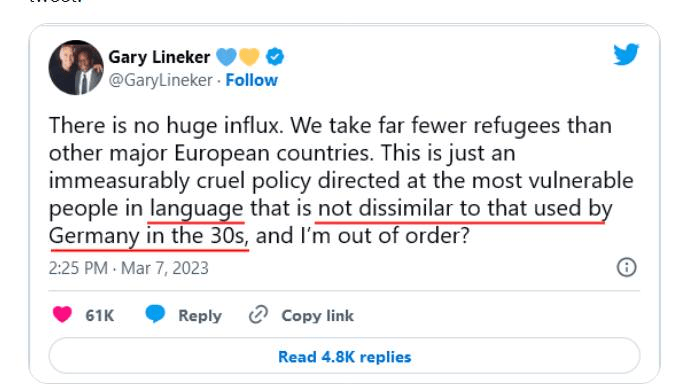

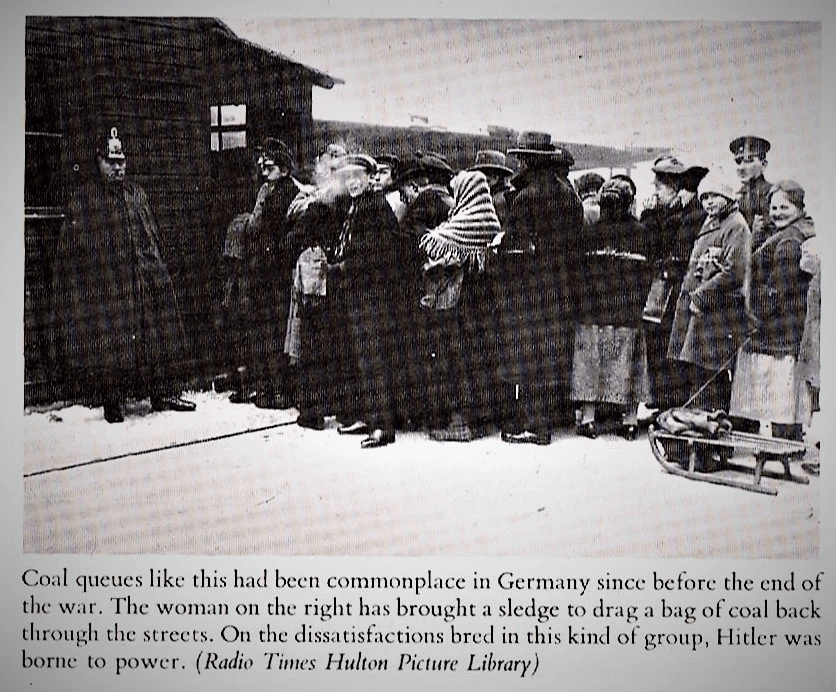
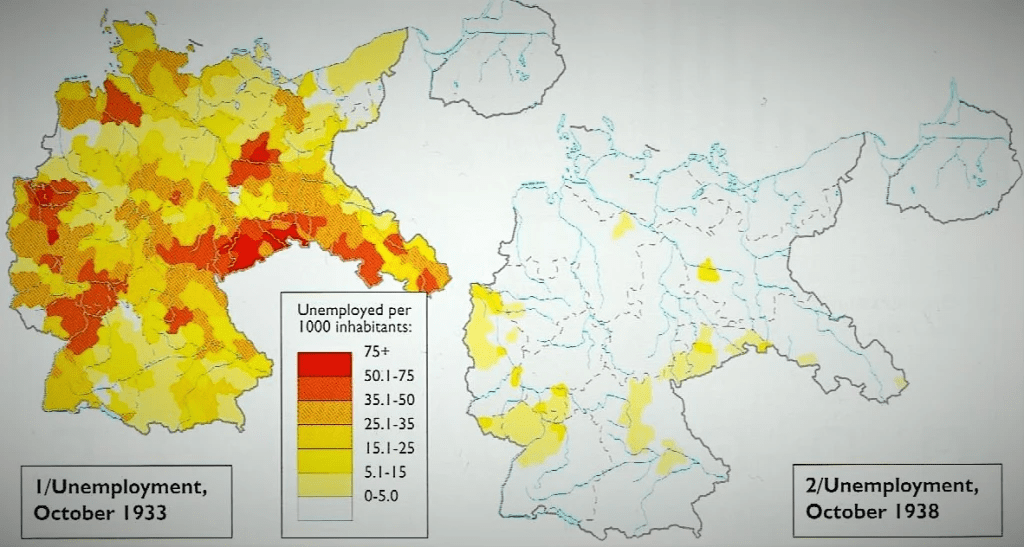
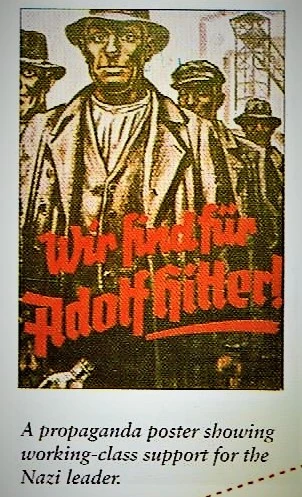

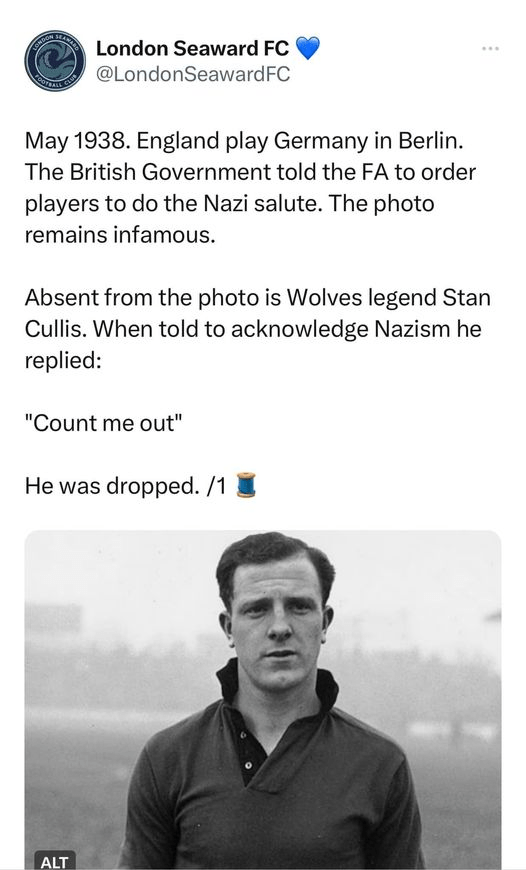
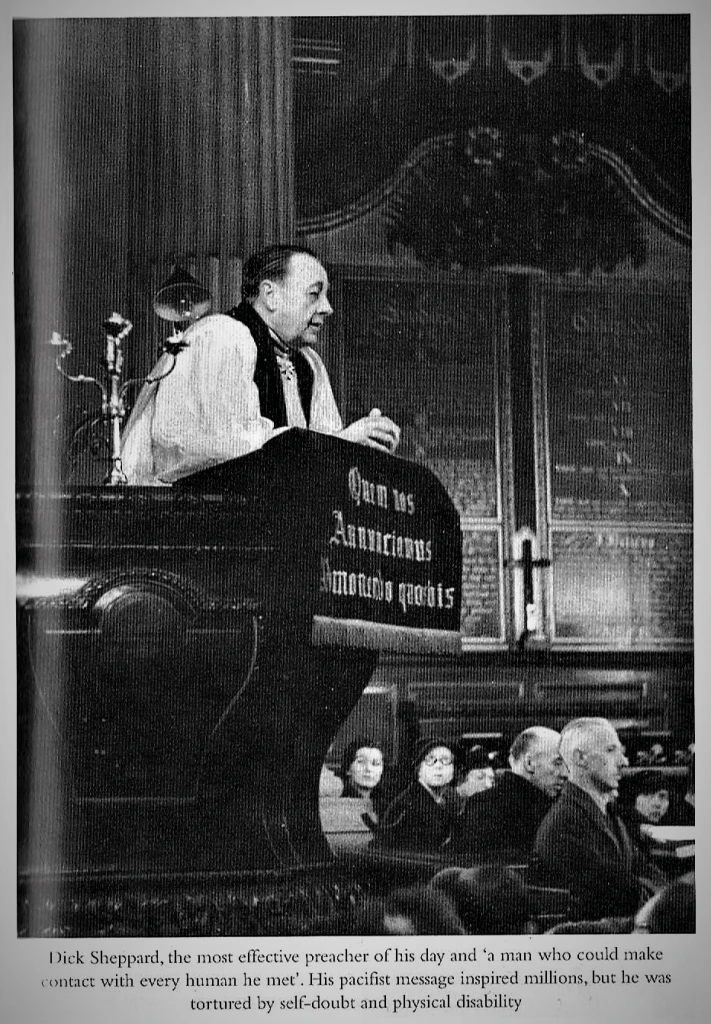
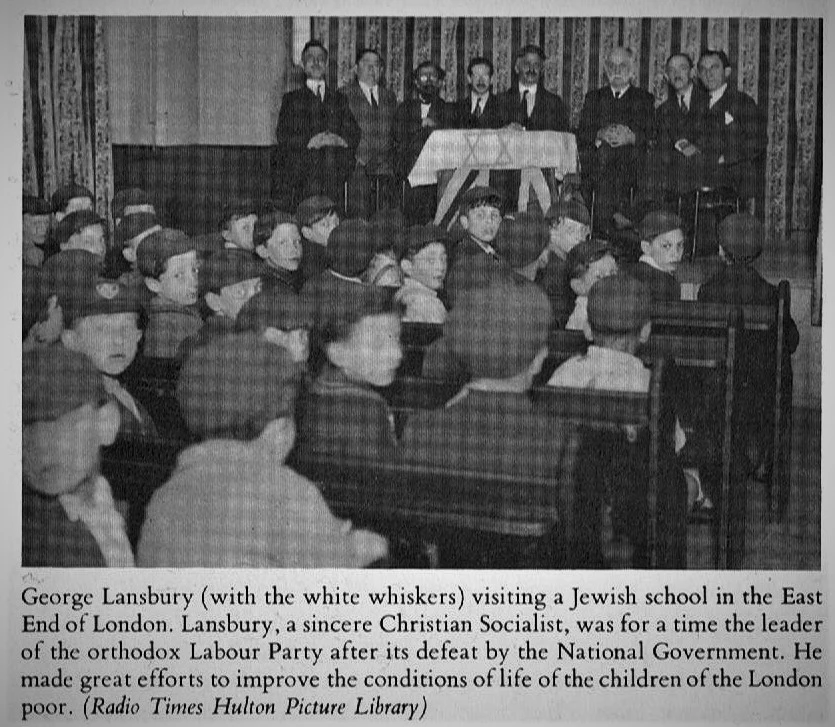
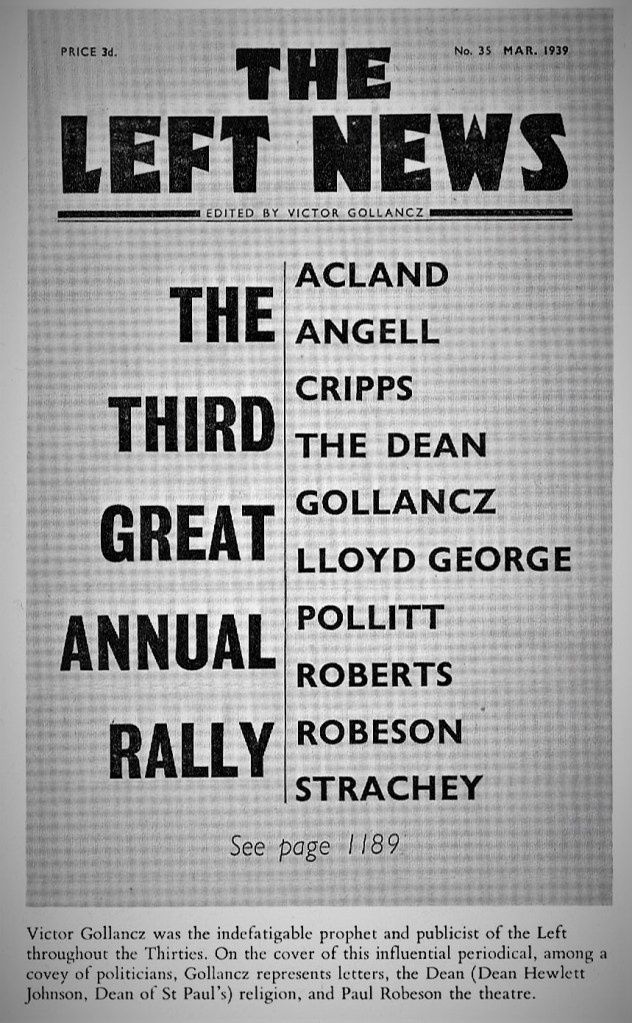


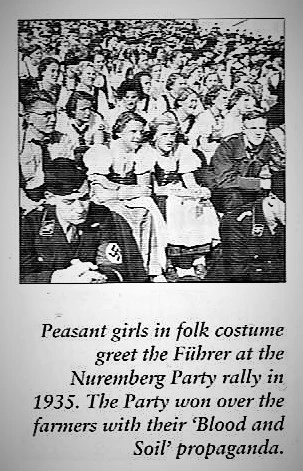
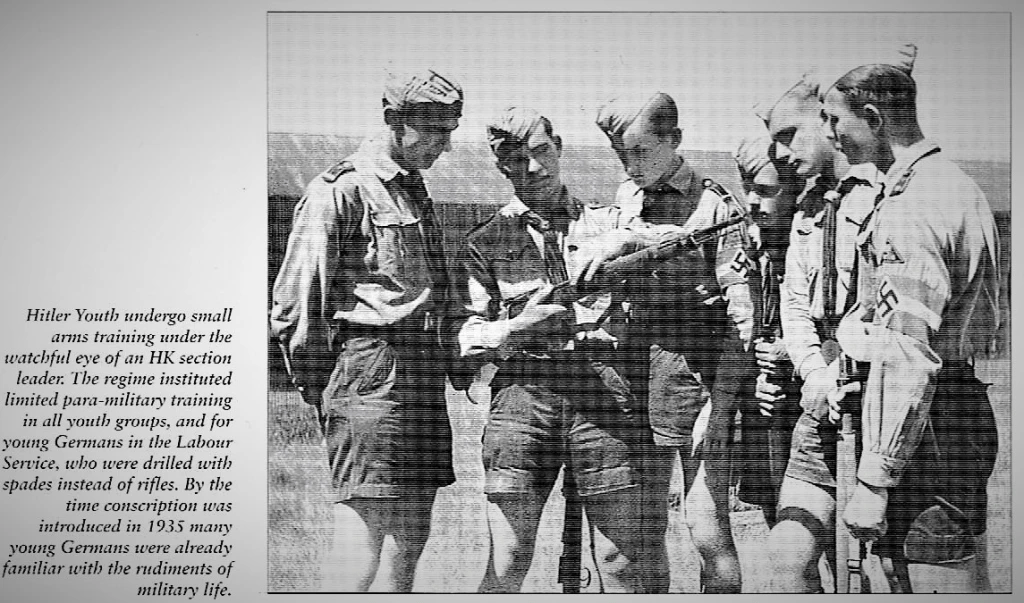
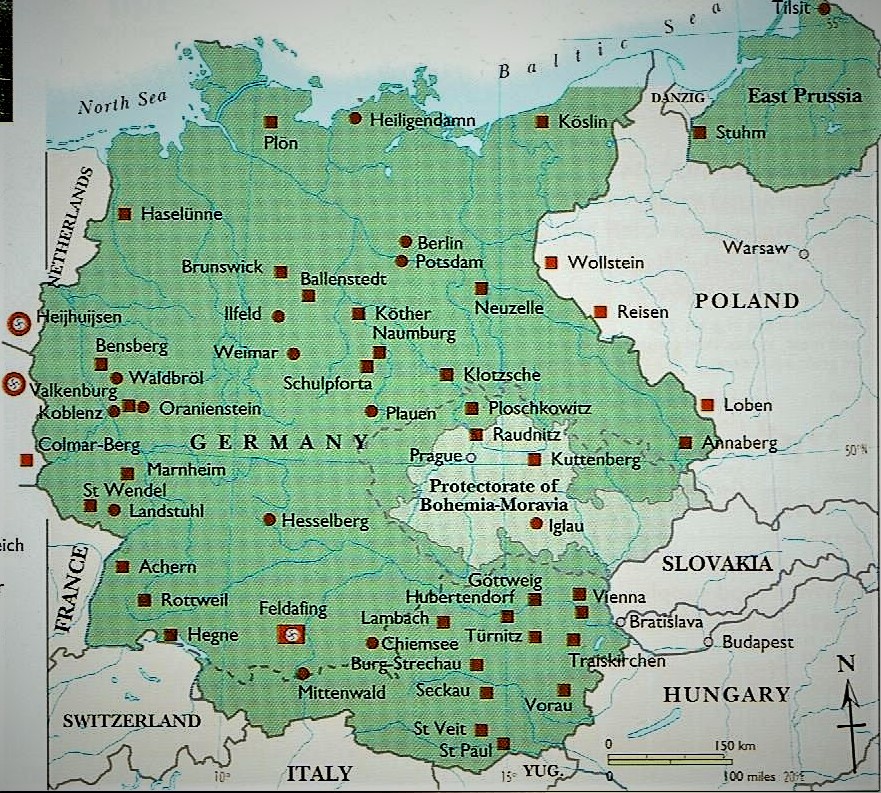
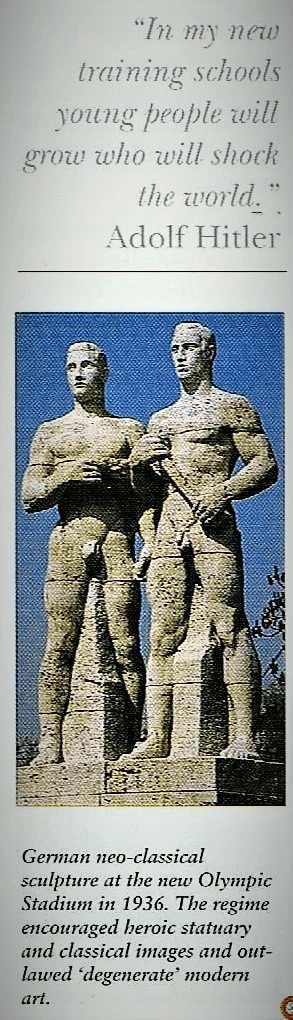
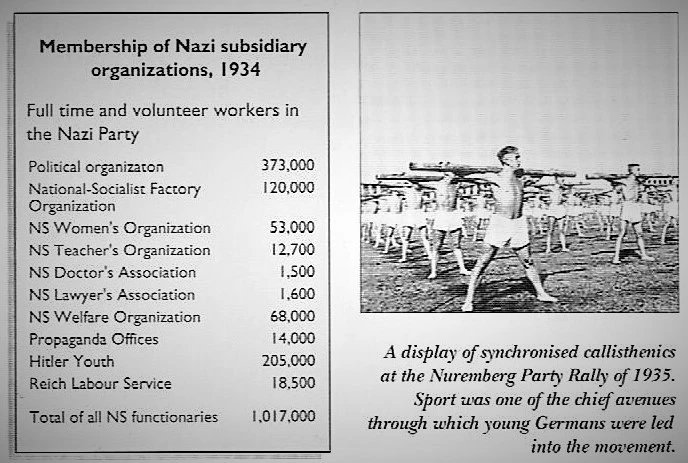
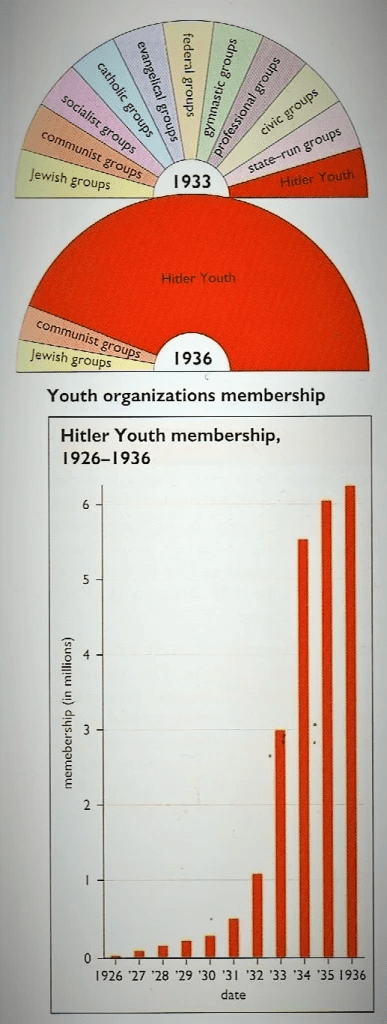
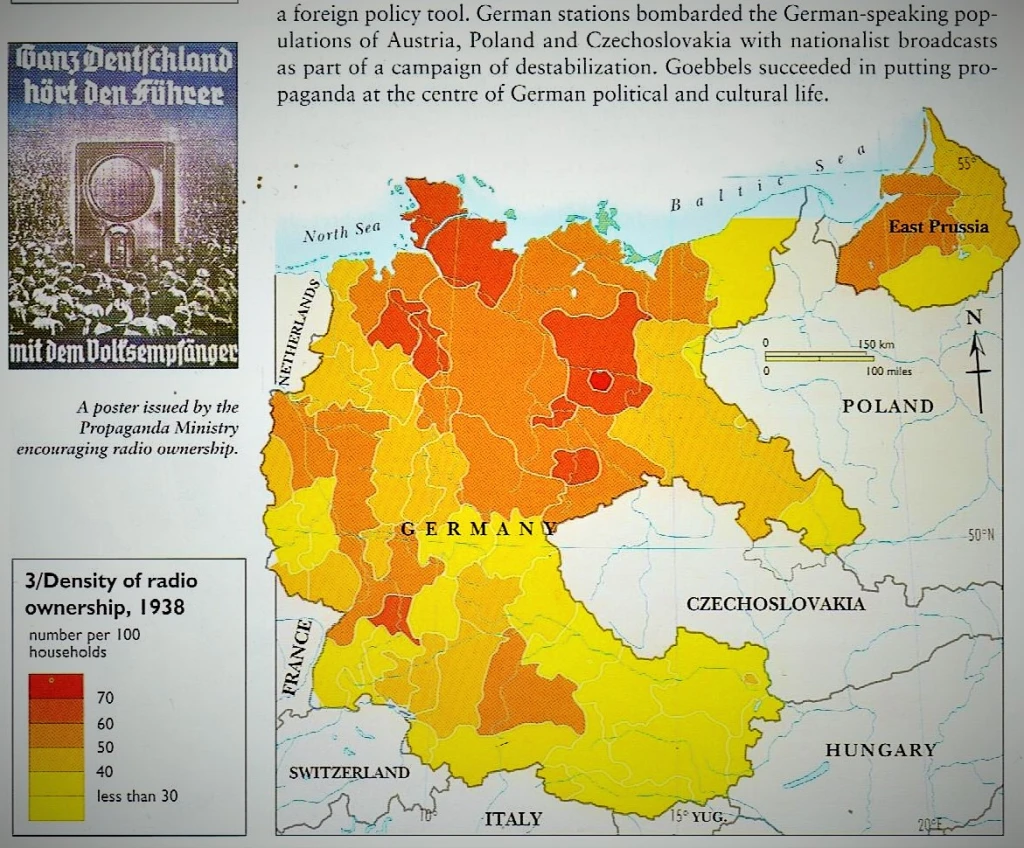
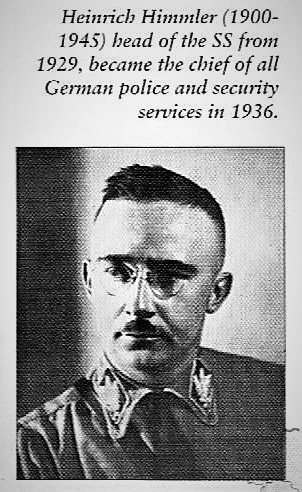
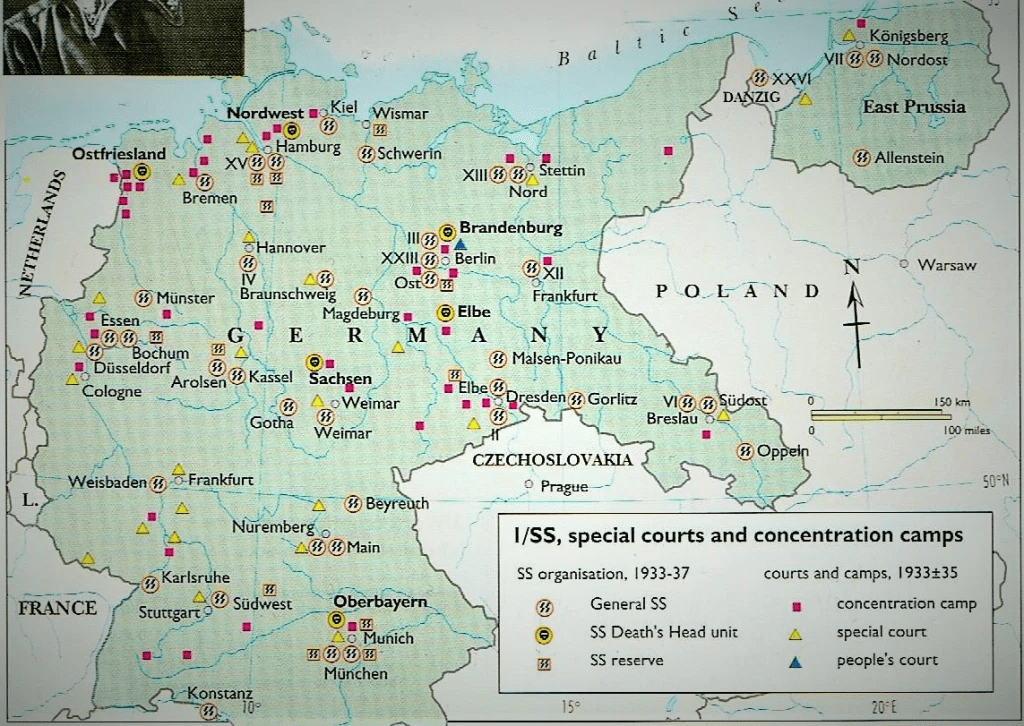
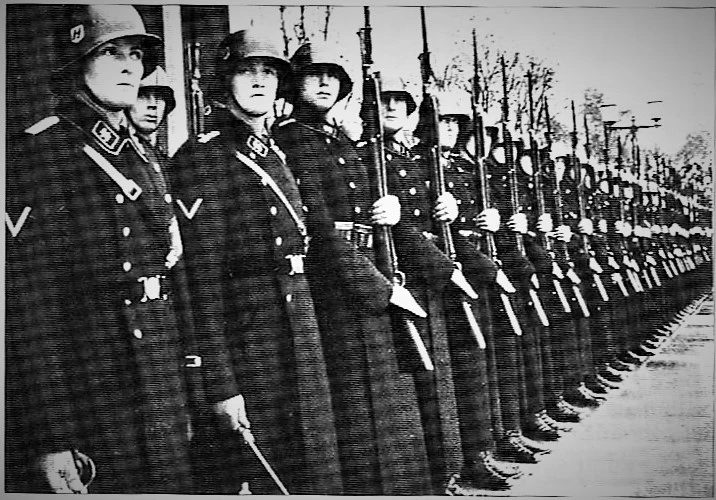
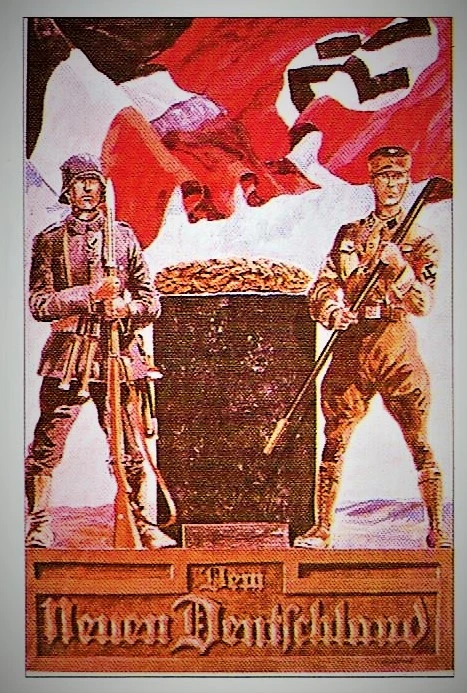
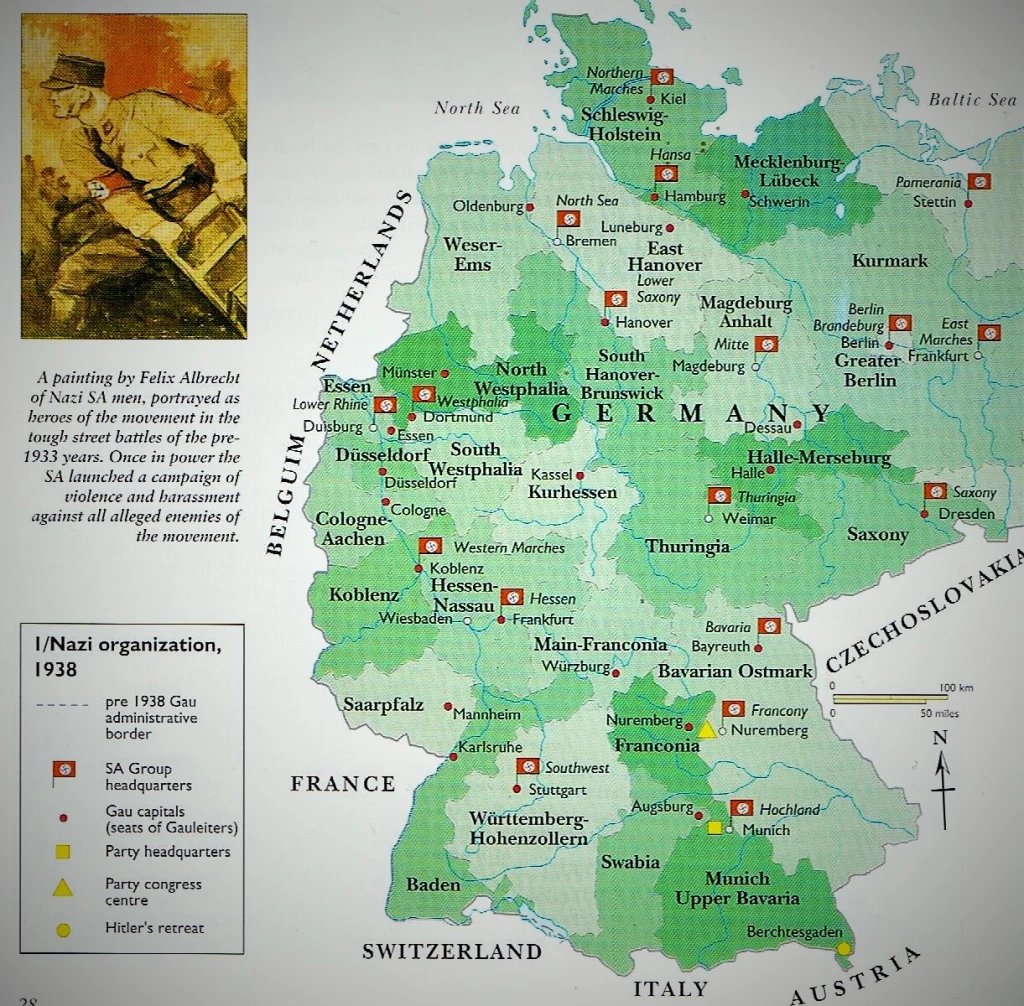
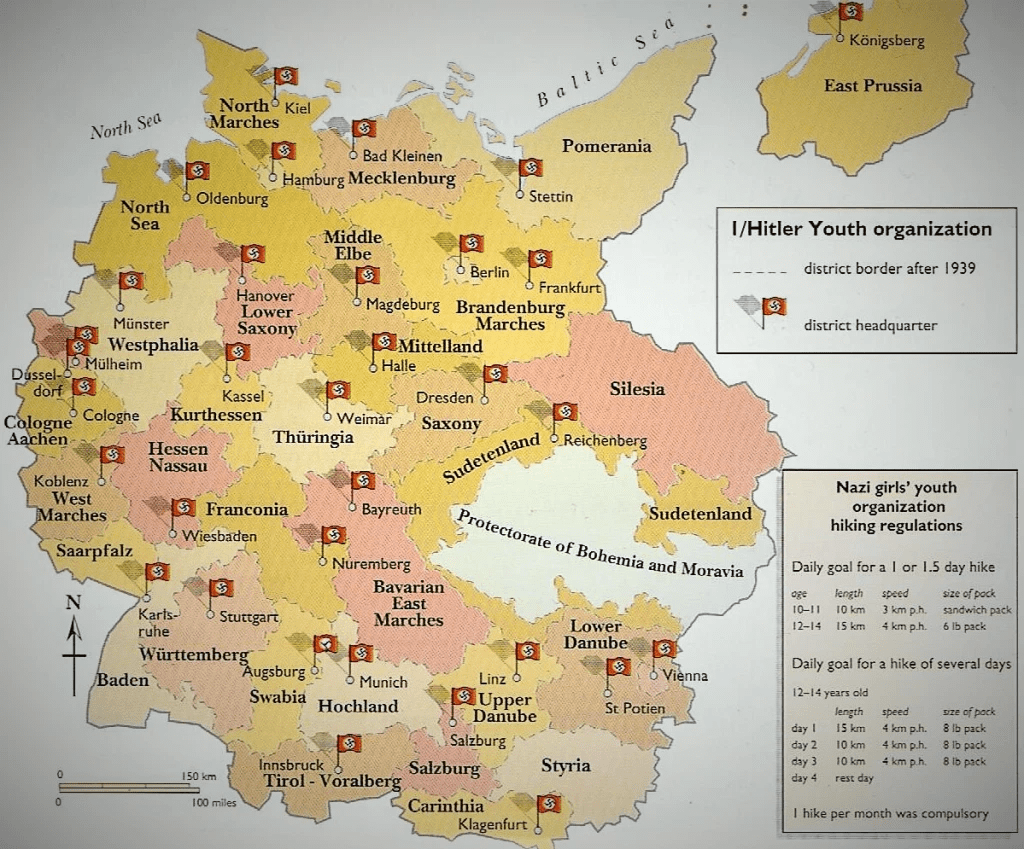
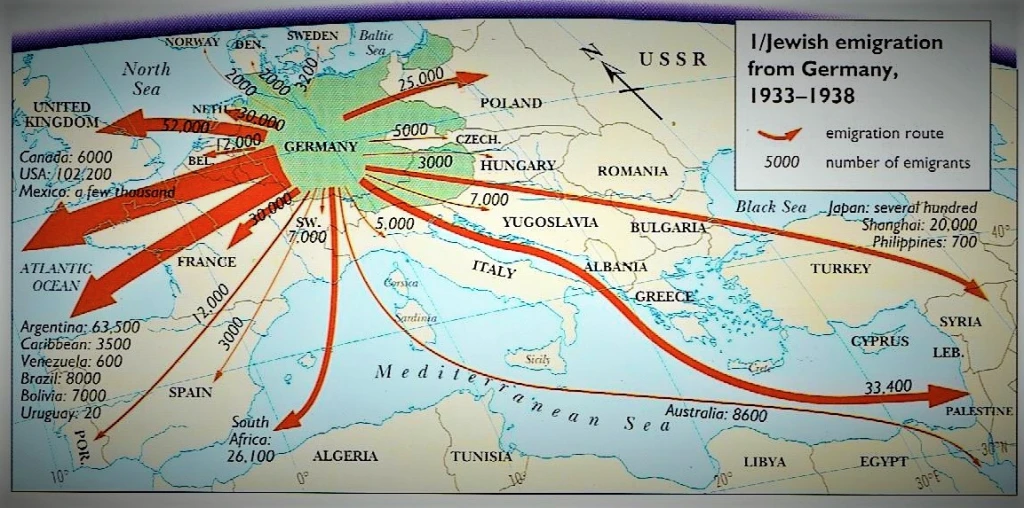
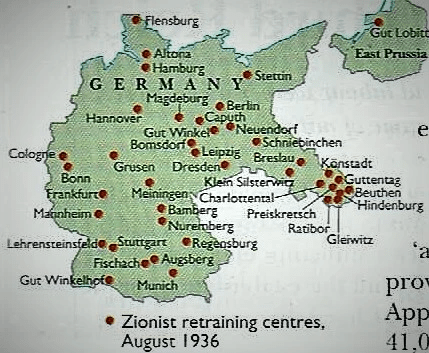
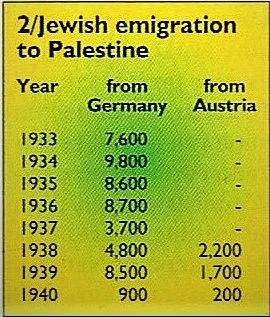
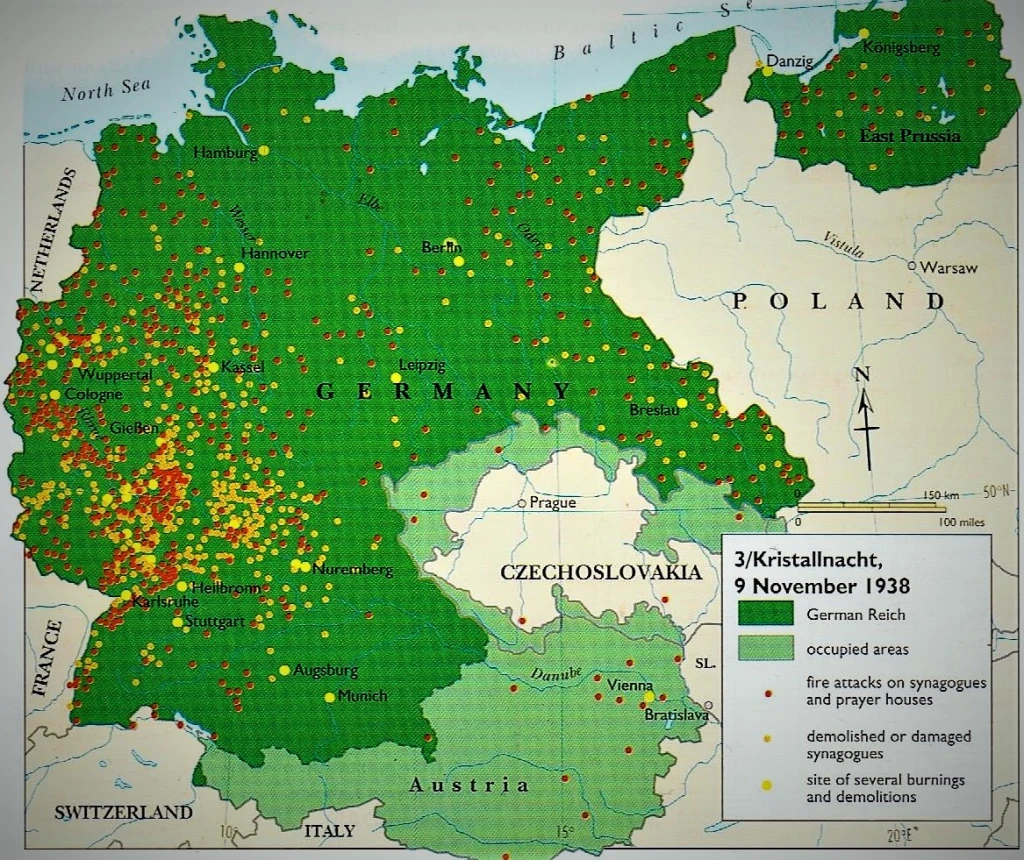
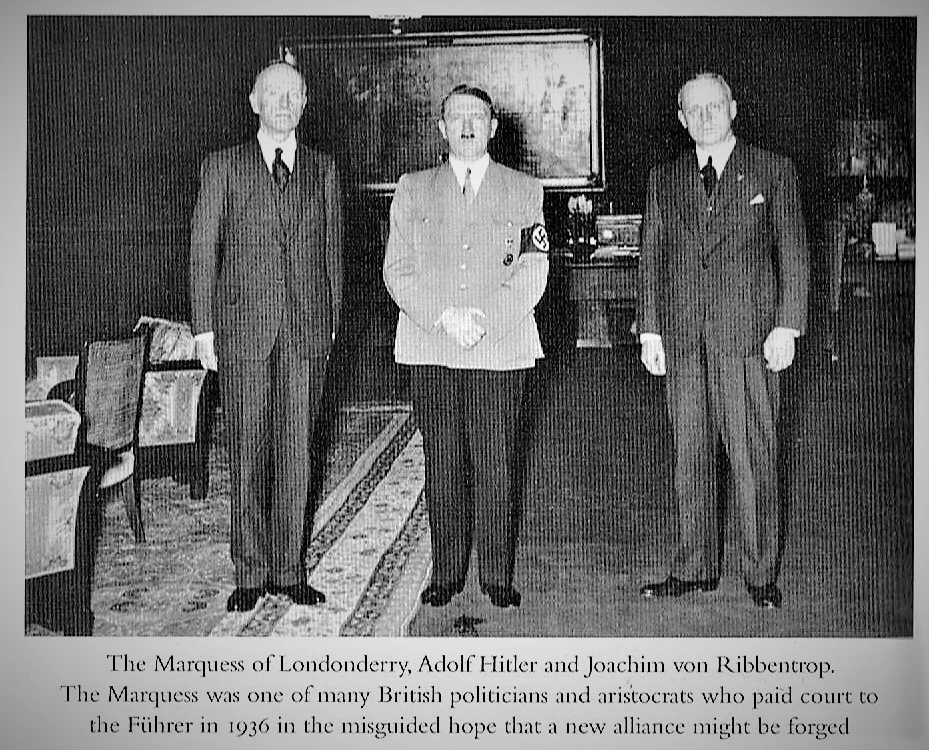
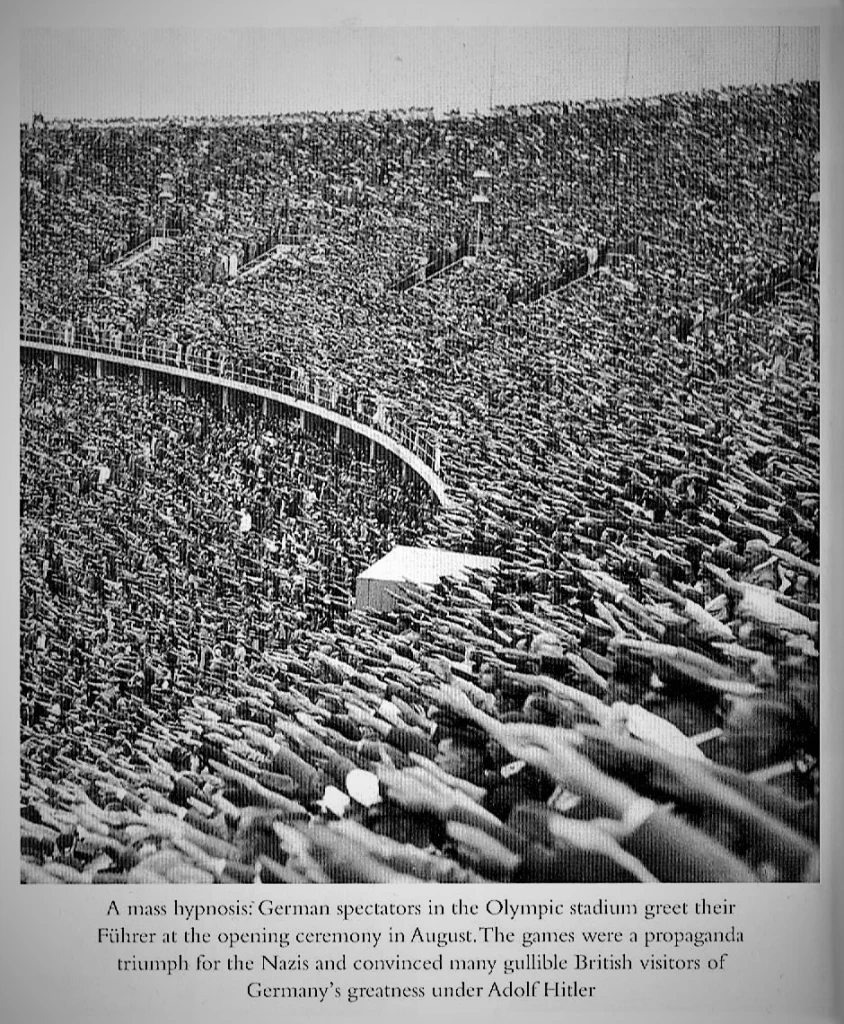
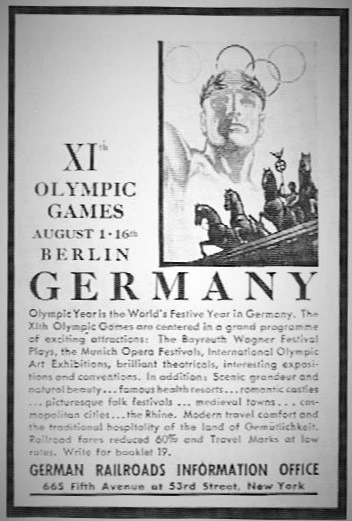

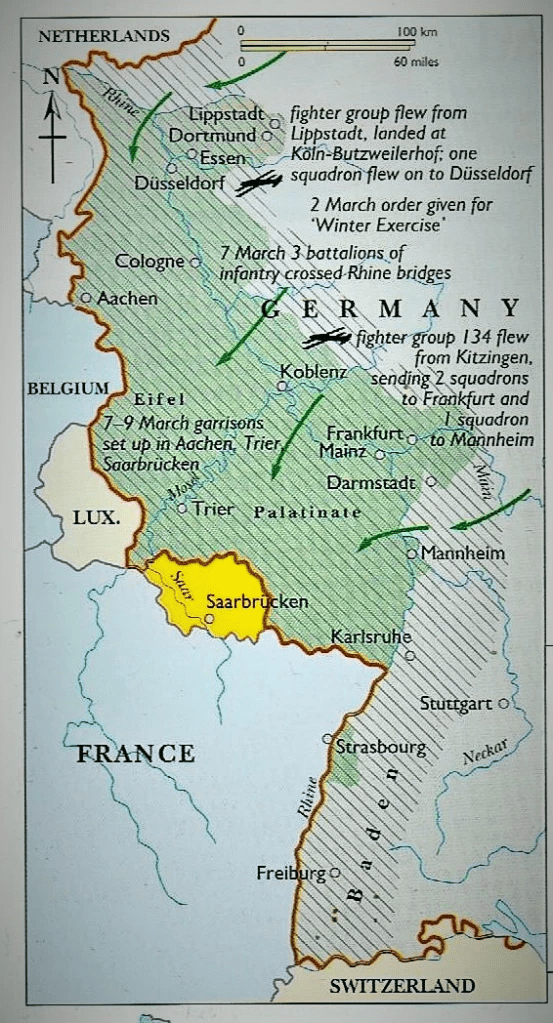
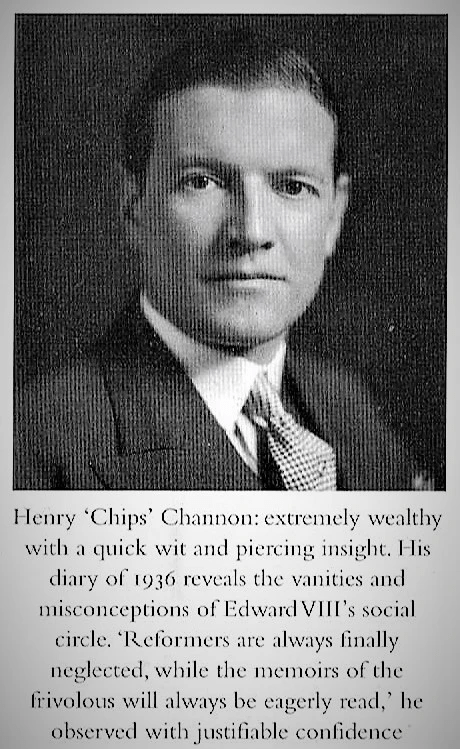

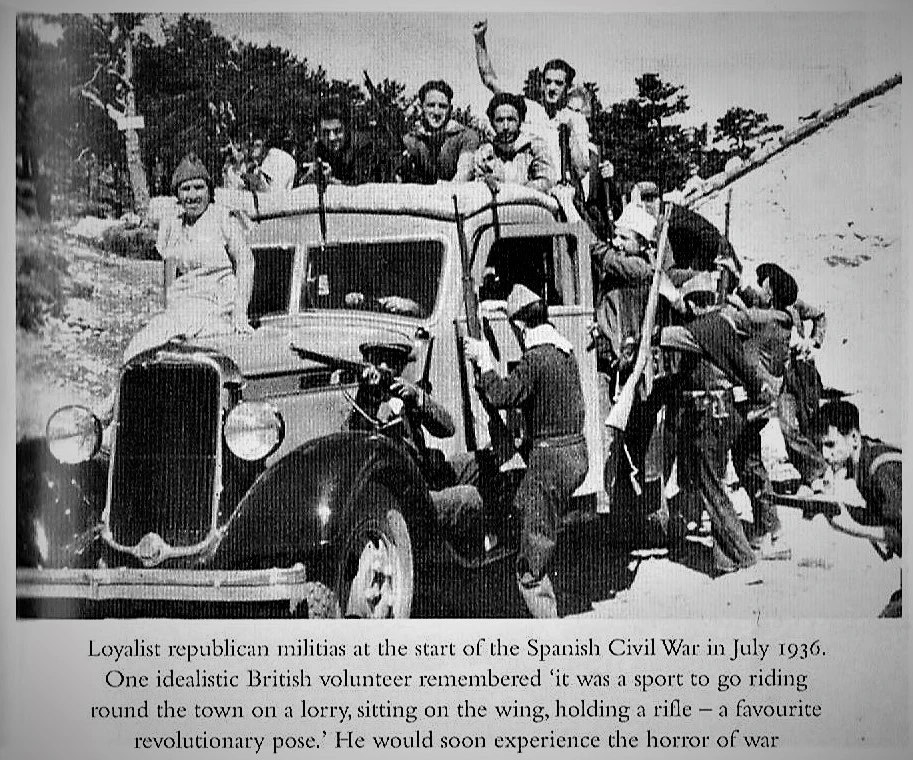
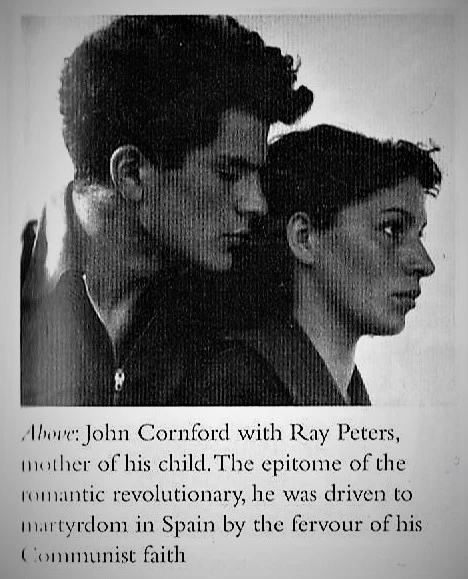
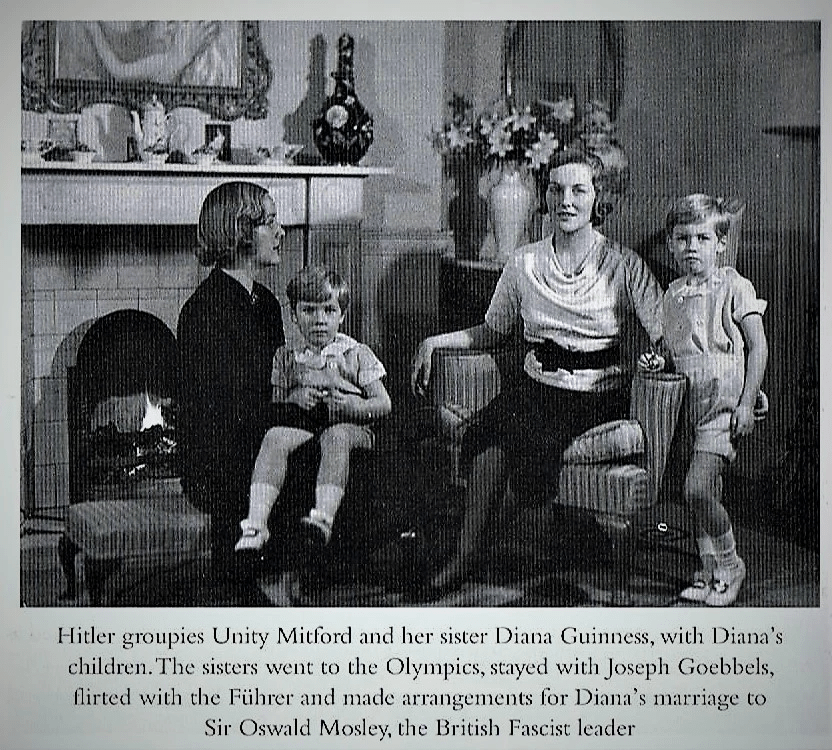
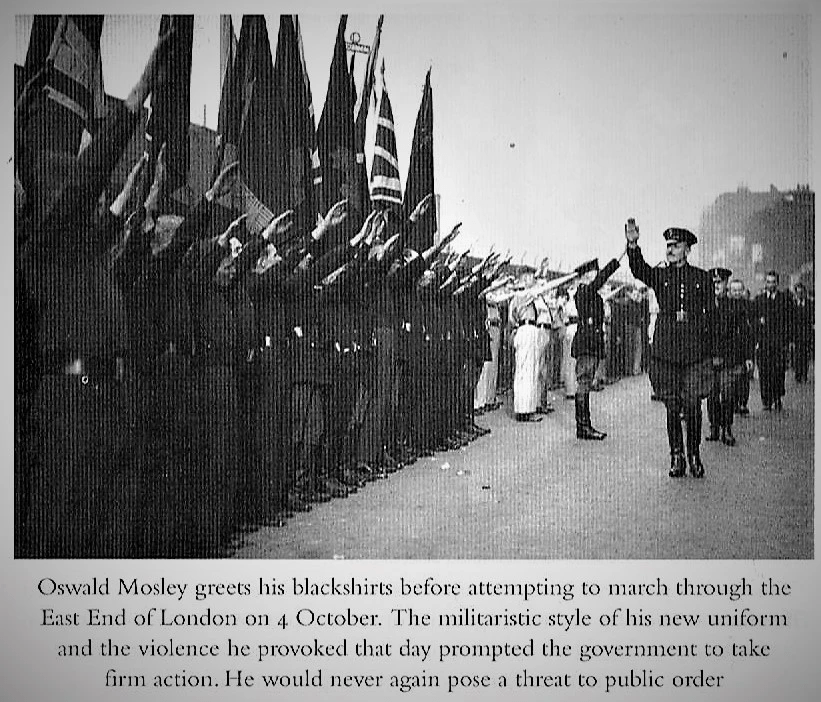

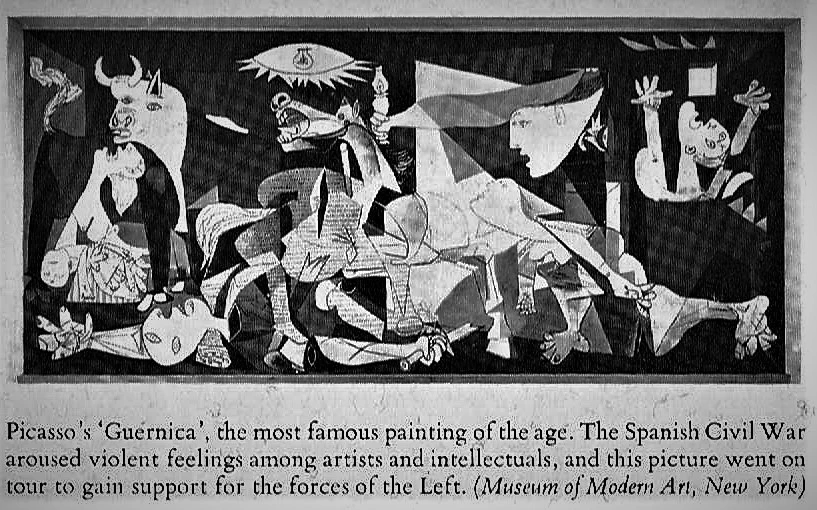

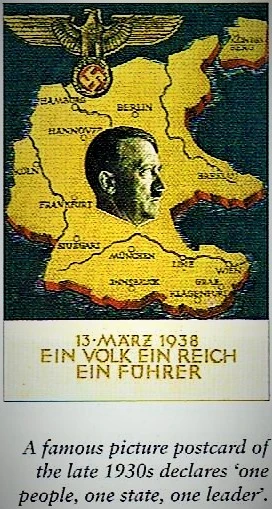
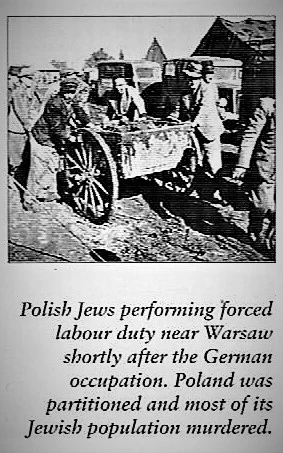

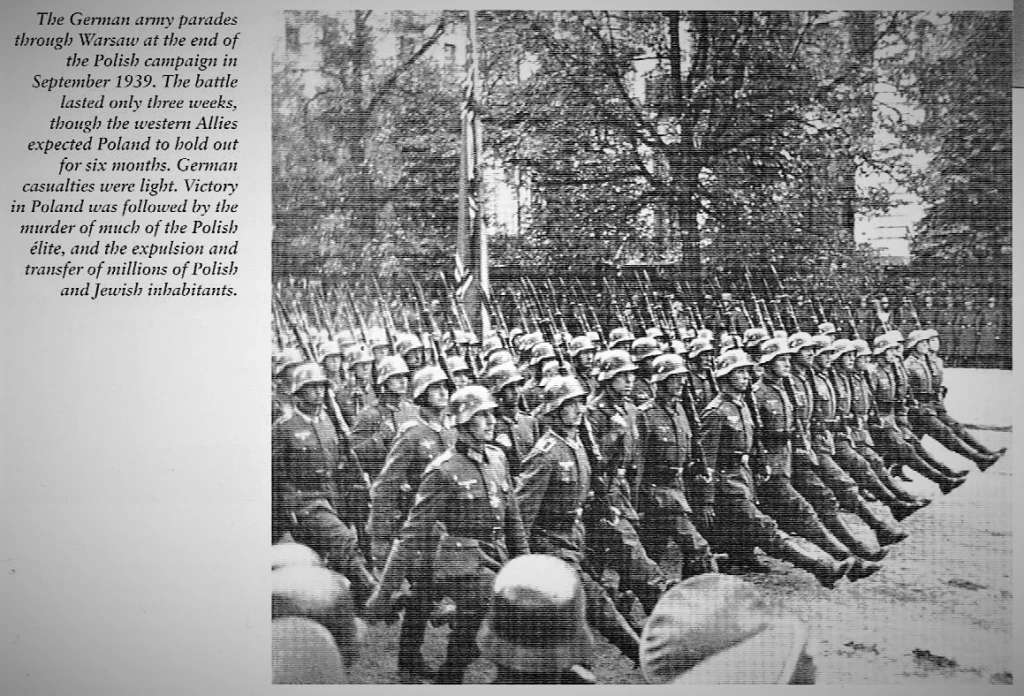
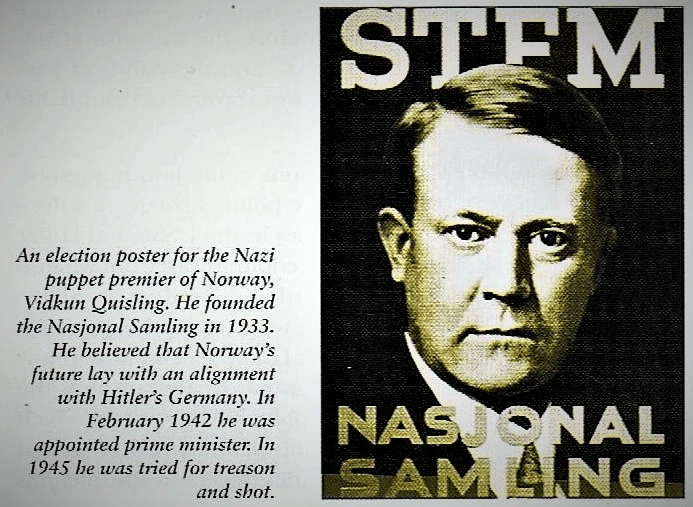
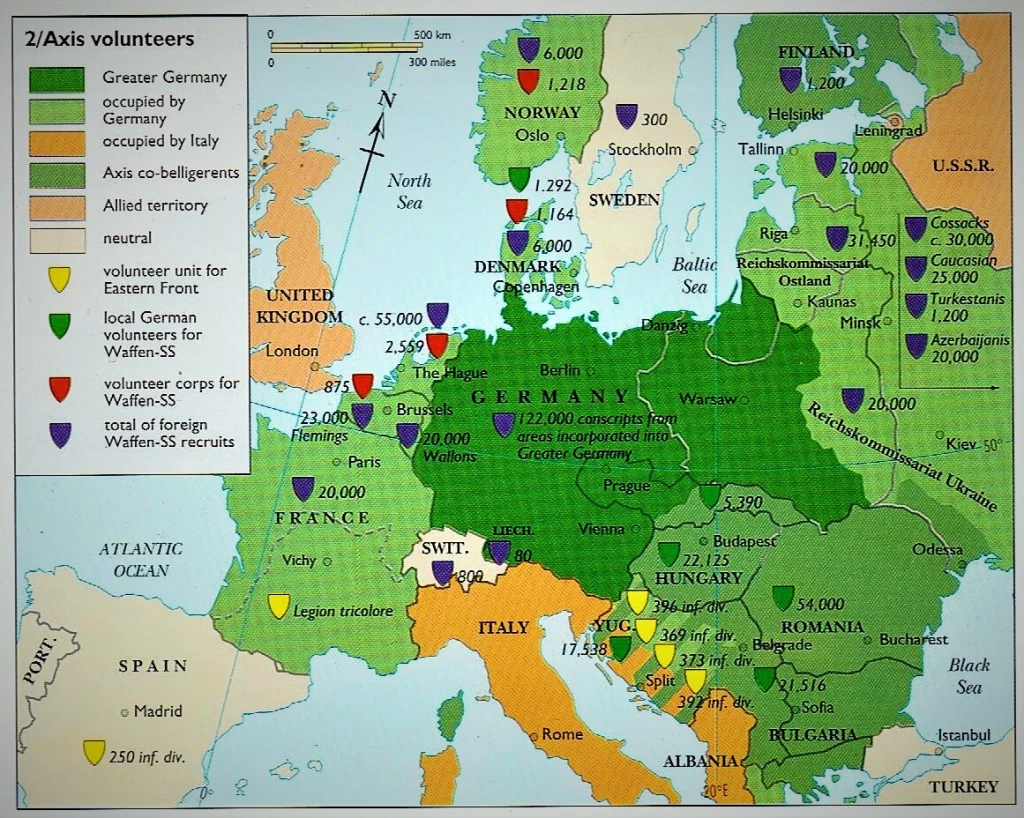

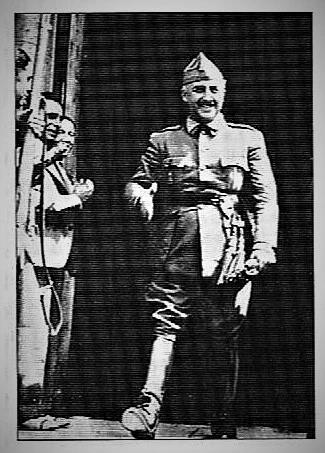


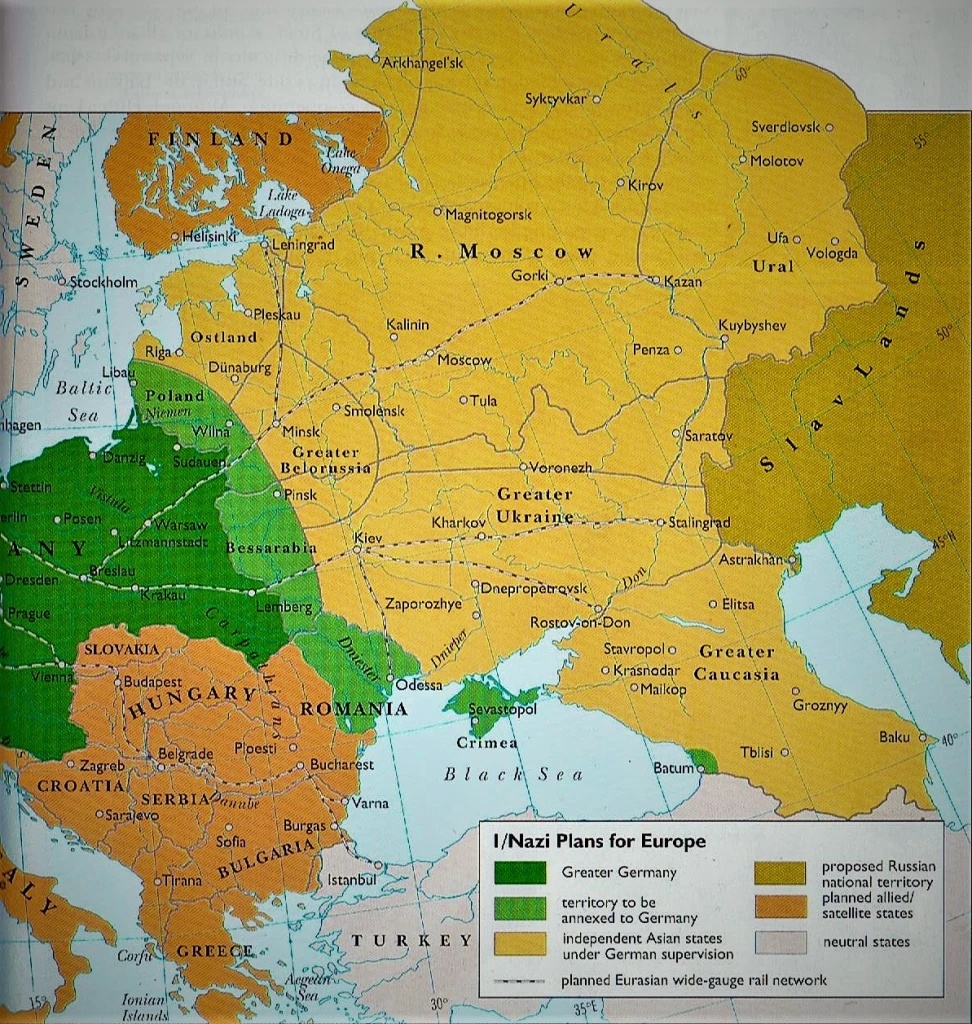
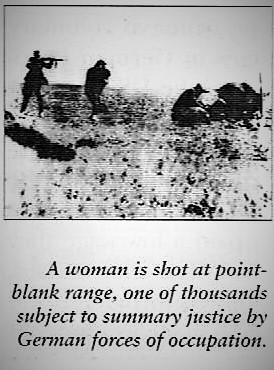

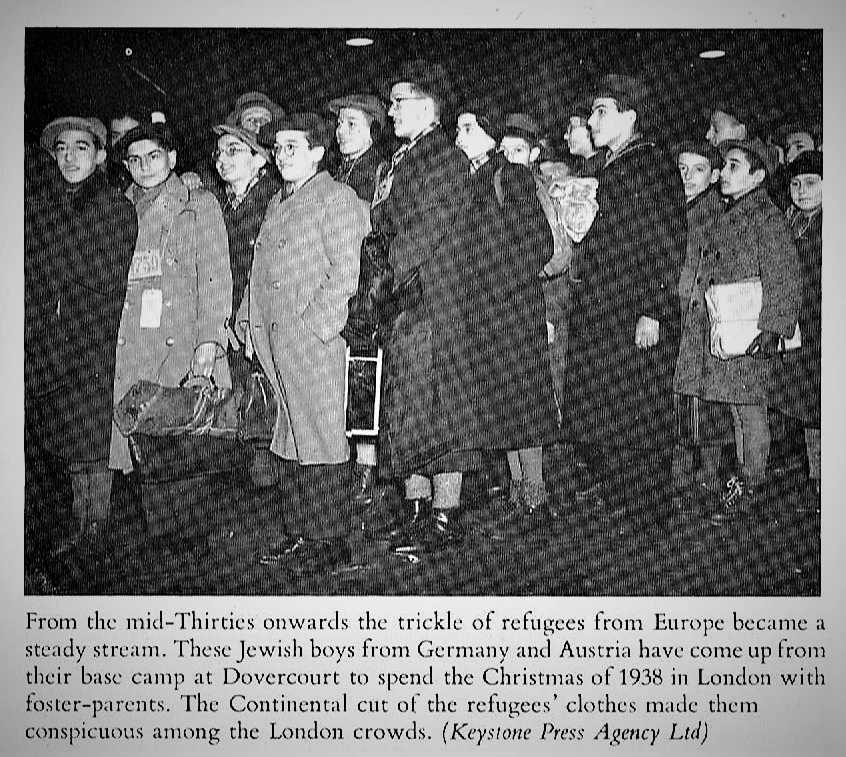

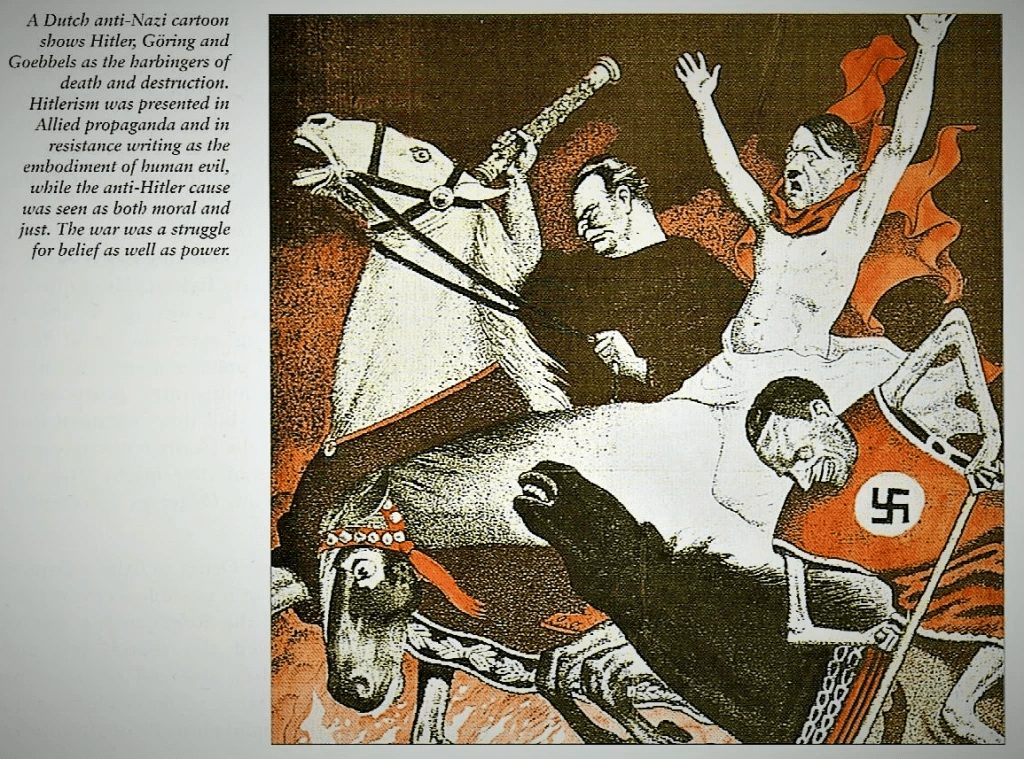


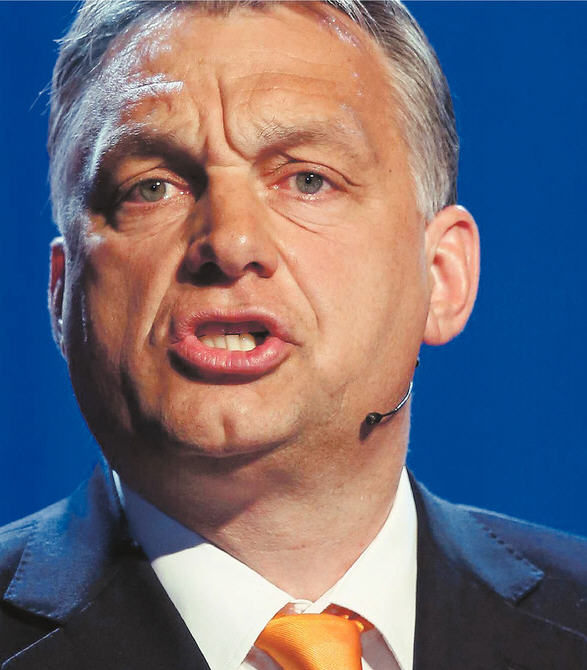
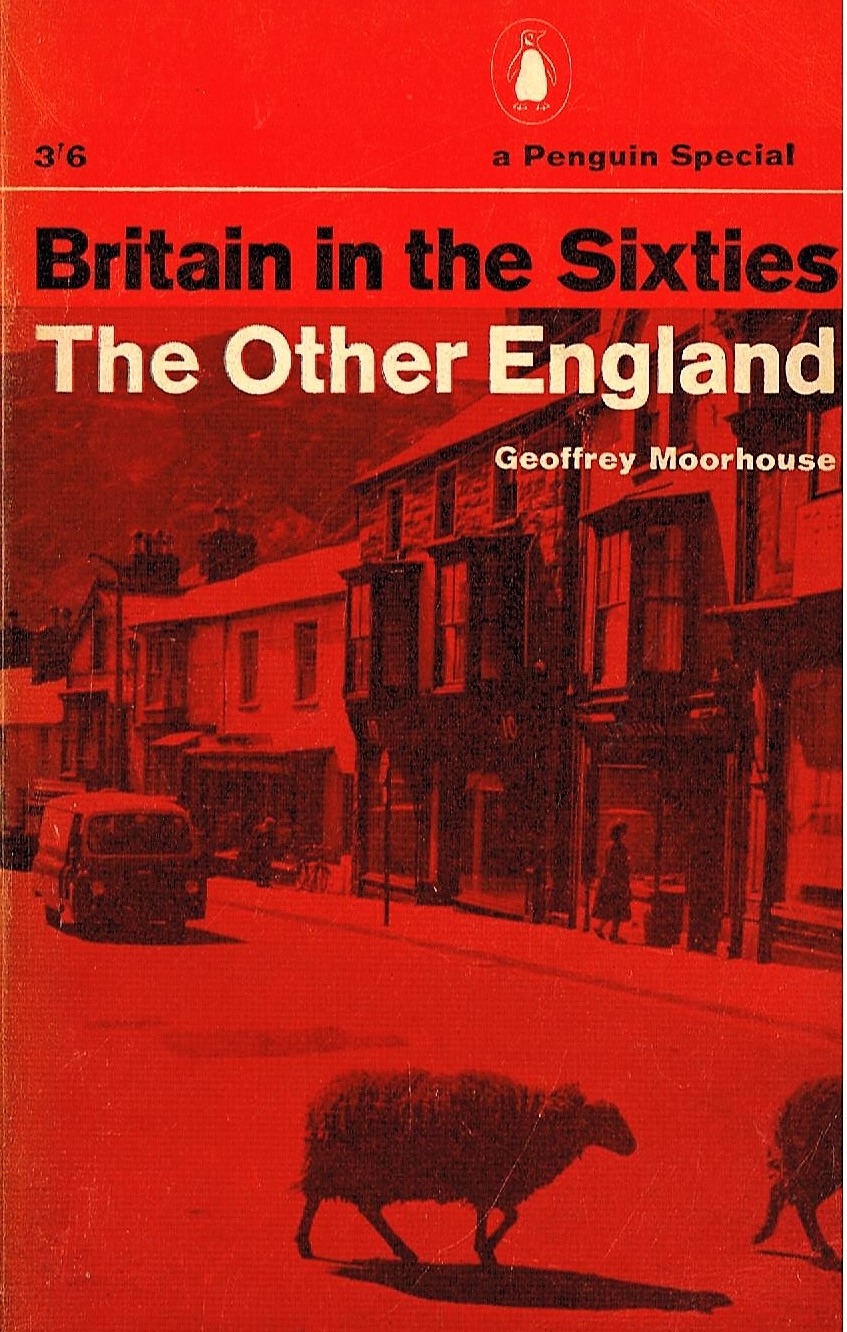

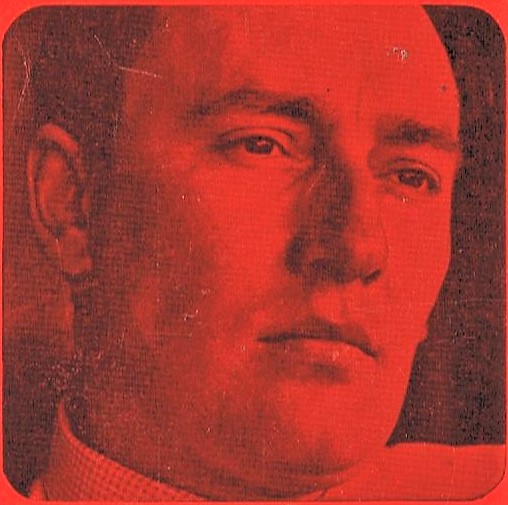


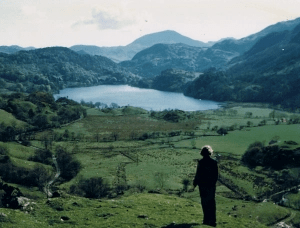



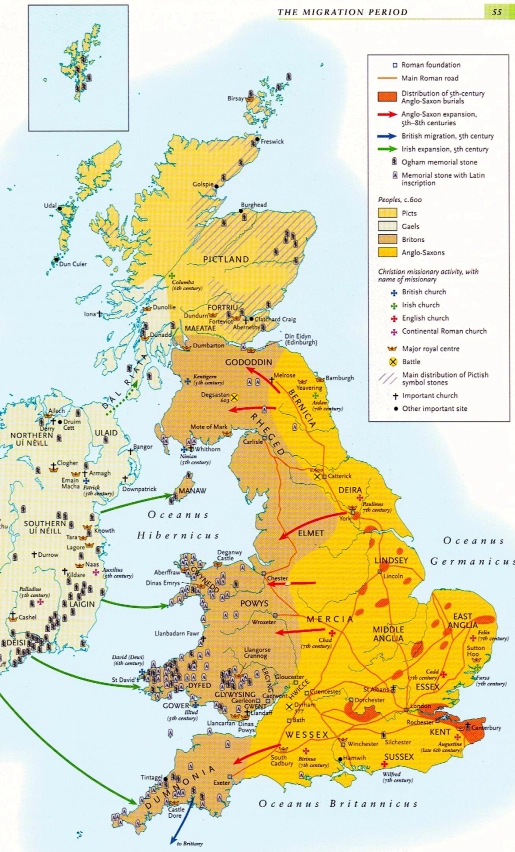
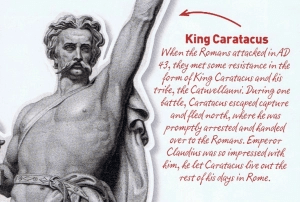



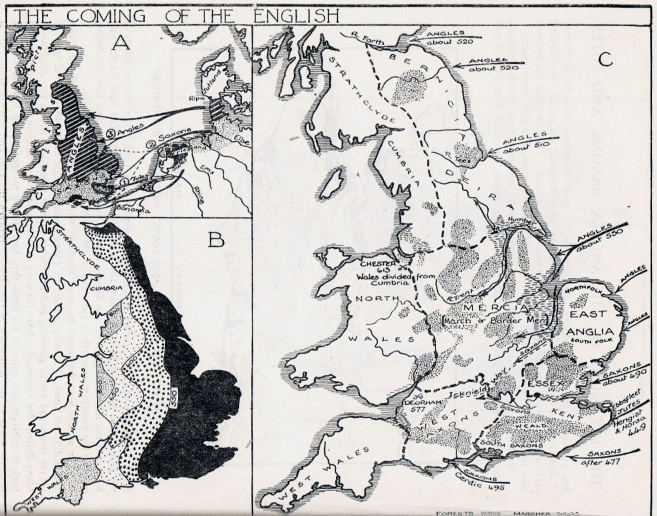



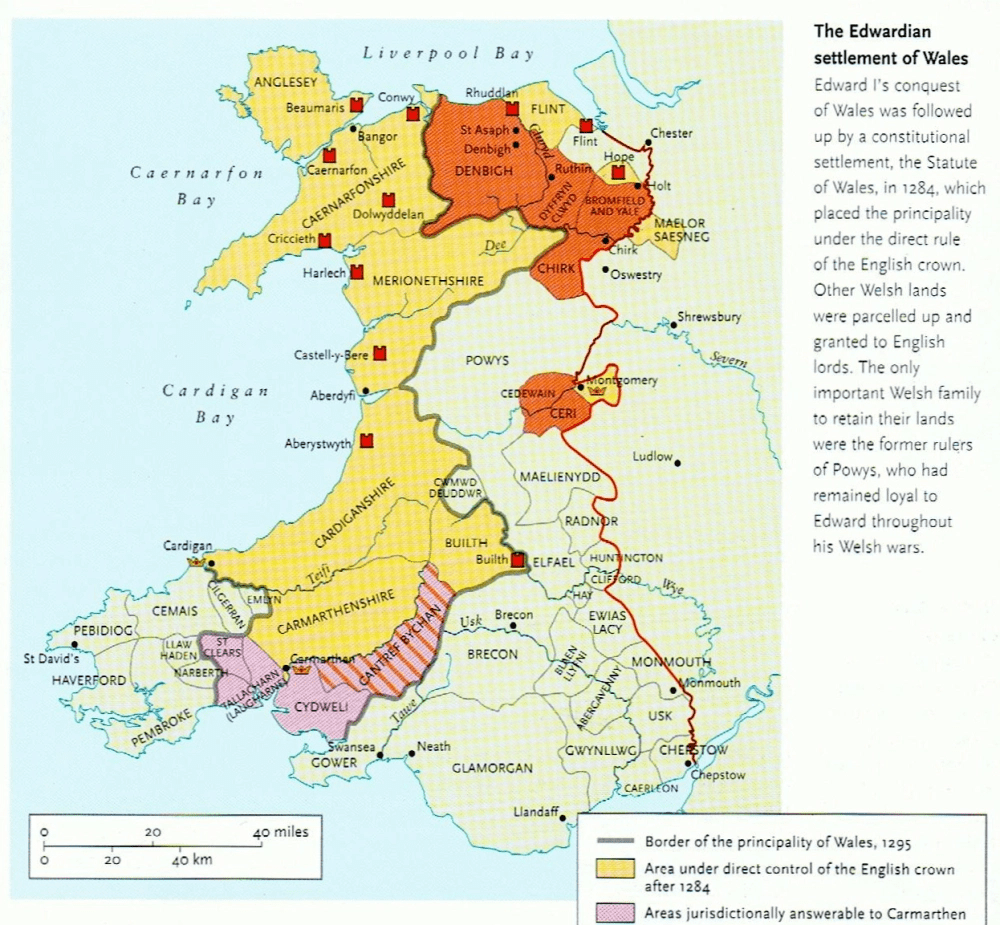












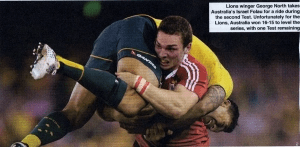



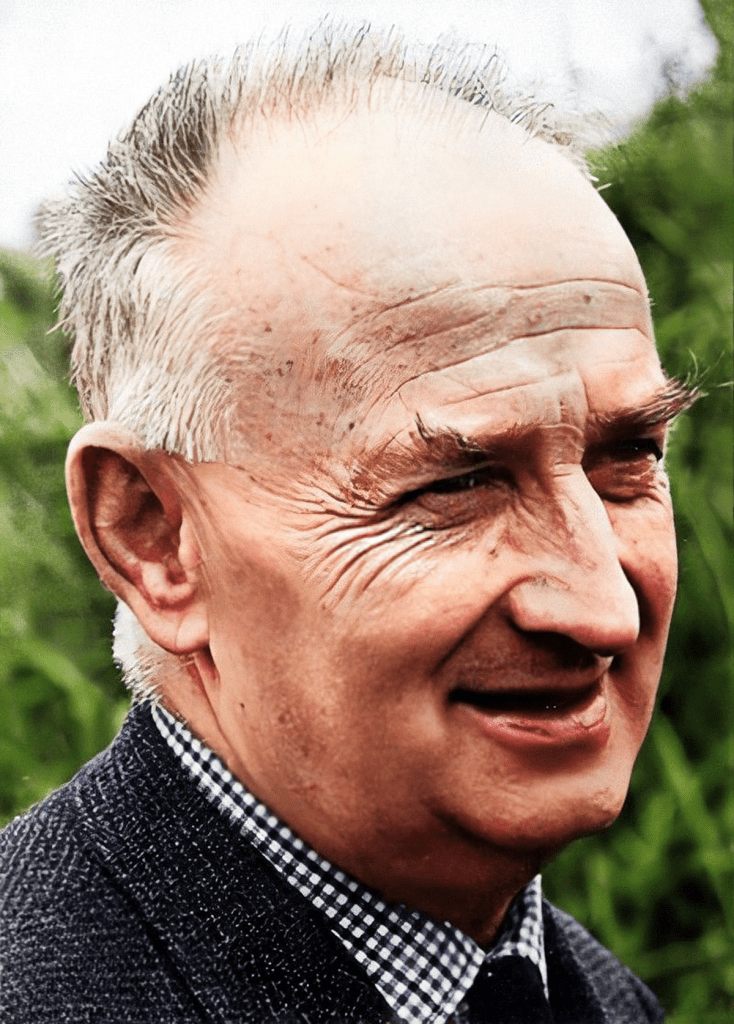



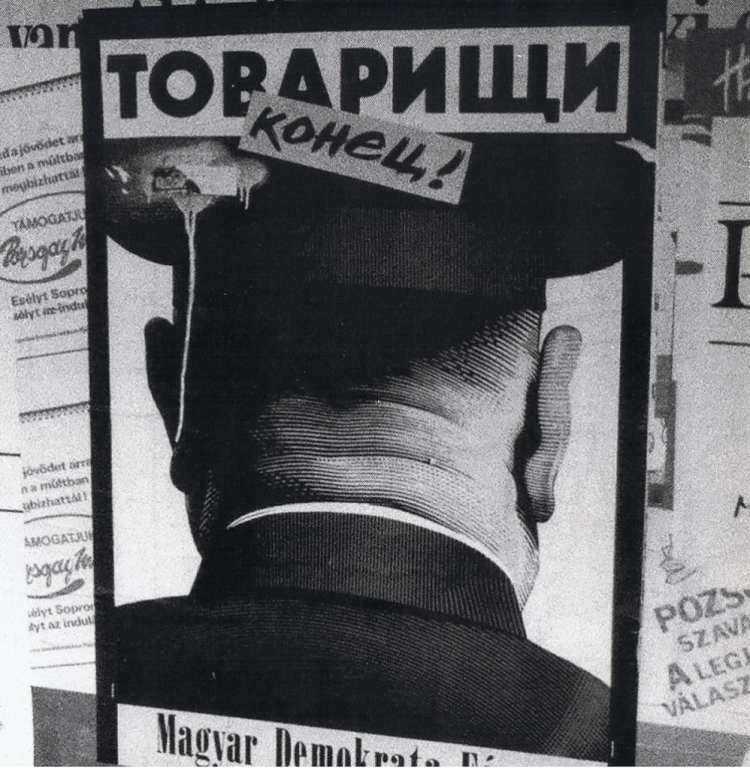
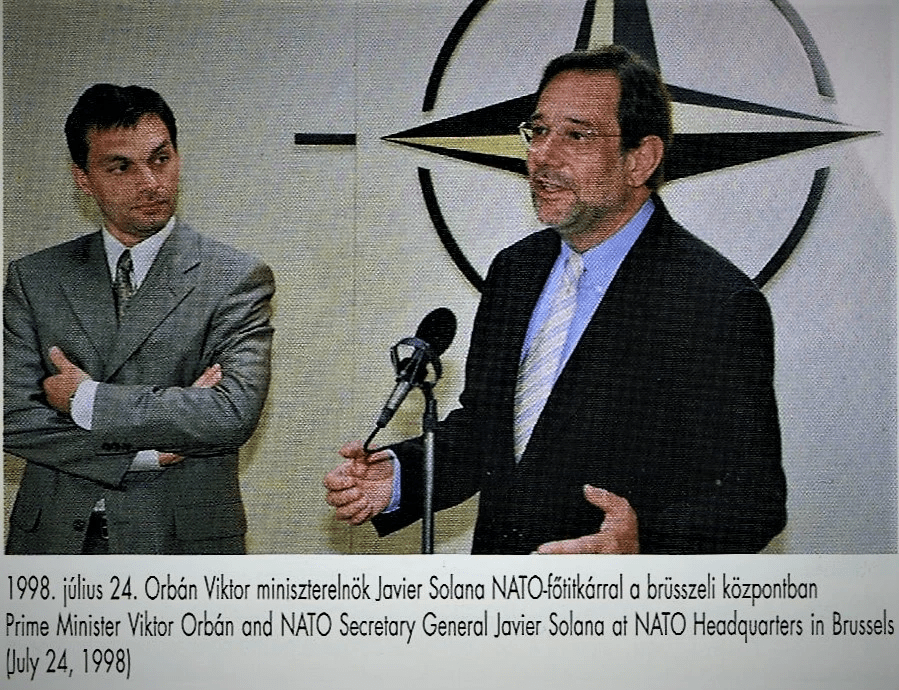


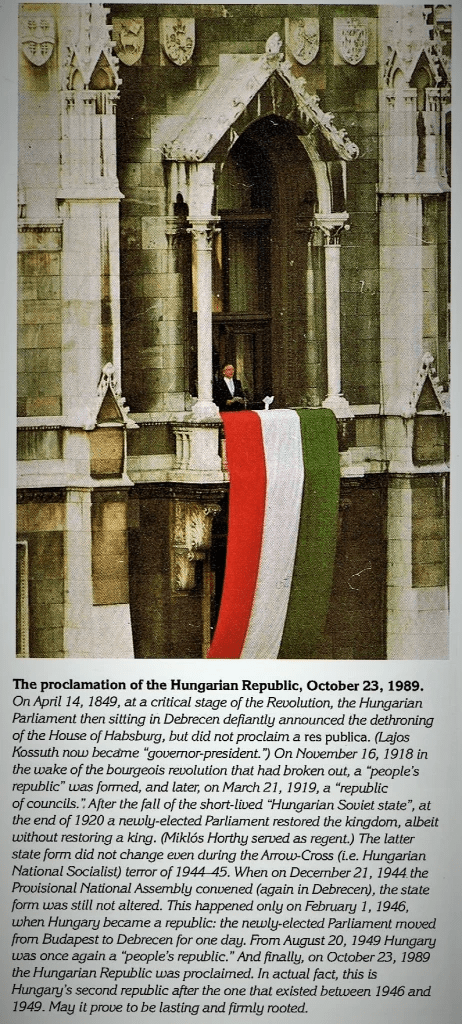
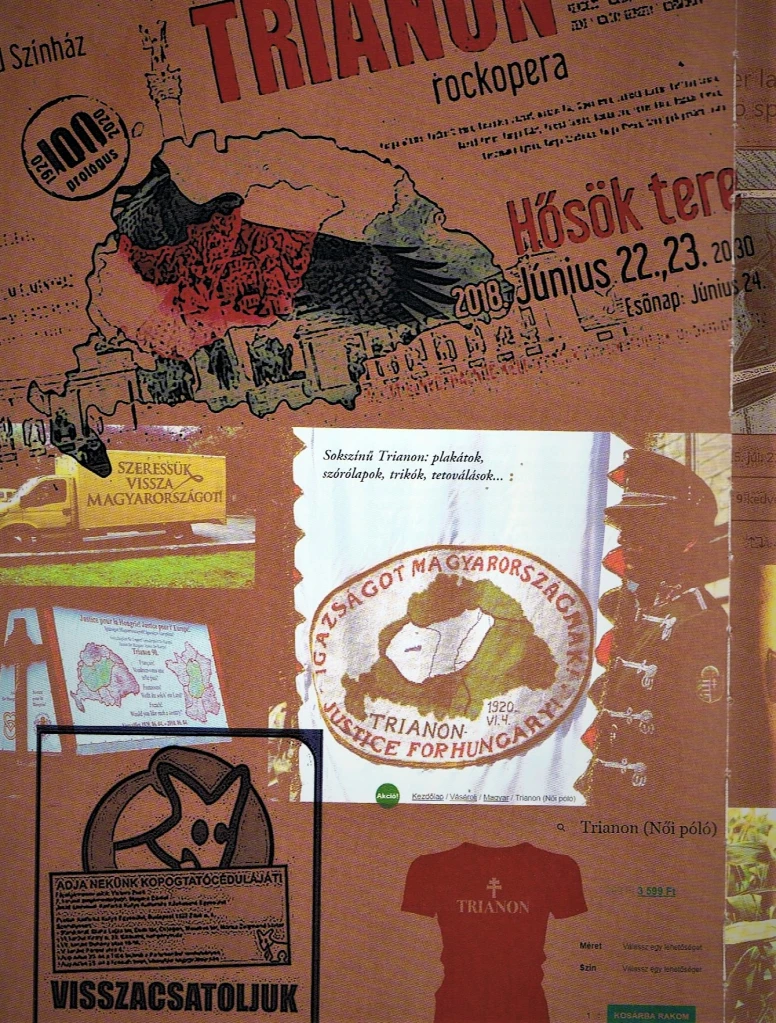
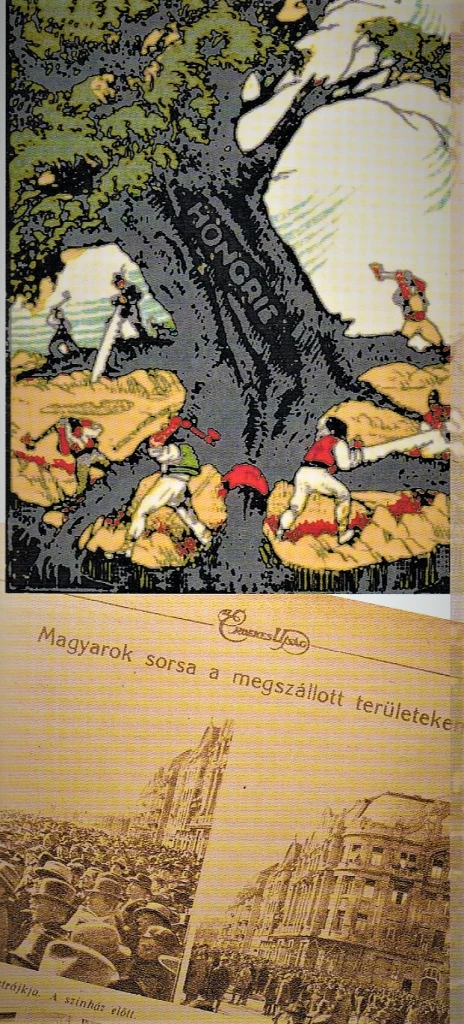

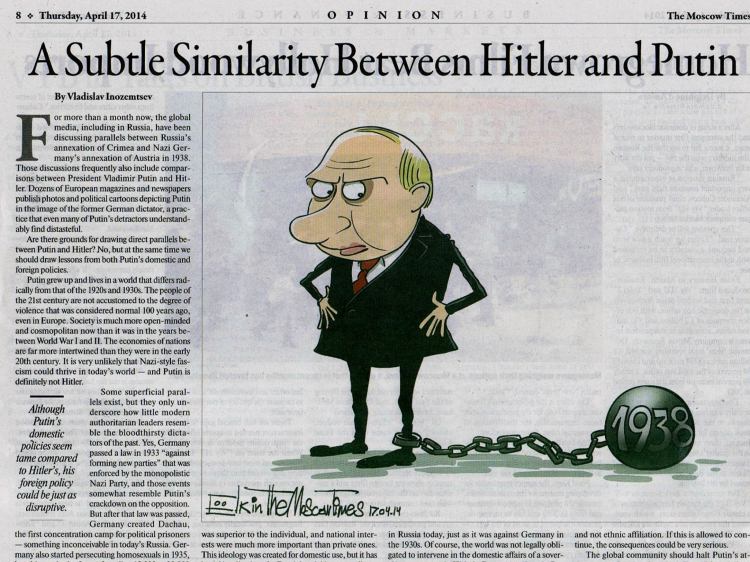
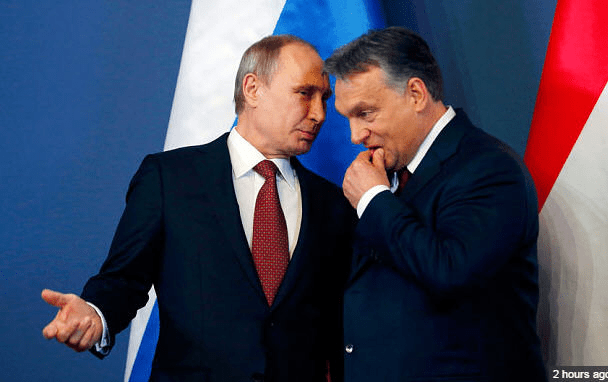
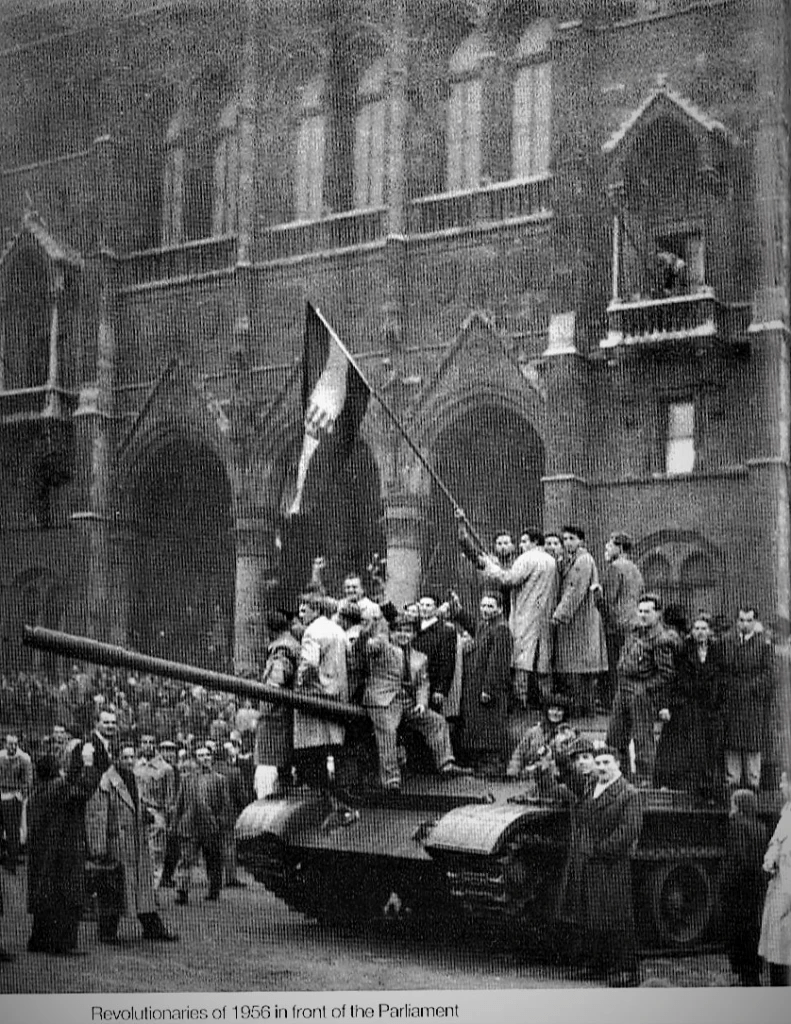
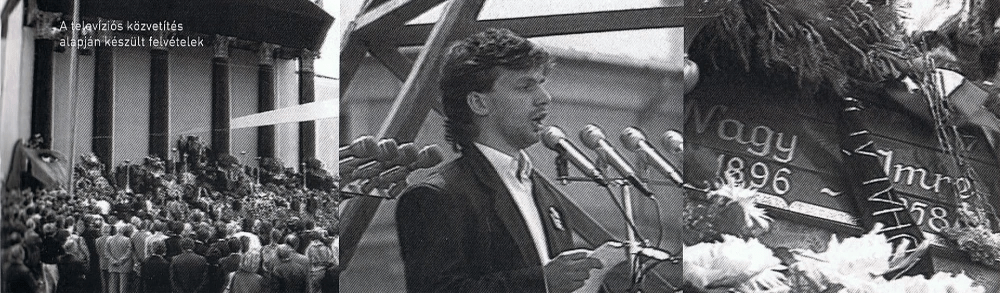
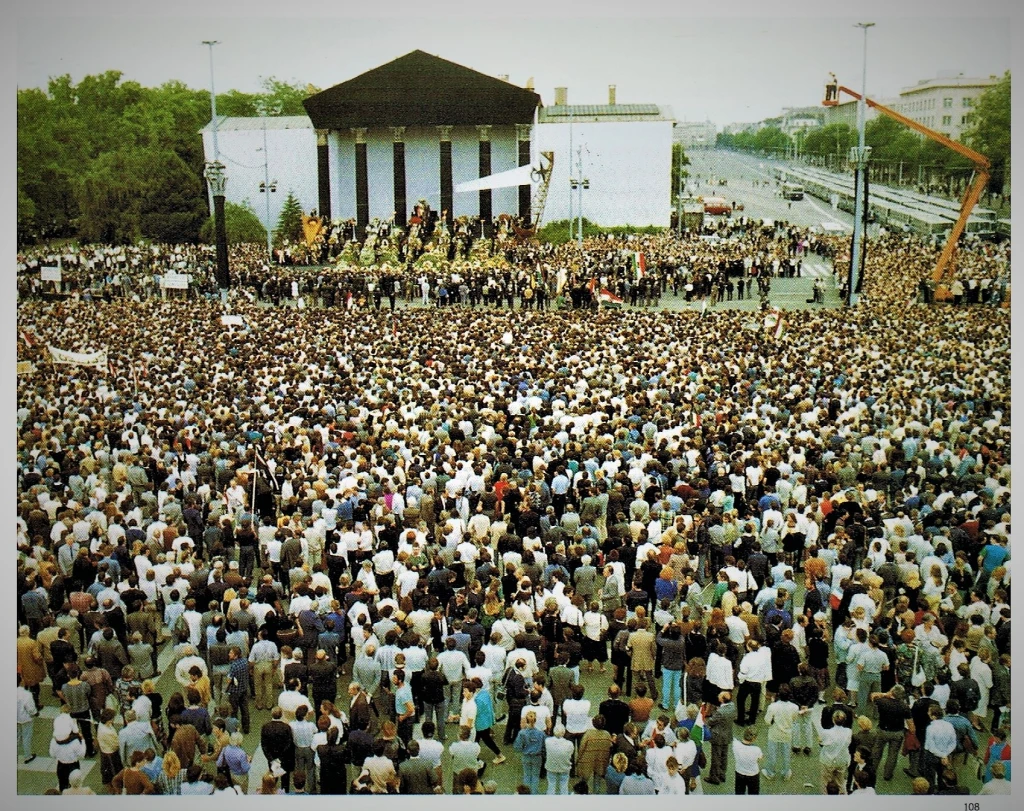




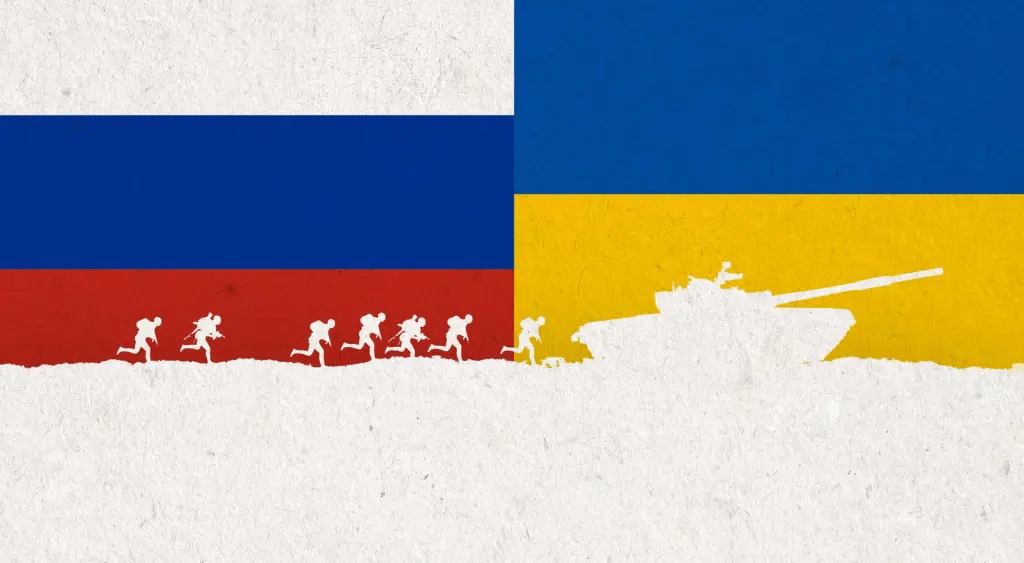
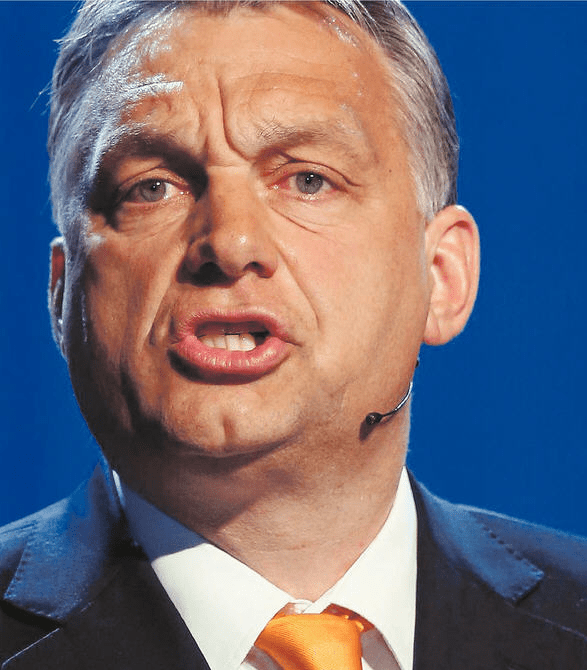


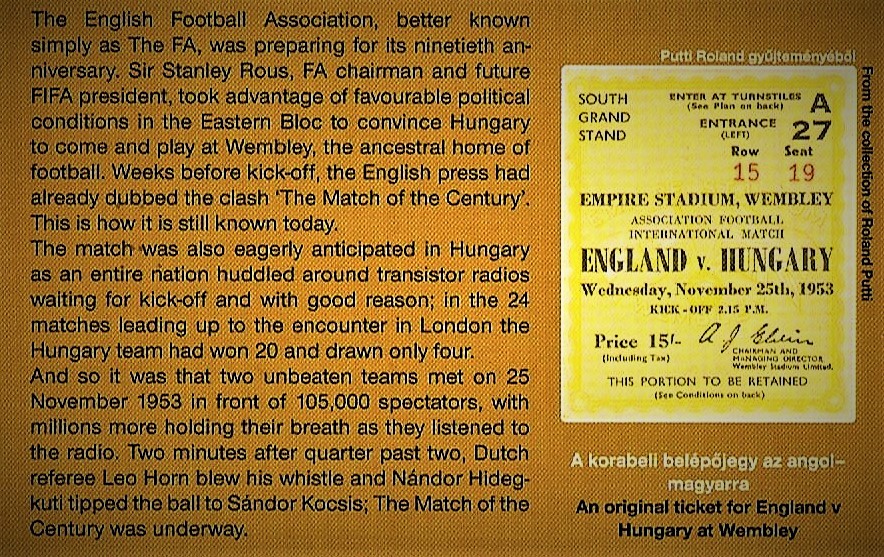

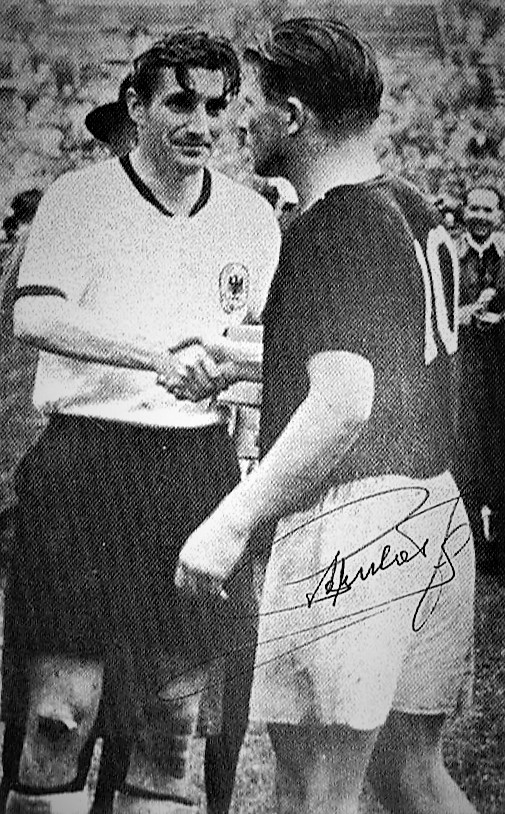

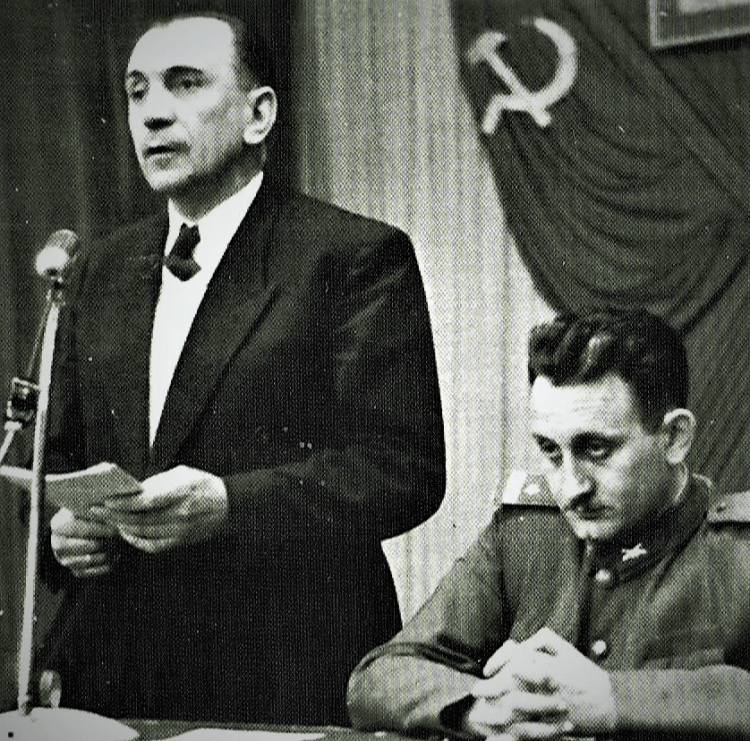

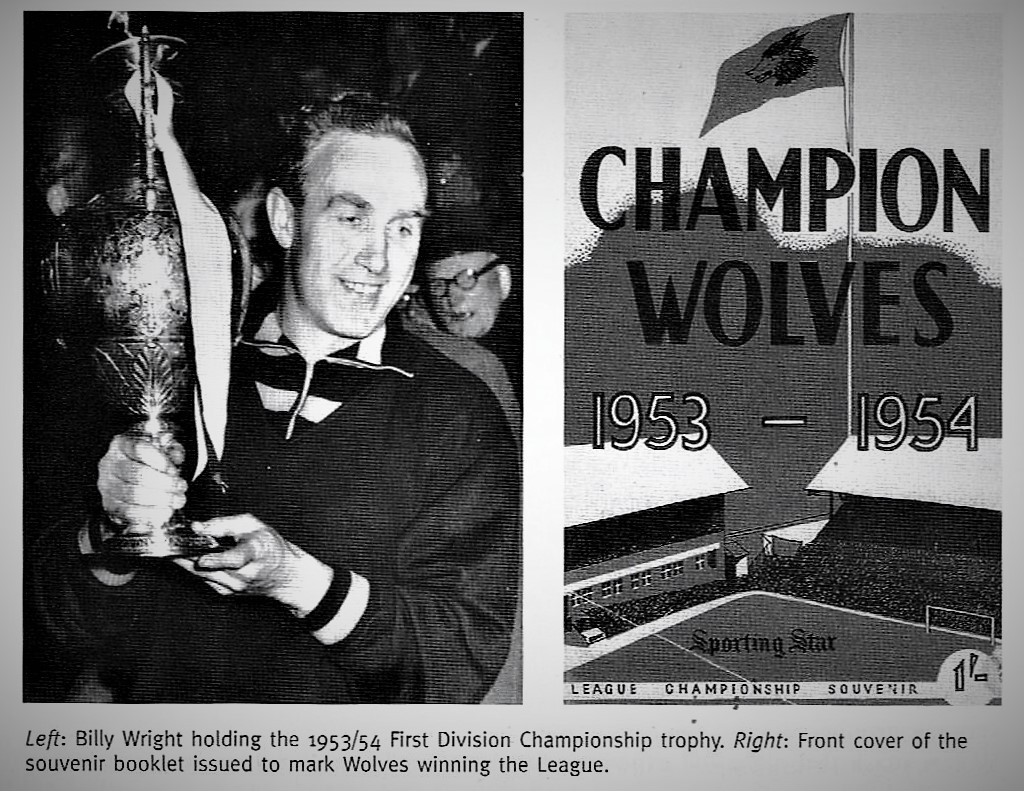
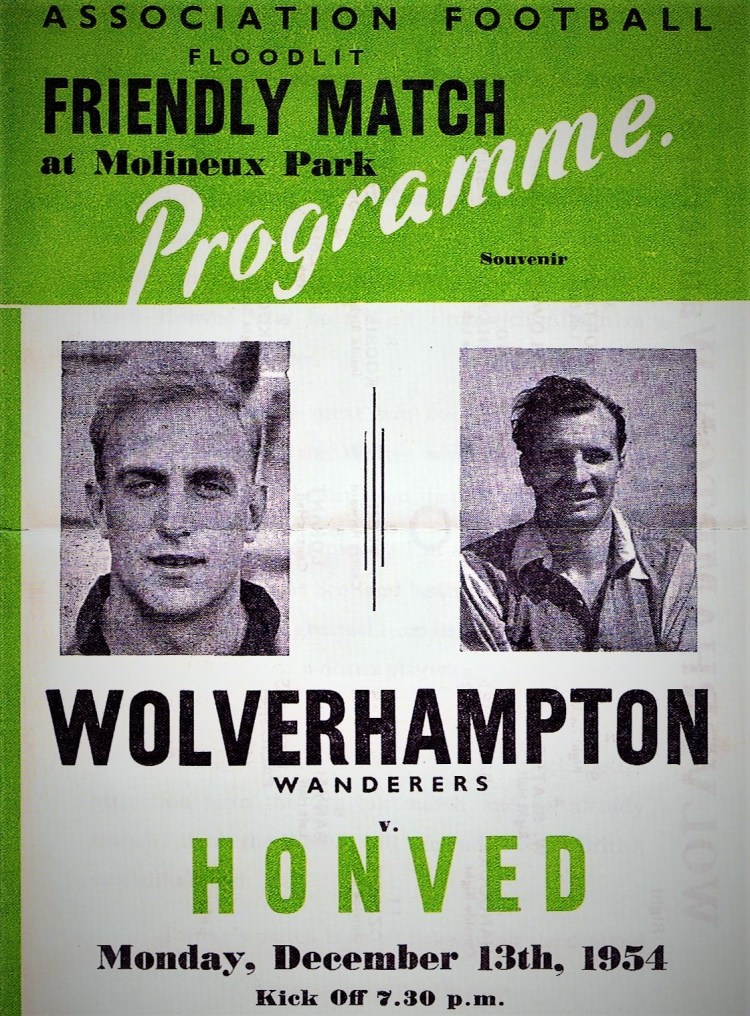


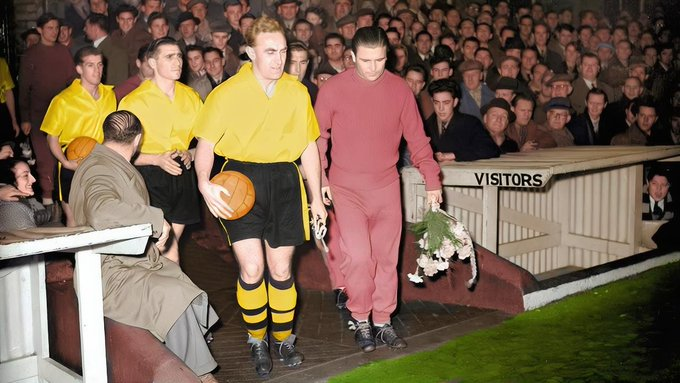
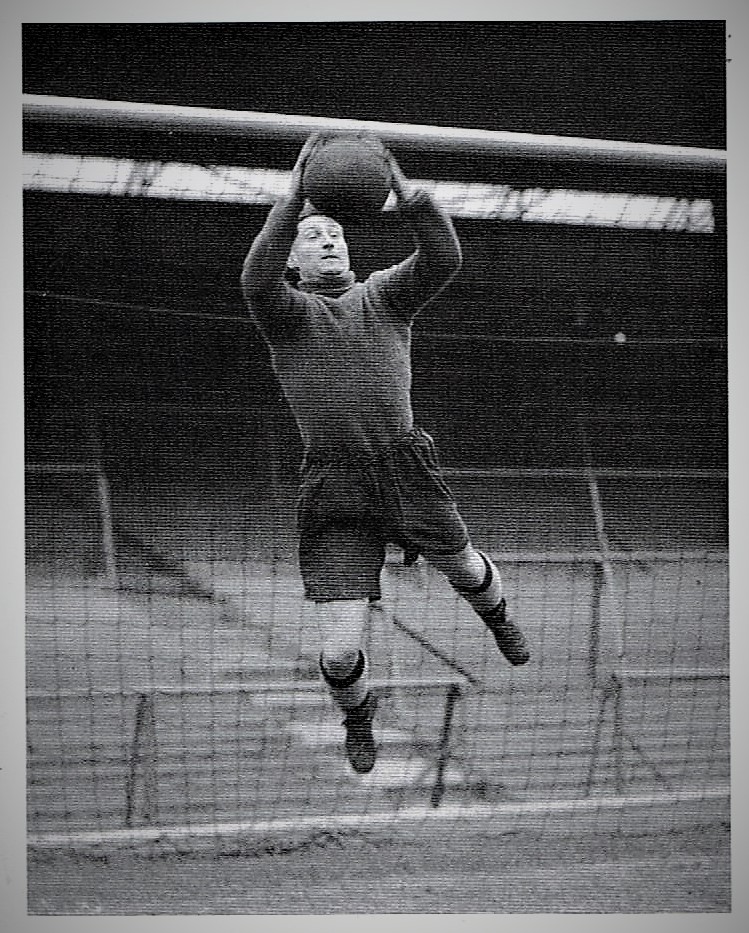

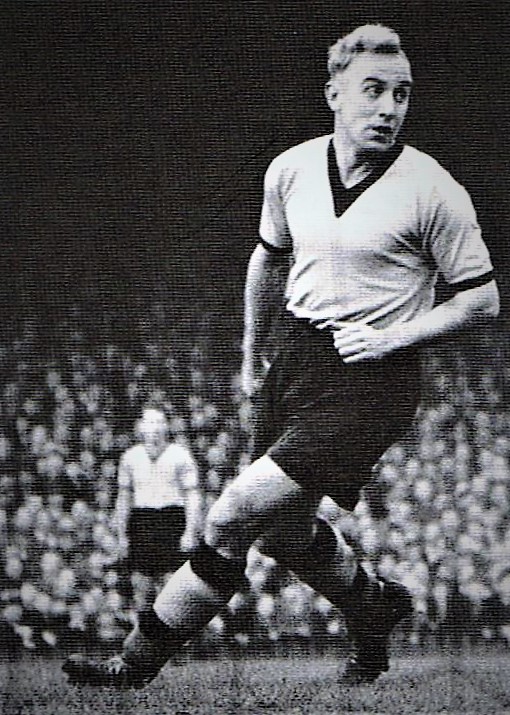

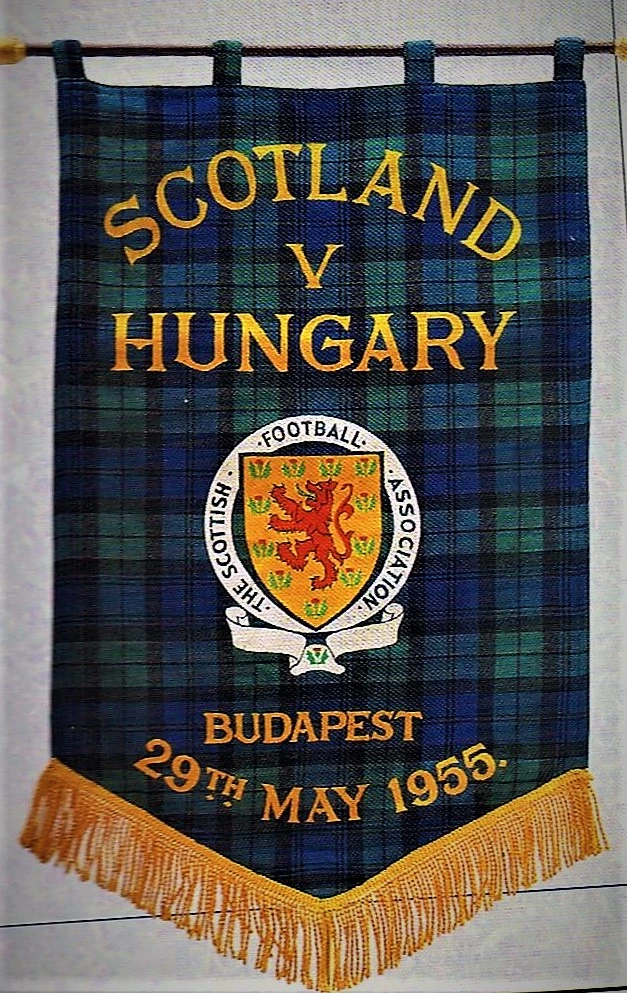





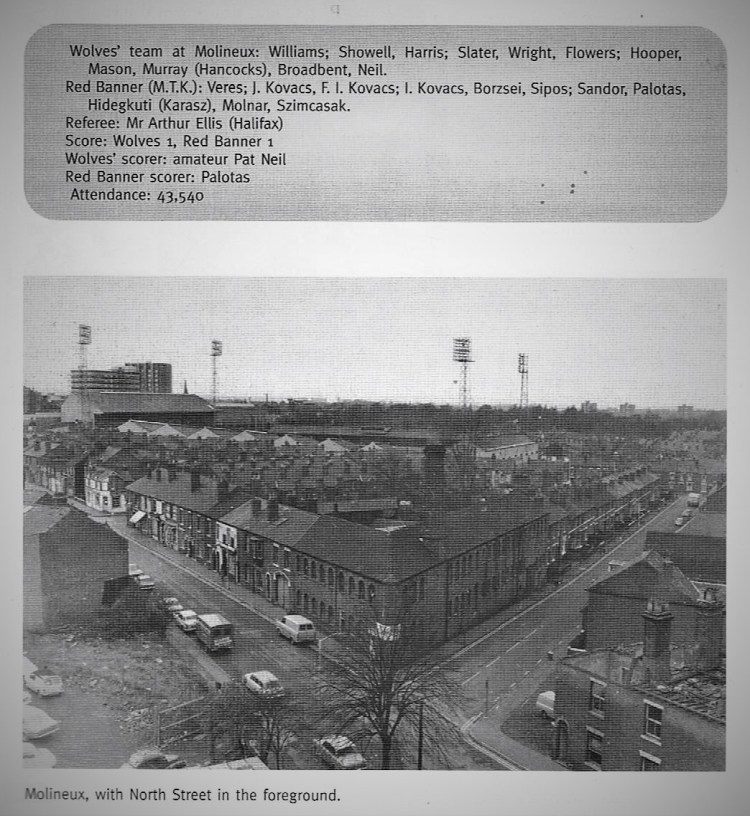
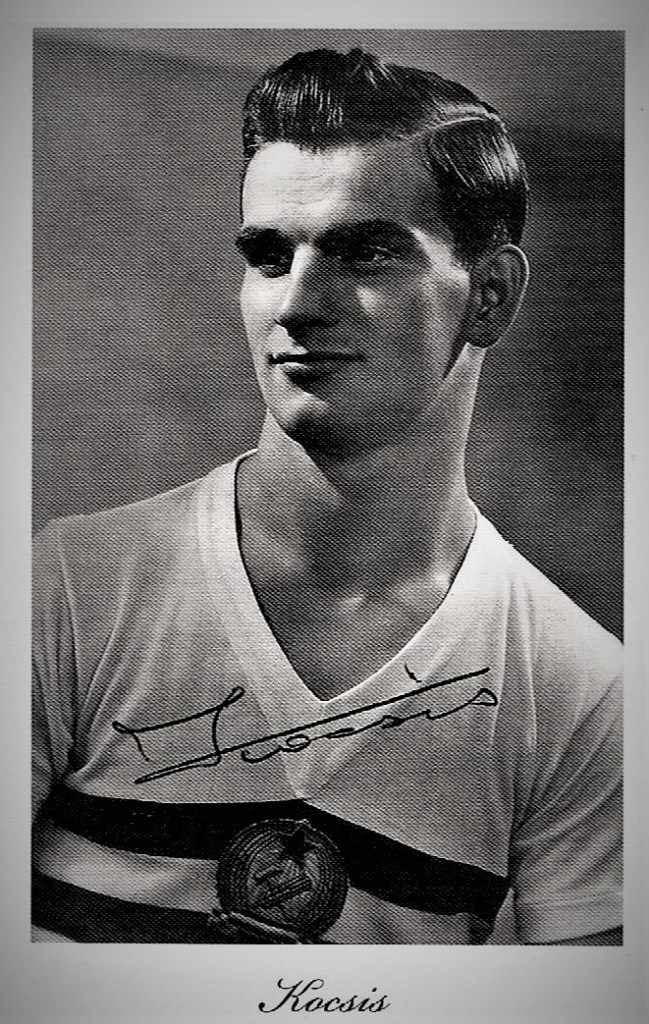

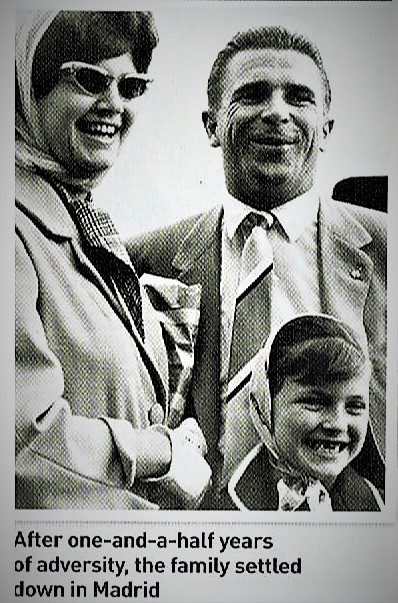
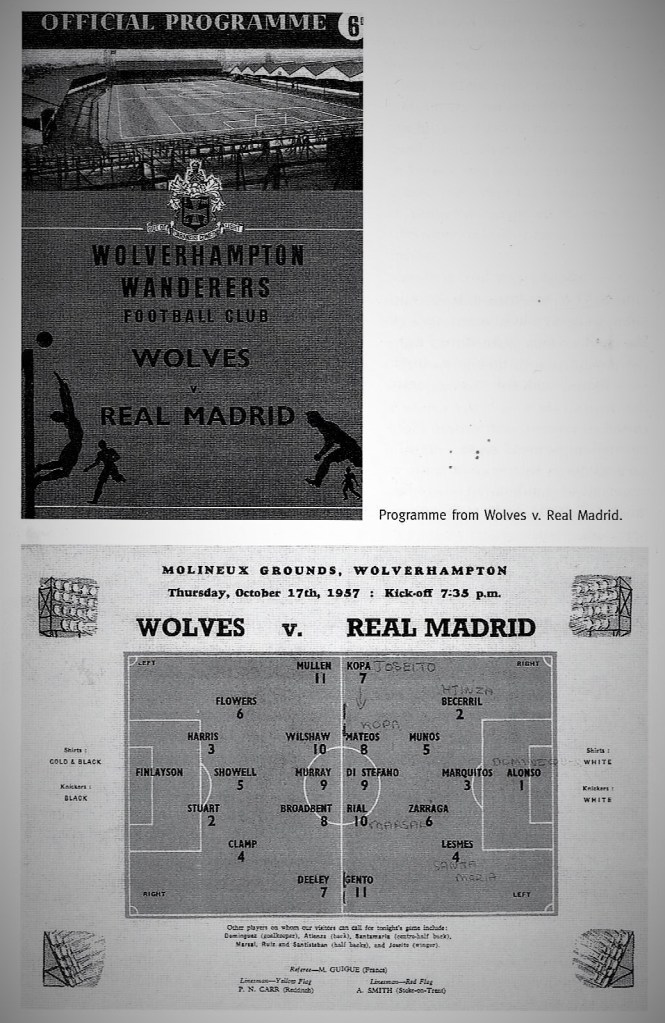

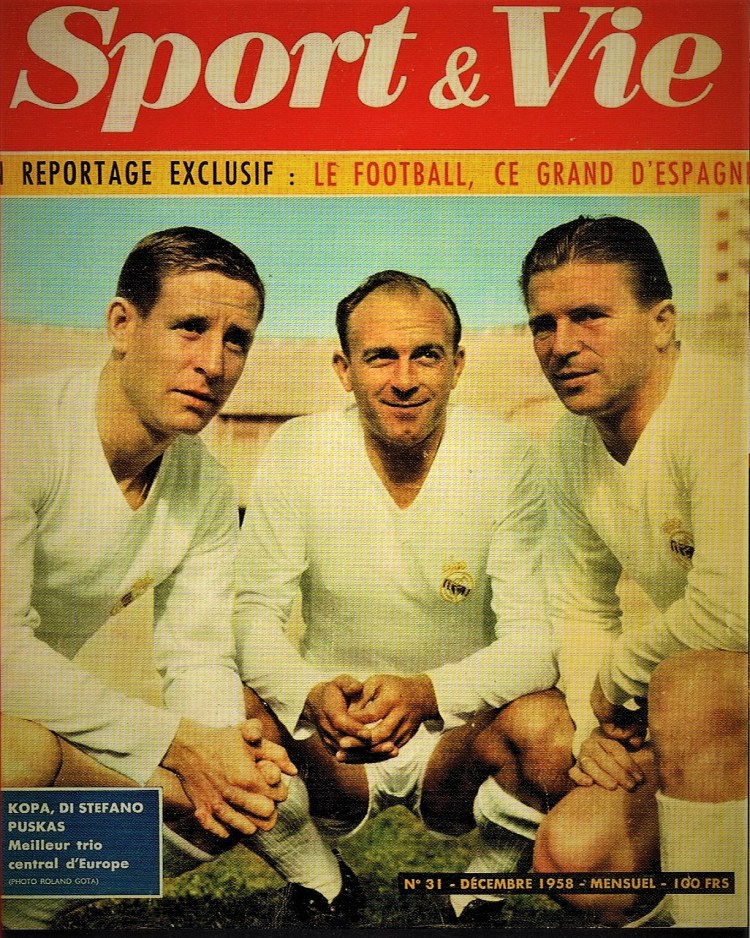
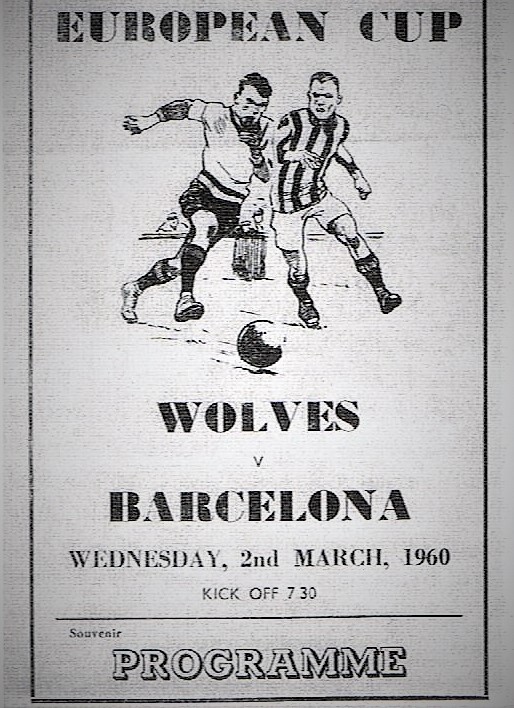
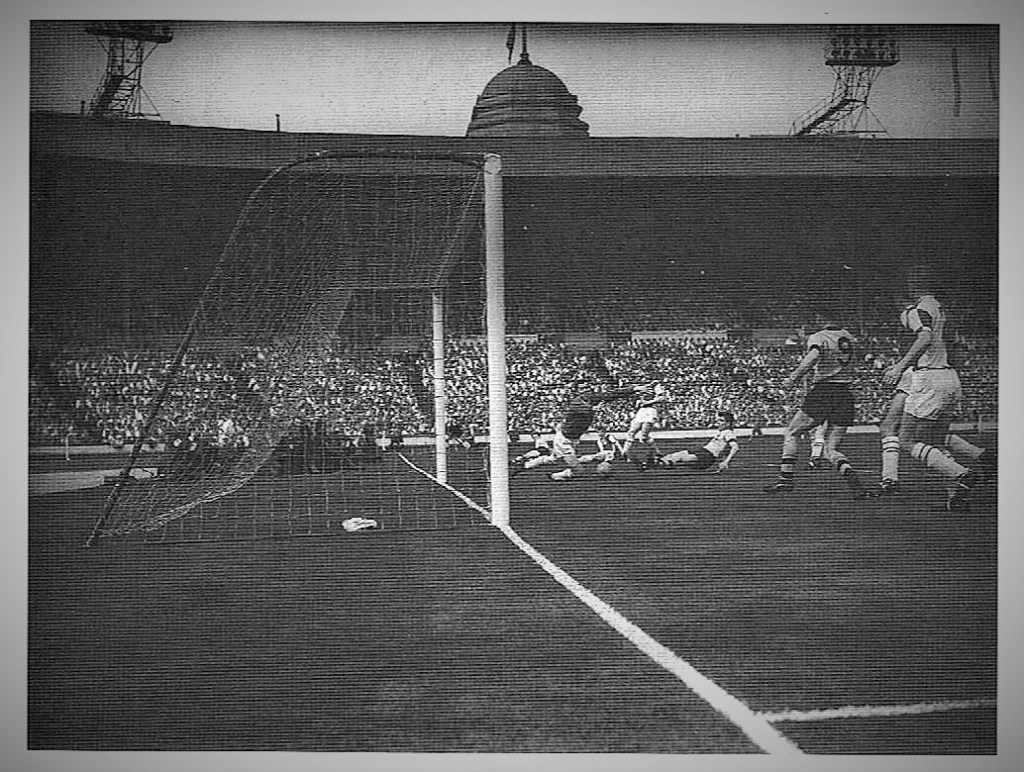



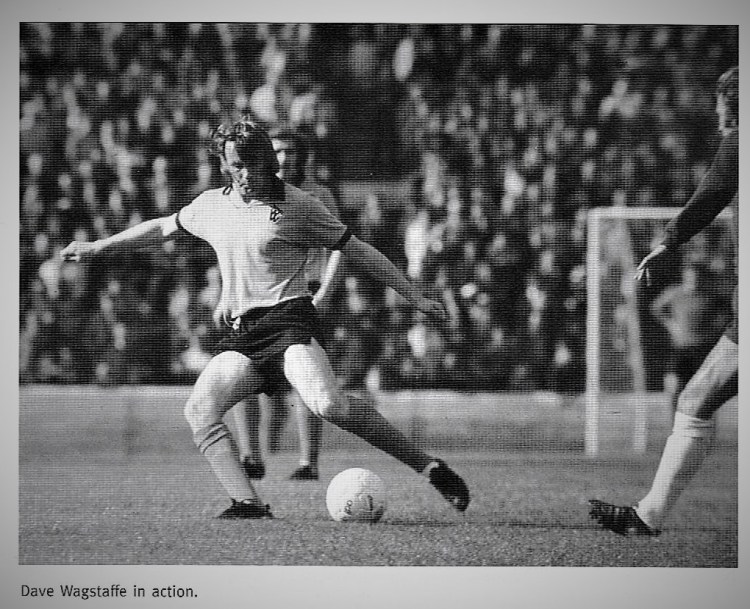


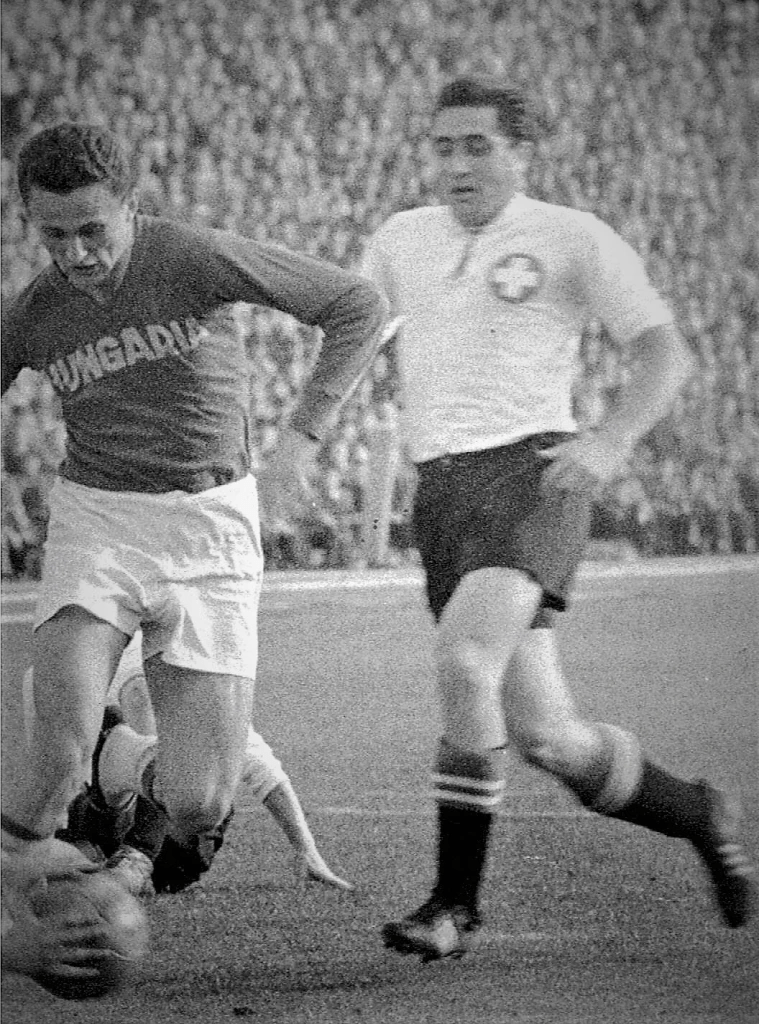

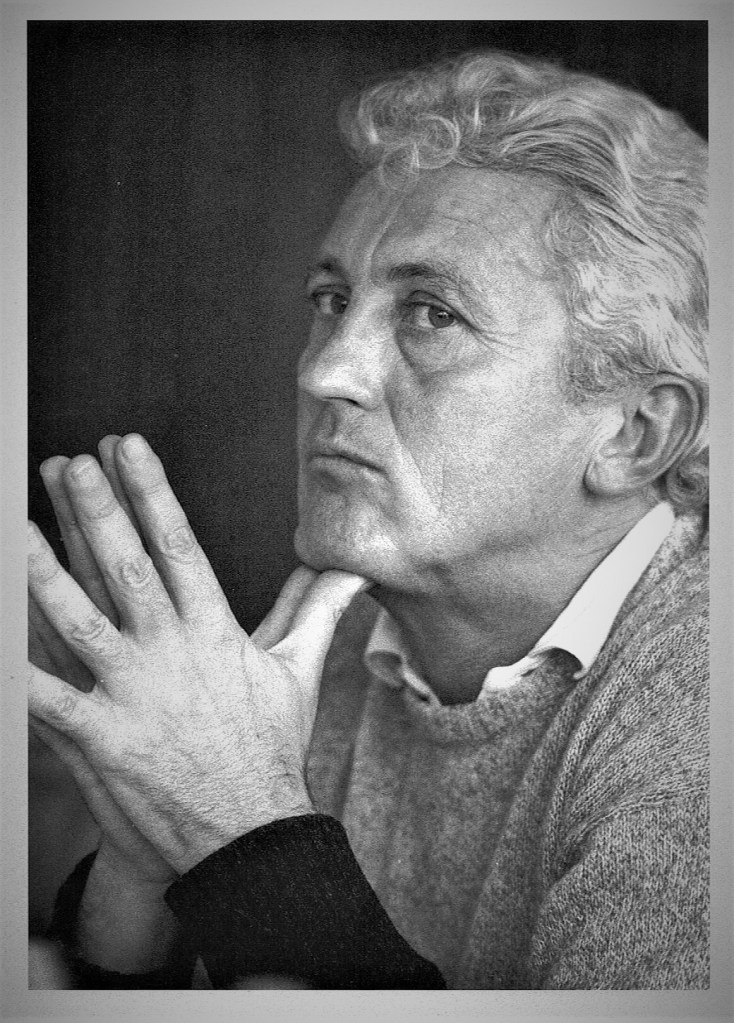
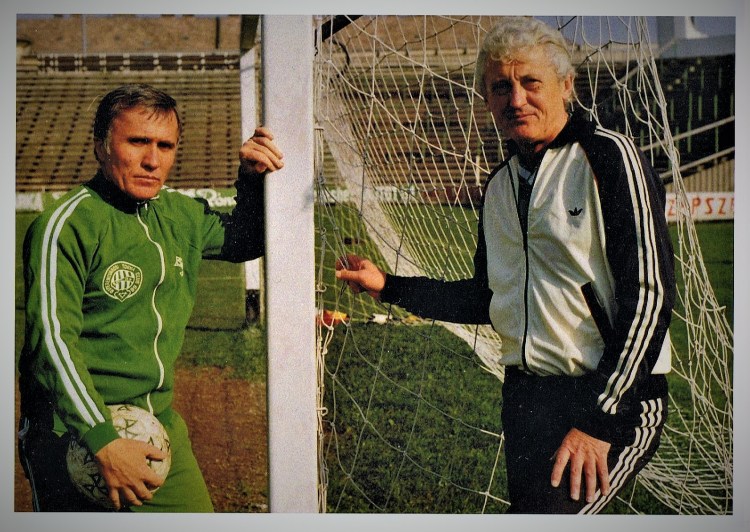
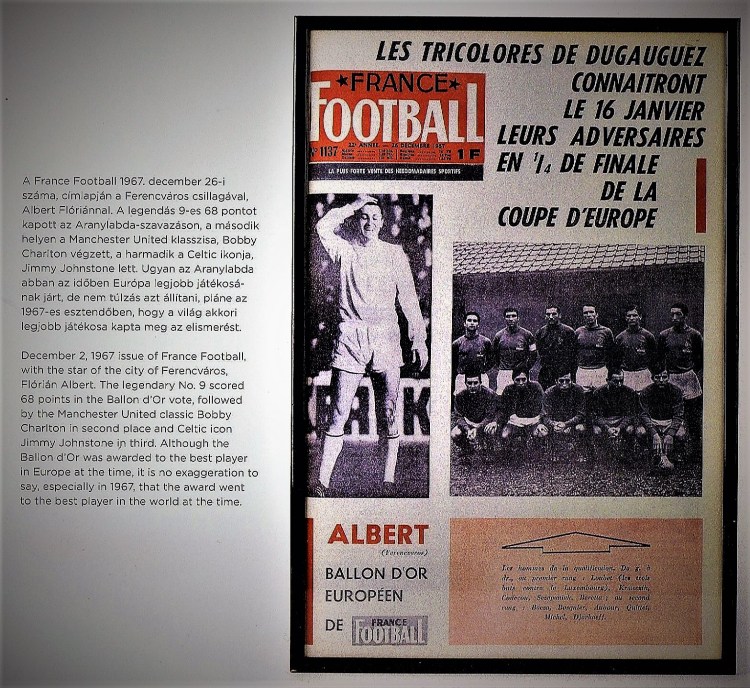


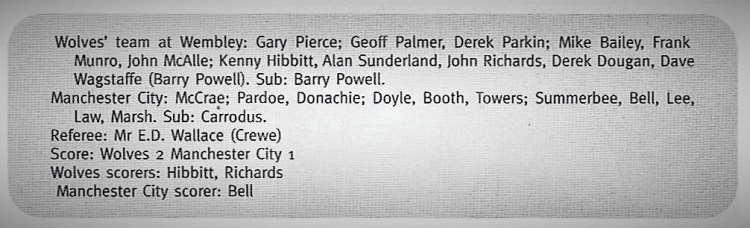


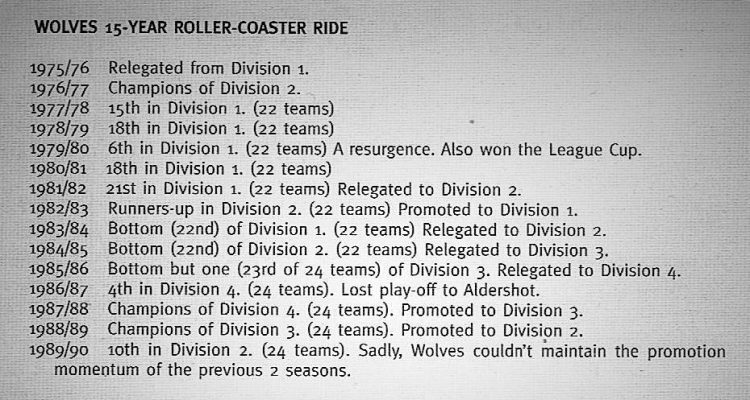

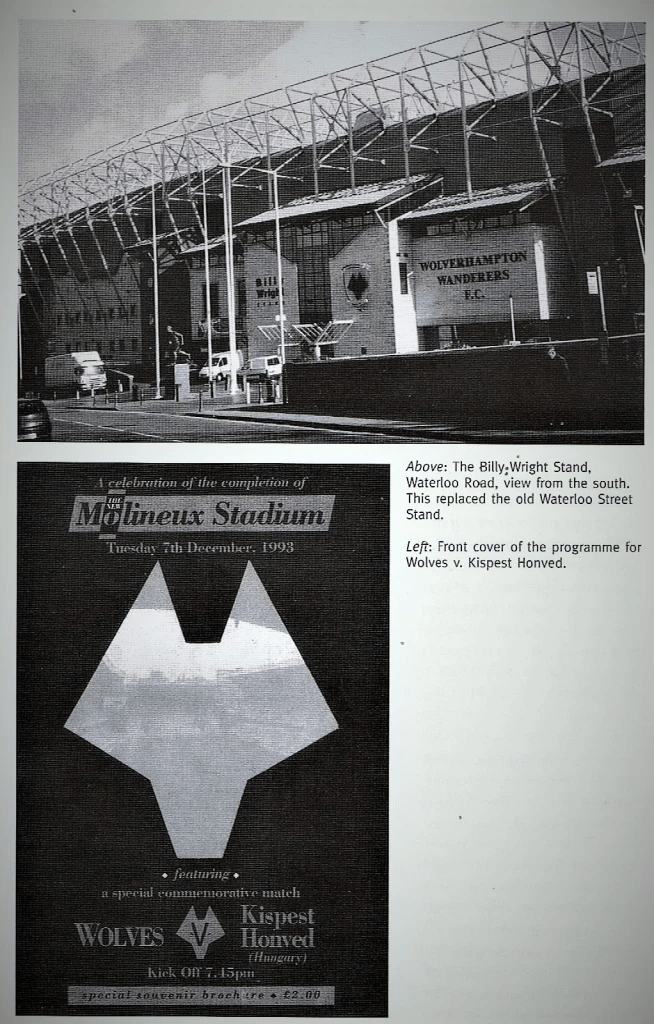






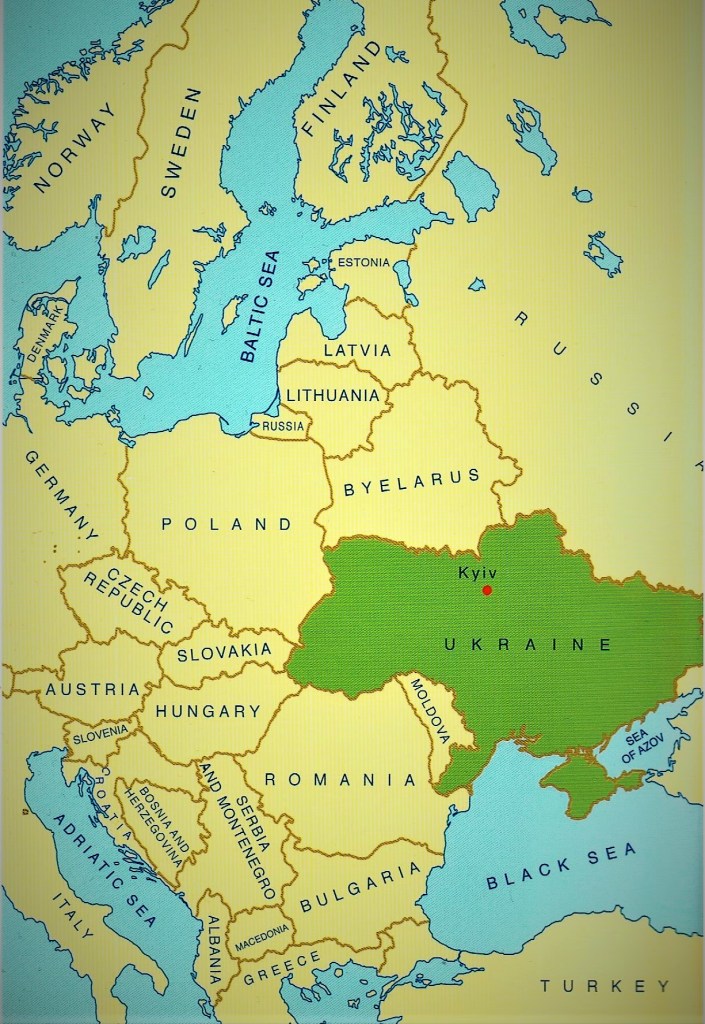






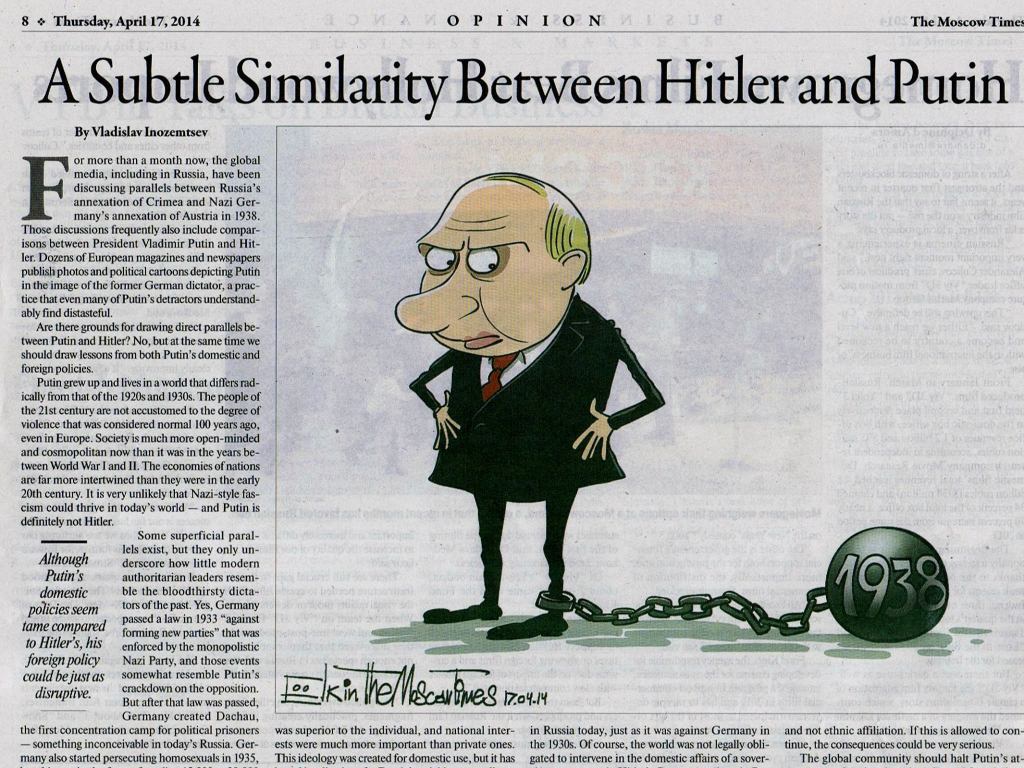




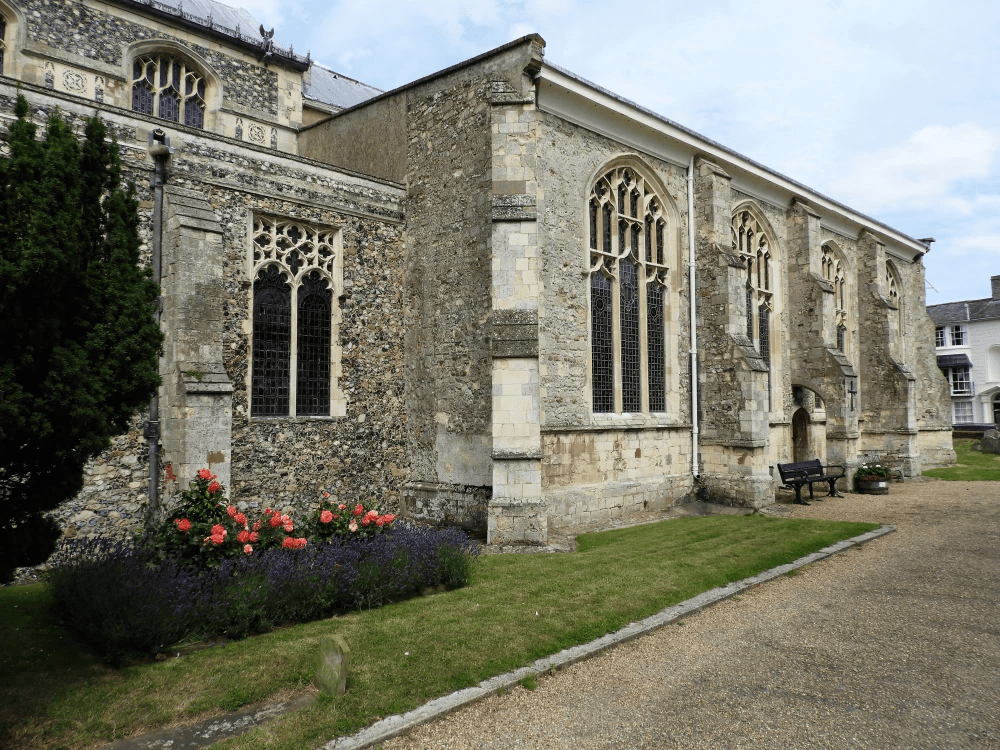
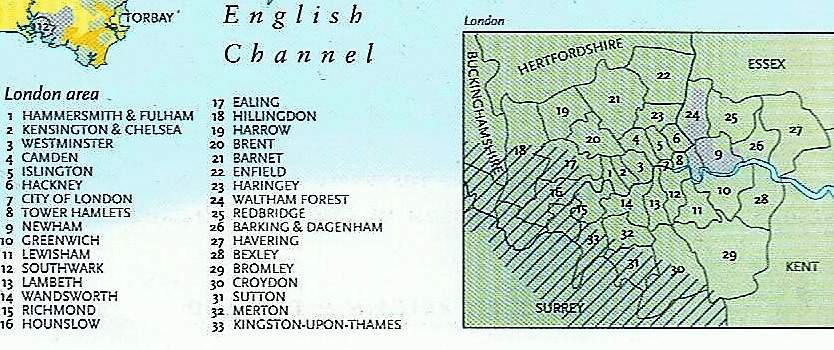

 In addition, there was the sheer scale of the migration and the inability of the Home Office’s immigration and nationality department to regulate what was happening, to prevent illegal migrants from entering Britain, to spot those abusing the asylum system in order to settle in Britain and the failure to apprehend and deport people. Large articulated lorries filled with migrants, who had paid over their life savings to be taken to Britain, rumbled through the Channel Tunnel and the ferry ports. A Red Cross camp at Sangatte, near the French entrance to the ‘Chunnel’, was blamed by Britain for exacerbating the problem. By the end of 2002, an estimated 67,000 had passed through the camp to Britain. The then Home Secretary, David Blunkett finally agreed on a deal with the French to close the camp down, but by then many African, Asian and Balkan migrants, believed the British immigration and benefits systems to be easier than those of other EU countries, had simply moved across the continent and waited patiently for their chance to jump aboard a lorry to Britain.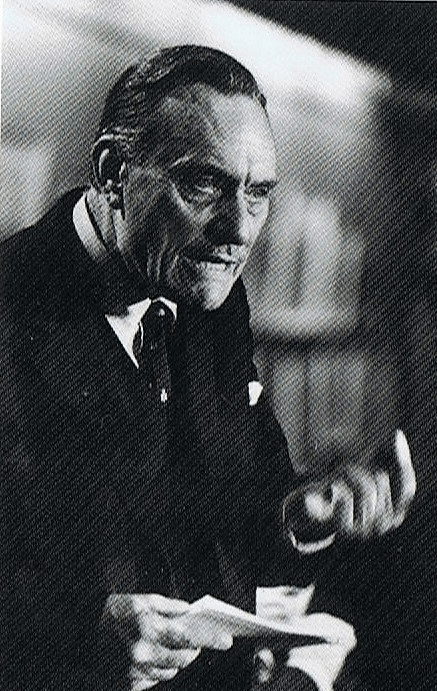

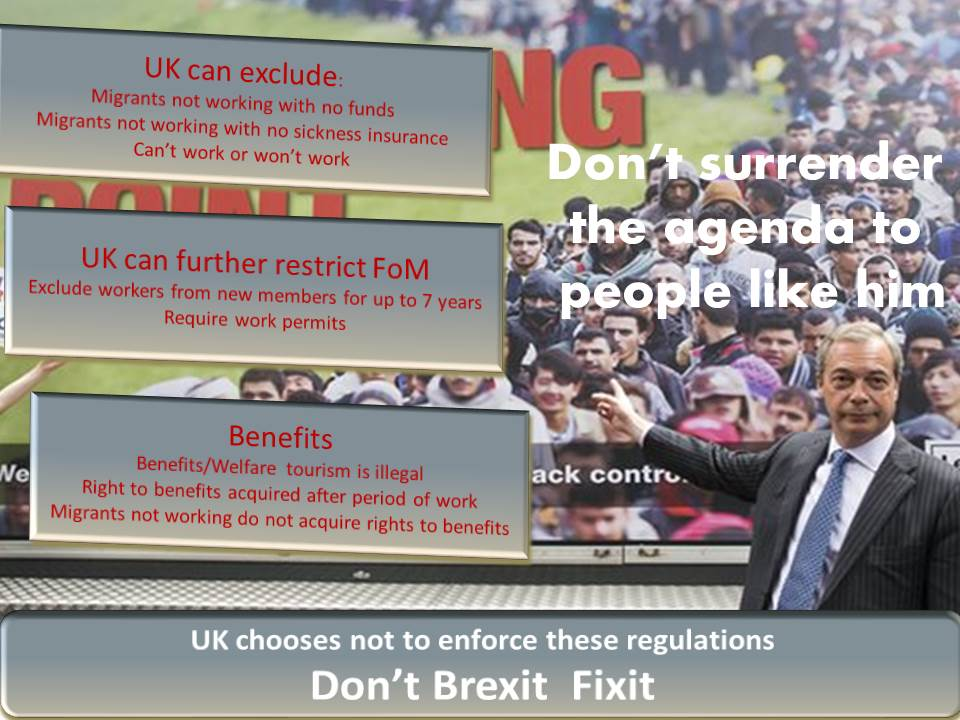
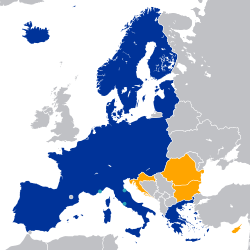


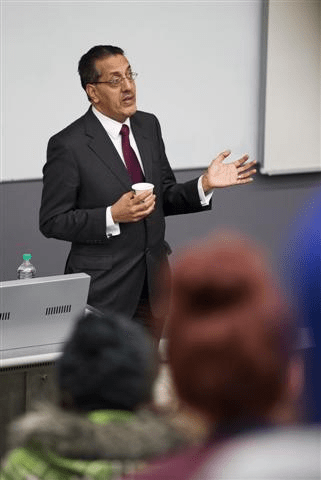











 Tony Blair’s legacy continued to be paraded on the streets of Britain, here blaming him and George Bush for the rise of ‘The Islamic State’ in Iraq.
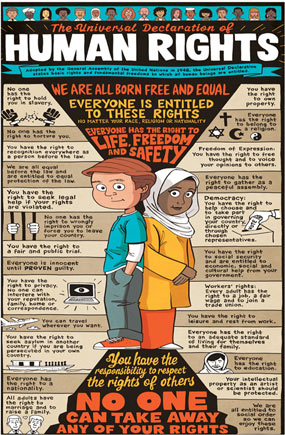
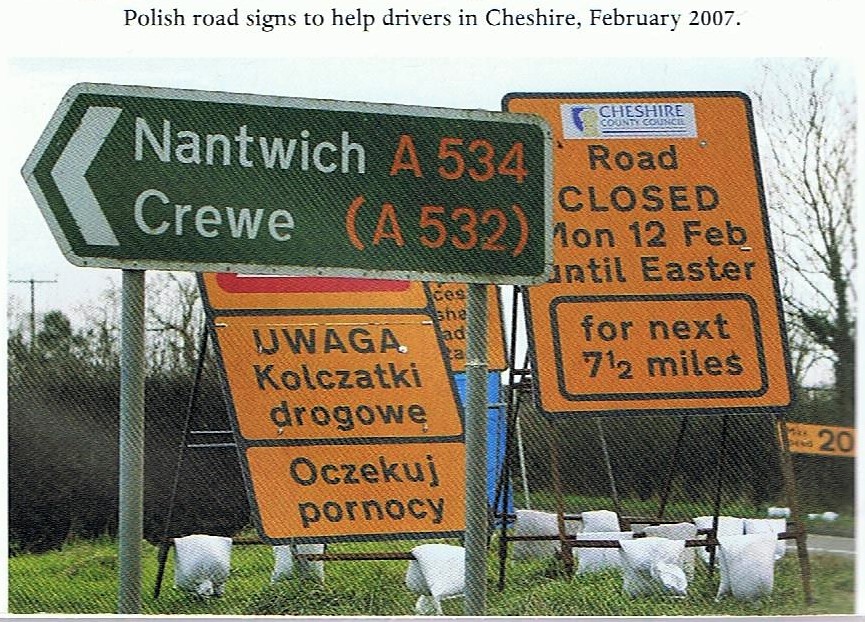










 Andrew James

