Reblogged following the verdict on the damaging of the Colston statue at Bristol Crown Court on 5 January 2022. One of the acquitted defendants claimed that they had been ‘rectifying history’ and that the jury was ‘on the right side of history.’
Foreground: The ‘Drowning’ of Edward Colston, 2020
Above: Edward Colston’s statue towards Bristol harbour. Photograph from The Guardian Weekly, 12 June 2020, by Giulia Spadafora, Getty.
The heart-breaking, public and blatant murder of George Floyd by a white police officer in Minneapolis on 25 May 2020 has fuelled a storm of protests across the world. ‘Black Lives Matter’ protests have broken out across Britain and other European countries, where the reckoning has reopened questions about the legacies of empire, including the nature of the enslavement, brutalisation, and exploitation of African people. In many of these protests, statues in public squares have acted as focal points for public outrage. The most iconic moment in the British protests thus far has been the pulling down of the statue of Edward Colston in Bristol, a prominent slave-trader who died in 1721. To understand the true historical contexts of the Colston statue which was erected in…
A Response to the Church of England’s Document and Discourse on Sexuality, Marriage and Gender.
From Nanette Newman’s God Bless Love: A collection of children’s sayings. London: Collins, 1972.
New Testament Marriage, Blessings & Covenants:
This year, in England and Wales at least, the ‘Gay Marriage‘ controversy has been hitting the headlines again, especially in recent weeks, with the Church in Wales performing its first service of blessing for a same-sex couple at St. Asaph’s Cathedral, the bishop himself presiding. When the government proposal to make secular same-sex marriage legal was being discussed in the UK Parliament in 2013, I received many unsolicited social media posts on the issue, many hurling abuse at the Christian churches, most of which showed a lack of understanding of the Christian view of marriage and the way in which it is framed within the law in the United Kingdom, as a result of centuries of conflict and compromise between church and state. I became deeply concerned by the strength of the language used by both advocates and opponents of this proposal. I’ve been drawn into using some of this myself, I have to admit, and repent of some of the comments I made back then and more recently. Back then, I promised some of those I engaged with that I would publish ‘a blog’ on these matters, and after taking part in The Church of England’s study programme, Living in Love and Faith this autumn, together with my Anglican church group in Budapest, I have decided to revisit and update what I wrote then as a more formal submission to the current discussions on these issues. The range of digital resources, including a four-hundred-and-fifty-page book, films, podcasts and an online library, are available at:
These issues are not as simple as we may at first think in Britain, mainly because of its complicated history of the entanglements of church and state. For American episcopal friends, there is a clear separation between church and state, and I have often found it difficult to explain to them why the Church of England cannot simply act as it wishes, not just because the Archbishop of Canterbury is ‘Head’ of the worldwide Anglican Communion. The law as it now stands in England precludes the Church of England from conducting same-sex marriage services so that a further Act of Parliament would be needed if the Church decided that it wanted to permit these. There would, no doubt, have to be widespread exemptions for priests whose consciences would not allow them to comply with such a change, creating further complexities and inequalities. Perhaps the time has come to disentangle the Christian marriage service from the secular registration of marriages and civil partnerships, but I know this would be bitterly opposed in England, at least, and, in the meantime, there are many homosexual Christians who do not seem to feel sufficiently welcomed in the churches through the affirmation of their relationships, either formally or informally. As someone who has grappled with these issues of sexuality and the Christian faith over more than forty years now, has been challenged by the differences in marriage laws in the UK and Hungary in arranging our own ceremonies as a heterosexual couple, and has, as a wedding ‘Master of Ceremonies’, had to carefully choreograph the intertwining of the diverse religious and humanist traditions which are part of the lives of many friends, I am concerned that the needs of Gay Christian couples, and those of other faiths, are being drowned out by the chorus of church-bashing which appears to be part of a rising tide of aggressive atheism. Less than a year ago, after becoming party leader, one of Britain’s politicians felt it necessary to apologise to party members for visiting a Covid-19 testing centre at an independent church that had simply decided against permitting same-sex marriage services, as is its right under the law.
From ‘God Bless Love’
Until the change in the law, my own ‘national church’, the Religious Society of Friends, had long been ‘permitted’ to marry heterosexual couples, without any formal litany, at its meeting houses, under UK law. It had also come to a new view of sexuality in 1963, publishing Towards a Quaker View of Sex four years before male homosexual relations were decriminalised in law in England and Wales. I found this little booklet extremely helpful as an evangelical Baptist and university student in 1975-6 when I became increasingly confused about issues of sexuality. I began to attend meetings for worship, though I didn’t become a member of the Society until 1989, when I was working for Quakers in the West Midlands, before moving to Hungary. Meanwhile, I continued to worship as an Anglican in Wales and the North of England, where I taught in a Church of England High School. In 2009, following an internal ‘discernments’ culminating in a minute at London Yearly Meeting, the Society published We are but Witnesses which put forward a case for a departure from the traditional view of Christian marriage and argued for a change in the law to permit same-sex marriages to be ‘solemnised’ in places of worship throughout Britain. I found myself unable to support this for three reasons:
1. Marriage is a religious matter, not a legal one, and whilst governments, which come and go, may wish to support it, we do not seek privilege from it as Christians, but regard it as a solemn duty. The gospel calls us to support equality in society and for that reason, many of us have supported the move towards equity in legal matters which the introduction of ‘civil partnerships’ has enabled. These have now been made available to heterosexual couples, and, if there are remaining inequalities between marriages and civil partnerships, these are surely matters requiring the attention of the state, not the churches. Whilst the Church has social responsibilities as part of its witness, its role is to hold to the eternal truths of Christ’s kingdom on earth, which is separate from secular society.
by Pál Fux, for the bilingual Hungarian/ English version of Shakespeare’s Sonnets, Noran Libro Kiadó, 2009.
2. The Bible, and, more particularly the New Testament and, even more particularly, the words of Jesus Christ, our founder, are quite clear both in defining marriage and in stating that homosexual men are excluded from the obligation to marry (Matthew 19: 11-12). Nothing is said about lesbian relationships, not because they did not exist in the ancient world, but because they were not seen as preventing women from marrying men. We need to look no further than Jesus’ words for guidance since they fulfil the teachings of the Torah, and the apostles were writing at a time when they believed that the ‘third dispensation’, the second coming of Christ, would pre-date many of their deaths. Therefore, marriage was only seen as a way of controlling sexual relations on a temporary basis. I have not found any outright condemnation of homosexuality, or homosexual relations in the New Testament, merely condemnation of promiscuity. Some may have differing interpretations, and there are certainly well-known ‘prohibitions’ in the Old Testament, though these date from a period when the Jews were struggling to survive as a distinct ‘people’ and homosexuality was viewed as undermining marriage and procreation.
by Pál Fux, as detailed above.
3. Marriage, as a public declaration of a heterosexual relationship where two people become one family, is fundamentally different from the formalisation of a ‘partnership’, and I would characterise this as a two into one union as contrasted with a one plus one relationship. As Christians, we celebrate diversity in human relations; we don’t insist on everyone doing things the same way. Being equal is not being the same. If we didn’t believe this, we would still have one undivided, catholic church. Rather than insisting on everyone being ‘married’, we should be finding ways of ensuring that commitments and ‘covenants’ between all loving couples can be affirmed and recognised in a variety of acts of public worship. This is what I have tried to show below.
From ‘God Bless Love’, as detailed above
Towards Equity in Litanies hallowing Unions and Partnerships in Church:
In addition to the scriptures, a survey of the marriage litanies of the main Christian denominations reveals what I believe to be two fundamental, universal truths:
1. That Christian marriage, as an institution, cannot be extended to same-sex unions, if the Church is to remain true to the teachings and actions of Christ in defining the nature of that ‘institution’ throughout the centuries.
2. That the current ‘equity’ (‘equality’ is not a precise enough term) given to same-sex relations through the change in the law allowing ‘civil partnerships’ does not prevent local congregations and church governments from listening to what same-sex Christian couples would themselves like and making very simple adjustments to existing sentences in the litanies in order to include blessings and covenants for these brothers and sisters in Christ.
As a ‘model’, churches in England could follow the litany devised for this purpose within the Church in Wales. In making these simple changes, no judgement of same-sex relationships, in general, is required and the special nature of Christian marriage need not be compromised, neither would the liberty of conscience of the ministers who would be asked to conduct such services. They, and their congregations, would simply be witnesses to the covenant made between two people, and would therefore be able to bless it as a gathered church community. In practical terms, the Blessing of a Civil Partnership would take place only after a civil ceremony has already taken place in the Registry Office, or another place authorised by the Registrar. The Minister would not perform this ceremony until s/he has seen the Certificate of Registration of the Civil Partnership.
by Pál Fux, as detailed above.
In Christian terms then, ‘The hallowing of the union between two persons is …
‘… so that, the natural instincts and affections being directed aright, they should live in purity and honour …
‘… to honour the companionship, help, and comfort which partners ought to have for each other …
‘… for the welfare of human society, which can be strong and happy only where its bonds are held in honour.’
The third of these terms would also include the role of marriage in procreation and family life, without the need to be prescriptive about the exact nature of these. The Orders and Prayers for Church Worship make it clear that while we base everything we believe as Christians on the immutable Word of God, the nature of the sacraments and liturgy of worship have evolved over the centuries and are part of a continuing ‘conversation’ between God and men, which is two-way. We don’t need to wait for God to speak first, we can have something to say to Him, based on the changing needs of human society in the twenty-first century. But neither do the churches themselves need to ‘keep up with’ the changing values and mores of secular society. We have been called to continue a dialogue with God and a discourse with each other on these issues, and especially with Gay Christians.
by Pál Fux
Further observations on issues of Gender, Celibacy, Parenting and Faithfulness:
Much of the book, Living in Love and Faith, is concerned with definitions of ‘Gender identity’ as well as ‘sexuality’. Whilst recent political and societal discussions have been concerned with the former as well as the latter, there is no obviously stated reason as to why the Church should be primarily concerned with both questions, certainly not at the same time. Whilst the recognition of the existence of a diverse spectrum of sexuality is something which Christians can more easily recognise as evident in both society and the Church, the concept of ‘Gender’ as something non-binary is comparatively recent in societal, and especially scientific discourse. Most recently, the eminent geneticist, Lord Robert Winston, has stated publicly that, whatever our individual preferences and identities, genetic ‘sex’ is fundamentally binary, affecting every cell in the body. We may choose to change our ‘identity’, but that choice cannot alter our sex at birth. That said, there are, of course, a small number of people who are born ‘intersexual’, and there are those who grow up feeling that they were born into the ‘wrong sex’. However, the text of Living in Love and Faith itself warns against the counselling of children to seek to change their original biological sex:
“The administration of puberty suppressants and sex hormones to children who are diagnosed with gender dysphoria is proving to be very controversial. The National Health Service has recently announced an independent review ‘to make evidence-based recommendations about the future use of these drugs’. ”
The Evangelical Alliance produced a report, Transsexuality, in 2000, and the House of Bishops drew on this and other materials in Some Issues in Human Sexuality in 2003, although the bishops did not come to conclusions on ‘trans’ questions. It suggested two questions of importance in ongoing reflection. Firstly, whether obedience to Christ for trans Christians meant ‘learning to accept and live with their given biological identity because this is the identity which God has given them’ or ‘seeking a new post-operative identity on the grounds that it is this which will enable them to more fully express the person God intends them to be’. Yet, how do they, or we, know that God intends them to become a different sex from the one they were ‘given’ at birth? This also raises the wider question of ‘conversion therapy’, already illegal in terms of ‘physical treatments’. Psychological approaches can also cross a line into abuse, and current considerations for changes to the law in the UK would also outlaw Church-based courses with the intention of ‘converting’ participants from stated sexual and gender identities. Such legal protections may be needed, especially to protect vulnerable young people. But is it justifiable to ‘ban’ any form of ‘counselling’ within a religious context, even when requested by the individual concerned, given that it may exclude the possibility of any form of church-based ‘conversation’ initiated by that individual? I think not.
One pattern of discipline that many Christians have pursued is celibacy. That is, Christians have found themselves called to various forms of discipleship – and some of those forms have required sexual abstinence, even within marriage. They have valued celibacy because it enables intensive dedication to prayer and to the work of Christ’s kingdom. This, in my view, is a matter of deliberate choice and is not to be confused with ‘singleness’, which may be the result of circumstances. It is not just an obligation to be placed, as at present, upon the priesthood in the Catholic Church, an association that may be both outdated and unhelpful to the wider church and society.
As Christians, we should not simply be concerned with how sexual matters are dealt with in the Church, however. In relation to societal concerns, we must also be willing to witness to the potential moral issues of widening the availability of IVF treatment to gay and lesbian couples on tax-funded health services, on the expansion of surrogacy, with all the complications entailed, and especially on gene-editing and potential development in genetic engineering. As the parent of a child born with a genetic disability, this latter issue concerns me greatly given that, in a globalised economy, many countries lack the basic controls on these developments which currently exist in the UK.
by Pál Fux, for Shakespeare’s Sonnets.
Above all, surely what matters most to Christians in their relationships, whether heterosexual or homosexual, is faithfulness, just as it does in their relationships with God. It is, after all, one of the gifts of the Spirit. I was recently heartened to hear that when a website migrated across the Atlantic encouraging married individuals to cheat on their partners there was an outcry and many church members joined a counter-site called ‘Faithfulness Matters’ which drove the affair-arranging site offline in the UK in a matter of weeks. The Bard of Stratford captured the importance of simple faithfulness in Sonnet CLII:
In loving thee thou know’st I am forsworn,
But thou art twice forsworn, to me love swearing;
In act thy bed-vow broke, and new faithtorn, …
But why of two oaths’ breach do I accuse thee
When I break twenty? I am perjur’d most;
For all my vows are oaths but to misuse thee,
And all my honest faith in thee is lost:
For I have sworn deep oaths of thy deep kindness,
Oaths of thy love, thy truth, thy constancy …
All of us are warned against committing adultery and commanded in the gospels and the letters to remain faithful to our partners.
From ‘God Bless Love’, as detailed at the top.
Andrew James Chandler, PhD. (Wales), M.Ed. (Exon), December 2021.
“Other new names included Llanbedwen (church of the birch region, for Nyíregyháza), Llefyw (living place, for Debrecen), and Bwlch-y-Gafr (the goat’s path, referring to Kecskemét).”
Have put up your Christmas tree yet? For many people, especially in Britain, the beginning of Advent, or even earlier, is the time to put up the Christmas decorations. In Central Europe and in parts of the USA, it is more traditional to wait until Christmas Eve, 24th December. The ‘Twelfth Night’ of Christmas, the Eve of Epiphany, is the traditional time to remove the decorations, but these are perhaps seen more as Nordic pagan customs of ‘bringing in the evergreens’ rather than traditions that have their origins in the Christian faith.
From ‘The History of Christianity’, A Lion Handbook, 1977.
The ‘Christmas Season’:
Traditionally, the ‘Christmas Season’ in the Church year occupies two months of it, from Advent Sunday and St Nicholas’ Day on 6th December to Candlemas at the beginning of February. Within that season, Christmas, the festival supposedly celebrating the birthday of Christ, always falls or begins…
As all Scots know, 30th November is St Andrew’s Day, their ‘patron saint’. However, few people in Scotland, England and Hungary will know that the 17th November is the day when the Church commemorates the saint who links all three countries. Margaret was born in Hungary, the daughter of the exiled rightful heir to the throne of England in 1045, and became Queen of Scotland by marriage to Malcolm III (Canmore) after fleeing the Norman Conquest of England. Her story begins with the short-lived rule of the royal House of Wessex over the whole of England in the tenth century. In the eighth and ninth centuries, England did not exist, except perhaps as an idea in the vision of Alfred the Great, which was brought into effective reality as a unified state by his grandson Aethelstan in 937. Neither did Hungary, but the Magyar tribes had come together under one leader, Árpád. The Anglo-Saxon kingdoms, known by historians as ‘the Heptarchy’ were never in danger of invasion by the marauding Magyar horsemen, even in their most occidental adventures. The Magyars were never a sea-faring people, and they reined in their horses on the shores of the seas. Nevertheless, the western Celtic and Roman Christian pilgrims to the Holy Land were only given safe passage along the Danube Road when, under the rule of Szent István (St Stephen), Christianity became the official religion of the country.
Before the reign of István (1000-1038), there are no traces of direct relations between the two countries. Alfred the Great, contemporary of Árpád, the conqueror of the Carpathian Basin, wrote that all he knew of this territory was that it was desert (‘puszta’ in Hungarian). Neither did Alfred write of any of the peoples living in the regions between Carinthia and Bulgaria, which he mentioned. Archaeological finds along the banks of the Oder and Vistula, however, reveal that Hungary had direct commercial relations with the Vikings. The road across Russia, and especially to Kyiv, seem to have played a prominent role in these relations. St István’s coins have also been found as far north as the Faroe Islands. According to a passage in a chronicle written in French verse by Gaimar, who lived in Northumbria, István was acquainted with the Dane Valgarus even before he brought the sons of Eadmund Ironside to the Hungarian Royal Court. But this is the only written record linking the Vikings and the Magyars. Aethelstan’s victory of the Saxons over the Vikings at the battle of Brunanburh in 937 had contributed towards the peaceful settlement and co-existence of Saxons, Angles and Scandinavians in the North and East of England. Yet it was not until 1012 that St Colman decided to take the Danube road on his pilgrimage to Palestine from Ireland. He never got as far as Hungary, however, as he was killed by Austrian peasants who mistook him for a spy. However, the fact that he chose the route along the Danube testifies to the new attitude of Western nations towards Hungary, with pilgrims and traders now being able to approach István’s crown lands without fear. Nevertheless, for some centuries, only a few pilgrims from the British Isles made their way across the country.
The first mention of Hungary in Western European sources was recorded when St István received the two young sons of Eadmund Ironside at his Court, exiles from Canute’s Court following his takeover of their father’s kingdom in 1016. Eadmund died on 30 November 1016, shortly after reaching his agreement with Cnut, King of Denmark, deciding the boundaries of his realm. He left behind his Queen, Ealdgyth and two small sons, Eadmund and Edward. Cnut’s advisor, Eadric, tried to persuade his king to have the two little orphans put out of the way as they might cause trouble in the future. However, since Cnut had already gained control of the whole of the kingdom, he had no desire to sully his name and new kingdom with the blood of children. Instead, he dispatched the two boys to Sweden, with the command that the boys should meet their end there. The boys were both very young, and Edward (the youngest) could only have been a few months old. But Olaf Sköttkonung, the devout Christian King of Sweden, was revolted at the idea of murder of ‘innocents’ that Canute himself was unable or unwilling to undertake. Besides, the princes’ grandfather, Aethelred the Unready, had been an old ally of his. He, therefore, caused the boys to be taken to Hungary, to István’s court. Presumably, they were taken through Russia in 1017-18, but the Anglo-Saxon chronicles record nothing further of them for the next forty years. It may be that the boys were removed to Kyiv in 1028, following Cnut’s deposition of King Olav. They must have arrived in Hungary long before King István’s death in 1038 since we know from the Hungarian sources researched by the inter-war historian, Sándor Fest, that István received them cordially and educated them with deep affection. Eadmund, the elder of the two died young, but in due course, again according to the Hungarian sources, Edward married a Hungarian noblewoman, Agatha, a relative of the German Emperor. She bore him three children: Margaret, Christine and Edgar. The three children were educated in Hungary until 1057 when, after four decades of exile, Edward was recalled to England with his family by the childless and ageing Confessor who was delighted to hear of his nephew’s survival.
The Anglo-Saxon chronicles state that Aeldred, the Bishop of Worcester, was the first churchman from Britain to travel through Hungary to the Holy Land, in 1058. He probably had a special interest in Hungary as, before the Norman Conquest, he was the leader of the Saxon partisans of Edward the Aetheling, whose claim to the throne they supported and who had been a refugee guest at the Hungarian Royal Court for nearly forty years, since the Danish King Canute’s takeover of the Saxon throne. It was only in 1054 that the English courtiers began to show an interest in Prince Edward of Wessex as a possible heir to the throne. Edward the Confessor had himself come to the throne after years of exile in Normandy and was without issue. Bishop Aeldred went to Cologne as ambassador to Henry III, Emperor of Germany, with the request that he should negotiate with the King of Hungary for the return of the Royal family of Wessex. Although the Bishop was received with pomp and splendour, he left the imperial city a year later, without accomplishing this task. The Anglo-Saxon Chronicle does not give the reason why the powerful Emperor of Germany did not comply with the King of England’s request, but the Wessex family did not reach England until 1057, after Henry III’s death. By the time Aeldred reached Hungary, Edward the Exile had already returned to England with his family, in 1057. Soon after he set foot in London, however, Edward died somewhat mysteriously before he could be anointed by Edward the Confessor as his successor.
According to the hereditary succession, Edgar was the rightful heir to the throne and therefore just as much in the way of the ambitions of William the Conqueror as his father and uncle, the exiled princes, had been in the way of Canute the Great. Stigand, the Archbishop of Canterbury, had twice proclaimed him King but had not yet crowned him by the end of 1066. Although receiving the support of both the Saxon thanes and bishops for his claim, being the last prince of the dynasty of Cerdic and Alfred and the only lawful heir, the Saxon thanes were obliged to admit that they could not hope to be liberated by a young king who was not exceptionally bright. He was forced to pay homage to William, to give up his claim to the throne and eventually to flee to Northumbria. Not for the last time, the law of male primogeniture determining the English succession denied the country the rule of a great woman in the form of Princess Margaret, Edward of Wessex’s brightest child. Following his death, Edward’s widow, Agatha, and her family continued to live in England in the company of the Hungarian gentlemen who had escorted them there.
Malcolm III meets Margaret of Wessex at Queensferry, a painting by a Victorian artist.
But with the continued Anglo-Danish resistance and the brutal retaliation of the Norman barons, the rest of the royal family were obliged to contemplate flight, and their thoughts turned again to Hungary. They boarded a ship, presumably bound for Hamburg, but a storm drove them into port in the Firth of Pentland. They anchored in the little harbour in Orkney which is still called ‘Margaret’s Hope’ and landed there. According to the legend, there they were met by the King of Scots, Malcolm III (Canmore), who sailed out to them. We are told that he soon fell in love with the beautiful, gentle Margaret and sought her hand in marriage. After a period of hesitation, Margaret accepted the proffered hand, and with it a major role in European and Scottish history.
The Hungarian lords remained in the family’s retinue at least until they eventually settled in Scotland following the more extensive Norman Conquest and the ‘Harrying of the North.’ Of the three grandchildren of the Saxon King, Eadmund Ironside, the name of Margaret is the most marked by place and time. Her importance lies not only in the fact that the reforms started in the ecclesiastical and political life of Scotland during the reign of Malcolm were due to Margaret’s gentle influence, but also that she ennobled the still austere morals and customs of the kingdom. Indeed, according to the contemporary evidence of both the Anglo-Saxon Chronicle and Simeon of Durham, she also civilized her adoptive country. However, her importance to her paternal country, England, has been underestimated. The story of the flight of the Anglo-Saxon princes to Hungary via Sweden, the return of the rightful heir and his family to English shores and the love match of Margaret with Malcolm Canmore is the stuff of legend and romance which remains unmatched in the annals of British, perhaps European history. The story caught the fancy of one of the writers of the Anglo-Saxon Chronicle to such an extent that he related the return of Edward’s family from their Hungarian exile in verse form.
Margaret’s sister, Christine, eventually returned to England after Edgar’s reconciliation with William the Conqueror. Christine entered the convent of Romsey back in Wessex and became a nun, playing a prominent role in the education of Queen Margaret’s children, especially her daughter Maud, or Matilda, who became Henry I’s queen consort. Christine became personally acquainted with Anselm, the great Archbishop of Canterbury. By then, England, or rather the loosely allied Saxon kingdoms which the Kings of Wessex had unified in resistance to Scandinavian invasions and encroachments, from the time of Alfred the Great, had once more become a conquered ‘nation’, losing its short-lived independence. The Norman land grab and their tight system of feudal dues, which was later mythologised by the conquered English as ‘the Norman Yoke’, was resisted by the thanes, among them Hereward, a displaced Anglo-Danish landlord and former outlaw in East Anglia. Many of the commoners followed them, often in open rebellion, and even to the point of civil war. William responded by resorting to terror tactics in his well-known ‘harrying’ of the North. Ealdred, the Bishop of Worcester who had arranged for Edward’s return to claim the throne, continued to support the rights of Edgar after the Battle of Hastings. He only abandoned his cause when Edgar himself showed no desire to resist William usurping the throne. Reluctantly accepting the hopelessness of Edgar’s cause, Ealdred, as Archbishop of York (from 1060), was himself among those who crowned William I at Westminster Abbey. It is said that he died of a broken heart in 1069, due to the desperate state of the Anglo-Danish cause in the North.
That just leaves the mystery as to who the mother of the Wessex princesses, Agatha (Ágota), was. She appears to have been related to the Holy Roman Emperor Henry II, who was also King István’s brother-in-law, and her close connection with the powerful family would have been a good recommendation for her children when travelling across Western Europe. The Anglo-Saxon Chronicle also states that Edward, who returned to England in 1057, had been brought up to ‘manhood’ in “Ungerland”. The monk, Florence of Worcester, compiled his Chronicon ex Chronicis from other contemporary sources, including the writings of the Venerable Bede and Bishop Asser, relating events up to 1117 (he died in 1118). It is more than probable that everything he recorded regarding the Princes of Wessex came from the Worcester chronicles of Ealdred, Bishop of Worcester, later Archbishop of York. The translation of the Latin phrase filiam Germani imperatoris Henrici is “the daughter of the Emperor Henry’s brother-in-law”, identifying Agatha as the daughter of King István and his Queen Gisella, the Princess of Bavaria, whose retinue of knights and priests helped István to establish Hungary as a strong, Catholic Christian state and to defend it against pagan rebels and his power-hungry relatives, the Pechenegs, before his death in 1038. The sources which recount Agatha’s descent from the King of Hungary, originate in Normandy and Northumbria. The records are by Ordericus Vitalis, Gaimar, and Aeldred. It was in the interest of none of these to emphasise the German connection to such an extent as to obscure her Hungarian descent. Ordericus Vitalis was born in England in 1075 and was educated at a monastery in Normandy from the age of ten. He wrote his great historical work, Historia Ecclesiastica between 1124 and 1142. In this, two of the three children of Edward and Agatha, Queen Margaret of Scotland and Edgar, are frequently mentioned.
At the time Vitalis began writing, Margaret’s husband, King Malcolm (Canmore), was at war with William of Normandy, also fighting for the cause of his brother-in-law Edgar. We can read of Scottish-Northumbrian events already mentioned in Ordericus Vitalis’ Historia. In connection with the deaths of Malcolm and Margaret, he also recorded the parentage of the Queen of Scots. Vitalis confirmed the marriage of Edward to the daughter of the King of Hungary, filia Regis Hunorum, and claimed that Edward ruled over the Hungarians. Indeed, he suggested that István’s preferred successor was Edward, not Peter Orseolo. The order of hereditary succession and the potential insecurity of the Hungarian Crown could have served as a pretext for the Emperor, Henry III, to interfere in Hungary’s internal affairs, in the question of the succession. Territorial associations, extant to the present, also suggest that István may have presented certain lands to Edward on the Saxon Prince’s marriage to his daughter, or thereafter, which formed the basis of the rumour that the exiled Prince exercised power over Hungarian tenants. This is probably what the English records refer to when they suggest that Edward ‘ruled over the Hungarians’.
Geoffrey Gaimar of Lincolnshire wrote a chronicle in Old French, betraying his Norman origin, in about 1140. He wrote this in rhyme at the request of Custance, the wife of Ralph Fitzgilbert, founder of Rievaulx Abbey in Yorkshire. In this abbey, through the Abbot Aeldred, we are told that more was known of Queen Margaret of Scotland than in any other monastery. Aeldred, the Abbot of Rievaulx, who spent many years at the Court of King David of Scotland, the youngest of Margaret’s six sons, reported some things he heard from David himself. In particular, the king told him of his father, Malcolm. In a letter in his work Genalogia Regum Anglorum, Aeldred also addressed Prince Henry, grandson of Malcolm and Margaret, son of Empress Matilda, and Geoffrey of Anjou, her second husband. Henry later became the Angevin and first Plantagenet King Henry II of England. Aeldred had written to Henry encouraging him to be worthy of his great relative, King David, whose last hours and death he recounted. On his deathbed, David had asked for his mother’s black cross. This cross is not described in detail, but it could have originally belonged to Gisella, given to Agatha in about 1045, when István’s queen left Hungary after his death, to return to Bavaria, where she lived out her life as a nun and died in about 1060. It is gold but set with dark stones. According to Aeldred’s testimony, the royal family considered Margaret to be descended from both English and Hungarian kings. This record helps to confirm Agatha as the daughter of István and Gisella, and Margaret as their granddaughter. A more recently-published North American Royal Ancestry states that “Edward the Ætheling” was married to “Agatha, a kinswoman of Henry III, Holy Roman Emperor” (Douglas Richardson, Royal Ancestry: A Study in Colonial and Medieval Families [six volumes] [Salt Lake City: 2013])
Some Russian and Ukrainian historians have also claimed, some quite recently, that Agatha was ‘Agafija’, daughter of the Grand Duke Jaroslav the Wise of Kyiv, who married Edward Aetheling after he and his brother arrived at Jaroslav’s court in 1028. However, Edward would have been only twelve at this time, too young even for a betrothal. We know that Agafija’s ‘sister’, Anastasia, referred to below, became Andrew’s wife. Her mother, Jaroslav’s wife was Ingergerd, who herself was the daughter of King Olaf of Sweden, hence Edward and Eadmund’s original refuge at the court in Kyiv. Andrew married Anastasia, who was born in about 1020, in around 1038, after he had fled with his brother Levente from Hungary to Kyiv in 1030. It is possible that Edward went with him, and returned with him to Hungary in around 1046 when he became king, having fought in Andrew’s army. However, a Hungarian estate with Réka Castle in the middle is called Terra Britanorum de Nadasd (today’s Mecseknádásd), and local tradition attributes this name to a grant made by King István to Edward the Exile, which if true would place him in Hungary before Stephen’s death in 1038. The Wessex Princess Margaret is also recorded as having been born there in 1045, the year before Andrew’s coronation at Székesfehérvár, so it seems likely that the family was settled there by the late-1030s, even if Edward himself was away fighting with Andrew. The problem with the ‘Rus’ solution to the Agatha mystery, however, is that Adam of Bremen only mentions the marriages of three of Jaroslav’s daughters, including Anna, who married Henry I of France, but not Agatha, together with the marriages to the kings of Norway and Hungary. There is also a fresco of Jaroslav, Ingergerd and their daughters, of uncertain eleventh-century date, in the Saint Sophia Cathedral in Kyiv, which was built by Yaroslav, shows only three daughters. Some have sought to identify a fourth in the fresco, arguing that this could be Agatha, but this has been largely disproved. David J Webber concludes that the scientific and artistic evidence of the fresco shows this figure to be a young son and that there is no written evidence of a fourth daughter, so the Agatha mystery, for him at least, remains unsolved. Moreover, the ‘Rus’ theory is largely based on an attempt by some historians of medieval central-eastern Europe to emphasise the importance of Russian imperial and dynastic links rather than the much more complex reality of the struggle to establish independent states. Henry I of France’s son Philip I certainly offered Edgar Aetheling the Castle of Montreuil as a place of exile, but this was most likely for his own political (anti-Norman) reasons rather than out of ‘ties of kinship’, as Christian Raffensperger has more recently suggested. In his review for the Medieval Journal of America, Alexandr Musin argues that historiography, in general, plays a decisive role in the construction of Raffensperger’s two books:
… the main challenge of both publications resides in the contradiction between the potential creativity of innovative approaches and the tyranny of concepts, which in many cases determines the vision of the past. On the one hand, the concept of Rus’ that the author develops seriously questions the traditional perception of medieval eastern Europe as alter orbis in respect to Latin civilization. On the other hand, the author shares the idea of the Kingdom of Rus’ as a clearly identifiable entity with a unitary system of political power, law, taxation, and culture based at Kiev that spanned territory from the White Sea to the Black Sea.
Today it is not necessary to specify that this geopolitical monster was only the invention of Soviet historian Boris Grekov. His concept of Kievan Rus’ created in the 1930s was a “Soviet Union” projected into the medieval past. In fact, medieval eastern Europe was more a federation of semi-independent local polities with special identities and serious cultural differences, ruled by different branches of familial dynasties and nominally consolidated by the unity of ecclesiastical power.
Aleksandr Musin, Institute for the History of Material Culture, Russian Academy of Sciences.
For this purpose, Hungarian links to Western Catholic states were more significant in the period of the Árpád dynasty. After all, Andrew I is frequently recorded in Hungarian medieval chronicles as a crusading ‘Catholic’ and this fervour certainly transferred itself to Margaret of Scotland. The Hungarian nobles who accompanied Agatha to England in 1057 must also have played an important role at the Scottish Court. The Drummond family, for instance, is said to be descended in a direct line from a Hungarian noble named Georgius, who accompanied Princess Agatha and her three children to Britain. He is said to have saved Agatha and her children when they were in peril of shipwreck at sea, in the ship which was to have taken the Royal Wessex family back to Hungary. Medieval Hungarian chronicles also state that King Andrew I had an illegitimate son named Georgius by a woman from the village of Pilismarót. His name became popular among Orthodox believers, and one historian has written that his mother may have been a Russian lady-in-waiting to Andrew’s wife, Anastasia of Kyiv. This is perhaps the origin of the confusion between Agatha, the mother of Margaret, and the Royal Court of Kyiv. It has been claimed that Georgius accompanied the Wessex exiles back to Britain, settling with other Magyar nobles in Scotland and that the Clan Drummond are descended from George and his son Maurice. When Malcolm subsequently met and married Margaret, Georgius received, at Margaret’s instigation, a large estate from King Malcolm. He was probably a natural son of Andrew I of Hungary, known by name to the Hungarian chroniclers. The descendants of Drummond and other Hungarian nobles must certainly have enjoyed some standing at King David’s court, and the court must have known something of Agatha’s Hungarian parentage. Boece, a sixteenth-century chronicler, mentions five Magyar-Scottish families – the Giffords, Maules, Morthiuks, Fethikrans and Creichtouns, all of whom had originated in Hungary and received donations of money and land to help them settle in Scotland. A further great Scots family descended from the Hungarians settlers of that time were the Leslies, who were to play a major role in the Scottish Reformation and the civil wars of the seventeenth century. In the nineteenth century, the historian Stephen Horváth called attention to the ancient Hungarian families of Scotland.
The well-informed English and Scottish sources all tell the same story of Agatha and her children, though each in a different setting, and therefore with a different purpose or bias. Further, it is doubtful if these noble families would have remained and settled in Scotland had Margaret herself not been of Hungarian, as well as Saxon, royal blood. Agatha was certainly related to the German Emperor, Henry II, through her mother, Gisella, the Emperor’s niece, but Fest’s sources show that can be little doubt that she was also István’s daughter. Writing in the middle of the last century, Sándor Fest also commented on the unusual name (in Northumbrian English) of Margaret’s youngest son, ‘Dávid’, and suggested that he may have been named after her Hungarian relative, the second legitimate son of Andrew I. This David was a little boy of only three or four when Margaret left Hungary with her parents in 1057, aged twelve. As a close relative, she must have known him well at Andrew’s court in Hungary. It is logical to suppose that her childhood memories induced her to give a name that was unusual in Scotland at that time to her youngest son, whom she would not then have expected to subsequently become King of Scotland. As to Agatha’s own name, although Greek in origin (meaning ‘good woman’), the name of a third-century martyr and saint, it was popular in the Middle Ages throughout Europe, not just in the eastern parts, including in the French ‘Agace’ and the Latin ‘Agacia’, though it fell out of use in the later Middle Ages. The Hungarian form, Ágota, is still quite common today, however. It cannot, therefore, be taken as an indication that Margaret’s mother was a woman of Orthodox origin.
This stained glass window depicts Margaret in her chapel at Edinburgh Castle.
So, the last descendant of Alfred the Great and legal heir to the English throne found refuge from Cnut’s outstretched murdering hand, first of all in Kyiv, possibly in eastern Hungary and then at the courts of King István and King Andrew I in the stormy early and middle decades of the eleventh century. It was on arriving at István’s court that he met and married the King’s daughter, Agatha, at some time in the 1030s. The couple were given lands in Baranya County, referred to in a document from the reign of Andrew II which mentions ‘British Land’ (1205-35). Here, in Mecseknádasd, their firstborn child, who became Margaret of Scotland, was born in about 1045. There are also shrines and churches dedicated to ‘Szent Margit’ in the area.
Margaret died shortly after her husband, Malcolm III, in 1093. Many of Margaret’s six sons became kings of Scotland, ending with David I, and her daughter Matilda married the Norman king, Henry, son of William I, thus giving legitimacy to their dynastic rule over the English. The physical evidence of Margaret’s role in the reform of Christianity in Scotland can be seen in the ruins of the many great abbeys built in the following century. But besides the great Romanesque and Gothic abbeys of the eleventh century, we must look at some of the smaller monuments of the Reform Movement, like the tiny chapel built by her, now standing on a rampart of Edinburgh Castle (her window is shown above). As we have seen, she was descended from the kings of Wessex and Hungary’s Arpád dynasty and through her marriage to Malcolm Canmore, helped to unite Scotland with the help of Hungarian noblemen and Norman adventurers. Margaret invited the Benedictine Order to establish a monastery in Dunfermline, Fife in 1072 and established ferries at Queensferry and North Berwick to assist pilgrims journeying from south of the Firth of Forth to St. Andrews in Fife. She used a cave on the banks of the Tower Burn in Dunfermline as a place of devotion and prayer. Among other deeds, Margaret instigated the restoration of Iona Abbey. Although a Catholicising Queen, this was perhaps a significant acknowledgement of the Scottish Church’s Celtic roots. She is also known to have interceded for the release of fellow English exiles who had been forced into serfdom by the Norman conquest of England.
Published Sources:
Sándor Fest (Czigány & Korompay, eds., 2000), Skóciai Szent Margittól a Walesi Bárdokig: Anglo-Hungarian Historical and Literary Contacts. Budapest: Universitas Kiado.
Christian Raffensperger, Ties of Kinship: Genealogy and Dynastic Marriage in Kyivan Rus’. (Harvard Series in Ukrainian Studies.) Cambridge, MA: Harvard University Press for the Ukrainian Research Institute, 2016.
Christian Raffensperger, Conflict, Bargaining, and Kinship Networks in Medieval Eastern Europe. (Byzantium: A European Empire and Its Legacy 2.) Lanham, Boulder, New York, and London: Lexington Books, 2018.
John Simpson has been travelling the world as a journalist for forty years, reporting on the many wars, disasters and international events duirng that time. Even the attacks of 11 September 2001 in New York and Washington have not caused the world to stop turning. Some things have changed since tose events, but others have stayed very much the same. In his 2007 book, he takes the optimistic view that the world is nowhere near its end.
The BBC Journalist John Simpson had won the Richard Dimbleby award in 1991 and the News and Current Affairs award in 2000 for his coverage, with the BBC News team, of the Kosovo conflict, when he was asked to meet the president of Afghanistan, Hamid Karzai, in a hotel car park in Islamabad in September 2001. Al-Qaeda’s attack on New York and Washington, planned by Osama Bin Laden in Afghanistan under the protection…
Recent developments in Afghanistan, particularly over the past fortnight, together with this week’s (18th August) emergency debate in the House of Commons, have prompted me to write further on the question of Afghanistan, taking an even longer view of the key issues of the past quarter century. In my last post on this, I went back to 2001, when NATO troops first arrived in the country after the events of 9/11 in the United States. In his 1998 book, Strange Places, Questionable People, John Simpson, the BBC’s chief international correspondent and World Affairs Editor, described his first meeting with Taliban soldiers in 1996. This was soon after ‘the Taliban’ – the name means ‘religious students’ – began in the refugee camps around the Pakistani border town of Quetta and swept across into Afghanistan in 1994, in rage at the then Afghan government’s failure to impose the basics of fundamental Islam. At that point, they were not particularly good fighters, but they were Pashtu-speakers who had played intelligently on the linguistic divisions inside Afghanistan and had gained the support of many groups that disliked the lordly ways of the Tajik-speaking government in Kabul. Simpson described his roadside encounter with a group of fighters:
I couldn’t tell the difference between them and any other mujahaddin group. And perhaps there wasn’t any difference: a clever mixture of bribery and good propaganda had won over dozens of local warlords to the Taliban side. They were crouched behind a makeshift wall of piled-up rocks beside the road, and we had just made the nerve-racking journey by car between the two front lines, on the the outskirts of Kabul. These men had no objection whatever to being filmed. Nor did their commander, though he was still nervous about his new masters (he had only recently changed sides) he insisted that someone else had to do the talking on camera for him.
Chapter 17, The Mountain of Light. p 501.
It was only when the film crew went south to Kandahar, the ‘Taliban capital’, that they found ‘the real thing’. They were very alarming indeed, Simpson wrote, noting also that Kandahar was well-known for its homosexuality, and that it was commonplace to find Taliban soldiers with mascara’d eyes, painted fingernails and toenails and heeled gold sandals. Of course, they also carried AK-47’s.
Some of the Taliban’s greatest gains had been achieved through deal-making rather than fighting in the field. By this means, they had gained control of half the territory of Afghanistan, from Herat in the West to the border of Pakistan, and with it almost half the population. At that point, they were besieging the capital, Kabul itself. Their main centres, Kandahar and Herat, were on the Pakistani telephone system, and Pakistani banks flourished in several of their towns and cities. But there was no denying that their main motivation was ‘radical Islam’. In their centres, there were fewer women on the streets than in Kabul, and those who did appear were covered from head to toe in the traditional burkhas. Confiscated televisions were hung up on the same streets as if they were executed criminals on gibbets. Television was evil because it presumed to capture the likeness of living creatures, something that, according to their interpretation of the Qu’ran, was considered blasphemous. Kandahar was, therefore, far from being an ideal place for a television team to work. An aggressive young mullah was appointed to the role of chaperone. On the flat roof of one building, Simpson recorded a piece to camera, including pictures of people walking in the streets below:
JS: The Taliban are probably the most extreme Islamic fundamentalistic group in the world. By comparison with this place, Iran and even Saudi Arabia seem positively liberal. We aren’t allowed to film any living creature, because that would constitute making a graven image of it. The Taliban police Kandahar very intensively, and those who don’t necessarily support the régime here are too frightened to speak to us. It’s hard to move here without being watched or stopped and questioned.
Transcript of report for The Nine O’Clock News. Kandahar, 27.4.96.
On the morning after the television crew arrived in Kandahar, Mullah Omar Akund, the reclusive leader of the Taliban, was to reveal the cloak of the Prophet Mohammed, donated centuries before to Kandahar, before the eyes of an expected crowd. The cloak was only shown publicly at moments of great significance; the last time had been more than sixty years before. Now, as the Taliban prepared to open their great onslaught on Kabul, they took it out again. People gathered around the crew in large numbers, staring through their vehicle’s windows with curiosity, not having seen Europeans before. It had happened the night before as well, but that had been far more menacing. Men with terrifying scars, one with an empty eye socket pressed their faces against the glass. It was very hot inside the vehicle and the crew was getting very uneasy inside. One of them joked, “Don’t look now, but the crowd’s turning ugly!” That morning, during the ceremony of the Prophet’s cloak, they went largely unnoticed among the distracted crowds. They were able to get some extraordinary pictures, as Mullah Omar held up an ancient piece of pale brown material. The emotion of the crowd was intense, with people weeping aloud and tearing the turbans off their heads to throw them up into the air and touch the cloak. Simpson comments that … it was like watching Peter the Hermit preaching the First Crusade. The result was rather similar, as within a few months the Taliban had taken Kabul.
Mullah Omar. In 2015, The Taliban admitted that he had died a few years earlier. He was officially replaced.
As the Taliban seized control of Kabul, it brought in a brutally conservative version of Islamic rule, as it had promised from its inception. Women were barred from most work and education, and punishments including stoning and amputation were were introduced. Over their next five years in power the Taliban continued their brutal and misogynist policies. In 2001, they blew up the ancient Bamiyan Buddhas. The picture below shows a Hazira boy flying a kite near the site of the statues.
The Taliban in Power, Invasion and War; 2001-2014:
The giant sixth-century Buddha statues, destroyed by the Taliban, in Bamiyan province. Photo: Wakil Kohsar/AFP/Getty.
Then the 9/11 attacks prompted an ultimatum from the US for the Taliban to hand over Osama Bin Laden. Mullah Omar refused, leading to a US-led coalition invading the country. By November 2001, they had taken Kabul, and by December Hamid Kazai was installed as Afghanistan’s new President.
US troops board a helicopter during the invasion of Afghanistan in 2001. Photo: Universal History Archive/ Getty.
During their time in Afghanistan, it proved impossible for the BBC crew to persuade any senior figure in the Taliban to record an interview with them on camera. One of them agreed to have his answers recorded, but wouldn’t show any part of himself to the camera. Some Taliban leaders, more moderate, were sympathetic to the idea but felt their position within the organisation would suffer if it were known that we had made a graven image of them. On their last day in Kandahar, they went to see the Mullah Balouch, who had a fearsome reputation as a strong supporter of the punishments ‘drawn from’ the Sharia or ‘Islamic law’, he tried to persuade the surgeons under his control to cut off the hands and feet of convicted criminals. If they refused, he would do it himself. By all accounts he rather enjoyed it. Simpson’s crew found him in his office, surrounded by petitioners, whom he waved away. With the camera running, Simpson went over to him and asked whether he was willing to be interviewed. The Mullah replied,
It is idolatry to show a person’s face only, since a graven image can be made from that. But if you show me down to the waist, no graven image can be made from it.
Strange Places, Questionable People, p. 504.
The journalist did not understand this reasoning but was happy to accede to the now ‘moderate’ Mullah’s wishes. He proved to be a frank interviewee, except on the question of his own involvement in the brutal punishments of criminals. He absolutely denied cutting off anyone’s hands or feet himself, even though what he had done was a matter of public knowledge in Kandahar. Perhaps he realised the effect, even then in pre-internet times, that it might have had on a Western audience had he admitted it. But he insisted that it wasn’t in any way strange that a minister of health should try to persuade hospital surgeons to amputate perfectly healthy limbs. Simpson let this answer pass, since ‘liberals’ were in short enough supply in the Taliban ‘ranks’. It therefore seems difficult, from Simpson’s memoirs and recordings, to make comparisons between the Taliban of 1996 or 2001 and that of 2021. But among its ‘mainstream’ leadership today, we can see for ourselves none of the hostility to being filmed that was so obvious to the correspondent twenty-five years ago. The same idiosyncracies and contradictions are also apparent, and may be exploited by skilful negotiators, especially if these are experienced Afghan leaders. More than that, naked propaganda has been replaced by a slick, twenty-first media machine among the leadership of the movement. This has shown itself to be both receptive to nuances in western diplomatic and military strategies and transmissive of reassurances to the Afghan people, even if the various audiences remain skeptical of these and far more sophisticated in their responses due to the major changes that have taken place just in the last five years of relative peace.
The Trump ‘Deal’ and its Aftermath, 2020-21:
In 2014 the NATO powers declared its war over, ending their combat missions, shifting to training and advising Afghans. But Afghan security forces remained reliant on the allies for support, especially air cover. In 2020 US President Donald Trump signed a bilateral withdrawal deal with the Taliban claiming that it laid the groundwork for peace talks between Afghans, but the subsequent meetings were slow to start and soon spluttered to a halt. With violence continuing to escalate against Afghan government forces, in April this year, the incoming US President Joe Biden reiterated that the remaining US troops in Afghanistan would be home by 11 September, a timetable that was soon accelerated. As western troops began to depart, a combination of western and Afghan jounalists were reporting on how the Taliban became resurgent on the ground, having been utterly routed just twenty years previously. They have been saying how they have changed, but brutal ‘punishments’ have already returned with their rule in the provinces. In April, a video went viral on the internet showing the public flogging of a woman for adultery in Obe district. As it was shared by urban Afghans, it revived ugly memories of the darker times of Taliban rule in 1996-2001, leading to an outpouring of revulsion. Men with lashes were shown taking it in turns to bear down on the woman until she began screaming, “Oh God, I repent!” An audience of men and boys watched and snapped photos, and it was this public nature of the ‘event’ which angered Taliban commanders.
After years of being a post-holder in the Taliban’s shadow administration, the mullah still regularly hands down this sentence for ‘adultery’, which in Afghanistan can cover any sexual relationship outside marriage, sometimes even including rape. For this, men were flogged and then jailed. He had recently ordered the flogging of a woman within her home who was betrayed by her neighbours. She was sentenced to twenty lashes. Obe was one of dozens of districts to fall under Taliban control in the last month, and the experiences of its people are a good indication of what a country ruled by them might look like; a disturbing vision. Its fall revealed the problems hobbling the Afghan security forces, most notably the lack of air support and strategic foreign ground support. US troops left Bagram, the sprawling airbase north of Kabul that was the symbolic and operational heart of its in-country operations, within twenty-four hours, leaving fewer than a thousand ground troops around Kabul. The British were also on the verge of repatriating the last of their regular troops.
An Afghan soldier at Bagram on the day US troops vacated the air base. Photo: Mohammad Ismail/ Reuters.
Through their withdrawal talks with the Americans, the Taliban have also gained a form of international recognition they had long craved. Senior envoys have responded by burnishing their the image they present to the world. At peace talks in the Qutari capital, Doha, and across platforms including the a New York Times opinion column by their deputy leader, the Taliban’s representatives have been presenting an image of change. They use the language of peace and reconciliation, and have promised women their rights as granted by Islam – from the right to education to the right to work. Yet, according to multiple accounts collected by The Observer, they have revived most of the brutal and misogynist policies of the 1990s, although almost all of those documented are anonymous, due to fear of reprisals against the witnesses or their relatives. Halma Salami, a women’s rights activist based in Herat, who receives regular death threats in response to her work, testified:
The international platform for the Taliban is truly disturbing. We live under the Taliban, we deal with them and we know they have not changed.
That platform also includes Hamas, the Palestinian terror group, which held negotiations with the Taliban in Doha. Halma Salami stayed in contact with fellow activists in fellow activists in Obe, who reported being confined to their homes and barred from going to work. On 14th June, the last government forces in the district were helicoptered out of the besieged outpost. The militants were confident enough of their control that they called a meeting at the mosque in the main street to lay out their laws and plans for Obe. Schools have been closed for years by fighting, or boycotted by parents who are worried that their children will be caught in crossfire. When they reopen, girls will not be allowed to study past sixth grade (eleven to twelve in age). Interviewees reported that women would be made to wear the burkha and would no longer be allowed to go to work or leave their homes for any reason other than with a male ‘guardian’. Shopkeepers have been ordered not to serve women on their own, and the Taliban already beat any unaccompanied women they catch. Mobile phones are regularly checked by Taliban fighters in Obe, according to one resident, and if video clips are found with music, dancing or anything supporting the government, the owner will be beaten. If they find pictures of the owner in government uniform, the punishment is execution. Sentences including amputations and floggings are being handed down by judges, including the one who spoke to the Observer, asking not to be named because he was not authorised to speak to journalists:
If you don’t give sharia punishment, crimes will rise. People come to us and say they are grateful. When the government was in power, no robbery was investigated. Now after we came to power, people can leave their doors open.
In his court, which hears three or four cases a day, often on land and water disputes, in which “testimony from two women equals that from one man.” One refugee mother conceded that the Taliban had brought an end to lawlessness but, for her, it was not enough to offset all the cruelty and restrictions:
The Taliban have already made a really big reduction in robbery. I know many people and are satisfied because of this, but I don’t want them (ruling the district). They had special people responsible for beating women, they used rope or pieces of wood to hit them. It was exactly like last time they were in power. I was in Obe then too.
Other petty restrictions, such as a ban on makeup, have also returned.
How much have the Taliban really changed?:
Women walk past a beauty parlour in Kabul. Photo: Adek Berry/AFP/Getty. These have now been painted over, sparking further fears of a return to hardline Islamist rule under the Taliban return to power.
Just how much the so-called ‘changes’ by the Taliban have reverberated in Kandahar and Herat, let alone to more remote towns and villages, has yet to be discovered. In Kabul, from my own distant perspective, based on Simpson’s successors in situ (both American and British), the picture of the Taliban fighters seems very mixed, and much will depend on how the still largely rural, tribally-organised fighters are managed by a new generation of ‘officers’ on the streets. Deeper than all of this, however, is the question of whether the fundamental Islamist ideology has changed over the past quarter century. Of that, there is so far little evidence, and what there is suggests that they have no intention of departing from their own interpretations and definitions of Sharia law. Therefore, at the very least we can expect that they are likely to re-impose barbaric punishments on ‘criminal elements’ and to curtail the rights of women to play a full rule in society outside the home or very traditional forms of female employment. Certainly, the establishment of a more pluralist governance and constitution seems already to be a fast-shrinking possibility, so much will depend on which factions within the movement eventually assert themselves and win power. Meanwhile, women are already fearful to leave their homes and men are regularly beaten for not praying and for not fasting during Ramadam. One man still living in the Obe district commented:
“Of course, you just worry about the children’s future” … There was a bleak sense of history repeating itself… “I was only educated to fifth grade, then I had to drop out.”
Despite their public commitment to ending “the killing and maiming”, are themselves accused of war crimes. They have been linked to targeted assassinations; in Obe, locals say they have used whole families as human shields. Their comprehensive capture of the district centre, after years of attacking and falling back, appears to have been made possible by an influx of fighters from other provinces, under a new commander, Rafi Shindani, probably a nomme de guerre, who arrived in the district after Eid at the end of May, bringing about sixty or seventy fighters from nearby Farah and Bagdhis provinces. When they arrived, a group of government-funded engineers working on development programmes, building bridges and providing water supplies, were warned to leave by the local Taliban. The engineers had built up a good relationship with the insurgents to ensure that their projects could go ahead.
Militiamen and Afghan security forces during a gathering in Kabul in June. Photo: Rahmat Guljat.
Kate Clark of the Afghanistan Analysts’ Network wrote in a recent report that it was to be expected that the Taliban would launch widespread attacks while, or immediately after, US troops left, but the “scale and speed” of the collapse of the Afghan National Security Forces (ANSF) was unexpected. The insurgents had held only about a quarter of nearly four hundred district centres at the end of June, according to the thinktank’s calculations from news reports and its own investigations. Clark went on to describe the plunging morale of members of the ANSF in the field and … a new-found confidence among Taliban fighters. In some provinces, almost all areas beyond the city limits had fallen; government supporters feared the Taliban was positioning for a push on provincial capitals. Although it had previously overrun several of them, it had not been able to hold them. That track record was about to be considerably improved upon and this time, by early August, all of them had fallen. Other factors undermining government forces were corruption, desertion and ill-thought-out policy. The air support vital to holding the insurgents at bay had already dwindled before the abandonment of the Bagram air base, with the putative Afghan air force overstretched and US forces already operating from thousands of miles away.
The Final Failure – Disbandment & Demobilisation:
In December last year, the government disbanded a supportive unit of the militia-like Afghan Local Police in Obe, under what now looks increasingly like an ill-considered demobilisation programme. Several other districts that fell to Taliban control had recently lost ALP forces as well. In Obe, by June, the Taliban pressure on the city centre had morphed into a siege. A few dozen men from the intelligence, police and army were stranded on a military base with just a single glass of water per day, and dwindling food supplies. They called desperately for air support or evacuation, but the only visitors were Red Crescent officials who had come to collect bodies. The men had been reduced to stripping leaves off the trees to eat before a group of parents launched a three-day protest in Herat, demanding support for for the besieged group. Initially polite, the terrified parents and desperate parents were by day three burning tyres in the street and threatening suicide attacks. The next day, helicopters were dispatched, but for many it was too late. One commando said, bitterly:
Bodies were carried out of injured men who would have survived if they had got help sooner.
At least one of the trapped men, himself from Obe, has been quietly sounding out friends in the area and in Herat about organising a militia to try to reclaim the district. For years, western-backed efforts aimed to disarm irregular militias. But the Taliban’s advances and the accelerated departure of foreign troops have convinced Afghans whose homes are threatened, and the officials who have to protect them, that they need more people to pick up guns and fight. Militias were still forming and re-forming around the country, many encouraged, financed or even called up by the government, even as the Talaban were reaching the gates of Kabul itself. The fighter from Obe has lost brothers, his father and at least twenty more distant relatives to the Taliban, and he refuses to consider either surrender or collaboration. He concluded:
The situation is catastrophic, and the government won’t even listen to me, so now my work is just to be killed, or liberate my town.
Observer
The Observer’s editorial of 9 July concluded that by setting an unconditional US withdrawal date of 11 September shortly after taking office, Joe Biden triggered an unseemly military scramble for the exit that has been joined by all residual NATO forces, including most UK troops. It appears the vast majority had already left the previous weekend (2-4 July), without ceremony, almost by the back door. The editorial went on:
The withdrawal has set Afghanistan back on the path to terror, mayhem and disintegration. A catastrophe is in the making. These are not the predictions of mere armchair critics. Gen. Austin Miller, commander of US forces, warned that chaos beckoned:
“Civil war is certainly a path that can be visualised … that should concern the world,” he said. The former Afghan president, Hamid Karzai, is similarly pessimistic:
“Those who came here twenty years ago in the name of fighting extremism and terrorism not only failed to end it but, under their watch, extremism has flourished. That is what I call failure.”
By then, at least half of rural Afghanistan was already controlled or contested by the Taliban. The regional capitals and Kabul itself followed in quick succession as President Ashraf Ghani’s government looked on helplessly, its Nato-trained and equipped soldiers repeatedly forced into flight or surrender. Faced with such incapacity, local armed militias continued to re-form and majority non-Pashtun groups in the north were also threatening to revive their anti-Taliban struggles of the 1990s. In June, Biden had assured Ghani that the US would continue to provide financial assistance and support. Yet, once Bagram had been abandoned, they lacked suitable bases in neighbouring the countries from which their drones and aircraft could provide meaningful, timely back-up. In any case, the Pentagon claimed that its priority was containing Islamic State and al-Qaida, whose jihadists may soon freely roam ungoverned Afghan territories.
Britain’s military and diplomatic leadership was clearly, if privately, horrified by the US decision. Mindful of two decades of often thankless, bloody striving, Biden’s failure to fully consult the UK government and NATO was obviously galling. Limited gains – democratic or pluralistic governance, free expression, improved healthcare, greater educational opportunities and civil rights, especially for women, have all been imperilled. In many ways, the dire situation is a legacy of the neoconservative, reckless idealogues of the Bush-Cheney administration which took the US and its NATO allies into Afghanistan and Iraq in the first place. Like Iraq, coldly abandoned to its fate a decade ago, Afghanistan’s post-US future looks bleak.The prospect of a lasting peace with a measure of liberty and equity is fast vanishing, and the genuine western ‘friends’ of Afghanistan have only a very little time in which to win the possibility that such a peace might be forged. As an engaged observer of the ‘Afghan situation’ since 1979, I believe that Afghan people deserve no less than this, though only they can be the ultimate architects of their own ‘salvation’. An imposed model of democracy is always a fake one. In supporting the reconstruction of the country, ‘the West’ must also now listen with patience and endurance to its own ‘experts’ from the field, past and present. That is what John Simpson is continuing to urge western allies to do, together with military veterans and aid workers who have been following these objectives over the past two decades.
Emma Graham-Harrison & Akhtar Mohammed (9 July 2021), After the Retreat, Guardian Weekly. Graham-Harrison is a Guardian & Observer Foreign Correspondent; Akhtar Mohammed Makoh is a freelance journalist based in Afghanistan.
Observer Editorial (9 July 2021), Western nations are abandoning Afghanistan to war and terror.
The knights who served William ‘the Conqueror’ were armed in many respects as their English opponents, wearing mail hauberks and conical helmets, and carrying kite-shaped shields, lances, swords and maces. If battlefield tactics were dominated by the mounted knight, the strategies of war were increasingly subject to the powerful influence of the castle. William’s trained knights were ideal troops for use against the scattered English risings but they were unsuited to the prolonged task of holding regions whose loyalty was suspect. His followers also thought it necessary to impress the natives with their might. Throughout the land, they erected castles, fitting monuments to their mastery. They were simple affairs at first – earth mounds (mottes), surrounded by ditches and surmounted by fenced enclosures (baileys). Within their wooden towers (keeps) inside the baileys, the foreign landlords felt secure from the Saxon peasantry. From these strongholds, they sallied forth to fight for their king and to wage their own private battles against each other. In Suffolk, the newcomers had little trouble with the people; the freemen and the peasants of the county resigned themselves without a struggle to the exchange of a Danish conqueror for a Norman one. King William parcelled out his new dominion to tenants-in-chief who, in turn, sub-let to others in return for payments in service or ‘in kind’. Every substantial landholder built his own defensive stronghold.
The men of Suffolk knew that it was futile to rise against the Normans; they knew how strong the new castles were – they had, after all, built them themselves under the watchful eyes of Norman overseers. In these areas of East Anglia, as elsewhere, fortified bases and strong points were vital and this need was filled by an intensive programme of castle-building. By 1100 there were at least eighty-four castles in England and there may have been as many as four hundred, whereas before the Conquest there had been only a few examples, in the Welsh marches and in Essex, of castle-building. Castles were sited to defend the chief ports and estuaries of England, to guard border areas against incursion, to control river and road communications and to overawe centres of population. As the early timber and earth castles were replaced by stone structures and the spread of castles capable of withstanding a prolonged siege both dissipated and strengthened royal power. Although the construction of a castle, as at Framlingham in Suffolk, could enable a rebellious baron to defy central authority the spread of regional rebellion was, on the whole, easier to control and isolate.
The Bigods of Framlingham and Bungay were central characters in the history of Suffolk, if not of England as a whole. In 1066, King William appointed Ralph De Guader, an East Anglian nobleman of Breton origins, as earl of Norfolk and Suffolk. But Ralph was involved in an abortive rebellion nine years later and it was then that Roger Bigod, a poor knight, was rewarded by King William for his loyalty to the crown by granting him the bulk of Guader’s confiscated estates (117 manors in Suffolk as well as other lands in the adjoining counties) and appointing him the royal steward in East Anglia. Roger was succeeded by his eldest son, William, but in 1120 disaster struck for the Bigods, King Henry I and England. Henry’s eldest son, Prince William, set sail from Harfleur with three hundred companions, the flower of English chivalry. The White Ship carrying them foundered and of all the company only a Norman butcher was left to carry the news to Winchester. William Bigod, High Steward of England, was among the company. He was succeeded by his brother, Hugh, of whom It has been said:
He appears to have surpassed his fellows in acts of desertion and treachery, and to have been never more in his element than when in rebellion.
Hurrying back from Rouen, where he had been attending the dying Henry I, it was Bigod who convinced the Archbishop of Canterbury that Henry, on his deathbed, had nominated Stephen, his nephew, as his successor rather than his daughter Matilda. He did this because he saw in Stephen a weak man who could be manipulated by the barons. As soon as his expectations were proved unfounded, Bigod raised the standard of revolt at Norwich where he was besieged by Stephen and forced to surrender. With more charity than wisdom, the king pardoned the troublesome baron, who was made Earl of Norfolk in 1135. Bigod repaid him by declaring his support for Matilda in the civil war that followed and constructed two very formidable castles at Framlingham and Bungay, which were to become thorns in the side of the later Plantagenet monarchs rather than part of their military network. For most of the twelfth century, whoever might wear the crown in London, the Bigods ruled Suffolk, even after Henry II had Orford Castle built on the nearby coast to keep a watch on their foreign liaisons.
Of course, castles were not invented by Norman dukes. The idea of a fortified residence goes back a long way, and the dividing line between a communal fort, like a hillfort, designed to protect the whole community, and a private defended house or castle, is not always at all easy to define. Brochs could be considered to be the earliest form of stone castles, and not all hillforts were quite so communal. Some were built to protect the chiefs against their revolting peasants as well as their neighbours. There does at least seem to be a clear division between the walled town of post-Roman Britain or ninth-century England and private castles. But the kind of society which devotes its efforts to create a system of defence for its whole population, with an overall plan developed by a national or regional authority even if carried out locally, is not the same as one where powerful individuals are able to surround themselves with walls and barricades, as much to terrify and subjugate the local population as to protect the inmates. The appearance of the latter is the clearest archaeological sign of the form of castle introduced by the Normans.
Warwick Castle, however, often referred to as the finest medieval castle in England, was begun, as a royal castle with the ‘mound’ constructed in 914 by Queen Aethelfled of Mercia, much more related to the town’s earlier construction as a walled town, and therefore as part of a ‘burh’ of the Saxon period. Aethelfleda, daughter of Alfred the Great, fortified the small town of Warwick and others along the borders of Mercia against the marauding Danes. She had a ditch and a simple compacted earth wall encircling the town. After the Conquest, this was partly rebuilt in stone with three gateways through it, with a possible fourth gateway at the river crossing. The Avon was a natural obstacle to anyone advancing towards Warwick from the south and although there is a natural ford, there was probably no bridge at that time. Part of the Saxon town was located on the natural outcrop of rock where the Castle now stands. A form of fortification for settlements, probably based on surviving Roman walls and known as the burh, was developed by the English, both in the Saxon kingdoms and the Danelaw. Nevertheless, the Anglo-Saxon Chronicle mentions the Norman castle as an innovation unknown in England before 1066. It was not until 1068 when William I went to quell the rebellion in the north, that he had ‘motte and bailey’ castles built to protect his rear. The drawing below shows the development of Warwick Castle at that time.
Warwick Castle, c. 1070. The motte was man-made, built on a solid sandstone bluff that overlooks the River Avon. On top was constructed a stockade of squared logs from trees felled in the immediate vicinity which were firmly fixed together. Inside would probably have been a tall square tower that commanded the whole of the fortification and surrounding area. In front of the mound was the bailey, surrounded by a wooden palisade that extended diagonally up either side of the mound, meeting up with the tower on the top. On the riverside against the palisade, there would have been a large timber hall with a thatched roof, a simple chapel and on the other side of the hall a kitchen, bakehouse and brewhouse. On the other side of the bailey, there were timber-framed houses for the garrison of soldiers, servants and tradesmen with stabling for horses, a blacksmith’s and an armourer’s.
There are certainly European castles outside Normandy which were built as early as the tenth century, where they were developed in various parts of France, initially as a means of defending lands against external threat, but it had proven equally useful as a means of controlling the local population. One of the best-preserved is at Langeais in Anjou, built by the wicked Count Fulk the Black. The ruins of Fulk’s castle lie on the grounds of a much later chateau famous for its tapestries. A massive stone wall stands on a large mound, pierced high up by small round-headed windows. The Norman ducal residences at Fécamp and Caen had stone walls around them and could also be seen as castles of a sort, though they are usually differentiated as fortified palaces. In England, there has been hot debate as to whether any existed before 1066. Historical sources suggest that a few were built in the time of Edward the Confessor, but these are sometimes discounted on the grounds that Edward was almost a Norman himself, with a Norman mother, who had lived in exile in Normandy for a number of years. Somehow, everything that he did is counted as foreshadowing William’s projects. However, there is some archaeological evidence to suggest that at least some Anglo-Saxon or Anglo-Danish thegns were protecting their homes with earthen banks and ditches.
At Sulgrave in Northamptonshire, a late Saxon manor house preceded a Norman manor which had a defensive ringwork, but it is not clear how substantial the pre-Conquest defences were. At Goltho in Lincolnshire successive phases of the manor house, from Saxon to Norman, show an evolution of defences that began before 1066. The late Saxon buildings within the old Roman fort of Portchester in Hampshire have been interpreted as the residence of a thegn, partly because of a structure that might have been a tower. Portchester became a Norman castle, but perhaps it had already provided some of the same defensive functions earlier. The first castles in Britain provided a series of strong points that enabled the Normans to subdue a hostile population. The most common castles were earth and timber constructions, built in the eleventh and twelfth centuries, and stone tower-houses of the Anglo-Scottish borders and Ireland, but most of these were not built before the thirteenth century. Major stone castles were expensive, and thus the prerogative of kings and leading barons. William himself imported stone from Caen to build the White Tower in London (‘The Tower of London’), but it was only from the 1080s that towers or ‘keeps’ were increasingly built in stone. Therefore, the first ‘free-standing’ Norman garrison castles consisted of square wooden towers raised on mounds (mottes) circled with wooden fences.
The word “Castle” comes from the French and the Latin word for ‘fortress’, but in many rural areas, many manor-houses were fortified, like Stokesay ‘Castle’ in Shropshire (right). The Anglo-Saxon word for a fortified settlement or town was ‘burh’ or ‘burgh’. French was the main language spoken both in Norman castles and cathedrals, both of which were built to impress.
Finding a few pre-Conquest fortified houses does not alter the fact that only after 1066 was the whole country dotted with castles. Most of these were initially of the simple motte-and-bailey variety, the motte being the mound, now usually covered with grass, which had a tower on top of it, the keep. At first, most towers were built of timber and only later, in some cases, replaced with stone. Some of the mottes have been found to contain timber frameworks, foundations of the tower, suggesting that these structures were put in place first, with the earth then piled around them. The bailey was the defended courtyard or enclosure situated below and around the motte, and the whole complex was often further defended with a surrounding moat or ditch. This classic, simple type of castle was put up in its hundreds by the new lords to control their conquered lands, presumably using the forced labour of Saxon peasants. Other lords, such as at Goltho and Sulgrave, built ringworks, circular banked and ditched enclosures with a hall and other buildings inside. At Hen Domen, near Montgomery on the Welsh border (pictured below), there is a classic motte-and-bailey that has been excavated over many years. This was probably the first Montgomery Castle, built by Roger of Montgomery, one of William’s henchmen, in the years after the Conquest. In 1102 it passed to the de Boulers family. The castle controlled an important crossing over the River Severn, on a major route between England and Wales. In the thirteenth century, a new castle was built above Montgomery, but even then Hen Domen probably continued to operate as an outpost controlling the river-crossing. Most of the time anyone inside would not have been able to see out and must have felt like a prisoner.
Aerial view of Hen Domen Castle, Powys, showing pre-Norman ridged fields surrounding the castle.
Castles had to be at least partly self-sufficient and so space had to be found for living space for the lord, his family and retainers, the garrison and craftsmen, workshops such as a smithy, a bakery, a brewhouse and food stores, including animals. All of this must have made for a crowded and unpleasant place. Such castles are unlikely to have been served by garrisons of more than a dozen men at a time, and living conditions were very primitive. Naturally, as soon as they could afford it, the wealthier Norman lords replaced timber towers with stone which often had to be brought some distance. Castle Hedingham in Essex (below) was one of the first stone keeps, built by Aubrey de Vere around 1140, using stone brought from Northamptonshire. The massive keep still stands on its mound, despite having been taken twice by siege during the reign of King John. The second-floor main hall is spanned by what is said to be the largest Norman arch in Europe. The garrison would have lived below the hall, while the family and ladies would have occupied the top floor which, except in the event of a fire, was the safest refuge. Two Norfolk castles were also built in the early Norman period, Castle Rising and Castle Acre. The former looks more like a defended hall, however, with ringed earthworks around it, and the latter began as a two-storey stone hall before 1085 but was then converted into a keep. King William built in stone from the start, beginning with the White Tower in London, followed closely by Colchester Castle, built on the foundations of a Roman temple. They were both designed as fortified palaces, like the ducal residences in Normandy.
Castle Hedingham
Castle building changed and adapted throughout the Medieval period in response to political and military changes. Every technological development in siege warfare was countered by changes in castle design until eventually artillery rendered them obsolete. Castles would have been built anyway in Britain, even without the Norman Conquest of England, probably, as in much of Europe, as a result of the Crusades, the first of which left Normandy in 1096. The concentric Crusader castles were to provide a blueprint for many of the later Medieval castles of Britain. However, the speed with which castles were first built after 1066, and the sheer number of them, would not have happened without the imperative of military conquest. The Domesday Book records how many town-houses were laid waste or destroyed because of the castle.
The Conqueror’s Crusade – The Context for the Conquest:
The ruins of Battle Abbey. Tradition relates that the high altar of the Abbey marked the spot where Harold planted his standards, the Dragon of Wessex and the Fighting Man, and where he fell. The terrace and grounds of Battle Abbey School provide views of the western sector of the battlefield and of the field through which the Normans advanced to attack Harold’s position.
The year after his great victory at Hastings, William the Conqueror founded the monastery later known as Battle Abbey in thanksgiving and as an act of propitiation to the dead Harold of England. There the monks were bound to pray for the souls of both conquered and conqueror in perpetuity. William’s companions in victory and their successors were to found or rebuild many similar institutions. These monasteries or their remains are reminders of the intense awareness of other worlds amongst all sections of the community in the Middle Ages. That awareness was such that, at a time when death through disease, famine or violence was always close to hand, people believed in worlds of damnation, purgation, and bliss awaiting souls about to depart this life, and that a happier destination could be obtained through the prayers of intercession of the living for the dead.
A section of Edward Freeman’s map.(1869). The Norman view of Senlac Ridge can be seen from Telham Hill which lies a mile (1.6K) to the southeast.
At the Battle of Senlac Hill (Hastings), William’s knights advanced under the banner of the papacy, since William had invaded England with the blessing of the Pope. In general, he worked very closely with the Church, then in the throes of the Reform movement. England was just as much conquered, in a spiritual sense, by the Reformers as it was, in a political sense, by the Norman-French. William purged the English church, deposing all but one of the Saxon bishops, the exception being Wulfstan of Worcester, who when told in Westminster Abbey to surrender his pastoral staff, laid it on the tomb of Edward the Confessor, saying he would give it up only to the man who had presented him with it. No one could move the staff until William conceded and confirmed Wulfstan in his bishopric. Wulfstan was to do much to reconcile the English to their lot by preaching that the Conquest was God’s punishment of them for their sins. By remaining Bishop of Worcester and with the help of Aethelwig, the Abbot of Evesham, Wulfstan managed to preserve much of value in the Anglo-Saxon monastic tradition. At Evesham, Aethelwig met a Norman knight called Reinfried who, in the course of the campaigns of the Conqueror in the north, had been disturbed by the ruins of St Hilda’s Abbey at Whitby, which like most of the northern abbeys had been left deserted since its sacking by the Vikings. Reinfried became a monk under Aethelwig and made friends with Aldwin of Winchcombe who, inspired by reading Bede, wanted to travel to the north. They went together and in ten years they had re-established monastic communities at Whitby, Jarrow and Monkswearmouth and also founded the great Abbey of St Mary’s at York. Aldwin later became the first prior of the monastic community set up to serve the cathedral at Durham.
But it was mainly Norman abbots who gradually took over in the monasteries. For several generations, after the Conquest, all important positions in the English Church were dominated by French-speaking Normans. Chief among these, of course, were the Archbishops of Canterbury and York. Lanfranc replaced the Saxon incumbent at Canterbury, Stigand, and was then succeeded by Anselm in 1093 (see the inset below).
Romanesque Architecture – Power and Propaganda:
Just as castles were not a Norman invention, neither was Romanesque architecture. It was a style that was widespread throughout Europe, through Hungary and as far as the Black Sea and Constantinople. As its name suggests, it was descended from Roman architecture, much of which was still standing as models for medieval builders. The windows at Langeais castle are a good example of the round-headed style of brick arches, the most characteristic Romanesque feature. Carolingian and Anglo-Saxon buildings also used these features in an early, simple form, but the name is usually associated with the great buildings of the Church, abbeys and minsters, like those that William and Matilda built at Caen and Durham. The sheer scale on which the Normans built, and the sheer number of their castles and churches, was new at the beginning of the eleventh century. Their impact on England, therefore, derives from their organisation, efficiency and the wealth they had at their disposal once they had conquered the country.
The Abbey Church of Notre Dame, Jumiéges, Normandy, was built before the Norman Conquest of England.
Like the Vikings before them, the Normans were attracted by the wealth of late Anglo-Saxon England and this motivation played a major part in the inspiration for the Conquest. This was not a poor country: in fact, it was far wealthier and more civilized than Normandy. It was famous for its embroideries, like the Bayeux Tapestry, and for its goldwork, of which only a few fragments survive to the present day. But the Normans rather despised the English for their culture, regarding them as effete and long-haired. From written accounts, it is possible to piece together an impression of the lavishness of the metalwork, textiles, sculpture and manuscripts to be found in churches and monasteries and probably in aristocratic homes as well. Anglo-Saxons seem to have preferred to work on a small scale, producing delicate ivories and fragile gold embroidery. Their churches tended to be rather small, with complicated additions in the form of towers and twisting staircases, crypts and elaborate west fronts. Buildings were often changed by such accretions, with the older parts being incorporated in the new rather than the whole thing being knocked down and built afresh. The complicated plans which may have resulted are well shown by the excavations of the Old Minster at Winchester. The plans showed lots of added towers and chapels. Such churches would have been elaborately decorated, with painted wall plaster, stained glass, gilded statues and elaborate wall hangings. Today these can only be pieced together from remnants. The pieces of metal or ivory which we prize today as masterpieces of Anglo-Saxon art would probably have seemed insignificant to a contemporary.
Illustrated page from the Benedictional of Aethelwold, Bishop of Winchester and Abbot of Abingdon in the tenth century. This ia an especially rich manuscript, illuminated in gold as well as with paint.
In Winchester, part of the castle mound raised in 1067 lay on top of an earlier street. This street had been many times rebuilt, with stratified levels more than five feet thick showing its importance in the town’s road network. Winchester also provides us with the most dramatic example of the brutality with which ancient cathedrals and churches were pulled down and replaced. As with his castle, the Conqueror may have wanted to make a propaganda point by building an enormous, magnificent new cathedral in the ancient Royal capital of the West Saxons. The Old Minster was originally a modest building which had been extended westwards over the centuries, to a magnificent west end, built on continental models, with a throne in a raised gallery to enable the king to attend in comfort and style. The Normans had no time for this ancient, awkward building, as they saw it, so they replaced it with a cathedral of such scale that is not only the longest in England but in that respect is outclassed in Europe only by St Peter’s in Rome.
The nave of Ely Cathedral, built circa 1100 onwards.
Not only cathedrals, but also most major churches were rebuilt after 1066, and it is only largely by chance that rare examples of simple Saxon chapels remain, to be discovered centuries later, like at Bradford-on-Avon in Wiltshire. All over England, a most ambitious building programme began within a few years of the Conquest. Between 1070 and 1100 about thirty major churches were started, some to be finished early in the next century. This is an extraordinary achievement, when the extent of castle-building and the demands of military campaigns in England and Normandy, as well as to the Holy Land, are taken into account. The building programme must have also involved considerable manpower, both skilled and unskilled. As well as the great cathedrals, many abbeys still survive, at least in part, despite the ferocity of the Henrican Dissolution. Durham, built 1092-1133, sits on a rocky peninsula in a bend of the River Wear, next to the castle, the fortress of the Prince-Bishops. When it was built it must have been a massively solid reminder of Norman domination over the once proudly independent Saxon Kingdom of Northumbria, the centre of Christian learning and mission in Britain. It has been described as the crowning achievement of Romanesque architecture in England. However, Peterborough and Ely seem closer to the churches of Normandy, built out of Barnack limestone, more similar to Caen stone, which was also shipped to England for some buildings. As well as at Caen itself, the churches at Bayeux, Rouen and Mont St Michel can be easily compared with the series of great churches on the other side of La Manche. Although massive, they also have a simple, straightforward style, with tall, round pillars, round arches and aisles. Some striking resemblance between Normandy and England would be suggested by this architecture even if there were no historical records.
The Fabric of Faith – Churches, Cathedrals & Abbeys:
In medieval Britain, practically every aspect of life was guided by the church. Acceptance of the structure of beliefs and practices of Christianity was, on the surface at least, almost universal. Except for the small urban communities of Jews, everyone was baptised soon after birth and became a member of the Catholic Church. Regular attendance at mass and confession was obligatory. The formalisation of marriage became an increasingly ecclesiastical affair from the twelfth century onwards, and burial in consecrated ground was granted to all except suicides and excommunicates who had died without being reconciled to the Church. Few people lived far from a church or a monastery, and the larger towns were dominated by church buildings. The routines of daily life were governed by church bells sounding the ecclesiastical offices, and the administrative systems of government and commerce followed calendar divisions marked by saints’ days. Saints were regarded as points of contact between heaven and earth, and thus as mediators between humans and God. Images from the lives of the saints decorated the walls, windows and interior furnishings of churches. Their virtues were celebrated on feast days. Relics of the saints, usually bones, were treasured as sacred and powerful objects, capable of working miracles, and the practice of pilgrimage to the shrines in which they were housed became the most obvious sign of popular religious devotion.
Throughout Britain and Ireland, sites that retained associations with the burial places of saints were visited by the faithful in search of healing and comfort or offering gratitude for miracles performed. Celtic and Anglo-Saxon Christianity had abounded in local saints, but the spread of the Norman Church brought something of a rationalisation. In England, popular pilgrimage sites were York, Walsingham, Beverley and Chichester. In Scotland, St Andrews and Tain, and in Wales, St Asaph and Llandaff, drew the most visitors. These popular pilgrimage sites stimulated local economic activity on a scale similar to that of modern tourist attractions. The late seventh-century division of England into bishoprics (shown on the map above), each responsible for the provision of the ministry to lay people through parish churches, was not followed in its operation across the British Isles, however. Considerable diversity of practice is noticeable in Scotland and Ireland, in contrast to Saxon England, which had always been closer to the Roman model prevailing on the Continent, particularly in the South. In Ireland, the title of ‘bishop’ was an honourary one, not necessarily denoting the tenure of a pastoral or ministerial office. Bishoprics in Anglo-Saxon England largely reflected the pre-Conquest administrative divisions of shires and survived with only minor changes after the Conquest. Each bishopric had at its centre a cathedral church that functioned as the bishop’s ‘seat’, which, even before the Conquest, might also be the governmental centre of a region, or the ‘county town’. Bishops were valued by kings as local agents of the government, partly because they were literate, but also because they were unable to found dynasties that might threaten royal authority, unlike the barons.
The parish was the basic unit of religious life. Every parish, in theory at least, had a resident priest whose responsibility it was to provide the sacraments of baptism, the eucharist, confession, marriage and extreme unction, to hold regular services and, so far as he was able, to instruct his parishioners in Christian doctrine. Since the mass was in Latin, a language of which most laypeople were ignorant, this latter function was especially important. Until the fourteenth century, however, many priests were poorly educated and unable to preach. The norm had been for them to marry and have children, but from the eleventh century this practice was regarded as an abuse by the Roman Church, so clerical celibacy became standard. The parish priest also fulfilled an important social function within the rural community, because his role gave him unrivalled access to information about relationships within the parish, he was able to act as a mediator in quarrels, as a confidant and even as a banker. As the only stone building in the community, the parish church was often a place of refuge during times of violence. Parishioners paid a tithe from their income, usually ‘in kind’ rather than money in villages, for the upkeep of the church. Payment of burial and marriage fees also became standard practice. In addition, priests offered what rudimentary education was available in the parish. At a higher level, education remained largely within the oversight of the Church. Every cathedral was supposed to maintain a school, but the quality of that education offered varied widely. Most schools provided elementary teaching in Latin grammar, but it wasn’t until the early thirteenth century that the school at Oxford began to attract teachers and students from the new university of Paris, thus becoming a university itself.
The degree of change in church architecture following the Conquest has sometimes been exaggerated. What happened to the Old Minster at Winchester was not duplicated for Saxon churches throughout England. In recent decades it has become clear that there are many more surviving Saxon structures than once thought. In 1978, 267 churches were listed, identified from structural analysis and visible architectural detail as at least partly Anglo-Saxon. Since then, many more have been added to the list. Little remains of the earliest churches, since these were built mainly of timber and have survived only as post-holes under later excavated churches, such as at Rendlesham in Suffolk (above), but these often show Scandinavian influence, which makes them difficult to date accurately. A better idea of a Saxon church is seen in Escomb in County Durham, as shown in the photo below. The simple two-celled building still sits in its round churchyard, now in the middle of a housing estate. It was at one time larger, with a western annexe and a side chapel to the north of the nave, but its classic simplicity makes it a model for the reconstruction of early Saxon churches. The proportions of the nave and the sides of the chancel arch, which are tall and narrow, are identifiable features of Saxon architecture. Parts of the church may have been transported whole from the nearby Roman fort at Binchester, together with much of the stone used. Roman sites were often used in this way by later builders. The original windows are small, narrow and round-headed, with intentionally splayed openings designed to reflect as much light as possible from the small space. Their size was probably for economy in the use of glass, or – if they were unglazed – in an attempt to cut down the draught. The broader windows were added later.
The majority of churches defined as Saxon belong to a later period than Escomb, to the tenth or early eleventh centuries, when there was much rebuilding after the Viking destruction. However, some of these churches do seem to have complex histories and parts of the ‘late’ Saxon churches may belong to an earlier date. Apart from those already listed for Escomb, features of later churches include narrow applied strips of stone, called pilaster strips, which seem to be purely decorative features and have been explained as stone versions of familiar patterns of half-timbering. Some of these details can be traced in contemporary architecture on the Continent, though stylistic arguments about these apparent similarities are often impossible to resolve, due to the paucity of evidence on both sides of the Channel. Saxon churches often have some distinct visible features which first provoked their investigation and led to their identification as pre-Conquest. Others have proved to have equally long histories, and similar quantities of surviving Saxon fabric, but this has been difficult to recognise because the early walls were covered by plaster inside and concrete rendering outside, leaving only much later windows and doors visible. In recent decades, a new approach to investigating such churches has involved removing plaster where possible to examine the stone beneath, so that many more churches with Saxon origins continue to be discovered. In many cases, the original Saxon church has been replaced piecemeal over the centuries, so that its original shape has become fossilised in the later versions. Sometimes medieval builders built around an ancient church, reproducing its shape exactly, only larger, and pulling down the older fabric only when they had finished the new so that the congregation always had some kind of roof over their heads. Many of the smaller churches of England were probably not destroyed by the Normans so much as by the great Victorian rebuilding. Many people would have worshipped in the same church, built by their ancestors, in the period after 1066, as before.
A chapel of Norwich Cathedral, a new foundation of the Normans that exhibits the Romanesque style in its purest form.
At the same time, however, many of the products of Anglo-Saxon culture went forever. Some treasures were taken away by the cartload to adorn family homes in Normandy. Of course, there had always been inter-cultural traffic across the Channel, but it had been two-way. Charlemagne and his successors in the Holy Roman Empire had recruited scholars from English monasteries and refugees, including most famously, St Dunstan, the Wessex royal family in the time of Cnut, and Edward the Confessor. At those levels of society, the Norman aristocratic takeover may well have benefited Britain’s contacts with the mainstream of European culture, more by accident than design, but it is more likely that, at lower levels of English society, Anglo-Saxon culture was set back for generations, if not for longer. In order to provide the splendid settings for the celebration of the liturgy and to exalt their hierarchy in the eyes of the laity, the Reformers built cathedrals and churches of a scale and ambition unknown in Britain since the fall of the Roman Empire. Their model was the gigantic Abbey Church of Cluny, the Benedictine monastery in Burgundy, the chief centre of the Reform movement which had taken firm root in Normandy. Unusually by continental practice, several of the Anglo-Saxon cathedrals had been run by monks rather than by canons. As part of their reorganisation of the English church, the Reformers changed not only many of the ‘sees’ into growing centres of population as when they moved the bishopric of Norfolk from Thetford and North Elmham to Norwich, but also made new cathedrals, like Norwich, and older cathedrals, like Winchester, monastic foundations, confident that the monks would be more rigorous proponents and interpreters of the new ideas and practices than the old ‘secular’ clergy were, in their eyes.
Kilpeck, Herefordshire. The door to this small church which contains some of the most important sculpture of the early twelfth century. Celtic, Nordic and older indigenous symbols are brought together here in a remarkable synthesis. Note the chevron device with the tree of life in the tympanum.
To carry out their ambitious building plans the Norman prelates and reformers had to turn to masons and sculptors in whose numbers genius flourished, often anonymously, to an exceptional degree at this period. With their skills, the atmosphere of holiness was more developed through the creation of beauty than grandeur. In smaller churches, the attention of the sculptors was largely devoted to the door and the porch: it was here in the Middle Ages that marriages were celebrated and funeral services were conducted and the door itself symbolised entry into higher worlds of angels and of God and his saints in glory. Sometimes, as at Kilpeck (above), the column shafts of the doors are twisted with tentacular vegetation in which men, animals and centaurs writhe, depicting the synthesis of indigenous religious symbolism rather than continental Romanesque forms. Viking dragon heads stick out from high in the west wall with a series of figures and heads carved in frieze under the eaves, recalling the Celtic cult of the severed head. One of these figures is of a woman displaying her vulva on giving birth. Examples of these figures, a survival of the cult of the Great Goddess, are not unusual, especially in Ireland.
Malmesbury, Wiltshire. The richly carved south porch of the abbey church with its bands of panels.
Sometimes, as at Malmesbury Abbey, the door surrounds were carved both with the cycle of months, depicting the round of life for the largely rustic population, and with the signs of the zodiac whose symbols showed the action of higher celestial causes upon human affairs, alternated with vegetative ornament and interlinked lozenges. Sometimes the tympanum above the door shows Christ with censing angels; sometimes a knight rides down a monster, piercing it with his lance, showing the triumph of good over evil. More often the vocabulary of the ornament is more simple, more ancient in its origins and more powerful. The surrounds of the doors are covered in series of chevron or zigzag patterns which are as old, in the British Isles at least, as the carvings at New Grange, shown below:
Often ferocious heads with beaks of teeth and tongues protruding to devour the band of stone beneath them recall teeth and tongues the demon hounds of Anglo-Saxon folklore or the Fenris wolves of Nordic mythology, such as at St Germans in Cornwall, the ancient see of the peninsula removed by the Normans to the alien jurisdiction of Exeter. To St Germans the masons took the blue Elvan stone from the quarries of Landrake to carve the beautiful door over which the green pleurococcus grows, making a bright contrast with the colour of the stone. The contrast between the old and the new religions is shown most interestingly at Avebury church, where the basic image of the Avebury stone circle is carved together with the image of a bishop piercing a serpent; a few miles away, at Winterbourne Monkton, the font has the figure of the Great Mother giving birth to the vegetation of the earth. Where the greater churches are concerned, it is the Roman influence that is most easily discerned at first. The form of early Christian churches derived from the Roman basilica, a secular type of building devised for administration and the courts; the rites of the Romans, involving sacrifices and fires as they did, required that they should be performed out of doors and the interiors of their temples, apart from holding the images of the gods, were not as important as the exteriors. Partly because of the early years of persecution of Christianity in Britain, and the need for privacy, Christian ritual was conducted indoors and this meant that as populations grew, especially in towns or where there were much-frequented shrines, there was a need to provide even greater areas of enclosed and weather-proofed space.
The Norman Church at Iffley, Oxfordshire, was built in the continental Romanesque style. It appears almost Saxon in style and scale. Norman churches were usually much larger and more imposing than those built before the Conquest.
Some of the smaller churches were also partly or entirely rebuilt, in addition to many new ones being founded. Melbourne in Derbyshire, Christchurch Priory in Dorset, and Iffley in Oxfordshire are all good examples. Saxon doorways and window arches sometimes survive in these when all else has gone, although not always in their original position, and often alongside more elaborate Norman doorways whose sculpture is reminiscent of Norse styles. It seems obvious that this tremendous outburst of the building was kick-started by the military conquest, but not all the physical evidence suggests that the architectural similarities between the two sides of the Channel were brought about by a complete and violent conquest of one side by the other. The very fact that the last ruling member of the Royal House of Wessex, Edward the Confessor, was half-Norman, and that it was he who built the most treasured of England’s ecclesiastical jewels, Westminster Abbey, completed just in time for his funeral, is a reminder that a revolution in building in stone was already underway before the Conquest. Although much of the original Abbey was pulled down and replaced in the thirteenth century, we can still get an idea of its appearance from the Bayeux tapestry. It seems very much like some of the Abbeys of Normandy which Edward would have seen during his twenty-year exile there. The building of the Abbey may very well have been supervised by Norman architects, part of the rebuilding of church architecture which had begun in the late tenth century, after the Viking raids, and had continued unbroken under Cnut.
Reformers, Masons & Monks:
At the time of the Norman Conquest, there grew up a deliberate policy of trying to match and even outdo the Romans in building projects: the masons and architects who travelled as widely as did their clerical and noble patrons had plenty of opportunities to see great numbers of largely intact or largely preserved Roman buildings both in England and further abroad. They adopted the round column forms of classical temple architecture and also the piers and arches of great Roman aqueducts for the interiors of the great churches, sometimes using the one form entirely, as with the columns of Gloucester and Tewksbury cathedrals, and some times alternating them as at Durham (above). The effect of bringing the outdoors inside and of combining them to non-classical rules of proportions, however, is entirely un-Roman and innovative. The effect is to bring indoors the Nordic, the Saxon and the Celtic elemental forms. At Gloucester, though no traces now remain, the gigantic columns were once painted with patterns of vegetation in vivid greens and yellows. At Durham, not only did they paint the columns in red and black, but they carved the columns with the chevron, spiral and lozenge patterns of the Great Goddess (shown below).
Durham: The interior of the nave showing the alternation of round and shafted piers. The lozenge and chevron patterns on the round piers are both designs of great antiquity, going back as far as the pagan times of the patterns on the stone at New Grange, c. 3300 BC(pictured above).
But the masons and the sculptors of the late eleventh and early twelfth centuries were not secret supporters of the old religion. Although rites and superstitions survived, the craftsmen worked too closely with the clergy, the chief enemies of paganism, for them to have had any such affiliations. What has to be understood first of all is that these masons were artists and therefore both interpreters and transcenders of their epoch. To enter the nave at Durham and to look at those columns and piers is to enter at once into the world of time and energy of their particular epoch. In the forty years, from 1093 to 1133, that was taken in the building of these great columns and the vaulting they support, Jerusalem was taken for Christianity and north-western Europe had expanded to a point unsurpassed since the Celtic migrations of the fourth century BC. This led to a revival of legends, myths and symbols from the Celtic past and was included in the Christian stones of the new abbeys and cathedrals. In many ways, this was a renaissance of Celtic and early Saxon Christianity, as it had existed before the takeover by the Roman Church in the sixth century. Finally, the two traditions were intertwining. Irish Romanesque, in its late flowering and transitional period, produced some of the best work in this style, possibly because it was free from Anglo-Norman patronage. With its subtlety of interlace ornament, its lighthearted and fantastic monsters, and the purity of its line, examples of the style can be found in the length and breadth of Ireland, often in ruined and roofless churches like Clonfert, now a cathedral, and originally the sixth-century foundation of St Brendan the Navigator.
St Margaret’s Chapel, Edinburgh Castle.
Besides the great Romanesque and Gothic abbeys of the eleventh century, we must look at some of the smaller monuments of the Reform Movement, like the tiny chapel built by Margaret of Scotland, now standing on a rampart of Edinburgh Castle (above). As we have seen, she was descended from the kings of Wessex and Hungary’s Arpád dynasty and married Malcolm Canmore, the Scots’ monarch who united Scotland with the help of Hungarian noblemen and Norman adventurers. Margaret invited the Benedictine Order to establish a monastery in Dunfermline, Fife in 1072 and established ferries at Queensferry and North Berwick to assist pilgrims journeying from south of the Firth of Forth to St. Andrews in Fife. She used a cave on the banks of the Tower Burn in Dunfermline as a place of devotion and prayer. Among other deeds, Margaret instigated the restoration of Iona Abbey. She is also known to have interceded for the release of fellow English exiles who had been forced into serfdom by the Norman conquest of England.
Image of Saint Margaret in a window in her chapel at Edinburgh Castle.
Throughout medieval Christendom, a proportion of people found the ministry of the ‘secular church’ an inadequate answer to their spiritual needs. For these people, living within a monastic community was the solution. The early British monasteries were of two types, one unique to the ‘Celtic’ kingdoms and the other conforming to the continental pattern. Monasteries in Gaelic Ireland were inspired by the early ascetic traditions of Egypt and Palestine. They imposed a harsh code of self-denial on the monks, and their communities tended to be in locations that emphasised solitude and remoteness. Irish missionaries who founded the early monasteries in Scotland, based on the one at Iona, brought these same ideas with them. Although the Celtic influence was still strong in northern England at the beginning of the eleventh century, from the seventh century onwards monasticism in all the English kingdoms tended to be based on the Benedictine rule, written in about 550. The first purely Benedictine houses in Britain were at Hexham (below) and Ripon, founded by St Wilfred of York in the late seventh century, but Benedictine ideas were also adopted from the abbeys in France and were current in English monasteries by this time. The location of English monasteries, moreover, was determined more by association with local saints than by ideals of remoteness. Thus, monastic communities had evolved at places such as St Albans and Bury St Edmunds, around the shrines of their saints and martyrs.
Every order of monks had its own form of dress. Illustrated here are (left to right): Cistercians, Dominicans and Premonstratensians.
By the tenth century, monasticism in England had become so lax that a major reform initiative was required. A great wave of monastic reform spread throughout Europe from the abbey at Cluny, in Burgundy. It reached England in 1077, with the founding of a Cluniac priory at Lewis in Sussex. The religious order most favoured by William and his sons was that of Cluny. The two most notable sites of the Cluniac foundation are both in Norfolk, at Thetford and Castle Acre. After the Norman Conquest, other reforming ideas spread from the Continent and passed easily into England, and huge numbers of new foundations were established in the early twelfth century, many of them for women. One new order, founded by Gilbert of Semprigham, combined monks and nuns in ‘double houses’. This new model of monasticism was a peculiarly British contribution to the reform movement and, especially among the Cistercians and the Gilbertines, led to the opening of doors to the humble and illiterate who desired the monastic life. Except for the Gilbertines, all the new orders introduced in the twelfth century; the Premonstratensions and Victorines, the Tironensians, the Carthusians, the Augustinians and the Cistercians, were all of foreign origin.
The most enduring of the new orders were the Cistercians, founded at Citeaux in Burgundy in 1098 by monks who wanted to revive the purity and simplicity of early Benedictine monasticism. Acting from the highest spiritual ideals, Bernard of Clairvaux gave them a new release of energy already tapped by the Normans in their expansion around Europe. From their first foundation at Waverley in 1128, they spread rapidly throughout Britain.
Castle Acre, Norfolk: Romanesque arcades inside the west front of the Cluniac Abbey Church.
The Augustinians equalled the Cistercians in the number of their houses and in their complement of members. Their canons, founded at the beginning of the twelfth century, supplemented the work of parish priests by combining extra external ministry with the cloistered life. In the reign of Henry I, Matilda, his queen, daughter of Malcolm III and Margaret of Scotland, founded the house of Holy Trinity in Aldgate and his court jester Rahere founded St Bartholemew’s Smithfield. This great Romanesque church survives next to the ancient hospital of the same name which was originally part of the foundation. Henry I also handed over to them what was to become their richest abbey, in Cirencester, where they also built the splendid parish church for the townspeople.
Dryburgh, the Borders. A view of the crossing showing the north transept of this famous Premonstratensian house.
Between them, the new orders had a profound effect on the political and historical development, the landscape and the agriculture of the British Isles. The Premonstratensians came from Prémontré, just outside Laon, and formed communities of priests or nuns who followed a less strict rule than that of the monks and were allowed more contact with the world outside their monasteries and nunneries. They were particularly important to Scotland, founding among their great houses the Border house of Dryburgh and also reviving the holy site of St. Ninian’s white church at Whithorn. These new foundations were sometimes made at the expense of the original Celtic orders, however. Bishop Robert of St Andrews, with the agreement of David I ( reigned 1124-53), dispossessed the Celtic monks or ‘Culdees’ at St Andrew’s in order to place the most sacred relics in Scotland in the care of the Austin canons. Bishop Robert had been the prior of the Augustinian house at Scone, and he built on the promontory of St Andrews the church dedicated to St Regulus or St Rule, the Syrian monk who, according to legend, had brought the bones of St Andrew to Scotland in the fourth century.
The main purpose of the monastery remained the contemplation and worship of God within the abbey walls. Although most monasteries probably remained poor, the wealth of a few, especially those, like Westminster, that enjoyed royal patronage, had given monasticism a bad image by the later middle ages. The Cistercian order remained wholly different in spirit from the Augustinians’ wealth and political influence, however. Because they favoured remote and uncultivated sites, the Cistercian monks were attracted to northern England, Scotland and Wales. The economy of Cistercian monasticism was based typically on sheep farming, but they also farmed coastal marshlands and woodlands. What mattered most was that it should be land that was not wanted by anyone else, and therefore not part of the system of feudal obligations imposed by the barons and under-tenants. The Cistercians exploited their far-flung estates by means of ‘granges’, model farms operated by conversi, or lay brothers, who supervised paid labourers. Most granges were established in the twelfth century, the great era of Cistercian expansion, and by the end of that century, Yorkshire alone had forty-six of them, averaging 188 hectares each (464 acres). In upland rural districts, such as in Wales, where the land might be barren, granges might be ten times the size, and parishes might be far apart and ill-equipped, so monasteries had always provided pastoral ministry. Scottish Cistercian monasteries operated a whole ‘mission field’ across southwest Scotland.
A Benedictine Monastery.
Although the first Cistercian house in England was at Waverley in Surrey, founded in 1128, it was the founding of Rievaulx in Yorkshire in 1132 that gave the great impetus to the development of Cistercianism in the British Isles. This led shortly to the founding of Fountains Abbey, the story of which contains much in it that reveals the inner spirit of the Cistercian ideal. Thirteen monks at the rich abbey of St Mary’s York, including the prior of the abbey, were disturbed by the laxity and the luxury of their life there under their elderly and kind Abbot Geoffrey, who could not at all understand their longing for a sterner and a more frugal discipline. They found the large meals there difficult to resist and yet a constant reproof to their own weakness. Thurstan, the Archbishop of York, was sympathetic to these monks, but when he tried to intervene the abbot refused him entry to the chapter-house. Thurstan laid the abbey under interdict and he, together with the monks, shut themselves up in the abbey church, afterwards escaping to Thurstan’s palace where they were under his protection.
The ruins of the once magnificent Rievaulx Abbey.
Thurstan took them with him for Christmas 1132 and gave them a grant of Skeldale. They erected wooden huts under a great elm tree, where they lived in terrible hardship during the early days of the building of the abbey. The abundance of springs and streams in the neighbourhood gave the abbey its name of Fountains. The land was entirely uncultivated and the sufferings of the monks from cold and hunger were intense. In 1333, having elected Richard as their abbot, they wrote to Bernard asking to be received into the Cistercian order. He not only agreed but sent one of the senior monks of Clairvaux to instruct them in the Cistercian rule. The fortunes of the abbey turned for the better in 1135 when the Dean of York resigned his benefice to join them as a monk, bringing with him money, lands and books. The community quickly attracted so many new recruits that in fifteen years it was able to send out ninety monks to found six new monasteries in England and one in Norway. Though most of the buildings at Fountains Abbey are now roofless, including the abbey church, so much remains of the walls of the monastic complex that it is one of the finest sites for appreciating all the various sides of medieval monastic life. The abbeys of Rievaulx, Fountains and Byland in North Yorkshire are among the most celebrated monastic sites in England. Among the daughter houses of Rievaulx was the greatest of the Scottish border abbeys, Melrose, established at the request of David I, in the place where Aidan had first founded a monastery. The Cistercians spread also to Wales, where among the remains of their work are the abbeys of Strata Florida and Valle Crucis. The first of their foundations in Wales is the most famous, Tintern (below), founded in 1131 beside the River Wye.
The Fabric of Saxo-Norman Everyday Life:
Castles, cathedrals, abbeys and churches are, however, only half the story, and we still need to see what the landscape and archaeological evidence tells us about the fate of ordinary Anglo-Saxons, and what effect the invasion had on the fabric of everyday life. In the north of England, many villages do seem to have been entirely re-planned, or built from scratch, during the twelfth century. It might be that earlier settlements had been destroyed either by Danes or that their new Norman lords might have wanted tidy nucleated villages, with the stone church and manor house at the centre, in place of earlier displaced and sprawling farms and hamlets. Certainly, some quite drastic reorganisation took place in an attempt to impose, or re-impose, feudal discipline. However, in East Anglia, there is a discernible continuity in the archaeological record. Pottery was still being made in some quantity, with kilns in several eastern towns, such as Thetford, Norwich and Ipswich, making the hard grey sandy pottery known as Thetford ware. There were also other types of pottery, some more elegant, from different parts of England, some still hand-made. Taken together, this pottery is known as Saxo-Norman ware and dates from the mid-tenth to the mid-twelfth centuries. It spans the Conquest neatly with no discernible break in style, production or distribution. According to this important indicator, the Norman Conquest did not result in a dislocation of trade and industry.
Another important source of archaeological information is coinage. Edward the Confessor’s coins were thin silver pennies, struck at more than sixty mints, with the bust of the king on one side, together with his name and title, and the name of the mint and the moneyer on the other. The design was changed at regular intervals and people had to bring in their old coins to be exchanged for new ones. Although a complicated system, it seemed to work well. When Harold became king, he ordered a new coinage in his own name, and William did the same. Ironically, perhaps, his bust (below) looked rather similar to Harold’s (above), and the names of the moneyers stamped on the coins stayed the same.
In fact, both the coins and the system of minting remained the same under all three kings, through all the upheavals of 1066. Coins, like pottery, are Saxo-Norman, without either a stylistic or organisational break, in the mid-eleventh century. Even as late as the reign of Henry I, the majority of moneyers still had Anglo-Saxon names. Styles of dress and ornament didn’t change much either, apart from the short haircuts favoured by Normans, who thought the Saxons effete, with their long hair. As throughout the later Saxon and early medieval periods in general, no great quantity of small metal artefacts has been found. The strap-ends and brooches of the eleventh to twelfth centuries are not sufficiently numerous for any real argument to be based upon them.
Late Saxon silver disc brooches with elaborate animal ornament, found by a grave-digger in Norfolk in the late 1970s.
The upper classes may have lived in castles, but so far as we can tell the ordinary townsfolk and peasants went on living in the same types of houses they had lived in before, assuming that it had not been burnt down by the occupying armies of the Conquest period, or by their new lords. Changes in rural housing came only much later, in the centuries after the eleventh, when more solid buildings with stone walls or stone foundations replaced more fragile timber cottages. In towns, stone houses were built in the early twelfth century, and a few of these survive, like Moyses Hall in Bury St Edmunds, now a museum. In Norwich part of a house was recently excavated from a riverside site. But these are few and far between, and their relationship to Jews is probably due to the fact that only wealthy people, such as merchants and moneylenders, could afford to build in stone or had the need for the security provided by stone walls to protect that wealth and to protect their families from pogroms. There may also in any case have been stone buildings in towns before the Conquest, other than churches. The castle at Winchester seems to have been built on the site of a previous masonry building, and a large stone hall, probably ninth-century, has recently been excavated in Northampton. The property boundaries within towns also show a marked degree of continuity, even to the present day. At York and Durham, excavation has shown that there is an uninterrupted sequence in the layout of streets, houses and plots from the tenth to the twentieth centuries. Within towns, the building of castles and ecclesiastical complexes certainly caused much dislocation and destruction, but street patterns and building plots remained much as they had been.
Anglo-Saxon houses changed little during the Conquest period.Reconstructions at West Stow in Suffolk.
The Languages of the Conquest Period in England:
William’s coronation in Westminster Abbey on Christmas Day 1066, an act of triumph, signalled the condition of England for the next two hundred years. He was crowned in a ceremony that used both English and Latin. He himself spoke only Norman French and though he tried to learn English at the age of forty-three he was apparently too busy to keep it up. The Norman kings who followed him were equally totally ignorant of English until Henry I, who had an Anglo-Scottish wife. He was the exception in being able to speak some English. So from 1066, there were three languages in play in England and several dialects of English and Anglo-Danish. In upper-class circles, it was no doubt the fashionable thing to speak French, but the overwhelming majority of ordinary English people experienced the humiliation of linguistic separation: religion, law, science, literature were all conducted in languages other than English, to which words like felony, perjury, attorney, bailiff and nobility testify. Going by the written record alone, the supremacy of Norman French and Latin seems to have been total. Yet it was not until 1154 that the monks who wrote the Anglo-Saxon Chronicle abandoned their work, as the extract below shows. A great silence seems to descend on English writing and documentary evidence in the vernacular. As a result of the social and political upheaval caused by the Norman Conquest, the standard West Saxon system of spelling and punctuation gradually went out of use. Writers used spellings that matched the pronunciation of their spoken dialect. After several copies, therefore, the writing might contain a mixture of different dialectal forms.
The Anglo-Saxon (Peterborough) Chronicle for 1066, written in the West Saxon standard OE. A word-for-word translation is given below.
*children’s mass day = Holy Innocents’ Day, 28 December. *twelfth mass eve = Twelfth Night, Eve of Epiphany, 5 January. *twelfth mass day = Epiphany, 6 January. *St Michael’s Day, 28 September.
The manuscript of the Anglo-Saxon Chronicle which was written at Peterborough Abbey is important for both historical and linguistic reasons. Firstly, it is the only copy of the chronicle which describes events up until the middle of the twelfth century, the end of the Norman period and the beginning of the Plantagenet dynasty, in 1154. Secondly, it gives us the first direct evidence for the language change taking place in the 1150s. We know that the monastery’s library was destroyed by fire in 1116, including its original copy of the chronicle. It had to be re-written using a borrowed copy. This copy is the one that has survived to this day and is called the Peterborough Chronicle. The entries for the years up to 1121 are all in the same hand, copied in ‘classical’ West Saxon OE. But there are also two ‘continuation’ volumes of the annals, one recording events from 1122 to 1131 and the other continuing from 1132 to 1154, where the chronicle ends. The language of these later volumes is not classical West Saxon but is markedly different, providing good evidence of the English usage of the Fenland area at that time. The Peterborough scribes were probably local to that area, speaking the (East) Mercian dialect. Since it was also within the Danelaw, there is some evidence of ON influence as well. As the annals were probably written from dictation, the scribes tended to spell the English as they heard it and spoke it themselves. As the monks were also trained in the writing of French by this time, some of these spelling conventions also influenced their record. These detectable differences in the later annals are what marks the boundary between the Old English of the House of Wessex and their scribes and the Middle English of the next three centuries before the advent of printing to Britain. As a result, there is plenty of evidence for the survival of different OE dialects into Middle English.
Left: Harold was the last king of England to speak English as his native language for three hundred and fifty years. Right: The Bayeux Tapestry was a masterpiece of Saxon artistry telling the story of the Conquest. The Latin words used above the pictures also provide useful linguistic evidence.
After the Conquest of England, from 1066 to 1086, Norman French replaced the West Saxon standard English as the language of the ruling classes and their servants, because nearly all of the former Saxon greater nobility were dispossessed of their lands. The chronicler Robert Mannyng, writing in the north-eastern Midlands dialect in 1338, referred to this takeover of estates by Franks, Normans, Flemmings and Picards who came over with the Conqueror. William’s policy of dispossession of the Anglo-Saxon nobility from their tenures held even more firmly in the Church. The invasion had begun as a ‘crusade’, undertaken with the blessing of the Pope who had been angered by the independence of the English church in making appointments. French-speaking bishops and abbots were appointed to the principal offices, and many French monks entered the monasteries. Latin remained the principal language of both Church and State in official documents, while French became the prestige language of courtly life and communication with and between the King’s tenants-in-chief. French was established as the smart tongue for everyday use and Latin as the professional language, but though French had cultural and social prestige, Latin remained the principal language of religion and learning. Yet the use of French in England was probably natural to only an élite of churchmen and magnates. The continuity of the English language in the mouths of the mass of ordinary folk was never in doubt.
There are two main reasons why English survived and was not absorbed into the dominant Norman tongue within a century of the initial invasion. The first and most obvious was that the pre-Conquest Old English vernacular, both written and spoken, was simply too well established, too vigorous and, thanks to its fusion with Danish, too colloquial to be obliterated. It was one thing for the written record to become Latin and French (writing was the skilled monopoly of church-educated clerks), but it would have needed many centuries of French rule to eradicate it as the popular speech of ordinary people. The English speakers had an overwhelming demographic advantage and were not going to stop speaking English to each other simply because they had been conquered by foreigners. Second, the English language survived because, almost immediately, the Normans began to intermarry with the native population. Of course, in the first generation, there were bound to be deep divisions within society. There is a document dating from around 1100 addressed by Henry I to all his faithful people, both French and English, in Herefordshire, appealing for ‘the King’s Peace’ to prevail. But a hundred years after the invasion, a chronicler wrote that:
The two nations have become so mixed that it is scarcely possible today, speaking of free men, to tell who is English and who is of Norman race.
There is plenty of early twelfth-century evidence of peaceful co-existence between Norman overlords and English subjects. There were French towns alongside the English ones at Norwich and Nottingham, as well as French quarters in London and Southampton. The historian Ordericus Vitalis provides good evidence of the decline of French in an educated society, both courtly and clerical. The son of a Norman knight and an English mother, Ordericus was born less than a decade after the Conquest near Shrewsbury and was taught Latin by a local priest. At the age of ten, he was sent to continue his education in a monastery in Normandy. There, he wrote (in Latin), like Joseph in Egypt, I heard a language which I did not know. In other words, he knew no French.
How the Land was Held:
Hadingham was a typical village of the English Midlands where the soil was well-suited to growing corn. The arable land had been greatly extended, though,in Norman times, Hadingham was still surrounded by woodland. The plan shows that the fields were divided into acre-strips, one furlong in length and four rods in width (1 rod= 5+ yards). A furlong (‘furrow long’) was the distance a man could plough a straight furrow. The strips of the villagers were scattered about in order to ensure fair shares of fertile, fallow, and wet or weedy land. The Lord of the Manor had agreed to protect the villagers during the time of the Danish invasions if they would protect them. They were his ‘tenants’ and owed various services (‘dues’) to him by working on his land, or demesne. He held several manors bestowed on him, after the Conquest, by King William himself, to whom he was the tenant.
Much of the visible fabric of Anglo-Saxon England was still to be seen in Norman England. The Anglo-Saxon system of administration also continued in use. We know a great deal about this, partly from the documents of pre-Conquest England: law codes, charters, wills, letters and so on. We also have the Domesday Book, which although drawn up by the Norman king, twenty years after the Conquest began, records the state of the country ‘in the time of King Edward’ and ‘now’, i.e. 1066 and 1086, so that it describes both pre-and post-Conquest conditions. It is, in fact, principally an Anglo-Saxon or Anglo-Danish document, building on earlier documents, as well as oral testimony, and it does not attempt to introduce anything new, but to explain exactly who owned what, by what right they held it, and what dues were owed. William wanted to know exactly what his kingdom added up to and to make sure that he was receiving all the taxes owed to him, but he was not trying to introduce new forms of taxation. Some features of Anglo-Saxon law were altered: the position of women, for example, was drastically downgraded by the Conquest. They lost the right to own property independently of fathers or husbands, something not recovered until an Act of Parliament in 1882. But a great many of the pre-Conquest laws were retained.
From the Manorial assessments in Domesday, it’s apparent that most of the magnates did not depend on royal patronage for their continuing tenure, but by keeping the peace on their lands, chiefly by respecting the pre-Conquest rights of their tenants, and managing their manors and estates diplomatically, especially in their relations with neighbouring magnates. There is also evidence of greater stratification among the landowning classes, with many examples of sub-tenanting of manors and more flexible arrangements where the management of freemen was concerned. For example, in the case of the Goulafriére/ Golafre family in Suffolk, this may have been due to their desire (at least initially) to continue to maintain and manage lands in Normandy, under Duke Robert. Under the Conqueror’s eldest son, Guillaume de Goulafriére fought in the First Crusade which left Normandy in 1096. His estates in England passed to his son, Roger, who was Lord of Oakenhill Hall Manor in the reign of Henry II. The main branches of the family are documented as holding lands in East Anglia, especially Suffolk, and Essex, between Domesday (1086) and 1273. There are also references to the family name, or variants of it, in court records for Sussex, Oxfordshire and Northamptonshire throughout the twelfth and thirteenth centuries.
Twentieth-century map of Suffolk. Most of its settlements other than Ipswich, Felixstowe and Lowestoft, have changed little since Domesday.
In Suffolk, where Copinger’s 1905 book helps us to piece together something of the history of each manor, we find that in pre-Conquest times, the village of Aspall had two small manors, one held by Brictmar in the time of Edward the Confessor, a freeman under commendation to Edric. He held thirty acres, which at Domesday was held by Robert Malet as the tenant of his mother. She was the widow of William Malet, a baronial tenant-in-chief, who accompanied the Conqueror from Normandy and was one of the few Norman barons proven to be present at Hastings, taking care of Harold’s body after the battle, on William’s command. Legend has it that William Malet’s mother was English and that he was the uncle of King Harold’s wife Eadith (the claim being that he had a sister Aelgifu who married Aelfgar, Earl of Mercia, who was the father of Eadith). Despite his obviously divided loyalties, William of Normandy rewarded his faithfulness. He was soon appointed High Sheriff of Norfolk and Suffolk, and given the great honour of Eye (Priory), with lands in Suffolk and several other shires. It was in fact the largest lordship in East Anglia. He built a motte and bailey at Eye and started a market there. He died in 1071, probably in trying to crush the rebellion of Hereward, and on his death was one of the twelve greatest landholders in England. His son Robert became a close advisor to Henry I, and at the time of The Domesday Survey, held 221 manors in Suffolk alone.
The other manor, also thirty acres, was originally held by Siric, another freeman. Robert Malet was the tenant-in-chief in 1086, but Stigand was the under-tenant. Whether or not this was the Saxon Archbishop of Canterbury, whose uncanonical appointment was one justification given by the Pope for his support for William, we cannot be sure. Although he died in 1072, Stigand’s significant land tenure is still recorded in Domesday in his name, and we know that he continued to hold manors in Elmham and Ashingdon in Essex, where he had been the Bishop of Norfolk, even after he was deposed by William in 1070. It seems that here at least, the Saxon freehold may well have survived the Conquest since William was not strong enough (at first) to remove Stigand. Domesday is, therefore, a very good monument to the Norman Conquest, precisely because it is a monument to Anglo-Saxon England. It reveals how the basic structure of government, land ownership and society as a whole was essentially the same after twenty years as it had been in the time of King Edward. But it also, at the same time, records the extent of destruction and devastation which occurred and reveals how many of the landlords’ names had changed from Anglo-Saxon or Danish to Norman-French or Breton. Such changes need to be treated with caution, however, as they do not always mean a change in identity: the lesser thegns, freemen and burghers may have taken to calling their children by Norman Christian names, such as Robert or Roger, but they could still have been Anglo-Saxon or Danish. And the unfree peasants still worked the fields and paid taxes, whatever names their lords had.
The Norman Conquest is a good example of a military invasion and conquest which, like the Roman Conquest a thousand years earlier, did leave physical remains in the archaeological record. But, unlike the Roman Conquest, much of the fabric of everyday life in England did survive the coming of the Normans. There was no change in religion, burial rites, house types, jewellery or pottery. The basic population remained the same, so analysis of skeletons does not show a dramatic change in type. Only in the way castles were sited and built and in the drastic rebuilding of religious monuments do we have unequivocal evidence of invasion and occupation. These are the kind of changes that would need to be demonstrated in a prehistoric context before it would be justifiable to speak in terms of a wholesale successful conquest of England, let alone of the other kingdoms and principalities of the British Isles. Whatever the changes in the artefactual remains show between Roman, post-Roman, Saxon and medieval periods, we may still be looking at the same basic population ‘stock’, which adapted over centuries to changes in climate, technology, or the demands of native or foreign ruling dynasties.
The present-day population of the British Isles is a great mixture of constant newcomers, complicating and usually strengthening that mixture. But there is also a great underlying thread of continuity with the earliest farmers, if not with the people who built the megaliths. Archaeology does provide a great deal of information, and we certainly know far more about the distant past now than we knew half a century ago, partly through the addition of genetic testing and careful linguistic analysis, besides what we are unable to glean from often scarce written records. But the answers to our varied questions are not always obvious, and we sometimes have to rid ourselves of our preconceptions in order to arrive at them. One of these is that all change results from invasions and conquests, and another is that change always equals discontinuity.
The Battle of Hastings: William the Conqueror rides into battle with his knights at Hastings, as portrayed in the Bayeux Tapestry. At Hastings, William’s combination of armoured knights and archers, and their better discipline, triumphed over King Harold’s axe-wielding infantry, or so the ‘story’ goes …
The Tragedy of Harold Godwinson:
The story of the Norman ‘takeover’ of England has been told very often, most vividly in one of the earliest accounts in the form of Queen Matilda’s tapestry, still kept in Bayeux, which gives it the name it is better known by. French legend maintained the tapestry was commissioned and created by Queen Matilda, William the Conqueror’s wife, and her ladies-in-waiting. Indeed, in France, it is occasionally known as “La Tapisserie de la Reine Mathilde” (Tapestry of Queen Matilda). But it is now believed that Odo, William’s half-brother, commissioned the tapestry, and if so it was probably designed and constructed in England by Anglo-Saxon artists (Odo’s main power base being by then in Kent); the Latin text contains hints of Anglo-Saxon; other embroideries originate from England at this time, and the vegetable dyes can be found in cloth traditionally woven there. The tapestry was originally hung around the walls of a room but is now displayed around a large central case. It is not really a tapestry but an embroidery, for which Anglo-Saxon women were well-known, since it was made by English ladies. In some ways, it reflects that dual origin: in outline it is comic-strip-cartoon propaganda for William, supporting his claim to be the legitimate King of England, but it can also be read as an epic tragedy, the story of the downfall of Harold after he broke the oath William had extracted from him. It depicts the events leading up to the Norman conquest of England concerning William, Duke of Normandy, and Harold, Earl of Wessex, later King of England, and culminating in the Battle of Hastings (October 1066). It is thought to date to the late 11th century, within a few years of the battle.
Against this ‘backcloth’, the crisply engraved lines in Edward Freeman’s map of the Battle of Hastings of 1066 depict one of the greatest turning points in England’s history. The Norman army of Duke William lines up in a great arc below Senlac Hill, where the English warriors of King Harold Godwinson await their charge. To the victor that day the spoils would be the English crown and the chance to shape the new nation’s destiny. Freeman’s map was printed in 1869 for the third volume of his History of the Norman Conquest of England: Its Causes and Its Results, some eight centuries after the battle, but there are no contemporary plans of the encounter, even if a number of chroniclers provided a reasonable account of its course soon after it was fought. In the light of the previous half-century of Scandinavian intervention in England, the Norman invasion was neither unprecedented nor unexpected. The childless Edward the Confessor, educated in Normandy and a Francophile, perhaps wished to be succeeded by his mother’s great-nephew from when the latter visited Edward’s court in 1051. However, opposition to William’s succession was formidable, especially from the House of Wessex under Earl Harold Godwinson.
A French Invasion:
The army which invaded England was in any case not exclusively Norman and neither were the new aristocrats who replaced many of the Anglo-Danish thegns and ealdormen after 1066. It included men from many parts of France including Bretons, as well as Flemings, Italians and Sicilians. It also comprised some great baronial families of medieval England, those who really did come over with the Conqueror, but who traced their ancestry to Flanders or Aquitaine, Anjou or Brittany, rather than to Normandy. Within two generations the throne had passed first to Henry I, who married into the Wessex royal line and then to Henry II, Count of Anjou and first of the Plantagenets. When we are looking for changes after 1066, we should therefore be cautious about describing anything post-Hastings as ‘Norman’ without qualification, even in terms of the transfer from one dynasty to another. This is even true when discussing the most dramatic contributions of ‘the Normans’ to the landscape, castles and Romanesque architecture. It is in fact a measure of the strength and durability of both Anglo-Saxon and Norman society that a new monarchy and new instrument of government could be imposed by an alien nation while at the same time preserving the continuity of English life. The Norman invasion of England was essentially different from those carried out by the Anglo-Saxons and the Danes before them. It was more like the Roman invasions, especially that of Claudius in AD 43, in that they established themselves through a decisive battle, followed by sudden conquest, rather than through a period of extensive raiding and piecemeal settlement. Once he had taken London and claimed the Crown, William then had to fight hard to retain his new kingdom, but by the time of his death in 1087 the English, both Dane and Saxon, had been subdued under Norman rule. Perhaps it is because of dramatic developments that followed, that the slender nature of the victory on that October day tends to be overlooked.
At Hastings, the mounted knight emerged as the dominating tactical feature of medieval warfare, despite the fact that it took over eight hours for the Normans to overcome the English defence. Harold’s force was classicly Anglo-Danish in composition, comprising the housecarls, the professional men-at-arms, a permanent royal bodyguard founded by Cnut, an élite among the soldiers of Europe and those of the Saxon fyrds who had been able to answer the king’s summons. The housecarls were a mobile force that usually rode to the site of battle before dismounting to fight on foot. Although essentially infantry, the housecarls were well-equipped to challenge the apparent superiority of the mounted knight. Their most distinctive weapon was the long-handled, double-bladed war axe which was capable of bringing down both horse and rider with a single blow. Others would be armed with javelins and swords and all were armoured with knee-length tunics of mail, the ‘hauberk’, a conical helmet with nasal bar and a circular or kite-shaped shield. Beyond fifty yards, the Danish short bow was virtually ineffective against these defences and provided the housecarls could maintain a solid formation they were a potent deterrent to cavalry. The mounted Bretons fled when faced by the housecarls at Hastings, and only weight of numbers appears to have overcome the surviving housecarls as darkness fell. That the horsemen could compete at all with the heavy infantry was due to the introduction of the stirrup to Europe in the eighth century. But to the Normans it was never axiomatic that heavy cavalry should always fight mounted. Therefore, Hastings cannot be taken as demonstrating the innate superiority either of cavalry over infantry or the pre-conquest Norman military system over the Anglo-Danish.
So this was an incontrovertible military invasion by an efficient army under a very tough leader, who had been fighting to maintain his position in his homeland and then to strengthen it as long as he had been able to hold weapons. In the years after 1066, there was a clean sweep of the upper echelons of Anglo-Danish society: the leading Anglo-Saxons were dead or in exile and both the lay aristocracy and the upper levels of the Church saw a considerable change of personnel. The Norman Conquest gives us an excellent opportunity to see exactly what a military invasion looks like on the ground, and what physical traces it might leave. However, we should also bear in mind that the historical account might not tell the whole story and that things might not be as simple as they appear at first. The impact of the Norman Conquest on Anglo-Saxon England has been the subject of conflicting arguments. For long it was held by historians that the bestowers of an entirely new form of life and government rescued Anglo-Saxon society from exhaustion and decadence. Revisionists countered by arguing that a vibrant Anglo-Saxon heritage not only survived the conquest but eventually absorbed the invader and that the achievements of the Norman settlement were due in no small measure to strong Anglo-Saxon and Danish foundations.
Who were ‘the Normans’?
To begin with, however, we need to ask, who were the Normans? It has been traditional to describe them as simply a more sophisticated type of Viking. The ducal family claimed descent from Rollo, a Viking leader who was ceded lands in northern France by Charles the Simple in 911. Rollo and his followers were Scandinavians, like those settling at the same time in eastern England, and Normandy takes its name from them, Northmannia, land of the Northmen. Yet the Scandinavian character of the later Normans is less clear. Contemporaries described William and his followers as Frenchmen. On the Bayeux Tapestry, the battle was marked as being between ‘Angli et Franci’. Examination of the institutions and place names of Normandy tends to suggest that, though certainly not negligible in some areas, the Scandinavian element in the population was not overwhelming. Eleventh-century Normandy preserved many of the institutions of Carolingian France and was in many ways simply a segment of the old empire, like the other warring principalities which had grown up as the successors of Charlemagne, fragmented their inheritance and central authority waned. During the tenth and early eleventh centuries the politics of England, Scandinavia, Scotland and the Duchy of Normandy became increasingly intertwined. The Vikings had long regarded England and the maritime provinces of France as a common theatre of war in which campaigning fleets and armies could move from Channel Coast to Channel Coast as the need arose.
Normandy differed perhaps in being better organised and militarily far stronger than some of the fragments of the Carolingian empire, especially under Duke William. He may have owed his toughness to Viking forebears, but successive dukes married the daughters of other French rulers, the King of France, the Counts of Brittany, while William was the son of a girl from Falaise, and we know next to nothing about her nationality. There is a story that even Rollo’s grandson, Duke Richard I, had to be sent away to learn Norse, which was not his first language. In Rouen, the inhabitants spoke ‘Roman’ and not Norse in the time of Duke William. Archaeological evidence for Scandinavians in Normandy is even more elusive than it is in England. A few Viking burials are known or have been deduced from finds of jewellery or weapons. Some of the swords and axes are of English manufacture, suggesting they had been acquired on campaign in Britain. There is also an earthwork, the Hague Dyke, a prehistoric monument that may have been reused by Vikings. As with ‘Danish camps’ in England, which are seldom anything of the sort, this fortification may not tell us much about Vikings at all.
The Norman Conquest of England, 1066-80: In the summer of 1066 England faced invasion on two fronts – by the Norwegian king, Harald Hardrada, and by William, Duke of Normandy, both of whom claimed the throne. After Hardrada’s defeat at Stamford Bridge near York, William’s victory at Hastings and Harold’s death, William proceeded to ravage the South East. The Anglo-Danish rebellions of 1068-70 were ruthlessly suppressed, especially through his ‘Harrying of the North’.
Both England and Normandy were a prime focus of Scandinavian interest throughout the eleventh century, militarily and from the point of view of migration. Viking raids were launched from Norman ports and it was the concern of successive English kings to persuade the dukes of Normandy to prevent the use of these harbours by marauding Viking fleets. Such an agreement was concluded at Rouen in March 991 and although not entirely successful it served to foster the growing relationship between England and Normandy. In 1002 Emma, the sister of Duke Richard II, married Aethelraed II of England, and when the west saxon royal family sought refuge from the Viking invasion of 1013, the couple took their sons Edward and Alfred to Normandy, to find sanctuary there. But the estrangement from the new Scandinavian imperial family ruling England was ended in 1016 when Aethelraed’s death allowed Emma to marry his usurper, Cnut. During the reign of Duke Robert I (1027-35), relations between Cnut and Normandy deteriorated and the Duke lent his support to the exiled West Saxons and the aethelings Edward and Alfred. When Cnut died, Harthacnut inherited his kingdoms, but as he ruled in Denmark, his half-brother was nominated as Regent in England, despite opposition from both Emma and Godwin, Earl of Wessex. Godwin seized control of Alfred while he was en route to visit Emma in Winchester, then placing him at the mercy of Harold Harefoot: the Regent’s followers blinded Alfred with a savagery which caused his death. In the words of the Anglo-Saxon Chronicle (Manuscript C), … no more horrible deed was done in this land since the Danes came. Alfred’s betrayal by Godwin embittered relations between the Godwinsons and Alfred’s brother, who became Edward the Confessor.
The End of Danish Rule & the Anglo-Norman Reign of Edward the Confessor:
Emma was still exiled with her husband in 1037, when Harold Harefoot became King of England. However, when he died in 1040 and was briefly succeeded by Harthacnut, Emma and Edward returned to Britain. When Harthacnut died ‘at his drink’ in 1042, the Witan invited Edward to be king. He had been educated in Normandy and admired the Normans, famed for their religious zeal as well as for their skills in warfare. Their enthusiasm for the Church is shown by the number of cathedrals, churches and monasteries they built, and their military strength by the castles they erected. The Norman abbots and bishops were among the best educated clerics of their time. Edward had spent most of his boyhood among priests, and was more fitted to be a nonk than a king. Nevertheless, Edward became king and began a largely peaceful reign which lasted for nearly twenty-five years, despite the continual threat of a Scandinavian invasion and the internecine power struggle between the earldoms of England, which had become the power bases of the rival families of Godwin of Wessex, Siward of Northumbria and Leofric of Mercia. Godwin emerged as the most powerful earl and his authority was such that his own exile in 1051-2, and Edward’s hostility, could do little to diminish it. As king, he paid little attention to affairs of state and devoted himself to prayer and worship and the concerns of the Church.
As a counterbalance to the Godwinsons, Edward attempted to increase Norman influence, giving lands to Norman lords and appointing Norman bishops. Since he remained childless, it seems certain that by 1051 he had pledged the succession to William of Normandy during the Duke’s visit to England. The following year, however, Earl Godwin and his sons, Leofwine and Harold, launched an incursion into England which Edward was powerless to resist. As a result, royal authority was undermined, the Norman connection severed, and the House of Godwin was re-established in a an apparently unassailable position. But the other Anglo-Danish earls, jealous of the Godwin family, would not make a united front against the Normans. When Godwin died in 1053, his family’s influence was maintained and even increased by his sons Harold Godwinson, Tostig, Leofwine and Gyrth. It became increasingly clear to William that if he was to gain the throne of England, it could only be by force of arms. It was at this point that rumours about the survival of the direct line of the Wessex royal family in Hungary began to circulate on the continent, reaching Edward’s ears. William’s journey to the deployment laid out on Freeman’s map had already been a long and complicated one. His claim to be England’s king was dubious in contemporary terms. His great aunt Emma was the wife of King Aethelraed of Wessex, but he had been given a more recent claim by Edward the Confessor which Harold Godwinson had recognised while an enforced guest of William after being shipwrecked in northern France four years later. But, unknown to all three until about 1054, there was a direct claimant to the English throne, who was then in exile at the court of András I, the newly-restored King of Hungary.
The Wessex Exiles at the Court of the Kings of Hungary:
The Baptism of István (Stephen) by Bishop Gellért.
Before the reign of István (1000-1038), there are no traces of direct relations between the two countries. Alfred the Great, contemporary of Árpád, the conqueror of the Carpathian Basin, wrote that all he knew of this territory was that it was desert. The Hungarian word ‘puszta’ means ‘desert’, referring to the expansive grasslands of the Great Hungarian Plain which occupies most of the Carpathian Basin. Neither did Alfred write of any of the peoples living in the regions between Carinthia and Bulgaria, which he mentioned. So, the first mention of Hungary is recorded when King István received the two young sons of Eadmund Ironside at his Court, exiles from Canute’s Court following his takeover of their father’s kingdom in 1016-17.
Archaeological finds along the banks of the Oder and Vistula reveal that, from the early eleventh century, Hungary had direct commercial relations with the Vikings. The road across Russia, and especially to Kyiv, seems to have played a prominent role in these relations. According to a passage in a chronicle written in French verse by Gaimar, who lived in Northumbria, István was acquainted with the Dane Valgarus even before he brought the sons of Eadmund Ironside to the Hungarian Royal Court.
István was the first Christian king of Hungary, anointed by the Pope and sent a crown by him. One of his first laws on founding the state was to order the building of Romanesque-style churches across the country:
Sándor Fesk, writing in 1940, believed that the Princes lived in Hungary somewhere near the Russian border, hence the confusion of the German chronicler who claimed they were domiciled in ‘Ruzzia’. At that time there was a frontier between Russia and Hungary and the region where the Hungarian, Russian and Polish territories touched was not so well-defined as to exclude the possibility of chroniclers confusing their geographical and political data. The Princes of Wessex may have spent their early years, if not decades, of their exile in the north-east of Hungary in the County of Zemplén, near the Russian frontier (the modern-day border with sub-Carpathian Ukraine), where they first met the future wife of Andrew I, the daughter of Yaroslav, the Grand Duke of Kyiv. Andrew was born about the same year as Edward, who married a Hungarian noblewoman, Agatha, a relative of the German Emperor, and possibly the daughter of István and Gisela. She bore him three children, who were all educated in Hungary. They had two daughters, Margaret, born in 1045, and Christine, and a son, Eadgar, born in 1051.
Popular belief has it that, on their marriage, István gave Edward and Agatha a region in the County of Baranya as their home, in the hills close to the cathedral city of Pécs, which became known as ‘terra Britannorum’. This was probably considered remote enough within Hungary from the Royal Court to provide a home for Edward and Agatha to raise a family, safe enough from Canute’s successors until Edward the Confessor returned the House of Wessex to the throne in 1042. Margaret is said to have been born there, in Mecseknádásd (pictured above), but Edgar may have been born at the Royal Court in Szekesfehérvár, to which the Royal couple returned in about 1046, to aid Andrew I in gaining control of Hungary and in consolidating the Catholic Church. Medieval Hungarian chronicles state that Andrew had an illegitimate son, named George by a woman from the village of Pilismarót. His name became popular among Orthodox believers, and one historian has written that his mother may have been a Russian lady-in-waiting to Andrew’s wife, Anastasia of Kyiv. It has been claimed that George accompanied the Wessex exiles back to Britain, settling with other Magyar nobles in Scotland, and that the Clan Drummond are descended from George and his son Maurice.
It was only in 1054 that the English courtiers began to hear of Prince Edward of Wessex’s survival in exile and to consider him as a possible heir to the throne. The Confessor’s attention was called to the prince living in exile in a far-away land. Aeldred, then Bishop of Worcester, was the leader of the Saxon partisans of Eadgar Aetheling. He went to Cologne as the Confessor’s ambassador to Henry III, Emperor of Germany, with the request that he should negotiate with the King of Hungary for the return of the Royal family of Wessex. Although the Bishop was received with pomp and splendour, he left the imperial city a year later, without accomplishing this task. The Anglo-Saxon Chronicle does not give the reason why the powerful Emperor of Germany did not comply with the King of England’s request, but other sources suggest that this was due to the emperor being a relative to the Confessor’s then named heir, Harold Godwinson, or it may have been due to his awareness of the Confessor’s promise to William. The Anglo-Saxon Chronicle stated that Aeldred was the first churchman from Britain to travel through Hungary to the Holy Land in 1058. However, by the time Aeldred reached the Hungarian court, Edward the Exile had already returned to England with his family and Henry III had died, thus removing the immediate obstacle to the Exile’s succession. It was only in 1057 that, after four decades of exile, Edward was recalled to England with his family by the ageing, childless Confessor who was delighted to hear of his nephew’s survival and of his family. No doubt, Harold’s betrayal of his brother Alfred and his unpopularity at court had led the Confessor’s preference for the succession of the royal Wessex exiles on their return from Hungary. The ‘Exile’ was due to become heir apparent to the English throne, but he then died mysteriously before he was able to see his uncle to receive his blessing and anointment as his successor.
The Four Claimants to the Throne & the Invasions of 1066:
According to the hereditary succession, Eadgar of Wessex was now the ‘Aetheling’, the rightful heir to the throne and therefore just as much in the way of the ambitions of William the Conqueror as his father and uncle, the exiled princes, had been in the way of Canute the Great. Added to that, Harold Godwinson may also have seen him as an obstacle to his family’s hopes. The Confessor died in January 1066, and although Edgar received the support of both the Saxon thegns and bishops for his claim, being the last prince of the dynasty of Cerdic and Alfred, the Witan chose to appoint Harold as King, partly because Eadgar was still a minor. Stigand, the Archbishop of Canterbury, had already proclaimed Edgar as King, but there was to be no coronation in 1066. More immediately pressing from Harold’s point of view was the threat of another invading army that had landed in Northumbria. Led by Harald Hardrada of Norway, who believed that he had inherited the Danish dynasty’s rights to the English throne, it defeated the local English militia under Earls Edwin and Morcar and occupied York. The new English king would have been hard pressed to to find two more formidable opponents in northern Europe than Harald Hardrada and William of Normandy. Even so, the scale of Hardrada’s intervention in September 1066 must have come as a profound shock to Harold. Recruiting further men in Shetland and Orkney to add to the fleet he had brought from Bergen, Hardrada arrived off the north-east coast of England with three hundred vessels and a force that was possibly as large as twelve thousand men.
After ravaging the coast at Cleveland and sacking Scarborough, the Norwegians, accompanied by Tostig, sailed up the Humber estuary as far as Ricall on the River Ouse, nine miles from York. The northern earls, Morcar of Northumbria and his brother Edwin of Mercia placed their army on the Ouse, between the Norsemen and York. Knowing that Harold was preoccupied with the defence of the south against a landing by William, they must have reasoned that nothing would be gained by delaying battle nor by risking a siege of York. Accordingly on 20 September 1066 they deployed across the road across the road at Fulford with their right on the River Ouse and their left protected by marshy ground near Heslington. The battle was long and bloody and the decisive moment came when Hardrada led his own left inwards to roll up the English line. Pressed into the restricted and marshy ground, the English army was cut to pieces and many of its troops drowned, depriving Harold of over a thousand fighting men sorely needed for the campaign ahead. Hardrada and Tostig did not enter York immediately, but began negotiations for the city’s surrender. Meanwhile, Harold had led the English fyrd on a forced march northwards and on the 25 September caught Hardrada by surprise, defeating and killing him at Stamford Bridge on the River Derwent. Having cleared the bridge, the English army rapidly crossed to the east bank where the Norwegian army were drawn up behind a shield wall three hundred yards away on rising ground. The English launched a determined attack and in the ensuing melée both Hardrada and Tostig were killed. Harold allowed Hardrada’s son Olaf to sail away with twenty-four ships, all that was necessary to carry the survivors of the Viking army. Harold had shown himself to be a formidable commander who could act quickly and decisively, posessing the ability to inspire his troops to heroic efforts. But he soon learnt that William had assembled an invasion fleet, slipped across the Channel and landed on the south coast near Pevensey with an army of around eight thousand men. He was therefore forced to turn south and intercept the Norman duke before he could reach London.
William’s invasion was his response to the personal and political challenge inherent in Harold’s assumption of the English Crown, an act which not only cut across Edward the Confessor’s promise of 1051 that William should be his heir, but also a violation of the oath of fealty to William extracted from Harold at Bonneville-sur-Torques in 1064. Harold’s coup d’état against the Anglo-Norman élite left William with no choice but to take up arms. This was no knee-jerk reaction, however, but a carefullly-prepared invasion on a massive scale. It began with a three-fold diplomatic initiative designed to enlist the support of his vassals, to foster disunity among his enemies in France and Europe more widely, and to gain the support of the Papacy and popular opinion in Christendom. The success of this propaganda campaign was matched by the speed and organisation of his military and and naval preparations. The total invasion fleet may have numbered three thousand ships, which transported two thousand horses and about seven thousand fighting men. The uncertainties of the coming campaign dictated the need for a safe and large anchorage such as that at Hastings, so William moved his troops and ships to the port, ordered the construction of new defences, and proceeded to waste the the surrounding countryside. It was vital for William’s plans that Harold should attack at the earliest opportunity. Although delay would have increased Harold’s strength and attenuated William’s, the English king, possibly driven by the need to defend his ‘domain’ against Norman marauding, decided to confront the enemy at the first opportunity. When he marched from London on 11 October, Harold might have hoped to surprise the Norman army as he had the Scandinavian one at Stamford. The English halted at what is now the town of Battle during the night of 13-14 October after his second march, this time of sixty miles, which had taken a tremendous toll on the infantry.
Learning of the Anglo-Danish advance, William eagerly seized his chance and marched from Hastings early in the morning, and by 8.30 a.m. the Normans had reached Telham Hill opposite Harold’s position, a mile away, on a ridge crossing a spur of the Downs running south from the forest of Andredsweald. The course and eventual outcome of the ‘Battle of Hastings’ of 14 October 1066 are well known. The housecarls resisted the Norman cavalry charges all day, but the morale of the Anglo-Saxon fyrd collapsed when Harold and his brothers were killed. The fyrd fled the field and were butchered in their hundreds during the retreat. William had won the battle, but not yet a kingdom, and his advance towards London was cautious and halting. By the end of November the Normans could count themselves masters of Kent, Sussex and parts of Hampshire, so that William was able to turn his attention to the capital. It was unlikely that William would be able to storm London with the force at his disposal and he therefore chose to march across the southern, western and northern approaches to the city, laying waste to the country as he went.
After that, resistance was sporadic and although the Witan, as the royal council, offered the throne to Eadgar Aetheling, he commanded little support and no army, and when William approached Berkhamsted, Eadgar met him with the northern earls Edwin and Morcar and the leading men of the church and the city, all of whom offered submission. Although initially proclaiming him king on hearing of Harold Godwinson’s death at Hastings, the Saxon Witenagemot had been disappointed in the teenage Eadgar, and he was never crowned. He was still a minor, and lacked William’s power of leadership. As the latter advanced on London, the Anglo-Saxon leaders acknowleged William as lawful claimant to the throne. There was no other male descendant of the House of Wessex, though the rule of the foreign conqueror seemed all but unbearable. Finally, the thegns were obliged to admit that they could not hope to be liberated by a young king, especially one who did not seem either brave or exceptionally bright. William was crowned at Edward the Confessor’s newly-inaugurated Westminster Abbey on Christmas Day 1066. William kept Eadgar in his custody and took him, along with other English leaders, to his court in Normandy in 1067, before returning with them to England. William then consolidated his control over England, taking pains to point out that he, as lawful successor to the Confessor, would guarantee the rights of his new subjects.
The Continuing Conquest, 1067-1072:
England, or rather the loosely allied Saxon kingdoms which the Kings of Wessex had unified in resistance to Scandinavian invasions and encroachments, from Alfred the Great to Edward the Confessor, was once more divided by the Norman Conquest after 1066, losing its short-lived independence. Edward’s widow, Agatha and her family continued to live in England in the company of the Hungarian gentlemen who had escorted them there and remained in their retinue. Ealdred, the Bishop of Worcester who had arranged for Edward’s return to claim the throne, had continued to support the rights of Eadgar after the Battle of Hastings. He only abandoned his cause when Eadgar himself showed no desire to resist William usurping the throne. Accepting the hopelessness of Eadgar’s case, Ealdred was himself among those who crowned William I at Westminster Abbey, as Archbishop of York (from 1060). It is said that he died of a broken heart in 1069, due to the desperate state of the Saxon cause in the North, following yet another Danish incursion. The rest of the royal family were obliged to contemplate flight, and their thoughts turned again to Hungary. They boarded a ship, presumably bound for Hamburg, but a storm drove them into port on Orkney. They anchored in the harbour which is still called ‘Margaret’s Hope’, and landed there. According to the legend, there they were met by the King of Scots, Malcolm III (Canmore), who sailed out to them. Apparently, he soon fell in love with the beautiful, gentle Margaret, and sought her hand in marriage.
Malcolm greeting Margaret of Wessexat Queensferry. on her arrival in Scotland; detail of a mural by Victorian artist William Hole
After a period of hesitation, Margaret accepted the proffered hand and became his Queen Consort in 1070, and with it a major role in European and Scottish history. Her sister, Christine, eventually returned to England after Edgar’s reconciliation with William the Conqueror. She entered the convent of Romsey back in Wessex and became a nun, playing a prominent role in the education of Queen Margaret’s children, especially her daughter Maud, or Matilda, who became Henry I’s queen consort. Christine became personally acquainted with Anselm, the great Archbishop of Canterbury. However, it is the name of Margaret, of Wessex, Hungary and Scotland who, of the three grandchildren of the Saxon King, Eadmund Ironside, is the most marked by place and time. Her importance lies not only in the fact that the reforms started in the ecclesiastical and political life of Scotland during the reign of Malcolm (Canmore) were due to Margaret’s gentle influence, but also that she ennobled the still austere morals and customs of the kingdom. Indeed, according to the contemporary evidence of both the Anglo-Saxon Chronicle and Simeon of Durham, she also civilized her adoptive country. Her importance to her paternal country England, however, has been underestimated. When Malcolm married Margaret, he agreed to support Edgar in his attempt to reclaim the English throne. Edgar had fled north to join his mother and sisters at the court of King Malcolm of Scotland, from where he had became involved in the abortive rebellion of the Earls Edwin and Morcar in 1068.
By 1068 the harsh new Norman régime had led to native uprisings in England, and soon there were further revolts in the North, among the English supporters of Eadgar the Aetheling. The Norman land grab and their tight system of feudal dues, which was later mythologised by the conquered Anglo-Saxons as ‘the Norman Yoke’, was resisted by some of the thegns, among them Hereward Asketilson of Bourne in Lincolnshire, and many of the commoners followed them, often in open rebellion, and even to the point of civil war. When a major rebellion broke out in Northumbria at the beginning of 1069, Edgar returned to England with other rebels who had fled to Scotland, to become the leader, or at least the figurehead, of the revolt. In late summer that year the arrival of a fleet sent by King Sweyn of Denmark triggered a fresh wave of English uprisings in various parts of the country. A Danish fleet in the Humber stirred Wessex and Mercia into action, while Eadgar and the other exiles sailed to the Humber, where they linked up with Northumbrian rebels and the Danes. Their combined forces overwhelmed the Normans at York and they took control of Northumbria. But William’s response was resolute with the Conqueror resorting to terror tactics. Late in the year 1069, he fought his way into Northumbria and occupied York, buying off the Danes and devastating the surrounding country in his well-known ‘Harrying of the North’. He spent the winter of 1069-70 laying waste all before him, until all resistance was ended. A small seaborne raid which Eadgar led into Lindsey (Lincolnshire) ended in disaster and he escaped with only a handful of followers to rejoin the main army. Early in 1070, William moved against Eadgar and other English leaders who had taken refuge with their remaining followers in a marshy region, perhaps Holderness, and put them to flight.This ‘Harrying’ had put paid to any to the serious risings in the north of England and the eastern fenlands in 1069-70. Eadgar returned to Scotland and again sought refuge with Malcolm. He remained there until 1072 when William invaded Scotland and forced King Malcolm to submit to his overlordship at Abernathy.
Resistance & Reconciliation:
William did not attempt a conquest of Scotland, but Malcolm was forced to hand over his eldest son, Duncan, as a hostage. The terms of the agreement between them probably also included the expulsion of Eadgar, who took up residence in Flanders, where the Count, Robert the Frisian, was hostile to the Normans. There was one other serious revolt, in 1075, but this was led by disgruntled Norman barons. There was no longer any threat of a popular Anglo-Danish uprising, but William had learnt that he could no longer count on the support of the native aristocracy and had therefore to rely on his northern French followers to secure the Conquest. Even before the uprisings in the north and east, he had given his half-brother, Odo of Bayeux, the earldom of Kent and the castle at Dover, from which to defend the Channel, while the Welsh marches were guarded by entrusting a vast new earldom of Hereford to his steward, William fitz Osbern, who also held Norwich in case of a Danish attack. Now, in 1071, he gave Hugh d’Avranches the new earldom of Chester, to secure the border with Gwynedd, and then to conquer it if possible. Hugh began by lacing his cousin Robert in the new castle at Rhuddlan. By 1075 another of William’s barons, Roger de Montgomery, now earl of Shrewsbury, was intent on expanding into Powys. William visited St David’s in 1081 and recognised its native ruler, Rhys ap Tewdwr as his vassal in South Wales, while informally acknowledging Robert of Rhuddlan as lord of North Wales.
In 1074 Eadgar was able to return to Scotland once more. Shortly after his arrival there he received an offer from Philip I of France, who was also at odds with William, of a castle and lands near the borders of Normandy from which he would be able to raid his enemies’ homeland. He embarked with his followers for France, but a storm wrecked their ships on the English coast. Many of Eadgar’s men were hunted down by the Normans, but he managed to escape with the remainder to Scotland by land. Following this disaster, he was persuaded by Malcolm to make peace with William and return to England as his subject, abandoning any ambition of regaining his ancestral throne. Later, Edgar was forced to pay homage to William of Normandy and so, we are told, the last male descendant of Cerdic dragged on a sluggish and contented life as the friend and pensioner of Norman patrons. When the First Crusade was preached in England in 1095, he was one of the Anglo-Norman knights to join the contingent of Robert, Duke of Normandy, and we are told that the group he led distinguished itself in service to the Byzantine emperor on the crusade of 1101-2 (see below).
The question of where the anglo-Scottish border should be fixed was still a matter of continual dispute and, when Malcolm invaded England in 1079, William’s son Robert was sent north and built his ‘New Castle’ on the Tyne to help secure the frontier. Margaret died shortly after her husband was killed in fighting in Cumberland in 1093 and Eadgar, having finally given up his claim to the English throne, died in 1126. By then, the continuing tension with the Norman rulers had finally brought to an end by the marriage of Margaret’s daughter, Matilda, to King Henry I of England, second son of William of Normandy (11 November 1100). The marriage produced the dynastic conditions necessary for the reconciliation of the Normans and the Saxons: through it, the Norman usurpers became rightful claimants to the English throne. Another consequence of Matilda’s marriage was that the crown of Alfred the Great passed through an unbroken Wessex royal line to Margaret and then on to the Plantagenet dynasty. Margaret’s granddaughter, also named Matilda, was the mother of the first Plantagenet and Angevin king, Henry II (1154-1189) so that the blood of the Anglo-Saxon kings continued to flow in the veins of the Kings of England through to the end of the Middle Ages.
The Anglo-Danish State of Edward the Confessor:
Besides the survival of a small number of Anglo-Saxon lords from the time of Edward the Confessor, we need to remember that his realm was an Anglo-Danish state in which men of both Anglo-Saxon and Danish descent regarded themselves as ‘English’. This ‘English’ nobility was by no means completely replaced as a result of the Conquest. The various versions of the Anglo-Saxon Chronicle recorded in the eleventh and twelfth centuries continue to refer to West Saxons and Mercians, as well as East Anglians and Northumbrians, and also to Danes, but not to ‘Anglo-Saxons’, which was a later, generic nomenclature. In common speech, they were all called ‘English folk’. This is further confirmed in the pages of the Domesday Book, which speaks of Englishmen and Frenchmen, but rarely of Danes and never of ‘Anglo-Saxons’. Ever since the reign of Alfred, the numbers who could claim Danish ‘blood’ had been rising. Like Normandy (‘the French Danelaw’), England had a Scandinavian heritage founded on the settlement by peoples of Danish and Norse origins. Later, men could rightly claim that they came under West Saxon Law or Mercian Law or Dane Law, and a whole area of the country, roughly- speaking north and east of Watling Street but excluding north-western Mercia, could be called ‘Danelagh’. Indeed, the southern Danelaw was more easily absorbed into England than western Mercia because the Danes had more readily accepted Christianity than many Mercians.
It was in the ‘Danelaw’ that the Danes had settled intensively, in the land of the Five Boroughs (Derby, Lincoln, Nottingham, Leicester and Stamford), in each of which a Danish army had made its base. As for the area further north, incorporation had been more difficult as kings faced a mixed population of Saxons, Scots, Danes and Norse-Irish. There they were therefore content to treat the Danes as equal subjects rather than as a conquered people. By the time of Edward the Elder’s reign, every shire had its own Ealdorman, though he reduced their numbers to eight south of the Trent, five in the Midlands and East Anglia, and two or three in Wessex, while in the Five Boroughs several men styled themselves ‘Eorl’ but without official functions. The Ealdormen were leaders of the shire levies in times of war and presided over the shire ‘moots’. Gradually the work of the Ealdermen expanded so that they became, in effect, provincial governors of a group of shires and so preparing the way for Cnut’s creation of the great Earldoms. In the reign of Ethelred the ‘Unready’ (or ‘ill-advised’), the Danes had arrived in force and conquered the whole country. This marked the disadvantage of the Anglo-Danish division of the country, making it attractive to Scandinavian invaders, as did its immense wealth. There was then a short dynasty of three Danish kings, Cnut the Great and his two sons, Harold I (‘Harefoot’) and ‘Harthacnut’.
Cnut the Great had adopted a policy of promoting Danes or men with Danish connections to positions of power and influence. Most of his ‘jarls’ or earls were in fact Danes, and, of the three great earls who emerged by the end of the reign, Siward of Northumbria was a Dane. It is a tribute to the strength of the Anglo-Danish monarchy developed by Cnut that the two parts of the country, English and Danish, learned to live peacefully together. In eastern England, especially in the areas of Danish settlement, there developed a new element of freedom in local society which took the form of manors consisting of a central estate to which belonged scattered and virtually independent peasants dispersed over a wide area and paying light rents. This explains the frequency with which manors are found to which berewicks and sokes were attached. The essential feature of a manor was the presence of the lord’s house. It has been suggested that Harthacanut actually prepared the way for Edward the Confessor’s succession, making him a sort of joint king and using him as his regent when necessary because he had problems in Denmark and distrusted the earls, but equally it can be argued that he never expected Edward to outlive him. Certainly, the Anglo-Saxon Chronicle (the Abingdon Chronicle C) in 1041, says:
And early in the same year came Edward, his brother on his mother’s side, from abroad: he was the son of King Aethelraede, and had long been in exile from his country, but nevertheless was sworn in as King: and then he remained in his brother’s court as long as he {Harthacnut} lived.
After Harthacnut’s death, it would have been possible for any one of the various Danish claimants, Magnus of Norway, Swein Estrithson or Harald Hardrada, to have seized the throne, though it seems that none of them was in a position to do so. The Anglo-Danish group of earls, led by Earls Godwin and Leofric, saw to it that Edward was recalled to England in the closing months of Harthacnut’s reign, where he was received by all folk as king, as was his natural right. This was usually taken to indicate a desire to return to the Alfredian line of kings, since not only was Edward, as the son of Aethelraede II, a descendant of the royal house of Cerdic, and therefore of the god Woden, but also, through his mother Emma, daughter of Richard, Duke of Normandy, descended from Rollo the Viking, his great-great-grandfather, who had founded Normandy. So Edward was also of Scandinavian descent, and that made him acceptable as king to these formidable groups of Anglo-Danish warrior-statesmen. It is perhaps not so surprising that he sought solace in the company of men among whom he had grown up or with whom he had become acquainted in Normandy. This, rather than any deep plot to ‘Normanise’ England or prepare the way for a Norman takeover under William the Bastard, explains his desire to have a number of ‘Frenchmen’ at his court. As already noted, following the return of Edward the Exile, he was, in any case, committed to the Wessex succession until he was on his deathbed.
A further indication of the Anglo-Danish nature of the English state was that Earl Godwin of Wessex had married into the Danish royal family. Of the other earls, only Leofric, Earl of Mercia, was English, the son of Ealdorman Leofwine. Apparently, intermarriage was common at all levels of society but particularly important among the upper classes. There were Danes, too, among the ranks of the king’s thegns, those who held ‘seat and special duty’ in the King’s Hall, and served as his eyes and ears in the shires. There were two ranks of king’s thegns, those of ordinary rank, the Median thegns, and those ‘who stand nearest to him’. In general, when royal writs were addressed to the bishop and sheriff (‘shire-reeve’) and ‘to all my thegns in Norfolk’, the phrase was taken to mean, literally (in the Latin), ‘the King’s ministers’ and therefore to refer to the men from whom he would choose his earls. They attended Witenagemots, meetings of the King’s council, but otherwise did not necessarily hold a specific office. Thus king’s thegns were a numerous class, and some were wealthy men, well equipped for war. Indeed, by the eleventh century, the word ‘thegn’ itself could imply nobility, to distinguish between those who were ‘thegn-born’ and those ‘ceorl-born’. The distinction is borne out by the difference in ‘wergild’, the amount to be paid for slaying a man. A thegn of ordinary rank had a wergild of 1,200 shillings (‘a twelfth-hyndman’) and a ‘ceorl’, or peasant, had one of only two hundred shillings. In the North, while a ‘ceorl’ was valued at a similar price, which equated to 266 ‘thrymas’; a king’s high reeve, a rank below that of a ‘jarl’, was valued at four thousand thrymas and a thegn at half of that.
By the 1060s, the rank of thegn had become hereditary, but a man might thrive and better himself until he held fully five hides of his own land, church and kitchen, bell house and burh gate, seat, and special duty in the king’s hall, then he was thenceforth thegn-right worthy. He might prosper even more and come to serve the king at his summons and among his household, a plain definition of a king’s thegn who might even become an earl. The references in Domesday Book to ‘huscarls’, the Danish fully trained household troops, should not be overlooked either, though such a man corresponded closely to the Old English rank of a thegn. The main difference was that some huscarls formed a highly organised guild of specialised fighting men. The king’s thegns were men with estates in several shires, equivalent in size and value to a Norman barony. For instance, Aelfstan of Boscombe in Wiltshire had lands in eight shires, forfeited after the Conquest and forming the major part of the barony of William, Count of Eu. The king regarded it as necessary to maintain the dignity of his thegns in order to safeguard the honour of the Crown. By the reign of King Edward, many of these royal servants were known by the Scandinavian title of ‘staller’ or placeholder, implying that he was a permanent member of the royal entourage.
In the Danelaw before the Conquest, and particularly in Lincolnshire, society possessed a high degree of freedom. The land was held by thegns and sokemen with free disposal of their estates. They performed service in the ‘Wapentake’, (the local court) in person. ‘Sake’ and ‘soke’ implied a whole range of judicial dues, food rents, labour services, all reserved for the holer of the ‘soke’, the overlord, who was answerable directly to the king. Sake and soke were also held together with toll and team, the right to receive payment from the sale of goods within an estate or to hold a court to settle disputes over cattle or goods. They were also entitled to carry out infangenetheof, the right to hang a thief caught red-handed with stolen goods. The possession of soke and sake was also indicative of the ownership of ‘Bookland’, held through the existence of a landbook or charter. Since they were therefore seen as overlords of lesser men, these king’s thegns were considered by the makers of the Domesday Book to be the designated predecessors of the new Norman owners, and several are listed as conferring the title on their successors. King’s thegns, holding groups of dependent manors were seen by the Normans to resemble lords holding by barony; they could be personally summoned to the ‘fyrd’ and be held responsible for the performance of military service by his knights. It could be said that a ‘fief’- honoured baron was a king’s thegn in all but name. Whether such overlordship was common is still a matter of debate, with some maintaining that there were many more than those mentioned in Domesday, but they must have existed since it was from such men that the Norman successors derived their title to land.
Another indication of overlordship was the existence of multiple manors formed of groups of estates under one lord. That the overlord was not always named is explained because the holders of sake and soke were not always named if the land was held by sub-tenants. The exact proportions of men of English and Danish origin cannot be known and there was certainly much intermarriage so that a man with an English or Danish personal name would not necessarily be only of one ethnicity. By 1066 there were landowners in every part of England with Scandinavian names, many of whom had inherited their land from men who had served Cnut. Ansgar the Staller, for example, was the grandson of Cnut’s man Tovi the Proud. Some indication of proportions can be gained from the lists of personal names used in those areas for which lists exist; these are Northamptonshire, where one-third are Danish names; North Cambridgeshire, where half are; and South Yorkshire, where two-thirds are Danish. Scandinavian names were still in use in the time of Henry II, with hundreds appearing on lists for Yorkshire and Lincolnshire, and scores in Nottinghamshire, Derbyshire, Norfolk, Leicestershire, Northamptonshire and Suffolk. They are noticeably rarer elsewhere, as might be expected.
The Anglo-Danish state established by Cnut was merely the Alfredian state under new management. Huscarls linked the Danish kings to the localities just as the English kings’ thegns had linked them to their wider society. Many among the older aristocracy had been destroyed in the battles of the tenth and early eleventh centuries, to be replaced by the new Anglo-Danish ruling class. During his reign, Cnut had remained, like William I after him, a conqueror, an empire-builder. His authority rested on military force, not blood-right, again like William, but Danish blood-right did not succeed in establishing itself because Cnut’s sons lacked his abilities. So the Old English dynasty was restored for a time, and under Edward, the co-existence of Cnut’s several earldoms proved no threat to the kingdom’s political unity, so that there was never any serious threat of a civil war in which Edward might be removed. But though he succeeded in forcing the powerful Godwinsons to flee the country, he was then unable to keep them out where a more forceful ruler might have done so. Cnut had had no such problems, and never allowed his earls to become the equivalent of continental dukes or counts. They kept the names of their old tribal kingdoms; Wessex, Mercia and Northumbria, but Wessex was confined south of the Thames, Mercia no longer ran from the Welsh border to the North Sea, nor Northumbria to the Firth of Forth.
Hereward the Fenland Outlaw:
By Mike Young, for the Ely Society Publications Committee.
It was into this Anglo-Danish state, sometime after 1045, that the legendary Anglo-Danish ‘guerilla’ leader Hereward Asketilson was born. His name was clearly Danish, and the late Peter Rex contended that he was born into a well-to-do Danish family and that his father was a king’s thegn. It is this Danish background that accounts for his alliance with the Danes in 1070. That he might have preferred a Dane as king to the Normans, does not make Hereward a traitor. Even in eleventh-century English society, Hereward was not expected to accept William as his lord and king and was quite free to fight against him. Hereward and those like him who chose to fight the Normans did not see themselves as desiring to return to foreign rule, because to them it was William and his ‘Frenchmen’ who were the foreigners. There is a great deal of mythology surrounding and shrouding this historical figure, but all the sources agree that he was a lord of Bourne in Lincolnshire and the son of Leofric of Bourne, probably an earl, and his wife Aediva. The real clue to his background lies in his relationship to Brand, the last pre-Norman Abbot of Peterborough.
Hereward was certainly a man of some means before he was outlawed and exiled in the reign of Edward the Confessor. Having learned his trade as a soldier in Flanders, he returned to England after the Norman occupation to find his estates seized and to lead a combined Anglo-Danish attack on Peterborough Abbey. He then took refuge from William’s forces on the Isle of Ely, was deserted by his Danish allies and held out alone until reinforced by the arrival of Earl Morcar and his supporters from Northumbria. The major chronicles state that Hereward escaped through the Fens and was never seen nor heard of again, perhaps becoming, for a second time yet another English exile. Coming from a widespread Danish clan, Hereward can best be seen as a typical product of the Danish element in the English state.
The Fens in the time of Hereward. By Mike Young for the Ely Society.
The Norman/Wessex Dynasties; Feudalism & Knight Service:
The Norman reliance on feudalism as the basis upon which to raise and equip armies through ‘knight service’ was alien to English practice. William’s introduction of feudalism should be seen as as the result of his need to maintain a large force for the defence of his conquest rather than as a conscious attempt to sweep away the Anglo-Danish system of mobilisation. Whereas the the lordship of Anglo-Saxon England was a personal bond rooted firmly in the concept of the war-band, the lordship of Norman society had developed beyond that point to a feudal relationship based upon homage, fealty and and the holding of a fief, usually in the form of land. The tenant of the land was the military vassal of the lord who granted the fief. By 1087 the whole of England, with the exception of the land held by the king and the church, had been granted to lords as fiefs for which, in turn, they rendered military and knightly service to the monarch. The church did not escape the obligation to support the king and William received knight-service from the religious houses and bishoprics of at least the south of England. In turn, the knights holding fiefs from the king proceeded with a subinfeudation by granting fiefs to the knights and vassals on their own estates. The number of knights to be provided by the tenant in return was set by the granter; it has been calculated that William obtained some five thousand knights through enfeoffments. Through feudal service he was able to field an élite striking force of heavy cavalry with which to maintain his hold upon England and Normandy. Writing in the early twelfth century, William of Malmesbury assessed the impact of these changes in state and church upon the English ruling classes:
It is the habitation of strangers and the dominion of foreigners. There is today no Englishman who is either earl, bishop or abbot. The newcomers devour the riches and entrails of England, and there is no hope of the misery coming to an end.
By the time of William’s death in 1087, England’s rulers had changed to a considerable extent. The Conquest was no mere change of leadership, however. To defend his new kingdom, William needed large numbers of loyal mounted knights and continental-style castles. He also had to reward with estates those who had assisted him. Although Norman ‘feudalism’ was partly an adaptation of existing institutions and customs, it brought huge changes in land ownership in England. By 1086, the Domesday Book revealed only four members of the Old English ruling class still in possession of their lands; over four thousand pre-Conquest thegns had been dispossessed; England was now in the hands of fewer than two thousand new barons. With papal support, William also reorganised the English Church, removing Englishmen from bishoprics and abbeys. In this he was ably assisted by his ecclesiastical adviser, the Italian-born Lanfranc of Bec, Archbishop of Canterbury from 1070. The language and culture of the Normans was French, not Norse. The new régime was headed by a French-speaking élite, the focus of whose world was the European mainland, where they continued to hold land. William himself was an infrequent visitor to England after 1072, usually only when military threats arose from within or without; he was not buried in Westminster Abbey, like his predecessor, but in Caen in Normandy. As Duke of Normandy, he was a vassal king of France; Anglo-Danish and French politics were thus inextricably entwined, as they had been (we might add) for Edward the Confessor. William’s enemies, including the King of France and the Count of Anjou, exploited the restlessness among his sons to undermine him from 1078.
After William’s death in 1087, William II (Rufus) survived a rebellion of Anglo-Norman magnates against the division of the dukedom and the kingdom and a later conspiracy in 1095. He consolidated Norman control over Northern England, establishing a base at Carlisle, and exploited the death of Malcolm Canmore by ensuring the succession of the Normanising sons of Margaret of Hungary and Wessex, beginning with Duncan (1094) and Edgar (1097-1107). In Wales, Rufus encouraged further expansion into Gwynedd and Powys, and also from Hereford along the Wye and Usk valleys. When Rhys ap Tewdwr was killed by Normans in 1093, all Deheubarth was opened up and the Norman ‘marcher’ lordships of Gower, Kidwelly and Pembroke were established. He was therefore enjoying considerable success when killed while hunting in the New Forest in 1100. With his elder brother still journeying home from the first Crusade, the younger brother took the throne and the duchy and the kingdom were eventually reunited under Henry I in 1106. He had already astutely married the daughter of Malcolm Canmore and Margaret of Wessex, giving his children greater legitimacy in the eyes of his Saxon subjects, and sealing good relations with the Scottish sons of Wessex.
By 1120, the Anglo-Norman kings of England had gained more power over their barons than any rulers on the Continent. After the Norman Conquest it seemed ‘providential’ for the country that strong and vigorous kings ruled it. The Norman kings checked the power of the feudal barons, enforced order and benefited the common people. England became more united than it had ever been under the Saxon, Danish and Anglo-Danish kings. Henry helped Normans, Saxons and Danes to live in peace, and granted a charter upholding the best of the English laws. He set up a King’s Court, Curia Regis, where disputes and crimes were dealt with by trained lawyers, and the people valued ‘the King’s peace’. Some of his plans to develop a system of justice were carried out by his grandson, Henry II. But Henry had to spend more than half his reign after 1106 in France, trying to keep the French king and the Count of Anjou at bay. His absences and financial need help to explain the advances in the machinery of Anglo-Norman government that were a feature of his reign, including the emergence of professional administrators and an exchequer. His only legitimate son, William Adelin, was drowned in the White Ship Disaster in the Channel in 1120, leaving his daughter, the Empress Matilda (wife of the German Emperor Henry V) as heir. As a consequence, the last fifteen years of Henry I’s life were taken up by the succession. To bolster Matilda’s position, Henry arranged her remarriage to Geoffrey Plantagenet, Count of Anjou, but he did little more to establish her succession. Hence, when Henry died in 1135, his nephew Stephen of Blois, Count of Boulogne and holder of vast estates in the southeast of England sailed across the Channel, seized the royal treasury at Winchester and persuaded the Archbishop of Canterbury to anoint him as king. Matilda’s supporters gave her the title Lady of the English and the two fought a prolonged civil war.
The Normans: William I, Willian II, Henry I and Stephen from a fourteenth-century manuscript
Britain and the Impact of the First Crusade:
The crusading knights set out with high ideals. They saw their task as a holy mission.
The military and religious movement now known as the Crusades began in 1093, with the call from Pope Urban II for a campaign to free the holy places of the Middle East from Muslim domination. Christian Europe mounted a series of military expeditions throughout the twelfth and thirteenth centuries, establishing four small Christian states in the Holy Land. The most visible and permanent sign of British involvement in the Crusades was the presence of the priorities of the Hospitaller and Templar knights throughout Britain and Ireland. These military orders, whose headquarters lay in the Holy Land in the twelfth century, depended on their network of landed possessions in the West for income, supplies and military personnel. Most British priories, staffed by only a few knights, were primarily administrative centres from which the estates could be managed. About one-third of their revenue was sent to the East.
Anglo-Norman and English soldiers and seamen participated in most of the main crusades to the Holy Land. Edgar the Aetheling’s fleet in the First Crusade (1098) is marked in yellow on the map. The picture below shows a crusade preparing to set sail, from a 14th-century miniature.
As the picture above shows, organising a crusade was a complex and hugely expensive enterprise and not something to be entered into lightly or motivated purely by material gain. Britain’s involvement with crusading was at first modest. A twelfth-century English chronicler wrote that of the events in Asia, only a faint murmur crossed the Channel. The First Crusade was almost certainly preached in England in 1095, although we know very little about the circumstances. Many Anglo-Norman knights undoubtedly joined the contingent of Robert, Duke of Normandy, including William de Goulafriére (or Golafre, as he was now known); in general, cross-channel family connections must have been the means by which most crusaders were recruited from Britain. The great nobles of Western Europe set off in 1096 by different routes to Constantinople. There was no single commander, but Godfrey de Bouillon was the best-known leader. With the aid of the Byzantine Emperor, they crossed the Bosphorus, overran Asia Minor and in 1099 entered Jerusalem. They set up four Catholic kingdoms with Godfrey de Bouillon governing Jerusalem, and the other three rulers paying homage to him. But the success of the Crusade was short-lived, for the Turks soon began to recover their lost lands. One group of English Crusaders, led by Eadgar Aetheling, distinguished itself in the service of the Byzantine emperor on the crusade of 1101-2.
As a result of the crusades, a new interest in intellectual matters developed in Western Europe, for large numbers of people were influenced by the older civilization of the Eastern Roman Empire and new ‘wisdom’ from the Arabs. Philosophy, mathematics and science were studied in medieval universities as they developed. There was also an increase in trade between East and West, with the commercial city states of Venice and Genoa becoming rich as a result of the increased trade in the Mediterranean. Towns grew up, and merchants gained greater power all over Europe by buying privileges from nobles who needed money to take part in the crusades. Military methods were introduced from the East, in new styles of castle-building and the development of armour. Eventually, the introduction of siege weapons changed the nature of medieval warfare. Even before the embarkation of the first English crusaders, the influence of crusading ideas had been felt in England itself. In 1066 the Crusader concept of the ‘just war’ could be seen in the papal banner that accompanied William the Conqueror’s invading army. That is why the Conquest of England itself should, from a continental point of view, more properly seen as a Crusade.
(to be continued… )
Sources:
Derek Wilson (1977), A Short History of Suffolk. London: Batsford
Catherine Hills (1986), Blood of the British. London: Guild Publishing.
William Anderson (1983), Holy Places of the British Isles. London: Ebury Press.
Tim Dowley (ed.) (1977), The History of Christianity. Berkhamsted: Lion Publishing.
Peter Rex (2013), Hereward. Stroud: Amberley Publishing.
Dennis Freeborn (1992), From Old English to Standard English. Basingstoke: Macmillan.
Andrew Jotischky & Seán Duffy et. al. (2001), The Penguin Atlas of British & Irish History. London: Penguin Books.
Philip Parker (2017), History of Britain in Maps. Glasgow: HarperCollins.
David Smurthwaite (1984), The Ordnance Survey Complete Guide to the Battlefields of Britain. Exeter: Webb & Bower.
McCrum, Cran & MacNeil (1987), The Story of English. New York & Harmondsworth: Penguin Books.
Irene Richards & J. A. Morris (c 1938), A Sketch-Map History of Britain & Europe to 1485. London: Harrap & Company.
John Simpson has been travelling the world as a journalist for forty years, reporting on the many wars, disasters and international events during that time. Even the attacks of 11 September 2001 in New York and Washington have not caused the world to stop turning. Some things have changed since those events, but others have stayed very much the same. In his 2007 book, he takes the optimistic view that the world is nowhere near its end.
The BBC Journalist John Simpson had won the Richard Dimbleby award in 1991 and the News and Current Affairs award in 2000 for his coverage, with the BBC News team, of the Kosovo conflict, when he was asked to meet the president of Afghanistan, Hamid Karzai, in a hotel car park in Islamabad in September 2001. Al-Qaeda’s attack on New York and Washington, planned by Osama Bin Laden in Afghanistan under the protection of the Taliban, had taken place just a week or so earlier. The Americans, with British support, were getting ready to overthrow the Taliban. Simpson was walking out of his hotel, with a friend, when they noticed that official-looking limousines were pulling up and leaving some sort of government do at one of the hotels. “Good Lord, there’s Karzai,” said his friend. He clearly wasn’t headed for the government reception; he wasn’t dressed for it. His friend introduced Simpson, and Karzai burst out with his story. The Pakistan government, which still had strong links with the Taliban, was threatening to send him back to Afghanistan. That would mean a speedy execution. Karzai expected a decision any day; Simpson offered to raise a fuss on his behalf, feeling that it would certainly have been utterly disgraceful had the Pakistani government decided to send him back to Afghanistan. Karzai had been a minister in one of the unpopular mujaheddin governments and had escaped to Pakistan when the Taliban took over in 1996. But Simpson’s help was not required; the Americans and the British were looking for someone to install as president following their intervention, and the British suggested Karzai. A word from them to the Pakistani government was enough: no one mentioned extradition again.
How the Taliban began & The Road to Kabul:
In his 1998 book, Strange Places, Questionable People, John Simpson described his first meeting with Taliban soldiers in 1996. This was soon after ‘the Taliban’ – the name means ‘religious students’ – began in the refugee camps around the Pakistani border town of Quetta and swept across into Afghanistan in 1994, in rage at the then Afghan government’s failure to impose the basics of fundamental Islam. At that point, they were not particularly good fighters, but they were Pashtu-speakers who had played intelligently on the linguistic divisions inside Afghanistan and had gained the support of many groups that disliked the lordly ways of the Tajik-speaking government in Kabul. Simpson described his roadside encounter with a group of fighters:
I couldn’t tell the difference between them and any other mujahaddin group. And perhaps there wasn’t any difference: a clever mixture of bribery and good propaganda had won over dozens of local warlords to the Taliban side. They were crouched behind a makeshift wall of piled-up rocks beside the road, and we had just made the nerve-racking journey by car between the two front lines, on the the outskirts of Kabul. These men had no objection whatever to being filmed. Nor did their commander, though he was still nervous about his new masters (he had only recently changed sides) he insisted that someone else had to do the talking on camera for him.
Chapter 17, The Mountain of Light. p 501.
It was only when the film crew went south to Kandahar, the ‘Taliban capital’, that they found ‘the real thing’. They were very alarming indeed, Simpson wrote, noting also that Kandahar was well-known for its homosexuality, and that it was commonplace to find Taliban soldiers with mascara’d eyes, painted fingernails and toenails and heeled gold sandals. Of course, they also carried AK-47’s.
Some of the Taliban’s greatest gains had been achieved through deal-making rather than fighting in the field. By this means, they had gained control of half the territory of Afghanistan, from Herat in the West to the border of Pakistan, and with it almost half the population. At that point, they were besieging the capital, Kabul itself. Their main centres, Kandahar and Herat, were on the Pakistani telephone system, and Pakistani banks flourished in several of their towns and cities. But there was no denying that their main motivation was ‘radical Islam’. In their centres, there were fewer women on the streets than in Kabul, and those who did appear were covered from head to toe in the traditional burkhas. Confiscated televisions were hung up on the same streets as if they were executed criminals on gibbets. Television was evil because it presumed to capture the likeness of living creatures, something that, according to their interpretation of the Qu’ran, was considered blasphemous. Kandahar was, therefore, far from being an ideal place for a television team to work. An aggressive young mullah was appointed to the role of chaperone. On the flat roof of one building, Simpson recorded a piece to camera, including pictures of people walking in the streets below:
JS: The Taliban are probably the most extreme Islamic fundamentalistic group in the world. By comparison with this place, Iran and even Saudi Arabia seem positively liberal. We aren’t allowed to film any living creature, because that would constitute making a graven image of it. The Taliban police Kandahar very intensively, and those who don’t necessarily support the régime here are too frightened to speak to us. It’s hard to move here without being watched or stopped and questioned.
Transcript of report for The Nine O’Clock News. Kandahar, 27.4.96.
On the morning after the television crew arrived in Kandahar, Mullah Omar Akund, the reclusive leader of the Taliban, was to reveal the cloak of the Prophet Mohammed, donated centuries before to Kandahar, before the eyes of an expected crowd. The cloak was only shown publicly at moments of great significance; the last time had been more than sixty years before. Now, as the Taliban prepared to open their great onslaught on Kabul, they took it out again. People gathered around the crew in large numbers, staring through their vehicle’s windows with curiosity, not having seen Europeans before. It had happened the night before as well, but that had been far more menacing. Men with terrifying scars, one with an empty eye socket pressed their faces against the glass. It was very hot inside the vehicle and the crew was getting very uneasy inside. One of them quipped, “Don’t look now, but the crowd’s turning ugly!” That morning, during the ceremony of the Prophet’s cloak, they went largely unnoticed among the distracted crowds. They were able to get some extraordinary pictures, as Mullah Omar held up an ancient piece of pale brown material. The emotion of the crowd was intense, with people weeping aloud and tearing the turbans off their heads to throw them up into the air and touch the cloak. Simpson comments that … it was like watching Peter the Hermit preaching the First Crusade. The result was rather similar, as within a few months the Taliban had taken Kabul.
During their time in Afghanistan, it proved impossible for the BBC crew to persuade any senior figure in the Taliban to record an interview with them on camera. One of them agreed to have his answers recorded, but wouldn’t show any part of himself to the camera. Some Taliban leaders, more moderate, were sympathetic to the idea but felt their position within the organisation would suffer if it were known that we had made a graven image of them. On their last day in Kandahar, they went to see the Mullah Balouch, who had a fearsome reputation as a strong supporter of the punishments ‘drawn from’ the Sharia or ‘Islamic law’, he tried to persuade the surgeons under his control to cut off the hands and feet of convicted criminals. If they refused, he would do it himself. By all accounts he rather enjoyed it. Simpson’s crew found him in his office, surrounded by petitioners, whom he waved away. With the camera running, Simpson went over to him and asked whether he was willing to be interviewed. The Mullah replied,
It is idolatry to show a person’s face only, since a graven image can be made from that. But if you show me down to the waist, no graven image can be made from it.
Strange Places, Questionable People, p. 504.
The journalist did not understand this reasoning but was happy to accede to the now ‘moderate’ Mullah’s wishes. He proved to be a frank interviewee, except on the question of his own involvement in the brutal punishments of criminals. He absolutely denied cutting off anyone’s hands or feet himself, even though what he had done was a matter of public knowledge in Kandahar. Perhaps he realised the effect, even then in pre-internet times, that it might have had on a Western audience had he admitted it. But he insisted that it wasn’t in any way strange that a minister of health should try to persuade hospital surgeons to amputate perfectly healthy limbs. Simpson let this answer pass, since ‘liberals’ were in short enough supply in the Taliban ‘ranks’.
Mullah Omar. In 2015, The Taliban admitted that he had died a few years earlier. He was officially replaced.
As the Taliban seized control of Kabul, it brought in a brutally conservative version of Islamic rule, as it had promised from its inception. Women were barred from most work and education, and punishments including stoning and amputation were introduced. Over their next five years in power, the Taliban continued their brutal and misogynist policies. In 2001, they blew up the ancient Bamiyan Buddhas. The picture below shows a Hazira boy flying a kite near the site of the statues.
The Taliban in Power, Invasion and War; 2001-2014:
The giant sixth-century Buddha statues, destroyed by the Taliban, in Bamiyan province.Photo: Wakil Kohsar/AFP/Getty.
Then the 9/11 attacks prompted an ultimatum from the US for the Taliban to hand over Osama Bin Laden. Mullah Omar refused, leading to a US-led coalition invading the country. By November 2001, they had taken Kabul, and by December Hamid Kazai was installed as Afghanistan’s new President. Britain and America had earlier supported another mujaheddin leader for the job, Abdul Haq. He had lost a leg in a landmine explosion. Simpson’s friend, the cameraman Peter Jouvenal had paid out of his own pocket for Abdul Haq to be fitted with a prosthetic leg in London and had thereby launched him on a spectacular but brief political career. Mrs Thatcher, who was the UK’s prime minister at the time, heard about him and invited him to Downing Street. This attention gave Abdul Haq enormous kudos among the mujaheddin, and when he went back he found himself in the ranks of their topmost leaders. After September 11, the British and Americans together decided that Abdul Haq would make an excellent president for a post-Taliban Afghanistan. It would be necessary, they decided, to get him into the country while the Taliban were still in power, so that he could establish himself as chief among the internal opposition. Abdul Haq agreed, but then came a terrible mistake. The Americans insisted, against the advice of the British, that their own special forces would escort him back into the country, where he would be able to make contact with the resistance. Simpson commented:
Having worked alongside the men from the American special forces in various parts of the world, I have learned considerable respect for them. But here in Afghanistan the British had much more experience, and suggested different ways of doing things. But the Americans insisted on following their own course. Disregarding Abdul Haq’s protests, they took him to the wrong place, contacted the wrong people, and managed to leave him on his own with them. He was captured, and the Taliban executed him soon afterwards.
John Simpson (2007), Not Quite World’s End: A Travellers Tales, p. 362.
After that, a new leader was required. The Americans had had their doubts about Karzai, who had never been particularly close to them, but now it was hard for them to find an alternative. With better support and plans, Karzai rode across the Pakistan border on a motorbike. He also had a difficult time, since the Taliban had been tipped off by the Pakistani intelligence services, the ISI, and knew he was coming. But he survived, and eventually became president, doing as well as anyone could, given the difficult political situation in Afghanistan. His position was always precarious, of course, yet it amused Simpson to read the columnists who complained that he controlled little more of Afghanistan than Kabul, the other main cities, and the routes between them. When he asked, since the days of Dost Mohammed or even earlier, had any ruler of Afghanistan controlled any more than that? The last king hadn’t, nor had his unruly Afghan kinsmen who overthrew him. The Soviet Russians certainly hadn’t, nor the mujaheddin, nor the Taliban.
Afghanistan has never really been ‘ruled’ by anyone. Like the Amir in the late-nineteenth-century poem by the administrator of British India, Sir Alfred Lyall, all those who try to rule from Kabul have to reflect:
For there’s hardly a room in my palace but a kinsman there was killed;
And never a street in the city but with false fierce curs is filled;
With a mob of priests, and fanatics, and all my mutinous host;
They follow my steps, as the wolves do, for a prince who slips is lost.
US troops board a helicopter during the invasion of Afghanistan in 2001. Photo: Universal History Archive/ Getty.
By November 2001, the Coalition forces had taken Kabul and the following month Hamid Kazai was installed as the country’s new leader. In 2003, President George W Bush declared “mission accomplished” and the Pentagon stated that major combat was over. After that, media attention shifted largely to Iraq. A single suicide bombing was the first attack in Kabul since 2001. On 25 February 2007, Simpson was invited to the Hyde Park Hotel in Knightsbridge to interview Hamid Karzai on a visit to London, along with two others. They were disappointed, but by now the interview had become something of a sideshow for Simpson. Afghanistan had slipped down the news agenda and was scarcely visible. The central issue in recent British foreign policy was the decision to invade Iraq in 2003. The basic reason had been strategic. Tony Blair and his closest advisors felt that, when the chips were down, Britain had to stand alongside the USA. This attitude had reaped great advantages for Margaret Thatcher in the 1980s, and for Tony Blair himself during Bill Clinton’s presidency. In spite of the serious doubts of the Foreign Office, Downing Street bought George W. Bush’s idea that the invasion would be quick and easy, and that although no serious plans had been made for what would happen after the invasion, there would be so much rejoicing at Saddam Hussein’s downfall that everything would be all right. Writing his book later that year, Simpson commented somewhat hopefully:
In a few years the wars in Iraq and Afghanistan will be forgotten, and the damage they have done will start to fade. After the complete failure of the enterprise in Iraq, neither the United States nor Britain will want to intervene in another Islamic country for some time to come. By the time my son Rafe leaves school, presumably around 2018, all this will be as ancient as the last days of the Cold War are today.
Simpson, op. cit: 446.
Perhaps the journalist somewhat exaggerated the pace at which we move from one problem to the next. The aftermath of the Cold War is still very obvious in the situations in Belarus and Ukraine, specifically with regard to Russian autocracy. Of course, the threats are of a different nature, but they are still very real, nonetheless. The legacy of the Provisional IRA’s bombing campaign of the 1970s is also still prominent in the press and media, and ‘Brexit’, unforeseen by Simpson and many others in 2007, has once more worsened relations between the UK mainland and both parts of Ireland, threatening the Union itself. To add to this, we now have the worsening situation in Afghanistan, following the Biden administration’s precipitate decision to leave the country after twenty years of occupation, leaving Britain with little alternative but to withdraw as well. Some of the problems that have continually returned to ‘plague’ us over the last twenty years were apparent to Simpson when he wrote his book. For instance, he referred to the attacks on London’s transport system in July 2005, pointing out that the perpetrators spoke, for the most part, with the accents of Yorkshire and London. The same has been true of more recent attacks, particularly in London and Manchester. These ‘home-grown terrorists’ had certainly not forgotten the wars in Afghanistan and Iraq. In 2021, we can no longer make the same optimistic assumptions that we might have made, together with John Simpson, a decade and a half ago:
We develop quicker than we realise, and we forget just as quickly. There will certainly be new problems, new worries; but I think it’s reasonably safe to assume that in an open and relatively free society like Britain, British Islamists won’t be a permanently alienated, embittered element in society. I know Norman Angell gave the impression just before the First World War that conflict between the great European powers was impossible, when what he really meant to say was that it was hard to imagine; and I don’t want to find myself joining him in making the same sort of mistake. But that’s what my instinct tells me, based on the experience of forty years.
Simpson, op. cit.: 447.
His experience included witnessing a triple hanging in Afghanistan once, carried out in front of thousands of Afghans and several dozen international aid workers, who all seemed to have really good, professional reasons for being there. Simpson himself was there to cover the whole unpleasant event for television. Otherwise, he would have stayed away, he later stated. Both Dickens and Thackeray both wrote about the unhealthy interest which the London crowds took in a public hanging; to Simpson, nothing seemed to have changed in a hundred and fifty years. It was, he wrote, one of the cruellest things he had ever seen, revealing that he still held a pessimistic view of human nature. In any century or place, execution has been a barbarous business; no civilised person could possibly approve of this or any other savage way of getting rid of people. Those are the universal values of humanity; they are not relative. However, while the craft of the Journalist may be similar to that of the historian, their perspectives often differ greatly. Given the length of John Simpson’s reporting, especially on Afghanistan, it is possible to get a long view of the issues as well as the personalities involved.
It seems difficult, from Simpson’s memoirs and recordings, to make comparisons between the Taliban of 1996 or 2001 and that of 2021. But among its ‘mainstream’ leadership today, we can see for ourselves none of the hostility to being filmed that was so obvious to the correspondent twenty-five years ago. The same idiosyncrasies and contradictions are also apparent and may be exploited by skilful negotiators, especially if these are experienced Afghan leaders. More than that, naked propaganda has been replaced by a slick, twenty-first media machine among the leadership of the movement. This has shown itself to be both receptive to nuances in western diplomatic and military strategies and transmissive of reassurances to the Afghan people, even if the various audiences remain skeptical of these and far more sophisticated in their responses due to the major changes that have taken place just in the last several years of relative peace. In 2008-09, President Bush began what he called a “quiet surge” of troops to combat the Taliban, which was then expanded by Barack Obama following his inauguration. At the peak of US deployment, there were a hundred thousand troops on the ground. In 2014 the NATO powers declared their war over, ending their combat missions, shifting to training and advising Afghans. But Afghan security forces remained reliant on the allies for support, especially air cover.
The Trump ‘Deal’ and its Aftermath, 2020-21:
In late 2020 US President Donald Trump signed a bilateral withdrawal deal with the Taliban claiming that it laid the groundwork for peace talks between Afghans, but the subsequent meetings were slow to start and soon spluttered to a halt. With violence continuing to escalate against Afghan government forces, in April this year, the incoming US president Joe Biden reiterated that the remaining US troops in Afghanistan would be home by 11 September, a timetable that was soon accelerated. As western troops began to depart, a combination of western and Afghan journalists was reporting on how the Taliban became resurgent on the ground, having been utterly routed just twenty years previously. They claim to have changed their methods, but brutal ‘punishments’ have already returned with their rule in the provinces. In April, a video went viral on the internet showing the public flogging of a woman for adultery in the Obe district. As it was shared by urban Afghans, it revived ugly memories of the darker times of Taliban rule in 1996-2001, leading to an outpouring of revulsion. Men with lashes were shown taking it in turns to bear down on the woman until she began screaming, “Oh God, I repent!” An audience of men and boys watched and snapped photos, and it was this public nature of the ‘event’ which angered Taliban commanders, rather than the sentence itself.
After years of being a post-holder in the Taliban’s shadow administration, the mullah still regularly hands down this sentence for ‘adultery’, which in Afghanistan can cover any sexual relationship outside marriage, sometimes even including rape. For this crime, men were flogged and then jailed. He had recently ordered the flogging of a woman within her home who was betrayed as an adulterer by her neighbours. She was sentenced to twenty lashes. Obe was one of the dozens of districts to fall under Taliban control in the last month, and the experiences of its people are a good indication of what a country ruled by them might look like; a disturbing vision. Its fall revealed the problems hobbling the Afghan security forces, most notably the lack of air support and strategic foreign ground support.
An Afghan soldier at Bagram on the day US troops vacated the airbase. Photo: Mohammad Ismail/ Reuters.
US troops left Bagram, the sprawling airbase north of Kabul that was the symbolic and operational heart of its in-country operations, within twenty-four hours, leaving fewer than a thousand ground troops around Kabul. The British were also on the verge of repatriating the last of their regular troops.
How much have the Taliban really changed?
Through their withdrawal talks with the Americans, the Taliban have also gained a form of international recognition they had long craved. Senior envoys have responded by burnishing their the image they present to the world. At peace talks in the Qatari capital, Doha, and across platforms including the New York Times opinion column by their deputy leader, the Taliban’s representatives have been presenting an image of change. They use the language of peace and reconciliation, and have promised women their rights as granted by Islam – from the right to education to the right to work. Yet, according to multiple accounts collected by The Observer, they have revived most of the brutal and misogynist policies of the 1990s, although almost all of those documented are anonymous, due to fear of reprisals against the witnesses or their relatives. Halma Salami, a women’s rights activist based in Herat, who receives regular death threats in response to her work, testified:
The international platform for the Taliban is truly disturbing. We live under the Taliban, we deal with them and we know they have not changed.
That platform also includes Hamas, the Palestinian terror group, which held negotiations with the Taliban in Doha. Halma Salami stayed in contact with fellow activists in fellow activists in Obe, who reported being confined to their homes and barred from going to work. On 14th June, the last government forces in the district were helicoptered out of the besieged outpost. The militants were confident enough of their control that they called a meeting at the mosque in the main street to lay out their laws and plans for Obe. Schools have been closed for years by fighting or boycotted by parents who are worried that their children will be caught in the crossfire. When they reopen, girls will not be allowed to study past sixth grade (eleven to twelve in age). Interviewees reported that women would be made to wear the burkha and would no longer be allowed to go to work or leave their homes for any reason other than with a male ‘guardian’. Shopkeepers have been ordered not to serve women on their own, and the Taliban already beat any unaccompanied women they catch. Mobile phones are regularly checked by Taliban fighters in Obe, according to one resident, and if video clips are found with music, dancing or anything supporting the government, the owner is routinely beaten. If they find pictures of the owner in government uniform, the punishment is execution. Sentences including amputations and floggings are being handed down by judges, including the one who spoke to the Observer, asking not to be named because he was not authorised to speak to journalists:
If you don’t give sharia punishment, crimes will rise. People come to us and say they are grateful. When the government was in power, no robbery was investigated. Now after we came to power, people can leave their doors open.
In his court, which hears three or four cases a day, often on land and water disputes, in which “testimony from two women equals that from one man.” One refugee mother conceded that the Taliban had brought an end to lawlessness but, for her, it was not enough to offset all the cruelty and restrictions:
The Taliban have already made a really big reduction in robbery. I know many people and are satisfied because of this, but I don’t want them (ruling the district). They had special people responsible for beating women, they used rope or pieces of wood to hit them. It was exactly like last time they were in power. I was in Obe then too.
Other petty restrictions, such as a ban on makeup, have also returned.
Women walk past a beauty parlour in Kabul. Photo: Adek Berry/AFP/Getty. These have now been painted over, sparking further fears of a return to hardline Islamist rule under the Taliban return to power.
Just how much the so-called ‘changes’ by the Taliban have reverberated in Kandahar and Herat, let alone to more remote towns and villages, has yet to be discovered. In Kabul, from my own distant perspective, based on Simpson’s successors in situ (both American and British), the picture of the Taliban fighters seems very mixed, and much will depend on how the still largely rural, tribally-organised fighters are managed by a new generation of ‘officers’ on the streets. Deeper than all of this, however, is the question of whether the fundamental Islamist ideology has changed over the past quarter-century. Of that, there is so far little evidence, and what there is suggests that they have no intention of departing from their own interpretations and definitions of Sharia law. Therefore, at the very least we can expect that they are likely to re-impose barbaric punishments on ‘criminal elements’ and to curtail the rights of women to play a full role in society outside the home or very traditional forms of female employment. Certainly, the establishment of a more pluralist governance and constitution seems already to be a fast-shrinking possibility, so much will depend on which factions within the movement eventually assert themselves and win power. Meanwhile, women are already fearful to leave their homes and men are regularly beaten for not praying and for not fasting during Ramadam. One man still living in the Obe district commented:
“Of course, you just worry about the children’s future” … There was a bleak sense of history repeating itself… “I was only educated to fifth grade, then I had to drop out.”
Despite their public commitment to ending “the killing and maiming”, the Taliban are themselves accused of war crimes. They have been linked to targeted assassinations; in Obe, locals say they have used whole families as human shields. Their comprehensive capture of the district centre, after years of attacking and falling back, appears to have been made possible by an influx of fighters from other provinces, under a new commander, Rafi Shindani, probably a nomme de guerre, who arrived in the district after Eid at the end of May, bringing about sixty or seventy fighters from nearby Farah and Bagdhis provinces. When they arrived, a group of government-funded engineers working on development programmes, building bridges and providing water supplies, were warned to leave by the local Taliban. The engineers had built up a good relationship with the insurgents to ensure that their projects could go ahead.
Militiamen and Afghan security forces during a gathering in Kabul in June. Photo: Rahmat Guljat.
Kate Clark of the Afghanistan Analysts’ Network wrote in a recent report that it was to be expected that the Taliban would launch widespread attacks while, or immediately after, US troops left, but the “scale and speed” of the collapse of the Afghan National Security Forces (ANSF) was unexpected. The insurgents had held only about a quarter of nearly four hundred district centres at the end of June, according to the thinktank’s calculations from news reports and its own investigations. Clark went on to describe the plunging morale of members of the ANSF in the field and … newfound confidence among Taliban fighters. In some provinces, almost all areas beyond the city limits had fallen; government supporters feared the Taliban was positioning for a push on provincial capitals. Although it had previously overrun several of them, it had not been able to hold them. That track record was about to be considerably improved upon and this time, by early August, all of them had fallen. Other factors undermining government forces were corruption, desertion and ill-thought-out policy. The air support vital to holding the insurgents at bay had already dwindled before the abandonment of the Bagram airbase, with the putative Afghan air force overstretched and US forces already operating from thousands of miles away.
The Final Failure – Disbandment & Demobilisation:
In December last year, the government disbanded a supportive unit of the militia-like Afghan Local Police in Obe, under what now looks increasingly like an ill-considered demobilisation programme. Several other districts that fell to Taliban control had recently lost ALP forces as well. In Obe, by June, the Taliban pressure on the city centre had morphed into a siege. A few dozen men from the intelligence, police and army were stranded on a military base with just a single glass of water per day, and dwindling food supplies. They called desperately for air support or evacuation, but the only visitors were Red Crescent officials who had come to collect bodies. The men had been reduced to stripping leaves off the trees to eat before a group of parents launched a three-day protest in Herat, demanding support for the besieged group. Initially polite, the terrified parents and desperate parents were by day three burning tyres in the street and threatening suicide attacks. The next day, helicopters were dispatched, but for many, it was too late. One commando said, bitterly:
Bodies were carried out of injured men who would have survived if they had got help sooner.
At least one of the trapped men, himself from Obe, has been quietly sounding out friends in the area and in Herat about organising a militia to try to reclaim the district. For years, western-backed efforts aimed to disarm irregular militias. But the Taliban’s advances and the accelerated departure of foreign troops have convinced Afghans whose homes are threatened, and the officials who have to protect them, that they need more people to pick up guns and fight. Militias were still forming and re-forming around the country, many encouraged, financed or even called up by the government, even as the Talaban were reaching the gates of Kabul itself. The fighter from Obe has lost brothers, his father and at least twenty more distant relatives to the Taliban, and he refuses to consider either surrender or collaboration. He concluded:
The situation is catastrophic, and the government won’t even listen to me, so now my work is just to be killed, or liberate my town.
Observer
The Observer’s editorial of 9 July concluded that by setting an unconditional US withdrawal date of 11 September shortly after taking office, Joe Biden triggered an unseemly military scramble for the exit that has been joined by all residual NATO forces, including most UK troops. It appears the vast majority had already left the previous weekend (2-4 July), without ceremony, almost by the back door. The editorial went on:
The withdrawal has set Afghanistan back on the path to terror, mayhem and disintegration. A catastrophe is in the making. These are not the predictions of mere armchair critics. Gen. Austin Miller, commander of US forces, warned that chaos beckoned:
“Civil war is certainly a path that can be visualised … that should concern the world,” he said. The former Afghan president, Hamid Karzai, is similarly pessimistic:
“Those who came here twenty years ago in the name of fighting extremism and terrorism not only failed to end it but, under their watch, extremism has flourished. That is what I call failure.”
By then, at least half of rural Afghanistan was already controlled or contested by the Taliban. The regional capitals and Kabul itself followed in quick succession as President Ashraf Ghani’s government looked on helplessly, its Nato-trained and equipped soldiers repeatedly forced into flight or surrender. Faced with such incapacity, local armed militias continued to re-form and the majority non-Pashtun groups in the north were also threatening to revive their anti-Taliban struggles of the 1990s. In June, Biden had assured Ghani that the US would continue to provide financial assistance and support. Yet, once Bagram had been abandoned, they lacked suitable bases in neighbouring the countries from which their drones and aircraft could provide meaningful, timely back-up. In any case, the Pentagon claimed that its priority was containing Islamic State and al-Qaida, whose jihadists may soon freely roam ungoverned Afghan territories.
Britain’s military and diplomatic leadership was clearly if privately, horrified by the US decision. Mindful of two decades of often thankless, bloody striving, Biden’s failure to fully consult the UK government and NATO was obviously galling. Limited gains – democratic or pluralistic governance, free expression, improved healthcare, greater educational opportunities and civil rights, especially for women, have all been imperilled. In many ways, the dire situation is a legacy of the neoconservative, reckless ideologues of the Bush-Cheney administration which took the US and its NATO allies into Afghanistan and Iraq in the first place. Like Iraq, coldly abandoned to its fate a decade ago, Afghanistan’s post-US future looks bleak.The prospect of lasting peace with a measure of liberty and equity is fast vanishing, and the genuine western ‘friends’ of Afghanistan have only a very little time in which to win the possibility that such a peace might be forged. As an engaged observer of the ‘Afghan situation’ since 1979, I believe that Afghan people deserve no less than this, though only they can be the ultimate architects of their own ‘salvation’. An imposed model of democracy is always a fake one. In supporting the reconstruction of the country, ‘the West’ must also now listen with patience and endurance to its own ‘experts’ from the field, past and present. That is what John Simpson is continuing to urge western allies to do, together with military veterans and aid workers who have been following these objectives over the past two decades.
Sources:
John Simpson (2007), Not Quite the World’s End: A Traveller’s Tales. Basingstoke & Oxford: Macmillan.
Emma Graham-Harrison & Akhtar Mohammed (9 July 2021), After the Retreat, Guardian Weekly. Graham-Harrison is a Guardian & Observer Foreign Correspondent; Akhtar Mohammed Makoh is a freelance journalist based in Afghanistan.
Observer Editorial (9 July 2021), Western nations are abandoning Afghanistan to war and terror.


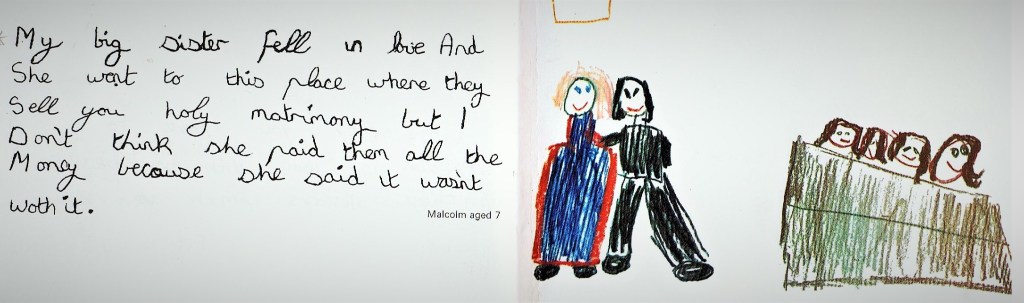

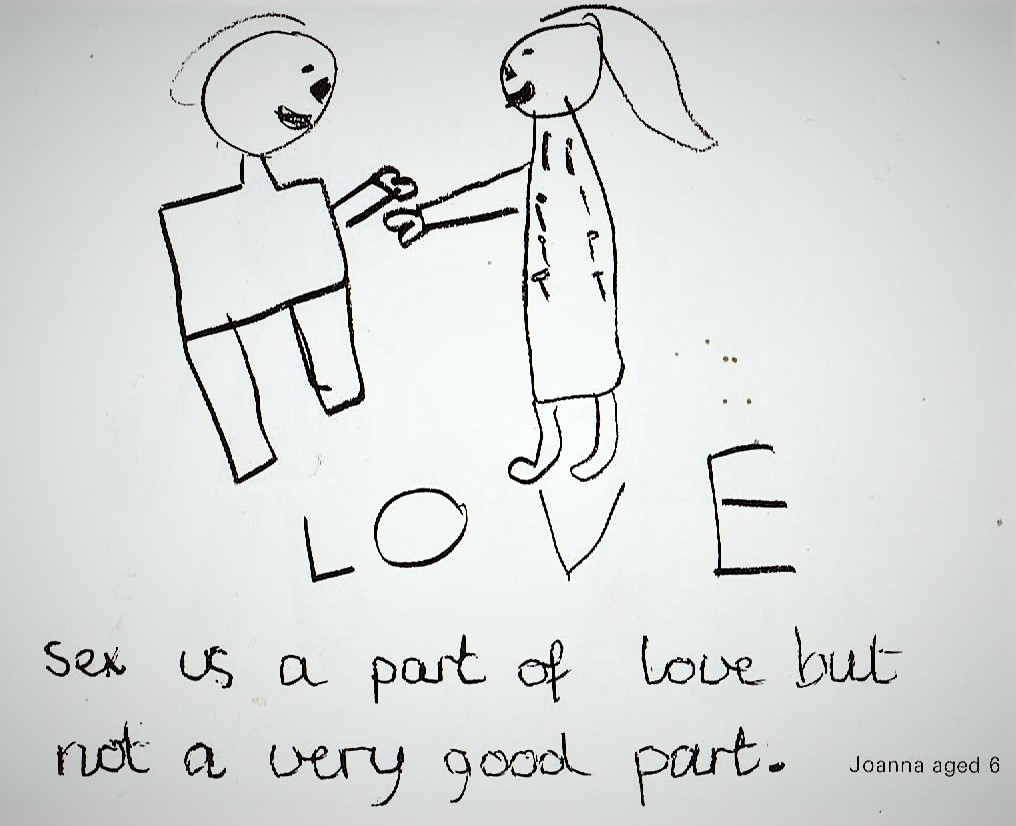
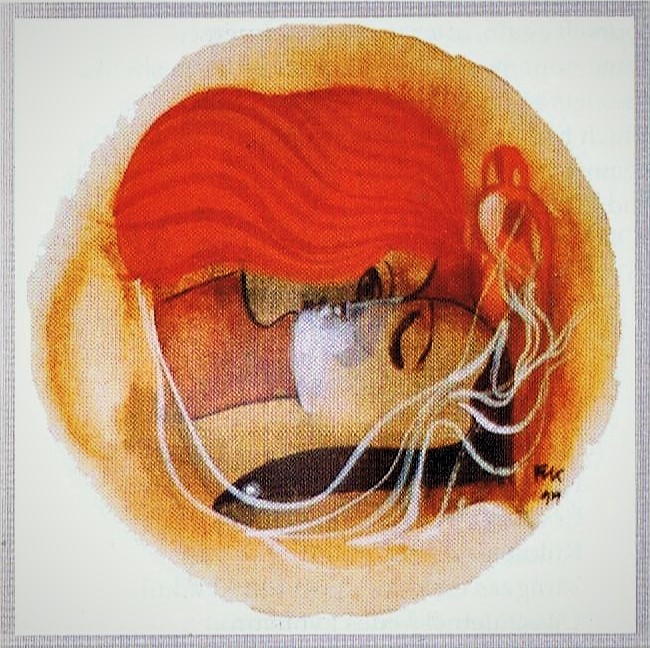
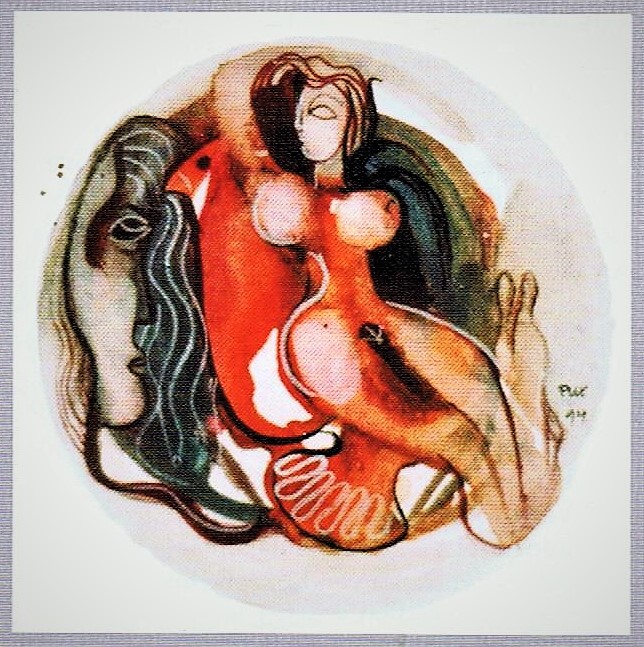


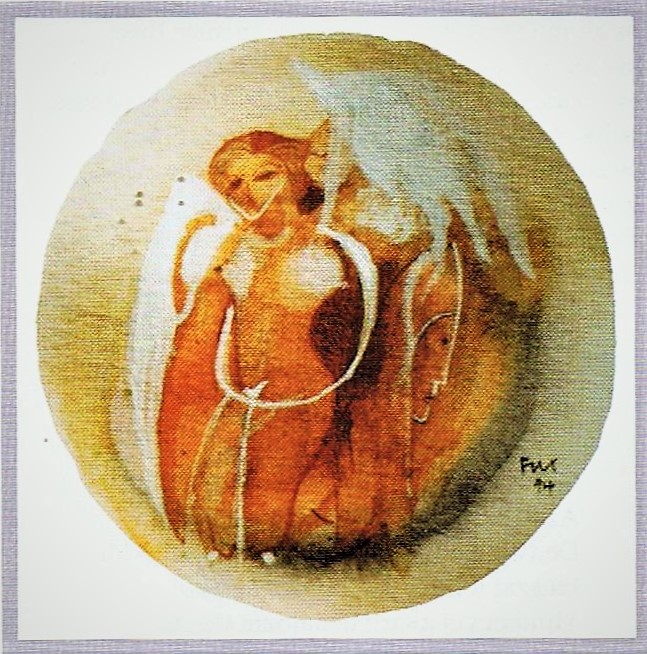
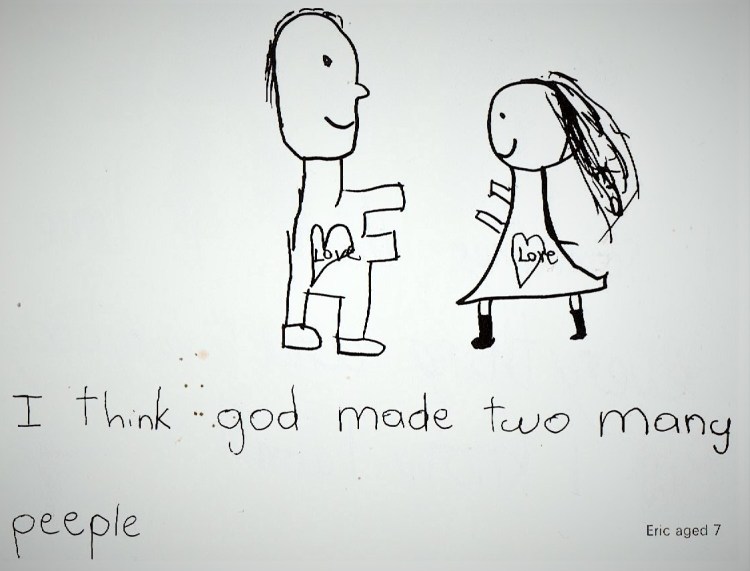
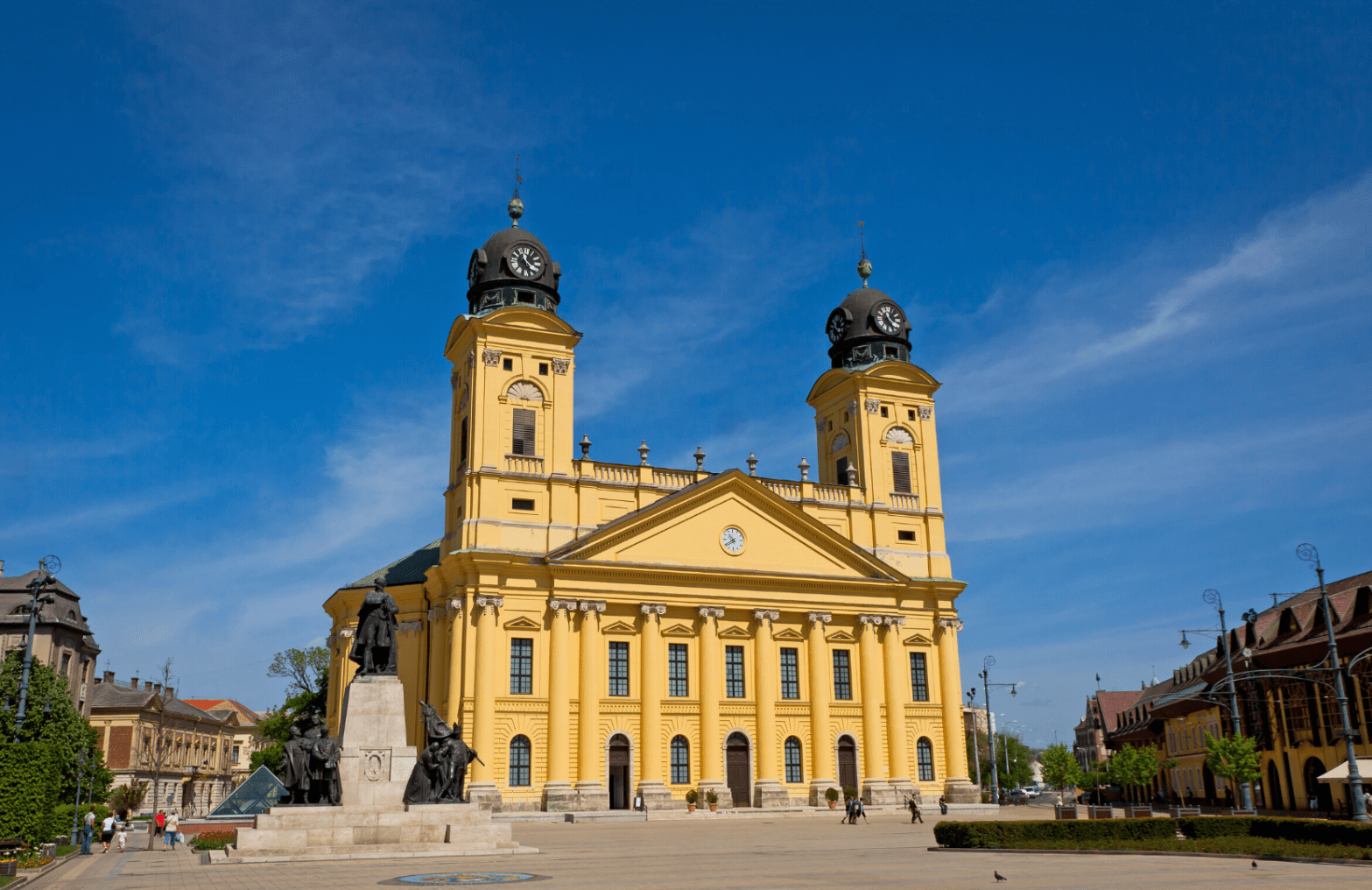
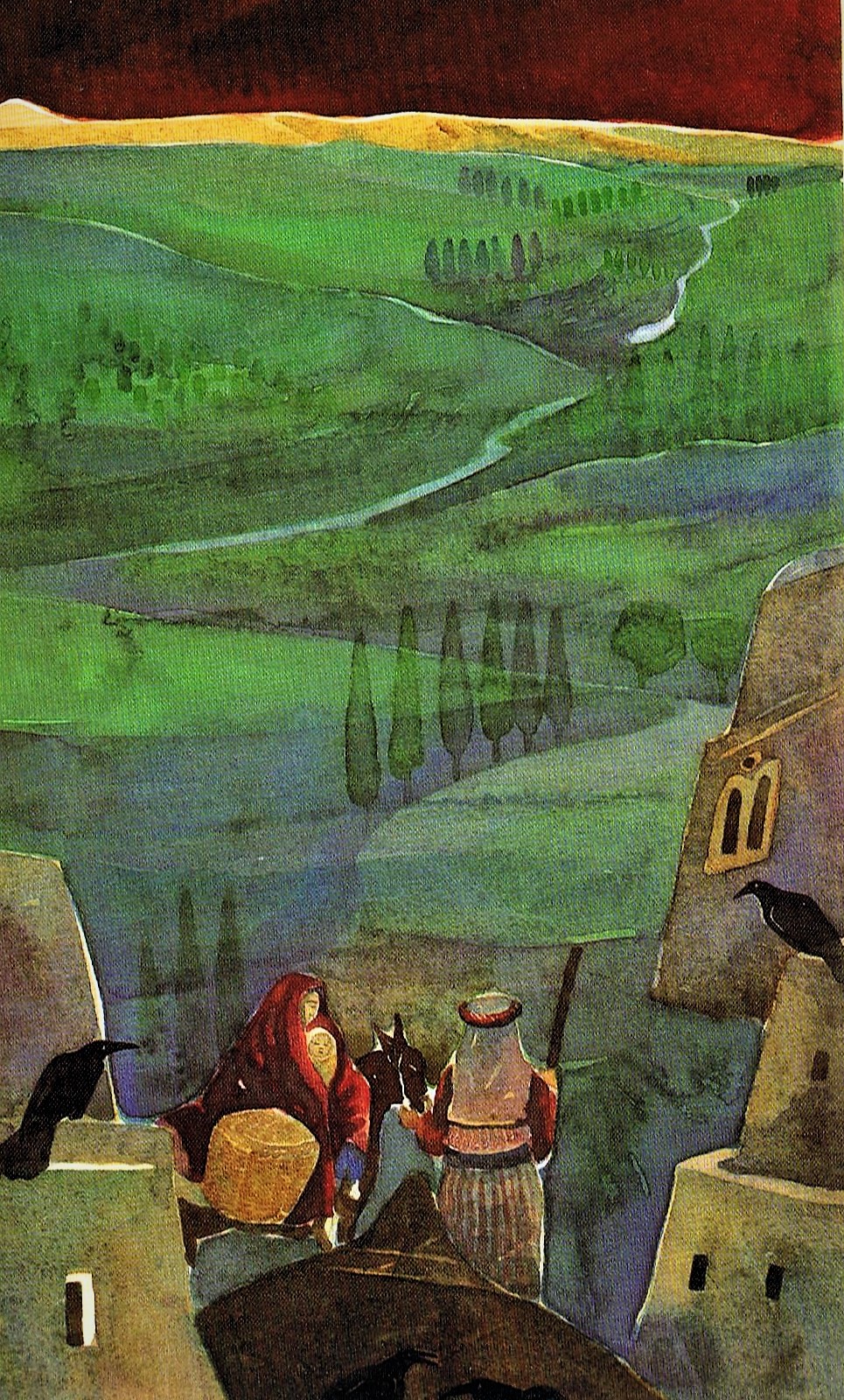
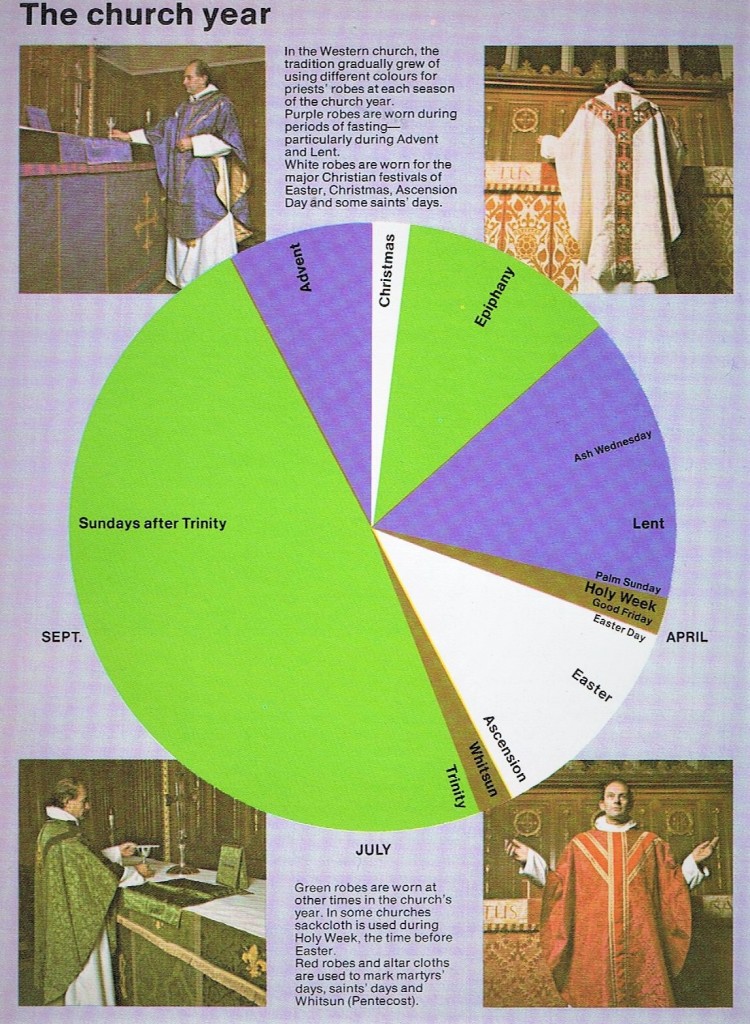
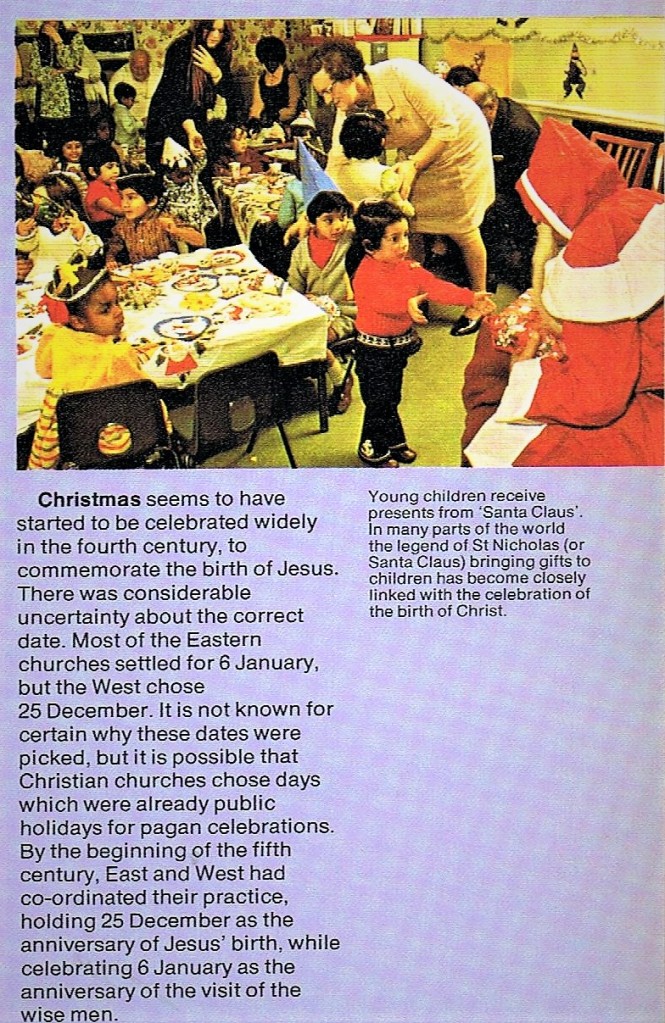
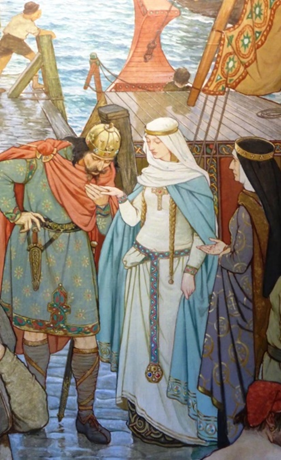


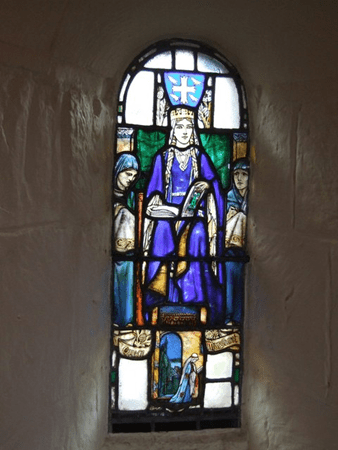
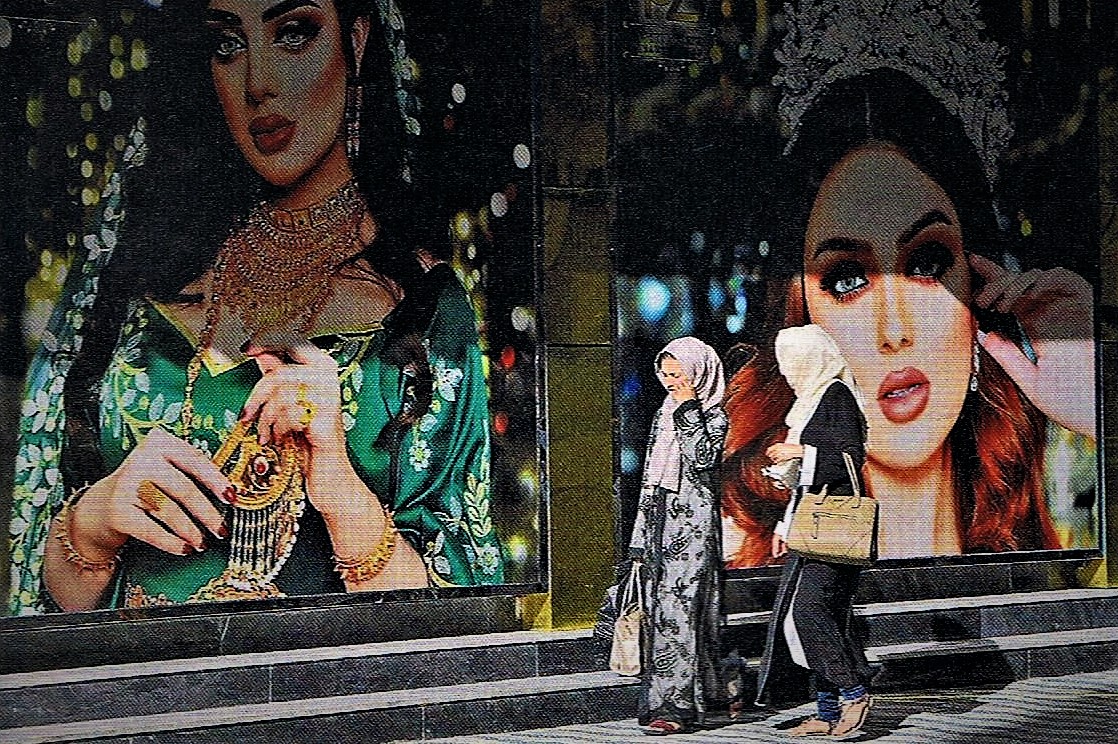
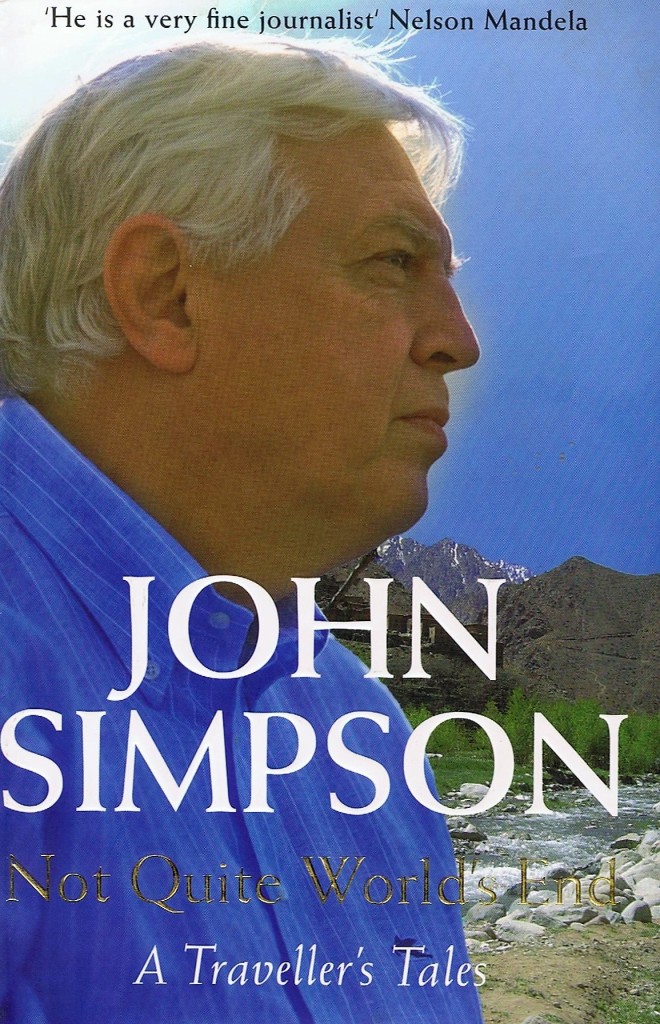


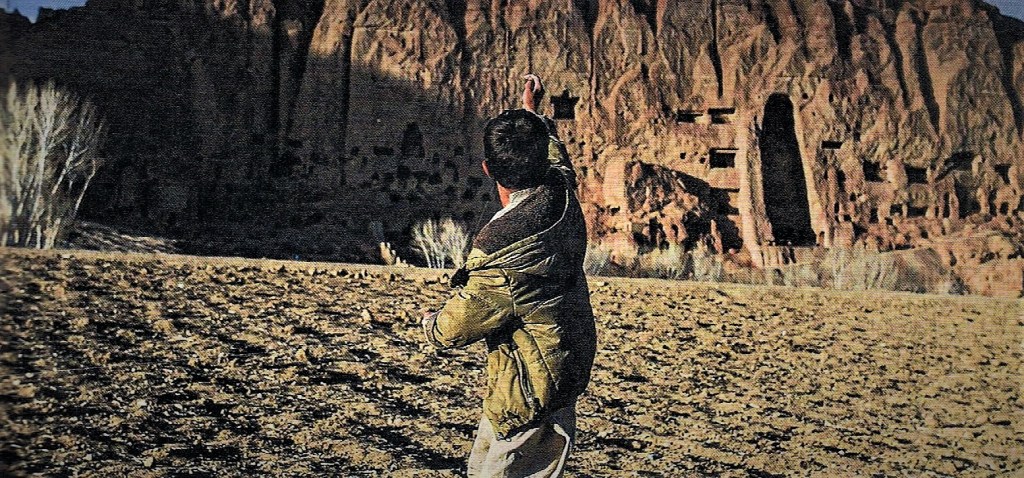
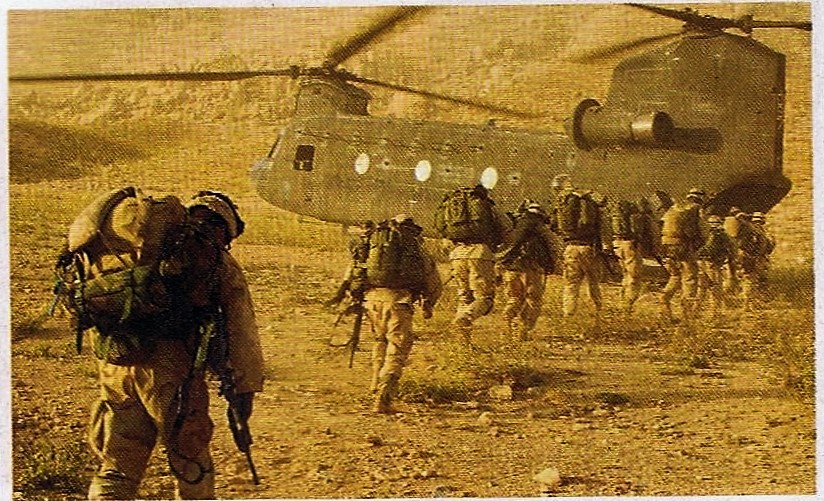


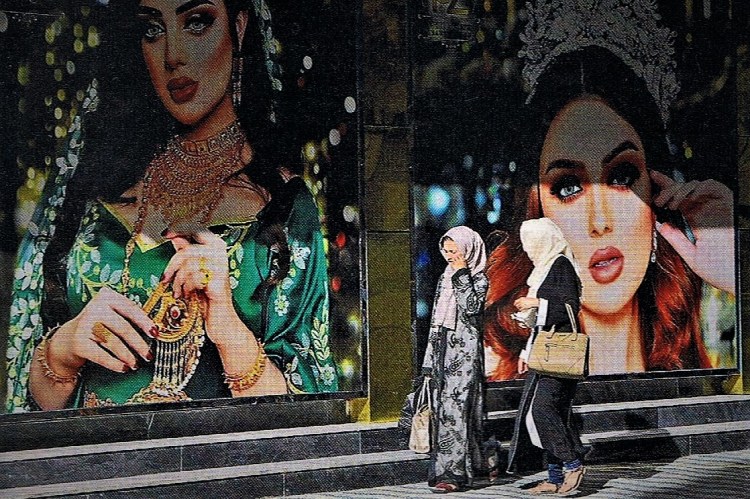

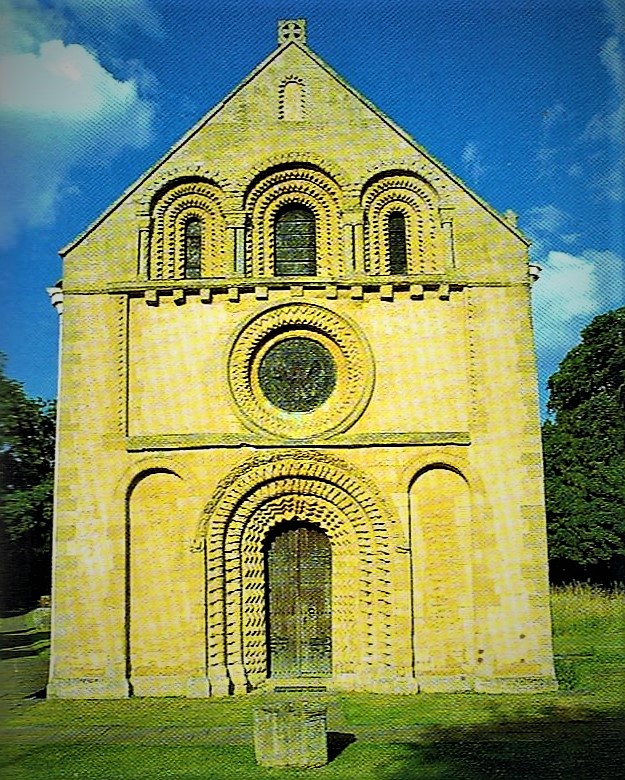

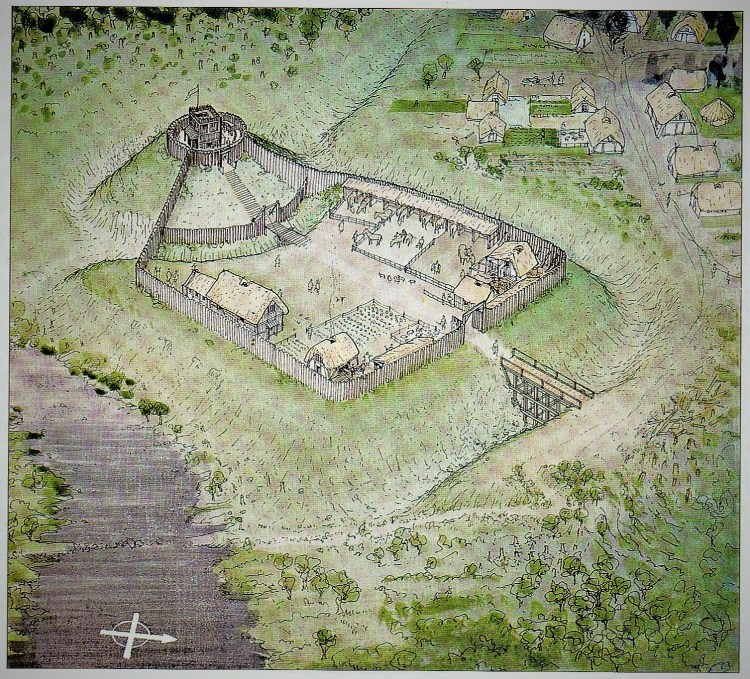

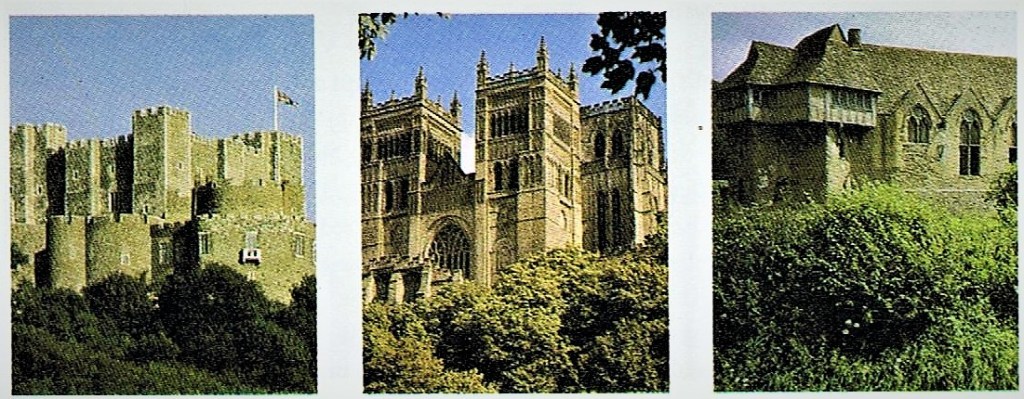
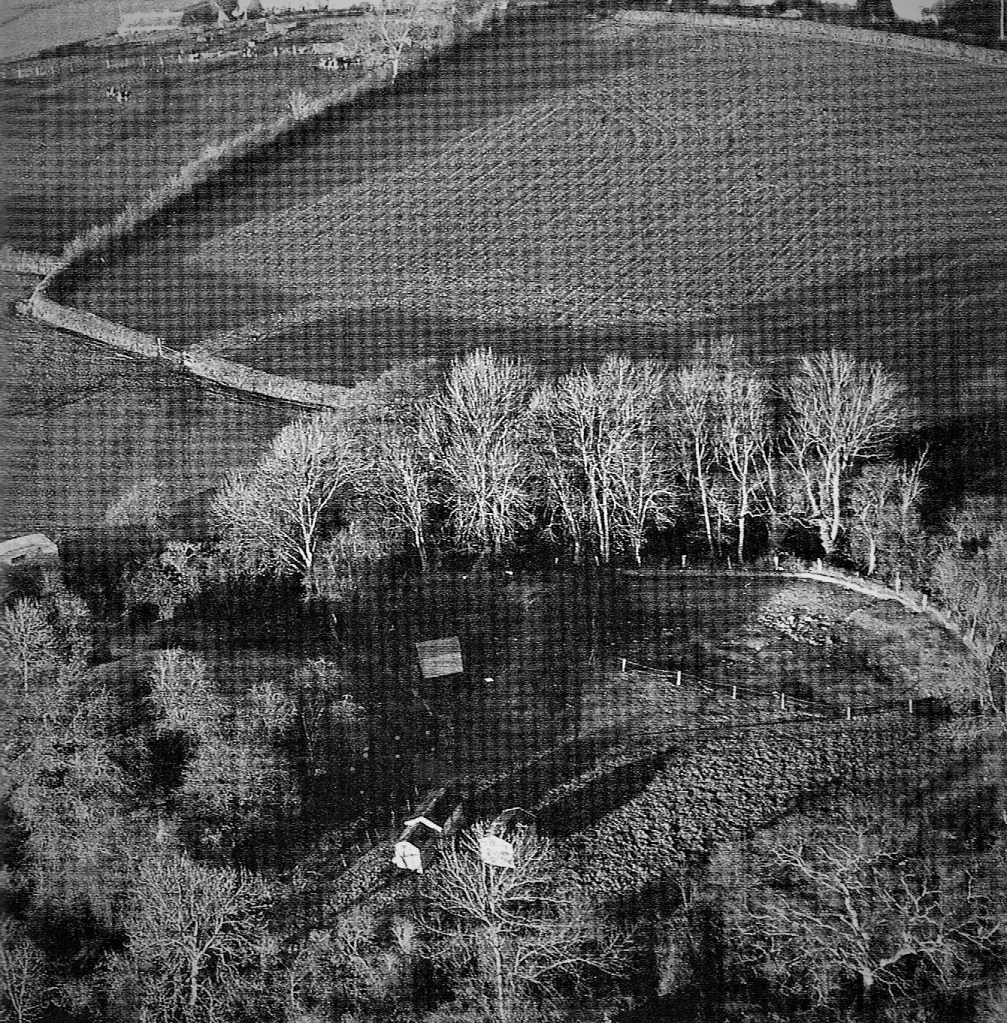
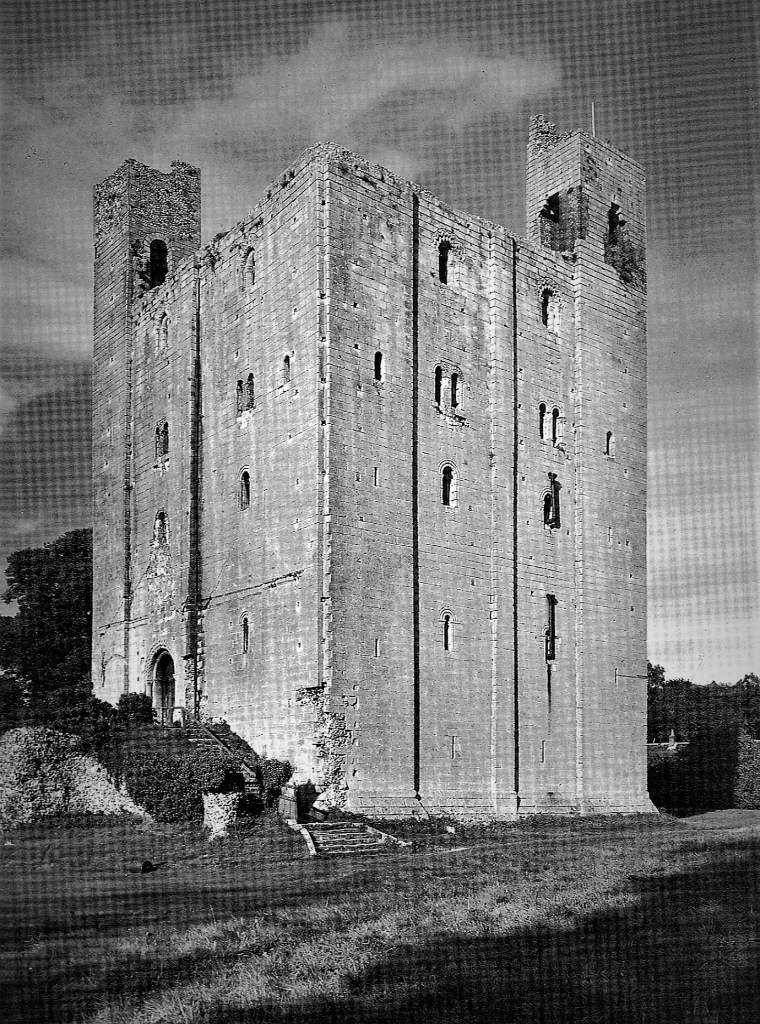
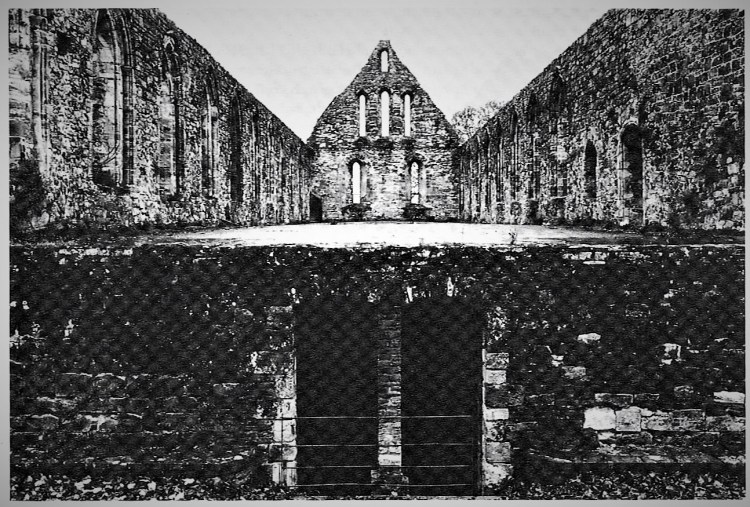

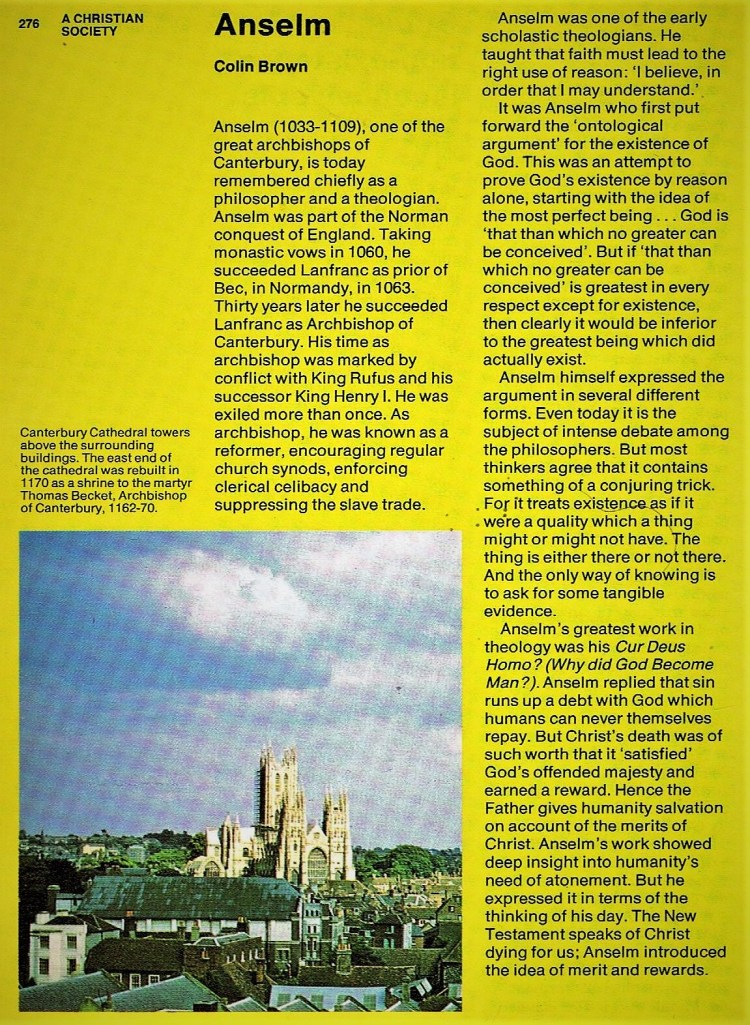


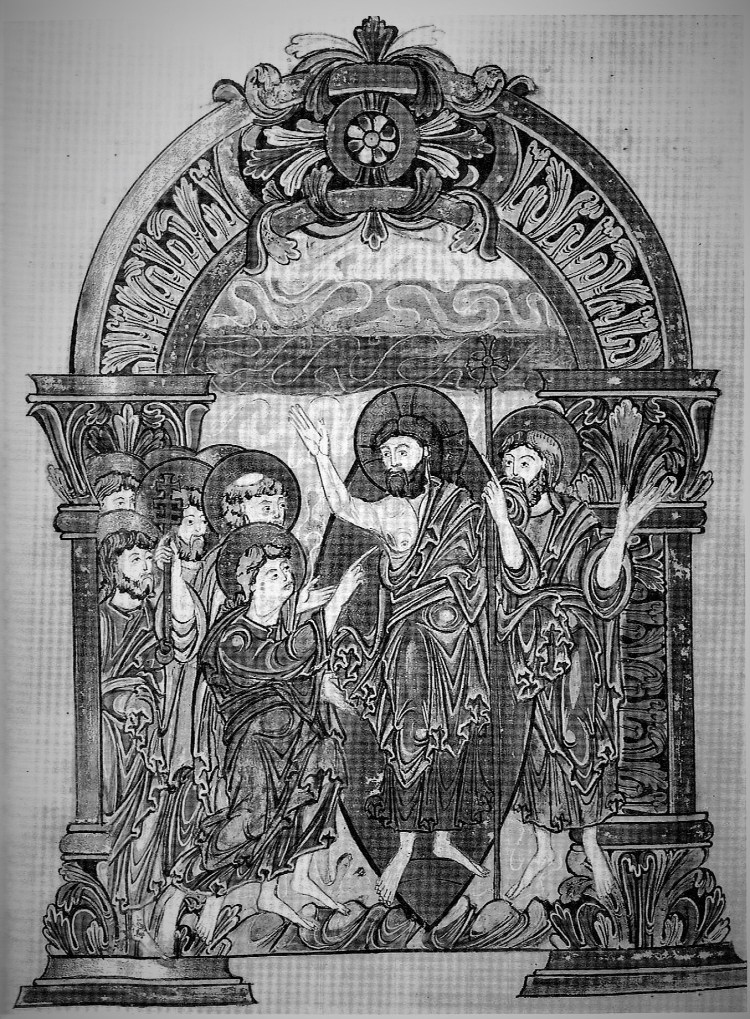
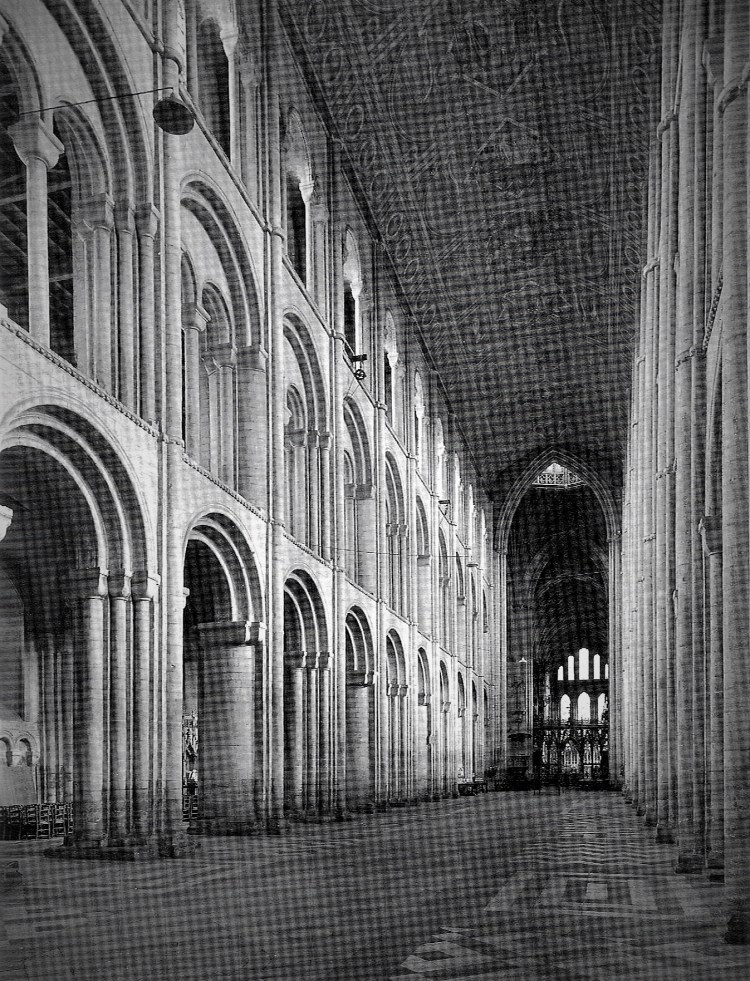
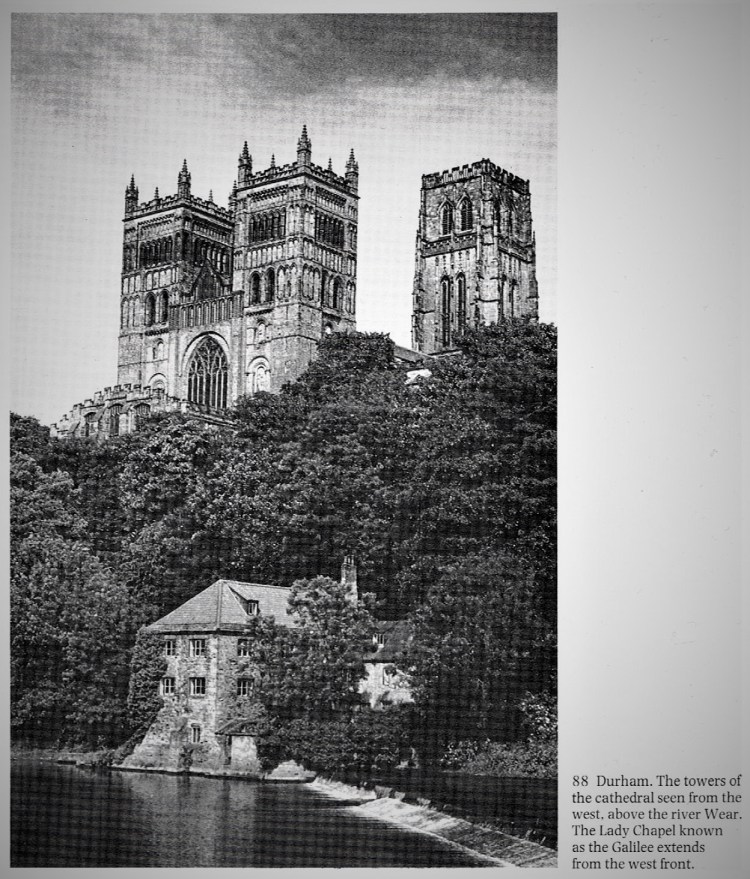

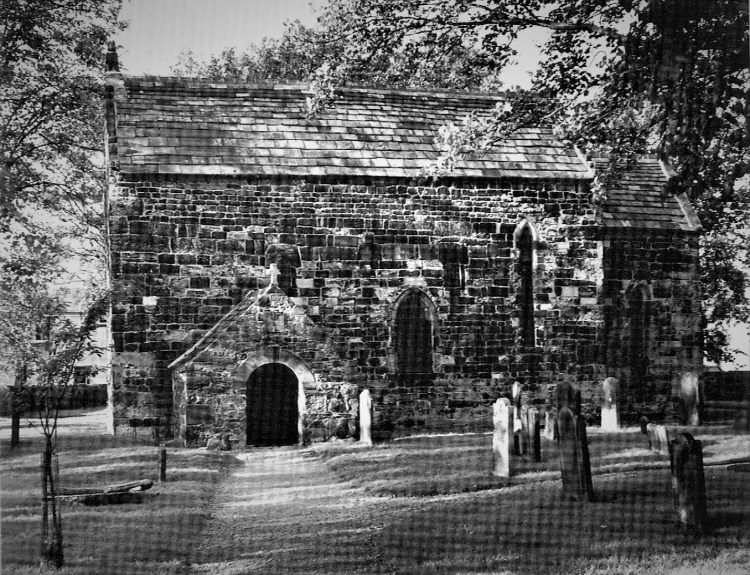
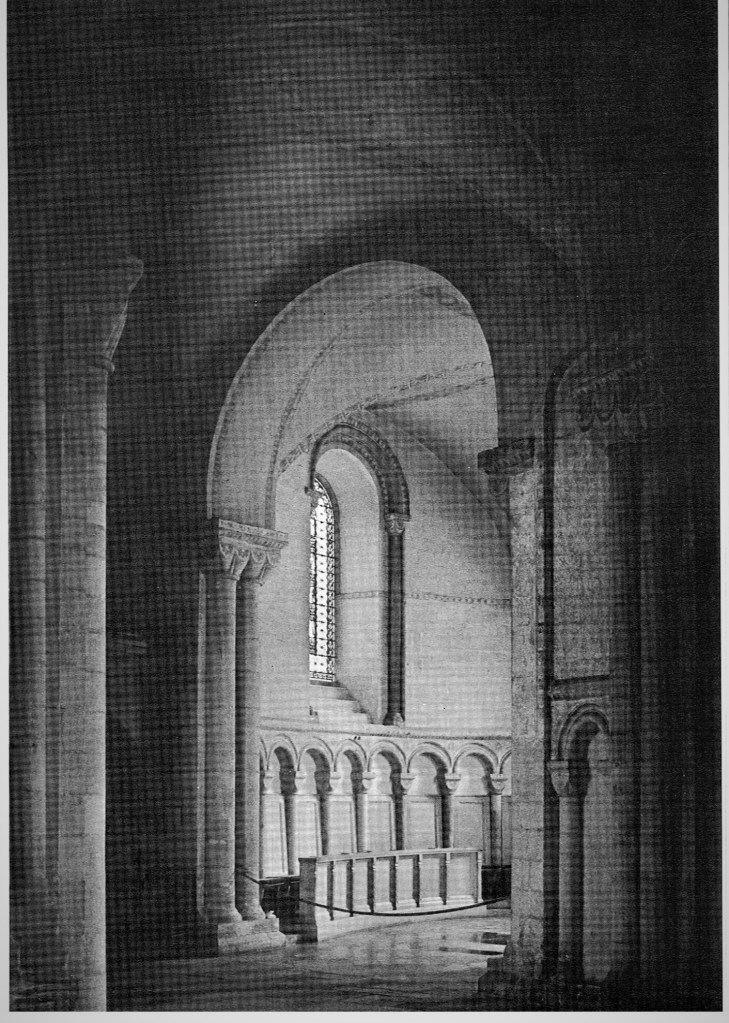
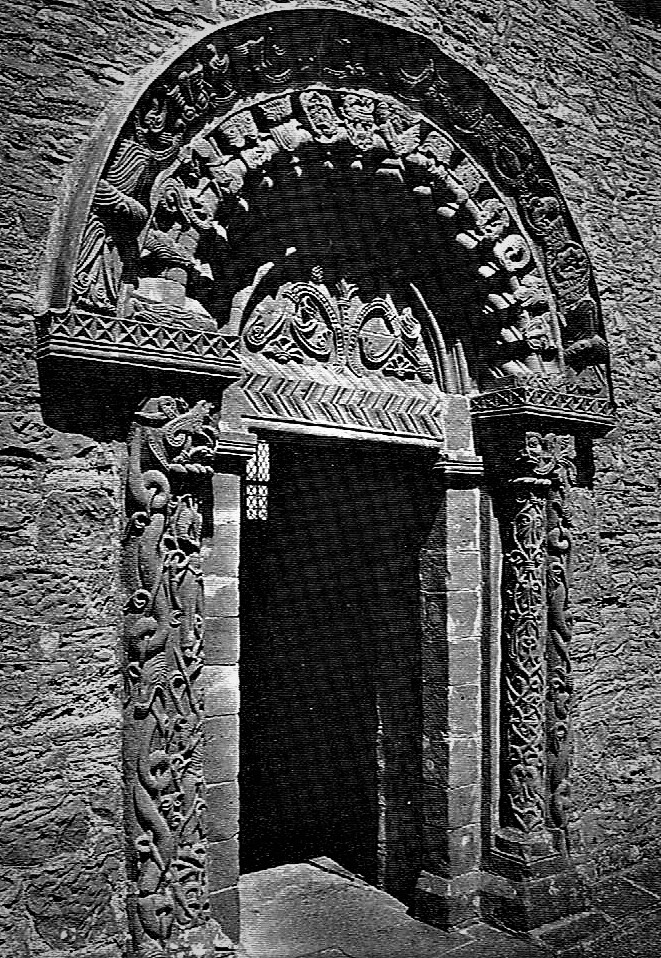

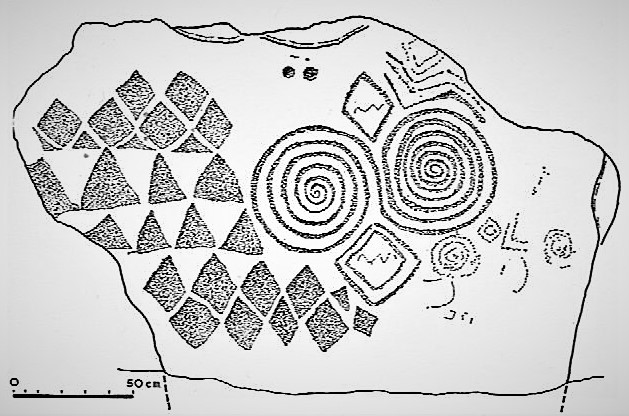

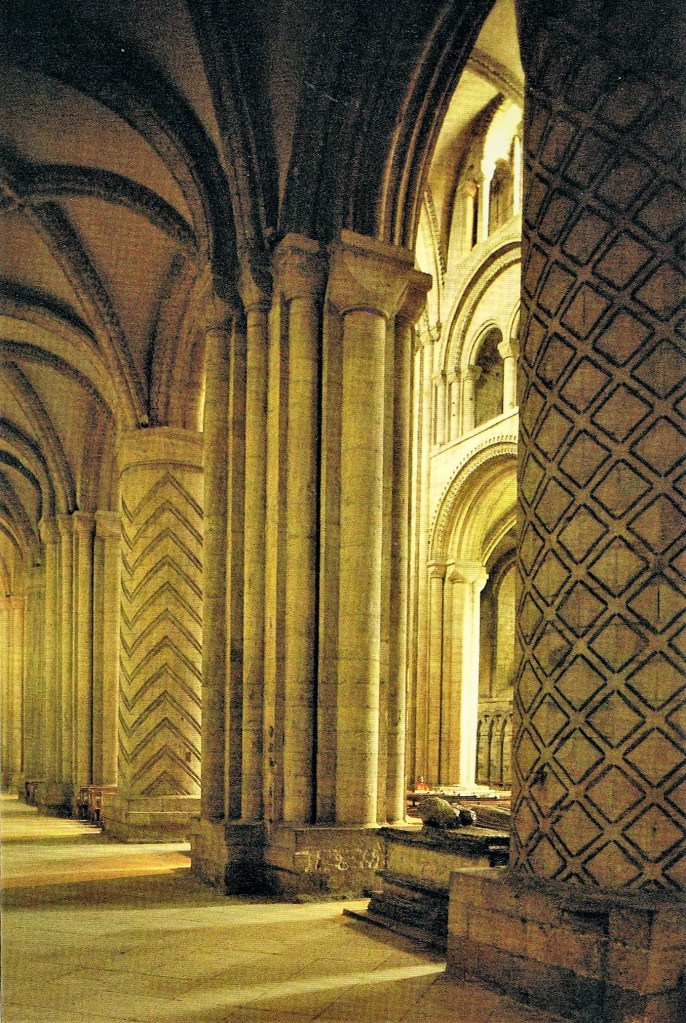
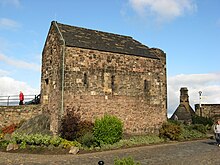


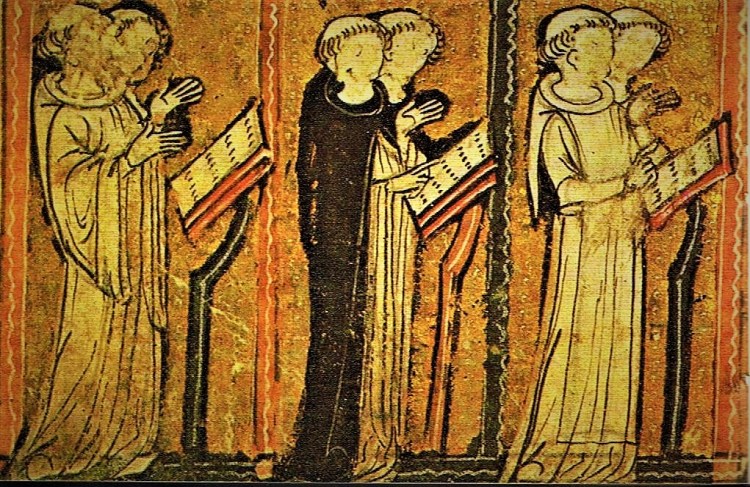
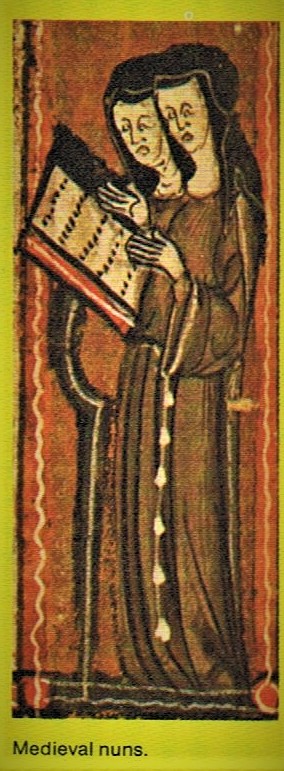
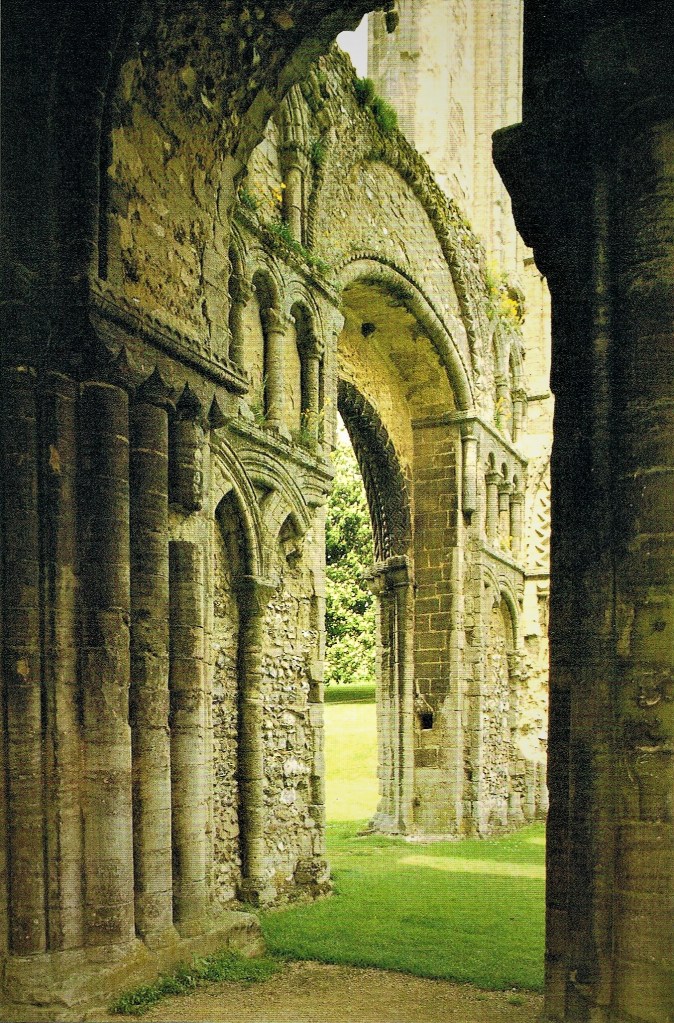
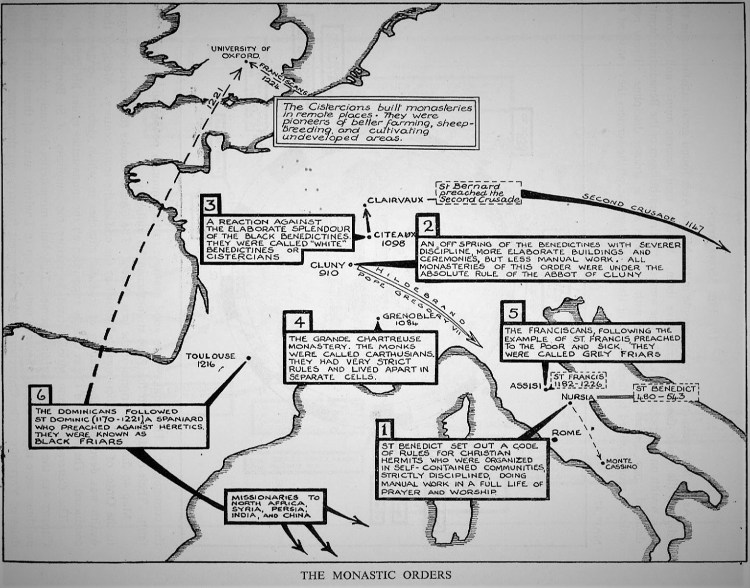
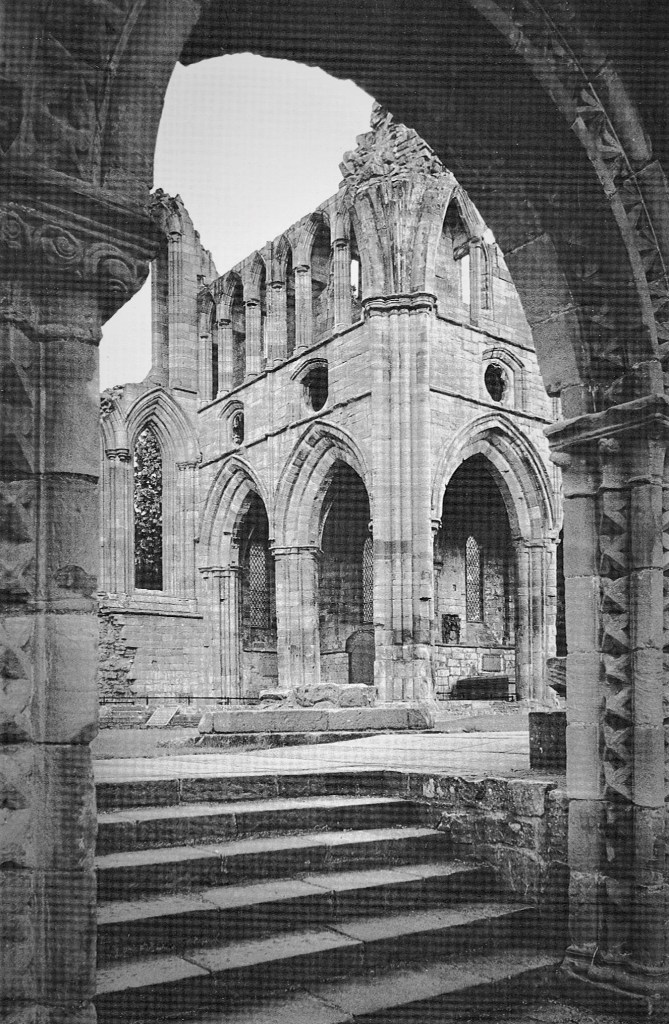
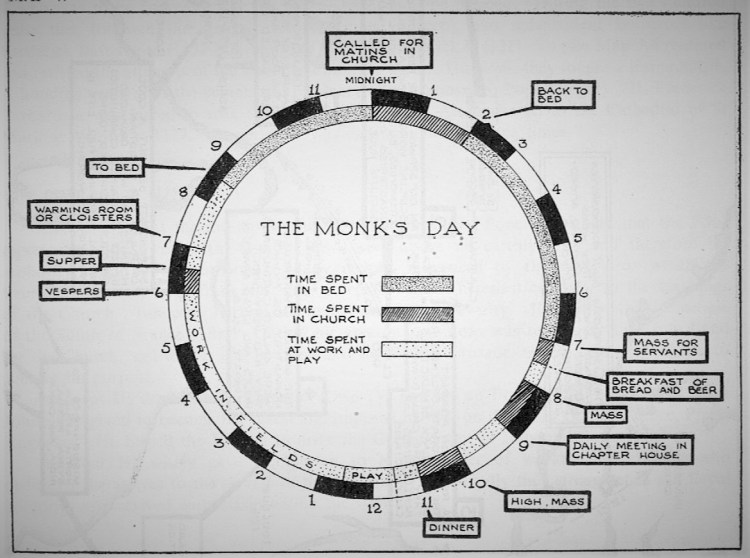
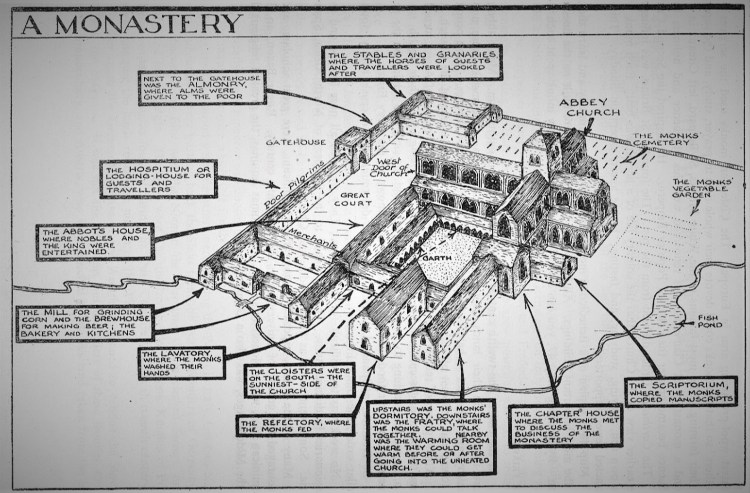

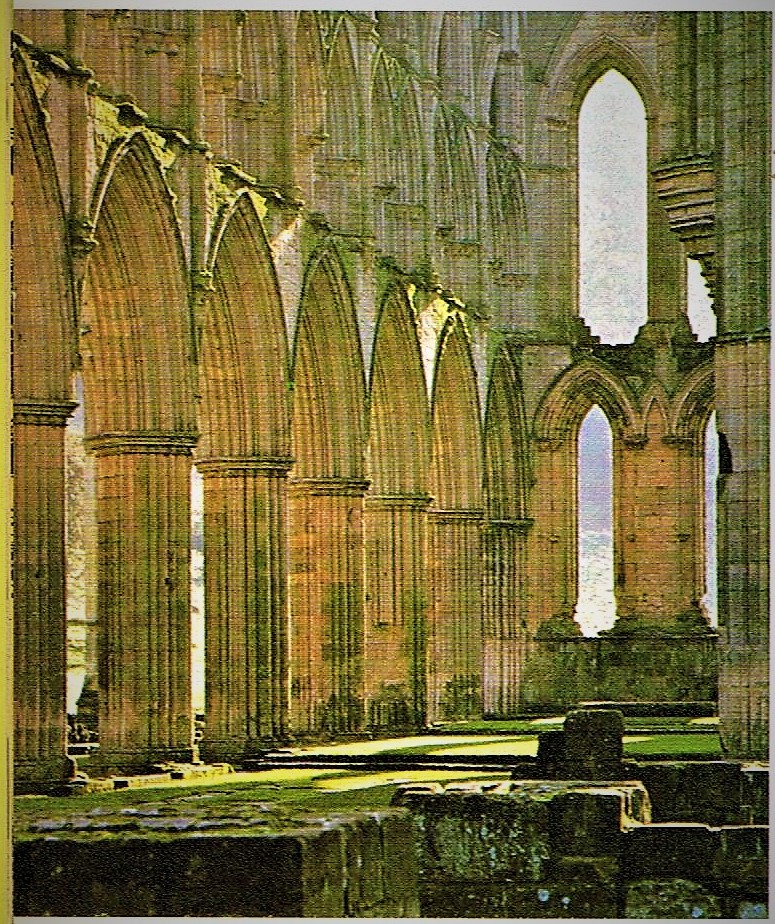
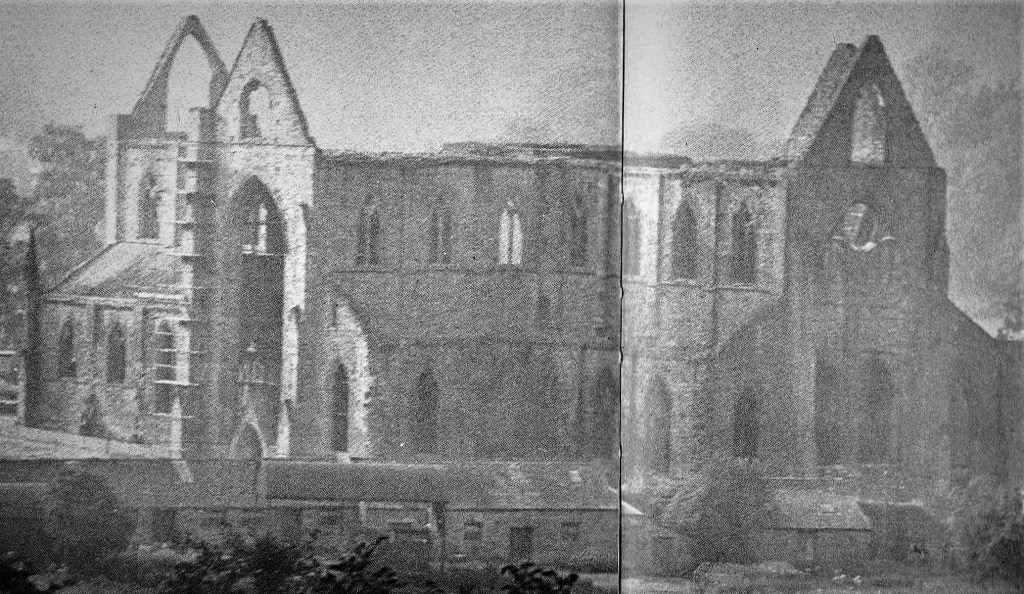
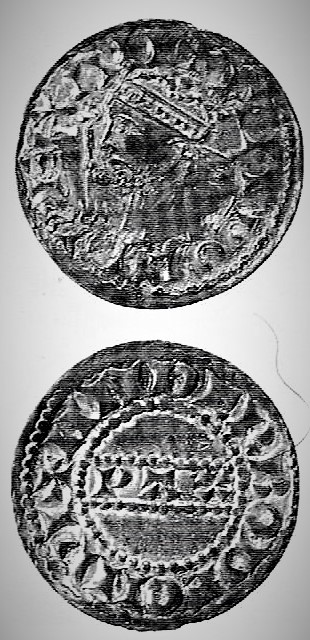
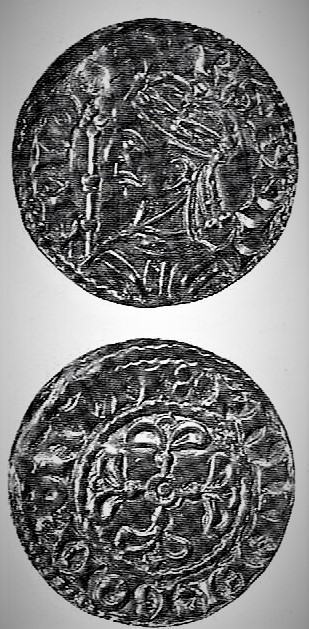
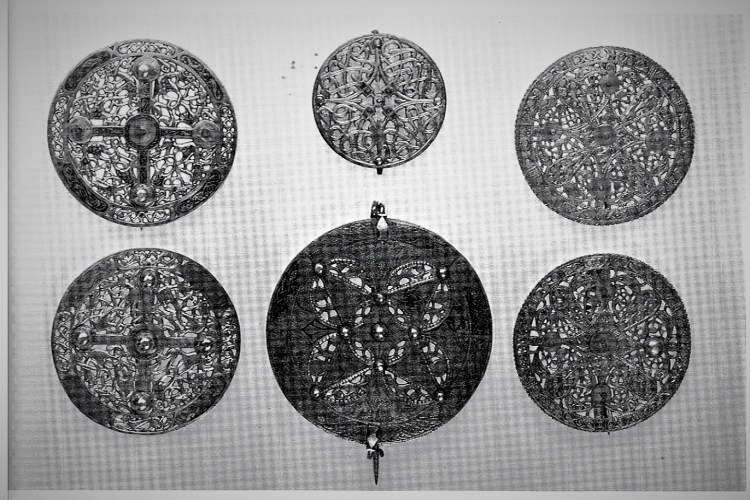

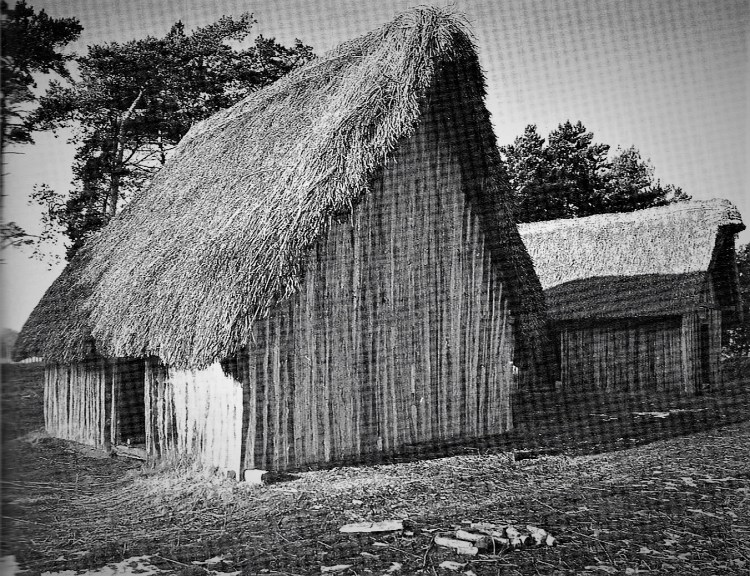

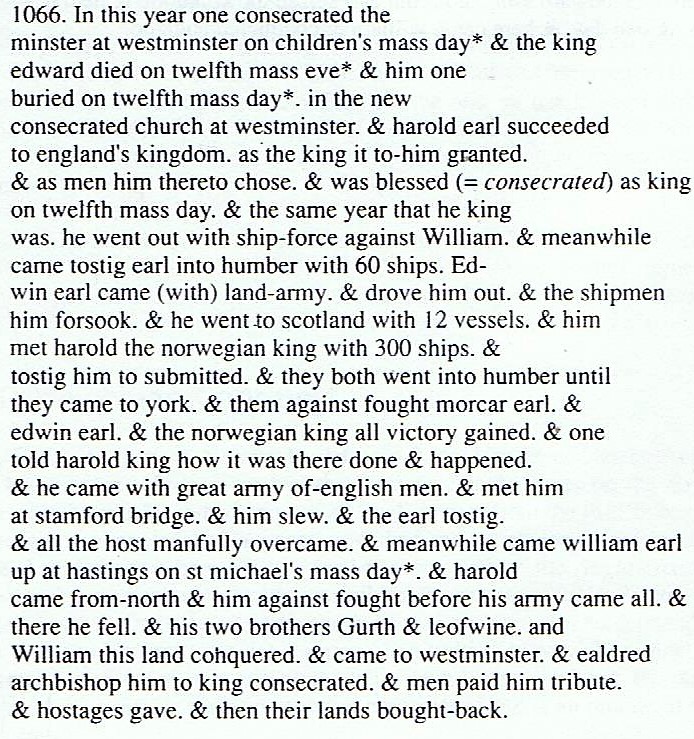
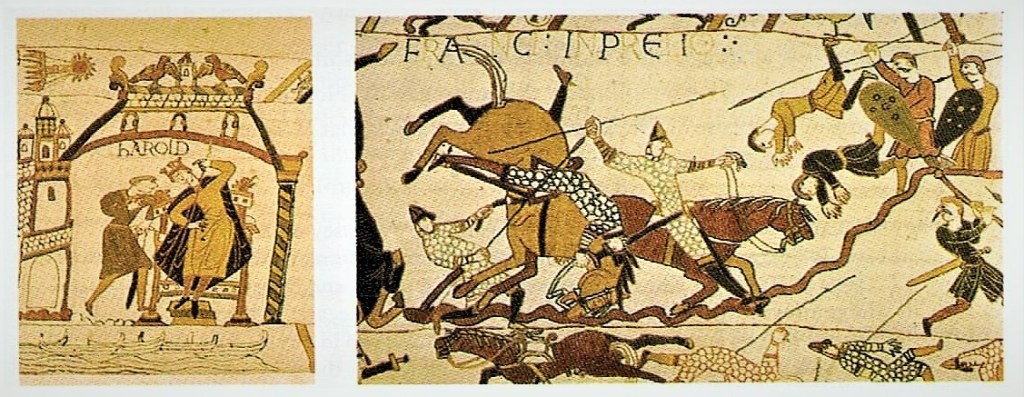
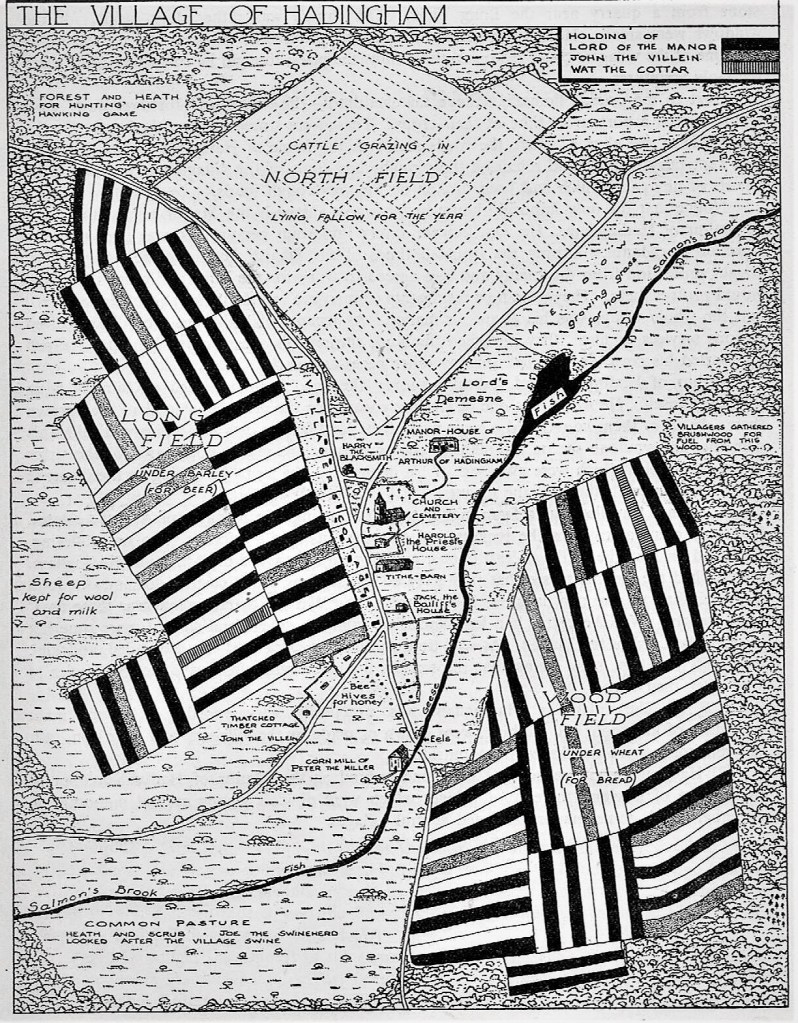


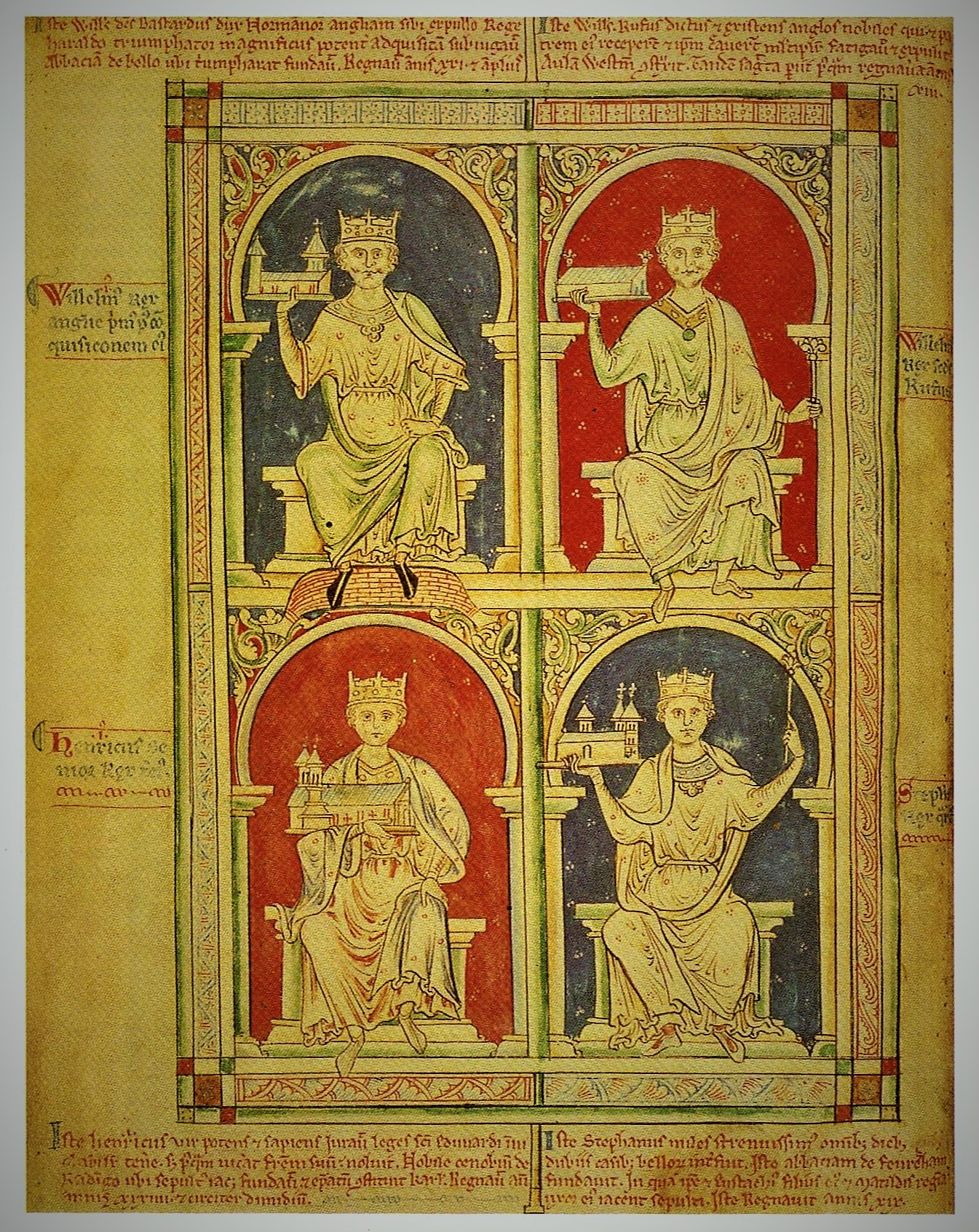
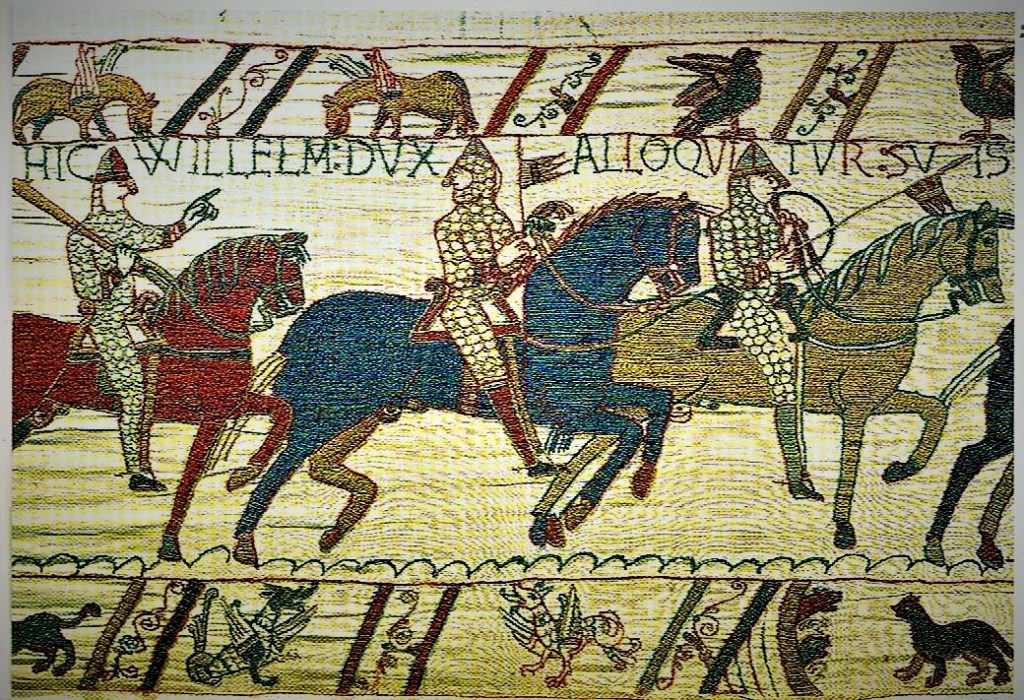

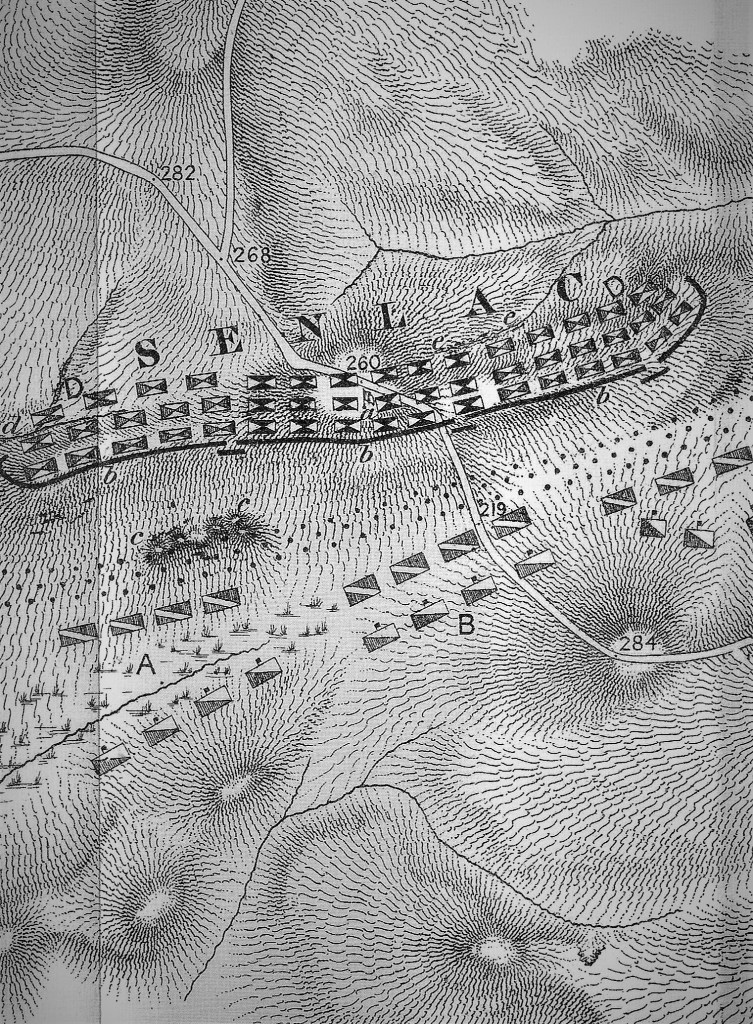
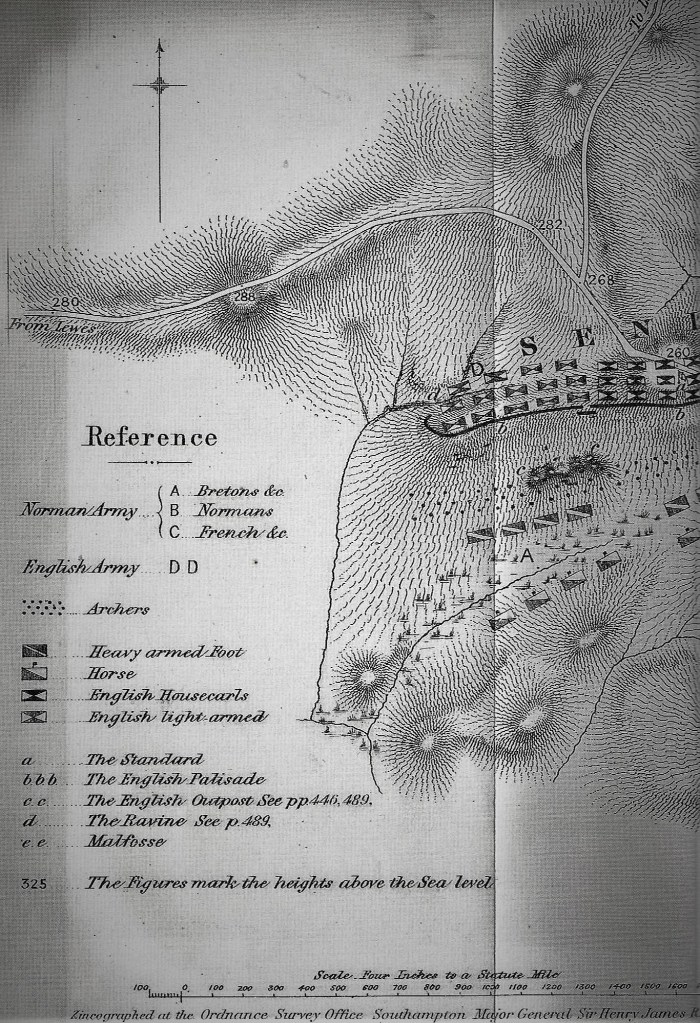
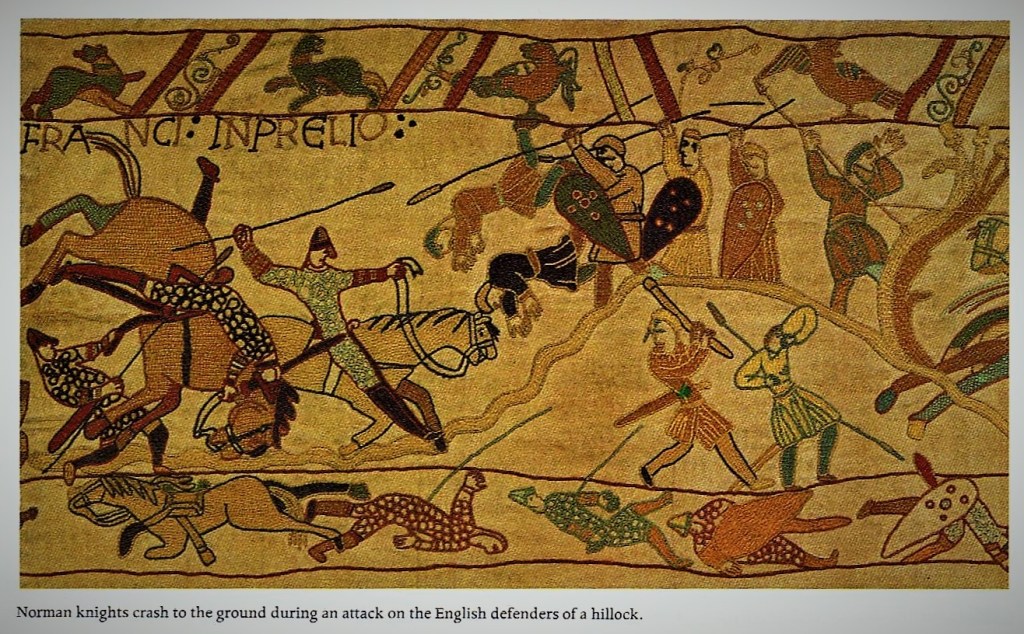
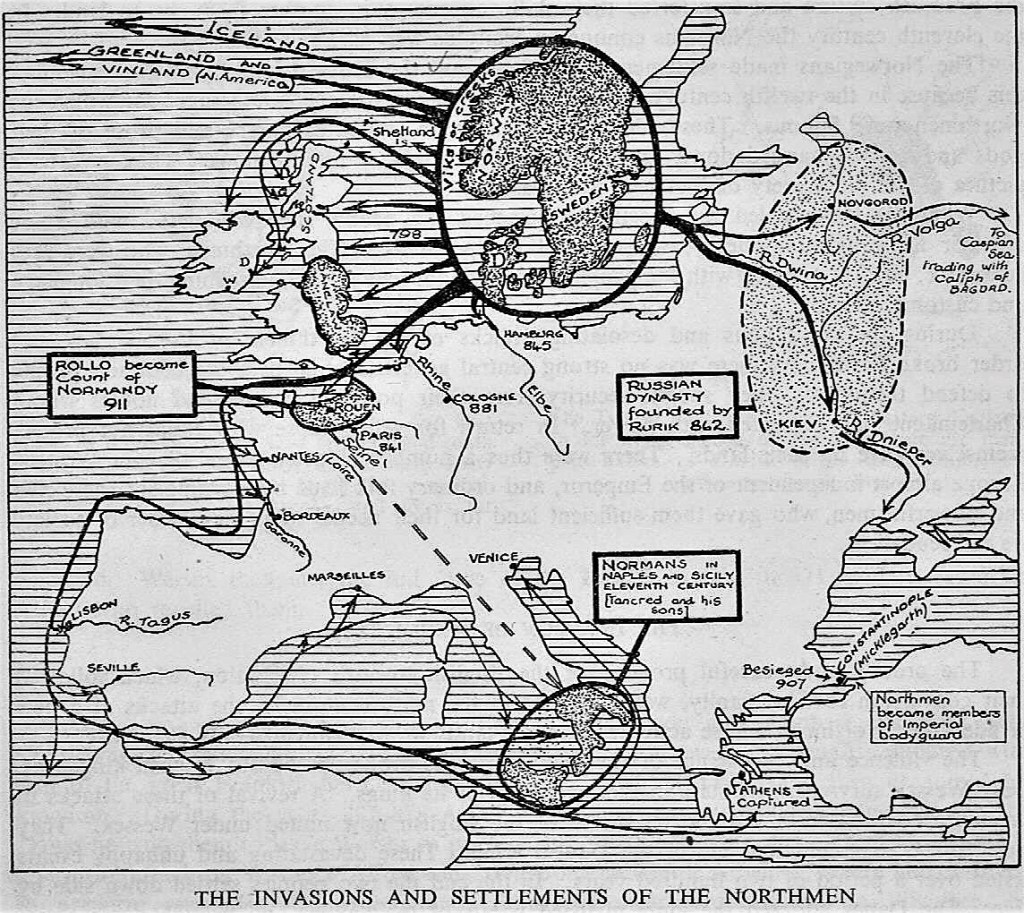
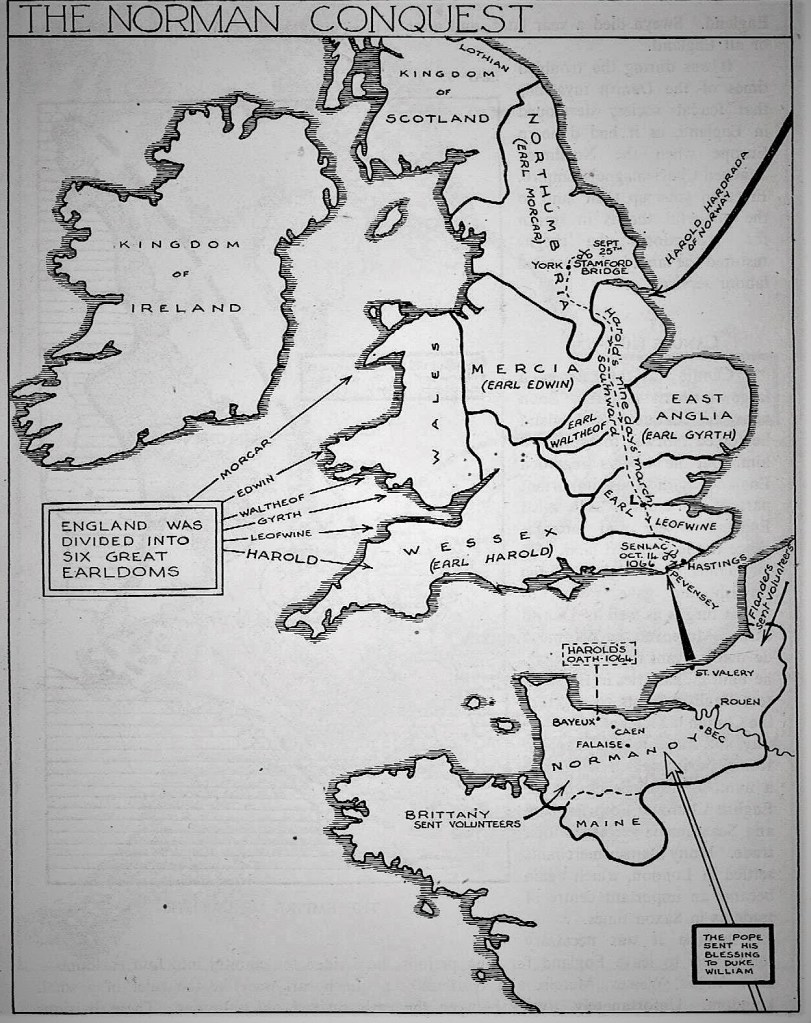
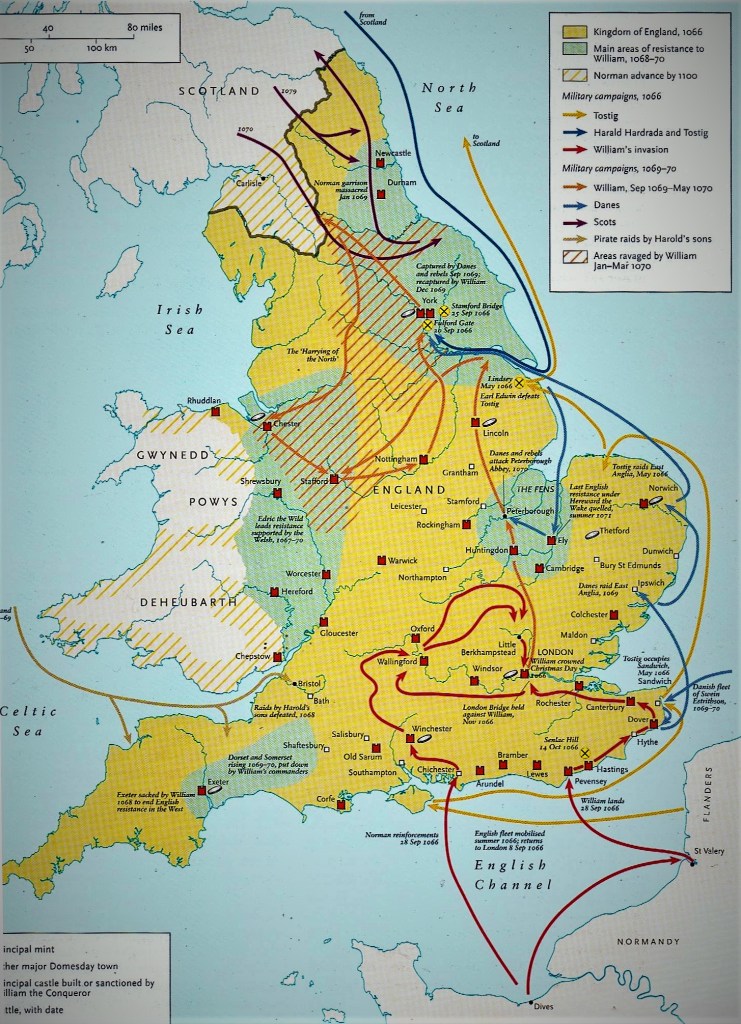


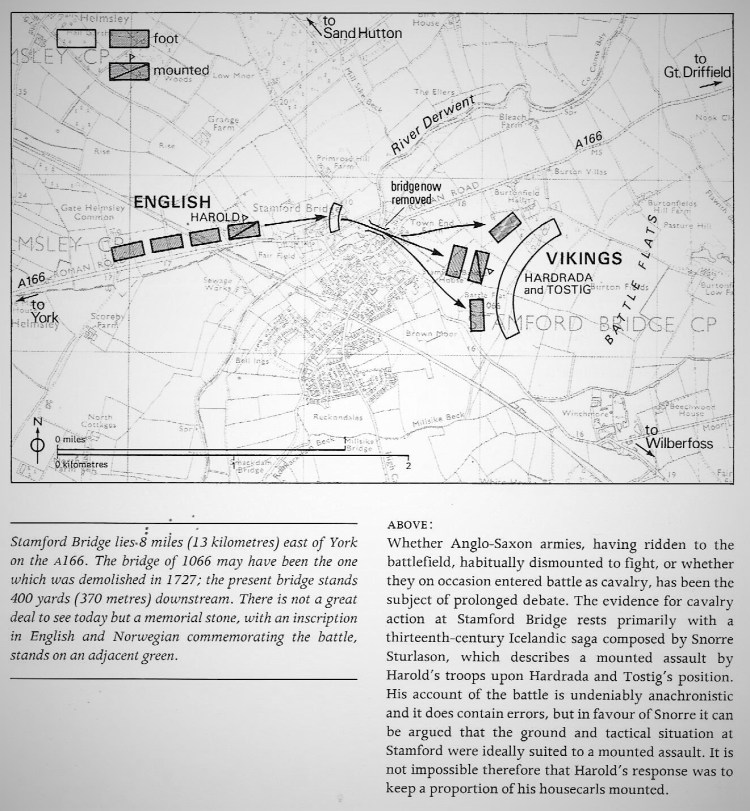

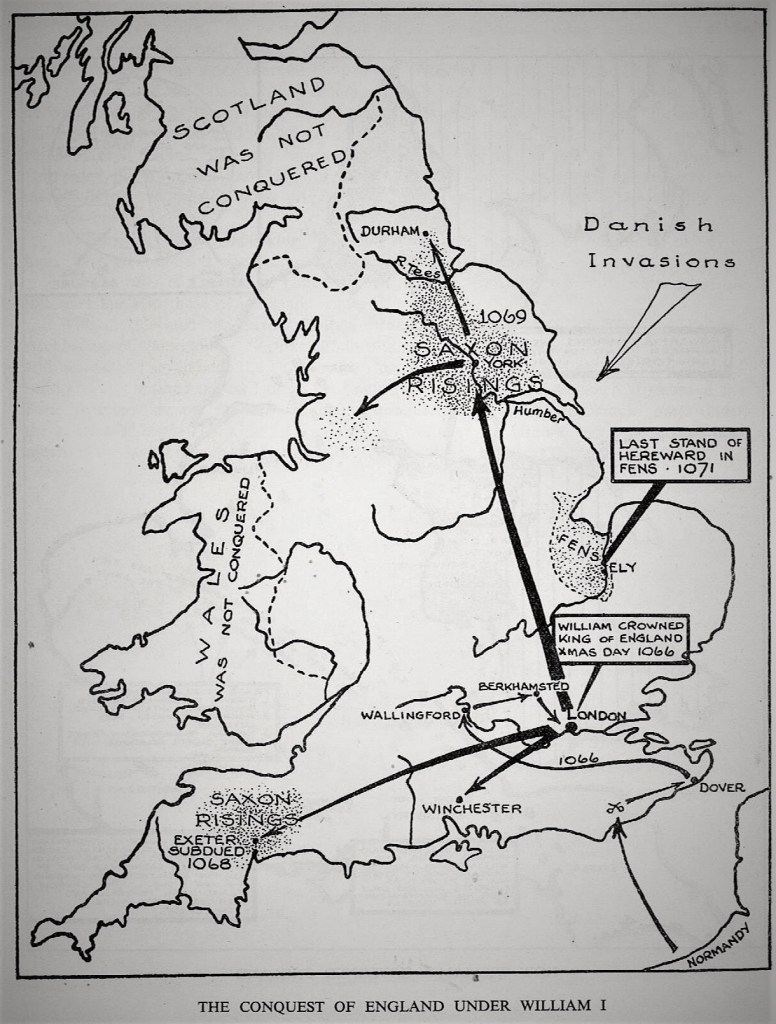

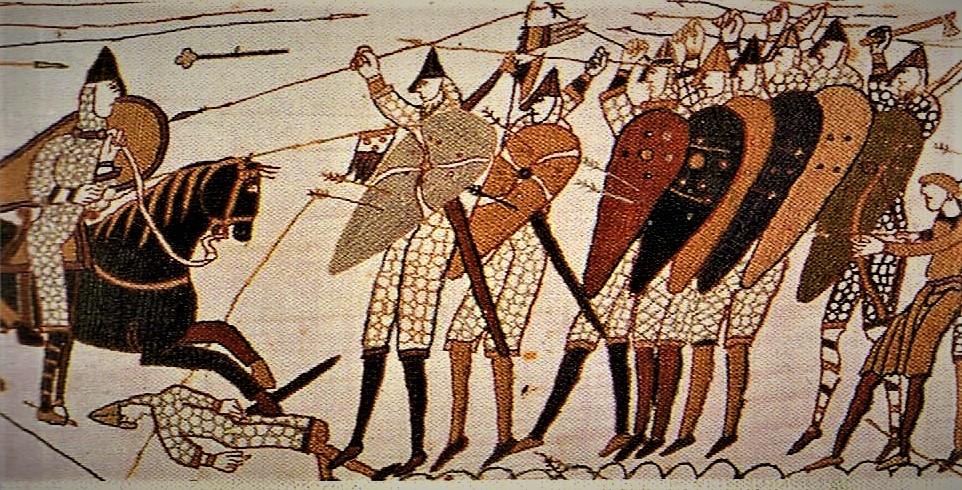
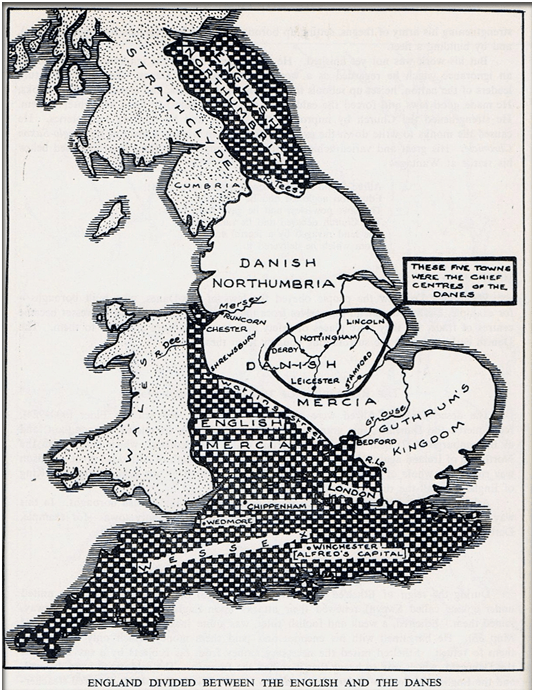
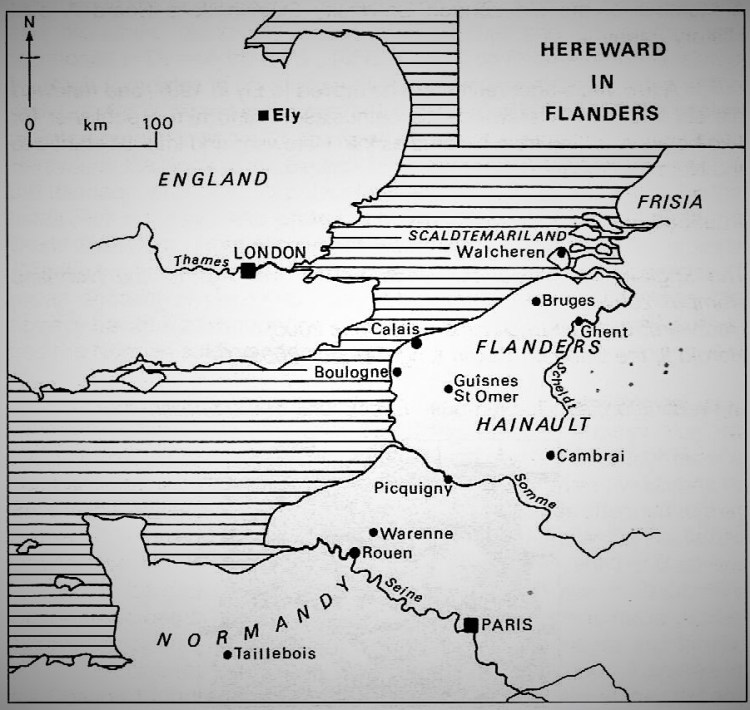
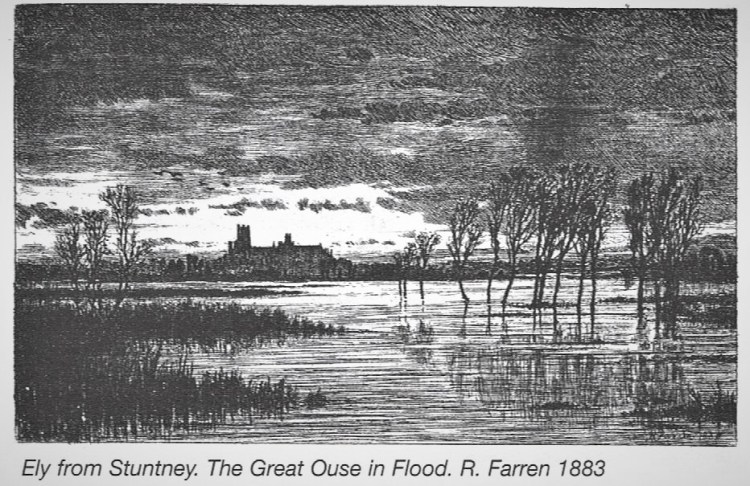

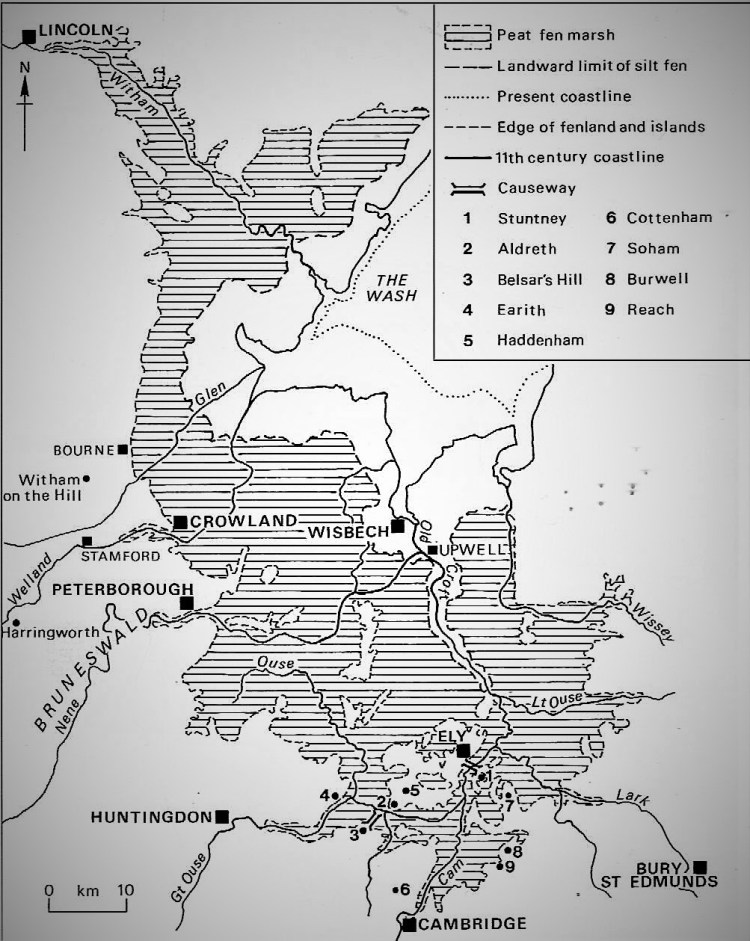
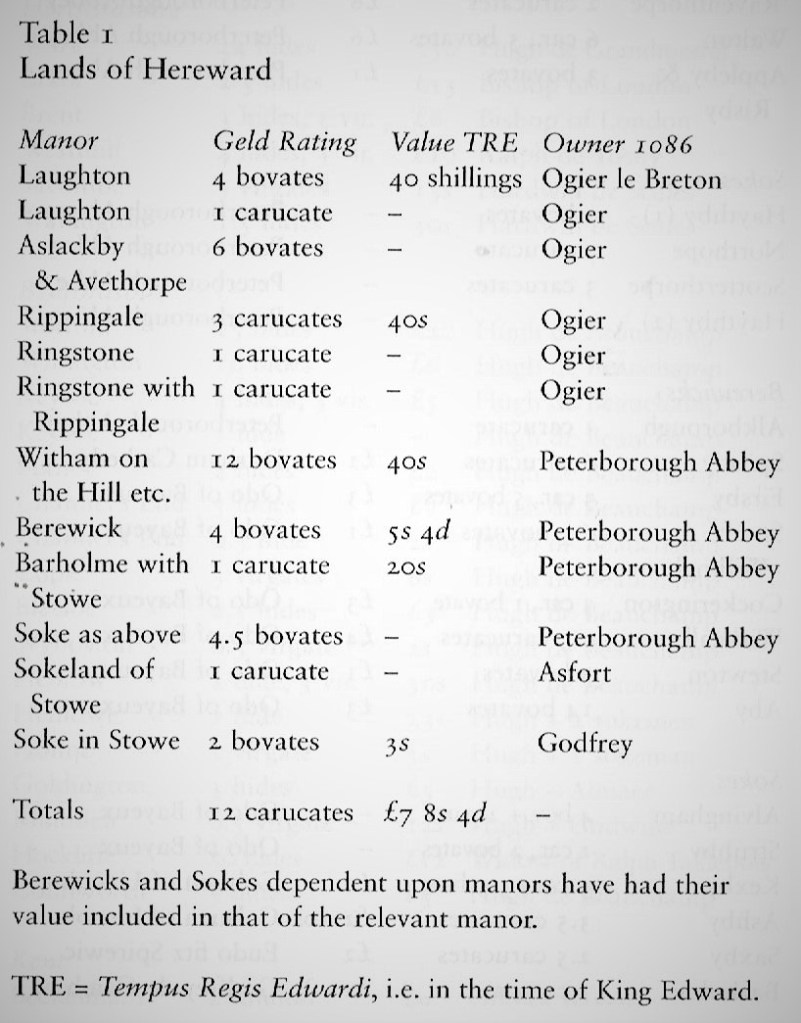
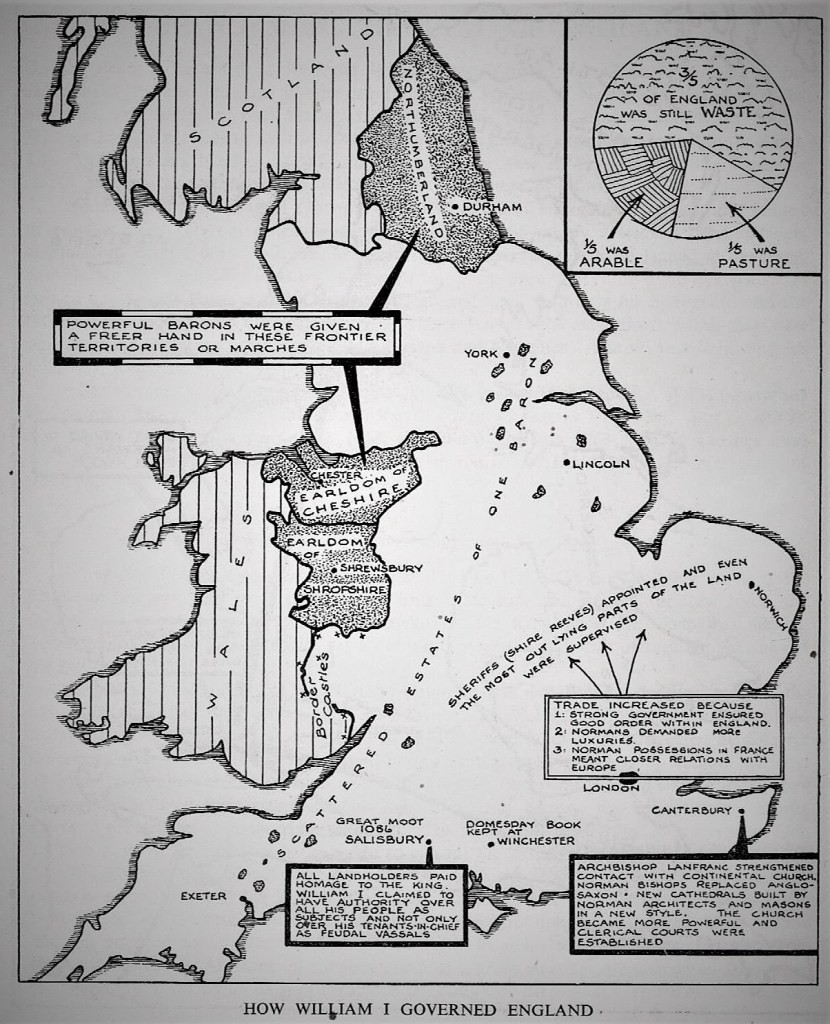
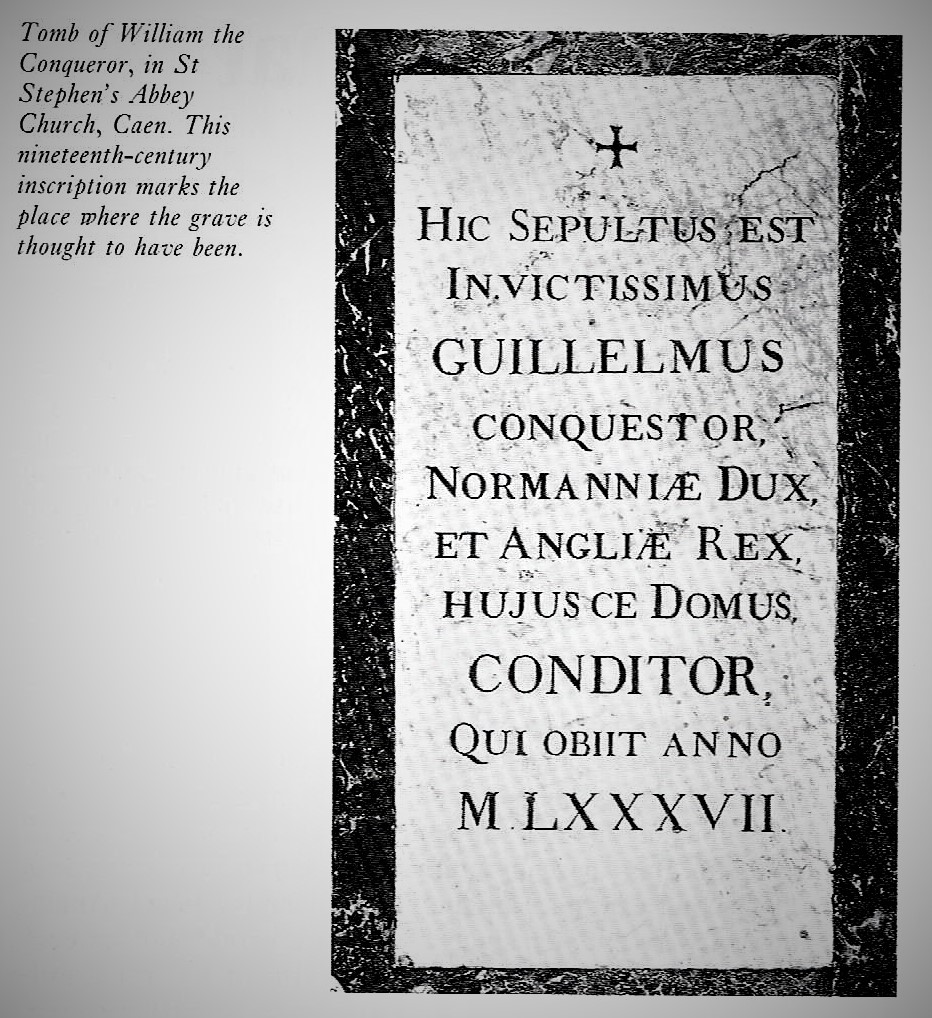

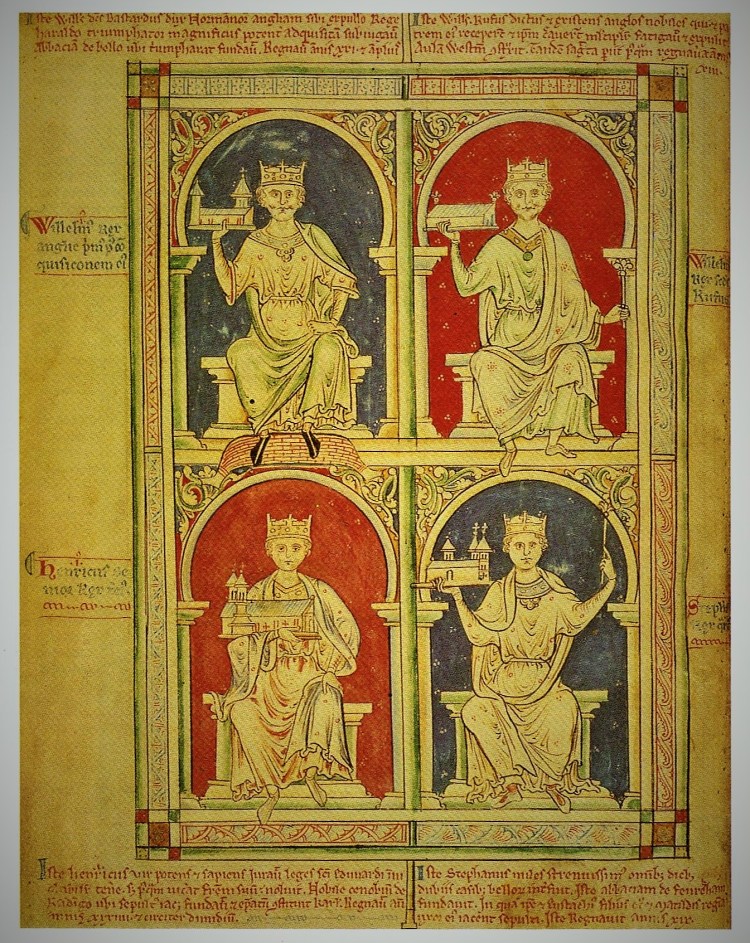
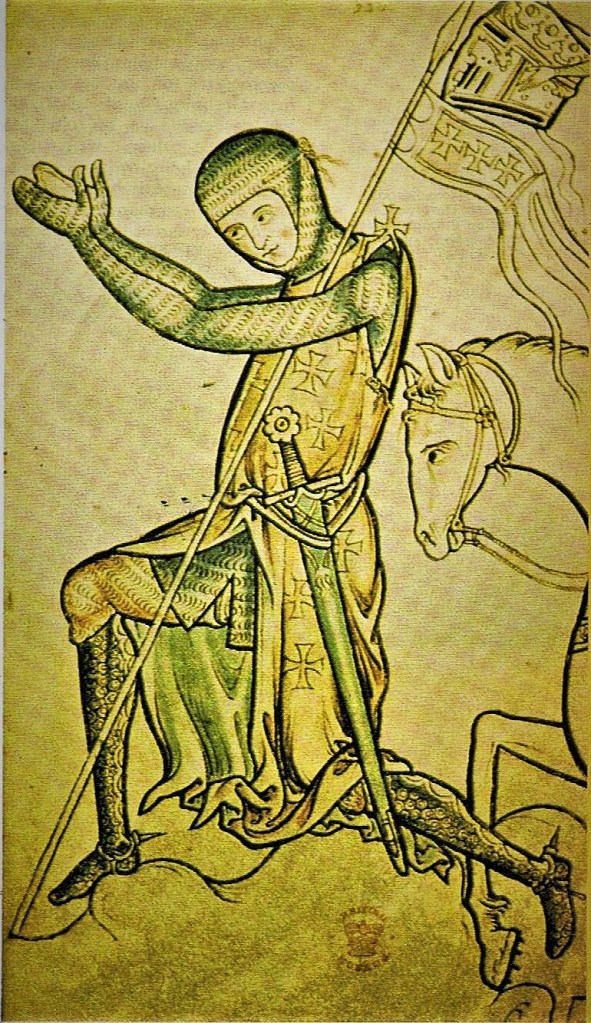

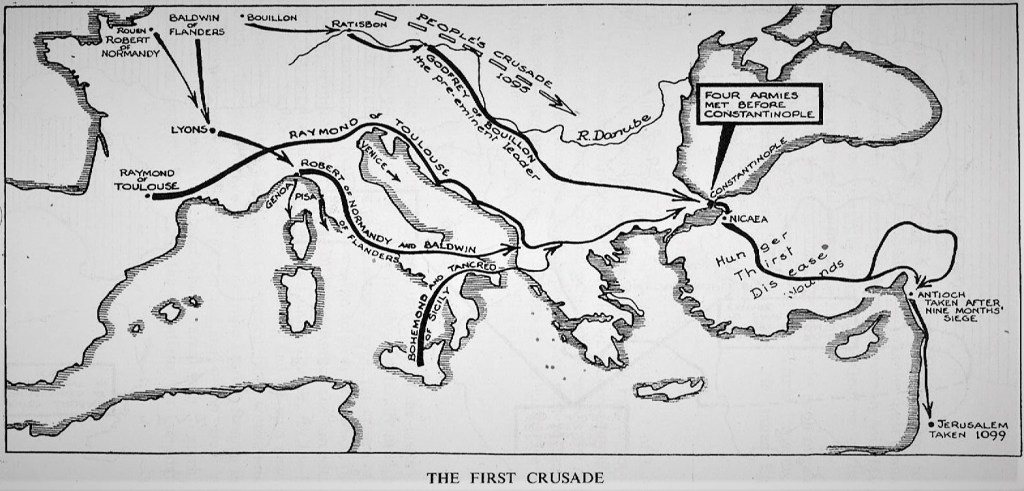
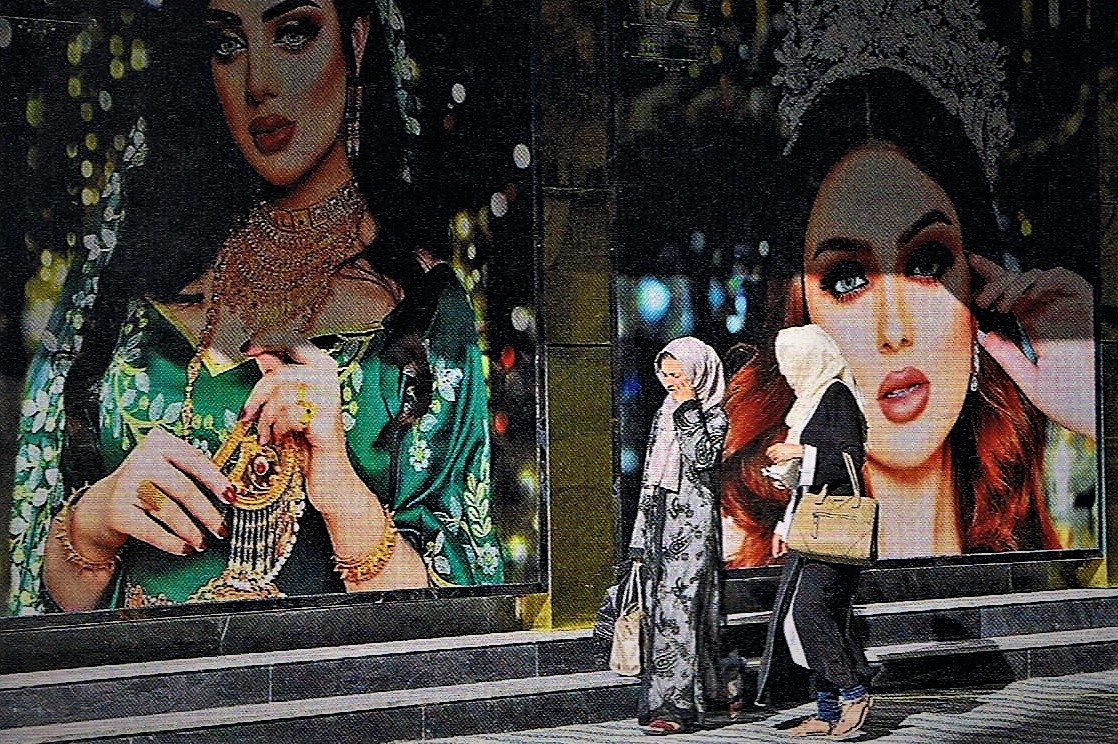
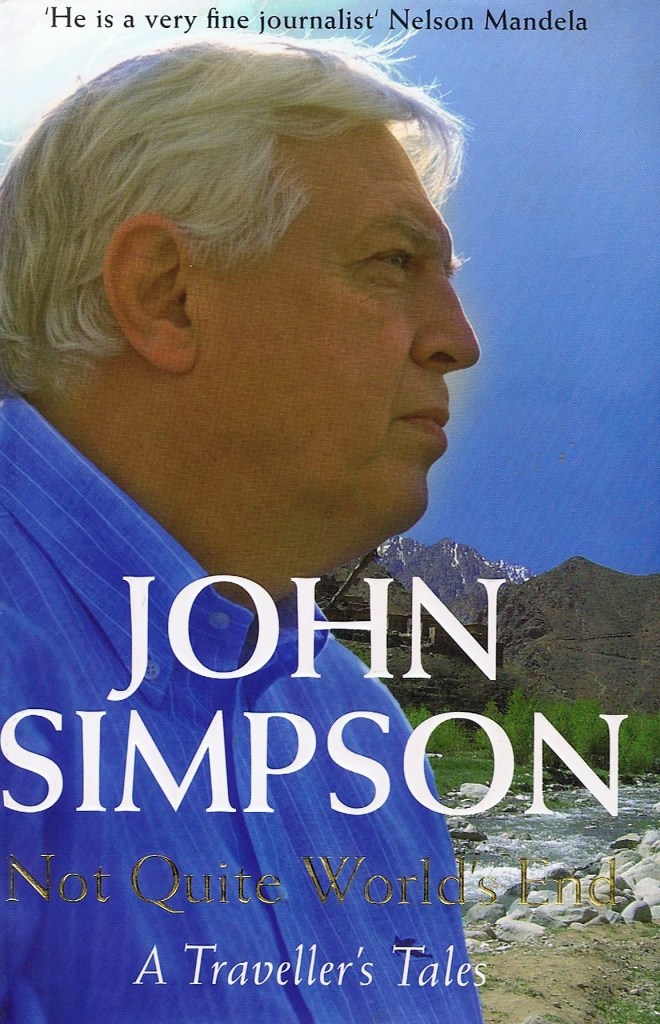
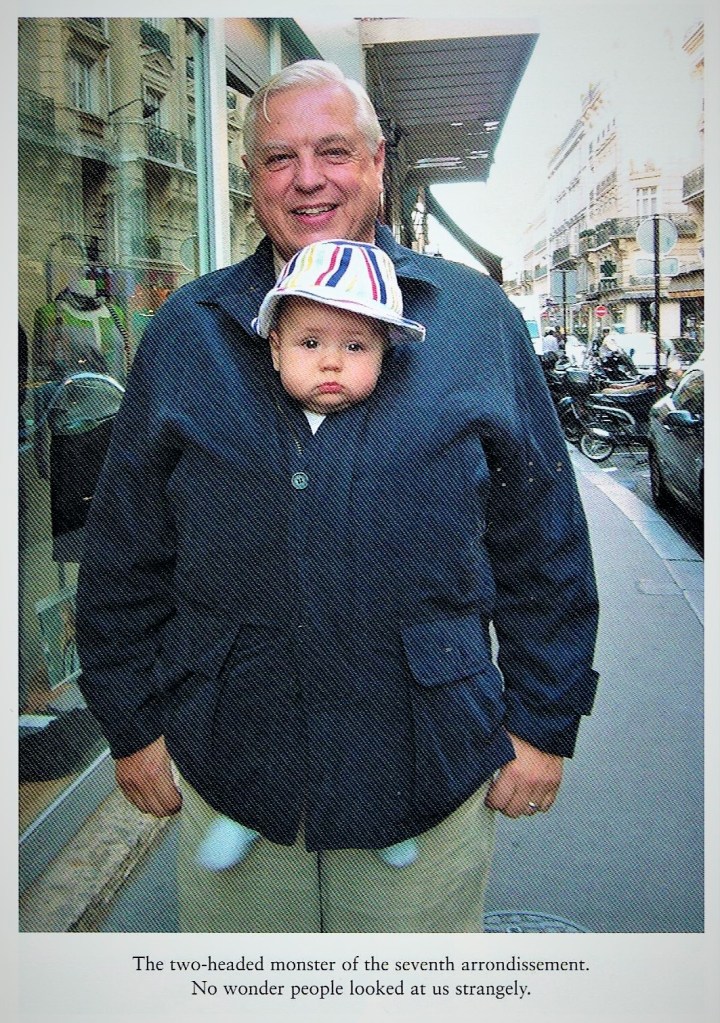
 Andrew James
