The fall of the three great European empires at the end of the First World War – Austria, Germany and Russia – the chief centres of autocratic rule, seemed a happy augury for the future of democratic government. After the war, this was established in the new states, whose rulers recognised the wisdom of adopting constitutions modelled by Western Powers. In every European country, except Russia, where a new form of government, a Communist dictatorship, was maintained, the principle of representative government was accepted. Source: Richards et al., 1937.
Beginning his keynote address on Russia’s War on Ukraine on 28th June 2022, the newly-commissioned Head of the British Army, General Sir Patrick Sanders, spoke of the similarity of the events of 1937 in Europe to the continuing and impending events of 2022 in the central-eastern part of the continent:
Seymour and Vera Gulliver, in Leamington Spa in the 1970s. Photo by Arthur J Chandler
Mooching with Seymour Henry:
Forty years ago this summer (2022), my grandfather, Seymour Henry Gulliver, died aged eighty-two. He was born at the beginning of the twentieth century at Ufton-on-the-Hill, Warwickshire, the seventh child and one of the younger sons of a large family of thirteen children, eleven of whom survived into adulthood. Seymour was extremely proud of his father, George, an agricultural labourer, and his beautiful, brilliant mother, Bertha (neé Tidmarsh), who lived to the age of ninety-seven. As an infant, Seymour became famous in Ufton because, before he could walk, he shuffled off down the steep hill and along the main road on his first adventurous expedition and had to be returned on the carrier’s cart. This propensity remained with him throughout his life since he loved what he called “mooching” and…
Seymour and Vera Gulliver, in Leamington Spa in the 1970s. Photo by Arthur J Chandler
Mooching with Seymour Henry:
Forty years ago this summer (2022), my grandfather, Seymour Henry Gulliver, died aged eighty-two. He was born at the beginning of the twentieth century at Ufton-on-the-Hill, Warwickshire, the seventh child and one of the younger sons of a large family of thirteen children, eleven of whom survived into adulthood. Seymour was extremely proud of his father, George, an agricultural labourer, and his beautiful, brilliant mother, Bertha (neé Tidmarsh), who lived to the age of ninety-seven. As an infant, Seymour became famous in Ufton because, before he could walk, he shuffled off down the steep hill and along the main road on his first adventurous expedition and had to be returned on the carrier’s cart. This propensity remained with him throughout his life since he loved what he called “mooching” and continued to do this right up to the end of his life. He enjoyed three holidays in his last year, including his particular choice of one in Dorset, where he could undertake a pilgrimage in the steps of the Tolpuddle Martyrs. His Gulliver forebears were originally a prosperous Banbury family of innkeepers. There are still tombs in the levelled churchyard of the Parish Church near where the original Banbury Cross once stood. There is also a ‘memorial’ stone to the Gullivers, whose name was used by Jonathan Swift for his three-volume work of satire, which later became the children’s book Gulliver’s Travels in later centuries. According to some local historians, Swift most likely spent a lot of time at the White Lion (Inn) at Ufton in the company of the real Lemuel Gulliver and persuaded the innkeeper to allow him to use his name as a nomme de plume to avoid the Crown’s censorship or other punishments. The sketch in the frontispiece of the original work (shown below) could be a portrait of the genuine Gulliver.
The Memorial Stone to the Gullivers of Banbury in the graveyard of the Parish Church.
The 1912 First Edition of the ‘Children’s Edition’ of ‘Gulliver’s Travels.’
The frontispiece of the 1726 Edition, Vol I.
Banburyshire Beginnings:
By the 1830s, the Gullivers and the Tidmarshes, Seymour’s maternal ancestors, were healthy farming folk from ‘Banburyshire’ (now Oxfords/ Northants/ Warwicks). Throughout his life, Seymour delighted in telling many tales about his maternal grandfather, Henry Tidmarsh (b. Great Rollright, c. 1840), who had lost his arm in a threshing machine. He was also legendary as the man who would go out in all weather with a shire horse and chain to assist the coaches on a challenging hill on the Leamington to Banbury road. In one case, he saved the life of an heir to a titled family whose mother perished in a snow storm. On a visit to the area late in life, Seymour was able to point out his grandmother’s cottage in the village of Rollright and the graves of other well-known Tidmarshes.
Henry Tidmarsh and family
Joseph Arch of Tysoe
The Gullivers had been involved in the struggle of the Warwickshire agricultural labourers from the 1860s, led by the Methodist lay-preacher and later founder of the National Agricultural Labourers’ Union, Joseph Arch of nearby Tysoe (pictured above). A public house in Barford, near Stratford, is named after him. Vinson Gulliver, born in Oxfordshire in 1833, had married Hannah Green, George’s mother, from Wormleigton in Warwickshire in 1855. According to recorded family folklore, he was an itinerant preacher who marched with Joseph Arch of Tysoe through the Warwickshire villages of Wellesbourne and Barford, later becoming the first secretary of the Warwickshire Agricultural Labourers’ Union in the 1860s.
Bertha Gulliver (née Tidmarsh), aged 33, had six children in 1899 in Ufton. Seymour was the seventh, born the following year, 1900. She had thirteen children in all (one died as a baby).
Bertha Tidmarsh met her husband when working as a maid at the Chamberlains’ House at Ufton-on-the-Hill near Leamington. The Chamberlains owned the Harbury cement works. George Gulliver, born in Ufton in 1862 (pictured below), was a coachman with the Chamberlains. He used to drive them around in a coach with two horses.
George Gulliver
The Family at Ufton-on-the-hill:
Seymour, the seventh child, was just an ordinary boy, nearly two years older than Jessie, who therefore knew him well as they grew up together, playing outside. She was born the year Queen Victoria died, 1901. Her earliest memory was from when she was about two and a half, and the Gulliver family was living at Ufton. She sat on the school wall, and the teachers came out and told her to get off because the children couldn’t concentrate with her sitting on the wall. She went home to her mother and asked what concentrate meant, but she couldn’t speak it very well. So her mother told her she could sit on the wall at play-time and dinner-time or during holidays, but she mustn’t sit on the wall when the children were in school because they couldn’t concentrate when she was playing on the wall. She thought that was a bit hard for one two and a half years old. So she used to go around Ufton with her elder brothers, Seymour and Arnold, and they’d play around Harbury Cement Works. Her brothers once got an old door, put two pieces of wood under it, and used two other pieces for paddles, taking Jessie out on a small brook near the works. Their mother and father were very angry with the boys because they could easily have fallen into the brook and drowned. But, said Jessie, looking back, you know what they say, God looks after children and drunkards! Nevertheless, their mother often told
St. Michael’s Church, Ufton, Warwickshire (Photo credit: Wikipedia)
Jessie also remembered leaving Ufton and going to Wroxall as a child of three. Her father left his job as a coachman at the Chamberlain’s house to work for them instead at Harbury Cement Works. So first, they lived in a rented cottage in Bishops’ Itchington, not far from Ufton. They paid half a crown a week for it in rent. However, the cement works didn’t suit her father because the cement dust got on his chest, and he had to go back onto the London work, riding the coaches between Leamington and London. Jessie could remember how hard up they were at this time. One Sunday, when she was about three or four, she came home from Sunday School, where they’d been reading about Joseph with the coat of many colours. Her mother had bought her brother Arnold a little navy blue coat, and he’d left it on Harbury Cement Works, and she was ever so upset and crying when Jessie went home, and, of course, all Jessie could say to the rest of the family was…
“…he’s lost the coat of many colours!But, it was a job for my mother to get clothes for us in those days, and she liked us to be dressed nicely. I don’t know how she managed to do it, but she did.”
So it was that, with a large and expanding family to feed, in 1904, George accepted an invitation to work on Lord Dugdale’s estate near Wroxall, along the old coaching road running west from Warwick and Leamington. He was under-manager on one of the four estate farms. Seymour’s older brothers were old enough to begin working alongside their father at Wroxall Farm. Vinson, the eldest son, had already left school at twelve to work on a farm near Ufton, looking after cattle, horses and pigs. The Dugdales were very generous to all their labourers, who were given comfortable houses with gardens, and at Christmas, each family would receive a ton of coal and a piece of beef, plus some money for the children’s shoes. In addition, the Dugdales sent a hamper of things for each birth, including coverings with golden embroidery. So now the family felt a lot better off. The only problem was that the children had to walk a mile and a half to school, run by the nearby abbey, for which they received a shoe allowance. Otherwise, they were comfortable enough, even with two more additions to their family. Soon after they moved to Wroxall, Jessie discovered her love of poetry by attending The Band of Hope. This was a temperance society for children, which she began attending when she was between four and five. Even so young, the children had to promise never to drink. To help her understand what this was all about, she had to learn to recite by heart a piece called, The Convict’s Little Jim, which she could still recite, word perfect, nearly ninety years later. However, looking back from 1992, she commented that she had always thought it was a terrible thing to teach a child, with scenes of domestic violence, murder and execution!
Vinson Gulliver, the firstborn, outlived all but one of his thirteen siblings to become Britain’s oldest man at 108 in 1995.
Wroxall and World War:
They were still quite poor but relatively happy until George had trouble with the manager over ‘harvest money’ Vinson and Alfred had to work longer hours alongside their father, but only George received the overtime pay when they were paid out. George went to see Lord Dugdale about this, who confirmed the sums and ordered his manager to pay them in full. The manager did this but subsequently did his best to make George’s position as under-manager untenable. Vinson craved the city’s bright lights and found work in the engine sheds at Trafford Park, Manchester, in 1907. His starting wage was just eleven shillings per week, of which eight went on his rent, so he could not send much money home. That left Alfred, aged fourteen, as the only sibling able to bring in a wage, so, when Seymour was about nine, in 1909, the family moved from Wroxall to Walsgrave-on-Sowe, then still in Warwickshire, on the eastern side of Coventry. Although still young, Seymour was old enough to learn lessons about injustice and victimisation, which he applied throughout his working life. Alfred worked on the farm at Wroxall until he was fifteen in 1908, when he went into the Navy, inspired by his uncle, Alfred Tidmarsh, who was also a CPO, having joined in the age of sailing ships. In uniform, Uncle Alfred had visited his sister at Wroxall on leave.
CPOAlfred Tidmarsh
Alfred Gulliver served on HMS Thunderer, the third Alfred in the family to serve in the Navy. He became a Chief Petty Officer and went all through the First World War. Then, due to his perfect eyesight, he became a range-finder instructor, serving in the Second World War, aged fifty-five, but stayed in dock training the gunners.
A few months before his death, Seymour revisited all the villages where he had lived and worked as a boy. In addition, he went back to the City of York, and Catterick, where he was stationed during the war. He tried to join the Army in 1917, although he would not be eighteen until the following spring. He was at Catterick Barracks when the influenza epidemic struck, wiping out almost all of the company he had joined. When he wrote to his mother about this, she arrived at the camp gates in Yorkshire, produced his birth certificate and demanded her son back. She took him back to Coventry on the train, so he survived both the war and the epidemic.
Caludon Lodge & Walsgrave-on-Sowe – Between the Wars:
By then, the family had moved to live and work at Caludon Farm near Walsgrave (in 1909), now the site of one of Coventry’s comprehensive schools. They had gone to live at Caludon Lodge, a larger house built in brick, with railings all around it, little holly bushes all around the garden, and a porch in the middle. The kitchen and the front room were at right angles to each other, and there were two passages, one from the front room and one from the kitchen. There was a big yard at the back with a long bench where their mother could put about four bowls for washing. There was a big ‘copper’ (kettle) and a little one. Bertha always had the little one on, and the children used to go and get sticks (for the wood-fired range), so there was always warm water in the big kitchen to wash with. There was a most beautiful garden, with pear trees, plum trees and apple trees with mistletoe growing up one of them:
It was ever so long; it went right down past two houses, and Mr Green eventually took a piece off it and built two houses on it for more farm labourers.
Seymour joined his father and brothers on the farm in Walsgrave with his father and brothers when he left Binley Park elementary school just before the First World War. He later told his daughter, my mother, how he rode on top of the hay-loaded waggons into Coventry, coming into the narrow medieval Spon Street on top of the hay, touching the overhanging eaves of the half-timbered houses on either side. So they had quite a happy time at Walsgrave. They could go to Binley, Wyken or Stoke schools. But Caludon was outside the Parish of Walsgrave (which was still in Warwickshire, outside the Corporation area), so they couldn’t go to the Church of England village school. So, they were sent to Binley Elementary School, which was run by Whitley Abbey, and they found themselves having another two-mile walk to school across the fields, starting early with two sandwiches each to eat on the way. Then they had a school dinner and a meal when they got home at about half past four. Soon after they arrived, Binley Pit was sunk, and a new school had to be built, so Seymour’s last year at school was spent there. On leaving school aged thirteen just before the war, Seymour had gone to work in the offices of nearby Binley Colliery when he was still so young that he needed a stool to reach the telephone.
Returning to Binley Colliery after his ‘adventure’, he went underground as a collier, not just because, as a reserved occupation, it kept him from being conscripted, but also because there was more money to be earned working at the coalface, which he needed to begin married life with Vera Brown, a ribbon-weaver from a long-established village family. They were both very young when they met in 1917. Their wedding took place in Walsgrave Baptist Church in 1918, conducted by Rev. Penry Edwards of Treorchy in the Rhondda, who had recently become the first full-time minister at the chapel and had baptised Vera shortly before. After their marriage, Seymour and Vera set up a home in one of the gardeners’ cottages belonging to the Wakefield Estate. However, Seymour’s decision to work underground was costly, eventually ruining his health.
At the pit, he became involved in the trade union, The Miners’ Federation. In May 1926, Seymour went out on strike and was locked out of the colliery for six months in support of the miners, especially those in South Wales, who worked in difficult places and had their wages cut. He urged his fellow miners to continue their strike in support of the starving Welsh miners, even though this meant privation and an eventual return to work for less pay. There were many miners in Walsgrave at that time, so the Lock-out hit the village hard. Vera had to return to work as a skilled weaver at Cash’s factory, and Seymour took over the housekeeping and looked after their two children. He and the other colliers could only earn money from tree-cutting up at the Coombe, a wooded area on Lord Craven’s estate around the historic Coombe Abbey, the Cravens’ House since the late seventeenth century. The miners earned a little money from the timber they cut, caught rabbits, pinched the odd pheasant and were given scraps from the Abbey kitchens, bowls of dripping and left-overs from banquets held there, which Seymour would bring home. He later helped to settle unemployed miners from South Wales in the village and at the colliery.
School House Lane, Coal & the Blitz on Coventry:
Nevertheless, by 1928, the couple had saved enough to afford a mortgage. That year, the young family moved into their newly-built house in Walsgrave, which that same year had been adopted by the City Corporation, where my mother was born in 1931, by then the youngest of four children, three girls and a boy, who had seven children in all, three girls and three boys. The Gullivers had also become well-known characters in the village, especially in the Baptist Chapel, where Vera was a deacon, as well as in the Co-operative Society and the nascent local Labour Party. Almost as soon as they moved in, their front room became the Headquarters for the Labour Party during the elections, and the bay window was full of posters at these times. Of course, it was in a strategic position, next to the polling station, the Village School, so no one could doubt Vera and Seymour’s allegiances. They helped get the first majority Labour government elected under Ramsay MacDonald in 1928. In 1937 the party swept to power in the City for the first time, beginning its programme of municipal socialism.
As prosperity returned with a boom in Coventry, coal-miners’ wages also improved. However, many chose to desert the pits for cleaner, high-wage jobs in engineering in the city, especially in the car factories and later, during rearmament, the Shadow factories. However, Seymour stuck to his job at the colliery because he liked the economic security that came with it and the sense of camaraderie. Although not a hard drinker, like many colliers, he naturally liked to call into the pub for a much-needed pint on his way home after a hard shift at the coalface. The Baptists frowned upon and shunned the pubs in the village because there were many well-known heavy drinkers, but they understood that it was natural for the miners to enjoy a drink together on the way home. The only problems in some families came on weekly paydays when they received their wages in cash. On these days, all the wives would send their children, and Daphne was one of these, to wait for their fathers and get their pay packets from them in case any of them might be tempted to donate too much into the pub’s coffers! Every mother would direct their kids to stand outside The Craven Arms and The Red Lion to collect the wages. This, of course, was more of a show of traditional solidarity by the wives than an act of necessity, especially as the local publicans were strict about not serving those who had, in their opinion, had one too many.
As Daphne grew up in Walsgrave in the thirties, she remembered The Walsgrave Show, a vast agricultural and horticultural event. She could remember her father winning prizes for vegetables and children making bouquets out of wildflowers. It was a show run by local farmers like Harold Green, whom the Gullivers had worked for before the first war, but it attracted farmers, showjumpers and other participants from far and wide. It eventually combined with the Kenilworth Show and became the forerunner of The National Agricultural Show at Stoneleigh.
Walsgrave and the Second World War:
When the second war broke out in 1939, the excellent community spirit in Walsgrave continued. The most noticeable difference, at first, was in the availability of food and rationing. There were queues for tomatoes, but the Co-op Shop was fair to everyone, and the vegetable cart continued to do its village rounds. One day, Daphne went out with her mother to buy oranges, rationed to one per person per week. So, they could have five. A group of internees were making their way up the Lane to the farm at the top as the cart passed. Vera asked the vendor Albert for a knife and cut all five into slices. Then, she went over to the boys and gave each one a slice of orange. Daphne, quite naturally for an eight-year-old, protested, but Vera told her, “oh well, these lads are very young, and they’ve been living off potatoes up at the farm, so they need that orange much more than you do”.
People were encouraged to produce their own food on their allotments. So, as well as growing vegetables, Seymour kept pigs and poultry on his allotment along Woodway Lane. You could keep pigs during the war, but you had to have a permit to kill them. You could sell them to the authorities, but they didn’t pay much. So Seymour decided to take his sow into hiding in their house when her time came. Daphne remembered these war-time pigs and piglets well:
…we had a litter of pigs; we decided we were going to have a litter, and then we had some sleeping quarters for these piglets, and when the time came, the wretched sow had all those little piglets on the hearth, and we were giving them drops of brandy, trying to revive them and keep them going. I think we saved about five.
But they got to be little suckling pigs and one of them wasn’t quite right. So they decided they were going to ‘knock this one off’. So Bill Gately worked up the abattoir and we persuaded Bill to come and knock this little pig off. They’d just gone up the garden, ’cause he was working all day so it was dark now, and the air-raid siren went. So, no one dared shine a flashlight or anything and well, you can imagine these little pigs running and squealing all over the sty, and them trying to get hold of this particular one, and Bill was muttering and stuttering, you know. Well, eventually, we caught this pig and killed it quietly at the kitchen sink.
We had no permit, and then someone came around afterwards, knowing that we’d done this, and he asked, “what did you do with the Tom Hodge?” So Seymour says, “what’s that?” and they said, “well, you know, its innards!”Dad says, “oh! We buried them up the garden”. “Oh, oh dear!”he says, “the best part of the pig!’”Anyway, he comes back after a few minutes and says, “well, if I know Seymour, it won’t be buried deep!” So he goes up the garden with his fork and forks all this up. Eventually, he took all these chitterlings and well, of course, to anyone who likes chitterlings… but it put me off pork for the rest of my life!
Daphne also remembered the first significant air raids and the first use of the communal shelter at the school. The Anderson shelters that people had put up in their gardens by the summer of 1940 had become flooded, so they had to go to the shelter at the school, which had been put there for the school children. However, as there were no day-time raids, it had not been used and was still locked. Nevertheless, the schoolmaster, ‘Gaffer’ Mann, refused to open it when the first night-time raids on Coventry began in early autumn. So Seymour fetched his collier’s pick axe to break the lock, and all the residents of School House Lane went in.
Though Walsgrave was of no military importance, Capability Brown’s huge landscaped pool at Coombe Abbey, a mile or so away from the village, was on the German ‘Baedeker’ map books and was used as a landmark by the German bomber crews. The Rolls Royce Engine Factory at Ansty was manufacturing aircraft engines less than a mile from this. There was also an aerodrome there, built before the war. The then Rootes assembly plant at Ryton-on-Dunsmore was only a few miles away on the same side of the city, with its shadow factory producing aircraft and military vehicles. Planned under Chamberlain’s Government in 1936, these factories did not appear on the Luftwaffe’s maps nor on Baedeker’s; hence the importance of incendiary bombs dropped around the city’s outlying areas and the largely wooden medieval city centre in the 1940 Blitz. On the evening of the 13th November through the ‘full moon’ night to breakfast time on 14th November, Coventry was subjected to an eleven-hour sustained Blitz, giving both the English and German dictionaries the word Coventration as a synonym for blanket-bombing rather than lightning raids, which had been the previous strategy in attacking London and other regional ports and cities, including Coventry. ‘Operation Moonlight Sonata’ as the Germans named was, like Beethoven’s famous piece, designed in three ‘movements’ in order to set fire to the city and light up the sky so the bombers could locate the factories at a three-mile radius or more. The Rootes Shadow Factory had only just begun production in 1940. The German blanket-bombers searched for the shadow factories on the ground, using the Coombe Pool as a focal point on which to reflect their beams. Huge craters were left on the landscape around the village for many decades afterwards. I remember Seymour showing me these when I joined him on one of his mooches. He described his arrest as an ARP Warden of a German pilot who had bailed out over Coombe Park, landing in the farm lane and breaking his legs. Seymour had to use his bicycle to get the airman the mile or so to the village police station. Daphne recalled the night of 13th-14th November and the effect of the bombing of the city centre, three miles away, as they ran for the shelter:
We put up the cushions from the furniture, put them on our heads, and ran up the shelter. It was a bright moonlit night; tracer bullets were flying around like tracer bullets everywhere, and the whole city was on fire. Everything was lit up like it was daylight; it was a most awesome sight and of course, for days afterwards, the burnt paper was coming down.
The School Log for 15th November echoes this description of destruction:
School reassembled – about only 130 were present – this is due to the results of a terrific 11-hourraid on Coventry and the immediate neighbourhood. The Church Hut used for 70 to 80 infants had to be used as a home for the people who were bombed out of the city.
Seymour was on air-raid duty that night and recalled one bomb that fell in what was known as The Hollow, just past The Mount Pleasant. He said that the old, cruck-beamed cottage was severely damaged as the patrol went towards it, and he was sure there would be at least one person dead inside. But when they went inside, they found that the main beam had fallen across the fireplace, and all the family were protected by it, around the fireplace. He said that it was a miracle no one was hurt. During the raids, an evacuated family slept in every room of the Gullivers’ house, even under the table.
School records for 1940 show that a total of six hours and ten minutes was spent in the school shelter, with one visit lasting over two hours. But, of course, nearly all the raids took place during nighttime. Even the attack of the 14th/15th of November was not detected until after 3 p.m., the end of the school day, and the bombing had ended in time for the school to open ‘as normal’ the following morning. Though the sirens went off earlier that evening, most people recall being at home having had tea or supper when the bombing started. The schools nearer the centre were far more badly affected, and many of those rescued in these areas were still under the rubble until about 7 a.m., having been trapped for more than twelve hours in some cases. Walsgrave escaped lightly compared with the mass destruction of the city centre and the older factory areas in the suburbs, though it might have been a different story had the Luftwaffe been able to locate the Ansty and Ryton factories. Many in the village realised this vulnerability and though not forced to, sent their children away to safer rural areas if they could. Daphne was evacuated to relatives near Bridgwater in Somerset for a while. In addition to his ARP duties, being in a reserved occupation as a collier at the pit, Seymour took on responsibility for the Bevin Boys, the well-educated young graduates and undergraduates sent to work in the pits.
A Sense of Justice:
Seymour had a strong sense of social justice and was a keen member of the Binley lodge of the Miners’ Federation. On one occasion, he stuck up for a fellow collier who was bullied by a foreman, whom he struck, and was dismissed from Binley Colliery on the spot. He had to go to Newdigate Colliery to get work there. The conditions there were far worse than at Binley, and when he undressed to bath in front of the living room fire, his clothes would stand up by themselves from the combination of mud, coal dust and sweat which had caked them in the pit and then dried on them during his long walk home at the end of each shift. His body was covered with boils, and he had to have special treatment at the Coventry and Warwick Hospital, where they made an experimental serum to cure his condition. Eventually, his wife Vera told him,
“… you’ll just have to put your pride in your pocket; you can’t go back down Newdigate; you’d better go back to Binley and ask for your job back.“
So he returned to Binley Colliery, apologised, and got his job back, later becoming a pit overseer and a safety officer for the National Coal Board. In 1978, I began researching the Welsh colliers who had come to the Midlands between the two world wars, many to work in the car industry. Many also found their way into Warwickshire’s pits, especially Binley Colliery, and worked alongside my grandfather at the coalface. He remembered one family in particular, arriving in the village with the children and all their worldly possessions on a cart. Before his death from pneumoconiosis, the Dust, in 1982, I got to know Seymour more fully as an ‘autodidact’ who read avidly and rapidly. He gave detailed reviews of the books I brought home from university in Cardiff on the Welsh miners, referencing his experiences working in the Warwickshire coalfield. I had frequent, lengthy conversations with him about these experiences.
Walsgrave-on-Sowe village centre
Conclusion – Joy, Opportunity & Dignity:
By nature, Seymour was the quiet member of his sixty-year partnership with Vera, who died in 1978, a gentle, calm man who liked to spend every available moment out of doors, especially in his garden. He was the backbone of his family and a provider who seldom lost a working day and was always ready with wise advice. His charity extended beyond his own home, and there was always a bed and a meal for all comers. When his hard-earned allowance of coal was tipped up at the gate, there was always a barrow-load for some needy neighbour, and his silent acts of kindness were many. He was never aggressive on his own behalf but always hated any form of injustice and, on occasion, suffered much hardship as a result, and even lost his job by sticking up for others.
His four children and seven grandchildren were the joy of his life, and the growth of the welfare state, enabling his grandchildren to attend good schools and colleges, and to qualify for varied professions, always seemed a miracle to him as something happening during his own lifetime, more than making up for his own lack of opportunity. For the summer when he died, he had planned several expeditions, just as it had been his choice to visit Torquay in the Spring of 1982. However, his many health problems suddenly overcame him. He succumbed and died of a chest infection, which led to pneumonia within the short time since his last daily walk from one end of the village to the other three weeks earlier. He had always known that the effect of the coal dust would end his life. He died peacefully, with courage and great dignity.
Based on an obituary by his daughter, Daphne Irene Chandler (neé Gulliver), 1982, letters & family histories recorded by Vinson Gulliver and Jessie Gardner (née Gulliver); transcriptions & articles by Andrew J Chandler, 1992-2012, Daphne’s son. Daphne married the minister of Walsgrave Baptist Church, Rev. Arthur J Chandler, in 1953 and died in 1993. Jessie lived to 101, dying in 2002.
‘Special Operations’, 2022 & April 1937- March 1938:
Just as the so-called Russian ‘Special Operation’ which began on 24th February 2022, did not represent the beginning of War in Ukraine, the invasion of its sovereign territory having commenced in 2014, so too, no single event in 1937 or 1938 represented the beginning of war in Europe or, indeed, the world. However, the year from the spring of 1937 to March 1938 can be taken as a bridging period into the series of ‘Bloodless Conquests’ made by Germany in 1938-39. In 1937, having ‘liberated’ the Saarland and the Rhineland, Hitler turned to the question of creating a Pan-German state by absorbing the German populations of Austria and Czechoslovakia. Like all Pan-Germans, Hitler longed to unite the German peoples of Western and Central Europe into a single state, or Reich. Pro-Nazi organisations existed in Austria and Czechoslovakia among German populations anxious to share in the Nazi revolution. Hitler felt that, by 1937, the international circumstances and Germany’s growing military strength were favourable enough to enable him to force the pace in his foreign policy. In November, he warned his military leadership that a settlement of the Austrian and Czechoslovak questions was next on his agenda when the right moment came:
The aim of German policy was to make secure and to preserve the racial community and to enlarge it.
Adolf Hitler, 5 November 1937.
Meanwhile, while pretending to uphold a policy of non-intervention, Hitler sent his ‘volunteers’ to Spain to help Franco. The Spanish Civil War broke out in July 1936 and was at once recognised as the showdown between Left and Right in Europe. November saw active German intervention when Hitler sent the Condor Legion, a unit composed of over twelve thousand ‘volunteers’ and Luftwaffe warplanes, to support his fellow Fascist General Francisco Franco. In Spain, the Legion perfected the carpet-bombing technique, which dropped nearly 2.7 million pounds of bombs and fired more than four million machine-gun bullets. Meanwhile, Benito Mussolini’s Fascist Italy sent forces that eventually numbered seventy-five thousand men. Stalin countered the dictators’ moves by sending men and arms to aid the Republicans, while Britain and France remained ‘neutral’, agreeing not to sell arms to either side. In reality, this policy assisted Franco, receiving more war materiel from Germany and Italy than the Republicans got from Russia.
But the Civil War was, initially, less dangerous to European peace than Mussolini’s conquest of Abyssinia. It was a war about Spain’s fate, fought out by Spaniards to the bitter end. Despite the Spanish government’s legitimacy, the British government fell into the pious posture of ‘Non-Intervention’ once more, as it had done over Abyssinia. Britain and France held a conference in London where they persuaded twenty-six other governments to officially back this principle, though many subsequently breached the embargoes. The conference set up a committee to police the principle in practice. Both Germany and Italy took seats on it, which they kept until June 1937, by which time, as Roberts puts it, the farce could not be played out any longer. But in both cases, Ethiopia and Spain, the cynical policy pursued by the dictators increased their confidence and further embittered their relationships with the democracies. November 1936 also saw Germany and Japan sign the Anti-Comintern Pact, aimed at opposing the USSR’s Third Communist International but also creating what became known as The Axis. For the moment, however, Hitler cranked up his sabre-rattling policy towards his neighbours, particularly those with large German populations contiguous with the borders of the Reich.
When Italian troops moved into Spain on Franco’s side, the Left redoubled its efforts to rally support for the Republicans. Writers, photographers and painters from all over Europe set to work as propagandists. By the spring of 1937, there were thirty thousand Germans and eighty thousand Italians in Spain. The Germans marched and, worse, had fleets of aeroplanes. The Republicans had practically no planes. The deliberate bombing of civilians was still regarded as unimaginable barbarity. So when the Kondor Legion bombed Guernica, the Basque capital, on 27th April, practically wiping it out, the whole world was outraged, and Picasso’s famous picture went on tour all over Europe. The Nazi propaganda machine under Dr Goebbels swung into action to convince everyone that the Basques had blown up their own city to discredit Franco. At a dinner party at Philip Sassoon’s, the diplomat and diarist Harold Nicolson, who had just become an MP for ‘National Labour’, murmured to Anthony Eden that he wanted “the Reds to win.” The destruction of Guernica reinforced his feelings as he wrote to his wife, Vita, that…
… only that ass Teenie (Victor Cazalet) goes on sticking up for Franco. I could have boxed his silly ears … I do so loathe this war. I really feel that barbarism is creeping over earth again and that mankind is going backward.
Non-Intervention to Appeasement, 1935-37:
In public, however, Nicolson firmly supported the government’s policy of Non-Intervention, praising Eden, its glamorous advocate on the world stage. Britain, Harold instructed the House, could no longer indulge in its ‘missionary foreign policy’ of the nineteenth century to impose our views, our judgements, our standard of life and conduct upon other countries. Without even a trace of irony, he fell back on commonplaces, advising the House that the best way forward was to maintain traditional British interests, the ‘preservation of peace’ and the ‘arrangement of the balance of power’. However, he failed to spell out how this was to be accomplished in the then-current climate of European affairs. When the Foreign Affairs Committee met in July to discuss the Spanish situation, Harold, now its vice-chair, was agitated to find ‘an enormous majority’ passionately anti-government and pro-Franco, a setting that allowed much of the younger Tories to ‘blow off steam.’ He told Eden that he opposed granting ‘belligerency rights’ to either side, as this would only serve Franco’s cause. Eden agreed and, in turn, admitted that non-intervention had ‘largely failed.’ This fact could not be disguised with the Italians, Germans, and Russians roaming the Spanish battlefields. But neither was the concomitant, that there was no alternative if an all-out European conflagration was to be avoided.
A. J. P. Taylor wrote in 1969 that it puzzled post-war observers that Churchill was disregarded when dangers and difficulties accumulated for Britain in the mid-thirties. Baldwin and MacDonald were blamed for the sloth and blindness they demonstrated towards the continental threat, and so too was British public opinion. But Taylor also blamed Churchill for losing hold of public opinion through his obsession with empire and intemperate opposition over India. The British people would no longer respond to the romantic call of Imperial glory. He had nothing to say, at least before 1937, about the great economic questions, like unemployment. He remained notably silent during the interminable debates on these in the Commons. R. R. James (1970) wrote of how by 1933, Churchill was widely regarded as…
… a failed politician, in whom no real trust could reasonably be placed; by June 1935 these opinions had been fortified further. His habit of exaggerating problems, and in clothing relatively minor questions in brightly coloured language, had the effect that when a really major issue did arise there was no easy way of differentiating it…
Churchill’s campaign for rearmament lacked the essential qualities of a crusade. It was limited; it was personal; it was far from national; and it was closely linked to the political fortunes of its leader. Great speeches in Parliament and stirring public appeals do not constitute a crusade. …
…These comments do not contravert Churchill’s record on Defence matters in the years 1932-36. … the central fact that he sensed danger long before most of his contemporaries discerned it. His central theme was unanswerably right. But the failure of his campaign was not entirely the result of the folly of others. A dispassionate assessment of why his reputation remained so low at the end of 1936, after a period in which his warnings had proved to be abundantly justified, must return to the quotation… ‘Every man is the maker of his own fate.’
R. R. James, Churchill: A Study in Failure, 1900-39. Weidenfeld & Nicolson, 1970. pp. 121-2, 358-9.
Soon after he became a National Labour MP in 1935, Harold Nicolson admitted to Churchill that he felt ‘terribly hampered’ in deciding ‘about foreign policies’ because he had no conception whatsoever as to our real defensive capabilities. Churchill fed him an (inflated) assessment of Germany’s air strength, which, if augmented by the Italian air force, was a very excellent striking machine. This led Harold to the inescapable conclusion that we are not in a position to go to war without active Russian assistance. Malcolm MacDonald, Secretary of State for dominions (and later for colonies) whose judgement he valued, reiterated that Britain was too weak to gamble on war:
It would mean the the massacre of women and children in the streets of London. No Government could possibly risk a war when our anti-aircraft defences are in so farcical a condition.
The Spanish civil war continued until 1939, but most surviving British International Brigaders returned home in 1937. One in five of them had been killed, and three in four of the survivors were injured. But it had been less like the great confrontation between Good and Evil, won by the latter, and more like the dress rehearsal for something far worse. The Fascists had been more greatly encouraged by their Spanish adventures, leading Hitler and Mussolini to form their Rome-Berlin Axis, beginning a massive build-up of their armed forces. Hitler interpreted Non-Intervention as a green light, but he still needed more time in 1937 to prepare for his campaign of conquest. The growing danger in Europe encouraged the democracies to believe that a policy of ‘appeasement’ was the only way to ensure peace. The great upholder was the British Prime Minister, Neville Chamberlain, who took office in May 1937, following Stanley Baldwin’s ‘retirement’. For many months, Baldwin had been to retire from political life, but events before and after King Edward’s abdication had kept him in office. As soon as King George VI had been crowned, Baldwin decided to hand over the Premiership to Neville Chamberlain, who was then Chancellor of the Exchequer, and on 28th May, the Chamberlains moved into No. 10 Downing Street. Baldwin went into the House of Lords as Earl Baldwin of Bewdley. René Cutforth wrote of him…
… that certainly, his chief influence had been anaesthetic… unless circumstances forced him into action, he had preferred to drowse. It may be that to his deep-rooted aversion to confrontation, his genius for keeping antagonisms safely in solution and never allowing them to crystallise out, we may owe the fact that, when finally we had to go to war, we went as one people, an undivided nation.
René Cutforth, pp 115-6.
From Baldwin to Chamberlain & All souls, 1937:
The picture above shows Earl Baldwin at his first public appearance since taking the title, receiving a presentation gift from Neville Chamberlain, his successor as PM. The long ‘Baldwin-MacDonald era’ came to an end, but Chamberlain was to hold the top post for only three years. After that, the Cabinet was reshuffled, but only from the existing pack, with Eden remaining as Foreign Secretary. Many among both contemporaries and historians have characterised Chamberlain as:
… avain man who thought that a personal approach by him to the dictators would succeed where other methods had failed. He believed that friendly relations could be established with Hitler by meeting his demands halfway and thus forcing him to negotiate and not use force. It was a disastrous policy.
Donald Lindsay (1979), Europe and the World, 1870 to the Present Day. Oxford: Oxford University Press (‘O’ Level text).
Apart from being another Conservative Midlands industrialist, the new Prime Minister had little in common with the old one. Neville Chamberlain was an upright provincial, nonconformist businessman with an old-fashioned moustache who had once been Lord Mayor of Birmingham and whose qualities of vision and imagination seemed to suit him admirably for such a position. He has been frequently described as autocratic, and the extent to which he relied on his ‘inner cabinet’ of congenial ministers has been often criticised. There is, however, no orthodoxy in these matters, and Chamberlain is neither the first nor the last PM to have been criticised for their strength of will and determination. As Keith Robbins has suggested, whether that quality is admired or condemned depends upon the course of events. A political observer at the time he became PM wrote of him:
This seeming lack of breadth of mind and culture… arouses some misgivings about Mr Chamberlain. Clarity of mind – and he has it in an unusual degree – is not enough if the mind, so to say, sees the field with searching clearness, but not the field as part of the landscape, and that kind of limited vision is not necessarily compensated by courage such as Mr Chamberlain has. The two together could be a positive danger.
Stanley Baldwin had not been fond of first-class minds: Chamberlain’s Cabinet also excluded most of the ablest men so that by 1938, Churchill, Eden, Duff Cooper, Harold Macmillan and Leopold Amery formed a minor Conservative opposition inside the party. The old gang, Lord Halifax, Sir John Simon, and Sir Samuel Hoare, were given the jobs. One Minister, Sir Thomas Inskip, was a man of such natural endowments that when his appointment as Minister of Defence was announced, the House of Commons sat there laughing for several minutes. In that company, Sir Anthony Eden, still at the Foreign Office, though not for long, resembled at age forty-something of a whizz-kid. Baldwin had preferred to leave his Ministers to their own devices, but Chamberlain was an interfering Prime Minister: he liked, he said, to give each of his ministers a policy, and it was in Foreign Policy that the PM interfered most because, though having little experience in that field, he had a policy and it was not the same as Eden’s. That policy was the line that came to be known as ‘appeasement’. There was nothing new in it: it was believed by almost every ‘liberal’ mind in Britain (including Churchill’s) that the Versailles Treaty had been unjustly harsh to the Germans and that some kind of ‘give and take’ policy might have modified the explosive situation in Europe.
By 1937 there was a bitter ideological debate on appeasement, reflected in G. M. Trevelyan’s letter to The Times in which he wrote that dictatorship and democracy must live side by side in peace, or civilisation is doomed. To this, he added that Englishmen would do well to remember that the Nazi form of government is, in large measure, the outcome of Allied and British injustice at Versailles… During the winter and early spring of 1937-38, Harold was invited to participate in a kind of ‘brains trust’ on foreign affairs at All Souls College, Oxford. Its purpose was to set out guidelines that would neutralise the menace of the totalitarian states. It was organised by Sir Arthur Salter, an Oxford ‘don’ and was dubbed ‘Salter’s Soviet’ by Lionel Curtis, one of its more energetic members. It was an assortment of idealogues, with the historian A. L. Rowse, a fierce critic of the government policy rubbing shoulders with some of its most ardent supporters, Lord Allen of Liverpool and Arnold Toynbee. Rowse later (1961) summarised the debate and discussion:
So Baldwin passed from the scene, and Neville Chamberlain reigned in his stead. He may not have had Baldwin’s weakness for fellows of All Souls, but he was even more dependent on two of them. He wanted Simon to to succeed him as Chancellor of the Exchequer; while on his breach with Eden- virtually a dismissal – Halifax came to his rescue and became Foreign Secretary.
Chamberlain’s course was hopeless from the start. It was at one time the fashion to exonerate him and place most of the blame on Baldwin. But where Baldwin’s were sins of omission, Chamberlain’s were sins of deliberate commission. He really meant to come to terms with Hitler, to make concession after concession to the man to the man to buy an agreement. Apart from the immorality of coming to terms with a criminal, it was always sheer nonsense; for no agreement was possible except through submission to Nazi Germany’s domination of Europe and, with her allies and their joint conquests, of the world…
It is no use making concessions to a blackmailer or an aggressor; he will only ask for more. … In fact, we were left without any effective means, with no power whatsoever, in a hopeless minority, with no organs of opinion at our command, to try and do something of what the government should have been doing. We were all too ineffective, condemned to making bricks without straw. …
Chamberlain knew no history … had no conception of the elementary necessity of keeping the balance of power on our side; no conception of the Grand Alliance, or of its being the only way to contain Hitler and keep Europe safe…
The total upshot of (‘the appeasers’) efforts was to aid Nazi Germany to achieve a position of brutal ascendancy, a threat to everybody else’s security or even existence, which only a war could end. … These men had no real conception of Germany’s character or malign record in modern history.
A. L. Rowse, All Souls and Appeasement, Macmillan, 1961, pp. 37-9, 63, 117.
Among others, Harold Macmillan, Basil Liddell Hart, and H. A. L. Fisher were included, while Geoffrey Dawson and Leopold Amery remained on the fringes. Between December 1937 and May 1938, it convened nine times, usually at weekends at All Souls but also at members’ flats in central London. Finally, Lionel Curtis put forward a programme, arguing that twenty years of peace were worth any price:
We offer Germany: (i) Anschluss (union with Austria); (ii) arrangements granting cantonal status to Sudetenland by Czech government; (iii) recognition of Germany’s colonial rights; (iv) admit Germany’s prior economic interests in eastern Europe.
We demand from Germany: (i) assurance that extension of German interests in eastern Europe would not entail any attack upon the autonomy of other countries; (ii) that Germany agree to the limitation of arms under which she would be the strongest power in central Europe but unable to dominate the collective force of other powers, i.e. preponderence but not supremacy; (iii) and that Germany not support Italian aims in the Mediterranean and Africa.
This was too much for Harold Nicolson, who shocked Curtis with his ‘anti-German stance’. He put on record his belief in Germany’s ‘aggressive ambitions’, underscoring the ‘heroic motive’ that inspired German youth and that conditioned them to sacrifice themselves in the pursuit of power. Nor would he hear of granting economic privileges in eastern Europe to Germany. This was skirting the main issues, however. Would firmness, taking a stand against the dictators, deter them or provoke them into embarking on ever more reckless adventures? No consensus was reached on this crucial point, the primary purpose of convening the ‘Soviet’ in the first place. As Harold termed it, the split between ‘the realists and the moralists’ was complete and irreconcilable.
Exit Eden; Enter Halifax, 1937-38:
Eden was contemptuous of Italy and was persuing a solid line on non-intervention, insisting that the Germans and the Italians should take their promises not to interfere in the Spanish Civil War more seriously. A Non-Intervention Agreement was supposedly in operation, though that did not serve as a significant obstacle to German, Italian and Soviet activities. However, at the end of August 1937, a torpedo, believed to have been fired from an Italian submarine, was inaccurately fired at a British destroyer. The British and French governments summoned a conference of interested states, but neither Germany nor Italy attended. Britain and France agreed that in future, their warships would attack unidentified submarines in the western Mediterranean. The Italians then decided to join in patrolling, thereby improving the diplomatic atmosphere. Meanwhile, Chamberlain deprecated any tendency among his colleagues to lump Germany and Italy together as ‘fascist powers’. For him, Germany was the problem, and by the end of the year, he had begun to address it directly.
Source: These Tremendous Years, 1919-38, March/April 1938.
Chamberlain thought Eden was being inconsiderate to Italy and set about conciliating Mussolini. This involved accepting Il Duce‘s conquest of Abyssinia. Finally, in a conversation between Grandi, the Italian Ambassador, and Eden and Chamberlain together, the Prime Minister actually argued Grandi’s case for him against Eden. Neville Chamberlain then went forward with his proposed Anglo-Italian agreement, without terms, to ease the bad feeling between Italy and Britain that had started over Abyssinia. Eden remained a firm believer in the League of Nations policy and was convinced that Mussolini should first be required to withdraw Italian troops fighting under Franco’s command in Spain. The Cabinet threatened to split on the issue, but on 20th February, Eden (shown above with his wife Beatrice) resigned. This was, ostensibly at least, because he could not agree to recognise the Italian conquest of Ethiopia, but, as we have already noted, it was also the case that Eden had been growing increasingly angry at the extent to which, after he succeeded to the premiership in May 1937, Neville Chamberlain took a specific interest in the conduct of foreign policy. It was frustration at this state of affairs that Eden could no longer manage. Lord Halifax, who had no objection to letting Chamberlain run the Foreign Office, was made Foreign Secretary in his stead. After his resignation, however, Eden by no means made life difficult for his former colleagues. Professor Keith Robbins wrote (in 1988) that:
He occasionally expressed a mild and judicious dissent but it was certainly not a root-and-branch opposition to all appeasement of the type that the Prime Minister was still engaged. And there was no one simple anti-appeasement front. It was only on the eve of war in 1939 that closer ties existed between Churchill, Eden and their respective followers and something approaching an ‘anti-appeasement’ front was formed.
Keith Robbins, Appeasement, Historical Association Studies (Second edn.) Oxford: Blackwell.
Eden’s successor, Lord Halifax, belonged to the generation ‘above’ him. Both men came from (somewhat different) landed families in the North of England. Already an MP at the outbreak of the Great War, Halifax spent three years of the war in Flanders and was one of a large number of Tory MPs in 1919 who pressed Lloyd George for harsher peace terms to be imposed on Germany. Such actions do not suggest an excessive tendency towards appeasement. However, as Viceroy of India (as Lord Irwin) from 1926, he came into direct conflict with Churchill. The latter – an influential figure in Baldwin’s two governments in the 1920s – continued to assert that Britain had no intention of relinquishing its ‘mission’ in India. It was perhaps somewhat inevitable that the analogies between India and the deteriorating situation in Europe, however absurd they may seem in post-imperial Britain, should suggest themselves to the mind of Halifax, as they had done to those of Simon and Hoare. In India, in his dealings with Gandhi and the Indian political leaders, Irwin had been able to make a ‘pact’ which had ended the Civil Disobedience Campaign (see the photo from 1930 below). He had achieved this, he firmly believed, by a series of face-to-face meetings in which ‘some face’ had to be lost by the British to reach a general settlement. As Lord Privy Seal from 1935, Halifax had taken an increasing interest in foreign affairs, pondering the possible applications of his Indian experiences to the peace of Europe. In reply to a suggestion in July 1936 that there was a certain similarity between the characters of the chief actors in Germany and India – a potent inferiority complex, an idealism, a belief in a divine mission and a difficulty in dealing with unruly lieutenants – Halifax replied:
There is much in common between Germany and India, and part of the trouble during recent years has been that the French have been so anxious to maintain things that evoke Germany’s inferiority complex.’
Andrew Roberts (1991), The Holy Fox: A Biography of Lord Halifax. Weidenfeld & Nicolson.
The ability of the English gentlemen at the Foreign Office to discern an ‘inferiority complex’ in others was very well developed. Very different though they were, both Gandhi and Hitler delivered prophetic messages which somehow had to be dealt with. Halifax, it seems, from an early stage in government, was very interested “in getting together with Hitler and squaring him.” However, had Halifax, the Beaverbrook press and the ‘boffins’ at the Foreign Office been as familiar with Gandhiji’s Autobiography (1925) and his History of Satyagraha in South Africa as they were, presumably, with Mein Kampf, they might also have been able to make the comparison and ‘spot the difference’ between an idealism based in shared moral values (with most of India’s British Raj) and nonviolent doctrines, on the one hand, and on the other, one based on concepts of racial superiority and aggressive expansionism. Moreover, most Indian statesmen, including Gandhi himself, had been educated in England and therefore literally spoke the same language to a very advanced level. He was not the first to make this fatal error, nor would he be the last. After an extensive period in the India Office, the young R. A. B. Butler came to the Foreign Office as Under-Foreign Secretary to Halifax in 1938. He felt the problem before him was the same in both cases: dealing with the ‘status’ of a great people, this time Germany – then India.
In any case, Halifax got his face-to-face chance with Herr Hitler in November (17th -21st) 1937. His visit to Berlin and Berchtesgaden came just a month after rioting had begun in the Sudetenland. Eden was not altogether happy about this visit by a Cabinet colleague with no responsibility for foreign affairs; still, Halifax’s experience of dealing with ‘awkward men’ as Viceroy of India ameliorated Eden’s objections, though the Foreign Secretary still gave Halifax firm advice that he should keep the Germans guessing about Britain’s intentions.
The conversation ranged widely, and Hitler appeared to be very upset that Germany no longer had colonies. As a result, it subsequently appeared in London that there might be the possibility of reverting to this question again. However, it was difficult to tell how serious Hitler’s interest really was, as he did not return to it in subsequent negotiations. The two men then got down to specific questions concerning Danzig, Austria and Czechoslovakia. Halifax reiterated that while the status quo was not sacrosanct, the British government felt strongly that any changes could only occur through ‘peaceful evolution.’ Halifax also let Hitler know that German internal policy was distasteful to the British.
Lord Halifax touring Berlin with Göring.
To be fair to Halifax, his own diary entry makes it clear that it was obvious to him during or soon after the meeting that he could no longer pretend (if he ever really had) that Hitler shared the same values or ‘spoke the same language’ that he had been able to use in his face-to-face talks with Gandhi.
That soon became ‘blindingly’ obvious when the Führer suggested to Halifax that Gandhi might usefully be shot. Even so, Halifax (not yet Foreign Secretary) wanted to go on talking in the belief that, sooner or later, some form of understanding might, Micawber-like, ‘turn up.’ Germany’s ‘state of revolution’ would eventually cease, there would be a broader return to order, and peace would prevail. This was now a form of appeasement from weakness rather than from strength. Certainly, Halifax picked up on many contemporary assumptions about Britain’s army and navy, which made him cautious. Still, there was also a pervasive, paradoxical sense that the appeasers played a purposeful and still-determining role in the adjustments of world power that seemed to be taking place.
However, it was hardly the case that the Führer was ‘squared’ on this occasion. We had a different set of values and were speaking a different language, Halifax subsequently confided in his diary. Yet he did not concede that further conversation was pointless and that Britain should prepare for war. Instead, he reported to the Cabinet that, in his view, the Germans had no policy of immediate adventure. Their country was still in a state of revolution.
Nevertheless, they would press their claims in Central Europe, though not in a form to give others a cause or occasion to intervene. From this report of Halifax’s ‘interview’ with Hitler, Chamberlain took the view that an atmosphere had been created in which the ‘practical questions’ involved in a pan-European settlement could be discussed. He began to clear the ground with the French. His ‘realistic’ view of the European future was of its management by the four Great Powers – Britain, France, Germany and Italy – and it was up to Britain and Germany to lay the foundations of this. There was an inherent tension in Chamberlain’s position at this point. Britain was still to play a supporting European role, but the PM remained opposed to the idea of a substantial continental army. Britain could not countenance the continent slipping under German, especially Nazi, domination. Yet it was obvious that German influence over central Europe would be extended, and that should surely be a matter of continuing concern. The covert message was that borders should be adjusted, if not fully revised, albeit by agreement.
One possible source of encouragement in the face of the deteriorating European situation might have been provided by the United States. In October 1937, President Roosevelt made his Chicago ‘Quarantine’ speech which seemed to indicate that the administration was not totally uninterested in the trend of world affairs. The difficulty, however, was to find out precisely what the speech was meant to imply. The suggestion that aggressors might be ‘quarantined’ seemed to be meaningless. The neutrality legislation rendered any dramatic intervention impossible, although various spokesmen and emissaries seemed to be sending confusing messages across the Atlantic. Chamberlain was not impressed, as he did not want his foreign policy initiatives to be frustrated by US intervention, particularly since he did not believe that this would amount to anything but words. On the other hand, Eden believed that the Americans should be ‘educated’ in the hope of securing their support in the future. The Prime Minister took the initiative in sending a cold communiqué in mid-January 1938 to a general letter from Roosevelt suggesting an international conference. Eden took offence, as perhaps the PM had hoped he might. Differences mounted between the two men, particularly, as already noted, on how to handle Italy.
Eventually, in February, Eden resigned. He was no longer prepared to play a subordinate role in executing policy, which Chamberlain supposed he had accepted. His resignation cannot, however, be interpreted as a dramatic dissociation from the appeasement policy. His differences with Chamberlain at this point can still be described as technical, perhaps personal, rather than substantive. Also, it was, and still is, difficult to tell how decisions were being made in Berlin and whether the German Foreign Office really had much say in policy-making. In a sense, Chamberlain was joining a fashion by using special emissaries who were not under the control of the Foreign Office to take soundings and convey messages on his behalf. After Eden’s resignation, Halifax became Foreign Secretary. Nevertheless, the framework of his ideas had not changed in the interval:
… you have got to live with devils whether whether you like them or not …
Roberts, loc. cit. p. 85
He was reflecting on Eden’s ‘natural revulsion’ for dictators. He suggested that the best way to deal with them was to keep them guessing about what you might do in central Europe – a position which also had the advantage of preventing the French from making assumptions about British intentions in this area. It was, however, also the case that the government did not, in fact, know what it would do, as was demonstrated in both the Austrian and Czechoslovak crises later in the year of his appointment. It was only then, in September 1938, when Chamberlain brought back the terms offered by Hitler in Bad Godesberg, that Halifax changed his mind. There is testimony that by this time, Halifax had come to loathe Nazism and had lost all his delusions about Hitler.
Lord Halifax (left) with Hitler and von Ribbentrop.
Halifax was a very tall man (six feet five inches) and referred to Hitler as ‘a nasty little man’, whereas Goebbels was ‘a little man’ whom he liked. Lord Halifax was a personification of Britain, which had to stoop from its imperial ‘heights’ to be conquered. In this, he also personified the policy of appeasement, together with Chamberlain, another tall statesman. Halifax’s career, then, is a reminder that the term ‘appeaser’ is not rigid. Halifax may have ‘stiffened’ in 1938; in some readings, he may have ceased to be an appeaser. However, the War Cabinet debates of late May 1940 are a reminder that Halifax still brought what he saw as a rational calculation of Britain’s interests to the table at that dire juncture. His approach contrasted sharply with the instinctive tone adopted by Churchill. In this sense, Halifax remained an appeaser, if a modified one. His contemporary biographer explained Halifax’s practical motivation in favour of appeasement:
There is no more sincere believer in the League of Nations and all that it stands for, as his early speeches show.But he was quite frankly impatient with the idealism which was ready to sacrifice all hope of real peace in the vain effort to enforce upon the world an ideal which had become impracticable.
He is English in his good-natured hatred of cruelty, and his instinctive revolt against injustice in any form; in the cool, rather stolid courage with which he faces danger, and in the dogged patience and perseverance with which he pursues his aims through apparently insuperable difficulties … and in his cautious reluctance to accept a course of conduct simply because it is logical.
Stuart Hodgson, Lord Halifax (1941), pp. 241, 244.
Playing for Time – British Foreign Policy, 1937-38:
The rise of the aggressive fascist dictatorships in Italy and France, together with the growing success of Franco’s forces in Spain, meant that the rise of Fascism dominated British Foreign Policy in the late 1930s. The British government pursued its policy of Non-Intervention in Spain, alongside the appeasement of fascist Italy and Nazi Germany, in the hope of avoiding a general European war. However, Germany and Italy had left the Non-Intervention Committee on 23rd June, and soon after, by July 1937, a second war was already in progress, this time in the Far East between Japan and China.
In an aerial attack on Shanghai on 28th August, sixteen Japanese planes bombed the area around Shanghai South Station, killing two hundred people. The baby in the picture, crying amid the ruins, was filmed by a Chinese cameraman, and it was estimated that a hundred and thirty-six million people worldwidesaw the scene in newspapers and newsreels.
In July, Japan marched into China and took Peking without a formal declaration of war. Japan invaded after the Chinese had fired on Japanese soldiers engaged in manoeuvres near the Manchukuo frontier. Britain, although having critical commercial interests in China and Singapore, was not strong enough to take on Japan, but China’s resistance was greater than that expected by the Japanese. Chiang Kai-Shek had become China’s nationalist dictator and built a disciplined, well-equipped army. His wife, Mei-Ling (see the inset photo above), was an American-educated Methodist member of China’s ruling House of Soong. She took over the propaganda organisation, acting as a news censor. She also negotiated, through her influential family, foreign loans.
No clear military or political agreement had been forged between Germany, Italy and Japan. Still, they had become identified by the mid-1930s as revisionist powers who hoped to alter the existing distribution of territory and global influence in their favour. The direct result was to create a widening rift between these dictatorships and Britain and France, which initially, Hitler had not anticipated and did not welcome. Having proclaimed the Rome-Berlin Axis at the end of 1936, Mussolini subsequently joined Germany and Japan in the Anti-Comintern Pact in November 1937. In the spring of 1938, however, a political crisis in Austria provided the opportunity Hitler awaited to force a union between the two German states. As his formal ally, Mussolini no longer stood in the way of Hitler’s long-held plan as he had done in previous years.
Women and children sheltering from Axis bombing in Spain.
From its outset, the Spanish Civil War had absorbed the international community’s attention. It now served as a litmus test for whether democracy would survive or Fascism triumph. The extreme polarisation of political forces inside Spain, together with the active involvement of Italy and Germany on behalf of the insurgents and the Soviet Union supposedly championing the cause of the Left, turned the civil war into the ideological cause célébre of the late 1930s. Writing in 1938, the Duchess of Athol pointed to the risks of continuing the Non-Intervention policy thus far pursued by Britain and France:
Unless, indeed, the Fascist Powers wish a European War here and now, a rapid flow of arms to the Republicans plus the possibility of a Franco-British blockade, might induce the aggressors to withdraw at least part of their armed forces. If the Spaniards were at last left to fight it out, a loyalist victory would be assured, and a heavy blow would have been dealt to aggressive dictators. A new hope of peace would dawn for Europe.
… If Spain be allowed to pass under Fascist control, the dictators will have won the first round of the game, and the succeeding ones will be infinitely harder, and more costly, to, to wrench from their hands.
It is not clear, then, that whatever our next move may be, the first, if we are not to be parties to an appalling tragedy and to a terrible blunder, must be to abandon the so-called Non-Intervention policy and restore to the Spanish Government its right under International Law to buy arms?
The Duchess of Atholl, Searchlight on Spain (1938), pp. 329-30.
Government troops surrender to Nationalist forces on a front in Northern Spain. For foreigners who fought in the Spanish War, the main impact was not so much the battle experience as the bitterness of this family quarrel and the enormous numbers of people executed on both sides.
A further famous incident in the Sino-Japanese War in 1937 was ‘The Panay Incident’, which took place on 12th December, when Japanese planes again swooped down, this time to bomb (‘accidentally’) the US gunboat Panay that was steaming along the Yangtze River with refugees from Nanking, China’s capital. For twenty minutes, Panay seamen fired away with old Lewis guns shown in the picture (below left), but the planes kept in the line of the sun, so blinding the gunners. Within two hours, the Panay sank (pictured above), and fifty-four survivors who had got to the river bank hid in the rushes till the planes, which had machine-gunned them as they abandoned ship, flew off. The picture below (right) shows Quartermaster John Lang receiving emergency care for severe chin and arm wounds. Hirosi Saito, Japan’s ambassador to the United States, offered immediate apologies when he heard the news. He claimed the bombing was “completely accidental… a terrible blunder.” Soon after, the Tokyo government made offers of full compensation and a promise to punish offenders.
Source: These Tremendous Years.
In this ‘global’ context, therefore, it should come as no surprise to us, with the benefit of hindsight, that in late 1937 and early 1938, it looked as though Britain would be able to play no military role in Europe whatsoever. There was certainly nothing which could conceivably have been done by Britain and France, acting without Italy, to prevent the Anschluss of Austria to Germany in March 1938. A year later, the Chiefs of Staff also expressed the opinion that there was nothing that Britain, France and their potential Central European allies could do by sea, on land or in the air to prevent the military defeat of Czechoslovakia. The only thing that could be done at this stage was to declare war on Germany and defeat it in what would undoubtedly be a prolonged struggle. In all likelihood, Italy and Japan would exploit a Central European war for their own ends, making it a pan-European and then a world war. The weight of advice received by the Cabinet was such that it would have been a fearless and perhaps foolhardy PM who ignored it. These practical realities may not explain the development of Chamberlain’s appeasement policy in 1938-40, but it does explain why there was no ‘rush to war’ in the spring of 1938. According to some historians, before 1936, the British intelligence community underrated the military potential of Germany; between 1936 and 1938, it overcompensated for its earlier misjudgement and exaggerated the capacity of the German armed forces.
It was, however, and still is, the Prime Minister from May 1937, Neville Chamberlain, who is primarily regarded as the prince of the appeasers. It is his name rather than any other which is inseparably attached to the policy of appeasement in its most ardent phase, though he did not invent the term. The fact that the policy is so firmly linked to one individual is a further reminder, already confirmed in considering foreign secretaries, that appeasement was not a simple formula, put into operation without variation regardless of who happened to be in government at any given time. Each prominent appeaser had his own agenda and brought to the task of shaping policy individual preconceptions, analogies and experiences. So it was with Neville Chamberlain. It was not a sufficient explanation of his failings as PM that, as Chancellor of the Exchequer from 1931 to 1937, he had been so preoccupied with domestic economic matters that he was ignorant of world trends and developments. Almost by definition, especially in the circumstances of the mid-1930s, a Chancellor had to have a broad knowledge of international affairs, and Neville was nothing if not conscientious and thorough in his preparation. The confidence with which he expressed views on international issues of the day may have been exaggerated, but it was not without foundation. Even though he was sixty-eight when he became prime minister, he was fit and vigorous, brisk and efficient.
In short, few recent writers think that Chamberlain became an appeaser because he was stupid or ignorant, though other ministers and previous prime ministers may deserve this verdict. Some have suggested that there was something to be said for the policy; others, as already noted above, see it as a disastrous policy, stemming ultimately from the vanity, touchiness and obstinacy of the PM’s personality. While it is desirable that leading politicians believe in themselves, Chamberlain did so to excess. He came to ‘own’ the policy in a very personal, perhaps undesirable manner. These character defects brought about the tragedy of complete failure in foreign policy and earned him posthumous derision. So when we consider the course of action followed by the National Government throughout 1937 and early ’38 and its persistence in seeking an accommodation with Hitler, even a humiliating one, must lie with Chamberlain himself. In an ‘alternative’ 1937, another Prime Minister or a more flexible Chamberlain could only have represented an improvement in the foreign policy that was actually followed. In his defence, it has long been conceded that Chamberlain’s very real, personal sense of horror at the possibility of a second world war within twenty years of the last did not mean that he pursued ‘peace at any price.’ Duff Cooper, writing in 1953, drew a more sympathetic portrait than most of Chamberlain’s personal motivations:
I had sympathy with Chamberlain’s attitude. He had become Chancellor of the Exchequer in 1931 when the country, we were told, was on the verge of bankruptcy. He had brought about a great financial recovery. He was about to welcome the return of prosperity and he hoped to use the money in beneficial measures of social reform. Suddenly he saw his dreams dissolving. The plenty he had laboured so hard to collect was going to be thrown away on re-armament, the least remunerative form of expenditure. But all was not yet lost. There was no certainty of war. …
… He had never moved in the great world of politics or finance, and the continent of Europe was a closed book. He had been a successful Lord Mayor of Birmingham, and for him the Dictators of Germany and Italy were like the Lord Mayors of Liverpool and Manchester, who might belong to different political powers and have different interests, but who must desire the welfare of humanity, and be fundamentally reasonable, decent men like himself. This profound misconception lay at the root of his policy and explains his mistakes.
Duff Cooper, Old Men Forget (1953) p. 200.
But whatever the flaws in his approach to the dictators, Chamberlain did rearm the country and did not leave Britain defenceless in 1940. He was not, in his own mind, merely clearing the path for its abject surrender, but neither is it clear that he was simply ‘playing for time.’ He seemed sincere in his publicly stated belief that he was having some success in promoting ‘peaceful change’ or at least that he was only acquiescing in the minimum use of force to allow contentious matters to be resolved in Germany’s favour, so long as the safety or independence of the United Kingdom was not directly threatened. He stuck obstinately to these objectives of 1937 through the occupation of Austria in March 1938 to the occupation of Prague in March 1939. Even then, he refused to accept that the premiss on which he had based so much of his thinking since becoming PM, and even before, now seemed fatally flawed. As Keith Robbins has concluded:
The power of a Prime Minister is formidable and a great deal does indeed hang, for good or ill, on his leadership. But is it persuasive to pin so much on one individual appeaser? There were, naturally, serious military and economic issues which had always to be addressed… underlying structural considerations… but, in so far as the final decisions are always political, we need to return to ‘public opinion’ and the appeasers. A retrospective justification attempted by some appeasers was that the Cabinet did not in fact have much room for manoeuvre. They could only work, in a democracy, within the parameters of what they believed the public would accept. Could Chamberlain have acted differently supposing, for a moment, that he wanted to?
Robbins, loc. cit., p. 46.
One of the more recent historians to reflect on this point, R. A. C. Parker (1993), considered that in 1938 Chamberlain could have secured sufficient support either for the policies he pursued or for an anti-German alliance. It has been implied that ‘public opinion’ was in flux and was simply at the PM’s disposal to channel as he chose. But it is not clear that, early in 1938, this was the case. In the Cabinet and in the Foreign Office, however, the desks were cleared for action. But the self-confidence displayed by the Prime Minister seemed puzzling, even to some of his ‘inner cabinet.’ The initiative in Europe was held by Germany, in association with Italy, and by contrast, France seemed inert and bewildered. How could Britain, which still lacked an army capable of fighting on the continent, stem the tide? The PM seems to have hoped that Hitler’s ambitions were limited. They might only extend to the inclusion in one German state of all the German speakers of central Europe. The readjustment of the frontiers involved might be uncomfortable, but it was difficult to resist in principle. National self-determination, a by-word at Versailles, had become an almost sacred doctrine after the dissolution of the old empires. It might just be possible, therefore, to bring about changes by negotiation and bring about a European settlement underwritten by Britain, France, Germany and Italy. Events were shortly to put the assumption that war could be avoided in this way to the test.
It was only in September 1938, after Munich, that it seemed that the appeasement policy had majority popular support in Britain, albeit accompanied by a profound sense of shame over the surrender of the Sudetenland. After Munich, the same historian wrote, Chamberlain could have ‘given up’ appeasement and based a policy of resistance to Hitler on a restored national consensus. No doubt he could have attempted such a change of course, but, given the efforts which he had personally invested in the appeasement policy as the means of achieving a ‘lasting peace,’ it would have been very difficult for him to have publicly indicated his scepticism in what he had achieved without in turn giving Hitler a propaganda coup. If a decisive shift in public opinion was possible before March 1939, Chamberlain chose not to make it, and neither did he make it even after the occupation of Prague.
There were occasions, however, when Chamberlain did feel that his views were being circumvented by a Foreign Office which did not share them. This led him to seek advice beyond the Foreign Office and rely even more on his own assessments of European political developments. He was willing to be briefed by ambassadors like Sir Neville Henderson, the Ambassador in Berlin, whose interpretations and suggestions corresponded with what the PM wanted to hear. As a result, he became increasingly implicated in what Professor Watt described as Chamberlain’s ‘constitutionally dubious’ practices. In a circle which became vicious, some officials in the Foreign Office were not averse to leaking information to politicians whose views were not shared by the Cabinet. Could such ‘subversion’ of the government be justified? Some historians have gone so far as to believe that Chamberlain deviously exercised a ‘tight control’ over the press during the late thirties, eliminating the Foreign Office News Department as a source of anti-appeasement advice in Whitehall. Downing Street then became the sole distributor of news from Whitehall. The editor of The Times, Geoffrey Dawson, was in close contact with the government and was singled out as the most prominent appeaser in the press. It is therefore argued that no alternative to appeasement was ever consistently argued in the British press or relevant facts and figures ever given in its support. Ironically, Chamberlain himself ultimately suffered from his success in lining up newspaper proprietors. He deluded himself into supposing that what could be read in the press was ‘real’ public opinion. Whether an alternative ‘real’ public opinion ever existed, however, and whether, if so, we can know what he was, raises vast and possibly unanswerable questions.
‘The appeasers’ should not, however, be dismissed as a small coterie of individuals living in a world of their own. They responded to the feelings and concerns evident, to varying degrees, in British society at large in this period, even if they too readily assumed that their response was the correct one. Even so, while the views of individual appeasers are important, they must also be placed in a more general policy context. Only by bringing the personal and the structural together can we understand appeasement in action. On 12th March 1938, German troops marched across the Austrian border, and within days the county’s independence was at an end. For weeks before this development, Austro-German tension had been high, and some such outcome was not altogether unexpected. It may have been only at the last moment that Hitler judged it safe to annex his homeland.
Martin Gilbert wrote (in 1966) that the policy of appeasement, as practised between 1919 and 1929, was wholly in Britain’s interests and was not intended as an altruistic policy. British policy makers reasoned that the basis of European peace was a flourishing economic situation, unhampered by political conflict. Therefore, multi-lateral appeasement would promote mutual understanding by ensuring general European prosperity. Only through the success of this policy could Britain avoid becoming involved again in a war arising out of national ambitions and frustrations: a war which might prove even more destructive than the Great War of 1914-18 had been. As Gilbert concluded, …
… appeasement was never a coward’s creed. It never signified retreat or surrender from formal pledges. … Appeasement was not only an approach to foreign policy, it was a way of life, a method of human contact and progress.
M. Gilbert, The Roots of Appeasement. Weidenfeld & Nicolson, 1966, pp. 96-97, 177.
In the context of 1937, free from hindsight, Gilbert argued that appeasement was a policy of constant concessions based on common sense and strength. However, by the mid-1970s, a flood of evidence became available after the Public Record Act of 1967, and it was this evidence that confirmed Gilbert in his revisionist view of these issues and events:
I had not realised the extent to which Neville Chamberlain’s Cabinet were prepared to deceive Parliament. I had not realised the extent to which they chose to ignore the evidence of Hitler’s intention put before them. … And finally, no one had realised the extent to which, after Munich, far from using the so-called ‘year gained’ to re-arm. Chamberlain had adopted a quite different policy and a quite different attitude, that nowthe time had come to for a real agreement with Hitler which would make massive rearmament unnecessary, and disarmament a possibility.
Source: Norman Rose (see below).
So ends a full and historic year, Harold Nicolson wrote in his diary on New Year’s Eve, 1937. It had been a happy year, a useful year for him personally, though the gulf in the appeasement debate between the ‘realists’ and the ‘moralists’ was wider than ever. Besides, there was one continuing, frustrating snag for those who clung to an optimistic view: it was clouded by menace on the continent. Between March 1938 and March 1939, Hitler absorbed into his new Reich not only Austria and the Sudetenland, both of which could be claimed to be historically German but, under its new name of the Protectorate of Bohemia and Moravia, the remainder of the Czech lands as well as the Lithuanian Baltic port of Memel with its surrounding lands. In addition, Hungary obtained parts of southern Slovakia and Ruthenia, which had substantial Hungarian minorities and had belonged to the Crown lands of St Stephen before 1918. Yet, in the spring of 1938, the unknown publishers of These Tremendous Years had this as their last page, which reminds us of the benefits and pitfalls of hindsight in historical judgement:
Source: These Tremendous Years, 1919-38.Source: Overy.
In the thirty years following ‘Munich’, ‘appeasement’ became very clearly linked to the three meetings between Chamberlain and Hitler, which took place in October 1938. The place and the concept were seen as the twin symbols of British folly. Yet Gilbert argued that they were separable items of vocabulary, not collocations. He saw them as separate policies and argued that ‘Munich’ was a policy in its own right, dictated by fear and weakness, which Chamberlain devised, not as a means of postponing war but, as he personally believed, of making Anglo-German war unnecessary in the future. In the end, this was not a’ realistic’ view, as the map below of German conquests and administration by November 1942 demonstrates.
Left: Hitler with Heinrich Himmler, SS Commandant. Source: Overy
Conclusions – ‘Later Than They Thought’:
There was much in Gilbert’s research to suggest that a distinction needs to be drawn between the Baldwin-Eden appeasement policy followed until May 1938, which had many of the common characteristics of ‘revisionist’ policies pursued since 1922, and that which developed under Chamberlain and Halifax in response to the international crises of 1938, which became closely associated with the ‘Munich Agreement’. Fifty years on from Munich, Keith Robbins (1988) drew several conclusions in respect of the general debate on ‘Appeasement’ at that time. I have selected some of these that agree with my findings, especially on ‘economic appeasement.’
Therefore, there were perfectly plausible reasons for arguing both that Britain could not afford defence expenditure in the later 1930s and that it could not afford not to increase such spending:
“The economic difficulties of Britain in the 1930s do not in themselves explain appeasement, but no explanation can ignore those deep-seated problems.” (p. 87)
“The task of seeking to reconcileBritain’s imperial role with its European position can be seen to have worried all British Foreign Secretaries and their advisers in the first half of the twentieth century.”(p. 87)
“… there is a danger in assuming … that the pattern of British decline was predetermined. At the heart of the argument about appeasement is a debate about inevitability. We can point to the rise of other centres of power and the extreme difficulty of adequately defending so ramshackle a structure as the British Empire, but does that mean that there was so very little scope for manoeuvre in the 1930s?” (88)
“… Churchill saw signs of defeatism in government policies and believed that a display of resolution and self-confidence would bring its own reward. It is possible that a greater willingness to threaten intervention might have deterred Hitler, at least in the short term. In the longer term, however, it seems entirely likely that Hitler would have gone to war in circumstances which might have been as favourable as those of 1939.” (88)
“That is not to suggest that Chamberlain’s psychological understanding and tactical methods were flawless. He did not grasp the dynamics of Hitler’s régime and did not display a deep understanding of the aims, beliefs and practices of National Socialism.” (88)
“Even so, it is difficult to assess what difference Chamberlain’s shortcomings in this respect actually made to the conduct of policy. Lloyd George was blessed with much more imagination, but his analysis of Hitler’s mind and intentions was no better than Chamberlain’s. Another set of men in power would no doubt have made some, but not a vast, difference to the policies that were followed. Chamberlain, his colleagues and most of British opinion supposed it quite reasonable to believe in a world in which there was an underlying harmony between nations. It was surely inconceivable that governments would set out deliberately to use force. As evidence to the contrary mounted, Chamberlain and many of his countrymen looked around the world and were appalled by the ‘horrible barbarities’ they observed. Had ‘such a spectacle of human madness and folly’ ever been seen before?” (Holsti, 1991, pp.234-42).(88-89)
“The policies pursued in various areas – the economy, defence planning, industrial and technological development – may have produced the combination of conditions which enabled Britain to survive in 1940. But those same policies … substantially contributed to the ‘loss’ of Europe … Does this mean that appeasement was a success or failure? Of course, it would be consoling to believe that there could have been a policy in which there was no distinction between British interests and those of non-Nazi Europe as a whole. The inability of British and French governments ever to co-operate effectively is a sufficient commentary on this aspiration.” (89-90)
“A substantial section of British opinion had no wish to accept the priorities which would have been required to achieve the necessary image of strength. The problem of how a peace-loving democracy can be persuaded to prepare for war is an enduring one to which there is no easy answer. … British policy at Munich … was sometimes condemned for its apparent display of weakness by those who liked to regard themselves as exponents of power politics and a show of force. It was equally condemned, however, by many who had been adamantly against any vigorous policy of British rearmament. It was possible for people simultaneously to suffer anguish at the prospect of another major war and to feel intense remorse at what they believed to be Britain’s callous indifference to the plight of Czechoslovakia.” (90)
“… we can never be certain what the consequences of alternative policies might have been. Between 1939 and 1941 world politics evolved in a way that few observers could have predicted with confidence even in 1938.” (90)
These quotations seem most relevant to the current debate about the parallels with the current crisis in central-eastern Europe, though, as the events and evidence presented above clearly demonstrate, in any distinct era the devil is always in the detail. In many ways, we are already well past the Anschluss, if not already in the midst of a Sudeten crisis, in which case this is our 1938 Moment, with warnings abounding about the readiness of NATO countries to commit troops and military materials to a widening ‘hot war’ in eastern Europe. We may well find ourselves looking back on the 2020s in a similar way to the way Réne Cutforth looked back on the 1930s and drawing the conclusion that it was later than we thought.
Sources:
Keith Robbins (1988), Appeasement. Oxford: Blackwell Publishers.
Richard Brown & Christopher Daniels (1982), Documents & Debates: Twentieth-Century Britain. Basingstoke: Macmillan Education.
Richard Overy (1996), Historical Atlas of the Third Reich. Harmondsworth: Penguin Books.
Andrew Roberts (2010), The Storm of War: A New History of the Second World War. London: Penguin Books.
Asa Briggs, et al., (2001), The Penguin Atlas of British & Irish History. London: Penguin Books.
Norman Rose (2005), Harold Nicolson. London: Pimlico (Random House).
René Cutforth (1976), Later Than We Thought: A Portrait of the Thirties. Newton Abbot: David & Charles.
Michael Clark & Peter Teed (eds.) (1972), Portraits & Documents: The Twentieth Century, 1906-1960. London: Hutchinson Educational.
Irene Richards, J. B. Goodson & J. A. Morris (1938), A Sketch-Map History of the Great War & After, 1914-35. London: George Harrap & Co.
Unknown author/ publisher (1938), These Tremendous Years. Printed in London & Northampton, 1938.
The fall of the three great European empires at the end of the First World War – Austria, Germany and Russia – the chief centres of autocratic rule, seemed a happy augury for the future of democratic government. After the war, this was established in the new states, whose rulers recognised the wisdom of adopting constitutions modelled by Western Powers. In every European country, except Russia, where a new form of government, a Communist dictatorship, was maintained, the principle of representative government was accepted. Source: Richards et al., 1937.
Beginning his keynote address on Russia’s War on Ukraine on 28th June 2022, the newly-commissioned Head of the British Army, General Sir Patrick Sanders, spoke of the similarity of the events of 1937 in Europe to the continuing and impending events of 2022 in the central-eastern part of the continent:
“This is our 1937 moment. We’re not at war, but we must act rapidly so that we are not drawn into one by our failure to contain territorial expansion … so we never find ourselves asking that futile question, ‘could we have done more?’
Sky News Report, 28. 06. 2022.
How did that ‘moment’ arise, and how significant was it in the subsequent events of interwar Europe? What are the parallels with recent events in Europe and elsewhere? The Paris Peace Settlement had left every post-war state in central Europe with internal problems and potential border disputes. It proved easier to break up the multi-ethnic empires than to replace them with ethnically homogeneous states. Restored Poland and Czechoslovakia both had significant German minorities after 1919 and disgruntled Slav minorities. The two new states established in Paris, Czechoslovakia and Yugoslavia, also had substantial Hungarian minorities, as did Ukraine (in its western sub-Carpathian region) and Romania (in Transylvania). Hungarian resentment at the loss of over two-thirds of its pre-war land and at the exclusion of more than one-third of the Hungarian-speaking population was to simmer throughout the interwar period. Some 9.5 million ethnic Germans, or thirteen per cent of the German-speaking peoples, found themselves ‘marooned’ in the often uncongenial atmosphere of Czechoslovakia or Poland. The Germans of Austria were explicitly forbidden under the terms of Versailles from seeking Anschluss (union) with Germany, which contributed to undermining the newly founded Austrian Republic.
Time Chart of International Events & Relations, 1919-1929.Source: Donald Lindsay (1979), Europe & The World, 1870-1979.
As the economic situation in Germany grew worse during 1929-33, the Nazi Party (NSPD) increased its support in the Reichstag, and in 1933 the President, Hindenberg and the Nationalist Party, supporters of the old imperial régime, were forced to share power with Hitler, who became Chancellor.
There was often an acute sense of grievance among both winners and losers. The strictures of the Versailles Treaty managed to alienate many Germans from the new democratic Weimar Republic without seriously diminishing German might in perpetuity. A nation forged on Europe’s battlefields in the mid-nineteenth century bitterly resented attempts to exclusively blame its ruling élite for the outbreak of the Great War and the restrictions on its future military capabilities. In fact, her armed forces were merely streamlined into the professional nucleus of future mass armies. In this climate, it was not entirely surprising that swathes of desperate people, including the young, should have invested their hopes in the multiple temptations offered by Hitler’s National Socialists, with their identification of culprits, espousal of egalitarian mediocrity, and their messianic visions of future national greatness. By 1933, the most dangerous dictator had come to power after other authoritarian solutions had been essayed and failed. A peculiarly ‘democratic’ figure, the Führer was worshipped like a god by his followers, in itself testimony to the power of charismatic celebrity in the modern age.
Time Chart of International Events & Relations, 1930-39. Source: Donald Lindsay, Europe & The World, 1870-1979.
For the first five years of his rule, the Nazi dictator confined himself to chipping away at the restrictions imposed by the Treaty of Versailles. He refused, for example, to resume the reparation payments set at Versailles, while in 1933, he took Germany out of the League of Nations. Moreover, by promising that Germany only wanted to live at peace with her neighbours so long as all people of the German ‘race’ were within ‘the Fatherland’, he lulled the democratic statesmen into a false sense of security. Only after 1937, when German military strength had been built up, Hitler’s demands became limitless, and the democracies slowly came to understand the danger he represented. In 1933, British public opinion was very mixed regarding what to do about Hitler. Victor Gollancz, the left-wing author and publisher, wrote this retrospective in 1953, reflecting on his conflicted feelings in 1933:
… I felt passionate about checkmating Hitler. But pacifism, genuine pacifism, previously asleep, was simultaneously beginning to stir. I began to wonder whether military resistance – killing your enemy, hacking your enemy’s guts out, driving your enemy mad – could ever be right. If it could ever be right, then it must be right when you used it, as in this case, to prevent the enslavement, the utter degredation of mankind: but could it? If the worst happened, if war came, shouldn’t I find myself a pacifist? Shouldn’t I say, don’t retaliate, don’t despitefully use them, don’t wound, don’t kill? And yet surely to prevent a war that immediately threatened was demanded, above everything, by my very hatred of wounding and killing? By, I almost began to say – my very pacifism? … The fact is that I never really faced the issue: or rather, I avoided facing it with a sort of unconscious deliberation.
Victor Gollancz (1953), More for Timothy, pp. 354-5.
German & Japanese Expansion, 1933-39:
Source: The Times History of Europe (2002).
Pervasive pacifism, an understandable reaction to mass carnage within living memory, shaped how the powers responded to the advent of predatory dictators and militarists. Ordinary people had already, by 1933, invested many expectations in the new League of Nations as a forum for resolving international conflicts without violence. There was a widespread fear of militarism and suspicion of the armaments industry, ensuring that the League had no effective means of stopping any future transgressors should moral persuasion or sanctions fail to work.
Source: Lindsay, 1979
Source: Lindsay, 1979.
Japanese aggression in northern China (above), followed a few years later by Italian imperialism in the Horn of Africa, was the League’s first crisis, and it failed in both cases. Statesmen who had lost relatives in the Great War, like Neville Chamberlain, or who had fought in it, like Lord Halifax, were loath to risk a future conflict over such issues as the fate of three million Sudeten Germans who claimed their human rights were being abused. The French PM, Daladier, had also fought in the war, and the French government adopted a defensive mentality, symbolised by the construction of the Maginot Line. It never occurred for a moment to anybody that the French behind their Maginot Line, an impregnably fortified strip stretching all across northern France to the Belgian border with hundreds of miles of underground workings, might turn out not to be a tower of military strength and virtue and the West’s main guarantor on land.
‘The Rehearsal’, as the contemporary journalist René Cutforth titled these preceding events in his 1976 retrospective Portrait of the Thirties, commenced in the early months of 1935, with Mussolini’s invasion of Abyssinia (Ethiopia). Hitherto it had not been thought necessary to consider Italy a hostile power. That position now changed, but though the Mediterranean fleet of the Royal Navy was superior to the Italian navy, Italian air attacks in the Mediterranean could be decidedly uncomfortable.
The British – their empire at its maximum extent – pondered how to balance multiple global military commitments against domestic demands for lower taxes and improved health and housing. Britain had been rearming, though by no means feverishly, since 1935, but there were still 1.6 million unemployed. By 1937, a large influx of refugees from Central Europe, primarily Jewish, into Britain, so large as to be noticed among the crowds on London streets. The number of intellectuals among the refugees was disproportionately large, but the ordinary refugees were unpopular, but not, except among Mosley’s blackshirts, violently so. The London intellectual attitude seemed much like that of Duff Cooper when he wrote, although I loathe anti-Semitism, I … dislike Jews. This was also the view of a large section of the British aristocracy at the time.
There were also strains of these attitudes in the Labour members of the National Government like the anti-Zionist Lord Passmore (Sidney Webb), whose laws restricted Jewish emigration to British-controlled Palestine. In addition, there were also echoes of petty anti-Semitism among ordinary Londoners like a well-known bus conductor on the Swiss Cottage run who expressed his feelings by bawling out ‘Swiss Cottage – Kleine Schweizer-Haus.’ Until Kristallnacht in the autumn of 1938, however, these expressions of anti-Semitism were mixed up with anti-German sentiments, which survived among older generations who had directly experienced the 1914-18 war. The children of the Kindertransports of 1938-39, pictured below, generally received a warm British welcome from their foster parents and broader society.
The main strands of German foreign policy in the first three years of Hitler’s chancellorship were remarkably different from the foreign policy constellation created in 1937. The first signs of a new era came in October 1933, when Hitler took Germany out of the League of Nations and the Disarmament Conference at Geneva because it was still treated as a second-class citizen in the other capitals of Europe. Hitler agreed to plans for expanding the military already laid before 1933 and authorised the secret development of an air force. Forms of military training were introduced in the guise of youth movements and the numerous ‘gliding clubs’ which provided the first volunteers to fly Germany’s forbidden aircraft. But Hitler approached foreign policy issues prudently so as not to provoke Allied intervention. Like every state affected by the international economic slump, the Nazi régime wanted to stabilise and revive economic life before pursuing a more active policy abroad. In Mein Kampf and his second book, written in 1928, Hitler argued that German interests would best be served by an alliance with Britain, which would give Germany a free hand in Continental Europe, particularly in the conquest of ‘living-space’ (Lebensraum) in the east. After 1933 he looked for an improvement in Anglo-German relations with economic and trade agreements, which meant that Britain was the only major state to keep credit lines open to Germany throughout the 1930s.
Source: Overy.
By the terms of the Treaty of Versailles, the Saar Basin, rich in iron ore, was to be governed by the League of Nations for fifteen years. In January 1935, the time had come for the Saarlanders to vote on whether they wished to be reunited with Germany, become part of France, or remain under the League. Most Saarlanders were German and therefore likely to vote in favour of a reunion with Germany, despite the rumours already spreading about Nazi methods. Nevertheless, the Nazis organised an ‘excellent’ propaganda campaign, and the result was overwhelming. More seriously, later that March, Hitler reintroduced conscription and an airforce, both forbidden in 1919.
Source: Overy (see source list below).
Source: Overy
Hitler declared that he intended to raise an army of 550,000, involving a complete reorganisation of Germany’s small but well-trained army, which alarmed his generals. In reality, for the next two years, Hitler was in no position to fight if opposed. Britain came to his aid by reaching an agreement over naval armaments in June 1935. It was thought quite sensible to sign this Anglo-German Naval Agreement because it restricted the German fleet to thirty-five per cent of the Royal Navy’s surface fleet and forty-five per cent of its submarines. Supposing that this agreement would be honoured, it made it more feasible to think of sending a fleet to Singapore to act as a deterrence to Japanese expansion in the Far East. Britain also did little in response to Hitler’s rearmament declaration. All the time, there was a balance to be struck between the claims of the Far Eastern empire and those of Europe.
Source: Richardset al., see source list below.
A rally to celebrate the Saar plebiscite.
The 1935 Referendum in the Saarland, rearmament and the remilitarisation of the Rhineland rapidly persuaded Hitler to widen his ambitions. At this point, his relations with Italy and Japan were not as favourable as they were to become. The German Foreign Office preferred to continue to develop its extensive trading links with China. Italy looked at a resurgent Germany to the north with some anxiety, especially when fears were raised about an Anschluss which might threaten Italy’s Alpine territories. Only the rift between Italy and the western powers over the Ethiopian war of 1935/6 drove Hitler into opportunistic support for his fellow Fascist leader, Mussolini. In the east, Germany had concluded a Non-Aggression Pact with Poland in 1934, but the Nazis’ hatred of Marxism meant that it had only distant or hostile relations with the USSR until the dramatic ‘vault fáce’ of 1939. The distractions caused by the Spanish Civil War, the chaos unleashed in the Soviet Union by Stalin’s purges, and the reluctance of Britain and France to take the threat of German expansion seriously all combined to make his task substantially easier.
Rhineland remilitarisation, 1936. The areas marked in hatch were included in the demilitarised zone; those in dark green were areas occupied by the allies, 1923-30. The arrows mark the German advance.
The European nations had spent much of these months in 1935-36 distracted by events in Abyssinia, arguing over whether the League should impose sanctions on Italy, and what these should be. In February 1936, however, Eden had recommended to a committee of senior Cabinet members that Paris and London should enter into negotiations for the surrender of their rights in the ‘zones’ of the Rhineland under their control, while such surrender still has… a bargaining value.
Unfortunately for Anthony Eden, it was in that very month that Hitler determined upon an action that would remove that card from the British Foreign Secretary’s hand. Hitler seized his opportunity to unilaterally remilitarise the Rhineland on 7th March by sending forty thousand troops into the frontier territory.
Source: Irene Richards, 1937: “The map suggests that the settlement made at Versailles has failed completely to satisfy the needs of Europe. Not only has the defeated state of Germany openly repudiated the restrictive clauses of the Treaty, but the victor states, recognising that the collective security of the League Covenant is uncertain, have reverted to pre-War methods of forming alliances and piling up armaments. Two countries, Italy and Japan, have already undertaken military conquests in defiance of solemn treaty promises. … The principal developments in addition to Hitler’s repudiation of the Treaty of Versailles have been: (a) the rapprochement of France and Soviet Russia… (b) The Re-armament of the Great Powers… (c) Anglo-German Rivalry.”
At the same moment, Hitler repudiated the Locarno Pact agreed over a decade earlier, using the excuse of the threat posed by a more recent agreement between France and Soviet Russia. The other Locarno powers were duped into believing that he would make a new agreement with them and perhaps even return to the League. Both Britain and France had been expecting that Hitler would raise the issue as a matter of negotiation. The British, Eden in particular, were annoyed not so much by the action itself as by the fact that Hitler would not now have to make any concession in return. A demilitarized Rhineland had been very important for French security, but the French government was initially hesitant in its reaction. A general election was soon to take place and France had no troops nor even plans for a counter-attack. Britain had no intention of fighting to uphold the Locarno treaties. In his post-war book, The Gathering Storm, Winston Churchill described the reaction of the leading British politicians to this first blatant breach of the terms of the Treaty of Versailles:
On Monday, March 9th, Mr Eden went to Paris accompanied by Lord Halifax and Ralph Wigram. The first plan had been to convene a meeting of the League in Paris, but presently Wigram… was sent to tell Flandin (French foreign minister) to come to London. … Flandin … arrived … and at about 8:30 on Thursday morning he came to my flat in Morpeth Mansions. He told me that he proposed to demand from the British Government simultaneous mobilisation of the land, sea and air forces of both countries, and that he had received assurances of support from all the nations of the ‘Little Entente’ and from other states. … There was no doubt that superior strength still lay with the Allies of the former war. They had only to act to win. Although we did not know what was passing between Hitler and his generals, it was evident that overwhelming force lay on our side. …
Mr Chamberlain was at this time, as Chancellor of the Exchequer, the most effective Member of the Government. His able biographer, … gives the following extract from his diary:
‘March 12, talked to Flandin, emphasising that public opinion would not support us in sanctions of any kind. His view is that if a firm front is maintained, Germany will yield without war. We cannot accept that as a reliable estimate of a mad Dictator’s reaction.’
W. S. Churchill, The Gathering Storm (1948), p. 168.
Hitler’s bluff had succeeded brilliantly and the leaders had surrendered their last chance of checking him without serious risk of war. As at least one historian has pointed out (Bell, 1986, p. 211), France had the opportunity to stop Hitler, but only by going to war. Had it taken this option, it might well have been successful; but the encounter would have been no pushover. However, German army sources have recently been discovered, suggesting that a withdrawal plan had been prepared for this eventuality, confirming Flandin’s view of the situation. In his New History of the Second World War, Andrew Roberts (2009) has shown that had the German army been opposed by the French and British forces stationed nearby, it had orders to retire back to base. Such a reverse would almost certainly have cost Hitler the Chancellorship. The fact remains, however, that there was not the will in France to undertake such an expedition. Equally certainly, there was no desire in Britain to support the French in such an operation. A former senior Liberal minister in the National Government, the Marquis of Lothian, reacted by saying, they are only going into their own back garden. The Western powers, riven with guilt about having imposed a ‘Carthaginian Peace’ on Germany in 1919, had allowed the Germans to enter the demilitarized zone designated under Article 180 of the Versailles Treaty, without any opposition. When Hitler sought to assure the Western Powers that Germany wished only for peace, the deputy leader of the Labour Party, Arthur Greenwood, told the House of Commons:
Herr Hitler has made a statement … holding out the olive branch … which ought to be taken at face value … It is idle to say that these statements are insecure.
The Re-occupation of the Rhineland. German troops march through the city of Karlsruhe.
Writing to his wife on 12th March, Harold Nicolson described the impact of the British reaction to the Rhineland Reoccupation on the Anglo-French alliance:
House of Commons: The French are not letting us off one jot or tittle of the bond. ‘The Covenant of the League has been violated. Locarno has been violated. We merely ask you to fulfill your obligations under those two treaties.’ We are thus faced with repudiation of our pledged word or the risk of war. The worst of it is that in a way the French are right … if we send an ultimatum to Germany, she ought in all reason to climb down. But then she will not climb down and we shall have war. Naturally we shall win and enter Berlin. But what is the good of that? It would only mean communism in Germany and France, and that is why the Russians are so keen on it. Moreover, the people of this country absolutely refuse to have a war. We should be faced with a general strike if we even suggested such a thing. We shall therefore have to climb down ignominiously and Hitler will have scored. We must swallow this humiliation as best we may, and be prepared to become the laughing stock of Europe. …
Harold Nicolson, Diaries and Letters, 1930-1939 (1967). pp. 249-50.
Retrospectively, the Rhineland crisis has been seen as the first conspicuous failure of appeasement. In one sense, it was, but it has also been stressed that the contemporary reaction was characterised by annoyance rather than failure. The concept of a demilitarised zone was an anachronism. It perpetuated the German sense of inferiority which precluded a deeper and more lasting settlement. On the other hand, it would probably have to be faced that once the militarization of the Rhineland had been completed, the scope of the French army would be that much further reduced. There was also the possibility that Belgium would return to neutrality, though the speed with which this subsequently occurred came as a surprise to London. Both of these developments forced British ministers to begin to reflect on the significance of France and the Low Countries for the security of Britain. However, no very positive action resulted. Hitler’s gamble had been justified and his generals, who had opposed it, had been proved wrong.
The re-orientation of German foreign policy coincided with the decision, taken in 1936, to launch large-scale German rearmament and the construction of a siege economy based on the policy of autarky, or self-sufficiency. Therefore, also in August, he drafted a document on German strategy (later known as the Four Year Plan Memorandum) which formed the basis of the reorientation of policy. Hitler wanted Germany to develop a ‘blockade-free’ economy in which materials for war would be produced at home instead of being imported. This policy of self-sufficiency, or autarky, was introduced with the formal establishment of the Four Year Plan organisation in October 1936. Over the following two years, the organisation initiated expensive programmes in basic chemicals, synthetic fuel and rubber, aluminium and iron-ore extraction, all designed to reduce German dependence on outside sources. The Plan also introduced a programme of improvement in German agriculture to ensure that Germany would not be starved into submission in a future war.
1936 marked a significant break in economic and military strategy for Germany. With the economic strategy, Hitler ordered a significant increase in military expenditure based on the expansion plans the forces’ chiefs had already drawn up in 1936. Germany adopted compulsory two-year military service and Hitler ordered the building of the Siegfried Line, a formidable series of defences along the Rhine and the Saar. With the economy back to the levels of the 1920s and the political stability of the régime more assured, Hitler was in a position to start rearming seriously and create an economy geared more closely to the conduct of large-scale warfare. Hitler’s programme imposed a faster pace and a larger scale, however.
Hermann Göring (right) was the ‘plenipotentiary’ of the Four Year Plan, announced amid much noisy propaganda at the Party Rally in Nuremberg in September. Its unpublished purpose was to prepare the economy and armed forces for war by the year 1940. It was about this time that Hitler began to drop clear hints to those of his entourage who were privy to the thoughts of the Führer about the prospect of a great war in the 1940s which would redraw the map of Europe in Germany’s favour. There was never a clearly articulated plan tied to this date, but, for example, coordinating a programme of labour retraining would ensure that the depth of skilled labour needed for a war economy would be in place by that time. Hitler was prepared to be flexible and to await opportunities. On a number of occasions, he indicated that the years 1943-45 were the point at which war was likely, even desirable. This was the date he gave at a meeting on 5th November 1937, called by Hitler in order to give his ‘executive’ a clear idea about his future strategy.
It was held in the Reich Chancellory. The details, set down in the so-called ‘Hossbach Memorandum’ (a record of the meeting later compiled by Hitler’s army adjutant, Colonel Friedrich Hossbach), indicated the immediate aims of incorporating Austria and destroying Czechoslovakia.
These ‘minutes’ also prove conclusively that the ‘Four Year Plan’ was part of Hitler’s wider ‘master plan’ incorporating economic, military and foreign policy strategies, albeit one which could be moved forward as opportunities presented themselves. The meeting lasted for nearly four hours and was intended to leave the senior executive officers of the Reich under no illusions as to where his plans were leading. The participants included General Werner von Blomberg (pictured above), who had been made the first field marshal of the Reich in 1936; General Werner von Fritsch, commander-in-chief of the Wehrmacht; Admiral Erich Raeder of the Navy and Göring, commander-in-chief of the Luftwaffe; and the Foreign Minister, Baron Konstantin von Neurath. The Führer began by stating that the purpose of the meeting could not be discussed before the Reich Cabinet just because of the importance of the matter. He then explained how the histories of the Roman and British Empires ‘had proved that expansion could be carried out only by breaking down resistance and taking risks.’ These risks, by which he meant short wars with Britain and France, would have to be taken before the period 1943-45, which he regarded as ‘the turning point of the régime‘ because, after that time…
“… the world would be expecting our attack and would be strengthening its counter-measures from year to year. It would be while the world was preparing its defences that we would be obliged to take the offensive.”
Domarus, Essential Hitler, p. 604.
Before then, in order to protect Germany’s flanks, Hitler intended to overthrow Czechoslovakia and Austria simultaneously and ‘with lightning speed’ in an Angriffskrieg (‘offensive war’). He believed that the British and French had already tactically written off the Czechs and that without British support, offensive action by France against Germany was not to be expected. Only after the speedy destruction of both Austria and Czechoslovakia and then Britain and France could he concentrate on the creation of a vast colonial empire in Europe.
Greater Germany & The Consolidation of Power:
&A German poster of 1939 charting the development of Grossdeutschland – Greater Germany. A Pan-German state had been the aim of many German nationalists since the period of unification in the mid-nineteenth century. Bismarck, a Prussian, created a small Germany in 1871: Hitler, an Austrian, created a large Germany by 1939. Bismarck’s Germany lasted for forty-seven years, Hitler’s only for six.
The apparent immediacy of these plans alarmed Blomberg and Fritsch, the latter even proposing to postpone his holiday, due to begin in a few days’ time. Both men ‘repeatedly emphasised that Britain and France must not become our enemies.’ Together, the pair might have prevented Hitler from carrying out the second part of the Hossbach plans, but Blomberg was forced to resign in January 1938 when it emerged that his new, young bride had been involved in pornography and prostitution in Berlin eight years earlier. The scandal briefly extended to Hitler and Göring, both of whom had stood witness for the couple at their wedding in the war ministry. A week later, Fritsch was also forced to resign when he was framed in another sex scandal, most likely by Heinrich Himmler, head of the SS, and General William Keitel, a devotee of Hitler. Hitler was swift in exploiting this potentially embarrassing situation by appointing no formal successor to Blomberg, taking over the role of war minister himself with Keitel as his Wehrmacht advisor, a man appointed for his sycophancy and total lack of personality and intellect. At the Nuremberg Trials, Keitel testified that:
“No one issued orders independently of Hitler. Of course I signed them … but they originated with Hitler. It was the wish and desire of Hitler to have all the power and command reside in him. It was something he could not do with Blomberg.”
Goldensohn, Nuremberg Interviews, p.158.
In replacing Blomberg with himself and Keitel, Hitler sealed his personal control over the German armed forces as early as the end of January 1938. Within days he carried out a massive reorganisation of the upper echelons of the military machine: twelve further generals were dismissed and the occupants of no fewer than fifty-one other posts were reshuffled. The way was now clear for Hitler to establish complete domination of Germany’s armed forces. Over the coming years, he would become more and more closely involved in every aspect of strategic decision-making through Keitel and his other equally obsequious deputy, Colonel Alfred Jodl. The German High Command was thus usurped by a man whom many of them admired as a politician and statesman but whose talent as a military strategy was a completely unknown quantity and quality.
“The new régime, particularly Göring, are masters in the art of party-giving.” Sir Henry ‘Chips’ Channon, ‘Diaries’.
Between 1936 and 1939, almost two-thirds of all industrial investment in Germany was devoted to the implementation of autarkic plans. The shift to large-scale armaments and a strategy of opportunistic expansion fundamentally altered Germany’s position in Europe, as the 1935 map below shows. So large were the plans for rearmament and economic development that neither the armed forces nor the economic administration thought them remotely feasible. The level of state debt increased sharply and the growth of living standards came virtually to a halt. The militarization of the economy forced a much higher level of state management and eroded the independence of private business. The price of extensive military commitment was a command economy and a distortion of Germany’s pattern of consumption and international trade.
Besides Göring, the other driving force behind the ‘change of gears’ was the Party’s self-proclaimed foreign policy expert, Joachim von Ribbentrop. He had helped to secure the Anglo-German Naval Agreement of 1935 and was sent as Hitler’s special representative in London to try to secure a wider British alliance. His aims, first as special commissioner, then from August 1936 as German ambassador, were frustrated not only by his own diplomatic ineptitude but also (and more seriously) by the unwillingness of the British government to make any substantial concession to the German position. There were eminent economists at hand to suggest to the British government that there was a good chance of the German economy crashing under the pressure of the four-year plan. Ribbentrop became a strident anglophobe during his years in London and he ultimately succeeded in turning Hitler against a British alliance. Ribbentrop was also keen to support Japan rather than China and was instrumental in setting up the Anticomintern Pact directed against International communism, signed on 25th November 1936. Italy joined a year later, despite Mussolini’s abiding distrust of German motives and manoeuvres. He was ‘wooed’ by both Ribbentrop and Göring, his isolation from the western democracies over Abyssinia and intervention in the Spanish Civil War already pushing him in Germany’s direction.
The Political Prelude in Britain – 1936-37 – Kings & Fascists:
In the course of 1936 in Britain, three Kings had reigned and the unemployment figures were improving, but the political skies over the British Isles, Europe and the Far East were growing darker.
The new king, George VI, his Queen, Elizabeth and his children Elizabeth, aged nine and Margaret, appeared on the balcony of Buckingham Palace after the Coronation in May 1937. Source: These Tremendous Years, 1919-38.
In 1937, George VI was crowned king, Ramsay MacDonald died, Baldwin retired, the British government announced that it had plans to evacuate the capital in a time of war and that air-raid shelters were to be built, and Wallis Simpson became Duchess of Windsor. Baldwin’s handling of the abdication meant that his image as a safe pair of hands was assured. It has been argued that Baldwin and Cosmo Lang, the Archbishop of Canterbury, had meant to get rid of Edward VIII all along. They had failed, through Godfrey Evans at the Palace and Thomas Jones, the Cabinet secretary, to stop his visit to the South Wales coalfield the previous October and his misreported remark in Dowlais, ‘terrible, terrible, something will be done about this,’ had further antagonised the government and ‘establishment’. The intelligence services continued to watch the former monarch and Mrs Simpson in exile on the continent, where the latter was already known to have Nazi friends via the German embassy in London.
Source: These Tremendous Years, 1919-38.
On 4th May 1937, a week before his brother’s coronation, Edward, now the Duke of Windsor, married Mrs Simpson near Tours in France. In October, the exiled couple met Hitler at his mountain villa in Berchtesgaden, near the Austrian frontier. While the Duchess chatted with the Nazi leaders, the Duke had a twenty-minute private conversation with Germany’s dictator. Criticism followed this action in making Germany the first country of a series visited in a tour he had planned to investigate social conditions. It was obvious to the Foreign Office that Hitler and Mussolini were drawing closer together, and it rightly believed that Hitler had his eye on annexing Austria, though this was not to become a reality until March 1938. But early in November, the first public speech since leaving England, the Duke told newspaper men in Paris that he was mystified by the ulterior motives attributed to his activities. He observed that:
“Though one may be in the lion’s den, it is possible to eat with the lions if on good terms with them.”
But the political connotations of this ill-advised trip were clear, even if discounted by the Duke himself. Before the abdication, Baldwin had already threatened that the Cabinet would resign if King Edward went against his advice in pursuing these personal links. Now his subsequent visit left diplomats and politicians like Harold Nicolson considerably on edge. He himself had refused to travel through Germany ‘because of Nazi rule’, telling ‘Chips’ Channon that:
We stand for tolerance, truth, liberty and good humour. They stand for violence, oppression, untruthfulness and bitterness…’
These were distinguishing traits which he obviously felt had eluded the notice of the Windsors. It must have confirmed for Harold what many others suspected: that the Windsors had fallen heavily for the champagne-like influence of von Ribbentrop. The Duke’s views were well-known and were to come to the fore following the Fall of France in May-June 1940. Like some in Whitehall, he favoured a negotiated peace with Nazi Germany, and the Germans were almost certainly aware of this. With Ribbentrop at the helm, they plotted to keep the Duke in occupied Europe and reinstate him as King once they had conquered Britain. However far-fetched a prospect this might be, after May 1940, Churchill refused to allow the Duke back into England. Instead, he dispatched him to the Bahamas to be governor there, where he remained until 1945. Rumour had it that Ribbentrop “had used Mrs Simpson.” More seriously, Chips Channon had admitted that the new King, George VI, was also, before the outbreak of war, going the dictator way, and is pro-German, against Russia and against too much slip-shod democracy. More recently, it has been suggested that Edward differed in many aspects from the government’s foreign policy and foolishly allowed his tongue to wag in an ‘unconstitutional’ fashion. In Germany, his indiscretions created an impression of warm sympathy for the Nazi state’s people and an exaggerated idea of the Duke of Winsor’s power and influence. But there is no evidence to suggest that the former King’s views, however pro-German, influenced British government policy before or after 1940. After due consideration, Harold Nicolson concluded that Edward believed more than he should have in German integrity and in his ability to influence the course of events.
Fascism in Britain, for all the passions it aroused in 1936-37, had limited influence on either domestic politics or foreign policy. Certainly, in Bethnal Green, Stepney and Limehouse in the East End of London more generally, it gained some temporary working-class support in the form of Oswald Mosley’s uniformed BUF (British Union of Fascists), partly in response to the increase in the number of Jewish refugees from central Europe. But, following the well-remembered ‘Battle of Cable Street’ in 1936, the National Government banned para-military style marches and much of the appeal of Mosley’s black shirts among London’s poor evaporated. Fascism returned to being primarily an aristocratic preoccupation with continental events.
Wherever fascism was strong, as it was in East London, the opposition was also very strong and could be violent. While Limehouse had a significant fascist vote, it was still the safe seat of Labour Party leader, Clement Attlee. Source: Briggs (see below).
The End of the Baldwin-MacDonald Era & ‘effective deterrence’:
By 1937, Baldwin’s physical and mental state was worn down by these events at home and abroad. It was time for him to retire. Not enough has been made of his utter weariness in attempting to hold together a foreign policy threatened by/from Japan, India, Palestine, Germany, Russia, Italy, and Spain. Added to that the domestic difficulties over the economy and the political in-fighting at Westminster, it is hardly surprising that the veteran leader was exhausted. Many far younger leaders would no doubt have felt similarly. Baldwin looked around and decided that he had done almost everything that could have been done to prepare the country for war. In February, he delivered the Defence White Paper. MacDonald’s unilateral disarmament policy was considered to be a failed policy, and Baldwin had laid down guidelines for a new policy of deterrence because, as he told the House of Commons, ineffective ‘deterrence is worse than useless’. For the first time, money would have to be borrowed to pay for national defence. In April, the National Defence Contribution Tax was introduced. It was supposed to be revenue taken exclusively from arms manufacturers, but it proved unworkable and had to be replaced with a five per cent profits tax. The money to pay for Britain’s defences was supposed to be either in place or in the pipeline of the Treasury.
On 28 May 1937, Balwin resigned and was succeeded by Neville Chamberlain, the son of the great radical of the turn of the century, Joseph Chamberlain and half-brother of Austen, one of the Nobel-prize-winning architects of the Locarno Pact, who died later in 1937. Neville was now in his late sixties and had been a reforming Minister of Health and Local Government in the 1920s and, from 1931, Chancellor of the Exchequer. He was therefore well aware of local economic and social conditions throughout Britain as well as the overall state of the economy and the industrial influences upon it. But he was a very ordinary national politician at a time when the country needed an extraordinary leader. He had no great grasp of foreign affairs, though he understood Germany better than many gave him credit for. His reputation is that of an ‘appeaser’ but it could be that he was simply aware that Britain was not yet ready for war. Nevertheless, RAF aircraft delivery rates were increasing, and those shipyards that could operate were working exclusively on military tonnage. This was to be the biggest naval programme since the Great War.
Chamberlain’s Cabinet was still a National Government. Anthony Eden was the Foreign Secretary and the only member of the government to be trusted by the Foreign Office. Chamberlain probably understood what was going on abroad even if he knew less about what Britain should do about it. The internecine warfare in Whitehall did not help in this respect. Sir Robert Vantissart, the senior civil servant at the Foreign Office, practised the most arrogant form of Whitehall. His position was clear: German ambitions must be resisted and loudly. So he dropped hints to well-known ‘rousers’ including Churchill and the editors in Fleet Street, who stirred up the debate on what Britain should do about Hitler. Whatever the spinning and leaking, only Chamberlain and his inner Cabinet carried the responsibility for going to war. For the time being, they had other matters to deal with, especially with Ireland and Palestine.
Economic Appeasement and Rearmament in Britain, 1936-40.
BRITAIN BETWEEN THE TWO WORLD WARS. Source: Briggs (see below).
While the interwar years saw thriving new industries in car production, electronics and chemicals, old industries such as shipbuilding, coal, steel and textiles were badly hit by the world economic slump. Unemployment and wage cuts led to protests in the form of hunger marches. It was only in late 1937 that Rearmament began to provide significant numbers of jobs in depressed areas. The only major enterprise to be located in the South Wales Special Area before that date was that of Richard Thomas & Co. Ltd., who agreed to establish blast furnaces, a steel plant and a continuous strip mill at Ebbw Vale in 1935. This employed several thousand workers at the site of the old steel works, which had closed in 1929, leading to mass migration out of the valley area, with some two thousand steel workers thrown onto the dole. The Treforest Trading Estate Company was formed in 1936, and by the end of 1938, seventy-two firms were assisted in settling in different parts of the Special Area, fifty-one of them at Treforest. Shortly before the outbreak of war, the estate was providing employment for 2,500 workers at twenty factories under the direction of refugee industrialists from Austria and Czechoslovakia. Some industrialists were sceptical that workers…
… accustomed only to heavy work would find it too difficult to adapt themselves to the more delicate work demanded in the call for high precision.
This problem was countered in two ways: Firstly, one skilled refugee worker was employed for every twenty-five local workers, and secondly, the majority of local workers were women. By the end of June 1939, there were only 914 men out of a workforce of 2,196 at Treforest. Thus, it was not until 1939 that the economy was slowly transformed and put on a war footing. In South Wales, this was aided by government rearmament through the siting of Royal Ordnance Factories at Bridgend and elsewhere. However, this initially grudging policy shift did not occur until the end of a decade of mass unemployment and migration. Appointed in 1937, the Barlow Commission On the Distribution of the Industrial Population did not complete its work until August 1939 and its report was not published until the end of the year. By then, the need for regional planning had been finally accepted in response to the threat of aerial warfare from the continent, making London and the South East region especially vulnerable to bombing:
It is not in the national interest, economically, socially, or strategically, that a quarter, or even a large proportion of Great Britain should be concentrated within twenty to thirty miles or so of Central London.
Barlow Report, pp. 152-3.
Although by 1937, a national political consensus had finally accepted that the transference of workers from the depressed areas to the new industry areas should no longer be the main response of the government to the problem of mass unemployment, this still did not bring about an immediate end to the policy or the continued exodus of workers from the ‘Special Areas’. The rearmament boom was swallowing up more and more labour. Protests were still heard, especially from Welsh Nationalists, who compared the continuing operation of the policy to Hitler’s actions against the Czechs as just another Fascist way of murdering a small defenceless nation without going to war about it. The theme was repeated in y Blaid’s 1943 pamphlet Transference Must Stop. War-time transference was, however, conducted under emergency labour controls, and by the time of the occupation of Prague in 1939, the Transference policy had ceased to occupy centre stage.
The Era of Rearmament & The Gathering Storm, 1937-38:
In seeking to balance the emphasis of traditional historiography on politics and diplomacy, more recent historians of interwar Britain have come to focus more on the nature of the British economy in the 1930s and its implications for foreign policy. However, there is a danger that every political decision can be thought to have a primary economic cause. Keith Robbins has suggested that looking for underlying prevailing attitudes in the political, financial and economic spheres makes more sense. In 1932, the National Government formally abandoned the ‘Ten Year Rule’ of 1919, whereby the armed forces were told to prepare their estimates on the assumption that there would not be a great war involving the British Empire for ten years. But there was no immediate action to increase defence expenditure due largely to a widespread though ill-defined ‘pacifism.’ These political difficulties were compounded by economic ones. In a general atmosphere of continuing economic uncertainty, ‘confidence’ would best be boosted by very modest defence expenditure. The figure for 1932 had been the lowest since 1919.
Since the British wished to avoid war, they would obviously not seek to precipitate it. The Treasury, with Neville Chamberlain as Chancellor of the Exchequer, had their sights primarily set on assisting the economic recovery, which had only begun in 1933. It would jeopardise that revival to shift resources on a massive scale into ‘rearmament.’ At the time, there was a genuine fear that that would lead to a further economic crisis like that of 1931. Sir Warren Fisher, the Permanent Secretary to the Treasury, was acutely conscious of the need to be able to deal with ‘foreign gangsters’, but he also feared an economic ‘smash.’ In reaction to this dilemma, it was often thought that it was best to keep potential enemies guessing about Britain’s intentions, which was Eden’s position. The alternative course was to seek to create a war economy in peacetime, as Germany was doing by 1936, regardless of the broader economic and social consequences. In a democracy like Britain, although Defence expenditure was an absolute commitment, this could only be justified on the basis of economic performance or wartime requirements.
That was the dilemma, and in these circumstances, it was thought that the best solution was to keep potential enemies guessing about Britain’s intentions. The British Defence Requirements Committee advocated increased expenditure and talked of being ready for a war in early 1939. But it also drew attention to what was believed to be a massive expansion of the Luftwaffe. The Germans, they reported, might be able to inflict such damage within a matter of weeks that a collapse of civilian morale would occur on a scale which would make it impossible for Britain to continue to resist. Such observations, and many others like them over the next two years, all seemed to point to one central conclusion: appeasement must continue. Nevertheless, the first turning point in economic policy also arrived in 1936-37.
Gradually, the consensus in the House of Commons necessary to maintain the rearmament programme was being reached. The Labour Party found it difficult to vote for increased defence spending but agreed to abstain rather than vote against it, but enough Labour MPs refused to abstain for newspapers to claim that the party itself opposed rearmament. Chamberlain’s personal dilemma was that although he saw the logic of rearmament, he saw that there were too many expensive domestic issues that remained unresolved. However, this was no more than a clue to Chamberlain’s approach to Hitler during 1937-38. He saw as simple logic the fact that Germany would, if left alone, become the controlling power in Eastern Europe, given the practical politics of Europe and the undeniable power of Nazism. In truth, Chamberlain’s greatest flaw was that he appeared incapable of thinking beyond day-to-day politics and therefore came up with mundane solutions to problems. He had no vision beyond these.
The Local Industrial Economy & Rearmament – The Case Of Coventry:
Whereas immigration into the car and service industries in Oxford spiked in the late twenties and early thirties, then remained fairly even throughout the thirties, in Coventry, these peaks were highest in the late thirties, from mid-1936/37 to 1938/39, when twelve to thirteen thousand immigrants were being added every year. Between 1931 and 1938, the city’s total population increased by twenty per cent compared with an increase of three per cent for Great Britain as a whole. Much of this growth occurred between 1935 and 1939 when the total population rose from 190,000 to nearly 235,000. High wages in the ‘shadow’ factories continued to attract voluntary migration at least until the Blitz on London and other English cities in the autumn of 1940.
As early as 1936, it became obvious that if Britain were to be involved in another European war, then Coventry’s economic strengths were precisely those that would be essential to the pursuit of modern warfare. In that year, a group of the city’s industrialists, including John Black (of the Standard company), William Rootes and Alfred Herbert, became involved in planning Shadow Factories with Whitehall officials. The city was to be heavily involved in aircraft engine construction, namely the Mercury and later the Pegasus for the lightweight Blenheim bomber, and consequently, four Shadow Factories were built in and around the City boundaries between 1936 and 1937. Over the space of two years, some four thousand aircraft engines were made. Clearly insufficient to meet the RAF’s needs, especially with the introduction of the Hurricane and Spitfire fighters and the Whitley, Stirling and Lancaster bombers, increased factory space to produce new and more powerful engines was imperative and so once again Daimler, Rootes, and Standard became involved in the war effort in a major way.
Coventry’s dramatic population growth continued in the second half of the thirties due to government contracting in the aircraft industry through the abandonment of its ‘Business as Usual’ Rearmament Policy in 1938. This enabled the building of ‘shadow’ factories under the Ministry of Defence contracts next to the new car factories on the outskirts of Coventry. To begin with, the new labour requirements of these factories were substantially met by men who were ‘stood off’ from the motor industry, which was suffering from the general recession in the engineering industries of 1937-38. However, this supply was soon exhausted and a crisis meeting of the directors of Coventry firms was called in May 1939…
… to consider the question of the shortage of skilled labour in Coventry, earnings of workpeople and the housing position, in view of the proposal to extend the shadow factories in Coventry, involving the employment of five to six thousand further workpeople…
Coventry Engineering Employers’ Association (EEA) Minutes, 22 May.
At their meeting the following October, the EEA heard reports of members struggling to control the ‘poaching’ of key workers. They agreed to urge the National Government to obtain additional employees from other areas. From the mid-thirties, average earnings for engineering workers in Coventry were easily the highest in the Midlands, so much so that firms in Birmingham were complaining. In 1937, this disparity was still very much in evidence and the subject of continuing complaints against the Association from employers elsewhere, but the EEA agreed that there was very little to be done locally to rectify the situation as labour was in such short supply. In September of the following year, it was claimed that the basic rate of the labourer and earnings of the skilled worker in the district was the highest in the country. The combination of high earnings, greater job security and better conditions prompted increasing numbers of migrant workers to choose Coventry as their destination by the late thirties. Many younger men were lured to Coventry as a city of high earnings and away from other centres following the general recovery of 1933-34. Added to this was the seasonal nature of work in many car factories, even where the basic weekly wage was good. Nonetheless, the improvement in earnings during the 1930s is strikingly evident in the following extract from John Yates’ pamphlet:
1933, dole and means test; 1934 employment… as skilled machinist, found without much difficulty; 1935, “if you know a few good men, Jack, get ’em to come and work for me, I’ll see you alright for it “; 1936, “I see they’re advertising in the News Chronicle – up to seven pounds a week guaranteed”… In 1936 it was “up to nine pounds a week!”
J. A. Yates, Pioneers to Power: Story of the Ordinary People of Coventry.
However, it is important to recognise that the housing shortage and the high cost of living in the new industry towns could be a major deterrent to successful settlement there. More fundamentally, in Oxford, the delay in the conversion of the Cowley factories to war production meant that whilst Coventry was gaining workers rapidly, Oxford was losing them, many probably its fellow manufacturing ‘magnet.’ Housing was an important aspect of this; the Nuffield Survey’s war-time report on Coventry and East Warwickshire of September 1941 found that, even after the November 1940 Blitz of the city, the City’s sixty thousand houses and shops were a goodly number for the population … the great majority of houses provided accommodation superior to the average for the whole country.
By 1944, when all the Shadow Factories were fully operational, their combined output was in the region of eight hundred engines a month, quadrupling the output target originally set in 1936. Siddeley’s or Hawker Siddeley as the firm became known, had a workforce of over ten thousand strong in 1944. and had by that time turned out 550 Lancaster and 150 Stirling bombers. Other city firms contributed all kinds of war materials. Coventry Climax, for instance, built twenty-five thousand trailer pumps as well as a large number of generators. Daimler produced a series of Scout cars while Dunlop made tyres, wheels and barrage balloons, anti-gas clothing and underwater swimming suits. At the nexus of much of this was the city’s machine tool firms, all of whom increased output, modified existing and produced new tools to meet the ever-pressing demands made upon them. Between 1939 and 1944, the Alfred Herbert works produced over sixty-eight thousand machine tools.
In 1937, the Defence Chiefs had calculated that if Britain were to find itself simultaneously at war with Germany, Italy and Japan, it would lose. The military leaders, therefore, looked to foreign policy to avoid such a contest. In the meantime, a ‘steady as she goes’ rearmament programme might have seemed safer, but it might also make it more difficult to accelerate ‘when the time comes.’ With the benefit of hindsight, we may observe that the time came sooner than the politicians, diplomats and military leaders thought, and in 1939-40 it was left to industrialists and engineering workers, among others, to accelerate rearmament in order to make up for the lost time.
(to be continued… )
Sources:
Andrew J Chandler (1988), The Re-making of a Working Class: Migration from the South Wales Coalfield to the New Industry Areas of the Midlands, 1920-40. Unpublished PhD thesis, University of Wales (Cardiff).
Keith Robbins (1988), Appeasement. Oxford: Blackwell Publishers.
Richard Brown & Christopher Daniels (1982), Documents & Debates: Twentieth-Century Britain. Basingstoke: Macmillan Education.
Richard Overy (1996), Historical Atlas of the Third Reich. Harmondsworth: Penguin Books.
Andrew Roberts (2010), The Storm of War: A New History of the Second World War. London: Penguin Books.
Asa Briggs, et. al., (2001), The Penguin Atlas of British & Irish History. London: Penguin Books.
Norman Rose (2005), Harold Nicolson. London: Pimlico (Random House).
René Cutforth (1976), Later Than We Thought: A Portrait of the Thirties. Newton Abbot: David & Charles.
Michael Clark & Peter Teed (eds.) (1972), Portraits & Documents: The Twentieth Century, 1906-1960. London: Hutchinson Educational.
Christopher Lee (1999/2000), This Sceptered Isle: Twentieth Century. Harmondsworth: Penguin Books (BBC Worldwide).
Bill Lancaster & Tony Mason (eds.) (1987), Life and Labour in a Twentieth-Century City: The Experience of Coventry. Coventry: University of Warwick Cryfield Press.
Irene Richards, J. B. Goodson & J. A. Morris (1938), A Sketch-Map History of the Great War & After, 1914-35. London: George Harrap & Co.
Unknown author/ publisher (1938), These Tremendous Years. Printed in London & Northampton, 1938.
J.R.R. Tolkien lived near Sarehole Mill as a child in what was then a Worcestershire village and is now part of the Hall Green district of Birmingham. Together with the neighbouring Moseley Bog, the Sarehole area inspired the Tolkien stories of Middle-earth.
Above: A painting of the scenic countryside that inspired Tolkien’s ‘Shire’for a leaflet accompanying a guided walk. The tour begins at the traditional Eighteenth-Century water mill. They can also explore the woodland and Moseley Bog, passing Tolkien’s childhood home.
Above: There has been a mill on this site since 1542, but the current building dates from the mid-18th century. The mill has connections with Matthew Boulton, who leased Sarehole Mill between 1756 and 1761 and used it as a ‘flatting mill’, producing sheet metal used for button manufacturing. In the 1850s, a steam engine was installed, and a chimney was built.
The Tolkien Trail – Late Victorian & Edwardian Birmingham.
Birmingham’sdiverse industrial base made it a serious rival to Manchester as England’s second city in the later nineteenth century. The Corporation gained a reputation for its municipal enterprise and public works, including one of the country’s most extensive urban tramway systems. On the map above of Birmingham in 1885, you can see how the tramways were at first drawn by horses, then gradually replaced by motorised trams by the end of the century. The grimy, haphazard industrial inner city was soon surrounded by a ring of public parks in the rapidly expanding suburbs. Despite its reputation as a factory city, Birmingham has always had more trees than people.
Ronald’s parents, Arthur and Mabel Tolkien were originally from Birmingham but had emigrated to South Africa to further Arthur’s career in banking. Their two sons were born there. Following Arthur’s sudden death in 1895, the family settled in the hamlet of Sarehole, where they lived for four years. In 1900 they moved to a house on the Alcester Road in Moseley, from where Ronald took a tram to King Edward’s School in New Street in the city centre. The family soon moved again to Westfield Road in Kings Heath and then to Ladywood near the Catholic Oratory church. Mabel, a recent convert to Catholicism, was diagnosed as diabetic. Though she drew strength from her new faith, she died in 1904.
KEY TO MAIN MAP:(1) Tolkien’s first home, 264 Wake Green Road, (2) Sarehole Mill, (3) Moseley Bog, (4) Cole Valley, (5) The Oratory, (6) Perrot’s Folley/ Edgbaston waterworks tower, (7) Highfield Road/ Plough & Harrow Hotel, (8) King Edward’s School, (9) the University of Birmingham, (10) Library of Birmingham/ repertory Theatre (Gamgee plaque).
For four happy years, Ronald Tolkien grew up, together with his younger brother Hilary, in what was still, then, rural Worcestershire, just to the south of the expanding suburbs of Birmingham, including Hall Green. Following his father’s death in South Africa, his mother returned to Birmingham to rent a cottage in Sarehole, a small hamlet with an old mill, on which Tolkien later based the village of Hobbiton. He later said that the hamlet was where he spent the happiest years of his youth. Memories of his country childhood coloured much of his later writing. The brothers spent many hours exploring around the mill and being chased off by the miller’s son. Nearby Moseley Bog became his Old Forest of Middle-earth. The contemporary painting of Sarehole Mill (below) shows how it would have looked from their home across Wake Green Road, and the Ivy Bush provided the basis for the Tavern in Chapter One of The Lord of the Rings, where Gaffer Gamgee ‘held forth’. A little towards the city centre in Edgbaston is Perrott’s Folly tower (left), considered the model for at least one of The Two Towers.
Further out into Worcestershire, Ronald and Hilary enjoyed exploring the Clent, Lickey and Malvern Hills, which would later inspire scenes in his books, along with nearby towns and villages such as Bromsgrove, Alcester, and Alvechurch, and places such as his aunt Jane’s farm Bag End, used in his fiction.
Mabel Tolkien taught her two children at home. Ronald, as he was known in the family, was a keen pupil. She taught him a great deal of botany and awakened in him the enjoyment of the look and feel of plants. Young Tolkien liked to draw landscapes and trees, but his favourite lessons were those concerning languages, and his mother taught him the rudiments of Latin very early.
Reality, Re-imagination and Fantasy:
NationalGeographic’s documentary filmBeyond the Movie – Lord of the Rings (2001) features footage from Peter Jackson’s first film of the trilogy, The Fellowship of the Ring, and some insightful interviews with the son of Tolkien’s publisher, Rayner Unwin, and with some of the cast, crew and film-makers. The documentary provides more detail about these locations and poses thought-provoking questions about the historical, geographical and folklore background for those who want to go beyond the fanciful film. The filmmakers faced a significant challenge in reimagining and locating Hobbiton in the very different landscapes of New Zealand. They were, perhaps, more successful in recreating the book’s representation of the epic struggle between good and evil and, in it, Tolkien’s reflections on the events of the early twentieth century, though not, as his friend C. S. Lewis testified, as in any sense allegorical of them. The documentary deals with Tolkien’s real-life roots and scenic memories from childhood on the rural outskirts of Birmingham. The true greatness of Tolkien’s The Lord of the Rings is to be found in its exploration of the changing realities of a world being made modern rather than simply venturing into the realm of fairy tales, ancient myths and languages, however fascinating. It is therefore difficult to categorise the trilogy simply as ‘fantasy literature.’ Like much of the best late Victorian and early Edwardian literature, Tolkien’s works draw on the realities of contemporary rural life at a time of immense social change. Doing so reflects a re-imagination of those realities forged with folk traditions.
The DVD cover. There are two further sections which are well worth viewing: The Anglo-Saxons (inc. Beowulf) and Karelia & Elvish.
Following their mother’s death, Ronald and Hilary remained in the Ladywood/Edgbaston area in the overall care of a priest, Father Francis Morgan. Tolkien spent the whole of his adolescence in the Edgbaston area of Birmingham. In 1903, when his mother was still alive, he won a scholarship to King Edward’s School, Birmingham, and later briefly attended the Catholic St Philip’s School near Cardinal John Henry Newman’s Oratory. Initially, the brothers went to live with their aunt in Stirling Road until 1908, when they moved into lodgings. Tolkien later used the name ‘Sam Gamgee’ for Frodo’s faithful companion in The Lord of the Rings. ‘Gamgee tissue’ was the local name for cotton wool, invented by Dr Gamgee, who is commemorated by a blue plaque in the city centre. The surgeon’s widow lived opposite Tolkien’s aunt, so Ronald would have been familiar with the name.
Tolkien as a student at Oxford, 1911.
At the age of sixteen, Ronald fell in love with another orphan, Edith Bratt, when he and his brother Hilary moved into the boarding house where she lived in Edgbaston. She was three years his senior and having agreed with his guardian to wait until Tolkien was twenty-one to marry, Edith and Ronald were formally betrothed at Birmingham in January 1913. Two years earlier, in 1911, Ronald had left to study at Exeter College, Oxford, where, following his army service, he spent the rest of his academic life. Although Tolkien never lived in the city again, he referred to Birmingham as his hometown and himself as a ‘Birmingham man’. Later in life, he explained that he drew inspiration for his writing from the people and landscapes of the city and the surrounding countryside. Edith and Ronald were finally married in Warwick in 1916. In 1944, Tolkien wrote to his soldier son Michael that she was courageous to marry a man with no money and no prospects except that of being killed in the Great War. Besides being his lifelong companion, Edith became Ronald’s muse for one of his fictional characters.
The Fellowships of ‘the Pals’:
The recent (2019) biopic starring Nicholas Hoult and Lily Collins is not simply a love story. It also explores Tolkien’s formative years as he finds friendship, courage and motivation among a group of fellow outcasts at King Edward’s School. Their bond strengthens as they mature until the outbreak of World War One, known then as ‘the Great War,’ which threatens to tear their fellowship apart. These war-time experiences also inspired him to write his Middle-earth novels.
Field Marshal Kitchener whoseface & finger were featured on recruiting posters when hebecame War Secretary in 1914.
If there was any doubt as to whether the trade unions and the working classes would support the war, that doubt was soon swept away within a week of the declaration of war in a wave of patriotic fervour and a spirit of youthful adventure. The resolutions of class solidarity, the vows of internationalism, and the pledges of strikes to stop the war were all whispers in the wilderness when it came.
The photograph, Sergeant and recruits, shows how hundreds of thousands of workers enlisted. The posters behind evoke the ‘jingoism’ of the times.
Tolkien’s ideas for his trilogy, The Lord of the Rings, became forged in the heat of the Great War of 1916-1918. Britain entered the war as the only belligerent relying on a volunteer army. Such was the response to the call to join the colours that the first Military Service Act, introducing conscription, was not passed until January 1916. Following Lord Kitchener’s call for recruits to his New Army, men were promised if they joined up with colleagues or friends, they would be able to serve in the same unit. The first battalions of pals to join up were in Liverpool, and soon the rest of the country followed. The battalions included the Birmingham Pals and the Cambridge Pals. The Fellowship of the Ring seems to be based on the sense of adventure, comradeship and the reality of the loss and suffering of friends in the war. At first, Tolkien did not directly experience this volunteer army. Tolkien’s relatives were shocked when he elected not to volunteer immediately for the British Army. In a 1941 letter to his son Michael, Tolkien recalled:
“In those days chaps joined up, or were scorned publicly. It was a nasty cleft to be in for a young man with too much imagination and little physical courage.”
A platoon of the WorcesterRegiment marching to theWestern Front in August 1914
Instead, Tolkien entered a programme by which he delayed enlistment until completing his degree. He later recalled that by the time he passed his finals in July 1915, the hints were “becoming outspoken from relatives”. He was commissioned as a temporary second lieutenant in the Lancashire Fusiliers on 15 July 1915. He trained with the 13th (Reserve) Battalion on Cannock Chase, based at a camp near Rugeley, Staffordshire, for 11 months. In a letter to Edith, Tolkien declared his distaste for army life, complaining:
“Gentlemen are rare among the superiors, and even human beings rare indeed.”
On 2 June 1916, Tolkien received a telegram summoning him to Folkestone for posting to France. The newlyweds spent the night before his departure in a room at the Plough & Harrow Hotel in Edgbaston. He later wrote:
“Junior officers were being killed off, a dozen a minute. Parting from my wife then… it was like a death.”
Men of the 1st Battalion in Tolkien’s Regiment, The Lancashire Fusiliers, in a communication trench near Beaumont Hamel, during the 1916 Battle of the Somme.
Tolkien began his fantasy Middle-earth writings at that time. The Fall of Gondolin was the first prose work he created, and it contains detailed descriptions of battle and street fighting. He continued the dark tone in much of his legendarium, as seen in The Silmarillion. The Lord of the Rings, too, was later described by some literary critics as a war book. However, Tolkien was reluctant to explain the influences on his writing while explicitly denying that The Lord of the Rings was an allegory of the Second World War, but admitting to certain connections with the Great War. His friend and fellow Inkling, C. S. Lewis, also described the work as having the quality of Great War literature in many of its descriptions. In France, he had found himself commanding enlisted men drawn mainly from the mining, milling, and weaving towns of Lancashire. Their influence on him is evident, particularly in the Fellowship of the Ring and the character of Sam Gamgee.According to fellow-author John Garth, Kitchener’s army at once marked existing social boundaries and counteracted the class system by throwing everyone into a desperate situation together. Tolkien was grateful, writing that it had taught him…
“… a deep sympathy and feeling for the Tommy; especially the plain soldier from the agricultural counties”.
John Garth echoed this when he commented that Tolkein “felt an affinity for these working-class men”, but military protocol prohibited friendships with “other ranks”. Instead, Tolkien was required to …
“take charge of them, discipline them, train them, and probably censor their letters … If possible, he was supposed to inspire their love and loyalty.”
Tolkien later lamented,
“The most improper job of any man … is bossing other men. Not one in a million is fit for it, and least of all those who seek the opportunity.”
Many of Tolkien’s dearest school friends were killed in the war. Among their number was Rob Gilson of the Tea Club and Burrovian Society, their school club, who was killed on the first day of the Somme while leading his men in the assault on Beaumont Hamel. Fellow T.C.B.S. member Geoffrey Smith was also killed during the battle when a German artillery shell landed on a first-aid post. Subsequently, after his invaliding out to England with ‘shell-shock’, Tolkien’s battalion was almost completely wiped out. Quite naturally, this was to have a profound effect on his future writings.
The Origins of Tolkien’s Mythology & ‘High Fantasy’:
After the war, Tolkien became a professor of English language and literature at Oxford, writing his series of elaborate fantasy tales in his spare time, mainly for his own children. The longest and most important of these was The Hobbit, which he began in 1930 as a coming-of-age fantasy. The Hobbit, The Lord of the Rings trilogy, and The Silmarillion (edited, completed, and published by his son, Christopher, in 1977) formed a connected body of tales, fictional histories, invented languages, and literary essays about an imagined world of ‘Middle Earth’. Tolkien gave the word ‘legendarium’ to his collection of works on this fictional realm. In 1937, The Hobbit was published with Tolkien’s illustrations and was so popular that the publisher asked for a sequel. In 1954, his masterpiece, The Lord of the Rings, was published in three parts, carrying over the essential elements from the Hobbit, particularly the ‘One Ring’ that must be destroyed before it can be used by the Dark Lord Sauron. The Lord of the Rings was also an extension of the tales of the Silmarillion.
Besides being a professor of English language and philology, Tolkien read in thirty-five languages, everything from Old Norse to Lithuanian. He invented his first created language when he was just a teenager. His tales were designed around these carefully constructed languages, including fifteen Elvish dialects and languages for the Hobbits, Ents, Orcs, and Dwarves. Tolkien also wrote several shorter works during his lifetime. This included poetry related to his legendarium; Tree and Leaf, a mock-medieval story, Farmer Giles of Ham, The Adventures of Tom Bombadil and Other Verses from the Red Book. Tolkien’s success with the Hobbit and the Lord of the Rings led to the accolade of him as ‘the father of modern fantasy literature,’ otherwise known as ‘High Fantasy.’
The Geography of Hobbiton & The Shire and ‘The Common Speech’:
Tolkien provided a series of maps to accompany his tales, including the following maps of the Shire. These help us to envisage the scale of the dramatic landscapes he describes and the journeys he narrates.
The Shire was divided into four quarters, the Farthings, North, South, East and West, and these again into many folklands, which still bore the names of some leading families. Each Farthing had three Shiriffs. Outside these were the Marches, East and West, and Buckland. Meriadoc (Merry) and Peregrin (Pippin) both belonged to great families, the Brandybucks and the Tooks, giving their names to Buckland and Tookland. Apart from Bilbo and Frodo, the Bagginses were spread throughout the Shire. Ham Gamgee, …
… commonly known as the Gaffer, held forth at The Ivy Bush, a small inn on the Bywater road; and he spoke with some authority as he had tended the garden at Bag End for forty years, …
His son, Samwise Gamgee, took over, thereby becoming Frodo’s ‘faithful companion’.
In his Prologue to the First Book of The Lord of the Rings, Tolkien wrote of the Hobbits’ language that…
… of old they spoke the languages of Men, after their own fashion… A love of learning… was far from general among them, but thereremained still a few in the older families who studied their own books and even gathered reports of old times and distant lands from Elves, Dwarves and Men.
Appendix F provides more detail on The Languages and Peoples of The Third Age. The language represented in the books by English was the Westron or Common Speech of the West-lands of Middle-earth in the Third Age. The Westron was also used as a second language of intercourse by all those who retained a language of their own, even by the Elves, not only in Arnor and Gondor but eastward to Mirkwood. It was a Mannish speech, enriched and softened under Elvish influence.
This map gives a close-up view of Hobbiton, the Old Forest, the Barrow-Downs and the ‘border’ town of Bree on the East-West Road, which provide key early chapter locations in The Lord of the Rings.
The Common Speech, the Westron, was current throughout all the lands of the kings from Arnor to Gondor and about all the coasts from Belfalas to Lune. The Hobbits of the Shire and of Bree had used the Common Speech for a thousand years before the time of Bilbo and Frodo. Tolkien informs us that …
… they had used it in their own manner freely and carelessly; though the more learned among them had still at their command a more formal language when occasion required.
There is no record of any distinct Hobbit language; Tolkien tells us:
In Ancient days, they seem always to have used the languages of Men near whom, or among whom, they lived. Thus they quickly adopted the Common Speech after they entered Eriador, and by the time of their settlement at Bree, they had already begun to forget their former tongue. This was evidently a Mannish language… akin to that of the Rohirrim…
Of these things there were still some traces left in local words and names, many of which closely resembled those found in Dale or Rohan… While more were preserved in the placenames of Bree and the Shire. The personal names of the Hobbits were also peculiar and many had come down from ancient days
“Mind Your Ps & Qs” – At the Sign of the Prancing Pony:
In Chapter Nine of the first book, the Hobbits arrive at the inn in Bree to sojourn overnight on their journey out of the Shire. The landlord, Mr Butterbur, invites them to join the company in the bar with their news, a song or a story. Merry decides not to, cautioning his fellow travellers to be mindful of their mission and to speak politely:
So refreshed and encouraged did they feel at the end of their supper… That Frodo, Pippin, and Sam decided to join the company. Merry said it would be too stuffy;
“I shall sit here quietly by the fire for a bit, and perhaps go out later for a sniff of the air. Mind your Ps and Qs, and don’t forget that you are supposed to be escaping in secret, and are still on the high road and not very far from the Shire!”
“Mind your Ps and Qs”, meaning ‘be careful to say “please” and “thank you”, is redolent of late Victorian, middle-class English, the kind of phrase Tolkien’s mother might have used with her young son when sending him to his aunt’s house in ‘respectable’ Edgbaston. In using this contemporary colloquial phrase, Tolkien deliberately emphasises the Hobbit’s use of the Common Speech of the Shire and Bree. In the light of subsequent events, Merry’s warning was apt, revealing how Tolkien used the colloquialisms of his youth to represent the Common Speech of Middle-earth, which, on this occasion, the travelling Hobbits were using far too freely. This, of course, was the cue for the appearance of the Ranger figure, Strider, who later transforms into the manly hero of the book, Aragorn. From this point, the pace becomes relentlessly rapid until the friends reach Rivendell and the beginning of the fellowship and their quest. More of all that later…
Between 1865 and 1954, how were the lives of black people in the South different from those in the North?
Why was Dr King so important in the fight for civil rights?
How was Martin Luther King killed in 1968?
What has changed for black people since King died?
Why has Juneteenth grown in popularity, and how has the day been celebrated in recent decades?
How and when did Juneteenth become a national holiday?
What was the ‘Underground Railway’?
Why are Harriet Tubman and Frederick Douglass still commemorated?
In June 2002, trail boss James Francis Jnr. led the Emancipation Trail Ride, a 137-mile-long ride that commemorates the reading of Lincoln’s Emancipation Proclamation in Galveston, Texas.
Today, about forty million of the three hundred million of the USA are black. They used to live mainly in the southern states, including Texas, after 1845, working in the cotton and tobacco fields.
The word ‘Juneteenth’ comes from the colloquial pronunciation of ‘June 19th,’ the date when Major General Gordon Granger and his soldiers of the Union Army arrived in Galveston, Texas, in 1865, where he announced that all slaves in every state were free. ‘Juneteenth’ is, therefore, the oldest celebration in the nation to commemorate that event, marking the ending of slavery in the United States. In 1860, Abraham Lincoln was elected the sixteenth president of the United States. He belonged to the Republican Party, which wanted slavery to be abolished throughout all states since the southern ‘Confederate’ states had continued to allow the keeping of slaves to work in the cotton fields, whereas slavery had been abolished in the northern ‘Union’ states since 1808. People in the new states of the west, including Texas, also wanted to keep their slaves, but the northern abolitionists were against this extension of the system. On 24th December 1860, South Carolina declared its independence from the Union, and the other southern states soon followed. The war began in April 1861, and two years later, in 1863, President Abraham Lincoln signed the ‘Emancipation Proclamation’, officially freeing the slaves throughout the USA. However, news of the Proclamation did not reach many parts of the country immediately. Instead, the news spread slowly from state to state, in part because the Civil War had not yet ended. However, when in 1865, the Civil War did finally end, and the Union Army began spreading the news across the southern states, both of the end of the war and of Emancipation. On 19th June, one of General Granger’s first acts was to read in public General Order Number Three, which began:
The people of Texas are informed that in accordance with a Proclamation of the President of the United States, all slaves are free. This involves absolute equality of rights and rights of property between former masters and slaves, and the connection heretofore existing between them and becomes that between employer and free labourer.
Above: Major General Gordon Grainger.
This announcement effectively freed the remaining quarter of a million slaves in the United States. Following this, many of the former slaves left Texas for other states to reunite with family members and start new lives. They carried with them the joyful news of Juneteenth. However, the assassination of Lincoln, five days after the war’s end, left the USA without a strong president to bring the North and South together, and the states continued to argue about the rights of black people. Many southerners, particularly the plantation owners, were resentful at losing the war and that their slaves were now free. There was much continuing prejudice and violence against the freed slaves. Some of the white bigots joined the Ku Klux Klan, founded in 1867 by a group of Confederate veterans in Georgia to fight against black rights. This secret organisation soon grew throughout the southern states into groups of white ‘vigilantes’ who disguised themselves in white robes and covered their faces before going out to take black people out of their homes to beat and murder them, often publicly in what was known as a ‘lynching’. They also burned the homes, schools and churches of black people. Despite the ‘General Order’ of Juneteenth, equal rights were withheld in most southern states, and black men could not vote in public elections until 1870, and even then, they were often too frightened to use their vote. In the 1890s, more than a thousand blacks were killed by whites in the South. Most blacks were too frightened to tell the police because many policemen secretly belonged to the Klan.
Nevertheless, in subsequent decades former slaves and their descendants continued to commemorate Juneteenth, and many even made pilgrimages back to Galveston to celebrate it there. Most of the initial celebrations took place in rural areas and included activities such as fishing, barbecues and family reunions. Church grounds were often used for these activities, and one of the first documented land purchases specifically for holding Juneteenth celebrations was organised by Reverend Jack Yates. He raised a thousand dollars through fund-raising efforts, purchasing what became known as Emancipation Park in Houston, Texas. As African Americans improved their economic conditions to become landowners themselves, more tracts of land were specifically purchased for Juneteenth and other community events. Juneteenth celebrations began declining in the 1920s and ’30s, in part because of the severe economic conditions of the Great Depression, which led to further outbreaks of violence against southern blacks. The book To Kill a Mockingbird by Harper Lee tells the frightening story of a black man, Tom Robinson, in 1930s Alabama. Although Tom has done nothing wrong in the story, people believe that he is a criminal simply because he is black. Racial prejudice and discrimination in the South continued into the 1950s and ’60s, with blacks having to sit separately on buses and eat in separate sections in restaurants. Until 1954, black children were made to go to separate schools under this policy of ‘segregation’.
Many white people in the South hated the new Law of 1954, ending segregation nowhere more so than in the state of Arkansas, where they refused to obey it. In the state capital, Little Rock, nine black students tried to enter Central High School at the start of the 1957-58 school year. On 23 September, the police took the nine students into the High School, but a crowd of more than a thousand white people rioted and attacked the police. A thousand soldiers were sent to provide protection. They did so every morning for three weeks as the students walked through the crowds of angry whites.
Rev. Dr Martin Luther King Jnr. is pictured on the left.
However, events during the 1950s and ’60s, including the Civil Rights Movement, led to a resurgence of Juneteenth celebrations. The black Baptist minister, Rev. Marin Luther King Jnr. began his direct action campaigns for the civil rights of black people in Alabama. The nonviolent campaigns included the 1955 Montgomery bus boycott, beginning when Rosa Parks refused to give up her seat on a bus to a white man. Black people also started to go into ‘whites only’ restaurants. In August 1963, a meeting of more than a quarter of a million people at the Washington Monument heard Dr King make his famous I have a dream speech, in which he called for real equality between black and white people. Finally, in 1964, a law was passed which gave black people equal rights. But in 1968, King was assassinated after a prayer meeting in Memphis, and violence broke out in more than a hundred cities across America. As national attention focused on improving rights for African Americans, the interest in remembering and celebrating important African-American events increased. Later in 1968, Rev. Ralph Abernathy led the Poor People’s March to Washington (D. C.). This event called for people of all ‘races’, creeds, and economic levels to meet and show support for the poor. Many of those who attended returned home and revived Juneteenth celebrations to educate and empower their communities.
Dr King’s famous public speech at the Washington Monument in 1963.
From the early twentieth century, black people began to migrate to the northern mid-western industrial cities, like Detroit and Chicago, to find work, so there are now more black people in the North than in the South. At the beginning of the twentieth century, a quarter of all blacks lived outside the South, mostly in the Northern cities. But even in these cities, they lived separately from the white working classes. Two of the largest Juneteenth celebrations today were founded after the Washington march, occurring annually in Minnesota’s two cities – Milwaukee and Minneapolis – cities that had not previously held Juneteenth celebrations. On 1st January 1980, Juneteenth became an official state holiday in Texas, making it the first and only officially recognised emancipation celebration. Since then, Juneteenth has gradually grown in popularity throughout the United States, where it is celebrated as an occasion for encouraging self-development and respect for all cultures and ethnicities. In 2021, President Biden made it a federal holiday, a day to be marked throughout the USA with parades, concerts, family reunions, barbecues, speeches and historical reenactments, like those shown in the photographs below.
Above: Children enjoy playing at St Louis Park, Texas, in Tyler, Texas,as a part of the Juneteenth Celebrations.
Below: At a Juneteenth Family Fun Festival in Daytona Beach, Florida, people participate in a reenactment of the life of Harriet Tubman, who played a major role in freeing millions of slaves in the 1850s.
Appendix – Commemorating Frederick Douglass and Harriet Tubman:
Harriet Beecher Stowe’s novel Uncle Tom’s Cabin was very popular in the mid-nineteenth century, convincing many Americans that slavery was wrong. It also told the exciting story of how a slave family escaped using the ‘Underground Railway.’ This was a series of ‘stages’ where slaves could find places to stay on their journeys to freedom as well as other forms of help. People in each house would show them the way to the next ‘safe’ house en route. Two former slaves commemorated on Juneteenth for their role in this were Harriet Tubman and Frederick Douglass, who helped hundreds of other slaves escape. Frederick Douglass escaped in 1838 and began working for the freedom of other black people. He recognised that in order to be truly free, he needed to be able to read and write. He wrote an autobiography, travelled to Europe to speak about slavery, and then returned to New York to start several newspapers. During the Civil War, he encouraged black men to join the army to fight for the North, and after the war, he worked for the federal government. Harriet Tubman fled over a hundred and fifty miles to freedom in 1849 with the help of white abolitionists and free blacks. Although it was dangerous for a runaway slave to return to the South, she did so in order to help her family, saying, “I can only die once.” In the 1850s, she helped more than three hundred slaves to escape.
Main Source:
Gail Brenner, Marsha Ford, Patricia Sullivan (2007), Celebrate! Holidays in the USA. Washington DC: United States Department of State (Office of English Language Programs).
Glossary/ Keywords:
colloquial:adj. an informal way of speaking or pronouncing words.
Emancipation Proclamation:n. the government document that officially proclaimed or stated American slaves to be free. The word emancipation refers to setting someone or something free. A proclamation is a public or formal announcement.
Union:n. refers to the federal state constituting the United States of America.
heretofore:adv. up to this time.
descendants:n. people related to people living in the past.
pilgrimage:n. travel to a place that holds special meaning, often spiritual or religious.
tract: n. a measured section of land.
prejudice:n. a strong idea that you do not like something before you have experienced it, for a reason that may be wrong or unfair.
civil right: n. something you are allowed to do by law, including the right to vote, work, speak and write freely, on an equal basis with everyone else.
segregation:n. to separate one individual or group of people from another individual or group.
Great Depression:historical phrase. a drastic decline in the world economy from 1929 to 1934 that resulted in widespread unemployment and poverty.
resurgence:n. a rise in popularity after a period of relative unpopularity.
to register:v. to put your name on an official list.
to boycott:v. to refuse to buy or use something as a way of protesting.
riot: n. an event in which a large group of people fight and make a lot of noise and trouble.
creed:n. a set of beliefs
to revive:v. to make something come to life/ more popular again.
barbecue:n. a meal in which the food is cooked over charcoal or an open fire outside.
reenactment:n. a reproduction of an event that took place in the past, based on evidence.
Gallery:
Slaves at work on the cotton plantations.Southern Segregation.
Pictured above are French Protestants at Lyons Temple service, which was converted from an ordinary house. The hatted preacher is timed by an hourglass, and the two sexes are seated mainly in separate parts of the temple.
Introduction – A Retrospective on Genocide & Deculturation:
The word ‘genocide’ is essentially a term relating to events in the twentieth century, mainly to the period of the Second World War and more recent events in Rwanda and Bosnia. A dictionary definition refers to killing a whole people, especially an entire race. However, in more recent decades in the current century, it has been used of ethnic conflicts in China, Burma and Syria and of the current war in Ukraine to describe the attempt by Russia to eradicate the independent statehood and cultural identity of the Ukrainian people. In this attempt, the Russian invasion has much in common with previous attempts of Tsarist and Soviet Russia to absorb Ukraine into a ‘greater,’ imperial state against its will by mass atrocities against its civilian population as well as by the destruction and misappropriation of its cultural artefacts and demotion of its unique language. Although these actions may not be exactly equated with ‘genocide’, they represent a deliberate campaign of ‘deculturation’ similar to those that have taken place in European history, dating back to the later Middle Ages and Early Modern times. In Western Europe, examples of this can be found in the Spanish ‘reconquest’ of previously predominantly Moorish territories and in France by the wars against the Huguenots in the sixteenth and seventeenth centuries. These were both examples of ‘religious crusades’, but within absolutist nations, they also involved the ‘deculturation’ of entire ethnic minority societies through every available means.
France & Europe in the Later Middle Ages & Early Modern Times:
The late fifteenth century saw a consolidation of many European states and a coalescence of Europe into the contours that shaped it for almost four centuries until the crisis of nationalism in the nineteenth century. In the southwest, the Spanish state emerged with the final conquest of Grenada from the Muslims in 1492 and the union of the crowns of Aragon and Castille. The French kings continued to expand the royal domain until by 1483, only the Duchy of Brittany remained more or less independent, and even this was absorbed early in the fifteenth century, as shown on the map above. England, too, although it had lost its lands in France, except for Calais, by the Treaty of Arras of 1453 and was racked by civil wars from 1453 to 1471, began to emerge under the Tudor dynasty from 1485 onwards as a maritime power, whose interests in terms of territorial expansion lay outside Europe. Throughout Europe in the Middle Ages, national boundaries had been hardened. The concept of ‘statehood’ was beginning to emerge, becoming politically more significant than the “nation” itself in its original meaning of a people of common descent. This development is most marked in the consolidation of England, Scotland and France.
The Swiss had no central authority but still defended their lands tenaciously against threats from the Burgundians and the Habsburgs. They extended the scope of their Confederation steadily in the second half of the fifteenth century, as the map above shows. By the 1460s, Lake Constance had been reached, and the Rhine crossed. In 1466 Berne made a defensive alliance with the Alsation city of Mülhausen, a significant extension in the territorial scope of Swiss commitments. The defeat of Charles the Bold of Burgundy led to greater attention being paid by France and the German Empire to Swiss ambitions, and the Confederation made further gains. In 1481, Fribourg and Solothurn were accepted as additional members by the Agreement of Stans. Finally, in 1499, the Swiss forced Emperor Maximilian to acknowledge their independence from his Holy Roman Empire. Their determination and fighting qualities had reaped their reward.
Remarkable changes occurred in Europe in the second half of the fifteenth century and sixteenth century; so far-reaching were they that historians considered to mark the transition to the modern period. But it’s important to remember that this distinction between medieval and modern times is simply a device to help historians define and develop their study’s scope. In reality, there was no break in the continuity of civilisation in the fifteenth century, either in its middle or later years. Throughout the Middle Ages in Europe, men and women, primarily inspired by their religious beliefs, had been building European civilisation, one brick at a time. We also need to be careful not to apply too much historical hindsight to a perceived transition period or to see a pattern of inevitability in the random events of the arbitrary period between 1480 and 1530. The triumph of the nation-state, whose beginnings are now conventionally traced to the start of the sixteenth century, would have seemed improbable to someone born in its first decade. Moreover, the most prosperous states appeared to be multi-national ones, like the Swiss Confederation or the ‘universal monarchy’ built up by Charles V, which encompassed Spain, the Netherlands and the Austrian dominions of the Habsburgs. By contrast, the territorial kingdoms to the west, such as France and Spain, had seen their economic position badly affected by prolonged warfare and civil strife.
Charles’ Imperial title, the secular counterpart of the Papacy, still carried immense prestige, giving its holder pre-eminence over other, lesser monarchs. Charles won it only in the face of a bitter challenge from Francis I of France, who saw the danger of Charles V, as Emperor, ruling a ring of territories around France, in Spain, Italy and Germany. The French king regarded himself as the legitimate heir of the first emperor, Charlemagne, and tried unsuccessfully to play on this sentimental claim. Having been elected Emperor in 1519 at the age of twenty, Charles faced an uphill struggle in keeping his domains united. In the first half of the sixteenth century, the rise of Protestantism placed an additional strain on the empire. He failed to suppress it by force, despite temporary success in 1547-52 but held firm to Catholicism even though, in Germany at least, it might have been more expedient for him to convert to Lutheranism, as many of the German princes had done. Consequently, he relied increasingly on Spain and its overseas empire to provide money and manpower for his wars against France and to meet the Ottoman challenge on his eastern frontier and in the Mediterranean.
Roots of Reformation in Sixteenth-Century Mediterranean France:
Recognised as a pioneering work of “total” history when first published in France in 1966, Le Roy Ladurie’s The Peasants of Languedoc combines human geography, historical demography, economic history, and folk culture elements. It provides a broad depiction of a tremendous agrarian cycle, lasting from the Renaissance to the Enlightenment. It describes the conflicts and contradictions of a traditional peasant society in which the rise in population was not matched by increases in wealth and food production. At the end of the fifteenth century, the rural society of Languedoc in the South of France raised itself from the ruins and set off on the high road of early modern development. The problems raised by the expansion of a pre-industrial society required an inter-disciplinary approach, an appeal to documents and statistics of the most diverse sought and the discovery of the actual movements behind the abstract data of local records. Ladurie used the earlier demographic research of geographer Raymond Dugrand to isolate certain anthropological constants. The constants resulted from regular migrations of past peoples with their flocks and herds of animals and cultivated plants. Behind the abstract data, at the end of a lengthy inquiry, the once-living individuals, the peasants of Languedoc, re-emerged in their social context.
By the conclusion of his research process, Ladurie could observe the people’s activities, struggles, and thoughts. Quantitative methods, no matter how rigorously applied, can only furnish a rough though indispensible framework to fill. But he also realised, as a matter of common sense, that the Malthusian obstacles to expansion were not all of material nature. In the primary qualitative evidence, he found formidable obstacles in mental attitudes and discerned invisible frontiers of the human spirit. He identified these spiritual stumbling blocks in the chronicle of hopeless popular revolts and peasant religions’ bloody history. Ladurie showed how the unequal economic development of the Languedoc region created social and cultural change:
It brought in its wake new states of consciousness, social struggles and conflicts over land; it engendered wars and revolutions. It was attended by a deep and sometimes lasting permutations in peasant mentality.
Ladurie, The Peasants of Languedoc: p. 149
It was against this backcloth of economic, social and cultural change that the Calvinistic Reformation grew and spread in southern France east along the Rhóne, the French-speaking Swiss cantons and up the Rhine from Strasbourg.
A Brief History of Calvinism in Western Europe:
The Protestant Reformation broke out in Switzerland simultaneously with Germany but independently. In 1536 John Calvin (1509-64) was unwillingly pressed into leading the Protestant cause in French-speaking Switzerland. A Frenchman, he had been born at Noyon in Picardy and became a conscientious student at Orléans, Bourges and Paris. There he took up the methods of humanism, which he later used “to combat humanism.” He also came into contact with the teachings of Luther and, in 1533, experienced a sudden conversion:
God subdued and brought my heart to docility. It was more hardened against such matters than was to be expected in such a young man.
He next broke with Roman Catholicism, left France and lived as an exile in Basle. There, he began to formulate his theology, publishing (in 1536) his first edition of The Institution of the Christian Religion (better known as The Institutes). It was a clear, brief defence of Reformation beliefs. Guillaume Farel, the Reformer of Geneva, persuaded Calvin to help consolidate the Reformation there. In 1537 all the townspeople were called upon to swear loyalty to a Protestant statement of belief. But the Genevans opposed Calvin strongly, and disputes in the town, together with a quarrel with the city of Berne, resulted in the expulsion of both Calvin and Farel. Calvin went to Strasbourg, where he came under the influence of Bucer, who encouraged him greatly.
Martin Bucer (1491-1551) was the Reformer at Strasbourg. He had been a Dominican friar but left the order and in 1522 married a former nun. He went to Strasbourg in 1523 and took over leadership of the Reformation there. He became one of the chief statesmen among the reformers and was present at most of the important conferences of the Reformers. Bucer tried to mediate between the divided Zwingli and Luther in an effort to unite the German and Swiss Reformed churches. His discussions with Melanchthon (who continued Luther’s work in Germany) led to peace in the debate over the sacraments at the Concord of Wittenberg.
Philip Melanchthon taught in this room in Wittenberg.
Meanwhile, Calvin’s theological writings, especially the Institutes and numerous commentaries on the Bible, did much to shape the Reformed churches and their confessions of faith:
Wherever we find the Word of God surely preached and heard, and the sacraments administered according to the institution of Christ, there, it is not to be doubted, is a Church of God.
John Calvin, in The Institutes.
He developed the Presbyterian form of church government, in which all ministers served at the same level, and the people were represented by lay elders. Calvin is often remembered for his severe doctrine of election, mainly that some people are predestined to destruction:
We declare that by God’s providence, not only heaven and earth and inanimate creatures, but also the counsels and wills of men are governed so as to move precisely to that end destined by him.
John Calvin
But Calvin also set out the way of repentance, faith and sanctification, intending that his theology should interpret Scripture faithfully, rather than simply developing his own theological ideas. In 1539, he published a commentary on the book of Romans, and many other commentaries followed. He also led the growing congregation of French refugees in Strasbourg, an experience which matured him for his task on returning to Geneva, which he did in September 1541. The city council accepted his revision of the city laws, but many bitter disputes followed. Calvin tried to bring every citizen under the moral discipline of the church, but many quite naturally resisted such restrictions, especially when imposed by a foreigner. Therefore, he set about establishing a mature church by preaching daily to the people and devoting much energy to settling the disputes within Protestantism. In particular, he brought the French-speaking and German-speaking churches closer together.
Calvin was a great systematiser, taking up and reapplying the ideas of the first generation of Reformers. His work was characterised by discipline and practical application. For him, like Luther, all knowledge of God was to be found in the Bible as the Word of God. Pardon and salvation are only possible through the free working of the Grace of God. Calvin believed that the church was supreme and should not be restricted by the state. He gave greater importance to its external organisation than Luther but regarded only baptism and communion as sacraments. Baptism was the individual’s initiation into the new community of Christ, and communion was more than merely a symbol, as Zwingli had argued. However, he too warned against any belief in a ‘magical’ presence of Christ in the sacrament. During his final illness, he wrote the following testimony:
… I was hunted out of this town and went to Strasbourg … I was recalled, but I had no less trouble than before in trying to do my official duty … Whilst I am nothing, yet I know that I have prevented many disturbances that would otherwise have occurred in Geneva … God has given me the power to write … I have written nothing in hatred … but always I have faithfully attempted what I believed to be for the glory of God.
John Calvin, in 1564.
One of his students caricatured John Calvin during an idle moment in a lecture.
In a way, Calvin had been trying to build a more visible Corpus Christianum or ‘City of God’ in Europe, with Geneva as its model. In his later years, his authority was less disputed by Genevans. He founded the Geneva Academy, to which students of theology came from all parts of western and central Europe, mainly from France. Zwingli in Zurich and Calvin in Geneva were succeeded respectively by Johann Heinrich Bullinger (1504-75) and Theodore Béza (1519-1605), who both kept alive the Reformed tradition.
Theodore Béza replaced Calvin as the leader of Reformed Protestantism in Geneva. Although trained as a lawyer, a book of love poetry gave him a reputation as a Latin poet. In 1548, following a severe illness, Béza went to Geneva and announced that he had become a Protestant. He was made Professor of Greek at Lausanne University and, in 1559, became the first rector of the Genevan Academy. He remained in Geneva, intimately involved in its affairs, becoming Calvin’s successor and one of the leading advisors to the Huguenots in France. He participated in their conferences (Poissy, 1561, New Rochelle, 1571) and defended the purity of the Reformed faith. He produced new versions of the Greek and Latin New Testament, which became essential sources for the Genevan and King James Bibles. He also wrote a biography of Calvin, De jure magistratum, an important Protestant political work, and other polemical and theological tracts. Following the Genevan model, these writings and activities aimed to establish the Reformed faith throughout Europe.
Under Béza’s leadership, Geneva became fully established as the centre of Reformed Protestantism. Between them, Bullinger and Béza exercised significant influence in France, Holland, Germany, Scotland and England through their teaching and hospitality to the many exiles from persecution in their native lands, especially the Huguenots from France. In France itself, the pattern of reform was very different from that in Germany and Switzerland, where there was solid support for the Reformation from all classes in society, from princes to paupers. In France, it had essential converts among the nobles, like Coligny, and among the gentry. It also won converts among the ‘heretical’ lower clergy and among friars. It attracted the educated urban classes of lawyers and bureaucrats, teachers and doctors, merchants and manufacturers. However, it lacked support in many rural areas, where the peasantry remained firmly ‘wedded’ to the Roman Catholic church. The Calvinist church grew throughout the 1540s and 50s, despite fierce persecution under Francis I and Henry II; its pyramidical structure of neighbourhood consistories, local colloquies, provincial synods and national synod. However, the French people, and the court and the church, in particular, were far less supportive, if not outright hostile. As a result, the first Protestants faced death or exile. Reform took on the nature of a political movement in this hostile environment.
Nevertheless, once the Reformed faith had been established in French-speaking Switzerland, Calvinists formed a congregation in Paris in 1555. Over seventy churches were represented at a first national synod in Paris in 1559, and its semi-democratic sources of authority were based on elections at every level. Its independence from existing governmental and ecclesiastic institutions was perceived as a threat to the French state. It was also invigorated by regular contact with missionaries sent by Calvin and Béza from Geneva. The Protestant faith spread rapidly in the provincial provinces of Normandy, Brittany, Guyenne, Languedoc, Province and Dauphiné, as well as in the cities of Orléans and Lyons, where royal authority was at its most tenuous. Thanks to Béza, it accepted the military protection of the Bourbon connection: an alliance which also donated to Bourbons a moral cohesion and force never before enjoyed by an ‘over-mighty subject’ in the form of Henry Navarre.
Meanwhile, in southern Europe, and especially in some crucial regions of the South of France, a reformation and re-invigoration proceeded within the Catholic church. The conflict between Calvinism and the ‘Counter-Reformation’ resulted in religious wars, fought out most bitterly in France and, by Spain, in the Netherlands. Even more than the rise of nationalism, the sixteenth-century Reformations split Western Europe’s unity and made inter-dynastic diplomacy difficult in the extreme.
The Wars of Religion in France & Western Europe, 1562-1697:
Western Europe on the Eve of the St Bartholomew’s Day Massacre in 1572.
In France, the series of civil wars that followed, involving both religious and political issues, raged on between 1562 and 1598. The personal weaknesses of the monarchs became evident when the unexpected death of Henry II in 1559 left power in the hands of his foreign widow, Catherine de Medici and her four inadequate sons. The wars began as conflicts between Catholics and Huguenots. They ended in a rivalry between the three Henrys for the throne – Henry III, the last of the Valois and son of Catherine de Medici, the French Regent; Henry of Guise, leader of the Catholic party who secured the help of Philip of Spain; Henry of Navarre, the leader of the Huguenots. Navarre also won the support of the anti-Spanish Catholics (the Politiques). The Huguenots were also aided from time to time by England, Holland and the German Protestant princes. The Catholic League supported the Catholic Party, sponsored by Spain, Savoy and Rome.
On the eve of St Bartholemew’s Day, 23 August 1572, the conflict came to a head when Catherine de Medici, despairing of attempts to find a modus vivendi with her Protestant subjects, ordered a policy of savage repression instead. She decided to solve all her problems, as she thought, by abandoning her position above the factions and having Coligny assassinated, but the scheme was bungled when the Guises shot him but failed to kill him (22 August). As religious tension rose in Paris, Catherine decided on a panic measure of eliminating the entire Huguenot leadership, who were conveniently assembled for their national Synod in Paris. She eventually persuaded her son, now king, that the Huguenots were poised to strike first, to agree to the murder of a handful of them, beginning with Coligny, who was stabbed at 2 a.m. and then thrown out of the window. The Parisian Catholics took this as a cue to massacre about three thousand Huguenots. The rage spread through the following autumn to the provincial cities, where about ten thousand more were said to have been similarly murdered in cold blood.
The St Bartholemew’s Day Massacre shattered but did not destroy the Reformation in France. However, it plunged France into a further generation of religious warfare. It also provided a potent symbol for the whole of Europe of the hardening hostility between Catholics and Protestants, resulting directly from the determination of Catholic rulers, inspired by the Counter-Reformation, to establish and enforce religious uniformity within their lands. The spread of Calvinism through crucial sections of the French nobility and to important coastal towns such as La Rochelle alarmed Catherine. For the Huguenots, the Massacre was a watershed, for they were now too weak to aim at turning France into a Protestant country and lowered their sights to the achievement of security and toleration within a Roman Catholic state. It also changed their political theory. Influenced by Béza’s book Du Droit des Magistrats surs les Sujets (1574), they made the breakthrough into the unashamed philosophy of the right of resistance to tyranny by force. Putting theory into practice, they organised an effective Huguenot state in the South, stretching from Dauphiné in the east across Provence, Languedoc, Béarn, Guyenne and Poiteau as far as La Rochelle in the west.
Meanwhile, Philip II of Spain faced a similarly grave Protestant challenge in the Netherlands. The rebels were inspired not only by religion but also by hatred of Philip’s attempts to impose an absolutist system of government on the Seventeen Provinces he had inherited. Philip II had been totally distracted from this task by the need to fend off the Turkish incursions in the Mediterranean. Philip II’s viceroy in the Netherlands, the Duke of Alva, enjoyed considerable success in pacifying the Dutch rebels, even defeating an invasion organised by William of Orange in 1568. Still, the taxes required to pay Alva’s troops soon caused more unrest. In 1572 Orange persuaded the French Calvinists to join him in a fresh invasion: while he led an army from Germany in the east, his navy launched an assault on Holland in the north, and Huguenot forces captured Mons in the South. However, the St Bartholomew’s Day Massacre cut off further aid from France and allowed Alva to drive Orange back into Holland. Then a long and expensive war began, with siege and counter-siege, in which the rebels could not be dislodged. Spain nevertheless refused to concede toleration to the Dutch and persisted in fighting a war it could not win. The Massacre in France and the revolt in the Netherlands also had severe ramifications for the English attempts to develop an Anglo-French alliance against Spain.
As early as 1570, negotiations had been taking place concerning the marriage of Elizabeth to a French prince. Elizabeth, anxious to delay the conflict implicit in her rapidly worsening relations with Spain, was prepared to negotiate with protestants in Scotland, the Netherlands, and Catholic France. In 1572 England and France were allied by the Treaty of Blois, signed just before the Massacre of the Huguenots on the eve of St Bartholomew’s Day. France might be catholic, but it did not, at that point, seem as uncompromisingly catholic as Spain, which did not even have a significant protestant minority. France was anti-Spanish to the extent of supporting the protestant rebels in the Netherlands. Ironically, it had been Philip II’s efforts to impose a standard system of absolutist rule on the seventeen provinces of the Netherlands in the face of their mutual rivalries that forced them together. It was to take altogether more gifted generals, above all Parma, much effort over many years to split the French-speaking Catholic provinces from the Protestant Dutch-speaking areas. By identifying rebellion with religion, Parma and his successors were able to win back the bulk of the southern provinces, which had formed the Union of Arras in 1579. The decision of the Protestants in the northern Union of Utrecht to attack the South caused the southerners to appeal to Spain for troops to protect them and gave Philip II the excuse to carry through their re-Catholicisation. Open hostilities between England and Spain began in 1585, and this state of affairs between the former allies continued until 1604. Two years before the Armada sailed, the Treaty of Berwick (1586) bound England and Scotland in a defensive alliance that even the execution of Mary, Queen of Scots, could not disturb. One historian has described Elizabeth’s foreign policy as follows:
… as long as France seemed capable of independent action and the Netherlands of prolonged resistance, Philip felt compelled to avoid a war with England and to yield somewhat to English pressure. … As things fell out, the growing divisions in the United Netherlands from 1578 onwards opened the way for Parma to reconquer the southern and eastern provinces. By the summer of 1585, with William the Silent assassinated (1584), and Antwerp fallen, the Spanish army looked within striking distance of final victory over the rebels. Just then Philip was also able to eliminate all danger of French intervention. Anjou’s death and the childlessness of Henry III left the Huguenot Henry of Navarre presumptive to the French throne. This drove the Catholic Guises to take arms and place their cause under the protection of Spain. Their victory would France the client of Spain. It would unite Catholic Europe under Spanish leadership.
R. B. Wernham (1961), ‘Elizabethan War Aims and Strategy’, in Elizabethan Government and Society: Essays presented to Sir J. E. Neale, ed. S. T. Bindoff et. al. pp 340-6, 368.
Henry of Navarre, who became King Henry IV, ended the Wars of Religion.
… Elizabeth could not allow Spain to destroy England’s old enemy France. Yet, equally, she could not afford to destroy her new enemy, Spain. For England could live … in a world of two Leviathans; she could not live where there was but one … A restored France, that was not matched by a strong France. For the same reasons, England must defend Dutch liberties, but would not fight for their independence. An independent Netherlands would be too weak to withstand a restored France and, if they became French too dangerous a preponderance. … but there seems no real doubt that her principal war aim , the principal cause of the conflict with Spain, was her determination to restore all the Netherlands provinces to their ancient liberties and privileges … and to secure the Netherlands Protestants ‘their liberty and exercise of the Christian religion.’ But nominally Spanish they must remain.
R. B. Wernham (1961), ‘Elizabethan War Aims and Strategy’, in Elizabethan Government and Society: Essays presented to Sir J. E. Neale, ed. S. T. Bindoff et. al. pp 340-6, 368.
Philip’s general, Parma, invaded France in 1589, but nine further years of war ended in 1598 without a clear victory. Increasingly, Elizabeth I sent troops and money to support the Dutch.
A Tudor diplomat of the mid-Sixteenth Century: Detail from Holbein’s ‘The Ambassadors’, reproduced by courtesy of the Trustees of the National Gallery.
The events that followed 1588-89 sealed the Anglo-French accord, which lasted as long as the Anglo-Spanish war. In France, too, hopes ran high as the accession of the Huguenot Henry of Navarre, following the assassination of Henry III, succeeded to the French throne and became Henry IV in 1589. By the Battle of Ivry in 1590, he became master of all of France in 1593, the first Bourbon monarch, but did not gain entrance to Paris and the Crown until he agreed to convert to Catholicism in 1594. By then, a third force had emerged when the politiques (‘politically inspired’) announced that it was immaterial which religion dominated the kingdom and that all that mattered was the wellbeing of the people. But the French Catholic party had meanwhile made an alliance with King Philip of Spain and threatened to plunge the country in blood if Henry remained a Protestant. Henry yielded for the sake of peace and to preserve his throne and gave up his Protestantism. By the Treaty of Vervins (1598), Philip II realised that his hopes of dominating France had been ended and acknowledged Henry IV. Also, in 1598, Henry had the Reformed faith legally recognised and granted freedom to the Huguenots to practice Reformed Christianity under the terms of the Edict of Nantes.
By the Edict, Protestants could worship privately in the houses of the nobility and publicly in the towns designated by the earlier Treaty of Poitiers, with one or two additions in each judicial district. In addition, they could hold synods from time to time and could enjoy equality within public education. In political terms, the country was effectively partitioned. The Huguenots were given political control over certain parts of the country, and the right to garrison a hundred fortresses garrisoned at royal expense, including the port of La Rochelle. They controlled the university there and at Nímes and Montauban; special mixed courts were set up in the Parlements of Paris, Toulouse, Bordeaux and Grenoble to try cases in which Protestants were involved. All offices in the state were to be open to Huguenots. At the same time, Roman Catholicism remained the official religion of the realm and retained by far the most considerable geographical portion of the nation. In the South, its main effect was to confirm the frontier along the Rhóne between Provence and Languedoc, but this time as a religious rather than a political one. The Edict was issued in April, leading to a truce with the Huguenots, and by the Treaty of Vervins (May 1598), Spain gave up its French conquests except for Cambrai. The status quo of the Treaty of Cateau-Cambrésis was restored, confirming the settlement between the two countries.
This compromise gave France religious and dynastic peace for nearly a century, at least on the surface. Still, in reality, it only lasted through to the mid-seventeenth century, resting on an increasingly precarious foundation. In 1604, Spain made peace with England, too. No land changed hands. However, the war in the Netherlands dragged on until 1609, when the Spanish regained the great port of Antwerp and Flanders. Mutual exhaustion then persuaded Philip III to accept a twelve-year truce with the rebels. The United Provinces became de facto independent of Spain. In France, Louis XIII’s chief minister, Cardinal Richelieu (1624-42), the Catholic Counter-Reformation reached its zenith. The Cardinal played havoc with Protestant liberties while flamboyant Baroque churches were built at L’Isle-sur-la-Sorgue, Martigues and in Italian-ruled Nice; sculptor and architect Pierre Puget created his masterpiece La Veille Charité in Marseilles.
Richelieu’s France.
From the mid-1630s, the Franco-Spanish conflict had been the central focus of the Thirty Years’ Wars (1618-48). The war had begun as a battle for supremacy within the Empire between Catholics and Protestants in which outside powers had taken sides according to their dominant faith. But Catholic France’s ‘sympathies’ with the Protestant territories like the United Provinces changed the composition of the struggle. The pragmatic Richelieu identified the breaking of the Habsburg ring of territories surrounding France’s land borders as key to the rise of French power, overruling the arguments of the pro-Catholic ‘dévot’ faction in France. Richelieu attempted to weaken the Habsburgs by subsidising the Protestant princes, but after the catastrophic defeat of Sweden in 1634, France entered the war directly against Spain.
Despite its setback, Sweden emerged a victor from the war, mainly as France’s chief ally. However, it soon became apparent that Richelieu’s successor, Mazarin, had overrated both the weaknesses and the capacity of the French population to support the expensive burden of the war. As a result, Mazarin’s expectations of rapid victories against Spain were to be thwarted as the war dragged on for more than a decade.
The Thirty Years’ War ended with the Peace of Westphalia in 1648 after the most savage and destructive warfare yet seen in Europe. Peace was signed in the Westphalian towns of Osnabrüch and Munster, where the Emperor negotiated separately with his Protestant and Catholic enemies. Yet whatever the convulsions of the long years of more or less general warfare, in the event, strikingly few changes were made to the political map of Europe. The treaties also signalled a final recognition that Catholic princes inspired by the Counter-Reformation would not be able to roll back entirely the gains that Protestantism had made in Europe since the early sixteenth century.
After 1648, the most significant change in the balance of power in western Europe was the emergence of France as the predominant state. Following the Treaty of the Pyrenees in 1659, Spain lost all vestiges of its previously-held power and pre-eminent position. After the death of Mazarin in 1661, Louis XIV (1643-1715) pursued a policy of diplomatic aggression. But it was only in 1667 that he first went to war. Claiming parts of the Spanish Netherlands by virtue of his Habsburg wife’s rights as the elder sister of the new Spanish King, Carlos II, Louis’ troops quickly occupied the territory. Peace in 1668 gave France twelve fortresses along its borders with the Spanish Netherlands to add to Dunkirk, bought from England in 1662. Then, in 1672, the French king turned on his former Dutch allies. They were saved from defeat only by opening up the dykes as they had done a century earlier in their war of independence with the Spanish. Although the Dutch survived until peace in 1678 and even recovered Maastricht by the Treaty of Nijmegen (1678-9), it was their weak Spanish allies who paid the price, as the map below shows:
France’s Eastern Border, 1648 – 1684.
France took more border fortresses plus the France-Comté and remained in occupation of the Duchy of Lorraine. They also kept Freiburg on the Rhine (see the map on the right). Louis now adopted a complicated and essentially fraudulent legal procedure to claim sovereignty over many pockets of Imperial territory along his eastern frontier, whose status had been left ambiguous by the Peace of Westphalia. Using his ever-growing army to back up the decisions of the so-called chambres des réunions, Luxembourg was repeatedly besieged and threatened as Louis nibbled at one part and then another of the duchy before finally seizing the fortress itself in 1684. France was nearing the peak of its power and aggressively sought to acquire territories along its frontiers. Using the clerical jurisdiction of the three bishoprics of Metz, Toul and Verdun, granted to France definitively at Westphalia, Louis claimed political sovereignty over other places in their sees.
Similarly, in Alsace, French judges annulled the traditional rights of the German-speaking towns, seizing the great trading city of Strasbourg in 1681. The power of the French State was based on its vast population, which at twenty million far outstripped that of her neighbours. Numbers meant powers: they provided significant tax revenues and a rich source of recruits. Louis XIV’s able ministers built on the legacy of Richelieu and Mazarin to create a large standing army, able to intervene swiftly against less well-prepared and well-funded enemies over its borders or at home. Louis XIV’s France was seen as the arch-absolutist state throughout Europe. Secure within its frontiers, confident of his position at home, and encouraged by his fervently Catholic mistress Madame de Maintenon, Louis decided to revoke the Edict of Nantes in 1685. The French Huguenots suffered bitter persecution. Interestingly, given their own experiences of persecution by this time, the Jesuits were partly responsible for the Revocation. Louis’ action was the signal for hundreds of Protestants to reconvert to Catholicism and thousands of others to flee.
“Louis XIV Crushes the Fronde” by Gilles Guérin 1654
Louis’ personal, absolutist rule has been heavily criticised by historians, especially regarding its intolerance in matters of religion. Some believe that the Fronde, a series of civil wars between 1648 and 1653 occurring amid the Franco-Spanish War, caused Louis to be obsessed with hierarchy and unity; One God, One King, One Law. Therefore, he regarded religious nonconformity as not only blasphemous but also treasonable. Le Clerc provides us with an insight into the attitudes of contemporary Catholics toward the Huguenots:
If this hydra that your hand has strangled
Does not provide to your ‘vertu’ the worthiest of trophies
Then think of the cruel misfortunes that this sect has caused,
See how it has divided your subjects,
Consider in your heart its fatal practices.
How much blood poured forth, how many tragic stories of
The sacriliges of profaned altars,
Priests scorned and degraded, temples destroyed,
Blasphemies carried up to the sanctuary,
By all this see what it had been able to do.
To purge the state of an internal pestilence,
Louis saw that it was time to cut its roots.
He broke the edicts by which our recent kings
Allowed this serpent to speak
From which never ceased to come false maxims
Infecting minds and fomenting crimes.
Le Clerc, Le Triomphe de la Foy, 1686, trans. by J. B. Wolf, (1968) Louis XIV: Gollancz, p 395.
Another historian, Stoye, claimed that Revocation was a gesture which satisfied Louis’ highly developed sense of the ‘dramatic’ in kingship. Others blame the policy on his ministers for the state’s blundering into religious matters with such sweeping ‘gestures’. The consequences of this intolerance are also equally disputed. Was the Revocation of the Edict of Nantes, though welcomed at the time by most of the French courtiers, nobility and gentry, a significant blunder that destroyed the French economy and united his enemies against himself, or have its effects been greatly exaggerated? Writing in 1911, the historian Saint-Simon made the following list of what he saw as the results the Revocation produced:
The revocation of the Edict of Nantes, decided upon without the least excuse or any need, and the many proscriptions and declarations that followed it, was the outcome of a terrible plot which depopulated a quarter of the kingdom; ruined its commerce; weakened all parties; caused widespread pillage and condoned the dragonnades; authorised the tortures and torments in which thousands of innocent people of both sexes died; tore apart families, kinsmen against kinsmen, in order to seize their property and let them die of hunger; caused our manufacturors to emigrate so that foreign states flourished at the expense of ours; and gave to them the spectacle of such a remarkable people being proscribed, stripped of their possessions, exiled and forced to seek refuge far from their native land, without being guilty of any crime. … And to crown all these horrors it filled every province of the realm with perjurors and sacrileges … who dragged themselves to adore what they did not believe in.
Saint-Simon (1911), La Cour de Louis XIV: Paris, p 416.
When the Huguenots escaped religious persecution in France in the seventeenth century, many chose to set up home in Canterbury. They met for worship in the Cathedral’s crypt in a chapel where French language services continue to the present day.
Pierre Jurieu, a Huguenot exile in London, wrote a pamphlet in English, done out of the French in which he brought similar ‘charges’ against the French king in support of his belief that Louis’ absolutism had degenerated into despotism:
… Formerly the State entered everywhere, nought else was discussed of save the interests of the State, of the needs of the State, of the preservation of the State, of the service of the State; to speak so nowadays, would literally be accounted a crime of high treason. The King has taken place of the State … At the French Court there is now no other interest known than the King’s personal interest, that is to say, his grandeur and his glory: this is the idol to which are sacrificed princes, grandees, the little, families, provinces, cities and generally all. … This money (taxation) is only employed in fostering and serving the greatest self-love and the vastest pride thatever was. It is so vast an abyss that it has swallowed up not only the wealth of the whole kingdom, but that of all other States, if it could have seized it, as it endeavoured to …
He fosters in his Court and about him a crowd of flatterers, that enhance upon one another … he fills all Paris, all his palaces and the whole kingdom with his name and deeds … and all for having snapped from a weak and minor prince three or four provinces … for having desolated half his own kingdom by the persecution of Calvinism. Thus you see what the greatness of Louis the Great amounts to…and it is that enormous passion which devours so many riches and to which so many sacrifices are made.
The Sighs of France in slavery breathing after liberty,London, 1688-90, pamphlet 2.
Along with Pierre Jurieu, many thousands of Huguenots left France in the years following 1685 and made their way to London, Canterbury, Coventry, Edinburgh, Geneva, Germany, the Netherlands, Dublin and Pennsylvania. Others remained and either suffered persecution or fled to the mountains of central France to avoid it. Most of the Protestants who left France were professional people or skilled craftsmen in this period. As some historians have claimed, their exodus may not have crippled the French economy, but it was undoubtedly socially and economically significant. France lost many of its most intelligent and hardworking citizens due to this religious bigotry, a qualitative loss that is difficult to assess purely quantitatively. The beneficiaries of this exodus were the western Protestant nations and territories that received the entrepreneurial refugees, including England, Scotland and parts of Ireland. In 1690 the total population of the American colonies, roughly a quarter of a million, was almost exclusively British, but Protestants from the European continent had already begun to arrive including Huguenots and Mennonites, Dutch Calvinists and German Lutherans fleeing persecution in the Palatinate. By the middle of the eighteenth century, there were seventy thousand Germans in Pennsylvania alone and almost 200,000 in North America as a whole. Among them were not only Calvinists and Lutherans but Moravians, Dunkers and Schwenkfelders.
Economic activity increased in the seventeenth century overall, but not at its rate in the previous century. Nine-tenths of the population still worked on the land, hidebound by tradition, seldom looked beyond the village where they were born. Unable to improve productivity, most of them suffered from ill-health, frequent plagues and low life expectancy. The English philosopher Thomas Hobbes argued that human nature made life solitary, poor, nasty, brutish and short. Few people had a surplus income to spend on manufactured products. There was no identifiable middle-class throughout most of Europe, merely small élites in town and city communities, each with its own professional corporations. However, many historians argue that it would be wrong to think of the seventeenth century as a period of economic stagnation in Europe. Indeed, Marxist historians such as the late Eric Hobsbawm have argued that changes between 1600 and 1700 amounted to a fundamental solution to the difficulties which had previously stood in the way of the triumph of capitalism, with the English Civil War marking a turning point. Others have rejected this, but have pointed out significant changes. First, the century showed the final stages of the long process by which the centre of trade moved from the Mediterranean to the Atlantic seaboard, especially to Britain, France and the Dutch Republic, which experienced its golden age. A second of these significant economic shifts was the development of mercantilism. Political unification was a desirable part of these sea changes because of the burdens placed on royal exchequers by warfare, colonial expansion and bureaucracy.
Most European governments were chronically in debt – indeed, the century has been subtitled as the golden age for private enterprise in government finance. Spain provides a clear example of this with its repeated bankruptcies; by 1670, as a result of its impaired credit, it was paying over forty per cent interest on some of its loans. Not surprisingly, sovereigns became concerned about exploiting natural resources to acquire power. Whereas French ministers like Richelieu and Sully held the traditional view that trade was created by God to spread peace, unity and the Catholic religion, Colbert remarked that trade is the source of finance, and finance is the vital nerve of war. In this vein, the later seventeenth century witnessed a new phenomenon – wars motivated solely by commercial interests. Some historians see the century not so much as an age of consolidation or crisis but as an era of increasing religious toleration. The Thirty Years’ War (1618-48) is alleged to have revealed the uselessness of force to reconvert Europe to Catholicism and brought an end to the era of ‘religious wars’. One contemporary Englishman summed this up when he wrote:
Men of different opinions worship God in their own way. We are to respect them in their different manner of worship.
This ‘calming-down’ of religious fervour represented a significant change. No longer did the church, Catholic or Protestant, pursue extravagant witch-hunts or attack so fiercely new scientific viewpoints based on evidence and ‘Reason’. As Pascal remarked:
Religion draws into a unity the the scattered elements in our lives. It answers the questions which reason only can raise, and… it cannot be in opposition to reason or science because it includes yet transcends both.
However, sovereigns continued to dislike all signs of religious nonconformity within the state, clearly seen in Louis XIV’s actions against the Huguenots. The church was too vital an organisation to be left alone by them because it alone embraced the whole realm, also penetrating every district and village. Tolerance was only present where economic or political circumstances made it useful – and even then some historians argue it tended to be toleration of protestant by protestant rather than between catholic and protestant. Louis XIV’s relentless nibbling away at the Spanish Netherlands and at the Imperial fringe territories turned his neighbours against him. In 1686, Catholic and Protestant German princes formed the League of Augsburg to resist further French penetration into the Holy Roman Empire. Louis XIV’s Revocation of the rights of French Protestants in 1685 also pushed traditionally pro-French, but firmly Protestant Sweden into the League along with Catholic Austria, Bavaria and Spain. France was already feeling the strain of enormous military expenditure even before the outbreak of the Nine Years’ War in 1688 when Louis XIV sent his troops into the Rhineland to secure his authority there. The war cost the country dear. Famine and peasant discontent compounded the failure of the French armies to achieve victory. Instead, the improved forces of the German princes, backed by Anglo-Dutch troops and financial power, wore France down.
With the French committed to their assault on the Rhineland, the Dutch could spare troops to assist William of Orange to gain the British Crown, and the anti-French coalition was thereby greatly strengthened. On the other hand, as the French threat declined, rivalries between the allied countries grew. Although the Nine Years’ War soon reached a stalemate, it took many years before Louis XIV was prepared to make sufficient concessions to buy peace from his enemies. Finally, in 1696, he gave up some areas in southern France around Nice to Savoy, in effect admitting that the duchy of Savoy could not be made into a French satellite state. By the Treaty of Rijswijk (1697), France returned Lorraine to her duke, but France retained effective military control with the duchy surrounded by French territory. However, both Flanders and Luxembourg were returned to Spain (as was occupied Catalonia), probably because Louis was already manoeuvring for Madrid’s favour over who would succeed to the Spanish throne when Carlos II died. Other parts of Imperial territory, including a section of the Palatinate, were also given up, though France kept Alsace and Strasbourg. A vital cause of the war after 1688 was Louis XIV’s determination to dominate the critical clerical electorates in the triangle between Trier, Cologne and Mainz. This would have made France dominant along the vital trade arteries along the Rhine and Main.
Linguistic Change & the Rise of Protestantism in Southern France:
In the sixteenth century, two revolutions in mental attitudes, two currents of cultural change, arose in Mediterranean France. The first was the linguistic revolution, represented by the earliest diffusion of the French language (1450-1590). It took possession of the cities, towns and large villages, the privileged orders and the urban bourgeoisie, but it only infiltrated the highest levels of rural society. Nevertheless, this phenomenon is of more than simply a philological interest because it serves to delimit, by the first half of the sixteenth century, two contrasting geographical and cultural areas. To the region’s east were places of rapid linguistic penetration and precocious bilingualism. As early as 1450, the langue d’oil of the notables contrasted sharply with Romance dialects still spoken by ordinary people. This zone corresponds precisely with the Rhóne Valley and, more generally, with the triangle formed by the Rhóne, the Cévennes and the Mediterranean – by Valence, Montpellier and Arles. The breach in the old linguistic frontier southward along the Rhóne was contained by maritime Provence and especially by western Languedoc and eastern Aquitaine, all of which resisted the incursions of the French language for one or two generations more (up to about 1530-50). These regions were all cultural ‘backwaters’ and were destined to remain so for a long time following. As late as 1570, according to statistics from original signatures, or 1680-86, according to Maggiolo’s charts, the ‘level of culture’ declined progressively, region by region, as the traveller advanced from the Bas-Rhóne to the Haute-Garonne.
A study of the frequency of signatures, from east to west, indicates that in 1575 only 25% of the artisans at Montpellier were illiterate compared to 33% at Narbonne. Moreover, the cultural ‘level’ was far superior at Montpellier, where most ‘literate’ artisans could write their full names. At the same time, half the people in this category at Narbonne signed with just their initials. The same was true of the peasants. About 1575, a more considerable minority could sign their own names at Montpellier than Narbonne. At Montpellier, French was generally used by 1490; at Narbonne, not until later. Even more significant was the linguistic lag between the Rhóne Valley and Bas-Languedoc on the one hand and the Massif Central on the other. On the siliceous highlands of the latter region were to be found the veritable sanctuaries of the langue d’oc, which remained practically inviolate up to the beginning of the seventeenth century. This was true of the Rouergue, for example, and also of the mountains of Saint-Pons. These were the last enclaves of the langue d’oc dialect and, at the same time, the last refuge of total illiteracy, being often totally without schools and schoolmasters. The figures on the frequency of signatures in 1595, 1643 and 1737 demonstrate the fact conclusively. There followed the indomitable occitanisme of the ancient mountain areas due to this illiteracy. There can be little doubt that mass literacy impeded the spread of the French language, which was transmitted through its written forms.
The Wars of Religion in the Region of Languedoc and Provence:
On the ground, the dominant issue became that of religious difference. Protestantism had achieved a firm foothold in Languedoc, especially among the lower orders in the provincial towns. Even before Luther, the Waldensian or Vaudois sect – branded as heretical within Catholicism – had put down roots in the Luberon, where feudal landlords had encouraged them to repopulate the countryside after the Black Death. The Waldensian movement was brutally put down in April 1545, when Vaudois villages were pillaged and burned and down, and their populations massacred. However, this was only the opening salvo of the religious violence that really kicked in when French Calvinism, or the Huguenot movement, spread throughout Languedoc and the rest of France in the 1550s. There were Protestant enclaves in Orange, Haute Provence and the Luberon, but the primary seedbed of the new faith lay west of the Rhóne in Nímes, where three-quarters of the population became Huguenot. The 1560s saw atrocities on both sides of the religious divide. Most of the Huguenots of Orange were massacred in 1563: in reprisal, the Baron des Adrets who had converted from Catholicism only a year before, went on the rampage; he specialised in throwing Catholic prisoners from the top of the nearest castle. However, two years later, he reconverted and retired to his family estate.
In the sharply contrasted cultural area of the Midi, the second intellectual revolution of the century, the Reformation, took root. It was more profound than the linguistic revolution, penetrating the level of peasant consciousness. Yet, it offered no significant geographic originality concerning the latter. The distribution of places of origin of the Protestant émigrés to Geneva in 1550, the inquest into the crime of heresy launched in the name of the Parlement of Toulouse in 1560, and finally, the distribution of Huguenots at the time of the civil wars strongly underline permanent features of intellectual geography. The chosen zone of early Protestantism 1550-60 was the same as the same Rhóne – Cévennes – Bas-Languedoc triangle. The ‘ground’ there had been prepared by the privileged penetration of the French language in the century beforehand and delimited through the development of diverse cultural exchanges in the centuries following. The nerve centres were Romans, Uzés, Alés, Nímes, and Montpellier. On the left bank of the Rhóne was the valley of Durance, where the Waldensians began, in 1535, to distribute their Bibles and catechisms, shields of faith, anatomies of dogma and similar books, and above small psalters… rhymed, bound, gilded and ruled. Throughout the Middle Ages the demand for religious reform had persisted; the ideal of primitive Christianity that lay behind that demand, if it varied in detail from time to time and place to place, remained essentially the same. Over four centuries, from the twelfth to the sixteenth, from the Waldensians through to the Franciscans and the Anabaptists, groups of men wandered through the land, living a life of poverty and simplicity in imitation of the apostles and preaching to those among the laity who felt a spiritual vacuum.
When, in the thirteenth century, the Franciscan and Dominican orders were created, they had been quite consciously modelled on the apostolic life. Without the attempts to realise the ideal of primitive Christianity within the framework of the institutionalised church, the movement of dissent would undoubtedly have been far more significant than it was. Yet these attempts were never wholly successful. Again and again, the preaching monks and friars withdrew behind their monastery walls or else abandoned the pursuit of holiness for that of political influence. Again and again, the reforming orders devoted initially to apostolic poverty ended by acquiring great wealth. And whenever that happened, some dissenting or heretical preachers came forward to fill that vacuum.
On the right bank of the Rhóne, it was primarily the valleys of the Cévennes and a zone of itinerant ministers, artisans’ workshops and one-room schools in the Haute-Hérault, Vidourle, and the two Gardons (Gardon d’Alés and Gardon d’Anduzé). The lists of foreigners (estrangiés) in Geneva and their provenance testify, beginning in 1549, to the presence of clusters of rural Protestantism in the broken foothills of the Cévennes. In this region, by 1556, the ministers were preaching openly, baptising and celebrating Holy Communion. In this region, too, in 1560, peasants and craftsmen stormed convents, cut the monks’ copes into doublets and banners, laying ambush for papal commissioners, or equeters, while their wives flung sacks of ashes into the eyes of the priors and parish priests. It was here, finally, in the large villages that the Protestant nuclei, composed of intellectuals (notaries, judges and doctors) and artisans (chaussatiers who cut the uniforms for Condé’s army, surgeons, blacksmiths, and cobblers), embraced Calvinistic Protestantism and propagated it in the surrounding rural parishes.
In 1560, armed Huguenots of Gignac, of both sexes and belonging to the lower orders of society already mentioned, formed a psalm-singing procession in ranks of three to escort the minister to preach a sermon in the nearby village of Saint-André. The petit-bourgeois Calvinists strove to win over the peasantry, whether by peaceful conversion or force of arms. Beyond the Hérault, however, the picture was different in the whole of western Languedoc. In addition, the more backward mountains of the Sidobre, the Espinouse, the Montagne Noire and the Rouergue were significantly different from the industrious Cévennes to the east. The cultural lethargy evidenced in these regions as far back as 1500 was conducive to religious conservatism. In the mountains, the nuclei of Calvinist artisans had little influence on the mass of the peasantry, who rejected the Bible and preferred sorcerers to ministers.
In the lowlands, the small Huguenot communities of Béziers were isolated, and by 1568 they had been literally swallowed up by the papist majority. Finally, in the extreme western part of Languedoc, the large city of Toulouse was represented by fewer refugees at Geneva in c. 1550 than the tiny Norman town of Coutances, which was also much further away. The Huguenot party of Toulouse was, for its part, easily crushed in the Spring of 1562 by far superior Catholic forces led by Parlement, nobility and regular troops, who upended the booksellers’ stalls and threw their wares into the street. Therefore, an analysis by region throws us back to the privileged area of the sixteenth-century ‘enlightenment’ regarding linguistic knowledge and religious innovations. It leads us back, in short, to the great Rhóne-Cévennes-Languedoc triangle. There, we can assess the hold of early Calvinism on the peasant masses in the context of the cultural and social cross-currents of the day. The Reformation and the civil and religious wars made manifest contrasts intensified by the social and economic pressures of the century. To understand this in detail, we need to consider the evidence from individual cities, towns and villages and their very different degrees of receptivity to the new ideas of the Protestant Reformation.
In brief, the three different milieus or sociocultural classes were the dominant class; landowners, merchants and office-holders; secondly, the artisan class, particularly the cloth workers; and finally, the peasants and farmers. They correspond, in other terms, to the service and direction of society (the tertiary sector), activities of transformation (the secondary sector) and to the crude production of the soil (the primary industry). We need to examine how the different milieus, especially the peasant milieu, reacted to each other and responded to the cultural shock produced by the Calvinist revolution.
Huguenot Carders and Papist Peasants:
Ladurie found his primary source of evidence regarding the growth of Calvinism in a document called the Roll of those present at the Calvinist assemblies. Compiled by the Catholic authorities at Montpellier in November 1550, it supplies the names of 817 individuals and indicates the professions of 561. It was not simply a sample but constituted a census of the Protestant population. At the top of the list of pioneering Huguenots were members of the artisan classes, by far the largest contingent, represented by 132 textile workers. Of these, forty-two were wool carders who were the active ‘leaven’ of the Reformation. A Catholic chronicler characterised the ‘sticky-handed’ carders with penetrating hatred:
The first Calvinist rubbishsucceeded little by little in infecting with that doctrine certain tradesmen, chiefly wool carders and tenterers (‘drapeurs-drapans’) encountered in the wineshops, who drunkenly memorised the words and music of Béze and Marot and popularised that new air, ‘Lighten thine heart and open thine ears, …’
Quoted in Ladurie, p. 158.
After the forty-two carders, among the Huguenots in the textile trades, came forty-one tailors or hosiers, twenty-five weavers, five ropemakers, five milliners, nine cloth-shearers and four dyers as well as cotton-spinners, dressmakers, tapestry-makers, canabassiers (hemp weavers), hatters and so on. Next in order came the leather trades (which played the role of catalyst among the Huguenot peasantry of the Cévennes). These accounted for fifty-eight names on the Calvinist list of 1560, thirty-three of whom were cobblers and the rest harness makers, curriers, blanquiers (tawers), glovers, furriers and saddlers. Finally, the metal trades – blacksmiths and cutters – contributed forty-five Huguenots to the list. If the other trades are included, 387 craftsmen or shopkeepers among the 561 Huguenots counted in 1560. It was a classic structure; the perennial sans-culotte dissent of the old urban centres was sometimes heretical, at other times revolutionary, but always recruited at the market stalls and workshops. Thus, the artisan contingent were the foot soldiers of the movement. The Huguenot leadership in 1560 came from the bourgeois intelligentsia and the petit-bourgeoisie, broadly represented at the assemblies of that year. Huguenots were distributed among the advocates, notaries, apothecaries, registrars, solicitors, bailiffs, and clerks from the medical and legal professions. These learned professions contributed eighty-seven individuals to those listed in 1560, or fifteen per cent of all the Huguenots whose occupations are known, a higher proportion, without a doubt, more than in the whole population. The twenty-four merchants listed, and the nobles and the bourgeois of the Saint-Firmin quarter also sent a few dozen delegates to the Calvinist assemblies. More than one Morano notable was present among these rich Huguenots, his complex soul prone to multiple abjurations. Then, in about 1560, old Catelan came out simultaneously, oblivious to the contradictions, in favour of Jewish circumcision, the Catholic cult of the Virgin, and adherence to Calvinist assemblies!
The religious behaviour of peasants and farm labourers from Montpellier, who constituted a fifth of the population, who were even more numerous on the outskirts of the town and in the poorer quarters, set them apart from the urban classes, especially from the artisans. In around 1560, the latter were sympathetic to the Protestant Reformation almost to a man, whereas the peasant masses, on the contrary, remained refractory and often hostile to it. Examining the 1560 list of Protestants and their occupations, the number of peasants and farm labourers was insignificant. If they had been won over to the Reformation in the same proportion as the other social groups, there would have been well over a hundred of them, perhaps as many as a hundred and twenty, among the 561 Huguenots of known occupation. However, Ladurie counted only twenty-seven ‘cultivators’ – i.e. peasants or day labourers – listed, less than five per cent of the total. These included tenants of the big farms on the plain – wealthy, enlightened entrepreneurs who came the closest, in the rural milieu, to sharing the townsman’s way of thinking. But such avant-garde peasants were still the exception, a drop in the ocean of rural conservatism. The rural proletariat, for its part, remained practically impervious to the Protestant Reformation. Only two travailleurs de terre were listed among the 817 Huguenots of 1560. In these ways, the ideological choices were radically divergent. In the same town, within the same community, there was a complete divorce between the agricultural element on the one hand and the artisan, intellectual, and bourgeois elements on the other. At Béziers, too, these different structures were fully operative. From a social point of view, the Reformation remained circumscribed to the urban and artisan classes from which it sprang. It did not migrate and did not spill over into the peasant masses, who remained steadfast in their Catholic beliefs.
The statistics were confirmed by popular demonstrations. In 1561 the peasants of Montpellier proclaimed these beliefs as a body in opposition to the Calvinist citizenry of a working-class or bourgeois stamp. On the 4th and 11th of May, “the cultivators of the land” and their wives formed processions from the city’s poorer quarters, placing their daughters, whose loosened hair fell to their shoulders (le poil descouvert et pendant), in the front ranks. The rustics were ostensibly distributing the holy bread, but under their cloaks were hidden daggers and sacks of stones reserved for the Huguenots. A Calvinist historian also reported drunks and prostitutes among the crowd, all demanding the mass and the dance and were crying, “we shall dance despite the Huguenots.” They wanted to celebrate the popular May rites, the ancient Maias of medieval Languedoc folklore, featuring the “Feast of the Ass,” burlesque singing, ribald jokes, dances, flowers and masquerades. The Huguenots, in their puritanical zeal, had forbidden these festivities and outlawed public dancing. For the peasants of Montpellier, the sense of their revolt was clear. It irritated Calvin in his Genevan letters. Two worlds and two cultures literally came face to face. On one side was an agrarian society, lodged in the city like some foreign body, holding to the old Catholic devotions, and demanding in its life of poverty and squalor, the right to allow the instincts free reign in dancing and joi de vivre on the traditional feast days. On the other was the urban artisan class, Huguenot in faith and already extolling a worldly asceticism, that ethic of self-denial which, thanks to Calvin and the later Puritans and Jansenists, would little by little come to be accepted as a norm by the petit bourgeoisie of modern times, suppressing and sublimating their more primitive instincts.
Between town and country, and especially between peasants and artisans, religious differences from the beginning reveal a cultural and moral opposition which is immediately evident in the literacy statistics. As to method: in the records of the sixteenth-century notaries, it is possible to distinguish between three major categories of signatures. First, there are the authentic signatures, fully spelt out. Sometimes they are fluent, cursive, with a modern flourish. Sometimes they are halting, composed of lowercase letters detached from one another. In extreme cases, they are disjointed capitals, awkwardly juxtaposed; for example, I. VESI (Jean Voisin). There is no question that these variants are all genuine signatures furnishing men’s names in their complete form. In the second, more primitive category, the signature consists of a person’s initials, either in uppercase capital letters, typically separated, joined, combined in a ‘mark’ or reduced to a single initial. The third category was a simple mark in the form of a sign, evidence of complete illiteracy. It might be geometric in shape or a ‘trade mark’; for example, an artisan might make his mark with a hammer, while a peasant might make a conical ploughshare (reille) or a rake. The mark was often a cross or, at the lowest level, a meaningless scrawl or blot of ink. Three degrees, then – simple signs, initials and proper signatures – marked the transition from complete illiteracy to an elementary level of culture. At Montpellier, between 1570-75, the notaries began to register personal signatures, which were then affixed to their deeds in meaningful constellations.
Stonemasons often belonged to the untutored category; the carders, for the most part, belonged to the group of literate artisans who signed their full names. They were particularly receptive to heresy, one of the fruits of education. The peasants, by contrast, seemed as allergic to culture as they were to the Reformation and the rudiments of lay learning as they were to the revival of sacred knowledge. These trends were fully confirmed by ecclesiastical estate records. From 1570, all the parties to the canons’ contracts signed their names or affixed their marks. These documents are full of agricultural proletarians, who were much more numerous than they were among the clientele of the notaries. In the town of Narbonne, nine out of ten rural proletarians were still spiritual strangers to the civilisations of the written word, strangers to the prestige and profits it wrought, and strangers, too, to the new ideas generated in the sixteenth century by the return to the religion of the scriptures. Between 1550 and 1600, the countryside fiercely rejected the written word.
Among the artisan guilds, the most enlightened were those of the butchers and apothecaries, which were very close to the bourgeoisie. But the innkeepers, the tailors, the carders, and the textile tradesmen also included men with schooling. In the geographical distribution of signatures in the building trades, the opposition between town and country is repeated. The same was true of the metal trades: the illiterate village blacksmith made a sign of a hammer as opposed to a whole intellectual élite of urban coppersmiths, martinayres (‘hammermen’), espaziers (‘swordmakers’), pewterers and halberd-makers who signed their full names with a flourish. A receptivity to culture and a desire to acquire it set the active artisans of the urban societies far above the backward peasantry. It linked them to the bourgeoisie and the merchants, the best-educated group of all, who was ninety-eight per cent literate. This distinguished the towns from the countryside in the hearts of the ancient cities themselves. On the other hand, schoolmasters were relatively rare in rural areas, and classes had to be paid for. Only a tiny minority of cultivators and even fewer farmworkers regularly sent their children to school. The others abstained, either for lack of money or lack of ambition. Cultural poverty was therefore connected to material poverty. The urban environment, on the other hand, with its accumulation of wealth, provided profit opportunities, a desire for gain and a craving for culture. The growing towns and cities of prosperous artisans and merchants provided Calvinism and its offshoots with their natural social base.
Town v Country in the Cévennes:
The opposition between town and country often constituted a decisive and lasting obstacle to the spread of the Reformation. This was true at Béziers and Montpellier in 1560 and again in 1590-1600. Still, the barrier was not necessarily insurmountable. It represented only a first ‘moment’ or stage in spreading ideas. In certain regions, it was transcended when the Huguenots of the small towns, the Calvinist artisans, finally broke through the peasant milieu and succeeded in swinging the rural masses into the Protestant camp. This is what happened in the Cévennes, such an unlikely case that the ‘deputy’ leader of Calvinism in Geneva, Théodore Béza himself, marvelled at it in relating the evangelisation of the region during the reign of Henry II:
It was at this time that the natives of the mountains of Cévennes (a harsh, inhospitable country if ever there was one in France, and that would seem the least capable of receiving the Gospel on account of the rudeness of spirit of the inhabitants), nevertheless received the Truth with marvellous ardour…
“Almost all the common people”, he wrote, eventually embraced Calvinism. In fact, the common people of the Cévennes, artisans and peasants as one, manifested such great zeal in felling crosses and burning idols that in 1561 Calvin himself had to censure these mountain Huguenots, who were too revolutionary for his taste. Itinerant ministers had become a familiar sight in the valleys of the Gardons by 1560, but not because of an ancient heretical tradition, a sort of leaven for the new heresies. Neither the Catharist nor the Waldensian movements played an essential role in the mountain valleys of the Cévennes in the Middle Ages. However, the Waldensians of the Durance did play a significant role, in about 1530, as a ‘relay’ in the direction of the Cévennes. The conversion of the area itself in the 1560s was primarily the conversion of the artisans, who were more influential and more numerous there than elsewhere. The social structure worked in favour of a process of osmosis with the peasant world. The craftsmen, especially the leather workers, planted the seeds of the Huguenot Reformation in the very heart of the countryside.
Turning to the lists of refugees at Geneva in 1549-60, Ladurie found that many of these were craftsmen, with shoemakers being in the lead. Among the exiles from Nímes, Annonay, and Aubenas, situated at the mouths of the valleys of the Cévennes, the cobblers were already the largest of the Huguenot trades. But it was at the heads of these valleys that hosted the heart of the Calvinist cause, in the regions of Alés and Vigan, which would later become Camisard redoubts. Here, the leather trades, especially the cobblers, were the most numerous; in 1549-60, they represented most of the local exiles at Geneva. Out of forty-seven refugees from the Cévennes whose occupations are known – alongside weavers, hosiers, peasants, doctors, booksellers and bakers – twenty-four were members of the leather trades (of whom twenty-two were cobblers), equal to just over half the total.
This phenomenon was peculiar to that triangle of Calvinist highlands formed by Mene, Alés and Ganges and is encountered nowhere else. Artisans and cobblers, the irreplaceable auxiliaries of the Calvinist ministers, helped sow the seeds of Reformation in the remote villages of the Cévennes, conferring particular importance on the rural and semi-rural artisan class. If the Huguenot artisans and cobblers were especially numerous in the first emigration from the Cévennes, 1549-60, it was simply because they formed an active, compact group amid a mountain population with roots deep in the soil. Ladurie examined the occupational structure of Ganges, a large village of the Cévennes already secretly Calvinist. It was a centre of industry where nearly half of the notaries’ clientele were artisans engaged in the principal trades of transformation – leather, textiles, wood and iron. The leather traders – tanners and cobblers – were at the head of this group with twenty-four per cent, followed by textiles – carders, drapers, weavers and tailors – constituting nearly twenty per cent. Ironworkers and woodworkers accounted for just five per cent. This compact artisan group was clearly dominated by an aristocracy of tanners, Calvinist businessmen with fine Old Testament names who little by little gained control of the hide and leather market from the mountains to the coast. Their seventeenth-century successors, rich carriers with fortunes, would send their sons to Paris to study, the supreme mark of social distinction. By the generation of 1560, the influence of the craftsmen of the Ganges over the farm labourers of the outskirts and the peasants of the large tenant farms appears to have been decisive in their conversion to Calvinism. In 1580, only four Catholic families were left in a community numbering five hundred hearths. Therefore, it is not surprising that the social structure of the Genevan exiles mirrors in exaggerated form the social structure of the Cévennes towns and villages. In many of these towns and villages in the mid-sixteenth century, a revolutionary artisan class held almost undisputed ideological sway over the surrounding peasant masses.
In this way, Ladurie maintains that a ‘social circuit’ was put into effect by Calvinist ideas spreading rapidly from Geneva to Lyons to Languedoc, carried by the ministers, students, Bible peddlers and mule drivers of the Rhóne. They penetrated the workshops of weavers and wool carders:
In the Cévennes, where the cobblers read their Bibles at their benches, they germinated amid the filth of the work stalls and the stench of the tanneries and in the shops, too, whence once there issued cries of “There goes Jean Blanc” when a priest passed by bearing the Host.
Ladurie, p 167.
In the towns subjacent to the Cévennes, in 1561, the mass of the citizen peasantry was also ‘contaminated’, though those to the west, in Provence, remained decidedly hostile to Calvinism. A further stage remained: the integral permeation of the peasantry as a whole. At the end of its course, the Huguenot Reformation had reached the gates of the big farmsteads of the Cévennes. In the sixteenth century, when the demographic expansion was just underway and had not yet led to its dismemberment, a farmstead still consisted of a single unit, an isolated farmstead, inhabited by an extended family or ‘clan’ – fréreche – bearing the same name. By 1560, many of these family farmsteads adhered, en bloc, “to the true Religion, reformed according to the Word of God and the Holy Gospel.” They refused to pay tithes to priors when they came to collect, telling them that they would pay the tithe to the people of the Holy Gospel and not to priors from whom one has never received… an edifying doctrine. By these ways and means, the Reformation, propagated at the start by the democratic artisan class of the towns, infiltrated itself in its final phase into the authoritarian and patriarchal structures of the outer Cévennes and the valleys below.
Something of the sort also occurred on the great estates in the mountains. By 1555 Calvinist farm managers were putting pressure on their dependents to adopt the reformed faith. In default of decent wages, the paterfamilias attended, without illusions, to his people’s salvation. Bible in hand, he exhorted them “to fear God, to practice virtue, to avoid vice.” By force of homilies and hard bread, he inculcated the bourgeois thrift and worldly asceticism that led to social advancement. Olivier de Serres, himself a Huguenot estate manager, painted a cruel portrait of the Calvinist gentlemen farmer in the Vivarais region of the Cévennes during the period 1560-1600 in a chapter of his Théatre d’agriculture. Published between 1600 and 1675, the nineteen editions acquainted the rest of France with the astonishing ‘model’ of a farmer-entrepreneur initiated, thanks to the Huguenot ethic, to the earliest spirit of capitalism. In the Calvinist Cévennes, both among the artisan classes of the towns, and the farming, wine-growing democracies of the outskirts, the peasant or capitalistic oligarchies of the isolated farmsteads, and the rural proletariat, the conquest of souls by physical pressure or persuasion was already completed by about 1570-90. By the close of the century, there remained no more than one or two Catholic families in many parishes. Peasant characteristics were themselves affected by these mass conversions. In communities like the village of Ganges (1570-1600), ministers and elders organised the policing of morals in a pitiless manner (in imitation of Calvin’s Geneva), with informers, fines, admonitions, and humiliating public confessions and reparations. The ‘consistories’ posted spies on the ramparts and poked into gardens, barnyards and even private chambers. In the deliberations of these consistories, the same monotonous denunciations were endlessly repeated:
A certain man had “debauched, fornicated, slept in the bed” of a certain woman. … The “village whores” were set upon. The mass, dancing, laughter, bowling and card playing, too long or too intimate betrothals, the debaucheries of serving-girls, abortion, … prenuptual pregnancies, and gypsy witchcraft all were proscribed without distinction, warily in the case of nobles, savagely in the case of the rural populace. Only usury and human exploitation – both flourishing in the Cévennes at the close of the century – were spared the thunderbolts of the consistory. Not once in fifteen years did the consistory of Ganges censure a userer, a tanner entrepreneur, or a farm manager for being too greedy with his debtors or workers.
Ladurie, pp. 170-71.
Of course, the social theories of Calvinism across early modern Europe have been the subject of much debate among historians, but its practice in the South of France around 1590 leaves little room for doubt. It was the formal restriction of pleasure and the tacit tolerance of usury; it was asceticism by proclamation, the creation of a new kind of proto-capitalist man with a remodelled ‘puritan’ personality:
A new man had emerged from the Huguenot crucible; his religion was purged of magical rites, his libido was repressed, and he was a believer in bourgeois thrift and Christian liberty.
Ladurie, p. 171.
Fanatics of the Cévennes & Effects of the Revocation in the South:
By the end of the seventeenth century, the destiny of Mediterranean France had become bound up with that of the country as a whole. Economically, it was an essential source of fruit, olive oil, wine, textiles and taxes, and a builder of ships for royal wars. The ‘Midi’ was drained of funds and, at the same time, kept firmly in line by the increasingly centralised State and absolutist rule of Louis XIV. When restless Marseilles dared to set up a rebel council in 1658, the ‘Sun King’ turned the town’s cannons on itself and built an additional fort primarily to keep an eye on its unruly citizens. The port of Toulon was expanded and turned into the main base of the Mediterranean fleet, busy waging war against the Spanish. Louis’ military architect Vauban added his characteristic star-shaped coastal defences to Toulon and Antibes.
After 1680, with the economy collapsing and the Revocation of the Edict of Nantes drawing near, the revolts changes sides and significance. Henceforth, the regions with Catholic majorities remained calm for the most part. Brittany was quiescent after 1675, Bordeaux after 1676, and the area of Boulogne after 1663. This prudent behaviour was to continue, despite difficult times, up to the end of Louis XIV’s reign. In Languedoc, the leading role passed from one mountain range to the next – from the papist Vivarais to the Huguenot Cévennes. The Revocation of the Edict of Nantes in 1685 threw France into further religious and civil strife. In the South, it led to renewed massacres of Protestants in Nímes and Arles; Protestant churches were demolished, and schools closed. The main effect was to deprive Nímes and Uzés of their industrious Huguenot manufacturers, who joined the streams of refugees and emigrated in their thousands. A few converted and stayed on to make silk and the blue linen ‘de Nímes’ that the transatlantic merchants and traders called ‘denim’. With fifty thousand inhabitants, Nímes had become one of the great manufacturing towns of France by the end of the seventeenth century. The Catholic petty-bourgeois of Nímes knew that the suppression of Protestantism contributed to their own ruin and that of their native city on account of the exodus of the moneyed Huguenots and the flight of capital. But they were, above all else, faithful believers. For that reason, they were captivated by the act of the ‘divine right’ king and the mass ‘recantation’ of the Huguenot communities (which they knew, however, was insincere). One of them, a notary named Borrély, remarked in his private journal that:
“Whatever people say, there is something of divine miracle in this. … The distress is great, but our great king has so many affairs to handle it is proper to make a sacrifice.”
Ladurie, p. 270.
He wrote this at a time when a Protestant coalition was threatening in 1689 when he had to hand over his share of the six million in taxes for the region. He became an exemplary taxpayer whose mind was on anything but revolt. French Catholicism had been restive, but everything suggests that the Catholics returned to the ranks in 1685, dazzled by the Revocation. The natural counterpart to growing Catholic moderation was the Huguenot uprisings. The Protestants had remained calm throughout the century, but they became bellicose again at its close for obvious reasons. The Protestant peasants, like everybody else, suffered from the economic depression, the depression of trade, so deadly in the Cévennes, and the epidemics. In 1685, the year of the Revocation, the Hautes-Cévannes were short of chestnuts and wheat, and people were forced to subsist on acorns and grass. For the Huguenots, these misfortunes were aggravated by religious oppression. This particular oppression was, from the beginning, far more than just an affair of state. It also incarnated the spirit of revenge of a Languedocian church, enriched, up to the time of Colbert, by the increase of tithe income.
The persecution of the Huguenots had been encouraged and orchestrated from Versailles, but it was directed on the spot by the powerful bishops’ ‘lobby’ that turned the provincial assembly into a war machine against the Calvinists. The Estates of Languedoc, between 1661 and 1680, multiplied anti-Protestant pressures and measures; Protestant ‘consuls’ were hounded from the fiscal assemblies of the civil dioceses and they demanded ‘that one smash the head and tear out the heart’ of the Huguenot monster by expelling the last of the Protestants from the city of Privas; they commanded that the city consuls and professional syndics be wholly Catholic; they petitioned the king, successfully, to absorb the ‘chamber of the Edict’, the last judicial saviour of the Calvinists into the comprehensively Catholic Parlement of Toulouse; they demanded the suppression of the Protestant academy, already transferred to Pulyaurens; they succeeded in having several temples razed to the ground; they harassed the ministers; finally, with the Revocation and the destruction of heresy, they voted, as a mark of their gratitude to the king, the erection of an equestrian statue weighing 450 hundredweight.
The Huguenots, then, were face-to-face with a concerted campaign of unlimited oppression engineered by the central authorities and the local clergy, by the intendant and the Estates, and by the royal administration and the hierarchical society of the three orders embodied in the provincial assembly. Impoverished to the same extent as the papists by the crisis and the taxes and tormented by the tithe they were forced to pay, whereas the Catholic peasants had by now resigned themselves to this particular charge, heavy though it was. They were, in addition, the target of a unique campaign aimed at eradicating Calvinism. In the Huguenot Cévennes, the reformed religion represented the total culture of the region, so the policy of eradicating it was comparable to an act of genocide. As was done in 1685, to destroy the religion was to compromise the culture since it meant seriously disturbing the population’s psychic and emotional equilibrium and daily life. The all-embracing character of Calvinism in the Cévennes was so complete that it succeeded in entirely uprooting the ancient folklore, something unique in France. In that region, it was no longer possible to hear the old songs, some of which were older than the advent of the Huguenot religion. They disappeared in favour of the psalms that the older people sang to babies in their cradles. The psalter of Marot and Théodore Béza was the local source of a second culture, popular and musical in nature. By 1659, in towns with many Calvinists, the resounding strains of Marot’s psalms were heard in the mouths of artisans and, in the country districts, in the mouths of the peasants, whereas the Catholics remained mute or sang only ribald drinking songs.
The French langue d’oil culture itself penetrated the langue d’oc region of the Cévennes in the seventeenth century from the peasant’s earliest childhood, almost exclusively through the agency of the Bible and the Protestant texts, The ABC of Christians, Catechisms of Calvin and Béza, and Mirror of Youth, which children had to learn by heart. It was a strange land where French, in contrast to the maternal langue d’oc was regarded almost as the holy tongue and, in extreme cases, as proof of divine inspiration. The religious mystics of the Cévennes, when they spoke en langues – that is, in a foreign language under the inspiration of the Holy Spirit – expressed themselves fluently in French, to the amazement of the dialect-speaking populace. In a milieu such as this, the Revocation and the subsequent attempt to uproot Protestantism entirely – its teachings, preachings, psalms and Bibles – amounted to an enforced “deculturation.” The traumatisation of a people deprived of its ministers, pastors and elders, tormented by a sense of guilt (for having accepted the Revocation and temporarily repudiated its faith), and oppressed, into the bargain, by hard times and taxes was so severe that it engendered authentic, documented cases of anxiety, neurosis and even hysteria, which eventually turned into bloody fanaticism. All of these effects stupefied the authorities.
The Huguenot riposte began in 1688-89 and culminated with the Camisards. This was more than a purely religious struggle from the start, for it was also accompanied by certain political and social overtones. The programme of Miremont, the rebel marquis who anticipated the insurrection of the Cévennes as early as 1689, aimed to exploit not only the Protestants’ despair but also the universal discontent of subjects of both faiths, the classic antitax reflex. He demanded the abolition of stamped paper and intolerable taxes and the destruction of customs bureaus and tax offices. In this, he summed up all the recriminations, at the same time liberal and retrograde, formulated the same year in a pro-Huguenot pamphlet:
The splendour of the nobility has been tarnished, the authority of Parlements cast down, the Three Estates abolished…
Sighs of an Enslaved France.
It was a popular programme with the Protestants, despite its reactionary features, because it vindicated the ancient right of revolt against tyranny. In the Calvinist songs of the Gévaudan, by 1686, the pope was a rogue, but Louis XIV was a tyrant. Still, it was not Miremont but Jurieu whose vigorous thought would animate the rebellions of Languedoc. He too dwelt on political themes. In his Pastoral Letters, he accepted a social contract, a right of peoples over kings, and a legitimate recourse to insurrection. But Jurieu was in no sense a modern thinker, but rather the repository of a very ancient message, in continuity with the millenarians of the Middle Ages and the Radical Reformation like Thomas Muntzer. The revolt of the Camisards (1702) revealed how profoundly the rebels, almost all of whom were peasants and village artisans, were imbued with this millenarian mentality. In the fall of 1702, the Abbot de La Pize, the Prior to Saint-Martin-de-Bobaux, received the visit of a band of Camisards who reproached him for “remaining in a Church which is Babylon and the prostitute described by Saint John in the Apocalypse.” They felled him with three musket shots in the stomach and finished him off with their swords. While their brother fanatics of English-speaking Protestantism, most notably the Quakers, were generally pacifistic and nonviolent, the Camisard convulsionaries of the Cévannes saw themselves as heralds of war, not peace. But while the Huguenot villagers listened to their prophets, they were also stirred up by the widespread opposition to the new and detestable poll tax, which oppressed a countryside already impoverished by an economic depression. In October 1702 and again in June 1703, the bishop of Alés, spiritual head of the Cévannes diocese, wrote to the minister of war to express his view that:
“The capitation is as much involved as religion in their seditious enterprises … It is certain that the people have been extremely agitated for several days… to the point that in several localities of the Vivaries they have refused to pay the capitation.”
Ladurie, p. 285.
These antitax strikes unquestionably had had important consequences. In 1703, seventy per cent of the poll tax was still unpaid, and some enormous sums of accumulated back taxes were owed until the end of the Huguenot uprising in 1705. The insurrection in the Cévennes, the last of the Ancién Régime before 1789, marks the end of the era of religious and civil wars in France. The Camisard uprising revealed itself as the outcome of a peculiar yet potent mixture of prophetic neurosis and antitax ferment. It was an insurrection engendered by an impoverished society and traumatised by the Revocation and the systematic and brutal deculturation. However, following the Huguenot uprising, the remaining Protestants, above all those in the Cévennes, were still subject to petty persecution, but less and less to outright persecution at the hands of the authorities. They were cured of their fanaticism and could devote themselves wholeheartedly to business in conformity with their ancient and profitable vocation of secular asceticism.
Conclusion –
The Decline of Huguenot Culture & End of the Great Agrarian Cycle:
In the domain of religious oppression, the natives of the Cévennes, during the Camisard insurrection, departed from the original, singular rationale of the revolt. They did not confine themselves to advocating freedom of conscience or even to simple Protestant proselytising but adopted, as a line of conduct, the hysterical trance inspired by the convulsions of the visionaries and the imminence of the Second Coming. Such behaviour was highly appreciated and, wherever possible, imitated by the Camisards’ Protestant contemporaries but was considered aberrant and neurotic among devout Catholic nationalists. These forms of behaviour encountered during popular revolts and the emotions which underlay them disclosed the existence of exceptionally well characterised anxieties, impulses, and fantasies, expressed in what Ladurie called a symbolic language of frightening obviousness. He refers to the role in peasant societies of the symptoms of hysterical ‘conversion’, a deep-seated ethnological neurosis of traditional institutions. Thanks to these symptoms, he argued, Huguenot ethics produced profound psychological motivations conformed to the social structure and the basic demographic facts of that age. Materially impoverished and sexually repressed, traditional society at the end of the seventeenth century, at least as far as the popular classes were concerned, seems to have been characterised by a series of frustrations and deficiencies which mutually reinforced and conditioned one another. The material aspects of the great agrarian cycle were inseparable from its cultural aspects. One sustained and fortified the other. With the unique Huguenot contribution much diminished by the end of Louis XIV’s reign, society, population, and the economy lacked the progressive technology of proper growth. They also lacked the conscience, culture, morals, politics, education, the reformist spirit, and the unfettered longing for success which would have stimulated technological initiative and the spirit of enterprise, permitting an economic ‘revolution’.
Sources:
Emmanuel Le Roy Ladurie (1974, ’76), The Peasants of Languedoc. Chicago: University of Illinois Press.
Gary Martin Best (1982), Documents and Debates: Seventeenth-Century Europe. Basingstoke: MacMillan Education.
George A. Taylor & J. A. Morris (c. 1936), A Sketch-Map History of Britain and Europe. London: Harrap & Co.
E. N. Williams (1980): Dictionary of English & European History, 1485-1789. Harmondsworth: Penguin.
András Bereznay, et al. (2002), The Times History of Europe: Three Thousand Years of History in Maps. London: Harper Collins.
Appendix:
A History of Provence & Languedoc from Roman Times to the 1550s:
By BCE 118, The Roman Empire controlled the whole Mediterranean coast westwards to the Pyrenees and a large swathe of its hinterland. The Romans subdued the region by colonisation: vast numbers of settlers were attracted to it by the promise of free land. The Celtic town at Vaison-la-Romaine (‘Romans’ on the map below) became a semi-autonomous federated city. Narbonne, further west, became the capital of Gallia Narbonensis, also known, more simply, as ‘Provincia’. After 115 BCE, the Celtic tribe of the Cimbri and the Germanic Teutons mounted a series of raids on Provence, culminating in a humiliating defeat for the Romans at Orange in BCE 105. Under the Pax Romana, Gallia Narbonensis became a model province. Provence became a significant supplier of grain, olive oil and ships for the ever-hungry empire. Therefore, it was treated more like an extension of the motherland than a colonial outpost. The aqueducts, baths, amphitheatres and temples that serviced fine cities such as Aix, Arles, Nímes, Orange and Glanum (St Rémy) often surpassed those of similar-sized Italian towns. Further east they constructed the major part of Fréjus (probable birthplace of the Roman historian Tacitus), Cemenelum (Nice) and a ring of fortified settlements in what is now the eastern Var. Even after Julius Caesar had subdued the rest of Gaul in the Gallic Wars (58-51 BCE), this remained the most treasure of the empire’s transalpine possessions.
Marseilles was eclipsed after engaging with Pompey against Caesar in the Civil Wars. Besieged in 49BC, its possessions were transferred to Arles, Fréjus and Narbonne, though it continued to be a centre of scholarship. Gallia Narbonensis is now thought by some Biblical scholars to be the ‘Galatia’ referred to by Paul in his letter to the churches of Galatia, the second letter to Timothy and in the Acts of the Apostles. In his recent (2018) biography of Paul, Tom Wright suggests that it was a possible sojourn for the apostle himself on his way to northern Spain and ‘the furthest reaches of the west’ towards the end of his mission and his life in circa 58-60 AD. Emperor Antonius Pius (AD 138-161) reinforced the imperial connection with Provence and with Provence, whose family were from Nímes. In the fourth century, Arles became a favoured residence of Emperor Constantine. In the following century, the Christian community came into the open with the foundation of the monasteries of St-Honorat on the Iles des Lérins and St-Victor in Marseilles. The latter was the centre of a monastic diaspora that gave the South a generous sprinkling of abbeys from Le Barben to Castellane, ensuring the land was worked even during times of crisis. However, the monks could be as tyrannical in exploiting the peasantry as any feudal landlord.
In Nímes, on the Rhóne Delta. Encircled by two tiers of sixty stone arcades, this Roman arena of perfect classical proportions, smaller than the one at Arles but better preserved. There are little carvings of Romulus and Remus on the exterior, wresting gladiators and two bulls’ heads over the main entrance. After the departure of the Romans, the amphitheatre was made into a fortress, and by the Middle Ages, it was a vast tenement block.
When the Roman Empire finally fell apart in 476, the bishoprics maintained some semblance of order in the face of invasions by the Goths. However, the Franks finally gained the upper hand but also looked north rather than South, and the Meditteranean trade that had sustained Arles and Marseilles gradually dried up. The three-way partition of the Carolingian Empire between the sons of Louis I in the Treaty of Verdun in 843 made the Rhóne a frontier and provided the basis for the later division between Provence and Languedoc. In 931, the Kingdom of Provence, one of the many fragments of Charlemagne’s empire, was allied with Burgundy. Over the next two centuries, imperial rule gave way to out-and-out feudalism, with its local landlords using brute force and taxes to subdue the territory around their castle strongholds. Arles also became a kingdom under its Count, confirming its power as part of the Holy Roman Empire. From the end of the eleventh century, more efficient agriculture, the revival of trade and the rise of guilds provided the money for the construction of new religious foundations, such as the magnificent abbey of St-Gilles in the Camargue, with its richly-carved facade and the restoration and embellishment of St-Trophime in Arles. A more sober, pared-back style of Romanesque also evolved in the twelfth century at the tremendous Cistercian foundations of Silvacane, Senanque and Thoronet. In 1113, the title of Count of Provence passed to the House of Barcelona when the local line died out. However, the larger cities asserted their independence, setting up local governments known as Consulates.
Barcelona’s sway over Mediterranean France was helped along by language. Provencal, the eastern dialect of Occitan or langue d’Oc, was a close cousin of Catalan. Out of the apparent anarchy and the frequent shifts in the balance of power among the warring seigneuries, a distinctive local culture emerged, reaching its fullest expression in the poetry and ballads of the troubadours, the itinerant love poets. In 1246, through marriage, Provence came under Angevin rule, and the Anjou princes ruled for two and a half centuries, bringing a new degree of stability and making Aix their administrative capital. Louis II of Anjou, however, founded the university there in 1409 and in 1442, ‘good’ King René of Anjou established his court at Aix and built a lavishly furnished cháteau at Tarascon (pictured below). The reign of the poet-king was longer and more stable than most, and he encouraged an artistic revival in his court. The last local warlords, the Baux family, retreated to Orange, beginning a dynastic chain that led to the House of Orange becoming the rulers of Protestant Holland in the sixteenth century. Charles du Maine, René’s nephew, survived his uncle by only a year, dying without an heir in 1481. He bequeathed Anjou, Maine and Provence (excluding Savoy, Monaco and the Comtat Venaissin) to King Louis XI of France. Not only Provence but also Roussillon, Burgundy, Lorraine and parts of northern Italy came under the sway of the French monarchy.
Tarascon is dominated by its great white-walled fifteenth century Cháteau, the favourite of ‘Good’ (as in good-living) King René, with its ornately carved grand courtyard. The castle was lavishly decorated with spiral staircases, painted ceilings, and tapestries. to satisfy the king’s love of material comforts
After trying strong-arm tactics for the first three years, the French monarchy decided to allow Provence at least, for the time being, a semblance of autonomy, with the Act of Union (1486) granting a considerable measure of it within the French state. A Parlement was established at Aix in 1501, but there were still several autonomous ‘pockets’, most notably Marseilles, which stoutly defended its republican traditions. Francis I subdued the city and used the Marseilles shipyards in his Italian wars against his arch-enemy, the Holy Roman Emperor. Charles V replied by besieging the city in 1523. He added fortifications on the Ile de Porquerolles and at St-Paul-de-Vence, where they survive intact to this day.
Closely associated with the story of the exodus in the Old Testament is that of how the Israelites journeyed to a mountain where Yahweh ratified a covenant between himself and his people. There is still a great deal of uncertainty about this mountain of Israel’s destiny. Its very name is variously given in tradition. Two of the sources (‘E’ and ‘D’) consistently refer to it as Horeb, two (‘J’ and ‘P’) call it Sinai. Its location is likewise in dispute. Tradition places it near the southern tip of the Sinai peninsula at the Jebel Musa (‘Mountain of Moses’). Many scholars hold to a much more northerly near Kadesh (Ex. 15: 12), while others place it further east beyond the Gulf of Aqaba. This latter location is based mainly on the supposition that the language describing God’s coming to his people on the mountain implies volcanic activity. Exodus 19: 16-18 speaks of thunder, lightning, thick cloud, trumpet blast, and smoke like that from a kiln. The language might equally refer to a violent mountain storm. However, it is doubtful whether we ought to press into service, literally, words and images traditionally associated with the divine appearances (cf. the covenant with Abraham, Gen. 15). The tradition as to what actually happened at the mountain is exceedingly complex. There are three different appearances (Ex. 19-20; 24: 10-18; 34), and each is associated with laws and regulations governing worship and social relationships within the community. Many of these regulations are obviously of later date.
Showing the supposed location of Mount Sinai/ Horeb.
Within the Hebrew Bible, considered as Torah, there are many individual laws and collections of laws in the more everyday sense of the term: directives on what is to be done in particular circumstances that come to court for adjudication and also a number of general commandments or prohibitions given in the name of God. A major example of the latter is the Ten Commandments or the Decalogue. The laws occur in the Pentateuch, the first five books of the OT, which is why this is sometimes referred to as the Torah within the narrative framework of the revelation to Moses during the journey of the people of Israel towards the promised land. According to Exodus 19-20, this occurred at Mount Sinai, vaguely located in the southern wilderness, where Moses passed the laws on directly to the people. According to Deuteronomy, Moses received the laws at Horeb but did not communicate them to the people until they were in the plains of Moab across the Jordan, about to the Land of Canaan. In both Exodus and Deuteronomy, the Ten Commandments come first (Ex. 20 & Deut. 5), and so the more detailed laws that follow are presented as a spelling-out of the specific implications of these more general rules. But originally, the detailed laws existed independently of the Ten Commandments, as codes of law in their own right.
There are three main collections of laws in the Hebrew Bible. The first is often referred to as the Book of the Covenant or the Covenant Code and is found in Exodus 21-23. The general consensus is that this is the oldest of the biblical law codes. It presupposes a settled society, but one in which there is apparently no king, and for this reason, it is often thought to originate from pre-monarchic times. If the people of Israel did wander in the desert, it is not reflected here: those addressed have houses and domestic animals and are living in towns with local shrines. The popular belief, mirroring what the Old Testament tells us, that biblical legislation goes back to Moses and the wilderness is hard to accept once the details of this law code are pondered. The following quotations reveal a settled, agrarian mode of life, with farmers living in houses:
When you buy a male Hebrew slave, he shall serve for six years, but in the seventh he shall go out a free person, without debt… If he comes in single, he shall go out single; if he comes in married, then his wife shall go out with him. If his master gives him a wife and she bears him sons or daughters, the wife and her children shall be her master’s and he shall go out alone. … When a man sells his daughter as a slave, she shall not go out as the male slaves do.
But if the slave declares, “I love my master, my wife and my children; I will not go out a free person”, then his master shall bring him before God. He shall be brought ‘to the door or to the doorpost’; and his master shall pierce his ear with an awl;and he shall serve him for life.
(Exodus 21: 2–7)
If someone leaves a pit open, or digs a pit and does not cover it, and an ox or a donkey falls into it, the owner of the pit shall make restitution, giving money to the owner, but keeping the dead animal.
(Exodus 21: 33-34)
When someone causes a field or vineyard to be grazed over, or lets livestock loose to graze in someone elses field, restitution shall be made from the best in the owner’s field or vineyard.
(Exodus 22: 5)
You shall not delay to make offerings ‘from the fullness of your harvest and from the outflow of your presses.
(Exodus 22: 29)
The second collection is found in the book of Deuteronomy, in chapters 12-26. It covers more topics than the laws in Exodus, but it looks like an updated version of the laws in the Book of Covenant when it deals with the same topics. The clearest case of this can again be found in the law about Hebrew slaves:
If a member of your community, whether a Hebrew man or a Hebrew woman, is sold to you and works for you for six years, in the seventh year you shall set that person free. And when you send a male slave out from you a free person, you shall not send him out empty-handed. Provide liberally out of your flock, your threshing-floor, and your wine press, thus giving to him some of the bounty with which the LORD your God has blessed you.
(Deuteronomy 15: 12-14)
The theory that Deuteronomy was the law book promulgated in the reign of Josiah in the seventh century BCE (2 Kings 22: 8-13) fits well with this evidence that the older laws were updated in line with later principles.
The third legal corpus is Leviticus 19-26, generally known as the Holiness Code, because it begins (19: 2) with the injunction to be holy, as God is. This collection has some of the hallmarks of the ‘P’ source about it, above all, a concern with matters to do with ritual purity, and accordingly is usually dated to the exilic or post-exilic period like the rest of P; though there is little about it to indicate any specific date, and it could be older than Deuteronomy 12-26. Consistent with its affinities to P, it is much more concerned than the other two codes with public worship and sacrifice, all carefully set in the time when Israel was in the desert and worshipping in a sacred tent (the tabernacle), though commentators mostly agree that the tent actually stands for the Temple in Jerusalem. The Pentateuch also contains many more chapters of regulations and legislation regarding the details of worship, dietary laws and other issues of purity: for example, Exodus 24-30, Leviticus 1-18 (shown in the inset above) and Numbers 5-9.
These are the sections of the Bible many modern readers (especially Christians) find least interesting, though they have their own fascination, for example, for the social anthropologist and also for anyone wishing to understand Judaism properly, since many of them lie at the root of the system of purity laws that still govern the life of observant Jews and give that life its distinctive style. Most of them probably came into being in their present form after the exile, but they may have much older roots in Israelite society. The three major law codes have particularly close links to other laws in the ancient Near East. A number of these, some dating back to the far reaches of the second millennium BCE, have been discovered in Mesopotamia, such as the Code of Hammurabi (eighteenth century BCE), the Laws of Lipit-Ishtar (first half of the second millennium BCE) and the Middle Assyrian Laws (fifteenth century BCE). We have none from Egypt or from the Levant. Some contain provisions are so close to the Hebrew Law that there must have been some connection. It is probably a matter of a common legal culture that persisted for centuries unless Israelite scribes read Akkadian and borrowed directly, for the Code of Hammurabi lived on in many copies over the centuries after its creation. The parallel that is most striking is the ‘law of the goring ox’:
If an ox, when it was walking along the street, gored a nobleman to death, that case is not subject to claim. If a nobleman’s ox was a gorer and his city council had made it known to him that is was a gorer, but he did not pad its horns or tie up his ox, and that ox gored to death a member of the aristocracy, he shall give one half mina of silver.
(Code of Hammurabi: 250-51)
When an ox gores a man or a woman to death, the ox shall be stoned, and its flesh shall not be eaten; but the owner of the ox shall not be lable. If the ox has been accustomed to gore in the past, and its owner has been warned but has not restrained it, and it kills a man or a woman, the ox shall be stoned, and its owner also shall be put to death… If the ox gores a male or female slave, the owner shall pay to the slave-owner thirty shekels of silver, and the ox shall be stoned.
(Exodus 21: 28-9, 32)
It could be argued that the similarity of the Hammurabi Code to the laws of Exodus is due to the two having been written close together in time, though few scholars would date the Law of Moses as far back as the early second millennium. But Hammarabi’s code consists of the laws of a city culture – one sufficiently advanced to have a municipal council – which bears no resemblance to the situation we would have to postulate for Moses and the wandering Israelites. For Israel to have been influenced by this ‘urban’ code, it must also have been a largely urbanised society, living as a settled population in towns and cities, with a scribal culture at least comparable to that of ancient Mesopotamia in the time of Hammurabi. The Book of the Covenant is manifestly not the document of a group of nomads living in tents, and no such group, even if literate, would have borrowed from another society’s laws concerned how to deal with escaping oxen. Therefore, although the Bible associates such laws with Moses, the connection is implausible.
What, then, is the authentic historical kernel of Moses as the law-giver from the mountain in all this? First, we can assert with confidence that at this mountain, a group of Hebrew refugee slaves from Egypt became conscious of their destiny as the people of God through a covenant ceremony. The covenant ritual is described in Ex. 24: 4-8. It involves sacrifice and sprinkling half the blood upon the altar, as a symbol of God’s presence, and half upon the people. God and people are now bound together in one common life. In one respect, this covenant ceremony echoes the covenant traditions in the patriarchal narratives. There is a heavy emphasis on God’s initiative, for it is He who comes to the people in the awesome imagery of the mountain scene. When Moses sprinkles the blood upon the people, he declares:
Behold the blood of the covenant which Yahweh has made with you.
Exodus 24: 8.
The Golden Calf Angers God (Exodus 32):
Exodus 32
Exodus 34 contains what has been called a ‘Ritual Decalogue’ prescribing the religious acts to be observed by the community throughout the year. Its emphasis in terms of its initiative is one-sided. No ceremony of covenant ratification is described, but this is a covenant which Yahweh makes (cf. Exodus 34: 10, 27). In another respect, however, this covenant is different from those in the patriarchal narrative. It was made by God no longer with one man such as Abraham but with a whole community.
The covenant was not between God and Moses, who simply acted as the priestly moderator in a covenant that binds God and people. Henceforth Yahweh was the God of Israel, and Israel was the people of Yahweh. That meant that Israel was no longer merely a tribal or ethnic group but a religious community, committed to a certain type of loyalty to a God who had chosen them to be his people. Two points need to be stressed about this covenant bond:
(i) It is in no sense a natural or inevitable relationship based on any ties of kinship between God and people. Rather it is a relationship of grace. It was inaugurated at a particular time and place in history as the outworking of God’s revealed compassion for his oppressed people. Its continuance, therefore, depended solely on the consistency of character of this God who had chosen Israel, upon what the Old Testament repeatedly refers to as the hesed, steadfast love, and the faithfulness of God (cf. Ex. 34: 6f.)
(ii) Although there is a historical ‘once and for all’ aspect to this covenant, its significance was not tied to any one point in Israel’s early history. Since it called the people to commit, it was a covenant that, from the people’s side, had to be accepted anew by each succeeding generation. Every generation was present at Mount Sinai. The Book of Deuteronomy spoke for every generation of the faithful in Israel when it declared:
Yahweh our God made a covenant with us at Horeb. Not with our fathers did Yahweh make this covenant, but with all of us here who are alive this day.
Deuteronomy 5: 2f.
The various laws and regulations associated with the divine appearances of the Exodus traditions are attempts to spell out for Israel the implications of this covenant relationship. The only element in them with any claim to be ‘Mosaic’ is the ‘Decalogue’, the Ten Words.
The Decalogue (Ten Commandments):
What then of the Ten Commandments? They come down to us in two versions, Ex. 20: 2-17 (‘E’) and Deut. 5: 6-10, both of them probably later theological variants of an original shorter form. Here they are in the version in the version in Exodus 20: 2-17:
I am the LORD your God, who brought you out of the land of Egypt, out of the house of slavery; you shall have no other gods before me.
You shall not make for yourself an idol, whether in the form of anything that is heaven above, or that is on the earth beneath, or that is in the water under the earth. You shall not bow down to them or worship them; for I the LORD your God am a jealous God, punishing children for the iniquity of parents, to the third and fourth generation of those who reject me, but showing steadfast love to the thousandth generation of those who love me and keep my commandments.
You shall not make wrongful use the name of the LORD your God, for the LORD will not acquit anyone who misuses his name.
Remember the sabbath day, and keep it holy. For six days you shall labour and do all your work. But the seventh day is a sabbath to the LORD made heaven and earth, the sea, and all that is in them, but rested the seventh day; therefore the LORD blessed the sabbath day and consecrated it.
Honour your father and your mother, so that your days may be long in the land that your God is giving you.
You shall not murder.
You shall not commit adultery.
You shall not steal.
You shall not bear false witness against your neighbour.
You shall not covet your neghbour’s house; you shall not covet neighbour’s wife, or male or female slave, or ox, or donkey, or anything that belongs to your neighbour.
(Exodus 20: 2-17)
Most people would recognise these as the bedrock of Israel’s laws and would attribute them to Moses, even if they do not accept the story of their delivery by Yahweh on Mount Sinai/ Horeb as historical. But here again, we have to ask whether they presuppose certain situations and settlements. The two listings, in Exodus 20 and Deuteronomy 5, differ little in content. They include moral principles common to almost every human society (prohibitions of theft, adultery and murder), which could come from any period in the history of Israel. But they also contain legislation implying, again, a settled agrarian community. The person who is addressed by the Sabbath law has slaves and domesticated animals to help him with his farm; his neighbour has a house that someone could covet. He is clearly not nomadic in lifestyle, nor does he live in the desert but on fertile land.
The only theory that will preserve a Mosaic origin for such laws is the Bible’s implication that Moses gave these laws as a matter of prophetic foresight: he knew that, once the tribes got into the Land, they would need them. But on any normal evaluation of the origins of legislation like this, we would judge that it came from a settled culture, one that prevailed in the days of the Hebrew kings, or just before it, as described in the book of Judges. The theological expansion is evident in the different reasons alleged for the observance of the sabbath; the Exodus version rooting it in the creation poem of Genesis 1, Deuteronomy making it a sacrament of the deliverance from Egyptian bondage. Many scholars regard the Decalogue as a distillation of the teaching of the great prophets of Israel and no earlier in date than the exile of the sixth century BCE. There are, however, no compelling reasons against it being, in essence, of Mosaic origin. In context, the Decalogue is distinctive because it consists of words addressed by God to the people, in contrast to the surrounding ordinances, regulations and statutes. Such ordinances are, in the main, in the form of ‘case law’ of a type common to the great law codes of the ancient Near East – the ordinance concerning Hebrew slaves in Ex. 21: 1-11 is a good example of this.
The Decalogue throughout is in the form of a direct address from God to the people. This has been compared with Hittite treaty documents of the fourteenth and thirteenth centuries BCE. Such treaty documents begin with a prologue in which the Great King identifies himself and lists his beneficent acts towards his vassal people. The obligations upon loyal vassals are then listed. They include no dealings with the king’s enemies and the fulfilment of all duties incumbent upon the king’s subjects. The form of the Decalogue is remarkably similar to these documents. The prologue identifies God. It declares his gracious deeds on behalf of the people:
I am Yahweh your God… who brought you out of the land of Egypt, out of the house of bondage.
(Exodus 20: 2)
Obligations are then laid upon the people, including the demand for exclusive loyalty to Yahweh and the following of a code of conduct befitting Yahweh’s people. Later Assyrian treaty documents have provided further close parallels notable to elements in Deuteronomy. We may therefore think of the covenant at Mount Sinai as a treaty covenant, establishing the kingdom of Yahweh over his subject people. The Decalogue is the charter document of this treaty.
The character of Yahweh revealed in the Decalogue is remarkable. Firstly, there is a demand for an exclusive loyalty: no other gods “before me” or “besides me” or “in preference to me”. In a world of many pantheons where gods and goddesses had their places in family groups, Yahweh was to stand alone in his people’s loyalty. Secondly, there was a demand for imageless worship. In a world where gods and goddesses were represented in myriad forms – human, animal, bird, fish – there was to be no representation of Yahweh. Deuteronomy 4: 15ff sees this as a safeguard to the element of mystery in the nature of Yahweh. The people saw no form on the day that Yahweh spoke to them at Horeb out of the midst of the fire. Thirdly, there is a demand to take the claims of Yahweh with utter seriousness; “not to take the Lord’s name in vain” meant far more than the prohibition of equivocal oaths. The best commentary on this command is found in Joshua 24: 19-22, where Joshua warns the people not to make any superficial pledge of allegiance to Yahweh. Fourthly, there is the command to keep the sabbath. The origin and background of the sabbath are obscure. The essential characteristic of the sabbath in the Old Testament was that of a day belonging to Yahweh, a tithe on time, proclaiming Yahweh’s lordship over the entirety of time.
“Learn them and be sure to obey them!” (Deuteronomy 5: 1). Deuteronomy tells us that The Ten Words were inscribed on stone tablets and placed in the Ark of the Covenant on the Journey to Canaan.
The last six demands on Yahweh’s people are concerned with regulating human relationships within the covenant community. These six words of command focus attention on the character of the individual worshipper in relation to the community in which s/he lives. They deal with what the prophets were later to summarise and interpret as ‘justice’ and ‘righteousness’. If we draw an organic link between religion and morality, both social and personal, it is only because we stand within a Judaeo-Christian heritage which stems from the Decalogue. It was not always so in the world of the ancient Near East, where religion often centred on the forces of nature rather than on the demand for righteousness. According to Deut. 10: 1-5 these Ten Words inscribed on stone tablets were placed in the Ark of the Covenant and carried with the people on their pilgrimage from the mountain to Canaan, the promised land. Moses’ faith was in a God who shapes the forces of history and nature, brooks no rival, has no female consort, and demands the exclusive loyalty of his chosen people. His monotheism was not a theological or philosophical doctrine but a practical, ethical code of the followers of the One God.
How then were the Commandments written, and when?
By the end of the nineteenth century, it was usual for Old Testament scholars to think of the Ten Commandments as a distillation of the ethical teaching of the great prophets such as Amos, Hosea and Isaiah. There was a conservative backlash against so late a dating in the twentieth century, allied with the general sense that biblical archaeology had undermined scholarly scepticism about early Israel. But the renewed optimism about the reconstruction of early Israel proved short-lived, and the majority view would now be that we know little if anything about Moses as a historical figure, any more than we know about Abraham and his descendants through to Joseph. With this goes a willingness again to contemplate the possibility that the Decalogue is a comparatively late arrival, probably later than the individual laws in the Covenant and Deuteronomic Codes that were arranged to look as though they are a detailed spelling-out of its implications. The Ten Commandments now appear in both contexts as a prologue to the detailed laws, but they were probably, as a prologue, probably compiled later than those laws.
Therefore, the Ten Commandments may well have passed through a series of stages in their composition. Some have tried to reconstruct an original core of just ten pithy rules, but this has led to no agreement and has been largely abandoned in favour of seeing the texts as an amalgam of elements from different periods. The murder-adultery-theft section reflects a number of old texts such as Hosea 4: 2 and Jeremiah 7: 9, the opening sections of which describes Yahweh as the God who brought Israel out of Egypt, looking more like a reflection on the stories in the Pentateuch after they had crystallized into their present form. The law about coveting seems an oddity, in that it prohibits a sin of thought rather than, like the others, a sin of action.
The communities that revere the Commandments cannot even agree on how they are to be divided into ten discrete rules: Jews and many Protestants distinguish the precept to have no other gods before Yahweh as the First Commandment and the prohibition of images as the Second, whereas Catholics and Lutherans run these together as two aspects of the same sin and then divide the Tenth Commandment into (a) coveting your neighbour’s house, and (b) coveting anything else that your neighbour’s, so as to make up the requisite tally of ten. In itself, this shows that the text is not completely coherent as a set of ten items, and must have some kind of history of growth, even if we cannot reconstruct it. It is also obvious that some of the Commandments have lengthy explanations and motivations, whereas others are short and crisp, and to any biblical specialist this immediately suggests a long period of transmission in which the text has been embroidered.
Besides the Commandments, in Deuteronomy (28: 20-68), Moses is presented as listing a very large number of specific curses that will be the consequence of disobedience: madness, blindness, theft, of property, boils, enslavement, barrenness and cannibalism. But there are other kinds of incentives too, which are more common than this concern for future consequences. One type is a reference back to Israel’s past, urging that gratitude to God for his past blessings should motivate obedience to what he requires. This is particularly common in Deuteronomy, which repeatedly appeals to the exodus and the giving of the Land as a motivation for obedience:
You shall also love the stranger, for you were strangers in the land of Egypt. You shall fear the LORD your God; him alone you shall worship; to him you shall hold fast, and by his name you shall swear. He is your praise; he is your God, who has done for you these great and awesome things that your own eyes have seen… You shall love the LORD your God, therefore, and his commandments always.
(Deuteronomy 10: 19-21, 11: 1)
The Ten Commandments begin with a more implicit ‘therefore’ of this kind:
I am the LORD your God, who brought you out of the land of Egypt, out of the house of slavery; you shall have no other gods before me.
(Exodus 20: 2)
Perhaps more surprising than appeals either to the future consequences or past benefits is a tendency to argue that the laws are good in themselves and that the reader can readily grasp their point. In Exodus, there is a law regulating the pawning of goods, which refers to the extreme case of someone having nothing left to pawn but his outer cloak and advises:
If you take your neighbours cloak in pawn, you shall restore it before the sun goes down; for it may be your neighbour’s only clothing to use as cover; in what else shall that person sleep? And if your neighbour cries out to me, I will listen, for I am compassionate.
(Exodus 22: 26-27)
Here, there is an implied threat against the potential wrongdoer from God, who will listen to the poor person’s cry and, presumably, avenge him. But there is also an attempt to reason with the wrongdoer: how can it be right to deprive someone of his only covering in bed? This is an appeal to shared human experience and has the effect of making the law not an arbitrary command but a kind of natural moral principle.
The Narrative Framework of the Law:
The other feature to remember is the fact that the laws are set in a narrative framework. We do not possess any ‘raw’ Israelite law, as we have in the law codes of Mesopotamia as entities in their own right. We have only the laws contextualised by the authors of the narrative of Moses and the people he led out of Egypt. We encounter the law as part of a story, the story of God’s association with Israel. Judaism, though it insists that the law is definitely to be obeyed, is more nuanced than conservative forms of Christianity in seeing it as part of a dialogue between God and his people. Torah, as we saw, is not ‘law’ in any simple sense. It has to be adapted to deal with the changing circumstances, though it may not be abrogated. Christian moralists who insist on a ‘back to commandments’ revival are often less subtle than this and ignore the contextualization of the law which the Bible presents. Not only is a narrative framework offered for the laws in the Pentateuch, but the laws are also sometimes themselves build around narratives. This has been brought out by the Israeli lawyer and biblical scholar Assnat Bartor. She cites the many passages in the laws where the lawgiver engages with the reader by narrating a (very short) story about an ethically challenging situation:
When you come upon your enemy’s ox or donkey of one who hates you lying under its burden and you would hold back from setting it free, you must help to set it free.
(Exodus 23: 4-5)
This engagement is present even in criminal cases in which the situations are presented as narratives:
Whoever strikes a person mortally shall be put to death. If he did not lie in wait for him, but it came about by an act of God, then I will appoint for you a place to which the killer may flee. But if someone wilfully attacks and kills another by treachery, you shall take the killer from my altar for execution.
(Exodus 21: 12-14)
Bartor provides the following commentary on this passage:
The law as a whole describes three episodes. Three characters participate in the first: the assailant; the man who dies as a result of the latter’s blows; and an additional, unidentified character whose role is to execute the death sentence. The second episode involves four characters: the man who ‘did not lie in wait’, God, and the lawgiver who is revealed by the phrase ‘I will appoint’; and the addressee, whose presence is indicated in the direct address ‘for you’. … The third episode, too, involves four characters: the slayer, the slain, the lawgiver who reveals himself by mentioning ‘my altar’, and the addressee, who is drawn in as a participant via the command ‘you shalltake the killer…’
(Bartor, 2010: Reading law as Narrative, pp. 28-29)
We are drawn into the situations envisaged rather than being presented with a set of rules. As with motive clauses, in the way many laws are set out, we find the legislators speaking to the community and encouraging them to imagine typical situations. From these, they will form good judgements in analogous cases. Thus, observing and enforcing the laws is not a simple matter of absolutes, but requires what in Christian moral tradition would be called casuistry, that is, the consideration of the requirements of each particular case. A school of ‘law as literature’ has arisen among those who study the Anglophone Common Law tradition, stressing that legal reflection is often more like reading and musing on a narrative rather than enforcing a rule. Biblical laws are more like ‘wisdom’ than ‘statutes’. They were not intended for use by judges and advocates, as a code, but for the people as a whole, as a statement of general legal principles, similar to the law codes of Mesopotamia. Judges probably made their decisions quite freely, though they had to be informed by the law codes which set down what the lawgiver thought of as reasonable ways of proceeding in both civil and criminal cases, rather than absolute rules. Actual cases were probably decided mostly by precedent and more by town elders than by professional judges in ancient Israel.
A scribe at work on a biblical scroll. They played a crucial role in transmitting the laws to the people.
There are certain absolute rules within the law codes, as in the Ten Commandments, though even then there are motive clauses, appealing to the reader’s heart and mind, not merely demanding obedience. But much of the law is casuistic in form, proposing how to deal with various situations as they arise, and these are probably not to be construed as rulings but more as invitations to look for analogies and parallels in the case before the court, to general principles and precedents. Justice in ancient Israel seems to have been dispensed by the elders of local communities rather than in centralised courts, and the elders would pay attention to the rudimentary law codes, but not necessarily be bound by the strict letter. So law and wisdom seem to be closer together than an initial reading of Exodus and the Pentateuch might suggest, forming a moral dialogue that the reader can enter into rather than closing off the debate from the start.
Certainly, there are some fundamental commandments, but for the most part, the literature is pragmatic and based on a consideration of individual cases. Wisdom and law in the Hebrew Bible thus come nearest to providing the guidance for how to live for which many people turn to the Bible. Yet neither supplies a timeless code; both are rooted firmly in the institutional life of ancient Israel. But while both exemplify moral principles that can be seen in modern discussions of ethics, any direct application of biblical teachings is difficult and a more oblique relationship is required between the Old Testament and modern Judaism and Christianity.
The Settlement in Canaan and the Legacy of Mosaic Monotheism:
The subsequent history of Israel’s religion from the time of the settlement in Canaan is a history of conflict between Mosaic monotheism, based on the exclusive claims of Yahweh and the many who demanded a Comprehensive Religious Insurance policy covering the gods of Canaan as well as Yahweh. It was a conflict between those who thought of religion in basic cultic terms and those who never lost sight of the essential ethical element of the Hebrew faith; a conflict between the many who viewed Yahweh as the private patron deity of Israel and the few who saw judgement upon Israel as springing essentially out of the demanding nature of Israel’s One God. Israel’s history was one of conflict, not merely compromise; a distinctive Yahwistic faith survived instead of being assimilated into the religious culture of Canaan. It outlived the political disintegration of the Hebrew states. Many centuries later, the prophet Isaiah (or the poetic author of Isaiah 40-55) pushed the Mosaic religion to its logical conclusion when he declared unequivocally:
Turn to me and be saved, all the ends of the earth, for I am God and there is no other.
Isa. 45: 22; cf 44: 6-8.
That was the legacy of the revelation that came to Moses, and the decisive shape of that revelation gave rise to Israel’s unique faith.
Sources:
John Barton (2019), A History of The Bible; The Book and its Faiths. London: Allen Lane (Penguin, Random House).
Martin Manser (1999), Bible Stories. Bath: Parragon.
Robert C Walton (ed., 1982), A Source Book of the Bible for Teachers. London: SCM Press.



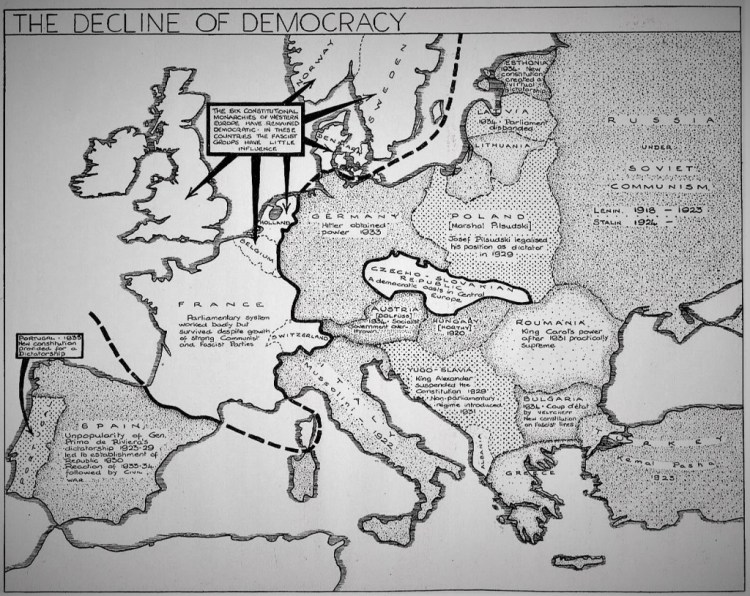
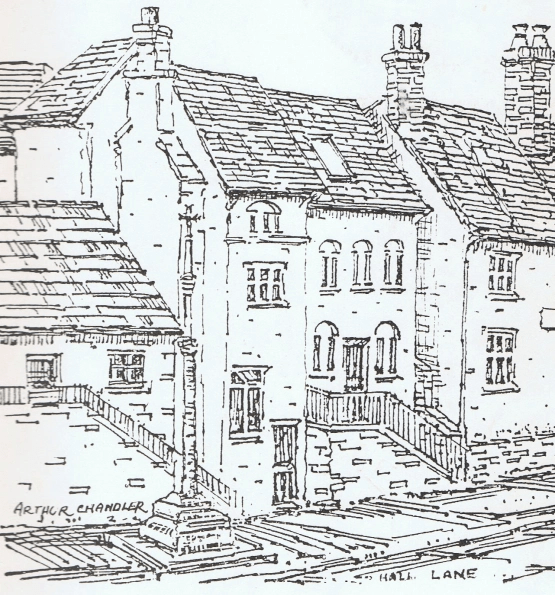

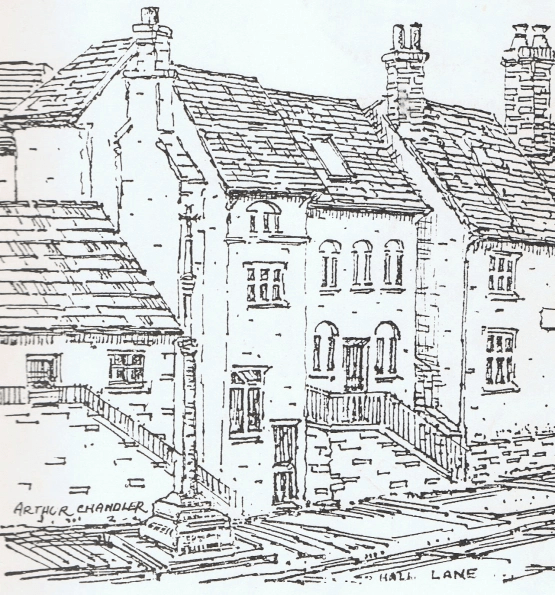
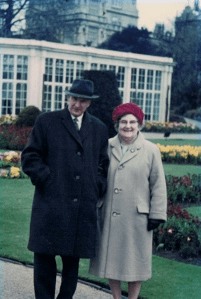
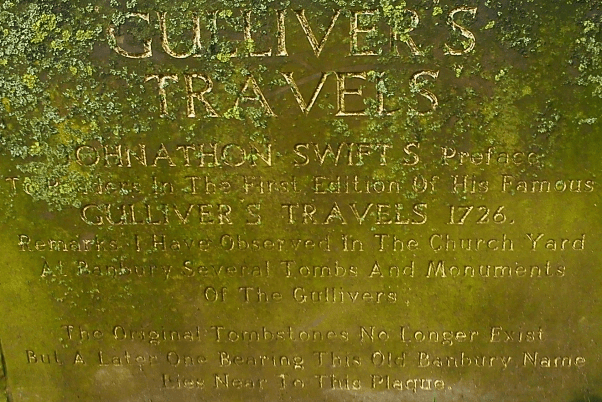
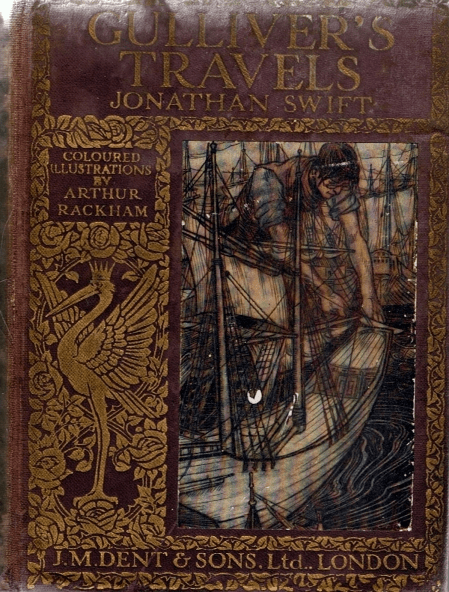

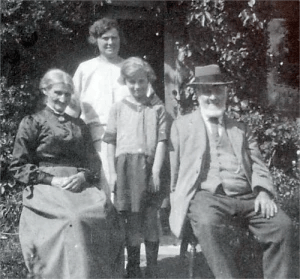
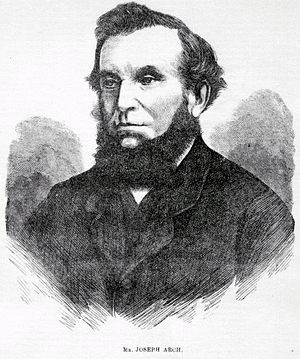
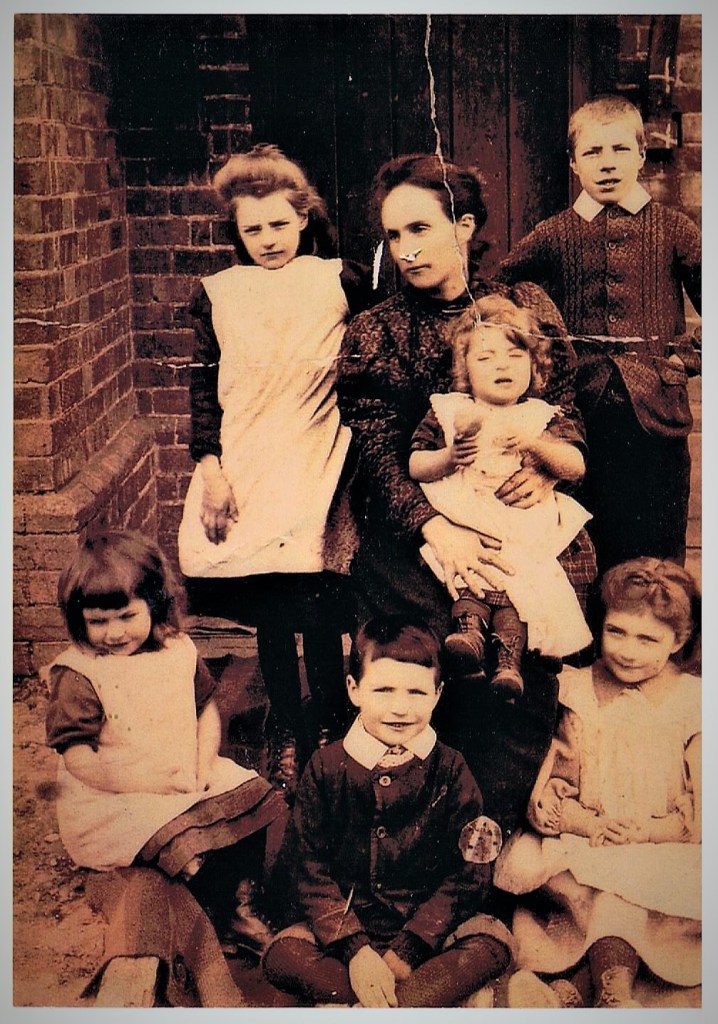
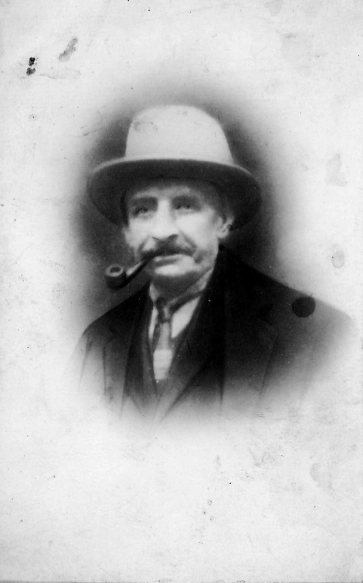


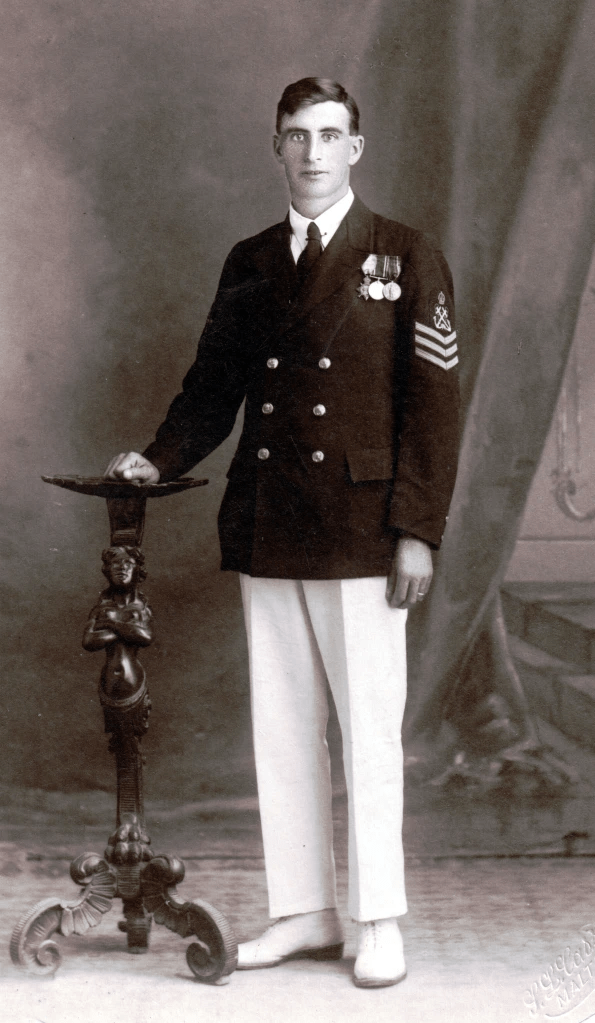
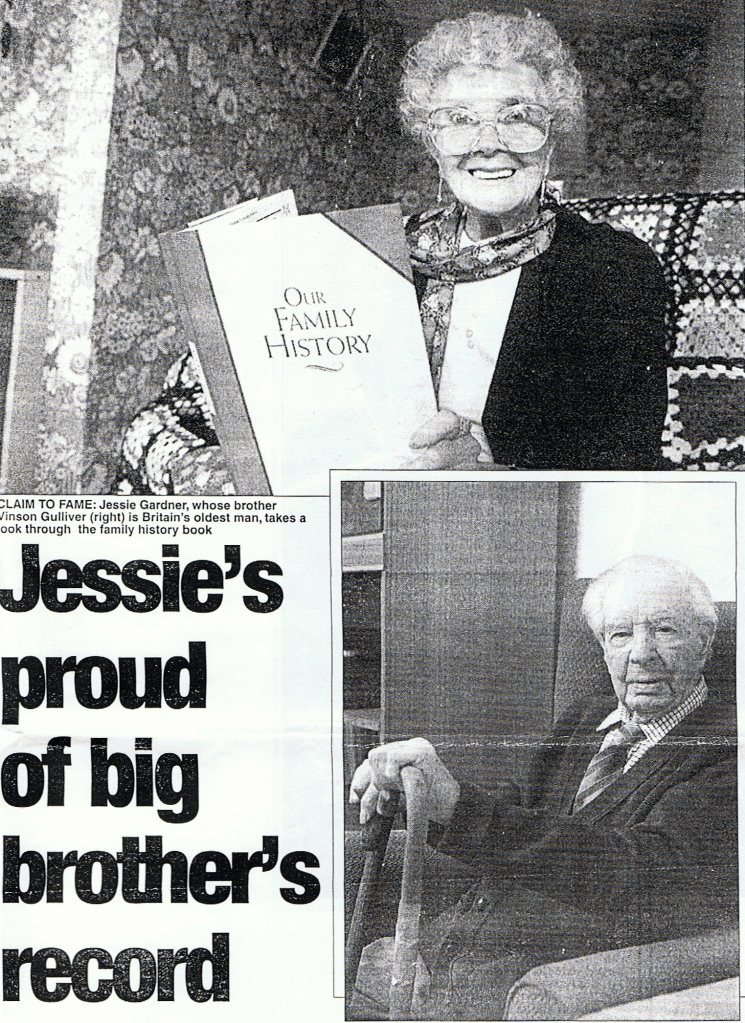
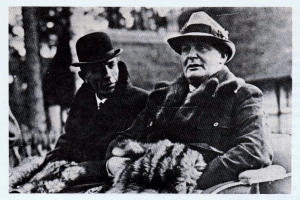

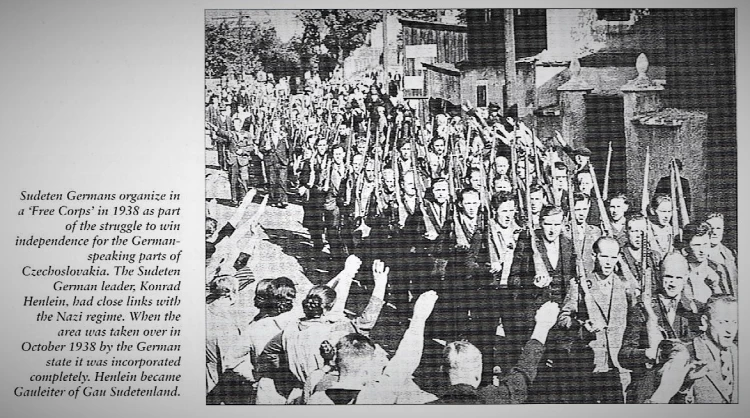
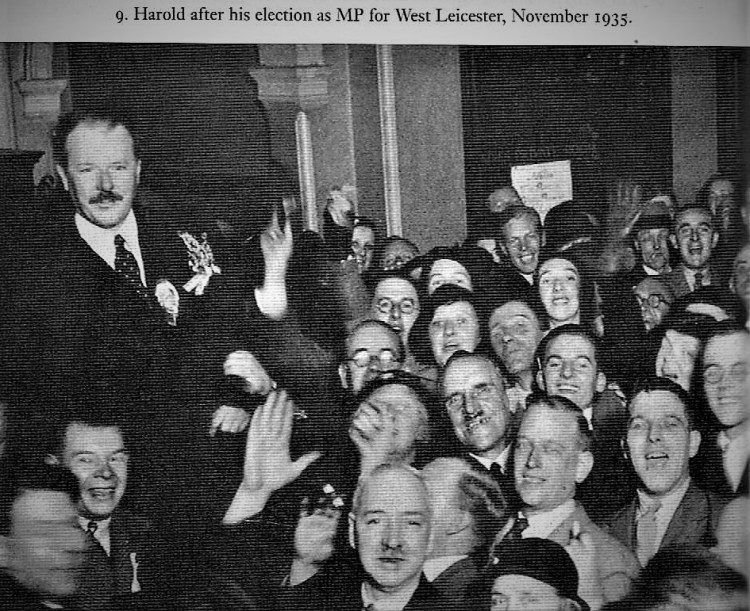
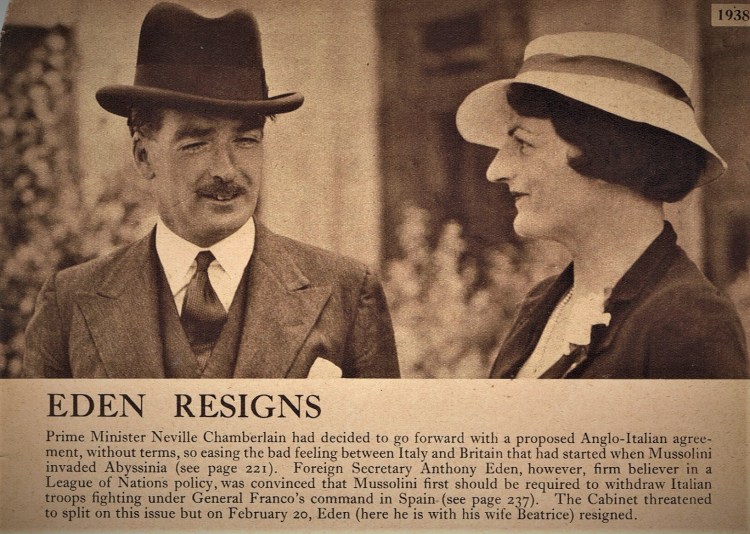

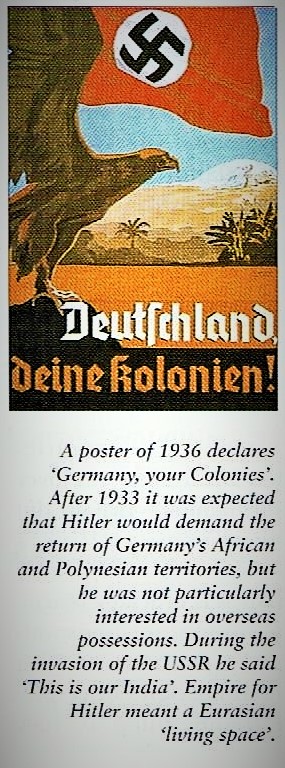
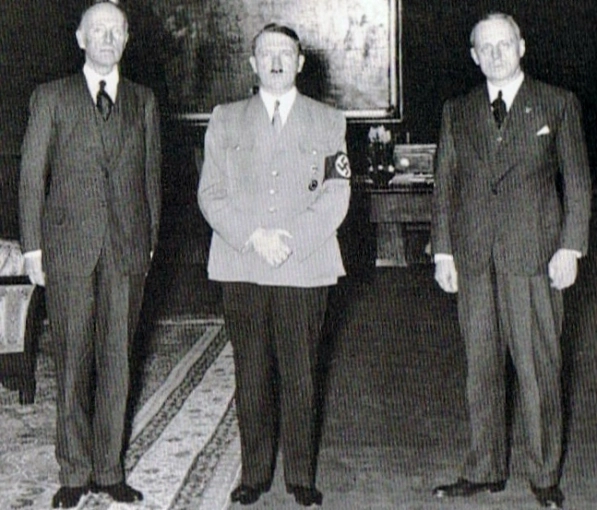


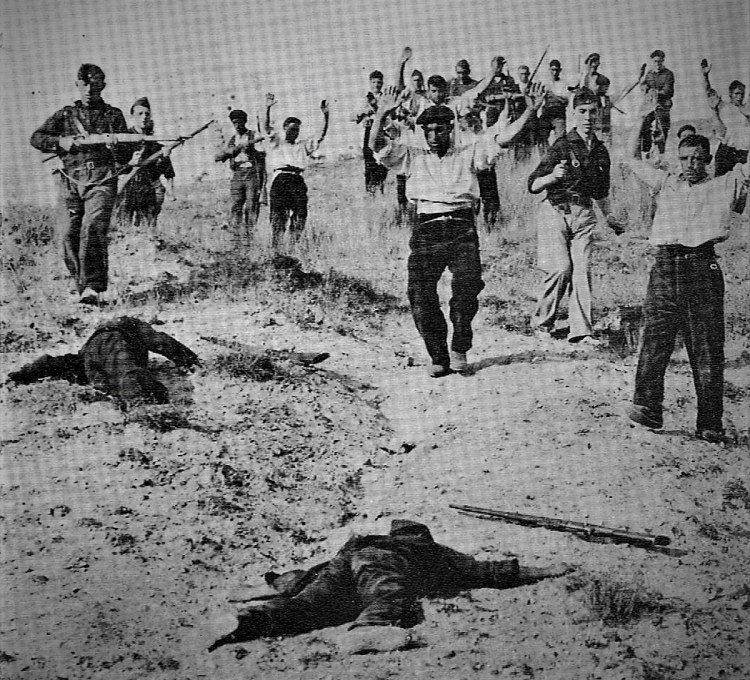
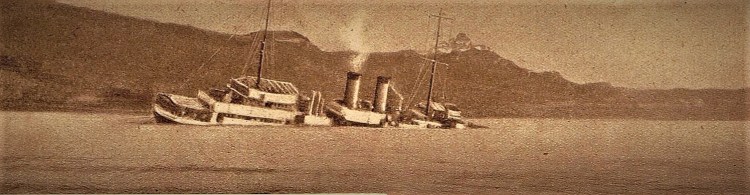
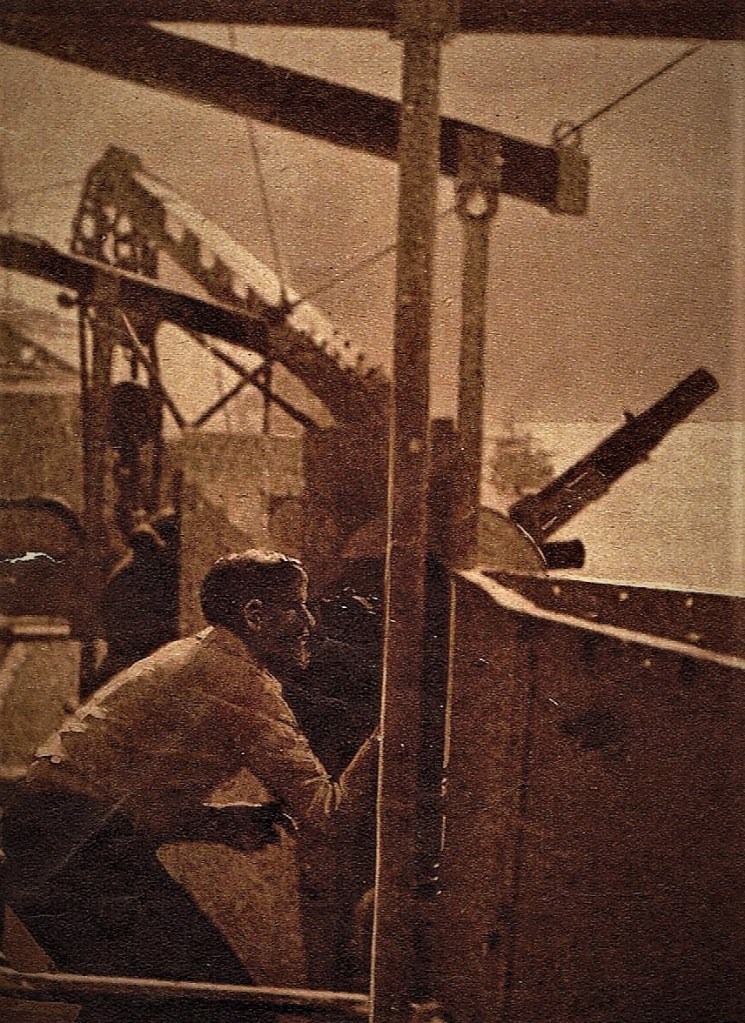
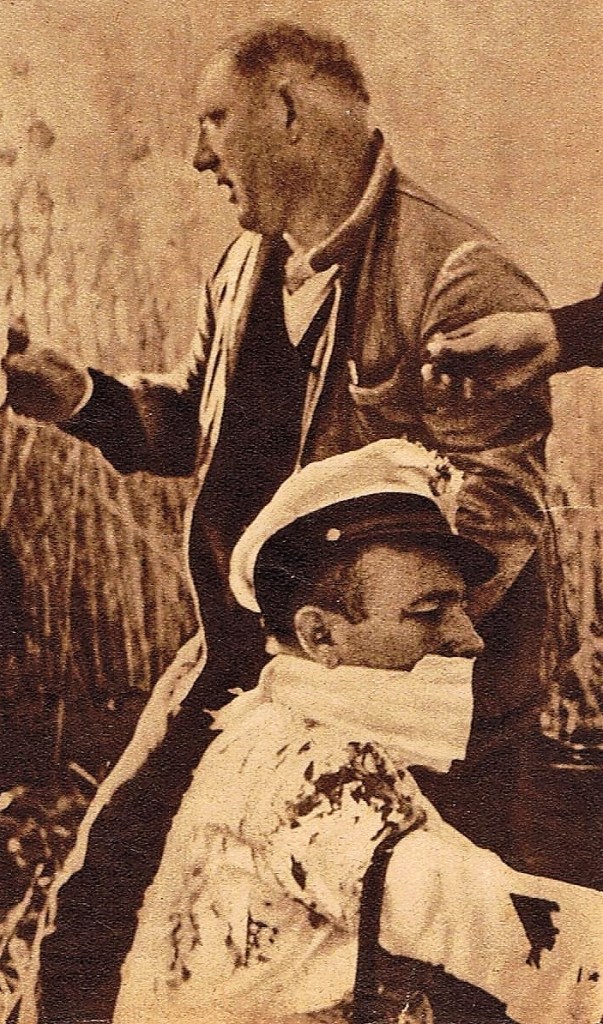

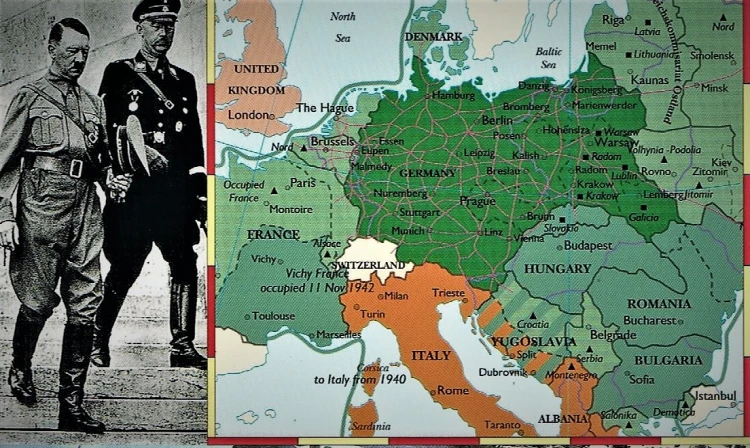

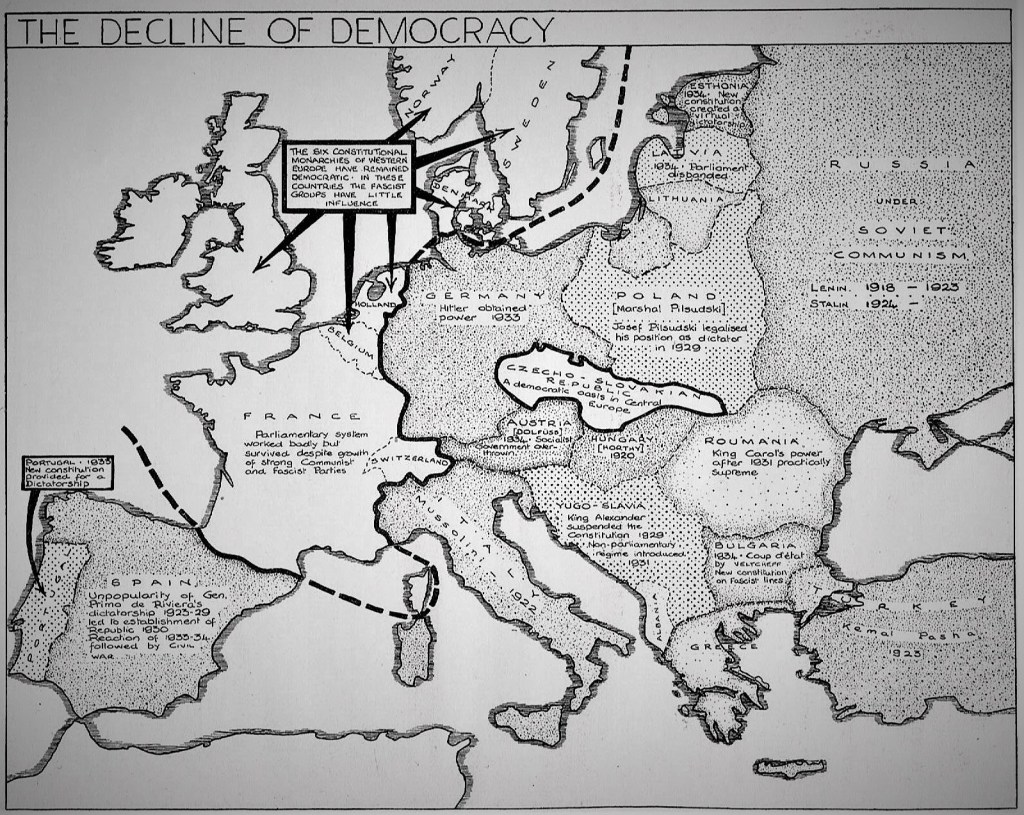
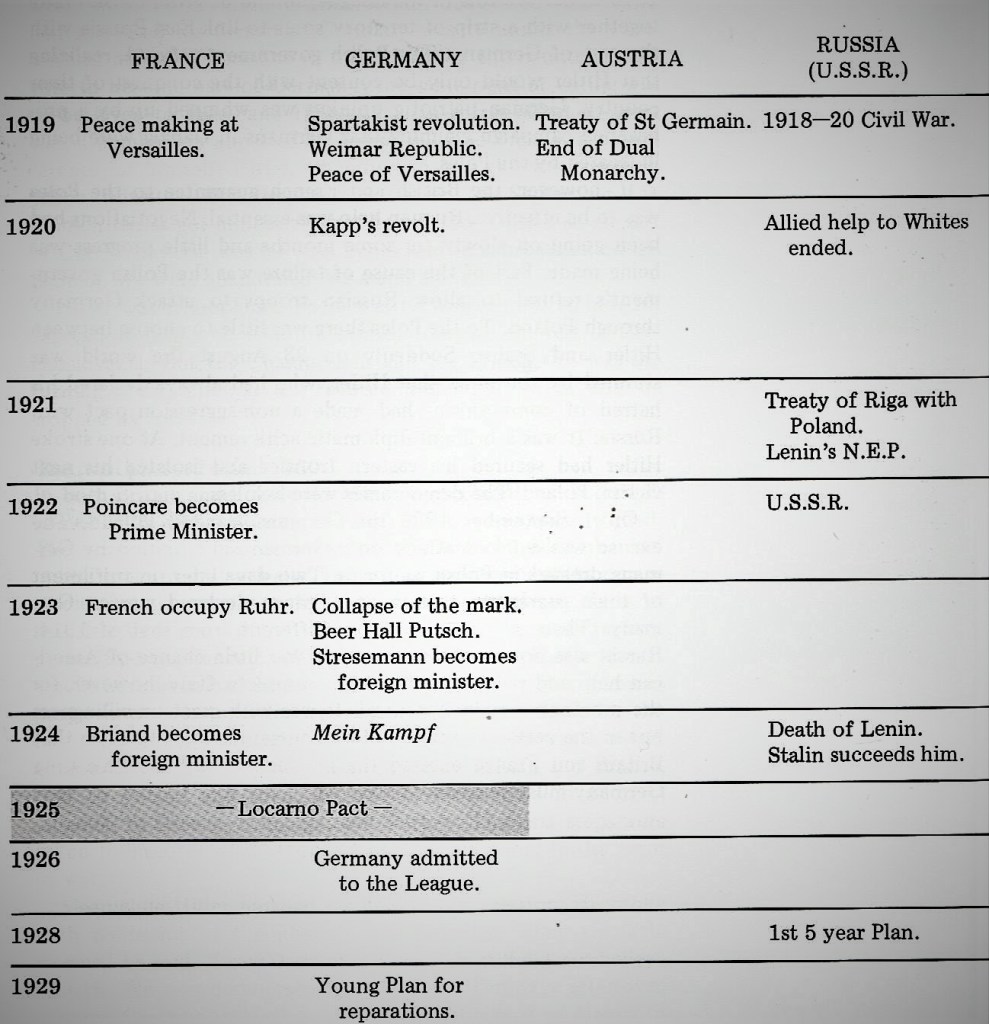

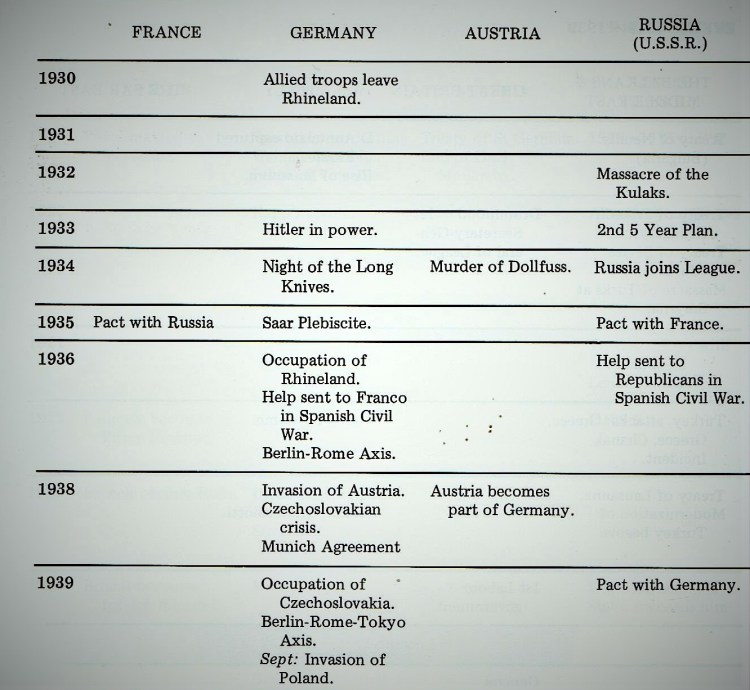
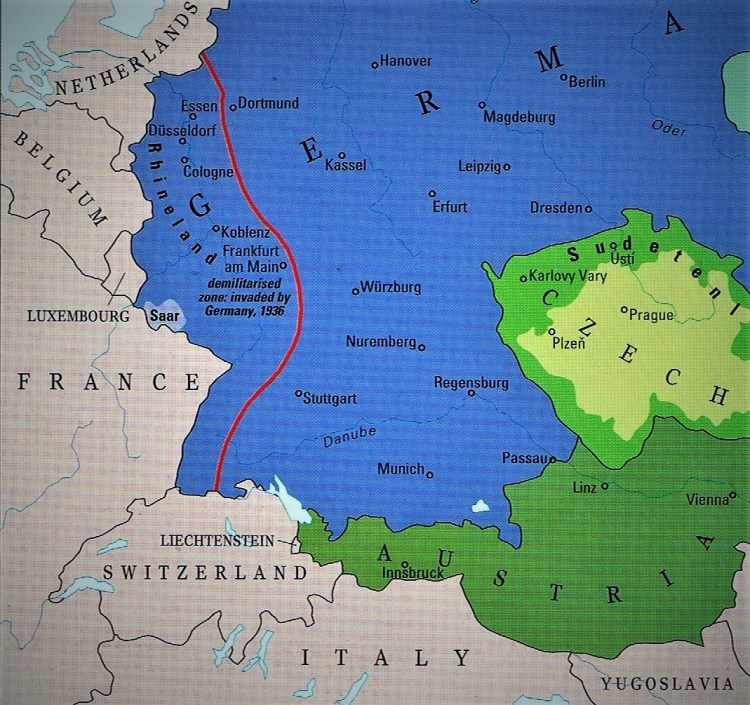
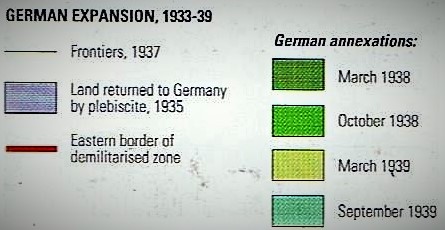
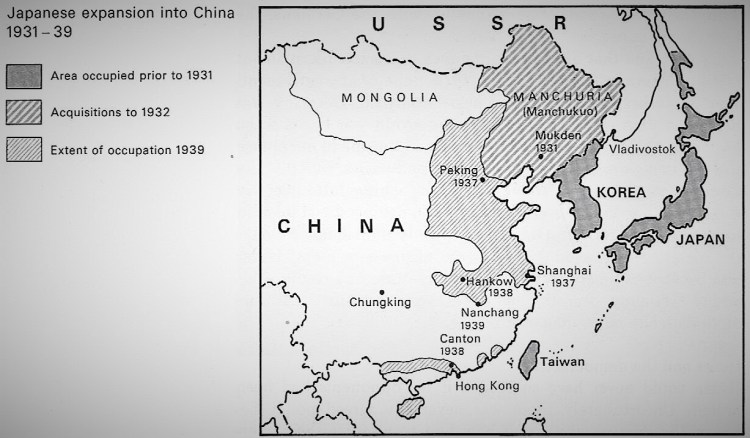


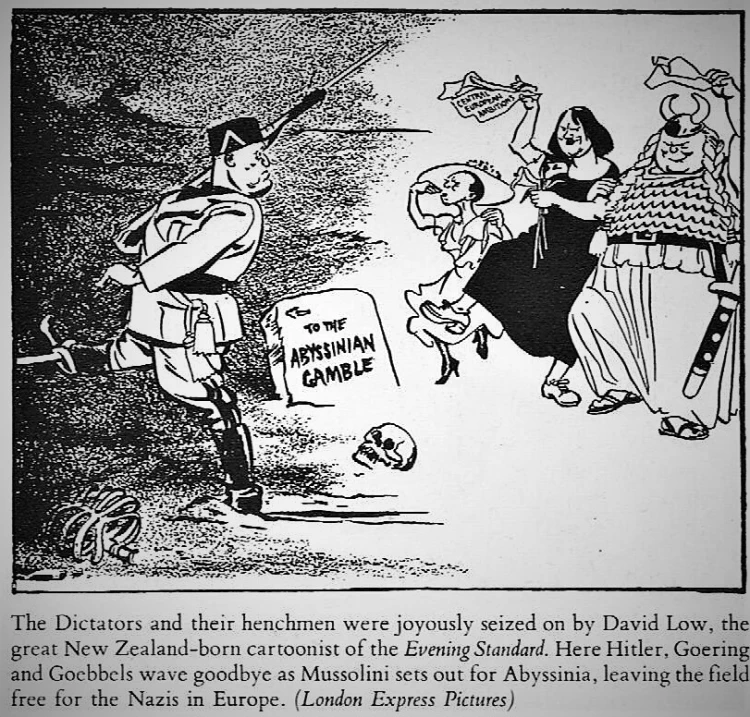
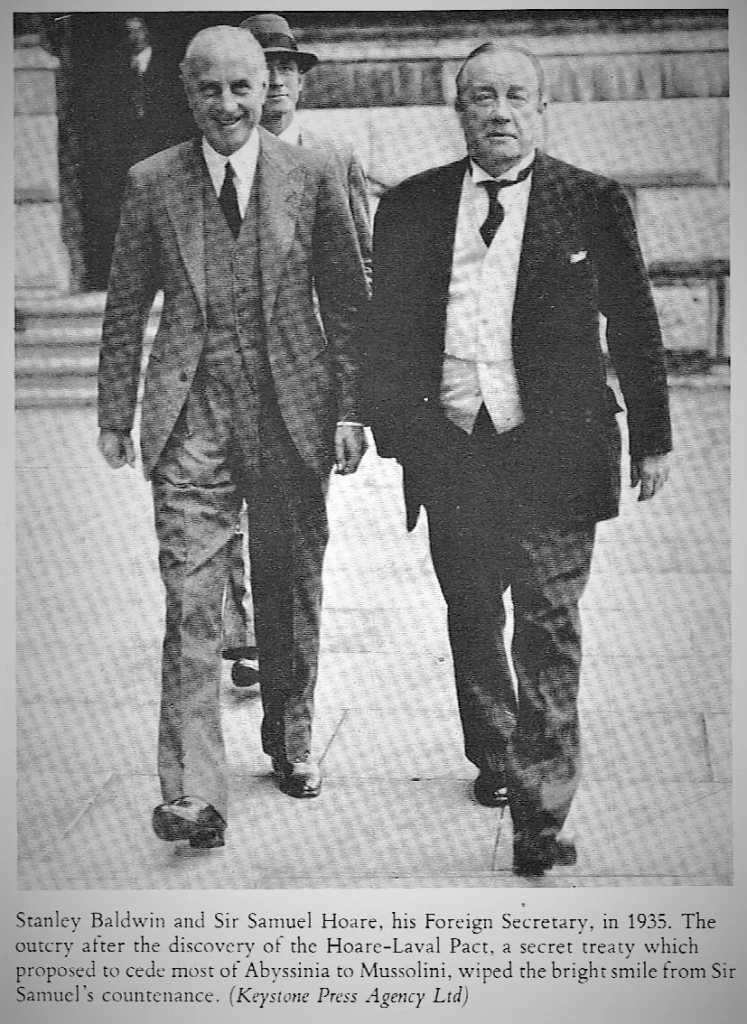
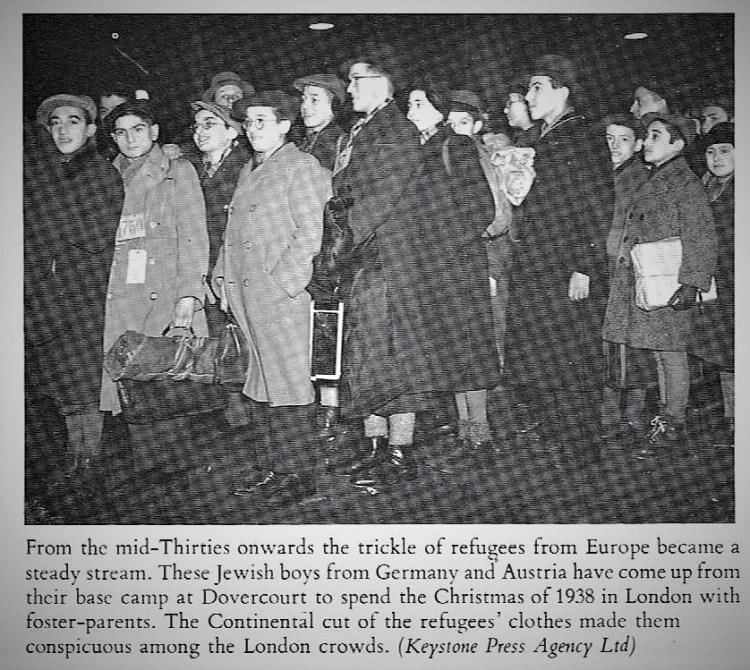
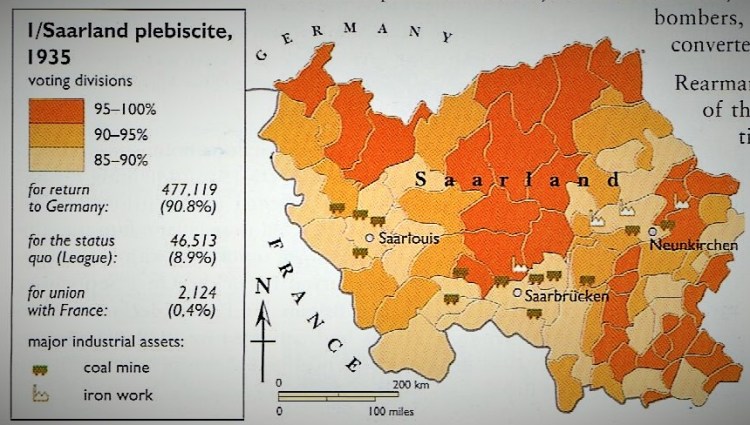
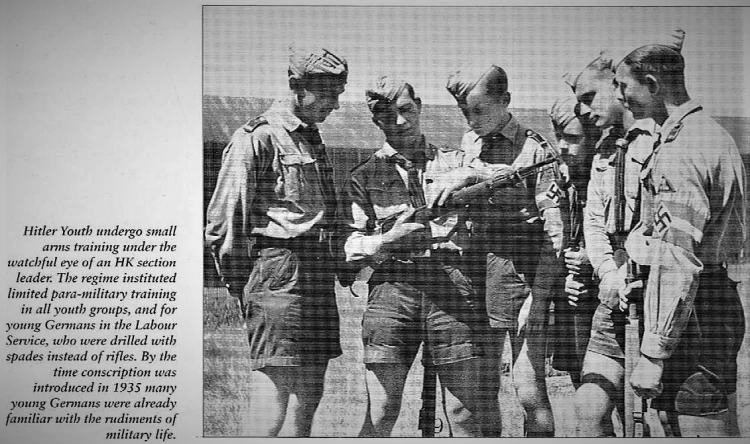

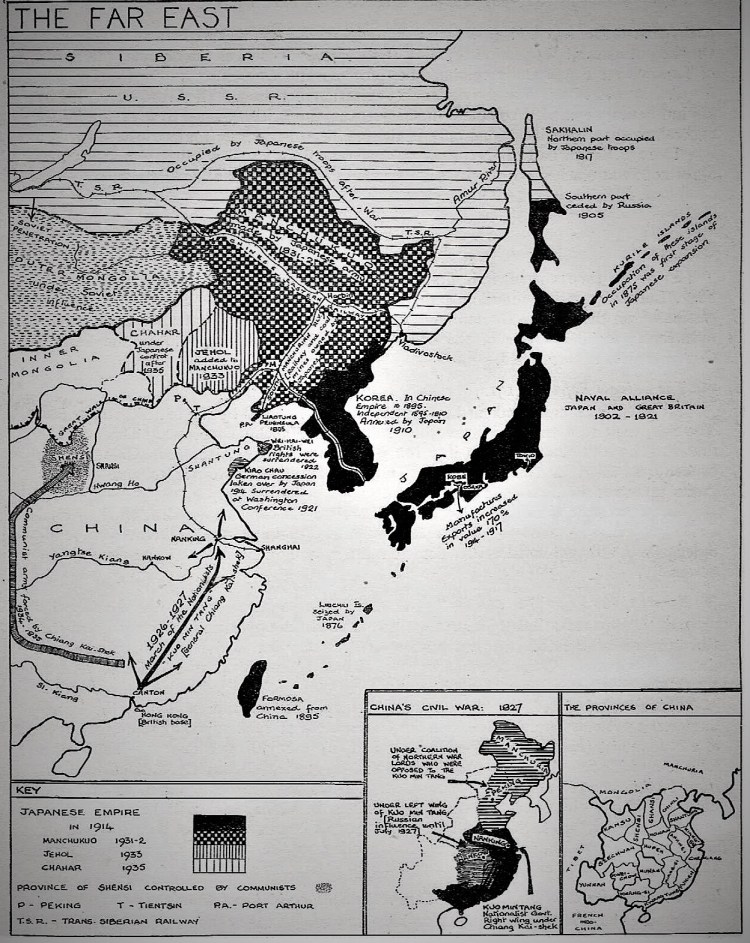
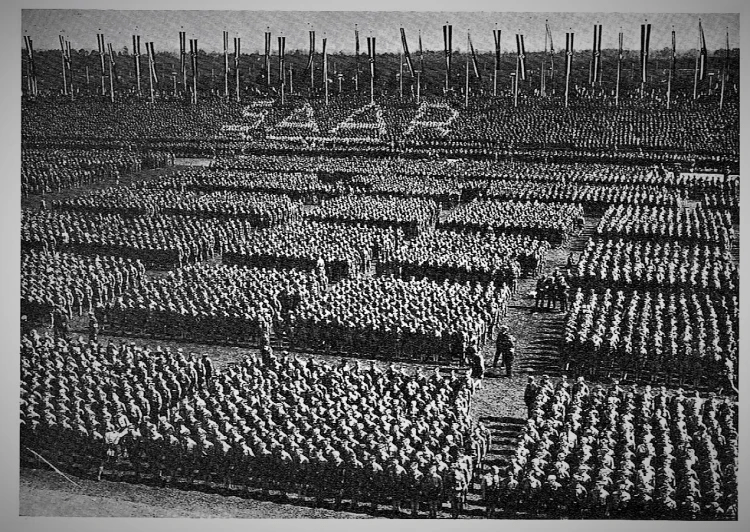

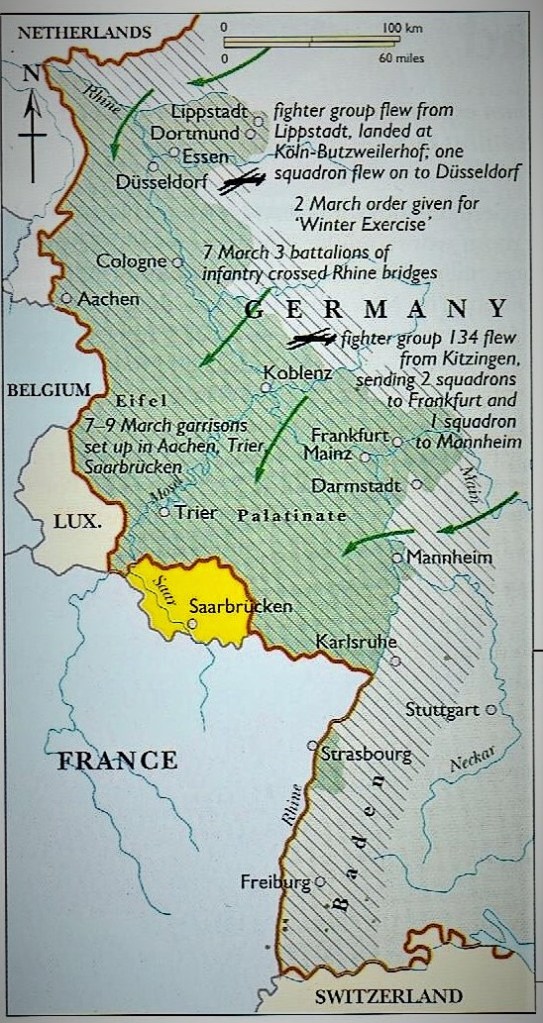
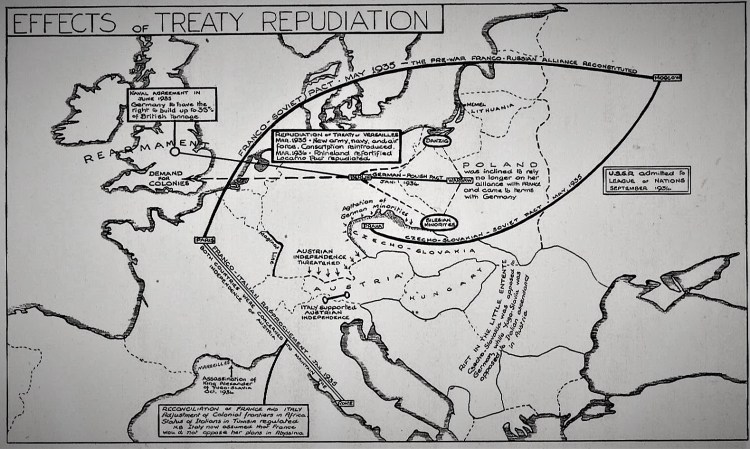
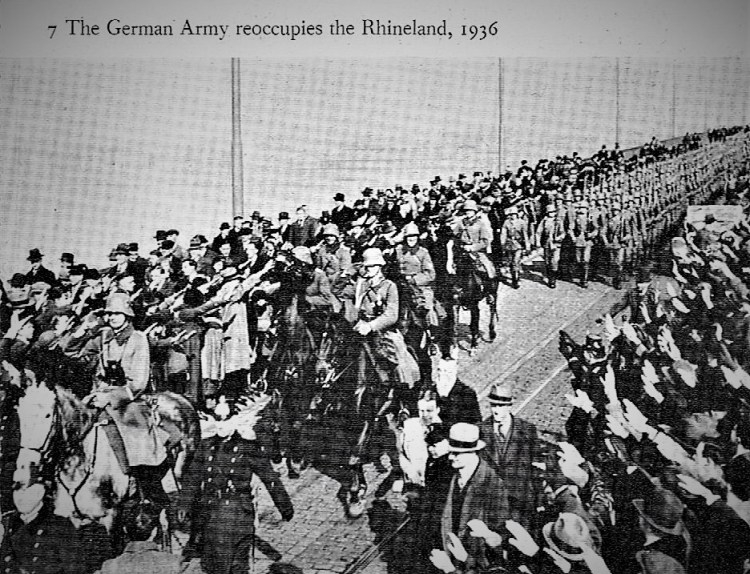
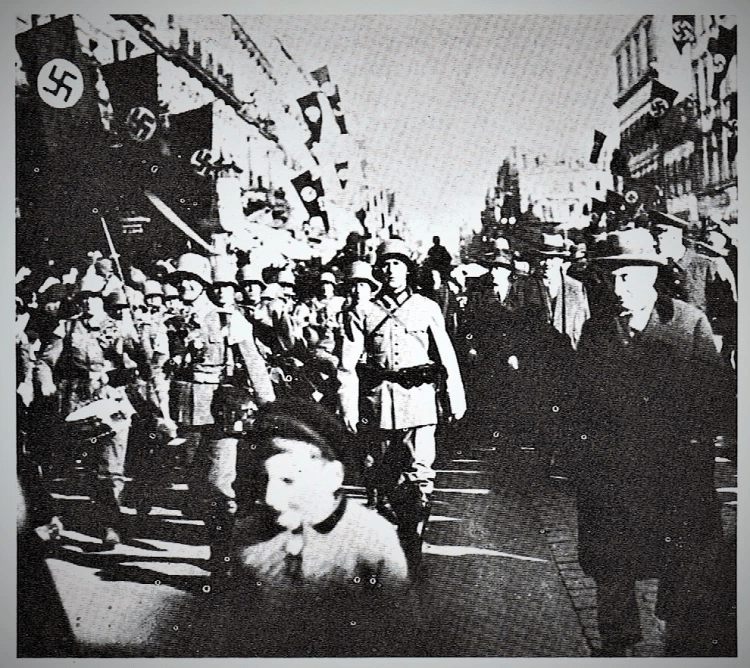
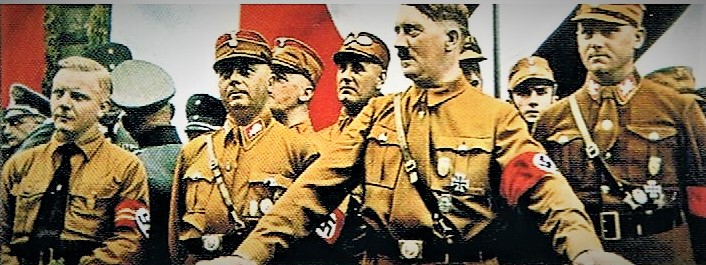
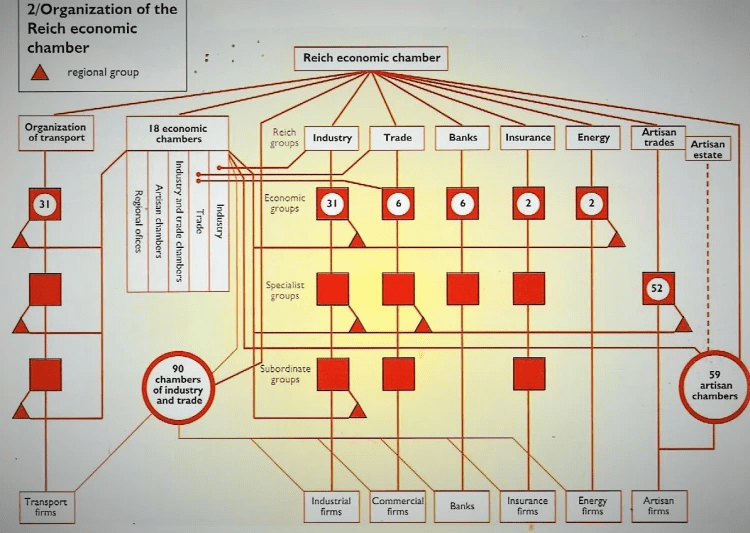
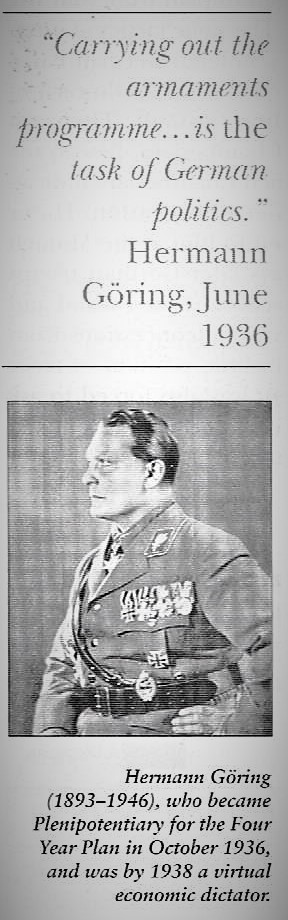
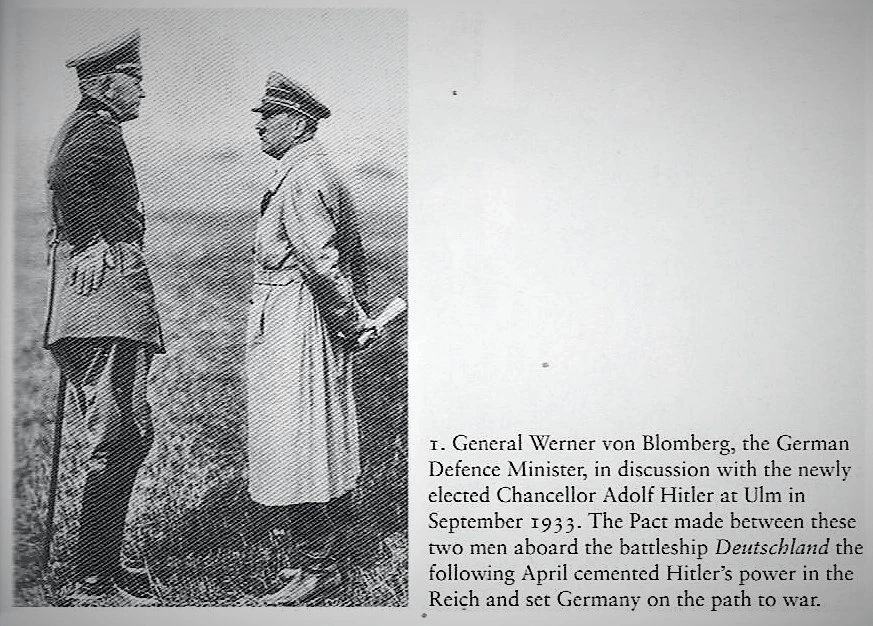
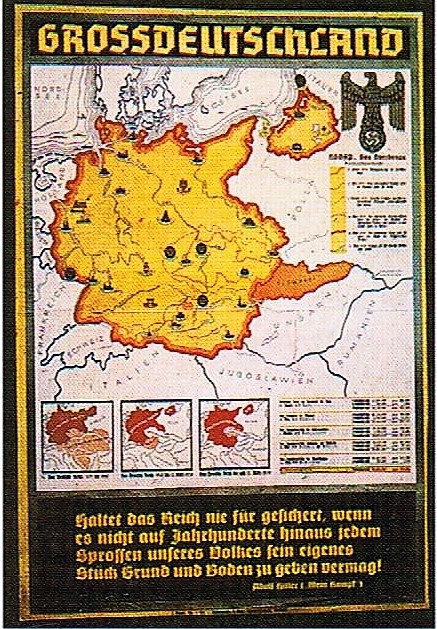
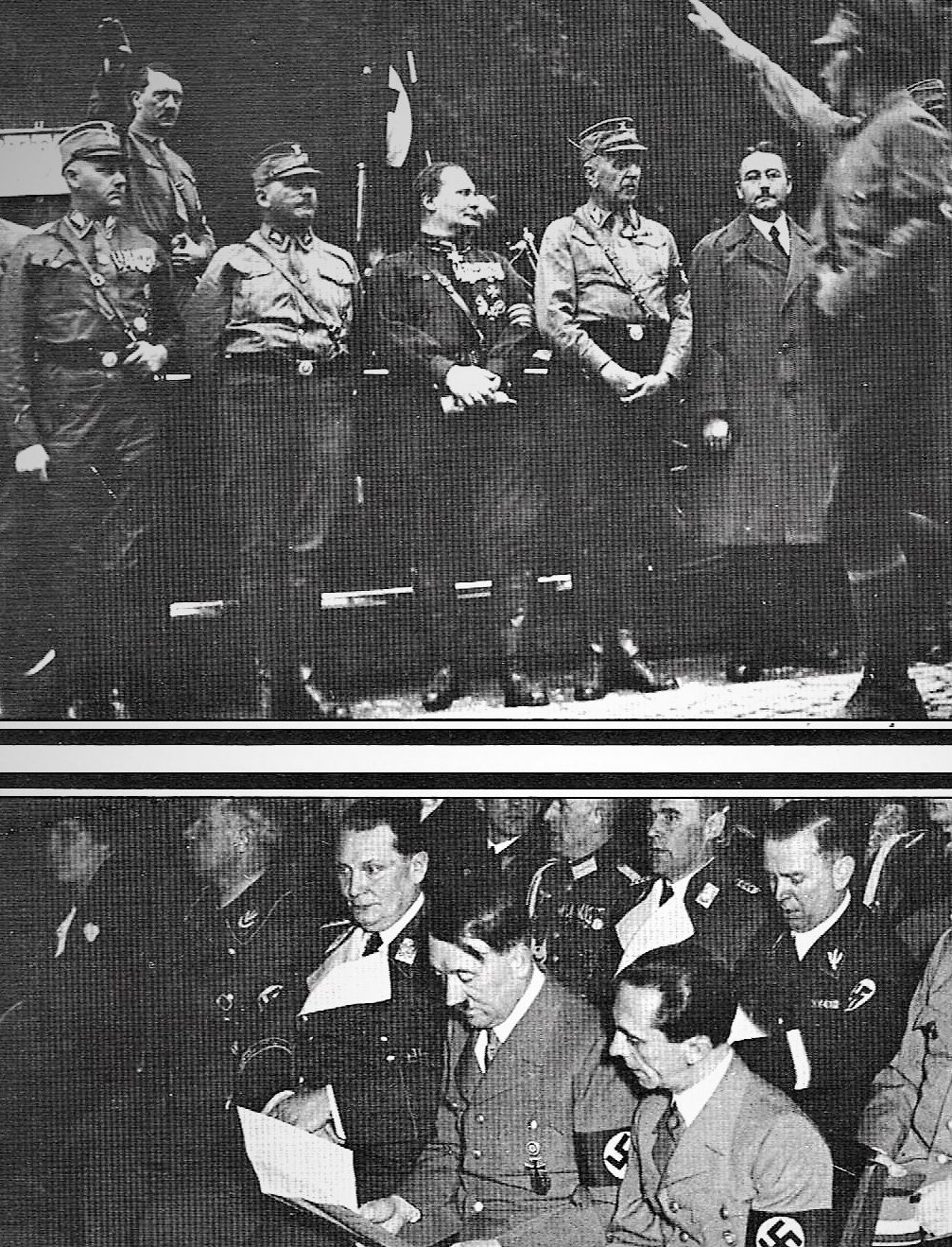
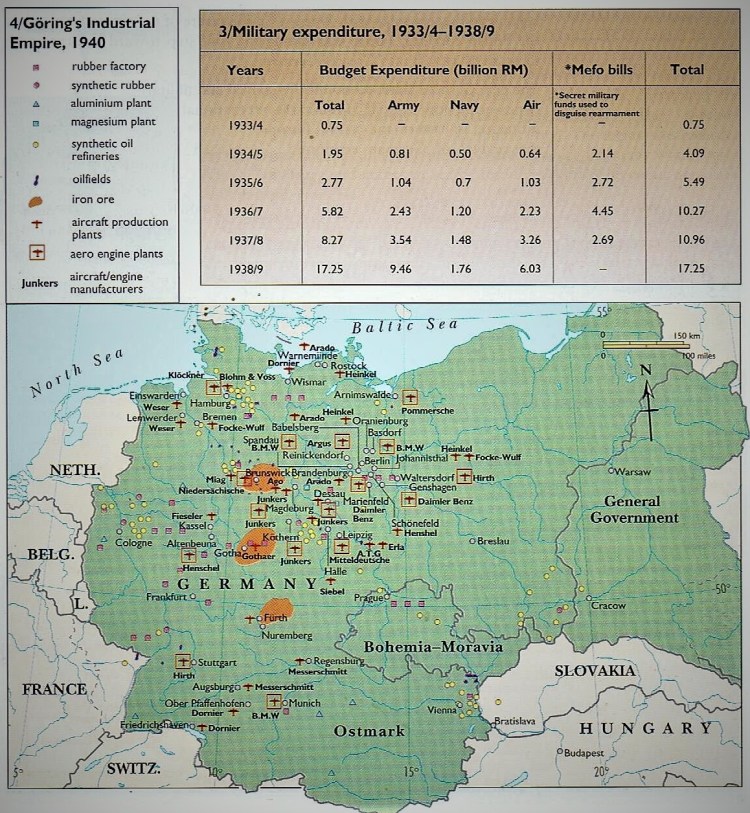

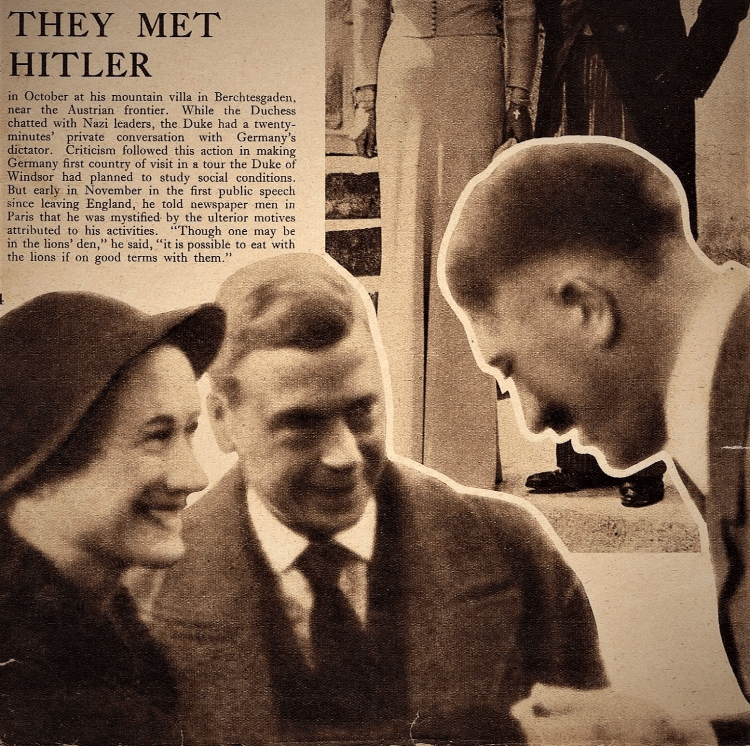
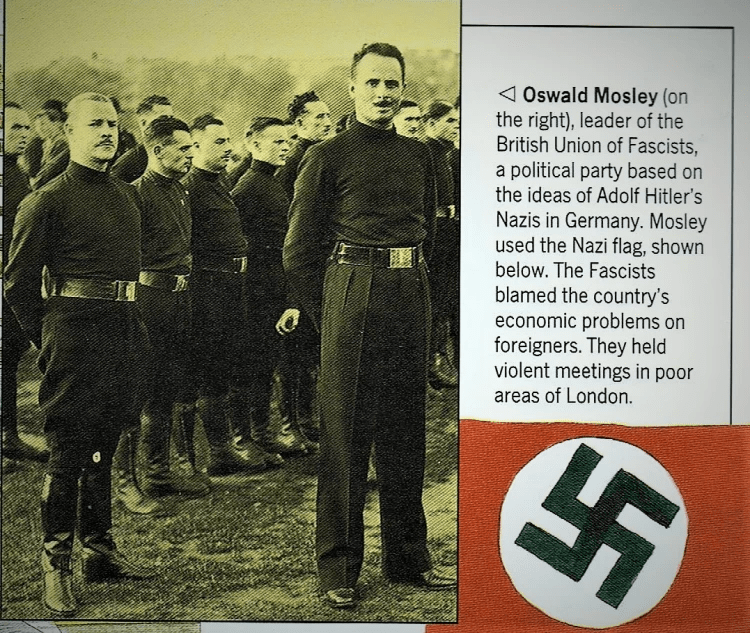


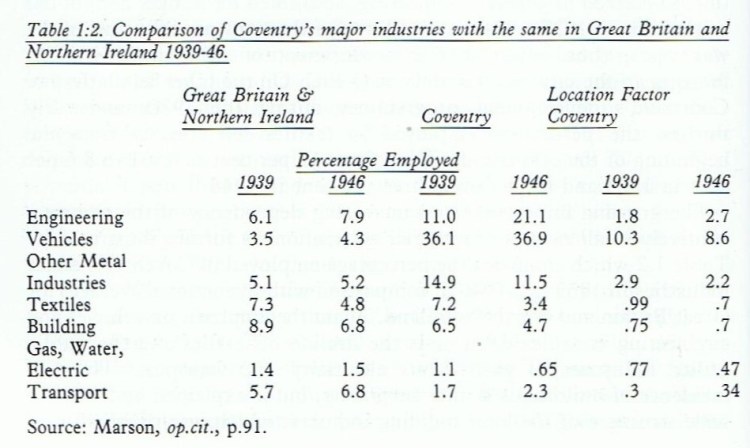
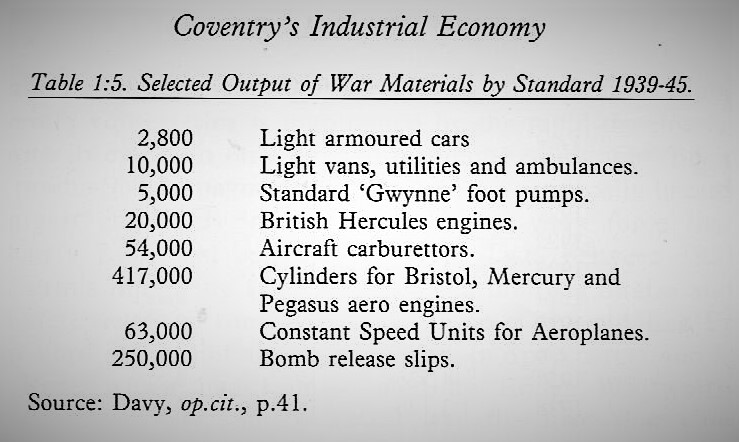
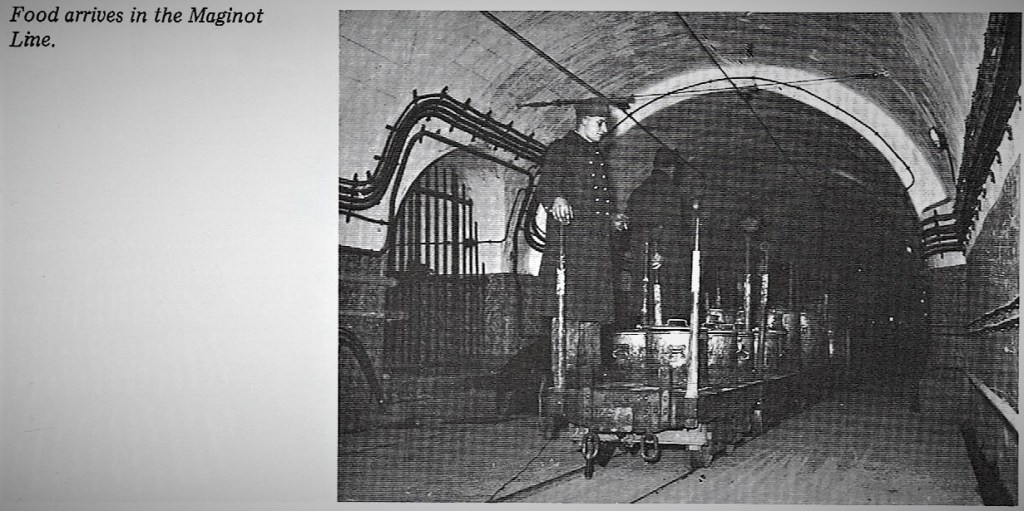

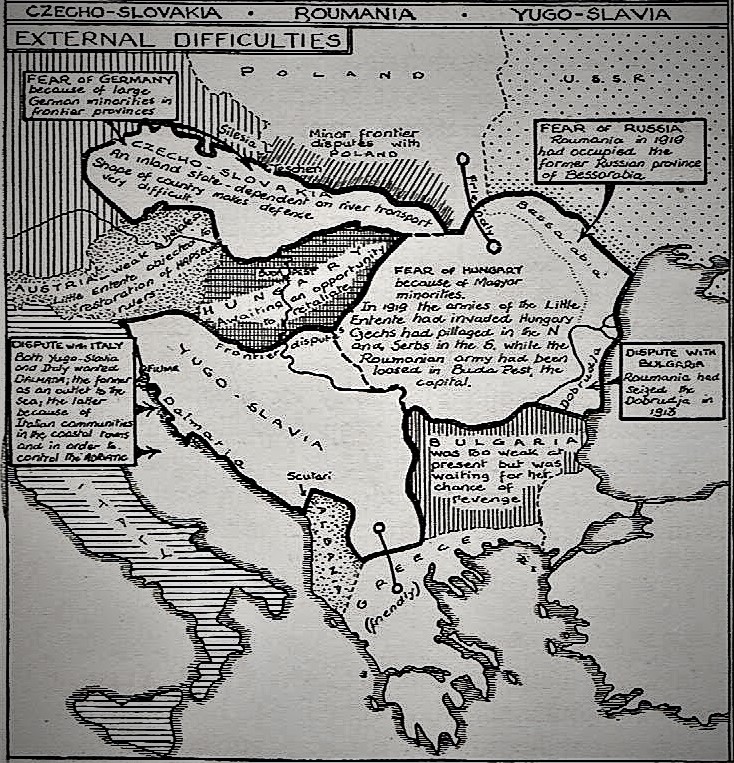
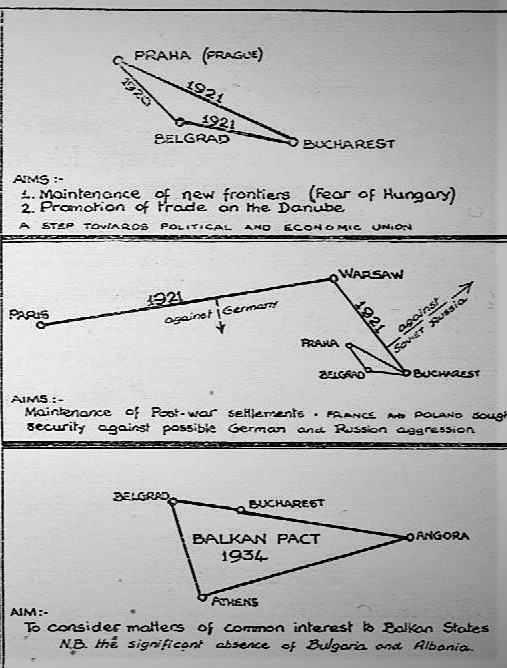

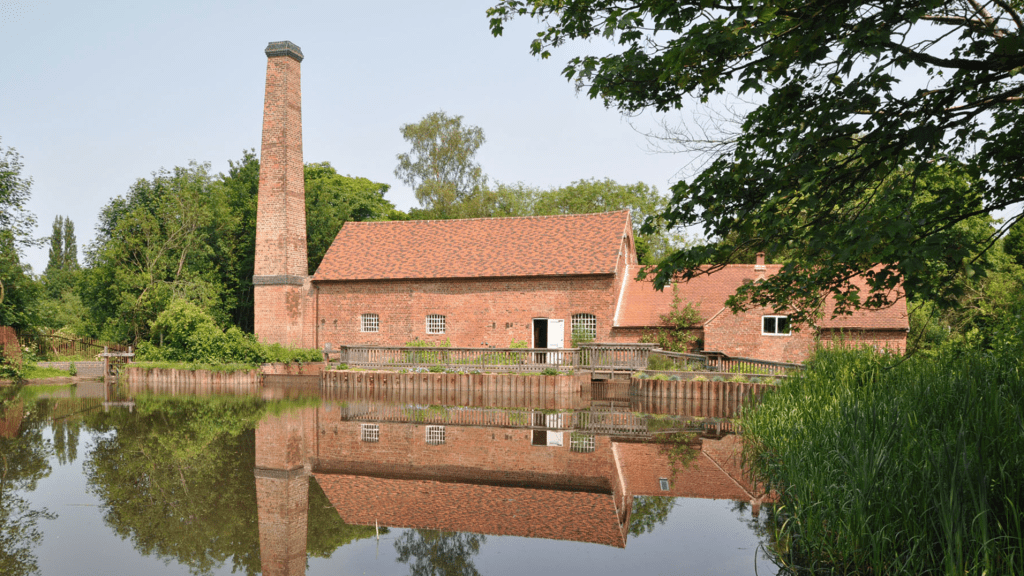
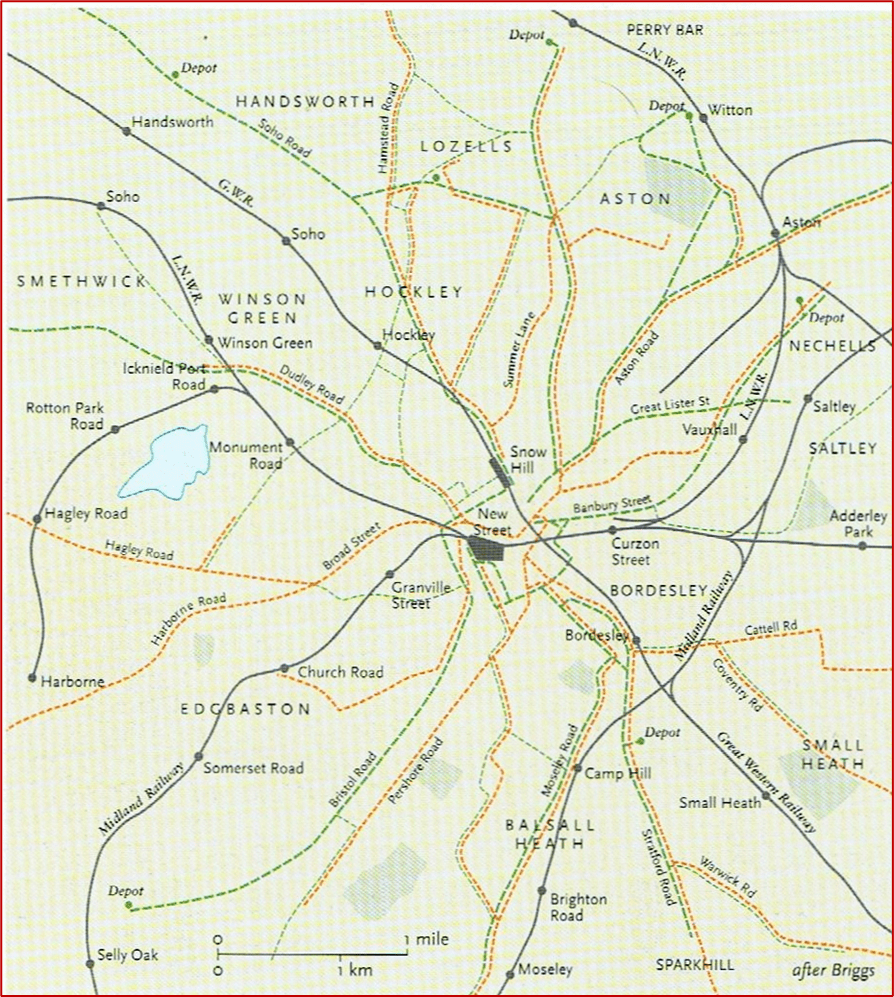

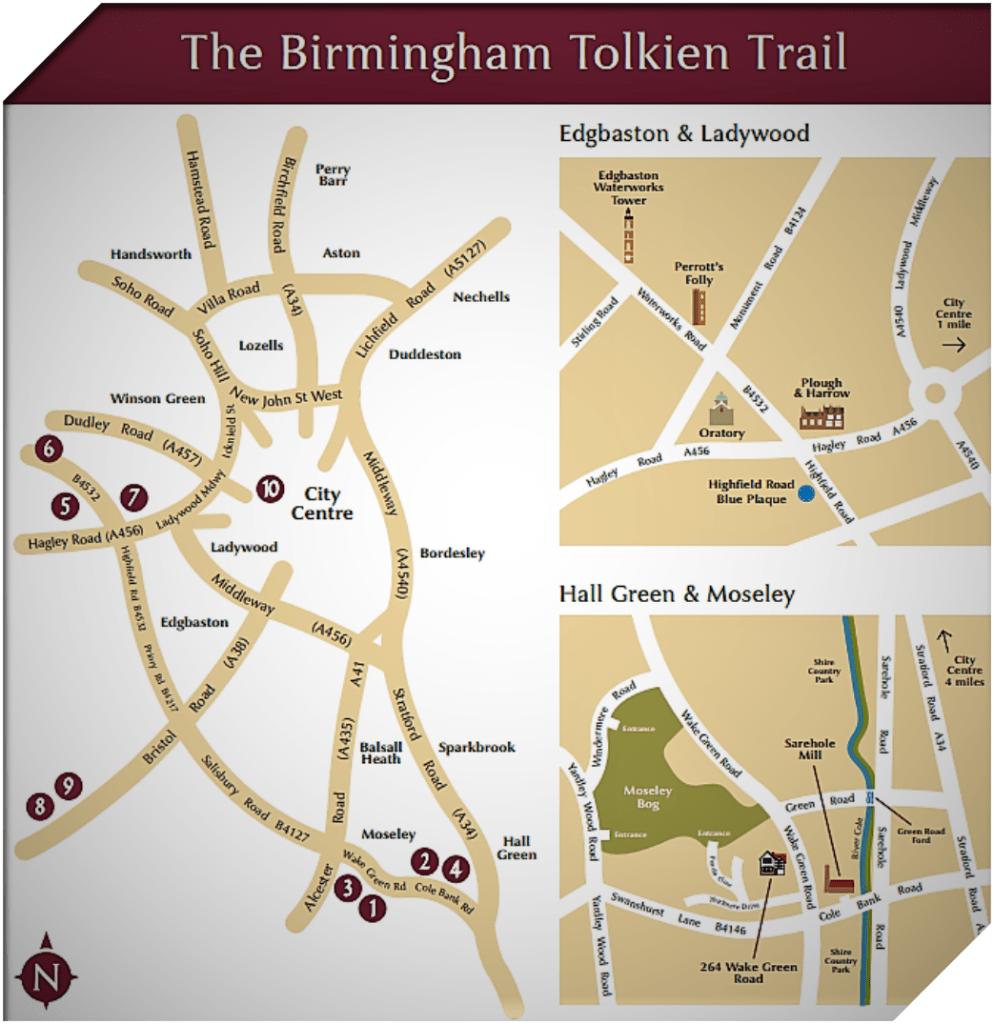




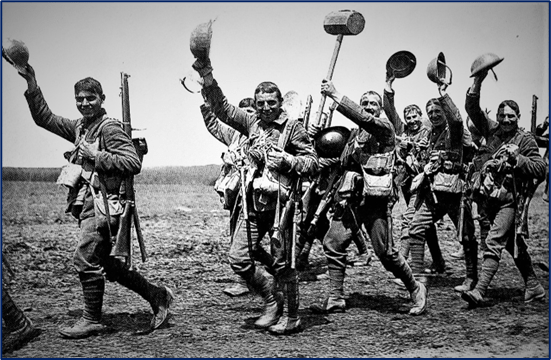

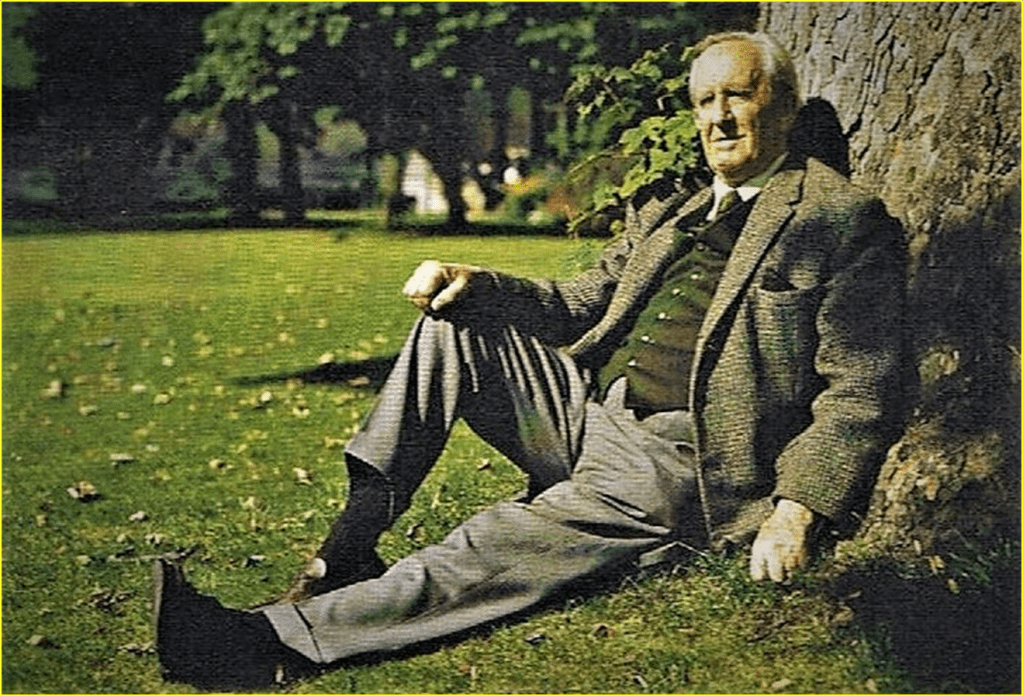
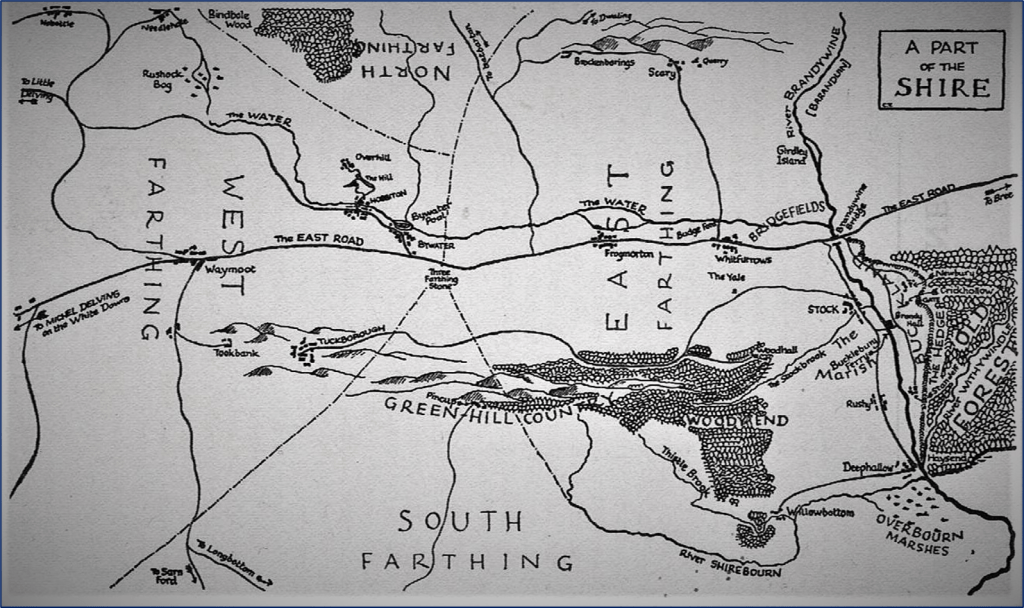


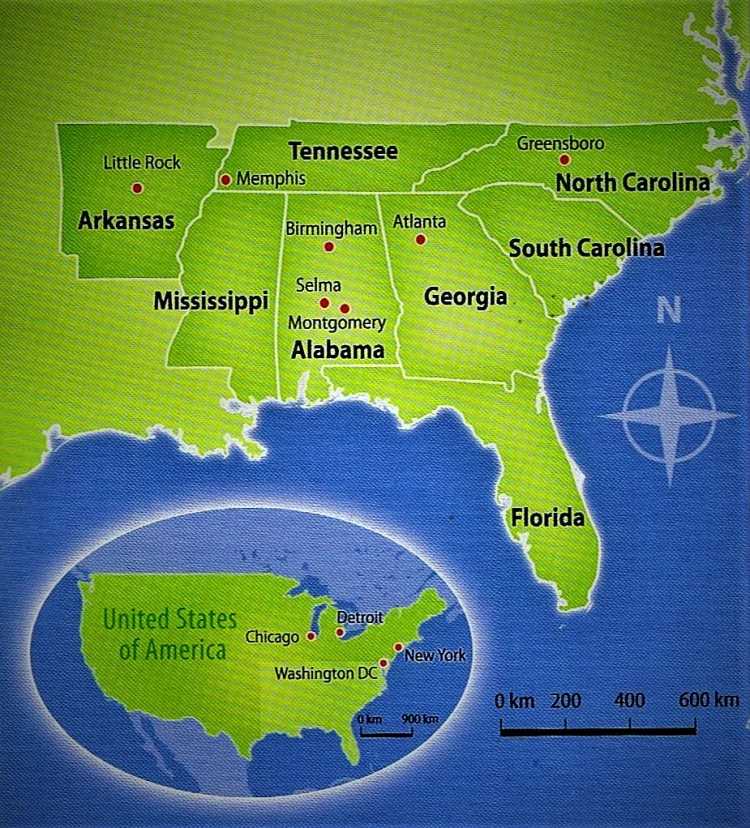

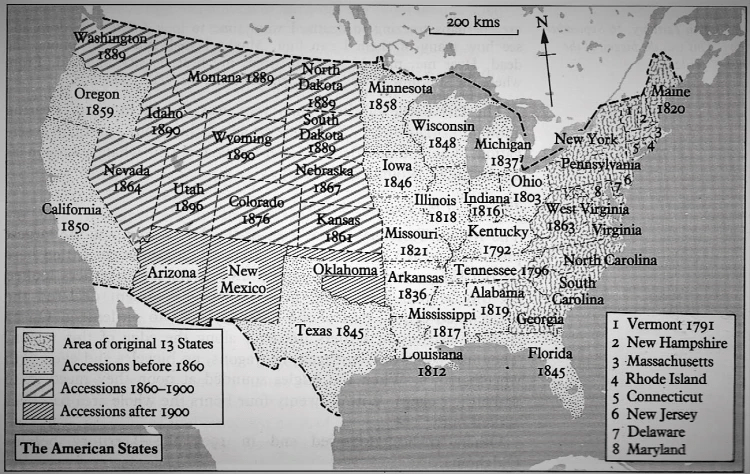
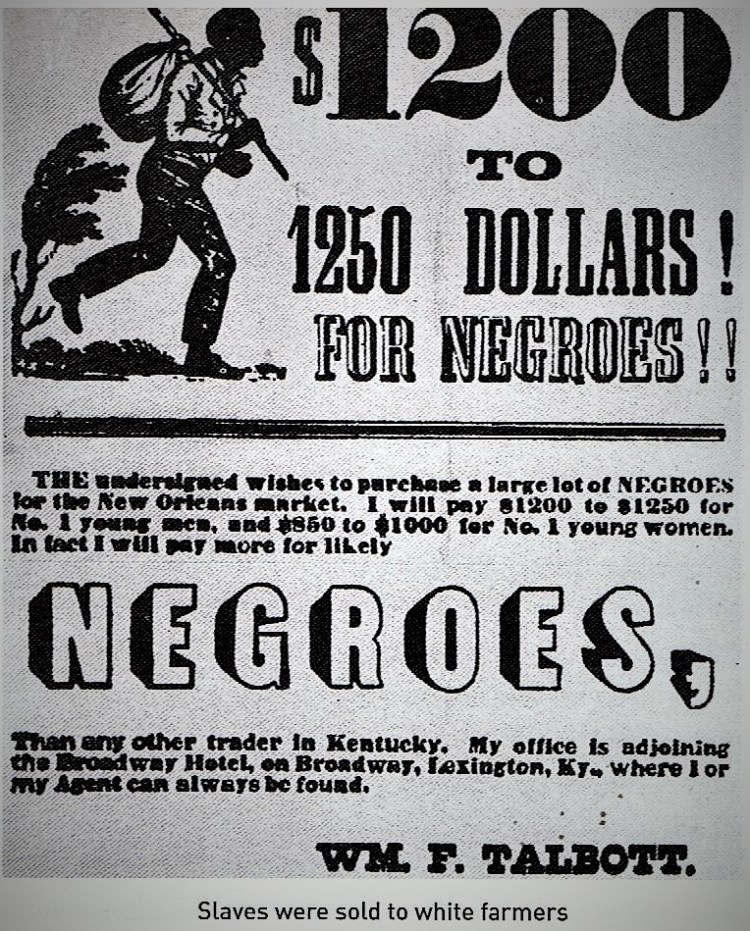
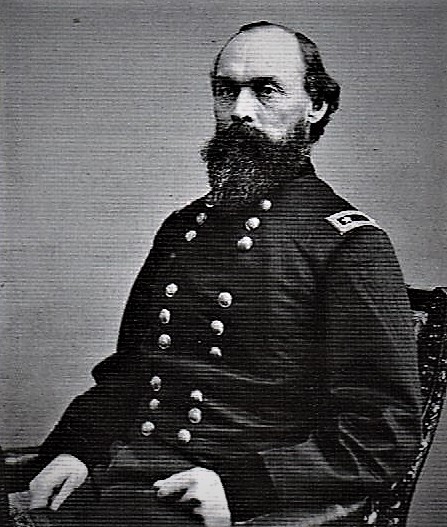
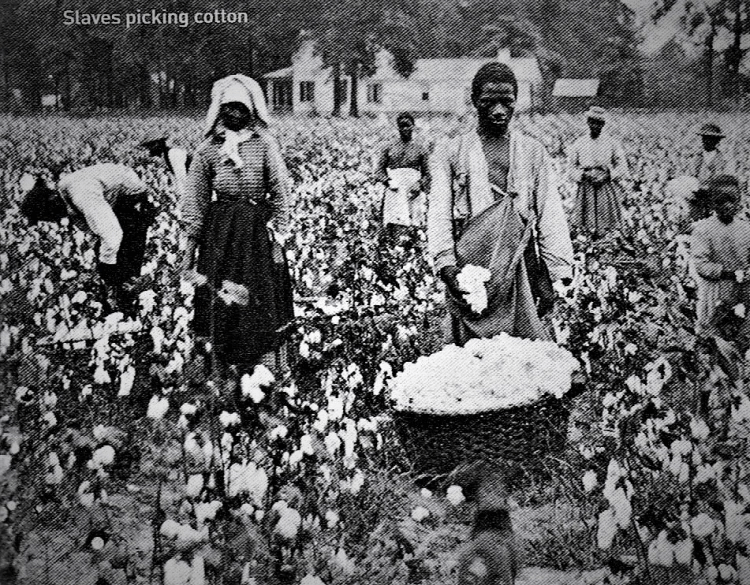
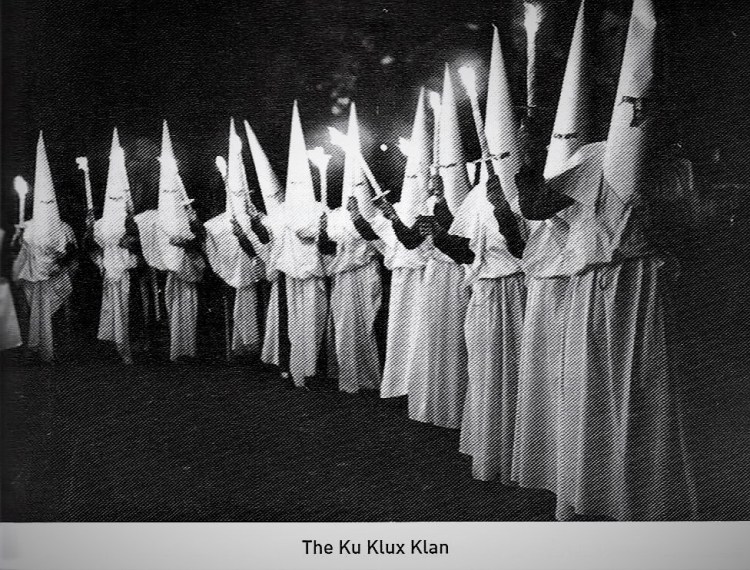

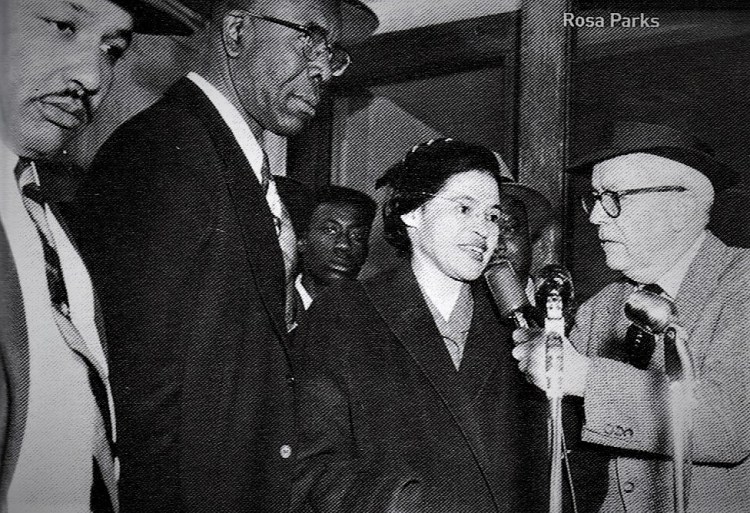


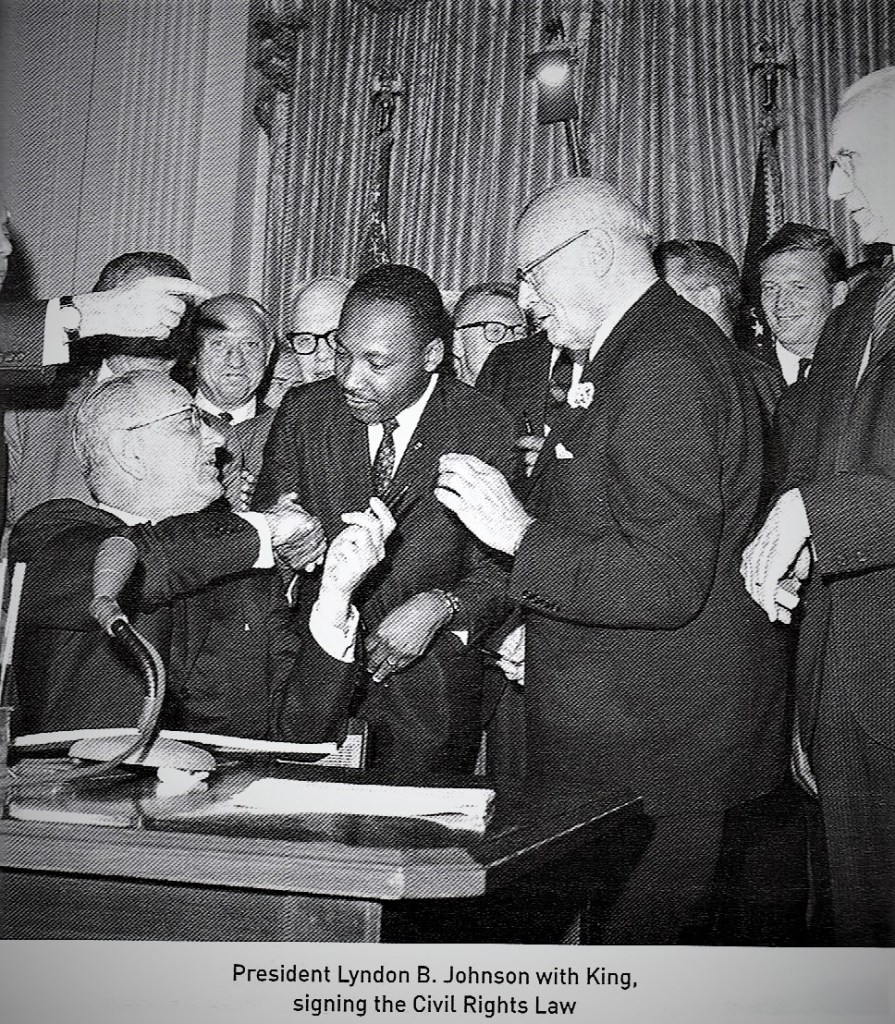


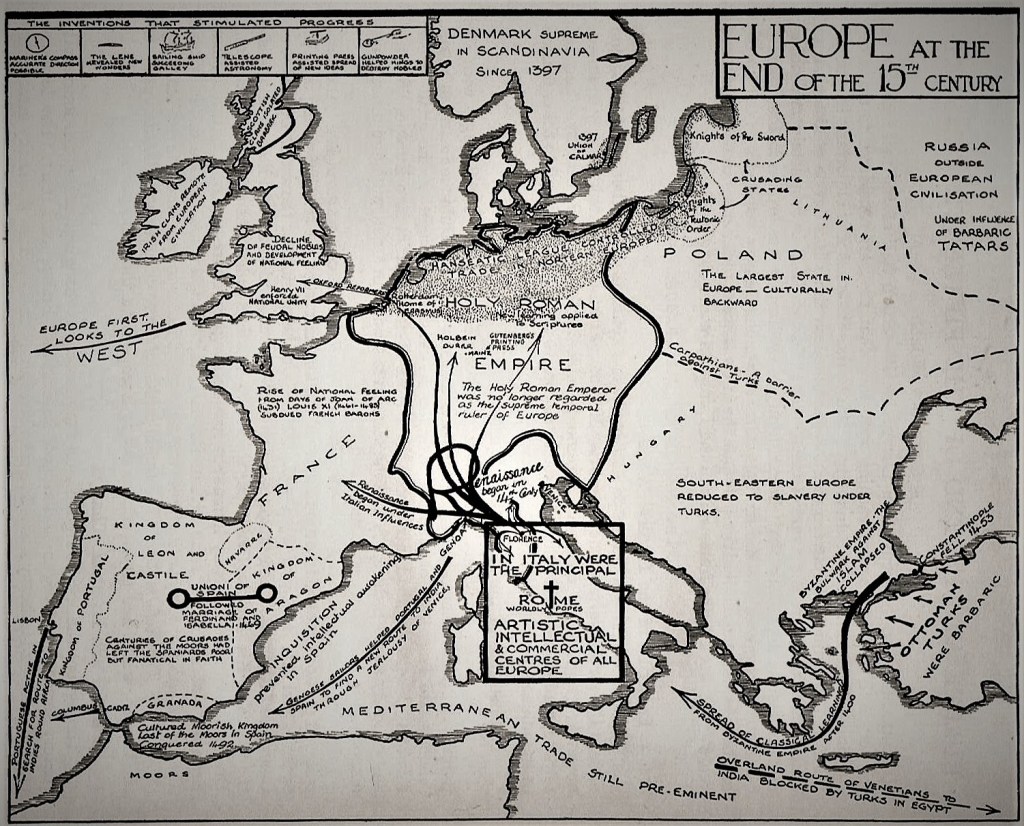


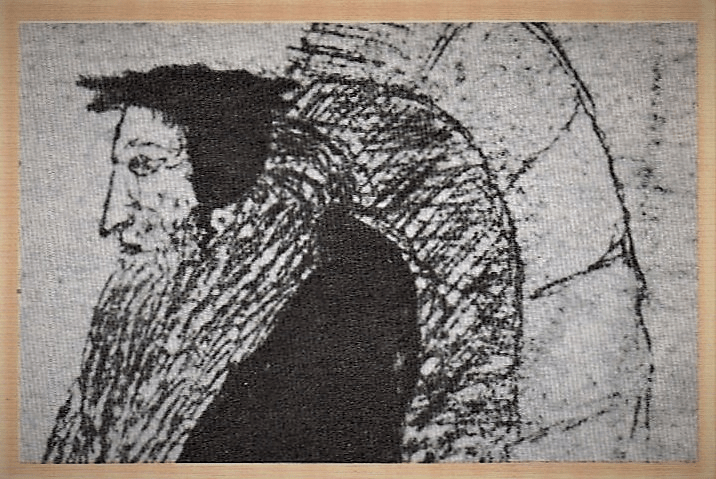


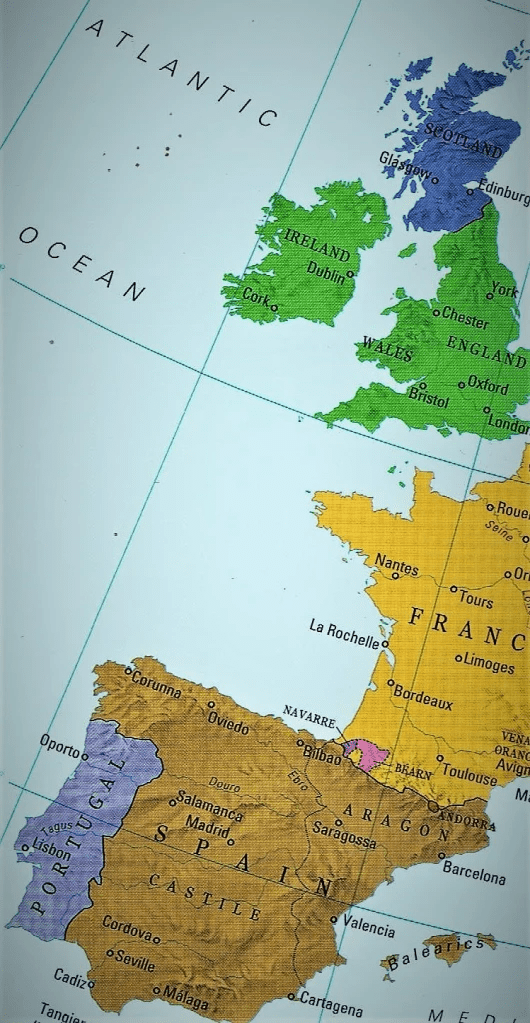

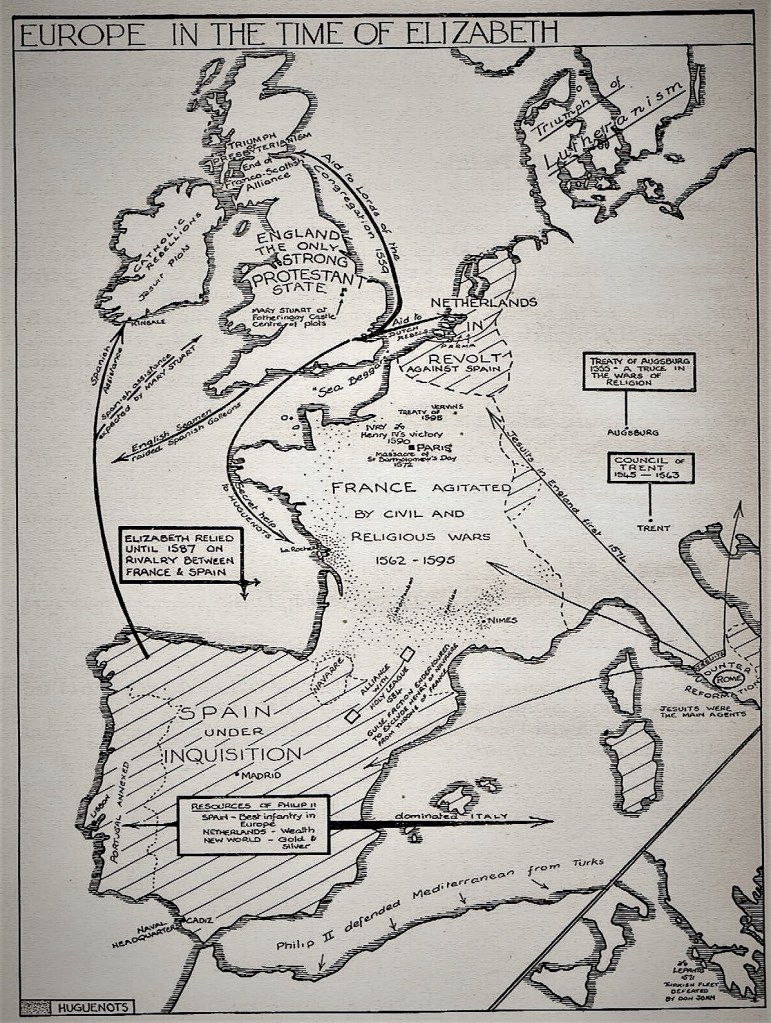


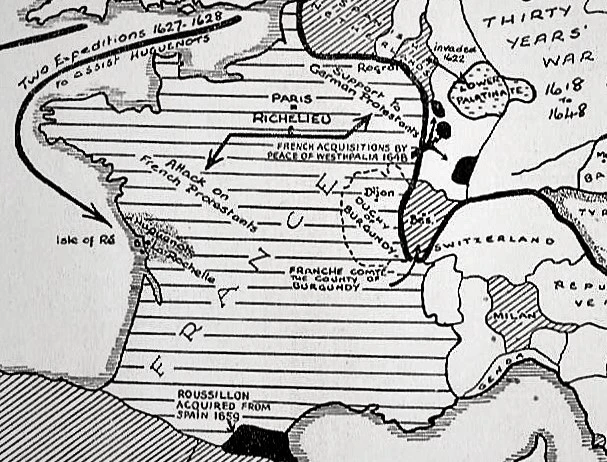


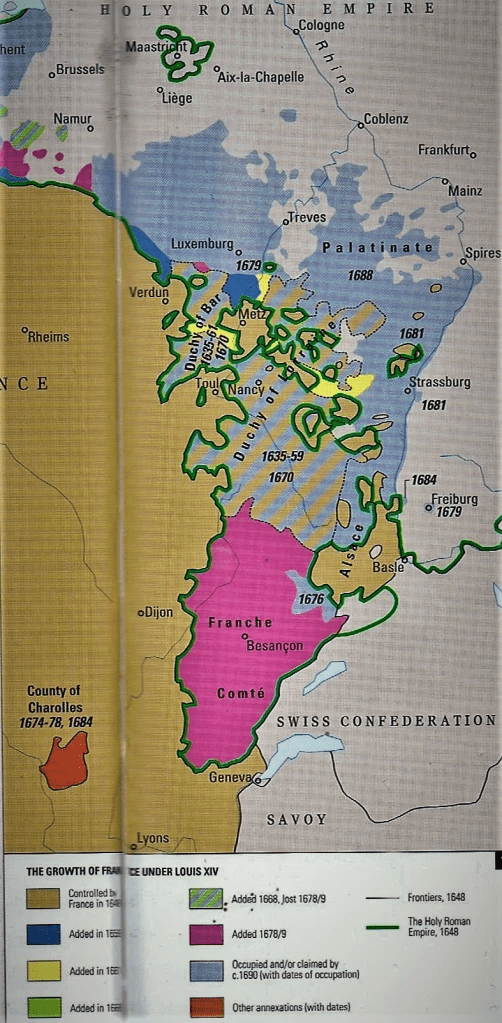

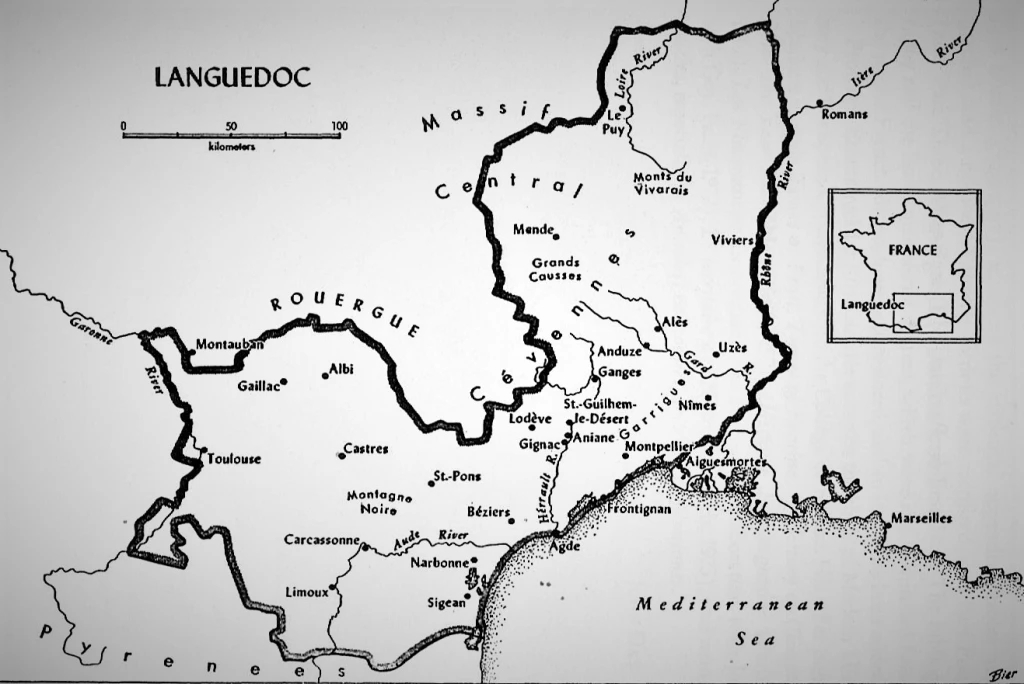






 Andrew James
