Closely associated with the story of the exodus in the Old Testament is that of how the Israelites journeyed to a mountain where Yahweh ratified a covenant between himself and his people. There is still a great deal of uncertainty about this mountain of Israel’s destiny. Its very name is variously given in tradition. Two of the sources (‘E’ and ‘D’) consistently refer to it as Horeb, two (‘J’ and ‘P’) call it Sinai. Its location is likewise in dispute. Tradition places it near the southern tip of the Sinai peninsula at the Jebel Musa (‘Mountain of Moses’). Many scholars hold to a much more northerly near Kadesh (Ex. 15: 12), while others place it further east beyond the Gulf of Aqaba. This latter location is based mainly on the supposition that the language describing God’s coming to his people on the mountain implies volcanic activity. Exodus 19: 16-18 speaks of thunder, lightning, thick cloud, trumpet blast, and smoke like that from a kiln. The language might equally refer to a violent mountain storm. However, it is doubtful whether we ought to press into service, literally, words and images traditionally associated with the divine appearances (cf. the covenant with Abraham, Gen. 15). The tradition as to what actually happened at the mountain is exceedingly complex. There are three different appearances (Ex. 19-20; 24: 10-18; 34), and each is associated with laws and regulations governing worship and social relationships within the community. Many of these regulations are obviously of later date.
Showing the supposed location of Mount Sinai/ Horeb.
Within the Hebrew Bible, considered as Torah, there are many individual laws and collections of laws in the more everyday sense of the term: directives on what is to be done in particular circumstances that come to court for adjudication and also a number of general commandments or prohibitions given in the name of God. A major example of the latter is the Ten Commandments or the Decalogue. The laws occur in the Pentateuch, the first five books of the OT, which is why this is sometimes referred to as the Torah within the narrative framework of the revelation to Moses during the journey of the people of Israel towards the promised land. According to Exodus 19-20, this occurred at Mount Sinai, vaguely located in the southern wilderness, where Moses passed the laws on directly to the people. According to Deuteronomy, Moses received the laws at Horeb but did not communicate them to the people until they were in the plains of Moab across the Jordan, about to the Land of Canaan. In both Exodus and Deuteronomy, the Ten Commandments come first (Ex. 20 & Deut. 5), and so the more detailed laws that follow are presented as a spelling-out of the specific implications of these more general rules. But originally, the detailed laws existed independently of the Ten Commandments, as codes of law in their own right.
There are three main collections of laws in the Hebrew Bible. The first is often referred to as the Book of the Covenant or the Covenant Code and is found in Exodus 21-23. The general consensus is that this is the oldest of the biblical law codes. It presupposes a settled society, but one in which there is apparently no king, and for this reason, it is often thought to originate from pre-monarchic times. If the people of Israel did wander in the desert, it is not reflected here: those addressed have houses and domestic animals and are living in towns with local shrines. The popular belief, mirroring what the Old Testament tells us, that biblical legislation goes back to Moses and the wilderness is hard to accept once the details of this law code are pondered. The following quotations reveal a settled, agrarian mode of life, with farmers living in houses:
When you buy a male Hebrew slave, he shall serve for six years, but in the seventh he shall go out a free person, without debt… If he comes in single, he shall go out single; if he comes in married, then his wife shall go out with him. If his master gives him a wife and she bears him sons or daughters, the wife and her children shall be her master’s and he shall go out alone. … When a man sells his daughter as a slave, she shall not go out as the male slaves do.
But if the slave declares, “I love my master, my wife and my children; I will not go out a free person”, then his master shall bring him before God. He shall be brought ‘to the door or to the doorpost’; and his master shall pierce his ear with an awl;and he shall serve him for life.
(Exodus 21: 2–7)
If someone leaves a pit open, or digs a pit and does not cover it, and an ox or a donkey falls into it, the owner of the pit shall make restitution, giving money to the owner, but keeping the dead animal.
(Exodus 21: 33-34)
When someone causes a field or vineyard to be grazed over, or lets livestock loose to graze in someone elses field, restitution shall be made from the best in the owner’s field or vineyard.
(Exodus 22: 5)
You shall not delay to make offerings ‘from the fullness of your harvest and from the outflow of your presses.
(Exodus 22: 29)
The second collection is found in the book of Deuteronomy, in chapters 12-26. It covers more topics than the laws in Exodus, but it looks like an updated version of the laws in the Book of Covenant when it deals with the same topics. The clearest case of this can again be found in the law about Hebrew slaves:
If a member of your community, whether a Hebrew man or a Hebrew woman, is sold to you and works for you for six years, in the seventh year you shall set that person free. And when you send a male slave out from you a free person, you shall not send him out empty-handed. Provide liberally out of your flock, your threshing-floor, and your wine press, thus giving to him some of the bounty with which the LORD your God has blessed you.
(Deuteronomy 15: 12-14)
The theory that Deuteronomy was the law book promulgated in the reign of Josiah in the seventh century BCE (2 Kings 22: 8-13) fits well with this evidence that the older laws were updated in line with later principles.
The third legal corpus is Leviticus 19-26, generally known as the Holiness Code, because it begins (19: 2) with the injunction to be holy, as God is. This collection has some of the hallmarks of the ‘P’ source about it, above all, a concern with matters to do with ritual purity, and accordingly is usually dated to the exilic or post-exilic period like the rest of P; though there is little about it to indicate any specific date, and it could be older than Deuteronomy 12-26. Consistent with its affinities to P, it is much more concerned than the other two codes with public worship and sacrifice, all carefully set in the time when Israel was in the desert and worshipping in a sacred tent (the tabernacle), though commentators mostly agree that the tent actually stands for the Temple in Jerusalem. The Pentateuch also contains many more chapters of regulations and legislation regarding the details of worship, dietary laws and other issues of purity: for example, Exodus 24-30, Leviticus 1-18 (shown in the inset above) and Numbers 5-9.
These are the sections of the Bible many modern readers (especially Christians) find least interesting, though they have their own fascination, for example, for the social anthropologist and also for anyone wishing to understand Judaism properly, since many of them lie at the root of the system of purity laws that still govern the life of observant Jews and give that life its distinctive style. Most of them probably came into being in their present form after the exile, but they may have much older roots in Israelite society. The three major law codes have particularly close links to other laws in the ancient Near East. A number of these, some dating back to the far reaches of the second millennium BCE, have been discovered in Mesopotamia, such as the Code of Hammurabi (eighteenth century BCE), the Laws of Lipit-Ishtar (first half of the second millennium BCE) and the Middle Assyrian Laws (fifteenth century BCE). We have none from Egypt or from the Levant. Some contain provisions are so close to the Hebrew Law that there must have been some connection. It is probably a matter of a common legal culture that persisted for centuries unless Israelite scribes read Akkadian and borrowed directly, for the Code of Hammurabi lived on in many copies over the centuries after its creation. The parallel that is most striking is the ‘law of the goring ox’:
If an ox, when it was walking along the street, gored a nobleman to death, that case is not subject to claim. If a nobleman’s ox was a gorer and his city council had made it known to him that is was a gorer, but he did not pad its horns or tie up his ox, and that ox gored to death a member of the aristocracy, he shall give one half mina of silver.
(Code of Hammurabi: 250-51)
When an ox gores a man or a woman to death, the ox shall be stoned, and its flesh shall not be eaten; but the owner of the ox shall not be lable. If the ox has been accustomed to gore in the past, and its owner has been warned but has not restrained it, and it kills a man or a woman, the ox shall be stoned, and its owner also shall be put to death… If the ox gores a male or female slave, the owner shall pay to the slave-owner thirty shekels of silver, and the ox shall be stoned.
(Exodus 21: 28-9, 32)
It could be argued that the similarity of the Hammurabi Code to the laws of Exodus is due to the two having been written close together in time, though few scholars would date the Law of Moses as far back as the early second millennium. But Hammarabi’s code consists of the laws of a city culture – one sufficiently advanced to have a municipal council – which bears no resemblance to the situation we would have to postulate for Moses and the wandering Israelites. For Israel to have been influenced by this ‘urban’ code, it must also have been a largely urbanised society, living as a settled population in towns and cities, with a scribal culture at least comparable to that of ancient Mesopotamia in the time of Hammurabi. The Book of the Covenant is manifestly not the document of a group of nomads living in tents, and no such group, even if literate, would have borrowed from another society’s laws concerned how to deal with escaping oxen. Therefore, although the Bible associates such laws with Moses, the connection is implausible.
What, then, is the authentic historical kernel of Moses as the law-giver from the mountain in all this? First, we can assert with confidence that at this mountain, a group of Hebrew refugee slaves from Egypt became conscious of their destiny as the people of God through a covenant ceremony. The covenant ritual is described in Ex. 24: 4-8. It involves sacrifice and sprinkling half the blood upon the altar, as a symbol of God’s presence, and half upon the people. God and people are now bound together in one common life. In one respect, this covenant ceremony echoes the covenant traditions in the patriarchal narratives. There is a heavy emphasis on God’s initiative, for it is He who comes to the people in the awesome imagery of the mountain scene. When Moses sprinkles the blood upon the people, he declares:
Behold the blood of the covenant which Yahweh has made with you.
Exodus 24: 8.
The Golden Calf Angers God (Exodus 32):
Exodus 32
Exodus 34 contains what has been called a ‘Ritual Decalogue’ prescribing the religious acts to be observed by the community throughout the year. Its emphasis in terms of its initiative is one-sided. No ceremony of covenant ratification is described, but this is a covenant which Yahweh makes (cf. Exodus 34: 10, 27). In another respect, however, this covenant is different from those in the patriarchal narrative. It was made by God no longer with one man such as Abraham but with a whole community.
The covenant was not between God and Moses, who simply acted as the priestly moderator in a covenant that binds God and people. Henceforth Yahweh was the God of Israel, and Israel was the people of Yahweh. That meant that Israel was no longer merely a tribal or ethnic group but a religious community, committed to a certain type of loyalty to a God who had chosen them to be his people. Two points need to be stressed about this covenant bond:
(i) It is in no sense a natural or inevitable relationship based on any ties of kinship between God and people. Rather it is a relationship of grace. It was inaugurated at a particular time and place in history as the outworking of God’s revealed compassion for his oppressed people. Its continuance, therefore, depended solely on the consistency of character of this God who had chosen Israel, upon what the Old Testament repeatedly refers to as the hesed, steadfast love, and the faithfulness of God (cf. Ex. 34: 6f.)
(ii) Although there is a historical ‘once and for all’ aspect to this covenant, its significance was not tied to any one point in Israel’s early history. Since it called the people to commit, it was a covenant that, from the people’s side, had to be accepted anew by each succeeding generation. Every generation was present at Mount Sinai. The Book of Deuteronomy spoke for every generation of the faithful in Israel when it declared:
Yahweh our God made a covenant with us at Horeb. Not with our fathers did Yahweh make this covenant, but with all of us here who are alive this day.
Deuteronomy 5: 2f.
The various laws and regulations associated with the divine appearances of the Exodus traditions are attempts to spell out for Israel the implications of this covenant relationship. The only element in them with any claim to be ‘Mosaic’ is the ‘Decalogue’, the Ten Words.
The Decalogue (Ten Commandments):
What then of the Ten Commandments? They come down to us in two versions, Ex. 20: 2-17 (‘E’) and Deut. 5: 6-10, both of them probably later theological variants of an original shorter form. Here they are in the version in the version in Exodus 20: 2-17:
I am the LORD your God, who brought you out of the land of Egypt, out of the house of slavery; you shall have no other gods before me.
You shall not make for yourself an idol, whether in the form of anything that is heaven above, or that is on the earth beneath, or that is in the water under the earth. You shall not bow down to them or worship them; for I the LORD your God am a jealous God, punishing children for the iniquity of parents, to the third and fourth generation of those who reject me, but showing steadfast love to the thousandth generation of those who love me and keep my commandments.
You shall not make wrongful use the name of the LORD your God, for the LORD will not acquit anyone who misuses his name.
Remember the sabbath day, and keep it holy. For six days you shall labour and do all your work. But the seventh day is a sabbath to the LORD made heaven and earth, the sea, and all that is in them, but rested the seventh day; therefore the LORD blessed the sabbath day and consecrated it.
Honour your father and your mother, so that your days may be long in the land that your God is giving you.
You shall not murder.
You shall not commit adultery.
You shall not steal.
You shall not bear false witness against your neighbour.
You shall not covet your neghbour’s house; you shall not covet neighbour’s wife, or male or female slave, or ox, or donkey, or anything that belongs to your neighbour.
(Exodus 20: 2-17)
Most people would recognise these as the bedrock of Israel’s laws and would attribute them to Moses, even if they do not accept the story of their delivery by Yahweh on Mount Sinai/ Horeb as historical. But here again, we have to ask whether they presuppose certain situations and settlements. The two listings, in Exodus 20 and Deuteronomy 5, differ little in content. They include moral principles common to almost every human society (prohibitions of theft, adultery and murder), which could come from any period in the history of Israel. But they also contain legislation implying, again, a settled agrarian community. The person who is addressed by the Sabbath law has slaves and domesticated animals to help him with his farm; his neighbour has a house that someone could covet. He is clearly not nomadic in lifestyle, nor does he live in the desert but on fertile land.
The only theory that will preserve a Mosaic origin for such laws is the Bible’s implication that Moses gave these laws as a matter of prophetic foresight: he knew that, once the tribes got into the Land, they would need them. But on any normal evaluation of the origins of legislation like this, we would judge that it came from a settled culture, one that prevailed in the days of the Hebrew kings, or just before it, as described in the book of Judges. The theological expansion is evident in the different reasons alleged for the observance of the sabbath; the Exodus version rooting it in the creation poem of Genesis 1, Deuteronomy making it a sacrament of the deliverance from Egyptian bondage. Many scholars regard the Decalogue as a distillation of the teaching of the great prophets of Israel and no earlier in date than the exile of the sixth century BCE. There are, however, no compelling reasons against it being, in essence, of Mosaic origin. In context, the Decalogue is distinctive because it consists of words addressed by God to the people, in contrast to the surrounding ordinances, regulations and statutes. Such ordinances are, in the main, in the form of ‘case law’ of a type common to the great law codes of the ancient Near East – the ordinance concerning Hebrew slaves in Ex. 21: 1-11 is a good example of this.
The Decalogue throughout is in the form of a direct address from God to the people. This has been compared with Hittite treaty documents of the fourteenth and thirteenth centuries BCE. Such treaty documents begin with a prologue in which the Great King identifies himself and lists his beneficent acts towards his vassal people. The obligations upon loyal vassals are then listed. They include no dealings with the king’s enemies and the fulfilment of all duties incumbent upon the king’s subjects. The form of the Decalogue is remarkably similar to these documents. The prologue identifies God. It declares his gracious deeds on behalf of the people:
I am Yahweh your God… who brought you out of the land of Egypt, out of the house of bondage.
(Exodus 20: 2)
Obligations are then laid upon the people, including the demand for exclusive loyalty to Yahweh and the following of a code of conduct befitting Yahweh’s people. Later Assyrian treaty documents have provided further close parallels notable to elements in Deuteronomy. We may therefore think of the covenant at Mount Sinai as a treaty covenant, establishing the kingdom of Yahweh over his subject people. The Decalogue is the charter document of this treaty.
The character of Yahweh revealed in the Decalogue is remarkable. Firstly, there is a demand for an exclusive loyalty: no other gods “before me” or “besides me” or “in preference to me”. In a world of many pantheons where gods and goddesses had their places in family groups, Yahweh was to stand alone in his people’s loyalty. Secondly, there was a demand for imageless worship. In a world where gods and goddesses were represented in myriad forms – human, animal, bird, fish – there was to be no representation of Yahweh. Deuteronomy 4: 15ff sees this as a safeguard to the element of mystery in the nature of Yahweh. The people saw no form on the day that Yahweh spoke to them at Horeb out of the midst of the fire. Thirdly, there is a demand to take the claims of Yahweh with utter seriousness; “not to take the Lord’s name in vain” meant far more than the prohibition of equivocal oaths. The best commentary on this command is found in Joshua 24: 19-22, where Joshua warns the people not to make any superficial pledge of allegiance to Yahweh. Fourthly, there is the command to keep the sabbath. The origin and background of the sabbath are obscure. The essential characteristic of the sabbath in the Old Testament was that of a day belonging to Yahweh, a tithe on time, proclaiming Yahweh’s lordship over the entirety of time.
“Learn them and be sure to obey them!” (Deuteronomy 5: 1). Deuteronomy tells us that The Ten Words were inscribed on stone tablets and placed in the Ark of the Covenant on the Journey to Canaan.
The last six demands on Yahweh’s people are concerned with regulating human relationships within the covenant community. These six words of command focus attention on the character of the individual worshipper in relation to the community in which s/he lives. They deal with what the prophets were later to summarise and interpret as ‘justice’ and ‘righteousness’. If we draw an organic link between religion and morality, both social and personal, it is only because we stand within a Judaeo-Christian heritage which stems from the Decalogue. It was not always so in the world of the ancient Near East, where religion often centred on the forces of nature rather than on the demand for righteousness. According to Deut. 10: 1-5 these Ten Words inscribed on stone tablets were placed in the Ark of the Covenant and carried with the people on their pilgrimage from the mountain to Canaan, the promised land. Moses’ faith was in a God who shapes the forces of history and nature, brooks no rival, has no female consort, and demands the exclusive loyalty of his chosen people. His monotheism was not a theological or philosophical doctrine but a practical, ethical code of the followers of the One God.
How then were the Commandments written, and when?
By the end of the nineteenth century, it was usual for Old Testament scholars to think of the Ten Commandments as a distillation of the ethical teaching of the great prophets such as Amos, Hosea and Isaiah. There was a conservative backlash against so late a dating in the twentieth century, allied with the general sense that biblical archaeology had undermined scholarly scepticism about early Israel. But the renewed optimism about the reconstruction of early Israel proved short-lived, and the majority view would now be that we know little if anything about Moses as a historical figure, any more than we know about Abraham and his descendants through to Joseph. With this goes a willingness again to contemplate the possibility that the Decalogue is a comparatively late arrival, probably later than the individual laws in the Covenant and Deuteronomic Codes that were arranged to look as though they are a detailed spelling-out of its implications. The Ten Commandments now appear in both contexts as a prologue to the detailed laws, but they were probably, as a prologue, probably compiled later than those laws.
Therefore, the Ten Commandments may well have passed through a series of stages in their composition. Some have tried to reconstruct an original core of just ten pithy rules, but this has led to no agreement and has been largely abandoned in favour of seeing the texts as an amalgam of elements from different periods. The murder-adultery-theft section reflects a number of old texts such as Hosea 4: 2 and Jeremiah 7: 9, the opening sections of which describes Yahweh as the God who brought Israel out of Egypt, looking more like a reflection on the stories in the Pentateuch after they had crystallized into their present form. The law about coveting seems an oddity, in that it prohibits a sin of thought rather than, like the others, a sin of action.
The communities that revere the Commandments cannot even agree on how they are to be divided into ten discrete rules: Jews and many Protestants distinguish the precept to have no other gods before Yahweh as the First Commandment and the prohibition of images as the Second, whereas Catholics and Lutherans run these together as two aspects of the same sin and then divide the Tenth Commandment into (a) coveting your neighbour’s house, and (b) coveting anything else that your neighbour’s, so as to make up the requisite tally of ten. In itself, this shows that the text is not completely coherent as a set of ten items, and must have some kind of history of growth, even if we cannot reconstruct it. It is also obvious that some of the Commandments have lengthy explanations and motivations, whereas others are short and crisp, and to any biblical specialist this immediately suggests a long period of transmission in which the text has been embroidered.
Besides the Commandments, in Deuteronomy (28: 20-68), Moses is presented as listing a very large number of specific curses that will be the consequence of disobedience: madness, blindness, theft, of property, boils, enslavement, barrenness and cannibalism. But there are other kinds of incentives too, which are more common than this concern for future consequences. One type is a reference back to Israel’s past, urging that gratitude to God for his past blessings should motivate obedience to what he requires. This is particularly common in Deuteronomy, which repeatedly appeals to the exodus and the giving of the Land as a motivation for obedience:
You shall also love the stranger, for you were strangers in the land of Egypt. You shall fear the LORD your God; him alone you shall worship; to him you shall hold fast, and by his name you shall swear. He is your praise; he is your God, who has done for you these great and awesome things that your own eyes have seen… You shall love the LORD your God, therefore, and his commandments always.
(Deuteronomy 10: 19-21, 11: 1)
The Ten Commandments begin with a more implicit ‘therefore’ of this kind:
I am the LORD your God, who brought you out of the land of Egypt, out of the house of slavery; you shall have no other gods before me.
(Exodus 20: 2)
Perhaps more surprising than appeals either to the future consequences or past benefits is a tendency to argue that the laws are good in themselves and that the reader can readily grasp their point. In Exodus, there is a law regulating the pawning of goods, which refers to the extreme case of someone having nothing left to pawn but his outer cloak and advises:
If you take your neighbours cloak in pawn, you shall restore it before the sun goes down; for it may be your neighbour’s only clothing to use as cover; in what else shall that person sleep? And if your neighbour cries out to me, I will listen, for I am compassionate.
(Exodus 22: 26-27)
Here, there is an implied threat against the potential wrongdoer from God, who will listen to the poor person’s cry and, presumably, avenge him. But there is also an attempt to reason with the wrongdoer: how can it be right to deprive someone of his only covering in bed? This is an appeal to shared human experience and has the effect of making the law not an arbitrary command but a kind of natural moral principle.
The Narrative Framework of the Law:
The other feature to remember is the fact that the laws are set in a narrative framework. We do not possess any ‘raw’ Israelite law, as we have in the law codes of Mesopotamia as entities in their own right. We have only the laws contextualised by the authors of the narrative of Moses and the people he led out of Egypt. We encounter the law as part of a story, the story of God’s association with Israel. Judaism, though it insists that the law is definitely to be obeyed, is more nuanced than conservative forms of Christianity in seeing it as part of a dialogue between God and his people. Torah, as we saw, is not ‘law’ in any simple sense. It has to be adapted to deal with the changing circumstances, though it may not be abrogated. Christian moralists who insist on a ‘back to commandments’ revival are often less subtle than this and ignore the contextualization of the law which the Bible presents. Not only is a narrative framework offered for the laws in the Pentateuch, but the laws are also sometimes themselves build around narratives. This has been brought out by the Israeli lawyer and biblical scholar Assnat Bartor. She cites the many passages in the laws where the lawgiver engages with the reader by narrating a (very short) story about an ethically challenging situation:
When you come upon your enemy’s ox or donkey of one who hates you lying under its burden and you would hold back from setting it free, you must help to set it free.
(Exodus 23: 4-5)
This engagement is present even in criminal cases in which the situations are presented as narratives:
Whoever strikes a person mortally shall be put to death. If he did not lie in wait for him, but it came about by an act of God, then I will appoint for you a place to which the killer may flee. But if someone wilfully attacks and kills another by treachery, you shall take the killer from my altar for execution.
(Exodus 21: 12-14)
Bartor provides the following commentary on this passage:
The law as a whole describes three episodes. Three characters participate in the first: the assailant; the man who dies as a result of the latter’s blows; and an additional, unidentified character whose role is to execute the death sentence. The second episode involves four characters: the man who ‘did not lie in wait’, God, and the lawgiver who is revealed by the phrase ‘I will appoint’; and the addressee, whose presence is indicated in the direct address ‘for you’. … The third episode, too, involves four characters: the slayer, the slain, the lawgiver who reveals himself by mentioning ‘my altar’, and the addressee, who is drawn in as a participant via the command ‘you shalltake the killer…’
(Bartor, 2010: Reading law as Narrative, pp. 28-29)
We are drawn into the situations envisaged rather than being presented with a set of rules. As with motive clauses, in the way many laws are set out, we find the legislators speaking to the community and encouraging them to imagine typical situations. From these, they will form good judgements in analogous cases. Thus, observing and enforcing the laws is not a simple matter of absolutes, but requires what in Christian moral tradition would be called casuistry, that is, the consideration of the requirements of each particular case. A school of ‘law as literature’ has arisen among those who study the Anglophone Common Law tradition, stressing that legal reflection is often more like reading and musing on a narrative rather than enforcing a rule. Biblical laws are more like ‘wisdom’ than ‘statutes’. They were not intended for use by judges and advocates, as a code, but for the people as a whole, as a statement of general legal principles, similar to the law codes of Mesopotamia. Judges probably made their decisions quite freely, though they had to be informed by the law codes which set down what the lawgiver thought of as reasonable ways of proceeding in both civil and criminal cases, rather than absolute rules. Actual cases were probably decided mostly by precedent and more by town elders than by professional judges in ancient Israel.
A scribe at work on a biblical scroll. They played a crucial role in transmitting the laws to the people.
There are certain absolute rules within the law codes, as in the Ten Commandments, though even then there are motive clauses, appealing to the reader’s heart and mind, not merely demanding obedience. But much of the law is casuistic in form, proposing how to deal with various situations as they arise, and these are probably not to be construed as rulings but more as invitations to look for analogies and parallels in the case before the court, to general principles and precedents. Justice in ancient Israel seems to have been dispensed by the elders of local communities rather than in centralised courts, and the elders would pay attention to the rudimentary law codes, but not necessarily be bound by the strict letter. So law and wisdom seem to be closer together than an initial reading of Exodus and the Pentateuch might suggest, forming a moral dialogue that the reader can enter into rather than closing off the debate from the start.
Certainly, there are some fundamental commandments, but for the most part, the literature is pragmatic and based on a consideration of individual cases. Wisdom and law in the Hebrew Bible thus come nearest to providing the guidance for how to live for which many people turn to the Bible. Yet neither supplies a timeless code; both are rooted firmly in the institutional life of ancient Israel. But while both exemplify moral principles that can be seen in modern discussions of ethics, any direct application of biblical teachings is difficult and a more oblique relationship is required between the Old Testament and modern Judaism and Christianity.
The Settlement in Canaan and the Legacy of Mosaic Monotheism:
The subsequent history of Israel’s religion from the time of the settlement in Canaan is a history of conflict between Mosaic monotheism, based on the exclusive claims of Yahweh and the many who demanded a Comprehensive Religious Insurance policy covering the gods of Canaan as well as Yahweh. It was a conflict between those who thought of religion in basic cultic terms and those who never lost sight of the essential ethical element of the Hebrew faith; a conflict between the many who viewed Yahweh as the private patron deity of Israel and the few who saw judgement upon Israel as springing essentially out of the demanding nature of Israel’s One God. Israel’s history was one of conflict, not merely compromise; a distinctive Yahwistic faith survived instead of being assimilated into the religious culture of Canaan. It outlived the political disintegration of the Hebrew states. Many centuries later, the prophet Isaiah (or the poetic author of Isaiah 40-55) pushed the Mosaic religion to its logical conclusion when he declared unequivocally:
Turn to me and be saved, all the ends of the earth, for I am God and there is no other.
Isa. 45: 22; cf 44: 6-8.
That was the legacy of the revelation that came to Moses, and the decisive shape of that revelation gave rise to Israel’s unique faith.
Sources:
John Barton (2019), A History of The Bible; The Book and its Faiths. London: Allen Lane (Penguin, Random House).
Martin Manser (1999), Bible Stories. Bath: Parragon.
Robert C Walton (ed., 1982), A Source Book of the Bible for Teachers. London: SCM Press.
Cardiff had a difficult start to the season, losing the first six matches of the campaign. They eventually saw results improve and finished in fourth place. The club entered the FA Cup in the first round and progressed to the fourth, before being defeated by Tottenham Hotspur after a replay. Cardiff went on to win the Welsh Cup for the third time in the club’s history after defeating Ton Pentre 2–0 in the final, having scored seventeen goals and conceded only one during their cup run.
During the season, 31 players made at least one appearance for the club. Billy Grimshaw played in more games than any other player, featuring in 47 matches in all competitions. Len Davies finished the season as the side’s highest goalscorer with 30 in all competitions, a new club record. His tally of seventeen in the First Division was three short of Jimmy Gill but fourteen in cup matches, including eight in four appearances in the Welsh Cup, saw him outscore his teammate. The highest attendance recorded at Ninian Park was 51,000 for the FA Cup fourth-round tie against Tottenham. The league fixture against Tottenham recorded an attendance of 50,000 although an extra 6,000–10,000 were estimated to have broken into the ground after turnstiles were closed. The average league attendance during the season was 27,500.
Background and pre-season:
A postcard published by the Western Mail of the Cardiff team that reached the FA Cup semi-final the previous season
During the 1920–21 season, Cardiff City FC was elected into the Second Division of The Football League having spent the previous decade playing in the Southern Football League. In the side’s first season in the Second Division, they finished as runners-up behind Birmingham on goal average, a tiebreak formula whereby a team’s goals scored is divided by the number of goals conceded after the two teams accumulated the same number of points.[2] As a result, Cardiff won promotion to the First Division, becoming the first Welsh side to play in the top tier of English football.[3] They also reached the semi-final of the FA Cup.[4]
ManagerFred Stewart remained in charge of the first team for the tenth year. He made several additions to the squad, signing full-backTommy Brown from New Brighton and forwardWillie Page, the brother of Cardiff defenderJack Page,[5] from Port Vale.[6] Cardiff City was investigated by The Football Association (FA) and the Football Association of Wales (FAW) over an illegal approach for Wolverhampton Wanderers defender Dickie Baugh Jr. The club was found guilty with Baugh having signed an agreement with an agent acting on behalf of Cardiff despite still being contracted to Wolves. Cardiff City FC was fined £50 and Baugh £20. The agent involved was subsequently banned from all football grounds under the jurisdictions of either the FA or FAW.[7] John Pritchard was elected chairman of the club ahead of the new season but left the role in November and was replaced by Walter Empsall.[8]
Cardiff also made significant investments in the club’s ground Ninian Park. A new pitch was laid using sea-washed turf which officials at the club labelled as “now being equal to the best in the country”.[6] The earthen embankments that enclosed the pitch were also built up to improve viewing for spectators.[6] The latter work nearly resulted in disaster when the refuse being tipped by Cardiff Corporation caught alight and spread across the Grangetown side of the ground. The fire was doused, with the aid of hundreds of local supporters who had raced to the ground to offer help, and little damage was sustained.[9] Having won promotion and reached the semi-final of the FA Cup, The Times expected Cardiff to adapt well to the higher tier.[10]
First Division
August–November:
In Cardiff’s first match in the First Division, they met FA Cup holders Tottenham Hotspur at Ninian Park. The game, therefore, became the first top-tier match in English football to be played in Wales and was described in The Times as “the most important event in their (Cardiff’s) history”.[11] The fixture attracted a large crowd, and when 50,000 supporters had paid and been allowed into the ground officials attempted to close the gates. With thousands still queuing to gain entry, supporters broke through the gates and forced their way into the ground. Club officials estimated that between 6,000 and 10,000 people broke into the ground after the gates were initially closed.[12] Cardiff started the season without influential defender Jimmy Blair who was recovering from a bout of pneumonia;[13] Jack Page started the opening match in his place.[14] Tottenham suffered a setback early in the game as Jimmy Seed picked up an injury, but proved too strong for Cardiff and scored the only goal of the game through Jimmy Banks from outside the penalty area.[15] The excessive crowd numbers produced several unsavoury incidents, including fans taking over the scoreboard to use it as a vantage point. This experience prompted the club to seek advice from local police on crowd control at future matches.[6]
Defeat to Tottenham was the start of a difficult beginning in the First Division for the club. Defender Bert Smith became the first player to score for Cardiff in the division in the side’s following match with a consolation goal during a 2–1 defeat to Aston Villa on 29 August. Cardiff met Tottenham in the reverse fixture five days later at their opposition’s home ground but, having proven stubborn opposition for the more experienced side in the first meeting, they were soundly beaten after conceding three goals in the opening 30 minutes of the match. The game finished 4–1 to Tottenham with The Times describing victory for the London-based side as “a very easy matter”.[16] A 4–0 defeat in the reverse fixture against Aston Villa followed, prompting Stewart to make changes to his side ahead of back-to-back fixtures against Oldham Athletic. Blair returned to action having missed the first four matches and goalkeeperHerbert Kneeshaw was dropped in favour of Ben Davies. Billy Hardy, who had been ever-present the previous season, was also left out due to injury along with forward George West.[17] The changes yielded little reward as Cardiff lost both fixtures against Oldham, 1–0 at home, 2–1 away, starting the campaign with six consecutive defeats which left them bottom of the table.[14][18]
Cardiff’s next fixture was against unbeaten league leaders Middlesbrough in a match that was described in The Times as “the most noteworthy example of disparity of strength between contesting clubs”.[19] In a surprising turn of form given the club’s league form, Cardiff recorded their first victory in the First Division after causing an upset to win 3–1 and secure two points.[nb 2]Jimmy Gill, who had been the club’s top scorer the previous season, scored his first goals of the campaign with a brace and Harry Nash added a third. The victory prompted an upturn in fortune for the team as they lost only one of their five matches in October, a 2–1 defeat to Bolton Wanderers. Gill enjoyed a fine run of form during this time, scoring six goals in the five matches including braces during victories over West Bromwich Albion and Bolton in the reverse fixture.[14] With the club struggling for goals, October also saw the arrival of Joe Clennell from Everton for £1,500 (approximately £75,000 in 2020). In an attempt to recoup some of the transfer fees, two forwards who had played an integral role in promotion in the 1920–21 season, Arthur Cashmore and Fred Pagnam,[20] were sold having failed to score in a combined 17 appearances.[14] The club also signed Jimmy Nelson from Irish side Crusaders for £500 (approximately £25,000 in 2020).[21] On 31 October, club captain Fred Keenor was granted a benefit match against Bristol City.[22]
November–May:
Trainer George Latham was forced into action in January 1922 due to injury, becoming the club’s oldest ever player.
Back-to-back fixtures against Manchester City at the start of November yielded only a point for Cardiff, who lost 2–0 at home and drew 1–1 away. Two victories against Everton later in the month proved a turning point in the season for Cardiff. The departure of Pagnam allowed Len Davies to make his first appearances of the season, scoring all three of Cardiff’s goals in 2–1 and 1–0 victories. The second fixture also saw Hardy and Smith return after injury layoffs.[14] A much-improved run of form ensued with Cardiff losing only one of their following thirteen league matches led by the goals of Davies, Gill and Clennell.[14] Davies also scored the first hat-trick in The Football League by a Cardiff player during a 6–3 victory over Bradford City on 21 January 1922.[23] As well as Bradford, the team’s run included wins over Birmingham (twice), Arsenal, Preston North End, Blackburn Rovers and Chelsea.[14]The Times described the team during this time as appearing “almost invincible” as their improved form lifted them to sixth in the table.[24] The team’s victory over Blackburn during this spell saw an unusual Football League debutant when club trainer George Latham was forced into action. Hours before the game was due to start, Gill and Evans both went down with sickness and only one player, Nash, had travelled in reserve. Latham, who had played professionally previously, stepped in and became the oldest player in the club’s history at 41 years old.[25][26]
On 25 February, Cardiff suffered their first defeat since early December, losing 1–0 to Chelsea at Stamford Bridge as the opposition defence proved impregnable.[24] The team recovered to beat Sheffield United 2–0 in their following match with goals from Clennell and Ken MacDonald but suffered a further blow after losing 1–0 to struggling Bradford who were 21st in the table.[27] Two matches against reigning First Division champions Burnley produced positive results as the teams drew 1–1 at Turf Moor before Cardiff won the reverse fixture 4–2 at Ninian Park. Len Davies scored a brace with Gill and Jack Evans scoring one each. Cardiff repeated the pattern in their following two matches against Newcastle United, drawing away before Len Davies scored the only goal in a home victory.[14] Despite taking the lead early in the match, Cardiff suffered a 5–1 defeat to league leaders Liverpool on 15 April.[28] Two days later, they lost heavily again in a 3–1 defeat to Blackburn. They met Liverpool in the reverse fixture on 22 April, their opponents already having secured the First Division title.[29] Cardiff went on to win the match 2–0. They finished the season with consecutive draws against Sheffield United and Manchester United before beating the already-relegated Manchester United again in the final game. The side finished its inaugural season in the First Division in fourth place.[14]
Match results:
Key
In result column, Cardiff City’s score shown firstH = Home match A = Away match
Cardiff entered the competition in the first round, where they were drawn against fellow First Division side Manchester United. Cardiff won the match 4–1, following a brace from Len Davies and one each from Nash and Clennell,[14] and was praised by The Times for a “very brilliant performance”.[32] In the second round, the team were drawn away against Third Division side Southampton, whom they had defeated in the third round the previous year. The lower-ranked side held Cardiff to a 1–1 draw at The Dell but goals from Gill and Clennell in the replay sent Cardiff through in a 2–0 victory.[14]
The side met Second Division leaders Nottingham Forest in the third round. Len Davies scored his second brace in the competition to lead the side to a 4–1 victory in front of over 50,000 spectators at Ninian Park.[33] Their win led to a fourth-round meeting with cup holders Tottenham Hotspur. The match was hotly anticipated, being described by The Times as “the greatest of the day”.[34] Over 50,000 fans again attended Ninian Park for the tie and despite Cardiff having the better of the first half, Tottenham took the lead through Jimmy Seed after the forward dribbled through the defence to strike the ball past Ben Davies with a powerful shot. Cardiff pressed for the remainder of the match with Billy Grimshaw, Gill and Clennell all going close to scoring. As the match entered the final minute, Len Davies was able to turn the ball into the net to salvage a replay for Cardiff.[35]
The replay was held at Tottenham’s ground White Hart Lane and, such as the demand for tickets, match officials agreed for spectators to be allowed to sit or kneel to the very edge of the pitch. Tottenham enjoyed the brighter start to the match but Cardiff took the lead when Jack Evans beat his man on the wing and crossed for Gill to score. In the second half, Tottenham continued to attack and was rewarded with an equaliser when Jimmy Dimmockheaded in from a corner kick. Tottenham went on to score a second when Ben Davies failed to clear a cross and the ball fell to Charlie Wilson who scored the winning goal.[36] Wilson’s effort was controversial as Cardiff players complained that goalkeeper Davies had been deliberately impeded as he attempted to deal with the cross but the referee ignored their complaints and the goal stood.[37] Tottenham advanced to the semifinal where they lost 2–1 to Preston North End.[38]
Match results:
Key
In the result column, Cardiff City’s score shows first H = Home match A = Away match
Cardiff entered the Welsh Cup in the third round, being drawn against Football League Third Division South side Newport County. Cardiff’s side ultimately proved too strong for Newport as the match ended 7–0 with Len Davies scoring four, Grimshaw two and Keenor one. The side continued their free-scoring form in the following round where they defeated Merthyr Town, also of the Third Division South, with Len Davies scoring a hat-trick during a 5–0 win. In the semifinal, they were drawn against Welsh league side Pontypridd who had eliminated them from the competition the previous year. Keenor, Gill and Jack Evans each scored once to secure a 3–0 victory and send Cardiff through to the final. Ton Pentre were their opponents as Cardiff secured their third Welsh Cup title after winning 2–0 at Taff Vale Park.[14][39] Gill and Len Davies each scored once; Davies’ goal was his eighth in the competition.[14]
Match results:
Key
In result column, Cardiff City’s score shown firstH = Home match A = Away match
Len Davies was Cardiff’s top goalscorer during the campaign, setting a new club record with 30 goals in all competitions.
Billy Grimshaw made the most appearances of any Cardiff player during the season, featuring in 47 matches in all competitions. He also made the most league appearances with 38. Jack Evans was the next highest with 44 appearances and a further five players made 40 or more appearances. Goalkeeper Tom Farquharson made a single appearance in the final match of the season.[14] He would go on to set a club record with 445 appearances in The Football League that stood until 1985 when it was surpassed by Phil Dwyer.[40] Farquharson was one of six players who featured in just one match for the club during the campaign. The others included Albert Barnett, who was recovering from a broken leg suffered the previous season,[41] and George Latham, the club’s trainer who played one match during an injury crisis. At the age of 41, Latham remains the oldest player ever to feature in a competitive fixture for Cardiff.[25] Two of the players, Ernie Anderson and James Melville, never played another match for Cardiff before moving on.[14]
Len Davies was the club’s top goalscorer with 30 goals across all competitions. Although he scored three fewer than Jimmy Gill in league competition, his prolific scoring in cup competitions saw him outscore his teammate.[14] His 30 goals was also a new club single-season record, surpassing Gill’s tally of 20 the previous year and standing until the 1926–27 season when Hughie Ferguson scored 32 times. Gill’s 21 league goals were also a new club record, surpassing his own tally from the previous year. The record stood for two seasons until Len Davies scored 23 during the 1923–24 campaign.[42] Davies and Gill were two of the three players to score ten or more goals for Cardiff during the season, the third being Joe Clennell. Eleven players scored at least one goal during the course of the season and one opposition player scored an own goal.[14]
Brown and Willie Page, the two signings made at the start of the 1921–22 campaign, would both depart after a single season with only Brown having played for the first team. Such was Stewart’s confidence in his side that the club made no major signings before the start of the following season and only a poor run of form toward the end of 1922 prompted the arrival of a few players.[43] As a result of the team’s performance, they were regarded as an established side for the 1922–23 season with The Times describing the side as possessing “undeniable all-round ability” in its preseason report.[44]
The club recorded an annual income of £63,000 (approximately £3.2 million in 2020) for the campaign, £12,000 (approximately £600,000 in 2020) of which was profit. The difficulties in crowd control during the opening match against Tottenham had led the club to possess what was described as “the heaviest police bill in the country”. The construction of a concrete wall around the ground to counteract any further instances was approved in the hope of lowering the bill.[45]
Notes:
^ Cardiff City FC was founded in 1899 but missed the entry deadline of the Cardiff & District League in their first year.[1]
^ Jump up to: a b c d e f g h i j k l m n o p q r s t u Shepherd 2002, p. 23
^ “The League Season Opened”. The Times. London. 29 August 1921. p. 12. Retrieved 23 March 2019 – via The Times Digital Archive.
^ “League Football”. The Times. London. 5 September 1921. p. 13. Retrieved 23 March 2019 – via The Times Digital Archive.
^ Leighton 2010, p. 64
^ “League Football”. The Times. London. 19 September 1921. p. 15. Retrieved 23 March 2019 – via The Times Digital Archive.
^ “League Matches for Tomorrow”. The Times. London. 23 September 1921. p. 4. Retrieved 23 March 2019 – via The Times Digital Archive.
^ Leighton 2010, p. 66
^ “Cardiff Still Recruiting”. Star Green ‘Un. 15 October 1921. p. 6. Retrieved 4 June 2021 – via British Newspaper Archive.
^ “A Cardiff Benefit”. Athletic News. 31 October 1921. p. 3. Retrieved 4 June 2021 – via British Newspaper Archive.
^ Lloyd 1999, p. 66
^ Jump up to a b “Chelsea V Cardiff City”. The Times. London. 27 February 1922. p. 15. Retrieved 25 March 2019 – via The Times Digital Archive.
^ Jump up to a b Leighton 2010, p. 67
^ “Club Records”. Cardiff City F.C. 28 May 2015. Retrieved 27 March 2019.
^ “League Football”. The Times. London. 17 March 1922. p. 5. Retrieved 25 March 2019 – via The Times Digital Archive.
^ “The Leagues”. The Times. London. 17 April 1922. p. 5. Retrieved 25 March 2019 – via The Times Digital Archive.
^ “League Football”. The Times. London. 22 April 1922. p. 5. Retrieved 25 March 2019 – via The Times Digital Archive.
^ Jump up to:a b c d Grandin, Terry (2010). Cardiff City 100 Years of Professional Football. Sheffield: Vertical Editions. p. 213. ISBN 978-1-904091-45-5.
^ “League Division One end of season table for 1921–22 season”. 11v11.com. AFS Enterprises. Retrieved 30 June 2021.
^ “The Cup Ties”. The Times. London. 9 January 1922. p. 17. Retrieved 25 March 2019 – via The Times Digital Archive.
^ “The F.A. Cup”. The Times. London. 20 February 1922. p. 15. Retrieved 25 March 2019 – via The Times Digital Archive.
^ “The F.A. Cup”. The Times. London. 3 March 1922. p. 5. Retrieved 25 March 2019 – via The Times Digital Archive.
^ “Drawn Game at Cardiff”. The Times. London. 6 March 1922. p. 19. Retrieved 25 March 2019 – via The Times Digital Archive.
^ “The F.A. Cup”. The Times. London. 10 March 1922. p. 5. Retrieved 25 March 2019 – via The Times Digital Archive.
^ Leighton 2010, p. 68
^ Reyes Padilla, Macario (27 January 2001). “England FA Challenge Cup 1921–1922”. The Rec. Sport.Soccer Statistics Foundation. Retrieved 25 March 2019.
^ Schöggl, Hans (10 September 2015). “Wales (Cup) 1921/22”. The Rec. Sport.Soccer Statistics Foundation. Retrieved 11 April 2019.
On the second Sunday of Easter, ‘western’ Christians celebrate Thomas the Apostle and the Gospel story in John of how, as the disciple who missed Jesus’ visit to the ‘Upper Room’ after his resurrection, he overcame his doubts about his master’s physical appearance to the others in the first days of ‘Easter Week’:
The Incredulity of St Thomas by Caravaggio
One of the twelve disciples, Thomas (called the twin), was not with them when Jesus came. So the other disciples told him,
“We have seen the Lord!” Thomas said to them, “Unless I see the scars of the nails in his hands and put my finger on those scars and my hand in his side, I will not believe.”
A week later the disciples were together again indoors, and Thomas was with them. The doors were locked, but Jesus came and stood among them and said, “Peace be with you.” Then he said to Thomas,
“Put your finger here, and look a my hands; then reach out your hand and put it in my side. Stop your doubting, and believe!” Thomas answered him, “My Lord and my God!” Jesus said to him,
“Do you believe because you see me? How happy are those who believe without seeing me!”
John 20: 24-29 (Good News for Modern Man)
Who was Thomas the Apostle?
In the gospels, Thomas is also named as ‘the twin’, Didymus, in Latin to reinforce his Aramaic name, Tau’ma, from the word t’oma, which also means ‘twin’. In the first chapter of the Acts of the Apostles (v 13) his name is coupled with that of Philip, which suggests he might have been, with Andrew, the other unnamed disciple of John the Baptist who followed ‘the lamb of God‘ from a village called ‘Bethany’ (not the home of Lazarus, Mary and Martha) where John had baptised Jesus the previous day, on the eastern bank of the Jordan. In the story in John’s gospel (chapter 1: 35-42), the two spend the day with Jesus until twilight, and are close enough to the town of Bethsaida, on the northern shore of Lake Galilee, for Andrew to fetch his brother Simon (Peter) to meet ‘the Messiah’. The next day Jesus leaves Bethsaida early to walk the twenty miles to join his mother at Nazareth before going on with her for a wedding in Cana two days later. He arrives at the feast with his growing band of disciples, including Philip and, no doubt, Thomas, Andrew and Peter, plus Nathanael (known later as Thaddeus), who is from Cana himself. After their thirsty walk from Nazareth, they find plenty of water, but no wine with which to toast the bride and bridegroom.
Therefore, it’s more than possible that Thomas was one of Jesus’ first pairs or ‘twins’ of disciples. His brother was Philip, whom he introduced to Jesus, just as Andrew had introduced Simon the fisherman the previous night. By the end of that third day, following Jesus’ first miracle, John tells us that all five had put their faith in him, two in their home town of Bethsaida and two in Cana. Despite Nathanael’s rather rude joke about Nazareth, Jesus describes him as ‘a true Israelite’, sitting under a fig tree early on a hot day. Although Israel had ceased to exist since Maccabean rule had been ended by the Roman conquest of 63 BCE, when it had become part of the Province of Syria, Nathanael identifies Jesus not only as ‘the son of God’ but also ‘the King of Israel.’ This would have been heard as a direct challenge to Roman authority in northern Palestine, identifying Jesus with the local freedom-fighters, the nationalistic Zealots who wanted to free the whole country from Roman rule and reunite with Judea, as had happened briefly from 142-63 AD. If Thomas was one of these first disciples, although he himself is silent in the gospels at this stage, he was surrounded by certainty and infectious enthusiasm about who Jesus was among his relatives and friends, and there was little doubting the miraculous signs in which the Galilean himself revealed his glory (v 11).
Some have seen in the Acts of Thomas (written in east Syria in the early 3rd century, or perhaps as early as the first half of the 2nd century) an identification of Saint Thomas with the apostle Judas, brother of James, better known in English as Jude. However, the first verse of the Acts follows the Gospels and the Acts of the Apostles by distinguishing the apostle Thomas and the apostle Judas son of James. The Nag Hammadi copy of the Gospel of Thomas begins:
“These are the secret sayings that the living Jesus spoke and Didymos Judas Thomas recorded.”
Of course, Judas was a popular name in first-century Palestine, so it’s entirely possible that, as a Galilean, he would have been known by his Aramaic name to distinguish him from the other two disciples by the name of Judas. Syrian tradition also states that the apostle’s name was Thomas. Few texts identify Thomas’ other twin, though in the Book of Thomas the Contender, part of the Nag Hammadi library, it is said to be Jesus himself, who himself is recorded as telling Thomas:
“Now, since it has been said that you are my twin and true companion, examine yourself…”
Again, it’s possible that Thomas or ‘Twin’ was the nickname given to the disciple to distinguish him from Judas Iscariot and Judas, son of James, because he bore a physical resemblance to Jesus, and/or, as the quote above shows, kept very close to him.
How can we know The Way?
To have been so close to Jesus, Thomas must at least have been among the very first disciples. Jesus later comments on the questioning of the ‘Way’ by both Thomas and Philip in a way which must have stung the pair of them, since he points out that, despite being with him from the first, neither shows a very deep understanding of who he is in relation to ‘the Father’. In John’s gospel, the fact that this criticism comes immediately after Jesus’ prediction of Simon Peter’s denial during the Last Supper, underlines its significance. Thomas is sceptical, but unlike Peter, he does not make grand gestures or promises he knows he cannot live up to, nor, like Philip, does he ask for further proof. Judas Iscariot has already left to betray his master by this stage, so Thomas’ incomprehension seems an insignificant sin by comparison with the other three. But Jesus expects better of his earliest converts. Where is the certainty that Andrew and Nathanael revealed in Bethsaida, and in the miracles which they testified to, beginning in Cana? (John 14: 5-12).
A Reluctant Martyr?
In John Chapter 11 Thomas is the disciple who suggests to the rest of the disciples that they should all return to Jerusalem with Jesus so that they could all be martyred with him. There are two ways of reading this. We can regard it as a somewhat cynical remark, fitting in with Thomas’ sceptical character, as revealed in connection with the Resurrection appearances, or we can take it at face value, as a declaration of loyalty from one close enough to Jesus to be called his twin. Of course, even then, the line could have been delivered with an air of resigned stoicism, rather than with the enthusiasm of a disciple looking for martyrdom.
Thomas’ name is also linked to Thaddeus’ early mission to Syria, but more importantly to the mission to the Jewish diaspora in India, which he undertook himself in 52 AD. From there he is recorded, in a text attributed to Joseph of Arimathea, to have returned to Jerusalem in time to be the only witness of the Assumption of Mary, which, in a strange resonance of the resurrection stories, was disbelieved by the other apostles until they themselves saw Mary’s tomb.
The Value of Scepticism to Faith:
Perhaps most significantly, however, in the early church, Thomas was not stigmatised as a ‘doubter’ so much as being the apostle who, having seen Jesus’ wounds at close quarters, was able to proclaim the two natures of Christ, that he was both fully human and fully divine. The vivid drama of his very personal testimony would have been difficult to dispute by the Greek Gnostics in the early church who argued that Christ was, throughout his time on earth, an ethereal presence, a vision of the Divine, rather than real flesh and blood. That’s why, although his feast day is celebrated on different days in the Orthodox, Roman Catholic and Anglican calendars, his ‘doubting’ is commemorated on the second Sunday, a week after the first appearances of Jesus to his disciples. By itself, the empty tomb proved nothing, and even the sudden appearances of Mary and the disciples, in the open air and through locked doors, might have given support to the Gnostic view of an ethereal body. It is the graphic detail of Thomas’ account, a man who knew Jesus well enough to have been his twin, that remains the most difficult to disbelieve, reinforced by the way in which Thomas’ scepticism is immediately transformed into his acclamation “My Lord and My God”. Jesus immediately responds with a beatitude, ‘Blessed are they…’ which remains as a promise to his followers down the centuries that follow. Thomas is not excluded from his Lord’s blessing by his original disbelief or scepticism, call it what you will. His Resurrection experience is total – he believes with all his senses and emotions, transcended by the Lord in that by believing he, and we, may have life in his name (John 20: 30-31). The ‘Drama of Thomas’ is well re-told in the following extract from a book used in schools:
From ‘The Drama of Jesus’, by Paul White & Clifford Warne:
‘Heavy cloud made the night even darker. Shadowy figures cautiously climbed the outside stairs to the large room on the roof. When the door opened to admit them the merest glow of light showed and the door was immediately shut. Finally it was barred with a huge wooden beam.
‘On one side of the room two men were arguing. “I tell you Peter, I don’t want to listen.”
‘ “But, Thomas, you must. The Lord is not dead. He’s alive. It’s a fact and you have to realise it.”
‘Aggressively, Thomas burst out, “If Jesus is alive why are we all coming here furtively and hiding behind locked doors? Are we scared that the Jewish leaders are going to arrest us for body-snatching? If He’s alive why doesn’t he show himself to the world” Even in the feeble light of the small lamp they could see his face going red. “Why doesn’t he show himself to the authorities before they break that door down and throw us all into prison? If he’s alive why doesn’t he go and see Caiaphas and the Council? That would prove his claims.”
“So far, he’s only appeared to people who love him,” said John quietly.
“I loved him and he hasn’t appeared to me…” Thomas turned away. There was a break in his voice. John moved across the room towards him. “It wasn’t Jesus’ fault you weren’t here last week when he first came among us.”
‘Thomas broke in, “But..”
“Surely, man, you remember He told us what was going to happen that day on the road from Caesarea Philippi. Not only then but on two occasions He made it clear. He said He would be handed over to the Gentiles and mocked, insulted, flogged and crucified.” John spoke with deliberation, “He said, ‘Three days later I will rise to life.’ “
‘Impulsively, Peter broke in, “John’s right. He said it again and again; we all heard him.”
“Heard him, maybe, growled Thomas, “but did you believe him?”
“Believe him?” Peter put his hands to his head. “I didn’t even know what he was talking about! That’s why I said, ‘God forbid, it must never happen to you, Lord.’ I’ll never forget the look on his face when he said to me, ‘Out of my way, Satan. You stand right in my path, Peter, when you look at things from man’s point of view and not from God’s.’ To me he was the Lord of life. I saw him heal sick people and bring the dead back to life; it was incredible to me that he should die, let alone come back to life as he promised. But he did. And Thomas, you must believe it. He has come back from death.” Peter’s voice shook with emotion.
‘Thomas started to walk away. Peter gripped his friend by the shoulder and swung him round and said tersely, “Don’t turn away from me when I speak to you. Do you think we’re all imagining this? Do you think we’re lying?”
‘Andrew stepped between them. “Simon, let him be. Were you in a hurry to believe when you first heard the news but hadn’t seen the Lord?”
“Anyway,” said Peter gruffly, “when Mary broke the news that his body was gone John and I ran all the way to the tomb. Right, John?”
“Right,” said John, smiling, “but I arrived there quite some distance ahead of you.”
‘Peter was beginning to relax. There was a hint of a smile in his voice, “But you weren’t game enough to go into the tomb till I arrived.”
‘John almost shouted, “Up to that moment I didn’t realise that I was seeing, before my own eyes, what the scriptures foretold. Now Thomas, get this straight. We’re not saying that He’s alive merely because the tomb was empty. We’ve seen him outside the tomb. We’ve heard him and touched him; we’ve seen him eat food here in this room.”
“But not me.” There was a hard note in Thomas’ voice.
‘ Thomas stepped back and lifted his voice so that everyone in the room could hear, “Think what you like. But unless I see the scars the nails made in His hands and unless I put my fingers where those nails were and my hand into his side I will never believe.”
‘Peter groaned, “I give up.”
‘Andrew spoke again, “Simon, be fair. We all found it hard to believe at first.”
‘Peter ran his fingers through his hair. “But it’s not the same with square-chinned, stubborn character here. I’ve told him, John’s told him, Mary’s told him, Cleopas told him – we’ve all told him.”
‘Andrew spoke urgently, “Simon, keep your voice down. You’ll have the whole Sanhedrin here in a moment. Let Thomas alone. Isn’t it hard enough for him when he sees our joy, and his doubts fill us with misery? At least try to see his problem, brother.”
‘Peter gazed at Andrew. He saw a look he had often seen on Jesus’ face. Impulsively he put his arm round Thomas’ shoulder. “If you’d seen him, you’d understand how I feel. Forgive me.”
‘Thomas shrugged himself free of Peter’s arm and muttered, “Forget it.”
‘An embarrassed hush settled on the whole room. A deep silence.
“Peace be unto you.” The voice startled them.
‘They looked up and saw Jesus. In a moment they were all on their feet, their faces glowing. No one spoke. Instinctively they turned towards Thomas who stood there like a statue unable to believe his eyes. He stammered, “Lord, Lord, is it really you?”
Jesus came close to him and held out his hands. His tone was warm and strong, “Thomas, my friend, put your finger here. See my hands. See the nail wounds. And my side; take your hand and put it where the spear entered. Stop doubting and believe!”
Thomas slowly went down on his knees, his hands touching the wounded feet. “My Lord… and my God.”
“Is it because you have seen me that you believe?” Jesus asked him. “How happy are those who believe without seeing.”
‘And as suddenly as He had appeared, he vanished. The disciples stood there amazed. Thomas looked up, overwhelmed. The room was full of excitement and laughter of a sort that comes from profound relief and deep joy.
‘John spoke with infectious enthusiasm, “Jesus is no dead memory. He is our living Lord.” ‘
Prayer:
‘Our Lord and God, forgive the doubting heart in each of us, which questions your resurrection. We are men of our age and want to see and touch before we believe. And yet we thank you for that blessing, reserved for those who do not see and yet believe. Grant us that faith which looks to Jesus, risen from the dead, our Saviour and our living Lord. Amen.’
Ian D. Bunting
Sources:
Paul White & Clifford Warne (1980): The Drama of Jesus. Sydney: Hodder & Stoughton.
England hasn’t really got a national anthem….The Irish, the Scots and the Welsh all have anthems, the Americans have the cheek to sing ‘My Country ’tis of thee’ to the tune of ‘God Save the Queen‘, but what do the English have? ‘There’ll always be an England’…well that’s not saying much….there’ll always be the North Pole if some dangerous clown doesn’t go and melt it!…no, I ask you, what have we got to stir the sinews of our local patriotism with? ‘Jerusalem’!!
Michael Flanders and Donald Swann’s introduction to their ‘Song of Patriotic Prejudice’ aka ‘The English, the English, the English are Best!’
The last verse of their song ends with the following ‘tongue-in-cheek’ words:
The English are honest, the English are good,
And clever, and modest and misunderstood!
The words to the song are frequently misunderstood by those who think that Flanders and Swann were really advocating for English supremacy rather than simply sending it up! But, interestingly, the English don’t have their own national museum, they share their language with the rest of the world, and neither their national flag nor their patron saint is ‘English’ in origin!
The Labours of the Saints and Bards:
Lindisfarne (Photo credit: Noodlefish)
Not only do the English not have a national anthem, but they don’t really have a patron saint to call their own. Not only is St George not English (Patrick was British, not Irish), but we share him with the Georgians and the Portuguese, with whom we have very little in common. It’s also the reason why the Scots are lukewarm about St Andrew’s Day, although as a fisherman, he at least had something in common with many Scots, and his bones are said to be buried in the city bearing his name. The Scots still prefer to celebrate Burns’ Night as their national ‘fling’, second only to Hogmanay, or New Year, and the English could do well to take a leaf out of the book of their northern neighbours, by celebrating 23rd April as the birthday of their national bard, that ‘sweet swan of Avon’.
After all, there is a tradition of ‘radical patriotism’ in England which places English national identity unashamedly within the island story of ‘Britannia’ as a whole and links to the radical literary and artistic traditions going back through Morris and Ruskin, to Shelley and Blake, to Bunyan and Milton.
These, in turn, are strongly linked to political, cultural and religious forms of organisation of both Saxon and Celtic origin, including the pre-Augustinian Church and their saints such as Alban, David, Patrick, Columba, Aidan, Cedd and Ceadda (Chad). The conversion of pagan England to Christianity was accomplished not by the Gregorian mission, which landed in Kent in 597, led by Augustine, but mostly through that which brought Celtic Christianity to Northumbria in 636. This second mission had Aidan as its leader, a member of a monastery established at Iona some twenty years earlier.
A stained glass window in Oban. This is the Christian saint Columba in stained glass form. He was born in Ireland and helped spread Christianity in Great Britain, especially in the Kingdom of the Picts. (Photo credit: Wikipedia)
Indeed, St Columba (‘Colum Cille‘) had arrived on the small island off the west coast of modern-day Scotland as early as 563, having crossed the Irish Sea, intending to establish a monastery. His initial buildings were made of wood, wattle and turf, and it wasn’t until the eighth century that stone was imported from Mull to make the Celtic crosses and begin the building of a permanent Abbey in 1200. Aidan’s mission from Lindisfarne was successful in re-introducing the Faith in Anglo-Saxon Northumbria, which produced a flowering of literature, manuscript illumination and sculpture, in which Iona also participated. The missions also extended to Mercia, where Wulfhere became the first Christian King following the defeat of the pagan Penda by the Northumbrians.
A modern icon image of Cedd
While Ceadda was the main missionary here, his brother Cedd led successful missions to the Middle and East Angles and the East Saxons, whom Augustine had failed to convert from his base in Canterbury. At the Synod of Whitby in 664, Cedd’s fluency in Early Welsh, Irish Gaelic, Northumbrian Saxon, Early English and Latin enabled the Roman and Celtic traditions to find a compromise over their many differences. Bede records that Cedd’s linguistic abilities were taken as a sign of his being blessed by the Holy Spirit, as the first Apostles were at Pentecost, helping the participants to overcome the tendency to become the second tower of Babel. By the early part of the eighth century, the monastic communities and churches were observing the same calendar, rites and rituals.
This map shows the extent, in 802, of the historic Kingdom of Northumbria, based on an original map by cartographer and historian William R. Shepherd. (Photo credit: Wikipedia)
However, this period of Christian concord came to an end abruptly with the Viking raids of the late eighth century and early 800’s, though many treasures survived these raids, including the recently purchased ancient gospel of St Cuthbert, from Lindisfarne, and the Book of Kells, so-called because the Iona community relocated to the Irish settlement and took the gospels with them. These were masterpieces of Hiberno-Saxon art, and these cross-fertilisations of Hibernian and Northumbrian Christian cultures emphasise the continuity between Celtic and Saxon Britain. This was also true of the relationships between the Christian territories of Cambria, Mercia and Wessex, who together stood against pagan Saxon incursions as well as the Danish invasions and, by so doing, ultimately brought about the peaceful settlement of the kingdoms.
Celtic cross at dawn in Knock, Ireland (at the bus stop to Westport) 28/07/2005 (Photo credit: Wikipedia)
The early British Christians never used the Latin cross. Their cross combined the Druidic circle with the cross, embracing Christ’s suffering with the symbol of eternal life, the symbol of resurrection, of victory over the grave. It also symbolised the peaceful merging of the Druidic religion with Christianity. The Druids seemed to recognise that the old order was fulfilled according to their own astronomical prophecies in the coming of Christ, his death and resurrection and that the arrival of Christianity from the East on their shores marked the beginning of a new dispensation which they embraced with little or no resistance. Unlike under the Romans, there was none of the Diocletian persecution and martyrdoms (e.g. that of Alban of Caerleon), and neither was there any need to slay dragons to win converts.
Soldiers of the Cross:
So, with Cuthbert seen as the patron saint of the early Saxon kingdoms, how and why did the English come to pick as their patron saint an Armenian who gives his name and his flag to Georgia, and is also the patron saint of Portugal? The little that we know about him comes from a Byzantine named Metaphrates who tells us that George was born in Cappadocia, sometime in the third century, to noble parents who gave him a strict training in the Christian faith, that he rose to high military rank in the Roman Army in the reign of Emperor Diocletian. He organised a Christian community at Urmi in Persian Armenia and one report suggests that he visited Britain on an imperial expedition. The Emperor turned against the Christians, instituting persecution of them. George sought an audience with him on their behalf but was arrested, tortured and executed on 23rd April in A.D. 303. This was also a difficult period in the history of Christianity in Roman Britain.
Soldiers of the Cross St. George before Diocletianus. A mural from the Ubisi Monastery, Georgia (Photo credit: Wikipedia)
George was canonised by the Church and became St George, but was not known in England until at least the time of the Crusades when his story became more widely known. In 1098, when English and Norman soldiers were under the walls of Antioch, there was a story that George appeared to lead them to victory in the siege. When Richard I was leading his troops into battle with the Saracens, George is said to have appeared to lead them to victory. These stories were brought back to England, but George was not adopted as England’s patron saint until 1222 when it was declared a public holiday.
It was about this time that the upright red cross on the white background, which had first become the flag of the Italian city-state of Genoa, became the flag of England. It also became the flag of Georgia (see below). It was referred to as ‘the long cross’ and was hung and worn over armour longitudinally.
St. George and the dragon Русский: Чудо Георгия о змие Tempera on wood, 58.4×41.8×3.5, State Russian Museum, Sankt Petersburg (Photo credit: Wikipedia)
Many legends have grown up around the mythical figure of George, often involving conflicts with dragons. They probably also came to England in the 12th century, with the return of the crusader knights and the revival of Arthurian chivalry, but later became popular because of the rich dragonlore of the British Isles. The first Anglo-Saxons to land in Britain in the middle of the fifth century marched under a White Dragon banner. In the epic tales of the Welsh, The Mabinogion, written around this time, a story is told of a battle between the Red Dragon, Y Ddraig Goch, and an invading White Dragon for control of Britain. This got so out of hand that the dragons had to be imprisoned in the mountains of Snowdonia (Eryri) while sleeping off the effects of the strong local mead left for them in a specially dug pit there!
The story was continued by the ninth-century monk, Nennius, in his Historia Britonium, in which he records the earliest-known legends of Merlin and Arthur. The dragons had continued their fight underground until released when they rose up into the air, where the red dragon was seen to triumph. In his History of the Kings of Britain, Geoffrey of Monmouth (c. 1100-1155) claims the victory as a prophecy that Arthur ‘Pendragon’ would return in victory to Britain. This was the prophecy that the Tudors made good use of in their propaganda. While the Welsh kings continued to use the Red Dragon after the time of Arthur, Alfred the Great flew the White Dragon when his army defeated the invading Danes at the Battle of Edington in 878. It was subsequently flown by Aethelstan at Brananburgh in 937 and Harold II at Stamford Bridge in 1066. Together with the personal flag of the king, the Dragon standard provided a rallying point for his troops. In 1191, we know that Richard the Lionheart carried a dragon standard into the Third Crusade, rather than the ‘cross of St George’.
St George killing the dragon.
The story of George’s dragon-slaying feat seems to be a later ‘romantic’ embellishment of his legacy in the renaissance period. According to one story documented in The Golden Legend (1483)by Jacobus de Voragine, George found himself at Silene in Libya. The townspeople were in deep distress because the not-so-friendly neighbourhood dragon from the nearby lake was forcing them to donate two sheep a day for his lunch and supper. Running out of sheep, the dragon demanded two citizens instead. Not any tough old citizens, mind you; only the purest and tenderest virgins would do! These were chosen by drawing lots. When George arrived, they had just about run out of ordinary maidens. The King, who had failed to bribe the citizens with half his kingdom and all his wealth if they would let him keep his own daughter, was just about to serve up his daughter, dressed as a bride. As George galloped to the rescue, the princess was approaching the dragon’s lake wearing a white wedding dress. Just as the dragon was about to carry the girl off, George charged the dragon and drove his lance down the dragon’s throat. He then persuaded her to throw him her white garter, which he placed around its neck. Thus tamed, the Dragon followed the princess like a leashed pet dog to the town square. The still-terrified townspeople offered George any reward he wanted if he would finish the job for them. He promised to kill the dragon, but only if the King and his subjects would become Christians. Apparently, 15,000 ‘converts’ were added to the faith on that day, and four farm carts were needed to carry the dragon’s body away. On the spot where the Dragon met its end, the King built a church and dedicated it to the Virgin Mary and St George. From that church flowed a spring that cured all diseases.
An inn sign
The ‘Lamb and flag’ (right) is also a very old Christian symbol, appearing as it does in Medieval stained glass and as the sign on many old inns and public houses throughout Britain. This suggests an even earlier origin. Eventually, however, the upright red cross on a white background became the cross of St George and was adopted as the national flag of England, later to be integrated with the crosses of St Andrew and St Patrick into the flag of the United Kingdom (the ‘Union Flag’, or, on ships, the ‘Union Jack). The chivalric stories of George inspired the founding of the Order of the Garter by Edward III in 1348 and St George’s Chapel at Windsor.
This is the noblest of the knightly orders in Europe. The members, limited in number, are chosen by the Queen without reference to her ministers or Parliament. George became more popular during the Hundred Years’ Wars, inspiring English and Welsh troops at the Battle of Harfleur and Agincourt, as Shakespeare’s Henry V suggests. The red rose became the flower emblem of England sometime later, after the coming to power of the Tudor Dynasty, signalling victory in the ‘Wars of the Roses’ for the Lancastrian line over the Yorkists, whose symbol was the white rose. In fact, the Tudor emblem included both red and white, following the conciliatory marriage of Henry VII to Margaret of York. Seen by many, initially, as Welsh ‘usurpers’ on the English throne, the Tudors needed an English symbol to balance out their fearsome Red Dragon, which provided a link to Arthurian mythology, and Henry VII even named his son Arthur, perhaps to emphasise the importance of Celtic Christianity in England’s past, as well as that of his native land.
Mummers’ Plays and ‘Moorish’ Knights:
Mummers’ Plays are still performed in some parts of England on St George’s Day, since many revolve around the saint, other more English heroes such as Robin Hood and Little John, and various enemies, such as ‘Turkish’ or ‘Moorish’ knights. They are also performed at Christmas, Easter, Whitsun and All Souls. They also include a host of comic characters such as the Doctor, a soldier bold, Jack Finney and Tom the Tinker. The plot involves fights between St George and the Turk and St George and the Prussian, the other traditional ‘enemy’ of the English. Wounds are healed miraculously and dead characters are brought back to life.
Of course, these days, the plays are taken by all as just good fun, but in medieval times, the fighting could get out of hand, which is why the Church frowned upon it. Elsewhere, and especially in the areas controlled by the Byzantine Churches, now Greek and Russian Orthodox, George became a much-venerated figure, as can be seen from the Nikon above from the Greek church in Kecskemét, Hungary (pictured above). It still is, of course. However, the cultural association of St George with the ‘Christian’ crusaders fighting the ‘Muslim’ Ottomans for control of ‘the old Jerusalem’ has not endeared him to many modern English people, for whom pride in the multi-faith and multi-cultural Britain separates them from these ‘Crusader’, Islamophobic traditions, though they still feel a strong association with the ‘Saxon’ freedom-fighters of Robin Hood’s merry men. This is somewhat ironic, as George is venerated in Aleppo by both Christians and Muslims and, of course, the stories of ‘Robin of Locksley’ have Richard Coeur de Lion as the royal hero, returning from the crusades, and Prince John as ‘villain’. A more careful reading of the historical record might result in a more balanced view, especially given the time and resources, not to mention ransom money required by the absentee ‘Lionheart’ from his long-suffering people, whether Saxon or Norman.
‘Sweet Swan of Avon‘:
However, a good reason for continuing to celebrate the 23rd of April as England’s national day is that it was also the day when William Shakespeare (1564-1616) was supposedly born in Stratford-upon-Avon, as well as the day on which he died. The festival held in the Midland town attracts visitors from all over the world and the flags of the nations fly from flagpoles set up in the street. Many countries have also dedicated lamp-posts in the bard’s honour in the town. There is one for Hungary close to the Royal Shakespeare Company’s Theatre. It’s therefore appropriate that one of England’s greatest should be celebrated on St George’s Day, his birthday, and shared in such an international manner. But this is simply a happy coincidence. If we look into the heritage of Shakespeare’s ‘sceptred isle’ more carefully, we can surely find more ancient causes for a celebration of English national identity, just like the Welsh and the Irish. To do so we need to go back to the pre-Roman Celtic times in which two of Shakespeare’s plays, Cymbeline and King Lear are set. Both were Silurian Kings before the successful Claudian invasion of 43 A.D., and the line of British monarchs is traced back to the former.
Blake’s ‘New Jerusalem’:
William Blake’s mystical poem, Jerusalem holds the key to the relevance of this period in British history and mythology. When sung to Hubert Parry’s wonderful tune it is more of an anthem than a hymn, almost a national anthem, most famously sung on the last night of the ‘Proms’ (‘Promenade’ Concerts held annually at the Royal Albert Hall). Blake (1757-1827) was born in London, the son of a hosier. Leaving school at the age of ten, he was apprenticed to an engraver. From an early age, he saw visions and dreamed dreams. Like Songs of Innocence and Experience (as shown on the right), most of his literary works were illustrated by his own engravings and had a highly mystical style.
A constant theme is the exaltation of love and imagination against the restrictive codes of conventional morality. In his later works, he emphasises the revelation of redemption through Christ. As a young artist and poet, he developed an unconventional and rebellious quality, acutely conscious of pretentiousness and pomposity, so that in 1784 he wrote a burlesque novel, An Island in the Moon, in which he ridiculed contemporary manners and conventions, not sparing himself. The manuscript part of this has survived and contains several poems which afterwards became the Songs of Innocence. In 1788 he began to assemble these into a small volume, for which he laboriously made twenty-seven copper plates, dating the title-page 1789. This became the first of his famous ‘Illuminated Books’, reflecting his own state of mind in which the life of his imagination was more real to him than the material world. The books, therefore, identify ideas with symbols which then become translated into visual images, with words and symbols each reinforcing the other. His words and poetry became increasingly affected by his growing awareness of the social injustices of his time, from which his Songs of Experience developed. His feelings of indignation and pity for the sufferings he saw in the streets of London led to the publication of this second set of lyrical, antithetical poems in 1794. He then combined the two collections into one book which was made into a standardised illuminated edition in 1815.
Building the New Jerusalem:
The four verses of the poem which make up the hymn, Jerusalem, first appeared in one of Blake’s last poems, Milton, written in 1804. Underneath them he wrote, would to God that all the Lord’s people were prophets, quoting from Numbers 11: 29. In the poem the seventeenth-century poet is depicted as returning from eternity and entering into Blake to preach the message of Christ crucified and the doctrines of self-sacrifice and forgiveness:
And did those feet in ancient time
Walk upon England’s mountains green?
And was the holy Lamb of God
On England’s pleasant pastures seen?
And did the countenance divine
Shine forth upon our clouded hills?
And was Jerusalem builded here
Among those dark satanic mills?
Bring me my bow of burning gold!
Bring me my arrows of desire!
Bring me my spear! O clouds, unfold!
Bring me my Chariot of fire!
I will not cease from mental fight,
Nor shall my sword sleep in my hand
Till we have built Jerusalem
In England’s green and pleasant land.
The imagery of these verses is complex. Some of it is borrowed from the Bible, for instance, the chariots of fire, taken from 2 Kings 2.11, but much is of Blake’s own invention. In suggesting that Jesus may have set foot in England, Blake is resurrecting the old legend which told of Christ’s wanderings as a young man with Joseph of Arimathea, a tin merchant owning mines in Cornwall and the west of Britain, who later removed Jesus’ body from the cross and provided a freshly cut tomb for it, his own tomb. A verse from his long poem, Jerusalem, also echoes this myth:
She walks upon our meadows green;
The Lamb of God walks by her side:
And every English child is seen,
Children of Jesus and his Bride.
From Bethany to Avalon? The Glastonbury Legends:
Tradition and some written testimony suggest that Jesus of Nazareth did live in Britain for some time during the ‘silent’ period of the gospels before he began his ministry at the age of roughly thirty, creating a Temple for his mother on the isle of Avalon, later to become Glastonbury in Saxon times. St Augustine, during his mission to Britain, beginning in 597, wrote a letter to Pope Gregory in which he referred to ‘a certain royal island’ in which there was to be found ‘a church..divinely constructed, or by the hands of Christ himself, for the salvation of His people. The Almighty has made it manifest…that he continues to watch over it as sacred to Himself and to Mary, the Mother of God.’ Fanciful though the legend may be that the feet of Jesus of Nazareth, together with Joseph of Arimathea, may have actually touched British soil, the symbolism of the myth is resonant in British culture, just as the Arthurian mythology crafted by Geoffrey of Monmouth and Malory, and the legends of Robin Hood, have also proved to be. Henry Tudor saw useful propaganda possibilities in the former, gathering support en route from Milford Haven to Bosworth Field, and naming his first son Arthur in order to mythologise his dynastic claim, and radical republicans in the English Civil War drew on the latter to liken the rule of the Stuart Kings to the ‘Norman Yolk’ imposed on free-born Englishmen by the feudal Norman Kings and Lords.
In his 1961 book, The Drama of the Lost Disciples, George F Jowett produced a compelling, if at times far-fetched narrative of the legends surrounding Joseph of Arimathea and ‘the Bethany Group’, drawing on sources in the Vatican Library, as well as the medieval chronicles of bishops and monks. Of course, chronicles are not histories, and neither is Jowett’s work to be regarded as a mature historical narrative, but it does point to the enduring significance of these legends, just as Geoffrey of Monmouth’s Histories of the Kings of Britain deserves to be treated as romantic, imaginative literature, part of the Celtic tradition of Britain. After all, even historians need to use their powers of imagination to interpret the silences, as well as the vague traces left to them by the past.
What is certain is that, as Monmouth pointed out in his early chapters, Britain ‘aboundeth in metals of every kind’, and that, even before the Romans sought to exploit this mineral wealth, there was a great deal of trade by sea between Gaul and ‘the three noble rivers’, the Thames, the Severn and the Humber, with their great estuaries even wider than today. The Glastonbury Legend claims that ‘the Bethany group of missionaries’ navigated their way from Gaul up the Severn estuary to the Brue and the Parrot tributaries, until they came to Glastonbury Tor, or the Isle of Avalon, which gets its name from the Brythonic word ‘afal’, meaning an apple. Somerset (as we know it today) was, even then, full of apple orchards, and the fruit was the emblem of fertility to the Celtic Druids. The legend states that, following their disembarkation, the travellers made their way up the Tor, where Joseph stopped to rest, thrusting his staff into the ground. It then became part of the earth, taking root, and in time blossomed, out of season, becoming the ‘Holy Thorn’.
In Saxon times the land around Glastonbury was drained by the monks, making wetlands, now part of the Somerset ‘levels’. It is still believed by many that the ruins of Glastonbury Abbey house the remains of the church that was erected over the spot where Joseph of Arimathea and the group of disciples from Bethany built their altar of wattle, thatched with ‘withy’ reeds, the custom of the time. The ancient Britons used wattle in the construction of their homes. This wattle church survived, according to a former Bishop of Bristol, until after the Norman invasion when it was accidentally burnt down. Just over a mile from the town a large number of wattle structures were discovered, preserved in the peat, in the nineteenth century. They were set on mounds built in the wetlands, connected by causeways also built with wattles. In the last century, postholes and preserved timbers were also uncovered, and these can still be seen today, along with stretches of the wattle, the remains of an early British settlement that was burnt down. The wattle church was sixty feet in length and twenty-six feet wide, following the pattern of the Tabernacle, built between 38 and 39 A.D. It was then encased in lead, a plentiful local material, and over that St. Paulinus erected the chapel of St. Mary in 630 A.D. Various documents suggest that St. Mary’s Chapel, erected by St. David in 546 A.D., was built over the remains of Jesus’ mother. It remained intact until destroyed by fire in 1184 when the great fire gutted the whole of the Abbey. It is said to be the oldest Christian Church in the British Isles, possibly the first above ground in Europe, built in the shape of the cross, the pattern followed in Britain into medieval and modern times. When the first books came off the printing press, Wynkyn De Worde printed a life story of St Joseph, and a further account of the Arimathean story was printed, copying from earlier documents, in which the following intriguing lines appeared:
Now here is how Joseph came into Englande;
But at that tyme it was called Brytayne.
Then XV yere with our lady, as I understande.
Joseph wayted styll to serve her he was fayne.
The ruins of Glastonbury Abbey
The flag of Christ’s long cross, which became the flag of St George, is said to have flown above British churches from the earliest times. Glastonbury Tor itself was said to be a ‘Gorsedd’ or ‘High Place of Worship’ for the Druids, a hand-built mound with a circle of stones on top, from which they observed the stars.
An illustration by Arthur J. Chandler of Alfred the Great with Archbishop Asser.
The Unbroken Line of Church and Monarchy: Silures
In 871, Alfred the Great, himself no stranger to Glastonbury and the wetlands around it where he is reported to have burnt his oatcakes while hiding out from the Danish invaders, commissioned monastic scholars to translate into the Saxon tongue the ancient British history from documentary evidence. His ‘Wessex’ therefore provides the link in southern Britain that connects the Celtic Christian kingdoms of the Silures with Saxon England. He was then given great credit for creating laws, institutions and reforms which restored and enforced the ancient British practices of law and order, as well as religion, rather than replacing them with Saxon ones. Perhaps for this contribution alone, Alfred deserves to be remembered as England’s true patron saint, let alone for his exploits as a military leader and founder of an identifiable Christian English nation. In this, he is similar to the Hungarian King István, or Stephen, who was canonised by the Pope as the founder of the Hungarian nation around the year 1,000, and also used the banner of the long red cross as his original symbol. The ‘Lamb and Flag’ is also in the coat of arms of the Hungarian Reformed Church, hanging on the walls of its school classrooms to this day. Recent evidence has shown that there was much continuity in the population of the Celtic and Romano-British territories of western Britain and the Saxon kingdoms of Wessex and Mercia. Whilst the dynastic leaders and their retinue may have been pushed into modern-day Wales, Devon and Cornwall, many of the ordinary farming folk would have remained, mixed and married. The ‘genes’ as well as the ‘blood’ and languages of the Celts all inter-mingled with those of the Saxon settlers. The ‘English’ may be more Celtic than they think, and not so different from the Welsh in genetic make-up!
So, while school history textbooks still wrongly assert that the coming of Christianity to England occurred with the Augustinian Mission, sent by Pope Gregory, in 596 A.D., that date actually marks the introduction of the Roman Catholic Church, and Papal authority, into the English lands, not yet united under one king. The Papacy itself, and its historians, have never denied the story of St Joseph being the first Apostle to Britain, though they claim that the first official envoy of the Roman Church was St. Paul himself, some twenty years later. It was the Catholic countries who attempted to depose Elizabeth I with the Pope’s blessing, who tried to claim that the Church of England drew its authority from the Augustinian Mission, followed up by the successful conquest by the Normans under the Papal banner and blessing in 1066. Elizabeth herself, the last native-speaking Welsh monarch and a lineal descendant of the Silurian King Cymbeline (the subject of one of Shakespeare’s plays) was careful to point to the pre-existing Celtic orders as the source of her authority as Supreme Governor and Defender of the Faith, a Latin title which had been bestowed on her father by the Pope prior to the Reformation, but which she now (in 1570) claimed was hers by ancient right anyway. At her coronation in 1953, Elizabeth II took the oath as Defender of the Faith and Supreme Governor of the Church of England, despite opposition from the Papacy, which petitioned to have it withdrawn from the ceremony. It was politely refused on the grounds that the sovereign of the United Kingdom was the Defender of the British Christian ’cause’, with Christ as its Head. Bishop Ussher had written categorically in his Brittannicarum Ecclesiarum Anquititates:
‘The British National Church was founded in A.D. 36, 160 years before heathen Rome confessed Christianity. ‘
Christianity spread rapidly throughout the British Isles at this time. In A.D. 48, Conor Mac Nessa, the King of Ulster, sent his priests to Avalon to commit the Christian law and its teachings into writing. However, it was not until A.D. 156 that Britain, by the edict of King Lucius, officially proclaimed the Christian Church as the ‘national’ religion of Britain, at Winchester, the then royal capital, where its kings were crowned until the Norman Conquest. Tertullian of Carthage, writing in 208, tells us that in his time the Christian Church extended to all the boundaries of Gaul, and parts of Britain the Romans could not reach, but which were ‘subject to Christ’. These were the woodlands, wetlands and islands on either side of the Severn sea. Thereafter, scholars from the third to the sixth century testify that Christianity, or ‘The Way’ as it was first known, was firmly established, certainly in the west of the island, from as early as 37 A.D. to the middle of the sixth century. An ancient English chronicler, in his account of the conversion of the Celtic King Arviragus, makes an interesting comment about the ‘cult of St George’:
Joseph converted this King Arviragus
By his prechying to know ye laws divine
And baptized him as write hath Nennius
The chronicler in Brytain tongue full fyne
And to Christian laws made hym inclyne
And gave him than a shield of silver-white
A crosse and long, and overthwart full perfete.
These armes were used throughout all Brytain
For common syne, each man to know his nacion
And thus his armes by Joseph Creacion
Full long afore Saint George was generate
Were worshipt here of mykell elder date.
Therefore, the ‘long cross’ on a white background became the symbol of Celtic Christian chieftains, traditionally emblazoned on their shields, long before St George was born, and even longer before he became the patron saint of England, in fact long before England came into existence as a unified country. Arviragus carried the cross on his shield into battle with the invading Romans, who did not officially become Christian until about 350, under Emperor Constantine. Arviragus ruled over the area of southwestern England, while Caradoc ruled Cambria, the area covered by Wales and the West Midlands of England today. Arviragus led the Celtic resistance to the Roman invasion of A.D. 43, following the death of his brother, Guiderius, in the second battle, then submitted to Caradoc as Pendragon, or ‘Head chieftain’. It was in these battles that the cross given to Arviragus, which later became the cross of St George, was first unfurled, and a nine-year-long war of resistance began.
The Truth against the World – The Long Fight for Social Justice:
The Christian battle-cry, still used in the Druidic ceremonies at the National Eisteddfod of Wales, was ‘Y gwir yn erbyn y Byd’, (‘the truth against the world’.) Caradoc was finally defeated at Clun (modern-day Shropshire) in 52 A.D. by the combined forces of five Roman legions led by Aulus Plateaus, Vespasian, Titus and Claudius himself, who had landed at Richborough (now Kent) to take personal command of the combined Imperial forces, with heavy reinforcements, including a squadron of elephants! Apparently, the offensive smell of the great beasts panicked the Celtic horses pulling the Silurian chariots, causing havoc in their own ranks as they scythed through the defensive lines of Caradoc’s men and women warriors. Caradoc, known to the Romans as Caractacus, was taken prisoner with his family and they were all shipped to Rome, later pardoned by Claudius, freed and eventually allowed to return to Britain, promising not to take up arms against Rome again.
‘And did those feet’ and the long poem, Milton from which it is drawn are both a plea for ‘ancient’ intuition and imagination in the face of ‘modern’ scientific rationalism, for a return to ‘innocence’, and a call for a ‘crusade’ for the values of social justice, or ‘equity’, and liberty, with which Blake envisions a ‘new Jerusalem’ being built in Britain. The ‘dark, satanic mills’ are not simply the factories of the industrial revolution, but the cold, logical philosophies of Locke and Bacon that Blake deplored. However, it was more than a century after it was written that Robert Bridges rescued the poem from obscurity for his patriotic anthology, The Spirit of Man, and asked Sir Hubert Parry to set it to a simple tune so that it could be sung at rallies of a crusading movement set up to build a better Britain for the millions of soldiers who would return to Britain after the First World War, to Lloyd George’s Land fit for heroes to live in. It also became, at the end of the war, the anthem of the suffragists, the ‘Women Voters’ Hymn’. Shortly after this, it became a great favourite of King George V and on special occasions of national significance, he would ask for it to be played and sung. More recently, Billy Bragg, the ‘protest’ singer-songwriter, has said that it asks the questions that Jesus would if he came to modern Britain and saw how far we have built the kind of society based on the principles of social justice that he championed. It has long been a favourite within the Labour movement.
In his 1980 book, To Build Jerusalem: A Photographic Remembrance of British Working Class Life 1875-1950, pictured below, John Gorman concludes the introduction to the collection with the thought that ‘if the dream of a new and golden Jerusalem to be “builded here” faded from the hearts of those elected as master builders, the hope yet remains with the many.’ Perhaps, approaching the sixtieth anniversary of her coronation, we should both adopt and adapt Shakespeare’s words, and ‘Cry God for Bess, England and St Cuthbert!’ Perhaps we should also petition to have 20th March, St. Cuthbert’s Day, made the English national day. However, since the Saxon Kingdom of Northumbria covered much of modern-day lowland Scotland, including Melrose where he was born and brought up, educated by Hibernian monks, and since he is still venerated in Edinburgh as well as Durham, we might need to redefine what it means to be British…and English, Welsh, Irish and Scottish.
Related Sources:
Victor J. Green (1983), Festivals and Saints Days: A Calendar of Festivals for School and Home. Poole: Blandford Press.
Brenda Rosen (2008), The Mythical Creatures Bible. London: Godsfield Press.
The story of Edward the Exile is a sad tale of an opportunity lost. Edward the Exile was one of the two sons of Edmund II Ironside, King of England in 1016; Edmund was the son of Ӕthelred II and his first wife, Ӕlfgifu of York. Edward’s grandfather was, therefore, Ӕthelred II (the Unready) and his uncle was Edward the Confessor, England’s king from 1042 until 1066.
Edward the Exile’s mother was Ealdgyth, the widow of Sigeferth, a thegn from East Anglia, who had been betrayed in 1015, along with another thegn, Morcar, by Eadric Streona. Eadric had lured them into his chamber during a great assembly at Oxford and killed them. After her first husband’s murder, King Ӕthelred ‘took possession of their effects, and ordered Elgitha [Ealdgyth], Sigeferth’s widow, to be taken to the town of Malmesbury’.¹
This is an edited version of an article originally written for the Modern Wales Unit at the University of Wales, Cardiff in 1998, drawing on material in my unpublished PhD Thesis, presented in September 1988, The Re-Making of a Working-Class: Migration from the South Wales Coalfield to the New Industry Areas of the Midlands, c. 1920-40, of which there is a copy in the Arts & Humanities’ Faculty Library of the University of Wales, Cardiff.
The frontispiece to my thesis, including (clockwise fro the top) a SWMF poster from the Garw District’s 1929 Strike; a cartoon from the Oxford Mail, featuring the Oxford Welsh Glee Singers; the cover of ‘Pressings’, the Works magazine of the Pressed Steel Factory; a sketch from the magazine of the giant body press at the factory; a team photo of the Pressed Steel Rugby Club from the early thirties; a photo of the Oxford Physical Culture Club in action; an invitation to a meeting of the Glee Singers (covering a hand-bill from the T&GWU 5/60 branch at the Works) .
When Aneurin Bevan came to Coventry to make an impassioned defence of the Labour Government‘s housing policy in the summer of 1947, challenging Anthony Eden to debate the issue, he was given a great reception from the people of Coventry, in particular from members of the Welsh Community, many of whom knew him in their native valleys (1). His choice of this ‘Blitzed’ city was an apt one since the city had become, like Bevan’s work itself, a symbol of a form of municipal socialism that was born out of the determination of leaders and led alike to attain better living conditions than many of them had been forced to endure for much of the inter-war period. These were new leaders and this was a re-made working class; the memory of the depression years had become, and remained, as powerful a motive force for social transformation throughout the new industrial areas of the Midlands and the South East of England as ‘the Spirit of the Blitz’. In Coventry itself, municipal socialism was already a decade old and the workers who cheered Bevan had re-made themselves and were determined to maintain their autonomy.
The scale of the demographic changes that the British people had experienced in the two decades between the wars had been confirmed by the Labour movement in 1943 when the Fabian Society published a reportby Mark Abrams, who had shown that whereas between 1911 and 1929, a high level of net emigration from Britain had been maintained at fifty thousand per year, the world-wide depression and US immigration controls had rapidly closed the doors to migrants wishing to go overseas, so that between 1931 and 1939 Great Britain gained 525,000 by migration, almost cancelling out the losses of the previous decade. Besides the influx of immigrants from both parts of Ireland and the refugees from Germany and Central Europe, much of this ‘turn-around’ in the statistics was the result of Britain retaining its population increase through internal, long-distance migration to the Midlands and South-East of England from the north of England, Scotland and South Wales. Whilst in the 120 years to 1921 the population of these ‘old’ industrial areas increased seven-fold, from 1921 to 1938, 86% of the 3,343,000 total population growth was concentrated in the ‘new’ industry towns of the Midlands and the South of England, including those of ‘Greater London’ as it later became known. Abrams observed that these trends had been due largely to migration, rather than to any natural increase (2). However, to understand the nature and effect of this immigration into these towns and areas, it is essential to go behind the ice-cube precision of the statistics, important as such quantitative evidence is, to the many and varied real-life narratives of individuals, families and communities with their own ‘organic’ social networks.
Much has been written about the inter-war period, much of which portrays it as a ‘dark’ period in recent British history. In particular, the experience of ‘Migration’ has often been portrayed as an ‘anguished one’, synonymous with that of ‘Transference’ under schemes introduced by governments from the late twenties onwards (3). This is hardly surprising since these terms were frequently and often quite deliberately confused by contemporary Communists and, in the case of the South Wales Coalfield, propagandists of the nascent Welsh Nationalist Party. Although they did not produce their pamphlet, Transference Must Stop until 1943, already in 1938, with reference to the Czech Crisis, they had drawn a link between the policy and ‘appeasement’ by describing it as ‘just another Fascist way of murdering of a small, defenceless nation without going to war’, stating that ‘the majority of those who leave Wales for work in England do so under compulsion.’ Welsh MP’s and civil servants were denounced as collaborators and Aneurin Bevan attacked the complacency and defeatism of the self-appointed leadership of ‘the Welsh Nation’, by which he meant the still-powerful ‘old’ Liberal establishment, many of whom remained closely connected with officials in the Ministries of Health and Labour throughout the thirties. The officials were quite naturally concerned to show that the large volume of unassisted migration was closely related to their efforts to promote the transference policy as the main measure of relief for the distressed areas in South Wales (4). Social Service agencies were also concerned to demonstrate the need for their intervention in the migration processes by exaggerating and generalising from the worst experiences of transference, making only passing references to the role of an autonomous organisation in familial and community migration by the migrants themselves.
In allowing the Transference policy to continue into the early thirties, that old ‘Welsh Nation’ of liberal and Nonconformist Edwardian timeswas certainly motivated by the possibility that they would regain the political hegemony over the industrial valleys they had lost over the course of the previous decade. If only ‘English’ immigrant militants like A J Cook could be persuaded to leave the valleys, the true Welsh worker, they argued, cleansed of an alien ‘syndicalist’ ideology, would return to ‘the fold’ of paternalistic liberalism (5). Marxist propagandists also tended to confuse state-sponsored and voluntary migration, principally because they saw any large-scale movement of workers from one part of the country to another as a capitalist device aimed at the creation of a standing army of labourers, the dilution of labour and the undermining of trade union organisation. Their propagation of a negative image of the immigrant was again produced by a narrow focus on the worst experiences of young transferees (6). Thus, much of the contemporary literature is dominated by the view that migration was something done to the working classes in the ‘distressed areas’ like south Wales against their will. Recent studies relying exclusively on this literature, have tended to maintain this focus, thereby ignoring the broader and more positive perspectives on the processes and products of migration (7).
Even in purely quantitative terms, those officially transferred represented a small minority of the migration streams. The Ministry of Labour’s ‘General Review of the Industrial Transference Scheme’, conducted in 1938, showed that 72% of the men known to have migrated in 1936/1937 had done so on their own account (8). Although the scheme had begun in 1928, it was unable to operate effectively until 1933 and some labour exchanges, such as Oxford, did not begin participating in it until this date (9). Yet the movement out of south Wales had already begun in the early twenties, gaining momentum during and following the 1926 Lockout. Between 1920 and 1939, it is estimated that Wales lost a total of 442,000 people by migration, a figure equivalent to 17% of its 1920 population. The three ‘coalfield’ counties of Glamorgan, Monmouth and Brecon lost most of this; 391,000 or 20%. These figures disguise much heavier losses of as much as 30% by particular valley communities (10). Neither do these figures reflect the full extent of the Welsh exodus since they express net emigration only and so conceal the many thousands who left but returned by 1939. The Ministry of Labour admitted that there was a considerable ‘seepage’ back to the valleys, perhaps as much as one-quarter of those officially transferred. Even assuming that those who migrated voluntarily were more likely to remain in the new areas, it is apparent that exodus, if not permanent exile, was an experience more than half a million Welsh people shared (11). When the scheme was revamped in the mid-1930s, and despite the publicity given to it by a growing body of opposition, the majority of workers who left the depressed areas chose to ignore its provisions (12). Their choice was determined both by a complex of causes, catalysts and constraints in which ‘push’ and ‘pull’ factors were equally significant, as well as by the processes of internal migration (13). Bevan’s exiled supporters in Coventry in 1947 had transposed much of what he had described in 1936 as ‘that social, institutional and communal life peculiar to Wales’ from their native valleys into the newer industrial areas of England (14).
This collective experience of migration to these areas also contrasted sharply with the atomised experiences of those who migrated, often under a greater degree of governmental constraint or direction, to ‘Greater London’. It was this latter group of young, single men which attracted most attention in the social service movement and its reports were critical of the London Welsh societies which it claimed were ‘concerned mainly in preserving in the Welsh colonies the Welsh language, culture and traditional interests’; most of the transferees from south Wales knew little or nothing of these. Their sense of isolation was intensified by the Ministry’s deliberate policy of mixing transferees from different home areas in order ‘to diminish the overpowering “home” affinities and thus increase the chances of assimilation in their new community.’ (15) This policy was undoubtedly counter-productive, working against the grain of Welsh migration traditions.
Transferees had to meet their friends in central London rather than being able to develop local friendship networks around the suburban neighbourhood of their lodgings. The local churches displayed an inability to provide an alternative focus for social activity except for those few among the transferees who held strong religious beliefs (16). Research into the new London Welsh, which formed the basis of a radio broadcast by Miles Davies, confirmed that among these young, single immigrants, there was a ‘feeling of being adrift, the feeling of foreignness, of being among strange people.’ One of the forty-five respondents wrote that ‘unless one has the sheet anchor in the form of a circle of friends or a home life, there is very little of lasting benefit in the type of existence one is practically forced into living in London.’ The responses generally contrasted the ‘bottling up’ of home life and the ‘latchkey’ existence in London with the ‘open door’ of the valleys. Of course, there were many established working-class districts in London in which more neighbourly contacts were the norm, but few Welsh people could find accommodation there (18).
A similar picture emerges from contemporary ‘social service’ surveys of Southall and Hayes where the Welsh were found ‘scattered and isolated’. A successful settlement was also more likely to occur where there was one major employer. In Luton, by 1937, there was a well-established Welsh community because the Vauxhall works had attracted large numbers of voluntary migrants in the earlier years of the Depression. The Welsh Society there was therefore strong enough to organise the migration itself, with the help of a Welsh Minister at one of the local churches. The local press carried a number of letters from migrants expressing their need for a social centre, a clear indication of growing self-confidence. The Ford works at Dagenham also provided employment for large numbers of people from south Wales, although the migrants had to live at some distance from the works at Ilford and Barking. Despite this, the Dagenham Welsh Society was said to be ‘flourishing’ with ‘an excellent programme’ and an average weekly attendance of over sixty (18).
The concentration of migrants at one large industrial concern was clearly of crucial significance for successful settlement. This was not the case at Slough, perhaps the best-known but least typical example of Welsh migration. At least one-fifth of the town’s population of fifty thousand was said to be Welsh in origin, most of the immigrants being concentrated on the Farnham estate. The residents of this estate had their social needs met by a giant centre which Lady Astor, self-appointed Matron of the ‘Depressed Areas’ and ‘rich friend’ of Thomas Jones, Secretary to the Cabinet, claimed ‘was probably the only building of its type in the world.’ A JLush wrote in his survey that he felt it could only be compared with the State Institutions in the Don Cossack area of Russia, and commented that it was ‘bound to give rise to some doubts in the minds of people nurtured in a more democratic condition’ in South Wales since it undermined the desire for an autonomous organisation (19).
This diversity of local conditions existing within the South-East Division of the Ministry of Labour-led to an equally diverse set of experiences and responses among the migrants themselves. Migrants to the towns connected with major new industrial concerns were able to maintain a framework of social solidarity since these concerns attracted large volumes of labour with little or no reference to government schemes. The extent to which the social conditions of the coalfield could be reproduced in the new environment determined the success of the Welsh settlements. The two main features of this process were the independent and collective organisation of networks supplying information and support, and the retention of cultural traditions and institutions as a means of reinforcing a collective identity and of establishing a sense of stability and respectability. A large number of the unskilled vacancies, which occurred, were not notified to exchange offices, because employers preferred to engage that type of worker ‘at the gate’ or from recommendations from within the works. Help given by friends or relatives in this respect was therefore paramount in the successful migration of large numbers of individuals. This help consisted of a combination of offers of work and accommodation or assistance with both. As Captain Crawshay, of the Merthyr ironmasters, somewhat paternalistically commented in his l937 report as ‘Commissioner’ for the euphemistically re-named ‘Special Areas’, ‘Dai in the Midlands finds a job for Ianto at home.’ In the same year, a leading Cardiff Economist, H A Marquand, also noted in his three-volume industrial survey, that younger men were ‘subject to waves of feeling’ connected to the receipt of letters from friends who had already left Wales and concluded that a programme of training or transfer would only prove successful if it were employed through a policy of ‘group transfer.’ (20)
This ‘networking’ was a primary feature of voluntary migration, in contrast with government Transference programmes. It extended far beyond the bounds of kith and kin and became something of an institution in itself, operating between the valleys and the recipient towns and cities. Often it was a daughter or son who secured the first job and the strength of family solidarity would lead, eventually, to its reunification in the new area. Once a family had become established in the new area, a fresh impetus was given to the migration of additional relatives and friends, followed by casual acquaintances or even comparative strangers. In this way, a multiplier effect was created whereby large numbers of people migrated from a particular locality in South Wales to a particular area of the Midlands. For instance, one family from Cwmamman was responsible for the removal of a further thirty-six families from the village (21). In this way, small numbers of initial migrants determined the subsequent predominant direction of the migration from their localities, so that substantial pockets of people from particular coalfield communities were to be found in particular Midland cities by the end of the l930s. In general, there appears to have been a preponderance of Rhondda people among the migrants to Coventry, while Birmingham seems to have attracted a good number of workers from the Monmouthshire valleys, and Oxford, or more particularly Cowley, was the chosen destination for many from the ‘Bridgend valleys’.
The second major feature of the migration, cultural retention, was not only a product of the collective migration experience but also a paramount part of the process itself since the presence, or lack, of Welsh cultural institutions in the new areas, was a strong factor in determining the direction of the out-flow from the coalfield. These institutions acted as bonding agents in the lives of migrants, providing them with a badge of identity and helping them to convey a notion of respectability to those among whom they settled. The institutions were often, in part, the outward expression of the immigrants’ inner idealised image of the communities they had left behind. To paraphrase Idris Davies’ 1930’s poem, they grew sentimental in Oxford over things that they had smiled at in Wales, and in Coventry, they saw the mining valleys more beautiful than they ever saw them with their eyes (22). It was these ‘imagined’ valleys that fired the imaginations of the Welsh working-class communities in the Midlands, empowering the exiles to circumnavigate the economic, social and cultural obstacles to their acceptance. Social solidarity reinforced by the re-enactment of this idealised image of ‘the valleys’ provided protection against a tangible atmosphere of precariousness and prejudice.
Nowhere were these features of migration more marked than in Cowley, a quiet Oxfordshire village before the Great War, which by 1926 was being transformed into an industrial district of Oxford by the Morris Motor Works and the giant American Pressed Steel factory. The Barnett House Survey of the eleven thousand foreign unemployment books exchanged in Oxford in l936 found a distinct tendency to ‘lumpiness’ in the migration streams, providing evidence of the influence of familial, ‘fraternal’ and community networking. This, they noted, militated against the Ministry’s plans for dispersal of manpower throughout the English Midlands and South-East in accordance with the shift in the demand for labour and the assimilation of the new elements of the population by the old (23). Of the two thousand Welsh workers in Oxford at this time, 215 had employment books, which originated in the Maesteg District (covering the Llynfi, Ogmore and Garw Valleys). An even more striking fact was that 150 of these were from the Pontycymmer Exchange, which served by far the smallest of these three, the Garw. This prompted the Barnett House enquirers to consult colleagues in South Wales, who advised them that the flow from the valley to Oxford started in l926 when a few men made the journey, found employment for themselves and subsequently for friends and relatives (24). From that point onwards, Oxford attracted a large percentage of those leaving the Garw. In the period l930 to l936, out of nearly two thousand people whose unemployment books were transferred out of the Pontycymmer Exchange, 270 (15%) went to Oxford and ‘local observers’ stated that the proportion in the late l920s was probably in the region of 25%. The contemporary sociologist, G H Daniel’s research lent further support to the thesis that considerable networking had taken place. Of the sixty immigrants interviewed by him, forty-six said that they had moved to Oxford rather than any other town because they had relatives living there (25).
These contemporary findings have given rise to comments and controversy among historians about the nature and role of the Welsh community in Oxford (26). This can only be adequately interpreted by focussing upon individual experiences described both in documentary and oral sources, as the author has done in more detail elsewhere. In addition, local newspaper sources reveal that both the scale and the nature of the migration were beginning to attract comment from local correspondents, such as the local miner and correspondent for the valley in The Glamorgan Gazette:
It is said that owing to the number of local men who have obtained work at the Cowley Motor Works, Oxford, a street in that town is about to be named Garw Road. Furthermore, now that one of their number includes a once-popular Garw chairman, it is intended to open a Garw Club there. Of course, we were all pleased to see home over the Christmas holidays, the “Cowley Wallers.”
(27)
Oral evidence from a series of interviews conducted in the early 1980s by the author with the immigrants and those they came into contact with, confirms that a number of important Garw figures were among the to arrive in Cowley, then little more than a village (28). By the summer of l927, there was a gang of young ‘Garwites’ in Cowley, including a famous troupe of Garw gymnasts, which had become reunited in Cowley, establishing the Oxford Physical Culture Club with fifty-four members (29). Other Garw exiles joined the Headington Silver Band due to the influence of its bandmaster, who was also the foreman in the trucking department at Pressed Steel, a Welsh-American from Detroit When he was told of a “good man wanting a job”, Tudor Brooks would tell his compatriots to “bring the bugger up” from the Garw, which led to the migration of large parts of the Garw and Maesteg Salvation Army Bands (30). It was this growing presence of respected cultural organisers which gave greater stability to the young Garwites from an early stage in their exile, together with the reunification of well-known families, such as the Allports, who had been one of the few shop-keepers in the valley as well as organising concerts and ‘eisteddfodau’. Not only did they transfer their musical skills and organising abilities to their new environment, but they also provided many young, single men stayed with board and lodging on first arriving in Cowley, as well as helping to settle a large number of families by supplying information and advice. Their house, Pantygog, near what soon became known as ‘Welsh Corner’ acted as an unofficial advice bureau for recently arrived immigrants (31). By the autumn of l927, the Welsh community was well enough established for a Rugby Team to be formed within the Pressed Steel Works. In the first season, at least eleven of the sixteen players were Welsh, eight of whom were of Garw origin. The team’s success continued throughout the period and provided another ‘pull’ factor for many potential migrants; in some cases, it was said to be the major factor in their decision (32). In the 1937-8 season, seven team members were given county trials (33).
Certainly, the preponderance of ‘Garwites’ among the Welsh immigrants helped to give a sense of solidity at a very early stage and it was estimated that as many as two-thirds of the immigrants were from the Garw in early 1927 (34). One was even recruited from the valley primarily for his ‘organising abilities’ needed by the growing Cowley Congregational Games Club, his paid employment evidently being considered as purely secondary to his position on the Club’s Executive (35). The Congregational Church continued to play a major role in aiding the settlement of the newcomers, who were attracted to the church in large numbers during the late l920s and throughout much of the succeeding decade. Many of them stated that they would have returned to Wales had it not been for the support received through the chapel (36). The number of worshippers had already grown from sixty to over three hundred in the late l920s so a new church had to be built. It has been estimated that half of those who packed the new church every Sunday were Welsh, which led to hymns regularly being sung partly in Welsh (37).
A further degree of stability was acquired early in l928 through the formation of a Glee Party with about a dozen members. Encouraged by the Conductor of the Congregational Church Choir, who was also the personnel manager at Pressed Steel, a meeting was called to address the major concern of many of the Welsh at the growing level of prejudice they were encountering in Oxford. It was considered that a small male voice choir could do much to project a more positive and respectable image as well as provide a leisure-time focus for the large number of young, single men, who were arriving every day from Wales (38). The Glee Party, like the Physical Culture Club, the Rugby Club and the Games Club, soon became part of the migration network itself. “One of the best tenors we ever had in the Garw” was given employment at Pressed Steel on the condition that he remained a member of the Party and this was by no means the only case where influence at Pressed Steel was used to acquire new members of the choir. The personnel manager’s positive attitude towards the Welsh community, his insistence on engaging their members at the full rate and his leniency in re-engaging those who had been laid off eventually led to his American bosses discharging him (39). The Party grew from a dozen founding members to the point at which in 1931-32 it had a membership of forty-four and was able to compete at festivals in various parts of England, also coming second by one mark in the competition for exile choirs at the Cardiff National Eisteddfod. However, most of their work took the form of charity concerts in various churches and halls throughout Oxfordshire, by which they “succeeded in creating a better impression” than some of the ‘bad characters’ who got their names and nationality into the newspapers, so that the Welsh became ‘better understood by the Oxford people.’ (40)
The Glamorgan Gazette reported in April l931 how ‘a large colony of Welsh exiles’ in Oxford was adding to ‘the musical status of the great educational centre’ (41) The fact that the Party succeeded in filling the Town Hall and the extent of recognition it received seemed to symbolise the growing self-confidence and sense of responsibility felt by the Welsh community, despite the problems posed by the deepening trough of general economic recession. (42) By the turn of the decade, the Cowley Welsh had already attracted the attention of the Welsh dons and students at Jesus College, famously beaten by the Pressed Steel workers on the Rugby fields. The academics called a meeting to establish a Welsh Society, which could span ‘town and gown’. However, as with the London Welsh societies, the working-class Welsh regarded those connected with the College as a ‘Welsh-speaking element’ and ‘a different type of people altogether’. (43)
A sociological survey of Oxford in the 1950s confirmed that the tendency for the immigrants to be more actively involved in autonomous and collective forms of working-class culture than their fellow Oxford workers continued to be a major feature of the city’s social and institutional life in the post-war period. Its author commented that whilst Oxford people might resent this domination by ‘foreigners’, they themselves did little to redress the imbalance (44). In the late twenties and early thirties, the Welsh had endured prejudicial remarks from Oxonian workers that they were ‘all reds’ or ‘nearly all communists.’ The stereotypical mirror image held by the immigrants of the natives was of workers who were ‘insular and prejudiced and politically dead…very reserved and independent’, conservative in politics and ‘apathetic towards trade unions.’ (45) In 1929, officials of the National Union of Vehicle Builders (NUVB) displayed some awareness of the fact that there were a large number of men from the Welsh coalfields at the Pressed Steel who might be more sympathetic to joining the Society than the Oxford ‘tradesmen’ they had found working there two years previously. However, their half-hearted attempts to make contact with the unskilled immigrants were thwarted by the problem of seasonal lay-offs. An entry in the NUVB Journal highlights this problem and the condescending attitude of the official toward immigrant workers when it states:
‘ …our would-be helper had been discharged along with a number of others… and had departed for his native woods and fields, not to say colliery refuse heaps in South Wales’ .
(46)
Nevertheless, from the very beginning of the migration from the Garw to Cowley, there were a number of older men with significant experience in the Miners’ Federation as well as in the leadership of the cultural institutions of their communities. While seasonal unemployment remained a problem at the works throughout the period, there is little difference in the figures for engagements and discharges at the works for l927 and l934 (47). In fact, there were stifled attempts to organise from within the works during this early period and it is possible to call upon oral evidence to fill some of the discernable, deliberate silences left by the lack of documentary sources. In the late twenties, the underground movement for a union in the works had at its centre important personalities among the Welsh community outside the works, though ‘there were no particular leaders’,perhaps because of the need to avoid the victimisation many had experienced after the 1926 lock-out, and which had driven many in the largely autonomous local lodges to leave the valleys. Even then, without the support of the proper shop-floor organisation, young migrants risked or in some cases lost their jobs to live up to the traditions of solidarity, which they had learned in their coalfield communities (48).
By l932, the underground organisation in the works had grown strong enough to produce a pamphlet which was distributed throughout the works at lunchtime, complaining that Pressed Steel workers were ‘being degraded to the coolie level.’ The pamphlet concluded that it was ‘absolutely essential’ that every worker should join the TGWU as soon as a branch could be set up and also set out a list of demands which found their echo in the successful l934 strike (49). The will for the organisation had existed long before l934; what was lacking was the means of organisation that could have been provided by the ‘craft’ unions, which already had a foothold, however precarious, in the works. However, their typical reaction was “nothing doing, we don’t want unskilled in a skilled union” (50). This lack of external interest and support made it difficult for the unofficial shop floor leadership of the unskilled workers to formalise itself and make itself known to the management. It was during the heatwave of July l934 that affairs came to a head within the factory when on the night of Friday 13th almost every man in the press shop considered that his wage had been arbitrarily cut by the management. The following Monday they walked out when the management refused to meet their elected deputation (51).
One of the leaders of this ‘deputation’ was Tom Harris, a crane operator in that shop. His personal narrative is worth telling because it reflected the earlier transatlantic experience of Welsh migration and its tidal impact on the British trade union movement both before and after the Great War. Born in Monmouthshire in the early l890s, he had emigrated to the Welsh-American town of Scranton, Pennsylvania, in his early twenties. There he had worked as a miner and, significantly, had gained organising experience by assisting John L Lewis in building up the United Mineworkers (UMWA). Returning to South Wales in the mid-l920s, possibly to Maesteg, he became active in the SWMF before arriving in Cowley shortly before the strike of l934, to work at the ‘American’ Pressed Steel Works, a connection that may not have been entirely coincidental (52). Harris and the other members of the unofficial deputation planned the strike action over the weekend following the wage cut, and one of their Welsh wives, joining in the lengthy discussion, suggested that the deputation should send representatives to ask for assistance from the local Communist Party, since “the Communist Party had provided invaluable help and assistance in organising the miner’s struggles in Wales” (53). This decision to involve the Communist Party was based on a reflexive response to immediate conditions emerging from a long-held desire of a largely immigrant workforce to retain and establish their trade union principles in their new industrial context.
The deputation soon became a ‘provisional strike committee’ consisting of eleven members, the majority of whom were immigrants from ‘the Distressed Areas’, known as ‘DA men’ by this time. Of these, two were from Scotland, two from the North East, and five from South Wales. Only one of the members was local, from Oxfordshire, the other hailing from Manchester, not officially classed as a ‘DA’ (54). The official Labour movement had failed to see the potential of the works for unionisation and was soon watching a situation that was getting more and more out of their control. A mass rally was held at St. Giles, and in scenes that must have been reminiscent of that ill-fated coalfield summer of 1926, a fete was organised in support of the strike. One Welsh striker was arrested on the picket line when a ‘blackleg’ car was overturned and spent the night in gaol (55). By the end of the strike, Harris had become Chairman of the Strike Committee and then Chairman and Secretary of the new 5/60 branch of the TGWU, which moved in quickly where the craft unions had failed to do so. Ernest Bevin, then General-Secretary of the T&GWU, became personally involved rather than risk the strike entering an even more militant phase. The branch accounted for 98% of the workforce at the works (56). Thereafter, despite the way in which the Glee Party had exploited its contacts and good relations with specific Pressed Steel Managers to secure employment for its members, it never accepted any form of sponsorship from the Company, fearing that to do so would weaken the negotiating power of the 5/60 branch (57). Although the management had agreed that there would be no victimisation, at least one worker who was elected to the Strike Committee claimed that he had lost his job because of these activities and had been forced to return to Wales for a short period (58).
The strike, led by ex-miners, represented an important landmark in the development of trade union organisation among semi-skilled engineering workers in the new industries throughout England and provided the spur for the growth of the Labour movement in Oxford itself. It was clear evidence of the general recovery of the British working classes following the recession of l929-33 (59). Pressed Steel soon became known as the ‘Red Factory’ because of the reputation of the 5/60 branch for militancy and unofficial action. Harris, perhaps in recognition of the catalytic role it had played, became a ‘secret’ member of the Communist Party locally, shortly after the strike, and by October l934 was a delegate to the Trades Council, winning its support for the United Front against fascism, and becoming its Vice-President in 1936. The following month the Council agreed to proceed with an organising campaign in the City, beginning with the motor industry, which Harris led (60). Another immigrant worker, who began work at Pressed Steel in l935 after moving to Cowley from Wigan, has argued strongly that the trade unionists from Pressed Steel were largely responsible for spreading the movement throughout the city (61).
By April l937, Ernest Bevin had appointed a full-time organiser in Oxford who helped Harris to keep the membership of the branch to over 90% of the workforce and a strike at the end of that year firmly established the branch’s strong position in all the departments at the works (62). Among the thirty shop stewards elected from every department, only six of them were ‘local’, despite the fact that 40% of Pressed Steel workers lived in the villages outside Oxford (63). The remainder were ‘DA’ men and in December l938, three new shop stewards were added to the list, one a native of Glasgow and the other two from South Wales (64). Despite this consolidation, at the end of l938, the branch suffered a serious setback when Tom Harris ignored warnings and was sacked for organising a meeting at his place of work. The ensuing strike did not lead to his reinstatement, however, and he left the works to set himself up as a coal merchant (65). This defeat needs to be put in the context of a long series of successful representation at the factory and to contrast that experience with the lack of an effective recognition at the nearby Morris Works, where the relatively few ‘DA’ men who led the underground movement were unable to make much progress (66).
It was not only the Welsh who saw the difference between the attitude of the largely Oxonion workforce at Morris Motors and themselves (67). A neutral social survey researcher, writing in l937, remarked that the distinction between the two workforces was widely acknowledged (68). There is thus a strong case to be made for the primacy of general social and cultural factors in the growth of trade unionism in Oxford; the sense of heritage and solidarity, or ‘clannishness’, among immigrant workers, provided a powerful motivation for union organisation in Pressed Steel and infused a quiescent trade union movement with militancy. Those who were thrust into the leadership of the trade union movement in the city also found themselves in leading positions in left-wing politics and, in becoming involved in the city’s political life, they reflected a growing sense of permanence and regenerated self-confidence among the immigrants to Cowley. The ‘twelve days that shook Oxford’ provided the springboard for the sudden elevation of working-class politics within the city, in which the ‘DA’ men also played a major role (69). The assertion of a leading Welsh immigrant – ‘we changed their outlook’ – reflects with considerable accuracy the reality of the immigrant contribution to the transformation of Oxford political life in the l930s to the point at which, on the outbreak of war, the previously unimaginable became thinkable – the possibility of the City being represented by a Labour MP (70).
The experience of Welsh migrants to Cowley was not dissimilar to the experiences of those who went to other Midland industrial centres in the period between 1926 and 1940. It is impossible to assess in clear, quantitative terms whether or not a ‘Garw’ factor was at work among the 13% of foreign unemployment books exchanged in Coventry and North Warwickshire in l937, which came from Wales. However, evidence from church and civic records, combined with a range of more qualitative written, oral and anecdotal evidence, does tend to suggest that there was a preponderance of people from the Rhondda and Monmouthshire valleys among these migrants (71). The retention of kinship and friendship ties was made more difficult than in Cowley because both industry and housing were scattered throughout a city that was already, by the twenties, expanding rapidly along arterial roads, in all directions, to swallow up the surrounding Warwickshire villages, which were incorporated by the end of the decade. Most areas of Coventry were predominantly working-class; it was a city with a long tradition of engineering and textile manufacture, stretching back into the previous century and beyond, and therefore comprising several Cowleys.
In Coventry, there were many more factories to which Welsh labour was attracted, spread out around the city and later in the thirties, with the advent of the ‘shadow factories’, around its outskirts. These factors meant that the Welsh immigrants were not as concentrated in density or distribution as in Oxford, due to the more diverse domestic and industrial conditions prevailing in Coventry even before their arrival. Nevertheless, there were detectable pockets of Welsh immigrants (72). Also, familial and fraternal relationships were significant in the way labour was engaged at the factory gates, except that Coventry firms also actively recruited in the depressed areas by means of advertisements and ‘scouts’. This encouraged still further the tendency to network migration, and many men in well-paid jobs attracted relatives and friends for whom they had found definite openings. A sizeable number of these friends or relatives were already in employment or had only recently become unemployed. Others were ‘second stage’ migrants, attracted from their original destinations by the lure of the high wages in engineering, and the prospect of a more secure future among friends. As in Cowley, some felt ‘called’ to Coventry for musical or cultural reasons, and only looked for employment upon arrival (73).
Despite the lack of contemporary social surveys, and their research data, such as exists in Oxford, the importance of kinship and friendship networks in Coventry is revealed by the painstaking reconstruction of eighty-four ‘Welsh households’ on the new estates from public records. These include Church Rolls, Electoral Registers and ‘The Roll of the Fallen’, the record of those who died due to enemy action both in the armed services in the World War of 1939-45, and also at home, during the ‘Blitzes’ of the City in 1940 and 1941. With these combinations of records, it is possible to trace names and addresses in relation to ‘places of origin’ outside the City. Of these 84 ‘traceable’ Welsh households, 48 showed clear signs of sub-letting accommodation throughout the period and in many cases, it is obvious that the sub-tenants were either adult relatives or were of Welsh origin. In some cases, this could be confirmed through oral evidence from family members still living at the properties forty years later. Many of the immigrants appear to have stayed with friends or relatives for a long enough period for their names to have appeared on the Electoral Registers and for them to establish themselves in work and wages before moving into homes of their own (74). Prominent among these households were the Shepherds of Treherbert, a family who had much to do with the predominance of Rhondda people amongst the immigrants and with their successful settlement. Jehu Shepherd was among the earliest Rhondda immigrants and remained a powerful influence on Coventry Welsh life throughout the period and beyond. He was one of a family of nine, all of whom left Wales. Jehu himself was found a job at the Morris Works in Coventry by his brother-in-law and left the Rhondda just before the General Strike. The family in general and Jehu, in particular, appear to have given an early cohesion to the Welsh community, especially through the formation of the Coventry Welsh Glee Singers in l926 (75).
The Glee Party, as in Cowley, provided an important focal point for the Welsh immigrants to Coventry. In fact, since the Welsh were more disparate than in Cowley, it was even more important. It also became a means of encouraging social solidarity through the projection of an idealised image of a respectable, Nonconformist Wales. Jehu was also choirmaster at Queens Road Baptist Church from l926, but in l937 he decided that he had to give up this duty in favour of keeping the Gleemen together, because “most of them didn’t go to church, some of them liked to drink…and he felt he must keep them together” (76). In February of l926, they gave two concerts in one week, one to raise money in aid of the Mayor’s Fund for the Distressed Areas. This was well-attended and was presided over by Philip Handley, the Manager of Coventry Employment Exchange, who appealed to the audience on behalf of the distressed miners who, he said, ‘deserved heaven’s interest and sympathy.’ Engagements such as this, combined with his employment exchange and social service work, led Handley to champion the immigrant cause, often in the face of criticism from other civic leaders, trade unionists and employers. He attempted to counter much of the negative propaganda with a positive vision of a progressive, cosmopolitan city in which the Welshman’s love of music and art would make the Coventrian of 25 years hence a better man in body and possibly in brain (77). This comment reveals a more positive, forward-looking attitude among the ‘host’ population than the more ‘hostile’ reaction experienced by the Cowley Welsh, as previously described, whose role in that City’s ‘progress’ seemed only to be recognised, in retrospect, by its left/liberal intelligentsia and newspaper media.
The class divide in Oxford between the town, gown and the new working classes, which prevented the formation of a citywide Welsh Society did not seem to be a problem in Coventry, where the Welsh working classes were obviously more dominant in music, culture and sport. The creation of a ‘Society’ helped to further fulfil the need for respectability. One evening every month a ‘social’ was held in a large room above Ellis’ Cafe in Broadgate, to which Welsh people came to play games and sing, from all over Coventry. Welsh was spoken, but the Society was obviously not dominated by academics, as in Oxford, and was able to meet a need for ‘gathering’ or ‘gymanfa’ among the wide variety of Coventry Welsh, which included nurses and school teachers as well as factory workers. This image of respectability had become well established by February l929 when the Society and the Gleemen combined to give a performance in aid of the Lord Mayor (of London’s) Fund for the Distressed Areas. The Midland Daily Telegraph praised the careful training given by Mr Shepherd to his singers during their weekly rehearsals. The exiles’ empathy with those they had left behind was portrayed to full effect, if in a somewhat bizarre fashion when Miss Chrissie Thomas played ‘God Bless the Prince of Wales’ as an encore on her mandolin, ‘in reference to the Prince’s recent visit to the distressed areas.’ At the end of that month, the Coventry Welsh were able to give vent to ‘their intense national patriotism’ at the Welsh Society’s Annual Social (78). Events such as these were symbolic of a growing sense of solidity and self-confidence in the immigrant community.
As was the case in Cowley, the links with the homeland were not simply in the heart and mind of the immigrant. Holidays were an important part of the migration network. The Welsh in the Holbrooks area each paid fifteen shillings and hired a bus between them every Easter and August Bank Holiday (79). On the Whit holiday weekend, l939, The Midland Daily Telegraph reported that the number of buses leaving Pool Meadow for Wales was surprisingly large. One company had to use another company’s vehicles to accommodate the extra bookings, several of these vehicles being brought in from Nuneaton (80). Such holidays provided the opportunity for information about the quality of life in Coventry to be passed on to those considering migration. In particular, those already involved in sporting teams, choirs and musical societies were very keen that people ‘at home’ with abilities in these areas should join them. Welsh members of the GEC Orchestra recruited members of the Cory Brothers’ Band and violinists who accompanied the silent pictures in Rhondda workmen’s halls. In these cases, musical ability was the qualification needed to get a job at the GEC (81).
The chapels also played a significant role in helping the immigrants to become settled, secure and self-assured, although their support for initiatives such as the Glee Party and for Welsh social and cultural activities was perhaps more important than their attempts at practical involvement in the after-care of the migrants and transferees. In 1936, the local Juvenile Employment Committee of the Ministry of Labour reported that ‘one denominational’ society had been supplied, at the request of its secretary, with the details of young people arriving in the city to take up employment, ‘the society’s aim being to offer friendly interest in their religious and social welfare’ (82). However, three years later Philip Handley wrote to Sir Wyndham Deedes of the National Council of Social Service that this experiment, which had developed into his passing the names of immigrants to the nearest church of the same denomination as that last attended, had ‘had no practical result’. He went on to comment that the churches had a hard task ahead of them ‘in a community so materially-minded as this’ (83). Whilst there can be little doubt that the majority of Welsh immigrants did not attend church regularly, both Queens Road Baptist and West Orchard Congregational had regular contact with a larger number of immigrants than their counterparts in London. Many migrants were ambivalent in their attitudes towards chapel-going, feeling that they no longer needed to follow the stricter mores of ‘down home’, but also that the London chapels did not have the same ‘hwyl’ as they found in Coventry (84).
The attractiveness of chapels such as Queens Road and West Orchard to the immigrants was due, in no small part, to their inspirational Welsh ministers, Howard Ingli James and Ivor Reece. Ingli James grew up in Barry where his father was pastor of Bethel Baptist Church. Before his arrival in Coventry in 1931, James had had ‘powerful ministries’ in Accrington and at Pantygwydr, Swansea, during which ‘he saw that the working classes in this country were drifting from the churches and he set himself resolutely to stop the drift’. Whilst in Swansea, he played an important part in the life of the town, lectured in philosophy to WEA classes and took an active part in politics (85). Throughout the 1930s he provided strong leadership for the element among the Welsh who showed an interest in the chapel’s activities, and Queens Road thus became a central, stabilising influence on their lives, since there were already a great many Welsh members of the congregation, although few had transferred their church membership at this stage (86). He continually referred to the miners in his sermons and his unapologetic championing of working-class causes and politics frequently brought him into conflict with the established professional Coventrians both in the church and the city. In general terms, the impact of immigration upon the church and city was a major factor in determining the development and direction of his ministry as the article he wrote for the Midland Daily Telegraph in 1936 reveals:
Coventry is today faced with the difficult task of welding a host of newcomers into a community, in fact of making a city, which is not the same thing as a mere collection of streets, or conglomeration of people… Almost every week strangers appear in our congregation, often in such numbers that one has difficulty getting in touch with them.Many are young and trying their wings for the first time. It is an important part of our work to meet their needs both spiritual and social, to provide them with a place where they may find friends and feel at home.
(87)
Some of these newcomers were among the convinced and articulate group of Christian Socialists with strong pacifist convictions that Ingli James’ ministry produced in the late l930s and l940s (88). For them, as for Ingli James himself, the experience of the ‘two Britains’ of the inter-war period would resonate in their post-war visions. James articulated this impetus to reform in a book, Communism and the Christian Faith, published in l950, in which he acknowledged his indebtedness to the Queens Road congregation for the way they had given him…
… a new vision of what a Christian community in a busy industrial city might be and do. … those who wonder why ten thousand electors voted Communist in the Rhondda Valley in l945, should reflect on the plight of the valley during that period when thousands of eager youngsters were compelled to seek employment far from home.
(89)
Most importantly, Welsh working-class culture was able to locate itself within a broad, dominant working-class and immigrant culture in Coventry; such a culture was poorly developed in Oxford and was almost entirely absent in the ‘Greater London’ experience. Coventry was, from the beginning of the period, a working-class city, in which miners and immigrants were not strangers. One among them contrasted his experience of Coventry with that of London by stating that in Coventry he felt that he was “back in hisown sphere amongst the working class with everybody working at our level” and was “sharing similar characteristics” with former miners from the Durham coalfields (90). This was the type of environment in which the Welsh could establish and assert themselves, not perhaps as so distinctive a community as in Oxford, but with similar stimulating and stabilising effects both on the processes of migration and settlement and on the development of the city itself.
In terms of its long-term effect, perhaps the most significant contribution made by the Welsh in Coventry was, as in Oxford, the broad field of working-class sporting and leisure activities. In 1939, The Coventry Welsh Rugby Club came into being at a meeting in the Railway Hotel, Foleshill, and soon became the cradle for the City of Coventry Rugby Club in which many of the latter’s players were nurtured. The Welsh also played a significant role in building up the workingmen’s clubs. Holbrooks Workingmen’s Club was predominantly Welsh, and there were large numbers of Welsh in the Wyken, Coombe and Binley Clubs, partly because of the large numbers of Welsh miners who found their way into the pits in these areas. In Coombe and Binley, male voice choirs were formed, the one at Binley remaining strong for decades (91). It was perhaps, in part, this emphasis on club culture that earned the Welsh their reputation for drunkenness among Coventrians. In fact, cases of drunken and disorderly behaviour involving Welshmen were few and far between, though they received graphic and detailed coverage from the local press, under headlines such as AViolent Welshman… Miner Assaults Coventry Police Officers. These cases usually involved young men who had recently arrived in the city and had not found their way to clubs where their drinking might be controlled and institutionalised. They behaved in this way precisely because they “knew very well that they wouldn’t do it down home” (92).
In the factories, although some of the trade unions were concerned about dilution to the point of being slow to organise among the unskilled and semi-skilled immigrants, there is little doubt that by the end of the period these immigrants had settled well into the pattern of militant trade unionism which was already well established in the city at the beginning of the period. Despite the comparatively advanced level of trade union organisation, there were no strikes recorded in Coventry’s motor industry until l934, largely due to shop-floor manipulation of piecework through the ‘gang’ system. The Welsh immigrants appear to have fitted well into this system; when a Welsh shop steward gave evidence to a sub-committee of the Coventry District AEU set up to investigate complaints against a particularly uncooperative and belligerent member at the Humber Works. Defending himself, he stated that…
“… they were not likely to have harmony in the shop when the other members were Welshmen but were only paying into the trade union for their own advantage”.
(93)
There were also Welsh shop stewards at the Standard Works who later helped to establish trade unionism at the GEC. However, most of the new leaders of militant trade unionism in the l930s came from other depressed areas with stronger engineering traditions in the north of England and Scotland, donating significantly larger numbers of workers to Coventry than they did to Oxford, in contrast with Welsh immigration (94).
In politics, the fortunes of the Labour Party were closely related to patterns of immigration. In l926, the Labour group on the Council was reduced to only three members. However, following boundary changes in l928, which incorporated many of the new estates, and therefore added many of the immigrants to the electoral roll, eleven Labour members were elected. The Party continued to make headway in the local elections to the point where they actually took control of the Council in l937 (95). The Midland Daily Telegraph advanced the argument that ‘the large influx of labour from socialist areas’ over the year preceding November l937 was ‘the major factor in the Labour victory.’ In a By-election of 1938, it was still possible for the Lib-Con Coalition Candidate to win his seat by playing upon the fears of ‘old Coventrians’ that their city was being run by ‘the sweepings of the nation’ (96).
However, in reality, the Welsh and other immigrants were not as well established in this sphere of leadership by the late l930s in Coventry as were the Welsh in Cowley and it was not until the post-war period that they began to play a significant, leading role in local politics, producing, as in Oxford, some real ‘Dick Whittingtons’ (97). Two Rhondda exiles became Lord Mayors and shared their motivation for their involvement in local politics with Councillor Elsie Jones, who wrote poignantly in l958 of how being born and reared in a mining area, she had realised the need for reforms very early in life (98).
Finally, the case of the Birmingham Welsh is worthy of some consideration, since it represents a similar example of autonomous immigrant organisation, to that already explored in Oxford. It is apparent that a significant proportion of those who settled in the Longbridge area of Birmingham during the period was from Monmouthshire mining villages such as Blaina, Nantyglo and Risca. By the Autumn of l934, these immigrants were settled enough to combine with immigrants from Durham to form a self-help organisation known as the Birmingham Association for the Relief of Distressed Areas (BARDA), whose main aims were…
… to provide a welcome for people from distressed areas taking up work in Birmingham and put them in touch with social activities; to maintain a register of lodgings and houses available for families and individuals from distressed areas seeking employment in the Midlands; to help families who have already one or more members settled in Birmingham to remove their homes to this district and to collect and record information as to vacancies available for individuals out of employment.
(99)
Monthly meetings were held close to where the immigrant car-workers lived and worked, and it had a membership of about two hundred. During its first eighteen months, it effected the removal and resettlement of twenty-one families, all but one of whom remained in Birmingham, thus reuniting over a hundred individuals. It was successful not only in the autonomous organisation of migration but also in its representation of the migrants’ needs to both local and national government officials. In this, it was able to go further than the network in Cowley, because it acquired an official status due to its constitution. BARDA was the clearest expression that emerged, of the working classes accepting migration on their own terms and directing it within their own cultural framework (100). However, the conditions in other parts of Birmingham and the West Midlands, such as Handsworth, Soho and West Bromwich, were not as favourable to so advanced a level of autonomous organisation, so BARDA’s influence seems to have been restricted to southwest Birmingham. In Smethwick, an older town, Rhondda people were able to find homes in close proximity to each other and most were working in the Tangies Munitions Factory by l936-37. These two factors enabled them to find some social cohesion and they made good use of the local chapels, forming a male voice choir. Lush was told that ‘any South Walian’ was regarded as having a good voice and that membership in the choir was almost compulsory (101).
Whilst distinctive Welsh communities emerged in those parts of Birmingham and the neighbouring towns where housing and industrial conditions were conducive to the development of a sense of neighbourhood and the retention of distinctive forms of culture and organisation by the immigrants, attempts to provide institutional points of focus for the Welsh throughout the city were more limited in effect than in Coventry. This was partly due to the difference in scale, but also because the ‘Welsh causes’ which existed in Birmingham at this time had grown up in the late Victorian and Edwardian periods and their congregations were largely made up of professional, Welsh-speaking people from rural Wales, the language of the chapels also being Welsh. Those among the working class, largely English-speaking immigrants from the industrial south soon found that they had little in common with their country cousins. Nevertheless, Wheeler Street Congregational Church claimed 337 regular worshippers in l938, over half of whom were said to be ‘exiles from the depressed area.’ Numbers had increased considerably as a result of social activities and in l936 the Church began an organisation called ‘Urdd y Brodyr’ specifically to cater for the needs of young Welshmen coming to the City. Its chief purpose was to help them find work and accommodation, in addition to providing a more general link between the chapel and the wider society in which they lived and worked. A link with home was also provided through a newspaper library, comprising local weeklies from the Rhondda, Aberdare, Merthyr and other coalfield areas. Nevertheless, it is apparent that, as in London, the ‘Welsh causes’ and societies touched the lives of only a very small proportion of the exiles from the coalfield. The image of Wales, which was celebrated in their worship and social activities, was that of a rural, Liberal, Nonconformist Welsh-speaking society, their ministers and deacons lacking the experience and understanding of the industrial south so well displayed by Ingli James in Coventry (102).
These case studies of the Welsh working class inter-war experience of exodus and resettlement reveal that the contemporary, and sometimes historical, characterisation of migration as synonymous with enforced dispersal, implied by the indiscriminate use of the term ‘Transference’, does not match the diverse realities of that experience. Those who were moved under government schemes made up a small minority of those who left the coalfield. The experiences of atomisation, isolation and alienation endured by many transferees and migrants who entered employment in domestic service, the distributive trades and relief work in London and other parts of the south-east of England, were not shared by those who found employment for themselves in the developing centres of the new industries. In these centres, despite significant variations in local patterns of employment and housing, the processes of migration and settlement were conducted on a collective and largely autonomous basis, which reflected the traditions and institutional life of the coalfield communities. The careful cultivation of migration networks through a combination of marital, familial, fraternal and institutional relationships ensured that migrants were able to retain a collective identity and distinctive working-class culture in their new environment. Their concern for, and idealisation of, the communal life they had left was an essential stabilising and reinforcing element in their projection of a self-image of a hard-working and respectable immigrant community. Most importantly, their retention of the capacity for an autonomous organisation in all the stages of the migration process meant that, in these centres, they were able to act as self-assured, self-empowered agents in the formation and negotiation of a broader working-class culture that met the new industrial and social conditions of their chosen environment.
This, then, was no Babylonian captivity, and in their transportation of traditional values and institutions, the Welsh workers fashioned a ‘new covenant’ made up of various contributions to the economic, political, social, cultural and religious life of the new industrial centres. By these means, they also enabled and enhanced the recovery and reconstitution of working-class politics and culture in the l930s. Coming from ‘Proud Valleys’, they were determined to prove that no one could stop them from singing (103). In 1927 they may have felt like extras in an epic that ran out of backers, but by 1937 they were setting the scenery for a new post-war production in which one of their own, Aneurin Bevan was the ‘lead tenor’ and they were the chorus. The manner in which they overcame the prejudices they met over much of the inter-war period, demonstrates the importance of perspective in examining the true nature of migration and immigration in twentieth-century Britain. The locally-grown ‘model’ followed in Britain by ‘guest’ and ‘host’ communities alike, although sometimes painful in construction, has been one of integration, rather than one of assimilation.
Mark Abrams (1946), The Condition of the British People, 1911–1945;A Fabian Society Pamphlet (London: Gollancz).
Key:
CSLS = Coventry Local Studies Library; CRO = Coventry Record Office;
NCVO = National Council of Voluntary Organisations;
OCL = Oxford City Library and Archives;
PRO = Public Records Office;
RCL = Ruskin College Library.)
Coventry Tribune, 19 July 1947.
M. Abrams, The Condition of the British People, 1911-45: A Study Prepared for the Fabian Society (Gollancz, 1945), Preface by G D H Cole; chapters I & II, tables I & II.
Gwyn Thomas, The Subsidence Factor, Annual Gwyn Jones Lecture (University College Cardiff Press, 1979)
W. Samuel, Transference Must Stop, (J E Jones, 1943): N & D Davies, Can Wales Afford Self-Government? (Foyles Welsh Press, n.d.); The Welsh Nationalist, October 1937: On the ‘Liberal Establishment’, see my PhD thesis, ‘The Re-making of a Working Class: Migration from the South Wales Coalfield to the New Industry Areas of the Midlands, c.1920-1940’ (Cardiff,1988) chapter four; on the growth of Nationalism in Wales, see D. Hywel Davies, The Welsh Nationalist Party, 1925-1945; A Call to Nationhood (Cardiff,1983)
PRO Lab 23/102: ‘Report of a Conference on Transference, convened by South Wales and Monmouthshire Council of Social Service, 15-16 May 1936’.
W.Hannington, The Problem of the DistressedAreas (Gollancz,1937) chapter eight, especially p. 124.
K.O. Morgan, Rebirth of a Nation (Oxford 1981) pp. 230-231.
PRO/Lab 8/218: Hunt & Scott’s report.
F.C. Bourdillon, A Survey of Social Services in the Oxford District (Barnett House Survey, Oxford,1938) p.60; Bodleian Library/Butler Papers, box 40, a paper by S.P.R. Maud.
See my thesis, op. cit., chapter one & appendices.
G.H. Daniel, ‘Some Factors Affecting the Mobility of Labour’ in Oxford Economic Papers, (1940) p. 152.
The precise details of the scheme are given in the journal Planning, 24 March 1936.
See my thesis, chapters five and six for further details.
PRO Lab 23/102; Report of a Conference on Transference, loc. cit. , 1936
Ibid.; ‘note on Miss Hilda Jennings’ Investigation into Social Transference Problems’, August 1935, pp. 1-2.
NCVO/NCSS papers; ‘Migration to London from South Wales’ p. 7;
M. Davies, ‘Exiled in London’ in The Listener, 20 April 1938.
PRO/Lab 23/102; SWMCSS Committee on Transference; ‘Preliminary Report on Social Provision at the Reception End for Workers Transferred from South Wales’ by A.J. Lush, 2 April 1937 pp. 7-8.
Ibid., pp.9-10: Many of the newcomers had initially been brought to Slough to work in the Government Training Centre; see PRO/Lab 2/1396/ET 1275; Reid letter: On Lady Astor, see Peter Stead’s article on ‘The Voluntary Response to Mass Unemployment in South Wales’ in W. Minchinton (ed.), University of Exeter Papers in Social and Economic History, 1981.
G. Crawshay, ‘Survey and Prospects of the Position in the South Wales and Monmouthshire Special Area’ in The Special Areas Commissioner’s Fourth Report, November 1937, p.43ff. : H.A. Marquand, The Second Industrial Survey of South Wales (Cardiff,1937; National Industrial Development Council), Volume III, p. 28.
PRO/Lab 8/218; Hunt & Scott, op. cit., pp. 8,
Idris Davies, ‘London Welsh’ in Gwalia Deserta (London, 1938).
Bourdillon, op. cit., p. 58.
Ibid., pp. 58-60; appendix 1, p.290. See also PRO/PIN 7/172; extract from the typescript drafts of the Survey Report, pp. 20-21.
G.H. Daniel, Labour Migration and Age Composition & Labour Migration and Fertility in The Sociological Review, May & October 1939, especially p. 297; ‘Some Factors Affecting the Mobility of Labour’ in Oxford Economic Papers, 1940, esp. p. 157.
R.C. Whiting, ‘Oxford Between the Wars; Labour and the Motor Industry’ in Rowley (ed.) The Oxford Region, (n. d.) & his Oxford D. Phil. thesis, ‘The Working Class in the “New Industry” Towns Between the Wars; The Case of Oxford’ (1978); J. Zeitlin, ‘The Emergence of Shop Steward Organisation and Job Control in the British Car Industry; A Review Essay’ in History Workshop Journal (Autumn 1980); D. Lyddon’s ‘Critique’ & Zeitlin’s ‘Rejoinder’, both in HWJ (Spring & Autumn, 1983); P.D. John, ‘The Oxford Welsh in the 1930s; A Study in Class, Community and Political Influence’ in Llafur, Volume 5, Number 4, 1991; draw on my thesis, op. cit., chapter seven.
Interviews with T. Richards, D. Husk, Cowley, 1982, transcribed, loc. cit.
Glamorgan Gazette, 31 December 1926.
Interviews with Richards, Husk, C. Jones, loc. cit & F. Jeffery, Cowley, ’82, transcribed: Frank Jeffery was a deacon & Secretary in Temple Cowley Congregational (later URC)
Interview with D. Husk; Oxford Times, 20 March 1931; Glamorgan Gazette, 24 April 1931: Davies was the son of a Blaengarw miners’ agent.
Husk interview, loc. cit.
Glamorgan Gazette, 16 September 1927
Interviews with T. Richards, Vyall Allport & Mrs I. Price (née Allport), D. Husk; OCL/Pressed Steel Company, Social & Athletic Club; Rugby Football Club minute book, 3 October 1927; Pressings (Pressed Steel Company magazine), January 1928: This contains a photograph of the first season’s team; names & places of origin of the players were supplied by Dai Husk, the former also appearing in the minutes.
OCL/Pressed Steel Co. Social & Athletic Club minute book; Secretary’s report for the 1936-37 season; Oxford Times, 25 June 1937; September-December 1927; 27 July 1927; 23 April 1937; Glamorgan Gazette,13 & 27 July 1934; interview with the Wilcox family, Cowley, 1982, transcribed.
Interview with T. Jones, Cowley, 1982, loc. cit.
Glamorgan Gazette, 23 December 1927.
Interviews with F. Jeffery, T. Jones, T. Richards, loc. cit.
Oxford Times, 4 & 25 October 1929; Temple Cowley URC records, ‘Order of Service, November 27th, 1932’; interviews with F. Jeffery, T. Richards, loc. cit.
Interviews with T. Jones, T. Richards, loc. cit
Ibid.; interview with F. Jeffery, loc.cit., interviews with Haydn Evans, Cowley, 1982, transcribed: Interviews with T. Richards, T. Jones, loc. cit.
Glamorgan Gazette, 10 April 1931; Oxford Times, 3 April 1931; 20 March 1931; Oxford Welsh Glee Singers’ Attendance Register, 1931-39; Minutes 14/26 Jan, 2 Feb 1936.
Glamorgan Gazette, 13 July 1934; January-September 1937 (10 references); interviews with C. Jones, Wilcox family, H. Evans, loc. cit.
Interview with T. Jones, loc. cit. Glamorgan Gazette; Oxford Times, 7 October 1960
J.M. Mogey, Family and Neighbourhood; Two Studies in Oxford, (Oxford, 1956) p. 6
Daniel, op. cit., (1940), pp. 174-179.
NUVB Journal, November 1925, January 1929, January 1930; NUVB Oxford Branch Minute Books, August 1927.
See note 25 above; for unemployment and migration statistics, see my thesis, appendix ten.
Interviews with T. Richards, D. Husk, op. cit.
OCL/Howse Collection; pamphlet, 6 October 1932 and Company memorandum, 7 October 1932.
Interview with Jack Thomas, Cowley 1982, op. cit.
Interview with H.Evans, op. cit.; The Conveyor, September 1934, p. 2.
RCL/Abe Lazarus Collection; MSS 1/4; ‘note on Harris by J. Mahon’; also information from interviews with H. Evans, T. Richards, T. Jones, loc. cit.: On Welsh transatlantic migration to Scranton, Pennsylvania, US, see W D Jones (1993) Walesin America: Scranton and the Welsh 1860-1920. University of Wales Press.
Interview with J.Thomas; D.McEvoy, ‘From Firm Foundations: A Study of the Trade Union Recognition Strike at Cowley: July 13 to 28, 1934′, Dissertation for Cert.Ed., Oxford 1972 chapter five, passim.
The Conveyor, loc. cit., p. 2.
Oxford Times, Daily Worker, 27 July 1934; H. Evans interview, loc. cit.
The Conveyor, loc. cit, p. 5.
Glee Party Attendance Register; R. Bedwin, Fifty Years of Song; A Brief History of the Welsh Glee Singers,1928-78 (Oxford 1978) p. 10.
Daniel, op. cit., (1940) p. 178.
The Record, August & September 1934
RCL/Abe Lazarus Collection: Oxford Trades Council Minutes, Dec 1934 – March 1936; circular letter to members of the Oxford Local of the Communist Party; J. Thomas interview, loc. cit.
‘Television History Workshop; Making Cars’ (video) (London,1985), pp. 24,33.
Interviews with J.Thomas & Arthur Exell, op. cit.
OCL/Howse Collection; The Spark, March 1937.
BL/Butler papers; Barnett House Survey of Trade Unions, 1937; OCL/Howse Collection; list of TGWU shop stewards, 28 April 1938; BL/Butler papers/Box 43; letter from O. Moeller to Bourdillon, 1937; Howse Collection; memo. from Howse to Moeller, 6 December 1938.
Oxford Trade Council Minutes, November-December 1938; interviews with J. Thomas, T. Richards, T. Jones, H. Evans, loc. cit.
A. Exell, ‘The Politics of Production Line’, HWJ, 1981.
Interview with H.Evans: Interview with Wilcox family, op. cit; see my thesis, chapter five.
Butler papers/Box 43; letter to Plummer, 12 July 1937.
RCL/ACL/MSS 1/4, ‘A Long Climb Beyond Dreaming Monuments’ n.d.
For more information on the leading role of Welsh personalities in the Oxford Labour Movement, see; Oxford Labour Party Minutes, 31 July & 4 September 1935, 1935-1939; Oxford Times, 3 January 1958; R. Crossman’s introduction to G.Hodgkinson, Sent to Coventry, (1970); Oxford Times, 23 April, 18 June, 24 September 1937, 3 January 1958; Oxford Mail, 25 June 1979; OCL/PAC Minutes, 13 December 1938; Oxford Times, 15 January 1937. The Gazette (Oxford T.U. paper), February 1938.
See my thesis, pp. 314-5 (notes 181-2) & p. 208ff.
Interview with H. Roberts, Coventry 1982, transcribed; letter to the author from Ifor Williams, 1978
CRO/Minutes of Coventry PAC, 6 May 1936; interview with H. Roberts, loc. cit; on the length of unemployment before migration, see my thesis, chapter five.
See my thesis, op. cit., p. 316, and notes 191-2.
Interview with Mrs J. Shepherd, Coventry, 1982, transcribed.
Interviews with Mrs J. Shepherd, Mary Nicholas & Martha Jones, Coventry 1982; C. Binfield, Pastors and People; The Biography of a Baptist Church; Queens Road, Coventry (Coventry 1984), chapters 11-13.
Midland Daily Telegraph, 11 February 1929, 1 September 1937.
Interview with Mrs Shepherd, loc. cit; Midland Daily Telegraph, 6 & 11 January, 28 February 1929.
Interview with H. Roberts, loc. cit.
Midland Daily Telegraph, 27 May 1939.
Interview with H. Roberts, loc. cit.
CLSL/JEC Report, 1936.
NCVO/NCSS local files; letter from Handley to Deedes.
Interview with H. Roberts, loc. cit.
Baptist Times, 5 April 1956, obituary by Rev. W. Davies.
Interviews with Mary Nicholas & Martha Jones, loc. cit.; Binfield, loc.cit., wrote that Queens Road was known as “New South Wales“.
Midland Daily Telegraph, 1936; Mrs J. Shepherd, Mary Nicholas & Martha Jones gave information about his sermons, loc. cit; see also Binfield, loc. cit., p.215, re. the ‘How Green Was My Valley’ sermon.
CRO/708/Richardson papers; Rev. G.Hastings, ‘Queens Road Baptist Church, Coventry, in the Life of the City, February 1969.
Howard Ingli James (1950), Communism and the Christian Faith, pp. 5, 82-3, 172.
Interview with H. Roberts, loc. cit.
Ibid.; Midland Daily Telegraph, 12 May 1939.
Midland Daily Telegraph, 22 January 1929; H. Roberts interview, loc. cit.
Coventry AEU Minutes, 24 April 1939.
Interview with H. Roberts, loc. cit.; see my thesis, chapters five & seven.
J.A. Yates, Pioneers to Power (Coventry,1950) pp.69-70, 73, 81-83; K. Richardson, Twentieth Century Coventry (1972) pp. 189-207.
Midland Daily Telegraph, 2 November 1937; 20 July 1938.
Coventry Evening Telegraph, 2 May 1965; South Wales Daily News, 3 December 1926; Coventry Evening Telegraph’s Who’s Who, 1977. Coventry Who’s Who, 1985.
CLSL/Coventry Labour Party, ‘Reaching a Majority; Twenty-One Years of Labour Rule in Coventry’ (1958)
PRO/Lab 23/97, BARDA: General statement & Report to Feb. 1936.
See my thesis, pp. 298-301.
A.J. Lush’s ‘Report’, op.cit.,p.4.
For more on the Welsh personalities in the Birmingham Labour Movement, see my thesis, p.318 (notes 226-232); plus N. Tiptaft, My Contemporaries (Birmingham, 1952) p. 40ff.; and see also R.P. Hastings, ‘The Labour Movement in Birmingham’, the University of Birmingham M.A. Thesis (1959) pp. 62-64.
Oxford Mail, ‘You can’t stop them singing’, reproduced by the OWGS as a postcard, copy in the choir’s archive, n.d.; used as part of a frontispiece to my thesis (p. ii). See the top of this article.
Carbondale was in the Pennsylvania Coalfield, including Scranton.A Section of the 1921 Ordnance Survey Map of the Garw Valley in Glamorgan, South Wales.Ministry of Labour Index, 1937.
Jesus’s close friends and followers from Galilee had great difficulty in getting out of their heads the widespread Jewish conviction that God’s chosen leader when he came would establish some kind of national kingdom, with a king and government. They had grown up with this idea, as Jesus himself had done, and took it for granted. The Zealots thought of God’s chosen leader or ‘Messiah’ as a military ruler, establishing his power by military conquest. Many others who were not Zealots thought much like this, though some believed that God himself would defeat the Romans. But Jesus would have nothing to do with such ideas. He had not come to be that kind of leader or to establish that kind of rule. His friends must have thought Jesus’s talk about suffering utterly impossible to believe – how could God’s chosen leader suffer in any way or die…
Pesach, usually called ‘The Passover’ in English, is the greatest of the Jewish festivals, the holiday of the year and the oldest in the Jewish calendar. Like the Christian Easter, which partly originates from it, it varies in date from year to year, but occurs in spring and lasts for seven to eight days, about four of which are non-working days. Celebrated in the spring, at the full moon in the first month of the year, then Abib (April in modern calendars), the month of the green ears of corn, it contained the rite of the smearing of the blood of a lamb on the tent posts, probably designed to ward off demons of destruction or infertility. The festival probably dates back to the time when the Jews were wandering herders in the deserts of the Middle East, pitching their tents wherever they found grazing for their herds.
At the time when the young lambs were born, they observed a festival at which either a sheep or goat was sacrificed as a way of giving thanks; they gave up something which was valuable to them. The sacrifice was given at nightfall and the animal was roasted whole, in a nomadic fashion, and eaten hurriedly with desert food, unleavened bread seasoned with bitter herbs. No bones of the animal were broken, and no meat was left uneaten by daybreak. It was a family affair, not connected with the priests or a place of worship. The participants in the meal were ready to move at a moment’s notice to defend their flocks, belts fastened, sandals on their feet and staffs in hand. Passover was, initially at least, the festival of a pastoral community.
The Israelite Exile & Exodus Story:
The Journey to the promised land: After forty yearsin the Sinai desert the Israelites probably went south, but we do not know their exact route. They avoided the coastal region because of fear of attack from the Philistines.
As some groups of Hebrews became more settled and lived by farming the land, they developed their own traditions and festivals more closely related to growing crops. This took place before they harvested the barley and was called the ‘Feast of Unleavened Bread’ referring to bread that had no yeast or ‘leavening’. At the beginning of the festival, all ‘sour doughs’ (used like yeast to leaven the bread), had to be destroyed to safeguard the produce of the year to come. Then the first sheaf of the newly-cut barley, the ‘omer’ was presented to the priest as a sacrifice of thanksgiving. These people, of course, did not move from place to place like the shepherds, and therefore were able to build more permanent places of worship, often ‘high places’ on the hills. Even so, there were periods of poor harvests when the Hebrews found themselves dependent on the Egyptians for corn during the poorer years. All these characteristics of the two festivals, which eventually became one, are explicable without reference to the events of the exodus described in the Old Testament which gave Passover a new meaning.
In fact, the story of the Israelites’ exile in Egypt really begins with the story of Joseph (at the end of Genesis), the son of Jacob (Israel) who had been sold into slavery in Egypt and then rose to a position of high authority, describes how the Israelite family moved into Egypt to share the better harvests there. As they grew in numbers and social status, enjoying the privileges they had been granted, successive Pharaohs gradually became more resentful on behalf of their envious people, and the Hebrews found themselves reduced to abject slavery, longing to be free to reach the land flowing with milk and honey, promised to them by God. The Book of Exodus narrates how, under the leadership of Moses, the Hebrews achieved their freedom and escaped from Egypt, beginning with Yahweh’s terrible punishment of the Egyptians, and then set out to find their promised land.
The Passover Story:
The name of the festival, originally ‘Pesah’ (Hebrew: pasah) uses a word of very uncertain meaning but one which is linked to the earliest ‘J’ source, with Yahweh’s ‘passing over’ the blood-stained lintels of Hebrew homes while the destroying angel smote the firstborn children of Egypt (Ex. 12. 21-27). In the ‘P’ tradition of Ex. 12. 11, the fastened belt, sandalled feet and staff in hand are memorials of the haste with which the Hebrews left Egypt at God’s command. In Deut. 16. 3, the unleavened bread is called the ‘bread of affliction,’ again a memorial of the people’s flight in haste from Egyptian bondage. The date was also given a link to the exodus, for in the month of Abib, Yahweh your God brought you out of Egypt by night (Deut 16. 1; cf. Ex. 23. 14 ff.; 34.18).
Ever since that time, Jews have remembered and commemorated the night when they ate hurriedly, ready for the journey, and painted the doorposts of their houses with the blood of the lambs so that the plague of death would not touch the house. The two spring festivals became one historical festival symbolising and celebrating the struggle of the Jewish people toward national freedom. In the early days of Israel’s history, the festival was a festival of Pilgrimage when all who could, made their way to the Temple in Jerusalem. After the destruction of the Second Temple, Jews became more widely dispersed around the Mediterranean world, the festival was divided into two parts, the ceremony in the local temple, or synagogue, and the observance of the ‘Seder’ meal in each home. For this, the home is made spotlessly clean, and on the eve of Pesach (the Passover), all leavened bread is destroyed while the ‘matzoh’ or unleavened bread is prepared. Greetings are exchanged, the home is filled with light, and the table is set so that the whole family sits around it.
The various parts of the meal remind the Jews of the deliverance from the cruelty and enslavement in Egypt. At its commencement, the youngest son asks four traditional questions which his father answers fully. In this way, the younger generation is taught the Exodus stories. There are up to fourteen parts to the ceremonial of the Seder. It has given rise to inspired works of art in the making of the Seder dishes, Passover banners and matzoh covers. The meal also has special items. Four cups of wine are taken and there are cakes of bread, dishes of roasted egg, saltwater; perhaps symbolising the tears of the Hebrews in slavery, bitter herbs, and a sweet paste of almonds, apple and wine, said to represent the clay with which the Israelites were forced to make bricks when they were slaves. The last part of the Seder consists of prayers and songs, and a cup of wine is poured symbolically for Elijah when the door is opened so that he too may enter and drink.
The Last Supper and the Christian Festival of ‘Pasque’ (‘Easter’):
Jesus washed his disciples’ feet before the Passover meal.
It was probably at this meal, known to Christians as the Last Supper or the Lord’s Supper at which Jesus, as Paul describes, took the cup and the bread at one point and instituted for all his followers what became the central act of worship of their religion also called, variously, Holy Communion, the Eucharist or the Mass, depending on the different traditions to which they later came to belong. Maundy Thursday is named in the church’s calendar from the words of Jesus when at the Passover meal held with his disciples in the Upper Room of a house in Jerusalem, he said that he gave them a new commandment or mandate. He spoke the words as he proceeded to his act of humility and service, washing his disciples’ feet. The Latin words are, Mandatum novum da vobis; A new commandment I give you. From the word ‘mandatum’ came the word ‘maundy’ in Old English.
Jesus’ Passover meal with his disciples, his ‘Last Supper’.
Pesach has a long history and in many countries, Easter (a name referring to the pagan goddess of spring, Eostre) is called Pasque (France) or Pasg (Welsh), following the Judeo-Christian tradition. In some parts of Britain ‘Pacé Egg Plays’ were performed on the following day in the Passover festival and beginning of the Hebrew Sabbath, Good Friday in the church’s calendar. Pacé was again derived from ‘Pasche’ or ‘Paschal’. The plays were thought to be based on a sixteenth-century story, The History of Seven Champions of Christendom.
The Exodus and the Hebrew Year:
The exodus from Egypt is central to the faith of the Old Testament. If there is one description of God that, above all others, is characteristic of the God of the Old Testament, it is this: I am Yahweh your God who brought you out of the land of Egypt. The prophets are the heralds of this God:
I brought you up out of the land of Egypt.
(Amos 2. 10; cf. Jer. 2.6).
When Israel was a child, I loved him, and out of the land of Egypt I called my son.
When a son is asked by his father the meaning of the commandments binding on Israel, the father is instructed to reply:
We were Pharaoh’s slaves in Egypt, and Yahweh brought us out of Egypt with a mighty hand, and Yahweh showed signs and wonders, great and grievous, against Egypt and against Pharaoh and all his household before our eyes…
(Deut. 6. 21 f. ; cf. Ex. 20. 2; Deut. 5. 6).
The significance of the exodus for faith is unquestionable; what actually happened was probably sober enough. A group of Hebrew slaves under the leadership of Moses left Egypt. They safely negotiated a stretch of water called ‘the Sea of Reeds’ (not the Red Sea). The location of the Sea of Reeds is uncertain; the likelihood is that it lay in the general region of what is now the Suez canal or perhaps further east along the Mediterranean coast at Lake Sirbonis. The earliest narrative strand ‘J’ speaks of a strong east wind blowing all night to push the water back (Ex. 14. 21-28). The pursuing Egyptian chariots stuck in the soft sand and were drowned by the returning water. Naturally, Egyptian records have nothing to say about what was at most, from their point of view, a minor frontier incident. In the Old Testament, however, this is never an escape bid engineered by Moses, but always a mighty act of God through which he delivered his people out of slavery. In what is probably the earliest OT witness account of these events, the triumphant Song of Miriam expresses the essence of what happened:
Sing to Yahweh, for he has triumphed gloriously,
the horse and the rider he has thrown into the sea.
(Ex. 15. 21; cf. 15. 1)
A depiction of the legendary crossing of the ‘Red Sea’ from Exodus. However, the Hebrew text refers to the ‘Reed Sea’ which was likely to have been somewhere north of the Suez Gulf, or along the Mediterranean Coast.
This was Yahweh’s victory over his enemies, a victory on behalf of his oppressed people. That it was interpreted in this way from the beginning must be attributed to the prior revelation of God’s purposes given to Moses. The exodus is the heart of the Old Testament gospel, the good news of what God has done. Just as the memory of central events in the New Testament gospel was preserved in the worship of the early Christian communities, so the exodus was handed down in Israel in one great family religious festival, ‘Passover’. Alone among the festivals of the Hebrew religious year, Passover goes back beyond the time of the settlement in Canaan, in all probability before the exodus itself. But Passover is also an illustration of something that happened to most of the festivals of the Hebrew year. Besides the Festival of Unleavened Bread (Massoth) which became linked to Pesach, Qasir (Harvest) and Asiph (Ingathering) are native to the agricultural life of Canaan.
Whatever their origins, the Old Testament gives the festivals a historical and religious reference, and in most cases, that reference was to the exodus or to the events associated with it. Asiph, for example, is the great harvest thanksgiving festival. With the farmer’s work for the year successfully completed, the mood was one of unrestrained rejoicing. In Deut. 16. 13, however, this festival is called Sukkoth (Huts). The origin of these ‘huts’ or ‘tabernacles’ is disputed. Some find in it a reference to the sacred booth in which the marriage between the god and goddess of fertility was consummated. Others think that they are simply reminiscent of the temporary harvest tents which gave protection to farmworkers from the Palestinian sun. According to Leviticus these huts or booths, however, had a totally different significance:
You shall dwell in booths for seven days; all that are native in Israel shall dwell in booths that your generations may know that I made the people dwell in booths when I brought them out of the land of Egypt. I am Yahweh your God.
Lev. 23. 42 f.
Patriarchs and People:
But although we may still think that the patriarchal stories preserve some kind of folk memory of earlier times, we cannot tell exactly how old they really are. Certainly, their names are not of a kind found later in Israel, suggesting that they do indeed genuinely originate from a time before that of the kings. But, in several cases, they are also unmistakably Egyptian. ‘Moses’ occurs as an element in well-known Egyptian names such as ‘Tut-Moses’ and Aaron and Phinehas, other characters in the exodus story, also bear Egyptian names. The exodus tradition also bears some kind of folk memory that the Israelite ancestors spent some time in Egypt, but these were not necessarily descendants of the same patriarchal group that had originally come to Canaan from Mesopotamia. Therefore, we may be dealing with two parallel memories, and it is not clear which resulting story is older than the other. There is one reference to ‘Israel’ on a stele (victory inscription) found in Thebes in 1896, belonging to the pharaoh Merneptah and dated to about 1215 BCE, which indicates that a people by that name was already in Palestine in the thirteenth century BCE, at that time under Egyptian rule. But we can learn nothing else about them, and Israel is never mentioned again in any ancient Egyptian texts.
If Meneptah’s stele refers to a group that had settled under Moses’ successor Joshua, while the patriarchal stories concern people settling under the leaders called judges in the Bible, then the traditions in Exodus could actually be older than those in Genesis. The tribes ruled over by the judges bear the names of the twelve sons of Jacob, so the Genesis stories about these characters could easily reflect folk traditions from the period of the Judges following the settlement of the Israelites in Canaan. This is, however, speculative and it is possible that the narrative sequence the Bible offers is correct. Unless some Israelites did genuinely owe their ancestry to people outside the Land of Canaan, it is hard to see why such traditions should have developed, for it was hardly advantageous in most ancient societies to present oneself as the child of immigrants. But the archaeological evidence, together with the biblical narratives and what is known of how folk memories are created, suggests that most later ‘Israelites’ were, in fact, Canaanites, descendants of native inhabitants of the Land. The belief that all Israelites derived from those who had come out of Egypt with Moses was the belief of a few, but it was not internalised by the nation at large until later times. So all of Israel later celebrated the Passover Festival and rejoiced in the deliverance from Egypt that it commemorates, even though most were the offspring of people who had never been there. Nation-building, whether ancient or modern, often involves sharing with the multitudes folk memories that were experienced only by a few.
The Early Christian Writers & the Old Testament:
Some early Christian ‘churchmen’ saw no need for a New Testament so long as the Old can be read as describing the Christian faith so fully, and it is not surprising that the Gospels were not seen as Scriptures themselves. In the Easter Homily of Melito, the Bishop of Sardis (in what is now western Turkey), who died in 180 CE, states that the passage of Exodus that describes the Passover lamb is not meant to be read alongside the Gospel accounts of the Last Supper and the crucifixion, as prefiguring Christ. Properly understood, it is already an account of the reliability of the Gospel and Pauline accounts because, once read through properly enlightened (that is, Christian) eyes, it is virtually is a New Testament already. When it is read in a church, it is a symbolic description of the passion of Jesus. The author of Melitho will almost certainly have known one of the Gospels. That is to say that he did not need to cite such texts as if they were scriptural, since for him the existing Scriptures, the Old Testament as we call them, were already to be read as essentially Christian works.
Perhaps this helps to explain the strange phenomenon among some early Christian writers who accused the Jews of falsifying the Old Testament text by removing references to Christ, or the Messiah, and inserting misleading passages. They believed that Christians had the right, therefore, to correct the Old Testament in the light of the full revelation of God in Jesus Christ. In this way, the OT was seen as a complete and completely true revelation, not merely some preliminary disclosure, and a theory was developed that the ‘false passages’ that had been introduced into it needed to be removed or corrected. The Mekhilta of Rabbi Ishmael is a Jewish commentary on the second half of the book of Exodus, probably produced by synthesizing material from various dates, sometime in the second century CE. It is concerned primarily with how to observe the various pieces of legislation in Exodus, which from chapter twenty onwards consists of laws and precepts about life in society and the worship of the sanctuary. The Mekhilta is one of the oldest collections of rabbinic teaching in the form of scriptural commentary. A typical passage in it concerns the Jewish custom of the binding on the forehead and left arm a small scroll containing certain biblical texts, before beginning prayer. This is seen as enacting the instructions about keeping the Passover in Exodus 13: 6-9:
For seven days you shall eat unleavened bread… You shall tell your child on that day, “It is because of what the LORD did for me when I came out of Egypt.” It shall serve for you as a sign on your hand and as a reminder on your forehead so that the teaching of the LORD may be on your lips; for with a strong hand the LORD brought you out of Egypt.
The phrase a sign on your hand is understood as meant literally rather than metaphorically, and as referring to the left arm rather than the hand, for various reasons that the Mekhita spells out. To many modern readers, this interpretation seems extremely strange. In the first place, the text in Exodus 13: 9 is surely intended metaphorically; the remembrance of the exodus is to be as close to the Israelite as if it were written on his hand. Still, it is understandable that a symbolic, physical expression of the command came to be customary.
Passover in the present – ‘the Season of Release’:
For Jews today, Passover remains essentially a family festival when the whole family comes together to remember, rejoice, and especially to hear again the wonderful story of their deliverance, and to look forward to the time when all over the world they will enjoy freedom once more. In Jewish tradition, the season is therefore known as ‘The Season of Release’. Its central theme is ‘release’ and this can be interpreted on three levels. Historically, Passover celebrates the exodus of the Israelites from slavery in Egypt. On the annual seasonal level, it represents the release of the earth from the tight grip of winter, and on a personal and familial level, for each of those taking part, it symbolises his or her hope of release from the ‘bondage’ of wrongdoing.
Sources:
John Barton (2019), A History of The Bible; The Book and its Faiths. London: Allen Lane (Penguin, Random House).
Martin Manser (1999), Bible Stories. Bath: Parragon.
Robert C Walton (ed., 1982), A Source Book of the Bible for Teachers. London: SCM Press.
In 1999, during the first government of Viktor Orbán, when Hungary became a member of NATO, his foreign minister, János Martonyi wrote of the change in the country’s system of government that had begun with the mandate received from the first free elections, which had replaced the one-party-state system. The Prime Minister of the new Centre-Right coalition government of József Antall, on 23rd May, announced their intention to initiate its withdrawal from the Warsaw Pact. Reflecting on this from the end of the decade, Martonyi commented that the system change presented Hungary with…
… a unique and irreproducible opportunity to reintegrate once and for all into the community of developed and democratic states which are bound together by their commitment to the basic values typical of all of them: democracy, the rule of law – with its institutional frameworks and substance, respect for human rights including minority rights, and an economy based on private property and free initiative. Not to miss such a historic opportunity this time must be the task and guiding principle of action of all responsible politicians, political parties and the government.
János Martonyi & Zsolt Németh (1999), “Hungarian Foreigh Policy and Euro-Atlantic Integration”, in Hungary: A Member of NATO. Budapest: Ministry of Foreign Affairs.
This opportunity, the authors went on, had been well recognised by the Antall government of 1990-94. In his address delivered in the Hungarian Parliament on the government’s programme, József Antall had pointed out that:
“… the new government will be a European government, and not only in the geographical sense of the word. We stand for the tradition of democracy, pluralism and openness. We want to return to the European heritage but at the same time, also to those values that Europe has created in the course of the past forty years, in the wake of the terrible lessons and experience of World War II.
This formulation of these foreign policy priorities – Euro-Atlantic integration, good neighbourliness ensuring regional stability, and support for the Hungarian communities living abroad – did not apply to one parliamentary cycle only, and all the subsequent governments of the 1990s continued to see these goals as being of primary importance, through to the beginning of the first FIDESZ-led government in 1999. By then, the Hungarian national flag did already fly, together with the Czech and Polish flags, in front of the Headquarters of NATO besides the other sixteen, demonstrating that the community had been enriched by its new central-eastern European allies.
Revolution in Budapest & at the Border, Oct. 1988-Oct. 1989:
In order to understand developments in the attitudes of the Hungarian political parties and their voters towards the North Atlantic Alliance in the 1990s, we need first to look back into the period immediately preceding the change in the system in Hungary in 1988-89. The Communist government announced on 23rd October 1988, the 32nd anniversary of the 1956 Uprising, that they would start negotiations for a Soviet troop withdrawal. They also announced the setting up of a historical commission to establish a true and official characterisation of the Uprising. Changes began to happen fast from that point. On 11th January 1989, Hungary’s Parliament passed a law allowing citizens to form independent associations, including political parties, thus paving the way for an eventual end to one-party rule. The following month, the groundbreaking report prepared by the historical commission of the ruling MSZMP reported, rejecting the official interpretation of the 1956 Uprising as a “counter-revolution” rather describing it as a popular uprising against the existing state power and saying that, under Stalin, the ideal of international communism was turned into a merciless imperial programme. Imre Pozsgay, who had become a prominent figure in the Politburo, acting largely on his own initiative, publicly announced soon after that the events of 1956 had indeed been a popular uprising rather than an attempt at counter-revolution. Even the Party Central Committee could not be induced to go as far as Pozsgay. Although by that time János Kádár had gone, it was still by far the most delicate subject in Hungarian politics.
Hungarian-Soviet improved when the Soviet Union withdrew two thousand soldiers from Hungary at the end of April, and Gorbachev stated that the Soviet goal was to withdraw ten thousand soldiers and four hundred and fifty tanks by May 1990, which raised the US and Hungarian expectations even further. Nevertheless, Hungary enjoyed an increasing sense of security and, as a demonstration of its independence, it began dismantling its fences along the Austrian border in May 1989. For forty years before that, the question of belonging to an alliance system was considered to be one of the strictest taboos in a Communist-led country occupied by the Soviet Union. It was much riskier to take a stand against the presence of Soviet troops in Hungary or even to raise the issue than to call for human rights or pluralist democracy. Besides the fact that the deployment of Soviet troops in Hungary was the main guarantee for the survival of the communist system there, the experience of 1956 had shown that a violation of Soviet military interests implied the threat of even more brutal repression. Due to this fear of the military might of the Soviet Union, even those opposition groups which took shape in the 1980s considered this issue of the country’s independence taboo and did not insist on placing it on the agendas.
But in June 1989 permission was given for the bodies of Imre Nagy, the executed former Prime Minister, and the other leaders of the 1956 Uprising to be exhumed. Nagy’s body was found buried in the waste ground at the Újkozmeto cemetery, wrapped in tar paper. On 16 June his coffin lay in state in Heroes’ Square in central Budapest before being finally reburied. The public funeral was attended by an estimated a quarter of a million Hungarians and broadcast nationwide on radio and television. The ceremony also paid tribute to the thousands of others who died in the retribution meted out by the revolution. While it was organised privately, several Hungarian officials attended part of the ceremony. It was there that the consensus of silence on Soviet withdrawal was first broken on 16 June 1989, when at the ceremonial reburying of Imre Nagy and his fellow martyrs, Viktor Orbán, one of five speakers, declared that:
The Young ‘Liberal’ Democrat, Viktor Orbán, speaks at the re-interment of Imre Nagy in June 1989. These days, neither Liberal Democracy nor Nagy’s Social Democracy are any more fashionable for Orbán and his now ultra-conservative party and government.
“If we do not lose sight of the ideals of 1956, we will be able to choose a government which will instantly start talks on the immediate start of the withdrawal of Soviet troops.
Viktor Orbán’s speech at Heroes’ Square, 16 June 1989, at the funeral of Imre Nagy and fellow martyrs in András Bozóki (1992), Tista lappal. A Fidesz a magyar politikában 1988-1991 (‘With a cleansheet. Fidesz in Hungarian policy 1988-91): Budapest, p. 155.
Orbán’s speech was a clear challenge to the reform wing of the ruling Communist Party (the Hungarian Socialist Workers’ Party (MSZMP) to keep their word. From the point of view of the security policy, his reference to the ideals of 1956 equalled a claim for independence and, along with that, the neutrality of Hungary. These developments were accompanied by much public discussion of the events of 1956, as well as many other historical subjects. At last, Hungary had come to terms with its past. Its future was secured by a decision, taken by the Central Committee, to introduce a multi-party system. By then, Pozsgay’s own position seemed closer to that of the opposition Hungarian Democratic Forum (MDF) than to his own party. President Bush praised the Hungarian Government’s decision to begin discussions with the opposition parties.
The reburial of the 1956 martyrs, 16th June 1989: Although himself a former Communist exile in Moscow, the 1989 exhumation and reburial of Imre Nagy and those executed with him, was a turning point in the accelerating changes and national renewal during the decisive year of 1989-90. The honouring of Nagy and his colleagues in this way confirmed the revolutionary (as opposed to the counter-revolutionary) nature of the 1956 events better than any legal rehabilitation could have done.
As a sign of the new US-Hungarian relationship, President Bush became the first US President to visit Hungary on 11th-13th July, accompanied by Secretary of State James A. Baker. By the time President Bush visited Hungary in July 1990, Hungary had effectively ceased to be either a Communist country or a Soviet satellite. He met with Hungarian officials and delivered an address at Karl Marx University in which he praised Hungary’s opening up to the West and its transition to democracy and a market economy, noting that “voices long stilled are being heard again.” At the ‘G7’ Economic Summit meeting, held in Paris on 15th July, participants agreed to provide economic assistance to Poland and Hungary to support their political reform process. Later in the summer of 1989, the civic organisations, in comprehensive negotiations with the leaders of the MSZMP achieved their declared goal of holding free, multi-party elections in the Spring of 1990.
President H. W. Bush participates in a bilateral meeting with PM Miklós Nemeth in July 1989 in the Department Room of the Parliament in Budapest. Source. The George Bush Presidential Library.
When the BBC Journalist John Simpson visited Imre Pozsgay later that summer, he asked him whether he and his colleagues would be the beneficiaries of the changes they were introducing. His answer was:
“Who can say? Naturally I hope so. That’s why we’re doing these things. But to be honest with you, there’s nothing else we can do. Even if others win the elections, there’s no serious alternative to doing what we have done.”
John Simpson (1990), Dispatches from the Barricades.
Hungarian PM Miklós Nemeth told the DDR Government it was simply being repaired!
An East German mother comforts her bewildered child at the Hungarian-Austrian border ‘picnic’ at which thousands escaped to the West in Sept 1989.
Hungary took another major step towards reasserting its independence when on 11th September, again at the instigation of Imre Pozsgay, it lifted restrictions on visitors from East Germany. It opened its borders with Austria, allowing people from East Germany (the DDR) on holiday in Hungary, to flood through to the West in such numbers that the entire future of the DDR was called into question, by dealing a fatal blow to its iron-fisted security system. Allowing them to leave Hungary to the west across the Austrian border, breached a twenty-five-year-old agreement with the DDR. The move prompted an exodus of tens of thousands of East Germans to West Germany via Austria.
Above: (left) Demonstrators in Budapest keep up the momentum; (right and below) East Germans, holidaying in Hungary, cross the border and head West, to the fury of their government, and to their own freedom.
The second republic was ended by the second Orbán Government in 2010-11.
In October 1989, Hungary’s Parliament also adopted a new, democratic constitution, changed the country’s name from the “Hungarian People’s Republic” to the “Republic of Hungary,” authorised the formation of political parties, forbade such parties to operate in workplaces, scheduled national elections, disbanded the Workers’ Guard, and authorised reparation payments to persons arrested after the 1956 Uprising. On 23rd October, exactly one year after the changes had begun, Acting President Mátyás Szűrös proclaimed the new Republic on the thirty-third anniversary of the Uprising. The Revolution of 1988-89 had reached its successful conclusion and the country’s transition to multi-party democracy and a market economy had begun. Developments throughout central-eastern Europe as a whole continued at a rapid pace. Warsaw Pact Foreign Ministers, including Soviet Foreign Minister Eduard Shevardnadze, met in Warsaw on 27 October and renounced the 1968 Brezhnev Doctrine, under which the Soviet Union had reserved the right to intervene in other countries whenever it believed that the government of a USSR-allied state was threatened.
The crowds outside the Parliament welcome the proclamation of a liberal-democratic Constitution for the new ‘Republic of Hungary’, October 1989.
Another Country: The Transition to Democracy & Independence, October 1989-June 1991:
This was a major step in redefining the nature of relationships between the Warsaw Pact countries, and a decision of major importance given the 1956 and 1968 invasions of Hungary and Czechoslovakia. The second step came on 2nd November, at least as far as Hungary was concerned, came when Imre Pozsgay, as Hungarian Minister of State, met with President Bush in Washington to discuss Hungary’s transition to democracy. By November, the position in East Germany had become so bad that the government of East Berlin could think of nothing better than to allow its citizens to move freely to the West. Liberalisation in Hungary had led directly to the breaching of the Berlin Wall which came down on the night of 9 November. US officials watched closely events in central-eastern Europe as the crumbling concrete mirrored the fall of communism. On 28th November, President Bush signed into law the Support for East European Democracy (SEED) Act, authorising $938 million in aid to Hungary and Poland, now considered to be well in the lead in democratic reform. Between 1989 and 1993, the SEED Act provided more than $136 million for economic restructuring and private sector development.
Senior politicians in Hungary now talked seriously about joining the European Community, and even their jokes about joining NATO were not entirely fanciful. In the autumn of 1989, as the political parties began to lay out their programmes for the free electorate, they went beyond the ideals of “independence and neutrality” in their party platforms. The Hungarian Democratic Forum (MDF) considered…
… neutrality to beattainable as a future goal, as a consequence of which the Soviet Union could perceive a country in its immediate neighbourhood that would be politically balanced and would not threaten its security interests.
Programme declaration, 1989, of the Hungarian Democratic Forum in The Hungarian Political Yearbook, 1990 Budapest: Edited by Sándor Kurtán, et. al.
The Alliance of Free Democrats (SZDSZ) pointed out that:
We have to point out … the fact that the Warsaw Treaty is a political reality, with its complete dissolution to be comprehensive international settlement. However, we must wait until the mutual dissolution of military blocs to implement Hungary’s claim for independence. Our goal is for Hungary to quit the Warsaw Treaty. On the other hand, we wish to bring about such retirement not through a unilateral announcement but rather to obtain the consent of the parties concerned.
Programme declaration, 1989, of the Alliance of Free Democrats, in: Hungarian political yearbook, 1990. Ibid, pp 597-598.
As was expected, Viktor Orbán’s then-nascent liberal party, The Alliance of Young Democrats (FIDESZ), held the most radical view:
… we will have to review our relationship with the Soviet Union and the Warsaw Treaty. We will suggest to start immediate talks with the Soviet government on the earliest possible withdrawal of the latter’s troops from Hungary … Quitting the Warsaw Treaty and declaring the country’s independence could be imagined as maximum goals.
Programme declaration of 1989 of the Alliance of Young Democrats, in Hungarian political yearbook, 1990, p. 500
Viktor Orbán in the mid-1990s, looking to the Right.
The most cautious view was expressed by the Hungarian Socialist Party (MSZP), which had emerged as an independent party out of the former ‘Reform Wing’ of the ruling MSZMP:
Our goal is for NATO and the Warsaw Treaty to become superfluous and eligible for dissolution simultaneously and still in the course of this century. While still being a member of the Warsaw Treaty, our country wishes to promote consent among blocs in an independent manner and through its initiative, as well as the strengthening of confidence and the exemption of interstate relations from ideological divergences of view … We are concerned that belonging to an alliance system must not be a basis for interference in a country’s internal affairs.
Programme declaration, 1989, of The Hungarian Socialist Party, in: Hungarian political yearbook, 1990. p. 583.
None of these programmes involved a sudden withdrawal of Soviet forces, however, nor did they propose or envisage applying for NATO membership in the short to medium term. In the early months of 1990, there was no indication of the collapse of the Soviet Union and its empire which was soon to take place. Hungarian politicians, Orbán included, were careful not to be seen as threatening Soviet security interests. The foreign policy slogan of the change of system – “change of orientation” – however, turned more radically into reality than was previously expected. The negotiating team of the last government of the socialist system reached an agreement in Moscow on the withdrawal of troops from Hungary on 9 March 1990, a mere two weeks before the first free elections. According to the agreement, the last Soviet soldier would leave Hungary on or before 30 June 1991 (as it happened, this event took place a fortnight earlier, on 16 June 1991). Two-thirds were to be withdrawn by the end of 1990.
Above: The famous MDF (Hungarian Democratic Forum) poster from the 1990 Election Campaign: Comrades Go Home!
The Hungarian democratic transition gathered speed in the spring of 1990. When the final round of elections came, on the 8th of April 1990, the ‘Reform Communists’ or MSZP won only eight per cent of the seats (33), finishing fourth, and Pozsgay and his colleagues were out of office. A centre-right government came to power, led by the MDF, which won 164 out of 386 seats. In 1918, Hungary had emerged from an empire and found itself on its own; but now, at least, it had shown the way to the rest of Central and Eastern Europe. In May, Hungary’s National Assembly elected Árpád Göncz as its Speaker and Acting President. The candidate of the Free Democrats, Göncz had spent six years in prison for taking part in the 1956 Uprising. While still Acting President he made a private visit to Washington and met with President Bush to discuss private-sector development and democracy. He was confirmed as President in August. József Antall of the MDF became Premier. On 26 June 1990, the newly constituted multiparty parliament in Budapest requested the government to start the talks on Hungary’s withdrawal from the Warsaw Treaty.
Flushed with the refreshing feeling of sovereignty and drawing lessons from the wider international political process, in particular from the rapid change in Hungary’s security environment, the Hungarian political leaders gradually turned from the idea of neutrality to the concept of Euro-Atlantic integration. Foreign Minister Géza Jeszenszky had already become the first leading representative of a Warsaw Pact country to visit NATO Headquarters on 26-28 June. He had talks with Secretary-General Manfred Wörner, who expressed NATO’s desire to develop relations with Hungary and accepted an invitation to visit Hungary. Alongside the obvious need for a transition in international security arrangements, as democratic reform began to take hold in Hungary, the United States and other Western countries agreed to help with the tremendous financial burden of restructuring the economy and preparing the country’s markets for global integration. In October 1990, Prime Minister Antall made an official working visit to Washington. President Bush noted the resumption of American business in Hungary. He had asked Congress for $300 million in economic aid for central-eastern Europe.
From the Dissolution of the Warsaw Pact, July 1991 to NATO Accession, 1998:
At the beginning of 1991, the Warsaw Treaty itself received a mortal injury: in accordance with the agreement reached in Budapest on 25 February, the military organisation of that alliance was disbanded. Czechoslovakia, Hungary and Poland announced their withdrawal effective by the 1st of July 1991 and, in the event, the entire Warsaw Treaty expired on that date when at a final meeting in Prague, the Pact was formally disbanded. Thus, after nearly five decades of Soviet occupation, Hungarians witnessed what less than two years previously had been seemingly impossible: the dissolution of the Warsaw Pact and the removal of Soviet troops from Hungarian soil. The Hungarian National Assembly approved this fact by unanimous vote. Almost simultaneously with the Warsaw Pact, COMECON also ceased to exist. At the same time, the US Agency for International Development (USAID) opened an office in Budapest, and between 1991 and 1998 USAID provided more than $240 million in direct assistance to Hungary. Having begun the reform process among the central-eastern European states, it had regained its full national independence ahead of its own timetable as a result of the internal collapse of the Soviet Union.
With the dissolution of the Warsaw Pact and subsequently, of the Soviet Union, the bipolar world order ceased to exist, with NATO remaining the only security alliance able to effectively influence political processes. From the point of view of Hungary’s security, the Balkan conflict which broke out in 1991 and continued with varying intensity throughout the decade in the former Yugoslavia (predominantly along the Hungarian border), border incidents – albeit mostly minor – highlighted Hungary’s vulnerability in a blunt manner. The fact that in a matter of not more than two years the number of Hungary’s neighbours had increased from five to seven, out of which only two (Romania and Austria) did not undergo a radical change of state territory, proved the uncertainty of the region. There was agreement among the Hungarian political élite that the only way to break away from the disintegrating central-eastern European region was through accession to the integrating West. The reunification of Germany proved that the institutional anchoring of a former Eastern Bloc country was possible.
In October 1991, PM Antall made a private visit to Washington, where President Bush reiterated the US commitment to the economic and political transformation of Hungary, particularly in the context of the impending dissolution of the Soviet Union. Antall also expressed concern about the civil war in Yugoslavia. In October 1992, the United States announced that it would contribute an additional $900,000 to the United Nations High Commissioner for Refugees (UNHCR) to support refugees from the former Yugoslavia who had been granted asylum in Hungary.
In this rapidly changing political environment and after a certain initial uncertainty, the principle of “national consensus” in foreign-policy decision-making was accepted in Hungary by 1992. In essence, this rested on a gentlemen’s agreement by which the opposition would not overtly criticise the government in foreign and security policy and, in exchange, the government would consult with the opposition before taking important steps in foreign policy. This system of so-called six-party coordination was established in Parliament, as a consultative forum which, in contrast to the composition of the Foreign Affairs Committee of the National Assembly, was operating on the basis of parity. The basic principles of security policy were adopted unanimously by Parliament in 1993 and the basic principles of national defence based on the first document constituted the peak of that process. The elaboration of these two important parliamentary resolutions had already started back in 1990 but substantial work had not been possible due to the constant changes in the international environment and the initial distrust among the parties. The Government submitted and withdrew one draft after another until, at the beginning of 1993, the Ministry of Foreign Affairs invited one representative from all six parties represented in Parliament to elaborate on the text of the draft resolution in cooperation with the Foreign Ministry. Besides the fact that they described the security of the country in harmony with the requirements of our age, the basic principles of security policy adopted on 2nd March became the first official document targeting fully-fledged Hungarian membership of NATO:
… we are suggesting concrete co-operation in the field of foreign and security policy as well as military co-operation that would gradually lead to establish the conditions for fully-fledged membership in NATO and the Western European Union.
Resolution No. 11/1993. of the Hungarian National Assembly on the principles of the security policy of the Republic of Hungary.
The “principles of national defence” were adopted a month later (14th April) also by consensus, as well-used even more unambiguous terms:
The goal of the Republic of Hungary is to join the already existing international security organisations such as NATO and WEU as full members. Existing co-operation with NATO member countries in the fields of security policy consultations, defence management, officer training, defence industry and human conversion, science and environmental protection provide valuable support for the transformation of the Hungarian Defence Forces in accordance with our necessities and capacities and for establishing the practical requirements of accession to NATO.
Resolution No. 27/1993. of the Hungarian National Assembly on the principles of the national defence of the Republic of Hungary.
With the Cold War over and the iron curtain having been torn down, both the American and Hungarian politicians and diplomats actively engaged in redefining their relationships in this new era. In October 1993, Secretary of State Warren M. Christopher visited Hungary. He met with Foreign Minister Géza Jesszenszky and addressed the American Chamber of Commerce. During the address, he said that NATO would propose outreach to central-eastern European nations through a Partnership for Peace programme. In December 1993, Vice-President Albert Gore attended the funeral of József Antall, Hungary’s first post-Communist Premier. Participants at the NATO Summit meeting in January 1994 formally announced the Partnership for Peace programme, which provided for closer political and military cooperation with central-eastern European countries. President Clinton, accompanied by Secretary of State Christopher, then met with leaders of the Visegrád states (Hungary, Poland and Slovakia), including President Göncz and PM Péter Boross, in Prague. In early February, Hungary joined the Partnership for Peace programme.
During the NATO meeting, the Presidents of the United States, Russia, Kazakhstan, Belarus, and Ukraine signed the START1 nuclear arms reduction treaty. Hungary had signed all of the OSCE’s follow-on documents since 1989. In December 1994, President Clinton and Secretary Christopher attended a Conference on Security and Cooperation in Europe summit meeting in Budapest. A decision was made to change the name of the CSCE to the Organisation for Security and Cooperation in Europe, and to expand its responsibilities. In June 1995, Hungary signed a ‘status of forces’ agreement relating to the programme. These organisations provided a good school for Hungarian MPs in the search for consensus and foreign policy cooperation beyond party interests. Except for the delegation to the Council of Europe, the composition of the Hungarian parliamentary delegation was based on the principle of parity and the members belonging to different parties were almost always put aside their disputes were almost always able to put aside their disputes related to internal policy in the interest of a more effective representation of national interests.
The North Atlantic Assembly (NAA), a parallel forum for legislators from member countries, maintained a close working relationship with the Alliance and submitted reports and recommendations for the North Atlantic Council. It was the first Atlanticist institution to open its doors to the countries of central-eastern Europe. As early as November 1990, it had accorded the status of associate delegation to several former member states of the Warsaw Pact, including Hungary. The Hungarian National Assembly accepted the invitation in its resolution adopted on 29th January 1991 and from that time on, the six-member delegation participated fully in the NAA’s activities. In the same year, one member of the delegation was nominated as a ‘special rapporteur’, the first time a delegate from a non-member state had been given this role. By 1994, the Hungarian delegation was allowed fully-fledged participation in committee work as well, and in May 1995, the NAA held its spring meeting in Budapest, the first such meeting to take place outside NATO territory. The NAA provided an excellent means of exchanging information and know-how about NATO’s functions on the one hand, and the goals of Hungarian foreign policy on the other. It was also in 1990 that the Hungarian National Assembly could join the work of the WEU Assembly by sending two ‘special observers.’ The redefinition of the role of the WEU at that time nurtured Hungary’s hope of joining the European Community (later the EU) as well as NATO through the links with the WEU. But by the mid-nineties, Hungarian foreign policy had not reached a position where it could decide between the ‘Atlanticist’ model, seeing the WEA as NATO’s European pillar or one based on a concept of a European defence identity within the evolving European Union.
By the end of the first parliamentary cycle following the change of system in Hungary, the joint political thinking that had been crystallised with respect to Euro-Atlantic integration suffered a severe setback when the opposition Socialist Party (MSZP) expressed reservations over a selective enlargement of NATO, stressing that it could only imagine Hungary’s accession to NATO only after a referendum on the issue. This variance in approach led to the predictable reaction against ‘leftism’ in Hungarian politics in the run-up to the general election. However, following a certain amount of hesitation after the elections, the consensus was restored by the newly elected Government, led by the MSZP, which had dropped its resistance to Hungary becoming a NATO member independently of others in the region in exchange for a referendum to ratify eventual membership. In the meantime, Hungary took several practical steps to aid the mission of the Western Alliance.
At the end of November 1995, following the initialling of the Dayton Peace Accords, which ended the war in Bosnia, the Hungarian Government announced that Kaposvár in southern Hungary would become the principal supply base of the US components of the international peacekeeping force, the NATO-led Implementation Force. The Hungarian Parliament was almost unanimous in voting to allow NATO forces to use Hungarian bases, including the airfield at Taszár. From December onwards, the US First Armored Divisions passed regularly through the city of Pécs in southern Hungary en route to peacekeeping duties in Bosnia. President Clinton visited the US military personnel at the base in January 1996 and met with the Hungarian PM, Gyula Horn and the Minister of Defence.
The close working relationship between the Clinton administration and the Socialist-led Hungarian Government which developed through practical cooperation led to the transition to full membership of NATO. During the NATO Summit Meeting in Madrid in July 1997, Secretary-General Javier Salana invited Hungary, the Czech Republic and Poland to join NATO. A national referendum in Hungary approved membership on 16th November of the same year. Only 49.24% of eligible voters turned out, but of those 85.33% voted in favour of Hungary’s accession, leaving 14.67% against. It could therefore be concluded that only the staunchest opponents of the accession took part in the referendum, presumably including those opposed to accession for ideological, political and conscientious (pacifist) reasons, as well as those who were strongly attached to the notion of neutrality. Following the referendum, the acceptance of NATO accession gradually increased further to reach its peak of 63% by August 1998, while the level of opposition remained at just 16% (see the graph below).
Hungary signed the protocol for accession on 16th December 1997, and Parliament voted for membership in February 1998. In May of that year, the second round of parliamentary elections took place, bringing Viktor Orbán and his Alliance of Young Democrats (FIDESZ) – Hungarian Civic Party to power for the first time. To begin with, this did not herald a shift towards a more conservative foreign policy under Defence Minister, János Szabó, and, in any case, it was too late to reverse the decision to join NATO, even had the new government wished to do so. Furthermore, in a resolution passed on 15th October, the National Assembly agreed to consent to the use of Hungarian airspace by reconnaissance, combat and transport aircraft, in addition to helicopters taking part in NATO actions aimed at the enforcement of UN resolutions on the settlement of the crisis in Kosovo, without restrictions.
However, Hungarian public opinion was very quick in taking the country’s membership in NATO for granted. The issue rapidly disappeared from the forefront of popular attention and political discourse. Except for some unusual periods related to specific, topical and important events, such as the period immediately preceding the referendum, the issue of international security was not a significant one for the broader strata of Hungarian society. It might be argued that it has remained out of the limelight ever since, especially since the threat of the spread of war has receded, until very recently. On the list of public priorities, the matter of NATO enlargement was lower down not only than most economic, social and internal political issues but also matters related to EU integration.
The attention paid in Hungary to NATO-related subjects tends to cover, in addition to those which formerly dominated issues directly related to Hungary’s accession, more and more of the broader perspectives of the activities of the Alliance. For example, according to the last poll taken in August 1998, the Hungarian public had a positive view of NATO’s role in preventing and managing conflicts within the region. With respect to the situation in Kosovo, 55% of those asked were of the position that involvement with NATO would reduce the probability of a border conflict between Albania and Yugoslavia, and could prevent the outbreak of a civil war in Kosovo. The remaining 45% were equally divided between the disapproving and the undecided. By comparison, according to the USIA Survey, the number of those replying positively to the same question equated to 56% in Poland, 51% in the Czech Republic, 66% in Romania, 70% in Slovenia and 85% in Croatia. But support for Hungarian participation in such actions was substantially smaller, and while the overwhelming majority accepted that Hungarian airspace should be made available, only 46% were supportive, and an identical percentage opposed the participation of a Hungarian engineering contingent in the SFOR-mission in Bosnia. Even fewer, only 28%, agreed with Hungarian military participation in Kosovo, while 64% were opposed to such a deployment.
This data regarding public opinion on NATO provided an early warning to PM Orbán and other potential leaders about the political perils of ignoring the attitudes of voters towards the active military deployment of Hungarian forces. As far as NATO enlargement was concerned, however, public opinion was generally supportive of the potential membership of neighbouring countries and even the Baltic states. It was clearly seen as being in Hungary’s interests for these countries to comply as soon as possible with the expectations and accession criteria of both the Alliance and the EU.
The End of Foreign Policy Consensus: The Balkans, the European Union, Iraq & Afghanistan, 1999-2009:
In the decade following the end of the Cold War, the last of the twentieth century, the Hungarian people were finally able to redefine their country’s place in the global community, concluding with In the second decade, Hungary began the process of reintegrating itself into a new, unified Europe. The road back to Europe culminated on 1 May 2004, when Hungary joined the European as a full member.
The post-Cold War era brought new levels of cooperation between European nations, including those of central-eastern Europe, as they joined together to support democracy and the rule of law and, especially after the attacks on the USA on 11th September 2001, to work together to combat the threat of global terrorism. There were also threats from epidemics and international crime. Secretary of State Madelaine K. Albright, herself a refugee from central Europe during the Second World War, and a noted scholar, visited Hungary in December 2000 and met with PM Orbán. She was awarded an honorary degree by Szeged University.
In a sign of the close bilateral relationship with the US, and its multi-lateral relationships through NATO, in January 2003, Hungary was one of eight central-eastern European states whose leaders signed a letter endorsing US policy during the Iraq crisis. During the early stages of the war, Hungary invited the US Army to train Free Iraqi Forces as guides, translators and security personnel at the Taszár airbase. It also committed a transportation company of three hundred soldiers to a multinational division stationed in central Iraq. On 17th June 2004, Hungary sustained its first combat casualties when a roadside bomb (IED) killed one soldier and wounded another, south of Baghdad. Less than a week later, PM Péter Medgyessy made a working visit to Washington and assured President George W Bush that Hungary would keep its troops in Iraq. Secretary of State Powell visited Hungary in October to thank Hungary for its support of the coalition and to encourage its continued participation. The Hungarian Government also donated seventy-seven tanks to the Free Iraqi military. Although the mandate for the Hungarian forces in Iraq expired at the end of the year, Powell convinced the Hungarian Government to renew its soldiers’ mandate so that they would remain until after the pivotal Iraqi elections in December.
In early November, PM Ferenc Gyurcsány proposed to Parliament that Hungary would not withdraw its troops until the end of March 2005. The Fidesz-led opposition opposed the proposal, breaking the security consensus which had existed since 1990, but Parliament voted by 191 to 159 to support the extension. However, the vote fell short of the required two-thirds majority, the Government was forced to terminate the mission at the end of the year and on 20th December it withdrew its troops from Iraq. But the Gyurcsány Government continued to work with the Allies to provide alternative assistance to Iraq, including participation in the NATO Training Mission there, and also stepped up its participation in other military missions. In 2005, it augmented its contingent in the Balkan peacekeeping missions to a 450-strong force. In August 2005, it also sent a reconnaissance team of a hundred and twenty troops to Afghanistan, along with medical and administrative personnel. In 2006, Hungary assumed the leadership of a Provincial Reconstruction Team(PRT) in northern Afghanistan as part of the International Security Assistance Force (ISAF) operations.
In June 2006, President G. W. Bush visited Hungary to commemorate the fiftieth anniversary of the 1956 Uprising and Hungary’s ongoing efforts to strengthen global democracy. During his visit, he made a speech on Gellért Hill in Buda in which he said:
The lesson of 1956 is clear: Liberty can be delayed but it cannot be denied. The desire for liberty is universal because it is written by our Creator into the hearts of every man, woman and child on this Earth. And as people across the world sep forward to claim their own freedom, they will take inspiration from Hungary’s example, and draw hope from your success.… Hungary represents the triumph of liberty over tyranny, and America is proud to call Hungary a friend.
As part of their commitment to NATO, the US and Hungary continued to stand ‘shoulder-to-shoulder’ in the global war on terror. In November 2007, Hungarian Defence Minister Imre Szekeres announced Hungary’s latest contribution to this mission. A sixteen-nation consortium of NATO allies, plus two non-NATO states, selected the airport at Papa to host their strategic airlift fleet of three C-17 transport aircraft beginning in late 2008. Papa’s airport was supposed to play an important role in transporting logistics materials and provisions in response to worldwide crisis situations. It was a further demonstration of the excellent security cooperation that existed between the US, NATO and Hungary before the ‘second coming’ of Viktor Orbán in 2006. On the ‘eve’ of his advent to power, Marc J Susser, the US Department of State’s official historian concluded his study of US-Hungarian relations with the following comment:
Today, the two countries share a commitment to democracy, economic progress, and educational and cultural development. Shaped by a common experience of breaking free from an empire, the two countries have developed strong political, economic and cultural ties, marked by mutual respect. … relations between the United States and Hungary continue to improve, as Hungary continues to move ahead with its national commitment to democracy, the rule of law and a market economy.
Mark J. Susser (2007), The United States & Hungary, Paths of Diplomacy, 1848-2006. Washington: Bureau of Public Affairs, United States Department of State, p. 96.
The Reversal of Euro-Atlantic Integration, 2009-2019:
Since 2006, and especially since the beginning of his third term in 2014 in his sixteen-year rule in Hungary, Viktor Orbán has gradually returned his country to the Russian ‘sphere of influence’ and away from its supposed allies in the Euro-Atlantic Alliance. Following the flood of Syrian refugees crossing Hungary to seek asylum in other EU member states, such as Germany, in the summer of 2015, he began to criticise the management of the crisis by the EU institutions and member states, especially Germany.
Putin and Orbán in 2017.
By his own admission, Orbán is only worried about the fight against the EU as an institution that seeks to replace the nation-state. He is driven not by the healthy resurgence of national identity and patriotism in Hungary but seeks to pervert it into an authoritarian ‘nation-statism’ that belongs to the Horthy Era (1 March 1920 – 15 October 1944, see insert below) in recent Hungarian history, if not to the late nineteenth century when the country was finally emerging from its first general crisis. Orbán’s basic concept and strategy for European unity start from his observation that the EU is wealthy but weak. This, he suggests, is the worst possible combination… one that is acutely vulnerable to the single greatest threat confronting Europe – and Hungary. It is a threat, he claims, which is undermining his country’s financial stability and its precarious achievement in modernising the economy.
If the EU is wealthy but weak, Hungary is both poor and weak, with its wealth increasingly concentrated in the hands of an ever-decreasing oligarchy. The hard-working middle classes are reminded that they have his government to thank for its nationalist foreign policy (influence over its neighbours in and surrounding the Carpathian basin with Hungarian minorities), its restoration of ‘law and order’, ‘public safety against terrorism’ and its national culture that has slowly begun to flourish again after the long years of Communist sterility. The threat to all this comes, not from within, which has seen Hungary under his watch being returned to being one of the most corrupt nations in Europe, but from outside, from mass migration and its ‘mismanagement’ by the institutions ofthe European Union. On the significance of the Brexit vote, he drew his conclusion that…
… there used to be little doubt that the European Union was a major actor in global politics, capable of influencing developments not only back home but in remote corners of the globe. The secession of the UK marks the end of that era. The EU’s influence is even weakening closer to home, as it is apparent in the conflict in Ukraine.
Viktor Orbán (2017), Hungary and the Crisis of Europe.
Yet, for all that we might worry about the effect of ‘Brexit’ on European integration, the early signs are that it will, paradoxically, strengthen the Atlantic Alliance which Hungary was so proud to become a member of earlier this century before it joined the EU.
In 2018, after securing a fourth consecutive term, Viktor Orbán turned his wrath on Ukraine, which had introduced a new law to ensure that the Ukrainian language was used as the main medium of instruction throughout the country. About a third of the people of Transcarpathia, over the Ukrainian border from Hungary, are Hungarian speakers. The new law did not exclude the use of other first languages like Russian and Hungarian in schools or elsewhere, but Orbán found common cause with President Putin in opposing the new law as a pretext for involvement in Ukraine’s internal affairs. This became related to Ukraine’s desire to join NATO in 2019 when Hungary declared its opposition to Ukraine’s membership of the Alliance and announced that it would seek to block it. Russia had already illegally occupied and annexed Crimea in 2014, and supported the Russian-speaking separatist forces in their paramilitary campaigns in the Donbas and other regions of eastern Ukraine, supporting them with arms and troops (allegedly providing trading) and enabling them to gain control of a large part of these regions. Until the beginning of the current Russian attacks on Ukraine and the NATO condemnation of them, Orbán did not criticise Russian actions and, even now, he is refusing to allow military equipment and supplies to transit Hungary and cross its border with Ukraine. He has also proved extremely reluctant to apply agreed EU sanctions and claims that Hungary can remain ‘neutral’ whilst also remaining a full member of NATO. According to the Treaty, of course, there is no such status.
For some time now, it has appeared to be Hungary and others among the Visegrád countries who have deliberately sought to undermine the efforts of NATO and the EU to deal with Russian aggression in Ukraine, and to prevent them from sending clear signals to Putin about the independence of the Baltic states within the NATO-EU ‘umbrella.’ As he rightly admits, Hungary has benefited under this umbrella in the not-too-distant past, especially during the wars in former Yugoslavia, but more recently – under his rule – it has contributed very little. The Hungarian government will have to make up its mind in the near future whether it wishes to continue its commitment to NATO, as well as to the EU. To many Western observers, it seems that it wants to keep the resources from the west and east alike, but does not want to keep up its commitments as a member of these ‘clubs’.
Sources:
Rudolf Joó (ed.) (1999), Hungary: A Member of NATO. Budapest: Ministry of Foreign Affairs of the Republic of Hungary.
Viktor Orbán (2017), Hungary and the Crisis of Europe, in Gyula Kodalányi (ed.), Hungarian Review, Volume VIII, No.1, January 2017. Budapest: Danube Institute.
Mark J. Susser (2007), The United States & Hungary, Paths of Diplomacy, 1848-2006. Washington: Bureau of Public Affairs, United States Department of State.
In a letter of 10th March, H.H. Patriarch Kirill ‘of Moscow and all Russia’ replied to a letter sent on 2nd March by World Council of Churches (WCC) acting general secretary Rev. Prof. Dr Ioan Sauca asking the Patriarch of the Russian Orthodox Church to mediate so that the war can be stopped. His letter repeated the claims recently made in a newspaper article written by Russian President, Vladimir Putin, with whom the Patriarch is said to have a ‘close relationship’. In his letter, he did not undertake to mediate in order to stop the war but accused ‘Western leaders’ of bringing suffering not only to the Russian political or military leaders but specifically to the Russian people. He went on to assert that Russophobia is spreading across the Western world at an unprecedented pace. On the more recent causes of the conflict he wrote:
The origins of the confrontation lie in the relationships between the West and Russia. By the 1990s Russia had been promised that its security and dignity would be respected. However, as time went by, the forces overtly considering Russia to be their enemy came close to its borders. Year after year, month after month, the NATO member states have been building up their military presence, disregarding Russia’s concerns that these weapons may one day be used against it.
Moreover, the political forces which make it their aim to contain Russia were not going to fight against it themselves. They were planning to use other means, having tried to make the brotherly peoples – Russians and Ukrainians – enemies. They spared no effort, no funds to flood Ukraine with weapons and warfare instructors. Yet, the most terrible thing is not the weapons, but the attempt to “re-educate,” to mentally remake Ukrainians and Russians living in Ukraine into enemies of Russia.
Pursuing the same end was the church schism created by Patriarch Bartholomew of Constantinople in 2018. It has taken its toll on the Ukrainian Orthodox Church.
As far back as 2014, when blood was being shed in Kiev’s Maidan and there were first victims, the WCC expressed its concern. Dr Olav Fykse Tveit, the WCC General Secretary at the time, said on March 3, 2014, “The World Council of Churches is deeply concerned by the current dangerous developments in Ukraine. The situation puts many innocent lives in grave jeopardy. And like a bitter wind from the Cold War, it risks further undermining the international community’s capacity to act now or in the future on the many urgent issues that will require a collective and principled response.”
That was also when an armed conflict broke out in the Donbas region, whose population was defending their right to speak the Russian language, demanding respect for their historical and cultural tradition. However, their voices went unheard, just as thousands of victims among the Donbas population went unnoticed in the Western world.
This tragic conflict has become a part of the large-scale geopolitical strategy aimed, first and foremost, at weakening Russia.
/+KIRILL/ PATRIARCH OF MOSCOW AND ALL RUSSIA
Source: History Today. Catherine the Great, depicted above, was the founder of the Modern Russian Empire into which most of Ukraine was annexed in 1796.
In my first article on this subject matter, I wrote about the historical inaccuracies contained in Patriarch Kirill’s letter regarding the Medieval and Early Modern relations between the Kyivan Rus, ‘Ukraine’ and its neighbours, including the ‘Rus’, modern Russia and other ‘neighbours’ including Cossacks, Lithuanians and Poles. In this second article on the History of Ukraine, besides giving a factual account of relations between the country, Russia and ‘the West’ over the course of the previous two centuries, I also want to address the two further ‘justifications’ given by Patriarch Kirill, above, and President Putin that it is ‘the West’ in general and NATO, in particular, that has brought about Russia’s cataclysmic war with Ukraine through provocative military actions, and that those leading the Ukrainian resistance to Russians are the inheritors of a form of Nazism.
Napoleonic & Nation-State Europe in the Nineteenth Century:
To understand the contemporary history of Russian-Ukrainian relations, we need to look back to the time of the third partition of Poland in 1795, and to the effects of Emperor Napoleon’s conquests on central-eastern Europe before his defeat in Russia in 1812. At the time, Ukraine was an integral and significant part of the Polish-Lithuanian Commonwealth. Since 1789, Europe had undergone a generation-long convulsion that had left nothing untouched. Old states had been abolished and the world of the ancient régime was gone forever.
Napoleonic Europe in 1812.
While Napoleon concentrated his efforts on conquering both Western and Central Europe after 1799, the Tsar asserted Russian power in the Baltic and against Turkey. Alexander I, who became Tsar after the assassination of his father, Paul I in 1801, at first opposed France, but after the defeat of the Austro-Russian army at Austerlitz in 1805, and the Prussian-Russian force at Friedland in 1806, his mood changed. Following his treaty with Napoleon at Tilsit in 1807, the boundary between the French conquests and Russia, Europe was divided into spheres of influence. Napoleon gave the Tsar the district around Belostok and in return, the Tsar accepted the existence of the Grand Duchy of Warsaw, a potential threat to Russia’s Polish lands. After Napoleon’s crushing defeat of Prussia in the autumn of 1806 and his rapprochement with Alexander I at Tilsit in 1807, Poland’s chances of regaining its independence barely a decade after its extirpation by the Third Partition seemed strong. Napoleon’s establishment of the Grand Duchy composed of territories taken from Prussia’s share of the last partition was meant as punishment for his enemies, but he showed no inclination to permit a genuinely independent Poland. Thus, after Austria’s defeat by Napoleon in 1809, it lost West Galicia to the Grand Duchy.
In 1809, Sweden was forced to cede Finland to the Tsar, though Alexander and his successors ruled it as a separate Grand Duchy with its own laws. The Tsar’s forces then occupied largely Romanian-speaking Bessarabia and forced the Sultan to give it to Russia in 1812. Up to this point, Napoleon had been content to leave Russia to its own devices, and Russia was in any case distracted by its war with Turkey. But nothing could disguise Napoleon’s determination to draw Russia into his Continental System, designed to choke Britain’s trade with Europe. Finally, in 1812, Napoleon lost patience and made the ill-fated decision to invade Russia. Prussia and Austria bided their time and waited to see how the invasion would turn out.
From 1812, with Napoleon’s catastrophic defeat in Russia, in which his army of six hundred thousand vanished into the steppe and the snow, the defeat of Napoleonic France suddenly became a probability. Driven out of Spain and then defeated by a coalition army at Leipzig in 1813, in 1815 the Imperial French forces suffered their final defeat at Waterloo in Belgium. Yet, although the representatives of the victorious powers who had assembled in Vienna to determine the future of Europe were joined by a common desire to restore the world lost after 1789, they were forced to recognise that no such course was open to them in practice. Thus, the Holy Roman Empire and its constellation of feudal principalities and mini-states were summarily abolished by Napoleon in 1806 was not restored. Instead, they drafted the boundaries of a thirty-nine member German Confederation, paying lip service to the notion of a common German identity that had been so strongly displayed during the war of liberation against Bonaparte after 1812. Yet the ‘new order’ established at Vienna was also profoundly conservative and the victorious allies agreed to meet periodically to settle any disputes which might threaten the peace and their hegemony as a guarantor of this. This “Congress System” proved inadequate for dealing with the crises that arose after 1815. It soon became clear that it had only been the overwhelming threat of Napoleonic France that had kept the Allies united. The disappearance of that threat after Waterloo revealed the continuing rivalries and differing interests of the four Great Powers who had vanquished it. Nevertheless, the boundaries established between them in 1815 proved remarkably stable over the next century, especially when compared with the twenty years of turbulence that had preceded the Congress.
Napoleon’s eventual defeat in 1815 meant a restoration of tripartite control of Poland by Russia, Austria and Prussia. The new division of spoils gave west Poland and Gdansk to Prussia while Austria surrendered its claim to West Galicia, which in common with the remainder of the Grand Duchy came under Russian hegemony, in exchange for Tarnopol. Alexander ruled this so-called “Congress Kingdom” of Poland as just another part of his empire, despite its constitution which made it a personal union with Russia. But it was the decay of Ottoman power in Europe during the nineteenth century which was the key factor in destabilising post-Napoleonic Europe. Moldavia and Wallachia were the first to rebel against Turkish rule in 1821, with the encouragement of Alexander I’s Greek minister, Capodistria. Despite the failure of these uprisings, the Greeks then started a more effective rebellion, backed by idealists such as the English poet Lord Byron. The British, French and Russians sought to temper Turkish reprisals for these revolts, leading to the annihilation of the Ottoman fleet at the decisive battle of Navarino in 1827, which cleared the way for an independent Greece to finally re-emerge in 1830. By then, Moldavia and Wallachia had become autonomous in 1829, emerging as the United Provinces in 1859, having also gained a part of Bessarabia from Russia in 1856, giving them access to the Black Sea. The provinces became Romania in 1861.
The Eastern Balkans and the Black Sea, 1815-61.
The great Polish rebellion of 1831 was easily defeated by the Russian army and provided Alexander’s successor, Nicholas I, with an excuse to tighten his control. The ancient university city of Cracow survived 1815 as the Republic of Cracow, the last remnant of self-governed Polish territory until 1847, when Austria annexed it in agreement with Russia and Prussia, despite the protests of France and Britain. In 1848, a series of revolutions rapidly engulfed Austria and Hungary and spread throughout Central Europe. They had, however, retained sufficient power to hold the line in 1848-49, albeit at great cost and in part because of the divisions within liberal-nationalist ranks. But relations between Vienna and St Petersburg cooled rapidly, opening the way for Emperor Napoleon III’s campaigns against Russia. These, and the strains imposed on the Russians in fighting the Crimean War (1854-56, shown on the maps below) against a coalition of France, Britain and Turkey, showed that neither the Habsburgs nor the Russian Tsar remained strong enough to preserve the Vienna system by force.
‘The Charge of the Light Brigade’ at the Battle of Balaclava in a contemporary painting.
In addition to her gains in Poland, Catherine II (‘the Great’) had acquired Crimea (1783) and Odesa (1794). The primary aim of the Romanovs was to secure access to the seas through ports that were open to navigation all year round. Throughout the first half of the nineteenth-century Russian policy aimed at continuing the drive toward the Mediterranean and gaining control of the Straits at Constantinople. This desire resulted in the Crimean War and British intervention in the Russo-Turkish War of 1877. Russia also claimed to be the protector of Orthodox Christians in the Turkish Empire, a claim that was rejected by Turkey. The British Government was forced to act by public opinion at home when Russia destroyed the Turkish fleet at Sinope. The allies, principally France and Great Britain, determined to destroy the naval station at Sebastopol and all the fighting was concentrated around this port. The allied troops were landed at Eupatori, marched southwards and met the Russians at the River Alma. Though victorious, they neglected to make a further speedy attack on Sebastopol, which was strongly fortified. To prevent a naval attack on the harbour the Russians sank some ships at the entrance. The siege lasted a year, from September 1854 to September 1855, during which time the Russian armies made three attempts to relieve the port, attempts which were repelled by the British at Balaclava and Inkerman, and by the Sardinians and French at Tchernaya.
Serfdom had disappeared in Prussia after 1807 and was abolished in the Austro-Hungarian Empire in 1848. As the map above shows, The 1861 abolition of serfdom in the Russian Empire was supposed to ‘liberate’ more than forty million peasants, but the system of the ‘mir’ was retained (collective ownership of fields and responsibility for the individual in the community). At the same time, there was the promotion of secondary and primary public education and a university statute granting academic autonomy and also easing press censorship. Nevertheless, the hoped-for easing of social tensions did not come about. The peasantry, increasing in numbers, suffered because of a lack of landholdings and high levels of debt to the landlords; the peasantry was not trained in the independent administration of their holdings, which led to relatively low yields at a time of increasing tax burdens. The ultimate result was unrest and in 1863 there were serious political uprisings followed by an assassination attempt on the tsar in 1866 intensified the autocratic reaction as well as the revolutionary movement of the intelligentsia.
By the 1856 Peace of Paris, Russia lost control of the Danube delta and the neutrality of the Black Sea was guaranteed. This led to the transfer of Russian hegemony to France, but it also led to tensions between Austria and Russia in the Balkans. The Crimean War also exposed the backwardness of the administration, economy and army of the Russian Empire. In particular, serfdom obstructed any form of progress, whether in the moderate form of a head tax or the often arbitrary form of corvées. Alexander II decided on an autocratic revolution from above, to eliminate the powder keg within the state. After the Crimean War had checked Russian ambitions of reaching the Mediterranean, the Russians redirected the ambitions toward Persia and the Middle East, Afghanistan, Manchuria and the Far East. These expansionist moves led to further clashes with Britain until 1907, because they seemed to threaten British interests in India (the Afghan Wars) and China, leading to the Anglo-Japanese Alliance of 1902.
Florence Nightingale, the ‘founder’ of modern nursing and the Red Cross at work in the military hospital at Scutari.
The Rivalry & Clashes of Empires, 1871-1914:
The European Empires of 1871
The years 1871 to 1914 saw Imperial Europe at its zenith. Outside Europe, all the Great Powers bar Austria-Hungary but including Italy, established empires that extended across the globe; within Europe, they co-existed uneasily. Russia considered it essential that no other power achieved a position from which it could control the straits at Constantinople, through which passed most of the grain on which its economy, and hence her Great Power status, depended. Russia’s fundamental motive may thus have been defensive, but in practice, it varied between attempting to stabilise Ottoman rule and overthrowing it in the hope of replacing the empire with a string of submissive satellites. To Habsburg Austria-Hungary, Russia’s efforts seemed a dangerously threatening attempt to encircle the Habsburg monarchy with a crowd of irredentist Slav states under Russian protection. As revolts against Ottoman rule spread through the Balkans in the mid-1870s, Austria was reassured by St Petersburg’s acceptance that no new large Christian state should be created that might thwart Austria’s ambitions.
Map showing the formation of the two groups of European Powers, the Triple Alliance and the Triple Entente, before the Great War of 1914-18. These sketch maps were first published in 1936 (see below for details of sources)
But by 1877 Russian public opinion had pushed the Tsar into was in support of the Orthodox Christian Slav rebels. Under the Treaty of San Stefano in 1878 which concluded the war, the Russians chose to create a “Big Bulgaria” stretching across the southern Balkans. To Austria-Hungary and Britain, this seemed like the creation of a Russian puppet-state, which also left Constantinople vulnerable to attack. The Chancellor of the newly united Germany, Otto von Bismarck, stepped in to separate his two imperial allies before a further war broke out. The Treaty of Belin (1878) overturned much of the San Stefano agreements and preserved a pretence of Turkish suzerainty over a much-reduced Bulgarian principality. But however understandable the failure to grasp the Balkan nettle at the Berlin Conference, the problems of the region’s numerous ethnic, nationalist, imperialist and religious rivalries festered unchecked into the next century.
Imperial Eastern Europe and the Mediterranean
The boundaries between the Great Powers changed little in the century after the Congress of Vienna. Germany, although now united, Austria-Hungary and Russia still shared largely the same frontiers as those established at Vienna, and most observers could be forgiven for regarding them as permanent. But in practice, the emergence of small states on the periphery of the Powers, allied to tensions created by conflicting aspirations for autonomy and independence on the part of the many ethnic groups within the Austro-Hungarian and Russian empires, marked the beginnings of a process that threatened those empires’ territorial integrity. In tandem with the Great Power rivalry, it created the pre-conditions that were to lead to the cataclysms of the First World War. Whatever its problems with regional nationalism, Russia, for its part, at least had a majority ethnic group. Both Austria-Hungary and Russia sought to increase their influence in central and eastern Europe.
A ‘Serio-comic’ map of Europe, 1899, reproduced by courtesy of the Trustees of the British Museum.
By the end of the nineteenth century, when the comic map above was published, parts of Europe had been transformed by a different kind of revolution than those of the first half of the century, an industrial one, like the one that Britain had begun to experience in the second half of the previous century.
The Russian Empire was catching up with the other empires. Taking coal production as an example, although by 1900 it was still only half that of French production, the increase in Russia’s growth since 1860 had reached 170 per cent, while French growth had slowed to twenty-eight per cent and Britain’s growth was at twenty-four per cent. In the late nineteenth century, Europe’s influence on the world at large seemed greater than ever. But the large-scale development of industry, the growth in towns, as shown on the map below, and the building of the railways also brought serious problems across the continent, as they had in Britain earlier in the century. Nevertheless, they also brought increased wealth and power. In Ukraine, the Donbas coalfield and the Yuzovka iron and steelworks led the way in the Imperial Russian Empire (see appendix one below for a case study of this). This European industrial supremacy did not last for much longer. By 1914, the USA was producing more iron and steel than the whole of Europe put together.
With Britain’s abandonment of its role as protector of the Turkish Sultan, a policy intended chiefly to contain Russian ambitions, the way was left open for Serbia, Bulgaria and Greece to attack Turkey in 1912, but dividing the spoils of this first Balkan War proved harder and led to a second war the following year. But it was the involvement of all these Empires which turned a regional conflict into a pan-European war. Especially after Austria’s annexation of Bosnia-Herzegovina in 1908, Russia was determined to resume its role as the protector of Orthodox Christians in the Balkans and central-eastern Europe, if necessary against the Catholic Habsburgs rather than Muslim Turkey. With Austria and Russia members of two rival alliance systems, the Triple Alliance and the Triple Entente, their rivalry in the Balkans threatened to suck all the Imperial Powers of Europe into military conflict. Although Italy was also, originally, part of the Triple Alliance, it also had claims on Habsburg territories up to the Alps and along the Dalmatian coast, and, as it turned out, was not a reliable ally. Romania was also allied to them but was obviously not a great power. Austria and Germany could not afford to abandon each other, therefore, even at the risk of a general European war.
Central-Eastern Europe on the Eve of the First World War.
The First World War & its Aftermath in Central/ Eastern Europe:
Austria’s declaration of war on Serbia in July 1914 following the Serbian-sponsored assassination of the Habsburg Archduke Ferdinand in Sarajevo the previous month was the spark that lit the global conflagration which was referred to at the time as ‘the Great War.’ Once the Tsar had ordered a general mobilisation, there was little chance of extinguishing it, especially after Germany’s determination to smash through the Triple Entente that encircled it. If war did come, the Kaiser’s generals wanted it sooner rather than later: they were increasingly confident that they could defeat both France and Russia. However, by choosing to attack France first, through neutral Belgium, the Kaiser and his generals miscalculated, especially since they did not expect Britain to enter the war. While the Germans advanced into Belgium, the Russians, as they had promised the French, invaded East Prussia. An army of ten divisions advanced into the province from the east: another of the same size attacked from the south. The first actions went in the Russians’ favour, and two generals, Hindenburg and Ludendorff were ordered to Prussia to halt their advance. At Tannenburg, Ludendorff achieved a classic envelopment and almost completely destroyed the southern Russian force. Then he redeployed against the eastern army and drove it out of Prussia with crippling loss. The Austrians, who also had two fronts, launched their main offensive in a move north from Galicia into Russian Poland, but were caught sideways by the Russian counter-attack, a straight drive into Galicia from the east; despite German support, the Austrians were unable to recover and by the end of 1914 the whole of Galicia was in Russian hands.
In May 1915, a German force sent by Falkenhayn smashed through the Russian line in western Galicia. It then became the southern arm of a vast pincer movement against Russian Poland, the northern arm being provided by Hindenburg and Ludendorff striking south from East Prussia. By early August the Germans were in Warsaw; by early September they were masters of the whole of Russian Poland. In 1916, the Germans could always break through the Russian line if they wanted to and the Russians could punch a hole in the Austro-Hungarian front. Brusilov, the Russian commander in the south, did just that and was rewarded with a progressive collapse of the Austro-Hungarian armies in this sector that produced one of the most spectacular victories of the war. Czech and Slovene units had always performed reluctantly on the Russian front; now they simply threw away their weapons and ran. The Russians took a quarter of a million of them prisoner in the course of an advance that carried across the eastern half of Galicia. Other events of significance in 1916 included a major Russian advance in Caucasia and Germany’s creation of a Polish kingdom out of the Russian-occupied territories conquered by them, though they didn’t give this kingdom any of German Poland. Neither did it have a king.
The Russian Empire’s war effort was in serious if not terminal decline by the early months of 1917 and it was clear that before long, Germany would be able to dictate terms to it. The Russian peasantry had realised that the paper money the government was printing to pay for the war was in fact worthless. When they refused to accept it any longer, the towns got no food. In March (February in the Russian calendar), there were riots in Petrograd (formerly St Petersburg); when troops were called in to put down the rioters, they joined them instead. Liberal politicians formed a parliamentary government and ‘soviets’ (trades’ councils) were set up among factory workers. Unlike after the 1905 revolution, however, the Tsar was forced to abdicate. Russia’s new leaders were quick to assure the British and French that they would honour the Entente, and that the war would go on, but the capacity to wage war was no longer there: the support systems had disintegrated and the troops wouldn’t fight any longer. The country drifted miserably along, its leaders helpless, their authority steadily waning. As the map below shows, the Germans were making additional progress on the eastern front, especially in Galicia and Livonia.
The Bolshevik Revolution, & the ‘Peace of Bread’, 1917-18:
Lenin was the first and founding head of government of Soviet Russia from 1917 to 1924 and of the Soviet Union from 1922 to 1924.
Vladimir Ilyich Ulyanov, better known by his alias Lenin, was a ‘man with a plan’, or rather a definite programme. When he arrived in Petrograd in April, from a lengthy Swiss exile, to assume the leadership of the ‘Bolsheviks’, Lenin insisted that peace should be their top priority, and he meant peace at any price. His supporters heard his views with dismay, his enemies with scorn, while the Kerensky government branded him a traitor so that he had to go into hiding. Over the next six months, however, the Petrograd Soviet came to see that this was exactly what the country and the revolution needed. In November (October in Russia), detachments of armed workers swept the Liberal government aside and put Lenin and the Bolsheviks in power. True to his word, he immediately asked the Germans for an armistice.
Lev Davidovich Bronstein, better known as Leon Trotsky, was a Ukrainian-Russian Marxist revolutionary.
Even as the terms were being discussed, the Germans were advancing towards St Petersburg. From 22nd December onward, Leon Trotsky conducted the peace negotiations as the representative of Russia, declaring an end to the war without accepting the German conditions. On the 10th, he briefly broke off negotiations and resumed the war, with the ‘rail offensive’. The Peace terms that Germany subsequently offered Lenin in March were very harsh: Russia would have to give up all claims to Poland, Lithuania and Finland and agree to make Ukraine independent. Lenin had already recognised Finland’s independence and was prepared to see Poland and Lithuania go too. They weren’t ethnically Russian and he believed in the principle of self-determination.
But when it came to Ukraine, even he had difficulty in giving it up, believing, like all Russians, that it was an integral part of the ‘Motherland’. Still, if this was the added price of peace, he was prepared to pay that too, and the Treaty of Brest-Litovsk (in Western Ukraine, see below) was signed in March, finally ending Imperial Russia’s war.
By August 1918, the Germans upped the price of peace still further: they wanted the rest of the Baltic provinces to be made independent, together with Georgia. Lenin gave way again, and when the Treaty of Berlin was signed that month, the former Russian Empire had lost a third of its productive land and a third of its people. With the exception of Georgia and the bulk of Ukraine, all these territories remained independent until at least 1939. Lenin hoped that some, at least, of the territories he ceded would maintain formal links with Soviet Russia, an idea wasn’t in itself naive – Finland, for example, would probably have ended the war as a communist state had the Germans not sent troops there to help the ‘White’ reactionaries to defeat the Reds (Bolsheviks). What was naive was to believe that the Germans wouldn’t intervene in this way. German forces quickly occupied all the ceded areas and made them into dependencies. Estonia, Livonia and Kurland were all earmarked for eventual annexation: Finland, Lithuania, Poland, Ukraine and Georgia would retain a degree of autonomy. No final decision was taken about Crimea or Bessarabia, the latter having already been annexed by Romania in April 1918 in compensation for their losses elsewhere, most noticeably in Dobruja, which had been divided between Germany and Bulgaria at Brest-Litovsk. By the Treaty of Bucharest (May 1918), Romania ceded Dobruja to Bulgaria and allowed their oil reserves to be exploited by Germany. Finally, after the breakthrough in Macedonia by the Allies in September, the Bulgarian army collapsed and an armistice was concluded at the end of October. By the Treaty of Neuilly the next year, Bulgaria lost all the territories it had recently acquired but retained access to the Black Sea at Alexandroupolis.
The Germans actually occupied considerably more Russian territory than they were entitled to under the terms of Brest-Litovsk. They took Belorussia simply to shorten their lines, but in the Black Sea region, where they advanced to the lower Don River and crossed from the Crimea to the Taman Peninsula, clearly aiming at taking over permanently. In due course, they would doubtless have extracted the third round of concessions from the Bolshevik government. Soviet power in this south-eastern area was then at a very low ebb. The Don Cossacks were refusing to accept the authority of Moscow, which had become the Soviet seat of government in March when Lenin decided that the Germans were getting too close to Petrograd. The anti-Soviet or ‘White’ forces that were rallying to the flag of General Denikin were proving more than a match for local Bolsheviks and, in Caucasia, in the far south, the Turks had reoccupied the towns they had lost in 1878 by the terms of the Berlin Treaty, together with everything else that German forces hadn’t already ‘nailed down. The two treaties, deeply unfavourable to Russia, revealed the shape of Europe Berlin hoped would be the outcome of the war. Germany’s subsequent defeat was to mean that little could be done to exploit the territories lost by Russia. Nonetheless, the German desire to lay claim to the resources of this vast region foreshadowed Hitler’s obsession with it twenty years later. By November, General Denkin was in complete control of the Kuban area: his success marks the formal opening of the Civil War between ‘Whites’ and ‘Reds’.
In February 1918, ‘The Peace of Bread’ was concluded by Germany, Austria-Hungary and Turkey, with Ukraine. This involved the recognition of the Ukrainian state, Ukrainian autonomy in Eastern Galicia, in exchange for the delivery of grain supplies to the Central Powers. By November 1918, when the armistice in the West was signed, General Denkin was in complete control of the Kuban area (as shown on the map below): his success marks the formal opening of the Civil War between ‘Whites’ and ‘Reds’. During the Armistice negotiations the Allies had insisted on the Germans withdrawing from their conquests in the east; the unwelcome result of this was that the Soviet forces occupied the Baltic states and Ukraine. The Allied reaction was to beef up the White forces – General Yudenich’s army in Estonia as well as General Denikin’s in the south – and support them in counter-offensives that by October 1919 had taken Yudenich halfway to Petrograd and Denikin more than halfway to Moscow. At the same time, the Poles occupied as much of Western Russian territories as they could.
Civil War, the Creation of the USSR & Inter-War Poland:
In Russia, 1918 had seen the formation of socially and politically diverse anti-Bolshevik groups (the ‘Whites’). They fought against the Red Army, organised by Trotsky. They fought in Siberia and the Ural-Volga area in the south. To safeguard their interests, the Allies landed their troops in Vladivostock, Murmansk, Archangel and all the ports on the Black Sea. In 1919, the Whites rejected President Wilson’s proposal for a conference of all Russian parties. By 1920, in any case, the Allies had withdrawn their troops and the evacuation of the last ‘White’ troops from Crimea had taken place. The Bolsheviks had cleared the country of the armies of foreign states and Lenin had supreme power. His aim was to create a world revolution, but he had first to reshape ‘Greater Russia’ itself. Conditions in town and country alike were appalling. His chief difficulty was to satisfy the peasants, who resisted attempts to confiscate their harvests. Famines in 1920 and 1921 compelled him to make concessions in order to restore some measure of prosperity to the country. By his New Economic Policy, announced in 1921, a certain amount of private trading in both town and country. By the Rapallo Treaty of 1922, Britain, Italy and France recognised the Russian Soviet Republic which in December of the same year, at the Tenth All-Russian Congress of Soviets became the USSR (Union of Socialist Soviet Republics) consisting of the Russian, Transcaucasian, White Russian and Ukrainian republics.
On the death of Lenin in 1924, Joseph Stalin, son of a Caucasian (Georgian) cobbler was the secretary of the Communist Party of the Soviet Union (CPSU). Over the next five years, he gradually became the dominant influence in the party and eventually the de facto dictator of the USSR. His aim was to develop the resources of the country and make the Soviet Union a powerful state and improve the unfriendly relations that had continued with other nations in the wake of the civil war. He was prepared to delay the coming of the ‘World Revolution’ to secure these ends. This brought him into increasing conflict with Trotsky, who also objected to individuals having private rights or property in a Communist state. However, by 1927 Stalin was sufficiently strong to drive Trotsky and his followers into exile. He then introduced his Five-Year Plan, a grandiose scheme to speed up the development of the Union’s industries, education and agriculture. In agriculture, the number of state farms was increased; they were intended to be model institutions for the education of the peasantry into improving farming methods. The smallholders, the poorer peasants were encouraged to combine their tiny plots of land and farm the land collectively. The rich peasants, the kulaks, objected to the collective farms, and in 1929 Stalin determined to destroy them. They were deported to poorer districts or sent to labour camps. The resultant chaos and the continuing confiscation of harvests led to widespread famine, especially in Ukraine, where mass starvation led to the period 1932-33 becoming known as the Holodomor (see appendix two below).
Polish leaders realised that the war had given them an opportunity to finally gain their freedom, though at first, they did not anticipate complete independence and struggled only for self-government. Though the mass of Poles fought in the armies of Russia, an influential group supported Austria, led by Józef Pilsudski, who became the Polish Chief of State (1918–1922) and First Marshal of Poland (from 1920). In 1916, Russian Poland was overrun by the armies of the Central Powers; the Germans occupied Warsaw and granted a measure of independence that did not come up to the expectations of the Poles. In 1917 the Revolutionary Government in St Petersburg endeavoured to obtain Polish support against Germany by a more generous offer of self-government, but an independent state was proclaimed in Warsaw and Galicia soon after the collapse of the Central Powers on both fronts. The new state was represented at the Paris Peace Conference, where its independence was recognised internationally. The western frontier was agreed upon, with the provinces of Posen, West Prussia and Galicia included in the new Poland, as shown on the right-hand map below. The eastern frontier was settled provisionally.
In the aftermath of the First World War, Germans in Austria were forbidden to unite with Germany under article eighty of the Treaty of Versailles, despite being entirely German in language and culture. This was confirmed in the Treaty of St. Germain, by which Austrians in the Tyrol, Galicia and Bohemia were also left under alien rule. Control of Galicia, a wealthy area across the Carpathians, passed to Poland. The most dramatic effects of the Paris settlement were the resurrection of Poland as an independent state more than six score years after its partition. Its soil was fertile and productive, with coal, iron, zinc, salt and petroleum resources also contained beneath its earth. The western part of the region was inhabited by Poles, but in the eastern part, the people were Ruthenians, creating a difficult minorities problem. Attempts made by these people to unite with their fellows in sub-Carpathian Ukraine, newly independent of Russia, were frustrated by the Polish Government, and an insurrection in 1919 was ruthlessly crushed by Pilsudski. In April 1920, during the Polish-Russian War, he invaded and overran Ukraine, occupying Kyiv. When the Russians began a counter-offensive that brought the Soviet armies to the outskirts of Warsaw, the very existence of Poland was once again threatened. With the aid of the French, the Soviet army was driven back, and a further treaty was signed at Riga in October by which Poland secured more favourable eastern borders including lands in western Ukraine, ceded by the USSR. But the still indefinite eastern frontier with the USSR and the desire of the Ruthenian minorities in Eastern Galicia to join with Soviet Ukraine. The fear of Bolshevism and the general poverty and lack of infrastructure in the country proved too much for the inexperienced democratic Government. After 1926, the country was ruled by Pilsudski as a military dictator.
Central-Eastern Europe in 1925
Two new states had also been created at the Paris Conference: Czechoslovakia and Yugoslavia. Of equal importance, the Paris Peace Settlement left every post-war state in central Europe with internal problems and potential border disputes. It proved easier to break up the multi-ethnic empires than to replace them with ethnically homogeneous states. Poland and Czechoslovakia both had large German minorities after 1919, as well as disgruntled Slav minorities. Czechoslovakia and Yugoslavia also had substantial Hungarian minorities, as did Ukraine (in its western sub-Carpathian region) and Romania (in Transylvania). Hungarian resentment at the loss of over two-thirds of its pre-war land and at the fate of more than one-third of the Hungarian-speaking population was to simmer throughout the inter-war period.
Territorial changes affecting Hungary (the beneficiary), Yugoslavia, Slovakia, Romania and Ukraine (Soviet Russia), 1938-41. The towns that were taken over as a result of the liquidation of Chechoslovakia, now in Ukraine, are Uzhorod (Ungvár) and Mukacheve (Munkaos), in the dark grey at the top.
For the first five years of his rule, the Nazi dictator confined himself to chipping away at the restrictions imposed by the Treaty of Versailles. He refused, for example, to resume the reparations payments imposed at Versailles, while in 1933 he took Germany out of the League of Nations. More seriously, in March 1935 Hitler reintroduced conscription and an airforce, both forbidden in 1919. In March 1938, Hitler’s pan-German ambitions became more apparent when in direct contravention of the Versailles Treaty, he engineered the unification (Anschluss) of his native Austria with Germany. By the following March, with the tacit blessing of Britain and France, who were anxious at all costs to avoid war, Hitler had also occupied the rest of the Czech lands, using at first the excuse that the country’s three-and-a-half-million German speakers had been persecuted by the Czechoslovakian government.
The Nazi-Soviet Pact & Partition of Poland, 1939-41:
Meanwhile, the poverty of the Polish people under Pilsudski’s dictatorship had remained acute. Pre-war emigration to the USA had practically stopped and there was much unrest among the national minorities in the mid-thirties. More than eight per cent of the population was Jewish, living mainly in the towns and seen as ‘a race apart’ by many of their new compatriots. They lived under almost unbelievable conditions of squalor and poverty and, given subsequent events, it is easy to forget that anti-Semitic agitation, as in Germany, was growing, providing the Polish Government with one of its major problems. But Poland as a whole presented a major obstacle to Hitler’s policy of Lebensraum.
… Poland’s isolation On 23 August, the German-Soviet Non-Aggression Pact was signed. Its secret clauses divided Poland between the two states along an agreed frontier in central Poland. This diplomatic coup convinced Hitler that the west would not intervene and on 1 September Germany invaded. But Ribbentrop continued to be concerned about the threat posed to any ‘necessary’ German incursions into eastern Poland, the region that adjoined the Soviet Union and that it had just been agreed was within the Soviet sphere of influence. He cabled Schulenberg, the German ambassador in Moscow, on 3 September:
We should naturally, however, for military reasons, have to continue to take action against such Polish military forces as are at that time located in the Polish territory belonging to the Russian sphere of influence. Please discuss this at once with Molotov and see if the Soviet Union does not consider it desirable for Russian forces to move at the proper time against Polish forces in the Russian sphere of influence and, for their part, to occupy this territory. In our estimation this would not only be a relief for us, but also, in the sense of the Moscow agreements, be in the Soviet interest as well.
But the Western Allies had just declared war on Germany because they had agreed by treaty to protect Poland against aggression. If the Red Army moved into eastern Poland, would they now decide to fight the Soviet Union as well? The Soviet leaders were concerned that a pact that, from their point of view, was designed to keep them out of the European war might now drag them into it. But there remained strong arguments in favour of military action. The Soviets recognised the material benefits to be gained from annexing a large chunk of the neighbouring country with which they had historical scores to settle. Stalin was still bitter about the war the Bolsheviks had fought with the Poles after the Revolution and the Treaty of Versailles before the USSR had come into being. The Curzon Line, the proposed border at that time between Poland and its neighbours, was used to agree on the spheres of influence in the Molotov-Ribbentrop pact. Moreover, ethnic Poles were not in a majority in these eastern territories. Around forty per cent of the population were of Polish origin, thirty-four per cent were Ukrainian and nine per cent were Belorussian. This, the Soviet propagandists realised, allowed any incursion to be couched as an act of ‘liberation’, freeing the ‘local’ population from ethnic Polish domination. A combination of all these factors meant that on 9 September, Molotov finally replied to Ribbentrop’s cable of the 3rd, to say that the Red Army was about to move into the agreed Soviet ‘sphere’ in Poland. At a meeting in Moscow the following day with the German ambassador, Molotov told Schulenburg that the pretext for the invasion would be that the Soviet Union was helping Ukrainians and Belarussians. This argument, he said, …
… was to make the intervention of the Soviet Union plausible and at the same time avoid giving…it the appearance of an aggressor.
The Nazi invasion was augmented by the Soviet invasion of eastern Poland in mid-September. The Soviet Union had so far made no more to invade from the east. With only three Polish divisions covering the eight-hundred-mile-long eastern border, it came as a complete surprise when at dawn on 17 September they did so, in accordance with the secret clauses of the Nazi-Soviet Pact that had been agreed on 24 August. The Soviet leaders wanted revenge for their defeats at Poland’s hands in 1920, access to the Baltic States and a buffer zone against Germany, and they opportunistically grabbed all three, without meeting any significant resistance. Soviet forces crossed Poland’s eastern borders from Belorus and Ukraine, meeting only light resistance, led by Marshal Kovalov in the north on the Belarusian front and Marshal Timoshenko in the south on the Ukrainian front. In a radio broadcast the same day, Molotov justified the Soviet action by the ‘plausible’ argument he had outlined to Schulenberg. Caught between the two great powers, Polish fighting power evaporated. Warsaw surrendered on 27 September and by the 29th, Germany and the Soviet Union had partitioned Poland between them. The following day all Polish resistance ceased. The Red Army was initially welcomed in many places, especially those with non-Polish majority populations. There was confusion in these places as to whether this was an actual invasion at all. Perhaps, some thought, the Soviet troops had really come to ‘help’. Maybe they would just motor through the flat countryside of eastern Poland and confront the German Nazis, who had already captured most of the west of the country. The photograph below reveals that there was little panic on the streets.
The total losses of the Red Army in Poland amounted to 734 killed. Stalin continued to use Polish ‘colonialism’ in the Ukraine and Belorussia as his casus belli, arguing that the Red Army had invaded Poland in order to restore peace and order. The Poles were thus doubly martyred, smashed between the Nazi hammer and the Soviet anvil, and were not to regain their independence and self-government until November 1989, half a century later. By mid-September, the Germans had already moved into several areas behind Warsaw and had indeed taken Brest-Litovsk and Lviv, but some fighting had broken out between Cossacks and Germans, with two of the former killed in one incident and fifteen Germans in another. The campaign cost 8,082 German lives with 27,278 wounded and the loss of 285 aircraft, whereas seventy thousand Polish soldiers and twenty-five thousand civilians had been killed, with 130,000 soldiers wounded. The chief of staff of the XLVIII Panzer Corps on the Eastern Front, Friedrich von Mellenthin, who served at the Battle of Kursk, the Battle of Kyiv, and the spring 1944 retreat through western Ukraine, concluded that:
The operations were of considerable value in “blooding” our troops and teaching them the difference between real war with live ammunition and peacetime manoeuvres.
Friedrich von Mellenthin
In his memoirs, Panzer Battles, published in 1956, Mellenthin, the Wehrmacht’s adversaries on the Eastern Front are consistently depicted in derogatory and racial terms, including in a section dedicated to the “Psychology of the Russian Soldier”. According to Mellenthin, a “Russian soldier” was a “primitive being”, characterised by “mental sluggishness” and lacking a “religious or moral balance”. He described them as “primitive Asiatics”. We don’t know whether this was the view that he held of them before Operation Barbarossa, however, when they were his allies in Poland.
It was not long before the whole of western Poland came under German control. On 28 September, Soviet and German representatives met to draw up a demarcation line which gave Warsaw to the Germans and the Baltic states as a sphere of interest to the USSR. Almost at once, the German authorities began to break Poland up. Silesia and the Corridor became parts of the Reich, and a central Polish area called the General Government was placed under a Nazi administrator, Hans Frank. Thousands of Polish intellectuals were rounded up and murdered. Peasants were removed from their villages in parts of western Poland and replaced by German settlers. Hitler had been right to calculate that Britain and France would give Poland little help, but he was wrong about localising the conflict. Although Britain and France had declared war on 3 September, there were only isolated raids by Allied scouting parties and aircraft.
In eastern Poland, casual abuse of the class enemies of the Communist system turned into a widespread and systematic arrest. On 27 September, just ten days after Red Army troops had crossed into Poland – the Soviets came for Boguslava Gryniv’s father. He was a prominent lawyer and head of the regional branch of the Ukrainian National Democratic Party (UNDO), a legally constituted organisation. When there was a knock at their door the Gryniv family were surprised to see a member of the local Soviet authority, as it was a church holiday and they were about to celebrate with a family meal. But they took his father away anyway, leaving the family to pray for him not to be punished and to be returned to them. He was one of the first of many to suffer at the hands of the Soviets in eastern Poland. Altogether, between September 1939 and June 1941, around 110,000 people were arrested during the reign of terror facilitated by the occupation of eastern Poland. Aristocrats, intellectuals, trade unionists, churchmen, politicians, veterans of the 1920-21 Russo-Polish War, anyone who might form the nucleus of new national leadership, were arrested by the NKVD and sent to concentration camps from which virtually none emerged.
The Nazi Conquests in the East to 1940
As in the case of Boguslava Gryniv’s father, individual arrests of members of the intelligentsia and others thought of as a threat to the new régime began from the moment the Red Army arrived in mid-September. Gryniv was sent to the local jail immediately upon arrest, a small cell that usually held drunks and petty criminals. All the most important people who had remained in the town were in this prison. They thought it was simply a ‘misunderstanding’. However, about three weeks later he was taken to Chertkov, where he discovered that all he was accused of was membership of UNDA, a legal organisation before the invasion which was by no means anti-Bolshevik. However, in reality, he was seen as a dangerous member of the previous ‘ruling class’. He disappeared from the prison towards the end of 1939 and fifty years later his family finally learnt that he had been murdered by the NKVD in the spring of 1940. By July of that year, when Hitler held victory celebrations in Berlin, Germany and the ‘Axis’ powers were masters, directly or indirectly, of the whole of Western and Central Europe, as well as much of Eastern Europe. The Soviet Union had made use of Hitler’s western offensive in order to occupy Finland and the Baltic states. But the difficulties experienced by the Soviet armies in obtaining these objectives suggested that it posed no threat to Germany. Hitler’s rhetoric about Lebensraum for German colonisation seemed about to become reality.
Operation Barbarossa & ‘Operation Blue’, 1941-42:
In June 1941 Hitler launched his greatest military gamble, the invasion of the Soviet Union. German forces proved unstoppable until they reached Moscow in December. On 22 June 1941, German forces, together with the allied armies of Hungary, Romania and Finland, threw three million men, three thousand tanks and 2,700 aircraft across a two-thousand-mile frontier with the Soviet Union. Geographically and numerically it was the largest military operation ever launched. The decision to attack the USSR was finally made in December 1940 when ‘case Barbarossa’ was laid down in Führer Directive number twenty-one. But Hitler had seriously explored the idea since the summer. The alleged weakness of the Soviet force after the Stalinist purges presented a tempting opportunity; while Stalin’s own ambitions in eastern Europe looked increasingly threatening. Above all, conquest in the east promised a vast area for exploitation, as it had done, briefly, in 1917-18, the ‘living space’ (Lebensraum) that Hitler wrote about in Mein Kampf. The fact that the space was already occupied by ideological and ethnic enemies of the Reich gave the operation the air of a crusade. Hitler’s crusade against communism, temporarily shelved by the Nazi-Soviet Pact, made the invasion a probable outcome, or at least a realistic prospect, however daunting.
Stalin remained impervious to all suggestions that a German attack was imminent in the summer of 1941. Local commanders made some limited preparations, but when German forces attacked almost complete surprise was achieved. Although Soviet forces had vastly more tanks and aircraft and approximately the same number of divisions, the poor quality of much of the equipment, coupled with the disorganization of the Soviet response, created ideal opportunities for the German armies to exploit.
During 1942 the main weight of the German military effort was concentrated on the Eastern Front. The Axis-allied forces attacked on three broad fronts; North, Centre and South, where Hitler insisted on an advance on economic targets in industrialised southern Ukraine and, in particular, on the oilfields of the Caucasus. Later in June, German forces launched ‘Operation Blue’, clearing Crimea and the remaining areas of southern Ukraine, before dividing the forces for attacks against Stalingrad and against the Caucusus oilfields around Maikop, Grozny and Baku. At first, Axis forces made remarkable gains. By September, the Red Army had been driven back into Stalingrad, which was expected to fall within a matter of days. By October much of Ukraine was in German hands and between two and three million Soviet prisoners had been taken in three months. Later that month, Hitler announced that victory had been achieved but his claim proved premature. By the end of November, the Germans were once more at the gates of Leningrad and Moscow. Hitler’s Germany was at the peak of its power, certainly, but this was the limit of the German advance. As the winter set in, they were forced to ‘dig in’ while fierce Soviet resistance in Stalingrad, and the extended supply lines slowed the progress of General Paulus’s Sixth Army to a crawl. Overstretched forces in the Caucusus were halted and then slowly driven back by Soviet forces whose supply position picked up as Soviet factories made good the losses of 1941.
Map 1: The Turn of the Tide, 1942-43.
In November a powerful Soviet counter-offensive cut off Stalingrad and drove the German line back as German forces faced their first real defeats of the war. The Russian counter-attack continued into December, driving the Germans back more than a hundred miles and giving Stalin time to rebuild his shattered defences. During 1943, the Wehrmacht was forced to retreat on all fronts, though they still possessed formidable military strength. On 31 January Paulus surrendered. Since November, thirty-two Axis divisions had been destroyed. In the summer of 1943, Hitler ordered one last attempt to break through the Soviet front. ‘Operation Citadel’ drew almost one million men and 2,700 tanks to a narrow front around the city of Kursk, on the eastern edge of Ukraine. There the military leaders planned to encircle and annihilate a Soviet force of more than one million. Soviet preparations blunted the German attack between 5-13 July and there then followed a huge Soviet counter-thrust which broke the German line and in four months drove it back to Kyiv. Although the German army fought a fierce defence, each successive Soviet surge forced a further withdrawal. In the event, The Germans were defeated by the immensity of the task they had set themselves: the enormous distances involved, the severity of the Russian winter and the seemingly limitless manpower of the Russian army.
The extent of Hitler’s Europe (East) in 1942. The red line marks the maximum extent of Axis military control. The brown area shows the Axis administration territories.
Nevertheless, the almost total conquest of continental Europe by the Nazis by the summer of 1941 provided the circumstances for a sharp change in the direction of German race policy towards the active pursuit of genocide. Hitler and the racist radicals in the Nazi movement had no master plan for the annihilation of non-Germanic peoples in 1939, but their whole conception of the war was one of racial struggle in which the Jewish people above all were the enemy of German imperialism. When Germany found itself ruling very large Jewish populations after its conquest of the east, the régime began to explore more extreme solutions to the Jewish Question. The German ‘New Order’ was viewed from Berlin in terms of a hierarchy of races: at the apex were the Aryan (Germanic) peoples followed by the Latin and Slavic populations, and at the foot were ‘races’ – Jews, Sinti and Roma (‘gipsies’) – who were deemed to be Untermenschen (sub-human) and thereby unworthy of existence. The treatment of these ethnic groups began with a programme of ghetto-building or imprisonment, but the orders for Barbarossa deliberately encouraged the murder of Soviet Jews. In the Baltic states and Ukraine native anti-Semitism was whipped up by the Nazi occupiers and led to widespread racial violence and massacres.
There is strong evidence that in July 1941 Hitler ordered the physical extermination of the Jews (Adolf Eichmann), flushed with the prospect of victory in the USSR and the realisation that there were no longer any forces in Europe that could constrain a programme of annihilation. The systematic murder of the Jews began in late 1941 with the establishment of a series of ‘extermination’ camps in occupied Poland where victims were either gassed as soon as they arrived, or worked to death in the factories and quarries close to the camps. The occupation and exploitation of the western Soviet Union, especially Ukraine, had long been the goal of Hitler’s Lebensraum policy. Although German forces never reached their ultimate objective of a line from Archangel to Astrakhan set by their Führer as the eastern boundary of his future empire, the organisation and exploitation of the occupied territories was commenced. A fluid area behind the front line was under military administration, but two Reichskommisariats were established, Ostland administered the territories of the former Baltic states plus Belorussia, while Reichskommisariat Ukraine administered the bulk of Ukraine (The Crimea remained under military administration and Sub-Carpathia, including southern Galicia, remained part of Axis Hungary, as shown below).
Resistance to the Reich
Extermination was placed on a ‘proper’ organisational foundation with the establishment of under the RSHA (Reichsicherheitshauplant) of a series of camps established in occupied Poland where victims were either gassed as soon as they arrived, or worked to death in factories and quarries close to the camps. The systematic murder of Jews began in late 1941, first of all with mass shootings in the occupied territories, and extended to the Sinti and Roma in 1942. In 1943 and 1944 Germany put pressure on Italy and Hungary, its Axis allies, to release their Jewish populations to the Reich. When both states were occupied, any resistance to anti-Semitism was quashed, and hundreds of thousands of Jews were deported to the camps in Poland and Germany slaughtered in 1944 and 1945 in an effort to complete what Hitler saw as his chief legacy for Europe, a ‘Jew-free’ continent. Records remain inadequate, but approximately 5.3 million Jews and at least 250,000 Sinti and Roma were killed in the camps.
Jewish deaths in extermination camps 1942-45.
In practice, the wartime situation, partisan resistance and Soviet military recovery meant that the German plans to exploit the western ‘Russian’ regions, including Ukraine, were barely begun, however. Only the policy of “mass extermination” of Jews and other groups targetted as enemies of the Reich was continued on a huge scale, even as Germany was being pushed back on all military fronts from mid-1944 onwards. Apart from inflicting enormous loss of life and massive damage to property, the German occupation of Soviet Russia itself left no traces on the ground. After the expulsion of the Germans, the Soviet forces rapidly restored the former Soviet administration, albeit in areas racked by depopulation. The summer and early autumn of 1944 were a time of conflict between the Allies, not only over what seemed to be the eternal question of Poland but also over the post-war shape of Europe, and, most particularly, Soviet intentions towards the eastern European countries that they were shortly to occupy.
Towards the middle of August 1944, the Soviet general offensive began to slacken, Soviet armies outrunning their supplies since behind them lay an advance of some 350 miles. Soviet troops were on the East Prussian frontier and had bridgeheads on the Vistula and the Narew, while the Soviet command planned to wipe Army Group North off the map. The Finns had already abandoned the German-Finnish compact and late in August were suing for peace, harsh though the terms proved to be. In the event, the Romanians beat the Finns in the race to make peace. The Soviet hammer having battered three German Army Groups (North Centre and North Ukraine), it was now the turn of Army Group South Ukraine to fall under it. Even before a shot was fired, however, this Army Group faced disaster, hemmed in as it was between the Red Army was eager to fall on it and the Romanians, who were even more eager to betray it.
The Defeat of the Reich, 1944-45: Liberation, January 1944-March 1945.
On 20 August 1944, Malinovskii’s Second Ukrainian Front launched its attack, encircling five German corps in the Jassy-Kishinev operation, while Tolbukhin’s forces trapped the Romanian 3rd Army. But defeat in the field was outmatched and outpaced by political events when on 23rd August a coup in Bucharest knocked Romania out of the war with King Michael’s unconditional surrender to the Allies. Romania’s declaration of war on Germany followed in a trice and Romanian troops were ordered not to open fire on the Red Army. The Romanian defection had cataclysmic consequences for Germany with far more than the fate of an Army Group involved: the fortunes of war in the entire south-eastern theatre had changed virtually overnight. With a German army hopelessly trapped and what was left of two Romanian armies laying down their arms, the whole of southern Bessarabia, the Danube delta and the Carpathian passes lay open to the Red Army. Henceforth neither the Danube nor the Carpathians could bar the Soviet advance and ahead of the Soviet armies lay the route to the Hungarian plains, the gateway to Czechoslovakia and Austria, as well as a highway to Yugoslavia and Bulgaria.
The Era of the Cold War in Europe, 1949-1999:
The Allies had considered the question of the post-war order in Europe as early as 1943, in Tehran, in November of that year. British PM Churchill and US President Roosevelt had agreed with Stalin that, should Hitler be defeated, the Soviet Union would be allowed to treat Eastern European territories its army had conquered as belonging to a Soviet sphere of influence. But the erasure of the Nazi map of Europe involved vast movements of population. Poland became an overwhelmingly Polish society for the first time, with half a million ethnic Ukrainians being ‘returned’ to Soviet-controlled Ukraine in 1946-47, as had been agreed at Yalta, many to certain death, allegedly for ‘collaborating with the Nazis’ (for more details of deportations, refugees etc., see appendix three below).
Cold War Central-Eastern Europe in 1949.
Following the defeat of the Third Reich, the map of the European continent was radically transformed. The most striking transformation was the shrinking of Germany, with Poland the principal beneficiary, and the division of what remained of the two countries. But Poland lost vast territories on its eastern border to the Soviet Union. The Baltic states – Estonia, Latvia and Lithuania – together with Ukraine and Bessarabia, were all incorporated into the Soviet Union. Austria was detached from Germany and restored to independence, initially under a Soviet-sponsored government, reluctantly recognised by the western powers. It gradually moved away from Soviet influence over the following ten years, but Hungary, bordering Soviet Ukraine, was not allowed to follow suit in 1956 following Stalin’s death. The two zones of Germany followed wholly divergent paths: while denazification in the west followed the Austrian model, with the first free elections permitted to take place in January 1946, in the east the Soviets moved quickly to eradicate all pre-war political parties other than the communists, simultaneously stripping Ukraine, for example, of industrial plunder for war reparation. Much the same was true of the rest of central-eastern Europe. Indeed, by 1949 it was clear that Stalin had created what was, in effect, a massive extension to the Soviet Empire, as well as a substantial buffer zone between the Soviet Union and ‘the West’. Western-Soviet relations were plunged into a ‘deep freeze’ from which they would not emerge for decades. The ‘Cold War’ had begun and, in escaping from Nazi persecution, much of Europe had simply exchanged one form of tyranny for another.
Given all these massive challenges for the victorious powers, the post-war borders of Europe proved remarkably resilient. For forty years after 1949, there were no major changes to the European map. Yet it was mutual hostility that provided the essential stability of the period of the Cold War. Eastern Europe was dominated by the communist Soviet Union, which imposed on it a repressive and economically backward rule. Western Europe, by contrast, was broadly democratic and economically vigorous. These divisions were underlined by rival military and economic blocs: NATO, the EEC (now the EU) and EFTA in the West; the Warsaw Pact and COMECON in the East.
The Fall of the Wall & Falling Dominoes, 1989-91:
Following the fall of the ‘dominoes’ and the fall of the Berlin Wall in 1989, Gorbachev’s attempt to reform the Soviet system through glasnost and perestroika failed to stem the swelling tide of liberal-nationalist ‘people-power’. In the Spring of 1990, Soviet public opinion, as the street demonstrations showed, was not just impatient, but also divided; on the ‘right’, the conservative communists complained that he was going too fast, whereas on the ‘left’ reformers felt that he was not moving fast enough. The Supreme Soviet responded by voting him sweeping presidential powers. On 11th March, Lithuania formally declared its independence. Vytautas Landsbergis, a musicologist, pictured below, was elected president, the first president of a free Lithuania for fifty years. He was a straightforward enemy of the Soviet state as constituted since the forcible inclusion of the Baltic countries at the start of the Second World War. His political skills were negligible and he had little conception of the need to assuage the dignity and self-esteem of a great country facing humiliation. Most western governments believed that Lithuania could singlehandedly destroy perestroika unless it developed a clearer sense of the art of the politically possible. Landsbergis showed no sign of doing so. Gorbachev attacked the action of the Lithuanians as “illegitimate and invalid” but was reluctant to use force to reverse it. At Malta, he had agreed with Bush not to do so, and in return, the US President kept his public remarks low-key. The US administration wanted to see the Baltic republics gain their freedom, but relied for world stability on a lasting relationship with a strong USSR.
Vytautas Landsbergis, first elected President of Lithuania, 1990.
As the chaos broadened and the crisis deepened in March, Soviet paratroopers occupied party buildings in Vilnius. On 25th March, Estonian Communists voted for independence; Latvia would follow in May. Meanwhile, on 28th March, already independent Hungary held its first free elections since 1945, which passed off completely peacefully. Struggling to retain control, Gorbachev imposed economic sanctions on Lithuania. He cut off oil supplies and eighty-four per cent of the flow of natural gas by pipeline, letting through just enough to keep essential services such as hospitals, going. He also prohibited the supply of other goods. The US considered, but rejected, sanctions against Moscow, despite lobbying in Washington from US citizens originally from the Baltic States. Instead, the administration threatened to withhold the signing of a projected trade deal with the Soviets. In Moscow, government officials saw Lithuania as the place where they had to make a stand if they were not to lose bigger republics like Ukraine as well. That would be an economic and political catastrophe from which Gorbachev would not recover. In April support for the Ukrainian nationalist movement, ‘Rukh’, was strong, especially in Galicia, which had been Polish-Ukrainian in the recent past. The Foreign Editor of the BBC, John Simpson (pictured below), visiting Moscow and Kyiv in April, was told by a Ukrainian friend that…
“You don’t see a single red flag flying there now, only the blue and gold flag of our Ukraine, the blue of the sky and the gold of the corn.”
John Simpson, BBC journalist, at the Brandenburg Gate in Berlin, 1990.
As it happened, he was Jewish, and Ukrainians, like Lithuanians, had a powerful yet wholly unjustified reputation for anti-Semitism during the Second World War. It was claimed that the SS had recruited many of them for concentration-camp work and found them hard-working, brutal and obedient. When Simpson asked him why he, a Jew, had become a Ukrainian nationalist, he replied that in Lviv, the capital of Western Ukraine, politics was different…
… ‘Rukh’ isn’t like these other groups, ‘Pamyat’ and so on. It’s got some brains. When they found out in the elections Jews had voted almost one hundred per cent for Rukh, it changed its whole approach to us. Some of my friends and I had a meeting with the Rukh leadership. They agreed to set up Hebrew lessons, they decided to start demanding the right of emigration for the Jews. And you know what? They asked us for help in distributing their literature in Yiddish. … Oh yes, and one other thing. They came round to see us later, and said they’d heard there was a secret ‘Pamyat’ cell operating in Lviv. They offered us protection if we wanted it.
John Simpson (1990), Despatches from the Barricades, p. 299.
Clearly, the Ukrainian nationalists of the 1990s, as elsewhere in Eastern Europe, had put clear blue and gold water between them and the war-time Nazi collaborators. They had already decontaminated themselves from the stain of anti-Semitism, if they had ever really needed to, more than thirty years ago. But Simpson did comment that the thought that Jews might vote for a Ukrainian nationalist movement and that the movement might protect them from violence as a result set his young friend laughing and shaking his head again. By contrast, in Russia itself, at that time, Simpson reported that anti-Semitism was growing fast. The Jewish demand for emigration enraged people who themselves would have liked to have left Russia but did not have the international support given to the Jewish refuseniks. One Jewish ‘witness’ and victim of the ‘resultant’ abuse told him:
People in shops and in the streets say to us, “When are you going to Israel?” or “What are you waiting for?” You find swastikas drawn on posters near where you live. They shout at us and our children. The mood is getting uglier: you can feel it.
So much for the bizarre claim that a country that in 2022 has a Jew as its President is somehow historically anti-Semitic and in need of denazification. Many of those transported and murdered at Auschwitz were sub-Carpathian Jews, some of them ethnic Hungarians, but others ethnic Ukrainians, as well as Poles. In the early 1990s, once the travel restrictions began to be lifted in Russia, hundreds of thousands of (mainly ‘Ashkenazy’) Russian Jews poured through central European airports en route to Israel. Few of them were firm Zionists and some were actually anti-Zionists. All of them were leaving behind a country, Russia (not Ukraine), in which anti-Semitism was on the rise again. They feared further ‘pogroms’, like those that Theodor Hertzl and his family had endured a century earlier, under the Tsarist régime, before escaping to Budapest.
West German Chancellor Helmut Kohl, second from right, with Mikhail Gorbachev in Moscow, summer 1990. Kohl pledged to curb German military strength and offered substantial financial aid. Eventually, Gorbachev agreed that Germany could be reunited, within NATO.
In the early summer of 1990, the conditions to be attached to German reunification were hammered out. The Soviet Union failed to secure a transitional period in which the military forces in East Germany (DDR) retained “associated membership” in the Warsaw Pact, obvious nonsense, or an agreement on a hard-line plan whereby for three to five years the other powers would oversee Germany’s conduct. In London in early July, a NATO summit made a declaration of non-aggression with the Warsaw Pact nations. That helped the cause of German reunification, and Germany, meanwhile, helped itself by finally confirming its borders with Poland, promising to limit the future size of a German army, agreeing not to station nuclear weapons in East Germany and offering to pay the costs of removing half a million Soviet troops from the former DDR and resettling them in Russia. Kohl and Genscher went to Moscow together, and at a press conference on 16 July, Gorbachev declared, …
“ … whether we like it or not, the time will come when a united Germany will be in NATO if that is its choice. Then, if that is its choice, to some degree and in some form, Germany can work together with the Soviet Union.”
Left: January 1990. Right: December 1991, out of a job, Mikhail Gorbachev was hailed worldwide for his role in ending the Cold War, was ultimately rejected by his native Russia. Former US State Department analyst gave his verdict on the man, saying that while Gorbachev may not have been the main factor: “… what happened would not have happened without him. That cannot be said of anyone else.”
Gorbachev’s extraordinary statement was, as Chancellor Kohl put it, a breakthrough, a fantastic result. A fortnight earlier, at the Twenty-eighth Party Congress, Gorbachev had been ferociously attacked by party hard-liners for letting the Baltics go, weakening the Warsaw Pact, and undermining the ideological foundations of the Soviet Union and its ruling Communist Party. He was, nevertheless, re-elected its general secretary, and continued to commit the Soviet Union to uproot the cornerstone of its security policy since the end of the Second World War. On 3 October, East and West Germany (FRG/FDR) were joined; Germany was reunited. The crowds and flags in the pictures on the right and below show that this was a popular political reunification, at first, within the European Union. The security and economic issues would be addressed later.
The Brandenburg Gate, 3rd October 1990.
Some historians say the Cold War ended when the Berlin Wall came down in October 1989: others say it was when the Soviet Union publicly reconciled itself to seeing a reunited Germany, whose invasion and defeat in 1941-45 had cost the Union more than twenty million dead, in a military alliance with the West. Since Germany had always been at the epicentre of the Cold War in Europe, Gorbachev’s statement in Moscow on 16 July has a strong claim to be considered the decisive moment of the Cold War’s ending. But if the contest was over, the contestants had not yet left the ring. There was still a great deal of unfinished business, both in Eastern Europe and the Middle East. Just as the Soviet invasion of Afghanistan in 1979 had marked the beginning of what has become known by historians as the ‘Second Cold War’, so also the summer of 1990 marked the beginning of two conflicts that still remained unresolved more than a decade later, one in the Persian Gulf and the other in what, then, was still part of the USSR, in Ukraine. The Soviet Union was still in being, though beset with problems, two of which were desperately difficult for Gorbachev to deal with. He was trying, as fast as he could, to reform both an economy that was rapidly collapsing and a system of government in which corruption had become a way of life.
He was trying to hold the Soviet Union together when every single member state sought independence or would do so very soon. On the same day that Gorbachev made his momentous statement in Moscow, 16 July, Ukraine declared its sovereignty, followed by Armenia, Turkmenistan and Tadzhikistan in August, and Kazakhstan and Kirghizia in October. In the same month, both Russia and Ukraine declared their state laws to be superior to those of the Union. In November, however, the Supreme Soviet declared this position invalid. Gorbachev proposed the setting up of a new central government that would have representatives in it of each of the fifteen republics. Boris Yeltsin, as leader of the Russian Republic, made clear that he did not want to see power concentrated at the centre, in Gorbachev’s hands. By the end of November, Gorbachev had shifted his position again, proposing a ‘new Union Treaty: a Union of Sovereign Soviet Republics’ with loosened ties between each republic and the central Soviet government. Meanwhile, the Supreme Soviet had been making fundamental reforms: on 1 October it passed a law guaranteeing freedom of worship and on 9 October legislation to bring in a multiparty system. They demonstrated that such huge constitutional issues could be settled by voting and diplomacy. The Media too were freed from state control.
Above: Ukrainians protest at continued Soviet domination. Ukraine was the first of several Soviet republics to declare its independence from the USSR and its sovereignty on 16 July 1990.
But the economy was a far more challenging task for Gorbachev to face: Just the prospect of radical economic restructuring threatened social chaos and caused immediate fear and distrust. To go from a command economy, where everyone did as they were told by the centre, to one that operated without central planning and control, leaving prices to market forces, was to travel a pathless route into unknown territory. Not many wanted to go that way, and the few who did had no route map by which to arrive at a clear destination. On 20 July a “five hundred day” economic programme to move the USSR towards a market economy was published. It proposed the sale of large numbers of state enterprises, the dissolution of state collective farms, currency reform and a new banking system. But Gorbachev’s nerve failed him, and the reforms were not introduced. Uncertainty was only making matters worse, and the Bush administration steadfastly refused to provide aid to fund the programme upfront, saying that it would only give it as a reward for implementing reform, not as an inducement. Moreover, concerned that Gorbachev might be deposed, the US continued to maintain a state of full military preparedness.
Towards the end of November (19-21), NATO and Warsaw Pact leaders met in Paris to sign a historic treaty setting reduced levels of conventional forces in the whole of Europe (CFE) from the Atlantic to the Urals. Disarmament was no longer simply about the ‘superpowers’ controlling the numbers of nuclear warheads. Negotiations had become multi-lateral and multi-faceted. It was against this background that, in Paris, the sixteen member-states of NATO and the six member-states of the Warsaw Pact countries published a Joint Declaration of non-aggression in which they stated that they no longer considered themselves enemies. As the Cold War ended with the former ‘satellite’ states freely placing themselves under the NATO umbrella, the conflict in the Middle East was about to go up in flames, quite literally. Together with the break-up of the Russian sphere of influence and the Balkan wars, this was to dominate the next generation of international relations.
Gorbachev’s Georgian Foreign Minister and ultimate ‘scapegoat’.
As 1990 ended, Gorbachev, under persistent conservative criticism, made a ‘sharp right turn’. The USSR’s Supreme Soviet, unable to agree on an economic programme, had granted Gorbachev special powers to rule by decree during the transition to a market economy. Firing his moderate interior minister and replacing him with the hardline former KGB chief, Boris Pugo, Gorbachev sent a clear reactionary signal on 17 December, saying that The country needed a firm executive rule to overcome the threat posed by the dark forces of nationalism.
By the end of the year, Shevardnadze had personally paid the price for the USSR’s concessions in Eastern Europe and on Germany, and support for the United States in the Persian Gulf.
He had been offered up as a scapegoat by Gorbachev to the conservatives. Knowing that he was about to be kicked upstairs as vice president, he resigned his post of Foreign Minister, warning that a hardline dictatorship was at hand, and returned to his native Georgia. Shevardnadze had played a key role in advancing ‘perestroika’ and ‘glasnost’ alongside Gorbachev. On 26 December 1990, the Congress of People’s Deputies approved new executive powers for the president. In Moscow, the following February, Gorbachev fought on. He held a referendum and won approval for his new Union Treaty; the Soviet Union was to be preserved as a renewed federation of equal sovereign republics in which human rights and the freedoms of all nationalities would be guaranteed. Several republics boycotted the vote, and Yeltsin made it clear that he sided with the boycotters. In March, a coal miners’ strike began in the Donbas, in Ukraine, and mass demonstrations took place in Moscow, for Yeltsin and against Gorbachev, despite a ban and the presence of fifty thousand police and soldiers. The marches went off peacefully, but the ban and the massing of armed forces caused much offence. Gorbachev’s rightward turn had cost him respect among the reformers. The following month Georgia declared its independence from the USSR. Correcting his course, the Soviet president held talks with leaders of nine republics to formulate a political and economic reform package and a modified relationship between the capital and the republics. The leaders reached a new agreement on a treaty, called ‘Ninety-plus-One’. On 12th June, Boris Yeltsin was elected to the newly created post of president of Russia, in a landslide. Yeltsin received fifty-seven per cent of eighty million votes. He was the first democratically elected leader in Russian history.
Central-Eastern Europe, 1991-2001
The Failed Coup & the End of the Cold War:
At the end of July, at a summit in Moscow, Bush and Gorbachev signed START 1, beginning a new sequence of strategic arms reduction agreements. George Bush had undertaken to visit Ukraine, and went on to Kyiv after Moscow. The Ukrainians were hoping for US support in their move to independence from Moscow, but Bush perceived just how perilous Gorbachev’s position was and did not want to make it worse. Speaking publicly in Kyiv, he denounced the grim consequences of “suicidal nationalism.” Croatia, having left the Yugoslav Federation, and Slovenia, were already at war, so it’s unlikely that he was speaking about the Ukrainians, but they were disappointed by these remarks. The speech went down badly in the USA as well; where Bush’s critics dubbed it his “Chicken Kyiv” speech. In August, Gorbachev went on holiday to his villa at Foros on the Black Sea. Early in the morning of 19 August, as his holiday was coming to an end, radio and television started broadcasting an announcement in Moscow from the State Committee for the State of Emergency: President Gorbachev was ill and unable to perform his duties; Vice-President Yanayev had assumed the powers of the presidency; an emergency had been declared. It was, of course, as we now know, a coup but for the ordinary citizens of Moscow, Kyiv and Leningrad at the time, matters were very unclear. Where was Gorbachev? Perhaps he really was ill?
What had actually happened was that on Sunday 18 August, a delegation from Moscow hat arrived at the seaside villa to see Gorbachev. Before they entered, the president tried to telephone out, but the line had been cut. As Navy vessels manoeuvred near the shore, the five conspirators pushed their way in: They told Gorbachev that he should approve the declaration of a national state of emergency and sign it, or resign and hand over power to Yanayev. Gorbachev flatly refused. They left, putting Gorbachev under arrest, cut off from communication with the outside world.
The plotters in Moscow included several members of the government, among them Prime Minister Pavlov; KGB Chairman Vladimir Kryuchkov; Interior Minister Pugo; and Minister of Defence Marshal Dmitry Yazov (pictured above, right). Most of them had been urging Gorbachev for months to impose emergency rule and had now decided to do it themselves, hoping he would go along with it. He had underestimated their strength, but they had also underestimated his determination to resist. His refusal to give in was brave, but in Moscow, the real struggle was just beginning. In every Moscow ministry and in the republics, every civil servant had to make up their mind about what to do. Most watched to see how things would turn out, but enough of them, in government, the army and the KGB refused to obey orders from the ‘Emergency Committee’ to ensure that the coup went off half-cock. Gorbachev’s insistence on a transition to democracy was paying off. Resistance was led by the White House, the seat of the Russian Parliament, by Boris Yeltsin. He denounced the coup and those behind it, rallying support for the legitimate government and a liberal-democratic future rather than a return to totalitarian tyranny. He called for a general strike.
Above left: Tanks in the streets; attempted coup in Moscow. But the army was halfhearted in obeying the Emergency Committee’s orders. The plotters failed to seize power outright. Above right: Crowds surround the Russian Parliament building, some with Ukrainian flags, where Boris Yeltsin leads the resistance against the unconstitutional coup.
Those who agreed with Yeltsin, and had the courage to say so, went to the White House, ringed by troops and tanks, to declare their support. Shevardnadze was one of the first. At eight in the morning, eastern US time, President Bush met the press. He praised Gorbachev as “a historic figure,” hedged on Yanayev, but stopped short of outright denunciation when he called the seizure of power, “extra-constitutional.” He insisted that he would not seek to “overexcite the American people or the world. … We will conduct our diplomacy in a prudent fashion, not driven by excess.” This reaction was not much more than ‘wait and see.’
At Foros, meanwhile, the Gorbachevs, on a transistor radio their captors did not know they had, had learned what was happening in Moscow from the BBC World Service. Raisa Gorbachev, in her diary, expressed indignation at the news on state television. Gorbachev sent a message to Yaneyev: Cancel what you have done and convene either the Congress ofPeople’s Deputies or the USSR Supreme Soviet. The first blood was spilt on the night of 20 August, when three young men were killed by armoured personnel carriers moving towards the White House in support of the coup. Had the ‘Emergency Committee’ been more resolute, many more lives would certainly have been lost. But they were hesitant, unsure of themselves, and of their support. The coup had failed. A delegation of the plotters reached Foros at 5.00 p.m the next day and asked to see Gorbachev. It included Kryuchkov and Yazov, but Gorbachev refused to see them until communications had been restored. When they were, Gorbachev rang Yeltsin, and shortly afterwards a Russian delegation arrived to bring the Gorbachev family back to Moscow. The conspirators resigned or committed suicide.
22 and 23 August 1991: Exiting the plane that Yeltsin sent for him, Gorbachev returns to a changed Moscow. Yeltsin was now in charge, and the next day, in the Russian parliament, he forced Gorbachev to read out documents implicating his own Communist colleagues in the coup against him.
All that remained was to establish the precise relationship between the Soviet Union and the individual republics. On the 20th and 21st of August, Estonia and Latvia declared independence, and Lithuania reaffirmed its declaration of 1990. The republics of Ukraine, Belarus, Moldavia, Azerbaijan, Uzbekistan, Kirghizia, Tadzhikistan and Armenia followed soon after. On 2 September, President Bush announced that the United States recognised the independence of the Baltic states. The Soviet State Council did so four days later and, on the same day, Georgia broke all ties with the Soviet Union. The republics voted to reject Gorbachev’s Union Treaty, favouring instead a confederation. On 30 November, Yeltsin’s Russia, as the leading power in the new association, took control of the Soviet Foreign Ministry and all its embassies abroad. On 8 December, in Minsk, Yeltsin for Russia, Leonid Kravchuk for Ukraine, and Stanislav Shushkevich for Belarus, the three Slav states, without bothering to take the other republics with them, signed a pact ending the USSR and creating the CIS, the Commonwealth of Independent States. They first informed George Bush and Mikhail Gorbachev what they had done, humiliating the Soviet president, who the next day denied their right to have done it; but the Russian Parliament ratified and therefore legitimised the pact, and within days all but one of the other remaining republics joined.
US Secretary of State under George Bush
With James Baker, Bush’s Secretary of State, in Moscow a week later, the four republics possessing nuclear weapons – Russia, Ukraine, Belarus and Kazakhstan – announced that they would abide by and implement the cuts in arms agreed by Bush and Gorbachev, and the three other states agreed to transfer their nuclear weapons to Russia, signalling that they no longer posed a nuclear threat to either the West or Moscow. On 25th December 1991, the Union of Soviet Socialist Republics was brought to an official end when the red flag with hammer and sickle was lowered over the Kremlin for the last time. Mikhail Gorbachev ‘resigned’, commenting a few days later:
I do not regard the end of the Cold War as a victory for one side. … The end of the Cold War is our common victory.
But, for his part, in his ‘State of the Union’ address for 1992, an election year, President Bush chose to claim triumphantly that the United States had “won the Cold War”. Others have continued to claim the same for the past thirty years.
In the wake of the collapse of communist rule in the USSR and the sudden disintegration of the Soviet Union, no fewer than twenty-two new countries, among them the fifteen former republics of the USSR, came into being. Thus the three Baltic states, Ukraine Belarus, Moldova, Georgia, Azerbaijan and Armenia gained independence that none of them had known since before the Second World War. These new states were not destined to remain in peace. Break-away movements emerged, threatening to inflict on the region a fatal combination of old hatreds and new destructive power. Transnistria declared independence from Moldova, Chechnya declared independence from Russia and Crimea sought to break away from Ukraine. Added to these divisions, civil war followed in Georgia, Armenia and Azerbaijan went to war over Nagorno-Karabakh, and from 1991 Yugoslavia simply imploded under pressure from long-suppressed inter-ethnic rivalries. A series of wars continued for a decade, forcing NATO to intervene to prevent genocide against the majority Albanian population of Kosovo. More peacefully, the general election of June 1992 led to Czechoslovakia breaking into two, the Czech Republic and Slovakia. By 1993, the euphoria following the events of 1989 had evaporated. Large parts of Eastern Europe were beset by instability, poverty, ethnic tensions and even outright war. It was, therefore, no surprise that the central European states looked to the west and the European Union. By 2001, most of the new democracies had applied to join both NATO and the EU. The ebb and flow of people across borders, and the changing nature of those borders, a process that Europe thought it had left behind in 1945, was returning with a vengeance.
Appendices:
Modern British-Ukrainian Connections – Three Case Studies:
Appendix One:
Hughesovka – A Case Study of the ‘Welsh’ city in Eastern Ukraine:
Since April 2014 Donetsk and its surrounding areas have been one of the major sites of fighting in the ongoing Donbas War, as pro-Russian separatist forces battle against Ukrainian military forces for control of the city and surrounding areas. Throughout the war, the city of Donetsk has been administered by the separatist forces as the centre of the Donetsk People’s Republic (DPR), with outlying territories of the Donetsk region divided between the two sides. Donetsk International Airport became the epicentre of the war with almost a year-long battle leading to massive casualties among civilians and total ruination of the northwestern neighbourhoods of the city.
Donetsk, formerly known as Aleksandrovka, Yuzivka, Yuzovka (Hughesovka), Stalino is an industrial city in eastern Ukraine located on the Kalmius River in the disputed area of Donetsk Oblast. While internationally recognized as being in Ukraine, the city is under the de facto administration of the Donetsk People’s Republic, which claims it as its capital city. The population was estimated at 905,364 (2021 est.) in the city core, with over 2 million in the metropolitan area (2011). According to the 2001 Ukrainian Census, Donetsk was the fifth-largest city in Ukraine. Administratively, Donetsk has been the centre of Donetsk Oblast, while historically, it is the unofficial capital and largest city of the larger economic and cultural Donets Basin (Donbas) region. Donetsk is adjacent to another major city, Makiivka, and along with other surrounding cities forms a major urban sprawl and conurbation in the region. Donetsk has been a major economic, industrial and scientific centre of Ukraine with a high concentration of heavy industries and a skilled workforce. The density of heavy industries (predominantly steel production, chemical industry, and coal mining) determined the city’s challenging ecological situation.
John James Hughes Born 1814 Merthyr Tydfil, Glamorgan, Wales Died 17 June 1889 (aged 74–75) Saint Petersburg, Russian Empire Buried: West Norwood Cemetery, London Known as the Founder of the city of Donetsk Engineer, businessman
The original settlement in the south of the European part of the Russian Empire was first mentioned as Aleksandrovka in 1779, during the reign of Empress Catherine the Great. In 1869 the Welsh businessman John Hughes founded a steel plant and several coal mines in the region, and the town was named Hughesovka or Yuzovka (Юзовка) in recognition of his role (“Yuz” being a Russian-language approximation of Hughes). Hughes was born in Merthyr Tydfil, Wales, where his father was head engineer at the Cyfarthfa Ironworks. It was there that Hughes started his career, under his father’s supervision. He then moved to Ebbw Vale, before joining the Uskside Foundry in Newport, Monmouthshire, in the 1840s. It was here that Hughes made his reputation and fortune, patenting a number of inventions in armaments and armour plating.
In the mid-1850s, Hughes moved to London to become manager of C.J. Mare and Company’s forges and rolling mills, which was then taken over by the Millwall Iron Works & Shipbuilding Company, part of the Millwall Iron Works, Shipbuilding and Graving Docks Company. Hughes was a director of the company when it foundered, and resultantly became manager of the residual Millwall Iron Works Company. In 1868, that Company received an order from the Imperial Russian Government for the plating of a naval fortress being built at Kronstadt on the Baltic Sea.
Hughes was born in Merthyr Tydfil CREDIT: Getty
Hughes accepted a concession from the Imperial Russian Government to develop metal works in the region, and in 1869 acquired a piece of land to the north of the Azov Sea from Russian statesman Sergei Kochubey (son of Viktor Kochubey). The worker’s settlement at the plant merged with Aleksandrovka and the place was named Yuzovo, later Yuzovka (Russian: Юзово, Юзовка), after Hughes. In its early period, it received immigrants from Wales, especially from the town of Merthyr Tydfil. He formed the ‘New Russia Company Ltd.’ to raise capital, and in the summer of 1870, at the age of fifty-five, he moved to Russia. He sailed with eight ships, carrying not only all the equipment necessary to establish metal works but also much of the skilled labour; a group of about a hundred ironworkers and miners, mostly from South Wales.
Welsh workers in the ironworks at Hughesovka, John Hughes is second from the right in the front row.
By the end of the nineteenth century, the Yuzovka works were the largest in the Russian Empire, producing 74% of Russian iron in 1913. A period of relative decline in the early years of the twentieth century was followed by expansion during World War I. Many of the men who accompanied John Hughes settled in Hughesovka and brought their wives and families. Over the years, although a Russian workforce was trained by the company, skilled workers from the United Kingdom continued to be employed, and many technical, engineering and managerial positions were filled by British immigrants; who were overwhelmingly Welsh. A thriving expatriate community was established, living in good quality company housing, and provided with an English school and an Anglican church. Despite the cold winters, hot summers and occasional cholera epidemics, some families remained in Hughesovka for many years.
Henry Taylor of Blaenafon with workers at Hughesovka, the 1890s
At the beginning of the 20th century, Yuzovka had approximately 50,000 inhabitants and attained the status of a city in 1917. So, the modern Ukrainian city of Donetsk began as the ironworking town of Hughesovka, founded by John Hughes of Merthyr Tydfil. South Wales, especially the town of Merthyr, was at the forefront of the development of the iron industry in Britain and it is therefore not surprising to find Welsh people leading the industry across the world in the nineteenth century. Many Welsh workers were employed there from 1869 until they were expelled during the Russian Revolution of 1917.
Hughesovka became Stalino in 1924 CREDIT: Getty
The Bolshevik revolution of 1917 ended the Hughes family’s connection to the works. The Hughes brothers and almost all their foreign employees returned to Britain or other countries. The works were nationalised by the Bolsheviks in 1919. During Soviet times, the city’s steel industry expanded. In 1924 Yuzovka was renamed Stalin and then in 1929 Stalino, and in 1932 the city became the centre of the Donetsk region.
Ruins of the Holy Transfiguration Cathedral, Donetsk, after its destruction by Soviet authorities in 1931. Image: Wiki Commons/State Archives of Donetsk region.
In 1929, when Yuzovka became Stalino, the USSR was producing, as Russia had done in 1914, about half as much steel as the United Kingdom, which in turn was producing half as much as Germany. Yet by 1937, when Stalin’s second five-year plan was completed, the gap had been virtually closed: The USSR was turning out considerably more steel than Britain and nearly as much as Germany. This achievement is visible on the map below in terms of urban population growth.
Stalin’s new industrial centres, including Stalino as the biggest, were dotted across what had been the ’empty’ corner of the continent. Renamed Donetsk (Donetske, according to the Kharkiv orthography) in 1961, the city today remains a centre for coal mining and for the steel industry. The works survived and prospered despite régime and socio-economic change, and Donetsk remains a major metallurgical industries centre today.
The re-built Cathedral of the Transfiguration of Jesus
A 2012 article, “Wales and the forgotten famine” – The ‘Holodomor’ in Ukraine:
The cost of Stalin’s forced industrialisation in human terms was immense, and almost unimaginable to people in western Europe then, let alone today. The peasantry, who had to provide the initial resources, were plundered and left to starve. Much of the labour needed was obtained by arbitrary arrest and most of those arrested were callously worked to death. More than a million people were shot out of hand; ten times as many as those who later died in the war-time camps. To ‘save’ Russians and Ukrainians from the Nazis, Stalin murdered beat and brutalised them in a reign of terror that even Hitler had difficulty matching. Yet little was known about this outside of the Soviet Union, partly because western politicians and journalists of the time did not wish to admit to the terror. Only recently has the full scale of this become clear and widely known.
A Holodomor memorial at the Andrushivka village cemetery, Vinnytsia oblast. (Photo credit: Wikipedia)
The following article by Mick Antoniw, Welsh Assembly Member for Pontypridd, appeared in the Western Mail in early November 2012:
This weekend in Ukraine and in Ukrainian communities and homes across the world people will be commemorating the 79th anniversary of the “Holodomor“, the artificial famine created by Stalin which led to the deaths over an eighteen- month period during 1932-1933 of over seven million Ukrainian men women and children. The precise figures will never be known but estimates suggest between six and ten million died.
It is only in recent years, since the collapse of the Soviet Union that people in the West have become aware of this concealed and forgotten act of genocide.
As a child, brought up in a Ukrainian émigré community I became aware of the stories of the Holodomor. I grew up with some children whose families had survived and lived through these terrible events. In a hotchpotch community of the post war flotsam and jetsam of Ukraine, former soldiers from the Polish, Red and German armies, in some cases soldiers who had served in all three, ex partisans, nationalists, socialists, betrayed communists, ex-Gulag and concentration camp prisoners, former slave labourers and mere, ordinary refugees from the bombings and killings; all had their horror stories but all knew of and in some cases had experienced the Holodomor, the “death by famine”.
You might think that famine was nothing new; after all there was famine in the immediate post revolution period in Ukraine. However, this was different, a man-made famine which had as its main objectives, the forced collectivisation of land and the peasantry, and the wiping out of millions of Ukrainians and replacing them with more loyal, Russian speaking cadre, to appease Stalin’s feeling of political insecurity arising in central and South East Ukraine, the bread basket of Europe.
The famine also exposed the worst and the best in British journalism. The worst, typified by some of the left leaning journalists who visited and reported on the Soviet Union in glowing terms, feted and well looked after by the Soviet authorities they saw no famine. In fact suggestions there might be a famine on any thing like the scale suggested was immediately put down and rubbished as anti soviet or right-wing propaganda. Journalists of international acclaim such as the 1932 Pulitzer Prize winner Walter Duranty were seduced by the Soviet propaganda machine into allowing their hearts to overrule their heads and their responsibilities as journalists.
British and indeed international investigative journalism failed spectacularly. On the other side, the best of British journalism was exemplified by journalists such as Malcolm Muggeridge and in particular Welsh journalist Gareth Jones.After graduating from Cambridge in 1930, Barry born Gareth made his first visit to ‘Hughesovka’ (Donetsk) where he saw the first signs of famine. In 1933 he visited Soviet Ukraine again and defied a ban on travelling to visit the famine affected regions.During his March 1933 “off limits” walking tour of Ukraine he witnessed the famine first hand and reported:
“I walked alone through villages and twelve collective farms. Everywhere was the cry, “there is no bread, we are dying.”… In one of the peasant’s cottages in which I stayed we slept nine in the room. It was pitiful to see that two out of the three children had swollen stomachs. All there was to eat in the hut was a very dirty watery soup, with a slice or two of potato. Fear of death loomed over the cottage, for they had not enough potatoes to last until the next crop. When I shared my white bread and butter and cheese one of the peasant women said, “Now I have eaten such wonderful things I can die happy.” I set forth again further towards the south and heard the villagers say, “We are waiting for death.”
During the famine around 20-25% of the population of Soviet Ukraine was exterminated including a third of Ukraine’s children. That the famine was a direct product of Stalin’s political leadership was illustrated by the gruesome statement of leading communist MM Khatayevich who summed up the official position:
“A ruthless struggle is going on between the peasantry and our regime.It’s a struggle to the death. This year was a test of our strength and their endurance. It took a famine to show them who is master here. It has cost millions of lives, but the collective farm system is here to stay. We’ve won the war”.
Gareth Jones was vilified and ostracised for reporting honestly what he saw. He was nevertheless one of the few who stood up and maintained the highest journalistic principles. He was banned by the Soviet authorities from re-entering the Soviet Union. Two years later he was murdered in suspicious circumstances in Manchuria.
In recognition of Gareth Jones’ exposure of the famine a memorial plaque in English, Welsh and Ukrainian was unveiled in Aberystwyth in May 2006. In November 2008 I attended a ceremony in London at which his nephew was awarded the Ukrainian Order of Freedom. Wales has an unusual historic connection with Ukraine mainly arising out of its common industrial heritage. In Gareth Jones, Wales can be proud of something else; at a time when many turned a blind eye to the terrible events in Ukraine, it was a Welshman who stood up and told the world the truth.
Mick Antoniw, First posted on November 17, 2012, by AngloMagyarMedia.
The memorial plaque to Gareth Jones was unveiled in Aberystwyth in 2006.
Appendix Three: The Refugees’ Hymn – When are we going home?
The hymn How Great Thou Art owes much of its popularity to its extensive use in the Billy Graham crusades of the 1950s. But it owes its origins to a trail leading from Sweden to Britain via central-eastern Europe.
The sleeve from Stuart K Hine’s 1958 album featured a collection of hymns and tunes from eastern Europe.
The words in English are a translation of a Swedish poem, O store Gud, by Carl Boberg (1859-1940), an evangelist, journalist and for fifteen years a member of Sweden’s parliament. He was born the son of a shipyard worker on the southeast coast of Sweden. He came to faith at the age of nineteen and went to Bible School Kristinehamn. He returned to his native town of Monsteras as a preacher and it was there in 1886 that he wrote his nine-verse poem, inspired to praise God’s greatness one summer evening while looking across the calm waters of the inlet. A rainbow had formed, following a storm in the afternoon, and a church bell was tolling in the distance. Translated literally into English, the first verse of his poem reads:
O Thou great God! When I the world consider
Which Thou hast made by Thine almighty Word;
And how the web of life Thy wisdom guideth,
And all creation feedeth at Thy board:
Then doth my soul burst forth in song of praise:
O Thou great God! O Thou great God!
Stuart K Hine’s postcard from western Ukraine in the 1930s.
Boberg’s verses were set to music in 1891 and appeared in several Swedish hymnbooks around the turn of the century. An English translation was published in 1925 under the title O Mighty God, but never really caught on. Earlier, in 1912, a Russian version by Ivan Prokhanoff had appeared. This was almost certainly made from a German translation of the original Swedish hymn. The English translation was the work of British missionary and evangelist, Stuart K Hine (1899-1989), who heard it being sung in Russian in western Ukraine, where he had gone in 1923. After singing the hymn in Russian for many years, Hine translated the first three verses while continuing his missionary work in the Carpathian mountains in the 1930s. The scenery there inspired his second verse which draws little from Boberg’s original poem while remaining true to its general spirit of wonder at God’s creation:
When through the woods and forest glades I wander
And hear the birds sing sweetly in the trees:
When I look down from lofty mountain grandeur,
And hear the brook, and feel the gentle breeze;
Then sings my soul, my saviour God, to Thee,
How great Thou art! How great Thou art!
Stuart Hine wrote the fourth verse of his hymn when he was back in Britain in 1948. In that year more than a hundred thousand refugees from Eastern Europe streamed into the United Kingdom. The question uppermost in their minds was When are we going home? In an essay on the history of the hymn, Hine wrote:
What better message for the homeless than that of the One who went to prepare a place for the ‘displaced’, of the God who invites into his own home those who will come to him through Christ.
Contrasting with a third verse which is about Christ’s ‘bearing’ of our individual burdens of sin on the cross, the final verse is about our places among the multitudes on the ‘last day’, just like the mass of homeless refugees finding a temporary home in Britain:
When Christ shall come with shout of acclamation
And take me home – what joy shall fill my heart!
Then shall I bow in humble adoration
And there proclaim, my God, how great Thou art!
Seventy years ago, Stuart Hine published both the Russian and the English versions of the hymn in his gospel magazine Grace and Peace in 1949. It is perhaps worth remembering that, by then, many refugees from the Soviet Union had been ‘homeless’ for almost the entire decade. It was in 1940-41, following his ‘Winter War’ against Finland, that Stalin ordered the evacuation of Karelia with those returning forced to leave permanently. That was followed by the resettlement of two million Poles, mostly Catholic, from eastern Ukraine to northern Russia and the deportation to Siberia of Germans and other ‘unreliable’ peoples – Estonians, Latvians, Lithuanians, Tartars, Kalmuks and Caucasians to Siberia. Hundreds of thousands of ‘ethnic Ukrainians’, especially Cossacks, were also transported there. To strengthen the ‘Soviet peoples’ (presumably the Russians, Georgians, Kazaks and Ukrainians), such deportations were continued after the war.
Refugees and displaced peoples after 1945. Thirty million million Europeans, 60% of them German, lost their homeland. Almost all ethnic and national borders coincide since that time, also in eastern-central Europe. To care for the ‘displaced persons’ (D.P.’s for labourers, refugees of international background and the deported, the UN took over the 1945 UNRRA and transformed it into the IRO in 1947, which was then attached to the UNHCR in 1951.
O Lord My God rapidly caught on in evangelical circles both in Britain and the UK, as well as in Eastern Europe, despite (or perhaps because of) the oppression of the churches by the Soviet-style communist régimes that were taking control of the states where the hymn was first heard.
Sources:
Laurence Rees (2008), World War Two: Behind Closed Doors – Stalin, The Nazis and the West. London: BBC Books.
András Bereznay, Mark Almond, et.al. (2001), The Times Atlas of European History. London: Harper Collins.
Jeremy Isaacs & Taylor Downing (1998), Cold War. London: Transworld Publishers.
John Simpson (1998), Strange Places, Questionable People. Basingstoke: Macmillan.
Richard Overy (1996), The Penguin Atlas of the Third Reich. Harmondsworth: Penguin Books.
John Simpson (1990), Despatches from the Barricades. London: Hutchinson.
Colin McEvedy (1982), The Penguin Atlas of Recent History. Harmondsworth: Penguin Books.
Hermann Kinder & Werner Hilgemann (1978), The Penguin Atlas of World History, volume two: from the French Revolution to the Present. Harmondsworth: Penguin Books.
Irene Richards, et.al. (1938), A Sketch-Map History of the Great War and After. London: Harrap.
George Taylor (1936), A Sketch-Map History of Europe, 1789-1914. London: Harrap.


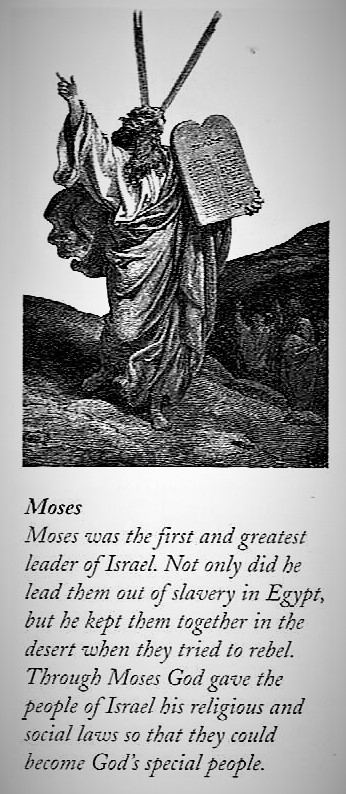
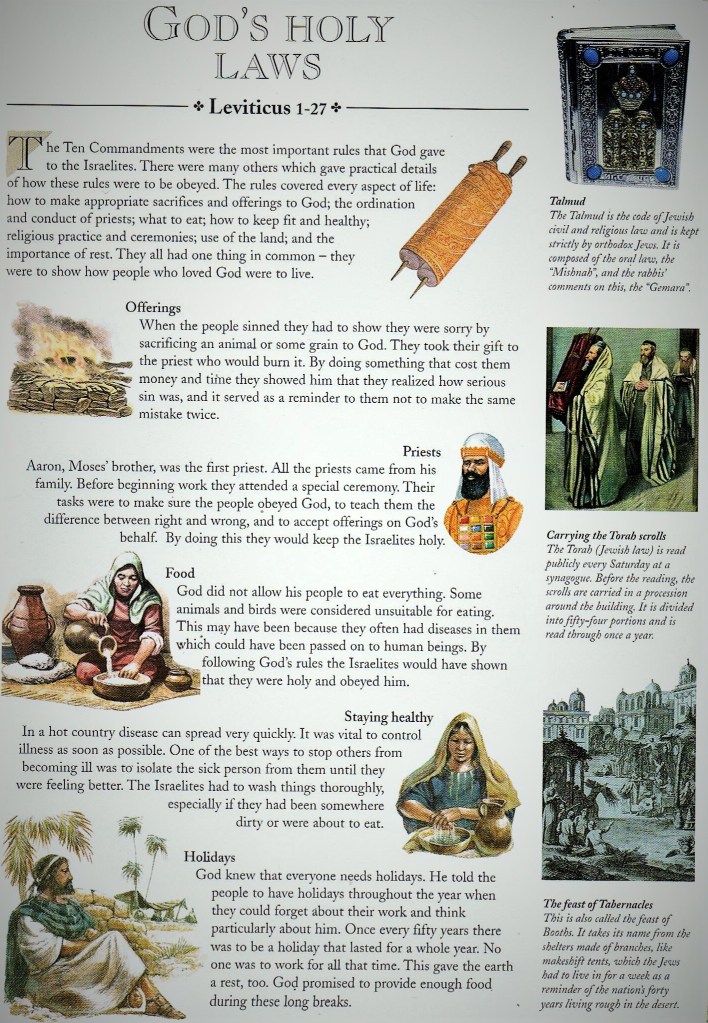
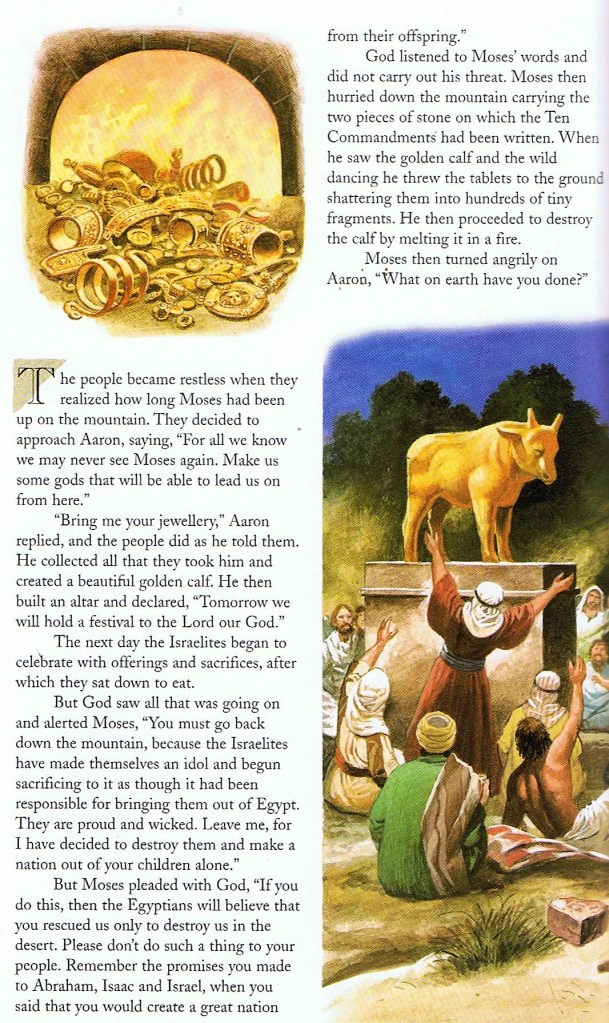
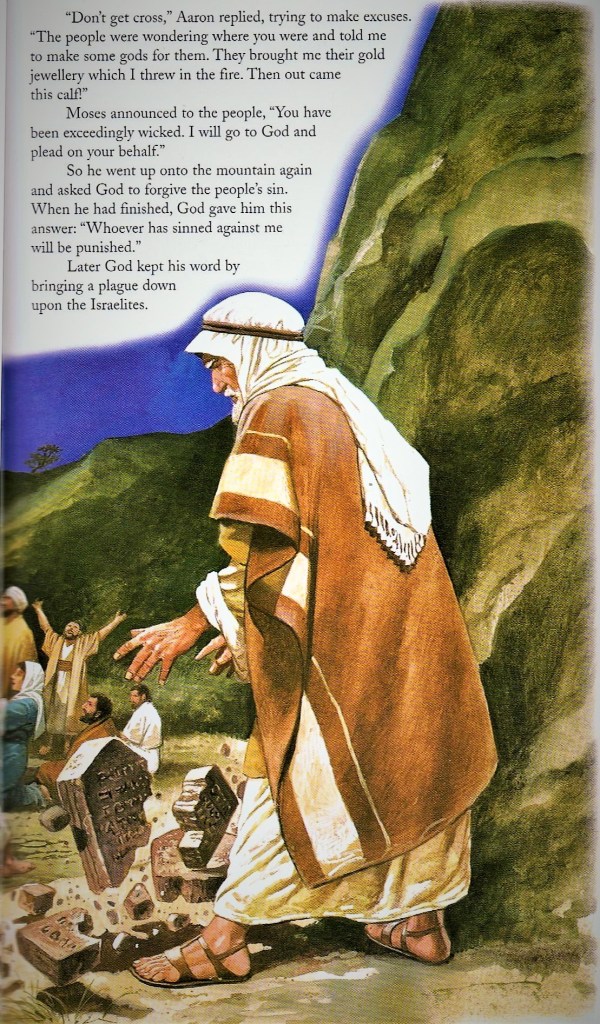
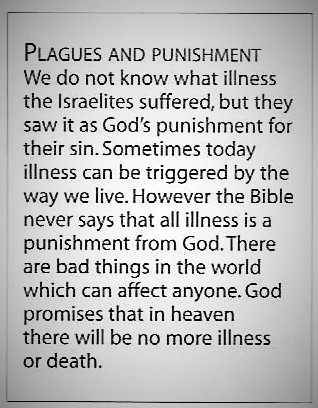
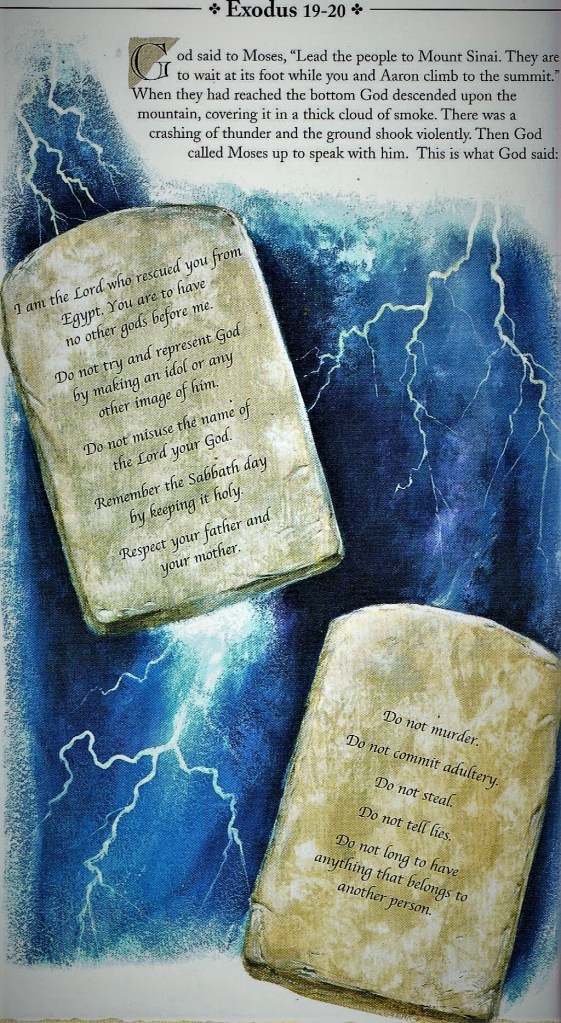
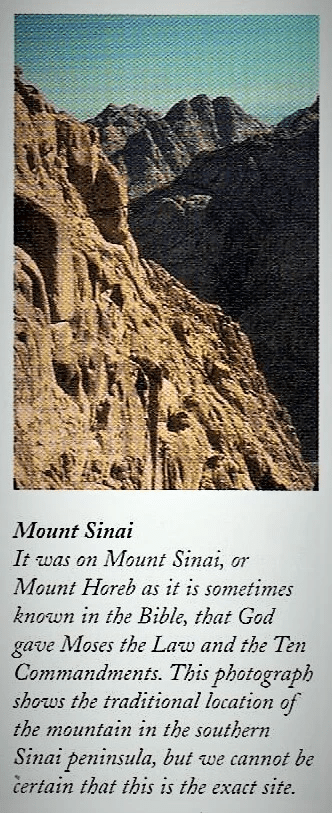

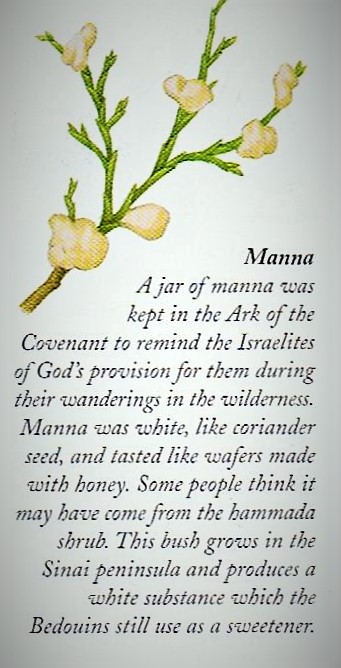
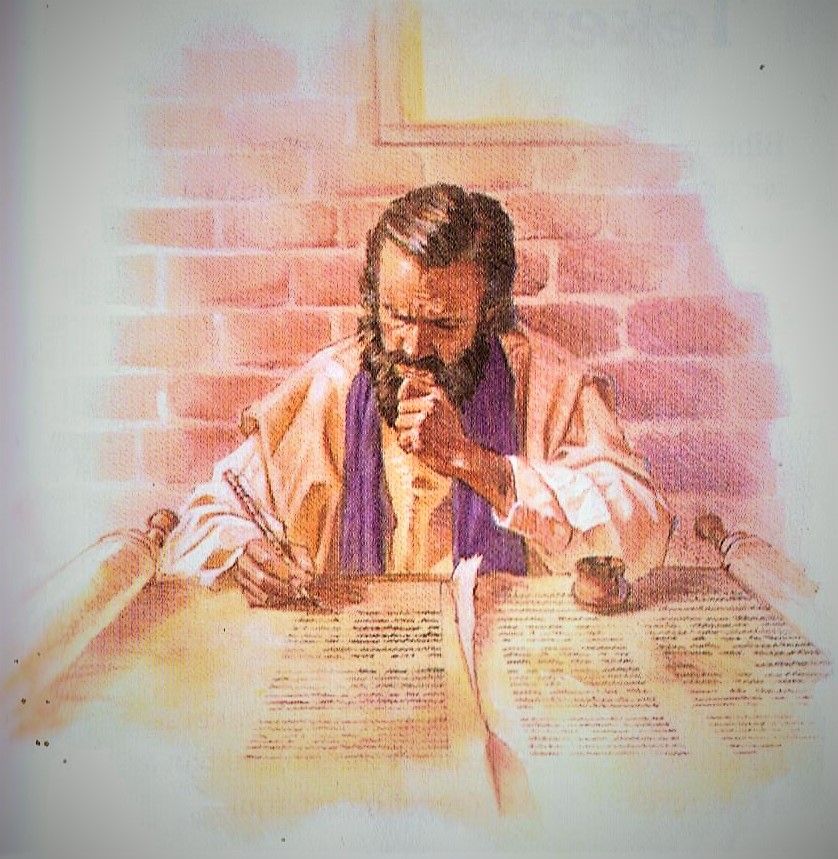
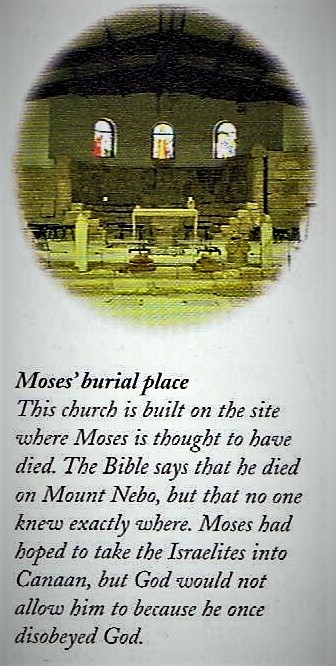




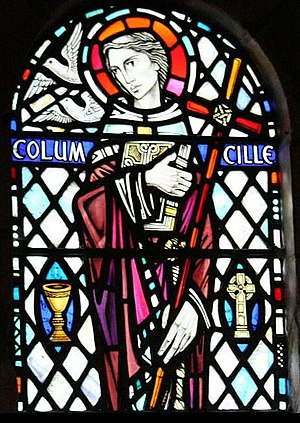
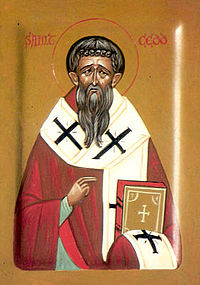

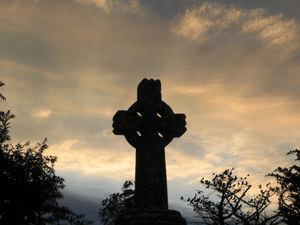

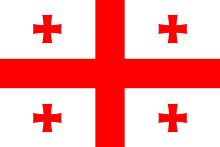



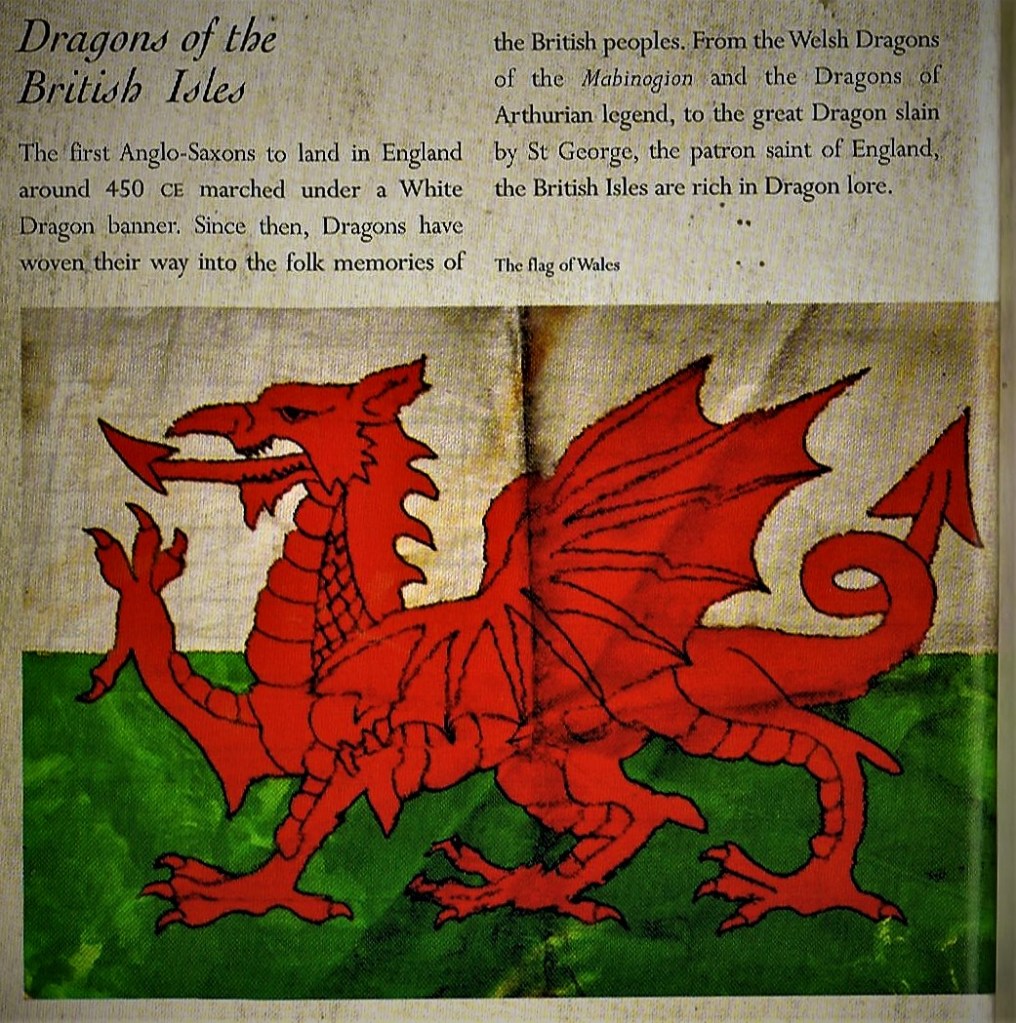

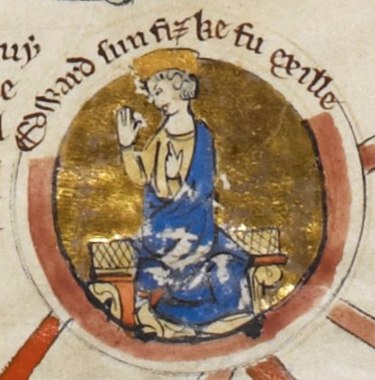


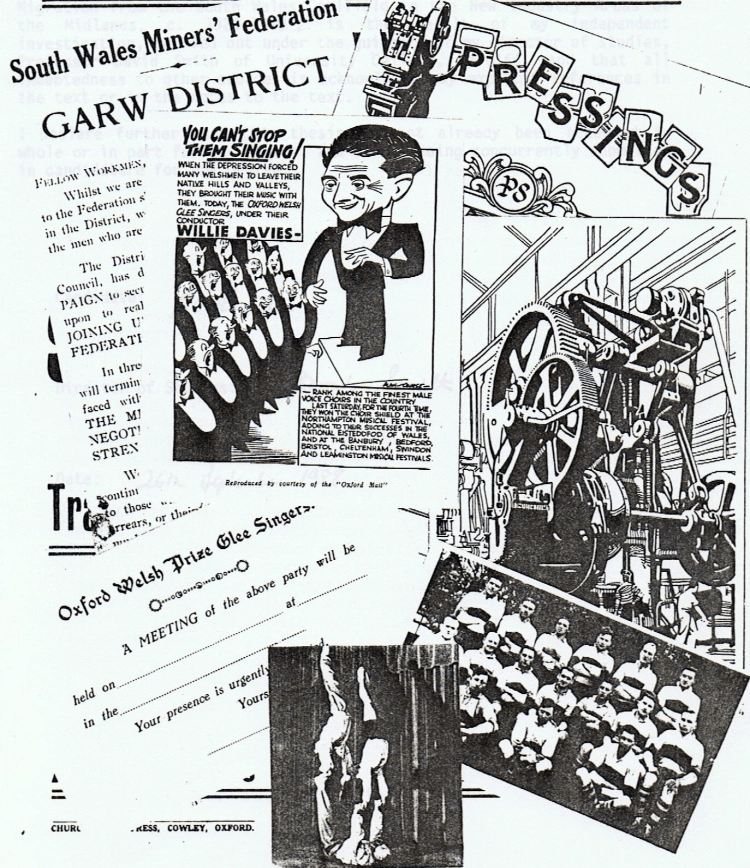

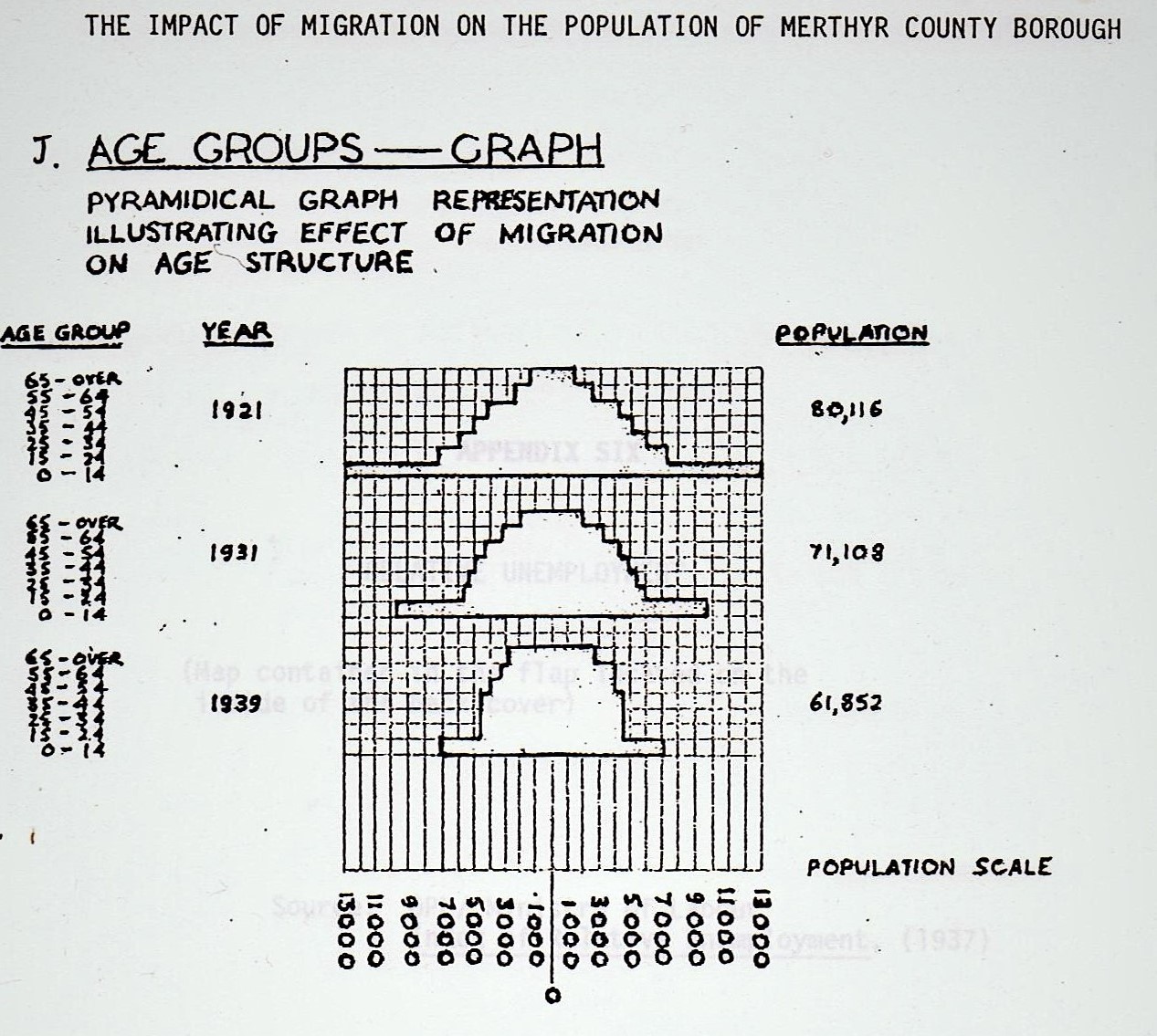



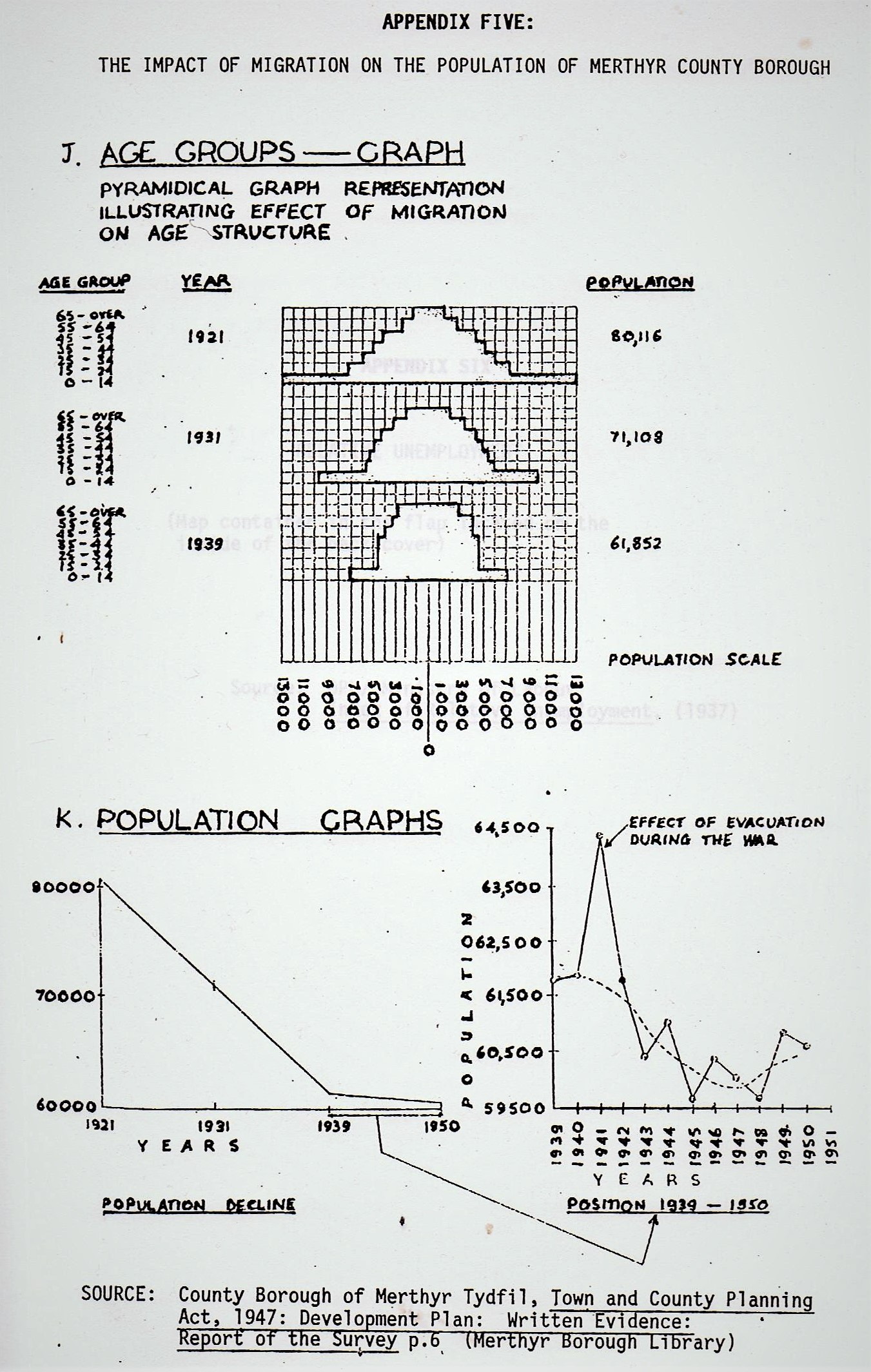
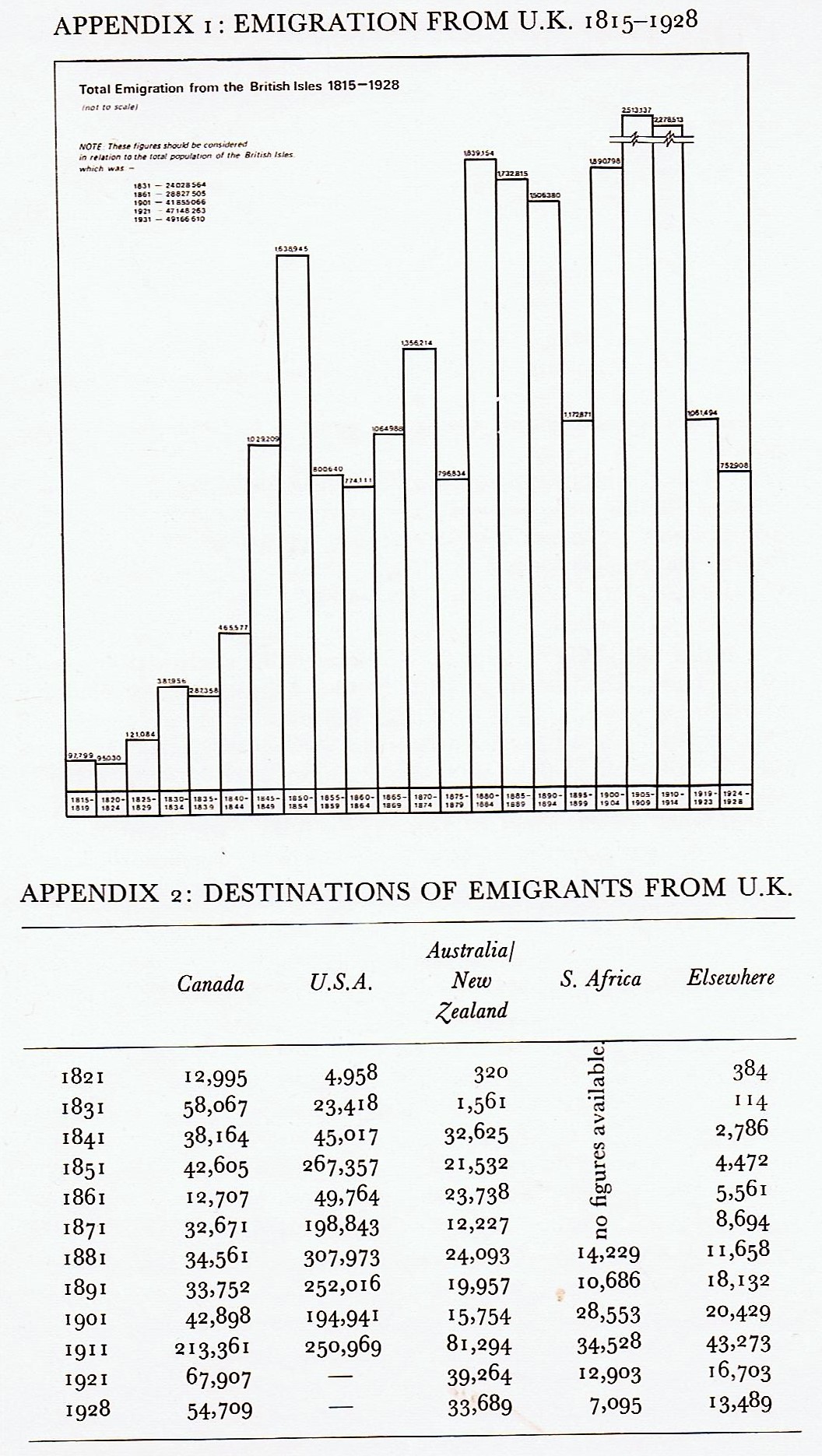


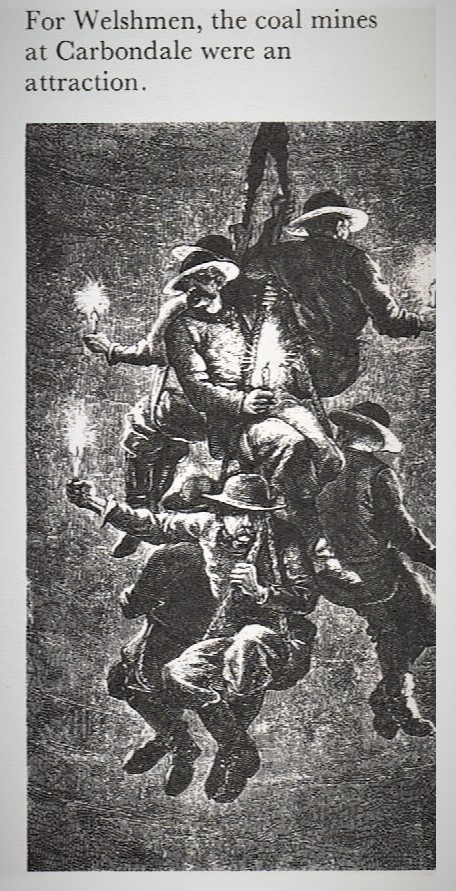
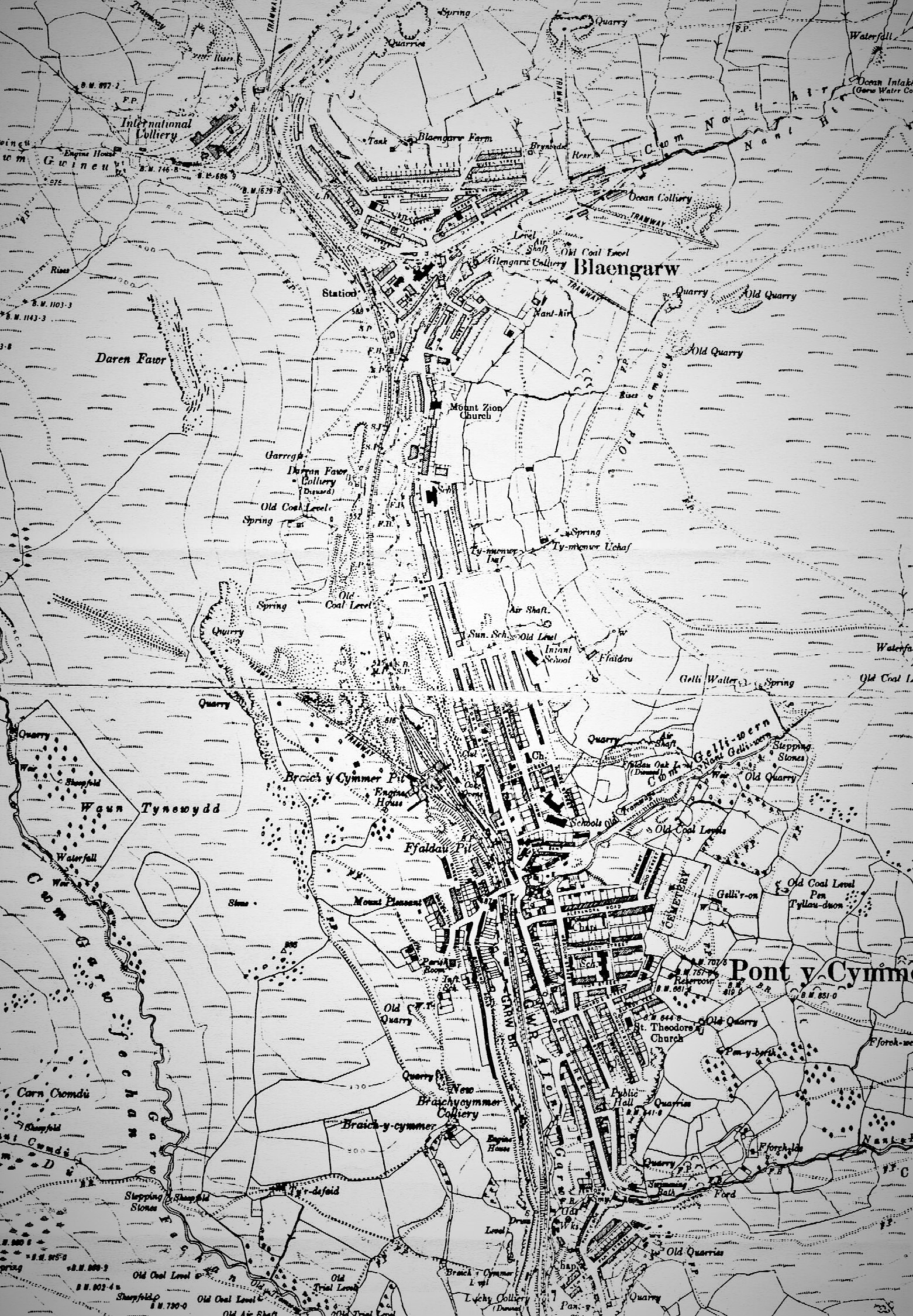


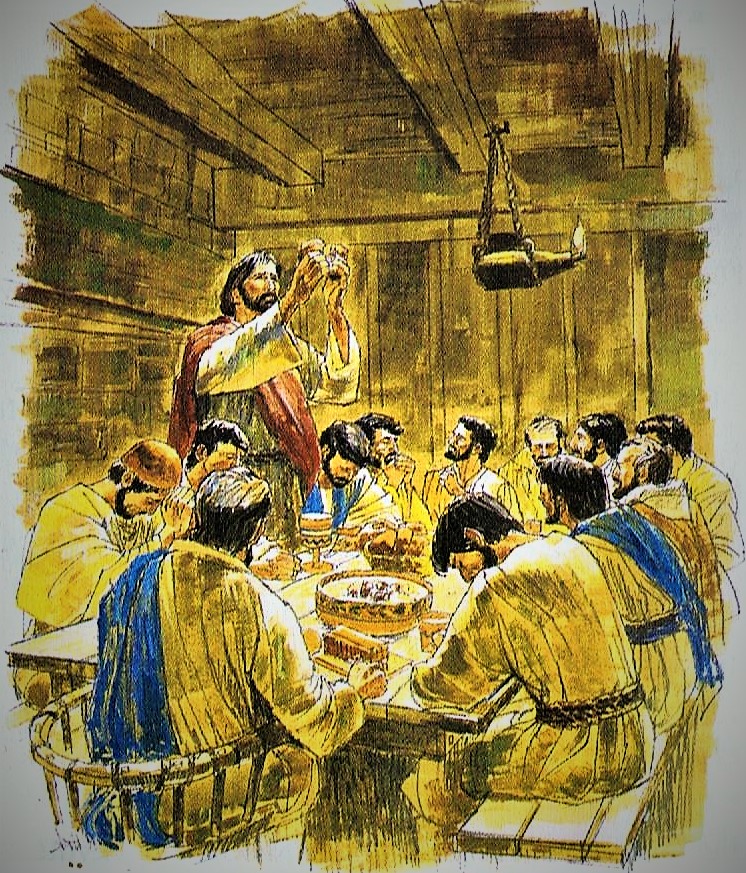

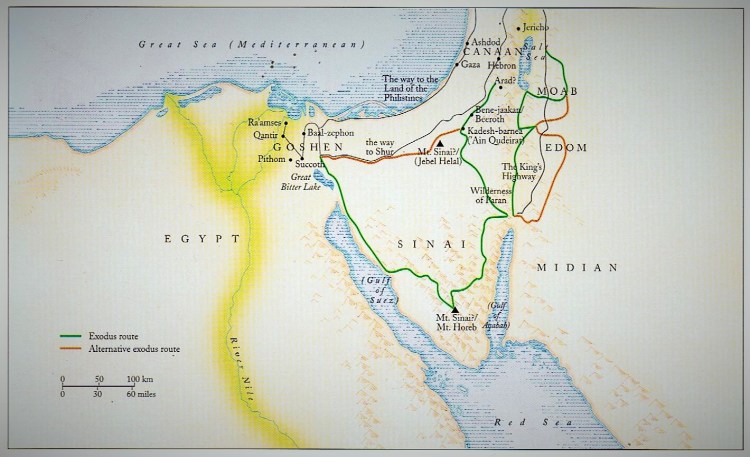
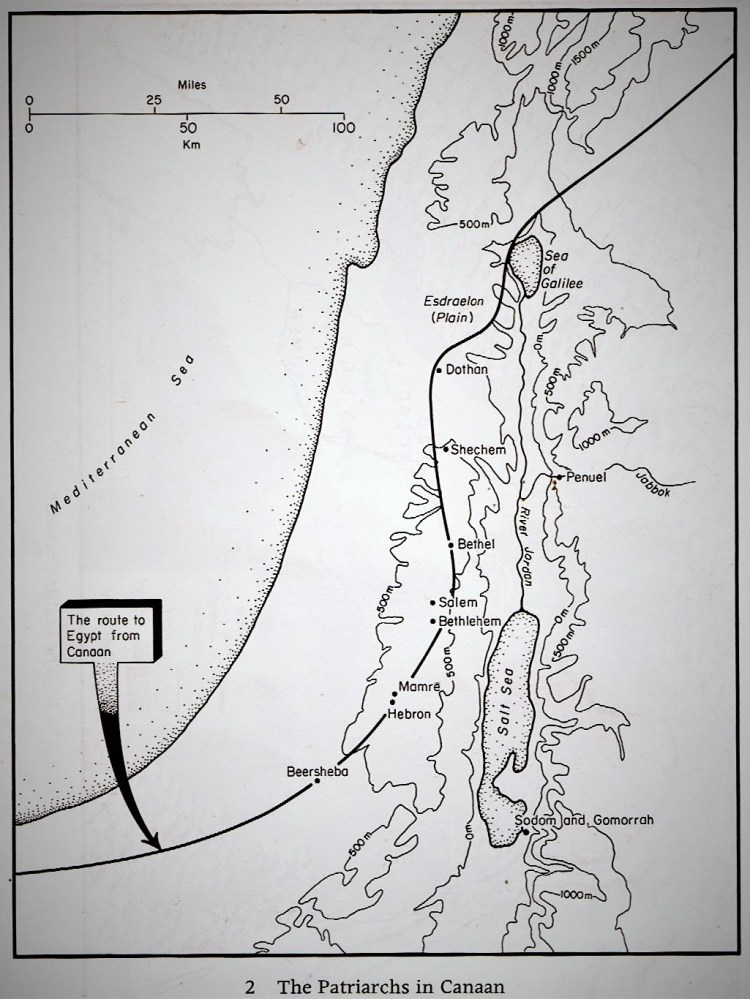
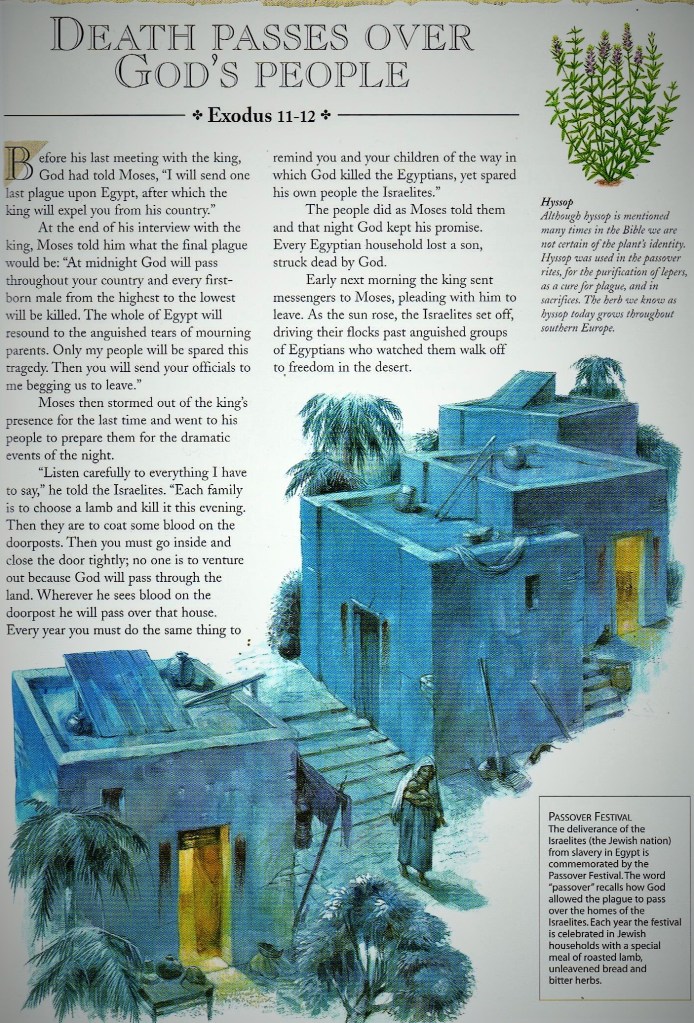
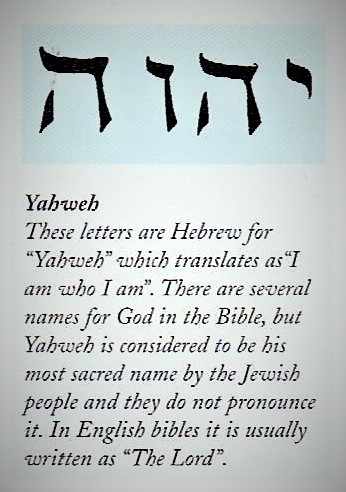


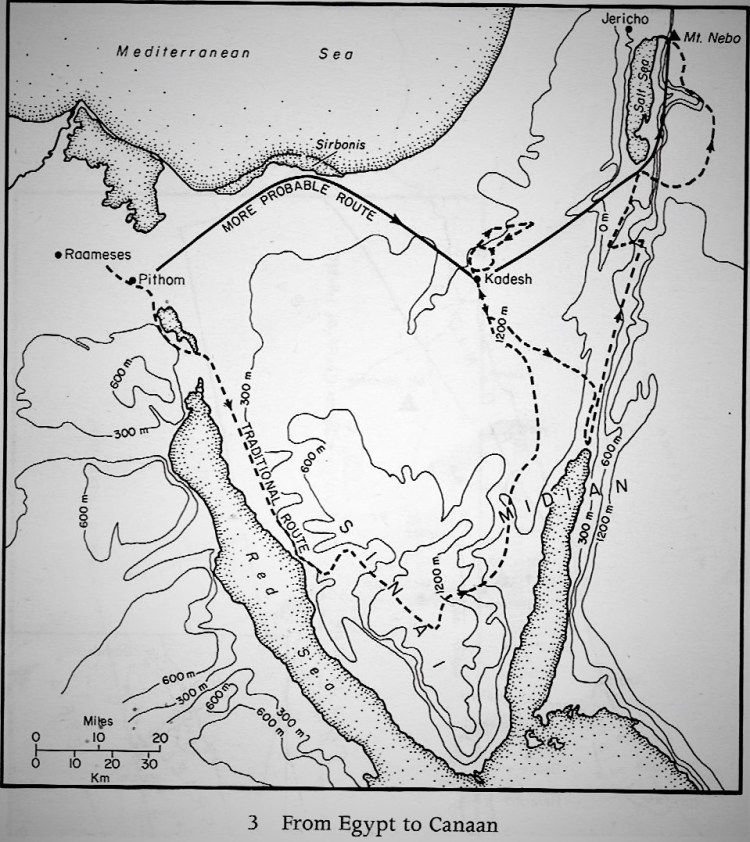

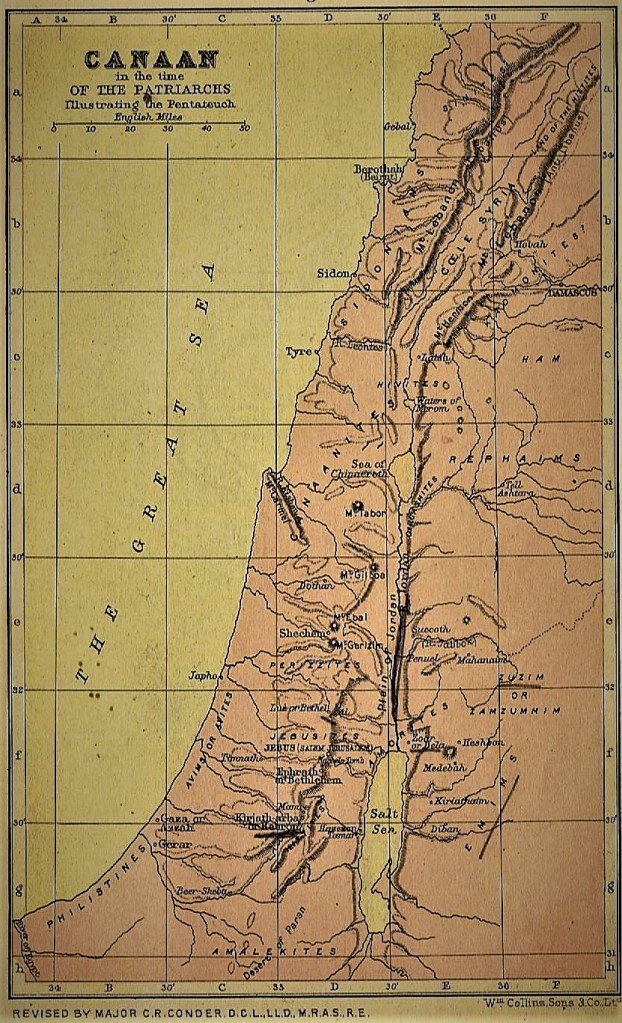
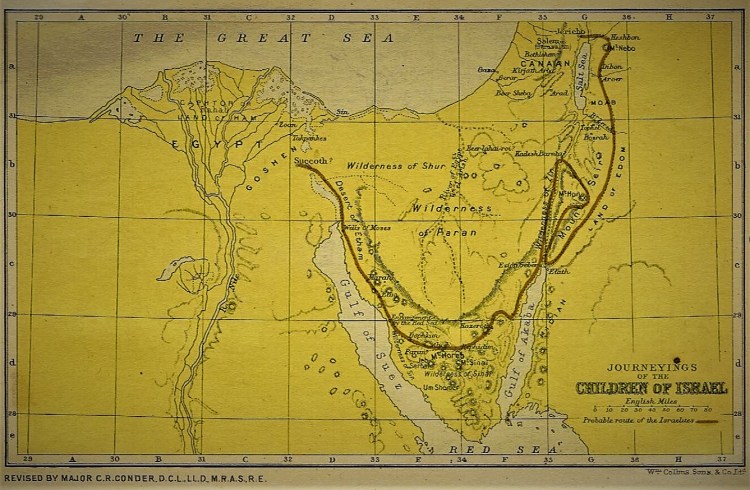
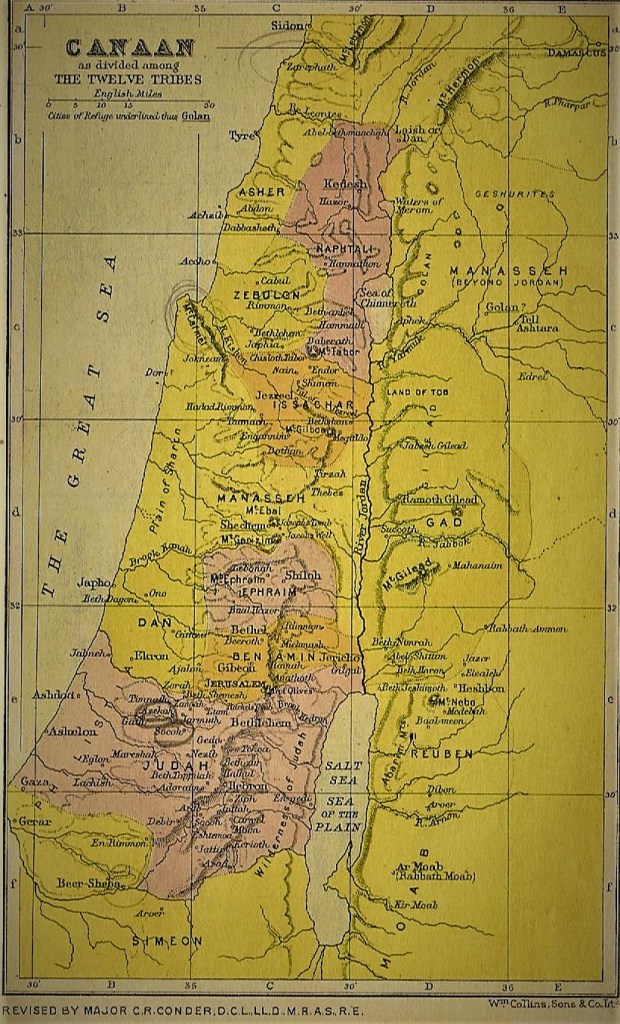




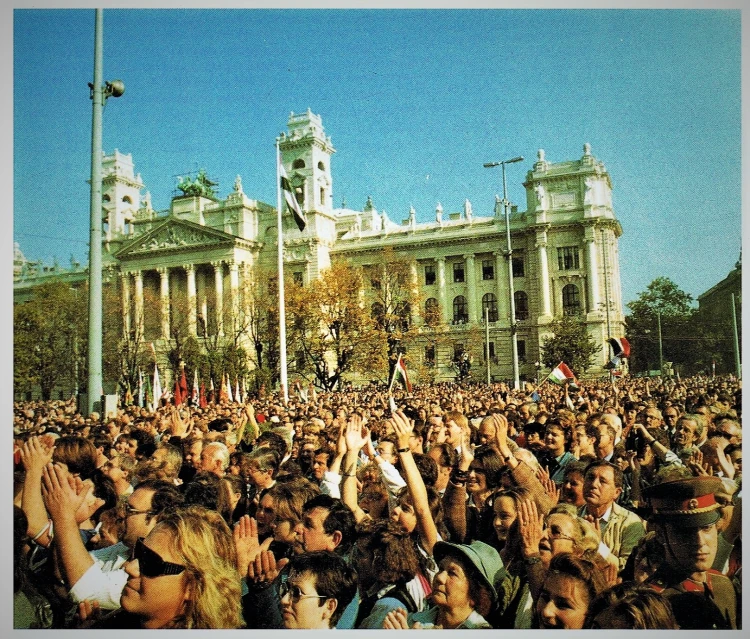

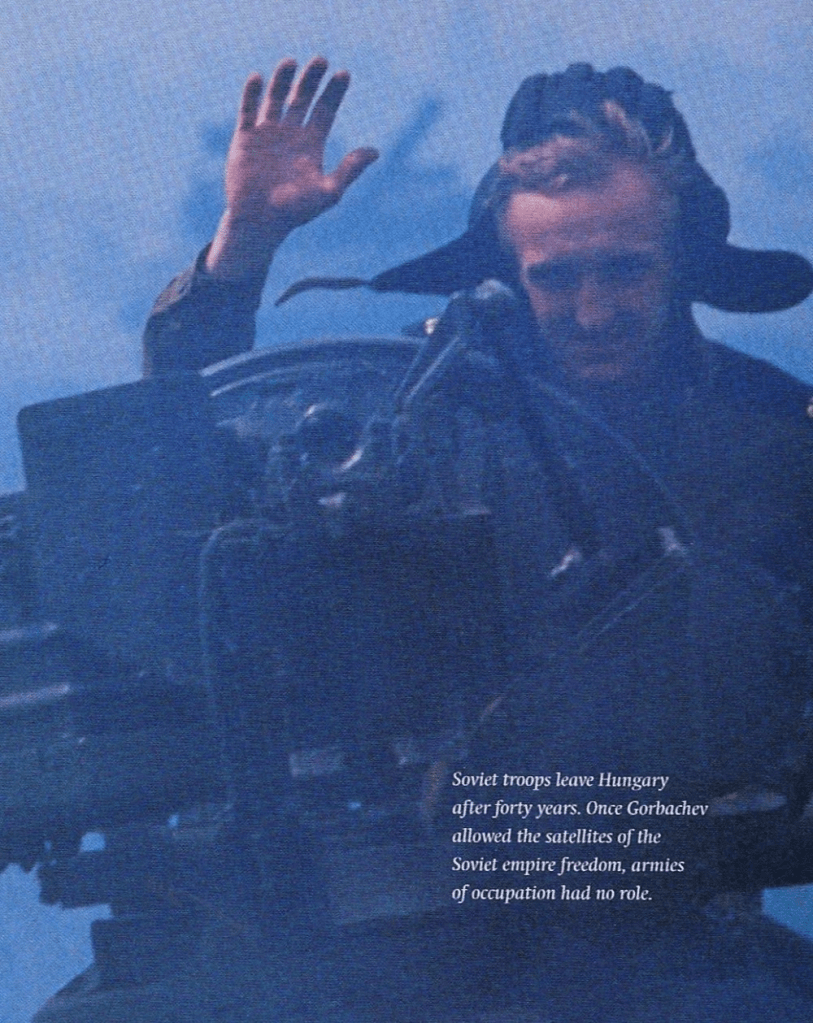
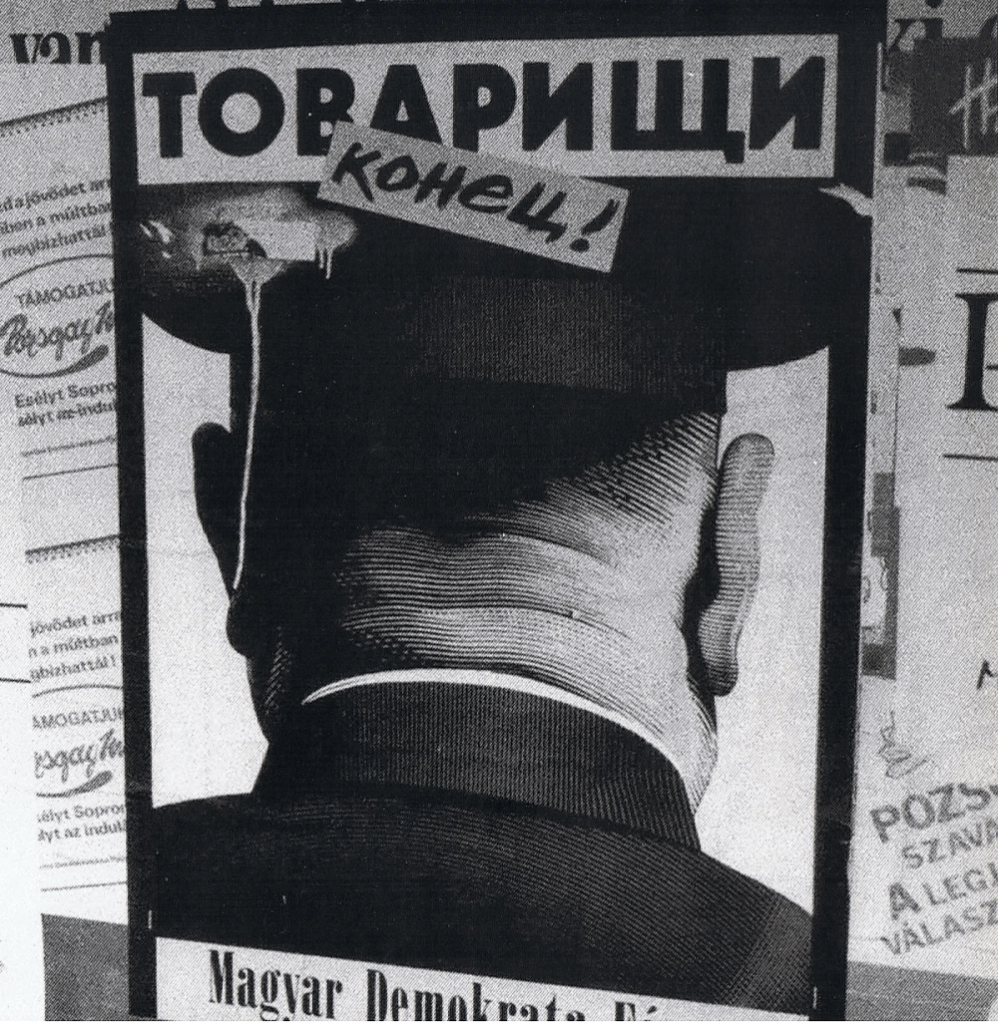

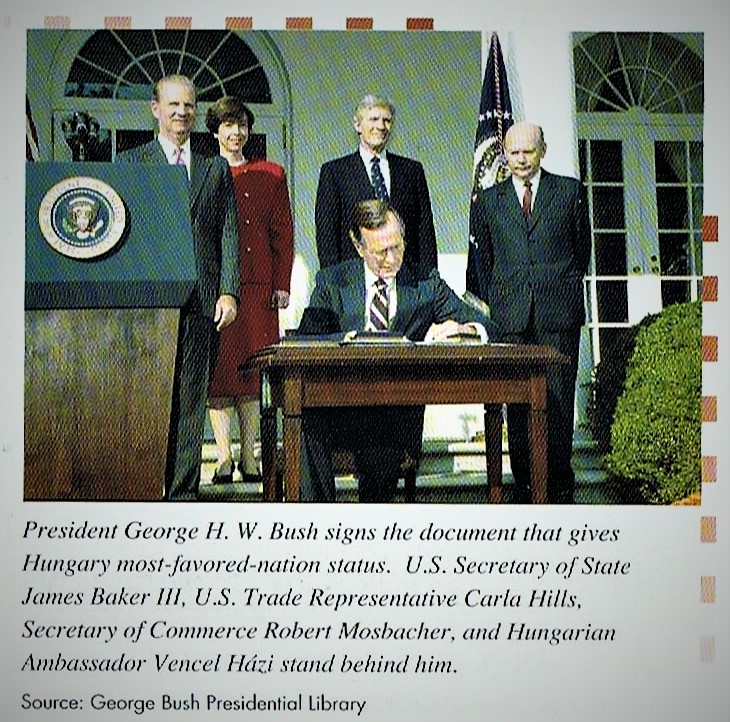










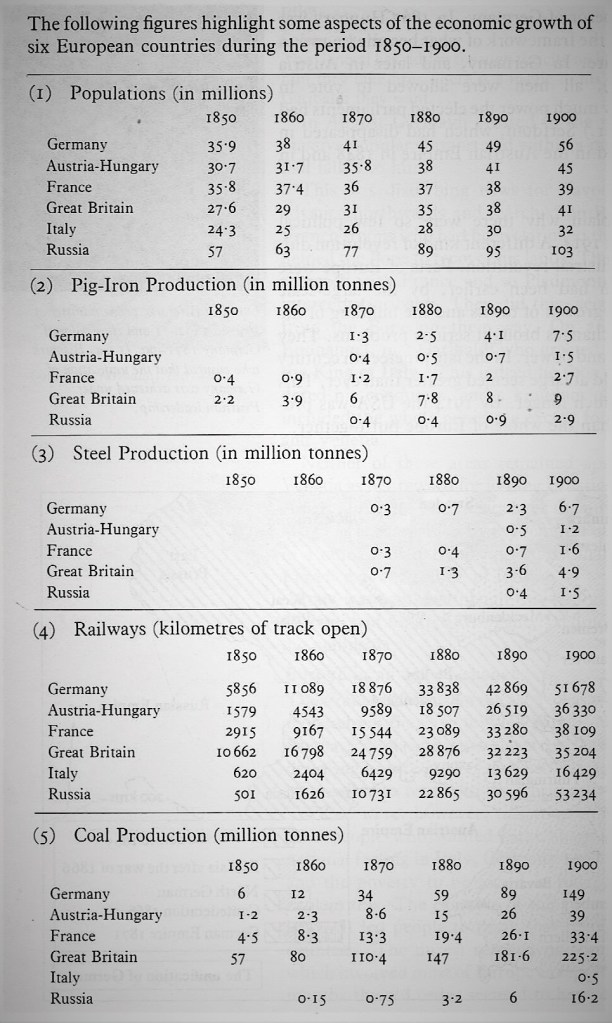
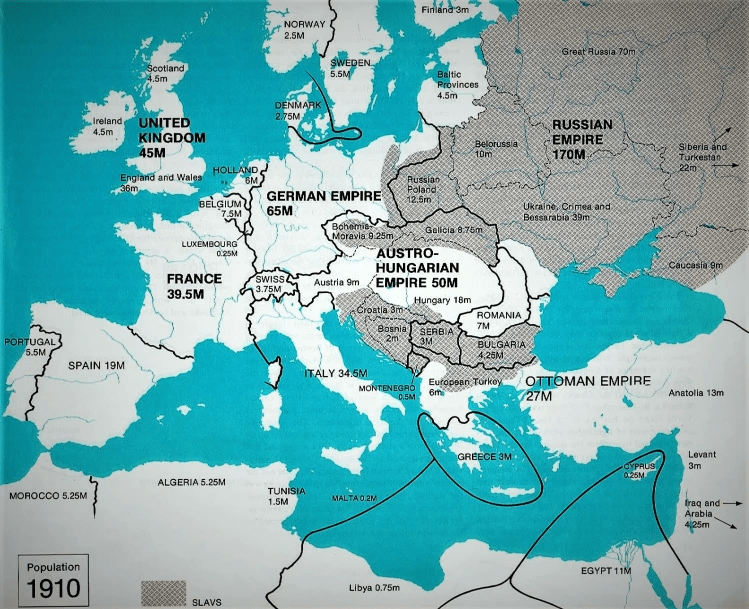
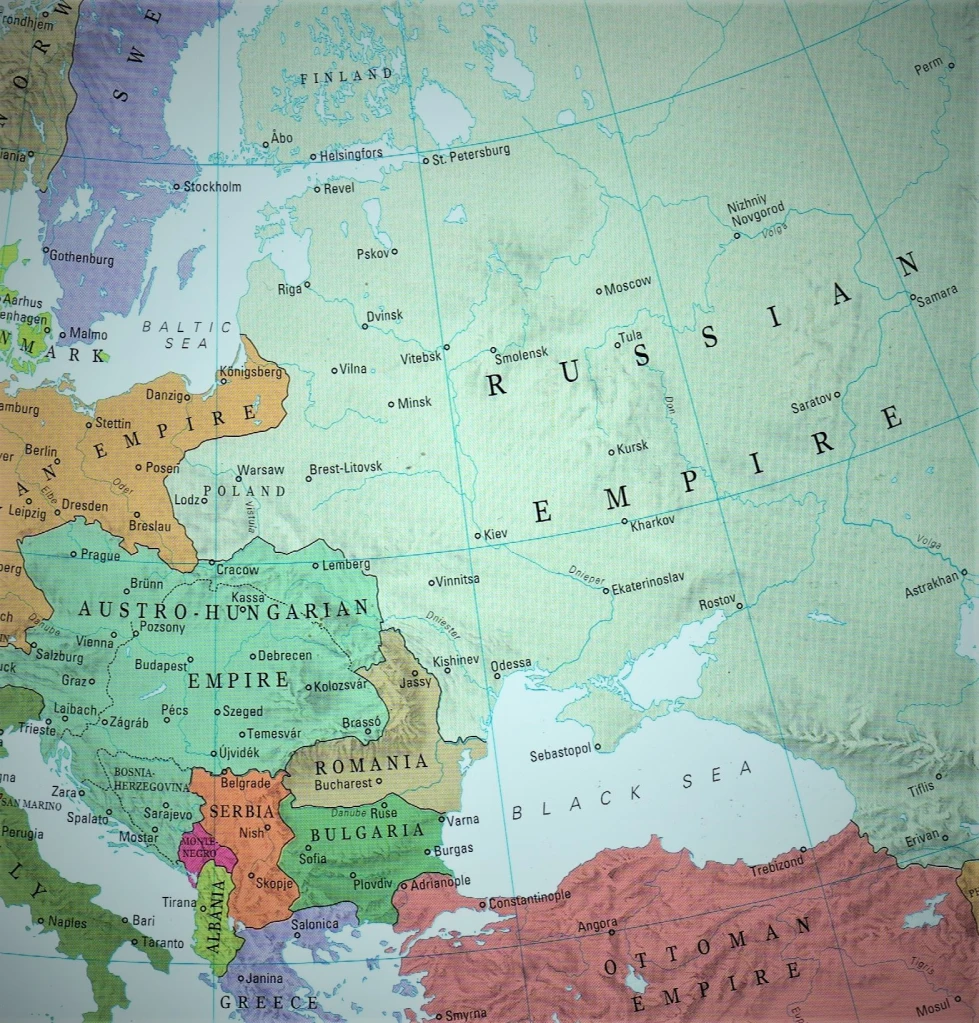
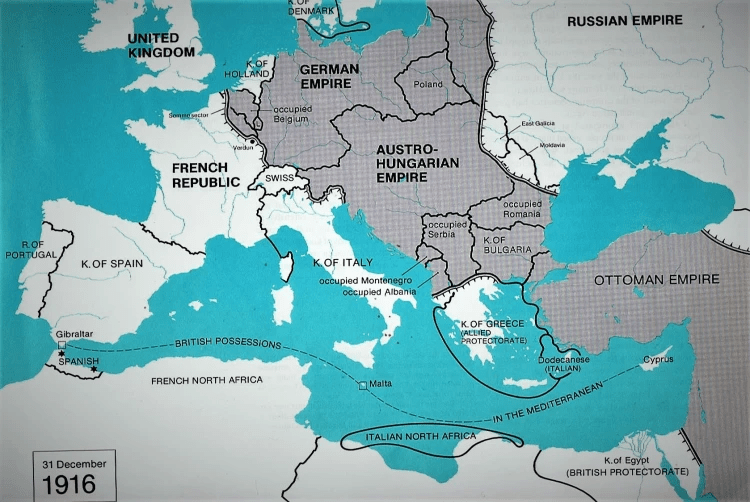











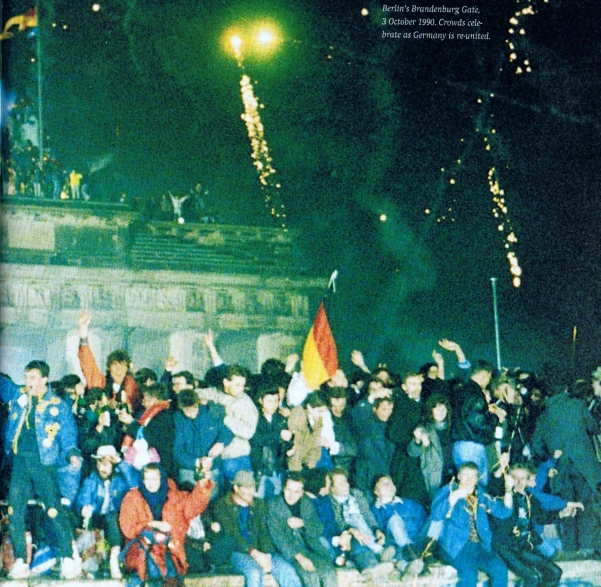
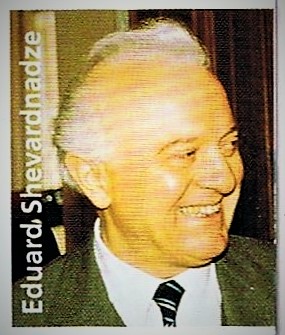






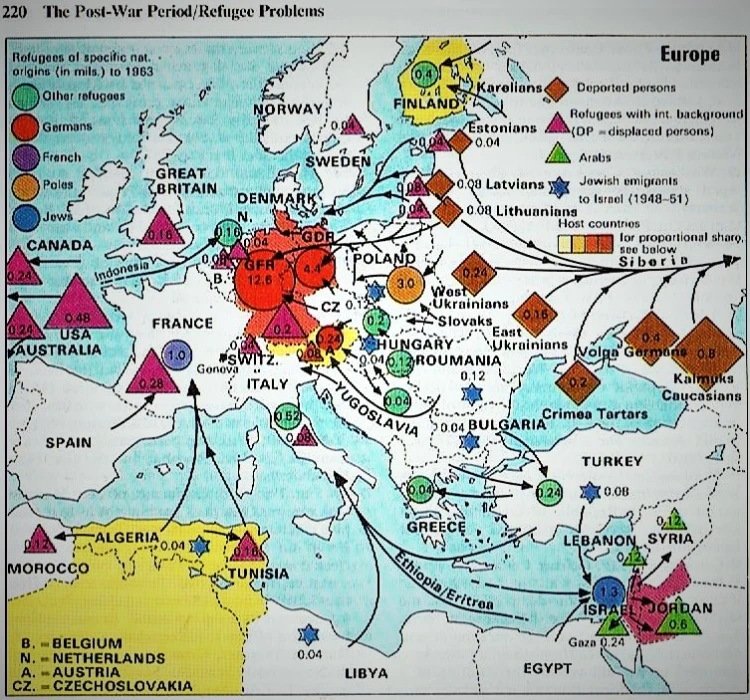
 Andrew James


