The betrothal of 24-year-old Princess Mary to Viscount Lascelles, 39-year-old millionaire son of the Earl of Harewood, was officially announced at Buckingham Palace on 22 November 1921:
On the last day of February 1922, the marriage was held at Westminster Abbey. The Abbey was thrown open to the public after the ceremony, and a mile-long queue was formed by those waiting to go inside.
Soon after his younger sister’s wedding, The Duke of York rose even further in his father’s estimation following his courtship with the society beauty Elizabeth Bowes-Lyon. Although she had led an even more sheltered life than he had, she was a commoner – albeit a high-born one. Bertie and Elizabeth had met at a ball in the early summer of 1920. The youngest daughter of the Earl and Countess of Strathmore, Elizabeth was twenty and had just arrived in London society to universal acclaim. A large number of suitors were keen to propose, but she was in no hurry to say ‘yes’ to any of them, including the Duke. It was not only that she was averse to becoming a member of the royal family, with all the constraints that this imposed. Also, the Duke did not seem that much of a catch: although kind, charming and good-looking, he was shy and inarticulate, partly due to his stutter.
The Duke fell in love with Elizabeth, but his early attempts to woo her were not successful: part of the problem, as he confided to J. C. C. Davidson, a young Conservative politician, in July 1922, was that he could not propose since, as the King’s son, he could not place himself in a position in which he might be refused. For that reason, he had already sent an emissary to Elizabeth to ask on his behalf for her hand in marriage, and she had responded negatively to this approach. Davidson had simple advice for him: no high-spirited girl was going to accept a second-hand proposal, and so, if the Duke was really as much in love with her as he claimed, then he should propose in person. Three decades later, after she was widowed, the then Queen Elizabeth, the Queen Mother, wrote to Davidson to ‘thank you for the advice you gave the King in 1922.’ As Duke of York, he had to get his father’s consent, the then King, under the Royal Marriage Act of 1772, to marry a commoner. George V did not hesitate in giving it. Society had changed, making it acceptable for his children to marry commoners, provided that they came from the three highest tiers of the British nobility.
The new Duchess started a vogue for lace. Her bridal gown, designed from an Italian painting, was of chiffon moire, its colour being the ivory shade of old lace. The corsage, with severe lines, was embroidered in silver and pearl, and for her veil, white tulle was chosen with a light wreath of orange blossom. In the train, lent by the Queen, there was more lace.
This was the wedding in the Abbey. Just above the bride can be seen, in dark uniform, the boyish-looking Prince George (later Duke of Kent), beside Queen Mary and King George V. The then Prince of Wales is standing just behind the altar rail, with the Duke of Gloucester behind him.
Their wedding on 26th April 1923 in Westminster Abbey, being used for the first time for the nuptials of a son of the King, was a joyous occasion. The bride wore a dress of cream chiffon moiré, a long train of silk net and a point de Flandres lace veil, both of which had been lent to her by Queen Mary. The Duke was in his Royal Airforce uniform. There were 1,780 places in the Abbey, and, as the Morning Post reported the next day, there was a large and brilliant congregation which included many of the leading personages and the Empire. The King wrote to his son:
You are indeed a lucky man. I miss you … you have always been so sensible and easy to work with (very different to dear David) … I am quite certain that Elizabeth will be a splendid partner in your work.’
The Duke of York & the King on the balcony at Buckingham Palace after the wedding.
After the wedding, crowds gathered outside Buckingham Palace, looking up to the familiar balcony and cheering when Queen Alexandra, Queen Mary, the Duchess of York (soon to be known as ‘the smiling Duchess’, the Duke of York and King George V came out through the central French windows. King George was already a grandfather, for Princess Mary (married the year before) had given birth to a son in February. Yet amid the joy, there was also a reminder that the Duke’s marriage was something of a sideshow compared to the occasion when his elder brother would eventually follow suit. In a special supplement, published on the day before the wedding, a writer in The Times had expressed satisfaction at the Duke’s choice of a bride who was so truly British to the core. Yet, he concluded, like so many did at the time, by contrasting Bertie with his brilliant elder brother, adding:
There is but one wedding to which the people look forward with still deeper interest – the wedding that will give a wife to the Heir to the Throne and, in the course of nature, a future Queen of England to the British peoples.
1922-23 – Civil War in Ireland:
Meanwhile, there remained one dark cloud over the western horizon from 1922-23; that of Ireland. The Anglo-Irish Treaty was ratified by a small majority by the Dail Eireann, the Dublin Parliament, but de Valera and his supporters in it were not prepared to accept the oath of allegiance, and a majority in the IRA rejected Partition. In June 1922, the country was plunged into a year-long, bloody civil war. This began with an attack by Free State forces on the headquarters of the die-hard republicans in the Four Courts and other strongholds in Dublin that they had occupied. As in 1916, the rebels had no strategic plan behind the occupation of these buildings; their decision to make a stand was based on a calculation of its propaganda value in an appeal to the memory of the Easter Rising.
Contrary to popular impressions, however, the Irish Civil War was, in fact, less bloody than the Anglo-Irish War that had preceded it. Total deaths numbered 1,872 between January 1920 and the truce of 11 July 1921, with a further 470 killed in the truce period to June 1922, whereas 927 were killed in the ensuing civil war.
Michael Collins: A veteran of the Easter Rising, Collins took command of the National Army in the Civil War, fighting against old comrades in the IRA. In reprisal, they murdered him in his home county of Cork.
Nevertheless, it cost the lives of Arthur Griffith and Michael Collins, Commander-in-chief, among many others on both sides, with the Southwest and Dublin City the worst affected areas, as shown on the map above.
Eamon de Valera, the Republican leader, inspects a unit of the IRA during the Civil War.
The war was finally won by the Free State Government. In April 1923, the republicans proclaimed a unilateral cease-fire and dumped their arms, but not their opposition to the new State, which they continued to regard as a puppet régime of the British. The Free State victory had been achieved with substantial material support from the British Government and the backing of most institutions in Ireland. Among the tactical reasons for the government’s success was the execution of seventy-seven republican prisoners, in some cases illegally. Together with other unofficial killings, these executions sapped the will of much of the republican opposition to the Free State. Even their leader, Eamon de Valera, eventually accepted the constitutional framework and went on, following Fianna Fáil’s victory in the general election of 1932, to steer it towards full independence. In 1949, George VI gave royal assent to The Republic of Ireland Act which recognised:
… thatthe part of Ireland heretofore known as Eire, ceased… to be part of His Majesty’s dominions… Northern Ireland remains part of His Majesty’s dominions and of the United Kingdom…
1924-26 – The King, the Comrades & the Constitution:
Winston Churchill, writing in Great Contemporaries (1941), commented that George V’s relations with Ramsay MacDonald and the Socialists form an important chapter in his Kingship. The Constitution and the workings of parliamentary democracy were his guides and instruments. He was determined, from the outset, to show absolute impartiality in the Constitution to all parties, irrespective of policies and ideologies, who could secure a majority in the House of Commons. Churchill continued:
Indeed, if the balance were to be swayed at all, it must be on the side of newcomers, and they must be given help by the Crown. … Never did he fear, never did he need fear, … British democracy. He reconciled the new forces of Labour and Socialism to the Constitution and the Monarchy. This enormous process of assimilating and rallying the spokesmen of left-out millions will be intently studied by historians of the future. To the astonishment of foreign countries and of our American kinsmen, the spectacle was seen of the King and Emperor working in the utmost ease and unaffected cordiality with politicians whose theories at any rate seemed to menace all existing institutions, and with leaders fresh from organising a General Strike.
W. S. Churchill, Great Contemporaries (1941), pp. 325-6.
The General Strike, in support of the coal miners, took place between the 4th and 12th of May, 1926. On the 5th, Hyde Park was closed to the public and became the centre for London’s milk supplies. The following night, Britain’s trains, trams and buses came to a stop. But the Government was just as well organised as the trades union, if not better. Troops organised food supplies, nearly half a million men enrolled as special constables, and men and women everywhere volunteered for vital services. The Government published an official paper, The British Gazette, in the absence of the Fleet Street press and as an antidote (it claimed) to the wild rumour. The trades unions regarded it as a Government ‘propaganda sheet’, edited by Churchill, who argued that the strike was unconstitutional. On 8th May, a two-mile convoy of lorries, escorted by armoured cars, took food from the docks to Hyde Park; on 10th May, 3,677 trains were being run by volunteers, and on 12th May, the Trades Union Congress (TUC) gave the “Back to Work!” order. The miners stayed locked out for six months and went back in the end, defeated and victimised.
Labour leaders then concentrated on winning back power by constitutional means, forming a second administration in 1929.
1925-26 – A Death, a Birth & a ‘Fiasco’:
Meanwhile, the Prince of Wales had been building bridges to distant parts of the Empire…
Marriage was a turning point in the Duke of York’s life: he became far happier and more at ease with himself and with the King. His father’s devotion to Elizabeth also helped: although a stickler for punctuality, he would forgive his daughter-in-law for her chronic lateness. Initially, they lived at White Lodge, in the middle of Richmond Park, a large property built by King George II for himself in the 1720s. The birth of their first daughter, Elizabeth, the future Queen, on 21 April 1926 brought the family even closer together.
The Royal Princess was christened Elizabeth Alexandra Mary at Buckingham Palace the following month. The official bulletin read:
Her Royal Highness and the infant Princess are making very satisfactory progress.
The phrase ‘infant Princess’ was a reminder of Queen Victoria’s advice to the official who had referred to the birth of a royal baby. “Royal ladies”, he was told, “do not have babies; they have princes or princesses.” The first child to be born to the then Duke and Duchess of York, Princess Elizabeth was third in line to the throne, after the Prince of Wales and her father.
The group photograph, taken at the christening, includes (from left to right): the Duke of Connaught, Queen Mary, King George V, Duchess of York (with Princess Elizabeth), Duke of York, Countess of Strathmore, Earl of Strathmore and Princess Mary.
In 1927, the young family moved to Number 145 Piccadilly, a comfortable, stone-built house close to Hyde Park Corner, facing south with a view over Green Park to Buckingham Palace. The Duke was continuing with his factory visits and seemed happy in such work. More formal occasions, especially those involving speechmaking, he always dreaded. Her husband’s speech impediment and the effect that it had on him was affecting the Duchess, too; according to one contemporary account, whenever he rose from the table to respond to a toast, she would grip the edge of the table until her knuckles were white for fear he would be unable to get a word out. This further contributed to his nervousness which, in turn, led to outbursts of temper that only his wife could calm.
The Empire Exhibition, 1924-25
The full extent of the Duke’s speech problems became painfully obvious for all to see in May 1925, when he was due to succeed his elder brother as president of the Empire Exhibition at Wembley. Two hundred thousand people, eleven Cabinet ministers and nearly fifty members of British and foreign Royalty attended the opening of the exhibition by King George on 23rd April 1924. Then, the golden-haired figure of the Prince of Wales formally asked his father for permission to open the exhibition. The King had spoken briefly in response, and, for the first time, his words were broadcast by the British Broadcasting Company, later Corporation. The King had recorded in his diary that everything went off most successfully.
The twelve-million-pound exhibition finally closed down in October 1925 after being viewed by twenty-eight million people. The total loss was two million pounds, but all Dominions and Colonies reported: “it has been more than justified from our particular point of view.”
On the 10th May 1925, it was Bertie’s turn to give a short speech which he had practised feverishly. But his dread of public speaking was making him increasingly nervous and was added to by the fact that he would be speaking in front of his father for the first time. The Duke’s speech was broadcast not just in Britain but around the world, and it ended in humiliation. Although he managed to struggle through to the end of it, his performance was marked by some embarrassing moments when no sound came out of his mouth. The King tried to put a positive gloss on it, writing to Prince George, Bertie’s young brother, the next day that ‘Bertie got through his speech all right, but there were some long pauses.’
But for Bertie and his family, this ‘fiasco’ of a speech had a dramatic psychological effect and presented a significant problem for the monarchy. Such speeches were considered to be part of the daily routine of kings and princes, and Prince Albert was second-in-line to the throne, yet he had conspicuously failed to rise to the challenge in this respect. The consequences for his future and that of the monarchy looked serious. As one contemporary biographer put it:
…it was becoming increasingly manifest that very drastic steps would have to be taken if he were not to develop into the shy retiring nervous individual which is the common fate of all those suffering from speech defects.
By coincidence, one of the members of the crowd at Wembley listening to the King’s speech was Lionel Logue, a self-taught and virtually unknown Australian speech therapist. Based on his recently discovered diaries, in 2010, his grandson Mark Logue published The King’s Speech: How One Man Saved the British Monarchy, the previously untold story of the remarkable relationship between Logue and the future King George VI. He took a professional interest in what he heard that day at Wembley. He told his son Laurie, who accompanied him:
He’s too old for me to manage a complete cure. But I could very nearly do it. I am sure of that.
1926-27 – From Harley Street to South Australia:
Whoever was responsible for the initial introduction, the first meeting between the Duke and Logue almost didn’t happen. Although the Duchess was keen he should seek professional advice, Bertie was becoming increasingly frustrated with the failure of the various cures he had been persuaded to try, especially those that assumed his stammering had its root in a nervous condition, which seemed to make matters worse rather than better. The Duchess was determined he give Logue a try, however, and he eventually agreed to an appointment. The outcome of this meeting in Harley Street is now well known through the recent film, The King’s Speech.
The appointment card on which Lionel Logue noted his initial observations of the Duke after their first meeting in October 1926.
After the initial interview in 1926, the Duke had a total of eighty-two appointments between 20th October and 22nd December 1927. Ironically, it was an invitation from the Governor General of Australia to attend the State Opening of the new Commonwealth Parliament House in the new Australian capital of Canberra on 9th May 1927, which became the main focus of these sessions. The following January, the ‘Yorks’ were to embark on a six-month world tour aboard the battle-cruiser Renown. Stanley Bruce, the Australian prime minister, had asked George V to send one of his sons to perform the opening ceremony. It was a highly symbolic occasion. The Daily Telegraph claimed the Duke’s speech there would be as historic as Queen Victoria’s proclamation as Empress of India in 1877. With all eyes and ears pointing in his direction, Bertie could not risk a repetition of the Wembley ‘fiasco’.
The British Empire in Africa, Asia and Australasia & The League of Nations Mandates: ‘B’ Mandates were chiefly in Africa, territories which ‘could not govern themselves.’ ‘C’ Mandates were isolated territories, such as the Pacific Islands. Australia invaded New Guinea in 1914.
The origins of the trip went back just over a quarter of a century to the transformation of the then Australian colonies into states, federated together under one Dominion government. This government, and the parliament to which it was responsible, were initially located in Melbourne, in the State of Victoria, but this was only a temporary solution. While the people of Victoria would have liked their capital to have become the federal one, Sydney, the capital of New South Wales, also wanted the honour. A decade later, a compromise was finally decided upon: the government acquired an area of nine hundred square miles was acquired from New South Wales to be designated as federal territory. It was to serve as the new Australian capital, Canberra. Building work was finally begun in 1923, and 1927 was chosen as the year for the transfer of power to Canberra and the convening of the new federal parliament.
Stages in the formation of the Federation of the Six Colonies & Commonwealth of Australia to 1901.
The Prince of Wales had toured Australia in 1920 to lavish acclaim, and the King felt it was time for his younger son to carry out an important imperial mission. But he was not entirely convinced that Bertie was up to it, and neither was Bruce. He had heard the Duke speak several times during the Imperial Conference of 1926 and had not been impressed. Bertie was equally doubtful about his ability to get through the gruelling programme of speeches that would be required. Embarking on such a long trip would also mean leaving behind their baby, Princess Elizabeth. It was against this background that the Duke had his first session with Logue three months later, and it gave him a considerable psychological boost. According to the Duke’s biographer, Taylor Derbyshire:
The one great advantage of that first consultation was that it had given the Duke assurance that he could be cured. … Disillusioned so often before, the change in outlook caused by the discovery that his trouble was physical and not as he had already feared mental, re-established his confidence and renewed his determination.
Taylor Darbyshire (1929), The Duke of York: an intimate and authoratative life-story of the second son of their majesties, the King and Queen by one who has had special facilities, and published with the approval of his Royal Highness. London: Hutchinson & Co, p. 22.
In the seven months leading up to the trip, the Duke met Logue for an hour, either on Harley Street or at his home in Bolton Gardens. By the end of the year, the improvement was noticeable in the London press and society. However, the challenges he would face on the tour were wholly different from the events he had spoken at in London. He would have liked to have taken his tutor with him, but Logue declined, pointing out that self-reliance was an important part of the cure, and for him to accompany the Duke would be a ‘psychological error.’ The day before he left, the Prince wrote a letter to Logue (below), thanking him for his work and stating that he was now full of confidence for this trip anyhow.
The Duke and Duchess sailed from Portsmouth on 6 January 1927. The King and Queen had seen them off at Victoria station; there was a peculiar sadness about their departure as they had to say farewell to their baby daughter Elizabeth. The Duchess wrote later to the Queen:
‘I felt very much leaving on Thursday, and the baby was so sweet playing with the buttons on Bertie’s uniform that it quite broke me up.’
Frequent letters from home reporting on their daughter’s progress went only a little way to comforting them in their absence. Bertie was also weighed down by the gravity of the formal responsibilities that lay ahead of him. He wrote to his father:
‘This is the first time you have sent me on a mission concerning the Empire & I can assure you that I will do my very best to make it the success we all hope for.’
Their visit to New Zealand was a great success, despite being separated by the Duchess being struck down with tonsillitis, forcing her to return to Wellington to convalesce at Government House. When Bertie rendezvoused with her on board the Renown on 22nd March, he could look back on what he had achieved without her at his side with a degree of satisfaction. But the real challenge came with the Australian leg of their tour. The following two months, during which they travelled from state to state, were packed with engagements and speeches. One of the most emotional was the one he had to make in Melbourne on Anzac Day, commemorating the twelfth anniversary of the Gallipoli landings. He carried it off with success.
Then, on 9th May came the tour’s main event: the opening of the new parliament building. He made a brief address to the crowds outside, entirely HRH’s own idea, and then opened the great doors of the building with a golden key. Dame Nellie Melba sang the national anthem; troops paraded, and aeroplanes droned overhead, one of them crashing from four hundred feet about a mile from the reviewing stand, killing the pilot. Although some twenty thousand people were present (and an estimated two million listened at home on the radio), the Duke won the battle with his nerves. Despite the intense heat made worse by the lights for the photographers and cameramen whose footage was to be distributed by Pathé news to viewers back in Britain. The Duke pressed on, putting in what all considered an impressive performance. In his letter home to his father, in which he paid tribute to the assistance he had received from Logue:
‘I was not verynervous when I made the speech, because the one I made outside went off without a hitch & I did not hesitate once. I was relieved as making speeches still frightens me, though Logue’s teaching has really done wonders for me as I know how to prevent & get over any difficulty. I have so much more confidence in myself now, which I am sure comes from being able to speak properly at last.’
On 23rd May, the Duke and Duchess finally set off for home, congratulations still ringing in their ears. Sir Tom Bridges, the Governor of South Australia, wrote to the King:
‘His Royal Highness has touched people profoundly by his youth, his simplicitly and natural bearing, while the Duchess has had a tremendous ovation and leaves us with the rsponsibility of having a continent in love with her. This visit has done untold good and has certainly put back the clock of disunion and disloyalty twenty-five years as far as this State is concerned.’
The Duke and Duchess arrived back in Portsmouth on 27th June, making a speech in response to the Mayor’s welcome address. Basil Brooke, the Duke’s comptroller, who was among those present, wrote to Logue to say how ‘really amazed’ he had been by what he had heard:
There was practically no hesitation and I thought it was perfectly wonderful.
The Duke’s three brothers met him at Portsmouth, and the King and Queen met him at Victoria station. During their six months away, the royal couple had travelled thirty thousand miles by sea and several thousand by land. The warmth of the reception demonstrated the high regard in which the monarchy was still held in both Australia and New Zealand, and there was little doubt that, by their presence, they had further strengthened such devotion to the Crown and Empire. As importantly for all the Windsors, Bertie had renewed confidence in his abilities. He was acutely aware of the way his performance had improved his standing in the eyes of the King. At the end of the summer, he wrote to Logue from Balmoral:
… I haven’t had a bad day since I have been in Scotland. Up here I have been talking a lot with the King & I have had no trouble at all. Also I can make him listen & I don’t have to repeat everything over again.
But however great the progress he had made in Australia, Bertie realized that he still had to work on his stammer and on his public speaking. So, a few days after returning to London, he resumed his regular visits to Harley Street. In the sessions that followed, the Duke worked on the tongue twisters Logue prescribed for him. Logue told Darbyshire, the Duke’s biographer:
‘The outstanding feature of the two years he has spent with me is the enormous capacity for work his Royal Highness possesses. When he first began to improve, he visualised what perfect speech was and nothing short of that ideal is going to satisfy him. For two years, he has never missed an appointment with me, a record of which he can be justly proud. He realized that the will to be cured was not enough but that it called for grit, hard work and self-sacrifice, all of which he gave ungrudgingly. Now he is “come to his kingdom” of content and confidence in diction.’
In November 1927, King George V approved the designs by George Kruger Gray for a new set of silver coins. For the first time since 1902, a new ‘crown’ was to be issued from the Royal Mint. Once again, the Rose, the Thistle and the Shamrock appeared in the coinage. They had been absent since Queen Victoria’s reign.
1928 – Haig’s Funeral & King George’s Illness:
Sir Douglas Haig at the Peace Procession in 1919
The Funeral Procession was more than a mile long.
In January 1928, Lord Haig, the Commander of the British Forces in France during the Great War, died in London at the age of sixty-six. His funeral procession, more than a mile long, went to Westminster Abbey, then to Waterloo Station, where the coffin was ‘entrained’ for Scotland for the burial at Bemersyde, the late Earl’s home. Pallbearers included Marchal Foch and seven British Field Marshals; the Prince of Wales, Duke of York, and Prince Henry followed the cortége.
Once, when on five days’ leave in England, Haig spent the whole time quietly at home with his wife and declined an invitation to see the King at Buckingham Palace. The following year, after a visit to the troops in France, King George wrote to Haig:
“It is especially pleasing to me to find that the absolute confidence I have in you is shared throughout your command.”
The Prince of Wales emulated his brother in taking an interest in industrial questions when he became the Patron of the National Council of Social Service in 1928, a charitable organisation involved with the problems of the unemployed. That year, he made an extensive tour of the ‘distressed areas’ as they were then known, in South Wales, Tyneside, Clydeside and Lancashire, meeting men who had been unemployed for years.
The Prince of Wales shakes hands with a worker at Middleton in Lancashire in 1928
He seemed sincerely and visibly shaken and is reported to have said:
“Someof the things I see in these gloomy, poverty-stricken areas made me almost ashamed to be an Englishman. … isn’t it awful that I can do nothing for them than make them smile.”
Quoted in John Gorman (1980), To Build Jerusalem. London: Scorpion Publications.
In December, King George V was seriously ill with lung trouble. A month before, on a rainy, chilly day, he attended the Cenotaph Armistice Day Service and a few days later, he had gone to bed suffering from a cold ‘with slight fever.’ However, it was a severe chill, and when neglected, it turned into acute septicemia. It became clear that he would be incapacitated for some time, and on 2nd December, six Councillors of State were appointed to transact public business in the meantime; the Prince of Wales, the Duke of York and the Queen were three of these. But David was away on a tour of East Africa, and despite warnings of the severity of his father’s condition, he did not immediately set off for home, to the horror of his aides. Eventually convinced of the seriousness of the situation, he hurried back. During the journey, he received a letter from the Duke, which suggested that despite the gravity of the King’s illness, neither brother had lost his sense of humour. The Duke wrote:
‘There is a lovely story going about which emanated from the East End that the reason for your rushing home is that in the event of anything happening to Papa I am going to bag the Throne in your absence!!! Just like the Middle Ages…’
Edward was clearly so amused by the letter that he kept it and used it in his memoirs. The King was operated upon, and although his life remained in danger for some time, he began gradually to recover in the new year.
It was not until the following June that he was strong enough to participate in public ceremonies again. The Duke had been put under strain both by worry about his father and by the extra duties he had to perform, but he took it all in his stride, as he revealed in a letter he sent to Lionel Logue on 15 December 1928, thanking him for the book Logue sent him for his birthday:
‘I don’t know whether you sent it with a gentle reminder for me to come and see you more often or not, but I liked yor kind thought in sending it. As you can imagine just lately my mind is full of other things, and as a matter of fact through all the mental strain my speech has not been affected one atom. So that is all to the good.’
The second Labour Government succeeded the Conservatives quite smoothly as a result of the normal wax-and-wane party popularity with the electors. It had been five years since Labour had been tainted with the ‘Bolshie’ tag, and Ramsay MacDonald, the new Prime Minister, introduced the members of his Cabinet as chosen for very hard work and because I believe the nation fully believes they are perfectly competent to perform it. In the event, they proved as incompetent as anyone else to stem the already swelling tide of unemployment. J. H. Thomas, the Minister responsible, admitted that he had no clue as to how to resolve the situation and joked that he was breaking all records in unemployment.
The Locarno Treaty had been the ‘high-water mark’ of the attempt to reach a guarantee of collective security in Europe between the wars. The map below suggests how the Paris Peace Settlement failed completely to satisfy the needs of Europe. By 1935, not only had the defeated state of Germany openly repudiated the restrictive clauses of the Treaty, but the victor states, recognising that the collective security of the League Covenant was uncertain, reverted to pre-War methods of forming alliances and piling up armaments. Two countries, Italy and Japan, had already undertaken military conquests in defiance of solemn treaty promises. The main causes of these developments were the rise of Nazi Germany and the growth of militant Fascism under Mussolini in Italy. In addition to Hitler’s repudiation of the Treaty of Versailles, one principal development was that Anglo-German Rivalry had reappeared in the German demand for colonial territory.
Source: Richards et al., A Sketch-Map History of the Great War and After, 1914-35.
The 1930s proved to be the most tumultuous decade of the twentieth. The Wall Street Crash of October 1929 had brought the ‘Roaring Twenties’ to a shuddering halt, ushering in the Great Depression and leading to untold economic misery worldwide. International trade dropped by almost half during the next four years, with Britain’s exporting industries slumping still further. The demand for raw materials such as rubber and cotton fell away, so every kind of national economy was affected. But for the Windsors, and especially the Yorks, the first six years of the decade, at least, were a time of peace, calm and celebration. The Duke’s official biographer wrote that it was…
… almost the last span of peace that he was to know and one in which a felicitous balance seemed to have been struck between his arduous duties as a servant of the State and his happy existence as a husband and father.
Wheeler-Bennett, p. 251, quoted in Logue, p. 93.
Gradually, the Duke was required to play an increasing role in the day-to-day functioning of the Crown. As well as serving as a Counsellor of State during his father’s illness, he had represented him at a number of royal funerals and weddings during his recovery and had been appointed Lord High Commissioner to the General Assembly of the Church of Scotland. Other duties, and inevitably more speechmaking, were to follow. There were changes, too, on the domestic front: on 21st August 1930, the Duchess gave birth to their second daughter, Margaret Rose. That September, the Duke wrote to Logue from Glamis Castle, responding to his letter of congratulation on the birth of Princess Margaret:
‘We had a long time to wait but everything went off successfully. My youngest daughter is going on very well and she has got a good pair of lungs. My wife is wonderfully well, so I have no worry on that side. My speech has been quite all right and the worry did not affect it at all.’
In September of the following year, the King gave the ‘York family’ the Royal Lodge in Windsor Great Park as their country home. As they grew up, the two princesses were rapidly turning into media stars. Newspapers and magazines on both sides of the Atlantic were keen to publish stories and photographs of them – and did so, quite often, with the encouragement of the royal family themselves, who realised their publicity value.
Extraordinarily, ‘Lilibet’, as Princess Elizabeth was known in the family, was already considered important enough to earn her a place on the cover of Time magazine on her third birthday, 21st April 1929, even though her father was not then the heir to the throne.
An industrial town in Britain in 1930, one of many badly hit by the depression.
By the end of 1930, unemployment in Britain had more than doubled from one million to 2.5 million, equivalent to one in five of the workforce. It continued rising to three million by 1932 and then never dropped much below the two million mark until the rearmament programme at the end of the decade. For many people, especially in the heavy industry towns of the North of England, Scotland and Wales, unemployment became a permanent way of life, sometimes for whole communities like Jarrow and Merthyr (see the table below). Even the royal family felt the need to make sacrifices and to be seen to do so. These were largely symbolic, however.
The Salt March (see text below)
The Statute of Westminster, which became Law in 1931, removed every shackle from a Dominion’s sovereign power, with a few small exceptions. It left the Crown as the sole legal link holding together the alliance of these states, which included Australia, New Zealand and Canada. It also provided the basis for the modern Commonwealth of Nations, which eventually replaced the Empire. A debate continued about what the exact rights of the Dominions should be, but one thing that emerged was the tremendous meaning of the Crown. After the war, it acquired far deeper and more intimate meaning for ‘Britons’ overseas. John Buchan wrote (in the year before the death of King George and the abdication crisis of Edward VIII) that:
The journeys of the Prince of Wales, and his powers of charming every class, have brought the royal life into the kindliest contact with their own. When on Christmas Day in recent years the the King has spoken to all his people, his wave-length has been subtly attuned to their hearts. He is not Sovereign nor symbol, but the Head of the Family, who summons his household round the hearth, and commends it to “the Father of Whom every family in heaven or on earth is named”.
Economic & Political Crisis – A Kingly Intervention:
Between Churchill’s return to the Gold Standard in 1925 and the Silver Jubilee celebrations of 1935, the last decade of King George’s life and reign, Britain faced difficult economic, social and political circumstances at home. Unemployment grew, especially during the world economic slump of 1929-33, and it became clear that Britain’s traditional heavy industries had fallen to a level from which they could never recover. In these years, the country sorely needed some other heartening than the obligatory optimism of statesmen.
The worst year in ‘the slump’ for the entire country was 1931 (though for the ‘depressed areas,’ it was 1933, see below). Early in that year, the whole European credit system sustained a near-fatal jolt when the Austrian bank, Kredit Anstalt, failed and had to be shored up with a loan from, among others, the Bank of England. There had been a steady drain of gold from the bank ever since the American loans had ceased to flow into Central Europe. A British Government report had just been published which showed that it was overspending by a hundred and twenty million pounds a year, so when the Bank of England asked New York bankers for a loan, they refused until Britain had taken steps to balance its budget. Without the loan, the Bank would have to default on its obligations, resulting in Britain going off the gold standard. A programme of drastic cuts in Government expenditure was the only alternative, and some senior members of the Cabinet made a plan to reduce the pay of the armed services, civil servants and teachers and to cut unemployment benefits by ten per cent.
This last measure was opposed by more than half the Cabinet. They argued that not only had they failed in carrying out their promise to cut unemployment, but it had increased from one million to almost three million, and it was the least they could do as a Labour Government to continue to go on paying the ‘dole,’ the merest margin between life and starvation. So the Labour Cabinet dug its heels in, and on 24th August, with the entire British economy in crisis, including the Bank of England, MacDonald and the entire Labour Cabinet resigned. But when he went to Buckingham Palace to tender his resignation, the King would not accept it, at least not initially. He had, unusually, a proposal of his own to put to his Prime Minister.
Meanwhile, on 21st August, the King arrived at Balmoral for his annual Scottish holiday; the next day, on hearing that the Government might fall, he returned to London. It was not for him to have any economic policy or preference between those of different parties. The common procedure would have been for MacDonald to resign and give way to the Conservatives. But, as the ‘trustee’ of the nation, the King felt that a national emergency should be faced with a united front. His view was accepted by some of the leading cabinet ministers, and the King invited the Prime Minister, Ramsay MacDonald, to form an emergency National Government comprised of all main parties. This was the first and only time in peacetime Britain that a coalition of all main parties governed, bringing to the task all Britain’s constitutional resources, including those of the monarchy. The day after his journey to the Palace, MacDonald returned to Downing Street to proclaim to his colleagues that he was still PM.
In an emergency budget presented to Parliament on 11th September, the cuts were duly brought in by the Chancellor, Philip Snowden, who had followed MacDonald into the National Government. Income tax was increased by sixpence (2.5%), ten per cent was added to the surtax, a penny was added to the cost of a pint of beer, teachers’ pay was cut by fifteen per cent, and Police and Armed Services’ pay by various drastic cuts. The dole was reduced from seventeen shillings to fifteen and threepence. The King also took action in his own ‘household’ by taking a fifty thousand pound reduction in the Civil List so long as the emergency lasted. For his part, the Duke of York gave up hunting and his stable. He wrote to Ronald Tree, master of the Pytchley Hounds in Northamptonshire, where he had been hunting for the previous two seasons while renting Naseby House:
‘It has come as a great shock to me that with the economy cuts I have had to make, my hunting should have been one of the things I must do without. And I must sell my horses too. This is the worst part of it all, and the parting with them will be terrible.’
On 14th September, matters worsened drastically for the National Government when Atlantic Fleet exercises were cancelled owing to unrest among the sailors because of the cuts to their pay. At Invergordon, the ratings of the warship Valiant and two other ships refused to obey the order to put to sea. It was the politest mutiny ever staged, the men refusing even to admit that it was one: according to them, it was a strike. Nobody was hurt or manhąndled.But for two tense days, the Fleet lay at anchor at Invergordon, men carrying out all ordinary duties but refusing to put to sea. Otherwise, respect for officers was fully maintained. The few ratings who sang ‘The Red Flag’ were considered out of order and behaving in bad taste. Instead, the whole enterprise was carried out to the tune of The more we are together, the merrier we shall be, a popular drinking song and the ratings themselves instituted a ritual of saluting the White Ensign. Their manifesto, a representation of their case to the Admiralty, read:
We, the loyal subjects of His Majesty the King, do hereby present to our Lords the Commissioners of the Admiraltyour representation and implore themto amend the drastic cuts in pay which have been inflicted on the lowest-paid men of the lower deck. It is evident to all concerned that these cuts are a fore-runner of tragedy, misery and immorality among the families of the lower deck, and unless a guaranteed written agreement is received from the Admiralty, confirmed by Parliament, stating that our pay will be revised, we are still to remain as one unit, refusing to serve under the new rates of pay. The men are quite agreeable to accept a cut which they consider with reason.
Austen Chamberlain, First Lord of the Admiralty.
Administrative blundering, the responsibility for which lay with Austen Chamberlain, First Lord of the Admiralty, had brought about this mutiny; sailors had not been told of these cuts or the need for them, and the first news came when some of them went ashore to buy evening newspapers. As one of the ratings told a reporter,
‘We are fighting for our wives and children. The cuts cannot hit us on board ship. We’ve cut out the luxurieslong ago. Our wives, after the rent is paid, have no more than a pound. How can they stand a cut of seven and sixpence?’
The Invergordon mutiny caused no great scandal in Britain for the simple reason that it was barely mentioned by the British Press and then only vaguely as some sort of trouble in the Navy. The Admiralty tried to hush up the whole affair, and the result was that only garbled versions and rumours escaped to the foreign press, where they were blown up ten times life-size to suggest an ugly and bloody insurrection. But the Admiralty was sensitive to reaction at home, suggesting that if the British Navy was disaffected, Britain was on the road to ruin. This resulted in another spectacular run on the Bank of England’s gold. No doubt, it was this consideration which prompted the Government to deal so quickly, sensibly and mildly with the mutiny. The ships were ordered to their various home stations, and shortly after, certain cuts were adjusted and/or reduced, restoring the status quo almost at once. Twenty-four ratings were dismissed from the service, but not until some time later.
However, the run on the Bank had been so exhausting for the Cabinet ministers that the Government was now forced to give up the Gold Standard after all. It did not have enough gold to back up its banknotes, and on 20th September, Britain came off the Gold Standard. But the pound, instead of crashing through the floor as had been feared, fell to about seventy-five per cent of its former value, actually improving the foreign trade situation and bringing down unemployment, at least temporarily. But the British bankers’ policy of granting huge loans for foreign investment was one of the causes of the financial crisis; so when German, Austrian and other central European banks collapsed, British investors were unable to get their money back.
‘All friends together’: MacDonald, Baldwin and Thomas, the latter giving his PM some white heather for good luck.
The result of the ensuing general election on 27th October showed that the formation of a National Government was also the ‘will of the people.’ Fourteen million people voted for the National Government, and seven million voted to keep a Labour Government. This gave MacDonald the biggest parliamentary majority since the passing of the 1832 Reform Bill, with 554 seats against the rump of 52 for the Labour Opposition and 16 Liberals. The electorate seemed convinced that the Socialists had brought the pound to the verge of disaster. In the Labour Party, there was an uproar against MacDonald, who remained Prime Minister, and the new Cabinet contained four Labour representatives, four conservatives and two Liberals. MacDonald was accused of ‘betraying his class’ and was ostracised by his own party for the rest of his career. But his loyalty to ‘the Nation’ was quite unequivocal. Stanley Baldwin was Lord President of the Council, and after Snowden’s resignation over trade tariffs, Neville Chamberlain became Chancellor of the Exchequer. But not even this cabinet of talented politicians could control the continuing drain on the Bank of England.
The Clydebank shipyard in Glasgow in 1931, building the Cunard liner, the Queen Mary.
As in the war, the King did much by his constant visits to the troubled areas of his kingdom, which now became known as ‘depressed areas.’ His words were always of hope, reminders that Britain had passed through dark days and places before and yet had emerged into the sunlight. Yet the economic crisis of 1931 led directly in December 1931 to a stoppage of work on the five million pound Cunard liner ‘534’, now the ‘Queen Mary’ (pictured above). Designed as the finest, fastest and safest ship ever built, she was to have been launched three months later to make her maiden voyage in 1933. Banks refused to finance construction, and notices were posted in the Clydebank shipyard, where five thousand men suddenly found themselves unemployed. When visiting Glasgow to open a new dock on the Clyde, the King told the assembled people:
“What chiefly encourages me is your presentcourage and enterprise. At a moment of industrial depression you are steadfastly preparing for the long-hoped-for trade revival. I believe that those who have faith in the future of our nation will not be disapointed, and will reap the full reward of their foresight.
“Two centuries ago Glasgow was the pioneer in the development of trade with North America. … She has been the window from which Scotland especially has looked out upon the world. She has been the port from which Scotsmen have gone forth to colonise and develop new lands. For a century her ships have sailed every ocean, and there are few corners in the world, however remote, where you cannot find a Glasgow engineer.
“It is a great record, but I am convinced that it is not yet ended. There are still new worlds for Glasgow to conquer. … The motto of this great city is ‘Let Glasgow flourish’. When Scotsmen aspire earnestly to a purpose, the purpose is already half accomplished. We shall watch… the fulfilment of that hope.”
But despite these hopeful and sympathetic words, for the unemployed, who had now passed the two million figure, there was a bare subsistence on reduced benefits, tragic idleness, a steady loss of their technical skill, and dulling of mind. Yet, in the very tragedy, there were elements of hope. Symbolic recognition that everyone in Britain belonged, somehow, in the same boat seemed to Orwell not enough. The biggest symbolic gesture of all was made by the King in sending the Prince of Wales back to the mining valleys to express once more his concern at the distress, a public relations move that worked like a charm. But he did not stop there. A problem of such magnitude required a solution using both the energies of the State and the commitment of philanthropic individuals and their charitable trusts. This was partly due to the Prince of Wales’s work, as he stimulated clearer thinking as to how to remake and transform Britain’s whole industrial economy.
The new Government imposed the Means Test. Of all the blows which fell upon the poor and unemployed in the Thirties, this measure was the best calculated to divide the nation and the most bitterly resented. It meant that an unemployed man who had come to the end of his insurance stamps was now at the mercy of a Public Assistance Committee, empowered to enquire into every halfpenny that found its way into his home.
That night, they marched on Parliament with a petition containing a million signatures protesting against the means test. Thousands of onlookers gathered at Westminster, Whitehall and Charing Cross. Fireworks were thrown into the crowds, and a man with an iron bar tried to hit a mounted police officer, pictured below. Parked cars were overturned, windows broken, and fifteen people were injured. The railings of Hyde Park were torn up and found lying on the pavement the next morning. The hunger marchers cost London dearly; apart from police maintenance during their stay and the vandalism caused, the genuine unemployed among them went home by rail at a special rate of three miles a penny.
Yet the mass of the people, whether middle-class or working-class, especially those who had fought in the war, lined up solidly behind the pageantry of the monarchy. George V commanded massive popularity. He was gruff, solid and sensible. Of a member of MacDonald’s Labour Government with whom he became friendly, he was reported to have said:
“If I’d had that man’s childhood I should feel exactly the same as he does.”
In the Thirties, most families were grouped around a ‘wireless’ set in the evenings; it was stimulating, and Sir John Reith made sure that the diet, though somewhat austere and puritanical, was of a highly polished, professional quality. This was especially the case when the King broadcast to the Empire on Christmas Day. These occasions began in 1932 and consisted of a round-up of messages of cheer and goodwill from all over the Empire, known professionally as the round-the-world hook-up, which preceded the King’s talk. The way he spoke directly and with great simplicity to his people made him a father figure. This fatherly image of the king-emperor entered a new dimension altogether with this first radio broadcast, which he delivered with baritone aplomb, as Simon Schama has described it. His image was greatly enhanced by the fact that his Hanoverian origins had given him a classless accent. In another brilliantly conceived gesture, George V made a point of talking directly to the children of Britain:
“Now, children, it is your KING who is talking to you.”
That made them sit up and pay attention!
Another Royal Wedding:
Princess Marina became engaged to George V’s youngest son, Prince George of Kent, while he was on holiday in Greece. Granddaughter of King George of Greece, who was the brother of Queen Alexandra, Princess Marina came to England in September; during the next few months, the most popular hats sold were copies of hats worn by the princess. One of her favourites was a perky pill-box with a little upstanding feather at the side, which she wears in this picture.
The BBC had also made great strides in the techniques of outside broadcasting, from the Oxford and Cambridge Boat Race in early spring to the end of the cricket season in September. London was, self-consciously, an Imperial city, and the BBC, therefore, became a masterly impresario of great state occasions, the first of which was the wedding in 1934 of Prince George, Duke of Kent, to Princess Marina of Greece, who became a leader of British fashion during the Thirties: she gave her name to a hairstyle which became a craze, and her hats were instantly copied for shops in the High Street.
Buchan ended his biographical book, The King’s Grace 1910-1935, with an Epilogue in which he made the observation that Majesty and Grace are in the royal office. There were various forms of monarchy in Europe in the 1930s. Some were elective and temporary or, as in dictatorships, enforced and undefined in length. By comparison, a hereditary monarchy is not only more enduring than such types, but it also has a special quality which they can never win. A monarch who reigns not by election or by a sudden popular impulse but by right has a sanction which no transient dictator or president can claim. A sovereign’s authority is interwoven with their subjects’ life, traditions and views. This should preserve them from the wastefulness of revolution or reaction. The Throne’s occupant must be recognised by their subjects as of similar nature to themselves, exalted, but with the same outlook on life, customs and tastes, staunch and familiar virtues, and shared values. Above all, he or she should be a plain man or woman.
The office in itself is a great thing, but it may be made more potent by the personality of the monarch who holds it. They may add a graciousness that springs from their own character to the Crown’s duties. They possess a high seriousness, and the note of faith and piety which they have often struck is not the mere convention of their office. They have walked securely in more difficult circumstances than their immediate predecessors and courageously faced crises that imperilled their people and Throne. In addition to all this, they have diffused a spirit of simplicity and charity, which has profoundly affected the national mood. When nerve was breaking, their steadfastness restored it, and when strife was fermenting, they have spoken a healing word. Buchan concludes his ‘Epilogue’ with these final memorable words:
The power of the Throne lies in what it is: but the authority of the King lies in what he is, and in what he has done. With the Queen and his family to aid him, he has made Britain not only a nation, but a household.
Leadership does not consist only in a strong man imposing his will upon others. In that sense it has no meaning for a British Sovereign. But in a far profounder sense the King has shown himself a leader, since the true task of leadership is not to put greatness into humanity, but to elicit it, since the greatness is already there. That truth is the basis of all religion, it is the only justification for democracy, it is the chart and compass of our mortal life. The King has led his people, for he has evoked what is best in them.
The Silver Jubilee of George V:
In 1935, King George V had been on the throne for twenty-five years. He was, by then, a genuine father figure: people felt that they and he had weathered some terrible storms together, so, in 1935, it was decided to make a fuss of King George. The Silver Jubilee was orchestrated in much the same spirit of democratic monarchism as the ceremonials of the previous twenty-five years. On the day of the Silver Jubilee itself, Their Majesties drove in procession to St Paul’s for a thanksgiving service and received loyal addresses from the Houses of Parliament. London was floodlit, something quite new; there were flags and banners everywhere, and the King later wrote in his diary that it was…
… the greatest number of people in the streets that I have ever seen in my life.
The people on the streets of London…
On the way to St Paul’s, at Temple Bar, the boundary of the City of London, the Royal Carriage of State was held up at the point of a sword in accordance with ancient custom. In 1642, Charles I violated parliamentary liberties by entering the House of Commons to seize five members to stand trial for treason. They took refuge in the City, and when Charles II came to the throne at the Restoration in 1660, it was laid down that the Sovereign should never cross the boundaries except by permission of the Lord Mayor. The picture below shows the Lord Mayor, then Sir Stephen Killick, whose face is partly reflected in the side of the carriage, handing the hilt of the sword to the King, who then honours it by grasping it before handing it back so that the procession is able to continue into the city to St Paul’s Cathedral.
After the service, the royal couple toured the East End boroughs of London in an open motor Landau, where they received, to the King’s great surprise, an overwhelmingly affectionate and enthusiastic welcome. He is reported to have said:
“I am beginning to think they must like me for myself”.
Still stunned at the adulation of the public, George continued to wonder out loud why he was so popular since he was just an ordinary fellow. This, as an equerry was quick to assure him, was precisely the point.
The Jubilee celebrations were marked by a genuine warmth of feeling, which surprised the King himself. Above, vast crowds cheer the procession as it returns to Buckingham Palace.
The celebrations were sincere and heartfelt, and most of Their Majesties’ subjects would have been very willing to return to the earlier, simpler Britain of which the Royal Family reminded them. George was loved by his people as a man of simple tastes, fond of the sea and pre-eminent in the annual slaughter of pheasants and partridges on his Sandringham Estate in Norfolk. Gruff and sensible, he was very much more to the taste of the British people than any man of ideas or imagination could have been in this position, and in some ways, he was seen as a bulwark against such people. He fitted exactly into the myth of the good old squire who would look after his people, and his Christmas broadcasts had clinched that impression.
If George V was unmistakably royal, Queen Mary was regal. Tall and impressive and very dignified, she had the royal attribute of appearing to be the one fixed point in a reeling universe. Her skirts had remained ankle-length, and she wore a splendid kind of hat called a ‘toque’ which was neither fashionable nor unfashionable but simply outside of all such considerations. The Queen was a woman of considerable taste, and her personal raids on the art and antique shops were famous. Both the monarch and his Queen Consort were supremely good at their jobs.
With just a few more months to live, the normally gruff and taciturn monarch continued to talk and talk as well as make more formal speeches. Most notable among the latter was the one written for him by G. M. Trevelyan, which represented the empire as one great ‘family’, the ultimate progeny of the great and glorious, unwritten and immemorial British Constitution.
Sad Stories of the Death of the King:
Ever since George V’s illness in 1928, there had been concerns about his health: a renewal of his bronchial trouble in February 1935 necessitated a period of recuperation at Eastbourne. The King had recovered sufficiently to take a full part in his Silver Jubilee in May when he appeared to have been genuinely surprised at the enthusiastic welcome he was given by the crowds. When he appeared at Spithead that July to review the Fleet, many onlookers were convinced that he would go on to reign for several more years. But his improvement was relative and temporary. He had just celebrated his seventieth birthday, was ailing, and after he returned from Balmoral that autumn, those closest to him noticed a serious deterioration in his health. The death of his younger sister, Princess Victoria, early in the morning of 3 December came as a tremendous blow, and for once, his overwhelming sense of public duty faltered when he cancelled the State Opening of Parliament. He went to Sandringham that Christmas for the usual celebrations and made his broadcast to the Empire, but listeners could detect the deterioration in his voice.
On the evening of 15 January 1936, the King once more took to his bedroom at Sandringham, complaining of a cold; he would never leave the room alive again. He became gradually weaker, drifting in and out of consciousness. ‘I feel rotten,’ he wrote in his diary, his last recorded entry. On the evening of the 20th (see above), his doctors, led by Lord Dawson of Penn, issued a bulletin with the words that were to become famous: ‘The King’s life is moving peacefully towards its close.’ This statement was broadcast to the country and the empire at 9:25 by the BBC’s chief announcer, Stuart Hibberd’s golden voice, so that the people could be well prepared for his death, which was then hastened along by Dawson, who admitted in his medical notes, made public over half a century later, that he had administered a lethal injection of cocaine and morphine.
It seems this was done to prevent further suffering for the patient and strain on the family but also to ensure that the death could be announced in the morning edition of The Times rather than ‘the less appropriate evening journals.’ The newspaper was advised to hold its edition by Dawson’s wife in London, whom the doctor had tipped off by telephone. It duly obliged and was rewarded when A Peaceful Ending at Midnight was rolled off as its headline the next morning. At five minutes to midnight, King George died. Queen Mary turned from his bedside to kiss the hand of the new Sovereign, her son David, now to be known as Edward VIII.
David, now Edward VIII, and his brother, George Albert, the Duke of York, were grief-stricken, especially Bertie, who had grown closer to his father as David had grown apart from him. The consequences for both of their lives were dramatic. Although he was already carrying out his fair share of royal duties, Bertie had hitherto remained in the background. With his elder brother’s accession to the throne, since David had no children, he was elevated to become the heir presumptive, which meant that he had to take over many of the activities Edward had hitherto carried out as Prince of Wales. Marion ‘Crawfie’ Crawford, nanny to his children, Princesses Elizabeth and Margaret, commented:
‘All we at 145 Piccadilly knew in the schoolroom was that all of a sudden we saw much less of handsome golden-headed David. There were fewer occasions when he dropped by for a romp with his nieces.’
In the House of Commons, Clement Attlee, the new Labour leader (since 1935), gave tribute to the late King:
“History affords many examples of rulers who failed, of thrones which were overturned because their occupants stubbornly set themselves against the march of events. King George succeeded where others failed because he was a democrat. He was a supreme exponent of the art of constitutional Kingship. He knew and understood his people and the age in which they lived, and progressed with them. … The right to vote has been given to practically every man and woman of full age. The franchise now depends on citizenship and not on the ownership of property. The power of the Upper House has been diminished. King George accepted it as a necessary and just consequence of modern conditions.
C. R. Attlee, Labour leader, 1935-55 & PM, 1945-51.
“The duties of Kingship have had to be reinterpreted with the passing years. King George showed an incomparable understanding of what is required of a King in the modern world. … just when scientific invention has enabled, for the first time, so many citizens of the Commonwealth to hear for themselves the voice of the King, we… have had on the the throne a man who set before the nation ideals of peace, justice and service. We have seen the end of a noble life, a life devoted to the service of humanity. In the long roll of British Sovereigns none will, I think, take a higher place than King George.”
Source: C. R. Attlee (1954), As It Happened, pp. 83-5.
The Official Biographer – Harold Nicolson’s Postscript:
Harold Nicolson (1886-1968), George V’s official biographer, was a renowned politician, historian, diarist, journalist and broadcaster. Having lost the Croydon by-election (above), he was considering giving up on politics and was, therefore, looking for a fresh writing or publishing venture. On 3 June 1948, Nicolson was given an opportunity to generate a substantial income when he was invited to write the official biography of George V. In doubt as to whether he would be given a free hand, especially since Queen Mary was still alive, he held back for a few days and then telephoned the Palace. Sir Alan ‘Tommy’ Lascelles, George VI’s private secretary and a close friend of Harold’s, humoured him:
‘I should not be expected to write one word that isn’t true. I should not be expected to praise or exaggurate. But I must omit things and incidents which were discreditable. I could say this in the Preface if it would ease my mind’.
Quoted in Norman Rose (2005), p. 279
After a few more days of indecision, Nicolson accepted. George V occupied Harold for the next three years, during which time he wrote little about foreign affairs, including the Korean War, the pivotal international event of the 1950s until the Suez Crisis. He was granted full access to the King’s papers in the Royal Archives at Windsor Castle. He worked there from April 1949 to August 1951. The contemporary nature of the book caused him to alter his methodology. As a rule, he would prepare his notes in chronological order and, once satisfied, would begin writing. Now, anxious to interview the surviving witnesses, including Queen Mary (who died in 1952), he began virtually at the end of the King’s reign, with the 1931 Crisis that led to the formation of the National Government.
On re-reading what he had already written, he resolved to slide more from my early chirrupy overture into a wider and more solemn note. His ‘gift,’ he thought, ‘is to explain things at length and convey atmosphere.’ But his wife, Vita Sackville-West, one of the most famous writers of the day, thought that ‘the austerity with which you have imposed upon yourself is slightly overdone.’ She advised him to stitch in a ‘few bright flowers here and there.’ The final draft of George V was ready on 19 September 1951. George VI approved, as did Queen Mary, who said, ‘They have done it so beautifully, so dignified.’ Harold remarked that he had enjoyed it immensely and that It had been a most congenial task, though, for Eddy Sackville-West’s benefit, he drew a less favourable pen portrait of George V:
Of course, he was a Philistine in many ways, and in many ways a harsh Naval Officer.
Clearly, Harold did not find the late King intellectually stimulating and remarked that he found his writing no better than that of a railway porter, while his diaries, a major source for Harold, were pure pastiche. Addicted to shooting and philately, as Duke of York, he did nothing but kill animals and stick in stamps. Other aspects of George’s lifestyle were far removed from Harold’s. York Cottage on the Sandringham estate was George’s preferred residence, but Harold saw it as ‘a glum little villa indistinguishable from those of any Surbiton or Upper Norwood home.’
Harold with son Nigel & grandson Adam at Sissinghurst in 1962.
Harold claimed unreservedly not to harbour any mystical feelings about the Monarchy and to regard it simply as a useful institution. But this was not completely true. Hugh Trevor-Roper, Regius Professor of History at Oxford University, told his son Nigel (pictured above) that he hadn’t read the book and, perhaps sensing its tone, added that I don’t waste my time reading Royal hagiography. At the time, Nigel thought that response was ‘pretty Bad’, but in later correspondence with ‘Tommy’ Lascelles, and after he had just finished editing three volumes of his father’s diaries, he wrote:
‘People reading his diaries will be astonished to find that the hagiography, which is an accepted part of royal biography, should have mesmerised his mind.’
Evidently, Harold identified with the institution of monarchy, taking it for granted as God-given if not pre-ordained. In his biography of George V, he set out to answer two questions: How does a monarchy function in a modern state?; and towhat extent were the powers of the Monarchy diminished or increased during the twenty-five years of King George’s reign? The first question he answered satisfactorily through his powerful narrative content and style. On the second question, Nicolson was more non-committal, allowing the readers to make up their own minds. He does, however, conclude that the King did not breach constitutional precedents or principles when dealing with the three great political crises of his reign: the constitutional crisis in parliament of 1910-11; the replacement of Bonar Law with Baldwin in 1923; the events leading to the formation of the National Government in 1931.
The biography was published on 14 August 1952 to huge acclaim. Widely praised for its scholarship and style, it sold ten thousand copies within a fortnight and nearly twenty-five thousand by June 1953. ‘My life’s work is finished,’ he asserted, ‘never have I witnessed such a chorus of praise.’ He expected ‘the counter-attack to begin shortly,’ but it never did. Nancy Mitford, the novelist, called it ‘the very best biography of any English King’, and G. M. Trevelyan thought it Harold’s ‘best book and to me his most interesting.’ Harold didn’t agree – he placed it third. As a reward for George V’s success, however, he was dubbed a Knight Commander of the Victorian Order (KVCO).
Prince George and his wife Mary (‘May’ to the family), pictured below at the Coronation in 1911, had six children when George was ‘elevated’ from Duke of York to King in 1910. Edward (or David) was born in 1894, and Albert George (Bertie) on 14th December 1895, at York Cottage, on the Sandringham estate in Norfolk. George, the second son of Edward VII, owed his position as monarch to the sudden death in 1892 of his dissolute elder brother Eddy from influenza that turned into pneumonia less than a week after his twenty-eighth birthday. So, many considered the birth of a second son born to George and Mary as providing a ‘spare to the heir’, a good insurance policy.
York Cottage, where the future George VI was born, was given to George and Mary upon their marriage by the future Edward VII in 1893. It was a far more modest affair than the main house at Sandringham, situated a few hundred yards away on a grassy knoll. It had been built by Edward, when Duke of York, as overflow accommodation for shooting parties. ‘The first thing that strikes a visitor about the house is its smallness and ugliness,’ wrote Sarah Bradford, the royal biographer. It was also highly cramped, given that it was home not just to the couple and eventually six children but also to equerries and ladies-in-waiting, private secretaries, four adult pages, a chef, a valet, ten footmen, three wine butlers, nurses, nursemaids, housemaids and various handymen.
The two boys and Princess Mary arrived in 1897, followed by Prince Henry, born in 1900, Prince George in 1902 and Prince John in 1905. They spent most of their time in one or two rooms upstairs: the day nursery and the slightly larger night nursery, which looked out over a pond to a park beyond where deer roamed.
John Buchan’s ‘Non-Biography’:
Thirty years later, in April 1935, ahead of King George V’s Silver Jubilee ceremonies and celebrations, the writer John Buchan (1875-1940) published what he described as:
… not a biography of the King, … but an attempt to provide a picture … of his reign, with the Throne as the continuing thing through an epoch of unprecedented change… as the abiding background.
John Buchan (1935), The King’s Grace, 1910-35 (Preface & Prologue). London: Hodder & Stoughton.
John Buchan
Buchan was a Scottish historian and writer, born in Perth, who studied at Glasgow and Oxford and then followed a long career in politics, diplomacy and publishing. He wrote more than sixty books, including history, biography, essays, stories and novels. His best-known works are a series of secret-service thrillers published between 1915 and 1936, with the character Richard Hannay as the hero of the stories. Between 1901 and 1903, he worked for the British Government in South Africa as a member of the group known as Milner’s Kindergarten. A British Government official and later minister, Viscount Milner, gathered together a group of gifted young Oxford men who were organising reconstruction work after the South African War of 1899-1901. It was probably during this time in South Africa that Buchan began to shape the character of his fictional character, Richard Hannay.
Buchan later became director of information for the British Government and then assistant director of the Reuters news agency. He was elected Unionist MP for the Scottish Universities in June 1927. The following month, he made a brilliant maiden speech in Parliament, acclaimed by his fellow politician as the best heard since 1906. In 1935, he was created 1st Baron (Lord) Tweedsmuir and appointed Governor-General of Canada, a post he held until his death. He is best known today for his spy thriller, The Thirty-Nine Steps, published in 1915 and first filmed in 1935 by Alfred Hitchcock. The story begins on the eve of war in Europe in 1914. Hannay is back in London from South Africa after making money in the gold mines. One evening, he returns to his flat to find a man on the floor with a knife through his chest. Alone in the world with the knowledge that German spies are gaining vital information on British warships, Hannay flees to the hills of Galloway until he finds a way of telling the British Government what he knows.
A scene from the Hitchcock film The Thirty-Nine Steps.
Meanwhile, the spies divide their time between chasing Hannay and planning their escape from Britain via the Thirty-Nine Steps. Hannay’s task is to reach the steps in time, but first, he has to find out where they are while avoiding both the spies and the police, who are also chasing him. The truth may be stranger than fiction, and Buchan’s tale was undoubtedly a reflection of the mood of Britain at the time with the crisis on the Continent that was threatening to engulf it in war.
The Succession of the House of Saxe-Coburg-Gotha:
On 6th May 1910, King Edward VII, the late Queen Elizabeth’s great-grandfather, died. He was the first and last monarch to die as a member of the House of Saxe-Coburg-Gotha. His body, at first, lay in State in the Throne Room at Buckingham Palace, from where it was conveyed in solemn procession to Westminster Hall. There, for three days, in a similar fashion to that we have witnessed following the death of Her Majesty Queen Elizabeth II, it rested on a great bier, guarded day and night by his soldiers, while all classes of his people filed silently past. On Friday 20th May came the State Funeral, when the deceased king was carried through the thronged London streets on his way to Windsor Castle, where he was laid to rest in the vaults of St George’s Chapel with the stately rites which attend a monarch’s burial. On the day of their grandfather’s funeral, David and Bertie marched behind his coffin in Windsor, from the station to St George’s Chapel.
At Windsor, at the end of the funerary rites of Edward VII, the Garter King-at-Arms announced that it had pleased God to call a great prince out of this transitory world unto His Mercy and that his son King George V now reigned in his stead. To the spectators who watched the cortége pass along the Mall in the bright May weather, it seemed that all the splendour of all the earth had come to pay its tribute. For the grandsons, the elevation of their father meant that David was now first in line to the throne and Bertie second.
It seemed, too, that the British monarchy was entrenched in the world beyond fear of attack or decay. Besides the new King of Great Britain and Northern Ireland, eight other kings followed the coffin – the German Emperor, the King of the Belgians, the sovereigns of Norway, Greece, Spain, Bulgaria, Portugal and Denmark. The outgoing President of the United States, Theodore Roosevelt, was also present, and there were thirty other foreign royal princes. At that moment, it was not possible to even guess that many of these figures would, in four short years, be protagonists in a cataclysmic drama which would bring havoc to their thrones. In the procession was the Kaiser Wilhelm of Germany, his future allies King Ferdinand of Bulgaria, and the Archduke Franz Ferdinand of Austria, the latter’s death in Sarajevo proving to be the catalyst that set the conflagration of the First World War alight.
King Edward had reigned only nine years, but he had long been familiar to his people at home and in the Empire as Prince of Wales and heir apparent to the British throne for almost sixty years. His influence had been spread over many decades, and it is significant that the entire period up to the war became known as Edwardian to historians. As Buchan put it, the long reign of his mother, Queen Victoria, had prevented him from assuming responsibility in the plenitude of his powers. Still, his difficult apprenticeship had enabled him to acquire a wide experience in public affairs. It had also helped him to develop his social gifts of laying his mind alongside others of every rank and race, in addition to a quick sympathy and warm humanity.
Lloyd George, Chancellor of the Exchequer and Winston Churchill, Home Secretary, on their way to the House of Commons to present the Budget in 1910.
Edward VII had few personal or national prejudices and could therefore see into the hearts of people of diverse classes and nations. As a constitutional monarch, he was beyond reproach, for he showed no favouritism towards his ministers and never interfered in matters of policy. However, he exercised his right to counsel moderation over the question of Home Rule for Ireland, the Budget crisis and the constitutional struggle between the Lords and Commons when he created new peers in order to end the struggle. He died in 1910 in the midst of the crisis that was resolved the following year by the Parliament Act of 1911, restricting the power of the unelected House of Lords. He had dignity but continued to enjoy life and was keen for his subjects to be able to do the same. He was widely popular, making the Crown a modern, democratic institution.
Most significantly for the future, Edward VII presided over the diplomatic realignments of 1904-07, having strong foreign policy views, and he prided himself on being well informed on these matters. Therefore, he exercised considerable influence over the formulation of policy. His attitudes were imperialistic and jingoistic, however. As Prince of Wales, he had been infuriated by Liberal opposition to the Afghan War of 1878-9 and overjoyed at the news of the Jameson Raid on Transvaal in 1895, supporting Cecil Rhodes’ involvement in it and irritated by the Kaiser’s telegram to President Kruger offering support. Throughout his adult life, as well as after becoming king in 1901, Edward maintained a determined hostility towards Germany. The roots of this antipathy appear partly to have lain partly in his opposition to his mother, Queen Victoria, whom he regarded as being excessively friendly to Prussia, and his antipathy to the strict Prussian pedagogue appointed by his parents to instruct him. Edward’s sympathies in the Prussian-Danish War of 1864 rested firmly with the Danish relatives of his wife, Alexandra. After his accession to the throne, he became an important sponsor of the anti-German group of policy-makers around Sir Francis Bertie.
At the same time, Edward VII was credited with helping bring about a rapprochement with France, inspiring a personal liking among the French people and breaking down old suspicions. He did not attempt to start alliances, however, but only made them possible, his purpose always being one of conciliation and peace. The king’s influence reached its height in 1903 when an official visit to Paris was called the most important visit in royal history. It paved the way for the Entente between the two rivals. Relations between the two empires were still soured by their scramble for territories in Africa, the Fashoda Incident and the Boer War. The visit, which had been organised on Edward’s own initiative, was a public relations triumph. After the Entente had been signed, Edward continued to work towards an agreement with Russia, even though, like many of his countrymen, he detested the tsarist political system and remained suspicious of Russian designs on Persia, Afghanistan and northern India.
In 1906, when he heard that the Russian foreign minister Izvolsky was in Paris, he rushed south from Balmoral, hoping to set up a meeting with him. Izvolsky responded positively, making the journey to London to meet the king. According to Charles Hardinge, a contemporary Conservative politician and diplomat, these talks helped materially to smooth the path of negotiations then in progress for an agreement with Russia. In both these instances, in Paris and in London, however, the king was not deploying executive powers as such but acting as a kind of supernumerary ambassador. Nevertheless, he could do this because his priorities accorded closely with those of the Liberal Imperialist faction in Whitehall, whose foreign policy dominance he had helped reinforce.
The Kaiser and the King, nephew and uncle.
His nephew, Wilhelm, was one of the few people he was not altogether tolerant of, but he did not allow this to prejudice him against the German people. He was also credited with the aim of encircling Germany, but this has no basis in contemporary, primary-source evidence. His last visit to Vienna, which in Berlin was believed to be an attempt to win Austria away from the Triple Alliance, was, in fact, devoted to seeking Austria’s help to bring about a closer relationship between Germany and Britain. Lord Vantissart, writing in 1958, told of how he had once been appointed as a temporary extra private secretary to accompany King Edward to Biarritz and conduct his correspondence in French. He also noted the personal nature of the King’s francophile attitude:
…he was a francophil who liked talking about France or people in France, and he knew a lot about them. They liked talking about him too, respected him as a hedonist without overrating his performances. I heard too that he was witty, but much is attributed to those who stand high. I had never seen anyone so flattered and, like most people who have everything their own way, he was not a good advertisement of his kind. … One could easily understand how he popularised the Monarchy which before him had been only revered.
In 1910, the new King, her late Majesty Queen Elizabeth II’s grandfather, George V, was about to become forty-five. Though not yet a familiar figure, wherever he went, he attracted the affection of his people, for he radiated friendliness and courtesy. George V’s Coronation in June 1911 was the first seen in Britain for sixty-five years. Though it was not novel, unlike his father’s, it did not take place under the shadow of war; in that case, the South African war. It was a year of peace and prosperity, and crowds gathered such as London had never known. The Coronation was, in the King’s words, a gathering up of the treasures of the past and a preparation for the future’s path. For many monarchs, that future path was to be pre-ordained. Certainly, there were great expectations placed upon kings, princes and even princesses from an early age, especially on heirs to the throne, but also on their siblings.
Like their father before them, the two boys – David and Bertie, were ‘destined’ for the Royal Navy. For David, this would be a brief spell before he assumed his duties of Prince Of Wales, but for Bertie, it was intended as a career. On 15th September 1911, at the age of seventeen, Prince Albert George was commissioned as a junior midshipman on the battleship HMS Collingwood, in the first stage of a naval career, which, like that of his father, he expected to be his life for the next few years at least. There was a major difference between father and son, however. While the future George V loved both the navy and the sea, his son worshipped the navy as an institution but did not much like the sea itself, suffering very badly with seasickness. He also continued to be plagued with shyness and stuttering, as recorded by many of his fellow officers. Proposing a toast to ‘the King’ in a Royal Navy wardroom became a torment because of his fear of making the ‘k’ sound.
The European Monarchies & The July Crisis of 1914:
At the core of the monarchical club that reigned over Europe was the trio of imperial cousins: Tsar Nicholas II, Kaiser Wilhelm II and King George V. The latter two were both grandsons of Queen Victoria. Tsar Nicholas’s wife, Alexandra of Hesse-Darmstadt, was Victoria’s granddaughter. The mother of George V and Nicholas II were sisters of the House of Denmark. Kaiser Wilhelm and Tsar Nicholas II were both great-grandsons of Tsar Paul I. The Kaiser’s great-aunt, Charlotte of Prussia, was the Tsar’s grandmother. Viewed from this perspective, the outbreak of war in 1914 looks rather like the culmination of a family feud.
But it is difficult assessing how much influence these monarchs wielded over or within their respective executives. Britain, Germany and Russia represented three very different forms of monarchy. Russia was an autocracy in which the parliamentary and constitutional restraints on the monarch’s authority were weak. Nicholas II could order the mobilisation of the Imperial Armed Forces without reference to his ministers or the Duma, the National Assembly. This, of course, he did, one of the key decisions leading to the outbreak of war in 1914. Like Edward VII before him, George V was a constitutional monarch, ruling through and with Parliament, with no direct access to the levers of power. He was, however, the ceremonial Head of the Armed Forces and therefore had to assent to any declaration of war or military action by his Prime Minister.
Kaiser Wilhelm II was somewhere in between these two ‘models’. In the united Germany of 1870 and after, a constitutional and parliamentary system was grafted onto elements of the old Prussian military monarchy that had survived unification. But the formal instruments of governance were not necessarily the most significant determinants of monarchical influence. Other important factors were the determination, competence and intellectual grasp of the monarch himself in conjunction with his ministers.
A portrait of Kaiser Wilhelm II and his ‘paternal friend’ and closest ally of Emperor Franz Jozef of Austria.
George V was very different from his father in matters of State, especially regarding foreign affairs. Until his accession in 1910, he had acquired only the sketchiest sense of Britain’s relations with other powers. The Austrian ambassador Count Mensdorff was delighted with the new king, who seemed, by contrast with his father, to be innocent of strong biases for or against any foreign state. If Mensdorff hoped the changing of the guard would attenuate the anti-German theme he detected in British policy, he would soon be disappointed. In foreign policy, the new monarch’s seeming neutrality merely meant that policy remained firmly in the hands of the liberal imperialists around Grey.
George never acquired a political network to rival his father’s, refrained from backstairs intrigue and avoided expounding policy without the explicit permission of his ministers. He was in more or less constant communication with Sir Edward Grey, the Foreign Secretary, granting him frequent audiences whenever he was in London. He was scrupulous about seeking Grey’s approval for the content of political conversations with foreign representatives, especially his German relatives. George’s accession, therefore, resulted in the Crown’s influence on the general orientation of foreign policy, even though the two monarchs wielded identical constitutional powers.
Therefore, unlike the Russian foreign ministers, Stolypin and Kokovtsov, and the German ministers, Bülow and Bethmann-Hollweg, the British Foreign Secretary, Sir Edward Grey, had no reason to fear unwarranted interventions by his Sovereign. Both George V and his Prime Minister, Herbert Asquith, were perfectly happy to be led by their foreign secretary in international matters. Hence, Grey was undoubtedly the most powerful foreign minister of pre-war Europe.
In his War Memoirs (1933-38), David Lloyd George wrote of how the reticence and secrecy in the Liberal governments of 1906-15, when he was Chancellor of the Exchequer, practically ruled out three-quarters of the cabinet from…
“…the chance of making any genuine contribution to the momentous questions then fermenting on the continent of Europe, which ultimately ended in an explosion that almost shattered the civilisation of the world. …
“… nothing was said about our military commitments. There was an atmosphere of “hush-hush” about every allusion to our relations with France, Russia and Germany. Direct questions were not encouraged. Discussions, if they could be called discussions, on foreign affairs were confined to the elder statesmen… Apart from the Prime Minister and the foreign secretary only two or three men were expected to make any contribution on the infrequent occasions when the continental situation was brought to our awed attention. …
“… we were hardly qualified to express any opinion on so important a matter, for we were not privileged to know any more of the essential facts than those which the ordinary newspaper reader could gather. … the editor of a great London journal was better informed about what was happening in the capitals of the world than any cabinet minister. … all the information we got was carefully filtered … much of the information essential for forming a sound opinion was deliberately withheld.”
From The War Memoirs of David Lloyd George (Nicholson & Watson, 1933-38)
A photograph by Thomas Mayer showing Grand Duke Nicholas of Russia’s car going to the Manoeuvres in France, 1912.
In the spring of 1913, there was irritation in Paris at the current ‘flirtation’ between the courts of St James and Berlin, King George being suspected of seeking warmer relations with Germany. For Sir George Buchanan, the British ambassador in St Petersburg, the slightest evidence of a thaw in relations between Vienna and St Petersburg was enough to conjure up the horrifying prospect that Russia might abandon the Entente and join forces with Germany and Austria, as it had done during the Three Emperors’ Leagues of the 1870s and 1880s.
As early as 1911, Grey had warned Count Beckendorff, the Russian ambassador in London, that he might soon be forced to issue public ‘disavowals’ of Russian activity in Persia and that Russia was placing the future of the Convention at risk. This was an issue that attracted interest not just in the Foreign Office but in the cabinet, Parliament and the press. When Sazanov and Grey met at Balmoral in September 1912 for talks focused mainly on the Persian question, there were public demonstrations against the Russian minister. Fear for Britain’s imperial future combined with the traditional Russophobia of the liberal imperialists and the British press, as demonstrated in the cartoon and articles from 1912-1913 below.
These concerns remained throughout 1913 and into early 1914. During the last days of July 1914, the German Kaiser’s attention was focused on Britain. This was partly because, like many Germans, he saw the avoidance of a general war as dependent on Britain as the power at the fulcrum of the continental system. In so doing, Wilhelm shared in a broader tendency to overestimate Britain’s weight in continental diplomacy and to underestimate the degree to which its key policy-makers (Grey in particular) had already committed themselves to a specific course.
There was also a psychological element: Great Britain was the country in which Wilhelm had desperately sought but rarely found affection, recognition and approval. It represented much that he admired – a well-equipped modern navy, wealth, sophistication and worldliness. Besides, the members of the aristocratic circles in which he mixed had poised comportments that he admired but found difficult to emulate. Moreover, it was the home of his late grandmother, whom he later remarked would never have allowed Nicky and George to gang up on him. It was, latterly, the realm of his envied and detested uncle, Edward VII, who had succeeded – where he had failed with his empire – in improving its international standing. A tangle of emotions and associations was always in play when Wilhelm attempted to interpret the vicissitudes of British policy.
The last steps to war began on 28th July, when, a month after the assassination of Archduke Franz Ferdinand in Sarajevo, Austria-Hungary declared war on Serbia. Against this background, the Kaiser was hugely encouraged by a message from his brother, Prince Henry of Prussia, received on the same day, suggesting that George V intended to keep Britain out of the war. Early on the morning of the 26th, Henry, who had been yachting at Cowes, rushed to Buckingham Palace to take his leave of the British king before returning to Germany. A conversation had taken place between the two men, in which Henry claimed that George had said:
“We shall try all we can to keep out of this and shall remain neutral. “
These words were cabled to the Kaiser as soon as the prince reached Kiel harbour on 28th July. Wilhelm viewed this statement as a tacit assurance of British neutrality, and when Tirpitz challenged him on his reading of it, he replied, with a characteristic blend of pomposity and nativity, “I have the word of a king, and that is enough for me!” Whether the British king had, in fact, uttered the words Prince Henry attributed to him is unclear. His diary is predictably uninformative on the subject. It simply states: Henry of Prussia came to see me early; he returns at once to Germany. But another account of the meeting, probably composed by the monarch at the request of Sir Edward Grey, provides more detail. According to this source, when Henry of Prussia asked George V what England would do in the event of a European war, he replied:
“I don’t know what we shall do, we have no quarrel with anyone, and I hope we shall remain neutral. But if Germany declared war on Russia, then I am afraid we shall be dragged into it. But you can be sure that I and my Government will do all we can to prevent a European War!
There was, therefore, more than a measure of wishful thinking in Prince Henry’s report of his exchange with the king, but we cannot rule out the possibility that George V adjusted his own account of the meeting to the expectations of the foreign secretary, in which the truth may lie somewhere between the two accounts. In any case, Henry’s telegram was enough to replenish the Kaiser’s confidence that Britain would stay out, and his optimism seemed to be borne out by the reluctance of the British Government, and specifically of Grey, to make known their intentions. Wilhelm was therefore shocked to learn, on the 30th, of a conversation between Grey and Lichnowsky, the German ambassador in London, in which the former had warned that whereas Britain would stand aside if the conflict remained confined to Austria, Serbia and Russia, it would intervene on the side of the Entente if Germany and France became directly involved. Wilhelm scribbled furiously that the British were ‘scoundrels … mean shopkeepers’ who wanted to force Germany to leave Austria ‘in the lurch’ and who dared to threaten it with dire consequences while refusing to pull their continental allies back from the brink of war.
Last Days – The Countdown to War:
A Russian officer inspection.
On 31st July, after further wavering over military measures, news arrived in Berlin from Moscow that the Russians had ordered the total mobilisation from midnight on the previous night. The Kaiser then ordered that the State of Imminent Danger of War (SIDW) be declared immediately, and the order was issued to the armed forces by Falkenhayn at 1.00 p.m. the same day.
The responsibility for being first to mobilise lay squarely with the Russians, at least as far as the German leadership was concerned, a point which enabled them to claim that there could be no doubt about the defensive character of Germany’s entry into the war. The leadership of the Social Democrats (SPD) did not oppose a government obliged to defend itself against a Russian attack since Russophobia was just as strong within the SPD as it was in the ruling British Liberal Party. Late in the night of the 31st, the German embassy in London informed the Foreign Office that in response to the Tsar’s mobilisation order, Berlin had declared the SIDW and announced an ultimatum that unless Russia rescinded the order immediately, Germany would be obliged to mobilise its own forces, which would ‘mean war.’ This sounded alarm bells in London, and at 1.30 a.m., PM Herbert Asquith went with Edward Grey and Grey’s private secretary to wake the king so that he could send a telegram to the Tsar, appealing for the mobilisation to be halted. Asquith later described the scene:
The poor king was hauled from his bed and one of my strangest experiences (& as you know I have had a good lot) was sitting with him – he in a brown dressing gown over his night shirt & with copious signs of having been wakened from his ‘beauty sleep’ – while I read the message & the proposed answer. All he did was suggest that it should be made more personal and direct – by the insertion of the words ‘My dear Nicky’ – and the addition at the end of the signature ‘Georgie’!
Asquith to Venetia Stanley, London, 1 August 1914, in Brock and Brock, (eds.), Letters to Venetia Stanley p. 140.
When the Russian Government refused to rescind its mobilisation order, Germany declared war on Russia on 1st August 1914. Wilhelm’s thinking then turned once more to Britain. Seen in combination with Grey’s warnings, the Russian mobilisation had ‘proved’ to him that Britain now planned to exploit the situation for its own ends, turning all the European nations, including Austria, against Germany. Then, shortly after 5 p. m. on 1st August, came sensational news that Grey was offering not just that Britain would stay out of the war if Germany refrained from attacking France but was also willing to vouch for French neutrality as well. The Kaiser’s return telegram to George V warmly accepting his Government’s proposal of French neutrality and guaranteeing that his troops would continue to be held on the French border had caused consternation in London. It became apparent that no one at the Foreign Office but Grey himself had been privy to these telegraphic negotiations, let alone the King, and the foreign secretary was summoned urgently to Buckingham Palace to provide an explanation and a draft reply. Later that evening, Grey pencilled the text that became George V’s answer to the Kaiser’s telegram:
‘There must be some misunderstanding as to a suggestion that passed in friendly conversation between Prince Lichnowsky and Sir Edward Grey this afternoon when they were discussing how actual fighting between German and French armies might be avoided while there is still a chance of some agreement between Austria and Russia. Sir Edward Grey will arrange to see Prince Lichnowsky early tomorrow to ascertain whether there is a misunderstanding on his part.’
Any remaining ambiguity was dispelled by a further telegram from Lichnowsky, who had received Berlin’s acceptance of the British ‘proposal’ at the same time as King George had received his cousin’s exuberant telegram. The German ambassador wrote home: Since there is no Britishproposal at all, your telegram (is) inoperative.Therefore (I) have taken no further steps. Moltke, the chief of staff, who had been told to suspend the Schlieffen Plan while these dispatches between London and Berlin were being exchanged, was summoned to the palace by the Kaiser. Wilhelm showed Moltke the telegram he had received outlining the corrected British position and told him: “Now you can do what you want.” With those words, diplomacy was duly ended, and Europe stood on the brink of a cataclysm that every major power supposedly wanted to avoid. On the 3rd, Germany duly declared war on France.
Grey, meanwhile, ultimately remained true to the Ententiste line he had pursued since 1912, but his moments of circumspection remind us of a complicating feature of the July Crisis, namely that the bitter choices between opposed options divided not only parties and cabinets but also the minds of kings, ministers and decision-makers. Writing in his war memoirs, Lloyd George described the outbreak of war as a tragic accident. No power had wanted conflict, wrote the man who had been Prime Minister from 1916 to 1918, but governments had ended up ‘backing… over the precipice’ into war.
This apparently authoritative view contradicted the so-called war guilt clause of the 1919 Treaty of Versailles, which stated that the aggression of Germany and her allies was responsible for the war.
London Newspaper Sellers on the Eve of War.
The Saxe-Coburg-Gotha Family goes to war with Germany:
On 4th August, German forces invaded neutral Belgium as part of Moltke’s military strategy, based on the Schlieffen Plan. Citing its long-held commitments to Belgian neutrality, Britain declared war on Germany, beginning the pan-European war.
Bill-sticking was an early form of women’s war work, which Queen Mary was keen to promote, as evidenced by the poster on the left.
Britain entered the war because it, too, could not afford to see Germany triumphant. For centuries, British foreign policy had been underpinned by the desire to uphold the balance of power, to prevent one State from becoming too powerful, and by the need to keep the coast of Flanders out of hostile hands that might use it to mount a threat to British naval security. Recently, the historian Gary Sheffield has argued that although some historians have maintained that it was in Britain’s interests to stay aloof from the conflict, Britain entered the war for the same reasons it had fought Napoleon. Sheffield has also asserted that, at best, Germany and Austria-Hungary launched a reckless gamble that went badly wrong and, at worst, a war of aggression and conquest that proved to be far removed from the swift and decisive venture that they had thought it would be.
On 29th July, Prince Albert George’s ship, the Collingwood, together with other members of the Battle Squadrons, had left Portland for Scapa Flow in the Orkneys, off the extreme northern tip of Scotland, with the task of guarding the northern entrance to the North Sea from the Germans. On the 6th, the First British casualties occurred as HMS Amphion was sunk in the North Sea. On the 28th, the Battle of Heligoland Bight took place, the first naval engagement of the war. But after just three weeks, Bertie went down with the first of several medical conditions that were to cast a shadow over his naval career. Suffering violent pains in his stomach with difficulty breathing, he was diagnosed with appendicitis, and on 9th September, his appendix was removed in an Aberdeen hospital. Yet he remained semi-invalid at eighteen, and just a year after receiving his commission, while his contemporaries were fighting and dying for their country, ruled over by his father, Bertie joined the War Staff at the Admiralty.
In his 1941 book, Great Contemporaries, Winston Churchill wrote of how the King and Queen threw themselves into every kind of war work and set an example to all. The King inspected and reviewed the growing armies, which for many months were without weapons. On a daily basis, he encouraged and assisted his ministers in their various tasks. As soon as the Prince of Wales reached the minimum age, he was allowed to go to the Front, where he was repeatedly under shell and rifle fire in the trenches as a junior officer of the Guards. “My father has four sons,” he said, “so why should I be fettered?”
The battles to halt the German advance all but destroyed Britain’s small professional army, the British Expeditionary Force (BEF). A huge recruiting campaign was needed to replace them.
‘Retreat from Mons’ The shock of defeat and a gruelling retreat show on the faces of British and Belgian troops in August 1914.
Meanwhile, the first major battles took place on the Western Front at the Marne and Aisne, and British aircraft carried out the first air raid on Germany. In October, the Battle of Ypres saw the Germans attempt to break through to Channel ports.
The Home Front in Britain & Ireland, 1914-18.
In mid-December, 137 civilians were killed when Hartlepool, Scarborough and Whitby were shelled by German ships, as shown on the map above. The New Year of 1915 saw the first Zeppelin raid on Britain at the Norfolk ports of Great Yarmouth and King’s Lynn on 19-20 January. Meanwhile, at Christmas, Princess Mary tried to raise the spirits of the British troops at the Front:
Source: Norman Ferguson (2014), see below.
As yet, however, as can be seen in the statistics above, British losses were far lower than those of the French and Russians on the Entente side, not to mention those among the Triple Alliance. Then, on 19th February, the Gallipoli Campaign began with French and the Royal Navy’s ships bombarding Turkish positions.
By contrast, Bertie was finding the work at the Admiralty dull and pressed his superior officers to be allowed to return to the Collingwood. He did so in February 1915 but was on board for only a few months before he began to suffer stomach pains again. He was suffering, as it turned out, from an ulcer, but doctors had failed to diagnose it. Bertie spent the rest of the year ashore, initially at Abergeldie but then at Sandringham, along with his father, where the two of them became close. During this time, Bertie learnt a lot about what it was like to be a king during wartime, an experience that he was able to draw on when he found himself in the same position two decades later.
The Liberal Government, which had been in power since 1905, was replaced by the Asquith coalition ministry under the Liberal Prime Minister H. H. Asquith from May 1915 to December 1916. It was formed as a multi-party wartime coalition nine months after the beginning of the First World War but collapsed when the Conservative Party withdrew. Asquith and most of the Liberals then moved into opposition, while the Conservatives formed a new coalition with a minority of Liberals under the leadership of Liberal David Lloyd George as PM.
‘The Coalition Cabinet for the Great War,’ as painted for the Illustrated War News, was formed in May 1915 under H H Asquith.
The King had, since his accession, enjoyed remarkably good health; since an attack of typhoid fever in 1898, he had never had a serious illness. He frequently visited the war zone, and the photographs of him in his steel helmet attest to the numerous occasions when he came under or within the enemy’s fire. But on his visit to the front in October 1915, he met with a serious accident. These visits were strenuous affairs for, apart from the long journeys, the King worked assiduously every morning at the papers forwarded from London. At Aire, he reviewed the troops with Sir Douglas Haig and met President Poincaré at Doullens. At Amiens, he was met by General Joffre on parade; at Cassel, he reviewed the British Second Army and at Bailleul, the Canadian Corps.
Source: Buchan (see below).
At Labuissiére, Haig again received the King, reviewing the troops of Rawlinson and Gough. He was proceeding to inspect a squadron of the Royal Flying Corps when an unexpected outbreak of cheering made his horse rear and fall back on him, slipping on the muddy ground, crushing and mangling the King in a most grievous manner. The King lay very still for a moment, and the onlookers feared the worst. The Queen was warned, and for two days, the King rested before returning home, carried on a stretcher aboard a train and a hospital ship, and reaching Buckingham Palace in a motor ambulance in the evening. Within two days, he had fully recovered, but it had been a narrow escape for both him and his country in what had turned out to be a melancholy first full year of the war. Some months later, Churchill went to see him at the Palace when he resigned from the Cabinet, and he later wrote that he was…
…shocked at his shattered and evident physical weakness, which had of course been hidden from the world.
Despite his serious accident, the King visited the trenches on several more occasions, right up to the end of the war and even afterwards. In his retrospective book, written in the early thirties, Frank Richards recalled one such visit and its effect on the ordinary soldiers at the Front:
A really good rumour next morning – that the Battalion was to be inspected by the King – which showed the length the rumour-mongers could go. But it was true. Two companies were in trenches, the rest were smartened up, given new glengarries and at midday were marched to a village about three miles back. Some of us were still sceptical, but something considerable was certainly on foot. … Two planes were circling overhead. The stage was set. Two closed cars appeared and came slowly along a rough track into the field where we were assembled. Brass hats stiffened to attention. Presentations. It was the King all right, khakhi-clad and wearing a British warm. Amazing experience – the King inspecting a Glasgow territorial battalion in a muddy Flanders field. Each of the officers was presented by name and shook hands. … So he passed on, followed by the Prince of Wales. A thrilling experience.
Frank Richards (1933), Old Soldiers Never Die pp. 58-60, 269.
Source: John Swift, in The Penguin Atlas of British & Irish History. Penguin Books, 2001.
In early January 1916, Allied troops completed their evacuation from Gallipoli. The Navy obviously played a major part in this, but Bertie could not be involved. It was not until mid-May that he made it back to his ship, just in time to take part in the Battle of Jutland on the 31st. This was the only large-scale naval engagement of the war. Although again in the sick bay on the evening the ship set bay, Bertie was well enough to take his place in the ‘A turret’ the following day. The Collingwood‘s part in the action was not significant, but Bertie was glad to have been tested by the ordeal of coming under fire.
An artist’s impression of the Battle of Jutland, in the North Sea, in 1916. Although a stalemate, the German fleet was forced to shelter in harbour until the end of the war.
The Battle of the Somme began at the beginning of July. Expecting to overwhelm an enemy already defeated by a huge artillery barrage, British troops were slaughtered in their thousands on the first day of the Somme Offensive. The ‘New Armies’, including many conscripts, were tragically unprepared for the attritional war they faced. Fighting continued until the end of the Battle of Verdun on 18th December. As 1916 wore to its close, with significant British losses on land and at sea, the temper of the country was becoming almost tangibly different both from the excitement of the first few months of the year and the exasperation and confusion of 1915. Britain was beginning to learn the meaning of a war of attrition. However, the nature of that war began to change after tanks were used for the first time at Flers-Courcelette in mid-September, allowing a measure of mobility to be restored to warfare on the Western Front.
‘Over the top’, 1st July 1916.
Bread & Peace! – The Home Front in Britain & Revolution in Russia, 1917:
On the Home Front, the old civilian sense of fury against the enemy had gone; the mood of the people had become more like that of the men in the fields of war, in its ironical resignation and the sense that the business was too grave to permit of any “vileinye of hate.” The war was no longer something that was reported, with a delay of a day or more, in the newspapers; enemy aircraft had struck down men and women on their own streets and life in the trenches could be envisaged by the dullest, for even staged photographs and newsreels, like the still shown above, from the contemporary documentary film The Battle of the Somme, could not help but portray the realism, if not the horrors of the trenches. Death, which, in 1914-15, had left most families unbereaved (see table above), was by now uniting them in mourning. Meanwhile, much to his relief, Bertie’s stomach problems appeared to be receding. But then, that August, they struck again, this time with a vengeance. Transferred ashore, he was examined by a relay of doctors who finally diagnosed his ulcer.
At the end of January 1917, Germany restarted unrestricted U-boat warfare. On the land, however, by 9th February, German troops had begun withdrawing to the Hindenburg Line. Two other specific events served to unnerve the British monarchy in the first half of 1917. On 15th March, Russian Tsar Nicholas II abdicated his throne in the face of civil unrest. The Tsar was a cousin of George V and was also related to him through his mother, Queen Alexandra. For a time, it looked as though the Romanovs would seek refuge with their royal cousins, with whom they had enjoyed holidays before the war.
But this became unlikely after the Bolsheviks seized power in October, especially since their daughters could not travel after they caught measles. Moreover, many in the Labour movement were reluctant for a deposed ‘autocratic’ emperor to find a home in Britain. More widely, the effect of the February Revolution on the Eastern Front alarmed Britain and France, but then the German U-boat threat to US merchant ships united Congress behind President Wilson, and on 6th April, the USA declared war on Germany. Nevertheless, it took a year for the American troops to be deployed on the Western Front. In May 1917, Prince Albert was back at Scapa Flow, this time as an acting lieutenant on the Malaya, a larger, faster and more modern battleship than the Collingwood.
The second disturbing event came on the 13th of June. The Germans had sustained mounting Zeppelin losses in 1916, as proper British anti-aircraft defences appeared and British fighter pilots developed strategies to shoot down the airships. This forced the German High Command to look for alternatives. The answer came in the form of the Gotha G.IV aircraft, which was more reliable, more manoeuvrable and could carry a greater bomb load than the Zeppelins. The Gothas were heavy bombers able to fly in the daytime or at night and were a bigger threat to the civilian population of Britain than the much-feared Zeppelins, which were susceptible to bad weather and presented a larger and less well-defended target to British fighter aircraft and anti-aircraft artillery.
The German Gotha Raid Map. The web of lines converging on London shows the routes taken by German ‘Gotha’ bombers as they launched a raid on the capital on 6th December 1917. The different colours signify the four different detachments of 3 machines (A, purple), 4 (B&D, Red and Yellow), and 5 (C, Blue), making sixteen machines in all.
Operation Türkenkreuz (‘Turk’s Cross’) was launched on 25th May, when twenty-three Gothas were Gothas were sent to London. Heavy clouds caused them to divert and strike the area around Folkestone, where ninety-five people were killed. A second raid was similarly diverted to Sheerness, but on 13th June, a third did reach London, where the twenty-six Gotha bombers killed 162 people, including eighteen children, who died when a bomb crashed through their classrooms in a Poplar primary school. In addition, over four hundred were injured in the worst raid of the war. There was outrage and accusations that the Germans were resorting to cowardly measures. But until effective counter-measures were developed, little could be done. The first Gotha to be shot down was during a raid on 7th July. After that, anti-aircraft barrages and the improved skills of British pilots caused the Germans to resort to night-time raids from 6th September.
Anti-German feeling gripped the country from the moment war was declared but was particularly strong at the time of the Gotha Raids.
After the sinking of the Lusitania by a German submarine in May 1915, anti-German sentiment erupted into riots in Liverpool, where two hundred businesses were destroyed. In London, of the twenty-one Metropolitan police districts, only two were free from riots. In 1917, it was against this recent backcloth as well as that of the ongoing air raids that a royal proclamation was issued on 17th July:
‘We out of our Royal Will and Authority, do hereby declare and announce, Our House and Family shall be styled and known as the House and Family of Windsor.’
The previous name, Saxe-Coburg-Gotha, had arisen from the marriage of Queen Victoria, herself a member of the House of Hanover that had ruled Britain since the death of Queen Anne in 1714, to Prince Albert in 1840. It was passed to their children and was the title used in Britain by Edward VII on his accession to the throne and then by George V. But by July 1917, it was felt insensitive for the royal dynasty to have German names amidst a major war with Germany and with Gotha aircraft bombing London. On hearing the news, the German Kaiser, Queen Victoria’s grandson and nephew to George, joked that he wanted to change the title of the Shakespeare play to The Merry Wives of Saxe-Coburg-Gotha.
In wake of riots in the East End of London, during which properties suspected of being German-owned were attacked and destroyed, other immigrants took pre-emptive measures to avoid persecution.
By the end of July, Bertie was ill once more and transferred ashore to a hospital in South Queensferry, near Edinburgh. After eight years of either training or serving in the navy, Bertie realised reluctantly that his career in the service was over. He told his father:
“Personally, I feel that I am not fit for service at sea, even after I recover from this little attack.”
That November, after much hesitation, he finally underwent the operation for the ulcer, which went well; however, this sustained period of ill health would continue to affect him both physically and psychologically in the years and decades to come.
A Russian street in the wake of the Tsar’s abdication in March.
V. I. Lenin, architect of the Bolshevik Revolution.
On 7th November, the Bolshevik Revolution, inspired by Vladimir Lenin and organised by Leon Trotsky, was complete. An Armistice soon followed, and at Brest-Litovsk, the new Russian leaders had accepted a humiliating peace. Historians have tended to regard the last Romanov emperor’s gentle, ineffectual, tragic figure with some compassion. He was born into a too difficult destiny in which his virtues – loyalty and mercy – contributed to his undoing. The old autocracy collapsed from its own inherent rottenness and the ‘old order’ crumbled at the first challenge.
The Gotha raids continued, and by the end of the war, they had carried out fifty-two attacks and dropped 111 tons of bombs, killing over eight hundred people. The attack documented on the map was one of the least successful. Nicknamed the ‘cock-crow raid’ because of the early hour of the raid, just after midnight on 6th December 1917 (shown on the maps above), five thousand pounds of bombs were dropped, causing a hundred thousand pounds worth of damage and eighteen deaths, but good preparation by the Fire Brigade meant that the resulting fires were easily contained. Two Gothas were forced down by the anti-aircraft fire; one German crew downed near Canterbury surrendered to the local vicar; another was allowed to land unhindered at Rochford, after giving, by chance, the correct identification signal. Four more Gothas were either shot down or crashed, making German losses six out of sixteen.
The effects of the war were so catastrophic by this stage that the historian, looking back, is not inclined to be contemptuous of any effort to end it. But it is clear that the German offer made at the end of 1917 was impossible for the Entente Allies to accept. The reply of the allies on 30th December exposed it as a thinly veiled cover for new and anarchic methods of naval warfare, and to justify herself, she had to appear as an angel of peace who had been rudely repulsed. As a consequence of the rejection of their insecure overtures, the German Chancellor assented to the policy of ‘all out’ submarine warfare, which nearly brought Britain to its knees. There was more hope in the overtures of Austria-Hungary since the new emperor, Charles, made two proposals for a separate peace. We don’t know how his cousin, King George, received these proposals, but the reply Italy and France contained another allusion to Shakespeare, being redolent of Lucio’s comrade in Measure for Measure: “Heaven grant us peace, but not the King of Hungary’s!”
This third year of attritional warfare had been a wholly depressing one in Britain and for its Allies, now only France, with the United States Army on its way. The discomfort was growing in every British home since lights were dimmed and rations were reduced, and there was also a neverending tale of losses to rend many home hearts. The Russian revolution let loose a flood of theorising; there were incessant disputes with Labour, war-weary, puzzled, suspicious and poisoned by propaganda. Civilians at home and soldiers in the field felt themselves in the grip of an inexorable machine.
This was a dangerous mood, for, according to Buchan, it might have resulted in a coarsening of fibre and a blindness to the longer view and the greater issues.
That this was not the consequence was largely due to the King, who visited every industrial area in Britain to keep weary minds focused on the national war aims and the unity of his people: Wherever he went, he seemed to unseal the founts of human sympathy. He visited Clydeside, Tyneside, and most of the chief munition works, and to the alarm of government ministers, he also went to Lancashire during a strike and was warmly welcomed.
Nevertheless, to the workers, he seemed to come not only as King but also as a ‘comrade’. By the spring of 1918 in Britain, industrial strikes had receded, and the workers even gave up their Easter holidays to make up for lost guns and stores by increasing output. On 10th April, the House of Commons passed by a large majority a Bill raising the age limit of military service to fifty and giving the Government power to abolish the ordinary exemptions. Within a month from 21st March, 355,000 men were sent across the Channel. But when the King visited his armies in the last days of that month, the strategic situation was still on a razor’s edge. He had gone to them for a week during the flood tide of Somme battles; he had visited them again, accompanied by the Queen, on the eve of Passchendaele. Now he went to them again in the throes of their sternest trial. He saw remnants of battalions which had been through the retreat, and he saw units that, in a week or two, were to be engaged in the desperate stand on the Lys. The battlefield was solemn, for the British Army had already lost more men than in the thirty-four weeks of the Dardanelles campaign. The King’s visit was an appeal to his troops to “take counsel from the valour of their hearts.”
His Prime Minister, Lloyd George, paid tribute to the King for his efforts:
“The loyalty of the people was heartened and encouraged… by the presence of of the Sovereign in their midst, and by the warm personal interest he showed in their work and their anxieties. In estimating the value of the different factors which conduced to the maintenance of our home front in 1917, a very high place must be given the affection inspired by the King, and the unremitting diligence with which he set himself in those dark days to discharge the functions of his high office.”
David Lloyd George, Prime Minister from December 1916.
But it was not the King who was voted Man of the Year for 1918, but David Lloyd George himself, who was also popularly known as the Man Who Won the War. At the Head of a Wartime Co-Lib-Lab Coalition Government, he was returned at the General Election of December 1918, with an overwhelming majority of more than three hundred in the House of Commons.
The last Gotha Raid took place on 19th May, when thirty-eight Gotha aircraft and three of the even larger ‘R-type’ Giants buzzed over London and killed forty-nine Londoners in a final night of agony. The Sopwith Camels of the London air defence squadrons and anti-aircraft crews shot down six Gothas. With losses becoming unacceptably high for the rest of the war, the German airforce kept the Gothas back from further raids, while the centralisation of Britain’s previously separate air units into the newly-inaugurated Royal Air Force (RAF) in April 1918 further increased the British capacity to defend their airspace for the next twenty-two years, until the Blitz of the autumn and winter of 1940-41. At the beginning of the first world war, civilians had a relatively low chance of being killed in enemy raids. Only 1,300 civilians were killed by Zeppelin bombs in London in 1915, and even when the Gotha Giant bombers followed in 1917, a similar number of deaths from all their raids resulted from a single raid in the Second World War. What the German raids did was create and instil a sense of terror and defencelessness among British civilians.
The temper of Britain throughout the spring and summer of 1918 was heavy and apathetic, but now and then, it revealed by little spurts of violence how near men and women were living on the outer edge of their nerves. The crisis of March and April had produced a new resolution, but it was a resolution that had no exhilaration in it and little hope. People had begun to doubt that the war would ever end. The night was still so black that they had forgotten that the darkest hour comes just before dawn. Despite some naval successes, as the months passed and the news from the battlefield was only of still further retreats and losses, the popular view was still one of depression. Even the news of the turn of the tide did not lift the public mood because it could not comprehend the meaning of this. Everybody was tired and underfed; the influenza epidemic was also claiming hundreds of victims each week.
All over the country, there were strikes among munitions workers, followed by troubles in the transport services, with the miners, and in August among the London police. These difficulties were temporarily solved by the easy method of increasing wages, but ‘sober’ minds began to wonder where this facile business of ‘doles’ would end. Those in authority, aware that the last stage of the war was approaching, and knowing something of the state of the German people, were anxiously questioning whether a rot might set in that would nullify all the sacrifice on the Western Front. Then, in the autumn, the country suddenly woke up to the meaning of the news from France. At last, the western allies were winning. Slowly minds began to turn from preoccupation with the Western Front to other theatres of war throughout the world where the allies were also winning, demonstrating the sheer vastness of the war.
On resigning his commission, Bertie was determined not to return to civilian life while the war was going on and, in February 1918, he was transferred to the Royal Naval Air Service. He became a Squadron leader of the Boys’ Wing at Cranwell, Lincolnshire, where he remained until that autumn. During the last weeks of the war, he served on the staff of the Independent Air Force at its headquarters in Nancy and then remained on the Continent as a staff officer in the newly-formed Royal Air Force.
The Hundred Days & The Armistice:
The Hundred Days Offensive was a series of Allied engagements that put continuous pressure on the retreating Germans. It began at the Battle of Amiens on 8th August and ended on 11th November with the Armistice. Although the Germans realised they were to be denied victory, they fought tenaciously, inflicting heavy casualties.
Street celebrations on Armistice Day in London, 11th November 1918.
On the eleventh, great crowds assembled outside Buckingham Palace, and the King and Queen appeared on the balcony to receive such an acclamation as had rarely, if ever, greeted sovereigns of Britain’s reputedly unemotional people. The next days were full of ceremonials. On the 12th, they went in solemn procession to St Paul’s to give thanks for the victory. In the following week, they drove through the eastern, southern and northern districts of London and paid a brief visit to Scotland. A week later, on the 19th, in the Royal Gallery of the Palace of Westminster, the King replied to the addresses of the two Houses of Parliament. There, in the presence of political leaders and the great officers of State, and representatives of India and the Dominions, he expounded in simple words on the debt of the nation to its fleets and armies for their achievement; the pride of Britain in her Allies; the unspectacular toil of the millions at home who had made victory possible:
“… How shall we seek to achieve the victories of peace? Can we do better than remember the lessons which the years of war have taught, and retain the spirit which they have instilled? In these years Britain and her traditions have come to mean more to us than they had ever meant before. It became a privilege to serve her in whatever way we could; and we were all drawn by the sacredness of the cause into a comradeship which fired our zeal and nerved our efforts. This is the spirit we must try to preserve. It is on the sense of brotherhood and mutual good will, on a common devotion to the common interests of the nation as a whole, that its future prosperity and strength must be built up.The sacrifices made, the sufferings endured, the memory of the heroes who have died that Britain may live, ought surely to ennoble our thoughts and attune our hearts to a higher sense of individual and national duty, …”
He concluded with an expansion on the imperial themes he had spoken about eight years earlier in the month before his Coronation, in a homily on Milton’s proud saying: “Let not England forget her precedence of teaching the nations how to live”. Buchan reflects that he was entitled to exhort his people in this manner, for his House of Windsor had played their part in the struggle, unostentatiously performing hard and monotonous duties and sharing gladly in every national burden. The British people knew this and turned to the King as their ‘best friend’ with something more than respect and more profound than loyalty. Royalism was the willing creed of all, wrote John Buchan. For him,
… its most impressive manifestation was not the crowds around Buckingham Palace, or the splendid occasion in the Royal Gallery, but what happened on the afternoon of Armistice Day. In the wet November dusk, the King and Queen drove a simple open carriage through the City of London, almost unattended and wholly unheralded. The merrymakers left their own occupations to cheer, and crowds accompanied the carriage through the newly-lighted streets, running beside it and shouting friendly greetings. It was an incident which interpreted better than any formula the meaning of a People’s King.
The Peace of the People’s King:
Throughout the following winter and the spring of 1919, the people of Britain continued to enjoy the King’s Peace:
On 27th November 1918, the King visited France and the troops awaiting demobilisation. He had been on the battlefield just three months before during the great advance of 8th August, and now he could examine at peace the ground where victory had been won and greet his troops as they moved eastward to the German frontier. In Paris, at banquets at the Elysée Palace and the Hotel de Ville, he spoke words of gratitude and friendship to the French people. A year before, there had been an attempt in Germany to drum up monarchical sentiment through films, lectures and articles showing the simplicity and devotion of the Imperial Household. Now, with political unrest in Germany, the suggestion in Berlin was that the removal of the Kaiser would placate the popular mood. In the final days of the war, Army officers had proposed that he should go to the front and die a glorious death in battle. The spirit in Germany remained one of defeat, hunger, despair, strikes and a revolution, which had begun at the end of October 1918…
In November 1918, the Kaiser was forced to abdicate and flee to the west. He had gone to war in 1914 in support of Austria-Hungary, a fellow empire which had collapsed at the beginning of the month. In the end, he lived out his life in exile in the Netherlands.
The menace of militarism had been defeated and a great arrogance overthrown. But what then? Buchan wrote that there was an old assumption that some spiritual profit is assured by material loss and bodily suffering. Still, he added, the moral disorder was at least as conspicuous as the moral gain in these immediate post-war months and years. Throughout Europe, in the fifteen years that followed, the old régimes based on old principles which had been assumed to be elemental truths were swept aside, except in Britain and France. The war had been fought by people rather than by leaders; now, new leaders emerged, and the people had put their fate into their hands.
The terms of the Armistice imposed on Germany by the Allies were severe and left it prostrate. According to the Manchester Guardian of 12th November 1918, Clause (4) called for the surrender or disarming of the German fleet giving the Allies the right to occupy Heligoland, if necessary, to enforce the naval clauses owing to the mutinous State of the fleet. It also had to surrender its guns and withdraw its armies from conquered territories. The German Government accepted these terms because the Allies, at the same time, made a promise to uphold the principles that US President Wilson had set forth as the basis of the settlement, the Fourteen Points. One of these was that all nations must reduce armaments, but the treaty that followed, signed with Germany at Versailles in June 1919, disarmed the defeated powers while the victors maintained their military strength.
Incensed by these clauses, the Admirals in the German grand fleet, which had been anchored at Scapa Flow since the armistice, decided to take direct action in response to them, as described in the caption to the picture below:
The German sailors risked their lives in carrying out their Admiral’s orders. At noon on the 21st, the German ensign was run up, the battleships began to settle, and their crews crowded into boats or swam for it. Some of the British guardships, uncertain as to what was going on, opened fire, and there were over a hundred casualties.
Celebrating the Peace & Commemorating the War, 1919-21:
The picture above is of the Hall of Versailles in June, taken from Sir William Orpen’s well-known picture. In it, Germany’s Johannes Bell is signing the Treaty, which gave the European powers, both defeated and victorious, so much trouble ever since. On Lloyd George’s right are ‘Tiger’ Clemenceau and President Wilson. On his left are Bonar Law and Arthur J. Balfour.
The Victory Procession in July 1919 (pictured above and below) was an event in which troops representing fourteen victorious nations (including China and Portugal) marched through London: Roses were thrown in the paths of Sir Douglas Haig and Marchal Foch. The Cenotaph (meaning ’empty tomb’) at that time was temporary, made of plaster, to a design of Sir Edward Lutyens.
British sailors march through Whitehall in July 1919 to commemorate the end of the war.
It was replaced in 1920 and unveiled by King George V on Armistice Day, pictured below. Lutyens deliberately omitted any religious symbols because the men commemorated were of all faiths and none. Britain had emerged from the war with the monarchy stronger than ever. Four kings in Germany (of Bavaria, Prussia, Saxony and Wurtemberg) had been deposed; the empires of Russia and Austria-Hungary had collapsed; Greece, Turkey and Spain were later to become republics. But though Britain’s monarchy remained strong under George V until 1936, the interwar years brought strikes, economic crises, mass unemployment and, in Ireland, civil war. But the King remained detached from ideology and class-based politics, respected and liked by all.
The unveiling of The Cenotaph by the King (at the plinth on the right) in Whitehall, 11th November 1920.
Elsewhere, new monarchies and autocracies arose on the ruins of the old, more arbitrary and absolute than ever, and names like Führer, Duce, and Ghazi carried a weightier spell than those of emperor and king. Democracy, which the war seemed to have glorified, was largely in ruins. This flight from democracy had been accelerated by the war, but it had been long in the making. The reaction which might have been looked for after ‘the peace’ was nullified by the continuing international political and economic instability which resulted from it, which in turn resulted in the rise of new, more dangerous nationalisms and militarisms. As Buchan saw it:
Men were unwilling or unable to stand alone; they huddled together into hordes for safety and warmth, and were glad to surrender their wills to whoever or whatever promised security. The ordinary citizen had lost that confidence in himself that is the only basis for democracy.
Buchan, op.cit., p. 268.
From a map published in a school atlas in 1935.
The idea of creating a tomb in Westminster Abbey for The Unknown Warrior was first suggested by J. B. Wilson, the News Editor of the Daily Express, in the issue of 16th September 1919. He wrote:
‘Shall an unnamed British hero be brought from a battlefield in France and buried beneath the Cenotaph in Whitehall?’
The suggestion was adopted, but Westminster Abbey, not Whitehall, was chosen as the resting place. Early in November 1920, the bodies of six unknown men – killed in action – were brought to a hut at St. Pol, near Arras. The unknown warrior who was to receive an Empire’s homage was chosen by an officer who, with eyes closed, rested his hand on one of the six coffins. This was the coffin that came to London. Marshal Foch, the greatest French soldier, saluted the Unknown Warrior at Boulogne as the coffin was conveyed on board the British destroyer, Verdun. Just before midday on 10th November, HMS Verdun, with an escort of six RN destroyers, left Boulogne.
The destroyer, Vendetta, met them halfway with its White Ensign astern at half-mast. On the deck of the Verdun, four sailors stood guard over the coffin as the Union Jack draped over it was covered with wreaths, with an anchor of flowers on top. The field marshal’s salute of nineteen guns was fired from Dover Castle as the ship arrived at the dock, coming alongside Admiralty Pier in Dover Harbour. Six officers representing the Royal Navy, Royal Marines, Army and Air Force bore the coffin along the quayside from the dock to the train, with troops lining the route from Dover garrison.
Above: On the left, King George places a wreath on the Unknown Warrior’s coffin, which rests on the gun carriage that is to take it from the Cenotaph to Westminster Abbey. On the right, Field-Marshal Haig moves around to help the King.
The grave of the unknown soldier was then filled in with the contents of the hundred sandbags sent over for the grave. They were filled with earth from France and sent by train to Victoria Station. Flowers and wreaths again bedecked the coffin during the ceremony at the Abbey.
The first British Empire ended with the loss of the American colonies and the second with the first shots of the Great War. The third was slowly coming into being under the House of Windsor. King George V was King of Britain but also still Emperor of India, which he had visited in 1911 when he spoke at Delhi. Many Indian soldiers, especially from Sikh areas, had fought for the Imperial forces in the trenches. In 1917, the Secretary of State for India, E. S. Montagu, made the momentous declaration in the House of Commons that The policy of His Majesty’s Government was the gradual development of self-governing institutions with a view to the progressive realisation of responsible Government in India as an integral part of the British Empire. This was followed in 1919 by the Montagu-Chelmsford reforms, which divided the functions of the Government of the Provinces into two classes, some reserved for the Governor and some entrusted to ministers responsible to the new local legislatures. A Central Legislature was also established. The Duke of Connaught formally inaugurated the plan in Delhi in February 1921 on behalf of the King-Emperor, and it was to be revised in 1931.
George V was also Sovereign of all the overseas dominions and territories of the empire. In addition, there were new mandates it needed to manage in the Middle East, including Iraq and Palestine, under the terms of the Paris Peace Settlement. During the controversies that followed, the monarchy remained, in the reign of George V, the cherished centre of unity around which union could grow. As such, its value was priceless, for it provided a solid and steadfast foundation on which new working mechanisms could be constructed and a new theory of Empire developed. David Edward, the Prince of Wales, was already conducting tours of the Empire with great success, increasingly basking in the adulation of the press and public both at home and abroad.
But those around the King began to feel that the Prince was enjoying the limelight rather too much for his own – or the country’s – good. The King himself was becoming concerned about his eldest son’s almost obsessive love of the modern – which George despised – his dislike of royal protocol and tradition, and, above all, his predilection for married women, which he seemed to have inherited from his grandfather, Edward VII. Father and son began to clash frequently, often over the most minor things such as dress codes, in which the King took an almost obsessive interest. As the Prince later recorded, whenever his father spoke to him of duty, the word itself created a barrier between them. Bertie, by contrast, was gradually becoming his father’s favourite. When peace came, Bertie, like many returning officers, went to university. In October 1919, he went up to Trinity College, Cambridge, where he studied history, economics and civics for a year. It was not immediately clear why he, as the second son, would need such knowledge, but it was to prove more than useful a decade later. On 4th June 1920, at the age of twenty-four, he was created Duke of York, Earl of Inverness and Baron Killarney. King George wrote to him:
‘I know that you have behaved very well, in a difficult situation for a young man & that you have done what I asked you to do. I hope that you will always look on me as yr. best friend & always tell me everything & you will always find me as ready to help you and give you good advice.’
In August 1920, minus David, the Royal Family put on a sporting team display of a return to normalcy on board his yacht in the waters around the Isle of Wight:
In his capacity as president of the Industrial Welfare Society, the Duke began to visit coal mines, factories and rail yards, developing an interest in working conditions and acquiring the nickname the ‘industrial prince.’ Starting in July 1921, he also instituted an interesting social experiment: a series of annual summer camps held initially on a disused aerodrome at New Romney on the Kent coast and later at Southwold Common in Suffolk, which was designed to bring together boys from a wide range of social backgrounds. The last took place on the eve of war in 1939.
The ‘King’s writ’ in Ireland – The Anglo-Irish War, 1920-21:
British troops during the Easter Rising of 1916. The rising was doomed from the start: Britain was not so distracted by the war in Europe that it was unable to react forcefully. Dublin was left badly battered.
The position of Ireland, after 120 years as an integrated part of the United Kingdom, changed dramatically in 1921, when the island was partitioned, and the two parts received different degrees of autonomy. The six northeastern counties remained part of the United Kingdom but were given devolved Government, while in the south, the Irish Free State was established as a dominion within the British empire. These changes were a result of the events that took place between 1912 and 1921, which followed a long period of constitutional impasse. Until 1914, the Irish Party, which called for Irish Home Rule, had the loyalty of most nationalists. The Easter Rising of 1916, the repression that followed it, and the threat of conscription in Ireland swung the electorate towards the more radical, republican Sinn Féin. With de facto independence as a British dominion achieved and Partition an established fact, the tide of radicalism began to recede.
Peace had come to most of the empire in 1918 but not to Ireland. In the election of November, the old Nationalist leaders and their party were roundly defeated and disappeared. Sinn Féin ‘ourselves alone,’ the republican nationalists, won most of the Irish seats, and in January 1919, they refused to take up their seats in London but set up a parliament and proclaimed the Irish Republic, as they had first attempted to do during the Easter Rising of 1916. Eamon de Valera, who had escaped from an English gaol, was President, its supporters were armed, and the King’s writ had ceased to run in Ireland.
The conflict raged on, becoming known as the Anglo-Irish War followed, putting the King’s ministers and their security forces in an intolerable position. In 1920 a new version of the Home Rule Bill was passed at Westminster, becoming the Government of Ireland Act, allowing for the setting up of parliaments in Dublin and Belfast. Largely Protestant and unionist Ulster accepted the scheme, but the republicans in the South rejected it. The Lord Mayor of Cork, who was an active Sinn Feiner, was among those arrested. He was sentenced to two years imprisonment. In Brixton Gaol, he declared he would starve himself to death in support of the republican cause. He died on 26th October after a seventy-four-day fast, and his body was taken back to Ireland for burial. Mourners followed his coffin through the streets.
By mid-1921, the growing severity of the conflict and the mounting casualties, particularly among the Crown forces, resulted in a desire on both sides to explore the possibility of a constitutional compromise. The British Government knew that it must either use its military strength to stamp out a full-scale rebellion at Britain’s door or it would have to agree on a treaty with the rebel government, resulting in a huge loss of face for Great Britain. The impasse was ended by the King’s intervention. He accepted that it was his duty as monarch to help unravel the tangled constitutional crisis into which the two countries had drifted.
On 22nd June 1921, in the newly-instituted Parliament of Northern Ireland in Belfast, the King made one of the most significant speeches of his life:
“… The eyes of the whole Empire are on Ireland today – that Empire in which so many nations and races have come together in spite of ancient feuds and in which new nations have come to birth within the lifetime of the youngest in this hall. I am emboldened by that thought to look beyond the sorrow and anxiety which have clouded my late vision of Irish affairs. I speak from a full heart when I pray that my coming to Ireland today may prove to be the first step towards the end of strife amongst the people, whatever their race or creed.
“In that hope, I appeal to all Irishmen to pause, to stretch out the hand of forbearance and conciliation, to forgive and to forget, and to join in making for the land which they love a new era of peace, contentment and goodwill. It is my earnest desire that in Southern Ireland, too, there may ere long take place a parallel to what is now passing in this hall, that there… a similar ceremony be performed.
“… The future lies in the hands of the Irish people themselves. May this historic gathering be the prelude of a day in which the Irish people, North and South, under one Parliament or two… shall work together… upon the sure foundation of mutual justice and respect.”
Michael Collins
He then invited both ‘governments’ to talks leading to the conclusion of an Anglo-Irish Treaty. To allow for the talks, a truce was called in the war on 11th July 1921. The British Government, which had been gradually moving towards some scheme of Dominion Home Rule since before the World War, opened negotiations in London with the Irish leaders led by realists like Arthur Griffith and Michael Collins (right), rather than hard-line republicans like de Valera.
Griffith and Collins wanted the substance of independence and did not want to quibble about constitutional forms. For de Valera, however, ever the idealist, the symbols of independence were precious and potent, and the oath of allegiance and headship of the King were badges of servitude. It was a tragic irony that the stumbling block should be the Sovereign who was the most earnest advocate of peace. After five months of hard and ultimately unsuccessful negotiations, the British Government finally lost patience and forced a settlement on the Irish delegation by threatening immediate and all-out warfare.
The Conference in London eventually led to a treaty, signed on 6th December, under which the whole of Ireland became the Irish Free State came into being with the status of a self-governing Dominion, but with the possibility of the North (the six counties of Ulster) being able to secede and become an autonomous region within the United Kingdom.
On August 27, 1979, in Mullaghmore, County Sligo, on the western coast of the Republic of Ireland, a massive 50lb remote-controlled bomb exploded on board the fishing boat Shadow V, killing Lord Louis Mountbatten, his grandson and two others while they were boating on holiday off the coast. Lord Mountbatten was HM Queen Elizabeth’s second cousin and Prince Philip’s uncle. He was also, at that time, HRH Prince Charles’ great uncle, godfather and mentor. This was the height of the Provisional IRA’s bombing campaign across the British Isles.
Seymour and Vera Gulliver
Charles later described Lord Louis Mountbatten as the grandfather I never had. He died at the age of seventy-nine and was the same age as my grandfather, also born in 1900. A former collier suffering from pneumoconiosis, Seymour had inspired me to write my PhD thesis on the Welsh miners. I had begun my research based in Cardiff the previous year but was now taking a sabbatical year to take care of the Welsh section of the NUS, whose national office was in Swansea.
On the day of Mountbatten’s murder, I was sitting in my office at 57 Walter Road, Swansea. Although something of a radical republican at that time, I was also a Christian pacifist, like many of my Welsh friends, and had never had any sympathy for the violent republicanism of the Provisional IRA. We were appalled by the barbaric and cowardly act. Towards the end of the year, my Grandad Gulliver visited me with my parents at the large Edwardian house on Sketty Road I was ‘house-sitting’ for a friend’s parents who had moved to Aberystwyth. My family made a tour of the Welsh valleys, stopping at the head of the Rhondda valleys, where Grandad met some of the ‘last’ colliers coming home from the pit, sharing his memories of working at Binley Pit near Coventry with the Welsh miners. They left the valleys in the thirties. Grandad was to die of ‘the dust’ two years later. I dedicated my doctoral thesis to him in 1988.
My grandfather, Seymour Henry Gulliver (centre), aged eighty, with a group of colliers at the head of the Rhondda Fawr Valley.
Dublin & The Disaster in the Welsh Valleys in the Sixties:
Growing up and going to school in Birmingham from 1965, I loved Ireland as much as I loved Wales and the Irish exiles as much as the Welsh exiles who had made their homes in the city. My father had trained for the Baptist ministry at Trinity College, Dublin, during the war, and in 1965 he took us on a beautiful holiday in Dublin and around the Irish countryside. I know it must have been 1965 because I remember climbing the stairs to the top of Nelson’s Pillar before it was blown up by the Official IRA in 1966 (see below). That was the first time I heard the name. I recall that after that ‘event’, at the age of eight, I felt bemused as to why anyone would want to blow up the beautiful tower I had conquered the previous year.
When the pillar was constructed circa 1808, the Protestant Ascendency class who had erected it celebrated. It took 157 years, but the demolition finally happened. For many, the biggest surprise about the blowing up of Nelson’s Pillar in Dublin on March 8, 1966, is why it took 157 years. The resentment had run deep. Almost fifty years after the Easter 1916 Rising, an Englishman still towered over every other notable in the city, many groused.
The stump of Nelson’s Pillar, on Sackville Street (Now O’Connell Street).
Aberfan in the days immediately after the disaster, showing the extent of the spoil slip.
Later the same year, on October 21, the Welsh exiles in Birmingham in my father’s church and in my junior school, together with the whole city, were devastated by the tragedy which befell the Welsh mining village of Aberfan in the valley below the town of Merthyr Tydfil. Twenty adults and a hundred and sixty-six children were lost when a colliery slag tip, soaked by heavy rain, slipped down the hillside above the village junior school, Pantglas, smothering classes of eight and nine-year-olds and their teachers who were just beginning their lessons for the day.
The rescue of a young girl from the school; no survivors were found after 11:00 am
Funds were raised in churches and schools across Britain and Ireland for the relief effort being led by local miners. Still, though government ministers rushed to the scene, The Queen and Royal Family were advised to stay away. At the same time, bodies were still being recovered, lest her entourage got in the way of the search and recovery operation.
She delayed her visit until nine days after the disaster, a delay that was misinterpreted by some as being callous. However, when she did visit, she was visibly moved to tears and overcome with grief, so much so that she was welcomed into a miner’s house to recover her composure. I remember our emotions at this time, as children and parents, as I was the same age as the lost children of Aberfan – almost a whole year group had been wiped out. Twelve years later, when, aged twenty-one, I began my research in the Welsh coalfield valleys, I was taken on a tour of them, which started, appropriately, with the sight of the 194 crosses in the memorial garden from across the Taff valley.
As Prince of Wales, Charles visited Aberfan on the fiftieth anniversary of the disaster in 2016.
In May 1997, the Queen and the Duke of Edinburgh planted a tree at the Aberfan Memorial Garden. In February 2007, the Welsh Government announced a donation of £1.5 million to the Aberfan Memorial Charity and £500,000 to the Aberfan Education Charity, which represented an inflation-adjusted amount of the money taken to pay to secure the tip. The money to the memorial charity was used in the upkeep of the memorials to the disaster. In October 2016, on the fiftieth anniversary of the disaster, commemorative events took place in the garden and at the cemetery; the Prince of Wales represented the Queen, and government ministers were present to pay tribute. At the time of the anniversary Huw Edwards, the BBC News journalist and presenter, described the need to continue learning lessons from Aberfan:
What we can do, however—in this week of the 50th anniversary—is try to focus the attention of many in Britain and beyond on the lessons of Aberfan, lessons which are still of profound relevance today. They touch on issues of public accountability, responsibility, competence and transparency.
Huw Edwards
The Welsh Composer Karl Jenkins recently wrote a piece called Cantata for the Children. In January 2022, there was a call to find a permanent home for the artefacts salvaged from the disaster. These included a clock that had stopped when the tragedy occurred, giving new meaning to W. H. Auden’s Funeral Prayer; Stop All the Clocks.
The dedication plaque at the Aberfan Memorial Garden
Two Tongues: Living Welsh & the Language of Princes & Bards:
In preparation for his Investiture in 1969, Charles spent some time at the University College of Wales, Aberystwyth, learning Welsh and studying the history and culture(s) of Wales under the tutelage of Professor Teddy Millward. The initial purpose of this was so that he would know enough of the ancient language to be able to make the oath at the Investiture Ceremony and, subsequently, to read speeches out loud with intelligible pronunciation. When, as student leaders, we met him at Lampeter in 1980, he admitted that his conversation was limited and that he had not retained or used much of the vocabulary Millward had taught him. Part of his problem was that the formal, classical register in written form was very different to the Cymraeg Byw (Living Welsh) needed for everyday communication and simple conversation.
I had this dilemma during my eight years in Wales from 1975 to 1983. Cymdeithas y Dysgwyr (the Welsh Learner’s Society) prioritised Cymraeg Byw using wlpan (immersive) methods. We were encouraged to learn Welsh poetry and participate in the Inter-College Eisteddfod competitions. Learning poetry and songs certainly helped with the phonetics and intonation of the language in its more traditional forms. Making speeches make sense was a far more difficult task, however. I made my ‘maiden speech’ in Welsh at the National Eisteddfod in Caernarfon in August 1979, when I was invited to address a tented gathering on the issue of Welsh language student unions. This was in the form of a debate, so I also had to be prepared to answer impromptu questions and comments from ‘the floor’. Using cue cards I prepared in Welsh beforehand with a friend, I navigated the task to warm appreciation.
I also used this method at the NUSUK National Conference in Blackpool the following spring when presenting the Welsh Report. This was always given in English in previous years, mainly because the previous Chairmen had insufficient Welsh. However, our Welsh delegates wanted to make a point about the importance of the Welsh language to them, even though few of them spoke it. Therefore, I was ‘mandated’ by the Welsh delegates to speak for five minutes in Welsh and five minutes in English. As usual in these conferences, on the day, our time was cut to five minutes, so I delivered the speech in Welsh, as required, though only one delegate among the thousands understood what I was saying. The red light went on at the end of the speech, and I sat down. After a short pause, the Conference Chair asked me to translate what I had just said. Of course, my address in English was substantially different in content, but only one delegate knew that. So, in the end, we had the full ten minutes allocated.
Afterwards, an angry Chairman of the Procedure Committee berated me. Still, I calmly pointed out that, in Wales, simultaneous translation was provided throughout our conferences so that delegates could speak and be fully understood in either language within the time available. As Nelson Mandela once said, if you talk to people in a common language they know, you will speak to their minds. You will speak to their hearts if you talk to them in their native language. Charles seems to understand the ‘Mandela principle.’
The Birmingham Bombings of November 1974:
The memorial plaque to the 21 victims of the Birmingham pub bombs within the grounds of Saint Philip’s Cathedral
As a teenager, I then experienced the terror of the Provisional IRA at close quarters when they detonated bombs in Birmingham city centre in 1974, killing twenty-one of my contemporaries out for a Friday night rendezvous with school friends. Hundreds of other teenagers were left with horrific, life-changing injuries.
Maureen Roberts and Thomas Chaytor, both of whom were murdered in the Tavern in the Town bombing.
I had been in the burger bar pictured below, adjacent to the Tavern in the town, before attending the regular Friday night Youthquake gathering at nearby St Philip’s Cathedral. Later, I went past the bus stop on Hagley Road, where the third bomb failed to detonate. Then, walking home from a halt two miles further along the road away from the city centre minutes later, I heard a massive explosion.
The damaged front of the Tavern in the Town in Birmingham after the attack on November 21 1974. Photograph: PA
The 1974 bombing was, of course, an exceptional event. Still, bombing alerts were regular occurrences in and around the city centre, and evacuations at school and work became almost part of our way of life. Nearly every Saturday before and after that, we were evacuated from the city centre stores where we worked due to a bomb alert. One of my oldest school friends, the son of a Birmingham MP and government minister, survived a bombing of his family’s home, along with his mother, who was injured, and younger brother. So we had to learn to live with the threat of terrorism, though not often, as in the city centre in 1974 and on the island of Ireland throughout the seventies and eighties, with its violent, terrible reality.
North Wales; Bangor:
My first view of the Snowdon horseshoe, from Capul Curig, on the way to Bangor in October 1975.
When, in September 1975, I went to university in Bangor, North Wales, I joined The Fellowship of Reconciliation (Cymdeithas y Cymod), a Christian pacifist organisation. I became involved in nonviolent direct action campaigns from CND to those of Cymdeithas yr Iaith (The Welsh Language Society). Having committed myself to a ministry of reconciliation at Iona Abbey in the autumn of 1976, I made friends with many Welsh-Speaking friends and, through them, with some Irish republicans, including a few supporters of the ‘Official IRA’. They had lain down their weapons a decade earlier. I read Irish history, and when I once expressed remorse for Britain’s treatment of Ireland over the centuries, I was told by an Irish historian not to apologise for what the British empire had done to his country. I was not to blame, he said.
My ‘Peace Diary’, published by Housmans, contains over 1,600 organisations and periodicals from around the world, including the Fellowship of Reconciliation, which ‘advocates and practices the nonviolence of Christian Pacifism, believing that Love is the only power by which evil can be overcome and is the only sufficient basis for human society.’
In July 1978, a week after my graduation ceremony, I also took up my role as Vice-Chairman of UCMC (NUS Wales). I found myself, once again, addressing assembled academics and dignatories in Neuadd John Pritchard. This time, for the first time, this was at the University of Wales Court of Governors, the assembly for the national federal institution. I put forward a proposal for a federal Coleg Cymraeg with a central Welsh Medium Teaching Board to coordinate the development of courses in Welsh beyond Aberystwyth and Bangor. This was reported the next day in the Western Mail:
Cardiff & Swansea:
Later that summer, I moved to Cardiff as a PhD student on a Major State Studentship. It was to take ten years before I finally graduated, five years after leaving Wales, to begin my teaching career in Lancashire and Coventry. The late seventies and early eighties were years of dramatic and momentous events in Wales and throughout the world, from the ‘devolution debácle’ to the Falklands War. But it wasn’t until the end of the decade that a genuine spirit of reconciliation emerged in Ireland and Britain, in addition to the ‘rapprochement’ between East and West in Europe.
After my sabbatical year, returning to Cardiff, I met some of OfficialSinn Fein’s political leaders in Britain as part of their peaceful cooperation campaign with British mainstream political parties and groups. They saw themselves as sworn enemies of the ‘Provos’ as they called them, who regarded the Officials as traitors. They told us they had stored their weapons in case they needed to defend themselves against the breakaway terrorist faction. The PIRA had cells all over the British mainland, including Cardiff, where I found myself in more than one pub in the city where collections were held by them, often under the guise of a ‘lock-in’ concert given by an Irish folk band. They could often be seen around the student unions selling An Phoblacht, their newspaper. Being a port city, Cardiff had always had a large Irish community among whom they hid, as in Birmingham. Occasionally, there would be scuffles between supporters of the two factions.
An early cartoon of Margaret Thatcher squashing the ‘wets’ in her cabinet in 1979-80
In Wales, in March of 1979, we had what became known as the ‘devolution debácle.’ As Vice-Chairman of UCMC/NUS Wales, resident in the capital, I was called upon to represent the Welsh student body on the National Steering Group of the ‘Yes’ Campaign. However, the referendum’s outcome was depressing, with a 4-1 vote rejecting the proposal for a Welsh Assembly, which wasn’t established until the turn of the century. This was followed two months later by the election of the Thatcher government, even more of a disaster for most students in Wales, whether full-time or part-time.
The Prince & the Student Presidents: All Roads led to Lampeter.
Caernarfon Castle was set up for the Investiture of Prince Charles on June 30 1969
Among Welsh nationalist students, support for constitutional nationalism plummeted after the Referendum result and calls for more radical direct action multiplied for the first time since the Investiture Crisis of 1969 and the botched bombing of Caernarfon Castle. The frictionbetween Welsh-speaking and English-speaking students led to a division in the student unions in both Bangor and Aberystwyth, allowing English conservatives to take control.In Cardiff, another of the six constituent university unions also fell to the radical right-wing and thoroughly ‘English’ Federation of Conservative Students.
The Welsh Executiveof the NUS at its autumn conference in Llandrindod Wells, Powys, in 1979.
So, when I became full-time Cadeirydd of UCMC (NUS Wales) in July 1979, it soon became almost impossible to hold together an executive and organisation comprising radical Welsh republicans with radical English Conservatives, on the one hand, and the other. There were also further divisions among mainstream liberal nationalists and left-wing Labour supporters. These divisions were most marked in Bangor and Aberystwyth, in the heartlands of the Welsh language and cultural nationalism. Therefore, it was appropriate that ‘quiet’ Lampeter was chosen to host Prince Charles’s visit as the University’s Chancellor in the early Spring of 1980. When he had become Chancellor, replacing his father, two years earlier, the student organisation had called for an election. However, there was no established protocol for the Prince to be appointed, so the student organisation selected a former miner’s leader as an alternative candidate. A campaign followed which embarrassed the ‘Welsh establishment’ in the University of Wales Court, and when what seemed like a narrow result was declared, the numbers of votes were kept secret, sparing the blushes of HRH Prince of Wales. However, the student organisation refused to accept the result or meet the new Chancellor. However, when we received the invitation to meet Charles early in 1980 in Lampeter, we responded in a spirit of reconciliation.
The Welsh miners picketed outside the Houses of Parliament during the 1972 Strike, led by their President Dai Francis (with spectacles), who was nominated in 1976 by NUS Wales to run against Prince Charles for the Chancellorship of the University of Wales.
In the town, which the English Conservative presidents characterised as not really on the main road to anywhere, we met as a student’ delegation’, as we had agreed as a pre-requisite, before being introduced to the Chancellor. I had been invited to attend as Cadeirydd of UCMC, which, through its University Sector, was the ‘parent’ body of the University of Wales’ student organisation, also responsible for the control and funding of the Inter-College Eisteddfod, held annually, which included several non-university colleges (my first visit to Carmarthen, for example, was around this time, for an Eisteddfod planning event at Trinity College, from which I later qualified as a teacher). However, the three Conservative presidents, wearing their chains of office, tried to block our agenda for the meeting, which included Welsh-medium education and overseas students’ fees. These issues, important to Welsh-speaking students, overseas students and technical institutions, were viewed by the FCS members as being ‘too political’ to be put to ‘HRH’ the Prince of Wales. In particular, the Conservative government was determined to introduce full-cost fees for non-British entrants and was also rowing back on commitments to a Coleg Cymraeg within the university sector.
Over the previous year, there had been mass demonstrations in Swansea and Cardiff over these issues. We were surprised by the turn-out, so much so that the Cardiff President didn’t bother to inform the Chief Constable about our ‘small’ procession to the Welsh Office, and we both received cautions. After some heated debate, the agenda was agreed upon, though the Tories would not be expected to speak on these issues. In the event, they made it clear that they did not support UCMC’s leadership and policies on these matters, despite two being Executive members of the Welsh student body, not just those of their colleges. Charles showed great interest in these topics in the audience itself. He asked for a report on the progress of the Welsh-medium Teaching Board from the University Registrar, Gareth Thomas, who was keen on developing this within the federal university. Charles also listened carefully to our concerns about the impact of full-cost overseas students’ fees on technical education and recruitment from Commonwealth countries. We presented him with a copy of the NUS/UKCOSA (UK Council for Overseas Student Affairs) briefing document on the issue. In addition, of course, we conveyed our condolences over the death of his great uncle, Lord Mountbatten, the previous August.
After the conference, we attended a reception, at which the Conservative presidents deliberately monopolised the conversation, except for a brief discussion in Welsh with the Swansea student President. As no official photographer was present, one of the conservative presidents took it upon himself to organise a group photograph, from which he tried to exclude me. Charles, however, called me to join the group. As we came away, I asked the FCS’ photographer’ if I could order a copy of the photograph to show my mother, who had been a lifelong royalist. He promised to send one but never did. At the time, I was not overly concerned about this. When the Western Mail sent a journalist to interview me after the event, I was careful not to give out details of the meeting but described how we had all – right, left and centre – been impressed by how carefully the Chancellor had listened to our concerns, and that some of us had even perhaps been a little pleasantly surprised.
A week later, the Registrar asked me to go to the University of Wales building in Cardiff Civic Centre to debrief. He told me that the Vice-Chancellor had received calls from both the Home Office and the Foreign Office from irritated civil servants asking what the Prince of Wales had been told by me over the issue of full cost fees. Apparently, their political masters had received ‘spider graphs’ from him and were not amused! As I turned to leave his council chamber, Gareth Thomas congratulated me on this achievement. The experience taught me that the British Establishment was far from the monolith I had always thought it to be, and I looked forward to Charles becoming King. At the next NUSUK Executive meeting in Euston, the President-Elect congratulated me on this result. But, faced with having their funding cut through the University Grants Council (UGC), the universities implemented the total cost charges. As a result, most poorer overseas students went to Eastern European universities, as we had predicted they would.
However, the FCS became even pettier. When one failed to get elected as my successor, he persuaded a meeting of the (by then) wholly English Student Union of the University College of North Wales (UCNW) during my visit to Bangor to ‘ban’ me from their buildings. This was unconstitutional, but I decided not to take legal action. I consoled myself with the observation that there had been less than two hundred students present, whereas, in the autumn of 1976, we had once mobilised over two thousand (two-thirds of the total student population) students, both Welsh and English, for an emergency general meeting which had had to be held in the College’s grand Neuadd John Pritchard, customarily used only for degree congregations, concerts and examinations. As a result of that meeting, we forced the College authorities to back down over the unjust expulsion of four Cymric (Welsh Society) officers for their alleged involvement in direct action campaigns for bilingualism.
The Dragon’s Tongue:
Tal-y-Llyn, Gwynedd
Returning south from Bangor in 1980, I was stopped by police for ‘speeding’ in the mountain passes through Eryri (Snowdonia). However, the real reason seemed to us because I had a bumper sticker with the ‘dragon’s tongue’ (tafod y ddraig’) on it, the symbol of the Welsh Language Society. The police searched the hatchback of the NUS fleet car, commenting that ‘students must be rich these days.’ They were looking for explosive materials, suspecting my involvement in the ongoing arson attacks on holiday homes in mid-Wales. Of course, nothing could be further from the truth, especially as at the spring conference of UCMC, we had passed a motion condemning these actions in uncertain terms, despite some surprising opposition from Bangor delegates. Later, it turned out that the police had been recruiting agents provocateurs to infiltrate and inform on Welsh Language campaigns. Mainstream nationalists had long realised the extremist threat to their legitimate, constitutional campaigns against the ‘holiday homes industry.’ Back in Swansea, I also received an honorary life membership from University College Swansea. This made up for being ‘banned from Bangor’, my alma mater, where I had been the first history student in twelve years to gain a first-class honours degree, and being the undergraduate student representative in the Faculty of Arts.
The Swansea award was partly in recognition of leading a joint campaign in support of the former ‘bomber’ of the 1969 anti-Investiture campaign, John Jenkins. Having gained a degree while in prison, he had applied to study for a postgraduate course at Swansea. He was accepted but suddenly declined when the authorities realised who he was. Having served his time, we felt he should be admitted to the university since excluding him would amount to ‘double discipline.’ We were supported by the NCLC (National Council of Civil Liberties) in this view and by many prominent Welsh academics at the University Court of Governors. There were mysterious suggestions about his connections with Meibion Glyndwr (Sons of Glyndwr), a shadowy extremist group suspected of setting fire to holiday homes in mid and north Wales. However, no evidence was produced to prove such links. Besides, UCMC had established a clear policy against what we saw as a violent campaign against private property, a resolution on this being carried at the spring conference, opposed by only a tiny minority of extremists. In the end, Jenkins was admitted to another college in Wales, but not before the student leaders, including myself, were excluded from the University of Wales Court, which happened to assemble in Swansea that summer.
Despite continued sniping from the Conservatives, we continued to campaign against apartheid in South Africa and in favour of the continuous application of sanctions, which were opposed by the Thatcher government. Peter Hain visited south Wales to help us with the campaign against the South African Barbarians’ unofficial tour in the autumn of 1979, and in 1980 we welcomed the journalist Donald Woods at the launch of his biography of Steve Biko, which he had smuggled out of South Africa, as dramatised in the film Cry Freedom. Returning to Cardiff in 1980, I was elected as an Arts Faculty representative on the University College Senate. I succeeded in getting the Senate to outlaw the violent activities of Sadam Hussien’s Ba’athist supporters against Iraqi and Kurdish dissidents on campus, a decade before the British government showed any interest in what many considered an ‘internecine’ conflict.
Carmarthen, Lancashire & Coventry:
My Trinity College Student Union card.
After leaving Swansea and Cardiff in 1982, I moved to Carmarthen, where I attended Trinity College, an Anglican teacher-training college, for a year. While there, I helped to organise a mass rally for CND at the time of the Greenham Common campaign. I had the honour of meeting the historian and peace campaigner, E. P. Thompson, who was the keynote speaker at this.
Graduating from Cardiff in 1989
For the next four years, I developed my career as a teacher in Lancashire and Coventry. However, I returned to Wales with groups of students to participate in the Llangollen International Eisteddfod in 1985, and I gave a paper to a Welsh History Conference in Pontypridd in 1986. Between 1987 and 1990, I returned to more specific reconciliation work in education for peace and reconciliation with schools throughout my own West Midland’ homeland’ and Northern Ireland. I finally submitted my doctoral thesis in 1988, graduating from Cardiff in 1989. By then, as East-West relations eased considerably from 1987, and with the help of the Hungarian Peace Council, the Selly Oak Colleges, Coventry Cathedral and City Council, I helped to develop a series of national and local educational exchanges through to 1992. Between 1992 and 1996, I continued these in Baranya County in southwest Hungary, organising an in-service teacher education programme for Devon County Council. In recent years, these initiatives seem to have foundered with the advent or return of more extreme forms of xenophobia, nationalism and authoritarianism in eastern Europe, promoted by populist governments.
Kingship v Dictatorship; Constitutional Monarchy v Autocracy:
In conclusion, forty years after my five years as a student representative and ‘activist’, from 1976-81, I feel increasingly convinced that constitutional monarchies can provide strong bulwarks against the rise of autocracy and dictatorships. That is not to say that long-established republics cannot do so. Indeed, some have proved more successful in ensuring social and political stability. But others have been swept away far too quickly. In Hungary, for example, three nascent democratic republics have been swept away in the past hundred years. It is perhaps no historical coincidence that monarchies have survived best in western European democracies. However, no two are similar, and all rightly reflect the diverse traditions of their distinct countries. Whilst Charles III may be well-advised to stay well away from party politics and views perceived as partisan, the British system has much to offer to the Commonwealth and other global organisations. In Hungary, HM Queen Elizabeth was much-loved and well-respected. Charles has his own connections across eastern Europe. As far as the home nations are concerned, the Union can only survive as the United Kingdom if its leaders in government, church and cultural institutions are prepared to reform it based on the mutual consent of all four nations. The monarchy can play a significant role in this; under Charles, with his unique experience and established responsibilities in constitutional relations, it has begun well. God bless the Prince and Princess of Wales! Long live the King!
50 years ago – in 1972 – Queen Elizabeth II appointed JRR Tolkien Commander of the Order of the British Empire “for services to English Literature.”Outside Buckingham Palace with his daughter Priscilla.
The Road Goes Ever on – Headington to Bournemouth:
Although life retirement sometimes seemed ‘grey and grim’ to Tolkien, it also had many elements that suited him. For one thing, he and Edith, at last, had enough money. However, the tax authorities took a large proportion of his earnings, and on one occasion, Tolkien wrote across a cheque to the inland revenue the words ‘not a penny for Concorde‘. Near the end of his life, he made a financial settlement passing on most of his assets to his four children. He was always, as ever, concerned with providing for his family’s needs, buying a house for one of them and a car for another: He gave a cello to a grandson and paid the school fees for a granddaughter. Tolkien was generously philanthropic with his new-found wealth, donating a substantial sum, anonymously, to his parish church in Headington.
He and Edith were still very different people with widely differing interests, and even after fifty years of marriage, they were not always ideal company for each other. There were still moments of tension and irritation between them besides those of great tenderness and affection. Nevertheless, they celebrated their Golden Wedding in 1966 with many ceremonies. Among the events that marked it was a performance at their party in Merton College by Donald Swann of his own Tolkien song cycle, The Road Goes Ever On, with the composer at the piano and the songs being sung, appropriately, by William Elvin.
But the domestic arrangements at Headington were by no means ideal, and they deteriorated as Edith’s health declined, and her arthritis made her increasingly lame. She still managed to do most of the cooking, housework, and gardening, but as the 1960s advanced and she came closer to her eightieth birthday, she couldn’t manage the chores or the stairs much longer. Ronald helped as much as he could, but he was growing increasingly ‘stiff’ himself. So at the beginning of 1968, when he was seventy-six and she seventy-nine, they decided to move to a more convenient house which also had the advantage of preserving a measure of privacy. After considering several possibilities in the Oxford area, they decided to move to Bournemouth.
Like most south-coast resorts, the town attracted the elderly in large numbers. It served as a setting where they could spend time with others of their age and class. Edith had come to like it very much. Some years previously, she had begun to take holidays at the Miramar Hotel on the seafront to the west of the town, an expensive but comfortable and friendly establishment chiefly patronised by people like herself. Consequently, in Bournemouth, for the first time, Edith had made a large number of friends. After Ronald had retired and had given up his examination visits to Ireland, he had begun to accompany her on these holidays and soon realised that, on the whole, she was far happier there than she was at home in Oxford. The social setting at the Miramar was close to what she had known in the Jessop household at Cheltenham between 1910 and 1913: upper-middle-class, affluent, unacademic and with a warm friendliness towards its own kind. She felt entirely at home, back in her social milieu, as she had never been at any time in her married life.
Many of the other guests at the hotel were titled, rich, and self-assured, but Edith did not feel any inferiority, for she was now as wealthy as any of them. As to titles, her status as the wife of an internationally famous author cancelled out any feelings she might have of inadequacy. The Miramar gradually became the answer to Tolkien’s domestic problems. When the strain of keeping house became too much for Edith, they booked their standard rooms and arranged for a hire car and driver to take them down to Bournemouth. Edith soon recovered much of her strength and good spirits. Ronald was relieved to escape to the sea air from the confines of Sandfield Road and his despair at his own inability to get work done. He was not particularly happy at the Miramar itself. He shared Lewis’s dislike of the type of person whose general conversation is almost wholly narrative. So the visits to Bournemouth continued, and when the couple decided to leave Sandfield Road and find another house, they resolved to look for something near the Miramar.
Ronald and Edith bought a well-equipped bungalow a short taxi ride away from the Miramar Hotel. But the move to Bournemouth involved many sacrifices on Tolkien’s part. He had little wish to leave Oxford and knew he was cutting himself off from all but limited contact with his family and close friends. But, as with Headington, he found the reality a little harsher than he had expected. He wrote to his son Christopher a year after moving that he saw no men of his own kind. But the sacrifice had a purpose: Edith’s health and happiness. That purpose was achieved. She was consistently happier than she had ever been in their married life, and her continued pleasure at visits to the Miramar and the friendships she made there. She had ceased to be the shy, uncertain, sometimes troubled wife of an Oxford professor and became herself once more, the sociable, good-humoured Miss Bratt of her Cheltenham days before she married Ronald in 1916.
The Return of Beren & Lúthien; further progress in work:
Edith in 1916
Edith’s happiness was also gratifying to Ronald. It was reflected in his own state of mind so that the diary he continued to keep for a short while at Bournemouth was no longer full of the despondency which had so often taken him over at Sandfield Road. The absence of what he called ‘men of my own kind’ was made up for by frequent visits of family members and friends, while the almost constant interruptions from ‘fans’ they had endured in Headington came to a permanent end. A great deal more of his time was therefore available for work, and Joy Hill, a member of the Allen & Unwin staff, dealt with fan mail, coming down regularly to attend to the letters which found their way to him, though his new address remained secret.
He, therefore, began to work again with some thoroughness on The Silmarillion. Yet it was difficult for him to decide exactly where to start. In one sense, there was very little remaining to be done. The narrative itself was complete, beginning with an account of the world’s creation and dealing in the main with the struggle between the elves and the prime power of evil. To produce a continuous narrative, Tolkien had to decide which version of each chapter he should use, for there were many, dating from his earliest work in 1917 to some passages written in the last few years. But this involved so many decisions that he did not know where to start, and even if he managed to complete this work, he would have to ensure that the whole book was consistent with itself.
Over the years, he had, by his various alterations and rewritings, produced a massive confusion: Characters’ names had been changed in one place but not in another. Topographical descriptions were disorganised and contradictory. Worst of all, the manuscripts themselves had proliferated so that he was no longer sure which of them represented his latest thoughts on any particular passage. For security reasons, he had, in recent years, made two copies of each typescript and kept each copy in a different place. But he had never decided which was to be the working copy, and often he had amended each of them independently and in a contradictory fashion. To produce a consistent and satisfactory text, he would have to make a detailed collation of every manuscript, and the prospect of attempting this filled him with dismay.
He was also uncertain as to how the whole work should be presented. He was inclined to abandon the original framework, the introductory device of the seafarer to whom the stories were told. But he didn’t know what he would replace it with or whether it was enough simply to present the narrative as the mythology that had appeared in a shadowy form in The Lord of the Rings. In this latter respect, he had made his task even more complicated by introducing several new essential characters into the narrative, such as the elven-queen Galadriel and the Ents, who had not appeared in the original versions of the Silmarillion, but who now required some mention in it. He had managed to work out solutions to these problems but still had to ensure that they harmonised in every single deed and detail recorded in the two works. Otherwise, he would be bombarded with letters pointing out the inconsistencies. Besides these technical issues, he was still not beyond rewriting some fundamental elements in the whole story, which would have entailed complete rewritings.
By the summer of 1971, after three years at Bournemouth, he had begun to make progress. But, as usual, he was drawn aside to considerations of detail, like what form an individual name should take, rather than overall revision. Even when he did some actual writing of the narrative, it was not concerned with what had already been written but with the mass of ancillary material accumulated over the years. Much of this was in the form of essays on “technical aspects of the mythology, such as the comparison of the ageing processes of elves and men or the death of animals and plants in Middle-earth. He felt that every detail of his cosmos needed attention, whether or not the essays themselves would ever be published. Sub-creation had become a sufficiently rewarding pastime, apart from the desire to see the work in print. On some days, he would put in long hours at his desk, but on other days he would abandon any pretence of working. Yet overall, he was deeply concerned that time was slipping away with the book still unfinished.
At the end of 1971, the Bournemouth epilogue ended abruptly. Edith, aged eighty-two, was taken ill in the middle of November. She was moved to a hospital, and after a few days of severe illness, she died at the end of the month. After Tolkien had recovered from the first shock of Edith’s death, there was no question of him remaining in Bournemouth. Clearly, he would return as a widower to Oxford, but at first, there was uncertainty about what arrangements could be made for his accommodation. Then Merton College offered him a set of rooms, a flat, in one of their houses on Merton Street, where a ‘scout’ and his wife could take care of him. Charlie Carr and his wife, his caretakers, lived in the basement. This was the perfect solution and an unusual honour, which Tolkien accepted with the utmost enthusiasm. He moved into 21 Merton Street at the beginning of March 1972, typically making friends with the three removal men and riding with them in their pantechnicon from Bournemouth to Oxford. After all, he was more at home with the working classes than the retired military aristocracy of the Miramar Hotel.
Return to Merton Street & Awards; Honours from the Queen:
The Quad on Merton Street.
The Carrs provided breakfast for him every morning and other meals if he was feeling unwell or unable to eat in college. He could also get a meal and entertain guests at the Eastgate Hotel next door, where he had dined with Lewis in the thirties. As a wealthy man, he could now afford to eat there whenever he liked, though he took most of his meals in college, where he was also made most welcome in the Senior Common Room.
The Eastgate Hotel, on the corner of Merton Street and The High Street.
Although he had been distressed at the loss of Edith and was now a lonely man without his Lúthien, his almost bachelor existence in Merton Street provided some compensation for his loss and a reward for his patience during their time together in Bournemouth. There was no question of him becoming inactive, as he frequently visited the Oxfordshire village where his son Christopher and his family lived. He also went to stay in Sidmouth, Devon, with Priscilla and his grandson Simon. He revisited his old ‘Tea Club (TCBS)’ friend, Christopher Wiseman. He spent several weeks with John in his parish at Stoke-on-Trent, motoring through his beloved West Midlands landscape to visit his brother Hilary, still living on his fruit farm in the Vale of Evesham.
H.M. Queen Elizabeth II at her Coronation in 1953, the year before The Lord of the Rings was published.
His happiness was added to by the honours that were conferred on him. He received several invitations to visit American universities and receive doctorates, but he couldn’t face the long journey. There were also many tributes within his homeland. He was profoundly moved when, in the spring of 1972, he was invited to Buckingham Palace to be presented with a C.B.E. by the Queen. She had been eleven when The Hobbit was published, and The Lord of the Rings had hit bookstores two years into her reign. Tolkien wrote to his publisher Rayner Unwin about the day,
“… I was very deeply moved by my brief meeting with the Queen, & our few words together. Quite unlike anything that I had expected.”
Humphrey Carpenter (ed.) (1981), Letters of J. R. R. Tolkien. London: George Allen & Unwin, Letter 334.
After everything he had lived through and all the fairy stories he had written, meeting the Queen was a special moment for him. But perhaps the most gratifying of all was the award in June 1972 of an honorary Doctorate of Letters from his own University of Oxford; not, as was made clear, for The Lord of the Rings, but for his contribution to philology. Nevertheless, at the degree ceremony, the speech in his honour by the Public Orator (his old friend Colin Hardie) contained more than one reference to the chronicles of Middle-earth, and it concluded with the hope…
…that in such green leaf, as the Road goes ever on, he will produce from his store Silmarillion and scholarship.
The Silmarillion & The Ad Eundem:
As far as The Silmarillion was concerned, however, the months were still passing by with little progress in the writing. There had been an understandable delay while Tolkien reorganised his books and papers after the move from Bournemouth. When he finally resumed work, he became once more enmeshed in technical problems. Some years previously, Ronald had decided that in the event of his dying before the book was finished, Christopher (who was already well-versed in the work) should complete it for publication. He often discussed the book with Christopher, contemplating the numerous problems that remained to be solved, but they made little progress in solving them. Christopher completed the editing within five years of his father’s death, so it was finally published in 1977.
Almost certainly, he did not expect to die soon. He told his former tutee, Mary Salu, that there was a tradition of longevity among his Suffield ancestry and that he believed he would live for many more years. But late in 1972, there were warning signs. He began to suffer from severe indigestion, was put on a diet and was warned not to drink wine. Despite his unfinished work, he did not relish the prospect of many more years living at Merton Street. He wrote to his old cousin, Marjorie Incledon, that:
I often feel very lonely. After term (when the undergraduates depart), I am all alone in a large house with only the caretaker and his wife far below in the basement.’
Tolkien at Merton Street in 1972
Nevertheless, he was still able to travel. In June 1973, he visited Edinburgh to receive an honorary degree from the university.
There was also a ceaseless stream of callers at Merton Street: his family, old friends, and colleagues, including Joy Hill from Allen & Unwin, to attend to fan-mail. There was also the regular Sunday morning drive by taxi to church in Headington and Edith’s grave in Wolvercote cemetery. But his loneliness didn’t cease. Yet the diet had apparently been successful, and in July, he went to Cambridge for a dinner of the Ad Eundem, an inter-varsity dining club. On 25 August, he wrote a belated note to his host, Professor Glyn Daniel…
… to thank you for your delightful dinner in St John’s, and especially for your forbearance and great kindness to me personally. It proved a turning point! I suffered no ill effects whatever, and have since been able to dispense with the diet taboos I had to observe for six months.
Three days after writing this letter, he travelled to Bournemouth to stay with the doctor and his wife, who had looked after him and Edith when they lived there. Two days later, he was in pain during the night, and the next morning he was taken to a private hospital where an acute bleeding gastric ulcer was diagnosed. Unlike Michael and Christopher, John and Priscilla were able to travel to Bournemouth to be with him in the nursing home. At first, the reports on his condition were optimistic, but after a further forty-eight hours, a chest infection had developed, and on 2 September, he died, aged eighty-one. His requiem mass was held in Oxford four days after his death, in the plain modern church in Headington, which he had attended so often. His son John chose the prayers and readings and said the mass with the assistance of Tolkien’s old friend Fr Robert Murray and his parish priest. However, there was no sermon, eulogy, elegy, or quotation from his writings. He had always disapproved of all kinds of biography.
The Dissolution of the Inklings: Endings & Epitaphs:
His ‘autobiography’ is The Hobbit, The Lord of the Rings and The Silmarillion, which led to the accolade of him as ‘the father of modern fantasy literature,’ otherwise known as ‘High Fantasy.’ The truth about him lies within these works and in his shorter stories and poetry related to his legendarium; Tree and Leaf, Farmer Giles of Ham, and The Adventures of Tom Bombadil and Other Verses from the Red Book.
View of Magdalen College from the EastgateHotel.
The Inklings, the handful of men who met, in the 1930s and 40s, at Magdalen College on Thursday nights and at ‘The Eagle and Child’ on Monday mornings, were not a homogeneous group. However, as writers, they certainly exercised significant influence over each other. Neither were they homogeneous in their deaths and resting places. The graves of the group’s core can be found at various locations in and around the city of Oxford. Lewis’s grave, shared with his brother Major W. H. Lewis, is marked by a plain slab adorned with a simple cross and the words Men must endure their going hence. Hugo Dyson and Charles Williams are buried in the shadow of St Cross Church in the city centre, along with many other University men of their generation. All of them, as well as the Lewis brothers, were members of the Church of England, but there was no Catholic burial place in Oxford other than the corporation cemetery at Wolvercote, where a small area is reserved for members of the Church of Rome. Many of the tombstones are in Polish because the graves of emigrés predominate over English adherents to the Catholic faith. A grey slab of Cornish granite to the left of the group stands out clearly, as does its slightly curious wording:
EdithMary Tolkien, Lúthien, 1889-1971.
John Ronald Reuel Tolkien, Beren, 1892-1973.
The Lost Tales – the editorial work of Christopher R. Tolkien:
His only epitaph lay in the references in this wording to Beren and Lúthien, his early narrative poem, which was based on and in which he ‘fantasised’ about his relationship with Edith. Tolkien found the inspiration for many of the ideas presented in the tale in his love for his wife and, after her death, had “Lúthien” engraved on her tombstone, and later “Beren” was engraved on his own. Short after Edith’s death, Tolkien had written the following in a letter to their son Christopher:
I never called Edith Lúthien – but she was the source of the story that in time became the chief part of the Silmarillion. It was first conceived in a small woodland glade filled with hemlocks at Roos in Yorkshire (where I was for a brief time in command of an outpost of the Humber Garrison in 1917, and she was able to live with me for a while). In those days her hair was raven, her skin clear, her eyes brighter than you have seen them, and she could sing – and dance. But the story has gone crooked, & I am left, and I cannot plead before the inexorable Mandos.
Carpenter & Tolkien (1981), Letter 340, to Christopher Tolkien.
The grave stands in suburban surroundings, very different from the Worcestershire countryside he grew up in, at Sarehole and visited in the Vale of Evesham. So, even at the end of his life’s story, at this plain grave in a public cemetery, we are reminded of the antithesis between the ordinary life he led and the extraordinary imagination that created his mythology. However, when a few weeks later, a memorial service was held in California by some of his American admirers, and his short story Leaf by Niggle was read to the congregation:
Before him stood the Tree, his tree, finished. If you could say that of a Tree that was alive, it leaves opening, its branches growing and bending in the wind that Niggle had so often felt and guessed, and had often failed to catch. He gazed at the tree, and slowly he lifted his arms and opened them wide. “It’s a gift!” he said.
Front cover of the 2017 hardback edition
The story’s first version is The Tale of Tinúviel, written in 1917 and published in The Book of Lost Tales. During the 1920s, Tolkien started to reshape the tale into an epic poem, The Lay of Leithian. Unfortunately, he never finished it, leaving three of seventeen planned cantos unwritten. After his death, it was published in The Lays of Beleriand. The latest version of the tale is told in prose in one chapter of The Silmarillion, published by Christopher Tolkien in 1977, and is also supposedly recounted by Aragorn in The Fellowship of the Ring. Christopher spent several years investigating the earlier history of The Silmarillion, which later became the basis of earlier volumes of The History of Middle-earth. In 1981, he wrote a letter to Rayner Unwin in which he said that he would enjoy writing a book called Beren with the original Lost Tale, The Lay of Leithian and an essay on the development of the legend. But he recognised that:
‘The problem would be in its organisation, so that the matter was comprehensible without editor becoming overpowering.’
The story of Beren and Lúthien is spread over many years and several books. It was a story that became entangled with the slowly evolving Silmarillion, and ultimately an essential part of it, so its developments are recorded in successive manuscripts primarily concerned with the whole history of the ‘Elder Days.’ So it is not easy to follow the story as a single and well-defined narrative. In an often-quoted letter of 1951, J. R. R. Tolkien called it ‘the chief of the stories of the Silmarillion,’ and he said of Beren that he is:
‘… the outlawed mortal who succeeds… where all the armies and warriors have failed: he penetrates the stronghold of the Enemy and wrests one of the Silmarilli from the Iron Crown. Thus he wins the hand of Lúthien and the first marriage of mortal and immortal is achieved.
‘As such the the story is… (a)… heroic-fairy-romance, receivable in itself with only a general vague knowledge of the background. But it is also fundamental link in the cycle, deprived of its full significance out of its place therein.’
Some early versions of the story were published in a stand-alone book in 2017, edited by Christopher Tolkien. In his preface, he wrote that his purpose in the book was twofold. Firstly, he tried to separate the story so that it stood alone, in so far as that could be achieved without distortion. Secondly, he wanted to show how the story evolved over the years since in his foreword to the first volume of The Book of Lost Tales, he had written of the stories:
‘In the history of the history of Middle-earth the development was seldom by outright rejection – far more often it was by subtle transformation in stages, so that the growth of the legends… can seem like the growth of legends among peoples, the product of many minds and generations.’
Therefore, he employed a method of extracting passages from his father’s much longer manuscripts in prose or verse written over many years. It was an essential feature of the book that the development of the legend was shown in his father’s own words. In this way, he brought to life passages of close description or dramatic immediacy that had been lost in the narrative summary of The Silmarillion and discovered elements of the story that had been lost altogether. Christopher cited another of his prefaces, that of The Children of Húrin (2007), to show how, with TheHistory of Middle-earth, he tried to decipher his father’s composition to exhibit the tales of the Elder Days as a creation of unceasing fluidity. He wrote:
‘It is undeniable that there are a very great number of readers of ‘The Lord of the Rings’ for whom the legends of the Elder Days are altogether unknown, unless by their repute as as strange and inaccesible in mode and manner.’
This is the kernel of the legend, but in this book, Christopher Tolkien has attempted to extract the story from the comprehensive work in which it was embedded; but that story was itself changing as it developed new associations within the larger history. To show something of the process whereby this ‘Great Tale’ of Middle-earth evolved over the years, he told the story in his father’s own words by giving, first, its original form, and then passages in prose and verse from later texts that illustrate the narrative as it changed. Taken together, they reveal aspects of the story, both in events and in narrative immediacy, that were afterwards lost.
In his Preface to Beren and Lúthien, Christopher Tolkien emphasised that the fluidity of his father’s work should not be exaggerated, however. There were, nonetheless, great, essential, permanences. But it was certainly his purpose to show how the creation of an ancient legend of Middle-earth reflected the author’s search for his own unique mythology. J. R. R. Tolkien, his son believed, saw the three Great Tales of the Elder Days (Beren and Lúthien, The Children of Húrin, and The Fall of Gondolin) as works sufficiently complete in themselves as not to require knowledge of the great body of legend he called The Silmarillion. However, the tale of The Children of Húrin, Christopher maintained, was:
‘… integral tothe history of Elves and Men in the Elder Days, and there are necessarily a good many references to events and circumstances in that larger story.’
His edited version of the story of Beren and Lúthien is therefore an attempt to extract one narrative element from a vast work of extraordinary richness and complexity, but that narrative was itself continually evolving and developing new associations as it became more embedded in the wider history. Christopher was in his ninety-third year when he published this edition of his father’s writing. He published it in memorium because of the importance of the tale in his father’s own life and thinking on the union of ‘the greatest of the Eldar,’ and the mortal man, of their fates and second lives. Christopher recalled his father telling him the story, without any writing, in the early thirties. In his father’s letter to him, written in the year following her death, in which he expressed his wish to have Lúthien written on her headstone, J. R. R. T. returned to the origin of the tale in a small woodland glade filled with hemlock flowers near Roos in Yorkshire, where she danced.
The Legacy of Tolkien’s Loves, Languages & Literature:
Where did it come from, this imagination that peopled Middle-earth with elves, orcs and hobbits? What was the source of the literary vision that changed the life of this obscure scholar? And why did that vision strike the minds and harmonise with the aspirations of numberless readers worldwide? Tolkien would have thought that these were unanswerable questions but that the answer lay, at least in part, somewhere in the rural, English West Midland landscapes and dialects of his childhood and youth.
The Worcestershire countryside near Sarehole inspired Tolkien.
As a lecturer in English language and linguistics, Tolkien was acutely aware of how the English of his day was becoming standardised and not just in its written forms. He could hear how much diversity in dialectical forms was in danger of being lost. The multi-stratified Victorian and Edwardian middle classes had been defined not simply by their literacy but by their ability to ‘speak’ properly to distinguish themselves from the classes below them and even from the rural gentry and yeomanry in terms of ‘respectability’. One eighteenth-century grammarian made reference to the depraved language of the Common People. The relationship between social class and the language used in the eighteenth century was maintained through the nineteenth and early twentieth centuries. Here, for example, is the Dean of Canterbury Cathedral, Dr Henry Alford, writing in a book called The Queen’s English: Stray Notes on Speaking and Spelling in 1864:
And first and foremost, let me notice that worst of all faults, the leaving out of the aspirate where it ought to be, and putting it where it ought not to be. This is a vulgarism not confined to this or that province of England, nor especially prevalent in one county or another, but common throughout England to persons of low breeding and inferior education, … Nothing so surely stamps a man as below the mark of intelligence, self-respect, and energy, as this unfortunate habit…
Tolkien’s contemporaries continued to judge their fellow Britons by their speech as much as by other aspects of their behaviour, though some, like Tolkien, were much more positive in their reactions than others. In his case, the relative poverty of his upbringing and his encounters with village children taught him a measure of humility even before his experiences of commanding working-class soldiers in the First World War.
Appendix – The Common Speech:
Tolkien’s tales were created around the languages he began to invent while still at school. These carefully constructed languages, including fifteen Elvish dialects and languages for the Hobbits, Ents, Orcs, and Dwarves, also included elements of the West Midland dialect used in ‘the Common Speech’ of Middle-earth. For example, in his Prologue to the First Book of The Lord of the Rings, Tolkien wrote of the Hobbits’ languages that…
…of old, they spoke the languages of Men, after their own fashion… A love of learning… Was far from general among them, but there remained still a few in the older families who studied their own books and even gathered reports of old times and distant lands from Elves, Dwarves and Men.
In Appendix F, in the third part of The Lord of the Rings, he provides more detail on The Languages and Peoples of The Third Age. The language represented in the books by English was the Westron or Common Speech of the Westlands of Middle-earth in the Third Age. TheWestron was also used as a second language of intercourse by all those who retained a language of their own, even by the Elves, not only in Arnor and Gondor but eastward to Mirkwood. It was a Mannish speech, enriched and softened under Elvish influence.
“The Shire” was divided into four quarters, the Farthings, North, South, East and West, and these again into many folklands, which still bore the names of the leading families. Each Farthing had three Shiriffs. Outside these were the Marches, East and West, and Buckland. The Hobbits of the Shire and of Bree had used the Common Speech for a thousand years before Bilbo and Frodo. Tolkien informs us that they had used it in their own manner freely and carelessly, though the more learned among them had still at their command a more formal language when occasion required. The Common Speech, the Westron, was current throughout all the lands of the kings from Arnor to Gondor and about all the coasts from Belfalas to Lune. There is no record of any distinct Hobbit language; Tolkien tells us:
In Ancient days, they seem always to have used the languages of Men near whom, or among whom, they lived. Thus they quickly adopted the Common Speech after they entered Eriador, and by the time of their settlement at Bree, they had already begun to forget their former tongue. This was evidently a Mannish language… akin to that of the Rohirrim…
Of these things there were still some traces left in local words and names, many of which closely resembled those found in Dale or Rohan… While more were preserved in the placenames of Bree and the Shire. The personal names of the Hobbits were also peculiar and many had come down from ancient days
Of the four hobbit friends who form a company to journey to Rivendell to join the Fellowship of the Ring, Meriadoc (Merry) and Peregrin (Pippin) both belonged to great families, the Brandybucks and the Tooks, giving their names to Buckland and Tookland. They were, therefore, ‘aristocratic’ hobbits. Apart from Bilbo and Frodo, the more middle-class Bagginses were spread throughout the Shire. Ham Gamgee,…
…commonly known as the Gaffer, held forth at The Ivy Bush, a small inn on the Bywater road; and he spoke with some authority as he had tended the garden at Bag End for forty years before his son, Sam, took over.
Sam Gamgee, of course, Tolkien’s ‘working class hero’ as the story evolves in The Lord of the Rings; a faithful servant to Frodo Baggins, perhaps partly based on the men he commanded in the trenches on the Somme in 1916. In the end, Sam is judged not by the ‘quality’ of his speech but by his loyalty and the heroic nature of his actions.
In Chapter Nine of the first book, the Hobbits arrive at the inn in Bree to sojourn overnight on their journey out of the Shire. The landlord, Mr Butterbur, invites them to join the company in the bar with their news, a song or a story. Merry decides not to, perhaps using his seniority of status to caution his fellow travellers to be mindful of their mission and to speak politely:
So refreshed and encouraged did they feel at the end of their supper… That Frodo, Pippin, and Sam decided to join the company. Merry said it would be too stuffy. “I shall sit here quietly by the fire for a bit, and perhaps go out later for a sniff of the air. Mind your Ps and Qs, and don’t forget that you are supposed to be escaping in secret, and are still on the high-road and not very far from the Shire!”
“Mind your P’s and Qs”, meaning ‘be careful to say “please” and “thank you”,’ is redolent of late Victorian, middle-class English, certainly that of the West Midlands. It was the kind of idiom Tolkien’s mother might have used with her young son when sending his aunt’s ‘house in ‘respectable’ Edgbaston. In using this contemporary colloquial phrase, Tolkien deliberately emphasises the company of Hobbits’ use of the Common Speech of the Shire and Bree. In the context of the story, Merry’s use of it as a warning was an apt one.
Sources:
Humphrey Carpenter (1977, 2016): J. R. R. Tolkien – A Biography. London: HarperCollinsPublishers.
Christopher Tolkien (ed.) (2017): J. R. R. Tolkien – Beren and Lúthien. Glasgow: HarperCollinsPublishers.
The Fourth Age Limited (1954, 1966): J. R. R. Tolkien – The Return of the King, being the Third Part of The Lord of the Ring. Appendices. Oxford: George Allen & Unwin.
Robert McCrum, William Cran & Robert MacNeil (1986, 1987): The Story of English. New York & Harmondsworth: Penguin Books.
There were eighteen long years between Jack Lewis’s conversion on the way to Whipsnade and the beginning of his writing of the Tales of Narnia. Throughout this time, while Tolkien was writing his Hobbit stories, Lewis was musing on the physical similarities that men and beasts have in common.
Ernest H. Shepherd’s 1959 colour illustration for Kenneth Grahame’s (1908) book, The Wind in the Willows. London: Methuen. Chapter II: The Open Road: ‘Sitting by the side of the cart, Toad talked about all he was going to do.’
This is why he felt that Kenneth Grahame, in The Wind in the Willows, made the right choice in giving his principal character the form of a toad (pictured above). The toad’s face, with its fixed ‘grin’, bears such a striking resemblance to a specific type of human face that no other animal would have suited the part so well. Lewis saw these physical similarities as extending still further: some animals can be most interestingly used in picture books and children’s literature as representing the actual archetypes of some human and animal characteristics. He had an uncanny eye for their specific traits.
The illustration on the cover is from The Voyage of the Dawntreader, the third book of the Chronicles of Narnia written by Lewis
Walter Hooper was born in 1931 in North Carolina and began corresponding with C. S. Lewis in 1954 while serving in the US Army. After his service, he read theology and lectured on Medieval and Renaissance English at the University of Kentucky. Early in 1963, he visited Lewis in Oxford and subsequently became his secretary during Lewis’s long illness. Following his death in November, Hooper became the Trustee of the C. S. Lewis estate. In his 1980 paperback, Past Watchful Dragons: A Guide to the Chronicles of Narnia, Hooper argued that there was also an essential relationship between Lewis’s experience of intense longing and the Narnian Chronicles.
A Heartfelt Longing for Heaven:
The Pilgrim’s Regress, partly autobiographical, is the story of the Pilgrim’s quest for a far-off island, whose vision stung him with ‘sweet desire’. When Lewis realised that the word Romanticism in the subtitle was misunderstood, he wrote a preface to the third edition (1943) explaining the meaning he gave the word. For him, it meant ‘Joy’, the same Joy, or longing, that we can feel for our own far-off country, as in the Welsh word hiraeth, meaning a ‘heartfelt longing’: a longing which, although painful, is felt somehow to be a delight. A hunger more satisfying than fullness; poverty better than any wealth. A desire that is itself the object of desire, so much so that the new desire becomes an instance of the original one. We feel we know what the object of our desire is, but in the final achievement of that desire, we know that the real object of our desire is somewhere else entirely …
… eluding us like the cuckoo’s voice or the rainbow’s end. “All I want”, someone will say, is a university degree, or a happy marriage, or a steady job … But when he is married or settled into the right job, or gets whatever it was he wants, it proves itself to be a cheat. It is not enough. It is not what he is actually looking for.
Lewis reasoned that if we find in ourselves a desire that no experience in this world can satisfy, the most probable explanation is that we were made for a different world. A happy marriage or a successful career was never intended to fulfil our desire for the far-off country; more likely, they were meant to arouse it, to suggest the real thing. The far-off land is Heaven, and nothing other than God can be our ultimate bliss. Lewis wrote that there is also a connection between our longing for Heaven and fairy tales. However, every aspect of modern life fixes our minds on this world, and to bring up the subjects of Heaven and fairy tales in some quarters was to be howled down as nostalgic, romantic, sentimental, or adolescent.
By 1940, Lewis was already an established writer of serious books on literature and religion, but, as a bachelor who did not know many children, he had never thought of writing a book for young readers. However, when he visited Northmoor Road, the Tolkien children liked him because he did not talk too condescendingly to them; and he gave them books by E. Nesbit, which they enjoyed. The nature of the Second World War changed Lewis’s perspective in that because it was ordinary citizens, including children, who suffered most, as their small island home was bombarded by four hundred planes a night in the infamous “Blitz” that changed the face of war, turning civilians and their cities, big and small, into the front lines.
The Railway Children was an Edwardian ‘classic’, first published during Lewis’ own childhood in 1906.
It was also during the Second World War when children from London were being evacuated to the country, four youngsters were billeted at Lewis’s home, The Kilns, in the Oxford suburb, Headington. Surprised to find how few imaginative stories his young guests knew, ‘Jack’ decided to write one for them and scribbled down the opening sentences of a story about four children who were sent away from London because of the air raids and went to stay with an old professor in the country. That is all he wrote at the time, but several years later, he returned to the story. The children (now named Peter, Susan, Edmund and Lucy) found their way into another world, which he eventually called ‘Narnia’. More pictures came into his mind: a ‘queen on a sledge’ and ‘a magnificent lion’. But, for a long time, he did not know what these meant nor what the story was about.
Ross Wilson’s statue of Professor Kirke (Digory) in front of the wardrobe from The Lion, the Witch and the Wardrobe in East Belfast By “Genvessel” – https://www.flickr.com/photos/genvessel
After that, all kinds of elements went into the making of Narnia. There was the intriguing question of the youngest evacuee as to what was behind the big old wardrobe which stood in The Kilns. And there were his childhood memories: how he and his brother, Warnie, used to climb into that very wardrobe, made by their grandfather, and tell each other stories in the dark. Some of Jack’s inspiration came from the books he had loved as a child: the talking animals in the tales of Beatrix Potter; the magical adventures that happened in the stories of E. Nesbit, such as The Railway Children (1906); the wicked queen from a Hans Andersen fairy tale; the dwarves from the old German myths; Irish folk tales, myths and legends, and mythological creatures from the legends of Ancient Greece. But these were just some ingredients for what Jack mixed into an entirely original confection of the oldest stories ever told, those of the Hebrew Bible and the Christian New Testament.
The Narnian Books – Allegories & Moral Tales?
In his History of Modern Britain, chronicling political and cultural events since the Second World War, Andrew Marr has described what emerged from Lewis’s pen as the Narnia books as a religious allegory for children. He characterises it as part of a period in which:
… there still existed an Anglican sensibility, a particularly English, sometimes grave, sometimes playful Christianity, with its own art and thought. It may have been wispy and self-conscious but it was also alive and argumentative, as it is not today. It was of course a limited and élite movement. Already, saucy revelations were where most people turned when they thought of immorality, not to sermons. … Were the British in the forties any more moral… than the modern British? This is one of the hardest questions to answer. Conventions and temptations were just so different. On the surface, it was certainly it was certainly a more discreet, dignified and rule-bound society. Divorce might have been becoming more widespread, but it was certainly still a matter for embarrasment, even shame.
In the early thirties, the average number of divorce petitions in Britain was below five thousand per year. During the war, it jumped to sixteen thousand. By 1951, with easier divorce laws, it was more than thirty-eight thousand. In the forties and fifties, it still carried a strong stigma across classes and reached up to the aristocracy and monarchy. As late as 1955, when Princess Margaret wanted to marry Group Captain Peter Townsend, the innocent party in a divorce case, a Tory cabinet minister, Lord Salisbury, warned that he would have to resign from the government if it allowed such a flagrant breach of Anglican principles.
This became a significant issue for a devout Catholic like Tolkien in the late 1950s when Lewis decided to marry divorcée Joy Davidman. Its role in the relationship of the two men should not be underestimated by those looking back to the period with more modern, socially liberal and secular eyes. Yet there was also a good deal of hypocrisy behind the fifties’ supposedly more morally ‘upright’ social attitudes. Tolkien was probably well aware of the continuance of the wartime boom in domestic adultery and homosexuality in Oxford. Still, he might have been shocked by the vast number of prostitutes in the red light districts of other cities, such as in Edgbaston in Birmingham, where he spent much of his childhood and adolescence. ‘Discretion’ was a keyword for Tolkien and his colleagues, and their issue with Lewis was over this in the late fifties rather than with the morality of divorce itself.
Finishing Frodo & Sam’s Quest – Into The Mountains of Shadow:
Map showing Mordor and part of Gondor, showing the Dead Marshes, The Dark Tower and Mount Doom
By the beginning of 1944, The Lord of the Rings had lain untouched for many months, and Tolkien wrote: I do not seem to have any mental energy or invention. But Lewis had noticed this and provided the impulse for him to get going again and finish the story. Tolkien admitted that he needed its pressure and would ‘probably respond’. So, at the beginning of April, he resumed work, beginning to write what eventually became the fourth book, which takes Frodo and Sam Gamgee across the Dead Marshes marshes towards Mordor, where they hope to destroy the Ring by hurling it into the Cracks of Doom. Tolkien was already writing long letters to his son, Christopher, who had been called up into the RAF and sent for training in South Africa. These letters carried detailed accounts of the book’s progress and his reading to the Lewis brothers and Charles Williams in the ‘White Horse’, at that time their favourite pub. The following extracts reveal the continuing role of Jack Lewis, in particular, on Tolkien’s writing:
Tuesday 18 April:
‘I hope to see C. S. L. and Charles W. tomorrow morning and read my next chapter – on the passage of the Dead Marshes and the approach to the gates of Mordor, which I have now practically finished. Term has almost begun...
Sunday 23 April:
‘I read my second chapter, Passage of the Dead Marshes, to Lewis and Williams on Wed. morning. It was approved I have now nearly done a third: Gates of the Land of Shadow. But this story takes charge of me, and I have already taken three chapters over what was meant to be one! And I have neglected too many things to do it. I am just enmeshed in it now, and have to wrench my mind away to tackle exam-paper proofs and lectures.’
Wednesday 31 May:
The Inklings meeting was very enjoyable. Hugo was there: rather tired looking, but reasonably noisy. The chief entertainment was provided by a chapter of Warnie Lewis’s book on the times of Louis XIV (very good I thought it); and some excerpts from C. S. L.’s “Who Goes Home” – a book on Hell, which I suggested should have been called rather “Hugo’s Home”. I did not get back until well after midnight. The rest of my time, barring chores … has been occupied by the desperate attempt to bring “The Ring” to a suitable pause, the capture of Frodo by the Orcs in the passes of Mordor, before I am obliged to break off by examining. By sitting up all hours I managed it and read the last two chapters (“Shelob’s Lair” and “The Choice of Master Samwise”) to C. S. L. on Monday morning. He approved with usual fervour, and was actually affected to tears by the last chapter, so it seems to be keeping up’.
Book IV of The Lord of the Rings was typed and sent to Christopher in South Africa. By this time, Tolkien was mentally exhausted by his feverish burst of writing. When my weariness has passed, he wrote to his son, I shall get on with my story. But in August, he wrote: I am absolutely dry of any inspiration for the Ring. By the end of the year, he had produced nothing new except a draft synopsis for the remainder of the story. Instead, he turned to other projects, including the idea of collaborating with Lewis on a book about the nature, function and origin of Language. But this came to nothing, and Lewis, referring sometimes later to this omission, described Tolkien as that great but dilatory and unmethodical man. ‘Dilatory’ was not altogether fair, but ‘unmethodical’ was often true. Tolkien made little, if any, progress on the story during 1945. On 9 May, the war in Europe ended, the same day that Charles Williams was taken ill. He died a week later, and though he and Williams had not always agreed on literature, they had become good friends by this time, and Tolkien felt the loss very deeply. It was a sign for him that peace would not bring an end to all troubles, something that Tolkien wrote in one of his letters to Christopher:
‘The War is not over (and the one that is, or part of it, has largely been lost). But it is wrong to fall into such a mood, for Wars are always lost, and The War always goes on; and it is no good growing faint.’
In the autumn of 1945, Tolkien became Merton Professor of English Language and Literature and, therefore, a Fellow of Merton College, which he found ‘agreeably informal’ after Pembroke. However, C. S. Lewis was passed over for the Merton Professorship of English Literature. Tolkien was one of the electors for this, and though there is no reason to suppose that he did not support Lewis in the election, the gap between the two friends widened again. There was undoubtedly a cooling on Tolkien’s part, which Lewis overlooked at first, and when he did notice it, he was disturbed and saddened. Nevertheless, Tolkien continued to attend gatherings of the Inklings, together with his son Christopher, who had resumed his studies at Trinity College. He was invited to read aloud from The Lord of the Rings typescript, as Lewis joked that he read better than his father. He later became an Inkling in his own right. But there was no longer the same ‘intimacy’ as of old between his father and Lewis. This may have been hastened by Lewis’s sometimes severe criticisms of details of The Lord of the Rings, particularly his comments on the poems, which he tended to dislike. Tolkien was often hurt by Lewis’s comments and generally ignored them, so Lewis later remarked, No one ever influenced Tolkien.
In the summer of 1946, Tolkien told Allen & Unwin that he had made a great effort to finish The Lord of the Rings but had failed to do so; the truth was, however, that he had scarcely touched it since the late spring of 1944. Nevertheless, he told them that he hoped to have it done by the autumn and did manage to resume work on it in the following weeks. By the end of the year, he told his publishers that he was “on the last chapters,” but then he moved house to the centre of Oxford, to a Merton College house which became available for rent. He and Edith moved in with Christopher and Priscilla in March 1947. By then, John was working as a priest in the Midlands and Michael, married with an infant son, was a schoolmaster. But the new home was very cramped, even for the four of them. Ronald had no proper study, only an attic ‘bed-sitter’, so it was agreed that the family would move again as soon as a bigger house as soon as one became available, but for the time being, they would have to ‘make do.’
Meanwhile, Rayner Unwin, the son of Tolkien’s publisher, who as a child had written the report that secured the publication of The Hobbit, had secured himself a place as an undergraduate at Oxford, and he made the acquaintance of Professor Tolkien. In the summer of 1947, Tolkien decided that The Lord of the Rings was sufficiently near completion for Rayner to be shown a typescript of the greater part of the story. After reading it, he reported to his father at Allen & Unwin that it was a weird book but a brilliant and gripping story. He remarked that the struggle between darkness and light made him suspect allegory, and he further commented:
Quite honestly I don’t know who is expected to read it: children will miss something of it, but grown-ups will not feel ‘infra dig’ to read it;many will undoubtedly enjoy themselves.
He had no doubt that the book deserved publication by his father’s firm and suggested that it would have to be divided into sections, commenting that in this respect, Frodo’s Ring resembled that of the Nibelungs. Stanley Unwin passed his son’s comments on to Tolkien, who was always annoyed by the comparison with the Nibelungenlied and Wagner. He once said that both rings were round, and the resemblance ceased. Then, on suspicion of allegory, he replied:
‘Do not let Rayner suspect “Allegory”. There is a “moral”, I suppose, in any tale worth telling. But that is not the same thing. Even the struggle between darkness and light (as he calls it, not me) is for me just a particular phase of history, one example of its pattern, perhaps, but not The Pattern; and the actors are individuals – they each, of course, contain universals, or they would not live at all, but they never represent them as such.’
However, on the whole, he was delighted with Rayner’s enthusiasm for the book and concluded by declaring: The thing is to finish the thing as devised and then let it be judged. Yet even then, he did not finish ‘the thing’; he revised, niggled and corrected earlier chapters, spending so much time on it that his colleagues began to regard him as lost to philology. So the final full stop seemed further away than ever. But in the late summer months, ‘the thing’ finally reached its conclusion. Tolkien recalled that he ‘actually wept’ when writing the account of the welcome given to the hobbit heroes on the Field of Cormallen. He had long ago resolved to take the chief protagonists across the sea to the West at the end of the book, so with the writing of the chapter that describes the setting sail from the Grey Havens, the huge manuscript was almost complete. But not quite, for Tolkien, as he had once said, liked ‘tying up loose ends,’ and he wished to make sure that there were no loose ends in his epic story. So he wrote an epilogue with Sam Gamgee telling his children what happened to each of the principal characters who did not sail West. It ended with Sam listening to the sigh and murmur of the sea upon the shores of Middle-earth.
The Cracks of Doom
But now Tolkien had to revise, over and over, until he was completely satisfied with the entire text, which took many more months. It was not finished until the autumn of 1949, though it was still not ready for publication. Earlier in the year, however, his Farmer Giles of Ham had been published. Tolkien now lent the completed typescript of The Lord of the Rings to C. S. Lewis, who replied after reading it:
My dear Tollers,
‘Uton herian holbytlas’ indeed. I have drained the rich cup and satisfied a long thirst. Once it really gets under weigh the steady upward slope of grandeur and terror (not unrelieved by green dells, without which it would indeed be intolerable) is almost unequalled in the whole range of narrative art known to me. In two virtues I think it excels: sheer sub-creation – Bombadil, Barrow Wights, Elves, Ents – as if from inexhaustible resources, and construction. Also in ‘gravitas’. No romance can repel the charge of ‘escapism’ with such confidence. If it errs, it errs in precisely the opposite direction: all victories of hope deferred and the merciless piling up of odds against the heroes are near to being to being too painful. And the long ‘coda’ after the eucastrophe, whether or not you intended it or no, has the effect of reminding us that victory is as transitory as as conflict, that is (as Byron says) ‘there’s no sterner moralist than pleasure’, and soleaving a final impression of profound melancholy.
Of course this is not the whole story. There are many passages I could wish you had written otherwise or omitted altogether. If I include none of my adverse criticisms in this letter, it is because you have heard and rejected most of them already (‘rejected’ is perhaps too mild a word for your reaction on at least one occasion!). And even if all my objections were just (which is of course unlikely) the faults I think I find could only delay and impair appreciation: the substantial splendour of the tale can carry them all. ‘Ubi plura nitent in carmine non ego paucis offendi maculis.’
I congratulate you. All the young years you have spent on it are justified.
Yours,
Jack Lewis
Tolkien himself did not think the book was flawless, but we don’t know how he received Lewis’s response. Based on previous reactions to his friend’s criticisms, we can guess that he was not altogether pleased with it, despite the generally favourable terms in which his criticisms were ‘topped and tailed.’ But probably mindful of Lewis’s comments, he told Stanley Unwin:
It is written in my life-blood, such as that is, thick or thin; and I can do no other.
Narnian Nymphs & Fauns – Fairy Stories of Other Worlds:
The continuing coolness between Lewis and Tolkien was probably due, on Tolkien’s side at least, to his open dislike of Lewis’s Narnia stories for children. In 1949 Lewis began to read the first of them, The Lion, the Witch and the Wardrobe, aloud to Tolkien. It was greeted with a snort of contempt as Tolkien told Roger Lancelyn Green:
“It really won’t do!I mean to say: ‘Nymphs and their ways, The Love-life of a Faun’!”
Nevertheless, Lewis completed it, and when it and its successors were published, Narnia found as broad and enthusiastic an audience as The Hobbit had enjoyed. Lewis said that ‘marvellous’ literature evoked his desire for Heaven; at the same time, he believed that there is no literature less likely to give a person a false impression of the world than fairy tales. His thoughts on the subject are clearly revealed in his essay, On Three Ways of Writing for Children. In it, he first draws our attention to a fundamental point made by his friend Tolkien that fairy tales were not originally written for children but gravitated to the nursery when they became unfashionable in literary circles.
Some children and some adults like fairy stories; some do not. Lewis maintained that so-called ‘realistic’ stories are far more likely to deceive than fairy tales because, though their adventures and successes are possible, they are almost infinitely improbable. While it is possible to become a duke with a palace or a millionaire with a yacht, it is unlikely that this will happen to all but a very few of us. On the other hand, no one expects the real world to be like that of fairy tales. The longing for fairyland is different, for it cannot be supposed that the boy who longs for fairyland really longs for the dangers and discomforts of a fairy tale. Lewis wrote further on this theme in his essay:
It would be much truer to say that fairyland arouses a longing for he knows not what. It stirs and troubles him (to his life-long enrichment) with the dim sense of something beyond his reach and, far from dulling or emptying the actual world, gives it a new dimension in depth. He does not despise real woods because he has read of enchanted woods: the reading makes all real woods a little enchanted. This is a special kind of longing.
C. S. Lewis, On Three Ways of Writing for Children
But Lewis maintained that at first, there was nothing specifically Christian about the pictures he saw in his mind, but that that element, as with Aslan, pushed its way in of its own accord. In another of his essays in Of Other Worlds; Sometimes Fairy Stories May Say Best What’s to be Said, touching directly on the Narnian stories, Lewis wrote that he chose the fairy tale as the form for his stories because of its brevity, its severe restraints upon description, its flexible traditionalism, its inflexible hostility to all analysis, digression, reflections and ‘gas’.
From Chapter Nine of ‘The Magician’s Nephew’: ‘The Lion was pacing to and fro about that empty land and singing his new song. It was softer and more lifting than the song by which he had called up the stars and the sun; gentle, rippling music. And as he walked and sang, the valley grew green with grass. It spread out from the Lion like a pool. It ran up the sides of the little hills like a wave.‘
It was a form he had long been in love with, and when the time came, he felt he would burst if he did not write one. Choosing that form, he said, was allowing the author in him to have its say. But then the man in him began to have his turn. He also saw how stories such as he had in mind could ‘steal past’ certain inhibitions that he had had in childhood. He believed that the reason we find it so hard to feel as we ought to about God and the sufferings of Christ is that an obligation to do so freezes feelings.
The stories in these seven books began as a series of pictures in the author’s head. Then, when he was forty, he decided to try to make a story out of it. He once said, “People won’t write the books I want, so I have to do it for myself.” In doing so, he wrote books millions of others also wanted to read. The first of these to be written was The Lion, the Witch and the Wardrobe, published in 1950 with illustrations by Pauline Baynes, a young artist who perfectly captured, in line drawings, the pictures that ‘Jack’ Lewis had imagined. It began with the image of a snowy wood with a little goat-footed faun scurrying along carrying an umbrella and a pile of parcels. He later recalled that this picture had been in his mind since he was about sixteen.
Illustrating Narnia:
“Do not fly too high,” said Aslan. “Do not try to go over the tops of the great ice mountains. Look out for the valleys and the green places, and fly through them. There will always be a way through. And now be gone with my blessing.” “Oh, Fledge!” said Digory, leaning forward to pat the Horse’s glossy neck. “This is fun. Hold on to me tight, Polly.” The Magicians Nephew, chapter twelve.
Lewis, aged forty-eight.
Excellent as Lewis’s descriptions are, the books are so enhanced by the illustrations of Pauline Baynes that it would be a serious omission not to refer to her part, right from the start, in ‘The Chronicles of Narnia’ as the collection of successful books eventually became known. The combination of stories and illustrations is one of the happiest collaborations in children’s literature. Recalling, in 1978, her early meetings with the author, she told a documentary film-maker:
C. S. Lewis told me that he had actually gone into a bookshop and asked the assistant there if she could recommend someone who could draw children and animals. I don’t know if he was just being kind to me and making me feel that I was more important than I was or whether he’d simply heard about me from his friend Tolkien.
Lewis had indeed admired Pauline Baynes’ illustrations of Tolkien’s Farmer Giles of Ham (1949). Later, he wrote to Walter Hooper that he had endless admiration for her illustrations of his Narnian books, particularly her drawings of his animal characters. Hooper wrote that she was very near the top of the list of all those who had drawn anthropomorphic beasts and fantasy creatures.
As she stood looking at it, wondering why there was a lamppost in the middle of a wood and wondering what to do next, she heard the pitter-patter of feet coming towards her. And soon after that, a very strange person stepped out from among the trees into the light of the lamppost.’ Chapter One, The Lion, the Witch and the Wardrobe.
The seventh and last book for children in C. S. Lewis’ Tales of Narnia is The Last Battle, first published in 1956. This was just a year after the ‘first’ book of the ‘Chronicles’, The Magician’s Nephew, was published in 1955, though actually, the sixth book Lewis wrote. It told of how the journeying between the two parallel worlds, ours and Narnia, began, as well as explaining various mysteries, such as how the wardrobe came to be a door into Narnia, and why there was a lamp-post in the middle of a wood.
And so Lucy found herself walking through the wood arm in arm with this strange creature as if they had known one another all their lives.’ Chapter Two, The Lion, the Witch and the Wardrobe.
In the opinion of Walter Hooper, The Last Battle is the best written and the most sublime of all the tales of Narnia, the crowning glory of the whole Narnian creation. Everything else in all the other six stories finds its ultimate meaning in relation to this seventh and final book. Lewis’s didactic purpose should be apparent to those conversant with orthodox Christianity. He uses his own invented world to illustrate what the Church has been teaching since its beginning, which was becoming increasingly neglected or forgotten. Namely, this world will end; it was never meant to be our real home – that lies elsewhere; we do not know, nor can we, when the end will come, but we know that it will come from without, not from within.
The drowning of Narnia by a great ‘tidal wave’ or ‘tsunami’fromThe Last Battle.
As the cover of its 1961 reprint (below) shows, this final book, The Last Battle, won the Carnegie Award for the best children’s book of 1956, then the highest mark of excellence in children’s literature. Yet, even then, Ronald Tolkien could not find it in his heart to reverse his original opinion. In 1964, in the year following Lewis’s death and five years after the last story, The Last Battle, had been published, he wrote, albeit somewhat mournfully:
‘It is sad that “Narnia” and all that part of C. S. L.’s work should remain outside the range of my sympathies, as much of my work was outside his.’
Lucy: “This is still Narnia, and more real and more beautiful than the one below. … I see … world within world, Narnia within Narnia.” The Last Battle, chapter sixteen.
Tolkien probably felt that Lewis had, in some ways, drawn upon Tolkien’s ideas and stories in the books. Just as he resented Lewis’s progress from ‘the convert’ to ‘the popular theologian,’ he was perhaps irritated by the appearance that the friend and critic who had listened to his tales of Middle-earth had, as it were, got up from his armchair, gone to the desk, picked up the pen, and ‘had a go’ himself. Moreover, the sheer number of Lewis’s books for children and the apparent haste with which they were produced undoubtedly annoyed him. The seven Chronicles of Narnia were written and published within seven years, fewer than half the number of years it took Tolkien to write and publish The Lord of the Rings. This provided another wedge between the two friends and colleagues.
The Fellowship of the Ring:
When Lord of the Rings was finally accepted for publication in 1952, C. S. Lewis wrote to congratulate his old friend and colleague, remarking: I think the prolonged pregnancy has drained a little vitality from you: There’ll be a new ripeness and freedom when the book’s out. But at that particular moment, Tolkien felt anything but free. He wanted to read the typescript of the book once more before it went to the printers and to iron out any remaining inconsistencies. Moreover, this was at a time when he had decided to move house again because the place the Tolkien’s had been living in since 1950 was made almost unbearable by the stream of motor traffic that roared past, day and night. So by the spring of 1953, Ronald had found a house in Headington, then a quiet suburb to the east of the city. He and Edith moved there in March.
The covers of the three ‘sub-titles’ as they appear today (see text below).
Despite the dislocation, Tolkien completed the first volume of The Lord of the Rings by mid-April and the second volume soon afterwards. Although the book was one continuous story and not a ‘trilogy’ – a point that Tolkien was always keen to emphasise – the publishers felt that it was best if it came out volume by volume, in three books, each with a separate title. Tolkien and Rayner Unwin eventually agreed upon The Fellowship of the Ring, The Two Towers and The Return of the King as the three titles. When Lewis was elected to a new chair of Medieval and Renaissance Literature at Cambridge in 1954, which obliged him to spend much of his time away from Oxford, he and Tolkien met on comparatively few occasions after that. But despite this apparent widening of the ‘distance’ in their relationship, on 14 August 1954, a few days after the first volume had been published, C. S. Lewis published a review of The Fellowship of the Ring in Time and Tide, as he had done for The Hobbit seventeen years previously:
This book is like lightning from a clear sky. To say that in its heroic romance, gorgeous, eloquent, and unashamed, it has suddenly returned at a period almost pathological in its anti-romanticism, is inadequate. To us, who live in that old period, the return – and the sheer relief of it – is doubtless the important thing. But in the history of Romance itself – a history which stretches back to the Odyssey and beyond – it makes not a return but an advance or revolution: the conquest of new territory.
Perhaps it was a little excessive for Lewis to contribute to the publisher’s ‘blurb’ and review the book, but he was determined to do everything he could to help Tolkien. However, before sending his contribution to Rayner Unwin, he had warned Tolkien that his name might do him more harm than good. Many literary critics writing in the 1950s and early 1960s equated ‘fantastic’ literature with ‘escapism’ and wishful thinking. More than one critic reviewing Tolkien’s book in August 1954 displayed an extraordinary personal animosity towards Lewis. But J. W. Lambert, writing in The Sunday Times, at least focused on the story, which he said had two odd characteristics: no religious spirit of any kind and, to all intents and purposes, no women. Neither of these statements was entirely fair, but both were reflected in the comments of later critics. But he also wrote that it sweeps along with a narrative and pictorial force. Tolkien wrote that the reviews were better than he had thought. After all three volumes had appeared, the critics could fully assess The Lord of the Rings as a whole story. Lewis paid another tribute in Time and Tide:
The book is too original and too opulent for any final judgement on a first reading. But we know at once it has done things to us. We are not quite the same men.
High praise also came from Bernard Levin, by then already a well-known writer and broadcaster, who wrotethat he genuinely believed the book to be one of the most remarkable works of literature in our, or any, time. He added that it was comforting, in this troubled day, to be once more assured that the meek shall inherit the earth. But opinions were firmly polarised. The book had acquired its champions and enemies. As W. H. Auden wrote, nobody seemed to have a moderate opinion: either, like myself, they consider it a masterpiece of its genre, or they cannot abide it.
The ‘Clubbable’ Bohemian retires; Jack dies:
This is how it remained for the rest of Tolkien’s life: extreme praise from one faction, total contempt from the other. But it soon ceased to bother him much so long as he had a close group of friends and colleagues. C. S. Lewis wrote that he was a man of ‘cronies’… always best in some small circle of intimates where the tone was at once Bohemian, literary and Christian. So, when he retired from the Merton Professorship in the summer of 1959, he experienced a measure of unhappiness. In these later years, he still saw a little of Lewis, making occasional visits to the Bird and Baby and to ‘the Kilns’, Lewis’s house on the other side of Headington.
Tolkien and Lewis might have recovered and preserved something of their old friendship had Tolkien not been puzzled and even angered by Lewis’s marriage to Joy Davidman, which lasted from 1957, after Lewis had finished his Chronicles of Narnia, to her death in 1960. Some of Tolkien’s attitudes may be explained by her having been divorced before she married Lewis and by the more widely felt resentment at Lewis’s expectation that his friends should ‘pay court’ to his wife. In contrast, in the thirties, Lewis had regularly ignored the fact that his friends had wives to go home to. It was also almost as if Tolkien resented the intrusion of a woman into his friendship with Jack, just as Edith had resented his intrusion into her marriage. Ironically it was Edith who became the closest of friends with Joy.
The cessation in the mid-fifties of Tolkien’s regular meetings with Jack Lewis marked the closing of the ‘clubbable’ chapter in the life of ‘Tollers’, a chapter which had begun nearly fifty years earlier with the TCBS, the ‘Tea Club’ in Birmingham, and had culminated in the Inklings at Oxford. From this time, he was a solitary man who spent most of his time at home, taking care of Edith’s health and well-being as she became increasingly immobile. This was also a deliberate withdrawal from university society, for Oxford itself was changing. His generation was making way for a different breed of men, less discursive, less sociable and certainly less Christian. Besides, he still had The Silmarillion to complete, which Allen & Unwin were highly keen to publish, having been waiting for it for several years. During the sixties, Tolkien completed two other books for publication. Then, in 1961, his aunt Jane Neave, then eighty-nine, wrote to ask him if hewouldn’t get out a small book with Tom Bombadil at the heart of it, the sort of size of book that we old ‘uns can afford to buy for Christmas presents. The result was The Adventures of Tom Bombadil. The verses Tolkien selected for this book had been written mainly during the 1920s and ’30s, the exception being Bombadil Goes A-Boating, which was composed especially for the book. Again illustrated by Pauline Baynes, the book was issued in 1962, just in time to delight his Aunt Jane, who died a few months later.
The following year, he lost his friend of nearly forty years. Jack Lewis died on 22 November 1963, aged sixty-four, after a year-long illness. A few days later, Tolkien wrote to his daughter Priscilla:
So far I have felt the normal feelings of a man of my age – like an old tree that is losing all its leaves one by one: this feels like an ax-blow near the roots.
Despite these emotions, or perhaps because of them, he refused to write an obituary for Jack, who, as we now know, had already written one for him. Tolkien also turned down an invitation to contribute to the memorial volume. Instead, soon after Lewis’s death, he began to keep a diary again, something he had not done for many years. Like all of his previous journals, this was more often a record of sorrows than joys, so it does not provide a balanced picture of his ‘life after Jack’ at Sandfield Road, Headington. It does, however, indicate the appalling depths of gloom to which he now sank, albeit for only a short period. Typically, just as his despair over his failure to finish The Lord of the Rings led to him writing Leaf by Niggle, so his anxiety about the future and his growing grief about the onset of old age led him to write Smith of Wootton Major.
A Return to ‘Heroic Romance’:
Tolkien’s revision of the lecture, On Fairy Stories, was then published in 1964 together with Leaf by Niggle under the overall title Tree and Leaf, but he had not begun anything new. An American publisher had asked Tolkien to write a preface for a new edition of George Macdonald’s The Golden Key. He usually rejected such requests, but perhaps because Lewis had been passionately devoted to Macdonald’s work, he accepted. He set to work on it at the end of January 1965, when his spirits were at their lowest. He found much of Macdonald’s writing spoilt for him by its moral allegorical content. But he pressed on with the task as if he had to get something finished to prove that he was capable of doing so. He began to explain the meaning of the term Fairy to the young readers for whom the edition was intended. He wrote:
Fairy is very powerful. Even the bad author cannot escape it. He probably makes up his tale out of bits of older tales, or things he half remembers, and they may be too strong for him to spoil or disenchant. Someone may meet them for the first time in his silly tale, and catch a glimpse of Fairy, and go on to better things. This could be put into a short story like this. There was once a cook, and he thought of making a cake for a children’s party. His chief notion was that it must be very sweet …
The story was only meant to last for a few paragraphs, but it went on and on until Tolkien stopped, realising that it had acquired a life of its own and should be completed as something separate from the preface. The first draft was called ‘The Great Cake’, but he soon adopted the title Smith of Wootton Major. Tolkien called it an old man’s story, filled with the presage of bereavement, and said that it was written with deep emotion, partly drawn from the experience of the bereavement of “retirement” and advancing age. Like Smith, the village lad who swallows a magic star and so obtains a passport to Faery, Tolkien had, in his imagination, wandered through mysterious lands. Now, he felt the end approach and knew he would soon have to surrender his own star, his imagination. So it was the last story he ever wrote. He showed it to Rayner Unwin, who was delighted with it, and it was published in Britain and America in 1967, with illustrations by Pauline Baynes. It was well received by the critics, though some of them detected an element of allegory, which Tolkien duly and firmly denied. The Macdonald preface was never finished, however.
Tolkien, in retirement at Merton Street.
By the mid-sixties, much of Tolkien’s writing appealed to American students and its implied emphasis on protecting natural landscapes against the ravages of industrial society harmonised with the growing ecological movement. But its chief appeal lay, as Lewis had seen, in its unabashed return to heroic romance. Harsher critics called it ‘escapism’ and compared its influence to that of hallucinatory drugs in some student circles. However, The Lord of the Rings became the ‘go-to’ book of millions of young Americans, surpassing all previous best-sellers. At the end of 1966, at Yale University, it was selling better than William Golding’s Lord of the Flies at its peak; at Harvard, it was ‘outpacing’ J. D. Salinger’s Catcher in the Rye. Branches of the Tolkien Society ‘mushroomed’ along the West Coast and in New York State and eventually grew into the Mythopoeic Society, devoted also to studying the works of C. S. Lewis and Charles Williams. At the same time, an interest in Tolkien’s books showed a marked increase in Britain, partly as a reflection of the cult that had grown up in America. British book sales rose sharply, a Tolkien Society began to meet in London and students at Warwick University renamed the ring road around their campus ‘Tolkien Road’.
Nightmares – ‘The Human Race’ against the ‘Modern Reformer’:
The Last Battle
Many professional educators of the 1950s and ’60s claimed that the Narnian battles and wicked characters frightened children and gave them nightmares. While Lewis agreed with them that nothing should be done likely to give the child those haunting, disabling pathological fears against which ordinary courage is helpless, he was strongly opposed to the notion that we must keep out of the child’s mind the knowledge that he is born into a world of death, violence, wounds, adventure, heroism and cowardice, good and evil. In this matter, he declared himself to be on the side of the human race against ‘the modern reformer’:
Let there be wicked kings and beheadings, battles and dungeons, giants and dragons, and let villains be soundly killed at the end of the book. Nothing will persuade me that this causes an ordinary child any kind or degree of fear beyond what it wants, and needs, to feel. For, of course, it wants to be a little frightened.
“Stop!” said the Witch. “Let him first be shaved.” From The Lion, the Witch and the Wardrobe.
Early in 1963, Walter Hooper had travelled to Oxford simply to have afternoon tea with C. S. Lewis. Within a week, the Professor asked him to become his ‘companion-secretary’, a post he fulfilled for the remaining months of the Professor’s life, also becoming the son I should have had. Besides being the joint author of a biography of Lewis, he edited ten volumes of Lewis’s works and continued to deal with a lot of the Professor’s ‘fan-mail’, much of it from children. Hooper claimed that while he had met some adults who considered Lewis’s fairy tales too violent for children, he had never met a child who did not love the Narnian adventures intensely. During his lifetime, Lewis received thousands of letters from children, and seventeen years after his death, Hooper still had to answer these letters, which children from all over the world continued to address to the author.
Stealing past Dragons – Writing for Children:
It would, perhaps, have been an intelligent guess to assume that Lewis began with the things he wanted to say about Christianity and other interests and then fixed on the fairy tale as a way of expressing them. But that is not what happened. Lewis said he could not and would not write that way and never actually ‘made’ a story. Instead, it all began with seeing ‘pictures’; a faun carrying an umbrella, a queen on a sledge, a magnificent lion. It was, he remembered, more like ‘bird-watching’ than talking or building. Sometimes a whole set of images would join themselves together. Still, it was necessary to do some ‘deliberate inventing’, contriving reasons as to why characters should be doing multiple things in various places. But all this invention was done to use his fairy tales as a means to ‘steal past’ the usual treatment of Biblical stories:
The whole subject was associated with lowered voices; almost as if it were something medical. But supposing that by casting all of these things into an imaginary world, stripping them of their stained-glass and Sunday School associations, one could make them for the first time appear in their real potency? Could one not thus steal past those watchful dragons? I thought one could.
A stained-glass depiction of an angel from the Old Testament story of Jacob’s Ladder.
But Lewis shared Tolkien’s dislike of allegory. Even those likenesses that seem to bear the closest resemblance to historical events in this world can be similar without being the same. These similarities did not need a mature theological analysis for their perception; Lewis regarded children as the most aware of his readers. They were the first to respond to the ultimate likeness, as his reply to one little girl in 1960 reveals:
All your points are in a sense right. But I’m not exactly ‘representing the real (Christian) story in symbols. I’m more saying, ‘suppose there were a world like Narnia, and it needed restoring and the Son of God (or the Great Emperor-Over-Sea) went to redeem it, as He came to redeem ours, what might it, in that world, all have been like?’
Hooper argues that such parallels, variously transfigured as they are in Narnia, are not what the books are about. It is not the identifiably biblical elements which make us think of the Narnian stories as Christian. On the contrary, almost every page of every book is suffused with the moral quality that no one, whatever their confessional beliefs, could object to. The tales are not based on premeditated moral themes, but these themes grew out of the telling and are as much a part of the narrative as scent is to a flower. So, Lewis did not see his Narnian books as moral manuals for children, and he insisted that the stories were not ‘allegories’ in the traditional sense of the term.
By allegory, he meant using something real and tangible to stand for something real but intangible. Anything immaterial can be allegorised and represented by physical objects, but Aslan the Lion, for example, is already a physical object. To try to convey what Christ would be like in Narnia is to turn one physical being into another. That does not fall within Lewis’s definition of what constitutes an allegory. On the other hand, there is much in the tales, especially in The Last Battle, which would fit Lewis’s own description of symbolism, that we are the ‘frigid personifications’; the heavens above us are the ‘shadowy abstractions’. He believed that Heaven is the real thing, of which earth is an imperfect copy.
By the time C. S. Lewis became a Christian, he had already come a long way towards seeing that ‘Joy’, the deepest of longings of all men, is, at the bottom, a desire for Heaven. In this context, from the last book that C. S. Lewis was to write, Letters to Malcolm, the final paragraphs have become possibly the most famous he was ever to pen:
I do not think that the life of Heaven bears any analogy to play or dance in respect of frivolity, I do think that while we are in this ’valley of tears’, cursed with labour, hemmed round with necessities, tripped up with frustrations, doomed to perpetual plannings, puzzlings, and anxieties, certain qualities that must belong to the celestial condition have no chance to get through, can project no image of themselves, except in activities which, for us here and now, are frivolous.
For surely we must suppose the life of the blessed to be an end in itself, indeed The End: to be utterly spontaneous; to be the complete reconciliation of boundless freedom with order – with the most delicately adjusted, supple, intricate and beautiful order? How can you find any image of this in in the ’serious’ activities either of our natural or of our (present) spiritual life? – either in our precarious and heart-broken affections or in the Way which is always, in some ways, a ’via crucis’…
… It is only in our ‘hours-off’, only in our moments of permitted festivity, that we find an analogy. … But in this world, everything is upside down. That which, if it could be prolonged here, would be a truancy, is likest that which in a better country is the End of ends. Joy is the serious business of Heaven.
Letters to Malcolm: Chiefly on Prayer.
Following his friend Jack’s death, Ronald Tolkien apparently spent many hours pondering these thoughts and others from C. S. Lewis’s last book. But from death and grief, as Lewis wrote, Christians must move on to the culmination of the triumphant theme of Joy as the serious business of Heaven.
“Reepicheep!” from the end of The Last Battle.
Sources:
Humphrey Carpenter (1977, 2016), J. R. R. Tolkien: A Biography. London: George Allen & Unwin/ HarperCollins Publishers.
Statue of Mary Magdalene, on the facáde of Magdalen College, Oxford.
When Tolkien returned to Oxford in 1925, an element was missing from his life. It had disappeared with the breaking of his fellowship of the TCBS at the Battle of the Somme, for not since those days had he enjoyed male friendship to the extent of emotional and intellectual commitment. He had continued to see something of the other surviving TCBS member, Christopher Wiseman, but Wiseman was now heavily involved with his duties as the headmaster of an independent Methodist school, Queens College in Taunton, which Tolkien’s grandfather had attended as one of its earliest pupils. When the two men met, they found little else in common. Then, on 11 May 1926, Tolkien attended a meeting of the English Faculty at Merton College. A new arrival stood out among the familiar faces, a heavily-built man of twenty-seven in baggy clothes who had been recently elected Fellow and Tutor in English Language and Literature at Magdalen College. This was Clive Staples Lewis, known to family and friends as ‘Jack’. At first, the two men were wary of each other. Tolkien knew that Lewis, although a medievalist, was in the ‘Lit.’ camp and thus a potential adversary, while Lewis wrote in his diary that Tolkien was a smooth, pale, fluent little chap, adding No harm in him: only needs a smack or so.
A Life Between Faith and Mythology:
The Mountains of Mourne in Ireland inspired Lewis to write about the landscape in The Chronicles of Narnia. Lewis wrote, “I have seen landscapes … which, under a particular light, make me feel that at any moment a giant might raise his head over the next ridge.” Photo by Marksie531 – Own work, CC BY-SA 3.0, https://commons.wikimedia.org
Clive Staples Lewis became the most famous defender of orthodox Christianity in the English-speaking world in the mid-twentieth century. Born in Belfast in 1898, he was the son of a solicitor and was brought up first as an Ulster Protestant, then as an Anglican, and educated at Malvern College. So he knew parts of the Worcestershire countryside that Ronald Tolkien grew up in and the very different landscape of Northern Ireland, shown above. During adolescence, he had professed agnosticism; instead, he had discovered that his greatest delight was to be found not in Christianity but in pagan mythologies. Like Tolkien, as a young man, C. S. Lewis had served in the trenches of World War One, and by the time he went to Oxford in 1917, he had become an atheist. Nevertheless, Lewis was determined that there were to be no flirtations with the idea of the supernatural.
Clive Staples ‘Jack’ Lewis, aged forty-eight
Bands of Brothers, bonds of brotherhood:
This sense of male companionship, which developed in the School of English at Oxford in the 1920s, was partly the result of the First World War, in which so many friends had been killed that the survivors naturally felt the need to stay close together. In particular, we can find something of the ties of male comradeship between Tolkien and Lewis expressed in both men’s work, especially in The Lord of the Rings. Despite their initial diffidence towards each other, Lewis soon came to have a strong affection for his keen-eyed elder, who liked good conversation, laughter and beer. At the same time, Tolkien warmed to Lewis’ quick mind and generous spirit. By May 1927, Tolkien had enrolled Lewis into the literary fraternity of the ‘Coalbiters’ to join in the reading of the Icelandic sagas, and a long and complex friendship had begun.
The comradeship between Tolkien and Lewis between 1925 and 1931 was remarkable and, at the same time, almost inevitable, given their shared experiences at the front and in the trenches. It was not homosexual nor misogynistic, yet it tended to exclude women, particularly Edith. This made it the great mystery of Ronald Tolkien’s life and, latterly, during his relationship with Joy Davidman, that of ‘Jack’ Lewis. On the occasions when, as a bachelor, Lewis visited Northmoor Road, he was shy and ungainly in his approach to Edith. Consequently, she could not understand the delight that Ronald took in his company, so she became a little jealous. After their move from Leeds, it quickly became clear to Ronald that Edith was unhappy with Oxford and especially resentful of his men friends. Indeed, he perceived that his need for an exclusively male company was not entirely compatible with married life. But he also believed that, on the whole, a man had a right to male pleasures and should, if necessary, insist upon them. In answer to a letter from one of his sons contemplating marriage, he wrote:
There are many things that a man feels are legitimate even though they cause a fuss. Let him not lie about them to his wife or lover! Cut them out – or if worth a fight: just insist.
There was also, in this context, the issue of Edith’s continuing lukewarmness towards Catholicism. Before they were married, Ronald had persuaded her to leave the Church of England and become a Catholic, and she had resented this a little at that time. However, in the second decade of her marriage, her anti-Catholic feelings hardened, and by the time the family returned to Oxford in 1925, she had almost given up going to mass. She also began to resent Ronald for taking the children to church so frequently, especially to confession, which she had hated from the beginning. For Ronald, his religious beliefs stemmed mainly from his emotional attachment to his mother’s memory, so he could not discuss her feelings rationally and lucidly demonstrated in his theological debates with Jack Lewis. Occasionally, her smouldering resentment would burst into fury, but after one such outburst in 1940, she and Ronald reconciled, and she decided to return to the Anglican church. She did not return to church-going, either as an Anglican or a Catholic, but remained respectful of church affairs for the rest of her life, showing no further resentment.
From the Left: Michael, Priscilla (front), John, Ronald, Christopher.
Although to some extent, they lived separate lives at Northmoor Road, it would be wrong to picture Edith as being totally excluded from his work. During these years, she did not share his writing as fully as she had done at Great Haywood when he began working on The Book of Lost Tales. Yet she invariably shared in the family’s interest when he was working on The Hobbit and The Lord of the Rings. Although not published until 1937, letters from Ronald himself and Christopher, his son, confirm that The Hobbit was begun in 1930 or 1931 in manuscript form, though not completed in typescript until 1936. It was read to the three brothers (and probably listened to by Edith) in the family’s “Winter Reads” after tea-times in 1930-31, and there was a completed typescript of all but the final chapters in time for it to be sent to C. S. Lewis in 1932. Edith was also the first person to whom he showed two of his later stories, Leaf by Niggle and Smith of Wootton Major, and he was always warmed and encouraged by her approval. Ronald and Edith also shared many friends, including former students and colleagues such as Simonne d’Ardenne, Elaine Griffiths, Stella Mills and Mary Salu. These were family friends, as much a part of Edith’s life as Ronald’s, providing a binding force between them.
Those who knew the couple over the years never doubted that there was a deep mutual affection between them. But the essential source of their happiness was their shared love of family. They were proud of Michael when he won the George Medal for his action as an anti-aircraft gunner defending aerodromes in the Battle of Britain and equally proud when John was ordained as a priest in the Catholic Church shortly after the war. Tolkien was immensely kind and understanding as a father, never shy of kissing them in public even when grown men, and never reserved in his display of warmth and love.
Map of Oxford from North to South, showing Pembroke College and Merton College.
The particular friendship that developed between Tolkien and Lewis was not simply the result of shared wartime experiences and losses, however, but owed much to their shared sense of ‘Northernness’, not just relating their own’ north of Oxford’ origins but also to their mutual captivating with everything Anglo-Saxon and Norse. Since early adolescence, Lewis had been fascinated by Norse mythology. When he found in Tolkien another who delighted in the mysteries of the Edda and the complexities of the Völsunga saga, it was clear they had much in common academically. They began to meet regularly in Lewis’s rooms in Magdalen, talking of this legendarium or discussing the politics of the English School. They also commented on each other’s poetry. Tolkien lent Lewis the typescript of his long poem, The Gest of Beren and Lúthien, and after reading it, Lewis wrote to him,
I can quite honestly say that it is ages since we had an evening of such delight: and the personal interest of reading a friend’s work had very little to do with it – I should have enjoyed it just as well if I’d picked it up in a bookshop, by an unknown author.
Quoted by Carpenter (see below), p. 194.
He also sent Tolkien detailed criticisms of the poem, which he jestingly couched in the form of a mock textual, complete with the names of fictional scholars, who suggested that weak lines in the poem were simply the result of scribal inaccuracies in the manuscript, and could not be the work of the original poet. Tolkien was amused but accepted only a few of Lewis’s suggested emendations. But, on the other hand, he did rewrite almost every passage that Lewis had criticised so extensively that the revised version was scarcely the same poem. Lewis soon found this to be characteristic of his new friend, commenting that:
He has only two reactions to criticism. Either he begins the whole work again from the beginning or else takes no notice at all.
Carpenter, p 195.
By the end of 1929, Lewis was supporting Tolkien’s plans for the English School, and the two of them discussed strategies. Lewis wrote conspiratorially to Tolkien, forgive me if I remind you that there are orcs behind every tree. Together they fought a skilful campaign, and it was partly due to Lewis’s support on the Faculty Board that Tolkien managed to get his reformed syllabus accepted in 1931. In Surprised by Joy, Lewis wrote that his friendship with Tolkien…
… marked the breakdown of two old prejudices. At my first coming into the world, I had been (implicitly) warned never to trust a Papist, and at my first coming into the English Faculty (explicitly), never to trust a philologist. Tolkien was both.
Soon after the second prejudice had been overcome, their friendship moved on to confront the first.
Seeking Joy Within:
In his autobiography, Surprised by Joy, Lewis defines ‘Joy’ by first recording three experiences from his early childhood. While standing by a flowering currant bush on a summer day, there arose in him the memory of a yet earlier morning in which his brother had brought into the nursery a toy garden. This memory within a memory caused a sensation of desire to break over him. Before he could know what he desired, the desire itself was gone, and he was left with a longing for the longing that had just ceased. His second ‘glimpse of Joy’ came through Beatrix Potter’s Squirrel Nutkin. This little book troubled him with the ‘Idea of Autumn,’ and he was plunged once more into the experience of intense desire. The third came to him while reading Longfellow’s poem Tegner’s Drapa. When he read,
I heard a voice that cried,
Balder the beautiful
Is dead, is dead …
… his mind was uplifted into huge regions of the northern sky. At the very moment he was stabbed by desire, he left himself falling out of that desire and wishing he were back in it. Lewis tells us that Joy, the quality common to these three experiences, is an unsatisfied longing that is more desirable than any other satisfaction. When he went to boarding school in Malvern, Worcestershire, his eyes fell on one of Arthur Rackham’s illustrations for Siegfried and the Twilight of the Gods, and his sense of joyful longing returned. In an instant, he was plunged back into the past of Balder and sunward sailing cranes and felt the old inconsolable urge. The memory of his own past Joy and the ‘Twilight of the Gods’ flowed together, he said, …
… into a single, unendurable sense of desire and loss, which … had eluded me at the very moment when I could first say “It is”.
The young Lewis made many mistakes in his pursuit of Joy. As the old thrill became less frequent, he attempted most desperately to ‘have it again’. He turned from one medium of Joy to another, hoping always to find permanent satisfaction. He shifted to erotic pleasure, only to find that Joy is not a substitute for sex. Sex is very often a substitute for Joy. Lewis’ lost his virginity’ while at Malvern. Still, the ‘potent, ubiquitous and unabashed’ eroticism of William Morris’s romances chiefly persuaded him that sex might be the substance of Joy.
When, after the Great War, he became an atheist, all the images he associated with Joy were, he concluded, sheer fantasies. He had at last seen through them, and the important thing was to get ahead with the ‘good life’ without Christian’ mythology’. But by the mid-twenties, he had receded a little from this standpoint, and after taking a First Class in the English School (and earlier a double first in Classics) and while making a precarious living as a tutor, he arrived at what he called his New Look, the belief that the Christian’ myth’ conveys as much truth as most men can comprehend. By 1926 he had moved further back to the Christian’ fold’, coming to a conclusion that, in effect, his search for the source of what he called ‘Joy’ was a search for God. Soon it became apparent to him that he must accept or reject God. It was at this juncture that he met and became friends with Tolkien.
It is therefore surprising how, one by one, all of Lewis’s reservations about the Christian faith were swept away, as described in Surprised by Joy. But in Tolkien, Lewis found a person of wit and intellectual verve who was nevertheless a devout Christian. During the early years of their friendship, there were many hours when Tolkien would lounge around in one of Lewis’s armchairs in the centre of one of the big sitting rooms at Magdalen while Lewis, smoking his pipe, would pace up and down, suddenly swinging around and exclaiming “Distinguo. Tollers! Distinguo!” while Tolkien, also wreathed in pipe smoke, made too sweeping an assertion. But Lewis, in the matter of belief, was beginning to admit that Tolkien was right. So finally, after long searching and much reluctance, he was brought to his knees in the summer of 1929 and forced to acknowledge God was God. As Walter Hooper, his correspondent and secretary from 1954 to 1963, remarked, He who is the Joy of all men’s desiring came upon him and compelled him by divine mercy to surrender a long-besieged fortress. His surrender, however, was to become a Theist. He was not yet a Christian.
Finding Joy Within:
Map of the Oxford colleges from East to West, showing Magdalen College to the East of the High Street, and the Eastgate Hotel, no. 81, pictured below.
The Eastgate Hotel
The second stage of his conversion came two years later. Usually, his discussions with Tolkien took place on Monday mornings, when they could talk for an hour or two and then conclude with beer at the ‘Eastgate’, a nearby pub. But on Saturday 19 September they met in the evening. Lewis had invited Tolkien to dine at Magdalen, and he had another guest, Hugo Dyson, whom Tolkien had first met during his time at Exeter College in 1919. Now Lecturer in English Literature at Reading University, Dyson paid regular visits to Oxford. He was a Christian and a man of great wit. After dinner, the three men went for a walk, discussing the purpose of mythology. Lewis could not yet understand the function of Christ in Christianity, especially the meaning of the Crucifixion and Resurrection. He declared that he had to understand the purpose of these events and how, as he later expressed it in a letter to a friend,
… how the life and death of Someone Else (whoever he was) two thousand years ago could help us here and now – except in so far as his example could help us.
Magdalen Tower (see the number 2 on the map above for location)
As the night wore on, Tolkien and Dyson showed him that he was making a totally unnecessary demand. When he encountered the idea of sacrifice in the mythology of pagan religion, he admired it and was moved by it; indeed, the idea of the dying and reviving deity had always touched his imagination since he had read, as an adolescent, the story of the Norse god Balder in Longfellow’s poem (quoted above). But from the Gospels (they said), he required something more, a clear meaning beyond the myth. Could he not transfer his comparatively unquestioning appreciation of sacrifice from the myth to the true story? The following is an account of the continuing conversation based on Tolkien’s poem, Mythopoeia (‘the making of myths’ or Mysomythos), the manuscript of which his friend marked…
… For C. S. L.
“But”, said Lewis, “myths are lies, even though lies breathed through silver.”
“No”, said Tolkien, “they are not”.
And, indicatingthe great trees of Magdalen Grove as their branches bent in the wind, he struck out a different line of argument.
You call a tree a tree, he said, and you think nothing more of the word. But it was not a ‘tree’ until someone gave it that name. You call a star a star, and say that it is just a ball of matter moving on a mathematical course. But that is merely how you see it. By so naming things and describing them you are only inventing your own terms about them. And just as speech is invention about objects and ideas, so myth is invention about truth.
We have come from God (continued Tolkien), and inevitably the myths woven by us, though they contain error, will also reflect a splintered fragment of the true light, the eternal truth that is with God. Indeed, only the myth-making, only by becoming a ‘sub-creator’ and inventing stories, can Man aspire to the state of perfection that he knew before the Fall. Our myths may be misguided, but they steer however shakily towards one true harbour, while materialistic ‘progress’ leads only to a yawning abyss and the Iron Crown of the power of evil.
In expounding this belief in the inherent truth of mythology, Tolkien had laid bare the centre of his philosophy as a writer, the creed at the heart of The Silmarillion. Lewis listened as Dyson affirmed in his own way what Tolkien had said. Then Lewis asked,
You mean, that the story of Christ is simply a true myth, a myth that works on us in the same way as the others, but a myth that really happened? In that case, … I begin to understand.
Finally, they were driven inside by the wind, and they talked on in Lewis’ rooms till three a.m., when Tolkien went home. After seeing him out into the High Street, Lewis and Dyson talked as they walked up and down the cloister of New Buildings at Magdalen College until the sky became light. A week later, Lewis rode to Whipsnade Zoo in his brother’s motorcycle sidecar. He later wrote that when they left Oxford, he did not believe in Jesus Christ as the Son of God; when they reached the zoo, he did. After that, the old ‘bittersweet stabs of Joy’ continued as before. But now he knew to what, or rather to whom they pointed. Lewis wrote to his friend Arthur Greeves:
‘I have just passed on from believing in God to definitely believing in Christ – in Christianity. … My long night talk with Dyson and Tolkien had a great deal to do with it.’
Meanwhile, Tolkien had been invigilating in the Examination Schools while composing the long poem Mythopoeia, which recorded all that he had said to Lewis, including that quoted above. He also wrote in his diary:
‘Friendship with Lewis compensates for much, and besides giving constant pleasure and comfort has done me much good from the contact with a man at once honest, brave, intellectual – a scholar, poet, and a philosopher – and a lover, after a long pilgrimage, of Our Lord.’
The quad of the Examination Schools in Merton Street, where Tolkien composed his poem Mythopoeia for Lewisin 1931.No. 82 on the map above.
So, after a long intellectual battle, Jack Lewis became a Christian in the summer of 1931. His autobiography, Surprised by Joy, traces the story of his conversion in his own words. But one of his reasons for writing the book was that he felt it to be a shared experience, easily misunderstood, difficult to bring to the forefront of consciousness, and of immense importance. The Pilgrim’s Regress, which is partly autobiographical, echoes this theme in the story of the pilgrim’s quest for a far-off island, the vision of which has stung him with ‘sweet desire’.
When Lewis realised that the word Romanticism in the subtitle was misunderstood, he wrote a preface to the third edition (1943) explaining the meaning he gave the word. For him, it meant ‘Joy’, the same Joy or longing that we can feel for our own far-off country: the secret we cannot hide and cannot tell, as he wrote in the Weights of Glory, published posthumously in 1965. A longing which, although painful, is felt somehow to be a delight. A hunger more satisfying than fullness; poverty better than any wealth. A desire is itself the object of desire, so much so that the new desire becomes an instance of the original one. We feel we know what the object of our desire is, but in the final achievement of that desire, we know that the real object of our desire is somewhere else entirely …
Anyone who wants to know what Tolkien and Lewis contributed to each other’s lives and careers should also read Lewis’s essay on ‘Friendship’ in his book The Four Loves, published in 1963, shortly before his death. It gives an account of how two companions became friends when they discovered a shared insight, how their friendship is not jealous but seeks out the company of others, how such friendships are necessary between men and how the greatest pleasure of all is for a group of friends to come to an inn at after a hard day’s walking. Lewis wrote:
Those are the golden sessions, when our slippers are on, our feet spread out towards the blaze and our drinks at our elbows; when all when the whole world, and something beyond the world, opens itself to our minds as we talk; and no one has any claim to the responsibility for another, but all are freemen and equals as if we had first met an hour ago, while at the same time an Affection mellowed by the years enfolds us. Life – natural life – has no better gift to give.
C. S. Lewis (1963), The Four Loves: Fontana, p. 68
The ‘Inklings’:
From the early thirties, the two men depended less exclusively on each other’s company and more on that of other professors, masters and fellows. In The Four Loves, Lewis states that two, far from being the necessary number for friendship, is not even the best, and he suggests that every new member added to a group brings out some particular attribute in the others. Tolkien had experienced this in the TCBS (Tea Club): the knot of friends, which now began to come together, was the ultimate expression of the principle based on the ‘clubbable’ urge that Tolkien had felt since these adolescent days. This group was known as ‘The Inklings’. It began to form about the time (in the early thirties) when the ‘Coalbiters’ ceased to meet, having fulfilled their aim of reading all the principal Icelandic sagas and the Elder Edda. ‘The Inklings’ was originally the name of a literary society founded in 1931 by a University College undergraduate. Lewis and Tolkien attended the meetings where unpublished compositions were read and criticised. After its founder Tangye Lean left Oxford, its name was transferred half jestingly to the circle of friends who gathered around Lewis regularly.
The Inklings have now entered literary history, and a good deal has been written about them. They were simply several friends, all male and all from different Christian backgrounds, who were interested in literature. There was no formal membership. Some regularly attended at specific periods, while others were only occasional visitors. Lewis was the invariable nucleus, without whom any gathering would have been inconceivable. Besides him and Tolkien, who were almost invariably present, other regular attendees in the years before and during the Second World War were Major Warren Lewis (C. S. Lewis’s brother, ‘Warnie’), R. E. Havard (an Oxford doctor who attended both the Lewis and Tolkien households), Lewis’s long-standing friend Owen Bayfield, and Hugo Dyson.
It was a very casual grouping, but there were certain invariable elements. It would meet on a weekday morning, usually in a pub, generally on Tuesdays in the ‘Eagle and Child’ (nicknamed ‘The Bird and Baby’), and on Thursday night in Lewis’s big Magdalen sitting room, congregating some time after nine o’clock. Tea would be made, pipes lit, and Lewis would ask for readings. Someone would produce a manuscript and begin to read it out loud – a poem or story or a chapter. Then there would be appreciation or criticism. There might be more readings, but soon there would be discussions of all kinds, sometimes heated debate, and the proceedings would terminate at a late hour. By the late thirties, the Inklings were an essential part of the lives of both Lewis and Tolkien, and among the latter’s contributions were readings from the still unpublished manuscript of The Hobbit. When war broke out in 1939, another man was recruited to the group of friends, Charles Williams, who worked for the Oxford University Press in London and was transferred to Oxford with the rest of the staff. Williams was in his fifties, and his writings were well-known and respected, albeit by a small circle of readers. Lewis had known and admired his work for some time, but Tolkien had only met him once or twice and soon developed a ‘complex’ about him.
Clearly, there was a little jealousy towards Williams on Tolkien’s part, for Lewis’s enthusiasm seemed to shift from himself to Williams. He wrote, uncharacteristically, that Lewis was a very impressionable man. So Williams’s arrival in Oxford marked the third phase in Tolkien’s friendship with Lewis, one marking a faint cooling on Tolkien’s part, which, as yet, Lewis probably hardly noticed.
Mere Christianity:
Something else made Tolkien cooler towards Lewis, something even more subtle yet more significant: Lewis’s growing reputation as a Christian apologist. As Tolkien had played such an essential role in Lewis’s conversion, he had always regretted that his friend had not become a Catholic but had begun to attend his local Anglican church, resuming the religious practices of his childhood and early adolescence. Tolkien maintained a deep resentment towards the Church of England, which he sometimes extended to its buildings, declaring that his appreciation of their beauty was marred by his sadness that they had been, as he considered, perverted from their rightful role in what he considered to be ‘the one, true faith.’ When Lewis published his prose allegory, The Pilgrim’s Regress, Tolkien thought the title ironical. He commented,
‘Lewis would regress. He would not re-enter Christianity by a new door, but by the old one: at least in the sense that in taking it up again he would also take up again, or reawaken, the prejudices so sedulously planted in childhood and boyhood. He would become again a Northern Ireland protestant.’
In his Broadcast Talks for the BBC in 1942-44, published in 1952 in his book Mere Christianity, Lewis set out his attitude toward Catholicism and a variety of Christian traditions and doctrines. In it, he answers what he called unwarranted conclusions drawn from the fact that he never says more about the Blessed Virgin Mary than is involved in asserting the Virgin Birth of Christ. But to say more, he said, would take him at once into highly controversial regions which need delicate treatment. When Lewis was writing, the Roman Catholic beliefs on that subject were tough to dissent from in a manner which would not brand the dissenter as a heretic. On the other hand, Protestant views on the subject called forth feelings that go down to Monotheism’s very roots. To radical Protestants, it seemed that the distinction between Creator and creature (however holy) is imperilled. Polytheism, he said, would have risen again. If any topic could be relied upon to wreck a book about ‘mere’ Christianity for those who do not yet believe that the virgin’s son is God, he wrote, surely this was it.
Having served, like Tolkien, as a young man in the awful trenches of World War One and then in 1940 as an ARP Warden when the bombing of Britain began, the talks on which his book was based were given to men in the RAF who knew that, on average, after just thirteen bombing missions, most of them would be dead or missing. Tolkien, whose son was training in South Africa to fly such missions, was nevertheless far more ambivalent in his attitude towards aerial warfare in particular and Britain’s war aims in general, especially its alliance with the Soviet Union. For Lewis, it was the situation of these young men ‘on the front line’ of the conflict which prompted him to speak about the problems of suffering, pain, and evil, work that resulted in his being invited by the BBC to give a series of wartime broadcasts on the Christian faith.
At the same time, he admitted in the preface that the danger he faced was that of putting forward as common Christianity anything peculiar to the Church of England. He guarded against this by sending the original script of the section of his book dealing with What Christians Believe to four clergymen – Anglican, Methodist, Presbyterian, and Roman Catholic – asking for their criticism. The Roman Catholic thought he had gone too far about the comparative unimportance of theories of the Atonement. Otherwise, he wrote, all five of them agreed. Besides, in dealing with morals, he noted that:
Ever since I served as an infantryman in the First World War, I have had a great dislike of people who, themselves in ease and safety, issue exhortations to men in the front line. … I am not a womannor even a married man, nor am I a priest. I do not think it my place to take a firm line about pains, dangers and expenses from which I am protected; having no pastoral office which obliged me to do so.
This stance, of course, marked another significant difference between Lewis and Tolkien, especially over the issue of divorce, which the two ‘fell out over’ when Lewis decided to marry Joy Davidman, an American divorcée in the late 1950s, first to secure her status as a British resident, and subsequently in a Christian ceremony in hospital, where she was terminally ill, performed by an Anglican priest.
The New Hobbit:
Despite their growing literary and religious differences, Tolkien remarked that it had been from Lewis, in about 1929, that he got the idea that his ‘stuff’ could amount to more than a hobby of writing stories for his children. There was, however, a good stretch of time between Lewis’s conversion on the way to Whipsnade and his writing of his Christian books for children, The Tales of Narnia. During this time, Tolkien had written and published The Hobbit, primarily by 1931 but not published until September 1937. Tolkien was a little nervous about Oxford’s reaction to how the story could be seen as the major fruits of research. But he need not have worried: initially, Oxford paid almost no attention. A few days after publication, however, the book received an accolade in the columns of The Times:
All who love that kind of children’s book which can be read and re-readby adults should take note that a new star has appeared in this constellation. To the trained eye some characters will seem almost mythopoeic.
The eye in question was that of C. S. Lewis, a regular reviewer for The Times Literary Supplement, who had managed to get this notice of his friend’s book into the parent newspaper. He also reviewed the text in glowing terms in the Supplement itself. There was an equally enthusiastic reaction from many other critics. However, some took delight in pointing out the ineptness of the publisher’s ‘blurb’ that compared the book to Alice in Wonderland simply because Lewis Carroll had also been an Oxford don. There were a few dissenting voices, but by Christmas had sold out. When the American edition was issued a few months later, it received approbation from most critics. It was awarded the New York Herald Tribune prize for the best juvenile book of the season. Stanley Unwin, the publisher, realised that he had a children’s best-seller on his list and wrote to Tolkien:
‘A large public will be clamouring next year to hear more from you about Hobbits!’
Tolkien duly set to work on the second book, based on much of the material he had already written in his legendarium. At about the time that he decided to call the book, The Lord of the Rings, Neville Chamberlain signed the Munich agreement with Hitler. Tolkien, like many others at the time, was suspicious not so much of German intentions as of those of Soviet Russia; he wrote that he had a loathing of any side that includes Russia and added:
‘One fancies thatRussia is probably ultimately far more responsible for the current crisis and choice of moment than Hitler.’
The maps above and below show the location of Mordor.
However, this does not mean that the placing of Mordor (the seat of evil in the book) in the East is an allegorical reference to contemporary world politics, as some have suggested, for as Tolkien himself affirmed, it was a simple narrative and geographical necessity. In his previous book, he had already mapped out a large part of the Western part of Middle-earth (as shown in the maps above). Elsewhere he made a careful distinction between allegory and applicability:
I cordially dislike allegory in all its manifestations, and always have done since I grew old and wary enough to detect its presence. I much prefer history, true or feigned, with its varied applicability to the thought and experience of readers. I think that many confuse ‘applicability’ with ‘allegory’; but the one resides in the in the freedom of the reader, and the other in the purposed domination of the author.
C. S. Lewis wrote about The Lord of the Rings,
These things were not devised to reflect any particular situation in the real world. It was the other way round, real events began, horribly, to conform to the pattern he had freely invented.
Quoted in Carpenter, p. 253.
Tolkien hoped to continue the work on The Lord of the Rings in the early months of 1939. Still, there were endless distractions, among them his commitment to deliver the Andrew Lang Lecture at the University of St Andrews at the beginning of March. For his subject, he had chosen the topic initially promised to the undergraduate society at Worcester College a year previously: fairy stories. It was appropriate to the occasion, being a subject that had much concerned Lang himself, and it was also much in Tolkien’s mind while he was writing his new story. The Hobbit was clearly written for children and The Silmarillion for adults, but he was aware that The Lord of the Rings was less easy to categorise. In October 1938, he had written to Stanley Unwin that the story, seemingly taking on a life of its own, was getting out of control in forgetting “children” and becoming more terrifying than ‘The Hobbit.’ He added that it may prove quite unsuitable. But he felt strongly that fairy stories are not necessarily only for children, and he decided to devote much of his lecture to the proof of this belief. In doing so, he would touch on the crucial point in the poem Mythopoeia that he had written for C. S. Lewis years before, which he also decided he would quote in the lecture:
The heart of man is not compound of lies,
but draws some wisdom from the only Wise,
and still recalls Him. Though now long estranged,
Man is not wholly lost nor wholly changed.
Dis-graced he may be, though he is not de-throned,
and keeps the rags of lordship once he owned:
Man, Sub-creator, the refracted light
through whom is splintered from a single White
to many hues, and endlessly combined
in living shapes that move from mind to mind.
Thoughall the crannies of the world we filled
with Elves and Goblins, though we dared to build,
Gods and their houses of dark and light,
and sowed the seeds of dragons – ’twas our right
(used or misused). That right has not decayed:
we make still by the law in which we’re made.
Man, the ‘sub-creator,’ was, in one sense, a new way of expressing the author’s motivation in the reader of what is often called the willing suspension of disbelief, and Tolkien made it the central point of the lecture. He wrote that what really happens is that the story-maker proves a successful ‘sub-creator’, creating a secondary world into which your mind can enter. Inside it, what the ‘sub-creator’ relates is ‘true’: it accords with the laws of that world. The reader, therefore, believes it as long as they are ‘inside’. The moment disbelief arises, the spell is broken: the magic, or the art, has failed. They are then out in the primary world again, looking at the secondary world from the outside. At the end of the lecture, he asserted that there is no higher function for mankind than the ‘sub-creation’ of a secondary world such as he was already making in The Lord of the Rings. He hoped that, in one sense, the story and its entire related mythology would be found to be ‘true’. He went so far as to say it was a Christian venture to write such a story as he was now engaged in writing. He argued that:
The Christian may now perceive that all his bents and faculties have a purpose, which can be redeemed. So great is the bounty with which he has been treated that he may now, perhaps, fairly dare to guess that in Fantasy he may actually assist in the effoliation and multiple enrichment of creation.
The lecture was delivered at St Andrew’s in March 1939, and then Tolkien returned with renewed enthusiasm to The Lord of the Rings. Now, ‘the Ring’ was as important to him as ‘the Silmarils.’ In fact, it was now clear to him that the ‘new’ story was not so much a sequel to The Hobbit, at the instigation of his publisher, as a sequel to The Silmarillion. Every aspect of his early work was now playing a part in the new story: the mythology, which provided both a historical setting and a sense of depth, and the elvish languages he had developed so painstakingly and thoroughly over more than twenty-five years. Yet, Tolkien referred to the story in modest terms as ‘the new Hobbit’ to his friends.
Everyman’s Theologian:
Lewis’s conversion in 1931 had begun a new stage in their friendship. Gifted with an extraordinary intellect, it also triggered off a rich variety of individual creativity in Lewis. By the mid-1940s, he was receiving a great deal of publicity in connection with his Christian writings, The Problem of Pain and his international best-seller, The Screwtape Letters (1942), which won him the reputation of being able to ‘make righteousness readable’. But although he dedicated it to Tolkien, his friend thought the publicity now surrounding Jack was ‘too much for his or any of our tastes.’ As he observed his friend’s increasing fame in this respect, Tolkien perhaps felt as if a pupil had speedily overtaken his master to achieve almost unjustified fame. Not altogether flatteringly, he once referred to Lewis as ‘Everyman’s Theologian’. Lewis wrote many other works of theology and fantasy with theological dimensions but remained primarily a Professor of English Literature, first at Magdalen College, Oxford, until 1954, and then at Cambridge.
Magdalen College, Oxford.
Over the years, he also wrote many works of literary criticism, the best known being The Allegory of Love. Lewis achieved further fame as a preacher, debater, and a brilliantly effective ‘apostle to the sceptics’. Believing, as he said, that all that is not eternal is eternally out of date, he was utterly orthodox and therefore admired by Christians from all branches of the church. A jovial and ‘saintly’ man, he was a prolific author and could have amassed a fortune, but following his conversion, he gave away most of his earnings to charities. Any negative thoughts in Tolkien’s mind in the early nineteen-forties were well below the surface. He still had an almost unbounded affection for Lewis and perhaps still cherished the occasional hope that his friend might one day become a Catholic. And the ‘Inklings’ continued to provide much delight and encouragement to him. He wrote a parody of the opening lines of Beowulf in praise of the ‘brotherhood’:
Hwoet! We Inclinga! On aerdagum searopancolra snyttru gehierdon. Lo! We have heard in old days of the wisdom of the cunning-minded Inklings; how those wise ones sat together in their deliberations, skilfully reciting learning and song-craft, earnestly meditating. That was true joy!
(to be continued… )
Sources:
Humphrey Carpenter (1977, 2016), J. R. R. Tolkien: A Biography. London: HarperCollinsPublishers.
Walter Hooper (1980), Past Watchful Dragons: A Guide to C. S. Lewis’s Chronicles of Narnia. London: Fount Paperbacks (Collins).
Tim Dowley (ed.) (1977), The History of Christianity. Berkhamsted: Lion Publishing.
C. S. Lewis (1998), The Chronicles of Narnia. London: Harper Collins.
C. S. Lewis (1944, 1952), Mere Christianity. London: William Collins (HarperCollins).
Men of the 1st Battalion in Tolkien’s Regiment, The Lancashire Fusiliers, in a communication trench near Beaumont Hamel, during the 1916 Battle of the Somme.
Beginning the Epic – Great Haywood and Hull:
Following his recovery from the Somme and ‘trench fever’ on his return from France in 1916, Tolkien was determined to create an entire mythology for England. He had hinted at this during his undergraduate days at Oxford when he studied and wrote of the Finnish Kalevala: I would that we had more of it left – something of the sort that belonged to the English. This idea grew during his recuperation until it reached ‘epic’ proportions. This is how Tolkien expressed it when recollecting many years later:
Do not laugh! But once upon a time (my crest has long since fallen), I had a mind to make a body of more or less connected legend, ranging from the large to the cosmogonic to the level of romantic fairy-story – the larger founded on the lesser in contact with the earth, the lesser drawing splendour from the vast backcloths – which I could dedicate simply: to England, to my country.
It should possess the tone and quality of that I desired, somewhat cool and clear, be redolent of our “air” (the clime and soil of the North West, meaning Britain the hither parts of Europe; not Italy or the Aegean, still less the East), and, while possessing (if I could achieve it) the fair elusive beauty that some call Celtic (though it is rarely found in genuine Celtic things), it should be “high”, purged of the gross, and fit for the more adult mind of a land long steeped in poetry. I would draw some of the great tales of fullness, and leave many only placed in the scheme, and sketched. The cycles should be linked to a majestic whole, and yet leave scope for other minds and hands, wielding paint and music and drama. Absurd!
He was once more with Edith in Great Haywood in the English Midland countryside, which once more inspired him. His fellow surviving King Edward’s friend and member of the Tea Club – Burrovian Society (TCBS), Christopher Wiseman, was far away at sea. Still, he sensed something was about to happen and wrote to Tolkien, telling him that he ‘ought to start the epic.’ On the cover of a notebook, Tolkien wrote the title he had chosen for his mythological cycle: The Book of Lost Tales. Inside the notebook, he began to compose what eventually became known as The Silmarillion.
TheEarthly Paradise & The Silmarillion – Tolkien’s Truth:
The device that linked the stories in the first draft of the book (which he later abandoned, to be completed by his son, Christopher and published in 1977) owes something to William Morris’s The Earthly Paradise. In the story, a sea-voyager arrives at an unknown land where he is to hear a succession of tales. Tolkien’s voyager was called Eriol, a name he explains as meaning one who dreams alone. But the stories that Eriol hears – grand, tragic and heroic – cannot be defined as the mere product of literary influences and personal experiences. When Tolkien began to write, he drew upon something more profound, a richer seam of his imagination than he had yet explored; and it was a seam that would continue to yield for the rest of his life. The first of the ‘legends’ that make up The Silmarillion tell of the creation of the universe and the establishment of the known world, which Tolkien, recalling the Norse Midgard and the equivalent words in Old English, calls Middle-earth. This was not intended to be another world or part of one, but our world, as he wrote, adding:
I have (of course) placed the action in a purely imaginery (though not wholly impossible) period of antiquity, in which the shape of the continental masses was different.
Later stories in the mythological cycle deal chiefly with the Silmarilli, the three fabulous jewels of the elves, which give the book its title, their theft from the blessed land of Valinor by the evil power Morgoth, and the subsequent wars in which the elves try to regain them.
Some theologically-oriented critics have puzzled over the relationship between these stories and Tolkien’s Christianity. They have found it difficult to understand how a devout Roman Catholic could write with such conviction about a world where God does not seem to be worshipped. However, there is no real mystery in his mythology. On the contrary, the Silmarillion is the work of a profoundly religious man who does not contradict Christianity but compliments it. True, in the legends, there is no worship of God, yet God is present implicitly and more explicitly in The Silmarillion than in the work that grew out of it, The Lord of the Rings.
Tolkien’s universe is ruled over by God, The One. Beneath him in the hierarchy are The Valar, the guardians of the world, who are angelic powers, holy and subject to God; at one juncture in the story, they surrender their power into His hands. Tolkien cast his mythology in this form because he wanted it to be remote and strange, yet at the same time, not to be a lie. He wanted the mythological and legendary stories to express his own moral view of the universe; as a Christian, he could not place that view within a cosmos without the God he worshipped. At the same time, to set his stories ‘realistically’ in the known, historical world, with explicitly Christian beliefs, would deprive them of imaginative colour. So while God is present in Tolkien’s universe, He remains unseen in every sense.
In one sense, Tolkien believed that when he wrote The Silmarillion, he was writing the truth. He did not suppose that precisely such beings as he described, ‘elves’, ‘dwarves’ and malevolent ‘orcs’, had walked the earth and done the deeds he recorded. But Tolkien did feel, or hope, that his stories did embody profound truths. This is not to suggest that he was writing an allegory: far from it. Time and time again, he expressed his distaste for that form of literature; once writing, I dislike allegory wherever I smell it. Similar phrases can be found in his letters to readers of his books. So, in what sense did he regard The Silmarillion as ‘true’? A tentative answer can be extracted from his essay On Fairy-Stories and in his story, Leaf by Niggle, both of which suggest that a man may receive from God the gift of recording a sudden glimpse of the underlying reality or truth. Indeed, while he was writing The Silmarillion, Tolkien believed that he was doing more than inventing a story. He wrote of the tales making up the book:
They arose in my mind as ‘given’ things, and as they came, seperately, so too the links grew. An absorbing, though continually interrupted labour… since the mind would wing to the other pole and spread itself on the linguistics: yetalways I had the sense of recording what was already ‘there’, somewhere, not of “inventing”.
The first story to be put on paper was written out during Tolkien’s convalescence at Great Haywood early in 1917, although it occupies a place towards the end of the cycle as published. This was The Fall of Gondolin, which tells of the assault on the last elvish stronghold by Morgoth, the prime power of evil. After a terrible battle, a group of the inhabitants of Gondolin make their escape, and among them is Earendel, grandson of the king. This provides the first link with the early Earendel poems, the first sketches of his mythology. The style of The Fall of Gondolin suggests that Tolkien was influenced by William Morris.
It is not unreasonable to suppose that the great battle which forms the central part of the story owes its inspiration, at least partly, to Tolkien’s experiences at the Somme, or to his reactions to them, for the fighting at Gondolin has a heroic grandeur entirely lacking in modern warfare. But these can only be superficial influences, for Tolkien used no models or sources for his strange and exciting tale. Its two most notable characteristics were entirely his own devising: the invented names and the fact that most protagonists were elves.
It could be said that the elves of The Silmarillion grew out of the ‘fairy folk’ of Tolkien’s early poems, but in reality, there is little connection between the two. Elves may have arisen in his mind through his enthusiasm for Francis Thompson’s Sister Songs and Edith’s fondness for ‘little elfin people.’ Still, the elves of The Silmarillion have nothing to do with the ‘tiny leprechauns’ with ‘Goblin Feet’. They are, to all intents and purposes, men: or rather, they are Man before the Fall, which deprived him of his powers of achievement. Tolkien believed that there had once been an Eden on earth and that man’s original sin and subsequent dethronement were responsible for the ills of the world; but his elves, though capable of sin and error, have not ‘fallen’ in the theological sense, and so can achieve much beyond the powers of men. They are craftsmen, poets, scribes, and creators of works of beauty far surpassing that of human artefacts.
They are made by man in his own image and likeness: but freed from those limitations which he feels most to press upon him. They are immortal, and their will is directly effective for the achievement of imagination and desire.
Tolkien’s illustration from The Hobbit.
The names of persons and places in The Silmarillion were constructed from Tolkien’s invented languages, which were a raison d’étre for the whole mythology; it is perhaps not so surprising, therefore, that he devoted just as much time and attention to them as to the stories themselves. He had sketched several invented languages as an adolescent and had developed some of these to a level of some complexity. But his favourite was the one he based on Finnish, called Quenya. By 1917 it had become very sophisticated, with a vocabulary of several hundred words, though based on a more limited number of word stems.
From this ‘Primitive Eldarin‘, Tolkien developed a second Elvish language, spoken by different peoples among the elves. This he called Sindarin, and he modelled its phonology on Welsh, the language which after Finnish was closest to his own personal taste. However, he could not have chosen a more different basis for his main ‘elvish’ languages. He invented more, but the elvish names in The Silmarillion were constructed almost exclusively from Quenya and Sindarin. Later, he dismissed many of his earlier invented names as ‘meaningless’ and subjected others to severe philological scrutiny to discover how their development could be explained. He came to regard his own invented languages and ‘historical’ chronicles as ‘real’. This grew from his belief in the ultimate truth of his mythology.
Returning to the North & The Children of Húrin:
He began this work on sick leave from the army at Great Haywood in 1917. Edith helped him, making a fair copy of The Fall of Gondolin in a large exercise book. Working together like this provided an interlude of rare contentment. In the evenings, Edith played the piano, and John Ronald recited his poetry or made sketches of her. At this time, she also conceived a child. But the month in hospital in Birmingham had all but cured Tolkien of his trench fever, and he was called back to service in France by his battalion. He was posted temporarily to Yorkshire. Edith and her cousin Jennie packed their belongings once more and followed him north, moving into furnished lodgings a few miles from his camp at Hornsea. But after returning to duty, he went sick again and was placed in a Harrogate sanitorium. He was then sent for further training at an army-signalling school in the Northeast.
But by the second week in August, he was back in a hospital, this time in much more congenial circumstances at the Brooklands Officers’ Hospital in Hull. A friendly group of patients provided good company, among them a friend from the Lancashire Fusiliers. He could also continue with his writing. Meanwhile, Edith was heavily pregnant and living with her cousin in miserable seaside lodgings. There was no piano in the boarding house, food was desperately short due to the sinking of British ships by the U-boats, and she hardly ever saw Ronald, whose hospital was far from Hornsea. Edith regretted giving up her house in Warwick and decided to return to Cheltenham, where she had lived for three years before marrying Ronald, the only town she had ever really liked. She and Jennie could stay in rooms until the time came to give birth in a comfortable hospital.
At about this time, while in the Hull hospital, Tolkien composed another major story for The Book of Lost Tales. This was the tale of Túrin, to which he eventually gave the title The Children of Húrin. Again, specific early literary influences on Tolkien can be detected: the hero’s fight with the great dragon suggests a comparison with the deeds of Sigurd and Beowulf. At the same time, his unknowing incest with his sister and his subsequent suicide were derived from the story of Kullervo in the Kalevala. But these ‘influences’ were only superficial. The Children of Húrin is a powerful fusion of Icelandic and Finnish traditions. Still, it surpasses this to achieve a degree of dramatic complexity and subtle characterisation not often found in ancient legends.
The Tale of Beren and Lúthien:
On 16 November 1917, Edith gave birth to a son in a Cheltenham nursing home after difficult labour in which her life was in danger. Although discharged from his hospital, Ronald could not get leave to travel south until almost a week after the birth, by which time Edith had begun to recover. They decided to name the child John Francis Reuel in honour of Father Francis Morgan, Ronald’s former guardian (pictured below), who travelled from Birmingham to baptise the child. After the christening, Edith brought the baby back to Yorkshire, where she moved into furnished rooms at Roos, a village north of the Humber estuary and not far from the camp where Ronald was stationed and promoted to lieutenant.
By this time, however, it seemed unlikely that Ronald would be posted to France again. So on days when he could get leave, he and Edith went for walks to a small wood where she sang and danced among the hemlock, and from this came the story that was to be the centre of The Silmarillion: the tale of the mortal man Beren who loves the immortal elven-maid Lúthien Tinúviel, whom he first sees dancing among hemlock in a wood.
This profoundly romantic fairy story encompasses a broader range of emotions than anything Tolkien had previously written, achieving at times a Wagnerian intensity of passion. It is also Tolkien’s first quest-story; the journey of the two lovers to Morgoth’s terrible fortress, where they hope to cut a Silmaril from his Iron Crown, seems as doomed to failure as Frodo’s attempt to carry the Ring to its destination. Of all his legends, The Tale of Beren and Lúthien was the one best loved by Tolkien, not least because he identified the character of Lúthien with his own wife. After Edith’s death more than fifty years later, in 1971, he wrote to his son Christopher, explaining why he wished to include the name Lúthien on her tombstone:
‘She was (and knew she was) my Lúthien. I will say no more now. But I should like ere long to have a long talk with you. For if, as seems probable, I shall never write any ordered biography – it is against my nature, which expresses itself about things deepest felt in tales and myths – someone close in heart to me should know something about things that records do not record: the dreadful sufferings of our childhoods, from which we rescued one another, but could not wholly heal wounds that later often proved disabling; the sufferings that we endured after our love began – all of which (over and above personal weaknesses) might help to make pardonable, or understandable, the lapses and darknesses which at times marred our lives – and to explain how these never touched our depths nor dimmed the memories of our youthful love. For ever (especially when alone) we still met in the woodland glade and went hand in hand many times to escape the shadow of imminent death before our last parting.’
The young Tolkien family’s time at Roos ended in the spring of 1918 when he was posted to Penkridge, one of the Staffordshire camps where he had trained before going to France in 1916. By this spring, those of his battalion who had not been invalided out of France had all been killed or taken prisoner at Chemin des Dames. Edith travelled south with the baby and Jennie to be with her husband but was now tiring of her life, which she called a miserable, wandering, homeless sort of life. When Ronald was almost immediately recalled to Hull, Edith refused to go with him. She wrote to him assertively that she would never go round with you again. When he was again taken ill, returning to the officers’ hospital, she also wrote, I think you ought never to feel tired again, for the amount of bed you have had since you came back from France nearly two years ago is enormous. In the hospital, besides working on his mythology and elvish languages, he began to learn Russian and improved his Spanish and Italian.
Oxford again – Our home together:
He was discharged from hospital in October, and, with peace seeming a little nearer, he began to look for an academic job in Oxford. When the war ended on 11 November 1918, Tolkien contacted the army authorities and obtained permission to be stationed at Oxford to complete his education until demobilisation. He found rooms near his old digs in St John’s Street, and in late November, he and his family, together with Jennie Grove, took up residence there. Tolkien had long dreamt of returning to Oxford. But, throughout his war service, he had suffered an ache of nostalgia for his friends, his college and the way of life he had led for four years. He was also uncomfortably conscious of wasted time, for he was now twenty-seven, and Edith was thirty. But, finally, they could enjoy what they had long hoped for: Our home together.
Following demobilisation, Tolkien went to work as an assistant lexicographer for the New English Dictionary, the later parts of which were still being compiled at Oxford. The work-room was in the Old Ashmolean building where a small group of experts laboured away at producing the most comprehensive dictionary of the English language ever compiled. They had begun their work in 1878, and by 1900 the section covering the letters A to H had been published; eighteen years later, U to Z was still incomplete after the delays resulting from the war. Tolkien enjoyed working at the dictionary and liked his colleagues, especially the accomplished C. T. Onions.
For the first weeks, he was given the job of researching the etymology of warm, wasp, water, wick (lamp) and winter. Although wasp may not be a difficult word to define, the paragraph dealing with it cites cognates in Old Saxon, Middle Dutch, Modern Dutch, Old High German, Middle Low German, Middle High German, Modern German, Old Teutonic, Lithuanian, Old Slavonic, Russian and Latin. Not surprisingly, Tolkien found that this kind of work taught him a good deal about languages, and he once said of the period 1919-20 when he was working on the dictionary: I learned more in those two years than in any other equal period of my life. He did his job remarkably well, even by the high standards of the dictionary, and Dr Henry Bradley, his supervisor, reported of him that:
His work gives evidence of an unusually thorough mastery of Anglo-Saxon and of the facts and principles of the Germanic languages. Indeed, … I have never known a man of his age who was in these respects his equal.
Bradley was not a demanding taskmaster as far as hours were concerned; in any case, the work was scarcely supposed to occupy Tolkien’s entire working day. Like many of his colleagues, he was expected to fill out his time and income by teaching at the university. He made it known that he was willing to expect students, and the colleges began to respond, especially the women’s colleges, which needed someone to teach Anglo-Saxon to their young ladies. Tolkien had the advantage of being married, so a chaperon was not required to be sent to his home when he was teaching them.
As a result of this boost to their income, Ronald and Edith decided that they could afford to rent a small house, and they moved into one close to their rooms, into which they moved in the summer of 1919, engaging a cook-housemaid. Edith’s piano was brought back from storage, so she could play regularly for the first time in years. She was pregnant again, but she could now give birth in her own home and bring her second child up there. By the following spring, Ronald was earning enough from tuition to be able to give up the Dictionary work. Meanwhile, he continued to write The Book of Lost Tales, and one evening, he read The Fall of Gondolin to the Essay Club at his old college, Exeter. It was well received by the undergraduate audience.
Leeds and The Book of Lost Tales:
Suddenly, however, the family’s plans changed again when Ronald applied for the post of Reader in the English Language at the University of Leeds. He scarcely expected to be considered, but in the summer of 1920, he was called for an interview. He was met at the station by the Professor of English, George Gordon, who had been a prominent member of the English school at Oxford before the war. Tolkien knew before he left Leeds that he had got the job, but he soon had serious misgivings about his decision to accept the post and his family’s resulting move to the grimy, industrial north of England of that time. At first, life was difficult for him, especially since, soon after the beginning of the term in October, Edith gave birth in Oxford to a second son, who was christened Michael Hilary Reuel. Ronald was living in a bedsitting room in Leeds during the week, making the long train journey to Oxford at the weekends to see his family.
Not until the beginning of 1921 were Edith and the baby ready to move north, and even then, Tolkien could only find temporary accommodation for them in furnished rooms in Leeds. However, at the end of the year, they took the lease of a small, terraced house on a side street near the university, where they established their new home. The English Department was still small, but George Gordon was a good organiser and was building it up. He gave space in his office to Tolkien and showed concern for his domestic arrangements. Most importantly, he handed over responsibility to Tolkien for all the linguistic teaching in the department. Gordon had decided to follow the Oxford pattern and divide the Leeds English syllabus into two options, one in post-Chaucerian literature and the other concentrating on Anglo-Saxon and Middle English.
The latter course had just been established, and Gordon was keen for Tolkien to organise a syllabus that would be attractive to undergraduates and provide them with sound philological training. Tolkien immediately threw himself into the work, although at first, he was a little glum at the sight of solid-looking, somewhat dour Yorkshire students. However, he soon came to have great admiration for many of them and once wrote:
‘I am wholly in favour of the “dull stodges”. A surprisingly large proportion of them prove “educable”: for which a primary qualification is the willingness “to do some work”.
Many of his students at Leeds worked very hard and were soon achieving excellent results. But at the end of 1921, Cape Town University offered him the new De Beers Chair. In many ways, he would like to have accepted. It would have meant a return to the land of his birth, and he had always wanted to see South Africa again. But Edith and the baby were in no fit state to travel, and he did not want to be separated from her as his mother and father had been from each other when his father died. However, early in 1922, a new junior lecturer was appointed to the language side of the English Department at Leeds, a young man named E. V. Gordon. A small Canadian, unrelated to the Professor, he had been a Rhodes scholar at Oxford, where Tolkien had tutored him during 1920. So now he made him welcome in Leeds, writing in his diary that Eric Valentine Gordon has come and got firmly established and is my devoted friend and pal.
Soon after E. V. Gordon’s arrival, the two men began collaborating on a significant piece of scholarship. Tolkien had been working for some time on a glossary for a book of Middle English extracts. This meant, in effect, compiling a small Middle English dictionary, a task that he undertook with infinite precision and great imagination. The glossary took a long time to complete, but it reached print early in 1922, by which time Tolkien wanted to turn his hand to something that would give greater scope to his scholarship. He and E. V. Gordon decided to compile a new edition of the ME poem Sir Gawain and the Green Knight, as there was no suitable edition for undergraduates. Tolkien was responsible for the text and glossary, while Gordon would provide the greater part of the notes. Tolkien found he had to work fast to keep up with Gordon. They finished in time for publication by the Clarendon Press early in 1925. It was a significant contribution to the study of Medieval literature.
Home life for the Tolkiens was generally happy at this time. Edith found the atmosphere in the university refreshingly informal after Oxford, and she made friends with other wives. Money was not plentiful, however, and they were saving to buy a house, so family holidays were few and far between. He had been composing a good deal of verse over these years in Leeds. Much of it concerned his mythology, some of which found its way into print in the Leeds University magazine, The Gryphon, in a local series called Yorkshire Poetry, and in a book of verses by members of the English Department entitled Northern Venture. In addition, he began a series of poems called Tales and Songs of Bimble Bay. One, The Dragon’s Visit, describes the ravages of a dragon who arrives at Bimble Bay and encounters Miss Biggins. A third, Glip, tells of a strange, slimy creature who lives beneath the floor of a cave and his pale luminous eyes. All were glimpses of essential things to come.
In May 1923, Tolkien caught a severe cold which turned into pneumonia. His grandfather, John Suffield, then ninety, was staying with the family at the time, and Ronald recalled a vision of him standing at the foot of his bed, speaking to him in contempt, to the effect that I and my generation were degenerate weaklings. Nevertheless, the old man lived on for another seven years, spending much time with his youngest daughter, Tolkien’s Aunt Jane. She had left Nottinghamshire and had taken a farm at Dormston in Worcestershire. It was at the end of a lane which led no further, and the local people called it Bag End. When Tolkien had recovered from pneumonia, he went with Edith and the children to stay with his brother, Hilary, who, on leaving military service, had bought a small orchard and market garden near Evesham, the ancestral town of the Suffields. The Tolkien brothers flew kites with the children, and Ronald also managed to find time to do some work, turning again to his mythology.
From Tolkien’s illustrations for The Hobbit.
The Book of Lost Tales was almost complete. At Oxford and at Leeds, Tolkien had composed the stories that tell of the creation of the universe, the fashioning of the Silmarils and their theft from the blessed realms of Valinor by Morgoth. The cycle still lacked a clear ending, but Tolkien wanted to conclude it with the voyage of Earendel’s star-ship, which had been the mythology’s first element to take hold in his imagination. But some of the stories were still only in synopsis form, and a little more effort was required to bring the work to its conclusion. Rather than pressing on towards this objective, however, Tolkien decided to rewrite it, almost as if he didn’t want to finish it. So he did not complete the work but went back and altered, polished and revised it. He also began to recast the two principal stories as poems. For the story of Túrin, he chose a modern equivalent of the type of alliterative measure found in Beowulf, and for The Tale of Beren and Lúthien, he decided to work in rhyming couplets.
Meanwhile, Ronald’s career at Leeds took a significant step forward. In 1922 George Gordon left to go back to Oxford to take the Chair of English Language and Literature. Tolkien did not get the vacated chair at Leeds, but the Vice-Chancellor promised him that the university would soon create a Professorship of the English language, especially for him. Two years later, in 1924, he became a professor at thirty-two, remarkably young by the standards of British academia at that time. In the same year, he and Edith bought a house in West Park, on the outskirts of Leeds. It was much larger than the house in St Mark’s Terrace and was surrounded by fields where they could take the children for walks. Edith was pregnant again, and when a third baby boy was born, they baptised him Christopher Reuel in tribute to Christopher Wiseman.
Return to Oxford & Resettlement – The Suburban Professor:
Then, early in 1925, came the word that the Professorship of Anglo-Saxon at Oxford was shortly to fall vacant; the post was advertised, and Tolkien applied. In theory, his chances were slim, for he was up against three other excellent candidates, including his old tutor at Oxford, Kenneth Sisam. Both the other two candidates withdrew, leaving Sisam, who was well-supported in Oxford, and Tolkien. He was also backed by many, including George Gordon, a master at intrigue. In the election, the votes came out equal, so the Vice-Chancellor had to cast his vote and did so in Tolkien’s favour. With that one act, Ronald had returned to Oxford, this time for good.
In one of the North Oxford streets, Tolkien found and bought a modest new house. The family travelled down from Leeds at the beginning of 1926 and moved in. Here, in Northmoor Road, they remained for twenty-one years but not in the same house. Later, in 1929, the Tolkiens bought a larger neighbouring house from Basil Blackwell, the bookseller and publisher, and they moved from number twenty-two to number twenty early in the new year. Shortly before the move, a fourth and final child was born, the daughter Edith had long hoped for, who was christened Priscilla Mary Reuel. After these two events, life at Northmoor Road was uneventful, a life of pattern and routine in which there were minor interruptions but no significant change.
So the Tolkiens had resettled in Oxford, where Ronald was Rawlinson and Bosworth Professor of Anglo-Saxon for twenty years, was then elected Merton Professor of English Language and Literature and went to live in a conventional Oxford suburb where he spent the early part of his retirement, then moved to the coast, returning to Oxford after Edith’s death in 1971 and himself died a peaceful death at the age of eighty-one, two years later. In biographical detail, it was an ordinary, unremarkable life led by countless other scholars, a life of academic brilliance, but only in a narrow field of little or no interest to the layman. And that would be that, wrote his biographer, Humphrey Carpenter, in the late seventies, …
… apart from the strange fact that during these years when ‘nothing happened’, he wrote two books which have become world best-sellers, books that have captured the imagination and influenced the thinking of several million readers. It is a strange paradox, the fact that ‘The Hobbit’ and ‘The Lord of the Rings’ are the work of an obscure Oxford professor whose specialisation was the West Midland dialect of Middle English, and who lived an ordinary suburban life bringing up his children and tending his garden.
Carpenter (1977, 1982, 2016), J. R. R. Tolkien: London: HarperCollins Pubishers, p. 150.
Both from his letters and diaries, and the photographs of him with colleagues, students and family, it seems that Ronald Tolkien was entirely conventional in the places he lived in, even in the areas he visited. He occupied a North Oxford house, both inside and outside, almost indistinguishable from hundreds of others in that district (if anything, it was less flamboyant than many of its neighbours). He took his family on holiday to ordinary places. During the central years of his life, the richest period of creativity, he made no journeys outside the British Isles. This was mainly the result of straightened financial circumstances, for he did not lack the desire to travel, just the means. For instance, he would have liked to have followed E. V. Gordon’s example in visiting Iceland. Later in life, when he had fewer family ties and more money, he did make a few journeys abroad. But travel never played a large part in his life, simply because his imagination did not need to be stimulated by unfamiliar landscapes and cultures.
The Worcestershire countryside near Sarehole, looking west towards the Malvern Hills and the Welsh hills, as it looked in the 1890s.
The Thirties – Explorations & a Return to Sarehole:
In the 1930s, when he owned and drove a car, he loved to explore the villages of Oxfordshire, especially those in the east of the county, then still known as ‘Banburyshire’ by many villagers. But he was not by habit a long-distance walker, and only once or twice did he join his friend, C. S. Lewis, on the latter’s cross-country walking tours. He knew the Welsh mountains but rarely visited them; he loved the coasts, but his only expeditions to them took the form of conventional family holidays at seaside resorts. But he was not indifferent to his surroundings, for man’s destruction of the environment and the landscapes of England moved him to anger. Here, from his diary, is an anguished description of his 1933 return to his beloved childhood landscape near Sarehole Mill when he was driving his family to visit relatives in Birmingham:
‘I pass over the pangsto me of passing through Hall Green – become a huge tram-ridden meaningless suburb, where I actually lost my way – and eventually down what is left of beloved lanes of childhood, and past the very gate of our cottage, now in the midst of a sea of new red-brick. The old mill still stands, and Mrs Hunt’s still sticks out into the road as it turns uphill, but the crossing beyond the now fenced-in pool, where the bluebell lane ran down into the mill lane, is now a dangerous crossing alive with motors and red lights. The White Ogre’s house (which the children were excited to see) is become a petrol station, and most of Short Avenue and the elms between it and the crossing have gone. How I envy those whose precious early scenery has not been exposed to such violent and peculiarly hideous change.’
(Please note that 264 Wake Green Road is a private residence, as it was in 1896 when the Tolkiens lived there.)
From ‘The Birmingham Tolkien Trail’, a leaflet produced by Birmingham Museums (www.Birminghammuseums.org.uk). Gracewell cottages can be seen to the left of the road. The photograph on the left above dates from around 1896-1900, when the family lived in number 5, now 264.
He had spent four years of his childhood, his happiest, at Sarehole, where he lived in one of the small terraced ‘cottages’ with his mother and brother. Then it was still a Worcestershire hamlet outside the Birmingham boundaries.
Gracewell Cottages, Wake Green Road, today.
He was similarly sensitive to the damage inflicted on the Oxfordshire countryside by the construction of war-time aerodromes and the ‘improvement’ of roads. Later in life, when his strongest-held opinions began to become obsessions, he would see a new road that had been driven across the corner of a field and cry, “There goes the last of England’s arable!” By this time of his life, he would maintain that there was not one unspoilt wood or hillside left in the land, and if there was, he would refuse to visit it for fear of finding it contaminated by litter. However, he also believed that this was the penalty mankind paid for living in a fallen world, the result of man’s own sin. If this were not the case, he would have spent an entire undisturbed childhood with his mother in a paradise such as Sarehole had become in his memory. Instead, he believed his mother had been taken from him through the cruelty of her own family, and now even the Sarehole landscape itself had been wantonly destroyed.
Above: Moseley Bog today.
But although Tolkien lamented the encroachment of the suburbs on his former home and the cutting down of his favourite trees in his surroundings, there was one place that ‘civilisation’ had missed; Moseley Bog. It had been an ideal place for his childhood adventures. It was once a storage pool for Sarehole Mill and is also the site of two Bronze Age burnt mounds (see the recent photograph below). The Bog was later recalled in Tolkien’s description of the Old Forest, thelast of the primaeval wild woods where Tom Bombadil lived. If he had stopped his car in Hall Green, Tolkien would have also been able to show his family one of the few remaining fords in the Cole Valley, still there today, where he and his brother learnt the West Midland dialect by playing with the children of nearby Hall Green (see the ‘sepia’ panel picture, top right).
The Bronze age ‘burnt mounds’ in Moseley Bog, on the bank of the millstream or ‘leat’. Recent photos by Andrew J Chandler.
In a world where perfection and true happiness were ultimately impossible, did it matter in what surroundings one lived? In the end, they were all merely transient. In this sense, Tolkien’s attitude was profoundly evangelical and ascetic, not to be confused with modern secular environmentalism. In his writing, one of the final chapters of Lord of the Rings (chapter eight of The Return of the King, The Scouring of the Shire) reflects Tolkien’s attitude through the discatastrophe they describe. Just as light is unperceivable without darkness, eucatastrophe is meaningless without the presence of discatastrophe or “sorrow and failure” (On Fairy-Stories: 153). This duality of light and dark, hope and despair, victory and defeat is integral to Tolkien’s created world.
A more straightforward explanation of his personal passivity on environmental discatastrophe might be that by the time he reached middle age, his imagination no longer needed to be stimulated by experience. It had received all the stimulus it required in the early years of his life, the eventful years with changing places; now, it could nourish itself upon these accumulated memories. He explained this himself when describing the creation of Lord of the Rings:
One writes such a story not out of the leaves of the trees still to be observed, nor by means of botany and social-science; but it grows like a seed in the dark out of the leaf-mould of the mind: out of all that has been seen or thought or read, that has long ago been forgotten, descending into the deeps. No doubt there is much selection, as with a gardener: what one throws on one’s personal compost-heap; and my mould is evidently made largely of linguistic matter.
Tolkien is saying here that it was almost exclusively upon his early experience, sufficiently broken down by time, that he nourished the seeds of his imagination. Further experience was not necessary, and it was not sought. What he now required was more linguistic material. Besides being a professor of English language and philology, Tolkien read in thirty-five languages, everything from Old Norse to Lithuanian. He had invented his first ‘created’ language when he was just a teenager, and his later tales were then created around these carefully constructed languages, including fifteen Elvish dialects and languages for the Hobbits, Ents, Orcs, and Dwarves. I have already written about his emotional responses to Finnish, Welsh and Gothic and their strange sounds and words. While working on the Oxford Dictionary, he acquainted himself with several other early Germanic languages. He also read widely in Icelandic.
A West Midlander by blood – Dialects of Middle English:
Why, then, should he choose to specialise in early English? Someone so fond of strange words would be more likely to have concentrated his attention on foreign languages. But, to understand his choice, we need first to realise that something exciting happened to him when he first discovered that a large proportion of the poetry and prose of Old English and Middle English was written in the dialect that had been spoken by his mother’s ancestors. In other words, it was, at one and the same time, both remote in time and intensely and immediately personal. I have written in earlier articles about his deep attachment to the West Midlands and his belief that the town of Evesham and its surrounding county of Worcestershire had been the home of his ancestral maternal family, the Suffields. He once wrote to W. H. Auden:
I am West-midlander by blood, and took to early west-midland Middle English as to a known tongue as soon as I set eyes upon it.
Source: Freeborn (see source list below).
If we define a known tongue as something that already seemed familiar to him, we might be tempted to dismiss this as a ludicrous exaggeration. How could he recognise a language that was seven hundred and fifty years old, in which only two known texts survived, Sir Gawain and the Green Knight, written in the northern variety of the dialect, placing it as anywhere between Salop (Shropshire) and (today’s) south Lancashire, and Piers Ploughman, written, in Tolkien’s southern variety by an author, Langland, whose exact whereabouts we know nothing about? Yet this was what he believed, and once this idea had occurred to him, it was inevitable that he should study the dialect closely and make it the centre of his life’s work as a scholar. This is not to suggest that he only studied the early English of the West Midlands. On the contrary, he became well versed in all the dialects of Old English (OE) and Middle English (ME).
Inside Language – The Teacher & Entertainer:
By the time Tolkien began teaching at Leeds University in 1920, he had extensive linguistic knowledge covering continental and ‘British’ languages (‘Celtic’ and ‘Anglo-Saxon’). But this was not just dry academic knowledge. In the lecture theatre, his recitations of Beowulf, for example, became dramatic performances, an impression of an Anglo-Saxon bard in a mead hall, impressing generations of students because it brought home to them that that the poem was not just a set text to be read for examination purposes but a piece of poetry originally recited for its dramatic effect. One former student, the writer J. L. M. Stewart, described the impact of Tolkien’s performance as follows:
He could turn a lecture room into a mead hall in which he was the bard and we were the feasting, listening guests.
Another former student, W. H. Auden, wrote to Tolkien many years later:
I don’t think I have ever told you what an unforgettable experience it was for me as an undergraduate, hearing you recite ‘Beowulf’. The voice was the voice of Gandalf.
Besides being a teacher of philology, Tolkien was already an accomplished writer and poet by the mid-twenties, a man who not only studied words but knew how to use them for poetic effect. Of course, he could find poetry in the sound of words themselves, as he had done since childhood, but he also had a poet’s understanding of how language is used. This was expressed in a memorable phrase in The Times obituary of him, almost certainly written by C. S. Lewis (pictured below), which talks of his unique insight … at once into the language of poetry and … poetry of language. Thus, he encouraged students of early texts to treat them not as exemplars of a developing language but as literature deserving serious appreciation and criticism. Lewis also suggested in his obituary that Tolkien’s proficiency in the technical details of the language was the product of his long attention to private languages and their invention:
Strange as it may seem, it was undoubtedly the source of that unparalleled richness and concreteness which later distinguished him from all other philologists. He had been inside language.
Tolkien’s mentor in philology, Joseph Wright, had been trained in Germany, where the discipline first developed in the nineteenth century. Much as he loved his old tutor and found his books invaluable for their contribution to the science of language, Tolkien was possibly thinking of Wright when he wrote of the bespectacled philologist, English but trained in Germany, where he lost his literary soul. This could not be said of Tolkien himself; his philological writings invariably reflected the richness of his mind. He brought to even the most intricate aspects of his subject a ‘grace’ of expression and a greater sense of the significance of this matter. This is well demonstrated in his article on the Ancrene Wisse (1929), a medieval book of instruction for a group of anchorites, which probably originated in the West Midlands. Tolkien showed that the language of two important manuscripts of this text (one in Cambridge, the other in the Bodleian) was no mere unpolished dialect but a literary language with an unbroken tradition going back before the Norman Conquest. He expressed this conclusion in the context of writing about his beloved West Midland dialect as a whole:
It is not a language long relegated to the ‘uplands’ struggling once more for expression in in apologetic emulation of its betters or out of compassion for the lewd, but rather one that has never fallen back into ‘lewdness’, and has contrived in troublous times to maintain the air of a gentleman, if a country gentleman. It has traditions and some acquaintance with books and the pen, but it is also in close touch with a good living speech – a soil somewhere in England.
This kind of writing, forceful in its imagery, characterised all his articles and lectures, however abstruse or unpromising the subject might seem. In this respect, he almost founded a new school of philology; certainly, there was no precedent for the humanity he brought to the subject. It was an approach which influenced many of his most able students, who themselves became philologists of distinction. Even by the usual standards of comparative philology, Tolkien was extraordinarily painstaking in his research and preparation for classes, though some students found it difficult to follow his discourse. His concern for accuracy and flair for detecting patterns and relations should not be underestimated. He also demonstrated his deductive abilities in major and minor linguistic matters. When discussing a word or phrase with students, he would cite a wide range of comparative forms and expressions in other languages.
He was expected to give a minimum of thirty-six lectures a year. Still, he did not consider this sufficient to cover both Old and Middle English. In his second year after being elected Professor, he gave a hundred and thirty-six lectures and tutorials. Throughout the 1930s, he continued to provide at least twice the statutory number of classes each year, more than most of his colleagues, despite the appointment of an assistant, Charles Wrenn. In addition, he undertook a good deal of ‘freelance’ work as an external examiner to other universities, for with four children to bring up, he needed to augment his income.
The ‘Legendarium’ of Middle-earth:
Frontispiece to the Fifth HarperCollins edition of The Hobbit, 1995.
Turning to his story-telling, after becoming a professor at Oxford in 1925, he wrote his elaborate fantasy tales in his spare time, mainly for his own children. The longest and most important of these was The Hobbit, which he began in 1930 as a coming-of-age fantasy. The Hobbit, The Lord of the Rings trilogy, and The Silmarillion were to form a connected body of tales, fictional histories, invented languages, and literary essays about the make-believe world of ‘Middle-earth’. Tolkien gave the word ‘legendarium’ to his collection of works on this fictional realm.
Meanwhile, he revised the syllabus at the university, and for the first time in the history of the Oxford English School, something like a genuine rapprochement was achieved between ‘Lang.’ and ‘Lit.’ This was partly due to the active support of C. S. Lewis and others who had initially opposed his proposals. Tolkien’s contemporaries also had high hopes of him in terms of original research, for his glossary to Sisam’s book, his edition with E. V. Gordon of Sir Gawain and the Green Knight, and his article on the Ancrene Wisse manuscripts demonstrated that he had an unrivalled mastery of the early Middle English of the West Midlands. They expected him to continue contributing meaningful work in this field, and he had every intention of doing so. But his promised edition of the Cambridge Manuscript of the Ancrene Wisse for the Early English Text Society did not materialise for many years, while the more significant part of his research never reached print.
The delays were partly due to his decision to devote most of his time at Oxford to teaching, thus limiting his possibilities for original research. In addition, marking examination papers for widespread institutions throughout the British Isles to provide money for his family also ate into his available time.
But besides these necessary pressures, Tolkien’s perfectionism would not allow any of his work, whether stories or academic monographs, to reach the printer until it had been revised, reconsidered, and re-polished. In this respect, he was the exact opposite of C. S. Lewis, who sent manuscripts off for publication without a second glance at them. Lewis, well aware of this difference between them, wrote of Tolkien:
‘His standard of self-criticism was high and the mere suggestion of publication usually set him upon a revision, in the course of which so many new ideas occurred to him that where his friends had hoped for the final text of an old work they actually got the first draft of a new one.’
But what he did publish during the thirties was a significant contribution to scholarship. His paper on the dialects of Chaucer’s Reeve’s Tale soon became required reading for anyone who wished to understand the regional variations of fourteenth-century English. He read it to the Philological Society in 1931. Still, it was not published until 1934, with an apology for the lack of what he considered a necessary amount of revision and improvement. And his lecture Beowulf: the Monsters and the Critics, delivered to the British Academy in November 1936 and published in the following year, is a landmark in the history of criticism of the Old English poem. In his lecture, he declared that although Beowulf is about monsters and a dragon, this does not make it negligible as heroic poetry. He told his audience:
“A dragon is no idle fancy. Even today (despite the critics) you may find men not ignorant of tragic legend and history, who have heard of heroes and indeed seen them, who have yet been caught by the fascination of the worm.”
Above: The Great Worm
This was Tolkien talking not primarily as a philologist or literary critic but as a storyteller. Just as Lewis said of his philology, He had been inside language, so it might also be remarked that when he talked of the Beowulf dragon, he was speaking as the author of The Silmarillion and, by this time, The Hobbit. This was first published with Tolkien’s illustrations in 1937 and was so popular that the publisher asked for a sequel, which did not arrive until 1954.
Thror’s Map from The Hobbit, showing the origins of the ‘Great Worms’, etc.
By the late thirties, Tolkien had planned to do much more: besides his much-delayed work on the Ancrene Wisse, he intended to produce an edition of the Old English poem, Exodus. He nearly completed this task, but it was never completed to his satisfaction. He also planned further joint editions with E. V. Gordon, particularly of Pearl and the ‘Anglo-Saxon’ elegies, The Wanderer and The Seafarer. But Gordon and Tolkien were now geographically distant from each other, and Gordon had moved from Leeds to take up a chair at Manchester University. As a result, the collaboration between them was technically less easy.
Gordon had done a great deal of work on all three projects, using Tolkien as a consultant rather than a full co-editor, but nothing had reached print by 1938. In the summer of that year, Gordon died suddenly from an unsuspected kidney disorder at forty-two. This unexpected event robbed Tolkien not only of a close friend but also of the ideal professional collaborator, whom he needed if only to make him surrender material to the printer. Tolkien had intended to complete Pearl but found himself unable to do so, as, by this time, he was absorbed in writing The Lord of the Rings.
Reality Intervenes again, 1938-53:
As war approached, Tolkien found another philologist who was an excellent working partner. This was Simmone d’Ardenne, a Belgian graduate who had studied Middle English with him for an Oxford B.Litt. in the early thirties. Tolkien contributed to her edition of The Life and Passion of St Juliene, a medieval religious work written in the Ancrene Wisse dialect. Indeed, her work contains more of Tolkien’s views on early Middle English than anything he ever published under his own name. Mlle d’Ardenne became a professor at Liége, and she and Tolkien an edition of Katerine, a Western Middle English text. But the war intervened and made communication impossible, and after 1945 nothing was achieved by them, barring a couple of short articles on topics concerned with the text’s manuscript. Although Tolkien was able to work with her when he attended a philological congress in 1951, she soon realised that by then, his mind was almost entirely on his stories.
The Lord of the Rings Trilogy, 1954 – High Fantasy & Discatastrophe:
The Hobbit and the Lord of the Rings Trilogy.
The translation of Gawain was finished in time for it to be broadcast by the BBC in 1953, Tolkien himself recording a short introduction and a longer concluding talk. Then, in 1954, his masterpiece TheLord of the Rings was published in three parts, carrying over the essential elements from The Hobbit, particularly the ‘One Ring’ that must be destroyed before it can be used by the Dark Lord, Sauron. The Lord of the Rings was also an extension of the tales of the Silmarillion.
Coventry Cathedral, 14 November 1940
The Trilogy is representative of the struggle between good and evil in epic terms and reflects some of the events of the early twentieth century, including the Blitz on Coventry of November 1940, which Tolkien could observe from his North Oxford garden, thirty miles away. It formed the ‘inspiration’ for the story of the burning of the Shire at the end of the third book, The Return of the King.
This was another example of Tolkien’s use of actual events to inform and influence his fictional discatastrophising. Still, his books were not intended, as both he and C. S. Lewis clearly testified, an allegory of the events of the two world wars.
Following the success of The Lord of the Rings, his publishers Allen and Unwin determined to issue the Gawain and Pearl translations in one volume. With this in view, Tolkien made extensive revisions to both translations, but an introduction was required, and Tolkien was uncertain of what to explain to the non-expert readers for whom the book was intended. So, once again, the project lapsed, and it was not until after his death that the two translations were published, with an introduction by Christopher Tolkien, making use of notes found among his father’s papers. Most importantly, the volume brings these poems to an audience that could not have read them in Middle English. For this reason, they are a fitting tribute to the work of a man who believed that the primary function of a linguist is to interpret literature.
Tolkien also wrote several shorter works during his lifetime. These included poetry related to his ‘legendarium’; Tree and Leaf, a mock-medieval story, Farmer Giles of Ham, The Adventures of Tom Bombadil and Other Verses from the Red Book. But Tolkien’s success with The Hobbit and The Lord of the Rings led to his accolade as ‘the father of modern fantasy literature,’ otherwise known as High Fantasy. However, rather than venturing too far into the fascinating labyrinth of ancient myths and languages, which some are keen to do, we may conclude that the enduring greatness of Tolkien’s fantasy literature for many lies in its exploration of the changing realities of a world being made modern. It is not allegorical in doing this, but it reflects those realities woven into a reimagining of fairy stories, sagas and folk tales.
Appendices:
APPENDIX B:
Sources:
J. R. R. Tolkien: A Biography(1977, 1982, 2016), London: HarperCollinsPubishers.
Dennis Freeborn (1992), From Old English to Standard English. Basingstoke: The Macmillan Press.
As a result of his insatiable love of words, Ronald started to invent his own languages. Some children have rudimentary private languages that they like to share together. This was what Ronald’s cousins Mary and Marjorie Incledon had done. They now lived outside Birmingham at Barnt Green, the neighbouring village to Rednal, and Ronald and Hilary spent their school holidays there. When the elder sister lost interest in their invented language, Mary and Ronald collaborated to invent a new and more sophisticated ‘nonsense’ language called ‘Nevbosh’, in which they wrote limericks. In adult life, Tolkien believed that his impulse toward linguistic invention was similar to that felt by many schoolchildren. He once remarked, while talking about the invention of languages:
“It’s not that uncommon, you know. An enormously greater number of children have what you might call a creative element in them than is usually supported, and it isn’t necessarily limited to certain things: they may not want to paint or draw, or have much music, but they nevertheless want to create something. And if the main mass of education takes a linguistic form, their creation will take a linguistic form. It’s so extraordinarily common, I once did think that there ought to be some organised research into it.”
When the young Tolkien first set to work on his linguistic inventions on an organised basis, he decided to take an existing language as a model or at least a starting point. Unfortunately, Welsh was not available to him in sufficient quantity, so he turned to another favourite source of words, the collection of Spanish books in Father Morgan’sMorgan’sis guardian spoke Spanish fluently, and Ronald had often begged to be taught the language. Still, nothing came of it, though he was given the freedom of the books. So now he looked at them again and began working on an invented language called ‘Naffarin’. It showed a good deal of Spanish influence, but it had its own system of phonology and grammar. He worked at it now and then and might have developed it further had he not discovered a language that excited him far more than Spanish.
One of his school friends had bought a book at a missionary sale but found that he had no use for it and sold it to Tolkien. It was Joseph Wright’s Primer of the Gothic Language, and on opening it, Ronald was immediately delighted with its contents. Gothic had ceased to be spoken with the decline of the Gothic peoples in northern Europe, but written fragments survived for posterity, and Tolkien found them immensely attractive. He was not content simply to learn the language but began to invent ‘extra’ Gothic words to fill gaps in the limited vocabulary that survived and to move on from this to the construction of a supposedly unrecorded but historical Germanic language. He communicated his enthusiasm to Christopher Wiseman, who was a sympathetic listener since he was studying Egyptian hieroglyphics. Tolkien also began to develop his invented languages backwards, to posit the hypothetical ‘earlier’ words which he found necessary to establish an organised ‘historical’ system. He was also working on invented alphabets; one of his notebooks from his school days contains an outline of coded symbols for each letter of the English alphabet. But it was the foreign languages that occupied him most, and on many days he closeted himself in the room he shared with Hilary and, as he wrote in his diary, ‘did a lot of private lang.’
Duchess Road & Edith:
Father Francis had done much for the Tolkien boys since their mother’s death. Every summer, he took them on holiday to Lyme Regis, where they stayed at the Three Cups Hotel and paid visits to his friends in the neighbourhood. Ronald loved the scenery of Lyme Bay and enjoyed sketching it on wet days, but on fine days he was happiest exploring along the Jurassic Coastline, looking for fossils. Once, he discovered a prehistoric jawbone there and pretended it was a piece of a petrified dragon. On these holidays, Father Morgan talked a good deal with the boys and discovered how unhappy they were in the drab lodging provided for them by their Aunt Beatrice. Back in Birmingham, he looked for something better and thought of a boarding house in Duchess Road behind the Oratory, run by a Mrs Faulkner. He decided that her house might be a more pleasant home for Ronald and Hilary. Mrs Faulkner agreed to take them, and early in 1908, the boys moved into 37 Duchess Road. Nevertheless, it was a gloomy creeper-covered house hung with dingy lace curtains. Ronald and Hilary were given a room on the second floor. The other occupants of the house were Mr Faulkner, a wine merchant, their daughter Helen, Annie the maid, and another lodger, an orphaned girl of nineteen who lived on the first floor beneath the boys’ room and spent most of her time at her sewing machine. Her name was Edith Bratt.
She was remarkably pretty, small and slim, with grey eyes, firm clear features and short dark hair. She was an illegitimate orphan, her mother having died five years earlier and her father sometime before that. Her mother, Frances Bratt, had given birth to her in January 1889 in Gloucester, but her home was in Wolverhampton, where her family were industrialists. She was thirty at the time of Edith’s birth and moved to Handsworth, an old suburb of Birmingham, after the birth. The father’s name was not mentioned on the birth certificate, though Frances preserved his photograph, and his identity was known to the Bratt family. It is unlikely that Edith knew it; if she did, she never passed it on to her own children. Frances never married. Edith’s childhood had been moderately happy, brought up in Handsworth by her mother and older cousin, Jennie Grove. The Grove connection was much valued by the Bratts, for it linked them with Sir George Grove, the renowned editor of the musical dictionary.
Edith proved to have a talent for music. She played the piano well, and when her mother died, she was sent to a girls’ boarding school specialising in music; by the time she left school, she was expected to make her career as a piano teacher or possibly as a concert pianist. But her guardian, the family solicitor, did not know what he should do for the best. He found a room for her at Mrs Faulkner’s, supposing that her landlady’s enthusiasm for music would provide a suitable atmosphere as well as a piano for practising. In any case, Edith had inherited a small amount of land scattered through various parts of Birmingham, and the rent from this provided just enough to keep her. Edith stayed on at Mrs Faulkner’s, but she soon found that while her landlady was delighted to have a lodger who could play and accompany soloists at her ‘soirées’, she was not so fond of having her practice in the parlour. She would curtail this, with Edith retiring sadly to her room and sewing machine. Then the Tolkien brothers arrived in the house, and she found them enjoyable companions. She particularly liked Ronald, with his serious face and perfect manners. Though he was acquainted with few girls of his own age, he soon discovered that familiarity conquered any shyness on his part, and they struck up a friendship.
True, Edith was nineteen, and he was sixteen, but he was mature for his age, and she looked young for hers, neat and trim and exceptionally pretty. Indeed, she did not share his interest in languages and had received only a limited formal education, but her manner was brilliant and engaging. They became allies against ‘the Old Lady’ as they called Mrs Faulkner. Edith would persuade Annie, the maid, to smuggle titbits of food to the hungry boys on the second floor, and when the old lady was out, the boys would go to Edith’s room for secret feasts. Edith and Ronald frequented Birmingham’s tea shops, especially those with a balcony from where they would throw sugar lumps onto the hats of passers-by. Romance was bound to flourish between two people of their personalities and social positions. Both were orphans needing affection, and they found that they could give it to each other. During the summer of 1909, they knew they had fallen in love. Writing to Edith long afterwards, Ronald recalled:
‘… my first kiss to you and your first kiss to me (which was almost accidental) – and our goodnights when sometimes you were in your little white nightgown, and our absurd long window talks; and how we watched the sun come up over town through the mist and ‘Big Ben’ toll hour after hour , and the moths almost used to frighten you away – and our whistle-call – and our cycle rides – and the fire talks – and the three great kisses.’
‘Big Ben’ was probably the bell in the clock tower of Birmingham University, pictured above. At night, the tower’s brightly illuminated clock face is thought to have provided Tolkien with the idea for the terrifying Eye of Sauron.
Ronald was supposed to be working for an Oxford scholarship, but it was hard for him to concentrate when one half of his mind was occupied with inventing languages and the other with Edith. There was also a new attraction at school: the Debating Society, highly popular with the senior boys. He had not yet spoken in debates, probably because of his still adolescent voice and his reputation, already acquired, as an indistinct speaker. But this term, spurred on by his newfound confidence, he made his maiden speech on a motion supporting the objects and tactics of the suffragettes. It was judged a reasonable effort, though the school magazine thought that his talents as a debater were somewhat marred by faulty delivery. In another speech, on the motion that this house deplores the occurrence of the Norman Conquest, he attacked, according to the magazine, the influx of polysyllabic barbarities which ousted the more honest if humbler native words; while in a debate of the authorship of Shakespeare’s plays he poured a sudden flood of unqualified abuse upon Shakespeare, upon his filthy birthplace, his squalid surroundings, and his sordid character. He also achieved much success on the Rugby pitch. Although thin, almost scrawny, he had already learnt to compensate for lack of weight by playing with ferocity.
Dangerous Liaisons:
Then one day, towards the end of the autumn term of 1909, he arranged secretly with Edith that they should go for a ride into the countryside. ‘We thought we had managed things very cleverly,’ he wrote. ‘Edith had ridden off on her bicycle nominally to visit her cousin Jennie Grove. After an interval, I rode off “to the school sports ground”, but we reassembled and made for the Lickeys.’ They spent the afternoon on the hills and then went into Rednal village in search of tea, which they were given at a house where Ronald had previously stayed while working for his scholarship. Afterwards, they rode home, arriving separately at Duchess Road so as not to arouse suspicion. But they had reckoned without gossip. The woman who had given them tea told Mrs Church, the caretaker at the Oratory House, that Master Ronald had been to call and had brought an unknown girl with him. Father Francis then got to know about it. His feelings can be imagined when he learnt that the ward on whom he had lavished so much affection, care and money was not concentrating on his vital schoolwork but was, as he soon found out, conducting a ‘clandestine affair’ with a girl three years his senior who was living ‘under the same roof.’ He summoned Ronald to the Oratory, told him how deeply he was shaken and demanded that the affair should stop. He arranged for Ronald and Hilary to move to new lodgings to get Ronald away from ‘the girl.’
From the perspective of over a century later, it may seem strange that Ronald did not simply disobey Father Francis and continue the romance openly. But the social conventions of the time demanded that young people should obey their parents or guardians in all things. Moreover, Ronald had great affection for his guardian, besides the simple, practical matter that both he and his brother depended upon Father Morgan for money. Neither was he a naturally rebellious young man. Given all this, it is entirely believable that he agreed to do as he was told. At the height of the storm, Ronald had to go to Oxford for the scholarship exam. Oxford was new to him in every way, for none of the previous generations nor his ancestors had been university people. This was his chance to win honour for the Suffields and the Tolkiens, repay Father Francis’s affection and generosity and prove that his amorous liaison with Edith had not distracted him from his task. But it was not easy to achieve, and looking at the board after the examination, he saw that he had failed to win an award. As he turned his back on Merton Street and Oriel Square and headed back to the station, he must have wondered if he would ever return. But in truth, this first failure was not as catastrophic for him as it might have seemed. Competition for scholarships was consistently severe, and he could try again the following December. By that time, however, he would be nineteen; if he failed again, there would be little chance of his getting into Oxford. The commoner’s fees would be beyond even his generous guardian’s pocket. He would simply have to work harder. His first entry in his first diary on New Year’s reflected his mood in no uncertain terms:
‘Depressed and as much in dark as ever. God help me. Feel weak and weary.’
He was also faced with a dilemma, for though he and Hilary had moved to new lodgings, they were not far from Mrs Faulkner’s house, where Edith was still living. Father Francis had demanded that the love affair be ended, yet he had not explicitly forbidden Ronald to see Edith. Ronald hated to deceive his guardian for a second time, but he and Edith secretly exchanged letters and decided to meet clandestinely. They spent an afternoon together, taking a train to the countryside and discussing their plans. Edith gave Ronald a pen for his eighteenth birthday, and the next day he gave her a wristwatch for her twenty-first, which they celebrated in a Birmingham tea shop. Edith also told him she had accepted an invitation to go and live in Cheltenham with an elderly couple who had befriended her. Ronald wrote Thank God! in his diary, for it was the best solution to their immediate predicament. But once again, they had been seen together, and Father Morgan clarified his position this time. Ronald must not meet or even write to Edith. He could only see her once more to say goodbye when she left for Cheltenham. After that, they must not communicate again until he was twenty-one when the priest’s guardianship would end. This meant a complete separation of three years. Ronald wrote in his diary: ‘three years is awful.’
A more rebellious and less religious young man might have refused to obey, and even Ronald, loyal to Father Francis, found it hard to follow his guardian’s wishes. He prayed that he would see Edith by accident, and his prayers were answered when he saw her twice on the street, once when she was coming from the Cathedral, where she had prayed for him. But though these meetings were accidental, there was the worst possible consequence. At the end of February, Ronald received a threatening letter from Father Francis saying that he had been seen with Edith again, which was ‘evil and foolish’. He threatened to cut short his university career if he did not stop. When Edith learnt what had happened, she wrote to Ronald, ‘Our hardest time of all has come.’ At the beginning of March, Edith set out from Duchess Road for Cheltenham. Despite his guardian’s ban, Ronald prayed that he might catch a final glimpse of her. When the time came for her departure, he scoured the streets for her and finally, at Francis Road corner, she passed me on the bike on the way to the station. I shall not see her again, perhaps for three years.
Father Morgan was not a clever man for all his devotion and generosity. He did not perceive that by compelling Ronald and Edith to part, he was transforming a teenage love affair into a thwarted romance. Ronald himself wrote, thirty years later, that probably nothing else would have hardened the will enough to give such an affair (however genuine a case of true love) permanence. In the weeks after Edith’s departure, Ronald was mortified and depressed. There was little help to be gained from Father Francis, who was still deeply offended by the deception practised upon him. At Easter, Ronald asked for his guardian’s permission to write to Edith, which was granted, albeit grudgingly. He wrote, and she replied that she was happy in her new home and that all that horrid time at Duchess Road seems only a dream now.
The Tea Club (Barrovian Society):
For Ronald, the school now became the centre of life. Relations with Father Francis were still strained, and the Oratory could not entirely retain its former place in his affections. But at King Edward’s, he found good company and friendship. It was a day school, but it was an all-male society, and it was into this that Tolkien now threw himself. At the age when many young men were discovering the charms of female company, he was endeavouring to forget these and push romance into the back of his mind. All the pleasures and discoveries of the next three years were not to be shared with Edith but with others of his sex so that he came to associate the male company with much that was good in life. The school library was nominally under the control of an assistant master, but in practice, it was administered by a group of senior boys who were granted the title of Librarian.
In 1911, Ronald was one of these, along with Christopher Wiseman, R. Q. Gilson (the headmaster’s son) and three or four others. This little group formed itself into an unofficial society called the Tea Club. At first, they met in the library, but in the summer term, they moved to Barrow’s Stores on Corporation Street and changed their name to the Barrovian Society. In the Tea Room was a sort of compartment, a table for six between two settles, relatively secluded, known as the ‘Railway Carriage’. The Society’s membership varied, but it retained a nucleus of Tolkien, Wiseman and R. Q. Gilson. Tolkien’s contribution to the ‘TCBS’ as it came to be called, reflected the wide range of reading he had already encompassed. He delighted his with recitations of Beowulf, the Pearl, Sir Gawain and the Green Knight. He also recounted horrific episodes from the Norse Völsungasaga, with a passing jibe at Wagner, whose interpretation of the myths he held in contempt.
Later a fourth member was added to the group. This was Geoffrey Bache Smith, nearly three years younger than Tolkien. He was not a classicist like the others but lived with his brother and widowed mother in West Bromwich and possessed what his friends considered a ‘Midland wit’. He was also knowledgeable about English literature, especially poetry; he was a poet of some competence, and under his influence’ the TCBS became more aware of the significance of poetry. Tolkien was already interested in this and was beginning to write verse himself. His early efforts were rather juvenile in content, at least, about fairy spirits dancing on a woodland carpet. In April 1910, he had seen J. M. Barrie’s Peter Pan at a Birmingham theatre and wrote in his diary:
Indescribable but shall never forgetit as long as I live. Wish E. had been with me.
Fairy Tales & Folklore:
But perhaps of more importance was his enthusiasm for the Catholic mystic writer Francis Thompson. By the end of his school career, he was familiar with Thompson’s verse and later became quite an expert on him. In July 1910, he wrote a descriptive piece about a forest scene, Wood-sunshine, which resembled the first part of Thompson’s Sister Songs, where the poet sees first an elf and then a swarm of woodland sprites in the glade; when he moves, they vanish. Dancing elves appear in many of Tolkien’s early poems. But in 1910, his principal concern was to work for his second attempt at an Oxford scholarship. He put in as many hours of private study as possible, but there were still many distractions, including Rugby. He spent many afternoons on the school sports ground on Eastern Road, from which there was a long ride home by bicycle. He also spent a lot of time working on historical languages, including Latin and Greek, and his invented ones. He also devoted himself to the Debating Society. On one occasion, he astonished his school-fellows when he broke into fluent Gothic in the character of a barbarian envoy; on another occasion, he spoke in Old English. These activities occupied many hours, so he could not claim that he was well prepared for his scholarship examination when he set off for Oxford in December 1910. However, he had rather more confidence in his chances this time.
On 17 December 1910, he learnt that he had been awarded an Open Classical Exhibition to Exeter College. This result was not, however, as pleasing as it might have been, for he could have won a more valuable scholarship. However, it was no mean achievement, and with the aid of a school-leaving bursary from King Edward’s School and additional help from Father Francis, he would now be able to realise his dream of a place at Oxford. Now that his immediate future was secured, he was no longer under pressure in his schoolwork. Yet plenty was still to occupy him in his final terms at King Edward’s. He became a prefect, Secretary of the Debating Society, and Rugby Football Secretary. He read a paper to the school Literary Society on Norse Sagas, illustrating it with readings in the original language. At about this time, he also discovered the Finnish Kalevala or ‘Land of Heroes,’ the collection of poems which is the principal repository of Finland’s mythology. Not long afterwards, he wrote appreciatively of…
… this strange people and these new gods, this race of unhypocritical lowbrow scandalous heroes. … the more I read of it, the more I felt at home and enjoyed myself.
The summer term of 1911 was his last at King Edward’s. It ended as usual with the performance of a Greek play with choruses set to music-hall tunes. This time the choice was Aristophane’s, The Peace, in which Tolkien took the part of Hermes. He had loved his school, and now he hated leaving it. He said he felt like a young sparrow kicked out of a high nest.
Tolkien as a young student at Oxford, 1911.
In the summer holiday that followed, he made a journey to Switzerland. He and his brother Hilary were among a party organised by the Brookes-Smith family on whose Sussex farm Hilary had been working, leaving school early to take up agriculture. Their Aunt Jane, now widowed, joined them, and they reached Interlaken, setting out on their Alpine hike. Before setting off on the return journey to England, Tolkien bought some picture postcards. Among them was a reproduction of a painting by a German artist. The mountain spirit called Der Berggeist showed an old man sitting on a rock under a pine tree, wearing a wide-brimmed round hat and a long cloak. He is talking to a white fawn, nuzzling his upturned hand, and has a humorous but compassionate expression; there is a glimpse of rocky mountains in the distance. Tolkien carefully preserved this postcard, and long afterwards, he wrote on the paper cover where he kept it: ‘Origin of Gandalf’.
Exeter College, Oxford:
In September, back in Birmingham, Tolkien packed his possessions, and at the end of the second week in October, he accepted a lift from his old schoolmaster, ‘Dickie’ Reynolds, and was driven to Oxford for the first time to start his first term. Although Tolkien never lived in the city again, he referred to Birmingham as his hometown and himself as a ‘Birmingham man’ for the rest of his life. Later in life, he explained that he drew inspiration for his writing from the people and landscapes of the city and the surrounding countryside. However, as the car bowled into Oxford, he had already decided he would be happy there. To the eyes of a casual observer, his own college, Exeter, was not, architecturally, the loveliest in the university. Its insipid frontage by George Gilbert Scott and its chapel, a tasteless copy of the Sainte Chapelle, made it no more remarkable than Barry’s mock-gothic school in Birmingham. But to Ronald Tolkien, it was his own college, his home, the first real home he had known since his mother’s death.
Tolkien spent Christmas with his Incledon relatives at Barnt Green near Birmingham. As usual in that family, as in many lower middle-class Midland families at that time, the season was enlivened by theatricals, some of which Ronald wrote, also taking leading roles. One of these was as a penniless student who meets a lost heiress in the lodging house where they both live and falls in love with her. But she has to remain undiscovered by her father until her twenty-first birthday in two days, after which she will be free to marry. This piece of family nonsense was even more topical than the Incledons realised. Not only was Ronald due to celebrate his own twenty-first, but a few days later, he also intended to reunite himself with Edith Bratt, for whom he had waited almost three years and who he was quite sure had waited for him. So as the clock struck midnight, marking the beginning of 3 January 1913, his coming of age, he sat up in bed. He wrote a letter to her, renewing his declaration of love and asking her: ‘How long will it be before we can be joined together before God and the world?’ But when Edith replied, it was to say that she was engaged to George Field, the brother of her school friend, Molly.
The Reunion and Religion:
Ronald could have decided to forget all about Edith. His friends knew nothing of her existence, and his aunts, uncles, and cousins had never been told about her. Only Father Francis knew, and even though he was no longer Ronald’s legal guardian, he had no wish that the affair should recommence. So Ronald could have torn up Edith’s letter and left her to marry George Field. Yet there had been declarations and promises in the Duchess Road days that Ronald felt could not lightly be broken, at least on his part.
So, on 8 January 1913, Ronald took’ a train to Cheltenham, where Edith met him on the platform. They walked out into the country and sat under a railway viaduct where they talked. By the end of the day, 8 January, she declared that she would give up George and marry Ronald. She wrote to George and sent back his ring. He was naturally distraught, and his family felt insulted and angry. But eventually, their friendships were restored. Edith and Ronald did not announce their engagement, being nervous about family reaction and wanting to wait until Ronald’s prospects were more certain. But Ronald returned to his new term at Oxford in a ‘bursting happiness’. He wrote to Father Francis explaining that he and Edith intended to be married. Though Ronald’s guardian’s reply was far from enthusiastic about this prospect, it was calm and resigned in tone and content. This was just as well for Ronald, as he was still dependent upon the priest’s financial support, so it was still essential that his former guardian tolerate the engagement. Ronald now had to turn his full attention to his degree examinations in Classics. He was relieved when he learnt that he had achieved a Second Class, but was advised to change to the English School and become a philologist. Tolkien agreed and, at the beginning of the summer term of 1913, began to read English.
In the months following their reunion, the question of Edith’s religion caused the couple some concern. If their marriage was to be blessed by the Catholic Church, she would have to become a Catholic. She was prepared to convert, but it was not so simple, for Edith was a very active member of the Church of England in her parish in Cheltenham, and Ronald now wanted her to renounce all her social contacts to join a church where she was not known. She was also afraid that her ‘Uncle’ Jessop, in whose house she lived, might be angry, for, like many of his age and class, he was strongly anti-Catholic and might not allow her to go on living under his roof until her marriage if she was ‘poped’. She suggested to Ronald that the matter might be delayed until they were officially engaged or the time of their marriage was near. But he would not hear of this since he despised the Church of England, calling it a pathetic and shadowy medley of half-remembered traditions and mutilated beliefs. ‘I do so dearly believe,’ he wrote to Edith, ‘that no half-heartedness and worldly fear must turn us aside from following the light unflinchingly.’ In writing so piously, he had chosen to forget his own lapses from attending mass of the previous year. For him, the question of Edith becoming a Catholic was more emotional and personal than religious or spiritual. He felt he was honouring his mother in following her religious beliefs. It was perhaps also, in part (though he would not admit it), a test of Edith’s commitment to him after her ‘unfaithfulness’ in becoming engaged to George Field.
Warwick & ‘Westerland’:
In any case, it was a test she passed, and she did what he asked, telling the Jessops she intended to become a Catholic. ‘Uncle’ reacted just as she had feared, for he ordered her to leave his house as soon as she could find some other accommodation. Faced with yet another accommodation crisis, Edith decided to set up a home with her disabled, middle-aged cousin Jennie Grove. Together they began to look for rooms, but Edith did not want to move to Oxford, perhaps resentful of Ronald’s pressure on her to convert and certainly because she wanted to remain independent until they were married. She and Jennie chose Warwick, which was not far from their native Birmingham but was far more attractive than the city. They managed to find temporary rooms, and Ronald joined them there in June. He and Edith found Warwick, with its hill, river and castle, a place of remarkable beauty. They went punting on the Avon. Together they attended Benediction in the Catholic Church, from which (as he wrote):
‘We came away serenely happy, for it was the first time that we had ever been able to go calmly side by side to church’.
But they also had to spend some time searching for a house for Jennie and Edith, and when a suitable one was found, there were innumerable arrangements to be made, which Ronald found rather irritating. He and Edith found that they no longer knew each other very well, for they had spent the three years of their separation in two totally different societies: the one, all-male, boisterous, and academic; the other mixed, genteel and domestic. They had grown up, but they had also grown apart; they would each have to make concessions to the other if they were to come to a fundamental understanding. Ronald would have to tolerate Edith’s absorption in the daily details of domestic life, trivial as they might seem to him. She, in turn, would have to make an effort to tolerate his preoccupation with books and languages, selfish as it might seem to her. They did not always succeed in this. Their letters were full of affection but also sometimes of mutual irritation. Ronald frequently addressed Edith as ‘little one’ and talked patronisingly of her ‘little house’ in Warwick, but she was far from ‘little’ in personality. Ronald tended to assume the role of sentimental lover, unlike his relationships with his male friends. Indeed, there was genuine love between him and Edith, but he often wrapped it up in a sentimental cliché. In contrast, if he had taken her into the company of his male friends, she might not have minded so much when the ‘bookish’ elements loomed large in their marriage. But he kept the two sides of his life as strictly separate as they had ever been.
In the autumn of 1913, his friend G. B. Smith came up to Oxford from King Edward’s School to be an Exhibitioner of Corpus Christi College, where he was to read English. The TCBS was now equally represented at Oxford and Cambridge, for R. Q. Gilson and Christopher Wiseman were at the latter. The four friends met occasionally, but Tolkien had never mentioned the existence of Edith Bratt to them. Now that the time was approaching for her reception into the Catholic Church and they had decided to become formally betrothed, he would need to tell his friends. He wrote to Gilson and Wiseman at Cambridge, uncertain what to say to them and not even telling them his fiancée’s name; clearly, he felt that all of that had little to do with male comradeship. They all congratulated him, though Gilson added, I have no fear…that such a staunch TCBS-ite as yourself will ever be anything else. Edith was instructed in the Catholic faith by Father Murphy, the parish priest at Warwick, who did the job no more than adequately. Ronald was later to blame much on the poor teaching given her at this time, but he did not help her much either. He found it difficult to communicate to her the passionate yet personal nature of his faith, inextricably entwined as it was with the memory of his mother.
On 8 January 1914, Edith was received into the Roman Catholic Church. The date had been deliberately chosen by both Edith and Ronald as the anniversary of their reunion. Soon after her reception, she and Ronald were officially betrothed by Father Murphy in his church. Edith made her first confession and communion, which she found to be a ‘great and wonderful happiness’; at first, she continued in this state of mind, attending mass regularly and often making her communion. But the Catholic church at Warwick was a poor affair compared with the splendours of her old parish church in Cheltenham. Although she helped with a church club for working girls, she made few friends in the congregation. She also began to dislike making her confession, and it was, therefore, all too easy when she was often worried about her health to postpone going to mass. She reported to Ronald that getting up to go to church early in the morning and fasting until she had taken communion disagreed with her. ‘I want to go,’ she told him, ‘and wish I could go often, but it is quite impossible: my health won’t stand it.’ She was leading a very dreary life even though she had her own house and the company of her cousin, Jennie, but unless Ronald paid a visit, there was no one else to talk to and nothing to do except keep house. She had her own piano and could practise for hours, but she was not needed as an organist at the Catholic Church and missed the social life of Cheltenham. She could only pay occasional visits to concerts or the theatre and was irritated to receive letters from Ronald describing his life at Oxford as full of dinner parties, ‘rags’ and visits to the cinematograph.
Now and then, he did some work, enough to win the Skeat Prize for English awarded by his college in the spring of 1914. He used the five pounds prize money to buy books of medieval Welsh poetry and several of the works of William Morris, an alumnus of Exeter College, including Morris’s translation of the Völgsungasaga, and his prose-and-verse romance, The House of the Wolfings. Tolkien found the latter very absorbing. Morris’s view of literature coincided with his own. Morris had tried to recreate the excitement he had seen in the pages of early English and Icelandic narratives. In his book, Morris’s land is threatened by a Roman invasion and centres on a tribe that dwells by a great river in a clearing in the forest named Mirkwood, a name taken from ancient Germanic geography and legend and later used by Tolkien in his fictive geography of Middle-earth. Many elements in the story seem to have impressed Tolkien, and he also appreciated another facet of the writing: Morris’s aptitude, despite the vagueness of time and place in which the story is set, for describing the details of his imagined landscape with great precision. In this, Tolkien was to follow Morris’s example.
His own eye for landscape received a powerful stimulus during the summer of 1914 when, after visiting Edith, he spent a holiday in Cornwall, staying on the Lizard peninsula, with Father Vincent Reade of the Birmingham Oratory. He never forgot the sights of the sea and the Cornish coastline, which became an ideal landscape in his mind. He wrote to Edith of these expeditions:
We walked over the moor-land on top of the cliffs to Kynance Cove. Nothing I could say in a dull old letter would describe it to you. The sun beats down on you and a huge Atlantic swell smashes and spouts over the snags and reefs. The sea has carved weird wind-holes and spouts into the cliffs which blow with trumpety noises or spoat foam like a whale, and everywhere you see black and red rock and white foam against violet and transparent seagreen.
One day he and Father Vincent explored the villages a short way inland from the Lizard promontory:
Our walk home after tea started with through rustic “Warwickshire” scenery, dropped down to the banks of the Helford river (almost like a fjord), and then climbed through “Devonshire” lanes up to the opposite bank, and then got into more open country, where it twisted and wiggled and wobbled and upped and downed until dusk was already coming on and the red sun just dropping… The light got very “eerie”. Sometimes we plunged into a belt of trees, and owls and bats made you creep: sometimes a horse with asthma behind a hedge or an old pig with insomnia made your heart jump…
The juxtaposition of “rustic Warwickshire” and the “Devonshire lanes” is an early example of how Tolkien blended the different regional sceneries of England into his imaginative and figurative writing. At the end of “the long vacation of” 1914, he travelled to Nottinghamshire to stay with his Aunt Jane on the farm she was running with the Brookes-Smiths and his brother Hilary. While there, he wrote the poem The Voyage of Earendel the Evening Star, which, borrowing from Cynewulf’s Crist, began as follows:
Earendel sprang up from the Ocean’s cup,
In the gloom of the mid-world’s rim,
From the door of Night as a ray of light
Leapt over the twilight brim,
And launching his bark like a silver spark
From the golden-fading sand
Down the sunlit breath of Day’s fiery death
He sped from Westerland.
The succeeding verses describe the starship’s voyage across the firmament, a ‘progress’ that continues until the morning light blocks out all sight of it. This notion of Cynewulf’s mariner, whose ship leaps into the sky, had grown from the starship’s Earendel in Cynewulf. Still, the poem it produced was entirely original, marking the beginning of Tolkien’s own mythology. But it looked as if that would now have to wait. By the time he wrote this, in the late summer of 1914, the British Empire had declared war on Germany. Already young men were enlisting in their thousands, answering Kitchener’s appeal for volunteer soldiers.
The War, the Working Class & the Wedding:
Field Marshal Kitchener whoseface & finger were featured on recruiting posters when hebecame War Secretary in 1914.
If there was any doubt as to whether the trade unions and the working classes would support the war, that doubt was soon swept away within a week of the declaration of war in a wave of patriotic fervour and a spirit of youthful adventure. The resolutions of class solidarity, the vows of internationalism, and the pledges of strikes to stop the war were all whispers in the wilderness when it came. Britain entered the war as the only belligerent relying on a volunteer army. Such was the response to the call to join the colours that the first Military Service Act, introducing conscription, was not passed until January 1916. Following Lord Kitchener’s call for recruits to his New Army, men were promised if they joined up with colleagues or friends, they would be able to serve in the same unit. The first battalions of pals to join up were in Liverpool and Lancashire, and the rest of the country soon followed. The battalions included the Birmingham Pals and the Cambridge Pals. SoTolkien’s relatives were shocked when he elected not to volunteer immediately for the British Army. In a 1941 letter to his son Michael, Tolkien recalled:
“In those days chaps joined up, or were scorned publicly. It was a nasty cleft to be in for a young man with too much imagination and little physical courage.”
The photograph, Sergeant and recruits, shows how thousands of workers enlisted. The posters behind evoke the ‘jingoism’ of the times.
Tolkien was concerned about staying at Oxford until he could finish his degree, which he hoped would be First Class Honours. So, though his aunts and uncles expected him to sign up, especially as his brother had already enlisted as a bugler, he returned to Oxford for the Michaelmas term. But when there, he met only one of his friends who had returned. However, he became more cheerful when he learnt of a scheme that would enable him to train for the army while at the university but defer his call-up until after he had taken his degree. He signed on for it and was soon delighted to discover that his TCBS friend, G. B. Smith, was still up at Oxford waiting for a commission. Smith was to join the Lancashire Fusiliers, and Tolkien resolved to try for a commission in the same regiment, if possible, in the same battalion.
A platoon of the WorcesterRegiment marching to theWestern Front in August 1914
Some readers and critics have maintained that Tolkien’s ideas for his ‘trilogy’, The Lord of the Rings, became ‘forged’ in the heat of the Great War. The Fellowship of the Ring seems to be based on the same sense of adventure, comradeship and the reality of the loss and suffering of ‘pals’ in the war. At first, however, Tolkien did not directly experience this volunteer army.
For most of the academic year which followed, Tolkien’s mind was occupied with the seeds of his mythology when he was not preparing for ‘Schools’, his final examination in English Language and Literature. The examination began in the second week of July, and Tolkien was triumphant, achieving his First Class Honours. He could, in consequence, be reasonably confident of getting an academic position when the war was over, but, in the meantime, he had to take up a commission. He later recalled that by the time he passed his finals in July 1915, the hints about joining up were “becoming outspoken from relatives”. Accordingly, he was commissioned as a temporary second lieutenant in the Lancashire Fusiliers on 15 July 1915 and trained with the 13th (Reserve) Battalion on Cannock Chase, based at a camp near Rugeley, near Staffordshire, for 11 months. In a letter to Edith, Tolkien declared his distaste for the hierarchical nature of army life:
“The most improper job of any man … is bossing other men. Not one in a million is fit for it, and least of all those who seek the opportunity.”
His training began in July at Bedford, where he was billeted in the town with half a dozen other officers. He bought a motor bicycle he shared with a fellow officer, and when he got weekend leave, he rode over to Warwick to visit Edith. After that, they were moved to Staffordshire and around the country, from one camp to another. ‘Gentlemen are non-existent among the superiors,’ he wrote to Edith, ‘and even human beings rare indeed.’ By the beginning of 1916, he had decided to specialise in signalling and was eventually appointed battalion signalling officer.
Embarkation for France was now near, and he and Edith decided to get married before he left, the appalling death-roll among the British troops making it clear that he might never return. They had, in any case, waited long enough, for he was twenty-four, and she was twenty-seven. Ronald went back to Birmingham to see Father Morgan about transferring his modest share capital into his own name and confirming that he was marrying Edith. He managed to arrange the money matters, but when it came to it, he could not tell his old guardian about the marriage. It was not until a fortnight before it took place that he finally wrote and explained. Father Francis wrote back to wish them every blessing and happiness and declared that he would conduct the ceremony himself at the Oratory. However, arrangements had already been made for the wedding at the Catholic Church at Warwick. They were married after early mass on 22 March 1916. The only remaining ‘hitch’ with the ceremony was the civil signing of the register, as Edith did not know, or had forgotten, her father’s Christian name and ended up writing that of one of his brothers. She then had to explain her illegitimacy to Ronald for the first time. However, the couple resolved not to speak of it again. After the wedding, they left by train to Clevedon in Somerset, where they stayed for a week.
Ronald returned to Oxford from the honeymoon and Edith to Warwick, though only to wind up her affairs. The couple had decided that Edith would not have a permanent home for the duration of the war but would live in furnished rooms as near as possible to Ronald’s camp. She and Jennie, therefore, moved to Great Haywood, a Staffordshire village. There was a Catholic Church in the village with a kindly priest, and Ronald found suitable lodgings. But scarcely had Ronald settled into these when he received his embarkation orders. On 2 June, Tolkien received a telegram summoning him to Folkestone for posting to France. The night before, the couple stayed at the Plough and Harrow Hotel in Birmingham, their last sojourn in the city and the first spent together, just across the Hagley Road from Ronald’s final lodging house in the town on Highfield Road. So late on Sunday, 4 June, he set off for Folkestone and France. He later wrote:
“Junior officers were being killed off, a dozen a minute. Parting from my wife then… it was like a death.”
Scarcely a month later, at 7.30 a.m. on 1 July, the troops in the British front line on the Somme went ‘over the top.’ Rob Gilson of the TCBS was among them, serving in the Suffolk Regiment. They scrambled up ladders from the trenches and into the open, forming up in straight lines, as they had been instructed, beginning their slow tramp forward, slow because each man was carrying at least sixty-five pounds of equipment. They were told that the German defences had already been virtually destroyed by the early-morning barrage, but they could see as they approached that the wire was not cut, and the German machine guns opened fire on them. Tolkien’s battalion remained in reserve, moving to a village called Bouzincourt, where they bivouacked in a field or (like Tolkien) slept in huts. There were clear signs that things had not gone well when hundreds, many hideously mutilated, returned from the front line. The truth was that on the first day of the battle, twenty thousand allied troops had been killed.
Men of the 1st Battalion in Tolkien’s Regiment, The Lancashire Fusiliers, in a communication trench near Beaumont Hamel, during the 1916 Battle of the Somme.Rob Gilson of the TBCS was killed on the first day of the battle.
On 6 July, Tolkien’s Lancashire Fusiliers went into action, but only ‘A’ company was sent down to the trenches, and Tolkien stayed at Bouzincourt with the remainder. He re-read Edith’s letters with news from home and looked again at his collection of notes from other members of the TCBS. He was worried about both Gilson and Smith, who had both been in the thick of the battle. He was, therefore, overwhelmingly delighted and relieved when later in the day, G. B. Smith actually turned up at Bouzincourt alive and uninjured. Smith stayed for a few days’ rest before returning to the lines, and he and Tolkien met and talked as often as they could, discussing poetry, the war, and the future. They waited anxiously for news of Rob Gilson. Finally, on Sunday night, his company returned from the trenches; a dozen of their number had been killed and more than a hundred wounded. Those who were able told tales of horror. Then, on Friday, 14 July, it was the turn of Tolkien and his company to go into action. What Tolkien now experienced had already been endured by thousands of other soldiers.
For signallers such as Tolkien, however, there was a certain bitter disillusionment, as instead of the neat, orderly conditions in which they had been trained, they found a tangled confusion of wires, field telephones out of order and covered with mud, and worst of all, a prohibition on the use of wires for all but the least important messages, since the Germans had tapped the lines and intercepted crucial orders preceding the attack. Even Morse code buzzers were prohibited, and instead, the signallers had to rely on flags, lights and, at the last resort, runners or even carrier pigeons. Tolkien never forgot the ‘animal horror’ of trench warfare. His first day in action had been chosen by the Allied commanders for a major offensive, and his company was attached to the 7th Infantry Brigade for an attack on the ruined hamlet of Ovillers, which was still in German hands. The attack was unsuccessful, for once again, the enemy wire had not been properly cut, and many of Tolkien’s battalion were killed by machine-gun fire. But he survived unhurt, and after forty-eight hours without rest, he was allowed some sleep in a dug-out. After another twenty-four hours, his company was relieved from duty. On his return to the huts at Bouzincourt, Tolkien found a letter from G. B. Smith:
15 July 1916
My dear John Ronald,
I saw in the paper this morning that Rob has been killed.
I am safe but what does that matter?
Do please stick to me, you and Christopher. I am very tired and most frightfully depressed at this worst of news.
Now one realises in despair what the TCBS really was.
O my dear John Ronald what ever are we going to do?
Yours ever,
G. B. S.
Rob Gilson had died at La Boiselle, leading his men into action on the first day of the battle, 1 July. Tolkien wrote back to Smith: I do not feel a member of a complete body now. I honestly feel that TCBS has ended. But Smith replied: The TCBS is not finished and never will be. A few days later, Tolkien was among those who supported the storming of the Schwaben Redoubt, a massive fortification of German trenches. Prisoners were taken, among them men from a Saxon regiment that had fought alongside the Lancashire Fusiliers against the French at Minden in 1759. Tolkien spoke to a captured officer who had been wounded, offering him a drink of water; in return, the officer corrected his German pronunciation. On 19 August, Tolkien and G. B. Smith met again at Acheux. They talked and met again the following days, on the last of which they had a meal together at Bouzincourt, coming under fire but surviving without injury. On 19 August, he returned to the trenches, although there was no longer the same intensity of fighting as during the first days of the Battle of the Somme. However, British losses were severe, and many of Tolkien’s battalion were killed. He remained entirely uninjured, but the longer he stayed in the trenches, the greater his chance of being among the casualties. As to leave, it was always imminent but never delivered.
During the First World War, the University of Birmingham was requisitioned by the army as the 1st Southern Military Hospital. Various parts of the campus were used as temporary wards, including the Great Hall (above). In November 1916, Tolkien was brought to the hospital after being diagnosed with trench fever. He stayed in the hospital for six weeks, and although he gradually recovered his health over the next twelve months, he never returned to France.
His rescuer was ‘pyrexia of unknown origin’, as the medical officers called it. To the ordinary soldiers, it was simply known as ‘trench fever.’ Carried by lice, it caused a high temperature and other fever symptoms, and thousands of men had already reported being sick with it. Then, on 27 October, it struck Tolkien, who was billeted at Beauval at the time, twelve miles behind the lines. When he was taken ill, he was transported to a nearby hospital, and a day later, he was on a sick train to Le Touqué, where he remained for a week. But his fever did not die down, and on 8 November, he was put on a ship to England. Upon arrival, he was taken by train to a hospital in Birmingham, where he had white sheets and a view of the city he knew so well. He was reunited with Edith, and by 8 December, he was well enough to leave the hospital and go to Great Haywood to spend Christmas with her. In 1944, Tolkien wrote to his soldier son Michael that she was courageous to marry a man with no money and no prospects except that of being killed in the Great War. Besides being his lifelong companion, Edith later became Ronald’s muse for one of his fictional characters.
Conclusion – The Breaking of the Fellowship:
In Great Haywood, Ronald received a letter from Christopher Wiseman, who was serving in the Navy. He had received news about G. B. Smith, who had been hit by the burst from a shell while walking down a road behind the lines. He was wounded in the right arm and thigh. An operation was attempted, but gas-gangrene set in, and he succumbed to his injuries by mid-December. He was buried in Warlencourt British Cemetery. Not long before being injured, he had written to Tolkien:
My chief consolation is that if I am scuppered tonight … there will still be left a member of the great TBCS to voice what I dreamed and what we all agreed upon. For the death of one member of its members cannot, I am determined, dissolve the TCBS. Death can make us loathsome and helpless as individuals, but it cannot put an end to the immortal four!
Many of Tolkien’s dearest school friends were killed in the war. Among their number was Rob Gilson of the Tea Club and Burrovian Society, their school club, who was killed on the first day of the Somme while leading his men in an assault on Beaumont Hamel. Fellow TCBS member Geoffrey Smith was also killed during the battle when a German artillery shell landed on a first-aid post. Subsequently, after his invaliding out to England, Tolkien’s battalion was almost completely wiped out. Quite naturally, all this was to have a profound effect on his future writings.
Tolkien’s formative years began as he found friendship, courage and motivation among a group of fellow outcasts at King Edward’s School. Their bond strengthened as they matured, first at school and then at university. World War One threatened to tear their fellowship apart. These war-time experiences also inspired him to write his Middle-earth novels. Tolkien began to imagine his fantasy Middle-earth at that time. The Fall of Gondolin was the first prose work he created, and it contains detailed descriptions of battle and street fighting. He continued the dark tone in much of his legendarium, as seen in The Silmarillion. The Lord of the Rings, too, was later described by some literary critics as a war book. However, Tolkien was reluctant to explain the influences on his writing while explicitly denying that The Lord of the Rings was an allegory of the Second World War, but admitting to certain connections with the Great War. His friend and fellow Inkling, C. S. Lewis, also described the work as having the quality of Great War literature in many of its descriptions. In France, Tolkien had found himself commanding enlisted men drawn mainly from the mining, milling, and weaving towns of Lancashire. Their influence on him is evident, particularly in the Fellowship of the Ring and the character of Sam Gamgee.According to fellow-author John Garth, Kitchener’s army at once marked existing social boundaries and counteracted the class system by throwing everyone into a desperate situation together. Tolkien was grateful, writing that it had taught him…
“… a deep sympathy and feeling for the Tommy; especially the plain soldier from the agricultural counties”.
John Garth later added that Tolkein “felt an affinity for these working-class men”, but military protocol prohibited friendships with “other ranks”. So instead, Tolkien was required to …
“take charge of them, discipline them, train them, and probably censor their letters … If possible, he was supposed to inspire their love and loyalty.”
Tolkien himself later lamented what he saw as their misplacement of this love and loyalty, certainly in the more senior officers, as demonstrated at the Battle of the Somme.
General Source:
Humphrey Carpenter (1977, 1982), J. R. R. Tolkien: A Biography. London: Harper Collins Publishers.
Related Sources:
Dennis Freeborn (1992), From Old English to Standard English: A Course Book in Language Variation across Time. Basingstoke: The Macmillan Press.
Sam Newton (2003), The Reckoning of King Raedwald: The Story of the King linked to the Sutton Hoo Ship-Burial.
The South African Prelude – Beginnings in Bloemfontein:
Arthur Reuel Tolkien and Mabel Suffield (pictured above in the family group), both from Birmingham, were married in Cape Town Cathedral on 16th April 1891, after which came an exhausting railway journey of nearly seven hundred miles to the capital of the Orange Free State. Less than a year after proposing to Mabel, Arthur had obtained a post with the Bank of Africa and had sailed to the Cape. Mabel had celebrated her twenty-first birthday at the end of January 1891, and only a few weeks later, she was on board Roslin Castle and sailing towards South Africa. Bloemfontein was of no great size, and it certainly did not present an impressive spectacle to the newlyweds as they got off the train at the newly-built station. In the centre of the town was the market square where the Dutch-speaking farmers from the veldt trundled in aboard great ox-wagons to unload and sell the bales of wool that were the backbone of the State’s economy. Around the square were clustered solid indications of civilisation: the collonaded Parliament House, the two-towered Dutch Reformed Church, the Anglican cathedral, the hospital, the public library, and the Presidency. There was a club for European residents (Dutch, English and German), a tennis club, a law court, and a sufficiency of shops. But the trees planted by the first settlers forty years before were still sparse, and the town’s park had only ten willows and a patch of water. Only a few hundred yards beyond the houses was the open veldt, where wolves, wild dogs and jackals roamed and menaced the flocks and where after dark, a postrider might be attacked by a marauding lion. Writing to her family, Mabel summed up the town as an ‘Owlin’ Wilderness! Horrid Waste!’
However, the life she found herself leading was by no means uncomfortable. The premises of the Bank of Africa, in Maitland Street just off the market square, included a solidly built residence with a large garden. There were servants in the house, some black or coloured, some white immigrants, and there was a broader company to be found among the English-speaking residents of the town. They organised regular rounds of dances and dinner parties. But Arthur could not afford to take life easy, for although there was only one other bank in Bloemfontein, this was the National Bank, native to the Orange Free State. Arthur was the local manager of the Bank of Africa and, as such, an uitlander, and his bank was only tolerated by a special parliamentary decree.
On 3rd January 1892, Mabel gave birth to a son, John Ronald Reuel, who was christened in Bloemfontein Cathedral on 31st January. In November, he had his photograph taken (above) in the garden of Bank House in his nurse’s arms while his father posed jauntily in his white tropical suit and boater. Behind stood two black servants, a maid and a house-boy named Isaak, both looking pleased and perhaps a little surprised to be included in the photograph. Mabel found the Boer’s attitudes to the natives objectionable. However, in Bank House, there was tolerance, most notably over the unusual behaviour of Isaak. One day. he ‘stole’ the little baby and took him to his kraal, where he showed off the novelty of a white baby. The incident upset everybody, but Isaak was not dismissed, and he later named his own son ‘Tolkien’. Many months later, when Ronald began to walk, he stumbled on a tarantula. It bit him, and he ran in terror across the garden until the nurse snatched him up and sucked out the poison. When he grew up, he could remember running in fear through the long, dead grass, but the memory of the tarantula itself faded, and he said that it left him with no particular dislike of spiders. Nevertheless, in his stories, he wrote more than once of monstrous, venomous spiders, including Shelob in the Lord of the Rings Trilogy.
Soon after the baby’s first birthday, her sister and brother-in-law May and Walter Incledon arrived from England. Walter was a Birmingham merchant in his early thirties with business interests in the South African gold and diamond mines. He left May and their small daughter Marjorie at Bank House while travelling in the mining areas. It was winter in southern Africa and intensely cold, and the two sisters huddled around the dining-room stove while Mabel knitted baby garments and talked about Birmingham days. Although home leave could be taken within a year or so, Arthur was always finding reasons for postponing their visit as a family. In the end, the trip had to be delayed, as Mabel found herself pregnant again, and on 17th February 1894, she gave birth to another son, Hilary Arthur Reuel. Hilary was a healthy child, who flourished in the local climate, but his elder brother struggled with teething, which wore his mother out. Moreover, the weather was at its worst: an intense drought was followed by a plague of locusts which swarmed across the veldt and destroyed its fine harvest. Despite all this, Arthur wrote to his father the words that Mabel had dreaded to hear:
“I think I shall do well in this country and do not think I should settle down well in England again for a permanency.”
Yet whether they were to stay or not, it was clear that the heat harmed Ronald’s health and that something must be done to get him to cooler air. So in November 1894, Mabel took the boys to the coast near Cape Town. Ronald was nearly three and retained a faint memory of this trip. After the holiday, Mabel and the children returned to Bloemfontein and began preparing for the whole family’s trip to Birmingham. Arthur badly wanted to accompany them, but he could not afford to be away from his desk, for there were railway schemes underway in which the bank had a stake.
They stayed with Mabel’s parents, and the spring and summer passed with a marked improvement in Ronald’s health, but although Arthur wrote to say that he missed his wife and children very badly and longed to come and join them, there was always something to detain him. Then, in November, came the news that he had contracted rheumatic fever. He had partially recovered but could not face an English winter and would have to regain his health before making the journey. Mabel spent an anxious Christmas, though Ronald enjoyed himself and was fascinated by the sight of his first Christmas tree, which was very different from the wilting eucalyptus adorning Bank House the previous December. Finally, in January, Arthur was reported to be still in poor health, and Mabel decided that she must go back to Bloemfontein to care for him. Arrangements were made, and an excited Ronald dictated a letter for his father to the nurse in which he said:
“I hope the ship will bring us all back to you… I am got such a big man now because I have got a man’s coat and a man’s bodice… Mamie says you will not know Baby or me… we have got such big men… we have got such a lot of Christmas presents to show you… Auntie Gracie has been to see us… I walk every day and only ride my mailcart a little bit…
The letter was never sent, for a telegram arrived to say that Arthur had suffered a severe haemorrhage and Mabel must expect the worst. The next day, 15th February 1896, Arthur died. By the time a complete account of his last hours had reached his widow, his body had been buried in the Anglican graveyard at Bloemfontein, five thousand miles away from his family in Birmingham.
Birmingham at the end of the Victorian Age:
Birmingham’sdiverse industrial base made it a serious rival to Manchester as England’s second city in the later nineteenth century. The Corporation gained a reputation for its municipal enterprise and public works, including one of the country’s most extensive urban tramway systems. On the map below of Birmingham in 1885, we can see how the tramways were initially drawn by horses, then gradually replaced by motorised trams by the end of the century. The grimy, haphazard industrial inner city was soon surrounded by a ring of public parks in the rapidly expanding suburbs. Despite its reputation as a factory city, Birmingham has always had more trees than people.
Re-settlement in Birmingham:
When the first wave of shock was over, the suddenly widowed Mabel Tolkien knew that she must make decisions. She and the two boys could not stay forever in her parents’ crowded home, a little suburban villa, yet she scarcely had the resources to establish an independent household. Arthur had only amassed a modest sum of capital chiefly invested in South African mines for all his hard work and conscientious saving. Though the dividend was high, it would not bring her an income of more than thirty shillings a week, scarcely enough to maintain herself and two children even at the lowest standard of living. There was also the question of the boys’ education. She could manage the early years herself, for she knew Latin, French and German and could also paint, draw and play the piano. When the boys were old enough, they would take the entrance examination for King Edward’s School, widely considered the best grammar school in the City of Birmingham, which their father had attended.
Meanwhile, she must find cheap accommodation to rent. There were plenty of lodgings in the city around its urban and suburban areas, but the boys needed fresh air and countryside. So she began to search through the classified advertisements in the local newspapers. Ronald was now in his fifth year and slowly adapting to life under his grandparents’ roof. He sometimes expected to see the verandah of Bank House jutting out from his grandparents’ home in Ashfield Road, King’s Heath. In the evening, his grandfather would return from a day tramping around the streets of Birmingham, cajoling orders for Jeyes Fluid from shopkeepers and factory managers. John Suffield was sixty-three, but his long beard made him look much older, and he vowed to live to be a hundred. He did not seem to object to earning his living as a commercial traveller, even though he had once managed his own drapery shop in the city centre.
Ronald came to feel far closer to the Suffield family than his father, though his Tolkien grandfather lived only a little way up the road from the Suffields, and he was sometimes taken to see him. But John Benjamin Tolkien was eighty-nine and had been badly shaken by Arthur’s death and was in his own grave six months later. There was still, however, Ronald’s aunt, his father’s younger sister, Aunt Grace, who told him stories of the Tolkien ancestors who had, she claimed, fought with the Archduke Ferdinand of Austria at the Siege Of Vienna in 1529. He had shown great daring in leading an unofficial raid against the Turks and capturing the Sultan’s standard. Aunt Grace claimed that this was why he was nicknamed Tolkühn, meaning ‘foolhardy’. There was also a story that a later ancestor had fled the Reign of Terror in 1794 under the old Saxon family name and set up in London as a harpsichordist and clock-repairer. Indeed, the Tolkiens were present at the beginning of the nineteenth century, recorded as clock and watch manufacturers and piano-makers. As a piano-maker and music-seller, John Benjamin Tolkien had come to Birmingham some years later.
Above: A painting of the scenic countryside that inspired Tolkien’s ‘Shire.’
Like many urbanised middle-class Midland families, The Tolkiens liked to tell stories that gave a romantic colouring to their origins. Still, whatever the truth of those stories, the family at the time of Ronald’s childhood was entirely English in character and culture, indistinguishable from thousands of other middle-class tradespeople and professionals who populated the Birmingham suburbs. In any case, Ronald was rather more interested in his mother’s family. He discovered that though the family was now found in Birmingham, its origins were in the quiet Worcestershire town of Evesham, where the Suffields had lived for many generations. Being a homeless child, he held on to the concept of Evesham in particular and the whole West Midland area as his true home. He once wrote about Evesham and Worcestershire in the following terms:
‘Though a Tolkien by name, I am a Suffield by tastes, talents and upbringing… Any corner of that county (however fair or squalid) is an indefinable way “home” to me, as no other part of the world is.’
264 Wake Green Road (5 Gracewell Cottages), located behind the tree on the left. (Please note that 264 Wake Green Road is a private residence.)
By the summer of 1896, Mabel had found them a home to rent cheaply enough for herself and the children to live independently. So they moved a short distance, a mile or so beyond the southern boundary of Birmingham to the hamlet of Sarehole. The impact of this move on Ronald was both immediate and permanent. Just at the age when his imagination was opening up, he found himself in a corner of the Worcestershire countryside. The house they came to was 5 Gracewell Cottages, a semi-detached brick cottage at the end of a row. Outside the gate, the road ran up a hill into Moseley village and thence towards Edgbaston and the city centre. In the other direction, it led towards Stratford-upon-Avon.
But traffic was so limited (to the occasional farm cart or tradesman’s waggon) that it was easy to forget how near the city was.
KEY TO MAIN MAP:(1) Tolkien’s first home, 264 Wake Green Road, (2) Sarehole Mill, (3) Moseley Bog, (4) Cole Valley, (5) The Oratory, (6) Perrot’s Folley/ Edgbaston waterworks tower, (7) Highfield Road/ Plough & Harrow Hotel, (8) King Edward’s School, (9) the University of Birmingham, (10) Library of Birmingham/ repertory Theatre (Gamgee plaque).
Sarehole – The Mill on the River Cole:
Over the road, a meadow led to the River Cole, little more than a broad stream, and upon this stands Sarehole Mill, an old brick building with a tall chimney. There has been a mill on this site since 1542, but the current building dates from the mid-eighteenth century. Corn had been ground there for three centuries. Still, Matthew Boulton, the local industrialist, leased the mill between 1756 and 1761 and used it as a ‘flatting mill’, producing sheet metal used for button manufacturing, before opening his Soho works in the city.
The sign outside the entrance to the museum shows its geographical relationship to the Cole Valley.
In the 1850s, a steam engine was installed, and a chimney was built to provide power when the river was low. When the Tolkiens lived in Sarehole, the mill’s chief purpose was to grind bones to make manure.
The photograph on the left shows Gracewell Cottages (on the left) in 1905, three years after the Tolkiens left no. 5. The meadow over the road (on the right) gives a clear idea of the unbroken view the young Ronald would have had to Sarehole Mill.
Yet the water still tumbled over the sluice and rushed beneath the great wheel, while inside the building, everything was covered with fine white dust. Hilary Tolkien was only two and a half, but soon he was accompanying his elder brother on expeditions across the meadow to the mill, where they would stare through the fence at the water-wheel turning in its dark cavern or run round to the yard where the sacks were were swung down onto a waiting cart.
Ronald and Hilary spent many hours exploring the grounds of Sarehole Mill and being chased off by the miller’s son. Sometimes they would venture through the gate and gaze into an open doorway, where they could see the great leather belts, pulleys, and shafts with the men at work. There were two millers, father and son. The old man had a black beard, but it was the son who frightened the boys with his dusty white clothes and sharp-eyed face. Ronald named him ‘the White Ogre.’ When he yelled at them to clear off, they would scamper away from the yard and run round to a place behind the mill where there was a silent pool with swans swimming. At the foot of the pool, the dark waters would suddenly plunge over the sluice to the great wheel below: a dangerous and exciting place. Not far from Sarehole Mill, a little way up the hill towards Moseley was a deep tree-lined sandpit that became another favourite haunt for the boys. Indeed, explorations could be made in many directions, though there were hazards. An old farmer who once chased Ronald for picking mushrooms was given the nickname ‘the Black Ogre’ by the boys. Such ‘terrors’ were the essence of those days at Sarehole, here recalled by Hilary nearly eighty years later:
“We spent lovely summers just picking flowers and trespassing. The Black Ogre used to take people’s shoes and stocking from the bank where they’d left them to paddle, and run away with them, make them go and ask for them. And then he’d thrash them! The White Ogre wasn’t quite so bad. But in order to get to the place where we used to blackberry (called the Dell) we had to go through the white one’s land, and he didn’t like us very much because the path was narrow through his field, and we traipsed off after corn-cockles and other pretty things. My mother got us lunch to have in this lovely place, but when she arrived she made a deep voice, and we both ran!”
In the 1960s, Tolkien contributed to the public appeal to restore the mill as a museum. Today it is part of the Birmingham Museums Trust. As well as being a working water mill, the museum features The Signposts to Middle-earth exhibition, which tells the story of Tolkien’s connections with Sarehole and the surrounding area. Nearby Moseley Bog became his Old Forest of Middle-earth. The contemporary painting of Sarehole Mill (above) shows how it would have looked from their home across Wake Green Road.
Moseley, Hall Green & King’s Heath:
The Ivy Bush provided the basis for the Tavern in Chapter One of The Lord of the Rings, where Gaffer Gamgee ‘held forth.’
A little further towards the city centre in Edgbaston is Perrott’s Folly tower (below right), considered the model for at least one of The Two Towers.
Tolkien later lamented the encroachment of the suburbs upon his former home, but there is one place that ‘civilisation’ missed: Moseley Bog. The Bog was an ideal place for Tolkien’s childhood adventures. It was once a storage pool for Sarehole Mill and is also the site of two Bronze Age ‘burnt mounds’. The Bog is recalled in Tolkien’s description of the ‘Old Forest,’ the last of the primaeval wild woods where ‘Tom Bombadil’ lived. It is now a Local Nature Reserve managed by the Birmingham and Black Country Wildlife Trust.
There were few houses at Sarehole beside the row of cottages where the Tolkiens lived, but Hall Green village (pictured below, 4) was only a short distance away down a lane and across a ford. Gradually they made friends with the local children, which was not always easy, for their own middle-class accents, long hair and pinafores were mocked, and they, in turn, were not used to the Worcestershire dialect or the rough ways of the country boys. But they began to pick up something of the local vocabulary: ‘chawl’ for a cheek of pork, ‘miskin’ for dustbin, ‘pikelet’ for crumpet and ‘gamgee’ for cotton wool. The last owed its origins to Dr Sampson Gamgee, a Birmingham man who had invented ‘gamgee-tissue’, a surgical dressing made from cotton wool.
His name quickly became a household name in Birmingham and the West Midlands.
The Shire Country Park follows the attractive and varied valley of the River Cole as a green ribbon for some four miles from Small Heath to Yardley Wood. It was named in 2005 to reflect Tolkien’s links with the local area. The park contains wetland, grassland, woodland and heath. Herons, mallards and moorhens are common, and kingfishers can sometimes be seen hunting along the meandering river. The ford at Green Road (formerly Green Lane, pictured above) is one of the few remaining fords along the Cole Valley and was very familiar to young Ronald Tolkien.
Home Education:
Mabel Tolkien taught her two children at home. Ronald, as he was known in the family, was a keen pupil. She taught him a great deal of botany and awakened in him the enjoyment of the look and feel of plants. Young Tolkien liked to draw landscapes and trees, but his favourite lessons were those concerning languages. Her two sons could have had no better teacher, nor she an apter pupil than Ronald, who could read by the time he was four and had soon learnt to write proficiently. His mother’s own handwriting was delightfully unconventional (see her script on the Christmas postcard from Bloemfontein, top). Having acquired the skill of penmanship from her father, she chose an upright and elaborate style, ornamenting her capitals with delicate curls. Ronald soon began to practise a hand that was, though different from his mother’s, to become equally elegant and idiosyncratic. But his favourite lessons were those in languages. Early in his Sarehole days, his mother introduced him to the rudiments of Latin, which delighted him. He was just as interested in the shapes and sounds of words as in their meanings, and she realised that he had a particular aptitude for languages. She began to teach him French, but he liked this much less because the sounds did not please him as much as those of Latin or English.
She also tried to interest him in learning to play the piano, but without success. It seemed instead as if words took the place of music for him and that he enjoyed listening to them, reading and reciting them, almost regardless of their meaning. He was good at drawing, too, mainly when the subject was a landscape or a tree. His mother taught him a great deal of botany, which he soon became very knowledgeable about. But, again, he was more interested in the shape and feel of a plant than in its botanical details. This was especially true of trees, which, although he liked drawing them, he enjoyed being with them most of all. He would climb them, lean against them, and even talk to them. It saddened him to discover that not everyone shared his feelings toward them. One incident, in particular, remained in his memory:
“There was a willow hanging over the mill-pond and I learned to climb it. It belonged to a butcher on the Stratford Road, I think. One day they cut it down. They didn’t do anything with it: the log just lay there. I never forgot that.”
Outside the school-room hours, his mother gave him plenty of storybooks. He was amused by Alice in Wonderland, though he had no desire to have adventures like Alice. He did not enjoy Treasure Island, the stories of Hans Christian Andersen, nor The Pied Piper. But he liked ‘Red Indian’ stories and longed to shoot with a bow and arrow. He was even more pleased by the ‘Curdie’ books of George MacDonald, which were set in a remote kingdom where misshapen and malevolent goblins lurked beneath the mountains. The Arthurian legends also excited him. But most of all, he found delight in the Fairy Books of Andrew Lang, especially the Red Fairy Book, for tucked away in its closing pages was the best story he had ever read. This was the tale of Sigurd, who slew the dragon Fafnir: a strange and powerful tale set in the nameless North. Whenever Ronald read it, he found it absorbing:
“I desired dragons with profound desire, … Of course, I in my timid body did not wish to have them in the neighbourhood. But the world that contained even the imagination of the Fafnir was richer and more beautiful, at whatever cost of peril.”
The Viking Völsunga saga was the basis for this story, telling the story of Fafnir. Initially, the son of a dwarf king, Fafnir and his brother Regin killed their father to steal his gold. But greedy Fafnir took the gold from his brother and turned into a dragon to guard his hoard. The mortal hero Sigurd (Siegfried) avenged the deed by plunging his sword into the dragon’s heart. Fafnir and Siegfried are featured in Richard Wagner’s Der Ring des Nibelungen, a four-part opera cycle based on Germanic and Norse mythology. But Ronald was not content merely to read about dragons. When he was about seven, he wrote his first story about a dragon. Yet all he could recall of it later in life was his mother’s typically ‘Victorian’ grammarian insistence on his correct use of the order of adjectives:
“I remember nothing about it except a philological fact. … My mother said nothing about the dragon, but pointed out that one could not say ‘a green great dragon’, but had to say ‘a great green dragon’. I wondered why, and still do. The fact that I remember this is possibly significant, as I do not think I ever tried to write a story again for many years, and was taken up with language.”
Even so, Tolkien’s later writing style was full of complex uses of adjectives, for which it was criticised. Anyone who has tried to read his books out loud to children will recognise this as an ‘issue’ if not an obstacle! Somehow Mabel managed to feed and clothe the boys on her meagre income, eked out with occasional help from the Suffields and Tolkien relatives. Yet through the daily worries of the family’s poverty-stricken existence, there shone the family’s love for each other and for the Sarehole countryside, a place for adventure and solace. Ronald revelled in his surroundings with a desperate enjoyment, perhaps sensing that this paradise would be lost one day. Occasionally a strange dream would come to trouble him, that of a great wave towering over the trees and the green fields and advancing to engulf him and all around him. It was a dream that recurred for many years.
A Divided Family – Anglicans, Nonconformists and Catholics:
Christianity had played an increasingly important part in Mabel Tolkien’s life since her husband’s death, and each Sunday, she had taken the boys on a long walk to a ‘high’ Anglican church. Then one Sunday, Ronald and Hilary found that they were going to a different place of worship: St Anne’s, Alcester Street, in the ‘slums’ near the city centre, a Roman Catholic Church. She had been thinking for some time about becoming a Catholic. Nor did she take this step alone. Her sister May had returned from South Africa, now with two children, leaving her husband Walter to follow when he had completed his business there. Unknown to him, she, too, had decided to become a Catholic. During the spring of 1900, May and Mabel received instruction at St Anne’s, and in June of the same year, they were welcomed into the Roman Church. Immediately the wrath of their family fell upon them. This was at a time when Birmingham was riven by sectarianism. Joseph Chamberlain, the former Mayor of Birmingham, was a Liberal Unionist MP for the city. Despite being a government minister, as a strong nonconformist, he was committed to the campaign against state funding for church schools, which was characterised as Rome on the rates. Nonconformity had reached its zenith in Birmingham. John Suffield, the father of Mabel and May, had gone to a Methodist School and was now, like Chamberlain, a Unitarian. To him, his daughters should turn ‘Papist’ was an outrage beyond belief. May’s husband, Walter Incledon, considered himself a pillar of his local Anglican church, and for his wife to associate herself with the Roman Catholics was simply out of the question. Returning to Birmingham, he forbade her to enter a Catholic church again, and she had to obey him, but she subsequently turned to spiritualism instead.
Walter Incledon had provided a small amount of financial support for Mabel since Arthur’s death, but now there would be no more money from that source. Instead, she faced hostility not just from Walter and other members of the Suffield family but also from the Tolkiens, many of whom were Baptists and therefore strongly opposed to Catholicism. The strain of this, coupled with the additional financial hardship, did no good for her health. Still, nothing would shake her loyalty to her new faith, and against the opposition of both families, she began to instruct Ronald and Hilary in that faith. Meanwhile, it was time for Ronald to be sent to school. In the autumn of 1899, aged seven, he took the entrance examination for King Edward’s but failed to obtain a place. A year later, he retook the examination and passed, entering ‘KEGS’ in September 1900. A Tolkien uncle better-disposed towards Mabel paid the fees, then twelve pounds per annum. The school was in the centre of the city, four miles from Sarehole but close to New Street Station, but for the first few weeks, Ronald had to walk much of the way, for his mother could not afford the train fare, and the trams did not run as far as his home, or even close to it.
Starting School – King Edward’s, Moseley & King’s Heath:
His four-mile morning walks could not continue, and Mabel regretfully decided that their days in the ‘shire’ would have to end. Instead, she found a house to rent on Alcester Road in Moseley, nearer the centre and already on the tram route to New Street Station and King Edward’s. So, late in 1900, she and the boys packed their belongings and left the cottage where they had been so happy for the past four years. ‘Four years,’ Ronald Tolkien wrote, looking back from old age, ‘but the longest-seeming and most formative part of my life.’ His home life was very different from what he had known at Sarehole. His mother had rented a small house on the main road in Moseley, which, though originally a village like Hall Green, had become a city suburb by then. The view from the windows was a sad contrast to the shire countryside of Sarehole, which Ronald was desperately forlorn at being severed from. The trams struggled up the hill, and in the distance were the smoking chimneys factory chimneys of Sparkbrook and Small Heath. But no sooner had they settled than they had to move again since the house was to be demolished to make way for a fire station. Mable found a villa less than a mile away in a terrace row behind King’s Heath Station. The family soon moved again to Westfield Road in Kings Heath, where they were now not far from her parental home, but what had really dictated her choice was the presence in the road of the new Roman Catholic church at St Dunstan, corrugated outside and pitch-pine within.
Ronald found some comfort in this new home. The King’s Heath house backed onto a railway line, and life was punctuated by the roar of trains and the shunting of trucks in the nearby coal yard. Yet the railway cutting had grass slopes, and he discovered flowers and plants here. And something else attracted his attention: the curious Welsh placenames on the coal trucks in the sidings below, which he could not pronounce. So it came about that he began to learn the Welsh language by pondering over the signs for Nantyglo, Senghenydd, Blaenrhondda, Penrhiwceiber, and Tredegar. Then, later in his childhood, he went on a railway journey to Wales, and as the station names flashed by him, he knew that there were words more appealing to him than any he had yet encountered, an ancient language but one which was still alive. He asked for information about it, but the only Welsh books that could be found for him were incomprehensible. Yet he had found another linguistic world to fire his creative talents, one to which he later returned.
King Edward’s School could scarcely be missed by the traveller arriving in Birmingham on the London and North Western Railway, for it rose majestically above New Street Station’s subterranean smoke and steam. It resembled an Oxford college, a heavy and soot-blackened Victorian gothic construction that was designed by Sir Charles Barry and AWN Pugin, the architects of the rebuilt Palace of Westminster (Houses of Parliament). Sadly, Barry’s building was demolished after the school had moved to new premises in Edgbaston, just outside the city centre, in 1935. However, a whole corridor was saved and rebuilt in Edgbaston as the new school chapel. Founded by Edward VI, the school was generously endowed, and the governors had been able to open branch schools in many of the poorer parts of the city, which formed the King Edward’s Foundation Schools. But the standards at the original ‘High School’ were still unrivalled in Birmingham, and many of the hundreds of boys went on to win awards at major universities. By the time Tolkien joined them, ‘KEGS’ had almost outgrown its buildings and was cramped, crowded and noisy. It presented a daunting prospect for a boy who had been brought up in a quiet country village, and, unsurprisingly, Ronald spent much of his first term absent from school due to ill health. But he soon grew accustomed to the school’s rough-and-tumble routine.
The Oratory & Ladywood:
Although he did not initially show any outstanding aptitude in classwork, Tolkien proved to be a good all-rounder. Besides diligently pursuing his academic studies, he was an enthusiastic sportsman, actor, librarian and secretary of the school debating and literary societies. Meanwhile, his mother was becoming restless. She did not like the King’s Heath house and discovered that she did not like St Dunstan’s Church. So she began to search around, once again taking the boys on long Sunday walks in search of a place of worship that appealed to her. She soon discovered the Birmingham Oratory, a large church in the Ladywood suburb of Birmingham that was looked after by a community of priests. The Birmingham Oratory had been established in 1849 by John Henry Newman, then a recent convert to the Catholic faith. He had spent the last four decades of his life within its walls, dying there in 1890. Surely, she thought, she would find a friend, sympathetic counsellor, and confessor among them. Newman’s spirit still presided over the high-ceilinged rooms of the Oratory House on The Hagley Road, and in 1902, the community still included many priests who had been his friends and had served under him.
When Tolkien’s mother converted to Catholicism in 1900, the family worshipped at St Anne’s Church in Alcester Street, Digbeth. After moving to Edgbaston in 1902, Mabel and the boys attended Cardinal Newman’s Oratory on the Hagley Road. The family lived in nearby Oliver Road, and, for a time, Ronald was enrolled at St Philip’s School on the same street.
One of these was Father Francis Xavier Morgan, then aged forty-three, who shortly after the Tolkiens moved into the Ladywood district took over the duties of a parish priest and came to call. In him, Mabel soon found not only a sympathetic priest but a valuable friend. Half-Welsh and half-Spanish, Morgan was not a man of great intellect, but he had an immense fund of kindness, humour and flamboyance often attributed to his Spanish connections. He soon became an indispensable part of the Tolkien household. Without his friendship, life for Mabel and her sons would have shown scant improvement over the previous two years. They moved to Ladywood near the Catholic Oratory church, to a house only one degree better than a slum, while all around them were mean side streets. However, next to the house was the Oratory, attached to which and under the direction of its clergy was the St Philip’s Grammar School, where the fees were lower than King Edward’s and her sons could receive a Catholic education.
Early in 1902, Ronald and Hilary were enrolled at St Philip’s School. But although it was only a step from their front door, its bare-brick classrooms were no substitute for the splendours of King Edward’s, and the school’s academic standards were correspondingly lower. Ronald quickly surpassed his classmates, and Mabel, almost as soon, realised that St Philip’s could not provide the education Ronald needed. So she removed both boys and began again to give them home tuition, with much success in Ronald’s case, as he won a Foundation Scholarship to King Edward’s and returned there a few months later. Hilary, however, failed his entry test and continued to be educated at home.
In charge of the Sixth Class at the school was George Brewerton, one of the few assistant masters who specialised in teaching English literature. At that time, this subject was scarcely featured in the curriculum. Brewerton was a medievalist and, always a fierce teacher, he demanded that his pupils should use the plain old words of the English language, for instance, not manure but muck. He encouraged them to read Chaucer and recited The Canterbury Tales in the original Middle English:
From Chaucer’s Prologue to the Canterbury Tales.
To Ronald Tolkien’s ears, this was a revelation, and he resolved to learn more about the history of the language. At Christmas 1903, Mabel Tolkien wrote to her mother-in-law about his progress:
He is going along at a great rate at school – he knows far more Greek than I do Latin – he says he is going to do German with me these holidays – though at present I feel more like Bed.
One of the clergy, a young, merry one, is teaching Ronald to play chess – he says he has read too much, everything fit for a boy under fifteen, and he doesn’t know any single classical thing to recommend him. Ronald is making his First Communion this Christmas – so it is a very great feast to us this year. I don’t say this to vex you – only you say you like to know everything about them.
A Worcestershire Convalescence; Grief & Faith:
The New Year did not begin well. Ronald and Hilary were confined to bed with measles followed by whooping cough and, in Hilary’s case, pneumonia. The additional strain of nursing them proved too much for their mother, and by April 1904, she was in the hospital, diagnosed with diabetes. Hilary was sent to his Suffield grandparents and Ronald to Hove to his Aunt Jane. Insulin treatment was not yet available for diabetes patients, and there was much anxiety about Mabel’s condition. Still, she had recovered sufficiently by the summer to be discharged from the hospital. Clearly, she must undergo a long and careful convalescence. A plan was proposed by Father Morgan. At Rednal, a Worcestershire village a few miles beyond the city boundary, Cardinal Newman had built a modest country house which served as a retreat for the Oratory clergy. On the edge of its grounds stood a cottage occupied by the local postman, whose wife could let the family have a bedroom and sitting-room, so in June 1904, the three joined together once more for a summer in the countryside. It was as if they had returned to Sarehole. The boys had the freedom of the estate and could also roam further away in the Lickey Hills. Father Morgan paid them many visits there, sitting upon the verandah of the House smoking a large cherrywood pipe, to which Tolkien traced his later addiction to the Pipe. It was an idyllic existence.
In September, Ronald – now fit and well – returned to King Edward’s. But his mother could not yet bring herself to return to the smoke and dirt of Birmingham. So, for the time being, Ronald had to get himself to school and back via train, and Hilary met him on his return with a lamp. However, Mabel’s condition began to deteriorate, and at the beginning of November, she collapsed suddenly and (for the boys) terrifyingly and sank into a diabetic coma. Six days later, on 14th November, with Father Francis and her sister May at her bedside in the cottage, she died. Nine years after her death, Ronald wrote:
My own dear mother was a martyr indeed, and it is not to everybody that God grants so easy a way to his great gifts as he did to Hilary and myself, giving us a mother who killed herself with labour and trouble to ensure us keeping the faith.
It gives some indication of the way he associated her with his membership in the Catholic Church. Indeed, it might be said that after she died, his religion took its place in the affections that she had previously occupied. The consolidation that it provided was both emotional and spiritual. Perhaps her death also had a cementing effect on his study of languages. It was she, after all, who had been his first teacher and had encouraged him to take an interest in words. Now that she was gone, he would pursue that path relentlessly. Indeed, the loss of his mother profoundly affected his personality. It made him into a pessimist, or rather it split his personality. By nature, he was a cheerful, almost irrepressible person with a great zest for life. He loved good conversation and physical activity. He had a deep sense of humour and an excellent capacity for making friends. But from this point on, there was to be another side to his personality, more private but predominant in his diaries and letters. This side of his mind was capable of bouts of profound despair. More precisely, when he was in this mood, he had a deep sense of impending loss, rather like his Sarehole dreams of a great wave. Nothing felt safe, nothing would last, and no battle would be won forever.
Mabel Tolkien was buried in the Catholic churchyard at Bromsgrove. Over her grave, Father Morgan placed a stone cross of the same design used for each of the Oratory clergy in their Rednal cemetery. Mabel had appointed him to be the guardian of the two boys in her will, which proved a wise choice, for he displayed unfailing generosity and fatherly affection to them. His generosity took a practical form, for he had a private income from his Anglo-Spanish family’s sherry business. Since, as an Oratorian, he was not obliged to surrender his property to the community, he could use this money for his own purposes. Mabel had left only eight hundred pounds of invested capital to support the boys. Still, Father Francis quietly augmented this from his pocket and ensured that Ronald and Hilary did not go short of anything essential to their well-being.
An Edgbaston Interlude, 1904-08:
Immediately after their mother’s death, the priest had to find somewhere new for them to live together: a tricky problem, for while ideally they should be placed with their own closest relatives, there was a danger that the Suffield or Tolkien aunts and uncles would try to move them away from the control of the Catholic Church. There had already been some talk about contesting Mabel’s will and sending the boys to a Protestant boarding school. However, one relative, an aunt by marriage, had no particularly strong religious views and had rooms to let. She lived in Edgbaston near the Oratory, and Father Francis decided that her house would be as good a home as any for the moment, at least. So a few weeks after their mother’s death, Ronald and Hilary (now thirteen and eleven) moved into their aunt’s top-floor bedroom. Her name was Beatrice Suffield, and she lived in a dark house in Stirling Road, a long side street in the district of Edgbaston.
The boys had a large room to themselves, and Hilary was happy leaning out the window. But Ronald was still numb from grief at his mother’s death and hated the view of the unbroken rooftops and factory chimneys beyond. The countryside was just visible in the distance, but it now belonged, in Ronald’s imagination, to a remote past that could no longer be regained. He felt trapped in the city, severed from the open air, the Lickey Hills, and the Rednal cottage where they had been so happy with their mother. Because her death had taken him away from all these beloved things, he came to associate them with her. His feelings towards the rural landscape, already sharpened by the earlier severance from Sarehole, now became charged with personal bereavement. These recollections of the countryside of his childhood and youth later became a central part of his writing, intimately bound up with his love for the memory of his mother.
Whilst living in Edgbaston, Ronald Tolkien would have been familiar with two distinctive landmarks. The extraordinary 96ft. Perrott’s Folly is named after John Perrott, who had it built in 1758. The crenellated Gothic tower was originally part of a hunting lodge. In the 19th century, it became one of the first weather recording stations in the country. Along the road at Edgbaston Waterworks stands a later Victorian chimney tower. The tower was part of a complex of buildings designed by J H Chamberlain and William Martin around 1870. The pair of towers, visible from Aunt Beatrice’s home in Stirling Road, is said to have suggested ‘Minas Morgul’ and ‘Minas Tirith’, the Two Towers of Gondor, after which the second part of the Lord of the Rings Trilogy is named.
The brothers lived in Stirling Road between 1904 and 1908. Aunt Beatrice gave Ronald and Hilary board and lodging but not much more. She had been recently widowed and was childless and poorly off. Sadly, she was also deficient in affection and showed little understanding of the boys’ mental and emotional states. One day, Ronald came into the kitchen, saw a pile of ashes in the grate, and discovered that she had burnt all his mother’s personal papers and letters. She had never considered that he might wish to keep them. Fortunately, the Oratory was near, and it soon became the boys’ real home. Early in the morning, they would serve mass for Father Morgan at his favourite side-altar. They would then eat breakfast in the refectory before setting off for school. Hilary had passed his entrance examination and was now at King Edward’s, and the two boys would walk together down New Street if there was time or take a horse-drawn tram if the clock at Five Ways showed that they were running late.
Studies in Old English & Middle English:
Ronald made many friends at school, and one boy in particular soon became an inseparable companion. A year younger than John Ronald, as he was known to these friends, Christopher Wiseman was the son of a Wesleyan minister living in Edgbaston. The two boys met in the Fifth Class in the autumn of 1905, Tolkien achieving first place in the class and Wiseman coming second. Their rivalry soon became a friendship based on a shared interest in Latin and Greek, a great delight in Rugby Football and an enthusiasm for discussing anything and everything. Wiseman was a staunch Methodist, but the two boys found that they could also discuss religion without bitterness. Together they moved up the school. The study of Latin and Greek was the backbone of the curriculum, and Tolkien demonstrated a natural aptitude for these. They were taught particularly well in the First (or Senior) Class, which Ronald reached shortly before his sixteenth birthday. By then, he was also developing an interest in the general principles of language. It was one thing to understand Latin, Greek, French and German, but quite another to know why they were what they were. Tolkien had begun to look for the elements that were common to them all: he had begun, in fact, to study philology, the science of words. He was encouraged to do even more when he became acquainted with Old English and Middle English.
Under George Brewerton’s tuition, Ronald Tolkien had shown an interest in Chaucerian literature. Brewerton was pleased by this and offered to lend Ronald an Anglo-Saxon primer, an offer which was eagerly accepted. Opening its covers, Tolkien found himself face to face with the language spoken by the English before the first Normans set foot in their land. Anglo-Saxon, also called Old English, was familiar and recognisable to him as an antecedent of his own language and, at the same time, was remote and obscure. In fact, Old English was the language of the Anglo-Saxon period, up to about 1150, after the Norman Conquest. Our knowledge of it is based on a few manuscripts that survive from the time, from which the grammar and vocabulary have been reconstructed by scholars, from the sixteenth century onwards, but mainly in the nineteenth and twentieth centuries. The English were not a politically unified nation until late OE times, and they came from different parts of western Europe and spoke various dialects of West Germanic.
They settled in different parts of what became England and Scotland. Still, they were able to communicate with each other since dialects are varieties of language which differ in pronunciation, vocabulary and grammar but are not different enough to prevent understanding. The country settled by the English from the sixth to the eighth centuries is sometimes referred to as the heptarchy since it had seven kingdoms, the most powerful of which were, in turn, Northumbria, Mercia and Wessex. However, the fact that there were seven kingdoms did not mean that there were seven dialects. The evidence of the manuscripts suggests that there were three or four: Northumbrian and Mercian (developing from West Germanic ‘Anglian’), Kentish and West Saxon (originating from ‘Jutish’ and ‘Saxon’). It is usual to use the late West Saxon dialect to describe ‘Old English’ because, by the tenth century, it was a standard written form, and most surviving manuscripts were written in West Saxon.
The primer Brewerton lent to Tolkien explained the language in words that he could easily understand, and he was soon making light work of translating the prose examples at the back of the book. He found that Old English appealed to him, though it did not have the same aesthetic charm as Old Welsh. This was somewhat a historical appeal, the attraction of studying the ancestors of his own language. He began to find real excitement when he progressed beyond the simple passages in the primer and turned to the great Old English poem of Beowulf. Reading this first in a translation and then in the original language, he found it to be one of the most extraordinary poems he had ever read: the tale of the warrior Beowulf, his fight with two monsters, and his death after a battle with a dragon. The facsimile below is of the beginning of the manuscript poem:
The extract below is from a translation by Sam Newton (2003) in which a ship-burial, thought to be like the one uncovered at Sutton Hoo in Suffolk, is described in the poem:
After discovering Beowulf, Tolkien returned to Middle English and found Sir Gawain and the Green Knight. This was another poem to fire his imagination: the medieval tale of an Arthurian knight and his search for the mysterious giant who is to deal him a terrible axe blow. Tolkien was delighted by the poem, especially its language, for he realised that its dialect was approximately that which had been spoken by his mother’s West Midland ancestors. In the Anglo-Saxon incursions and settlements of Britain, the Angles occupied the Midlands, the North and what is now southern Scotland. The general term Anglian is used to describe their dialect of Old English (OE). Still, its northern and southern varieties were different enough for two dialects to be recognised: Northumbrian (north of the Humber) and Mercian (south of the Humber). During the Middle English (ME) period, the Mercian (Midlands) dialects developed differently. The East Midlands was part of the Danelaw, the area settled by Scandinavians or Norsemen and under Danish law throughout much of the ninth century, but the West Midlands was not. So the dialect of the East Midlands came under the influence of the Danish Old Norse (ON) speakers, while Old English Mercian became two ME dialects: East Midlands and West Midlands. The following two texts from the fourteenth-century poem Piers Plowman illustrate the West Midlands dialect. However, scholars have placed the dialect as being from the area covered today by Cheshire or south Lancashire rather than Warwickshire or Worcestershire.
Sir Gawain and The Green Knight is a romance in alliterative verse which tells the story of the legendary court of King Arthur. The one surviving manuscript was probably written towards the end of the fourteenth century. The author’s name is not known. The poem is written in 101 stanzas with varying unrhymed alliterative lines followed by five short rhymed lines. Like in all OE and ME poetry, it was written to be read aloud to an audience. Although it was contemporary with Chaucer’s writing, it is more difficult for the modern reader than a comparable stanza of Chaucer’s writing, partly because some vocabulary is from a stock of words which came down into modern English spoken dialects but not into written Standard English. The story of the poem is that during the New Year celebrations at King Arthur’s court, a Green Knight rides in, carrying a battle-axe and challenges any knight to strike him a blow with the axe, provided that he can strike a return blow a year and a day later. Gawain takes up the challenge:
The following stanza of the poem tells what happened when Gawain took up the Green Knight’s challenge to strike a blow with the axe.
Piers Plowman is one of the most famous poems in Middle English. It must have been a very popular work because over fifty manuscripts have survived. The poem is an allegory of the Christian life and the corruption of the contemporary church and society, written in the form of a series of dreams or ‘visions’. The following text is from the ‘Prologue,’ in which the writer dreams of a fair field full of folk, the world of contemporary society.
Piers Plowman is a humble poor West Midland labourer who stands for the ideal life of honest work and obedience to the church. The author was William Langland, but nothing is known about him apart from what can be inferred from the text of the poem. However, the reader must remember that the ‘dreamer’ of the visions is a character in the story and may not always be identified with the author. There are three versions of the poem, the A, B and C texts, which show that Langland constantly revised and extended the verse from the 1360s until the 1380s when the C-text was completed. Of course, the printed text is edited based on one of the C-text manuscripts but uses other manuscript readings or makes changes where the manuscript does not make good sense. Some modern punctuation has also been added, so we are not reading the exact form of the original manuscript. Nevertheless, it is a fine fourteenth-century example of the tradition of alliterative verse in English. The dialect is (south) West Midland ‘but rather mixed’, the dialect that Tolkien took to be that of his ancestors. But the fifty manuscripts and successive text versions also have many variant spellings. As a result, the editors of modern versions have to choose from the available alternatives. In addition, the manuscripts used by the editor are copies, not the original.
Text 45 (below) is a facsimile of an extract from one of the C-text manuscripts. In the first line, which can be described as What is parfit patience: quod Actiua uita, a question is put to Patience by Activa Vita (Active Life). They are allegorical characters in the poem. Piers Plowman is seeking how to live a good life, and the next Passus (section) describes the life of ‘Dowel’ – that is, how to do well.
Typical grammatical markers of ME West Midlands dialects, variants from OE, include:
Tolkien began to explore further in Middle English and read the Pearl, an allegorical poem about a dead child, believed to have been written by the author of Sir Gawain. Then he turned to Old Norse, reading line by line in the original words the story of Sigurd and the dragon Fafnir that had fascinated him in Andrew Lang’s Red Fairy Book when he was a small child. By this time, he had acquired a range of linguistic knowledge and awareness that was remarkable for a schoolboy. He continued his search for the ‘bones’ of all these languages, rummaging in the ‘Philology’ sections of the school library and the nearby bookshop. It was not an arid interest in the scientific principles of language; it was a deep love for the look and sound of words, springing from the days of his mother’s first Latin lessons.
From Middle England to Middle-earth:
A blue plaque on the Birmingham Repertory Theatre commemorates Dr J Sampson Gamgee, founder of the Birmingham Hospital Saturday fund. ‘Gamgee tissue’ was the local name for cotton wool, and the surgeon’s widow lived opposite Aunt Beatrice’s house in Stirling Road, so Ronald Tolkien would have been very familiar with the name, though unconscious of its origins when he used it for Frodo’s faithful companion in his book.
Extract from a Speech by Prime Minister Viktor Orbán at the 31st Bálványos Summer Free University and Student Camp, 23 July 2022, Tusnádfürdő [Băile Tuşnad]:
We have managed to separate our big debate on the whole gender issue from the debate on EU money, and the two are now moving forward on separate tracks. Here too, our position is simple. We are asking for another offer of tolerance: we do not want to tell them how they should live; we are just asking them to accept that in our country a father is a man and a mother is a woman, and that they leave our children alone.
And we ask them to see to it that George Soros’s army also accepts this. It is important for people in the West to understand that in Hungary and in this part of the world this is not an ideological question, but quite simply the most important question in life. In this corner of the world there will never be a majority in favour of the Western lunacy – my apologies to everyone – that is being played out over there.
Since November 2017, Diana Senechal has taught English, American and British Civilization at Varga Katalin Gimnázium in Szolnok, Hungary. From 2011 to 2016, she helped shape and guide the philosophy program at Columbia Secondary School for Math, Science & Engineering in New York City. In her recent weblog post, she clarified and summarised Orbán’s rather tangled statements while at the same time challenging the more extreme views put forward in his speech:
Moreover, the West itself, through ethnic mixing and other changes applauded and abetted by the international Left (including the “troops of Soros”), has turned into something that could be called the Post-West. In fact, the “true West” now exists in Central Europe alone; the rest has become the Post-West.
As for the family, it is already changing in Hungary, with no help from “Soros troops.” Many young people in Hungary—by which I mean people in their late teens through early thirties—yearn for a more open and flexible way of living. Not all women want to be housewives. Not all men want to be served by their wives. They (women and men) want partnerships, cameraderie, friendship, shared interests, joint projects. Some might not want to marry. And many (though not all) young people, whether heterosexual or otherwise, believe that gay people should be accepted and treated with dignity. Young people have a wide range of beliefs, attitudes, feelings on these issues, but they see that this range exists. Orbán denies this range by asserting the existence of a single Hungarian view. A generation or two ago, that might have been more true. But not now. Hungary is far more diverse (ideologically, personally, even ethnically) than Orbán recognizes.
But he resolves this by writing off the Hungarians who don’t fit his model. Apparently, in his view such people are international leftists, “Soros troops”, etc., not true Hungarians. They are not even true Westerners! The true spiritual West, according to Orbán, lives only in those who will defend the Hungarian peoples from the encroachments of the surrounding world. As proof that he represents the true Hungarian view, he would likely cite the fact that the Hungarian people keep voting for Fidesz. But this conceals a more complex situation: Fidesz itself is not monolithic, and not everyone who votes for Fidesz does so enthusiastically, in full agreement with its official ideology. (Never mind gerrymandering, media bias, etc.)
Diana Senechal (2022); see ‘sources’ below.
A Postcard from Multi-Cultural Birmingham:
I had just started a fortnight’s holiday when I read about this speech and thought it even more twisted than his previous pontifications from Transylvania. As usual, he shows his ignorance of ‘Western’ history and culture. Back in the UK for the first time in three years, watching the Commonwealth Games, it’s great to see how my home city of Birmingham is welcoming the world. I’ve never been prouder of its multicultural heritage and traditions and refuse to be branded as one of ‘Soros’s troops.’ I had my own motivations for coming to live and work in Hungary in 1990. At that time, I was only vaguely aware of who George Soros was, mainly in connection with his speculation against the pound in the early 1990s.
Opening up Central-Eastern Europe in the Eighties:
By the 1980s, both the liberal and nationalist oppositions to communist rule in Hungary had established links with the leaders of Hungarian minorities abroad and drew encouragement and support from Hungarian emigrés in the West. The New York-based Open Society Foundation was launched by the American businessman George Soros in 1982 and opened a legal office in Budapest in 1987. Since 2010, he has become “public enemy number one” in Hungary, so I became interested in a collection of essays about him published by the Harvard Business Review a few months ago. In his introduction to these, Peter Osnos explains how, over the years, Soros became a primary nemesis to the global extreme Right, which deployed a mix of conspiracy theories and anti-Semitic tropes to discredit his activities on behalf of progressive causes and civil society. Osnos points out that:
The bizarre notion that he is mastermind of everything the right-wingers around the world reject is nonsense.
Bizarre or not, these theories led to a bomb being placed in the mailbox outside his home in Bedford, New York. Yet Soros has displayed extraordinary equanimity in almost every way. What did bother him was that in his homeland, the autocratic leader Viktor Orbán, who, in 1989, had studied at Oxford as a Soros-funded fellowship scholar, made him the nemesis of his nativist political strategy. Orbán’s values have always been those of the village pump! Soros’ values came from his unique heritage: the influence of his father, Tivadar, in the war years was a basis for his own daring and risk-taking in finance and in life generally.
The ‘Young liberal-communist’ in 1989.
Orbán, the ‘player’ with his eyes on ‘the game’ in 1990.
By early 1989, however, the tectonic plates in Europe had begun to shift. The Soviet leader, Mikhail Gorbachev, had unleashed perestroika and glasnost but was soon losing control of the Soviet state apparatus and of public opinion in his empire. In Hungary, the régime was losing its capacity to create fear and buy off discontent. A steady stream of samizdat publications, concerts, dance performances, and seminars started a ferment the Communist Party central committee proved incapable of controlling. In the summer of 1989, the young dissident Viktor Orbán made a dramatic public speech at the public reinternment of Imre Nagy, calling for the withdrawal of Soviet troops. Shortly afterwards, Soros funded a scholarship for Orbán to spend a semester at Oxford. Meanwhile, the talk was beginning to circulate, both in the Hungarian Foundation and in the Inter-University seminar which had met at Dubrovnik in March, about the setting up of a new university.
in the autumn of 1989, as Zsuzsanna Szelényi has recently reminded us in her book Tainted Democracy, things were on the move all over Eastern Europe. On 9th November, the Berlin Wall came down and the whole edifice of the Soviet empire crumbled before our eyes. At that point, Orbán was just starting his sojourn in Oxford, studying political philosophy. I cannot help thinking that had he stayed there for at least a term or a semester, he might have learnt more than he obviously did about the philosophic basis of western European ‘liberal democracy’. But in December, he returned to Hungary, eager not to miss out on standing in the first free elections for forty years, due to take place the following April. Szelényi has recalled that of all of us, Orbán was the most decisive in preparing for his role in politics. Writing in 2001, a fellow former Fidesz friend also remembered his words at the time:
Then Viktor said something to the effect that a man should want to be the best at what he does. If he chooses science, he should want to be the most outstanding scientist; if he chooses politics, he should become prime minister.
György Petőcz, ed. (2001), This was just the orange (Hungarian), Budapest: Irodalom Publishers, p.121.
At the dawn of the régime change, when most twenty-somethings were just beginning to contemplate a role in politics, Orbán was already gearing up for the highest office. Nonetheless, at that point, there were several other leading personalities in Fidesz.
Meanwhile, Soros remained sceptical and cautious, believing, to use a phrase of Popper’s, that “piecemeal social engineering was the most effective way to make the change.” Young dissidents like the historian István Rév warned him that the Academy of Sciences only to maintain its privileged position, but Soros stuck with the collaboration, believing that he should work with existing institutions. Historian László Kontler, then a young instructor who attended the 1989 Dubrovnik meetings, remembers that while the creation of a university was on the agenda, no one realised how quickly events were moving in the region. The talk was not, he recalled, about the transition from communism but how to support a university curriculum that would “undermine the credibility of Soviet ideology.”
A Kick up the Nineties – Another Prague Spring:
The fall of the Berlin Wall accelerated the plans and discussions about the new university. The question ceased to be whether there should be a new international university but when it should start and where. On the latter question, there was only one answer as far as the Hungarian intellectuals were concerned: Budapest. But there were also meetings at the university, where Soros secured a promise from the new Czechoslovak PM, a former dissident, that the university could have a lease on a trade union building in Prague. That seemed to settle the question of location, but Soros still hesitated, and he continued to do so throughout 1990. Meanwhile, Fidesz became a genuine electoral team, working together in an astonishingly positive mood, according to Szelényi. On 25th March they learned that they had won nine per cent of the votes cast in the general election, and thereby gained entry to the National Assembly.
For weeks, they were in a state of elation, looking forward to new lives. Twenty-two of them entered as Members of Parliament. They elected Orbán as the leader of their group and, since the nascent party was still small, he also became the party leader. By this time his name was the most familiar of them, and he had undoubted skills in organising and debating, which would be badly needed in Parliamentary disputations. His leading role soon became visible at the helm of the group, both in the management of day-to-day matters and in directing longer-term policies and strategies. His constant football metaphors and gestures made this male-dominated group even more macho, however, alienating its few female members. Besides Zsuzsanna Szelényi, there was only one other woman among the twenty-three MPs, Klára Ungár, an economist. Yet in the first two years of the Parliament, Fidesz’s principles were clearly and consistently liberal. They believed firmly in constitutional democracy and human rights while calling the previous régime to account, as well as advocating compensation for all assets seized by the communists. The Party’s economic programme stated:
At the centre of our thinking is the individual, the human with free will, not some community of people, some social group, class, or the entire so-called nation.
András Bozóki, Carte Blanche, p. 608.
This philosophy was very far removed from the collectivist narrative that Fidesz adopted later under Orbán. In 1992 the party joined the Liberal International, its leader – Otto Graf Lambsdorff, president of the Free Democratic Party in Germany, became Orbán’s mentor, and drew him into the European liberal circuit. It was also during this period that I remember Charles Kennedy, later leader of the Liberal Democrats in the UK Parliament, visiting Budapest to develop links with the liberal left in Hungary. I met him and a group of Young Liberals at Ferihegy airport where they quizzed me about Fidesz, the SZDSZ and the general political situation in Hungary. At the time I remember my view as being one of cautious optimism, though it was still difficult to identify which party was the most liberal of them all. Very early on, László Kövér had expressed the view that the SZDSZ represented an existential threat to Fidesz, and that the latter’s most important goal should be to distance itself from the other ‘liberal party’. He told his Fidesz colleagues that the greatest political opponent is always the one who is closest to you and drew a distinction between Fidesz as a party of the provinces and the SZDSZ as consisting of metropolitan intellectuals. Gradually, the supporters of a liberal centrist strategy became a marginalised minority.
The reputation and popularity of Fidesz continued to grow within Hungary after the April 1990 elections. Six months later, at the municipal elections in the autumn of 1990, several hundred of the party’s candidates won seats across the country, in both rural and urban areas. Despite the increasingly hostile mood within the party and the autocratic tendencies displayed in internal meetings by Orbán and Kövér, Fidesz’s popularity among the electorate climbed unchecked, and in December 1992 it was polling at over thirty per cent.
Soros, meanwhile, still vacillated over the creation of an international university for Central Europe, sometimes thinking he should invest in existing universities, sometimes believing he needed partners to help him finance a new university. But, slowly, he realised that if he wanted to start a new university, he would have to do so with his money alone. In December 1990, at a meeting in Oxford, he finally told the assembled Czech, Polish, British and Hungarian academics that he would fund the foundation of a new university that would open in Prague in the Spring of 1991. Michael Ignatieff, a recent rector, has written of how Soros’ mind suddenly shifted into a higher gear:
Once he made up his mind, his instincts were radical. Once established in Prague, the university should also have campuses in Warsaw and Budapest. For him, it was evident that Central Europe had a common culture and history and should have a university to reflect that identity. … as time went on, the fragmentation of Central Europe became ever more evident, but in this bright and hopeful moment of transition, it still seemed possible to have a university in three capitals in the region.
Ignatieff in Osnos (ed.), p. 167.
In thinking about what kind of university the region needed, Soros reasoned that in a time of change, it needed experts in transition: lawyers to write constitutions, more lawyers to privatize state companies, economists to figure out how to unleash the disciplines of a price system on a socialist command economy, political scientists to assist in the creation of free political parties. As Ignatieff has further commented,
Founding a university to change the course of history meant training a new élite to take the place of the discredited and bankrupt communist cadres in government offices, factories research institutes and social institutions. The focus of the education offered should be practical, vocational, and policy-orientated. Soros was enamoured of intellectuals, but he was even more enamoured of ‘doers’. … What the region needed, in other words, was a ‘trade school for transition,’ a place that would train a new élite to manage the shift away from communism…
But that’s not how things turned out … Instead of a training school, the institution George Soros got for his money was… a highly academic graduate school in the social sciences and humanities. … Little by little history and the humanities made their way into the curriculum of Central European University. For someone who thought he was making history happen, for someone whose success with money taught him his instincts were nearly always right, the largest surprise about the university’s founding is that Soros listened and learned.
Ignatieff in Osnos, pp. 168-69.
János Kis credits Soros with listening but also ascribes this willingness to listen to his deep motivations:
“It is true that George imagined CEU as a trade school for the transition to democracy. But this is not a complete account of what he had in mind. He also wanted CEU to be the lighthouse of the liberal thought in the region. … So George’s commitment to liberal values, including the value of open society, was a driving force moving CEU away from his other ideal, a trade school for practitians, and in the direction of a graduate school in social sciences and the humanities.”
Quoted by Ignattieff in Osnos (ed.), p. 169.
Once Soros gave the go-ahead in December 1990, founding the university in the space of just nine months was an almost inconceivable undertaking. At any other time, it would have been absurd to try, but in the euphoria and state of high energy released by the collapse of the Soviet empire, anything seemed possible. By September 1991, Central European University opened for classes in the trade union building in Prague. The Budapest programmes started with legal studies, history, and environmental sciences and developed with political science and international relations. Soros committed $5 million a year to the CEU. The new governments in the Czech Republic, Slovakia, Hungary and Poland were reluctant to subsidise what they characterised as an American billionaire’s vanity project. An appeal to wealthy private sponsors in the UK and Europe met with a similar reaction. It began to dawn on Soros that if the university was to survive, it would be with his money alone.
Viktor Orbán with Gábor Fodor, pre-1994.
In 1993, Fidesz finally decided to elect its party leader independently of the choice of leader of the parliamentary group. But Orbán was the only candidate, and the mood at the congress in February 1993 became increasingly tense when Orbán insisted that his divisive ally, László Kővér, should also become his successor as leader of the parliamentary group. He also submitted new statutes of association for the party, which gave its leader very strong powers. Once elected as party leader, Orbán quickly centralised the use of financial resources, decision-making and the distribution of positions. Debates within the parliamentary revealed a harshness that would previously have been unthinkable, and a bullying style of leadership became the norm. The humiliating and degrading language that went with this style was used openly, especially towards Gábor Fodor (pictured above), the key representative of the moderate liberals within the group. ‘Orbán’s people’ compiled dossiers on members of the group in a clear effort to intimidate them.
Orbán then announced a ‘change of direction’ later that year, defining the party as a ‘national liberal’ party. By that time the governing conservative coalition had become incredibly unpopular, and when Prime Minister József Antall died, it was thrown into confusion. In this context, it was difficult to understand why Orbán, instead of agitating against the conservative governing parties, unexpectedly set upon the Socialist Party (MSZP). This strategy, which placed Fidesz alongside the failed right-war parties, was utterly counterproductive and was at odds with the fact that Fidesz had made a pact with the SZDSZ ahead of the 1994 elections. The SZDSZ was cooperating with the MSZP, fearing a rise of the far right. The increasing polarisation between the left-liberal and conservative forces led to intense and often bitter conflicts within Fidesz. In this toxic environment, in May 1993 it emerged that Orbán was making secret deals with MDF (Democratic Forum) politicians without the knowledge of the Fidesz leadership as a whole and that the party had invested hundreds of millions of forints in the businesses of Orbán’s childhood friend and financial advisor, Lajos Simicska. It soon became clear that the leader’s power was dependent on his having people in the leadership who were loyal to him and would not obstruct his use of party funds.
In an attempt to counterbalance Orbán’s growing dominance, Gábor Fodor made a last-ditch effort to secure the chairmanship of the National Council, the second most important position within the party. But in a carefully orchestrated session at the congress, Orbán’s candidate defeated Fodor, who left the party a few weeks later to join the SZDSZ. No one could now stop Orbán running his vitriolic anti-communist campaign. The party that in 1990 had entered Hungarian pluralistic politics by virtue of its ‘innocence’, and that three years later was preparing to be in government, polling at over thirty per cent of the popular vote, gained only seven per cent of the vote in the 1994 elections, less than that gained in 1990. Orbán resigned as party chairman, but there was now no one who could replace him, and he was re-elected as party leader in June 1994. He retained the assets acquired from party funds and entrenched his supporters at the helm of the party leadership. Others, including Zsuzsanna Szelényi and István Hegedűs, left what had now become an illiberal, autocratic, right-wing party.
The Re-emergence of Anti-Semitism & The Far Right:
The Central European University grew rapidly throughout the 1990s. Students were flooding in from all parts of Central and Eastern Europe and from Central Asia. At the same time in Hungary, the dissident political movement of 1989 was replaced by the darker, resurgent forces of nationalism and authoritarianism. This was accompanied, here and there, by a deep current of right-wing anti-Semitism. A disgruntled right-wing Hungarian dissident, István Csurka, wrote an anti-Semitic attack on Soros and the CEU in 1993, describing him and other Western liberals as ‘termites’ undermining the foundations of the Hungarian nation. At the time, it was easy to dismiss Csurka as a radical outlier, but since then, such vitriolic views have been shared by more ‘mainstream’ Magyar politicians. By the end of the century, the politics of the Central European countries had become resolutely nationalist, and the overall regional identity was relatively weak. The university still called itself Central European, but by the late 1990s, it had become a Hungarian institution with US accreditation. Soros secured a magnificent former palace in the heart of downtown Pest that became the university’s home.
But while he was increasingly excited by the institution taking shape, Soros was also immune to the euphoric illusion that the liberal democratic transition was irreversible. On the contrary, he was fiercely critical of the failure of the Americans and Western Europeans to grasp how epoch-making the collapse of the USSR had been and how fragile the prospects for democracy really were, even in America. Soros became disillusioned by how few governments and foundations followed his lead. As he watched the West missing its chance to link the former Soviet empire to itself and its democratic ideals, as Former Yugoslavia descended into a downward spiral of violence, his public commentary on the region became even darker. In testimony before the US House of Representatives in 1994, he said:
“When I embarked on my project, I was planning on a short-term campaign to seize the revolutionary moment and to provide an example that would be followed by the more slowly moving, more cumbersome institutions of our open societies. But I was sadly mistaken. Now I must think in biblical terms – forty years in the wilderness.”
George Soros, quoted by Ignatieff in Osnos (ed.), pp. 175-76.
From the late 1990s, Fidez militantly supported and reinforced the right-wing élite, convinced that the cultural élite still consisted of a majority of liberal, left-wing figures. Fidesz’s founding generation had entered politics at a transformative moment in Hungary’s history. Being in power and in government from 1998 created the idea that Fidesz was destined to lead Hungary into the twenty-first century. For its leaders, this meant that politics was not just their profession, but their destiny. Orbán’s self-image as a chosen leader and his tenacious personality weighed decisively on how the party was transformed over the decades. Far beyond Fidesz, he built a political tribe that considered him a hero and still does.
Yet before Fidesz’s first advent to power in 1998, Soros’s Central European University was enjoying considerable success. From an enrolment of seventy-six in 1991, CEU was taking in 674 students by 1998. At first, CEU was an attractive option for students in the region, especially since Soros was paying full scholarships. Many of these students then completed doctorates at Oxford, Cambridge, Harvard, and Stanford. Instead of training an élite who would stay in the region and lead it forward, CEU became a means of exiting it altogether.
At the same time, demographic growth in the Central European region was faltering, and the number of young people eligible for graduate education began to decline. A university founded to create a transition élite in the region was slowly losing its core student population from the region. In its place, CEU began recruiting worldwide. Whereas in 1991, it recruited students exclusively from the twenty-seven countries of the former Soviet bloc, by 2000, it was recruiting from the USA, the UK, and Western Europe, and after 2010 from Africa, Asia and Latin America. By 2020, it was recruiting students from 120 countries. The CEU story, therefore, is about unintended consequences, which did not surprise its founder. It is no coincidence that the following quotation is displayed in the CEU building in Budapest:
“Reality has the power to surprise thinking and thinking has the power to create reality. But we must remember the unintended consequences – the outcome always differs from expectations.”
Quoted by Ignatieff in Osnos (ed.), p. 177.
Into the New Millennium – A ‘Conservative’ Counter-Revolution:
By the early 2000s, politicians like Viktor Orbán in Hungary, Jaroslaw Kaczynski in Poland, Vladimir Meciar in Slovakia and Václav Klaus in the Czech Republic were lining up together to accuse the liberal transition élite of weakening national culture and protecting the former communist élite. Dissidents who had been in prison or under surveillance before 1989 were now attacked for being insufficiently anti-communist. Still, the attacks worked, partly because the ‘conservatives’ were more successful than the liberals in building up their support in ‘civil society’: in the churches, small-town professionals and village dwellers who had known stability under the communist régime. These ‘conservative’ social groups now looked at the depopulation of villages with alarm. They vehemently opposed the sale of public lands and properties to a wave of private and foreign speculators. The liberal élite had laid the foundations for a new Central-Eastern Europe: they had written the constitutions, privatised the state companies, created the new commercial law for the capitalist economy and prepared the post-communist states for entry into the EU. But in the process, these changes had cost them the support of voters, who gravitated towards right-wing parties better positioned to exploit their anxieties about identity, community, and religious faith.
Slowly, in Hungary, it became apparent that the Fidesz victory of 1998 represented a sea change in the direction of the transition itself. Creating a new liberal transition élite had been Soros’s explicit strategy. Still, the problem was that this new élite, drawn from the former dissidents, had been too small to lead a successful transition, let alone the kind of social transformation that Orbán and Fidesz had been planning in opposition. To succeed, the liberal dissidents would have to have made common cause with members of the former ‘reform’ communist élite, who had rebranded themselves as ‘socialists’. For the transition to succeed, this alliance between the socialists and liberal democratic parties entailed many compromises which were especially distasteful to the latter, involving agreements not to prosecute former police informers and security apparatus members. These compromises doomed both the socialists and liberals alike. The new élite of the transition was also tarnished by the radical economic disruption of the transition itself, which created a political opening to the right throughout Central-Eastern Europe.
Joining the European Union – The Era of Euro-Atlantic Integration:
By the time Hungary, Slovakia, Poland, Croatia and the Czech Republic joined the European Union in 2004, Soros could have been forgiven for believing that his investment in transition had paid off. All these countries had been stabilised by the powerful incentives of the Euro-Atlantic integration process. The expectation was that, once inside the Union, the European Council, the European Parliament, and the European Commission, together with the European Court of Justice, would exert a transnational regulatory role, ensuring that these countries remained on the democratic path. Guided by this expectation, the Open Society Foundations began scaling back its investments in the Balkans and Central Europe. Its attention shifted to other regions of the world, particularly to the foundation’s work in the United States and South Africa.
In the USA, over time, Soros was able to change the terms of the debate over social reform and helped enact policy and elect new leadership that made a real difference for millions caught up in the overcriminalization of America. While Soros has fostered these deeper trends, making investments in structures and collaborations that have outlasted campaign cycles in a political world famously addicted to short-termism, he has also played an outsized role in the political careers of young leaders of colour like Barack Obama and Stacey Abrams. They have changed the face of American politics. Soros has played a leading role in the transformation of progressive politics and in the transitions to democracy in numerous countries on virtually every continent.
While the CEU continued to grow, the political climate in Hungary continued to darken. After Hungary joined the European Union in 2004, thousands of Hungarians had taken out mortgages with Western banks denominated in euros. When the financial crisis hit in 2007-08, they suddenly found themselves underwater, and the government struggled to offer any help. Public finances collapsed. In 2010 the socialist government was swept from power, and the Fidesz Party, led by Viktor Orbán, came into office. Orbán had already served one term as PM between 1998 and 2002, preparing the country for EU entry. But after he was turned out of office, he was stung by his defeat and vowed, in a famous speech, that never again would ‘the Hungarian nation’ be in opposition. The faculty at the CEU had never heard this kind of rhetoric before, especially the idea that Fidesz was the incarnation of the nation.
During his time out of office, Orbán built a broad ‘civil society’ movement of the right, largely based in the Hungarian churches, and developed an ideology with deep roots in the small towns and rural areas: hostile to ‘Western’ condescension, assertive of Hungarian pride and language. Once in power, the new Fidesz government rewrote the constitution, slapped down the liberal media, and set about exerting party control over the Supreme Court and other vital institutions. From the beginning, the CEU’s professors joined with the liberal media in analyzing and denouncing these trends. The hope at the time was that the university could ride out the radical shift in the political climate.
The Migration Crisis of 2015 & its Political Aftermath:
Above: Refugees are helped by volunteers as they arrive in the EU on the Greek island of Lesbos.
Angela Merkel, German Chancellor at the time of the Crisis.
Then, late in August and early September 2015, the migration crisis broke into Europe and shattered the uneasy truce between Orbán and the European Union. A million Syrian refugees left their camps in Turkey and flooded across the Aegean into Greece, then turned northwards through the Balkans and into Hungary from Serbia, eager to take advantage of Angela Merkel’s call to give them a home in Germany.
Orbán tried at first to hold the line and then opened the border. Migrants engulfed trains at Budapest’s main railway stations, heading towards Austria and Germany.
Orbán’s poll numbers had been languishing that summer, but he quickly seized the political opportunity that had been handed to him, and he became Merkel’s most vituperative opponent and an even more strident critic of Muslim immigration and the supposed threat it posed to ‘European civilization.’ Soros was among Orbán’s most determined critics. As a Holocaust survivor, an immigrant, and an American citizen, he believed that Europe should respond with generosity to the plight of the Syrian refugees fleeing civil war in their home country. In editorials, he urged Europe to give the refugees homes. From the CEU, students and faculty went to help the refugees camped at the border and in the railway stations of the capital. Students brought plugs to charge refugee phones, food, water, and maps to guide them to safety in Germany. For their ‘pains’, the Orbán government accused them of ‘people-smuggling’.
A solid two-thirds of Hungarians polled during this period felt that the government was doing the right thing in criticising the idea of quotas of refugees issued from Brussels or Berlin. Soros disagreed, however, and was said to have spent considerable sums during 2015 on pressure groups and non-governmental organisations (NGOs) making a case for open borders and the free movement of migrants into and around Europe. As well as a website called ‘Welcome2EU’, the Open Society Foundation published leaflets informing migrants of what to do. These told them of their human rights in Europe and what the authorities could and could not do, especially at the borders, as the Orbán régime’s controls tightened. In October 2015, Orbán criticised the Central European University’s circle of activists who support anything that threatened nation-states. In an email to Bloomberg, Soros said that his university was seeking to uphold European values while Orbán’s government sought to undermine those values. He went on to say of Orbán’s policy:
His plan treats the the protection of national borders as the objective and the refugees as an obstacle. Our plan treats the protection of refugees as the objective and national borders as the obstacle.
‘Orbán accuses Soros of stoking refugee wave to weaken Europe,’ Bloomberg, 30 October 2015.
The dialogue between the two men ceased almost before it had properly begun. After the traumatic days of the migration crisis, however, CEU sought to establish businesslike relations with the Fidesz régime, and the university’s leaders believed it had succeeded. But that did not mean the CEU’s professors stopped criticising the government. The university’s constitutional experts analysed the gerrymandering of the electoral system, the neutering of the Supreme Court, and the new media laws. At the same time, other scholars denounced the corruption of what one university affiliate, Bálint Magyar, called Orbán’s ‘mafia state.’ When Michael Ignatieff became rector later that autumn, however, George Soros flew in for his inauguration and the opening of the new building. The ceremony, attended by key figures close to the government, emphasised the university’s Hungarian associations and pointed to a renewal of good working relationships between the institution and the government.
Nevertheless, this was the last time to date that George Soros would set foot in his native land. Then, in November 2016, Donald Trump won the US presidential election, and almost immediately, relations between the Orbán government and the CEU began to deteriorate. The Obama administration had put the US-Hungarian relationship into a ‘deep freeze’ to express its disapproval of the régime’s corruption and its violations of the rule of law. Now the Trump administration began to signal a change of policy, and Orbán felt confident enough to make a direct attack on Soros. Viktor Orbán had himself been a beneficiary of George Soros’s support. Still, the sudden attack that Orbán mounted against Soros, beginning in late 2016, was not part of a personal vendetta, according to Ignatieff. Ignatieff believes that it was purely political in motivation; targeting Soros as the embodiment of everything Fidesz stood against – Europe, multiculturalism, immigration, secular tolerance, the open society – was a brilliant way to reach out to a small-town base disoriented by change.
Making an alien US-based speculator public enemy number one also appealed to “the national bourgeoisie,” the urban middle class whose own fortunes depended very much on allegiance to a single party with control of state assets and state budgets. Orbán also understood CEU’s vulnerability as a foreign-accredited university paying high salaries and preaching values of multicultural tolerance and openness. It enjoyed solid support in Budapest but not among the small towns and villages of rural Hungary, the political power bases of most Hungarian conservative and nationalist parties.
The Soros Conspiracy Theory Campaign of 2017:
In the Spring of 2017, a sea of posters flooded Hungary. This new campaign was initiated, as usual, by Orbán, in a significant interview he gave to state broadcasters at Easter, in which he said:
“The whole issue is that George Soros, who stays out of the public eye, is, through organisations in Hungary, putting huge sums of money into supporting illegal immigration.”
He reminded people that Hungarians, as always, were still fighting for freedom, and at the centre of that field of battle was the issue of migration. In this battle, he claimed, the enemies of the Hungarian nation were those subsidised by the American financier George Soros. Of course, anyone with an ounce of common sense could see that it was the prime minister himself who was developing a conspiracy theory, painting George Soros as the global orchestrator of the refugee crisis. This was the way that the second ‘anti-migrant campaign’ or rather ‘migrant mirage’ kicked off. The posters, showing the laughing face of George Soros, shrieked:
‘Don’t let Soros have the last laugh!’
‘Soros is cheating at the game!
‘Soros pulls the strings that work the Brussels politicians!’
‘Soros wants to influence the whole world!‘
‘Soros may have killed his mother!’
‘We can expect a wave of extreme left violence from Soros in Budapest!’
Nobody could escape hearing the name ‘Soros’ every day. Before this, it was a name better known, outside of the USA, in Britain and western Europe. Within Parliament, there was constant, disdainful ‘chanting’ of ‘Soros’ every day from the Fidesz benches. Naturally, the opposition MPs all became ‘Soros’s hirelings’, allegedly trying to destroy Europe with a flood of refugees. Government politicians and Fidesz media trumpeted Orbán’s crazy creation and magnified it a thousand times. After people had been bombarded with these absurdities for many months, it was hardly surprising that they started to echo them on social media, even some of the moderate, formerly liberal intelligentsia I had known since the beginning of ‘the transition’ years. Every week I lost many good ‘friends’ as the divisions in Hungarian society visibly widened. The government played into these divisions by announcing a series of so-called ‘national consultations’. One of the first of these posed the question,
… George Soros wants to persuade Brussels to settle at least one million from Africa and the Middle East in European Union territory. Do you support this part of the Soros Plan?
‘The complete national consultation questionnaire’ (Hungarian), 444, 28 September 2017, 444.hu.
Ostensibly a Government-published questionnaire sent out to every voter, the consultation contained a series of false assertions that the Fidesz communications think tank dubbed the ‘Soros Plan’. Yet again, there was a deliberate blurring between the public information role of government and Fidesz propaganda containing downright lies. According to these false accusations, the plan consisted of a proposal for Brussels to force Hungary to dismantle its border fence and pay HUF 9,000,000 (EUR 25,000) per capita to the immigrants. The aim of the ‘plan’ was, according to the cyclostyled letter, to limit the use of Hungarian as a language. This served to reinforce the fears of the population and create a basis for the Hungarian government ‘having to protect’ the country against ‘external enemies’. Moral panic was stirred up to a fever pitch directly by the Government, which, normally and constitutionally, had the duty of allaying people’s fears. Yet this all-out ‘official’ campaign lasted right up to the day of the 2018 General Election so that it became almost indistinguishable from the Fidesz election campaign.
The 2018 Election Campaign & the Demise of the CEU in Budapest:
The scapegoating of Soros, as well as the attack on the NGOs associated with him, was not the product of Orbán’s twisted imagination nor the conception of his propaganda team. It was the idea of Arthur J Finkelstein, an American communications adviser who had worked for the US Republican Party since the 1970s and had become notorious for working on three campaigns for Jessie Helms, the openly racist, homophobic and anti-feminist senator for North Carolina. Oddly enough, Finkelstein and his partner George Birnbaum had already tried their strategy in Israel, but in Hungary, it worked like a treat. In an interview he gave to a Swiss magazine in 2019, Birnbaum boasted of how the invention of Soros as the arch-enemy was the best of all their creations:
‘Soros proved to be the perfect choice. First because you could stick the liberal lable on him, and second, because he embodies everything the conservatives hate in a successful left-winger: a financial speculator who wants a weaker form of capitalism. Third, because he doesn’t do politics, so he had no political means to bite back, and he doesn’t even live in the country.’
‘The Finkelstein Formula’ (German), Das Magazin, 12 January 2019.
In this interview, Birnbaum also described how, in the pair’s work with Orbán since 2008, they had first helped him go for the communists, then in 2010 the exponents of finance capitalism, then in 2014 the Brussels bureaucrats, and finally in 2018 Soros and the liberals.
‘Only Fidesz!’ Viktor Orbán makes a speech at an election rally in 2018.
The first sign of this direct attack as part of Fidesz’s election strategy came just before Christmas 2017 when Orbán delivered a speech rallying Fidesz members of parliament and supporters to prepare for the 2018 national elections. Orbán declared that his objective in the election campaign would be to drive George Soros and all his works from Hungary. This strategy had been proposed by a US Republican campaign adviser, who urged Orbán to ‘scapegoat’ Soros as the man threatening Hungary with mass migration. This, as Ignatieff comments, is how a populist “politics of enemies” works. Orbán needed an enemy of stature, and the Hungarian opposition was too weak and divided to give him a worthwhile target. It was far more effective to make a man not even a resident in the country responsible for all its woes and to make his ‘open society’ the symbol of everything Orbán was running against. Campaign posters soon filled every available space on the subway, the trams and the outdoor billboards: the picture of a smiling George Soros as a puppet master pulling the opposition leaders’ strings was most prominent among them. When critics pointed out that the figure of “the laughing Jew” had been a trope of the Nazi newspaper in the 1930s, the régime revealed its ideological ignorance and reacted with indignation:
“How dare you accuse us of anti-Semitism?!”
Indeed, the anti-Soros campaign was not intended to be anti-Semitic, it was obviously (to reasonably educated observers) based on classic anti-Semitic tropes, tapping into old prejudices that were never far beneath the surface in Hungarian society, especially in the rural areas that were Fidesz’s ‘strongholds’. This ‘new’ kind of anti-Semitism, directed at Soros personally, had first appeared in 1950s eastern Europe, including Hungary in 1956. It made shameless use of other Nazi-era tropes while indignantly denying that it was doing so. The billionaire could do nothing in response since the more he retaliated, the more he would confirm the claim that he was interfering in internal politics, which he never had any intention of doing. Birnbaum conceded that with ‘the Soros formula’, they had manufactured an effective, Orwellian enemy that could be adapted easily for use anywhere in the world. According to Fidesz’s own polling company, sixty-one per cent of Hungarians associated negative characteristics with the previously largely unknown person of Soros. In fact, even half the voters for opposition parties shared this opinion of him. This helps to explain why none of their leaders spoke out against these personal attacks.
In the election campaign, all that Fidesz had to do was to link the names of opposition politicians to Soros, so that they too appeared in a negative light. The country was plastered with billboard posters showing the opposition leaders with Soros behind them, with a wicked grin. But the political and social divisions created by the anti-refugee and anti-Soros campaigns cannot be pinned solely on the role of Finkelstein and Birnbaum. The mega-campaign that dominated Hungarian public life and discourse in 2016-18 was undertaken by Fidesz’s centralised control of the Hungarian media through the communications empire it had built since 2010.
But the campaign of personal defamation was accompanied by a direct attack on the institution he had sponsored which began in 2017 but continued beyond the 2018 Election and into the 2020s. In March 2017, CEU heard from friends inside the civil service that the régime was planning to revise the higher education law. It was instantly clear that while the law was nominally directed at all thirty foreign higher education institutions working in Hungary, it targeted only one. It required every foreign institution to negotiate a bilateral agreement between its country of origin and the Hungarian government and to maintain a campus on its native soil. CEU is one of many US institutions abroad which does not maintain a domestic campus in the USA. With support from Soros and the board of trustees, the CEU administration publicly opposed the legislation as a discriminatory attack on academic freedom and set about mobilising support in Hungary, Europe, and the USA. In late May 2017, a crowd of eighty thousand Budapest citizens gathered on the Buda bank of the Danube, crossed the Chain Bridge and marched past the CEU building to Parliament Square, chanting for “Free Universities” in a “Free Society.” It was the largest demonstration seen since the heady days of 1989.
Above: The Hungarian Opposition demonstrates on one of the main Danube bridges.
Orbán agreed in early June to enter into negotiations with the State of New York to see whether an agreement could secure a way for CEU to stay in Budapest. Over the summer of 2017, the chief legal counsel of the governor of New York met with Orbán’s designated representative, and in late August, an apparent breakthrough occurred. CEU would establish a campus at Bard College and conduct educational programmes there, satisfying the Hungarian requirement for a US campus. The Hungarian government would allow CEU to remain in Budapest. The university signed the agreement and waited for the government to do the same. The signature never came.
Soros had never believed that a deal with Orbán was possible. Unfortunately, he turned out to be correct in his assessment. The university’s leadership had been ‘played’ by Orbán. For the remainder of the year, right through to the election of April 2018, the anti-Soros barrage was unrelenting. Not only were subways, buses, and streets plastered with anti-Soros posters, but there were also incessant television attacks claiming that an open society meant submerging Hungary in a deluge of refugees. This strategy had the desired result, and in the election, Fidesz once again secured the two-thirds majority of seats within Parliament necessary to make constitutional changes. Within weeks, Soros ordered the closing of the Open Society Foundation’s offices in Budapest, and by the autumn of 2018, the CEU had succeeded in securing a new home in Vienna. However, the CEU retained its research establishments and administrative functions in Budapest.
The Ongoing War between Fidesz & the NGOs:
Meanwhile, through its ongoing smear campaign against externally-funded NGOs, the government party had managed to a general mistrust of any NGO dealing with public life. As with commercial companies, the press and media, the government strove to divide the NGOs, drawing the line between ‘the ugly’ (the Soros foundations), ‘the bad’ (those who remained critical of the Fidesz government) and ‘the good’ (those that had adapted to the system). Several of the NGOs, supported by the Norway Grants’ Active Citizens Fund, survived the government attacks, sought out fresh funds, and stood up for their beliefs with even more determination. This annoyed the government because the ruling party came up with a new formula. Fidesz’s politicians announced that there were some organisations that were pseudo-civil, maintained by foreign funding in order to …
‘… push global capital and political correctness over the heads of national governments. These organisations must be held back by all means, and must be stamped out.’
Here’s the new enemy: Another attack launched against NGOs (Hungarian), Magyar Nemzet,/magyarnemzet.hu/
This communications campaign marked another milestone in the attack on NGOs. Fidesz submitted a new bill to Parliament on ‘the transparency of organisations financed from abroad’. Citing the need to prevent money laundering and terrorism, it determined that every NGO that received more than HUF 7.2 million (EUR 20,000) per year from foreign donors must register on the Civil Information Portal set up by the government for this purpose, and in every public appearance it must display the text ‘foreign-funded organisation’. This law followed the model of the Russian ‘foreign agent’ law of 2012, which regarded foreign support of NGOs as a threat to national security, and demanded that a set of NGOs register themselves as ‘foreign agents’. That the law was seriously discriminatory was demonstrated by the high number of exceptions, not just because it did not apply to the foundations of parliamentary parties, but also because thousands of organisations supporting Fidesz were exempted, enabling it to continue to collect large sums from abroad. In one interview, Orbán gave himself away: he said that there were sixty-three organisations in Hungary receiving funds from George Soros, which made it clear that these were the dozen or so organisations being targeted by the government.
The governing party thus built up a conspiracy narrative in which migrants (suspicious terrorists) and critical civil society organisations (those helping ‘migrants’) were linked with George Soros and his ‘watchdog’ NGOs. Fidesz amplified this, using government communication channels, in a structured propaganda campaign. This strategy was complemented by the parallel attack against the Central European University (CEU). The government accused the private university, founded by Soros, of having irregularities in its operations, and then passed a bill that stated that a university had to re-accredit itself, one requirement of which was a treaty between Hungary and the USA, giving the Hungarian government the right to determine the continued existence of the institution. These two legal amendments went beyond the propaganda campaign stigmatising the CEU to a level of intimidation which threatened its right to exist. Both the anti-NGO and the anti-CEU laws came before the EU’s Court of Justice, and in 2020 the court found, in two separate rulings, that these were contrary to the Accession Treaty on membership of the European Union that Hungary had signed back in 2004. It required the Orbán government to repeal them. Even when the laws were passed, Fidesz knew that they infringed EU legal principles and thereby the Hungarian Constitution, and would not stand up in the ECJ, but in advance of the 2018 elections it had wanted to show how determined it was to stand up to the ‘enemy attacking the nation’.
Fidesz then proposed less obviously repressive bills, but these were still intimidating and proved equally effective. Their effects were protracted, without any end in sight, and the whole offensive scared off many long-standing and potential charitable donors from abroad. They said that they did not want to be active in a country where they were not welcome. It was incredibly dispiriting for those of us who had once been welcomed as charitable workers to Hungary, to see how easily the Orbán government was able to disseminate its xenophobic propaganda and impose its will on a once hospitable country. Although the Open Society Foundations were Orbán’s primary target, forcing it to remove its headquarters from Budapest, the question still arose as to what Hungary could expect from the remaining charitable organisations if even big, wealthy international players were turned off or turned away by its current government. Even Orbán’s party needed NGOs in order to maintain the legitimacy of its power.
Other wealthy philanthropists, besides Soros, have chosen to bail out of Central Europe in the face of the unremitting hostility of the national governments and the general darkening of the prospects for an open society in Central-Eastern Europe. The speculator George Soros might have believed in those prospects once, but the CEU experience changed him. He had initially thought of his venture into higher education in Central-Eastern Europe as temporary, risky speculation that might pay off. Over time, he discovered just how difficult it was to change the political culture of a whole region. His foundations had been expelled from Russia, and his philanthropy had been unable to stop the consolidation of single-party authoritarian rule in Belarus and Hungary. He had sought to mobilise Western European governments to bring down the divides with Eastern Europe and genuinely integrate the two halves of the continent. He had been rebuffed, and instead of his philanthropy drawing support and encouragement from private donors, he had to go it alone. Nothing had turned out quite as he had hoped, but he was not surprised by this. Unintended consequences are the stuff of history, and history is never over. The future of Hungary will have many chapters after the one(s) written by Viktor Orbán.
Meeting the Moment -1989 and All That:
It could be argued that, by the early 1990s, Soros’ ambitions had met the historical moment. And yet, in his tenth decade, the world remains by most measures a divided and disturbing place. While preserving the forms of democracy, too many countries – the USA included – have been drawn to authoritarian rulers and right-wing populist movements that persecute minority racial, ethnic and religious groups and seek to dismantle the collaborative institutions to which Soros has devoted much of his life. In his native Hungary, despite his considerable role in helping the country move past Soviet-era repression, Viktor Orbán’s relentless, anti-Semitic attacks on Soros drove his Central European University out of the country, and it is unsafe for Soros to visit his beloved birthplace of Budapest. Most fundamentally, the core tenets of the open society are challenged as never before. Political and ideological differences are bitterly fought out, as parties and philosophies have their time in and out of power. Soros wants a system that functions but is sceptical when one side has too much power. The cycles of ‘normal politics’ depend upon a shared belief in underlying democratic systems and norms and on a shared understanding of the facts – a transpartisan view that the truth matters. Soros claims that without agreement on that principle, the political contest deteriorates into a shameless manipulation of the truth. As Laura Quinn of Catalyst noted,
“Soros is an emblem of a society which values institutions and norms – the exact embodiment of the enlightenment values they are trying to kill.”
In a further article, Ivan Krastov points out how, after the 1989 Revolutions in Central-Eastern Europe, it was those most impatient to see their countries change who were the first to leave. For many liberal-minded Eastern Europeans, a mistrust of nationalist loyalties and the prospect of joining the modern world made emigration a logical and legitimate choice. As a result, he writes, the revolutions of 1989 had the perverse effect of accelerating population decline in the newly liberated countries of Central-Eastern Europe. From 1989 to 2017, Latvia lost twenty-seven per cent of its population, Lithuania twenty-three per cent, and Bulgaria almost twenty-one per cent. Hungary lost nearly three per cent of its population in the 2010s after the EU’s freedom of movement arrangements encouraged migration, especially to the United Kingdom. In 2016, around one million Poles were living in the UK. This emigration of the young and talented was occurring in countries already with ageing populations and low birth rates. Together, these trends set the stage for demographic panic. Thus, the combination of emigration and the fear of immigration best explains the rise of populism in Central-Eastern Europe, which feeds off a sense that a country’s identity is under threat. Moving to the West was equivalent to rising social status, and as a result, those who stayed behind in their own countries started feeling like poor relations. Success back home was devalued in countries where most young people dreamed of leaving.
Hello, Viktor!
Conclusion – The “Soros Affair” & its Lasting Legacy:
In 1989, as in the revolutions of 1848 and 1956, liberals and nationalists were political allies, a coalition that broke the back of communism in the former Soviet-controlled countries. Viktor Orbán, a nationalist in liberal clothing at first, in the 1990s, was the best illustration of this conjoining of forces. But by the beginning of the current century, as in the last days of the Habsburg Empire at the beginning of the previous century, liberals and nationalists have become the worst of enemies and have remained so into the 2020s. George Soros, who advocates for international governance, universal human rights and a progressive migration policy, is now deemed a significant, sinister threat to the nation-state. What Krastev labels the “Soros Affair” – the obsession of the nationalists with labelling any supporter of the ideas of the open society as a traitor – plays a lamentably similar role to the “Dreyfus Affair” in late-nineteenth-century France. Soros has proved correct in his belief that the twenty-first century will be defined by the clash between the ideals of an open society and those of a closed society as an incarnation of old notions of tribalism. Many Central-Eastern European nationalists have embraced the current right-wing Israeli government in order to challenge their most senior and most bitter enemy, Jewish cosmopolitanism, as embodied by George Soros.
Goodbye, Mutti!
A Hungarian Jew who became an American financial speculator is now the fiercest defender of the European Union, and he is defending the Union on two fronts: against political élites in Central-Eastern Europe who benefit significantly from the generosity of the Union’s subsidies and against Brussels bureaucrats who resist the need to reinvent the EU. What makes Soros so infuriating to Eastern Europe’s illiberal leaders is that he exposes their biggest lie: that open society liberalism is an alien import into the region. And to make their fellow citizens believe the lie, the illiberal nationalists have had to turn Soros into a foreigner, a person not from the region. As Krastov concludes, it is clear that if George Soros did not exist, the Eastern European nationalists would have had to invent him. As Soros turned ninety-one, his commitments to the CEU indicated that he had come to an important insight that might not have occurred to him in the 1980s, when he began his efforts to change the history of his native region. He had grasped that régimes come and go, single-party rulers come and go, single-party rulers come and go, but institutions, universities especially, endure. Some of what Soros had tried to create had been swept away, but his institutions may yet endure as his lasting legacy long after Viktor Orbán’s rhetoric has lost any power it once possessed.
Post-script – The 2020 Attack on universities & The 2022 Election:
In 2020, the government announced a ‘change of model’ for nine Hungarian state universities, and without consulting the leaderships of these universities, imposed a new type of public foundation on them, giving the boards of these foundations the authority for all policy decision-making within the institutions. These boards of trustees were soon filled with Fidesz appointees. In the end, it was the second wave of the Covid epidemic that put paid to the three-month-long resistance to these changes within some of these universities. The students stopped their demonstrations due to the risks of infection. As with so much else, the Orbán régime made good use of the pandemic: the government was able to restrict freedoms to a disproportionate extent. Massive fines were imposed on those organising demonstrations, and health workers were forbidden to resign from their jobs or to give out any information to the public.
In spite of all the attacks on the NGOs and universities, civil activism had undergone enormous development over the twelve years of the Orbán régime. Organisations under pressure have formed networks of unity and mutual support, and encourage others to stand up to Fidesz’s local rulers and agents, even if they are unable to challenge them at the national level. It seemed as though by 2022 the atmosphere of fear around Fidesz had been dispersed. The unexpected crowds who participated in the opposition’s primary election and the teachers’ strikes in January showed a more conscious, public resistance.
A recent photo of Orbán with fellow Nationalist autocrat and ally, Vladimir Putin.
But this was just another illusory moment. The Orbán régime would do anything to maintain its grip on power as their fourth general election approached, and therefore to maintain the citizens’ political passivity. The middle classes had been pacified by ensuring their economic well-being, even though this was mainly due to EU funding. If Fidesz’s power were to cease, tax cuts and salary increases could not be delivered, they were told. The dissatisfaction of lower-status social groups had been defused by reducing them to a state of utter dependency and near slave labour for their subsistence. Conscious, autonomous action had not yet resulted in the critical mass that could have prevented the further erosion of democracy. And when Russia’s war in Ukraine threatened Orbán’s pro-Russian foreign policy in the midst of the election, the electorate was told they must choose between ‘blood’ and ‘oil’ – their blood and Putin’s oil. Of course, they chose the latter and returned Fidesz with another super-majority.

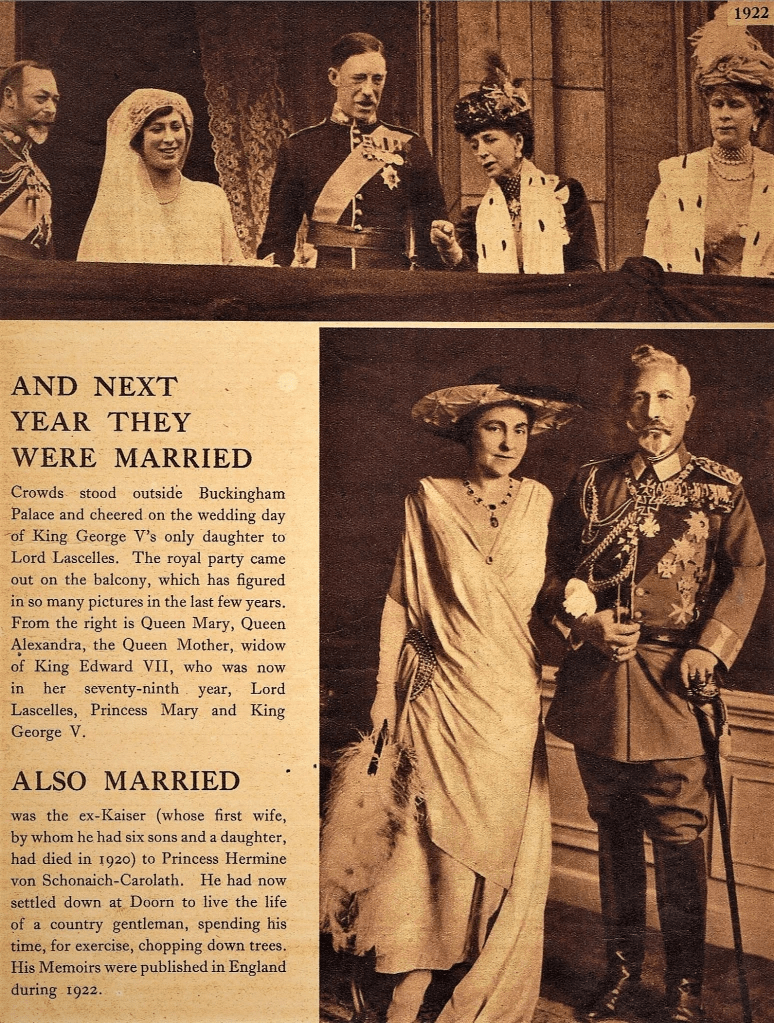
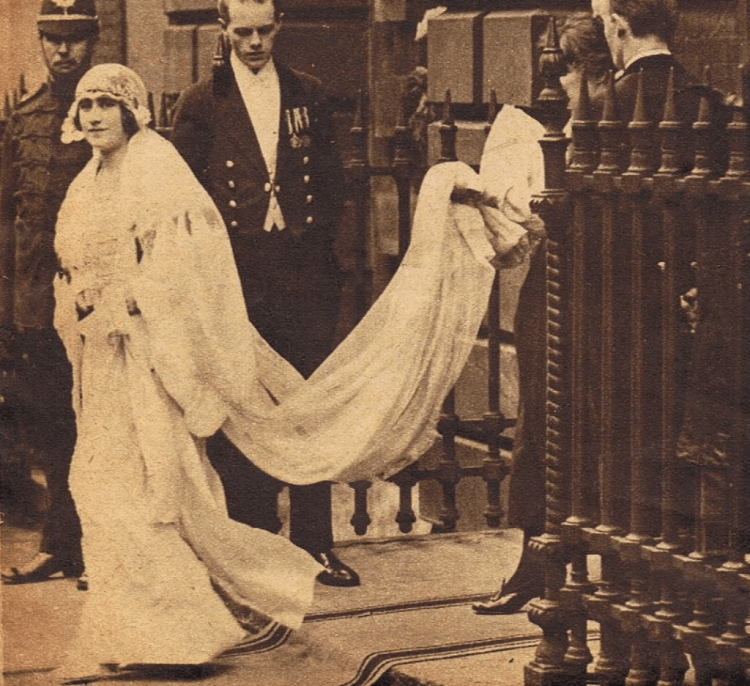

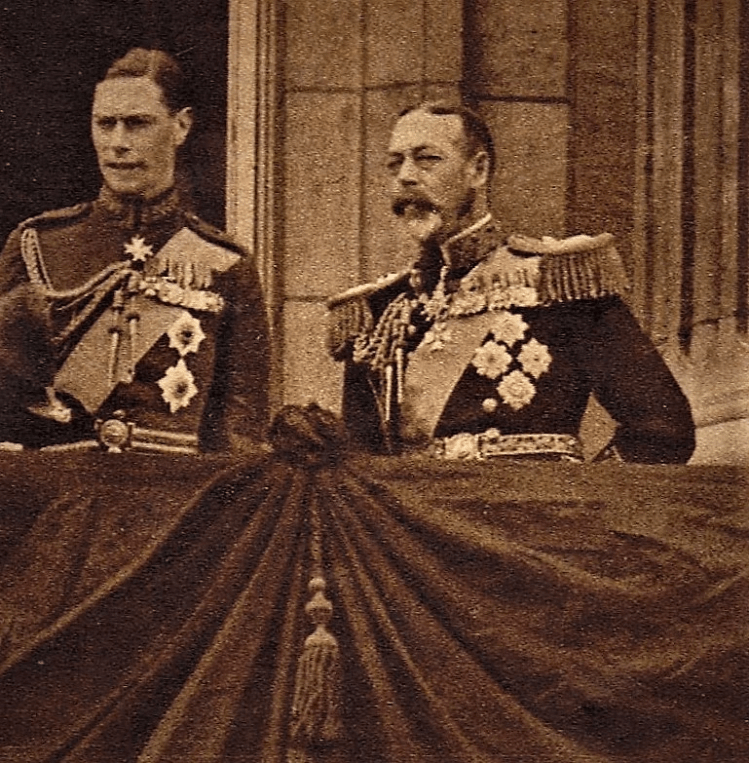
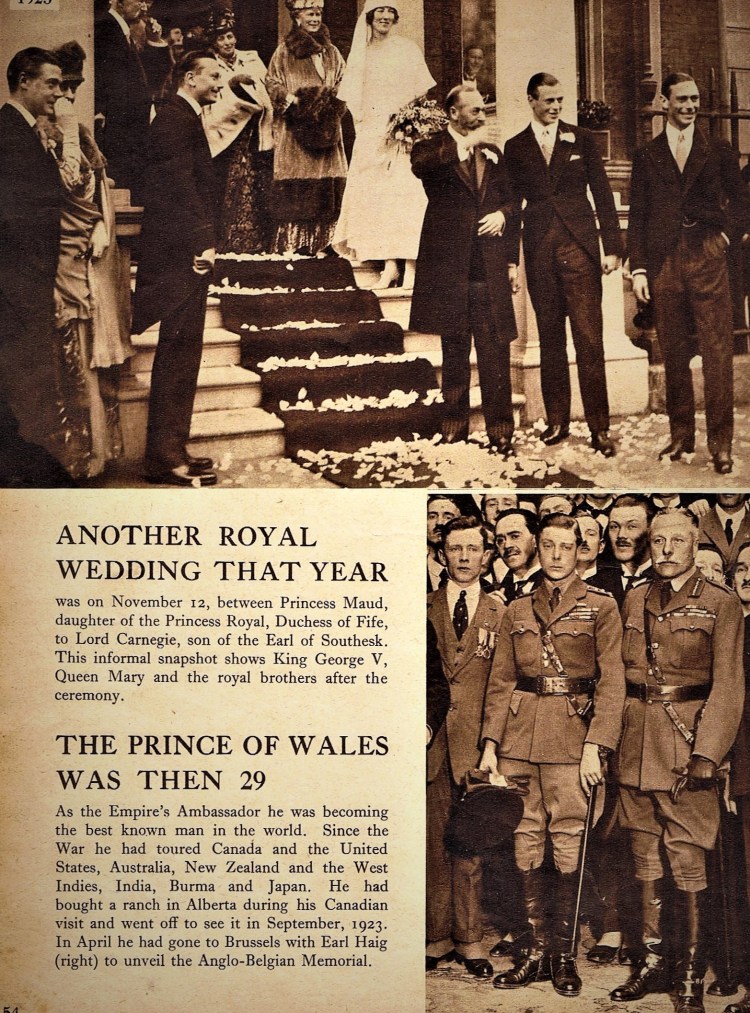
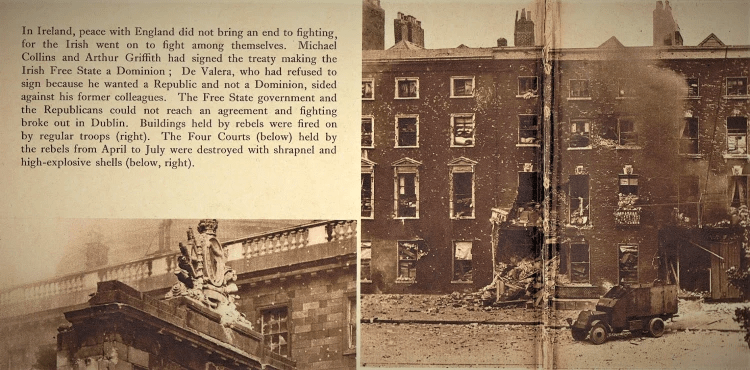
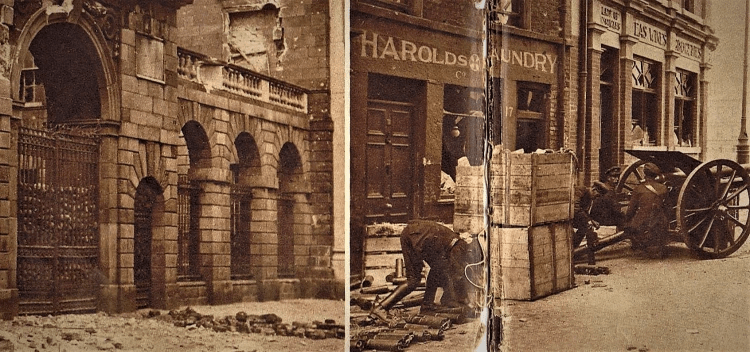
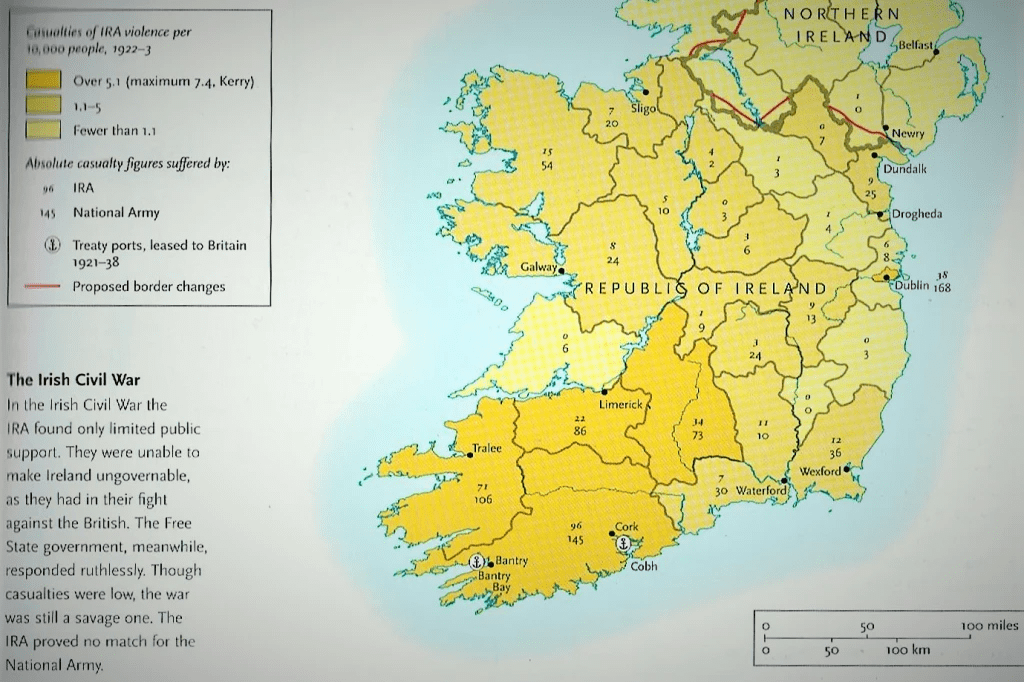
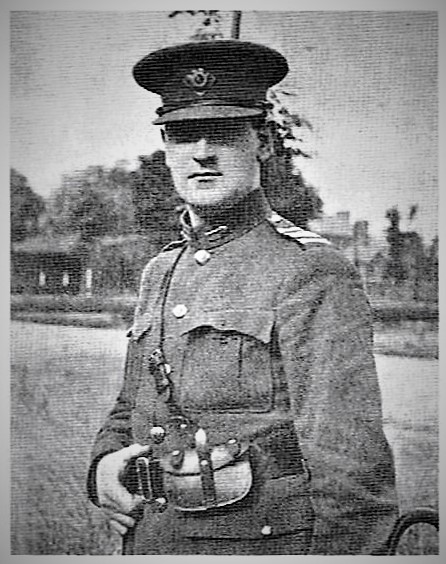


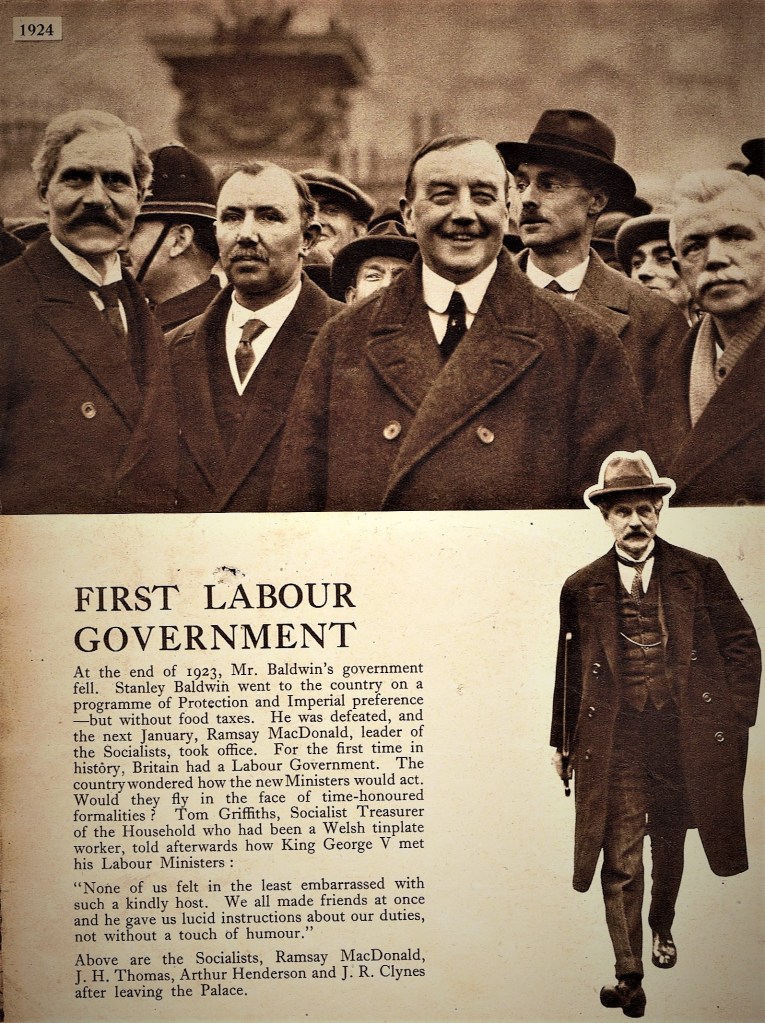

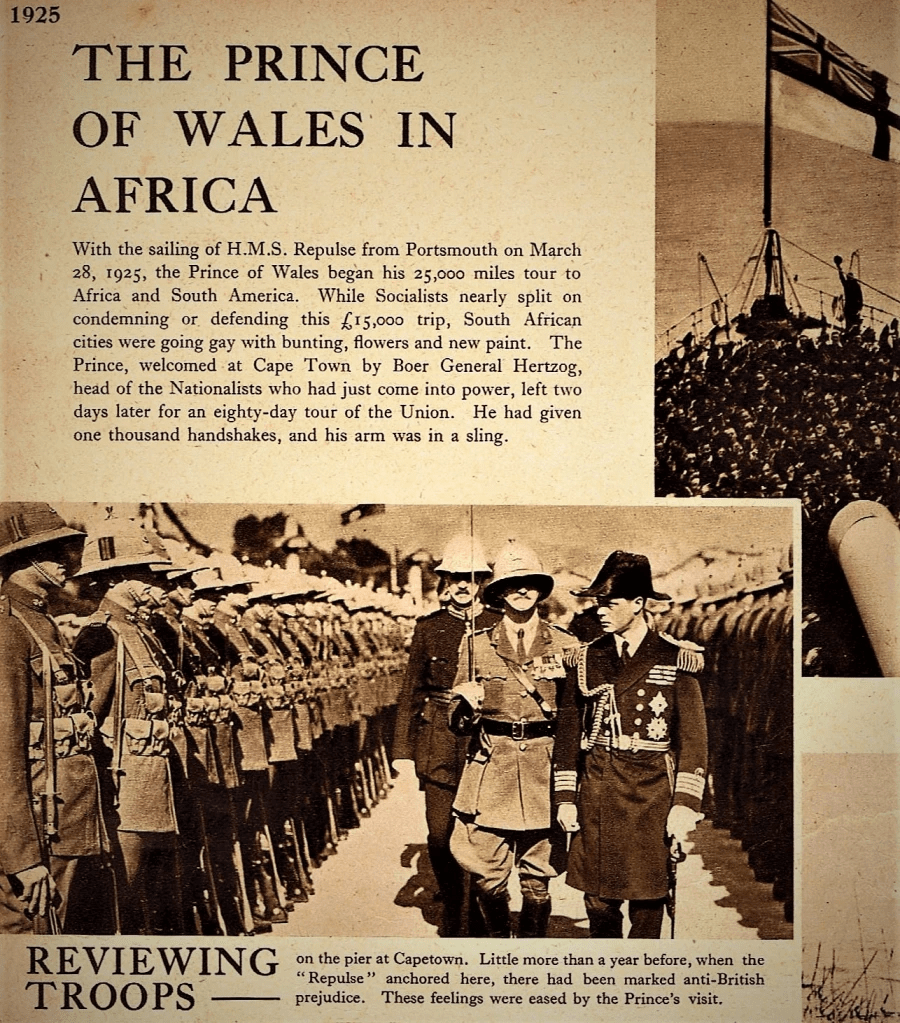


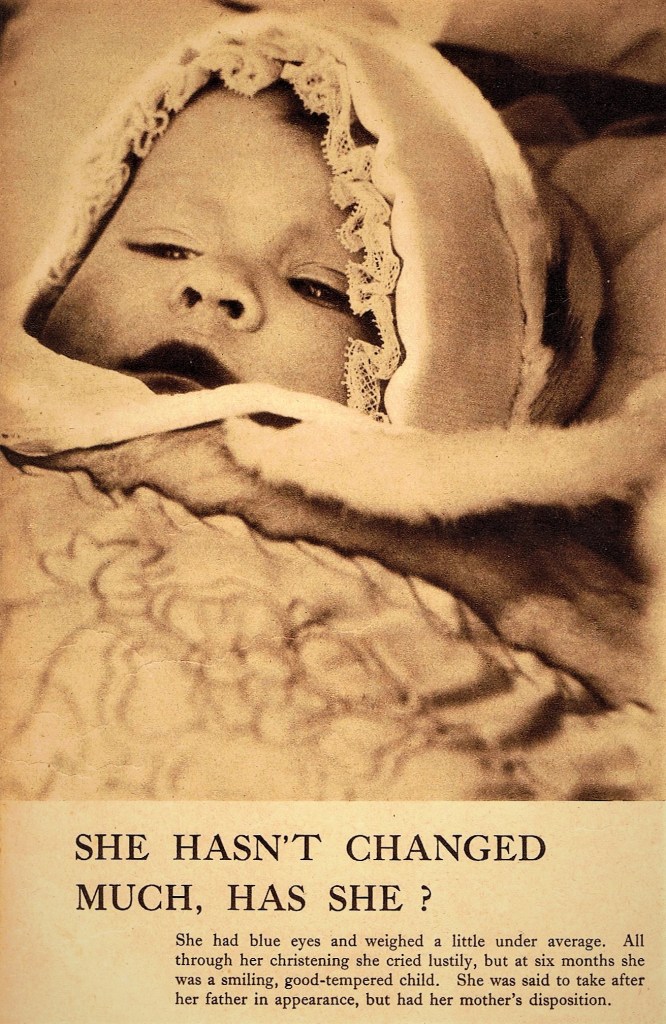

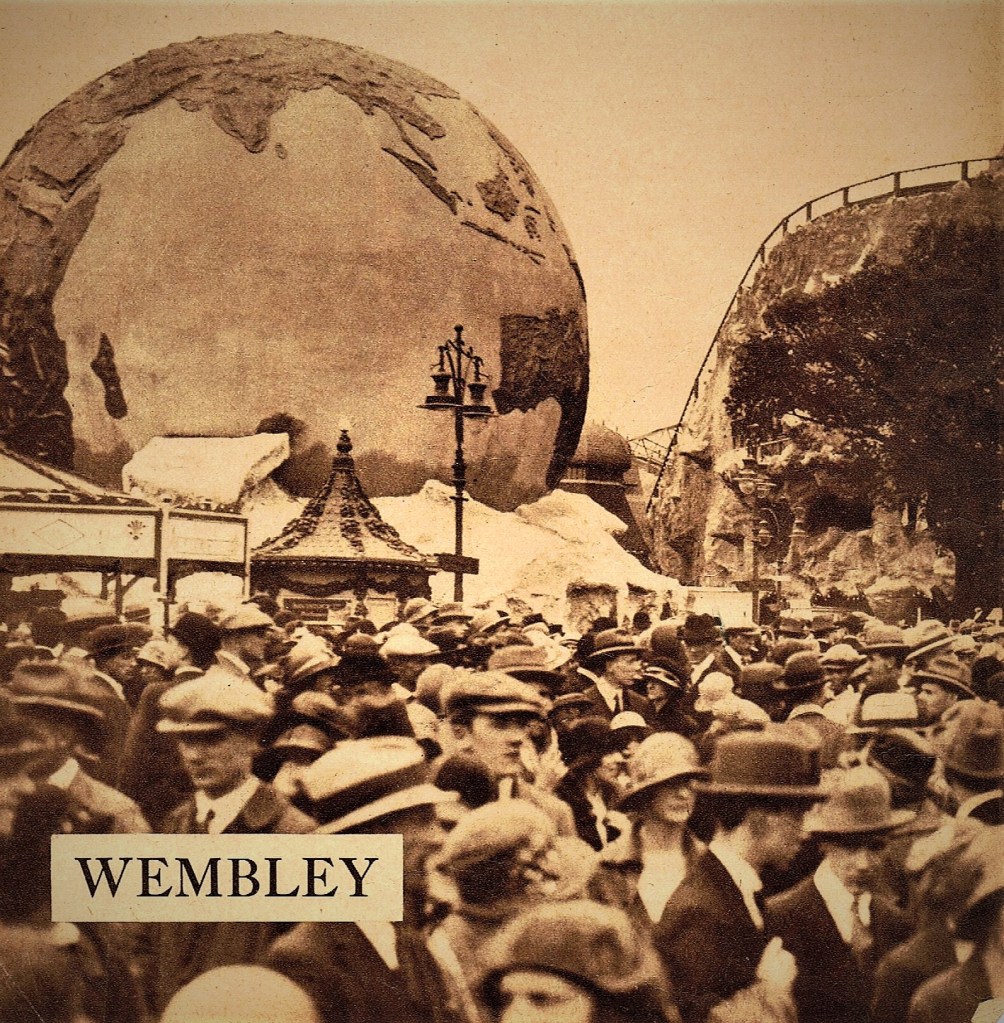

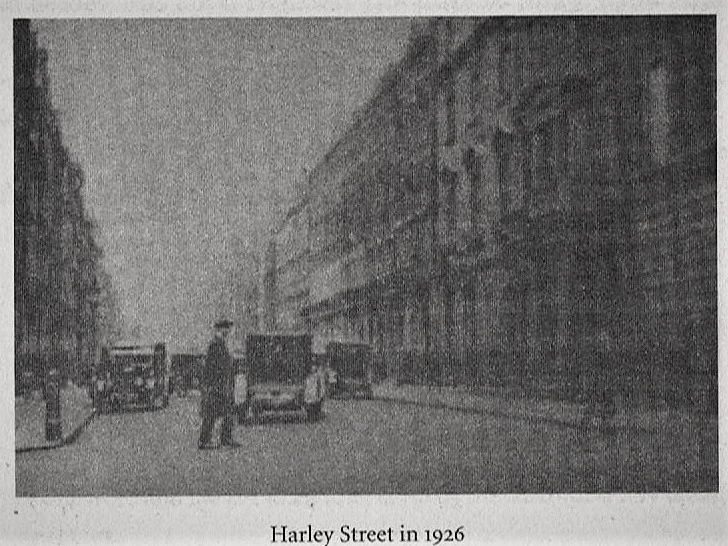
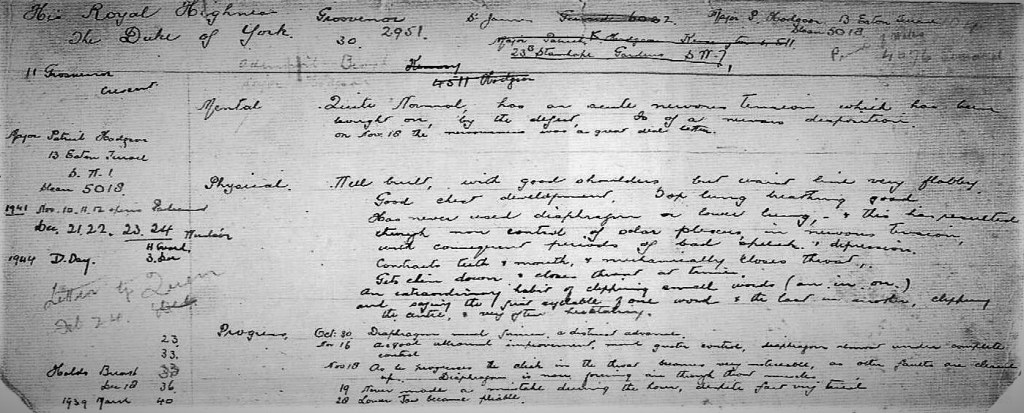
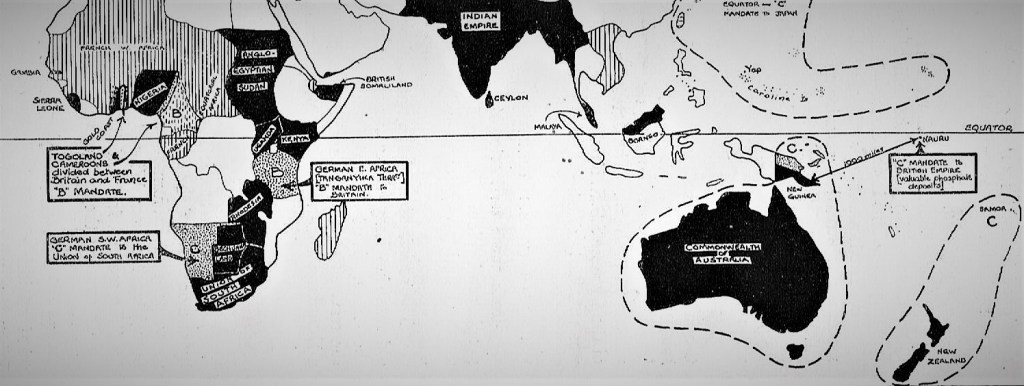
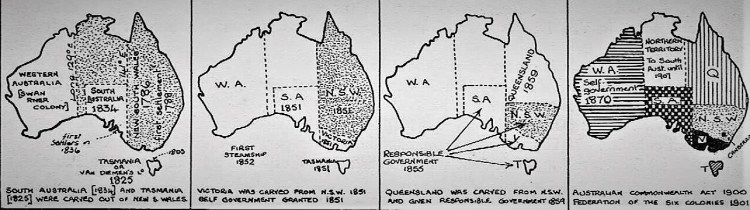

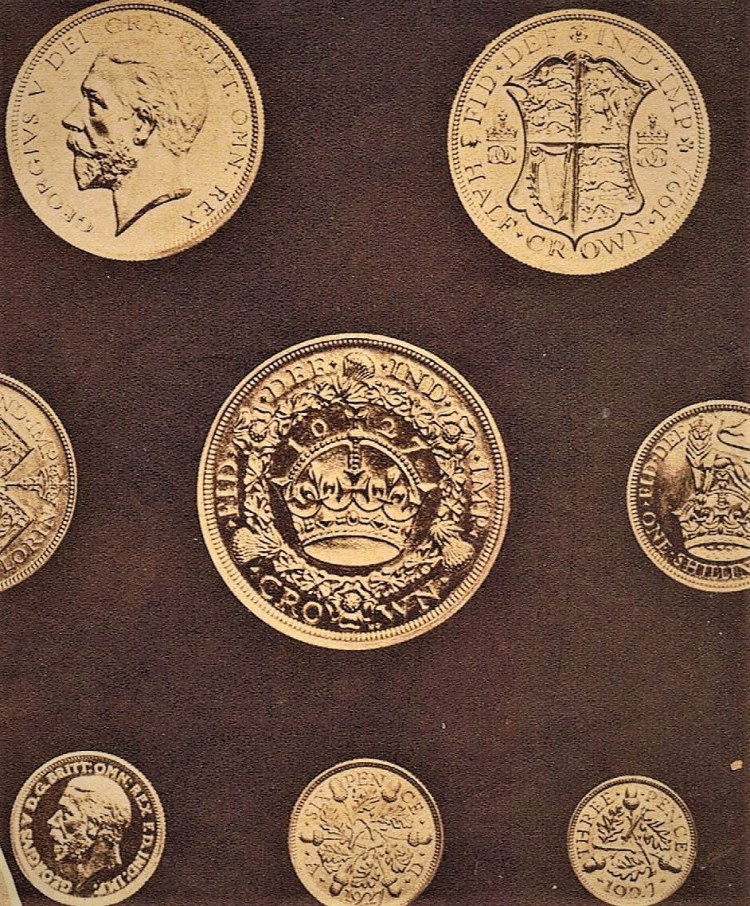
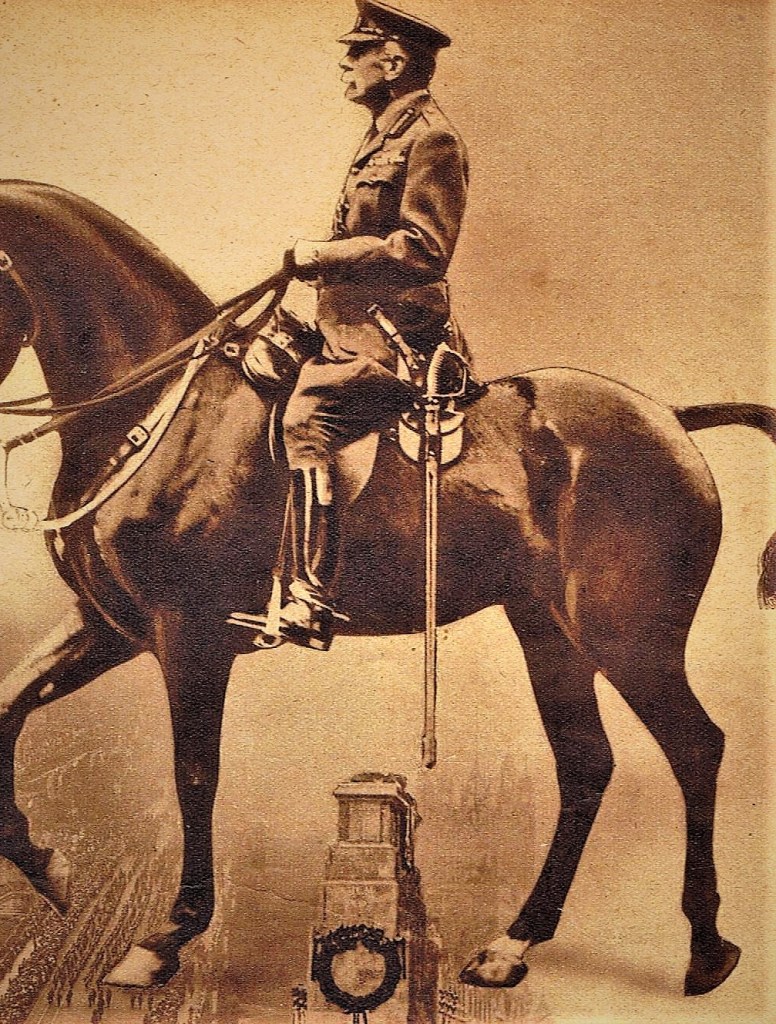


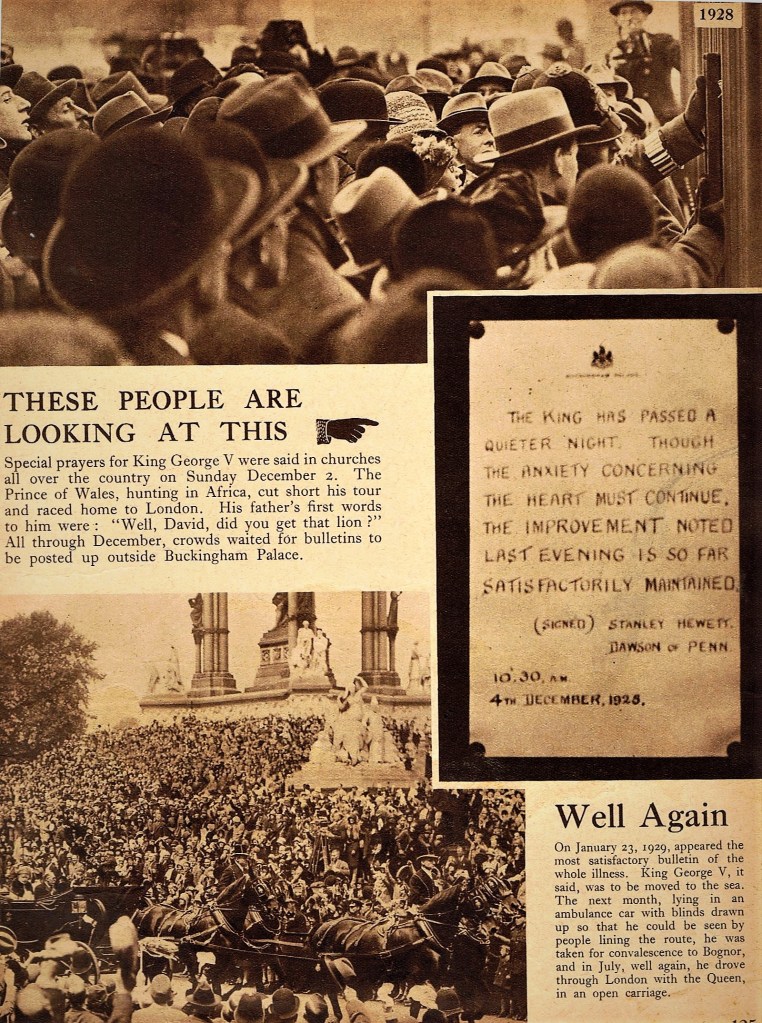
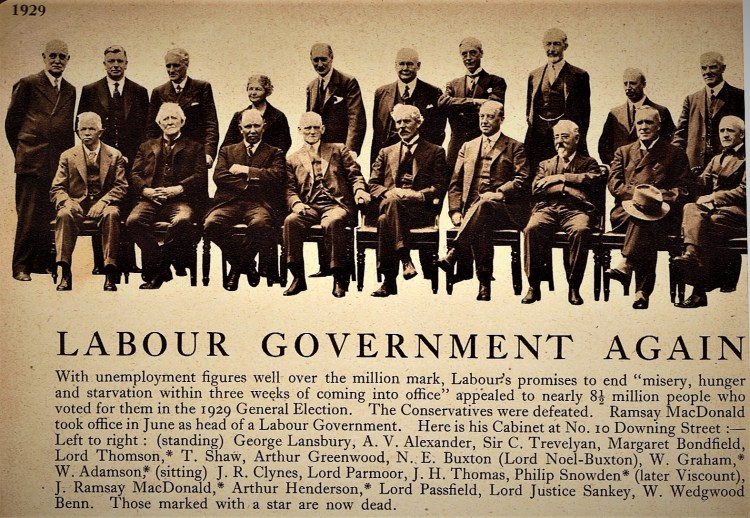
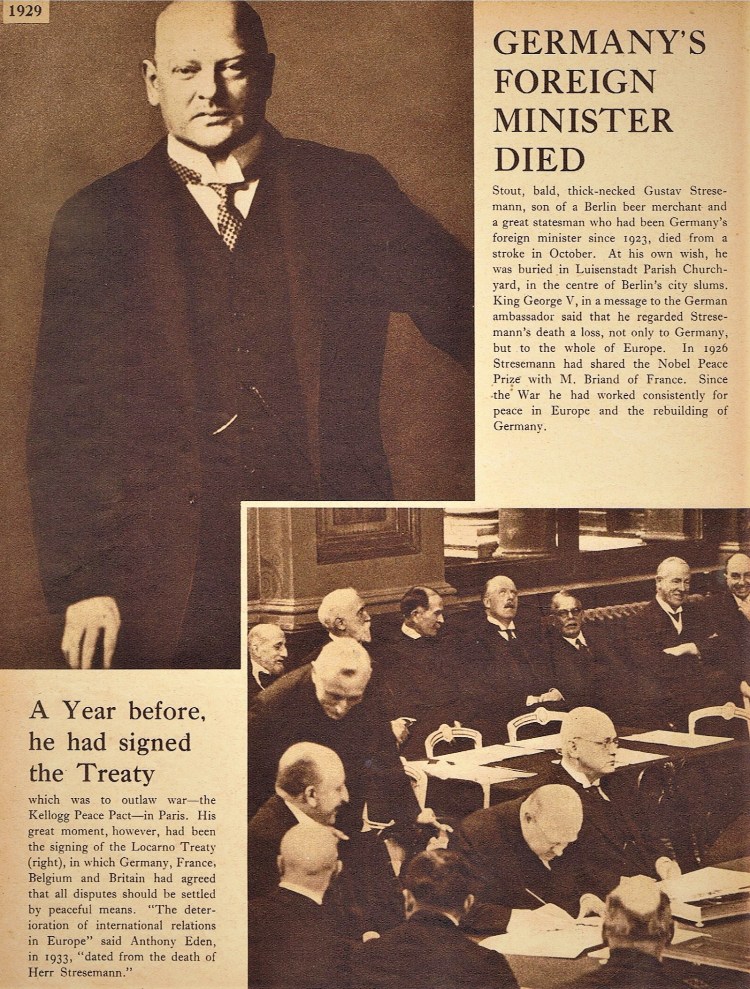
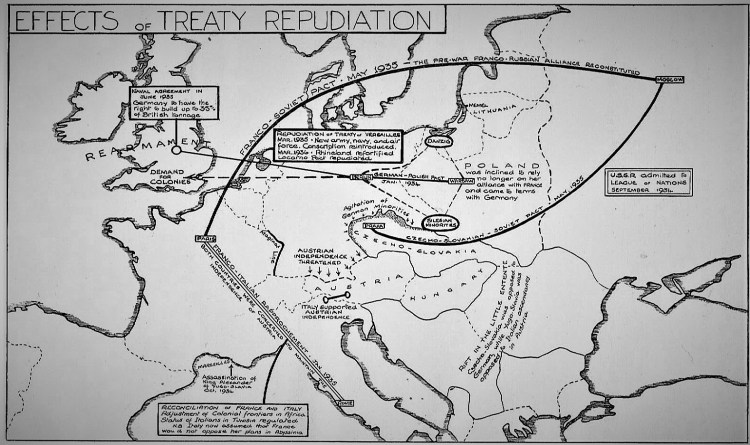
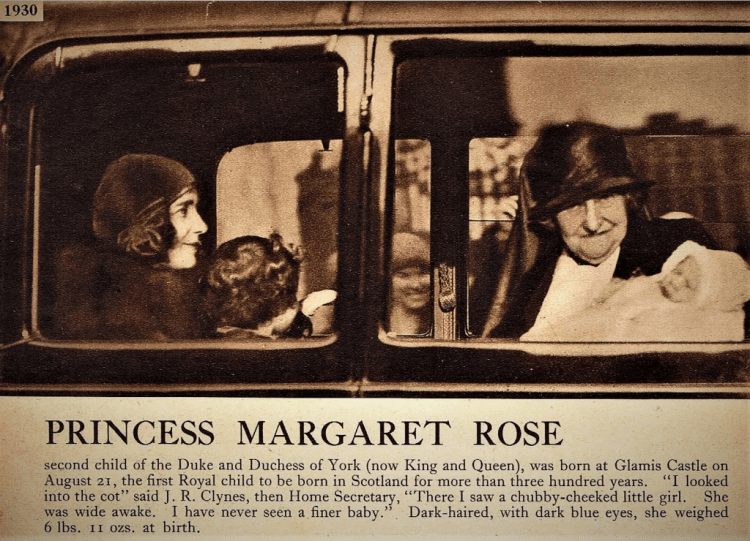

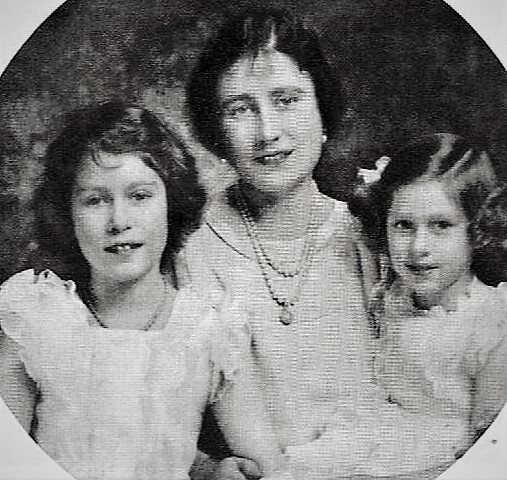
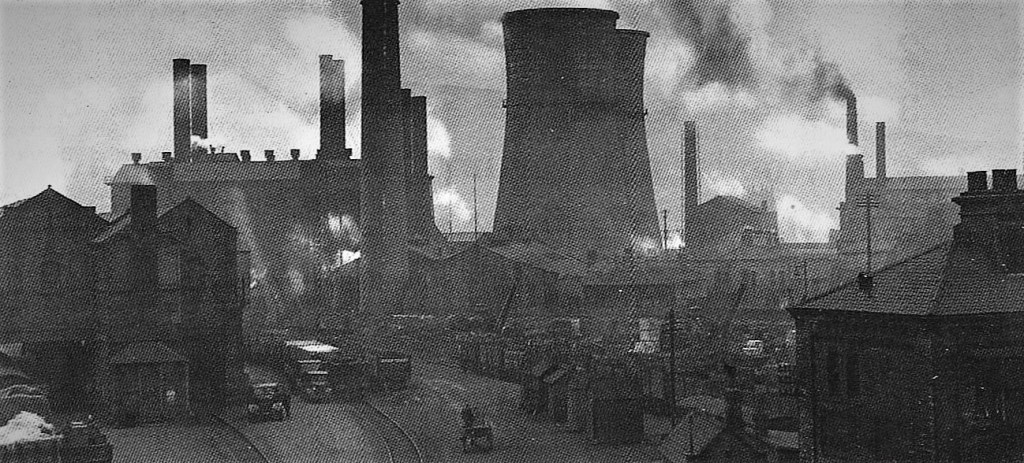
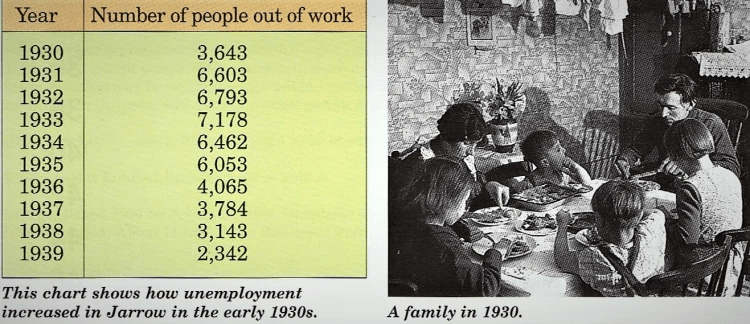
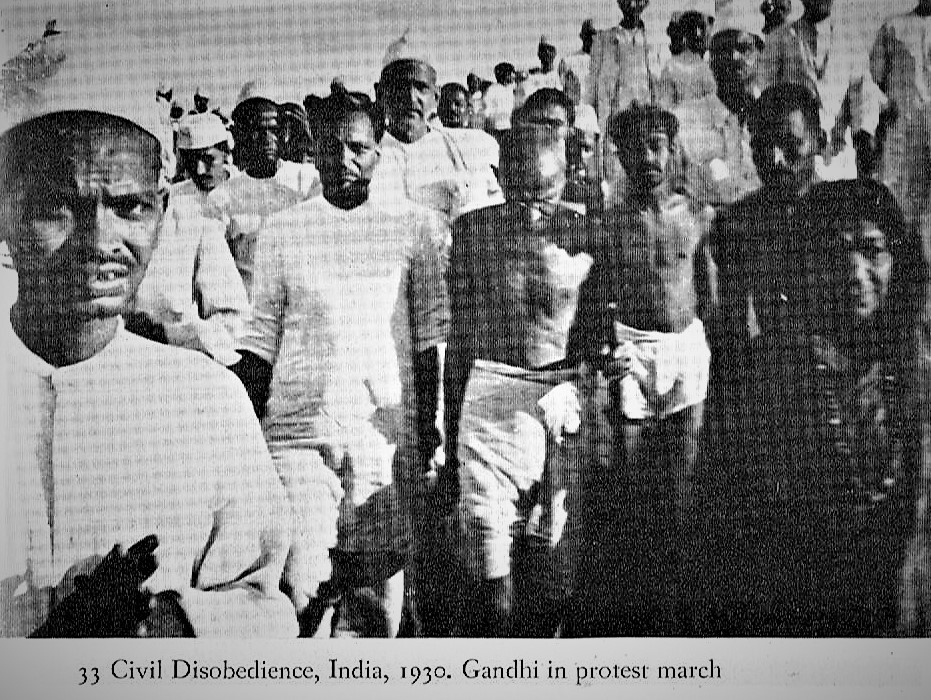

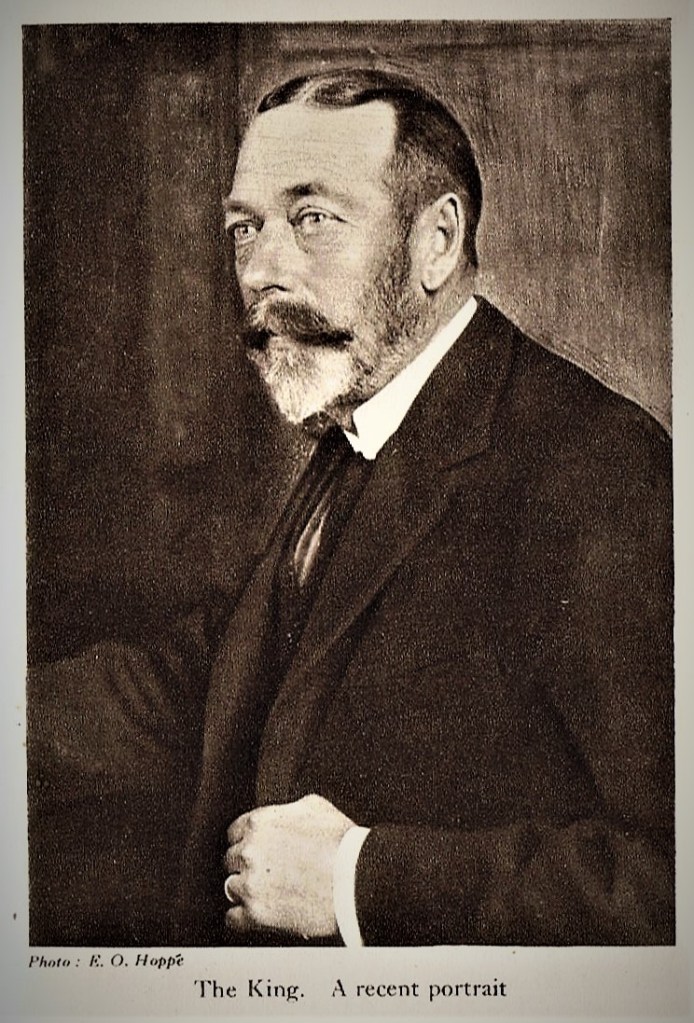
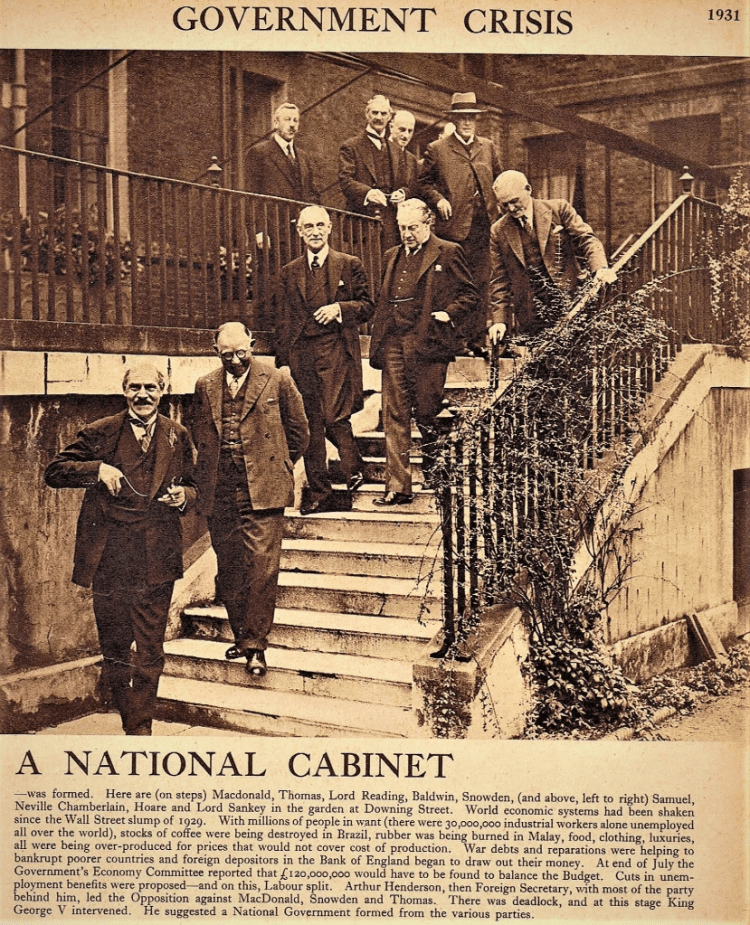

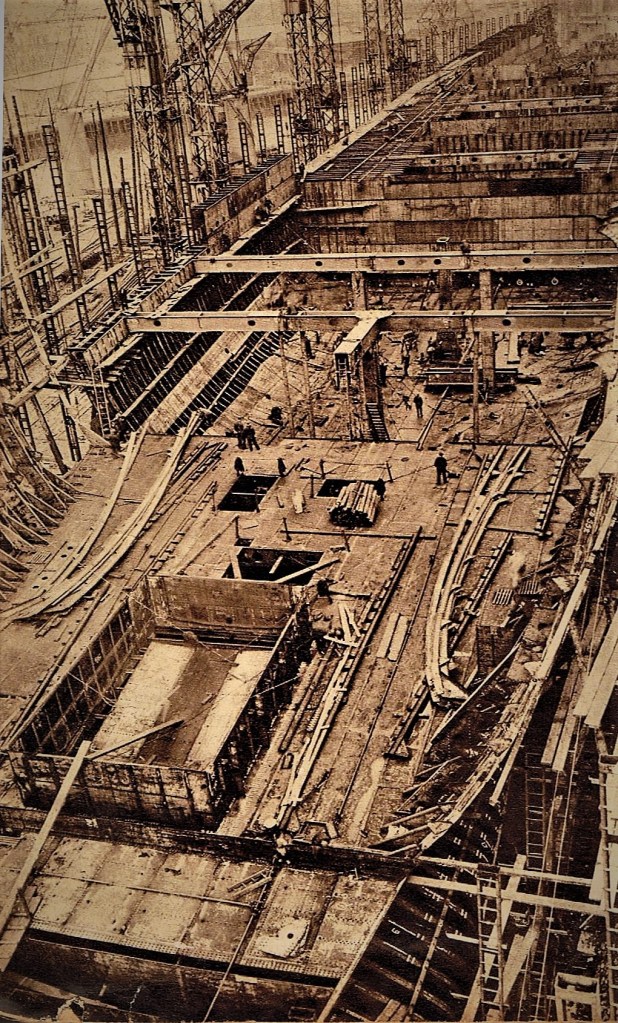

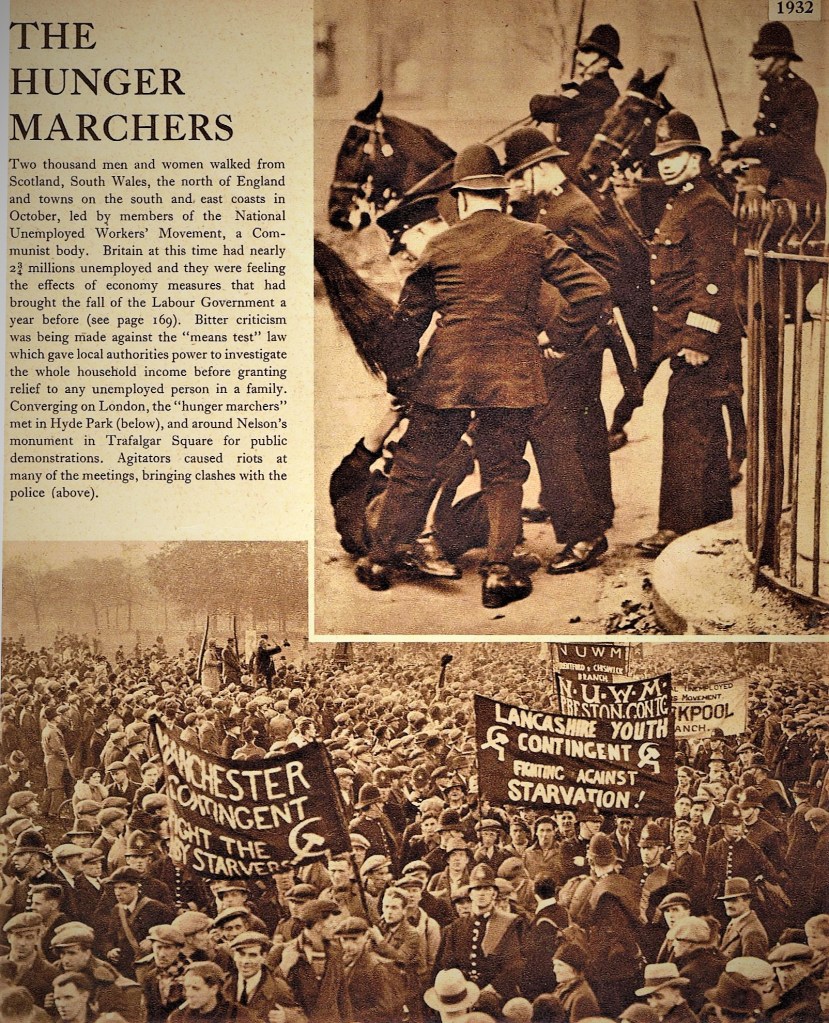
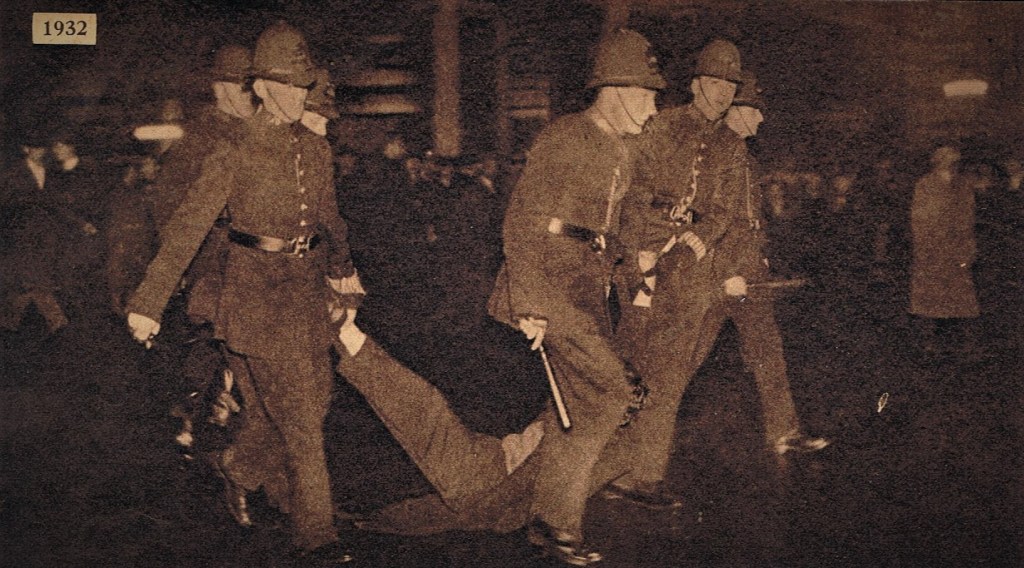
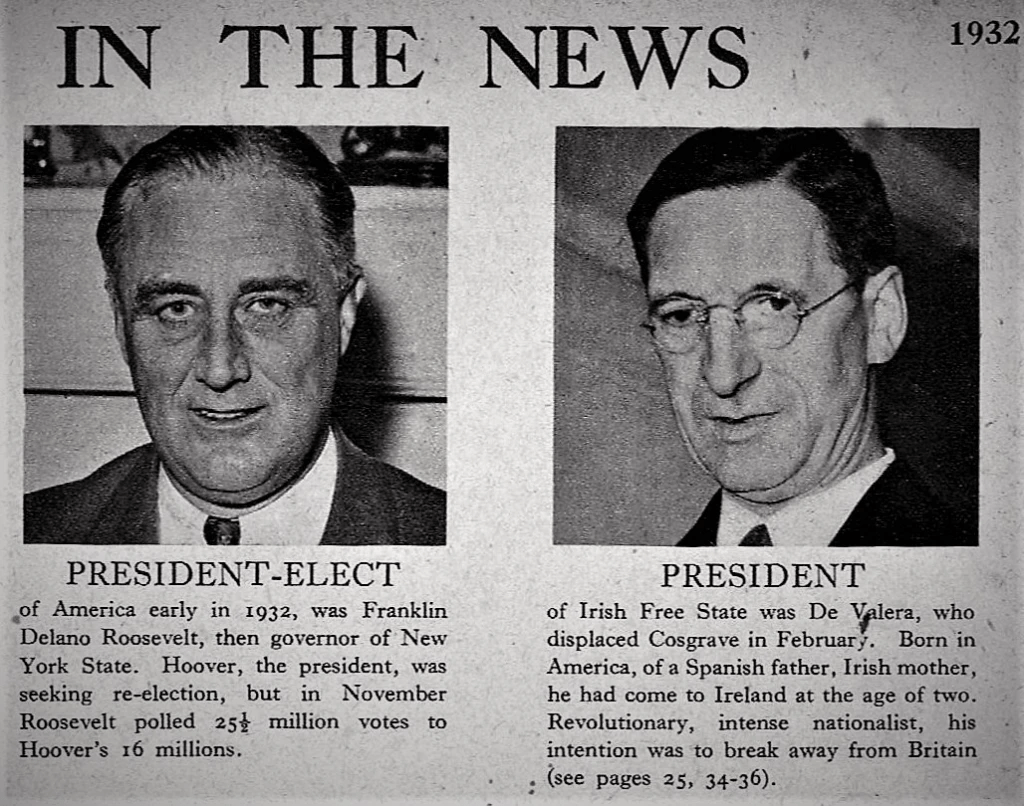

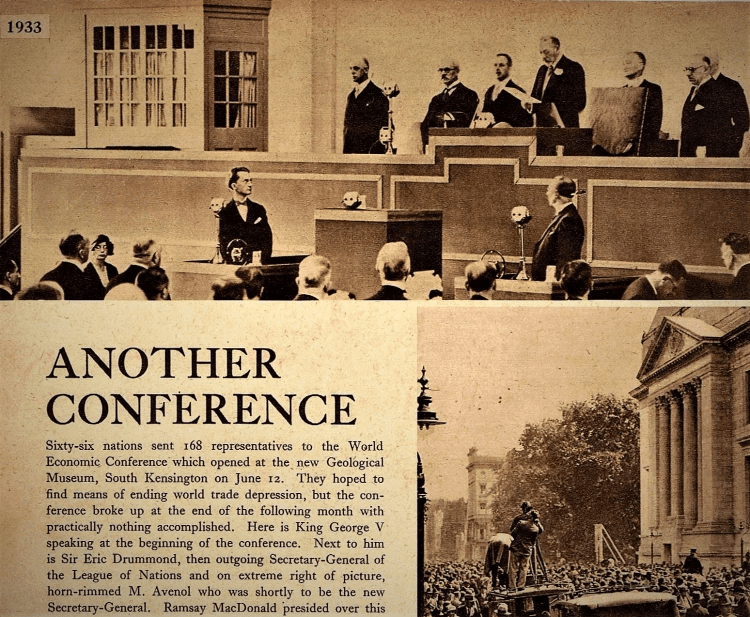
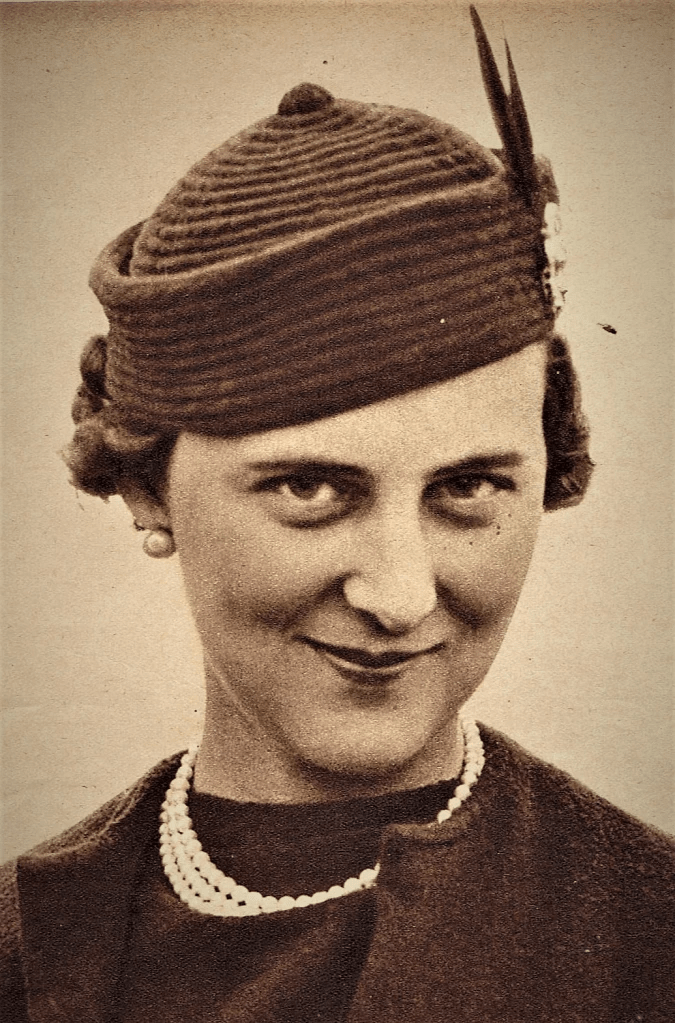
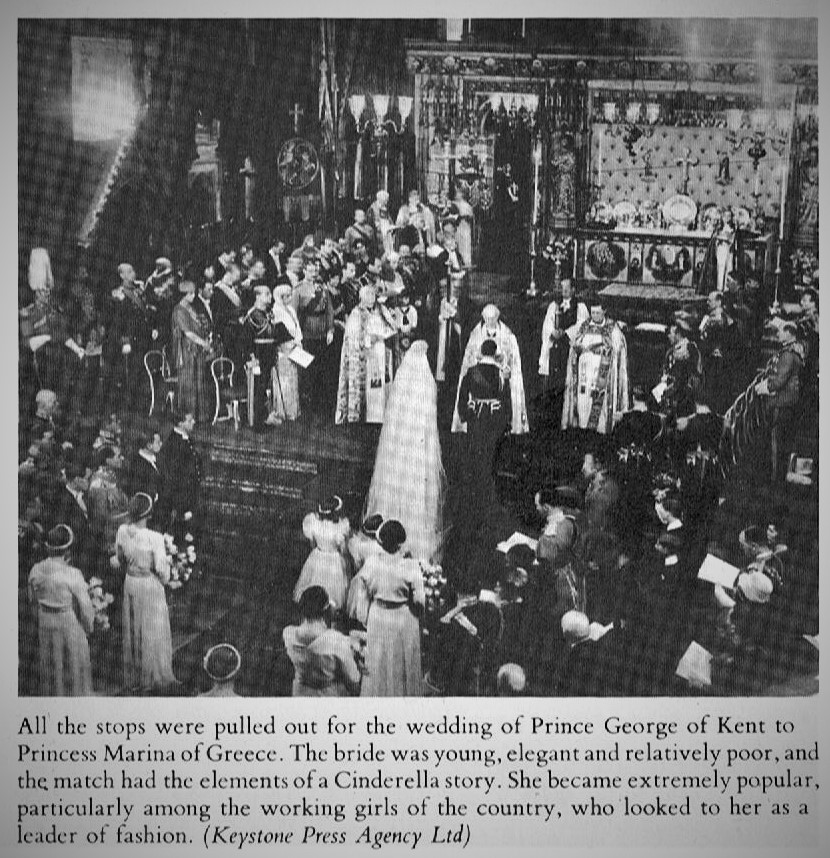

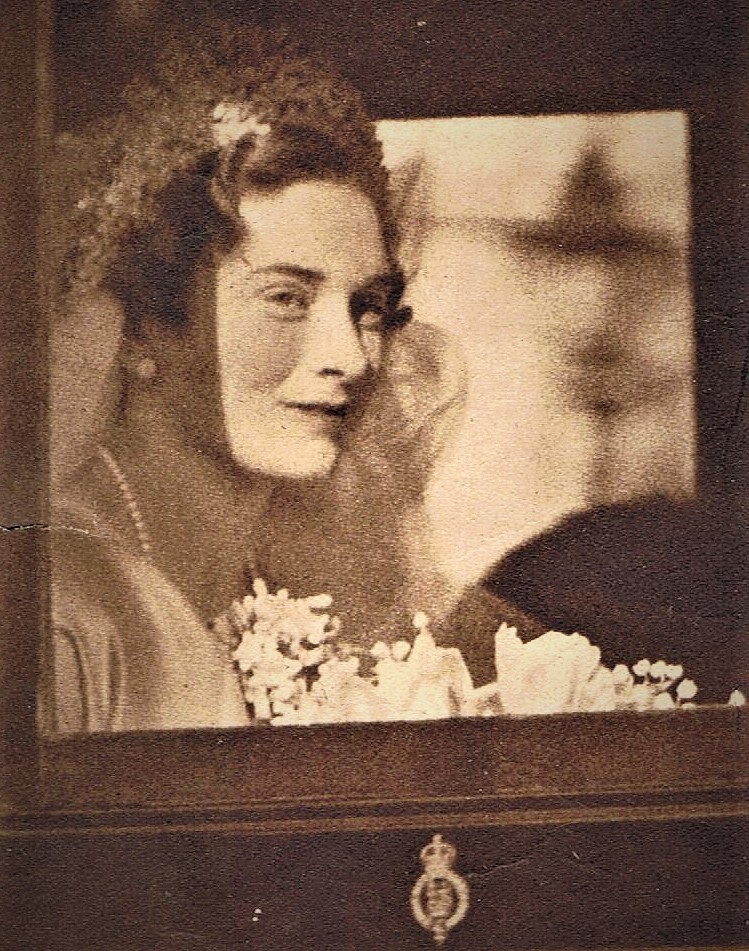
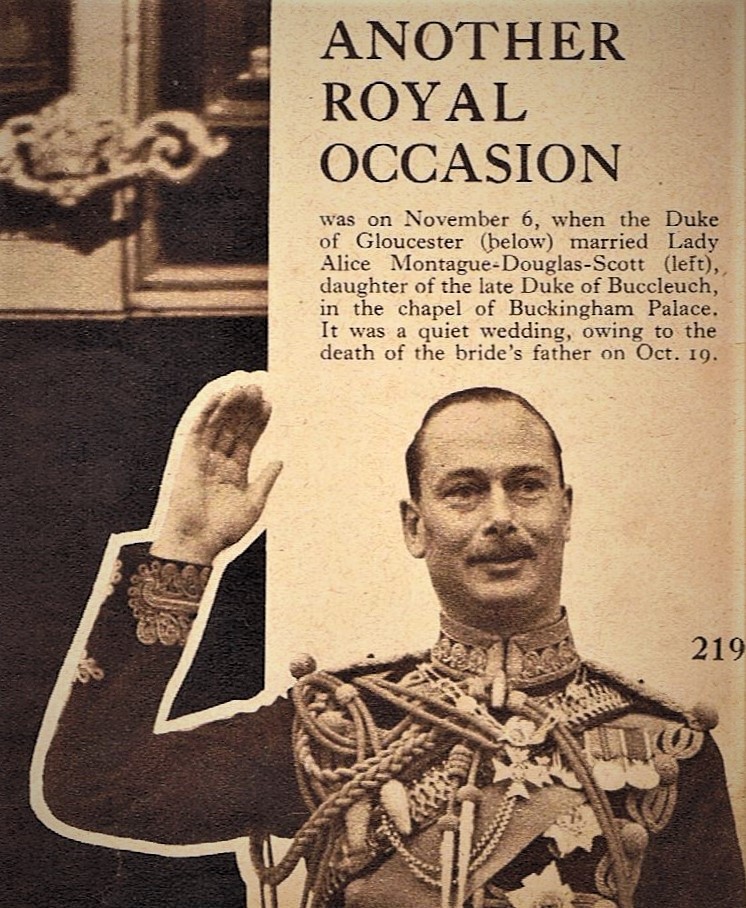
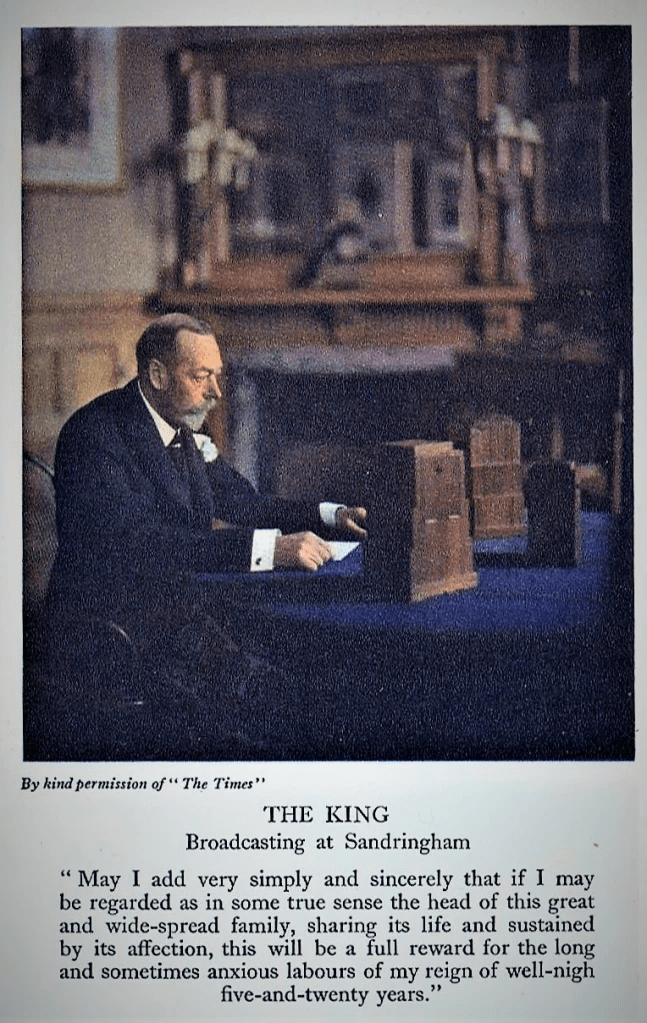

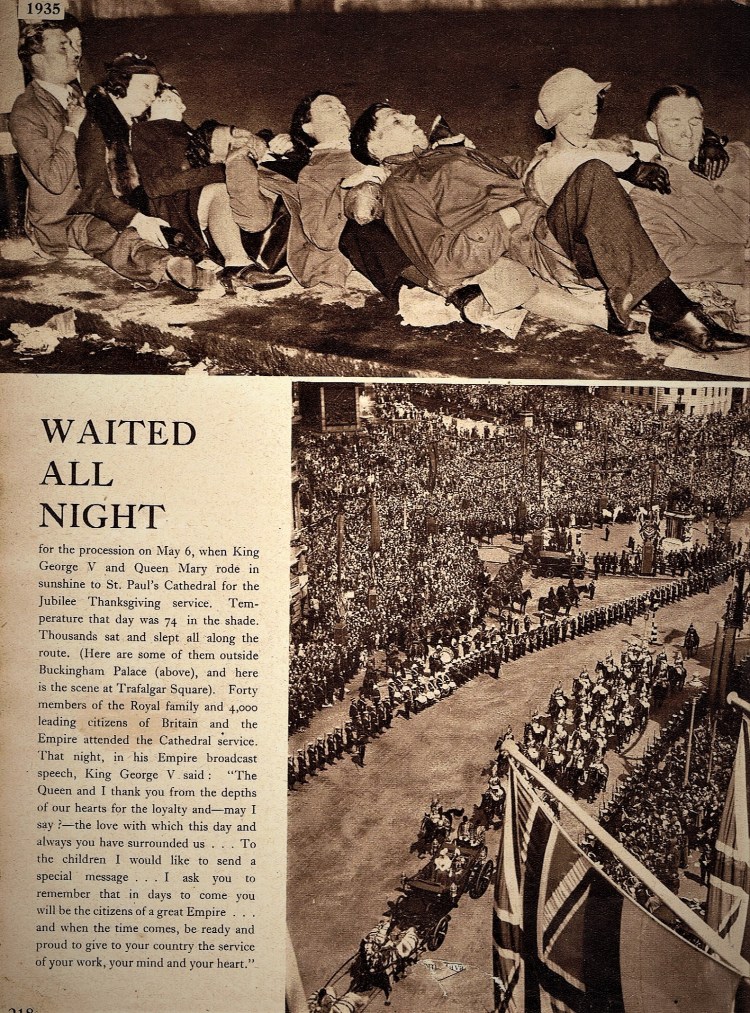
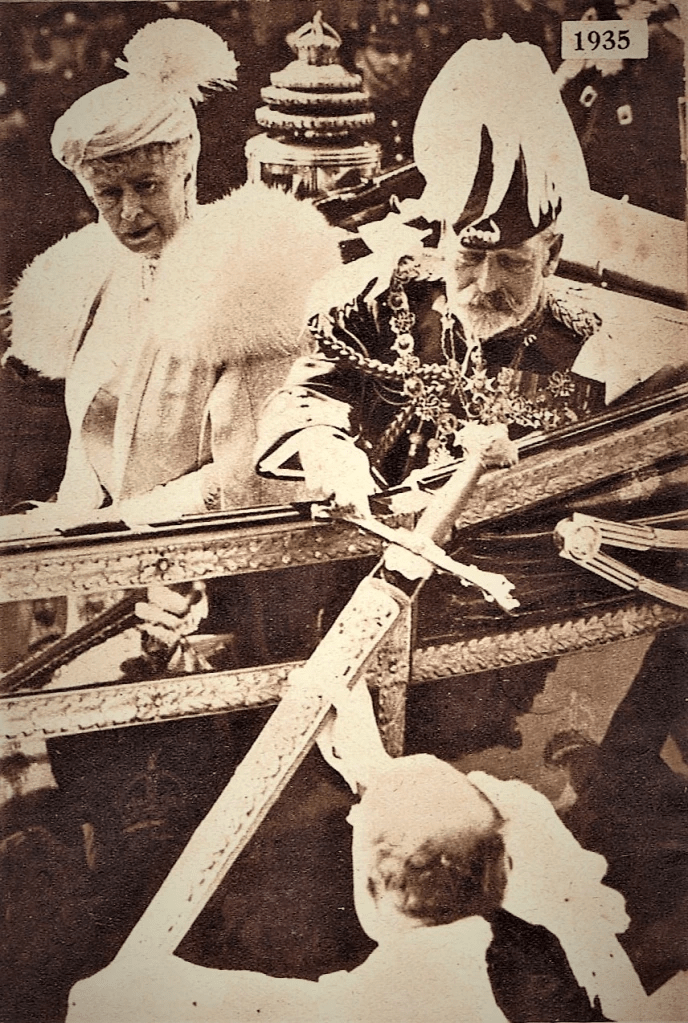
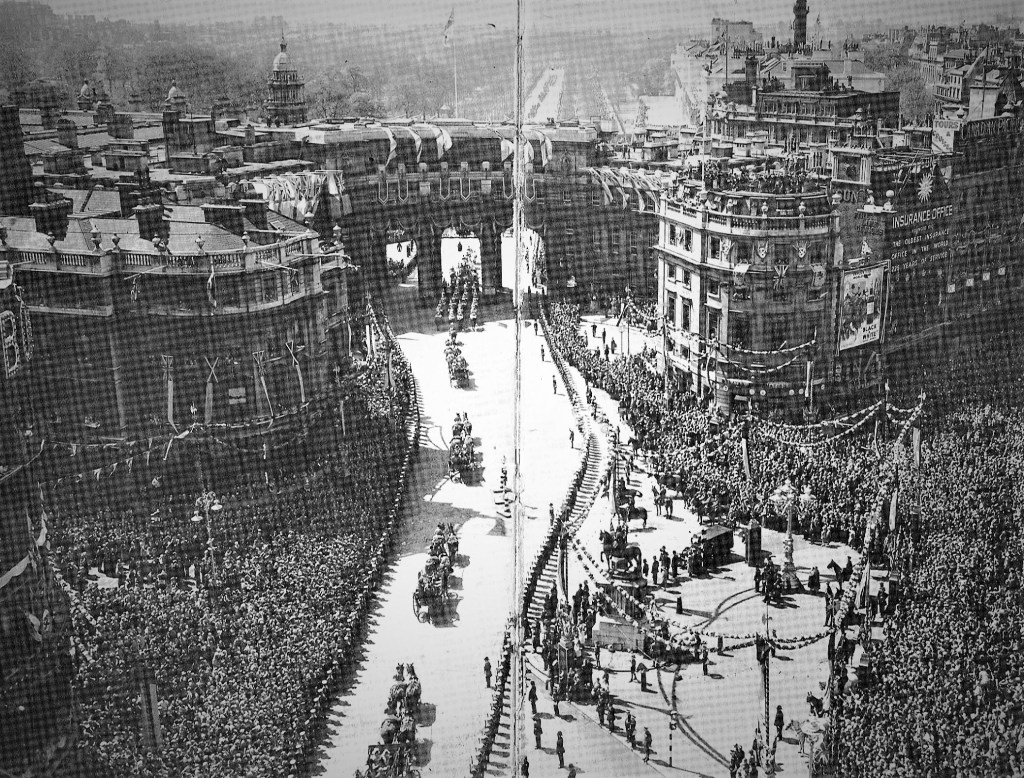
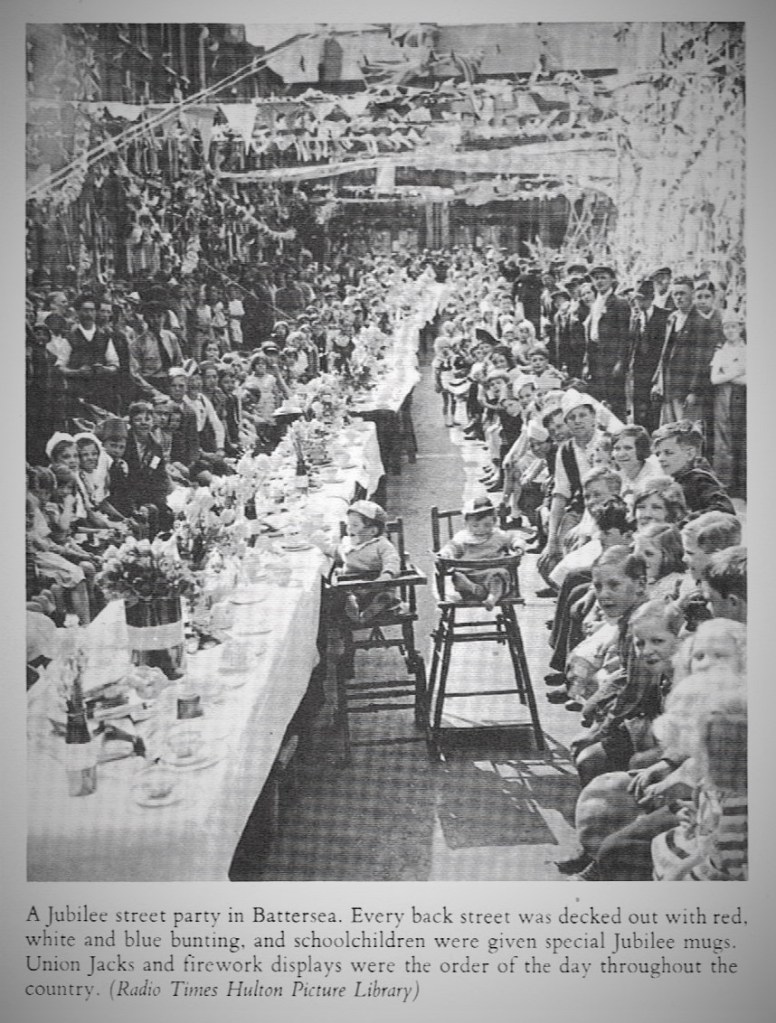
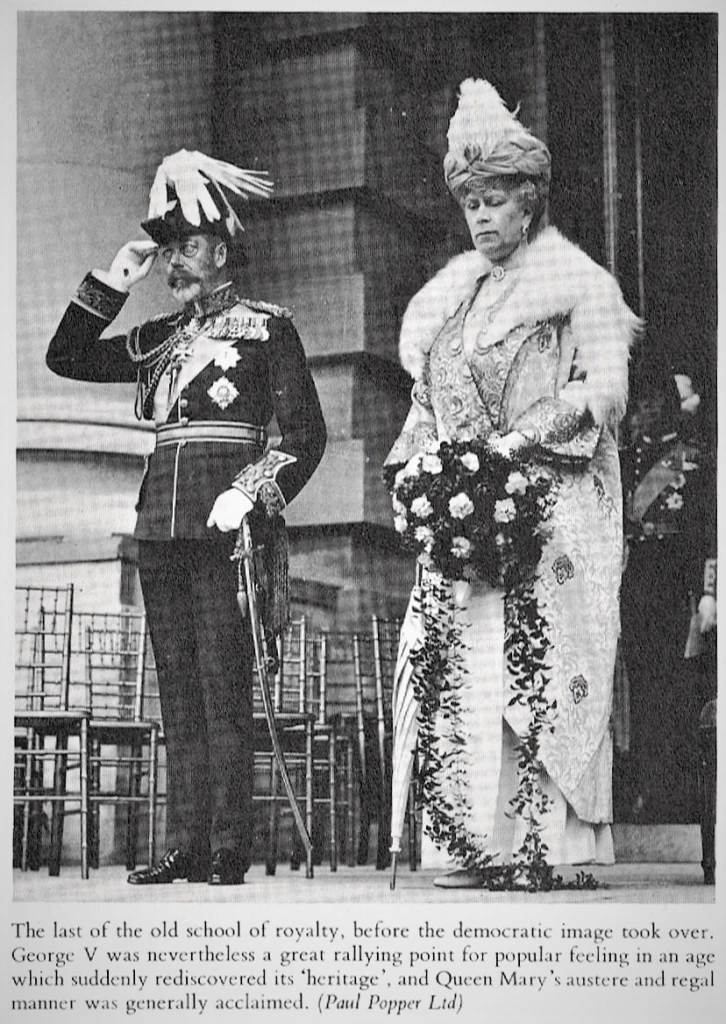
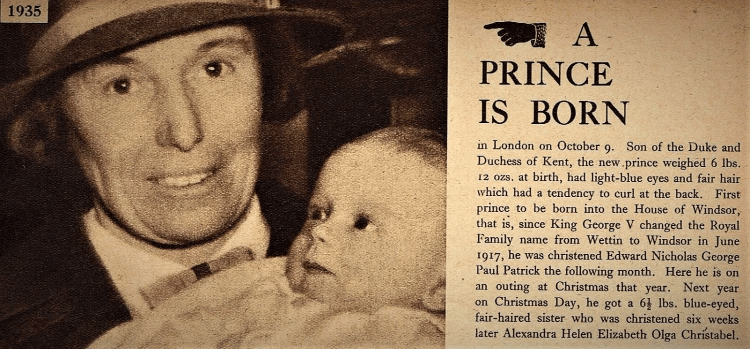
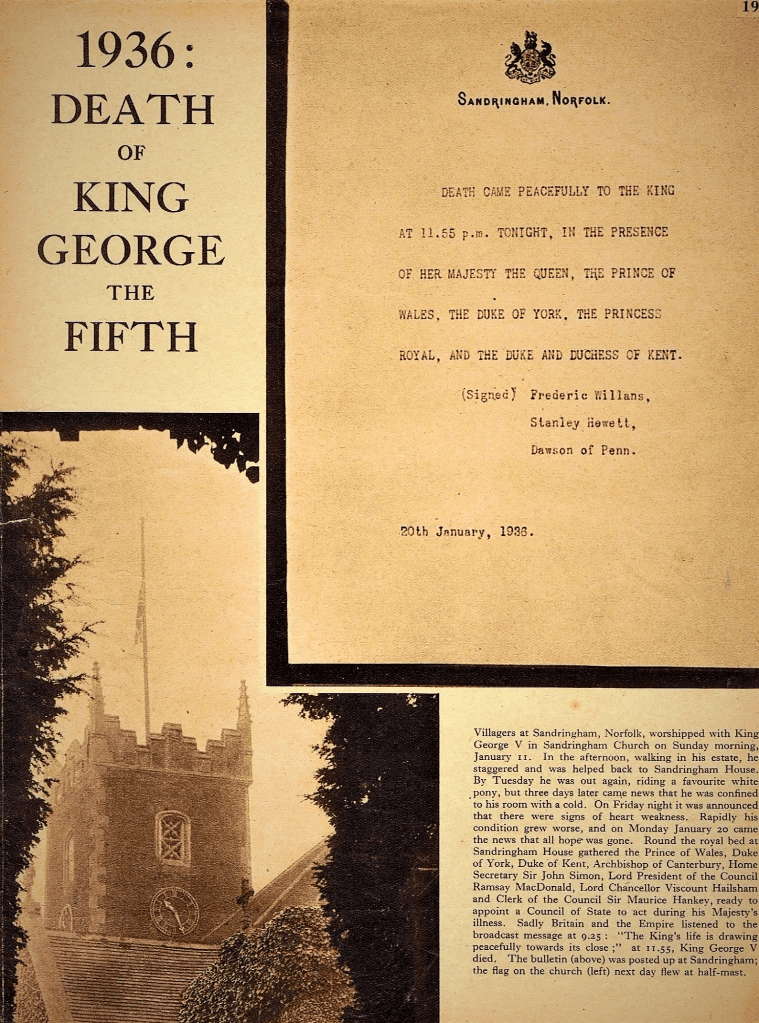
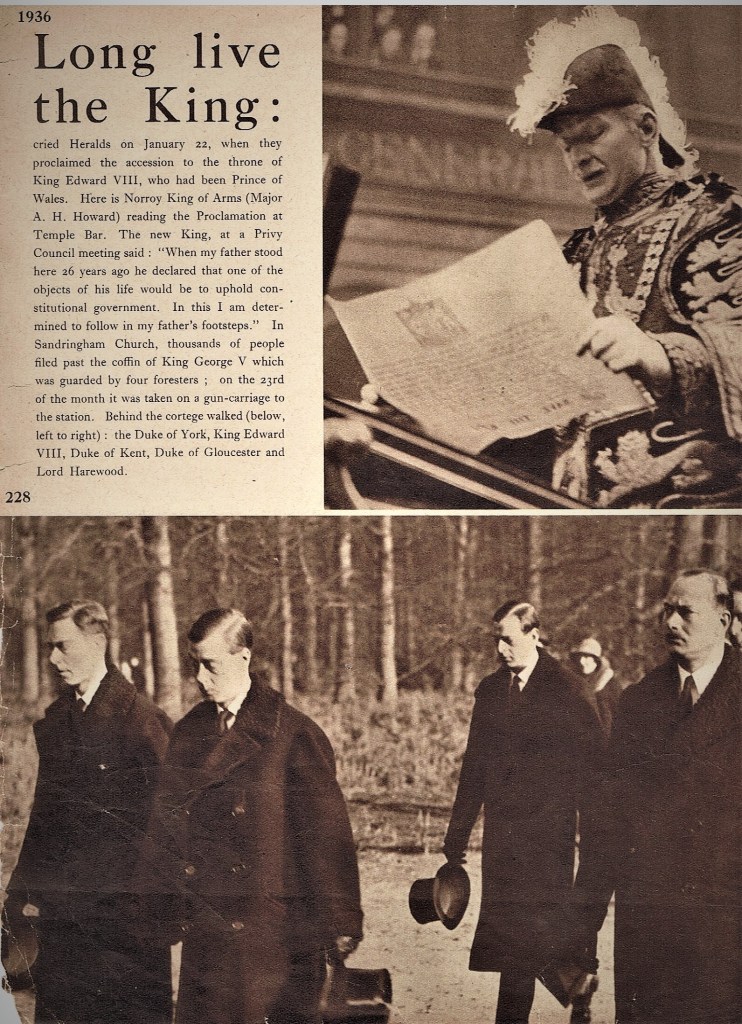
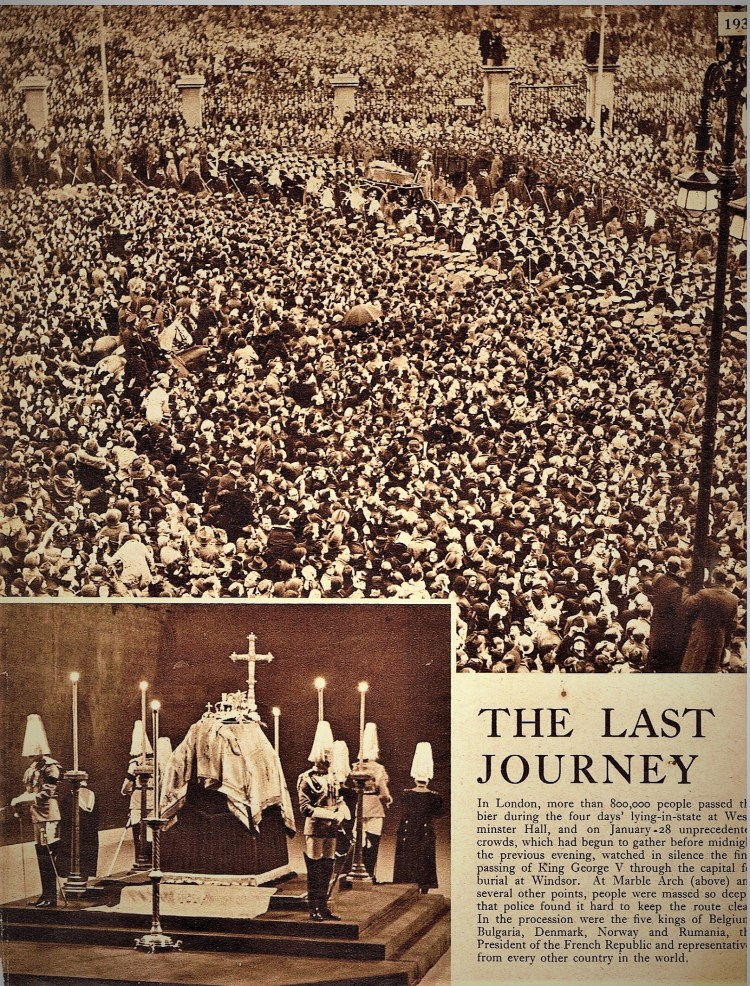

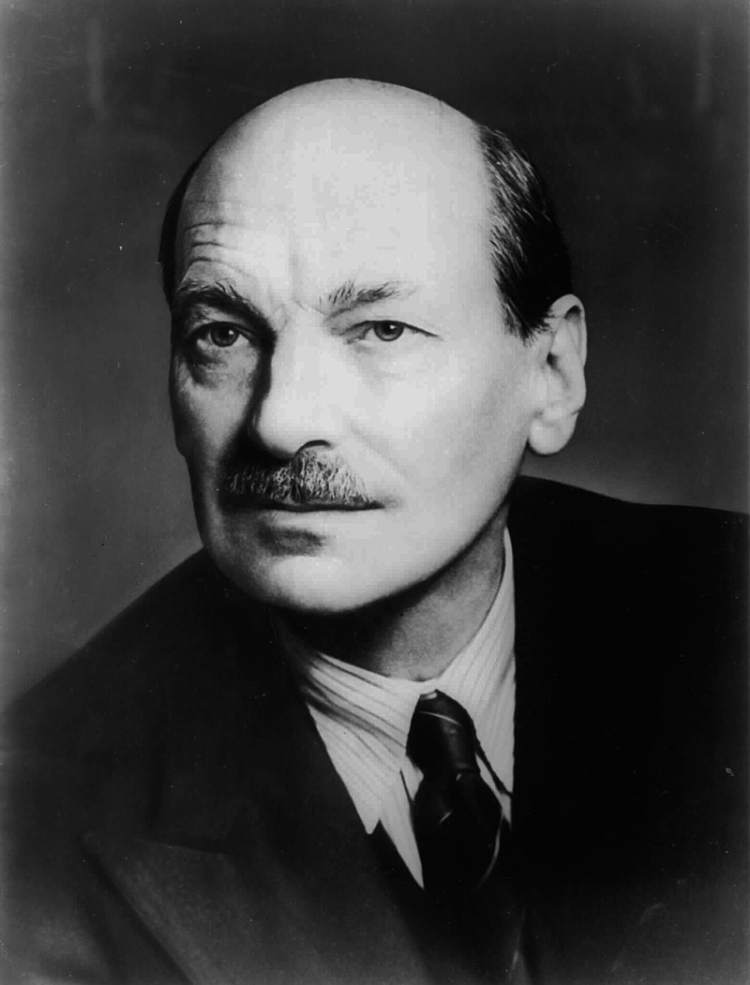

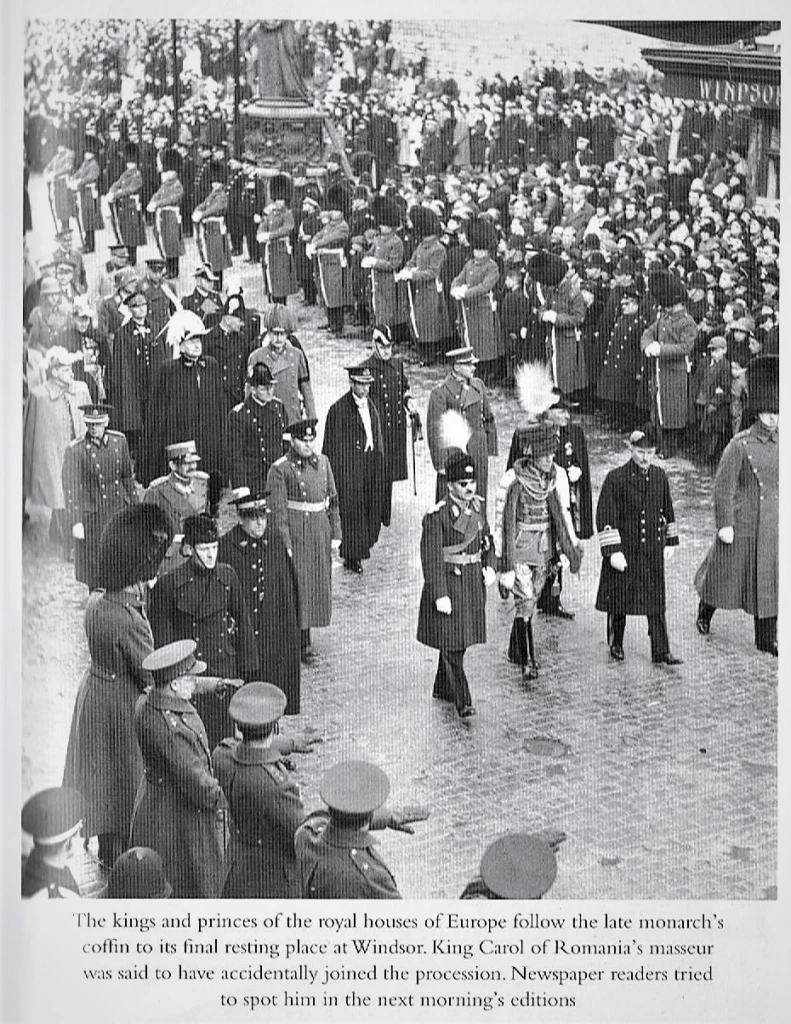
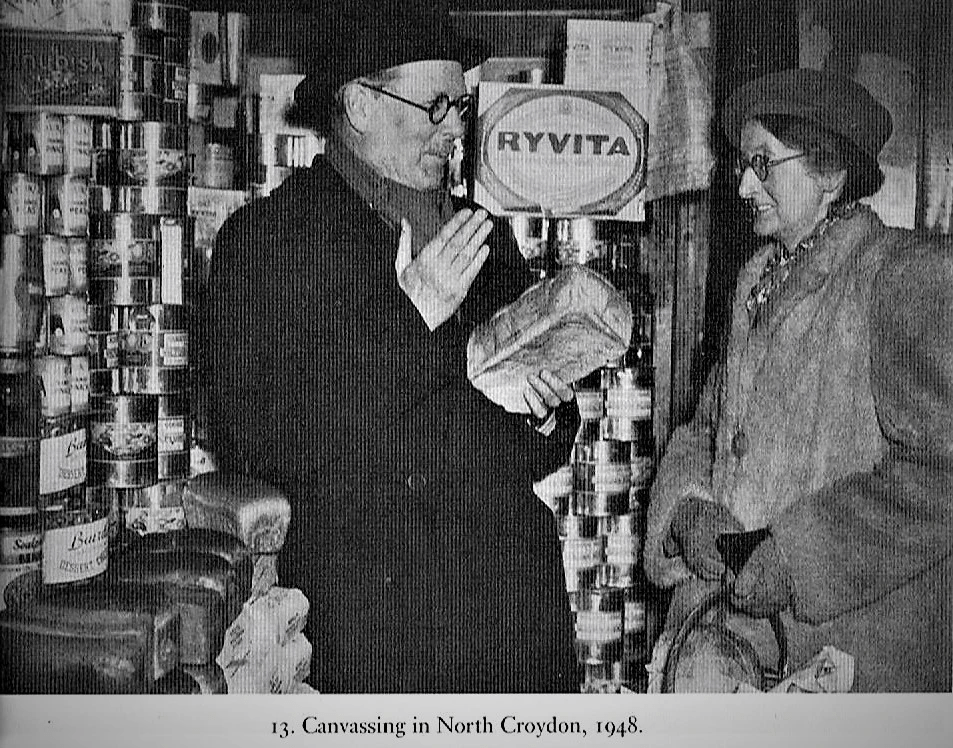
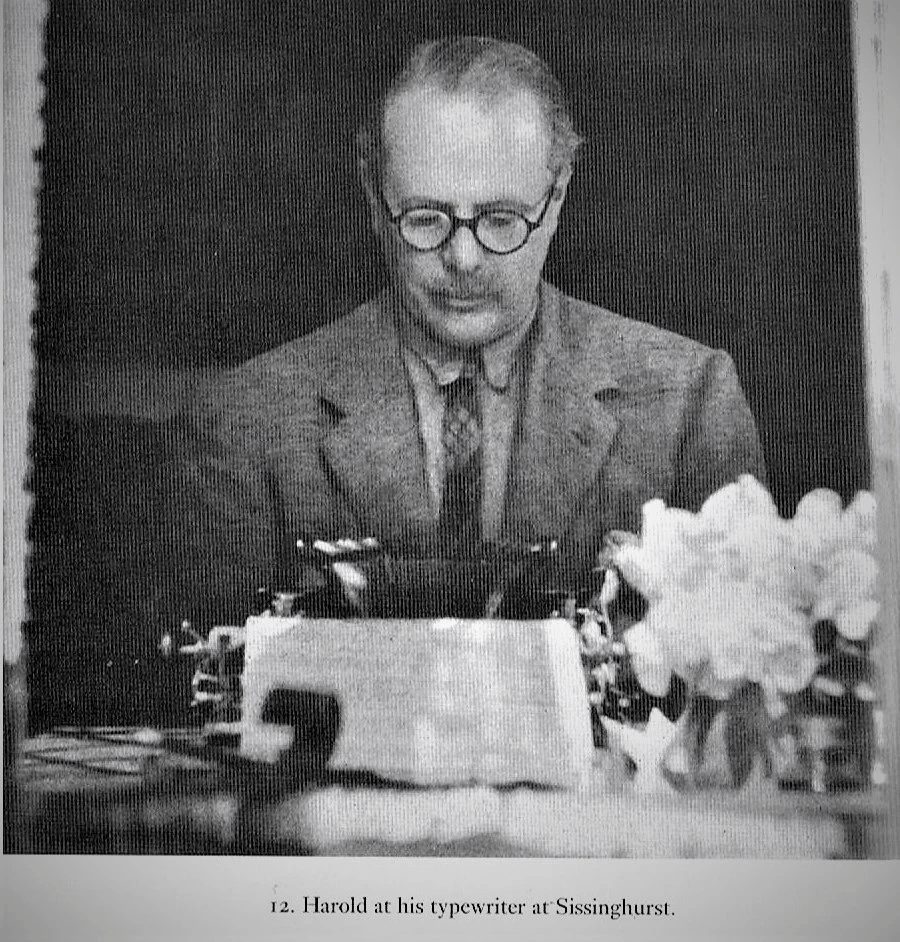
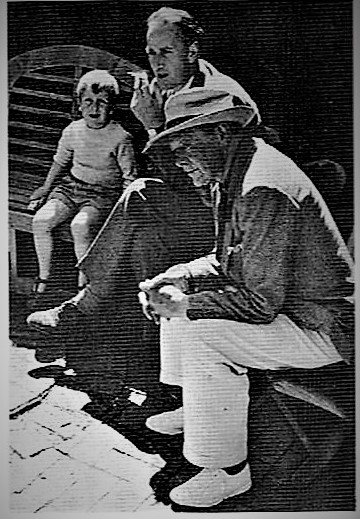

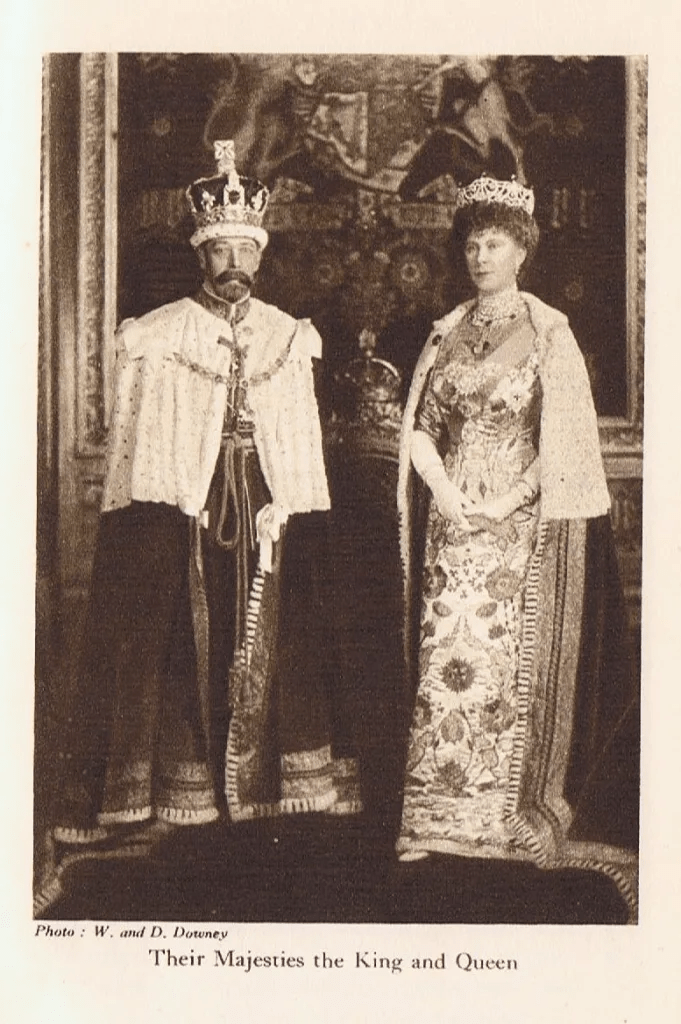

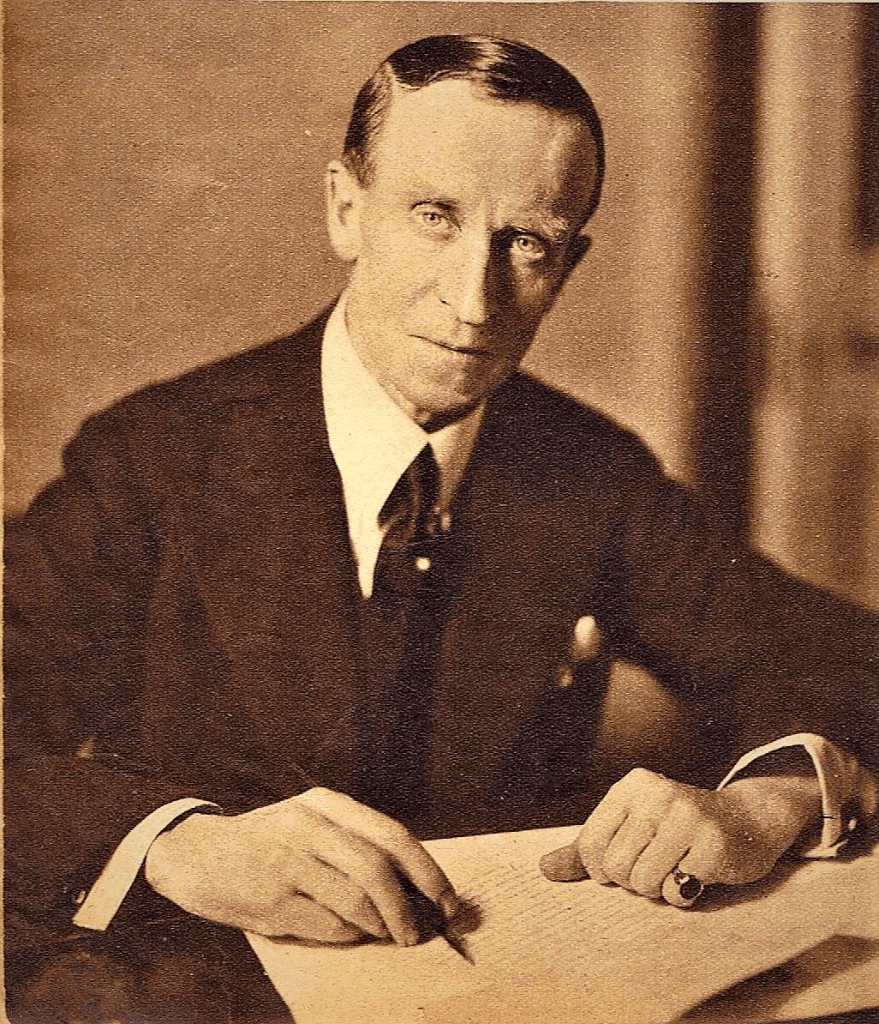
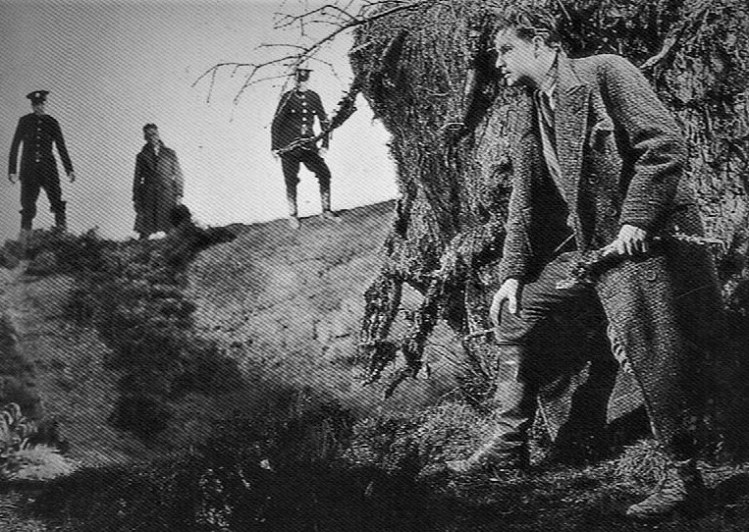
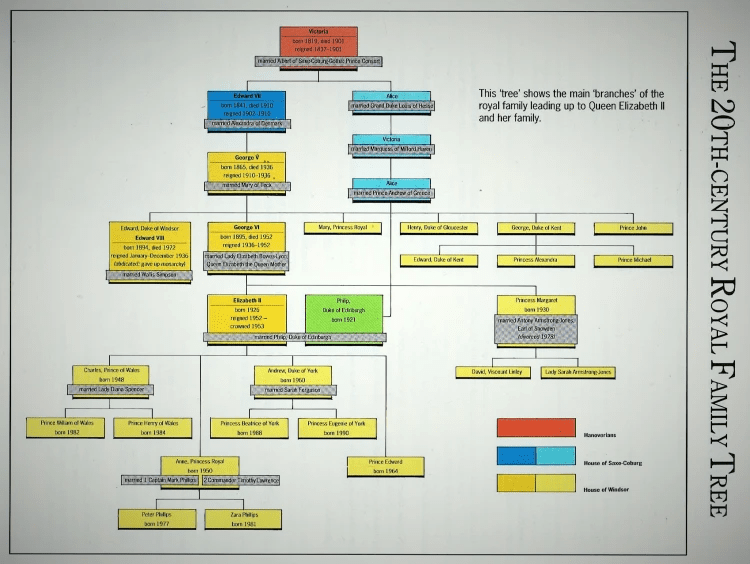

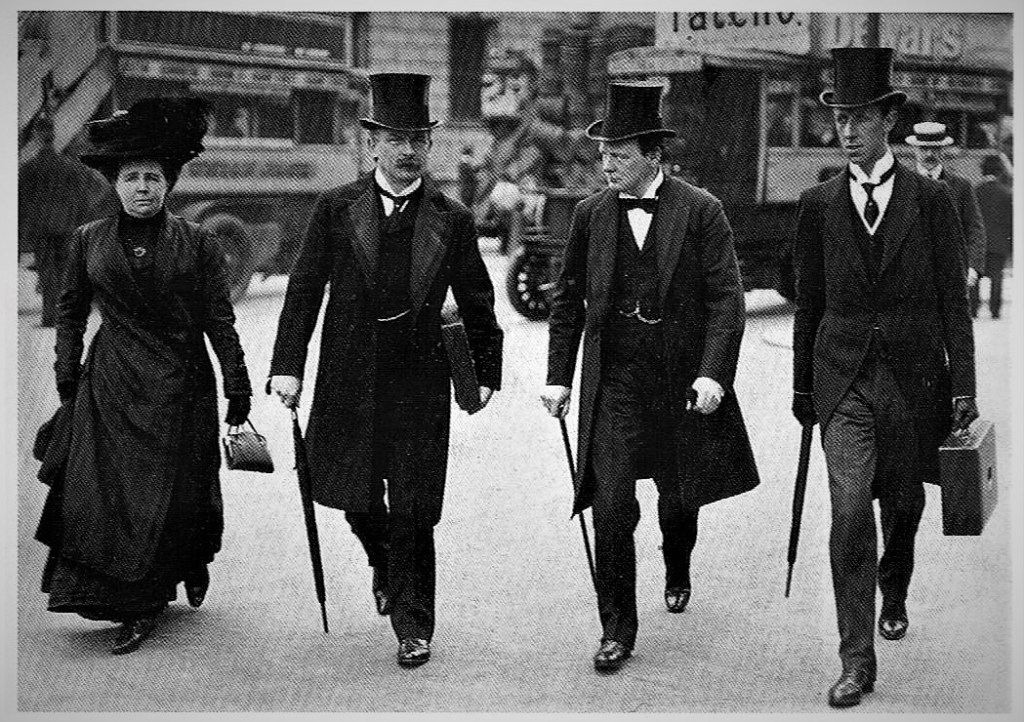
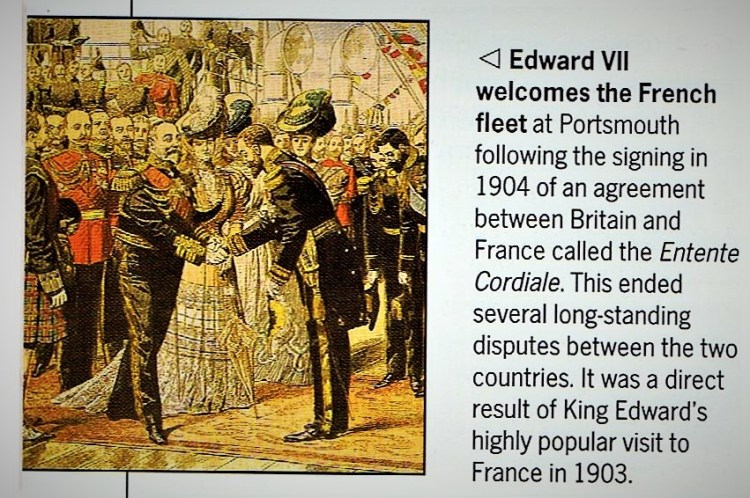


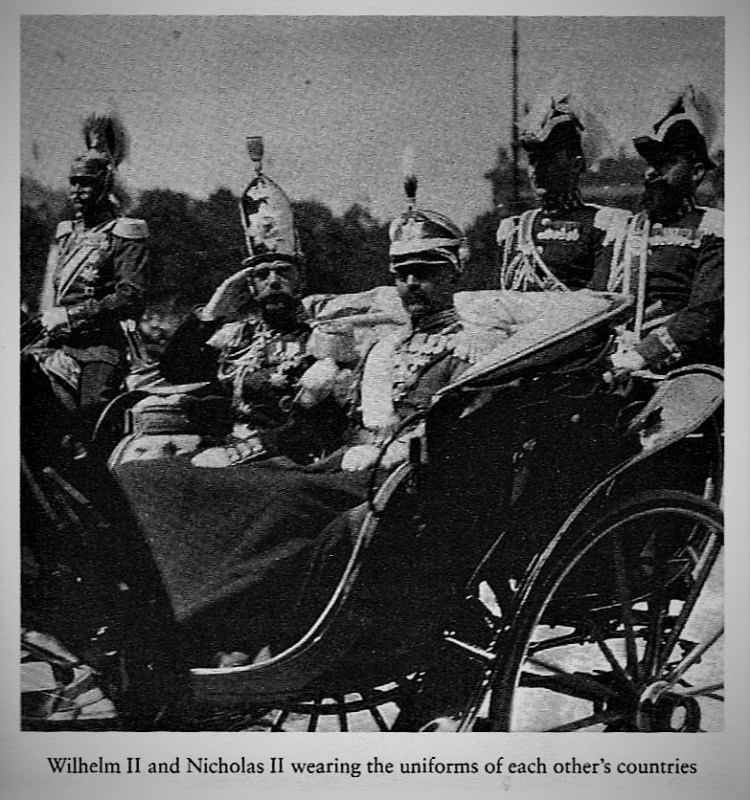

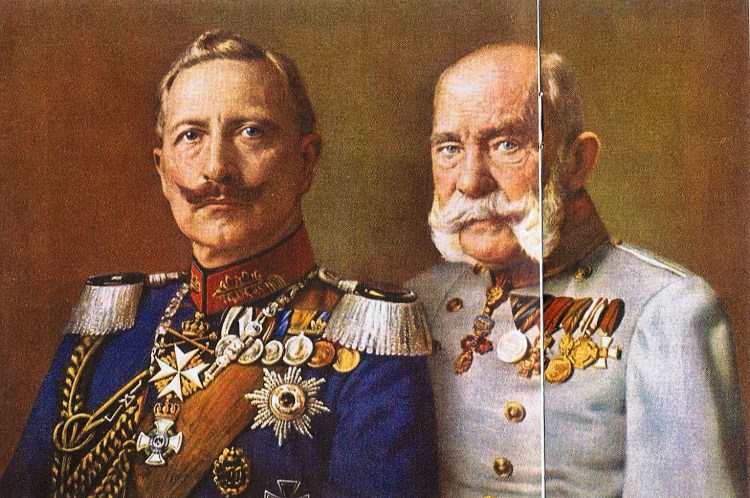
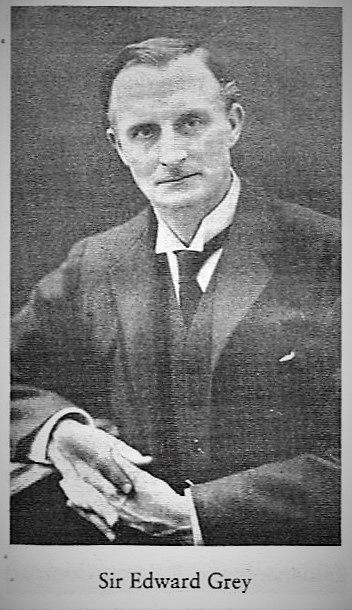
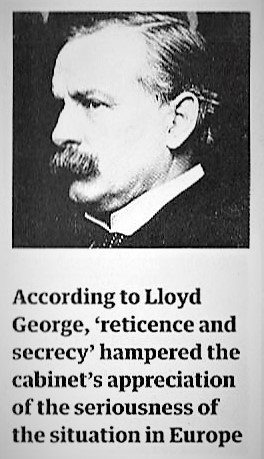
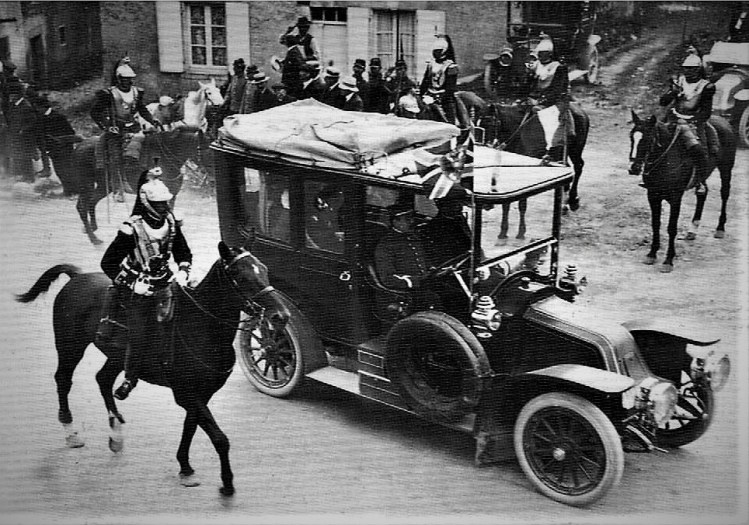
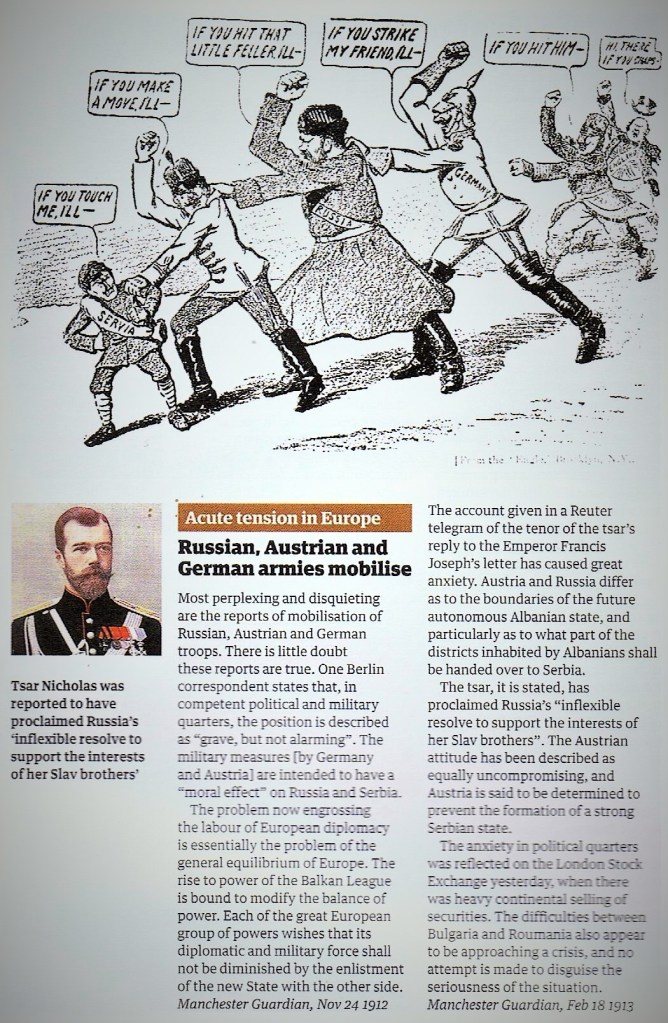


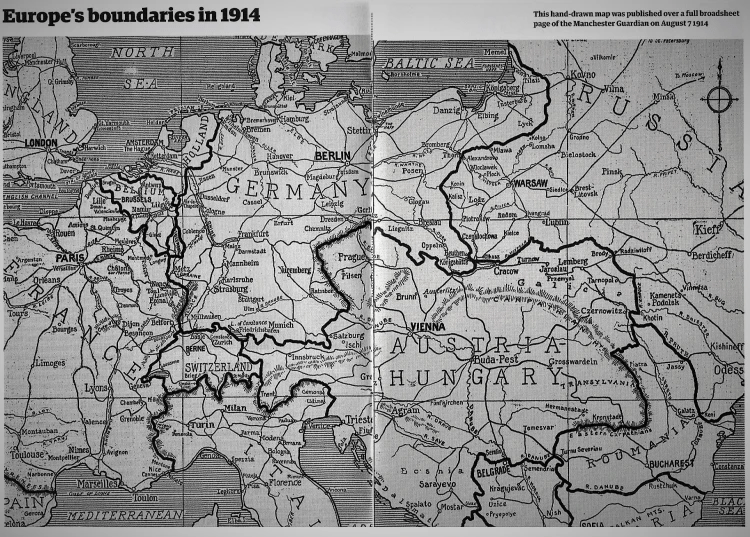

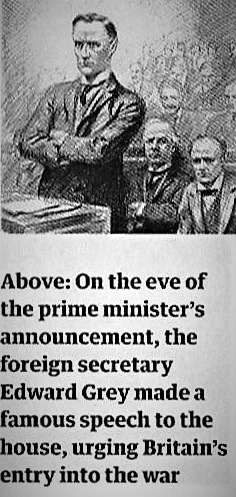
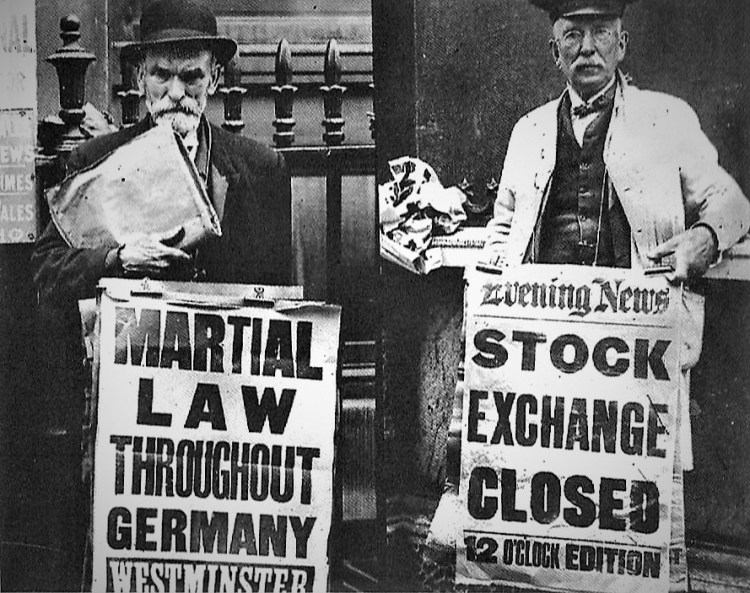
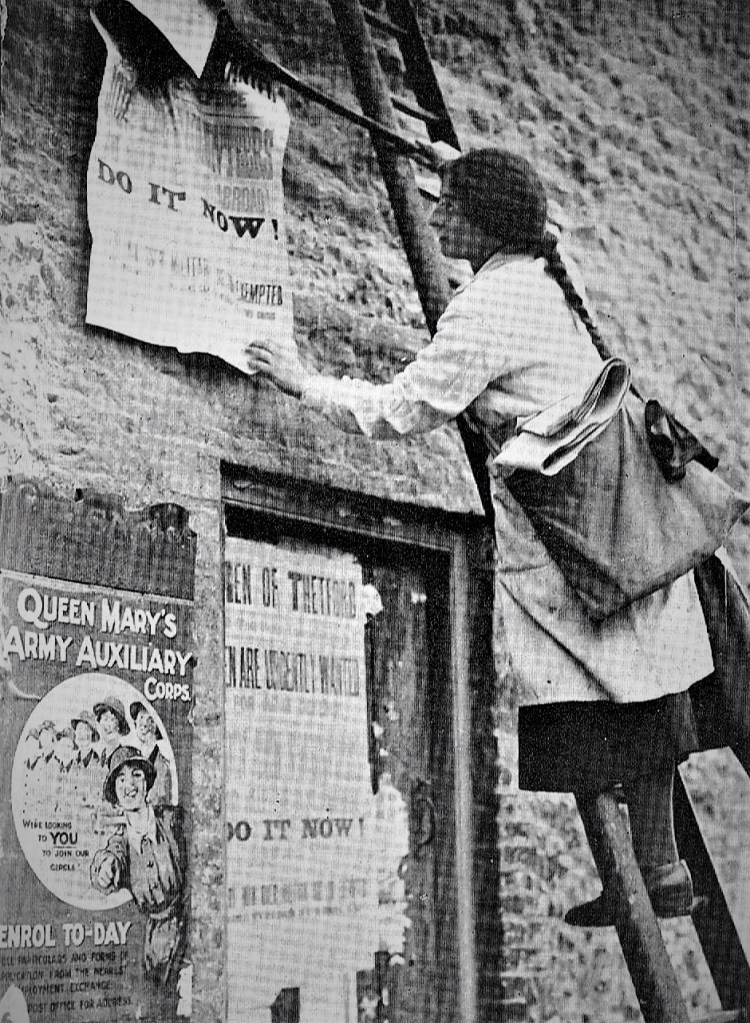
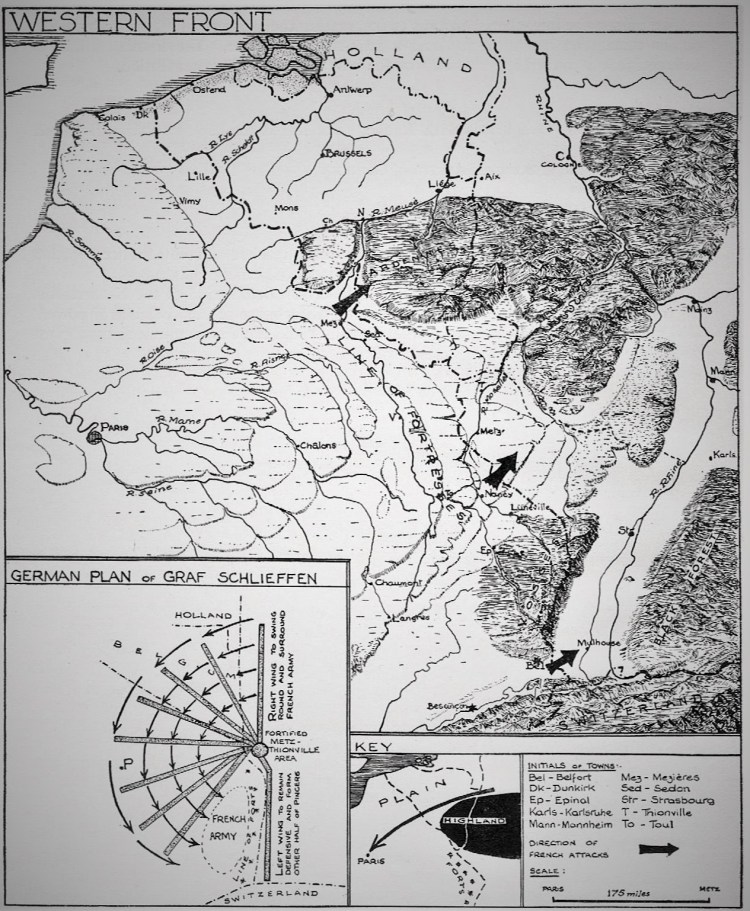
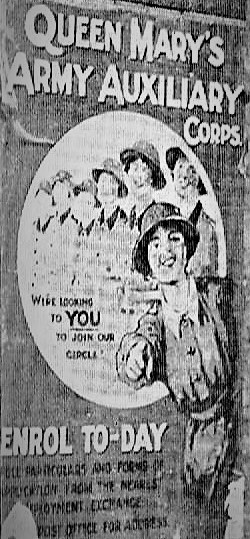

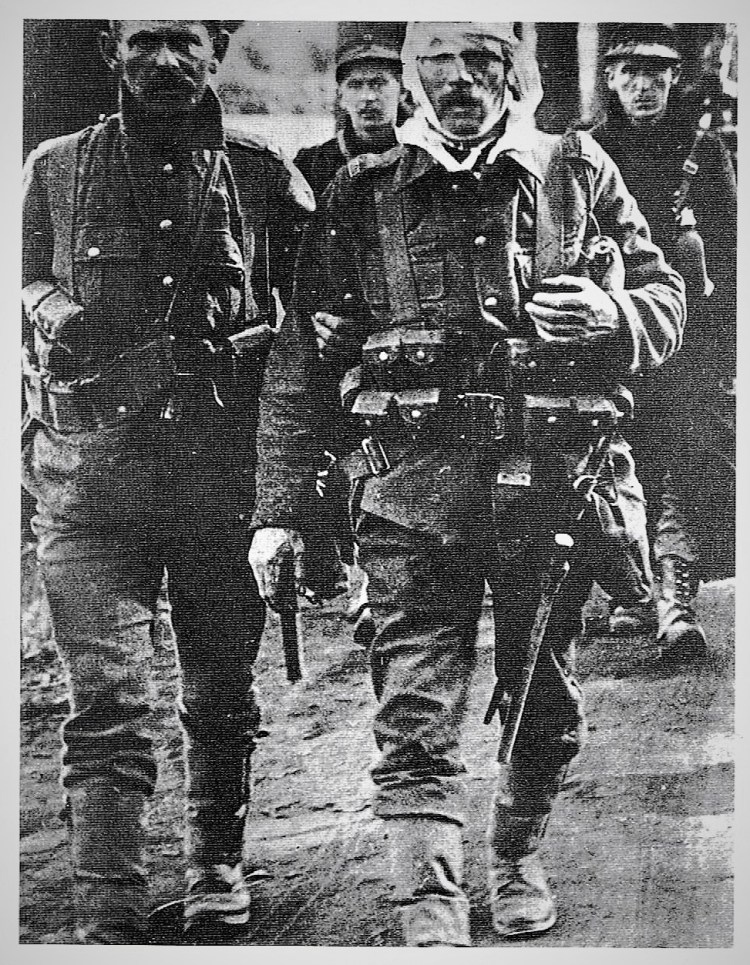
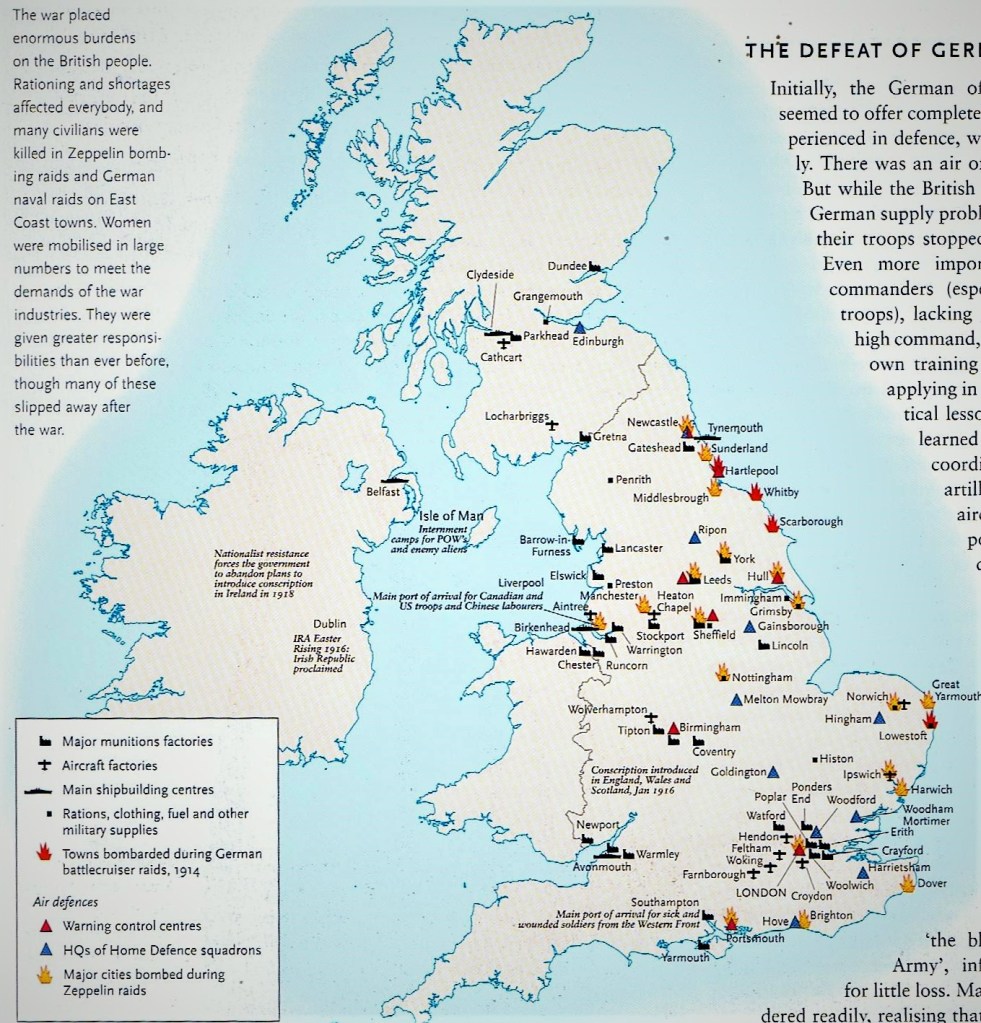

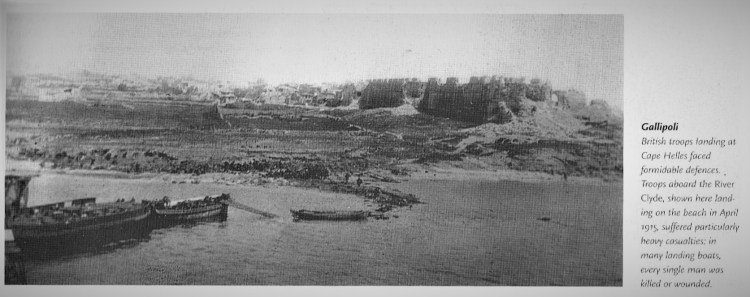

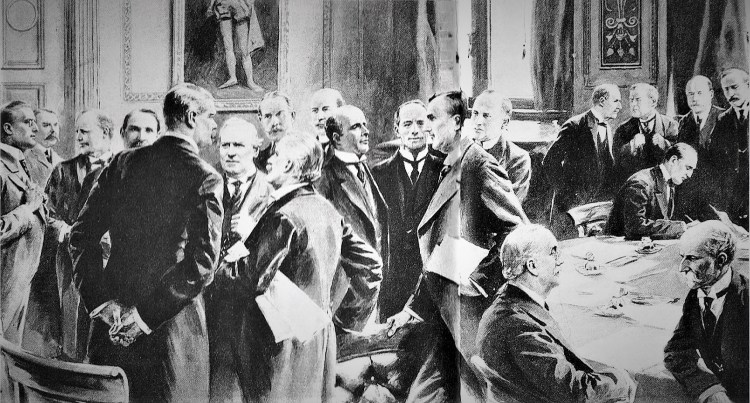
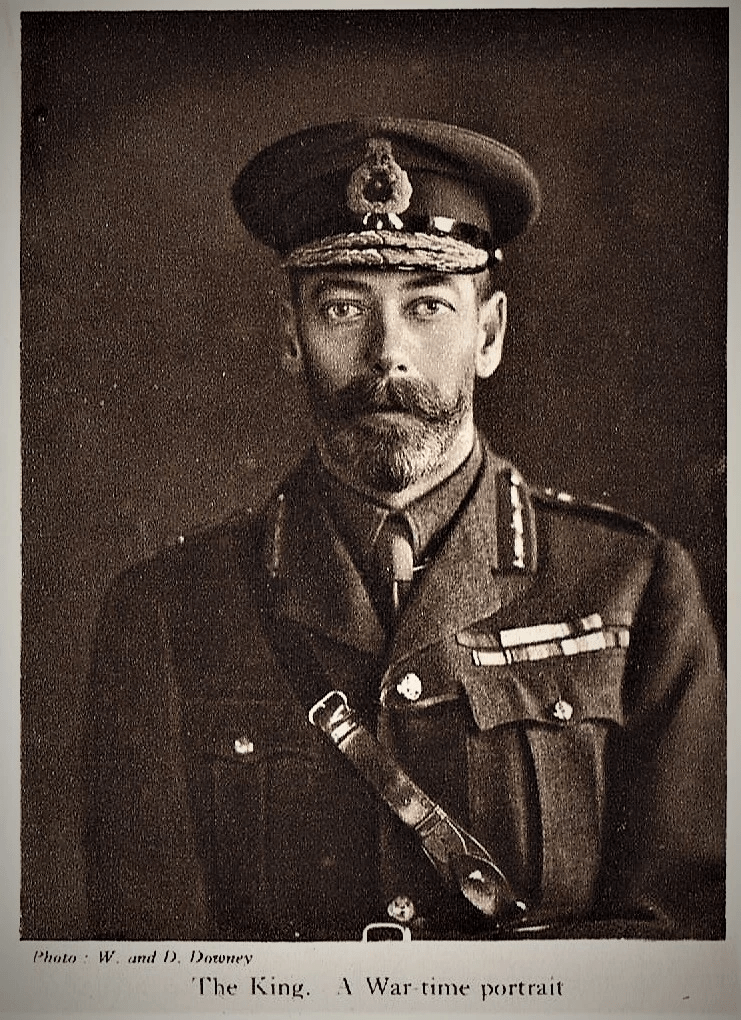
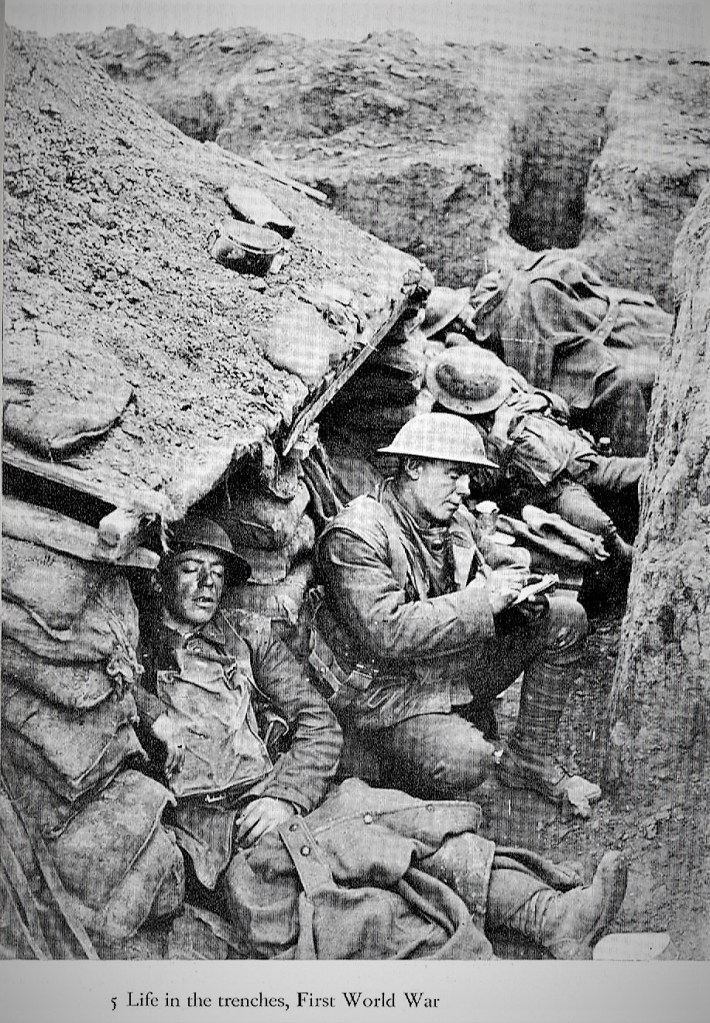
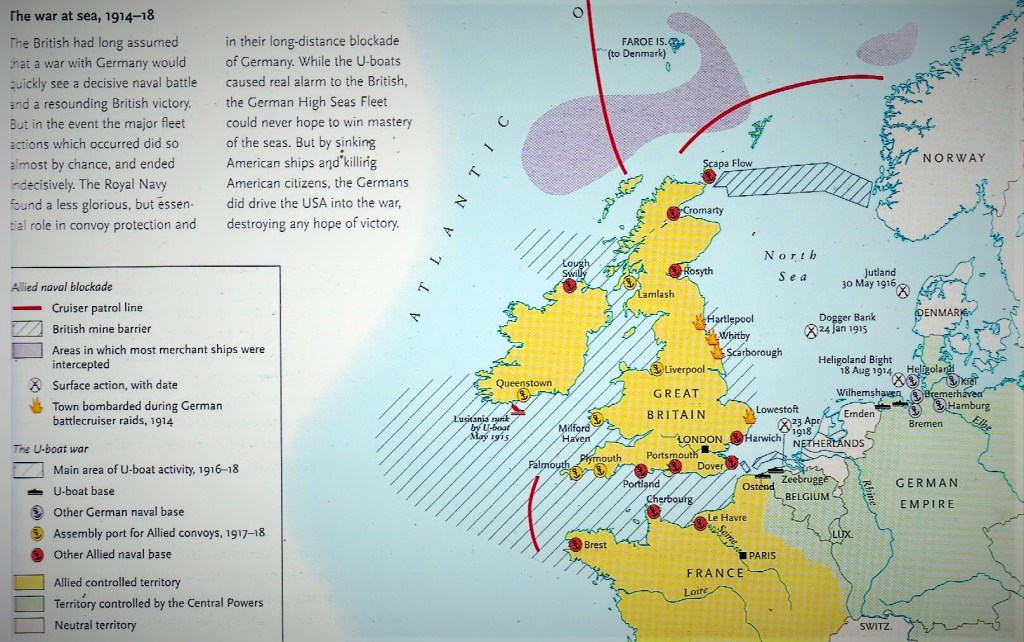
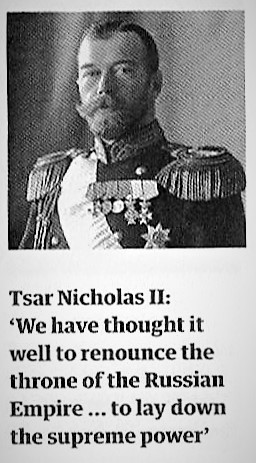
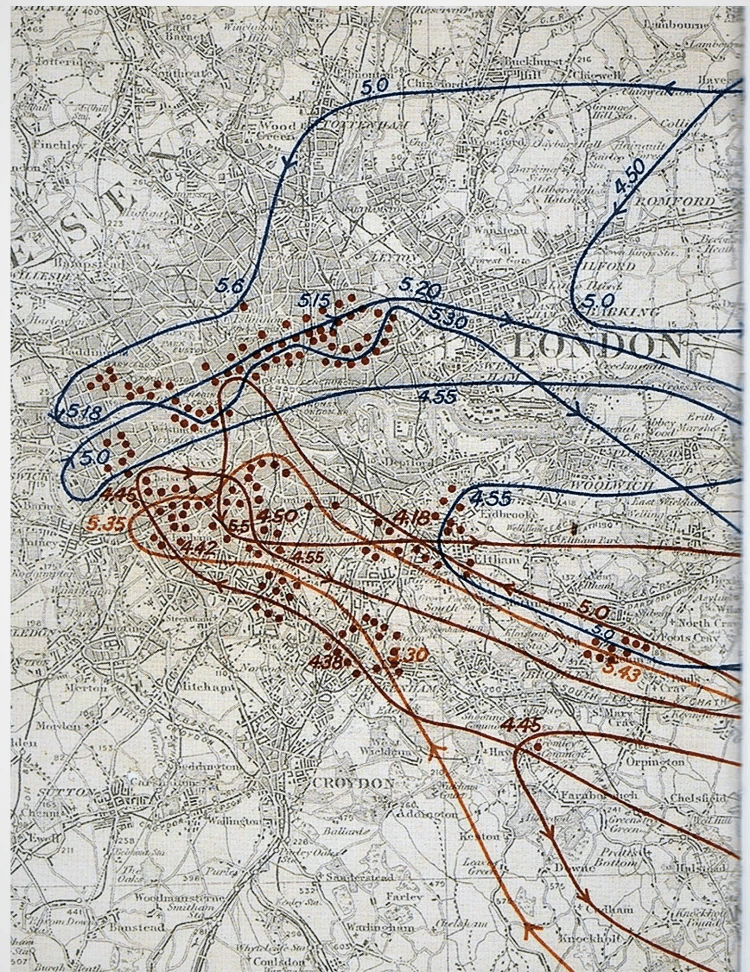
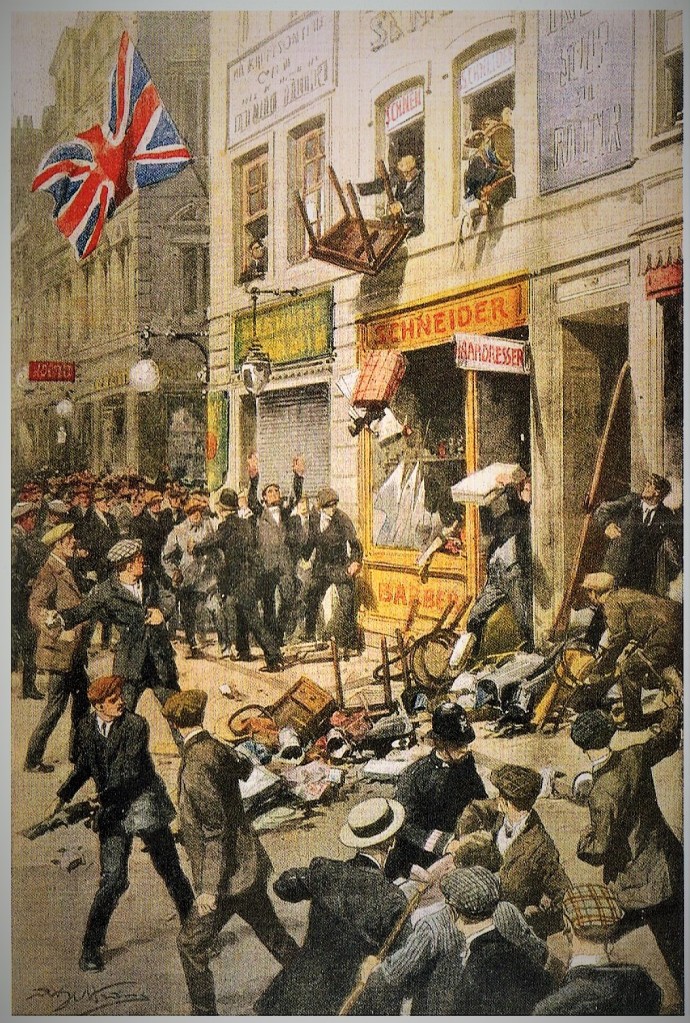
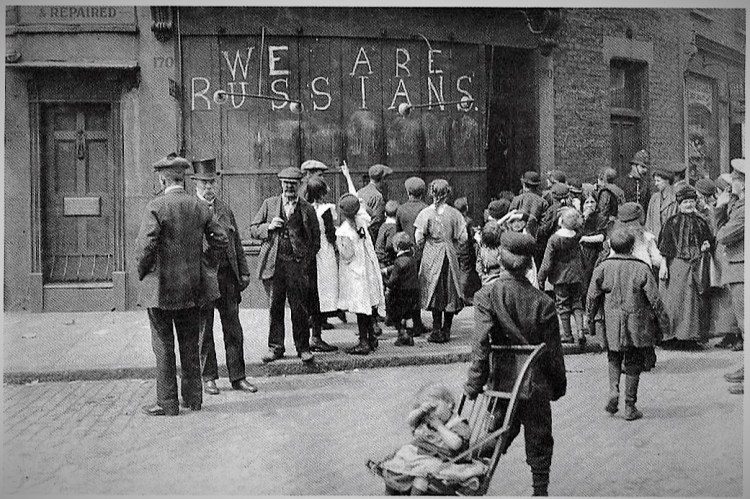


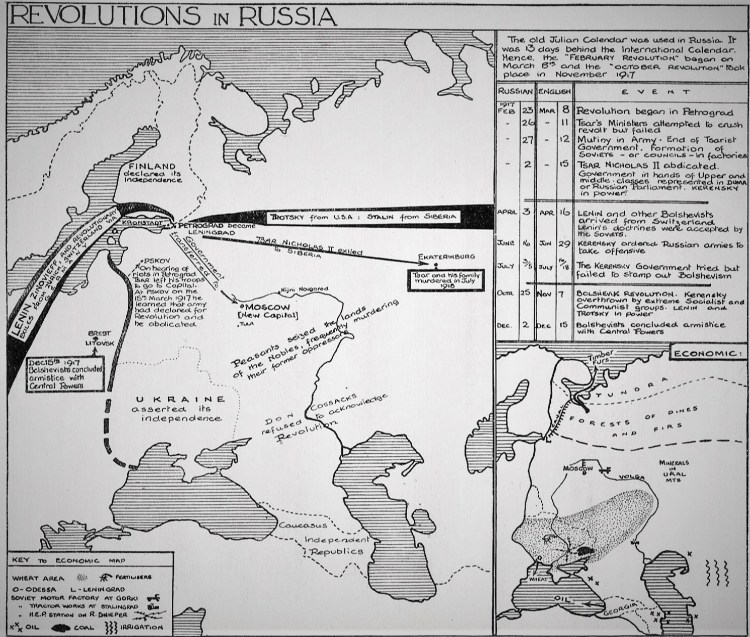


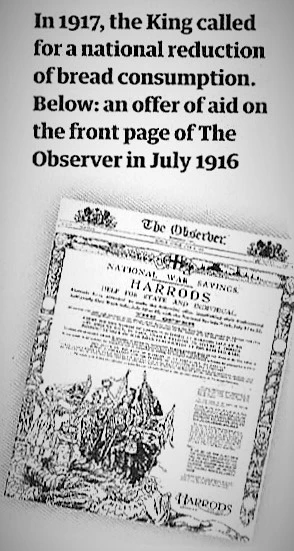

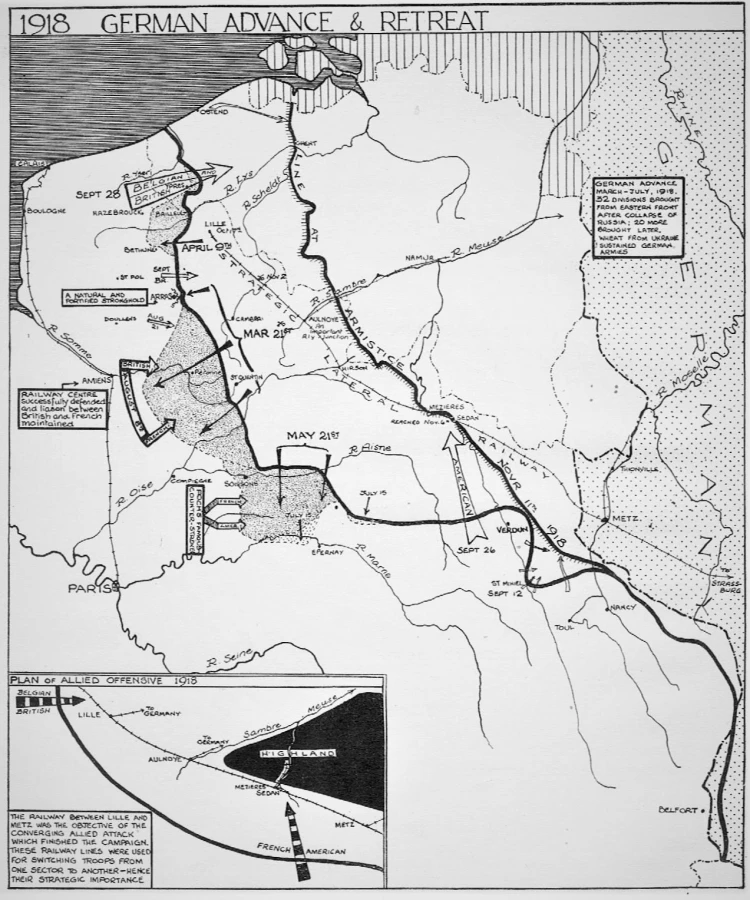

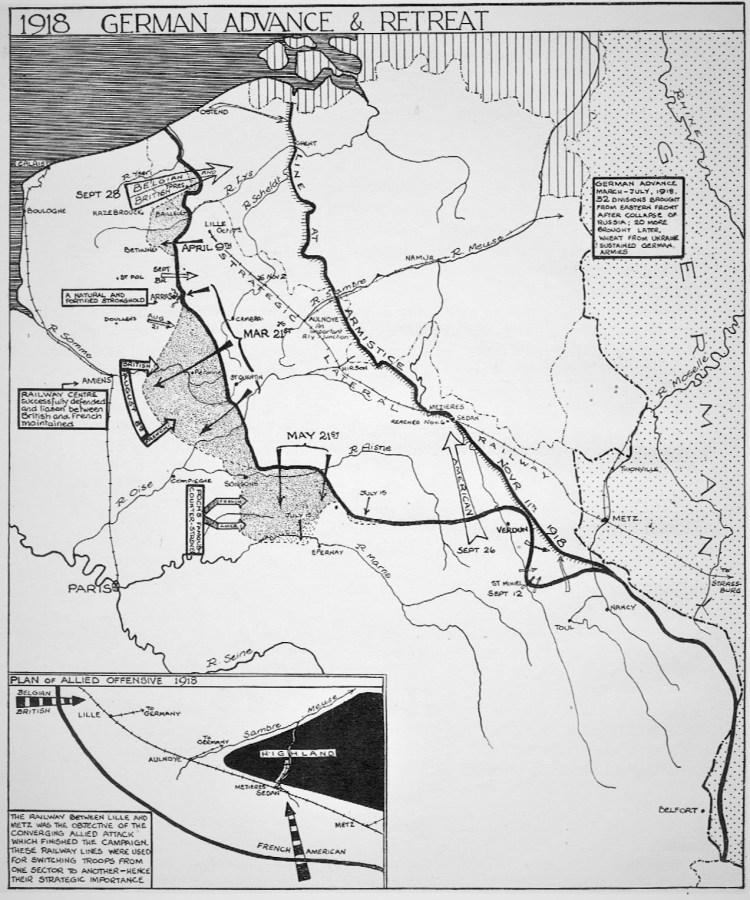
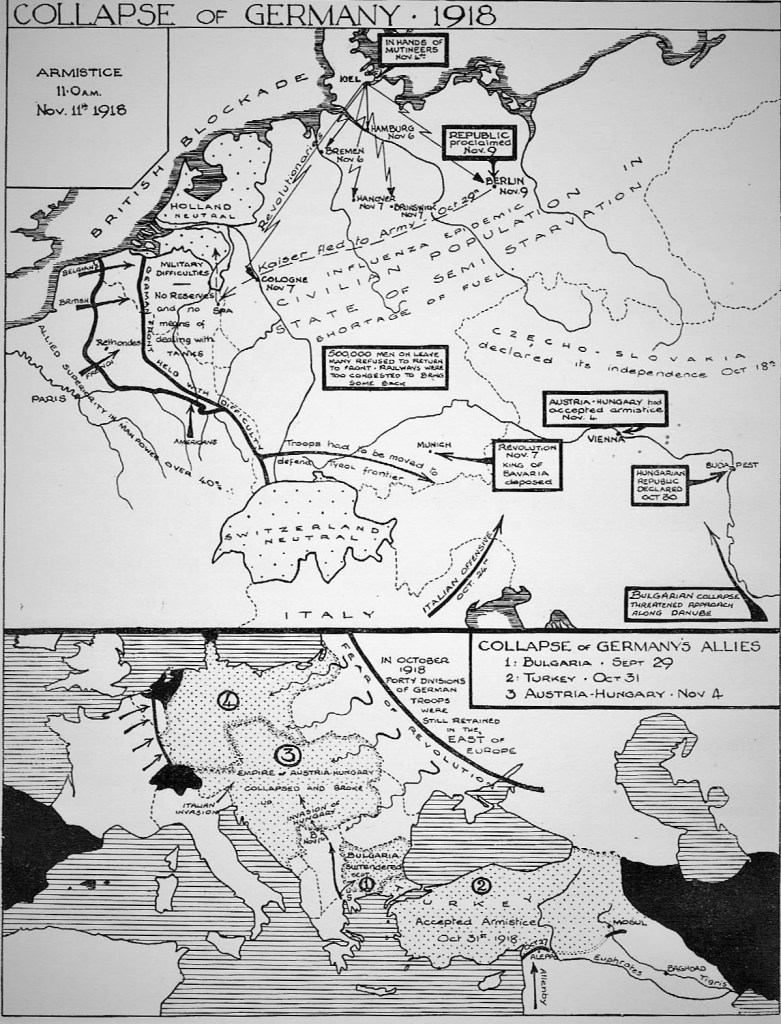
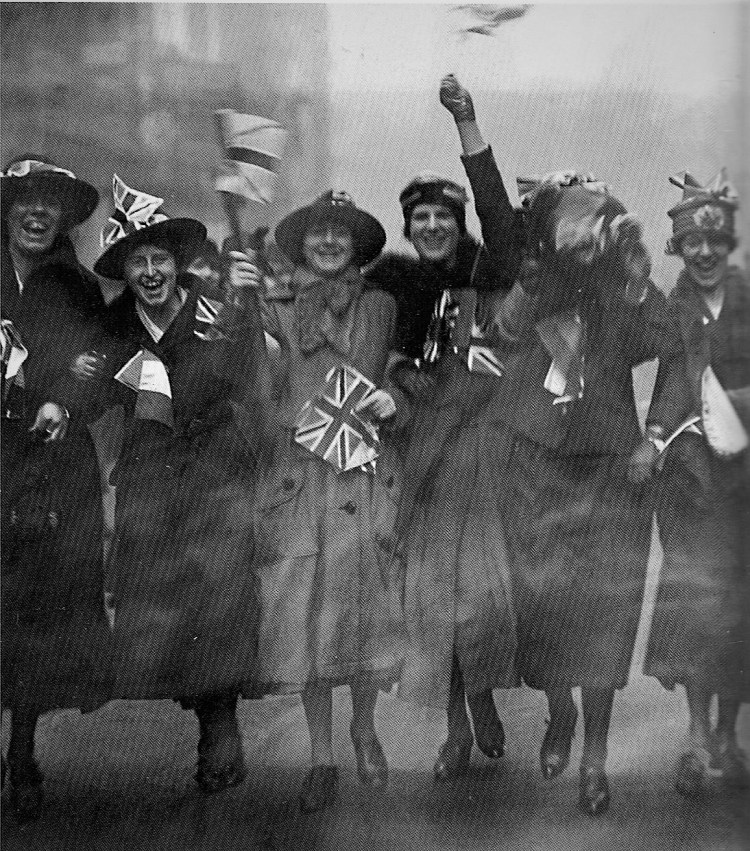
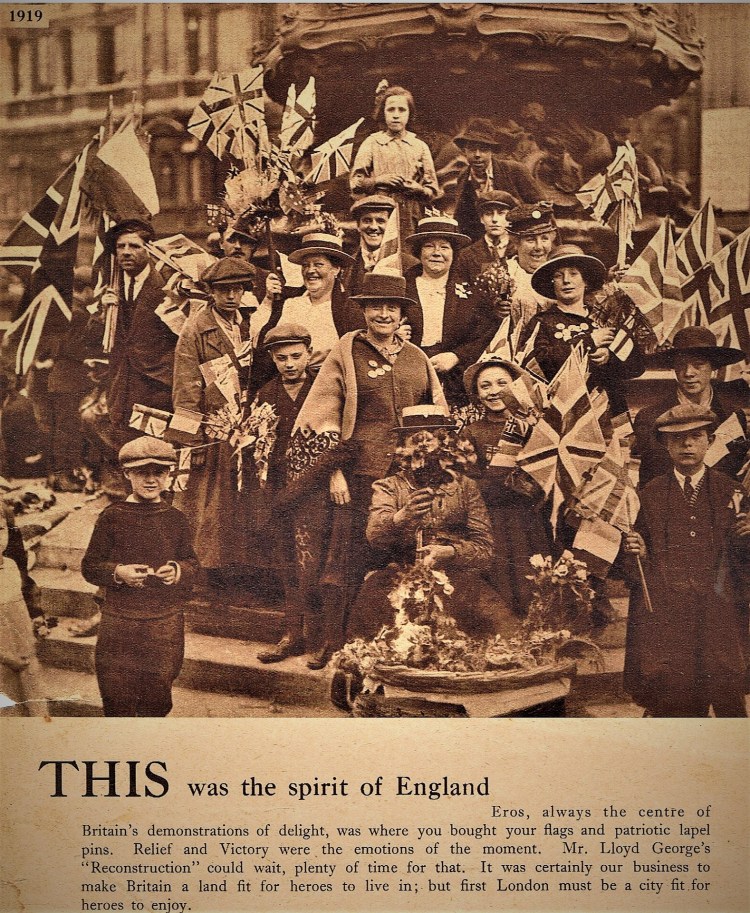

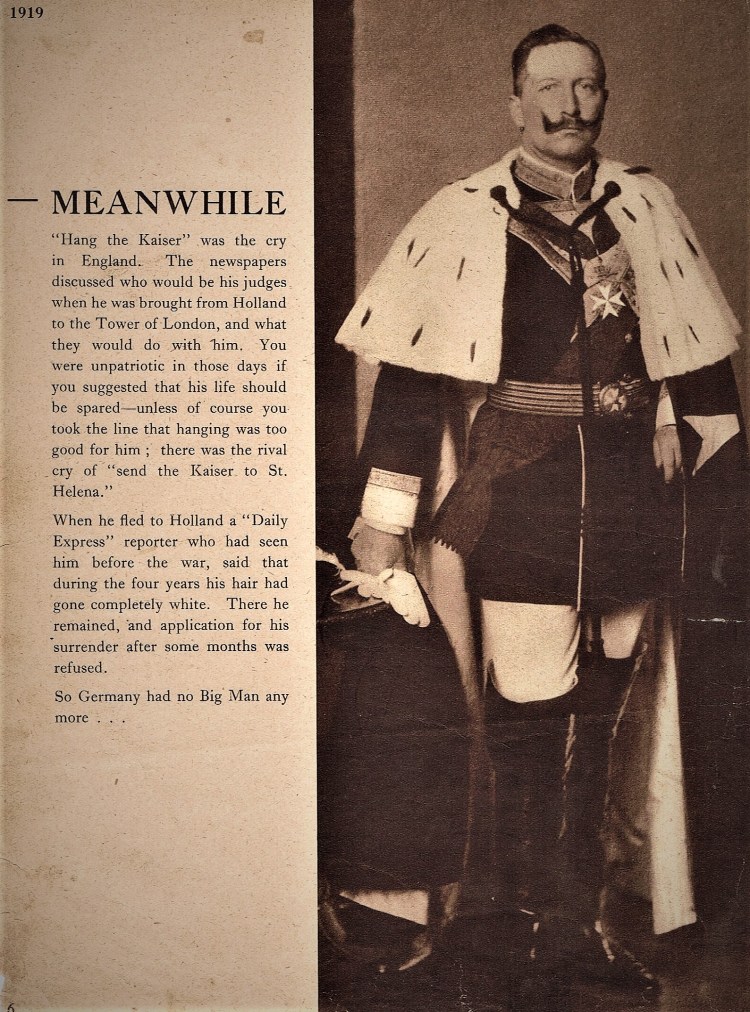


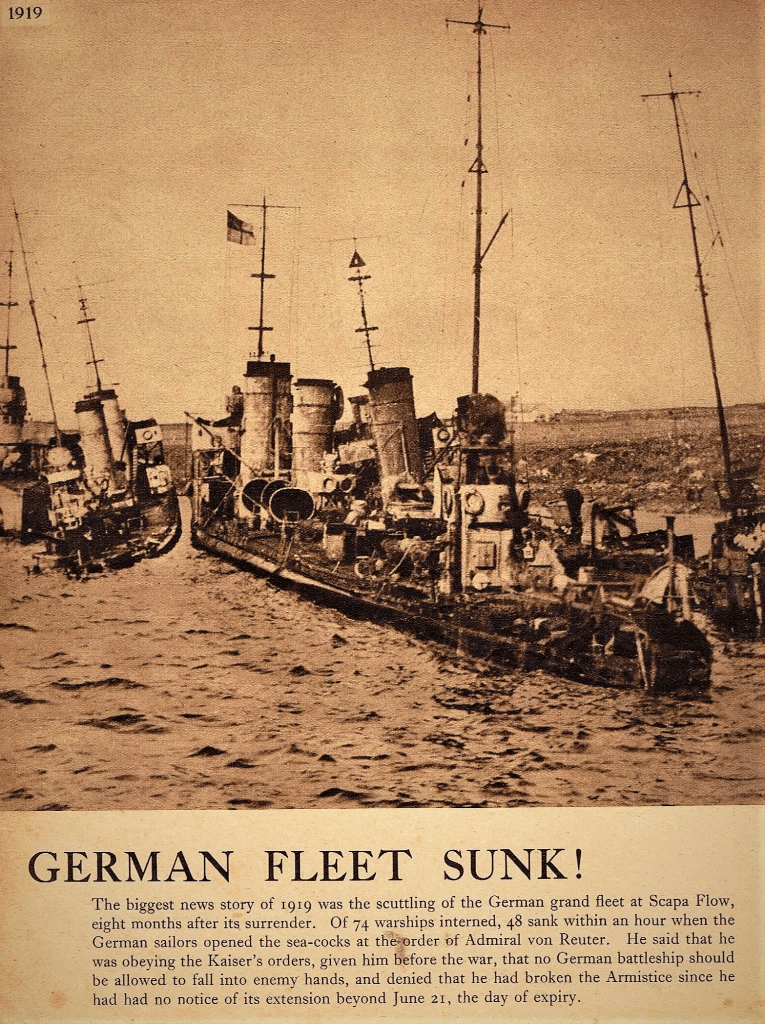
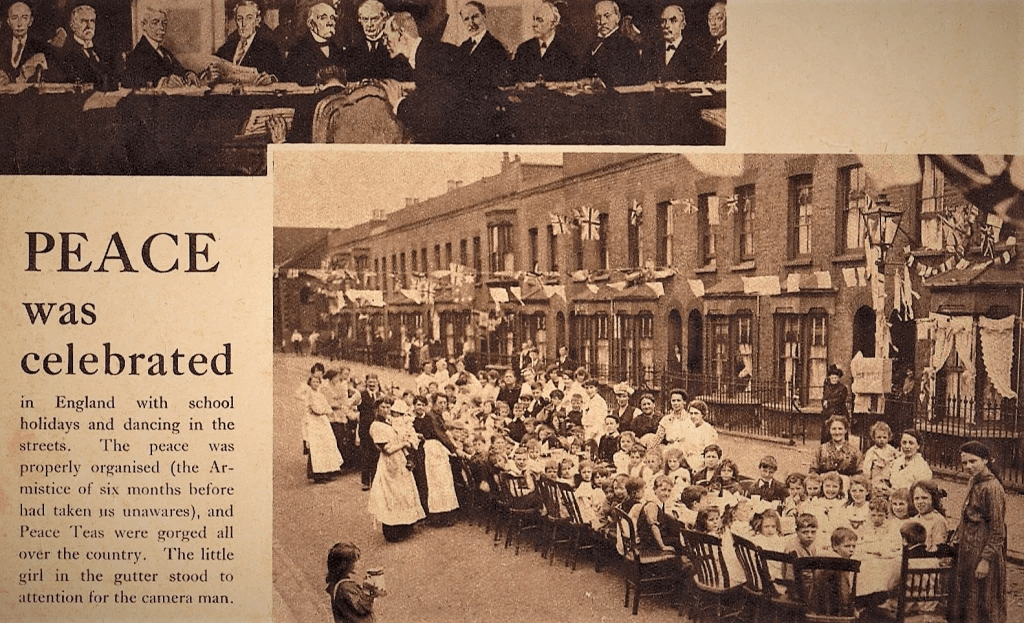
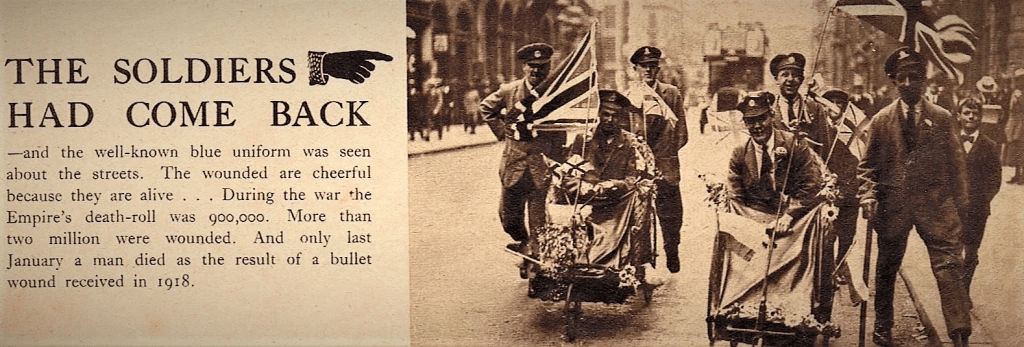


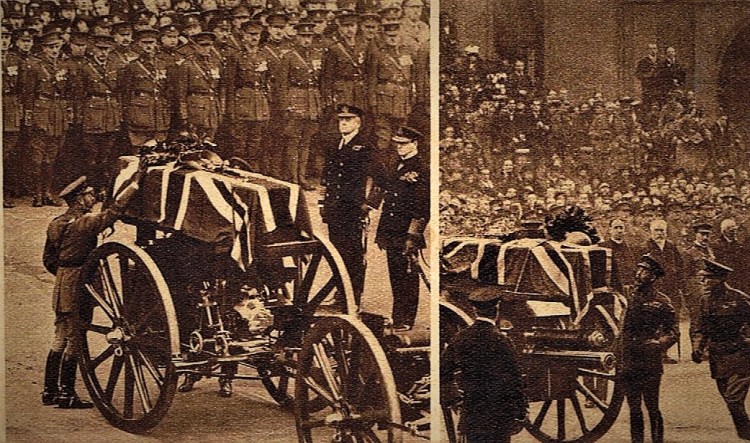
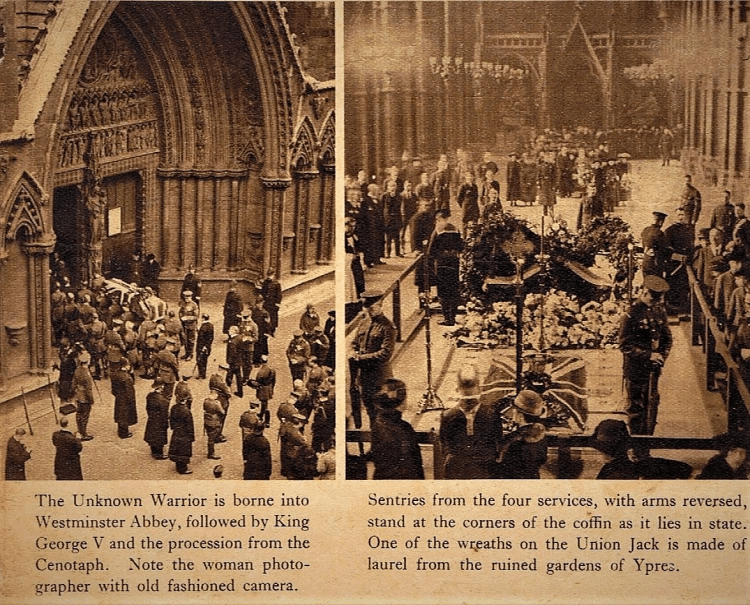
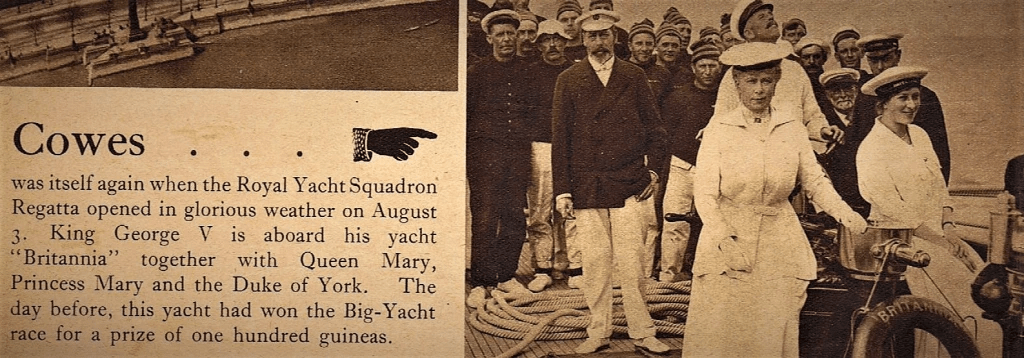
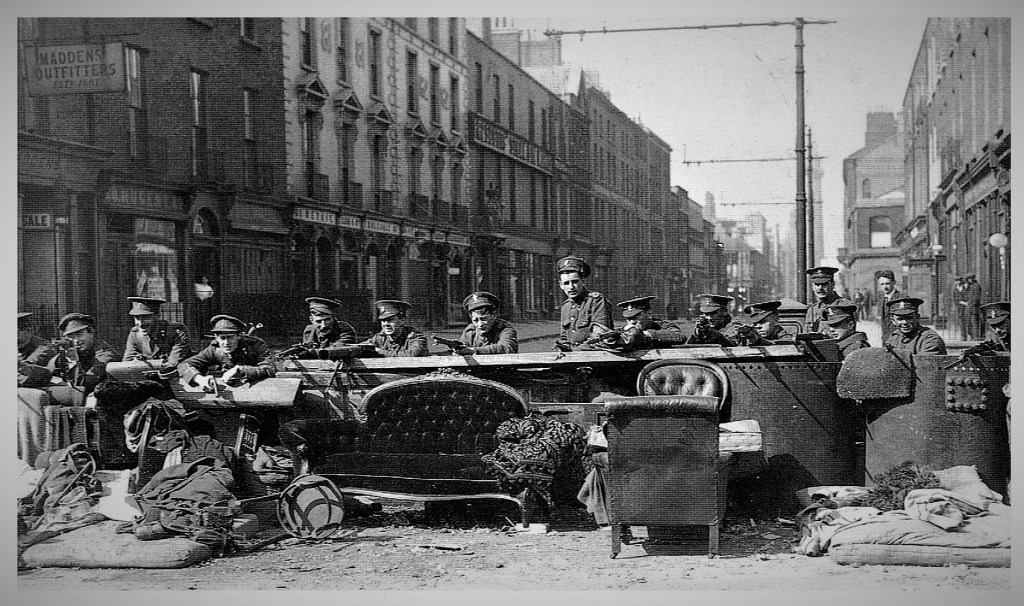


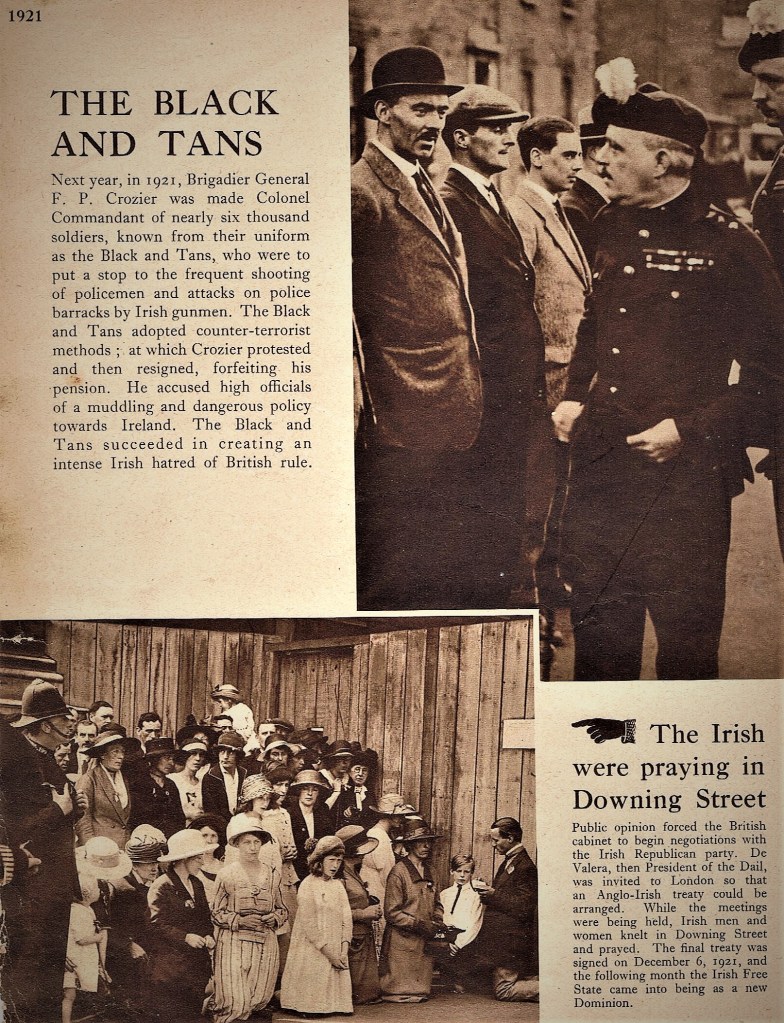

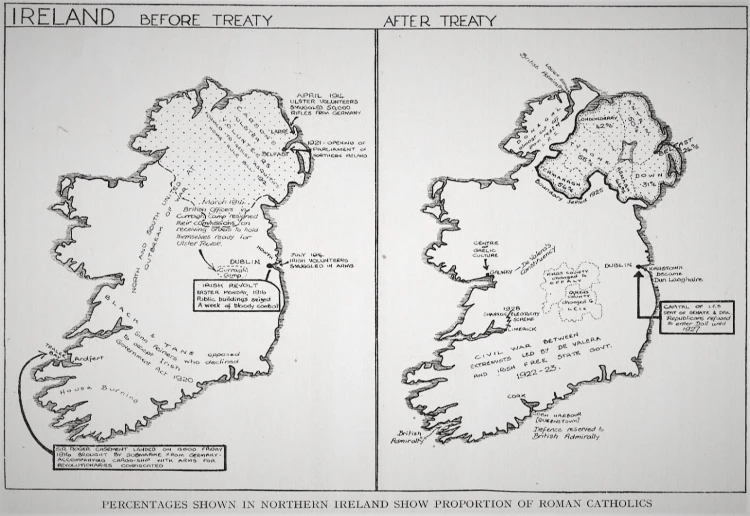
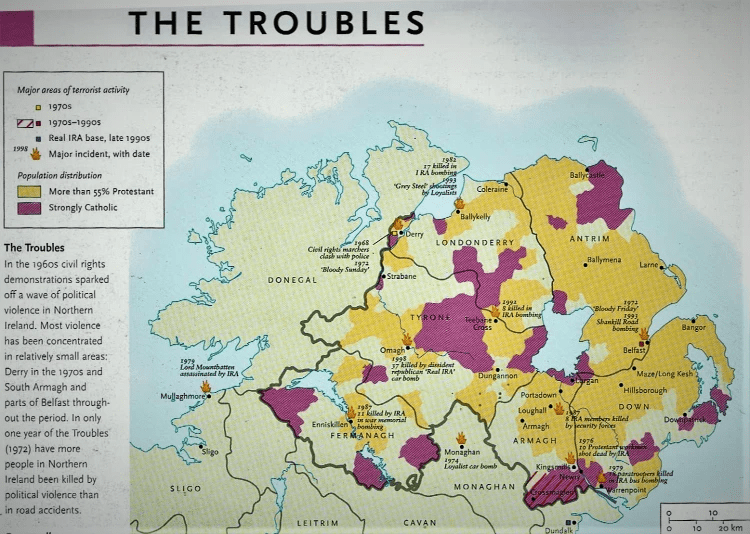
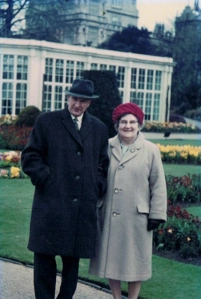


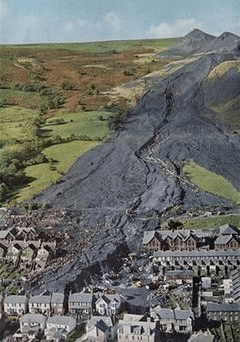
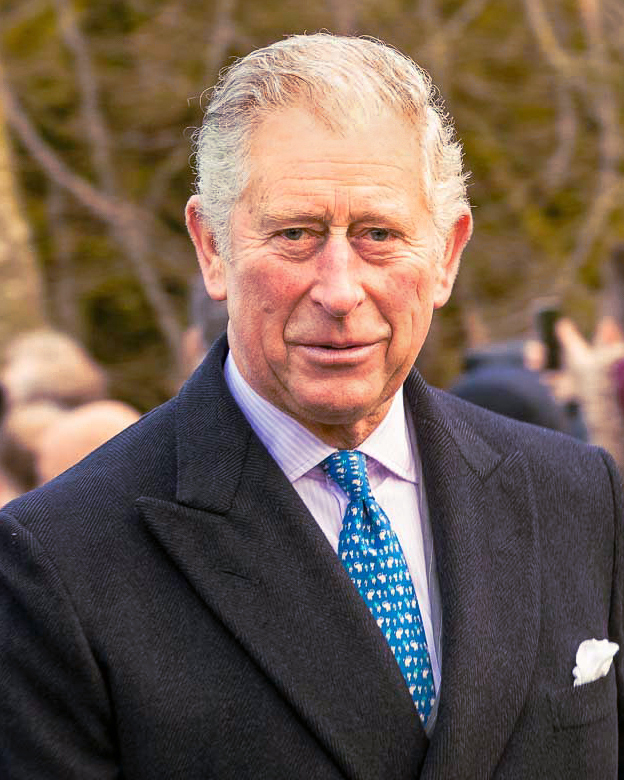

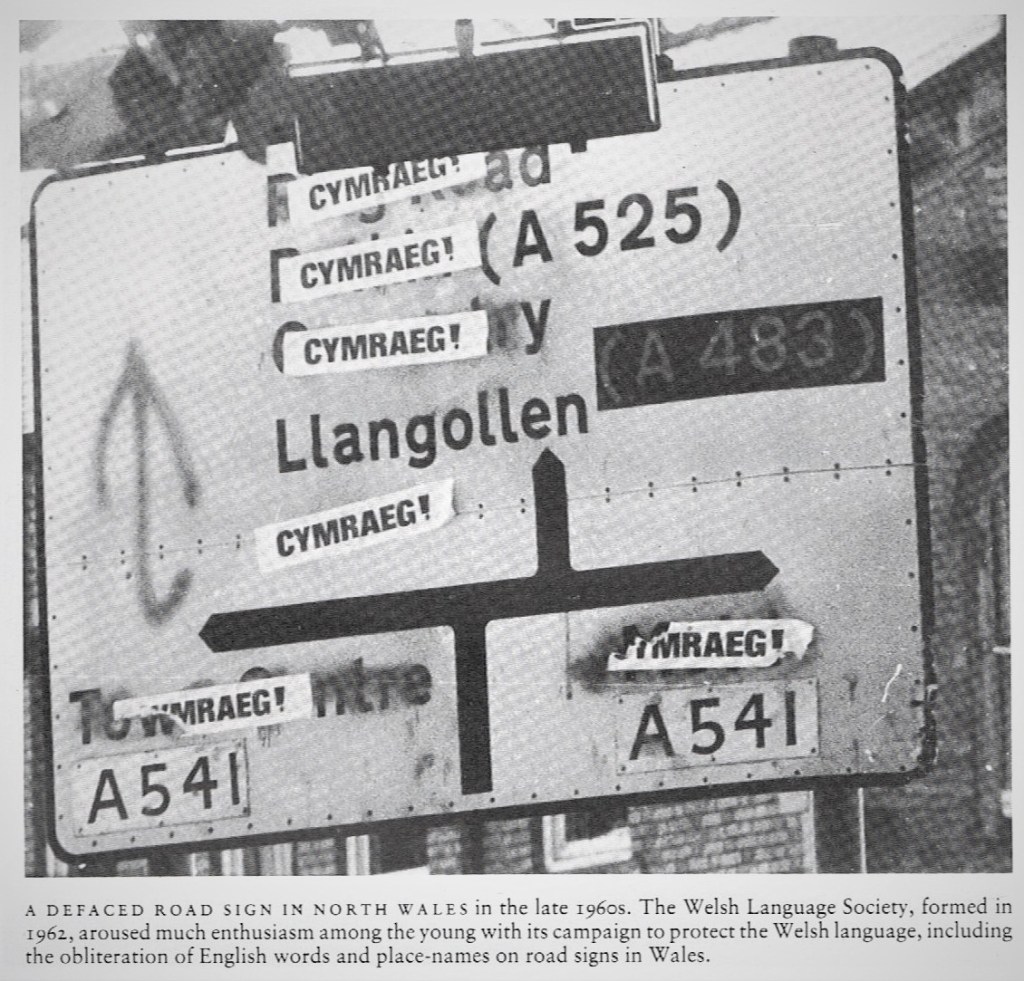
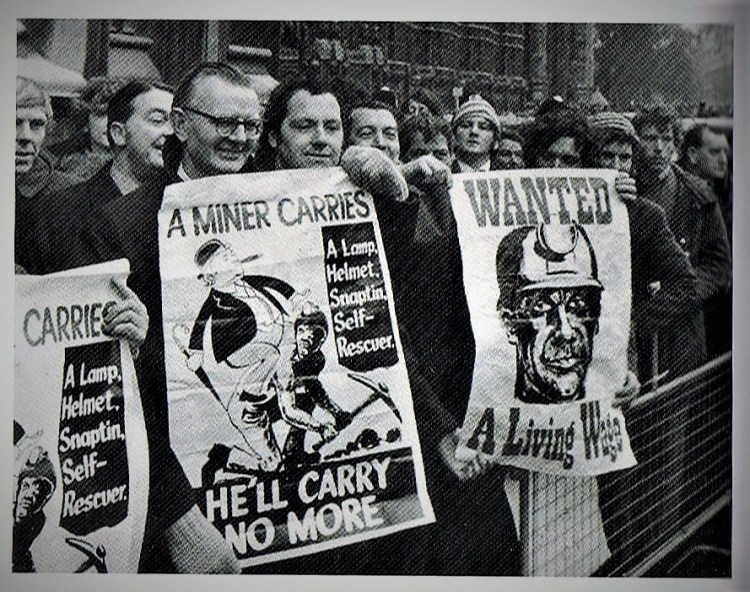



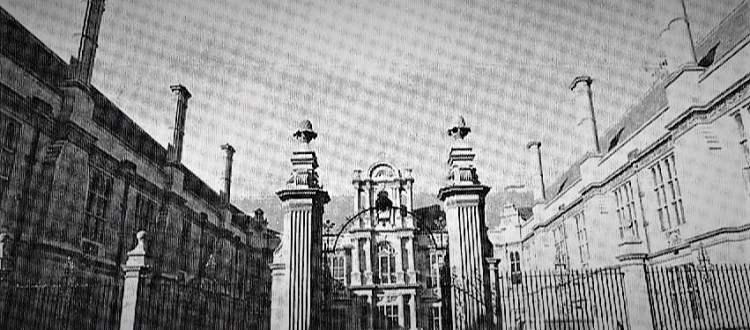
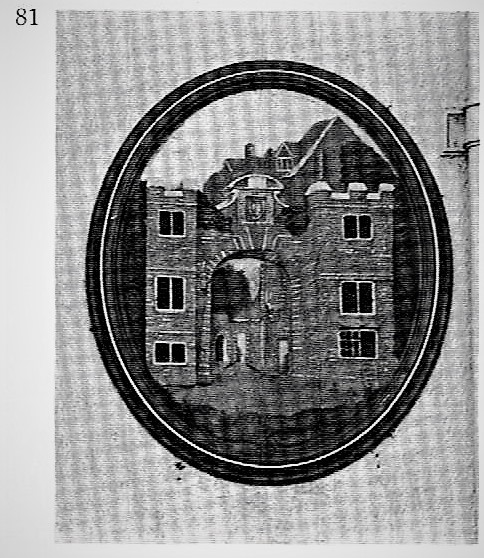
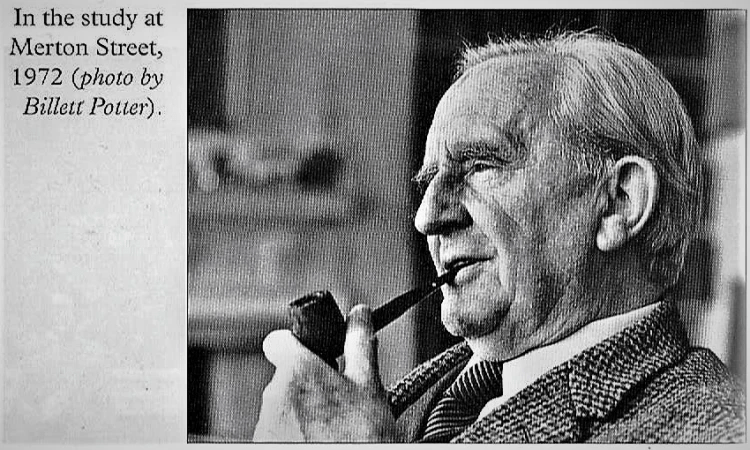
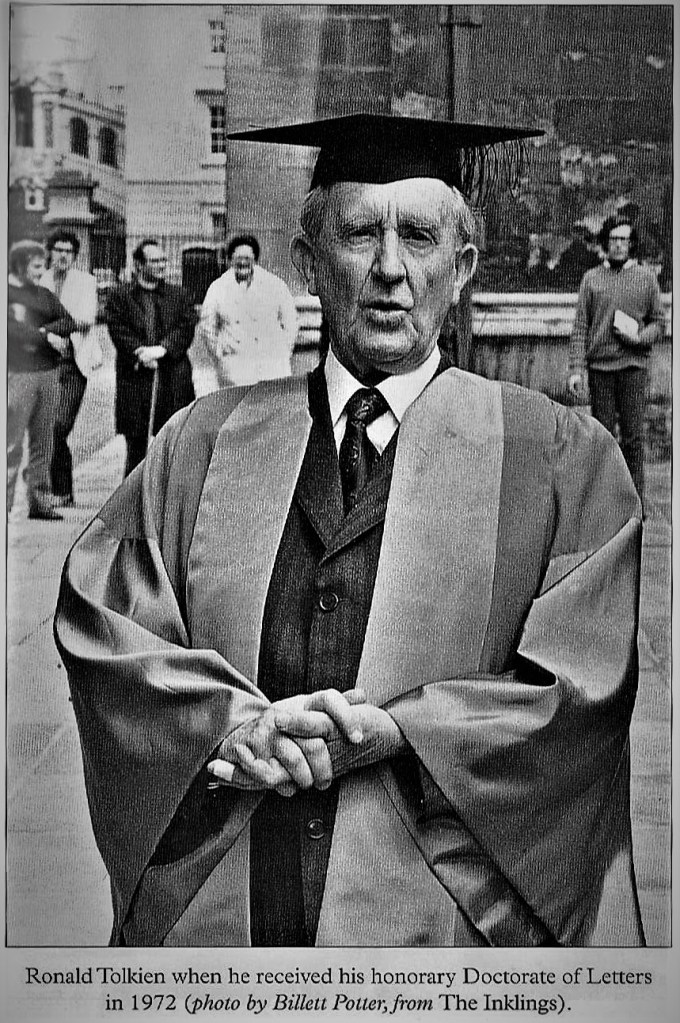
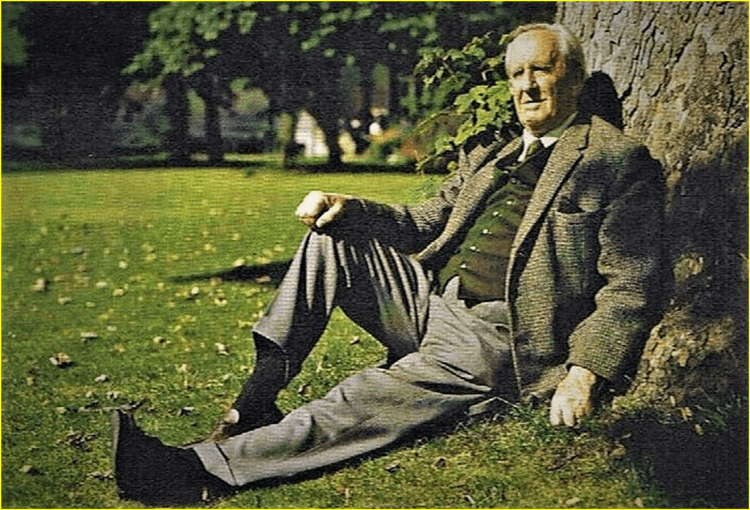
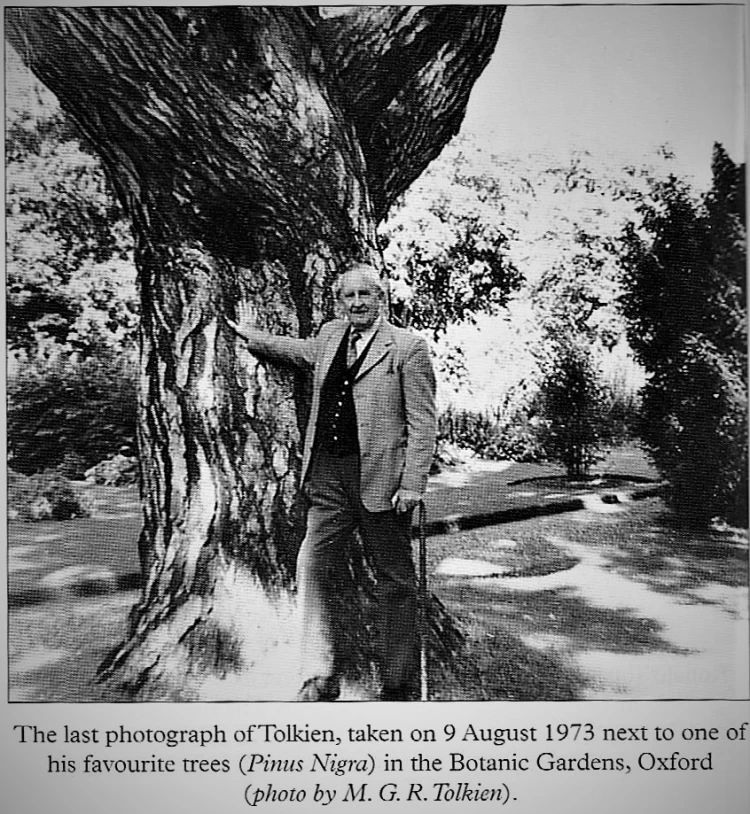















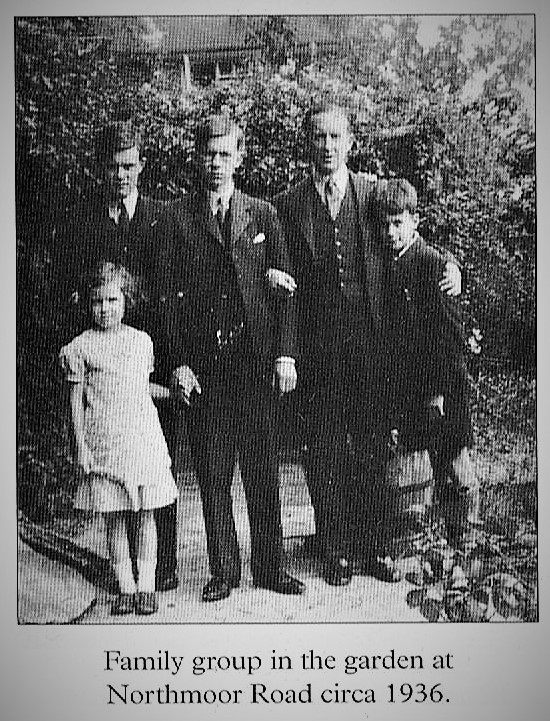
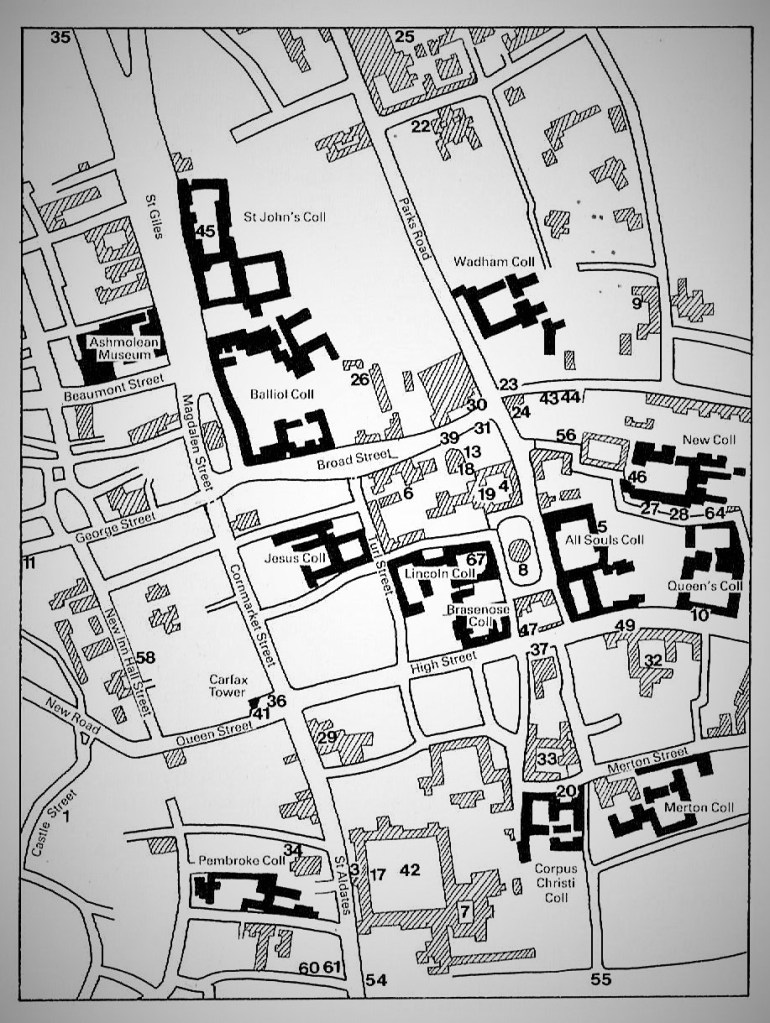

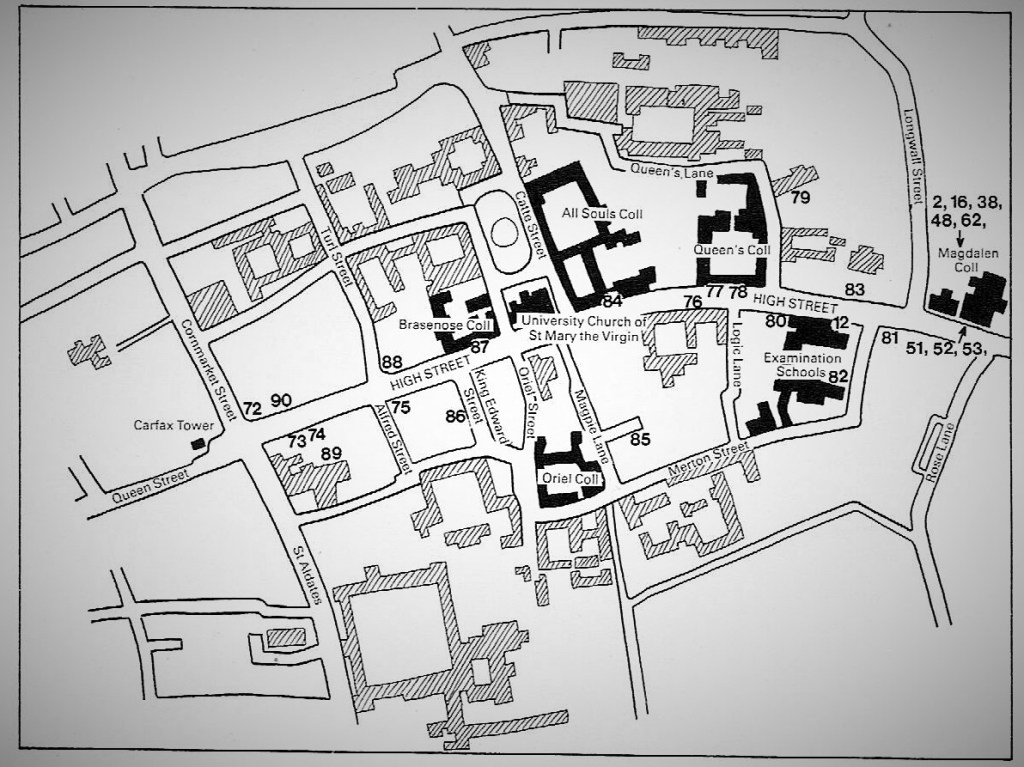












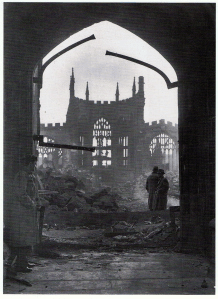





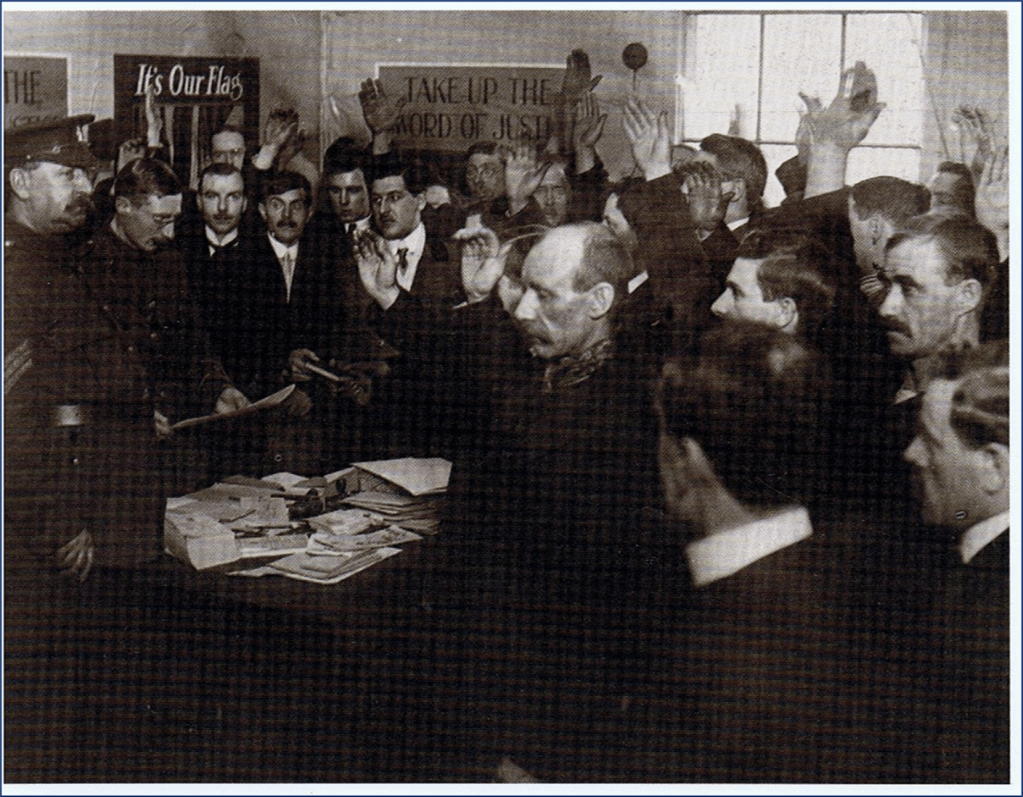
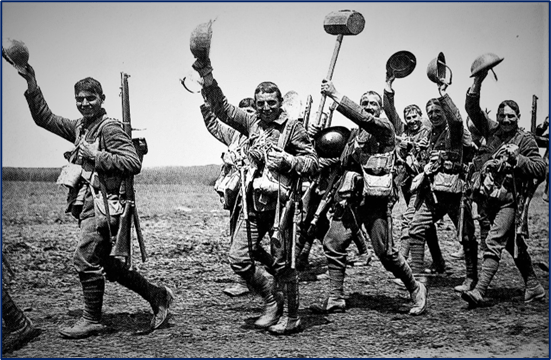
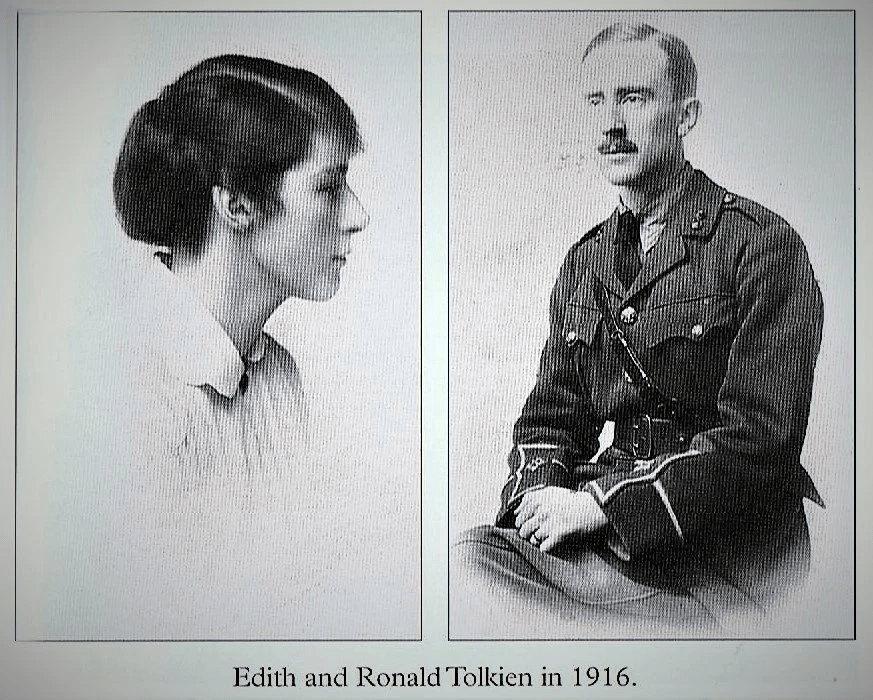
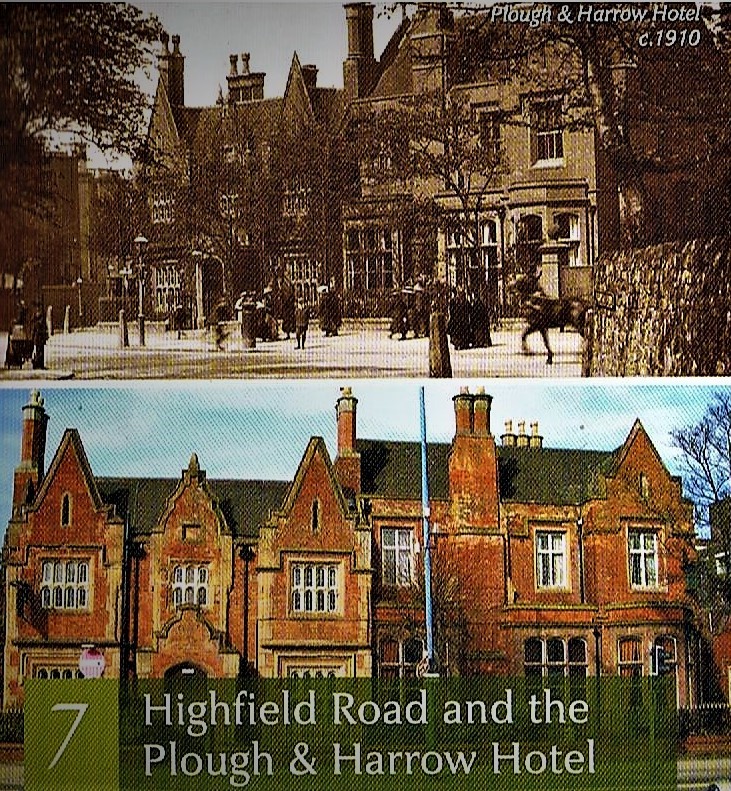




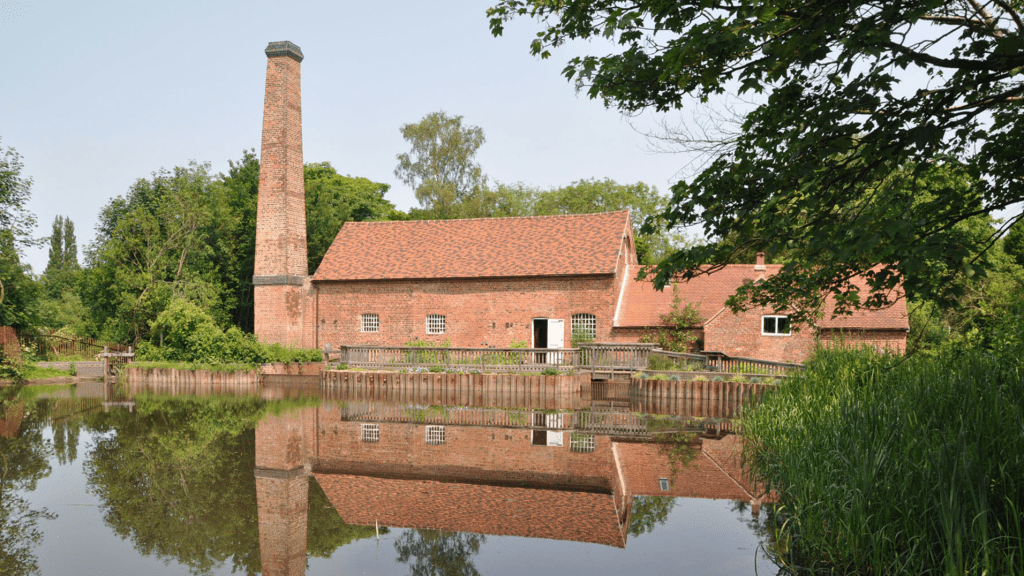
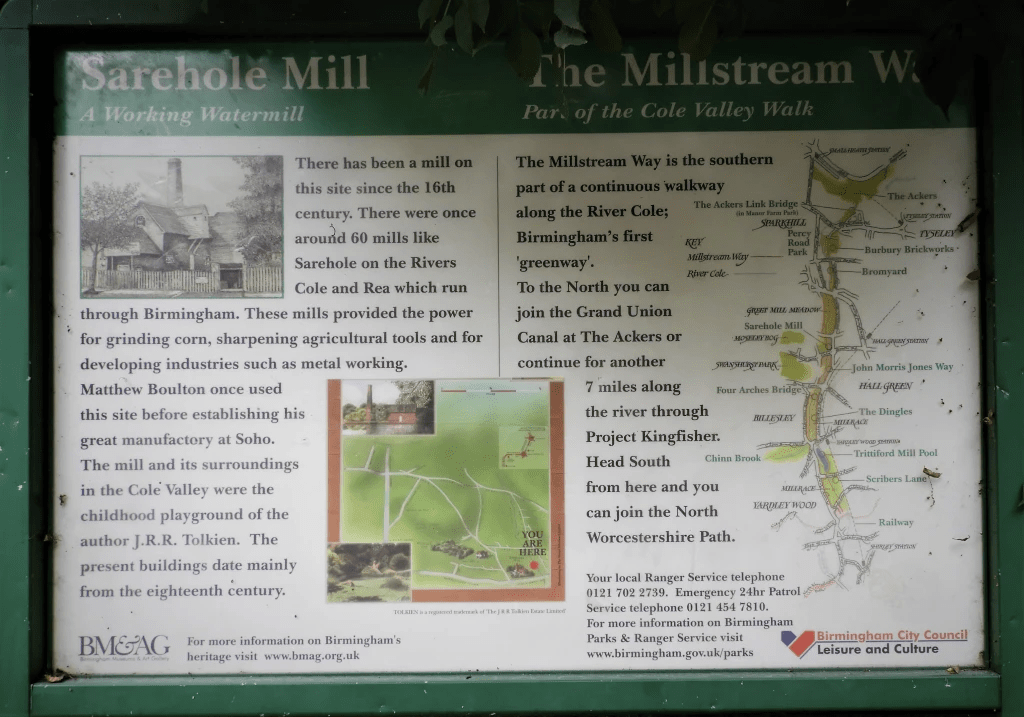


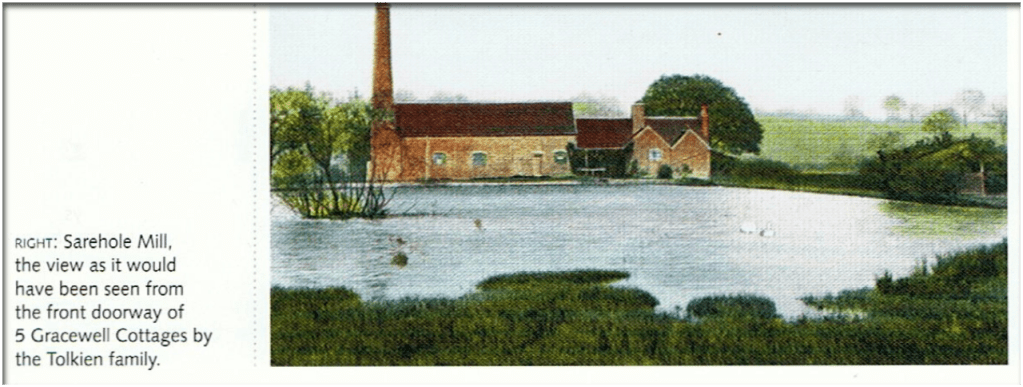


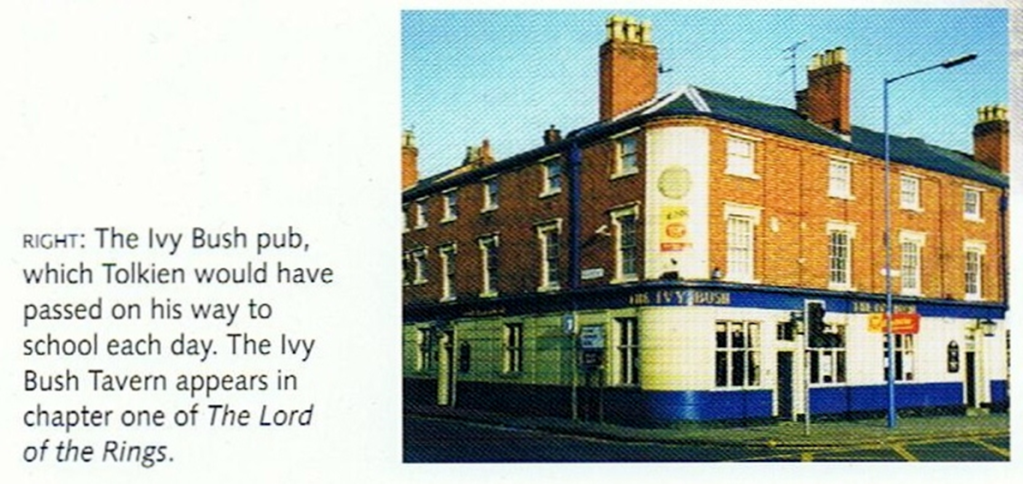

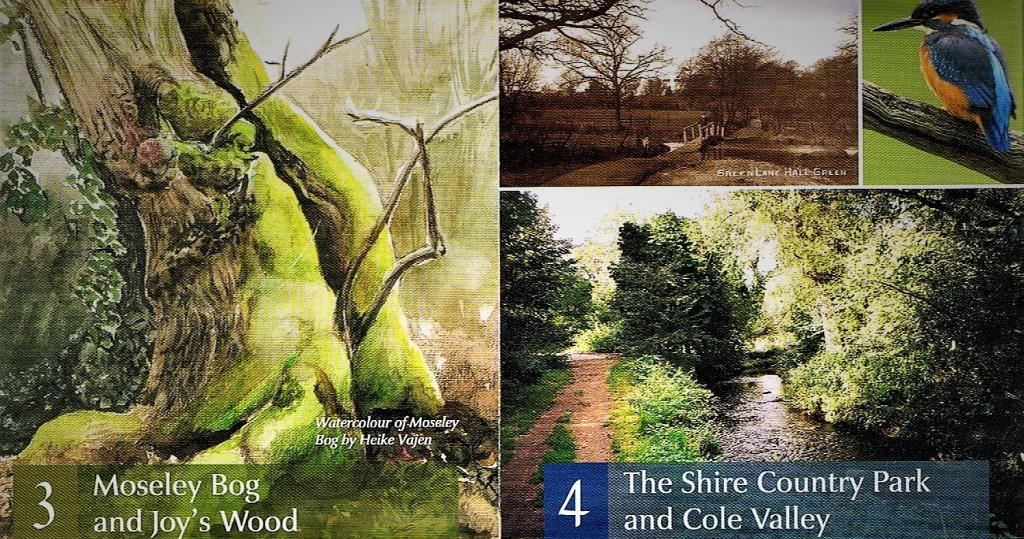
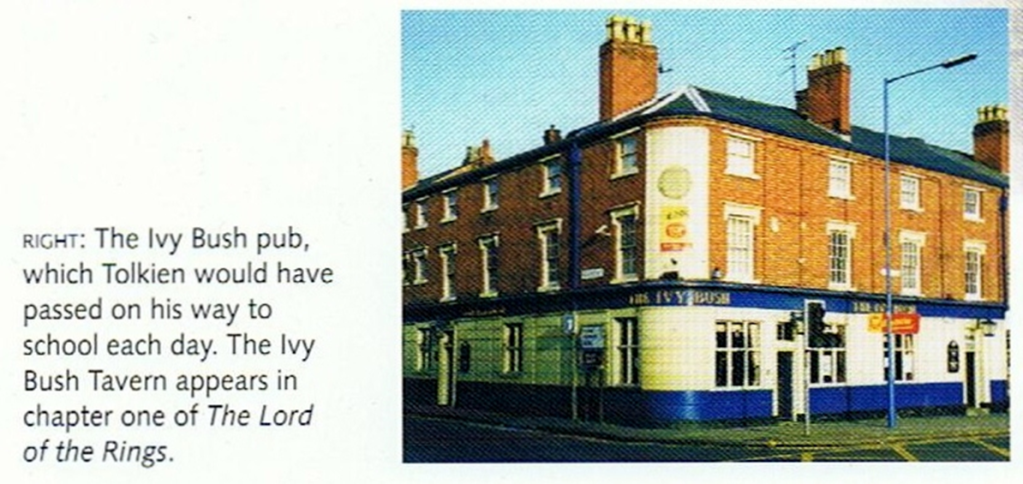
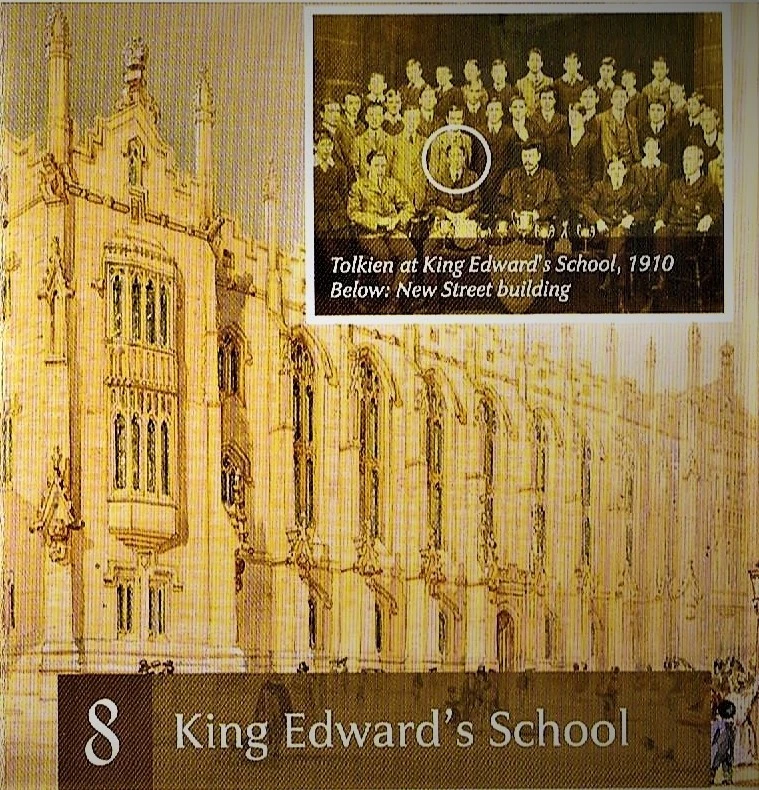


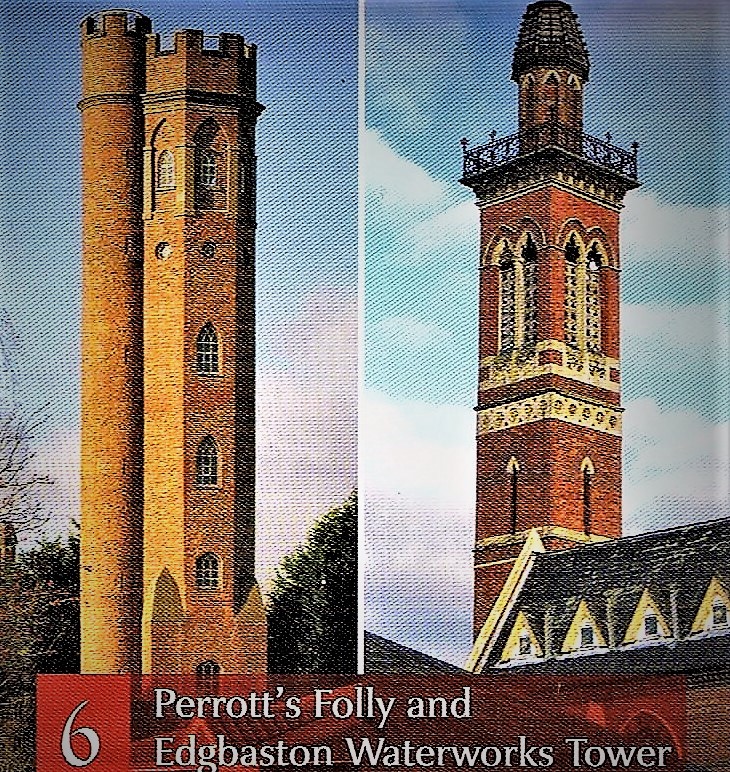
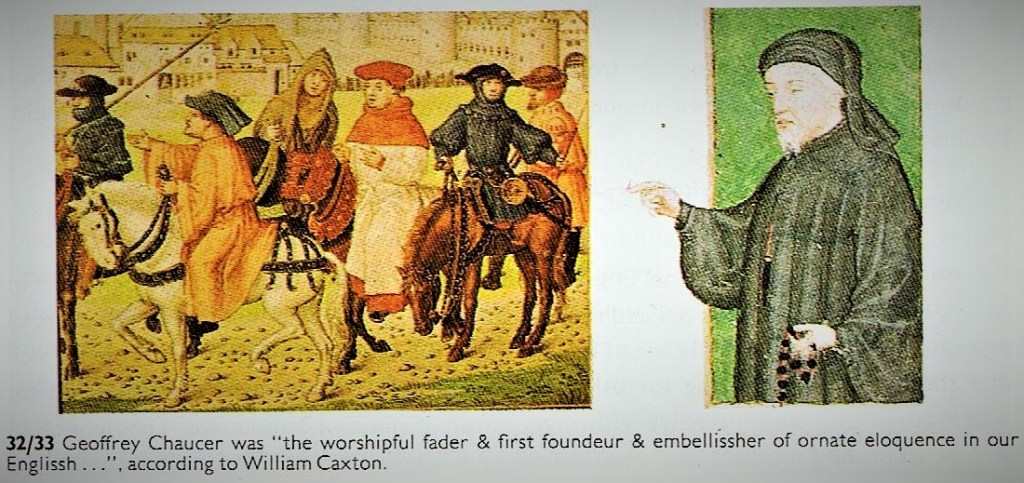

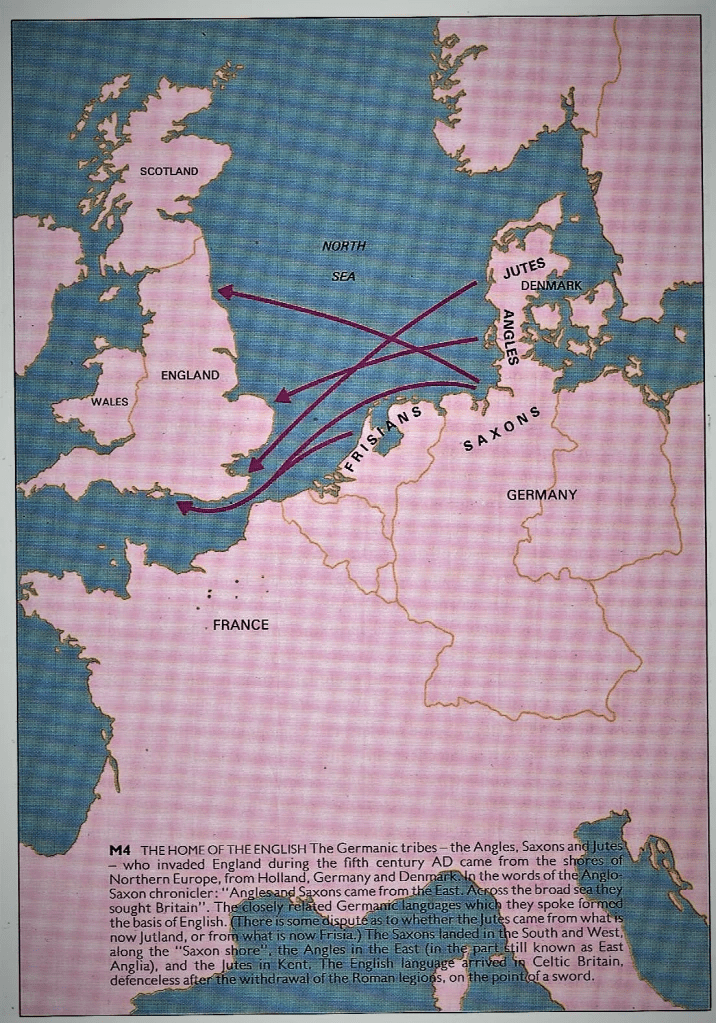
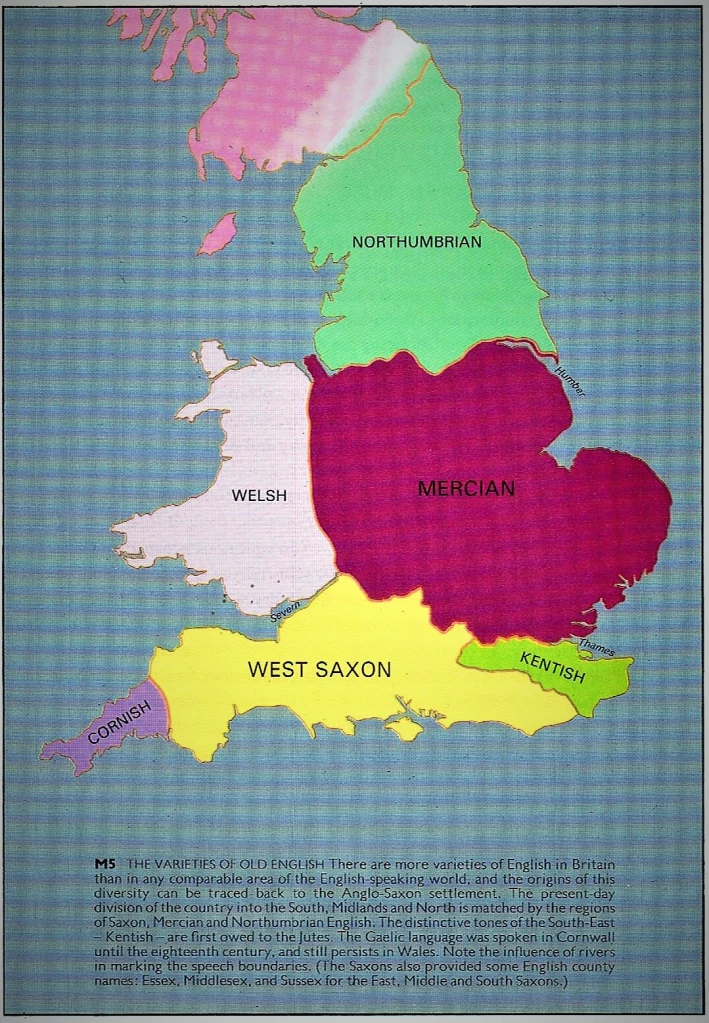







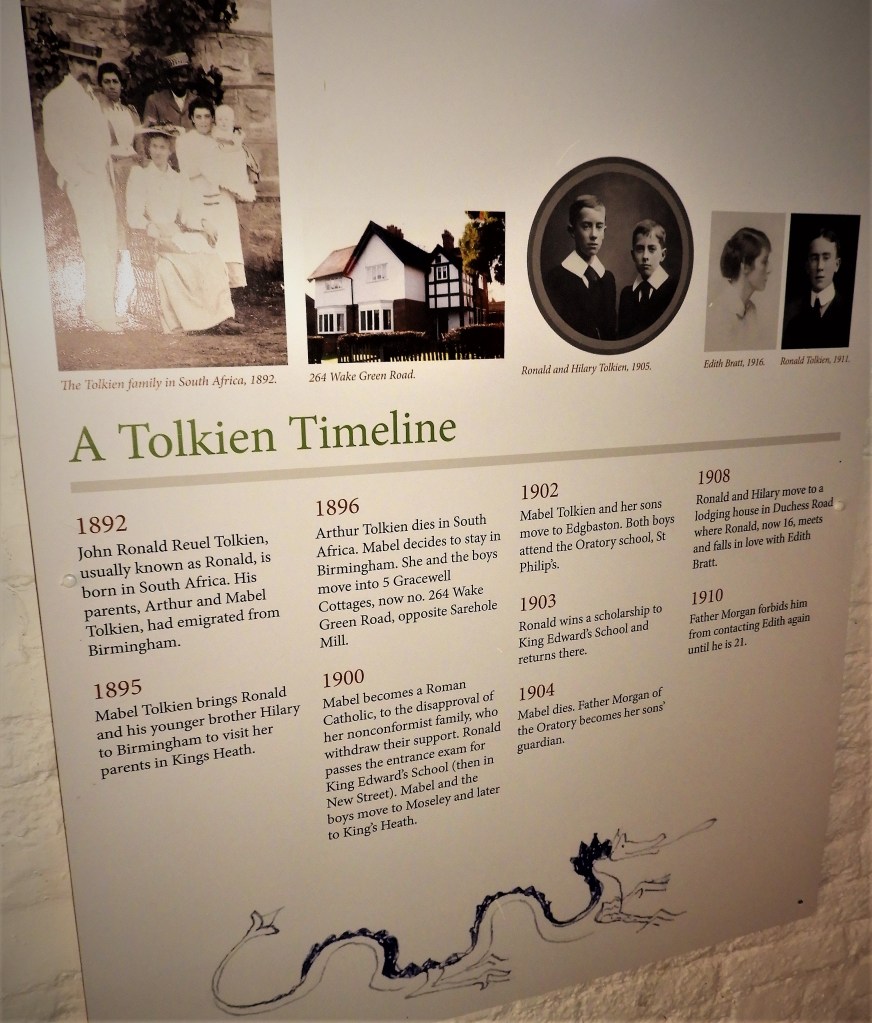











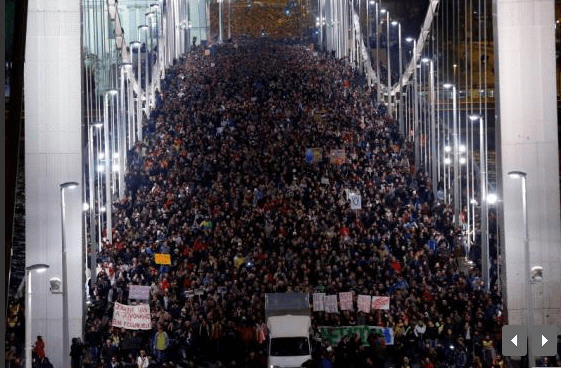



 Andrew James