While the King camped out at Raglan Castle at the beginning of July, to the north of the main ongoing conflict, Royalist troops under Lord Byron were attempting to hold their own at Chester, and in the south-west Lord Goring, continuing to command the King’s army there, was attempting to fight his way into Taunton. Fairfax lost no time in ensuring that royalist hopes of a military recovery were dashed. His first priorities were to relieve Taunton and defeat Goring. If, however, Charles could combine with Goring he would have an army of a superior size, though not of the same quality, as the army he had lost in the field at Naseby on 14th June. Taunton was held for Parliament by Colonel Robert Blake and Fairfax was ordered to march to his relief. But as Royalist garrisons at Bristol, Bath and Devizes blocked Fairfax’s most direct route from the Midlands, he advanced southwards using the south coast ports for re-provisioning. He drove his men hard; between Marlborough and Dorchester, they marched an average of seventeen miles per day over five consecutive days. By 3 July, the New Model was quartered at Dorchester, where it was met by leaders of the Clubmen of Dorset and Wiltshire, local people who had taken to arms to protect their homes. They asked for passes to carry petitions to both King and Parliament, calling for a cessation of hostilities and the handing over all the places in Dorset that were garrisoned by either side to the Clubmen themselves. Fairfax naturally refused their request, though with courtesy and reasoned argument. Their numbers made them formidable as a third force, but their attitude softened as they came to appreciate his genuine consideration for local interests and the growing contrast between his army’s respect for law and property and the habitual marauding of the western royalists.
Sir Thomas Fairfax, by John Hoskins: though it has been questioned whether the sitter really was ‘black Tom Fairfax’. Compare with the picture below.
By 4 July the New Model were nearing Crewkerne, prompting Goring to raise his siege of Taunton, falling back to the River Yeo between Yeovil and Langport. He then took up a forward position to the east of Bridgwater at Langport to await the advancing parliamentarian army. Goring garrisoned his position there, giving it a strategic position, controlling a bridge across the River Parrett. The royalist garrison at Langport was in an important strategic position, controlling the bridge across the River Parrett. On 6 July, Fairfax sent Colonel Montague, with two thousand musketeers to the aid of Major General Massey at Ilchester. Massey was in command of several regiments of horse and dragoons with which he followed a large part of Goring’s army, marching on Taunton once more. However, before Montague could reach them, Massey’s forces had already engaged and damaged Goring’s army. Fairfax then turned Goring’s line by capturing Yeovil. After that, Fairfax had no difficulty in making Goring give up the siege of Taunton, but experienced rather more in bringing him to battle on advantageous terms. The ranks of the of the New Model were thinned after Naseby, where many more had been wounded than killed, by the escort that he had had to provide that for the 4,500 royalist prisoners, and by the chronic drain of desertions. Massey and his Western Association forces, garrisoned in Gloucester, had brought his strength up to fourteen thousand.
Goring with about half that number was also expecting reinforcements, in his case from south Wales, and was avoiding battle until they arrived. On 10 July, The Royalists regrouped at Langport and Goring dispatched three brigades of cavalry south-westwards in the hope of convincing Fairfax that Taunton was under threat again so that he would split his forces, thereby reducing the numerical disparity between the armies. Fairfax dispatched 5,500 Horse in pursuit of George Porter, who was intercepted and defeated near Ilminster. Goring then began to withdraw in the direction of Bridgwater. To allow his baggage and artillery trains to cover the twelve miles to Bridgwater, he then prepared to fight a delaying action from high ground to the east of Langport. He had been able to select a strong defensive position there, and was much less heavily outnumbered than he had been a few days earlier. That morning the troops sent to assist Massey at Ilchester were recalled by Fairfax, but they didn’t join the main part of the New Model until the battle was over. Goring could only oppose roughly seven thousand men to Fairfax’s ten thousand. However, because it was a landscape of hedged and ditched fields, this was primarily a battle for musketeers and cavalry, with the New Model’s pikemen unable to play a significant role in the action.
Thomas Fairax, General of the Forces, by an unknown artist, c. 1648/9.
Goring’s position was fronted by a brook known as the Wagg Rhyne and by a good deal of marshy ground. The Langport-Somerton road crossed the brook at a ford before ascending the hill in the centre of the Royalist line. The road and the surrounding fields were bordered by hedges which Goring lined with musketeers, and sited two guns to cover the ford, with cavalry in support. It was a seemingly strong position and the nature of the ground offered Fairfax little alternative but to make a frontal attack along the road. But Fairfax attacked with boldness and skill, making good use of his artillery and co-ordinating the deployment of his cavalry and infantry with precision. After a Parliamentarian battery had silenced the Royalist guns, fifteen hundred musketeers were sent forward to clear the hedges surrounding the ford. Then, a detachment of parliamentarian cavalry advanced along the hedged lane on the Royalist position, defended by two cannon and by musketeers lining the hedgerows. As the Royalist infantry fell back, three troops of Cromwell’s Horse commanded by Major Bethell charged across the ford and up the slopes beyond. Success hung upon a cavalry charge which had to negotiate a line wide enough for only four troopers to ride abreast before they engaged the waiting royalist horse, and it was executed with proud courage by units which had ridden with Cromwell since before the New Model’s creation.
The first two ranks of Royalist horse broke before this charge but Goring’s remaining cavalry massed against Bethell and began to push him back. At this crucial moment three troops from Fairfax’s regiment struck Goring’s cavalry in its flank, supported by musketeers as the Parliamentarian foot began to arrive on the hill. By this time, Goring’s men could not match the spirit of Cromwell’s troopers. Goring’s cavalry broke and fled, pursued and attacked as they fled through the streets of Langport. His infantry regrouped for action but, without cavalry support, they had no option other than to surrender. Although only three hundred Royalists were killed, many more were captured or deserted. Cromwell reckoned that they lost two thousand killed or captured. Many others, scenting an unmitigated defeat, simply melted away. The New Model had destroyed the royalists’ last substantial field army. After garrisoning Bridgwater, Goring retreated into Devon with the remnants of the Western Army. The battlefield lies between Taunton and Somerton, approximately a thousand yards from the town of Langport on the road to Somerton.
Bridgwater to Sherborne:
By contrast with what had happened with the Earl of Manchester’s army following Marston Moor the previous year, Fairfax took every opportunity to capitalise upon his successes at Naseby and Langport. A pattern was established that was followed throughout the remainder of the year. Detachments of varying compositions were sent out to reduce lesser garrisons while the main body faced the major Royalist strongholds. The next target was the small but strongly fortified garrison at Bridgwater. The town was divided in two by the River Parrett, the lowest crossing of which gave it its strategic importance. The most heavily fortified part was on the west side of the river, which contained the Medieval castle with massive stone walls and a thirty-foot wide moat. The whole town was encompassed by a Medieval tidal ditch, which had been recut by the royalists. There were also stretches of surviving Medieval town wall, supplemented by new defences of earth and timber. There were said to have been forty guns mounted on these walls, but there are no traces of these defences remaining today. All that survives is a simple arch of the Water Gate to the castle in the West Quay.
Streeter’s contemporary drawing of the armies, showing the Parliamentarian lines, with Pickering’s and Montague’s regiments at the centre.
Bridgwater was well-supplied and manned, with eighteen hundred troops under the command of Colonel Edmund Windham. The King had been led to believe that Bridgwater was “a place impregnable”. Twelve days after their victory at Langport, Fairfax decided that he had to storm the town in order to consolidate his victory since he did not have the time for a protracted siege. Part of the New Model was on the west side of the river, while on the eastern side were, as at Naseby, Fairfax’s, Skippon’s, Pickering’s, Montague’s, Hardress Waller’s, Pride’s, Rainsborough’s and Hammond’s regiments. The attackers described what happened on 21 July:
… About two of the clock in the morning, the storm began accordingly on this side of the town (the Forces on the other side only alarming the enemy…). Our Forlorn hope was manfully led on by Lt. Colonel Hewson: and as valiantly; and as valiantly seconded by the General’s Regiment … and the Major-General’s …
John Hewson. An engraving by Van der Gucht, in the National Portrait Gallery, London.
The ditch was crossed on portable bridges and the works scaled against strong resistance. Once inside, Pickering’s regiment opened the drawbridge for the other regiments to enter and soon that part of the town on the eastern side of the river was taken:
There was not one officer of note slain, though many in person led on their men, and did gallantly, as Lt. Col. Jackson, Lt. Colonel to the General, and Col. Hewson of Col. Pickering’s regiment.
Six hundred royalists still maintained the defences on the west side of the river. Having cut the bridge, the governor set fire to the eastern part of the town with a bomardment of red hot shot, leaving no more than three or four houses standing. This desperate defensive action was followed on the 22nd by the storming of the western part of the town, prepared by intensive cannon fire. In the face of this bomardment the governor soon surrendered, rather than allow the rest of the town to be devastated by fire as he himself had ordered the eastern half to be. The parliamentarian troops were promised five shillings per man as a reward for the storming of the town, to be taken out of the sale of goods captured. However, when the troops had still not heard anything by the middle of August, it was reported that, ‘for want of pay’, the men of various regiments took ‘free quarter’ and ‘plunder’ at will.
Meanwhile, Cromwell was dispatched to deal with the Clubmen, who were now supporting the royalists and causing the parliamentarian army considerable trouble. They were numerous enough to hamper Fairfax’s operations. There were two distinct associations of them in the region. One of them, based on the chalk downs of Dorset and neighbouring Wiltshire had a markedly royalist bias. At the same time other parliamentarian forces were sent to besiege Bath, while Colonel Pickering was given the task of besieging another key royalist garrison, at Sherborne. On 27 July, Fairfax …
… sent a Brigade of horse and foot unto Sherborn under the command of that pious and deserving Commander, Colonel Pickering, to face the garrison, and to view the same; and if there were hopes to reduce it, to sit down before it, in order to a seige.
The garrison at Sherborne, under the command of Sir Lewis Dyve, was in the Medieval Castle. It was proving particularly troublesome as it was encouraging the activities of the Clubmen against the parliamentarian forces. Colonel Pickering’s brigade consisted of two thousand foot, supported by Colonel Whalley’s Regiment of horse. On 1 August, Fairfax arrived outside Sherborne to view the siege works and the castle. On the 2nd, he ordered a “close siege”, believing that it might be possible to quickly reduce the garrison. Most of the army was brought up to Sherborne and they proceeded to construct siegeworks around the castle. Dyve refused a second summons to surrender on 6th August, and preparation was made for an assault. Mines were dug and gun batteries were constructed. The twelve foot thick castle walls were unaffected by the army’s artillery until demi-cannon arrived, by which time the siegeworks were within ten yards of the walls. On the 10th, the besiegers reported:
… our great Guns began to batter the strong wall of the castle, between the two lesser Towers thereof, and had soone beaten down one of them, and before six of the clock that night, had made a breach in the wall, so as twelve abreast might enter.
The castle, which the Enemy had vaunted would continue and hold out a half yeares seige at least, was most valiantly stormed. Ingoldsby’s men had gained the corner tower of castle. Dyve then refused quarter and so the final assault was prepared. Under continued musket fire the defenders had to withdraw from the Great Court. Their position was becoming increasingly difficult and they were now running short of ammunition. By the 15th Dyve had no alternative but to surrender. In total, two hundred of the besieging force had been lost over the sixteen days. The castle was plundered and later slighted, although large parts of it still stand today, and it is possible to pick out the traces of the triangular bastions and banks of the Civil War period, set immediately outside the Medieval ditch.
While Fairfax was besieging Sherborne, the ‘cavalier’ Clubmen had been in touch with its defenders and had agreed to try to help force Fairfax to raise the siege. He frustrated their plan by surprising a meeting of their leaders at Shaftesbury and sending them to London as prisoners, whereupon two thousand or more of their associates assembled in arms upon Hambledon Hill nearby, demanding their release. Three times Cromwell sent a party of horse to command them to disperse, and each time his men were fired upon; some were taken prisoner and according to Cromwell ‘used most barbarously’. Two of their most pugnacious leaders were Anglican clergymen. In the end it took a minor cavalry action to break them up, and though fewer than a dozen were killed, many more were wounded and about three hundred captured. Cromwell held them in a church overnight, took their names, warned them that they would be hanged if they were caught again opposing the Parliament’s forces, and then let them go.
Shaftesbury to Bristol:
The other Clubmen association with which Fairfax dealt was drawn from the woodland and pastoral areas of Somerset and Gloucestershire. Research into the individual counties in the Civil War, especially by Underdown, has illustrated the importance of local issues in determining loyalties (see above). Gloucestershire was deeply divided during the Civil War, between royalists, parliamentarians and ‘clubmen’, local people who simply wanted nothing to do with the conflict and wanted to keep the fighting out of their towns and villages, if necessary by using a variety of ‘homemade’ arms themselves. Lacking great landed magnates to give leadership and with Gloucester firmly in parliamentary hands, the royalists proved ineffective. Gradually the better organised parliamentarians had been gaining control of the county, until in July 1643, when the King had seized Bristol and Gloucestershire had become the key theatre of the war.
Urged by his generals to exploit parliament’s disarray and advance on London, Charles instead turned aside to eliminate the last parliamentary garrison in the county, at Gloucester itself. Enthusiastically supported by the townsfolk, the garrison held out for six weeks until relieved by the Earl of Essex, possibly costing Charles the chance to end the war quickly. For the next two years, Gloucester remained a parliamentary enclave in royalist territory, a veritable ‘thorn in the side’ for Charles. The royalists failed to prevent the Gloucester garrison from raiding far and wide under its energetic commander Edward Massey; he slowly expanded the enclave until, after Naseby, royalist support in the county collapsed. In the clothing industries of the rural valleys of Gloucestershire and North Somerset, there was strong support for parliament and workers from these areas had quietly co-operated with Fairfax in the storming of Bridgwater.
The First Civil War in Scotland & England, 1639-47.
Bath had been taken soon after Bridgwater. These defeats made Charles and Rupert abandon their tentative plans for a new campaign in the West Country, with Bristol as their base. Their position in south Wales was endangered by a combined operation by Vice-Admiral Batten and Major-General Laugharne, who routed the local royalist forces at Colby Moor near Haverfordwest on 1 August. By the time of the successful assault on Sherborne Castle on the 14th, Charles, who had been in Cardiff, was already heading north, feeling the trap closing upon him. Leaving Rupert with what he thought was a sufficient force to defend Bristol, he set off with the idea of making a junction with Montrose. After his triumph at Auldern, Montrose had won another brilliant and bloody victory over Baillie and the Covenanters at Alford on 2 July, and was advancing upon Glasgow. When the two faced each other again , eleven miles from Glasgow at Kilsyth on 15 August, the committee of estates overruled Baillie’s plan of battle, and his army of six thousand was utterly routed; only a few hundred escaped with their lives. Montrose, with his own forces now grown to at least 4,400 foot and five hundred horse, entered Glasgow soon afterwards, and for a brief while he was master of Scotland.
Above: James Graham, First Marquis of Montrose, attributed to William Dobson, c.1640.
By then, Charles had got as far as Doncaster on his way to meet Montrose when he learnt that Leven and his army were on his tracks and only ten miles away. Leven had been besieging Hereford, but had broken off the operation to hunt larger prey. The Northern Association forces were also threatening Charles’ liitle army, so in search of safety he took it on a long and exhausting march by way of Newark and Huntingdon to Oxford and Worcester. By then his main concern, following the loss of the west country garrisons, was to save Bristol. Rupert had assured him that it could hold out for at least four months, which proved to be a serious error of judgement, one for which he was later made to pay dearly.
Prince Rupert of the Rhine, attributed to Gerrit van Honthorst.
Although other minor garrisons in the West Country were being cleared, Fairfax’s main objective was now Bristol, which he had had in his sights ever since Naseby. He overruled the more cautious spirits in his council of war who advised him first to clear out the far south-west, where Grenville, Goring and Hopton among others were still under arms, but he did think it important to reduce the nearest royalist garrisons in Dorset and Somerset, as we have seen. One reason for this was the need to deal with the local Clubmen, both the ‘hostile’ ones from Dorset and Wiltshire and the more ‘sympathetic’ ones from Gloucestershire and Somerset. When operations began against Bristol the Somerset Clubmen allowed Fairfax to recruit two thousand auxiliaries from their ranks. Gloucestershire contributed a further fifteen hundred and both counties readily raised more volunteers as the the siege progressed.
Above: A view of Bristol in the eighteenth century from Brandon Hill, site of one of the Civil War forts. The Parliamentarian troops’ breach of the Royalist defences was made at Lawford’s Gate, on the distant left of the picture.
The vanguard of the Parliamentary Army assembled around Bristol on the 22nd and 23rd August, when Fairax completed his investment of the City. Despite its formidable fortifications Fairfax did not intend to conduct a long siege. Yet the alternative of storming the city was a daunting one, and Rupert’s assurance to the king that he could hold out for four months shows that he expected no such exploit. Success depended on the newly developed courage of the infantry, having taken the outlying royalist garrison towns. Until a breach was made or a gate forced open, cavalry would be of little help. Sallies were made by the garrison over the following days against various regiments around the city. For foot soldiers, a pitched battle at push of pike was a severe enough test of morale, but to scale high walls under fire from cannon and muskets, and with defenders waiting to club or run through the assailants as they came over the top, must have been quite terrifying.
On the 29th the defenders attacked the parliamentarian quarters near Lawford’s Gate. It was then decided that the city should be stormed, because Fairfax was not confident that his army could maintain a long siege. By the time of the assault on Bristol the command of the General’s Brigade, comprising Fairfax’s, Montague’s, Pickering’s and Sir Hardress Waller’s regiments, had fallen to Colonel Montague. They were to attack on both sides of Lawford’s Gate, while other brigades attacked on the north and the west sides of the city. Montague’s and Rainsborough’s Brigades crossed the Avon at Keynsham to Stapleton where they quartered that night. Montague’s Brigade then secured the area between the rivers Frome and Avon, coming up to within musket-shot of Lawford’s Gate.
Above: The defences of Bristol in 1645 (after Gardiner)
On the morning of the 10th, a concerted attack was mounted. A new earthwork defence, with forts set along it, had been constructed outside the Medieval town walls. Fairfax sent his men in across these fortifications, even though the previous six days of bombardment had failed to make a breach in the walls. The soldiers carried faggots to fill in the ditch while some brought up ladders to scale the ramparts. The New Model foot that had fallen back before inferior numbers at Naseby fought heroically. Their task was made harder because at most points of attack their scaling ladders were too short to reach the tops of the walls. Priors’ Hill Fort, on the north side of the Frome, was captured but to the south of the Avon the attack faltered against much more substatial defences.
The decisive assault took place on the eastern side of the city. It was here that Montague’s Brigade stormed the defences on both sides of Lawford’s Gate, bothe to the river Avon, and the lesser river Froome. They forced their way in , and their numbers told in the end. Pickering himself entered gallantly, and with others gave the royal party that wound, which will hardly ever be healed. Fairfax had not far short of ten thousand men, including cavalry, backed by nearly five thousand Clubman auxiliaries. There was plague in the city, and sickness and desertion had left Rupert with at most two thousand regular troops and a thousand trained bands an auxiliaries to man a perimeter three to four miles long (although the Mayor of Bristol told Cromwell that Rupert had about a thousand horse and 2,500 foot, besides 1,200 or more trained bands and auxiliaries, but Rupert’s own narrative states that though his garrison was nominally 2,300 strong, he could never man the line with more than 1,500 regular soldiers, and that the trained band and auxiliaries were down to eight hundred).
Edward Montague, later Earl of Sandwich, in 1642, at the age of seventeen.A friend of John Pickering, he commanded an Eastern Association infantry regiment from the autumn of 1643, shortly before Pickering formed his regiment.
In his dispatch to the Speaker, Cromwell paid generous tribute to the gallantry of the soldiers which had secured this great victory. He described how:
Col. Montague and Col. Pickering, who stormed at Lawford’s Gate, where was a double work, well filled with men and cannons, presently entered; and with great resolution beat the Enemy from their works, and possessed their cannon. Their expedition was such that they forced the Enemy from their advantages, without any considerable loss to themselves. They laid down the bridges for the horse to enter; … Then our foot advanced to the Castle Street: whereunto were put a Hundred men; who made it good.
Oliver Cromwell, an unfinished minature by Samuel Cooper
He also testified that men of different religious professions had fought together as comrades, fired by the same spirit of faith and prayer, and he ended with an eloquent plea for that they and ‘the people of God all England over’ should enjoy liberty of conscience. With obvious reference to the sterile pursuit of religious uniformity thenin progress, he urged that the real unity was inward and spiritual, and from brethren, in things of the mind, we look for no compulsion but that of light and reason.
The Commons deleted the whole paragraph when they published his letter, as they had done with a similar plea in his Naseby dispatch, but his independent supporters had it printed separately and scattered in the streets. It probably received more public attention in the end because of the shabby attempt to suppress it.
Prince Rupert now requested a parley and Col. Pickering, with Montague and Rainsborough, was responsible for the negotiations with the royalists. The garrison surrendered on the following day. In all during the action Pickering’s and Montague’s captured twenty-two great guns and took many prisoners. For such a hazardous assault on one of the the major towns in the kingdom the losses were remarkably light. It was reported that in Col. Rainsborough’s and Col. Montague’s Brigade, not fortie men are lost, while in total the parliamentarian army suffered no more than two hundred killed. Apart from the earthwork remains on the fort on Brandon Hill, which now lie within a public park, nothing survives of the defences of Bristol. Of Lawford’s Gate, only the street name remains to show where the decisive breach was made.
No previous defeat so shocked and grieved the king as the surrender of Bristol. He saw it as a betrayal and immediately dismissed his nephew from the command of his army, rebuking him in a letter for ‘so mean an action’ and directing him to seek his subsistence overseas. This appears grossly unjust, even by contemporary absolutist standards. Rupert could fairly be faulted for misleading Charles about his power to hold on to Bristol for four months, but not for seeking terms when an immensely superior enemy had forced its way into a city beset with plague and had its defenders and citizens at its mercy. If he had cared nothing for civilian casualties or for the lives of his own men he might conceivably have withdrawn into the fort for a do-or-die stand, but his own officers judged this untenable in any case, and the only possible justification would have been that the King or Goring or both could have brought him swift and powerful relief. Bur Charles himself was in Raglan and in no position to assist him, and Goring was still in Exeter; Fairfax had intercepted from him saying that it would take him three weeks to get to Bristol.
Devizes to Winchester:
Montague was called to London and command of the brigade, which had fought together since Naseby, changed once more, passing to Col. John Pickering. Following the fall of Bristol the army was again divided and the clearance of the lesser royalist garrisons continued. Rainsborough was sent with a brigade to take Berkeley Castle, while Cromwell took Pickering’s brigade to take Devizes and Lacock House. Devizes town and castle had been fortified to command the county of Wiltshire and control traffic from London to the West. The governor, Sir Charles Lloyd, had a garrison of three to four hundred men. On 17 September, the town was quckly overrun forcing the garrison to retreat to the castle. Though much of the site was in ruins, the gatehouse was intact. Cromwell summoned the castle to surrender but was denied. Artillery was therefore brought up from Trowbridge and a battery of ten guns was set up in the market place, within pistol shot of the castle. The bombardment of both cannon and mortars began the next day and played on the castle all that day and night. One mortar shell even fell within the roofless keep, which was being used as a magazine, though it did not explode. This bombardment quickly persuaded the governor to discuss terms, and on the 23rd September the garrison surrendered.
Cromwell then left the brigade under Pickering’s command, and it was dispatched to Lacock House in Wiltshire. The garrison lay about twelve miles north of Devizes on the Chippenham road. It had been held at various times by either side, though the owners, the Talbots, were royalists and in the summer of 1645 Lacock was held for the King. The governor, Colonel Bovile, …
… considering that neither Bristol nor the Devizes were able to hold out against our force, did easily resolve that a Poore house was much less able; …. accordingly therefore upon the first Summons, he came to conditions to surrender …
Above: The Great Hall of Winchester Castle, showing (on the left) a fragment of the castle wall, in 1787.
The garrison duly marched out on 26 September. Two days later, the New Model brigade rejoined Cromwell, who was advancing on Winchester. The city, which still retained its Medieval defences, was well fortified. The garrison was based in the castle, which had been acquired as a home before the war by Sir William Waller, the early parliamentarian commaner. According to Hugh Peters, who walked around the the site after the surrender, the castle was heavily defended with six distinct works and a drawbridge … it was doubtless a very strong piece, very well victualled … as strong a place as any in England. Estimates of the strength of the garrison varied between five and seven hundred. On the 29th, in the face of unexpected resistance, the city was entered after the firing of a bridge or gate. The governor, Willam Ogle, the retreated with his troops into the castle. Cromwell wrote of these events:
I am come to Winchester on the Lord’s Day … with Colonel Pickering … After some dispute with the Governor, we entered the Town. I summoned the Castle, was denied, whereupon we fell to prepare our Batteries. …
Above: The Medieval West Gate of Winchester, viewed from inside the city, early in the last century. The castle was immediately to the left.
Within four days the gun batteries were ready, but soon after the barrage began a second sunmmons was refused. The next day there was a continual bombardment, with some two hundred shots being fired. This created a stormable breach, wide enough for the entry of thirty men abreast. However, during the night the royalist soldiers began to desert and the officers demanded a parley. As a result, on 5 October, Ogle surrendered. Only two or three of the parliamentarian forces were reported as lost during the siege. In fact, Cromwell probably gained more soldiers than he lost, as some of the royalist troops enlisted with the New Model Army. With Winchester taken, the whole of the ‘West’, or ‘Wessex’, was in parliamentary hands, though not yet the far south-west of Devon and Cornwall.
Further Royalist disasters followed fast. In Scotland, three days after Bristol fell, Montrose suffered a crushing and decisive defeat at Philiphaugh. David Leslie had a significant supremacy against him in cavalry and was reinforced by seasoned troops from Leven’s army in England. Their treatment of the Irish as sub-human was common to the English and the Scots, and in this case had the full blessing of the Scottish parliament. Montrose himself made his escape, but his hopes of doing the King further service were vitiated by the mutual emnity between the Huntly and the Gordons and himself. Not knowing of his Scottish champion’s defeat, Charles set off for Chester from Raglan on 18 September, hoping once more to join forces with Montrose. The city was under siege but open from the south, and he still had Langdale’s northern horse to screen him. But on 24 September, the day after the King’s arrival in Chester, the Northern Association Horse defeated Langdale and the garrison forces.
Above: Kin Charles I, a copy of John Hoskin’s minature, probably painted during Charles’ captivity at Hampton Court. Note the contrast between this care-worn face and the familiar, idealised pre-war portraits by Van Dyck.
Charles was forced to go on his travels again, with little more than a bodyguard, and he found refuge in Newark on 4 October. By then garrison after garrison had fallen to detachments of the New Model in the west; Devizes, Lacock and Berkeley Castle. Meanwhile, Rupert was so desperate to clear himself that he and Maurice skirmished their way to Newark, defying the King’s orders not to enter the city. Charles refused to see Rupert, but he obtained a hearing before members of the royal council of war, sitting as a court martial. They cleared him of any lack of courage or fidelity, but found him guilty of ‘indiscretion’ in surrendering Bristol prematurely.
The order for him to leave the country was not enforced, and eventually a sort of reconciliation was effected, so that Rupert ended the war in Oxford, though without a commission. The contrast between Charles’ severity towards his nephew and best commander and his indulgence towards Goring, whom he never reproached for failing to come to his aid when ordered to do so, makes sad reading.
(to be continued…)
Sources:
Glenn Foard (1994), Colonel John Pickering’s Regiment of Foot, 1644-1645. Whitstable: Pryor Publications.
John Haywood et.al. (eds)(2001), The Penguin Atlas of British and Irish History. London: Penguin Books.
Austin Woolrych (2004), Britain in Revolution, 1625-1660. Oxford: Oxford University Press.
”The Last of England’. A painting of emigrants by Ford Madox Brown. ‘The White Cliffs’ can be seen in the background.
The Pursuit of Poverty – Labouring Poor of the British Isles:
In 1828, a man of Minster in Kent, told a House of Commons committee formed to investigate the continuing conditions of poverty and destitution that:
The convicts on board the hulks are a great deal better off than our labouring poor, let the convict be ever so bad a man. The convicts come on shore to work; they they do not work so hard nor so many hours as the common labourers, and they live better.
In the nearby parish of Ash, there was a regular meeting every Thursday, where the paupers were put up for auction and their labour sold for a week. It often happened that there was no bidder, however. The penury endured in every part of the British Isles stifled almost every human characteristic except one: the ability to have children. Both Ireland and the Highlands of Scotland were overpopulated. England, perhaps, was not: but, to many of those living in the cities, growing industrial towns and London suburbs, it seemed to be. The expatriate Briton in Australia had free convict labour. In India, he enjoyed the services of ‘coolies’. If he lived in the southern United States, he employed slaves. Back in the old country, however, there was a home-grown product. Too many people earning too little money provided an endless source of recruitment. The so-called lower orders had never had it worse: the middle and upper classes had seldom had it better. To the starving and dispossessed of the Isles, especially the Irish, America beckoned. Seizing this slender straw of comfort, many set out on what was surely going to be the worst journey of their lives.
Poverty and destitution in Ireland and Scotland were even worse due to the potato crop failures of successive decades. When the potato crop was sufficient, the Irish peasant existed. When it failed, as it did, from time to time, he starved. In 1828, for example, Cork had a population of 117,000, of which no fewer than sixty thousand were paupers, and of this number a third did not possess so much as a straw bed. In 1822, during a potato famine, matters became so bad that aid had to be brought in from England – even though, according to a writer in the Dublin Evening Post,
… the alarming fever of 1822, and the famine which succeeded it, did not arise from want of means to buy that food, for we were in possession of a vast quantity … The English subscriptions saved a million people, I have little doubt, by enabling them to purchase it.
If a landlord ejected his tenants there were only roadside hovels to shelter in.
The authorities fumbled for a solution. In the late eighteenth century, the Agricultural Revolution had already reduced the farm labourer’s staple diet to bread and cheese, washed down with tea or beer. He seldom saw meat, but some were able to grow potatoes in their cottage gardens. Thomas Mathus (born 1766), a mathematically-minded parson, realised what was becoming uncomfortably evident: there were just too many people in the British Isles. In itself, he argued, this was bad enough, but its implications might have been less serious if the output of the farms had been keeping pace with the birth explosion. According to Malthus, this was not happening. As he put it: Population increases in a geometrical and subsistence only in arithmetical ratio.
In other words, people multiply at a much greater rate than food is produced. The outcome, unless former was controlled, would be starvation and misery. Part of Malthus’ solution was to discourage marriage and any other relationship which might result in childbirth. He also deemed it wise to encourage individuals and families to emigrate. He regarded the colonies as a receptacle for excess inhabitants, and had a formula to back up his ideas. There were also a number of schemes which were capable of translating his notions into practical terms. The collection of reliable statistical information was only begun with the first decennial census in 1801, but this was a barely reliable source for contemporaries and historians alike until 1841. There were no reliable government figures relating to unemployment until 1921.
In addition, historians still argue about the validity of making qualitative judgements on the basis of quantitative evidence and vice versa. Modern students of history are often surprised by the the length of time it took nineteenth-century government to act in response to general problems in the population, or by the the limted nature of the intervention made. Modern citizens of liberal-democratic welfare states automatically expect governments to legislate in response to such problems, and even to be pro-active in identifying them, but in the early nineteenth century, the role of government was simply to rule. For His Majesty’s government this meant managing the affairs of the monarchy, seeing to the defence of the realm, conducting foreign affairs, creating revenue by collecting taxes and enabling local officials to keep the peace. In other words, it was to provide the necessary stability for society to function as it always had done. This was underpinned by the all-pervading ‘laissez-faire’ philosophy of the Georgian period. The antipathy of successive governments and parliaments to state intervention is all too evident in contemporary sources, as are the roles of crusading individuals and extra-parliamentary campaigning groups in promoting the economic and social reforms of 1830 to 1870.
Overcrowded hovels and near-starvation diet were common-place for agricultural labourers in the 1820s and early 30s.
Gradually, however, the enormity of the problems caused by Britain’s rapid industrialisation were recognised and state intervention increased to meet these needs. It is important to remember the contemporary context in which these interventions were made. To intervene in order to maintain social stability was quite in keeping with traditional government responsibility, but there was still a hotly contested debate about collectivism versus individualism throughout the period. By 1830, the symptoms of industrialisation were too pressing to be ignored. Following the Great Reform Act of 1832, the British government was persuaded to implement the recommendations of the Poor Law Commission Report in 1834. This was a response to the complaints of those whose responsibity to deal with poverty was centuries old, a response which cost the Exchequer little and for which it has been monumentally criticised for what it did not do. It was finally jolted into action by the rising costs of the local poor rates, but the conclusions it drew were to the detriment of the poor:
It may be assumed that in the administration of relief, the public is warranted in imposing such conditions on the individual releved, as are conducive to the benefit either of the individual himself, or of the country at large, at whose expense he is to be relieved.
The first and most essential of all conditions, a principle which we find universally admitted, even by those whose practice is at variance with it; is that his situation on the whole shall be made really or apparently so eligible as the situation of the whole shall not be made really or apparently so eligible as the situation of the independent labourer of the lowest class. Throughout the evidence it is shown, that in proportion as the condition of any pauper is elevated above the condition of independent labourers, the condition of the independent class is depressed; their industry is impaired, their employment becomes unsteady, and its remuneration in wages is diminished. Such persons, therefore, are under the strongest inducements to quit the less eligible class of labourers and enter the more eligible class of paupers. The converse is the effect when the pauper class is placed in its proper position, below the condition of the independent labourer. Every penny bestowed, that tends to render the condition of the paupers more eligible than that of the independent labourer, is a bounty of indolence and vice. …
… We recommend, therefore, the appointment of a Central Board to control the administration of the Poor Laws; … To effect these purposes we recommend that the Central Board be empowered to cause any number of parishes which they may think convenient to be incorporated for the purpose of workhouse management, and for providing new workhouses where necessary …
The workhouse scene from Dickens’ Oliver Twist.
The passing an ‘Amendment’ to the Elizabethan Poor Law therefore ended ‘outdoor’ relief in individual parishes and transferred responsibility to ‘workhouses’ under the control of unions of parishes. These became dreaded and detestable institutions, run along the lines of prisons. Either a man accepted the puny wages offered by the self-righteous and well-fed farmers, or he committed himself to an establishment which, though it may have inspired some of the best of Dickens, had nothing else to commend it. The theory of ‘less eligibility’ which it was based on was that, if you made charity sufficiently unpleasant, nobody would want it. In Ireland, they did their very capable best to ensure that work workhouse conditions were even worse than those of the peasants’ hovels. One particularly vile aspect of the system was the splitting up of families. Writing in 1838, William Howlitt, author of Rural Life in England, wrote that:
… till the sound feeling of the nation shall have again disarmed them of this fearful authority, every poor man’s family is liable, on the occurrence of some stroke of destitution, to have their misfortune, bitter enough in itself, added the tenfold aggravation of being torn asunder and immured in the separate wards of a poverty prison.
The sexes were separated in workhouses.
The Report of the Royal Commission on the Poor Laws, and the Act which followed hard on its heels, contained weaknesses which severely limited their usefulness in dealing with poverty, or even with pauperism, in the second half of the nineteenth century. In the first place, the Royal Commission had concentrated too much of its attention upon a single problem, that of the able-bodied unemployed, particularly in rural areas, who it feared were being demoralised by ill-conceived grants of outdoor relief, as had happened in the Berkshire village of Speenhamland. It paid too little regard to the problems of those who were pauperised because of physical or mental ill-health, old age or loss of parents, although these probably constituted by far the largest proportion of those on relief. The important and complex problem of migration and settlement received only cursory treatment in the Report and was only modified in a few minor details by the Act, and the vital question of rating and the finance of of poor relief was dealt with in an entirely cavalier fashion.
No longer able to get outdoor relief, families had to go to the workhouses, where they would be clothed and fed. Children would also receive some schooling. In return, they would all have to work. However, the workhouse was more like a prison, and people dreaded being sent there.
Secondly, the reformers of 1834 focused their attention upon the problem of rural poverty, and produced the machinery to deal with it. The problem of the future was to be the far more difficult one of mass industrial unemployment and urban poverty. The poor law proved to be ill-adapted for dealing with poverty, and thus was increasingly ignored as a device for social reform. The oversimplified early nineteenth-century view of poverty was broken down into an investigation of its causes, and by changing attitudes towards it, a process which led to the introduction of new methods of treating poverty. The Old Poor Law, with its use of outdoor relief to assist the underpaid was, in essence, a device for dealing with the problem of surplus labour in the lagging rural sector of a rapidly expanding but still underdeveloped economy.
You could not throw surplus adults and children on to the scrap heap. The best idea, it was thought, was to send them overseas.
In their ‘methodology’, The Poor Law Commissioners of 1834 deliberately selected the facts so as to ‘impeach’ the existing administration. Not only did they fail in any way to take account of the special problem of structural unemployment in the countryside, but what evidence they did present consisted of little more than anecdotes. No attempt was made to take a census of the poor or to collate the information returned returned by the parishes. Instead, the Report contained an endless recital of ills from the mouths of squires, magistrates, overseers and clergymen. In this light, it was difficult for their reforming contemporaries to see the implementation of the new Poor Law as a blow for humanity, and they were cetainly ineffective in treating the roots of the problem and its mitigation. As the Georgian period came to an end and Britain entered the high-water mark of Victorian industrial production, migration, both internal and external, seemed to offer the solution to the problem of the surplus population.
Exodus? The Experience of Internal & External Migration:
Between 1821 and 1911, the total population of England, Wales, Scotland and Ireland grew from 20.9 million to 45.2 million. At the same time, the population of what have been described as ‘English-speaking neo-Europes’ also grew rapidly. These phenomena are connected: a significant proportion of the growing population of Great Britain emigrated, and these emigrants accounted over the century for a substantial part of the population growth of a number of states overseas. Emigration from the United Kingdom must not be detached from internal migration. Many Irish fled the famine in the 1840s to settle in the industrial west of Scotland, especially Clydeside, many Scots moved south into England, and many English people moved into the coalfield areas of South Wales. Whether they were migrating internally or emigrating, they were moving from a predominantly land-based ‘subsistence’ economy into an Atlantic and increasingly imperial economy based on industry, trade and commerce. Some emigrants sought to escape poverty, especially the rural Irish. But many more, especially the urban-dwelling English hoped for new and improved economic opportunities. Preferred destinations were the ‘Europeanised’ territories in North America, South Africa, Australia and New Zealand, where linguistic and cultural differences would be minimal and economic prospects attractive.
Internal migration in the British Isles: Those seeking to escape the poor wages and limited opportunities of rural regions could find far better conditions within urban Britain and its industrial regions.
Despite considerable emigration from all four countries of the British Isles, Wales was the only one of these home ‘nations’ to retain the whole of its natural increase as well as attracting major influxes from England in particular. As steam-ships replaced sailing ships and the railway revolution accelerated around the world, the coal from the valleys powered the growth of Britain’s global empire. The population of Scotland also grew, but less quickly than in England and Wales, from 2.1 to 4.8 million. Meanwhile, the population of Ireland rose 6.8 million in 1821 to peak of 8.2 million in 1841. Thereafter, it fell in every subsequent decade to 4.4 million in 1911, an overall decline of 35 per cent. This cannot be explained just by the dreadful mortality of the Great Famine, which caused a collapse in the Irish population in the 1840s; the different rates of emigration from the home countries was also a factor.
Nineteenth Century emigration from Brtain to British North America and the USA.
The overseas exodus was excessive as a proportion of the Irish-born population and substantial from Scotland, but also still significant from England. Only Wales increased its net in-migration rate. For some migrants, external migration was an alternative to, or an extension of internal movement. Official figures for emigration in the first half of the nineteenth century were not very reliable. Cabin-class passengers were rarely counted before 1863, and until 1853 no distinction was drawn between UK subjects and other nationals, and many European citizens travelled through Europe and across Britain en route to their overseas destinations. Nevertheless, a total tally of nearly seventeen million British and Irish emigrants is real enough.
Above: Some thought Roman Catholic priests in Ireland would oppose emigration because it would reduce their congregations. Instead, many encouraged their parishioners to go.
For people to move their homes overseas was a costly adventure. It was a fact of life that those most agreeable to emigrating would be those least able to afford the price. To suggest, for example, that a poverty-stricken Irishman could purchase a passage to America and still have enough in his pocket to pay for expenses at the other end, would be nonsensical. If people were to be encouraged to emigrate, the state would have to finance them. One plan, which struggled to find favour with Parliament in the early nineteenth century, suggested that funds for this purpose should be borrowed from the poor rate. In Scotland and Ireland, the landlords who wanted to clear their lands would be invited to contribute.
After four years the emigrant would be expected to repay the loan. Nobody was to be compelled to go, though Malthus insisted that anyone who refused should be denied poor relief. Others suggested that it would be better to use poor relief payments as an incentive to migration, however. In 1828, an MP named Wilmot Horton introduced a Bill to enable parishes to mortgage their poor rates for the purpose of providing for their able-bodied paupers, by colonization in the British colonies. The idea went further than merely providing passage money. Horton argued that they should be supplied with the capital goods to settle in the new lands: that, rather than become a burden on someone else’s purse, they should be able to create new and potentially affluent lives for themselves.
Horton’s bill was thrown out twice, before in 1832, the Minister for the Colonies, Viscount Goderich told the House of Lords that…
… he did not think that a necessity would rise for the Government going out of its way to afford pecuniary assistance to those persons disposed to emigrate, as the number of voluntary emigrants to the Canadas had considerably increased in the past year.
A Passage to The USA – Cobbett’s ‘Emigrant’s Guide’:
Emigration to the Empire certainly did continue throughout the 1830s, mainly as a means of escape from poverty, disappointment and frustration. Throughout these early years, the United States had come to be regarded as a sort of ‘Never, Never Land’ in this respect, where every street was paved with gold and where dreams came true. This was, of course, a good deal of rubbish, but the notion persisted well into the twentieth century. One of the people who furthered it was the controversial writer, William Cobbett. Despite his radical credentials, he was not thinking so much of the poor and destitute, as of the farmer and tradesmen, and his Emigrant’s Guide, which was published in 1829, was addressed to“The taxpayers of England”. Though he suggested that America was the best place for them, he also admitted that:
There is, in the transfer of our duty to a foreign land, something violently hostile to all our notions of fidelity: a man is so identified with his country, that he cannot, do what he will, wholly alienate himself from it.
It is hard to imagine that the starving labourer would have agreed with this, but in Cobbet’s opinion, the situation in England was sufficiently unbearable to bolster anyone’s will to violate “fidelity”. He wrote of the ‘deserving poor’ that hunger and rags, and filth, are now becometheir uniform and inevitable lot. For them, there was no hope. On the other hand,
… for the man who has some little money left; let him take a calm and impartial look at the state of things and let him say whether he sees any, even at the smallest, chance of escaping ruin, if he remain here.
He made a very compelling argument for moving home to the United States, dismissing Canada, because:
… the whole is wretchedly poor: heaps of rocks covered chiefly with fir trees. These countries are the ‘offal’ of North America; they are the head, the shins, the shanks and the hoofs of that part of the world; while the United States are the air-loins, the well-covered and well-lined ribs, and the suet. People who know of the matter frequently observe that the United States will ‘take’ our American colonies one of these days. This would be to act the wise part of a thief, who should come and steal a stone for the pleasure of carrying it about.
Although he had spent some time in New York and Long Island, Cobbett’s advice on how to get there was based on what seemed to him to be correct rather than the actual reality. Theoretically, there was everything to be said for travelling ‘steerage’, in the part of the ship above the rudder, where passengers travelled at the cheapest rate and by so doing, saved money for their expenses in America. While cabin class passengers paid between thirty-five and forty pounds, steerage passengers paid only eight pounds. On the other hand, he doesn’t seem to have realised just how bad conditions were in this section. For the mass of the people who were compelled to travel in this way, the voyage was a nightmare more frequently than not. For many, it meant death by disease.
Cobbett himself never suffered from seasickness and he had original and unscientific ideas. Women were more prone to the ailment than men and that servants, paying the penalty for belonging to an inferior class, were worst of all. He wrote that:
They will be more seasick than your wife and children… they will be a plague to you throughout the whole voyage.
Top: The travellers in steerage were responsible for bringing their own food on board. When it ran out, they bought fresh supplies from the Captain, often at outrageously inflated prices. Bottom: Emigrants at dinner. It was not enjoyed bx all the the travellers. Some were too ill, or had been too short of food to partake of it.
Cobbett argued that American ships were most likely to produce a quick and safe passage: largely on account of their more vigilant captains. In his opinion, which was not shared by the majority of emigrant passengers, they were rarely ill-tempered. Nevertheless he warned prospective passengers against ‘badgering’ him with silly questions, and to only speak to his crew in extreme necessity, since it interrupted their duties and they could rarely provide any useful information. The Emigrant’s Guide was merely one voice in a mounting pile of such literature. Though much of this was genuinely independent and sincere, some of the pamphlets put out by emigration agents were full of fake or fictional information, as were their advertisements. It was not uncommon for the hopeful traveller to be promised a passage in a ship ‘of the largest class’ , a ‘punctual departure’ and “every precaution … to promote the health and comfort of the passengers during the voyage.” When he arrived at the port of embarkation, however, he would find that he had bought his passage in a decrepit old vessel about half the size stated in the advertisement with filthy and inadequate steerage quarters and with a departure date often delayed by several days.
A deck scene in a typical emigrant ship. Passengers were advised not to waste the crew’s time by talking to them.
‘Confidence tricksters’ also got involved in fraudulant land settlement schemes in the new country. Farmers in Britain were sold what were said to be large and fertile tracts in California, but when they arrived they discovered that they had invested their life’s savings in a piece of desert. One trickster went so far as to invent towns in Texas, which he called Manchester, Brighton and Glasgow. Of course, none of them existed. The London Standard reported:
The emigrants who have already been induced to go out … declare they were deceived and that the country is unfitted for English settlers of the better class.
The Scots and Irish flight to British North America:
During the Napoleonic Wars, the local press in the Highlands took the view that people should be dissuaded from emigrating on the grounds that Highlanders would do better to fight in the wars rather than setting out on an opportunistic venture. In Ireland, some of the priests opposed it for fear that it would decimate their ‘flocks’ (though in many areas starvation was already doing that) and so did the shopkeepers, though few customers had much many to spend. Both the Scottish ‘crofters’ and the southern Irish peasants impressed the justices in the New World with their levels of motivation for hard work through owning their own farms. In this way, people were told who should go, and who should be left behind, where to go and how to get there.Those who advised them spoke from experience. They had been overseers and knew what it was arrive at a patch of virgin territory with nothing but an axe, a spade and a few days’ food. The grim voyage was a recent reality for them, and they understood how to overcome the dangers, discomforts and difficulties.
The newly-arrived emigrant in Canada often started their new lives by felling trees.
Canada was selected as the most promising destination for emigrants to British colonies, since it was the nearest one, and the passage was therefore cheaper. Unfortunately, however, Canada lacked the glamour of its neighbour. The United States was seen as an El Dorado: Canada, as Cobbett had suggested, was a place where you chopped trees and tried to come to terms with the generally unfriendly soil that was exposed by clearing. Nor had it the ready-made facilities of the USA where a coal miner, a cotton spinner or a factory hand could reasonably hope to find work. Up in Canada, it was literally a case of starting from the grass roots, and was therefore not a destination for those who lacked a pioneering spirit of endeavour and endurance. It was therefore difficult to persuade most ordinary people to go there. To most, south of the frontier was far more enticing.
Many Scottish emigrants went to Canada (originally known as British North America). They maintained their custom of observing the sabbath at home.
In 1815, an attempt had been made to re-direct to Canada a number of Scotsmen who were known to be planning to travel to the States. Each had been offered free travel, a parcel of land amounting to a hundred acres, and free food while he was preparing his farm. Since it was obviously possible that a number would accept the passage, and then travel south to the States, there had to be some safeguard that they would settle. Applicant had to satisfy the authorities about their characters, and each had to deposit twenty-six pounds (plus an additional two pounds for those who took their wives). If they remained in Canada for two years, the money was returned to them. Seven hundred and fifty took part in their first emigration. By the end of 1816, the number had reached 1,400, and then the scheme expired from lack of money and enthusiasm. After that, there were no more hand-outs except to a dribble of discharged soldiers.
Ireland had been described as “the wound in Britain’s side”. If anyone wanted something to worry about, he could always turn his mind to this ill-fed and unhappy community. Indeed, it seems strange that the country had to fight so hard and so long for Home Rule. Considering its record in the nineteenth century, one might have imagined that Britain would have only been too grateful to be rid of it. In 1823, poverty and over-population, as always, the twin nightmares in Ireland. To relieve both of them, an emigration scheme was devised for active and industrious men on a system which will best ensure their immediate comfort, their future prosperity. Peter Robinson, the brother of the Chief Justice of Upper Canada, was put in charge of it. The first party sailed from Cork for Quebec in the ship Hebe on 8 July of that year. When they arrived, every male emigrant between the ages of eighteen and forty-six was given a ‘location ticket’ for seventy acres of land, plus an assortment of essential farming implements and the guarantee of a free supply of food. If they worked well for ten years, each had the option to purchase a further thirty acres for the moderate sum of ten pounds. At first, opposition came from the Catholic priests, but a number of them then welcomed the scheme and encouraged their parishioners to take part in it.
The Hebe was followed by the transport ship Stokesby. All told, 568 went, of whom 182 were men, 143 women, 57 boys aged fourteen to eighteen, and 186 children under the age of fourteen. After they had been settled, at a total cost (including the crossing) of twelve and a half thousand pounds, Peter Robinson returned to Britain to work out a further scheme of this kind. With him, he took a number of letters from the settlers, including one from Michael Cronin to his mother:
We sailed from the cove of Cork on the 8th July and arrived in Quebec on the 1st September. We had a favourable voyage and as pleasant as ever was performed to this country and as good usage as any person could expect. Then from Quebec to Montreal we came in a steamboat, that is, as I am informed, 180miles. From Montreal, we came nine miles in wagons to a barracks called La Chingonly, and from thence to Prescott in boats, which is 130 miles. From Prescott we came to a place where we all encamped this month back. …It was on Thursday last that I made out my own farm, and as my own judgement I take it to be as good a farm as any the country. … Mr Robinson, our superintendent, is uncommonly humane and good to us all. He at first served us out bedding and blankets and all kinds of carpenters tools and farming utensils … Mr Robinson promises us a cow to the head of each family next spring … Since we came on shore, each man is served out in the day with 1lb. bread or flour and 1lb. beef or pork and each woman, boy and girl get the same.
Not every voyage from Ireland was as pleasant an experience as Michael Cronin’s. In 1834, the Montreal Advertiser reported:
We have frequently heard the character of emigrant ships from Ireland declared to be worse than that of those concerned in the slave trade of Africa.
However, one cannot help feeling that the expedition might have done better to have set off earlier in the year. With the Canadian winter approaching, the settlers obviously felt the cold. As one wrote to a friend who intended to follow him:
I press upon you the necessity of bringing with you plenty of clothes both for bed and body, for that is our greatest want in this country.
One of Robinson’s party also warned of the dangers of ‘drink’, suggesting that his brother should not to come to the country if he would not resolve to work better than he did at home. … If he would keep from the drink, he might do well. Rum was very cheap and a great many of our settlers like it too well, which may prove their ruin, for a drunkard will not do well here. One day, when the Irishmen had been enjoying too much rum, one of their number picked a quarrel with a party of older Scottish settlers, resulting in shots being fired and four men being convicted for riotous behaviour. They were each sentenced to two months’ imprisonment and fines of ten pounds. But accounts of the affair became hopelessly exaggerated. There was talk of a complete breakdown of law and order within the Irish settlement. It was reported that their neighbours had organised a petition against any further schemes. Robinson’s response was forthright:
… the disturbance was … by no means calculated to injure the character of the emigrants as settlers … no man can answer that quarrels may not occur – and that there may not be sundry broken heads. No doubt, their children, growing up in the habits of the country, will be more laborious.
All in all, the sheme was considered to be a success, and another was planned for 1825. Within a week of the new project’s announcement, over fifty applications had been received from heads of families, each of whom insisted that he could be ready to sail at an hour’s notice. To the authorities in Ireland, it brought renewed hope. As Wilmot Horton said, Employment is a certain cure for the disposition to riot so generally prevalent among the people of the South. Meanwhile, in Canada, the battle against nature continued. In 1824, the Canada Company had been founded, one of its objects was to create settlements on a large tract of country owned by the Crown. The Colonial Office, which moves throughout this period with a conspicuous lack of distinction, refused to release any funds for the the purpose. By 1827, after a great deal of argument, the company had been allowed to take over 1,100,000 acres on the shore of Lake Huron plus a further 829,430 acres of Crown lands. The territory was to be paid for over a period of sixteen years. Since the land bordering on the lake was entirely uncultivated, the company was allowed to spend one-third of the purchase money on such public works as bridges, roads, churches, schools, etc.
As the Canada Company found, the system of granting land in Canada was never simple. According to an Act of 1791, one-seventh of all the territory disposed of had to be reserved for the support of Protestant clergy. To make things more complicated, a further seventh was reserved for the Crown. Thus, before anything could be accomplished, two-sevenths of the acreage had to be put aside for the Establishment. It was just the kind of situation that many emigrants had fled England to escape. The land lay idle until 1854, when the clergy reserves were taken over by the municipal authorities. When the British Government was unable to deal with poverty on its own doorstep, it was, perhaps, not surprising that it showed such tardiness in dealing with land issues thousands of miles away on the other side the ocean.
The Victorian Age and the Coming of Steam Power:
Above: Launch of the SS Great Britain. Designed by one of the greatest engineers of the day, Isambard Kingdom Brunel, and launched at Bristol in 1843, the Great Britain was the first screw-driven boat iron ship to cross the Atlantic. It was a symbol of Victorian Britain’s commercial and technological might.
Initially, almost every port in Britain, especially those on the west coast, dispatched emigrants, sometimes in dangerously fragile vessels with insanitary conditions onboard. By mid-century, however, the development of steamships and government regulation speeded up the journey times, reduced costs, increased safety margins and led to the conentration of the emigration trade in certain large ports. Such improvements alone encouraged more traffic. Moreover, because of the greater size and capital expenditure required to operate modern vessels, the emigrant trade came to be regarded as the province of large companies like Cunard, White Star, Anchor and P&O, operating out of ports like Glasgow, Liverpool, Southampton and London. The Cunard Steam Ship Line was founded in 1840, with four steamers, each of 1,150 tons, and American competition in the shape of the Collins Line followed shortly afterwards. Steam, which had transformed factories and railways on land, was now making its mark on the ocean. Captains no longer had to wait for a favourable breeze: regular sailings became possible, and the time for the tranatlantic crossing was cut to between ten and fourteen days. But due the vast difference in cost, it took another three decades or more for this revolutionary form of power seriously impacted the emigrant trade, three decades in which the North Atlantic nightmare continued.
Regular and faster sailings started in 1840s with the first steamships.
The reign of Queen Victoria (1837-1901) was one of the most extraordinary periods of transformation in British history. At the beginning of the era, Britain was the sole mechanised industrial society of the world, embarking on a period of free trade that would help for a time to sustain its position. The British financial services sector had emerged, greatly helped by the globalising tendencies of new technology, by the scale of British overseas investment, and by the strength of shipping and commerce. In 1837, the British railway industry was still in its infancy, but by 1850 over 10,500 kilometres of railway had been constructed, completing an extensive network which sped up the internal transport links to the ports, making emigration easier from all parts of Britain.
As the Victorian ‘Age’ began, the British Empire not only continued to grow, develop and diversify, mainly through emigration, but it also evolved politically, at least in some territories. This was ‘sparked’ by a rebellion in Canada in 1837, where discontent arose both in the area consisting of the old French Province of Quebec and the settlement of the United Empire Loyalists in Upper Canada (see the sketch-maps below). This discontent arose because the provinces’ assemblies were overruled by the Governors and their officials, who were always Englishmen appointed by the Colonial Office in London. The national, ethnic and class differences between the Parliament of Lower Canada and the British officials increased the friction, while in Upper Canada a group of privileged families, termed the ‘Family Compact’ monopolised power. A further cause of discontent was the privileged position of the Anglican Church, with land set aside in each province for the clergy. This was resented in Lower Canada in particular, where the population consisted mainly of French Catholics. The rebellion in each province was easily suppressed, but the Whig Government determined to investigate the causes. Lord Durham was appointed as commissioner and, with the help of his secretaries, Gibbon Wakefield and Charles Buller, produced a report, published in 1839. This recommended the union of the two provinces and the introduction of representative self-government. This was the origin of ‘dominion status’, under which domestic affairs were left to local elected governments, while foreign relations remained the concern of Britain.
The Durham Report also looked forward to the unification of all the provinces of British North America and, as a stimulus to economic development and integration, it urged the construction of a transcontinental railway. The Canada Reunion Act of 1840 carried into effect the first provision of the Durham Report and united the two provinces under one Governor-general and one assembly, composed of equal representation from each province. The other recommendation was applied by Lord Elgin, Lord Durham’s son-in-law, who, as Governor-general, adopted the practice of choosing ministers from the party which had a majority in the Assembly. The maritme provinces also gained responsible self-government in the 1840s.
Meanwhile, the generally rising trend of the previous decades was lifted by a surge in emigration, especially from Ireland, in the 1840s, where the potato famine of the 1840s caused the death of more than a million people and further stimulated the mass emigration of Irish people across the Atlantic and elsewhere. Already by this time, those born in Britain and Ireland could be found in virtually all parts of the world. Overwhelmingly, emigrants were attracted to temperate regions, but some settled in the more environmentally challenging tropical territories of Asia and Africa. What is striking is that there was a gradual shift in destinations. Initially, most of those setting off voluntarily were bound for British North America (later Canada) or the USA, but as the century neared its end and the Empire grew, South Africa, Australia and New Zealand offered viable alternatives. Convention suggests that it was poverty that motivated early nineteenth-century migrants to move. In rural areas, population growth, fierce competition for land, low wages industrialisation and urbanisation did indeed push many to migrate. Other factors included the decision of some landowners, in the Gaelic-speaking Highlands and Islands, to clear their lands of crofters to make room for sheep. Disease, most notably the potato blight, which affected much of Ireland and parts of Scotland in the 1840s, was another important ‘push factor’, together with the resulting famine.
The middle years of the nineteenth century saw a big increase in the number of people leaving Britain to seek their fortunes overseas. This was no easy undertaking. The journey across the Atlantic was dangerous, extremely uncomfortable and very long. Compared with modern ocean going ships, the wooden sailing ships, in which most emigrants still travelled, were light and small. The majority of passengers travelled in the space between decks known as the ‘steerage’. When Charles Dickens made his tour of North America in 1842, he returned to England in a sailing ship. One hundred people were crowded together in what he called the “little world of poverty” of the steerage accommodation. Nearly all were returning from luckless attempts to conquer America, or at least to come to terms with it. Some has spent only three months there.
A number were going back defeated, in the very same ship that had taken them over there. Nearly all were in the terminal stages of poverty. Since their fares on this ship did not include food, a pitiful few were forced to live off the charity of the other steerage passengers. Dickens wrote of these ‘scavengers’:
If any class deserve to be protected by the Government, it is that class who are banished from their native land in search of the bare means of subsistence.
But these were the minority, perhaps the submerged tenth of unemployables. The majority of those who travelled to the United States in the first half of the nineteenth century found the country very much to their liking. They particularly liked the outlook which insisted that one should be “courteous, but never servile.” After traditionally touching their forelock so many times to a self-important English squire, it made a pleasant change. The USA’s advantage over Canada was that it catered for the emigrant town-dweller. One happy little success story is told in a letter written by an emigrant in New York State to his father in Kent, and quoted in Cobbett’s The Emigrant’s Guide:
Philip is apprentice to a tin-worker in the city; Henry is apprentice to a hatter, about thirty miles from New York; Joseph is gone with James to Albany; Josiah has got a place as hostler about seven miles from the city; I live … not more than five or six rods from Mr Selmes; they are great friends to us; we borrow anything that we want to use of them.
The witer was learning the trade of carpentry and appeared to be doing well for himself:
The labouring people live by the best of provisions; there is no such thing as a poor industrious man in New York; we live more on the best of everything here, because we have it so very cheap.
Another wrote to his children that …
… people are a great deal more friendly than they are, or can be, in England: because they have it not in their power as they have here; for we are all as one, and much more friendly.
The United States of America had been established, though the drive to the West had not yet begun: in the east, the trees had already been cleared away – there were industries, harvests and fine buildings. The cost of everything was far less than in England and for those who were not up to the the task of immigration, there were workhouses where a man could exist during winter before being shipped back to Britain in the spring, like those who accompanied Dickens on his return from the USA. Land was certainly not to be had for nothing, but a man could get a job, work for a few years and then purchase his plot outright, or rent it. Cobbett quoted an emigrant from Sussex, writing to his parents that he had a good house and garden, ninety rods of ground, and some fruit trees, for twenty-five dollars a year. Another of Cobbett’s ‘witnesses’, of a more devout turn of mind and phrase, observed:
We are in a land of plenty, and, above all, where we can hear the sound of the Gospel. The gentleman that we were working for has preaching in his own parlours, till he can build a chapel; it is begun not a quarter of a mile from where we live – and may poor sinners be brought to Christ; for here is many that is drinking in of sin, like the ox the water.
Emigrants arrived in New York, initially as their last resort from poverty, dispossession and the hungry. However, by mid-century many were more hopeful of making their fortune, also having more to lose to a variety of tricksters at the ports and further inland.
In New York, there was plenty of ‘drinking in of sin’, much of which was designed to rob the immigrant of his senses, followed by his savings. What seems to be certain, however, is that in the United States, an industrious, thrifty and sober immigrant could maintain his family in better style from three days’ work a week than he could by working six days a week in Britain. As everybody agreed, the two most important things were not to hang about in New York, and to get a job as quickly as possible. Some immigrants turned out to be woefully lacking in initiative. On one occasion, Cobbett was irritated by two passengers who had travelled in the same ship as him. One was a tailor: the other a collar-maker. A month after landing, both men called to see him at his lodgings on Long Island:
Perceiving them to be still as meanly dressed as they were upon going from the ship, I asked them what they had been doing. They said they had been doing nothing: I was surprised, and asked them whether people had left off wearing coats, and horses, harness. They said … they could not get as high wages as others got … I advised them to go by all means, and accept the terms offered by the masters; and told them that, at any rate, I had nothing to bestow upon men, who could, if they would … save 25s. 6d. a week.
By the mid-1840s, Britain may have been more prosperous than ever before, but Ireland, always poverty-stricken, was devastated by the ravages of the potato blight in 1845 and 1846. The disease, which crossed the Atlantic from the USA in 1845, reducing the staple food of the Irish to a black, rotting mush. Ireland was used to disasters of this kind, but this was unquestionably the worst. During the next two years, nearly seven hundred thousand people died, either from starvation or from disease brought on by the famine. Following this disaster many of those who survived were prompted to leave their country for good. About two million people left Ireland between 1845 and 1855. Some emigrated with state assistance. In 1846, 43,439 Irish men, women and children set off for Canada, and this figure increased to 109,680 in the following year. Many of them never arrived. According to one estimate, no fewer than 17,445 died on passage from fever following malnutrtion. The Home Secretary, Sir George Grey, had to tell Parliament that the Government had received accounts of the most deplorable sufferings endured by the emigrants. This was not due to callousness: it was simply that nobody had ever envisaged an exodus on so enormous a scale.
The Famine and the ‘Fever’ Ships of the 1840s:
The system broke down. Something like seven hundred vessels a year were leaving the English and Irish ports in a westerly direction. They were all crammed beyond capacity with starving emigrants, and it became impossible to find enough surgeons to go round. Many ships had to go without, and the already inadequate regulations had to be relaxed still more. The hygeine in steerage, never of a high standard, became atrocious. According to one eyewitness, …
No cleanliness was enforced, and the beds were never aired. The master during the whole voyage never entered the steerage, and would listen to no complaints; the dietary contracted for was, with some exceptions, normally supplied, though at irregular periods. … The case of this ship was not one of peculiar misconduct; on the contrary, I have received from very many emigrants well known to me, that this ship was better regulated and more comfortable than many that reached Canada.
The Leaving of Liverpool: Emigrants departing.
The Irish made up the bulk of the people leaving the British Isles during these years and the greater part of them decided to settle in the USA. Rather than leaving from Cork, as they had done in the 1820s and ’30s, by the 1840s, the first stage of the emigration journey of most Irish emigrants was the eastward journey across the Irish Sea to connect with the big steamers leaving Liverpool to cross the Atlantic to New York or Quebec.
Men, women and children were herded indiscriminately together in very cramped conditions. Most berths were less than two metres square and were intended for four people. Lieutenant Hodder, an emigration officer, explained the sleeping arrangements to a House of Commons Select Committee:
Q: The single men and women all sleep alongside of one another … ?
Hodder: Yes, there is no privacy whatever.
Q: But supposing an emigrant comes and finds that there is no room onboard the vessel, except in a berth holding four, one half of which is already occupied?
Hodder: He would have to go into that; his contract is, that he shall have eighteen inches space.
Q: And if that is occupied by a married couple, the emigrant, whether a single man or a single woman, would be put into that berth alongside the married couple?
Hodder: I do not see anything to prevent it.
The shipbrokers’ object was to cram as many passengers on board as humanly (or inhumanely) as possible.
Bad weather made conditions in the steerage far worse. In 1849 an ex-sailor called Herman Melville wrote a novel, Redburn, His First Voyage, in which an emigrant ship met stormy conditions in the Irish Sea:
That irresistable wrestler, seasickness, had overthrown the stoutest of their number, and the women and children were embracing and sobbing in all the agonies of the poor emigrants’ first storm at sea … How then, with the friendless emigrants, stowed away like bales of cotton, and packed like slaves in a slave ship; confined in a place that, during storm time, must be closed against both light and air; who can do no cooking, nor warm as much as a cup of water; for the drenching seas would instantly flood their fire in their exposed galley on deck? We had not been at sea one week, when to hold your head down the fore hatchway was like holding it down a suddenly-opened cesspool.
The Steerage: Conditions were abominably overcrowded, despite the Passenger Acts designed to improve them.
Seasickness was at the milder end of the sectrum of sickness and disease encountered onboard by emigrants. In 1847, the Brutus put out from Liverpool with 330 emigrants on board. On the ninth day of the voyage, a man in his early thirties, who had seemed to be perfectly fit, went down with cholera. He was given rough and ready treatment and, strangely enough, recovered. But, by this time, an elderly woman of sixty had become infected. She died ten hours after her first symptoms. More cases broke out and more deaths followed. On one day alone, there were twenty-four casualties, but the captain showed no intention of putting back to port. He held on until, at last, the crew became infected. This was too much: he went about and returned to the Mersey. By the time the ship dropped anchor in the river, there had been 117 cases: eighty-one had died and thirty-six were still on the danger list. In another vessel, when typhus broke out, a young Scotsman saw fifty-three corpses, including those of his mother and sister, thrown unceremoniously into the sea. He wrote afterwards:
One got used to it. It was nothing but splash, splash, splash, all day long – first one, then another. There was one Martin on board, I remember, with a wife and nine children … Well, first his wife died, and they threw her into the sea, and then he died, … and then the children, one after another, till only two were left alive. The eldest, a girl of about thirteen who had nursed them all, one after another, and seen them die – well, she died, and then there was only the little fellow left.
Emigrant ships of the mid-1840s became known as “fever ships”. Disease, mostly typhus, was rife on board
Contagious diseases spread like wildfire among the steerage passengers. The most common was ship fever, or typhus, from the Greek for ‘mist’ which describes the vague mental state of the patient. It was a disease transmitted by lice. In 1847, when more emigrants died at sea than in any other year during the nineteenth century, seven thousand passengers died of the fever before reaching America and many more died soon after disembarking. Terry Coleman, in Passage to America, gives a description of the disease:
Typhus is a disease of the blood vessels, the brain, and the skin.The onset is sudden. The symptoms are shivering, headache, congested face, bloodshot eyes, muscular twitchings, and a stupid stare, as if the sufferer were drunk. … The skin becomes dark, and sometimes the illness was called black fever. About the fifth day a rash comes out, and the delirium becomes a stupor. It is a disease greatly encouraged by starvation, dirt, and overcrowding.
Above: Grosse Isle in the St. Lawrence River, Canada where there was a quarantine station for emigrants
The ‘fever ships’ as they became known, arrived one by one in the St Lawrence, queuing to be allowed to complete their journey to Quebec. With the coming of the thousands of sick and famished Irishmen, the quarantine facilities on the small island of Grosse, originally created in 1832 to cope with an outbreak of cholera, were stretched beyond their limit. The ice on the St Lawrence had lasted until April in 1847, and it was not until 4 May that the quarantine station was opened for business. Its staff amounted to one steward, one orderly and one nurse. In the hospital, there was room for two hundred patients. The first fatality occurred on 15 May, when a little girl aged four died of typhus. By 28 May, there were 856 fever and dysentery cases on the island and a further 470 still onboard the ships. In addition, there were twenty-six more vessels and thirteen thousand passenger waiting in the river to be inspected. The Army provided eight marquees and 266 bell tents; but, owing to the risk of infection, no soldiers were allowed to erect them. In those tents that could be erected, the patients were dying by the dozens. They included some of the captains of the waiting ships. According to one witness, in one night, there were eleven deaths, while sixty more cases were admitted and three hundred others waiting to be admitted. There were 2,500 cases at the time with hundreds of others on the waiting ships.
Most of the casualties died of typhus, brought on board the ships by lice. If Grosse Isle was an inadequate reception status, the facilities for dispatching them from the the British and Irish ports were non-existent. If they had been washed and disinfected, it might have been a very different story. The situation among ‘the Irish poor’ on departure was summed up in a petition to the House of Lords, delivered with eighty-six signatures on the document, which read:
In times past the poor of this country had large gardens of potatoes, and as much conacre as supported them for nearly the whole year, and when they had no employment from the farmers they were working for themselves, and when they had no employment they had their own provisions; but now there are thousands and tens of thousands that have not a cabbage plant in the ground; so we hope that ye will be so charitable as to send us to America, and give us land according to our families and anything else ye will give us (and we we will do with the coarsest kind). We will repay the same, with the interest thereof, as the Government will direct.
But what they found was another form of hell. When the epidemic was over, a monument was erected on the site of Grosse Isle’s main cemetary. One side had the following word engraved on it:
In this secluded spot lie the mortal remains of the 5,424 persons who flying from Pestilence and Famine in Ireland in the year 1847 found in America but a Grave.
The Transformation of Britain & The British Abroad:
The British Isles contained a fat core of industrial prosperity and a periphery of poverty. The plight of the Irish was terrible, but that of the Highlanders was scarcely better. The blight which had stricken the Irish potato crop moved onto the Scottish Lowlands, where it inflicted damage estimated at fifty thousand pounds. By early September, it had reached the Orkneys. Since about half of Scotland lived on potatoes for nine months of the year, it was obvious that conditions were going to become very bad indeed. When Westminster was asked for help, the reaction was “let them eat oats”. But the Rosshire farmers had been making a handsome profit out of selling grain to the English and they were determined to go on doing so. They even asked for military protection to ensure that their convoys to England were not pillaged by starving peasants. The authorities, seemingly insensitive to the plight of the majority, provided it. By 1849, three thousand people in Western Ross were on relief, together with five thousand on Skye. Many families were living on hand-outs from emigrant relatives. The situation was not helped by the despatch of Irish reinforcements to quell the growing number of food riots.
The sad fact of the matter was that nobody wanted the Highland crofters any longer. The big landowners realised that sheep farmers paid two or three times as much rent as crofters, and they paid punctually. When there was a war, the Highlander was a fine warrior, and he was much in demand, but in peace-time, he cluttered up good grazing land, and was better off elsewhere. Already, during the first three years of the nineteenth century, ten thousand of them had left for Nova Scotia and Upper Canada, turned out of their homes by harsh ‘lairds’ keen to make a profit from sheep-farming. William Huskisson, Governer-General of British North America, had witnessed the arrival of the brig Jane, in 1826, with the observation:
I really do believe that there are not many instances of slave-traders from Africa to America exhibiting so disgusting a picture.
The vessels had grown larger than then; but, as the Irish emigration had also shown, there had been little or no improvement in the quality of accommodation onboard. Some of the Highlanders went to Ireland to obtain passages overseas, but many embarked at the small port of Ullapool in Western Ross, the highway to which became known as “Destitution Road.” When a Highlander agreed to sail, he deposited half his passage money. If he was unable to do this, he sold his property to the agent at the latter’s evaluation. He then went back home and waited until the passenger list was filled up and the broker was able to charter a vessel. This usually took several months during which time the agent took care of everything. He gave advice about how much food to take for the journey; he was even prepared to sell the necessary supplies. In selling a stone of potatoes, he could add significantly to his already substantial profits. Like most other emigrants in the early and mid-nineteenth century, the Highlander was steadily fleeced from the moment of his first encounter with the agent, until the time he reached his destination. It was all tremendously sad, since the Highlanders had known nothing else but their homes and the countryside around it. Many of them could not speak any English. Since the crews seldom spoke any Gaelic, communications were difficult. Less surprising, perhaps, in view of the near-starvation level of life at home, was the fact that many of the children had never seen a plate before, and few knew how to use knives, forks and spoons. As John Prebble wrote in The Highland Clearances, …
The Highlanders were like children, uninhibited in their feelings and wildly demonstrative in their grief. Men and Women wept without restraint. They flung themselves on the earth when they were leaving, clinging to it so fiercely that sailors had to prise them free and carry them bodily to the boats.
An elderly Highland couple weep as an emigrant ship departs with the younger members of their family.
As the business of stripping humanity from the Highlands continued only the old, the sick and the unwanted were left behind. Death could be relied upon to solve this problem of the remnant of overpopulation, and to clear the way for the sheep. The rest were wrenched from their holdings and turned loose upon the colonies. During one season alone, emigration went through the Hebrides like a scythe and removed two thousand people.
Theoretically, the emigrants’ boat tickets entitled them to more than their passage across the Atlantic. By law, they were entitled to ‘water and provisions’ from the ship’s master, together with ‘fires and suitable places for cooking’. The provisions included weekly measures of bread and ‘Navy biscuit’; wheaten flour, oatmeal, rice, sugar, molasses and tea. In practice, however, many captains did not fulfil their obligations and many emigrants complained about the quantity and the quality of the food they received. In 1850 William Mure, the British consul at New Orleans, reported that passengers from Liverpool were being issued with condemned bread. Three years later an article in The New York Times told of steerage passengers being given coffee made with water from the Atlantic. Nor was that all, as it was reported in a letter from William More in 1850, that the captain of the Bache McEver …
… conducted himself harshly and in a most improper manner to some of the female passengers. … having held out the inducement of better rations to two who were almost starving in the hope that they accede to his infamous designs.
On top of everything else, the journey was long. From Liverpool to New York, the crossing of over five thousand kilometres took six weeks. The regular ‘packets’ sailed weekly and the average time for the westward voyage was thirty-eight days; the return trip, taking advantage of the prevailing winds, was only twenty-five days. The departure times of the emigrant ships depended on the whims of the captains, the weather and the number of passages booked. They were much slower than the packets, and between forty and fifty days was by no means uncommon. One vessel, from Belfast with 139 passengers, took sixty-six days. The passengers exhausted their own stocks of food and had to buy supplies from the captain. He only had potatoes to supply, and by the time the ship docked, these too had run out, so that there was no food on board at all. But the record for the longest crossing in time probably belonged to a brig named The Lady Hood which set sail from Stornaway in 1841 with fourteen families (seventy-eight people). The weather conditions were so bad that she took seventy-eight hours to make the crossing. Again, the passengers were in a sorry state from malnutrition which was popularly considered to be one of the reasons why so many emigrants went down with disease. They did not get enough to eat and the condition was aggravated by seasickness. On some ships there were said to have been women who, literally, starved to death.
Very few emigrants had any choice about the vessel in which they sailed: they seldom had the opportunity to inspect the hell-ship which was to be their home for several weeks. The old sailing ships struggled on across the Atlantic. In 1847, over a hundred thousand emigrants sailed to either Canada or the USA, and 17,445 of them died of disease in transit. At the height of the Irish potato famine in 1847, one observer remarked that it would have been better, in his opinion, have been more humane to have deprived them at once of life. Scottish emigrants from the Highlands and Islands had no more choice in the matter of transportation than either the abducted Africans before them. Many of the departures from the Hebrides were extremely distasteful, but none worse than the sailing of the vessel Admiral in 1851. The villain of the piece was the laird, Colonel Gordon of Cluny, an avaricious landlord whose instructions were simple: the maximum number of people were to be removed from his domain in the shortest possible time. To speed matters up, the colonel had asked the ship to be sent to Loch Boisdale in South Uist. The inhabitants of the island were assembled on the beach, and some of them were were put on board by physical force. According to a contemporary report:
One stout Highlander, Angus Johnstone, resisted with such pith that they had to handcuff him before he could be mastered. One morning during the transporting season we were suddenly awakened by the screams of a young female who had been recaptured in an adjoining house, she having escaped after her first capture. We all rushed to the door, and saw the broken-hearted creature, with dishevelled hair and swollen face, dragged away by two constables and a ground-officer.
Emigrating was a major step. The costs, emotional wrench (and, until the age of the steam-ship in the late nineteenth century, the dangers) could be considerable. It took severe conditions at home or attractive opportunities overseas to motivate migrants.
Elsewhere, convicts were exported. In the Highlands, living and breathing was crime enough for human beings to be removed by force. Nor had it gone unnoticed that there was far less illness among the shiploads of German emigrants than among those from Britain. The Germans kept their vessels clean and when their passengers came ashore, they looked clean and healthy, and the children were ‘well-scrubbed’. Although ‘Britannia’ might very well have ruled the waves, in the emigrant trade, she presided over a sewer. The authorities took long enogh about it, but in 1848 they published a list of twenty-two regulations for preserving order and cleanliness. Three or four “trusties” were appointed to enforce these as well as to represent the passengers in any complaints they may wish to make to the captain.
Push and Pull Factors in Migration:
In spite of pressure on wages and poor living conditions, the compulsion of rural poverty became less critical as a ‘push’ factor by the second half of the century. Nevertheless, a significant drift from the rural areas of the British Isles continued, whether to growing industrial areas such as south Wales, the North East and North-West of England, Belfast, Clydeside and central Scotland, or to the overseas colonies and dominions. Some of the internal migrants became involved in what has become known by demographic historians as ‘step’ migration, from rural areas to temporary residence in towns and ports and then on to distant places overseas. The men were mainly quarrymen, agricultural workers and farmers; the women were usually farm workers or domestic servants. In the USA, Canada, Australia and New Zealand they cleared land for farming, opened up the mines (including the gold mines), helped build the railways, created towns and, of course, produced children. They played a lesser role in southern Africa, where native black labour was exploited instead. Most of these later nineteenth century migrants, certainly those from England and Wales, were born in towns and were general labourers, but others, including many women, had industrial or ‘service-sector’ skills, as artisans, builders, mechanics, engineers, textile workers and, increasingly, shopkeepers, clerks and professional people. They may have felt anxious about their economic and social prospects in the British Isles, they were also positively attracted by the greater opportunities that were emerging in the ‘neo-Europes’.
The first sight of land was usually a moment for celebration.
Most emigrants were young, male and single, but there was also a steady flow of single female emigrants for whom employment and indeed marriage prospects appeared better than at home. Many single Irish women had emigrated to the USA from the 1820s, but the proportion of women migrants in general increased as overseas settlements became more established. When married couples emigrated, the husband sometimes went ahead to ‘set up’ with his wife and children following later, sometimes a considerable time later. Migrants usually followed a process of ‘chain’ migration, responding to information about opportunities relayed to them in letters by family or friends already overseas, or in conversation with those who had been there and returned. For many, such sources determined not only whether to go, but also where and when. In the latter half of the century, they no longer settled on rural frontiers in large numbers, but increasingly in towns such as Pittsburgh, Toronto, Cape Town, Sydney and Wellington. Especially after the American Civil War and the resulting Lancashire ‘cotton famine’, booming economic conditions across the Atlantic prompted further surges in emigration. These surges foreshadowed the the more rapid industrialisation and urbanisation of the USA, Canada and the other British dominions around the turn of the century, prompting increased flows in those directions.
In Canada, and particularly in the province of Quebec (or ‘Lower Canada’), the rush of immigrants in the 1850s made the English-speaking settlers more numerous than the French-speakers. Ethnic conflict therefore recommenced, and the immediate solution to this was seen to be in the separation of the two provinces for local matters. The Governor-general realised that this crisis also afforded the opportunity to form a union among the provinces of British North America. His proposals led to the passing of the British North American Act of 1867. The terms of the Act were:
(1) The creation of the Dominion of Canada, consisting of the four provinces: Quebec, Ontario, New Brunswick and Nova Scotia;
(2) Each province retained its separate Parliament to deal with local affairs;
(3) One Union Parliament was created for the whole Dominion, with more power than the local parliaments.
(4) Provision for the expansion of the union. British Columbia joined in 1871 on condition that a transcontinental railway was constructed (this was the Canadian Pacific Railway, completed in 1885, leading to the forming of the ‘prairie’ provinces in the region from Ontario to the Rockies).
The increasing ease and relative affordability of transport also allowed many more emigrants to return to Great Britain. Some of those who came back had failed to make good, but for others return had always been part of their prospect. They had responded at particular moments to perceived economic and social opportunities overseas by emigration, and returned when they had achieved their objectives or when the balance of advantage swang back towards home. They were part of an early international workforce. The net balance between immigration and emigration was strongly outward throughout the period, but the inward movements of returnees underlines the rational calculations which underpinned migration decision-making.
The Opening of the Great Exhibition
In 1851, on the first of May, the Great Exhibition opened in London. This was a display of every possible kind from all over the world. It was housed in the Crystal Palace, a massive structure of iron and glass designed for the occasion by Joseph Paxton and built in Hyde Park in a mere seventeen weeks. The Exhibition was a spectacular success. Over six million people visted it during the six months it remained open. Queen Victoria, whose ‘consort’ Prince Albert had worked unceasingly on the project during the months of preparation, wrote: I never remember anything before that everyone was so pleased with, as is the case with the Exhibition. The exhibits provided a dazzling display of human skill and ingenuity. They also highlighted Britain’s position in the world as the leading industrial nation. No other country could match the range of goods and machines displayed by British exhibitors. Together with the exhibitors from the colonies, they occupied half the exhibition area. For home visitors this was all very reassuring and if the USA’s display did not fill the space allotted to it they could afford to smile, along with Punch magazine, which published the following ‘jibe’:
By packing up the American articles a little closer, by displaying Colt’s revolvers over the soap and piling up the Cincinnati pickles on top of the Virginian honey, we shall concentrate all the treasures of American art and manufacture into a very few square feet, and beds may be made up to accommodate several hundreds in the space claimed for, but not one quarter filled by, the products of United States industry.
This ‘hubris’ reflects the general mood optimism which pervaded the mid-century. Yet, even if reluctantly, the exhibition-goers were being made aware of the plight of the people of the Hebrides. Shortly after the Great Exhibition opened, a letter appeared in The Times from “the Widow of a Highlander.” She suggested that…
… a table and chair be placed in the Crystal Palace near the refreshment rooms, occupied by some lady, with a money box, to ask for the superfluous pence which thousands of who daily visit … would gladly give. … there are few who would not cast their mite to arrest the messenger of death, now busy among the families of Highlanders.
Exhibitions continued to be held, almost on an annual basis, throughout the country. Britain’s future seemed bright, as the Illustrated London News put it in reporting the opening of the Exhibition: … we may reasonably anticipate, if no war arise … to destroy the auspicious work that has begun, that the next twenty years will afford us triumphs still more substantial and more brilliant than those we already enjoy. Developments in foreign trade during the next twenty years certainly justified these hopes. During this period Britain exported cotton and woolen goods, iron and steel, machinery, hardware and coal at a greater rate than ever before. The world demand for these goods was increasing and Britain, due to the industrial revolution, was able to supply them. She had taken advantage of of her contacts with a large number of foreign markets, so that her share of world trade was far greater than that of any other country.
In September 1851, the Skye Emigration Society had been founded by the Sheriff-substitute of Skye. Presently, the name was changed to the Highlands and Islands Emigration Society. The object was to procure help for those who wished to emigrate, but had no means of doing so by affording information, encouragement and assistance to all to whom emigration would be a relief from want and misery. Applicants for help were told that everything would be done to help them: but that first, they should convert all their possessions into cash. In deserving cases, the society paid the deposit on the passage and provided a suitable outfit of clothes. Eventually, it became the Society for Assisting Emigration from the Highlands and Islands of Scotland, with its offices in St. Martin’s Lane in London. The Prince Consort became its Patron, and the Governor of the Bank of England and several nobles were among its Committee of Management. A deserving case was described as one where the applicant would be a burden to the British community in the mother country but a support to it when transferred to the colonies. Peculiarly, therefore, some applicants were nearly refused aid because they looked too robust and insufficiently destitute to be deserving. However, the Society’s secretary was reminded that ‘the mother country’ had pledged herself to send healthy people abroad, and not to offload her ‘debris of weaklings’.
‘Fleecing’ the Migrants – The Ports of Departure & Arrival:
An Irish emigrant arrives at the dockside in Liverpool
Once granted assistance with the passage, the emigrating family still had to contend with the perils, not just of the ocean crossing, but with the brutal disregard for humanity and the roughest standards of honesty in the ports on either side of it. New York was as bad as the warnings the emigrants were given by the Emigration Society of the nation to which they belonged, but Liverpool, the chief port of departure from Britain to North America was little better. By the mid-nineteenth centtury, Liverpool had overtaken Bristol as England’s second largest city and one of the most prosperous. Southampton had yet to come into its own as a transatlantic port: most of the westbound ships sailed from the Mersey. Although emigrant ships sailed from the home ports, many Irishmen preferred to use Liverpool as the point of departure. They believed that the passages were cheaper, and they were certainly more frequently. They had arrived in the Mersey half-starved and more often than not after a rough crossing over the Irish Sea. They were poorly-dressed, often ill, and in trepidation about the journey ahead.
For many emigrants, arriving at Liverpool was a bewildering, sometimes frightening experience
The centre of the port city was graced with some fine neo-classical architecture, but behind it were acres of slums: mean and dirty streets where rats swarmed. One building which, appropriately, had once been the headquarters of the slave trade, was now taken over by opportunists intent on making the utmost profit out of the urge to emigrate, especially by Irishmen. It was a warren of mean little offices, peopled by shipbrokers, merchants, agents and other sophisticated sharks. Waterloo Road, a grey scar running past the perimeter of the docks, was another of their strongholds, full of pubs, eating houses and provision merchants for passengers in transit. There were also crumbling boarding houses, mean little shops, and the hang-outs of criminal characters – the whole squalid set-up conceived with only one thing in mind – to rob men and women who were already poverty-stricken. This dock-side robbery was made easier by the brokers’ lists of sailing dates, which was usually pure fantasy, used as a means of keeping the emigrants hanging around in Liverpool waiting for days if not weeks for their ship to sail. Embarkation in the emigrant ships at Liverpool, pictured below, there was no real hurry, since they seldom sailed at the times scheduled.
The passage itself was, however, cheap enough, but there was a world of difference between the standard of the of the cabin accommodation, in the region of forty pounds and that of a steerage berth, at a tenth of the cost. As we have already noted, the brokers made their money by cramming the steerage space to capacity and beyond, reducing humanity to the status of a factory commodity, packing the emigrants on board.
Those who were determined to ‘fleece’ the emigrants ranged from wealthy shipowners and their agents at the top to the ‘shysters’ at the bottom, the most vicious of whom were ‘the runners’. Both New York and Liverpool were infested with them. The ‘runners’ were at the bottom of the social scale. If the brokers and the boarding housekeepers were the whoremasters, the runners were the pimps. They were essentially thugs, but with sufficient intelligence to pose as a cross between a porter and an information officer. He would carry the emigrants’ luggage, recommend accommodation in which to pass the days before the ship sailed and even suggest shops where they might buy provisions for the voyage. Provided they took his advice and paid meekly for his services, they had nothing to fear. If they refused his advances, they would probably be beaten up. The pestering escort would also take his cut from the lodging house-keeper, the shops, and sometimes from the broker himself.
The agent (pictured left and right): the arch-villain of the piece.
Of course, the runner overcharged for his service as a baggage attendant. The boarding houses he vigorously recommended were little more than overcrowded slums. One place, originally licensed for nineteen guests, but at the height of the emigration boom, it was not uncommon to find ninety-two sleeping there. In another instance, thirty-two people were crammed together on the stone floor of a cellar without any bedding. The sexes were not separated, one man being crammed into a cubbyhole for several nights with four women. At most boarding houses, the rate was fourpence a night, and this only included sleeping accommodation. The rate at the Union Hotel, on the other hand, was one shilling, but all meals were provided. Another enterprise had been started in a converted warehouse on the initiative of two Roman Catholic priests. Bedding, blankets and a fire for cooking were available, and the itinerant visitors could even take baths. Naturally, the runners frowned upon these new, more enlightened places and threatened their proprietors with assault. Many of the runners ran protection rates throughout the city. There were attempts by right-minded persons to protect the emigrants against these villains, but they were ineffective and it was not always easy to discern which organisation was on the right side of righteousness. For instance, the Liverpool Emigrants’ and Householders Protective Society sounds wholesome and worthy, but it was, in fact, a front for a concealed parcel of rogues.
A Liverpool lodging house for emigrants
If, by some oversight of the Liverpool runner, the wretched emigrant still had some money on him when he first became an immigrant, the New York runners did their best to deprive him of it. The moment an emigrant ship had undergone its medical inspection by the quarantine officials, they swarmed aboard, powerful, foul-mouthed, desperate men against whom only armed force would prevail. Often eight or nine boatloads were rowed out to a vessel in the ‘roads’. In many cases, the ships’ captains were on their payroll, and instances were reported in which these gentlemen received anything up to three hundred dollars for giving a particular gang the exclusive concession to rob their passengers. In 1829, William Cobbett wrote that the boarding houses in New York were kept without an exception, by persons of unquestionably good character. By the mid-century, however, many of these establishments had come down in the world, morally as well as materially. The runners, of course, took a cut from the proprietors, and at the lowest end of quality of accommodation, there was a lice-infested workhouse on Long Island in which one of the leading shareholders was a Liverpool racketeer.
On landing at New York, the runners would be happy to shift luggage, a ticket to the interior, or to recommend a boarding house – at a price.
Few emigrants remained in New York itself, and the journeys into the hinterland provided untold possibilities for profit-making, the source of which was the sale of tickets for the inland canal journey. On the boat, conditions were as bad as they had been on the emigrant ships. In his Passage to America, Terry Coleman quoted the evidence of a witness given before a committee appointed by the New York in 1847. According to this man, they were crowded like beasts into the canal boat, and are frequently compelled to pay their passage over again, or be thrown overboard by the captain. There must have been times when the unhappy emigrant wondered whether the hell into which he was entering was not worse than the one from which he had fled.
Triumph over Adversity – Survival, Security & Integration:
Every year brought a sorrowful crop of disasters. Between 1847 and 1851, forty-four of the 7,129 ships which sailed from the UK to North America were wrecked, and 1,043 were drowned. In at least one case, the crew abandoned ship and left the passengers to their fate. The fact that the master was charged with manslaughter was poor compensation for the 196 men, women and children who were drowned. Two hundred and forty-eight people perished in 1847 when the Exmouth was driven ashore on the coast of Islay in Scotland; and 176 died within sight of land when the White Diamond Line’s Ocean Monarch caught fire and sank in the Mersey estuary, only a few hours after leaving Liverpool. An eye-witness described the terrifying scene:
The flames were bursting with immense fury from the stern and centre of the vessel. So great was the heat in these parts that the passengers, men, women and children, crowded to the forepart of the vessel. In their maddened despair women jumped overboard; a few minutes more and the mainmast shared the same fate. There yet remained the foremast. As the fire was making its way to the forepart of the vessel, the passengers and crew, of course, crowded still further forward. To the jib-boom they clung in clusters as thick as they could pack – even one lying over another. At length the foremast went overboard, snapping the fastenings of the jib-boom, which, with its load of human beings, dropped into the water amidst the most heartrending screams both of those onboard and those who were falling into the water.
In 1852, the UK Parliament finally passed a Passenger Act which began to regulate the conditions for passengers onboard the ships, ordering that all single men were to be berthed in a separate part of the steerage from families and single women. Three years later, the Americans attempted to improve the conditions of immigrants afloat. The new legislation passed by Congress in 1855 stipulated that only one passenger could be carried for every two tons of ship, that every passenger must have at least sixteen feet of space, and that the decks must be separated by at least six feet. A hospital had to be provided: the berths had to be sufficiently wide, and not more than two people were allowed to occupy each. There were also regulations about such matters as adequate ventilation, the provision of sufficient food and an efficient cooking range. Captains who did not comply with these rules were liable to fines of up to a thousand dollars and could be sent to prison for a year. A fine of ten dollars was also levied for every death that occurred on a voyage. In the same year, there was also a new Passenger Act in Britain, which was even more demanding than the American regulations in terms of space and maximum numbers. Two years later, the fruits of this legislation were apparent. Out of those who sailed to Boston, numbering 16,467, only twenty-two died; and of the 4,939 who departed for Philadelphia, there were only eight deaths.
For the time being, it was the British who continued to ‘rule the waves’ and to be ‘the Carryers of the World’, and the carrying trade was one area where Britain remained supreme in 1870 and thereafter. Even in 1890 there was more shipping registered in Britain than in the rest of the world put together. The bulk of these ships were steam-driven but the switch from sailing ships to steamships had been a gradual process. One reason for this was that sailing ships became much faster with the development of the ‘clipper’ ships like The Cutty Sark, launched in 1869. These were first built in the 1840s by the Americans who, for a short while, until the outbreak of the Civil War in 1861, had succeeded in taking over from the British the bulk of the Anglo-American carrying trade. The progress of the steamship was also delayed by the fact that, until the development of more efficient engines from the 1860s, the ships used vast amounts of coal. Once this problem was solved, the days of the sailing ship were numbered.
If Malthus had seen emigration as a solution to the problem of overpopulation, and Wakefield conceived of it as the keystone of Empire-building, various British governments seem to have regarded it as a desperate remedy for use in periods of crisis. When thousands were starving, state-aided passages to the colonies were produced as a panacea. At other times, the emigrants had to pay for their own fares. In any case, the remedy was insufficient – and, it nearly always came too late. The tardiness was understandable. If it had been possible to foresee an emergency, the resources could have been mobilised ahead of it. Once it struck, a well-ordered fleet of ships would have been ready to dispatch the sufferers and, at the end of the voyage, people would have been well-primed and prepared to receive them. Unfortunately, natural disasters, such as potato blight, seldom gave sufficient warning of their advent.
Above: Agents of the American railroad companies addressed meeetings in England to persuade restless citizens to settle on their lands as well as to travel on their trains to their place of settlement.
British Governmental interest in emigration, such as it was, was mostly concerned with the colonies. The United States, however, was still the favourite target of the emigrants. Even during the American Civil War, when a sizeable number of US citizens migrated to Canada, this trend continued. In 1853, for instance, a total of 329,937 British subjects departed for overseas. Of this figure, 230,885 went to the US, while 34,522 sailed to Canada. Between 1861 and 1870, seventy-two per cent of all British and Irish emigrants went there. After the war, the American railroad companies began their huge task of driving a steel highway to the west. Where the permanent way pointed, the settlers followed, and in their acquisition of great swathes of the United State, the railways always had land to spare. They not only needed people as potential customers, but were also prepared to dabble in real estate. The North Pacific alone sent eight hundred agents to Britain, and the Santa Fé set up the Anglo-American Agricultural Company with its headquarters in London. In 1869, an outfit masquerading as the American Emigrant Aid Society of London, went to the extent of organising a lottery, with a first prize of a free passage to San Francisco. The more general inducements were much higher wages than in Britain, and the fact that, unlike most of the colonies, the United States provided opportunities for town-dwellers. According to the superintendent of the American census in 1874, …
… in respect of their industrial occupation, the foreigners among us may be divided as those who are where they are because they are because they are doing what they are doing; and those who are doing what they are doing because they are where they are. In the former case, occupation has determined location; in the latter, location has determined occupations.
For some, the destination was perfectly clear. If you were a miner, and fed up with the conditions at home, you would head for Carbondale in Pennsylvania. This, as its name implied, was a centre for coal and anthracite. Indeed, when the first immigrants arrived there in 1827, they were expected to bring British expertise to work on creating something like a methodical system. Welshmen in particular made a success in settling there, and Welsh women established a local reputation for creating their neat and comfortable homes. The Welsh miners imported their own brand of industrial relations to Scranton in 1871, when two hundred of them went on strike. Since so few of the Irish emigrants possessed industrial backgrounds and skills, they were usually relegated to the work of labourers. They envied the Welsh and the English, who had trades, and were therefore, quite naturally, helping themselves to the better-paid skilled work.
At Scranton, thirty Irishmen decided to ignore the stoppage. Going to work as ‘blacklegs’ one day, escorted byby a militia, they were attacked by a phalanx of angry Welsh pickets and their wives. Shots were fired by soldiers, and two Welshmen were killed. Later, the Welsh retaliated and three Irishmen were killed. A meeting of Irish mineworkers afterwards condemned this premeditated assassination of Irishmen, resolving that there would be no more unity and fraternity with Welshmen in the future. Thereafter, the Pennsylvanian coalfields resounded to the melodious thunder of Welsh choirs. There were also National Women’s Welsh-American Clubs.
One of the results of the Civil War (1861-65) was a ‘cotton famine’ in Lancashire. Acting on the assumption that if the raw material could not be exported there must be a thriving industry in the country where it was grown, a number of mill workers decided to cut their losses and look for opportunities at Fall River, Massachusetts. It was the easiest mill town to reach from New York, and the boat which sailed nightly between the two became renowned for its background music of Lancashire accents and dialects. In this way, emigrants from the British Isles tended to form clusters, re-establishing their national and regional traditions in the ‘New World’. Since the United States was almost a classless society, they had to adjust their outlooks to mix with people they would never have associated with in Britain. As one of the upper-class Lancastrians admitted:
They were no longer the same men. (In Lancashire), their employers seldom or never spoke to them, and the workmen were rather glad, as they feared the communication would lead to a reduction in wages …In Lancashire it never entered their heads to introduce me to their employers. But when I met them in America, they instantly proposed to introduce me to the mayor of the city … These men were still workmen, and they did introduce me to the mayor as “a friend of theirs” in an easy, confident manner, as one gentleman would speak to another.
By and large, the emigrants were received with kindness when they reached their destinations, though much depended on the state of the local labour market. Labourers were nearly always welcomed. Skilled men who could fulfil a need were no less gratefully received.
When, on the other hand, they presented a threat to local talent, and when it seemed like they might force local craftsmen out of work by accepting lower wages, they became unpopular. In the United States, the belief that North America rightfully belonged to the North Americans of first and second-generation settlers, led to sporadic outbursts of opposition to newcomers.
Britain in the World of 1783 – The Economic Advantages of Empire:
In the course of the eighteenth century, Britain became the most prosperous trading nation in the world. Her most serious commercial rival was France. At the beginning of the century both countries held possessions in North America, the West Indies and controlled trading posts in West Africa and India, seeing these as vital to their prosperity. A bitter struggle developed as each country sought to obtain supremacy in Atlantic trade, leading to the Seven Years’ War of 1756-63. When peace was made at Paris, France not only accepted the loss of Canada, but also abandoned its claims to the lands east and west of the Mississippi. With Spain now her only rival in the area, Britain was clearly the dominant power in North America. Twenty years later, however, she too had lost all her North American colonies.
The colonial possessions of Britain were valuable both as a source of raw materials and food which could not be grown in temperate latitudes and as a secure market for the sale of ‘home’ manufactured goods. The extension of colonial territory had three important results for British industry: Firstly, the overall volume and share of trade increased; Secondly, new inventions were stimulated in order to meet the enlarged demand; Thirdly, the increased demand for manufactured goods provided a strong motivation to introduce methods of mass production into home industries.
The predominant position of British shipping in the commerce of the world and the power of the Navy to protect it gave Britain ‘command of the seas’ and the means to carry her goods safely all over the world. For three centuries after the discovery of the Americas there had been competition among the nations of Western Europe for sea-power and colonial wealth. Britain had struggled successively against Portugal, Spain, Holland and France. By 1783, when the period of competition came to an end, she was supreme on the seas and on the point of becoming the leading colonial and commercial nation in the world. They had all come to regard the the colonies as spheres of trade monopoly, useful sources of tropical products and precious metals, and as distant places to be settled and exploited for the benefit of the mother countries within what has come to be described a ‘mercantilist’ system. This led to friction, not only with their rivals, but also with the colonies themselves, and afterwards to revolution. Britain’s American colonies had already declared their independence; the Spanish, Portuguese and Dutch colonies were also ripe for revolt.
Defeat in the American War of Independence in 1783 had been a painful experience for Britain. A prolonged period of peace was deemed essential to allow for economic recovery. The 1780s, however, saw the first real surge of economic growth of the Industrial Revolution and fears for the future of British trade with North America proved unfounded: recovery came much more quickly than had been expected.
The Transatlantic War, 1776-83
The American War of Independence had been a ‘salutory lesson’ for Britain, demonstrating the dangers of becoming isolated in Europe. Former enemies, such as France and Spain, were quick to seize the chance to avenge their recent defeats. Former allies and neutral states had nothing to gain from assisting Britain, but on the contrary, they knew that there were markets and colonial territories that might be won. Britain ended up fighting what was effectively a world war. Naval victories in European waters, the West Indies and India preserved Britain’s empire. For Britain, the foundations of a new empire had already been laid in 1783. The loss of the American colonies was a great blow, but Canada had remained a loyal part of the empire in the twenty years since the war with France, and after the war of 1783 the United Empire Loyalists left the revolting states and set up new homes on the shores of the great lakes and along the St Lawrence valley, thus developing Canada and consolidating British power there.
In addition, Britain still controlled much of the Caribbean. Certain West Indian islands were the most cherished of all British possessions, and in the days when Britain was self-sufficient in grain and meat, sugar, rum, tobacco and mahogany brought from the ‘Indies’ were the staple commodities of its overseas trade. A few coastal settlements which were important because of the slave trade were the only British possessions at the time, but it was from these seaboard holdings that Britain penetrated into the interior of the continent in the following century. The additions to the empire of India, Australia and New Zealand in the second half of the eighteenth century (although New Zealand was not formally ‘colonised’ until 1840) meant that in 1783 there was no habitable continent which did not provide Britain with unrivalled bases and openings for development. For almost a century, no foreign rival became formidable, and British traders and manufacturers were able to take advantage of their unique opportunities.
‘Wey Down Souf’ – Black Voices of America, 1783-1858:
By 1760 there were over a million and a half people living in the Thirteen colonies of North America, of which 230,000 were Africans, brought over the Atlantic to work as slaves in the tobacco, rice and cotton plantations of the southern states. In 1772, there were half a million slaves, half of them in Virginia and South Carolina. In the latter, Africans outnumbered Europeans by three to one. By the time the Civil War began, there were four million Blacks throughout the United States, still mainly in the South. The slaves were called ‘Negroes’ or ‘Blacks’ by their white owners, or later, euphemistically, as ‘servants’. As the nineteenth century unfolded, so-called “Nigger English”, later referred to as the “Negro dialect”, became widely recognised among both Blacks and Whites. Most of the slaves were illiterate, so they have left few written records of their own, but there is a neglected tradition of “Invisible Poets” from George Moses Horton, “the Coloured Bard of North Carolina” (born c. 1797) onwards. Among the Whites, the popular literature of the period made free (and often accurate) use of Black English, for example in Uncle Tom’s Cabin by Harriet Beecher Stowe (born 1811, Lichfield, Connecticut), and in the famous Uncle Remus Stories by Joel Chandler Harris (b 1848, Georgia). The entry of Black English into the mainstream of American life began with his ‘Brer Rabbit’ stories. But although he was born after the outbreak of the Civil War, Daniel Webster Davis’ poem ‘Wey Down South is considered the most authentic and typical of early Black English Literature:
O, de birds ar’ sweetly singin’,
‘Wey down Souf.
An’ de banjer is a-ringin’,
‘Wey down Souf;
An’ my heart it is a-sighin’,
Whil’ de moments am a-flyin’
Fur my hom’ I am a-cryin’,
‘Wey down Souf.
Webster provided a two-page glossary of the terms used in his poem, terms like:
Phar: fair
Ho’oped: helped
Huccum: how come?
Peckin: impose upon
Reggin’: reckon
Shore: sure as.
By way of comparison, here’s an extract from Harris’ Uncle Remus Stories:
One day after Brer Rabit fool ‘im wid dat calamus root, Brer Fox went tur wuk en got ‘im some tar, en mix it wid some tupentine, en fix up a contrapshun wat he call a Tar-Baby, en tuck dish yer Tar-Baby, en he sot’er in de big road, en den he lay off in de bushes fer te see wat de news wuz gwinter be.
Their author exemplifies the close relationship between plantation owners and slaves: his stories are creole tales from the plantations, but he himself was white which, as Mark Twain records, caused great disappointment among his fans: Undersized, red-haired and somehat freckled … it turned out wrote Twain, that he has never read aloud to people, and was too shy to venture the attempt now. Twain considered this a shame, because Mr Harris ought to be able to read the Negro dialect better than anybody else … in the matter of writing it he is the only master the country has produced. And Twain (born Samuel Langhorne Clemens (November 30, 1835)), a master of authentic American dialogue, knew what he was talking about. His ‘Nigger Jim’ was always afraid that he would be ‘sold down the river’, as the following extract shows:
Well, you see, it ‘uz dis way. Ole Missus -dat’s Miss Watson – she pecks me on me all de time, en treats me pooty rough, but she awluz said she wouldn’ sell me down to Orleans. But I noticed dey wuz a nigger trader roun’ de place considerable, lately, so I begin to git oneasy.
In his Introduction to Uncle Remus, Harris drew an interesting distinction between what he called the dialect of the cotton plantations and Sea Islands of the South Atlantic states. He himself paid tribute, in the style of the day, to the rich tradition he was attempting to preserve:
If the language of Uncle Remus fails to give vivid hunts of the really poetic imagination of the Negro; if it fails to embody the quaint and homely humor which was his most prominent characteristic. … then I have reproduced the form of the dialect merely, and not the essence.
The plantations of the deep South became the cradle of a new ingredient in American culture. The English of the slaves was having a decisive effect of their White Anglo-Saxon masters. Its influence was felt in the fields, where slave and overseer would mix, in the house, where master and mistress used Plantation Creole to communicate with their house-slaves, but above all, it was heard in the nursery. Up to the age of about six, the Black and White children grew up together, played together, and learned together. In these crucial years of development, White children were often outnumbered by Black slave children. Furthermore, as any reader of Southern literature knows, was done by Black house-slaves. As early as the mid-eighteenth century it had been reported that the better sort, in this country, paricularly, consign their children to the care of Negroes … As a result, their children grew up ‘bilingual’. On a tour of the United States, Charles Dickens noticed that it was the Southern white women whose speech was most influenced. A closer and better-informed set of observations come from the Journal of Residence on a Georgia Plantation in 1838-39, a fascinating social document kept by the famous British actress Fanny Kemble, after her marriage to a plantation owner. She recorded with some alarm that her daughter was beginning to pick up the local speech, described by Fanny as the thick Negro speech of the Southerners. She wrote that:
The children of the owners, brought up among them (the slaves), acquire their Negro mode of talking – slavish speech surely it is – and it is distinctly perceptible in the utterances of all Southerners, particularly of the women, whose avocations, taking them less from home, are less favourable to their throwing off this ignoble trick of pronunciation than the varied occupation and the more extended and promiscuous business relationsof men.
Southern boys from ‘good families’, in contrast, were usually sent away to White boarding schools, often in the Northern states. From the age of six or seven they were separated from Black talk and educated in racial hostility towards Blacks. The women remained on the plantations, rearing children, managing the servants and mixing with the hose slaves. The reasons for the acquisition of Black English characteristics in Southern speech were many but undoubtedly one of them among children was the natural tendency to imitate and mimic. Fanny Kemble wrote of four-year-old Sally that:
Apparently the Negro jargon has commended itself as euphonius to her infantile ears, and she is now treating me to the most ludicrous and accurate imitations of it every time she opens her mouth. Of course I shall not allow this to become a habit. This is the way the Southern ladies acquire the thick and inelegant pronunciation which distinguishes their utterances from the Northern snuffle, and I have no desire that Sally should adorn her mother tongue with either peculiarity.
In 1849, Sir Charles Lyell noticed how Black and White children on the plantations were being educated together. In his A Second Visit to the United States of North America, he wrote:
Unfortunately, the Whites … often learn from the Negros to speak broken English, and in spite of losing much time in unlearning ungrammatical phrases, well-educated persons retain some of them all their lives.
The mingling of Black and White American culture is illustrated by the story of Du Bose Heyward, the Charleston co-writer of Porgy and Bess (1934). A White southerner, Heyward was descended from one of the signatories of the Declaration of Independence. In 1915 he had published a novel based on the Black characters of his native town, which became a bestseller, Porgy. In 1926, George Gershwin was looking for a suitable subject for an American folk opera when a friend sent him a copy of Heyward’s book. However, it was already scheduled to be staged as a play, which happened the next year. Finally the way was clear and in 1934, Gershwin and Heyward spent the summer working together at a seaside cottage just outside Charleston, working on the lyrics for the opera. Gershwin immersed himself in the culture of the Gullah-speaking Blacks, especially their spirituals and songs. The opera he composed is therefore full of the sound of Black music, both in its rhythms and its Black English dialects:
Summertime an’ the livin’ is easy,
Fish are jumpin’ an’ the cotton is high.
Oh yo’ Daddy’s rich an yo’ Ma is goodlookin’
So hush little baby don’ yo’ cry.
Perhaps more controversially, Black English was also to sustain its place in maistream American society, both South and North, from the 1830s to today, through minstrel shows, vaudeville, music hall, radio and finally the movies.
The pervasive stereotype of Blacks among Whites was that Blacks had ‘rhythm’; a conviction that Whites had insisted on ever since slaves had danced “Jim Crow jigs” in the 1730s or performed the juba dance for the astonished plantation overseers. Minstrel shows emerged out of these traditions in the 1830s and 1840s, and after the ’emancipation’ a succession of musical styles and their lyrics had their origins on the plantations. Slaves’ lives were were restricted in many ways, but they were free to hold religious gatherings. Spirituals, Black Christian songs, began not only as acts of devotion, but also as coded messages of resistance amongst an oppressed people, as in Swing Low, Sweet Chariot:
I ain’t been to heaben but Ah been told,
Comin’ fuh to carry me home,
Dat de streets in heaben am paved wif gold,
Comin’ fuh to carry me home.
Steal away to Jesus was an invitation to a gathering of slaves; Judgement Day was the day of the slave uprising; Home, Canaan (the promised land) and Heaven were all veiled allusions to Africa. A spritual that talked of a fellow slave “a-gwine to Glory” was actually making a reference to one who had successfully boarded a repatriation ship bound for Africa. Nat Turner, a slave preacher, inspired by a vision of Blacks and Whites in battle, made the greatest use of hymns as covert propaganda. When his famous revolt was crushed in Courtland, Virginia, the place became known among Blacks as ‘Jerusalem’. Nat Turner became one of the first martyrs of Black liberation. After his execution, the Negro spiritual tended to lose its revolutionary associations and become a vehicle for Black Christian devotion and passive resistance. The subversive use of religious songs was just part of an understandably subversive attitude among speakers of Plantation English toward the language of their masters. There were other kinds of codes used on the plantation:
Sometimes while loading corn in the field, which demands loud singing, Josh would call to Alice, a girl he wanted to court on the adjoining plantation, “I’m so hungry want a piece of bread”; and her reply would be “I’se so hungry almost dead.” Then they would try to meet after dark in some secluded spot.
The tradition of employing double meanings in songs had been established and was to flourish in later forms of Black music, especially ‘rap’. Interestingly, the word ‘rap’ has meant ‘a rebuke’ or ‘blame’ in both Britain and America since the mid-eighteenth century. In American English, the word became part of the phrase, “to take the rap” meaning “to take the blame”, dating from the late nineteenth century. By the 1960s, ‘to rap’ was used by Blacks to criticise Whites and to demand Black civil rights. It was then adapted by Black protest poets before being adopted by streetwise White teenagers and finally ‘appropriated’ by commercial recording artists. It eventually lost its associations with angry protest and, by the 1980s became simply synonymous with up-beat conversational songs (‘talkin’ blues’).
Slavery itself continued to worry white Americans, both southern and northern, after the Revolutionary War. Thomas Jefferson had seen that when the slave states of the South and the free states of the North competed to join the Union, there would be trouble: This momentous question, like a firebell in the night, awakened and filled me with terror. I considered it at once as the knell of the Union. After Britain abolished the slave trade in 1807 and then ’emancipated’ its West Indian slaves, the United States had to decide whether or not they would do likewise. North and South were at odds. Abraham Lincoln expressed the greatest fear of all in a speech made at Edwardsville, Illinois, in 1858:
When you have succeeded in dehumanising the Negro, when you have put him down and made it impossible for him to be but as the beasts in the field … are you not quite sure that the demon you have roused will not turn and rend you?
Linguistically speaking, the effects of the Civil War and the ‘liberation’ of the slaves on the spread of Black English were comparatively slight in the short run. Most Southern Blacks stayed on or near the plantations, and not until the industrialisation of the North and the mass migration to the cities of the twentieth century did Black English enter its ‘modern’ phase. In the South, the original plantation creole continued to flourish and to influence the accent and vocabulary of White Southerners, which would almost certainly have been quite different without the influence of the Blacks.
The Campaign for Abolition of the Slave Trade in the British Empire, 1787-1807:
‘Am I not a Man and a Brother?’ read the inscription on the famous anti-slavery ceramic medallion produced by the Quaker industrialist Josiah Wedwood’s factory at Etruria in Staffordshire in 1787. The ‘new’ Nonconformist Churches – especially the Methodists and Unitarians – had preached the indissoluble bonds of obligation tying the more fortunate to those less so and they now took up the abolitionist cause with evangelical enthusiasm, using every means at their disposal: hymns, anthems, charismatic meetings, lectures, pamphlets and petitions to parliament, and not least, the powerful medium of images, designed by artists who included William Blake and J. M. W. Turner and printed on every available surface, even including drinking goblets. Each cause had its own particular story of infamy, repeated over and over as a rallying cry. The scandal of the slave ship Zong, when over a hundred sick Africans were thrown overboard so that the master could collect on insurance, was used time and time again to mobilise righteous indignation against the triangular trade – cheap manufactured goods from Britain to West Africa, that cargo exchanged for slaves to the West Indies who were replaced on the return leg by sugar and rum.
Above: A Negro Hung Alive by the Ribs to the Gallows, engraved by William Blake, 1793, from A Narrative of a Five Years’ Expedition Against the Revolted Negroes of Surinam (1806) by John Gabriel Stedman.
The fresh converts to the ranks of the abolitionists came from every layer of society in Britain – reform-minded aristocrats, country gentry, lawyers, physicians and ministers of religion, tradesmen – the same ‘broad church’ alliance of the righteous that had made the radical puritanism of a century and a half previously. But now it also included scientists and industrialists, often the next generation of a dynasty like the Darbys or the Wedgwoods, who felt the need to earn their inheritance, or even atone for it. They wanted to distinguish between their money and the profits made from the trade in Africans. Among the congregations of those indignant at the inhumanity of that trade, were those who brought whole new constituencies of educated women, both genteel and middle class, and even domestic servants who sat in the back pews of Dr Richard Price’s meeting house on Newington Green in London.
The Empire during the Napoleonic Wars, 1793-1815:
It was obvious that, in order for the anti-slavery campaign to succeed, parliament itself would first have to be reformed. Demands for reform of the British electoral system became more insistent and widespread from the late eighteenth century onwards. The growing and increasingly self-confident urban middle classes. Many of these ‘reformers’ and ‘radicals’ were inspired by a new religious enthusuiasm not eperienced since the middle decades of the seventeenth century, the period of the ‘Old Dissent’ of puritans from the established Church of England. The ‘Anglican’ Church remained rich in goods, but spiritually poor; the parish priests had become subservient to the squire, the local land-holder. In the rapidly growing towns which grew up around mines and mills, religious influences rarely reached the industrial workers. These conditions were transformed by the ‘New Dissent’ of John Wesley and theMethodists, who devoted themselves to bringing the the Gospel to the working-classes. They changed the spiritual lives of thousands of miners and mill-workers in the coalfields and textile factories of the North, the Midlands and South Wales. Disdained by the Church of England, they eventually broke away to form their own Methodist Church.
Those who remained in the Church, especially the clergy, who were inspired by Wesley’s work, were known as the Evangelicals, and they brought a new spirit into the Church itself. They also set out to improve social conditions among the poor. Prison-reform was advocated by John Howard (1726-1790), Sunday Schools were founded by Robert Raikes to enable the children of town-workers to read the Bible, and the slave trade was attacked by Wilberforce and Clarkson. There were also Unitarians, like Dr Richard Price, who were far more radical in their politics, as were many of the Quakers, providing continuity with the older forms of ‘nonconformity’. All these groups coalesced in the Anti-Slavery campaign in particular and the ‘Reform movement’ in general.
The debates centred on those arguing for a simple extension of the franchise and those who opposed any widening of the franchise as an invitation to ‘mob rule’ but who nevertheless accepted that limited reforms were needed to make government more responsive and effective. The Dissenters wanted more than to be ‘tolerated’ and allowed to worship according to their conscience, as the 1689 Act of Toleration had granted them. They wanted full civil liberties, including an equal franchise. Though they were forced to concede that there were occasions when the Tories could be moved to act on their urgent appeals, especially when the matter was moral rather than political, the the outbreak of revolution in France in 1789 did not warrant intervention, though the British government did not remain indifferent to it. While the revolution thrilled radicals and romantics like Richard Price, conservatives like Wilberforce watched in horror as the traditional order was overthrown. Fearing the spread of revolutionary politics to Britain, the government cracked down on radicalism and, in 1794, suspended ‘habeas corpus’.
Nonetheless, there remained great reluctance in Britain for any involvement in continental affairs. It was only when the French threatened the Netherlands in 1793 that Britain was prepared to enter a conflict that was to embroil the entire continent for more than two decades. Naval power had allowed Britain to dominate the world’s seas in the late eighteenth century. It rested on a sophisticated and well-financed administrative structure, and on a large fleet drawing on the manpower of the world’s leading merchant marine force (which was nonetheless always short of sailors). It also depended on qualities of seamanship and gunnery, a skilled and determined officer corps and the admirable leadership of its admirals. This was true not only of its command at sea, as demonsrated by Admiral Horatio Nelson, but also of the effective organisation of the Navy as an institution.
The Battle of the Nile: Napoleon’s ambitions to open a route to India,and challenge British power there, led to his invasion of Egypt in 1798.His plans were shattered when Nelson destroyed his fleet at Aboukir Bay, near the mouth of the Nile.
Britain was able to maintain not only the largest battle fleet in the world, but also the large number of smaller warships needed for blockade, convoying and amphibious operations. Naval power proved crucial in the wars against France through to 1815. The Royal Navy was able to secure a string of crushing victories at sea, keeping Britain free from the threat of invasion, as well as securing the sea lanes for its worldwide trade. After securing the routes into the Medterranean at Trafalgar in 1805, it was also able to support the land campaigns of Sir John Moore and the Duke of Wellington in the Peninsular War which led to Napoleon’s initial defeat on French empire soil at Toulouse in 1814. British gunners achieved consistently higher rates of fire than their French and Spanish opponents and this combined with Nelson’s innovative tactics and ability to inspire his captains to enable Britain to gain overall command of the seas. It was a time hungry for heroes, and hundreds of thousands turned out in London to pay their last respects to Nelson, a man who had supervised torture and hangings, as he was laid to rest beneath the dome of St Paul’s Cathedral. Though, as Simon Schama has pointed out,
… the vice-admiral was a dyed-in-the-wool reactionary, … he still belonged to the streets and taverns, to the ordinary seamen and dockers, and had got their blood up and pulse racing in a way none of the epauletted grand dukes could ever manage.
The same London crowds also also cheered the patrician Sir Francis Burdett, as well as an even more unlikely hero, the naval commander Thomas Cochrane, ane ex-privateer who had been jailed for stock-echange fraud. The pair were the new radical candidates for two Westminster seats, one of which had been held by Charles James Fox until his death in the previous year. Dissent, both political and religious, had not, in fact, gone away. In 1807, a huge petitioning campaign, driven by a Nonconformist multitude mobilised in chapels and meeting houses, had finally succeeded in making the slave trade illegal in the British Empire, though not in freeing the slaves in British plantation colonies of the West Indies. A year later Burdett and Cochrane swept away the official Whig candidates on a programme of patriotic revivalism. They wanted to return to what they saw as a ‘True Britain’, the ‘Free Britain’ that had been stolen by dukes and dandies. Their platform was one of annual parliaments, a secret ballot, and manhood suffrage. When this religious and patriotic revival won what they insisted were the ‘natural rights’ of Africans and Britons alike, they seemed unstoppable, but they had to wait for another twenty-five years to breach the stout defences of the establishment.
In a contemporary cartoon, Prime Minister William Pitt and Napoleo carve up the world in the form of a plum pudding.To many satirists, the imperial ambitions of both nations were obviously and entirely similar.
In the early nineteenth century, possible continental rivals were more concerned with wars and internal revolts than with economic progress. While European nations struggled for democracy or fought for freedom, Britain remained neutral, sold them arms, clothes and other manufactures, captured their overseas trade, and carried their goods. British people were free to move about and work where they wished, including overseas, to a degree unknown on the Continent, where feudal restrictions still fettered the peasantry to their landlords and made it difficult for factories to attract labour. In Britain, enclosure caused dispossessed agricultural workers to find employment in the towns and cities, where they provided a ready supply of cheap labour. The profits gained in the increased volume of trade provided an abundance of commercial capital, while the developing banking system provided increased facilities for borrowing money for use in industry and trade. The growth of the power and influence of trading companies, especially the East India Company, and the rapid rise of Liverpool as a port, and the continued but slower growth of Bristol, reflect the extent of the commercial expansion. As a result of the Union with England and Wales, Scottish merchants obtained free trade colonies, and Glasgow also became a great port.
In 1760, the population of Britain had been seven to eight million. By 1820, it had become fifteen million. Compared to the population of Britain in 2020, or even 1920, that may seem quite small, but the doubling of the population meant that there were twice as many mouths to be fed, and many more bodies to be clothed. In spite of the ingenuity of its inventors, Britain could not manufacture enough clothes in its mills and neither was there sufficient money with which to buy them. Both of these problems were being dealt with. For the time being, however, the cure seemed worse than the disease. In the world of farming, enclosure – the main feature of the Agricultural Revolution – had begun. The country was being carved up into patterns of neat, rectangular fields, each surrounded by a hedgerow. Acres of woodland were being cut down to clear a way for the plough, and a sensible system of crop rotation was being introduced. There seemed every reason to believe that a determined, even scientific, effort was being made to feed the etra mouths. The trouble was that, in this new agricultural landscape, there were few places for the peasants. Their smallholdings had no part in the grand design: they had to be erased from the idyllic rural picture. With so much surplus labour available, wages went lower and lower until they were barely enough to keep a family alive.
Nor were the cities doing much to help.The invention of the steam engine offered superb possibilities for transportation and pointed the war to both mass production and and mass unemployment at one and the same time. The steam jenny alone added steeply to the number out of work. Frameworkers, in particular, suddenly found themselves without jobs ad uncertain of where to go. What is more, the great concentrations of mills and workshops in the towns virtually put an end to the cottage industries, first hand-spinning and later handloom weaving.
The Wider Wars with France, 1793-1815
Britain’s economic base had changed since the American War of Independence. Worldwide exports of British manufactured goods replaced the the re-export of colonial products to Europe as the mainstay of of the economy. This meant that British trade, while it might be hurt by the loss of European markets, would not be crippled by wars on and around the European continent. Following the abolition of the slave trade in 1807, the staple commodities carried in the eighteenth century were no longer the chief cargoes. Iron, wheat, wool, minerals and other raw materials became more important. Britain grew prosperous by exporting her coal, manufactured goods, and machinery. It was also necessary to suppress slavery in the interior of Africa long after the abolition of the transatlantic trade in slaves. Despite the claims about Nelson’s own connections with slavery, the Royal Navy was particularly active in policing the African coast after 1807. Initially, British and American slavers, working together and trading up river, continued to conduct a lucrative trade, spreading the use of English as a lingua franca until the full abolition of slavery in the British Empire in 1833, as seen in the picture below:
In the wider war, detailed in the map below, naval strength enabled Britain to project its power worldwide and seize valuable colonial territories from France and others. But that power was not limitless. There were, for example, embarrassing failures in Argentina. Against the USA, a final defeat at New Orleans obscured considerable successes in raids on the American coastline.
Protest, Reform & Abolition, 1815-1838:
Victory in the Napoleonic Wars left Britain with the leading empire in the world. Within a century, this was to be enhanced both by subsequent expansion and by the collapse of the empire of a comparable size: the Spanish Empire in Latin America. By the end of the century, the concept of empire had become more central to Britain than it had to France or Germany, and Britain ruled a quarter of the world’s population and a fifth of its land surface. So much is clear, but what is less so is why this expansion occurred. Historians and political economists have referred to the term ‘imperialism’ as if it was simply a continuation of eighteenth-century ‘colonialism’, but imperial expansion occurred far more by accident than by design. There was neither a plan nor universal support for it. Britain emerged from the Napoleonic Wars with a foothold in all the continents, but the settlements were merely coastal strips and following the loss of the American colonies, British statesmen were not interested in acquiring colonies elsewhere, which were regarded as being expensive to protect and difficult to retain when fully developed. The British government showed little desire to take on the expensive responsibilities of fresh conquests. They looked forward to the time when all the colonies would become independent.
Supporters of free trade who were opposed to the ‘Corn Laws’ (see the map below) pointed out that the end of British colonial rule in the Thirteen American colonies had not harmed British trade. As long as the British were able to trade freely, and British traders and property protected, there seemed little need actually to conquer more territory. The Red River Colony was the last British venture in North America south of Canada and the first effort to settle on the open prairie in 1811, founded by the Earl of Selkirk for the benefit of dispossessed Highlanders.
However, as the century progressed, vast interior stretches were gradually mapped and settled, and British rule was greatly extended around the world. This was partly due to the great increase in the population of Britain. The industrial changes and the wars caused unemployment and widespread distress. The end of the Napoleonic Wars in 1815 made the situation even worse. About half a million ex-soldiers suddenly came on to the labour market; industry, which had enjoyed an artificial wartime boom, slid into a depression; and bad harvests from 1816 to 1818 caused the farmers to prune their labourers still further. These were ‘the Hard Times of Old England’ in the words of a popular ‘broadside’ song:
From the album, ‘All Around My Hat’ by Steeleye Span, 1974
The fifth verse goes on to refer to the “soldiers and sailors … just come from war” who had “come home to be starved, better stayed where they were”. ‘Surplus’ workers were willing to emigrate to new countries where it was easy to make a livelihood, and the government was prepared to assist them in this process. But it was the need to increase trade which was the chief motive behind the acquisition of new lands. As in the eighteenth century, financial interests in the City, whose investments around the globe might be threatened by local events, could exert influence over the government, arguing that their own interests and the national interest coincided.
Yet imperial expansion took place for many reasons, not all of them economic. There was also a strong sense of responsibility towards the so-called ‘backward races’. New territories were therefore opened up by missionary societies in their zeal to convert ‘the heathen’. Racialism became institutionalised throughout the empire. By the 1830s, the concept of ‘settlement colonies’, especially the ‘white dominions’ dominated by Europeans had become established, whereas colonies dominated by other ‘races’ were not considered ready for self-governance. It was firmly and widely believed that Britain had a civilising mission.
Four Views of reform, 1831. Whig, Tory, Liberal and Radical views of the reform debate. Their opinions range from the Tory, who feels that reform is tantamount to revolution, to the Radical, who threatens real revolution if reform is not forthcoming.
By the 1830s, the changing political circumstances finally pushed constitutional reform to the front of the parliamentary agenda. Popular pressure from the London Radical Association and the Birmingham Political Union was growing, while the death of the arch-conservative monarch, George IV in 1830 and the fall, the same year, of Wellington’s Tory government and its replacement with by the reformist Whig administration of Earl Grey, removed final obstacles to electoral reform. The 1832 Reform Act demonstrated both the extent of and the limitations of the contemporary debates on the nature of the constitution. Ideas of responsible citizenship were accepted, but concepts of natural, universal rights were rejected in favour of the status quo. The reform had to be etensive enough to to satisfy at least a significant proportion of public opinion, but was to be based on property and eisting franchises to appease the vested interests in parliament.
The political map of the West Riding of Yorkshire in the 1830s shows how idiosyncratic Britain’s political development was industrialisation made the area one of the most populous in England, yet it was represented by only eight MPs. The first Reform Act improved the situation, but not to everyone’s satisfaction, but not to everyone’s satisfaction, and great landowners retained significant influence.
The Act resulted in an increase in the number of electors of about forty-five per cent. In England and Wales, eighteen per cent of agult males now had the vote, but although in Scotland eighteen times as many voters existed after 1832, the proportion of the population who could vote was still lower than in England and Wales. Moreover, factory politics, the aspirations of radical dissenters, the hopes of the middle class and the political ambitions of the labouring classes all found a place in the politics of the West Riding of Yorkshire (above), one of those areas which had been most under-represented in parliament before the 1832 Act. However, the territorial influence of aristocratic landowners remained significant, demonstrating that a simple increase in the number of voters could not, of itself, necessarily challenge the power of the traditional governing élites.
The House of Commons, 1833
The first half of the nineteenth century was a particularly grim time for the British working classes: the growth of the factory system caused hardship not only for those who lived and worked in the new factory towns, but also for the many domestic workers who found work increasingly difficult to come by. The widespread unemployment caused by periodic slumps in foreign trade made things even worse, especially if bread prices happened to be high following a harvest failure. If working people were represented in Parliament, reformers argued, something would be done about the way they lived and worked. This idea was to be taken up by the Chartists in the later 1830s. Even after the Great Reform Act, five out of every six men in Britain were without the vote and the industrial areas were still under-represented in the House of Commons. In the meantime, however, Parliament did accept the need to regulate the factory system. An act of 1833 prohibited the employment of children under the age of nine, and those under thirteen were not allowed to work more than nine hours a day and were to have at least two hours of schooling a day. ‘Juveniles’, aged thirteeen to eighteen were not to work more than twelve hours. The law was to be enforced by factory inspectors.
Since the end of the French Wars in 1815, when four hundred thousand soldiers and sailors had been demobilised, too many men had been seeking work on the land. The results were unemployment and low wages for those who did find work. William Cobbett saw the conditions in which labourers in Leicestershire were living:
Look at these hovels, made of mud and straw; bits of glass, or of old cast-off windows, without frames or hinges frequently, but merely stuck in the mud wall. Enter them. and look at the bits of chairs or stools; the wretched boards tacked together to serve for a table; rhe floor of pebble, broken brick, and of the bare ground. …
Violence had erupted in 1830, directed mainly at the threshing machine which was increasing the number of farm labourers out of work during the winter months when threshing by hand was traditionally done. The disturbances started in Kent and quickly spread as far west as Dorset and as far north as Northamptonshire and Norfolk.An imaginery leader, ‘Captain Swing’ left ‘by order’ notes on the nearly four hundred machines that were destroyed. Against this background at home, those who attacked slavery in the West Indies were reminded by those who defended it, in popular cartoons like the one below, of the possible economic and social effects of abolition on poverty at ‘home’:
Above: Slavery and Freedom – British poverty and West Indian slavery. A cartoon from The Looking Glass (1832).
It was a matter of considerable pride to the British that their empire was the first to abolish slavery in 1833. It took place at a time when demand for slave-made products was increasing. Its destruction was seen as proof of Britain’s moral superiority, the result of the overwhelming force of moral argument; the final victory of the view that argued for a common human nature. That the compensation paid saved the owners of sugar plantations from ruination from foreign competition, and that, for the slaves, one form of bondage was replaced by another based on poverty, poor education and racial prejudice, passed unnoticed. Initially, a system of transitional ‘apprenticeship’ created a twilight world between continuing servitude and genuine freedom.
The Chartists sought to petition Parliament to accept the six points listed in ‘the People’s Charter’ which included universal manhood suffrage, secret ballots, equal constituencies and the payment of MPs. It was first published in May 1838. Its adoption by a crowd of 200,000 people at a meeting in Birmingham three months later marked the launching of the Chartist movement. Corn prices were still rising and fifty thousand workers in the Manchester area alone were either out of work or on short time by the middle of 1837. Some supporters, like the handloom weavers, were already starving before the collapse of foreign trade in 1837 led to mass unemployment in the manufacturing districts. In the north of England, support for Chartism was bound up with opposition to the Poor Law Amendment Act of 1834, the effects of which will be dealt with in my next ‘chapter’ in this series.
Foreground: The ‘Drowning’ of Edward Colston, 2020
Above: Edward Colston’s statue towards Bristol harbour. Photograph from The Guardian Weekly, 12 June 2020, by Giulia Spadafora, Getty.
The heart-breaking, public and blatant murder of George Floyd by a white police officer in Minneapolis on 25 May 2020 has fuelled a storm of protests across the world. ‘Black Lives Matter’ protests have broken out across Britain and other European countries, where the reckoning has reopened questions about the legacies of empire, including the nature of the enslavement, brutalisation, and exploitation of African people. In many of these protests, statues in public squares have acted as focal points for public outrage. The most iconic moment in the British protests thus far has been the pulling down of the statue of Edward Colston in Bristol, a prominent slave-trader who died in 1721. To understand the true historical contexts of the Colston statue which was erected in 1895, 175 years after his death, we first need to consider what the City of Bristol was like when Colston was born into an established local merchant family there. Colston’s statue was erected in Bristol (most of his adult life had been spent in London) as a result not of a campaign from the ‘people of Bristol’, but rather because of the efforts of one businessman, James Arrowsmith. Fearing strikes and socialist agitation amongst the working poor in the 1890s, and anxious about the future of the British Empire at the time of the Boer Wars, he sought to proclaim the city’s imperial deeds through the commemoration of one of its seventeenth-century patrician class.
The Growth of Bristol & Atlantic Trade, 1580-1630:
In a petition of 25 May 1584, citizens of Bristol described their city as in an angle, between Somerset and Gloucestershire, and maynteyned onlie by the trade of merchandizes. It was mainly dependent, they said, upon the manufacture and export of coloured cloth, some of which was made in the city and some in Somerset. In addition, it served all the towns and creeks of the Severn valley as far upstream as Shrewsbury. The city was a great centre of trade where raw materials and foodstuffs from the whole of the West country were manufactured and exchanged for imported commodities, either luxuries like wine, fruit, sugar and spices or the goods used in its industries, such as dyestuffs, oil and iron.
Visitors found it an attractive city, the castle and the old town on high ground between the Avon and the Frome, surrounded inside its ring of water by a double line of walls within its towers and gates. Its buildings, both public and private, were fine and there were many beautiful churches. The streets were clean, as a raker was employed to keep them tidy and there was no dunghill in all the cittie, but all convaid under the ground. Camden, in his Brittania, explained that fear of fracturing these underground drains, or ‘gouts’, was the reason for the use of sleds rather than heavy carts within the town, but it was often said that this was to avoid shaking the wine in the cellars beneath. Possession of a good cellar must have been quite valuable as they were frequently leased to merchants for extra storage. By the sixteenth century, the water supply seems to have been quite good, with St. Edith’s well in the centre of the town and several conduits bringing water from the surrounding hills. The Council frequently employed a plumber to maintain these conduits, particularly the Quay pipe which supplied the ships in the harbour.
Inside the gates, the population was not divided into districts for each trade or social class, though there is no doubt that some streets were more fashionable than others. But throughout the city there was no absolute division; in Broad Street, the gardener lived next to the wax chandler, whose other neighbour was the skinner, while houses further along the road were occupied by tailors, weavers, a baker and a vintner. In some streets, tall houses belonging to merchants overshadowed small cottages interspersed with stables and open ground. Outside the walls to the north and west, around Broadmead and St. James’, a number of tanners and brewers used the water of the River Frome in their workshops. To the south-west, near the Cathedral, on the west bank of the Frome, in the parish of St. Augustine-the-less, were the homes of some gentry and Cathedral dignatories and also many sailors, lightermen and ships’ carpenters. It was generally a poorer area with a shifting population including, by the end of the century, immigrant Irish and other transient labourers.
On the south-eastern side of Bristol, in the great bend in the River Avon, the Port Wall enclosed the suburbs of Redcliffe and Temple. This was mainly an industrial area of smaller craftsmen, an important cloth-making and finishing area, where many of the houses had closes or yards with tentering racks and where dyers had their evil-smelling vats or ‘settings’ of woad. Many kinds of textile workers lived in this area, including glovers and saddlers, and a number of other craftsmen made metal goods, such as pewterers, wire drawers and cutlers. This proto-industrialisation was accelerated by the mining of lead in the Mendips and, later in the century, the import of considerable amounts of iron from South Wales. As the cloth industry declined or began to specialise more in dyeing and finishing, these ‘newer’ industries began to take its place, including bell-founding, pin-making, soap-making and sugar-refining. Rope-making and the manufacture of leather goods remained important.
The merchants formed the richest, though not the largest group. In the period 1532-1552, 428 ‘lads’ were apprenticed as merchants, or to the distributive trades, such as haberdashers, drapers and mercers. Of these, 111 paid subsidies in 1545, three-quarters of them paying on ten pounds or over. Nicholas Thorne, the richest, paid on three hundred pounds. The various textile workers seem to have been the most numerous group, taking 879 apprentices in the twenty-year period. The leather trades took 605 and their workers were much more prosperous than the textile workers, although the industry employed fewer of them. Of the 304 metal workers, only eight appeared in the subsidy rolls. It is clear from these figures that, although the merchants were a strong and wealthy group, yet the industrial workers were very numerous and the leaders of their guilds were substantial men, so that Bristol’s dependence on overseas trade did not in the sixteenth century, permit the merchants entirely to dominate the town to the exclusion of other interests as seems to have happened, for example, in Exeter. It was probably the increasing difficulties in trade during the latter decades of the century, including the war with France and Spain, combined with the problem of continual inflation, which caused the Bristol merchants to become more self-conscious as a group.
The grants of a monopoly of trade in various goods, of which there were a great many in the later years of Elizabeth’s reign, were very much hated by the other merchants, who evaded them whenever they could. A description of the provincial merchant as the straggler, shipping his Clothe and other commoditie in covert maner, hugger-mugger, and at obscure ports. Making false entries in the customs books, importing aliens’ goods and corrupting the Customs men were all clever pieces of London propaganda, but these accusations were not far from the truth. The men involved in ‘smuggling’ were not an obscure group of disreputable characters; they were the leading merchants in the City, very few of them not mentioned in the records of the Exchequer Court. They were Mayors and Aldermen, Masters of the Merchants’ Company and this was true throughout the sixteenth century but certainly, after 1570 when trade was uncertain, voyages to France and Spain were hazardous but necessary, and customs duties were very high. The Crown could not afford to offend these men as it relied on them, not only for the taxes that were paid but also for ships and men in time of war and for the unpaid administration, not only of the City but also of a considerable area of the local countryside, since many of them held country properties. By the end of the century, they had become alienated from the Crown by the pressure of wartime embargoes, high taxation and the monopolistic ‘selfishness’ of the Londoners. Only London and Norwich paid more in subsidy to the Crown and it is probable that while Bristol’s population was around ten thousand, while that of Norwich was over twelve thousand and that of London, then experiencing its own population ‘explosion’, was approaching sixty thousand.
Many of the Bristol merchants lived very comfortably. Their stone-built houses were three, four or even five storeys high, often with stables and courtyards backing onto another road or lane. Their inventories frequently showed more than a dozen rooms, often in two sections, one behind the other with a courtyard between and a covered gallery joining the two at first-floor level. The shop with its ‘beem of iron’ and weights, the counting-house, cupboards and table full of books and bills might be at the front of the ground floor; the kitchen and buttery, with their shining brass and pewter vessels, were at the back. Hall and parlour occupied the first floor with a deep bay window overlooking the street. Towards the end of the century, the rooms were often panelled and had huge ornate plaster fireplaces, a few of which still exist in Bristol, as well as in other ports. The several bedrooms, even those at the top of the house which were for apprentices and servants, were well provided with furniture and linen. Compared with this, the house of a craftsman would seem small and bare, but not necessarily squalid. When the house of a tiler was being repaired, six-foot oaken boards were used for the kitchen floor and there were several glaziers at work in the city so probably many houses had glass windows.
Most of these people were in some degree literate – merchants, their wives, craftsmen, town officials, even the official brokers of merchandise at the Back Hall, who were required to wrytt in a fair book, every bargayne and the names of the parties, the date, the price and the quantitie of all the merchandise and wares that shall pass through any of your handes. The later years of the century, however, were marked by increasing poverty and insecurity. Craftsmen, like masons and carpenters, were paid by the day, smiths and paviours and glaziers by the yard or foot of work done. There were no pension or insurance schemes, just the new ‘Poor Law’ providing a minimal level of ‘outdoor relief’, and the death of the ‘bread-winner’ could mean disaster for his family. Ships’ masters and mariners were paid perhaps eighteen to twenty-five shillings for the voyage to Spain or the Mediterranean, with the right to load some cargo for their own profit and ‘food’ and ‘clothes’ – of a kind – provided. In 1580, carpenters were paid one shilling a day, as were masons and plumbers, almost twice as much as in the 1530s. There seem to have always been poor labourers available to carry wheat to the granary, to stack timber, to help plant trees, to clean out ditches and to help mend the river banks. In the 1580s more homeless vagrants flocked to the city; poor women who sold nails or tile-pins, or rough tiles. In November and December 1587, the poor and homeless were sent to the House of Correction where they had food and shelter. In later years, bedding and sheets and coal were sent to the poor prisoners in Newgate in the cold weather.
In spite of the dangers, the Bristol merchants continued to trade in the Atlantic Islands and on the coasts of Barbary and Guinea. The Mediterranean coasts of France, Italy, North Africa and the Levant became a winter voyage where they ran the gauntlet of the Barbary pirates and the Spanish fleets, relying on their superior speed and firepower, and trading their fish, lead and cloth for fruit, dyestuffs, alum and spices. When, on Friday 29 July 1588, Howard and Drake had heard that the Spanish fleet was off the Lizard Point in Cornwall, they had some ninety ships; nineteen of the Queen’s ships and the rest armed merchantmen from the West Country ports including Bristol. Medina Sidonia, watching them emerge from Plymouth, wrote that these ships were very nimble and of such good steerage, as they did with them whatsoever they desired.
Following the defeat of the Armada, the war with Spain continued for another fifteen years, however, during which the Privy Council received innumerable complaints of loss of trade, bankruptcies and attacks on shipping. The Devon ports blamed the patents to search ships for prohibited goods and the dangers from pirates for the decrease in their trade and even Londoners grumbled at the increased cost of Bordeaux wine. English goods had become dear and of poor quality, so were difficult to market. An edict of 1591 forbade English merchants to deal in Spanish goods and the merchants seem to have tried to share what trade there was. A series of petitions from Bristol to Lord Burghley gave a graphic description of the plight …
… of diers, weavers and cloth workers here which did keepe one with another at least sixe or eight men at work (who) are now goers from dore to dore to begg their bread.
The Bristol merchants wished to be allowed to trade to Venice and Turkey which the London merchants had monopolised with not onelie the greatest parte of forrayn places of commerce, but the iron of Wales, the leadde of Mendipp and the calamyne stone being the commodities of these partes. The Privy Council had noted in October 1596 that Bristol claimed to have lost twelve thousand pounds ‘by sea’ in the last three years if the report of the petitioners for the cittie of Bristoll be true. Some seamen turned to privateering but it is doubtful that this was as profitable as normal trade as in 1597, the Lord Admiral agreed that the existing restraints on trade were to the great hinderaunce of Her Majesties Customs and the decay of the general state of the Citie, this hard time of dearth considered. In 1598, Lord Burghley considered the desirability of peace with Spain, listing the port towns which were ‘manifestly decayed’, which included Bristol. The merchants were therefore permitted to go ahead with their voyages, leaving bonds in the Customs House to return to within a month or six weeks. However, in 1600, the customs men in Bristol received instructions from Lord Buckhurst to forbid six ships preparing in Bristol from sailing to the Levant. When, in the same year, the owners of the Exchange began a suit in the Court of Requests, the City Fathers pleaded that Bristol was exceedinglie decayed and ympoverished through the longe restraynte of trade.
Against this economic background, by 1598, Bristol ships were making regular voyages not only to the Mediterranean ports but also to the Guinea Coast of Africa, the Atlantic Islands and North America. By 1605, the Bristol merchants felt strong enough to leave the London Company and petition for their own Charter which bore the names of over a hundred of them. It was many years before Bristol recovered fully from the effects of the war with Spain and those who had taken part in the action or suffered its consequences were long dead. One of the longer-term effects was the growth of the Atlantic trading system of which the Slave Trade and the institution of slavery in the Caribbean islands and North America formed an integral part. Perhaps ironically, given current controversies, Britain came late to the European Atlantic seabord’s imperial project. During the fifteenth and sixteenth centuries, while Spain and Portugal founded great empires spanning America, Africa and Asia, Britain’s rulers watched from the sidelines. John Cabot, Martin Frobisher and others with English sponsorship, in search of a northwest passage to the Indies, played a part in mapping what became Canada and helped open up abundant new fishing grounds in Newfoundland and the North Atlantic; further south, raiders and traders such as John Hawkins, Walter Raleigh and Francis Drake attacked the rich Spanish Indies. Yet, on the death of Elizabeth I in 1603, Britain had no permanent settlements outside Europe.
Western Colonial Expansion to 1707
At the end of the sixteenth century, various pressures combined to arouse fresh interest in overseas expansion. War in Europe, as seen in the case of Bristol, disrupted the trade networks that supplied profitable Eastern goods, and English merchants took an increased interest in securing direct access to Asian markets. Colonies were established in the Americas, some in North America founded by those seeking to escape religious persecution. The West Indies gained most settlers, many of whom moved there hoping for quick wealth through raiding Spanish America. Others became involved in the highly profitable slave plantation economy that developed there and in parts of North America. Large-scale emigration began, and the sheer volume of settlers crossing the Atlantic proved crucial to the growth of the empire. In the late sixteenth century, the writer and exponent of exploration. Richard Hakluyt and others viewed an increasingly commercial Britain, in which land ownership was becoming more concentrated and agricultural production more geared to the market. This left many of the rising population landless and jobless: improvements in agriculture meant they were no longer needed on the land. It was argued that the surplus population should be sent to the abundant lands in America to produce valuable primary products for sale in England. These products would then be exchanged for goods manufactured in Britain, providing a new market for domestic industry, which was facing stagnation or declining demand in Europe. The trade would also employ large numbers of English ships and seamen and generate a spiralling improvement in national wealth, health and security.
The slave ships began crossing the Atlantic to the West Indies and to the ports of the plantation colonies at the beginning of the seventeenth century. It was clear that by the mid-eighteenth century Black pidgin English had been established across the plantations. It was also known, but not quite as fixed, wherever else in North America the slaves were brought, including Nova Scotia, New York and Massachusetts. At the same time, down in the islands of the Caribbean, the arrival of the first white settlers, followed by thousands of Black slaves caused an extraordinary transformation of the region’s social and linguistic geography: the making of Caribbean Creole. The tiny Carib and Arawak Indian populations, the original natives of the region, were savagely obliterated. In their place, creolised forms of the invading European languages have emerged. Into the fertile and sugar-rich islands came Whites and Blacks in unequal proportions to exploit their potential. From this merger of European and African tongues emerged a Caribbean English that makes up an important link in the family of Black Englishes. The most anglophone of the islands are Antigua, Jamaica and, most of all, Barbados, sometimes called ‘Little England’.
The two attempts of sir Walter Raleigh (in 1584 and 1587) to found a colony called ‘Virginia’ failed: permanent settlement began in 1606 when the London Company was formed. King James I may have published tracts against the filthy weed Nicotiana tabacum, but the first settlement the Virginia Company established to grow it still bore his name – Jamestown. Given the chance, the Jamestown settlers would have preferred to discover the gold and silver that had seemed to fall into the lap of the Spanish empire of the south. But there was no gold in the Chesapeake Bay and the settlers had to make do with their dependably prolific flop-leaved plant. The establishment of the tobacco trade in Virginia by the 1620s proved the feasibility of this ‘mercantilist’ project and unleashed a wave of emigration to New World territories. Many times, during the first half of the seventeenth century, the English tobacco colonies seemed close to obliteration: victims of disease, vicious wars with the Native Americans and their own profligate, unrealistic expectations. More than half the migrants were indentured servants who mortgaged their labour for a term of years in return for the payment of their passage. Though six thousand immigrants had moved to Virginia between 1607 and 1625, in the latter year a census found the population of the colony to be just 1,200. The climate, the insects and the unwelcome gifts they carried literally devoured the settlers. Of those who survived, most had moved to the West Indies, to the Leeward Islands (1623), especially St. Kitts, which they developed along the lines of the plantation colonies and where tobacco products could be combined with more predatory activities targeted against the Spanish empire. However, the tropical climate and the diseases it generated ensured a high mortality rate, as can be seen on the maps below, showing the difficulties of early settlers in these islands.
Above left: The Difficulties of Early Settlers/ Right: English, Spanish and French ‘Spheres’ in Early Colonial Period. .
Above: The Chesapeake Bay settlements in North America, 1607-1658.
The Establishment of the Slave Trade, 1620-1720:
Slavery was introduced into the English colony of Virginia when the first Africans were transported to Point Comfort in 1619 (pictured in the engraving above). Those who accepted Christianity became “Christian servants” with time-limited servitude, or even freed, but this mechanism for ending bondage was gradually shut down. As the tobacco habit became ingrained in European culture and Virginia leaf was established as the marker of quality, demand boomed, prices rose and the settlements in Lord Baltimore’s Maryland and in Virginia itself hung on, consolidated and pushed inland. Attracted by the possibility of owning hundreds of acres on their ‘manors’, the younger sons of English gentry and tradesmen arrived and established themselves as ‘tobacco barons’. Supplying the labour, alongside a limited number of African slaves, were ‘boys’ of a median age of sixteen, seldom over nineteen, in their tens of thousands, out from the tenements of London and Bristol, about seventy to eighty per cent of whom were ‘indentured’ to work for three to five years for room and board before being freed to claim a small plot of ‘promised land’, to hire out their labour or to set up shop. By the 1640s the output of tobacco from the southern plantation colonies (see the map above) had expanded to levels where, despite greatly increased consumption in Europe, supply exceeded demand, and prices collapsed. After these early misfortunes, tobacco cultivation began to bring prosperity to the colony of Virginia, based on the labour of West African slaves. The planters became a rich aristocracy.
In 1667, the Virginia Assembly passed a law that barred baptism as a means of conferring freedom. Africans who had been baptised before arriving in Virginia could be granted the status of indentured servants until 1682 when another law declared them to be slaves. In 1671, Virginia counted 6,000 white indentured servants among its 40,000 population but only 2,000 people of African descent, up to a third of whom in some counties were free. Whites and people of African descent in the lowest stratum of Virginian society shared common disadvantages and a common lifestyle, which included intermarriage until the Assembly made such unions punishable by banishment in 1691. Towards the end of the 17th century, English policy shifted in favour of retaining cheap labour rather than shipping it to the colonies, and the supply of indentured servants in Virginia began to dry up; by 1715, annual immigration was in the hundreds, compared with 1,500–2,000 in the 1680s. As tobacco planters put more land under cultivation, they made up the shortfall in labour with increasing numbers of slaves. The institution was rooted in racialism with the Virginia Slave Codes of 1705, and from around 1710 the growth in the slave population was fueled by natural increase.
A sugar plantation on Barbados
The introduction of sugar into Barbados the 1640s and the phenomenally high profits earned from it opened up the prospects of great wealth to those who could command a sufficient labour supply. The move towards a slave plantation system followed swiftly. Barbados had first been settled in 1624 and attracted many wealthy ‘cavaliers’ after the Civil War in England, who set up large sugar plantations on the island. The island owed its prosperity to this development in the 1640s and the settlement of slaves from the west coast of Africa to work on them: it was the first main port of call for the slave ships. It is said that the most unruly slaves from the least domesticated tribes were progressively shipped up the ‘claw’ of the West Indies until they finally reached Jamaica. In any case, the Barbadians, or ‘Bajans’, still have a reputation for well-spoken respectability, and Bajan creole is much closer to Standard English than Jamaican creole.
The transition to sugar production had begun in the 1680s when tobacco prices began to decline and then went into free-fall, bankrupting the smaller planters, brokers and processors. The shock was not enough to abort the Chesapeake experiment altogether, however. There were upwards of fifty thousand settlers in Maryland and Virginia, and they managed to find a more diversified range of crops to farm; indigo and wheat in particular. The colony would survive, and the tobacco market revived in the next century, but for the time being the bonanza was over. Meanwhile, the British sweet tooth had arrived with a vengeance in the national diet. Sugar had been widely known and consumed in medieval Europe, but its high price and exotic origin meant that it was considered either as a spice or a drug. The most common sweetener, conveniently produced close to home, was honey. But as the Portuguese shippers and growers of sugar cane moved further west, along the Tropic of Cancer, they searched for places with the ideal combination of heat and rain in which to cultivate it. Brazil, their own former colony, was one such place.
Sugar cane needed one other precondition if it was to pay off, and that was intensive, highly-concentrated applications of manpower. It could not be farmed and harvested in a single growing season since it took fourteen months to ripen. Once it had reached maturity, the cumbersome crop needed to be harvested quickly to prevent the sugar from going starchy. Once stripped and cut, the cane, in turn, had to be speedily taken to the ox-powered vertical crushing rollers before the sucrose concentration of the juice self-degraded. Every subsequent stage of production – boiling the juice, the arrest of the boiling process at the precise moment of optimum crystallisation, its partial refining in clay-stopped inverted cone moulds, the lengthy drying process – demanded the kind of strength, speed and stamina in tropical climatic conditions that indentured white Europeans or captive Amerindians were ill-equipped to provide. Both populations proved themselves hard to discipline, prone to drink and rebellious. They died like flies from the stew of water-borne diseases that simmered away in the humid conditions. What happened next has occupied the thoughts of historians, like Simon Schama, over decades:
So, where to turn for a labour supply that was strong, disease-resistant but obedient, like the cattle that turned the crushers? Where else, of course, but where the Portuguese were already making money from the commerce in ivory, gold and humans – West and Central Africa.
The Jesuits in Brazil condemned as the grossest blasphemy any equation between men and animals. Other, equally honourable Church fathers, wrote fortnightly to Philip II on the unspeakable, unchristian, evil of enslavement. But in 1630, there were probably over sixty thousand African slaves working in the estates of Brazil, by then under Spanish control, and the investment was paying off handsomely for all concerned except its traumatised, brutalised victims. English interlopers, since the reign of Elizabeth, competing with the Dutch, had been buying slaves on the coast of West Africa and selling them to Hispanic America. The English were aware that, even if it were highly volatile in the early stages of production, sugar was extremely stable in shipping and warehousing. It was also versatile and market-adaptable, yielding not just two qualities of sugar (raw and refined) but also molasses, treacle and rum. As a commodity in long-distance trade, it was impossible to beat.
The English made early attempts to grow sugar in Bermuda, but the tiny island off the coast of South Carolina was too dry, too cool and too remote. Barbados, on the other hand, seemed the answer to their prayers. Hanging out in the ocean, on the extreme windward edge of the Antilles, the annual rainfall averaged sixty inches a year, all the moisture the sugar cane needed, and its breezes could be harnessed to turn the sails of windmills to crush the cane. But the colonial product of choice in the 1620s was tobacco, and for a generation or so efforts were made to grow a crop on Barbados. Competing with Virginia and Maryland, however, was hard work. The island was covered with a dense copy of rainforest which took twenty years to clear for adequate growing space. Even then, the leaf never managed to achieve the quality of Virginia tobacco. There were also the same labour troubles that plagued the Chesapeake Bay plantations. In addition, neither the Irish indentured labourers nor the English apprentice boys could cope with the tropical heat and in 1649, the year the British Republic was established, there was a slave rebellion on Barbados, suppressed with characteristically ‘Cromwellian’ ruthlessness. The slave-sugar nexus seemed a better bet to the planters than the ongoing struggle with tobacco. With the help of the input of Dutch capital for milling equipment, the cane crop took off. As early as 1647, an owner of fifty acres reported that …
… provisions for the belly … at present is very scarce (since) men are so intent upon planting sugar that they had rather buy foode at very dear, rather than produce it by labour, soe infinite is the profitt of sugar workes.
Barbados itself, barely twenty-one miles long, and, besides tourism, it is still almost wholly devoted to sugar production. The plantation boundaries remain almost the same as they always have. To the north of the capital Bridgetown, there stretches a long plain on which there are many plantations dating back to the 1640s. Much of the fertile ground is devoted to growing sugar cane. One of the plantations, called ‘Dukes’, about ten miles from Bridgetown, appeared on the earliest map of Barbados, published in 1657 (see below), and is still worked today for sugar by a white family who can trace their ancestry back to the settlement of the island. As early as 1655, Barbados was shipping 7,787 tons of sugar back to England, and there were already twenty thousand slaves on the island against twenty-three thousand whites, well over half of whom were indentured servants. When Richard Ligon arrived two years later, the well-founded reputation of Barbados as a ‘gold mine’ had already been established and he wrote of how …
… as we passed along the shoar, the Plantations appeared to us one above the other like several stories in stately buildings which afforded us a large proportion of delight.
It was common knowledge that an up-front outlay of a thousand pounds, advanced by the Dutch, invested in two hundred acres, a windmill, a distillery to make rum and a hundred slaves would yield, within a few years, an annual income of two thousand pounds. The English gentry lived far better than they had done in England and were by far the richest men in the British American colonies. The Puritan Earl of Warwick had been among the most enthusiastic pioneers of settlement and slavery in the Caribbean in the 1620s. So Barbados soon filled up with shackled Africans while, under its white Assembly, it became a self-governing little Commonwealth, divided into parishes, each run by a ‘vestry’ and its manorial gentry, in their magisterial role, adjudicated the common law much as the did in Berkshire or Cheshire. But they also adjudicated the slave code, which declared the punishment for running away to be mutilation and the penalty for theft of any article worth more than a shilling, death. Wilfully killing a ‘negro’ might incur an inconvenient fine, but it was virtually impossible to prove it. And with Bridgetown and its other harbours made it easily defensible, the island was safe from the Spanish Catholic ‘scourge’.
It was Oliver Cromwell (right) who first sought the right to trade with Spanish America. In return for this privilege, he offered Spain help in its war against France. When Spain rejected this offer, the Protector attacked Spain and made an alliance with Mazarin. In 1654 Oliver Cromwell dispatched a great fleet to gain an interest in the Spanish Indies and, after a humiliating defeat at Hispaniola, the leaders turned on the thinly settled, and ill-defended, island of Jamaica as a consolation prize. Jamaica was captured and annexed by Penn and Venables in 1655 and during the war which followed, from 1656 to 1660, English seamen revived the Elizabethan ‘policy’ of raiding Spanish treasure ships. Admiral Blake carried out the first-ever blockade attempted by the British Navy in 1656 and 1657 when he blockaded the Spanish coast. The ease of the initial seizure proved deceptive, however, as runaway Spanish slaves in the mountainous interior sustained years of guerilla war with Spanish support which, together with disease, took a heavy toll on the army, in terms of both lives and morale.
At the Restoration, peace was made with Spain and it was widely expected that Charles II would return Cromwell’s prize. In the event, the king decided to retain Jamaica and established a civil government designed to encourage private investors and secure the island’s future. However, in Jamaica, the English inherited little from the Spanish. As one early settler remarked, …
… The Spaniard doth call it the garden of the Indies. But this I will say: the Gardeners have been verie bad for here is verie little more than that which groweth naturallie.
The struggle to turn a territory acquired through an adventure into a profitable colony is well illustrated by Jamaica, as Britain’s first state-sponsored colonial venture. The island was ten times the size of other ‘British’ islands in the Caribbean and promised to provide a valuable extension of the sugar and slave system developed in Barbados. Clearing the land and planting cash crops required time and great capital investment which, despite the king’s hopes, were not forthcoming from outsiders. Although the first settlers took out patents for vast tracts of land, it was many years before the resources necessary to convert Jamaica into a thriving plantation economy were accumulated. Meanwhile, the colonists exploited the island’s strategic location. Unlike the earlier successful English settlements, Jamaica was in the heart of the Spanish Indies, well placed for both plunder and trade, with the additional advantage of a superb natural harbour protected by a long sand spit, at the end of which the settlers built the town of Port Royal. However, the soldiers proved incompetent colonists, and the settlement was a failure until sugar-planting was introduced in the eighteenth century.
Jamaica in 1685
Meanwhile, privateering required little capital and provided the funds needed to ensure the infant colony’s survival. In the long run, peaceful contraband trade (especially a slave re-export trade), which also got underway in the 1660s, proved more important and more rewarding. Despite the treaty of Madrid in 1670, which promised peace and friendship between England and Spain in the Indies, privateers continued to refit their ships and sell their prizes at Port Royal throughout the late seventeenth century. The town, Henry Morgan and other famous adventurers, and notorious for its rowdy, dissolute, high-spending social life, acquired the reputation of being the wickedest city on earth. In 1692 a dramatic earthquake plunged most of its buildings underwater, beneath the harbour (see the contemporary newspaper below).
Many saw the disaster as well-deserved punishment from God. As Port Royal prospered, the island merchants who profited from trade and plunder accumulated the capital to purchase a slave labour force, which increased from ten thousand in 1673 to forty-five thousand in 1703, and planted cash crops in the interior. Cocoa dominated in the 1660s but was destroyed by blight in the 1670s and superseded by sugar. By 1684 the island had 246 sugar plantations (see the map below) and exports were approaching the level of those from Barbados. Although the size of the plantations on Jamaica was to exceed those of elsewhere in the anglophone Caribbean, the island also maintained production of a wider range of staples than the smaller islands (including indigo, cotton, ginger and pimento) and a small-holding sector geared to the internal exchange of food and cattle. The earthquake of 1692, the ensuing disease and the war of the 1690s, during which Jamaica was invaded by the French, took a heavy toll on the island’s population, trade and prosperity. The rapid progress made in the 1670s and ’80s was halted and even reversed, with the white settler population declining from around nine thousand to seven thousand between 1680 and 1700. The lost ground was regained in the eighteenth century, however, when Jamaica became the brightest jewel in Britain’s imperial crown. By the end of the century, while the slave population on Barbados numbered seventy thousand, that on Jamaica had swelled to four hundred thousand.
The restoration of the monarchy in England had only made things better for the slavers. Prince Rupert of the Rhine went slaving up the Gambia in West Africa and made a tidy profit on it. British colonial commerce in North America had taken two important new turns. The first was the formation of the Royal African Company by Charles II in 1663. This heralded wholehearted entry into the African slave trade, in which English ports dominated by the end of the eighteenth century. When Charles II became king, he was instrumental in founding the Company of Royal Adventurers Trading into Africa in 1660. Initially chartered with a thousand-year monopoly of trading rights in western Africa, it was re-chartered in 1663 as the Company of Royal Adventurers into Africa, becoming commonly known as ‘the Royal African Company’. In the same year, Lord Clarendon, Monck and other leading politicians obtained a charter from Charles II making them proprietors of the lands south of Virginia. The area was so large that two settlements were made, North Carolina and South Carolina. But the proprietors took little interest in them and few fresh settlers moved there, so the lands were offered to inhabitants of other colonies. North Carolina became a centre of piracy, but South Carolina developed into a more successful colony. It was there, to Charleston, a city that was known as the slave capital of the South, that many of the slaves were brought.
Those that survived the terrible ordeal of the Middle Passage would have been unloaded on Sullivan island, a swampy, low-lying strip of land opposite the man harbour of Charleston, a place that has been called the “Ellis Island for Blacks”, from where they would be sold off and shipped inland to the big plantations. But some remained, and still, on the sea islands of the South Carolina coast a kind of Black English creole known as ‘Gullah’, is preserved to this day. It is probably the closest form of Black American English to the original creole English of the New World and the pidgin English of the slave ships and is still spoken by a quarter of a million Blacks. Lying close to Charleston, they were near a slave port that ‘flourished’ well into the nineteenth century. They lived self-sufficient lives on these islands, growing their own crops in fertile soil and fishing for crabs and oysters out of the thousands of creeks and inlets. Constantly resupplied with new arrivals, they were also cut off from the mainland. Theirs was a self-contained language community whose speech patterns became partially ossified.
By the time the Royal African Company’s ships deposited their first human cargoes at Bridgetown there were already well over thirty thousand slaves on Barbados, twice as many blacks as whites on the island. By 1700 the number had risen to around fifty thousand. Barbados had become the forcing house of high-end, fast-profit, industrially organised slave capitalism. The patchwork landscape of relatively small farms, ten acres or so on average, worked by racially mixed gangs of indentured servants and slaves had gone forever. In its place were 350 large estates of more than two hundred acres and scores more of about a hundred acres, all of them worked almost exclusively with African slave labour. Quakers like George Fox visited Barbados, preached that all blacks, whites and tawnies were equally God’s creatures and asked the Quaker planters in America to preach the gospel to all Negroes and other servants if you be true Christians. He urged them to use the slaves gently and to free them after a period, though he stopped short of demanding abolition. The indefatigable old Puritan Richard Baxter, though, was more damning in 1673 when he chastised, …
How cursed a crime is it to equal men to beasts. Is this not your practice? Do you not buy them and use them merely as you do horses to labour for your commodity … Do you not see how you reproach and condemn yourselves while you vilify them all as savages?
In 1688, German Quaker settlers in Pennsylvania first urged the inconsistency of Quakerism and slavery and the ‘Quaker state’ showed the application of its principles in practice, against the general view that principles were best kept pure and spiritual, as the earliest Friends, including Fox, had advocated. When the German Friends in Pennsylvania went against Fox’s paternalistic attitude towards the slaves and questioned the whole moral basis of slavery, they began a shared witness which was the mainspring of Friends’ activity for nearly a hundred and fifty years in the British Empire and even longer in the North American mainland. The concern arose first in the American colonies, where the evil was most apparent, but slavery was increasingly censored in Britain too, as Baxter’s chastising demonstrates. From the early eighteenth century, Quakers on both sides of the Atlantic were actively involved in the movement against slavery. John Woolman, one of the most saintly of American Quakers, had been brought to a crisis of decision by being asked to write a bill of sale for a Negro woman. He wrote the bill but raised his objection to the principle, and from this grew his writing and preaching against slavery which was a keystone of the Quaker protest in America. Yet it was not until the second half of the eighteenth century that this protest led to a collective rejection of slavery by the Friends and other churches. Even then, when they were occasionally shamed into conceding the human cost they relied on, both the planters and the merchants at home who supplied them shrugged their shoulders and asked what a Negro would do with liberty. The bottom line, always, was money. Daniel Defoe, as usual, was shockingly blunt:
No African Trade, no Negroes; no Negroes, no sugars … no sugars … no Islands; no Islands, no Continent; no Continent, no Trade; that says farewell to all your American Trade, your West Indian Trade.
The second new development of the latter half of the seventeenth century was the provision of a lifeline for the struggling settlements of the North American mainland: although they did not find a profitable cash crop, they were now able to earn export credits by providing food, timber and shipping services to the plantations. These were used to pay for imported goods from English ports. Demand for sugar, more than tobacco, proved insatiable. As the production of sugar increased and the price fell, what had been a luxury available to a few became one that was available to all, albeit in small quantities. People began to use sugar in a greater variety of ways. From soon after its introduction in Barbados until the end of the eighteenth century, sugar accounted for over half the value of plantation imports. Sugar raised the stakes in the imperial project, with English merchants and their European rivals anxious to amass the profits and those in power keen to tap them, paying more careful attention to colonisation, which they had previously left to private enterprise. The English Navigation Act of 1651, directed above all at Dutch competitors, attempted to reserve the colonial carrying trade for English and colonial ships, excluding the Scots. This legislation was refined and improved after the Restoration, remaining in place until 1859. Resentment at their exclusion was a major factor in the Scots’ ill-fated attempt at settlement in Darien, a swampy region of the Panama isthmus in the 1690s, and in Scottish lobbying for Union with England and Wales in the years before the Act of 1707.
In the decades following the Restoration, England’s empire was consolidated and expanded. By 1700 England had settled seventeen colonies in America, with a narrow strip of continuous settlement along the coast of North America from Maine to South Carolina, together with six islands in the Caribbean, alongside France’s eight colonies and the three belonging to the Dutch. As territory expanded, the English population of America grew, increasing threefold between 1660 and 1700, reaching around 400,000, adding to the five million at home. By comparison, France with its ‘home’ population approaching twenty million in 1700, had a mere seventy thousand colonial subjects. Trade with Europe became less important as British involvement with the world beyond. By the beginning of the eighteenth century, trade with the plantations and India accounted for over thirty per cent of imports and fifteen per cent of exports. Britain had acquired a major share in Europe’s imperial growth, which was to come to full fruition by the end of the century. Nevertheless, in 1700 by far the greater part of Britain’s trade was still with Europe. This was not the case a hundred years later, by which time foreign trade had not simply grown, but had also completely changed direction.
Four hundred years ago, the ancestors of the black English-speakers of the southern American states and the Caribbean islands lived in the hinterland of what is now Sierra Leone, Nigeria, Ghana and the Ivory Coast, in West Africa. They would have spoken one of several hundred local languages, including Hausa, Wolof, Bulu, Bamoun, Temne, Akan and Twi. The first English they would have heard – and it has become the basis of Black English to this day – would have been from the sailors of the slave ships, many of whom started their journey from the old English trading ports like Liverpool and Bristol.
Bristol at the beginning of the eighteenth century
From the 1620s and for the next 150 years, Bristol was the apex of a trading triangle that was one of the most ruthless in the history of capitalism. British ships laden with cheap cotton goods, trinkets and Bibles sailed from Bristol and Liverpool for the west coast of Africa. They exchanged their cargo for a shipload of Black slaves who were then transported on the notorious ‘Middle Passage’, the second leg of the journey, to the sugar-bowl of the Caribbean.
Thomas Clarkson and other supporters of William Wilberforce’s campaign to abolish the slave trade prepared this diagram of a slave ship in 1789.
The master of the Royal African Company’s slave ship Hannibal, Thomas Phillips, who wrote an account of the typical voyage of the 1690s, described the degrading procedures imposed on the abductees when inspecting the shipment supplied by the African dealers at Ouidah: Searching for signs of the ‘yaws’ that discovers itself by almost the same symptoms … as clap does for us … our surgeon is forced to examine the privities of both men and women with the nicest scrutiny, which is great slavery but what can’t be omitted. Once purchased, the slave was branded on the breast or shoulder with the letter of the ship’s name, the place before being anointed with a little palm oil which caused but little pain, the mark being usually well in four or five days, appearing very plain and white. The loading process was repeatedly held up by captives so wilful and loth to leave their own country leaping out of the canoes, boats and from the deck of the ship and remaining underwater until drowned Once onboard there were further suicide attempts, especially since the slavers frequently prowled the coast looking for extra cargo: the Africans would jump overboard, even when shackled. Phillips wrote:
We have … seen divers of them eaten by the sharks, of which a prodigious number kept about the ships in this place … and I have been told will follow her to Barbadoes for the dead negroes that are thrown overboard in the passage. … I am certain in our voyage there we did not want the sight of some every day … we had about twelve negroes did wilfully drown themselves and others starv’d themselves to death for ’tis their belief that when they die they return home to their own country and friends.
‘The Atlantic Trade Triangle’ from a recent school text-book.
Other accounts register the ‘inconsiderateness’ of negroes who went ‘raving mad’, or mutilated themselves during the passage, or who had the audacity to refuse to eat, thereby jeopardising the value of the cargo. But what the slavers and their surgeons described as ‘melancholy’ was almost certainly the semi-catatonic state characterised by sunken eyes, swollen tongue and extreme torpor that is induced by extreme, potentially fatal, dehydration. Rather than the four pints of water required by the average man, he received only a pint every day for up to seventy days. If on this long journey, they lost just ten per cent of their body’s water content, they would certainly die. Between ten and twenty per cent of slaves on board died in this way and fluid loss from extreme perspiration was the primary cause of this. When the ships were out on the open ocean, the slaves were taken up on deck twice a day for air, water and soup. If the sea were too rough, however, they would be kept in the stifling heat of the cramped holds, shackled in pairs and given less space (according to the Royal African Company specifications) than for a European pauper’s coffin.
How then does the controversial legacy of EdwardColston fit into this tragic narrative?
1722 portrait of Edward Colston by George Vertue
The statue of Edward Colston in central Bristol
Colston (2 November 1636 – 11 October 1721) was a merchant, in Bristol and London, briefly a Tory Member of Parliament, and latterly a philanthropist. Born to a family of merchants that had lived in the city since the 1340s, he became a merchant, initially trading in wine, fruits and cloth, mainly in Spain, Portugal and other European ports. Colston was apprenticed to the Mercers’ Company for eight years and by 1672 was shipping goods from London. He built up a lucrative business, trading cloth, oil, wine, sherry and fruit with Spain, Portugal, Italy and North Africa. In 1680, Colston became a member of the Royal African Company, which had held the monopoly in England on trading along the west coast of Africa in gold, silver, ivory and slaves from 1663. He rose rapidly on to the board of the company and became deputy governor, the company’s most senior executive position, from 1689 to 1690; his association with the company ended in 1692. Both the length and the depth of Colston’s role in the Company have been exaggerated by David Olusoga, a Professor in ‘Public History’ at the University of Manchester and a ‘broadcaster’ who has claimed that Colston personally oversaw the transportation of Africans across the Atlantic and into slavery.
Above: John Locke
The company, founded by Charles II and his brother the Duke of York (later King James II), who was the governor of the company, together with London merchants, had many notable investors, including John Locke from 1671. In addition, while secretary to Shaftesbury, Locke participated in drafting the Fundamental Constitutions of Carolina, which established a feudal aristocracy and gave masters absolute power over their slaves. Of course, the English philosopher and physician was widely regarded as one of the most influential of Enlightenment thinkers, commonly known as the ‘Father of Liberalism’.
But some historians have noted that Locke, as a secretary to the Council of Trade and Plantations (1673–1674) and a member of the Board of Trade (1696–1700), was in fact, one of just half a dozen men who created and supervised both the colonies and their iniquitous systems of servitude. Though some claim that he later changed his stance on the slave trade, his opposition to aristocracy and slavery in his major writings have led to accusations of hypocrisy and racism, and/or of his caring only for the liberty of British capitalists. Another of these early colonialists and slave traders was the diarist Samuel Pepys.
During Colston’s involvement with the Royal African Company (1680 to 1692), it is estimated that the company transported around 84,000 African men, women and children, who had been traded as slaves in West Africa, to the Caribbean and the rest of the Americas, of whom 19,000 died on their journey. Due to the conditions on many of the vessels, the extended journeys also affected the ship’s crew mortality rates, which were often similar and sometimes greater than those of the slaves. The slaves were sold for cheap labour on tobacco, and, increasingly, sugar plantations, whose planters considered Africans would be more suited to the conditions than British workers, as the climate resembled the climate of their homeland in West Africa. Enslaved Africans were also much less expensive to maintain than indentured servants or paid wage labourers from Britain and Ireland. Colston’s parents had resettled in Bristol and in 1682 he made a loan to the Bristol Corporation, the following year becoming a member of the Society of Merchant Adventurers and a burgess of the City. In 1684 he inherited his brother’s mercantile business in Small Street and was a partner in a sugar refinery in St Peter’s Churchyard, shipping sugar produced by slaves from St Kitts. However, Colston was never resident in Bristol as an adult, carrying on his London business from Mortlake in Surrey until he retired in 1708.
The proportion of his wealth that came from his involvement in the slave trade and slave-produced sugar is unknown, and can only be the subject of conjecture unless further evidence is unearthed. As well as this income, he made money from his trade in the other commodities mentioned above, interest from money lending, and, most likely, from other careful financial dealings. Colston used his wealth to support and endow schools, hospitals, almshouses and churches in Bristol, London and elsewhere (see below).
The Dominance of the Slave Trade, 1720-1750:
Underpinned by the slave trade with West Africa, and reinforced by the commercial and maritime regulations embodied in the Navigation Acts, Britain’s Atlantic empire was of great importance to the domestic economy. Sugar, tobacco, coffee, rice and timber were supplied to Britain in steadily increasing quantities, and demand from expanding overseas population provided an important outlet for British manufactured products and re-exported goods derived from other parts of the world. By 1700, more and more of the British merchants’ dealings were with the colonies. Trade with the West Indies and North America increased at a spectacular rate. This brought prosperity to all the west coast ports of Glasgow, Whitehaven, Liverpool and Bristol, which were better placed than London and the East Anglian ports for the Atlantic trade. By the late seventeenth and early eighteenth centuries, west-coast ports such as Bristol had benefited greatly from the expanding transatlantic trade in slaves, sugar and tobacco. Beginning with the laying out of Queen Square in 1699, Bristol far outgrew its medieval boundaries to become the second-largest city in Britain after London.
By the beginning of the eighteenth century, Bristol was a crowded port, teeming with vessels, all shipshape and Bristol fashion as the phrase goes and as can be seen from the contemporary picture above. Visiting Bristol today, the great merchants’ houses and Regency crescents are splendid reminders of the City’s former prosperity. However, the large tidal range of the River Avon was a disadvantage and, despite building a new merchant dock downriver in 1762, by 1800 Bristol had been overtaken by Liverpool as Britain’s second city.
Liverpool became an even more important trading centre, its population increasing from around six thousand in 1700 to over eighty thousand by the end of the century. Unlike Bristol, Liverpool had deep-water access for ships and had invested more heavily in new dock facilities. The famous Bristol ‘nails’ on which so much business was transacted (giving us cash on the nail) still stand, but there has never been a monument to the human cargo on which the riches were based. For a memorial to the City’s slaving past, we have to go to the village of Henbury. There, in the graveyard of St. Mary’s Church, is the 1720 tomb of one Scipio Africanus, a young slave who died in Bristol at the age of eighteen. The epitaph on the gravestone is a poignant memorial to the mingling of English and African culture:
I who was Born a Pagan and a Slave
Now sweetly Sleep a Christian in my Grave What tho my hue was dark my Saviour’s sight Shall change this darkness into radiant light.
Nothing further is known of Scipio Africanus, whose name is a witty classical allusion that suggested the gulf between Blacks and Whites. As his name and the inscription tell us, he, or his family, came from Africa and spoke an African language. In England, handsomely buried by an affectionate white ‘owner’, he would have spoken English, probably with the Bristolian accent of his master. The making of Black, or ‘pidgin’ English probably began even before the slave ships arrived on the west coast of Africa. The kind of English spoken on the ships at that time would have been highly idiosyncratic and even if the captain was English, many of his crew would have been foreign. The sailors, who would have worked on many ships for many masters, would almost certainly have been familiar with the Mediterranean sea-going lingua franca, Sabir, a language that evolved to cope with multi-ethnic crews. It dated from the time of the Crusades and survived into the nineteenth century, having strong Iberian roots. This may well explain why West African pidgin English contains words like pikaninny (derived from the Portuguese word for “small”) and savvy (from the French “savez-vous”). Of course, the Portuguese had already been trading in West Africa for two hundred years. The mixture of European languages from which the West Africans themselves formed a means of communication with the traders and intruders was described by one contemporary, who wrote of Sierra Leone that, …
Most of the Blacks about the bay speak either Portuguese or ‘lingua franca’ (‘Sabir’) which is a great convenience to the Europeans who come hither, and some understand a little English or Dutch.
As the eighteenth century progressed, the prosperity of the western ports was based increasingly on the slave trade. Slavers continued to set out laden with rum, trinkets and guns. At the West African trading posts which had grown up along what had become known as the ‘Slave Coast’, these goods were exchanged for Negro slaves provided by native rulers and suppliers. When the slave ships arrived in West Africa, the need for ‘pidgin’ occurred immediately. The slaves, from many different language backgrounds, had to communicate with each other and with their overseers. There is plenty of evidence to suggest that the slavers broke up the various tribes to minimise the risk of rebellions on board. Raiding parties were moving well north of the Niger and deep into western Sudan. A region already suffering from repeated plagues of locusts and droughts was now made even more insecure. In some of the worst-hit areas, it was not uncommon for desperate villagers to sell their children or even themselves. Those who survived the ‘middle passage’ were sold to plantation owners and set to work as house servants or in the fields. Meanwhile, the same ships, laden with sugar, rum and molasses, returned to their homeport, registering substantial profit for their merchant-owners.
In the century and a half of the slave trade, from the 1650s to 1807, between three and four million Africans were transported out of their homelands to the New World in British ships. Between nine and twelve million were abducted and sold as chattel property by the traders of all the European nations involved; it was the single largest mass abduction in human history. A million and a half of those transported to the Caribbean and the plantation colonies on the American continent died in transit. Of course, it was not only the white Europeans and Americans who were responsible for this enormous atrocity. It had been the Portuguese discovery of a thriving trans-Saharan slave trade, harvested and delivered by African warrior dealers, which had made the traffic possible in the first place. But the demand for slaves trans-shipped to the New World became so voracious in the late seventeenth and eighteenth centuries that it created incentives for the raiders, usually native or Portuguese, to reach far beyond their traditional catchment areas, to make opportunistic descents on stricken and defenceless villages.
Above: A view Taken Near Bain on the West Coast of Guinea in Africa, engraved after Richard Westhall, c. 1789. A contemporary print illustrating a native slave raid on an African village.
As Captain William Smith wrote in A New Voyage to Guinea in 1744, by having some of every sort onboard, there will be no more Likelihood of their succeeding in a Plot, than of finishing the Tower of Babel. The captured Africans were brought to the coast in columns, loaded with heavy stones to prevent escape, and forced to march sometimes hundreds of miles to the sea. At the trading posts, they were penned into ‘trunks’ for inspection by buyers. Here, the death rate was one in five. Outside in the harbour, the slave captains waited to ferry their purchases on board. One of them, Captain Newton, who later became active in the anti-slavery movement, passed the time composing his famous hymn, How Sweet the Name of Jesus Sounds!
The transatlantic slave trade was qualitatively more inhuman than the norms of slavery prevailing in North and West Africa. Previously, such slaves had been attached to the households, courts and retinues of their owners. Never before, though, had masses of one particular African ethnic group been treated as forced labour, as mere units of production. By definition, slaves had always been seen as ‘property’, but now they were also ‘inventory’, as ‘nothing more than beasts of burden’ as Richard Baxter had put it. Perhaps the most shaming aspect of that dehumanisation was the adoption of a set of racial stereotypes claiming that black Africans were animal-like in their incapacity to feel pain or even emotion in the same manner experienced by white ‘Europeans’. By the time they had reached their first ‘selling point’ from the holding pens at trading posts like Cape Coast Castle, the abducted Africans had already endured a succession of traumas. Olaudah Equiano, the Ibo who wrote his memoirs in the mid-eighteenth century, had been well aware of the dangers of abduction as a child. When the adults of his village were away at work in the fields he would climb trees to sound the alarm when suspicious persons made an appearance. One day, nonetheless, he and his sister were taken. It was when separated that misery first took hold:
I was left in a state of distraction not to be described. I cried and grieved continually and for several days did not eat anything but what they forced in my mouth.
When he continued to refuse his gruel of horse beans and vegetables, he was flogged until he changed his mind. Though he was to see his sister again, it was a moment of false hope, for Equiano, like countless others, was deliberately uprooted from any kind of familiarity – country, customs, language, kin. When a ‘pidgin’ English, French or Portuguese became the common language on a slave ship, it evolved into a creole. The children of pidgin-speaking slaves who met on board a ship then developed it into a creole (from a Portuguese word for a slave born into a master’s household, a ‘house-slave’) which formed their native language. In these ways, the English creoles of Barbados, Jamaica and other English-speaking Caribbean islands developed, just as Haitian creole developed from the pidgin of the French slave trade. The roots of pidgin English are controversial among historical-linguists and etymologists, but few dispute that the idea of pidgin-like English expressions like ‘sicky-sicky’ and ‘workee’ were recognised from the middle of the sixteenth century, with both Marlowe and Shakespeare using forms of pidgin in their plays. By the beginning of the eighteenth century, the concept was sufficiently well-established for Daniel Defoe to put it in the mouth of ‘Man Friday’ in Robinson Crusoe without any explanation.
Olaudah Equiano was born in 1745 in the interior of what is now Nigeria. He was kidnapped by local raiders at the age of ten, taken to the coast and sold to white slave traders bound for the West Indies. After eleven years of slavery in the Caribbean and mainland America, he purchased his freedom and subsequently described his experiences of the slave trade and slavery in the middle decades of the eighteenth century, a book published in 1789; this was called The Interesting Narrative of the Life of Olaudah Equiano … the African. Here he describes how he felt when he was first taken on board the slave ship:
The first object which saluted my eyes when I arrived on the coast was the sea and a slave ship that was then riding at anchor and waiting for its cargo. These filled me with astonishment, which was soon converted into terror when I was carried on board. I was immediately handled and tossed up to see if I were sound by some of the crew, and I was now persuaded that I had gotten into a world of bad spirits and that they were going to kill me. Their complexions too differing so much from ours, their long hair and the language they spoke (which was very different from any I had ever heard) united to confirm me in this belief. … When I looked around the ship too and saw a large furnace of copper boiling and a multitude of black people of every description chained together, every one of their countenances expressing dejection and sorrow, I no longer doubted of my fate; and quite overpowered with horror and anguish, I fell motionless on the deck and fainted.
Onboard, the slaves were packed like animals. The ships then sailed across the Atlantic, many of the slaves dying on the journey. They could not sit upright or lie full length. Once a day, they were brought up for exercise and to the sailors a chance to “clean the pails”. When the weather was bad, they remained incarcerated. No place on earth, as one writer observed, concentrated so much misery as the hold of a slave ship. As the ship continued to sail the West African coast, one of the hottest and dampest regions of the world to pick up more cargo, and Equiano recalled how dangerous the climate below decks became:
The closeness of the place and the heat of the climate, added to the number in the ship, being so crowded that each had scarcely room to turn himself, almost suffocated us. This produced copious perspiration so that the air soon became unfit for respiration from a variety of loathsome smells and brought on a sickness among the slaves, of which many died, thus falling victims to the improvident avarice, as I may call, of their purchasers. This deplorable situation was again aggravated by the galling of the chains, now become insupportable; and the filth of necessary tubs into which the children often fell, and were almost suffocated. The shrieks of the women and groans of the dying rendered it a scene of horror almost inconceivable.
African slaves onboard ship – from a painting of about 1750
Equiano was describing a perfect environment for faecal contamination, in which both shigellosis or bacillary dysentery, the ‘red flux’ and, more ominously, amoebic dysentery, the ‘white flux’, could rage. Commonly chronicled by surgeons aboard the slavers, both triggered violent spasms of vomiting and diarrhoea, which would induce further fluid loss. No wonder that when he was taken below decks for the first time, even before the ship had set sail, Equiano received such a salutation in my nostrils as I had never experienced in my life. Amoebic dysentery, which had a longer incubation period, attacked the victim in mid-voyage and was the more serious of the two infections since it lasted for weeks rather than days, with its victims suffering around twenty evacuations a day. Fluid losses would have been massive, triggering rapid sodium depletion and the excretion of potassium, which in turn would have affected brain function. Under the circumstances, it is almost unbelievable that the mortality rate on slave ships was only around twelve to fifteen per cent, though it could be as high as twenty per cent for children, who were more vulnerable to acute dehydration than adults.
Above: Conditions on board the slave ships were very poor. Many slaves died on the Atlantic crossing, some of them thrown overboard when they became sick. When they finally got to the American colonies, the slaves were sold to the plantation and mine owners. They would be oiled to make them look healthier. Slaves had no rights and could not marry. Children were separated from their parents and often sold separately.
What happened to them next, if they survived to landfall, may have made the young slaves wish they had perished on board. When they reached the West Indies or the American colonies, the survivors were brought up on deck to be sold. Naked except for loincloths, they were paraded, poked and inspected all over again like livestock. Their purchasers examined them for defects, pinched their skin, and sometimes tasted their perspiration to see if their blood was pure. Their jaws were clamped open for the inspection of teeth. At Bridgetown in Barbados, Equiano described the prospective buyers on a signal given, such as the beat of a drum, rushing into the yard like bargain-hunters at a sale, sprinting towards the chained slaves and laying hands on them to secure their purchase. The most desirable job lots were young boys like Olaudah, between twelve and fifteen, for as David Stalker, a planter’s buyer on the island of Nevis, explained, …
… they are fully seasoned by eighteen and is full as handy as them that is born in the country, but them full-grownfellers think its hard work never being brought up to it … or are never good for anything.
Above: an eighteenth-century advertisement for a cargo of slaves to be sold in South Carolina.
If they were too ‘meagre’, Equiano wrote, they would be put in scales, weighed and sold a threepence or sixpence the pound like cabbages. Finally, the slave was branded again on the chest with a hot iron. They were then delivered, or sold on, to the owners of plantations. At least eighty per cent of the slave population worked, in some form or other, on the plantations for seventy to eighty hours per week. As a slave, Equiano appears to have been relatively fortunate with his masters, escaping the brutal treatment inflicted on many of his brethren:
It was very common in several of the islands, particularly in St Kitts, for the slaves to be branded with the initial letters of their master’s name, and a load of heavy iron hooks hung about their necks. Indeed on the most trifling occasions,they were loaded with chains, and often instruments of torture were added. The iron muzzle, thumbscrews, etc., are so well known as not to need a description and were sometimes applied for the slightest faults. I have seen a Negro beaten till some of his bones were broken for even letting a pot boil over.
Slaves planting sugar cane.
Now they truly belonged to ‘King Sugar’ and toiled to make him rich. He was no sparer of age or sex. At least eighty per cent of the slave population worked, in some form or other, on the plantation for seventy to eighty hours per week. About twenty per cent of those born there failed to survive beyond their second birthday, but if they did they had four or five years before they joined the ‘third’ work gang of the child labourers, gleaning, weeding, cutting grass and taking care of domestic animals. The ‘second gang’ comprised adolescents from twelve to nineteen, already out in the fields as well as tending to the animal population. The work of the second gang, around eleven hours from before dawn to after dusk, was so hard that many of the girls, in particular, died before they could graduate to the even more relentlessly back-breaking routine of the ‘great gang’ of adults. About sixty per cent of the total slave force of Barbados, Jamaica and Antigua worked in the ‘great’ or ‘first’ gang drilling holes for the new canes; cutting and stripping the the harvest during the frantic ‘crop time’ between January and May; bundling and hauling the cumbersome canes at a smart-enough pace not to compromise the quality of the sugar.
Above: A sugar plantation in Barbados
Looking on to see that the work was going quickly was the overseer, as often black as white, quick to use the whip should he see any laggards. Assignment in the mill or the boiling house was hardly an improvement. The vertical rollers that crushed the cane were notorious for taking hands with them since the cane had to be fed in manually, and hatchets were kept beside the mill to sever an arm before the entire body was pulled in. Slaves in the boiling houses worked in conditions of intense heat, dirt and exhaustion and were in constant danger of being scalded by the boiling syrup as it was poured from larger to smaller copper vats.
Above: Inside the boiling house on a sugar plantation.
By the time they left the slave ship, the Africans would have become familiar with quite a range of pidgin English, despite the conditions under which this new English emerged. There would have been every incentive for them to form a new speech community, the first step in the painful rebuilding of a shattered world. In this way, pidgin English, borrowed from the sailors, became the slave lingua franca. Resistance to their new conditions took many different forms other than violent insurrection. Among the socially traumatised slave community there were those who took it on themselves to preserve some sense of African tradition and cultural memory in a world that had been stripped of it. From the time they were put on board the slave ships, different language groups, regions and tribes had been deliberately mixed to pre-empt any kind of solidarity developing among them. But the memory of communal life and the need for retracing the scraps and shards of ancient traditions proved stronger than the institution of slavery itself. As Schama has it, …
… African culture, though pulverised by terror and hardship, was reduced not fine dust that could be blown away into the wind but to small, resistant grains that could be replanted, regrown, remade. And those new growths were tended by keepers of ancestral wisdom, keepers of the knowledge of religion … healing and music.
Because the tribal and language groups – Akan, Twi, Efik, Ewe (see the map of Africa above) – could not just be transposed to St Kitts, Antigua and Barbados, the healers, drummers, singers, weavers and carvers had to create new forms from many strands of material, some inherited, others discovered, all shared. These were hard-earned and retained possessions which were not in the gift of their masters. In fact, the reluctance of the Caribbean masters in the early years to Christianise the slaves, lest literacy and religion produce a sense of presumptuous brotherhood in Christ and lest the uses of literacy turn seditious, gave the Africans a generation or two to establish their own kind of syncretic culture, free from interference. When, finally, an effort was made to convert them, the missionary gospel was inevitably grafted on to cultural roots that had already sunk deep into the West Indian soil.
Since the 1980s, most American linguists have accepted that there was a continuum in the varieties of Black English which runs from the Krio of Sierra Leone to Caribbean Creole to the Gullah of the South Carolina coast to the modern Black English of the wider Unites States. The African element in the English spokenby the slaves on the plantations, known as ‘Plantation Creole’ was sustained well into the eighteenth century, since some African languages, Wolof in particular, were spoken quite widely in the southern states. At least one or two slaves on each plantation knew and were admired for knowing an African language. Slave advertisements indicate the presence of these Wolof-speakers. Others refer to the quality of the English spoken. Phrases like “speaks English though somewhat Negroish” and “speaks rather more proper than Negroes in general” occur regularly. Slavery was a part of everyday life. Many famous Americans, other than plantation owners like George Washington, had slaves, though they didn’t always refer to them as such. One of Benjamin Franklin’s sale notices advertised:
A likely Negro wench, about fifteen years old, … been in the country above a year and talks English.
Franklin himself attempted to record a version of Black English in writing his Information for those Who Would Remove to America, his respondent using an African word for ‘white man’, “Boccararra” from ‘bukra’. By the time he was caught up in the American Revolution, there were slave communities from Massachusetts to Georgia. The majority in the South were now speaking a wide range of English. The latest arrivals from Africa knew only pidgin English, but those who had been shipped from the West Indies and those who had been born on a plantation would speak Plantation Creole. If they were house slaves they would be able to speak “very proper English”. In the North, away from the influence of the plantations, and where the black populations were heavily outnumbered, the Blacks were rapidly assimilated lingustically than in the South.
Gradually, even in the ‘deep South’, the memory of their African languages faded. The children would switch to the language of the playground, Plantation Creole, even if her mother, a first generation slave, spoke to her in her native African tongue. But By the end of the eighteenth century, the linguistic situation among the Black slave communities on the plantations had excited enough literary comment for it to be clear to us today that Gullah was not an isolated exxample, but a forerunner of Black English. One British visitor who bought a slave named Richmond from a plantation in North Carolina noted that: “Many of the others also speak a mixed dialect between Guinea and the English.” By one route or another, therefore, words and phrases from various West African languages were retained and passed into spoken American English. There were also words and phrases which emerged from nearly 250 years of slavery itself. Phrases like ‘slave driver’ and ‘to sell down the river’ come from the plantations. The latter referred to a way of punishing a slave by selling him to a sugar-cane plantation on the Lower Mississippi where, as everyone knew, the conditions were far worse than on the Virginian tobacco plantations.
Rites of passage figured heavily in the retained and re-integrated culture, none more important than funerary rites. From the beginning of mass enslavement, the slaver captains noticed that Africans invariably treated death as liberation. To die in the Caribbean was to go home and, to the bewilderment of clergymen like the Reverend Griffith Hughes, in Jamaica in the 1730s burials were occasions for joyful outbreaks as well as solemnity. The bodies were laid out in fresh white cloths and were borne to the grave in a slow procession, the women walking in pairs and dressed in white, the West African colour of mourning, both women and men singing and howling in a ‘sorrowful manner’ according to one observer.
Once the body was interred, along with it went various provisions, in order to sustain him in his journey beyond those pleasant hills in their own country whither they say he is now going to live at rest. Once the grave was filled up the dirt, the mood of the moment changed to singing, clapping and dancing,using gourd rattles, drums and baffalo, many of the mourners desiring the corpse to acquaint their their … relations of their present condition … as he passeth through their country towards the pleasant mountains. Kissing the grave was the equivalent of sending a letter home with the dead acting as courier. Also deposited in the graves and recovered through the excavation of grave cemetteries on Barbados, were ornaments appropriate to a happy homecoming, often familiar objects in African jewellery such as cowrie shells and glass beads, amulets and charms which were lovingly fashioned. Having been dispossessed of virtually everything, not least their humanity, the slaves somehow managed to create works of art which they then gave to the dead so that they might arrive back home in dignity.
In 1732, the last of the British colonies in North America, Georgia, was founded. It was originally planned as a home for imprisoned debtors by a philanthropist, General Oglethorpe. Then, slaves were introduced to work on the rice fields, and the planters became rich. In 1619, there were only a handful of slaves in the North American colonies, but by 1772 there were half a million, half of them in Virginia and South Carolina. Slavery made its own traditions of speech and vocabulary, and the memory of both is still fundamental to Black American English. The trade involved much cruelty and was also highly profitable. Slaves were sold in the West Indies for roughly five times what they had ‘cost’ on the African coast. The journey may have been long (the triangular trip took between nine and twelve months) but from the merchants’ view, it was very worthwhile.
Successive eighteenth-century British governments took a great interest in foreign trade. They wanted Britain to become wealthier and therefore more powerful and its trading policies were designed to bring this about. The most important aim was to ensure that the goods leaving the country were worth more than the goods coming in, i.e. to create a favourable balance of trade. As a general rule, therefore, imports were discouraged by increasing import duties, while exports were encouraged by reducing export duties. Important home industries, such as the woollen cloth industry, were protected from foreign competition and encouraged to send their products overseas.
The government was also anxious that goods should be carried in British-owned ships. The Navigation Acts of 1651 and 1660, were designed to increase Britain’s share of the carrying trade. They were aimed principally against the Dutch who, as late as 1728, were described by Daniel Defoe as “the Carryers of the World”. The Acts stated that goods coming into Britain were to be carried either in British ships or in ships belonging to the country from where they came. The 1660 Act listed the goods to which this ruling applied. The list included many items from Europe, such as timber and naval stores from the Baltic, and important colonial products, such as sugar from the Caribbean and Virginian tobacco coming into Bristol, which became one of Britain’s main imports from the mid-seventeenth century, as the popularity of smoking developed (see the nineteenth-century label above). In the eyes of the government, Britain’s colonies had an important role to play in helping the mother country to prosper. They could supply Britain with raw materials she did not possess and could buy British-made goods. Many restrictions were placed on the colonies to ensure that they did not compete with the ‘home industries’ in woollen manufacture, not even by transporting and selling such goods from one colony to another. The Act proved difficult to enforce and woollen manufacturing continued in the American colonies.
In the course of the eighteenth century, Britain became the most prosperous trading nation in the world. Its most serious commercial rival was France. At the beginning of the century, both countries had empires in North America and the West Indies and controlled trading posts in West Africa and India. For both countries, these possessions were vital to their prosperity and a bitter struggle developed between them as each country sought to ruin the other’s trading position by attacking its rival’s colonies. This struggle reached its height during the Seven Years’ War (1756-63). Britain emerged victorious from this, leaving it in control of the most important European overseas empire, with a population of half a million in its Thirteen colonies. Yet, emerging from the war, there was a new awareness of empire in which the effective hegemony of North America was especially entrancing. Imperial civil servants and ministers enjoyed a brief period of uninhibited inventiveness in the early 1760s as they planned a new and rosy future for the transatlantic colonies. The West Indies, firmly entrenched in a more effectively policed mercantilist system, would maximise the benefits of a ‘flourishing’ slave trade, provide a steady flow of tropical products, and form a valuable base for commercial incursions into the Spanish Empire. In contrast to those that Simon Schama calls the grovelling hacks and epicene toadies who lived off the leavings of the oligarchs there had emerged, from the 1730s,
… the honest sort of the country, men who sweated for a living: ordinary country gentlemen, merchants, decent artisans, men of commerce – the ‘Heart Blood’ of the nation.It was these men whobelieved themselves tyrannised by the arbitrary powersof Walpole’s excise-men, and who looked to the promotion of blue-water empire to fulfil their partnership between trade and freedom. So when they spoke of liberty they meant, among other enterprises, the liberty to buy and sell slaves.
The kind of liberty they mouthed so freely was not for black Africans, whose welfare had definitely not been uppermost in the minds of those who had written ‘Magna Carta’ or ‘The Petition of Right’. It seldom occurred to those who spoke about the ’empire of liberty’ that its prosperity depended on the enslavement of hundreds of thousands of Africans since it would take another generation before ‘natural’ equality would join liberty in the radical canon. So while William Kent was erecting his memorial to the founding fathers of the free seventy-seven Akan-speaking Antiguan slaves, the leaders of an aborted rising which intended to seize the island on the anniversary of George II’s coronation in October 1736, were being publicly tortured and burnt alive. As Simon Schama has commented,
The irony that an empire so noisily advertised as an empire of free Britons should depend on the most brutal coercion of enslaved Africans is not just an academic paradox. It was the condition of the empire’s success, its original sin: a stain that no amount of righteous self-congratulation at its eventual abolition can altogether wash away.
By the middle of the eighteenth century, the mercantile ’empire of liberty’ was critically dependent for its fortune on the economic universe made from slavery. The sugar produced by three-quarters of a million slaves in the Caribbean had become the single most valuable import to Great Britain, and it would not be displaced from that rank until the 1820s. Huge fortunes had been made, which translated themselves into grandiose country estates and houses in Britain, or the kind of institutional bequest that, from the money of the Codringtons in Barbados and Antigua, created the great library of All Souls College, Oxford.
The profits from sugar are no longer considered by historians to have been a pre-condition of Britain’s industrial revolution, since the amounts available for reinvestment did not exceed anything like two per cent of the capital ploughed into purely industrial undertakings. But it’s indisputable that the sugar-tobacco slave economy had immensely important spin-off effects on Britain’s industrial enterprises after 1780. Much of the elegance of eighteenth-century Bristol was paid for by the sugar and tobacco trades, and therefore by the slave trade. The port of Liverpool, which in the 1740s sent three times as many triangular trade ships to Africa and the Caribbean as London, owed its expansion entirely to it. The great banking houses of Barclays and Lloyds were equally the creation of the Atlantic trade, and they were afterwards able to provide capital to the manufacturers of Britain. While Indian calicoes had once been among the exports shipped from Britain to Africa in exchange for slaves, the huge demand there for brilliant printed cottons was now supplied almost entirely by more cheaply produced British textiles. And the demand for the ancillary products of the sugar industry – molasses, rum and treacle – worked to tie together not just the West Indies and Britain but the continental American colonies and the wider Caribbean as well.
In the 1750s, the magnates who had made their fortunes in the West Indies – Christopher Codrington, Governor of the Leeward Islands, William Beckford, the Pinneys and the Lascelles – formed a powerful lobby in Westminster and the City of London and began to grumble about the difficulties it faced in preserving the sugar empire. The price of sugar was going down, it asserted, while the price of slaves was going up. Neither of these assertions was supported by any substantial evidence. Sugar prices had halved between 1713 and 1733, the lowest point, but it had recovered by the end of the 1740s. What did touch a raw nerve among Britain’s investors was the colonial rivalry offered by the French, especially in the Caribbean. They were right to worry, for although the French were comparative late-comers to the colonial theatre, at least in the boom sector of the West Indies, they more than compensated by the concentrated energy they brought to profit-making. By the 1740s, there were signs that the productivity of the French Caribbean sugar empire was beginning to outstrip that of the British. The French had their own slaver fleets built and fitted out at the dynamically growing port of Nantes at the mouth of the Loire; and they possessed their own locked-up sources of supply on the Gambia and in Senegal. The French plantations seem from the beginning to have been more productive than the British. They grew and shipped enough sugar to undercut prices in Europe, virtually taking that market away from the British. Also, the economy of the French West Indies was more diversified, exporting coffee, cotton and indigo. In St Dominique, on the western half of Spanish Hispaniola, they had an area bigger than any of the British islands.
The Demise of the Colonial Slave Trade: 1750-1780:
George Washington’s Mount Vernon Estate.
One of those who spoke freely of liberty, yet ‘acquired’ a large number of slaves was the future and first President of the United States. Between 1700 and 1750 the number of slaves in the colonies of Virginia had increased from 13,000 to 105,000, nearly eighty per cent of them born in Virginia. Agricultural land required labour to be productive, and in the 18th-century American south that meant slave labour. George Washington was born in 1732, the first child of his father Augustine’s second marriage. Augustine was a tobacco planter with some ten thousand acres of land and fifty slaves. On his death in 1743, he left his 2,500-acre Little Hunting Creek to George’s older half-brother Lawrence, who renamed it ‘Mount Vernon’. Washington inherited the 260-acre Ferry Farm and ten slaves. He leased Mount Vernon from Lawrence’s widow two years after his brother’s death in 1752 and inherited it in 1761. He was an aggressive land speculator, and by 1774 he had amassed some thirty-two thousand acres of land on the Ohio, on Virginia’s western frontier. At his death, he possessed over eighty thousand acres. In 1757, he began a programme of expansion at Mount Vernon that would ultimately result in an eight thousand-acre estate with five separate farms, on which he initially grew tobacco.
Above: George Washington, as Commander-in-Chief of the Continental Army in 1775. He was faithfully accompanied by William Lee, throughout the Revolutionary War.On his death, Lee was the only of his slaves to be emancipated.
In Washington’s lifetime, slavery was deeply ingrained in the economic and social fabric of Virginia, where some forty per cent of the population and virtually all African Americans were enslaved. Washington inherited slaves from Lawrence, acquired more as part of the terms of leasing Mount Vernon, and inherited slaves again on the death of Lawrence’s widow in 1761. On his marriage in 1759 to Martha Dandridge Custis, Washington gained control of eighty-four ‘dower slaves’. They belonged to the Custis estate and were held in trust by Martha for the Custis heirs, and although Washington had no legal title to them, he managed them as his own property. Between 1752 and 1773, he purchased at least seventy-one slaves ‘of his own’ – men, women and children. He scaled back significantly his purchasing of slaves after the American Revolution, but continued to acquire them, mostly through natural increase and occasionally in settlement of debts. In 1786, he listed 216 slaves – 122 men and women and 88 children – making him one of the largest slaveholders in Fairfax County. Of that total, 103 belonged to Washington, the remainder being dower slaves. By the time of Washington’s death in 1799, the slave population at Mount Vernon had increased to 317, including 143 children. Of that total, he owned 124, leased forty and controlled 153 dower slaves.
Whether Britain should continue to sanction slavery and the slave trade was, of course, one of the great issues of the late eighteenth and early nineteenth centuries. Those in favour of slavery stressed the commercial advantages it brought, as they had from its beginning:
The most approved Judges of the Commercial Interests of these Kingdoms have been of the opinion that our West India and African Trades are the most nationally beneficial of any that we carry on. It also allowed on all Hands that the Trade to Africa is the Branch which renders our American Colonies and Plantations so advantageous in Great Britain; that Traffic only affording our Planters a constant supply of Negro Servants for the Culture of their Lands in the Produce of Sugars, Tobacco, Rice, Rum, Cotton, Fustick (yellow dye), Pimento (Jamaica Pepper) and all other Plantation Produce. …
But ‘Economists’ such as Adam Smith began to question the long-held assumption that the plantation colonies were essential to Britain’s continued prosperity. In his book, Wealth of Nations, (1776), Smith pointed out how expensive it was for Britain to defend the American colonies during the succession of colonial wars with France, Spain and the mainland colonies themselves:
The expense of the ordinary peace establishment of the coloniesamounted, before the commencement of the present disturbances (i.e. the American War of Independence), to the pay of twenty regiments of foot; … to the expense of a very considerable naval force which was constantly kept up,in order to guard, from the smuggling vessels of other nations, the immense coast of North America, and that of our West Indian islands. The whole expense of this peace establishment was a charge upon the revenue of Great Britain, and was, at the same time, the smallest part of what the dominion of the colonies has cost the mother-country. … We must add to it, in particular, the whole expense of the late war, and a great part of the war which preceded it.
In more specific economic terms, slavery as it was operated in the British Caribbean at this time was not, in any sense, a rational system. It did not mitigate the severity of labour conditions at least to the point where the planters could get full value from their investment, especially since deaths were never made up by births. Reproduction rates on the plantations were notoriously low, possibly ten to fifteen births per one thousand of the population, compared with perhaps twenty to thirty per thousand in Britain. But neither the balance of the sexes nor the way women were treated was likely to favour a home-grown slave population. Women were outnumbered by men almost two to one, and those who did become pregnant were not spared from work in the fields until they were virtually on the point of delivery. Those women were no more immune than anyone else from floggings administered by overseers if they lagged in the pace of their work. Poor nutrition, damp and vermin-infested huts, exposure to smallpox and yellow fever as well as diseases brought from Africa, like elephantiasis and ‘yaws’, further added to the toll of miscarriages and low fertility. . Yet it seems unlikely that the managers of the plantations were unduly troubled about ‘wastage’, at least until the third quarter of the eighteenth century when prices rose. For a while, it took at least forty pounds to raise a slave child to the point when child and mother could become productive, whereas a new slave could be bought from the traders for between fifteen and thirty pounds. No wonder then that, although 1.5 million slaves were imported into the British Caribbean during the eighteenth century, the population never rose above eight hundred thousand.
Jamaican slaves being punished in a house of correction
Violence, whether threatened or delivered, was what made the system work, and it fell with special savagery on African women. In one year, 1765, the estate manager of the Egypt plantation on Jamaica, Thomas Thistlewood, administered twenty-one floggings to thirteen women, each likely to have been no less than fifty lashes. Equiano wrote that it was common to make the slaves kneel down after such a flogging and thank their masters for it. Arguably, adult women endured the hardest lot of any section of the slave population, since so much was demanded of them – cooking, caring for infants, mending and washing clothes in addition to working in the fields. And they also had to endure the habitual sexual aggression of masters and overseers who assumed they could copulate with any woman they chose whenever and wherever the mood took them. Female field-hands, like the men, worked naked but for a loincloth, and must therefore have been especially vulnerable. Thomas Thistlewood recorded having intercourse a hundred times with his slave mistress, Phibbah, during one year. But in addition to her, he had twenty-three other slave women on fifty-five separate occasions in that same year. A small number of slaves of both sexes did manage to escape the toil of the fields, either as domestic servants in the plantation house or as artisans who had brought with them from Africa the specialised skills which were much needed on the plantation.They constituted a specialist artisan class among the slaves, freer to move around and to buy and sell materials needed in their crafts. The planters knew it was in their own interests to give the slaves some respite, and on Barbados, there were sixty holidays a year.
Above: Reconstruction of a sugar baron’s house on Barbados, c. 1750.
The Sunday markets in towns like English Harbour on Antigua or Bridgetown on Barbados was where the African world remade itself. Both women and men sold all manner of things they had made themselves, legitimately bought from villages or pilfered from the plantation house, if working there as domestics. Money might change hands, or beads and shells, the medium of exchange of West Africa. The markets and craftsmen’s shops created a class of slaves who were more literate and assertive than the field hands, with broader horizons. The planters and their managers sometimes showed their naivety in assuming that this class might act as a means of mediation between themselves and the mass of field hands, but the records of rebellions almost invariably featured ‘ringleaders’ from this ‘slave élite’. Even though there was little chance of any of these revolts actually overturning the slave system, especially on islands like Barbados where sheltering forests had been cleared to make way for cane, there was a steady drum-beat of rebellion which sometimes, as in Antigua in the 1720s and ’30s, and on Jamaica in mid-century, flared into ferocious violence. ‘Tacky’s Rebellion’ on Jamaica in 1760, cost the lives of nearly a hundred whites and four hundred blacks, with a further six hundred more exiled before it was finally put down with great difficulty.
Partly in order to justify their uses of violence, the planters, slavers and sugar magnates had increasingly had to add to their defence of slavery a ‘moral’ emphasis that the system benefited the Negro slaves themselves. Yet it was not until 1761 that London Yearly Meeting of the Society of Friends (Quakers) decided to disown Quakers involved in the slave trade. The latter half of the century saw the disentangling of American Friends from slavery. It also saw the building up of the abolitionist movement, which led to the Acts of Parliament forbidding slave trading by British subjects and ultimately to the the abolition of slavery in the British dominions which at the beginning of that decade still included the continental colonies. This was a ‘classical’ example of religious lobbying for social reform, which marked out the role of the Society among other active nonconformist groups, most notably the Wesleyan Methodists, over the next century and a half. Beginning with the consciences of individuals, then becoming a matter of conscience for the Society as a whole, it moved on to the conscience of the civilised world. The Quakers were the core of the movement, but they joined with all types of liberal and evangelical opinion. One in particular, Thomas Clarkson, came to know Quakers so well that, when the struggle was done, he wrote a Portraiture of Quakerism.
What was to become the ‘Rights of Man’ school was already visible in the writings of the early reform movement. Men such as Richard Price and Joseph Priestley were, by the standards of a later age, moderate enough. But they were challenging some of the most entrenched attitudes and commonplace ideas of their day and it needed very little to force apart their fragile alliance with backwoods gentry and provincial businessmen. In addition, that flourishing product of the Enlightenment mind – Utility – was already in sight. Jeremy Bentham and the philosophical radicals were yet to achieve a significant breakthrough in practical politics, but the flavour which they imparted or perhaps adopted was everywhere, as was the religious influence of evangelicalism. The most notorious target of this ‘new sensibility’ was, of course, the slave trade. The abolitionist campaign, led by Granville Sharp in the formative years of the 1770s, and by William Wilberforce in the 1780s, was to wait many years before success. But there were victories along the way. In the case of Somerset, 1772, a negro slave brought to London by a West Indian planter, was freed on the grounds that no law of England authorised so high an act of dominion as slavery. The historian Paul Langford has seen this both as a ‘tipping point’ in the anti-slavery campaign and a ‘turning point’ in the development of a moderate programme of political reform:
The publicity value of this decision was out of all proportion to its legal significance, but the interest which it aroused caught the essence of the late eighteenth-century mind, with its emphasis on human equality, religious redemption, and political conservatism. For Wilberforce and his friends were staunch defenders of the establishment in Church and State, and utterly uninterested in radical politics. In this, they expressed the serious-minded, Evangelical enthusiasm of the business classes of the new industrial England.
The opponents of slavery and the slave trade made much of the cruelties of the slave trader and the plantation owner. They also attacked the basic inhumanity of making a man a slave, as the Jesuits and the Quakers had done over previous centuries. John Wesley, in his Thoughts upon Slavery (1775) wrote that …
It cannot be that either War or contract, can give any man such property in another as he has in his sheep and oxen. Much less is it possible, that any child of a man should ever be born a slave. Liberty is the right of every human creature, as soon as he breathes the vital air. And no human law can deprive him of that right, which he derives from the law of nature.
In 1787, two years before Equiano published his book, William Wilberforce and other abolitionists formed the Society for the Abolition of the Slave Trade. Wesley wrote to Wilberforce, encouraging him in his glorious enterprise in opposing that execrable villainy (i.e. the slave trade)which is the scandal of religion, of England, and of human nature. Quoting Paul’s letter to the Romans, he assured him that, …
Unless God has raised you up for this very thing, you will be worn out by the opposition of men and devils; but if God be for you who can be against you? Are all of them stronger than God? Oh! Be not weary in well-doing. Go on in the name of God, and the power of His might, till even American slavery, the vilest that ever saw the sun, shall vanish away before it.
The well-organised anti-slavery campaign led to Parliament declaring the British slave trade illegal in 1807. But die-hard planters in Parliament resisted abolition, so that the campaigners had to wait until 1833 for the system of slavery to be abolished throughout the British Empire.
Two centuries later, and until very recently, Colston’s name permeated the city in such landmarks as Colston’s Almshouses, Colston Tower and Colston Hall, among many other school names, street names and placenames. He has also been remembered, particularly by some schools, charities and the Society of Merchant Venturers, on Colston Day (13 November), which celebrates the granting of a royal charter to the Society of Merchant Venturers in 1639, at a church service. A statue of him is on the exterior of Bristol Guildhall and a stained-glass window to his memory in the north transept of St Mary Redcliffe (1870). In April 2017, the charity that runs the Colston Hall, the Bristol Music Trust, announced that it would drop the name of Colston when it reopened after refurbishment in 2020. This happened in June of this year. There had been protests and petitions calling for a name change and some concert-goers and artists had boycotted the venue because of the Colston name. Following the decision, petitions to retain the name of Colston reached almost ten thousand signatures, though the charity confirmed that the name change would go ahead.
A statue, designed by John Cassidy, was erected in the centre of Bristol in 1895 to commemorate Colston’s philanthropy. Since at least the 1990s, campaigns have called for the removal of the statue, describing it as a disgraceful memorial considering Colston’s profiting from the slave trade. In 2018, with the involvement of the community, an official plaque was arranged for the statue to inform the public about more of Colston’s history. Conservative councillor Richard Eddy and the Society of Merchant Venturers (an organisation Colston belonged to) objected to the wording and were successful in, among other things, removing mention of Colston’s role as a Tory MP and selective nature of his philanthropy. They also disputed the exact number and ages of the thousands of children he trafficked. The plaque was rewritten with large involvement from the Society of Merchant Venturers, but the wording was then vetoed by incoming Bristol MayorMarvin Rees, who saw the Society having too much say in the process, instructing more parts of the community to be involved in producing the plaque. Frustrated by the failure of the City authorities to reach a compromise, and spurred on by the George Floyd protests instigated by ‘Black Lives Matter’, On 7 June 2020, the statue was toppled and thrown into Bristol Quay. While many disagreed with this action, few were sorry to see it go from the city centre where, arguably, it never belonged, regardless of the divergent views of Colston’s ‘legacy’.
One of the many murals of George Floyd which followed his death in Minneapolis
The following extract from a recent statement by The Decolonising Working Group Department of History, University of Exeter (and friends) is close to my own view of the toppling of the statue:
Over time societies find new heroes to honour, whose achievements and values more accurately reflect their own concerns and aspirations. And this is why, for all the voices that disagree with the removal of Colston, it is striking how few wish him to return. He was a man of his time, and one whose failures previous societies could overlook. Yet for all his wealth and his philanthropy – and knowing what we do of the current injustices he helped to create – we would not choose to celebrate him now.
I would also add that, in purely historical and contextual terms, Colston died at least forty years before there was a majority shift in contemporary attitudes to slavery. In his lifetime, he was one of many who actively participated in the slave trade and the institution of slavery, including many historical figures who, in other contexts, have been seen as liberals and ‘liberators’. Should their statues be toppled too, and their names be erased from urban landscapes across the world? Perhaps more careful and considered thought should be given to how we research, recall and remember our shared heritages. We may not choose to celebrate or commemorate these figures any longer, but should they simply be ‘expunged’ from history, or can we still learn something from learning about them and the markedly different Britain they lived in from the generally tolerant, multi-cultural one of today?
Sources:
George Taylor & J. A. Morris (c. 1939), A Sketch-Map History of Britain & Europe, 1485-1783. London: Harrap.
Jean Vanes (1988), Bristol at the time of the Spanish Armada. Bristol Branch of the Historical Association: The University of Bristol.
John Morrill, Asa Briggs, Joanna Bourke, et. al. (2001), The Penguin Atlas of British & Irish History. London: Penguin Books.
Martin Dickinson (1979), Britain, Europe and Beyond, 1700-1900. Basingstoke: Macmillan Education.
Robert McCrum, William Cran, Robert MacNeil (1987), The Story of English. Harmondsworth: Penguin Books.
Simon Schama (2001), A History of Britain: The British Wars, 1603-1776. London: BBC World.
Royalist strategy in the Spring of 1645 had been to thrust north through Worcester to Chester and then pick up reinforcements in the north, where there would still be plenty of sympathisers despite the disaster of Marston Moor in the previous year. Rupert and Maurice, the King’s nephews, cleared the way by victories at Ledbury and Chester, but Charles himself was slow to move. Meanwhile, Cromwell, who was enjoying his first independent command, was sent to the Midlands to upset any Royalist plans. He lost no time in showing his ability and determination, defeating the Earl of Northampton near Islip, compelling the surrender of Bletchington House, taking two hundred prisoners in battle at Bampton, and making an unsuccessful attack on Faringdon Castle. However, he could not prevent the King from leaving Oxford with an army numbering eleven thousand. Both armies now began manoevring for advantage. Fairfax came up from the west and threatened Oxford; Rupert countered by sacking Leicester. Charles, although aware that his army was large and well-balanced was not prepared to risk it in open battle against vastly superior numbers. He therefore moved to Daventry, where he deliberated about how to relieve Oxford.
General Sir Thomas Fairfax, commander of the Parliamentary Army in 1645.
Leicester’s agony had the expected effect of making the Committee of Safety in London abandon the folly of besieging Oxford. Parliament promptly accepted its recommendation that Fairfax should take the field against the King forthwith, and it soon freed him from constant direction from Westminster. It simply ordered him to follow the movements of the Royalist army and left the rest up to his judgement. Unaware of this, the King’s council of war overode Rupert and decided that the defence of Oxford must remain the main priority, the courtiers in the city, particularly the ladies, felt exposed. Added to this, Charles was not keen to engage the ‘Ironsides’ in the field with an army which was stretched by the need to garrison Leicester and beset by widespread looting, desertions and mutinies. He reckoned that he had barely four thousand foot and 3,500 horse left. Langdale’s northerners had riden off when they heard that the army was not going to move northwards and were only brought back with difficulty on 5 June, but there was still no sighting of Goring’s men or Gerrard’s Welsh levies.
In each other’s shadows:
Ordered to recover Leicester, Fairfax raised the siege of Oxford on 5 June and marched north. Three long marches took his army to a rendezvous near Newport Pagnell with the 2,500 men he had sent to support Leven, and by the 7th they were at Sherington, near Newport Pagnell. Meanwhile, the Royalist Army had camped near Daventry, where it remained immobile for nearly six days from 7 June onwards, mainly because 1,200 cavalry had been detached to escort vast quantities of cattle and sheep to Oxford, and they did not rejoin the army until the night of the 11th. Rupert cannot have approved this, because he knew from the 7th at the latest that Fairfax had raised the siege of Oxford. He wrote to his old friend Will Legge that there had been a plot among the civilian councillors to persuade Charles to return to Oxford, where they could reassert their control over him and counter the influence of the ‘soldiers’, meaning chiefly himself. Charles rejected the proposal, but it had already added to Rupert’s sense of insecurity. His own judgement was also questionable, however, for he shared the cavaliers’ facile contempt for the ‘New Noddle’, and he was poorly informed of its current strength. He was also quite unaware of its current proximity, whereas Fairfax had excellent intelligence of royalist movements from Sir Samuel Luke at the garrison at Newport Pagnell.
On 8 June, Fairfax held a crucial council of war. He put two questions to the council: how best to bring the King’s army to battle, and how to fill the vacant post of lieutenant-general of the horse. For that post he proposed Cromwell, and the assent was unanimous. He sent Colonel Robert Hammond to Westminster to request the appointment, to which the Commons immediately agreed. The Lords, whose concurrence was legally required to exempt Cromwell from the Self-Denying Ordinance, declined to give it, but the Commons’ assent was enough for Fairfax. Fairfax received equally strong support for seeking battle at the first opportunity, and on 11th he advanced his headquarters to Stony Stratford, only twenty-five miles from where the Royalist Army was entrenched in its impregnable position on Burough Hill near Daventry. Fairfax and his commander of foot, Skippon, had had much to do during the week before the impending battle, for many infantry recruits were recent arrivals and were not even armed when the army left the Oxford lines. A large consignment of muskets overtook them on the march, but there were still basic skills to be mastered. Fairfax began his final advance against the royal forces in foul weather on the 11th. His men slogged all day along muddy country lanes, avoiding the more frequented roads, and when they quartered at Wootton that night their approach was still unsuspected.
It was this stealthful strategy which gave Fairfax the initiative. By 12 June, the New Model had reached Kislingbury, eight miles east of Daventry (see ‘map 2’ above), and its cavalry patrols drove the Royalist outposts back towards the town. This was close enough to Charles to alert him to the impending danger, but the rain may have made Rupert’s scouts slack in patrolling, for he was still oblivious of the New Model’s proximity until late in the afternoon, when its ‘forlorn hope’ of forward cavalry surprised two of his outposts only two miles outside Daventry. The Royalist Army was dispersed and resting, its horses grazing, while the King was enjoying a hunt at Fawsley Park, several miles away from its nearest positions. Fairfax quartered his army around Kislingbury that night, and most of it must have slept in the wet fields. By nightfall, Rupert was at last aware that he had seriously underestimated the enemy’s numerical strength. He and the King had decided to retreat northward by way of Melton Mowbray to Belvoir Castle, where they could reinforce themselves from Newark and other Midland garrisons. Fairfax, not yet aware of this intended manoeuvre, stayed in the saddle until 4 a.m., riding round his regiments to check their preparedness against a nocturnal attack until he could make out the dim bulk of Burough Hill beyond Flore in the half-light. But the confusion caused by Fairfax’s sudden and unepexcted appearance did not force the Royalist Army to abandon its strong stand in arms on the hill above the town. Charles had no intention of being forced to fight at a disadvantage on ground not of his own choosing. All night, Fairfax could see their many little fires twinkling, but as the day dawned, so did the realisation that the ‘cavaliers’ were burning their huts before setting off ‘in retreat’.
At 5 a.m, back at the parliamentary camp, Fairfax’s scoutmaster brought him confirmation that the Royalists were indeed retreating. He had also intercepted a letter from Goring to Rupert, telling him that that he was not yet ready to join him from the west but urging him not to engage in battle without him. Buoyed by this news, and even more determined to draw the King into open battle, Fairfax called a war council at 6 a.m., and it was actually meeting when a cheer heralded Cromwell’s arrival. Cromwell had been in Ely, recruiting both horse and foot, and Fairfax sent for him at once on receiving the Commons’ approval of Cromwell’s appointment as Lieutenant-General, and of his plans to engage the King’s Army. Cromwell was the obvious military choice for this command, and it was a very popular appointment in the army. When he rode into the lines with seven hundred horse, early in the day, he was greeted ‘with a mighty shout’. To throw off a possible pursuit, the Royalists marched westwards for some miles towards Warwickshire, as if intending to retreat south-westward towards Oxford, before wheeling north-eastwards for their chosen quarters around Market Harborough, where the King planned to rendezvous with his troops from the Newark garrison. Fairfax lost little time in resuming his pursuit and his ‘complete’ New Model marched to Guilsborough, between Daventry and Market Harborough, about four miles south of Naseby and about eight miles from Harborough.
All through the 13th, a strong detachment of what was now Cromwell’s cavalry, under Henry Ireton and Thomas Harrison, had shadowed the Royalist Army’s movements, remaining hot on its heels, while the remainder of the New Model advanced on a parallel line with it at much closer quarters than Rupert was aware of. He had posted an advanced guard of about twenty horse at Naseby, seven miles from Market Harborough. That evening, Ireton’s scouts fell on them as they were taking supper and refreshments at the inn. Most were captured, but those playing quoits, possibly in a courtyard or separate room, were able to escape and carry the alarm to Harborough. Awakened with this alarming news, that night, Charles called a council of war with Rupert and the other councillors in the early hours of 14 June.
The great question at this was whether to offer open battle, and the answer wasn’t easy. The alternative proposals was to make speedily for Leicester, where the addition of its small garrison and the shelter of its defences would give about ten thousand men a better chance to hold off the fifteen thousand (but, for the most part, barely trained) men of the New Model. There were great risks either way. A retreat with Cromwell’s cavalry in hot pursuit could have led to a savage mauling, not least for the two hundred wagons in the royalist train. But it is very significant that Rupert advised against giving battle, while Digby and Ashburnham pressed for it, arguing that retreat would demoralise the king’s men, whereas they supposed Fairfax’s men to be discouraged by the sack of Leicester and the failure to take of Oxford. Even less realistically, they urged that Fairfax should be engaged before he could join forces with the Scots. In the end, the decision rested with the King, and he opted for open battle. So the decision was taken to stand and fight on the high ground two miles to the south of the town. Here there was a ridge of high ground covering the two miles from East Farndon to Great Oxendon, in modern co-ordinates from the B4036 to the A508 (see the map below).
The Royalists marched south on the morning of 14 June, and the two armies met at Naseby, just over the county boundary from Harborough, in Northants. It has been said that ‘the Royalist cause committed suicide at Naseby’, and it was a battle that the king should never have fought, but in fairness what has to be considered in making this distant judgement is what might have happened if the battle had been declined by Charles and Rupert. Even if the King could have got his army through to Leicester unscathed, he could not shelter there indefinitely, because Fairfax was intent on fighting and could in the long run muster more reinforcements than he. Now that Parliament had learnt how to deplo its superior resources and found commanders with the will to win, the tide of war had turned in its favour. And yet, if Goring had had obeyed orders and added his troops to the king’s, Naseby would have been fought on more equal terms, with even better if still fewer infantry and with a numerical advantage in cavalry. As Austin Woolrych has written,
If the untried New Model’s first battle had ended in defeat, who can be sure that it would have developed the the collective spirit that took it within a year to total victory?
As a result of the interception of his letter, Rupert did not know that Goring was still stuck in Somerset, and that the latter had advised against an immediate engagement in the assumption that his forces were well on the way. Had they waited in Leicester, Goring’s troops may have been able to make a difference in a subsequent battle, but by the time he arrived the Royalist Army could have been destroyed either on the road to Leicester, or in a siege of the City. However, in deciding to go into battle with the troops he had, Charles was going against the odds, but even then, the result was not a foregone conclusion, given the relative inexperience of the parliamentarian infantry.
Both armies were on the move from the early hours of 14 June and in position well before 8 a.m. Rupert deployed the Royal Army along the East Farndon-Oxendon ridge in a position to block any Parliamentarian advance towards Market Harborough. The New Model had concentrated on Naseby by 5 a.m. but Fairfax, unwilling to risk blundering into the royal army in the early morning mist, had halted to await firm news of the enemy’s movements. Fairfax and Cromwell went forward to reconnoitre the ground towards Clipston at about the same time that Rupert, disbelieving the report of his Scoutmaster-General that there were no Parliamentarian troops within four miles of the Royalist position, rode towards Naseby to find the enemy for himself. As Fairfax ranged on the ridge north of Naseby, he contemplated deploying one mile to the south of Clipston where his front would be protected by a stream and boggy ground, but Cromwell argued that Rupert would realize that that an attack in this direction could place his cavalry at a disadvantage, and would therefore refuse action or swing around the Parliamentarian flank onto firmer ground. Fairfax therefore agreed to fall back to the Naseby ridge, where Rupert’s cavalry would have to charge uphill to reach the Parliamentary line. He did not know yet whether the royalists would accept his challenge, but the appearance of their cavalry in force on another ridge four miles away reassured him. It was then that he realised that this was going to be a major battle, if not a decisive one.
Preliminary Manoeuvres:
Fairfax noted that the ground between Naseby and Clipston was marshy, so that if he could persuade Rupert to charge over it and up the ridge, this would be a good start to the day for him. Rupert, of course, had his eyes just as wide open as Fairfax and had during his reconnaisance had observed Fairfax and Cromwell withdraw towards Naseby with their escort. He ordered his army to veer to the right towards Dust Hill, on to the line of the Sibbertoft-Naseby road (see the map above). From there he hoped to to flank Fairfax’s position. Seeing this movement, Fairfax ordered the New Model to close to its left to meet it. By 9 a.m. the two armies were both marching westwards on a parallel course, shifting the battlefront one mile west of its original line. As they drew abreast of the open valley known as Broadmoor, they halted and deployed. The two armies drew up about a thousand yards apart, both near the crests of gentle rises, with the open expanses of Broadmoor between them. This area was now bounded by Dust Hill to the north, Red Hill to south, annd Sulby Hedges to the west.
Streeter’s contemporary line-drawing of the battle (see caption below).
The most recent, detailed and accurate analysis of the battle was written for the 350th anniversary of the battle by Glenn Foard (1995) in Naseby: The Decisive Campaign (Guildford), which is now much the fullest and best analysis of the battle, taking account of archaeological evidence. Excluding officers, Foard estimates that the king probably had just over nine thosand men, compared with something over fifteen thousand on the side of Parliament. The royalists were outnumbered mainly in infantry, though those they had were seasoned soldiers, a high proportion being hard-fighting Welshmen. In terms of cavalry, they had about five thousand against 6,600, but again, they had greater experience. Fairfax had approximately 13,500 New Model men in total, including a thousand dragoons.
The Parliamentarian infantry were deployed in two lines with a ‘forlorn hope’ of musketeers in front of the first and a reserve from Harley’s Regiment behind the second. From left to right the first line of foot consisted of Skippon’s, Hardress Waller’s, Pickering’s, Montague’s and Fairfax’s Regiments, and a second line of Hartley’s, Hammond’s and Rainsborough’s Regiments. Of these regiments, Pickering’s, Montague’s, Hardress Waller’s and Hartley’s (commanded by Lieutenant-Colonel Thomas Pride) were, almost certainly, still seriously under strength. Only Skippon’s own regiment is likely to have had anything near its full complement of men. Pickering’s also probably had more than its fair share of raw recruits, for in January 1645 it had been the weakest of all the Eastern Association regiments joining the New Model, with only 243 men. Moreover, although Ayloffe’s troops had been taken into the regiment, it is unlikely that, as a garrison force throughout 1644, they had been retrained for battle.
The parliamentarian cavalry were drawn up on either flank, Ireton commanding the left wing composed of eleven squadrons, and Cromwell’s slightly stronger right wing of 3,500 troopers in thirteen squadrons. The arrival of Colonel Rossiter’s Lincolnshire regiment, four hundred strong, soon after battle began may have swung the advantage even further towards Fairfax’s army. They deployed to the right rear of the first line and on the right of the third line. At the last moment, the parliamentary dragoons, under Colonel Okey, were ordered to line part of Sulby Hedges in advance of Ireton’s cavalry. From there, they were to have a major role to play against the right of the Royalist line. Fairfax’s artillery commanded by Lieutenant-General Hammond was positioned between the infantry regiments of the first and second lines with a total of eleven guns on the battlefield and three in the baggage park.
Across the moor the Royalist army numbered around nine thousand men, with approximately 4,500 cavalry and almost the same number of infantry. The foot, who had been commanded since Edgehill by the veteran 66-year-old Lord Astley, were deployed in three brigades under, from left to right, Sir George Lisle, Sir Henry Bard and Sir Bernard Astley. They were supported by the nine hundred troopers of Colonel Howard’s Horse and a reserve of 1,300 men formed by the King’s Lifeguard and Prince Rupert’s Regiment. The main body of the cavalry was deployed on the flanks with two thousand horse under Rupert on the right wing and sixteen hundred under Sir Marmaduke Langdale on the left. The royalist artillery comprised twelve cannon deployed in pairs between the regiments and two mortars. But there was very little primed artillery on the Royalist side, as most of it had been left in the army’s initial position. In addition, although the Royalist army was an experienced one with a high proportion of officers to men, it was seriously outnumbered.
Streeter’s plan gives us a contemporary picture, from an eye-witness, showing the two armies facing one another. At Naseby the greater resources available to Parliament, as well as superior discipline, proved decisive.
The battle front was now approximately a mile long. As the final stage of his deployment, Fairfax withdrew his line a hundred paces, so that most of his troops were then hidden behind the crest of the ridge. By 10 a.m., the two armies were in their new positions, having completed all their preliminary manoeuvres. Apart from broken ground to the right of the Parliamentarian position and some marshy ground on the left, the battlefield was favourable for cavalry and perhaps for this reason the outnumbered Royalists took the initiative. They began a general attack, advancing slowly across the half mile of moorland which separated them from the New Model. As they approached, Fairfax moved his line forward back over the crest of the ridge to confront them.
A Battle on Two Flanks:
The Royalist infantry began the battle well in the centre of the Parliamentarian front line, forcing their regiments back, concentrating their attack in support of Prince Rupert’s successful cavalry charge on the left flank and causing Ireton’s horse to veer to the right.
Woolrych’s map of the Field of Battle, showing physical features.
The charge at first seemed a typical one, aiming at the centre of Ireton’s position, but as Ireton’s men veered somewhat to the right, a flank attack of musket fire from Okey’s dragoons (hidden behind Sulby Hedges) slowed Rupert slightly, and both Ireton’s and Rupert’s squadrons halted for a few moments within a short distance of each other. For once, Rupert succeeded in keeping his cavalry in check so that Astley’s infantry were the first Royalist troops to engage the New Model’s. Ireton’s squadrons were already in confusion for while some of them advanced to meet the Royalist horse others stood fast. Rupert charged right into Ireton’s left, settling down to cut and thrust with sword. This was a tough, bloody engagement which the Royalists got the better of, forcing their way through. The first line of the New Model foot buckled and fell back in disorder. A Royalist eye-witness of the battle recorded:
…our forces advanced up the hill, the rebels only discharging five pieces at them, but over shot them, and so did their musquetiers. The foot on either side hardly saw each other until they were within the Carabine Shot, and so only made one Volley; ours falling in with Sword and butt end of the Musquet did notable Execution; so much as I saw their Colours fall, and their foot in great Disorder…
After a short time the regiments in the parliamentarian front line broke, as their diarist and cartographer Sprigge recounted:
The right hand of the foot, being the General’s Regiment, stood, not being much pressed upon: Almost all the rest of the Battail being overpressed, gave ground and went off in some disorder, falling behinde the Reserves.
Colonel John Pickering’s Regiment, was one of the regiments at the very centre of the parliamentarian infantry which took the main force of the combined royalist assault. Baille, a presbyterian, wrote that the Independent Collonels Pickering and Montague flee lyke men. Glenn Foard has contended that although the New Model Army had more infantry than the royalists, it is not clear whether, as enumerated above, in this initial assault the royalists were actually outnumbered. The royalists concentrated their attack against the infantry on parliament’s left and centre. Sprigge described how,
The Colonels and Officers, doing the duty of very gallant Men, in endeavouring to keep their men from disorder, and finding their attempts fruitless therein, fell into the Reserves with their Colours, choosing rather there to die, than leave the field.
Skippon was severely wounded, but he refused to leave the field. Despite the loss of one of his officers, Captain Tomkins, who was killed in this fight, Pickering was undoubtedly also one of those who chose to keep himself and his men with the body, choosing rather to die than leave the field. To his left the charge of the two princes, Rupert and Maurice, carried all before it, putting much of Ireton’s cavalry to rout. Ireton, promoted earlier that morning to commisary-general (second-in-command of the cavalry), was also wounded, and temporarily taken prisoner. When Rupert’s second line joined the melée, the Roundhead cavalry on the extreme left broke and were swept from the field. Rupert forced his way through Ireton’s line, and was then in a position to regroup. Instead, he decided to press on, but achieved little by doing so. The Royalists pursued Ireton’s troopers until they came upon the Parliamentarian baggage train to the west of Naseby. A vain attempt was made to overcome the baggage guard, and nearly an hour passed before Rupert was able to rally his troopers and lead them back to the battle.
Rupert was careful not to waste too much time, not wanting to be accused of another mistake like the one he had made at Edgehill, but his absence from the field at this time was disastrous for his side. In the centre the Royalist infantry had begun well and were forcing the Ironsides back. In attacking Ireton, Rupert, though pushing back the left wing, had left the right half and its commander intact. Ireton now used this part to attack Astley on the flank, as the latter’s magnificent foot stormed up the hill. Then Okey’s dragoons advanced in a cavalry charge. Meanwhile, Fairfax and Skippon had brought the reserve to the support of the Parliamentarian centre and its superior numbers began to tell against the Royalist pikes and muskets. The reserves held the royalist advance.
Thomas Fairfax and his subordinate Oliver Cromwell (right), rout the Royalists at the Battle of Naseby, 14 June 1645. A detail from the contemporary engraving of the Battle shown above..
The Ironside Lieutenant-General:
Everything now hung on what Cromwell’s veteran troopers could do on the right of parliament’s forces, where they had a distinct numerical advantage. His control of them saved the day for the New Model. He had calmly watched the advance of Langdale’s Northern Horse, finding their way over the broken ground at the foot of the hill. It was full of rabbit-warrens and bushes, and anyone caught there would be at a disadvantage. Cromwell launched a powerful, yet disciplined charge, smashing into Langdale’s cavalry, which had been slowed by this difficult terrain on the Royalist left. He needed only to use his leading regiments to wreak havoc in this area, but even these squadrons were impossible for him to recall when their task was done. In the rear, he still had uncommitted troops. He led his remaining squadrons in a spirited but controlled charge which broke the the outnumbered Royalist horse. They were completely victorious, but it was his control of them that saved the day for parliament. Detaching just enough of them to pursue Langdale’s fleeing horsemen, he kept the remainder intact and used them to turn the tide of battle on the rest of the field. This was the turning point of the battle.
As Astley’s Foot stormed their way up Red Hill Ridge, they were met with an unguarded attack from Ireton’s recovering ironsides, supported by a mounted charge from Okey’s dragoons, who had emerged, re-mounted, from behind Sulby Hedges. As Astley’s troops reached Skippon’s Foot, they not only met spirited resistance from the Parliamentary Infantry, but also received a terrible blow from Cromwell’s cavalry on their other flank.
The Ordnance Survey map of the battlefield, with positions of the two armies overlaid.
Having dealt with Langdale’s horse on the royalist left wing, Cromwell turned his cavalry against the royalist infantry. The remaining Parliamentarian cavalry – both Cromwell on the right and the dragoons on the left – charged the flanks of the royalist foot. Even the forward units, who had ridden down Langdale, returned to the fight, and the second and third lines went in completely fresh. The Royalist infantry were now boxed in on three sides, between two cavalry regiments and the crack infantry of the Parliamentary Army. This also gave the opportunity for the parliamentarian infantry regiments that had broken to be rallied and brought back into the action, ensuring the final destruction of the royalist infantry and deciding the outcome of the battle. It was too much even for Astley’s veterans who, abandoned by their own cavalry, were forced to surrender. The Parliamentary victory was complete and Rupert’s return to the battlefield could not retrieve the position. By the time he got back to to where the infantry battle had been raging, the day was all but lost. Cromwell had caught Astley’s gallant men without cavalry support, and Fairfax, who was never out of the thick of the fighting, had re-grouped his forces in a fresh order of battle.
Glenn Foard’s Plan of the battle of Naseby, 1645.
Rupert’s Return:
At this point Rupert came back to the field, but with his horses blown could do no more than be a spectator. The sight he saw was enough to sicken anyone, heroic though it was. Astley’s infantry, having fought their way up the ridge, having been attacked on three sides, were now being forced down again. They fought to the last, and were wiped out almost to a man, four thousand of them. Nearly a thousand were killed on the battlefield, with the others wounded or taken prisoner. Many of the cavalry fought it out to the end too, although it could not effect the result. The King himself was prevented to lead a desperate attempt to turn the tide, and less than three hours after battle had commenced he was in flight with whatever of his forces could get away. As the King and Prince Rupert left the field for their personal safety, Langdale’s cavalry fought on courageously, trying to cover the retreat of what was left of the Royalist Infantry. With the King and Rupert gone, those who could tried to leave the field. As on all battlefields the scenes of the heaviest fighting may be traced by names or by grave pits: ‘Red Hill Ridge’ and ‘Red Hill Farm’ need no explanation.
With eight or more hours to go before nightfall gave them cover, Charles’ fleeing cavalry were pursued with heavy slaughter to within sight of Leicester. Fewer than four thousand got away to safety. His infantry had no choice but surrender, and over 4,500 prisoners were on the march to London the next day. About five hundred more were too badly wounded to be moved far, and the total number of royalist dead, including those killed in flight or dying of wounds, probably came to at least on thousand. By contrast, the New Model probably lost no more than two hundred (some contemporary estimates put the losses at as between fifty and a hundred), including the wounded who did not recover. We can gain a better indication of the true impact of the battle on the regiments from those listed as seriously wounded. Forty-nine men from Pickering’s were listed, four of whom died of their wounds. The other regiments hard-pressed in the front line were Montague’s with thirty-nine seriously wounded, Hardress Waller’s with fourteen and Skippon’s with 140. The remaining infantry regiments suffered far lower numbers of casualties. The most pitiable casualties were the women who followed the Royal Army, many of whom were taken to be Irish, though they were probably the wives of Welsh soldiers. At least a hundred were slaughtered in the baggage train, while most of the rest had their faces slashed or noses slit to mark them as whores.
How decisive was Naseby?
Military historians broadly agree that Naseby was the most decisive battle of the war and that, arguably, Charles should never have fought it: He was outnumbered and was particularly short of cavalry. But it was, again, the indiscipline of Rupert’s own cavalry after its initial success, in moving off the field in the wrong direction, which sealed the fate of both the royalist cavalry and infantry left without cover on the field. The hard fact is that the Royalist officers undervalued their opponents and paid dearly for it. Besides losing his infantry, King Charles also lost his baggage train, his artillery, his private papers and, effectively, his throne, though it was to take another year for that to become evident. His papers included secret correspondence with the Queen which laid bare his hopes of bringing an army of Irish Catholics into England and of obtaining money and mercenaries from foreign princes, as well as his readiness to consider granting toleration to English papists. These letters, published as The King’s Cabinet Opened, created a sensation throughout the country and did him immense harm.
Naseby naturally gave a great boost to the New Model’s morale. Fairfax lost far more men through desertion than in battle, for many of his foot soldiers slipped off home with the booty they had scavenged from the royalist dead, wounded and prisoners. In the pursuit Cromwell had forbidden his troopers to dismount for plunder on pain of death, an unpopular order which seems to have been obeyed. In a memorable dispatch to the Speaker dictated late on the very day of the battle, he rightly praised Fairfax’s conduct in it but said nothing about his own. He gave all the glory to God, but did not forget the soldiery:
Honest men served you faithfully in this action. Sir, they are trusty; I beseech you in the name of God, not to discourage them. … He that ventures his life for the liberty of his country, I wish he trust God for the liberty of his conscience, and you for the liberty he fights for.
Cromwell’s portrait in 1652-53, by Samuel Cooper
The Commons, in ordering his dispatch to be printed, deleted this whole passage. Fortunately the Lords sanctioned its publication intact, so both versions appeared on the bookstalls. The Lords also assented to Cromwell’s appointment as lieutent-general, though only for three months, whereas the Commons voted to extend it indefinitely. Clearly, there were political battles to come, but for the time being it was the military one which was decisive. The day after the battle, as the thousands of royalist prisoners were escorted towards London, the New Model marched north where they joined Cromwell’s cavalry, who were already facing Leicester. On the 16th, Fairfax summoned the city to surrender, but the royalist governer refused. The next day gun batteries were raised and a breach was made in the defences of the Newark gate, where the royalists had stormed the city two weeks before. Soon after the barrage began Lord Hastings, the royalist commander, proposed surrender. Pickering, together with Rainsborough, was appointed as commissioner to treat with the governor over the articles of surrender. Negotiations went on throughout the night, but early on the 18th the garrison marched out, leaving its weapons. So, to add to his misfortunes, Charles’ garrison in Leicester was forced to surrender just three days after the battle.
Glenn Foard’s map of the campaign of 1645
Moving West:
Following a muster at Leicester on the samed day, the New Model advanced through Warwickshire and Gloucestershire, securing these Midland counties, and arrived in Wiltshire by the 3rd July. At Naseby, it had served notice that Parliament at last had an army which could win the war. If the King was was to avoid defeat he must concentrate his forces against the New Model and destroy it. Charles arrived at Hereford on 19 June, while his courtiers were soon engaged in diplomatic ‘damage limitation’ tactics. Within a week of the battle, Digby was writing that the consequences of this disaster will not have great extent, and Charles himself was putting a brave face on his terrible defeat. But on 23 June he wrote a letter to the fifteen-year-old Prince of Wales in terms which show that he was now, perhaps for the first time, contemplating the possibility that he would go on to lose the war. He solemnly commanded his son that should he, his father, ever be taken prisoner, not to yield to any conditions that were dishonourable, or derogatory to regal authority, even to save his father’s life.
In more sanguine moments, however, Charles was still hoping to rebuild an army as good as ever he had commanded. He was able to muster four thousand cavalry that had survived Naseby, but his three thousand infantry replacements were of indifferent quality, certainly compared with Astley’s seasoned soldiers he had lost on 14 June. They were mainly the Welsh levies he had failed to collect before Naseby. But he was also looking to Ireland for help, as he had been throughout the first half of 1645, whither he had dispatched of the Earl of Glamorgan by the end of June, to negotiate on his behalf for a ten-thousand-strong Irish Catholic army. It was this decision, more than any other, as revealed by the secret letters discovered in the baggage train, which sealed his ultimate fate as king.
(… to be continued).
Sources:
David Smurthwaite (1984), The Ordnance Survey Complete Guide to the Battlefields of Britain. Exeter: Webb & Bower.
Philip Warner (1976), Famous Battles of the Midlands. Glasgow: Fontana.
Austin Woolrych (2002), Britain in Revolution. New York: Oxford University Press.
Glenn Foard (1994), Colonel John Pickering’s Regiment of Foot, 1644-1645. Whitstable: Pryor Publications.
Above: The first contact between the British troops and the Soviet Red Army took place as Rokossovsky’s armed front entered Mecklenburg. The photograph, taken for The Daily Express on 28 April, shows a British lance corporal greeting a young Russian tankman. The Soviet armies had come a long way from the Volga, over the Dneiper, Vistula, Oder and Spree and the British who had been driven from the continent at Dunkirk, rejoiced in joining hands with their allies.
Death of the Dictator:
In his Journal of the War Years, published in 1948, Anthony Weymouth wrote this entry for Tuesday, 1st May:
Last night Hitler’s death was announced on the German wireless and, to everyone’s astonishment, his successor is to be Admiral Dönitz. On Saturday last Mussolini was executed by Italian patriots. On Sunday Munich fell to the Americans, and today we hear that the man more responsible than any other single individual for the war has died. Whether he died by his own hand or from cerebral haemorrhage, from which Himmler said he was suffering, or whether he was murdered, nobody outside Germany can say.
On 4 May, the German army in the west surrendered to General Montgomery at Lüneburg Heath. Three days later, early in the morning of Monday 7th May, General Alfred Jodl, Chief of Staff of the German High Command, signed a document of unconditional surrender. Later the same day, Weymouth wrote:
… Now we really are ontenterhooks. Thethree o’clock news contained the statement that Dönitz had ordered German armed forces to cease fire. Still no official communication from the British Government. It wasn’t until the nine o’ clock news that we were told that tomorrow will be V-E Day, and that the Prime Minister will speak at three o’clock and the King at 9 p.m.
So this really is the end! – the end of a frightful nightmare.
Victory in Europe Day, 8 May:
On the same day, the news of Germany’s unconditional surrender began to trickle through, together with the news that the following day was to be a public holiday and officially celebrated as VE Day (‘Victory in Europe’ Day). When the announcement was made, there was an immediate, jubilant outburst of public celebration, official and unofficial. Boats along the Thames honked their horns and people went onto the streets to celebrate. In the working-class districts of the bomb-damaged cities bonfires were simply built in the middle of roads. At midnight there was a thunderstorm but although everyone got drenched, they kept the fires burning throughout the night and for much of the next day. There was no shortage of fuel for the timber from bombed houses was never far from the joyous crowds that danced, cried, sang and rejoiced at their deliverance from war and fascism. In West Ham, the worst bombed borough in London, more than eight thousand pounds worth of damage was caused to roads by victory fires and the enthusiasm of the people was not restricted to burning bomb-damaged timber. In one street, a chimney-sweep’s barrow standing outside his house was shamelessly wheeled onto the fire and youths had to be restrained from lifting the gates to the churchyard from their hinges to add to the conflagration.
The streets were festooned with the flags of the allies, bunting and painted ‘V’ signs, that were then left to welcome home husbands, fathers, sons and daughters from the armed services. In one street in Stratford, East London, bricklayers repairing the bomb-damaged wall of a house, built into the wall two brick ‘V’ signs to remain as a memorial to the momentous victory and the uninhibited celebrations that followed. The photograph shown above was taken at Havering Street in Stepney, East London. For the Labour movement the war strengthened the commitment of ‘no return to the thirties’. After the experience of fighting from Dunkirk to Berlin, and in deserts and jungles, there was no appetite to return to a Britain of class privilege, private wealth and public squalor.
Above: Churchill is cheered by the crowds in Whitehall on his way to the House of Commons on VE Day, 8 May 1945
Less than a year before, Churchill’s oratory in the House of Commons had seemed in danger of degenerating into mere windy bombast. The coalition was already beginning to fray, with differences between Labour and Conservative ministers becoming more substantive. That it didn’t fall apart altogether was probably due to the fact that Ernest Bevin and Herbert Morrison hated each other more heartily than either of them disliked Churchill. But strikes broke out once again in the old heartlands of industrial grief in south Wales and Yorkshire.
Above: VE Day in London
Pride in D-Day, when it finally came on 6 June 1944, and the heroic Normandy campaigns that followed, along with the sudden return of terror as unmanned V1 flying bombs, then V2 rockets hit the southeast from the summer of 1944 until March 1945 (killing nearly nine thousand people and injuring many more) closed the rifts for a while and made Churchill’s standing as a war leader suddenly important again. When on 8 May, VE Day, he stood on the balcony of the Ministry of Health, he could take satisfaction in the realisation that he had indeed accomplished a task given to very few. He had saved not only his own country, but also, as Simon Schama has argued, the existence of European democracy, which had it not been for British resistance in 1940 would indeed have been overwhelmed by tyranny. Similarly, Andrew Roberts has argued that a defeat for the Allies in the west, which could have happened on 6 June 1944, with prompter Panzer action by a unified German command, might have set back the liberation of Europe, at least from the west, by years. More than that, had the Allies not liberated western Europe in the mid-1940s, Roberts has written, the same form of Soviet totalitarian tyranny would have been installed there as oppressed the people of eastern Europe until 1989.
Above: Crowds gather outside the Ministry of Health in Whitehall to see Churchill and his War Cabinet ministers on the morning of VE Day.
On 7th May, it was announced on the BBC that the following day, Tuesday 8th, would be declared a public holiday, ‘Victory in Europe Day’ and that there would be a speech by the Prime Minister at 3 o’clock. Later, the Board of Trade announced that people were also allowed to buy cotton bunting without using their rationing coupons, but only as long a sit was red, white or blue and did not cost more than one and three a square yard. Away from the capital, in Sissinghurst in Kent, Vita Sackville-West, Harold Nicolson and their son Ben climbed the turret stairs of their ancient home and hoisted the flag to its rightful place above the tower after five years of ‘confinement’. Returning to London, Harold found Trafalgar Square packed with cheering crowds. Along Whitehall, loudspeakers had been affixed to to all government buildings. Harold was escorted into Palace Yard where, as Big Ben struck three, ‘an extraordinary hush’ came over the assembled multitude, waiting to hear Churchill’s victory speech.
Winston Churchill appearing with Ernest Bevin on the balcony of the Ministry of Health in Whitehall on VE Day.
“The evil-doers,” Churchill announced, “now lie prostrate before us.” The crowd gasped at this phrase, and he concluded with “The German war is therefore at an end. Advance Britannia! Long live the cause of freedom! God save the King!” There was ‘a mighty roar’ and after listening to ‘The Last Post’ and singing, in a very loud voice ‘God Save the King’, Harold made his way to the Chamber of the House of Commons to await Churchill. He came in, ‘looking coy and cheerful’, responding to the cheers, ‘not with a bow exactly, but with an odd jerk of the head with a wide grin’. The House then retired to St Margaret’s Church ‘to give humble and reverend thanks to Almighty God for our deliverance from German domination’. The Speaker read out the names of Members who had laid down their lives, among them Robert Bernays, Harold’s closest parliamentary colleague. Meanwhile, large crowds had gathered around Buckingham Palace and shouted, “We want the king!” In the late afternoon,the royal family came out onto the balcony. George VI wore his Royal Navy uniform and Princess Elizabeth wore her ATS (Auxilliary Territorial Service) uniform. They were joined by Winston Churchill. A WVS member described the scenes later that night following the King’s broadcast:
We all walked to Buckingham Palace. As we got in front of it the floodlighting flicked on. It was wonderful, magnificent and inspiring and it seemed we had never seen. I was never so proud of England and our people. We then walked to Parliament Square and turned to face Big Ben. It was a few minutes to midnight. At one minute past, all fighting was to cease. Just before the last stroke it had reached one minute past. A great cry went up and people clapped their hands. Something went off with a bang. The tugs in the river gave the ‘V’ sign. It was unforgettable.
Norman Longmate, How We Lived Then.
To celebrate the end of the black-out, the government said that bonfires could be lit as long as nothing was burned that could be used again. Some fires got out of hand, so that the fire brigades were kept very busy.
That evening Harold Nicolson went to a party at Chips’ Channon’s. He loathed it, feeling isolated among those who had supported the policy of appeasement just five years earlier, and left hurriedly. Making his way back to the Inner Temple along Fleet Street he saw the intersecting beams making the ‘V’ shape above St. Paul’s Cathedral:
… the best sight of all – the dome of St Paul’s rather dim-lit, and then above it a concentration of searchlights upon the huge golden cross. So I went to bed. That was my victory day.
There were street parties throughout the country. A Cardiff housewife, quoted by Norman Longmate, described the day in her village:
What a day! We gathered together on our bombed site and planned the finest party the children ever remembered. Neighbours pooled their sweet rations, and collected money, a few shillings from each family … and our grocer gave his entire stock of sweets, fruit, jellies, and so on. All the men in the neighbourhood spent the day clearing the site. The Church lent the tables, the milkman lent a cart for a platform, and we lent our radiogram and records for the music. We all took our garden chairs for the elderly to sit on. Someone collected all our spare jam jars. Black-out curtains came down to make fancy dresses for the children.
In the Warwickshire village of Walsgrave-on-Sowe, just outside Coventry, the children of the local Church of England Primary School were given two days holiday for VE Day. Even then, they needed further time to recover from the festivities! The School Log Book entry for 10th May records:
Attendance 125; a.m., 149; p.m. Children had overslept or been sick after late nights of victory celebrations.
Interviewed for an oral history project in 1987, one of the villagers, Charlie Parker, recalled the celebrations:
... Had a street party. Aye they celebrated! Somebody said they rang the Walsgrave bells on VE Day. Perhaps they did … but they only rang four of them, they didn’t ring five, because I broke the wheel on one in 1936 or ’37, and when we went up there a couple of years ago, it still lay there, the same as I’d done it that day.
In Cardiff, the children were also out until late at night, parading around the streets in fancy dress:
Everyone rummaged in ragbags and offered bits to anyone who wanted them. That evening, ninety-four children paraded around the streets, carrying lighted candles in jam jars, wearing all manner of weird and fancy dress, singing lustily, “We’ll be coming round the mountains when we come”, and led by my small son wearing white cricket flannels, a scarlet cummerband and a Scout’s hat, beating a drum. In the dusk it was a brave sight never to be forgotten.
Cardiff housewife, quoted in N. Longmate, op.cit.
The Immediate Aftermath of the War:
As the summer went on, there were many happy re-unions as the servicemen and women returned home. A week after VE Day, Ernest Bevin, Minister of Labour in the wartime coalition government, announced that demobilisation of the armed forces would begin on 18 June, priority being given to building workers and those who could be engaged on reconstruction. Threequarters of a million were to be home by the end of the year and the rest would follow in orderly fashion until over four million had returned to civilian life. Just where some of them were to return to was another matter. By the end of the war Britain had a housing shortage and millions of slum homes before the war began. Six years of neglect and enemy bombardment combined with a world shortage of building materials to create the worst housing crisis in British history. For the even less fortune, there was no family to return to all and homecoming meant the rest centre or crowded and embarrassing shared occupancy with relatives or friends.
‘Welcome hame lads’ was scrawled on the walls of Glasgow tenements (pictured above) and though the greeting from loved ones was undoubtedly warm, the prospect was surely bleak. To aggravate the situation and add to the sense of frustration felt by the homeless and inadequately housed, large numbers of government requisitioned buildings stood empty. Meanwhile, in the rich suburbs of the cities there was no shortage of houses for those with three or four thousand pounds to spend, though the gratuity for a time-served ex-servicemen was likely to be nearer fifty pounds. This housing issue was to come to its head in the following year, but it was already clearly visible on the horizon as the millions of rank-and-file ‘tommies’ and ‘jacks’ returned towards the end of 1945.
Even when servicemen had homes to which to return, not every homecoming was an easy or a happy one. One woman, quoted by Longmate, was woken up by her husband arriving home at 11.30 one night, so that she had to get out of bed to let him in, “trying desperately to get the curlers out of my hair.” The older children did not wake up, but she could never forget the look on her husband’s face as he stood looking down at his smallest, a daughter, whom he was seeing for the first time, and later at his son “who had grown quite different from the baby he had left behind.” Another wife, as yet childless in 1945, recalled the awkwardness which persisted for some time after her husband’s return:
When my husband finally came home we discovered we were (both) two different people, so much had happened in those years apart. My husband, older than myself, came back with the attitude of a sergeant-major; it was as if he expected me to jump up and salute when he entered a room.
We had to take it that the men were faithful while away, but my in-laws were very quick to tell tales of my friendships with the opposite sex. My husband later threw this at me when I complained of the years I had spent alone. I realised that settling down was going to be hard, but by this time I had had two babies, quickly.
After a while we settled to some sort of married life. I did not want a divorce; I could never have left the children.
From Stranger in the House (Pocket Books: 2008).
For the children who remembered the years before the war, the gradual climb back to prosperity was a long, dispiriting haul, echoing with the pre-war memories of better days. For those born since 1940, it was very different. The return to peace-time were more of a revelation, full of surprises, a ‘brave new world’, whereas for their elder brothers and sisters it was simply a ‘dreary mess’. Perhaps with a sense of these changing familial and social attitudes, only days after VE Day Attlee and Labour decided against renewing the Coalition. So, on 23 May Winston Churchill reluctantly tendered his resignation to the King, reconciling himself to the prospect of a general election. Polling day was set for 5 July, but the final result would be delayed while the votes came in from overseas. As a working ‘National Labour’ MP, elected in 1935, Harold Nicolson realised that he had little chance of success in his West Leicester constituency. He summed up his constituents’ mood:
People feel, in a vague and muddled way, that all the sacrifices to which they have been exposed … are all the fault of ‘them’ – namely the ‘authority’ or ‘the Government’. By a totally illogical process of reasoning, they believe that ‘they’ mean the upper classes, or the Conservatives, and that in some manner all that went well during these years was due to Bevin and Morrison, and all that went ill was due to Churchill. Class feeling and class resentment are very strong. I should be surprised, therefore, if there were not a marked swing to the left. I am not sure … this would be a bad thing … In any case, even a slight swing to the left would sweep away my 87 majority.
Although many ‘ordinary’ people, natural Labour supporters, like my Walsgrave grandmother, supported Churchill because of his war leadership, they also had a well-embedded ‘class resentment’ looking back to the inter-war period of high unemployment, hunger marches and ‘depressed areas’, all of which had been presided over by Conservative-dominated administrations. These were topics that Nicolson himself largely ignored in his diaries and letters, but with which he was more closely associated than Churchill, who was on the record as having opposed many of the economic policies of the 1936 National Government, as well as its appeasement policy. Nicolson had only ever spoken in the House on foreign policy in the years before the oubreak of war. Nevertheless, his overall analysis was correct, and when his campaign opened up on 18 June, it went as badly as he had expected.
The other global events of these months between VE Day and Attlee’s appointment as Prime Minister on 26 July, following the Labour ‘landslide’ victory in the General Election were as follows:
23 May: Admiral Dönitz and othe German war leaders were arrested. SS chief Heinrich Himmler committed suicide in British custody.
28 May: William Joyce, the notorious “Lord Haw-Haw” who broadcast to Britain from Berlin was arrested in Hamburg and charged with treason.
26 June: The United Nations charter was signed in San Francisco.
23 July: Marshal Pétain, 89, went on trial for treason in Paris.
Few politicians, with the possible exception of Harold Nicolson, or people (in general) had suspected, let alone forecast, the results of the General Election, delayed as they were by the voting of those still on active service overseas. No-one really expected the return of a Labour government, and especially one with a ‘landslide’ majority. Britain, claimed the Manchester Guardian on 27 July, had undergone a silent revolution. Throughout both the towns and the countryside, the voters swung to the left, as Nicolson had (apparently) predicted and They knew what they were voting for. It was the kind of progressive opportunity that comes only once in every few generations. It was not just a British revolution, but also part of a European one, with the British vote paralleling the revulsion of feeling that has occurred throughout Europe against old régimes and old habits of thought. There was encouragement in this, the editor went on, as it gave Britain a chance of exerting its leadership in a ‘desperately troubled world’. Whilst he recognised that many readers would be apprehensive at the thought of a Labour victory at a time of economic upheaval and demobilisation, and no government had ever had a greater challenge, none had ever had a greater opportunity.
On 2 August, the Potsdam conference of the “big three”, including President Truman and Clement Attlee, alongside Stalin, formalised the post-war division of Germany and Berlin into US, British, Soviet and French sectors. On 21 August, Truman cancelled the “lend-lease” agreement that had kept Britain going during the war, leaving the British people to face prolonged ‘austerity’. By the time of the first anniversary of VE Day, marked by a parade along Whitehall, the Daily Mirror editorial for 4 June commented optimistically:
The processof turning over from war to peace is proceeding smoothly and quickly. It will mean a certain slackening of austerity at home but for the present it would be unwise to expect a large flow of goods for individual consumption in this country.
Throughout the last year of the war, German secret police reports began to reveal sharply declining enthusiasm for the war. The régime’s response was to turn the screw of repression tighter still. In the last stages of the war many more native Germans, including distinguished members of the professional classes, bankers and civil servants, were encarcerated. The concentration camp system had had approximately twenty-five thousand prisoners in 1939, but by 1945 the number had swelled to more than seven hundred thousand, including workers sent to ‘education’ centres for alleged saboteurs and slackers. As the ring tightened around Germany, so the SS closed down the outlying camps and drove their internees on long ‘death marches’ to the interior.
After both Hungary and Italy were occupied, hundreds of thousands of Jews were slaughtered in 1944 and 1945 in an effort to complete what Hitler saw as his chief legacy for Europe, a Judenfrei continent. Records remain inadequate, but most recent estimates vary between 5.3 and 5.7 million Jews were killed together with at least another quarter of a million Sinti and Roma. I have documented the Holocaust in Hungary on my previous web-site (www.chandlerozconsultants.com). It is also difficult to estimate how many ‘political prisoners’ were killed in the concentration camps, or died on the ‘death marches’. Hitler’s anti-Semitism, culminating in the Holocaust, was central to Nazism but it did nothing to aid Germany’s chances of winning the war, but rather did a great deal to retard them. Quite apart from the sheer moral question involved, Hitler’s genocide was self-evidently self-defeating.
Above: Three Jewish emigrants leave Buchenwald on a train bound for Palestine, June 1945.
For all the military defeats on the European Continent both in the east and the west by the Spring of 1945, there was one thing that could still have won Hitler the war, or at least resulted in a stalemate: uranium. In June 1942, the German physicist Werner Heisenberg reported to Hitler that the country could easily mine enough of this to destroy a city. Yet by then, his fellow physicists, many of them Jewish, possessing the knowledge to split the atom, were already in exile and working in New Mexico. Hitler’s fanatical Nazism had also lost him that last, slim chance of victory. Roberts concludes that it was this fanaticism which ultimately lost Germany the Second World War. It was the ‘inhuman’ results of this which ‘coloured’ the attitudes of George MacDonald Fraser on the morality of what had happened at Hiroshima on 6 August 1945. His views, recorded in his autobiographical Quartered Safe Out Here (1992), probably reflected those of the vast majority of Allied troops at the time when he pointed out that:
We were of a generation to whom Coventry and the London Blitz and Clydebank and Liverpool and Plymouth were more than just names; our country had been hammered mercilessly from the sky, and so had Germany; we had seen the pictures of Belsen and of the frozen horror of the Russian front; part of our higher education had been dedicated to techniques of killing and destruction; we were not going to lose sleep because the Japanese homeland had taken its turn. … But it was of small importance when weighed against the glorious fact that the war was over at last.
Of course, the long-term outcome of the war in Europe was that Germany was partitioned following the Potsdam Conference held later in the summer of 1945 (see my previous article on this and the map below) and was not finally reunited until the end of the Cold War in 1990, the thirtieth anniversary of which, appropriately, falls later this year. In addition, the frontiers of Poland were moved westwards to the Oder River, absorbing half of East Prussia and Silesia. The other half of East Prussia was ceded to the Soviet Union. The union of Austria and Germany had already been abrogated by a Soviet-backed government in Vienna on 29 April. In May 1945, the complete defeat of Hitler’s Reich left not only both his native and adopted countries torn apart, but also nearly all of Europe quite literally in ruins. In the Soviet Union, seventy thousand villages and seventeen hundred cities were destroyed. France lost an estimated forty per cent of her national wealth, Italy one-third. In Germany, the combination of bomb damage and the Allies’ artillery turned much of Germany’s urban area into a bleak landscape of craters and fractured buildings. In the Reich’s major cities an average of between fifty-five and sixty per cent of all dwellings were destroyed.For years afterwards Germans lived in cellars and surviving shelters in the ruined streets, prey to high levels of disease and crime.
Travelling around the Rhineland that summer, the poet Stephen Spender wrote of the beer gardens, hotels and great houses were all smashed to pieces. In Cologne, …
… the great bridge was down, collapsed into the river. Bonn stank as much as Cologne or as the towns of the Ruhr. In addition to the persistent smell that never left one alone, the town was afflicted by a plague of small green midges that bred I suppose in all the rubbish and also in rubbish heaps, for no rubbish had been collected for several months and in many streets there were great heaps of waste … The shops in Bonn sold practically nothing except bread. In many shops one saw various powders, which were supposed, according to their labels, to impart a pleasant ‘ersatz’ flavour to food … Yet certain improvements took place in conditions during the few weeks in which I was there. For example, the trams started running. The postmen started delivering postcards (letters were as yet not allowed).
Germans often grumbled about the occupation, but they did not complain so much of material conditions as of mental ones. Middle-class people made incredible journeys, in crowded goods trucks, sitting on heaps of coal for days and nights, and at the end of the journey they said nothing of it. Some of the more distinguished Germans refused to take part in the German civil administration because they said that those who took part were benefiting from the occupation and living better than other Germans. I have even heard of secretaries of officers refusing gifts of food because they wished to show that Germans can “take it”.
One ‘saving grace’ was that the Allies did not behave as they had done in 1918, and there could be no doubt as to who the victors and the defeated were. This time the whole German and Austrian area was occupied by Allied military and civilian personnel who took initial control of all areas of German life. Many Germans had been subjected in the later stages of the war to propaganda that told them to expect the very worst from the occupying powers. The experience of Red Army revenge in the east suffered by the civilian population lent weight to this fear, and the western Allies were once again divided over how severely to treat Germany. Henry Morgenthau, Roosevelt’s Secretary of State, favoured a policy of de-industrialisation, permanently removing the country’s industrial base which had allowed her to wage war twice in one generation. At first, both Roosevelt and Churchill were willing to endorse these harsh conditions, but were then persuaded that a weak, economically backward Germany would not be in the long-term interests of either of its two parts, or of the other European states.
Sir Arthur Salter MP, writing in The Observer on 26 August, referred to world shortages of coal, fats and sugar. These shortages and their effects were exacerbated by the fact that Europe was tired, torn by dissension, disorganised and a large proportion of those who would have been best qualified to organise recovery have been killed. In some countries the public had lost the habit of thinking in terms of self-government or free organisation and become accustomed to rely on authoritarian rule. In addition, the the basis of ‘honest democracy’ had been undermined by what, under occupation, was patriotic sabotage and black marketeering. Salter wrote that …
Fatigueand embittermentare widespread, revolution often threatened … And it is not in liberated Europe alone that we find adverse factors. All the belligerant people are both tired and impatient of war restrictions. The end of hostilities is likely to be marked by strikes, some slackening of work, a strong demand for relaxation of food rationing. The complex war mechanism is not easily adaptable to peace needs. We cannot be sure that it will ensure the priority that civilian necessity now merits over military demands and resources. There is no allied council to co-ordinate the assistance given to Europe in its task of reconstruction. There is a danger that the continent will fall apart into two spheres: eastern and western. The future of Germany and its place in the new economy in Europe remain an enigma.
The Allies instituted an ambitious programme of de-Nazification in Germany, later quietly abandoned as it became clear that German society would be unworkable if all former Nazis were forbidden to work. The victors also set up a special tribunal at Nuremberg to try those responsible for war crimes and “crimes against humanity”. On 20 November, twenty top Nazis were arraigned before the international four-power tribunal. Those who had not committed suicide or escaped stood in the dock before Allied judges. Not a few people both then and since have wondered if the trials were merely ‘victor’s justice’, their moral authority compromised by the appearance of judges and prosecutors from Stalin’s murderous régime. The trials, inconclusive though they were, formed part of a part of a larger attempt to root out the militaristic and chauvinistic attitudes that had helped to produced the war, and to build a new world order that would prevent such a catastrophe from happening again. Ten of the Nazi leaders were sentenced to death together with Hermann Göring, who cheated the hangman on the night before the executions in October 1946 by taking a phial of cyanide.
Canadian historian Margaret MacMillan has contrasted the situation at the end of the first world war with that which existed in 1945. It was so different that in Germany it was called Year Zero. The capacity for destruction had been so much greater than in the earlier war, and civilians had been the target as much as the military. The figures are hard to grasp: as many as sixty million dead, twenty-five million of them Soviet. But the ongoing suffering and hardship was all too evident: great cities reduced to rubble, families torn apart, refugees on the roads everywhere.
During the war, millions more had fled their homes or been forcibly moved to work in Germany and, in the case of the Soviet Union, because Stalin feared that they might be ‘traitors’. They became known as “DPs” (“displaced persons”), but whereas some were ‘voluntary’ refugees moving westwards in the face of the advancing Red Army, others were deported as ‘undesirable’ minorities. The newly independent Czech state expelled nearly three million ethnic Germans after the end of the war, and Poland, under Soviet ‘influence’, a further 1.3 million. Everywhere there were lost or orphaned children in hundreds of thousands in some countries, including thousands of unwanted babies. As detailed in previous articles, it is impossible to know how many women in Europe were raped by the Red Army soldiers, who saw them as part of the spoils of war, but in Germany alone some two million women had abortions every year between 1945 and 1948.
Children playing in Berlin, 1946.
The Allies did what they could to feed and house the refugees and to reunite families forcibly torn apart, but the scale of the task and the obstacles were enormous. The majority of ports across Europe had been destroyed or badly damaged; bridges had been blown up; railway locomotives and rolling stock had vanished. Factories and workshops were also in ruins, and fields, forests and vineyards had been ripped to pieces. Many Europeans were surviving on less than a thousand calories per day, in the Netherlands they were eating tulip bulbs. Britain had largely bankrupted itself fighting the war and France had been stripped bare by the Germans. They were struggling to look after their own peoples and to deal with reincorporating their military into civilian society.
As Margaret MacMillan puts it, …
The four horsemen of the apocalypse of the apocalypse – pestilence, war, famine and death – so familiar during the middle ages, appeared again in the modern world.
Assessing the bomb damage in Dresden after the German surrender
The Legacy of the War:
In political terms, the impact of the war was also great. Germany looked as though it would never rise again. In retrospect, it is easy to see that the German people, highly educated and skilled, possessed the capacity to rebuild their shattered communities. Also with the benefit of hindsight, it may have been easier to build a strong economy from scratch than to repair the damaged ones of Britain, France and certainly that of the Soviet Union. Nevertheless, the USSR not only possessed the brute force and the abstract attraction of such Marxist-Leninist ideological constructs as a ‘command economy’ to keep its own people in order, but was also able to develop its own newly acquired empire in central-eastern Europe. The United States and the old imperial allies of Canada and Australia were largely unscathed by the war’s destruction, and the USA rapidly established itself as a great military and economic power, so that the new term, “superpower” was soon coined to describe the two dominant players in an increasingly bi-polar world.
The great European empires, which had controlled so much of the world from Africa to Asia, were now on their last legs and soon to disappear in the face of their own weakness and the upward pressure of rising nationalist movements. In this, the war acted as an accelerator to the sea change which had been taking place long before 1939. It also acted as a catalyst in science and technology in the form of atomic weapons and power, new medicines, radar and computer technologies. In many countries, the war speeded up the processes of social change which had become endemic in the 1930s. The British historian Henry Pelling emphasised how …
Undoubtedly the war brought into existence for a time a stronger sense of community throughout the country. …Dunkirk, the Battle of Britain and the Blitz produced a ‘backs-to-the-wall’ solidarity that transcended class barriers and brought together all sorts of people in the Home Guard, Civil Defence, the air raid shelters and … to some extent the factories … The increased mobility of the population … tended to break down parochialism.
The shared suffering and sacrifice of the war years strengthened the belief in most democracies that governments had an obligation to provide basic care for all citizens. When it was elected later in the summer of 1945, for example, the Labour government in Britain moved rapidly to establish the essentially Liberal idea of the welfare state. In other western European countries too, voters turned to social democratic parties. In the east, the new communist parties and their Soviet-style régimes, with the possible exception of Poland, were at first welcomed by many of the agents of change. The end of the war also enabled old scores to be settled by people taking measures into their own hands. Collaborators were beaten, lynched or shot. Women who had fraternised with German soldiers had their heads shaved or worse.
A Homeless German woman stops for a cigarette in Cologne.
The ‘grand alliance’ held together uneasily for the first months of the peace, but the strains were evident in their shared occupation of Germany, where increasingly the Soviet zone of occupation was moving in a communist directection and the western zones, under Britain, France and the United States, in a more capitalist and democratic one. The former imperial powers no longer had the financial and military capacity to hang onto their vast territotries. Nor did their peoples want to pay the price of empire, whether in money or blood. Where the empires had once dealt with divided or acquiescent peoples, they now increasingly faced assertive and, in some cases, well-armed nationalist movements. The defeat of European forces all over Asia had also contributed to the busting the myth of European hegemony.
Remembering the war:
We have long since absorbed and dealt with the physical consequences of the second world war, but it still remains a very powerful set of memories, even for those who have no personal, first-hand recollection of it. Margaret MacMillan has expressed the importance of collective (and selective) memory as follows:
How societies remember and commemorate the past often says something about how they see themselves – and can be highly contentious. Particularly in divided societies, it is tempting to cling to comforting myths to help bring unity and to paper over deep and painful divisions. In the years immediately after 1945, many societieschose to forget the war or remember it only in certain ways. … Today, particularly in the countries that were on the winning side, there is a reluctance to disturb our generally positive memories of the war … The second world war, especially in the light of what came after, seems to be the last morally unambiguous war. The Nazis and their allies werebad and they did evil things. The allies were good and right to fight them.
That is true, but the picture is not quite as black and white as we might like to think. After all, one ally was the Soviet Union, in its own way as guilty of crimes against humanity as Nazi Germany, fascist Italy or Japan. Britain and France may have been fighting for liberty, but they were not prepared to extend it to their empires. And Dresden, the firebombing of Hamburg, Tokyo and Berlin, the forcible repatriation of Soviet prisoners of war, Hiroshima and Nagasaki, should remind us that bad things can be done in the name of good causes. Let us remember the war, but let us not remember it simplistically but in all its complexity.
Keith Douglas’ north-African campaign poems take a seemingly insouciant attitude, but, according to the former poet-laureate Andrew Motion (writing in 2003), they leave us in no doubt about war’s misery and waste, in addition to its complexity, as in the following poem witten by him in 1941:
Being killed at the beginning of the last eleven months of the war, on D-Day in Normandy, Douglas did not see VE Day, but his poem has much to say about commemoration. The author Primo Levi has also, more recently, reminded us of the importance of inter-generational acts of remembrance. The experiences of Holocaust survivors like him are ‘extraneous’ to what he calls ‘the new western generation’. For those who, like me, grew up in the 1950s and 1960s, these events were connected with our parents and grandparents: they were spoken about in the family, memories of them still preserved in the freshness of witnessed events. For those born in the 1980s and 1990s, they are distant, blurred, historical. These young people are besieged by today’s problems, whether those created by climate change, globalisation or pandemics. The world’s congiguration has profoundly changed, and is being changed again in dramatic ways we cannot yet see in full. Europe is no longer the centre of the planet, and for ‘Globule’ Britain it seems far less important than it was seventy-five years ago, or even forty-five years ago. Perhaps it will become more important again in this ‘second’ post-war generation.
The colonial empires yielded to the pressures of the people of Africa and Asia, thirsting for independence, and were dissolved without tragedies and struggles between the new nations, at least until the 1980s. Post-war Germany, split in two for an indefinite has become a ‘respectable’ leader of the European nations and seems to hold the destiny of the EU institutions in its hands. The bi-polar ‘Cold War’, born of the unresolved conflicts of the second world war has come to an end, however inconclusively in certain respects, Just as in the 1980s, in Levi’s terms, a ‘sceptical’ yet hopeful generation stands at the threshold of adulthood, or at least ‘maturity’, …
… bereft not of ideals but of certainties, indeed distrustful of the grand revealed truth: disposed instead to accept the small truths, changeable from month to month on the convulsed wave of cultural fashions, whether guided or wild.
Sources:
Theo Barker (ed.), (1978), The Long March of Everyman, 1750-1960. Harmondsworth: Penguin Books.
Philip Oltermann (ed.), (2009), The Second World War, Day seven: Aftermath. London: ‘The Guardian/ Observer’ (guardian.co.uk).
Andrew Roberts (2010), The Storm of War: A New History of the Second World War. London: Penguin Books.
John Gorman (1980), To Build Jerusalem: A photographic remembrance of British working class life. London: Scorpion Publications.
Richard Overy (1996), The Penguin Historical Atlas of the Third Reich. London: Penguin Books.
Simon Schama (2002), A History of Britain: The Fate of Empire, 1776-2000. London: BBC Books.
Norman Rose (2006), Harold Nicolson. London: Pimlico.
The final year of the war in Germany saw state lawlessness and terror institutionalised within the Reich. The People’s Court set up in Berlin to try cases of political resistance, presided over by Roland Freisler, sat ‘in camera’, while the prosecutors bullied prisoners into confessing political crimes, as in the Stalinist show trials of the 1930s. In February 1945 the courtroom was demolished in a bomb attack and Freisler killed. In the last weeks of the war, the SS and Party extremists took final revenge on prisoners and dissidents. Thousands were murdered as Allied armies approached. Thousands more died in the final bomb attacks against almost undefended cities, crammed with refugees and evacuees. Ordinary Germans became obsessed with sheer survival. There was no ‘stab in the back’ from the home front, which Hitler had always used to explain defeat in 1918. Soldiers and civilians alike…


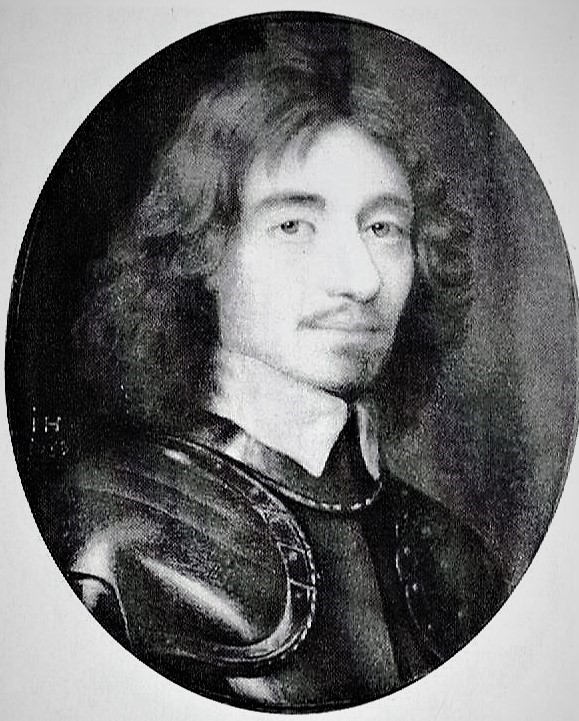
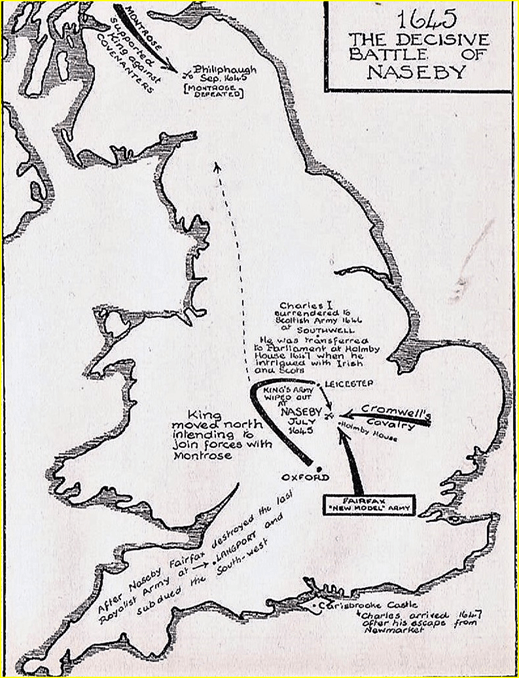

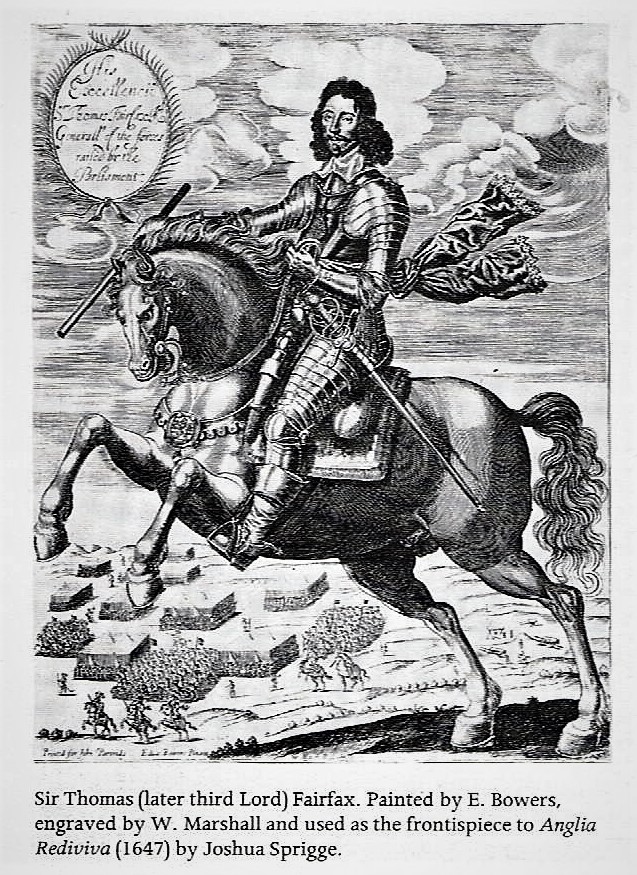
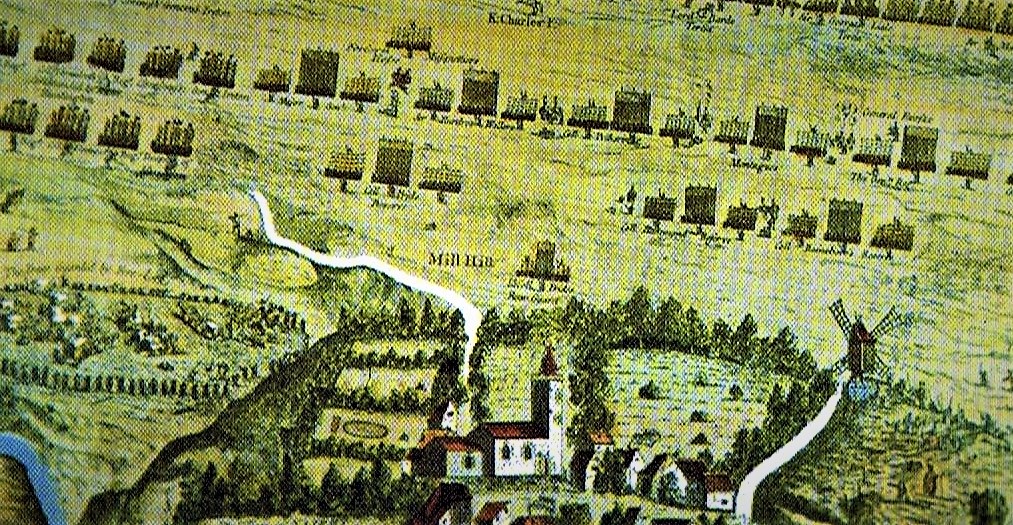


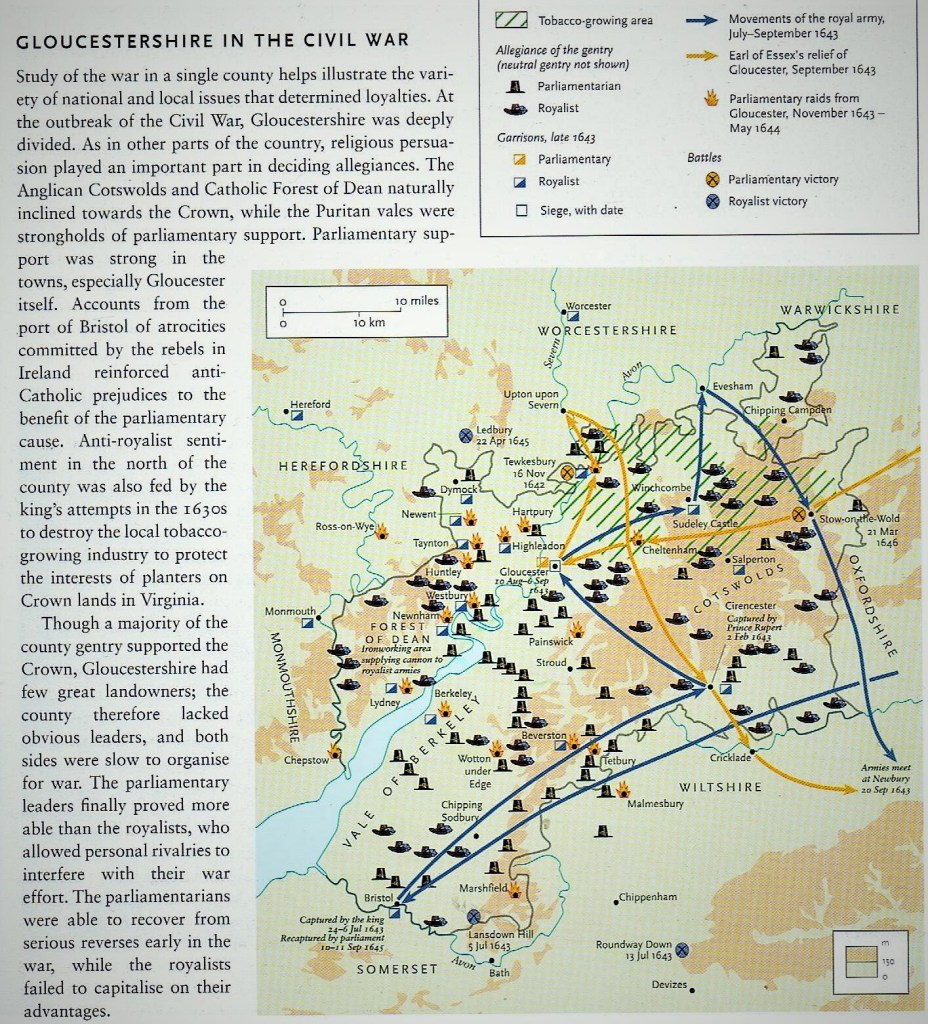
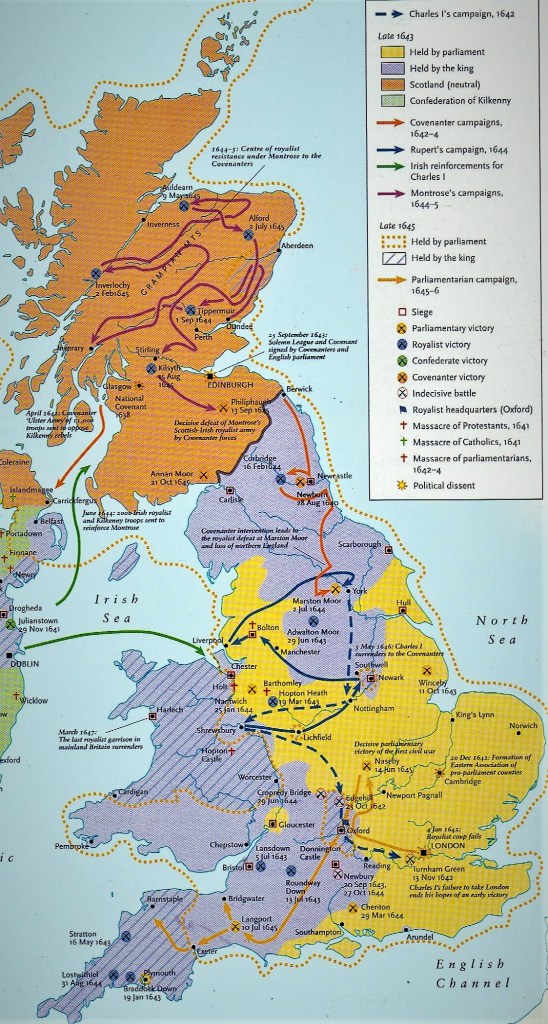
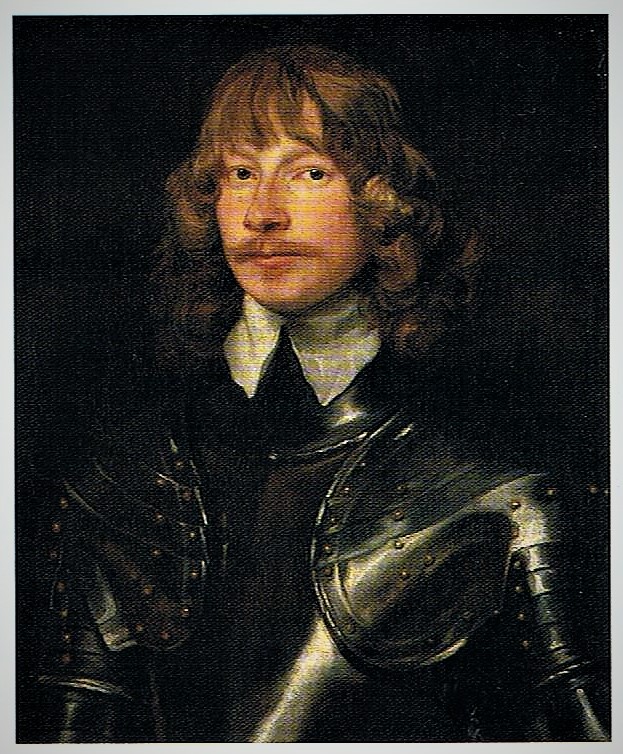
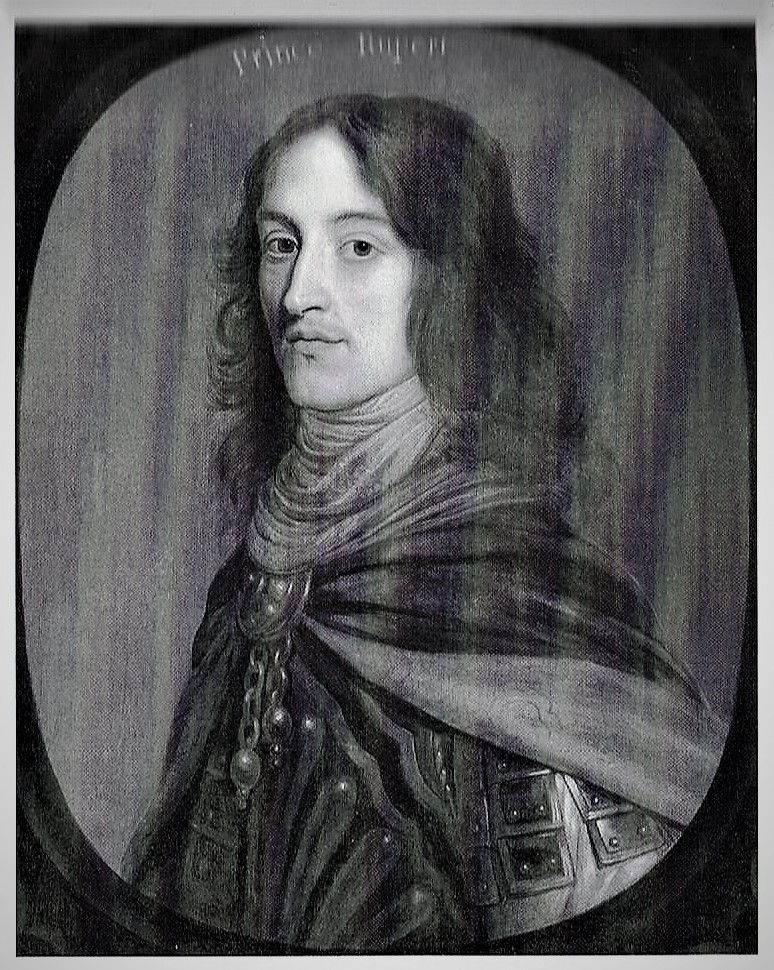
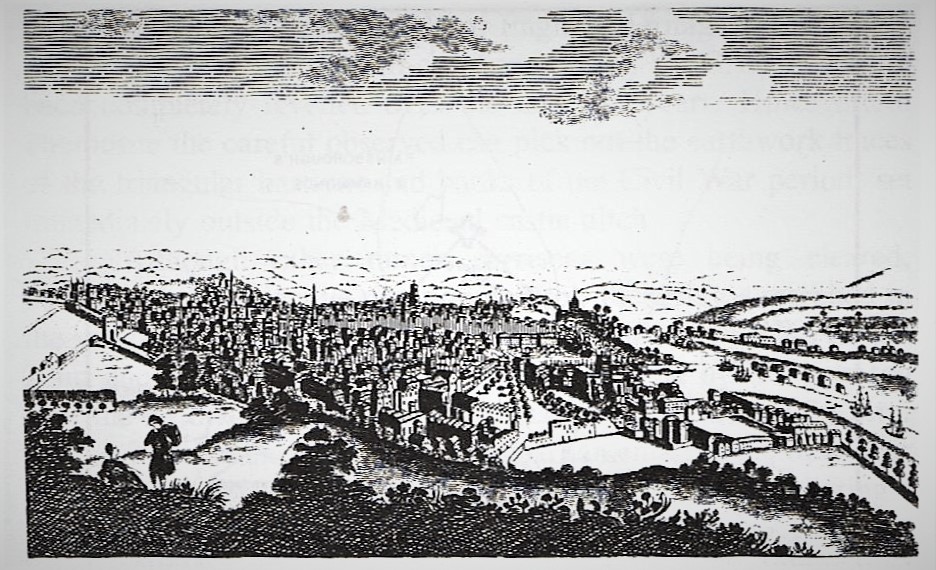
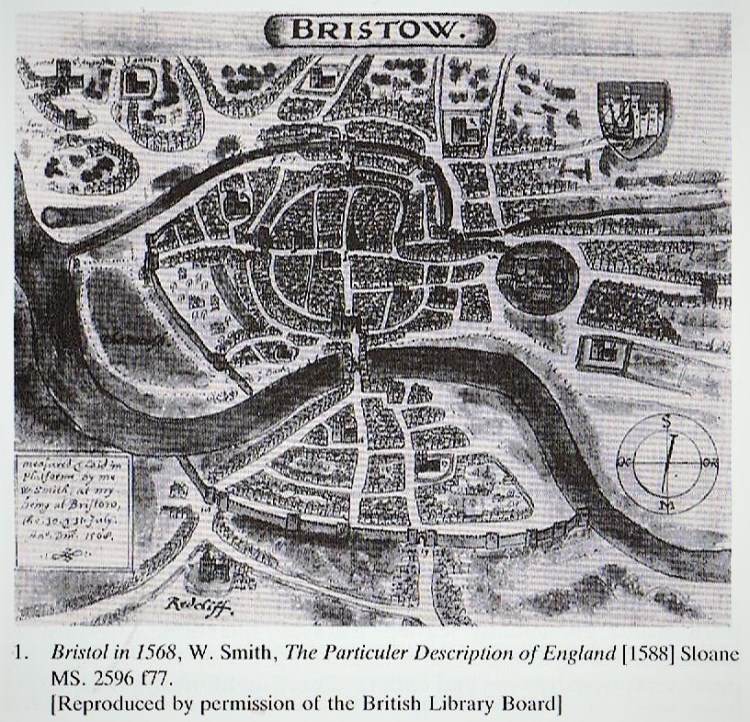
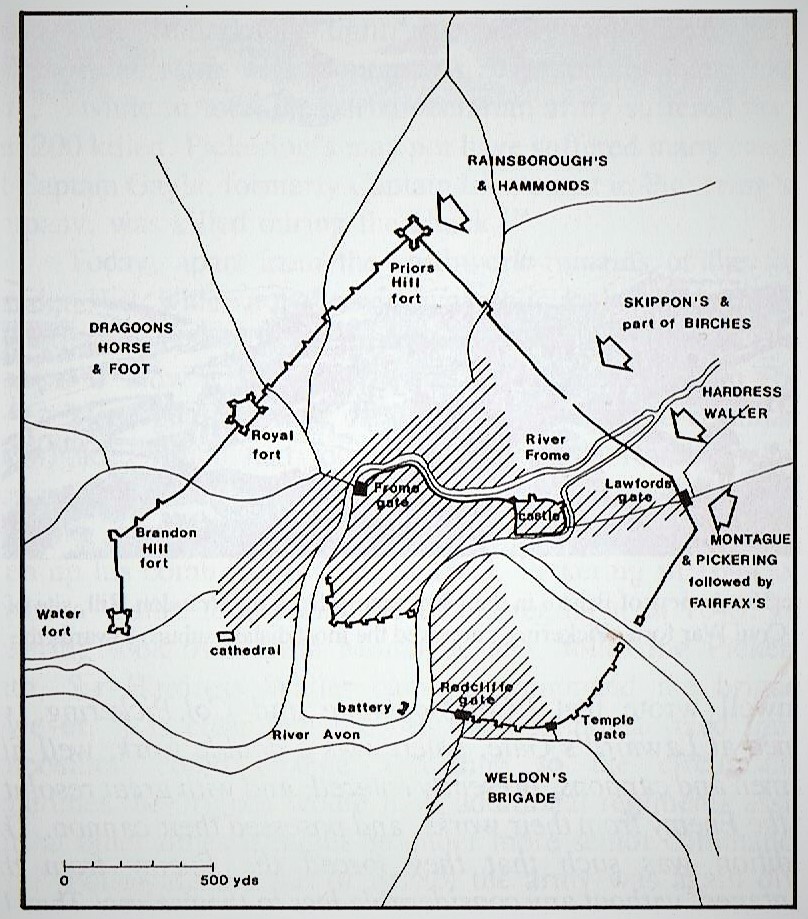
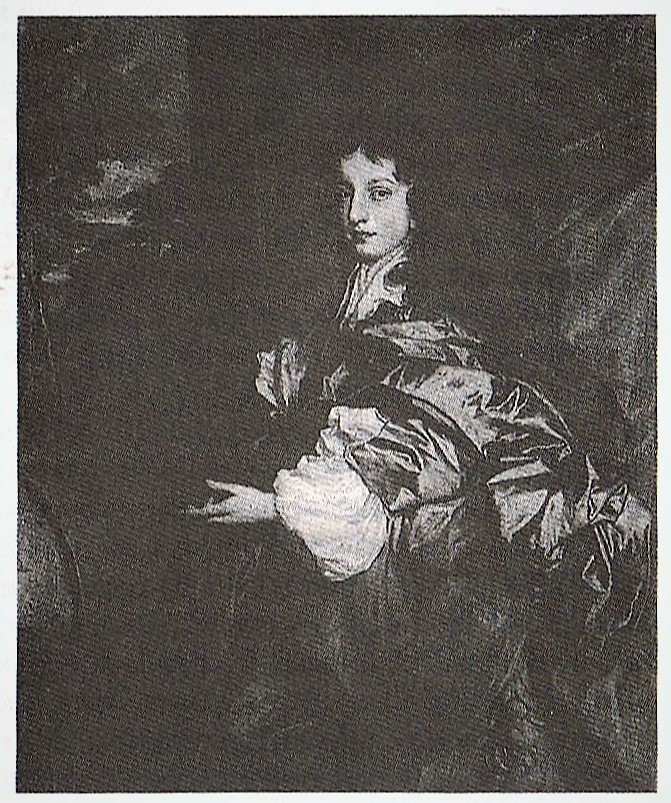

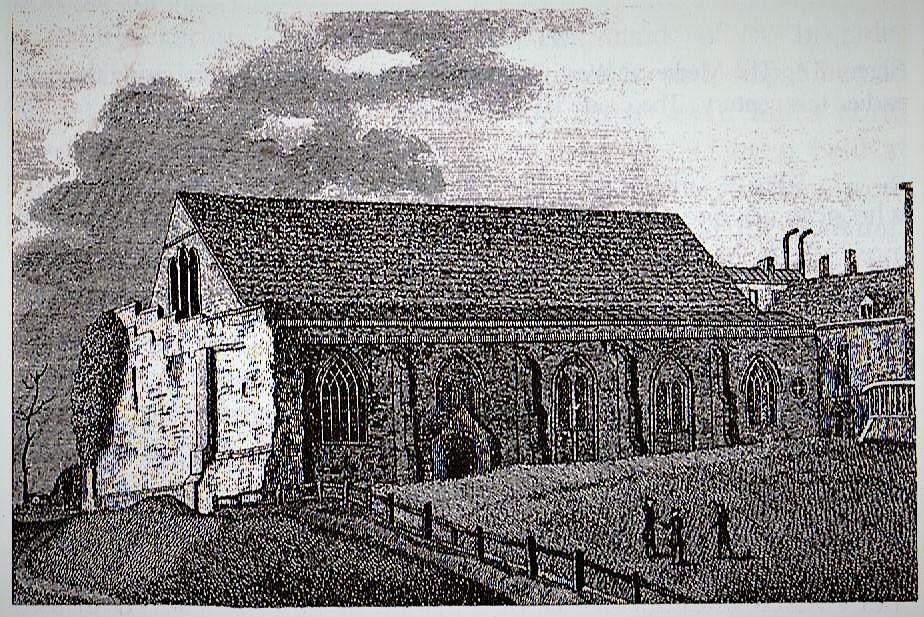
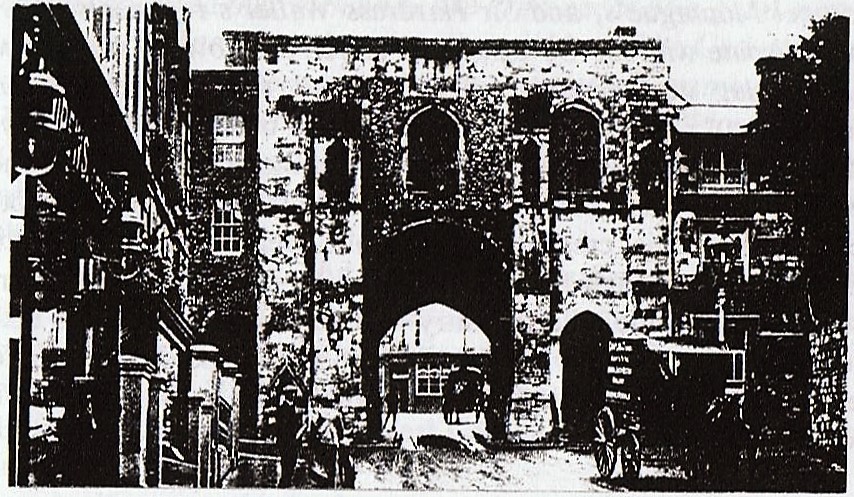

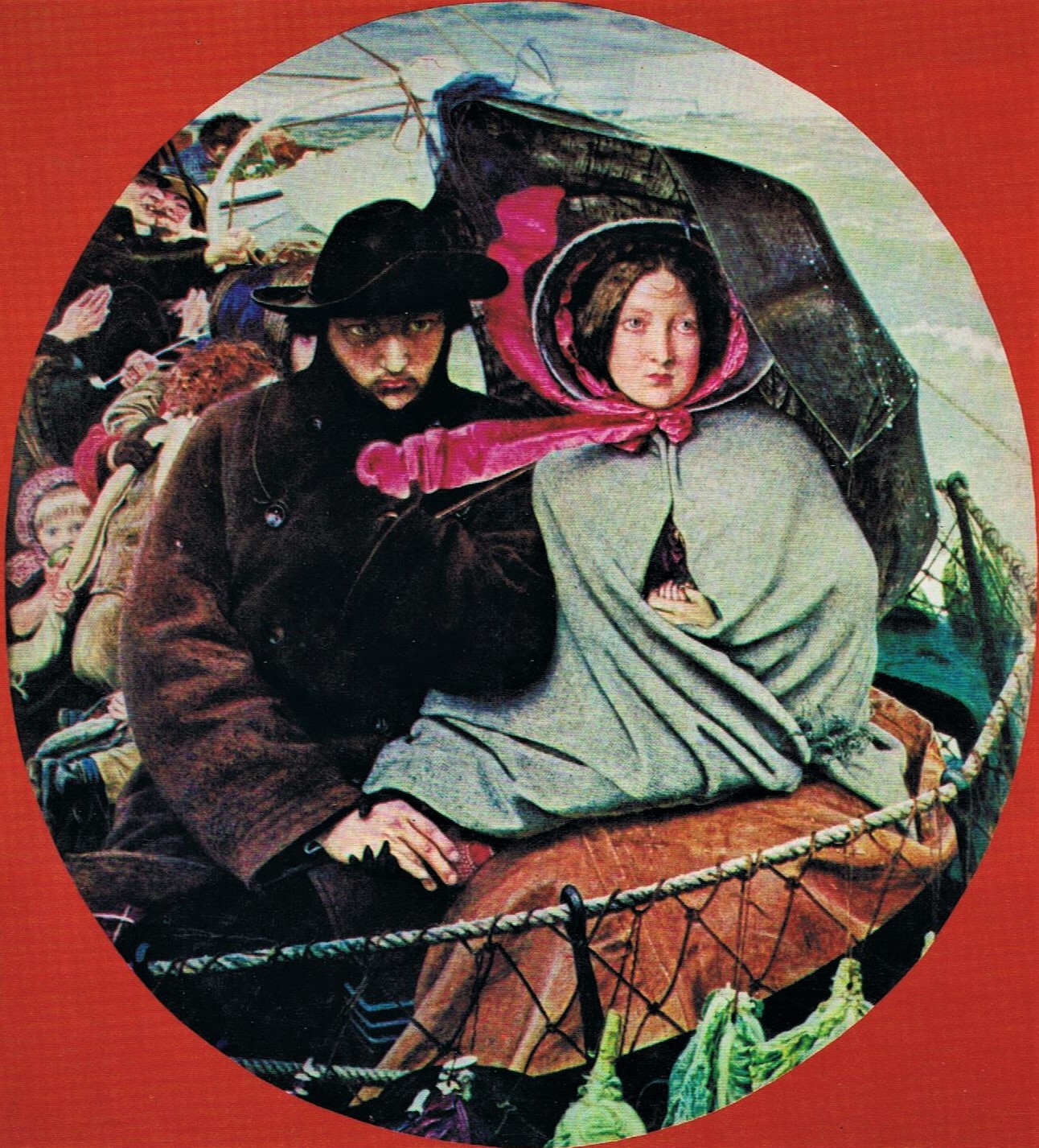
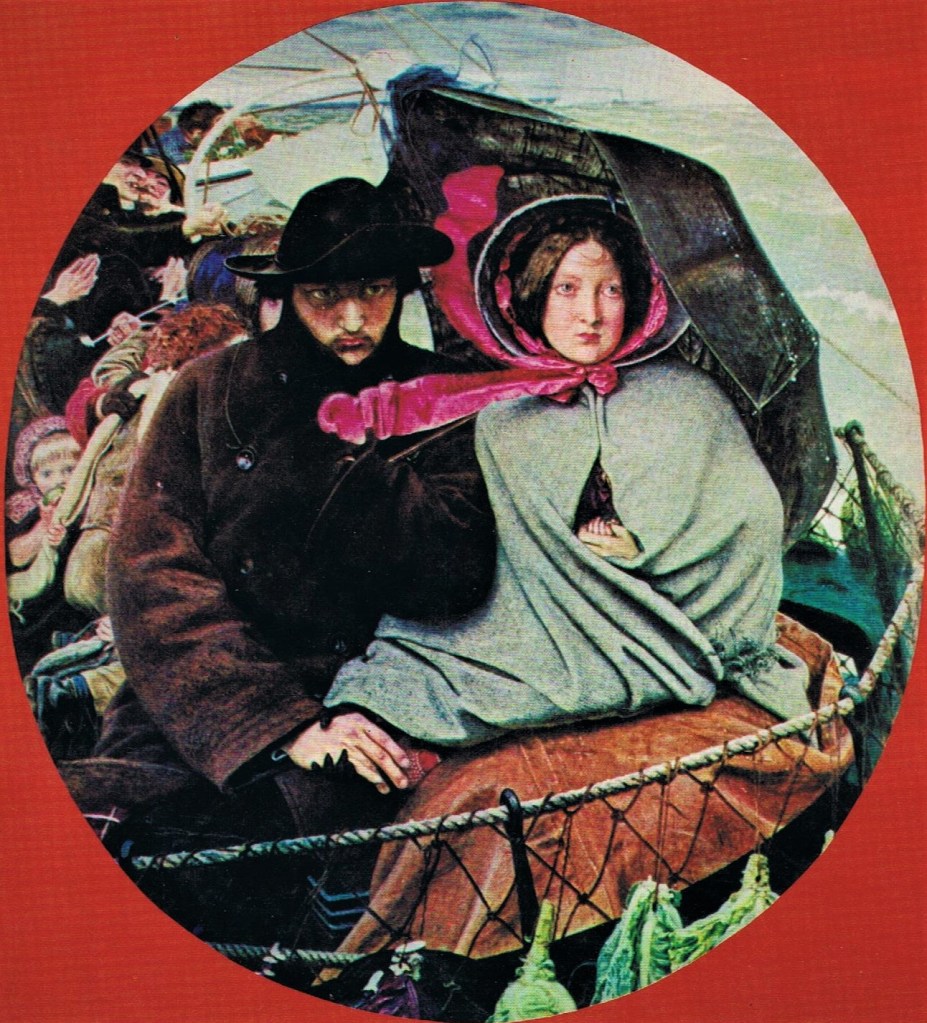
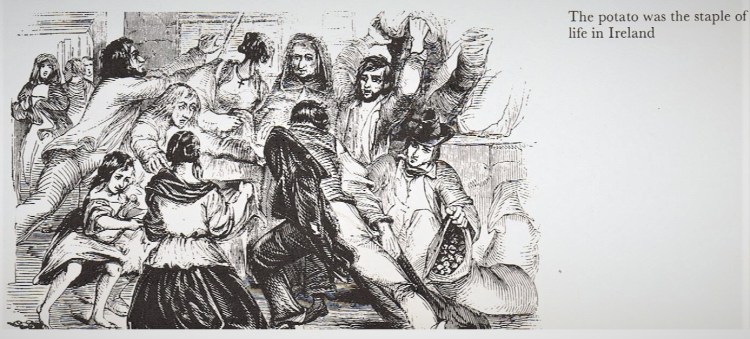
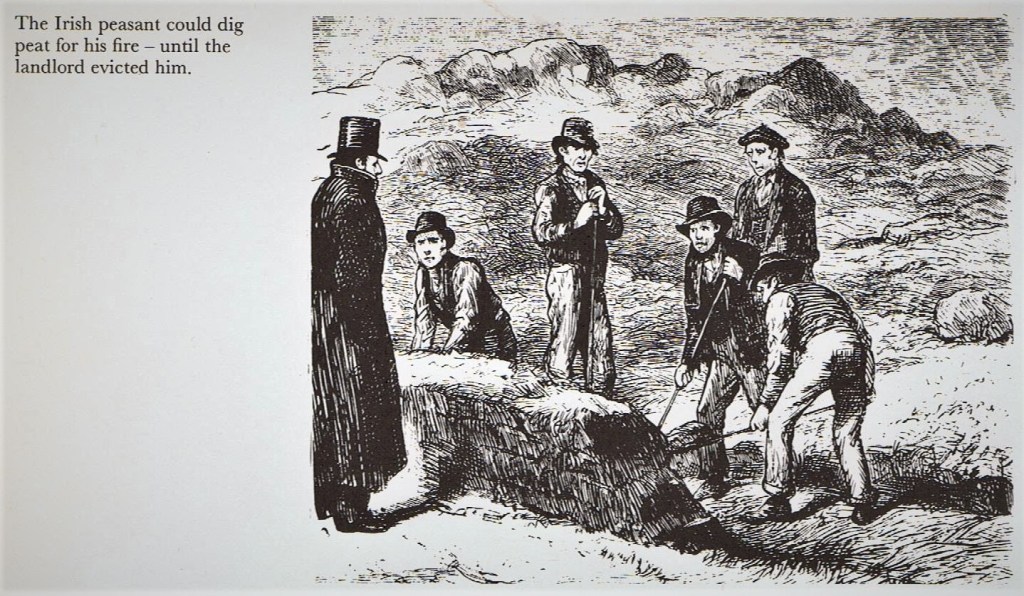
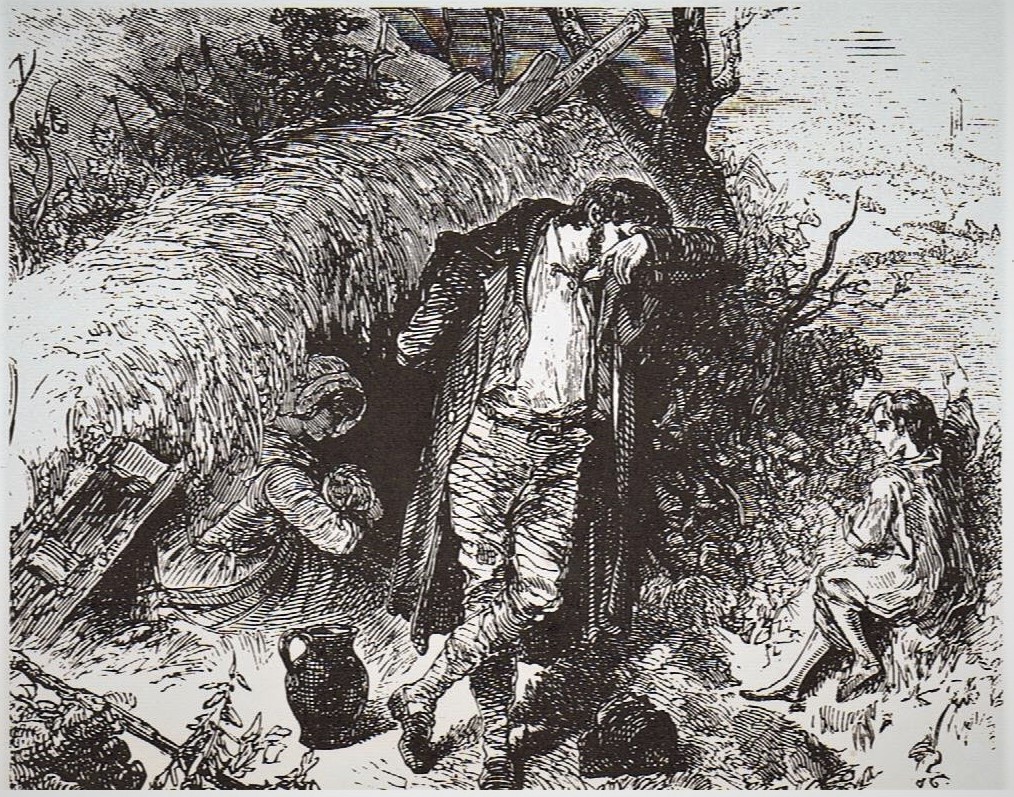
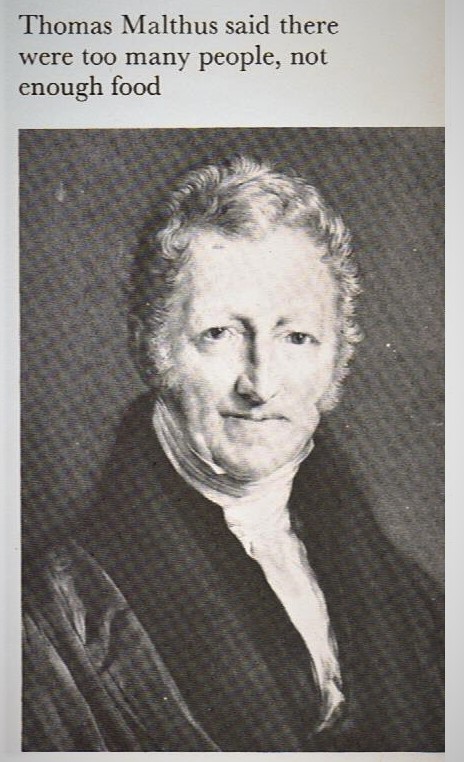
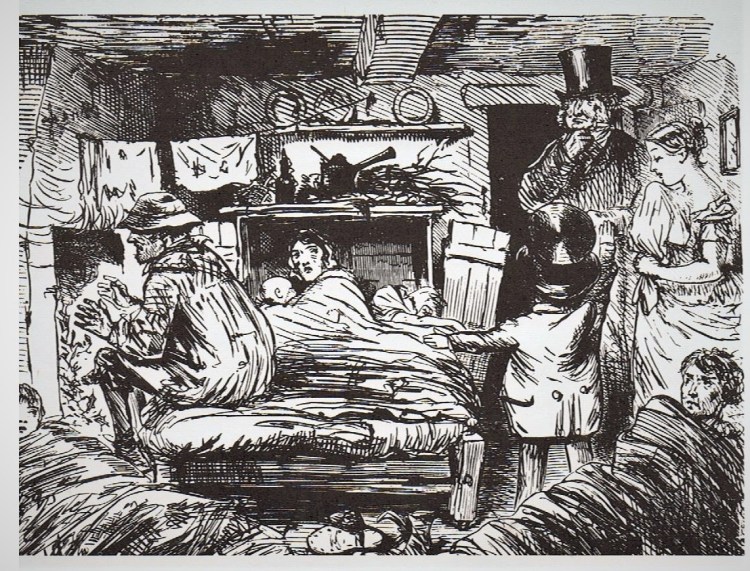
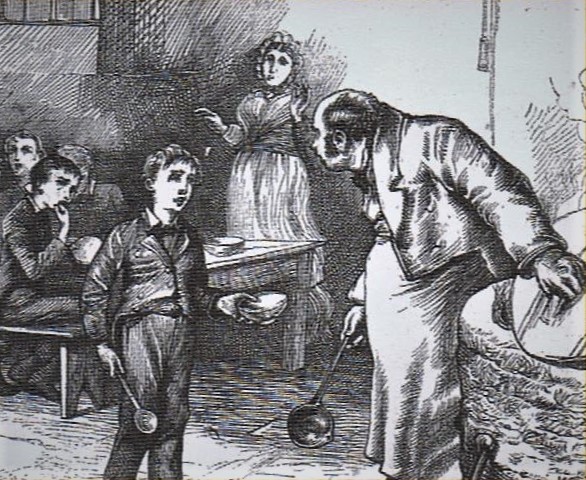
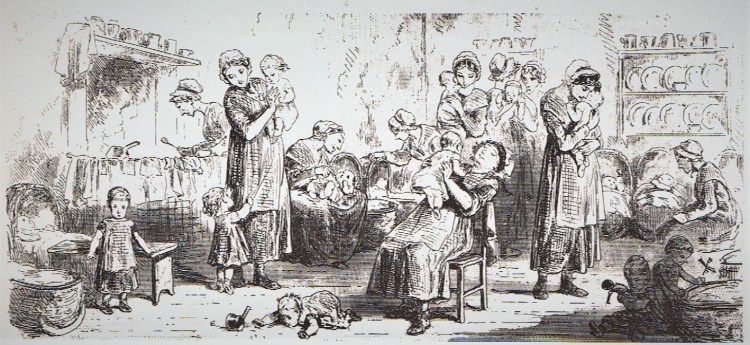
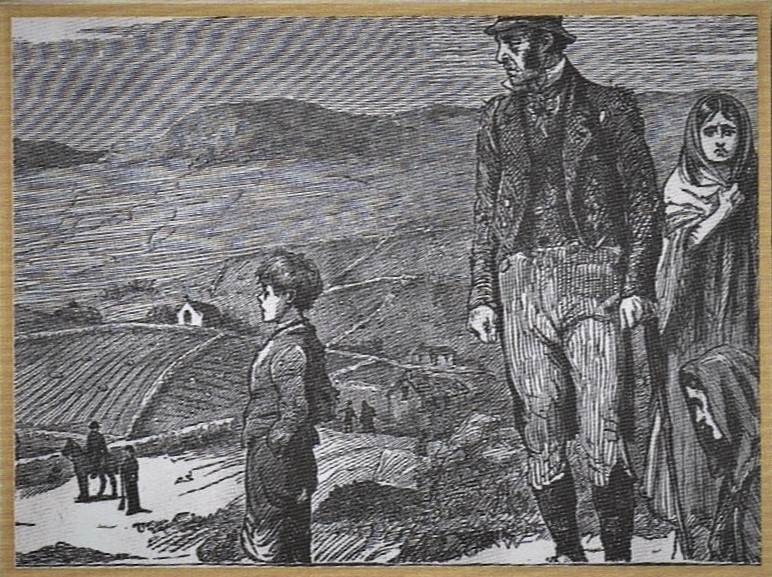
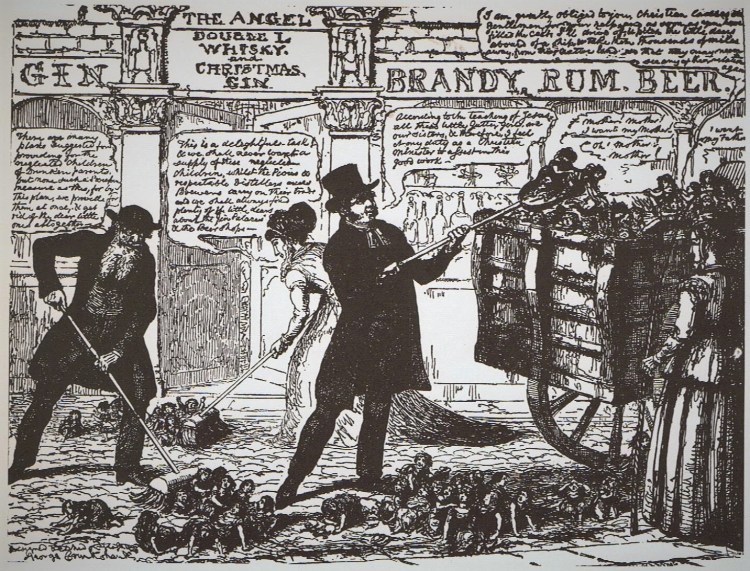
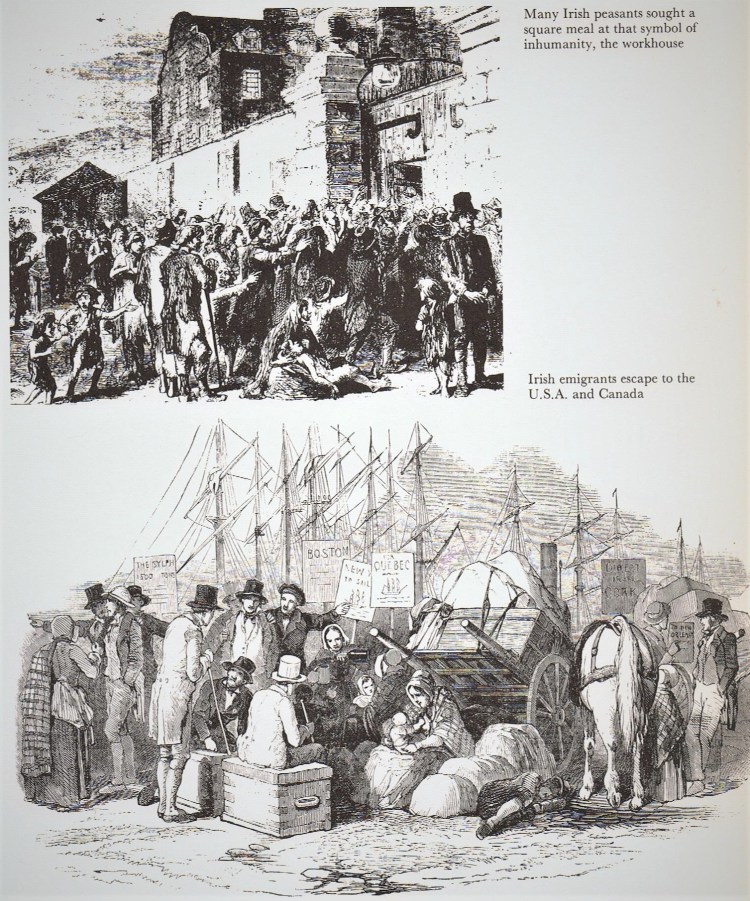
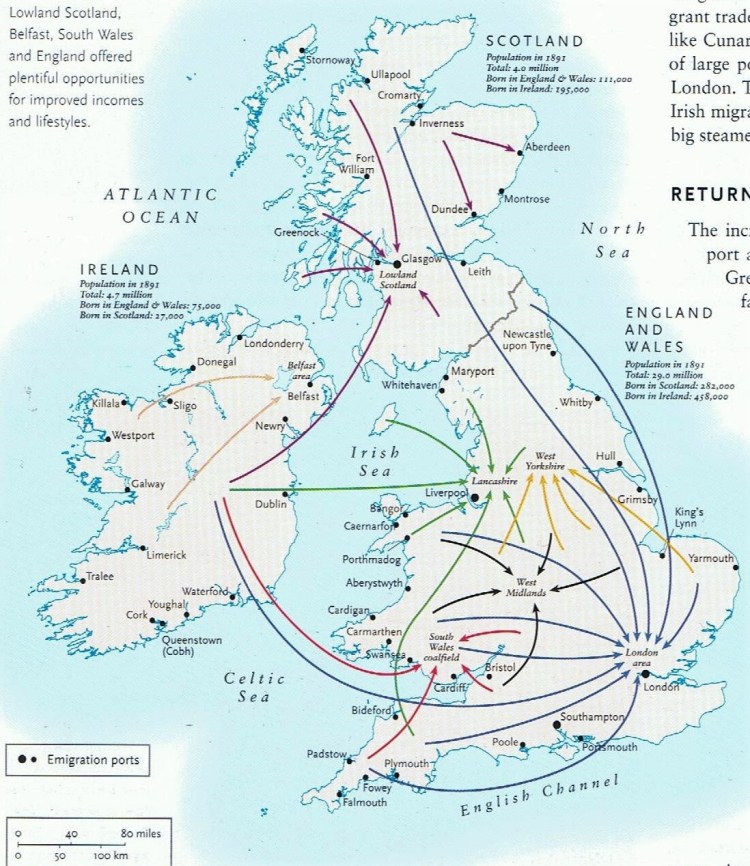
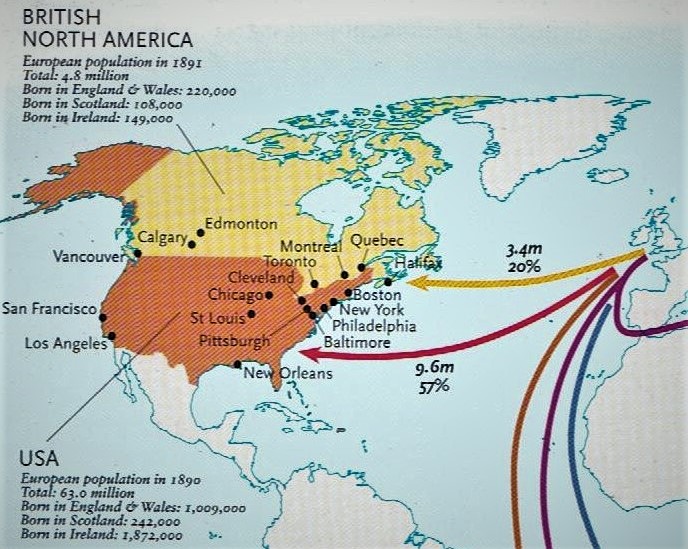
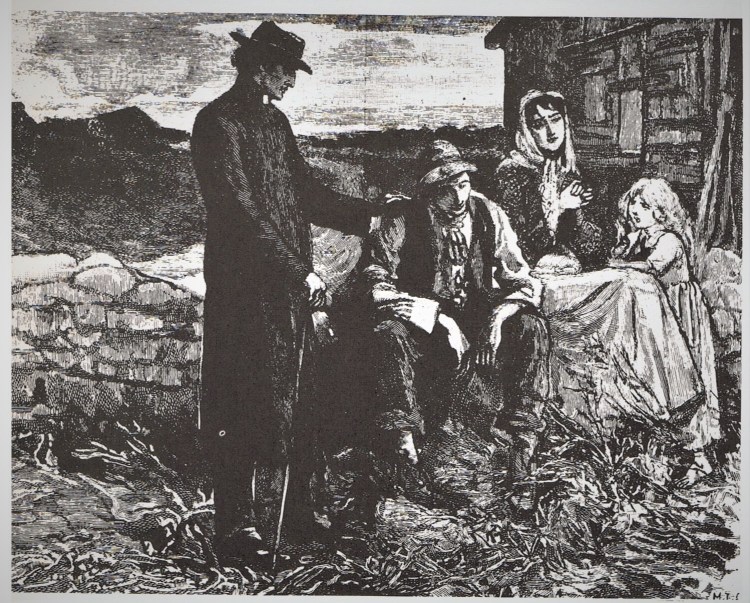
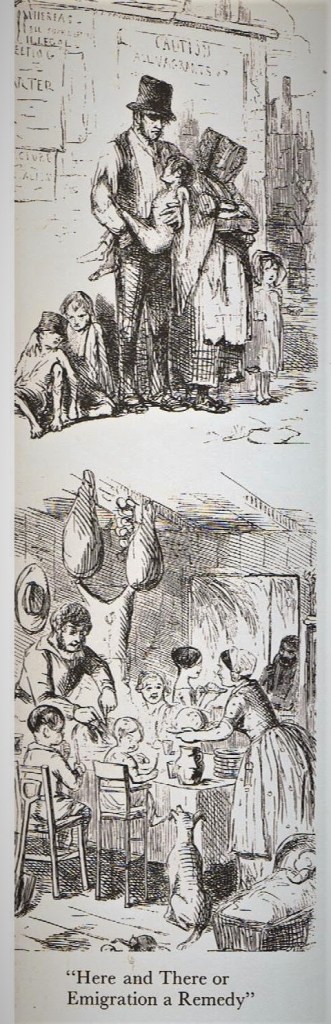


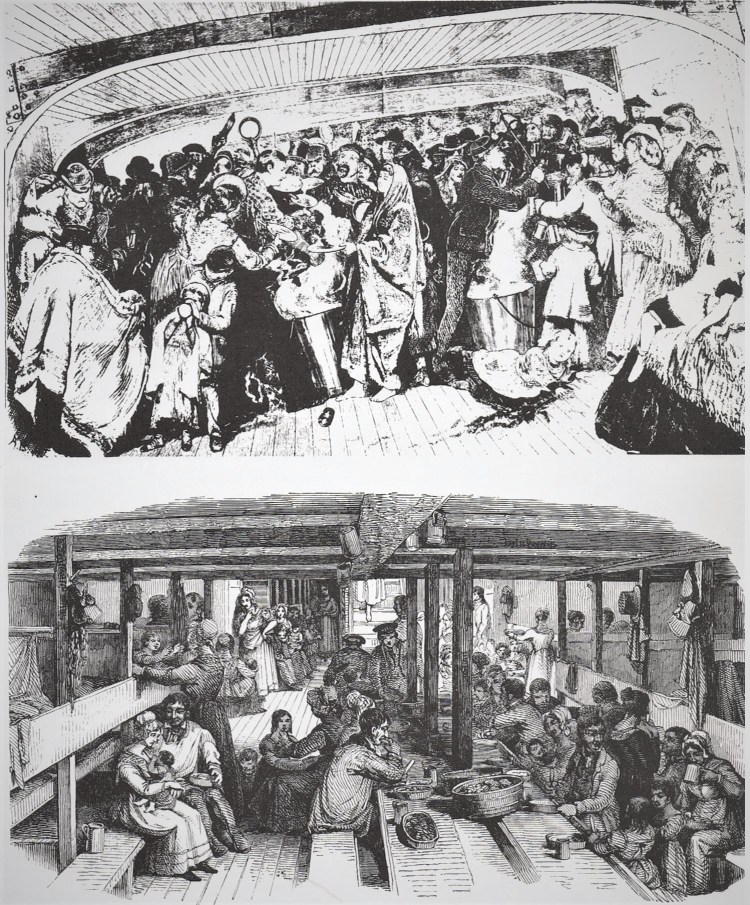
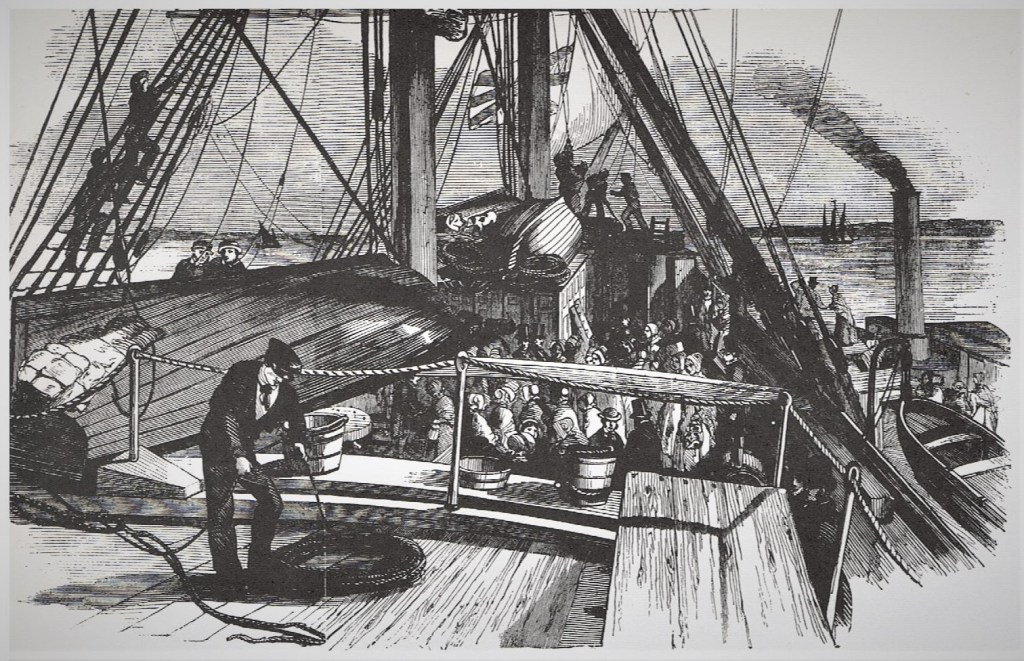
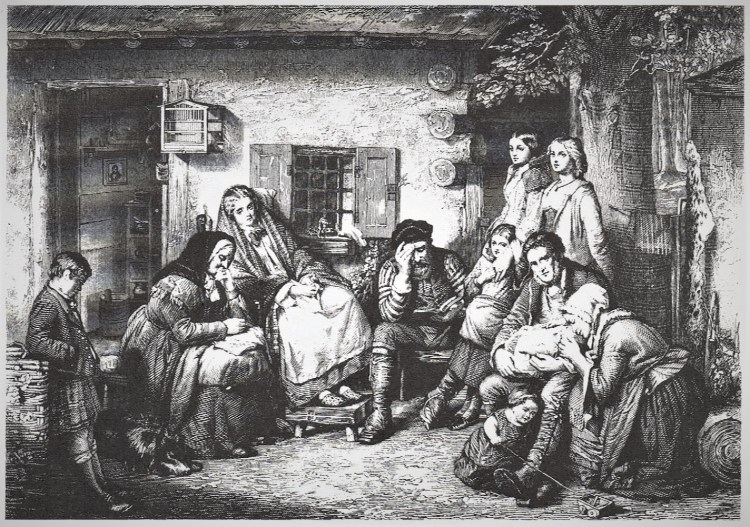

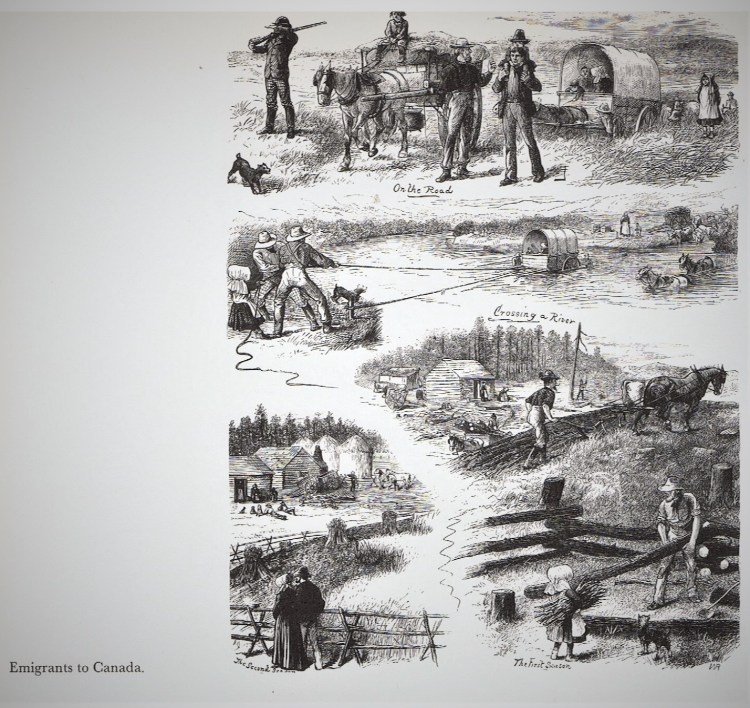
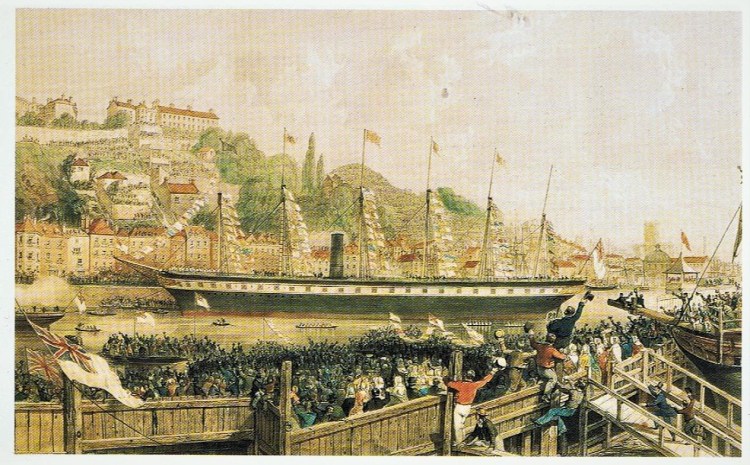
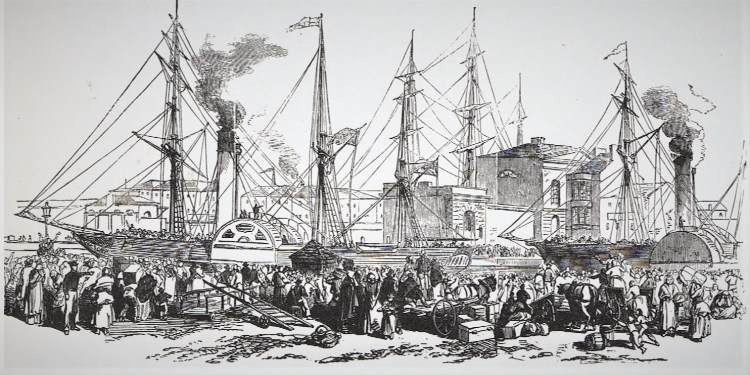

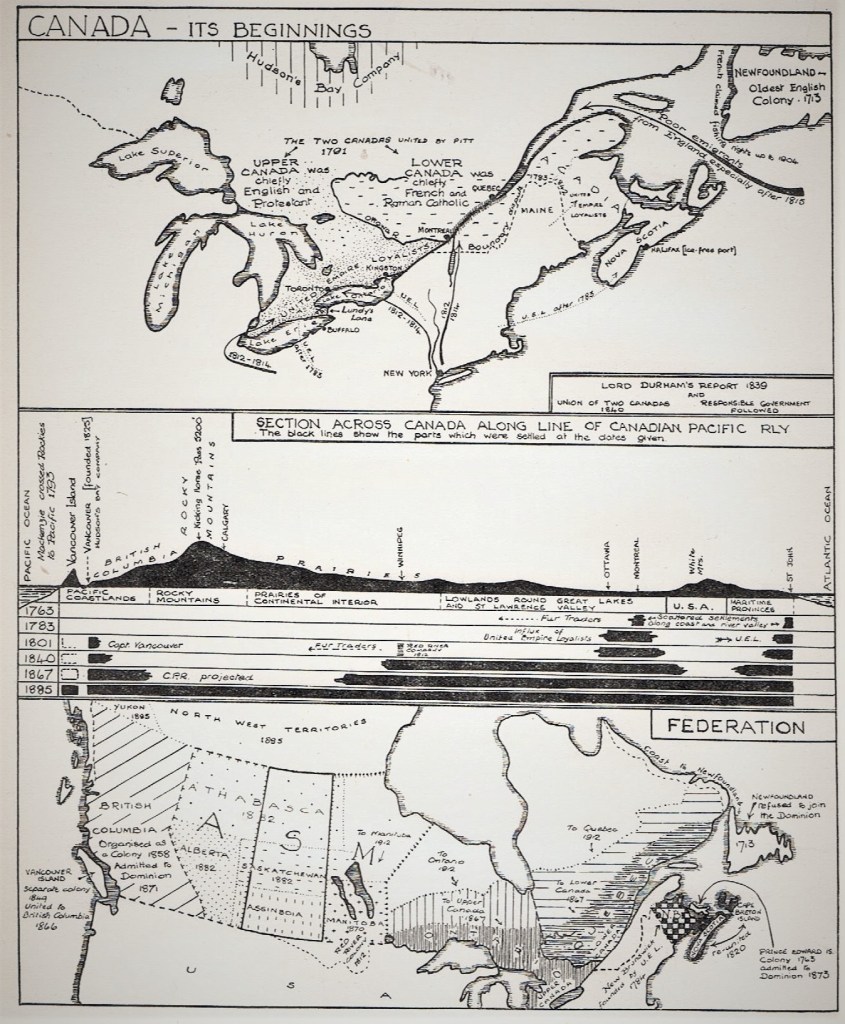

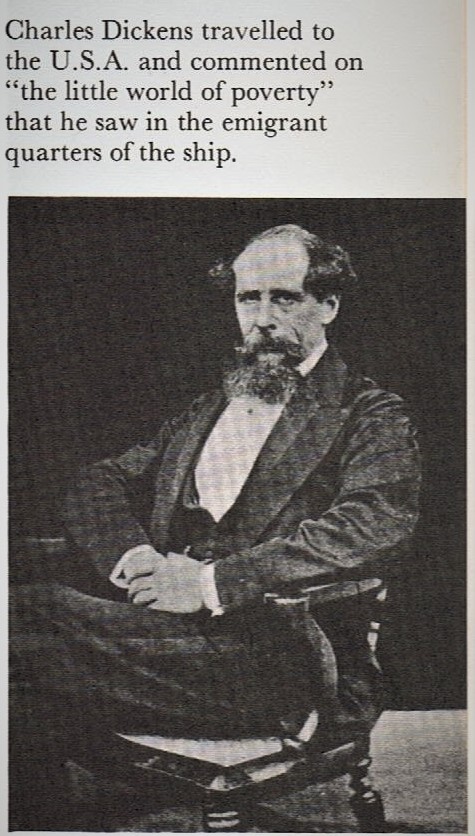
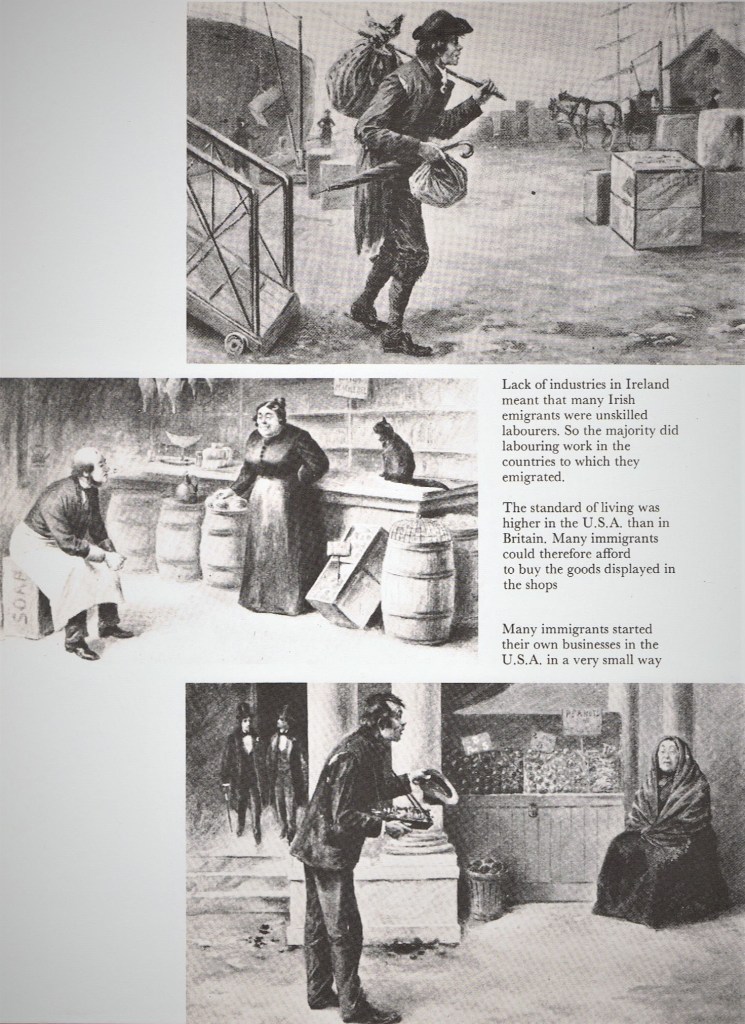

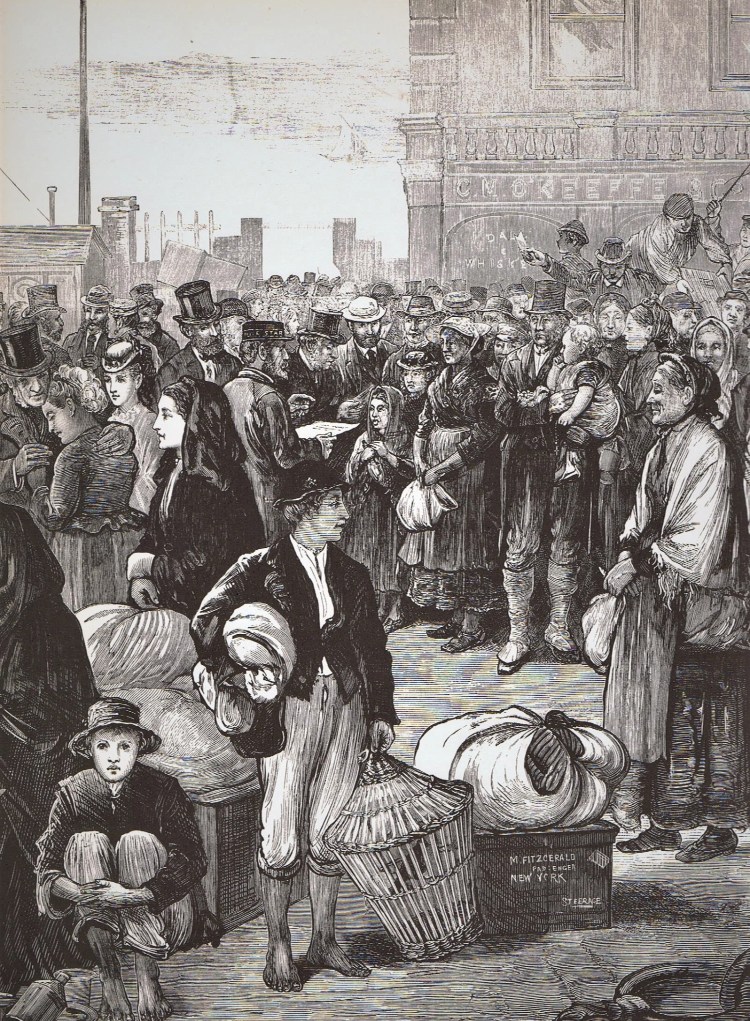
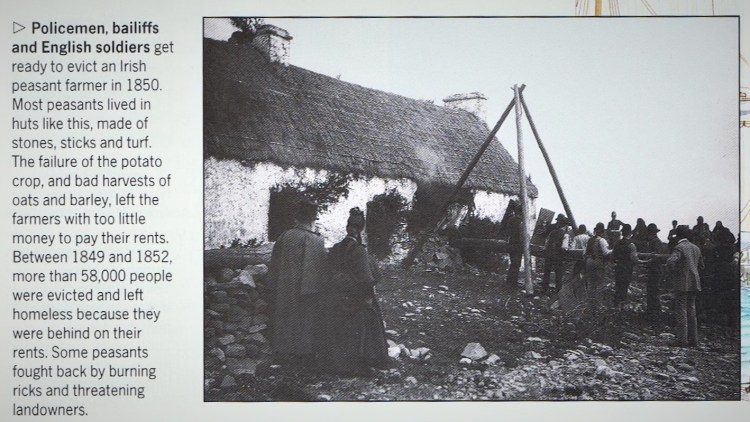
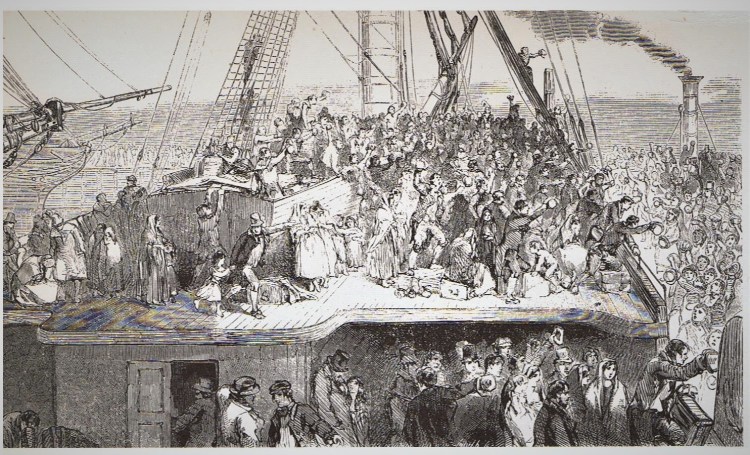
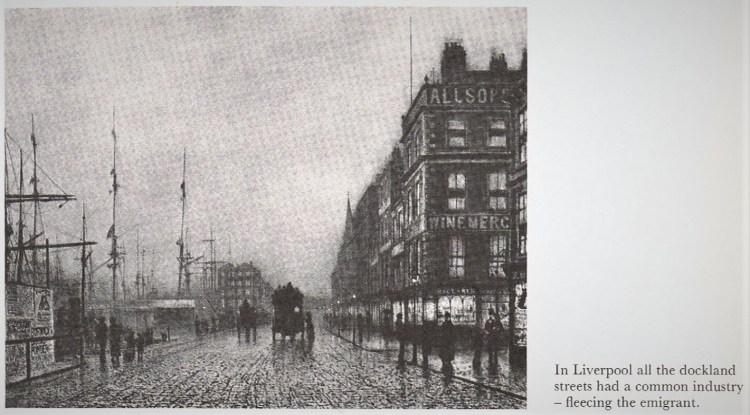

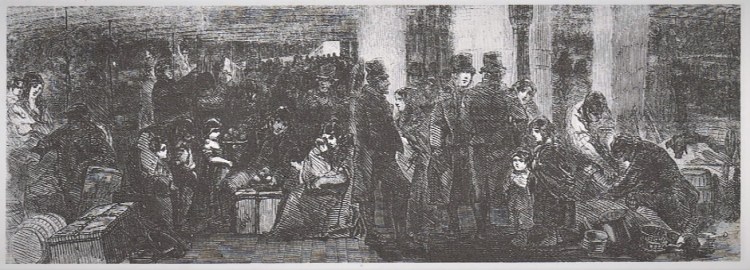
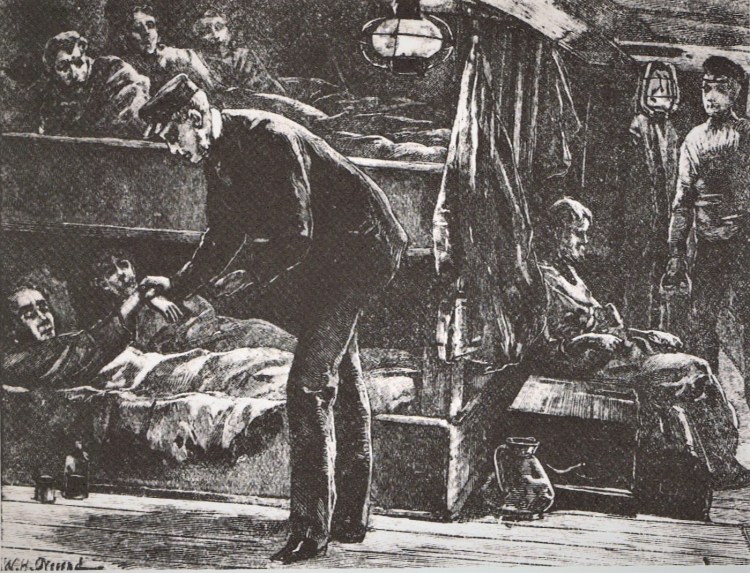
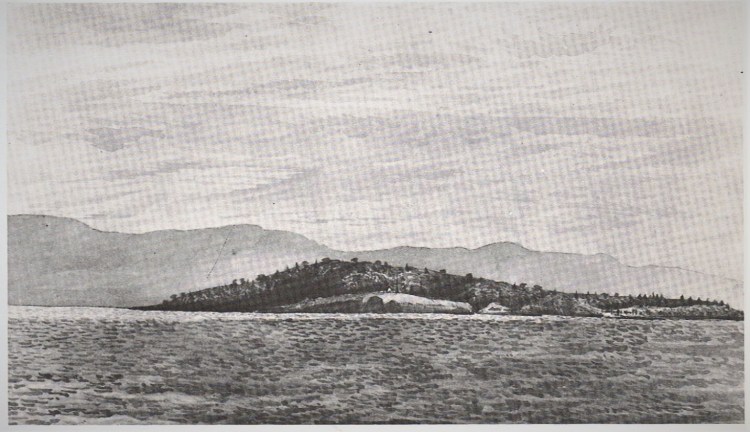
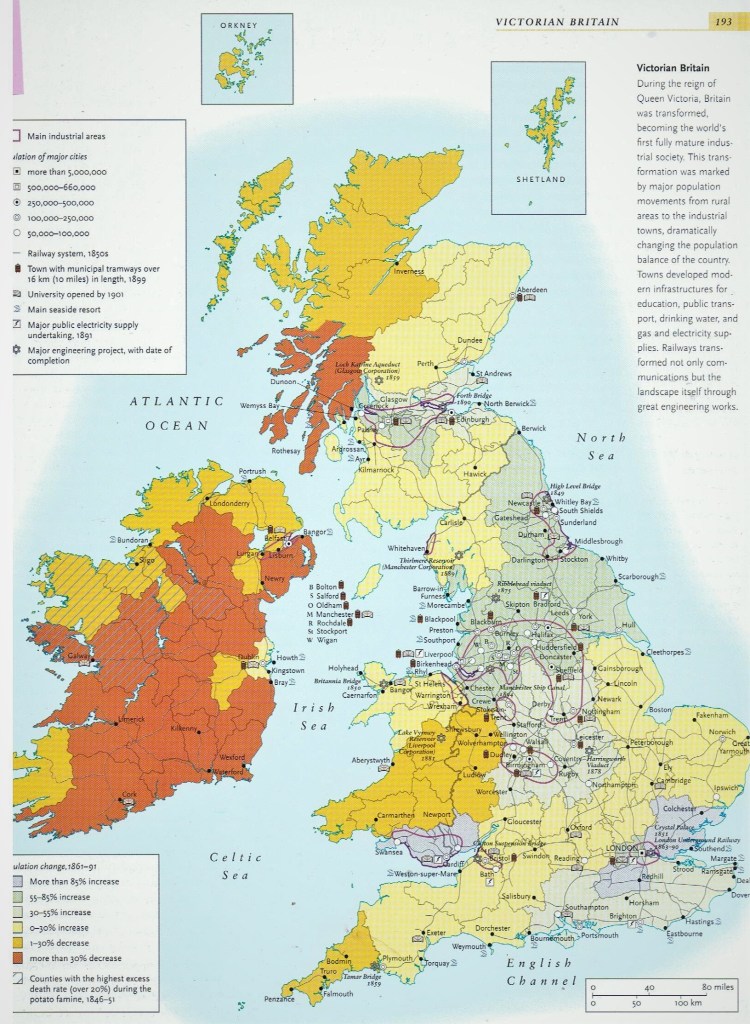
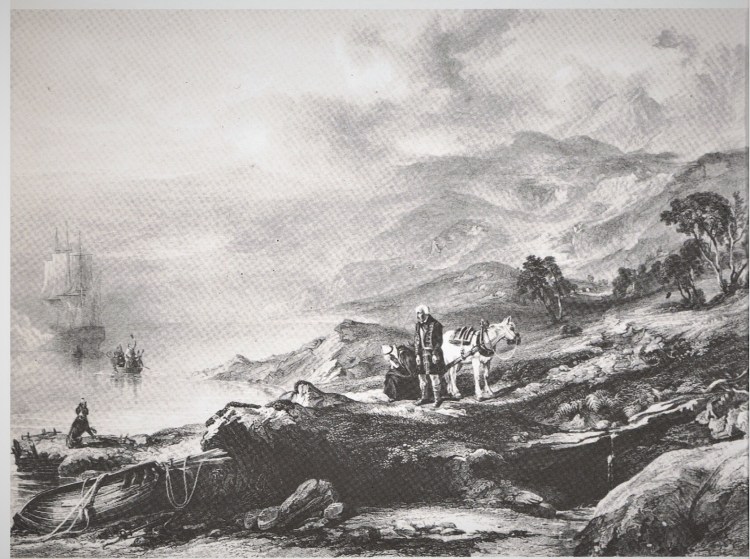
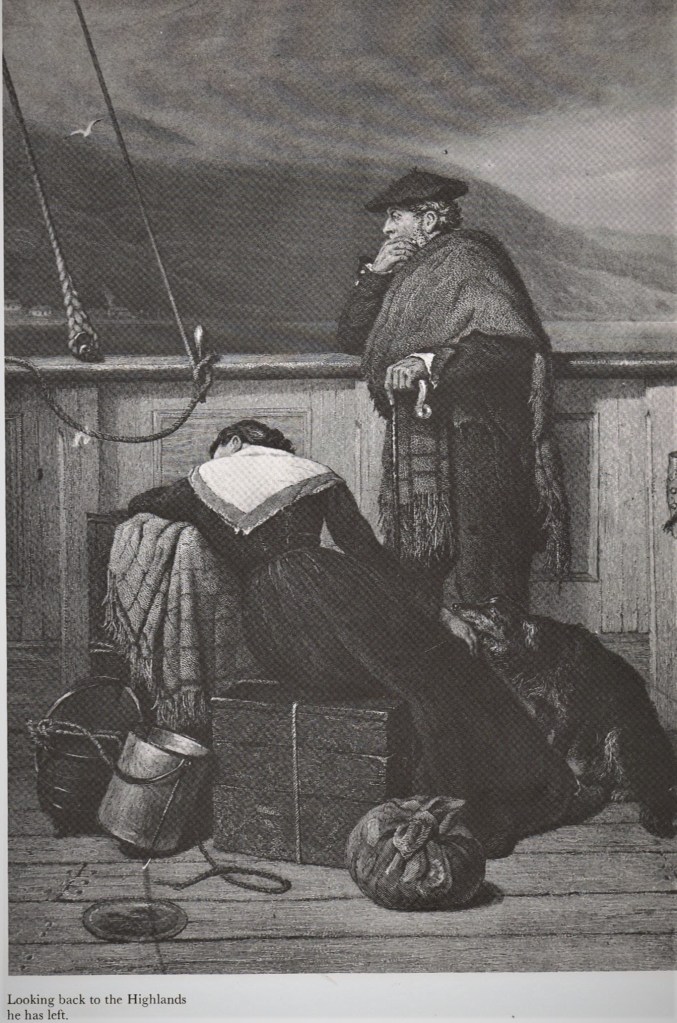
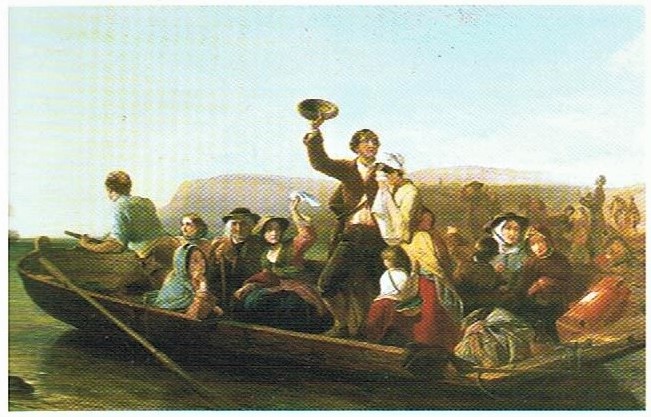
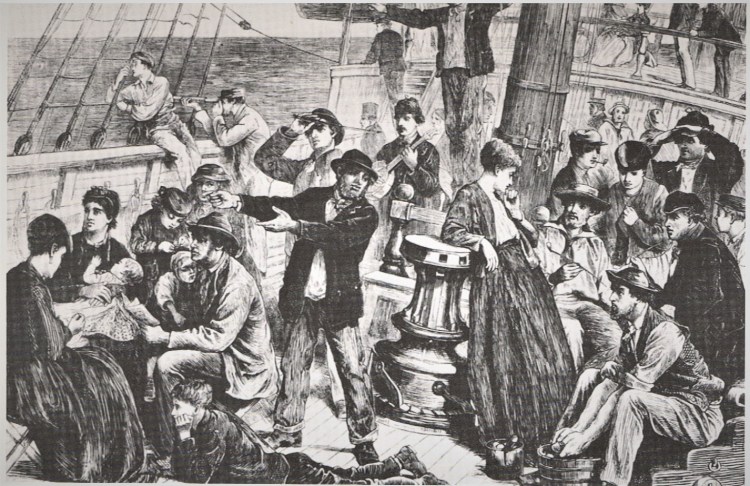
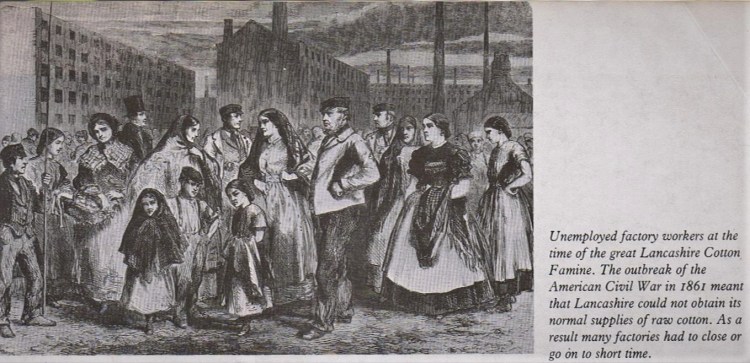
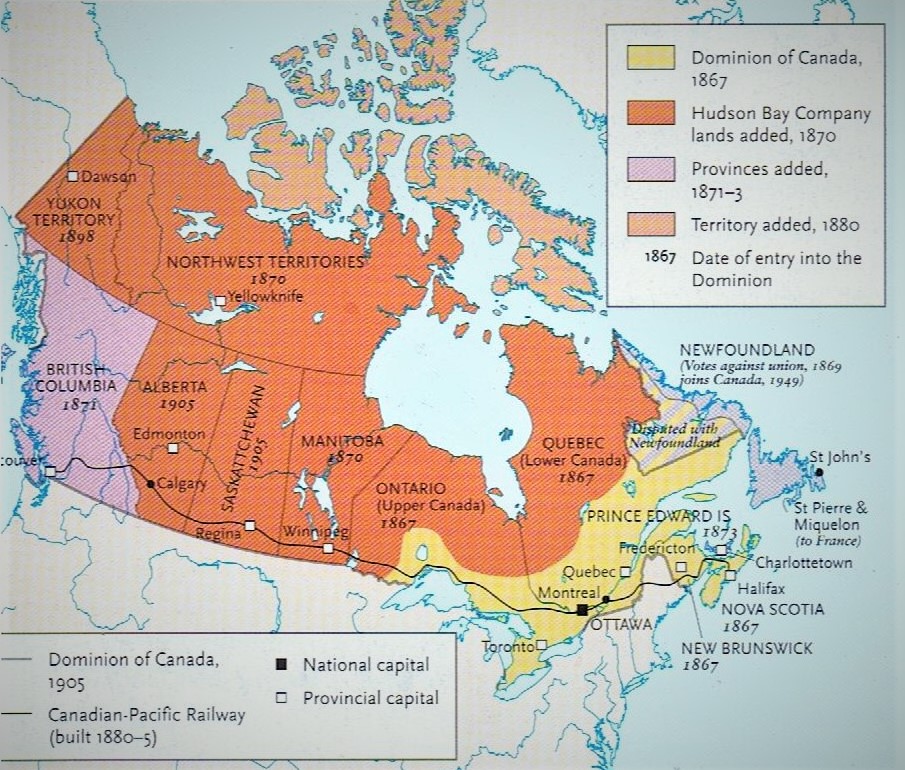

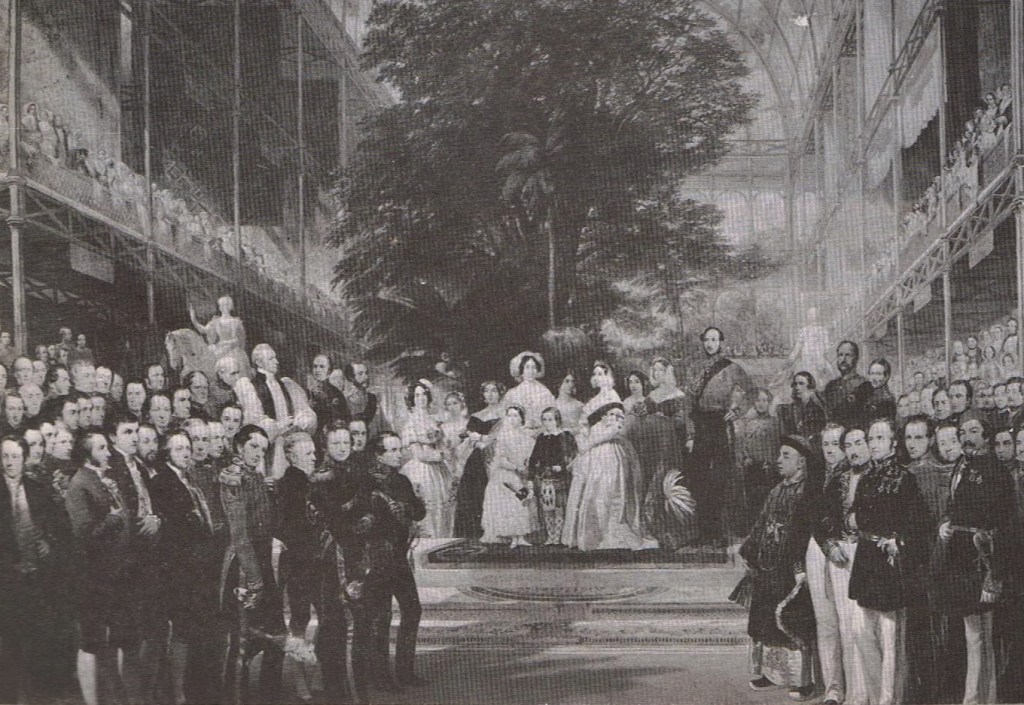
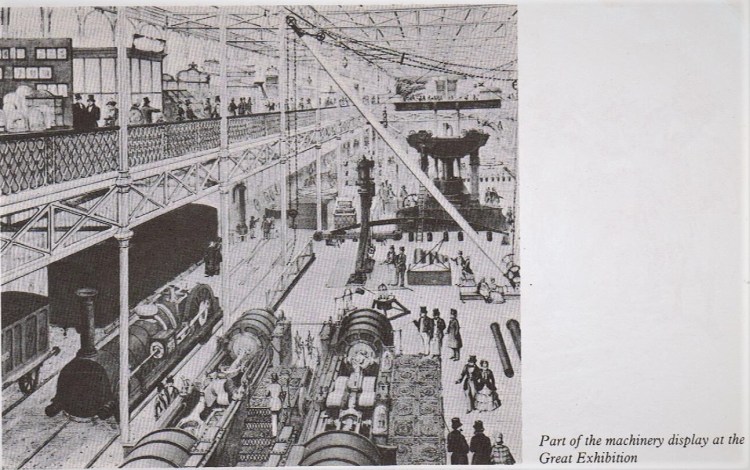
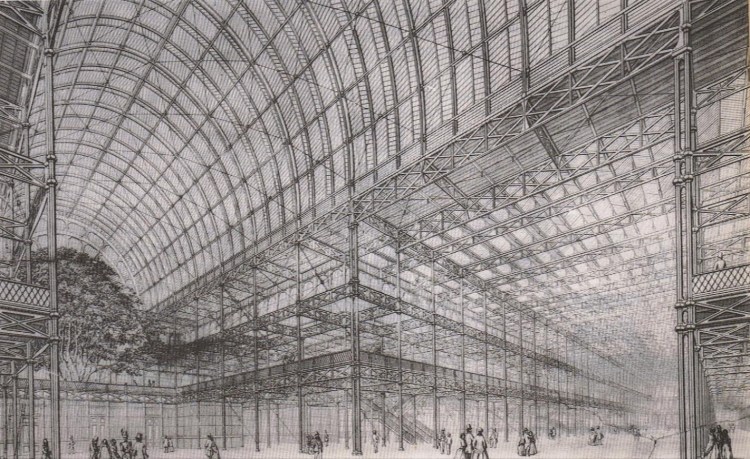
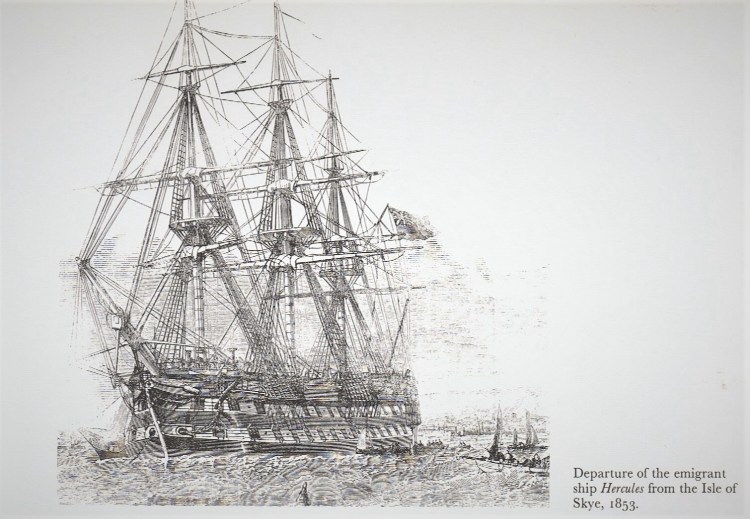

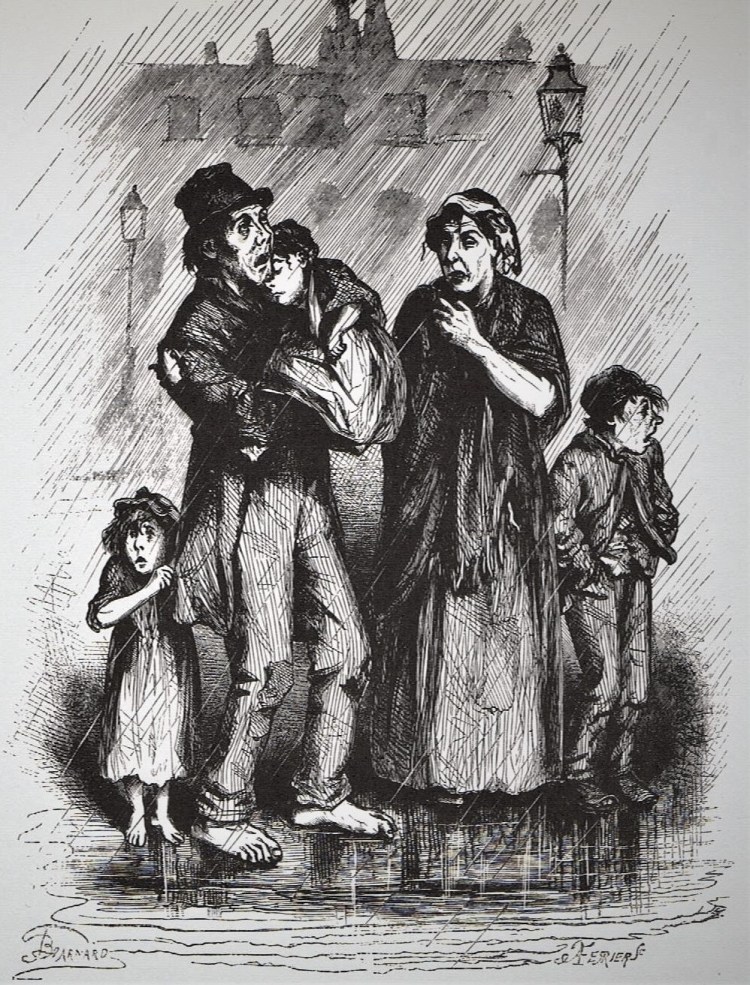
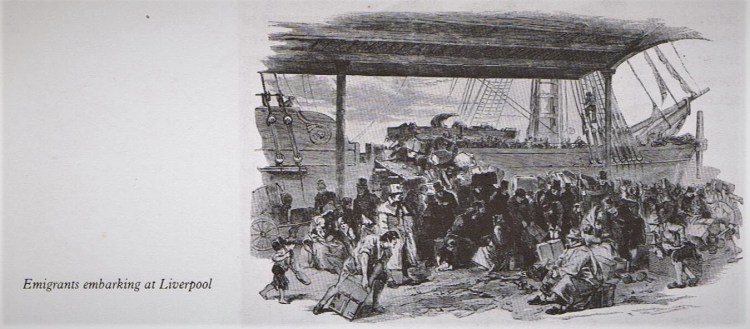
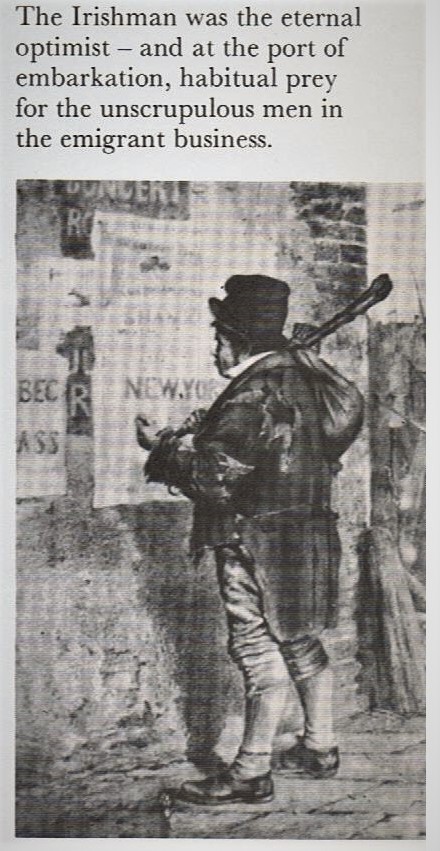
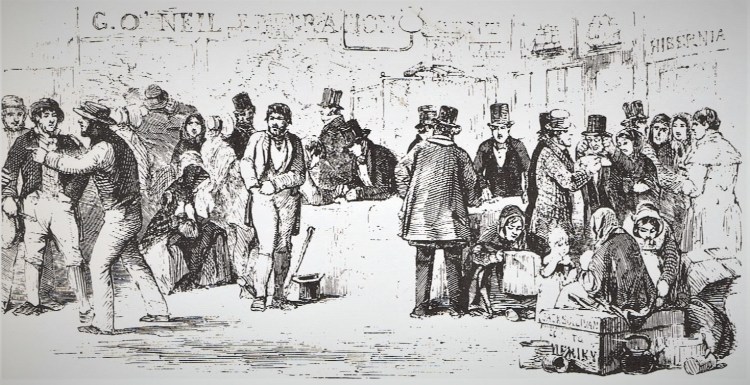
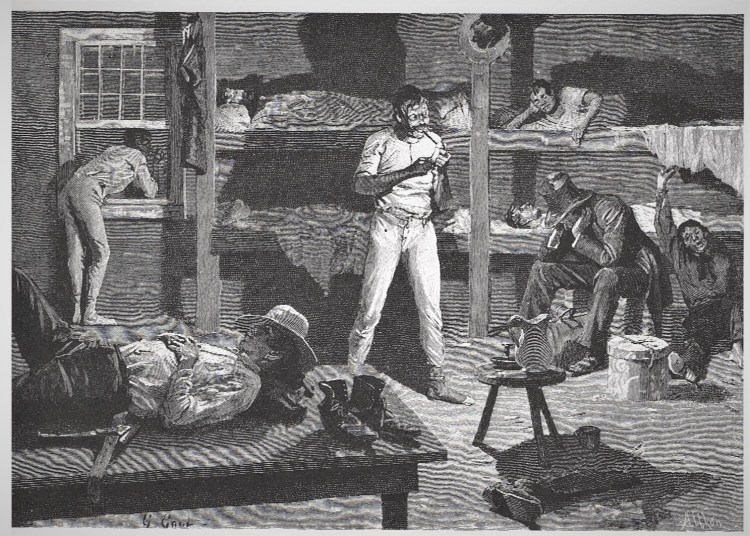

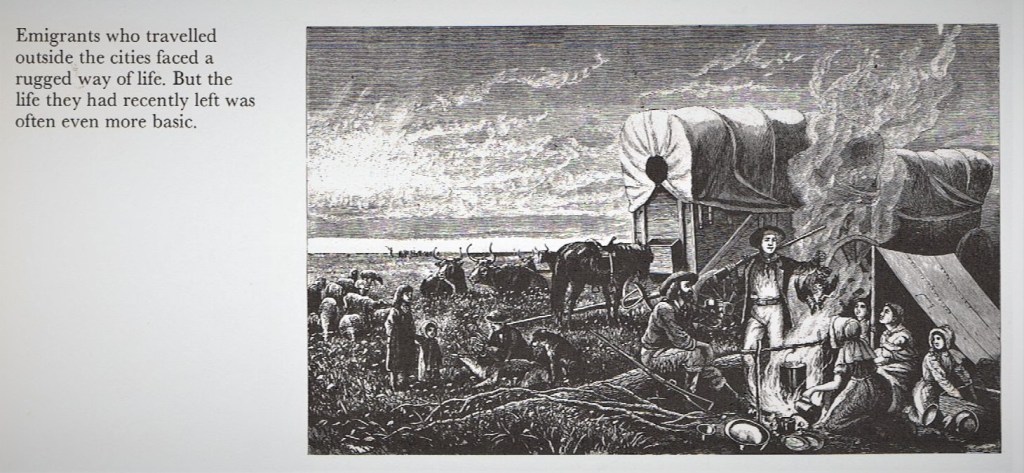
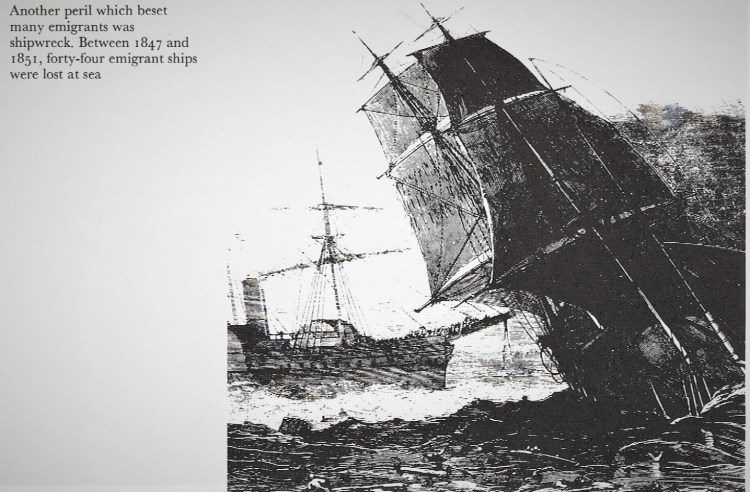

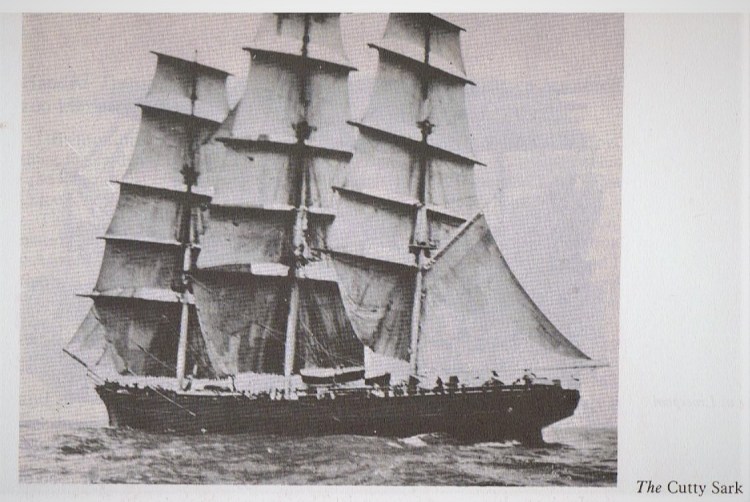

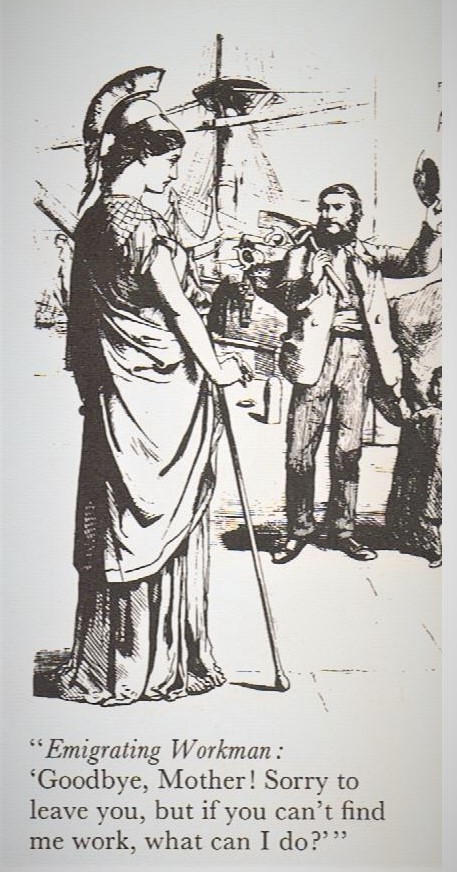
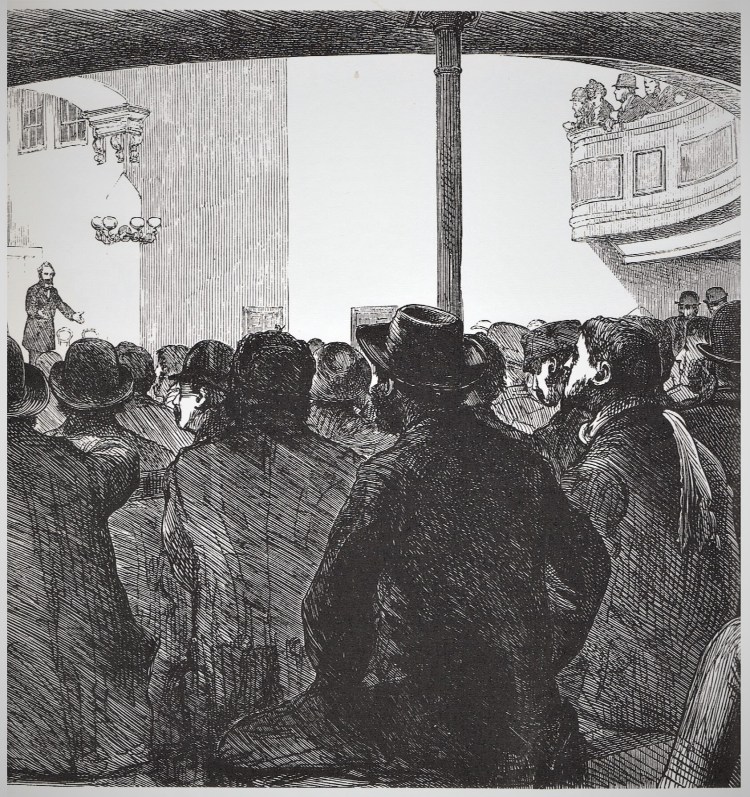


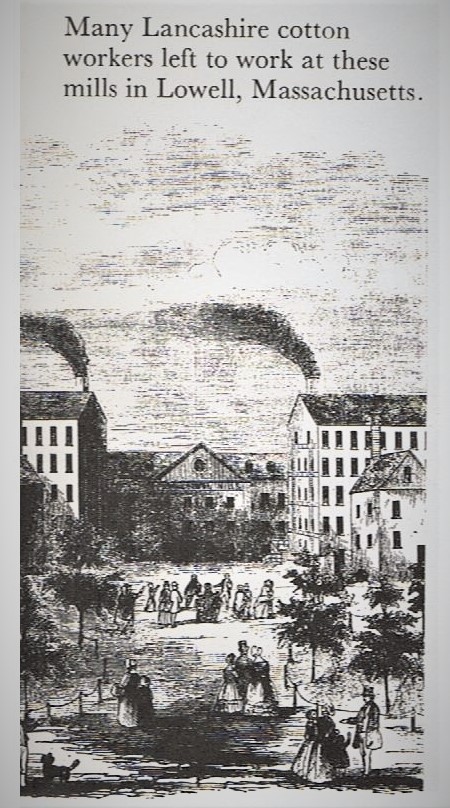

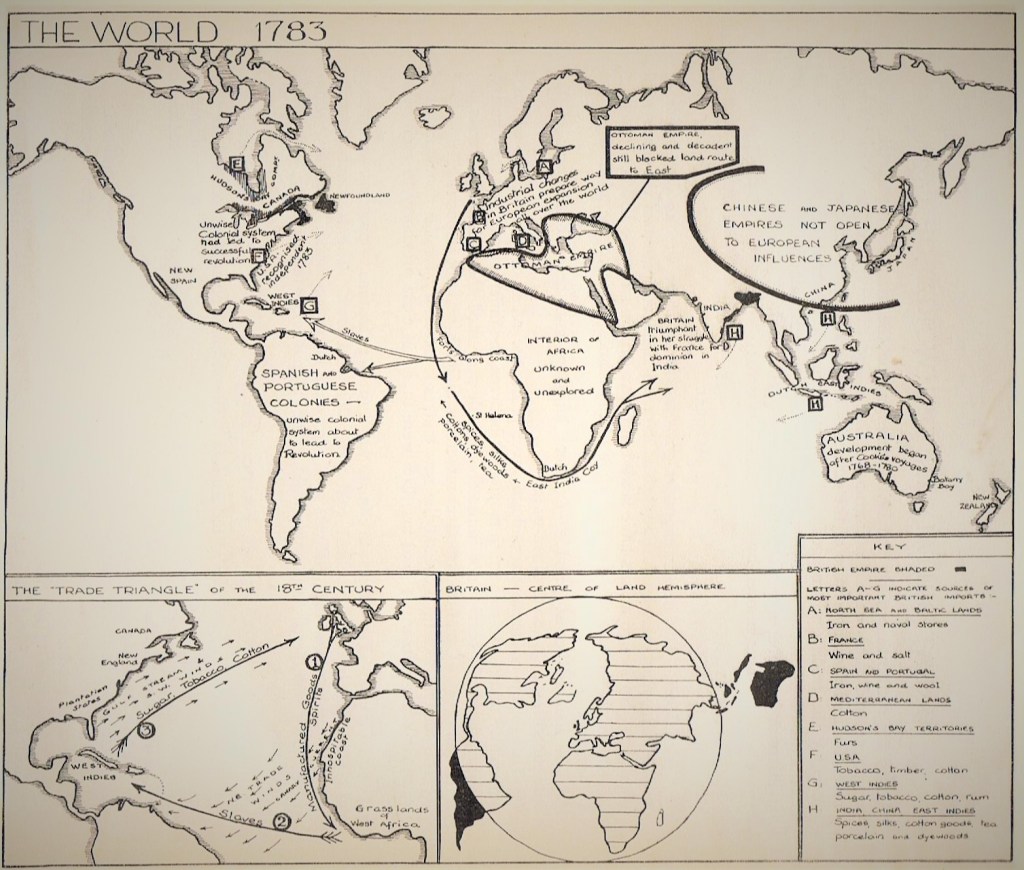
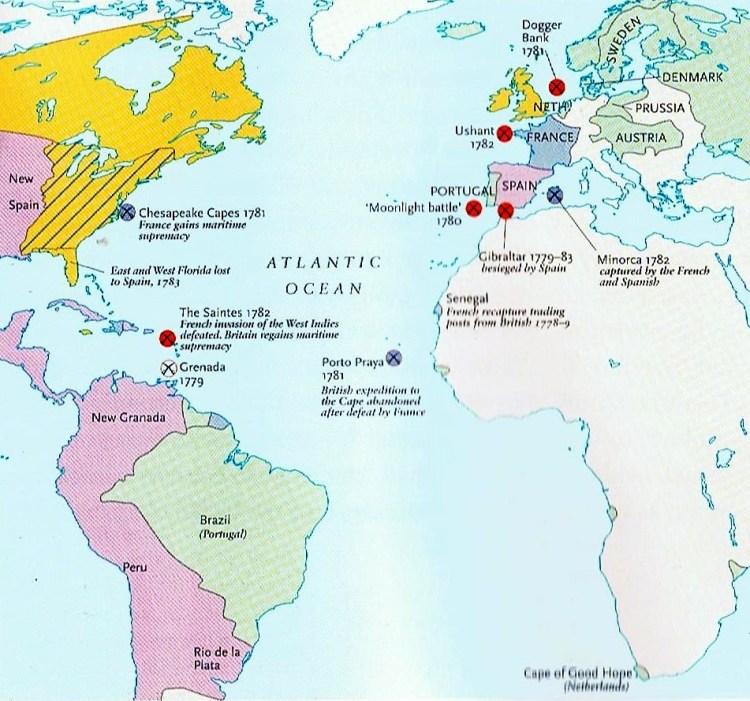
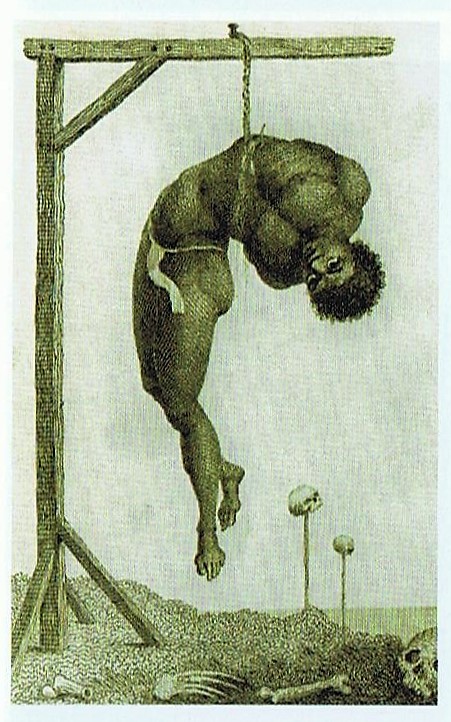
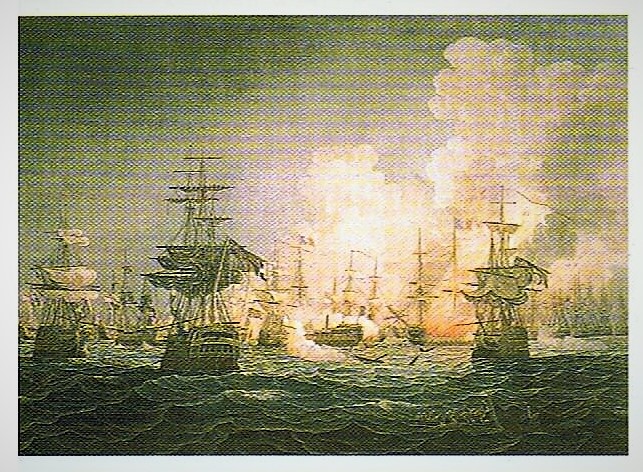
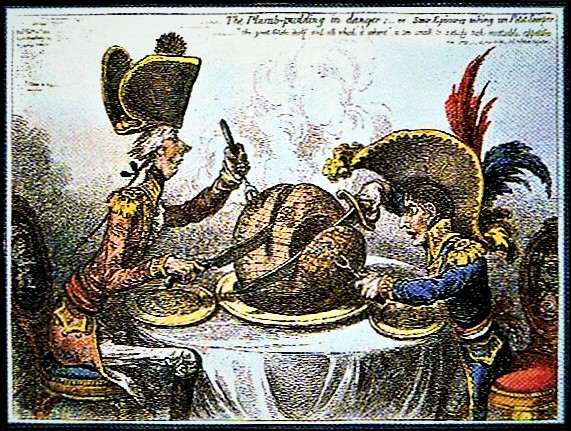
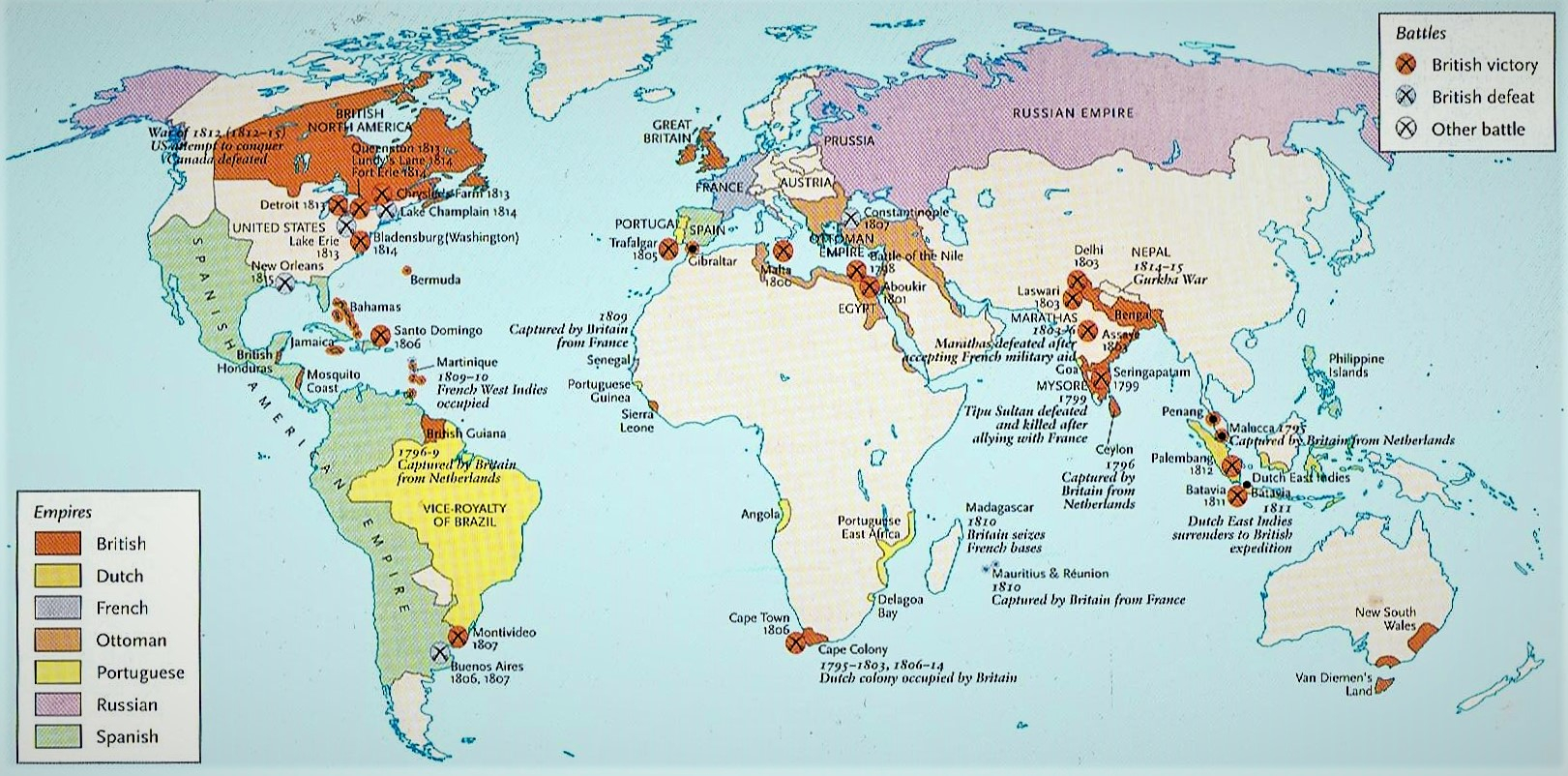
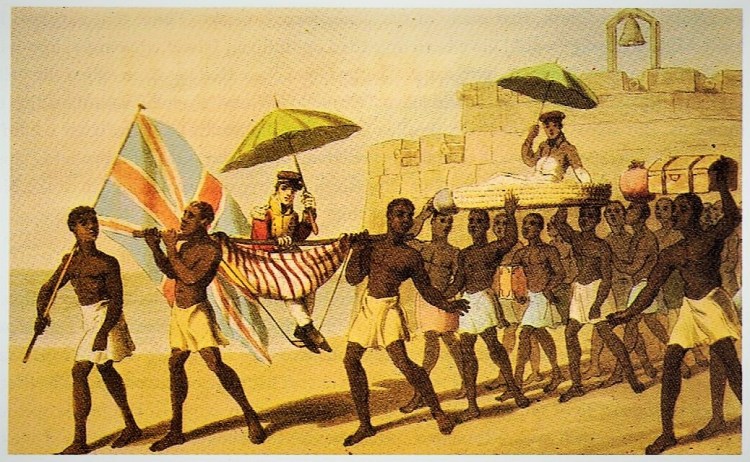
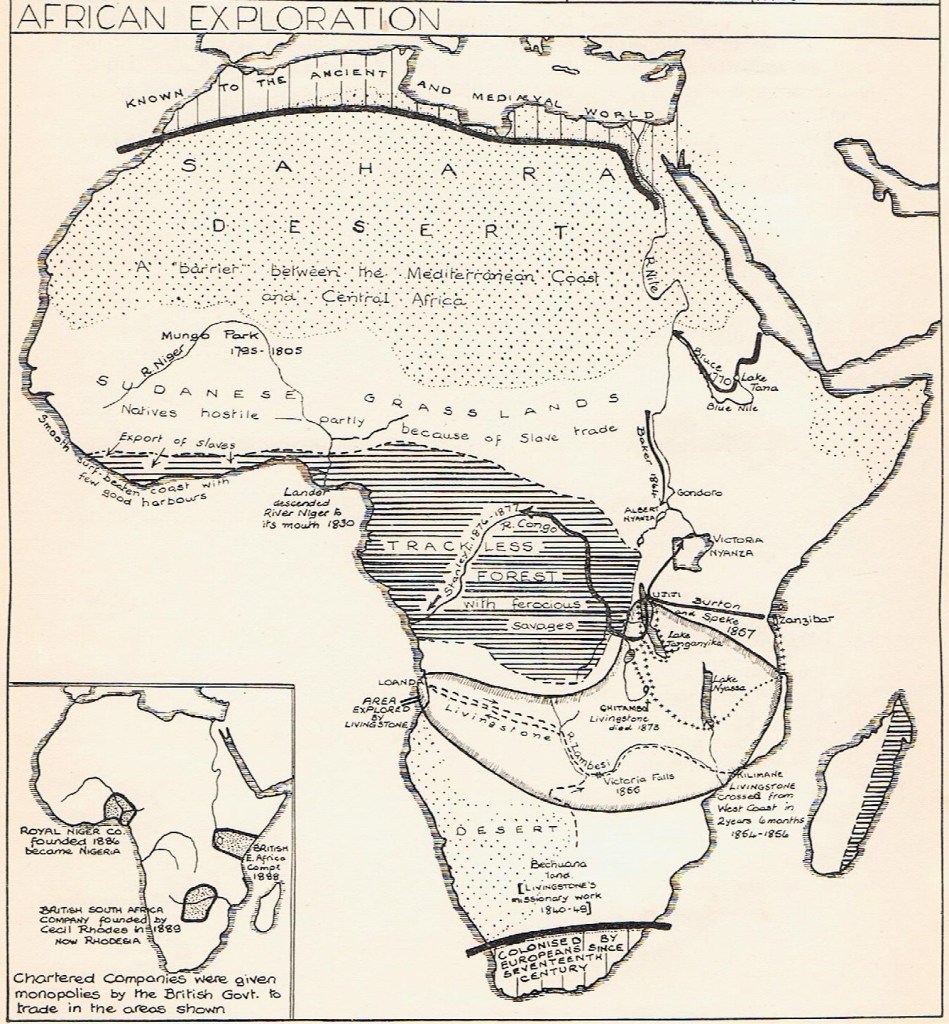
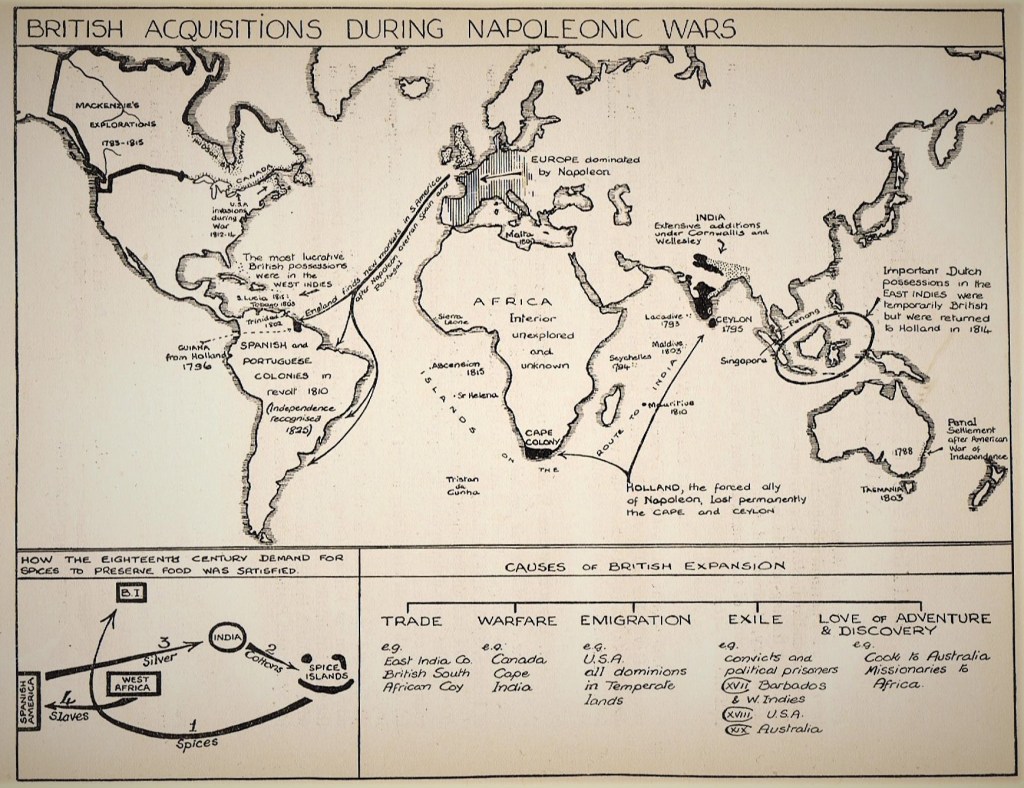
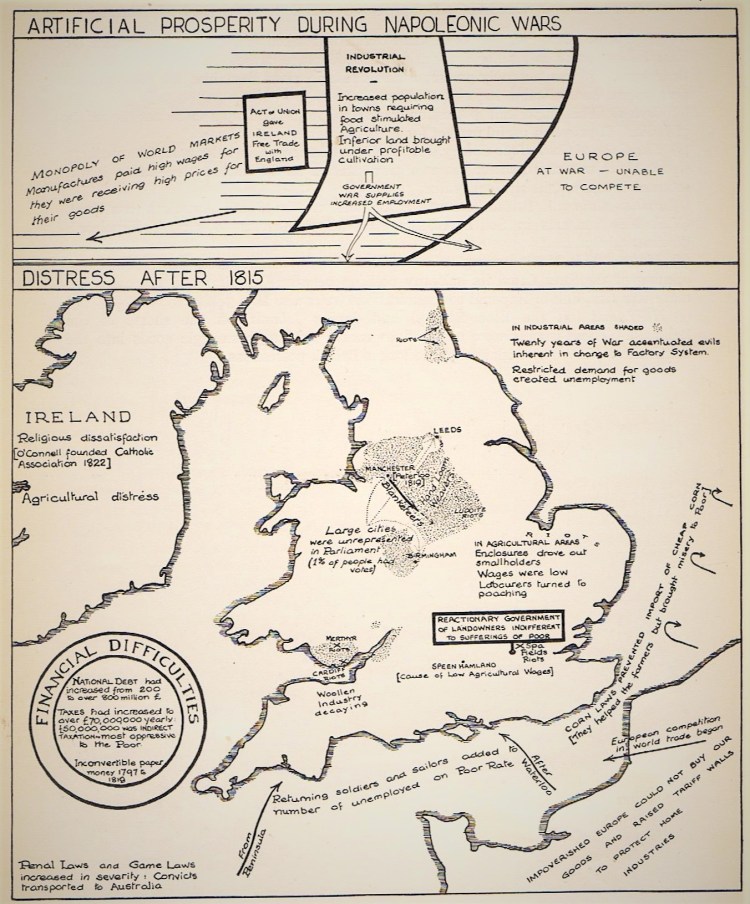
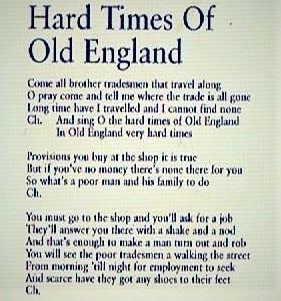

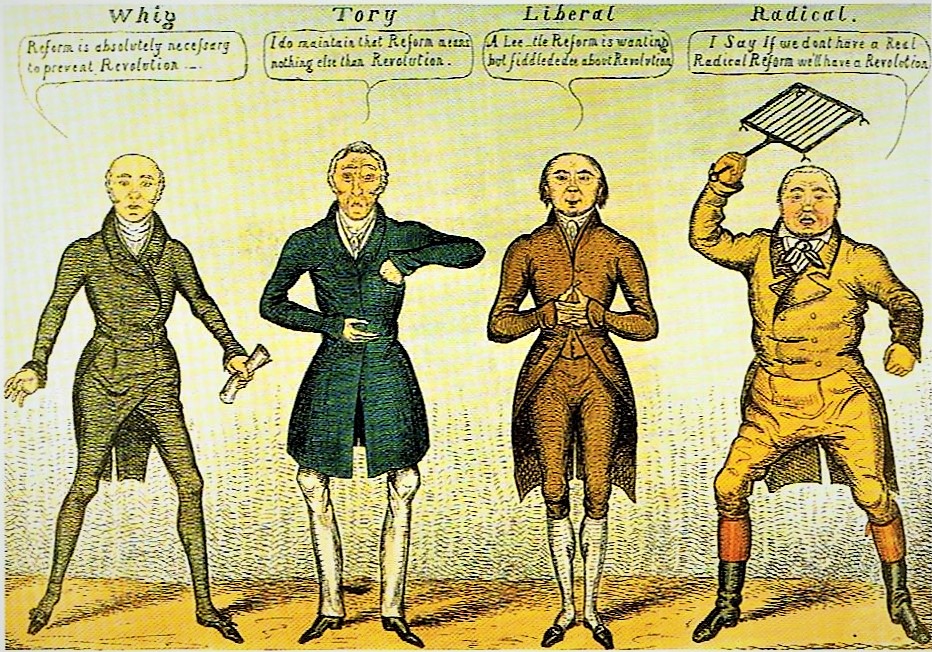
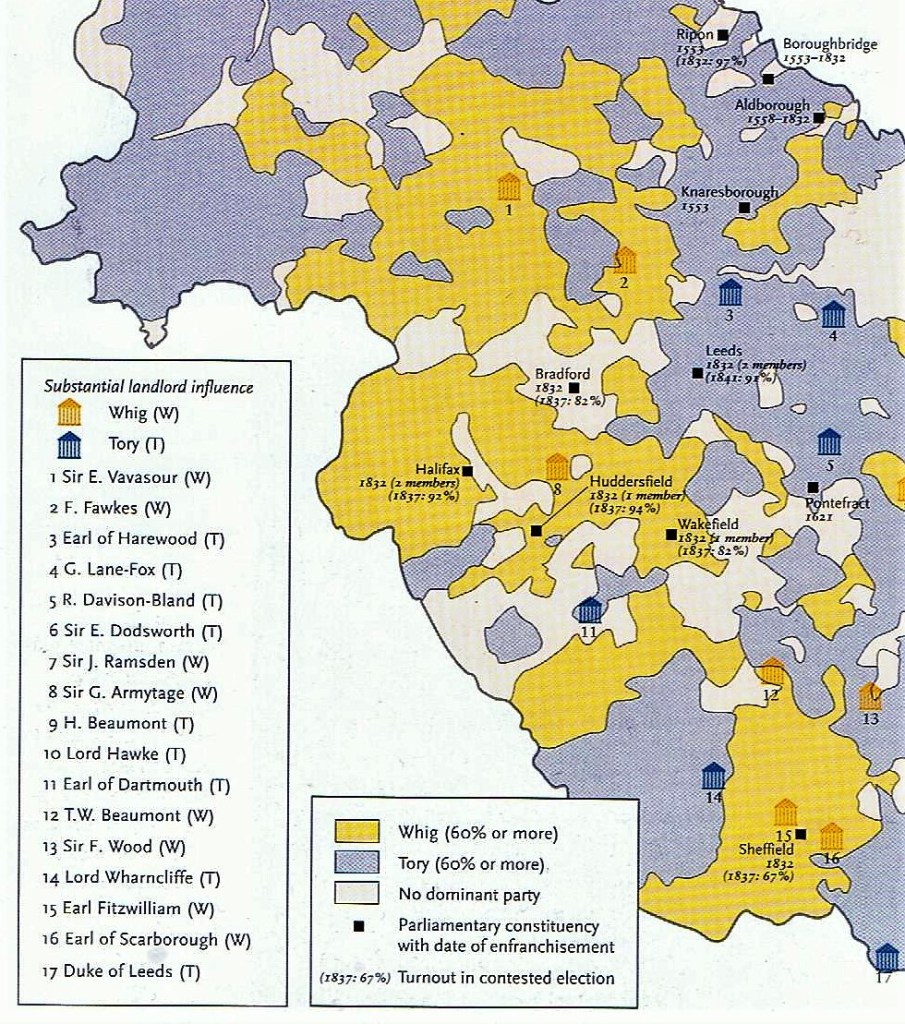
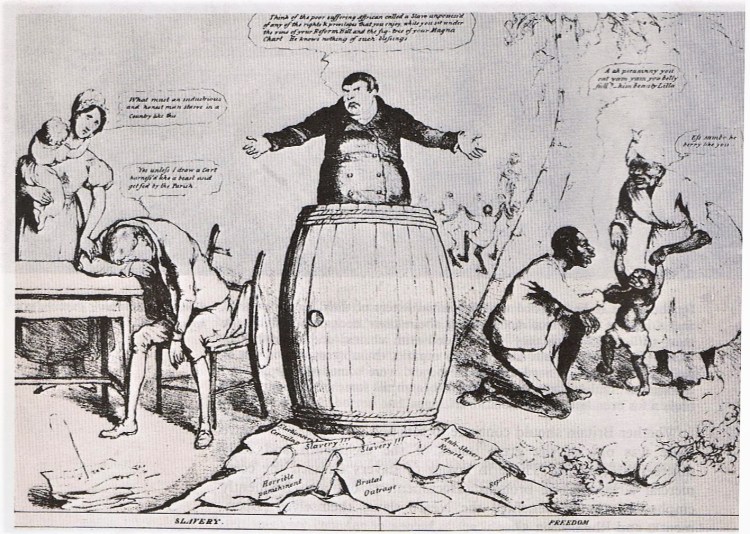

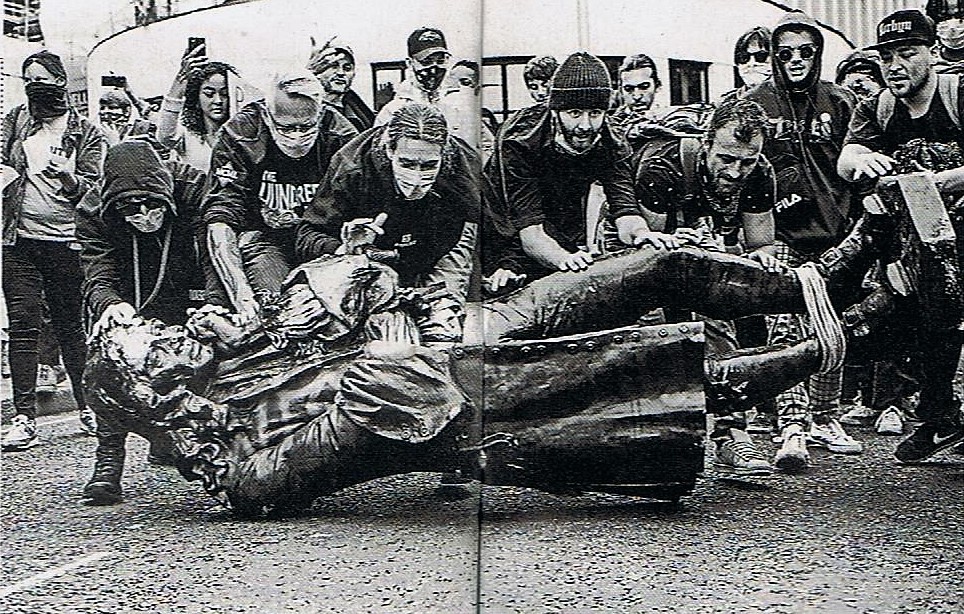
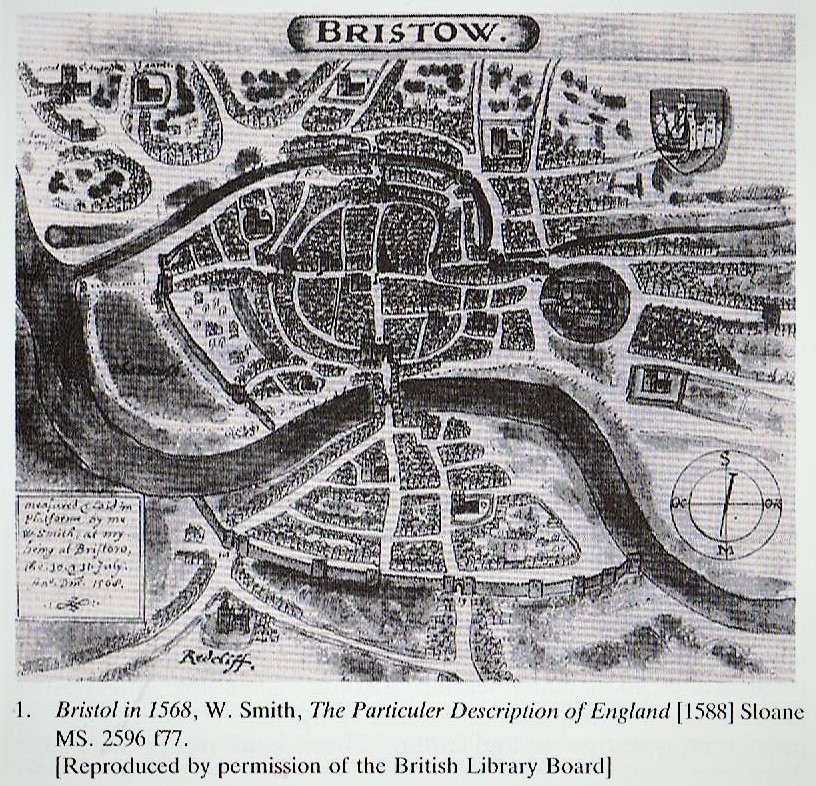
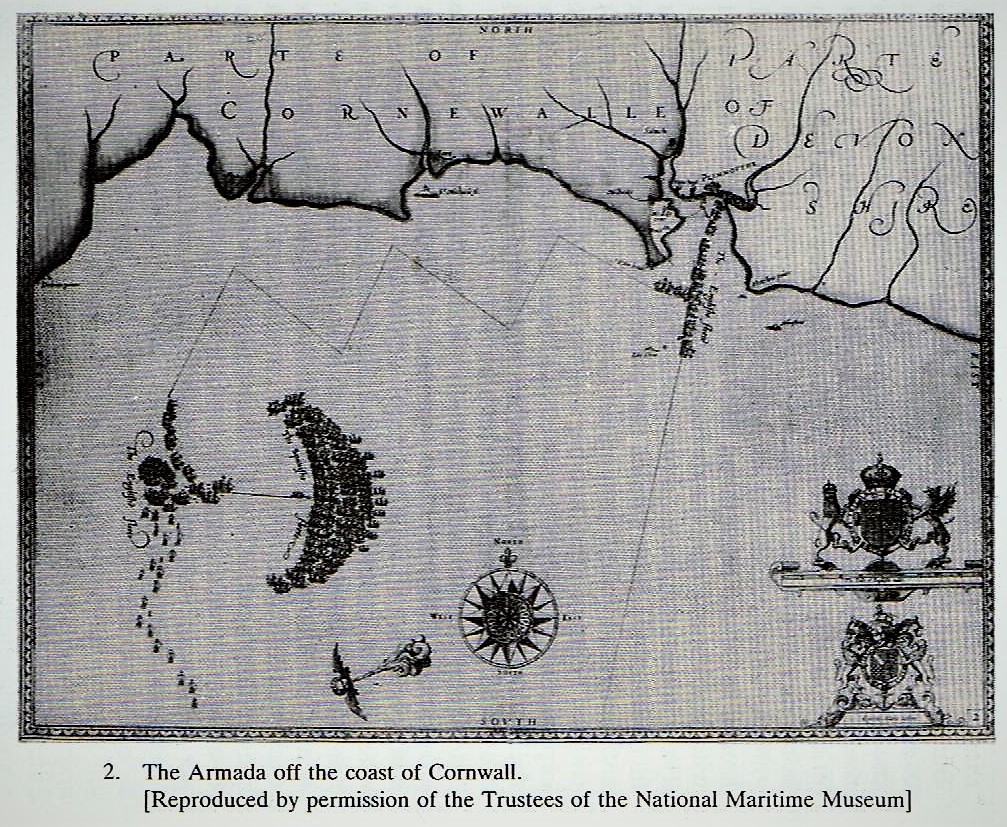
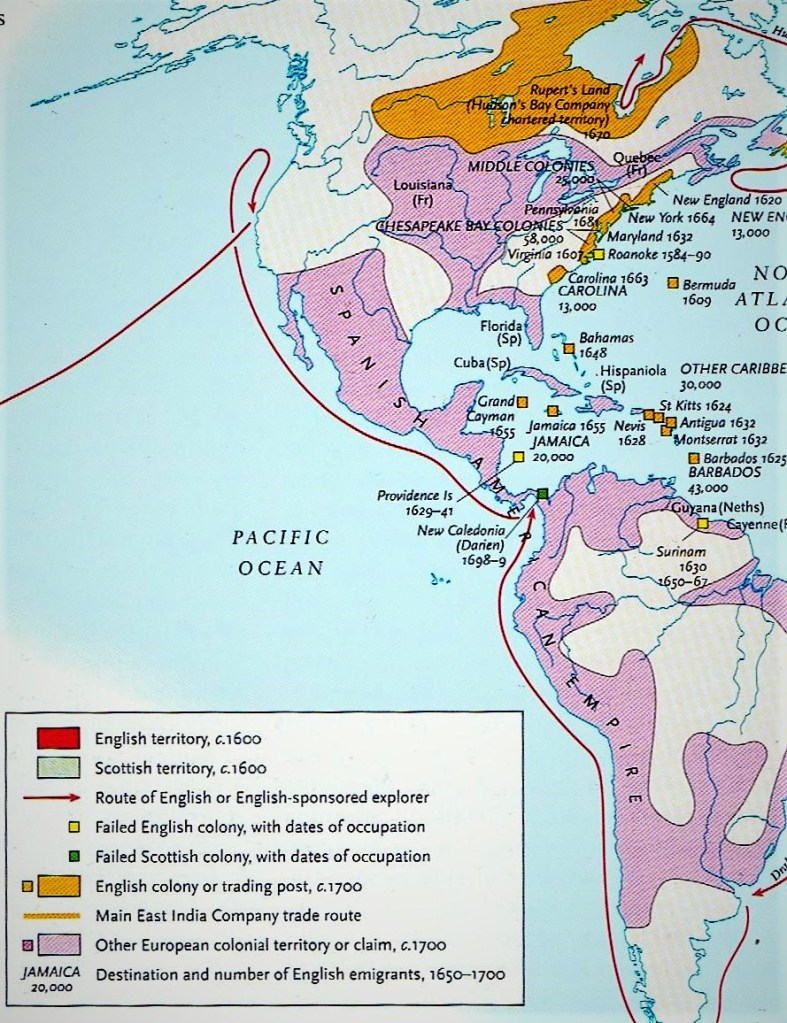

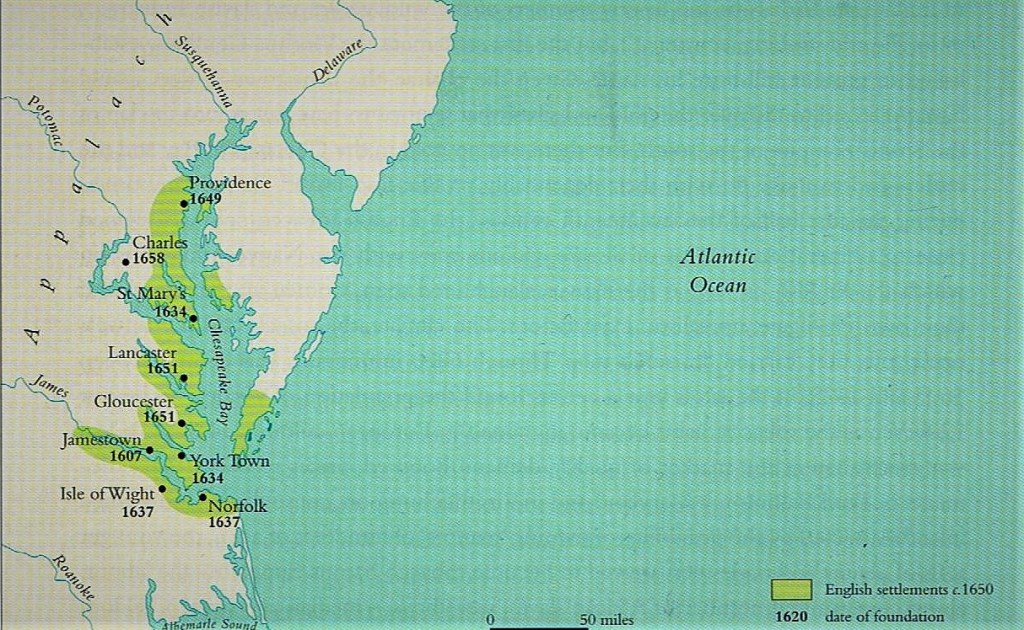


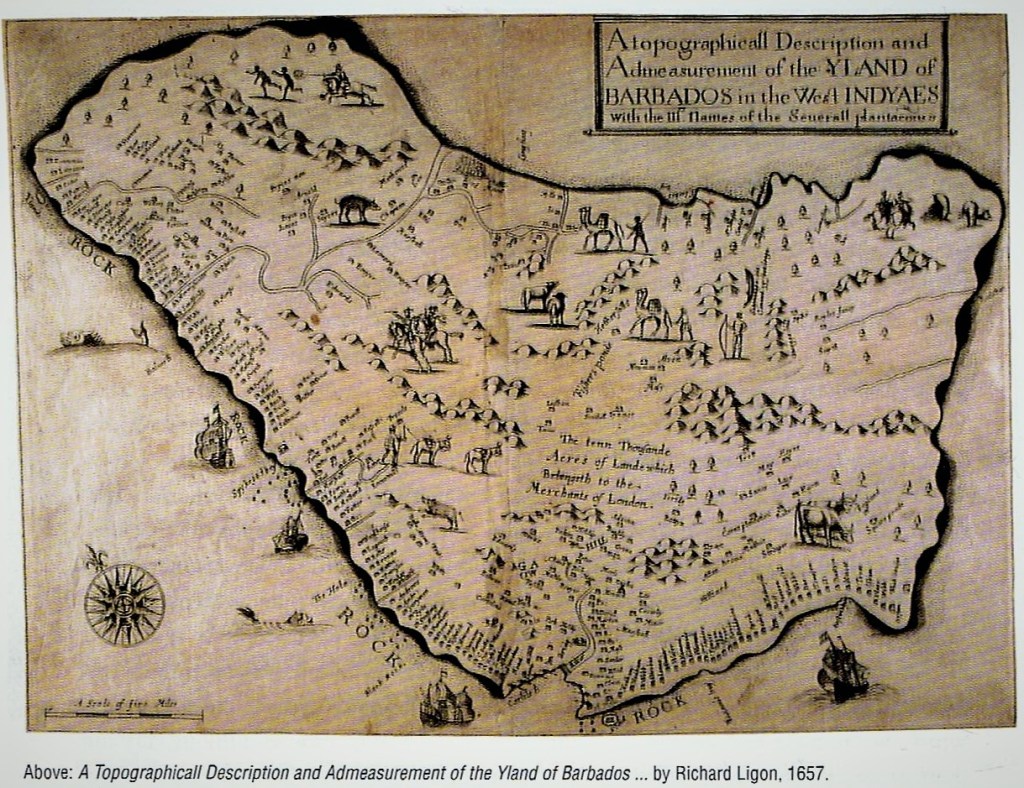

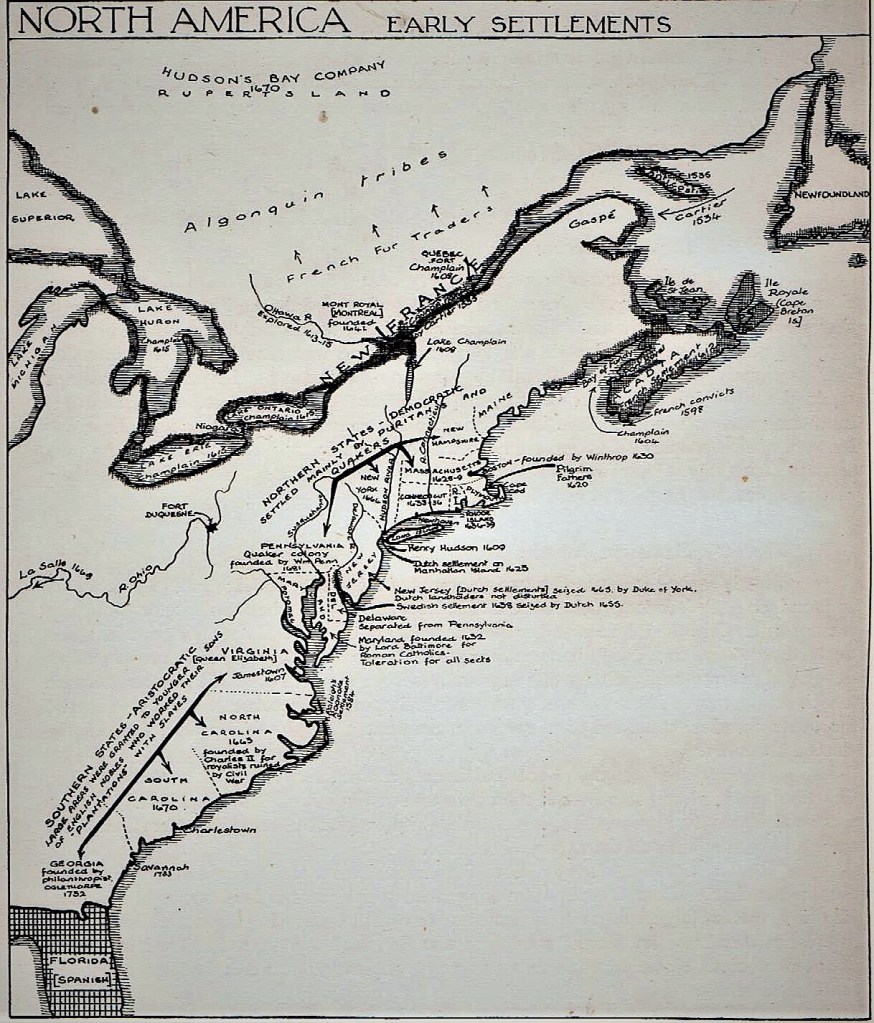
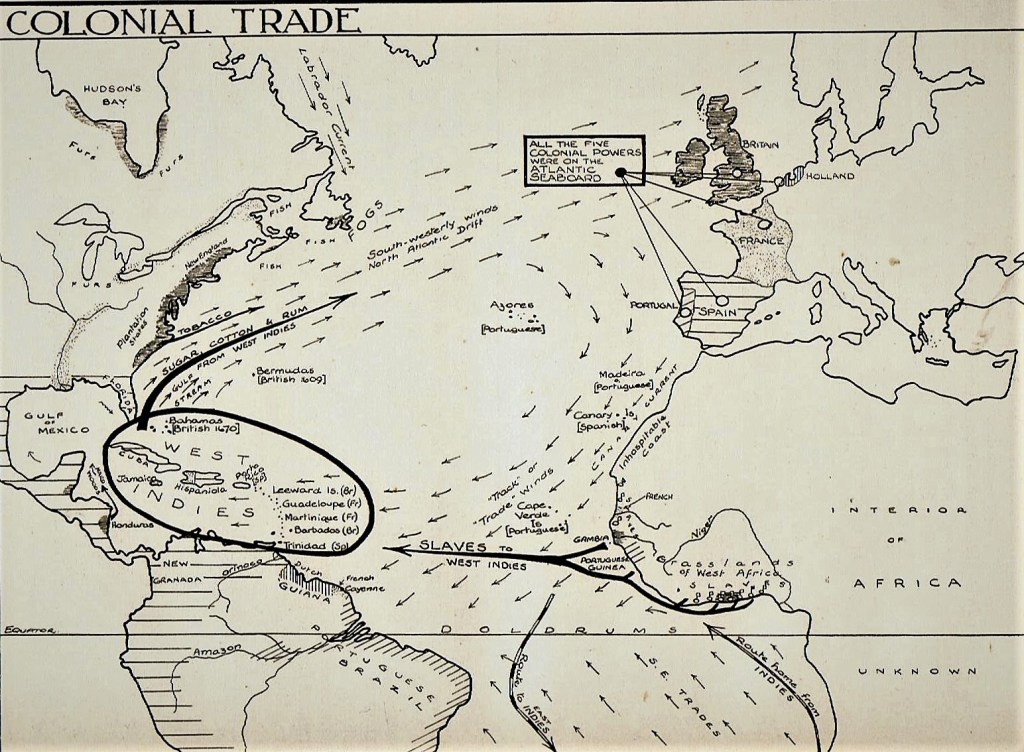
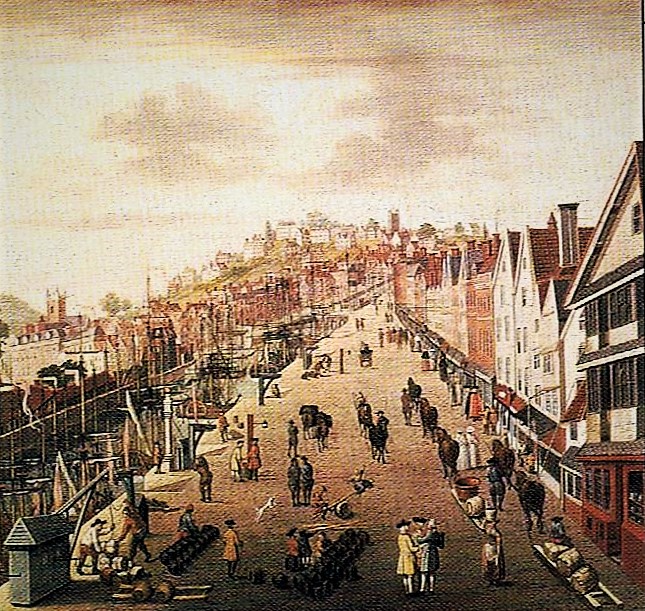


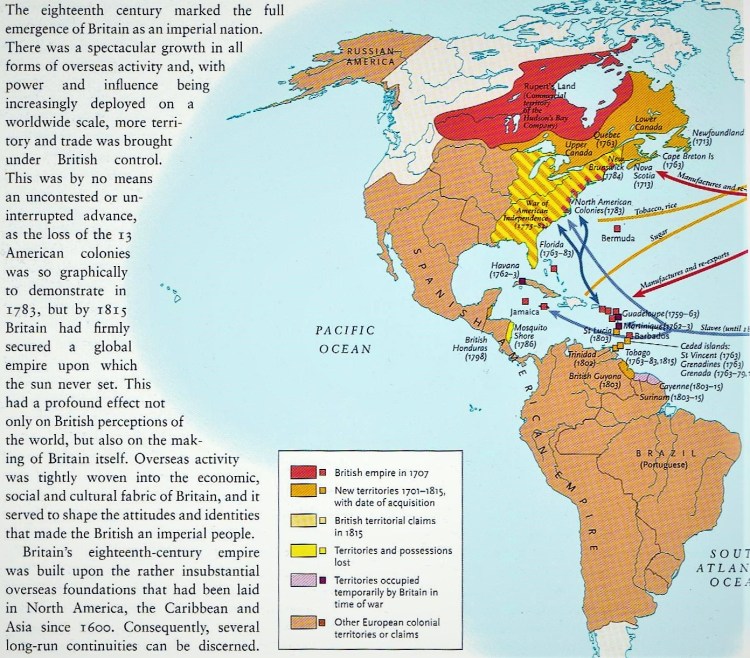


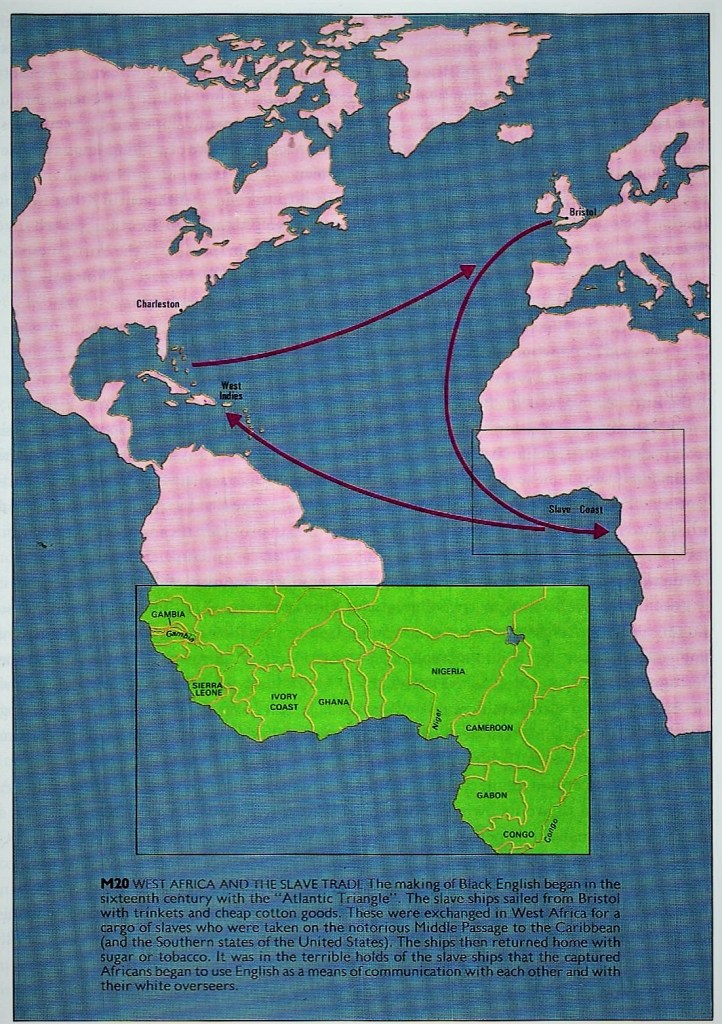

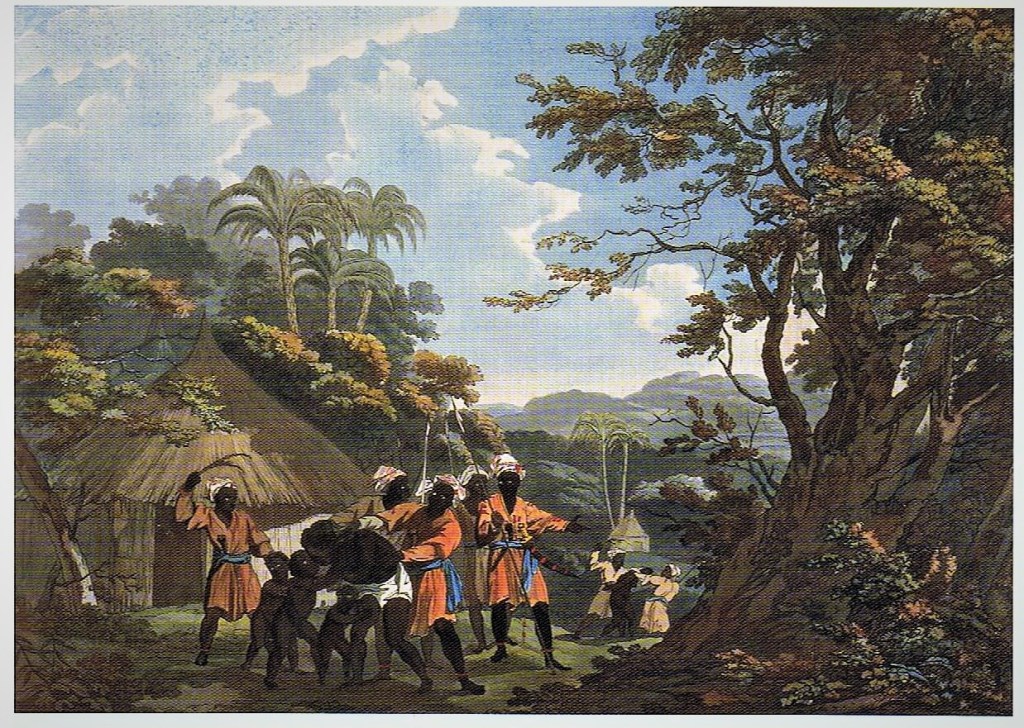
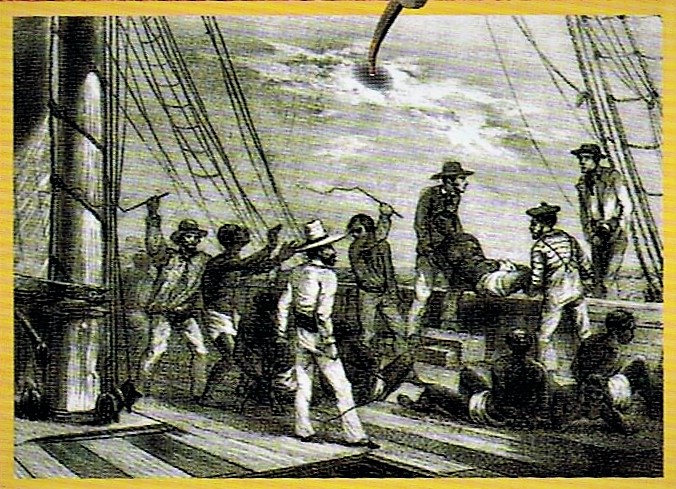


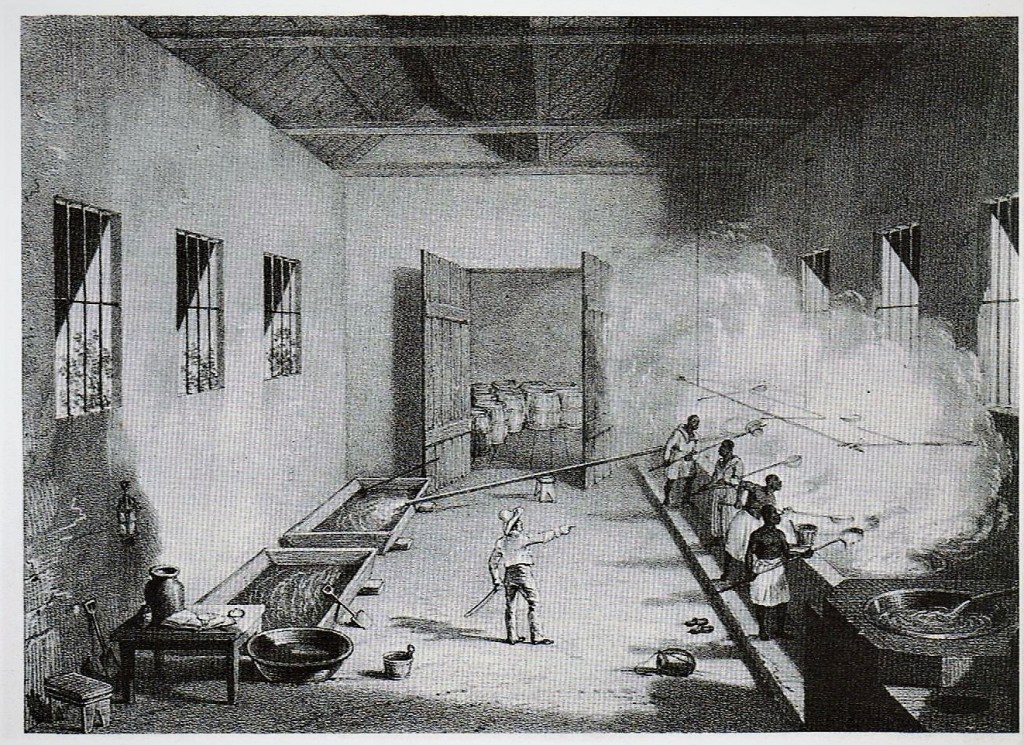


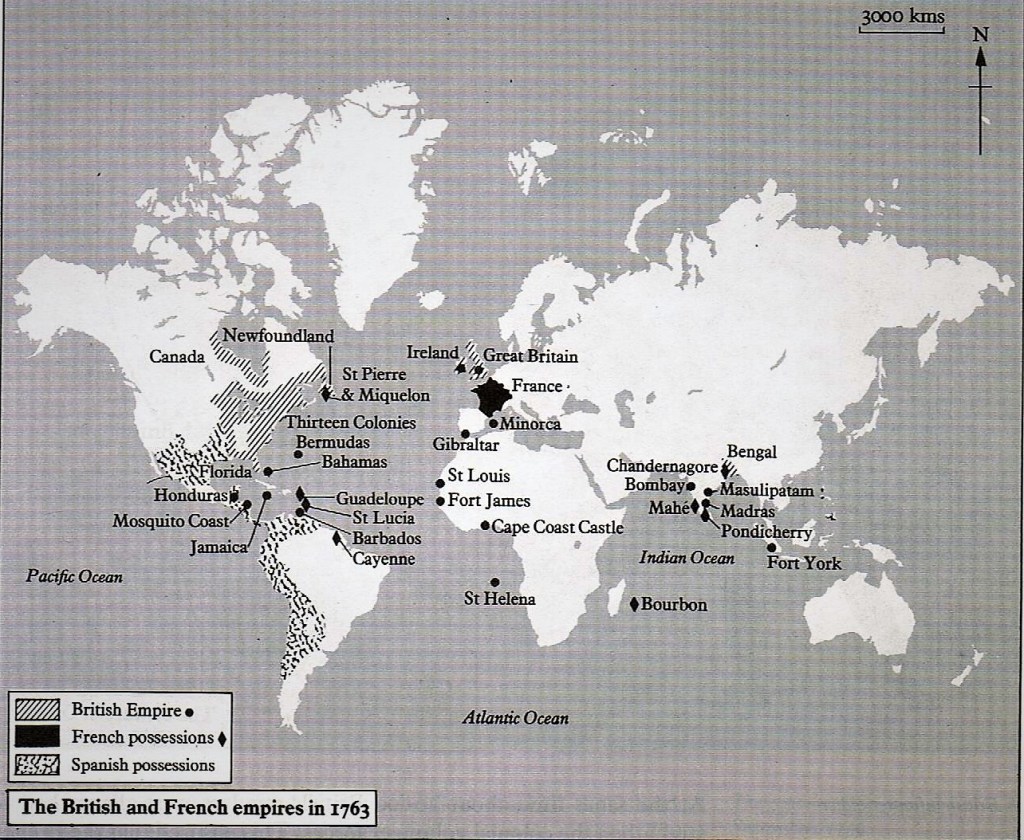

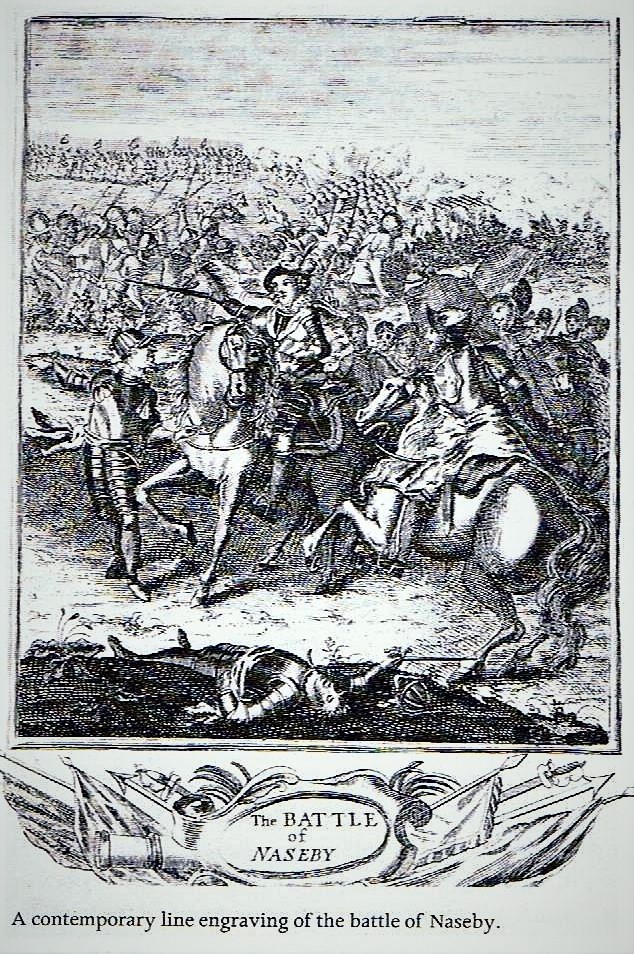


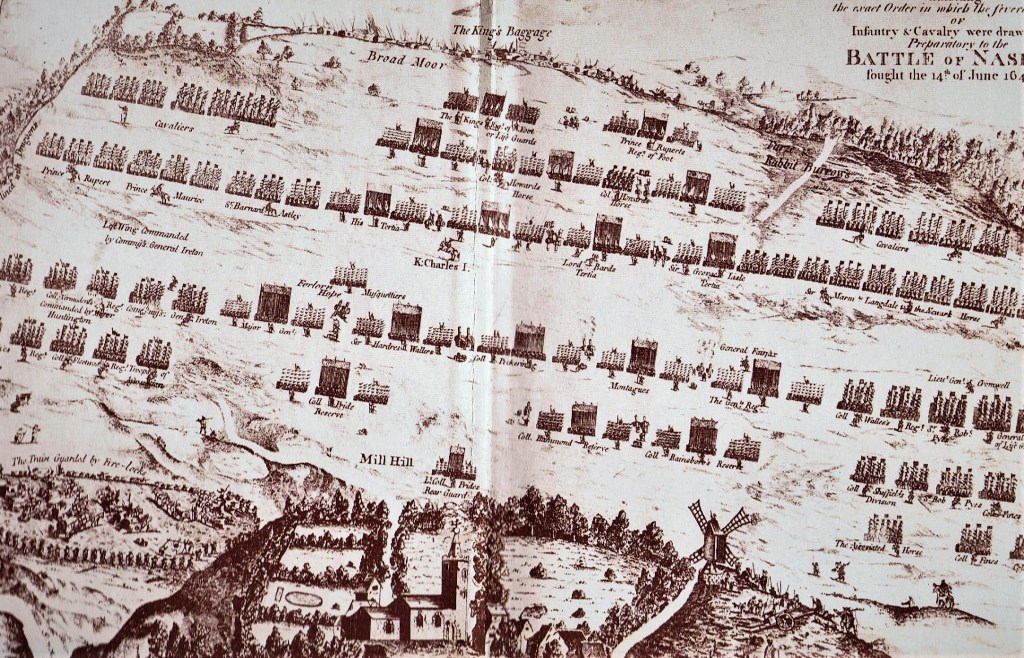
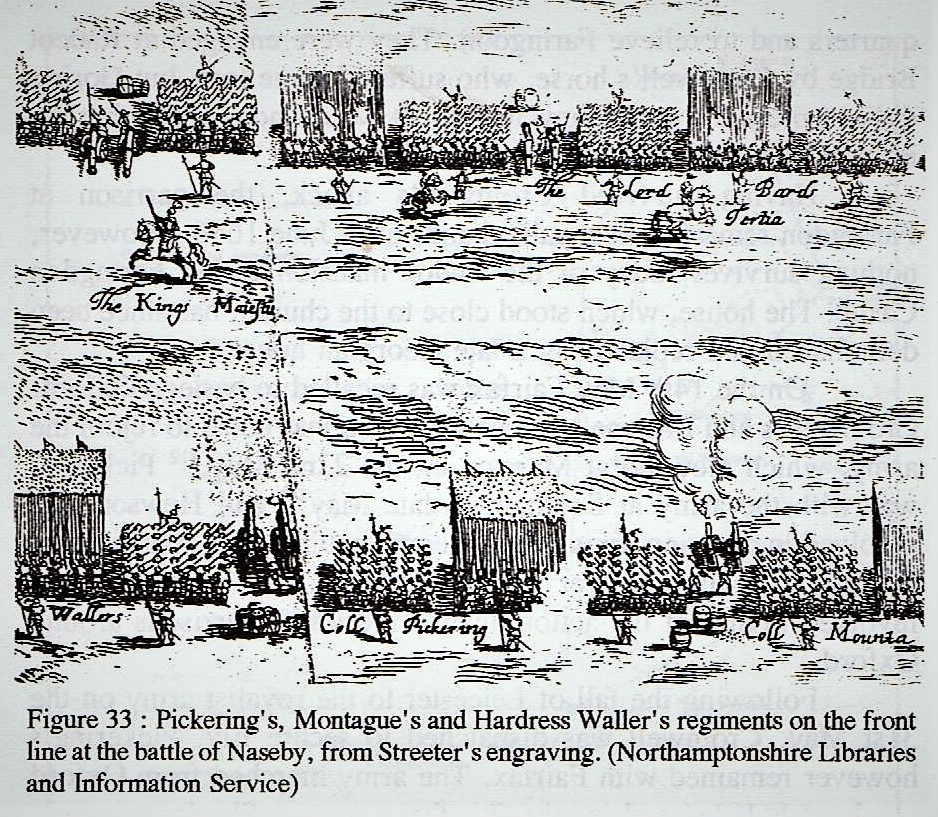
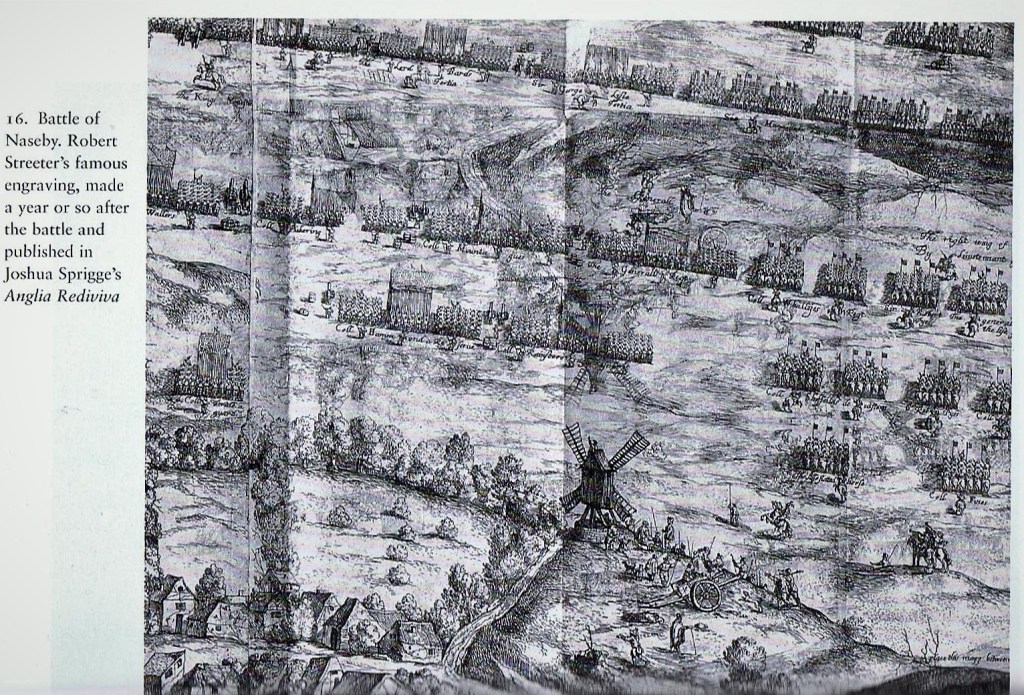
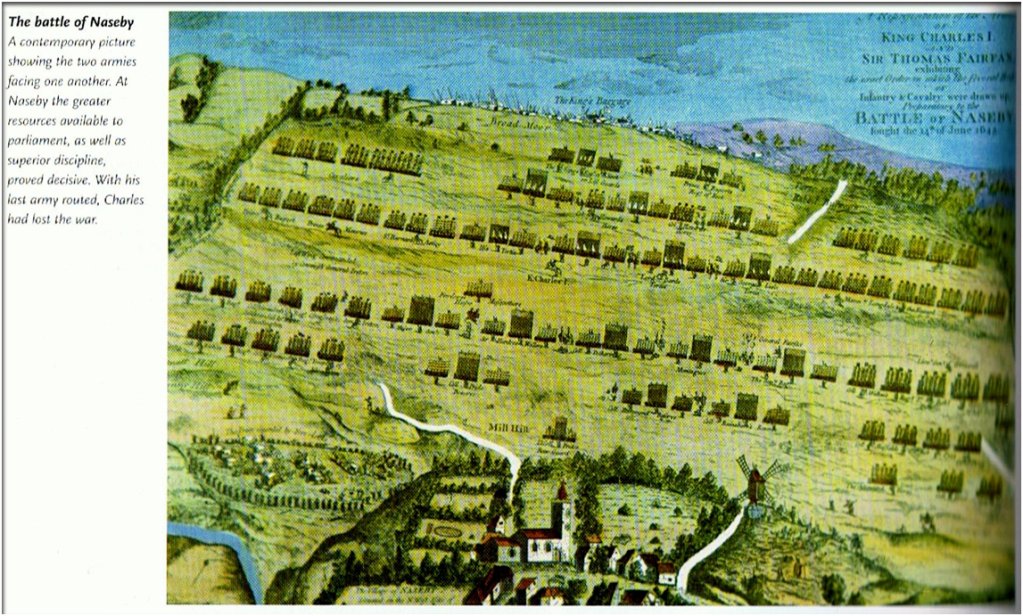
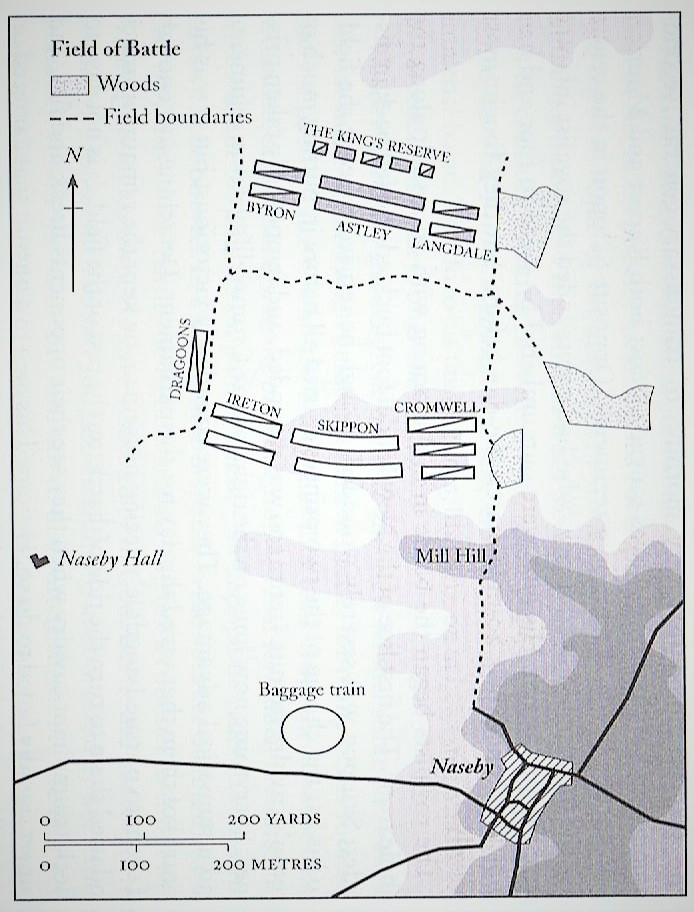
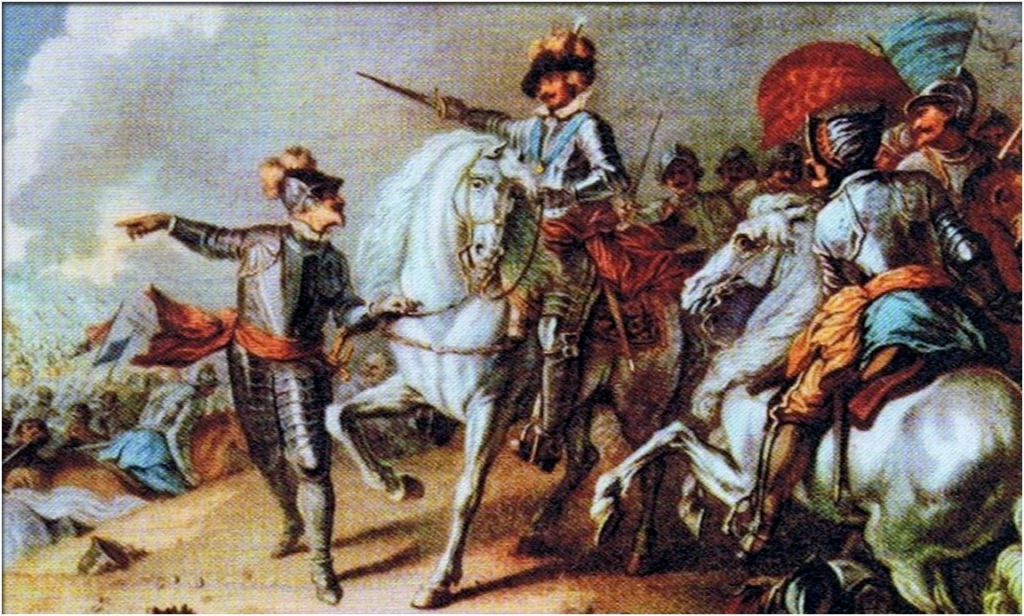

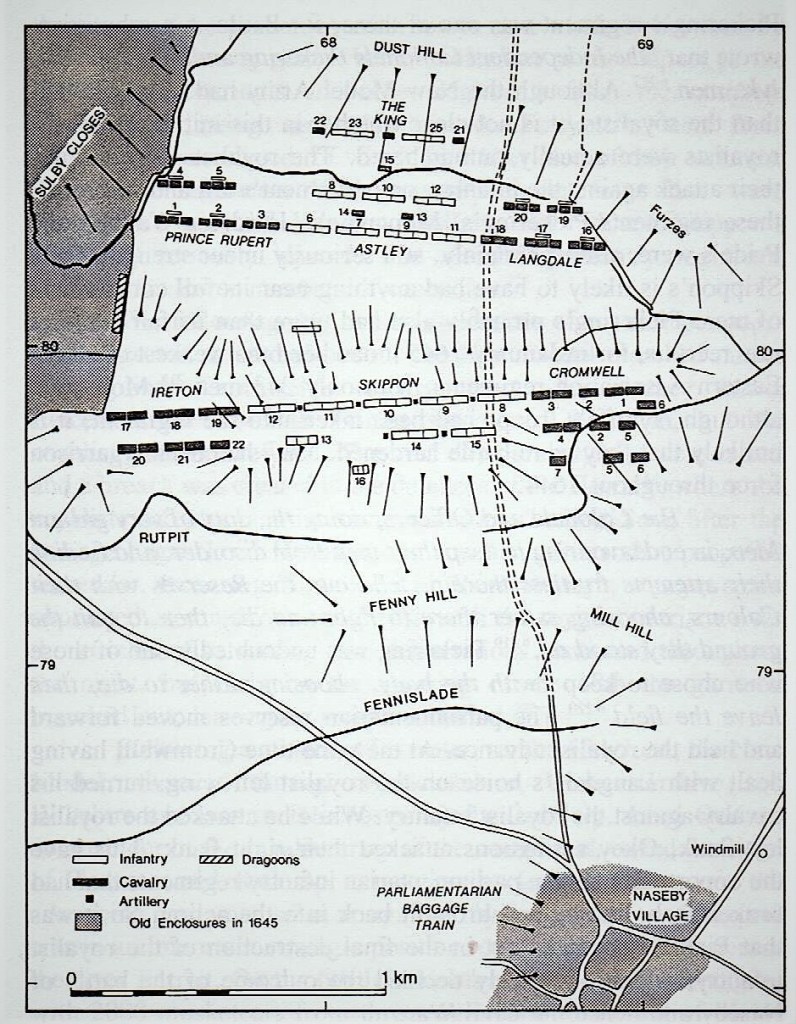
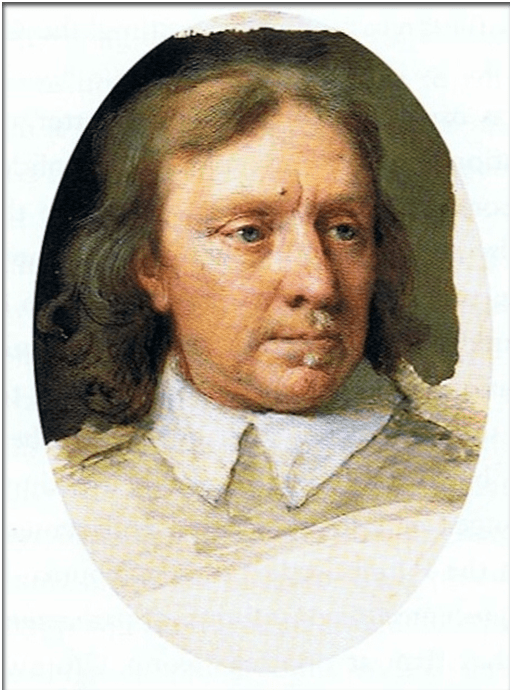
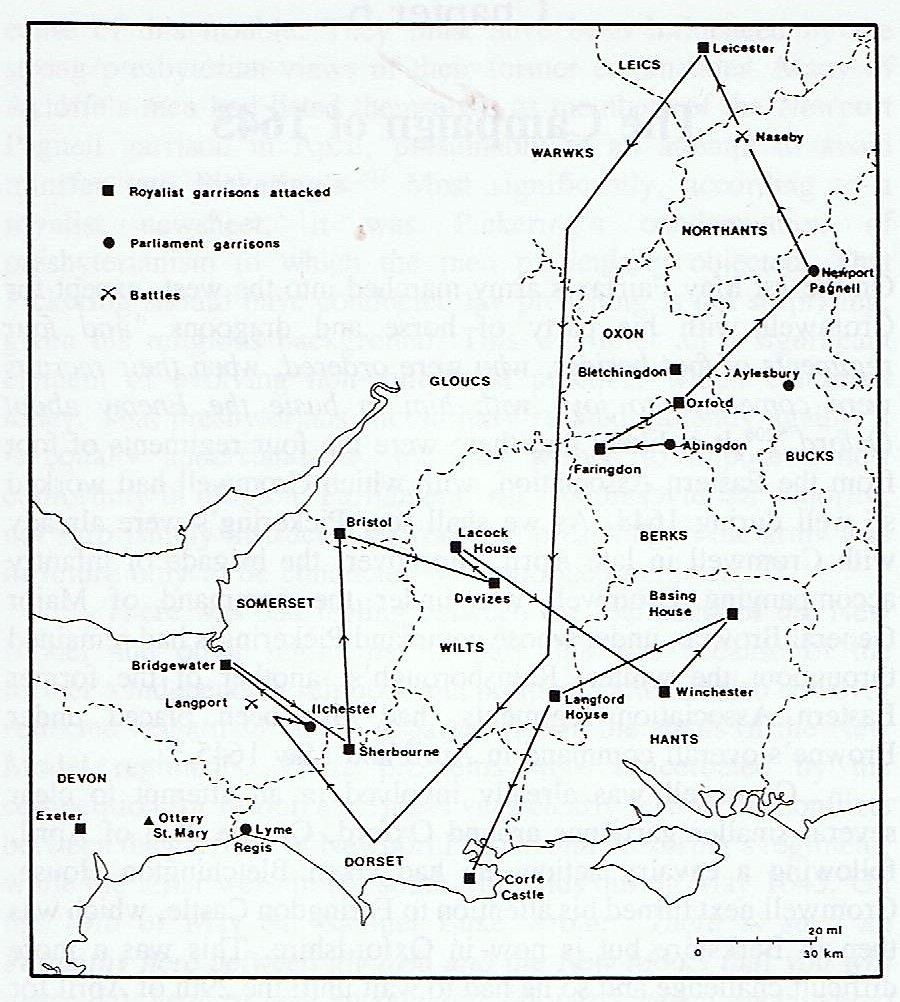






 Andrew James