This coming weekend, Coventry remembers the trauma it suffered on the night of 14-15 November 1940, when the Luftwaffe destroyed the Medieval centre of the city, including its old Cathedral in its ‘Moonlight Sonata’ raid of three major waves of aerial bombardment which gave a new word to both the German and English languages for this form of blanket bombing, Coventration.
My mother, then nine years old, Daphne Gulliver, had vivid memories of this night, but also the previous significant air-raids on Coventry, and the first use of the communal shelter at Walsgrave-on-Sowe school. The Anderson shelters that people had put up in their gardens by the summer of 1940 had become flooded so they had to go to the shelter at the school, which had been put there for the school children. However, as there were no day-time raids, it had not been used, and was still locked. The…
In his 1961 work on The Levellers and the English Revolution, H N Brailsford wrote that:
… there has been nothing like this spontaneous outbreak of democracy in any English or continental army before this year of 1647, nor was there anything like it thereafter till the Workers’ and Soldiers’ Councils met in 1917 in Russia.
The rank and file organised themselves from below, led by the yeoman cavalry regiments. Petitions were drafted, like the one from Colonel Hewson’s regiment, some of them dealing with political matters as well as military grievances. In the summer of 1647 the ‘Agitators’ had their own printer, a Leveller, John Harris; at the height of their influence his became an official army press. The army radicals also linked up with with their civilian counterparts. Petitions calling on the army to give a radical political lead also came in from London tradesmen as well as from the counties. The army had therefore advanced on London and entered upon a course of decisive political action, as already described in my previous ‘chapter’ in this series, and though it was now united under the command of Fairfax and Cromwell, the initiative for this action had come from the ‘rank and file’, including newly promoted or recruited officers who were in close contact with the London Levellers. The apprentices of London, under the influence of John Lilburne, who was still under arrest in the Tower, had also appointed ‘agitators’.
In the early autumn, the army commanders clearly signalled the limits to this radical ‘tide’ when Major Francis White, Agitator of Fairfax’s own regiment, had been expelled from the Army Council on 9 September for maintaining that there was now no visible authority in the kingdom but the power and force of the sword. This view was shared by others among the agitators and Colonel Rainborough, whom Gardiner described as the principal spokesman for this ‘third party’ among the officers, had also publicly expressed his anxiety about White being ‘kicked out’. White did not conclude, unlike the chaplain Hugh Peter, that any act of force was therefore justified. White set out his views at great length before Fairfax in 1647, repeated just over a year later. He held that all laws made since the Norman Conquest which were contrary to ‘equity’ should be abolished, and told Fairfax that his authority derived less from Parliament than from the ‘Solemn Engagements’ of the Army. The Levellers thought that the state had broken down in the course of the civil war; until it was legitimately refounded a state of nature existed in which the sword was the only remaining authority. But military force could justly only be used only to hand power back to the people.
This was the purpose of the Agreement of the People, the Levellers’ new ‘social contract’ refounding the state, which was submitted to the Army Council in October 1647. It was discussed by officers and men at Putney in the days after 28 October. But even as the debates got underway, the agitators had lost the initiative they had gained from March to August. Agitators of five cavalry regiments had been recalled by their constituents, under suspicion of being corrupted by their officers; they had been replaced by new representatives, and it was these new agitators who presented their new document to the Army Council. What we do not know from the available documents is what the expectations of the agitators were. At one time agreement seemed to have been reached on a general rendezvous at which they intended to have the Agreement accepted by the whole army. It had been amended to include a substantial extension of the franchise to all soldiers and to all others except servants and beggars. The current ‘state of nature’ was to be ended and the English commonwealth was to be restored as a democracy. For the senior officers,the debates in the army held at Putney in late October into early November took a very different course from that expected. Fairfax, Cromwell and Ireton had hoped that the General Council would reject the the accusations in The Case of the Army, reaffirm the basic unity of the army’s purpose, and get on with business of agreeing a set of terms that could be put to the king in its name.
In the event,what trooper Robert Everard, a new agent in Cromwell’s own regiment, brought to headquarters on the day before the General Council’s next meeting, however, was an entirely new document, approved that same day by by a meeting of the five regiments, together with other soldiers and some civilian Levellers, including Wildman, who was deputed to speak for it before the General Council. It seems to have been put together in order to steal the initiative for the Leveller’s broader aims before the army’s representative body. It seems to have been written by Wildman and William Walwyn. When Cromwell read it, he concluded that there were ‘new designs a-driving’ and that the General Council would have to thrash them out. Whereas The Case of the Army had set out a programme for action in the specific circumstances of early October, the Agreement of the People dealt in first principles, further widening the gap between its authors and the leaders of the army. The ‘Grandees’ – Fairfax, Cromwell and Ireton – were still seeking a settlement based on the ancient constitution and fundamental laws of England, albeit in radically modified form. These would have the binding consent of King, Lords and Commons.
The Levellers, by contrast, had come to regard the existing laws as very largely a legacy of ‘the Norman Yoke’, and now that the ‘freeborn’ English had defeated the last remnants of the Conquerors successors, they claimed that it was only the free people of England who could legitimate a new, valid constitution. The Agreement was their means to this end, offered as something altogether as something higher than a statute, which future parliaments could modify or repeal. It was intended to be a declaration of the principles on which future parliaments would be bound to operate. The people’s representatives in parliament would have full power without the consent of or concurrence of any other person or persons, to make laws, appoint offices of state and magistrates ‘of every degree’, declare war, make peace and to do everything that a sovereign people did not reserve to themselves. Their power was inferior only to theirs that choose them, but some rights were so ineradicably planted by ‘natural law’ that even their chosen representatives would be prevented from infringing them. Those affirmed in the Agreement included freedom of religion, immunity from conscription, and total equality before the law, regardless of birth, rank or tenure. Parliament itself should be reformed by reapportioning constituencies according to the number of inhabitants, not their contribution to taxation, as Ireton had suggested in the Heads of Proposals. However, the Agreement itself did not deal specifically with the Crown or the Lords. Woolrych has commented that It is a document as remarkable for its silences, which were doubtless deliberate, as for its prescriptions.
The fact that Cromwell, presiding (Fairfax being unwell again), caused the debates engendered by the Agreement to be recorded almost verbatim shows that he and Ireton were well aware of how much hung on their outcome. They were taken down by the aptly-named William Clarke, a Londoner of humble origin in his mid-twenties who had risen in the army secretariat and was now secretary to its General Council. He had mastered an early form of shorthand from which he later transcribed. At the General Council on 28 October, Sexby introduced the delegates from the new agents’ organisation: two soldiers, Robert Everard being one, and the civilian Levellers John Wildman and Maximilian Petty. He then told Cromwell and Ireton to to their faces that their credits and reputation hath been much blasted by their striving to please the king and their support of a parliament of rotten members. Very soon the fundamental difference of purpose between the army commanders and the Leveller group became apparent. The ‘grandees’ held themselves bound by their pledges to respect the authority of parliament and to seek a settlement with it or with a new parliament following the dissolution of the current one. On the other hand, the Levellers wanted the army to reoccupy London, dissolve parliament and inaugurate a new and revolutionary constitution, which could only be done by force. The prospect of the Agreement gaining enough subscriptions to give it democratic legitimacy if it was to be imposed by military dictatorship upon a nation yearning for peace and still devoted to its monarchy, were non-existent. It is little wonder then that the General Council was so divided. Many of those present, officers and soldiers alike, must have felt torn between the powerful attraction of high ideals on the one hand and a deep reluctance to divide the army on the other, in defiance of its senior commanders. Strong ties bound those who had fought together and who knew that they might have to do so again soon.
We lack evidence, however, about the sentiments of the rank and file, for the only soldiers recorded as having spoken during the three days of debate at Putney were Sexby, Allen, Lockyer, Everard and Jubbes. The last of these, recently promoted from Major to Lieutenant-Colonel in Hewson’s regiment on the death of its previous commander, Colonel John Pickering, was certainly committed to the Leveller’s political agenda along with at least three of the regiment’s captains. Earlier in the year, as political debate had intensified in the army throughout the summer and autumn, some in Hewson’s (formerly Pickering’s) regiment were clearly committed to the political agenda of the Levellers.In addition, there were at least two ordinary soldiers from the regiment, radical by reputation since its foundation in 1645, who were among the seventeen from nine regiments who had signed a letter on 21st June which went far beyond mere army grievances. But Jubbes was also interested in reconciling the Levellers with moderate Independents and even presbyterians, as he made clear in his brief contribution to the debates at Putney. His attitudes may have been tempered by his new commander, Colonel John Hewson (pictured below) who, though from a humble background himself, was soon to support Cromwell in moving against the Levellers in the army. Nevertheless, Jubbes remained critical of Cromwell and, disillusined with the course of the ‘revolution’ and its failure to bring ‘liberation’, he resigned his commission and left the army in April 1648, becoming a Fifth Monarchist. By that time, it was obvious that both he and the Levellers had lost the debate in the regiments and in the army as a whole. No doubt also disillusioned with the Leveller leader’s support for military dictatorship, Jubbes had also become a pacifist, like many others who were to form the early Quaker sect.
John Hewson. An engraving by Van der Gucht (National Gallery, London).
The Putney Debates & the Battle for the Army:
Although the Agreement was read to the General Council on the 28th, there was no debate on its contents on the first day. Cromwell and Ireton were doubtful as to whether the army should be considering such radical proposals at all. They argued that it was duty bound by its declarations made from June onwards, in which it had subjugated itself to the authority of parliament in exchange for the redress of its grievances, and that it also had a moral duty to to pursue the path of negotiation with both king and parliament on which it had already embarked. The Heads of the Proposals remained the basis for these, and they had not yet been fully and formerly considered by either party. For their part, the Leveller spokesmen contended that Parliament’s rotteness was manifest, that the king had forfeited any right to be further treated with, and that no engagements were binding if they stood in the way of the rights of the people; if the matters propounded in the Agreement were the people’s due, they stood self-justified. The outcome of the day’s debate was the appointment of a committee to sift the army’s declaration and itemise the commitments contained in them, so as to help help the General Council, in a special meeting in a few days’ time, to assess how far the Agreement‘s proposals were compatible with them. Cromwell’s attitude was conciliatory rather than confrontational; he assured the spokesmen for the Agreement that they would not find him and his fellow-officers wedded and glued to forms of government and readily acknowledged for his part that the foundation and supremacy is in the people, radically in them.
‘Leveller Country’: Places associated with the Leveller and the ‘True Leveller’ (‘Digger’) Movement in 1647-49.
The famous debate on the 29th, in which the Leveller spokesmen joined issue with Cromwell and Ireton over the very foundations of a free commonwealth, came about almost by accident. On the previous day, Lieutenant-Colonel Goffe made an urgent plea that they should meet first for prayer. He probably spoke for many when he said that God had not been with them in their debates so far. This did not please some of the less religious Leveller leaders like Wildman, who spoke extensively at Putney, almost as much as Ireton. But there was wide support for the proposal, and it was agreed that the next morning should be given to prayer, with the committee convening in the afternoon. There was a big attendance at the prayer meeting, and testimonies were heard. When the Levellers arrived in the early afternoon to confer with the committee, they found a large and potentially sympathetic audience and wanted to launch a general debate on the Agreement there and then. Cromwell understandably opposed this proposal, stating that he and the others present had already spent several hours together in seeking the Lord. But several other officers supported it, including Colonel Thomas Rainborough, whom Cromwell and Fairfax had already incensed over his appointment as vice-admiral in the Navy and their consequent reassignment of his New Model regiment to another officer. Although brave, sincere and a genuine radical, his motives at Putney were somewhat clouded by personal antagonisms. Nonetheless, the support he garnered at that moment meant that Cromwell and Ireton had to bow to pressure; the Agreement was duly read out in its entirety once more, and then debated clause by clause.
If Cromwell and Ireton had had time to think and reflect, they might have furthered their most immediate object, which was to preserve the army’s unity and discipline, by focusing on those parts of the Agreement which commanded general consensus in it, such as liberty of conscience, equality before the law and the superior authority of the people’s representatives. Instead, Ireton seized upon the proposal to equalise constituencies on the basis of population meant that every male inhabitant had a right to vote. This was what prompted Rainborough’s memorable affirmation that…
… the poorest he that is in England hath a life to live, as the greatest he; and therefore… that every man who is to live under a government ought first by his own consent to put himself under that government.
Henry Ireton
Against him, Ireton (above) took his stand on the constitution of parliament from time immemorial and on the principle that only they who had a permanent fixed interest in this kingdom, whether as freeholders or as freemen of corporations, the latter being mostly substantial traders. Liberty cannot be provided for in a general sense if property be preserved he asserted, and added I would have an eye to property. This led to a gladatorial contest with Rainborough; for at least half an hour no one else got a word in, and both made long speeches after that. Sexby and Wildman also contributed substantially, and there is no doubt that the Leveller case commanded more sympathy than Ireton’s. Sexby was passionately eloquent on behalf of his fellow-soldiers in challenging the claim that only those with a fixed estate should enjoy full political rights. Alluding to the already famous declaration of June that this was no mercenary army, he declared that if we had not a right to the kingdom, we were mere mercenary soldiers. He was echoing Rainborough, who had said he would fain know what the soldier hath fought for all this while. Rainborough went further than most of the Leveller leaders up to this point, by contending for unqualified manhood suffrage. The Levellers represented the interests of people of some modest economic independence, small traders and craftsmen, rather than those of the great mass of the poor. When some of the officers present, in dismay at the heat being generated by the long wrangle between Ireton and Rainborough, tried to steer discussion towards a compromise, such as denying the vote only to foreigners and to those too dependent to make a free choice, Petty responded positively; he was quite ready to consider excluding servants and apprentices who lived in their masters’ households, and men who subsisted by alms.
But just as the debate seemed set on a more constructive course, Rainborough tried to move that the army should be called to a rendezvous, and its line of action settled there. He doubtless had in mind the June rendezvous near Newmarket and the mass adoption of the Solemn Engagement, but whereas that event had served to unite the greater mass of the army, what he proposed would have further divided it. The record of the day’s debate breaks off before the end, but it seems that a straw poll was taken as to whether all but beggars and servants should have the vote, and (reportedly), only three were against. This did not, of course, amount to a general conversion to the Leveller programme as a whole, as if the vote had been on whether to march on London and impose the Agreement on parliament it would doubtless have gone very differently. To prepare for the next day, a new committee was established to seek compromises between the Heads of the Proposals and the Agreement. It comprised Cromwell, Ireton, both the Rainborough brothers, Chillenden, Sexby and Allen.
The Levellers, however, were rarely all of one mind, and Wildman was much less interested in compromise than in power, unlike John Lilburne, who was not ill-disposed towards the king. Wildman was already a republican by this time, and almost certainly wrote A Call to all the Soldiers of the Army by the People of England, which was in print and circulating among the regiments on 29 October, just as the great debate on the Agreement was happening. It denounced Cromwell and Ireton in virulent terms, accusing them of ‘leading the agitators by the nose’ in the General Council while they drove on the king’s design in parliament, and of claiming as they did so that they spoke for the whole army. It called upon the soldiery to withdraw their obedience from all officers who would not go with them along the path blazed by the Agreement, declaring …
… Ye have men amongst you as fit to govern as others to be removed: And with a wordye can create new officers. … truest lovers of the people ye can find to help you. … Establish a free parliament by expulsion of the usurpers.
This was an open incitement to mutiny, and it was not the only one in print and circulation. New agents were already appearing in other regiments beside the original five, and the men of Colonel Robert Lilburne’s regiment of foot, which Fairfax had ordered to Newcastle, was already defying their officers and holding unauthorised rendezvous.
On Sunday 31st, Colonel Rainborough took advantage of a break in proceedings in the debates to visit John Lilburne in the Tower. Rainborough professed great friendship towards the Leveller leader, though there is little evidence that he had met him previously. Nevertheless, he deplored the ‘foolish zeal’ which was driving some of the spokesmen at Putney to express evil intentions towards the king’s person, which he well knew the greatest part of the army abhorred to think of. Our information about this visit comes from The Tower of London Letter-Book of Sir Lewis Dyve. Earlier in the month Dyve had delivered Lilburne’s advice to the king that he should call a meeting with the Levellers in the army council and reassure them about his intentions. If he did so, Lilburne promised, he would have the army at his devotion within six weeks. But in that the Leveller leader was out of touch with the tide of ill-feeling towards the king that was rising in the army which made itself known in the special session of the General Council on Monday 1st. It probably owed something to Wildman’s influence over the new agents and his speeches at Putney, but it was also partly religious in origin. Lieutenant Colonel John Jubbes made a statement at the Putney debates on 1st November 1647, in which he called for political reforms extending well beyond the regiment’s grievances he had set down in a statement on 13th May. However, Jubbes’ position was a conciliatory one between the army independents and the Levellers, seeking even to bring ‘liberal presbyterians’ into an agreement.
Cromwell was presiding at Putney again as November began, and he began by inviting those present to speak of any divine prompting that they had received in answer to their prayers, and this was an unintended invitation to those, not just the Levellers, to express their beliefs that God had abandoned their cause because their leaders in parliament continued to sin against him by trafficking with the king. In particular, Captain Bishop gave powerful testimony that God’s answer to his prayers had been that they were all guilty of…
… compliance to preserve that man of blood, and those principles, which God from heaven by his many successes given hath manifestly declared against.
The King’s ‘Escape’ to Carisbrooke Castle:
This scriptural image of Charles as a ‘man of blood’ was to gain even more potency with the outbreak of the second Civil War leading to a justification of his trial before parliament and subsequent execution. But, at this point, such responses were just the opposite of what Cromwell wanted to hear, and he let himself get drawn into a long altercation with Goffe in particular as to how far they could expect God to pronounce on detailed political matters. He also allowed a long and increasingly ill-tempered three-sided exchange of views to develop between Ireton, Wildman and Rainborough, who differed so much in their principles that there was little chance of reconciling these views. Yet the General Council agreed to go on meeting daily until the proposals in front of it had been fully considered.But these sittings only generated more division, and the commanders became increasingly concerned about this. Charles had also given them fresh cause to be concerned about his intentions since he had given his word that he would not try to ‘escape’ from Hampton Court and, in return, he had been free to see whomever he pleased. However, on 30 October he withdrew his ‘parole’, resulting in a doubling of his guards. But it was impossible to foil a determined escape plan from the palace without making him a close prisoner within it, and that was politically unacceptable while he was still formally king and accorded royal honours.
What was more worrying, however, was the growing restlessness in the army. Leveller propaganda was making convertsand the new agents were claiming to have the support of sixteen regiments, including seven of foot. But not all the discontent was of their making since four hundred of Colonel Robert Lilburne’s mutinous foot soldiers were reported early in November to have declared for the king, and his was not the only regiment in which royalist sympathies rose to the surface. Probably more typical was a rising resentment against the agitators in perfectly loyal regiments due to the divisions they were causing and, in some cases, their overbearing attitude towards the ordinary soldiery. Whether such tensions were aroused by the original agitators or the new agents is not clear, but men who were not in direct touch with the proceedings at Putney may not have made the distinction. Fairfax was reliably reported to have received a petition from the majority of regiments, asking him to send their agitators back to them until he felt a need to summon them again, and undertaking to submit to him and his council of war according to the old and accustomed discipline of the army.
Oliver Cromwell by Robert Walker, circa 1649.
Within the General Council the generals’ hold on proceedings remained somewhat precarious. On 5 November, when Fairfax was well enough to preside again, and Cromwell had gone to the Commons, Rainborough secured the assent of the meeting to send a damaging letter to the Speaker alleging that the House had been induced to make further propositions to the king because it was told that the army wished it. The General Council declared that any such representation of the army’s desires was absolutely groundless. This was as good as to accuse Cromwell and Ireton of misrepresenting the army’s views to the House, so Ireton opposed the letter vehemently. When it was approved, he stormed out of the meeting, vowing not to return until it was recalled. The Levellers also went on pushing for another general rendezvous, and on the 6th, they pressed hard for a free debate on whether the king should be allowed to retain any powers. At the General Council’s next meeting two days later they seemed bent on confrontation over the franchise, and there was another protracted clash, but Fairfax and Cromwell had already decided that the General Council was being made a platform for those who sought to divide the army and take control of it, so that the long debate on the Agreement must be wound up.
The ‘grandees’ may also have had intelligence that the king was about to ‘bolt’, for it was during this weekend that Charles finally made up his mind to leave Hampton Court. So when the talks seemed to have run their course, Cromwell moved that since Fairfax intended to call the army to a rendezvous shortly, and because many distempers are reported to to be in the several regiments, the General Council should advise him to send the officer-representatives and the the agitators back to their regiments until he should see cause to summon them again. There is no record of any dissent, and Fairfax reported to the Speaker that the regimental representatives had unanimously offered to return the regiments and do all they could to restore discipline in them. To underline his support for his soldiers’ real interests, he accompanied their letter with a request to the Commons for the immediate disbursement of six weeks’ pay. When the full General Council met next day, it approved a letter to the Speaker, explaining that its previous one on the 5th was not intended to mean that the army was opposed to parliament’s sending any more propositions to the king. The generals were in control again, and it was announced on the same day that the promised rendezvous of the army was to be spread over three separate dates and places between 15th and 18th November.
The Leveller agents publicly denounced this as a base device to prevent the army from adopting their Agreement by general acclamation, and this was doubtless a consideration. But there were more compelling reasons for appointing three rendezvous, not least that Fairfax wanted to address each regiment in person, which could not be done in the course of one day. Moreover the regiments were now dispersed over a wide area, and to suddenly concentrated them in one place close to London would have not only set the political alarm bells ringing but caused much hardship to civilians. The Leveller agents, however, urged them in print to gather in a single rendezvous in defiance of orders. Nevertheless,the Agreement had been amended to include a substantial extension of the franchise, as proposed, to all soldiers and all others except servants and beggars. But Cromwell and Ireton made a perfectly-timed counter-attack. The old agitators repudiated the new programme; the generals reasserted their authority. On 8 November the agitators were sent back to their regiments, and the Army Council was adjourned for over a fortnight. The pattern established in June had now been dramatically reversed. Then the rank and file had held the initiative: the agitators had seized the king and the commanding officers had had to accept the situation at the general rendezvous at Newmarket as the only means of preserving the unity of the army. Now the rank and file were already divided and had lost the initiative, when the shattering news came that King Charles had escaped from army captivity.
On 11 November 1647 Charles had indeed escaped the custody of the New Model Army at Hampton Court. He had finally decided upon flight more than a week earlier, and he probably fixed the date on the 7th, before he had anything to fear from the army. Yet on the 9th he told Sir John Berkeley that he was in fear for his life, for he had received a letter that day warning him that eight or nine agitators had met the previous night and resolved to kill him. The writer, who signed himself ‘E.R.’, was almost certainly Lieutenant-Colonel Henry Lilburne, brother and second-in-command to Colonel Robert, but of a very different temper from either him or even his other brother John. Henry was shortly to declare for the king. There is some evidence of a shadowy plot among some of the Leveller agents to abduct the king, though not to assassinate him. Cromwell himself heard rumours of an attempt on the king’s person, and wrote at once to his cousin Colonel Whalley, who commanded the guards at Hampton Court to take special measures against this, for it would be accounted a most horrid act. But while it suited Charles to declare publicly that he fled because he feared for his life, he left a letter for Whalley, assuring him that this was not the case. His main reason, which he kept to himself, was to be free to negotiate with the Scottish commissioners without the surveillance of the army or parliament. When he set out from Hampton Court, he had no idea where he would head for, and neither did Cromwell, who had not yet given up hope of coming to terms with him, for only the day before his escape the Commons had put the finishing touches to a new set of peace propositions, based on the initiative of Cromwell’s independent allies.
The King had told the Scottish commissioners on the 9th that he was ready to make for Berwick, but he evidently changed his mind, and his companions Ashburnham and Berkeley gave him conflicting advice. In the end, he decided to decided to place his trust in Colonel Robert Hammond, another of Cromwell’s cousins, who had become increasingly unhappy about the army’s increasingly political role over the second half of 1647, and with Fairfax’s concurrence he had given up his regimental command in favour of what he hoped would be a quieter life as governor of the Isle of Wight. Hammond was utterly dumbfounded, therefore, when Berkeley and Ashburnham arrived at Carisbrooke Castle, his headquarters, and delivered the king into his hands. He immediately sent word to Cromwell, and despite his conflict of loyalties, he set a guard on his uninvited guest to prevent either kidnap or escape. Two days after his arrival he sent a request to parliament for a personal negotiation in London, on the basis of a three-year trial period for Presbyterianism, liberty of worship thereafter for all papists, and parliamentary control of the armed forces during his lifetime but not under his successors. That might have been a basis for a settlement eighteen months earlier, but he was now far less credible as a negotiator than he had been then.
This key locked the door to the king’s room at Carisbrooke Castle on the Isle of Wight. A laundry maid, Mary, smuggled letters in and out on the castle for the king. Charles sometimes used the secret code below for his letters.
Rendezvous & ‘Remonstrance’:
Meanwhile, on 15th, Fairfax held the first of the three scheduled rendezvous at Corkbush Field near Ware. He brought with him a new Remonstrance, issued in his name and that of his council of war, and prepared with the advice of a committee headed by Cromwell and Ireton but included several radical officers and agitators. It redefined the common objectives of the army, and it was hoped that by having it read to eat regiment, personally commended by Fairfax, and then subscribed by officers and men, unity and and discipline would be restored. But the Levellers had been busy preparing to use the occasion for their own purposes, and the generals must have feared that they would try to turn it into a general rendezvous and get the Agreement acclaimed instead of Fairfax’s Remonstrance. They soon found people distributing the former among the the troops and two former officers, Colonel William Eyre and Major Thomas Scott, haranguing them in support of it. The generals promptly had them arrested, but as soon as Fairfax appeared on the field he was confronted by a delegation headed by Rainborough, who presented him with the Agreement and a petition. Rainborough, no longer in the army, had no right to be there, and as a member of the House of Commons, he was also choosing openly to disregard its condemnation of the Agreement as destructive to the being of Parliaments, and to the fundamental government of the kingdom.
Seven regiments attended the first rendezvous at Corkbush Field near Ware by Fairfax’s commands; all greeted him with enthusiasm and readily subscribed his Remonstrance. Two others, Harrison’s and Lilburne’s, appeared on the field without orders and without their officers, except for Captain-Lieutenant Bray of Lilburne’s, the highest-ranked officer. He claimed that there was no visible authority in the Kingdom but the general … and the general was not infallible. Many of the men wore copies of the Agreement stuck in their hats, overwritten with the Leveller slogan, England’s freedom: soldiers’ rights! This was mutiny, but it swiftly collapsed. The defiant soldiers found themselves isolated, and they were met with uncompromising firmness. Officers of Fairfax’s staff rode in among them, snatching the papers and sea-green ribbons from their hats. Earlier in 1647 the Levellers had begun to mobilise mass petitions, often delivered by noisy crowds wearing the Leveller token of a sea-green ribbon in their hats. Cromwell was in no doubt at all that the Leveller agitations were undermining military discipline.
Robert Lilburne’s men, having marched twenty miles that day, arrived long after Harrison’s had been dealt with, and when a major tried to remonstrate with them they stoned and wounded him. Fairfax left them until he had reviewed the seven regiments present by his orders, but they must have heard the cheers that greeted his speeches throughout the day. Promises of arrears of pay were given, together with vague declarations about political reforms. Fairfax threatened to resign if these assurances were not accepted and if he did not receive a promise from each and every officer and soldier to obey his superiors in accordance with military discipline, and to abide by what theGeneral Council determined with respect to public engagements. In return he pledged not only to fulfill all his duties as general, but also to further join with them in pressing for an early dissolution of parliament and the succession of future parliaments, elected by ‘equal representation’.
In the prevailing political circumstances nothing but surrender and submission was possible for the rebels. Encouraged by Bray and other agitators, there was a brief skirmish when Fairfax’s staff approached the two rebellious regiments, but when Cromwell and other officers drew their swords and charged at them, they soon fell into line and general discipline was swiftly asserted. Fairfax’s wisdom of holding separate rendezvous at which he could exploit his personal charisma to the full was now apparent after Ware. He had further successes at Ruislip Heath and Kingston in the following days, at which the regiments, two of which had been in a state of of incipient mutiny read the signs, toed the line and expressed a ready compliance and subjection. The Remonstrance was well calculated to restore the soldiers’ solidarity. It accused the new agents of acting, without any mandate from their regiments, as a ‘divided party’ from the General Council, under the direction of non-members of the army.This represented a resetting and a reafirmation of what the army had stood for in its pre-Agreement manifestoes of the previous June. All the regiments, including the lately mutinous ones, gave Fairfax the promises he demanded. This also marked a rejection, not of the basic principles of the Leveller movement, but of its recent tactics.
Considering how serious the threat of mutiny had been in the New Model at this point, its perpetrators were dealt with remarkably leniently, especially by the standards of early modern armies. On Corkbush Field, eight or nine ringleaders in Lilburne’s regiment were court-martialled on the spot and sentenced to death by firing squad, but Fairfax pardoned all but three, who were then allowed to draw lots for their lives. Only the one loser was shot, so that instead of the Agreement being read at the head of each regiment, Private Richard Arnold was shot at the head of his. The Levellers made made much of him as their first martyr. and when the eight others, including Bray, were taken into custody for future trial, the London Levellers campaigned and demonstrated vociferously for their release, leading to further arrests.In addition to those mentioned above, those arrested included William Everard, William Thompson, eleven in all. Their trials by court-martial were delayed, the last being held on 23 December, and when they proceeded, there was an unwillingness to judge harshly men who, however mistaken in their actions, had acted out of conviction. Only two were condemned to death, and both were reprieved. Both Colonel Rainborough and Major White made contrition before the General Council, the former eventually being allowed to resume his commission in the Navy, and the latter being retored to the Council. Even Bray was allowed to resume his regimental duties after making due submission.
So ended the Leveller attempt to capture control of the army, but not the movement’s wider role in the future of the kingdom. In retrospect, it is clear that the recall and replacement of the agitators of the five cavalry regiments, apparently done on John Lilburne’s advice, was going much faster than the majority of the rank and file were prepared to follow. They were principally concerned with wages and indemnity, and royalist sentiments were also widespread among them, even within regiments otherwise known for their radicalism. The declarations of the new agitators show them to be consistently on the defensive, for as Wildman himself wrote later: Did not many regiments at Ware cry out for the King and Sir Thomas?Consternation over the current wave of Leveller demonstrations and the anxiety about the king’s activities made parliament look more kindly on the army. Cromwell received the thanks of the Commons for restoring order on 19 November, though Fairfax was ordered to withdraw his headquarters to Windsor.The General Council met intermittently for the next six weeks, but it had lost its purpose, was dominated by the grandees and faded out at the beginning of the New Year.
Getting the pay the army needed took a little longer than the expressions of goodwill from parliament, but the City began to open its purse-strings when Colonel Hewson pointedly drew up his regiment in Hyde Park, and a firmly worded representation from Fairfax and the General Council, on 7 December, concerning the army’s financial and other material needs, got parliament moving towards meeting them. Under the threat of having troops billeted on citizens who were defaulting on their assessment payments, measures were taken to put an end to free quarter and enough money was found to pay off the men who had enlisted since 6 August. Most of those still in service were fully paid during the next six months; provision was made for maimed soldiers, widows and orphans, and apprentices were assured that their time in the army would count as part of their term of service.Parliament was not under the same pressure to attend the king’s latest overtures, for it was plain to the clear-sighted that if he had been seriously intent on negotiating he would have stayed at Hampton Court to hear parliament’s new proposals. The Independent-dominated House of Lords responded first, and they wanted some binding pledges from him before parliament wouéd treat further. They therefore framed four propositions, for the Commons to convert into bills, intending that he should first give them statutory force by his assent before being brought to London for a personal treaty.
The Four Bills & Presbyterian Parleys with the King:
The first of these propositions gave parliament full control over all land and sea forces for the next twenty years, and made the king’s disposal of them thereafter subject to parliamentary consent. The second annulled all oaths, declarations, proclamations, and judicial proceedings against parliament and its members and supporters since the start of the war. The third cancelled all peerages granted since May 1642, and ruled that no peers made from that time on should sit in parliament without the consent of both Houses. The fourth empowered the present parliament to adjourn to any place in England that it chose, for as long as it saw fit. Annexed to the Four Bills, as they came to be called, were a set of propositions, intended as parliament’s further terms for a treaty, which included the abolition of episcopacy, the banning of the Book of Common Prayer, and the penalisation of the king’s supporters in the war on the lines of the Propositions of Newcastle. The Commons approved the Lord’s proposals by a mere nine votes, but then stalled on converting them into bills. The Independents, who were still prepared to restore the king on strict conditions, were almost balanced by a combination of Presbyterians who would have him back on easier terms and the ‘commonwealthmen’ who did not want him back on any terms. Charles sent Berkeley to Windsor to ask the army to intervene on his behalf, but his envoy was given a cool reception. Fairfax told him that they were the parliament’s army, and would have to refer his proposals there. The Four Bills, when eventually enacted, were presented to Charles on Christmas Eve, and he was given four days in which to reply.
The King’s cane handle in Carisbrooke Castle Museum
Somewhat ironically, being shut up in Carisbrooke Castle provided Charles with a kind of political liberty, since he was still allowed to entertain offers for his endorsement from the lowest bidders. They included the Scots, not the zealous Covenanters, but a critical element of the Scottish nobles who feared that the formidable New Model Army which had neutered the English Parliament would target them next, and thereby subject Scotland to a bedlam of sects which was already being unloosed, in their eyes, in England. The Scots also knew that, in his troubles, Charles was already becoming more popular than ever been during the eleven years of personal rule and the first Civil War. Lauderdale, Loudoun and Lanark arrived at Carisbrooke soon after the votes in the Commons, somewhat suspicious of Charles because he had not gone to Berwick, as promised. But they were anxious that he should not make peace with the English Parliament in which Scotland had no say. So they came to the Isle of Wight and made him the best offer he had yet received: In return for a trial period of three years of Presbyterianism in England and his voluntary acceptance of the Covenant, the Scots agreed to help Charles regain control of his kingdoms. He certainly wrung easier terms from them by pretending that he was about to assent to the Four Bills.
The political front with and in Scotland had been relatively quiet throughout most of 1647, when much of the country had been in the grip of a prolonged and deadly visitation of the plague. But the last of the Irish and the MacDonalds who had fought with Montrose had been savagely crushed, and there was no further resistance from the royalist party under Huntly. No enemies of the Covenant remained undrer arms, therefore, so the political arena was dominated by the rival Covenanting factions headed by Argyll and Hamilton. Both wanted to see the king restored in all his kingdoms, but until the summer Argyll’s and the Kirk’s party had successfully maintained that he must take and impose the Covenant. From August onwards, however, the prospect that the king might come to terms with an independent-dominated English parliament backed by the hated New Model Army swung the balance towards Hamilton’s party, and so still more did the personal danger which Charles was perceived to be in from the dissenters in the army. For the Scots, he was their king as much as he was England’s, and the view prevailed that that it was better he should owe his restoration to Scotland, even if his commitment to Presbyterianism fell far short of what the Scots’ leaders wanted than that he should regain his thrones on the ungodly basis of religious liberty, or to be prevented from regaining them at all. That, at least, was how Lauderdale and Lanark felt, though Loudon was full of misgivings.
In the end, all three signed a secret agreement with Charles, known as the ‘Engagement’, on 26th December, under which (also seen as a means to end the civil war in Scotland), the Scots’ army, together with a newly-raised royalist army from the North of England, would, if necessary, impose the settlement by force. Despite the distrust he inspired, the three Scots’ visits were not controlled by their leaders at home. Charles was still their king, and Scotland was still England’s ally as long as he was also its king. At this point, there was no real indication that this was about to change. Charles did not give much away in the Engagement, however, and although he agreed to confirm the ‘Solemn League and Covenant’ by act of parliament in both kingdoms, he only agreed to confirm a Presbyterian establishment in the Church of England for an experimental three years. After that, there would be a debate among the ‘divines’ of the Westminster Assembly, reinforced by twenty additional members named by himself and any others sent by the Kirk. In the light of these deliberations, the permanent form of government of the Church of England would then be settled by King and Parliament. He also promised his assent to acts of parliament for the suppression of all Independents, Baptists and seperatists of every kind, and for the punishment of blasphemy, heresy and schism.
Charles condemned the actions of Fairfax’s army since its refusal to disband, and all the propositions that had been sent to him thereafter without the Scots’ consent. He promised to endeavour a complete union of the kingdoms, and in return the Scots promised to secure a personal treaty in London, upon propositions mutually agreed between England and Scotland. If this was refused by the English parliament, Scotland would declare his right to control the armed forces and the Great Seal, and to bestow offices and honours and to veto acts of parliament; and ultimately, in order to restore him to his just rights would send an army into England. But the Scots had no chance of raising an army that could engage that of Fairfax and Cromwell with any hope of success; they would have to count on powerful risings in their support, but they were hardly likely to win the hearts and minds of ‘freeborn’ Englishmen by dictating in advance the solutions to such problems as the control of the armed forces, the appointment of ministers and the royal veto, and by closing the door to liberty of conscience. As for Charles, his calling in of a Scottish army before he had explored fully the possibility of negotiating a peaceful restoration with the English parliament and army, was the most disastrous decision of his life. If he had been in Berwick, with a reasonable chance of escaping abroad if his champions were defeated, the gamble would have been less reckless, though he would still have lost his temporary popularity by plunging the two kingdoms into bloodshed again.
Over Christmas there were riotous demonstrations for king and church, for the old Anglican religion, almost amounting to insurrections, in Canterbury, Ipswich, and other towns, while in London Christmas decorations appeared defiantly in churches and other public places. Ejected clergymen resumed their pulpits and used the Prayer Book services, and royalist newspapers and pamphlets appeared freely on the bookstalls. But these were mostly symptoms of a widespread nostalgia for the old days of peace rather than of any general willingness to go to war again, and Charles failed to exploit this discontent by not displaying a more straightforward disposition towards a peace settlement. Next Charles attempted to escape by sea from his island ‘open prison’ but the wind was aginst him. As a result, his guards were redoubled and Vice-Admiral Rainborough, taking up his Naval commission on 1st January, was posted to guard the Solent. Charles lost the company of his friends Berkeley, Ashburton and Legge. In the Commons there was a move to impeach him on 3rd January, and to settle the kingdom without him. For most MPs that was a step too far, but it did pass a ‘Vote of No Address’, declaring that it would send no more overtures to the king and would receive none from the king. Anyone else caught attempting to treat with him would be charged with high treason. But in passing this, the ‘party of royal independents’ was seriously split, as was its alliance with the army high command, which had produced the most statesmanlike proposals for a lasting peace settlement.
The Outbreak of the Second Civil War:
The threat of the King once more in arms reunited the factious elements in the Parliamentarian camp and the New Model returned to duty.The hard-won peace was lostandthe stage was now set for the second Civil War, but once again there were serious disagreements ongoing within the two Houses as to what parliament’s war aims would now be, and still wider differences between them and the army. With the Scots’ intentions uncertain, and the Irish rebels still undefeated, the army needed to close ranks. Moreover, the Levellers articulated only one strain of radical idealism in the English Revolution of the 1640s, whether in London, the counties or the army. Independent and sectarian congregations were growing rapidly in all three, and it was widely believed among them that the victory God had granted to his ‘saints’ in the recent war heralded the prophesied overthrow of the Antichrist, and that to seek its ‘fruits’ in the secular ideas of the Agreement was at the best to be distracted from Divine Truth and at the worst to succumb to blasphemy. To such believers, Leveller democracy was a dubious basis for a holy commonwealth. Just after Fairfax finished reviewing the army in November, the gathered churches of London had published a declaration which bore the names of some of the best known Independent and Baptist ministers, including Rainborough’s own pastor. A key passage in it alluded to the Levellers’ policies and their propogation in the army:
Since there is also much darkness remaining in the minds of men, as to make them call evil good, and good evil; and so much pride in their hearts as to make their own wills a law, not unto themselves only but unto others also; it cannot but be very prejudicial to to human society, and the promotion of the good of commonwealths, cities, armies or families, to admit of a party, or all to be equal in power. … the ranging of men into several and subordinate ranks and degrees is a thing necessary for the common good of men.
This may also have been the position of Hewson’s regimental chaplain, Henry Pinnell, who in December 1647 defended the Agitators to Cromwell’s face and in 1648 wrote A Word of Prophecy concerning The Parliament, Generall and the Army. Under Hewson’s command, the formally radical regiment remained loyal to the senior commanders, while others supported the Levellers. Unpopular though the military presence was due to its cost, neither parliament nor the army could be justly accused of keeping up larger forces than the circumstances warranted. During the early months of 1648 no fewer than twenty thousand soldiers had been disbanded with two months’ pay. The axe fell mainly on the provincial forces, especially those in Wales and the borders, many of whose officers had had been in sympathy with the attempted presbyterian counter-revolution of the previous summer. It looked as though they might join in a general mutiny against their disbandment, but firm measures by Fairfax stifled it. There were further mutinies in February, led by former agitators, but they were easily dealt with. On 22nd February 1648, following a soldier petition to Fairfax, Hewson expressed a view about the Levellers which was typical of the ‘grandees’:
We have had tryal enough of the Civil Courts; we can hang twenty before they will hang one.
The war itself was an incoherent affair. Charles and the Scots had hoped that his English and Welsh supporters would rise in arms simultaneously with a Scottish incursion, for they knew that their only real chance against the New Model ‘veterans’ lay in diverting and dividing it by co-ordinated insurrections in several parts of southern Britain. But the king was still a captive on the Isle of Wight, and had no real means of marshalling his followers nationwide. The Scots did not have an army in the field until July, long after the series of separate royalist risings in southern England and Wales had already been defeated. The garrisons of most defended towns and castles in England and Wales were discharged, and Colonel Lambert (pictured below) was now in charge of the remaining forces in northern England, following the disbandment of the Northern Association. The New Model itself was slimmed down to about twenty-four thousand men, losing nearly four thousand, less than parliament itself had recently legislated for.Divisions among the king’s erstwhile supporters in the Celtic kingdoms held up the construction of a significant force for his cause in the north.
In April 1648, having lost the debate within the regiment, as the Levellers had within the army as a whole, and as the Second Civil War approached, Major Jubbes laid down his sword and took up the pen. He was disillusioned with the course the revolution was taking, believing that Cromwell was diverting the cause of liberation, but he seems to have been equally saddened by Leveller support for mutinies in the army and violent revolution involving military dictatorship.The war had encouraged Major Jubbes’ pacifist views, and he came to see a real conflict between, in his words, the slavery of the sword and a Christian peace. Opposed to the war in Ireland and saddened by the suppression of the Levellers, Jubbes pressed for political change from outside the army. He became associated with a group of London radicals who were more moderate than the Levellers. His social radicalism was linked to millennarian ideas which he shared with the Fifth Monarchists.The first two political documents of the millennarian cause originated in Norwich, Jubbes’ home town, and addressed issues on which he had expressed his views within the army.Jubbes was replaced as Lieutenant Colonel by Daniel Axtell, with John Carter becoming Major.
Lieutenant-Colonel Daniel Axtell
During April and May 1648, the military situation facing Parliament gave considerable cause for concern. Revolts on behalf of the King had occurred in South Wales, Kent and Essex, and there had also been a mutiny in the Navy. From Essex, two thousand men had marched on Westminster on 4 May with a petition bearing ten times their number in names, calling for the king to be treated with and the army to be disbanded. In Kent, the spark which lit the powder keg was the sitting of a special commission at Canterbury on 10th and 11th May to try the Christmas rioters. More seriously, on the 16th, three thousand armed men from Surrey brought another petition to Westminster Hall. Fairfax still had two regiments in the capital to guard the parliament, and they were called in. The result was a violent encounter in which half a dozen petitioners were killed and many more were wounded.Fairfax was able to deal with these threats in turn and he was supported by a strong framework of Parliamentarian garrisons in north Wales, the north of England and the Midlands.Kent, Surrey and Essex were still in an explosive condition as Cromwell headed for south Wales.
Westminster Hall, still standing as part of the Palace of Westminster (Houses of Parliament) today.
Whilst Fairfax had had to delay his march northwards against the expected Scottish invasion in order to successfully drive the rebels back into their homes,the bolder spirits among them held a large gathering at Rochester on the 22nd, supported by many of the local gentry. They appointed a general rendezvous at Blackheath on the 30th, hoping to be joined there by equal numbers from Essex. They were encouraged when many of the warships around the eastern coasts declared for the king, many of the Kentish sailors also being disgusted by Rainborough’s appointment as Vice-Admiral. The crew of his flagship mutinied while he was ashore, preventing him and his family from coming aboard. Nine ships were defying parliament within days of the outbreak of the rebellion, and they were soon joined by others, enabling the Kentishmen to secure all the maritime castles with the exception of Dover. The insurgents lacked as yet an authorised military leader, and since the king was a captive it fell to the exiled court of the queen and the Prince of Wales to commission one. Their choiceas commander of all the king’s forces in England was the Earl of Holland, a courtier who had changed sides twice but was still a favourite of Henrietta Maria. He appointed the veteran Earl of Norwich, Goring’s father, to command the Kentish forces. He was hardly the ideal man to reconcile the divergent aspirations of the seasoned cavaliers and of the majority who had risen primarily to reassert the rights and interests of their county community, but his leadership was accepted and he exercised it vigorously.
By the end of May, Norwich had about eleven thousand men under arms, and there was a great fear in London of a concerted atack from both north and south of the Thames. But Norwich’s troops were widely scattered, and Fairfax frustrated their planned rendezvous by occupying Blackheath himself. From there, he advanced with about four thousand men against Maidstone, where Norwich found himself dangerously outnumbered.While Cromwell supervised the campaign in Wales, Fairfax fought his way into Maidstone on 31st May in a tough fight before he dislodged the royalists, and then crossed to Essex to besiege Colchester, leaving Hewson’s regiment to ‘mop up’ the rest of Kent. Norwich tried to maintain his advance to Blackheath, but finding his road to London blocked, he ferried his remaining three thousand men across the Thames into Essex and set about raising that county. Colonel Hewson himself was commended for his valour and resolution when the regiment bore the brunt of the fighting at the storming of Maidstone. Fairfax wrote of the valour and resolution of Col. Hewson, whose Regiment had the hardest task, Major Carter being injured and Captain Price slain. Hewson and Axtell were voted a hundred and a hundred and fifty pounds respectively by parliament in recognition of this service. With Rich’s regiment, they suppressed the rising in Kent and recaptured the castles of Deal, Walmer and Sandown. But Rich’s regiment had reappointed its agitators, who petitioned for the Agreement once more: they were forcibly dispersed by their officers. By judicious manoeuvring the generals retained control before the Second Civil War broke outin earnest.
James Hamilton, Duke of Hamilton, after Van Dyck.
As the Engagement became better publicised during the Spring, hundreds of English royalists and reformadoes arrived in Scotland to offer their services. With their help, Berwick and Carlisle were occupied for the king on 28-29 April by SirMarmaduke Langdale and Sir Philip Musgrave respectively. But it was not until 4 May, when the war had already begun in Wales, that the Scottish Parliament ordered the raising of an army of 27,750 foot and 2,760 horse. The Covenanting army was to be absorbed into it, but its commander David Leslie refused to serve for an uncovenanted king. Hamilton was then named as general. Meanwhile, Fairfax sent Colonel Horton with a small mixed force to Wales, to ensure that Laugharne’s troops disbanded according to orders, but Horton found most of them defiant; many wore papers in their hats reading ‘We long to see our king’. He engaged them at St Fagans near Llandaff on 8 May, the first clash of arms of the second war, beating them soundly; but it took larger forces to retake Pembroke Castle and subdue south Wales. Cromwell was already on the way to join him with three regiments of foot and two of horse. By this time there were clear signs that the Scots were raising an amy, and the northern royalists’ seizure of Berwick and Carlisle confirmed that an invasion was not far away. English counties petitioned parliament to readmit the king to a personal treaty, and although this was unrealistic, given the king’s obvious determination to regain what he had lost by force, the Commons did vote by 165 to 99 that they would not alter the fundamental government of the kingdom, by King, Lords and Commons, though they were already thinking of replacing Charles with his youngest son, the Duke of Gloucester. ‘That man of blood’, as Charles had first been named at Putney, had, in many eyes, foreited his right to rule by renewing warfare against his people, but they had not yet concluded that the monarchy should be abolished.
We also need to be wary of believing that the grandees and officers embarked on the second Civil War with the aim of putting the king on trial for his life. We do not know when Cromwell made up his mind that Charles was no longer fit to be king, but it was almost certainly not in the Spring of 1648. The republican soldier and MP, Edmund Ludlow, wrote an account of a conference that Cromwell held at his London residence between those called the grandees of the the House and Army, just before his Welsh campaign, in which Cromwell and his fellow-officers…
… keptthemselves in the clouds, and would not declare their judgements either for a monarchical, aristocratical or democratical government; maintaining that any of them might be good in themselves, or for us, according as providence should direct us.
It would have been unlike Cromwell to presume to judge the intentions of providence until after the outcome of the war that lay ahead. One continuing difference was as to whether it was the army’s business to promote a just secular settlement of the kingdom and leave the matters of religion to the individual conscience, or whether its primary mission was to advance the interests of the people of God. The Levellers were among those who sought to prescribe a political role for it, and though Fairfax’s triumph at the three rendezvous in November had checked their influence, it had not erased it, as the events of Spring 1648 had revealed.
Theatres of War – Essex, Wales, Lancashire & Scotland:
Essex was the main theatre of war in June, but rebellion was threatened from so many quarters from mid-May that the generals’ forces were fully stretched, and it was well for parliament that, by the beginning of June, their loyalty was unassailable. In Bury St Edmunds there was a riot when some revellers tried to set up a maypole, after which some six hundred armed men took ver the town on 13th, shouting ‘For God and King Charles’. The trained bands dispersed them next day, but Colonel Whalley was sent in the next day to keep East Anglia quiet. Royalist meetings at nearby Rushbrooke Hall and Newmarket continued to arose anxiety, and there was another scare over a royalist plot to seize King’s Lynn. In June, there were reports of widespread disaffection in the Fens, the old parliamentarian heartlands, where the gentry had been dismayed by the rapid rise of radical independency, leading to them feeling equivocal if not outright hostile towards parliament. Royalism of an older kind was raising its head in Devon and Cornwall; Fairfax had sent Hardress Waller there, and he had to suppress rebellions there during June. The king’s supporters in Herefordshire were preparing to rise in support of the expected Scottish invasion, and some northern royalists under Langdale’s oders seized Pontefract Castle on 1st June. Cromwell sent some small detachments to to deal with disaffection in Shropshire, Cheshire and north Wales. However, lacking siege guns, Pembroke Castle held out against him until 11 July.
So when Fairfax set about reducing the County of Essex in June he had units of his army operating in six widely separated parts of England and Wales, and there was a serious danger of the conflagration spreading across East Anglia if he did not deal with it swiftly. The Essex rising got under way when some of the county militia were joined by Sir Charles Lucas commanding the royal forces in the county and Norwich, at Chelmsford with the Kentishmen. Together, they made for Colchester, the county town, where they set about organising its defences. Fairfax arrived before it on 12th June and summoned it to surrender the next day. When the defenders refused, he tried to storm it; but they withstood his assault through a fierce fight that lasted until midnight, with considerable losses on both sides. Fairfax’s troops were not overwhelming, so he faced a long siege; he had about nine thousand against four thousand defenders, but his troops also included local troops from Essex and Suffolk. The siege was conducted in unusual hardship and with harshness and mutual bitterness unlike any of the sieges in the first civil war. The experience of it on the parliamentarian side heightened the feeling that the king had wilfully renewed the bloodshed in the teeth of God’s judgement.
Above. The small round holes in the timbers of this house in Colchester were made by musket balls fired at the house by parliamentarian musketeers when they besieged the town in 1648.
Colchester was only fifty miles from London, and while Skippon could be counted on to hold the trained bands firm, the City government was downright unfriendly, the Lords were equivocal and the Commons were wavering. Early in June the the latter revoked their votes expelling the eleven impeached members, some of whom resumed their seats. The Tower and its garrison were back under presbyterian command, and on 19 June a train of wagons carryingmunitions for the army through London was attacked and overturned by gangs of apprentices. Holland and the Duke of Buckingham were mustering the royalists of Surrey close to the capital, as part of an ambitious plan in which the warships which had gone over to the king were to sail up the Thames with the Prince of Wales and troops and munitions from France on board. But they were put to rout at Kingston on 5 July by a mixed force of Kentish levies and regulars, Buckingham’s son being killed and Holland taken prisoner. Holland was held captive at Warwick Castle, pending trial, but the Lords ordered, through their Speaker, Manchester, that he be handed over to their custody. Fairfax refused this command, which so incensed the peers that they actually entertained a motion to revoke his commission, though they did not pass it. In the span of the next week, three key events in the war occured in quick succession: the Scottish army crossed into England, the leaders of the insurrection in south Wales and the remaining royalists of the south-east were bottled up in Colchester.
On 8 July a Scottish army of six thousand infantry and three thousand cavalry, under the command of the Duke of Hamilton, crossed the border. Three days later Cromwell was able to switch his army from Wales to the north to support the 3,500 under John Lambert who had been charged with delaying the Scottish advance. This was a timely move, for although Lambert had been joined by 2,700 Lancashire troops under Ralph Assheton. Hamilton had also been joined by seven thousand more Scots and 3,500 men under Sir Marmaduke Langdale. Lambert evacuated Penrith on 14 July, falling back into Yorkshire in the expectation that the Scots would advance down the eastern side of the Pennine Hill chain. Hamilton, however, chose to advance down its western side through Cumbria and Lancashire, and Lambert lost touch with the enemy. Cromwell finally met up with him at Wetherby on 12 August before marching on to Preston, in the hope of cutting across the Scottish line of advance or of taking it in flank. Due to the heavy rain and the daily need to forage for supplies, Hamilton’s column of march became over-extended as the Scots pushed southwards. When Cromwell’s troops made contact with Langdale’s rearguard on 16 August, the Scottish infantry had barely reached Preston, while their horse were sixteen miles (26k) further south at Wigan, and their artillery was still far to the north.
Langdale warned Hamilton of the danger threatening the army’s eastern flank, but the Duke dismissed the Parliamentarian presence as a mere reconnaissance in force. On 17 August, Langdale’s Regiments stood to arms at dawn and fell back to within two miles of Preston. Sir Marmaduke posted his musketeers and pikemen in the enclosures on the west of Ribbleton Moor where the hedges and soft boggy ground made it difficult for the opposition to manoeuvre. It was not until 4 pm that the Parliamentarian regiments were finally deployed. When attacked the Royalists stood their ground well, and a fierce struggle ensued from hedge to hedge. As Langdale’s troops were gradually pushed clear of the enclosures, Cromwell’s Horse cut into the flanks and the withdrawal developed into a rout. While Langdale’s men fell or were captured, the Scottish foot continued southwards over Preston bridge, putting the Ribble between themselves and the persuing parliamentarians. Once Cromwell had cleared Preston of royalists his men stormed the bridge, driving in the defending Scottish brigades. The next bridge to fall was that crossing the Darwen, but by then it was entirely dark and fighting petered out.
The Battle of Preston painted by Charles Cattermole (1800-68). The original Walton Bridge, shown here, no longer stands and the new bridge is about fifty yards (46 metres) upstream. The Darwen Bridge has also been replaced although the present bridge stands almost exactly on the site of the old.
Hamilton’s army had escaped, though five thousand royalists had been killed or captured in the process. During the night the Scottish infantry attempted to link up with their cavalry which was now returning to Preston, but as the two bodies were moving towards each other on different roads, the first troops encountered by the cavaliers were Cromwell’s. After a running fight along the Standish road, the Scottish cavalry were at last reunited with their infantry on Wigan Moor. With his army disintegrating around him, Hamilton rode off with the horse leaving the foot to surrender at Warrington. The news of their victory hastened the surrender of Colchester, whose defenders were already preparing themselves for the inevitable. Fairfax had not tried to storm the town, though its decaying walls offered no such challenge as Bristol’s fortifications had done. Only three of his regiments were from the New Model; the others were recently recruited in Essex and Suffolk. He neither wanted nor needed to incur further casualties. Once all the other royalist movements south of the Trent had been suppressed, the Colchester garrison was isolated, and it posed no threat unless a Scottish army came to its relief. Fairfax’s persistence with the siege shows that he had strong confidence in Cromwell’s capacity to deal with Hamilton.
Sir Thomas Fairfax by John Hoskins.
The terms of surrender demanded by Fairfax at Colchester were hard, and reflect the change in the army’s attitude towards the royalist insurgents compared with the besieged garrisons of 1645-46. Both senior and junior regimental officers were granted quarter for their lives, but many of the men were sent to the West Indies as indentured servants. The townsfolk were made to pay a fine of eleven thousand pounds to prevent their city from being sacked. The fate of the commanders was decided by Fairfax’s council of war. As peers, Norwich, Capel and Hastings were sent to London to be judged by parliament, but Lucas, Lisle and Gascoigne were sentenced to military execution, though the latter was reprieved as a foreigner. Lucas and Lisle were shot the same evening. This was entirely within the rules of war as they stood, since not only had they refused the earlier summons, but both men had been made prisoners in the first war and had been released on their parole not to fight again, and Lucas was reported to the council of war as having himself ordered the slaughter of between twenty and forty men of a surrendered garrison. Hamilton, Holland and Capel were executed in front of Westminster Hall six months later, sentenced by an unconstitutional ‘High Court of Justice’ set up by the Rump Parliament. Norwich was also sentenced to death, but was reprieved by the Commons on the casting vote of the Speaker.
The immediate reaction at Westminster to the news of Cromwell’s victory at Preston was to repeal the ‘Vote of No Addresses’. Both Houses did this on 24 August, even before Colchester had surrendered and while men were still in arms for the king in Carlisle, Berwick, Pontefract and other northern fortresses, and while the Prince of Wales was still preparing to sail up the Thames. Cromwell may well have wondered why Charles was thought to be fitter to be treated with after all he had done to renew the warfare than he had been before it restarted, but for the time being he put his responsibilities as a soldier before those of a politician. In spite of his cavalry being so exceedingly battered as I never saw in my life and his infantry shattered… all to pieces, he sent Lambert off with 3,400 men in pursuit of Hamilton and led the rest of his forces in a vain attempt to cut off the retreat of Monro’s brigade into Scotland. The fragments of the Scottish army still at large in England were hunted down by Lambert and the local parliamentarian commanders, and Hamilton was captured at Uttoxeter on the 25th. Cromwell had to deal with nearly ten thousand prisoners as he carried the pursuit into Scotland. He also had to reduce Carlisle and Berwick, which were still being held in the name of the Scottish committee of estates. He had lost fewer than a hundred men killed, though many more were wounded, and together with Lambert, he had waged a brilliant campaign. On arriving in the borders, he judged the situation in Scotland to be so unsettled as to call for military intervention.
The Civil Wars in Scotland, showing siege and battle sites.
On hearing of Hamilton’s defeat, those regions who had been most hostile to the ‘Engagement’, especially Ayrshire and Clydesdale, rose in open revolt, and Galloway soon joined in. Loudoun and the other noblemen of Argyll’s party led the insurgents, in company with Leven and David Leslie, and Argyll himself was not long in joining them. Several thousand men were soon on the march towards Edinburgh, as what became known as the ‘Whiggamore Raid’ threatened to develop into a full-scale Scottish civil war. But the ‘Engagers’ had Monro’s brigade and some other straggling forces with which to shield themselves, and on 12 September they defeated the westerners at Linlithgow and then established themselves at Stirling. In mid-September, Argyll begged Cromwell not to cross the border until they invited him, promising that Berwick and Carlisle would promptly be surrendered. But in Cromwell’s view there were still too many Engagers still under arms for it to be safe to hold back, and he may have known that the pro-Stuart nobility in the north were arming to support them. The committee of estates was now badly split; Argyll’s ‘party’ sat in Edinburgh and on 4 October it renewed an act debarring all Engagers from from public office. That same day, Cromwell entered Edinburgh and eventually convinced Argyll’s committee that it needed English support, leaving some troops behind to help defend the capital. This task was entrusted to Lambert who, with two cavalry regiments and two companies of dragoons, remained there as unwelcome guests for a month.
The Treaty of Newport:
In England, meanwhile, the two major events of September were the opening of the promised negotiation between the king and fifteen commissioners of parliament in the town hall of Newport on the Isle of Wight, and the return of the Levellers to political activity after they had observed while the war lasted. In the summer of 1648 Henry Marten and Lt.-Col. William Eyres had raised a regiment of cavalry volunteers for the people’s freedom against all tyrants whatsoever. The rustics of Berkshire… the basest and vilest of men rushed to enlist, according to Brailsford. They hoped to level all sorts of people, even from the highest to the lowest. But once the second war was won, this private force was incorporated withinthe army and neutralised. More significant, beginning on 18th September, was the treaty of Newport, as it came to be known. It was scheduled to run for no more than forty days, but in its anxiety to come to terms parliament let it run well beyond its appointed limit. During his annihilation of the Stuart loyalist insurgents, Cromwell seems to have developed his own infuriated conviction that Charles had defied the judgement of Providence by his household’s call to arms in a second civil war, and that the monarchy may have to go. Whether he thought that Charles had to die, even at this point, was quite another matter. After all, there was little point with the Prince of Wales still at large and a whole collection of healthy Stuarts exiled in France and Holland as potential successors.
Charles I and James, Duke of York by Sir Peter Lely, c.1647.
It was when the the parliamentary Presbyterians realised that the trial of the king was now a distinct possibity that they hastened to pre-empt it by sending their deputation to Newport. But Charles continued to believe that he could continue to exploit the deep differences between between parliament and the army, that one or the other would need him to prevail. Periodically, he also lost himself in a reverie, meditating on his coming martyrdom, confident that his son would succeed him. So Charles was increasingly prepared, even eager, to deliver himself to his fate, convinced that his death would wipe clean his transgressions and follies, excite popular revulsion and guarantee the throne for his son. The English people are a sober people, however at present under some infatuation, he wrote to the Prince of Wales.
Charles, Prince of Wales, studio of Adriaen Hannerman, c. 1648-49. A rare portrait of the young prince during his early exile in the Low Countries.
He was sure that they would soon recover from this dangerous delirium. On the other side of the extensive negotiations, the presbyterians were relatively easy on the political terms, but pressed Charles I hard to accept the recently completed parliamentary religious settlement, while the independents Saye and Vane were stricter on the constitutional restraints but strove for the relative religious liberty envisaged in the ‘Heads of the Proposals’. But although Charles continued to play his old game of exploiting their divisions, he was weary of being a prisoner and aware of the danger to his life. As time went on he made larger concessions than he had before, as he admitted in a letter to a confidant on 9 October:
To deal freely with you, the great concession I made this day – the church, militia, and Ireland – was made merely in order to my escape, of which if I had not hope, I would not have done; … for my only hope is that now they believe I dare deny them nothing, as so be less careful of their guards.
The Frontispiece to the Elison Basilika (1649) of Charles I.
Ireton, Fairfax & the Levellers’ Return:
There were many aspects to the new negotiations that followed the second war. The moderate ‘Presbyterians’ in the English parliament still believed that compromise with the king was possible. The more radical ‘Independents’, including the Levellers, continued to press for sweeping changes not only to the political system, but to society at large. Believing that a judgement of God had been delivered on Charles, many of the independents in the Army sought justice and/or vengeance for the blood spilled in the wars.The Levellers were not yet finished as a threat to the ‘grandees’, though no longer a serious military one. Through the second civil war, the Moderate continued to voice the programme set out the year before in The Agreement of the People, as well as to point fingers at ‘backsliders’ and ‘adventurers’ in parliament. Astonishingly, some of the Leveller leaders even began to make contact with the king in the hopes of of persuading him to become a patron of their ‘household democracy’.
After Charles’s double defeat, Ireton grafted some of their principal demands – the abolition of the House of Lords and the monarchy, and annual parliaments – on to his own official proposals for republican government. They themselves opened their new campaign just before the start of the Newport treaty, with a comprehensive petition To The Commons of England in Parliament Assembled. It was more moderate in tone than most of their previous manifestos and it dwelt on the many things that the people had hoped for from the parliament’s victory but had yet to obtain. It reiterated most of the familiar objectives, but it was again silent on the contentious question of the franchise, and in wishing that the Commons had declared what the duty or business of the kingly office is, and what not, it seemed to envisage the continuance of the monarchy in some attenuated form. It repudiated the common charge of levelling by advocating a paramount and irreversible law against abolishing property, levelling men’s estates, or making all things common. In contrast with the extreme hostility with which they had received earlier Leveller addresses, the Commons thanked the petitioners for their care for the public good of the kingdom and promised to take their desires into early and serious consideration. Fairfax soon received letters in support of the petition from several outlying regiments, and from early October a wave of petitioning spread over the army.
The title page of an anti-radical tract. Moderates, horrified by the extremism engendered by the war, struggled to make their voices heard.
A great deal of responsibility fell upon Ireton during the autumn, because Fairfax was often uncertain as to how to act in the circumstances and Cromwell was in Scotland until 10 October, and then in the north of England until the end of November. Edmund Ludlow, who who had a footing in both army and parliament and saw what was going on from inside the House, tried hard to get the army to stop the Newport negotiations from proceeding. He rode down to headquarters early in September to warn Fairfax that the projected treaty was likely to betray the cause that they had fought for, indeed that those who pressed it were aiming to destroy the army altogether, and that the king would not would not feel himself bound by any promises that he made because he would regard them as made under duress. Fairfax acknowledged what Ludlow said to be true, but did not feel that he had the power to intervene. Ludlow took him to be irresolute, but it would be truer to say that he was torn between conflicting loyalties and duties. As always he felt obliged to his men, who, as usual when parliament was in a hostile mood, were being starved of their pay. But Fairfax was unwilling to show direct force towards parliament, and was deeply unsympathetic to the demand in parts of the army that the king should be brought to trial and the kingdom settled without him.
After failing to convince Fairfax, Ludlow talked with Ireton, who agreed that the army would have to intervene, but differed about the timing. He thought it would be better to wait until the king and parliament had come to terms, so that the army would gain more popular support when time came to act.At some point before the end of September, Ireton became so frustrated with Fairfax’s refusal to intervene that he tendered the resignation of his commission. But Fairfax would not accept it, and Ireton changed his mind about leaving the army, though he did withdraw from headquarters for a time to work out what should be done. He became fully convinced that that the army must take full control of the situation, terminating the negotiations at Newport, bringing the king to trial and securing fresh elections for an entirely new parliament.
The king’s surrender at Newark in the early summer of 1646, while effectively ending the first civil war, did little to clarify matters in Wales or Ireland. Harlech did not surrender until March 1647 and the royalist governor of Dublin surrendered the city to parliament in July. The Scots expanded their enclave in Ulster at the expense of both the Confederates and the royalists. But the Confederates continued to control most of the countryside and royalist garrisons most of the towns. The English Parliament had more pressing problems, however, in searching for and securing a settlement with the king which would satisfy all its own political factions, the New Model Army and Scottish army, still in the field, and, of course, Charles himself. For the time being, Ireland was left to its own devices, so that conflict continued into the autumn.
Diverse Ideas and Identities in Religion & Politics:
In mainland Britain, the political divergences within the parliamentarian ranks, and the gap between the war aims of English and Scots, resulted in their jointly presenting the king with harsher terms than he could reasonably have expected to submit to, while Charles was so dominated by his conviction that God would not let rebels prosper, and that to give up any of his regal powers would be a sin, that his mind was closed to to honourable terms even when (belatedly) they were offered to him. He never gave up the the hope of somehow renewing the war and winning it. Meanwhile, the main line of political division at Westminster continued to lie between the presbyterians and independents, but since the chief plank of the independents’ platform had been to fight the war to a successful conclusion, their ascendancy was much less secure after it was won. The New Model Army, their creation, was still their ally, but it was the principal cause of continuing high taxes, and a large reduction in its size became a popular policy. It was eagerly taken up by the presbyterians, for whom it, and in particularly Cromwell, were increasingly regarded as their enemies. The popularity they enjoyed, especially in the City, as the party which sought to cut military power and expenditure, was however somewhat offset by their determination to deny of religious liberty to episcopalians, independents and sectaries alike.
The political independents were also more interested in genuine political reform, which would render the king’s rule permanently more accountable to the people’s representatives, so long as ‘the people’ were not too democratically defined. It was also something of a paradox that while the presbyterians were more anxious to see the king restored and the ‘war machine’ dismantled as soon as possible, they made strict demands regarding religion, the control of the armed forces and the appointment of the essential officers of state that were more unacceptable to Charles than those which the independents were prepared to offer. For Charles, this was a chink in his enemies’ armour that he was not slow to probe. He also knew that the Scots distrusted the independents to such an extent that they had been prepared to consider going over to his side, but it is remarkable that after all the months of Montreuil’s mission he still did not know the terms on which they would be willing to fight for him when he put themselves into his hands. They were amazed and delighted to have acquired so strong a bargaining chip as his royal person, but having demanded and obtained his order for the surrender of Newark, they took him back to Newcastle with them, where they treated him with little ceremony. He was very plainly their prisoner, and unless he would agree to impose the Westminster Assembly’s version of Presbyterianism on the enire English nation, that was how he would remain. Enduring weeks of instruction in the ‘true faith’ and much pressure to convert to it, he began to regret his surrender, and sent a request to Westminster that he be allowed to come and negotiate with parliament in person.
But the MPs were steadily uncovering for themselves the extent of the king’s intrigues with the Scots, the Irish and the French, as they went on unhurriedly preparing their own peace terms.Argyll, leading the Scots, saw a danger that the Englsh parliament might come to an agreement that left him and the Scots out in the cold, and he hastened to London to try to prevent it. Parliament’s peace propositions were ready when he got there and, though they fell short of the Covenenters’ full objectives for uniformity of religion throughout Britain, he and the Scottish commissioners accepted them without alteration. Scottish fears of a separate English peace, and English suspicions of a deal between Charles and the Scots were allayed. There was no question of inviting the king to Westminster, and the Propositions of Newcastle, as they soon became known, were carried north to him by commissioners in mid-July. The Propositions were drawn up on the assumption that, as a prisoner, defeated in war, Charles had no choice but to bow to the victors’ demands. He was asked to sign and swear to the Solemn League and Covenant, and to promise to pass acts requiring all his subjects in all three kingdoms to do the same.
King Charles I: a copy by David des Granges of John Hoskin’s minature, which was probably painted during Charles’s captivity at Hampton Court in 1647. The small pointed beard was known as a Van Dyck beard, named after the famous painter.His care-worn face is in stark contrast to the somewhat idealised pre-war portraits by Van Dyck. Hoskin’s miniature is held in the National Portrait Gallery.
In secular matters, parliament was to have sole control of the armed forces for twenty years, and the right to resume it at any point at a later time when the two Houses should declare the safety of the kingdom to be concerned. In twenty years Charles would be sixty-six, an age to which no English king had lived since Edward I. As for the king’s supporters, a long list of both English and Scots were to be excluded from pardon altogether, more were to be banned from the court and public office, and all active royalists were to lose varying proportions of their estates, from two-thirds downwards, according to the degree of their ‘deliquency’. But the radical limitations of the historic royal prerogative went far further than was necessary to prevent Charles from doing further damage to his kingdoms, and the savage penalties and prescriptions proposed for the beaten royalists might have been calculated to perpetuate divisions in the nation rather than heal them. Charles was understandably angered by the propositions, but he was warned by his advisors that if he was intransigent he might be deposed, so his formal reply was to request more time to consider them, and for a safe conduct to London so that he could negotiate in person. At the time, that was not a serious possibility, but it was the first move in a long stalling exercise from which he had much to gain. At Westminster, all the presbyterians and nearly all the independents wanted him back on his throne, and by playing them off against each other he stood a fair chance of securing easier terms. As for the Scots, the strict Covenanters were demanding a price he could never agree to pay, but Hamilton led a party of nobles and lairds who were prepared to fight for him without forcing his conscience.
James Hamilton, Duke of Hamilton, after Van Dyck.
In Ireland, meanwhile, Ormond’s treaty had set up a Supreme Council, which was at odds with the clerical party. There were three parties within the Confederation at this stage. Those who sought peace with the king in return for access to public office, and de facto religious toleration were mostly laymen and included most of the Old English ascendancy, though no sharp lines can be drawn between the Old English and the Old Irish nobility and gentry. They were intent on maintaining the king’s rights to his Irish kingdom, even if he went down to defeat in England, though they expected reasonable concessions in return for their loyalty. Opposed to them were the clerical party which took its cue from Rinuccini, the papal nuncio, though not all the bishops were equally willing to follow his lead, and O’Neill was not the only prominent layman to support him; others of the Old Irish interest did likewise, not only in Ulster, and so did a few ultra-catholic Old English. This party sought the full restoration of the catholic church in Ireland and an independent Irish parliament. Between these extremes was a third party whose leading figure was Nicholas Plunkett, a lawyer and third son of Lord Killeen, an Old English Lord of the Pale. A devout catholic, in the interests of unity, he and his group sought to moderate the positions assumed by the two other parties, and they held the balance of power. At first Plunkett supported the Ormond treaty, but eventually he gave his full backing to Rinuccini, seeing the greatest threat to Ireland in a total victory for the English parliament.
James Butler, Earl of Ormond, by Van Egmont.
In September the members of the Supreme Council who had supported the Ormond treaty were imprisoned, and a new Supreme Council of sixteen, chosen by the snod, was set up with Rinuccini as president. O’Neill fully accepted its authority, and supported the nuncoi’s plans to conquer the whole of Ireland, beginning with Dublin, by military force. Faced with that threat, and with the likely rejection of the king’s authority over Ireland that lay behind it, Ormond’s positon became intolerable. It would have been even more so if he had been aware that Charles had written to Glamorgan on 20th July, offering virtually to pawn his Irish kingdom in return for a large sum of money, and talking of coming over and putting himself in Glamorgan’s and Rinuccini’s hands. Nor did Ormond know that Rinuccini was manoeuvring to get him replaced as Lord Lieutenant by Glamorgan, who swore an oath to Rinuccini on 28th September. What he did know was that Charles had publicly repudiated that Glamorgan had concluded on his behalf the previous year. Faced with an imminent attack on Dublin by O’Neill’s forces, it is entirely understandable that Ormond, as a protestant and the senior Irish servant of the crown, could not contemplate surrendering the city to a body of catholic rebels directed by an Italian servant of the pope, whose aims for Ireland clashed directly with the real interests of his royal master, as well as those of the Old English ascendancy that he represented.
Ormond therefore applied to the English parliament for help in defending Dublin, and it sent commissioners to negotiate with him. Before they arrived, however, the city came under siege by the Confederate forces early in November. It was late in the year for campaigning, so O’Neill took his own troops into winter quarters. The immediate threat to Dublin collapsed, and the parliamentary commissioners began a negotiation with Ormond on 14th November. But when he found them unwilling to allow the king to be a party to a peace treaty, he broke it off and they retired to Ulster. Rinuccini’s policy was not only bound to alienate a considerable part of the population of Ireland, but it was militarily unrealistic, because he grossly underestimated the power that England could bring to bear against his forces once its own civil war was over.For their part, the Scots offered Charles little better prospect of armed assistance. Argyll’s party continued to enjoy greater support than that of Hamilton among the lairds, nobles and burgesses, and it also had the Kirk behind it. Since Charles persistently refused to impose Presbyterianism on his English subjects, it continued to regard him as a bargaining chip for securing payment of England’s debts for the maintenance of a Scottish army in England, which were continuing to mount.
The King’s Prospects, the Army, Parliament & the City:
Charles came to see little prospect in his current situation beyond a possible change of gaolers, and from the early summer onward he began to plan an escape to France or Holland. To keep parliament interested in a possible negotiation, and to continue to play on its divisions, from September onwards he found ways of putting to it certain counter-proposals to those he had received in Newcastle. He would consider parting with control of the armed forces for ten years instead of of twenty, and he would confirm the Presbyterian Church of England, now being established by ordinance, for three years, after which an assembly of twenty Presbyterian divines, twenty Independents, and twenty more of his own choosing would work out a final settlement to the religious question. How seriously he intended these offers is questionable, for he was simultaneously appealing for to his wife and daughter Mary, William of Orange’s wife, to provide a means of escape and a safe haven of refuge. A Dutch ship waited for him in Newcastle harbour all through the late autumn, supposedly being cleaned, but he hesitated too long and when he did attempt a getaway on Christmas Day, it was bungled. His guards were then doubled and the seaward escape routed was patrolled by naval frigates.
Charles did not despair, however, as he had been receiving intelligence that large parts of England and Wales wanted so much to see him restored that they might be prepared to rise for him. It was not entirely a vain hope, though it would be more than a year before a mood of insurrection would come to fruition in certain key areas of the countries. The impetus behind this genuinely popular dissent was not any great resurgence of royalist sentiment, but rather a sense of nostalgia for ‘the old ways’ for which, in the people’s eyes, the monarchy stood symbolically. The ‘peace’ had brought no substantial relief from crippling taxation, and free quarter, the tyranny of county committees and the violence and plunder continually conducted by ill-paid, mutinous soldiers. The New Model’s discipline remained relatively intact, despite its pay being in considerable arrears, but Fairfax’s army accounted for less than half the men-at-arms throughout the countries, excluding the Scots. Between May and September 1646, there were mutinies in no fewer than twenty-two English counties and several Welsh ones, and it was usually the local populations who suffered most from these.
Hostility to the New Model Army remained strong in the City of London, which had long been a centre of Presbyterian puritanism, both religious and political, the latter becoming even stronger with the autumn elections to the Common Council. The corporation petitioned parliament for the disbandment of the New Model Army, complaining about the widespread disaffection within it towards the new church government, and of the usurpation of pulpits by preaching soldiers, infecting the people with ‘strange and dangerous errors’. The Lords welcomed the petition with ‘hearty thanks’ and had it printed; the Commons received it coldly. There had been an attempt by the ‘party’ of Essex and Holles to build up Massey’s western brigade into a self sufficient army, capable of counter-balancing the New Model, but in October parliament decided to disband Massey’s force and to keep the New Model intact for a further six months. While the king was still in Scottish hands and known to be angling for armed resistance from abroad, it was the only safe decision. It also showed that in such a crucial vote the independents could still command a Commons majority, parly because from August 1645 onwards a number of by-elections had been held which were conducted along ‘party’ lines. The net effect was to strengthen the power of the independents and to add substantially to their radical wing. Nearly 270 new members were elected to the House by the time of Pride’s Purge, the vast majority of them by the end of 1646. Among these ‘recruiters’, as they were called, were future republicans like Edmund Ludlow and Fifth Monarchists John Carew and Thomas Harrison. The majority of the forty-three MPs who ultimately signed the king’s death warrant.
By contrast, with the passing of Essex in September 1646, the aristocratic element in the parliamentary cause became more fragmented, and the House of Lords had a dimished role in national politics. Saye, Northumberland and Wharton still had a significant part to play, as leading independents, and Manchester remained a leading presbyterian, though with a diminshed interest in public life. But despite the strengthening of the independents, parliament was committed to the religious settlement that the Westminster Assembly was working out, and that it was slowly establishing in legislation, step by step. All puritans could at least agree on the abolition of the episcopacy, which was effected when the Lords finally passed the necessary ordinance on 9 October.
Oddly enough, in the context of the early modern British history of the relations between the two kingdoms, by the winter of 1646-7, it was England that wanted to be left alone, and parliament paid the Scots four hundred thousand pounds to go away, leaving the king behind. The Scottish commissioners then accepted, in September 1646, a down payment of half the agreed amount as the price of withdrawing Leven’s army. The Scottish parliament was given assurances from Westminster that no peace would be concluded without the consent of both kingdoms, and that meanwhile the form of government in England would not be changed. The transaction may have appeared unappealing, but the the Scots had gone to war for the Covenant, and in face of his persistent rejection of it they were entitled to say ‘no Covenant, no pikes and muskets’. In this way, Parliament secured the person of the king by paying off the Scots for their participation in the war, and opened direct negotiations with Charles for the restoration of his throne. The wielder of power within England, however, was not parliamemt but the army: a massive military machine which had never been seen before in Britain. When the fighting was more-or-less done, the men of this hungry, angry and poorly-paid army were perfectly prepared to mutiny, seize their officers, march to new quarters without permission and refuse to decamp. In the last years of the first Civil War, the New Model Army at least had also been socially transformed and with the officer corps drawn from the sections of society that were much broader and lower down the pecking order than anything thought possible before 1645. As Simon Schama has commented,… Something new had been unloosed on the English polity: a reading, debating soldiery with a burning desire to settle accounts with its parliamentary paymasters.
So the king passed into the hands of the English parliament’s commissioners at the end of 1646, and the last of Leven’s troops left England on 3 February 1647. While Parliament were debating what next to do with the royal person, an extremely important element in the army, led by Cromwell and Ireton, was becoming increasingly ‘hostile’ to the ‘Scottish’ Presbyterianism that was being imposed on England. Let the Scots have their ‘Kirk’ said the Independents, and let the godly English congregations elect their ministers according to their own understanding of faith and liturgy. In 1647, the army not only had the guns but also the idealogues, such as Ireton and Colonel Rainborough who ventured to argue that parliament was a ‘decayed’ body and that the army was a great deal more representative of the people than was the genteel body at Westminster.
Levellers and Agitators:
Rainborough provided an important link to a body of men who were soon to be known as ‘the Levellers’. They were at this time essentially a London-based movement comprised mainly of small traders, craftsmen and apprentices, though their leaders – John Lilburne, William Walwyn, Maximilian Petty and John Wildman – came of minor gentry stock. Richard Overton was of humbler origins, a Baptist who had been in exile before the war and had since been running an unlicensed printing-press. Lilburne, Overton and Walwyn had long been prolific pamphleteers, and the first two had been in the Tower since the summer of 1646 for attacking the peerage in print.There were already quite a few links between the Levellers and radical independents in the New Model. Lilburne had been a lieutenant-colonel of dragoons in pre-New Model days, and Overton’s brother, Robert, had recently been appointed colonel of foot. Edward Sexby, who soon became one of the most prominent army agitators, had visited Lilburne in the Tower. There is no evidence that the Levellers instigated the petitioning movement in the army, however, and every indication that it arose spontaneously in response to the soldiers’ grievances. The Levellers and the independents in the army may have been close in their beliefs in religious tolerance, but they had many differences in their ideas of a future social order, a became increasingly apparent during 1647 as the political debate progressed. Hewson’s regiment, formerly Pickering’s, experienced the conflict within its own ranks, as is apparent from a study of the various attitudes and actions of its senior officers.
The soldier’spetition was wholly concerned with parliament’s threatened treatment of them as soldiers, whereas the Leveller petition of March was a highly political document, provocatively addressed to the Commons as ‘the supreme authority of the nation’. Its first demand was that neither the king nor the Lords should have any veto over the what the people’s representatives decided, nor should the peers have any jurisdiction over commoners.It called for the repeal of all oaths and covenants that could lead to the persecution of law-abiding people for nonconformity in religion, and demanded that no one should be punished for preaching or publishing his religious opinions in a peaceable way, a clear condemnation of the Blasphemy Ordinance then in course of enactment. It further called for the abolition of tithes, desiring that henceforth, ‘all ministers may be paidonly by those who voluntarily choose them’. It also called for radical reform of the law, legal procedures and the prison system. It was the most radical programme yet put forward by the Levellers, a fact which was confirmed when parliament ordered that it be burnt by the common hangman from the gallows.
As the political debate intensified inside the army, some in Hewson’s regiment were clearly committed to the political agenda of the Levellers. Of the six authors of A Letter from the Army to all the honest Seamen of England (published on 21 June 1647), two were from the regiment. They were Captains Alexander Brayfield and John Carter; a third agitator had been a captain in the regiment, Azariah Husbands. Two ordinary soldiers were also among the seventeen signatories to the letter.But all this time the agitators were developing and refining their organisation. They had a kind of central council to concert policies and find printers for their pamphlets and petitions, acting in liaison with a number of junior officers. They played a large part in preparing many regiments’ statements of their grievances and desires for their next meeting with the parliamentary commissioners. Like the publications from Hewson’s regiment, some of the agitators pamplets were beginning to show signs of radical political attitudes, and the Levellers were not slow in trying to make use of their organisation as a means of politicising the army. But hostile contemporary allegations that the army was all ‘one Lilburne throughout’ and that the soldiers took his tracts as statute law were still widely off the mak at this stage. In all the surviving regimental ‘submissions’, only two or three show a distinctively Leveller ‘bias’, and they do so in only two or three articles.
As yet, there was still no trace of the outright republicanism that was to emerge in sections of the army late that autumn. At that level of debate, soldiers from Norfolk and Suffolk were heard to say that they had fought the king to bring him to London, and that this was what they were determined to do. This was not the only expression of goodwill towards the king which revealed that most of the common soldiers had no personal animosity towards him.Since nobody was seriously considering a peace without the king at that stage, it was not unnatural for some in the army to speculate on whether the captive monarch might not be a better line of approach to a settlement than the presbyterian politicians. The chaplain of Hewson’s regiment, Henry Pinnell, certainly thought so, and articulated this in a pamphlet he published.Instead, the presbyterian politicians reckoned that they could dispose of enough force to take on the New Model Army if need be, and decided to disband it immediately. They had twenty thousand trained bands in London and its surroundings, under safe presbyterian commanders and Poyntz’s northern army already detached from the New Model in preparation for service in Ireland.
Major Daniel Axtell
In May, the presbyterians in parliament tried to break the power base of the independents in the army, requiring the New Model regiments to disband or volunteer for the Irish campaign. Hewson’s regiment refused, as did many others, and it was Lieutenant-Colonel Jubbes, together with Major Axtell (above) and two other ‘agitators’ who prepared a statement, or petition, of the grievances of the regiment. On 24 May, Fairfax wrote from Bury St. Edmunds to every regiment, ordering that soldiers should stop acting independently of their officers, and in particular that that the agitators should hold no more central meetings. He was not obeyed, as is evident from the fact that the agitators were never more active than in late May and early June.On 25 May, the Commons approved orders for the disbandment of the entire New Model infantry between 1st and 15th June. Skippon protested in writing to the Speaker, and Fairfax was also riven between a deep reluctance to disobey parliament and the strong corporate loyalty he felt with his officers and men. The agitators were well supplied with intelligence from London, and young Cornet Joyce, another of their close collaborators, was already organising a cavalry force to abduct the king. Rainborough’s regiment set off without its colonel’s knowledge to secure the army’s train of artillery in Oxford, in case parliament should try to move it. Fairfax could not have known of this either, but he did receive a Humble Petition of the Soldiers of the Army, signed by the agitators of ten regiments of horse and six of foot, calling upon him to call a general rendezvous of the army, more than hinting that they would hold one anyway if he did not.
On 29 May Fairfax duly held an enlarged council of war of about a hundred officers at Bury St. Edmunds, and there the crucial decisions about the future conduct of the army were taken. After the parliament’s votes and the agitators’ petition had been read and considered, he had two questons put to each officer individually. The first was whether enough had been done to satisfy the men’s grievances for the propsed disbandment to be carried out without danger of disturbance. The answer was ‘no’ by eighty-six votes. Next they were asked if, in the light of the first vote, they favoured a general rendezvous, to which eighty-for voted affirmative, with only seven against, though a further nine left the meeting without committing themselves. Fairfax had now to decide whether to resign his generalship or to agree with the decisively expressed wishes of his army. Characteristically, he resorted to consultation, confident that this would bind his officers more closely to his preferred course of action. He ordered the general rendezvous, to be held near Newmarket on 4th and 5th June.
The Capture of the King & the Rendezvous at Newmarket:
At the beginning of June, before the New Model regiments marched to Newmarket, the quarrel over sovereignty turned literal when a detachment of Fairfax’s own soldiers, led by Cornet George Joyce, seized the king himself from Holmby House in Northamptonshire. Joyce and his force seem to have been acting under instructions from the central council of agitators, and he and they were almost certainly engaged with the men of Rainborough’s foot regiment, who had been directed from the same source in securing the artillery train in Oxford. While on that mission, Joyce received intelligence that orders were being received from Westminster to remove the king from Holmby. Fearing, as many of the army did, that Charles was being brough closer to Westminster by the presbyterians in order to strike a swift deal with him, Joyce resolved to prevent this. But it was a heavy responsibility for a young officer to carry, and he might need more help in achieving the obstruction, so he rode to London to consult Cromwell. That evening he obtained Cromwell’s approval to prevent the removal of the king, but it is doubtful that either man thought that this would involve abducting the king. Cromwell consistently denied that he had authorised, let alone instigated this. There can be no doubt about Fairfax’s shock and consternation when he learnt that the king was on his way to Newmarket; his first reaction was to have Joyce court-martialled, though when he came to appreciate the cornet’s motives he relented and promised him the captaincy of the first troop that became vacant.
After leaving Cromwell, Joyce sent orders to his troops to make their way to Holmby as fast as they could and himself set off on his seventy-mile ride there. He arrived there a few hours before them on 2nd June, to find the king away playing bowls at Althorp. When his men caught up with him late that evening, the garrison’s soldiers greeted them as comrades; Major-General Browne found himself powerless to resist, as did Charles himself. Joyce’s men were unanimous in deciding to move the king, to prevent his movement by ‘hostile’ forces. Joyce then talked his way past the parliamentary commissioners who were still in attendance at Holmby, but he entered the royal bedchamber at ten that night to warn Charles to be ready to depart early the next morning. Before they set out at six, the king asked where they were going. By his own account, Joyce suggested five destinations, including Oxford and Cambridge. Charles suggested Newmarket, as its air agreed with him, and Joyce concurred, further evidence that his abduction of the king was unpremeditated.
It was coincidental and unbeknown to Charles that, even as they set off, most of the New Model was converging on Newmarket for a general rendezvous in defiance of parliament’s orders. Cromwell was also on his way there. Since the end of the war he had been putting his parliamentary duties first, striving to to counter the policies and practices of the presbyterians on the floor of the House. But as soon as it became known that the army was resisting parliament’s orders for disbandment there was talk of impeaching him, and if he had stayed until the seizure of the king became known he could not have been safe from arrest. Moreover, he must have felt that with the rendezvous in progress, his place was at his general’s side, and as a politician that the army was a necessary safeguard against a partisan and unsafe peace. He had had nothing to do with the army’s ‘revolt’, as his meeting with Joyce had revealed, but his best service as he saw it was to provide it with statesmanlike leadership, alongside Fairfax.
In the same week of the king’s capture by the army and its rendezvous on Kentford Heath, near Newmarket, parliamentary troops also hijacked the bullion intended for their disbandment. At the rendezvous, Fairfax agreed to the unprecedented establishment of a General Council of the New Model Army to consist both of officers and men elected from each regiment. With money, force and the king all in hand, the army began to demand the impeachment of Denzil Holles and ten other MPs who had resisted the redress of the army’s grievances, in particular their arrears of pay, indemnity for conduct during the war and adequate pensions, all genuinely matters of life and death for the battle-worn soldiery. The presbyterian politicians wanted to eliminate the army as an obstacle to to their own plans for reinstating the king, while the army sought only to to avert its own destruction, secure its soldier’s rights, and prevent a partisan peace that would betray much that it thought it had fought for. The army also wanted the kind of religious establishment dear to Cromwell, one that respected the independence of congregational preference rather than one that surrendered to Presbyterian enforcement. Neither side was seeking drastic political change; they differed not as to whether the king should be restored but to his regal authority but over the constitutional terms upon which he should be allowed to resume it.
The Constitutional Crisis & the Four Countries:
This constitutional crisis was in origin very much an English crisis, through its outcome would have profound implications for both Scotland and Ireland. The Scots watched it with acute concern, and its progress would determine whether Argyll and the strict Covenanters continued to dominate the political arena or whether the threat to the king would shift the initiative to the Hamiltons and their party, who were prepared to come to his rescue on less stringent terms. For the Irish, the new breach in England postponed the nemesis that awaited the Confederates, but they were powerless to affect its outcome, more powerless than they had appeared towards the end of 1646. The factions among the Irish themselves largely neutralised the threat posed by an Irish catholic rebellion until a radically changed English government was ready to deal with it.
Above: Land owned by catholics in Ireland in 1641.
The peace treaty which Ormond, as the king’s Lord Lieutenant, had concluded with the delegates of the of the Confederates’ Supreme Council in March 1646 had been vehemently opposed by O’Neill, the clerical party and Rinuccini, who had engineered the establishment of a new Supreme Council dominated by his own faction. But the treaty had not yet come before a General Assembly, and, under pressure from the royalists within the Confederation, Rinuccini agreed that one should be called for January 1647, expressly to consider it. It was rejected on 2nd February, by which time the rifts in the Confederation were threatening it with dissolution. On the one hand were those who remained loyal to the crown, even in defeat, provided they could practice their faith openly, have access to office and entitlement to property. On the other there were those who wanted a total Catholic state, prepared to bid for independence under the protection of a foreign Catholic power, perhaps with their own king, perhaps O’Neill.
Following the repudiation of his treaty, Ormond felt justified in applying for redress to Westminster. He offered to surrender his office of Lord Lieutenant to parliament, which now realised that it must take full responsibility for England’s interests in Ireland and sent over a force of two thousand men under Colonel Michael Jones. They landed in Dublin in June; Ormond handed over his command to Jones and signed a treaty with the parliamentary commissioners. By the terms of this, all protestants were to be secured in their estates, loyal catholics were to be favourably treated, and all noblemen, gentlemen and officers who wished to leave Ireland with him were free to do so. He sought an interview with the king at Hampton Court as soon as he arrived back in London, and recieved full royal approval for his conduct in Ireland. Nevertheless, his capitulation divided his Old English adherents, some of them joining the army of Leinster which set out again to lay siege to Dublin. But Colonel Jones stood in his way, holding a good position on Dungan’s Hill near Trim. The Confederates could not supply the Leinster men during a protracted campaign, so they attacked on 8th August. Jones’s men were no raw recruits, and only lately disbanded from the parliamentary army, so the Irish troops were utterly routed, leaving Leinster so vulnerable that O’Neill’s dreaded Ulstermen had to be brought in to help protect the province. This led to a further worsening of relations between the Old English moderates and the ultra-Catholic militants. A full-scale civil war had broken out between the protestants in the south and the Confederates, with the former, led by Murrough O’Brien, taking one castle after another throughout the summer.
So it can be seen that by June 1647, neither party had much to fear in the short term from enemies, real or potential, in any of the four nations or from overseas, especially after Michael Jones’s important victory at Dungan’s Hill. The Commons, however, were so alarmed by the army’s defiance and its seizure of the king that they sat all through the night of 3-4 June, while the regiments were converging on Kentford Heath, and at two in the morning they voted their Declaration of Dislike out of their Journal. Later in the day a Humble Representation of the Dissatisfactions of the Army was read to each regiment at the rendezvous, signed by most of their officers and men. Much of it was couched in the now familiar language of the agitators, voicing familiar grievances. It demonstrated the failure of the army’s opponents in parliament to drive a wedge between officers and men, or between horse and foot. Fairfax was determined to keep defiance to a minimum and to maintain military discipline. In an exhausting day, he addressed each regiment in turn, urging it to show moderation and to respect the civil authority. The cheers that greeted Fairfax everywhere showed what a hero he still was to his men and how much they appreciated his sympathy and support, but he was not really a political figure, and now that the army was assuming so political a role it would need a different talent from his to guide it along constructive courses.
The Army’s Demands articulated:
Commissary-General Henry Ireton.
Much of the initiative in this field was assumed during the next two years by Cromwell’s son-in-law, Henry Ireton, the Commissary-General (pictured above). He was almost certainly the author of The Solemn Engagement of the Army, which was read to all the regiments on the second day of the rendezvous and assented to by them. It immediately gained the status of a covenant by the army. All its signatories engaged with each other, and with the parliament and kingdom, to disband cheerfully or to remain in service, as parliament should require, but only when they were given satisfaction for their stated grievances and when they received security that when disbanded neither they nor ‘other freeborn people of England’ would remain subject to oppression and injury through the countenance in power of men who had abused parliament in its past proceedings against the army. This was tantamount to a demand for a purge of the presbyterian leadership. The redress and security thus requested was expected to meet with the satisfaction of a startingly new body which came to be called the General Council of the Army, to include not only the senior commanders who normally attended the general council of war, but two officers and two ordinary soldiers from each regiment. This General Council was not to meet until mid-July, but until it was satisfied that the Solemn Engagement declaration that ‘we shall not willingly disband nor divide’, nor suffer ourselves to be disbanded or divided’ was fully accepted.
Colonel John Hewson
By June 1647, and since its formation, the New Model had lost thirty-three officers at or above company commander level to death in battle or by disease, another twenty-five who had resigned earlier in the Naseby campaign, so the turnover in senior officers amounted to fifty-seven per cent by the end of that month. The greater majority of those who died or departed were replaced by promoting men already within the army, very often of humbler origin, like John Hewson (pictured above) within Pickering’s regiment, which, following Pickering’s death, now became Hewson’s; he had been a humble cobbler before the war. Others of modest birth who rose to command in the New Model Army were Harrison, Pride, Okey, Goffe and Tomlinson, and they also achieved a new prominence in the politics of the army. The social level of the officer corps was thus lowered considerably, though around half of those in more senior ranks would probably still have styled themselves as gentlemen.
The remainder of the summer of 1647 saw a highly politicised army preparing to impose religious liberty at the point of the sword. As if that were not paradoxical enough, the men they hated, the parliamentary Presbyterians, were defending the right of the elected representatives of the nation to impose a Calvinist Church on England by virtue of of their votes. When, at the end of July, a vast and heavily armed demonstration forced both houses of parliament to support the Holles Presbyterian line, bloodshed seemed inevitable. MPs and peers on the losing side, including the Earl of Manchester, although himself a political presbyterian, escaped London to Fairfax’s camp. The Lord General began a slow advance on London from Newmarket in the second week of June, to the general consternation to those at Westminster and in the City. The guards were doubled and the portcullises were lowered. On 10 June Fairfax sent an assurance that the army sought ‘no alteration to the civil government’. He paused and set up camp at St. Albans, little more than twenty miles north of London. There he and his council approved a document called A Declaration from Sir Thomas Fairfax and the Army, which purported to be a vindication clearing the New Model from all the scandals that had been cast upon it. Through it, the army staked a claim to speak and act for the whole kingdom, proudly asserting that…
… we were not a mere mercenary army, hired to serve any arbitrary power of state, but called forth and conjured by the several declarations of parliament to the defence of our own and the people’s just rights and liberties.
The army made it clear that it had no desire to ‘overthrow the Presbytery’ or to set up Independency as a national religion; it asked only that those who dissented from the established forms should suffer no persecution or civil disabilities. The situation remained very tense through most of June, with the agitators continuing to hold their own unauthorised meetings, and a number of officers working hand in glove with them. They kept pressing for a march on London in order to enforce the impeachment of the eleven impeached MPs, which the House was resisting. Fairfax did advance his command post to Uxbridge, only fifteen miles from Westminster, and stationed some of his troops even closer, in defiance of an order frm the Commons not to bring the army within forty miles. In response, the Lord Mayor called the Trained Bands to arms, but most of the common citizens showed a sensible reluctance to engage in heroics against the veterans of Fairfax and Cromwell. On 15 June, both Houses voted to bring the king to Westminster, but this was an empty gesture since Charles was firmly in the army’s keeping and relatively content with his new captors who treated him with civility, allowing him to entertain his friends and receive the respects of the East Anglian gentry. After his long summer sojourn in Newmarket, he was moved in stages to Hampton Court. Meanwhile, Fairfax took pains to respond positively to parliament’s conciliatory gesture by withdrawing his headquarters back to Reading. It was there, on 16th July, that the first General Council of the army took place.But Cromwell and Ireton urged strongly against the use of force to free John Lilburne and the other Leveller prisoners, finally persuading the agitators to drop their pressure for an immediate march. In return, the General Council agreed to put their other main points before parliament, especially that concerning the restoration of the City’s old militia officers and the liberation of the Leveller prisoners.
On the second day of the debates at Reading Ireton read out the the the draft of a comprehensive scheme for the settlement of the kingdom which soon became known as its Heads of the Proposals.The hope of Ireton and the rest of the generals was that they could, when perfected, be put to both king and parliament as the desires of the whole army, and provide a way out of the impasse that had existed since the Propositions of Newcastle had been presented a year or more earlier. Until recently, Ireton has always been regarded as their author, and there is still little argument that in their conception and formulation they were essentially his work. But there is also evidence that they were put together in close consultation with a group of leading independents from both Houses including Saye, Wharton, Nothumberland, Vane, St John, and Saye’s son Nathaniel Fiennes. For about ten days before the Reading debates, messages had been passing between this group and Cromwell and Ireton, and from the end of June, Wharton was a parliamentary commissioner at army headquarters. This was not, therefore, an attempt by the army to promulgate peace over the heads of parliament, but a collaboration between leading independent parliamentarians and the army generals to stand together against the presbyterian ‘party’.
The King’s Last Chance:
In addition, the queen had sent over from France the exiled former royalist commander in Devon, Sir John Berkeley, with specific directions to promote an agreement between the great officers and the king. Berkeley reached Reading on 12th July and soon established a good rapport with Cromwell and Ireton, who were clear about their hopes for a peace that would be more acceptable to both the king and the kingdom than what had been offered so far. Berkeley soon gained the impression that the whole army, agitators included, were yearning to come to terms with Charles. The king himself, however, was delighted to play off the political Presbyterians against the Independents in the army, especially when it turned out that that the Army’s terms were a lot more palatable for him than the official ones currently on the table from parliament. The king, however, would not accept Berkeley’s reading of the situation, saying that he distrusted the chief officers because they had asked him for no personal favours as rewards, providing historians with clear evidence that he had never been serious about securing an agreement.
Nevertheless, the great difference between the scheme put forward by the independents and the army, and the Newcastle Proposals of the presbyterians was that while the latter were mainly preoccupied with the disposal of power, the Heads of the Proposals were much more concerned with genuine reform and with healing old emnities. For instance, they proposed that parliaments should be elected biennially and should sit for no more than 240 days during the two years. It was regard to religion, however, that Ireton’s preferred terms differed most refreshingly from those of parliament. The use of the Book of Common Prayer was to be permitted but not imposed, and there should be no penalties for not attending the parish church, or for attending other meetings for worship. Bishops could still be appointed, though without coercive power or jurisdiction. No one was to be forced to take the covenant. The whole parliamentary settlement of church government and worship was passed over in silence. Nothing so tolerant was to come before the two Houses again for more than another forty years in England and Wales.
The prospects looked good for a peace on terms that the king could in honour accept, and would have left Anglicans, Presbyterians, Independents and Separatists free to worship according to their consciences. The proposals were reported to parliament on 20th July and taken into debate immediately by the Lords, where the Saye-Northumberland group dominated the dozen or so peers still in attendance. On the same day the eleven impeached members, sensing that the game was up, requested and obtained the Commons’ leave to go into exile, and withdrew. Within the next two days, parliament restored control of City’s trained bands to the old Militia Committee, ordered the disbandment of the regiments it had detached from the New Model, and passed the desired declaration against the introduction of any foreign into the kingdom.This apparent surrender of the army, however, triggered a violent rection from those in London who saw it as their prime enemy, especially the City presbyterians and the ‘reformadoes’. Many of the latter had lost their military employment when the New Model was created, and not a few had fought for the king. On the 21st, large numbers of militiamen, reformadoes, apprentice watermen, and others gathered in Skinners’ Hall to sign a Solemn Engagement, pledging their utmost efforts to bring the king to Westminster, in order to restore him on their terms that he himself had offered.
Next evening two or three thousand reformadoes demonstrated in St James’ Field, clamouring for the City to join them in pressuring parliament to bring the king back to his capital. The Common Council was divided, but the Commons’ vote to reinstate the old City Militia Committee temporarily reunited it. It welcomed two mass petitions urging it not to yield control over its trained bands, and on the 26th it processed as a body to Westminster to present them to parliament. An angry crowd of citizens followed the City fathers, with apprentices noisily prominent, and it was bent on no mere peaceful demonstration. It forced its way into the Commons’ chamber, abusing and insulting the members until they not only confirmed the Lords’ votes but passed a resolution inviting the king to London. While under this intimidation they sent urgently to the Lord Mayor for some trained bands to protect them and restore order, but he ignored their request. Once free of the mob the Speakers of both Houses, with eight peers and fifty-seven MPs, left Westminster and took refuge with the army. The futility of this attempt at counter-revolution was soon exposed, because it met with virtually no response outside London, which itself quickly discovered that it had no defence.
In any case, London also had large numbers of Independents and Seperatists who took heart from the army’s championship of freedom of conscience, and while many apprentices, fired with civic patriotism, had rioted on 26th July, many others were drawn to Leveller movement and saw the army agitators as a means of promoting its aims. Moreover, London was home to many of the officers and men of the New Model, and the populous suburbs of Southwark and Tower Hamlets were resistant to to the City government’s attempts to extend its authority over them, and were ready to welcome the army as its liberator. Fairfax had authority as well as power on his side when he announced on the 28th that, at the request of both Speakers of Parliament and the fugitive peers and members the army would shortly march into the capital to restore it to its freedom.
The king wrote to Fairfax and Cromwell offering to treat on the basis of the Heads of the Proposals, which had been shown to him a few days earlier. Before he set off to Woburn, Cromwell authorised Ireton, Rainborough, Hammond and Rich to visit the king and bring him to agreement if they could. But Charles failed to appreciate that he was being offered a fleeting opportunity. If he had grasped it, by pledging himself there and then to accept the Heads of the Proposals, Fairfax would have escorted not only the Speakers and the independent parliamentarians back to London, but also the king himself. But Charles did not assent to the Proposals. Deeply disappointed, Cromwell and Ireton asked him urgently to write ‘a kind letter to the army’, giving it his blessing in restoring order to London and disowning the actions of the mob. When he eventually produced this, it was not very supportive and he delayed it until it was quite clear that resistance in the capital was collapsing; indeed, the City formally submitted before the letter appeared in print. In one crucial week he threw away not only his best chance of regaining the throne but the goodwill of a great part of the army.
Fairfax had already made it clear that if the city did not open its gates he would blow them open. But he did not hasten it, for he wanted no bloodshed. He drew up his forces on Hounslow Heath on 3rd August, a line stretching for a mile and a half, and escorted the two Speakers, fourteen peers and about a hundred MPs in a review of them. Not a shot was fired or a sword drawn when his regiments encircled the City next day, and when he escorted the returning to the Palace of Westminster on the 5th his men wore laurel leaves in their hats and the church bells pealed. The New Model Army was peacefully admitted. London, and therefore England, was now under military control. To complete the triumph, all twenty regiments paraded in Hyde Park on the 7th before marching to Cheapside with colours flying. They then moved through all the streets of the old City, where they were greeted enthusiastically. The people were impressed by their orderliness which was contrasted to the recent behaviour of the reformadoes. But the army still faced difficult relations with parliament and growing dissention in its own ranks. Saye and most of the other active peers were friendly, but although five of the eleven impeached MPs had gone into exile during August the co-operation of the Commons was much less certain. It took concerted pressure from Cromwell and Ireton to get it to deal with the disorder that had occured in and since the July tumults. In mid-August, Fairfax set up his headquarters at Kingston, so while the military presence remained close, apart from one regiment temporarily guarding the Tower he quartered his troops well outside the capital.
Sir Thomas Fairfax, by John Hoskins. It has been questioned whether the sitter really was ‘black Tom Fairfax’.Contrast this portrait with the later one from 1650 (below), painted after his ‘retirement’, which may also reveal the effects of the first two civil wars and the quest for peace on him.
But, from here, Fairfax was having difficulty in holding the army’s discordant elements together. At the only meeting of its General Council during August, at Kingston on the 18th, a carefully worded Remonstrance was approved, and was subsequently read at the head of each regiment. It declared that we shall rejoice as much as any to see the king brought back to his parliament … on such sound terms as may render the the kingdom safe, quiet and happy. It asked parliament to take the Heads of the Proposals into speedy consideration, and to exclude all the the members who had sat on during the recent absence of the Speakers, until they had expressly disavowed the votes that had been passed under pressure from the mob. The Lords immediately approved the Remonstrance, but the Commons ignored the main requests of the army. This incensed the growing number of agitators, who were clamouring with for the total expulsion of those members who had sat on in Lenthall’s absence. Since over a hundred MPs had done so on one day or another, that would probably have united the parliament and most of the public against the army and wrecked its leaders’ plans for a settlement.
Fairfax moved his headquarters to Putney early in September, and there he instituted regular weekly meetings of the General Council, on Thursdays in the parish church. The Heads of the Proposals were further debated in three consecutive sessions; that on the 9th specifically considered the rights of the king and his heirs. Fairfax’s own senior officer of foot, Major Francis White, a committed Leveller, spoke against restoring him on any such terms as those proposed, declaring that there was now no visible authority in the kingdom other than the power of the sword. He was promptly expelled from the Council, his commander publicly reaffirming that the army upheld the fundamental authority and government of the kingdom.During the autumn,the king himselfencouraged by this dissention within the Parliamentary cause, further prevaricating and then re-opening negotiations with the Scots in November.
Levellers, Lords and Generals:
Meanwhile, the Levellers were stepping up their efforts to influence and infiltrate the agitators and the soldiery in general, and with the active support or sympathy of a number of officers, including some on the General Council, including the Rainborough brothers, Major William and Colonel Thomas. The army being so close to London, it recruited to vacancies in its ranks during the late summer and autumn, and a number of Levellers enlisted with the purpose of spreading the word in it. The Leveller leaders were thoroughly disillusioned by now with the present parliament, and bent on an altogether radical programme of reform than the Heads of the Proposals offered. John Lilburne bore a grudge against Cromwell for not securing his release from the Tower, but now that a sympathetic colonel was in charge, he was allowed to go about London by day almost as he pleased. He also blamed the independent leaders of the Lords, Saye and Wharton, for his imprisonment and viewed their close rapport with the army leaders with suspicion and resentment. Early in September he asked to see Cromwell, who readily visited him and urged him in as cordial way as he could to drop his attacks on parliament. If he would just be patient, Cromwell promised, he would receive satisfaction for the wrongs he had suffered and gain honourable employment in the army. Lilburne, however, would not promise to keep quiet, demanding instead a public vindication and reparations.
True to his word, soon after meeting Cromwell, ‘honest John’wrote and published an open letter to the army in which he urged its soldiery to trust your your great officers at the general’s quarters no further than you can throw an ox. For by their cunning, he wrote, they had most unjustly stolen the power from your honest general, and your too flexible agitators. Ireton was the Levellers béte noire; they held him responsible for perverting Cromwell, claiming that he had, through the General Council, turned the army into a corporation independent of the state. During September and most of October the General Council strived to contain the discontent in the army’s ranks and to provide a forum for its material grievances, though from the news that leaked out from its debates it seems that the agitators were showing increasing opposition to the seniors officers’ dealings with the king. In the Commons on 22nd September, Marten and Colonel Rainsborough moved that no further addresses should be made to him, but Cromwell, Ireton, Vane, St John, and Nathaniel Fiennes strongly opposed them, and the motion was defeated by eighty-four votes to thirty-four. In practical terms, the army had more to lose than to gain by quarrelling with parliament, which in the course of September approved a new establishment for the home forces under Fairfax’s command. They were to total 26,400, which was an advance of over twenty thousand on what parliament had proposed only six months earlier. In October the soldiers even got an extra month’s pay. For all their professions, the Levellers were dubious friends to the army. When they came to publish their comprehensive plan for a democratic commonwealth it found no place for a standing army at all.
Lilburne and his associates were so disappointed with the performance of the existing agitators that towards the end of September they set about engineering the emergence of new ones. These appeared in five cavalry regiments, to which Fairfax’s horse should probably be added since Edward Sexby was its senior agitator. For more than a month they spread no further, and it is not clear whether they were actually elected by the men they claimed to represent. In some regiments they received some form of assent, but they did not displace the original agitators or gain a place on the General Council. They were commonly referred to as ‘the agents of the five regiments’ and they met regularly in London, daily in the early stages. They were essentially propagandists for the Leveller movement, organised mainly by John Wildman, a man of radical temperament and gentry background who had some knowledge of the law. They were probably acting already as a caucus before they sought any mandate from their fellow soldiers. Their publication of a paper entitled The Case of the Army Truly Stated threatened to give a revolutionary turn to national politics. It was signed by all five of them and presented to Fairfax by two of them on 18th October. Its main author was probably Wildman, with passages added by Sexby and the others. It repeated their earlier claim that, since the meeting at Newmarket in June, the the senior offices had been perverting the whole intention of the Solemn Engagement. The ‘London agents’ also claimed that the officers were proposing to restore the king’s veto, and were allowing his ‘evil counsellors’ free access to him, even though this had already been stopped some days earlier.
Fairfax (pictured above, c. 1650, by an unknown artist), no doubt exasperated and exhausted by the Levellers and sensing the danger of the document produced by them, put it in front of the General Council on 21st October. The day before, Cromwell had delivered a very long speech in the Commons, totally disassociating himself and Fairfax from the the proposals in The Case of the Army and reaffirming their commitment to the historic monarchy and to the restoration of the king. The General Council gave the manifesto a cool reception, not relishing the allegations that they had been the generals’ ‘poodle’. The regular agitators of the five regiments for which it purported to speak repudiated it. Probably because of the presence of the signatures of Sexby, Lockyer and Allen on the document, the committee appointed to investigate its authorship took a softer line and sent these three to the agents’ meeting with a cordial invitation to send representatives to explain their positions to the next General Council.
Re-enter the Scots & the English take the ‘Road’ to Revolution:
But it was not a time for the army to weaken itself by internal dissension. In Scotland (see the map below), the convention of estates had just voted to keep its army in the field until at least March 1648, and Hamilton’s party was now in almost even balance with Argyll’s. Hamilton’s brother Lanark travelled south to see the king: they visited him at Hampton Court on 22nd October and raised his hopes of getting armed support from Scotland without having to accept the Covenant himself. Two days later, they even urged him to escape with them, then and there. He was not ready for that, but the option made him less responsive to any propositions that either the parliament or the army might have to offer. In the Commons, it was getting harder for Cromwell and the ‘royal’ independents to keep their peace process afloat in face of of the growing minority who already regarded Charles as unfit to treat with.
The Civil Wars in Scotland, showing battles 1642-1651
Such was the background to the most famous extra-parliamentary debates in British history, those held at Putney from late October into early November. With the first civil war over, but the question of its monarchy and constitution unresolved, Britain was entering a revolutionary phase in the winter of 1646-47.
(to be continued…)
Sources:
Austin Woolrych (2004), Britain in Revolution, 1625-1660. Oxford: Oxford University Press.
Glenn Foard (1994), Colonel John Pickering’s Regiment of Foot, 1644-45. Whitstable: Pryor Publications.
Simon Schama (2001), A History of Britain: The British Wars, 1603-1776. London: BBC Worldwide.
The War in the West of England – Winchester to Exeter:
After bombarding and taking Winchester at the beginning of October 1645 Cromwell’s troops moved on to lay siege to Basing House, a royalist stronghold and garrison in the north of Hampshire, a centre of heroic resistance. It had already proved a major obstacle to parliamentarian progress throughout the first war, withstanding two sieges, the second lasting three months. The ‘Castle’ was … the seat and mansion of the Marquisse of Winchester, a Catholic, who described it in his own account of the siege as standing…
The surviving gate through the outer brick built defences of Basing House.
… on a rising ground, having its forme circular, encompassed with a brick rampart lyned with earth, and a very deep trench, but dry. The loftie Gate-house with foure turrets looking northwards, on the right whereof without the compasse of the ditch, a goodly building containing two faire courts, before them is the Graunge, severed by a wall and common roade…
Visitors to the site today can appreciate the scale of the fortifications which existed in the mid-seventeenth century from the massive earthworks that still survive. Short stretches of the wall and a single turret of the far weaker outer defensive circuit still stand to almost their original height. In places they retain the crude musket loops from which the defenders could fire on the besieging troops. The outer gate is also partially intact, with the arms of the ancestral Paulet family displayed above (as shown in the picture). Due to the excavations in the early years of this century, there is both archaeological as well as documentary evidence for the seventeenth century castle and the sieges of 1644 and 1645.Until Fairfax arrived the house had stood invincible:
They that have seen and viewed it say that it was a piece made as strong and defensible as nature and art could imagine.
Several earlier sieges, both blockades and frontal assaults, had failed to reduce the stronghold. An alternative strategy was therefore decided upon, the employment of scientific siege engineering. Colonel Dalbier had begun the siege on 20th August, and having very carefully prepared his positions, started his bombardment in late September. This succeeded in making a major breach in the structure before Cromwell arrived with the heaviest of the siege pieces on 8th October. Forts and sconces were then raised by the besiegers completely enclosing the garrison. When the heavy cannon opened fire from newly dug positions on 12th October two further great breaches were made. The marquis refused Cromwell’s summons to surrender, so he had tostorm it. Dalbier had already prepared siegeworks, which had approached almost to the foot of the royalist defences. Therefore, by 6.00 a.m. on the 14th, the assault began. Dalbier was on the north side of the House next to the Grange, Pickering’s Regiment were on his left, then Hartrop’s, Sir Hardress Waller’s and Montague’s. The royalists immediately abandoned the outer defences, estimates of the garrison’s strength ranging between three and eight hundred, compared with a parliamentarian force of perhaps seven thousand. The defenders were simply too few to man the extensive outer defences against such a massive offensive force. The defenders retreated into two houses, the massive Medieval stone keep called the Old House and the later mansion known as the New House.
Dalbier’s artillery had been directed against the New House. The cannon fire had created a massive breach in the walls, which can be seen in the contemporary engraving above. While Montague’s and Waller’s assaulted the strongest walls, where Cromwell’s artillery had also breached the defences,Pickering’s troops stormed the New House, passing through the house into the bailey that separated it from the Old House. A parliamentarian reported:
They in the Old House hung out some black ensigns of defiance, and set a fire on a bridge over which our men were to pass, disputing the passage at swords’ point, and the rest in the house threw out granadoes amongst our men, wherby many of them were killed.
Above: Plan of Basing House siege, 1645.
Once Pickering’s had taken the gatehouse to the Old House, the defenders summoned a perley, which our men would not hear, according to a letter sent the same day. It can hardly be doubted that Cromwell’s uncharacteristic harshness (at least at this point in the war), sprang partly from Basing’s notoriety as “a nest of idolatrous papists”. But although Cromwell and his officers may have been spurred on by the well-known ‘papist’ sympathies of the household within, it was at least partly the great wealth also known to be within which encouraged the ordinary soldiers in the assault. The artillery bombardment continued as the attack on the Old House proceeded. Within three quarters of an hour, at about 7.30 a.m., all resistance was broken. Cromwell’s forces suffered little loss, estimated at the time as no more than forty, whilst the royalists lost up to three hundred men. They fought almost to the last, and Cromwell let his men slaughter many of them, including six priests, before granting quarter to the majority. Since terms had been refused after the essential breaches had been made, the defenders were not entitled to quarter, and a case could be made for punishing desperate as an example, for the sake of saving soldiers’ lives and shortening the war.
Above: A View of the New House at Basing, by John Dunstal, circa 1652, showing the breaches through which Pickering’s probably stormed the House.
During the rest of the day, the ordinary soldiers proceeded to plunder the mansion, the wealth of which was supposed to be of greater value than any single garrison could be imagined. They would not only have considered this as just desserts for the day’s action, but also as part righteous remuneration for in lieu of pay not received from within the New Model Army. The sack of the house was comprehensive, and its inmates, including the ladies, were even stripped of their clothes by the soldiers.Amonst those taken prisoner were Hollar, the engraver, the Marquis of Winchester himself (heir of Mary Tudor’s Lord Treasurer who had built the mansion), and Inigo Jones, the famous architect and creator of the court masques, who got away wrapped only in a blanket to protect him from naked indignity.Paintings and books were taken to London to be burned in a great public bonfire, and whatever was left of the furniture or jewels found in the mansion was the soldiers’ to sell. During this period of plundering, the House was set on fire unintentionally. Cromwell’s troops put to the sword everyone they could find in the burning ruins, civilians as well as soldiers, women as well if they offered resistance. What was not destroyed by the fire was then demolished to stop Basing ever again being used as a royalist garrison.
Above: The Campaign of 1645.
While Cromwell was mopping up the royalist strongholds and garrisons in Hampshire and Wiltshire, Fairfax embarked on a reconquest of the far south-west. He took Tiverton after storming its castle on 19 October, but his campaign petered out becausean increasingly wet autumn made the roads impassable for his baggage train and artillery. There was a good deal of sickness in his cold and hungry army, and even he himself fell ill. He suffered from kidney stones, rheumatism and (as he wrote to his father), a benumbing coldness in my head and arms, especially on that side that I had any hurts. He had been wounded four times before becoming Lord General. Cromwell and his part of the army rejoined him in late October, having taken the surrender of Longford House on the way, clearing its garrison of a hundred men. The House belonged to the Earl of Coleraine, and was four miles from Salisbury. Known as Longford Castle today, it was a fortified house built in the 1590s.
John Hewson, in an engraving by Van der Gucht in the National Portrait Gallery, London.
Lieutenant Colonel Hewson (pictured above), second-in-command of Pickering’s regiment, and Major Kelsey were sent to treat with the governor, Lieutenant General Pell. In the face of superior forces, and with no hope of relief, Pell surrendered without a shot being fired. When six of the parliamentarian soldiers, deprived of their loot by the generous terms of the surrender, tried to rob Pell’s officers, they were court-martialled. Since they had done the same at Winchester, their sentence was severe: they were made to draw lots for their lives, the loser was hanged and the others were dispatched to the governor of Oxford to deal with as he thought fit. He ‘repaid the courtesy’ by setting them free. The contrast with the treatment of Basing House clearly demonstrated the value of surrendering. The house wasn’t slighted, but was later deserted and fell into ruins. It was sympathetically restored in the nineteent century, as shown in the picture above.
Almost the only substantial royalist garrison now left between London and Exeter was at Corfe Castle in Dorset. By 20th October, at the requestof the Western Association, Fairfax sent troops to assist in the siege there, which had been begun by Colonel Bingham, the governor of Poole. The massive Medieval castle lay in a strong defensive position and was very well fortified. It could not be so easily reduced as many other strongholds had been in 1645. The besieging force set up gun batteries facing the castle. The earthworks of a Medieval siege castle, a quarter of a mile to the south west of the main castle, were reused for one of the parliamentarian gun batteries. This turned out to be a long siege: Corfe did not surrender, nor did it succumb to a quick assault. This was because, not being in a key strategic position, it did not warrant the troops and/ or artillery necessary for a major storming. Those forces were, instead, deployed around Exeter, a far more significant garrison. However, on 16th December, Fairfax did send further troops to Corfe, comprising one regiment of horse and two regiments of foot. The castle did not finally fall to Bingham until early March 1646. It was then comprehensively slighted by the parliamentarians, but the destruction was not total (the picture below showing the romanticism ruins of the castle in the early nineteenth century).
Above: An artist’s impression of the siege of Corfe Castle.
While the siege of Corfe continued, the reunited New Model Army spent the rest of 1645 in widely scattered winter quarters in Devon. It no longer had to contend with Goring, who had given up his fight for the west and took a ship for France in late November. Hopton, whom he had supplanted as commander-in-chief of the king’s western troops by his intrigues, now had the thankless task of taking over the demoralised remnants of the royalist army. The parliamentary soldiers were mostly quartered in villages around the City of Exeter, the army headquarters being at Ottery St. Mary, a small market town ten miles east of Exeter. Though his regiment was at the siege of Corfe, Colonel John Pickering himself was, by 12th November, at Ottery, involved once again in discussions with representatives of a royalist garrison. Together with Ireton and the Judge-Advocate, he was attempting to negotiate the surrender of Exeter.
Corfe Castle as it was in the early nineteenth century. The towers are ruined and tumbling into the ditch, just as they were left by the parliamentarian forces who slighted the castle.
Northern England, the Scots and the Irish:
Meanwhile, at Newark Charles was having to bear not only bad news from all points, including West, but he also had troubles at court. They were partly of his own making, for he had dismissed Will Legge, the governor of Oxford, for no better reason than that he was a friend of Rupert, and Digby wanted him out of the way. He then did the same to Sir Richard Willys, the governor of Newark and commander of its large garrison. This led to a disgraceful scene in which Rupert, Maurice, Willys, Lord Gerrard, and a dozen more of their friends burst unbidden into the king’s presence and demanded an explanation. Willys may have remembered his treatment when he had betrayed the secrets of the Sealed Knot, the royalist spy network, years later. Such quarrels did nothing to improve Charles’s authority, but the passions simmered down, and on 5 November he returned to Oxford to face a cheerless winter. After cashiering Rupert he had appointed his archenemy Digby as Lieutenant-General of all his forces north of Trent, and then in mid-October sent with him fifteen hundred men, including what was left of Langdale’s northern horse, to try and make a junction with Montrose on the Scottish border.
James Graham, Marquess of Montrose. In 1638, Montrose had subscribed to the Covenant in opposition to Charles I’s arbitrary rule over Scotland, and for the next three years he fought with the Covenanter Army commanded by Alexander Leslie. But when the extremist Presbyterians gained influence, he became alienated and changed allegiance to the king. Leslie had surprised and bloodily defeated Montrose’s force of 1500 men at Philiphaugh. Montrose left Scotland on Charles’ orders in 1646, but returned in support of Charles II (of Scotland) in 1650. He was defeated at Carbisdale on 27 April and executed in Edinburgh.
In a rare and brief moment of co-operation in the king’s cause, Aboyne had lately joined Montrose with fifteen hundred foot and five hundred horse. Two days out of Newark, Digby surprised Poyntz’s northern army at Sherburne in Yorkshire and captured most of it, but in an ensuing cavalry action, a misunderstanding between him and Langdale turned victory into defeat, and they and their disorganised cavaliers fled all the way to Skipton Castle. From Skipton, they resumed their circuituous journey north, and though their forces took another beating from the Scottish forces based at Carlisle, they pressed on as far as Dumfries. The news that they received there concerning Montrose and the forces opposed to him was so discouraging that they returned to England hastily. Their few remaining troops melted away in the Cumbrian fells, and with a small band of officers they found a small boat in Ravenglass to take them to the Isle of Man. From there, Digby sailed to Ireland, where he busied himself with a plan to bring over the Prince of Wales in order to make the country a base for royalist resurgence.
Charles’ thoughts had also been turning increasingly towards Ireland. Charles’ envoy there, Edward Somerset, Earl of Glamorgan, a catholic, had begun to interpret his brief very liberally after the Naseby defeat. He did not, therefore, deal directly with the General Assembly in Kilkenny, but with the Confederate delegates who were treating with Ormond in Dublin. On 25 August, Glamorgan concluded an agreement with them whereby in return for an army of ten thousand Irishmen he conceded, on the king’s behalf, not only the repeal of the anti-catholic penal laws but also the reinstatement of public catholic worship in all the churches in Confederate-held territory and the sole jurisdiction of catholic priests over Irish catholics. But the agreement was to be kept secret until the Irish army was on English soil, and Glamorgan went beyond his instructions, and he was probably unsure as to how far his discretion stretched.
Glamorgan’s treaty never stood much chance of Being implemented, and it was doomed by the end of the year. In October, the pope sent the Archbishop of Fermo to Ireland as his nuncio. His overriding aims were to restore public catholic worship and the power of the cat church in Ireland. He called Glamorgan to Kilkenny for discussions, and reached an agreement with him on 20th December which added further concessions to those of the August treaty. The church was to regain most of its lands, catholic bishops were to sit in the Irish House of Lords, and the next Lord Lieutenant was to be a catholic. The Archbishop’s position had been further strengthened by two letters written by Charles in October to the pope and his cardinal secretary of state, expressing his full confidence in Glamorgan and promising to ratify any agreement that he made.
Unfortunately for Charles, the Archbishop of Tuam had been killed in a skirmish near Sligo and a copy of Glamorgan’s August treaty was found on him. It was sent to London and published on parliament’s orders; consequently, when Glamorgan returned to Dublin on 26 December, Ormond had him arrested and charged with treason. A month later, the king publicly disavowed Glamorgan’s treaty, and denied that the earl had had any authority to make concessions regarding religion, or to negotiate anything apart from the raising of forces, without Ormond’s ‘privity and directions’. That put paid to the possibility of raising forces in Ireland, but Ormond released Glamorgan under pressure from the Confederates. By then, the papal nuncio had lost interest in him, because Henrietta Maria had concluded a separate treaty with the pope on Charles’ behalf, through her envoy Sir Kenelm Digby, granting the Irish catholics even more than Glamorgan had promised.
The Siege of Exeter, the ‘Plague’ & the Death of Pickering:
During the first Civil War, there were probably more soldiers who died of disease than died on the battlefield, or of their wounds. The winter of 1645-6 at the siege of Exeter was no exception.Plague had been rife in and around Bristol at the time of its capture by pariamentarian forces, but those forces had apparently escaped infection. However, by early November the New Model Army was beset by a new outbreak of disease that was claiming many lives. Presumably the plague had been brought from Bristol, but had taken a month or more to take hold and spread in the army, possibly through Fairfax’s troops who had fallen ill before the siege of Tiverton in mid-October. The infantry reported sick in a number of places, but at Ottery St Mary, the army headquarters where many of them were quartered, between seven and nine soldiers were dying every day for several weeks, insomuch that it was not held safe for the headquarter to be continued there any longer. Many soldiers probably succumbed easily to illness because they were so poorly supplied. As the chaplain Hugh Peters reported from the army in October:
It is most certain that of twenty-one weeks the horse are twelve weeks behind, and the foot have likewise their proportion of sorrow through want of pay. I know three score in one company lying sick by eating of raw roots and green apples through want of money to buy proper food.
The officers lived in far greater comfort and had a much better diet, so one may expect they had greater resistance to illnesses. They were not, however, immune to the diseased that camp life engendered, so Colonel Pickering fell ill while at the army headquarters at Ottery. Like so many of the common soldiers, he did not recover, and on 24th November 1645, just before his fortieth birthday, …
… that pious, active Gentleman, that lived so much to God, and his Country, and divers other Officers, dyed of the New disease in that place; Six of the general’s own family were sick of it at one time, and throughout the foot regiments half the Souldiers. …
The victims of the ‘plague’ were not recorded in the parish register, and there is a claim that they were buried in a communal grave in Bury Meadow. John Pickering was given a funeral and a burial place appropriate to his rank. It must have taken some time for the news to reach his family in Northamptonshire, so the arrangements for the funeral were not made until more than two weeks of after John had died. On 10th December, Cromwell wrote from Tiverton to Colonel Ceely:
Its the desier of Sir Gilbert Pickeringe, that his deceased Brother, Col. Pickeringe should bee interred in your guarrison; and that to the end his funeral may bee solemnized with as much honour as his memorie calls for, you are desired to give all possible assistance therein: the particulars will be offered to you by his Major, Major Gubbs, with whom I desier you to concurr herein, and believe it. … Whereof rests assured your humble servant,
Oliver Cromwell.
In 1644 and 1645, including October, Colonel Ceely was in charge of the nearest parliamentarian garrison to Ottery St. Mary and and governor of Lyme Regis in Dorset. It lay fifteen miles to the east and had remained stauncly parliamentarian throughout the war. Unfortunately, the burial register for 1645 does not survive for the town, nor is there a monument Colonel John in the parish church. There can be little doubt that that Sir Gilbert’s wishes were carried out, and that his younger brother was buried at Lyme Regis with due ceremony in December 1645. The high esteem in which Pickering was held by many parliamentarians, both soldiers and MPs, can be seen in the various reports of his death in the newsheets of the time. The article in the Moderate Intelligencer was accompanied by an elegy:
Now that Bethel* and he are gone; For reward, garlands, or crowns for all their faithfull services, and valiant sections for their country, let England mourn them, lest the War outlive the Worthies: And it shall melt us into teares, to think, that these should not live to see the fruit of their service and share in the benefit upon earth, but the will of the Lord be done.
(*Major Bethell, one of the heroes of the Battle of Langport, had been killed at the siege of Bristol.)
Another newsheet, The Kingdom’s Scout, 2nd-9th December 1945, recorded:
The Souldiers are overwhelmed with grief, deare, gallant, Pickering is dead, the Champions, nor Oracles can cease to mourne since glorious Pickering is gone; the heaviest blow that England received this winter…
Pickering’s standing in the army cannot be overestimated, for Sprigge devoted a whole page to a poem on his death:
But whosoever would have me proceed in my story, must give me leave first to weep a while this sorrowfull verse, over deer Colonel Pickerings Hearse.…
Vain all our profer’d Ransoms are, There’s no discharge in the Graves war; Well they may shew; yet they cannot, What a brave Captive death hath got.
The Pickering Coat of arms in the mid-seventeenth century.
In military terms, Pickering bequethed a regiment that would continue to have a significant impact on the events of the Civil Wars and the Interregnum. The success of Pickering’s regiment, now to become known as Hewson’s, including the advancement of its senior officers, was a clear reflection of the success of the Independents. As a close associate of Cromwell, Pickering had been in an ideal position to establish a regiment, in the teeth of Presbyterian opposition, that mirrored Cromwell’s own political and religious views. Of all the regiments in the New Model Army, it had been Pickering’s regiment alone which the presbyterians had wanted to be struck out en bloc. His deep religious conviction, in the eyes of enemies his fanatical Independency, was his strength in the first Civil War. His beliefs, shared with his troops, gave him and his regiment the deep commitment to succeed that was essential in winning such a war. Pickering’s close colleagues, Montague and Hardress Waller, saw great advancement under Cromwell. Edward Montague (pictured below) became a Councillor of State and then, following the Restoration, Admiral of the Fleet. Waller became a Major General, and two of the regiment’s senior officers, John Hewson and Daniel Axtell, were willing partners with Gilbert Pickering in the actions of the Commonwealth and Interregnum. As allies and supporters of Oliver Cromwell, right through to the installation of a military dictatorship, they remained close to the centre of power, and Axtell was executed as a regicide. Colonel John Pickering was typical of the puritan gentry behind the Cromwellian revolution, and his regiment provided the military power base which enabled the ‘Lord Protector’ to establish, albeit accidentally, the British Republic.
Above: Edward Montague, later Earl Of Sandwich, in 1642, at the age of seventeen. A friend of John Pickering, he had commanded an Eastern Association regiment from the autumn of 1643. (We have no portrait of John Pickering, who was of a similar age when he died.)
Winter into Spring 1646 – Charles’ Surrender & Survival:
But first, in the winter and spring of 1645-6, there was still a civil war to be won decisively.On 5 December, King Charles proposed that parliament should send commissioners to discuss peace terms and asked for safe-conducts for commissioners of his own. These overtures were rightly seen by parliament as a bid to buy time, and were ignored. He met Montreuil on 2nd January and encouraged a plan for the Scottish army to join with the English presbyterians in fighting for him, with armed assistance from France. The Scottish commissioners in London were interested, but he would not pay their price; He was prepared to tolerate Presbyterianism, but not to make it the established religion of England. Henrietta Maria, who had persuaded Mazarin to send Montreuil, was impatient at such scruples, for she could see the little to choose between one form of heresy and another. In January, Charles was setting his hopes more on direct military aid from France, and was urging his wife to hasten the landing of five thousand troops at Hastings.
Ralph Hopton, 1st Baron Hopton, the King’s Lieutenant-General of the West, painted c. 1637. An early opponent of the excesses of the Court, Hopton still felt duty-bound to support his king against rebellion, and proved to be a highly professional field commander. He died in exile in Bruges in 1651. Hopton served with William Waller during the Thirty Years War and the two soldiers remained friends during the Civil War, although they fought on opposing sides, though Waller retired from the ‘front line’ earlier. His son, Hardress Waller became an officer in the New Model Army.
But there was no help to be had now from outside the realm, and nothing to stave off defeat within it. Early in January, Fairfax set off on icy roads in Devon to clear the south-west, leaving enough troops to keep Exeter under siege. He took Dartmouth by assault on the 19th, then struck north-westwards to engage Hopton. The crucial action was the storming of Torrington on the night of 16th February, for the ensuing pursuit left Hopton with only the tattered remnants of an army. Hopton went on resisting against hopeless odds for as long as the Prince of Wales and his council remained in the south-west, but the king was now writing to his son repeatedly, urging him to escape overseas. Really in danger of capture, on 2 March, just as Fairfax was occupying Bodmin, Prince Charles sailed for the Scilly Isles. Soon afterwards, Fairfax invited Hopton to treat on honourable terms, and Hopton capitulated. On 12th March, the remainder of Hopton’s troops surrendered, and on the disbandment of the king’s army of the west, such as it still was, began on 20th March. The next day three thousand men who were left of the royalist main army under the command of Lord Astley, were utterly defeated and scattered at Stow-on-the-Wold. After that, only a few garrisons remained under arms for him, Exeter being the most important after Oxford and Newark. On 9 April, Fairfax took its surrender on generous terms, not only granting its defenders all the honours of war, but guaranteeing its cathedral and all its churches against defacement.
The chivalry with which Fairfax treated his enemies in their defeat and the discipline that he kept in the army helped to bring an end to resistance without pointless loss of life; so did the wide publicity given to the Glamorgan treaty and to the correspondence between the king and queen over military intervention by France. Damaging letters from Henrietta Maria (pictured below) were intercepted when a French sea captain put into Dartmouth, believing the port, recently captured by Fairfax, to still be in royalist hands.Once he was unopposed in the field, Fairfax set about preparing to besiege Oxford. Anxious at all costs to avoid capture, Charles slipped out of the city at 3 a.m. on 27 April, disguised as a servant, with only his friend Jack Ashburnham and his chaplain Michael Hudson for company. He had cut his hair, was wearing a false beard and was dressed without any of the trappings of a gentleman, much less those of a king.
His intentions are still something of a mystery, and he was probably not clear about them himself. He had told his council that he was going to London, that he had received an assurance that he would be well received at Westminster, but this may have been a feint on his part. He halted for three hours at Hillingdon, as if waiting for a message, and then rode on to Harrow, within sight of London’s towers. After a night at Wheathampstead, however, he turned north-eastward to Downham Market in Norfolk. He was heading towards the Scottish presbyterian army, which was besieging Newark and had its headquarters at Southwell. Montreuil was there, and Charles sent Hudson forward to seek his assurances that the Scots would support him. But since Montreuil had been negotiating with the Scots for over seven months, and Charles had been in personal contact with with him since early January, it is strange that there was such uncertainty about his reception. Moreover, the way that Charles awaited Hudson’s return so close to King’s Lynn suggests that he was keeping open the option of fleeing abroad, if the negotiations failed. For a while, the King continued to hide in Norfolk, hoping that he might yet escape by sea and join the queen in France. But the county was mainly in the control of parliament, and all the ports were being watched. His better chance lay with the Scots, even the Covenanters, for he knew that, Presbyterian though they were, their vision for the future assumed the continuing presence of a king of both Scotland and England. Exactly what sort of king was evidently open to dispute.
Hudson could not obtain the written assurance of Scottish armed support that Charles (pictured above) had urged Montreuil to procure for him. The Scots commissioners did, however, assent verbally to four engagements that Montreuil set down on paper. One of these was that they would not press the king to do anything against his conscience, and another was that if parliament refused to retore him to his rights and prerogatives they would declare for him. With those stipulations Charles had to be content, and he road into Southwell on 5th May, surrendering himself to the Scots army besieging Newark. From the moment he he put himself into the Scots’ hands he was treated as a prisoner, and he remained one for the rest of his life. They insisted that he should order Newark to surrender, and he did so. The surrender of Oxford followed, though only after lengthy negotiation. His remaining garrisons capitulated under assault, including Cardiff and Carlisle. But though the last royalist garrison in England to surrender did so in August 1646, the last to hold out in Wales was Harlech (below) which flew the royal standard until 13th March 1647, a full year after Hopton’s surrender in the west. By then, to all intents and purposes, the first Civil War was long since over, since the last of Leven’s army had left England on 3rd February, but the hauling down of the banner at Harlech was its last act. After that, the problems of the peace settlement could be tackled in earnest. But though the King himself was now a captive at Holmby House in Northants, his wife, eldest son and many of his supporters had escaped to Europe. The situation was one of armistice, a truce which might easily be broken.
Harlech Castle
Britain was deeply war-weary when the fighting ended, but the prospects of its finding relief in a generally acceptable peace settlement were heavily clouded. On the face of it, a settlement might not have been too difficult, since the war had not been a clash between irreconcilable ideologies, as on the continent. Both sides had professed to take up arms for much the same things: the rights and privileges of parliament the just powers and prerogatives of the monarch, the true protestant religion, the fundamental laws of the land, and the liberties of the subject. That went for the Scots too, though their conception of the true protestant religion was very different from that of most Englishmen. Charles had hoped to be able to exploit the differences between the Scots and the Westminster Parliament to the extent of gaining military support from the former. The cost of such support, however, was the adoption of Presbyterianism in England and to this, Charles would not at first agree. Just what the ‘new England’ and the ‘new Britain’ was supposed to look like, what the prize was for which so many had laid down their lives, remained unresolved. So many of the principles for which the parliament had gone to war for in 1642 had been made redundant by the transforming brutality of the conflict. The one thing that had not changed, shared by a majority in parliament, was that they needed some sort of king, chastened, emasculated, restrained and reformed, but a king none the less, as an indispensible element in the constitution.
The Aftermath & the Legacy of Loss in the War:
Between the last battle of the first civil war, at the end of March 1646, and the first military action in the second, just over two years elapsed in which the British peoples licked their wounds and counted the cost of civil strife. Their experience naturally coloured their quest for a peace settlement and, when that quest failed, their wrath against those whom they counted responsible for the renewal of war. The first civil war had had taken a heavy toll in human lives and livelihoods, leaving physical and mental scars on the survivors, and in the lasting material damage that it had inflicted. As the main theatres of war, the peoples of England and Wales had taken the heaviest casualties. Ireland’s agony still lay mainly in the future and, together with further significant battles in Scotland, needs to be considered in separate contexts on future anniversaries. Scottish casualties in England were not very heavy in the first Civil War, because Leven’s army did little serious fighting after the Battle of Marston Moor in 1644. They would be heavier when the Scots fought for the Stuart kings at Preston and Worcester in 1648 and 1651, which brought the estimated total of those killed to 6,120. In Scotland itself, Montrose’s campaigns were small in scale but took a severe toll in men killed – an estimated 2,400 of his men and as many as 12,300 Covenenters. In southern mainland Britain, it is very hard to quantify the scale of fatal casualties, because contemporary estmates often varied wildly and tended to exaggerate.
The Course of the First Civil War, 1642-46.
The tally of dead left on battlefields might be more or less accurately counted, but not the numbers of those who died later from their wounds, or who were cut down in pursuits. Major battles accounted for only fifteen per cent of of fatalities; more than three times as many died in skirmishes or other minor engagements, and sieges were responsible for nearly a quarter. Most of the rest are attributable to exploding powder-barrels, bursting pistols and fatal accidents with artillery and muskets. A painstaking recent estimate by Charles Carlton (1991, ’92) suggests that between 1642 and 1651, the total number of those who died by these various means amounted to over eighty-four thousand, over sixty-two thousand of whom perished in the first war. In the seventeenth century, however, war-related diseases, especially typhus and dysentry, together with the ravages of plague in besieged cities which allowed no escape, regularly took a heavier toll than actual combat, and probably carried off at least a hundred thousand. If these figures are anything like correct, they may mean that in proportion to the whole population of England and Wales, the civil wars carried off more dead than the First World War, and certainly many more than died in combat in World War Two.
Infantrymen suffered far higher casualties than cavalrymen, though it depended very much on whether they served in garrison or field armies. Those in the latter who survived the heavy slaughter in major battles, the gruelling marches with poor footwear and meagre rations, the epidemics of the camp and the nights in the open, often in wet clothes, were fortunate, though many lost limbs or bore other scars of war. Common soldiers who were wounded in the field were lucky if they received the services of a services of a surgeon, and if they did so there was no anaesthetic to relieve the agony of an amputation and no effective amputation and no effective antiseptics to stave off gangrene. Those who were made prisoners of war would expect to be plundered of any possessions and stripped of any clothes worth taking, and were liking to be crammed suffocatingly into churches and other buildings and half starved before further before further arrangements were made for them. Sometimes a triumphant enemy subjected them to collective public humiliation. The luckiest were exchanged, or set free under promise not to fight again; the unluckiest were sold as indentured servants to planters in Barbados and worked to death, though this happened mainly to those taken from 1648 to 1651. Many on both sides promptly enlisted in their captors’ army, for war had become a way of life to them; they knew no other trade, and peace must have brought them problems.
The experience of garrison troops varied very greatly, from relative comfort and idleness if they never came under attack from to sheer horror if they succumbed to a direct assault after a long siege. But with regard to sieges, one cannot draw a hard line between the experiences of soldiers and civilians, or indeed between those of men and women. All shared, if unequally, the blight of hunger and hardship and disease that a long siege imposed. Women often worked alongside men in building fortifications, putting out fires, taking their turn at guard duty, bringing food and drinkto the soldiers under fire, reloading their muskets, and even sniping with them at the besiegers. There were defences in which women took full command, notably the Countess of Derbyin Latholm House on the king’s side and Lady Brilliana Harley in Brampton Bryan Castle on the parliament’s. But the worst civilian suffering occurred in populous towns which withstood long sieges, for the attacking commanders seldom allowed women and children to leave since their departure would allow resistance to be prolonged. The squalor and stench when water was scarce can only be imagined, when people were unable to wash themselves or their clothes, when hunger made them too weak to bury their dead, and when sewage had no escape from a surrounding ditch or a sluggish mid-town river.
If the defending commander refused terms of surrender and the town was taken by storm and it was generally reckoned on both sides that the ordinary soldiery were entitled to take what they could by looting.Soldiers who had been through the extreme danger of assaulting manned fortifications were apt to engage in indiscriminate slaughter and wanton destruction, wrecking what they could not take with them and sell. Yet in comparison with the continental wars there was generally some restraint, and there seems to have been very little rape. England experienced nothing similar to the atrocities on the continent during the Thirty Years’ War in the 1630s and ’40s. Army discipline was improving due to the advent of the New Model Army: Before Fairfax (pictured below) stormed Bristol he promised his men two weeks’ pay in lieu of sack, and a grateful corporation was glad to help him find the money. The New Model’s discipline after Naseby and Fairfax’s willingness to grant honourable terms to garrisons in the West saved many lives and spared much property, shortening a war that might have been prolonged by desperate resistance.
The Lord General, Thomas Fairfax.
Material damage in England was generally greater in the towns than in the countryside, though the destruction of crops and orchards and timber caused hardship enough at the time. At least a hundred and fifty towns sustained significant destruction of property, though actual war damage was very unequally distributed, since in the first Civil War there was no serious military action east of a line drawn through King’s Lynn, Cambridge, London and Arundel. The Midlands and the Welsh borders were the worst affected areas, though parts of the Welsh interior and the West Country suffered considerably. Posterity has tended to focus on the ruination of churches and castles and mansions, but in terms of human suffering the destruction of ordinary dwellings took a far heavier toll. It has been reckoned that ten thousand houses were demolished or burnt down in towns and at least one thousand in villages, which would suggest that about one in ten inhabitants of provincial towns and villages was made homeless, many more in the main theatres of war.
It was not only in war-torn regions that people lost their homes, because many were deliberately demolished before an enemy came near. Few towns still had their medieval defences intact since they had not been needed after the ‘Wars of the Roses’ in the fifteenth century. Newer ‘Tudor’ towns had never had any. Where defensible walls survived, many buildings had gone up alongside them, providing cover for attacking troops and miners, or denied the defending artillery and musketeers the clear field of fire that they needed. Many suburban dwellings were pulled down when war broke out, sometimes by order of the corporation, but more often on the insistence of the local military commander. And in most defended towns existing fortifications needed to be extended or new ones created; bastions were built out of from old walls and sconces erected outside them. Usually this necessitated the demolition of houses and their re-erection elsewhere.Damage by direct military action took many forms. Bombardment was only one, and the slow rate of seventeenth-century cannon-fire and the limited effectiveness of solid shot fired at low velocity made it less destructive than modern artillery fire. Fires were a greater menace, especially where thatched roofs were the norm, and considerable use was made on red-hot shot to start them.
Even more effective, and more damaging to civilian morale, were the hollow iron grenades filled with gunpowder or quick-burning material that were fired over walls by large mortars with a high trajectory. But these were scarce and very expensive weapons; the New Model had only one mortar when it first took the field, though by the end of the war he was able to deploy six at sieges. Considering how combustible most houses were when timber, lath-and-plaster and thatch were the commonest building materials, serious firestorms were were surprisingly rare and most fires were less more or less successfully contained. Town corporations were well aware of the danger and made serious provision against it. In the most heavily war-damaged towns it might be thirty years or more before their stricken suburbs were fully rebuilt. Gloucester’s population had not recovered its pre-war level by the end of the century, and York’s was about the same in 1760 as it had been in 1640, but this was partly because the tide of economic expansion was passing these cities by. Elsewhere there was a great deal of reconstruction in the 1650s and 1660s, and most of the material ravages of war were repaired within a generation.
Some losses were of course irreperable, and the destruction wrought in some cathedrals, whether by military action as in Lichfield or bigoted iconoclasm as in Ely, was tragic. Churches in defended towns quite often suffered because their towers were manned by gunners and snipers, or because they became a last refuge for a desperate garrison. Not all were rebuilt, and one reason why some survive in ruins is that many towns had become overprovided for in churches by the 1640s. It is always worth checking whether the smashing of medieval glass and and statuary can really be blamed on Oliver Cromwell’s soldiers, as most of these assertions are only justified by folk memory. Iconoclasm, such as much of that at Ely, often turns out to have taken place in the Protestant Reformation of a century earlier, under the orders of Thomas Cromwell’s commissioners. Most of the deliberate iconoclastic acts of the civil war period were carried out on the authority of a parliamentary ordinance of August 1643, almost ten years before Cromwell became Lord Protector. It commanded the general demolition of altars and defacement of paintings and sculptures. In addition, all candlesticks were to be removed, and these were taken in payment for the services rendered. One of the parliamentary ‘visitors’ who executed this order, William Dowsing, destroyed more ecclesiastical treasures in the two counties of Cambridgeshire and Suffolk than all the soldiery on both sides in the entire period of the Civil Wars.
Dowsing had risen from obscurity from Laxfield in Suffolk and returned to it after a brief blaze of what he thought of as glory. He had immediately came forward as one prepared for the zeal of the Lord to undertake this task and was appointed Parliamentary Visitor by the General of the Eastern Association. After creating havoc in Cambridgeshire, Dowsing turned to his own county of Suffolk. Between January and October 1644 he toured Suffolk with a company of soldiers, smashing stained glass windows and defacing carved bench ends and fonts, breaking down crucifixes, tearing up brasses and obliterating inscriptions. In his disastrous rampage he visited 150 churches and carefully recorded his handiwork in a journal. At Clare, for example:
We broke down one thousand pictures superstitious. I broke down two hundred; three of God the Father and three of Christ and the Holy Lamb, and three of the Holy Ghost like a dove with wings; and the twelve apostles were carved in wood, on the top of the roof, which we gave order to take down; and twenty cherubims to be taken down; and the sun and moon in the east window, by the King’s arms to be taken down.
Some parishes, it is only fair to say, welcomed Dowsing and co-operated with him but others, such as Ufford, put up a show of resistance, locked the church and tried to keep the desecrators at bay. Many churchwardens, even if sympathetic to Dowsing, resented to having to pay the standard charge of 6s. 8d. for his visitation. The more general vandalism of some parliamentarian troops was also the product of preaching that encouraged them to believe that cathedrals, in particular, were centres of idolatry. They did considerable damage to a dozen of them, but parish churches suffered much less by them; of more than nine thousand in England and Wales, they are known to have despoiled fewer than thirty. It was one thing to purify religion of the popish vestments of prelates and relics; it was quite another to show a total disrespect for the things of God, as did soldiers who used churches for stables and fired their muskets at ancient windows and monuments for target practice.
To the north of Lostwitiel, Restormel Castle’, which was captured by Grenville… ( c. 1100 wooden defences were replaced by stone fortifications, c. 1200.) … in the Battle of Lostwithiel on 31 August 1644 was a major defeat for the Parliamentary forces in the West, caught between the King’s army from the east and Sir Richard Grenville’s forces from the West.
Castles and country houses suffered heavily during the wars, usually because they were garrisoned. Most castles underwent the greatest damage after the fighting ceased, when they were deliberately made indefensible. Some, like Banbury, Tickhill and Pontefract were in large part demolished, but more often they were ‘slighted’, which generally meant having their outer walls destroyed while their living quarters were left relatively intact. That was the fate of Kenilworth, Sudely, Dudley, Denbigh, Pembroke and Raglan, among others. From 1642, soldiers on both sides ransacked the houses of the gentry for arms and plate. A visit of one Eastern Association troop at Somerleyton House near Lowestoft cost Sir John Wentworth forty-four pounds in various appropriations and plus a hundred and sixty pounds of gold.Many country houses were also garrisoned. The more important defended towns were commonly surrounded by a ring of satellite garrisons, often in suitably sited mansions strengthened by defensive works, and if the central stronghold had to be abandoned the satellites were sometimes demolished so as to deny the enemy the use of them. Between a hundred and fifty and two hundred country houses are thought to have been destroyed, including gems like Sir Baptist Hick’s mansion in Chipping Campden. In the later stages of the Naseby campaign parliament made a conscious attempt to limit the damage. Countermanding a county committee’s instructions to burn a great hose in order to prevent it from being occupied and defended by royalists, the Committee of Both Kingdoms stated in April 1646 that it did not…
… think it fit that all houses whose situation or strength render them capable of being made garrisons should be pulled down. There would then be too many sad marks left of the calamity of this war.
There were sad marks enough, but many country houses were rebuilt as England entered its most glorious age of domestic architecture. The loss was not as great as in the case of medieval cathedrals and castles, nor was the resultant distress to be compared with that of the poor and homeless.
( … to be continued… part one of three. )
Sources:
Austin Woolrych (2002), Britain in Revolution, 1625-1660. Oxford: OUP.
The 16th September 2020 marks the four hundredth anniversary of the departure of the ship, Mayflower, from Plymouth Sound in Devon, England. The ‘Pilgrim Fathers’ were drawn from the Puritan separatists who had set up illegal churches in Lincolnshire and other parts of East Anglia. Threatened with fines and/or imprisonment, some had fled to Holland, setting up churches in Amsterdam and Leyden, but then decided to reunite their English churches by setting up a religious ‘plantation’ or colony in America. The Mayflower left Delftshaven in July 1620, the saints being joined by prospective settlers from England at Southampton in August, where the Speedwell, the smaller accompanying ship, already leaking, had to be repaired. The two ships left Southampton on 5 August but had to put into Dartmouth in Devon for further repairs. On the second attempt, they sailed about 350 miles beyond Land’s End, before Speedwell again started taking on water. The ships returned to Dartmouth, and most of the separatists decided to go on to the New World on Mayflower alone, finally leaving Plymouth on 6 September. Of the 120 combined passengers, 102 were chosen to travel on the Mayflower with the supplies consolidated. Of these, about half had come by way of Leyden, and about 28 of the adults were members of the congregation. The reduced party finally sailed successfully on September 6 (old calendar)/September 16 (new), 1620.
A diagram of the Mayflower. It was in the first and second holds that the passengers lived, ate, and slept during the three-month voyage. In the twenty years that followed the voyage of the ship, some twenty thousand colonists from the British Isles settled in New England, as they called it, having crossed the Atlantic on ships of a similar size.
The Elizabethan puritans had wanted to reform the church from within, to make it more like Jean Calvin‘s church in Geneva, as part of a ‘Corpus Christianum’, a Christian state. They simply wanted to purify the national church from all the ceremonial remnants, vestiges and vestments of Roman Catholicism. They also questioned whether there was any biblical basis for the authority of bishops over the Church. Some wanted to replace them with a system of elders and synods, with stricter discipline. This became known as Presbyterianism. Elizabeth I resisted these changes and James I hated Presbyterians, threatening to ‘harry them out of the land.’ His problems with the English puritans were as nothing compared with what he had suffered from the ‘high’ Calvinists in his native Scotland. The leading role of the laity and James’ long minority had resulted in the establishment of a predominantly Presbyterian Kirk of Scotland, with no royal supremacy comparable to that which existed in Tudor England.
The high tide of Scottish Calvinism began to flow in 1574, when the famous scholar Andrew Melville returned from Geneva to assume the the headship of the University of Glasgow. He revived both Glasgow and St Andrews, but also fought to make the Kirk totally Presbyterian throughout the final decades of the sixteenth century and, perhaps most importantly, to make it independent of the Crown. Eventually, in 1606, Melville was summoned to London, where his invective against the Anglican forms of worship and, in particular, Archbishop Bancroft’s ‘Romish Rags’ so incenced the privy councillors that it committed him to the Tower, where he stayed for five years before being banished to France for the rest of his life. After this, James gradually restored both the crown and the bishops to considerable authority within the Kirk, but though, by 1621, he had forced it to accept the observance of the great Christian festivals and various other ‘Anglican’ practices, faced by open rebellion, he abandoned his plan to introduce a Scottish Prayer Book, based on the English Book of Common Prayer. To build on his success, it was important to avoid alienating the clergy, the nobles and the lairds all at the same time, giving them common cause to rebel. Where James had succeeded, however, Charles was to fail catastrophically.
In England,meanwhile,while many Calvinists compromised uneasily within the state Church, others eventually left of their own accord, more radical groups of ‘separatists’ growing up in parallel to the main puritan group. The separatists had first attracted the the attention of the authorities in the 1580s. They had formed their own independent congregation at Norwich in 1581, withdrawing completely from the Church, which they believed to be so polluted it could not be cleansed from within. However, in Elizabethan England it was illegal not to attend the national church and to form separate church congregations.The ‘sectaries’ or separatists, sometimes called ‘Brownists’ after one of their early leaders, incurred the heavy displeasure of church and state alike, though ‘mainstream’ puritans within the established church felt no need to consider leaving England, since they felt tolerably at home within the established church. But then an Act against Seditious Sectaries was passed, giving those who persisted in attending ‘conventicles’ the choice between death or banishment. In 1593 three of their pastors were executed for sedition.
Despite this, early in the seventeenth century, separatists set up further illegal churches in Scrooby and Gainsborough in Lincolnshire. The government of their chapel was based on a ‘covenant’, marking the beginning of the ‘Congregationalist’ movement. They were threatened with fines and imprisonments if they did not conform with the Church of England. Some of them, in 1608, fled to Holland to escape from persecution by the authorities, setting up churches in Amsterdam and later in Leyden. The Dutch were tolerant of religious nonconformity and allowed the English independents refugee status and freedom of worship. However, life in the Netherlands was far from easy for the exiles. They stayed briefly in Amsterdam and then moved to the city of Leyden where they remained for the next twelve years. Even so, they remained impoverished, most of them working in the depressed cloth trades. Others worked as printers, carpenters and tailors. Even children had to work all day, and had little time for education. Parents felt shut off and feared that their that their children would lose their language and identity as English people, so they decided to move again, this time to somewhere they could farm the land and maintain both their religious and cultural identities. In order to make a new start, both spiritually and materially, the groups in both England and Holland determined to cross the Atlantic and found a colony in the New World. It was from Leyden that one of these groups emigrated to New England, via Plymouth, in 1620. In July of that year they sailed in the Speedwell from Delftshaven to rendezvous with the English congregationalists in Southampton and Dartmouth before setting off for the New World.
The English General Baptists had their beginnings in 1608, when John Smyth, being convinced that no surviving church possessed the true ordinances, baptised first himself and then the rest of his congregation. But separatists remained few, and most of them went into exile, to Amsterdam and other Dutch cities, rather than face the harsh penalties that threatened them at home. The second-stage migration of the Mayflower ‘Pilgrims’ from Leyden was a response to the economic conditions in the Netherlands, and therefore different from the migrations with mixed motivations of the 1630s. The persecutions worsened after Charles I came to the throne and Laud became Archbishop of Canterbury, as the evidence below confirms.
By the time the ‘Pilgrim’ congregationalists left the Netherlands, other groups had already returned to England, led by Thomas Helwys, who had founded the first openly ‘Baptist’ church in London. Helwys’ group formed the first General or Arminian Baptist Congregation in England at Spitalfields in 1612. Arminianism was a rejection of Calvinist ideas of predestination and ‘God’s Elect’, and the belief that God’s grace is available to all. They practised believers’ baptism as a sign of this. By 1638, there were also Calvinists in London who practised believers’ baptism, and these became known as ‘Particular Baptists‘. They had grown out of the first independent congregations in the capital, and their understanding of the church as a gathered community led to them professing that only the baptism of believers fitted such a view. Helwys’ group had been much influenced by the Dutch Mennonites, but both the General and Particular Baptist churches developed out of a conscientious search for the true pattern of the ‘apostolic church’ of the New Testament and the first century.
Seafarers, Strangers and Pilgrims:
The English congregational emigrants were not alone in deciding to leave either Holland and England to establish a farming village in the New World. Their intention, like many others, was to establish a farming village in the northern part of the Virginia Colony. At that time, Virginia effectively extended from Jamestown in the south to to the mouth of the Hudson River in the north, and the would-be emigrants planned to settle near where New York City is located today. The congregation purchased a small ship, the Speedwell, to transport them across the sea and to use for fishing and trading along the Atlantic shore.
The story of what was to become the first North American settlements by Europeans had begun in 1583 when Sir Humphrey Gilbert, under charter from Elizabeth I, claimed Newfoundland for England (my Hungarian readers may be interested in the fact that one of his fellow explorers was a Hungarian historian and poet István Parmenius of Buda). Most of the early settlers there were not English, however, but Gaelic-speaking fishermen and indentured servants from Ireland. To this day, Newfoundland English is a distinct variant of North American English. Heading South, Gilbert was then drowned in a storm with the famous last words, We are as neer to heaven by sea as by land. Sir Walter Raleigh took up the cause of founding a new colony, temporarily establishing the Cittie of Ralegh in Virginea, on today’s coast of North Carolina. The story of The Lost Colony, as it became known, and of Pocahontas, exemplifies the adventurous mariners of the Jacobean era but also shows how hazardous and difficult the settlement of the New World was. The first group began the colony of Jamestown in 1607, hoping to find gold there. But they had very little food, and many of them died during the first winter.
Raleigh, now out of favour with the Crown, continued to express his undying faith in an English empire overseas. With hindsight, the colonisation of the new huge land-mass of North America by English-speaking settlers seems inevitable and Ralegh’s boast to Sir Robert Cecil in 1602, that he would yet live to see it an English Nation might not seem so idle, had he been allowed to live on. However, at the time neither Raleigh nor the prospective settlers could envisage what they were taking on, let alone confront the harsh realities of the new frontier on the other side of the ocean. The hazards of extremes of climate and the difficulties of transforming wild country into good farming land were often underestimated by would-be ‘planters’. Many expeditions were destroyed by natives and even after James I came to the English throne in 1603, there was news that a colony of fifteen hundred settlers had been wiped out. But the Jamestown settlers stopped looking for gold and started growing tobacco instead, which they sold in Europe where smoking was becoming fashionable, and the colony survived. It then began to thrive when slaves were brought from Africa to expand the plantations, better able to withstand the sub-tropical climate. In the early seventeenth century, it was not just the British and Irish who came to live in North America: the French in Quebec and the Dutch in New York had also begun major settlements. In the meantime, raiding and trading, including slave-trading, was continuing to prove far more lucrative for the English ‘privateers’ and adventurers.
Dutch slave-traders in the early seventeenth century and their African human ‘cargo’
By contrast, the ‘pilgrims’, as they became known only after the War of Independence, were English patriots who thought of their new territory as New England. Although they were determined to maintain their independence from the state church in England, as ‘secularists’ they were loyal to the English Crown and received permission and funding from it to found a new colony in the New World. As already mentioned, they had originally intended to settle close to the Virginian colonists, but sailed off course and landed further north in what is now Cape Cod Bay, in the state of Massachusetts. On 21 December, they arrived at an abandoned Indian village where they settled, re-naming it Plymouth. Their allegiance was still very much to their mother country and they had no intention of founding a new nation. The territory is now called by the Amerindian name of Massachusetts, though it is still referred to as New England. The first use of the word pilgrims for the Mayflower passengers appeared in William Bradford’s Of Plimouth Plantation. As he finished recounting his group’s July 1620 departure from Leyden, he used the imagery of Hebrews 11: 13-16 about Old Testament “strangers and pilgrims” who had the opportunity to return to their old country but instead longed for a better, heavenly country:
So they lefte [that] goodly & pleasante citie, which had been ther resting place, nere 12 years; but they knew they were pilgrimes, & looked not much on these things; but lift up their eyes to ye heavens, their dearest cuntrie, and quieted their spirits.
Embarkation of the Pilgrims by Robert Weir a copy is also located in the, United States Capitol rotunda, Washington, DC (Photo credit: Wikipedia)
There is no record of the term Pilgrims being used to describe Plymouth’s founders for 150 years after Bradford wrote this passage, except when quoting him. The Mayflower’s story was retold by historians Nathaniel Morton (in 1669) and Cotton Mather (in 1702), and both paraphrased Bradford’s passage and used his word pilgrims. At Plymouth’s Forefathers’ Day observance in 1793, Rev. Chandler Robbins recited this passage. The Mayflower emigrants themselves and their contemporaries never referred to themselves as ‘pilgrims’, a word which was only popularised in ‘old’ England after the publication of Bunyan’s famous work from the 1680s. They may have used the word ‘saints’ and it may have been used by further settlers to distinguish between themselves and the ‘separatists’ or ‘dissenters’. Nor is there any evidence to suggest that they regarded themselves as ‘fathers’ or ‘founders’ of a new earthly ‘nation’, an action which would have seemed and been seen as treasonous at the time. Again, the scant contemporary evidence is drawn from Bradford’s later history of the Massachusetts colony, which confirms the strong sense of patriotism in one of the finest and earliest examples of prose written in America:
But may not and ought not the children of these fathers rightly say – Our Fathers were Englishmen which came over this great ocean, and were ready to perish in the wilderness, but they cried unto the Lord, and he heard their voice and looked on their adversities.
Colonial expansion in America & the Caribbean to 1707. Roanoke was England’s first colony in the Americas (1584-90). It failed, in part because of the war between England and Spain which made sailings by support expeditions impossible. The settlers were evacuated and resettled once, but when a relief ship arrived in 1590 it found no trace of them. A number of early settlements suffered similarly through inadequate supplies. Colonies were established along the North American coast, some by those seeking to escape religious persecution. Many who moved to the West Indies hoped for quick wealth through raiding Spanish America as privateers. Others became involved in the highly profitable slave plantation economy that also developed along the coast of North America. Large-scale emigration and the volume of settlers crossing the Atlantic led to the growth of empire.
Escaping Persecution & Looking for a True England:
In his address on BBC RADIO 4’s SUNDAY WORSHIP PROGRAMME, 13/09/2020 (available to listen to via the BBC web-site/ ‘BBC Sounds’), Stephen Tomkins has pointed out that it’s often said that the Mayflower pilgrims sailed to North America to escape religious persecution. It’s true that many members of their Separatist movement had suffered imprisonment and death in England for their faith. But after three of their leaders were executed in 1593, the Separatists took refuge in Leyden in the Netherlands, and there they enjoyed religious toleration for twenty-seven years before the Mayflower sailed. So, if they no longer needed to escape persecution, why did they take the dreadfully dangerous course of migrating to North America? They went because of a familiar Bible story from the book of Exodus:
Then Moses stretched out his hand over the sea. The Lord drove the sea back by a strong east wind all night, and turned the sea into dry land; and the waters were divided. The Israelites went into the sea on dry ground, the waters forming a wall for them on their right and on their left.
Embarking the Mayflower in Plymouth, 16 September 1620. Getty Images, after a famous painting by Arthur Cope which illustrates the scene as a group of ‘Pilgrims’ are pushed offshore in a small boat, taking them to the ship.
In the book of Exodus, God’s people, the children of Israel, are slaves in Egypt. It’s the land of their birth, but a godless place of oppression, where they are subjected to cruelty and violence, by an unholy regime. So, in the story of the Exodus, God leads the Israelites out of Egypt, across the sea, to the promised land, where they will be free and prosper:
Then the Lord said to Moses, “Stretch out your hand over the sea, so that the water may come back upon the Egyptians, upon their chariots and chariot drivers.” So Moses stretched out his hand over the sea, and at dawn the sea returned to its normal depth. As the Egyptians fled before it, the Lord tossed the Egyptians into the sea. The waters returned and covered the chariots and the chariot drivers, the entire army of Pharaoh that had followed them into the sea; not one of them remained. But the Israelites walked on dry ground through the sea, the waters forming a wall for them on their right and on their left. Thus the Lord saved Israel that day from the Egyptians.
Map showing the orginal locations of the main group of Separatists in England & the Netherlands during the decades before their departure to the New World.
The Separatists believed that they were the people of God in their own day, just as the Israelites were in the Bible. They were suffering in the same way – England was the new Egypt. And so they believed that God was leading them out of that land of chains and blood, across the sea to freedom, in the Netherlands. The problem was that the Netherlands did not turn out to be much of a promised land. They enjoyed religious freedom there, but they lived in poverty, they suffered splits and scandals, life was hard, their numbers declined. What did these struggles mean? They looked again at the story of the Exodus and remembered that after God led Israel out of Egypt they had wandered for many years in the wilderness – a time of testing – before the Lord led them again, through the waters of the Jordan, finally, into the promised land. So the Separatists concluded that, following the same pattern, they too had another journey to make before they reached the place to which God was calling them.
The Puritans’ Tangled Motivations for Migration:
Many, perhaps most, of the Mayflower migrants were Puritan dissenters, or separatists, who would not conform with the liturgy and practices of the Church of England, and their story became the story of American English. Their motives were a tangle of idealistic, colonising, self-interested and religious ambitions. The Pilgrim Fathers went to escape, in the words of Andrew Marvell, the Prelate’s Rage. They were also escaping from a monarch of Great Britain who hated both Scottish Presbyterians and English Independents among his subjects, vowing to harry them out of the land. But neither of these groups declared themselves as opponents of monarchy, which they saw as the legitimate instrument of secular authority. This was twenty years before the civil wars broke out, first in Scotland, and then in England. But though they may well have believed in the ‘Divine Right’ of King James to be God’s annointed magistrate over secular, ‘temporal’ matters, they certainly did not accept the right of any monarch to rule over matters of religion and conscience. Their impulse to migrate was therefore, simultaneously, both profoundly conservative and revolutionary, in religious terms at least. They hoped to find an austere wilderness where they could establish an authentically English Christian community. They did not see themselves as abandoning their East Anglian identity, but rather purifying and transplanting it. They did not see themselves as creating a new country, America, but rather as recreating the old country, free from what they felt were the papist poisons prevalent in the national church.
At Southampton, the Leyden congregation on the Speedwell was joined by the other English congregations and the Mayflower. The two ships departed for England together, but twice had to return to port, first at Dartmouth and then Plymouth, because the Speedwell kept leaking due to having been re-fitted with too large a mast. Finally, the Mayflower left Plymouth alone on 16 September, with 102 passengers. When the Mayflower set sail, the largest group on board came from East Anglia, but they represented thirty different communities from all over England. These can still be seen in the place-names of New England… Boston, Bedford, Braintree, Cambridge, Lincoln and Yarmouth. By the middle of the seventeenth century, there were some already a quarter of a million colonists on the North-Eastern seaboard of North America, mainly from London and the eastern counties.
“The Landing of the Pilgrims.”(1877) by Henry A. Bacon (Photo credit: Wikipedia)
The sixty-six days spent on board the Mayflower was far from comfortable, as the cross-section diagram above suggests. The ship was originally built as a cargo ship and under the deck the ceiling was so low that the adults, including the women, could not stand up straight. Due to the roughness of the crossing and the risk of fire, they were unable to cook. They had no livestockin any case, so food was very basic.Drinking water was unsafe, so everyone, including the children, drank ‘ale’ or ‘small beer’ as the chief means of hydration. Sanitation consisted of slop-buckets, and there was no running water for bathing. Many of the passengers suffered seasickness for much of the journey and sleeping facilities were either improvised bunks or hammocks.Each of the families brought only one chest for clothes, weapons and tools for cooking, building and gardening. There was one baby born on board; its parents named it ‘Oceanus’. During the voyage, one passenger, John Howland, fell overboard, but managed to save himself by catching hold of a rope he had been trailing in the water. He lived on to become an influential member of the Plymouth community. Mayflower arrived at what became known as Plymouth Harbour on 16 December, 1620. While they were building their houses, the group continued to live on board ship. Many of them fell ill in the winter, probably from scurvy, due to a continued lack of fresh fruit and vegetables, and from pneumonia, due to the wet, damp conditions. Two or three of them died each day until only fifty-two remained, the survivors of the first year. Of the nineteen women who had boarded, only five survived, though one further baby was born shortly after the landing, the first of a new generation on American soil.
After the Separatists settled in New England, many other Puritans followed, as many as twenty thousand of them over the next twenty years. One of Suffolk’s famous Puritan sons was John Winthrop, lord of the manor of Groton and a landowner descended from a long line of Lavenham clothiers, and a practising lawyer. His conscience would not allow him to enjoy the rural peace of his patrimonial estates. In June 1628 he he met with other of like mind in Cambridge and they resolved to get together a party of men and women prepared to follow the example of the ‘Pigrim Fathers’. Winthrop was elected their leader and, less than two years later, he led a fleet of emigrants out of Southampton. They founded Boston in 1630 and Winthrop became the first Governor of the colony of Massachusetts upon its founding. Many of these early settlers were determined to establish a new, purified version of the all-encompassing English state church which would be enforced on all citizens. Winthrop felt an affinity with the kind of international protestant interest that was embodied by the Elector Palatine and Elizabeth Stuart, the deposed ‘winter’ King and Queen of Bohemia. Abandoned by her brother in favour of his Hapsburg alliance, Elizabeth had received a letter from Viscount Dorchester in which he expressed his admiration for …
… our godly people, who, weary of this wicked land, are gone (man, woman and child) in great numbers to seek new worlds.
Another friend of hers, Sir Thomas Roe, also wrote to her of his intention to settle in the New World: … if there be an America, I can live. In the 1630s he called for an Anglo-Dutch alliance to invade the Spanish Indies. As Lord Protector, twenty years later, Cromwell mounted this ‘mighty war’ without a Dutch alliance. I return to its implications below, but it is worth noting here that the colonists of the Providence Island venture used slave labour in large quantities between 1629 and 1641, when it came to an end. (On this, Christopher Hill references a 1968 book by W D Jordan, White over Black: American Attitudes towards the Negro: Chapel Hill.)
Most Separatists, however, remained true to their vision. Their church in America, as it had been in England, was a voluntary community, a gathering for those who chose to worship together, a place of freedom.The ‘Great Migration’ to New England was certainly underway, coinciding almost exactly with Charles’ period of personal rule. Between 1629 and 1640 about sixty thousand men, women and childrenmade the journey and, far more than in the case of Virginia and the other older colonies whole families wound up their affairs in England and sailed to Massachusetts together. By no means all of them emigrated for religious reasons, but the high proportion who did brave such a vast and perilous change of life for the sake of their faith, and the number of ordained ministers who sailed with them, are eloquent testimony that for a significant sector of the English population, the only religion permitted to them by law had become offensive to their consciences to a degree unprecedented before Charles’ reign. In contrast to the Mayflower emigrants, who were avowed separatists, many who sailed in the 1630s had always regarded themselves as members of the national church, and severed communion with it reluctantly. Many more were considering emigration as the only way of finding religious freedom, including Oliver Cromwell, when the change in Charles’ fortunes gave them fresh hope at home.
Cromwell may have been partly motivated to consider emigration by financial problems, some resulting from the crown’s impositions. In April 1631 he was fined ten pounds for refusing to purchase a knghthood. The ‘impoverished’ James I had debased knighthood by putting it up for to auction, and many gentlemen were reluctant to accept what had once been an honour in exchange for payment. This was one of the many fiscal devices, like Ship Money, which Charles I used to raise revenue in the absence of his annual grant from Parliament. He fined those who refused to pay up, and Cromwell appeared with six others from his neighbourhood appeared before royal commissioners, including the Earl of Manchester, for repeated refusal to pay; he was the last to submit to the fine, though he never paid for a knighthood. The sale of his Huntingdon property may also have been connected with this, and he himself had played an important part in the in Parliamentary elections in the borough, by his own participation in the 1628 Parliament and by his battle against the corporation over its new charter which had imposed a new oligarchy on the town. He had been defeated by the power of the royal government, symbolised for him by Sir Edward Montagu, the Earl of Manchester.
The Montagus had been his family’s great local rivals, buying out their family seat at Hinchingbrooke and succeeding to their political influence in the county. Effectively driven out of Huntingdonshire, Cromwell had continued from the rural obscurity of St Ives to interest himself in the maintenance of Dr Wells as a lecturer, entering for his purpose into correspondence with the London merchants who financed him. He was also related to many of the Virginia Company and Providence Island Company Adventurers, and there are contemporary apocryphal stories that he intended to emigrate to New England himself. It was this colony which from 1630 onwards was regarded as at least a temporary refuge by many religious and political ‘malcontents’. Like his fellow Cambridgeshire and Huntingdonshire gentry, he opposed Ship Money and favoured, at this point, the Scottish Presbyterian cause.
It was the emergence of William Laud as controller of ecclesiatical affairs, holding many bishoprics before becoming Archbishop of Canterbury in 1633, that precipitated the religious and constitutional crisis in England. He was determined to enforce conformity by every possible means – using paid informers, muzzling the press, prosecuting Puritan clergy in the courts. Laud’s treatment of the Puritan propagandist Alexander Leighton in 1630 had already appalled the nation. Convicted in Star Chamber, Leighton was fined ten thousand pounds, and was sentenced to have both nostrils slit, both ears cut off and his face branded, to be whipped, pilloried and then imprisoned for life. Many Suffolk Puritans took fright and, led by Dr Dalton of Woolverstone, planned their flight to America. They sought the advice of the Puritan patriarch, Samuel Ward, town preacher of Ipswich from 1603 to 1635.
Forthright yet wise, Ward was widely respected and his sermons at St Mary le Tower in the very centre of the city attracted large congregations. He was also a familiar figure in Cambridge and London pulpits and had even spent a few days in prison for lampooning Spanish dignitaries. In 1623, the King wrote personally to the Ipswich corporation asking for Ward’s suspension from office, a request that the city fathers declined. In 1633, he told Dalton’s group that there was no dishonour in the younger members fleeing persecution to set up a ‘holy commonwealth’ in the New World, but that those too old for such adventures should remain to resist their tormentors. Six hundred Suffolk men and women sailed from Ipswich and settled in a place in Massachusetts in a place they named after their home town. Two years later, Samuel Ward was finally dismissed from office and imprisoned. At length he fled to Holland, but returned to be buried in the churchyard at St Mary’s. As the years of political and religious crisis continued, the people of Suffolk were ruined by economic distress and royal taxation, no longer able to meet the unremitting demands made by the government. Little wonder, then, that so many of them continued to join their exiled relatives and friends in New England.
The Massachusetts Bay Company was not the only colonising venture with a religious complexion, for Viscount Saye and Sale, of Broughton Castle, near Banbury, and Lord Brooke of Warwick Castle, both strong puritans, founded the ‘Saybrook’ Company for the settlement of Conneticut; while the Providence Island Company, which aimed to establish a puritan colony in the Caribbean, became politically important at home because it kept so many future leaders of the Long Parliament in close touch in the years when the two houses at Westminster stood empty. The establishment of ‘New England’, however, was just one episode in what became a vast colonial enterprise that was not always about freedom and non-violence, indeed far from it. Nevertheless, those of us who value the freedom of religion and thought that exists today, and see it being denied to people in various parts of the world, have good reason to look back with gratitude to those dissidents who paid a steep price for it four hundred years ago. The story of the ‘Pilgrims’ also shows the futility in trying to draw a line between ‘refugees’ and ‘economic migrants’, between those whose motives for migration are connected with spiritual freedoms and those looking to find material security and wellbeing.
Getty Images, The Graphic News.
The historian Tom Holland has written that Christianity has two deeply subversive ideas at its heart: that all people are equal and that the weak are heroic. Those ideas flow from the ministry of Jesus walking the roads of Galilee teaching, healing, praying until the powers of his day denied his “freedom of religion” as on the cross he laid down his life for his friends, making possible the forgiveness and grace that we can know today. In response to that grace and alongside their vision of a new land, the Pilgrims determined to live out the values of their faith with the creation of a fairer society. While still aboard the ship they drew up the Mayflower Compact to form what they called their “civic body politic”, the arrangements for the sort of community they would become. This agreed to frame just laws as should be most meet and convenient for the general good of the colony int which we promise all due submission and obedience. It fits on a side of A4 and is perhaps their most significant legacy, setting in train an approach which came to influence the American Declaration of Independence and the UN Declaration of Human Rights. The author Kate Caffrey describes their achievement in these words:
The system of laws and management set up by the Pilgrims may not seem startlingly democratic today, but it was a great advance on anything seen before then. They made a plantation, and kept it going despite death, disease, terror, storm and tempest on the spot, exploitation and swindling from within and without. They dealt fairly with one another and with all they met. Steadfast endurance in trials, inspiring leadership, dauntless faith sustained them. They created one of the best-ordered and most successful colonies ever known.
Miles Standish with the Wampanoag chief, Massasoit.
The ‘Pilgrims’ were 102 determined people who were founding a community built on hard work and unselfishness. Their first winter was very severe; they relied on the supplies they had brought with them, building cabins. In the Spring, they sowed seeds supplied to them by the local Indians. When the ship returned to England, not one settler returned with it. Their inspirational leader, William Bradford, became Governer, and Captain Myles Standish, a gifted soldier, led the defence of the colony, though the Amerindians were mostly friendly. Despite the noble ideals of the separatists, however, the legacy of the Mayflower makes us confront an uncomfortable truth; that the freedom and aspirations of one group of people can come at a cost to another. The story of the Mayflower lays bare the complexity of human experience. Many subsequent colonisers, though not the original ‘pilgrims’, inflicted death and destruction on the indigenous peoples, taking land, bringing further disease and betraying the trust of those who had offered hospitality to the first arrivals. Their story is told here by Dr Kathryn Gray, Associate Professor in Early American Literature at the University of Plymouth:
When the Mayflower passengers set sail for North America in 1620, they took a patent, a legal document, which gave them authority to settle a parcel of land in North America. These political arrangements took no account of the Indigenous people already living in the region. By 1620, Indigenous coastal communities were aware of European arrivals and interventions: the Dutch were developing trade in the region; and printed accounts of Indigenous men taken captive from the shoreline and forcibly removed to Europe, were circulating in the early decades of the seventeenth century. For the Wampanoag, the tribe closest to the colonists, geographically and, later, diplomatically, the impact of European disease was beginning to take its toll. The place called Patuxet, a village devastated by disease just a few years before the Mayflower arrived, became the chosen site of the Plymouth Colony.
In Plymouth, Massachusetts today, their village has been carefully and authentically rebuilt. There was a great fence or stockade around the village and the saw pit was where the planks for building were cut. Below the village was the Meeting House with a fort above it with three small cannon. The Meeting House would be used every day for Bible readings and prayer meetings, and sermons preached on Sundays.
William Bradford, an early Governor of the colony, commented years later that ‘God cleared a space for us in the wilderness.’ This clearing came at a human cost; the providential errand had visible and unrelenting consequences for Indigenous people.The first settlers of the Plymouth colony relied on the Wampanoag for food, in the first instance; for translation, as they integrated in the region, economically and diplomatically; and for protection, through a Peace Treaty that, at least ostensibly, agreed to mutual protection. The arrival of many more settlers, and the emergence of many more colonial settlements in the New England area in the decades that followed, meant that relatively local conflicts, tensions and violence caused by settlement at Plymouth, soon developed into a crisis across the region. Conflicts called the Pequot War, of the 1630s, and King Philip’s War, of the 1670s, had devastating impacts on Indigenous people.
“The First Thanksgiving at Plymouth” (1914) By Jennie A. Brownscombe (Photo credit: Wikipedia). See also the caption below the image below.
The East Anglians’ first year in the new settlement was very difficult. Most of them had come from towns in England or Holland, and had no idea of how to live in a wilderness. They were not skilled hunters as in England hunting was a sporting activity reserved to the aristocracy. Common people were fined, mutilated or transported to prison colonies for shooting game. Having arrived too late to seed crops, and finding that the seeds they had brought with them would not germinate in the new soil, half the colony died from disease, and might have perished altogether had they not received help and training from the native Wompanoag Indians.
The rock on which the settlers first set foot, Plymouth Rock, lies on the harbour shore near the site of the first houses in Leyden Street, now sheltered by a granite canopy. Above the rock rises the Coles Hill where the Pilgrims buried nearly half their number during that first severe winter. They sowed grain over the graves to conceal their misfortune from the Indians. In 1855, some human bones were discovered and these now have a place of honourabove the granite rock canopy. Burial Hill, formerly a defence work called Fort Hill, contains many graves of the early settlers and their descendents, the earliest stone being dated to 1681. Tablets mark the site of the old fort, which was also a place of worship and a watch tower; there is an obelisk memorial to Governor William Bradford. Pilgrim Hall is a large stone building with many relics of the first settlers. These include a portrait of Edward Winslow, one of the original Mayflower passengers, books, manuscripts, Governor Bradford’s Bible, copies of Eliot’s Bible, and Myles Standish’s sword. In 1889, a national monument was set up with a 13.7 metres’ high pedestal, with figures representing the ‘Pilgrims’ and others representing Morality, Education, Law and Freedom. Marble relief frescoes recall the traditional narrative of the first settlement.
Time to Reflect – Inter-cultural Connections:
The arrival of the Mayflower in North America four hundred years ago is a point of connection, not necessarily a beginning. It connects the religious experiences of the Separatists in England and Leyden, with England’s colonial ambitions in North America, and all of this connects with centuries of Indigenous history and culture that western traditions are only just beginning to understand. Over the centuries, the voices and perspectives of the colonists have dominated the ways in which this past constructs a narrative of national origins. At this moment of reflection, four hundred years later, and thanks to the work of numerous indigenous leaders, scholars, artists and curators, the significance of this point of connection is productively and permanently transformed, revealing the deep and complex entanglements of our shared histories.
Perhaps the most fundamental aspect of this inter-cultural connection was a linguistic one. It was the English of East Anglia which was first to take hold in Massachusetts, the language of the rigorous Puritan mind. But to understand the momentous nature of the first English voyages to the New World, we have to appreciate the forlorn position of these weary travellers in a strange landscapewithout a single familiar reference point. We have to imagine a world in which all languages were foreign, all communications difficult, and even hazardous. One of the first surprises for the Plymouth settlers, was the appearance of Indians speaking “broken English”. William Bradford’s ‘History’ reports that:
… about 16th of March (1621), a certain Indian came boldly among them and spoke to them in broken English, which they could well understand but marvelled at … At length, they understood by discourse with him, that he was not of these parts, but belonged to the eastern parts where some English ships came in to fish, with whom he was acquainted and … amongst whom he had got his language.
In fact, the ‘Indian’ was one of a number of Wampanoag who formed a delegation, led by Massasoit, their military leader, who arrived at the ‘Plymouth’ settlement. Their purpose was to arrange an agreement with the settlers, who would be allowed to stay on Wompanoag territory in exchange for protection against a rival Indian group. Massasoit brought with him an ‘interpreter’ called Tisquantuman, who knew some English from his time in the captivity of pirates. ‘Squanto’, as he became known to the settlers, stayed with them and proved important to their survival. He and other Wampanoag taught the serttlers how to grow corn and showed them other crops that would grow well in the unfamiliar soil. He also taught them how to fish and dig for clams, and how to hunt game in the forests. By the ‘Fall’ of 1621, the settlers had learnt how to harvest bountiful crops of corn, barley, beans and pumpkins. Legend has it that they invited Massasoit to to a feast of ‘thanksgiving’ and that the Chief came with ninety others who brought turkeys and deer to roast. Until recently, school textbooks in the USA presented the legend as one in which the ‘Pilgrims’ cooked the the entire feast, offering it to the ‘less fortunate’ natives. Fortunately, this grotesque distortion and insult has now been removed from the popular narrative. Even among immigrant Americans, at one time, ‘Thanksgiving’ was seen as a relic of Puritan bigotry, but it is now regarded as part of the secular mainstream of American traditions, with a focus on giving thanks for all blessings on a day for family reunion.
In 1988, a Thanksgiving ceremony of a different kind took place at the Cathedral of St John the Divine in New York. More than four thousand people gathered there on Thanksgiving night. Among them were Native Americans representing tribes from all over the country, and descendants of the first immigrants. The ceremony was the first public acknowledgement of the Indians’ role in the first Thanksgiving. Wilma Mankiller, principal chief of the Cherokee nation, spoke the following words:
We celebrate Thanksgiving along with the rest of America, maybe in different ways and for different reasons. Despite everything that’s happened to us since we fed the Pilgrims, we still have our language, our culture, our distinct social system. Even in a nuclear age, we still have a tribal people.
This early map shows how the settlements grew. The placenames show the influence of East Anglia among the migrants. On the map, we can find Sudbury and Haveril (Suffolk), Plimouth and Weymouth (West Country), Bradford (Yorkshire), Cambridge and Dover.
Merchant trading ships plied their trade along the east coast of America between tiny English settlements like Jamestown, Plymouth and up to Newfoundland. The first Black slaves, who first arrived in the colonies the year before the Mayflower migrants also helped to spread varieties of ‘pidgin English’ among the Indian tribes. Apparently, the settlers possessed a genuine admiration for the Indians’ speech. William Penn, the founder of Pennsylvania, wrote:
I know not a language spoken in Europe, that hath words of more sweetness and greatness, in Accent and Emphasis than theirs.
Penn was a handsome man who had won fame as a soldier and had been a great favourite at Charles II’s Court, but he gave up his sword after becoming a Quaker. When he debated with the Presbyterian divine Richard Baxter at Rickmansworth in Hertfordshire, he would have worn a dark cloth jacket and breeches and a short crowned hat, the usual garb of Quaker men. Both Baxter and Penn respected one another, though they did not agree on many points, and both were courageous men who went about their work in contant danger of persecution. Penn eventually migrated to America where he founded the colony of Pennsylvania.
Quite quickly, American English became enriched by what the settlers called, somewhat disparagingly, “wigwam” words, like racoon, acorn, possum, skunk, squash, pow-wow, mugwump (meaning ‘great chief’, which the Massachusetts Bible used to translate ‘duke’ in Genesis xxxvi, 15). A number of metaphoric turns of phrase have obvious origins in Indian languages like fire-water, play possum, smoke the peace pipe, bury the hatchet, put on the warpaint, and go on the warpath.
Holy Words & New Englishes:
The text of the 1611 ‘Authorised Version’ of the Bible owed much to earlier translations, especially that of Tyndale, but also to the scholarship of John Bois in ensuring the faithfulness of the overall text to the original Hebrew and Greek. He was born in 1560 and grew up East Anglia, reading the Hebrew Bible at the age of six, and becoming a classics scholar at St John’s College at fourteen. He passed through the examinations at record speed, and soon became a Fellow of the College. When this expired he was given a rectorship at Boxworth, an isolated hamlet a few miles north of Cambridge, on condition that he married the deceased rector’s daughter. This he did, moving into the Fens, but still rising at four o’clock to ride into Cambridge to teach, even reading a book while on horseback. Bois continued to live quietly in Boxworth, a man with a brilliant scholarly reputation. At the Hampton Court Conference in 1604, called by James I to discuss matters of religion, Dr John Reynolds of Oxford proposed a definitive translation of the Bible to ameliorate the developing friction between Anglicans and Puritans. The Rex Pacificus gladly assented to the idea of one uniforme translation, though he doubted whether he would see a Bible well translated in English.
The ‘King James’ Bible (above) was published in the same year as Shakespeare produced his last play, The Tempest, in 1611. Both the play and the Bible are masterpieces, but there is one crucial difference between them. While the playwright used more words than ever, inventing new ones as he wrote, the King James Version employed a mere eight thousand words, God’s English for Everyman. The people for whom the new, simplified yet poetic text became a weapon saw themselves as God’s Englishmen and Englishwomen. Their heartland was East Anglia, including the birthplaces of John Bunyan and Oliver Cromwell.
Nevertheless, the royal patronage of the ‘Authorised Version’ caused it to be disliked by the ‘Pilgrim Fathers’, who tended to continue to use the Genevan Bible, the marginal notes of which, in any case, better suited their Calvinist theology. One of the essentials of the separatist tradition was that the sermon should be followed by discussion. For them, worship was not a matter of passively hearing the Word preached by by a learned minister, but should be followed by participation by the congregation after a gifted member had opened up the discussion. John Robinson, pastor to the Leyden congregation in the Netherlands, wrote in The People’s Plea for the Exercise of Prophesie in 1618 that after public ministry the elders should exhort anyone who had a gift of speaking to the edification of hearers to make use of it. In the radicals’ mode of thought two strands were twisted together. One was the belief in the evolution of truth, continuous revelation. Robinson preached this doctrine in his farewell sermon to the emigrants in 1620, so it is fitting that the belief is often related to the settlement of the New World. In 1634, John Cotton included in the the order of public worship in the church of Boston prophesying by gifted members of of the congregation and discussion of questions addressed to the minister. John Goodwin wrote in 1642 that:
… if so great and considerable a part of the world as America is … was yet unknown to all the world besides for so many generations together: well may it be conceived, not only that some but many truths, yea and those of main concernment and importance, may yet be unknown.
Thomas Goodwin announced that… a new Indies of heavenly treasure … hath been found out! … Yet more … may be. Lord Brooke and the five Dissenting Brethren of the Westminster Assembly had already looked forward to a state of permanent reformation. John Saltmarsh, Walter Cradock and many others saw their own age, of as one of an outpouring of the spirit: they hoped that a thousand flowers would bloom. This was a great argument for religious toleration and liberty of conscience; better many errors of some kind suffered than one useful truth be obstructed or destroyed. Through revelation of new truths to believers, traditional Christianity could be adapted to the needs of a new age; the everlasting gospel within responded more easily and swiftly to the pressures of the environment than did traditions of the church or the literal text. History is a gradual progress towards total revelation of truth, as John Goodwin wrote.
Besides many of these very English radicals, about two-thirds of the early settlers of Massachusetts Bay came from the eastern and ‘home’ counties, from Lincolnshire in the north to Essex and in the south, from Suffolk and Norfolk in the East to Bedfordshire and Buckinghamshire in the west. Throughout the seventeenth century, the villages and towns of these counties supplied the New World with a ready and steady stream of immigrants, country people with country skills who were already well adapted for the hard life of the pioneer. The speech-features of East Anglia that were transplanted to the place the Pilgrim Fathers named New England are still to be heard in the rural parts of Norfolk and Suffolk. People there still say noo instead of new and don’t sound the r in words like bar, storm and yard, very different from the burr of western English counties from rural Oxfordshire and Worcestershire down to Dorset and Devon.
New England for Old – ‘Mirror’ Images of Early Colonialism:
In the 1630s the opposition group organised its activity around the Providence Island Company, a trading company of which John Pym was Treasurer and many of Cromwell’s cousins were also members. Providence Island lay just off the mainland of Spanish America, cutting the route for the silver galleons: its occupation would make sense only as part of an anti-Spanish policy like the one which Cromwell himself took up in the 1650s. The Western Design had a long pre-history, going back to Ralegh’s privately financed expeditions which got distracted by piracy. The merchants who sponsored the Pilgrim Fathers and the Massachusetts settlements of the 1630s may have also had long-term anti-Spanish designs; but no government support was forthcoming for their colonising efforts. One of the five Commissioners in charge of Cromwell’s expedition was Edward Winslow, the Pilgrim Father. The Providence Island Committee came as close as private enterprise could get to putting the policy into effect, by planting a colony right in the Spanish Main (see the map at the top). Cromwell’s Manifesto against Spain of 1656, dealt with below, referred specifically to the Providence Island venture.
In the period leading to the outbreak of the Civil Wars, the Providence Island group organised the opposition to Ship Money. The judgement against John Hampden of 1637 shocked the propertied classes. If Ship Money was was legal, then non-parliamentary government had come to stay. The situation was saved by the Scottish War, which made resistance possible and in 1638 sixty-one per cent of Ship Money remained unpaid. The Providence Island Group were in contact with the Scottish Covenanters, and in 1640 co-ordinated their actions with them. The Short Parliament which Charles was compelled to call in April 1640 insisted on peace with the Scots, which was concluded at Ripon in October 1640 on terms which forced the summoning of another Parliament which as ‘the Long Parliament’ was to sit for more than eleven years.
Charles I
During the Civil Wars of the 1640s, the majority of English people remained attached either to the liturgy and government of the pre-Caroline Church of England, or, as puritan separatists or ‘Independents’, to the congregational forms of church which had originated in London and East Anglia, and were then adopted in the Netherlands and transferred to New England. Puritan emigration to New England reached a peak in the 1630s: Oliver Cromwell had thought of going, but was elected to both the Short and Long Parliament to represent the borough of Cambridge, the Puritans’ stronghold. In his attack on the Huntingdon oligarchy, Cromwell made himself the spokesman and organiser of the commoners’ opposition. His own financial position was improving after he inherited property from his maternal grandfather in 1636. Oliver’s heriditary protestantism had been reinforced by his education at a very puritan college, Sidney Sussex in Cambridge, and by his own conversion, and by his reaction against Henrietta Maria’s Catholic circle at Charles’ court, which included members of the Montagu family, the Cromwells’ county rivals. It is therefore unsurprising that when in 1640 Charles finally decided to summon another Parliament, Cromwell was a candidate. He was invited to stand for the borough of Cambridge and the city avenged the loss of his Huntingdon seat. All talk of emigration was long forgotten, though Cromwell maintained his trading links with North America and the Caribbean. His friend of later years, Sir Henry Vane, actually went. But returning New Englanders were then to play a prominent part in the revolutionary movement of the 1640s. Cromwell was said to especially favour them within his regiment.
Throughout the conflicts, the ‘Independents’ in Parliament and the Army, including Cromwell, rejected the imposition of a Presbyterian Covenant in alliance with the Scots. In 1644, at a crucial juncture in the internal conflict between the ‘political’ Presbyterians and Independents in Parliament, their ‘religious’ counterparts in the Westminster Assembly met to decide the form of government that the Church of England should have. Since episcopalians were not represented in the Assembly, the English divines were willing to endorse the essentials of the Presbyterian system. They were opposed in doing so by a small group of Independents who became known as the ‘Dissenting Brethren’. The five most prominent of them published An Apologetical Narration in order to distinguish their position from those of the Presbyterian on the one hand and the separatistsor sectaries on the other. They were all men of learning, trained and ordained, who had gone into exile during the Laudian persecution and had ministered to their fellow exiles in Holland. There they had followed the ‘congregational way’, like their brethren in New England. But they failed in reaching a compromise with the Presbyterians in the Assembly and the episcopalian order was eventually restored in ‘Old England’.
Another ‘mirror’ needs to be held up in respect of Cromwell’s Irish policy, which should be seen as part of his general colonial policy. The native Irish were treated much as the original settlers of New England treated the Amerindians. Cromwell wrote to New England treated to try to persuade ‘godly people and ministers’ to move to Ireland. His own influence as Lord Protector was in the direction of moderating the policy of wholesale transplantation of Irish indentured labourers across the Atlantic. Only landowners were shifted: the mass of the Irish population was required as labourers and payers of rent. Ireland had been included within the scope of the 1651 Navigation Act, so that the same customs and excise were paid as in England. But of course it was the English settlers who benefited, as in New England: the native Irish and ‘papists’ were excluded from corporate towns. Ireland must not be over-taxed, Cromwell said, lest the English must needs run away for pure beggary and the Irish possess the country again.
In 1653, the continuing ‘mirror’ influence of ‘New England’ on the old homeland was again apparent during the interregnum, when the radicals in the ‘Barebones’ Parliament set out to codify all that it found good and just in the existing laws, harmonise these with the law of God, and prescribe propotionable punishments for specific offences. It invoked the example of Massachusetts, where such a written code had been promulgated ten years earlier, but England, with its age-old complexities of tenure and property rights, was not Massachusetts, and so the radical project failed, as did the Parliament, by 1655.
By the end of 1653, English foreign policy was conceived in in hard practical terms of national and commercial interest. Two lines of policy emerged. One, popular with the City of London and the Rump Parliament, aimed at annihilating Dutch mercantile rivalry, either by agreement if possible, by war if not. This would open up to English merchants the trade of India and the Far East. This policy inspired the Navigation Act and the First Dutch War, and completely abandoned religion as as a consideration in determining foreign policy. The alternative course of action, more popular with the Presbyterian gentry, would have been to force a way into the Spanish monopoly trading area between the Gulf of Mexico and the South American coast. It was a continuance of the Providence Island Company’s policy, and if successful would have given England bases in the sugar and tobacco islands of the West Indies and a strong position in the trade in African slaves to America. War against Spain had the added advantage that it could be justified as an anti-Catholic ‘crusade’. The anti-Dutch policy was preferred by the radicals in the Barebones Parliament, but Cromwell also saw it as being in the trading interests of the Commonwealth.
The Lord Protector, warts and all, circa 1653.
In 1654, the ‘Lord Protector’ equipped and dispatched an expedition to co-operate with the New Englanders in the capture of the Dutch settlements on the mainland of North America. This plan was frustrated by the signing of peace, but the force then carried out Cromwell’s alternative instructions by capturing Nova Scotia. This might have provided a base for a second attempt at the colonisation of Canada, where Charles I had surrendered an earlier settlement in 1629, but Charles II gave Nova Scotia back to the French in 1668. Although in 1656 Cromwell was accused by the Baptist Captain Chillenden in selling English trade to the Dutch, the peace terms of 1654 were not unfavourable to the Commonwealth. Cromwell had told the Dutch Ambassadors in July 1653 that, if they agreed a peace, their two countries could overrule all others and control the markets and dictate the conditions. But he was equally determined, by the end of 1654, to oust the Dutch from the leadership of the protestant interest in Europe and North America. Having largely succeeded in this, he could then turn his attention to Spanish America.
Map of Colonial Jamaica
The ‘Western Design’ was Cromwell’s main contribution to the development of English colonial policy, and it is important to see it in the perspective of the cross-cultural contexts of international setlement. It had nothing in common with the raids of the Elizabethan sea-dogs: Cromwell’s ‘Design’ was a determined attempt to to occupy and settle permanently a stable base in the West Indies. Its commander was told that the design in general is to gain an interest in that part of the West Indies in the possession of the Spaniard. Englishmen would then settle there ‘from other parts’. Cromwell tried hard to persude the New Englanders or Irish protestant settlers to transfer to Jamaica. A simultaneous aim was to achieve ‘the mastery of all those seas’ in order to maintain the Navigation Act and to humble the Netherlands. Dutch ships were seized at Barbados and on the high seas. The ultimate objective was to open up South American trade, seizing Spanish silver fleets in the process, but the most important part of the scheme was government-sponsored settlement. Just as the Commonwealth of Great Britain had been followed by an offer to the Netherlands on similar terms as those between England and Scotland, so the conquest and settlement of Ireland was to be followed by the conquest and settlement of the West Indies. The two were connected by the transportation of Irish, Scots and English to the West Indies; an unsuccessful attempt was also made to get New Englanders to move to Jamaica.Of course, Black Africans did not have the right to decline, and soon thousands were being shipped from West Africa to Jamaica, Barbados and other Caribbean islands.
For the next hundred and fifty years, Jamaica became the centre of the slave trade, first supplying slaves for other West Indian islands, and then for the southern colonies of the American mainland. The eighteenth century prosperity of Bristol (below) and Liverpool was made possible by Jamaica and its trade in slaves: the original sin among the settlement of saints. There was continuity there too, for the colonists of Providence Island had employed Black slave labour in large quantities.
Eighteenth-century Bristol
In 1652, the regicide Rev Hugh Peter had enthusiastically urged New Englanders to return to their mother country, as he himself had done in 1641. By 1654, however, he thought they should stay where they were, given England’s ‘great uncertainty and changes’. But by March 1658 the uncertainty was over, at least for him. ‘Truly upon all accounts’, he wrote, ‘I think New England best, if clothing and bread may be had.’ He failed to take his own advice, however, and, having remained in London, he was hung, drawn and quartered in October 1660.
Rev. Hugh Peter
The Meaning and Legacy of the Mayflower Migration:
Many places in England remain connected with the tradition and era of Protestant Dissent, the most atmospheric of which are the old Baptist and Congregationalist chapels and the Quaker meeting-houses. One in particular is especially commemorative of the first English colonists in North America, the one at Jordans in Buckinghamshire (below). It stands amongst orchards close to a barn said to be built from the timbers of the Mayflower. It was built towards the end of the era, in 1688, by William Penn, who lies in the graveyard outside. It is a simple building with transomed leaded windows, the interior singing with silence and peace, towards the end of more than half a century of religious warfare in England.
Governor Bradford and his migrating flock may not have been conscious of themselves as ‘pilgrims’ or ‘forefathers’, but they were conscious of their ‘forebears’, of those who had gone before, the people of Israel journeying to Canaan, the ‘strangers and pilgrims’ desiring a homeland and in the words of the Epistle to the Hebrews looking to Jesus the pioneer and perfecter of their faith who had prepared a better country, that is a heavenly one. The Christian journey still requires the courage of heart, independence of mind and piety of spirit of those who embark upon that journey, and who, in doing so, can still draw inspiration from those who set out from Britain’s shores four hundred years ago to become, providentially though unwittingly, the founders of a mighty nation.
Sources:
Austin Woolrych (2002), Britain in Revolution. Oxford: Oxford Univesity Press.
Robert McCrum, William Cran & Robert MacNeil (1987), The Story of English. Harmondsworth: Penguin Books.
Nuala Zahadieh (2001) in The Penguin Atlas of British & Irish History. London: Penguin Books.
William Anderson & Clive Hicks (1983), Holy Places of the British Isles: A guide to the legendary and sacred sites. London: Ebury Press.
Christopher Hill (1970), God’s Englishman. Harmondsworth: Penguin Books.
Christopher Hill (1975), The World Turned Upside Down. Harmondsworth: Penguin Books.
1920 U.S. stamp celebrating the Pilgrim Tercentenary
‘Under the Viaduct’ (1872) by Gustave Doré (1833-83). Over a hundred thousand people were displaced from their homes in London alone as a result of railway building, and many were crowded even closer in the centres of cities because they could not afford to travel to work on the railways that had effectively evicted them. The French artist Doré became a major artistic ‘institution’ in Britain through the wide circulation of engravings of his works and his illustrated editions of popular writings. His sombre images of squalor leave a profound, sulphurous impression.
The ‘Manchester School’ and the Industrial City:
By the 1840s, Manchester had become the symbol of a new form of social organisation, a ‘modern Athens’ to Benjamin Disraeli. But, in a sense, the City deserved the rough treatment it subsequently got from two notable foreign visitors, Alexis de Tocqueville and Friedrich Engels. In 1851, John Bright, the Quaker economist and politician spoke at the Free Trade Hall, extolling the virtues of ‘laissez-faire’, which he re-named ‘the Manchester Policy’. With its satellite towns of Stockport, Salford and Oldham, Manchester was the most impressive example of urban expansion up to the mid-century, and its dependence on factory industry and persistent identification with the ‘gospel’ of the market economy. It demanded attention as ‘the portent of a new age’ as Disraeli had suggested and, therefore, quite naturally, attracted the attention of social critics such as de Tocqueville and Engels. Writing in 1844, however, in his Condition of the Working Class in England, Friedrich Engels identified in Manchester the process of social and residential segregation that was typical of so many towns and cities in mid-Victorian Britain. But where Engels saw urban squalor as the result of the acts of an exploiting bourgeoisie, Tocqueville blamed it on the absence of a tradition of governmental intervention. He commented, in 1835, that the sight of its fine civic buildings with Corinthian columns in the city centre could not disguise the squalor which was found in its residential areas:
But who could describe the interiors of these quarters set apart, home of vice and poverty, which surround the huge palaces of industry and clasp them in the hideous folds? On ground below the level of the river and overshadowed on every side by immense workshops, stretches marshy land which widely spaced ditches can neither drain nor cleanse. Narrow, twisting roads lead down to it. They are lined with one-storey houses whose ill-fitting planks and broken windows show them up, even from a distance, as the last refuge a man might find between poverty and death. Nonetheless, the wretched people living in them can still inspire jealousy of their fellow beings. Below some of their miserable dwellings is a row of cellars to which a sunken corridor leads. Twelve to fifteen human beings are crowded pell-mell into each of these damp, repulsive holes. …
… The fetid, muddy waters, stained with a thousand colours by the factories they pass, of one of the streams I mentioned before, wander slowly round this refuge of poverty. … Look up and all around this place you see will see the huge palaces of industry. You will hear the noise of furnaces, the whistle of steam. These vast structures keep air and light out of the human habitations which they dominate; they envelop them in perpetual fog; here is the slave, there is the master; there is wealth of some, here is the poverty of most… From this filthy sewer pure gold flows. Here humanity strains its most complete development and its most brutish; here civilisation makes its miracles, and civilised man is turned back almost into a savage.
Manchester had, in fact, been given its first Corporation under the terms of the Municipal Reform Act in 1835, but all this did was to deprive local oligarchies of the rich pickings of old privileges. But it was only after the public health reforms of the 1840s that local government began to assume the shape fully established half a century later in Birmingham. Engels also identified the ‘Two Nations’ of Britain, as captured in Disraeli’s novel Sybil (1846), in which the poor were spatially distanced from an emerging middle class increasingly housed in a rural or suburban idyll of villas and private gardens. With their strengthening purchasing powers, the middle classes were able to move away from town centres to genteel suburbs with their domesticity and security. Engels quoted a local cleric, Canon Parkinson in support of his case for Manchester as a case study of the ‘two Britains’:
There is no town in the world where the distance between rich and poor is so great, or the barrier between themso difficult to be crossed. I once ventured to designate the town of Manchester the most ‘aristocratic’ town in England, and, in the sense in which the term was used, the expression is not hyperbolical. The separation between the different classes, and the consequent ignorance of each other’s habits and condition, are far more complete in this place than in any country of older nations of Europe, or the agricultural parts of our own kingdom. There is far less ‘personal’ communication between the master cotton spinner and his workmen, between the calico printer and his blue-handed boys, between the master tailor and his apprentices, than there is between the Duke of Wellington and the humblest labourer on his estate, or than there was between good old George the Third and the meanest errand-boy about the palace. I mention this not a matter of blame, but I state it simply as a fact.
Industrial Manchester in the late nineteenth century (Eastern section)
Manchester was never merely a factory town. In the 1770s, it had been unremarkable, if thriving textile manufacturing centre which had capitalised on its location adjacent to the Pennine slopes, with their ideal conditions for cotton-spinning and weaving. It had had a population of about twenty-five thousand. Thirty years later, it had almost tripled, and by the 1840s it had also become the commercial centre of the textile trade, and the factories were soon outnumbered by warehouses and salesrooms for finished cloth. The typical Manchester worker was not a factory worker, but a carter, porter, packer, or labourer. In fact,the social gulf which worried contemporaries was, by the mid-century, filled with clerks, shopkeepers and members of the emerging professions, alongside the ‘labour aristocracy’ of master cotton spinners, calico printers and tailors. Besides the further expansion of manufacturing, the growth of secondary and service industries led to the city’s waterways becoming clogged with both human and industrial waste from tanneries, abattoirs, foundries and dye-works.
As in London and other cities, in Manchester railway lines had isolated ghettos such as ‘Little Ireland’, which then became slums. Chimneys dominated the skylines and the city became shrouded in smoke, which blackened buildings and killed vegetation. Contaminated water supplies and the accumulation of waste in the streets and allies contributed to a life expectancy for working-class inhabitants of less than half that of the surrounding agricultural districts. As the old town crumbled under the weight of the increased population, new districts of working-class housing sprang up to the east and south, as shown in the graphic map above, engulfing existing residences and driving the middle classes out into the neighbouring villages which, by the new century, had become more fashionable suburbs.
The Segregation & Conditions of the Classes:
In the first half of the nineteenth century, very few houses were purpose-built for the British working classes. Instead, the existing housing stock was ‘made down’ (subdivided into many rooms) as the wealthy quit the increasingly hostile physical and moral environs of the city centre for houses some distance away. Alternatively, outhouses and courtyards were adapted and back-to-back housing was developed. The correlation between poverty and housing conditions were widely publicised through Edwin Chadwick’s Report on the Sanitary Conditions of the Labouring Classes (1842) after details of the causes of death began to be recorded in the Registrar General’s annual reports on births, marriages and deaths (from 1837 in England). The conditions in British cities contributed to the process of suburbanisation from about 1850, as the middle classes increasingly sought to distance themselves from the moral and physical degeneration identified with town centres. Infant mortality rates, a sensitive indicator of the relationship between poverty and death, show how, in the 1860s, this was closely associated with urban districts and, in London, with the central part of the city. Indeed, moving away from London to housing with more generous space significantly reduced infant mortality.
Infant mortality, 1861-70
The map above shows a fairly clear correlation between areas of intense industrialisation and high infant mortality. Rapid urban population growth caused intense pressure on existing housing. The entrepreneurial response, being free of any form of regulation, was to subdivide larger properties or construct cramped new housing for rent. Only slowly were steps taken to regulate the standards of housing built for the working classes. Speculative builders were more important in determining housing quality and the fluctuations in house-building itself, together with the zoning effect of mid-century railway developments. On the demand side, the stability of employment and the level of household incomes were crucial. In Leicester, for example, where female employment in the hosiery trade supplemented a male workforce mainly occupied in the boot and shoe industry and in engineering, steady household incomes contributed to a housing stock that on the eve of World War I was superior in quality and amenities to that of over a hundred other English towns and cities.
A Sunderland slum, circa 1889. Squalor was all too often the fate of the industrial working class in Victorian times. In the later decades of the nineteenth century, local by-laws were used to regulate new housing, but clearing slums like the one shown here took longer.
Housing quality improved ultimately in the final quarter of the nineteenth century because of four linked developments; rising real wages, smaller family sizes, slum clearance and compulsory building by-laws. Together, these resulted in improved dietary, sanitary and environmental conditions. The ‘by-law’ terraced house became an almost universal English and Welsh working-class housing type, as the housing around central courtyards was opened up, cellar-dwelling banned, and back-to-back house-building suspended. The nature of twentieth-century housing was influenced by the block dwellings of the Peabody (London) and Guinness (London and Dublin) Trusts and by those of the newly formed London County Council in the 1890s, which were much criticised by their tenants. Company housing, though limited in quantity, did improve quality of life at Saltaire (Bradford), Port Sunlight (Cheshire), New Earswick (York) and Bournville (Birmingham), emphasising perspectives, with boulevards, curves and an explicitly English country cottage design, later associated with the concept of garden cities. Bournville was the estate created by George Cadbury, Quaker and chocolate manufacturer, for his factory workers.
The London Poor: ‘Snobs’, ‘Street Preachers’ & Social Surveyors:
The ascendancy of Disraeli and Gladstone in the politics of the 1870s and 1880s represented the emergence of the middle class as a major force in British politics. While the aristocracy maintained its grip on many of the leading organs of the state, including the ministries, and was to return to the prime ministership in the shape of the marquis of Salisbury and the Earl of Rosebery, but more middle-class businessmen, of whom Joseph Chamberlain is a pre-eminent example, and professionals now also aspired to political office. This mirrored the emergence of the middle class as a dominant class in British society, partially replacing the rural gentry. Britain’s built environment is full of the homes they made for themselves. The wealthier echelons of the middle class, whose fortunes were usually made in the industry and commerce of the towns, also set out to secure country estates in order to gentrify themselves, although this may have served to dilute their entrepreneurial spirit. These professional classes, including lawyers, doctors, academics and teachers, also grew tremendously during this period.
Charles Haddon Spurgeon (1834-1892) was a noted English Baptist minister who preached at the Metropolitan Tabernacle to a congregation of six thousand. Some two hundred million copies of his sermons have been distributed worldwide since his death.
As early as 1861, following the opening of the Metropolitan Tabernacle, Charles H. Spurgeon, the great Baptist preacher, warned against the atmosphere of snobbery which he perceived was increasingly prevalent among his flock:
There is growing up even in our Dissenting churches, an evil which I greatly deplore, a despising of the poor. I frequently hear, in conversation, such remarks as this: ‘It is of no use trying in such a place as this: you could never raise a self-supporting cause. There are none but poor living in this neighbourhood.’ … You know that in the city of London itself, there is now scarce a Dissenting place of worship. The reason for giving most of them up and moving them into the suburbs is that all the respectable people live out of town, and of course,they are the people to look after. They will not stop in London. They will go out and take villas in the suburbs where they may be maintained. ‘No doubt’, it is said, ‘the poor ought to be looked after: butwe had better leave them to another order, an inferior order. The city missionaries will do for them; send them a few street preachers.’
Henry Mayhew, who in E. P. Thompson’s estimation, was incomparably the greatest social investigator in the mid-century, absorbed himself, in his monumental London Labour and the London Poor, (1851-62), less in the investigation of the casualties of industrialisation and more in the casualties of non-industrialisation, as the extract below shows. His subjects were the urban masses whose expansion did not directly result from the expansion of industry, and whose apparent social degeneracy alarmed other commentators.
The American socialist and writer, Jack London, referred to these urban masses, half a century later (see below), as unable to render efficient service to England in the world struggle for industrial supremacy. They were the product not of the organisation of industry but of the disorganisation of urban growth. Unlike Jack London, however, Mayhew was a sympathetic early ethnographer, who got his subjects to talk to him with a rare frankness and lack of inhibition. The individual components of the urban mass, whom some commentators treated at best as inanimate statistics or at worst as anonymous brutes, gained an identity as they talked to him. Mayhew came from the same ‘milieu’ as Dickens; he was a playwright and journalist. Occasionally the theatrical shows through, but this does not detract from his value in providing direct contact with the forgotten masses of Victorian London.
Some of the most compelling photographs of poverty to survive were taken for religious and charitable organisations concerned with saving and helping children. The photograph above is of a ‘Ragged School’ showing not only ragged clothes but thin rickety legs, bare feet and the hollow-eyed accusative stare of children robbed of childhood. If Dr Barnado was guilty on occasions of exaggerating the condition of hi ‘street Arabs while they were under the eye of his photographer, substantive pictures from the Church of England’s Children’s Society, the Methodist Mission and the Salvation Army confirm that the appearance of the children matches the descriptions left us by various contemporary social commentators.
In the 1840s, John Pounds, a crippled cobbler of Portsmouth, used to gather in his workshop little groups of the poorest boys he could find, teaching them to read while he continued with his repairs. Pounds’ work and that of the London City Mission, which started schools into which ‘children raggedly clothed are admitted’ were the originators of the evangelical mission which became known as the Ragged Schools’ Union. The mission was to rescue children who were the street Arabs and outcasts of the poorest working-class districts and provide them with education and recreation. It was into the London of Dickens’ Oliver Twist that they delved to find and rescue children from the worst effects of indescribable poverty and abandonment. Indeed, Dickens supported and wrote of the work of the Ragged Schools, a movement that also attracted Lord Shaftesbury and other reforming figures. Finding that their pupils were often ‘crying from hunger and falling off their seats through exhaustion’, the schools gave meals as often as possible. About the time that the photograph of ragged children with their teacher was taken, in 1890, the Camberwell Ragged School announced ‘bring a spoon’. Two hundred and fifty children sat at rows of long tables and were given a slice of bread and a basin of soup thickened with peas and barley, at the cost of a halfpenny. Though the purpose of the Ragged Schools was an education for ‘Church and Empire’, they also filled empty bellies and cared for those for whom society had no care.
Church v Chapel – Establishment Schools & Progress for the Poor:
Newlyn School, Cornwall, 1889: Even isolated fishing communities, such as Newlyn, experienced growth in educational provision, extended to girls as well as boys.
The chief providers of elementary education for most of the nineteenth century had been the voluntary bodies, especially the churches, from the 1830s receiving Treasury grants. Some among the middle classes supported universal education for philanthropic reasons, as a means of preventing crime and immorality, or as insurance against social unrest. Some Anglicans were alarmed at the growth of Catholicism and Nonconformity and saw an Anglican education system as a defence against this. There was opposition, however, from those, especially farmers, who feared that educating the working classes would lead to higher taxes and labour costs, if not the spread of radical political ideas. National differences in education and literacy were marked. Levels of literacy were comparatively low in many parts of rural Britain, where school attendance was also low, but especially high in Scotland and Ireland, where favourable attitudes to an educated population were supported by a network of parochial schools. They were also higher among girls than boys in some areas where they were educated at voluntary schools, for example in East Anglia. In Wales, the Nonconformist churches, and in Ireland, Catholics opposed state funding of education, fearing Anglican propaganda. The Welsh also feared that the established Church sought to extinguish the Welsh language through the provision of monolingual English schooling. This strategy would undermine the Sunday schools provided by the Nonconformist chapels, in which Welsh was the medium of instruction.
Nineteenth-Century educational provision and literacy.
Thirteen years before the first Education Act, when countless children toiled ten or twelve hours a day in a mill or a colliery, Jeremiah James Colman opened Carrow School for the children of his employees at his Stoke and Carrow mustard works in Norwich. He was the grandnephew of the founder of the company, a strong Nonconformist, philanthropist and Member of Parliament. The weekly payment for attendance at the school was a penny for one child, three halfpence for two and twopence for a third from the same family. The first school was over a carpenter’s shop and crammed in fifty-three pupils. In an opening statement, Colman announced:
… the school helps you to educate your children and to train up a set of men who will go into the world qualified for any duties they may be called upon to discharge.
With a workforce of three and a half thousand, Colman’s was, in effect, the local community and it was likely that their duties would be discharged in manufacturing mustard. The school began each morning with a hymn, a prayer and a Bible reading, but while a Colman education included diligent and careful teaching of the scriptures, it also included art and craft subjects in addition to ‘the three r’s’. Not only was Colman far-sighted in his attitude to education, but he was also a firm believer in women being given every opportunity for learning, and from the outset drawing and needlework were included in the subjects taught. Caroline Colman, Jeremiah’s wife, was the force in the direction and development of the school. The Colman’s were also committed to technical education, and in 1899 they claimed to be the first to introduce cookery, gardening, laundry work, beekeeping and ironwork into the curriculum. As the school grew, it moved and improved, adding a wide range of technical subjects, but never neglected art and culture.
At the time the photograph above was taken in the early 1900s, Caroline Colman was intensely concerned with the physical wellbeing of her pupils, urging mothers to ensure that their daughters wore warm dresses ‘as a caution against measles and other childish ailments’. Although the children have been carefully groomed and prepared for the class photograph, their general condition of wellbeing contrasts sharply with the ragged appearance and thin faces of the children in the London photographs. The reminiscences of former pupils were warm and grateful, happy and nostalgic if at times a little pious.
In successive Education Acts from 1870, governments took steps to fill the most obvious gaps in education provision and made it compulsory until the age of ten. Although standards of literacy had been relatively high before the Education Act of 1870, the emergence of compulsory elementary education under the legislation produced one of the best-educated and most literate populations in Europe. The 1870 act provided for basic literacy and numeracy, together with religious and moral education, though the curriculum was gradually widened. The so-called public schools were reformed and became a model for a new wave of independent schools as well as the grammar schools and high schools, sometimes built on ancient foundations, that emerged in every city and town.
University education had expanded slowly in the nineteenth century as it became clear that the ancient foundations could no longer meet the economic and intellectual demands of Victorian Britain. New colleges, soon to be elevated to the status of universities, were founded in all major industrial cities, offering a more accessible tertiary education to many. By the end of the century, universities had been established in all the major urban centres of England and Wales. In 1878 the University of London had become the first institution to to admit women students, and by 1900 women were attending all universities, although with some restrictions. The number of women receiving degrees was limited, and Oxford and Cambridge resisted awarding degrees until well into the twentieth century.
Cambridge in the 19th Century: During the Victorian period, the growth in the university’s provision was as marked there as it was in the new university towns. This, in turn, encouraged rapid population and urban growth, and the development of modern Cambridge.
Consumer Co-operation – A ‘Self-help’ Solution?:
Beatrice Potter (later Webb) in 1875.
Beatrice Webb, née Potter, (1858-1943) was born into a Lancashire family who became integrated into the traditional administrative and professional class, and Beatrice found herself related to a good proportion of the academics, senior civil servants and leading lawyers of the capital. On the other hand, she still kept in contact with her Lancashire forebears who had not made the transition. Stimulated by the great Charles Booth, she embarked in 1884 on her own programme of social research into Co-operation and Nonconformity in Bacup, a town in the South Pennines of Lancashire, close to the border with Yorkshire. In a letter to her father, She wrote of her enquiries into the operations of the co-operative societies in the town, entirely owned and managed by working men:
I have spent the day in the chapels and schools. After dinner, a dissenting minister dropped in and I had a long talk with him: he is coming for a cigarette this evening after chapel. He told me that in all the chapels there was a growing desire among the congregation to have political and social subjects treated in the pulpit and that it was very difficult for a minister, now, to please. He also remarked that in the districts where co-operation amongst the workmen (in industrial enterprise) existed, they were a much more independent and free-thinking set.
There is an immense amount of co-operation in the whole of this district; the stores seem to succeed well, both as regards supplying the people with cheap articles and as savings banks paying good interest. Of course, I am just in the centre of the dissenting organisation; and as our host is the chapel keeper and entertains all the ministers who come here, I hear all about the internal management … each chapel is a self-governing community, regulating not only chapel matters but overlooking the private life of its members.
Working-class self-help or self-protection organisations grew rapidly in the nineteenth century. Friendly societies, trade unions and consumer cooperative societies, the most important of the predominantly working-class mutual assistance societies, are often presented as ‘self-help’ organisations; but they were as much about self-protection as self-advancement and much more about solidarity than individualism. Cooperatives, on the model of the Rochdale ‘Pioneers’ of 1844 (pictured below), were identified with consumers. Skilled workers led the way, as they were better able to pay subscriptions and use their literacy to organise beyond the workplace, and their jobs and conditions were often threatened by technological innovation in the mid-century. Many workers felt the need to make provisions to avoid the much-feared Poor Law; skilled workers sought to combine together to defend their livelihoods in an era of rapid technological development.
The Rochdale Pioneers founded the first modern cooperative in Rochdale in 1844, with their first shop in Toad Lane. The Pioneers established the principles of consumer cooperation.
Forty years after the Rochdale Pioneers, the young social researcher Beatrice Webb, not yet a socialist, was clear about the ties which existed between the Nonconformist chapels in Bacup and the local cooperatives:
One cannot help feeling what an excellent thing these dissenting organisations have been for educating this class for self-government. I can’t help thinking, too, that one of the best preventives against the socialistic tendency of the coming democracy would lie in local government; which would force the respectable working man to consider political questions as they come up in local administration. … they are keen enough on any local question which comes within their own experiences and would bring plenty of shrewd sound sense to bear on the actual management of things… There is an immense amount of spare energy in this class, now that it is educated, which is by no means used up in their mechanical occupation. … It can be employed either in the practical solution of social and economic questions or in the purely intellectual exercise of political discussion about problems considered in the abstract. …
In living amongst mill-hands of East Lancashire … I was impressed with the depth and realism of their religious faith. … Even the social intercourse was based on religious sympathy and common religious sympathy and common religious effort. …
Cooperatives and trade unions.
As legal restraints were lifted in the 1870s, it became easier for trade unions to spread to ‘unskilled’ groups, such as the agricultural workers, led by the Methodist Joseph Arch, who founded the National Agricultural Labourers’ Union. The growth of waterfront and related unions in the great seaports helped to change the geography of the trade union movement, although their strength ebbed and flowed with the trade cycle. In 1891, on the crest of the cycle, officially recorded trade union membership had penetrated deepest in Northumberland, Durham, industrial Lancashire, Yorkshire and Derbyshire, and South Wales. It remained at a very low ebb across the Home Counties, southwest England, the rest of Wales and most of East Anglia, despite the rise in agricultural trade unions. The same geographical pattern applied to the development of consumer cooperatives. ‘Coops’ divided profits among their members and were based on the doctrines of the mill owner Robert Owen, whose great discovery that the key to a better society was unrestrained co-operation on the part of all members for every purpose of social life. They attempted to build virtuous alternative societies based on a fair distribution of the rewards of labour, whose superiority to corrupt competitive capitalism would gradually and ultimately prevail. To raise funds for these Owenite communities, shops were established, with the surpluses going towards the next stages of cooperative manufacturing and agriculture.
Dozens of such societies were founded, to begin with mainly in the industrial north of England. The extra spark was provided by Rochdale’s Equitable Pioneers in 1844 in deciding to divide up the profits from sales, in proportion to their spending at the store. This ‘dividend’ enabled working-class consumers to save while they spent, and its attractions provided the basis for a tremendous expansion of consumer cooperation, extending to housing, manufacturing and insurance, throughout the second half of the nineteenth century. By 1870, Yorkshire had 121 societies of varying sizes, and Lancashire 112, followed by Durham (twenty-eight), the Northamptonshire footwear district (twenty-one) Northumberland (eighteen) and Cheshire/ Derbyshire (seventeen). At this point, there were just six societies within a twelve-mile radius of London.
The story of the Radcliffe Co-op, whose shop is shown above, is not unique, but rather typifies the pioneering enterprise of the early co-operators. Founded in 1860, the Radcliffe co-operators looked to the established movement in Bury, Oldham and Ashton for inspiration and advice. The founding members would ‘cart it’ to the towns to attend the tea parties and lectures of other societies, the strongest contingent of workers coming from the Red Bank Mills. The ‘cut-lookers’, overlookers, winders and weavers, encouraged by the obvious success of these societies, soon took the decision to start a Cooperative store in Radcliffe, the first sovereign being subscribed at a pub in Black Lane. Their first meeting was held in August 1860, incurring an expense of eleven shillings and sixpence. By October, 181 workers had subscribed one shilling and sixpence each, enabling a flour bin to be made and a shop to be rented in Mount Sion Road for fourteen pounds a year. The stock was ordered, one sack of soda heading the list. After only a year, the first dividend was paid, two shillings in the pound to each member. The Radcliffe Co-op flourished, reading rooms, educational classes, Women’s Guild and political committee interwoven with the steady growth of baking, coal supply, housing, dairy produce, and a growing number of branches. Radcliffe existed as a separate Society for more than a century, finally merging with Bolton Co-operative in 1963.
Wherever traditions of self-help and trade union commitment coexisted with hard-working, thrifty Nonconformity, cooperation took root. These included Birmingham and the Midlands, which were also strongholds of radical religious Dissent which was becoming overtly political with the rise to municipal power of Liberal reformers like Joseph Chamberlain. Beatrice Webb commented on her conversations with him in her diary, in entries made during their four-year relationship which had begun in 1882 when he had become a minister in Gladstone’s second government:
The same quality of one-idea’d-ness is present in the Birmingham Radical set, earnestness and simplicity of motive being strikingly present. Political conviction takes the place here of religious faith. … Heine said some fifty years ago, “Talk to an Englishman on religion and he is fanatic; talk to him on politics and he is a man of the world.” It would seem to me from my slight experience of Bacup and Birmingham, that that part of the Englishman’s nature which has found gratification in religion is now drifting into political life. When I suggested this to Mr- Chamberlain he answered. “I quite agree with you, and I rejoice in it. I have always had a grudge against religion for absorbing the passion in man’s nature.” It is only natural then that, this being his view, he should find in the uncompromising belief of his own set a more sympathetic atmosphere wherein to recruit his forces to battle with powers of evil, than in the somewhat cynical… political opinions of London Society. (MS diary, 16 March 1884).
‘Slum Sisters’ & Child Labourers:
The photographs below of children queing for, and enjoying, farthing breakfasts, taken for the Salvation Army in the 1890s, are a reminder of the tens of thousands of children who went to school hungry. In addition to the meals provided by the Ragged Schools, breakfasts were provided by the the ‘slum sisters’ of the Salvation Army; a huge mug of hot, sweet tea and a ‘doorstep’ of bread in a ‘jam butty’ would be given in return for the smallest coin of the realm. It was not only the best meal of the day for many, but for some, the only meal.
Farthing Breakfast queue
The poor children, especially in East London, would otherwise have gone to school with empty stomachs. They might well have been given, on their return each evening, stale bread covered with dripping or a red herring with pickles. Skimmed milk and a pennyworth of brawn would commonly serve as the main meal for the children of the East End, and the less fortunate would scour the market places for rotten vegetables and fruit discarded as unsaleable by the ‘barrow boys’.
Farthing breakfasts
As far as diet was concerned, the Medical Inspector of Schools for Lambeth, Dr Alfred Eichholz, testified to the interdepartmental Committee on Physical Deterioration in December 1903 that:
Want of food, irregularity and unsuitability of food, taken together are the determining cause of degeneracy in children. The breakfasts that these children get are nominally bread and tea if they get it at all. There is bread and margarine for lunch, and the dinner is normally nothing but what a copper can purchase at the local fried fish shops, where the most inferior kinds of fish such as skate are fried in unwholesome, reeking cottonseed oil. They frequently supplement this with rotten fruit, which they collect beneath barrows. … In these districts the only milk which any of the children know is tinned milk which does not possess the nutritive power of fresh milk … As regards meat, if they get it at all, it is for the most part once a week on Sundays and then very little and of the poor sort.
The photographs below, of London children in a school playground and a street, are memorials to the working-class children who went to school barefoot. They were taken for the Salvation Army and others in order to demonstrate aspects of poverty, though that does not detract from the help they give us in understanding the effects and extent of poverty in London at the height of imperial splendour at the turn of the century. Robert Sherhard’s description of the little milk carrier in Glasgow, a girl of ten, whose ‘feet felt and looked like pieces of frozen meat’ drives away any illusion of the romance of going without shoes in the British climate. Barefoot children were a phenomenon that remained in Britain until the outbreak of the Second World War. For fifty years before that clog clubs and boot clubs flourished as parents scrimped and scraped to see their children shod and even then waged a constant struggle to keep boots and shoes in repair. In wet and wintry weather, rain and snow squelched through holes stuffed with brown paper as children shuffled to school, their footwear too large or too small, cast-offs from brothers and sisters.
Even after 1880, when elementary schooling had been made compulsory, for thousands of poor children it came only after work, which was either casual help to local tradesmen or part-time work in factories and mills. Legally allowed to start work at eleven years of age, the children would clock on at five in the morning, working barefoot in the shattering noise and humid atmosphere of the mill before going exhausted to school in the afternoon. Health and education suffered but mill owners fought fiercely against depriving them of their cheap labour and it was not until the Education Act of 1918 that half-time work for children was legally ended. The report of the Inter-Departmental Committee on the Employment of Schoolchildren, in 1901, put the figure at three hundred thousand children in England and Wales combining school attendance with paid employment. But that fact by itself does not convey the devastating effect on the health and education of working-class children inadequately or badly fed, invariably badly dressed, totting up a sixteen-hour day of schoolwork and labour. Reports of children falling from their desks with exhaustion or fainting from hunger were common and it does not require more than a modicum of imagination to picture the condition of barefooted, raggedy-clothed children arriving at school in wet or wintry weather, having already put in a few hours work, often in the open air.
Looking closely at the photograph from the Fawcett album of schoolchildren in a playground, it is apparent that those with boots (or clogs) are scarcely better shod than those barefooted. School authorities were not unaware of the problem, and as early as 1879 the London School Board began to provide boots for the poorest children in order that they could attend school, only to find themselves attacked by the Charity Organisation Society who feared that other parents would keep their children at home in order to obtain boots. The problem of the poor in providing boots for their children was to remain a source of concern and debate until the outbreak of the Second World War.
Work for children was a necessity born of adult unemployment and underemployment, casual labour, trade recessions, seasonal occupations, and the payment of less than subsistence wages, not only in the sweated trades but by the employers in the major sections of British commerce, including clockwork, mining and agriculture. What of the work that the children undertook in their playtime? Helping the milkman from four-thirty in the morning till school time and again from five till nine; selling newspapers for sixty hours a week, lather boy for the barber from school-out till ten every night, delivering heavy groceries, paid a ‘thruppence for six hours’, these extra chores contributed to the family income and in some cases, where dad was out of work and the family large, was the family income, saving them from the final degradation of the workhouse.
The photograph above, of children outside a pie shop, was taken for the Salvation Army. It poses questions that suggested it was contrived. The children seem poor, even if the boy in knickerbockers is far better attired than his ‘mates’, but they all seem able to make a purchase from the shop. Perhaps the photographer staged the ‘event’ by rewarding his subjects. Nevertheless, the small sartorial details tell a story of hand-me-down clothes and a lack of footwear that was a common sight in cities at the turn of the century.
In November 1886, the Revd. Samuel Francis Collier was placed in charge of the new Methodist Central Hall, Manchester, built at the then prodigious cost of forty thousand pounds. Magnificent though the Hall was, the dynamic evangelist, with a social as well as a spiritual conscience, soon launched a programme of practical help for the poor, using the motto ‘Need not creed’ in his daring new ministry. Nobody in need was to be refused help, regardless of belief. In 1891, an old rag factory was established at Ancoats, salvaging the waste of the city, old bottles, jars, empty tins, cotton waste, pails and clothing all being sorted for re-use and sale, destitute men being given a good bed and three square meals a day for their labour. From that venture in social rehabilitation grew the most complete set of social service premises possessed by any church in Britain. By the early 1900s, a Men’s Home, Labour Yard, Women’s Refuge, a Maternity Hospital for unmarried mothers and a Labour Advice Bureau had all been developed together with educational clubs, prison visiting services and holiday funds. The picture below shows the boys in the Labour Yard of the Manchester and Salford Wesleyan Missions. Outcasts of industrial society, they were welcomed by Collier and provided with clothes, food, shelter and hope in exchange for ‘honest toil’.
Distant Dissenters & Social Justice:
Against this ‘backdrop’, the attitudes towards the poor of the more distant and ‘conservative’ Nonconformist leaders, were well illustrated from the pens of those who patronised them, those who preached to them and from those amongst the poor who discovered in the Nonconformist pulpit a means for calling their colleagues to self-realisation. It was significant that Andrew Mearns, William Booth and Charles Booth were all Nonconformists, but Dissenters were also prone to being accused of philanthropy divorced from a sense of social justice, and even of outright hypocrisy in their attitudes towards the poor. All too easily, as Briggs and Sellers (1973) noted, the phrase ‘the Nonconformist conscience’,
… could lapse into an unlovely onslaughtfrom a determined, Puritanical middle-class sectarianism against the drink, gambling and thriftlessness of the classes below and above it to the ignoring of the deeper social problems which afflicted the nation.
This collage from the cover of the book by John Briggs and Ian Sellers on ‘Victorian Nonconformity’ was designed to illustrate different facets of Victorian Nonconformity. The figures are part of the Pugh Collection of Staffordshire figures at pressures on loan to the City Museum and Art Gallery, Stoke-on-Trent.
That is not to say that Nonconformity’s sympathies rested upon calculation alone. The growing call for the preaching of a ‘social gospel’ was, at least, the ‘child’ of a more positive definition of individualism, standing as a proper, practical and involved corrective to the implicit pietism of the tradition of conscientious separation. In his address published in the Congregational Year Book in 1885, Dr Joseph Parker envisaged a speech by one of ‘that suffering community’ of ‘ignorance, misfortunate, misery and shame’ who had spent a year observing the ‘Unions, Conferences, Assemblies and Convocations’ held among Nonconformist ‘leaders’:
‘We have had a full year among, and we cannot very well make out what you are driving at. We do not know most of the long words you use … We do not know what you are, or what you want to be at. From what we can make out you seem to know that we poor devils are going straight down to a place you call hell. … We read the inky papers which you call your “resolutions” but in them, there is no word for us that is likely to do us real good. They say nothing about our real misery; nothing about our long hours, our poor pay, our wretched lodgings.’
… our evangelism is in danger of devoting itself almost exclusively to what is known as ‘the masses’. I must protest against this contraction, on the ground that it is as unjust to Christianity, as it is blind to the evidence of facts. If the city missionary … is wanted anywhere, he is specially wanted where … conscience is lulled by charity which knows nothing of sacrifice, and where the political economy is made the scapegoat for oppression and robbery. … There is only one class worse than the class known as ‘outcast London’, and that class is composed of those who ‘have lived in pleasure on the earth and been wanton. The cry is ‘bitterer’ in many tones at the West End than at the East; … the thousand social falsehoods that mimic the airs of Piety … these seem to be distressedwithout alleviation and to constitute heathenism which Christ himself might view with despair.
Within the Nonconformist tradition, however, the individualistic emphasis upon personal conversion had always had to be held in tension with a corporate understanding of the church and its role in society: as the normative social philosophy of Victorian Britain changed from individualism to collectivism, so correspondingly this second emphasis, which for much of the century was neglected, came into new prominence. Social Science may well have been a middle-class preoccupation of the mid-century, but when linked with the kingdom of God theology of the Christian Socialists it provided an important link between the ‘Political Dissent’ of the 1830s and ’40s with the ‘Nonconformist Conscience’ or ‘social gospel’ of the ’80s and ’90s. The Baptist pastor, J. Clifford, was actively involved in campaigning against the ‘living in’ system, as the photograph above shows. ‘Dressed like dukes, treated like slaves as the slogan went, since shop assistants were expected to dress like aristocrats and to spend their lives in total subjection to their employers. Almost half a million were of them were compelled to ‘live in’ their employers’ premises in conditions that were appalling and institutional. The shopowners created a tyranny as harsh as the yearly bond system of the mine-owners or the feudal power of the squirearchy. Stores were open from morning to night for six days a week and working hours of eighty to ninety hours per week were common.
The ‘living in’ system bound the shopworker to the shopowner as tightly as the tied cottage bound the labourer to the farm owner. Much of the accommodation was barrack-like with beds alive with fleas and walls crawling with bugs. Baths were rarely provided and hot water was almost as scarce. The rules of one Knightsbridge store forbade lights after 11 p.m., breaching of which resulted in instant dismissal. Sleeping out required permission and failure to comply with this also resulted in dismissal on the second offence. Assistants were also forbidden to marry without permission and communal living denied them the vote. On their one free day, they were expected to attend church. The photograph, taken in May 1901, shows thirteen shop assistants advertising a meeting against the system, with Dr Clifford as the chief speaker. The sandwich boards were hired from the Church Army; third in line is P. C. Hoffman, a pioneer of the Shop Assistants’ Union and a trade union official for forty years. In his Fabian Tract of 1897, Socialism and the Teachings of Christ, Clifford encapsulated the transition from individualist to collectivist thinking among many Nonconformists and Church organisations:
Collectivism, although it does not change human nature, yet takes away the occasion for many of the evils which now afflict society. It reduces the temptations of life in number and in strength. It means work for everyone and the elimination of the idle, and if the work should not be so exacting, responsible, and therefore not so educative for a few individuals, yet it will go far to answer Browning’s prayer:
O God, make no more giants,
Elevate the race.
… Individualism adds to the number of the indolent year by year; collectivism sets everybody alike to his share of work, and gives to him his share of the reward. … Collectivism affords a better environment for the teachings of Jesus concerning wealth and the ideals of labour and brotherhood. If man is … only ‘the expression of his environment’ … then it is an unspeakable gain to bring that environment into line with the teaching of Jesus Christ.In the Gospels, accumulated wealth appears as a grave peril to the spiritual life, a menace to the spiritual life, a menace to the purest aims and noblest ideals. Christ is entirely undazzled by its fascinations and sees in it a threat against the integrity and progress of his kingdom. ‘Lay not up for yourselves treasures on earth’. … Now, though Collectivism does not profess to extinguish vice and manufacture saints, it will abolish poverty, reduce the hungry to an imperceptible quantity, and systematically care for the aged poor and for the sick. It will carry forward much of the charitable work left to individual initiative … is not all that in harmony with the spirit and teaching of Him who bids us see Himself in the hungry and sick, the poor and the criminal?
… Collectivismfosters a more Christian conception of industry; one in which every man is a worker, and each worker does not toil for himself exclusively, but for the necessities, comforts and privileges he shares equally with all members of the community. … It is a new ideal of life and labour that is most urgently needed. England’s present ideal is a creation of hard individualism; and therefore is partial, hollow, unreal and disastrous. … Individualism fosters the caste feelings and caste divisions of society, creates the serfdom of one class and the indolence of another; makes a large body of submissive, silent, unmanly slaves undergoing grinding toil and continuous anxiety, and a smaller company suffering from debasing indolence and continual weariness. … No! the ideal we need and must have is in the unity of English life, in the recognition that man is complete in the State, at once a member of society and of the Government…
In terms of collective ‘self-help’, by 1899, 1,531 cooperative societies in Great Britain had over 1.6 million members, and in heartlands like ‘cotton Lancashire’, practically every household included a cooperator. London, the great seaports and even the popular resorts were catching up with the older industrial centres by this time, and the cooperative and trade union movements marched in step, though they rarely collaborated, except when there were strikes and marches of workers to London. As a more widely supported movement that drew in women as well as men, especially through its Women’s Guild, and pulled in whole families as consumers, Cooperation had an even bigger impact than the better-documented trade union movement, especially during the troughs of the trade cycle. The geographical bases of the two movements are best understood as products of the economic peaks and troughs, or as two sides of the same coin.
Investigating Poverty:
It was against this paradoxical economic, social and political background that poverty began to attract more attention once again primarily due to men and women of public conscience, notably the nonconformist shipowner Charles Booth and the Quaker chocolate manufacturer, Seebohm Rowntree, who began to investigate it, to quantify it and to reveal its extent in irrefutable detail for the first time. Thirty per cent of London’s population at the beginning of the 1890s fell on or below Booth’s poverty line and in certain parts of London the percentages were far higher, sixty-eight per cent in Southwark, for instance, and sixty-five in Greenwich. Rowntree’s figure for York in 1899 was hardly any lower so that cases of real want could no longer be characterised as unrepresentative. Nor, in many cases, could they be attributed to an unwillingness to work. So low or intermittent were earnings that many families had incomes below the level needed for the maintenance of ‘physical efficiency’. Rowntree spelt out in precise and detailed language for middle-class readers exactly what this meant:
A family … must never spend a penny on railway fare or omnibus. … They cannot save, nor can they join a sick club or Trade Union. … The children must have no pocket money. … Should a child fall ill, it must be attended by the parish doctor, should it die, it must be buried by the parish. Finally, the wage-earner must never be absent from his work for a single day.
In the York of 1899, nearly ten per cent of the total population, more than fifteen per cent of wage-earners, lived in ‘primary poverty’ below even this ‘line’, and these figures were believed to be not untypical of other provincial towns. These revelations of poverty by Booth and Rowntree came as a ‘disagreeable shock‘ for late Victorian society. According to J Burnett in his seminal (1977) work, A History of the Cost of Living, the period between 1830 and 1900 saw a doubling of the real earnings of the average worker. Britain’s productive resources had, at last, enabled its working classes to realize a standard of living that was unique in time and place. Because of this improvement and due to the continuous upgrading of labour from unskilled to semi-skilled occupations, there was little doubt that the working classes had gained as much as other classes during the period of late Victorian prosperity. It was against this ‘optimistic’ background that the findings of Booth and Rowntree stood out in stark contrast. By the standards of the most rigorous, scientific measures available at the time, a subsistence level defined by reference to the smallest amount of food necessary to support mere physical efficiency, they came to an almost precisely identical conclusion, namely that nearly 31% of the population of London and 28% of the population of York were existing in poverty, one in six babies died before reaching their first birthday, and one in five of the population would still ‘look forward to the indignity of a pauper’s funeral from the workhouse in which they would end their days‘.
It was, therefore, with hindsight, hardly a matter for surprise that just over a third of men who volunteered for military service between 1893 and 1908 (at the time of the Boer Wars) were rejected on medical grounds, and fears of national physical deterioration began to alarm the more conservative elements in the country and allied them with those whose consciences had been stirred by the social investigators’ ‘arithmetic of woe’. The plight of the poor was made worse to some extent by the fact that many more of them lived in towns. The urbanisation theme, frequently encountered in earlier chapters, now reaches its climax. In 1871, sixty-two per cent of the population of England and Wales was classed as urban; by 1911 it reached eighty per cent of a much larger total. A visiting American visiting London in 1909, drew some interesting internal contrasts together with international comparisons:
These beef-eating, port-drinking fellows in Piccadilly, exercised, scrubbed, groomed, they are well enough to be sure; but this other side of the shield is distressing to look at. Poor, stunted, bad-complexioned, shabbily dressed, ill-featured are these pork-eating, gin-drinking denizens of the East End. Crowds I have seen in America, in Mexico, and in most of the great cities of Europe … Nowhere is there such squalor, such pinching poverty, so many undersized, so many plainly and revoltingly diseased, so much human rottenness as here …
Jack London, already the author of a two-volume work about life in the Klondyke, had come to London in the summer of 1902, aged twenty-six, living in the dockland area for two months. He published his book chronicling the visit, The People of the Abyss, the following year. In it, he remarked that:
There is one beautiful sight in the East End, and only one, and it is the children dancing in the street when the organ-grinder goes his round.
The Wisconsin-born journalist, R. D. Blumenfeld had visited England even earlier, in the 1880s and kept a diary, which he eventually published in 1930. As editor of the Daily Express, he played an important role in the shaping of popular journalism in Britain. In his entry for December 1901, he gave a vivid portrayal of a night spent on the Embankment among the poor and homeless. ‘Charlie’ Chaplin was born in 1889 at Walworth and grew up in Lambeth and elsewhere south of the Thames. When his father’s death at thirty-one brought about the family’s ruin, they were forced into the Lambeth workhouse, where they had to separate. In his Autobiography, published in 1966, he recalled:
… the poignant sadness ofthat first visiting day: the shock of seeing Mother enter the visiting-room garbed in workhouse clothes. How forlorn and embarrassed she looked! In one week she had aged and grown thin, … but she smiled at our cropped heads and stroked them consolingly, telling us that we would soon all be together again. From her apron, she produced a bag of coconut candy which she had bought at the workhouse store with her earnings from crocheting lace cuffs for one of the nurses.
In 1921, Chaplin went ‘home’ to the East End, during a stay at the Ritz. His visit was recorded as one of the events of the year in the Daily Express’ publication, These Tremendous Years (1939):
In his Life and Labour of the London Poor, written in 1902-3, Charles Booth wrote of his encounter with a group of East End children as he stood in the lighted porch of a chapel which had the sound of Sankey’s hymns coming from inside. Going towards them, he suggested that they would be better off in bed at that time of the evening. One of the girls, scarcely more than eight years old, replied:
“Garn, we’re ahrt wiv ahr blokes … that’s my bloke”. “Yus”, said the other girl, and that’s mine” (they pointed to two boys about their own size). At this there was a general shout of laughter and then came the plaintive plea from the first child, “Give us a penny, will you, Guv’nor?!” Regular cockney Arabs these.
Retrospectively, and more ‘optimistically’, J. Burnett, in his 1977 book, A History of the Cost of Living, took a longer-term look at the period from 1790 to 1900, which saw a quantifiably absolute increase in the real earnings of the average worker of some two-and-a-half times, and probably a doubling within the period 1830 to 1900. According to Burnett:
Britain’s productive resources had, at last, enabled it to realise a standard of life that was unique in time and place. … Because of this improvement, and because of the continuous up-grading of labour from less-skilled to more skilled occupations, there can be little doubt that the worker had gained as much as other classes during the period of late Victorian prosperity.
There are qualitative sources in the social sphere to support the view that progress and prosperity were more the ‘orders of the day’ for most British people, and increasingly the conditions experienced by those workers who did not fall into the poorest tenth of the population. Yet for perhaps the majority of the working-class population, industrialisation had disrupted the traditional patterns of their social lives as much as their working lives. Of course, much of this disruption was for the betterment of individuals within society. While on the one hand there were new constraints, on the other new horizons were extended in other directions by technological advances and distances were being overcome. The range of consumer products was enlarged and cheapened, and social experiences were diversified. It is not necessary, when evaluating the qualitative evidence, to posit a pre-industrial ‘Golden Age’ of social harmony and higher living standards, though many in Victorian and Edwardian times, as well as more recently, have been eager to do so. The emergence of industrial society, it was claimed, did untold and irreparable damage to the traditional, spiritual values of society. Personal relationships took on a corporate, commercial and mercenary character; competition and rivalry replaced a society based on cooperation. In total, the effect was to produce an imbalance between man and nature, since man had become as mechanical in his responses as the machines he tended. Further apprehensions were expressed about the growing uniformity of society.
The Birmingham ‘Bible’ & Social Gospel:
Birmingham’s diverse industrial base made it a serious rival to Manchester as Britain’s second city in the later nineteenth century. The city gained a reputation for municipal enterprise for its public works, including one of the country’s most extensive urban tramway systems. Cheap and efficient public transport systems, based on horse-drawn omnibuses and trams, proved to be an effective way of dispersing the industrial working class from overcrowded and disease-ridden city-centre slums. From the Nonconformist point of view, however, R. W. Dale delivered a Lecture to the New Electors in which he addressed the citizens of Birmingham who had acquired the vote as a result of the 1867 Reform Act which enfranchised the majority of working-class men, but not its ‘slum-dwellers’:
Youhave a great practical concern in whatever measures are likely to make the criminal classes disappear, and I trust that such measures will have your hearty support. … There is another class from which we have almost as much to fear … one million persons receiving relief. … And in this million you have first the permanent paupers, and then a vast mass of people who are on the parish on and off again every few months, but who when they go off are sure to leave successors … We have hereditary paupers, as well as hereditary criminals, and I maintain that this is intolerable. … You will feel very distinctly the sharp pressure that comes upon the community for the support of the ‘armies of the homeless and unfed’, and will be the more eager to discover how the pauperism of the country can be effectively diminished.
In Birmingham, as Dale knew well, the city’s municipal administration was notably lax with regards to public works, and many urban dwellers lived in conditions of great poverty. Joseph Chamberlain made his career in Birmingham, first as a manufacturer of screws and then as a notable mayor of the city. He became involved in Liberal politics, influenced by the strong radical and liberal traditions among Birmingham shoemakers and the long tradition of social action in Chamberlain’s Unitarian church. Chamberlain He was a radical Liberal Party member and an opponent of the Elementary Education Act 1870 on the basis that it could result in subsidising Church of England schools with local ratepayers’ money. As a self-made businessman, he had never attended university and had contempt for the aristocracy. In November 1873, the Liberal Party swept the municipal elections and Chamberlain was elected Mayor of Birmingham. The Conservatives had denounced his Radicalism and called him a “monopoliser and a dictator” whilst the Liberals had campaigned against their High Church Tory opponents with the slogan “The People above the Priests”. As Mayor, Chamberlain promoted many civic improvements, promising the city would be “parked, paved, assized, marketed, gas & watered and ‘improved'”. In February 1874, he wrote to Henry Allen, Editor of the Nonconformist Review, reflecting on the election results and the need for a campaign to further a closer union between nonconformists as such and the working classes.
The only chance of the Government lay in a declaration of policy calculated to arouse the hearty enthusiasm of the non-conformists and the working. Instead of this Gladstone issued the meanest manifesto that ever proceeded from a great Minister. … At the same time, the returns show that the present political position of the Dissenters is not satisfactory. They are very hazy as to the principles of the Education question, and have, in many cases, been carried over to the enemy by the ‘Bible’ cry.
In the latter assertion, it can be assumed that Chamberlain is referring to the provision of the 1870 act in respect of Religious Education, which placed Biblical knowledge at the centre of the curriculum, alongside numeracy and literacy. By ‘the enemy’, Chamberlain was referring to ‘the Anglican Establishment’, as he went on to explain:
Worse still, they have ceased to combine cordially with the working classes, without whose active assistance further advances in the direction of Religious Equality are impossible. But both in the case of the agricultural labourers, and in reference to the demands of the Trades Unions for the repeal of what I do not hesitate to stigmatize as class legislation of the worst kind, the Dissenters have largely held aloof, and their organs in the Press … have been unsympathetic and even hostile.
In his references to the agricultural workers and the trades unions, Chamberlain was no doubt referring to the National Agricultural Labourers’ Union, founded in Warwickshire in the early 1870s, led by the Wesleyan lay-preacher Joseph Arch and supported by thousands of Nonconformist workers who had faced wage cuts and evictions from local squires simply for joining the union, and whose children had been excluded from parish schools in some areas. The failure of some nonconformist church leaders to support their poorer members led Chamberlain to argue that:
Unless this is altered in the future such questions as Disestablishment and Disendowment will be indefinitely postponed, as the Artisan voter can see little difference between Caesar and Pompey, and looking like the whole affair is a mere squabble between Church and Chapel, will take no interest in the matter.
Chamberlain pointed out that the only districts in which Liberalism had come well out of the recent were the Midland Counties, where they gained one seat and the Northern Counties, where the balance was still in favour of the Liberals. There, he wrote, the local parties appealed directly to the mass of the working-class population, with the Dissenters aiding very largely with their purses and influence, and cordially recognising the justice of the labourers’ claims. Chamberlain contrasted the enduring support of the local Liberal Press in Birmingham and Newcastle, in particular, with …
… this narrowness on the part of many of the rank and file of Dissent, will be fatal to the success of our special aims unless we can induce and make a more generous recognition of the claims of the masses.
The ‘richest country’ in the world? Rising Standards of Living?:
Paradoxically, the changing composition of the ruling classes gave the emergent working classes the opportunity to fight for a share in the spoils of progress and power. Initially, working-class activity had taken the form of semi-legal organisations and actions, mainly aimed at restricting production and/or trade. But once the working classes had established more ‘mature’ craft-based trade unions, and economic and political organisations, the ruling classes were not slow to entangle them in their political intrigues. At the same time, despite the revelations of Booth and Rowntree that poverty was still alive and ‘well’ in the richest country in the world, there was an overall rise in living standards for the majority of British people over the Victorian and Edwardian periods. The growing urbanisation of the country which many people thought aggravated the problems of the poor also made it easier to deal with the worst social injustices. Towns provided an increasing range of free services, as local government expenditure almost doubled between 1900 and 1913. It was in towns that free school meals and school medical inspection began. Better medical attention was becoming available, too, in hospitals, which catered mainly for working-class patients.
A football match at the Molineux Grounds in the 1890s, shortly after it was taken over by Wolverhampton Wanderers. The first match played by the Wolves on their new ground was a friendly against Aston Villa when on Monday, 2 September 1889, at 5.30 p.m., a crowd of just under four thousand watched them defeat the Villa 1-0. Five days later, the Wolves staged their first League game at Molineux, against Notts County. Wolves won 2-0. Despite the extensions to the embankments and terraces shown below, by 1905 the ground was falling behind those of near neighbours Birmingham, Aston Villa and West Bromwich Albion. It stayed that way until 1911 when a curved roof was built over the north end of the ground, nicknamed ‘the Cowshed’ because of the corrugated iron fencing that formed its walls.
Falling prices and rising working-class living standards in late Victorian times made hard-working, thrifty Nonconformity compatible with popular pleasures like football and the seaside, as more working people could afford to save and spend or save in order to spend, as cooperation became a mass movement. Workmen’s trains and, from the 1890s onwards, electric tramcars, together with cheap, second-hand bicycles, enabled many wage-earners to escape from the congested central areas of towns into the suburbs, leaving more room for those who still had to remain. Other innovations were the music halls, sporting events, excursion trains, silent films and, above all, new and more attractive public houses with their bright lives and vast expanses of plate glass and mirrors. Within these new ‘pubs’ there was a definite decline in heavy alcohol consumption, particularly in spirits, and, from 1900, in general drunkenness. This marked a clear break with the past but so, too, did the increase in cigarette smoking. Charles Booth wrote of these changes as he observed them in London:
There has been a great development and improvement upon the usual public-house sing-song as to the low character and bad influence of which there are no two opinions. The story of progress in this respect may be traced in many of the existing places which, from a bar parlour and a piano to an accompaniment on which friends “obliged with a song”, have passed through every stage to that of music hall … The audiences are youthful. They seek amusement and are easily pleased … The increase in the number, as well as size of halls, has been rapid. … The taste becomes a habit and new halls are opened every year…
More importantly,the same schools’ medical inspector who had found high levels of malnourishment in Lambeth, Dr Alfred Eicholz, reported in the next year, 1904, to the Committee on physical deterioration, that on his ‘special visits’ to West Ham, Manchester, Salford and Leeds that:
In the better districts of the towns there exist public elementary schools frequented by children not merely equal but often superior in physique and attainments to rural children. And these schools seem to be at least as numerous as schools of the lower type. … All evidence points to active improvement, bodily and mental, in the worst districts, so soon as they are exposed to better circumstances, even the weaker children recovering at a later age from the evil effects of infant life. Compulsory school attendance, the more rigorous scheduling of children of school age and the abolition of school fees in elementary schools have swept into the schools an annually increasing proportion of children during the last thirty years.
Dr Eicholz explained this difference between districts by commenting on the importance of elementary education in determining opportunities in relieving deprived areas:
Elementary education has contributed to the stratification of the large urban population into a distinct series of social levels. There is an upper class, well-to-do and well cared for, to whom our methods afford every chance of mental and physical improvement … At the other end of the scale,we find the aggregations of the slum population ill-nourished, poor, ignorant, badly housed, to a small extent only benefited by our methods of training ...
Housing problems – Overcrowding & Sanitation:
The first Town Planning Act had been passed in 1909, and the more progressive municipalities, stirred by its apparent opportunities, undertook local surveys. For example, in the spring of 1913, Birmingham City Council instituted an enquiry to ‘investigate the present housing conditions of the poor’. It found that, of the 175,000 dwellings in the city, fifty thousand, though occupied, were unfit for habitation; forty-two thousand had no separate water supply, no sinks or drains, and fifty-eight thousand had no separate water closet, the closets being communal and exposed in courts. These conditions were matched by any great English city, and in Scotland, living conditions were, if anything, even worse. But not only were the dwellings of a very large proportion of the working class dilapidated and unsanitary; they were also overcrowded. In 1911, over thirty per cent of the population was living under conditions of more than three persons per two rooms. In the same year, an average group of a hundred people was living as twenty-three family units. These were the two main social evils of the pre-1914 period; gross overcrowding and filthily squalid accommodation. But some of the overcrowding was also eased by the preference for smaller families which began to spread to certain sections of the working classes before the First World War. At the same time, however, the rates of natural increase continued to rise due to improvements in medical and maternity services, old age pensions began to be paid by the state at the beginning of 1909 and health and unemployment benefits were introduced in 1913.
The second major housing evil of pre-1914 days was tackled with far fewer measures. In 1911, it was not uncommon to find in many cities that as many as a third of dwellings were so obsolete and unsanitary that they were unfit for human habitation. Despite the introduction of ‘revolutionary’ standards for new housing in 1918, only about a third of a million of the millions of squalid dwellings that existed in 1911 had been demolished by 1939. The rest were still in occupation, and some four million people were living in dwellings built before the 1860s. Despite patching and ‘modernisation’, sanitary conditions remained primitive and amenities were rare. In the same year, Manchester’s Medical Officer for Health officially condemned over a third of the city’s housing as unfit for habitation. In Birmingham, after surveying the third of a million dwellings in the city, the City Engineer found that sixty-three thousand of them, almost twenty per cent, were so dilapidated and insanitary that they were due to be condemned immediately. Fifty-two thousand of these still had no separate WC and fourteen thousand had no separate water supply. Conditions were even worse on Tyneside, and in 1939, some of the Scottish slums matched and often plumbed the depths of 1911. A report of the Department of Health for Scotland described the 1939 conditions as follows:
Damp was present everywhere, the walls and ceilings of a large number of houses being literally soaking. Everywhere we noticed an almost total lack of sanitation, conveniences being few and for the most part out of repair, and even in some cases leaking downstairs and into the houses. Practically every property inspected was absolutely bug-ridden. The food itself will not keep owing to the damp and verminous conditions of the holes-in-the-walls in which it is kept. … We found lice, rats in great numbers, mice and cockroaches.
This was Spon Street in Coventry in 1957. The courtyard area was then considered a slum, but the street, containing many medieval half-timbered houses and shops, gathered from various of the city’s streets, is now a tourist attraction. Many of the city’s medieval ‘slums’ were destroyed in the Blitz of 1940, but many others were cleared in the late 1930s, like those from Butchers’ Row, pictured below (from the Coventry & Warwickshire Collection).
That these conditions still existed in some parts of the United Kingdom thirty years after they were first reported is evidence of how retarded progress in housing and welfare reform was in the inter-war period. For almost forty years, the pioneering work of Booth in London (1889) and Rowntree in York (1899) served as the brilliant but almost solitary guide to those who wished to realise, with precision, what was the exact extent of poverty in Britain, what its causes were, and what might be done to relieve it. In 1912, new material was provided by a team of researchers at the London School of Economics, who carried out a series of restricted but comparable studies into poverty in various small towns in the North-West and Midlands of England. Poverty was still endemic and alarmingly extensive in 1914, despite the positive efforts made to alleviate its effects by the extension of elementary education. It remained so for more than thirty years, primarily due to the poor nature of Britain’s housing stock.
Writing for the Fabian Society in 1945, Mark Abrams pointed out that, also by 1914, the first beneficiaries of free, compulsory education had grown up and produced their own families for whom full-time and everyday attendance at school until adolescence was accepted as normal; the schools had already started to participate in some of the traditional parental responsibilities such as feeding, medical care and job-selection. Abrams commented:
A citizen from our own day moving in that world of a few years before 1914 would have foundin every context almost everything which has come to be regarded as distinctive of the culture of the inter-war years. He would have found civil servants administering schemes of old-age pensions, health and unemployment insurance, and minimum wages. … The visitor from today would have found, already fully established, the precarious and crowded ladder which enabled a handful of working-class children to enter secondary schools and enabled a fraction of these to proceed to universities. He would have seen a rapidly increasing number of junior technical schools training the clerks and technicians needed by modern business and industry.
… The visitor would have found – at least in the more prosperous parts of the country – public medicine and sanitation based firmly on the work of Pasteur and Lister, and yielding rapidly falling death rates. … In most areas he would have visited public, i.e. rate-supported, parks, libraries and swimming baths. On the public walls of lavatories … he could have read the advertisements for contraceptives manufactured by firms who claimed, in neo-Malthusian language and argument, hundreds of thousands of customers among the “respectable poor”. … For his further relaxation he could have joined a crowd of forty thousand on a Saturday afternoon and watched Wolverhampton Wanderers defeat Aston Villa or Jack Hobbs score a century… In the evening, … he could have gone to the cinema and seen Chaplin and Mary Pickford.
… In many households, the family budgets made provision for holidays at the seaside, and for payments to the building society; some were already grappling with the problems of the upkeep of the motor car. No middle-class home was complete without its bathroom … The houses were lit with electricity, and many were equipped with telephones and gramophones. The cooking was done on gas stoves, and the first dwellings were being equipped with refrigerators.
The ‘Pinch of Poverty’ & Passage to Canada:
The picture above is a classic encapsulation of northern working-class life captured by a press photographer covering an unidentified industrial dispute shortly before the war. Clogs, cobbles, and shawls are manifest in a street of narrow terraced houses dominated by factories and chimneys. The women and children wait, each with a jug, to collect soup from a communal kitchen, their only hot meal of the day. The ‘pinch of poverty’ was found pencilled on the back of the photograph, an apt caption applicable to the daily scene in a score of towns at a time when working people never did have butter for tea. In 1914, those who had passed their thirtieth birthday, and spent the formative years of their life in the intellectual atmosphere and physical environment of the revolutionary Edwardian decade. It was a revolution that still needed to be consolidated which, due to two world wars and a decade of economic depression and unemployment, could not be achieved for another thirty years and more. Nonetheless, it was a social, cultural and political revolution that had already produced distinctive patterns which set up trends in British life that were clearly visible throughout the inter-war years, and in the welfare policies of the 1940s.
In this photograph, fifty-two boys, each clutching a new sixpence, stand before their top-hatted benefactors at a boys’ emigration party given by the Lord Mayor of Manchester on 14 April 1910. ‘Culled’ from the poor law unions of Charlton and Salford, Strangeways gaol and charitable refuges, they passively await departure for their long sea voyage to Canada and their destiny as cheap labour for the farms around Ontario. While, for nearly forty years, some trade unions, like the agricultural workers’ union (NALU) had actively participated in family emigration schemes, reasoning that it would lessen the evils of unemployment, some municipalities backed it because it would lessen the burden of the ratepayers. The Mayor explained that the Manchester community benefited economically from emigration. The twelve pounds steerage passage was all that had to be paid for each boy compared with the cost of keeping them for several years.
Thomas Ackroyd, the Hon. Secretary of Refuges, pointed out that they recognised the importance of keeping healthy and honest children at home and preparing them for work in their own country. It was the ‘waifs and strays’, the very poor and sickly that would benefit by being rescued from degrading and dangerous surroundings, saved from a drunken and vicious future and at the same time save Britain from overcrowding. Contradicting himself somewhat, however, he also claimed that it would supply the colony with one of their greatest needs, healthy honest labour. No doubt many found kindly homes and grew in strength and maturity away from the mills of Lancashire, and the slums surrounding them. Some of them, as young as six, however, were bound to work in the fields, putting in a full day’s work for no wages, completely in the power of their new masters. The Lord Mayor exhorted the boys to be true Britons, true Christians, show your colonial brothers that Manchester boys will do honour to their native city. Looking at the apprehensive figure of the little lad on the extreme right of the front row, wearing a charitable overcoat a few sizes too large, we can only speculate as to the effect of those ‘stirring’ words from the spokesman of the Empire’s second city. They were words that continued to identify the amelioration of unemployment and poverty at home with the use of Britain’s Dominions to absorb, in the words of Malthus via Dickens, ‘the surplus population’.
Sources:
John Briggs & Ian Sellers (eds) (1973), Victorian Nonconformity. London: Edward Arnold.
John Gorman (1980), To Build Jerusalem: A Photographic Remembrance of British Working Class Life, 1875-1950. London: Scorpion Publications.
Asa Briggs (ed) (2001), The Penguin Atlas of British & Irish History. London: Penguin Books.
The British Empire and Commonwealth in the Caribbean and South Atlantic (see also the inset below).
Some interpretations of Britain’s imperial past have charged the ‘White British’ with using the Caribbean islands in general and Barbados in particular as a ‘dumping ground’ for Black slaves. In fact, the first settlers there were White Catholics, according to the Jesuit priest who met them in 1634, both Irish and English ‘recusants’, looking for somewhere to practice their faith freely, much like the puritan ‘refugees’ in New England. Sometimes called ‘Little England’, Barbados was settled in the 1620s, and quicly became prosperous due to the development of the sugar industry in the 1640s. Later, the British Commonwealth used the island as a place of penal exile for recalcitrant royalists and radicals. Oliver Cromwell first used it as an internment camp for prisoners taken during his battles in Ireland. In September 1649, reporting on his notorious storming of Drogheda (see below) to the Speaker of the English Parliament, he wrote of how …
When they submitted, their officers were knocked on the head; and every tenth man of the soldiers killed; and the rest were shipped off for the Barbadoes.
‘Warts and all’: Oliver Cromwell as Lord Protector, c. 1650
This wholesale transportation of some twelve thousand men gave rise to a new verb, ‘to barbadoes’. A letter of 1655 describes Cromwell as a terrible Protector … He dislikes shedding blood, but is very apt ‘to barbadoes’ an unruly man – has sent and sends us by hundreds to Barbadoes, so that we have made an active verb of it: ‘Barbadoes you’.
Meanwhile, the settlement of Jamestown in Virginia had continued to develop in the 1650s, attracting adventurers from England, but also political refugees, including both Royalists and Commonwealth soldiers, deported prisoners and indentured servants, together with many Puritan ‘dissenters’ of the kind who had settled in New England. Many of the prisoners and indentured servants were Irish, not to be confused with the ‘Scotch-Irish’ or Ulster Scots who were also settling as ‘voluntary’ emigrants, and their treatment was little better than the boatloads of Black slaves who were arriving further south at Charleston and in the Caribbean. In due course, these involuntary exiles, who became known as ‘redlegs’, were joined in Barbados by Scottish Highland rebels and, after the failure of the Duke of Monmouth’s Protestant rising in 1685, by West Country Englishmen.
Some of these luckless Barbadians became “poor Whites” after the abolition of slavery in the British Empire in 1833, and their descendants settled in a small, impoverished community in the parish of St Martin’s Bay, where they spoke a dialect of English which was indistinguishable from the Blacks known as ‘Bajan’ or Barbadian English. The influence of the Irish is also found on the island of Montserrat, known as “the emerald isle of the Caribbean”. The Irish migrated there to escape from religious persecution in Virginia and on neighbouring St Kitt’s. As early as 1643, an Irish priest, Father O’Hartegan, wrote of French and Irish being spoken on Montserrat, in addition to English. The island has Irish place names, including Glenmór, the ‘big valley’ at the centre of the island. The first ‘free’ Irish planters, the Rileys and the Sweeneys, were joined by involuntary exiles like those on Barbados. When the first Black slaves were transported there (below), some of the Irish took Black wives and mistresses, giving rise to a “Black Irish” community on the island.
Meanwhile, on Barbados, the settlement of slaves from West Africa to work on the sugar plantations (see below) made them dramatically more profitable. It was the first port of call for the slave ships and it was said that that the more ‘unruly’ slaves were shipped up the ‘claw’ of the West Indies, until they finally reached Jamaica. In any case, ‘Bajan’ creole is much closer to Standard English than Jamaican creole.
Sugar plantations on Barbados
Jamaica: ‘The Wickedest Place on Earth’?
Jamaica became an English possession almost by accident, yet in the eighteenth century it was to be Britain’s most valuable colony. Privateering had been its main source of income, but slowly, as resources were accumulated, a plantation economy based on slavery developed alongside a small-holding sector that produced food. The slave population, however, expanded far more rapidly than the white settlers in the late seventeenth century.
Jamaica in 1685
Jamaica was Britain’s first state-sponsored colonial venture. In 1654 Oliver Cromwell disparched a great fleet to ‘gain an interest’ in the Spanish Indies and, after a humiliating defeat at Hispaniola, its leaders turned on the thinly settled, and ill-defended island of Jamaica as a consolation prize. The ease of the initial seizure proved deceptive, however. Runaway Spanish slaves in the mountainous interior sustained years of guerrilla war with Spanish support which, together with disease, took a heavy toll on the army, in terms of both lives and morale. At the restoration of Charles II, peace was made with Spain, but the King decided to retain Jamaica and establish a civil government designed to encourage private investors and secure the island’s future. The island was ten times the combined size of the other English islands in the Caribbean and promised to provide a valuable extension to the sugar and slave system developed in Barbados. But the English inherited little from the Spanish, except what grew there naturally. Clearing the land and planting cash crops required time and and great capital investment which, despite Charles II’s hopes, were not forthcoming from outside investors. Although the first settlers were given patents for vast tracts of land, it was many years before the resources necessary to convert Jamaica into a thriving plantation economy were accumulated.
Colonial expansion to 1707: Large-scale emigration began and the sheer volume of settlers crossing the Atlantic proved crucial to the growth of empire.
The colonists exploited the island’s strategic location. Unlike the earlier successful English settlements, Jamaica was at the heart of the Spanish Indies, well placed for both slander and trade, with the additional advantage of a superb natural harbour protected by a long sand spit, at the end of which the English built the town of Port Royal. Privateering required little little capital and provided the funds needed to ensure the infant colony’s survival. In the long run, peaceful contraband trade (especially a slave re-export trade) which also got under way in the 1660s, proved more rewarding. Despite the Treaty of Madrid of 1670, which promised peace and friendship between England and Spain in the Indies, privateers continued to refit their ships and sell their prizes at Port Royal throughout the late seventeenth century. The town, home of Captain Henry Morgan and other famous adventurers and notorious for its rowdy, dissolute, high-spending social life, acquired the reputation of being ‘the wickedest city on earth’. When, in 1692, a dramatic earthquake plunged most of its buildings under water, many saw the disaster as well-deserved punishment from God.
A contemporary account of the earthquake, in Port Royal, Jamaica, viewed by many as divine retribution for the city’s wickedness. Much of Port Royal sank beneath the harbour.
As Port Royal prospered, the island merchants who profited from trade and plunder accumulated the capital to purchase a slave labour force (which increased from ten thousand in 1673 to forty-five thousand in 1703) and plant cash crops in the interior. Cocoa dominated in the 1660s, but was destroyed by blight in the 1670s and superseded by sugar. By 1684 the island had 246 sugar plantations (concentrated on alluvial plains in the south and east, with pockets of settlement along the rivers and coastal St Mary in the north) and sugar exports were approaching the level of those from Barbados. Although the size of plantations in Jamaica was to exceed that of those elsewhere in the English Caribbean, the island also maintained production of a wider range of minor staples than the smaller islands, including indigo, cotton, ginger and pimento (Jamaican pepper). It also had a small-holding sector geared to the internal exchange of food and cattle. The earthquake of 1692, the ensuing disease and the war with France in the 1690s, during which the island was invaded, took a heavy toll on the population, trade and prosperity. The population declined from nine to seven thousand between 1680 and 1700. The lost ground was regained in the eighteenth century, however.
The Roots of Caribbean English:
The British Empire in the eighteenth century.
The making of Black ‘pidgin’ English probably began even before the slave ships arrived on the west coast of Africa, and I have dealt with its development in the Caribbean and the Southern states of North America in earlier articles in this series. In Summary, as shown on the map below, the process began with the development of the ‘Atlantic Triangle’. The slave ships sailed from Bristol, later from Liverpool, with ‘trinkets’ made from various precious metals, together with cheap cotton goods. These were exchanged for cargoes of slaves who were taken to the Caribbean and the Southern states on the notorious ‘Middle Passage’. The ships then returned to the English ports with sugar and tobacco. It was in the terrible holds of the slave ships that the captured Africans began to use their pidgin English as a means of communication with each other and their white captors. When the slave ships arrived in West Africa, the slaves, from many different tribes, each with their own language, had to find a means of communication, and the African tradesmen needed to have a method of bargaining with the White slavers. In America, the first recorded use of pidgin comes from Cotton Mather who used the medical knowledge of the Africans in Boston to inoculate the local people against smallpox.
By the eighteenth century, Black ‘pidgin’ English was not only established on the plantations of the Southern states, but also along the North American coast as far as New York, Massachusetts and Nova Scotia. Here, it had an interesting impact on the vocabulary of the Northern states as slavery ended there. Boss is a typically American word, with enormous cultural overtones, and it came into the language via two routes, one distinctively ‘Black’ and the other just as distinctively ‘White’. In Black American English it is a ‘superlative’; a “boss chick” is a “fine girl”. This usage is also found in Surinam creole, Srana Tongo, as a result of the Dutch migration there after the loss of ‘New Amsterdam’, when it became ‘New York’. That adjectival use was added to by the noun form, as explained by the nineteenth-century American novelist, John Fennimore Cooper. He noted that the White domestic servants who wanted to avoid the ‘slave’ word “master” or “massa” still used by the Black servants after emancipation, would use “boss” as a less demeaning alternative.
Maritime Pidgin English, the lingua franca of sailors and merchant shipmen, was also well-established throughout the world, mirroring other forms of pidgin – French, Portuguese and Spanish. Words were often borrowed from one form of pigin to another, e.g. beaucoup, bonni-bon. The processes are controversial among linguists, and the arrows on the map below are only intended to indicate the general direction of language traffic accompanying the ocean-going trade.
In the Caribbean islands, the arrival of first the Whites, and then the hundreds of thousands of Black slaves caused an extraordinary transformation of the region’s social and linguistic geography, leading to the making of Caribbean creole. In retrospect, it is as though the Caribbean was a vast language laboratory. The tiny Carib and Arawak Indian population, once native to the region, speaking their own languages, and influencing Spanish with words like cannibal, were savagely obliterated. In their place, creolised forms of the invading European languages emerged. Into the fertile and sugar-rich islands came Whites and Blacks in unequal proportions, able to exploit their agricultural potential. From this meeting of European and African languages and pidgins emerged a Caribbean English which became a link in the chain making up the family of Black Englishes.
Am I not a Man and a Brother? Ending Slavery:
The opponents of slavery, led by Thomas Clarkson, the Quaker, and William Wilberforce, the evangelical Anglican Tory MP, supported by John Wesley, the Methodist preacher, formed their ‘Society for the Abolition of the Slave Trade’ in 1787. The former West Indian slave, Olandah Equiano (pictured above?), provided and published information about the barbarity of the Atlantic trade. These pictures and documents, which I have used in previous articles about slavery, exposed the cruelties of the plantation owners in Jamaica. Wilberforce, Clarkson and Equiano organised travelling exhibitions, displaying whips and chains, models of slave ships and the commodities used in the trade of humans. Instead of an image of the king, Clarkson’s famous print of a sardine-can slave ship and Josiah Wedgewood’s ‘mug’ print of a kneeling, exhorting slave were disseminated throughout Britain (below).
Fundamentally, the campaigners attacked the basic inhumanity of making people slaves, as both John Wesley and George Fox had done, but they also used economic arguments pointing out the pitfalls of colonial Atlantic trade. In 1776, the economist Adam Smith pointed out how expensive it was for Britain to maintain the North American and Caribbean colonies and their trade:
The expense of the ordinary peace establishment of the colonies amounted … to the expense of a very considerable naval force which was constantly kept up, in order to guard, from the smuggling vessels of other nations, the immense coast of North America, and that of our West Indian islands.
Of course, those who continued to trade in slaves from Britain stressed the advantages that the trade in slaves brought in the context of trade in West Indian produce more generally:
The most approved of the Commercial Interests of these Kingdoms have been of the opinion that our West India and African Trades are the most nationally beneficial of any we carry on. It is also allowed on all Hands that the Trade to Africa is the Branch which renders our American Colonies and Plantations so advantageous to Great Britain; that Traffic only affording our Planters a constant supply of Negro Servants for the Culture of their Lands in the Produce of Sugars, Tobacco, Rice, Rum, Cotton, Fustick, Pimento, and all our other Plantation Produce.
The House of Commons in the late eighteenth century.
These arguments, together with the well-organised campaign of the abolitionists, spearheaded by William Wilberforce in Parliament, led to it declaring the British slave trade illegal in 1807. But it took another twenty-six years of campaigning before slavery was abolished in the British Empire. Originally a ‘narrow’ Quaker concern, the abolitionist cause had, by then, swollen to a great evangelical campaign that crossed party and confessional lines. Those who found themselves in a receding minority by the 1830s had to, similarly, find support from people of far broader backgrounds than their own. Using their own ‘authentic’ evidence from the plantations, they argued that slavery benefited the ‘Negro’ slaves themselves. In October 1833, The Jamaica Monthly Magazine published the following condemnation of the abolitionists:
Deluded sons of Britain! Would that ye,
The proud, the omnipotent, the free,
Behold him seated at his ample meal,
With all his children seated at his knee!
As the cartoon below implies, it was also argued that the inevitable price of emancipation of the West Indian slaves, would be the enslavement in poverty of British workers:
Slavery and freedom! – British poverty and West Indian Slavery: A Cartoon from ‘The Looking Glass of 1832’
Although it had to contend with some crude working-class racism fuelled by this kind of propaganda, the abolitionist cause had strong support in Yorkshire and Lancashire, and it was at Oldham in 1832 that William Cobbett finally announced his conversion to it. The abolitionist George Thompson, who risked his life lecturing against slavery in the United States, claimed to have spoken to seven hundred thousand people in meetings in Liverpool alone. The abolitionists were prepared, if necessary, to organise a systematic boycott of West Indian sugar throughout the country which, given the enormous numbers involved in the campaigns since the Napoleonic wars, of commercially farmed sugar beet, might wellhave inflicted huge damage on West Indian slave owners. Hundreds of thousands of signatures were gathered on giant petitions, sewn into one enormously elongated sheet designed specifically for spectacular effect, and delivered to the floor of the House of Commons by supporting MPs, so weighty that it might take four or even eight members to carry them into the chamber. In the first three years of the 1830s, four thousand such petitions were brought to parliament. It has been suggested that as many as one in five adult males had signed an absolutist petition in 1787, 1814 or 1833.
‘Creeping Colonialism’ & the Decline of Transatlantic Trade:
The territory of the empire continued to grow gradually, though by the 1850s, the process of ‘creeping colonialism’ which Britain’s ‘old empire’ had been engaged in following the Napoleonic Wars, had not yet got very far. Most countries made perfectly satisfactory trading partners with little or no persuasion; the sea-lanes between them and Britain were amply secured by the general supremacy of the British Navy. Even so, Britain had acquired a considerable formal empire by the 1850s. It had little to do, however, with her contemporary needs and interests, having been inherited from a previous age when those interests were different. With slavery ended in 1833, the British West Indies had their origin in a now defunct system of Atlantic trade and a few long-forgotten naval victories. Canada, Australia and the Cape Colony had all, thus far at least, been ‘acquired’ with relatively little effort. British India had come into being through an earlier, economic manifestation of ‘creeping imperialism’. These were the largest units of the old empire. Despite the loss of the thirteen American colonies, it was not a negligible inheritance.
By the 1850s, however, a considerable revolution had taken place in Britain’s relations with her settlement colonies. The result now was that none of them was any longer ‘ruled’ by Britain in the conventional sense. They were dependent on Britain economically, as Argentina was, and militarily, But their political fortunes were in their own hands. If Britain could have relinquished her formal responsibilities in the Caribbean in the same way, it probably would have done so. Superficially, it might have appeared that this was already happening. Most West Indian islands had legislative assemblies modelled on the British parliament, lively and independent-minded, suggesting that the effective transfer of power there to European colonists had already taken place, or would do shortly. But appearances were deceptive. In the other colonies the recipients of responsible government, the white settlers, were clearly the dominant class within their own societies, economically as well as politically and militarily. Their increasing political autonomy as ‘dominions’ was backed by economic stability and, as necessary, military support. In the West Indies this was not the case. The sugar plantation industry on which the European settlers depended had been in decline for some years, unable to adapt itself to the new conditions of free labour and free trade forced upon it by the British Parliament in the 1830s and ’40s, though the decline had begun long before.
Slavery was finally ended in the Caribbean in 1838, and the liberated people now fully embraced carnival as their own. Their ‘Mas’ costumes were often based upon West African myths and were mostly scary rather than sexy. Surviving depictions show black revellers wearing whiteface and devil masks, or dressing as bats, skeletons, and midnight robbers. It was common for revellers to douse spectators with animal bladders filled with water. And, to the immense shock of the authorities, men and women dressed up as the opposite gender, wearing fake genitals or menstrual blood and doing provocative sexualised dances. The Caribbean is famed for its rich musical heritage, from calypso to reggae, but it wasn’t always so easy to play at carnival. After emancipation in 1838, authorities in Trinidad and Tobago tried to suppress carnival’s dangerous energy, and between the 1860s and 1890s banned the lighted torches, drums, and stick-fighting traditions that the people loved so much. Riots ensued.
After 1838, many planters simply abandoned their estates, or had them confiscated in lieu of of debts, returning ‘home’ to Britain or Ireland. A rival agriculture to the plantations sprang up, as ex-slaves set up as independent proprietors on vacant lands, so creating new communities outside the purview, and in continuous friction with, the old ruling classes who wanted their labour. The planters who remained to struggle on in the islands found their dominance there seriously threatened. Wealthy ‘men of colour’ were infiltrating their assemblies, and there was no way for the white planters to stop them short of abrogating their ancient constitutional ‘freedoms’ and ruling through a white oligarchy. So, if the Colonial Office had been bent on ‘responsible government’ for the West Indies, they could only have given it either to parliamentary assemblies of mixed race, or to oligarchies chosen on frankly racist lines. The former could not be entertained. Responsible government, said British parliamentarians, was only applicable to colonists of the English race. At best, a coloured parliament would be a very unpredictable polity; there was no precedent for it, and therefore no means of predicting how it might behave. The other alternative, however, would not be allowed either by ‘humanitarians’ in Britain or by the ‘good sense’ of the government. No such tyranny by a handful of incompetent bankrupts over an alienated population would be off its hands for very long. Very soon, it was thought in Whitehall, the white planters would be back asking for protection from an angry and rebellious population.
The settlers were themselves acutely aware of the weakness of their situation and it needed just a nudge in the 1860s for them to give up legislative independence for the cosy security of direct rule from Britain. In the longer term, and throughout the empire more generally, perhaps the chief effect of the ‘anti-imperialist’ sentiment on practical policy in the 1860s and ’70s was to inculcate a general feeling of resentment against those who had ‘forced’ Britain to take them over ‘against her will’. But occasionally, economic motivations won out, especially with colonies that had a permanent European population strong enough to contain by their own efforts the crises arising within their borders. There Britain could safely economise by delegating the defence of her interests to them. In New Zealand, that was the case, but in the West Indies and South Africa, it was not. Consequently, in those colonies, the imperial government had to intervene directly, and expensively, to defend its interests and, as a consequence, the frontiers of empire crept forward again. In the British West Indies, as the islands were now known, the resolution of the local ‘crisis’ was not a satisfactory one from the Colonial Office perspective. It was a crisis that had been brewing for some time and, like the other crises of that time, it was the result of European encroachment on non-European societies, but here it had taken place many years before and in another place, on the West coast of Africa.
A planter’s home
What was happening in the West Indies was that the system which had been originally devised for controlling the relations between the two racial groups there after the abolition of slavery was breaking down. Traditionally, the pattern was one of domination of white sugar planters over black labourers, but circumstances had conspired to undermine this pattern, and the ability of the Whites to control the situation. Political institutions devised for a slave economy proved deficient in an era of free labour; inadequate, that is, to preserve a satisfactory degree of white planter dominance. They were being infiltrated by men independent of the plantation economy, and hostile to the planters’ demands. Attempts to manipulate the constitutions of the islands to retain control in the hands of the planters came up against obstruction from the Colonial Office as well as the realities of the planters’ own circumstances as a dwindling bunch of men with little common ability to run their affairs responsibly and without either the financial or material resources to back up their pretensions. In 1853, twelve years before the crisis erupted, Earl Grey had predicted the outcome of planter ‘misrule’:
No one acquainted with the actual state of society in the West India islands … can doubt that, if they were left, unaided by us, to settle among themselves in whose hands power should be placed, a fearful war of colour would probably soon break out … and civilisation would be thrown back for centuries.
All this time, the situation on the ground was deteriorating in the largest of the islands, Jamaica, whose planters had been hardest hit of all by the general economic depression which had followed emancipation and free trade. The cause of the planters’ distress, they claimed, was was the availability on the island of vacant lands, where the ‘lazy’ blacks could settle and provide for themselves, thus releasing them from the need to work regularly on the plantations. On the other islands, the problem was solved, to som extent, by importing Asian labourers to work the plantations. In Jamaica, however, the planters tried to force the Blacks off the ‘vacant’ lands, which provoked riots. Missionaries, especially the Baptists, encouraged the Black settlers in their opposition to the planters. In the Legislative Assembly and in the countryside disaffection grew stronger, tinged with racial overtones. The planters’ order was breaking down.
In these conditions, the only solution was to surrender their powers to the Colonial Office, which was at least kindly disposed towards them and their method of production. It had recently replied to a petition from a group of poor blacks on the island by castigating their ‘sloth’ and telling them to return to the plantations to work for wages. The planters preferred to entrust their fate to Whitehall rather than have it decided by militant Blacks, of whom they were terrified: mindful of the horrors of the Indian Mutiny and of recent events in neighbouring Haiti, they were only too eager to attribute the same bloody intentions to their own ‘Black Rebellion’ when it came, in 1865. Like the Indian Mutiny (or ‘War of Independence’), the Jamaica Rebellion was brutally suppressed, in a manner which caused a storm in English public opinion. Shortly afterwards, the Jamaican assembly voted to relinquish its own powers, and the island’s government was taken over by the Crown. Over the next few years, all the other West Indian territories were which were not already Crown Colonies followed suit, except for Barbados. For the planting community, as for the Colonial Office, there was no other solution consistent with the preservation of the ‘white man’s law and order’ or Grey’s ‘civilisation’.
In the 1860s and ’70s, Britain’s transatlantic trade was becoming less important. The West Indies were stagnant; Latin America and the United States were both taking a smaller proportion of British exports than in the 1840s and ’50s. But over this comparitively short period these changes were marginal: with one or two exceptions, Britain’s best customers in 1857 were still her best customers in 1875. More important than changes in the direction of British trade was its sheer quantitative increase. The 1860s saw the culmination of the period of Britain’s most exhuberant industrial and commercial growth, when the plant nurtured by the industrial revolution and and then liberated by free trade in the 1840s came to flower and filled out into the world. Still unchallenged by effective competition until the last few years of the twenty-year period, way ahead of the rest of the world in its technology and industrial organisation, Britain’s new cheap products found markets almost everywhere, and her demands for food and raw materials eager suppliers. New markets were pioneered and old markets exploited more intensively.
The ‘family’ of the Empire at the end of the nineteenth century.
Protectionism & Progress – The Era of the Wars:
Protectionism as a consistent fiscal policy was almost as unthinkable in the 1890s as it had been in the 1860s; for most sectors of industry it was not yet necessary. The economy was a little sickly, but not chronically ill. There was no reason why Britain should not continue to hold its own in the more competitive conitions of the later nineteenth century, just as it had done in mid-century. This was the generally accepted view in the 1890s, and it left no room for a radical departure from free trade policy. It did, however, leave room for little departures. For while the British economy was fundamentally sound enough not to require special surgery, it might not be so strong as to be able to look on unconcerned while foreigners, by means which might be regarded as illicit, deliberately set out to cripple it. When foreign bounties on beet sugar made the West Indies’ case for retaliation almost unanswerable, and urgent, the British government at last relented in 1902 and threatened to impose countervailing duties if the bounties were not lifted. This worked, but it was as near as Britain got in this period to a retaliatory tariffs. But foreign sugar subsidies, while they might hurt the West Indies, also meant cheap sugar for the British housewife, and at someone else’s expense. Retalitory tariffs would mean higher prices, which was electoral suicide, as proved in 1906. So Britain persisted in playing by the old rules, even though almost every one of its rivals abjured them.
The sugar islands of the West Indies got Ł860,000 in grants between 1897 and 1905, and one or two big loans in addition. But most of this was to save them from ruin, and went to settle debts. Only about a third of it was used for anything more constructive, like agricultural research, roads and shipping. What Joseph Chamberlain, as Colonial Secretary, managed to squeeze out of a reluctant cabinet and Treasury hardly measured up to his own ambitions; but enough was done by way of state-sponsored colonial development to make a difference. The West Indies were saved from economic collapse until the cause of their distress, foreign bounties on beet sugar, had been eradicated by international agreement in 1903. They were allowed to continue the limping decline which the economic facts of life had decreed for them, with even the wretched crutch that Chamberlain had given them, of protection for their sugar exports against foreign bounties, taken from them in the 1908 because it was only ‘prolonging their dying agony’; and if they did not die, it was no thanks to the British government.
Trinidadian soldiers in 1919
The First World War made the Empire more valuable to Britain, both as a source of fighting men and of necessary imports. In all about two and a half million colonials fought for Britain, with thousands more serving as non-combatants. Economically, the Empire’s contribution was crucial and especially significant were the material goods they they supplied. Many of Britain’s resources, raw materials vital for war production, lay in its colonies, and still more lay in the wider world market which it was part of the colonies’ purpose to defend. Britain’s war economy gobbled up imports during the years of fighting, at a rate which in peacetime would have been considered disastrous to her balance of trade. The West Indies played their part in this, almost quadrupling their exports to Britain from an annual average value of six million pounds in the years 1910-14 to twenty-three million in 1915-20. Winston Churchill told the Commons after the war that …
… the commodities which they produced were in many cases vital to the maintenance of the industries, and particularly the war industries, of Britain and her Allies.
In the inter-war years, although it was fashionable in progressive circles to decry the Empire, from Britain’s material point of view it was far from being an anachronism. On the contrary, it was just only just beginning to pay the dividends its old champions had always expected from it, and handsomely. For the giant British-based industrial and commercial combines and cartels which the war and the depression, by weeding out their smaller, weaker competitors, had left in control of some of the empire’s most valuable assets, these dividends were especially high. In the West Indies, Tate and Lyle were major beneficiaries. To a large extent, British industry not only bought its raw materials from the colonies but it was directly involved there in their growth and production, which further cemented the bonds between British capitalism and the Empire. But the imperial system was not without its critics from both inside and outside. Imperialists, as well as Socialists and Liberals, were explicit in their views that the empire could not endure long into the twentieth century if it excluded countries from its self-governing upper echelon on the sole ground of colour. There was trouble in the African colonies after the war, as they had been before. But the organisation of discontent was, as yet, very embryonic, easily suppressed or disregarded locally, and it caused the British little trouble.
From ‘The New Pictorial Atlas of the World’ circa 1933.
The same was true elsewhere in the dependent empire. The West Indies had strikes and riots in the late 1930s which were less easily ‘tamed’ than expressions of discontent elsewhere, but no really effective political organisation emerged until after those riots. Provoked and stimulated by the riots, however, before the outbreak of the war there was a genuine resolution on the part of some politicians and colonial civil servants, to make something more of Britain’s professed aim of ‘trusteeship’ than it had made hitherto. Aside from the West Indies, most of the empire outside India and the middle east remained quiet to the end of the thirties, if not as ‘docile’ ad ‘tractable’ as Winston Churchill had painted it in 1921, then certainly quieter than it had been before that date. The colonies were still too valuable to Britain for it to want to give them up, or to loosen its control over them. But while, at the end of the Second World War, Churchill and other imperialists continued to congratulate themselves on ‘the soundness of our institutions’ as reflected in the empire’s loyalty, there were others who were working hard to improve their colonial institutions and by 1945 solid plans had been laid for a new colonial deal.
The North Atlantic Ocean showing the Commercial seaways, steamer routes, Air Mail routes and Pioneer Flights, circa 1933.
Independence, Migration & The New Commonwealth:
Culturally, the end of the war in Europe marked the origin of the steel bands that then made great use of the empty oil drums left behind by the military. But the ‘new’ rules from the 1890s curbing carnivals stuck, so Trinidadian people had to get creative. So-called tambou-bamboo bands instead invented a range of improvised tuned percussion instruments: bamboo tubes of varying lengths, gin bottles “played” with spoons, metal scrapers, and later biscuit tins, hubcaps, and brake blocks.
A Jamaican immigrant seeking work and lodgings in Birmingham in 1955.
By the 1950s, if Britain did not any longer have a credible world role, therefore, it still had worldwide economic interests. It continued to depend on the West Indies for sugar, for instance and increasingly for supplies of cheap labour as postwar reconstruction, declining birthrates and labour shortages resulted in the introduction of government schemes to encourage Commonwealth workers, paricularly from the West Indies, to seek employment in Britain. Jamaicans and Trinidadians were recruited directly by agents to fill vacancies in the British transport network and the newly created National Health Service. Patterns of chain migration developed in which pioneer migrants aided relatives and friends to settle. Despite this influx, however, the numbers of emigrants from Britain continued to be greater than those of ‘immigrants’. The 1948 Nationality Act reaffirmed the right of British citizenship to all Commonwealth citizens and colonial subjects and the importance of assigned to the Commonwealth in the 1950s prevented the imposition of immigration controls on New Commonwealth citizens. However, by the 1960s, Britain’s retreat from these ties in favour of European links heralded a policy of restriction, which gradually whittled away the right of New Commonwealth citizens to automatic British citizenship.
Britain’s disengagement from empire was not entirely voluntary. After World War II, Britain’s comparative international weakness required it to grant independence to territories in Asia that were rapidly becoming ungovernable. Further retreats were forced on successive governments by Britain’s inability to the contrary, the Commonwealth never allowed Britain to retain any real influence. For the West Indies, see the inset below.
Britain’s global political interests were not so very different than they had been in the previous decades, though its capacity to safeguard them may well have been. By October 1951, when Labour left office, nationalist demands in various countries were beginning to run on far ahead of Britain’s willingness to concede them. The next eight or nine years were the most difficult for the post-war empire, as nationalist demands became bolder and their methods more drastic, and as the Conservative government came to terms only very slowly and painfully with the full reality of the situation. They professed, at the very beginning of their term, an intention to continue the process towards ‘self-government within the Commonwealth’, and they put no great obstacles in the way of this process in those colonies, like the West Indies, where it was already too far advanced.
In the late 1950s, despite the outcomes of the Suez Crisis and all the other reverses through violent conflict, there was still a sizeable empire left for Britain to save, if it still had the willpower to do so. The progress towards independence of the larger colonies, such as the West Indies, could no longer be prevented, but they might be ‘guided’ towards a form of independence which suited Britain. With the coming into being of the ‘New Commonwealth’ from Britain’s former colonies, to add to the Dominions, and the strength which might still be drawn from it in terms of imperial preferences, there was still a secure framework for British world influence. In the 1960s, Britain was hustled and harried out of most of her old colonies, including the West Indian islands. The ‘Wind of Change’ blew steadily and irresistably across the Caribbean. Meanwhile, in Britain, the 1962 Immigration Act restricted the flow of New Commonwealth immigrants into Britain, but it had the opposite effect: fearful of losing the right of free entry, immigrants came to Britain in greater numbers. In the eighteen months before the restrictions were introduced, the volume of newcomers equalled the total for the previous five years. In August 1962 Jamaica, along with Trinidad and Tobago, became independent, followed by British Guiana (Guyana) in May 1966 and Barbados the following November. The next year, 1967, the Leeward Islands and Windward Islands joined the Commonwealth. Finally, the Bahamas gained their independence in July 1973, followed by Grenada the following February.
Eric Gairy, first Prime Minister of Grenada.
Grenada gained its independence as a sovereign state without breaking formal ties with the Commonwealth, under the leadership of Eric Gairy, who became the first Prime Minister of Grenada, with Queen Elizabeth as Head of State. In March 1979, the Marxist–LeninistNew Jewel Movement overthrew Gairy’s government in a popular bloodless coup d’état and established the People’s Revolutionary Government (PRG), headed by Maurice Bishop as Prime Minister. Bishop was later executed by military hardliners, prompting a U.S. invasion in October 1983. The invasion was heavily criticized by the governments of Britain, neighbouring Trinidad and Tobago, and Canada. It led to a famous, heated telephone conversation between British PM Margaret Thatcher and President Ronald Reagan, who was said to be unaware of the Queen’s status as the island’s Head of State. The US later stated that the invasion took place at the behest of the governments of Dominica and Barbados, involving troops from the Regional Security System based on Barbados, with the support of the Governor-General of Grenada. Apparently, Reagan was most concerned about the building of a ten-thousand-foot airstrip which involved Cuban construction workers and military personnel, and which might be used, at a tense period in the Cold War, to refuel Soviet airplanes supplying communist insurgents in Central America. US troop progress was rapid, and within four days the government of Hudson Austin had been removed, the Queen was restored as Head of State, and Grenada returned to the Commonwealth.
Later in the 1970s, independence followed for Bermuda, St Vincent, Dominica (1978); St Lucia (1979); Montserrat, the Virgin Islands, the Cayman, Turk and Caicos Islands, Antigua (1981); St Kitts and Nevis, and Anguilla (1983). Aside from the Dominions, which at that time included Canada, Australia and New Zealand, the colonies (apart from Rhodesia/ Zimbabwe and Hong Kong) were a scattering of the small islands all over the world which formed a total population of well under a million. Most of them had not been ruled directly, but only protected or subsidised. The island of Anguilla in the Caribbean, which was never a real colony but part of a British ‘Associated State’ with St Kitts and Nevis, caused a flurry in March 1969 when it wanted to break away from St Kitts, and – at its own request – was ‘occupied’ by a force of London policemen who were sent to protect it. On the map below, it can be seen that the British also had interests in central America, along the coasts which were controlled by pidgin English-speaking pirates form the seventeenth to the nineteenth centuries. In particular, the colony of British Honduras became the independent state of Belize in 1981.
Many Voices & Cultures – the Contemporary Caribbean:
The Caribbean as an oceanic region has the appearance of a certain geographical uniformity to the present day, but culturally and linguistically, it is, in reality, remarkably diverse. Each island has its own strong loyalties and traditions. Even the islands of the former British West Indies did not become a federation, either in political or linguistic terms. Cuba and the Dominican Republic are Spanish; Haiti is French; Trinidad is heavily influenced by Spanish, French creole and immigrant Indian traditions. The most English of the islands are Antigua, Jamaica and, above all, Barbados. These islands also provide good evidence for the the theory of separate language evolution because English is both a first and a national language. The spectacularly different form it took in each island was the legacy of the slave trade as already described.
By the twentieth century, Caribbean creole had developed far beyond its pidgin English roots, while maintaining a vigorous tradition separate from those of West Africa and the Southern United States. Of all the varieties of Caribbean English, Jamaican English (with the most speakers) attracted the most scholarly attention, beginning with F. G. Cassidy’s celebrated Jamaica Talk in 1953. With the development of Jamaican nationalism, E. K. Braithwaite, a celebrated Caribbean English poet and Professor of Caribbean Cultural and Social History of Social History at the University of the West Indies in the 1980s, spoke of Jamaican English as a ‘nation-language’:
The word ‘dialect’has so many perjorative overtones. You laugh at a “dialect”. It is broken English. “Nation-language” suggests the kind of authenticity which is now becoming part of our expression.
Other poets joined Braithwaite in talking of ‘the Jamaican language’. Jamaican linguists, however, insisted that the language was correctly termed ‘Jamaican creole’. It also continued to be called ‘the patois’ or ‘the dialect’ by ordinary speakers. Visitors to the island could detect that there were two basic levels of ‘native’ language, Standard English, as found in newspapers, books and journals, mildly influenced by Jamaican colloquialisms, and a spoken Jamaican English which was virtually unintelligible to outsiders. Journalists would use a spoken version of Standard English with a number of dialect words such as ‘nyam’ (eat) or ‘tacko’ (ugly) thrown into conversations. Until the 1970s, the ‘Jamaican language’ was a purely oral language of the streets and the home, but then, fuelled by cultural nationalism, reggae and ‘dub poetry’, a written standard began to emerge as an expression of Jamaican speech. Reggae has been described as the ‘heartbeat’ of Jamaica, and ‘dub poetry’ as ‘the baby of reggae’. It emerged in the early 1970s with poets such as Linton Kwesi Johnson and Mutabaruka, a Rastafarian. Johnson described dub poetry as:
… a new departure in Jamaican protest poetry. Here the spoken/ chanted word is the dominant mode. People’s speech and popular music are combined, and the Jamaican folk culture and the reggae tradition provide both sources of inspiration and frames of reference.
Above: the ‘dub poets’, Mutabaruka and Linton Kwesi Johnson, are part of a new generation who express Jamaican English in a written form far removed from Standard English.
The evolution of dub poetry can be traced in the work of Louise Bennett, who used a highly localised dialect of Jamaican form of English. In her own words, “Miss Lou”, as she was known, wrote poems in the free expression of the people … a manner of speaking unhampered by the rules of (Standard English) grammar. She writes out of the oral tradition of Jamaica and Black English, and is inspired by the spoken rhythms of the Bible, the Sankey and Moody hymnal, and the folksongs of Jamaica. Her poetry was at its best when she performed it, manipulating the full range of the language, playing on the nuances of meaning like a music-hall comedian. Her subjects are the life of Kingston – street scenes, public events, local sports and Jamaican politics. Here are some lines from her declaration of solidarity with ordinary Caribbean speech:
Meck me get it straight Mass Charlie
For me noh quite understan,
Yuh gwine kill all Englishdialect
Or jus Jamaica one?
When Louise Bennett’s poems were first published in a collection in 1966, Jamaica Labrish, a four-page glossary was included which included bockle for bottle, duppy for ghost, ninyam for food. At the time, ‘Miss Lou’ was an almost lone voice in her use of ‘nation language’. Twenty years later, she was at the centre of a vital tradition. Edward Braithwaite described the condition of Caribbean English at that time:
With the new generation, the people who are really using the nation language, the idea is not really to write it at all, but to have it recorded, and best of all, filmed. There you have a complete correlation between what the culture dictates, and what the media would like, and how you communicate it.
Braithwaite goes on to make the point that Caribbean English is refracted through many lenses, historical and local, providing an important model for the development of new Englishes around the world:
All Caribbean people partake in multiple cultures. They partake in the American culture. Some of us partake in the Latin American culture. Then there’s the European culture and the Caribbean culture.
Code-switching from a localised Caribbean English, whether ‘Bajan’, Jamaican, Trinidadian, etc, to Standard English was the upshot of this fusion. Barbadians, or ‘Bajans’ as they are sometimes still called, have a reputation for well-spoken respectability, and Bajan creole is much closer to Standard English than Jamaican creole. The Caribbean writer George Lamming is a Barbadian whose first novel, In the Castle of My Skin, has explored explores the subtle relations, roots and reasons for the similarity between Black and White Barbadian speech:
One of the curious things about Barbados is that given the same region … there is great proximity in accent, and intonation between Black and White … If I hear a voice next door … I would recognise that was a Barbadian speaking. I would not be too sure at first hearing whether that was a White Barbadian or a Black Barbadian. … There will certainly be an elementof Irish and Scots and English, greatly influenced of course by the African syntax and vocabulary which has been brought here. … You speak of people who are making a “bassa bassa” is a Twi word, but what it really means is a noise … Teachers would use that: “Don’t make any ‘bassa bassa’ in this classroom.”
At the end of the last century, Barbados itself, barely twenty-one miles long, was still almost wholly devoted, second only to tourism, to sugar production for its income. The plantation boundaries remained much as they always had been. To the north of the capital, Bridgetown, stretches a long plain on which there are many plantations dating back to the 1640s, fringed with hills and majestic royal palms. Much of the fertile ground was devoted to sugar cane, and some of the plantations were still owned by families who can trace their ancestry back to the first White settlement of the island. Their story, and that of the Black workers on their estates expresses much of the Barbadian experience and the development of the English language on the island over three and a half centuries. The older Black men, talking among themselves in the fields, use a Caribbean creole that is difficult for a Standard English speaker to follow. The white ‘bosses’ naturally use the same language, a ‘broken English’ which they refer to as ‘Bajan’, a creole which they recognise as being different from those spoken on other Caribbean islands like Trinidad and Jamaica where:
They’re speaking English but they’re putting different stresses … Bajans themselves don’t understand it although they’re not far away from that particular country. … I become more of a Bajan as soon as I’m talking to … people in the field … But when I’m sitting at a professional desk I’m slightly more English.
Standard English & Caribbean English – Whose Language?:
Standard English evolved slowly in the West Indies during the second half of the twentieth century, being dependent on newspapers, book dictionaries and broadcating authorities, whereas Caribbean ‘nation’ languages from the 1950s have been much more mobile, oral traditions continually searching for new forms of expression. One Caribbean writer whose work typified the transition into a written Caribbean English was ‘Mikey’ Smith, one of the dub poets who established an international reputation. As a young Jamaican drama student, Smith captured the imaginations of his generation in the late 1970s. His career was tragically cut short when he was stoned to death during Jamaica’s political violence. Michael Smith composed orally and made tape recordings. Only later did he transcribe his work, but he was followed by a group of poets who composed their work collaboratively, called Poets in Unity. They chose to write in the language of their own culture rather than in Standard English, and to disseminate it throughout the English-speaking world in performance, records, tapes and books. They were extremely alert to the idea that the language of their poetry might become the future standard language of the West Indians and give their society a distinct Caribbean identity that would not be overshadowed by British or American English. Edward Braithwaite made the point, in talking about English in Caribbean, that what was then commonly called ‘the Third World’ was acutely concerned, as a whole, with language. As he said, We regard words, word play, as an essential part of our personality.
In the 1950s, before the West Indies had had achieved their independence from Britain, the emphasis on Standard English was oppressive. Braithwaite recalled the experience of Jamaicans in the law courts:
The judge would expect the defendant to speak as best as he could in ‘the Queen’s English’. This would come out as broken English and the man would be hesitant and embarrassed. Now, with the acceptance of the nation language, the defendant comes in dressed as he is, and he speaks to the judge as himself, and is much more eloquent, and much more successful in his dealings with the court.
Bob Marley gave Jamaican English a special place in contemporary culture, symbolising the emergence of ‘New Englishes’.
The ‘Jamaican creole’ of Smith and the dub poets was closely related to the language of reggae star Bob Marley (above), having Rastafarian elements and dealing with themes of oppression, resistance and redemption. In the 1980s, Bob Marley was without doubt the most famous WestIndian in the world, invited as guest of honour to Independence Day celebrations and peace rallies. His music swept through Britain and the United States, influencing a generation of songwriters. His lyrics gave poignant expression to the Caribbean predicament: an imposed identity caught between an African one and an American one, with a European legacy. His worlwide success gave Jamaican creole a worlwide credibility. Braithwaite commented wryly that announcers on the radio are quite happy to move into nation language. In schools, the trend towards a Caribbean English was emphasised by the emergence of examinations devised and adjudicated not in London or Manchester but in Kingston or Bridgetown. One of the leading spokesmen for the recognition of the Jamaican creole was Hubert Devonish, a Guyanese academic. He wanted it given equal official status as English, maintaining that it was a very old language that the slaves brought from Africa to the Caribbean and had always been on a different ‘trajectory’ from English.
Devonish argued that although the African slaves picked up the vocabulary of English, they retained the grammatical structure of their African languages. No linguist, he claimed, could overlook the fact that all four of the Caribbean creoles – English, Dutch, French and Spanish – were remarkably similar in structure. He therefore argued that from both a historical and linguistic point of view, Jamaican creole was a separate language. Historically, he argued that English was the language of an élite, isolated from the mass of the Caribbean population. If the people of Jamaica were to participate fully in every aspect of their own society, the government should therefore recognise the creole as an official language, separate from English. There was, he said, …
… no reason why any élite group within Jamaican society should determine that only one language, that of the dominant European power, should be the official language.
The most effective way of getting Jamaican creole to be recognised by those in power, he suggested, was for it to be a medium of instruction in the education system. He argued that many people were denied proper access to this system because it operated only in English. He believed that the writing system of Jamaican creole should be introduced through a variety of board games, including Scrabble. Others took more of a middle path, arguing that Jamaica had a continuum of language, with creole at one end, incomprehensible to those not living in the society, and Standard English at the other, a medium in which many were never fully fluent. Mervyn Morris argued that the majority of Jamaicans could not be fully bilingual in their code-switching, operating “somewhere in the middle”. For Morris, Jamaicans had two co-existing needs, to “express things about the Jamaican experience” which could not be expressed in Standard English with the same force, and to use Standard English in order not to cut themselves off from “international communication”.
So, the international power of English has been the force which has arrested the full, separate development of the of Caribbean English. Within Caribbean culture, there is still a considerable resistance to the recognition of Caribbean English: a continuing debate about what is ‘correct’, and the absence of a standardised spelling system makes this debate almost irresolvable. Teachers have preferred to teach a Caribbean version of Standard English rather than a more self-conscious, nationalistic Caribbean English. Parents have also complained about their children “talking local” at school. This connects with the external pressures related to the growing demands for International English, which are similar to those experienced in other ‘developing’ economies. Despite the successes of the West Indian cricket team from the mid-seventies to the mid-nineties, the development of a collective Caribbean or West Indian political, linguistic and cultural identity has been slow to emerge, and has been resisted by the individual islands.
Today Caribbean creole has developed far beyond its pidgin English roots and the influence of Caribbean English is not confined to the Caribbean. Since the 1950s, there have been large, well established West Indian communities in Toronto, New York, London and Birmingham. I have written about the ‘final passage’, the ‘Windrush Generation’ and the British Caribbean communities in other articles on this site. Throughout what was the British Empire, and what is now the British Commonwealth, the independent traditions of Australia, Canada, New Zealand and, more recently, South Africa, have forged and breathed new life into the Englishes which were exported from Britain between two hundred and four hundred years ago. In South Africa over the last half century, it became the language of black consciousness and liberation. In the Caribbean, it has become the focus of new forms of anti-imperialism and nationalism which has served as a model of evolving bilingualism and multilingualism in ‘developing’ countries throughout Africa and Asia.
Sources:
Nuala Zahadieh et.al. (2001), Atlas of British & Irish History. London: Penguin.
Robert McCrum (1986), The Story of English. Harmondsworth: Penguin Books.
Bernard Porter (1986), A Short History of British Imperialism. London: Longman.
The English Language has always been the most significant battlegrounds of Anglo-American rivalry, a fascinating window on the tensions of the “special relationship”. Divided by a common language, each generation has made the enjoyable discovery that the ‘standard’ English of Britain is different from from the English of America, arguing or joking about it according to the mood and politics of the time. Antagonize and placate were both American neologisms which were hated by the Victorian British. By then, as members of a ‘multiracial’ society, the first Americans had also adopted words like wigwam, pretzel, spook, depot and canyon in borrowings from the Amerindians, Germans, Dutch, French, and Spanish. It was these additions that Samuel Johnson referred to in his famous complaint about the American dialect, a tract of corruption to which every language widely diffused must always be exposed. Like Johnson’s dictionary, Noah Webster’s 1828 American Dictionary of the English Language represents a landmark in the development of the dominant language spoken in the new ‘anglosphere’. It was Webster’s intention, as he put it, to introduce uniformity and accuracy of pronunciation into common schools. Webster’s dictionary was larger than Johnson’s by about a third, and contained much American usage. But a lifetime of effort, including a year spent in England, had mellowed him, and in the preface to his monument, he noted that the body of the language is the same as in England, and it is desirable to perpetuate that sameness. Despite its now honoured place in the history of American English, the 1828 dictionary sold only 2,500 copies and he was forced to mortgage his home to bring out a second edition. Despite this, he continued to be dogged by death until his death in his native Connecticut in 1843, his effort largely unrecognised and unapplauded.
Apart from the changes in spelling, it was the emphasis he gave to the pronunciation of each syllable in the distinctive pattern of American speech that was perhaps the most significant contribution attributed to Webster’s Dictionary. His insistence on a good articulation … giving every letter in a syllable its due proportion and sound … and in making such a distinction, between syllables, … that the ear shall without difficulty acknowledge their number, meant that Americans pronounced secretary as ‘sec-ret-ary’ rather than ‘secret’ry’ in British English. The precise extent of Webster’s influence on American speech rhythms remains controversial but no one disputes the remarkable uniformity of much American speech, particularly beyond the eastern seabord. Even in the East, there was nothing like the patchwork of local dialects and accents which continued to exist in Britain. Many nineteenth-century travellers to the United States also commented on the nasal quality and drawl of the American voice. The Victorian novelist, Captain Marryat, author of The Children of the New Forest, Mr Midshipman Easy and other children’s classics, travelled widely in the States, and noticed that:
The Americans dwell upon their words when they speak – a custom arising, I presume, from their cautious, calculating habits; and they have always more or less of a nasal twang.
Marryat also noted with obvious fascination another aspect of American speech, the ‘um’ and ‘hu’ as generally used as a sort of reply, which he found to be useful expressions and admits to having acquired a taste for them himself. But the hostility of most British visitors to American English undoubtedly bred a certain defensive arrogance among those who were not ashamed of “the American twang”. One traveller reported that he had found, …
… not an American, let him be Yankee or Southerner, from the banks of the Hudson or the Mississippi, but flatters himself that he speaks more correct English than we illiterate sons of the mother isle. …
Abraham Lincoln was born on 12 February 1809, in Kentucky, before leaving for the Midwestern state of Indiana.
Apart from the phrase unconditional surrender, first used by General Grant in 1862, the American Civil War itself had little immediate or lasting impact on the language of either Southerners or Yankees. What it did do, however, was to bring the economy and pioneering Mid-West into play for the first time in the history of the now divided country. Both Abraham Lincoln and Mark Twain were mid-Westerners. The direct simplicity of Lincoln’s ‘Gettysburg Address’ (19 November 1863), just two minutes of prose scribbled on the back of an envelope and barely audible to those in his audience, except those standing next to him, shows the new maturity and confidence of Webster’s American English:
Four score and seven years ago our fathers brought forth on this continent a new nation, conceived in liberty and dedicated to the proposition that all men are created equal. Now we are engaged in a great civil war, testing whether that nation, or any nation so conceived and so dedicated, can long endure.
Lincoln is best known for his Emancipation Proclamation, issued on 1 January 1863, changing the character of the Civil War.
Then, on 16 December 1865, a story entitled John Smiley and his Jumping Frog was published by the New York Saturday Press. It was written by a young reporter from the West writing under the pen name of “Mark Twain”. This was the first of his stories which later formed the book Huckleberry Finn, which Ernest Hemingway later wrote was the best book we’ve had. All American writing comes from that. There was nothing before. There has been nothing as good since. Twain was able to render the American English vernacular in a way that was neither a parody nor a caricature but literature, based on the oral achievements epitomised by Lincoln’s speech at Gettysburg. Both Lincoln and Twain were brought up at the frontier; both were from the lively middle of the American continent and both shared its ethos and beliefs – democratic, individualistic, egalitarian. Lincoln believed in the American people; Twain wrote about them, using their common speech. T. S. Eliot placed him as one of those rare writers who have brought their language up to date. In Life on the Mississippi (1883) Twain himself described his career after the Civil War brought his initial occupation as a rive boat pilot to an abrupt end:
I had to seek another livelihood. So I became a silver-miner in Nevada; next, a newspaper reporter; next, a gold-miner in California; next, a reporter in San Francisco; next, a special correspondent in the Sandwich Islands; next a roving correspondent in Europe and the East; next, an instructional torch-bearer on the lecture platform; and, finally I became a scribbler of books, and an immovable fixture among the other rocks of New England.
That was written when Twain was forty-eight, looking back on an early life which epitomised the westward movements experienced by many Americans. Describing his experiences in the silver mines of Nevada, he remarked that …
… slang was the language of Nevada. It was hard to preach a sermon without it, and be understood. Such phrases as ‘You bet!’ ‘Oh, no, I reckon not!’ ‘No Irish need apply!’ and a hundred others, became so common as to fall from the lips of a speaker unconsciously …
In his work as a journalist he would have met pioneers from every part of the American frontier. As one reviewer of his first book, Innocents Abroad, noted, his work was characterised by the breadth and ruggedness and audacity of the West. Twain himself described the publication of the celebrated travelogue, an instant bestseller, as the Turning Point of My Life. And it was the last link in the chain of events that placed him among the many writers in English who, having struck gold and found a public, took to the lecture-circuit to talk about the travels abroad he had written about. He was perhaps the first writer in a distinctively American English to do so though, as a ‘humorist’, the English Language was essentially a playground, and his style was eclectic. Unlike his sober literary predecessors, ‘New Englanders’ like Emerson, Thoreau, Hawthorne and many others now forgotten, Twain had an enormously wide experience of American life as it was being lived by his contemporaries of all classes and occupations. His work therefore had an authenticity and originality which marked it out from that of his predecessors. The two novels for which he is best known and with which American literature came of age were The Adventures of Tom Sawyer and Huckleberry Finn. The latter caused a scandal at its first appearance among the respectable reading public, celebrating as it did the rich variety of American society and its diverse speech. What is especially interesting about the book is the ‘Explanatory Note’ that precedes the first chapter in which he set out a complete prospectus for his use of dialect:
In this book a number of dialects are used, to wit: the Missouri Negro dialect, the extremist form of backwards Southwestern dialect, the ordinary “Pike County” dialect, and four modified varieties of this last. The shadings have not been done in a haphazard fashion or by guesswork, but painstakingly and with the trustworthy guidance and support of personal familiarity with these several forms of speech. I make this explanation for the reason that without it many readers would suppose that all these characters were trying to talk alike and not succeeding.
Mark Twain wrote about the West, but lived mainly in the East during his career as a writer, an increasingly urban and industrial world far removed from the open skies of the Mississippi. He was, in this sense, the writer who brought the newly-forged American language back from the frontier to the teeming cities of the East Coast. By a quirk of history, the only writer to touch Twain when it came to expressing the naturalness and vitality of American speech was already making a name for himself back East, and his name was Walt Whitman. He was an Easterner by birth on Long Island, raised in Brooklyn and rising through the ranks of the Brooklyn Eagle to become editor 1846. But two years later he went south to New Orleans, where he wrote Leaves of Grass in 1855, sending a copy to the great Ralph Waldo Emerson at his home in Concord, who at once recognised Whitman’s genius, describing it as the most extraordinary piece of wit and wisdom that America has yet contributed. His poetry continued to express the new voice of America, spanning thirty years from 1850 to 1880. He showed American writers and readers that it was not necessary to imitate English or European models. He encouraged those who came after to look and write about their own society in their own way. He celebrated the United States; he was intoxicated by it. He gave it a myth. “I hear America singing”, he wrote, and travelled extensively to hear its songs:
When Twain came east, Whitman went out west. When he died, in New Jersey, in 1892, he was recognised throughout America as a pioneer in language who had given his country its first uniquely American lyrical voice. He wrote, as a radical, that ‘the grand American expression’ was:
… the powerful language of resistance … it is the dialect of common sense. It is the speech of the proud and melancholy races and of all who aspire. It is the cosen tongue to express growth faith self-esteem freedom justice equality friendliness amplitude prudence decision and courage. It is the medium that shall well nigh express the inexpressible.
Meanwhile, in the Mid-West of the twenty years 1867-1887, with the opening of new railroads in Kansas, the cowboy was ‘king’, leaving behind a rich legacy of words and phrases to add to the one about McCoy. These formed a pidgin English for talking to the Plains Indians and to the many Mexican cowboys:
… rodeo, stampede, bronco, chaps, lassoo, mustang, lariat, pinto, poncho, ranch, cowhand, cowpuncher, cowpoke, bronco-buster, wrangler, range-rider, ranger, rustler; hot under the collar, bite the dust, ‘the real McCoy’.
These were just the latest in a long lexicon of new words and phrases which were added to English by the forging of a uniquely American language from the diverse dialects and accents of immigrants from the British Isles in the eighteenth and nineteenth centuries and from the more recent European immigrants of the late nineteenth and early twentieth centuries. I have previously written about the motivations for emigration and ‘concrete’ contributions of these immigrants to American society, so here I want to deal with the more abstract aspects of their linguistic and cultural identities within that society.
The Flight of the Irish – Newfoundland & American English:
The Irish first began leaving their homeland, voluntarily and involuntarily, in the sixteenth century. Their influence has been felt around the English-speaking world, from North America to Australia. The migrations and settlements of the Irish brought some Irish Gaelic words into worlwide currency. Newfoundland, distinctively Irish in character to the present day, was the first English-speaking colony in the New World.
Unlike the Welsh language in Pennsylvania, Irish was so completely and immediately assimilated into English language culture outside of Gaelic Ireland itself, that the specific Irish linguistic contribution to the narrative of that culture is difficult to detect. The one exception to this general ‘rule’ can, however, be found on the island of Newfoundland, whose inhabitants preserve a kind of Irish English that, until the end of the twentieth century at least, was almost indistinguishable from the real thing two-and-a-half thousand miles away across the North Atlantic. Newfoundland lies off the coast of Labrador at the mouth of the St Lawrence, commanding the sea lanes into Canada. In winter, it is shrouded in mist and menaced by ice. When the mist lifts, the landscape resembles the west coast of Ireland; similarly, the traditional industry is fishing and the more recent one is oil. A former colony and then dominion of the United Kingdom, Newfoundland gave up its independence in 1933, following significant economic distress caused by the Great Depression and the aftermath of Newfoundland’s participation in World War I. It became the tenth province to enter Confederation on 31 March 1949, as “Newfoundland”. On 6 December 2001, an amendment was made to the Constitution of Canada to change the province’s name to Newfoundland and Labrador.
The province is now Canada’s most linguistically homogeneous, with 97.0% of residents reporting English (Newfoundland English) as their mother tongue in the 2016 census. Historically, Newfoundland was also home to unique varieties of French and Irish, as well as the extinct Beothuk language. In Labrador, the indigenous languages Innu-aimun and Inuktitut are also spoken. Newfoundland was actually the first English-speaking colony in the ‘New World’, founded by Sir Humphrey Gilbert in 1588 for seasonal sea-fishing. Throughout the seventeenth century, a gradual migration of English shipowners gradually developed the community on the island. In a pattern repeated throughout North America and the Caribbean, most of their indentured servants were Irish, far outnumbering their masters. Quite quickly, therefore, the Hiberno-English of rural Ireland became the the socially dominant language of the capital, St John’s, which could today be mistaken for Waterford. This was, in part, because the Anglo-Irish and English landlords tended to be absentee, while the Irish stayed put. As well as the Irish descendents, who are based on the South Avalon Peninsula, there are a number of settlements descended from West Country fishermen with strong Dorset and Devonshire dialects, to the north of the island. The fur trade was dominated by Highland Scots, who have left traces of their speech behind. Among the Irish, however, there was very little mixing or ‘levelling’ with other nationalities or ethnic groups.
Unlike those who went to New England and rapidly integrated with the town life there, the Irish of Newfoundland returned to their village ways, living in communities of two to three hundred, as in much of Ireland in the eighteenth and nineteenth centuries. Earning their living from the sea, there was no incentive for them to travel further than the nearest salt-fish factory, especially during harsh winters when they could be cut off for weeks at a time by blizzards. As a result, the English of Newfoundland and that of contemporary Waterford, Wexford, Kilkenny and Cork were remarkably similar at the end of the last century, particularly in patterns of pronunciation, stress, sense and traditional forms which are repeated continuously. The definitive Dictionary of Newfoundland English contains many Irish words, like ‘froster’ (a nail or cleat on a horse’s hoof to prevent slipping on the ice), ‘maneen’ (a boy who acts the part of a man) and ‘sulick’ (the liquid obtained from cooking meat or fish). One mildly self-mocking greeting used in Avalon Hiberno-Irish was, “welcome, my sweet fellow, would you be after having some tea?” Other translations from the Gaelic in Newfoundland, North American and international English include ‘shenanigens’, ‘smithereens’, ‘bother’ and ‘galore’.
Newfoundland English today is expressed in several accents and dialects found in the province of Newfoundland and Labrador. Most of these differ substantially from the English commonly spoken elsewhere in neighbouring Canada and North America. Many Newfoundland dialects are similar to the dialects of the West Country in England, while others resemble dialects of Ireland’s southeast. Still others blend elements of both, and there is also a Scottish influence on the dialects. While the Scots came in smaller numbers than the English and Irish, they had a large influence on Newfoundland society. Newfoundland was also the only place outside Europe to have its own distinct name in Irish: Talamh an Éisc, which means ‘land of the fish’. The Irish language is now extinct in Newfoundland. Scots Gaelic was also once spoken in the southwest of Newfoundland, following the settlement there, from the middle of the nineteenth century, of small numbers of Gaelic-speaking Scots from Cape Breton, Nova Scotia. A century and a half later, the language has not entirely disappeared, although it has no fluent speakers. Predominantly, however, Newfoundland remains simply the best-preserved of all the Irish communities scattered around the world, one which goes back to the migrations of the end of Elizabeth I’s reign, when not all the White migrants were voluntary travellers.
Like Christy Mahon in The Playboy of the Western World, the Irish had been looking hopefully towards America for centuries, and were among the first to emigrate to the ‘Thirteen Colonies’. The indentured Irish servant became such a familiar figure in the American South that by the end of the seventeenth century, three states – Maryland, Virginia and South Carolina – had passed laws restricting the immigration of Irish indentured servants. Statistically, the Irish accounted for a very significant part of the population, perhaps as many as four hundred thousand by 1790, second only to English nationals. By this time, the Irish in the New World had become a remarkably mixed society. During the nineteenth century, a staggering total of 4.7 million Irish people arrived in the United States fleeing the catastrophes at home. The idea of America permeated Irish society, so that villages on the west coast could still, in the late twentieth century, remember “the America Wake”, the lamentations attending the departures to the New World.
The main reason for the difficulty in identifying the effect of the English-speaking Irish arrivals on American English is that the two varieties had many characteristics in common, since both acquired their distinctive vocabularies and accents from the seventeenth-century English of the British Isles. Though the American variety had evolved further than the Irish, there were still important points of contact. Some details of American speech are almost certainly derived from Irish English, if not from Gaelic, mainly in grammar, syntax and pronunciation. Irish immigration led to the adoption of I seen for I saw, and the use of the modal verb shall rather than will. In Irish Gaelic, the Irish tended to use the definite article and say “She is in the school” rather than “She is in school”. Perhaps the most well-known Irish fragment in American speech is the Gaelic-inspired plural “yous”, still used by Irish American policemen in the NYPD.
By the middle of the nineteenth century, seventy-five per cent were able to read and write English, which supports the evidence for the decline of Irish Gaelic in Ireland itself. All the same, a number of ‘Irishisms’ made it across the Atlantic. Shenanigan, meaning “trickery” or “mischief” was first recorded in America in 1855, and comes from the Gaelic, sionnachaighim meaning “I play the fox, I play tricks” and smithereens comes from the County Mayo anglicisation of the Gaelic smidirin meaning ‘a small fragment’. The phrase “the whole shebang”, recorded in American English in 1879, is said to come from the Gaelic for ‘an illegal drinking establishment’ and ‘a temporary shelter or hovel’ and the word shanty from the Irish sean-tigh meaning ‘old house’. Etymology aside, the dictionary tells us that the word shantytown was first used in 1882 to refer to the shacks that were built alongside American railroads by Irish navvies working on the transcontinental railroad. In Boston, shanty Irish was a derogatory term for Irish families like the Kennedys, the first of whom, Patrick, arrived penniless in Boston in 1848 and earned his living as a cooper. Another perjorative, Paddy, dates back to at least 1748, and the paddy waggon meaning the police van, was coined in the 1920s also in Boston and other cities where there were many Irish policemen. The Irish had long had a reputation for being unruly and aggressive. To get one’s Irish up is an Americanism for ‘to get angry’. Traditionally, the Irish in America worked as labourers or servants or soldiers, and another colloquialism, biddy, meaning ‘a servant girl’ is thought to have come from the diminutive form of the Irish name, Bridget. One linguist has commented that…
from a sociological point of view it’s very interesting to speculate why Irishmen are so keen to derive ordinary English words from Irish.
The socio-political realities of the ‘Irish Question’ suggest that we are never likely to fathom Irish influence on American English. But we know that the high rates of literacy among the Irish meant that the better-educated Irish immigrants became clerks, priests or school-teachers. As in Britain, an important part of the American literary tradition is Irish. The writers F. Scott Fitzgerald and Eugene O’Neill were both of Irish descent, as were many diplomats and politicians, like Joseph Kennedy, father to Jack and Bobby. Much of the leadership of the labour unions and, of course, the Roman Catholic Church, was provided by the Irish. Charles Dickens, visiting New York in 1867, wrote that…
… the general corruption in respect of local funds appears to be stupendous… The Irish element is acquiring such enormous influence in New York City, that when I think of it, and see the the large Roman Catholic cathedral rising there, it seems unfair to stigmatise as ‘American’ other monstrous things that one also sees.
The slow integration of a distinct Irish English into American speech was matched by the great social crises which annhialated the Gaelic-speeching communities of the west of Ireland, the Gaeltacht. One million died in the terrible famine; millions more fled abroad. But almost more important in its effect on the native language was the fear of another catastrophe. Ever after, Irish parents encouraged their children to learn English and to leave in ever larger numbers for England, Australia and, above all, in the nineteenth and early twentieth century, the United States. The land was seen as cursed, and there was a tragic rejection of all things Irish. During the darkest moments of the Victorian age, the reality of everyday life in Ireland was so intolerable the Irish felt that only an escape into the Anglo-American way of life would solve their problems. In what has been called ‘the mass flight from the Irish language’ meant that by 1861, when the census was taken, less than two per cent of the Irish children between two and ten were monoglot Irish speakers. There were by then more Irish abroad than there were at home. The future for was an English-speaking one, and for many it was to lie overseas, at least for the next sixty years: in America, Britain and the wider Empire.
The Scottish Highlanders – Nova Scotia:
The Highland clearances of the eighteenth and nineteenth century stripped the ‘Highlands and Islands’ of their Gaelic-speaking population, leaving deserted farms and crofts to remind visitors like James Boswell and Samuel Johnson of what had been lost, during their tour of the Hebrides in the autumn of 1773. By the turn of the century, a rising population and the economic crisis had turned the Highlands into a society on the edge of catastrophe. For many, there was no choice but to leave, and even in Johnson’s day there was a steady flow of emigrants:
He that cannot live as he desires at home, listens to the tale of fortunate islands, and happy regions, where every man may have land of his own, and eat the product of his labour without a superior.
It is impossible to calculate how many Highlanders crossed the Atlantic after the Jacobite Uprising of 1745 in search of a better future, but there is no doubt that emigration to North America became a torrent. The Highland clearances left their mark on the character of the English spoken in parts of Canada and the United States. The story of Nova Scotia is typical. Heavy migration by crofters who had been forced off the land in Scotland changed the ethnic character of Nova Scotia quite suddenly. A 1767 census shows a total population of about thirteen thousand, a mixture of Acadians (French), Germans, Dutch, New Englanders, Irish and free Blacks. There were only 173 Scots before, in 1773, the ship Hector sailed from Greenock with two hundred Highland farmers. As the clearances in the Highlands quickened, thousands of Highland Scots followed. Their legendary hardiness was sorely tested by the dense forests, bitter winters and conflict with Indian tribes. But they prospered, and by 1851 some thirty-five thousand had made the difficult transatlantic journey and become a dominant force in the life of a colony that had earned its name, ‘New Scotland’, or Nova Scotia. The province still cherishes its Scottish roots and Highland traditions and Nova Scotian English still has the ‘lilt’ of the Highlands.
Driven from their lands, the Highlanders were forced to learn the language of their old ‘adversaries’ and, by a final irony, carried it to the four corners of the earth, from Sydney to Saskatchewan. The Highlanders came from the Gaelic-speaking Scotland of legend with its misty glens, skirling bagpipes and hunting tartans, but it is the other Scotland, the Scots-speaking Lowlands, who first became colonists in Ulster, who really had what Samuel Johnson called “the epidemick desire of wandering” and therefore made the greater impact on the common tongue of North America.
Ulster Scots & Appalachian English:
In the first decades of the seventeenth century, Presbyterian Lowland Scots set sail for Ulster, seeking the religious freedom they were denied at home. In total, some two hundred thousand Scots settled in Northern Ireland and, in turn, some two million of their descendants migrated to America during the next three centuries. Their initial migration occured at a point when the two ‘original’ Saxon languages of Britain, Scots and English, were diverging, so that the Scots took to Ulster a language that was very different from the English that was being imported from southern and midland England. In Ulster, the Scots outnumbered the English settlers by six to one, so their influence on language was dominant. About a hundred years after the first Ulster settlements, however, the conditions became more hostile. Rising rents, bad harvests and religious discrimination (from the Anglican Church and state) combined to send the Scots on the move again, this time to the new colonies of North America. By 1776, it has been calculated that almost half the population of Ulster had crossed the Atlantic, and that one in seven of the colonists was Ulster-Scots, or Scotch-Irish as they became known in North America.
The five emigrant ports – Belfast, Londonderry, Newry, Larne and Portrush – were busy with the Atlantic trade. Many of the poorest share croppers were willing to be transferred across the ocean as indentured servants, being offered for hire in the New World, as a class just above the African slaves. At first the Scotch-Irish headed for New England, especially to Boston, where they were not well received. They were encouraged to head south to Pennsylvania, with its economic opportunities and religious toleration. The state capital, Philadelphia, and its river, the Delaware, became the main entry point for most of the Ulster Scots. In 1760, Benjamin Franklin estimated that one-third of the City was British, one-third German and one-third Scots (including the Ulstermen). It was this last third who were to become, in the words of Theodore Roosevelt,
… the kernel of the distinctively and intensely American stock who were the pioneers of our people in their march westward.
At first, Philadelphia welcomed them for their frontier toughness, especially because Pennsylvanian politicians believed they would help to push back against the Indian tribes. James Logan, the state secretary, himself an Ulsterman, enthusiastically granted a chunk of land to establish the new American frontier town of Donegal. Logan soon regretted his original judgement, seeing his own ‘countrymen’ nothing but trouble:
A settlement of five families from the North of Ireland gives me more trouble than fifty of any other people.
In particular, he was infuriated by their “audacious and disorderly” tendency to claim squatters’ rights over “any spot of vacant land they fancied”. At odds with the largely ‘British’ élite in Philadelphia, they moved inland through ‘German territory’ and also came in contact with the Pennsylvanian Dutch, trading words with both groups. They settled there for a generation, and as their children grew up and went to school as young Americans, the distinctive dialects and accents of all three ethnic group became merged into one form of American speech. They shared folk songs, dance tunes and musical instruments and built German-style log cabins. Of course, this was a westward migration and a fusion of vocabulary which took place over the course of a century or more.
The Ulster Scots brought with them a rich oral culture: aphorisms, proverbs, superstitions, and an ability to turn a striking phrase – mad as a meat axe, dead as a hammer, so drunk he couldn’t hit the wall with a handful of beans, having an axe to grind, to sit on the fence, the whole hog. Their rhymes and songs came from the folklore of Scotland and Ireland. The tunes and the Scottish Lowland ballads of the sixteenth and seventeenth centuries have been an important influence in the making of American country music. What became known as ‘Appalachian English’ therefore evolved from the ‘Scotch-Irish’ who became the western pioneers of the Thirteen States, pushing south and west through the Cumberland Gap (see the map below) and down the Ohio and Tennessee rivers, in search of of better land and prospects. Like the legendary Davy Crockett, ‘born on a mountain top in Tennessee’, with their long rifles and coon-skin hats, they acquired a ferocious reputation as frontiersmen.
Their descendants live in the hills of Appalachia, the home of ‘blue grass’ music, and further west in the Ozark Mountains. Always moving westwards, the Scotch-Irish accent was one of the first to cross the Mississippi and into Oklahoma and beyond. Today, the ‘country accents’ of Appalachia are found in the ‘sunbelt’, the south and the west as far as California. The talk of these hills is a mixture of Ulster Scots, English and German. Since their earliest settlements, this mixed speech has been described as ‘broad’, as distinct from the southern Irish ‘Brogue’. English words borrowed into Pennsylvanian German often reveal archaic forms which seem to have come from Ulster Scots: chaw (‘chew’) ingine (‘engine’)and picter (picture). The Reverend Jonathan Boucher, writing in the 1800s, claimed that it was one of the four distinctive ‘dialects’ remaining in the States:
… the Scotch-Irish, as it used to be called, in some of the back settlers of the Middle States.
Many examples of Ulster Scots usage have continued to the present day: flannel-cake, sook, sookie or sook cow, yous, who-all?, what-all?, cabin (the last dating from 1770 referring to the log cabins of Virginia, the design of which the Scotch-Irish borrowed from the German settlers). In Appalachian English, the word ‘there’ is pronounced tharr, ‘bear’ is barr and ‘hair’is herr. Colloquialism include the omission of the /g/ on the end of ‘ing’ participles, while continuing the use of the Middle English /a-/ before it, providing a-huntin’ and a-fishin’.
In due course, many of these usages became part of mainstream American English. Today, about twenty million people, some ten per cent of the American population claim Ulster Scots ancestry.
Canadian English:
When the Loyalists of Ontario fled north from New York and Pennsylvania in the 1780s, following the American War of Independence, they became responsible for the decisive shaping of Canadian English. Settled longer, the maritime provinces had a greater variety of Englishes and, of course, provinces which were French-speaking, like Quebec (see the map below). What is called General Canadian, a definition based on urban middle-class speech, not rural variants, has become the dominant form of English, a regional variant of North American English, one spanning the whole continent instead of occupying just one region. As observers have noted, …
… the most surprising thing about the English currently spoken in Canada is its homogeneity … It is certain that no Ontario Canadian, meeting another Canadian, can tell whether he comes from Manitoba, Saskatchewan, Alberta, or British Columbia, or even Ontario, unless he asks.
Canadian English is usually defined by the ways in which it differs from what American or British observers consider their norm. American visitors at first think how British the Canadian vocabulary sounds (tap, braces, porridge instead of ‘faucet’, ‘suspenders’ and ‘oatmeal’), while the British think how ‘Americanized’ the Canadians have become (they hear gas, truck, and wrench for ‘petrol’, ‘lorry’ and ‘spanner’). The British have been making these rather prejudiced and politically-generated observations for a long time. One traveller in Upper Canada (now Ontario) in 1832 complained:
It is really melancholy to traverse the Province, and go into many of the common schools; you find a herd of children instructed by some anti-British adventurer, instilling into their young and tender minds sentiments hostile to the parent state … and American spelling-books, dictionaries and grammar, teaching them an anti-British dialect, and idiom, although living in the Province, and being subjects of the British Crown.
In fact, the linguistic differences are mainly in vocabulary and pronunciation. There is no distinctive Canadian grammar, and Canadian English uses elements of both British and American grammar, retaining more of the formality of Standard British English. Canadian spelling preserves some British forms, such as ‘colour’ and ‘theatre’. The inter-war Canadian ‘humorist’ Stephen Leacock once wrote:
In Canada we have enough to do keeping up with the two spoken languages without trying to invent slang, so we just go right ahead and use English for literature, Scotch for sermons and American for conversation.
It is primarily in pronunciation that Canadian English asserts its distinctiveness, and has done from the earliest settlements. It also reflects the continuing ‘schizophrenia’ of a people struggling for national identity against two strong influences. A Survey in the 1980s found that about three-quarters of Canadians said they use the American pronunciation of schedule, tomato and missile, while fifty-eight per cent use British pronunciation for progress and new. In the first half of the twentieth century, Canadians would have been content to have it thought that they sounded British or American, depending on where they lived. In 1936, Stephen Leacock wrote:
We used to be ashamed of our Canadian language, before the war, and try to correct it, and take on (British) English phrases and say… “Ah you thah?” instead of “Hello, Central”, “Oh! rather!” instead of “O-Hell-Yes”. But now since the Great War… made Canada a real nation, we just accept our language and are not ashamed of it. We say “yep!” when we mean “yep!” and we don’t try to make out it’s “yes”, which is a word we don’t use; and if we mean “four” we say so and don’t call it “faw”.
The snobbish affectation of British received pronunciation (or ‘King’s English’) sounds barely outlived Leacock. But the most obvious and distinctive feature of Canadian speech is probably its vowel sound, the dipthong /ou/ (so that ‘out’ rhymes with ‘boat’, so that a phrase like “out and about in a boat” becomes “oat and aboat in a boat”) There is a deeply held belief that this is the result of Scottish settlement, but the Scottish vowel /oo/ is completely different from the dipthong /ou/. Jack Chambers believed that it was an independent development in Canadian English:
The /ou/ in “house” and “about” begins with the vowel sound ‘hut’ and ‘but’, whereas the /ou/ in “houses” and “bough” begins with the vowel sound in ‘hot’ and ‘bought’. The difference in the two /ou/ sounds is systematic, and known to linguists in Canada as ‘Canadian Raising’. Because of it, Canadians have a different /ou/ sound in ‘house’ and ‘houses’, and in ‘lout’ and ‘loud’.
According to Chambers, there is a characteristic of pronunciation that can be traced to Pennsylvania: the merger of the two vowels in words like ‘cot’ and ‘caught’, ‘don’ and ‘dawn’, ‘offal’ and ‘awful’. When Canadians pronounce these word-pairs, with vowels not dipthongs, they sound identical. Chambers also demonstrated that, especially in the cities, the younger generation of Canadians was adopting American pronunciations, threatening a distinctive Canadian speech identity. The pattern of a people being pulled in two cultural directions is not just the result of recent influences. The differences between Canadian and American speech were also well known to be a source of humour in the nineteenth century. In the 1830s, the Nova Scotian writer Thomas Chandler Haliburton created a character Sam Slick, an itinerant Yankee clock pedlar, says, “they all know me here to be an American citizen by my talk”. Like other colonial varieties of English, Canadian English is the product of a language melting pot that resolved into a standard accent. The process was vividly described in the mid-nineteenth century by a settler in South Ontario:
Listening to the children at any school, composed of the children of Englishmen, Scotsmen, Americans and even Germans, it is impossible to detect any marked difference in their accent, or way of expressing themselves.
Canadian English owes its character to the people who settled there after the American Revolution, who called “Loyalists” by the British but “Tories” by the Americans. Like the wider culture, it is torn between the push-and-pull of the British and American models. In the nineteenth century, American English reflected the adventurousness, energy and experiences of the westward migrations, left Canadian English far behind.
‘Jive Talk’ – Black English, From South to North:
The half-century between the Civil War and the First World War saw the American Blacks catapulted from slavery to legal equality, then snapped back into a state almost as degrading as slavery. At the end of the Civil War, four million slaves were freed and an old English legal phrase, “civil rights” entered the American English lexicon. The avenging zeal of the Republican administrations of those years meant that by 1867 there were more Southern Blacks registered to vote than Whites, while Congress had twenty-four Black congressmen. All these gains were lost as White Southerners wore down the North. Once the last Federal troops were were withdrawn, the South hit back, passing ‘Jim Crow’ laws to abridge the rights of Blacks. The word segregation became part of the vocabulary of discrimination, as did uppity, a White Southern word for Blacks who did not know their place. In this way, language signified social and political reactionary change. The final blows to the freed Blacks came in the 1880s and 1890s when the Supreme Court attacked the Civil Rights Act as ‘unconstitutional’ and sanctioned segregated (“seperate but equal”) education.
Their new subjugation helped drive a great Black migration to the North. But most blacks did not migrate to the North until the 1920s. Of course, this was not ’emigration’, though many Blacks described it as such, because it involved a movement out of one type of ‘White State’ to another. It was, however, for many, a long-distance migration northwards (see the map above). Meanwhile, in the mid-1870s the various elements of Southern Black language and culture – double meanings, covert sexuality, African rhythms, liberation – came together in what was then the most vital centre of Black American culture, New Orleans. The name they gave to the new music was ‘jazz’, originally a word used by Blacks to mean ‘to speed up’. The specific etymology of the word has never been pinpointed, but most scholars believe that it is of West African origin.In that music, Blacks developed ‘ragtime’, ‘boogie woogie’, and ‘the blues’ as well as the ‘spiritual’; in dance, the ‘cakewalk’, the ‘jitterbug’ and the ‘jive’; in slang, the street ‘jive-talk’ of ‘cool’, ‘heavy’ and ‘doing your own thing’, the essential vocabulary of ‘letting your hair down’ and ‘having a good time’. By 1913, the words and the music had moved into the mainstream of American culture, with both Blacks and Whites using it to mean a particular type of ‘ragtime’ music with a syncopated rhythm. By the end of 1917, the year the “doughboys” sailed for Europe to fight the Kaiser, jazz music and jazz bands were the ‘talk of the town’ in New York, London and Paris.
After the war, as they moved to the northern cities like Chicago, Philadelphia and New York, Black language and culture began to have a major impact on White American speech and life, which began a massive appropriation of black words and styles. The speech of many American Blacks in the big cities has been described as “basically Down Home Talk”. Harlem in the 1920s underwent a cultural renaissance, symbolised by the work of the poet Langston Hughes and the flourishing there of a sophisticated Black middle class. The jazzmen brought with them their own Black English vocabulary. ‘Uptight’ is a famous, though controversial, example. It was originally associated with readiness, as in “I got my boots laced up tight, and am ready to go places.” Too much preparation, however, could kill the spontaneity needed for the greatest jazz performance, so a player who doesn’t improvise easily becomes ‘uptight’. Early Jazz was ‘hot’ (frenetic), but when this word was appropriated by the Whites, it was replaced by ‘cool’.
One of the greatest of the early jazzmen was the legendary Jelly Roll Morton. His real name was Ferdinand Le Menthe, but as leader of the Red Hot Peppers he became simply Morton, a milestone figure in the history of jazz. Upstaged in one performance by a Black comedian who introduced himself as “Sweet Papa Cream Puff. right out of the bakery shop”. Morton went one better and announced himself as “Sweet Papa Jelly Roll, with stove pipes in my hips and all the women in town dyin’ to turn my damper down”. Food words like ‘cookie’, ‘cake’, ‘pie’ and ‘angel-food cake’, all hidden expressions for sex, permeate Black English, but Morton’s was the ultimate sexual ‘braggadocio’. Few words in the Black English lexicon have more sexual evocation than ‘jelly roll’. In the African language Mandingo, jeli is a minstrel who gains popularity with women through skill with words and music. In the English creole of the Caribbean, ‘jelly’ refers to the meat of the coconut when it is still at a white, viscious stage, and in a form closely resembling semen. In English, ‘jelly’ and ‘jelly roll’ are both items of food. In Look Homeward, Angel by Thomas Wolfe, a novel published in 1929, the newsboy Eugene Gant, trying to collect his debts, has this conversation with a Black Customer who cannot pay:
” I’ll have somethin’ fo’ yuh, sho. I’se waitin’ fo’ a White gent’man now. He’s gonna gib me a dollar.” … “What’s – what’s he going to give you a dollar for?” “Jelly Roll”.
On the street, “jelly roll” had many associated meanings, from the respectable “lover” or “spouse” to the Harlem slang term for the vagina. In the twenties and thirties, Harlem was the pinnacle of Black city life and it was to Harlem that the jazzmen ultimately gravitated. Cab Calloway, Count Basie, Duke Ellington and Louis Armstrong all ended up there, playing in clubs like the Cotton Club and Leroy’s. In those inter-war decades, the Whites travelled ‘uptown’, as they put it, to see the shows. Or, as the Blacks put it, “came down from Sugar Hill” – the heights overlooking the west side of Harlem where all the ‘sugar’ (money) was. Albert Murray, whose syncopated autobiography, South To A Very Old Place, which celebrates both his youth and the roots of Black culture, has defined thirty-two meanings of the word ‘soul’. He also recalled his vivid memories of Harlem’s hey-day:
Leroy’s was at the corner of the 135th Street and Fifth Avenue. That was a very exclusive club and was mainly for uptown people. Only very special people who knew somebody very important in Harlem got a chance to go there. On the other hand, Edmond’s which was on Seventh Avenue near where Small’s is now, was a sort of mixed club. It was patronized by a number of downtown clientele.
The downtowners who came uptown would have been called ‘jazz babies’ or ‘flappers’ if they were women, and a ‘jazzbo’ or ‘sheik’ (after Rudolph Valentino’s starring role in the 1921 film, The Sheik) if they were men. The fascination of White “flappers” and “shieks” with Black music and lyrics carried much of the private code of the jazz players into the mainstream of American English and what we might call ‘Atlantic English’. The language of jazz players was known as ‘jive talk’ as defined here by Albert Murray, who was born in the South and ’emigrated’ to the North, where the money and the future were:
Jive talk was really the talk of the world of entertainment, and people whofrequented the world of entertainment, and people who imitated entertainers. It was called “hip talk” or “hip”, the language of hipsters … it reflected the jargon of music, of the stage, of the night clubs and of sports mainly.
The significance of ‘jive talk’ is probably best explained through the figure of Cab Calloway, one of the most popular jazzband leaders in Harlem during the heyday of the uptown nightclubs. He wasn’t a musician like Count Basie or Duke Ellington, but a front-man, an entertainer who sang “Jive talk is the lingo the jitterbugs use today” and used a kind of comic patter. Some of Cab Calloway’s phrases have passed into standard American English, like “All you hip to the jive … hip, hip, hip”, “I’m beat to my socks”, “it’s far out”, “it’s groovy”, and “a solid sender” which was a phrase meaning ‘an outstanding person’. When we list the words and phrases that have passed into the language, the importance of jive talk is inescapable. As jive talk caught on generally, the downtown clientele, the flappers and sheiks, who went to the Cotton Club would slip the neologisms into their conversation to show how smart and up to date they were. The journalists who reported the jazz scene would drop the same words and phrases into their columns for the same reason. Language moves fast when fashion drives it. Then, once the same entertainers and musicians began to get exposure on radio, their vocabulary reached an even larger audience.
With his instantly recognizable rich, gravelly voice, Louis Armstrong was also an influential singer and skillful improviser, bending the lyrics and melody of a song. He was also skilled at scat singing. His career spanned five decades, from the 1920s to the 1960s, and different eras in the history of jazz. His influence on jive talk, and the breadth of his audience, makes him one of the key figures in this part of the story of Black language and culture. Albert Murray remembered his use of phrases like “hip cats” and “daddy-o”, and commented on his contribution to the formation of an ‘American language’:
He was the veritable Prometheus of Jazz … the invention of it as a sort of national language was due to Louis. He was not the father of jive talk but he was the most important single individual in the development of jive talk from the world of entertainment into the mainstream of American speech.
New World, Old World – Divided by a ‘Common Tongue’?
At the turn of the century, Henry James, who was fascinated by the new European immigrants, for whom English was a second or third language, visited the Lower East Side. Reflecting on the impact of the new Americans on the language of which he was such a master, James observed that whatever we shall know it for … we shall not know it for English. For better or worse, though, this was the America – brash, prosperous, polyglot but united – that came to the aid of the ‘old World’ in the late spring of 1917. Woodrow Wilson was the most recent of a long line of presidents of ‘Scotch-Irish’ stock going back to Andrew ‘Stonewall’ Jackson. Having campaigned in 1916 for a second presidential term on the slogan He Kept us Out of War!, he finally made common cause with the British Empire and declared war on 6 April 1917. That same day, the songwriter George M. Cohan, having read the headlines in the newspaper, sat down and composed the number which accompanied the two million US troops, doughboys, to Europe:
Over there, over there,
Send the word, send the word, over there,
That the yanks are coming, the Yanks are coming
The drums rum-tumming everywhere …
For Britons and Americans alike, the war created a host of new words and phrases, many of which are still in everyday use: bombproof, barrage, camouflage, civvy, convoy, dud, red tape, sabotage, shell shock, tank, no-man’s-land, going over the top, high jump, in the pink, Tommy, trench foot, wastage, windy. There were also many shared colloquialisms and neologisms which remain specific to trench warfare, like ‘Archie’ for anti-aircraft fire, ‘Big Bertha’ for the large-calibre German cannon, ‘Boche’ and ‘Huns’ for the Germans, ‘bully beef’ for tinned corned beef, ‘Fritz’, ‘Jerry’ (GB, a nickname for the Pickelhaube, the German spiked-helmet, which the British troops compared to a chamber-pot) or ‘Heinie’ (US) for a German soldier, ‘hop the bags’ for ‘going over the top’, ‘pip-squeak’ for a type of German shell, poilu for a French soldier, ‘potato mashers’, for German hand grenades, ‘stuttering aunt’ for a German machine-gun. Also, more generally than ever before, speakers of British and American English could compare the differences in their vocabularies: ‘checkers’ versus ‘draughts’, ‘garbage’ v. ‘rubbish’, ‘kerosene’ v. ‘paraffin’, ‘lumber’ v. ‘timber’, ‘mail’ v. ‘post’, ‘pants’ v. ‘trousers’, ‘sidewalk’ v. ‘pavement’, ‘vacation’ v. ‘holiday’, ‘wrench’ v. ‘spanner’, ‘zero’ v. ‘nought’ or ‘ó’.
President Woodrow Wllso (right), with (left to right) PMs David Lloyd George (GB), Msr Orlando (Italy), Mns. Georges Clemenceau (Fr)
The entry of the United States into ‘World War One’ tipped the balance. It was over within eighteen months, before a single US plane was delivered to the front, and the ‘Spanish’ influenza epidemic in 1918 killed more US troops than those who died in combat. The war cost $208 Billion in total, and Britain had to borrow heavily from the USA. It was suggested, perhaps somewhat sarcastically, that this was one of the reasons America joined the war – to ensure its debt was paid. Announcing that “the world must be made safe for democracy”, Wilson then set sail for the Peace Conference in Paris, the first American President to visit Europe while still in office. The point was made. America was a world power; American English a world language.
In 1919, the American journalist H. A. Mencken published his book, The American Language. Mencken has been compared to G. B. Shaw in terms of his influence on that language. In the book, he set out what he claimed were the results of his inquiries into “the common tongue”. He stated that British English and American English were two separate languages on divergent paths. He was, like the first American revolutionaries, anxious to beat the drum for the language of which he was a master:
The American of today is much more honestly English, in any sense that Shakespeare would have understood, than the so-called Standard English of England. It still shows all the characteristics that marked the common tongue in the days of Elizabeth I, and it continues to resist stoutly the policing that ironed out Standard English in the seventeenth and eighteenth centuries.
His was an assertion not just of national pride but of an unjustified American superiority complex that paid no attention to other national varieties of English, or even to other forms of North American English which had emerged over the course of the nineteenth and early twentieth centuries. But within another generation, at the end of ‘World War Two’, these other English voices were demanding to be heard, together with a whole diversity of newer ones. For the time being, however, the dominant and unifying form of English was what we might call the trans-Atlantic language and culture of Harlem and Hollywood personified by Charlie Chaplin, albeit a silent star at this time, who in 1921 returned to both the West and the East End, ‘putting on the Ritz’ and eating stewed jellied eels:
Chaplin demonstrated how film comedy could provide a universal language, in the same way that jazz had done. Both came together in the thirties in ‘talkies’ and film musicals to sporn a whole, new cross-cultural experience. As Mencken himself commented in his 1919 book:
A living language is like a man suffering incessantly from small haemorrhages, and what it needs above all else is constant transactions of new blood from other tongues. The day the gates go up, that day it begins to die.
Source:
Robert McCrum, et. al. (1987), The Story of English. New York: Viking Penguin.
In 1870, seventy-two per cent of all British and Irish emigrants continued to see the United States as their preferred destination. After the Civil War, the American railroad companies began their huge task of driving a steel highway to the west. Where this permanent way pointed, the settlers followed. The railways also acquired huge areas of the United States, and had land to spare. They not only needed people as potential customers: they were prepared to dabble in real estate. The North Pacific alone sent eight hundred agents to Britain, and the Santa Fé set up the Anglo-American Agricultural Company with its headquarters in London. Another subsidiary, the American Land Company of London, had a hundred thousand acres in southwest Minnesota to dispose of. Likewise, the Land Colonization and Banking Company of London was the place to visit for those who wanted part of twenty thousand acres, with town sites and grain elevators, also in Minnesota. One firm opened a travel agency in London. It advertised “cheap and comfortable” passages to America, and was ready to advise anyone who wished to acquire a farm. In 1869, an outfit calling itself the American Emigrant Aid Society of London, went to the extent of organising a lottery, the first prize being a free passage to San Francisco. According to Josiah Strong, who published a book entitled Our Country in 1885, an intelligent man would go to the USA …
… with less inquiry as to his prospects in general and as to the particular place in which it may be best for him to settle than he would make if the contemplated removal were, say, from Kent to Yorkshire.
By the final decades of the twentieth century, the population of the British Isles had become far more mobile than it had generally been in the first half of the century. However, long-distance migration was no longer simply to be associated with overseas emigration, but took place within Britain itself, over distances as great if not greater than from Kent to Yorkshire or vice versa. Neither were movements of population in one direction only, from rural to urban areas, nor were the trends evenly distributed over all four nations of the British Isles. The decennial Census figures, combined with the Medical Officers’ returns reveal that whereas in the period 1851-81 Wales was losing considerably more of its population than England, this trend was more than reversed in 1881-1911. The reversal is most marked in the period 1901-1911. During these years, whilst England lost nineteen per ten thousand of its population, and Scotland fifty-seven, Wales was actually gaining population at a rate of forty-five per thousand. By 1911, not only had Wales kept the whole of her natural increase of her 1871 population of 1,412,000, but had added twenty thousand by net migration, whereas in the same period, England lost 1,355,000 by migration, and Scotland 619,000. But these national statistics conceal marked and diverse regional patterns.What makes this contrast even more striking is that much of the English migration, or emigration, took place from the old industrial towns of Northern England in the earlier decades, with London only overtaking them in the latter decade. It took place at the same time as South Wales was entering its most rapid phase of industrialisation, due to the demand for coal in the global economy. As the map of internal migration (below) shows, at the end of the century, those seeking to escape the poor wages in rural areas could find far better remuneration within those parts of urban Britain which depended on overseas trade, especially on exports. The newer industrial areas of …
The Atlantic Economy – Migration to & from South Wales:
In England, the relatively slow growth of the home consumer-based industries before the First World War caused a large part of both the urban and rural populations to emigrate overseas, or to the South Wales Coalfield. The phenomenal expansion of the steam coal export trade enabled industrial south Wales to act as a magnet to rural Wales so that the impact of emigration on the population of Wales as a whole was far less significant than for most European countries during the period 1881-1921. A study of the birth-place information in the censuses of 1851-1931 clearly demonstrates the ability of the coalfield to attract labour from all parts of Wales, while nearly all of the English immigrants came from the neighbouring counties in an era characterised by relatively short-distance, internal migration from rural to urban areas. In Wales, there were significant streams from distant Welsh counties such as Meirionydd, Caernarfon and Anglesey (Ynys Món). These were particularly important in the decade 1901-1911, as the supply from neighbouring counties was beginning to dry up. By contrast, in England at this time only suburban Middlesex was able to attract workers from more than a hundred miles. The majority of migrants similarly tended to travel relatively short distances within the UK as a whole, since the costs involved were considerable, especially for the impoverished. Within Wales, where apocryphal and linguistic evidence suggests that Welsh-speaking families and friends originally from north Wales played a major role in helping fellow migrants to move and settle in particular southern valley communities.
The returns of the US Bureau of the Census reveal that in 1850, just under thirty thousand of the inhabitants of the United States had been born in Wales, whereas forty years later the number had more than trebled to reach its peak at over a hundred thousand. But due to statistical anomalies, it is probable that the actual number of Welsh emigrants was higher than the US sources suggest. Nevertheless, the numbers of Welsh emigrants were dwarfed by those from Ireland, England, Scotland, and other European nations, especially Italy. In the era of mass European migration, in which thirty-five million crossed the Atlantic, the Welsh were, numerically at least, a drop in that ocean. Of course, Wales’ population was very small compared with most of these countries, barely two million in 1900, but its emigration rate as a percentage of that population was also low. Between 1881 and 1931 Wales lost to the United States, on average, less than seven per ten thousand, compared with fourteen for England, twenty-five for Scotland and eighty-nine for Ireland.
During the 1850s and ’60s, emigration from Wales to the United States entered a new phase, markedly different from the one which preceded it. Two major transformations took place. To begin with, there was was a noticeable growth in the size of the outflow. According to the official American immigration records, the number of Welsh emigrants increased after 1850, accelerated further after 1880 and thereafter remained steady, with slight variations, at around fifteen thousand per decade until 1930. Secondly, from the 1860s onwards, there was a decisive shift in the character of the emigration. Whereas the vast majority of the emigrants during the first half of the century had been leaving the rural areas of Wales, the larger movement of the second half of the nineteenth and the early twentieth centuries was predominantly one of industrial workers, mainly from the South Wales coalfield.
The reasons for the apparent reluctance to emigrate can be summarised by the term coined by Brinley Thomas, ‘the Atlantic Economy’, part of a much wider investigation from the late 1930s onwards of the relationship between migration and economic growth. Emigration and the export of capital from Britain boomed together at particular times and each wave of emigration was, in essence, a rural exodus, at least until the early twentieth century. When British investment in North America flourished, the domestic economy stagnated and surplus labour on the land tended to migrate to America. When investment at home was the dominant feature of the economy, the opposite occurred: internal movement to the industrial and urban areas became more marked and the number of emigrants fell. As already noted, throughout the period Britain as a whole lost population through migration, the bulk of it to the United States. These losses fluctuated, however, coinciding with long swings in international investment and in net emigration to America in the 1880s and in 1901-11. Wales diverged from this general pattern. The rate of loss through migration peaked in the 1860s and declined in the following decades. In the 1880s, when the absorptive power of the United States was at its peak and emigration from England, Ireland and Scotland was high, the rate from Wales remained low: During the first decade of the twentieth century, the contrast between the Wales’ migratory experience was even more marked. Whereas all the other countries showed large losses through emigration, the rate from Wales showed no change and it was unique in experiencing a significant population gain through immigration.
Thomas explained Wales’ unique migratory pattern by reference to the extent and nature of its phenomenal economic growth and its effect on the country’s surplus rural population. The whole of the Welsh industrial region, effectively the South Wales coalfield and its ports, was export-based and its fortunes fluctuated with those of the British export sector. Consequently, when the rest of the British Isles were experiencing high emigration, the Welsh export economy was booming as in the 1880s and 1901-11 and the growth was strong enough to retain the whole of the country’s natural increase and to attract significant immigration. The bulk of the Welsh rural outflow of the 1880s was retained within Wales, leading to further natural increase in the latter decade. Thomas therefore concludes that, without industrialisation, Wales might well have suffered the same fate as Ireland, if on a smaller scale, exporting its younger and more vigorous population to the United States and the British dominions. There was, therefore, no great Welsh ‘diaspora’ among the colonies, or ‘exodus’ to the United States; those who did emigrate were mainly skilled industrial workers, a complementary export of labour on a minor scale. They went ‘off to Philadelphia’, in the phrase coined by the title of a Jack Jones novel, induced by wages which were much higher than in Britain, even in the south Wales of 1911-21. But although their emigration may not have been massive in size, their patterns of settlement and the quality of their contribution to American life was seen as significant, both by contemporaries and in the context of American history. A further factor determining destination was that the United States provided opportunities for town-dwellers, unlike most of the colonies, including Canada. According to the superintendent of the American census in 1874,
… in respect of their industrial occupations, the foreigners among us may be divided as to those who are where they are because they are doing; and those who are doing what they are doing because they are where they are. In the former case, occupation has determined location; in the latter, location has determined occupations.
For the first two decades of the twentieth century, the dramatic growth of employment in the South Wales Coalfield was enough for the region to retain nearly the whole of the natural increase of Wales and to attract a considerable influx from other parts of Britain, most notably from the Severn-side counties of England. It was absorbing population at a rate second in the world only to the USA. In many ways, the south Wales valleys were developing as quickly as many towns in the northern and mid-western states of the USA or the the klondyke area of Canada. Although the rate of increase slowed between 1911 and 1921, South Wales still added thirteen per cent to its population, compared with eight per cent added by Durham and Northumberland and just four per cent added by the London Boroughs.
By maintaining a high rate of natural increase throughout the immediate post-war period, south Wales was able to survive the ‘culling’ of its young population in the decade which followed (see the figures and tables below). The movement out of south Wales began quietly during the 1926 coal stoppage, so that it has been estimated that, between 1920 and 1940, Wales lost 442,000 people by migration, a figure equivalent to seventeen per cent of its 1920 population, which disguised a far greater loss for particular coalfield communities (see the graphs below). From its beginning, this was mostly ‘chain migration’, organised on a familial and even institutional basis, and mostly on an entirely vountary basis. Some of the older migrants to the Midlands of England had previously been miners both in south Wales and Pennsylvania, and others had also begun their working lives in rural Wales.
Wales & America – Carbondale & Scranton as ‘mirrors’:
For may who left south Wales for the United States in the nineteenth century, the destination was perfectly clear. If you were a coal-miner, and fed up with wages and conditions at home, the chances were that you would take a boat to Philadelphia, and from there make for Carbondale in Pennsylvania.In 1827, the first immigrants arrived in Carbondale, which was, as its name implied, a centre for coal in general, and antracite in particular. They were expected to bring ‘English expertise’ to work on creating “Something like a methodological system”. Instead, they imported Welsh ‘know-how’ and quickly made a reputation for themselves as skilled colliers. When their wives joined them they too quickly established a local reputation as for making neat and comfortable homes. W. D. Jones (1983, ’87) has written of how the early development of a Welsh presence in Scranton, Pennsylvania, well illustrates some important characteristics of Welsh emigration to the USA as a whole.
To begin with, the crucial factor of Welsh industrial skill was symbolised by the achievements of John Davies. A native of Tredegar, he succeeded as an iron-manufacturer where Yankee enterprise had failed, and his expertise helped to ‘fire up’ Scranton, leading to the rapid development of the town. By 1844, the iron industry in Scranton had acquired an energetic recruiting officer in its mine foreman Evan Williams. His efforts resulted in a significant Welsh emigration to the area. An unofficial local census in the mid-1850s found eighty-one Welsh families, a total of 413 people, in Scranton, the majority of the adults males being employed in the iron works. Though the expertise of Welsh skilled workers was not the single most important factor in the development of the American iron and coal industries, by 1839, David Thomas, the pioneer of the anthracite industry in the USA, had already built his iron works at Catauseque Pa, and there was an important iron industry at Danville, run mainly by Welsh immigrants, using local iron-ore and anthracite. Throughout the rest of the century, Welsh skilled labour was very much sought after, and its availability helped to determine the character of both the Welsh immigration and the communities in which the immigrants settled.
In order to supply sufficient Welsh labour, networks were established that recruited both in the USA and Wales, often involving competitive bidding among rival companies. The recruitment of a Welsh foreman meant not only the acquisition of a skilled overseer, but also an effective focus for emigration of further skilled workers from Wales. The placement of Evan Williams as mine foreman of the Scranton iron works contributed greatly to the Welsh activity in the locality and provided a pattern for universal application in the mechanics of migration. Williams was the first in a long line of padroné through to Morgan Thomas, County Commissioner of Lackawanna Co. at the turn of the century, who was instrumental in the consolidation of the Welsh community in Scranton. As the use of the Italian word (from the Latin ‘patronus’ or ‘patron’ in English) suggests, he secured employment for newly-arrived Welsh immigrants. He was the man to write to before leaving for Scranton, or to see immediately on arrival in the town. He would provide the fresh immigrant with a job, and word would quickly get back to Wales about the high wages to be had in American industry, by means of letters home to friends and relatives. Through these informal ‘chain migration’ networks, the Welsh contingent in America grew and the Scranton was a typical epicentre of this. The City soon came to possess the heaviest concentration of Welsh people in the USA. The Welsh immigration streams were largely industrial in nature, and the number of farmers was low. After the Civil War and the coming of the railroads, some Welsh farmers did settle in already existing communities in Iowa, Wisconsin, Minnesota and Missouri, while others pushed even further westward into Nebraska, South Dakota, and, later, Oregon and Washington. Some of these earlier rural settlements were parly religious in character, but later emigrants, whether agricultural or industrial, were mainly motivated by economic practicalities.
Later commentators related the rapid growth of religious ’causes’ in Scranton as evidence of the piety of its Welsh settlers. Certainly, the Welsh Chapels in Scranton were important social institutions and much of the flourishing Welsh cultural life in the city centred on them. They also reflected the sporadic crises the Welsh community faced. The first Welsh cause, a Congregationalist one, was erected in 1849 by iron foundrymen in the Shanty Hill district of Scranton near the then rapidly expanding iron works. In the same area, a Baptist Church was built in 1851 and a Welsh Calvinistic Methodist one in 1853. By the 1860s, all three denominations had acquired new sites in West Scranton, following the movement of the Welsh element from around the iron works to the part of the city known as Hyde Park. This was situated on a small hill across the Lackawanna from the main bulk of Scranton, and became the Welsh section of the town. The district never became exclusively Welsh, its steep slope housing most of the representatives of most countries from which emigrants flocked to America. But, in many respects, it took on a the characteristics of a mini-Wales.
Attracted by the booming anthracite coal industry, Welsh miners flooded to Hyde Park from the 1850s to the 1870s, with the peak years being in the late sixties and early seventies. This coincided with the year of the greatest movement of Welsh people across the Atlantic in 1869. In the same year, a gas explosion at Avondale Colliery, ten miles from Scranton, killed 169 miners in the latest and most shocking of a long series of disasters. Two-thirds of those killed were estimated to be Welsh, most of them newly-arrived. The local Baptist Church in Edwardsville, Pennsylvania, lost all but three of its male members. Since the pattern of migration was for husbands to migrate first, to earn the money for their families to follow, it seems likely that that the disaster created more widows in Wales than in America. Indeed, some must actually have been on board ship crossing the Atlantic as the horrific news of Avondale became known, arriving in New York or Philadelphia as widows.
Hardly surprisingly, perhaps, adverse economic and social conditions in Wales instigated the emigration of many industrial workers, despite generally improving standards of living. Accomodation was often of a poor standard, mostly rented from colliery companies, and frequently overcrowded, with poor sanitation. Work was long, hard and dangerous, and there was continuous strife between owners and workers. It was also susceptible to slump, resulting in wage-cuts, unemployment, and a general sense of insecurity, with few opportunities for alternative employment to that in the primary industries of coal, iron, tin plate and slate. From the late 1850s to the 1870s, the Welsh iron industry was in a constant state of crisis during the transition to steel production. Despite the mass immigration into the region which began in the 1870s, the ‘Great Depression’ led to the emigration of many ironworkers, and in 1875-9, when wages fell drastically in the colliery districts, many colliers from the Rhondda, Aberdare and Rhymney Valleys moved to Pennsylvania.
The last clearly identifiable migration of workers, that of the tin-plate workers during the 1890s, was also occasioned by depression caused by the McKinley tariff which all but destroyed an industry which had supplied seventy-five per cent of American demand (exports fell by forty per cent in five years). Tin-platers from Llanelli and other towns moved to the States to seek work in the new mills established by the ‘protected’ American companies. Strikes and lock-outs also provided an impetus for emigration, as during the 1873 and 1875 lock-outs in Merthyr Tydfil. The Illustrated London News featured a picture of miners waiting at the railway station to begin their journey to America. Again, the net immigration figures disguise the specific industrial outflows which took place, particularly among skilled workers, who were so much in demand on the other side of the Atlantic that American companies sent agents to recruit them. When strikes led to ‘blacklisting’ by the colliery management, those victimised had little alternative but to emigrate and the passage of these ‘activists’ was often paid for out of the union’s funds.
In 1871, the strength of the Welsh miners in industrial relations in Scranton could be judged by the fact that some two hundred of them went on strike. Since the south of Ireland was lacking in factories, few Irish immigrants possessed the industrial skills of the Welsh or the Northern English, who were able to help themselves to the better-paid work. The Irish, relegated to the work of labourers, were envious of the Welsh in particular, and thirty of them decided to break the strike as ‘blacklegs’. Going to work one day with a militia escort, they were attacked by both the Welsh miners and their wives. Shots were firedby the soldiers, and two Welshmen were killed. Later, during a repeat episode of violent confrontation, three Irishmen were killed. A meeting of Irish mineworkers later condemned “the premeditated assassination of Irishmen” and resolved that there would be no more “unity and fraternity with Welshmen in the future”. Emigrants from the British Isles tended to form ‘clannish’ clusters in this way, taking their customs and traditions with them as a means of settling and creating a ‘home from home’. As Richard Garrett has put it, ‘the Pennsylvanian coal fields resounded to the the melodious thunder of Welsh choirs’ while Welsh women formed their ‘National Women’s Welsh-American Clubs’.
A section of the 1933 Atlas, showing Pennsylvania and New York State.
Although the peak of the Welsh miners’ migration to the Scranton anthracite coalfield was in the 1860’s and 1870’s, general levels of settlement in the city remained remarkably stable. The Welsh influx into the city continued into the 1920s, slowing considerably with the imposition of quotas on immigration from all parts of Europe and then coming to a full stop with the Wall Street Crash in 1929. This resulted in the relative collapse of the anthracite industry in Pennsylvania, plunging Scranton into a decline from which it never recovered in the following decades. Many of those who had used Scranton as their first port-of-call in the USA before going on elsewhere and numerous newspaper reports throughout the late nineteenth century indicated further migration West of many of city’s Welsh newcomers. In 1891 for example, fifty-seven Welsh miners left the locality for Indian Territory where new mines were being opened. However, W D Jones’ examination of city directories reveals that the overwhelming majority of those identifiably Welsh stayed in the city in this period.
There were Welsh ‘representatives’ in all wards of the city and notably in the clusters of satellite settlements surrounding it. But it was Hyde Park, which had merged with Scranton in 1866, which emerged as a distinctly Welsh area. In its heyday at the end of the nineteenth century, it could boast two blocks of Welsh stores and businesses. There was a West Side Bank, organised and run by Welshmen; three Welsh funeral homes, five Welsh churches, three of them Welsh-speaking and two English-speaking. There were also several Welsh doctors and lawyers, and Welsh postmen. Other facilities included one or two billiard rooms and, although puritan believers among the Welsh would hate to admit it, there were also predominantly Welsh bars and even a Welsh brothel, though Jones could not determine whether or not the ‘girls’ were Welsh. There were two Welsh newspapers, the Welsh language ‘Baner America’ from 1877 to 1890 and the English language ‘Druid’ from 1907 to 1915 when it moved to Pittsburgh. There were also many Welsh societies, including a St David’s Society, a Cambrian Society, and a Cymrodorion Society whose annual Eisteddfod was a major event on the Scranton calendar.
Beneath the veneer of respectability provided by these Welsh institutions flourished an alternative culture of foot races, riotous baseball and football matches and prize fights. Not all the Welsh migrants ascribed to the image imposed on them by a literary élite of the temperate, decent, orderly and pious Welshman. Reports in local newspapers reveal a fascinating world of drink, debauchery and lawlessness. This was long after Scranton’s early frontier years; scandals involving desertion, adultery, brawls, assaults and drunkenness were rife. In its early years, the Welsh community was Welsh-speaking, and in 1874 the West Side Bank printed a thousand advertising pamphlets in the Welsh language. But the forces of Americanism were too strong for the survival of the language. The first English-medium church seceded in 1882 and others followed soon after. At the turn of the century, many of the new immigrants from Wales were non-Welsh speaking. Judge H. M. Edwards, one of the most prominent Welshmen in Scranton, pleaded in vain in ‘the Druid’ for what he imagined as a “real, old-fashioned Eisteddfod”. He proposed that a fine of five cents be imposed for every English word used. As Jones comments, had the suggestion been adopted, many of the newcomers among the Welsh would have been either mute or broke on the day of the festival.
If in the early years, the Welsh community had been predominantly Welsh-speaking, it was also overwhelmingly a mining one. In the 1860s and ’70’s, the majority of Welsh workers were employed in the coal industry, not just as colliers but also in associated trades such as carpentry, and as general labourers. W. D. Jones’ study of the payrolls of Delaware, Lackawanna and the Western Railroad companies, the largest mine-owners, produced an endless list of miners bearing identifiably Welsh names. By 1900, the position was changing rapidly, with a significant decline in the numbers of Welsh miners. The 1900 Manuscript Census indicates that the children of the original settlers were now in commerce or the professions, becoming clerks, bank tellers and shop assistants. No doubt this was, in part, due to parental determination that their children should not go down the mines now that alternative employment were becoming increasingly available; by the turn of the century Scranton had grown out of its raw frontier youth and its economy had diversified greatly. As the City matured, so did the Welsh community, and it underwent occupational diversification with it. The local directories of the first decade of the twentieth century show a wide variety of occupations among the Welsh. As the ‘Coal complex’ became a greater factor in the second and third generations, just as in south Wales itself, the bonds that kept the Welsh community together in tough and adverse conditions, were loosening considerably.
The North-Eastern United States, showing the position of Pennsylvania
Although Welsh workers tended to congregate in the specific centres of their industries, their ‘colonisation’ of industrial America, and indeed the location of the Welsh presence in general at the time of its greatest strength, was ultimately even more confined. The 1900 Census recorded that, although the the Welsh had penetrated all states to some degree, over a third of them lived in one particular state, Pennsylvania, which contained twice as many as the combined total of the next most densely Welsh-populated states, New York and Ohio. Moreover, one in five of the Welsh stock in the USA were located in just three counties within Pennsylvania. Fifteen per cent were concentrated in the counties of Luzerne and Lackawanna in the North-East Pennsylvania coalfield, with their ‘capitals’ in Wilksbarre and Scranton. These forty thousand had decided to live and work in an area twice the size of the Rhondda Valley.
One of the most crucial factors in the shift in the mining labour force was the growing influx of Eastern European immigrants into the area and its concentration in the mining industry. Prepared like the Irish before them, to accept lower wages and riskier conditions, the Slavs, Hungarians and Italians gradually pushed the Welsh out of the mines altogether, or into roles as superintendents, foremen and mining inspectors. In any case, mining was becoming less of a skilled occupation in general, giving mine owners the opportunity to dispose of the Welsh, long distrusted for their clannishness, independence of mind and tendency to form unions. Efforts were made, organised by Welshmen, to block the importation of European immigrants into the mines, but it proved an unstoppable tide. The appearance of these more ‘alien’ newcomers form Central-Eastern Europe blurred the differences between the Welsh and those of Anglo-Saxon ‘stock’, and the Welsh were just as chauvinistic towards the new immigrants as other earlier settlers and ‘natives’.
As they closed ranks against the ‘invaders’, the Welsh became lingusitically and culturally more Anglo-American. But the more Americanised Welsh élite of Hyde Park could not aspire to enter the upper eschelons of Scranton high society, however hard they they tried; these were firmly reserved to the Scranton family and their acolytes. However, the Hyde Park élite continued to project an image of Wales as they saw it, one perpetuated in Eisteddfod essays, St David’s Day banquet speeches and articles in the Welsh-American press. But by 1911, the images of Wales they clung to were already out of date, a Wales far different from the reality of the industrial Wales which emerged during Edwardian times. By adhering to this idealisation of Victorian Wales, they ignored not only the temparament of the new Wales, but also the reality of American Wales as a whole. They functioned, according to W. D. Jones in a limbo existence, caught in a shadowy world that was neither American nor Welsh. The prospect of competition with other nationalities after the turn of the century may have lessened the appeal of America to Welsh skilled workers who by then were more secure in Wales itself than they had been in the late nineteenth century. America had, after all, finally arrived in south Wales, and Merthyr, in the words of a later migrant to England, who was born in the town before the First World War, was then the ‘El Dorado’. However, twenty years later the once-proud County Borough was bankrupt and in danger of losing its status as such (see the age-structure graph above). This time, although some twelve thousand Welsh people emigrated to the United States in the 1920s, they were negligible compared with those who crossed the border to live in the Midlands and South-East of England and to work in the American mass production factories.
The British Empire provided a focus for Celtic and Anglo-Saxon unity in North America as a whole. There was an intense and abiding loyalty to the so-called mother country. In 1887, when Queen Victoria celebrated her Jubilee, the churches were packed in thanksgiving. In 1909, the Imperial Order of Daughters of the British Empire was founded in New York. By 1916, it had sixty chapters throughout the the States. Northern Irish emigrants took the “Scarf” with them and formed ‘The Loyal Orange Institution’, which rapidly proliferated into 364 lodges and thirty thousand members, all of which turned out on 12 July to celebrate King William’s victory at the Battle of the Boyne. The Highlanders were quick to form the ‘Universal Order of Scottish Clans’ when Texas joined in. In Chicago, epatriate Shetland Islanders staged the ‘Up-Helly-A’ festival each year, in which a symbolic Viking longboat was burned. There were a number of Highland Regiments from outside Britain which fought in the World War, including several from North America. With the coming of the twentieth century, however, the British Empire was not simply a focus for loyalty, but was also overtaking the United States as the choice of destination. The governments of the dominions, including Canada, were helping directly in the recruitment and settlement of emigrants from the British Isles.
By and large, the emigrants from all parts of the British Isles were received with kindness and courtesy when they reached their destinations, though much depended on the state of the labour market. Labourers who were prepared to labour could nearly always expect a welcome. Skilled men who could fulfil a need were no less gratefully received, though in fewer numbers as modern mass-production industries developed. When, on the other hand, they presented a threat to put local craftsmen out of work by accepting lower wages, they became unpopular. In the United States, in the belief that North America rightfully belonged to people of ‘White Anglo-Saxon Protestant’ stock, there were spasmodic outbursts of opposition to newcomers from elsewhere. One politician who was particularly vocal among the opponents of immigration in America was Samuel Morse (the inventor of Morse Code), who denounced the flood of foreigners as a certain prescription for disaster. They were, he claimed, “rushing in to your ruin.” In 1891, there were riots in New York against this ‘peaceable invasion’, though the rioters themselves seem to have been uncertain about why they were protesting. When tempers had cooled, it was found that 141 soldiers were wounded by the mob and thirty-four civilians had been killed or wounded.
The “Huddled Masses” – Germans, Italians & Hungarians:
Most would probably have gone on to Liverpool and then crossed the Atlantic to New York.
At the beginning of the nineteenth century, most American families had come from the British Isles, Germany and Scandinavia, mainly as farmers or business people. But as factories were built and cities grew, people arrived from other European countries, looking to find work as skilled and unskilled labourers. Between 1840 and 1900, about five million people arrived from one country, Ireland. Another five million immigrants came from Italy, and millions more were from Russia, Poland, Hungary and other Eastern European countries, trying to find freedom as well as jobs. The United States became the immigrant society kept an ‘open door’ until 1924 and about twenty-seven million people arrived between 1880 and 1930. They were usually poor, if not destitute, had different religions, were often accompanied by young, unschooled children, and spoke very little English. From 1846, US regulations insisted that all ships entering New York harbour anchored off Staten Island for medical inspections. From 1892, this was moved to Ellis Island, within sight of the Statue of Liberty, erected as a gift from France on the approach to New York harbour in 1886, which, facing out into the Atlantic, welcomed the poor, tired immigrants with its famous inscription (see below). The Irish, Italians and Eastern Europeans usually stayed in the big cities of the East like New York, Boston or Chicago, and worked in the factories. Some ventured further to the Mid-West and settled as farmers, or became miners in Pennsylvania.
By the beginning of the twentieth century, New York was the undisputed first city of polyglot America. During the course of the nineteenth century, mainly due to its complex, changing geography and its excellent berthing facilities, the port of New York became the chief entry point for one of the greatest migrations in history. Decade by decade they came: the English farm workers escaping the cruelty of the New Poor Law in the 1830s, the Irish and Scots thrown off the land by absentee landlords or starving from the potato famines in the 1840s, the Germans, Italians and Hungarians leaving Europe after the failures of the 1848 revolutions, the northern English leaving their mill towns during the Cotton Famine of the 1860s and the Central European Jews fleeing the persecutions of the 1880s. Added to them were millions of skilled workers, like the Welsh miners, who were simply looking for improved conditions of work and a better standard of living, especially from the 1870s onwards, though many of these put into port at Philadelphia, as already described. Immigrant first came into popular usage as an American word, coined in 1789 to replace the word emigrant which was derived from the French emigré and had therefore been used in a double sense to describe those who had migrated under varying degrees of duress, whom we would now refer to as ‘refugees’. By the end of the nineteenth century, the economic ‘pull’ factors had become far more important in the Trans-Atlantic migration processes. This was certainly the case for most of those who arrived in New York and Philadelphia from the British Isles from the latter decades of the century. Humanitarian idealism was gradually replaced by the need for workforces to man the burgeoning American economy, making the USA the immigrant society par excellence. This was expressed in the famous lines of Emma Lazarus inscribed on the pedestal of the Statue of Liberty:
Give me your tired, your poor,
Your huddled masses, yearning to breathe free,
The wretched refuse of your teeming shore,
Send these, the homeless, tempest-tossed to me:
I lift my lamp beside the golden door.
Emigrants depart for the USA, 1880. In spite of the political motives for emigration implied in this piece of US propaganda, most British people who left the British Isles were looking for better social and economic conditions. But a variety of European nationalities and ethicities, represented in the cartoon, were among those leaving Liverpool and elsewhere to escape autocracy and persecution, as well as looking for a better life.
By the 1880s, New York City had become an ethnic mosaic, especially in its foods: ‘liverwurst’ from Germany, ‘goulash’ from Hungary, ‘borscht’ from Russia, ‘lasagne’ from Italy, and ‘lox’ and ‘bagels’ from Central Europe. The impact of these huge ‘invasions’ was less than might have been expected because most immigrants were anxious to enlist in American society as rapidly as possible, following what became known later as the ‘melting pot’ principle. From the Gaelic-speaking Irish to the Yiddish-speaking Jews, they adopted English with enthusiasm, at least in public. At home, the older generation tended to cling to their mother tongue, and right through to the 1920s, many immigrant American families were fully bilingual into the next generation. Some only learnt their English when they went to school, so multi-lingual were the streets they were first ‘raised’ on. The film actor Tony Curtis was born Bernard Schwartz in 1925 in Manhattan, to Jewish Hungarian immigrants. His father was a tailor, working from home, and Bernard spoke only ‘Magyar’ until he went to school at the age of six. However, once at school, and especially in the playground, children were under fierce pressure to use the American standard, just as with the children from the Southern plantations. The schools were places where immigrant children were rapidly assimilated through the system and ‘Americanized’ by their playmates, and life was made intolerable for the child who used a foreign word rather than the appropriate American English term. Bernard and his brother grew up in poverty during the Depression, at one point being taken to an orphanage by their parents, who could not afford to feed them.
Although never living in Hungary, Curtis retained his Hungarian until the end of his life, no doubt able to use it with the numerous other Hollywood Hungarian exiles of this period, including the actor Béla Lugósi, who starred as ‘Count Dracula’ in the 1931 movie, the founderof Paramount Pictures Adolph Zukor, the founder of Twentieth Century Fox, William Fox, and the film directors and producers Michael Kurtiz, George Cukor, and Alexander Korda. On the wall of Adolph Zukor’s office at Paramount was an inscription: TO BE A HUNGARIAN IS NOT ENOUGH, though Adolph allegedly always added, “but it may help”. Another sign at the MGM Studios read, Just because you are Hungarian, doesn’t mean you are a genius.Although there were many Hungarian visitors, ‘hussars’ and writers in America from 1776 onwards, Hungarian immigration to the United States increased throughout the 1850s, following the Hungarian Revolutionary War of 1848-9. By the 1860s, an estimated four thousand of them lived in the States, though not all of them settling permanetly, gravitating to Ohio, New York, Pennsylvania and New Jersey. László Újházy came with Lajos Kossuth, the leader of the Revolution, in 1851, and founded a Hungarian settlement, New Buda, in Iowa. Throughout the last decades of the nineteenth century, American attention was drawn towards Hungary, especially due to the increased Hungarian immigration to the United States.
One of the new arrivals in this period who is perhaps typical of many of his fellow-countrymen who made the Atlantic crossing, was a Hungarian American entertainer who certainly fell into the category of ‘genius’. Probably the greatest escape artist of all time, Harry Houdini (1874–1926) was a Hungarian-born illusionist and stunt performer. As Erik Weisz, he was born in Budapest to a Jewish family. His parents were Rabbi Mayer Sámuel Weisz and Cecília Steiner. The Weisz family arrived in the United States in July 1878, on the SS Fresia. The family changed their name to the German spelling Weiss, and Erik became Ehrich. The family lived in Appleton, Wisconsin, where his father served as Rabbi of the Zion Reform Jewish Congregation. By this time, Ehrich was one of seven children.In June 1882, Rabbi Weisz became an American citizen, but losing his job at Zion later that year, he and his family moved to Milwaukee, where they fell into dire poverty. In 1887, Rabbi Weisz moved with Ehrich to New York City, where they lived in a boarding house on East 79th Street. He was joined by the rest of the family once he had found permanent housing. As a child, Ehrich Weisz took several jobs, making his public début as a 9-year-old trapeze artist, calling himself “Ehrich, the Prince of the Air”. He first attracted notice in vaudeville in New York and then as “Harry ‘Handcuff’ Houdini” on a tour of Europe, where he challenged police forces to keep him locked up. Brewers in Scranton, Pennsylvania and other cities challenged Houdini to escape from a barrel after they filled it with beer. Soon he extended his repertoire to include chains, ropes slung from skyscrapers, straitjackets under water, and having to escape from and hold his breath inside a sealed milk can with water in it. He died of peritonitis, secondary to a ruptured appendix, in October 1926 at Detroit’s Grace Hospital, aged 52. Houdini’s funeral was held on 4 November, in New York City, with more than two thousand mourners in attendance.
Although the exact figures are not available, it has been estimated that by 1910 more than 300,000 Hungarians lived in the USA. Many were former peasants, who settled in rural areas, but by 1914, a small number of Hungarian artisans, intellectuals and bankers lived in Cleveland, Chicago, and New York City. Many of these retained their language and cultural ties to their home country through churches, fraternal organisations and Hungarian-language newspapers. In 1902, the first-ever statue of Kossuth was erected in Cleveland. Another form of ‘memorial’, the Pulitzer Prizes, were first awarded in 1917, but they were founded by Joseph Pulitzer, who had set new precedents for his more critical style of news coverage after emigrating from Hungary to the US in 1864, in common with other Hungarians, to serve in the Civil War. He became a well-known publisher and, in 1892, he offered money to Columbia University in New York to set up the World’s first school of journalism, though the graduate school was only brought about two decades later, after his death. The prizes, now the most prestigious awards for journalism in the world, are awarded annually according to his wishes.
The outbreak of the First World War in 1914 effectively halted emigration from Britain and Europe. Between 1919 and 1921, although there was a post-war emigration boom in Britain, most of this was directed to the dominions, since it was comprised of ex-service people who were given government assistance. Then, despite the contributions of immigrants from southern, eastern and central Europe, famous or not, to the growth of the US economy and society, in May 1921, the US government decided to limit that flow under the ‘Emergency Quota Act’. Only three percent of each country’s existing numbers in the US as of 1910 were allowed to enter the country in future. Hungary’s quota under the Act was 5,747. This was a severe restriction on a country torn apart by war, revolutions and the border changes made by the Treaty of Trianon in 1920. There were relatively small but significant pockets of Hungarian urban workers and rural settlers across the Northern and mid-Western states. In 1910, there had been 1,214 Hungarian-born people in Scranton alone, out of a foreign-born population of over 35,000. The Immigration Act of 1924 further limited immigration from each country to two per cent of that country’s nationals in the United States in 1890. After 1 July, 1927 (later referred to 1929), the total number of immigrants from all countries to the United States was limited to 150,000 annually, with immigration quotas for each country based on their representation in the American population in 1920. Hungary’s quota under the new guidelines was just 869 people.
Due to the large number of Hungarians who had ‘immigrated’ to the USA before World War I, however, the Hungarian government sought and received permission to establish several consulates in the US in areas where there were significant Hungarian populations, to provide services to them without requiring them to go to Washington. The first of these opened in Pittsburgh in October 1922 (closed in 1926), followed in December by a Consulate General in New York and consulates in Chicago and Cleveland (which became Consulates General in 1935 and 1940, respectively). Many Hungarian immigrants also retained institutional links with each other and with Hungary through churches, clubs and other organisations, as shown in the picture above of the Mayor of Pittsburgh with members of the Hungarian Mothers’ and Garden Association in 1929. Cultural ties between the two countries strengthened even further during the inter-war years. Composer Béla Bartók, who was rooted in Central European folk music, toured the United States in 1927-28, and returned to live there in 1940, before both countries reluctantly declared war on each other. Eugene (Jenő) Ormándy, George Széll, and György Solti were three Hungarian conductors who escaped the years of dictatorship of the mid-century in Hungary to base themselves in the United States.
The Great Depression in the USA, which began with the ‘Wall Street Crash’ of October 1929, further restricted economic immigration, but from the mid-thirties onwards, there was a new influx or refugees from central Europe, especially of Jews who were increasingly victims of official anti-Semitism, especially in Germany and Hungary. The photographer Robert Capa was born Andre Friedman in Budapest, and was awarded the US Medal of Freedom for his powerful images of warfare against fascism, from the Spanish Civil War onwards. Edward Teller, the ‘father of the hydrogen bomb’, was a Hungarian physicist who fled the Nazis in 1935 and worked on the USA’s atomic bombs, becoming a leading member of the ‘Manhattan Project’ together with Léo Szilárd, who developed the first self-sustained nuclear fission reactor. While Szilárd supported American efforts to develop the atomic bomb, he later advocated the peaceful use of nuclear energy and opposed nuclear weapons. John von Neumann, an extraordinary mathematician and pioneer of digital computing and Eugene Wigner, a Nobel prize winning physicist, were two other Hungarian exiles who also participated in making the first atomic bomb.
Exiled Hungarian Nuclear Physicists.
Among the most distinctive and serious-minded of the new were the American Germans. It has been estimated that in the two centuries after 1776, a total of some seven million Germans migrated to the United States. Those who arrived after the 1848 revolutions were mainly middle class and most of those arriving after the American Civil War were working class. They went to live in ‘German’ cities like Cincinatti, Ohio, Milwaukee, Wisconsin, and St Louis, Missouri. Like earlier British immigrants, they remembered the Old World in the New, so that in the USA today there are twelve Berlins, seven Germantowns; four Bismarcks; and five Fredericks. The Germans established themselves quickly: by 1860 there were twenty-eight daily German newspapers in fifteen cities. As the result of the establishment of this large, professionally successful, literate, alternative culture, American English acquired German words like ‘bummer’ (‘Bummler’; loafer), ‘check’ (‘Zeiche’, bill for drinks), ‘cookbook’ (‘Kochbuch’), ‘delicatessen’ (‘Delikatesse’; delicacies), ‘fresh’ (‘frech’; impertinent), ‘hoodlum’ (Bavarian word for ‘rowdy’), ‘kindergarten’, ‘nix’ (‘nichts’; nothing), ‘phooey’ (‘pfui’), ‘rifle’ (‘riffel’; groove), ‘scram!’ (Yiddish: ‘scrammen’), ‘spiel’ (‘spielen’; play), ‘yesman’ (‘Jasager’, yes-sayer). A further relection of the distinctive German contribution to American society is the direct translation of German into English: and how! (und wie), no way (keineswegs), can be (kann sein), will do (wird getan) let it be (lass es sein).
Between 1848 and 1871 the population of the Russian Empire grew by twenty million., more than a quarter, a rate that only Britain could match. Russia now had more than twice as many people as the German Empire, next in line. France and Austria-Hungary were equal third, with no gain on their 1848 figures because their territorial losses cancelled out their natural increases. The United Kingdom came close behind these two and in sixth place came the newly-united Kingdom of Italy. In 1867, the Emperor Franz Joseph, recognising that he needed to act to strengthen his Empire, decided to take the Hungarians into ‘partnership’. He gave them control over the Slavic populations of the ancient Kingdom. The Hapsburg Empire therefore became the ‘Dual Monarchy’, but with the Austrian Emperor still in overall control of both kingdoms. The Hungarian were every bit as repressive towards the minority nationalities as the Austrians. The polyglot state was now an anomoly at a time of aggressive nation-state formation.
Before the First World War, the Germans were a popular element in American society, renowned in the univesities for their science, their philosophy and their pedantry. But after the Lusitania was sunk in 1915 with the loss of twelve hundred lives, they became the Huns, the Bosche (from the French ca-boche for ‘blockhead’), and later, Jerries. This latter word was borrowed from British troops in the trenches – the English slang for a chamber-pot, “Jerry”, was applied to the Germans because their coal-scuttle helmets looked like chamber-pots. The rash of anti-German feeling was reflected in a changing of surnames and ‘borrowed’ terms. Sauerkraut became “liberty cabbage”, and frankfurters became “hot dogs”. Americans with the names Astor, Budweiser, Chrysler, Custer, Eisenhower, Frick, Heinz, Pershing, Rockefeller, Singer, Steinway, Studebaker or Westinghouse, were descendents of German immigrant families.
Europe’s population inreased by nearly fifty per cent in the period 1871-1910, faster than ever before or since. The biggest gains, both absolutely and proportionately, were registered by the biggest powers: Russia put on eighty million (an increase of 88%) and Germany twenty million (sixty per cent). Due to Ireland’s continuing losses, Britain managed only a forty per cent increase, which was still enough to take its overall population to overtake that of France for the first time. Austria-Hungary’s increase was 33%, but the proportion of Slavs was approaching fifty per cent, presenting the Empire with a broadening crisis of identity. But the ethnic Slavs in the Balkans were far from united in their identities, and were suspicious of Russian aggrandisement in eastern Europe.
The Italians, who first arrived somewhat later than the Germans, were given a lower social class and status as ‘southern Europeans’, who were nicknamed ‘dago’, a generic term of abuse for Iberians and Italians, or ‘wop’, for southern or ‘poor’ Italians, derived from the Neapolitan or southern Italian dialect word guappo, for a ‘dude’, a ‘dandy’ or ‘a worthless fellow’. It is said to have been first used by northern Italians to refer to Neapolitans. Italian immigrants would often call each other ‘wahppo’ (as it sounded to anglophone ears) in a jocular manner, especially when the elders among them referred to the younger and/or more recently-arrived immigrants, the point being that the Italians, at least on arrival, were mainly poor, often illiterate peasants from the south. Native-born American ‘bosses’ and fellow-workers took up the term as a derogatory one applied to all Italians. There is an apocryphal story that the immigration authorities on Ellis Island would tag the new immigrants with a label WOP (an acronym for without passport/ papers), implying that the Italian immigrants entered the USA as undocumented or illegal immigrants. The fact that the first known use of the slur was recorded in 1908 suggests that this is probably a false etymology, as immigration documents and passports were not required by US immigration officers until 1924.
The prejudice against Italian immigrants led to the case against Sacco and Vanzetti.
Between 1865 and 1920, as the age of the steamship brought cheap travel to more and more Europeans, more than five million Italians migrated to the United States, mainly to the great cities of the North-East. Soon, starting in New York, every city had its Little Italy. Unlike the Germans, the less-educated Italians made a more complete adoption of American English. As a result, the influence of Italian words is mainly limited to food words, now in common usage in international English. There were also some words associated with ‘the Mafia’, though many of these were added later, from the late 1930s onwards by Hollywood’s fascination with making “gangster” movies. Although many of these words and phrases are now associated with Italian accents, few of them originate in Italy or Little Italy. Their importance has more to do with the power of the media rather than that of the mafia itself, whose ‘fake’ vocabulary has had an influence on the language out of all proportion to its significance to the Italian American community. In so far as they existed in contemporary American usage, they were either, like ‘burying the hatchet’, well-established in the native lexicon, or, like ‘hoodlum’, imports from other languages. Apart from ‘padrone’, already mentined above, ‘capo’, short for ‘caporegime’ (a ‘captain’ in organised crime) is the only authentic Italian word associated with the mafia.
In August 1934, Al Capone was moved from a penitentiary to Alcatraz. For six years, Capone had been America’s greatest gangster. Brought to trial seven times, juries were afraid to convict him until 1931, when he had been given an eleven-year sentence for tax invasion.
The third main group of European exiles were the three million East and Central European Jews who landed between 1880 and 1910. At peak times, as many as fifteen thousand a day would arrive on Ellis Island, “the isle of tears”. Here the authorities checked the papers and the physical condition of the new arrivals, and then their material circumstances. Finally, each name was checked against the ship’s papers. This was when many new Americans acquired a new identity at the hand of ill-educated immigration officials. Names like Ouspenska would become Spansky; Nisnyevich would be shortened to Nissen and Ostazzinski would be transformed into O’Shaughnessy. If they hadn’t already changed their Slavic or German names to avoid persecution in Europe, many Jews would take the opportunity to change it on arrival, at least until the quota system of the 1920s introduced more formal requirements. Many of the East and Central European Jews ended up on the Lower East Side of New York City, working in the garment trade. Like the Germans, they formed a strong subculture within American society. In the 1890s, the Yiddish newspaper, the Jewish Daily Forward, had a circulation of a quarter of a million. Excluded from the more established avenues of advancement, many American Jews moved into the ‘media’ and entertainment businesses – newspapers, magazines, vaudeville, radio and films.
Ellis Island, New York, the gateway of opportunity.
The spread of Yinglish (Yiddish-English) into the mainstream of the language is partly the result of the preponderance of Jewish Americans in the media of the United States, performers as well as executives. As Leo Rosten, the ‘champion of Yinglish’ has remarked,The foothold established on the hospitable shore of English may be glimpsed if you can scan the entries beginning with ‘ch’, ‘k’, ‘sch’, ‘sh’, ‘y’. The collision of English and Yiddish has also given America such expressions as Get lost, Give a look, He knows from Nothing, If you’ll excuse the expression, I’m telling you, I need it like a hole in the head, Enjoy!, Smart he isn’t and I should worry. Many of these expressions emerged in the in the burlesque theatres of the late nineteenth century, a place where the new arrivals could send each other up. W. C. Fields, Groucho Marx, Jack Benny, Bert Lahr and George Burns all grew up in this environment.
The USA’s “Quota Acts” of 1921 and 1924 ruled that Asiatic immigrants should be excluded entirely; people of Latin, Slav or Celtic extraction might be admitted, though only in moderation. Anglo-Saxon immigration was also to be restricted, but Canadians, Britons and Germans were to receive larger allocations than the other groups. The message was clear. The Statue of Liberty no longer had a notice with the word “Welcome” on it. “Keep Out!” was the order of the day. So, from this day forward, for all but a few who decided to leave Britain or even what was now ‘the Irish Free State’, it was “Empire or bust!”
Black Migration & North American Music:
North American music began with the songs of Black slaves in their African work songs and religious songs, or ‘spirituals’ with a shape of ‘call and response’. When the slaves gained their freedom, they began to to tell their own stories in music called the ‘blues’, particularly in the area along the southern Mississippi. It had the same shape as the spiritual, where the guitar answers the solitary singer. At the beginning of the twentieth century, Black people moved from the South to the North to find work. The half-century between the Civil War and the First World War saw the American Blacks catapulted from slavery to legal equality, then snapped back into a state almost as degrading as slavery. At the end of the Civil War, four million slaves were freed and an old English legal phrase, “civil rights” entered the American English lexicon. Congress rapidly passed further legislation granting full citizenship and the guarantee of the rights to vote to the freed slaves.
Even after emancipation, many Blacks remained on the southern plantations for generations.
The avenging zeal of the Republican administrations of those immediate post-war years meant that by 1867 there were more Southern Blacks registered to vote than Whites, and Congress had twenty-four Black congressmen. All these gains were lost as White Southerners wore down the North. Once the last Federal troops were were withdrawn, the South hit back, passing ‘Jim Crow’ laws to abridge the rights of Blacks. The word segregation became part of the vocabulary of discrimination, as did uppity, a White Southern word for Blacks who did not know their place. In this way, language signified social and political reactionary change. The final blows to the freed Blacks came in the 1880s and 1890s when the Supreme Court attacked the Civil Rights Act as ‘unconstitutional’ and sanctioned segregated (“seperate but equal”) education. Decades of second-hand citizenship lay ahead for Southern Blacks.
Their new subjugation helped drive a great Black migration to the North. But most blacks did not migrate to the North until the 1920s. Meanwhile, in the mid-1870s the various elements of Southern Black language and culture – double meanings, covert sexuality, African rhythms, liberation – came together in what was then the most vital centre of Black American culture, New Orleans. The name they gave to the new music was ‘jazz’, and the musician Jelly Roll Morton claimed he was the first to play it in 1897, but nobody knows exactly when exactly it began. Certainly, by 1913, the word and the music had moved into the mainstream of American culture, with both Blacks and Whites using it to mean a particular type of ‘ragtime’ music with a syncopated rhythm. By the end of 1917, the year the “doughboys” sailed for Europe to fight the Kaiser, jazz music and jazz bands were the ‘talk of the town’ in New York, London and Paris.
The northward migration of the Black Americans is shown, in terms of general direction by the arrows from the former Confederate states (in blue).
After the First World War and the surge in manufacturing, there were even more potent economic reasons for the Blacks to leave the South and move to the northern cities like Chicago, Philadelphia, New York, and later to Detroit. The arrows on the map above are not intended to show precise migration patterns, but to convey the essence of the move from South to North. Later, there was also a significant Black migration to California. In the 1920s, Blacks living in large numbers in the cities were seen by most White Americans as stereotypical maids, cooks, waiters, porters and minstrels. This partly reflected the socio-economic reality, but it also showed in the influence of vaudeville, radio and the talkies. It was through the entertainment business that many Blacks fought their way out of the ghettos in the northern cities and out of the poverty-ridden South, like the New Orleans jazzmen, all the way up the Mississippi to Chicago and finally New York. The stereotype was by no means entirely accurate.
Harlem in the 1920s underwent a cultural renaissance, symbolised by the work of the poet Langston Hughes and the flourishing there of a sophisticated Black middle class. The downtowners who came uptown would have been called ‘jazz babies’ or ‘flappers’ if they were women, and a ‘jazzbo’ or ‘sheik’ (after Rudolph Valentino’s starring role in the 1921 film, The Sheik) if they were men. The language of jazz players was known as ‘jive talk’, as defined here by Albert Murray, who was born in the South and ’emigrated’ to the North, where the money and the future were:
… It’s derived from down home speech … It’s the Southern musician moving into the North which made the difference. Although normally people in the North show the great influence of Irish and Jewish people in their talk, the other great influence would be the speech of Southern musicians. …
At the centre of Harlem, the clubs and the bands, was the greatest Black musician of them all, Louis Armstrong. Armstrong was born and raised in New Orleans, becoming renowned for his charismatic stage presence and voice as well as his trumpet playing. Coming to prominence in the 1920s as an inventive trumpet and cornet player, Armstrong was a foundational influence in jazz, shifting the focus of the music from collective improvisation to solo performance. Around 1922, he followed his mentor, Joe “King” Oliver, to Chicago to play in the Creole Jazz Band. In Chicago, he spent time with other popular jazz musicians, reconnecting with his friend Bix Beiderbecke and spending time with Hoagy Carmichael and Lil Hardin. He earned a reputation at “cutting contests”, and relocated to New York in order to join Fletcher Henderson’s band. Jazz music became famous across the world after it was taken to Paris and London in the mid-twenties, as can be seen from the ‘picture post’ articles below. George and Ira Gershwin, the black songwriters and composers, wrote jazz songs like ‘Lady Be Good’ and ‘I Got Rhythm’ and made use of it in orchestral compositions like ‘Rhapsody in Blue’ and ‘An American in Paris’. A cast of African American singers staged their opera ‘Porgy and Bess’ in Budapest in 1935. American movies popularised jazz classics through music and dance and these films were distributed throughout the world by Metro-Goldwyn-Mayer, Fox and Warner Brothers. Europe in particular was awash with American culture.
A Page from ‘These Tremendous Years’, a ‘Daily Express’ publication covering the years 1919-38.
The Blues singers took their music with them to Chicago and Detroit. Musicians like Muddy Waters, Willie Dixon, John Lee Hooker and Howlin’ Wolf were the first to use electric guitars. Bakerlite recordings of the blues became very popular in the 1920s and ’30s, when singers like Bessie Smith became famous. The other kind of American music started from the folk music of the Scottish, Irish and British people who settled in the Appalachian Mountains. ‘Country’ music began to be really popular in the 1920s, when Jimmie Rodgers and the Carter family made the first country records and the Grand Ole Opry radio show started in Nashville, Tennessee, which became the centre for this genre, just as Detroit became the centre for ‘Motown’ music, from the 1950s. Of course, Memphis, Tennessee became associated, in that era, with Rock ‘n’ Roll.
But it was Black sportsmen who did most to combat segregation in the thirties. Joe Lewis, the ‘Brown Bomber’ restored the world heavyweight boxing title to the USA in 1937, after it had been held by two Germans and an Italian for most of the decade. Lewis retired undefeated in 1949 after almost singlehandedly fading out the colour bar in American sport. In 1936 it was the turn of Berlin to host the Olymic Games and Hitler tried to turn the occasion into a Nordic spectacular of Aryan superiority and the will to win of the ‘Master Race’. It was therefore a great personal blow to him when most of the honours were carried off by the Americans, and a disproportionate number of them by Black athletes, especially by Jesse Owens (born 1913), the son of a share-cropper from Alabama in the south, whose father had been born into slavery.
Owens competed for Ohio State University, where he lived in a segregated dorm with other Black athletes. When they travelled away, they stayed in separate hotels from the White athletes, who were taken out for dinner while the Blacks ate in the hotels.
By the time he travelled to Berlin, he was already known as the fastest man in America, and was one of the first black athletes to run for the USA at the Olympics. When the time came for Hitler to meet the champions, the German leader didn’t speak to Owens or offer his hand because he didn’t want to be seen in newspaper photographs greeting a black athlete. But the discrimination against the Jewish athletes in the US team by its own coaches and administrators, as a sign of deference to Hitler, was also a sign that the ‘melting pot’ had not yet done its job. After the Olympics, Jesse visited many towns and cities throughout the USA to speak about the need to bring black and white American together through sport and to bring about an end to segregation.
Wave upon wave of new Americans were now flooding in from Ireland, Germany, Italy and, in the 1880s, from Central Europe. Many of them were also pushing westwards, pioneering the new frontier. Throughout the nineteenth century, the very notion and definition of the West kept changing. When Charles Dickens visited America, he went no father than St Louis, nine hundred miles short of the Rocky Mountains, announced that he had seen the West, and declared it to be a fraud. A generation later, Oscar Wilde lectured his way round America, drinking gold miners under the saloon tables of the ‘Wild West’. As the frontier moved, its language changed with each new environment. In the first half of the nineteenth century, the vast American continent offered so many obstacles to travel that the easiest way to the West was along the great, broad Mississippi, running from New Orleans to St Louis, then marking the boundary of ‘the West’. The Mississippi is 2,340 miles long and has 250 tributaries, including the Ohio and Missouri rivers. The river was a way of life which ferried settlers, farmers, and merchants; it prompted the development of the ‘steamboat’ or ‘paddlesteamer’. Together with its mighty tributaries, it was the cargo route for cotton, sugar, tobacco and slaves; it brought prosperity to scores of cities and towns, including Pittsburgh, Cincinnati, Louisville, Kansas City, Minneapolis, St Louis, Memphis, Baton Rouge and, of course, New Orleans.
The Mid-Western states of the USA, as defined by the 1933 atlas.
In the Far West, the frontier was often hard to define. After the beaver trade in the Rocky Mountains collapsed, many of the trappers and ‘mountain men’ found new business as guides when ‘Oregon fever’ swept the Mississippi in the early 1840s. But that migration was nothing compared with what was to follow in 1848 with ‘Gold fever’, encouraging every adventurous ‘Yankee’ to head out to the Far West to the new “El Dorado”. But in the long history of the American frontier, the Gold Rush was something of a freak, a story of overnight riches that ran counter to the experiences of most pioneers. Those who came to settle the land and live on it, year by year, generation by generation, had to find a way of life less precarious than the fur trade and less solitary and dangerous than prospecting, a way of life that suited the peculiar climate and geography of the Far West. This was the way of the ‘cowboy’, a word that first appeared in print, in its present sense, in 1877, though its earlier British meaning of ‘a boy who tends cattle’ was first recorded a century and a half earlier.
The legend of the cowboys began ten years before the word appeared in print in American English, in the spring of 1867, when the as-yet-uncompleted transcontinental railroad ran a branch line to Abilene, Kansas. It was there that a twenty-nine-year-old livestock trader from Chicago named Joseph McCoy had an idea that put millions of dollars into his bank account and his name into the dictionaries. Having bought most of the town for $4,250, he set about bringing the cows from the high grasslands of Texas up to the new railhead to ship them back to feed the cities of the North and East. He advertised for cow-handlers to bring the the half-wild longhorns up the Chisholm Trail to his new railhead cattleyards. For this, he offered $40 a head, ten times the going rate. Apparently, a hundred days after McCoy first posted his offer, the first herds arrived from the South, two and three thousand at a time. McCoy had bragged that he wouéd deliver two hundred thousand cattle in the first decade of business. In the first four years alone he shipped more than two million back East. His performance matched his advertising: He was “the real McCoy”. Soon there were at least five thousand cowboys on the Chisholm Trail and for the next twenty years (until the drought of 1886-7), the ‘cowboy was king’, though the ‘cattle barons’ like McCoy were ultimately in control. In fact, there were very few cowboys, fewer than forty thousand at peak, and they rarely fought Indians or had gunfights with each other. At least a quarter of them were black or Mexican.
The Expanding Frontier
The new railroads opened up the prospect of cattle worth only two to three dollars a head in Texas being sold for twenty times as much in the cities of the East. All the cowboys had to do was to round up the cattle and drive them seven hundred miles to the railheads in the north.Between 1867 and 1887 they drove fifty-five million head of cattle to the towns of Abilene, Ellsworth and Dodge City, plus other railroad towns in Kansas and Missouri. From there the cows were sent to the abattoirs of Chicago in cattle wagons. Their work was hard and dangerous, though most days in the saddle were simply hot, dusty and long. The dangers of the trail, however, caught the popular imagination, as did the wild behaviour at the end of the trail when the cowboys spent their earnings like water in the saloon bars and dance halls of the cow towns. With all attention focused on his skill as a rider, his six-shooters, his hard-drinking and reckless gambling, the cowboy was soon glamorised in ‘Wild West’ shows and early Hollywood films. He became the first all-American hero. This process of immortalisation began with the drawings of Francis Remington, like the one below.
The cowboy era lasted little more than twenty years. As cattle ranchers fenced in more and more of the open range and as the railroads brought an increasing number of settlers to the area, the cowboy’s job became almost impossible in terms of being able to drive cattle through open country. The last of the big drives was in 1886 and it was not long before cattle trailing had dwindled away completely, and the railroad lands were sold to immigrant farmers. From 1862 to 1900 more than half a million farmers migrated to the West.
A Cattle Drive
Until the 1870’s the Great Plains were still largely unsettled. As the far West filled up, however, settlers were driven to consider cultivating the open grasslands of the ‘Great American Desert’. Daunting though the prospect was, the railroads made it possible to think of moving into this region. The journey there presented no problems and any special equipment and timber which might be needed to establish a farm in this dry, treeless area could now be brought in as required. It was in interests of the railway companies to encourage settlers to fill up the West’s empty spaces. Some companies, as a result of generous government grants, owned a great deal of unoccupied land which they now wished to sell. Every company wanted as much traffic as possible running along its lines. Railway companies began, therefore, to mount intensive advertising campaigns in which the mid-West was painted in very rosy colours. A circlar by the Burlington and Missouri River Railroad:
Ho for the West! Nebraska ahead! The truth will out! The best farming and stock-raising country in the world! The great central region, not too hot or too cold.
The facts about Western Iowa and Southern Nebraska are being slowly but surely discovered by all intelligent men. The large population now pouring into this region, consists of shrewd and well-intentioned farmers, who know what is good, and are taking advantage of the opportunities offered.
The crops of Southern Nebraskaare as fine as can be; a large wheat and barley crop has been harvested; corn is in splendid condition and all other crops are equally fine. The opportunities now offered to buy B. & M. R. R. lands on long credit, low interest twenty-per-cent rebate for improvements, low freights, and fares, free passes to those who buy, etc., etc., can never again be found.
The ‘Homesteaders’ as they were called, built their own homes using the logs delivered by train and the sods of earth they dug up in order to plant their crops. This was back-breaking work as the prairie grass was usually very deep-rooted. One family that moved onto this land was the Ingalls family, whose dughter, Laura Ingolls Wilder wrote the story of migration and settlement in Little House on the Prairie. The homesteads were often very isolated and life was tough, especially in winter, and lonely, though the railroad towns helped to bring people together. Before the end of the century, the Great Plains were settled, marking the end of an era for Americans. For the first time in their history there were no large tracts of land for them to move into. In that sense, The West was won.
A new Mid-Western City in the making.
It was won, however, at the expense of the Plains Indians, who were forced to exchange their hunting grounds for inadequate reservations allowed by the US government. Some went peaceably, while others had to be forcibly removed. For the Plains Indians, the building of the railroads across the plains marked the beginning of the end of their way of life. They also brought the men who virtually exterminated the animal around which that way of life revolved. In 1840, perhaps forty million buffalo roamed the Great Plains. By 1890 perhaps only a thousand remained. Many were killed by men employed by the railroad companies to supply their construction crews with meat. William Cody earned his nickname ‘Buffalo Bill’ by killing 4,280 buffalo in the space of eighteen months on behalf of the Kansas Pacific Railway Company. He was renowned for his skill at shooting from the saddle of a galloping horse. Many more buffalo were killed for sport and by professional hunters who sold the hides to tanneries in the East for $1 to $3 apiece.
Plains Indians hunting buffalo.
In 1876, Cody served as a scout to General George Custer just before the Battle of the Little Big Horn, and two weeks later he led the retalitory raid against the Cheyenne, killing and then scalping Chief Yellow Hand. Such was the stuff of legend at that time, of course, and Cody set about bringing the legend to a growing American and then, finally, a European audience. He formed the Wild West Show in 1883 and, as ‘Cowboy and Indian’ fever first swept the English-speaking world, he became the toast of fashionable society on both sides of the Atlantic. In 1887, Queen Victoria was persuaded by the Prince of Wales to attend his show and was reportedly much impressed by the dignity of the Indian Red Cloud who, had become part of the act, and commanded a royal performance for her Jubilee guests ten days later. Four European heads of state and the Prince of Wales were driven around the arena in the “Deadwood Stagecoach” and ambushed by Indians. The reality was that for almost thirty years the Plains Indians had resisted the white man. Tribe by tribe, however, they were defeated and confined to reservations. Chief Joseph of the Nez Perce tribe had surrendered in 1877, declaring:
I am tired of fighting. Our chiefs are killed. Looking Glass is dead. Theold men are all killed. It is the young men who say yes or no. He who led the young men is dead. It is cold and we have no blankets. The little children are freezing to death. My people, some of them, have run away to the hills, and have no blankets, no food; no one knows where they are, perhaps freezing to death. I want time to look for my children and see how many of them I can find. Maybe I shall find them among the dead. Hear me, my chiefs, I am tired; my heart is sick and sad. From where the sun now stands I will fight no more forever.
The last battle of the Indian Wars was fought in 1890. Fearing another uprising the US Army attacked the Sioux on the reservation. The Indians fled and were massacred in what is known as the ‘Battle of Wounded Knee’. The Indian Territory to the west of the Mississippi was the largest piece of land left to the Indians. Numerous tribes were settled there by the US government. As land grew scarce, white settlers looked greedily at this region and in 1889 the government declared the unoccupied central part of the Territory open to settlement. On 22 April, thousands of settlers lined up along the edge of this region. They had come on horseback, in wagons, on bicycles and even with wheelbarrows. When the bugles sounded at noon they raced in to stake their claim. Within twenty-four hours the whole area had been staked out. Other rushes followed, the biggest of them photographed below on 16 September 1893. In 1907, the Indian Territory became the State of Oklahoma.
A generation later, when long-rooted prairie grass had been removed by the ‘sodbusting’ settlers, and the topsoil had become exhausted by over-cultivation and blown away in dust storms, the ‘Okies’ were forced to ‘upsticks’ once more and go all the way West to pick fruit in California. By that time, the USA was no longer the nation of farmers Jefferson had hoped it would become. Already by the end of the nineteenth century, vast industries were developing in cities like Pittsburgh, Philadelphia and Chicago. Rather than continuing to go west, increasing numbers of Americans and new immigrants chose to live and work in these and other industrial centres. In 1860 only sixteen cities had populations of over fifty thousand. By 1890 this number had reached fifty-eight. The days were gone when the West was the only place to go for those who wanted to improve their lives. In reality, it never had been.
Migrating Militants & Managers in the Midlands of England:
In 1926, with many miners leaving the south Wales valleys during the six-month lock-out to find work in the new industry centres of the Midlands and South-East of England, the Pressed Steel Company of Detroit accepted the invitation from William Morris, the car magnate, to open a factory in Cowley, then just outside the City of Oxford. The purpose of the Works, as the name suggests, was the mass-production of steel bodies for Morris and other car assembly companies in England.Eight years later, on Friday 13 July 1934, almost every man in the press shop at the giant Works decided to walk out in protest over wage cuts and conditions. One of the key figures leading the unofficial strike was Tom Harris, a crane operator in the press shop. He had been born in Monmouthshire in the 1890s and, following some years working in the pits there, emigrated to Scranton, Pennsylvania in his early twenties. There he worked as a miner, and assisted John L. Lewis in building up the United Mine Workers (UMW). He then returned to South Wales in the mid-1920s, probably to the Maesteg District (covering the Llynfi, Ogmore and Garw valleys), where he became active in the South Wales Miners’ Federation (SWMF), the ‘Fed’, and became involved in the leadership of the General Strike locally. It was with this transatlantic experience of migration and trade union organisation that he arrived in Cowley at some point shortly before the strike in 1934.
The frontispiece collage to A J Chandler’s PhD thesis, showing various documents and pictures related to migration from South Wales to Oxford.
The strike was successful, leading to the establishment of a T&GWU branch, of which Harris became Chairman. He was also a ‘secret’ member of the Communist Party (CPGB) and became Vice-President of the Oxford Trades Council. In the space of four years, the T&GWU branch had grown in strength to up to three thousand members at the factory, representing ninety per cent of the unskilled workforce. Towards the end of 1938, however, Harris was ‘victimised’ by the American management for organising meetings at his place of work. The strike which followed did not succeed in getting him reinstated and, somewhat weary after his long career as a union organiser, Harris left the Pressed Steel to set himself up as a coal merchant. The membership of the branch declined sharply after what became known as the ‘Tom Harris episode’, demonstrating his importance as an organiser. Jack Thomas, the Regional Organiser for the T&GWU at the time (an experienced trade unionist from Swansea sent to Oxford by Ernest Bevin to gain control over the ‘militant’ branch), considered that…
It would be fair to say that in the centres of the country that had a strong trade union background, the young people got it from their fathers and the first thing they wanted to do was to join the union even if they had very little money.
In his work with the leaders of the branch, ‘back-to-work Jack’ (as he was known in the Works) got the impression from ‘most Welsh boys’ that their industrial and trade union background; the sense of heritage and solidarity, or ‘clannishness’ among them as immigrant workers, provided a powerful motivation to organisation at the Pressed Steel. By contrast, it was said by local investigators that workers in the Morris Motors’ Plant in Cowley were mostly natives of Oxford and lack therefore any trade union tradition; in Pressed Steel on the contrary the men are largely from other parts of the country…
Unemployment represented by blank towers, migration in black. LUI = Local Unemployment Index (Ministry of Labour).
The primacy of social and cultural factors among the largely immigrant workforce had been present in its early recruitment from former Garw Valley miners following the opening of the plant in 1926. Key figures in the management had played an important role in this before the arrival of Tom Harris. In particular, the foreman in the Trucking Department was a Welsh-American from Detroit, Tudor Brooks, who was als the bandmaster of Headington Silver Band. Brooks became good friends with a number of the Welsh workers who joined the band, including Dai Husk, who was on the Band’s Executive. Always on the look-out for new members of the band as well as being keen to recruit workers from industrial backgrounds for the tough, unskilled work at Pressed Steel, Brooks would tell Husk to ‘send the bugger up’ every time he ‘had a good man wanting a job’. Brooks and Husk were therefore responsible for the migration of large parts of the Garw and Maesteg Salvation Army Bands.
This process continued well into the 1930s, when the Oxford Welsh Male Voice Choir’s secretary was asked to write to the Pressed Steel’s manager, Otto Moeller, to ask if anything more could be done to secure a permanent job for Will Davies, the choir’s new conductor in 1936. When no prompt reply was received, it was then decided that Davies be taken to see Tudor Brooks,who had been responsible for finding positions for many Welsh immigrants at the plant. This worked, and Brooks received a letter of thanks from the choir, asking him to become an Honourary Vice-President. Besides choirs and brass bands, he was responsible for ‘transferring’ gymnastic groups and rugby teams. These experiences provides a further illustration of the primary role played by cultural institutions as well as trade union traditions in migration and settlement. In this sense, Tom Harris and Tudor Brooks, as experienced transatlantic migrants, were two sides of the same coin in this third migration experience.
Sources on Migration:
FromPapers in Modern Welsh History: The Journal of The Modern Wales Unit, 1, Cardiff, 1983:
W. D. Jones, ‘The Welsh Experience in Scranton, P. A.’
A. J. Chandler, ‘ “The Black Death on Wheels”; Unemployment and Migration – the Experience of Inter-War South Wales’.
Unpublished:
W. D. Jones (1987), ‘Wales in America: Scranton and the Welsh, c.1820-1920. University of Wales, Cardiff PhD thesis.
A. J. Chandler (1988), ‘The Re-making of a Working Class: Migration from the South Wales Coalfield to the New Industry Areas of the Midlands, c. 1920-1940’. University of Wales, Cardiff PhD thesis.
Published sources:
Richard Garrett (1973), The Search for Prosperity: Emigration from Britain, 1815-1930.
Robert McCrum, William Cran & Robert MacNeil (1987), The Story of English. New York: Penguin Books.
Marc J. Susser (2007), The United States & Hungary: Paths of Diplomacy, 1848-2006. Washington D. C. : US Department of State.
Stephen Constantine et. al. (2001), The Penguin Atlas of British & Irish History, London: Penguin Books.

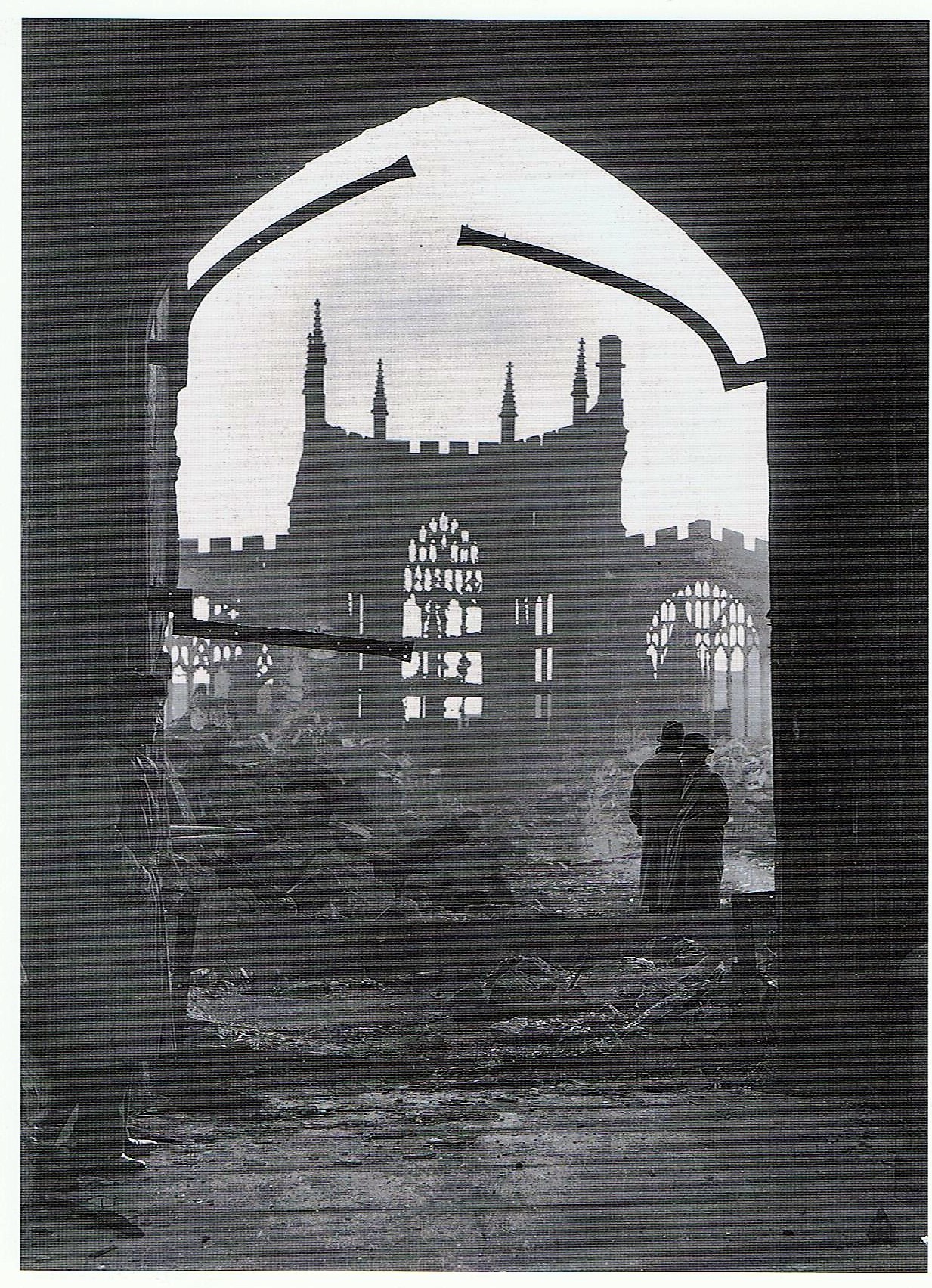

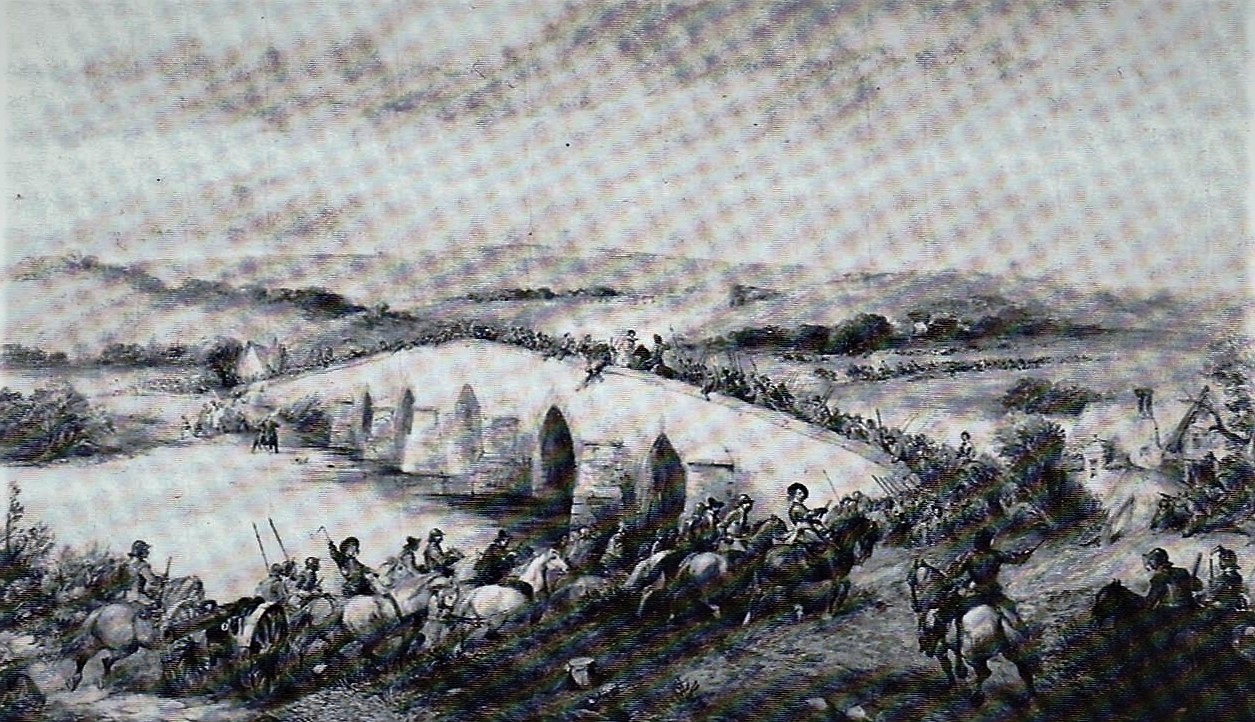
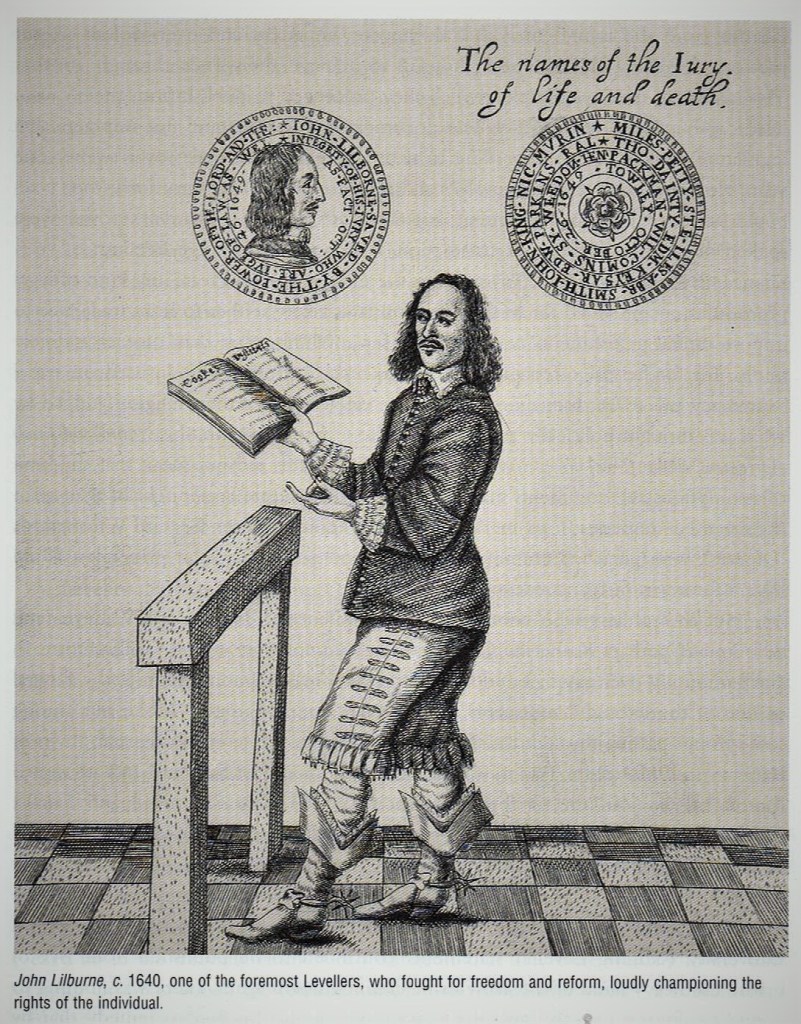

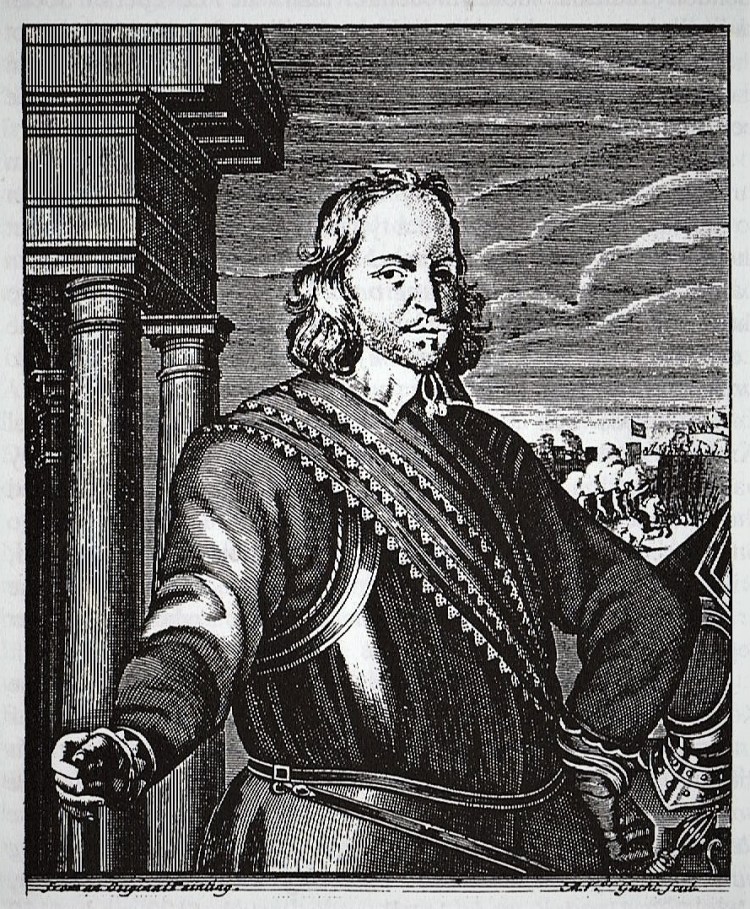
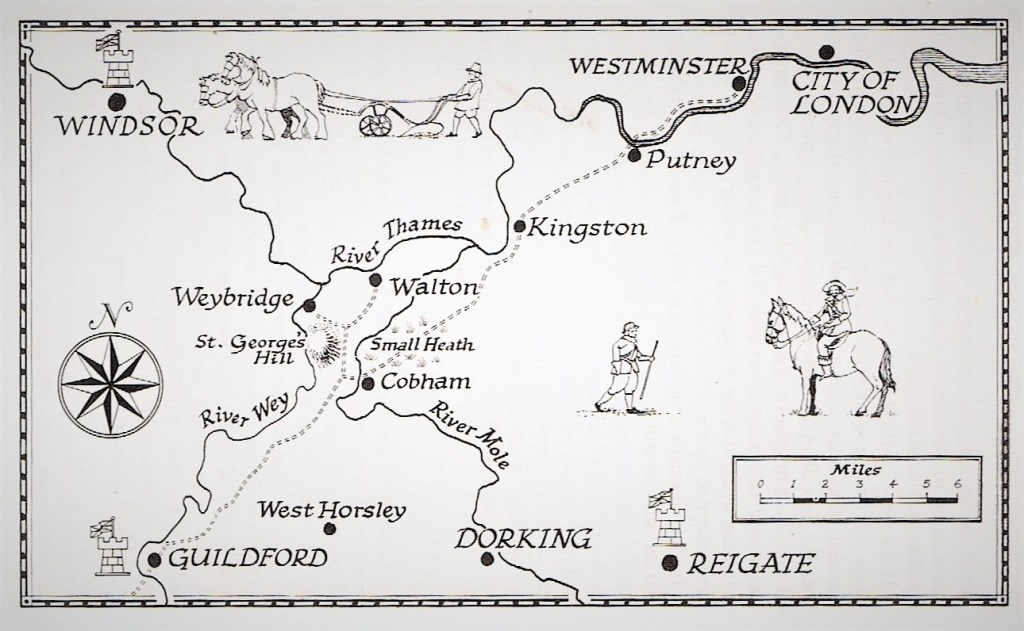
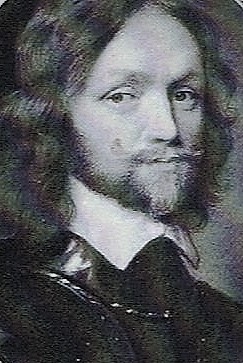
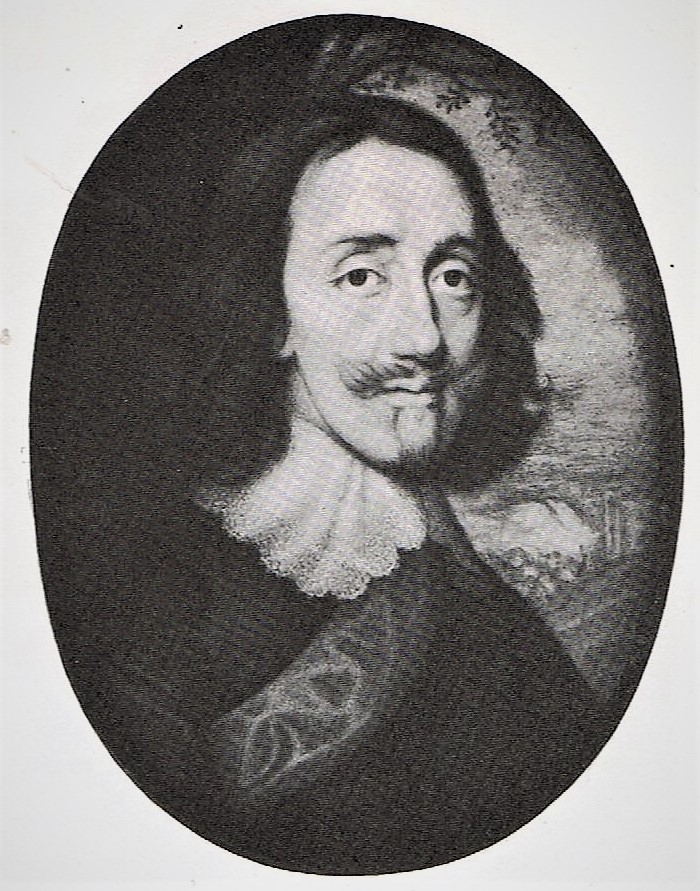
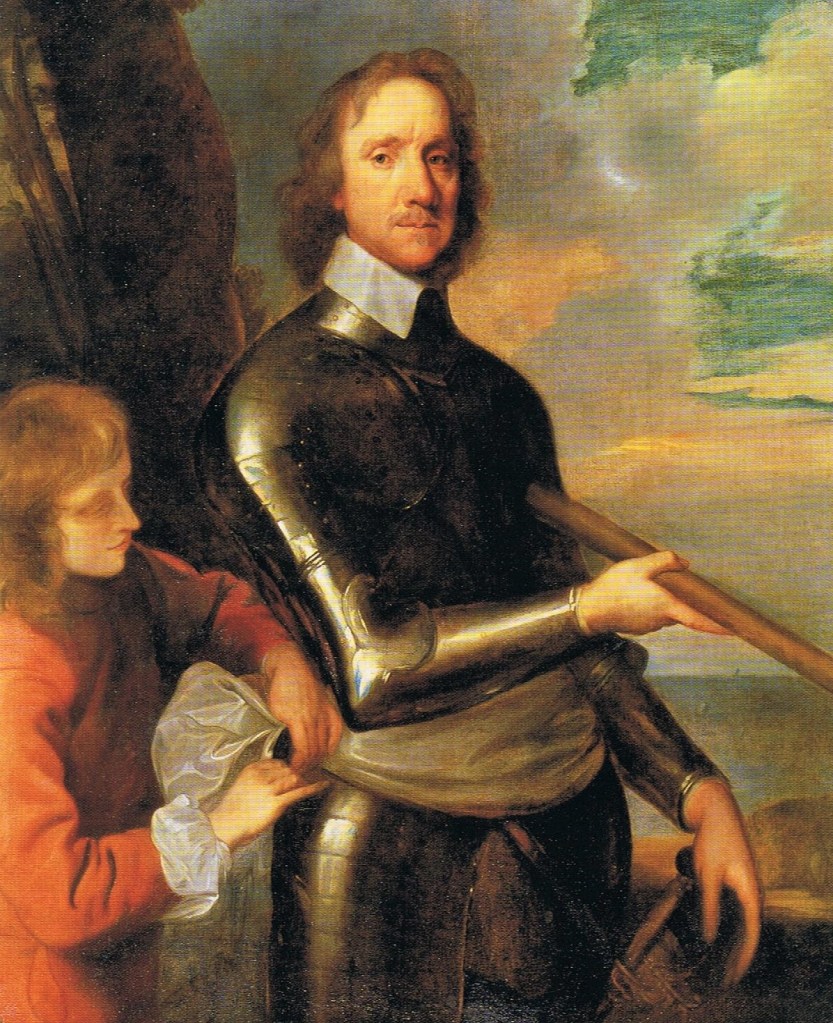


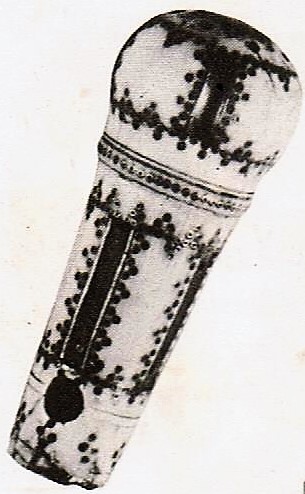
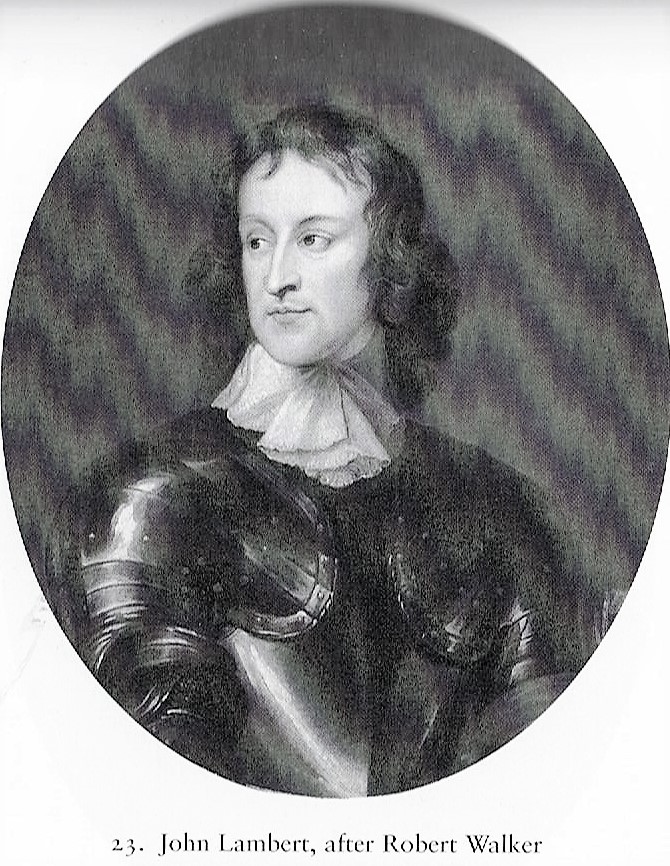
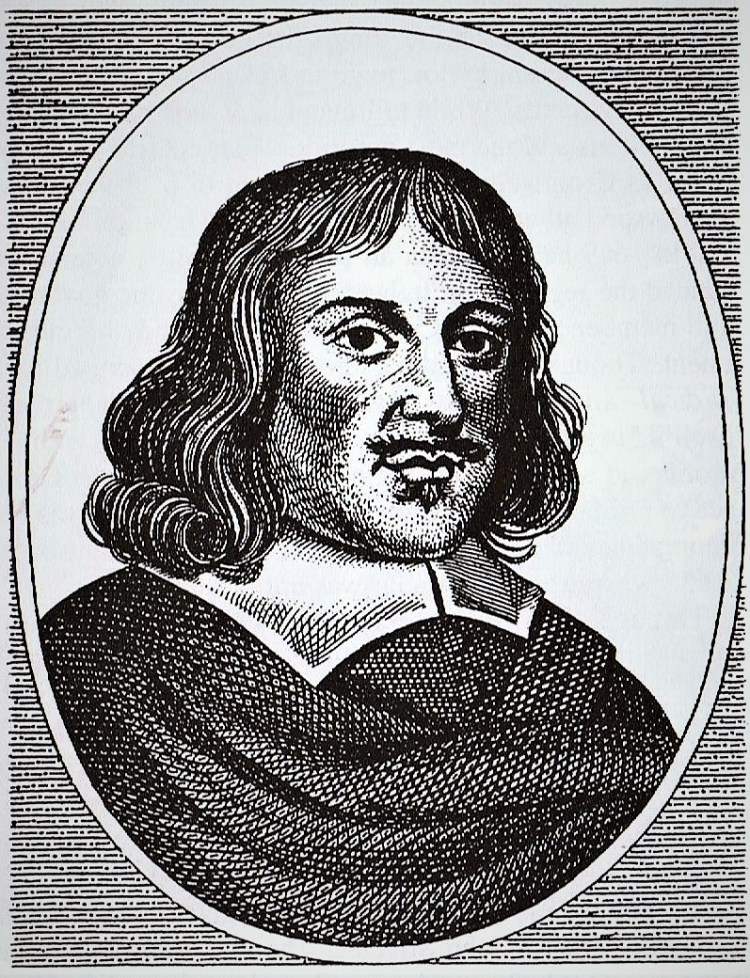
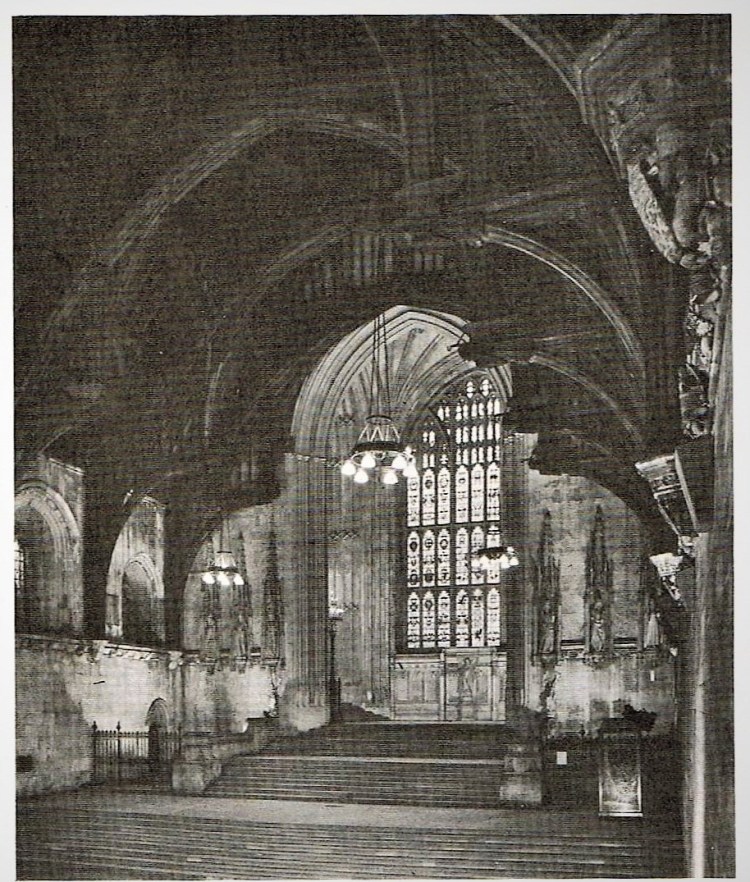


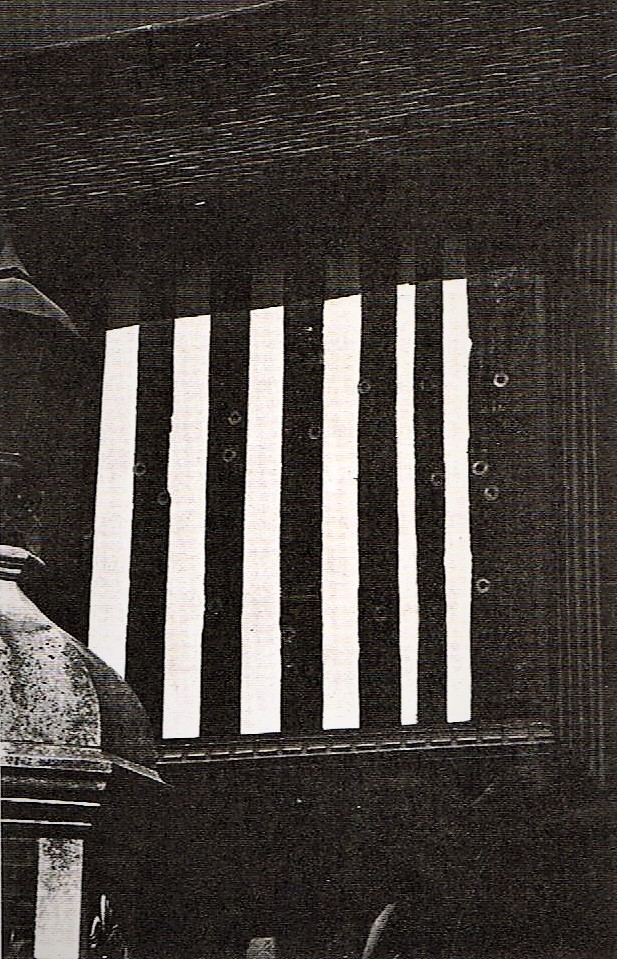
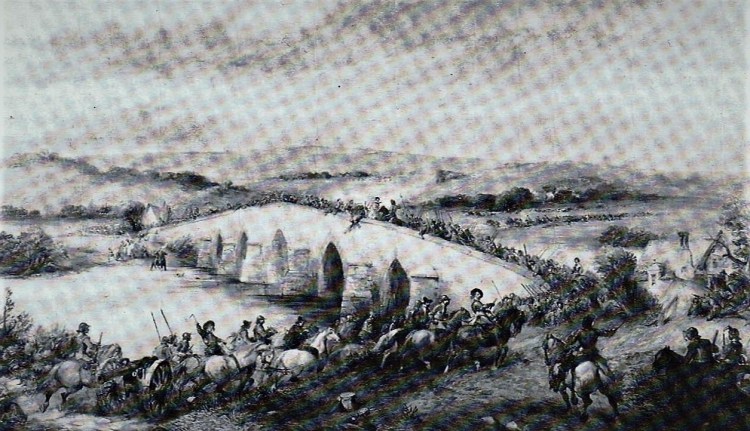
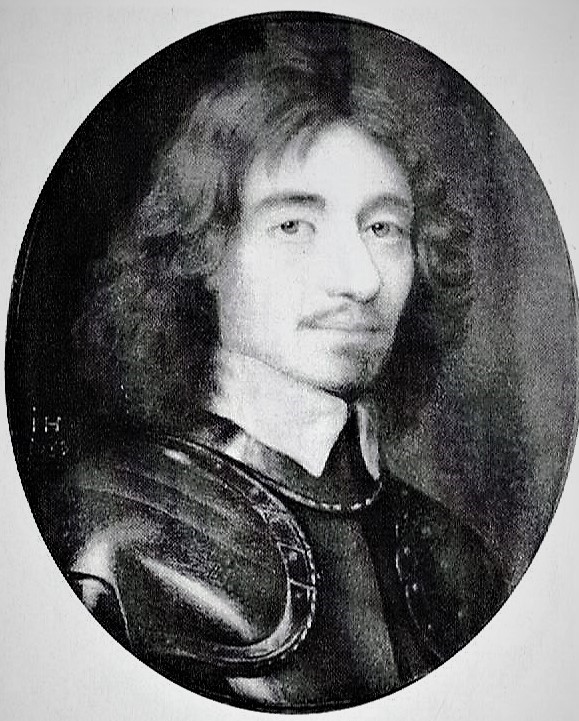
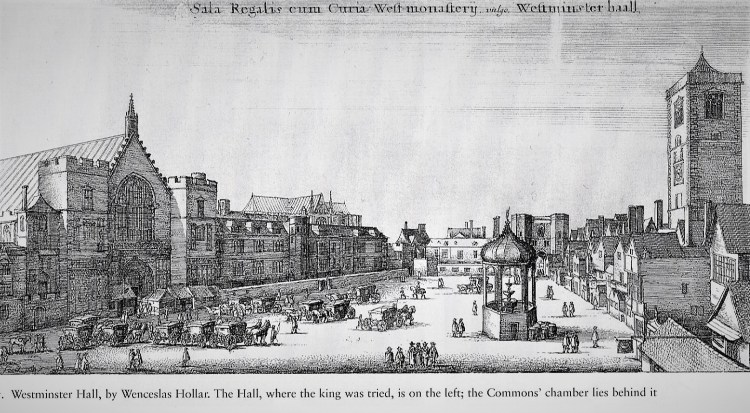
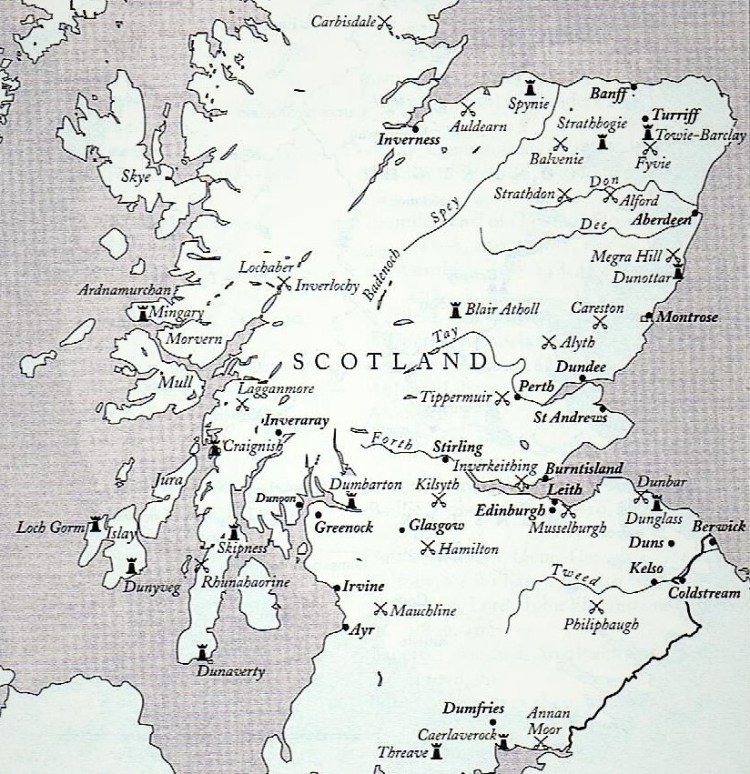

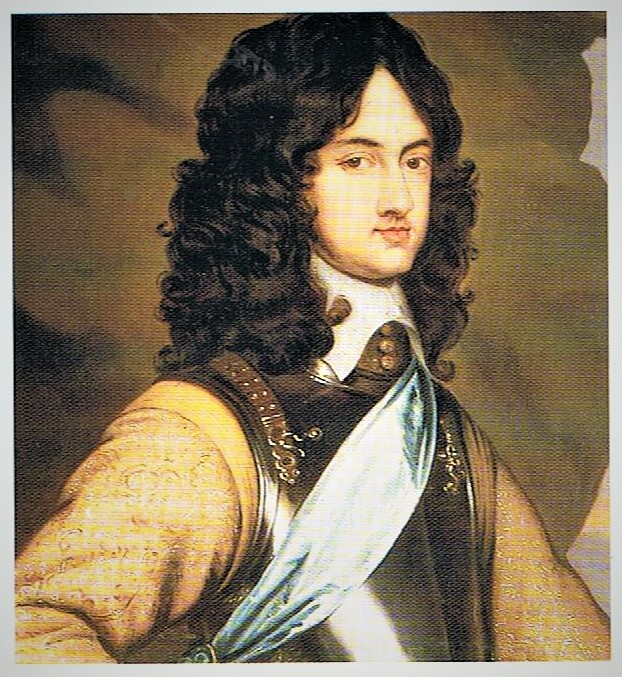
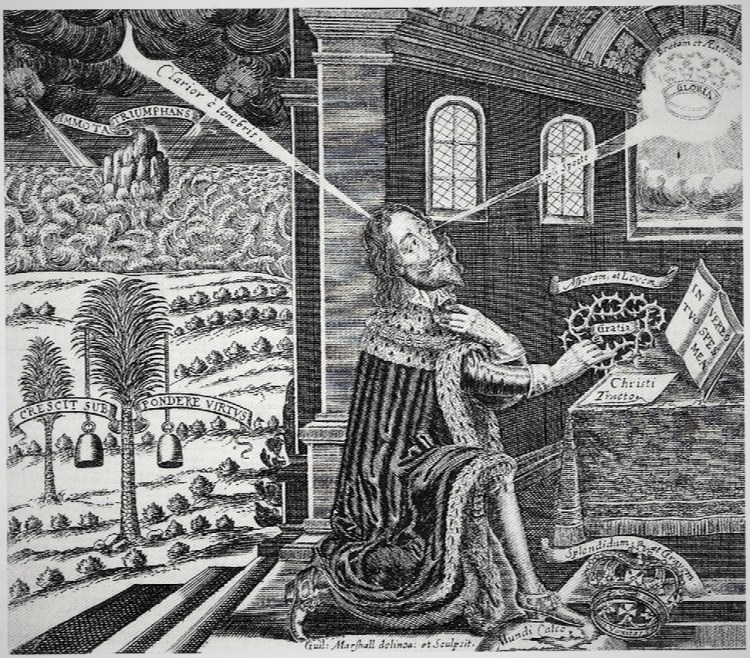
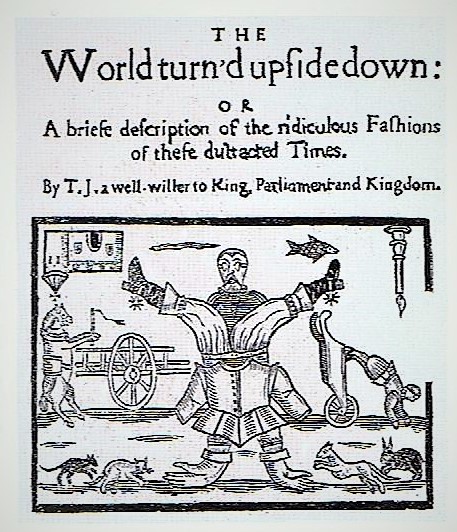


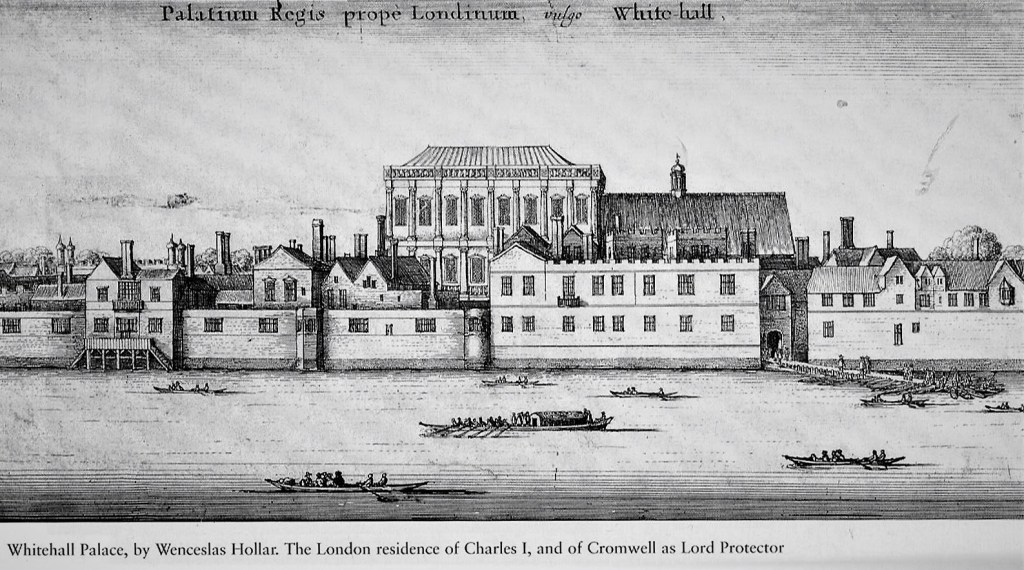
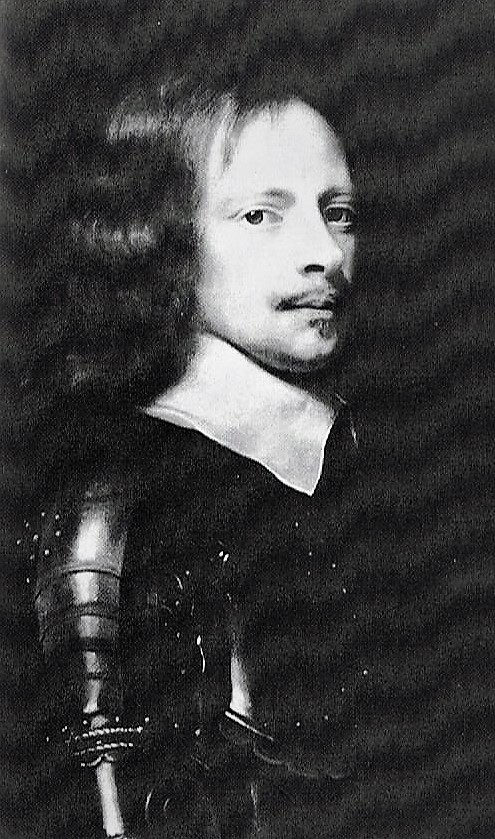
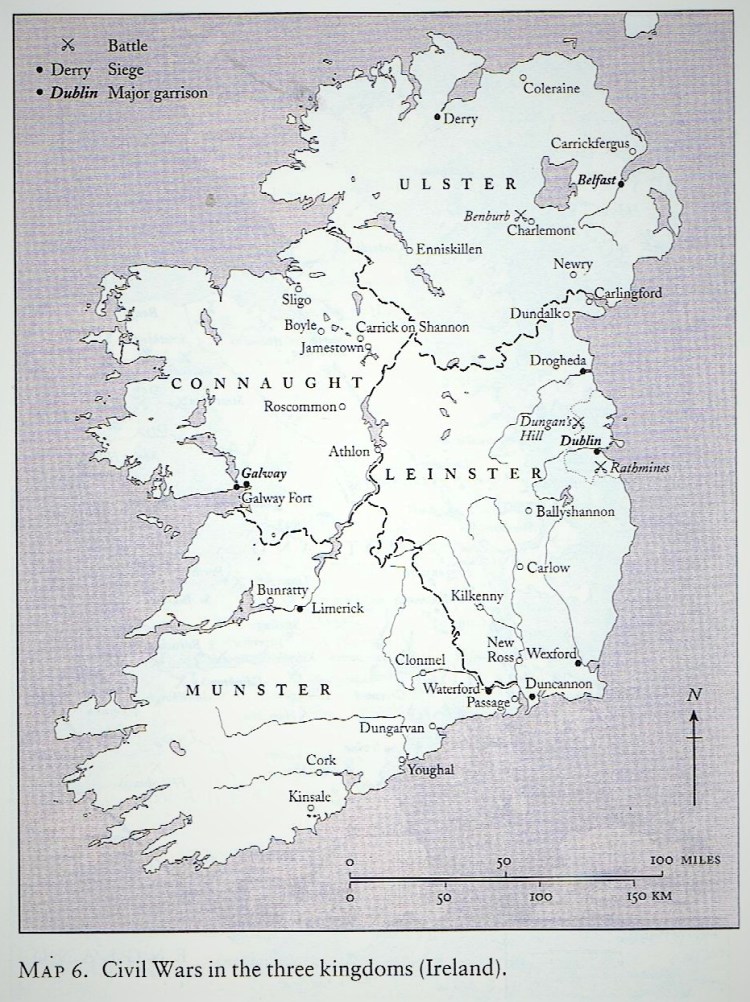
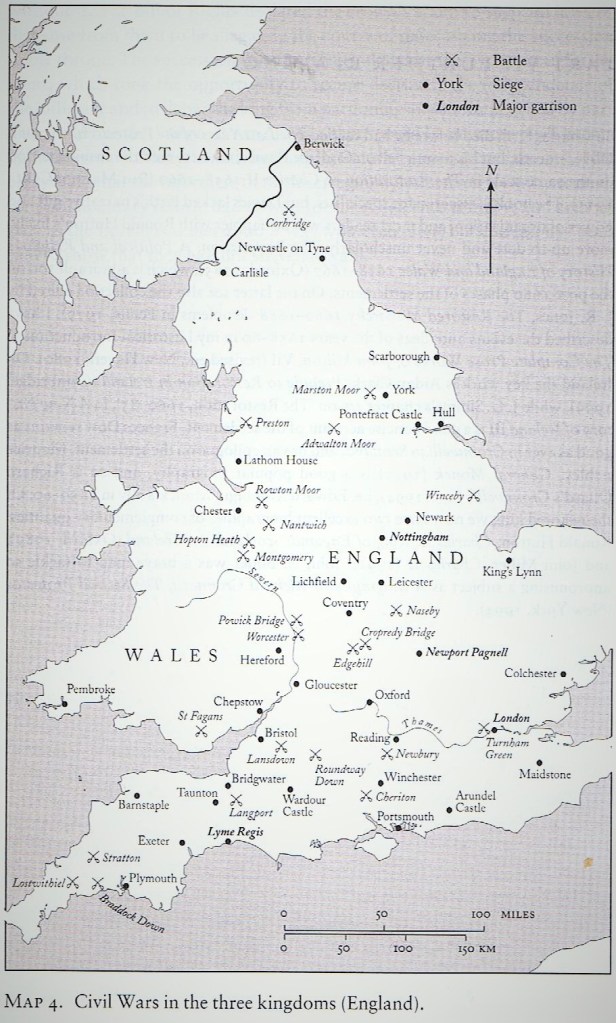
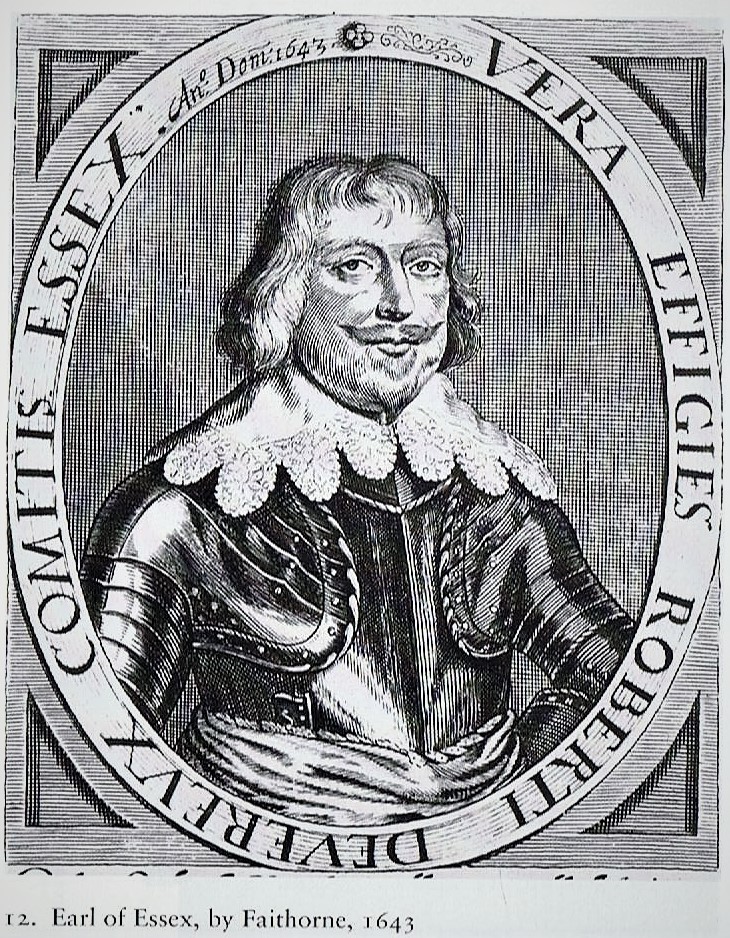
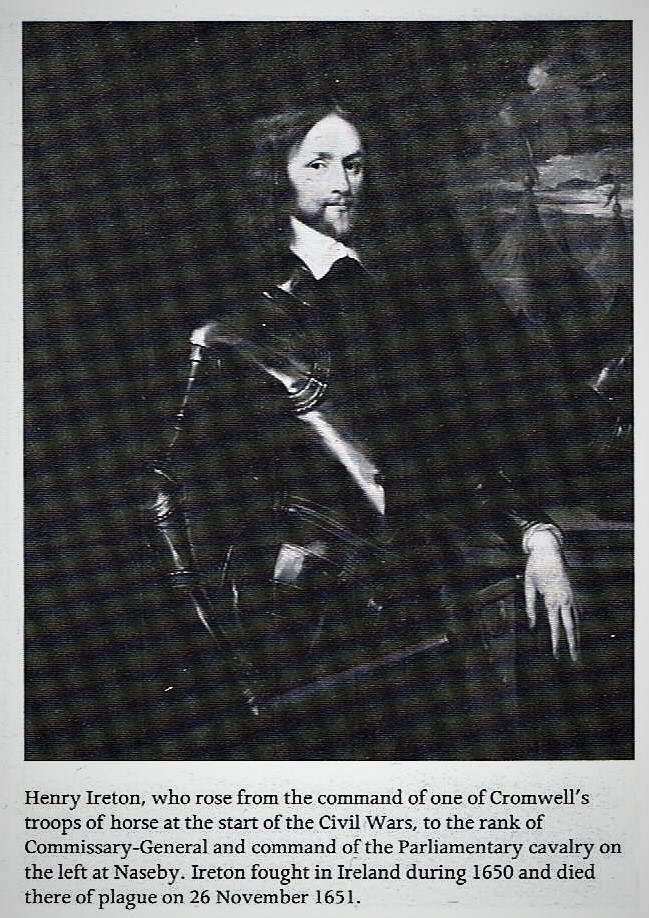

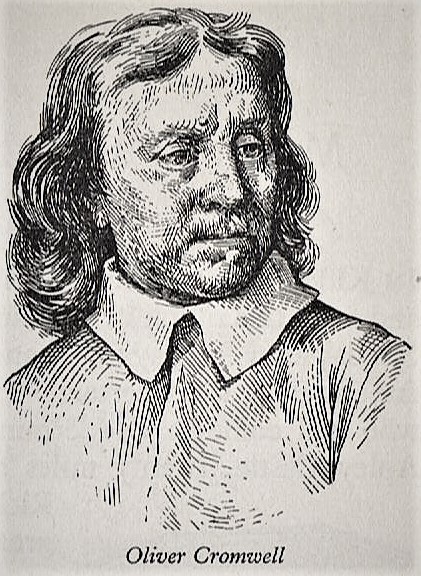
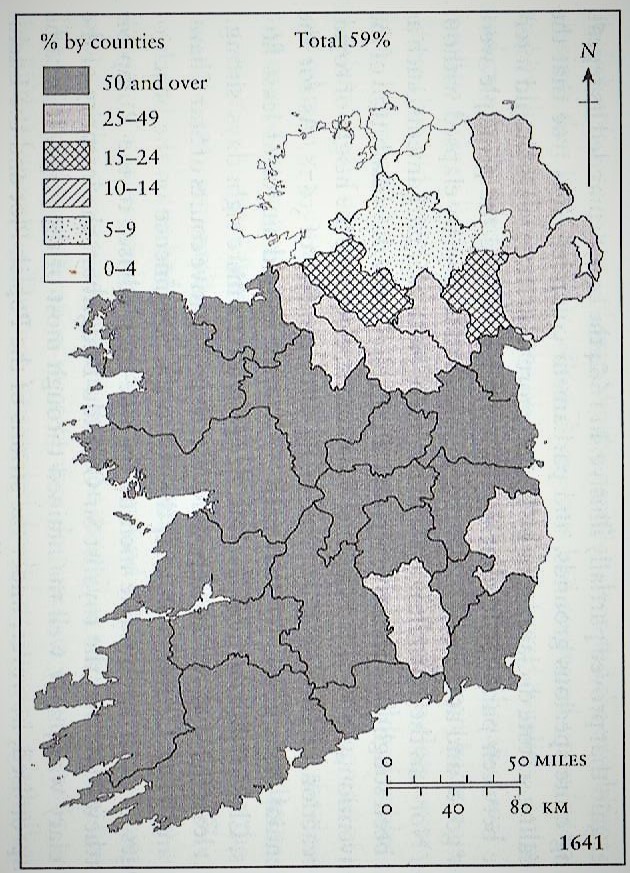

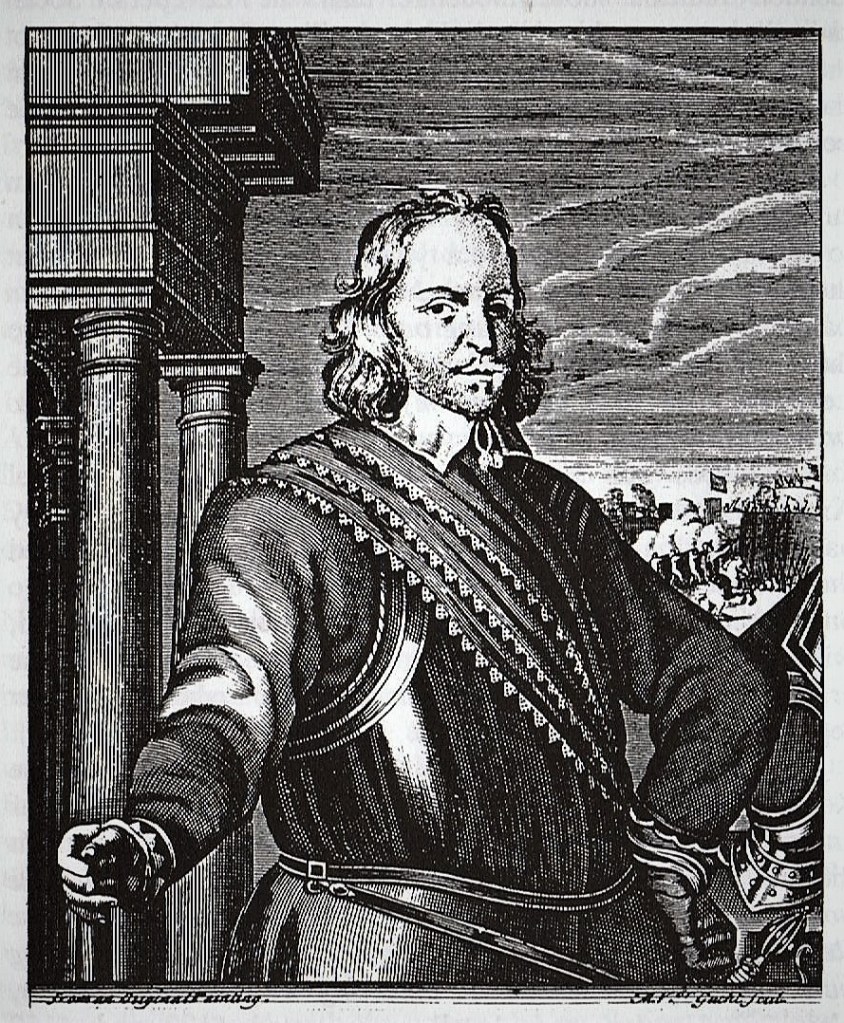

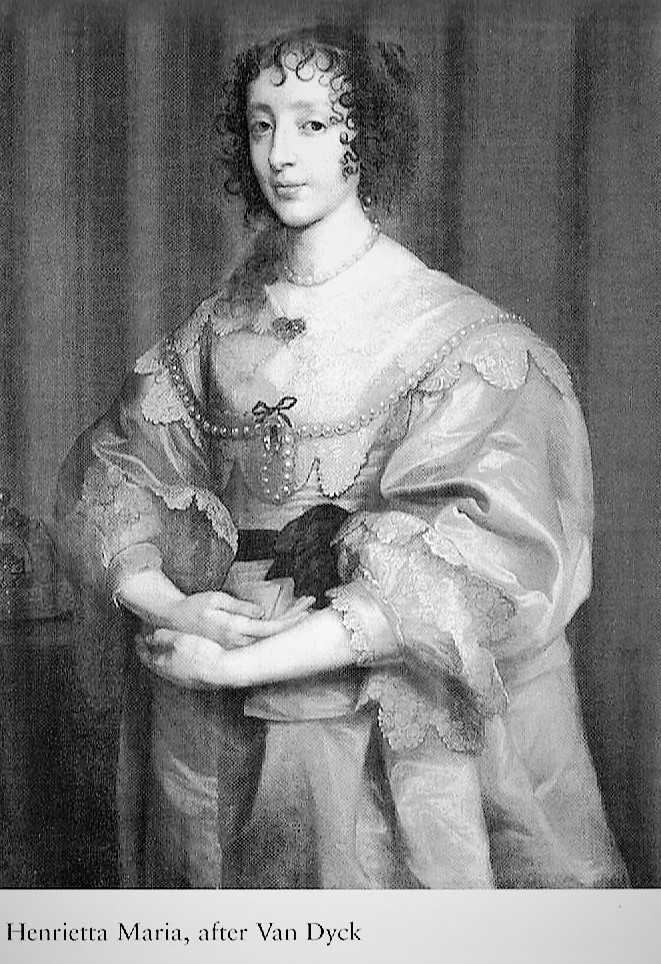
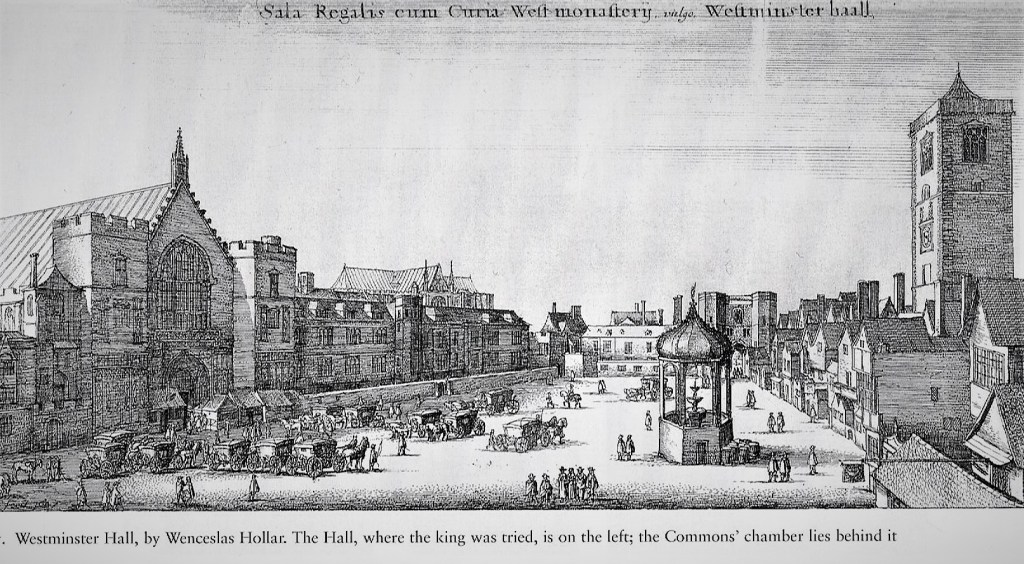
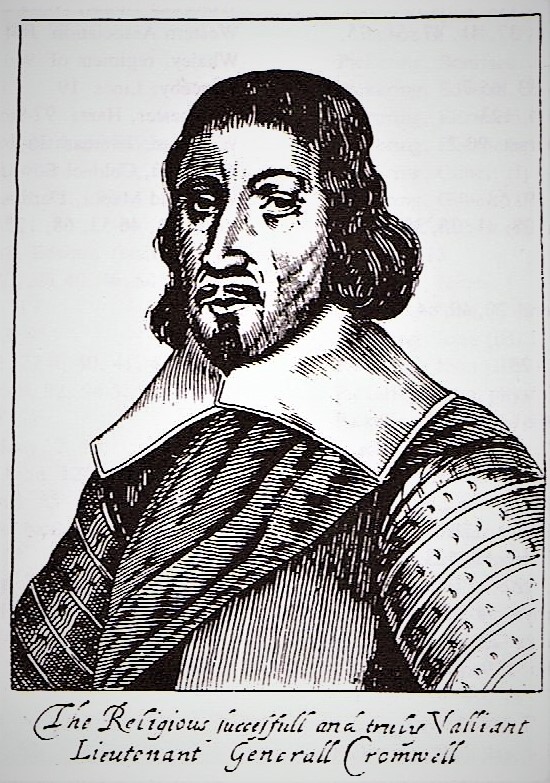

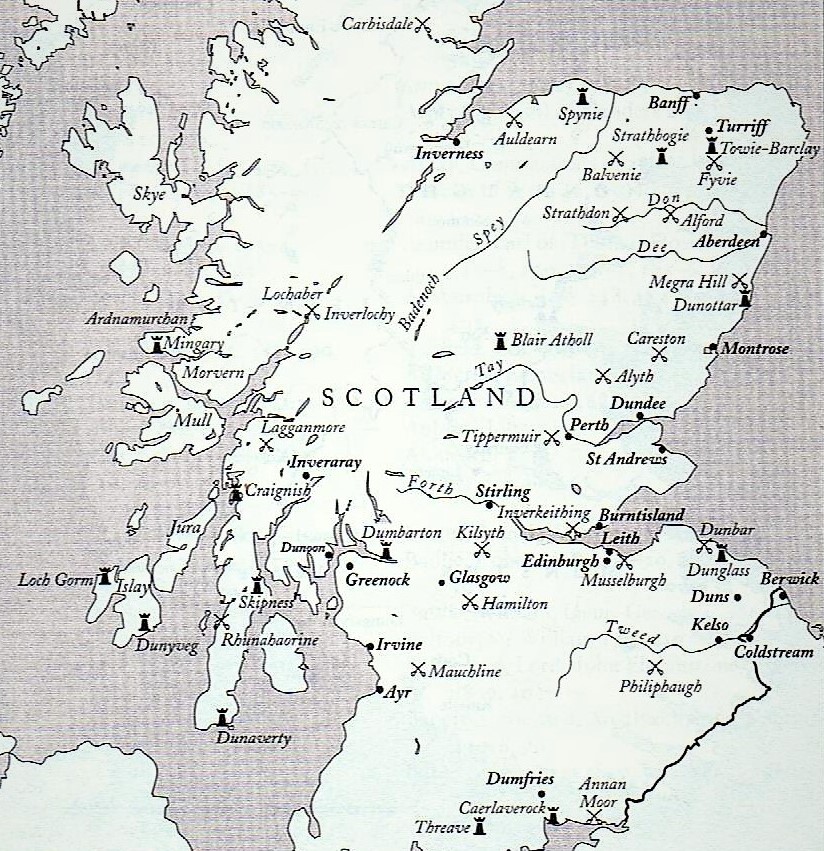

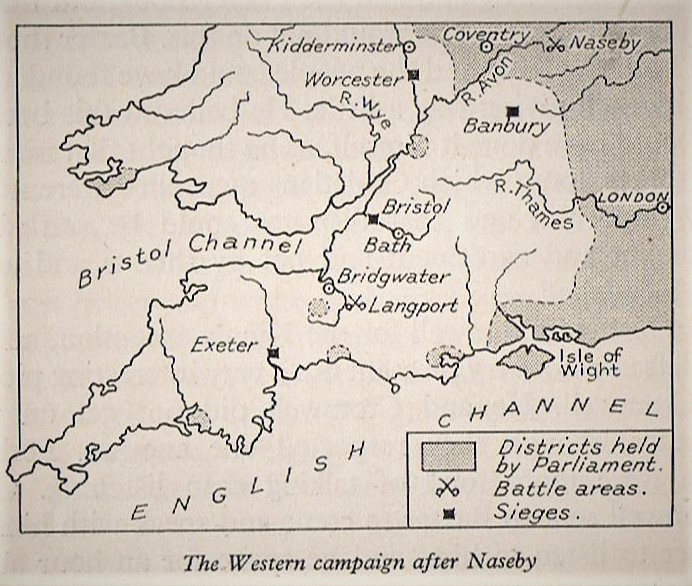
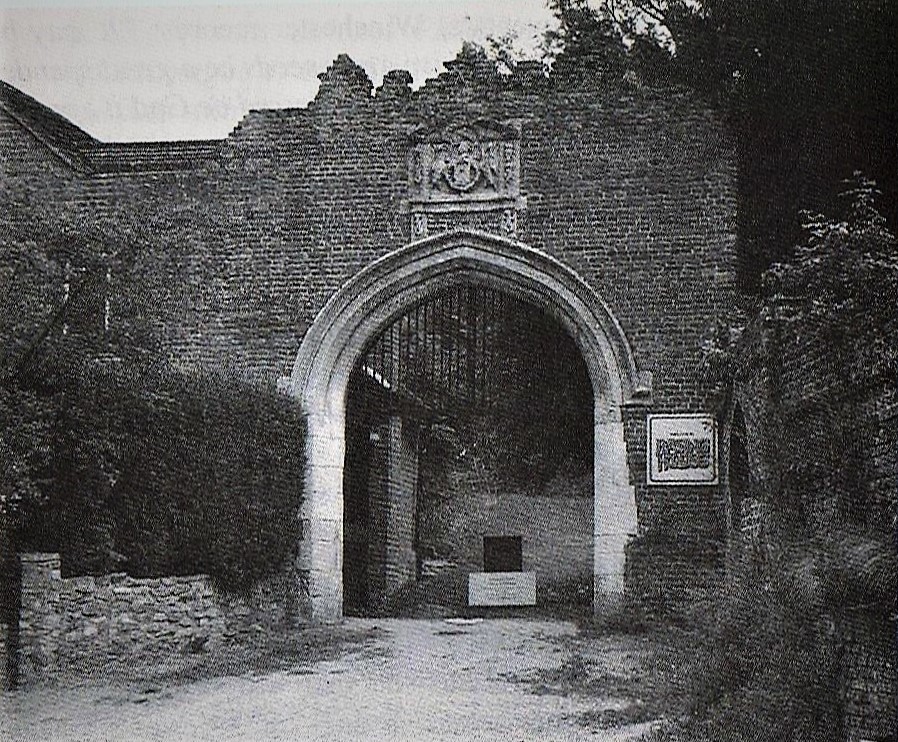
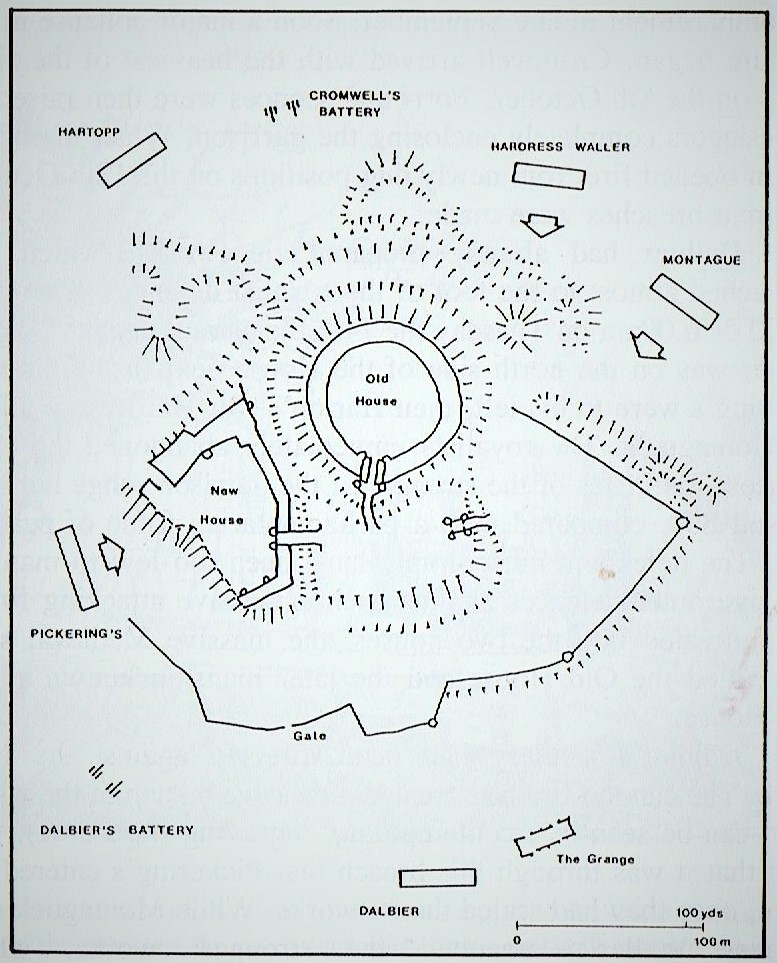


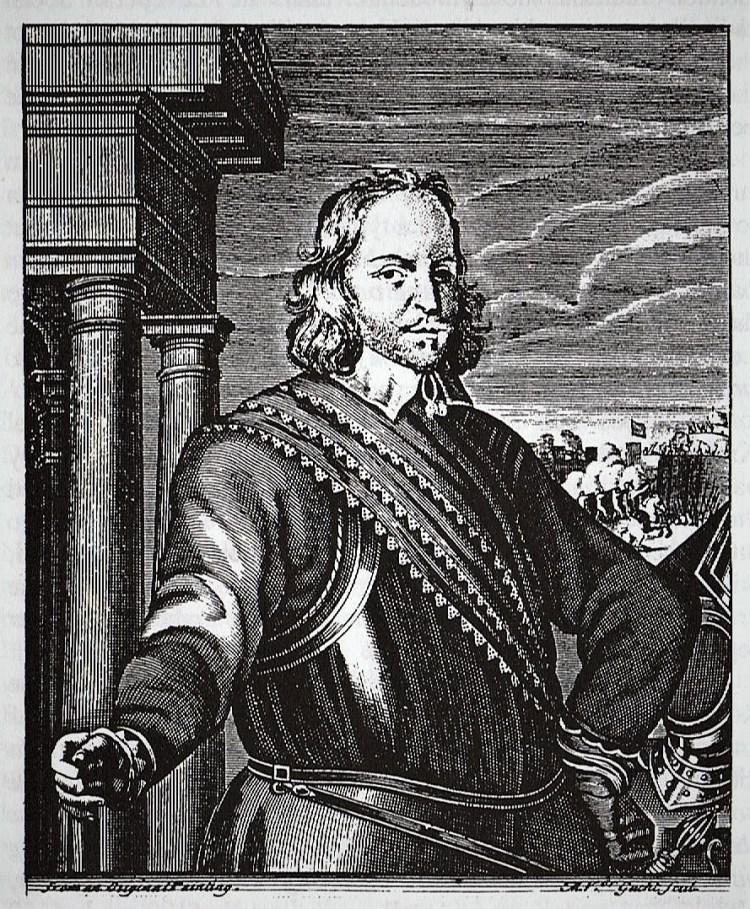
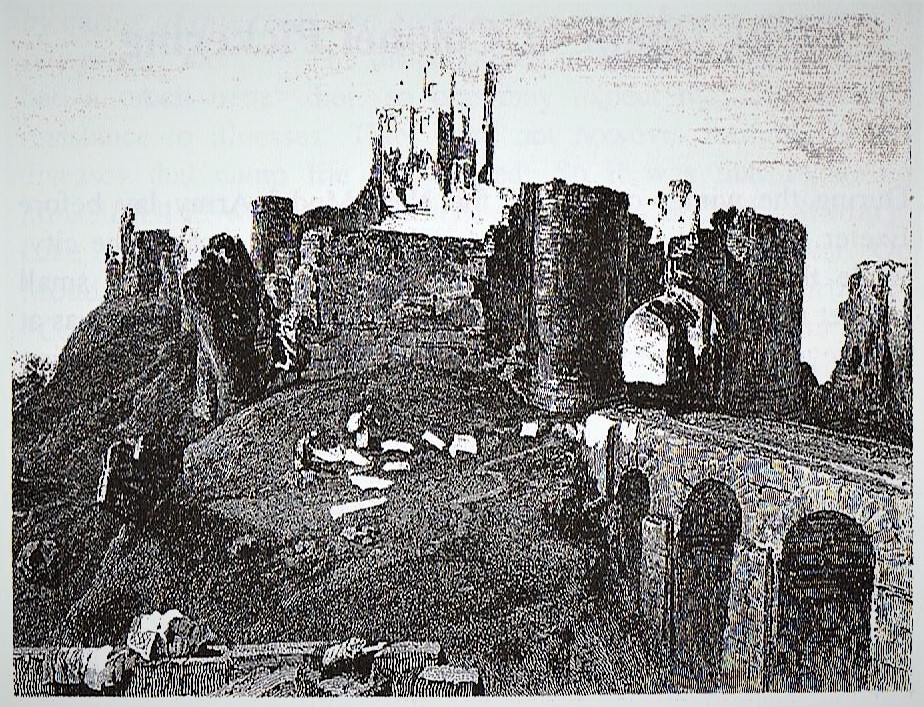
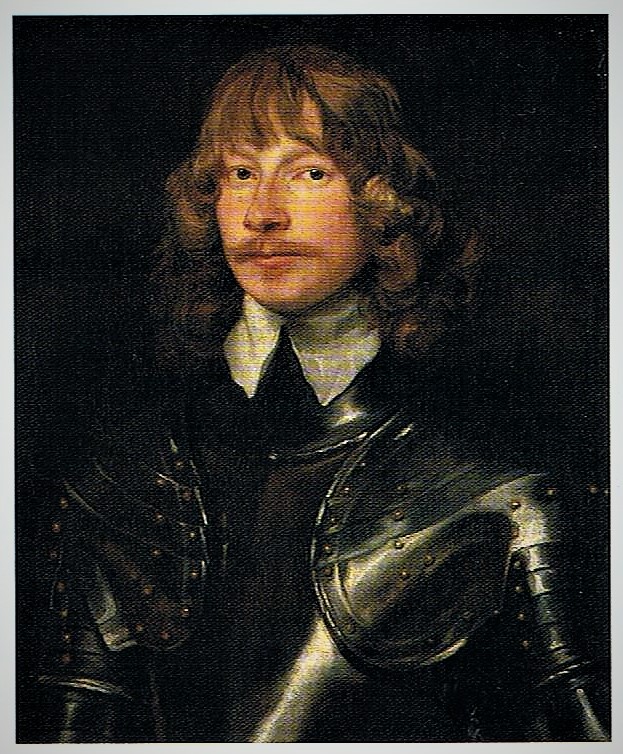
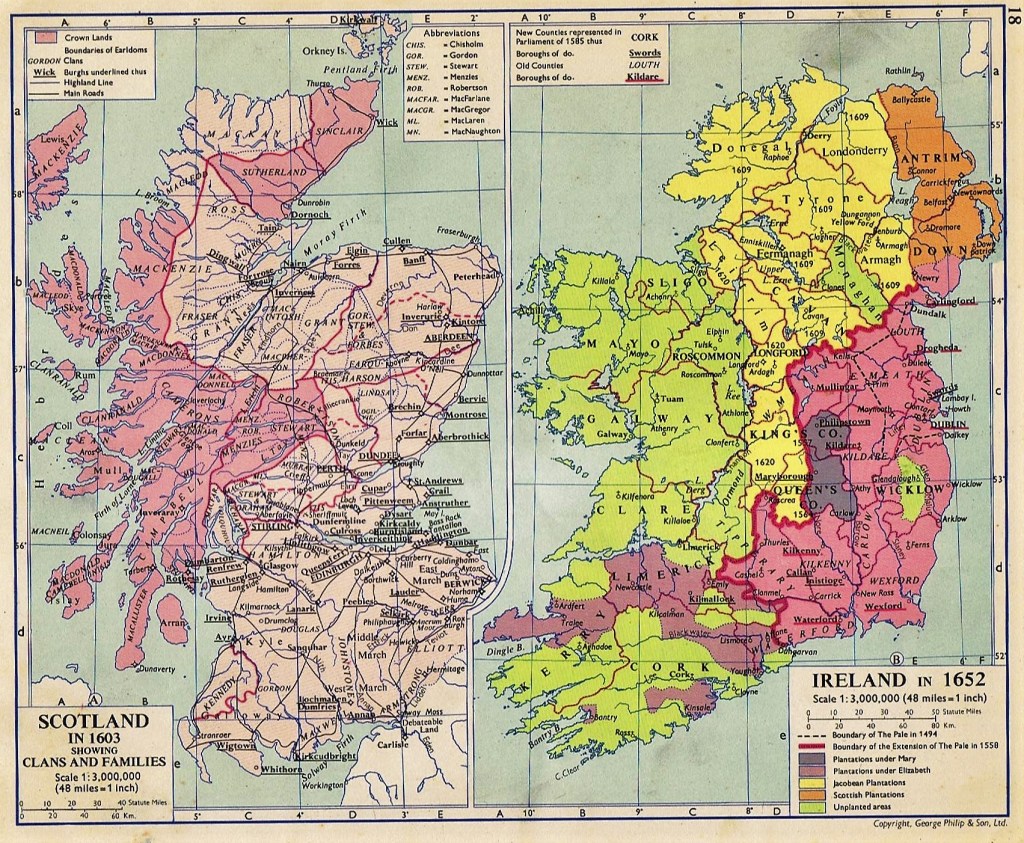


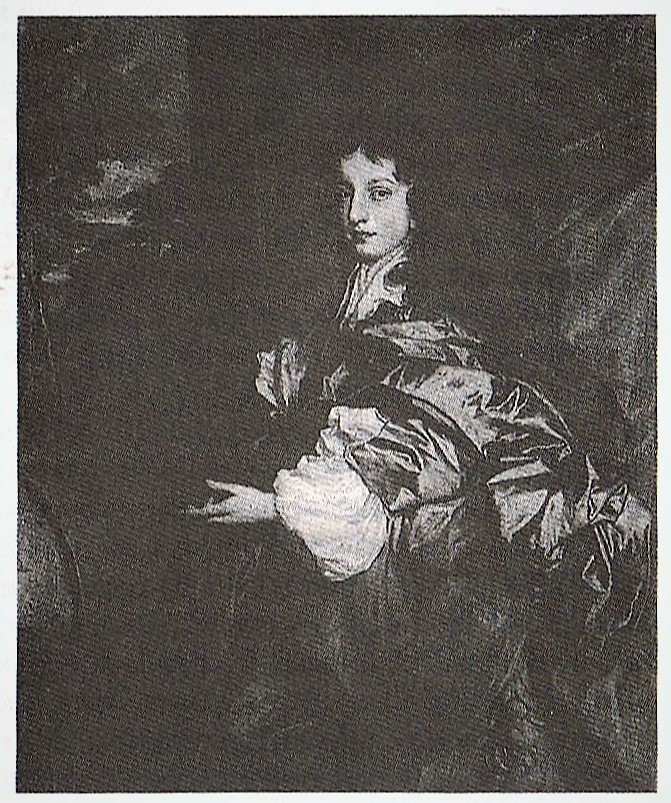

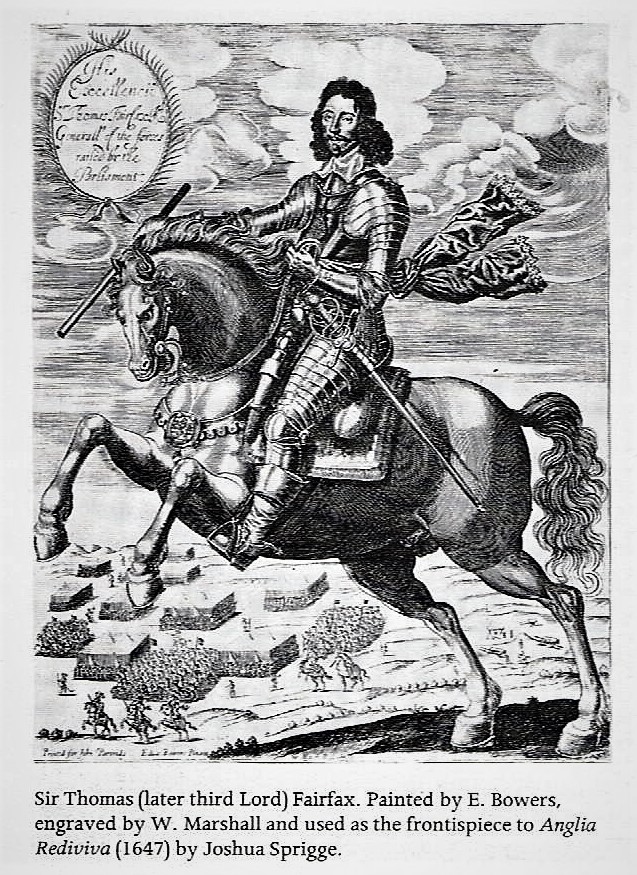

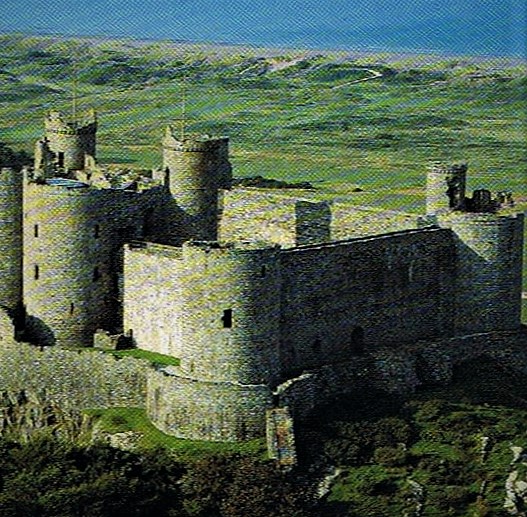
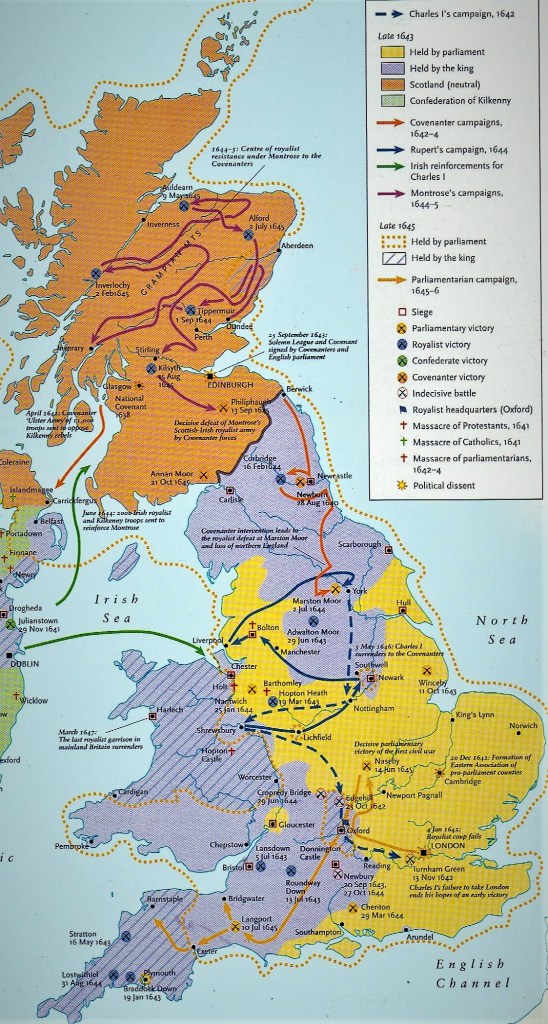
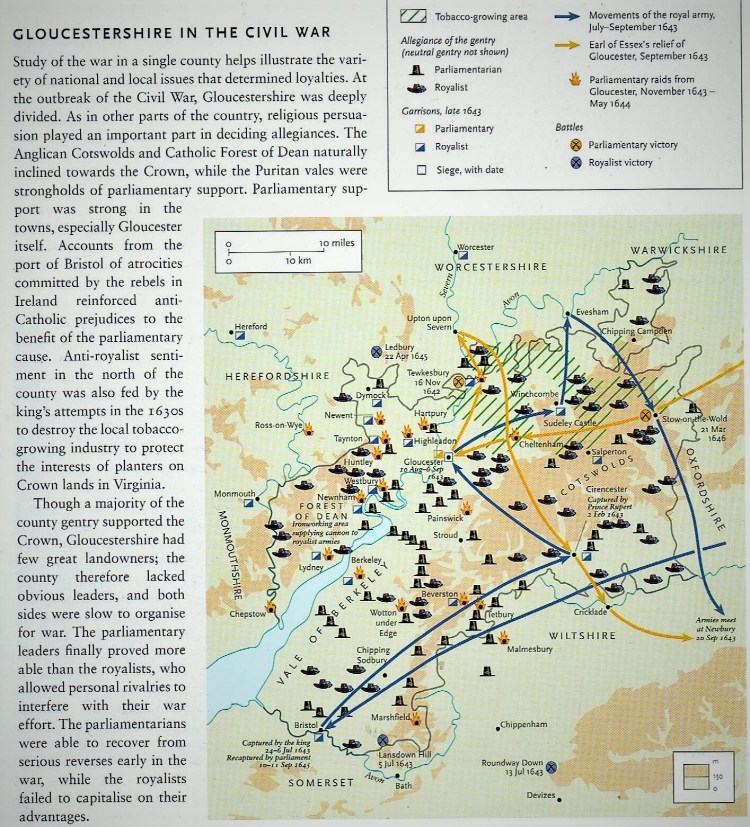

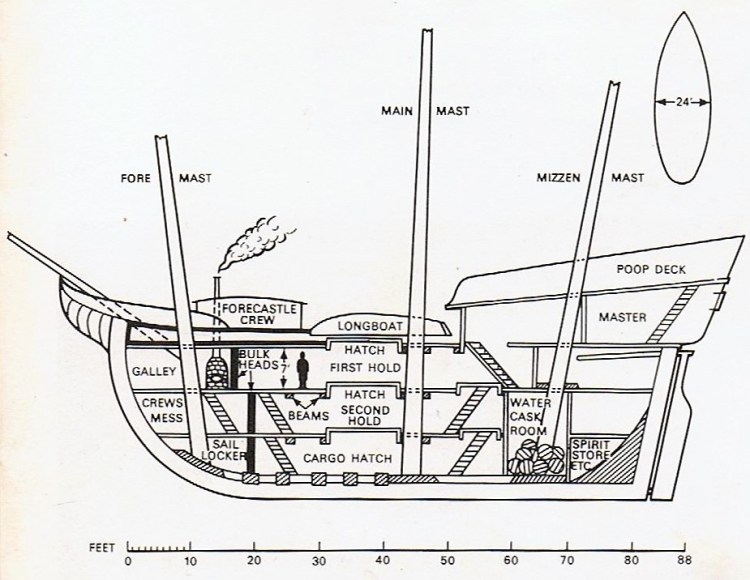
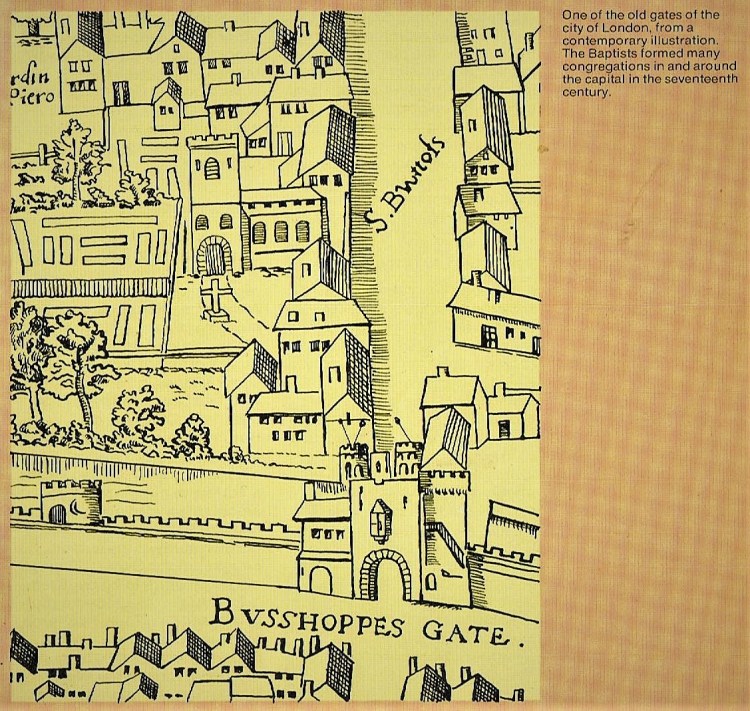



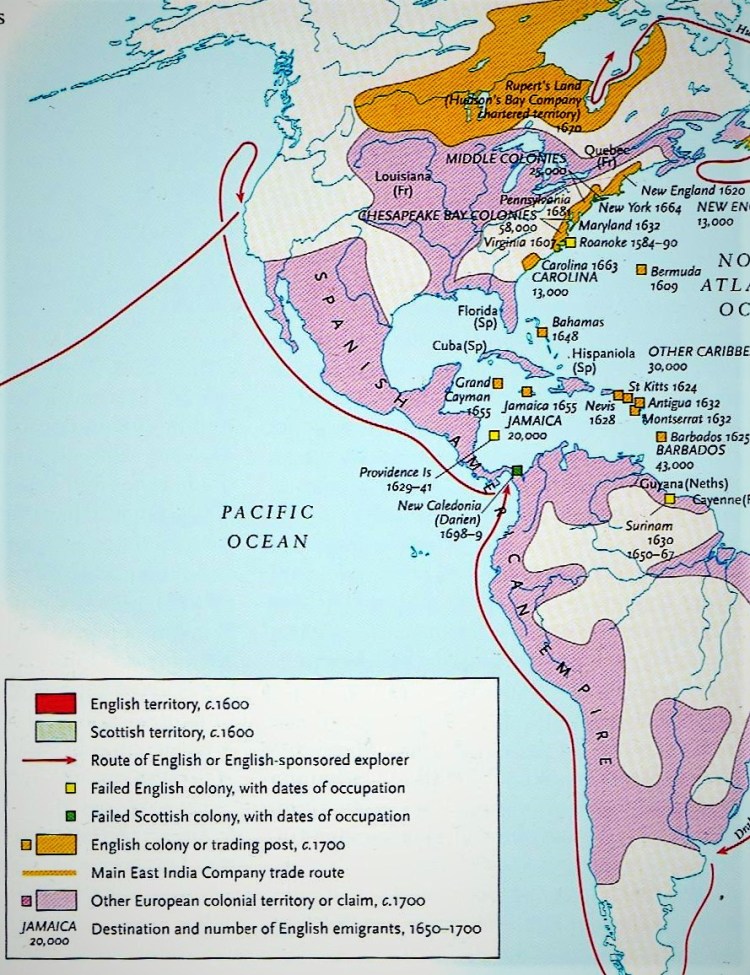
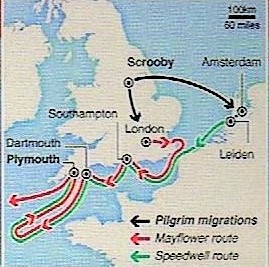

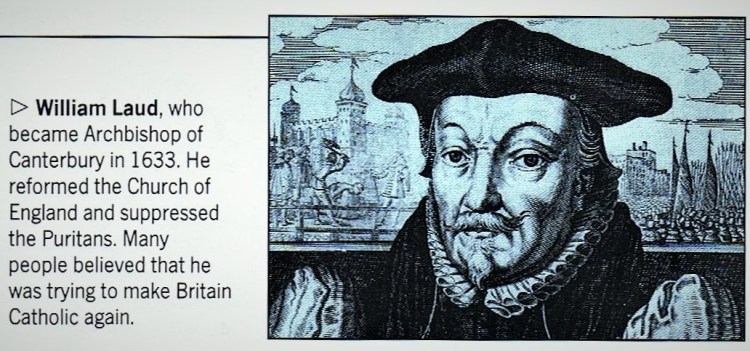
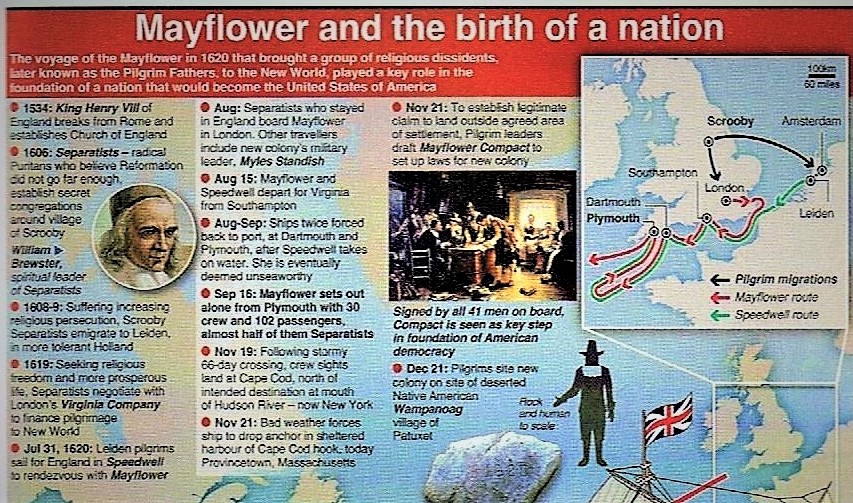
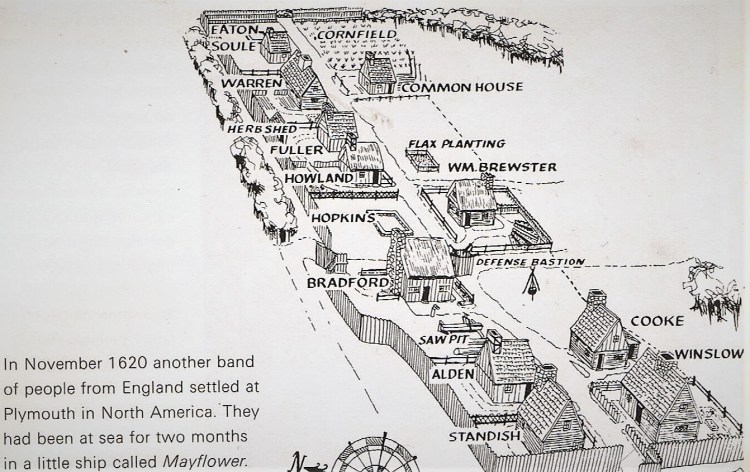

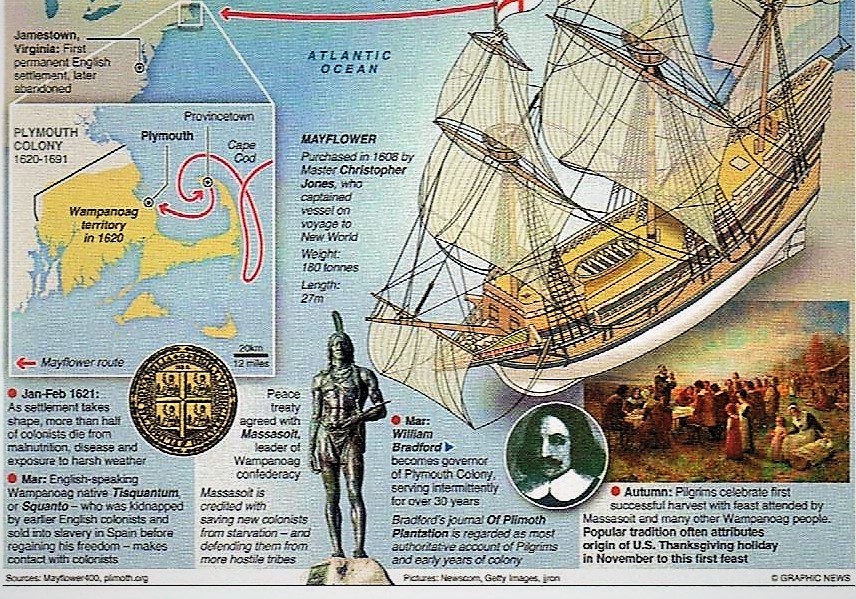
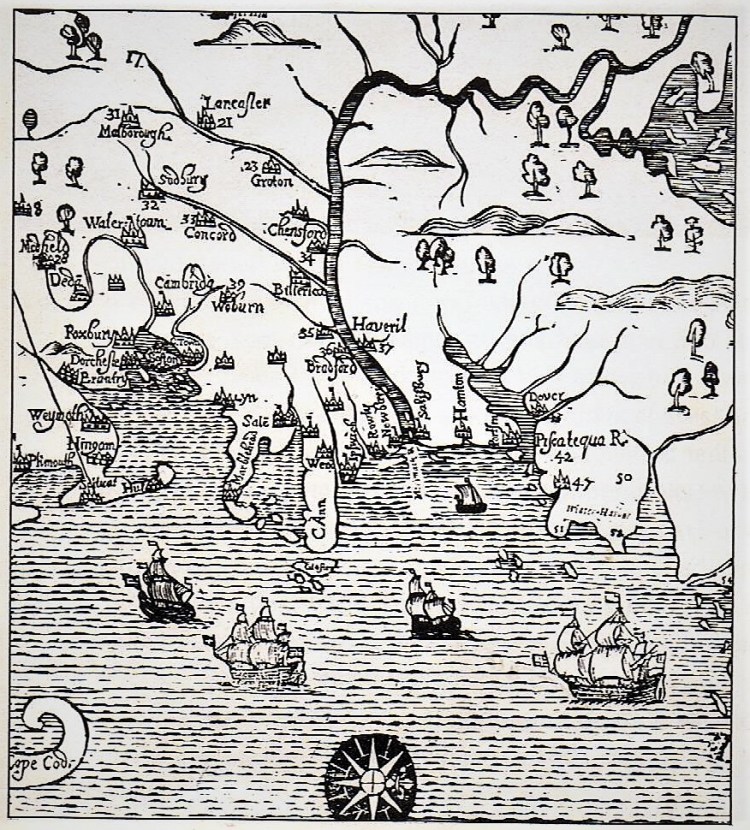
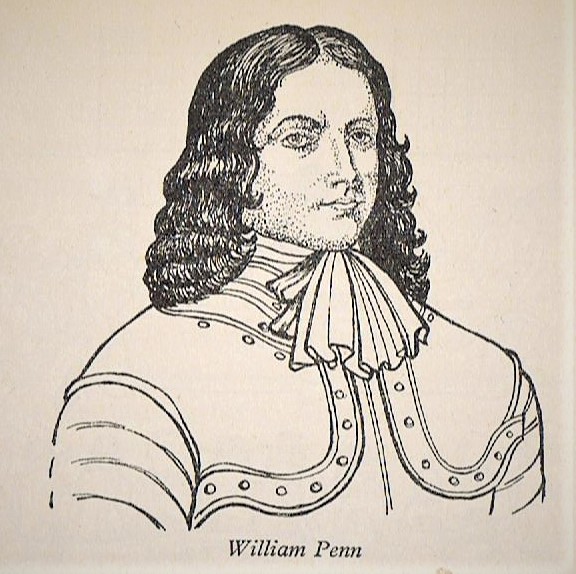

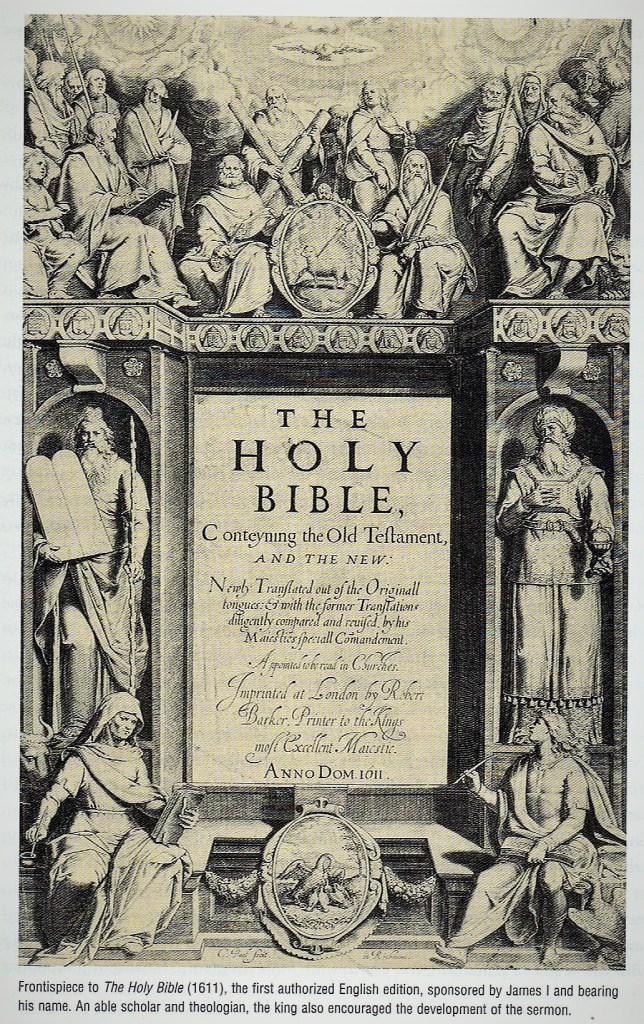
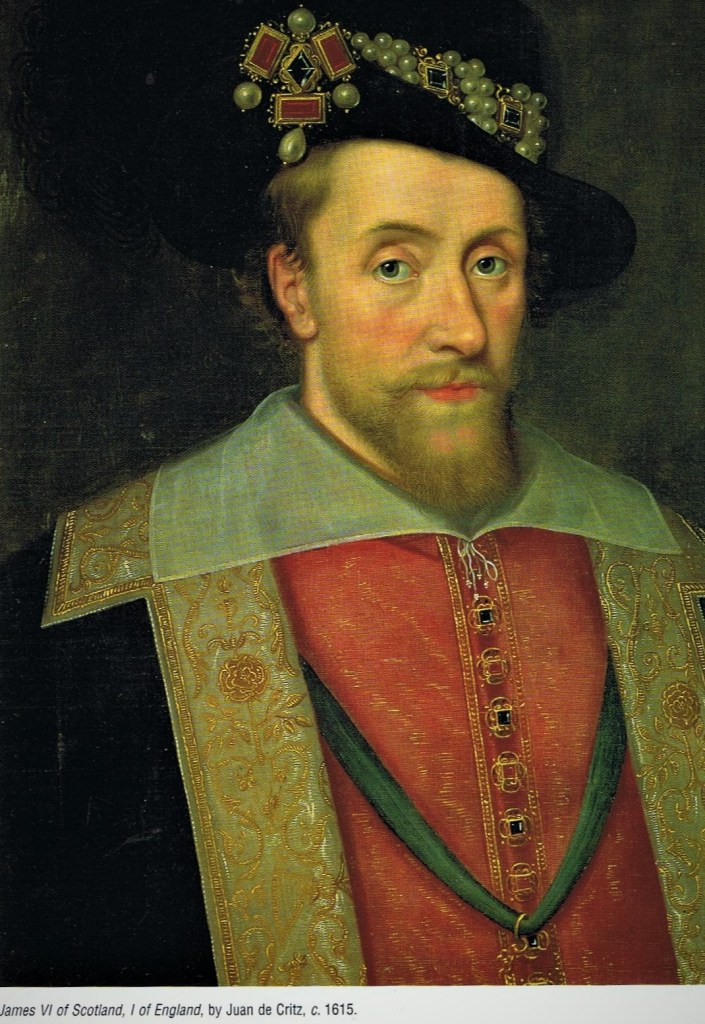


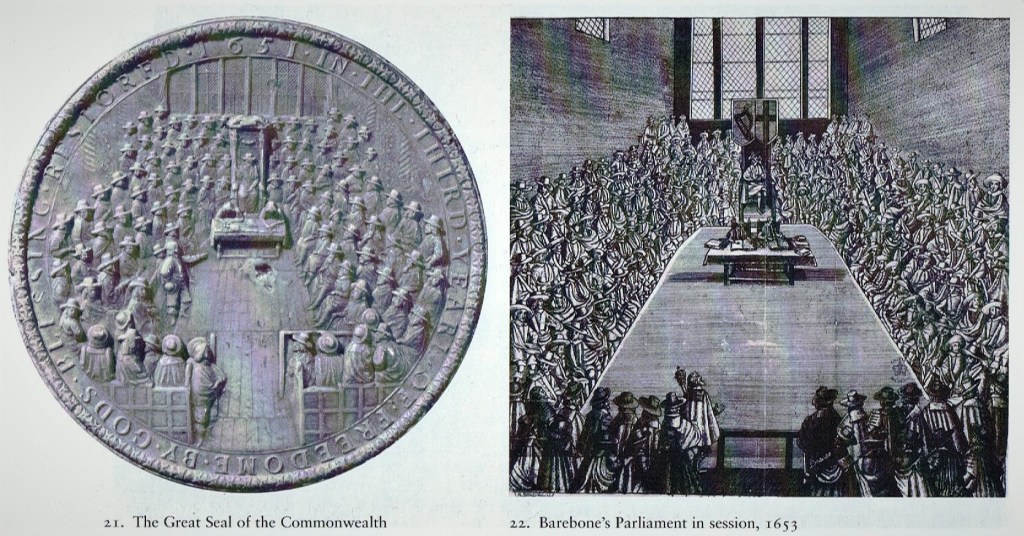


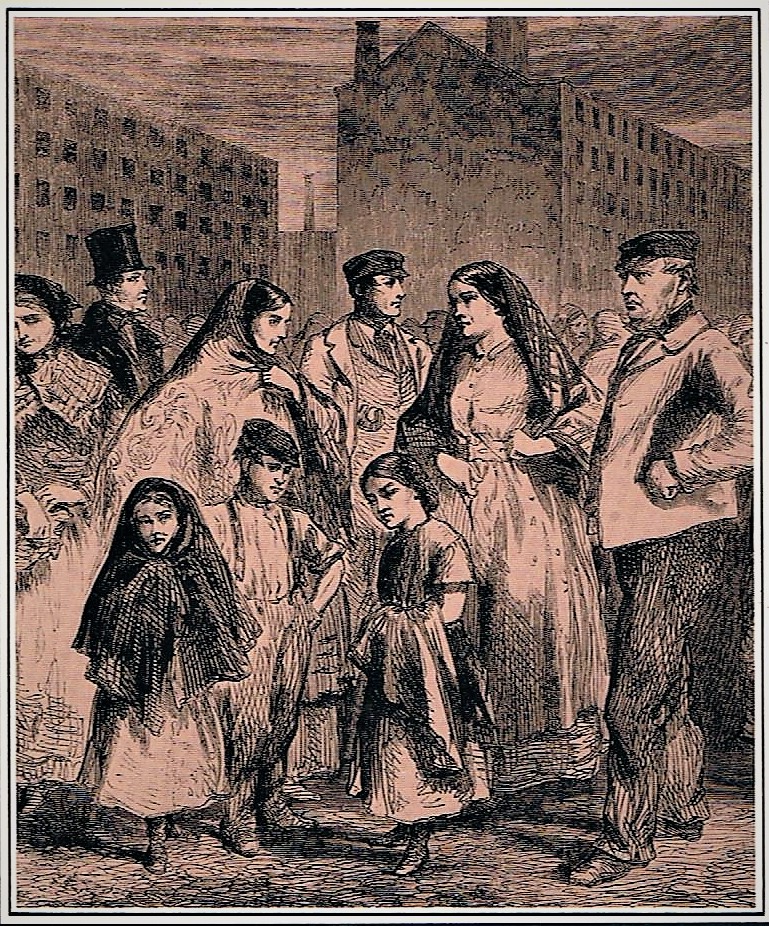
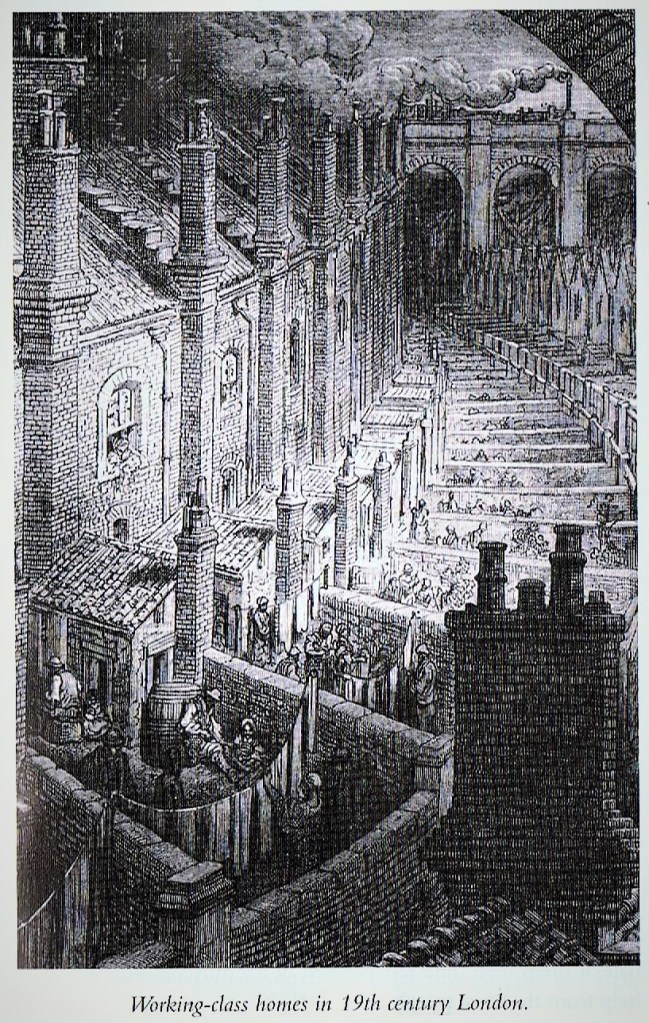

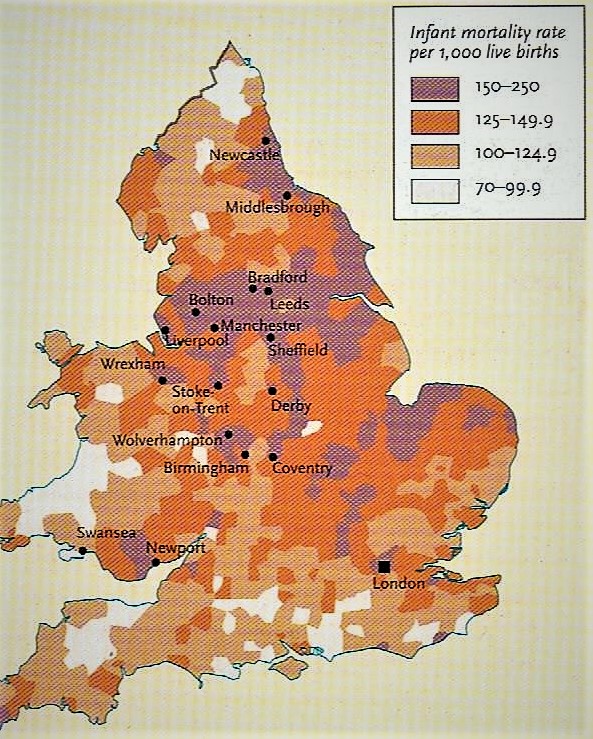


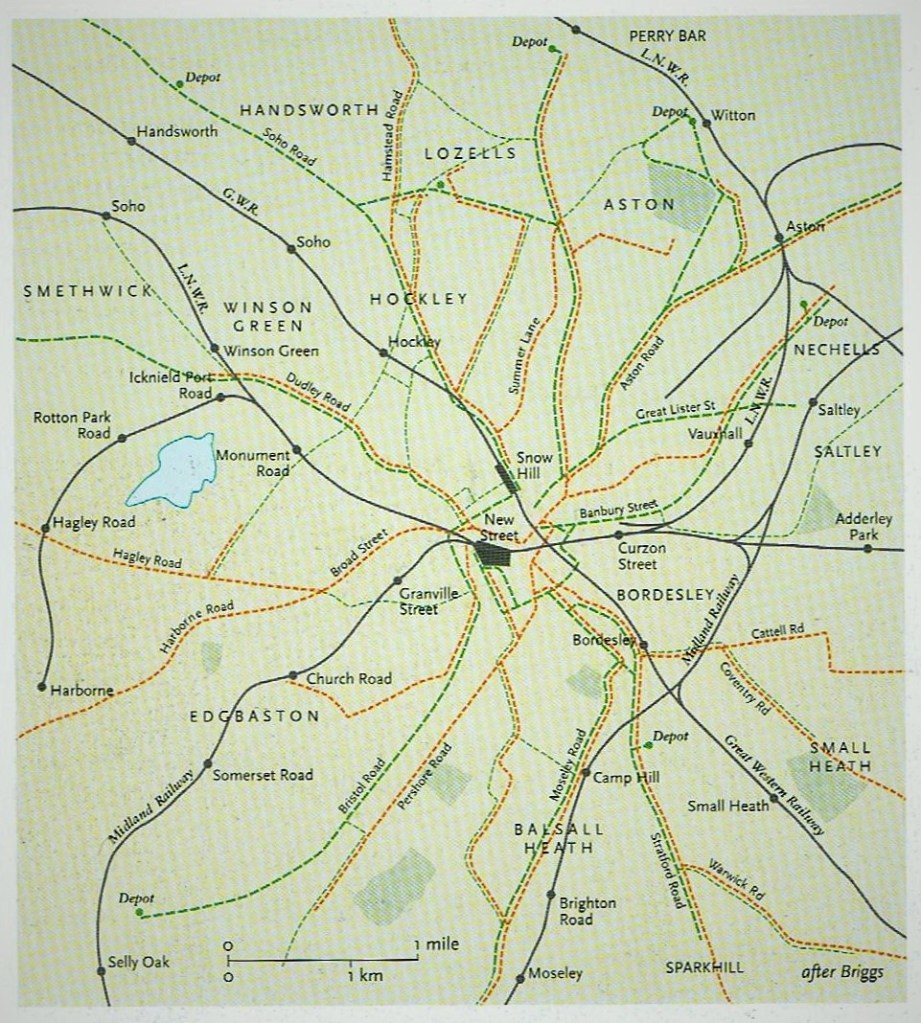

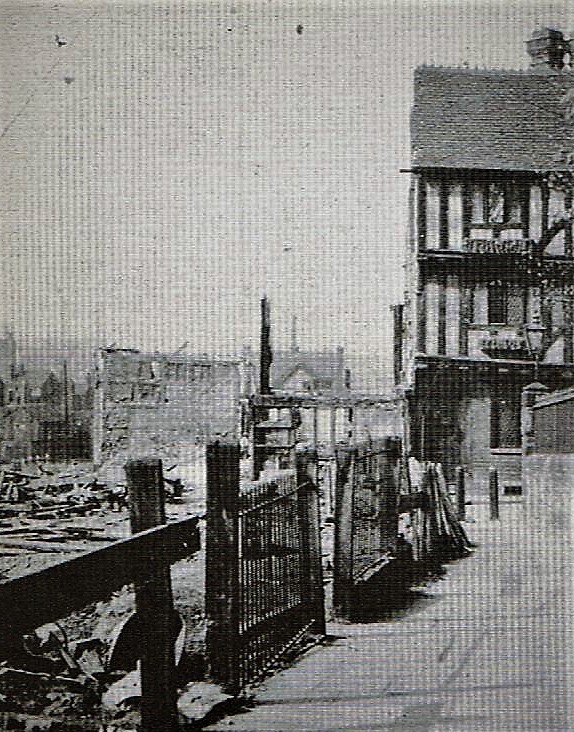

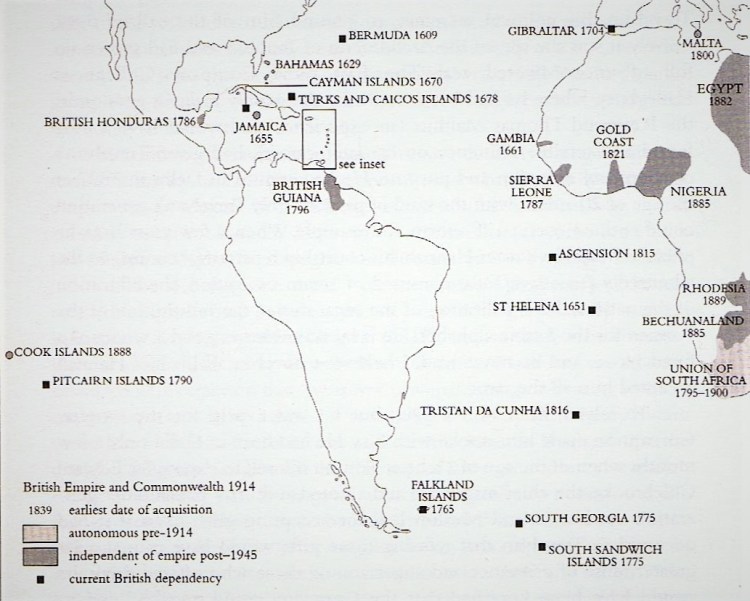
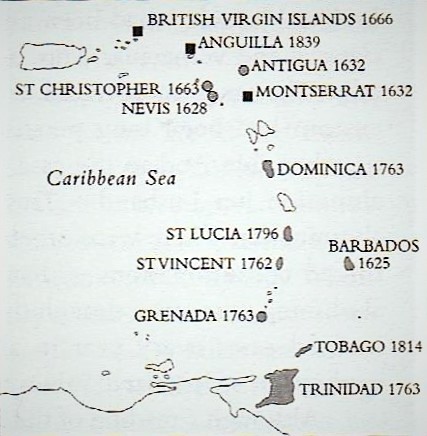
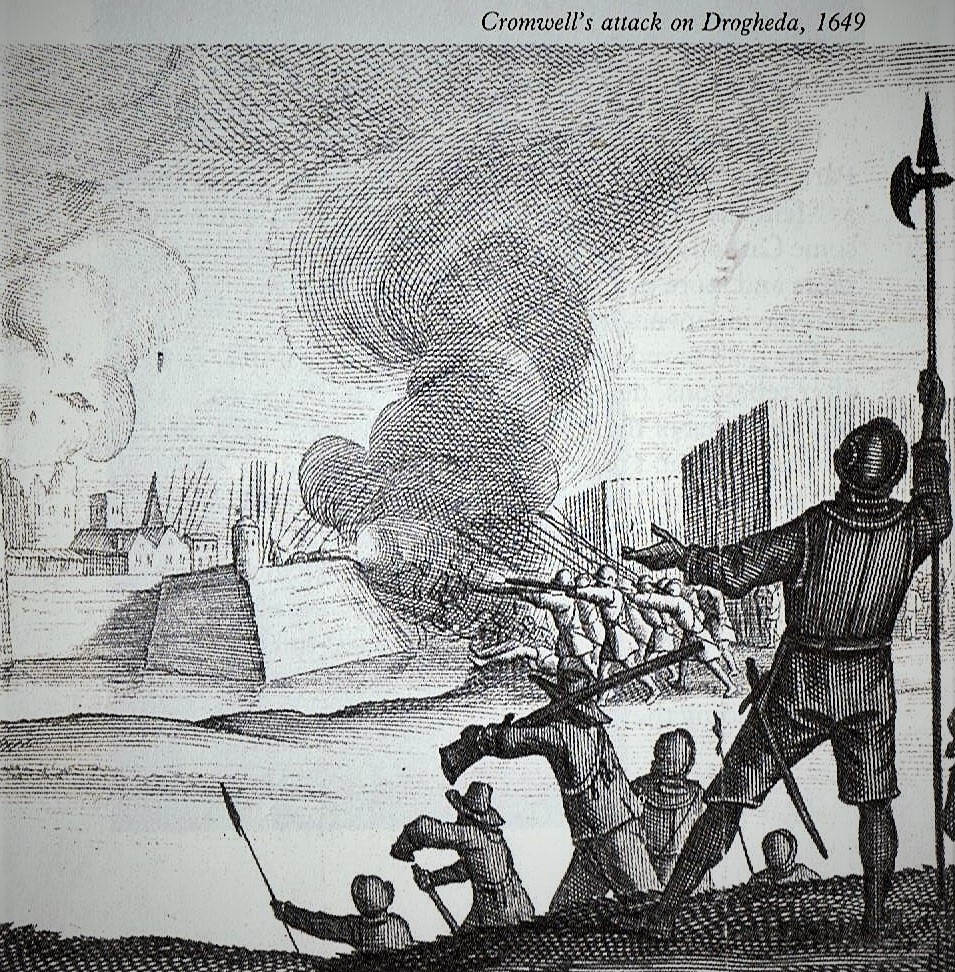
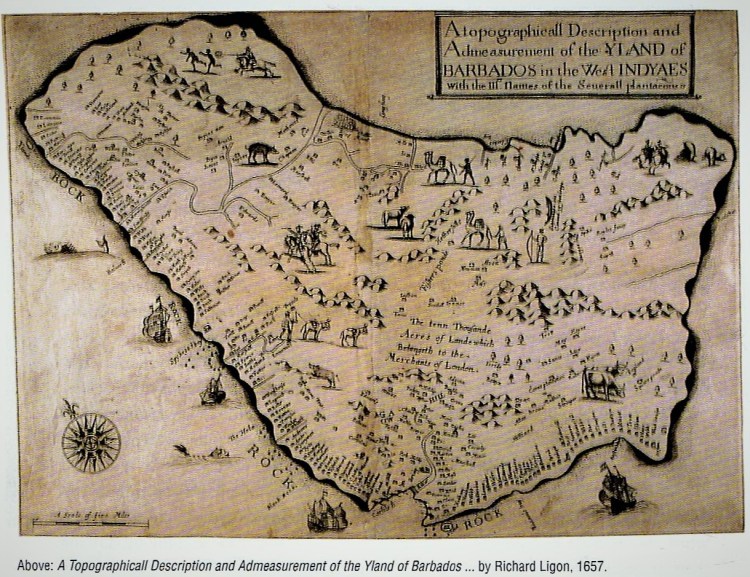


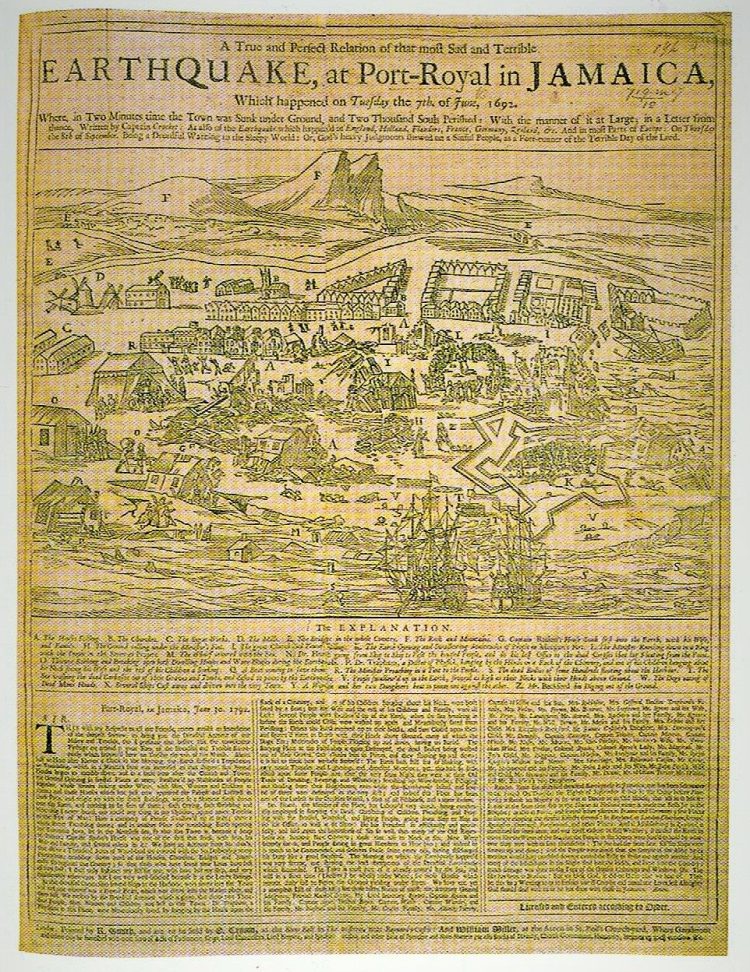
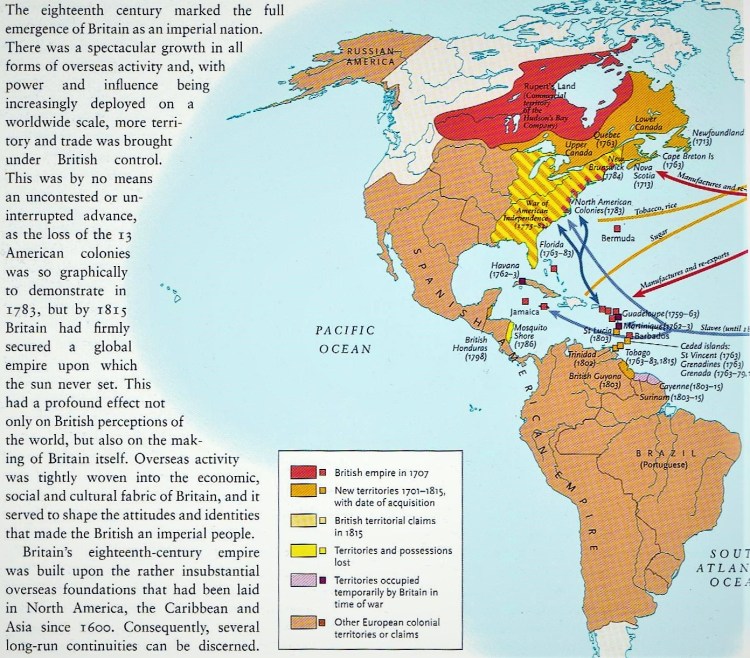
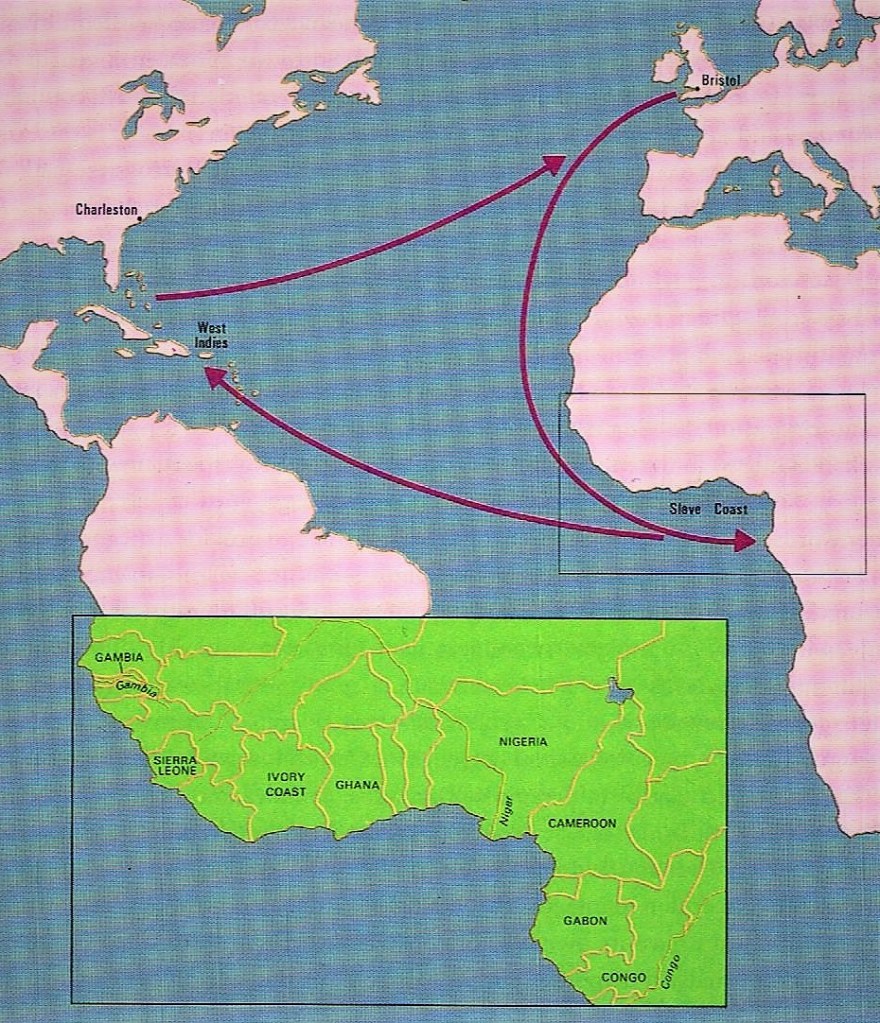
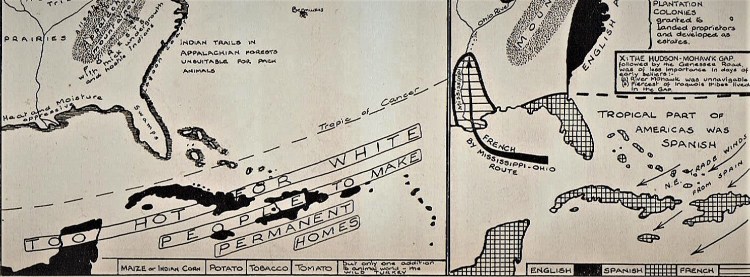
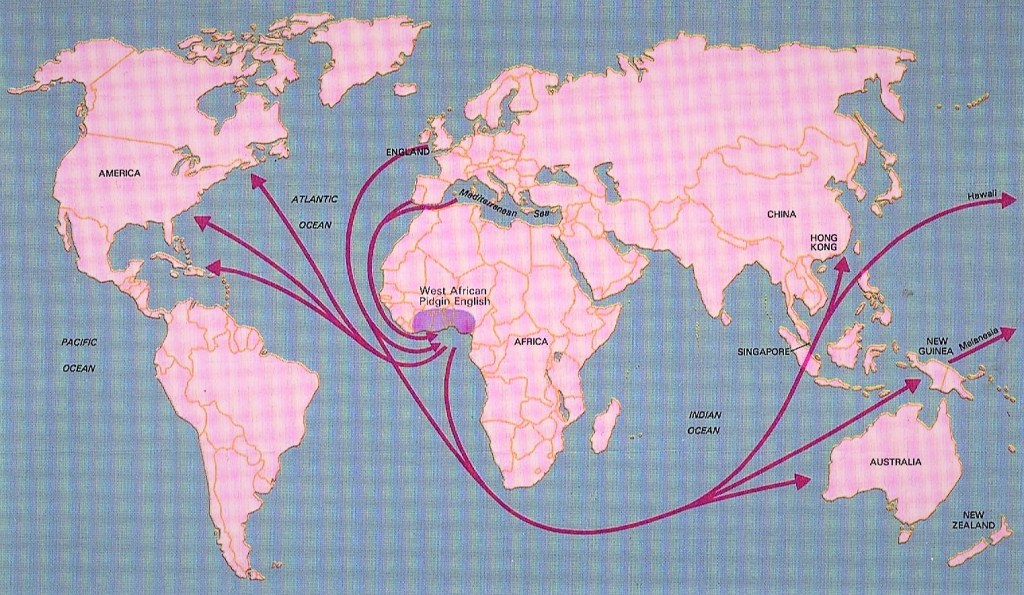
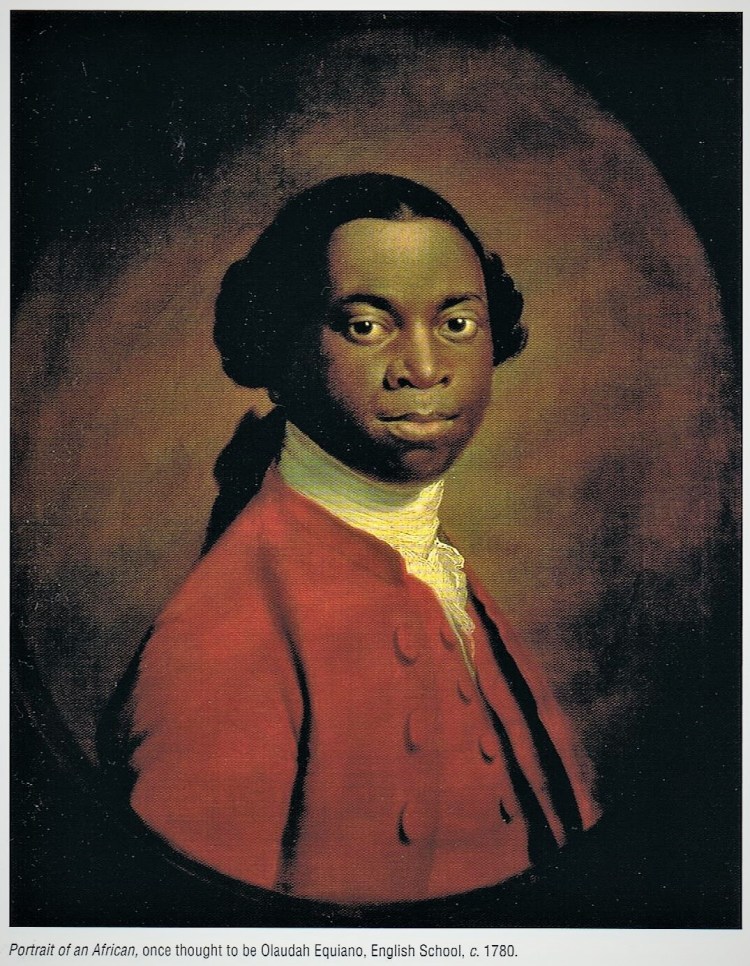

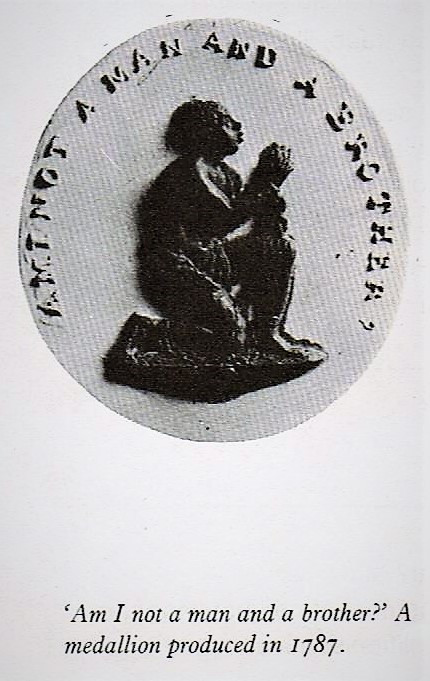
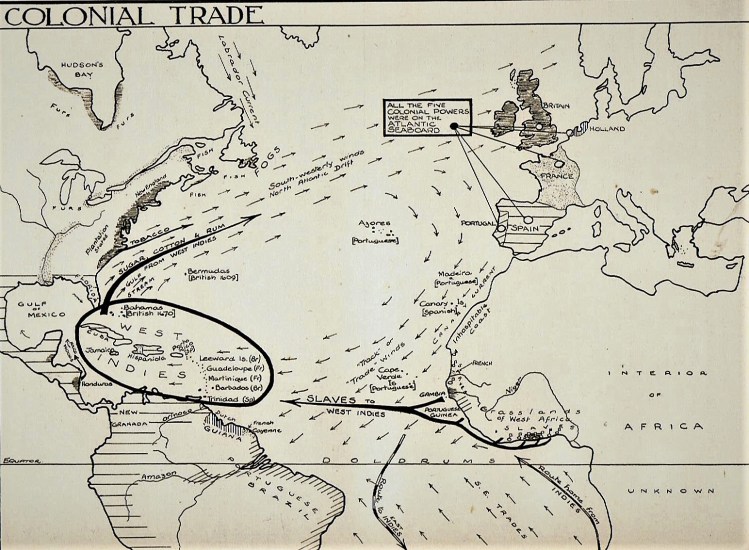
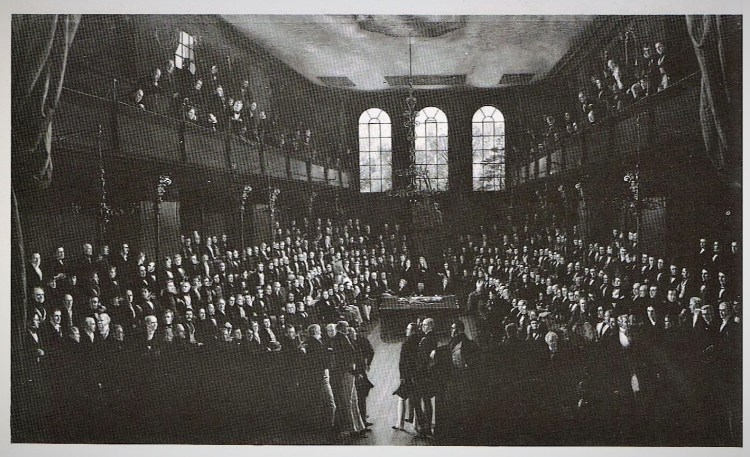
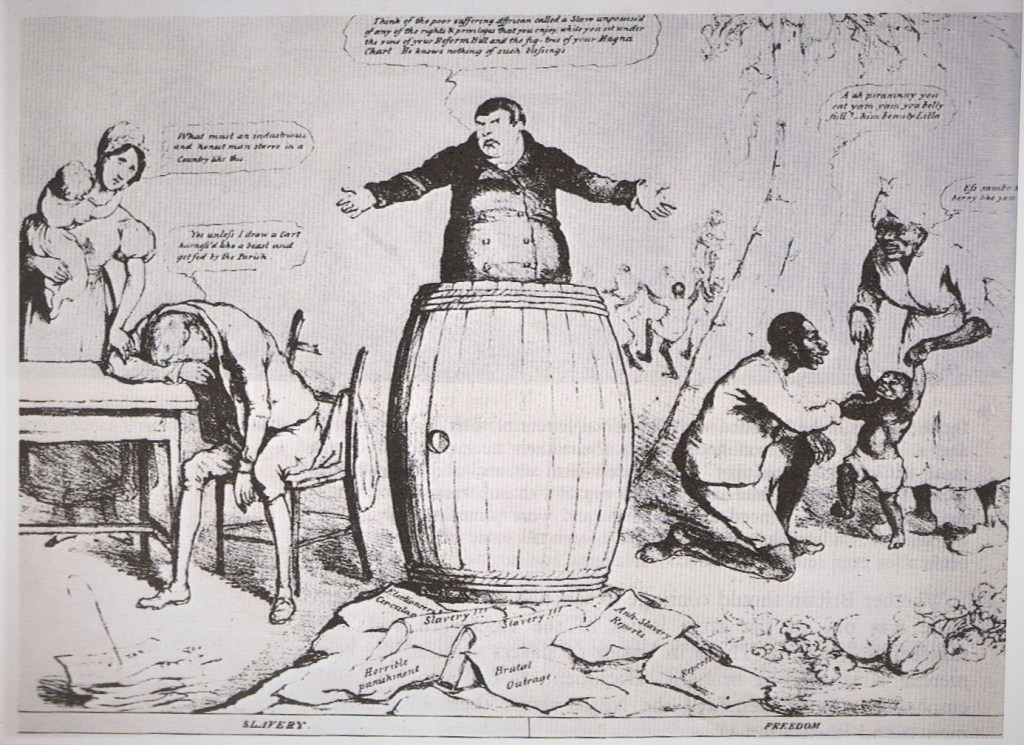
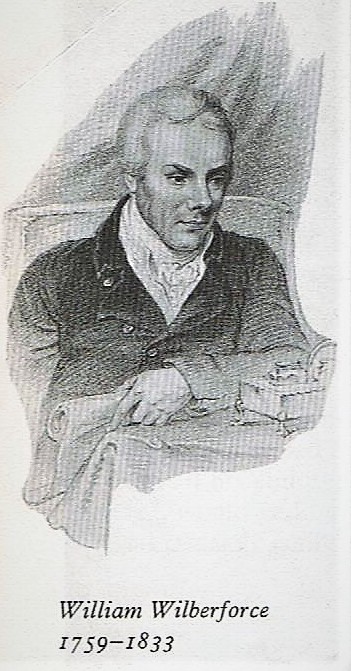
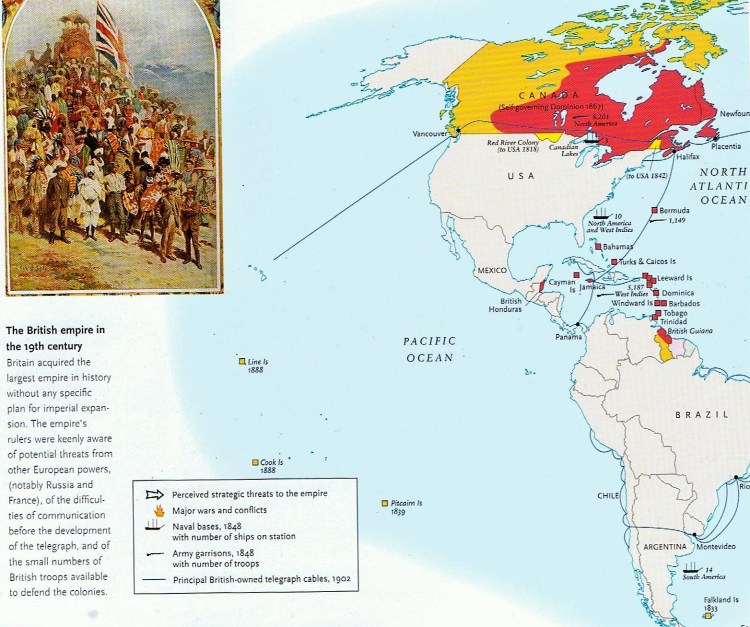


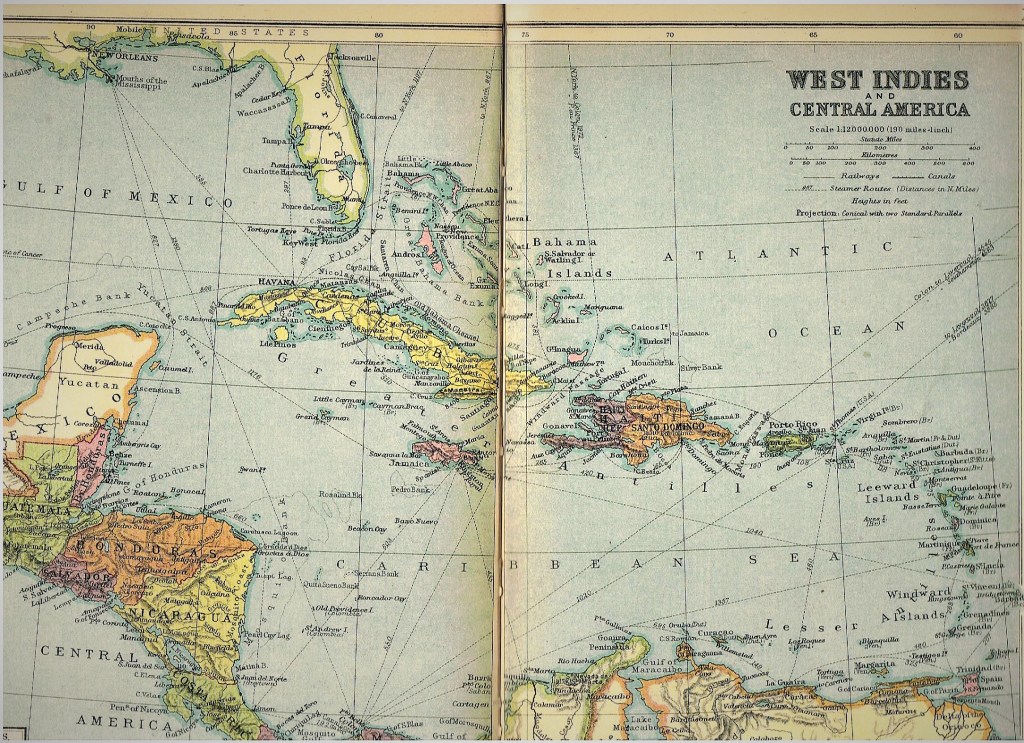
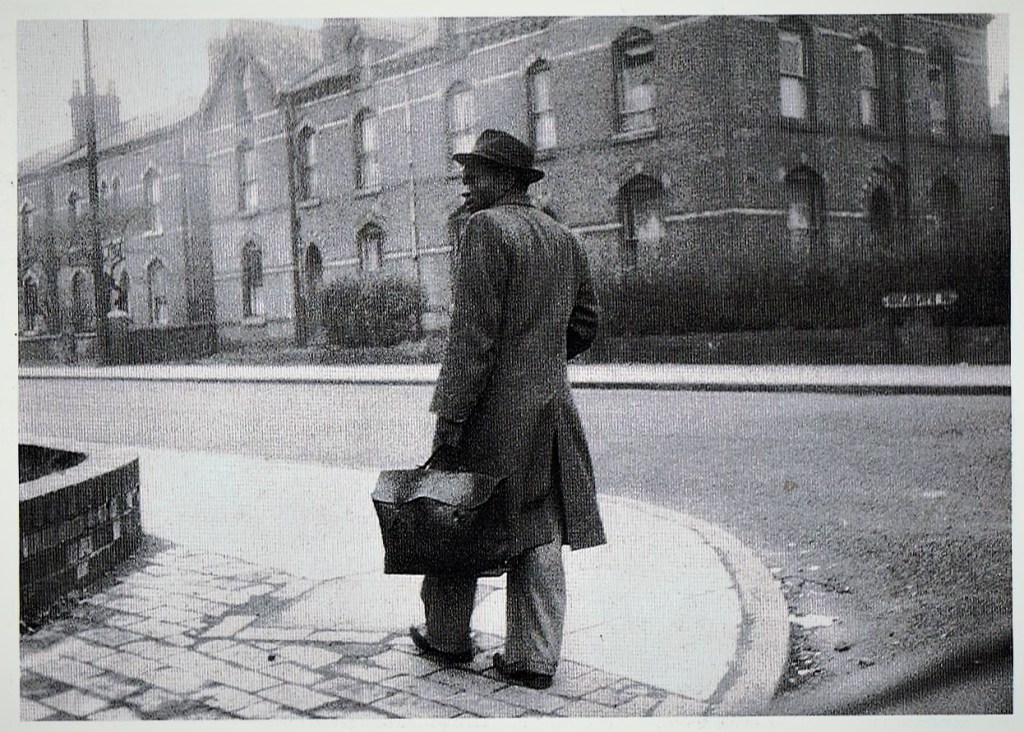
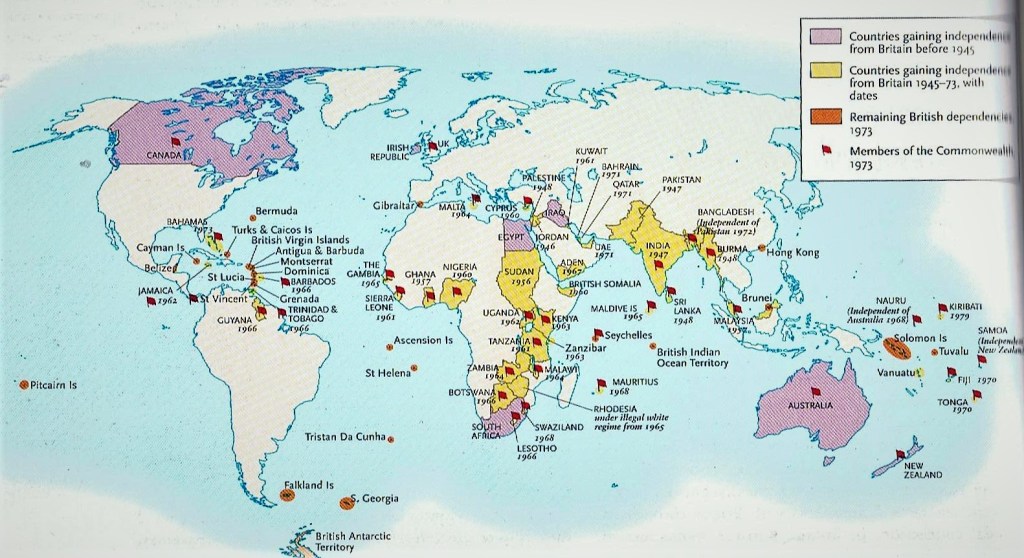


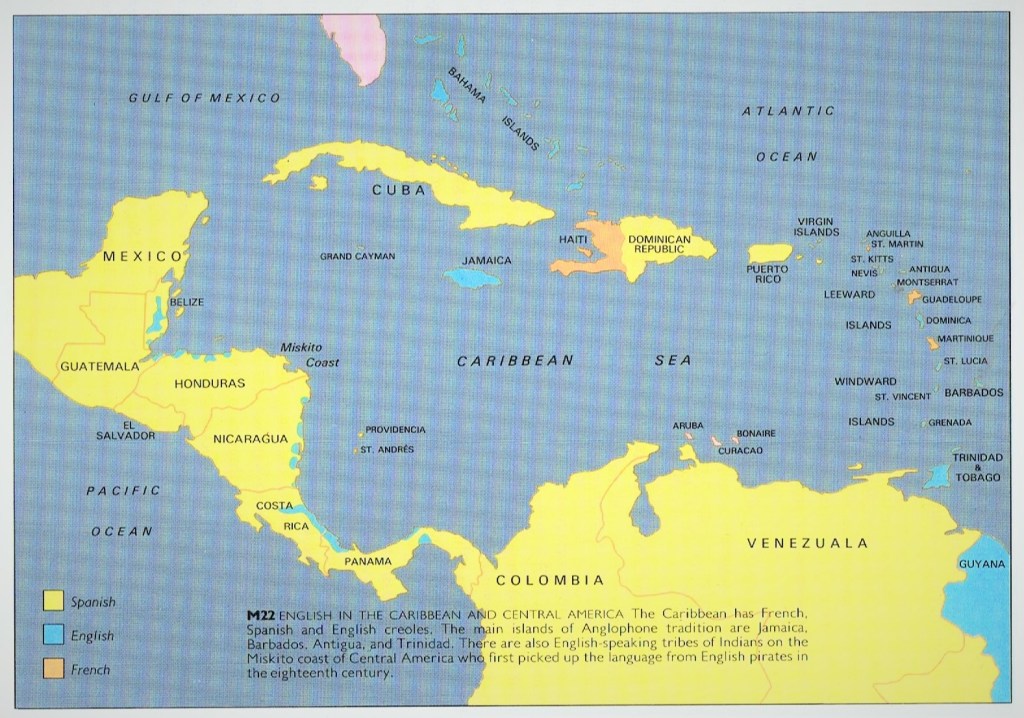


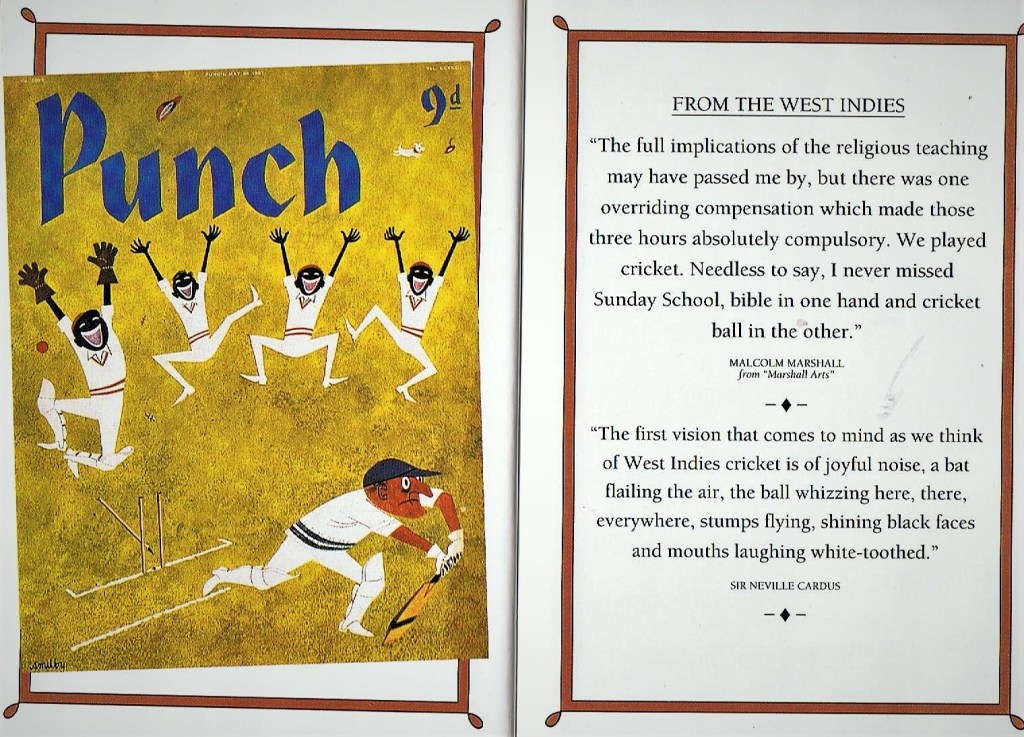
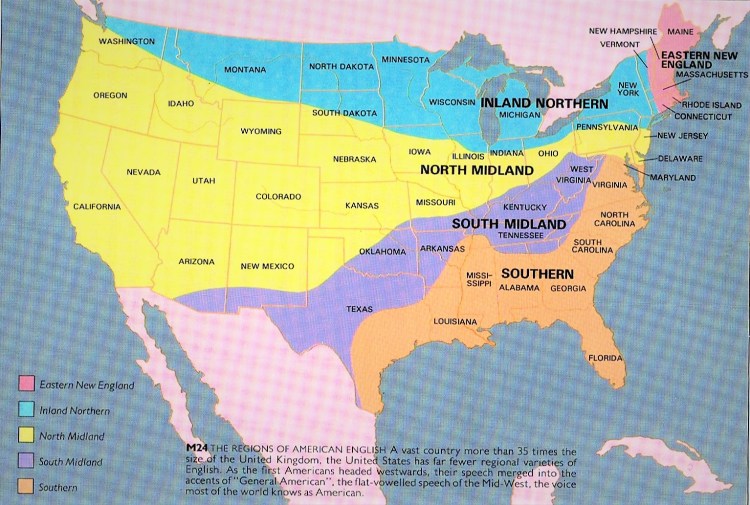



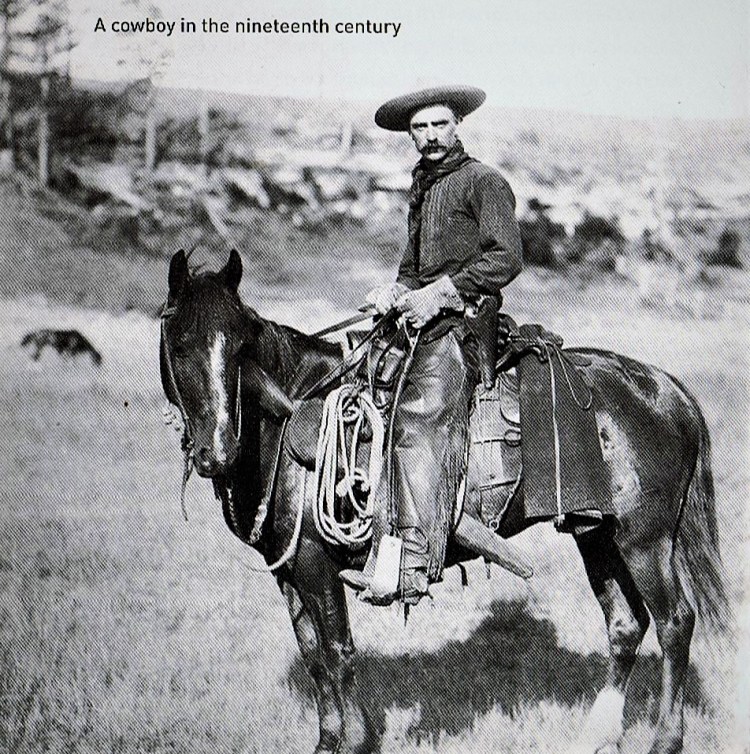
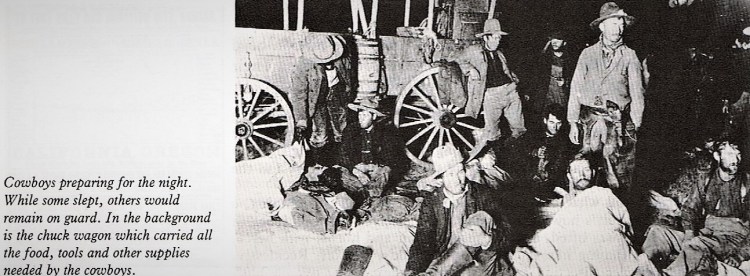
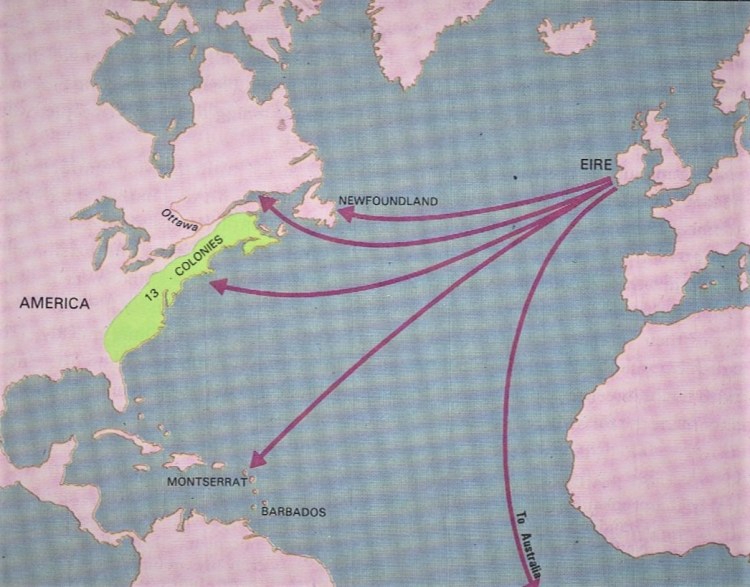

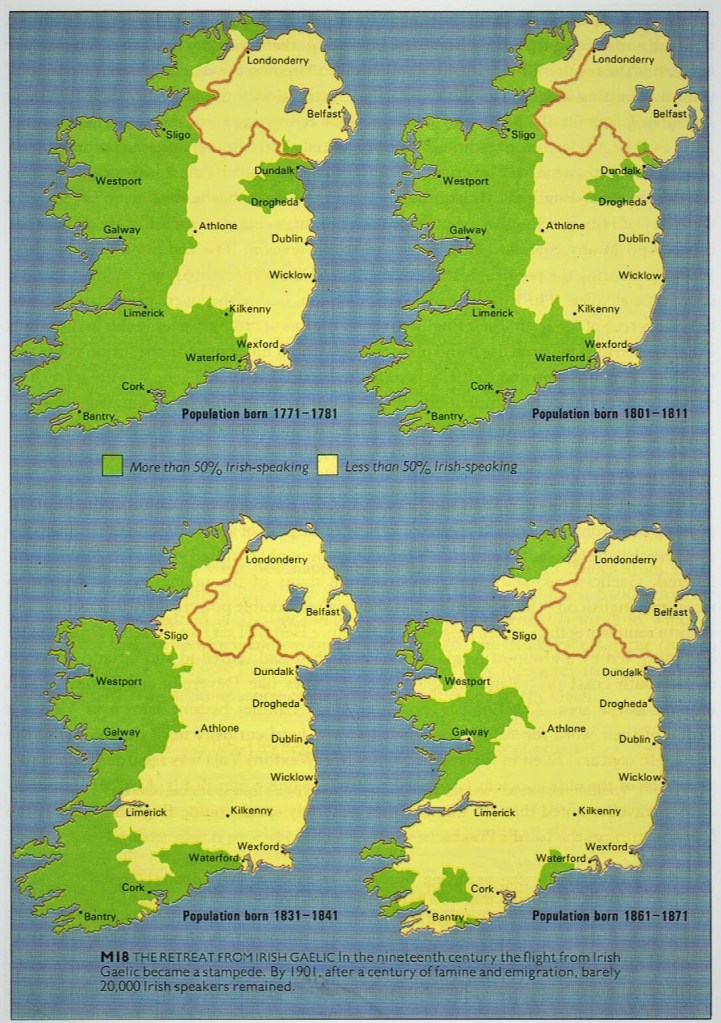
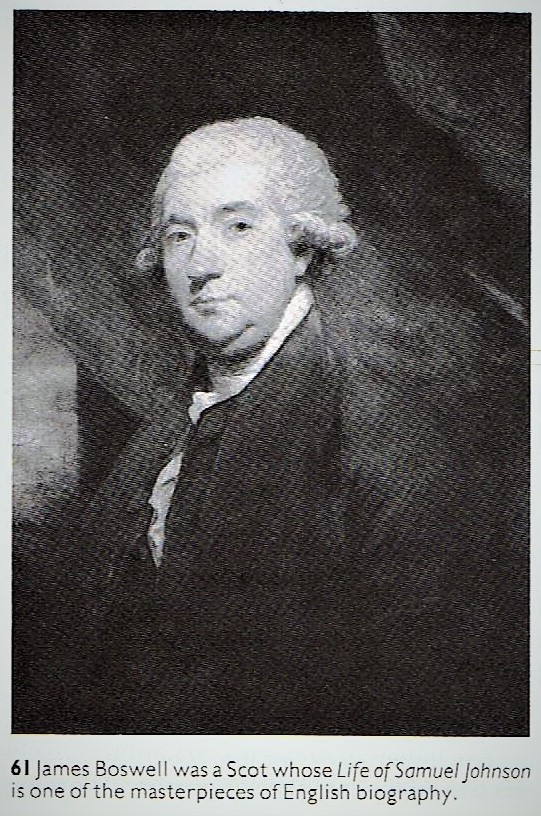
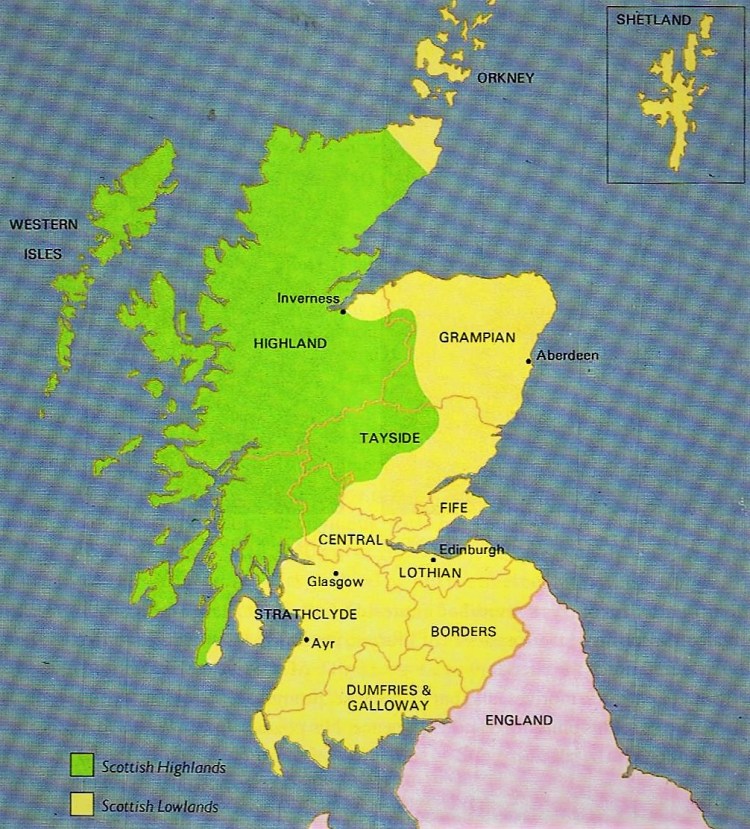

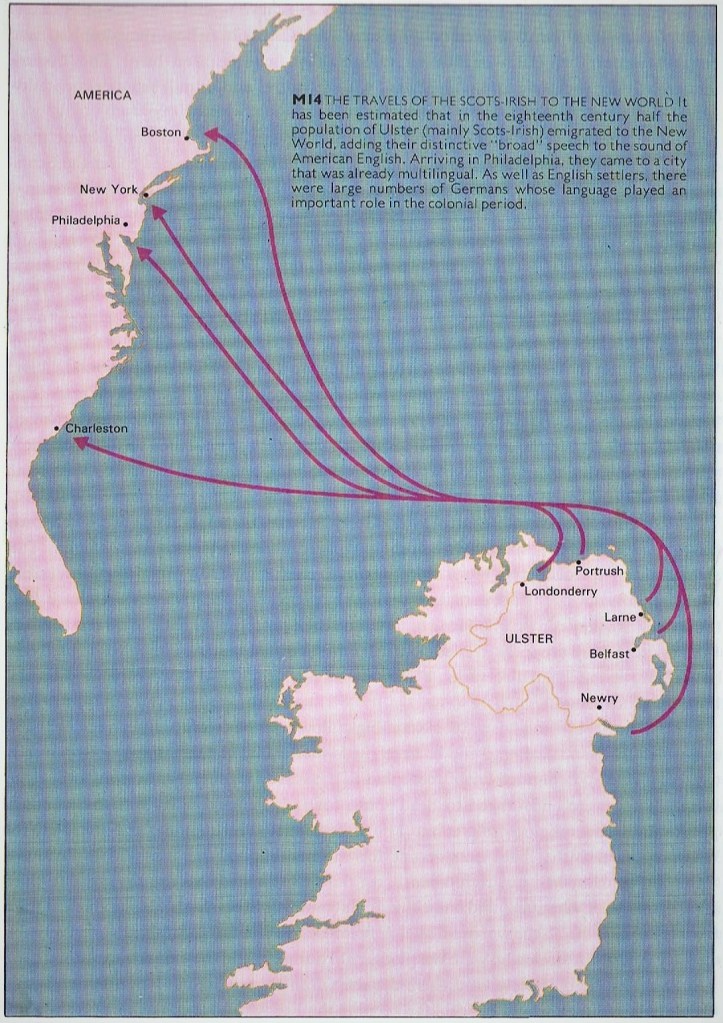




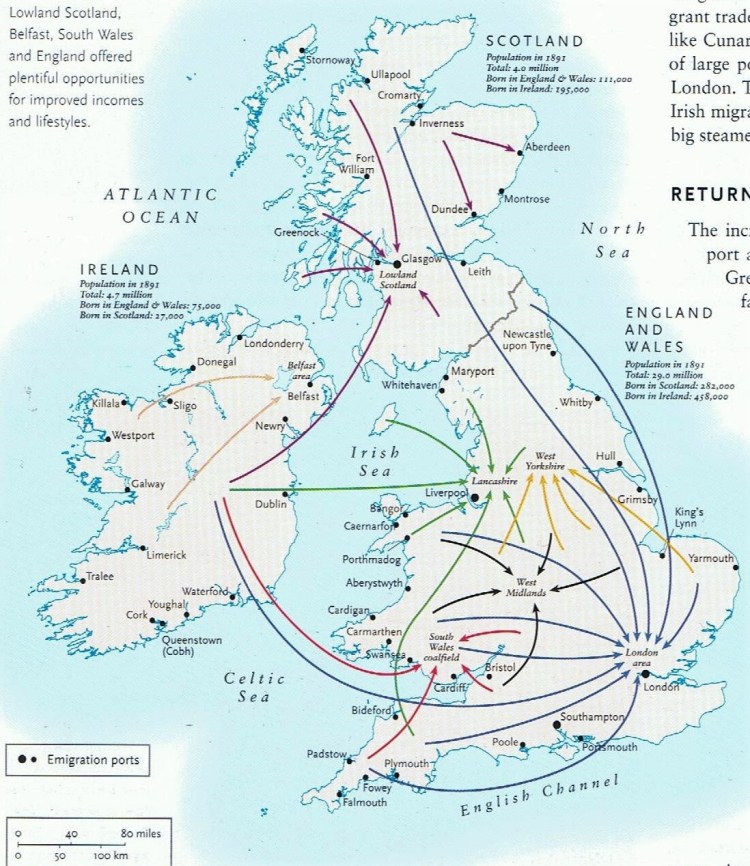
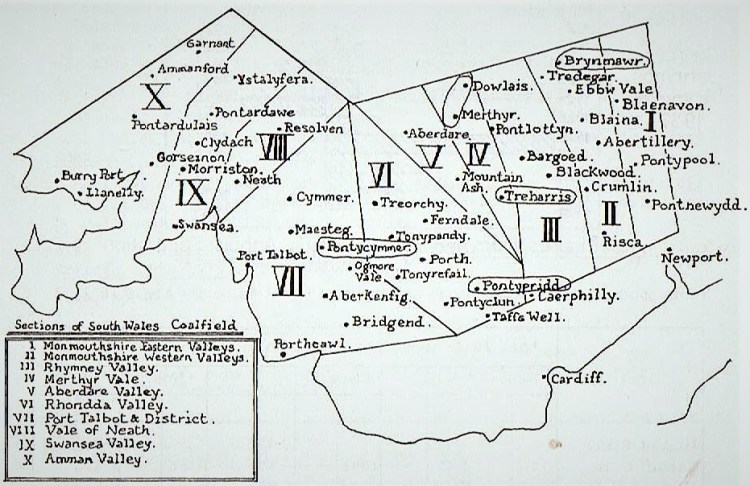
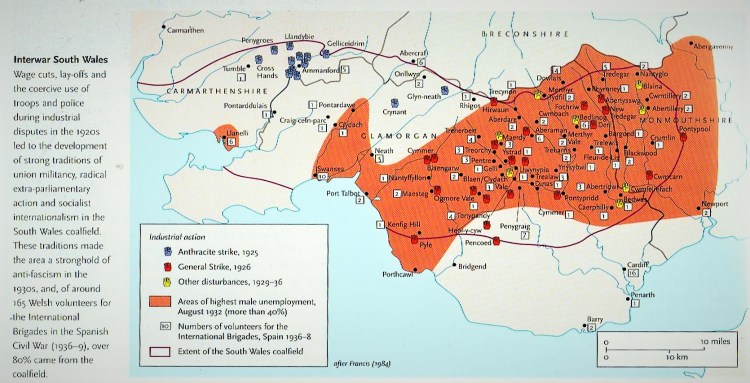
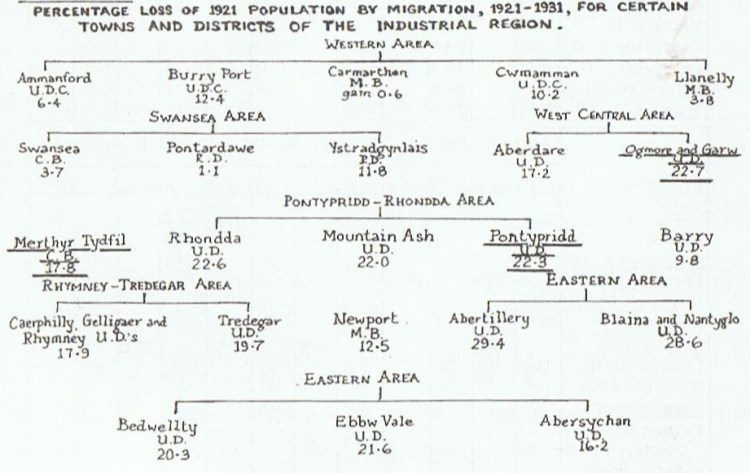


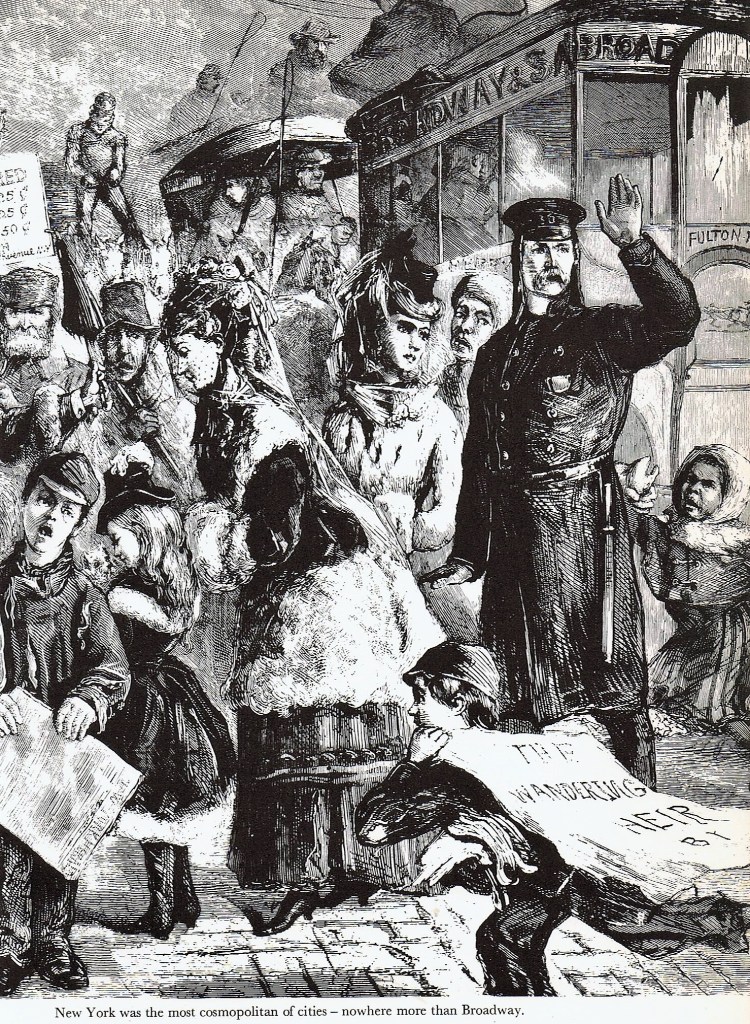
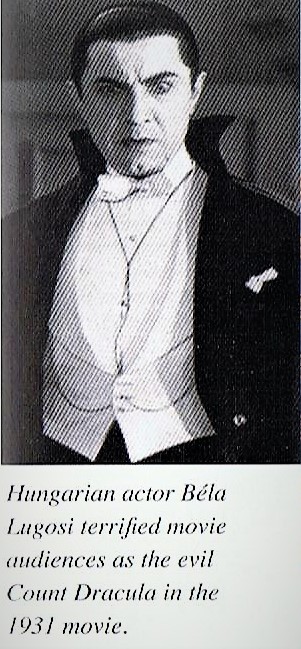

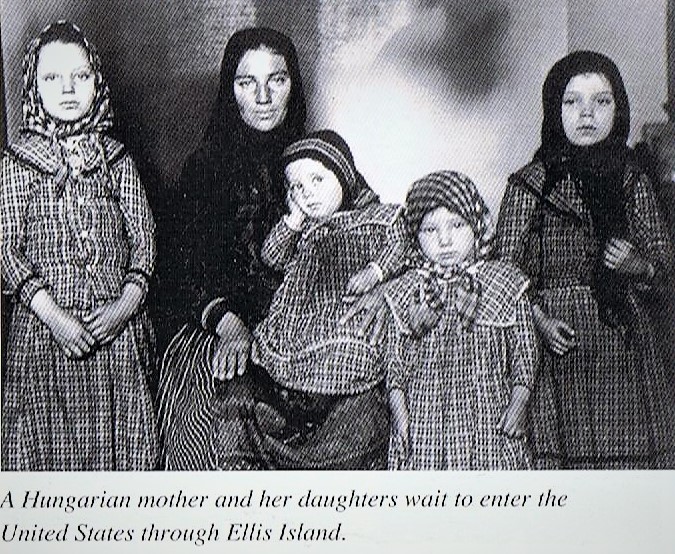
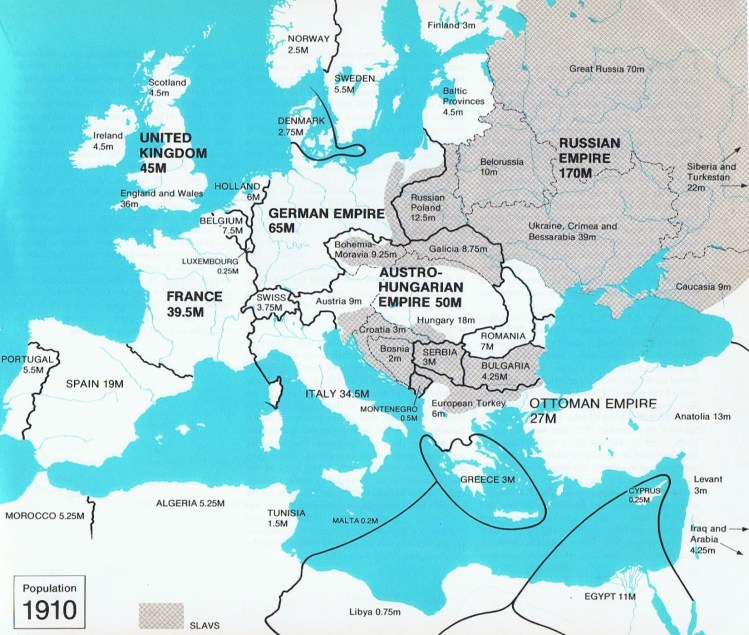



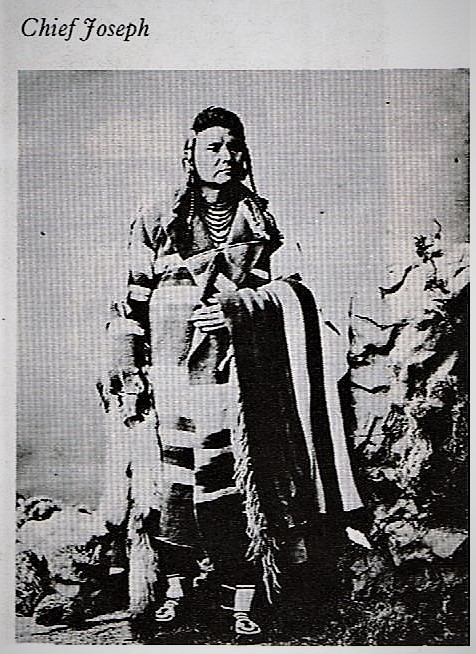
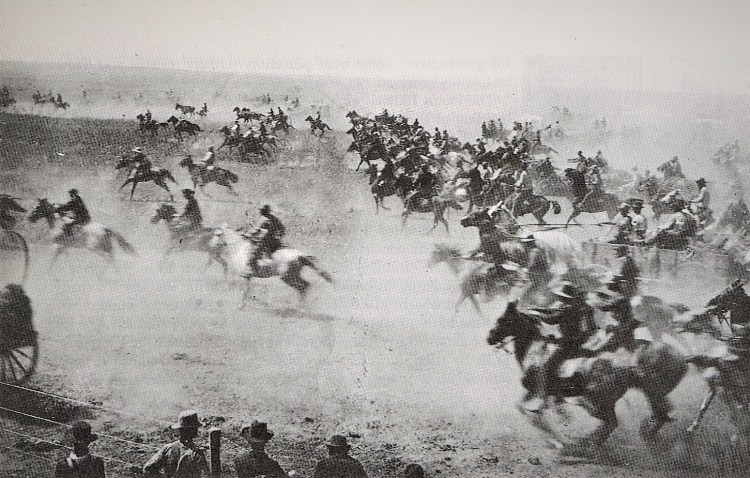
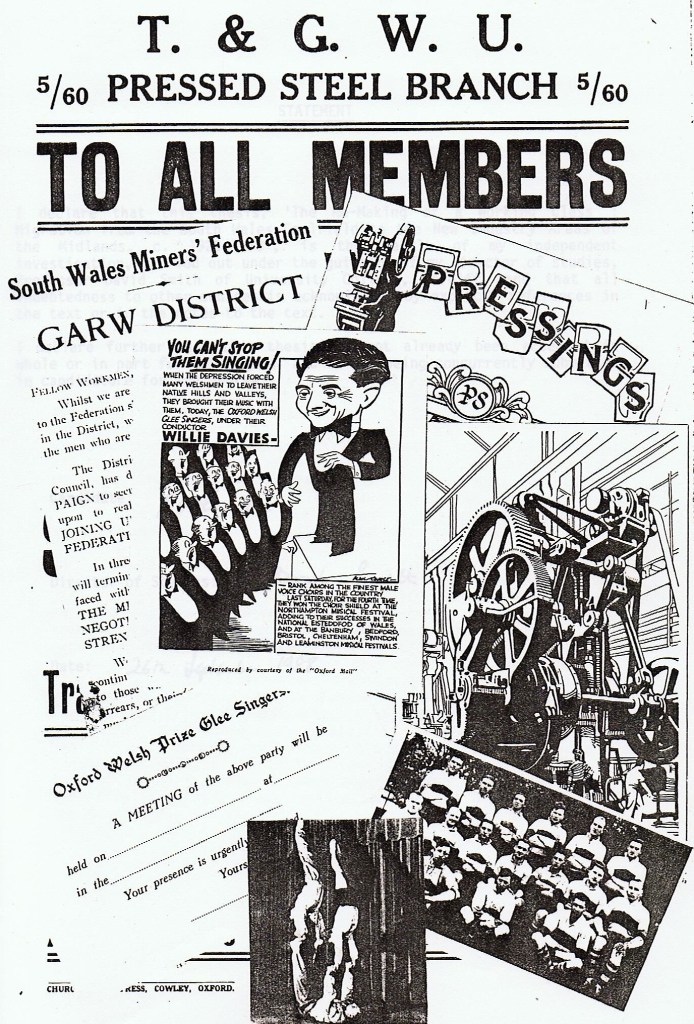
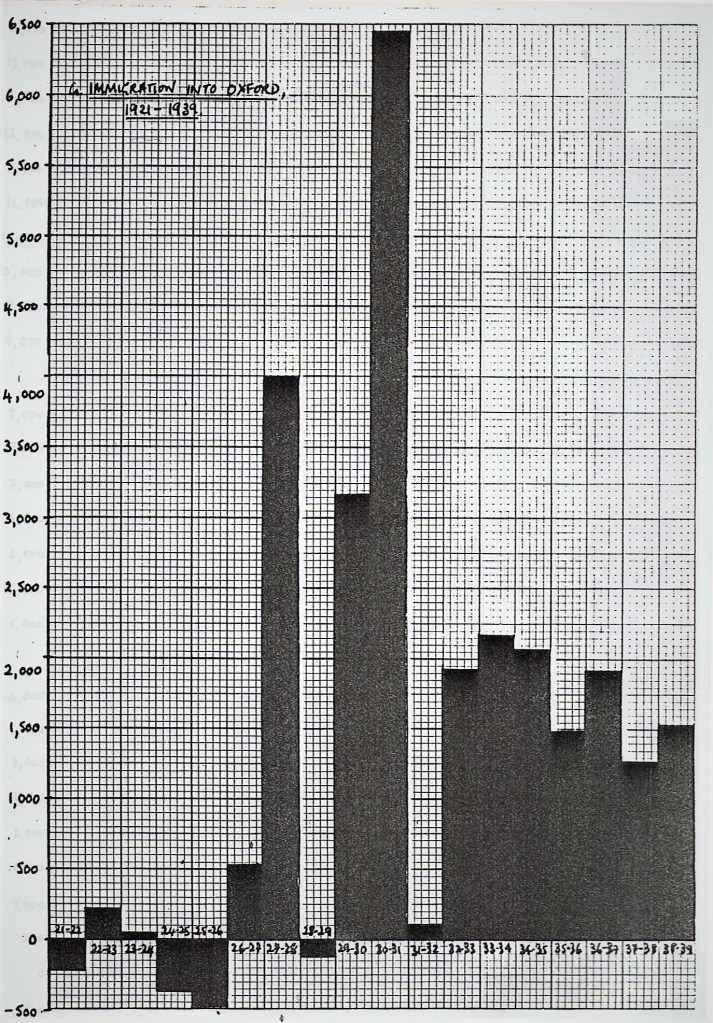
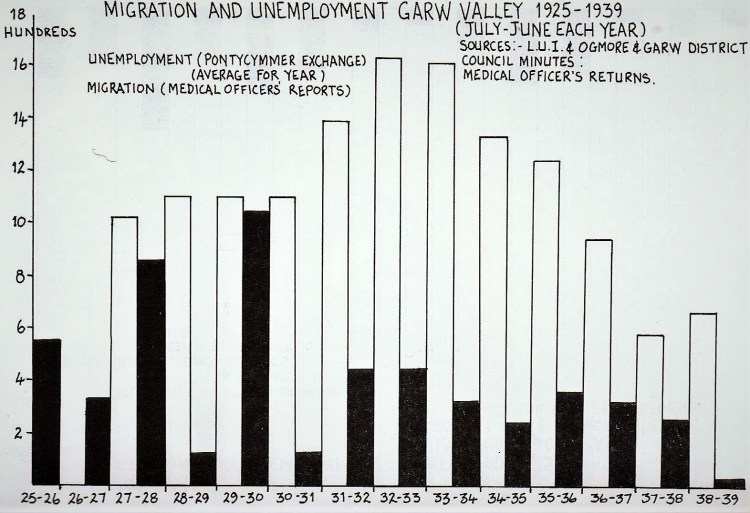
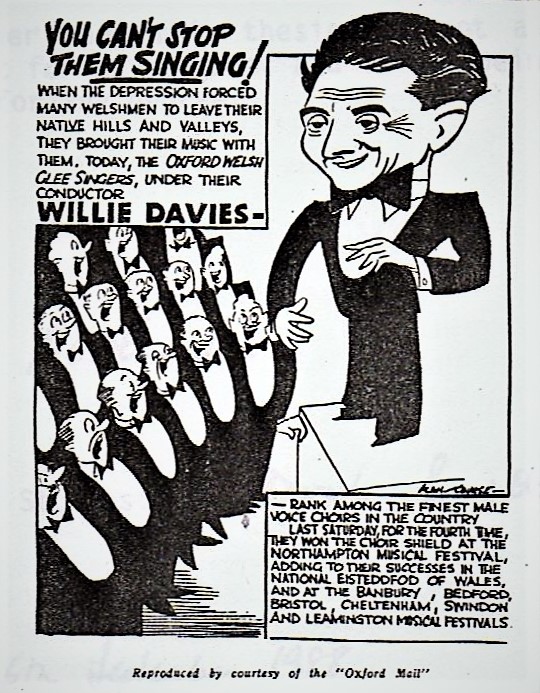
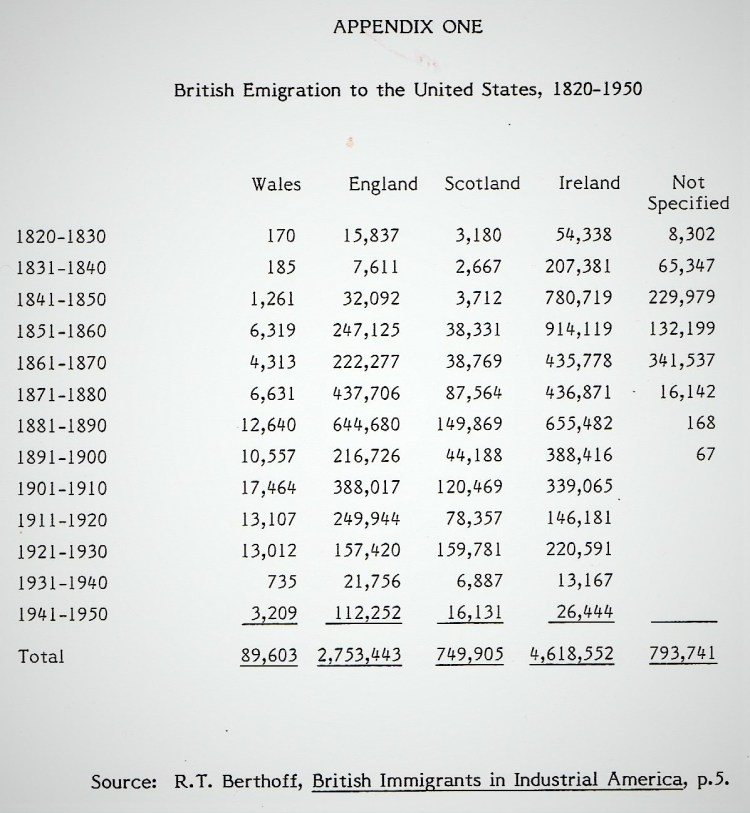
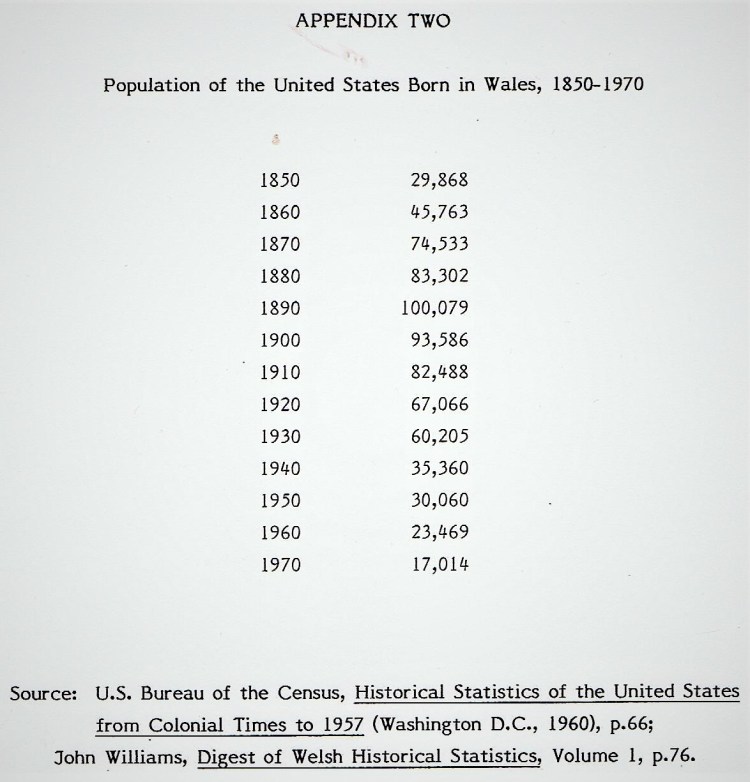
 Andrew James