
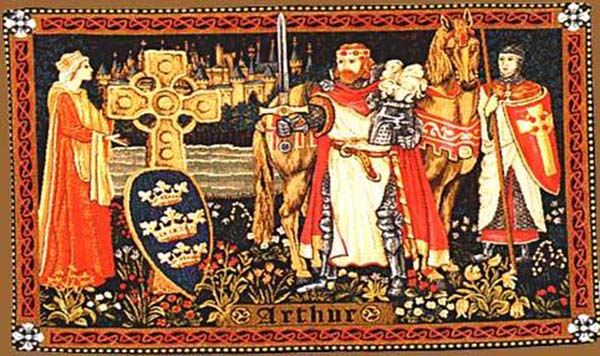
Glastonbury in Somerset has long been associated with the legendary Arthur and Guinevere, and it came to be identified as the Isle of Avalon (Ynys yr Afal in Welsh, ‘the Isle of the Apple’) to which Arthur was borne by three black-robed queens after his last battle with Mordred, according to the romantic literature ofContinue reading “The True Spirit of Glastonbury Revived”
Category Archives: allegory
The Bloodied Sword, the Precious Pearl and the Black Cross; Chronicles of the Royal House of Wessex – VI

Episode Six: End of Dynasty – Exit the Cerdicingas, Enter the Angevins: Scene Sixty-four; October 1173 – The Battle of Fornham, Bury St Edmunds and the Revolt of 1173-74: By the early 1170s, the king had already decided that, after his death, his dominions should be partitioned between his three eldest sons. Young Henry wasContinue reading “The Bloodied Sword, the Precious Pearl and the Black Cross; Chronicles of the Royal House of Wessex – VI”
The Bloodied Sword, the Precious Pearl and the Black Cross; Chronicles of the Royal House of Wessex – V
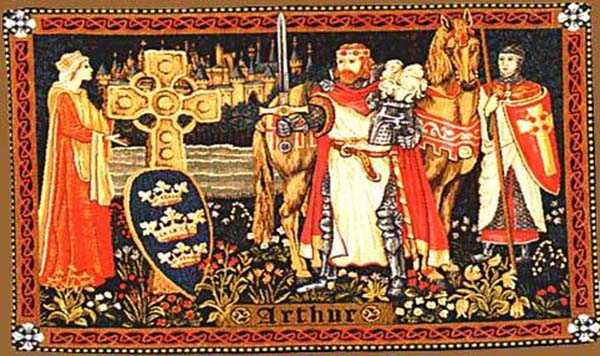
Episode Five – The King’s Peace and Justice; 1153-93: When Henry Plantagenet returned to England again at the start of 1153, bringing only a small army of mercenaries financed with borrowed money, he relied on the forces of Hugh Bigod and Ranulf of Chester. The churchmen who met him on the Hampshire coast also emphasisedContinue reading “The Bloodied Sword, the Precious Pearl and the Black Cross; Chronicles of the Royal House of Wessex – V”
War, Peace & Justice in Judaism: Part Two – ‘Shalom’ & Resistance:
Traditions of Shalom: Emerging from the Judaistic readings of the Hebrew Bible, which I dealt with in part one of this two-part article, there was a strong biblical tradition, both in the Psalms and among the prophets, from the earliest to the latest times of the kingdoms of Israel, that the Lord is a godContinue reading “War, Peace & Justice in Judaism: Part Two – ‘Shalom’ & Resistance:”
An Epilogue for Beren & Lúthien: Tolkien’s Last Years, 1966-1973 & The Work of Christopher Tolkien (-2017).
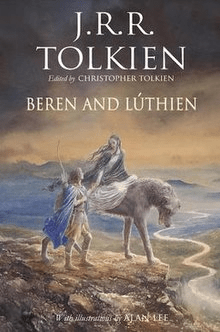
The Road Goes Ever on – Headington to Bournemouth: Although life retirement sometimes seemed ‘grey and grim’ to Tolkien, it also had many elements that suited him. For one thing, he and Edith, at last, had enough money. However, the tax authorities took a large proportion of his earnings, and on one occasion, Tolkien wroteContinue reading “An Epilogue for Beren & Lúthien: Tolkien’s Last Years, 1966-1973 & The Work of Christopher Tolkien (-2017).”
Faith, Fantasy & Fairy Tales – Tolkien, ‘Jack’ Lewis & ‘The Inklings’, 1926-66: Part Two – ‘Shadowy Abstractions’
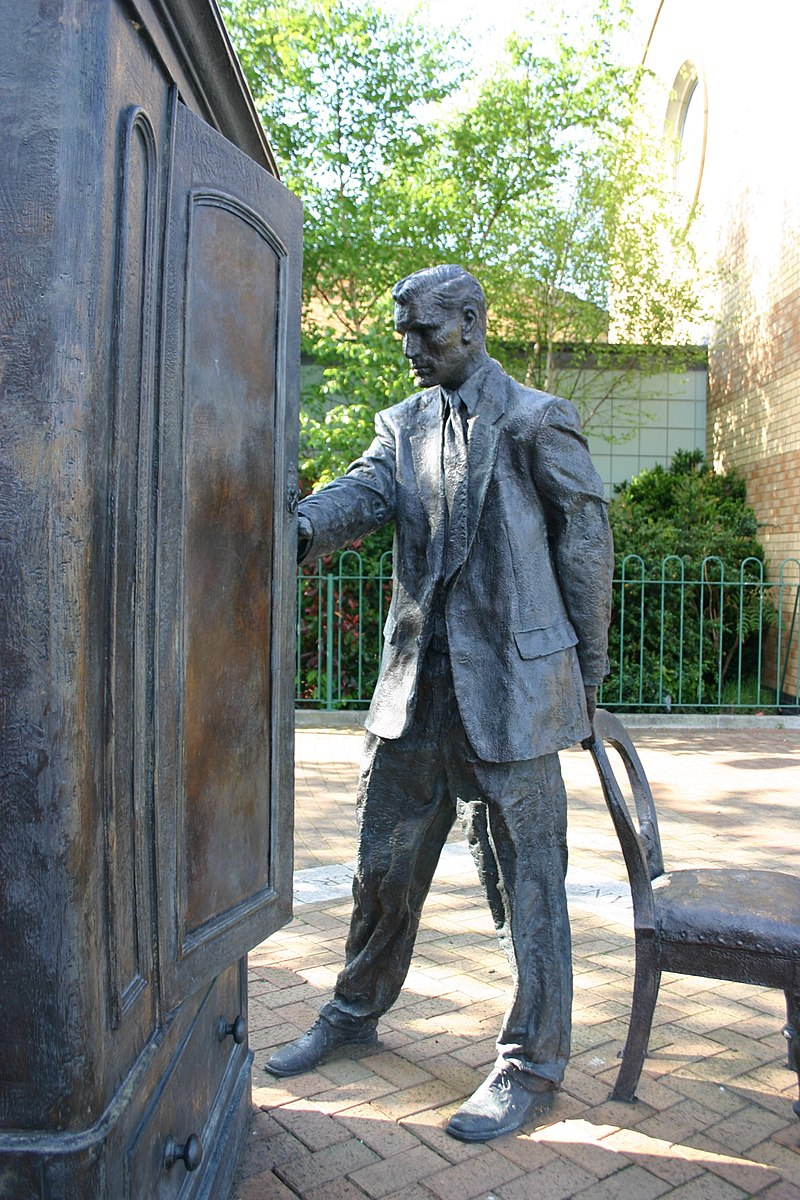
There was a good stretch of time between Jack Lewis’s conversion on the way to Whipsnade and his writing of the Tales of Narnia. Throughout this time, while Tolkien was writing his Hobbit stories, Lewis was musing on the physical similarities that men and beasts have in common. This is why he felt that Kenneth Grahame, in The Wind in the Willows, made exactly the right choice in giving his principal character the form of a toad
Faith, Fantasy & Fairy Tales – Tolkien, ‘Jack’ Lewis & ‘The Inklings’, 1926-66: Part One – Creator & Sub-creators.

Entertaining Angels Unawares: When Tolkien returned to Oxford in 1925, an element was missing from his life. It had disappeared with the breaking of his fellowship of the TCBS at the Battle of the Somme, for not since those days had he enjoyed male friendship to the extent of emotional and intellectual commitment. He hadContinue reading “Faith, Fantasy & Fairy Tales – Tolkien, ‘Jack’ Lewis & ‘The Inklings’, 1926-66: Part One – Creator & Sub-creators.”
The Making of an English Mythology; from Reality to Fantasy and back again, 1917-1954: Tolkien’s Creative Years.

Following his recovery from the Somme and ‘trench fever’ on his return from France in 1916, Tolkien was determined to create an entire mythology for England. He had hinted at this during his undergraduate days at Oxford when he studied and wrote of the Finnish ‘Kalevala’:
“I would that we had more of it left – something of the sort that belonged to the English.”
This idea now grew during his recuperation until it reached ‘epic’ proportions. This is how Tolkien expressed it when recollecting many years later:
“Do not laugh! But once upon a time (my crest has long since fallen), I had a mind to make a body of more or less connected legend, ranging from the large to the cosmogonic to the level of romantic fairy-story – the larger founded on the lesser in contact with the earth, the lesser drawing splendour from the vast backcloths – which I could dedicate simply: to England, to my country. “
 Andrew James