a time to plant, and a time to pluck up what has been planted;
a time to kill, and a time to heal;
a time to break down, and a time to build up;
a time to weep, and a time to laugh;
a time to mourn, and a time to dance;
a time to throw stones, and a time to gather stones together;
a time to embrace and a time to refrain from embracing;
… a time to tear, and a time to sew;
a time to keep silence, and a time to speak;
a time to love, and a time to hate;
atime for war, and a time for peace.
Ecclesiastes 3: 1-9.
This famous passage from one of the ‘Books of Wisdom’ of the Old Testament was popularised in my generation by the American folk-rock group The Byrds in the 1960s, having been earlier turned into a song by Pete Seeger. Before the first Israeli counter-offence began in the week following the Hamas-led pogrom against the kibbutzim and villages of southern Israel on 7th October, the beleaguered Prime Minister of Israel, Benjamin Netanyahu, quoted the passage in a press conference. The bombardment which followed certainly represented Israel’s ‘time for war’, but was criticised for its lack of proportion by some of Israel’s ‘Western’ allies, not to mention its regional Arab neighbours.
Therefore, as Israel continues to conduct its ‘counter-offensive’ against Hamas following the week-long truce which enabled the exchange of Jewish hostages for Palestinian Arab prisoners and the importation of humanitarian aid to the Gaza strip, in this, my fourth article on the religious and historical background to the current conflict, I want to reflect and focus on whether or not there is a Biblical basis for the Israeli strategy to defeat, degrade and dismantle Hamas’ network of terror. Certainly, the ‘secular’ basis for the support of Israel’s ‘right to self-defence’ remains clear, but in what sense can the bombing of Gaza, with its consequent civilian deaths, be justified in Judaistic terms?
John Barton’s recent book, A History of the Bible, has shown how the narratives of the Hebrew Bible (the ‘Old Testament’ to Christians) only occasionally provide direct advice on how people should live moral lives. The Bible does, however, contain material that gives advice or even instructions in a much more unequivocal way. Two of its other genres can be seen to do this: wisdom and law. It has long been traditional to group certain books in the ‘OT’ under the heading ‘wisdom’: Proverbs, Ecclesiastes and Job, as well as those in the Apocrypha like the Wisdom of Solomon. These, like the passage quoted above, contain many short sayings or aphorisms, summing up the Hebrew experience or giving explicit advice on how to behave. Many seem to reflect life in a village community and draw ‘morals’ from its daily activities. But some sayings seem better suited to the royal court than the Israelite village:
Wise warriors are mightier than strong ones,
and those who have knowledge than those who have strength;
for by wise guidance you can wage war,
and in abundance of counsellors there is victory.
Proverbs 24: 5-6.
This has led to a consensus among biblical scholars that the collection of proverbs into books probably occurred at the king’s court in Jerusalem, rather than in rural communities, and the books were most likely the work of scribes who made a living in royal employment. Assuming this context, E. W. Heaton paints a portrait of the person described in Proverbs as an early practitioner of ‘non-violence’:
‘The man of Proverbs is an open, cheerful character, who speaks his mind and does everything in his power to promote neighbourliness in the community at large… The way to deal with enemies, he believes, is not by revenge but by the same sort of generosity a man ought to show to everybody in need. … ‘
Heaton, Solomon’s New Men, pp. 124-6.
Ecclesiastes is even more the product of a kind of Hebrew scepticism than Job, often considered the most typical book of that genre. Overall, the book is concerned with the possibility of finding a profound meaning in life, denying that any can be found. Like Job, the book often quotes proverbs which suggest that there is order and worth in what happens on earth, only to point out the futility of human striving. Because it is attributed to a ‘son of David’ it is often thought to have been authored by Solomon, but this could simply mean that it was written by a king of the Davidic line. Ecclesiastes contains a few short stories to illustrate how human affairs turn out badly and make no ultimate sense:
‘There was a little city with few people in it. A great king came against it and besieged it, building great siege-works against it. Now there was found in it a poor, wise man, and he by his wisdom delivered the city. Yet no one remembered that poor man. So I said, “Wisdom is better than might; yet the poor man’s wisdom is despised, and his words are not heeded.”
Ecclesiastes 9: 14-16.
It seems that some of these tales contain veiled references to events in the history of Israel, but they are anonymized to make them appear typical of the vanity of human wishes. An editor has added an epilogue to the book to wrench its teaching back into line with biblical orthodoxy:
‘The end of the matter: all has been heard. Fear God and keep his commandments; for that is the whole duty of everyone. For God will bring every deed into judgement, including every secret thing, whether good or evil.’
Ecclesiastes 12: 13-14.
Wisdom literature invites the reader into a dialogue about human life and its patterns, rather than ‘laying down the law.’ It tends to be open-ended rather than dogmatic: if it offers insight into the human condition, proposing proverbs and wise sayings to ponder, not rigid diktats to be adhered to. Proverbs 30: 29-31 refers to three things that are stately in their stride, including a king striding before his people. It does not tell us whether it is a good thing for a king to stride ahead of his people, though we may assume that this means that this is better than him standing behind them in battle. But the statement itself is simply an observation to be registered. We do not know who the authors of the books of wisdom were, though the Proverbs may derive from court scribes who collected both folk and professional wise sayings. But the writers of Ecclesiastes seem to be sophisticated individuals, even though we do not know their names. Their social context is tantalizingly obscure to us, but there must have been some setting in which such works could be read and discussed, but there is no evidence of philosophical schools such as existed in ancient Greece. We only have the evidence of the works themselves.
Deliverance – The People of the Lord & their Laws:
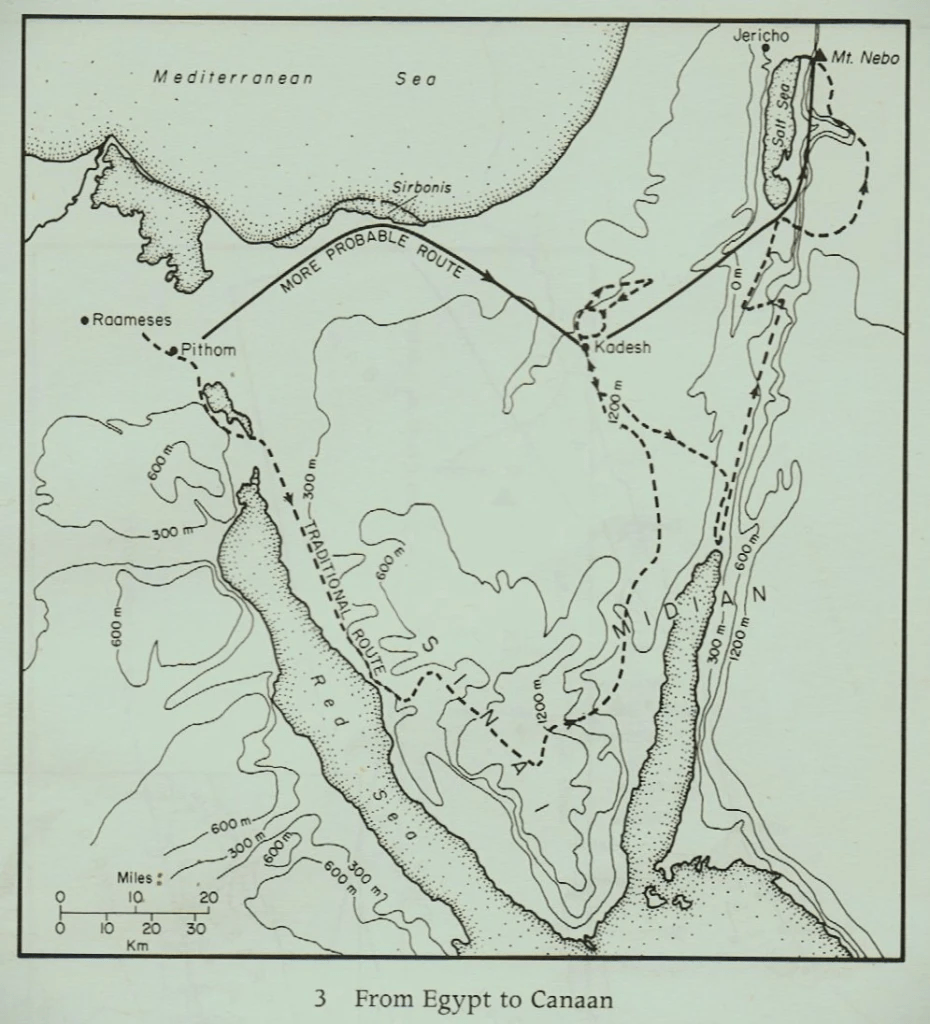
John Ferguson, writing in the 1970s as a theologian on the place of Judaism among the world religions on the questions of war and peace, took a historical view of the religion in this respect. He argues that Judaism began with the ‘deliverance’ of the Israelites from Egypt under the leadership of Moses and the subsequent covenant at Mount Sinai. In the Psalms, it is one of the constant praises of the Lord that he brought his people up from Egypt. This was a military deliverance:
The Lord is a warrior: the Lord is his name.
The chariots of Pharaoh and his army
he has cast into the sea;
the flower of his officers
are engulfed in the Red Sea.
The watery abyss has covered them,
they sank in the depths like a stone.
Thy right hand, O Lord, is majestic in strength:
thy right hand, O Lord, shattered the enemy.
Exodus 15: 3-6.
So, too, with the entry into Canaan. Joshua puts an extended historical narrative into the mouth of the Lord. He records the deliverance from Egypt and continues to describe the Israelites’ conquest of Canaan:
“Then I brought you into the land of the Amorites who lived east of the Jordan; they fought against you but I delivered them into your hands: you took possession of their country and I destroyed them for your sake. The King of Moab, Balak son of Zippor, took the field against Israel. He sent for Balaam son of Boor to lay a curse on you, but I would not listen to him. Instead of that he blessed you: and so I saved you from the power of Balak. Then you crossed the Jordan and came to Jericho. The citizens of Jericho fought against you, but I delivered them into your hands. I spread panic before you, and it was this, not your sword or your bow, that drove out the two kings of the Amorites. I gave you land on which you had not laboured, cities which you had never built; you have lived in those cities and you eat the produce of vineyards and olive-groves which you did not plant.”
Josh. 24: 8-13.
The ‘historical’ books of the Hebrew Bible are full of such battles in which the Ark of the Covenant represents the very presence of the Lord in the campaign (1 Samuel 4: 1-11). The Israelites were undoubtedly a military people at that time; they believed in all the mystical powers of TheAlmighty. If Pharoah’s heart was hardened, God had hardened it: if God had not hardened it, it could not have been hardened. If Israel conquered in battle, it was through the will of the Lord. So he is ‘the Lord mighty in battle’ (Ps. 24: 8). He is the Lord of Hosts. David is sent out to challenge Goliath ‘in the name of the Lord of Hosts, the God of the army of Israel which you have defiled’ (1 Sam. 17: 45). David becomes, in many ways, the heroic soldier-king, despite the corrupting effects of power which led, for example, to the elimination of Uriah so that the king could enjoy his wife. As the culmination of his career, he hoped to ‘build a house as a resting place for the Ark of the Covenant of the Lord which might serve as a footstool for the feet of our God’. He made preparations to build it, but God put an abrupt stop to his plans by telling him:
“You shall not build a house in honour of my name, for you have been a fighting man and you have shed blood.”
1 Chron. 28: 2-3.
The prohibition here arises not from David’s unjust acts, but simply from the fact that he has been a soldier. The far less admirable and attractive Solomon, ruler of a heavily armed state, but not himself on the front line, as other kings beside David had been, is granted the privilege of building the first temple. Clearly, while warfare was regarded as justifiable, if not inevitable, it was not something that could be rewarded or combined with building houses of worship, emphasising that it was not something to be entered into lightly and certainly not wantonly. Even more telling of God’s attitude to ‘massacres’, is the story of Jehu, the renowned chariot-riding warrior king of Israel, who with the apparent support of the prophet Elisha, massacres the apostate house of Ahab and the Baal-worshippers (2 Kings 9-10). The prophet Hosea denounces these same actions as a crime to be punished by God, who tells him:
“Call him Jezreel: for in a little while I will punish the line of Jehu for the blood shed in Jezreel and put an end to the kingdom of Israel.”
Hos. 1: 4.
Elisha, as shown by this story, was not always the most compassionate of God’s servants. The Aramaeans tried to capture him, no doubt to exact revenge for his role in Jehu’s atrocity against the House of Ahab. But they were deluded and led into Samaria. However, when the King of Israel cried out “My father, shall I smite them?”, Elisha told him to let them eat and drink before returning to their master. After that, the raids on Israel ceased. So, alongside the military fervour there developed a rich compassion for the penitent nations. It is notable that at the end of the book of Jonah when Jonah has denounced Nineveh, and proclaimed its destruction, the people repent and the Lord withholds the threatened disaster, for he is…
… ‘a god compassionate and gracious, long-suffering, ever constant and true, maintaining constancy to thousands, forgiving iniquity, rebellion and sin, and not sweeping the guilty clean away’
Exodus 34: 6.
Jonah is not pleased with this, but the Lord asks him,
“Should not I be sorry for the great city of Nineveh, with its hundred and twenty thousand who cannot tell their right hand from their left, and also much cattle?”
Jonah 4: 11.
The classic example of the Lord’s power is the destruction of Sannacherib’s army (2 Kings 19: 1-36; 2 Chron. 32: 1-23; Isa. 37: 1-38). Hezekiah says of Sennacherib, ‘He has human strength, but we have the Lord our God to help us and to fight our battles’ (2 Chron. 37: 8). Here there was ‘deliverance’, but a very violent one. At the same time, however, most of the references in the historical books are to specific battles and campaigns. They were not part of a general divine plan for the Israelites to drive the native ethnicities of Canaan into the Mediterranean Sea.
Contrary to the popular view of ‘the Ten Commandments’ as given in Exodus 20: 2-17 and Deuteronomy 5: 1-21, there is no reference to collective acts of violence, including warfare, in either version of the Decalogue. In fact, the often mistakenly quoted ‘thou shalt not kill’ as the sixth commandment, should correctly be translated as ‘thou shalt not murder’. Warfare may be justified, as the narrative and prophetic books of the Old Testament amply demonstrate, while murder is never sanctioned by Yahweh. In fact, the murder-adultery-theft section reflects older prophetic texts such as Hosea 4:2 and Jeremiah 7: 9. In the following explanatory text in Exodus 21: 12-14; … if someone wilfully attacks and kills another by treachery, you shall take the killer from my altar for execution. In this passage, there are four characters: the ‘slayer’, the ‘slain’, the ‘lawgiver’, who reveals himself through the reference to ‘my altar’ and the addressee, who is drawn in as a participant via the command, ‘you shall take…’
Some experts have stressed that legal reflection is therefore more like reading and musing on narrative than it is like enforcing a rule. But in the Book of the Law (Deuteronomy 20: 3-4) we do find instructions for what the priest should say before battle:
“Hear, O Israel, this day you are joining battle with the enemy; do not lose heart or give way to panic in the face of them; for the the Lord your God will go with you to fight your enemy for you and give you the victory.”
When Nehemiah restores the walls of Jerusalem, with half the men building and half standing to arms, and himself keeping hold of his sword, he tells his people, ‘Wherever the trumpet sounds, rally to us there and God will fight for us’ (Neh. 4: 16-23). The Israelites differed from the surrounding peoples because, in the first place, they were linked to Yahweh, the Lord, by a covenant. He was not a mere projection of their image onto the infinite but was an independent and all-powerful being. Chemosh was the god of Moab; if Moab ceased to exist, Chemosh ceased to exist (apparently). But the God of Israel was indissolubly linked to the nation. If Israel ceased to exist, Yahweh did not, for his relation to the nation was covenanted, not organic. If Israel was defeated that was due to the Lord’s (temporary) withdrawal of support from his ‘chosen people’; He was not defeated. This further meant that what he was to Israel he could also be to all people. The covenant bore with it the seeds of universalism. Therefore, Amos proclaims the judgement of the Lord on Moab for atrocities committed not against Israel but against Edom (Amos 2: 1-3) and cries:
“Are not you Israelites like Cushites to me? says the Lord.
Did I not bring Israel up from Egypt,
the Philistines from Caphtor, the Aramaeans from Kir?
Amos 9: 7.
Non-Jews in the Old Testament periods often regarded the Jews with suspicion, particularly because they did not revere the same gods, but insisted on their own, single God to the exclusion of all others. This made them singular and peculiar in the eyes of other nations. The reaction of the Jews was to insist that they were the truly universal ones since they acknowledged a set of norms that surpassed all the ideas of other nations, and in these norms, set out in the Torah, true wisdom could be found. This second difference, the association of the covenant with a moral code, simple but exalted, the Ten Commandments, demonstrated how the Lord made moral demands on his people. As the prophets interpreted the word of the Lord to his people, those moral claims became more profound and more demanding. So while the way of warfare existed constantly in relations between ancient Israel and its neighbours, it stood under judgement.
Wisdom and Law in the Hebrew Bible combined thus came nearest to providing the guidance for how to live that many people still turn to. Yet neither of these types of books supplies a timeless code; both are deeply rooted in the institutional life of ancient Israel. Nevertheless, both exemplify moral principles that were shared with other peoples of the Near and Middle East at that time, including those set down in Mesopotamia. These principles can often be seen to inform modern discussions of ethics and can be applied to modern warfare. However, the rootedness of these books in ancient times does make any direct application of biblical teachings difficult and suggests the need for a more nuanced relationship between them and the modern Jewish and Christian faiths in the region as well as further afield.
For example, in the light of the New Testament, Christians understand that ‘God’s people’ of the Old Testament were a model: Israel was not chosen from all the peoples of the earth for its own sake but for the salvation of the world. Being chosen means receiving, and expecting, one’s life solely from God. It is not meant for the individual or the individual nation, in isolation. It is meant for the whole community, and the individual as part of that community. The social character of Israelite law is based on this communal ‘election’. The right to life that God bestows on his people is meant for all, without distinction, not for the privileged few. Where God alone is Lord, people become brothers and sisters of the same ‘Father’. That is the fundamental law of brotherhood, justice and equity that lies behind the following specific statements of ‘law’ from Leviticus 19:
‘When you reap the harvest of your land, you shall not reap your field to its very border, neither shall you gather the gleanings after your harvest.And youshall not strip your vineyard bare, neither shall you gather the fallen grapes of your vineyard; you shall leave them for the poor and for the sojourner: I am the Lord your God. You shall not steal, nor deal falsely, nor lie to one another …’ (vv 9-11)
‘You shall not oppress your neighbour or rob him. The wages of a hired servant shall not remain with you all night until the morning. … You shall do no injustice in judgement; you shall not be partial to the poor or defer to the great, but in righteousness shall judge your neighbour. …’ (vv 13-15)
‘You shall not take vengeance or bear any grudge against the sons of your own people, but you shall love your neighbour as yourself; I am the Lord. …’ (v 18)
The Law told Israel what God’s choice of them must mean in the life of the people, but what was the reality of how this was upheld? For an answer to that question, we need to turn to the prophets, who unanimously complained about serious social abuses: according to the evidence contained in their many books, the rich and powerful oppressed and mercilessly exploited the poor, the ‘meek’ sought their rights in vain before judges who themselves belonged to or were dependent on the propertied classes. Those responsible could assert in response to these reproaches that they were acting under the force of political and economic necessity. Actually, it was not only a moral problem, but also a question of the constantly endangered existence of Israel as a state. The introduction of kingship was an attempt to protect the people more effectively against enemies. But it led to the creation of a military and administrative hierarchy and – with the introduction of a money economy – those conditions against which the prophets protested.
Prophets of Doom, Destruction and Restoration:
My beloved had a vineyard
on a very fertile hill.
He digged it and cleared it of stones,
and planted it with choice vines;
… and he looked for it to yield grapes,
but it yielded wild grapes.
And now, O inhabitants of Jerusalem
and men of Judah,
judge, I pray you,
between me and my vineyard.
What more was there to do for my vineyard,
that I have not done in it?
When I looked for it to yield grapes,
why did it yield wild grapes?
And now I will tell you what I will do to my vineyard.
I will remove its hedge, and it shall be devoured;
I will break down its wall,
and it shall be trampled down. …
For the vineyard of the Lord of hosts
is the house of Israel,
and the men of Judah
are his pleasant planting;
and he looked for justice,
but behold, bloodshed;
for righteousness,
but behold, a cry!
Isaiah 5: 1-7.
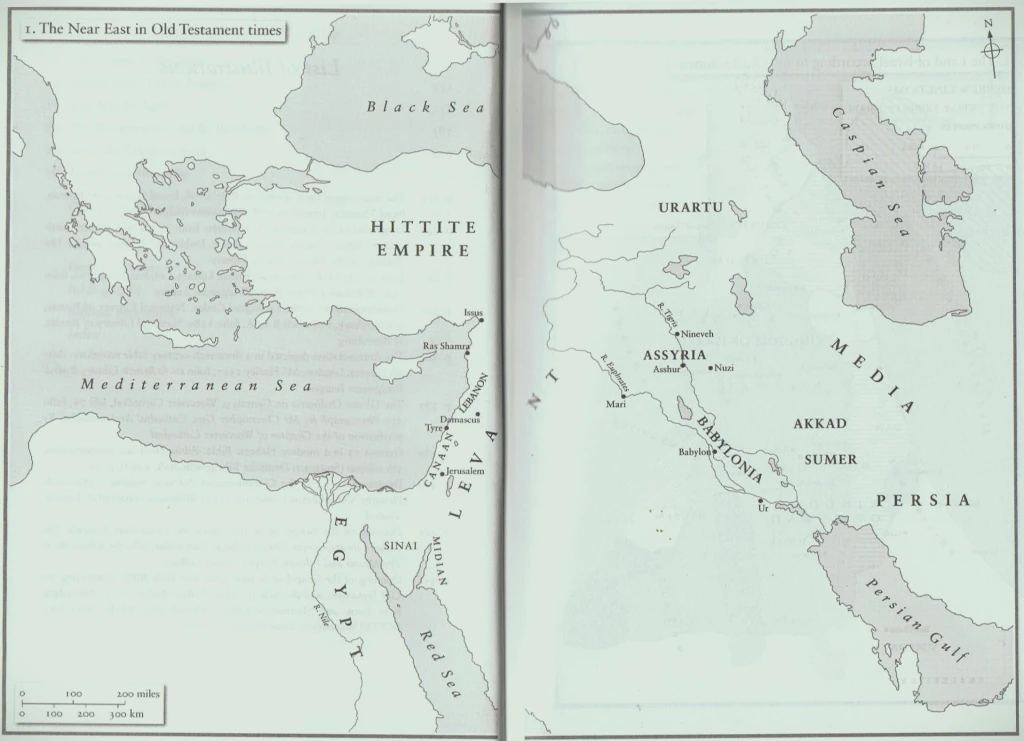
Prophecy as a social phenomenon existed throughout ancient Mesopotamia, and there are many texts about people we would identify as prophets. A prophet is a person (man or woman) who has ‘privileged access’ to the gods because of special psychic powers, and who is consulted by rulers when planning some major undertaking, such as a military campaign, for example. They often took the role of warning or exhorting them either to engage or abstain from warfare. Few, however, went so far as to oppose their king outright, as was the case in Israel and Judah. Prophets in Israel, whom we encounter in the narrative books of Samuel and Kings, match the patterns found in other books from the Middle East, like the texts found at Mari on the Euphrates. Letter Seven from Mari has a prophet opposing the making of a peace treaty by King Zimri-Lim with Eshunna. The Israelite texts, however, differ in two important ways. First, their prophets sometimes talk not of the outcome of one particular battle or campaign, but of the future of the nation or of the ruling dynasty as a whole:
‘Samuel said to him (Saul), “The LORD hath torn the kingdom of Israel from you this very day, and has given it to a neighbour of yours (David), who is better than you”.‘
1 Samuel 15: 28.
In this way, the text explains the fateful division of Judah and Israel. But more significant still, the Hebrew prophets sometimes step out of their role as political advisers to comment on the morals and general behaviour of the kings of the two kingdoms in a manner unparalleled anywhere else in the ancient Near East. Elijah uses his privileged position as a prophet to denounce and condemn King Ahab and his wife, Jezebel, anoints Jehu as king over Israel and even consecrates another prophet, Elisha, whose task is to help eliminate Ahab’s dynasty (1 Kings 21: 20-24; 1 Kings 19: 15-17). These accounts may be greatly exaggerated: our knowledge of the dynastic struggles in ninth-century BCE Israel and Judah is sketchy. But they have seemed plausible to later readers, implying that such actions were credible where important prophets were concerned. Other prophetic figures, such as the earliest of the Minor Prophets, Amos, in the eighth century BCE were also social critics and foretellers of disaster in the entire nation. He appears to have prophesied just as a period of relative prosperity for Israel was about to end, with the rise of Assyria. Far from being consulted by kings, Amos spoke entirely unbidden, denouncing the king of the northern kingdom of Israel, Jeroboam II, and predicting the downfall of his dynasty, or royal ‘house’:
Then Amaziah, the priest of Bethel, sent to King Jeroboam of Israel, saying, ‘Amos has conspired against you in the very centre of the house of Israel; the land is not able to bear all his words. For thus Amos has said,
“Jeroboam shall die by the sword,
and Israel must go into exile
away from his land.”
Amos 7: 10-11.
Amos also denounces not only a sequence of foreign nations (1: 3 – 2: 3) – a standard prophetic task – but also Israel itself (2: 6-8; 3: 10; 5: 21-4). He presents the social misdeeds in Israel (oppressing the poor by various ‘legal’ ruses) as the moral equivalent of the war crimes committed by surrounding nations, and foretells the complete collapse of Israel (Amos 2: 6-8). A similar message can be found in Amos’ younger contemporaries, Hosea (who also worked in the north), in Micah and Isaiah, prophets in Judah, and from the next century in Jeremiah, Zephaniah and Ezekiel. All criticise the corrupt and debased conduct they see around them and prophesy the fall of the nation under the onslaught of the Assyrians and later, the Babylonians. During and after the sixth century (BCE) exile, we find prophets foretelling restoration and peace for the Jews. This is part of the message of later oracles in Jeremiah and Ezekiel, both of whom lived through the disaster of the destruction of Jerusalem and the deportation of the king and ruling classes. This is at its clearest in Zechariah, who worked around 520 BCE when the first few steps were being taken to rebuild the ruined Temple, and who predicted blessings from God upon the renewed nation:
‘Thus says the LORD, I have returned to Jerusalem with compassion; my house shall be built in it, says the LORD of hosts, and the measuring line shall be stretched out over Jerusalem. Proclaim further: Thus says the LORD of hosts: My cities shall again overflow with prosperity; the Lord will again comfort Zion and again choose Jerusalem.’
Zechariah 1: 16-17.
‘Thus says the LORD of hosts: Old men and old women shall again sit in the streets of Jerusalem, each with staff in hand because of their great age. And the streets of the city shall be full of boys and girls playing in the streets.’
Zechariah 8: 4-5.
Most scholars believe that the early Old Testament prophets were ‘prophets of doom’, especially Amos, Isaiah and Micah, whose message was later lightened by later editors. In a passage from Jeremiah 4: 27 we can see this process very clearly:
‘For thus says the LORD: The whole land shall be a desolation; yet I will not make a full end.‘(my emphasis).
The tendency of prophets to teach ‘good tidings of great joy’ is, in reality, a post-exilic development, read back into earlier prophecy. This has influenced some modern uses of the words ‘prophet’ and ‘prophetic’ to refer not to prognosticators but to those who provide a critique of the ‘sins of society’ in the present. The great prophets of Israel were probably not so far removed from the normal role of the ancient prophets of Mesopotamia. Rather, they were politically better informed than most of their contemporaries and therefore able to foresee potentially dangerous events ahead and explain these impending ‘troubles’ as the result of national sin. Whether the prophets thought disaster could be averted is a moot point. Amos seems to hold out little hope for any national salvation, while Hosea predicts at least some kind of restoration after disaster even if not before it. Isaiah is so complex a book that it is almost impossible to know which way the prophet’s own teaching went. With Jeremiah, at least, we can feel sure that he spoke in terms of contingent results from the siege of Jerusalem by the Babylonians: if Judah surrendered they would surely escape actual destruction, whereas if they did not, inevitable carnage would ensue – as it did.
The Book of Isaiah is probably the work whose composition spans the longest time among the prophetic texts. There is no reason to doubt that parts of it genuinely go back to the prophet Isaiah, who worked in Jerusalem in the days of the Kings Jotham, Ahaz and Hezekiah, beginning in 742 BCE and continuing until at least 701, when Jerusalem was besieged by the Assyrian King Sennacherib. The siege is described in Isaiah 36-39, and this narrative was also exported into 2 Kings 18-19. There were several political crises in which Isaiah seems to have been involved, doubling as a prophet and a royal counsellor or civil servant. The first crisis was in the 730s when there was an alliance forged between the northern kingdom of Israel and the Aramaeans of Damascus, which Judah was pressured to join. This is the background of Israel, where we find King Ahaz of Judah tempted to appeal to the Assyrians themselves to resist the threats from the north and Isaiah strongly opposing such a move. Apparently, he argued that the coalition would be snuffed out by the Assyrians anyway, without any need for Judah to draw attention to itself through diplomatic interventions. In the event, Ahaz did not listen to the prophet and approached the Assyrians and the alliance was duly defeated. During the first crisis, at the time of the coalition, he is reported as telling Ahaz:
‘Take heed, be quiet, do not fear, and do not let your heart be faint because of these two smouldering stumps of firebrands, because of the fierce anger of Rezin and Aram and the son of Remaliah. Because Aram – with Ephraim and the son of Remaliah – has plotted evil against you, saying “Let us go up against Judah and cut off Jerusalem and conquer it for ourselves and make the son of Tabeel king in it”; therefore thus says the LORD GOD:
“It shall not stand,
and it shall not come to pass …
“If you do not stand firm in faith,
you shall not stand at all.”
Isaiah 7: 3-7, 9b.
From then on, the Assyrians took an interest in Judah. Following the collapse of northern Israel in the 720s, during the years after circa 710, the remaining small states around Judah were enticed into anti-Assyrian politicking, involving the Philistines and the Egyptians. Isaiah advised King Hezekiah against getting drawn into this, telling him Egypt was ‘a broken reed’ and could do its eastern allies no good. But his words fell on deaf ears, and by 701 the Assyrians had invaded and were at the gates of Jerusalem itself. The details of what happened are obscure. On the one hand, Hezekiah had to pay tribute to King Sennacherib and lost a considerable measure of his independence (2 Kings 18: 13-16). On the other hand, Jerusalem was not sacked, and the Assyrian army withdrew. Stories grew up that God had intervened, slaughtering the Assyrian army, a story retold in the poem ‘The Destruction of Sennacherib’ by Lord Byron (1788-1824), beginning with the line, The Assyrian came down like the wolf on the fold:
For the Angel of Death spread his wings on the blast,
And breathed in the face of the foe as he passed,
And the eyes of the sleepers waxed deadly and chill,
And their hearts but once heaved, and for ever grew still!
And the widows of Ashur are loud in their wail,
And the idols are broke in the temples of Baal;
And the might of the Gentile, unsmote by the sword,
Hath melted like snow in the glance of the LORD!
But Isaiah’s part in all this is unclear: did he counsel capitulation and predict disaster if the king did not listen, or did he (rightly) foretell a great deliverance? Was he a prophet of doom, as many Old Testament scholars have believed, or was he a ‘normal’ ancient Middle Eastern prophet of salvation? The answers to these questions depend on their decisions as to which of the sayings attributed to him in the Assyrian crises are his own words, and which are the work of later editors with theories of their own. The text of Isaiah is a muddle. The name he gave to his son, Shear-jashub, meaning ‘a remnant will remain’, often taken to be a positive prophecy, could also be interpreted as an ill omen. If the people of Judah thought that Ahaz’s policy of appeasing Assyria was likely to result in peace and prosperity, then his prophecy could be heard or read as ‘only a remnant of the nation will continue to exist’. In Isaiah 6: 13, we read:
Even if a tenth part remains in it, it will be burned again, like a terebinth or an oak whose stump remains standing when it is felled.
But if there was indeed a general fear and dread, then it is possible that Isaiah was trying to offer a crumb of comfort by prophesying that at least a remnant would survive, though the comfort at its best would still be somewhat cold. Indeed, in Isaiah 10: 20-23, the two possibilities are juxtaposed, firstly expressing Hope and Comfort, and the second adopting a more threatening tone:
‘On that day the remnant of Israel and the survivors of the house of Jacob will no more lean on the one who struck them, but will lean on the LORD, the Holy One of Israel, in truth. A remnant will return, the remnant of Jacob, to the mighty God.‘
‘For though your peopleIsrael were like the sand of the sea, only a remnant of them will return. Destruction is decreed, overflowing with righteousness. For the LORD GOD of hosts will make a full end, as decreed, in all the earth.’
Taken all together, there would appear to be real sayings of Isaiah in chapters 1-8 and 28-31. But the book seems to have been largely written by scribes who edited and embellished the book, sometimes by writing continuations of the prophet’s own words; sometimes by adding whole blocks of sayings that are anonymous in origin. The extensions belong to the verses added to give Isaiah’s originally negative message a more positive ‘spin’, as with the other, older prophetic books. For example, in Isaiah (2: 2), there is an ‘oracle’ about the universal salvation of the nations:
‘In days to come
the mountain of the Lord’s house
shall be set over all other mountains,
lifted high above the hills.
All the nations shall come streaming to it.
Further additions take the form of several collections of oracles that amount to more than two-thirds of the book. These are of various kinds, the first of which are oracles against foreign nations, also found among the works of other prophets, for example, in Amos 1-2. But in the book of Isaiah, they stretch beyond Israel’s immediate neighbours to Babylon, which was not a power that emerged as a threat until the late seventh century, many days after the death of the prophet. Babylon was important in later thought, containing the taunt that the king of Babylon is like the god of the morning star (Lucifer), who fell from heaven which, combined with other Old Testament and later material about Satan and various demons, resulted in the Christian idea of fall of the devil. The prediction of the fall of Babylon in chapters 13-14 is thus very unlikely to go back to Isaiah himself. The book is therefore a heterogeneous collection of oracles, most reflecting later circumstances.
Secondly, chapters 24-7 have long been recognised as a collection of passages with an apocalyptic tone, dubbed ‘The Isaiah Apocalypse’. These could be as late as the third century or even the second century BCE: they reflect the sorts of ideas found in the Book of Daniel, with judgement in heaven as well as on earth, and even hints of an afterlife, a late arrival in Israel’s literature:
On that day the LORD will punish…
on earth the kings of the earth…
For the LORD of hosts will reign
on Mount Zion and in Jerusalem,
and before his elders he will manifest his glory.
Your dead shall live, their corpses shall rise…
For your dew is a radiant dew,
and the earth will give birth to those long dead.
Isaiah 24: 21, 23; 26: 19.
The prophecy of a literal resurrection may be a symbolic way of talking about the revival of the nation, but there are parallels to be drawn with Ezekiel’s famous ‘valley of dry bones’ (Ezekiel 37) and Daniel’s prophecy that ‘Many of those who sleep in the dust of the earth will awake’ (12: 2). Later in Isaiah, there is a looking forward to the restoration of Israel:
These are the words of the Lord God the Holy One of Israel;
Come back, keep peace, and you will be safe;
in stillness and in staying quiet, there lies your strength.
Isaiah 30: 15-16.
Thirdly, everything in the Book of Isaiah after chapter 40 makes sense only in the period when the Jews in exile looked to the arrival of Cyrus II, the Persian king, to overcome Babylon and give the Hebrews permission for a resettlement of their own Land. Cyrus is referred to by name in 44: 28, and 45:1, and chapters 46-7 present a lengthy taunt against the Babylonians, deriding their gods as nothing but objects of wood and stone that have to be carried around on ‘weary animals’ and contrasting them with Yahweh who, on the contrary, carries Israel (Isaiah 46: 1-4). ‘Second Isaiah’ is a significant section of the Hebrew Bible for several reasons, one of which is that it speaks almost exclusively of the blessings that will come to Israel, and so represents a new departure after the essentially gloomy message of the pre-exilic prophets up to and including Jeremiah. While it does not play down the prophetic idea that the exile had been a punishment for Israel’s sins, it regards that as now lying in the past:
Rouse yourself, rouse yourself!
Stand up, O Jerusalem,
you who have drunk at the hand of the LORD
the cup of his wrath,
who have drunk the dregs
the bowl of staggering…
These two things have befallen you…
– whowill grieve with you? –
devastation and destruction, famine and sword –
who will comfort you?…
Thus says your Sovereign, the LORD,
your God who pleads the cause of his people…
you shall drink no more
from the bowl of my wrath.
Isaiah, 51: 17, 19, 22.
Second Isaiah predicts not only a return of the exiles from Babylonia but a ‘gathering-in’ of Jews from all points of the compass, an influx so great that the walls of Jerusalem cannot contain the new inhabitants. This can be called the first manifestation of Zionism in the Bible:
Enlarge the site of your tent,
and let the curtains of your habitations be stretched out;
do not hold back; lengthen your cords
and strengthen your stakes.
For you will spread out to the right and to the left,
and your descendants will possess the nations
and will settle the desolate towns.
Isaiah 54: 2-3
Critical for later Jewish and Christian theological thinking, Second Isaiah contains the first explicit formulations of Jewish monotheism, the belief that the God of Israel is the one true God and that all other pretended gods are nothing at all: not rivals, not even impotent rivals, but simply non-existent:
Thus says the LORD, the King of Israel
and his Redeemer, the LORD of hosts:
I am the first and I am the last;
besides me there is no god.
Isaiah 44: 6
This was a remarkable claim: Yahweh, who might have been thought to have been defeated by the gods of Babylon, is, in reality, the only God, and actually controls both the Babylonians and Cyrus, their eventual conqueror. It became the bedrock for later thinking about the nature of God in both Judaism and Christianity. All the prophets are implicitly monotheistic, in that they do not reckon with any effective power in the universe other than that of the God of Israel, but Second Isaiah is the first to articulate this so overtly and unambiguously. Third Isaiah is a less unified body of oracles than Second Isaiah and can be divided into several smaller collections. Some of these, for example, 57: 1-13, revert to the older prophetic style of denunciation of the disfiguring of Judaism soon after the resettlement of ‘the Land’ in the 530s BCE. Others, for example, chapters 60-62, continue and even enhance the rapturous tone of the Second Isaiah, speaking of not only exiled Jews but even foreigners streaming into Jerusalem and initiating a new Israelite empire of peace and prosperity for all. This echoes a famous passage from First Isaiah which is probably also from this later period:
In days to come
the mountain of the LORD’s house
shall be established as the highest of the mountains,
and shall be raised above the hills;
all the nations shall stream to it…
He shall judge between the nations,
and shall arbitrate for many peoples;
they shall beat their swords into ploughshares,
and their spears into pruning-hooks;
nation shall not lift up sword against nation.
Isaiah 2: 2-3, 4.
Zion (Jerusalem) as a focus for salvation to the whole world is a particular vision of this early post-exilic period, when hopes were buoyant and the mundane reality of everyday life in a minor province of the Persian empire had not yet asserted itself. Looked at as a whole, the Book of Isaiah is primarily about Judah and Jerusalem in their history, their disasters and triumphs, and only an allegorical interpretation which transforms Jerusalem into the heavenly city of God can remove this impression, for example in Chapter 15. It can be made into either messianic prediction or ethical instruction, but only by doing a kind of violence to the impression it makes on the reader. But the prophecies of the return of the exiles and the ‘gathering-in’ of foreigners do mesh with later ‘Judaeo-Christian’ ideas of the messianic age, even though a singular Messiah is not mentioned. It could also be argued that, as it stands, the Book presents many ethical teachings that are still relevant for later religious readers: from Isaiah’s denunciations of individual and collective sins, corresponding virtues may be derived:
‘Ah, you … who acquit the guilty for a bribe,
and deprive the innocent of their rights!’
Isaiah 5: 23
The prophetic books, like the pieces of which they are composed, are for the most part subversive entities, undercutting the foundations of established religion, especially the state religious cults of the Hebrew kingdoms in pre-exilic times, and the political machinations of the times just before the exile. When the books are read in their entirety, a clear condemnation of what passed for religion in the national communities the prophets addressed emerges. Their predictions of disasters have been mitigated but not cancelled out by the addition of oracles of hope, which speak of how God will ‘comfort his people, in Isaiah 40: 1, but only after divine retribution has fallen on them, but hardly ever suggest that this can be averted. Their condemnations of the collective sin of the nation are never tempered with any sympathetic understanding of what may have led people to behave so badly but remain stark and clear. The prophets were not helpful to the sinning nations: they do not say ‘Peace, peace’ when there is no peace or justice (Jeremiah 6: 14).
Jeremiah received his call to prophesy in 626 BCE, three-quarters of a century after the great Assyrian crisis at the end of Isaiah’s ministry. The book of Jeremiah is formed from large collections of material which reflect the history of the preservation of the people of Judah. Of first importance is the collection of prophecies in chapters 1-25, which contain the most characteristic of the prophet’s oracles, and in chapters 31-33, there is a collection of ‘assurances’ about Israel’s future, which is often called ‘the Book of Consolation’. Most of the remaining chapters contain prophecies against foreign nations. During the long period of political survival as a vassal state of the Assyrian empire, Judah was sustained by a mixture of patriotic pride and religious fervour. In consequence, the belief was encouraged among its people that God could be relied upon to maintain the protection of his temple and of the city in which it stood.
Jeremiah’s first prophecies were warnings that military and political disasters would soon overtake the land. Jerusalem would be besieged and destruction would come at the hands of a mysterious ‘foe from the north.’ But this did not come about and the prophet openly accused God of having deceived him and made him into a laughing-stock. The passing of the Assyrian empire in 612 BCE, with its reputation for brutality and violence, did not go uncelebrated in Judah, but it did not result in any lessening in foreign domination of Judah, as Egypt asserted its overlordship and in 605 BCE control passed to Babylonia. Jeremiah, now debarred from entering the temple, dictated a scroll to be read out by Baruch, his scribe, in which he interpreted his earlier warning of the ‘foe from the north’ as referring to Babylon. In 601 BCE, King Jehoiakim rebelled against the king of Babylon, inviting severe retaliation. This came in 598 when Jerusalem was besieged and forced to capitulate. Jehoiakim died and was replaced by his son, Jehoiachin, who was taken hostage to Babylon, along with several thousand of his leading citizens. Zedekiah, his uncle, was placed on the throne as a puppet ruler.
Jeremiah regarded it as the ‘will of God’ that ‘all the nations’ should serve the king of Babylon (Jer. 27: 1-11). He proclaimed that it was God’s purpose that Nebuchadnezzar should be a ‘world ruler’ and that Judah should submit to him. The alternative was destruction: Serve the king of Babylon and save your lives. Why should this city become a ruin? (Jer. 27: 17). Although it might seem a matter of pragmatic calculation, Jeremiah proclaims it to be religious obedience. In general, we can trace the view put by Zechariah: Not by might, nor by power, but by my spirit, says the Lord of Hosts (Zech. 4: 6). However, the nationalistic prophets raised their voices to encourage further rebellion against Babylon, but Jeremiah received a prophetic message from God that reassured him of the folly of such hopes. (28: 12-17).
Zedekiah paid attention to the prophet’s preaching but then allowed himself to be persuaded into supporting the revolt. In 589 BCE, retribution came and two years later, Jerusalem was besieged and destroyed and Zedekiah was forced to witness the execution of his sons before being blinded and exiled. After the fall of the city, Jeremiah was given the choice of going to Babylon with the exiles or remaining in Judah. He chose the latter and became convinced of the coming restoration of Israel under divine grace which would bring about a new covenant with both kingdoms of Israel and Judah (Jer. 30-31). With the final fall of Jerusalem in 587, the last surviving entity of the old nation of Israel broke up. Many of its people were in exile in Babylon, and some had fled to Egypt and other nations.
A large number of Judaeans remained in the land of Judah to face the pitiful sufferings of the devastated Land and to seek to build up afresh the conditions and means of a stable social and economic life. The appalling conditions are well described in the book of Lamentations, which is not from Jeremiah, but from an anonymous poet, or group of poets, who lived in Judah during the period following Jerusalem’s destruction. Aside from the horror of famine and disease, brought about by the ravages of war, there was the theological problem of finding some divine meaning or explanation for catastrophe. Only by accepting the interpretation given by the great prophets that it was divine punishment for Israel’s sins could sense be made out of the dire situation. But other texts in the Hebrew Bible are more optimistic and encouraging. Later Judaism took to heart the warnings of the prophets, just as Christianity heard their critical messages but saw them as heralds of good tidings, proclaiming a coming new dispensation.
Nevertheless, the prophets in all their original harshness have a distinctive witness to provide, and it does not feed easily into either of the two religions that claim them as part of their Scriptures. Prophecy, as we noted at the beginning of this section, was not unique to the nation of Israel, but no other nation seems ever to have been so deeply indebted to them as Israel. Although many prophets were active during the two centuries stretching from the mid-eighth to the mid-sixth centuries BCE, only a few individuals from them had a lasting influence upon human history. By these few, a significant transformation of the religion of Israel was brought about. They laid great stress on upon their ‘divine call’, and so looked beyond their own intuitions and desires, reflecting on the character and destiny of the society in which they lived. They were not looking for intrinsic laws of cause and effect operating in the affairs of men and states. They were threatening direct divine intervention in judgement of his ‘elect’ people and ascribed their message to divine inspiration, and not to their own thoughts and reflections. It was this awareness of divine authority and commission that enabled them to face rejection, opposition and persecution from their compatriots. It also freed them from any self-interested ‘professionalism’ and from any accountability to the religious and political institutions of Israel.
The prophets stand out for their remarkably detailed knowledge of international affairs and for their awareness of the policies and diplomacy of the Judaean and Samarian courts. They displayed a political interest which assumed from the start that God was deeply concerned about the social and economic realities of life in Israel. They argued that God was exercising a controlling influence upon international affairs and that the two kingdoms of Israel and Judah were being brought face to face with God’s judgments in the form of disaster and defeat. They also prophesied eventual deliverance and victory, but it is the negative aspect of judgment which looms largest in their preaching, making their threats a continued series of rebukes against political pride and military arrogance, and sharply condemning Israel’s complacency. The prophets were convinced that no politics could avert the catastrophe which they had to announce as God’s judgment over his people. They believed that the very conditions necessary to guarantee Israel’s continued existence as a state were indeed the cause of the destruction of the state. Only a people completely dependent upon the God who chose them and obedient to the divine election would still have a chance for survival.
In their descriptions of the coming divine judgments upon Israel, the prophets’ widely used imagery of battle and defeat naturally drew on their knowledge of contemporary military practice. Essentially, however, it was the certainty of judgment, rather than its precise details, that the prophets foretold. Nahum could describe the violent overthrow of Nineveh, although in the event the capture of the city by the Babylonian armies was virtually unopposed in 612 BCE. The moral significance was of far greater importance than the military details of the fulfilment of prophecy so such a situation in no way lessens the religious ‘truth’ of what the prophets said. It was not simply their ability to predict the future, but their power to interpret it, which gave the prophets their greatness. They related past, present and future in a consistent story of God’s concern for his chosen people Israel, and they interpreted this story in keeping with the moral purpose for which Israel was called. They did not therefore exclude other nations from their field of vision. Jeremiah was specifically called to be a ‘prophet to the nations’ (Jer. 1: 5), and this was certainly also true of Amos and Isaiah.
The prophets interpreted Israel’s history from a universal purpose of God for which Israel’s election had meaning. The very notion that Israel should be judged received significance in the context of God’s wider concern for the welfare of all nations, and Israel’s responsibility to be a light and a witness to them. The spiritual fruits of the prophetic interpretation in terms of humility in the face of suffering and a passionate concern for social justice, encourage us to believe that the prophets did preach ‘truth’. This truth is not only applicable to ancient Israel but to a longer chronology and a broader social history. Humanity is continuously concerned with issues of nationalism, social injustice and widespread beliefs in the ‘divinely given’ supremacy of certain nations and ethnicities. By their moral interpretation of the belief in Israel’s national ‘election’, the prophets warned against any selfish or material conception of it. The ‘truth’ of prophecy can speak to us in our own generations, with our national hopes, social needs and problems, and our personal responsibilities to one another. A latter-day ‘prophet’, Martin Luther King, put it like this in his speech when accepting the Nobel Peace Prize:
I believe that what self-centred men have torn down, other-centred can build up. I still believe that one day mankind will bow before the altars of God and be crowned triumphant over war and bloodshed, and nonviolent redemptive goodwill proclaim the rule of the land: “And the lion shall lie down together and every man shall sit under his own vine and fig tree and none shall be afraid.” I still believe that we shall overcome.
Hebrew ‘War Poetry’ & The Psalms:
The ‘historical books’ of the Hebrew Bible are almost entirely in prose, but sometimes the prose narratives contain what seem to be older poems embedded in the story. A famous example is David’s lament over the death of King Saul and his son Jonathan in battle with the Philistines on Mount Gilboa, in 2 Samuel 1: 19-27, with its refrain, How are the might fallen! (this is a statement, an exclamation, for in the previous verse, Samuel has already told us that the king was killed by ‘the bow’):
Your glory, O Israel, lies slain upon your high places!
How the mighty have fallen!
Tell it not in Gath,
proclaim it not in the streets of Ashkelon;
or thedaughters of the Philistines will rejoice, …
From the blood of the slain,
from the fat of the mighty,
the bow of Jonathan did not turn back,
nor the sword of Jonathan return empty.
Saul and Jonathan, beloved and lovely!
In life and in death they were not divided;
they were swifter than eagles,
they were stronger than lions. …
How the mightyhave fallen
in the midst of the battle!
Jonathan lies slain upon your high places.
I am distressed for you, my brother Jonathan;
greatly beloved were you to me;
your love to me was wonderful,
passing the love of women.
How the mighty have fallen,
and the weapons of war perished!
Besides this being recorded in the book of Jashar (Joshua 10: 13) and in the second book of Samuel, there was also the Book of the Wars of the LORD’ (Numbers 21: 14), a book that no longer exists. In addition, some songs have no name or title assigned to them in the text but are regarded by many as likely to be among the older sections of the Hebrew Bible. The major collections of verse in the Bible include the books of wisdom, especially Job and Proverbs, but the classic examples of Hebrew poetry are, of course, the Psalms.
As poetic pieces generally intoned or chanted in worship, Psalms often reflect ceremonies which they accompanied, and even more, the thoughts and beliefs which filled the minds of worshippers. While the setting of many psalms in festal worship is clear, the exact contexts and sequences remain uncertain. However, the psalms do reveal the main ingredients of the festal experience, especially those relating to the autumnal festival in royal Jerusalem. The chief feature of the poetry is called ‘parallelism’; most verses fall into two parts (sometimes three) which are parallel in thought and expression. The wording of the Hebrew poetry is unpretentious since they are ‘lyrics’ set to a specific ‘metre’ or rhythm. Prominent in the experience of Israelite worshippers was the journey, often long, to the central sanctuary in Jerusalem. Hardship was offset by the fellowship along the way and above all by the anticipation of a festival so rich in meaning. There are several psalms which scholars think may have been sung on the journey. Although their place may have been primarily within the festival, such psalms certainly tell us something about the pilgrimage and arrival in Jerusalem.
Underlying all the joyful songs which were sung in God’s honour at the festival was the thought that he was appearing fresh from a victory. The battle he had waged was a poetic reconstruction, serving to commemorate and renew God’s mighty work of creation and ancient salvation. The poetic drama of the festival imagined that all the forces which would harm life had risen up together to make chaos and misery prevail, but God had routed them. This poetic vision embraced both ‘Nature’ and ‘History’. It presented the battle as the mighty deeds of the Creator against dragon-led chaos and a dark and raging ocean, but also as God’s victory over raging nations. Thus, every year the worshippers dramatically reassert the basis of their hope in all aspects of life – the power and goodness of God, the king of all. The symbolic victory was further celebrated by an uphill procession into the temple like the victory march of a warrior king leading captives and spoil, heralded by messengers, and greeted by dancing and singing women (Ps. 68).
Qualifying adjectives in the original Hebrew form are rare: a genitive form is preferred, as in ‘king of glory’, ‘fountain of life’, ‘oil of gladness’ and ‘beasts of the forest’. Traditional vocabulary is often ‘borrowed’ and repeated, and ‘moral’ terms are common, revolving around the notion of covenants and bonds, e.g. ‘steadfast(ness)’, ‘love’, ‘mercy’, ‘truth’, ‘peace’, ‘righteous(ness)’, ‘upright’, ‘saints’ etc. The various ‘moral’ qualities usually refer to faithfulness to covenantal promises or loyalty to a particular partner. The words for states of happiness and well-being also refer to the harmony arising from a sound covenant relationship. A difficulty in translation is that, in themselves, the verbs are ambiguous in time reference; the choice of past, present or future in English depends on the interpretation of the whole context, and sometimes uncertainty persists.
The biblical Psalms do not form a separate genre, as do wisdom, narrative and prophecy, but are a miscellaneous collection of poems of many sorts. The majority are prayers to God either by an individual or a group (or both) and are often classified as laments, though in some cases ‘petitions’ might be a better term. The prayer in the psalm may be made in the name of an individual or the collective interest of Israel. Consequently, it is usual to speak of ‘individual laments’ and ‘communal laments’. But personal laments sometimes transmuted into communal ones with a focus, for example, on the destruction of Jerusalem:
You will rise up and have compassion on Zion,
for it is time to favour it;
the appointed time has come.
For your servants hold it stones dear,
and have pity on its dust.
The children of your servants shall live secure;
their offspring shall be established in your presence.
Psalm 102: 13-14, 28.
In this and in other psalms we are dealing with a personification of Israel, an identification of the needs of the individual with those of the nation. The speaker in Psalm 102 identifies his own calamity with that of his people, and vice versa, and sees no incongruity in referring first to one and then the other. Thus, some psalms have a strong sense of unity between individual and communal suffering, such as Psalm 130:
Out of the depths I cry to you, O LORD.
Lord, hear my voice!
Let your ears be attentive
to the voice of my supplications!
If you, O LORD, should mark iniquities,
Lord, who could stand?
But there is forgiveness with you,
so that you may be revered.
I wait for the LORD, my soul waits,
and in his word I hope;
my soul waits for the Lord
more than those who watch for the morning …
Oh Israel, hope in the LORD!
For with the LORD there is steadfast love,
and with him there is great power to redeem.
It is he who will redeem Israel
from all its iniquities.
Psalm 130: 1-3, 5-8.
It seems that an individual prayer for forgiveness has here been augmented with two verses addressed to the nation. A similar pattern can be seen in Psalms 125 and 128, where blessings are pronounced on righteous individuals and their families, but both psalms end, ‘Peace be upon Israel!’ (125: 5, 128: 6). This oscillation between a corporate and an individual focus becomes more complex when we consider how the Psalms were used in ancient Israel. For example, a careful reading shows that some psalms combine both lament or petition and thanksgiving, such as in Psalm 20: 1-6, which petitions for victory in a coming battle:
The LORD answer you in the day of trouble! …
May he grant you you your heart’s desire,
and fulfilall your plans.
May we shout for joy over your victory,
and in the name of our God set up our banners.
May the LORD fulfil all your petitions.
Now I knowthatthe LORD will help his anointed;
He will answer him from his holy heaven
With mighty victories by his right hand.
Interpreted liturgically, this psalm might actually be two psalms, and between the two there might have been an oracle or blessing from a priest or prophetic figure, assuring the worshippers of a succesful outcome.
Psalm 89 speaks of the humiliation of the king of Judah, in apparent contravention of Yahweh’s promises to him (verses 38-45). This is traditionally interpreted as a reflection on the experience of the exile, with the king in question being Jehoiachan or conceivably Zedekiah, both exiled in the sixth century when Jerusalem fell to the Babylonians. But it may be that no particular Judaean monarch is referred to, but rather that what is meant is the institution of monarchy itself. They would have been humiliated at every New Year Festival under Babylonian occupation, just as they were in Mesopotamia at the akitu festival.There is no reference to any identifiable enemies in the psalm; nothing in the text provides evidence for a specific dating, so that it cannot be read as a reaction to a specific historical event, but may be a reusable text applied to the king in every year. The liturgical texts in the psalms belong in concrete contexts of worship, and may offer us hints for reconstructing those contexts.
The Psalms deal with a wide range of religious issues that are also found throughout the Old Testament. Manyof them reflect on the special relationship between God and Israel, recalling the covenants made through Abraham and Moses and celebrating Israel’s status as God’s ‘chosen’ people. Psalm 74 concludes with a plea for God to remember the covenant and equates Israel’s enemies with the hostile forces he overcame in in the creation:
You divided the sea by your mighty arm;
you broke the heads of the dragons in the waters.
You crushed the heads of Leviathan …
Have regard for your covenant,
for the dark places of the land are full of the haunts of violence.
Do not let the downtrodden be put to shame;
let the poor and needy praise your name …
Do not forget the clamour of your foes,
theuproar of your adversaries that goes up continually.
Psalm 74: 16-17, 20-21, 23.
Psalm 136 records all the great deeds of God on Israel’s behalf, listing the death of the firstborn in Egypt, the exodus, the parting of the Red Sea and the overthrow of Pharaoh and his army, the conquest of Canaanite kings such as Sihon and Og, and the settlement of Israel in the Land. And in Psalm 115 we hear of God will bless Israel and its component parts, such as the house of Aaron (Psalm 115: 12-13). Throughout the Psalter there is an assumption that Israel is the people of God and that its enemies are the enemies of God:
O that you would kill the wicked, O God,
And that the bloodthirsty would depart from me …
Do not I hate those who hate you, O LORD?
And do not I loathe those who rise up against you?
I hate them with a perfect hatred;
I count them my enemies.
Psalm 139: 19, 21-22.
This equation of the speaker’s own enemies with God’s is one of the major problems for modern Jews and some Christians in using the Psalms. It rests on the idea that God has a ‘favourite’ people whom he fosters and protects, but this belief can make God appear indifferent or even hostile towards other nationalities. In both Judaism and Christianity, there have been strains that have accentuated the theme of divine hostility to outsiders, but also others in which the ‘special relationship’ of God with Israel (or, later, with the Christian community) has been seen as a means for extending that relationship to all humanity, in other words, that Israel has been chosen for service, not for privilege. Despite their sometimes vindictive tone towards other nations, this universalist theme is present even in the Psalms. For example, Psalm 148 runs through all the aspects of creation that are called upon to praise God, including:
Kings of the earth and all peoples,
princes and all rulers of the earth!
Psalm 148: 14.
Evidently, there is no sense here that foreigners are excluded from the possibility of praising God. Nevertheless, the psalm still ends:
He has raised up a horn for his people,
praise for all his faithful,
for the people of Israel who are close to him.
Psalm 148: 14.
Although the primary relationship of God in most of the Hebrew Bible is with the people of Israel collectively, many laments and thanksgivings in the Psalter seem to imply a close relationship with the individual even though, as noted above, the ‘I’ in the Psalms can sometimes stand for the group. Psalm 55 (12-13) seems to reflect a situation that can only be that of an individual:
It is not enemies who taunt me –
I could bear that;
it is not adversaries who deal insolently with me –
I could hide from them.
But it is you, my equal,
my companion, my familiar friend.
It might be expected that the individual in distress would link his own suffering to God’s relationship with Israel as a whole, but there is virtually no evidence of this. Except for Psalm 77, the individual laments seldom contain any reflection on what God has done for the nation. The individual is not seen as a subset of the nation but has a relationship with God unconnected to national fortunes. God is therefore not simply concerned with Israel as a collective entity, but but is also concerned for the welfare of individuals. God is pictured as keeping an account of the sufferings of his worshipper, and there is no suggestion that it is part of any larger national ‘ledger’. Many psalms are pleas to be delivered from suffering by a person who believes in his own goodness, just as there are penitential psalms that ask for forgiveness of sins committed. There are traditionally said to be seven penitential psalms, one for each of the seven deadly sins. But Psalm 6 is an individual lament that makes no mention of anything the Psalmist has done wrong and instead asks for deliverance from attacks by enemies. In fact, the Psalms contain relatively little about the sins of the individual who is cast as the one praying, but far more about the iniquity of his ill-natured enemies.
The God of the Psalms is certainly vengeful, but he is also merciful and forgiving to those who pray for forgiveness of sins. Above all, he is thought to be worthy of ceaseless praise, as the many psalms of praise and thanksgiving bear witness. Several psalms offer extended reflections on God’s character, providence and splendour:
Bless the Lord, O my Soul, and do not forget all his benefits –
who forgives all your iniquity, …
who crowns you with steadfast love and mercy …
Psalm 103: 2-4.
The LORD is gracious and merciful,
slow to anger and abounding in steadfast love.
The LORD is good to all,
and his compassion is over all that he has made …
Psalm 145: 8-9.
There is here no distinction between the God of creation and providence, who directs the course of the whole world, giving ‘food to all flesh’ (Psalm 136: 25), the God who chooses and protects Israel and the God who cares for the individual worshipper. These functions are not shared among different Gods, as they might be in a polytheist’s pantheon, but all are aspects of the one and only God. In this way, the Psalms are practically and poetically monotheistic without any need for theoretical discourse or dogma.
Two Psalms – 89 and 132 – are explicitly concerned with God’s promises to David, God’s ‘Warrior King’ and the supposed author of many of them. The first psalm recalls God’s promise to the monarch that he would never forsake his line, but then complains, in verses 38-51, that he appears to have done so. Presumably this reference is to the exile and the loss of the monarchy although, as previously noted, some scholars believe that it is connected to an annual ritual humiliation of the king. Other psalms allude more obliquely to David. Psalms 2 and 110 both played a major role in early Christian writing because their references were thought to be messianic, and the New Testament applies them to Jesus of Nazareth:
The LORD says to my lord,
“Sitat my right hand
until I make your enemies your footstool.’ …
Psalm 110: 1, 4.
Here the king is addressed by God and assured of an exalted, almost semi-divine status. The psalm goes on to refer to Melchizedek, the ancient priest-king of Jerusalem (Genesis 14: 18-20), a reference that is probably meant to signal that the kings of David’s line have inherited all the rights held by the kings of Jerusalem before the Israelites annexed it. The monarch therefore has a high status in the Psalms, and none of them is critical of the institution or those holding the office, in contrast to the books of the Prophets. Closely linked to it is the position of Jerusalem, the ‘city of David’. A number of the psalms glorify it as the citadel of the kingdom, and several refer to the tradition of its impregnability due to God’s permanent protection of it, a belief that is connected to Isaiah’s prophecies. Psalm 48 is the classic exposition of this theme, usually referred to in Old Testament scholarship as the inviolability of Zion:
Then the kings assembled,
they came on together.
As soon as they saw it, they were astounded;
they were in panic, they took to flight.
Psalm 48: 1-2, 4-5.
Psalm 76 refers to Jerusalem more specifically as the place where God broke the flashing arrows, the shield, the sword and the weapons of war (verse 3). We can imagine these psalms being recited just before a battle, or perhaps regularly to reinforce confidence in the royal city. One scholar suggested that there was an annual ‘royal Zion festival’ at which they were sung. The theme of the sacrosanctity and consequent safety of Jerusalem certainly entered the thought of many readers of the Psalms, and this is nowhere more strongly stressed than in Psalm 46, the model for Martin Luther’s famous hymn ‘Ein feste Burg ist unser Gott’; ‘A Safe Stronghold our God is Still’:
God is our refuge and strength,
a very present help in trouble …
God is in the midst of the city; it shall not be moved;
God will help it when morning dawns.
The nations are in an uproar, the kingdoms totter;
he utters his voice, the earth melts.
Psalm 46: 1, 5-6.
These themes cannot be added together as if there were a unified theology of the Psalms, but they overlap a significant number of the themes throughout the Hebrew Bible as a whole. In this respect, we can view the Psalter as the Hebrew Bible in miniature. Christians have tended to read the Psalms, like the other books of what to them is their Old Testament as prophecy, and David, the supposed author of the ‘book’, is often referred to in the New Testament as ‘prophet’. (Acts 2: 25-36; 4: 23-8), and individual verses are singled out as examples of his prophetic powers to foretell the coming of the Messiah in the person of Jesus:
Since (David) was a prophet, he knew that God had sworn with an oath to him that he would put one of his descendants on his throne. Foreseeing this, David spoke of the resurrection of the Messiah saying, ‘He was not abandoned to Hades, nor did his flesh experience corruption’
Acts 2: 30-31 (the quotation is from Psalm 16)
Jews, on the other hand, have tended to assimilate the Psalms to the model of Torah, regarding even verses that address God as essentially divine instruction to Israel. For a modern reader, whether Christian or Jew or neither, the value of the Psalms does not lie obviously in either of these different approaches to their interpretation, but in their coverage of so many biblical themes. They may not be part of a direct divine revelation, but they are deeply revealing about many different aspects of the God of the Bible and of the divine-human relationship, especially concerning the themes of war, justice and peace.




 Andrew James
2 thoughts on “War, Peace & Justice in Judaism: Part One – The Hebrew Bible.”