Preface – A Time for Turning? 1989-2009:
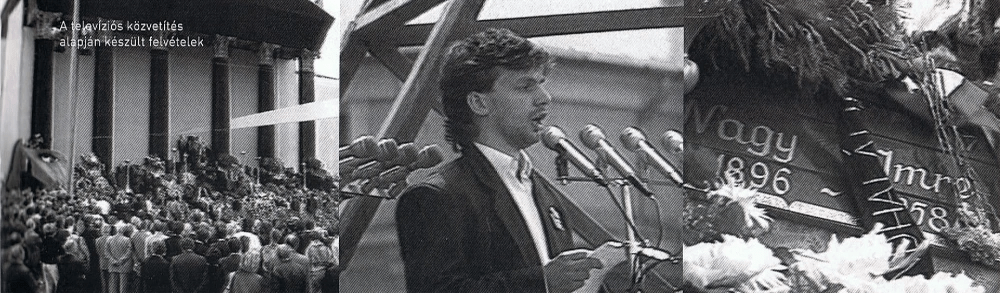
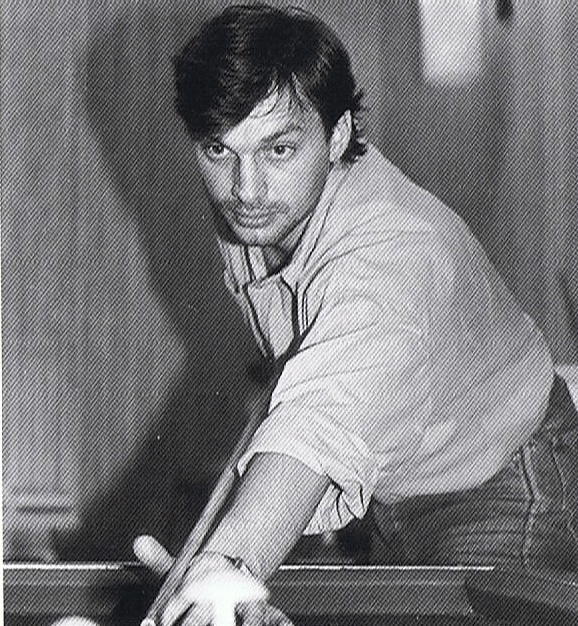
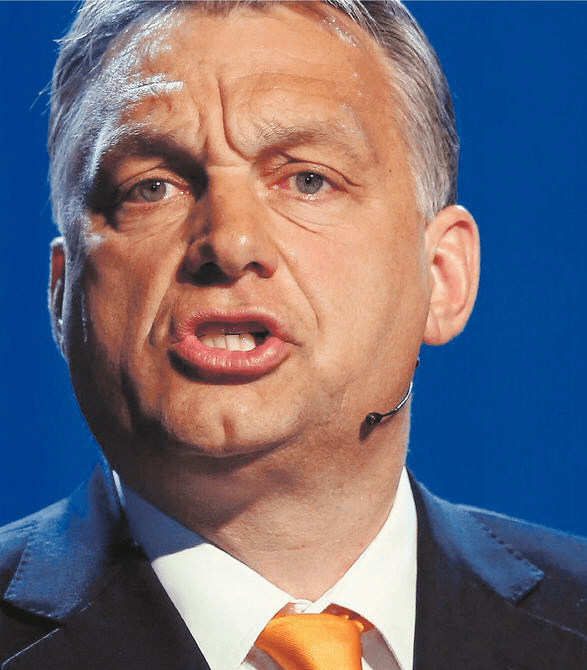
Above and below are photos, taken between 1989 and 2009, by Lobenwein Tamás. In June 1989, Viktor Orbán returned to Hungary from his Soros-sponsored sojourn at Oxford to secure his leadership of Fidesz, then a radical liberal youth party, in advance of the first free elections in 1990. The photo above shows him speaking at the reinternment of Imre Nagy, the Prime Minister during the Hungarian Uprising of 1956, who was executed in 1958.

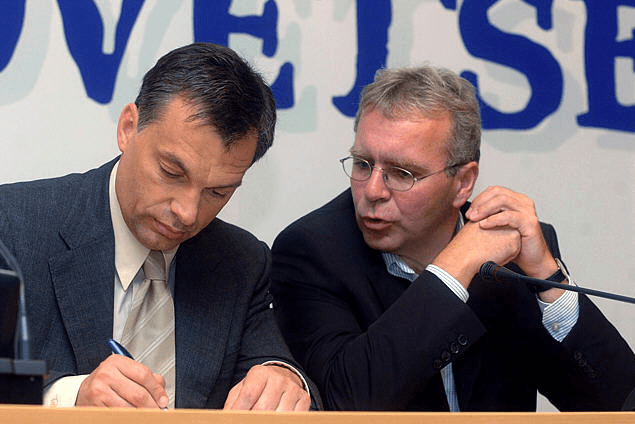
Below, in 2009, is Orbán plotting his pathway back to power by shooting to the right?!
On 12th April 2026, the people of Hungary will go to the polls in a General Election which, at first glance, could represent a significant turning point in contemporary Hungarian history. In 2011, together with my Hungarian wife and two binational boys, I returned to the country to take up residence after fifteen years spent in the UK, including a year in France. I had moved back to the UK from my first sojourn there in 1996, ahead of the General Election in the summer of 1997, when the Labour Party was returned to power under the leadership of Tony Blair and Gordon Brown.
In 2010, this ‘New Labour’ government was replaced by a Coalition government of Conservatives and Liberal Democrats under the premiership of David Cameron. That same summer, the ‘Fidesz’ – KDNP (Christian Democrat) coalition brought Viktor Orbán back to power in Hungary. The financial crisis of 2008 had fundamentally undermined both the New Labour government in the UK and the Socialist government in Hungary. It had also led to financial instability for many families across Europe, including my own.
So, in 2011, we decided to resettle in Hungary on the offer of stable employment for me as a teacher and teacher-trainer at a stage in my career when I was struggling to sustain a sufficient standard of living and quality of life based on my work in the private further education sector in England. It soon became apparent that we had returned to a very different Hungary than the one we had left fifteen years earlier; different not just in governmental policy, but in its constitution and structures of national and local power. On our regular summer visits and in conversations with Hungarian friends and colleagues, we had sensed a shift to a more radical, reactionary, even populist conservatism, which had returned Fidesz to power the previous year, but we were wholly unprepared for its impact on everyday Hungarian life, which we had assumed would continue on its usual apolitical way, the feature of its gradual and generally stable second phase of transition over the previous eight years under the democratic ‘Socialists’ (MSZP).
Fidesz’s landslide election victory in 2010 overrode the earlier errors of its first government of 1998-2002 and its ‘awkward radicalism’ of the 1988-1998 period. It confirmed the widespread belief in his invincibility and the inevitability of his coming to power. He claimed that the governance of the ‘liberal élite’ had failed and that Hungary would now see a new era in which the right wing would govern for the next twenty to thirty years. Speaking of the task of the government, Orbán said:
“The ideal incumbent Hungarian government must be guided by the recognition that the community of Hungarians, and even the Hungarian quality of life, derives partly from the fact that we have a unique way of seeing things, the way we describe, understand, perceive and express the world about us.”
‘Retaining the Hungarian Quality of Life’ (in Hungarian), Prime Minister’s webpage, 17 February 2010.
Hungarian ‘exceptionalism’ & radical conservatism:
Orbán’s advancement of a form of Hungarian ‘exceptionalism’ has been the basis, ever since, of his justification for the replacement of an entire élite by another, a radical nationalist one that would support a ruling régime which he believed had been given him a mandate, not just to implement a specific programme in a conventional sense, but to govern as a leader in the interests of the ‘Hungarian people’ as he defined them and, as necessary, to rewrite the laws accordingly. Fidesz MPs became disciplined ‘party soldiers’, and while they may have been lords of local life in their own small towns, distributing government funds, their local power lasted only as long as they adhered to their party’s iron-clad national policies. One of the main characteristics of Orbán’s use (and abuse) of power, since 2010, has been to keep these policies in continual motion, which means unpredictability not just for rivals, but also for his followers. The construction of a ‘new order’ in large areas of the country was accompanied by a far-reaching replacement of staff in the government apparatus.
Orbán ensured that no alternative power could be accumulated in the hands of anyone, either in the political or economic domains. He kept his personal decisions on appointments secret until they were announced. The Fidesz élite justified this level of personal rule by claiming that Orbán was the exclusive embodiment of Hungarian heroism and arbiter of the national interest through the mandate gained in the successive elections. Orbán trusts people, not institutions, which is precisely why he has entrusted control of the most important state institutions to his own friends, going back before the foundation of Fidesz. Even among the members of the cabinet, there were few who had direct access to the prime minister. Indeed, in the first three terms of the Orbán régime, the rise and fall of politicians thought to be most influential has been apparent to all outside observers. Yet those discarded are carefully paid off, Orbán’s way of buying their silence. Few of those who were once ‘insiders’ have spoken out against him, so that even those who have now become political opponents are viewed more widely with suspicion by longer-term critics of the régime.
There are now many power groups within the Fidesz-managed state apparatus based around ideological, personal or business interests, whose objectives are to increase their influence within the régime. These groups do not coalesce into an internal opposition, however, because Orbán is careful enough to play them off against each other. This level of in-fighting is not confined to politicians and business people, but also extends to judges, whose appointments are within his control. If they resist his demands on constitutional matters, they are not reappointed.
The Legacy of Defending Christendom:
In the summer of 2014, the legacy of the emperor Otto’s defence of Christendom of more than a thousand years ago was clouded by many ironies, not least the fact that his Saxon army had been defending it against the pagan Magyar marauders besieging the gates of the Bavarian city of Augsburg. Viktor Orbán, until at least 2010, had been a self-avowed atheist, but that did not prevent him from doubting, much as Otto had done, whether unbaptised migrants could ever be integrated. Ironically, Otto’s legendary victory over the Hungarians had marked a decisive turning point in the ability of outsiders to penetrate the heartlands of Christendom. Nowhere else had its defenders stood so secure against the mounted archers who had dominated the early medieval battlefields across the plains of Eurasia. Only with the expansion of Ottoman power in the fifteenth century, which twice brought Muslim armies to the gates of Vienna, had Christian Europe faced an existential threat from invaders who did not subscribe to its own faith. After heroic resistance from the Hungarians, followed by a century and a half of occupation, the Turks were eventually forced to retreat. Europeans had then been able to take for granted the impregnability of their own continent, while their own emigrants colonised the world.
Following the Second World War and its creation of waves of migration across and from Europe, large numbers of migrants from non-European countries came to settle in Western Europe, often to help rebuild its shattered cities, supplying them with labour. For decades, the pace and scale of immigration into Germany had been carefully regulated under the gastwerker scheme, when, every September, there was a constant stream of vehicles crossing Hungary from Turkey and other Balkan countries.
As the model of radical conservatism was developed in the United States and other countries in Central and Eastern Europe in the first decade of the new millennium, in Hungary, Fidesz, at first in opposition, innovated in its use of political language, founding new institutions and publications. Although based on the opposition of ‘us and them’, mobilising people to action ‘against the élite’, radical conservatism in the Hungarian context was not actually populism, like the movements emerging in Western Europe. It did not want to put anything in the hands of the people other than the power to vote and protest. However, it soon became clear that while the people could replace the government, they could not replace the neoliberal consensus, which was in line with the European zeitgeist.
But following the international financial meltdown of 2008, the radical conservatives felt reinforced in their conviction that the liberal West was in a state of final, existential crisis. When Orbán returned to power in 2010, his new political lexicon included terms such as ‘the state’, ‘force’, ‘political greatness’, ‘public good’, ‘patriotism’, and ‘national interest’. In the name of the ‘just state’, the government legitimised retroactive and discriminatory legislation with its two-thirds majority. In April 2011, Fidesz used its dominance in Parliament to force through radical amendments to the constitution, a copy of which was then given to every Hungarian schoolchild (see the cover below). It abolished the Republic, declared in 1989, and included redefinitions of the family and other basic, societal institutions. Orbán then set to work with openly anti-liberal policies, believing that the Western European states of the EU and the US were too weak or disinterested to resist them.

Fidesz’s internal transformation was exemplified at the Bálványos (Transylvania, Romania) summer ‘free university’, in 2014, which had once been a forum for open discussion and debate, but by then had already become a one-man showcase for Orbán. In the years after 2010, his ‘philosophical’ lectures at the event attempted to explain his view of the world to his believers. But a pivotal moment occurred in the summer of 2014 when his speech created ripples across the international political arena. The prime minister openly stated that the régime he and his party were building in Hungary did not conform to the traditional liberal ideas of the organisation of European societies. It was to be built, not on a nation of individual citizens, but on a community which would ultimately form an ‘illiberal state’. As examples of this construct, he held up Singapore, India, Turkey and Russia. This was the moment when most of the Western world understood what was happening in Hungary. But they did little to counter or confront it, even within the EU.
The Advent of ‘Illiberal democracy’:
The concept of an ‘illiberal democracy’ does not appear in any of the significant dictionaries of historical or political terms of the late twentieth century. It was originally coined by Fareed Zakaria, the Indian-born American journalist and CNN presenter, in 1997, not as an antonym of the age-old concept of liberal democracy to describe non-Western states that call themselves democratic, but as a description for states where democracy and the rule of the people based on election are not (yet) coupled with liberalism (The Rise of illiberal democracy, Foreign Affairs, November/December 1997). That’s probably why Orbán chose non-European countries as his exemplars, because in 2014, there were no European models to which he could refer. Of course, since then, he has nurtured relationships with Turkey and India, as well as with Russia. In these countries, there are no legal guarantees for the rights of the individual; the separation of the branches of power does not function, and thus, power is not counterbalanced by the necessary institutions, and the rule of law does not guarantee freedom of the press, of speech or of religion. In other words, the classical concept of ‘liberal democracy’ does not apply there.
In his speech in Bálványos, Orbán depicted the system of checks and balances as superfluous and aired the conspiracy theory according to which the surveillance and registration of NGOs was justified because here we are not facing NGOs, but political activists financed by foreign interests. Zsuzsanna Szelényi (2022) has remarked that the speech was surprising even for us in the Hungarian opposition, although we knew that Orbán had already built up the means to maintain excessive power in Hungary. After the second two-thirds majority victory in 2014, the Hungarian prime minister considered the time was ripe to proclaim the centralised state and anti-liberal politics to the international public too.
Although Orbán borrowed the expression from Zakaria, his thinking owed more to the ‘radical right’ ideas of the American political scientist Patrick J. Deneen and the British conservative philosopher Roger Scruton, who both subscribed to the view that the world was in such deep economic, political and moral peril that only a fundamental shift in ideology could save it. Characteristic of both thinkers was that they wrote of liberalism as a unified ideology which, after the failure of the last century’s experiments with communism and fascism, was the only ideology still on the stage at the first decades of the twenty-first century, but which by 2014 had reached a state of terminal decline. However, in reality, the principles of ‘liberal democracy’ were, to most Western political philosophers, both broader and more fundamental in matters of government, acting as an institutional bulwark against any possibility of a return to the authoritarianism and totalitarianism of the mid-twentieth century.
Deneen suggested that a turning back to the rules of community and tradition, and to duty to nation and natural hierarchy, would give an answer to future questions. Scruton argued that authority and law were the essential conservative components and that liberty needed to be subjected to these higher-ranking values. In his view, the role of the state was to protect the existing hierarchy and ensure the traditional social order, emphasising the roles of religion and the family. In the early decades of the twenty-first century, radical conservative outlets began to publish the works of these thinkers and others who lambasted ‘multiculturalism’ and ‘the culture of political correctness’. Orbán met Deneen in person and awarded Scruton a Hungarian state decoration the year before he died. He used their ideas against ‘the liberals’, though he went further in his adherence to nationalism and the centralisation of power in the state, revealing his own fundamental misunderstanding of their terminology.
Immigration, Asylum and the ‘clash of civilisations’:
From 2010, in its first term back in office, Fidesz had tried to distance itself from the xenophobia displayed by the Far Right parties in Hungary, though Orbán himself was, on occasions, caught out using antisemitic and anti-Roma tropes. Jobbik, a party with anti-Roma slogans and intimidating campaigns, was reviving and reinforcing the radical far-right movement, which had previously been considered an oddity and quite weak. However, Fidesz had nothing against Jobbik‘s activity, and this allowed Fidesz to assert that it was not an extremist party, but positioned in the centre. But as Jobbik grew stronger and, restraining its most extreme politicians, moved to a more moderate politics, it became a threat to Fidesz. After the 2014 elections, Fidesz’s popularity began to wane, and Jobbik’s to wax. When, a year later, the first refugees arrived in Hungary from the Middle East, Orbán suddenly switched to an anti-immigration line, and the country was covered with Fidesz posters: If you come to Hungary, you can’t take Hungarians’ jobs. At this point, this was simply a tactical manoeuvre: Orbán decided that with harsh anti-immigration slogans, the party could marginalise Jobbik on the right.
Orbán spoke of a clash of civilisations, while criticising the West for being dishonest about the dangers of immigration, and demanding that they remove the muzzle of political correctness. Opposing the plan for a common refugee policy, in his battle against the European Union, Orbán demanded national sovereignty and turned it into political action. Intercontinental mass migration became an important issue in 2014 because of the number of refugees crossing the Mediterranean and the Balkans to escape the conflicts in the Middle East and North Africa. Many of them were Muslims, and Orbán claimed they were ‘aliens’, since Europe and European culture have Christian roots, ignoring the fact that they were simply seeking to transit through Hungary to Germany to settle there. The following September, however, he doubled down on his assertion as a justification to remove the Syrian refugees from trains and detain them in former army barracks. He portrayed himself as ‘the saviour of European Civilisation’, not just as Hungary’s Christian champion.
The following spring, Orbán began erecting fences along Hungary’s southern border with Serbia, arguing that Europe’s very soul was at stake from these Muslim incursions. It seemed to him that control was beginning to break down, but in reality, he was exploiting the situation for political purposes. The German Chancellor, Angela Merkel, knew full well that the crisis was building as thousands upon thousands of refugees and economic migrants moved through the Balkans and into Hungary during the summer of 2014. The spectacle of these long human ‘caravans’ stirred deeply atavistic fears in Hungary as politicians began to talk of a new Ottoman invasion.
Even in Western Europe, in lands that had never experienced such vast movements of people within living memory, there were many who felt a sense of unease. In Hungary, Orbán used these fears to criminalise the unauthorised crossing of the border, making it practically impossible for refugees fleeing to Hungary to enter the country legally or get refugee status. Hungarian charitable organisations, including churches, were prohibited from giving aid to the refugees, and those offering transport across the country, or even to the nearest railway station, were threatened with prosecution on grounds of ‘people trafficking’.
Although this atmosphere of ‘demographic panic’ fitted the traditions of the Hungarian Right, the systematic siren calls affected a considerable segment of the population. When the Fidesz campaign set up as ‘unnatural’ liberal notions of liberty and humanity, it aimed primarily at its rural constituents in the areas between the southern border and the capital, along the migration route. The anti-Western sentiment placed national self-determination and collectivism before individual human rights and international solidarity. It also reinforced the concept of an authoritarian state. Orbán combined the themes of ethnic nationalism, xenophobia and anti-liberalism, portraying the refugee crisis as a battle between the ideological right and left, opening the way for an influx of ideas, ironically, from the radical right parties in the West.
According to the Islamophobic and anti-immigration rhetoric appearing in multicultural countries in the early 2000s, fighting immigration and multiculturalism served to protect Christian values and the European civilisation built upon them. This went far beyond the traditional Hungarian nationalism of the twentieth century, which had focused on differences with the neighbouring countries within the former Austro-Hungarian empire, chiming in with Orbán’s narrative of civilisational conflict and ‘erasure’, which in turn chimed in with wider notions of a ‘Great Replacement Theory’. This more universal approach made it possible for central and eastern European nationalist parties to forge alliances with Western European populist right and American anti-immigration radicals within the Republican Party.
The refugee crisis of 2015-16:
As the refugee crisis deepened throughout 2015, anti-migration parties across Europe gained ground, and even more liberal, moderate centrist parties shifted towards a more ‘pragmatic’ immigration policy. In Germany, Chancellor Angela Merkel’s response had been the opposite of Orbán’s. Although pressed by ministers in her ruling coalition to close Germany’s borders, she refused. By then, huge crowds of Syrians, Iraqis and Afghans had occupied the railway stations in Budapest, hoping to take a train into Bavaria. Still, the Orbán government held them there until Merkel placed an official request to allow them to cross into Austria and into Germany. Soon, upwards of ten thousand a day were pouring in, and crowds were gathering at the onward railway stations to cheer them; football fans raised banners at matches proclaiming them welcome. The chancellor declared that the scenes painted a picture of Germany which can make us proud of our country. Merkel, even more than Orbán, stood in the shadow of her people’s history, both medieval and modern. She knew where a dread of being ‘swamped’ by aliens could lead, and had also grown up and cut her political teeth in the old DDR. She was never likely to fight a new battle of the Lech.
For Merkel, the only Christian thing to do, faced by the flood-tide of human misery at Europe’s frontiers, was to abandon any lingering notion of the continent as an impregnable Christendom, and to allow it to flood in. Merkel’s father had been a Lutheran pastor, and her mother was no less devout. She had grown up familiar with the parable of the Good Samaritan. Her childhood home had been a hostel for the disabled in which the daily message was: Love your neighbour as yourself. Not just German people. God loves everybody. Merkel, by providing a refuge for the victims of war in the Middle East, was acting out the Christian belief that the spectacle of human beings living like animals was a reproach to every Christian. But she herself refused to justify her decision to open her country’s borders as a gesture of Christian charity. Instead, she insisted that she was merely doing what anyone in her position would do. Her own particular faith, she claimed, was irrelevant. It was with this argument, too, that she sought to parry the objection of Orbán that a Muslim influx into Europe risked the irrevocable transformation of the Christian character of the continent. Islam, in its essentials, she reasoned, was little different from Christianity in cultural terms, and both could belong and co-exist in Germany and Central Europe.
In 2015, therefore, Angela Merkel opened a door that was already ajar. Twenty years earlier, in 1995, the then twenty-six EU countries had signed up to the Schengen Agreement that created a border-free zone. From Portugal, Spain Italy and Greece in the south all the way up to Sweden, Finland and Estonia in the north, by way of Hungary, Slovakia, Austria, France and the Netherlands, this agreement meant that more than four hundred million people within the continent had the right to move freely across it without even having to show a passport, by 2005. One condition was that the member countries had a common responsibility for policing the external borders of the EU. With the exception of the United Kingdom and five other small states, the continent became one vast, borderless zone. This was the realisation of the dream of European harmonisation and integration, intended to augur a new era of peace and unity.
Although all the member states were committed to coperate in the policing of the outer borders of the continent, in reality the task was left to its ‘front-line’ states. Throughout the late 1990s and early 2000s, the states along the Mediterranean were left to deal with the steadily increasing inflow alone. Even after the establishment of an EU border force, Frontex, the southern states continued to bear the burden. An exasperated Italian Interior Minister complained to his counterparts, during the Lampadusa crisis in 2014, that the border along the Mediterranean shoreline was, in effect, the southern European border. Given that the boatloads of people with or without documentation were arriving in Italy and Greece rather than Holland, Germany or Denmark, it was the state in which the asylum seekers first landed that was legally compelled to process their applications. Naturally, since most of the new arrivals were headed to northern European states anyway, it was easier for the southern states simply to grant them transit and send them on their way undocumented. So the Dublin III Regulation, which came into force in 2013, simply incentivised states not to participate in the management of the process at all.
The Schengen Agreement and the Dublin Regulation could only be made to work when inter-continental migration was at ‘normal’ levels, but their effect was catastrophic when the refugee crisis became one of biblical proportions by 2015. The German Chancellor was reportedly ‘touched’ by viewing film of the crowds of Syrians and Iraqis at the train station in Budapest on 1st September as they chanted “Germany, Germany! Merkel, Merkel!” As she went to greet arriving refugees at the stations in Bavaria, she looked relaxed and happy, posing for ‘selfies’ with them taken on the camera phones that had also guided their migration along the Balkan Route and into Hungary. By early September, the Hungarian authorities announced that they were overwhelmed by the numbers that they felt were being encouraged to come by Merkel’s ‘open door’ policy, and declared the situation in their country to be out of control. The Orbán government tried to prevent the operation of this ‘pull factor’ by stopping trains from leaving Hungary for Germany. Around fourteen thousand asylum seekers were arriving in Munich every day; forty thousand over the course of a single weekend. Merkel had her spokesman announce that she would not turn refugees away. Then, as the autumn wore on, the patience of Western Europeans also wore thin. The influx of this untold number of non-Europeans meant that the border controls of individual nation-states began to go up again.
In the spring of 2015, when the first refugees from the Middle East turned up in Hungary, unexpectedly for many Hungarians, the governing party was already prepared with its messages, repeated by Fidesz politicians in Parliament daily:
“These people are flooding into Europe uncontrolled, in order to find a better life for themselves. Hungary does not need economic immigrants!”
Whatever the subject under discussion, government ministers ended up talking about refugees. They deliberately confused the terms ‘refugee’ and ‘immigrant’, portraying both as parasites, dangerous criminals and terrorists. On international satellite TV channels, it was possible to get information about what was happening along the coasts of southern Europe and the Balkan route into Serbia, from authorities and aid organisations, including churches. But in Hungary, it was impossible to reason with friends and colleagues based on established facts. The interpretative framework and conceptual framework forced on the public narrative by the government were hammered home for weeks and made any kind of discourse about the refugee crisis impossible.
The Fidesz government’s poster campaign repeated almost verbatim the anti-Roma slogans that have long been common in Hungary. The Fidesz campaign used the anti-Roma prejudices of sections of the public, based on white welfare chauvinism and outright racism, since most of the refugees were either black Africans or brown Middle-Eastern Arabs. Orbán justified his unwillingness to provide assistance to the refugees with a reference to the Roma population: “We have enough problems trying to integrate our own ‘blacks’. “ But anti-Semitic and anti-Roma views were rather passé ideas in Hungary by this time, as ethnic minorities were ostensibly protected from discrimination by law. Meanwhile, the Immigration Office announced daily the increasing numbers of new arrivals, now simply termed ‘migrants’ or ‘illegal migrants’.
The barbed wire fence erected by the government closed the border with Serbia in the first days of September, and water cannons were deployed to keep the refugees back from the crossing at Rószke. The running battles along the fence attracted enormous attention from the press and international media. While the sense of physical threat was being constantly ‘talked up’ by the pro-Fidesz media, Orbán switched messages, saying that mortal danger threatens the life principles on which we built Europe. From then on, he portrayed the refugee crisis as a civilisational threat to European values, which further stoked up the sense of vulnerability felt by ordinary Hungarians. Fidesz had found a new enemy, the ‘migrants’ (menekút), a term which was a neologism in Hungarian, and from then on the refugee crisis was redefined as one of the transit of unknown aliens who made up a faceless enemy. Before that, the term ‘migrant’ did not have a Hungarian dictionary equivalent, but it soon became the root of a whole set of completely new linguistic constructions, such as ‘migrant-petting’, ‘migrantophile’, ‘pro-migrant’ and ‘migrant pact’. These were sarcastic expressions which were used by Fidesz, in Hungarian, to mock the government’s critics, and were very negative in tone, describing how the opposition was viewed as well as the external critics. The choice of the term was a stroke of genius, particularly since prejudices against the already existing minorities were already incorporated into the public psyche and thereby seen as justifiably part of the developing language war.
Hungary, along with other Central European states, was criticised by the German Chancellor and the heads of the EU for appearing to revert to national boundaries. But Hungary, a country of less than ten million, had been under a considerable strain that was not of its own making. In 2013, it had registered around twenty thousand asylum seekers, and in 2014, that had doubled to forty thousand. During the first three months of 2015, the country had more arrivals than in the whole of the previous year, even if most of them had moved on by the end of the year, by which time the police had registered 400,000. These migrants, almost all heading to Germany or Scandinavia, had been entering Hungary from Serbia or Croatia at a rate of up to ten thousand a day. Most of them had come through Greece and should have been registered there. Hungarian authorities estimated that only one in ten of the total number of incomers had been registered in Greece. As the Hungarians saw it, the Greeks had simply failed to comply with the Schengen Agreement and EU law.
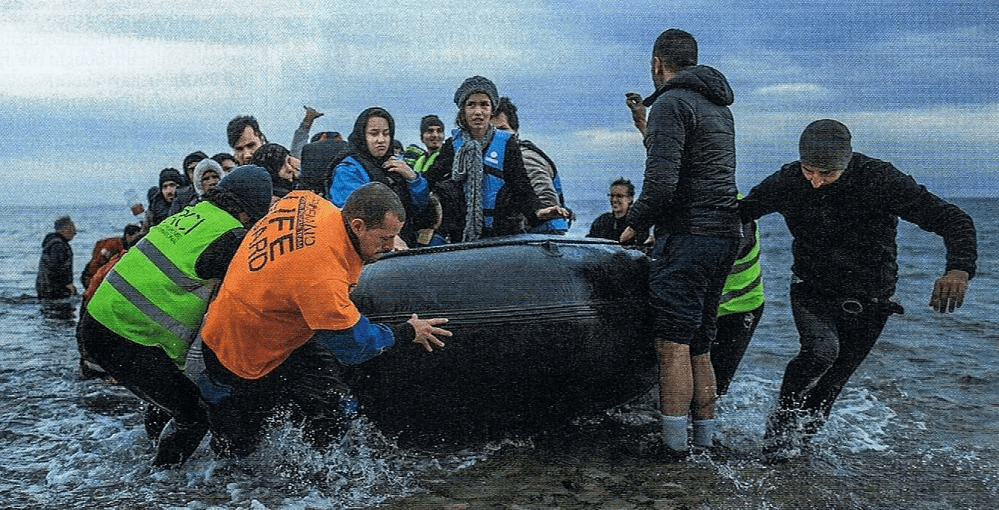
By July 2015, the Hungarian government had completed the construction of its border fence along the Serbian border. To begin with, this simply increased the flow across the Croatian border further west. When another fence along this border was constructed, the flow continued further west, across the border with Slovenia. These fences, stretching over a hundred kilometres, were the only way for the Hungarian authorities to stem the numbers. But they were roundly condemned by the Austrian government, as they dramatically increased the flow of refugees across its country’s borders. When the German Interior Minister, Thomas de Maiziere, announced on 13th September that his country was reintroducing border controls, even members of the German government seemed aghast at the ultimate effect of where Merkel’s motions had led. Hungary then declared a state of emergency and closed its borders with Austria, and Croatia followed suit by closing its border with Serbia. Austria then built a barrier along its border with Slovenia, and this little Jurassic Alpine country constructed a fence along its border with Croatia. Finally, Macedonia constructed a barrier along its border with Greece, the point of entry to the Balkan migrant chain. Effectively, therefore, the ‘errant’ Greeks were forced out of the Schengen area.
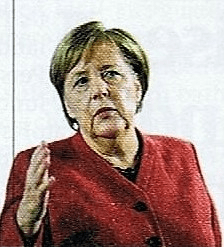
That same month, Angela Merkel made her famous speech when the greatest wave of migrants reached Europe, ‘Wir schaffen das’ (‘We will manage that’). Orbán had found another adversary, and a powerful one, and from then on, he embodied the antithesis of Merkel’s Willkommenskultur. The Hungarian PM forced his European peers to react to his own radical ideas, previously espoused only by extremist politicians. Orbán’s views and methods were now dividing public opinion not only in Hungary but also internationally; he was able to set the agenda for public discourse, though he was unable to dominate European public opinion. As he gained supporters abroad, however, European public opinion changed, and radical right-wing political groups throughout Europe were emboldened.
Every action by Berlin had therefore set off a chain reaction across the entire south-east of the continent. Across the wider continent, there was a growing concern about who the people coming in actually were, since they usually had no documents proving their identity, and whether they posed threats of terrorism, people trafficking and sexual abuse to the native populations. Always more than sixty per cent were young, unaccompanied men. Hungarian officials estimated that around half of the arrivals in early 2015 were from the western Balkans, including Albania and Kosovo. Around half of those waiting for days at Keleti railway station in Budapest claimed to be Syrian refugees, but when questioned by officials, they were found to lack even a basic geographical knowledge about the country they had supposedly just left.
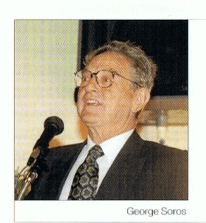
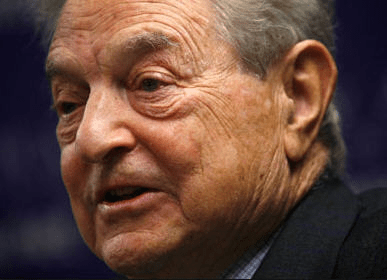
Now, even Chancellor Merkel appeared to be worrying about what she had set in motion, and she pushed ahead with measures within the EU that could take some of the pressure off German towns and cities, which were reporting a rise in crime and social issues arising out of the presence of large gangs of male migrants. Together with the French President, Hollande, and the European Commission, she tried to persuade other member states to sign up to a quota system whereby each country would take in a fair proportion of migrants. Yet from West to East, the states refused. They could see that the numbers they were being asked to take didn’t even reflect the numbers that had already arrived. Some governments were facing elections, and therefore claimed, with some justification, that they were simply reflecting the will of their electorates. A solid two-thirds of those Hungarians polled supported the government in its refusal to agree to the quotas issued by Berlin and Brussels. In October 2015, the expat-Hungarian billionaire financier, George Soros, through his Open Society charitable foundation, supported the call for quotas, and soon found himself under attack from Viktor Orbán as one of a circle of activists who support anything that weakens nation-states. Writing to Bloomberg, Soros said that his foundation was simply trying to uphold European values, which he accused Orbán of trying to undermine. With stark clarity, he went on to say of Orbán:
‘His plan treats the protection of national borders as the objective and the refugees as an obstacle. Our plan treats the protection of refugees as the objective and national boundaries as the obstacle,’
‘Orbán accuses Soros of stoking refugee wave to weaken Europe’, Bloomberg, 30 October 2015.
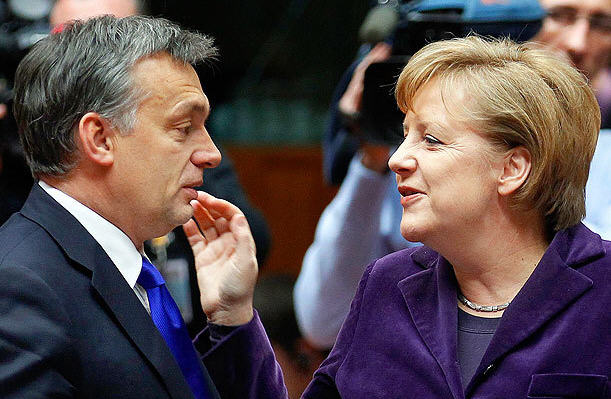
With hindsight, however, Merkel’s view was not quite so much the polar opposite of Orbán’s as it might have appeared at the time. Implicit within the anxieties of the Hungarian prime minister about a new mixed, Islamised Europe was the age-old assumption that Muslims, if they were only willing to accept the supremacy of the predominant religion, might then take their place within the continent’s Christian order. In interviews with the German press, Orbán was more cautious and, rather than conspiracy theories, he focused on the culture wars between ethnicities and religions, and on the security issues posed by uncontrolled migration. He knew that taking a more radical line would be unacceptable to Christian Democratic traditions in Germany.
Nevertheless, residency visas had rarely become so sanctified in Hungary as they were under the Orbán government, although they had first been introduced during the country’s transition from communism in the 1990s, long before it acceded to the EU, and had remained in place despite the introduction of ‘free movement’ across the Schengen area. Merkel, as a former East German, now the leader of a reunited country that had, within living memory, wiped out six million Jews, was understandably anxious not to appear prescriptive about what might constitute European identity. Nevertheless, Germany remained, in its assumptions about how society should be organised, as distinctively Christian. Muslims who wanted to integrate into German society had no choice but to become practitioners of their religion in a pluralistic, multi-faith secular state. The word Islam means ‘submission’, which is required of its followers, so that, as a minority religion in European countries, it had to be moulded and twisted, and transmuted into something very different from what it had been in countries where it formed the majority faith.
This was a process of intercultural integration in Western countries had its origins, not in 2015, but in the heyday of European colonialism and imperialism, a century and a half beforehand. Its progress could be measured by the number of Muslims across the world who accepted that laws authored by mankind might, in matters of the state and civil society, trump those authored by God: that the prophet’s mission had been religious rather than political: that the relationship of worshippers to their faith was essentially something private and personal. In particular, this had been the experience of the Western European countries, not just those with a colonial history, over the previous fifty years or more. Merkel, when she insisted that Islam belonged in Germany just as much, was only appearing to be even-handed. As Tom Holland (2019) has written:
To hail a religion for its compatibility with a secular society was decidedly not a neutral gesture. Secularism was no less bred of the sweep of Christian history than were Orbán’s barbed-wire fences.
Dominion, p.505.
For Merkel, welcoming Muslims to Germany was inviting them to take their place in a continent that was not remotely neutral in its understanding of religion: a continent in which the division of church and state was absolutely assumed to apply to Islam. Only those who believed in the foundation myths of secularism, that it had emerged as though from a virgin birth, that it owed nothing to Christianity, in all its nonconformist, dissenting and separatist denominations, that it was neutral between all religions, could believe that Muslims were being treated as equals. In any case, although the 2015 Hungarian government temporarily found itself dealing with a genuine refugee crisis and had to react to this, the real situation quickly changed after Merkel’s dramatic intervention.
After that, it became an issue about the quotas for the resettlement of asylum seekers that each EU country would accept. In response to the EU’s proposals, Hungary was among several central European states that refused to cooperate in this, and the nativist, exclusivist rhetoric remained long after the crisis had ceased when the refugees left. The main reason that Orbán maintained his anti-immigrant rhetoric over the following years was to further cement his power. As a result of this destructive, anti-EU policy, even after the 2015 crisis waned, it was not possible to form an international refugee and migration policy that reflected the new reality of twenty-first century Europe.
The Impact of Islamists & Secular Satirists in Europe:
Meanwhile, in the older states of the EU, issues of immigrant integration exploded onto the scene. In 2011, in France, a cartoon of Muhammad appeared on the cover of Charlie Hebdo, a popular magazine which followed what its editors and journalists believed were the ‘traditions’ of Láícité – satire, blasphemy and desecration. Catholics had repeatedly been asked to test their faith against it, dating back to the iconoclasm of the Reformation. Now the ‘secular’ satirists turned their attention to Muslims. The following year, another cartoon appeared in the magazine, depicting the prophet as crouching on all fours with genitals exposed. The mockery would not cease, the editor vowed, until Islam had been rendered as banal as Catholicism.
In January 2015, after two gunmen had forced their way into the magazine’s offices and shot dead twelve of the staff, Muslim sensitivities were condemned by a bewildered and frightened public. Why, they asked, when Catholics had again and again demonstrated themselves impervious to all the blasphemies directed against their faith, could Muslims produce such a murderous overreaction to a few cartoons? Yet to ask those questions was to reflect the core conceit of secularism: that all religions were essentially the same, the obstacles to true enlightenment. Three days after the shootings, as world leaders marched alongside millions of demonstrators through the heart of Paris, placards declared solidarity with the murdered journalists: ‘Je suis Charlie’. Tom Holland gave a historical context to the ‘spectacle’:
“It was a powerful demonstration of what had become the West’s guiding orthodoxy: one that had been millennia in the making. Back in the age of Otto, there had been no settling in Christendom for pagan chieftains without baptism. Now, in the age of ‘Charlie Hebdo’, Europe had new expectations, new identities, new ideals. None, though, was neutral; none was anything other than the fruit of Christian history. To imagine otherwise, to imagine that the values of secularism might indeed be timeless, was – ironically enough – the surest evidence of just how deeply Christian they were.”
Holland, loc.cit., p. 507.
Orban’s Second Offensive, 2014 – Turning on the West:
Meanwhile, back in Hungary, following Fidesz’s second successive victory in the 2014 Election, when he came into intensified and continual conflict with his Western allies, Orbán positioned more confrontational politicians in the front line of his government. For example, he placed Péter Szijjártó, an able and ambitious politician, ready to go on the offensive abroad, as his foreign minister, and Judít Varga, a well-trained lawyer, as minister of justice, tasking her with representing the increasingly indefensible policies of the government. This shows that there has been an unlimited supply of ‘experts’ who are willing to subject themselves to the power of the leader to gain a share in it themselves. When, like Varga, they make mistakes, they can be quickly replaced, however.
In 2015, government-funded pundits came forward as experts on migration, demographics and terrorism prevention, flooding the Fidesz-controlled media with their pseudo-academic opinions. Mária Schmidt, a Fidesz ‘historian’, spread the conspiracy theory that someone had set an enormous demographic surplus on an experimental journey. Fidesz established a Migration Research Institute, which churned out op-ed pieces on matters such as the security risks of Swedish immigration, the link between migration and terrorism, and no-go areas in Western Europe. Their ‘analyses’ focused on topics such as the relationship between the progressive parties in Western Europe and Muslim voters. This misinformation spread through Fidesz’s media like wildfire.
The ruling party put across the message that while Fidesz protected the country against dangerous intruders, left-wing parties and human rights organisations were ‘on the side of the aliens’. As the prime minister put it:
“… the Hungarian left-wing … would now welcome the illegal immigrants with open arms. These people, these politicians, quite simply do not like Hungarians, and the reason they do not like them is because they are Hungarian.”
Orbán coupled deep xenophobia with appeals to national sentiment, bringing out the existential fears voiced by the Hungarian radical right-wing parties and their earlier leaders, such as István Csurka, in 1998:
“The ultimate goal is to destroy the Hungarian community. … This time in which we live and … the one to come in the coming century is the era of Migration of Peoples. People with coloured skin living in immeasurable poverty but multiplying by the dozen migrate from east to west, from south to north. International big capital and banks assist in this migration of peoples, because it is in their interest.”
At the time, this view had put Csurka on the far right of the political spectrum. By 2015, it had become the official standpoint of the Fidesz government under Viktor Orbán. In fact, Fidesz went further in articulating the broader ‘great replacement’ theory of the international, radical conservative right. Orbán’s conspiracy theory, in which he accused both Hungarian and the West’s green, socialist and liberal politicians of working together to flood Europe with Muslim immigrants, was unbelievably successful. Many extremist politicians in Western Europe considered Orbán a hero. Geert Wilders, the leader of the Dutch anti-Islam Party for Freedom, said that Orbán has more backbone than all the cowards of the EU combined. In its position of power, Fidesz was able to mobilise the entire apparatus of the Hungarian state to put its radical policies into practice, unlike the populist parties in Western Europe. They were also in awe of his confrontational personality, continually testing the patience of politicians who adhered to the fundamental values of liberal democracy within the European Union. Many of them were repelled by his aggressive and awkward stance, but when he spoke of saving a European civilisation resting on Christian principles, his words rang true for many others on the populist right.
At the start of 2016, Orbán’s party held a ‘referendum’ (in reality, its own postal poll, called a ‘national consultation’, not a constitutional plebiscite) designed to heighten the tension of its fear-mongering campaign and to show that the government’s hard-line anti-quota stance was supported by the majority of Hungarians. The ‘closed’, leading question posed was as follows:
‘Do you want the European Union to be able to mandate the obligatory settlement of non-Hungarian citizens in Hungary even without the approval of the National Assembly?’
Immediately, billboard posters appeared across Hungary, with the slogan, Let’s tell Brussels, so they get the message too! In the first of these, the government projected the anti-Roma hatred onto the refugees, evoking antipathy towards them, in a poster depicting the 2015 ‘exodus’ along the Hungary-Croatia border. Later in the same year, this picture reappeared in the pro-Brexit campaign later, suggesting that the refugees were crossing Europe, headed for the UK as an invading phalanx. The next poster linked the ‘migrants’ to European leaders who had criticised Orbán, grouping them together as ‘Brussels’. The repetition of this attack on Belgium’s capital suggested that EU bureaucrats and liberal politicians formed a homogenous group with its own interests, a kind of ‘deep state’ that was secretly mobilising to subdue and subject the nation-states of Europe to its centralising will. This was an attempt to make the attack on the EU acceptable to the Hungarian people, who had repeatedly shown, in legitimate polls, their support for EU membership.
On 15th March 2016, the Prime Minister used his ceremonial speech for the National Holiday to explain the ‘Eastern European’ wholly different approach to migration, borders, culture and identity. The previous year, when the German Chancellor opened up the external borders of the EU, the other Central European ‘Visegrád four’ (V4) countries had followed Hungary’s lead and made a stand against the quota system. Viktor Orbán told the people gathered in central Budapest that the new enemies of freedom were different from the old Imperial Austrian and Soviet systems of the past; that today, instead of being bombarded, exiled, executed or imprisoned, they were merely being threatened and blackmailed. But, he said, the peoples of Europe have finally understood that their future is at stake. He went on:
“Europe is the community of Christian, free and independent nations; equality of men and women; fair competition and solidarity; pride and humility; pride and humility; justice and mercy.
“This time the danger is not attacking us the way wars and natural disasters do, suddenly pulling the rug from under our feet. Mass migration is a slow stream of water persistently eroding the shores. It is masquerading as a humanitarian cause, but its true nature is the occupation of territory. …
… those who have come here with the intention of changing our country, shaping our nation in their own image, those who have come with violence and against our will have always been met with resistance.”
Quoted by Douglas Murray (2017), p. 229.
Orbán had begun his speech talking about Europe, and ended it speaking about Hungary. Yet, by the time he made the speech, the refugee crisis was already almost over for Hungary, and it was the German government that was dealing with the aftermath of settlement, together with the other Western European countries where the refugees were settling. They had never intended to settle in Eastern Europe, and the few who did were professional people, mainly doctors, who had no intention of attempting to change or shape their host country, least of all through violence. Over the next decade, no incidents of violence by recently arrived refugees were recorded in Hungary.
So why did Orbán use this fictitious ‘threat’ in his speech? Two months later, Robert Fico defended Slovakia’s refusal to take in quotas of asylum seekers as requested by Berlin and Brussels. The seriousness of this refusal was highlighted by Slovakia was about to take over the Presidency of the European Council. Despite the threat of huge fines on countries for every refugee not accepted, the Slovakian Prime Minister refused to back down. But instead of citing practical logistics as the motivation for this, he chose to inflame the ‘culture war’, declaring:
“Islam has no place in Slovakia. Migrants change the character of our country. We do not want the character of this country to change.”
‘Fico sieht keinen platz für Islam in der Slowakei’, Der Standard, 27 May 2016.
The echoes from Budapest to Bratislava were deafening. What followed was a fully-fledged language war, which Fidesz used not only to dominate the agenda but to completely reframe the debate to suit its own position, which it portrayed not as a political construct but as ‘common sense’. As Zsuzsanna Szelényi has recently written (2022), the opposition, struggling to find an alternative language to describe the migration situation, did not adopt the Fidesz frame of thinking. So they failed to figure out an alternative political approach which would have a wide appeal. Instead, they decided to organise a boycott of the fake ‘referendum’, claiming that the question was unconstitutional and extremely manipulative. But the problem remaining for them was that, faced with the steamroller campaign, they could not get their message across. Meanwhile, the Fidesz-controlled television and media continued to show images of masses of migrants pouring across the borders, and to carry fake or exaggerated reports of violence between immigrants and local people in Western cities.
In the end, the completely uneven competition produced an invalid result, because only 41% of voters returned a validly completed form in the poll. By contrast, while the turnout in the official Brexit referendum of the same year was not high, it was enough for both sides to accept the result, a narrow victory for the ‘Leave’ campaign by 51-49%, on a simple, binary question of ‘leave or remain?’ In the Hungarian government’s poll, 98% of respondents said ‘no’ to the EU quotas, but the opposition claimed that the low number of respondents showed that their boycott had worked. But politically, rather than legally and constitutionally, Fidesz had achieved its aim: it had mobilised its own voter base, had kept its anti-migrant propaganda on full volume for months, and had given Orbán evidence to support his uncompromising viewpoint in the European Council. He ‘doubled down’ on the ‘victory’ by announcing that he would initiate an amendment to the Hungarian constitution to meet the demands of the people. This said that a foreign people cannot be settled in Hungary. This was rather vague as a legal measure, but was well adapted to continuing the incitement of xenophobia. The constant hate-mongering campaign, playing on the worst aspects of human nature, was given legitimacy, and its tropes reinforced in society.
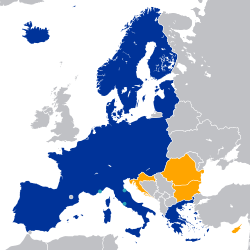
The historical reality was that Eastern European countries, having experienced no mass immigration events during their subjugation in the Cold War period, had retained a sense of ethnic homogeneity that had been changed by post-imperial immigration into the South and West of the continent. The Central and Eastern European states continued in their stand-off with Berlin and Brussels. The ‘Visegrád’ group, comprising the Czech and Slovak Republics, Hungary and Poland, came together to block the quotas, and in December 2017, the European Commission announced that it was suing Poland, Hungary and the Czech Republic at the European Court of Justice over their refusal to accept the refugees allocated to them. To perfect its anti-EU strategy, the Hungarian government conducted regular opinion polls in Hungary and Central Europe, placing opinion articles and advertisements in leading European newspapers.
At home, meanwhile, after Orbán replaced both the government and the leaders of state institutions in Hungary with people faithful to him, the Fidesz Party became indistinguishable from both the government and the state apparatus. In this system, the significance of political parties, Parliament, and lobbying groups has gradually diminished to the point that, by the end of 2025, it had almost disappeared. After five successive Fidesz governments, power has become centralised to an extreme. A new and extensive party élite has been constructed in which a few highly powerful people dominate the business, cultural and social worlds far beyond their official scope of authority. However, although Fidesz has expanded and entrenched its power to an unprecedented degree, the wide-ranging, opaque system is held together by the person of Viktor Orbán. His rule is based upon two factors: heroics and the autocratic exercise of power. The heroic myth is fed by the propaganda myth that the leader never backs down. His carefully designed crusades on immigration, against George Soros (which I have written about elsewhere on this site) and the EU leadership, all serve to show that he can flex his power repeatedly and reinforce the conviction that he is invincible. It is a conviction which stems from his own power and ability.
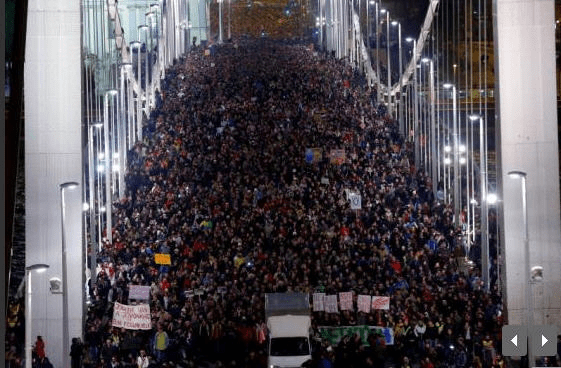
Back in 2009, Fidesz-friendly radical right-wing journalists like Zsolt Bayer had launched a ‘political information campaign’ calling itself the Civil Unity Forum (CÖF), which became widely known for organising giant ‘peace marches’ in support of Viktor Orbán. Fidesz’s most committed supporters registered in local Fidesz offices and were then transported in buses to the capital to demonstrate to ‘protect Viktor Orbán and Fidesz from the attacks of the West’.
The anti-refugee and anti-Soros campaigns that dominated Hungarian public discourse between 2016 and 2018 were the brainchild of Fidesz’s centralised system, which it implemented through the communications and media empire it had built up since 2010, and especially during and since the 2014 election campaign. After 2015, Fidesz reorganised central party and government communications under the direct control of the PM’s Office. A super-agency known as the National Communications Office was established, with several hundred staff which managed the advertising spending of fifteen hundred state institutions and agencies. Also, the government doubled its budget for communications. One of the handpicked polling company’s former staff explained that ‘for campaigns they look for memorable expressions which trigger strong negative emotional reactions in Fidesz and uncertain opposition voters.’ Hence, the references to ‘Brussels’ instead of ‘the EU’, because the former was easier to associate with faceless bureaucrats. The Central European University was routinely referred to as the Soros University, and opposition politicians were left liberals, even if they were not on the Left, or Liberals, either with a small ‘l’ or a capital one. NGOs were henceforth to be referred to by the tag ‘foreign-financed organisations’.
The device by which people employed by the régime, financed and organised by the government party, operated organisations that call themselves independent and mobilise people in line with its interests, became part of the régime’s everyday toolkit. Fidesz outsourced its most vituperative character assassination campaigns to ‘proxi’ organisations around the CÖF. These organisations deliberately confused and misled public opinion, discrediting truly autonomous initiatives. Over its first twelve years in power after 2010, Fidesz created a whole series of government-organised NGOs, funded by rich state companies through the National Cooperation Fund (NEA).
The Vengeful Third Offensive, 2018-21- Stop Soros!:
On the eve of the 2018 elections, the attacks by the Fidesz government on independent NGOs intensified. The CÖF organised a march during which the prime minister made an explicitly menacing speech:
“We did not hate anybody, and we shall hate nobody. … But we shall fight against what George Soros and his network want to do to this country. … After the election, naturally, we shall take our vengeance, a moral, political and legal vengeance.
Viktor Orbán’s ceremonial speech on the 170th anniversary of the Hungarian Revolution of 1848, 15 March 2018; quoted in About Hungary.
Orbán’s calls for vengeance applied to everyone who was not pro-Fidesz, whether native or ‘foreign’, and every opposition supporter, he claimed, was a pro-immigrant ‘Soros’ agent. In 2020, the government announced a ‘change of model’ for nine Hungarian state universities and, without consulting with the leaderships of these universities, it set up a new type of foundation, and gave the boards of these foundations the authority to make executive decisions. These ‘boards of trustees’ were full of people selected and appointed by the government for their loyalty to the governing party.
Both anti-NGO and anti-CEU laws came before the Court of Justice of the EU in 2020, and in two separate decisions, the court found that these laws were contrary to the EU Treaty and required the Orbán government to repeal them. Fidesz then promoted less repressive but still intimidating bills. Even when the laws were passed, the party knew that they infringed both EU legal principles and the Hungarian constitution, and would not stand up in court, but before the 2018 elections, it had wanted to make a show of standing up to the ‘enemy attacking the nation’. During the election campaign, the party notched up the tension with the promise of a ‘Stop Soros’ package, which criminalised the provision of services to immigrants and asylum seekers, and required NGOs working in this field to pay a special tax. As before, this was merely a political PR stunt, because, just as no cases were brought against NGOs for espionage or terrorism, so the state obliged none of them to pay the tax.
However, the series of intimidating measures proved extremely effective, especially on church organisations, like the Baptists, who had been working among asylum seekers, and even succeeded in scaring off some foreign donors. The director of a German foundation’s organisation working in Hungary on reinforcing democratic citizenship told Zsuzsanna Szelényi that they didn’t want to be active in a country where they were not welcome. As she put it, it was incredibly dispiriting to see how the Orbán government was able to assert its will even in circles that had nothing to fear from it. The Open Society Foundation, led by George Soros, moved its headquarters from Budapest, and the Central European University moved to Vienna. But it was unthinkable that Orbán’s cohorts would attack German charitable interests or, in my experience, British ‘guest’ teachers. But this was precisely what happened, sending a message to all NGOs operating in the country, that if even big, wealthy international charitable organisations could be turned away from Hungary, what could be expected from the vulnerable indigenous NGOs under threat?
Like so much else, the Covid pandemic was good for the Orbán régime: the government was able to restrict freedoms to an excessive degree. One motorcade was organised to protest about anomalies in handling the pandemic, at which people did not meet in person, but sounded their car horns, resulting in the police imposing a heavy fine on the organisers.
On 16 November 2020, Viktor Orbán wrote to Ursula von der Leyen to announce that the Hungarian government was prepared to veto the EU budget for 2021-27 and the financial stimulus package to counter the economic recession caused by the Covid pandemic. Orbán threatened this because the majority of other EU countries linked the fund to the norms of the rule of law, which he found unacceptable. Because this decision was not unanimous, legally Orbán had an opportunity to obstruct the creation of the new fund, citing the Hungarian national interest. Poland, then under the rule of the nationalist right’s Law and Justice Party, supported Hungary’s stance.
Most countries were suffering from the economic consequences of the pandemic, and so Orbán’s action outraged them, and even the German Christian Democratic Party, for ten years the ally of Fidesz and its sister party in Hungary, the KDNP (Christian Democratic National Party), which was in coalition with Fidesz. Merkel finally withdrew support from Fidesz/KDNP. This was the point at which, in the mainstream conservative group in the EU, Orbán’s politics finally became indefensible, eroding the EU’s power in the world. Hungary’s Western partners had previously looked on Orbán’s move towards authoritarian government as an isolated and temporary phenomenon, and it was only by the end of the 2010s that they seemed to realise that his move was part of a broader international trend, deliberately aimed at eroding the liberal democratic system within the Union, making Hungary’s continuing membership of the EU a security risk. However, the EU treaty did not allow for it to be expelled or even suspended. Eventually, however, Fidesz was forced out of the EPP into the camp of the Far Right parties. But by then, Orbán had become an inescapable political player on the European stage.
After the Hungarian veto of the EU post-COVID budget in March 2021, just before the critical vote on Fidesz’s membership of EPP, Orbán decided not to hang around to be humiliated, and immediately instructed his MEPs to leave the EPP group. After being forced out of the EPP, Orbán and his party drifted to the political periphery of the EU, where it has remained, disgruntled, ever since. His constant criticism of EU leaders and his continual advocacy of the supremacy of national sovereignty in the name of ‘a Europe of the nations’ were aimed at hampering EU reform and integration processes, as well as preserving the financial conditions that served the prime minister’s autocratic rule at home. In doing so, he succeeded, temporarily at least, in constructing a narrative, based on victimhood and denial, which resonated all over the eastern flank of the EU, and made European institutions more cautious in pushing for reform. Despite being the leader of a small nation of ten million people, he became the symbolic head of the opponents of EU integration. Szelényi (2022, p.353) has concluded that, as the most powerful party grouping, the EPP shoulders great responsibility for Hungary’s departure from European norms.
The striking recovery of the Orbán régime’s influence in the EU over the last five years has been largely due its continual use of the power of veto, the system which gives the smallest countries the right to block the progress of proposals in the EU Council which require a unanimous vote to pass through. The peripheral right-wing régimes, mostly from central-eastern Europe, have thus been able to make the most of the Hungarian ‘two-step’ dance, his double-dealing politics, by dividing the EU. This has led to the call for the veto system to be replaced by QMV (Qualified Majority Voting). However, getting the smaller EU states to back this change will be like ‘getting turkeys to vote for Christmas’.
The Two Tribes of Christian ‘Democracy’, 2021-25:
Orbán’s self-image as a chosen leader and his tenacious personality weighed decisively on Fidesz. From it, he built a political tribe that considers him a hero. So far, for his supporters at least, his charisma has not been eroded by the scandals that have broken out in Fidesz from time to time. They include allegations of corruption and accusations of violence and child sexual abuse. Over time, they have accumulated to the point where they have become impossible to manage, so that the leader’s charisma is fading fast. In 2021, however, those in the party remained optimistic about the future and the forthcoming election. In an interview given just before the election, János Lázár, a long-term Fidesz minister, said:
“Fidesz sticks to a tried and tested system. When the time comes for a successor, the competition will not be about what to replace Orbánism with, but about who will represent it most faithfully, perhaps even against Victor Orbán himself. The prime minister has put together a durable system”.
Zsuzsanna Szelényi commented in her 2022 book, Tainted Democracy, that it was difficult to imagine who in the party élite would become the successor, and that it was far more likely Fidesz would eventually face a grave succession crisis from which a cruel battle for power or for survival would ensue.
On 21st August 2021, during the celebration of the foundation of the Hungarian state, the curious public was entertained by a grand state show called the Feast of Saint Stephen. Public opinion on the show was sharply divided. In one camp were those who laughed at the kitsch choreography of the procession and were disgusted by the government spending vast sums on the show rather than commemorating the thirty thousand who had died of Covid-19 in Hungary. But commentators in the Fidesz media portrayed the event as one of devotion, deeply moving and spiritually uplifting. In their view, the iconic image of the cross projected across the Danube and the Parliament building was a fitting representation of what the government claimed to embody: Christian Hungary.
The ‘Christian Nationalist’ doctrine was first proclaimed by Orbán in his speech at Bálványos in 2018 as a successor to the concept of ‘illiberal democracy’ introduced at the same summer camp there four years previously. That concept had become toxic throughout Europe, exposing Fidesz to increasingly serious criticism from the mainstream conservative parties across the European states in the EPP (European People’s Party) in the European Parliament. So Orbán set about building a new brand, with which he clearly opened up to the radical right-wing forces in Europe. ‘Illiberal’ politics is correct, we just need to find another word for it, he said. In a long speech, he finally found a new slogan:
“Liberal democracy is pro-immigration, Christian democracy is anti-immigration, which is a true illiberal idea. And liberal democracy rests on the basis of variable family models, while Christian democracy is based on the Christian family model, which is also an illiberal idea.”
Speech by Viktor Orbán at the Bálványos (Baile Tusnad, Romania) Summer School on 28th July 2018.
Thus, his redefinition of both liberal democracy and Christian democracy enabled him to make an ideological break with the dominant German and Northern European conceptualisation of the terms within mainstream political thought. This was not an attempt to create a new, coherent political philosophy, however, but a clear act of provocation towards moderate Christian democratic and conservative parties in Europe. József Antall, Hungary’s first post-Communist prime minister from 1990, had based his government on principles that were fundamentally different from those of Orbán in 2018:
‘The only kind of Christian democracy we can accept is one that believes in parliamentarianism, and in its political programme adheres to all the values that we have noted as liberal values.’
Speech (in Hungarian) by József Antall (1991), The Legacy of National Liberalism. antalljozsef25.hu/politikai-beszedek.
Orbán’s Christian identity, by contrast with that of Merkel and Antall, was basically one of a negative creed, which served the purpose of dividing the ‘good’ from the ‘evil’. For him, Christian democracy had nothing to do with Christian belief. In his 2018 Bálványos speech, he produced his reworked definition of the term:
“Christian democracy is not about protecting articles of faith, in this case the articles of the Christian faith. Christian democrat politics means protecting the way of life that arose from Christian culture. … such thngs as human dignity, the family, the nation. … This is the job of Christian democracy, not the protection of articles of faith.”
Orbán (2018), Bálványos Summer School.
As with his 2014 definition of liberal democracy, he completely misrepresented the fundamentals of Christian Democracy and the concept of the nation state, which was the creation of nineteenth-century liberalism, not of Christianity. When Fidesz purposely turned to religion in the mid-1990s to obtain the support of the churches, it was in all likelihood counting on tapping into their community-building capability, which the party leaders may have seen in the Catholic Church. In post-Communist Hungary, the Catholic tradition was not as strong as it was in Poland and elsewhere in central-eastern Europe, but Fidesz was able to build on it, because there was greater social cohesion between members of the same faith in an increasingly atomised society. Fidesz successfully exploited links with both the Catholic and Reformed churches, and later with Baptists and other Protestant evangelicals, who had fallen under the influence of American evangelicals, in a society where only a small minority had viewed religion as an important part of their lives. By the 2022 election, the party had mobilised a broad segment of believers in building political communities, for instance, in setting up the ‘civic circles’ movement. Attending church services became increasingly like attending conservative rallies and the reinstated Church schools were largely controlled and staffed by Fidesz ‘operatives’, especially at senior levels. Many effective, inspirational headteachers, especially in smaller towns and villages, found themselves replaced by those who would more readily toe the national or local political line.
When Orbán proclaimed a ‘Christian state’, devoid of the Christian gospel or dogma, he was able to emphasise criteria important for his own conservative-nationalist politics, using the name of Christianity. This was first on display during the refugee crisis, when asylum seekers were commonly referred to by Fidesz supporters in Hungarian as ‘vagrants’ and ‘vagabonds’, even ‘terrorists’ rather than ‘refugees’. Citing Christian values, Orbán’s government introduced inhuman detention conditions for the refugees to be held in, away from towns and cities. It made it impossible for aid organisations, including faith-based charities, to do their work among the newcomers. Dissenting Christian voices were silenced, intimidated and removed from public roles. Islamophobia had now become the order of the day, as elsewhere in Europe. Having been accused of using anti-Semitic tropes himself on more than one occasion earlier in his premiership, and with Fidesz election propaganda posters continuing to use them against Soros in 2022, Orbán declared:
“We do not believe that everyone who comes from there (the Middle East) is a terrorist, but we do not know, nobody can say, how many terrorists have arrived with the migrants so far. … Even one terrorist is one too many.”
Speech by Orbán before the National Assembly, Budapest, 16 November 2015.
“Anyone who brings masses of unregistered immigrants into the country from the Middle East is importing… terrorism, crime, anti-Semitism and homophobia into the country.”
Orbán’s interview with the German magazine Bild, 25 February 2016.
In these statements, Orbán deliberately manipulated his audiences, including both its conservative and progressive Christians, to pose serious moral dilemmas for them. When, in August 2016, Pope Francis spoke out in favour of providing shelter and succour for refugees, the Fidesz-controlled media stigmatised him as a demented old fool and a communist. In this atmosphere, very few religious leaders in Hungary took their lead from the Vatican in speaking up openly for refugees. In 2017, two Hungarian bishops, one Catholic and one Lutheran, were featured in a short film encouraging people to help refugees as part of a campaign organised by the UN High Commissioner for Refugees, as a result of which they came under heavy attack. In a subsequent interview, the Lutheran pastor, Tamás Fabiny, concerned about what he called “this country’s moral decay”, commented:
“The dam broke. We were overwhelmed by a tsunami of hate coming from deep down. The hearts of many people have hardened, so that they fear not just those of a different religion, but even their Christian brothers and sisters, rejecting even their persecuted neighbours. In mass-produced hate, we do not see the face of refugees, or their Jesus-like aspect.”
kotoszo.blog.hu/2017/07/07.
When, in 2018, Orbán introduced the idea of a ‘Christian state’ and reinforced ‘identity politics’, his aim was to move mainstream European politics away from liberalism. His hard-line conservatism paralysed the debate about a joint European immigration and refugee policy. Orbán accused his fellow members in the EPP (European People’s Party) of betraying traditional conservative values and espousing the views of cosmopolitan liberals. He also proclaimed the founding of a new ‘genuine’ Christian democrat movement. In the summer of 2020, while the whole of Europe was dealing with the onset of the COVID pandemic, Orbán published a sarcastic essay in which he made it clear he was fighting an ideological battle, attacking the liberals as the greatest opponents of the Christian democrats. He argued for just governance based on morals, it was not sufficient to have a liberal-style rule of law, but that absolute values declared by God and the religious, biblical tradition that arises from them were also necessary. What was more important than accountability in the rule of law was governance based on Christian morals, which placed a genuine check on political leaders.
This was a deliberate manipulation of the concept of the rule of law and also contradicted the fundamental principles of the Christian democratic movement, which had always nurtured material communities like the family and professional, religious and other civil bodies. Christian democrats are upholders of the rule of law against autocratic rulers: they stand for the principles of the separation of powers and decentralisation, and reject narrow nationalism. In this context, Orbán’s insistence on absolute values as the basis of the rule of law underpinned his authoritarian régime in denial of Christian democratic principles.
In using Christianity for political purposes, starting in 2010, Orbán provided more financial support than ever before for the main Hungarian churches, both to buy their commitment to his illiberal project and to prove his own Christian credentials. The number of institutions maintained by the churches multiplied; in 2018, there were twice as many children studying in church schools as in 2010. However, the expansion of these was not the result of increased demand but was generated by a series of government incentives. Although money flows freely to churches, they are struggling to serve the institutions of higher education in their charge, because there are not enough religious education teachers, deacons and theologians. The tasks assigned to the churches were determined by the political leaders in the Ministry of Education, and not requested by the churches themselves.
In the years following the refugee crisis and the initial victory of Donald Trump in the USA, Orbán clearly hoped that radical right-wing parties similar to Fidesz would triumph in Italy, Germany, the Netherlands and France and that this ‘tectonic shift’ would result in the breakdown of the European status quo. Orbán believed that there was a ‘nationalist’ uprising underway in the assertion of the sovereignty of nation states against international networks and federal régimes, against believers in the United States of Europe, a struggle that was bound together by an intellectual uprising against political correctness, isolation and stigma. At the beginning of 2017, Orbán wrote on his website that the year would be a year of rebellion, like that of 1848 across Europe.
In the years following the refugee crisis, every known extreme-right theoretician and political leader was invited to speak in Budapest. In 2018, Milo Yiannopoulos, then a leading figure on the British alt-right, began a keynote speech in a Budapest conference on the future of the European Union with the words, The devil is real. And he lies. And his name is George Soros! The speech, regurgitating Fidesz campaign slogans from the 2018 election, urged Hungarians, in irreverent language, to continue their role in the ‘vanguard’ of the Hard Right internationally. Other speakers included Douglas Murray, the provocative and influential conservative writer, and Steve Bannon, Donald Trump’s ‘strategic adviser’. Bannon referred to Orbán as a ‘world political figure’ and soon began to work with the Hungarian PM on building a pan-European alt-right movement. Although this was not successful in 2019, after being forced out of the EPP, Orbán went about finding allies with renewed strength. These included Marine Le Pen and other exponents of the French Far Right, all of whom made the trip to Budapest.
The Cavalry Arrives & the Russians Return, 2022-25:
In 2022, the year of Orbán’s fourth successive election victory, the Conservative Political Action Conference (CPAC) was held in Budapest, featuring the most important radical right-wing politicians in the world. Since then, as Szelényi (2022) has written, Fidesz has learned:
…how to win by representing the interests of a minority but using the votes of deceived citizens in a society embroiled in a culture war. The innovation of Orbánism lies in the way it successfully combined American-style self-confidence with a politics of indignation, transforming ethnic nationalism into an angst about civilisation; delegitimising civil society and in its stead building a strong state; exploiting the narratives of political Christianity in opposition to Christian principles; and renewing the language of populism so that it can be deployed from a position of government.
Szelényi, op. cit., p. 95.
It seemed as though, by the beginning of 2022, the atmosphere of fear of Fidesz had been dispersed, partly as a result of the spirit of unity resulting from the pandemic. Also, organisations under pressure from the twelve-year-old Orbán régime had formed networks of resilience and resistance, of unity and mutual support, encouraging others to stand up to Fidesz’s local rulers and agents. The unexpected crowds who participated in the opposition’s primary election and the weeks-long teachers’ strike in January revealed a more self-conscious and confident public mood. But this turned out to be, in electoral reality, an illusion.
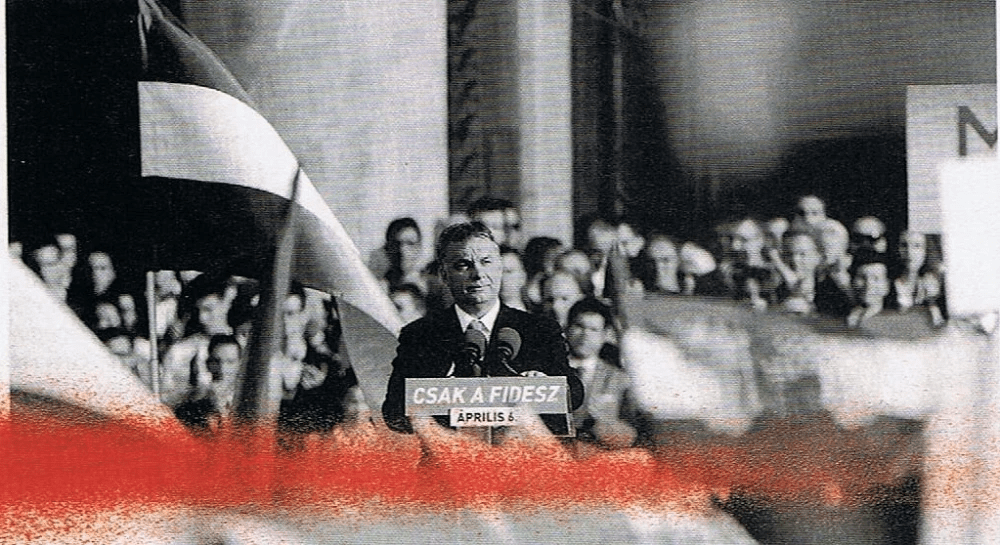
The stakes of the 2022 elections were very high for the opposition, which had already failed badly twice, as well as for Fidesz. After twelve years of expanding its corrupt practices and of constructing its illiberal system, Fidesz simply could not afford to lose. As János Lázár, one of its strategic strongmen, put it, 2022 will see the crudest, wildest, and most important election campaign of the last thirty years. He was correct. The régime was prepared to do anything to maintain political passivity. The middle classes had been pacified through a series of last-minute ‘bribes’, funded by EU concessions, and warnings were sounded that if Fidesz’s power was to wane, every economic gain would be lost. Nevertheless, while an outright opposition victory of the relatively unknown joint candidate, Péter Márki-Zay, mayor of the small southern town of Hódmezővásárhely, had always seemed a remote prospect, there was a realistic hope that Fidesz’s two-thirds constitutional majority would end, and that a more united opposition could act as a strong check on the ruling party’s actions.
On 3rd April 2022, Fidesz won two-thirds of the seats in parliament for the fourth time, and the opposition suffered a dramatic defeat; Orbán’s party secured 135 seats with 54% of the votes. The united opposition gained only 57 seats, with 35% of the votes and a new far-right party, Homeland, using openly racist rhetoric and slogans, entered Parliament for the first time with 5.88%. Behind these statistics, however, it was obvious that Hungary had become polarised between Budapest and a handful of large cities, where the opposition won, and the countryside, which was firmly behind Fidesz. The united platform had fallen through badly, so what had happened and what would the crushed and crestfallen Hungarian opposition do next?
In the summer of 2020, after a long battle, Fidesz had swallowed up Index, the largest online portal of independent journalism in Hungary. This takeover had shocked the public because it was such a large and important medium that its fate determined the lives of not just its fans and readers, but also those who hated it, as well as its rivals in the market. Just as with other independent media, the takeover of Index was given a ‘cover story’. There was no trace of Fidesz having had anything to do with the deals and power games behind it. In fact, however, the events were shaped by Orbán’s closest advisors, including Mária Schmidt and Miklós Vaszily. Index passed into the ownership of Lőrinc Mészáros and was swallowed up in the ruling party’s media empire. This was a familiar story for thousands of professionals working in a variety of institutions – the press, schools, state offices and private companies – who thought that by making compromises, they could avoid giving in to Fidesz’s power élite. It showed that, in Orbán’s régime, there was no middle way between that élite and ‘independent’ professionals who now found themselves serving it.
The findings of a decade of research by the Átlaszó (‘Transparency’) team showed that in the ten years after 2010, all regional daily papers and radio stations became pro-government. In 2022, more than half of the national dailies, online news portals and TV news programme creators were found to be loyal to Fidesz. The only ‘mainstream’ media where the independent press had a majority were the weekly political magazines (80%), but their reader numbers and influence could not be remotely compared with those of TV and online portals. By the time of the General Election in 2022, therefore, a media universe had formed itself around the ruling party, operating as a news factory working in line with its political aims and objectives, using tools of propaganda and fake news and reaching the country’s entire population. A patron-client system evolved, rewarding the press that collaborated with Fidesz and punishing independent journalists. But over the past decade, thousands of independent ethical journalists have chosen to leave the Fidesz media if not already thrown out, at a high personal cost. But there are many more who have found accommodations with the Fidesz media empire, serving up slander and lies.
In the decade to 2022, there were sweeping changes in the global media world. Regardless of politics, mainstream media faced a challenge from radical changes in ownership structures, the shrinking of advertising markets, technological changes, opinion editorials and the ubiquity of ‘fake news’. This shook general trust in news providers and outlets, and discredited professional journalism. This changing environment magnified extreme, demagogic rhetoric and affected politics, catalysing the emergence of populist parties. Orbán’s interventions in the Hungarian media hastened these processes and weakened the ability of democratic systems to protect themselves, to hold freedom of speech and information to be central perequisites of these systems. The pressure exerted on the free media enabled the spread of corruption by reducing public scrutiny.
At the time of the parliamentary elections in 2022, the Hungarian media could no longer be called free, but there was not yet complete censorship. It was not all propaganda, and the media market was not entirely subjugated to government power. The Hungarian media world was a grey zone already and getting greyer by the day. The restrictions on free and independent media, especially TV stations and local papers, resulted in a situation where there was a large number of people in smaller settlements who only had access to government sources. However, research has shown that only ten per cent use these outlets, and that most people consume sources critical of the national government as well. Nevertheless, Fidesz had succeeded in bringing the country into line with twenty-first century autocracies, especially the Putin playbook in Russia. In 2008, when Putin stormed Georgia, Orbán had commented:
‘Nothing like this has happened since the end of the Cold War. The enforcement of brute imperial power politics that Russia has now undertaken is has been unknown in the last twenty years.’
‘Russian military action reminds Orbán of 1956’ (Hungarian), Index, 14th August 2008.
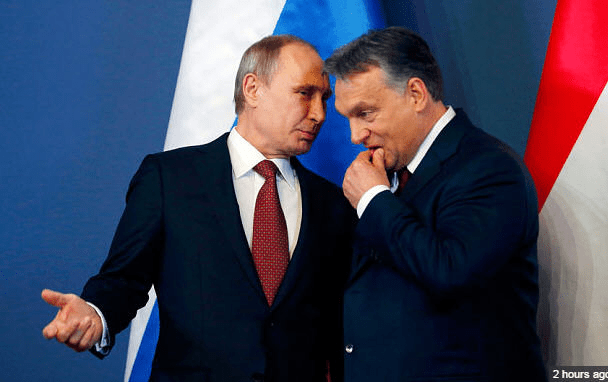
One year later, before he was returned to government, however, Orbán met Putin, and a new chapter in Russo-Hungarian relationships began. Like most Central and Eastern European countries, Hungary gained most of its energy sources from Russia, and they naturally spoke about the future of oil and gas supplies, as well as discussing the expansion of the nuclear power station in Paks, an idea that Orbán had previously opposed. But he now realised that it had the potential to give him ‘leverage over the EU’. However, it was not easy for the Orbán government to build a new, pragmatic relationship with Russia, due to Fidesz’s traditional anti-Russian stance. To create a basis for good relations, it was necessary for Orbán to commit to the construction of new nuclear reactors in Paks, based on a Russian loan, although the country was not at the time in need of them, because the existing power station was sure to provide electricity until 2032.
Although the agreement was kept secret, many in Fidesz looked disapprovingly at what seemed to them to be an attempt to curry favour with Russia. This new, cordial relationship became a sensitive topic after 2014, when Russia annexed the Crimean Peninsula and entered eastern Ukraine. These territorial incursions were sternly condemned by both the EU and the USA, both of whom introduced economic sanctions and suspended bilateral diplomatic relations with Russia. Orbán tried to strike a balance in an increasingly conflicted situation. While he protested noisily against the sanctions, he voted for them repeatedly in the European Council.
Then, in February 2015, Putin came to Budapest with unprecedented security measures in place. The strict security measures blocked Budapest’s transport for an entire day, and the Russian president’s fleet of planes was given a military escort from the border to the capital. Opposition MPs found the whole event outrageous, especially because Orbán was receiving Putin in contravention of the EC recommendation to suspend diplomatic relations with Russia. The Hungarian Parliament and people were never told what unusual matter of state required the President’s personal visit. Putin used the Budapest press conference to call on Ukrainian forces to withdraw from their own city, Debaltseve. The visit could not be interpreted as other than a demonstration of Russian resistance to Western powers, showing that Putin could still manage to be received in splendour when the leaders of the continent were punishing Russia with sanctions.
Orbán’s belief in his own exceptional abilities, that he could keep Russian policy in check, could not be relied upon, because Putin’s politics were shot through with imperialist constructs. Ever since 2005, Putin has always believed that the collapse of the Soviet Union was the greatest geopolitical catastrophe of the twentieth century. In seeking to restore its boundaries, he pursued expansionist politics. Since Putin had always considered NATO as the greatest threat to Russia’s security, Hungary, as a NATO member, could hardly play any other role for him than that of a Trojan horse through which Putin could influence Western organisations and make bilateral deals with various European countries. It was therefore convenient for him to trigger conflicts between Western allies through Hungary. As well as Orbán’s open shift to ‘illiberalism’, his anti-immigration stance served the same end.
After 2014, Hungary pursued contradictory policies with its neighbours, especially Ukraine. It stood in solidarity when Russia invaded Crimea and the Donbas. Still, Orbán then made it impossible to set up a joint commission between the organisation and Ukraine, claiming that the Ukrainian language law then being debated in Ukraine’s parliament infringed the rights of the Hungarian minority in that country. But blocking dialogue between Ukraine and NATO was a disproportionately harsh response to the problems of the language law, which was not a matter within the competence of the military alliance in any case.
Moreover, in September 2021, the Orbán government signed a new fifteen-year natural gas supply deal with Russia’s state-controlled energy giant Gazprom, and gas started to flow to Hungary through the south-eastern TurkStream gas pipeline, which opened at the same time. This enabled Russia to transport gas to the EU by completely bypassing Ukraine, a move that was detrimental to Ukraine’s national interest. This series of events and developments meant that in the years 2014 to 2022, Orbán was acting as a spokesman for Kremlin interests on various platforms. In addition, the long-term energy deals have made Hungary almost completely dependent on Russian supplies for the rest of the 2020s and beyond. Orbán’s decade-long special relationship with Putin inevitably put the Hungarian government in conflict with the EU and its NATO allies when Russia launched its full-scale attack on Ukraine in February 2022. Before Donald Trump’s re-election as US President in 2024, Vladimir Putin’s bloody war against Ukraine clearly showed how restricted Hungary’s room for manoeuvre was in the world. Seeing Orbán’s hesitancy to stand by Ukraine, his Central European allies fell quickly away, and he lost his leading role in the ‘Visegrád’ Group. Hungary’s dependence on Russian energy again gave it little room for manoeuvre within the quickly converging NATO and EU. However, rather than retreating from his support for the Russian dictator, with a week of the election campaign left, Orbán chose to ‘double down’ by describing the Ukrainian President, Volodymyr Zelensky, as an ‘opponent’.
Despite Orbán’s appearance at the Hungarian border with Ukraine to ‘supervise’ the relief effort for refugees from the undeclared war, his Foreign Secretary warned that Hungary did not wish to be ‘dragged in’ to the conflict, and would not permit the transit of military materiel across Hungary. Although the war began after the election campaign had started, and was therefore not an issue raised by any of the parties, Fidesz has continually claimed, without verifiable evidence, that Hungarian public opinion does not support Ukraine. Yet, even in the countryside, where there had been strong opposition to the arrival of Middle Eastern migrants in 2016, in 2022, a Hungarian-speaking BBC Reporter, Nick Thorpe, interviewed local people who told him they welcomed the “white” European refugees. The Orbán government was careful to be seen providing aid to the fleeing Ukrainians, like the other countries bordering Ukraine to the west. Four years later, Fidesz are claiming that Ukraine, not Russia, is Hungary’s enemy, and that it is attacking Hungary’s energy supplies through the deliberate sabotage of pipelines across Ukraine from Russia. Again, there is no evidence to support this accusation.
In every public utterance, members of the government have said that the only aim of the Russian relationship is to gain economic advantages for Hungary, and it was purely a matter of good business. But the political nature of the relationship was all too apparent. Orbán had already taken quite a few leaves out of the book of Putin’s ‘illiberal’ system. The systematic bolstering of a national business élite linked to him, to the detriment of other players in the economy, was clearly modelled on Putin’s ‘oligarchy’. Following its landslide 2022 election, it quickly became clear that the ‘illiberal’ Hungary experiment would continue. Many laws curtailing democracy, such as the ‘foreign-funded organisation’ law serving to denigrate and intimidate NGOs, or the so-called ‘anti-paedophile law’, which is actually homophobic, are all similar in language to Russian legislation. The huge media empire linked to Fidesz systematically used fake news disseminated by the Russian government media.
Into 2026: Common Ground & Centres of Gravity:
Fidesz has continued to block independent media and NGOs (non-governmental organisations) from scrutinising the Orbán government. They have divided and polarised society through the use of emotive rhetoric and the spread of false information to undermine democratic processes and ethical journalistic practices. However, new social media have emerged in the last decade, and especially since the election of 2022: online portals, podcasts, and self-printed news reviews, trying out the latest technologies and formats, have enabled a resurgence of independent journalism and its sources of information. The ‘YouTube’ channel Partizán, for example, has grown into a multi-channel television channel in just a few years. Journalists are constantly trying to find ways to share news about real events that are accurate and interesting. In the current election, this has helped to restore some balance in the output of governing and opposition parties. The issue of press freedom in Hungary remains a matter of grave concern, but any significant change can only be expected when Fidesz’s predominance has ended, and future governments can establish a stronger system of checks and balances.
In its most recent attempts to retain ideological control over Hungarians, Orbán’s philosophical allies have tried to merge the politics of the European far right with those of the American ‘alt-right’, but, as Szelényi points out, these are, to date, contradictory. Both exaggerate the significance of the ‘woke’ left wing, with its radical identity politics, to legitimise their own polar opposite views in a strategy with which disaffected voters can be detached from the common centre ground of traditional politics. Yet, for this strategy to be successful, it needs to be underpinned by a coherent ideology, and Fidesz no longer has one. Hungarian voters are certainly patriotic in outlook, but they show little interest in Trumpism, which, in any case, has recently been largely discredited both at home and abroad. They and their European allies certainly need no lectures in patriotism from the current US officers of state. Orbán himself has shown that his politics is not forged by ideas, but in the heat of battle. His strength over the past fifteen years has been his ability to link his rhetoric to any given crisis at any given moment. However, he has now run out of crises with which to deflect criticism from the long-term decline of the Hungarian economy and rapidly deteriorating public services, which, in voters’ current views, are the everyday business of good government.
Across Europe, and across the Atlantic, the ‘cost of living crisis’ is the order of the day for all governments. Hungary is no exception, and ordinary Hungarians know this. Yet Orbán has persuaded many Hungarians that, through his government, Hungary could become special again, after more than a century in the shadow of ‘great powers’. This filled his supporters with a resurgent spirit of national pride, but, in achieving this, he rekindled longstanding and deeply-held grievances against ‘the West’ by saying that it did not recognise or respect Hungary’s unique culture and qualities. In the 2020s, the economic situation was exactly the same as the one that Hungary experienced during the 1920s and 1930s, with the country lagging behind the West, a situation which was not easy to change without external interventions. The country may have continued to develop, but during the time of the Orbán régime, the dynamism with which this took place in the first two decades of the twenty-first century fell short of that of other countries in the central European region. Integrating these countries into the EU was useful for Western European states, but it was for the central Europeans themselves to determine their own economic and social development. The fundamental task of the Hungarian political élite is, through astute governance, to make the most out of the country’s resources and to get the best out of the capabilities of its people. The anti-Western stance adopted by Orbán and Fidesz is simply a cover for their own failure to deliver on that task. Going against the centre of gravity of the West led to failure for Hungary on three separate occasions in the last century. It is now facing a fourth catastrophe. As Zsuzsanna Szelényi puts it:
“It seems that we Hungarians have not yet managed to learn who we are, and accept what we are capable of. My generation, the Fidesz generation, who earned freedom in our youth, and for whom the sky was the limit, have failed. Our children must begin the difficult task of extricating themselves from the illusion of lost greatness.”
Tainted Democracy (2022), p. 156.
My younger son, like her children, has grown up in the last four years and gone to university, unlike hers, in Hungary. He is now on the verge of leaving Hungary for Denmark, which, perhaps ironically, has managed immigration without abandoning liberal democracy. The irony in Hungary is that the country’s major population problem now is not immigration but emigration. Like Zsuzsanna, we don’t know whether he sees any prospect of using his languages and knowledge in Hungary. Due to ‘Brexit’, he is unlikely to return to the UK, as we had hoped before 2016. He has lost interest in the land of his birth that he left with us a decade ago.
Meanwhile, the ‘years of abundance’ have ended, and Hungary has faced a series of recessions since 2008, which have threatened more repressive government policies and greater conflicts with Hungary’s western partners, whose hand-outs in the form of EU grants have helped it to avoid bankruptcy, to date. The dissatisfaction of lower-class social groups has so far been defused by consigning them to a status of utter dependence on the state for their subsistence on ‘work for welfare’ schemes. Conscious, autonomous action has not yet resulted in a critical mass that might prevent the further erosion of democracy. The Hungarian ‘opposition’, at the end of the first twelve years of the Orbán government, was facing a challenge greater than ever before, and four years later that challenge still remains. It has tested various strategies to meet it, all of which have failed dramatically. There are now hopes that the Tisza Party, under the more charismatic leadership of Petér Magyar, a former Fidesz insider, is about to end the years of fragmentation and petty rivalry, but it may be that it will simply emerge from the April elections as a stronger, but still loyal opposition to Orbán, who will then remain a serious challenge to the mainstream European leaders. Russia’s war in Ukraine has provided a wake-up call for Europe’s complacent political élite, and a warning that history is not a purely linear process. The turbulent geopolitical tectonics now taking place are shaking visionary thinking so that the EU still lacks coherent, strategic policies with which to push back against the Hard Right autocrats both in the bloc and in the Euro-Atlantic alliance.
Even if Fidesz loses in the forthcoming election, the revival of Hungarian democratic practices will not be easy. The sixteen-year entrenchment of illiberalism will pose serious obstacles for any future Hungarian government. Hungary’s recently trodden path has been quite unique, so we do not know if a restoration of liberal democracy is possible, or if we will face an alternation of democratic and autocratic governments, so that the system will remain ‘hybrid’ in nature, and the country will be pulled into further decline. But the renewal of a genuine form of democracy is not inconceivable, in the context of Hungary’s long fight for national autonomy and individual liberty. Most Hungarians reject the culture wars being foisted upon them and agree that Hungary is inseparably bound to the West. In this historical context, these generations, born in this new millennium, can continue to push Hungarian liberty and democracy forward, overcoming the reactionary forces of nationalism and autocracy.
Sources:
Zsuzsanna Szelényi (2022), Tainted Democracy: Viktor Orbán and the Subversion of Hungary. London: Hurst & Company.
Tom Holland (2020), Dominion: The Making of the Western Mind. London: Abacus.
Douglas Murray (2018), The Strange Death of Europe: Immigration, Identity, Islam. London: Bloomsbury Publishing.
Lobenwein Norbert (2009), ’89-’09: a rendszerváltás pillanatai (‘Moments from the Change of Order’, taken by Lobenwein Tamás), Budapest: Volt Produkció.
 Andrew James