Emerging from the Judaistic readings of the Hebrew Bible, which I dealt with in part one of this two-part article, there was a strong biblical tradition, both in the Psalms and among the prophets, from the earliest to the latest times of the kingdoms of Israel, that the Lord is a god who puts an end to war:
From end to end of the earth, he stamps out war:
he breaks the bow, he snaps the spear
and burns the shield in the fire.
Ps. 46: 9
I will break bow and sword and weapon of war
and sweep them off the earth,
so that all living creatures may lie down without fear.
Hos. 2: 18
There is also a strong biblical tradition, especially in the Psalms, that the people of God should rely on him rather than on military power:
Some boastof chariots and some of horses,
but our boast is in the name of the Lord our God.
They totter and fall,
but we rise up and are full of courage.
Ps. 20: 7-8.
A King is not saved by a great army,
nora warrior delivered by great strength.
A man cannot trust his horse to save him,
nor can it deliver him for all its strength.
The Lord’s eyes are turned towards those who fear him.
Ps. 33: 16-18.
The Lord sets no store by the strength of a horse
and takes no pleasure in a runner’s legs,
his pleasure is in those who fear him,
who wait for his true love
Ps. 147: 10-11.
There is, in fact, among both the prophets and psalmists, a strong commitment to peace, the Hebrew word for which is shalom. It does not just mean an absence of war: Jeremiah fulminates against those who cry ‘Peace! Peace!’ where there is no real peace to be found. The Hebrew word comes from a root meaning ‘wholeness’; it indicates a total condition of well-being. So, for instance, Micah (4: 3) spells out the state where swords shall be beaten into ‘mattocks’. The exaltation of this form of comprehensive, universal peace runs throughout the Hebrew scriptures. The psalmist calls on his people to turn from evil and do good, seek peace and pursue it (Ps. 34: 14). This exhortation for Israel to make peace is repeated in subsequent psalms:
Let me hear the words of the Lord:
are they not words of peace,
peace to his people and his loyal servants
and to all who turn and trust in him?
Deliveranceis near to those who worship him,
so that glory may dwell in our land.
Love and fidelity have come together;
Justice and peace join hands.
Psalm 85: 8-10.
Pray for the peace of Jerusalem:
“May those who love you prosper;
peace be within your ramparts
and prosperity in your palaces.”
For the sake of these my brothers and my friends,
I will say “Peace be with you.”
For the sake of the house of the Lord our God
I will pray for your good.
Psalm 122: 6-9.
‘Peace be upon Israel’ is a refrain from some of the later psalms, and there is no more astonishing passage than the messianic vision of Isaiah (9: 6-7). His ‘Prince of Peace’ is almost an oxymoron, a contradiction in terms. Plenty of idealised heroes were ‘God-like’ in battle, but a ‘prince of peace’ was something entirely new. A vision of permanent peace had crept up on a previously warlike, conquering but small developing nation with a primary concern for its territorial integrity and security at a time of increasing power and competition between the various empires of the region.
Allegorical Interpretations of the ‘Old Testament’:
Most modern theologians have been careful not to read their beliefs back into the texts of the Hebrew Bible. But some early Christian writers, from the writers of the gospels, acts and letters in the first century to Origen, writing in the third century CE, thought of the texts of the Old Testament as containing veiled allusions to the sacrifice of Christ. This is just as the Letter to the Hebrews implies: The ‘old covenant’ in its mundane form had ceased to be, but it lived on in the realm of symbol. For these writers, especially Origen, Judaism had ceased to have any independent validity, and Christianity had taken over its texts and read them as foreshadowing the true reality, that of Jesus Christ. That was what most of the ‘Christian Fathers’ believed, and it presents a problem today for Christians who wish to affirm the continuing importance of Judaism, and/or to reject the idea that it has been superseded by Christianity. What Origen calls the ‘spiritual’ reading of the Old Testament, decontextualises it as far as John Barton is concerned. He points particularly to a striking instance of this in Origen’s discussion of Psalm 137:
O daughter Babylon, you devastator,
Happy they shall be who pay you back
what you have done to us!
Happy shall they be who take your little ones
and dash them against the rock!
Psalm 137. 8-9.
Origen sought to interpret this seemingly brutal verbal attack by the psalmist in symbolic terms:
Blessed is the one who seizes … the little ones of Babylon, which are understood to be nothing else but these ‘evil thoughts’ that confound and disturb our heart. For this is what Babylon means. While these thoughts are small and just beginning, they must be seized and dashed against the ‘rock’ who is Christ (1: Corinthians 10: 4), and by his order, they must be slain, so that nothing in us ‘may remain to draw breath’ (Joshua 11: 14).
Origen, Homily on Joshua, 15: 3.
‘Allegorisation’ removes a scandalous aspect of this psalm, its apparent encouragement of killing babies in times of war. Still, the price is that the psalm is lifted out of its ancient Israelite context and brought into the Christian ambit with its concentration on ‘spiritual’ matters. There were those contemporaries of Origen who opposed allegorising readings of the Old Testament and making some passages less offensive to Christian sensibilities. Still, they lost the debate and Origen was able to build on their defeat and undertake a systematically allegorical reading of the Old Testament texts. However, as Barton points out, Rabbinic interpretation of the Psalms is seldom as allegorical as Origen’s, though it rests on the desire to see the whole as containing a religiously acceptable meaning. While killing babies was, and is, clearly unacceptable, the psalm does offer a counter-weight to the metaphors of peace in other later psalms. Despite the promises of Isaiah, the psalmist’s hateful language about Babylon demonstrates that the people of Israel were still weeping bitter tears by its waters, or rising up in Judah.
Peace, Justice & Prophetic Visions:
The call of the Prophets for social justice remained largely unheard in their own times. Political and economic ‘necessities’ prevailed, although they were not to avert catastrophe. Both Jeremiah and Amos pointed out how the nation of Israel would be punished for their sins of commission and omission:
“Their houses shall be turned over to others,
Proclaim to the strongholds in Assyria
and to the strongholds in the land of Egypt, and say,
“Assemble yourselves upon the mountains of Samaria,
and see the great tumults within her,
and the oppressions in her midst.”
“They do not know how to do right,” says the Lord,
“those who store up violence and robbery in their strongholds.”
Therefore thus says the Lord God:
“An adversary shall surround the land,
and bring down your defences from you,
and your strongholds shall be plundered.”
Amos 3: 9-11.
Did God’s purpose for his people fail? Is brotherhood as a standard of relationships among people an unattainable ideal? In the following passages from Psalm 72, the Psalmist looked to a future in which justice and politics would no longer be irreconcilable. He could hope for this future because he trusted God to carry out his intention. But when he prayed for the just king, was this any more than simply a pious wish? Or did he know that God would achieve his purpose through his people:
Give the king thy justice, O God,
and thy righteousness to the royal son!
May he judge thy people with righteousness,
and thy poor with justice!
Let the mountains bear prosperity for the people,
and the hills, in righteousness!
May he defend the cause of the poor of the people,
give deliverance to the needy,
and crush the oppressor! …
May all kings fall down before him,
and all nations serve him!
For he delivers the needy when he calls,
the poor and him who has no helper.
He has pity on the weak and the needy,
and saves thelives of the needy.
From oppression and violence, he redeems their life;
and precious is their blood in his sight. …
May his name endure forever,
and his fame continue as long as the sun!
May men bless themselves by him,
all nations call him blessed!
Psalm 72: 1-4, 11-14, 17.
In the well-known prophetic vision of a ‘new world’ in Isaiah, the God of Israel becomes the guarantor of human hope. The expectation of a better future could fill the suffering with consolation and confidence:
“For behold, I create new heavens and a new earth;
and the former things shall not be remembered or come into mind.
But be glad and rejoice for ever in that which I create. …
No more shall there be in it an infant
that lives but a few days,
or an old man who does not fill out his days,
for the child shall die a hundred years old,
and the sinner a hundred years old shall be accursed.
They shall build houses and inhabit them;
they shall plant vineyards and eat their fruit.
They shall not build and another inhabit;
they shall not plant and another eat;
for like the days of a tree shall the days of my people be,
and my chosen shall long enjoy the work of their hands.
They shall not labour in vain,
or bear children for calamity;
for they shall be the offspring of the blessed of the Lord,
and their children with them.
Before they call I will answer,
while they are yet speaking I will hear.
The wolf and the lamb shall feed together,
the lion shall eat straw like the ox;
and the dust shall be the serpent’s food.
They shall not hurt or destroy in all my holy mountain,
says the Lord.”
Isaiah 65: 17-18, 20-25.
A similar passage earlier in Isaiah (11: 1-9) ends poetically with: for the earth shall be full of the knowledge of the Lord as the waters cover the sea. Isaiah’s vision of peace thus connects closely with God’s reconciliation with the whole of his ‘created order’, his oikoumene in Greek.
Warfare in Ancient Israel:
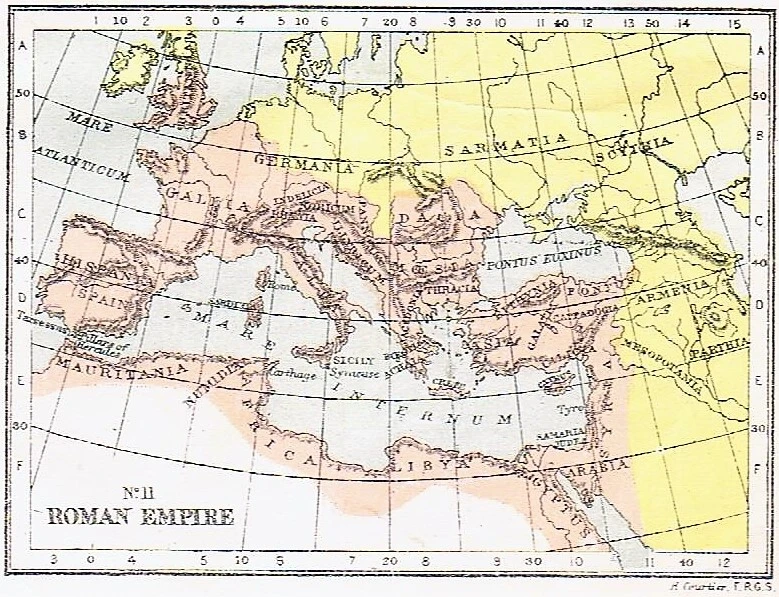
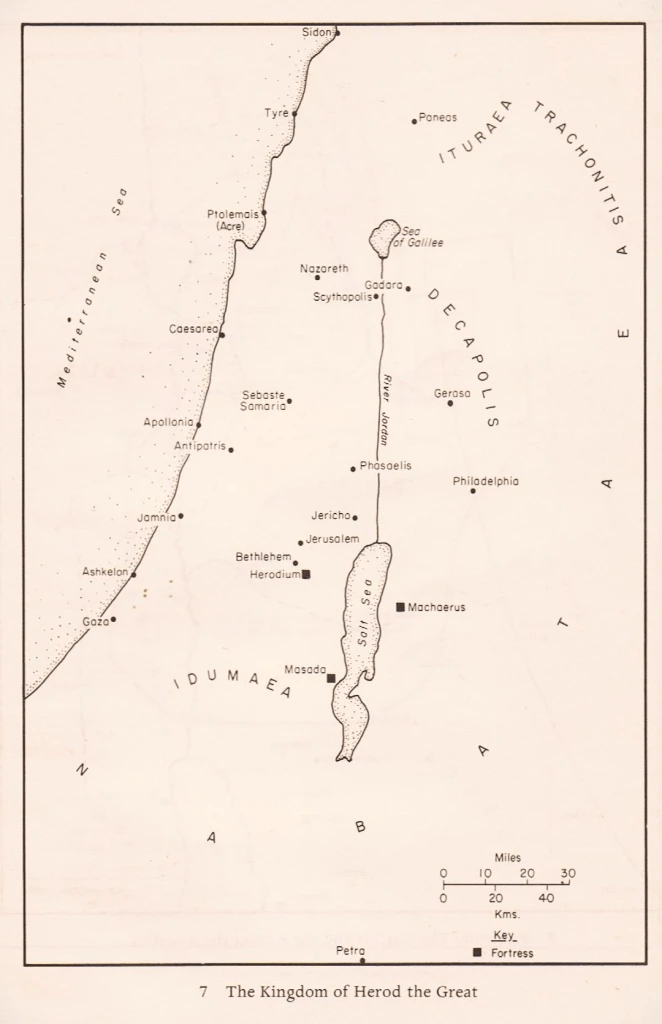
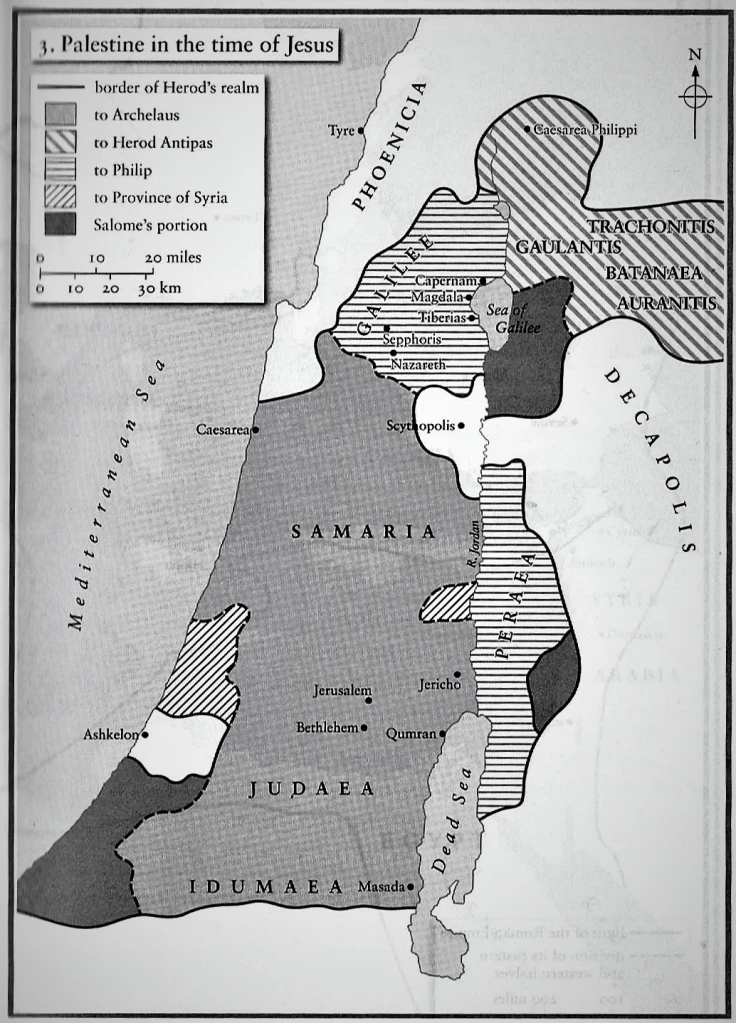
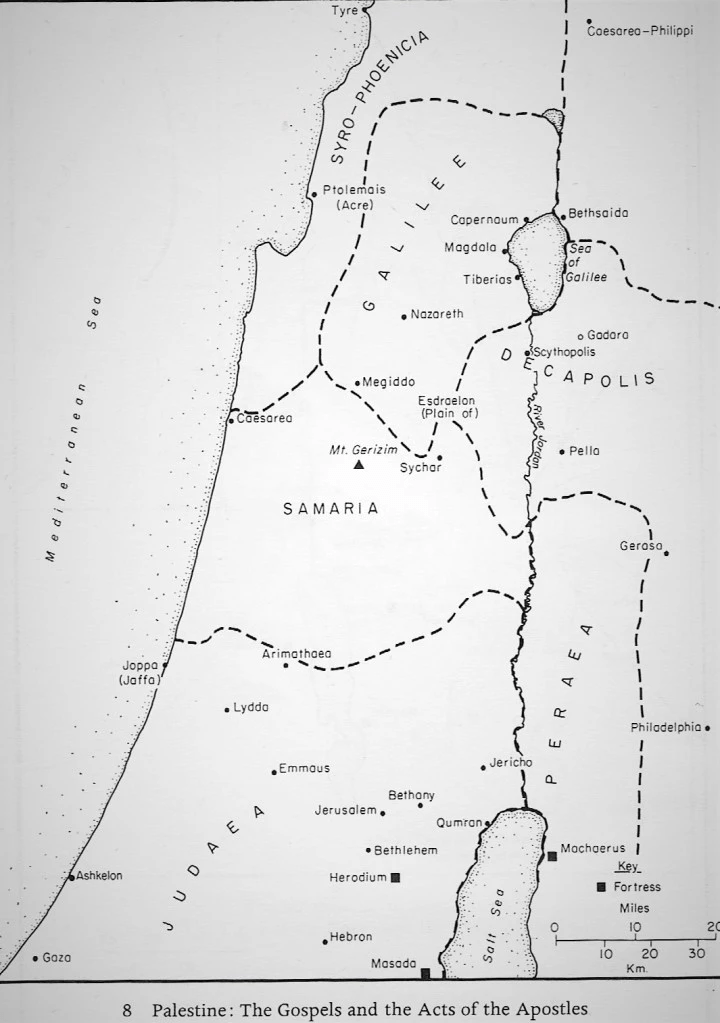
The first standing army in Israel was established by David. Before this, the different tribes contributed their levy of soldiers when the need arose. In command of the whole army was the Captain of the host, and there were captains each in charge of divisions of a thousand men, and further divisions of hundreds, fifties and tens. The army consisted only of infantry until Solomon introduced chariots. In New Testament times, Roman soldiers were stationed in Palestine as in all other parts of the empire. Four legions, including the famous Tenth Legion, were stationed in the province of Syria, which included Palestine (see the map below). Local men from the provinces might also serve in the Roman army. A Centurion was in command of a ‘century’, or a hundred soldiers, six of whom made a ‘cohort’ or ‘band’ of which there were ten of these in a legion. A Quaternion was a guard of four soldiers.
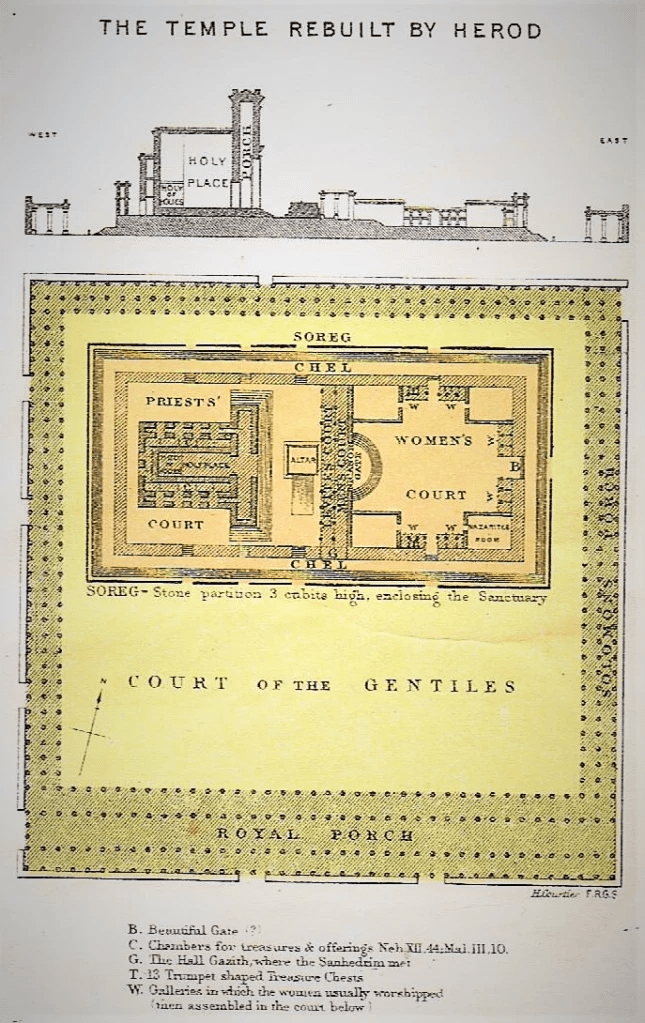
The Temple Guard was a small force of Levites under the control of the Captain of the Temple. It was effectively a Jewish police force which carried out guard duties at the temple, but could also be used by the Jewish authorities to make arrests (as in the case of Jesus of Nazareth, outside Jerusalem as well as within) and to execute punishments. Weapons included slings, darts and javelins, bronze or iron-tipped spears; short, dagger-like swords with iron blades (sometimes two-edged); bows and arrows, strung with ox-gut and battle-axes, clubs of hard wood studded with iron spikes. Until the Romans, the armour of ordinary soldiers, including coats of mail, helmets and shields was made of leather and wood (senior officers had bronze).
Siege weapons included battering rams, catapults and other artillery. Josephus, the Jewish historian, describes the Romans as catapulting stone missiles weighing half a hundredweight over a distance of four hundred yards. Building a ramp of earth to the height of the walls of fortifications or, as at Masada, Herod the Great’s palace on the rock fortress in the wilderness by the Dead Sea, constructing a wooden tower on which to mount siege engines were two other methods of siege warfare that developed in later centuries. In Masada, Herod’s aqueducts enabled huge underground cisterns to be stored for the hundreds of people living at his palace and later by the Zealot resistance. Fortifications were an important factor in the siting and construction of every city, town and large village. Cities in key positions, like Megiddo, commanding the pass in the Carmel Range, would have extra strong fortifications. Fortified cities often had double walls with projecting bastions and angled entrances. The walls were usually constructed of stone (occasionally brick), while the gates were wooden, though sometimes covered with bronze.
Resistance to Greece & Rome – Model ‘Freedom Fighters’?:
Judas Maccabeus, facing the Greek armies, exhorted his men:
“Do not be afraid of their great of their great numbers or panic when they charge. Remember how our fathers were saved at the Red Sea, when Pharaoh and his army were pursuing them. Let us cry now to Heaven to favour our cause, to remember the covenant made with our fathers, and to crush this army before us today. Then all the Gentiles will know that there is One who saves and liberates Israel.”
1 Macc. 4: 8-11.
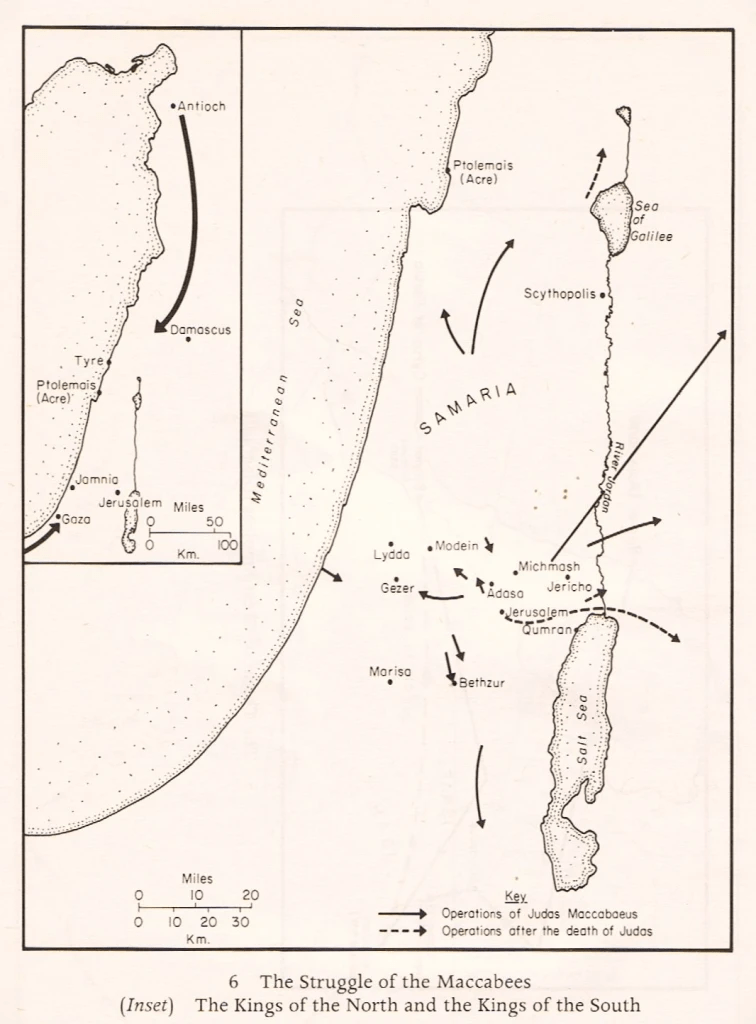
The resistance of the Maccabees to Antiochus Epiphanes and their attempt to establish Greek culture and override Jewish religious susceptibilities provides a standard testimony for those who seek examples of the Jewish religion’s involvement in the military forces of that time. While recognising this, observing other aspects of the resistance at the time of Maccabees is also important. Undoubtedly, there was active resistance, but there was also passive resistance by flight. Many went into the wilderness with ‘their sons, and their wives, and their cattle’, not as an act of ‘guerilla warfare’, but as an act of withdrawal; they lived ‘after the manner of wild beasts in the mountains’. The result was a fall-off in tax revenues, the active policy of the government in seeking to bring them back, and eventually an amnesty. Secondly, those who turned to violence became violent. Judas Maccabees actually fell into a civil war against his own people, and, significantly, he is never mentioned in the Talmud. It has been supposed by some that this was due to Roman disapproval of the guerillas. But it may equally have had to do with the rabbinic emphasis on shalom. The festival of Hannukah celebrates the Maccabean deliverance. Today it is sometimes an occasion occasion of nationalistic and militaristic fervour. But the passage for reading on the Sabbath of Hannukah is from Zechariah: ‘Not by might and not by power but my spirit, saith the Lord of Hosts.’
A ‘menorah’.
As Israel fell under Roman power, what kind of future did the Jews hope for? And how did they expect that it would come about? Some thought of a better time to come, and of the means of its achievement, in ordinary, this-worldly terms, while others indulged in hopes of a more supernatural kind. Often the two ways of looking at the future merge and intermingle. The Zealots cherished this-worldly hopes, looking for a time when God alone would rule Israel, and this meant that his holy land must be taken out of the hands of the Romans. Nor were they the only people to hope for the end of Roman rule in Palestine. In one of the Psalms of Solomon, composed in Pharisaic circles after the first conquest of Jerusalem by the Romans in 63 BC, we find the following prayer for the expected messianic king:
‘ And gird him with strength, that he may shatter unrighteous rulers,And that he may purge Jerusalem from nations that trample her down to destruction’
Ps. Sol. 17: 24.
The conquest of Israel’s enemies was a necessary prelude to the betterment of her situation. And high hopes were entertained of her future glory. In another first-century work, the Assumption of Moses, we have this description of Israel after the punishment of the Gentiles:
And God will exalt thee,
And he will causethee to approach to the
heaven of the stars,
in the place of their habitation.
And thou shalt look from on high and shalt
see thy enemies in Gehenna.
Ass. Moses, 10: 11.
This testifies to Israel having reached ‘the height of national, political and spiritual success’. In addition, it is expected by the author that the Jews of the Dispersion will return to Palestine and that all ‘God’s People’ will be endowed with the gift of the Holy Spirit and purified from evil. How did the Jews suppose that a better future would be brought about? They took it for granted that, fundamentally, it would be God’s doing. There were, however, differing views as to how he would choose to act. The Zealots believed in initiating and precipitating political and military action themselves. But they were also convinced that if they took the initiative in provoking a revolt against Rome, then God would fight with them and for them, and would win them a miraculous victory. Had they not believed this, they would would never have taken up arms at all. Nevertheless, a realistic appraisal of the military situation would have made it obvious to them that a small subject nation such as Israel could not possibly hope to stand up to the organised might of imperial Rome.
In the Psalms of Solomon, however, a human agent of the divine will enters the narrative. He is to be a king chosen and endowed with authority by God, and a descendent of the royal house of David. He is often called the Messiah or ‘the anointed one’, who will secure both the political and spiritual well-being of the nation of Israel. There is an impressive description of such a Messiah in the Psalms of Solomon. It describes him driving the Gentiles from Jerusalem and setting up a great kingdom which would be the centre of the whole world, and all the heathen peoples are to serve him. All this suggests that it will be a kingdom of military might, but yet the Psalm clearly states that he will not put his trust in weapons of war but in God. There is also a suggestion that he asserts his supremacy using moral and spiritual force:
‘For he shall not put his trust
in horse and rider and bow,
nor shall he multiply for himself
gold and silver for war.
… …
The Lord himself is his king, the hope of him
that is mighty through his hope in God.
All nations shall be in fear before him.
For he will smite the earth with
the word of his mouth for ever.
… …
He will rebuke rulers, and remove sinners
by the might of his word’
Ps. Sol. 17: 37-39, 41.
The Messiah, the Psalm claims, will be righteous and holy, ruling justly and caring for his people as a shepherd for his flock. But he will do all this because God has endowed him with the power of his Spirit. The Qumran sect also believed in a Davidic messiah who would conquer the heathen, a military leader of the community in the final war against their enemies. This war, however, had a twofold character. It is certainly a war against earthly foes, the heathen nations, and here the Messiah, also called the prince of the congregation, has his his part to play. But at the same time, it is a war on the supernatural plane, between the prince of light and the angel of darkness. It is the archangel Michael who fights against Belial on behalf of God’s elect and the Messiah himself begins to take on a supernatural personality, as he appears to be closely connected with the angelic hosts. This reveals that there did exist in some Jewish circles, the idea of a transcendent messiah who would appear at the end of time and take part in the judgment, and with whom the blessed elect would dwell eternally. In the book of Enoch, this supernatural being is called ‘the Elect One’ and also ‘the Son of Man’ (1 Enoch 46: 1). He is enthroned in glory and he will judge all the nations and their rulers (1 Enoch 62: 14).
This eschatological discussion of Jewish hopes gives the impression that they were chiefly concerned with their own national misfortunes and obsessed with dreams of future bliss for themselves as God’s elect. But what their best Hebrew theological minds were concerned with was a genuine problem which is also with us two thousand years later: if God is Lord of the whole world, why is the present state of the world so obviously contrary to his will? The fundamental hope was that, in the end times, he would fully establish his authority over his creation and demonstrate his absolute sovereignty. This is what is meant in the New Testament by the coming of the Kingdom of God.
Chronologically, however, in the first and second centuries CE the people of Judaea did indeed rise against Rome. The Jewish scene in the New Testament period was a continually changing one, hardly surprising given the earth-shaking events which took place in the period. In AD 70 the Temple in Jerusalem, the central symbol and focal point of Judaism, was destroyed, with many far-reaching consequences. During the first century, the foundation of a new form of Judaism began with the emergence of the Rabbis, their codification of the religious traditions and their approval of an authorised canon of Jewish Scripture. There was constant conflict with Rome, the occupying imperial power, to the point of savage battles; and there was an increasing conflict with the followers of The Way, or ‘Christianity’ as it later became known, which arose from the heart of Judaism and whose growing success posed a great many urgent questions. The Judaism that emerged from this turbulence was as united as it ever had been.
Politically, the Pharisees were ‘quietists’; they were advocates of non-resistance to Rome. The chief characteristic of the Zealots, who had much in common with the Pharisees, was their approval of violence in defence of their faith. There were probably connections between the Zealot movement and the Maccabees, but its beginning is usually taken to be a revolt against the census of Quirinius in 6AD. Judas, the leader of the revolt, was a Galilean, the son of Eleazar who was executed by Herod; his son led the last stand of the Zealots at Masada. The Zealots refused to pay Roman taxes, but they took their name from their zeal for the temple and the Law, which is amply illustrated in the writings of Josephus. He wrote very disapprovingly of them and labelled them sicaríí (assassins).
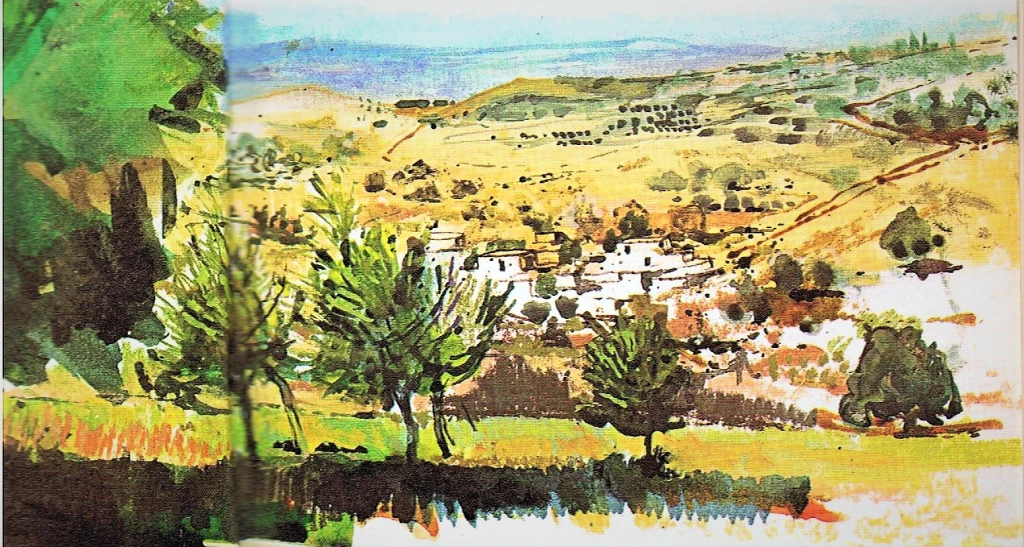
Nazareth in the 1960s.
When we come to the story of Jesus of Nazareth contained in the first four books of the Christian New Testament, the Gospels, we encounter a narrative we shall never understand unless we place it firmly against the background of the time in which he lived, in a country occupied by Roman troops whose presence provoked not only a general feeling of resentment and frustration but also the bitter activities of a resistance movement, the Zealots. Jesus was not a rootless individual; he grew up in Galilee where the Resistance Movement was very much alive. Therefore, Jesus likely grew up in a strong atmosphere of resistance. We have learned much in our own last two centuries about resistance movements, from Ireland to Africa and the Middle East. Most recently, this is how ‘Hamas’ sees itself, though many ‘western’ countries regard it as a ‘terrorist’ organisation. We have learned, through painful and often first-hand experience, how they come to dominate and determine the mind and mood of a people under the apparent calm of ordinary life, giving them an indisputable authority over the lives of ordinary people. Their clandestine, violent character only becomes apparent and acute when full-scale fighting breaks out.
It is against such a background that the ministry of Jesus must be seen; his sayings and actions take on new meaning when set against it; the brevity of his ministry and his extra-judicial execution outside Jerusalem become intelligible. His criticism of the common assumptions of his day, arising as they did from his own experience and meditation on the history and scriptures of his people, made him suspect, when his beliefs and attitudes became clear, with the Resistance and the Jewish government alike, as well as with many of his former friends (John 6: 66). Jesus’ ministry falls midway in the three hundred years’ Jewish war for religious and political freedom. It began with the Maccabaean rebellion of 168 BC and ended with Bar Kochba’s revolt in AD 132. Its story Is the theme of Josephus’ The Jewish War, in which we may find,
‘… set down both clearly and accurately the main course of events … the long-drawn agony of the war (AD 66-70) and the happenings which preceded it, with such a wealth of detail that his work is a major contribution to the history of a critical century.’
Quoted in Walton (ed.), p. 266.
Source: The History of Christianity (A Lion Handbook)
The Gospels were church books, written for the guidance of the early Christian communities and concerned with their religious life. These communities, after AD70, were predominantly non-Jewish in their membership; for many Christians, the incidents in Palestine from AD 30 to 70, were mere episodes in a far-off province of the Roman Empire. But the story of what had happened pushes through these religious records. It is the critical context against which the meaningfulness of Jesus’ ‘Good News’ is to be grasped - even his phrase ‘the kingdom of God’ may have been the watchword of the Zealots. What he did and said were meant for men and women there and then; only because this was so could it also have a meaning for all mankind. In the following passage, Josephus tells a story which gives us a feeling of what it was like to live under Roman rule in Palestine in the middle of the first century AD:
As procurator of Judaea, Tiberius sent Pilate, who during the night secretly conveyed to Jerusalem the images of Caesar known as ‘signa’. When day dawned this caused great excitement among the Jews; for those who were near were amazed at the sight, which meant that their laws had been trampled on – they do not permit any graven images to be set up in the City – and the angry city mob were joined by a huge influx of people from the country. They rushed off to Pilate in Caesaria, and begged him to remove the signa from Jerusalem and to respect their ancient customs. When Pilate refused, they fell prone all around his house and remained motionless for five days and nights.
The next day, Pilate took his seat on the tribunal in the Great Stadium and summoned the mob on the pretext that he was ready to give them an answer. Instead he gave a pre-arranged signal to the soldiers to surround the Jews in full armour, and the troops formed a ring three deep … Pilate, declaring that he would cut them to pieces unless they accepted the the images of Caesar, nodded to the soldiers to bare their swords. At this the Jews as though by agreement fell to ground in a body and bent their necks, shouting that they were ready to be killed rather than transgress the Law. Amazed at the intensity of their religious fervour, Pilate ordered the signa to be removed from Jerusalem forthwith.
Josephus; Quoted in Walton (ed.), p. 267.
This story underlines the fierce anger and resentment against the occupying forces which groups like the Zealots were able to exploit. The political divisions within and throughout the nation fed on a social climate of hatred and suspicion. Yet Jesus was not afraid to take risks to demonstrate the inclusivity of his mission and its purpose of reconciliation. Luke’s list of Jesus’ twelve apostles includes Simon Zealotes, ‘the Zealot’ (Luke 6: 15; Acts 1: 13); the parallel passages in Mark (3. 18) and Matthew (10: 4) call him ‘the Cananaean’, which is the Aramaic form of the same word. The presence of a Zealot among Jesus’ followers, coupled with recorded actions of Jesus like the cleansing of the temple and the fact that he was crucified by the Romans on a quasi-political charge has prompted elaborate theories about his connection with the sect. In his book, Portrait of Jesus, Alan T. Dale uses his literary imagination combined with knowledge of the contemporary Jewish context to interpret some of these theories in a parallel narrative to the gospels:
” ‘Fighters from Childhood:
‘The villages in the Galilean hills seemed … to be quiet sleepy places. But behind the quietness there was a very different story to tell – as we soon have found out if we had joined in the conversation, on a Saturday morning, after worship in the synagogue or sat talking in the evening with some of the villagers. We would have quickly learned that there was trouble afoot – and dangerous trouble at that – in this northern border province. …
‘We soon begin to understand why the name ‘Galilean’ meant, to the people in the south, something like ‘rebel’ or ‘anarchist’, why Galilee was a home of the Zealots or freedom fighters, and why the Galileans were called ‘born fighters’. The war with the Romans broke out thirty years later. The Tenth Legion marked down Japha town – and nearby Jotapata – and destroyed it in some of the bloodiest fight of the war.
‘Incident in the hills:
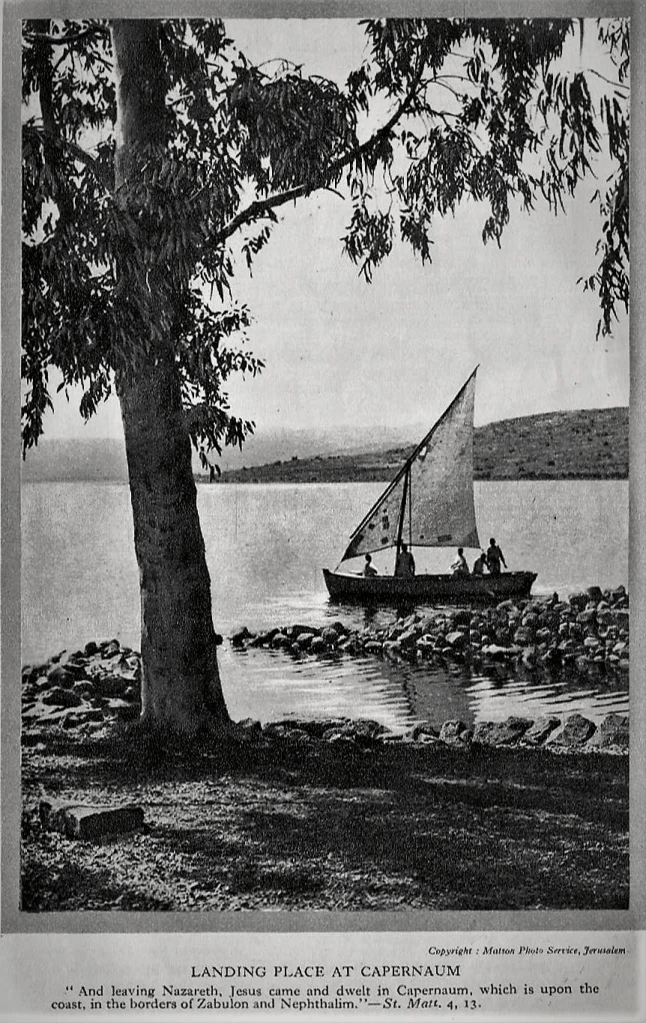
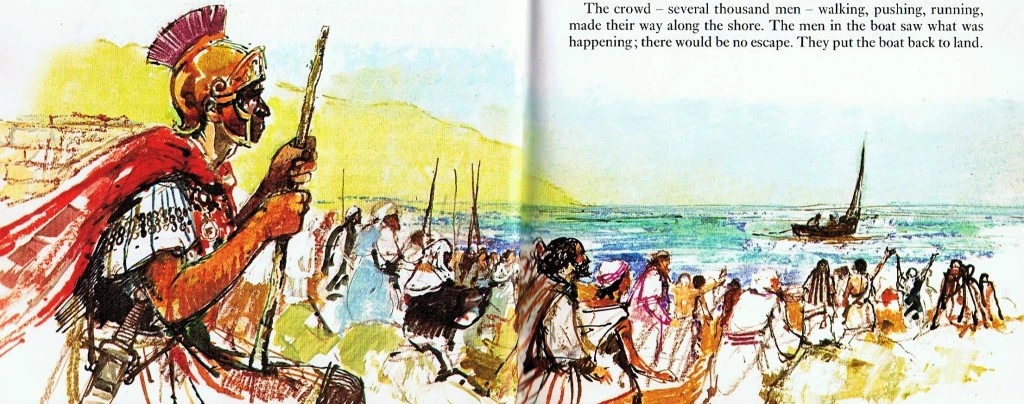
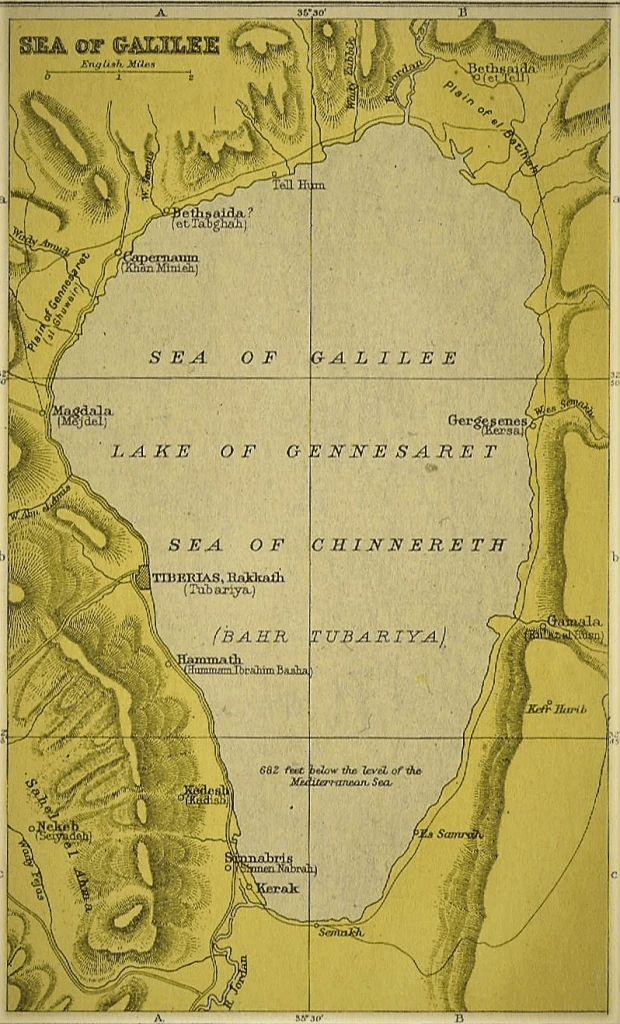
‘From early light the streets of the small lakeside fishing port – Capernaum – were crowded with men and loud with gossip and argument. The soldiers at the small Roman outpost in the town were wondering what was afoot. Somebody suddenly noticed a small boat putting out. … The boat was making heavy weather – an onshore wind was blowing.
‘Jesus climbed out. He knew the crowd: farmers from hill villages, fishermen from the lakeside towns. They were the men of the Resistance Movement – ‘Zealots’, nationalists -farmers or fishermen by day, ‘freedom fighters’ whenever the chance came. … a leaderless mob, an army without a general.
‘He went with them into the hills, to a lonely spot out of sight and reach of the Roman garrison. The talk went on and on. They wanted him to be their leader – their ‘king’. Jesus would have no part in their plans. … He got everybody to share a common meal together, a meal in which they promised again to live as God’s people.
‘The men – under command – sat down in sat down in compliance in companies of fifty and a hundred each, rank by rank. He got his friends to go back in the boat and across the Lake. He then said goodbye to the men and got them to go home. He himself, under the darkening sky, climbed the hillside. He wanted to think things out alone in God’s presence – alone.
‘The Issue at Stake:
‘There were almost as many points of view as men arguing about them. But all would agree that their people – the Jewish people – were a special people called by God to take a special part in the history of the world. Jesus would have no quarrel with that. But everything turned on what was meant by the words being used… by the words ‘God’s People’. It wasn’t enough just to use the words, as though it was quite plain what they meant. It wasn’t plain and they didn’t agree. This was what the great debate was about. They were using the same words, but making them mean very different things.
‘Everybody knew, however, that things could not go on as they were. The situation in which the Jewish people found themselves – subjects of a foreign empire – was really intolerable. The only people who thought it wasn’t were members of the aristocratic government in Jerusalem -they owed their very existence to their Roman overlords. The common people and their leaders – and, most of all, the best among them – longed for a great change. They felt that the root of the problem was that they were an occupied country; if only they were free and independent, the ‘good time’ they all longed for would come. It was the presence of unbelieving foreigners – Roman soldiers, Greek citizens, foreign landlords – that made living as ‘God’s People’ impossible.
‘Most people believed in… keeping themselves ‘separate’, having nothing to do, as far as possible, with foreigners. Lots of ordinary people, of course, simply could not avoid meeting foreigners and having to deal with them – using their money with its hated image of the emperor on it, carrying army baggage, working on foreign estates, selling market produce in Greek cities. Religious people, like Pharisees and Zealots, had as little to do with foreigners as possible. They would not enter a house owned by a foreigner and they certainly wouldn’t have a meal with him. The word ‘Pharisee’ was believed to mean ‘separatist’.
Foreigners, however, were not the only trouble. Living as ‘God’s People’, the Pharisees and Zealots believed, meant keeping God’s laws. … Many people believed that it was because they had not kept God’s laws that God had allowed the Romans to occupy their country. … The Zealots wanted to go much further. They believed that things could only be put right by a Holy War, the violent overthrow of the Romans. They could point to many stories in the Bible to prove it. … Something had to be done. Somebody had to take a stand. The leadership of the Jewish people was at stake. Who was to lead them in this crucial moment in their history? The Pharisees? The Zealots? John (the Baptist)? Who?…
‘Freedom Fighters:
‘Galilee was a home to many of the freedom fighters, and Japha, the mother town of Nazareth (hamlet) – only two miles away – was probably a Zealot town. There were many good men among the Zealots, men who were driven by desperation to believe that violence was the was the only way God’s People would win their proper freedom. There were among them, of course, as in any extreme movement, many who were no more than thugs and gangsters, hiding their bloodthirstiness behind the fine language of religion; but most were sincere men.
‘The memory of what had happened in 63 BCE was still vivid and bitter. … But the Zealots looked further back than the sack of Jerusalem by the Romans … The Old Testament itself – their Bible – was full of stories of wars against foreigners. They were described as God’s Wars. This was surely enough to prove that this was God’s way. Was not God called ‘God of the armies of Israel’? The war against Rome was a ‘Holy War’. The ‘Holy Land’ was not the private property of the emperor … ; it was God’s – he alone was king there.
‘The Zealots cared for social justice too. When … they actually captured Jerusalem in AD 66 in the war with Rome, one of the first things they did was to destroy all the legal documents there, abolishing Jewish debts to Rome, breaking up the great landed estates and setting all slaves free. They were ‘thugs’ and ‘murderers’ in the eyes of the Roman authorities and the aristocratic Jewish government in Jerusalem, they were patriots to their own people.
‘But Jesus had come to believe that violence was not God’s way – especially the rough violence of the Zealots. He was bound to be their critic and the critic of all those who sympathised with them. Many of his stories were aimed at them as well as the Pharisees. It needed a brave man to be as outspoken as Jesus, if he was to be true to himself and his convictions. It took some courage to talk like this in an occupied country:
“If a Roman soldier forces you to carry his baggage for a mile along the road, go two miles along the road with him” (Matthew 5: 41)
Dale, pp. 5-8, 11-13, 17-19.
The Resistance Movement was not a bid for mere political freedom. Politics and religion were, for Jews, two sides of the same coin. Hence among the people of the country, many different religious movements made a bid for their allegiance – Pharisees who were popular with the common people, groups such as those in Qumran (in the Jordan Valley), Sadducees (wealthy priestly families) in Jerusalem, and followers of John the Hermit on the west bank of the Jordan. The common people had their own varying, ambiguous and changing attitudes. But it was the political situation that gave all these movements their focus. The Zealot rising which began in AD66, was disastrous, as Jesus of Nazareth prophesied that it would be (Matthew’s Gospel, 24: 1-2), along with other voices. Jesus had predicted that it would result in the destruction of the temple, as it did four years after the Rising began. As he shared a common meal with the Resistance leaders in the Galilean hills, he had made it clear that he could play no part in it, that its ideals and methods had no meeting place with his own. He was already looking beyond the parochialism of his people to the wider world of God’s mission to the Gentiles. The Fourth Gospel tells us that from that point on, ‘many of his disciples withdrew and no longer went about with him’ (Jn. 6: 66).
The nature of Jesus’ entry into Jerusalem (Mt. 21: 1-9) is of some importance to our understanding of how he saw his mission in respect of nonviolence. He quietly accepted his disciples’ recognition of him as the Messiah, but immediately went on to teach about a new way, that of suffering. His triumphal entry into the city was the entry of a king; the clothes spread along the road were a sign of homage; the title ‘Son of David’ is a royal title; the palm branches (Jn. 12, 13) recalled the rising of the Maccabees. Indeed, the attitude of the crowd recalls a passage from The Psalms of Solomon:
‘Behold, O Lord, and raise up their King, the son of David,
at the time thou hast appointed, O God,
to reign over Israel thy servant.
Gird him with strength to shatter wicked rulers.
Cleanse Jerusalem from the Gentiles who trample it and destroy.
‘In wisdom, in justice, may he thrust out sinners from God’s heritage,
crush the arrogance of the sinner like a potter’s crocks,
crush his whole substance with an iron mace;
blot out the lawless Gentiles with a word,
put the Gentiles to flight with his threats.’
The Psalms of Solomon, 17: 23-7.
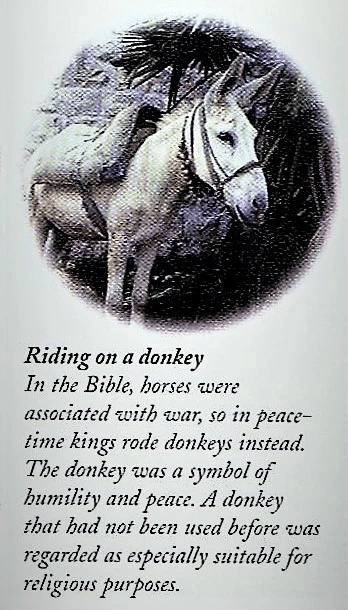
The relevant Gentiles were the Romans, and possibly the Greeks. But Jesus rejected that part of the scriptural tradition that depicted the Messiah as buckling on his sword and riding out to war on a white charger. He chose that part of the prophecy from Zechariah which depicts the Messiah coming to Jerusalem humbly, mounted on an ass. The next verse runs:
‘He shall banish chariots from Ephraim
and war-horses from Jerusalem;
the warrior’s bow shall be banished,
He shall speak peaceably to every nation,
and his rule shall extend from sea to sea,
from the River to the ends of the earth.’
Zechariah, 9: 9-10.
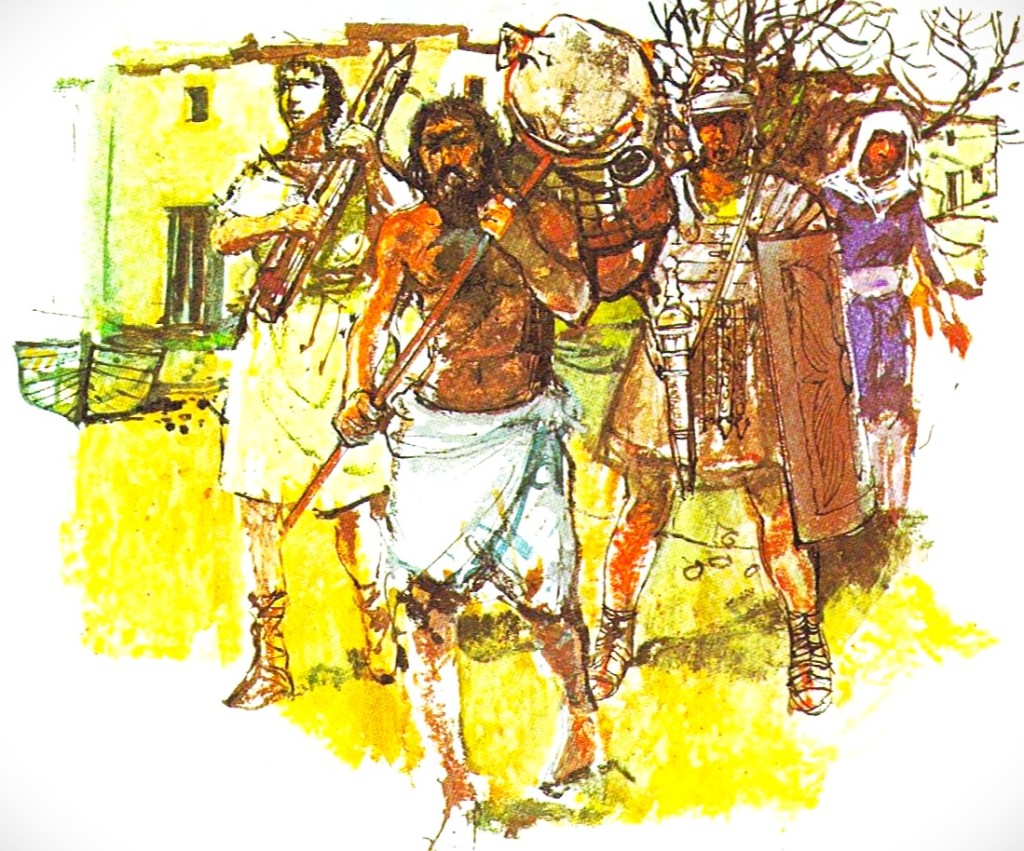
Jesus was a different kind of Messiah, standing not for war and military victory but for disarmament and peace. Only a handful of them remained loyal, and when he was taken captive by the Chief Priest’s guards, even they took flight and abandoned him. The following passage from the gospel depicts the moment when Jesus fulfilled the choice he had laid before his disciples at Caesarea Philippi:
‘At that moment one of those with Jesus reached for his sword and drew it, and he struck at the High Priest’s servant and cut off his ear. But Jesus said to him, “Put up your sword: All who take the sword die by the sword.” ‘
Matthew 26, 51-2.
At this moment in the Garden of Gethsemane, he could have raised the standard of violent revolt: He did not do so, but chose the way of suffering and of the cross. In the end, he cut a lonely figure and, when he died alone save for two ‘bandits’ (possibly Zealots), it seemed his ‘movement’ had died with him.
There were collaborators as well as guerillas among the resistance groups, including the followers of Jesus of Nazareth, though most of them supported his way of passive resistance. There has been interesting speculation among scholars about the motivations of Judas Iscariot. The meaning of the name ‘Iscariot’ is uncertain, but some have supposed it to be a corruption of the Latin ‘Sicarius’, or ‘dagger-man’, a member of the violent resistance. We have noted that Jesus attracted some members of this group, including Simon the Zealot, who hoped they had found the nationalist leader for whom they had been seeking. The betrayal of Jesus by Judas has always been a puzzle since the sum of thirty silver pieces seems paltry for such an act. Some have speculated that Judas was expecting the revolt to come following the triumphal entry at the Autumn festival of Tabernacles, or perhaps after the Cleansing of the Temple the following spring, just before Passover. When Jesus showed no signs of taking a truly insurrectionary initiative, however, Judas decided to try to force his hand. But Jesus accepted arrest and death rather than embark on a violent crusade which he believed was not God’s will or way. Of course, this is pure speculation, but it does make some sense.
But in this passage, Jesus is making a simple statement of fact that violence provokes counter-violence, and the violence provoked often exceeds the initial violence in scope and scale. In other words, violence tends to escalate uncontrollably. This is neither a justification nor condemnation of those provoked, just a simple statement of historical fact. Nonetheless, these words are not spoken to the aggressor in this situation, but to a loyal follower who misguidedly seeks to defend an innocent man from wrongful arrest and violence. They are a clear warning against all wars, however ‘defensive’ or ‘just’. This was how the early church understood these words of Jesus. Tertullian in his treatise On Patience declared that at this moment Jesus cursed the works of the sword forever after. In another treatise, On Idolatry, he spells out the meaning of this more fully:
‘How shall the Christian wage war, how indeed shall he even be a soldier in peacetime, without the sword which the Lord has taken away? For although soldiers had come to John and received the form of their rule, although even a centurion had believed, the Lord afterwards in disarming Peter unbuckled every soldier.’
Tertullian, On Idolatry.
Here, Tertullian comes close to a statement of Christian Pacifism. In his letter to the Jewish Christians (‘Hebrews’), for whom the suffering of Jesus was a ‘stumbling block’, the writer makes clear that the way of Jesus is the way of love, nonviolence and redemptive suffering. His readers had not yet come to equate the Messiah with the Suffering Servant about whom the prophets had written.
Johanan ben Zakkai is an important figure in the debate between the supporters of violent and nonviolent resistance among the early rabbinic writers. He belongs to the period of the fall of Jerusalem in AD70. One story tells how, in despair at the spirit of contention between different partisan groups, he had himself carried out of the city in a coffin to the Roman camp. Certainly, he became persuaded that violent resistance merely contained the seeds of destruction within it. He was given permission by the Romans to establish a new centre at Jabneh Jamnia for the study of the Torah, together with a court of justice. A council of rabbis, meeting at Jamnia in about AD90 managed to successfully reorganise the chaos with which they were confronted. Their measures led to the eventual elimination of competing forms of Judaism and the predominance of a single version, Rabbinic Judaism, the Judaism of today. Johanan’s genius was to turn the leaders of Judaism from politics and acts of war to scholarship, piety and the things of peace, and to show that in so doing they were fulfilling rather than abandoning the central tenets of the faith. The School of Jabneh came to hold an authority comparable to that held earlier by the Sanhedrin.
Division, ‘Diaspora’ & the Development of Rabbinic Judaism:
Throughout the first century, however, these competitors were very much in evidence, so as well as reckoning with a changing historical situation, it is important to bear in mind that there were variations in Judaism from group to group and place to place. First, a geographical distinction has to be drawn between Palestinian Judaism and the Judaism of the Diaspora (the dispersion of Jews throughout the Roman Empire), with its greater contact with the Hellenistic atmosphere of the Mediterranean world. The distinction is by no means a clear-cut one, however, especially in linguistic terms, for Palestine had also been heavily influenced by the Greek language and culture. But since the diasporic Jews lived at great distances from Jerusalem and the temple, and were able to read the Torah in its Greek translation, the Septuagint and not the original Hebrew, they were able to maintain greater diversity in their religion. Secondly, within the two broad categories, there were more specific groupings. In Palestinian Judaism, as noted already, there were Pharisees, Sadducees, Essenes and Zealots to name but a few of the better-known; and there was the obvious split between the educated, bilingual classes and the illiterate monoglot masses. Divisions existed in Hellenistic Judaism, especially in terms of philosophical influences, but they are more difficult to trace.
So thoroughly did Rabbinic Judaism carry out its work of unification that it is often almost impossible to see the views of the movements it replaced, particularly those with which it did not agree. The Rabbinic writings fall, roughly speaking, into four main groups. The Mishna is a compilation of legal requirements, written down at the end of the second century, in the form of legal opinions; the Gemara is a discussion of the Mishna. The two together form the Talmud, of which there are two versions, Babylonian and Palestinian, completed at the end of the fourth century. The third is the Tosefta, which collects sayings which failed to be included in the Mishna, and the Midrash is a term referring to commentaries on the Scriptures, sometimes legal, sometimes theological. However, these sources are lacking in historical context. They contain early material, handed down orally. Still, since they were compiled into compendia later than the council of Jamnia, their view of the material is selective, often hazy and sometimes partisan. For example, nothing in it can be connected with the Maccabaean revolt or the temple’s destruction. The clues they do offer are in the realm of Jewish religious thought and institutions.
For our knowledge of the history of the period, we depend on the Jewish historian Josephus, who lived between 37 and 100 AD (CE), and his two major works, the History of the Jewish War and the Jewish Antiquities. These present a fuller picture of developments in the first three quarters of the century. These books do, however, have their drawbacks. Josephus was a client of the Flavian emperors and therefore had to be diplomatic in his presentation of Judaism; he also had to come to terms with his own position, which other Jews regarded as treacherous not just to the nation but also to Judaism. We therefore have to allow for some bias. Josephus is also silent about Judaism after the end of the war of AD66 and so leaves us completely in the dark about the developments which led to the council of Jamnia. For much of our knowledge of first-century Judaism, we are dependent on the New Testament texts of Christianity. In addition, our knowledge of Hellenistic Judaism is the result of the fact that the early churches preserved the writings of Josephus and of Philo of Alexandria. Otherwise, they would have remained unknown, as would the Jewish books which go to form the Apocrypha. Christianity also preserved the apocalyptic literature between the testaments, as noted above; the Rabbinic writings are essentially non-eschatological.
Christian sources tell us much about Judaism, and chief among them is the New Testament itself. It is often the sole source offering evidence of the details of Roman administration, though historical authenticity and reliability are sometimes difficult to surmise. In the Gospels, we have to allow for both bias and omission of information. In the letters of Paul, we have evidence of the thinking of a first-century Jew, but we know that he was from the eastern Mediterranean and, according to Luke, spent limited time in Jerusalem, Damascus and Antioch before and during his missions in Asia Minor and Greece. Both Luke and Paul himself report controversies between him and both Jews and Christians in Jerusalem and on his missions.
Finally, Palestinian archaeology provided two spectacular finds: the site of the Qumran community and its literature, and the citadel of Masada. Qumran and the Dead Sea Scrolls have given us an extensive view of the life of a sect previously known only from occasional textual references. Masada illustrates two greatly contrasting times, the luxury of the desert palace at the time of Herod at the beginning of the century and the tragedy of the last stand of the Zealots in AD73; it has also provided the lost original Hebrew text of the book of Ecclesiasticus (previously preserved only in Greek) together with a fragment from the Dead Sea Scrolls. However, we cannot assume any direct connection between these two sites. Due to the difficulties with all these sources, the brief pictures of first-century Jewish society and religion they give us must be regarded as very approximate reconstructions. Nevertheless, these must be attempted if we are to try to understand the background of the extracts that follow. When we speak of Pharisees, Sadducees and scribes, we must remember that the reliable evidence we have about them is, in reality, quite small. The caricatures of them that have developed since their times do not further our understanding of Judaism in New Testament times and have tended to prejudice Christian relations with Jews to this day.
A scribe at work.
The Rabbinic Tradition – Temple, Torah & Talmud:
After the council of Jamnia, Judaism became known as Rabbinic Judaism, as opposed to the Pharisaic Judaism which existed before in the context of the Sanhedrin. The two are closely connected, however, and it is almost impossible to say where one ended and the other began. At the beginning of the first century, ‘Rabbi’ was not a formal title, but a mode of address meaning ‘my master’, used as a mark of respect. It is used several times in this way in the ‘fourth’ gospel, in remarks to Jesus of Nazareth (Jn. 1: 49, 6: 25). By the end of the first century, however, it had taken on a more formal significance, as is indicated by Matt. 23: 7f., a passage which dates from the time of the early church rather than that of Jesus and his immediate disciples. In the second century, it became firmly established, which is how it is used in Rabbinic literature and synagogues. It was this development which shaped the future of Judaism; the heightened prominence of the Law after the fall of the Temple was accompanied by the growing importance of the institution of the local synagogue as a place of worship and learning, which had been increasing for some time before AD70.
The Temple and its priesthood may have been the most strikingly visible symbols of Judaism until the end of the first century but had they they been its exclusive centre, Judaism could not have survived their fall. The way it adjusted to the situation after AD70 shows that there were other strengths; these strengths had as their common basis the Law and the differing interpretations of it which were brought together in the Talmud. Even while the temple still stood, within Judaea there seems to have been an increasing preoccupation with the scriptures and their implications, and this preoccupation will have been even more characteristic of the Jews of the Diaspora. A movement like that found at Qumran is unthinkable without this development, which comes to full effect in Rabbinic Judaism. The beginnings of this trend are to be found in the Babylonian exile and the period after the return. During this period the Pentateuch took final form and was accorded its place in the Torah, the Law; the Prophets had taken a place beside it by the beginning of the second century BC (BCE) and the writings were recognised during the first century AD (CE).
The Hebrew word ‘Torah’ means ‘instruction’ or ‘doctrine’ rather than ‘law’ and the Pentateuch is more than simply a collection of books of ‘Law’, or laws. Nevertheless, that is what it became as it was made the object of evermore intensive study. As well as considering the parties within Judaism in this process, it needs to be remembered that the New Testament ‘Gospels’, Acts and Paul’s letters present only one picture of first-century Judaism. The other side of ‘the Law’ also requires sympathetic treatment in the context of Hebraic texts which were being edited contemporaneously with the Greek texts of the Christian New Testament and interpreted in the writings of the Talmud. Concerning issues of war and peace, for example, ‘Seek peace and pursue it’ became a central tenet of later Judaism. The first verb is often translated as ‘propose’, emphasising the active state of peacemaking. On the other hand, ‘an eye for an eye and a tooth for a tooth’ was not, however, related to war, but to civil disputes between citizens, and though it is featured in the NT, it is not found in Rabbinic literature. Instead, the rabbinic expositions defined peace as part of God’s original purpose for mankind. The Talmud points out how many of the commandments of the Law begin with a conditional ‘if’ or ‘when’. If the situation arises, the believer’s duty is clear, but he need not go out of his way to find the situation. Two of the rabbis wrote:
‘If the heavenly beings who are free from envy, rivalry and hatred are in need of peace, how much more are the lower beings, who are subject to hatred, rivalry and envy, in need of peace.’
Deut. Rabbah 5, 12.Bar Kapparah
‘Greatis peace, because peace is to the earth what yeast is to the dough. If the Holy One, blessed be He, had not given peace to the earth, the sword and wild beasts would desolate the world.’
Baraíta de Perek ha Shalom.
For these rabbis, peace also takes priority over one of the most solemn and basic of all the commandments, condemning idolatry. This is effectively a condemnation of Jehu, who massacred the Baal-worshippers, and of the Maccabees, for rising in violence against Greek idolatry. In general, peace is said to bring together all the blessings that God would heap on Israel. So too the rabbis liked to put a peaceable interpretation upon stories of violence. So, Nebuchadnezzar’s prisoners of war are reinterpreted as scholars (2 Kings 24: 16) and David is remembered as a poet, musician and scholar rather than as a warrior king. Equally of interest is the treatment of the eight-day festival celebrating the rededication of the altar in Jerusalem after the Maccabean victories (1 Macc. 4: 59; 2 Macc. 10: 6). The rabbis say nothing about the military triumph, stressing that it is a Festival of Lights, recording a legend that eight iron spears into an eight-branched candlestick, the Menorah and that the altar was a symbol of reconciliation between God and mankind, and between Israel and its neighbours.
The rabbis also condemned destructive action and praised constructive transformation. Forgiveness is better than revenge. As the Talmud says, ‘He who avenges himself or bears a grudge against acts as one who has one hand cut by a knife, and then sticks it into the other hand for revenge.’ There is an awareness of the solidarity of mankind and its tendency to escalate violence. But if violence escalates so does goodness, kindness and friendliness. Another general principle is that destructive action must be avoided if a less destructive action will suffice for the good end desired:
If one is able to save a victim at the cost of only a limb of the pursuer and does not take the trouble to do so, but saves the victim at the cost of the pursuer’s life by killing him, he is deemed a shedder of blood and he deserves to be put to death. He may not, however, be put to death by the court because his true intention was to save life; he must be punished rather than put to death.
Mishneh Torah: Hilchot Rozeach 1: 13.
That ‘legislation’ is doubly notable in its humanity. All human life is sacred and whoever sheds blood diminishes God’s presence in the world (Gen. Rabbah 34: 14). In Hebrew hymnody there is a famous refrain: Give thanks to the Lord, for it is good, for his mercy endures forever (Ps. 107: 1). The phrase occurs in the account of a muster for battle before King Jehoshaphat (2 Chron. 20: 21), but without the words, for it is good. Why are they omitted? Because the destruction of human beings is not good, because the Holy One, blessed be he, does not rejoice in the downfall of the wicked.
War and the destruction of enemy soldiers are thus regarded by the rabbinical interpreters as in some circumstances a ‘cruel necessity’. But rather than set down a set of rules, the rabbis were concerned to provide an ethical framework for the conduct of war. They distinguished between two kinds of war, milchemet reshut, optional war, and milchemetchovah, obligatory war, also called milchemet mitzvah, religious war. This latter type included the war against the seven tribes of Canaan (Deut. 20: 16-18), the war against Amalek, who had been guilty of unprovoked aggression (Deut. 25: 17-19), and defensive war generally. The seven tribes no longer exist: as Maimonides put it, writing in the second century on the Principles of War, ‘their memory has long perished’, though some were found to argue that this justified military measures in establishing the modern state of Israel. The Amalekites have also disappeared, but all tyrants, dictators and oppressors have been considered to be ‘the seed of Amalek’: ‘The Lord will have war with Amalek from generation to generation’ (Exodus 17: 16), and many Jews later justified action against Hitler on these grounds. But the main grounds for a just war rest in attack from outside, and such a war is obligatory. There was much discussion among the rabbis as to whether preventative war fell into this category. The majority view was that it did not:
Opinion is divided only when they engage their enemies in war because they are afraid that they will attack them, or if it is known that they are preparing to attack. According to Rabbi Judah it is obligatory and according to the sages it is optional.
Sotah, 44b.
Optional wars are much less clear morally, and the rabbis, though justifying those recorded in Scripture, have been far less ready to extend that justification to later wars. Their standard examples are the conquest of Canaan as an obligatory war and the expansion of the whole kingdom by David and his house as an optional war. Maimonides sums up the whole doctrine concisely:
The primary war which the King wages is a ‘religious war’ Which may be denominated as a religious war? It includes the war against the seven tribes, the war against Amalek, and a war to deliver Israel from enemy aggression. Thereafter he may engage in an ‘optional war’, that is, a war against neighbouring nations to extend the borders of Israel and to enhance his greatness and prestige.
Mishneh Torah: Hilchot Melachim 5: 1.
Maimonides’ Principles of War:
Maimonides was born in 1138 (or 1135) in Córdoba, Andalusia, in the Muslim-ruled Almoravid Empire, during what some scholars consider to be the end of the golden age of Jewish culture in the Iberian Peninsula, after the first centuries of the Moorish rule. His father Maimon ben Joseph, was a Spanish dayyan (Jewish judge). Aaron ha-Kohen later wrote that he had traced Maimonides’ descent back to Simeon ben Judah ha-Nasi from the Davidic line. Maimonides studied the Torah under his father, who had in turn studied under Rabbi Joseph ibn Migash, a student of Isaac Alfasi. At an early age, Maimonides developed an interest in sciences and philosophy. He read those Greek philosophers accessible in Arabic translations and was deeply immersed in the sciences and learning of Islamic culture.
Plaque of Maimonides at Rambam Medical Center, Haifa
In early first century (AD/CE) Judaism, while the King could take full responsibility for declaring a religious war, an optional war required the consent of the Sanhedrin. The Rabbinic tradition thus picked out the elements in the Torah which pointed to mercy and stressed these in their laws of war. Maimonides offered a convenient compendium. For example, there was to be no wanton destruction:
‘It is forbidden to cut down fruit-bearing trees outside a city, nor may a water channel be deflected from them so that they wither, as it is said: “Thou shalt not destroy the trees thereof.” (Deut. 20: 19). Whoever cuts down a fruit-bearing tree is flogged. This penalty is imposed not only for cutting it down during a siege; whenever a fruit-yielding tree is cut down with destructive intent, flogging is incurred. … The law forbids only wanton destruction.’
Ibid. 6: 8.
‘Not only one who cuts down trees, but also one who smashes household goods, tears clothes, demolishes a building, stops up a spring, or destroys articles of food with destructive intent, transgresses the command: “Thou shat not destroy.” He is not flogged, but is administered a disciplinary beating imposed by the rabbis.’
Ibid. 6, 10.
So too a woman prisoner is to be treated as a human being. If she has been widowed or bereaved, she is to be allowed a period of mourning, during which she will appear less desirable. Only then may her captor cohabit with her. But if she is converted to Judaism, then she will be ceremonially purified, and entitled to a legal (re)marriage. And if her new husband, her captor, tires of her, he must let her go freely and is not entitled to enslave her or to sell her (ibid. 8: 5-6). Sometimes the Rabbis went beyond the Torah, as shown in an instructive passage in Maimonides:
‘When siege is laid to a city for the purpose of capture, it may not be surrounded on all four sides but only three in order to give an opportunity for escape to those who would flee to save their lives, as it is said: “And they warred against Midian, as the Lord commanded Moses” (Num. 31: 7). It has been learned by tradition that that was the instruction given to Moses.
ibid. 6, 7.
We do not know where the tradition came from, but it is clearly not in the Book of Numbers. Again, whereas the Bible decrees destruction without remission against Amalek and the seven tribes, the Rabbis dare to contradict the clear word of the Torah:
‘No war is declared against any nation before peace offers are made to it. This obtains both in an optional war and a religious war.’
ibid. 6: 1.
The other party to the conflict are given the option of accepting the ‘seven commandments enjoined upon the descendants of Noah’. These were: to avoid idolatry; avoid blasphemy against the name of God; establish courts of justice; avoid murder, adultery, and theft; and not eat flesh cut from a living animal. As in Jewish tradition, the whole human race was descended from Noah, these commandments were regarded as a code of universal morality, and anyone who would not accept them was seen as subhuman. But any people suing for peace, willing to pay tribute, accept a subject status and accept these commandments must be left in peace:
‘Once they make peace and take upon themselves the seven commandments, it is forbidden to deceive them and prove false to the covenant made with them.’
ibid. 6: 3.
Military service was in principle universal and compulsory, and in a religious war, this applied even to newlyweds. But in optional wars, some exemptions were permitted on compassionate grounds and the three principal grounds were biblically based (Deut. 20: 5-8). They were for those who had built a house, but not yet occupied it; who had planted a vineyard but not yet enjoyed its first fruit, and those who were engaged to be married. Judas Maccabaeus re-established these principles (1 Macc. 3: 56) despite the desperate military needs. Maimonides’ compendium also reasserts them, but in such a way that they cannot be trumped-up excuses.
Interestingly, the rabbis added a further compassionate ground, that the death of one member of a family on military service would exempt all other sons and brothers. However, they might be required for non-combatant duties. More radical than all these exemptions, however, is the Deuteronomic precept that the ‘fearful and fainthearted’ should be allowed to return home (20: 8), since fear is infectious. The words, Rach halevav have been interpreted as a ‘tender conscience’, or a hyper-sensitivity to suffering in others, rather than as simply cowardice. Rabbi Jose the Galilean took the whole phrase to refer to those who were fearful because of their own misdeeds: it was better not to have ‘serious offenders’ in the army. But the more usual view was that taken by Rabbi Akiba:
‘Our rabbis taught: If he heard the sound of trumpets and was panic-stricken, or beheld the brandishing of swords and the urine discharged itself upon his knees, he returns home.’
Sotah, 44ab.
This was a more humane concession to human weakness than military discipline had generally allowed in the ancient world. This was extended even to obligatory wars, where the other exemptions were disallowed. Further, some commentators claim that the priest anointed for war (the ‘chaplain’) was there precisely to assert the rights of this group. Sabbath observance was another circumscription of military activity. It was one of the chief reasons why Jews were exempted from military service by the Romans (Josephus, Ant. 14: 10, 11-19). The strict Jews would not bear arms on the Sabbath and in the reign of Antiochus Epiphanes allowed themselves to be massacred rather than profane the Sabbath even in self-defence (1 Macc. 2: 29-38). Once these scruples were known, military commanders opposed to the Jews took advantage of them (2 Macc. 5: 25-6; 15: 1; Jos. Ap. 1, 22: Ant. 13, 12, 4: 18, 9, 2). The Maccabaean guerrillas therefore decided that there was no military future in strict observance of this point and that they would fight defensively on the Sabbath, though they would not initiate battle (1 Macc. 2: 41; 9: 34-49; 2 Macc. 8: 21-8; c.f. Jos. BJ 2, 18, 2). This last remained a severe restriction: for example, the Jewish troops would not destroy siegeworks on the Sabbath, which enabled Pompey to complete his preparations against Jerusalem in BCE 63 (Jos. Ant. 14: 4, 2). Rabbinic tradition did not go much further than prohibiting the declaration of an optional war on the Sabbath.
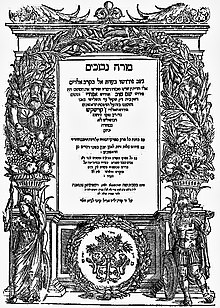
The title page of The Guide for the Perplexed.
In general, while war was permitted, the rabbis did not allow their disciples to forget that war was justified only if directed to constructive ends, which would be lost if standards of behaviour were allowed to slide. Maimonides put it clearly in his Guide to the Perplexed:
‘It will thus be confirmed in the heart of every one of the Israelites that their camp must be like a sanctuary of the Lord, and it must not be like the camps of the heathen, whose sole object is corruption and sin, and who seek only to cause injury to others and to take their property, whilst our object is to lead mankind to the service of God and to a good sound order.’
Guide to the Perplexed, (3: 41)
One further point in Jewish traditions is that there is a general obligation for the individual to be actively involved on the side of good against evil. He is invited to regard the world as delicately balanced between the two. His action may tip the scale:
‘He who commits a good deed may incline the balance with regard to himself and all mankind towards the side of the good: and he who commits a sin may incline the balance with regard to himself and all mankind towards the side of guilt.’
Tosefta Kiddushin 1: 13.
Therefore, as the Sanhedrin announced, the individual within Judaism has a responsibility to ‘protest’ for peace:
‘Whoever is able to protest against the transgressions of the people of his community and does not do so is punished for the sins of his community. Whoever is able to protest against the transgressions of the entire world and does not do so is punished for the transgressions of the entire world.’
Sanhedrin, 54b.
Judaism thus does not countenance quietism or passivism but fosters active involvement and pacifism:
‘If the man of learning participates in public affairs and serves as judge or arbitrator, he gives stability to the land. But if he sits in his home and says to himself, ‘What have the affairs of society to do with me?… Why should I trouble myself with the people’s voices of protest? Let my soul dwell in peace! – if he does this, he overthrows the world.
Tanhuma Mishpatim.
The Vocation to Suffering:
Across the centuries since the twelfth, when Maimonides was writing, the Jewish people in the diaspora have suffered intensely from persecution. From this has come the idea of a vocation to suffering, of the acceptance of suffering, as a means of changing the world. One great rabbinic dictum was, Be of the persecuted rather than the persecutors (Baba Kamma: 93a). Rabbi Joshua ben Levi said, ‘He who gladly accepts the sufferings of this world brings salvation to the world.’ Judah Ha Levi in al Khuzari (11: 44) in the twelfth century wrote that Israel had a mission of suffering. Israel, the heart of humanity, the suffering servant, bears the ills of all, and by this very fact allows God to reveal himself on earth. Simon ben Yochai said: ‘The best which God gave Israel, he gave through suffering.’ Sholem Asch cried:
‘God be thanked that the nations have not given my people the opportunity to commit against others the crimes which have been committed against it.’
(to be concluded)
Sources (for both parts):
John Barton (2019), A History of the Bible: The Book and Its Faiths. London: Allen Lane.
Alan T Dale (1979), Portrait of Jesus. Oxford: OUP.
Tim Dowley (ed.) (1977), The History of Christianity. Berkhamsted: Lion Publishing.
John Ferguson (1977), War and Peace in The World’s Religions. London: Sheldon Press.
John Ferguson (1973), The Politics of Love: The New Testament and Non-Violent Revolution. Cambridge: James Clarke & Co.
Robert C Walton (ed.) (1970), A Source Book of the Bible for Teachers. London: SCM Press.












 Andrew James
2 thoughts on “War, Peace & Justice in Judaism: Part Two – ‘Shalom’ & Resistance:”