
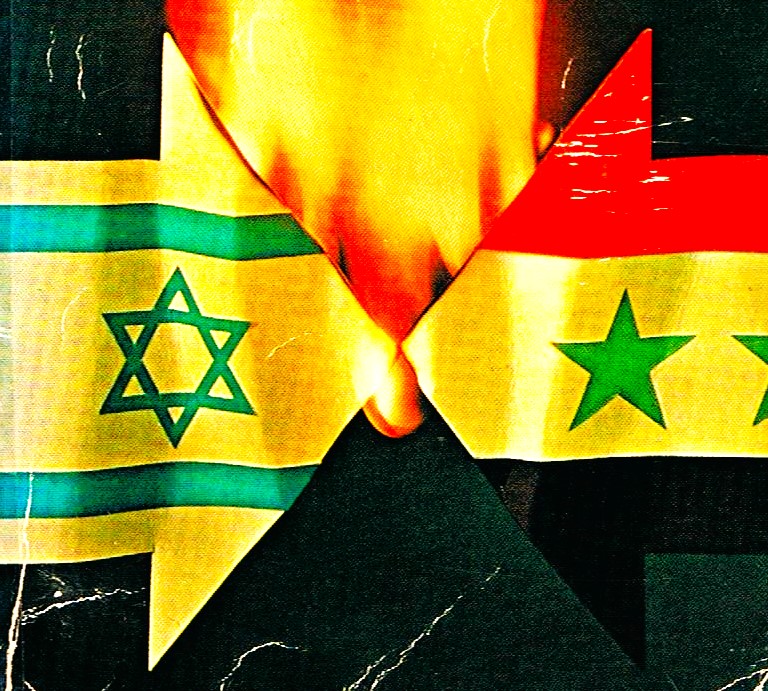
Hope for a Future without Children Dying:
The prospect of a better future like that in Isaiah’s vision can tempt us to lose sight of the tasks of the present. Hope for a future in which no more children die can be a sin if we meanwhile neglect to do our duty for children dying in the current violent conflict in Israel and Palestine, either from bombing, shelling and gunfire or from being hopelessly undernourished or brutally terrorised in body and/or in mind. A world in which ‘peace’ reigns in each and every conceivable sense of the word, a ruler representing the quintessence of justice is a ‘vision’ which seems anything but ‘radical’, but some consider it simply a product of naive and wishful thinking. This vision has never caused any of the powerful of the world, whose loss of power is (at least) implied here, one sleepless hour. Perhaps this is true, because, as Karl Marx suggested, religion is the opium of the people.
Yet, the Old Testament prophets fought for the enforcement of justice in this world long before Marx and his followers did. But Jews and Christians still await a just society they believe God will create without their active involvement. The effect of religion in the Middle East today seems far from that of an opiate, however. Rather it seems to be used to fuel ethnic discord across the region and into North Africa, so much so that many see it as a large part of the problem rather than contributing to the solution. Are those who wait for a future in which Jews, Christians and Muslims – the people of ‘the book’ – can live together on the same piece of earth, prepared to ‘fight’ for the shared humanitarian conditions that would make this attainable?
The future awaited by the majority of Judaeo-Christians seems to have meant that, for the last fifty years or more, they have been prepared to ‘reconcile’ themselves to the continuation of this present imperfect world. They have not ‘quarrelled’ with that immediate destiny, preferring to simply settle down in the world as it is and await the solution of all its problems on ‘Judgement Day’. But those who think that way are simply turning the hope of the divine into no more than a shabby pacifier. But whether we are Jews, Muslims or Christians, the message of the Kingdom of God should activate not only our hope but all our energies; we are called upon to build the world we inhabit now into the awaited future, toward the promised final condition of mankind and the whole created order. It is in this spirit that, in 1974, Rabbi Hirsch ended his study for the Union of American Hebrew Congregations, with a slightly paraphrased version of the Sam Shalom, the traditional prayer for peace:
Grant us peace, thy most precious gift, O thou eternal source of peace, and enable Israel to be its messenger to the peoples of the earth. Bless our country that it may ever be a stronhold of peace, and its advocate in the council of nations. May contentment reign within its borders, health and happiness within its homes. Strengthen the bonds of friendship and fellowship among the inhabitants of all lands. Plant virtue in every soul, and may the love of thy name hallow every home and every heart. Praised be thou, O Lord, Giver of peace.
R. G. Hirsch (1974), Thy Most Precious Gift: Peace in the Jewish Tradition. New York: UAHC.
Israel, Gaza, and the Christian Communities in Crisis:
Even before the Hamas attacks on Israel on the 7th of October, the massive demonstrations in Israel and the seeming breakdown of national cohesion had captured headlines in Israel and around the world. What began as protests against the Judicial Reform legislation evolved into broader confrontations between religious and secular Israeli Jews as well as a wave of attacks on minority communities. One highly publicized aspect of this crisis had been a wave of attacks on Christians, including churchmen, religious leaders, and foreign pilgrims. The government’s response to these attacks had been ineffective as the attacks continued in several Israeli cities. As this internal drama was unfolding, Hamas took the opportunity to launch its savage terrorist strike inside Israel that has led to mass casualties, both Israeli and later Palestinian. It is worth reminding ourselves, in seeking a resolution to the current conflict – that in religious terms – there are three faiths involved, although it is not in any sense a religious war.
‘Islamism’ is not a religion; it is an ideology based on distorted interpretations of the doctrine of ‘Jihad’. The Israeli Government is fighting a defensive war to protect all its citizens, regardless of their religion. Besides Islam and Judaism, there are also significant minority groups of both Israeli and Palestinian Christians. In addition to the innocent civilian victims of the bombing, missile and mortar fire, mosques, churches, schools and hospitals run by Christian charities operating in Gaza have been destroyed or damaged. Some of this destruction, resulting from IDF’s indiscriminate actions, clearly falls outside what is permissible in the Torah and Talmud, never mind in international humanitarian law. However, that remains to be tested and, if necessary and appropriate, in international courts of law. The charge of genocide against Israel in the sense of a premeditated act of ethnic cleansing does not seem appropriate in this situation, but there are clearly charges of war crimes that will need to be brought, certainly against Hamas and its associated terror groups, and also perhaps against the IDF.
Conclusion – Restoring Religion & Humanity:
Certainly, Hamas’s attack on Israel was completely outside any religion’s teaching on war. It was unjustifiable in any terms, religious or secular. It was nothing more than an act of terrorism, and as such beyond the bounds of any concept of humanity. In response, Israel’s leaders referred to its bestiality and were criticised for doing so. It was the critics who were wrong, however, since no species of animal kills its own by inflicting pain and suffering or seeks to gain pleasure from doing so. The evidence received so far suggests that this was what the Hamas terrorists set out to do. Not satisfied with causing terror, they also tortured and raped their victims before killing them and dismembering their bodies. In particular, the horrific sexual violence against women has gone without condemnation from international women’s rights groups and UN organisations.
No animal known to mankind behaves like this. Israel’s initial response was entirely justifiable and proportionate and was supported by many nations. It was not an act of revenge, but one of an obligatory, defensive war, fought under strict rules of engagement based on the Hebrew scriptures and doctrines as well as on international law. However, the ‘slaughter of the innocents’ which has followed, and especially the indiscriminate aerial bombing and shelling of civilian areas, cannot be justified in these terms. The means are never justified by the ends; they are always inherent in them. The war can only be brought to an end by a comprehensive armistice (not a ‘sustainable ceasefire’) beginning with the release of all the hostages and leading to a diplomatic peace process ensuring the long-term security of the state of Israel and the international recognition of an independent, sovereign state of Palestine.
That said, and having returned to both Muslim and Judaistic juridical texts in detail since 7th October, it can also be said that the Israeli forces have tried, at least in their ground combat, to remain within their ‘rules of engagement’, based on the ethics of the Torah and the Talmud. Israel claims that its Defence Force is just that, a force designed to provide security for its people, not an aggressive force. Its role is, therefore, to fight defensively, not to launch incursions and invasions, like it did in 1956. Neither is it supposed to fight ‘preventative wars’, except in purely defensive situations. It is also claimed to be ‘the most moral force’ in the world since its strategies and tactics are guided by a ‘military rabbinate’ of ‘chaplains’. On the other ‘side’, it is difficult to understand which doctrine of ‘Jihad’ is being applied by Muslim countries and Palestinian Muslims to the current situation in Palestine, and why the ‘mullahs’ and imams are not calling for Hamas to lay down arms and face justice for their crimes against humanity, if not against Islam itself. Instead, Hamas and other Islamist groups seem to be able to conduct themselves as Islamic State did in Syria and Iraq, with impunity.
Neither do I understand why many among my feminist and humanist friends of many years, and even some of my fellow Christians, were so slow to condemn Hamas and so quick to produce ‘apologies’ and justifications for its actions, some erroneously quoting the Bible in applying its texts to the current situation. Their sympathies for the violated Israeli families were synthetic and rang hollow, and they remain so, despite the horrific details we now know about the Hamas attacks of ten weeks ago. With the end of Hannukah, we were told today that there will be no lights in Manger Square this Christmas, and no tree. The Light seems to have gone out of this world: But, as the Carol ‘Little Town of Bethlehem’ suggests, there may yet be enough ‘meek souls’ to rekindle it.
 Andrew James
One thought on “War, Peace & Justice in Judaism: Epilogue – Three Faiths, Two States & One World.”